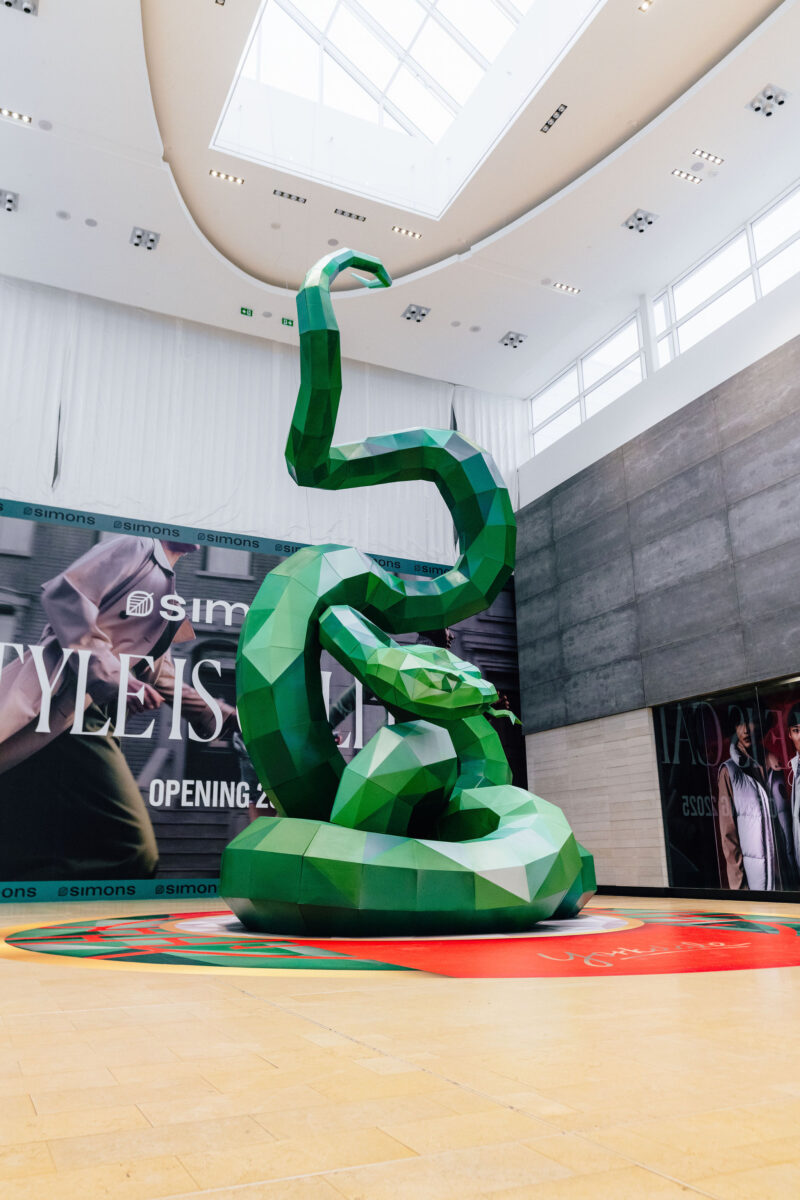
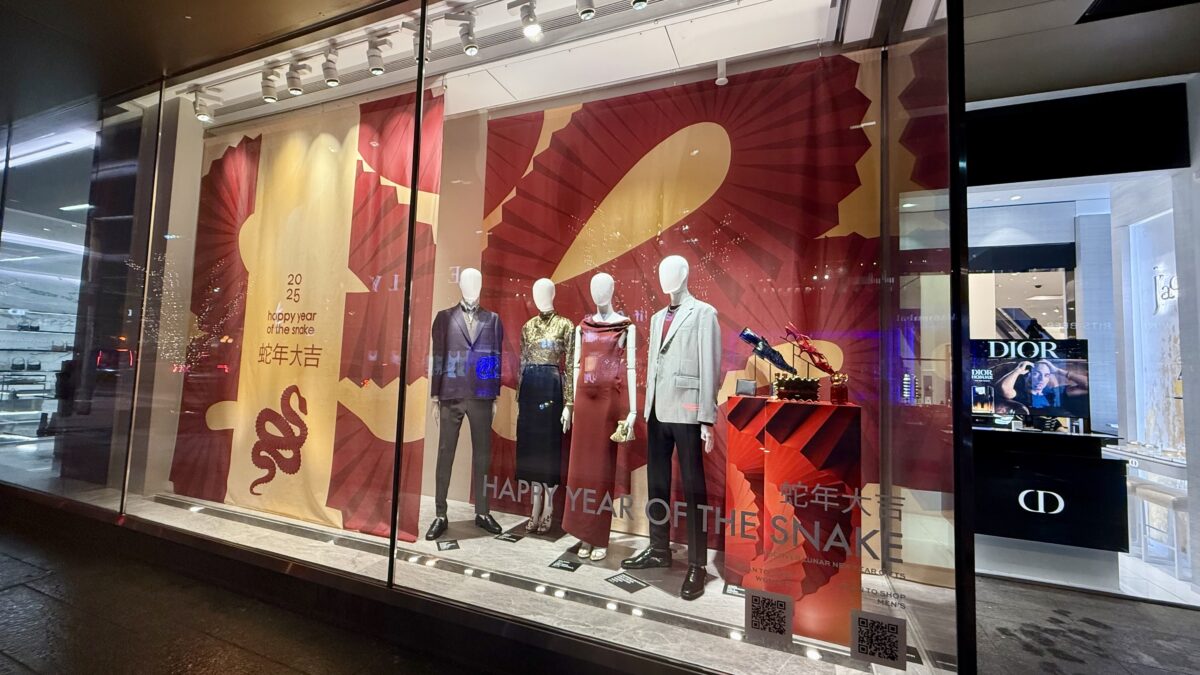
Southgate Centre in Edmonton. Photo: Smith + Andersen
The retail industry is bracing for an impactful year in 2025, marked by technological advancements, economic pressures, and growing sustainability demands. Carl Boutet, a leading retail strategist, recently shared his insights on how retailers can adapt to these challenges. From the rise of agentic AI to the importance of balancing global uncertainties, Boutet’s predictions provide a roadmap for navigating the evolving retail landscape.
AI’s Next Frontier: The “Agentic” Revolution
Artificial intelligence continues to transform retail operations, but Boutet sees 2025 as the year when “agentic” AI becomes the focal point. Unlike traditional AI, agentic systems can perform tasks independently, such as automating purchasing decisions for both consumers and retailers.
“Agentic AI will automate a range of activities for both buyers and sellers,” Boutet explains. “For low-consideration, non-discretionary purchases, these agents can streamline decision-making and purchasing processes, fundamentally altering how consumers shop.”
Carl Boutet
While agentic AI offers immense potential, Boutet warns against over-reliance. “Blind spot number one is becoming too dependent on AI. Retailers still need to differentiate and offer value beyond what AI can provide. Efficiency is critical, but long-term success hinges on creating meaningful customer experiences.”
AI’s impact often goes unnoticed by consumers, he adds. “Optimization, prediction, and anticipating consumer needs are where AI is making the most significant contributions. It’s not just about flashy technology in stores.”
Quantum Computing: A Future on the Horizon
Quantum computing, though still in its infancy, is generating interest within the retail sector. Boutet predicts its relevance will grow by the end of 2025, although practical applications remain years away.
“Quantum computing has the potential to make current systems look archaic,” Boutet notes. “It’s a massive leap forward in computational power, but we’re still in the early stages. Practical implementation is likely decades away.”
Boutet cautions retailers against falling for “quantum washing,” where companies exaggerate their quantum capabilities to capitalize on hype. “It’s similar to the AI buzz we saw years ago. The key is focusing on tangible benefits and not getting distracted by marketing noise.”
Sustainability Stays in Focus
Sustainability remains a cornerstone of retail strategy despite economic uncertainties. Boutet emphasizes the importance of circular economy initiatives, such as resale models and waste reduction.
“Sustainability hasn’t vanished,” he says. “Companies are finding innovative ways to meet consumer demand for eco-conscious options while embracing the circular economy as a key strategy.”
Reflecting on his 2020 prediction that sustainability would dominate the decade, Boutet highlights its resilience. “The pandemic could have derailed this momentum, but it remains top of mind for many retailers,” he explains.
He also points to McDonald’s keynote at NRF 2025, where sustainability ranked among the company’s top three priorities. “It’s not just a trend; it’s an imperative,” Boutet asserts.
Canadian Retail’s Economic Divide
In Canada, economic polarization is reshaping the retail landscape. Boutet highlights the contrast between thriving value-driven retailers and high-performing premium brands like Aritzia.
“We’re seeing the haves and have-nots split even further,” Boutet observes. “You’re either delivering exceptional value or providing a premium experience. Mid-market retailers are struggling to maintain relevance.”
Economic pressures are exacerbating this divide. “Almost 50% of Canadian households are within two missed payments of financial trouble,” Boutet notes. “This reality drives demand for value-focused retailers while challenging those relying on discretionary spending.”
The Rise of Experiential Retail
Experiential retail is gaining traction as physical and digital experiences merge. Boutet emphasizes creating environments that offer more than shopping.
“Experiential retail is where social commerce and augmented reality intersect,” he explains. “It’s about crafting spaces that blend shopping, entertainment, and hospitality.”
Boutet shares his experience visiting American Dream in New Jersey. “They’ve created incredible retail environments blending hospitality, entertainment, and shopping. Concepts like Gentle Monster are pushing boundaries,” he says.
In Canada, projects like Royalmount in Montreal illustrate this trend. Although the initial rollout received mixed reviews, Boutet remains optimistic. “With 75% of the first phase complete, it’s a long-term project. By 2030, it could redefine retail in Canada,” he predicts.
Preparing for 2025: Staying Flexible
As 2025 approaches, Boutet stresses adaptability as a key to success. “We’re operating in a VUCA world—volatile, uncertain, complex, and ambiguous,” he says. “Retailers need to stay flexible, keep their blinders off, and adapt to global trends.”
Despite challenges, Boutet identifies constants: digitization, the relevance of physical stores, and sustainability. “Physical retail isn’t going away,” he says. “If anything, it’s more important than ever. The challenge lies in seamlessly integrating technology into the in-store experience.”
Looking forward, Boutet advises caution with new technologies. “AI will continue shaping retail, but brands can’t lose their humanity. Differentiating through unique customer experiences is critical for long-term success,” he concludes.
Pomme Salon, the brainchild of Nicole Pidherny, celebrated its 10th anniversary with a major milestone: the launch of its first Toronto location. Founded in Kelowna, British Columbia, in 2015, Pomme Salon has evolved from a local beauty hub into a dynamic brand bridging salon services and at-home care.
“My vision from the start was to create a beauty hub that went beyond just services,” explains Pidherny. “I wanted to bridge the gap between the salon and home care because, as a stylist, I noticed a disconnect between the client in the chair and their at-home hair care routine.
“Expanding to bring Pomme Salon to even more Canadians is a dream come true! David and I can’t wait to help Torontonians with not only their cuts and colours, but also their scalp and hair health,” added Pidherny, Pomme Salon Founder and Stylist. “We are thrilled to join the vibrant Queen West community, where we can share our passion and expertise to create a welcoming space that helps everyone feel their best even after they leave the salon.”
Nicole Pidherny
This unique vision is evident in Pomme’s evolution. The salon’s original Kelowna location has grown into a business encompassing an e-commerce platform, online education, digital consultations, and now, a second physical location in Toronto.
A Natural Fit for Toronto
Pomme Salon’s new Queen West location opened on November 20, in partnership with business partner David Nadicci. “Toronto was the best next step for the brand,” says Pidherny. “While Vancouver seemed like the natural progression from Kelowna, Toronto offered more opportunities for growth. I also saw a gap in the salon industry here, particularly in educating clients about scalp care and bridging the service and retail aspects of hair care.”
The Queen West salon is positioned in one of Toronto’s most vibrant districts, surrounded by premium brands like Aesop and Le Labo. “We’re in the heart of Toronto, and there isn’t really a salon here focused on what we do—educating clients on scalp care, hair care, and how to maintain their hair between appointments,” she adds.
Photo courtesy of Pomme
Looking Ahead: Expansion and Innovation
Pidherny has big plans for Pomme Salon. The next goal? Expanding Pomme’s e-commerce platform and private label products into the U.S. market. “We’ve developed tools and accessories like scalp brushes and hair towels—products that are hard to find outside of traditional shampoos and conditioners,” she shares. “Expanding our wholesale and private label business is a top priority.”
She’s also eyeing further Canadian expansion, with locations in Oakville, Edmonton, and Calgary on the horizon.
David Nadicci
Rooted in Kelowna’s Heritage
The name “Pomme” pays homage to Kelowna’s rich agricultural roots. “Kelowna’s original location was an apple orchard back in the 1980s,” Pidherny notes. “I wanted to honor the beauty and history of the Okanagan region. . . ‘Pomme,’ meaning apple in French, felt like the perfect fit.”
As Pomme Salon celebrates a decade of growth, Pidherny remains focused on the brand’s mission: building community and providing exceptional care. “I’m really excited to be expanding and connecting with more people, which is exactly what I envisioned for Pomme,” she says.
This indicator sat at 54.6 index points in January after a loss of two points, bringing the total drop to five points since November, said the report.
Confidence among exporting small businesses fell significantly since this November (-8.1 points). Optimism among importing SMEs also dropped several points (-3.3 points), said the CFIB.
Measured on a scale between 0 and 100, an index above 50 means owners expecting their business’s performance to be stronger over the next three or 12 months outnumber those expecting weaker performance.
Simon Gaudreault
“The threat of upcoming U.S. tariffs and political changes in Canada have installed a lot of fog in front of the windshield. Our economy is already paying the price of this lack of direction. The uncertainty is making it harder for businesses to plan ahead and make critical decisions, such as hiring or investment,” said Simon Gaudreault, CFIB’s chief economist and vice-president of research.
“The various barriers to domestic trade, ill-timed tax increases and our epic red tape have been strangling Canada’s entrepreneurs for far too long, so it’s not surprising that Canada has entered this critical period in such a weak position. With U.S. tariffs that could be coming our way this weekend, in the short term we need to rapidly send business owners a signal they will be supported, while ensuring in the longer term they are in a better position to diversify their markets, innovate and grow. A good place for governments to start would be to reduce red tape, to roll back taxes including on capital gains and carbon, and to remove well-known internal trade barriers.”
The CFIB is Canada’s largest association of small and medium-sized businesses with 100,000 members across every industry and region.
Andreea Bourgeois
“The jury is still out on the final impact of the GST/HST tax holiday on involved firms. We will see in the next few weeks how they experience the last stretch of the tax holiday. This includes of course a repeat of the administrative challenges and costs they had to face during the implementation rush, but this time merely to go back to business as usual,” said Andreea Bourgeois, Director of Economics at CFIB.
Businesses in retail (+6.9 points since December), health and education (+5.3) and hospitality (+1.5) were among the few registering an increase in long-term confidence in January. Most sectors remained below their historical optimism levels, said the CFIB report.
Across all sectors, nearly record high shares of businesses reported struggling with low demand (52%) and taxes/regulations (70%), it added.
Square, the technology company streamlining commerce and financial services, has unveiled early insights from its upcoming annual Future of Commerce report. The findings provide a deep dive into the trends shaping the restaurant, retail, and beauty industries in Canada, the U.S., the U.K., and Australia as businesses adapt to economic challenges and technological advancements.
Retailers Prioritize Seamless Digital and In-Store Experiences
Retailers are focusing on merging online and in-store experiences to meet evolving consumer expectations. According to the report, 71% of retail leaders believe in-store experiences—such as product demonstrations and interactive events—are crucial for business growth. As competition intensifies, 35% of retailers plan to increase their in-store events to attract customers and enhance engagement.
Recognizing the importance of an omnichannel presence, 64% of retailers plan to invest in online stores over the next year. This shift aligns with growing consumer demand for integrated shopping experiences that blend digital convenience with in-person interaction.
Restaurants Invest in Tech to Combat Rising Costs
With inflation persisting and consumer spending tightening, restaurants are turning to innovative technology solutions to increase efficiency and customer engagement. The report reveals that 89% of restaurant leaders in Canada plan to invest in technology in 2025, aiming to optimize operations and enhance customer experiences.
Toronto’s Sunnyside Grill exemplifies this trend. Owner Melanie Jackson credits Square for helping manage fluctuating staffing needs and labor costs without raising menu prices. ““We’ve been using Square since 2021, and with food costs remaining high, having a technology partner that simplifies our operations has become more critical than ever. Square has been especially helpful in managing fluctuating staffing needs over the past several years. It allows us to easily track labour costs, ensuring the restaurant stays appropriately staffed and our customers remain satisfied,” said Jackson.
The study also highlights the growing role of AI and automation in restaurant management, with 81% of Canadian restaurant leaders seeing benefits in areas such as marketing, inventory management, and vendor relations. Additionally, 72% plan to enhance loyalty programs, recognizing their impact on driving repeat business and increasing order sizes.
Beauty Industry Leverages Personalization for Growth
Personalized customer service remains a driving force in the beauty sector. The report highlights that 68% of Canadian consumers purchase products recommended by their beauty specialists, presenting an opportunity for salons and spas to expand their revenue streams. Businesses in this industry are increasingly relying on technology to enhance efficiency and customer relationships.
Businesses Remain Optimistic About Growth in 2025
Despite economic uncertainties, business leaders remain optimistic, with many planning expansion. The report finds that 77% of restaurant leaders feel more confident about their business outlook than a year ago, with 71% planning to increase their number of locations and 75% looking to diversify menu offerings.
Ming-Tai Huh
Ming-Tai Huh, Head of Food & Beverage at Square, underscores the balancing act for restaurant owners: “In 2025, restaurants are walking the fine line between automation and hospitality. As businesses continue to face economic pressures, we’re seeing them invest in growth and experimentation as they find new, streamlined ways to work and deliver exceptional customer service – particularly through using time-saving and experience-enhancing technology.”
The Future of Commerce report also notes that 75% of restaurant leaders are planning to experiment with new services, including in-store events, subscriptions, memberships, and merchandise, to stay competitive.
The full Future of Commerce report, featuring detailed industry insights and real-world examples, will be released on February 4.
Retail Insider is streamlining its Canadian retail news from around the web to include a handful of top news stories that can be viewed quickly during the day. Here are the top stories from the past 48 hours.
of Peavey Industries General Partner Limited (“Peavey GP”), TSC Stores GP Inc. (“TSC GP”), Guy’s Freightways Ltd. (“Guy’s”), and Peavey Industries Limited (“Peavey Industries”) (collectively, the “Applicants”)
RE: NOTICE OF CCAA FILING
NOTICE IS HEREBY GIVEN that on January 27, 2025, the Applicants sought and obtained an order (the “Initial Order“) from the Court of King’s Bench of Alberta (the “Court“) under the Companies’ Creditors Arrangement Act, R.S.C. 1985, c. C-36, as amended (the “CCAA”). Pursuant to the Initial Order, FTI Consulting Canada Inc. has been appointed as monitor (the “Monitor”). As part of the relief sought and obtained by the Applicants, the Initial Order, including the Stay of Proceedings, was extended and applies to Peavey Industries LP (“Peavey LP“) and Peavey Industries Mutual Fund Trust (“MFT“).
PLEASE TAKE NOTICE that a copy of the Initial Order and other public information concerning these CCAA proceedings can be found on the Monitor’s website at http://cfcanada.fticonsulting.com/peavey, or may be obtained by contacting the Monitor at:
FTI Consulting Canada Inc., Monitor of the Applicants. 1610 – 520 5th Ave. S.W. Calgary, Alberta T2P 3R7
As the world emerges from the pandemic crisis, the fitness industry is finding itself at a pivotal crossroads.
The global health emergency forced gyms, studios, and wellness centres to close their doors for months, accelerating a shift toward digital fitness solutions. While some businesses struggled to survive the initial impact, others found innovative ways to adapt, sparking new opportunities and reshaping consumer expectations.
Now, with the pandemic crisis history, the fitness landscape is being redefined, with both challenges and opportunities on the horizon.
For many gyms, retaining members who turned to at-home workouts during the pandemic remains a critical concern. Consumers have become accustomed to the flexibility and convenience of virtual classes and on-demand content, and some are reluctant to return to in-person sessions. However, these shifts also present a chance for the fitness industry to expand its offerings, blending digital and in-person experiences in ways that cater to a wider range of preferences. Moreover, increased focus on mental health and wellness during the pandemic has driven a surge in demand for holistic fitness experiences, pushing the industry to rethink its role in promoting overall well-being.
Looking toward 2025, several trends are expected to dominate the fitness industry. First, hybrid fitness models—combining in-person and virtual classes—are set to continue growing, offering customers more flexibility and convenience. Wearable tech will play an even larger role, with more advanced devices providing personalized insights to help users optimize their workouts. Additionally, sustainability will be a key focus, with eco-conscious gyms and fitness products gaining popularity. Mental health integration will also become more prevalent, as wellness programs expand to include mindfulness, stress management, and emotional well-being, reflecting the evolving understanding of fitness as a holistic lifestyle.
In this Special Report, Retail Insider talked to some fitness industry experts to get their thoughts on the current state of the sector and the key trends to watch for this year.
Reflecting on the state of the fitness industry, MacDonald noted, “We’re still trying to feel our way through it. For 2024, the industry is showing a negative 3.8% compounded annual growth rate over the last five years. The fitness industry has not returned to its prior glories in terms of revenues. I think it’s projected at $4.5 billion for 2024 for the fitness industry in Canada, down from 2019.”
He said COVID was a big disruptor for the industry and coming out of the pandemic many people were hit with some financial constraints, time constraints. In general, people have less money to spend as consumers.
“Like a lot of industries I think you’re seeing some contraction in terms of the overall business,” he said.
Despite the setbacks, Orangetheory continues to thrive, with their studios performing at 85-95% of pre-COVID revenue and membership levels. “We’re not back to where we were in 2019. We continue to grow year over year, opening new studios and expanding,” MacDonald shared. “The Orangetheory business model is still on track for growth, and we remain bullish on the future.”
When it comes to fitness trends, MacDonald highlighted the growing interest in hybrid training—combining strength and endurance workouts. He also emphasized the importance of active recovery and regenerative periods, which has become a critical part of many fitness routines. “Not working out every day, but spacing it out to allow for recovery is gaining traction,” he said. Additionally, technology and wearable devices are reshaping fitness, providing users with more data and insights into their performance.
MacDonald also pointed to a significant shift in the social dynamics of fitness. “Group fitness continues to gain popularity. A lot of people are looking for a sense of community,” he explained. “The gym or fitness studio is becoming the new social hub, replacing traditional venues like bars or nightclubs. This is the new bar. This is the new nightclub. Going to the gym, or going to the fitness studio, and meeting people.”
Another trend that is reshaping the fitness industry is the focus on mature adult fitness. MacDonald noted, “There’s a big push towards strength training for those over 40 to prolong their functional fitness and improve quality of life.” He also mentioned the rise of specialized concepts like assisted stretching, where people can have professionals guide them through stretches to improve flexibility.
As for Orangetheory’s member base, MacDonald shared that there has been no significant change in the demographics since 2019. “We still have a 70-30 female-to-male ratio, and our average member age is the same as before,” he said. However, he acknowledged the broader industry trend toward attracting older adults, with fitness concepts increasingly catering to this demographic.
Looking ahead, MacDonald remains optimistic about the future of fitness. “We’re seeing growth, and I think the industry is evolving with new concepts that resonate with what consumers want today—community, recovery, and results.”
Brazier highlighted exciting developments in fitness trends and the growing importance of community, wellness, and mental health.
“In my 18 years in the industry, there has never been a more exciting time than right now. That sounds strange given that we’ve come through a pandemic. The pandemic was a huge challenge for many businesses, including ours, and some might say fitness was among the hardest hit,” she said.
“But it did something really interesting. Today, we are back to pre-COVID numbers. But we’re seeing more members use our clubs now than we did pre-COVID. Check-ins are significantly higher than it was prior to the shutdown. It’s a clear indication that people are focused on their health and well-being, and that’s a trend we expect to see through 2025 and beyond.”
Brazier believes the surge in gym attendance is tied to a renewed focus on health, a shift that the pandemic catalyzed. “COVID heightened the focus on health and well-being for many people, not just physically, but people’s mental health as well,” she explained. “The isolation and loneliness that many of us experienced during COVID really heightened the desire for community and connection with others. And certainly, we know that fitness has a positive impact on mental well-being.”
According to Brazier, the fitness industry is adapting to these changing needs by emphasizing wellness beyond traditional workouts. “Recovery and wellness hubs continue to be a big trend,” she shared. “Fitness today is about thriving in all areas of life. Our clubs are evolving with the inclusion of recovery studios that come fully equipped with top-of-the-line recovery tools from human touch massage chairs, cryotherapy chair, leg compression sleeves, handheld devices in addition to recovery focused classes all designed to support overall health and well-being. We will have over 30 recovery studios by the end of 2025.”
Group fitness and community-building are also central to GoodLife’s strategy. “Social connection is a big reason for people coming to the gym. For many, the gym has become their third space away from home and work,” said Brazier. “Our clubs offer a variety of group fitness classes and challenges as well as performance workouts, and we are always trying to foster a sense of community within the club. It’s like that old TV show, Cheers, where you want to go where everyone knows your name. The challenge is to create environments where people feel they belong and that they’re welcome.”
Mental health is another focus at GoodLife, with the company actively promoting the connection between physical activity and mental well-being. “For many GoodLife members, mental health is their top reason for coming to the gym,” Brazier noted. “Sometimes a visit to the gym includes a recovery session in a massage chair or hot yoga, just to move and body and to unwind. It doesn’t have to be an intense workout every time.”
“It’s a very exciting time to be in the industry,” Brazier concluded. “As we look at 2025, people are very focused on New Year’s resolutions, but we see growth well into the Spring. It’s really an exciting time to be in fitness. The fitness landscape is thriving, and we’re excited for what the future holds.”
The fitness industry is entering 2025 with renewed energy, according to Smith.
“This is the breakout year,” Smith stated, emphasizing the industry’s recovery from what he described as the “negative COVID bubble.”
“It lasted for about 18 months and was caused by the infusion of massive amounts of liquidity into the economy by almost every government on the planet.” But those savings dried up and hurt the economy, trickling down to every industry.
The subsequent economic downturn hit the fitness industry hard, but Smith sees brighter days ahead. “I feel like we came out of it maybe three or four months ago, and things are kind of getting back to normal, if you will . . . You can definitely feel the difference in 2025 – to the positive.”
As for trends shaping the industry in 2025, Smith highlighted the resurgence of strength training. “Customers, especially women, are showing a renewed interest in resistance training,” he said. Strength training, including weight training, has always been a fitness staple, but its popularity is surging. “Females are becoming more and more interested in taking creatine,” Smith noted, revealing HOTWORX’s plans to introduce a creatine supplement designed specifically for women.
HOTWORX, known for its innovative isometric workouts like hot yoga and hot Pilates, is also expanding its offerings to include more strength training options. “We have a whole area in our studios with kettlebells, dumbbells, and we’re about to add a new weight machine for glutes only. We’re calling it the Gluteus Max,” Smith announced, reflecting the company’s commitment to evolving with customer preferences.
The fitness industry in Canada is on the road to recovery after the challenges faced during the COVID-19 pandemic, according to Hardy. With almost 1,000 members representing the country’s 6,500 gyms, FIC plays a crucial role in supporting the fitness sector, advocating for its interests, and providing a platform for its growth.
“The health of the industry is pretty good,” he said.
While the pandemic dealt a significant blow to gyms across Canada, with some provinces experiencing closures for up to 18 months in some provinces, Hardy highlighted that the industry is bouncing back. He estimates that approximately 20 to 25% of gyms in Canada closed permanently due to the pandemic, although exact figures are not yet available. “The big players are still there, but many small gyms struggled to survive,” Hardy noted.
Despite the setbacks, Hardy remains optimistic about the overall health of the industry. “People have become more aware of the importance of health and prevention. The pandemic has made it clear that health is not just the absence of disease, but our ability to cope with it.”
This heightened awareness of health and wellness has led to increased demand for services focused on longevity, mental health, strength, and overall fitness. “People now want to know their VO2 max, take care of their bone health, and focus on strength because we know it’s related to longevity,” Hardy explained.
Additionally, there has been a noticeable shift in the demographics of gym-goers, with Gen Z emerging as a major force in the fitness world. “Gen Z is really, really coming to the gym a lot,” Hardy said. “Gyms are full, and while some may have fewer members than before, those who come are attending more often. The sense of community and working out with friends is what keeps them coming back.”
The fitness industry in Canada is now looking ahead with a positive outlook. As gyms continue to fill up and trends around health, longevity, and community engagement take centre stage, the future of the fitness industry appears bright. “People are seeking to live healthier and longer. This is really what we see as a big trend. It’s pretty rare nowadays to have somebody come to the gym asking to lose some weight. It’s not something we see a lot . . . What we see right now is people coming through our doors and asking for mental and physical health.
“We are looking at an industry that is prevention that is complementary to healthcare. People are really looking more and more and more as the industry as healthcare. This is a big trend.”
“The vibe is really great right now, and gyms are looking to the future with optimism,” Hardy concluded.
Here are the top 10 trends expected in the fitness studio industry in Canada by 2025:
Hybrid Fitness Models: Combination of in-person and virtual classes to cater to diverse member preferences.
Wearable Technology Integration: Greater use of smart devices (e.g., fitness trackers, heart rate monitors) to track progress and provide personalized insights.
Personalized Fitness Plans: AI-driven programs offering customized workout and nutrition plans based on individual goals and data.
Mental Health and Wellness Focus: Increased emphasis on programs that integrate mindfulness, stress relief, and mental wellness alongside physical fitness.
Sustainability Initiatives: Eco-friendly gyms using sustainable equipment, reducing waste, and promoting green practices (e.g., solar-powered gyms, recycling).
Inclusive Fitness Offerings: Programs designed for diverse demographics, including seniors, disabled individuals, and culturally diverse groups.
Community Building and Social Fitness: A stronger focus on community engagement through group challenges, events, and social connections within fitness spaces.
On-Demand and Virtual Workouts: Expansion of streaming platforms for live and pre-recorded workout sessions, allowing flexibility for remote members.
Recovery and Holistic Wellness Services: Growth in services like cryotherapy, infrared saunas, and massage therapy to complement fitness routines and aid recovery.
Boutique Fitness Studio Growth: Continued rise of specialized, small-scale studios offering niche classes (e.g., yoga, cycling, Pilates) for more personalized experiences.
These trends reflect how the fitness studio industry in Canada is evolving, driven by a blend of technological advancements, wellness-focused shifts, and evolving consumer expectations.
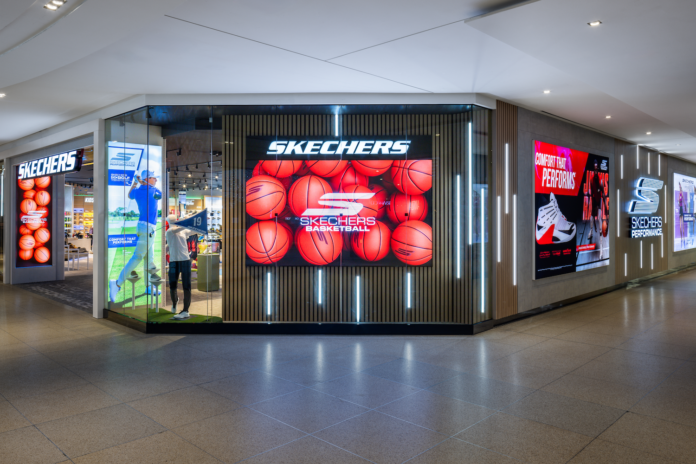
Facade of the new Skechers flagship store at West Edmonton Mall. Photo: Skechers
Skechers has officially launched its first-ever Skechers Performance flagship store, a groundbreaking retail experience located at West Edmonton Mall in Edmonton. The store marks a new chapter for the California-based brand, offering an immersive destination where customers can engage with its latest performance technologies across multiple sports.
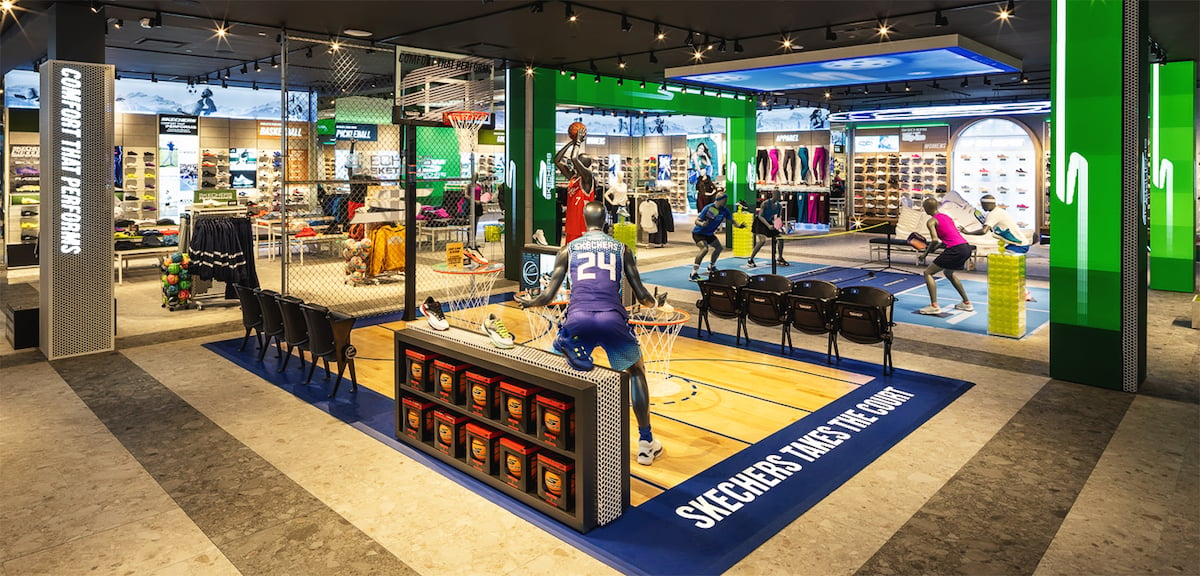
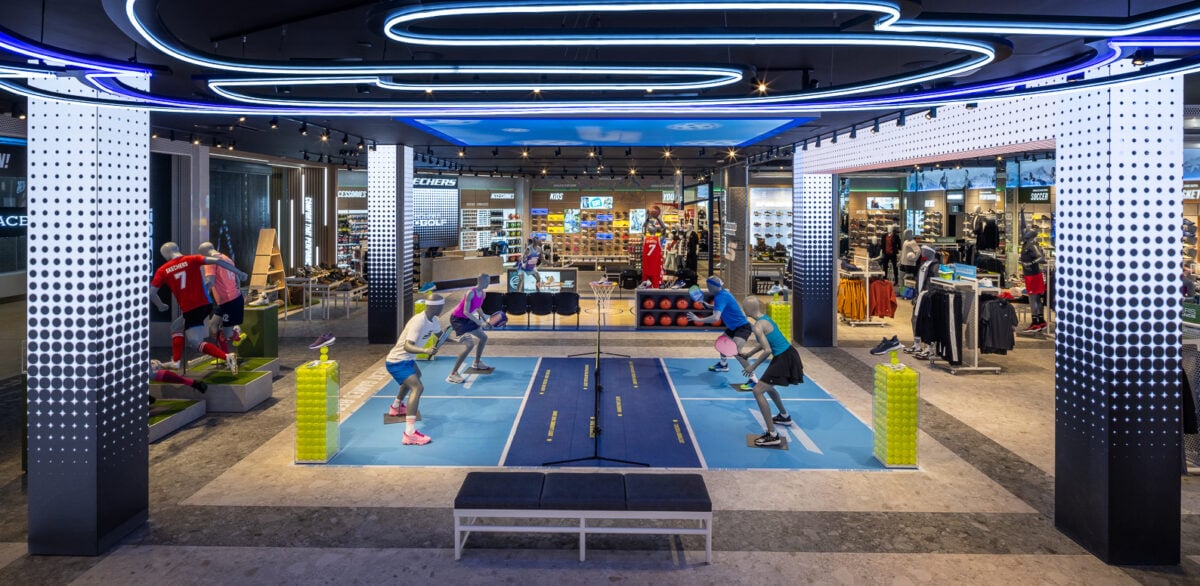
Spanning over 7,500 square feet, the new Skechers Performance store is the largest of its kind. The store integrates interactive elements, including dedicated half-courts for pickleball and basketball, allowing shoppers to test Skechers’ performance footwear in real time.
“With the world’s elite pros wearing our shoes from the court to the pitch, mound, and green, our retail stores’ innovative performance products have become a magnet for athletes who want game-changing products with essential comfort,” said Michael Greenberg, President of Skechers. “Our new performance store offers competitors at every level the complete experience: from our largest-ever offering of performance footwear, apparel, and accessories to Skechers specialists and educators for our diverse sport technologies.”
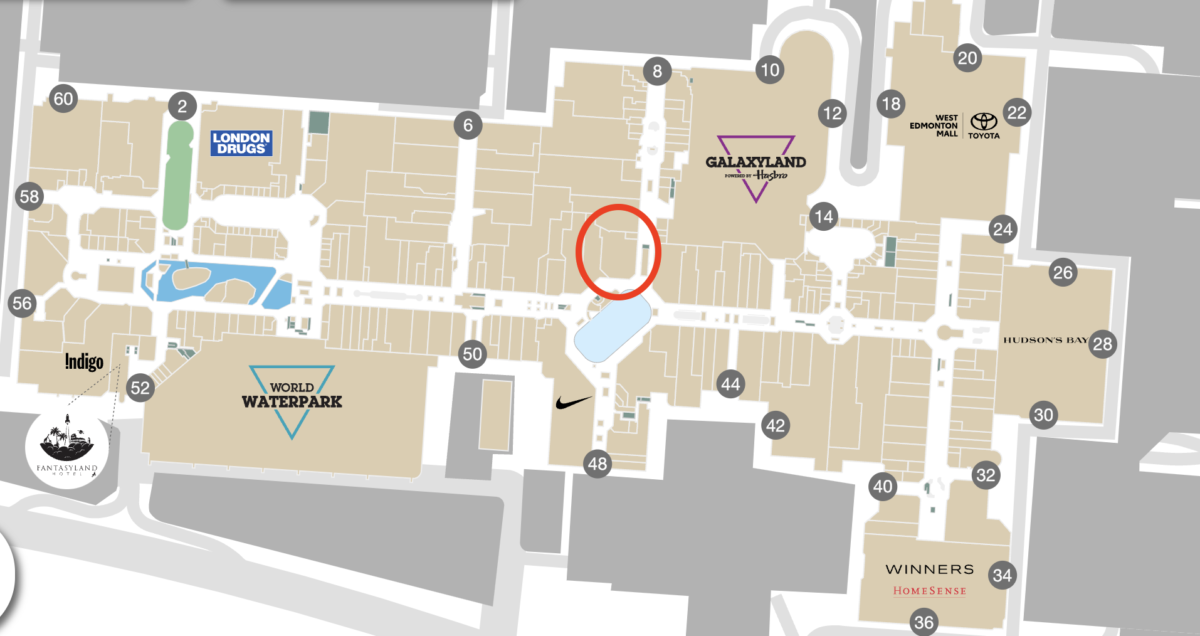
The new Skechers flagship replaces a Guess store that occupied the prominent main-floor location for years. The store overlooks the Ice Palace at West Edmonton Mall, offering a unique shopping experience with views of one of the mall’s most iconic attractions.
New Skechers flagship store at West Edmonton Mall, pickleball area. Photo: Skechers
Expanding Skechers’ Commitment to Athletes
The new store highlights Skechers’ increasing focus on high-performance footwear and apparel. While the brand has long been known for its comfort-oriented lifestyle shoes, its recent push into performance categories has been gaining momentum, with endorsements from high-profile athletes in basketball, golf, soccer, and pickleball.
Shoppers will find dedicated sections featuring Skechers’ latest technology, including Skechers Hyper Burst Pro™, Skechers Performance FitKnit®, Skechers Hands Free Slip-ins®, Skechers Arch Fit®, and Skechers Max Cushioning®. These innovations are designed to enhance comfort, stability, and energy return, catering to professional athletes and casual enthusiasts alike.
David Beecroft, Country Manager of Skechers Canada, emphasized the strategic decision to open the flagship in Edmonton. “Edmonton’s vibrant sports culture and passion for hosting year-round athletic events make it the perfect home for Skechers’ first performance destination,” he explained. “And as the second-largest mall in North America, West Edmonton Mall is a massive draw that will attract all walks of life to this exciting new concept.”
An Experience Beyond Retail
The store’s design takes cues from modern sports facilities, with state-of-the-art LED screens providing dynamic visuals that showcase Skechers’ latest campaigns and athlete partnerships. The addition of in-store courts transforms traditional retail into an interactive experience, allowing shoppers to feel the difference in Skechers’ technology before making a purchase.
To mark the grand opening, NHL legend and media personality Paul Bissonnette made an appearance, drawing in fans and sports enthusiasts. “Paul’s an avid sports fan, and his presence at our opening event has attracted his fans and fellow athletes,” Beecroft said. “It’s exciting to see how much we’re investing in the performance space and how much our product can elevate their game.”
Click image for interactive West Edmonton Mall floor plan
Skechers’ Growing Influence in Sports
Over the past decade, Skechers has expanded its presence in performance footwear, signing an impressive roster of professional athletes. Its lineup includes basketball stars such as Julius Randle, Jabari Walker, Terance Mann, Joel Embiid, and Rickea Jackson, along with golf champions Matt Fitzpatrick and Brooke Henderson. The brand has also made significant inroads into soccer, with global stars Harry Kane, Mohammed Kudus, Oleksandr Zinchenko, and Barış Alper Yılmaz wearing Skechers cleats. Additionally, pickleball pros Tyson McGuffin and Catherine Parenteau have joined the brand’s growing roster.
Retail Expansion and Future Plans
Skechers’ performance push is not just limited to West Edmonton Mall. With over 5,300 retail stores worldwide, the company continues to expand its global footprint. The West Edmonton Mall location serves as a model for future experiential retail spaces that could roll out in other major cities. However, it is not yet known if Skechers will open more stores of this type in Canada.
Shoppers who visit the flagship can explore Skechers’ complete performance collection, including running, training, walking, trail, hiking, and golf categories. The store is staffed with trained specialists who can provide insights into Skechers’ various performance technologies, helping customers find the best fit for their athletic needs.
New Skechers flagship store at West Edmonton Mall, pickleball display. Photo: Skechers
A Strategic Move in the Canadian Market
The opening of the Skechers Performance flagship highlights Canada as an important market for the brand. With a growing interest in fitness and active lifestyles, the demand for high-performance footwear is on the rise. Skechers’ ability to offer advanced sports technology at an accessible price point makes it a formidable player in the segment.
West Edmonton Mall: A Retail and Entertainment Landmark
West Edmonton Mall, located in Edmonton, Alberta, is a premier shopping and entertainment destination. Spanning approximately 5.3 million square feet, it stands as the largest shopping centre in North America.
A Brief History
Opened on September 15, 1981, West Edmonton Mall (WEM) was developed in multiple phases throughout the 1980s and 1990s. It was among the first shopping centres to offer a wide range of amenities, from water parks to themed streets, making it attractive year-round, especially during winter.
Attractions and Amenities
Beyond its extensive retail offerings, WEM boasts a variety of attractions:
Galaxyland: An indoor amusement park featuring numerous rides and games.
World Waterpark: Home to the world’s largest indoor wave pool.
Ice Palace: A skating rink that has hosted public skating and hockey events.
Sea Life Caverns: An underground aquarium housing over 100 species of marine life.
Themed Streets: Areas like Bourbon Street and Europa Boulevard offer unique shopping and dining experiences.
Economic and Cultural Impact
WEM attracts approximately 32 million visitors annually, with daily foot traffic ranging from 90,000 to 200,000 shoppers, depending on the season. The mall employs over 24,000 people, making it a significant contributor to Edmonton’s economy.
Its blend of retail, entertainment, and dining options has solidified WEM’s reputation as a must-visit destination for both locals and tourists.
President Donald Trump arrives to speak at the 2025 House Republican Members Conference Dinner at Trump National Doral Miami in Doral, Fla., Monday, Jan. 27, 2025. (AP Photo/Mark Schiefelbein)
The looming tariffs against Canadian and Mexican exports to the United States are not just another round of trade skirmishes. They may well signify the beginning of the end for Bretton Woods-era multilateralism, the rules-based global trade order that has underpinned international commerce since 1944. Now that Donald Trump is back in the White House, his administration is doubling down on policies that favour economic nationalism, marking a definitive departure from global trade as we know it.
For Canada, this shift is seismic. American tariffs on Canadian and Mexican products, including agri-food exports, could dismantle what remains of the Comprehensive US-Mexico-Canada Agreement (CUSMA). Trump sees trade as a zero-sum game, where the U.S. has been taken advantage of for decades. The imposition of tariffs is not about fixing a broken system; it’s about reshaping the global trade order to bolster American industries, gain negotiation leverage, and appeal to his political base. Even if Canada retaliates with 500% tariffs, it would be irrelevant to Trump’s calculus. The objective is power exercising it, consolidating it, and using it to rewrite trade relationships on U.S. terms.
The End of Multilateralism?
Since the signing of CUSMA in 2020, Canada has operated under the assumption that trade relations with the U.S. would remain relatively stable. But with tariffs now being used as a key policy tool, expect a shift toward bilateral agreements where the U.S. dictates terms to individual nations rather than negotiating in multilateral forums. In such a scenario, Canada’s bargaining power weakens significantly. The U.S. market is the backbone of Canada’s agricultural exports, with nearly 60% of total agri-food exports destined for American consumers. A tariff war would force Canadian producers to absorb higher costs, pass them on to consumers, or search for alternative markets—none of which are ideal outcomes.
For Canadian farmers and food processors, the impact is immediate and brutal. Higher tariffs on products like beef, pork, produce and grains erode competitiveness in the U.S. market, shrinking margins for producers already grappling with inflation, labour shortages, and supply chain disruptions. The agri-food sector, which has thrived under integrated North American supply chains, must now recalibrate.
Alternative markets in Europe and Asia offer some opportunities, but they come with logistical challenges and regulatory hurdles that make them far less attractive than the U.S. The notion that Canada could simply pivot away from the American market is a fantasy; the economic and geographic realities dictate otherwise. Meanwhile, Mexico, facing similar tariffs, could turn to other partners like China, deepening the divide between North America’s economies.
The most concerning aspect of this shift is how ill-prepared Canadian policymakers appear to be. There is little indication that Ottawa fully grasps the scale of the transformation underway. Instead of scrambling to counteract tariffs with proactive trade diplomacy, we see Canadian leaders clinging to a multilateralism that Trump’s policies are designed to dismantle. Retaliatory tariffs, though politically necessary, are a blunt instrument that won’t deter Washington from its broader objective: reshaping trade to serve U.S. interests first and foremost.
The Future of CUSMA
With tariffs becoming the norm rather than the exception, CUSMA itself could become obsolete. Trump has long viewed NAFTA (and by extension, CUSMA) as a bad deal for the U.S. His administration is likely to seek to replace it with one-on-one agreements, where the U.S. can leverage its economic might to extract concessions from Canada and Mexico individually. The days of structured dispute resolution and trade predictability may be numbered.
Addressing Interprovincial Trade Barriers
Canada cannot afford to ignore the deep inefficiencies within its own borders. Interprovincial trade barriers remain a self-inflicted wound that weakens the country’s economic resilience. While Ottawa scrambles to respond to U.S. tariffs, businesses still struggle to move goods freely between provinces due to archaic regulations. If Canada hopes to offset the damage of external trade shocks, it must first dismantle these internal obstacles. A unified, efficient domestic market is the best foundation for strengthening international trade partnerships.
The agri-food sector must prepare for a future where trade uncertainty is the status quo. Canadian producers will need to invest in diversification strategies, expanding into non-traditional markets, even if doing so is costly. Domestic policymakers, meanwhile, must shift their mindset from damage control to proactive trade positioning. Simply reacting to U.S. tariffs won’t be enough; Canada must build stronger alliances beyond North America and push for new trade agreements that mitigate reliance on the U.S.
Trump’s tariffs are not just a policy shift; they are a fundamental restructuring of global trade dynamics. If Canada fails to adapt, our agri-food industry—and the broader economy—will bear the consequences.
Enormous snake display for Lunar New Year at Toronto's Yorkdale Shopping Centre. Photo: Yorkdale
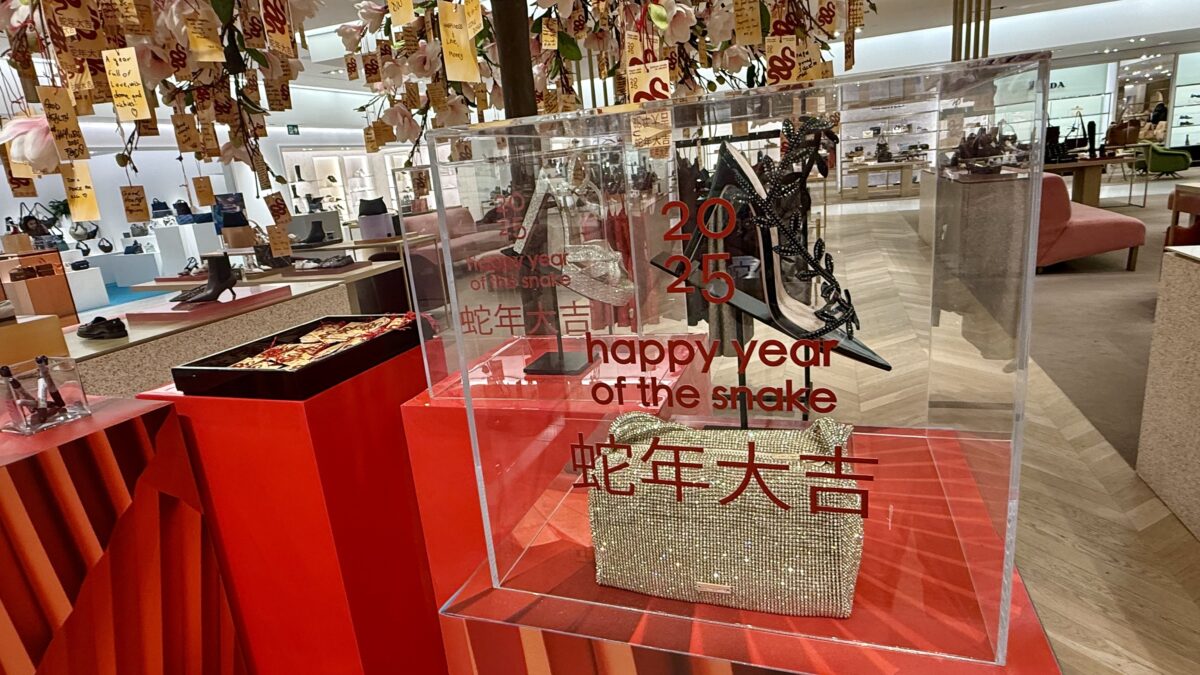
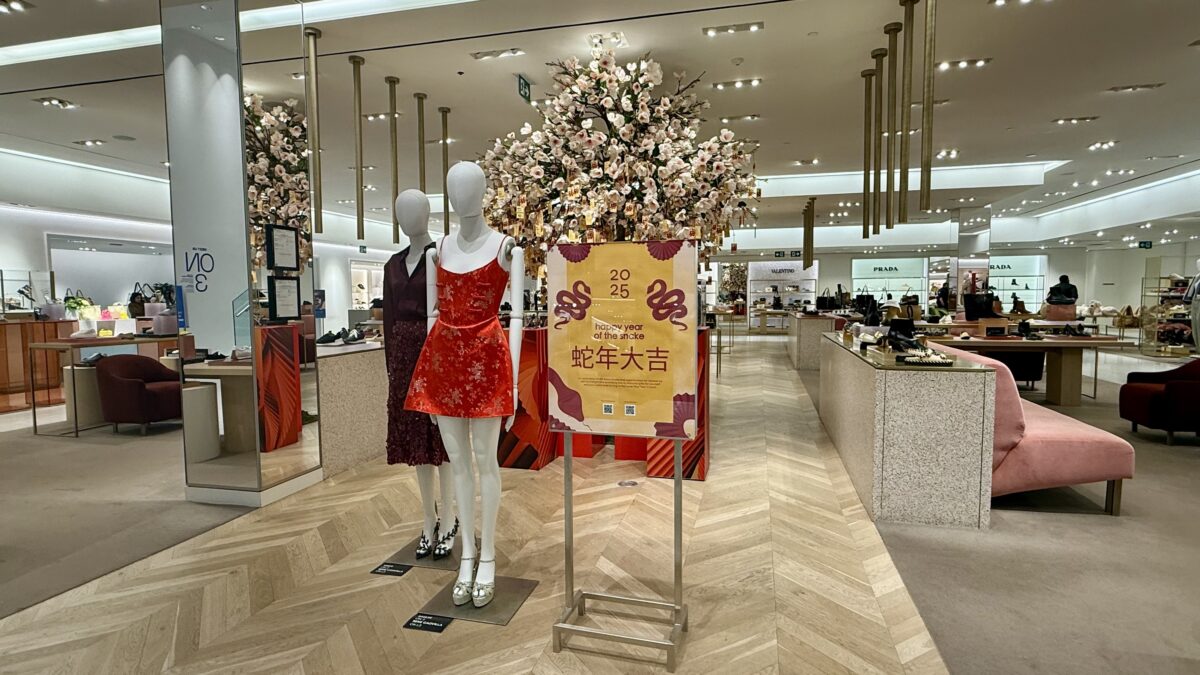
Retailers and shopping centres across Canada are marking the Lunar New Year with grand displays, exclusive merchandise, and immersive experiences aimed at attracting shoppers. With January typically being a slower sales month after the December holiday season, Lunar New Year provides an opportunity for retailers to drive traffic and increase spending.
Entrepreneur Jingjing Zheng, founder of BEYOO and Hexie Digital, has observed the growing influence of Lunar New Year celebrations among retailers. “Retailers are using this opportunity to capture festive celebrations while encouraging consumers to shop. Asian consumers often buy new clothing, symbolic red items, and gifts for family members. Red socks and red underwear are particularly popular purchases,” says Zheng.
Jingjing Zheng
She notes that many shopping centres in Canada have incorporated cultural elements such as calligraphy workshops, food tastings, and craft stations to enhance the shopping experience. “Lots of malls organize family-friendly events with calligraphy, traditional snacks, and exclusive promotions. This festive atmosphere draws in both Asian and non-Asian shoppers who are eager to take part in the celebrations,” she adds.
Retailers Introducing Exclusive Lunar New Year Promotions
Luxury retailers such as Holt Renfrew and Harry Rosen, along with major shopping centres operated by Cadillac Fairview (CF) and other landlords, are launching exclusive promotions tied to the holiday. Holt Renfrew, for example, is offering a special gift card promotion where shoppers who spend $800 or more will receive a bonus gift card.
Retailers are also integrating WeChat Pay and AliPay into their payment systems to accommodate Chinese consumers. Yorkdale Shopping Centre, for instance, allows shoppers to use these platforms for transactions up to $10,000 CAD per day through its gift card service, which can be redeemed at any of the mall’s 270 retailers.
Lunar New Year display at Holt Renfrew, 50 Bloor St. W. in Toronto. Photo: Craig PattersonLunar New Year display at Holt Renfrew, 50 Bloor St. W. in Toronto. Photo: Craig Patterson
The Impact of Lunar New Year on Retail Spending in Canada
While Canada has yet to see pre-pandemic levels of Chinese tourism, local communities are driving Lunar New Year spending. Cities like Markham, Ontario, and Richmond, British Columbia, with high concentrations of Asian residents, often experience notable increases in retail activity during this time.
“There is still a lot of shopping activity happening locally. While international tourism from China hasn’t fully rebounded, retailers are targeting local communities who celebrate the holiday,” says Zheng.
According to industry analysts, spending trends indicate that Lunar New Year promotions contribute to a significant retail boost. Major retailers such as La Maison Simons, Lululemon, and Michael Hill have introduced special Lunar New Year collections, while luxury brands continue to launch exclusive zodiac-themed merchandise to appeal to affluent shoppers.
Golden Gateway for Lunar New Year at Toronto’s Yorkdale Shopping Centre. Photo: Yorkdale
Yorkdale Shopping Centre’s Landmark Celebrations
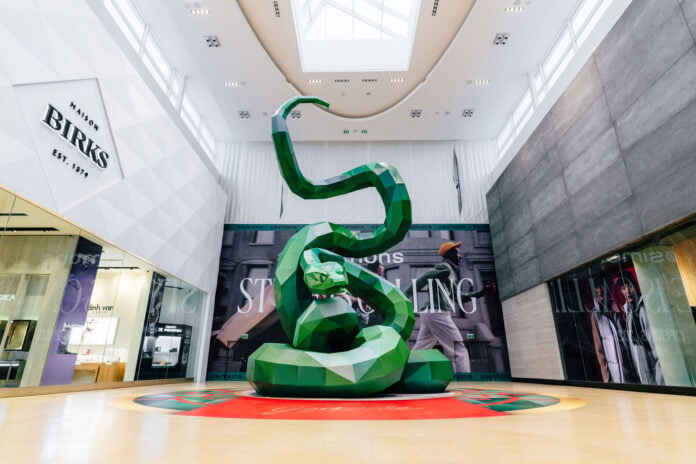
Canada’s most productive mall is an example of a centre embracing the festivities. Toronto’s Yorkdale Shopping Centre has gone all out for this year’s Lunar New Year festivities with an eye-catching Year of the Snake installation. The 30-foot-high and 20-foot-wide green geometric serpent, suspended in the East Court until February 12, is crafted from sustainable materials and weighs 550 pounds. The green hues reflect the elegance of jade, a stone that symbolizes luck, prosperity, and renewal.
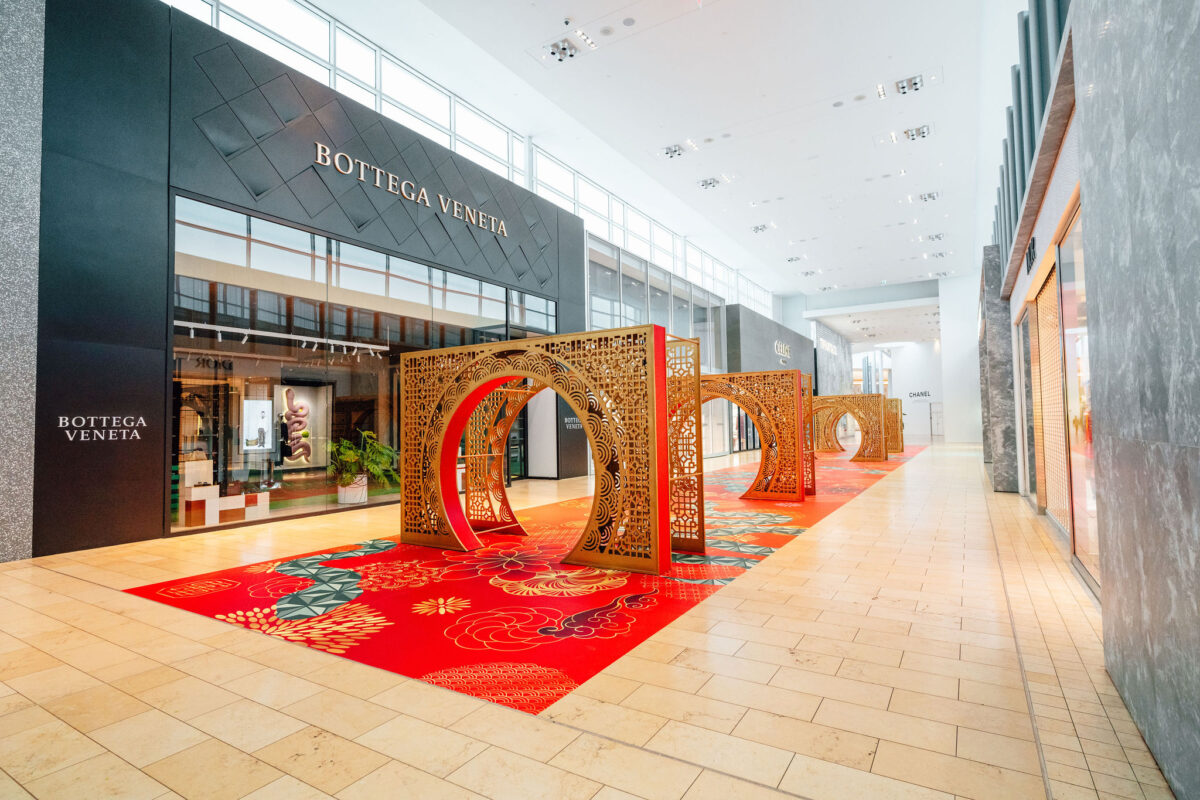
Complementing this is the Golden Gateway, a stunning series of golden archways located near Tiffany & Co. Shoppers can walk through the beautifully designed Year of the Snake runway adorned with florals and serpentine elements, creating an immersive space perfect for photos and videos.
Golden Gateway for Lunar New Year at Toronto’s Yorkdale Shopping Centre. Photo: Yorkdale
“Lunar New Year is one of the most significant gift-giving events in many Asian cultures. We know from experience that our guests expect some of Toronto’s most engaging experiences in addition to our unrivaled array of global brands that often release exclusive, limited-edition Lunar New Year collections,” says Rachael Tang, Marketing Manager at Yorkdale Shopping Centre.
Yorkdale is also hosting a traditional Lion Dance and Eye-Dotting Ceremony on February 2 at 3 p.m. The celebration will feature one of Canada’s premier lion dance teams, who will lead a procession beginning at the Year of the Snake installation. Traditional scrolls and red envelopes will be distributed to visitors.
Enormous snake display for Lunar New Year at Toronto’s Yorkdale Shopping Centre. Photo: Yorkdale
The Role of RedNote in Retail Marketing for Lunar New Year
Zheng also highlights the role of digital engagement in Lunar New Year shopping trends, particularly the increasing use of RedNote (Xiaohongshu) by retailers. “RedNote is becoming a major platform for retailers targeting Chinese consumers in North America,” she explains. “People post about mall installations, new collections, and exclusive in-store experiences. This digital engagement helps spread awareness and attract more visitors.”
She emphasizes that RedNote is especially valuable for brands looking to connect with a younger, digitally savvy audience that relies on peer recommendations and user-generated content. “Consumers trust reviews and posts from real people over traditional advertisements. Brands that leverage RedNote effectively can engage with consumers in a more authentic and community-driven way,” says Zheng.
The Yorkdale Shopping Centre and Holt Renfrew have started creating content specifically for RedNote, collaborating with influencers to showcase exclusive Lunar New Year merchandise and shopping experiences. “Malls and brands that invest in engaging with consumers on RedNote can expect higher foot traffic and increased sales during the festive period,” Zheng adds.
Lunar New Year window display at Harry Rosen, 82 Bloor St. W. in Toronto. Photo: Craig Patterson
How Shopping Centres and Retailers are Maximizing Lunar New Year Engagement
To capitalize on Lunar New Year shopping habits, retailers and malls are implementing various strategies:
Cultural-Themed Decorations – Large-scale festive installations, lantern displays, and zodiac symbols create a vibrant shopping atmosphere.
Exclusive Limited-Edition Merchandise – Offering Lunar New Year-themed clothing, accessories, and home decor can attract both celebrants and gift shoppers.
Traditional Performances and Workshops – Lion dances, calligraphy sessions, and food tastings enhance the shopping experience.
Gift-With-Purchase Offers – Providing red envelopes, special-edition packaging, or discount vouchers for purchases over a certain amount can drive sales.
Digital and Social Media Marketing – Engaging with Asian influencers and utilizing platforms like WeChat, Red, and TikTok helps retailers reach their target audience.
Flexible Payment Options – Accepting AliPay and WeChat Pay simplifies transactions for Chinese shoppers.
Lunar New Year tea at Holt Renfrew, 50 Bloor St. W. in Toronto. Photo: Craig PattersonLunar New Year window display at Holt Renfrew, 50 Bloor St. W. in Toronto. Photo: Craig Patterson
The Future of Lunar New Year in Canadian Retail
As retailers increasingly recognize the importance of Lunar New Year, the scale and sophistication of celebrations in Canada continue to grow. Malls and retailers are investing more in immersive experiences, exclusive product drops, and digital engagement to cater to this expanding market.
“Lunar New Year celebrations are not just about attracting Asian shoppers; they also create an opportunity to educate and engage the broader community. The more inclusive and elaborate these celebrations become, the greater their appeal,” says Zheng.