Advertisement
Home Blog Page 495

Salesforce’s Agentforce heralds new era in retail AI [Interview]

Dreamforce Keynote stage at the Moscone Centre in San Francisco on September 17, 2024. Photo: Craig Patterson
Kelly Thacker. Photo: LinkedIn.

Salesforce has launched Agentforce, a groundbreaking suite of autonomous AI agents set to transform the retail landscape. The announcement came during the Salesforce Dreamforce event in San Francisco on September 17, 2024.

Kelly Thacker, SVP of Product Marketing and CMO for Retail & Consumer Goods at Salesforce, shared insights on how Agentforce is poised to revolutionize the industry. “This is what AI was meant to do 25 years ago,” Thacker explained, highlighting the product’s potential to deliver personalized experiences that surpass human capabilities.

Agentforce: The Third Wave of AI in Retail

Marc Benioff. Photo: LinkedIn.

Salesforce CEO Marc Benioff describes Agentforce as the “third wave” of AI, advancing beyond copilots to a new era of highly accurate, low-hallucination intelligent agents. Unlike traditional chatbots or AI assistants, Agentforce operates autonomously, retrieving data on demand, building action plans, and executing tasks without human intervention.

Thacker traced the journey of AI in retail, noting that the industry has been using predictive AI for about 15 years. This technology has powered features like product recommendations, dynamic pricing, and customer segmentation. 

However, the landscape shifted dramatically in 2023 with the advent of ChatGPT, which Thacker described as the first time AI passed the Turing test.

Agentforce introduces several key agents designed to address specific retail needs:

  1. Merchant Agent: Acts as an extension of the merchandising team, capable of setting up websites, establishing business goals, and making data-driven recommendations to achieve those objectives.
  2. Personal Shopper Agent: Functions as a digital concierge on ecommerce sites or messaging apps, offering highly personalized shopping experiences and product recommendations.
  3. Buyer Agent: Tailored for B2B transactions, this agent simplifies the purchasing process by helping buyers find products, make purchases, and track orders via chat or within sales portals.
  4. Service Agent: Replaces traditional chatbots with AI that can handle a wide range of service issues without preprogrammed scenarios, improving customer service efficiency.
  5. Sales Development Representative (SDR) Agent: Engages with prospects 24/7, answering questions, managing objections, and scheduling meetings based on CRM and external data.

Thacker emphasized that these AI agents are not meant to replace human workers, but to augment their capabilities. “This is not at all a replacement of a merchant or a personal shopper,” she clarified. “It’s giving them superpowers, enabling them to do their jobs much better.”

The Technology Behind Salesforce Agentforce AI

Agentforce is powered by the new Atlas Reasoning Engine, which simulates human thinking and planning. It evaluates queries, retrieves relevant data, builds execution plans, and refines them for accuracy and relevance. This process allows Agentforce to make decisions and complete business tasks autonomously while delivering precise, factually accurate results.

Data Cloud, at the center of the Salesforce Platform, unifies and harmonizes all customer data in real-time, enabling Agentforce to operate with complete context and precision. The platform also integrates seamlessly with existing automation capabilities, including MuleSoft, allowing organizations to capitalize on their existing investments.

Salesforce Agentforce AI
Photo: Salesforce.

Customization and Deployment

Salesforce has introduced low-code tools like Agent Builder, Model Builder, and Prompt Builder, making it easy for organizations to customize out-of-the-box agents or build new ones for any role, industry, or use case. This flexibility allows retailers to tailor Agentforce to their specific needs and market demands.

The Future of Retail: AI-Driven Personalization and Efficiency

As AI technology continues to evolve rapidly, Thacker believes Agentforce will give retailers a competitive edge. The ability to fully personalize customer experiences and proactively meet consumer needs could set brands apart in the marketplace.

However, Thacker cautioned that the effectiveness of AI solutions depends heavily on data quality. She cited a startling statistic: “72 percent of company data is disconnected.” For retailers looking to implement AI solutions like Agentforce, connecting and organizing data is a crucial first step.

Real-World Impact of Agentforce

Early adopters of Agentforce are already seeing significant results across various sectors of the retail industry. The real-world examples demonstrate the transformative potential of AI-driven agents in enhancing customer experiences and improving operational efficiency.

Michael Hite. Photo: LinkedIn.
Saks Fifth Avenue Personalizes Luxury Retail

Luxury retailer Saks Fifth Avenue is leveraging Agentforce to advance its personalization strategy. Mike Hite, Chief Technology Officer at Saks Global, sees Agentforce as a tool to raise the bar in luxury retail.

“Agentforce will improve our effectiveness across customer touchpoints, empowering our employees and augmenting their ability to deliver the elevated and more individualized shopping experiences for which Saks is known,” Hite stated. In the competitive world of luxury retail, the ability to provide highly personalized experiences at scale could significantly differentiate Saks from its competitors.

Wiley Transforms Customer Service
Kevin Quigley. Photo: LinkedIn.

Wiley, a global leader in educational publishing, has experienced a remarkable transformation in its customer service operations. Kevin Quigley, Senior Manager of Continuous Improvement at Wiley, reported that Agentforce has made a noticeable difference during their busiest period – the back-to-school season.

“We’ve seen a more than 40% increase in case resolution, outperforming our old bot,” Quigley stated. By leveraging Agentforce to manage routine responsibilities, Wiley has been able to free up its service teams to focus on more complex cases. This shift not only improves efficiency but also enhances the quality of support provided to customers.

OpenTable Elevates Hospitality
Senior Vice President of Global Customer Success at OpenTable
George Pokorny. Photo: LinkedIn.

OpenTable, a leading online restaurant-reservation service company, is exploring Agentforce’s potential to enhance its customer support. George Pokorny, SVP of Customer Success at OpenTable, emphasized the importance of accurate and fast interactions for both restaurants and diners.

“Agentforce has incredible potential to help us deliver that high-touch attentiveness and support while significantly freeing up our team to address more complex needs,” Pokorny explained. For a service-oriented business like OpenTable, the ability to provide AI-powered support that matches the hospitality standards of high-end restaurants could be a game-changer.

Related Salesforce Article: Canadian Consumers Continue to Tighten Spending as Inflation Persists, Salesforce Q1 Data Shows

Declining alcohol consumption in Canada signals major shift [Op-Ed]

Canada is experiencing a notable shift in its alcohol consumption patterns. Quebec’s SAQ is the latest liquor authority to report a consecutive decline in alcohol sales by volume, a trend that mirrors what is happening across the nation. In the most recent fiscal year, alcohol sales by volume have dropped in all provinces, signaling a significant change in Canadian drinking habits. According to the data, Ontario’s sales fell by 2.0%, Quebec by 2.5%, and Alberta saw a steep 15% decline, based on estimates and liquor board reports. Provinces such as Nova Scotia (-4.2%), Manitoba (-6.7%), and British Columbia (-4.9%) have also reported substantial drops.

Despite these volume declines, many liquor boards have managed to maintain or increase revenues through price hikes. However, the downward trend in consumption is undeniable. Inflation and the broader cost-of-living crisis are likely the primary drivers. As household budgets tighten, consumers are forced to prioritize essential expenses like food and shelter, leaving alcohol purchases as one of the first discretionary items to be cut. Compounding this, federal and provincial taxes on alcohol have increased, making these products less affordable for many Canadians. This combination of rising taxes and inflation is contributing to a further decline in alcohol consumption as prices escalate beyond the reach of many consumers.

The Role of Demographics in Shifting Alcohol Consumption

Another contributing factor is Canada’s evolving demographic landscape. With increasing immigration, many new Canadians come from cultures where alcohol consumption is moderate or avoided altogether for religious or cultural reasons. As immigration fuels Canada’s population growth, this influx is likely contributing to the reduction in per capita alcohol consumption. The traditional post-work beer or weekend wine may be losing its dominance as cultural diversity reshapes social norms around drinking.

The growing public awareness of the health risks associated with alcohol has also played a role. Over the past decade, numerous studies have linked alcohol consumption to serious health issues, such as cancer, liver disease, and cardiovascular problems. These findings have spurred public health campaigns urging Canadians to reassess their drinking habits. What was once a stigma around heavy drinking has shifted into a more critical view of casual and social drinking. The rise of “Dry January” challenges, sober social spaces, and the increasing availability of non-alcoholic alternatives in bars and restaurants all signal a society that is rethinking its relationship with alcohol.

How Cannabis Legalization and Declining Alcohol Consumption in Canada Are Connected

Legalized cannabis may be another factor influencing alcohol’s decline. Since the legalization of recreational cannabis in 2018, the market has grown rapidly, and some consumers may be opting for cannabis over alcohol. Studies have suggested a “substitution effect,” where alcohol is replaced by cannabis consumption. The presence of a robust black market for cannabis, which remains cheaper and more accessible than its regulated counterpart, adds complexity to the picture. This underground trade is difficult to quantify but likely contributes to the shifting landscape of substance use in Canada.

As these trends unfold, the rise of the black market for cannabis and possibly other illicit substances indicates that consumption habits are changing in ways that official statistics might not fully capture. Alcohol may simply be losing ground to a wider array of recreational and illicit options.

This evolving landscape presents both challenges and opportunities for policymakers, businesses, and public health advocates. On the one hand, reduced alcohol consumption could alleviate public health burdens, potentially lowering rates of alcohol-related illnesses and hospitalizations. On the other hand, the economic implications of declining alcohol sales cannot be overlooked. As alcohol revenues decline, provinces that have relied on these sales to fund public programs may need to rethink their fiscal strategies.

While Canadians appear to be making healthier choices regarding alcohol, the increasing use of cannabis presents new regulatory and health challenges. Canada’s experience with legalized cannabis is still relatively new, and the long-term health and societal implications of this shift remain uncertain.

The data indicate that, eventually, alcohol-generated revenues will decline. In fact, this is already happening in some cases. Governments will need to reconsider their reliance on alcohol sales as a steady source of income for provincial coffers, especially as higher taxes continue to make alcoholic products less affordable for Canadians.

Other Articles Related to Sylvain Charlebois: Where are Food Prices in Canada Headed in 2024?

How to win in retail: less science, more art [Op-Ed]

Are there limits to what the human mind can comprehend? Photo: Trifonov Evgeniy | Canva

By Doug Stephens, Founder, Retail Prophet.

Over the last 20 years, technology has transformed retail. Mobile phones have become essential conduits for communication, entertainment and commerce. Technologies like augmented reality, once a novelty, have become commonplace digital merchandising and selling tools. E-commerce, which in 2003 amounted to a rounding error on most retailers’ profit and loss statements, has become table stakes for any business wishing to survive.

But the shift is bigger than consumer-facing innovations. Amazon, once a profitless aggravation for traditional retailers, has become one of the most valuable companies in history by leaning into the behind-the-scenes science of retail: the physics, math, engineering and data of moving goods from production to consumption. And it’s not alone.

Today, we sit on the edge of yet another technology revolution in retail, with investment by retailers in AI and machine learning projected to increase up to eight-fold by 2032.

Yet, despite all the investment in technological progress, too many retailers today struggle to stay afloat, grinding it out each day, one promotion at a time. Because, while technology has advanced the mechanics of retail, it’s also opened the door to something else: a historic explosion in new competitors to traditional retailers – from third-party marketplaces and direct sellers to Asian discounters and social media influencers – all of which are now battling it out for finite, fleeting and increasingly fragmented slivers of consumer attention.

Indeed, the existential challenge facing most retailers today is how to command disproportionate levels of attention. And how to do this when superior selection, convenience and price have largely become the domain of large international marketplaces and mega-chains, and digital advertising is relentlessly more expensive while declining in its effectiveness?

The answer lies less in deploying new technology and more in something almost never discussed in retail circles: art. Because, as it turns out, attracting attention and promoting recall are what art does best. In fact, a growing body of scientific evidence suggests that art, regardless of form, has a uniquely stimulating effect on our brains.

According to Daniel J. Levitin, author of “This is Your Brain on Music: The Science of Human Obsession,” listening to a favourite song or a familiar style of music lights up almost every region of our brain, including areas linked to memory. Experiencing art has been proven to boost blood supply to the brain, producing rushes of dopamine and activating both cognitive and emotional activity.

Most importantly, consumers are looking to retail to play a more artistic role in their lives. In a recent study, BoF Insights found that a majority of Gen-Z shoppers in the US described fashion as their favourite “entertainment category” to spend money on, outranking other categories like dining, video games and music. They refer to retail not as commerce or shopping, but as “entertainment.”

For young consumers in particular, shopping and entertainment are merging and if retailers want to generate disproportionate levels of attention and recall, while giving shoppers the “entertainment” they want, they need to begin thinking less like retailers and more like artists.

It starts with a story

So, what is it about art that our brains love so much and how can retailers tap into it to garner outsized levels of attention? Research suggests there are two keys.

The first key is understanding that art is a vehicle for storytelling.

Stories have played a vital role in human development since the dawn of civilization. From

Greek mythology to nursery rhymes, from books to film, stories are an intrinsically human vehicle for communication, socialization and learning. In fact, a study by the London School of Business found that when dry factual data is expressed through a story, readers are likely to remember almost 60 per cent more than if the same set of facts were simply listed as such.

Stories that are told through art also contribute real value to our lives. The protest songs of the 1960’s incited action against the Vietnam war, promoted community and invited a sense of belonging. Musical films of the 1940’s offered moviegoers distraction and relief from the horrors of WWII. Documentary films enhance our understanding of history, society and world events. And, of course, art can push the boundaries of design, birthing new aesthetics and unique functionality.

Done properly, retail can serve the same important human needs and there are worthy emulators to follow.

Patagonia, for example, puts a story of environmental activism at its core, inciting their values-based community of consumers to act against climate change. US toy store chain Camp builds themed stories into beautifully crafted entertainment experiences for families, while selling toys in the process. New York based B&H Photo and Video has spent over 50 years telling a story of superior expertise, informing and enlightening customers on the subject of photography and film, becoming world-renowned in the process. And Dyson has never wavered from its story of superior engineering and design, turning mundane items like vacuums and hair dryers into status symbols and functional forms of art. When we buy from these kinds of brands, we’re not just buying a product. We’re also buying in to their story. And it is four areas – culture, entertainment, expertise and design – that offer strong, ownable footholds from which brands and retailers can successfully compete, without attempting to out-compete Amazon and others on price, convenience or selection.

Art of Retail Strategy

From products to productions

But a brand story cannot simply be a platitude or vague idea buried somewhere in the company’s mission statement. It must, like a production, come to life for consumers across their experience. For Patagonia, this means telling the story of environmental activism, every day, in varied ways, at every touchpoint along the consumer journey, from their website content and ad media through to the recycled materials used to build their stores and offices; from the fibres used in their garments to the character and values of the people they hire.

Every message, every moment, every person and every experience ladders up to a story about saving the planet. And it’s not just a story. It’s the only story. And it is through their commitment to telling the story, that Patagonia has developed a loyal, global community of customers, coming to the brand, not simply for a product but also for a sense of shared values and community.

Dyson, on the other hand, goes to remarkable lengths to act out their story of the superior design, engineering and beauty of their products. All content, merchandising and messaging, and even their gallery-like stores, belie the mundane nature of their product category, elevating the things they sell (and their prices) into the realm of art. In doing so, they appeal to the powerful human needs for beauty and status.

Despite their obvious differences, both brands have become the cognitive defaults in their categories and have done so by maintaining an obsessive focus on telling their unique stories, stories that link directly to tangible human needs. In doing so, they have set themselves apart from the sea of commodity competition in their categories.

Becoming unforgettable

However, a brand’s job is not simply to be experienced but also to be remembered, offering more reason for retailers to turn to art. Art has been

proven to create deeper, longer-term memories, than other data forms. Perhaps this explains why decades-old song lyrics or movie lines are retained in our cognitive filing cabinets. Art tends to lodge itself deeply into our memories.

The key to unlocking this power comes by first understanding that the human memory is not an unidimensional thing. In fact, we have at least six unique memory inputs. First, roughly 20 per cent of our memory of an experience is generated from visual inputs or our iconic memory, which processes what we see. The remaining 80 per cent is divided between our echoic or sound memory, our olfactory memory, our gustatory or taste memory, our haptic memory to process what we feel, and our cerebellum, which processes the emotions conjured by the experience as a whole. Studies have established the inordinate power that scent has on our physiology. That smelling a rose, for example, activates exponentially more brain activity than simply looking at a photo of a rose. Other research has shown that playing French and German music in a wine store, on alternating days, for example, results in a disproportionate percentage of sales swinging in lockstep to French or German wines, even when shoppers are oblivious to the music that was played during their visit. The influence of involving motor skills to boost memory, cannot be underestimated. Students asked to draw a listed series of words, remembered 175 per cent more of them than a control group asked simply to memorize the list. The more of these memory pathways a retailer unlocks within a given experience, the more unforgettable the experience becomes.

Regrettably, most retailers tend to focus almost exclusively on the visual elements of their customer experience, all but ignoring the other, arguably more powerful sensory inputs. In doing so, they negate 80 per cent of their brand’s opportunity to be remembered. To remedy this, retailers would be wise to ask themselves what a blindfolded shopper would take away from the experience in their stores. What, if anything, would they hear, smell, feel and taste? And how each of these sensory inputs should support the brand story.

These two things in concert – a meaningful overarching story that’s connected to core human needs, underpinned with sensory and emotional involvement – are more likely to produce disproportionately more information about the experience, forge deeper neural pathways and, thus, create deeper recall within people. This might explain why, according to our research, such retailers also tend to enjoy better than average revenue growth, profit margins, customer loyalty and earned media values.

Rehumanizing retail

As for technology investments, retailers would be astute to consider these costly choices the way any great film, music or stage director might: by prioritizing those technologies that help to tell their unique story more clearly, impactfully and sensorially.

We’ve spent the last 20 years exploring the science of retail. Consequently, retail today is bigger, faster and infinitely more convenient than ever before. But regrettably, in our pursuit of the science of retail we’ve lost much of its humanity. The psychology, physiology and sociology that sits at the centre of why we shop and how it serves our deeper needs as human beings; the stories and experiences that make a brand worthy of attention and recall.

In a world rife with competition, commodity sellers and consumers in search of meaningful experiences, a return to the art of retail may be just what the industry needs.

——-

Doug Stephens. Photo: LinkedIn

Doug Stephens is the founder of the global consultancy Retail Prophet and the author of three bestselling books on the future of retail, including the recently released “Resurrecting Retail: The Future of Business in a Post-Pandemic World.”

Other articles by Doug Stephens include From Chaos to Competitive Edge: Doug Stephens Explores Retail’s Next Big Leap

La Canadienne Showcases City Dry Tech in FW24 Line

La Canadienne FW24 Launch (CNW Group/La Canadienne)
Nicholas Niro, President & CEO at La Canadienne

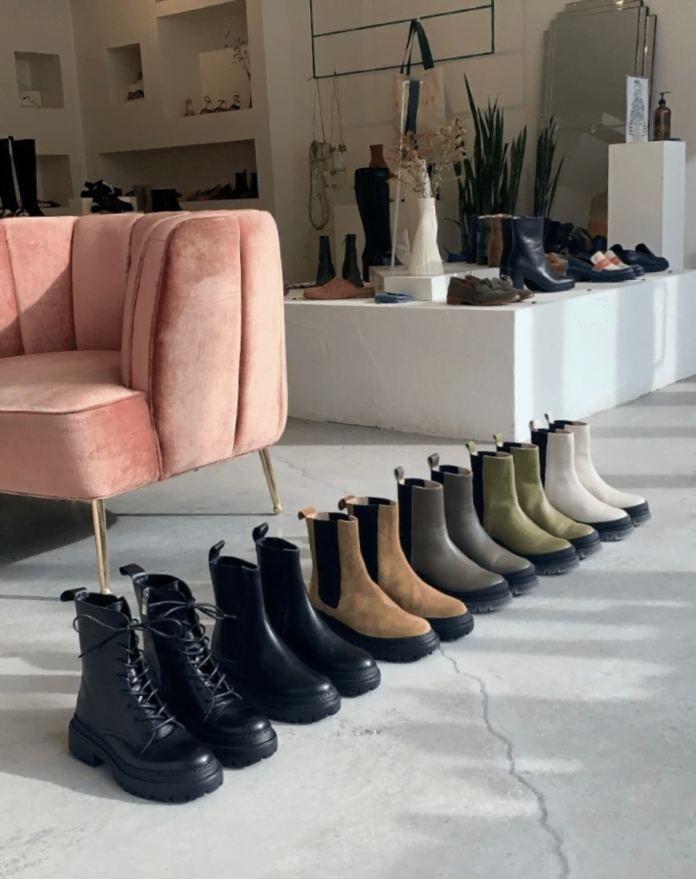
La Canadienne, a Montreal-based Canadian retailer of footwear, outerwear, and accessories, has launched its Fall Winter 2024 collection. The new line showcases the brand’s signature City Dry technology.

Nicholas Niro, President & CEO of La Canadienne, emphasized the company’s commitment to quality, comfort, and innovation. “Our City Dry™ technology sets us apart in the North American market,” Niro stated. This proprietary technology ensures La Canadienne’s footwear remains waterproof and durable.

A Game-Changer in Urban Fashion

La Canadienne’s City Dry™ technology is a cornerstone of the brand’s product line. It allows the brand to create handcrafted, waterproof suede and leather footwear that combines style with practicality. The innovation caters to the needs of urban dwellers who demand both fashion and function in their daily lives, according to the company.

Capturing City Dry Technology Through a New Lens

To support the FW24 launch, La Canadienne partnered with renowned fashion and celebrity photographer Max Abadian. The campaign, titled “City Dry™: Weather All Seasons In Style,” presents a fresh visual direction for the brand.

Abadian’s photography captures the essence of La Canadienne’s evolving identity. Set against an urban backdrop with neon-lit streets, the campaign features model An Koval showcasing the brand’s footwear, outerwear, handbags, and accessories.

This collaboration aims to attract a younger demographic while retaining its established customer base. The campaign effectively demonstrates how City Dry™ technology allows wearers to navigate urban environments with confidence and style, regardless of weather conditions.

La Canadienne’s roots trace back to 1987 in Montréal, Québec. The brand combines Canadian style with Italian-inspired footwear design. The company’s focus on consciously made, long-lasting products has earned it recognition worldwide.

Customers can find La Canadienne products on their website, www.lacanadienneshoes.com, in their five Canadian boutiques, and through premium retailers across North America that include well-known names like Nordstrom, Neiman Marcus, and Holt Renfrew in Canada.

Related Article: Lifestyle Brand ‘La Canadienne’ Opens 4th Store with Plans for Expansion

VIDEO: The importance of branding – George Minakakis

George Minakakis, Founder and CEO of the Inception Retail Group, says branding is important for retailers and needs to be done right to be effective

Minakakis says a brand must be a reflection of a retailer’s vision.

He recalls how his father once told him that your business can only do two to three things well.

Fundamentally brands are made up of a whole bunch of attributes and each brand is different but for the most part for a lot of them it comes down to who is the brand’s target audience.

Over the years many retailers have come and gone in Canada. Their brands wavered. They tried to be too many things to too many people.

Minakakis says retailers need to protect their brands and protect the sanctity of their brand from being marred by anything. By doing too many things, brands get thin and end up not doing everything very well.

He says Artificial Intelligence is going to change things for a lot of brands and how brands reach consumers.

Minakakis says proper branding is important for any size of retailer from a solopreneur to a major company.

“If you do too many things, it becomes confusing,” he says.

Minakakis says some jingles from commercials and slogans by brands have a never-ending impression on consumers. They get into a person’s mind and stick – becoming a part of a person’s DNA. And they’re powerful. But only a few retailers still do it and do it well in a crowded marketplace.

https://www.youtube.com/watch?v=ljIBfKT47gk

Upper Canada Mall Celebrates 50th Anniversary in Newmarket

Photo courtesy of Upper Canada Mall

Upper Canada Mall is celebrating 50 years this year as Newmarket, Ontario’s community hub.

And it continues to evolve to meet the growing needs of a burgeoning region.

Ryan Da Silva

“The region has expanded dramatically in the past 50 years and Upper Canada Mall has been keeping pace with this growth with a 100,000-square-foot expansion in 2008 and a 40,000-square-foot expansion in 2018 when we welcomed Market & co. We can’t wait to see where the next 50 years take us as we continue to bring the brands people love closer to home,” said Ryan Da Silva, Upper Canada Mall’s Director and General Manager.

“Upper Canada Mall has definitely been the heart of the community. There’s been a lot of growth within the York region and it continues to be one of the fastest growing regions. So the mall has adapted and evolved over the many years to meet customer needs and desires. We brought in a number of new retailers.

“As things change, as tenants come and go, we continue to evolve and bring in new retail brands that definitely help boost the mall’s traffic. Where a lot of malls are finding they may be down in traffic and sales, we’re actually up. We’re up three per cent in our customer traffic and our sales trends are aligned with that as well (compared to last year) . . . We’re back to pre-pandemic traffic and sales.”

Upper Canada is the premiere shopping destination in Newmarket, Ontario located just 30 minutes north of Toronto. On May 1, it celebrated 50 years. Co-owned by Oxford Properties Group and CPP Investment Board (CPPIB) and managed by Oxford Properties Group, Upper Canada is an award-winning shopping centre featuring more than 200 stores in one million square feet of retail space, including Zara, lululemon, Apple, Aritzia, Sephora, MAC Cosmetics, Michael Kors and Market & Co. – a 40,000-square-foot market concept with fresh, local and convenient food and dining offerings. 

Photo courtesy of Upper Canada Mall

This year’s new openings have included: 

Opening later this year inside Market & Co:

Photo courtesy of Upper Canada Mall

Da Silva said the mall does have plans to build residential on the property in the future.

“Being at the corner of Yonge and Highway 9, Yonge and Davis, it’s an ideal location in the heart of Newmarket. Transit is flowing up north on Yonge Street. So there’s new transit that’s currently under construction and will allow people to flow quickly and easily. So that’s where we are looking at aligning with the growth of Newmarket. Our northeast corner would probably be the first phase of future development but we’re probably five years plus in terms of all that,” explained Da Silva. 

“We don’t have any definite plans in the works. We continue to work with the city on master planning but no shovels in the ground planned as of yet. We’re still a few years away.”

As part of its 50th anniversary and philosophy of giving back to the community, earlier this year Upper Canada Mall donated $50,000 to the Southlake Foundation. Since opening in 1974, Upper Canada Mall has prioritized a commitment to the community having long supported Southlake Regional Health Centre and other partners such as Easter Seals, the York Region chapter of Girls Inc., York Pride, Ontario SPCA and Humane Society.

Jennifer Klotz-Ritter

“We’ve been very fortunate at Southlake to be supported by long-standing organizations, like Upper Canada Mall, who have shared in our vision of access to leading edge care, close to home for our community,” said Jennifer Klotz-Ritter, President and CEO of Southlake Foundation. “We’re honoured to receive this generous and thoughtful gift from Upper Canada Mall in celebration of their 50th Anniversary. Upper Canada Mall has been a long-time partner of the hospital, and we’re so grateful for their continued support.”

Established in 1960, Oxford and its portfolio companies manage approximately C$82 billion of assets across four continents on behalf of their investment partners. Oxford’s owned portfolio encompasses office, logistics, retail, multifamily residential, life sciences, hotels and credit in global gateway cities and high-growth hubs. Oxford is owned by OMERS, the Canadian defined benefit pension plan for Ontario’s municipal employees.

Photo courtesy of Upper Canada Mall

goop Beauty Expands at Holt Renfrew Across Canada

goop Beauty, the clean beauty line from Gwyneth Paltrow’s lifestyle brand, is set to make its exclusive debut at Holt Renfrew stores across Canada. This partnership marks an important expansion for the brand in Canada.

A Clean Beauty Revolution

The collaboration brings goop’s innovative products to Holt Renfrew’s discerning clientele. Shoppers can now access popular items like the Microderm Instant Glow Exfoliator and Youth-Boost Peptide Serum. These products epitomize goop’s commitment to clean beauty.

goop’s journey began in 2008 when Paltrow launched the brand. From the start, clean beauty was a core principle. The company helped define and shape the clean beauty category. Their approach involves careful ingredient selection and rigorous safety standards.

Expanding goop Beauty’s Presence with Holt Renfrew

This exclusive partnership solidifies goop’s presence in Canada. It builds on previous Canadian initiatives, including events in Montreal and Vancouver. The brand also operated a pop-up store in Toronto in 2019.

Gina Lucania. Photo: LinkedIn.

Gina Lucania, goop’s VP of Wholesale Sales and Marketing, expressed enthusiasm for the collaboration. She noted Holt Renfrew’s alignment with goop’s values. Carolyn Wright of Holt Renfrew echoed this sentiment. She highlighted the shared commitment to empowering self-expression and driving positive change.

goop’s strict ingredient policy sets it apart in the beauty industry. The brand avoids potentially harmful substances like parabens and synthetic fragrances. Instead, they focus on premium, clinically-proven ingredients that are environmentally friendly.

The goop Beauty line at Holt Renfrew will feature a range of products. These include skin, hair, and body care items. The collection also offers colour cosmetics and wellness supplements. Each product embodies goop’s innovative approach to clean beauty.

This expansion reflects growing consumer interest in clean beauty products. It also demonstrates Holt Renfrew’s commitment to meeting evolving customer preferences. The partnership promises to bring a new level of clean beauty innovation to Canadian consumers.

RCC Retail Sustainability 2024: Leading Retail into a Circular Future

RCC Retail Sustainability Conference/ Image supplied

Mark your calendars for October 16, 2024Retail Council of Canada’s(RCC) Retail Sustainability Conference returns, this year to the Toronto Congress Centre for another landmark event. Building on last year’s success, which brought together over 600 industry leaders, this year’s conference will dive even deeper into strategies for addressing retail’s most pressing sustainability challenges.

With consumer expectations rising and regulatory demands tightening, the need for sustainable practices has never been greater. RCC Retail Sustainability Conference 2024 (see Agenda) will spotlight retail’s role in the circular economy, offering practical solutions for Canadian retailers and manufacturers. It’s designed for mid to senior-level sustainability professionals ready to lead the charge for meaningful change.

Why RCC Retail Sustainability 2024 Conference Matters

Last year, participants explored actionable paths to reducing plastic waste, achieving net-zero emissions, and advancing decarbonization. This year builds on that momentum, offering even more real-world solutions and fostering additional collaborative approaches to sustainability challenges.

Key Sessions You Can’t Miss

The conference opens with an impressive panel featuring Sam Wankowski (Walmart Canada), Olivier Lemire (Keurig Dr Pepper Canada), and Margaret Hudson (Burnbrae Farms Limited) sharing insights on leadership in sustainability.

A highlight will be Driving Innovation and Collaboration with the Consumer Goods Forum, led by Cedric Dever of the Consumer Goods Forum. This session explores how leaders like Alain Brandon (Loblaw), Katie Decker (Kenvue Canada), and Jeff Bezzo (SC Johnson) are reducing environmental impact through ethical sourcing and product transparency, with a special focus on the Golden Design Rules aimed at cutting packaging waste.

Another key session, Collaboration is Key to Managing Scope 3, tackles indirect emissions in the supply chain. Speakers Tim Faveri (Nutrien Inc.), Jackie Cobb (Schneider Electric), and Paul Yang (RBI) and Daniel Reshef (Nestlé Canada) will share best practices for working with partners to measure and reduce Scope 3 emissions.

For those focused on packaging, Recyclability and the Impact on Packaging offers valuable insights into how retailers like Anthony Wolf (Canadian Tire Corporation) are improving product and packaging lifecycles. The session will be led by Patrick Dovigi, Founder and CEO of GFL Environmental, along with Stephen Miranda (GFL Environmental), who will explore collaborations to design more sustainable products. Jonathan Ménard (Machinex) will also join the panel to discuss key technological advancements in recycling that are driving innovation in the industry

Another must-see session, Sustainable Growth: Navigating Brand Responsibility and Consumer Demands, moderated by Kasia Sell (Deloitte Canada) in discussion with Leigh Pearson (Staples Canada) and Lindsey Colley (Canadian Tire Corporation) will show how brands can balance growth and sustainability while maintaining trust. The session will cover consumer trends, investments for long-term resilience, and navigating the legal risks of sustainability claims.

Why You Should Attend

RCC’s Retail Sustainability 2024 Conference is about more than learning—it’s about action. Whether you focus on packaging innovation, reducing emissions, or aligning growth with sustainability, this event will provide the tools and connections to lead your organization into a sustainable future.

With Early Bird pricing offering $100 savings until September 18, now is the time to secure your spot. Don’t miss this opportunity to network with industry leaders and explore the latest strategies driving retail’s sustainable transformation. Visit the RCC Sustainability Conference website for tickets.

Join us on October 16, 2024, and help shape the future of retail and sustainability. Together, we can lead the industry toward a circular and responsible future.

*Partner content. To work with Retail Insider, contact Craig Patterson at: craig@retail-insider.com

Brunello Cucinelli Opens Store at Yorkdale in Toronto [Photos]

Brunello Cucinelli store at Toronto's Yorkdale Shopping Centre. Photo: Tablizo Media

Italian luxury brand Brunello Cucinelli has opened a beautiful store at Toronto’s Yorkdale Shopping Centre. The brand will expand further in Canada next year as well with a location at Oakridge Park in Vancouver

The Yorkdale Brunello Cucinelli spans about 4,200 square feet on one level, in a new luxury wing at Yorkdale that is being developed by landlord Oxford Properties. The store features a sophisticated and understated aesthetic that Brunello Cucinelli is known for. 

The retail space is broken into three rooms, one in front of the other, with a back wall housing a coffee bar where Champagne is also served to visitors. An expansive range of Brunello Cucinelli clothing as well as bags, accessories, footwear and some home items are also carried in the store. Brunello Cucinelli is known for its high-quality cashmere garments, some with eye-popping prices. 

Brunello Cucinelli store at Toronto’s Yorkdale Shopping Centre. Photo: Tablizo Media

The store’s overall design was inspired by large Italian cities, according to the brand. The entrance of the store features an oval mahogany table from the early 1900s. Other furniture pieces include Remmi armchairs (designed in 1969), known for their clear lines. They sit alongside Saporiti Italia sofas that were designed in the 1980s.  

Perimeter walls of the store are covered with a modular system designed for the display of clothing, accessories and other items, allowing for product updates as seasons change. Clever storage spaces were also created to house product efficiently. 

Brunello Cucinelli store at Toronto’s Yorkdale Shopping Centre. Photo: Tablizo Media

David Wedemire and Stan Vyriotes of DWSV Realty Inc. negotiated the Yorkdale lease deal on behalf of Brunello Cucinelli. Oxford Properties is the landlord for Yorkdale. 

The team at DWSV Realty also negotiated a lease deal for a new Brunello Cucinelli store that will open at Vancouver’s Oakridge Centre in the fall of 2025. That location was announced publicly in February of 2024, joining the brand’s downtown retail spaces. 

Coffee/Champagne bar at the Brunello Cucinelli store at Toronto’s Yorkdale Shopping Centre. Photo: Tablizo Media

Brunello Cucinelli’s Canadian store expansion has been ongoing for nearly a decade. The brand’s first Canadian store opened at 745 Thurlow Street in Vancouver in the fall of 2015, spanning about 2,700 square feet. A flagship location opened in early 2019 at 102 Yorkville Avenue, spanning more than 8,000 square feet over three floors. The brand also operates an outlet store at the Toronto Premium Outlets in Halton Hills. 

At Yorkdale, Brunello Cucinelli opened a ‘world of’ concession at Holt Renfrew about three years ago. The concession remained open for a couple of years before it moved into a temporary space across from its new permanent storefront in early 2024. Chanel is currently expanding its concession presence at Holt Renfrew, which included annexing the former Brunello concession space as well as the entire Holts women’s contemporary department upstairs. 

Chanel will be expanding its concession at Holt Renfrew Yorkdale. That includes annexing space occupied by Brunello Cucinelli in this photo from December of 2023, while also taking space upstairs. Photo: Craig Patterson
Chanel’s concession at Holt Renfrew Yorkdale is expanding significantly, including taking the former Brunello Cucinelli concession space on the main floor. Photo: Craig Patterson

In Canada, Brunello Cucinelli also operates concession spaces at Holt Renfrew stores. The Vancouver concession on the third floor of Holts is said to do particularly well, with a combined offering of women’s and men’s fashions. Harry Rosen also houses a selection of Brunello Cucinelli fashions, as do a handful of high-end independent retailers such as Via Cavour in Toronto.

Luxury wing at Toronto’s Yorkdale Shopping Centre, September 2024. Photo: Craig Patterson

The new Yorkdale luxury wing is well under development. The approximately 60,000 square foot space was created by relocating retailers along the central hall of the mall, creating a new luxury offering that will include more big names. A Rimowa store will open soon beside Brunello Cucinelli, and Versace and Jimmy Choo will open across the hall. A Loewe store opened across the hall from Brunello Cucinelli in April of 2024. Another Italian luxury cashmere brand, Loro Piana, opens soon in Yorkdale’s luxury wing as well. More will soon be announced (DWSV Realty represented Versace and Jimmy Choo in Yorkdale lease deals).

Future Rimowa store next to Brunello Cucinelli at Toronto’s Yorkdale Shopping Centre. Photo: Craig Patterson

These new retailers join the biggest clustering of luxury brands in Canada, which have opened at Yorkdale over the past decade. It’s one of two luxury nodes in Toronto, with Bloor-Yorkville also attracting shoppers to its numerous luxury stores. Vancouver will also have two luxury nodes next year, with Oakridge Park competing with the downtown core for luxury shopping dollars. Luxury retail dynamics in Montreal also recently changed with the opening of Royalmount earlier this month, featuring a range of luxury brands, many of which open early next year.

Pace of inflation slows in August: Statistics Canada

Photo by Andrea Piacquadio

The annual rate of inflation in Canada in August increased at the slowest pace since February 2021, reported Statistics Canada on Tuesday.

The federal agency said the Consumer Price Index (CPI) rose two per cent on a year-over-year basis in August and down from a 2.5 per cent gain in July.

“The deceleration in headline inflation in August was due, in part, to lower prices for gasoline, due to a combination of lower prices and a base-year effect. Excluding gasoline, the CPI rose 2.2 per cent in August, down from 2.5 per cent in July,” it said.

“Mortgage interest cost and rent remained the largest contributors to the increase in the CPI in August. On a monthly basis, the CPI fell 0.2 per cent in August, after a 0.4 per cent increase in July. The monthly decline was led by lower prices for air transportation, gasoline, clothing and footwear and travel tours. On a seasonally adjusted monthly basis, the CPI rose 0.1 per cent in August.”

Year over year, prices at the pump fell 5.1 per cent in August following a 1.9 per cent increase in July, said StatsCan.

“This was due to a combination of a base-year effect and current events, with prices, on a month-over-month basis, rising 4.6 per cent in August 2023 and falling 2.6 per cent in August 2024, the third monthly decrease in four months. The decline in August 2024 was mainly due to lower crude oil prices amid economic concerns in the United States and slowing demand in China.”

Prices for clothing and footwear declined 0.6 per cent on a month-over-month basis in August. A drop in prices in the month of August has not been observed since 1971, as this month is typically associated with back-to-school clothes shopping, with stronger demand putting upward pressure on prices. Compared with August 2023, retailers offered more and larger discounts in August 2024 to entice consumer spending amid recent slowing demand, said the federal agency.

Photo by cottonbro studio

Year over year, clothing and footwear prices fell for an eighth consecutive month, down 4.4 per cent in August following a 2.7 per cent decline in July, it added.

“On a year-over-year basis, consumers paid 2.4 per cent more for food purchased from stores in August after a 2.1 per cent increase in July. This was the result of a base-year effect, notably coming from prices for dairy products (+3.3 per cent) and fresh fruit (+1.5 per cent). Despite this, grocery prices decreased on a month-over-month basis in August (-0.2 per cent), largely due to a seasonally typical decline in prices for fresh vegetables (-2.8 per cent).”