Canada has released its first major update to pediatric obesity guidelines in nearly two decades, and the recommendations represent a dramatic departure from past approaches. In addition to emphasizing traditional strategies such as healthy eating, physical activity, and behavioral support, the new guidelines now encourage physicians to consider prescribing GLP-1 receptor agonists—such as Ozempic and Wegovy—to children as young as 12. They also support the option of bariatric surgery for teenagers starting at age 13, even before exhausting lifestyle-based interventions.
This shift signals more than just a change in medical protocol—it marks a potential transformation in how Canadians relate to food and how the food industry is expected to respond.
Food Industry Under New Pressure
The food industry has long promoted its role in offering healthier, reformulated products, particularly for children. But the inclusion of GLP-1 medications in pediatric care sends a powerful message: efforts to improve diet and lifestyle may not be enough to address the country’s rising obesity rates. This repositions pharmaceutical intervention not as a last resort, but as a core component of obesity management—raising questions about how this will influence long-term consumer behavior.
Already, there are signs of disruption. Since mid-2022, Nestlé’s share price has fallen by approximately 34%. PepsiCo, with its massive global snack portfolio, is down 26% since May 2023. Mondelez, another leading snack producer, has dropped 13% over the same period. While multiple market factors are at play, many analysts believe that the mainstreaming of GLP-1 drugs—appetite suppressants by design—is playing an increasingly important role.
As of early 2025, nearly one million Canadians are using GLP-1 drugs for either diabetes management or weight loss. Projections by JPMorgan suggest this number could triple by 2030, meaning up to 10% of Canadian adults could be on such medications within five years. Current estimates indicate that at least one-third of GLP-1 users are taking these drugs exclusively for weight loss—numbers that do not yet account for the new pediatric guidelines.
Appetite Suppression and Shifting Food Habits
The implications are significant. If younger consumers begin to alter their relationship with food due to reduced appetite or other drug-induced effects, traditional consumption patterns—particularly around processed and indulgent foods—may be disrupted more quickly and deeply than previously anticipated.
Globally, other countries including the United States, Brazil, and South Korea have already approved GLP-1 drugs for adolescents. Canada’s move aligns with this international trend and reinforces the growing global influence of pharmaceutical companies on public health strategies related to nutrition and weight management.
Obesity remains a complex and deeply rooted condition, shaped by biological, psychological, and socioeconomic factors. But many observers worry that this shift toward medicalized solutions risks overlooking the enduring value of whole, nutritious foods and active lifestyles. While GLP-1 drugs may offer a tool for managing appetite and reducing weight, their use in children raises broader societal questions about how health is defined—and who gets to define it.
Food Companies Must Prepare for Consumer Change
Some argue that the industry must now contend with a new reality—one in which pharmaceutical tools may increasingly shape what, how, and how much Canadians eat. Companies that fail to adapt to these shifting consumption drivers may find themselves at odds with a changing marketplace.
One thing is clear: the food industry is no longer on the sidelines of the weight-loss debate. The GLP-1 era is well underway, and its influence is only growing.
Retail Insider is streamlining its Canadian retail news from around the web to include a handful of top news stories that can be viewed quickly during the day. Here are the top stories from the past 24 hours.
The Bay Centre in Victoria, BC. Image: Tourism Victoria
A new consumer survey from investment firm Stifel reveals a notable dip in Canadian consumer confidence heading into the second quarter of 2025. According to the report, titled Canadian Spending Intentions Soften in April Impacted by Trade Tensions, only 50% of Canadians say they intend to increase discretionary spending over the next 12 months — a drop of 600 basis points compared to January 2025.
“This is the first contractionary reading we’ve seen in over a year,” the report notes, suggesting that Canadian consumers may be entering a more cautious spending phase. The decline was evident across all age groups and income levels, signalling broad-based economic apprehension.
Ontario was the only region where a majority of respondents (55%) still planned to increase discretionary spending, while Quebec saw the sharpest reversal with a decline of 2,200 basis points.
Pet Industry Emerges as a Standout
One category bucking the broader slowdown is pet care. Spending intentions for pet food and accessories climbed five percentage points to reach 76% — the highest level seen in the past eight quarterly surveys.
The surge was led by strong sentiment in Ontario, where intentions rose 1,400 basis points to 74%. Pet Valu, which over-indexes in Ontario and among higher-income households, stands to benefit from the trend. In fact, 75% of respondents earning over $75,000 indicated they expect to spend more on their pets in the coming year.
“We continue to see pet spending as resilient, likely tied to the emotional connection people have with their animals,” the analysts said, describing this segment as a “defensive category” within discretionary retail.
Stifel also measured aided brand awareness in the pet category and found that while 48% of respondents were familiar with Pet Valu, combining its other banners (Bosley’s and Chico) raised awareness to 72% — placing it ahead of PetSmart at 67%.
Pet Valu on Front Street in Toronto (Image: Dustin Fuhs)
Clothing and Apparel Face Decline, With Exceptions
The apparel sector was not as fortunate. Just 48% of Canadians surveyed plan to spend more on clothing and apparel, marking the lowest figure in five quarters and falling into what the report characterizes as “contractionary territory.”
The trend was evident among young shoppers, high-income consumers, and women — typically core audiences for brands like Aritzia and Groupe Dynamite. While these drops were smaller in magnitude (ranging from 50 to 200 bps), they reflect a cooling trend in discretionary fashion.
However, there were some bright spots. Groupe Dynamite saw a notable jump in brand-specific purchase intent among female shoppers. The Garage brand rose to 27% from 16% in January 2024, while Dynamite climbed to 24% from 10%. In contrast, Aritzia fell from 25% to 21%, and H&M saw the sharpest retreat, dropping from 63% to 53%.
Fast-fashion juggernaut Shein continued to gain share, with 44% of female respondents indicating they plan to shop there — up 400 bps from the previous year.
Dynamite at Royalmount in Montreal. Photo courtesy of Dynamite
Dollar Stores Hold Ground — But Watch Low-Income Shoppers
Overall spending intentions at dollar stores remained high, with 74% of respondents saying they would increase spending in this channel, holding steady from January 2025.
Yet beneath the surface, a divergence is emerging. Among those earning less than $75,000 annually — a key customer segment for dollar stores — spending intention dropped by 650 basis points to 71%, its lowest in four quarters.
Conversely, higher-income consumers are increasing their use of value retailers. Eighty percent of respondents earning above $75,000 said they intend to increase their spending at dollar stores, up sharply by 1,100 basis points.
Regionally, Ontario again led the pack with 79% of respondents indicating increased interest in value shopping, while Quebec lagged at 68%.
“These trends could indicate an evolving demographic for discount retail,” the report suggests, “with higher-income households playing a greater role in dollar channel growth.”
Dollarama (PHOTO: WWW.THECENTREMALL.COM
Furniture and Appliance Spending Remains Steady
The furniture and appliances category held up relatively well, with 56% of respondents indicating they plan to make a purchase in the coming year. This represents a modest 100 basis point increase over the previous quarter, and a more robust 200 basis point increase in the number of people “very likely” to buy.
This improvement was strongest among younger respondents aged 18 to 54 and those earning under $75,000 — demographics that reported sequential gains of approximately 500 basis points.
Leon’s Furniture, which appeals to value-conscious and first-time home furnishing buyers, may see upside from this trend. However, interest among higher-income earners declined to 61%, down 400 basis points, possibly reflecting pullbacks in big-ticket discretionary categories.
Toys Show Resilience Despite Minor Dip
Intentions to spend on toys remained in expansionary territory, with 57% of respondents saying they plan to increase spending — a small dip from 59% in January.
The strongest demand came from parents aged 18 to 54, with 63% planning to spend more. This is good news for toy manufacturer Spin Master, as it suggests consistent consumer engagement with children’s products.
Interestingly, while overall intentions among lower-income consumers increased to 61% (a 300 bps improvement), those earning above $75,000 showed a marked decline, with only 51% expecting to spend more on toys — a 900 bps drop.
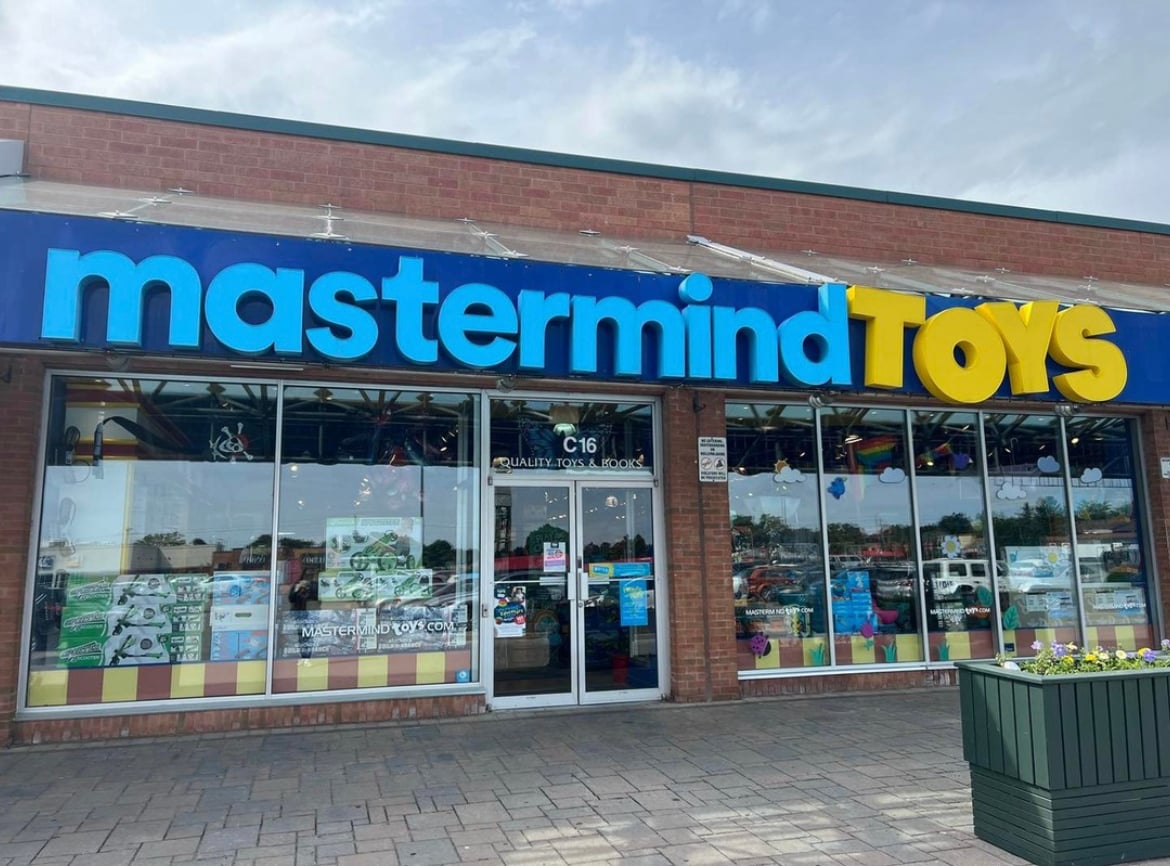
Mastermind Toys at Upper Oakville Shopping Centre (Image: Upper Oakville Shopping Centre)
Powersports Interest Increases Among Budget Consumers
An unexpected bright spot came from the powersports sector. Just under 10% of Canadians said they are “very likely” to purchase or upgrade a powersports vehicle in the next year — up 300 basis points from January and reaching the highest level in the past 14 quarterly surveys.
The rise was driven primarily by male and lower-income respondents. In contrast, interest declined among higher-income consumers (down 400 bps), creating an ambiguous picture for manufacturers like BRP.
“Whether lower-income enthusiasm can offset high-income hesitancy remains to be seen,” the report notes.
Air Travel Demand Faces Crosswinds
Canadian consumers appear to be growing more hesitant about air travel. Only 55% said they were likely or very likely to fly for their next vacation, down from 60% in January.
The decline in intent was consistent across income brackets, suggesting a more general sentiment of restraint. There also appears to be rising price sensitivity: more respondents reported that airfare prices influenced their decision not to travel, with those citing airfare as a prohibitive factor increasing by 400 basis points.
This could spell trouble for airlines like Air Canada as they navigate rising costs and evolving consumer behaviour. The trend will be important to watch through the upcoming summer travel season.
Retailers Face Mixed Conditions Ahead
Stifel’s survey paints a mixed picture for Canadian retailers in Q2 2025. While categories like pet care and discount retail remain strong — with solid upside for names such as Pet Valu, Dollarama, Leon’s, and Spin Master — other sectors are seeing stress.
Apparel retailers are facing both cyclical challenges and increased competition from fast fashion and digital players. Brands such as Aritzia and Groupe Dynamite will need to navigate shifting demographics and geographic trends to maintain growth.
Meanwhile, interest in air travel and big-ticket goods from higher-income consumers has softened, indicating broader macroeconomic caution, potentially stemming from ongoing trade tensions, inflation concerns, and broader global uncertainty.
As the report notes, these consumer sentiment shifts tend to precede financial performance, and retailers would do well to monitor these signals as they plan for the months ahead.
“Even the Odds is about creating pathways to opportunity, and we recognize that stable housing is fundamental to education, employment, and overall well-being,” said Rachel Huckle, CEO, Staples Canada. “The proven success of MAP’s research gives us confidence that our support is making a tangible, lasting difference in communities across Canada.”
Until May 11, customers can donate to Even the Odds and fund this life-changing research at any one of Staples’ 298 stores or online at Staples.ca/EvenTheOdds. All donations will be matched by the company up to $500,000.
For more than 25 years, MAP has been a leader in solutions-focused research to find the best ways to improve health and housing outcomes for people who are unhoused, including co-leading the largest research trial in Canadian history to evaluate solutions to end homelessness. MAP is based at St. Michael’s Hospital in Toronto.
“I’m proud to say that MAP is among the organizations leading the world in this research, and the success of our Even the Odds programs demonstrates the power of investment in evidence-based interventions. Thanks to Staples Canada’s commitment, we can continue scaling to reach unhoused individuals across the country.”
Donations raised through Even the Odds will help fund several critical MAP programs, including MAP’s signature Navigator Program. The program pairs hospital patients who are homeless with an outreach counsellor—a “Navigator.” The Navigator gets to know the patient and connects them with the health and social support they need to break cycles of homelessness and poor health, and to move forward in securing housing that works for them, explained officials.
With support from Even the Odds, MAP said it has expanded the Navigator program from St. Michael’s Hospital in Toronto to St. Paul’s Hospital in Vancouver. To date, the innovative program has provided outreach support to more than a thousand people experiencing homelessness in Toronto and Vancouver, and will launch at CHUM (Centre hospitalier de l’Université de Montréal) in Montréal later this year.
Since the launch of Even the Odds in 2021, Staples said it has raised more than $7 million in support of MAP. In addition to the Navigator program, this funding has expanded MAP’s work throughout Canada to help end childhood health inequities, and to break down barriers to care and disease prevention.
These equity-building initiatives include:
APPLE Schools, an award-winning health promotion initiative to support a healthy start for children in underserved communities.
OurCare, the largest cross-Canada conversation about the future of primary care and how to create a stronger, more equitable system.
Healthbox, ‘smart’ vending machines that dispense free health supplies and essentials such as warm socks and hygiene products to people experiencing major barriers to healthcare.
Healthy Food Prescription, a landmark research trial to test a promising approach to food insecurity and chronic disease inequities: grocery store vouchers prescribed by physicians to low-income patients with diabetes.
When the going gets tough, Albertans stick together. That’s why Alberta’s government is launching a new campaign to benefit hard-working Albertans, it announced on Monday.
“Global uncertainty is threatening the livelihoods of hard-working Alberta farmers, ranchers, processors and their families. The ‘Buy Local’ campaign, recently launched by Alberta’s government, encourages consumers to eat, drink and buy local to show our unified support for the province’s agriculture and food industry,” said the government in a news release.
“The government’s ‘Buy Local’ campaign encourages consumers to buy products from Alberta’s hard-working farmers, ranchers and food processors that produce safe, nutritious food for Albertans, Canadians and the world.”
RJ Sigurdson
“It’s time to let these hard-working Albertans know we have their back. Now, more than ever, we need to shop local and buy made-in-Alberta products. The next time you are grocery shopping or go out for dinner or a drink with your friends or family, support local to demonstrate your Alberta pride. We are pleased tariffs don’t impact the ag industry right now and will keep advocating for our ag industry,” said RJ Sigurdson, Minister of Agriculture and Irrigation.
The Alberta government said it supports consumer choice.
“We are providing tools to help folks easily identify Alberta- and Canadian-made foods and products. Choosing local products keeps Albertans’ hard-earned dollars in our province. Whether it is farm-fresh vegetables, potatoes, honey, craft beer, frozen food or our world-renowned beef, Alberta has an abundance of fresh foods produced right on our doorstep,” it said.
This summer, Albertans can support local at more than 150 farmers’ markets across the province and meet the folks who make, bake and grow our food, it said.
In March 2023, the Alberta government launched the ‘Made in Alberta’ voluntary food and beverage labelling program to support local agriculture and food sectors.
“Through direct connections with processors, the program has created the momentum to continue expanding consumer awareness about the ‘Made in Alberta’ label to help shoppers quickly identify foods and beverages produced in our province,” added the government.
Taza Park is making waves in Calgary’s retail scene, with ongoing developments and big plans on the horizon.
James Robertson, President of Taza, recently provided Retail Insider an update on the rapidly growing retail landscape in the area, shedding light on the exciting expansion at both the Shops at Buffalo Run and Taza Park itself.
James Robertson
Currently, the Shops at Buffalo Run is 85-90% leased, with over 50 businesses already up and running at the 278,000 square foot shopping centre. Robertson is optimistic about the remaining space, explaining, “Opportunities are starting to become fewer, but overall, we’re very excited about how it’s gone. The tenants are all doing well, and we look forward to the next phase of development.”
One key factor in the shopping centre’s success is its proximity to Costco, which Robertson believes drives a lot of foot traffic to the area. “The adjacency to Costco creates a traffic pattern that benefits the retailers,” he said. “We’ve noticed that a lot of the retailers have their own audiences, like Petfinity and Gold’s Gym, which are independent of Costco.”
However, Robertson also emphasizes that the Shops at Buffalo Run is much more than just a Costco-adjacent shopping centre. “The Shops at Buffalo Run are a destination in themselves,” he added, noting that despite certain retailers benefiting from Costco’s presence, the centre is a key draw on its own.
As for Taza Park, the focus is on creating a comprehensive mixed-use community with a retail heart. Robertson provided a detailed update on the ongoing construction in the area, noting that the first permanent building has already been completed, which will become the main street of Taza Park.
“The building houses our marketing centre and retail on the main floor, with office space on the second,” said Robertson. “We’ve taken up about half the office space and are in talks with other tenants for both office and retail space.”
Robertson said the buildings on the main street will range from one and two storeys to four and five storeys. But predominantly, there will be one and two-storey buildings. Overall, about 150,000 square feet of retail space will be available. It will be more of a community-level retail centre—bigger than a neighbourhood centre but not as large as a regional one. It will be home to up to 30 retailers.
Source: Taza
“We’ve already completed our first building. We hope to start the second building next year. The intent is to keep going with the retail program and develop the main street. We believe the main street is a cornerstone for any new neighborhood, offering essential services and amenities like coffee shops, fitness centres, and quick-service food options. We want to make sure residents have what they need on a day-to-day basis,” added Robertson.
The expansion of Taza Park isn’t stopping with the opening of new buildings. A major component of the park’s growth involves the introduction of additional auto dealerships. Currently, two dealerships are open at Taza Park, and a third, Taza Park Volkswagen, is opening soon. “We’re planning to add two or three more dealerships, though the brands haven’t been announced yet,” said Robertson.
While the dealerships are a major part of the development, Robertson revealed that Taza Park will feature a diverse retail offering, including both essential services and lifestyle-focused amenities. Retailers such as grocery stores, pharmacies, banks, pet stores, and hair salons will make up the foundational component of the retail mix. Additionally, quick-service food outlets, coffee shops, and boutique fitness centres will also be part of the lineup.
“The goal is to provide a well-rounded mix of retailers that people both need and want,” said Robertson. He anticipates around 30 retailers will ultimately set up shop on the main street. “It will be a community-level retail centre—bigger than a neighbourhood centre but smaller than a regional one.”
Taza Park is also planning for future residential developments. “We’ve already announced residential builders, and they’re launching on May 24th,” said Robertson. More announcements are expected throughout the summer regarding the types of retailers that will fill the remaining spaces.
The vision for Taza Park’s retail landscape is clear: create a vibrant, walkable community where residents can access everything they need, from groceries to fitness centres, all within the confines of their neighbourhood.
Recently, Taza announced a partnership between the Tsuut’ina Nation and Canderel, and its first three residential builders for Taza Park: Brookfield Residential, Crystal Creek Homes, and Homes by Avi. This milestone marks an important step in the development of Taza Park, a transformative community designed to accommodate approximately 12,000 residents within a 470-acre, master-planned development.
Source: Taza
The development is strategically located near Weaselhead Flats and North Glenmore Park, offering residents access to beautiful natural surroundings. Taza Park itself will feature more than 20 acres of green space, including ponds, wetlands, parks, and four dedicated dog parks. This combination of green spaces and outdoor amenities is designed to create a vibrant, nature-connected community that promotes both relaxation and recreation for all residents, said the company.
“The selection of Brookfield Residential, Crystal Creek Homes, and Homes by Avi marks an exciting chapter in the Taza development journey,” said Robertson. “These builders bring a wealth of experience and a strong commitment to quality, sustainability, and community values that align with our vision for Taza Park.”
Construction of essential infrastructure to support the development of Taza Park is already underway, including roadways, underground services, utilities, and a water reservoir.
“Taza is one of the largest Indigenous-led real estate developments in North America. The residential launch in Taza Park, the first of the three villages to offer residential living and the second to be developed, marks a historic moment in community-building on Tsuut’ina Nation. This project represents a unique opportunity for residents to live in a community that combines modern urban amenities with the rich culture of the Tsuut’ina Nation. The development seamlessly integrates residential, retail, commercial, and natural spaces, exemplifying a forward-thinking approach to sustainable growth and economic self-determination,” it said.
The pilot project aims to help improve equitable access to pediatric urgent care in one of Toronto’s most underserved communities. The kiosk provides high-quality virtual care access, complete with a staffed greeter, internet access, and interpretation in 230+ languages, setting a new benchmark for what mixed-use community space can offer.
Located in a central, high-traffic retail hub, the VUC kiosk:
Transforms underutilized space into a health-enabling environment to support access to SickKids’ virtual urgent care services.
Demonstrates how retail real estate can serve as a platform for community well-being and social infrastructure
Provides a data-informed response to the ‘digital divide,’ which has limited access to virtual care among equity-deserving populations in Toronto
“It’s a major market, transit-oriented property situated at the intersection of two highways, as well as a subway station. It has ample parking for those who drive, and it features a strong tenant mix offering grocery, pharmacy, medical services, apparel, and more,” she said.
“The SickKids partnership with RioCan is located on the ground floor of the shopping centre, directly across from Fortinos, which also houses a pharmacy. It’s very close to the exit and parking area. This project is the result of a series of discussions between the hospital and RioCan, as we explored ways to improve healthcare access—especially in communities that struggle to reach downtown hospitals or to use existing virtual platforms from home.
“The area surrounding Lawrence Allen Centre includes some of Toronto’s poorest digital postal codes. Many people live in high-rise towers and may not have adequate WiFi, privacy, or time to access virtual healthcare. They often can’t afford to take time off work or school to go downtown to the SickKids emergency room.
“During COVID, emergency room wait times regularly exceeded 24 hours. So this partnership was about bringing virtual urgent care into communities that either don’t have access to care or can’t use the care as it’s currently provided. It’s a novel, innovative way to ensure equal access to healthcare.”
Source: RioCan
Suess said the service allows a caregiver to receive an email with a prescription or diagnostic imaging request from the virtual consultation, and then actually fill that prescription or imaging request within the shopping centre itself and take it home.
The unique concept is about 450 square feet and includes a waiting area with a full-time greeter, translation services in over 200 languages for families more comfortable communicating in languages other than English, and a private exam room for the virtual consultation.
Source: RioCan
The project opened to the public at the beginning of February.
“It’s intended to run for 12 months initially, but of course, we hope it becomes a permanent, sustainable feature. RioCan strongly believes in this model. We think it’s scalable across Canada, and several healthcare institutions—both pediatric and adult—are exploring similar partnerships with us. Our properties are transit-oriented and in major markets, making them ideal for this type of care delivery,” explained Suess.
“We’ve had hundreds of families visit the clinic since it opened, and they’re absolutely delighted to have access to this kind of service. I’m glad we can bring more attention to it.”
Giant Tiger Stores Limited is making shopping even more convenient with the launch of on-demand delivery available through new national partnerships with DoorDash and Uber Eats. Delivery of Giant Tiger’s full assortment is now available from more than 200 Giant Tiger stores. (CNW Group/Giant Tiger Stores Limited)
Now available at more than 200 stores across Canada, customers can shop the retailer’s full assortment including family fashion, grocery, health and beauty products, and household essentials, all at Giant Tiger’s low prices, said the company.
Giant Tiger said it is expanding its reach with DoorDash and Uber Eats to make shopping even more convenient for customers by delivering low prices right to their door in as fast as an hour. By expanding its availability to additional easy-to-use platforms, Giant Tiger added it is evolving to meet market dynamics and customer demand for faster, more convenient shopping options, while delivering on the promise to provide Canadians with low prices, always.
“At Giant Tiger, we’re committed to helping Canadians save both time and money. By offering same-day delivery at in-store pricing, we’re making our wide selection of everyday essentials, including our exclusive private label brands and Made in Canada products, more accessible than ever. Building on our successful partnership with Instacart, DoorDash and Uber Eats allow us to bring even more convenience to our customers in the communities we proudly serve, while staying true to our promise of delivering unbeatable value as Canada’s place to save.”
Lewis Matthews
“Giant Tiger is a neighbourhood favourite within hundreds of communities across our country. This new partnership connects customers with an extensive, affordable range of products at in-store prices – when and where they wish,” said Lewis Matthews, Head of Grocery and Retail Partnerships at DoorDash Canada. “Giant Tiger and DoorDash share a commitment to evolving alongside customer preferences, whether that’s increasing convenience through local commerce or investing within communities to create meaningful connections. We’re looking forward to providing seamless experiences time and time again, no matter how you choose to shop.”
Klaas Knieriem
“We’re proud to welcome Giant Tiger to the Uber Eats platform, giving Canadians even more affordable options for groceries and household essentials,” said Klaas Knieriem, Head of Grocery and Retail for Uber Eats in Canada. “With over 200 stores across the country, Giant Tiger is a trusted name in value and convenience–and now, shoppers can get their favourite items delivered straight to their door in as little as an hour through Uber Eats. This partnership is part of our commitment to expand our in-app selection and make everyday essentials more accessible through the Uber Eats app Canadians already know and rely on.”
To begin shopping, customers simply download DoorDash or Uber Eats, search for Giant Tiger, and add their favourite everyday essentials to their order for fast on-demand delivery. Giant Tiger is now available on both platforms with locations in Alberta, Manitoba, New Brunswick, Nova Scotia, Ontario, Prince Edward Island, Quebec, and Saskatchewan.
Maple syrup in a store. Photo: Not Without My Passport
A new report from data and analytics firm NielsenIQ (NIQ) is raising concerns for Canadian manufacturers and exporters tied to the U.S. market. The April 9, 2025 edition of Tariffs Perspectives by Category reveals that more than $27 billion in Canadian exports are potentially exposed to U.S. trade tariffs, including a wide array of goods in food, health and beauty (HBA), and household care categories. Although tariffs between the U.S., Canada, and Mexico are currently paused, the report underscores the fluidity of the trade environment and suggests brands must prepare for disruption.
Canadian Food Exports to the U.S. Face Significant Tariff Risk
In terms of volume and value, Canadian food exports represent the largest category of concern. NIQ estimates that approximately $15.2 billion in food and produce is imported into the United States from Canada annually, with the Eastern U.S. accounting for 63 percent of these import sales. Several everyday grocery items dominate the list, including confectionery at $647 million, cookies at $563 million, chocolate at $471 million, and muffins and cakes together exceeding $600 million. Granola bars, crackers, and cucumbers are also notable contributors to the trade flow. These figures signal the high degree of integration between Canadian food production and U.S. consumer demand.
Chris Costagli, Vice President of Food Insights at NIQ, noted that tariffs could have a significant effect on grocery and produce departments in the U.S., particularly for weather-sensitive categories such as fruit and vegetables. He said manufacturers must focus on strategic sourcing and leverage regional distribution strengths to maintain availability and meet consumer demand in the event of renewed tariffs. The implication for Canadian exporters is clear: disruption in even one of these categories could have cascading effects on pricing and shelf presence in a key international market.
Health and Beauty Products from Canada at Risk of Supply Chain Disruption
The health and beauty sector is also highly exposed. According to the report, $1.9 billion in HBA products are imported into the United States from Canada. Key product types include facial skin care, accounting for $482 million in U.S. sales, followed by deodorant at $361 million, hair care at $339 million, and hand and body lotion at $220 million. These figures point to the essential role Canadian manufacturers play in supplying personal care items to U.S. retailers. The Southern U.S. was identified as the leading region for Canadian HBA imports, accounting for 42 percent of related dollar sales.
Jo-Anne Lynch, Vice President of Beauty Vertical Insights at NIQ, warned that tariffs could raise production costs and disrupt supply chains, which may in turn lead to higher prices for consumers and weakened demand. She added that while large multinational beauty brands may find ways to shift sourcing, smaller and emerging players could struggle to adapt. Lynch also emphasized that current “deconsumption” trends in beauty — where consumers reduce product usage or simplify routines — could intensify if prices rise, further threatening volume sales.
Household Care Imports from Canada Show Signs of Decline
Though smaller in dollar value compared to food and beauty, Canadian household care exports also carry exposure. The report places the annual total for these products at approximately $30.6 million. Leading items include cleaning implements, which make up the bulk of Canadian-origin household care imports, along with fabric treatments and laundry detergent. While this segment is not as large as that of Canadian competitors in Mexico, the report indicates that imports from Canada have declined both in dollar sales and in-store distribution. Many of these products are now primarily sold in legacy retail channels and through Amazon, which has become an important growth outlet for the category.
Jake Del Valle, Vice President of CPG Insights at NIQ, highlighted that manufacturers must be mindful of potential peripheral impacts tied to fluctuations in oil and gas prices, particularly given Canada’s role as a supplier. He said changes in transportation and packaging costs could further destabilize Canadian-origin household products sold into the U.S. market.
Temporary Suspension of Tariffs Offers Only Short-Term Relief
Although the current trade environment includes a temporary suspension of tariffs between the U.S., Canada, and Mexico, the NIQ report makes it clear that this pause is not a long-term guarantee. Maria Maysonet, Insights Director at NIQ, stated that manufacturers must prepare for possible shifts in policy and emphasized the urgency of stabilizing operations. She pointed to more than $26 billion worth of food imports alone as being directly exposed to potential price increases. Categories such as cookies, chocolate, and crackers were singled out as especially vulnerable, with consumers in those aisles already facing inflationary pressure and reducing purchases. Households with children are among the most impacted, changing snacking habits in response to rising costs.
U.S. Shopper Trends May Influence Future Demand for Canadian Goods
The report also provides useful insights into U.S. consumer attitudes toward tariffs and pricing. According to a January 2025 NIQ survey of 1,001 shoppers, 34 percent of respondents said they would prioritize U.S.-made products to avoid tariff-driven price hikes. However, more than half indicated that their decisions would continue to be based on price differences and perceived quality. The survey revealed that 80 percent of shoppers want transparency from brands if tariffs lead to price increases, with younger and higher-income consumers the most likely to check sourcing information and respond to origin labeling.
These shifts in consumer behaviour offer both challenges and opportunities for Canadian companies. While some shoppers may opt for domestic alternatives, others remain loyal if Canadian products can compete on value and quality. In particular, Millennials and households earning over $100,000 annually were identified as high-value import buyers, and they are most engaged with Canadian-made products. This suggests that exporters who can reinforce quality messaging and align with transparency expectations may be better positioned to weather any trade turbulence.
Canadian Manufacturers Must Prepare for Trade Volatility
The report’s overarching message is one of preparation. For Canadian exporters embedded in the U.S. retail ecosystem, especially in high-volume categories like food, HBA, and cleaning products, the risks associated with tariff reinstatement are substantial. While the political environment remains in flux, and while tariffs are on hold for now, NIQ’s research makes it clear that the situation could change quickly — particularly as the U.S. enters an election cycle.
Canadian manufacturers and retailers are encouraged to assess their supply chain vulnerabilities, evaluate pricing strategies with elasticity in mind, and prepare regionally targeted responses for the U.S. market. With over $27 billion in exports at stake, the ability to adapt quickly and transparently could be the difference between resilience and market erosion.
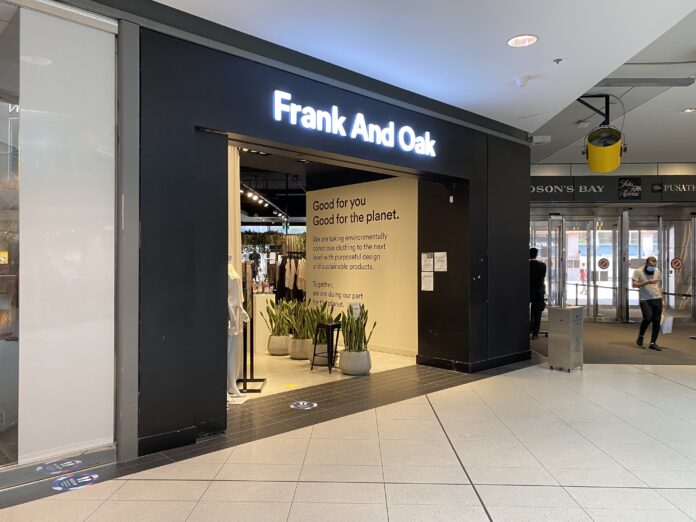
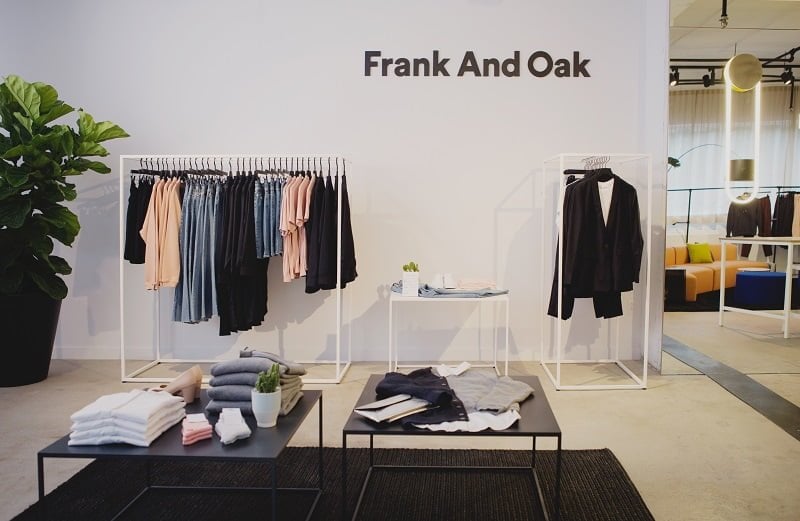
Frank and Oak at CF Toronto Eaton Centre - Photo by Dustin Fuhs
Montreal-based retailer Frank And Oak has confirmed it will shutter the majority of its Canadian stores by May 7, 2025, as the company continues its court-supervised restructuring process. The announcement comes as Frank And Oak and its parent company, Unified Commerce Group (UCG), seek a buyer for the once high-flying fashion brand.
A total of 10 stores are expected to close, including prominent locations at CF Carrefour Laval, Place Ste-Foy, CF Rideau Centre in Ottawa, and two shops in Vancouver. Stores in Montreal’s Stanley Street and St-Viateur, once seen as flagship concepts, will also shut down. The company has confirmed that its e-commerce platform will continue to operate, and stores in the Greater Toronto Area will remain open for now.
Retail Expert: “They Surfed a Wave — Then It Crashed”
Frank And Oak was once seen as a model for modern, sustainable fashion. Founded in 2012 by Ethan Song and Hicham Ratnani, the brand gained national attention for its minimalist aesthetic and eco-conscious values. But its fast rise may have masked deeper issues.
Carl Boutet
“They caught an amazing wave,” said retail expert Carl Boutet. “They were part of that hipster Brooklyn aesthetic, and they had incredible branding. But they took on way too much venture capital and tried to scale too fast.”
Boutet added that the problem wasn’t just the rapid expansion — it was how that growth was financed. “They were losing money and kept expanding. Venture capitalists were okay with it at first. The thinking was: ‘Get the market share now and figure out profit later.’ But profit never came.”
Digital marketing costs were another culprit. “The cost of customer acquisition skyrocketed on platforms like Instagram and Facebook,” said Boutet. “They were expecting scale efficiencies that never materialized.”
Millions in Debt and a Second Restructuring
Frank And Oak filed for creditor protection under the Bankruptcy and Insolvency Act in December 2024, citing $71 million in debt. Secured creditors, including UCG and Desjardins, are owed $55.5 million, while unsecured creditors are owed $14.6 million.
Among the major unsecured claims:
$3.5 million to the Canada Border Services Agency (CBSA)
$1.7 million to the Canada Revenue Agency (CRA)
$529,000 to Shopify
$504,000 in prepaid customer cards
Dustin Jones, CEO of UCG, acknowledged in a December letter to creditors that the brand never fully recovered from the impacts of the pandemic. “Despite significant growth over the past few years, the company has struggled to recover from losses incurred as a result of the COVID-19 pandemic,” wrote Jones.
Signs of Interest from Bidders — But No Clear Path Yet
Court filings indicate that Frank And Oak has received “robust” interest from prospective buyers. However, no names have been disclosed, and there are no guarantees a sale will be completed.
Boutet noted that the company’s leases in areas like Stanley Street in Montreal might attract other retailers. “I’ve told my friends in vintage retail to take a look at those spaces. The foot traffic is already there, and it’s the right customer demographic,” he said.
For now, Frank And Oak has announced that liquidation sales are underway, and all sales will be final once those begin. The company has not indicated how many of its approximately 150 employees across headquarters and retail locations could be impacted.
Frank and Oak Montreal (Image: Frank and Oak
Sustainability Efforts and a B Corp Pivot
After being acquired by UCG in 2020, Frank And Oak pivoted to a stronger emphasis on sustainability and received B Corporation certification. But the effort failed to win back enough market share.
“They tried to do the B Corp thing, which is great,” Boutet commented. “But beyond the badge and the clothing, it didn’t really come through in the experience. They weren’t Patagonia.”
Even as a sustainability-focused brand, Frank And Oak struggled in a market flooded with inexpensive options from global e-commerce players.
The Rise and Fall of a Canadian Fashion Darling
Frank And Oak’s origin story began with optimism. Launching as a direct-to-consumer online retailer, it quickly expanded into brick-and-mortar locations and built a reputation for modern, ethically made fashion. Its experiential stores and sleek marketing struck a chord with millennial consumers.
But the very model that fueled its early success became a liability. “They opened too many stores, moved too fast, and didn’t build a stable financial base,” said Boutet. “They were just one of many digital-native vertical brands that struggled with scale.”
By 2020, facing $19 million in debt, the company filed for creditor protection for the first time. UCG, a New York-based firm specializing in distressed retail turnarounds, acquired Frank And Oak later that year, attempting to salvage the brand.
What’s Next for Frank And Oak?
The immediate future involves winding down most store operations while attempting to restructure under court supervision. UCG has signaled a desire to continue the e-commerce side of the business and maintain a reduced store footprint.
But the viability of Frank And Oak as a retail brand hinges on attracting a strategic buyer — someone willing to invest not just in the name, but in its sustainability promise and design ethos.
“Frank And Oak could still have a future,” said Boutet, “but it needs a clearer identity and a realistic financial model. The hype isn’t enough anymore.”