The first months of Donald Trump’s presidency have been defined by a single word: tariffs. He has framed tariffs as a panacea to the woes of the American economy, promising they will restore the country’s manufacturing sector and reduce the national deficit.
As the United States’ largest trading partner, Canada’s smaller economy is poised to suffer the most from a prolonged trade war. Although the price of all consumer goods will be affected, the grocery aisle has become a particular battleground.
Canadians have remained defiant, with vows to “buy Canadian” already spurring rapid drops in the sale of American products.
But with calls for the country to strengthen its economic backbone and reduce dependence on the U.S., perhaps it’s also time to consider rebooting Canada’s grocery sector to better serve Canadians as well.
Canada’s supermarket problem
Rising grocery bills have been an ongoing concern for Canadians long before Trump’s inauguration. Today, an estimated 18 per cent of Canadians are struggling with food insecurity owing to persistent inflation and the rising cost of living. Food banks saw a record number of monthly visits in 2024 as a result.
Yet, even as consumers feel the squeeze, Canada’s grocery giants have been posting record profits. Loblaw Companies Limited, whose supermarkets hold a dominant 28 per cent share of the sector, has become the poster child for this trend.
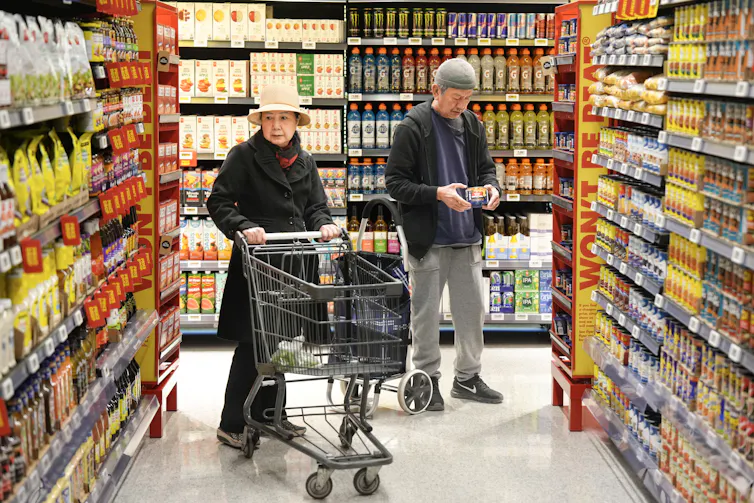
In the final quarter of 2022, as Canadians were grappling with rapid inflation on their grocery bills, Loblaw posted $529 million in profits — up 30 per cent from the previous year.
This has led customers to accuse Loblaw and other large grocery chains of profiteering, provoking both a 100,000 signature petition against “greedflation” and a month-long boycott of Loblaw chains. All this while Loblaw was still reeling from a bread price-fixing scandal yielding a $500 million antitrust settlement.
In response to the mounting concerns, the federal government met with the heads of Loblaw, Sobeys, Metro, Costco and Walmart in 2023 to discuss stabilizing grocery prices in Canada. Former Prime Minister Justin Trudeau would threaten and later implement amendments to the Competition Act through Bill C-56, although these reforms were focused less on immediately lowering grocery bills and more on giving new tools to Canada’s competition watchdog.
Investing in the future
Another area of concern is the initiatives supermarket chains such as Loblaw and Metro have been investing their profits in.
Since 2020, supermarkets in Canada have invested heavily in self-checkout aisles. While initially a concession to the social distancing measures of the COVID-19 pandemic, these kiosks have become a ubiquitous — and often unwelcome — part of the retail experience for both workers and consumers.
Beyond the concern that self-checkouts pressure customers to perform more work, they have also increased the precarity of supermarket employees. These technologies generally reduce total worker hours and eliminate well-paying full-time positions, all with an eye towards boosting profit margins.
Loblaw has also invested in automating their fleet of delivery vehicles, jeopardizing jobs in the logistics sector at a time when Canada’s unemployment rate, already struggling to recover, is expected to rise due to Trump’s tariffs.
There is also the looming concern of dynamic pricing. Following the lead of American grocery stores such as Kroger, chains run by Loblaw, Metro and Sobeys have begun to implement electronic price tags. These tags enable retailers to instantaneously update prices based on supply and demand, similar to surge pricing on ride-sharing apps like Uber.
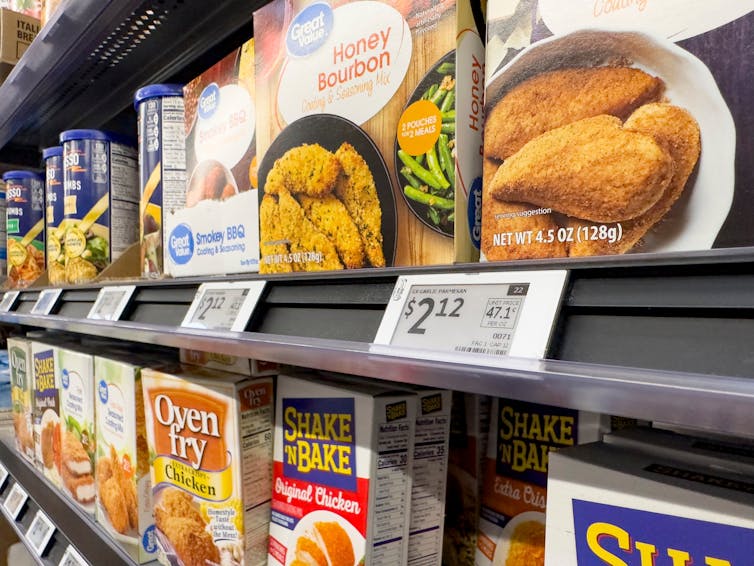
While online commentators were quick to mock fast food chain Wendy’s for potentially using dynamic pricing to charge more for a Frosty on a hot day, this practice becomes more problematic as the availability of family staples like baby formula, which already experiences perennial scarcity, are affected by the trade war.
The sector won’t reform itself
There is little reason to believe Canada’s grocery industry will reform itself. Many of the pro-consumer and pro-worker initiatives put forth by these chains have amounted to little more than public relations moves.
The much-lauded COVID hero pay for front-line grocery workers disappeared only months into the pandemic, despite pressure from unions and MPs during the Omicron wave.
Loblaw’s widely publicized price freeze on No Name products was similarly criticised for its short duration and for merely repackaging seasonal price freezes as a pro-consumer initiative.When Loblaw froze prices on No Name products in 2022, its competitor Metro quickly pointed out that seasonal price freezes are in fact a standard industry practice. (CBC News)
The company’s promise to create a discounted version of its already discounted grocery chain No Frills drew further scepticism, with the stock being entirely sourced from Loblaw brands that generate higher revenue for the company.
The question remains: what concrete measures can be implemented to safeguard Canadian grocery bills as our country navigates this next crisis?
Lowering grocery bills for Canadians
A report from the Broadbent Institute suggests the idea of a windfall profit tax, which would incentivize grocery companies to invest excess profits into price reductions or higher wages.
A more durable reform would involve creating a central bank-style regulatory entity to oversee the grocery industry, instead of relying on industry-born measures such as Canada’s recently introduced grocery code of conduct.
Federal or provincial legislation could be also passed that places guardrails on dynamic pricing in the grocery aisle, if not banning the controversial practice altogether. Government grants and tax incentive programs could be withheld from companies that invest heavily into automating workforces so the government isn’t inadvertently subsidizing job losses.
The Competition Bureau’s 2023 report highlights another key issue: there is a need for all levels of government to shift from subsidizing large chains and encourage the growth of independent grocers in the Canadian market, driving down prices for consumers through meaningful, local competition.
Trump’s trade war has filled Canadians with a newfound pride and motivation to buy local to support the economy. Perhaps it’s time our grocery chains showed the same commitment to the people they serve.
About the Author:
Mathew Iantorno is a Doctoral Candidate, Faculty of Information, at the University of Toronto.
More from Retail Insider:
- Food prices could rise with tariffs: Loblaw
- Loblaw CEO Per Bank Outlines Strategy to Tackle U.S. Tariffs
*This article originally appeared in The Conversation.