Home Blog Page 499

AI Reshapes Retail Supply Chains Amid Rising Complexity

AI and retail supply chains. Image: BeyondSupplyChain

As retailers continue to navigate a fast-changing and often unpredictable global environment, artificial intelligence (AI) is emerging as a critical tool for supply chain optimization. From predicting inventory demand to simulating the impact of geopolitical disruption, AI’s role is growing rapidly—particularly in distribution centres (DCs).

Retail Insider spoke with Kim Baudry, Market Development Director at Dematic, to better understand how AI is influencing retail supply chains and what the future may hold.

The Omnichannel Shift and the Rise of AI

According to Baudry, AI’s emergence in retail supply chain operations is being driven in large part by the ongoing evolution of omnichannel retailing.

Kim Baudry, Market Development Director at Dematic

“We’re really just at the tip of the iceberg,” she said. “Retailers are trying to offer a seamless experience whether it’s in-store, online, or click-and-collect. That puts pressure on the supply chain to be flexible and responsive.”

With more retailers filling orders from stores, distribution centres, and even direct-to-consumer shipments from the same facility, AI is increasingly being tapped to improve inventory visibility and planning.

“AI can help make predictions and recommendations for where inventory should be placed,” explained Baudry. “It can support planning for seasonal changes or unexpected surges in demand.”

AI’s Expanding Role in Inventory and Demand Forecasting

While Dematic’s primary focus is on automation within distribution centres, Baudry noted that AI is quickly proving useful in forecasting and demand planning—especially given the uncertainty introduced by events like the COVID-19 pandemic and geopolitical tensions.

“Retailers used to keep leaner inventories,” she said. “But now, due to supply chain disruptions and geopolitical volatility, they’re storing more inventory both in their DCs and stores. That has changed the kind of automation solutions we’re selling—more storage-focused, compact systems that don’t require building new facilities.”

AI helps retailers make data-informed decisions on where to position inventory and how much to store. “It’s not just about cost—it’s also about agility and resilience,” she said. “AI can simulate supply chain scenarios and help retailers determine the best course of action if, say, tariffs are imposed on goods from a specific region.”

Navigating Geopolitical Uncertainty with Predictive Tools

Baudry recalled a recent industry conference attended by both American and Canadian retailers. The original agenda focused on tariff planning related to China, but post-election discussions shifted toward potential tariffs on Canada and Mexico.

“When your supply chain strategy has to pivot that quickly, predictive AI tools become essential,” she explained. “If you need to shift sourcing from China to Vietnam, for instance, AI can help assess the cost, the delay in supply, and the knock-on effects on your entire operation.”

From Machine Learning to AI-Powered Automation

Although the industry isn’t fully immersed in AI-powered robotics yet, Baudry said the groundwork is being laid through machine learning applications.

“We’re still in the machine learning phase more than true AI, especially when it comes to robotics,” she said. “But that’s the building block. Right now, predictive maintenance is one of the key use cases.”

Baudry explained that software connected to equipment, like conveyors or diverts, can already detect irregularities and alert operators to possible failures before they occur.

“In the future, we’ll see AI used not just for predictive insights, but for decision support,” she said. “It will help determine the right type of automation for a facility, how workflows should be adjusted, and how to optimize performance in real-time.”

AI-Driven Efficiencies in the Warehouse

Even without full AI integration, warehouse systems today already create significant operational efficiencies. Baudry gave an example of a distribution centre where the system detects that a worker has too much on their plate.

“The software can reallocate tasks to balance the workload,” she said. “As we introduce more machine learning and AI, these adjustments will become even smarter and more proactive.”

Ultimately, this helps workers perform better while improving overall output, without requiring major infrastructure changes.

AI for Customer-Facing Retail Applications

AI’s influence is not limited to the back-end. Baudry said she’s seeing growing interest in consumer-facing AI tools as well.

“For example, grocery apps are starting to use AI to anticipate customer needs,” she said. “If the system sees you buy two gallons of milk every two weeks, it could prompt you to reorder before you even realize you’re out.”

This type of personalization deepens customer loyalty—but it also increases pressure on supply chain accuracy. “If a retailer promises the milk will be there and it’s not, that’s a problem,” Baudry added. “AI helps tighten that entire value chain.”

Tariffs, Transportation, and the Role of AI in Planning

Another area where AI is gaining ground is in transportation optimization.

“Whether it’s planning for port disruptions or rerouting trucks more sustainably, AI can help retailers respond faster,” said Baudry. “It’s about reducing fuel costs, improving delivery speed, and lowering carbon emissions.”

She also emphasized the importance of supplier-retailer communication. “AI is going to give suppliers more visibility into what retailers need and when they need it,” she said. “That transparency benefits everyone.”

A Future of Continuous Disruption

Baudry concluded with a sobering yet realistic view of the retail landscape: constant change is the new norm.

“In the past, change happened every ten years or so. Now, we’re looking at disruption every three years—if not sooner,” she said. “Between customer behaviour, e-commerce, and global instability, retailers need to be more agile than ever.”

That means investing in flexible, scalable solutions, including robotics, machine learning, and AI-powered systems. “We can’t plan 10 years out anymore,” she noted. “But we can build systems that help us adapt quickly, and that’s where AI really shines.”

Key Takeaways:

  • AI is reshaping retail supply chains by improving forecasting, inventory placement, and demand planning.
  • Geopolitical disruption, including tariffs, is forcing retailers to adopt predictive tools and re-evaluate sourcing strategies.
  • While true AI-powered robotics is still evolving, machine learning is already improving warehouse operations.
  • Customer expectations for speed and accuracy are driving the need for better inventory visibility across all fulfillment channels.
  • Retailers can’t afford long-term rigidity—the focus now is on building agile, data-driven infrastructure for future adaptability.

As Baudry put it, “AI isn’t just about replacing humans or automating tasks—it’s about creating a supply chain that can keep up with the world we live in today.”

More from Retail Insider: 

Bootlegger Sold to Warehouse One Parent Amid Restructuring

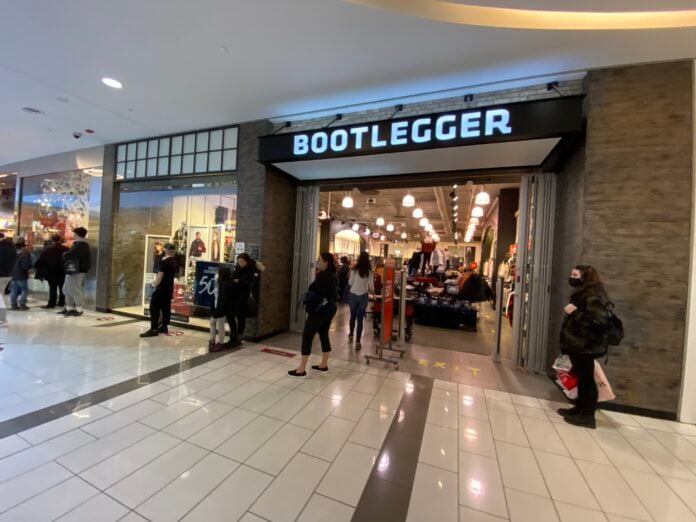
Bootlegger at Guildford from Lower Level - Photo by Lee Rivett

Canadian apparel retailer Bootlegger is set to continue operations following a major development in the restructuring of its parent company. On April 12, 2025, the Ontario Superior Court approved the sale of Bootlegger to a subsidiary of Comark Holdings Inc., allowing the retailer to be operated through Warehouse One Clothing Ltd., an affiliate of the parent company.

The decision comes as part of Comark’s broader creditor protection proceedings under the Companies’ Creditors Arrangement Act (CCAA). Justice Peter Cavanagh approved the transaction, which aims to preserve a portion of Bootlegger’s store footprint and secure employment for some of its staff following a period of financial uncertainty.

A Legacy Brand with Deep Canadian Roots

Bootlegger was founded in 1971 and became well known for its denim and casual apparel offerings. At the time of the CCAA filing, the retailer operated 53 standalone locations and shared another 19 locations with sister brands Ricki’s and Cleo.

However, as part of Comark’s restructuring plan, Ricki’s and Cleo were sold in March 2025 to Putman Investments—owner of Toys “R” Us Canada—for $14.4 million. That transaction marked a significant step in Comark’s effort to slim down its operations and focus on Bootlegger, its remaining apparel banner.

No Outside Bidders for Bootlegger

Despite interest from multiple parties, court filings indicate that no external bidders ultimately came forward with an offer to acquire Bootlegger. This paved the way for the retailer to remain within the Comark family, with operations transitioning to its affiliate Warehouse One.

The sale includes agreements with landlords to retain 45 retail leases. Some of these stores will be converted to Warehouse One locations, while others will continue to operate under the Bootlegger brand. The deal is expected to close later this month.

Within two days of the closing, staff at the retained stores will be issued termination notices—followed by employment offers from Warehouse One, ensuring some continuity in staffing.

Restructuring Driven by Mounting Financial Pressures

Comark’s move to seek creditor protection in January 2025 was the result of prolonged financial challenges. The company cited several factors contributing to its financial difficulties:

  • COVID-19 Pandemic: Lockdowns and a major shift to online shopping negatively impacted foot traffic and in-store sales.
  • Cybersecurity Breach: A ransomware attack in 2021 caused a major operational disruption, resulting in an $8.2 million revenue loss during a key sales period.
  • Supply Chain Disruptions: Delays in receiving seasonal products led to missed revenue opportunities and aggressive markdowns that cut into margins.
  • Increased Competition: The rise of low-cost fast fashion competitors drew value-focused consumers away from legacy mid-market retailers like Bootlegger.

These cumulative pressures led to a 19% drop in sales for Comark and a $21 million operating loss during the first nine months of 2024.

Mounting Debt Prompted Court Protection

By late 2024, Comark Holdings Inc. was under considerable financial strain, with liabilities exceeding $60 million. The bulk of this debt stemmed from overdue payments to suppliers, with approximately $44 million owed to merchandise vendors alone. The company also faced $5 million in unpaid rent to landlords across its retail portfolio. Compounding the situation, Comark’s senior secured lender, CIBC, demanded repayment of more than $32 million in loans. 

These mounting obligations left the company with few options, ultimately leading it to seek protection under the Companies’ Creditors Arrangement Act (CCAA) in January 2025. The court filing enabled Comark to pause creditor actions and initiate a structured process to stabilize its business, sell off assets, and attempt to preserve elements of its operations—most notably the Bootlegger brand.

A New Chapter Under Warehouse One

Warehouse One, which operates its own national chain of value-oriented casualwear stores, will now oversee the Bootlegger brand through a related corporate structure. While some Bootlegger locations will be converted to Warehouse One stores, others will retain the Bootlegger branding—preserving a legacy that spans over five decades.

More from Retail Insider: 

Canadian Retail News From Around The Web For April 14, 2025

Canadian Retail News From Around The Web

News at a Glance

Retail Insider is streamlining its Canadian retail news from around the web to include a handful of top news stories that can be viewed quickly during the day. Here are the top stories from the past three days.

Tariffs could spell end of the line for some smaller Canadian food makers (Financial Post)

Are you paying more than before to buy Canadian? Experts say it’s complicated (CBC)

Can this man make you love Loblaws again? How new CEO Per Bank is changing Canada’s largest grocer to win back trust (Toronto Star)

Hudson’s Bay sale now using protocol designed to handle insider bid: document (Canadian Press)

Marketplace found up to 1 in 3 groceries get labelled as Canadian. Customers say they’re skeptical (CBC)

Can Canada grow more of its own food? Greenhouses, vertical farming make it possible, experts say (CBC)

Expanded Guidance for Identifying Canadian Food Products (RCC)

MTY Food Group reports Q1 profit down on foreign exchange losses, revenue up (The Canadian Press)

Cannabis Retailers Across Canada Are Hiring AI Employees for Their Safety (Business Wire)

He bought 20 gift cards and 7 were worthless: Gift card fraud is out of control — and retailers aren’t doing enough to stop it (Toronto Star)

Duty-free shops struggle to make ends meet as Canadians steer clear of U.S. (CBC)

Fashion legend Ross Mayer pledges loyalty to Toronto by opening a flagship store in Yorkville (Streets of Toronto)

Second-Hand Success: Exploring the Thrift Economy of Montreal’s Youth (Bull and Bear)

Calgary record stores sell Taylor Swift, Bon Iver vinyl exclusives for Record Store Day (Calgary Herald)

Hudson’s Bay Company opened store in Vernon more than 100 years ago – Vernon News (Castanet)

New Chalo! FreshCo store opens in Mississauga (Grocery Business)

2 wanted, 5 charged in connection with arsons at York region autobody shops: police (CityNews)

Haven Greens Launches Canada’s 1st Fully Automated Leafy Greens Greenhouse

Image: Haven Greens

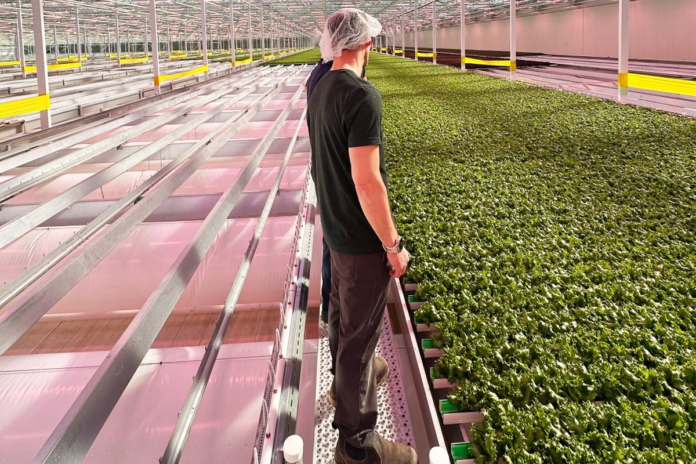
At a time when Canada imports the majority of its fresh produce, particularly during the colder months, a new player is reshaping how leafy greens are grown and distributed—entirely from within our borders. Haven Greens, a high-tech agricultural venture in King City, Ontario, has opened the country’s first fully automated baby lettuce greenhouse, aiming to transform how Canadians source their food.

“You can’t grow lettuce in a snowbank,” joked Jay Willmot, Founder, President, and Lead Apiarist of Haven Greens, during an interview. “So, we had to come up with something that works year-round in our climate.”

From Thoroughbreds to Technology: The Evolution of a Family Farm

Jay Willmot

Haven Greens is an extension of Kinghaven Farms, a family-owned business originally founded in 1967 and once known for thoroughbred horse racing. After decades of success in the equine industry, the farm faced dwindling returns by the early 2000s, prompting the Willmot family to rethink their long-term strategy.

“We were good at horse racing, but that kind of business is hard to sustain without a big corporate backer,” said Willmot. “I’d just graduated and was looking at our business model thinking, ‘This isn’t going to work anymore.’ That’s when we started experimenting with sustainability, renewables, and eventually vertical farming.”

Willmot brings a unique mix of credentials to the venture—he holds a Master’s in Environmental Studies, has a legal background in renewable energy infrastructure, and is an experienced beekeeper. Each of these experiences fed directly into the creation of Haven Greens.

“This didn’t happen overnight,” he noted. “It’s been a 15-year journey of step-by-step development.”

Image: Haven Greens

Inside Canada’s First Fully Automated Leafy Greens Facility

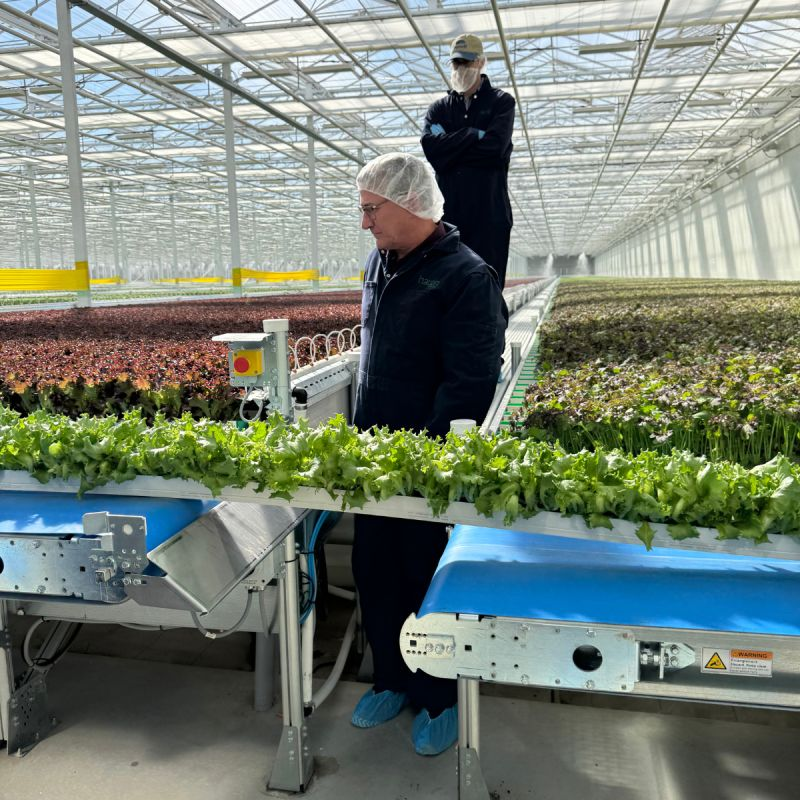
The 10-acre greenhouse, located on elevated terrain in King City, is truly one-of-a-kind. Unlike other greenhouses that automate some aspects of production, Haven Greens is entirely touchless from seeding to packaging.

“There’s no human contact with the product until it’s sealed in trays or bags and placed into boxes,” said Willmot. “That’s what makes us different—it’s fully automated, and that improves both safety and shelf life.”

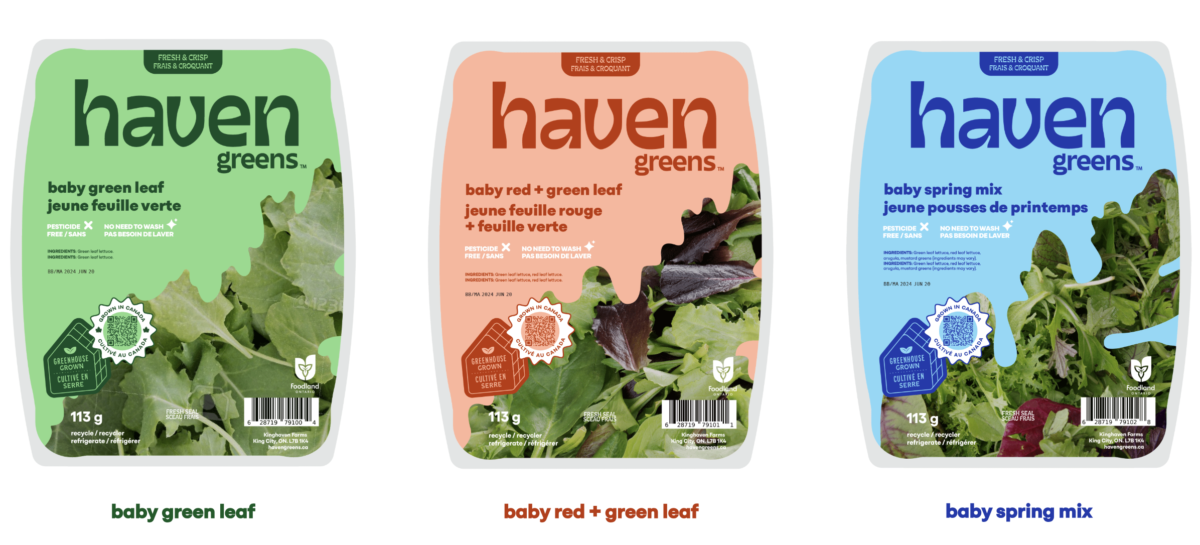
The company produces three main ready-to-eat varieties: Baby Green Leaf, Baby Red and Green Leaf Mix, and Baby Spring Mix. Unlike conventional outdoor-grown lettuce, Haven Greens’ produce is unwashed, pesticide-free, and fresher than most imports.

“We’re not organic-certified because we grow in peat moss, not soil,” Willmot explained. “But we call ourselves better than organic—no pesticides, herbicides, or GMOs. Just fresh, nutrient-rich greens.”

Image: Haven Greens

Technology Meets Sustainability

Haven Greens’ facility includes some of the most advanced sustainable systems seen in Canadian agriculture to date. The greenhouse captures rainwater, which is treated and recycled multiple times, and aims for a 99% water reuse rate.

“We also have a bioswale system and aquifer under construction to purify grey water and reintroduce it into our irrigation system,” Willmot explained. “And our goal is to achieve net-zero operations by 2027.”

Energy is another key focus. The company is installing a 3-megawatt solar PV array next to the greenhouse, which will not only decarbonize operations but also enhance energy security.

“Controlled environment agriculture needs consistent, affordable energy,” Willmot emphasized. “We’re addressing that head-on with on-site generation.”

Even emissions from generators are not wasted. “We’re capturing and using CO₂ in the greenhouse for crop development. Nothing is lost,” he said.

Pollinators, Biodiversity, and Beekeeping

Willmot, who also manages a honey business, sees Haven Greens as part of a wider ecological vision. Pollinator-friendly crops will be planted beneath the solar panels to support local bee populations and divert pests away from the greenhouse.

“It creates a beautiful harmony. The bees thrive, biodiversity improves, and even the greenhouse benefits by seeing fewer pest issues,” he said.

Image: Haven Greens

Scaling Local Production to National Impact

Haven Greens currently produces over 5,000 pounds of leafy greens per day from a partially planted greenhouse. That figure is expected to double in the coming months as the facility reaches full capacity.

“We’ve been operational for only a few weeks, and already we’re hitting our output targets,” said Willmot. “Our goal is over 8 million pounds per year from this one site.”

Canada consumes roughly 280 million pounds of leafy greens annually. Haven Greens’ facility alone could soon account for over 1% of that figure.

“If we had one of these in every province, we could make a real dent in the import dependency,” Willmot suggested.

Image: Haven Greens

Early Retail Footprint and Distribution Strategy

On the distribution side, Haven Greens is already reaching consumers through a growing number of channels.

“We launched into Summerhill Market’s seven Toronto locations this week,” Willmot said. “And we’re promoing at $3.49, which is an unbeatable price for fresh, local greens.”

Independent grocers in King Township have also embraced the product, alongside foodservice partners supplied through distributors like Bondi Produce and JE Russell. Talks are underway with major national and U.S. retailers.

“We’re still early, but interest is strong,” Willmot confirmed.

Addressing Food Security and Tariff Risk

Given recent global instability and supply chain fragility, food sovereignty is becoming a pressing issue. Willmot sees Haven Greens as part of the solution.

“We’re a local-for-local company. If supply chains are disrupted or tariffs are imposed, we’re here, growing high-quality food year-round,” he said.

That said, Canada’s domestic agricultural inputs still face limitations. “Packaging is a huge challenge,” he noted. “We try to source locally, but the trays we use for retail aren’t made in Canada.”

Although Haven Greens has not yet been affected by tariffs, Willmot acknowledged the risk. “Anything can change with this White House administration. We have contingency plans either way.”

Meanwhile, the company is exporting to the Northeastern U.S. foodservice market, where demand for high-quality greenhouse produce is already established.

“We’re not first in the world with this model, but we are first in Canada,” Willmot said. “That gives us a huge opportunity.”

Image: Haven Greens

A Highly Skilled Team Behind the Mission

Much of Haven Greens’ success thus far can be attributed to its experienced leadership team. Chief Agricultural Officer Eric Highfield brings over 25 years of expertise in controlled environment agriculture. He moved from Santa Fe, New Mexico, to oversee the greenhouse’s operations.

“Having someone like Eric helped us hit the ground running,” said Willmot. “We got to commercial production faster than expected.”

The director of cultivation and other key team members hail from top greenhouse operations in the U.S., bringing valuable experience. Front office leadership includes seasoned professionals from consumer packaged goods (CPG), such as a former Procter & Gamble executive and a CPG entrepreneur.

“It’s a blend of agriculture, operations, and business acumen,” Willmot said. “We also have local talent from Guelph and U of T on our cultivation team, which is important for community engagement.”

Looking Ahead: National Expansion and Market Education

Willmot has plans for Haven Greens’ future, including expanding beyond Ontario.

“Ontario probably needs one or two more of these facilities. But long term, we want to be national,” he said.

Consumer education will be critical, especially as the company helps Canadians understand the value and freshness of its unwashed, chemical-free greens.

“People ask, ‘What’s the catch?’ But there isn’t one. It’s just fresh,” Willmot explained. “Our goal is to become the go-to choice—something people grab without thinking.”

Final Thoughts

In an era defined by climate concerns, food insecurity, and import dependence, Haven Greens offers a compelling vision for the future of Canadian agriculture. With its fully automated, sustainable facility, the company is redefining what’s possible for local food production in Canada.

“This is just the beginning,” said Willmot. “We’re building something that can change how we grow and eat in this country.”

More from Retail Insider: 

Carriage Trade Expanding Kingsway Store with Experiential Focus

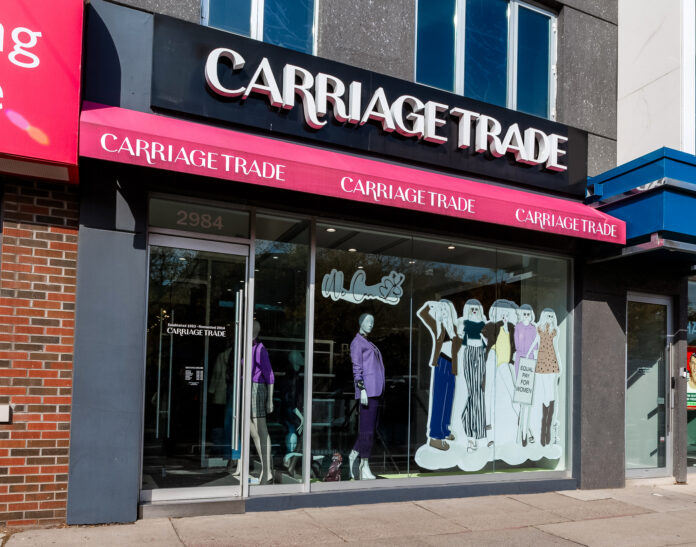
Carriage Trade on Bloor St. W. in Toronto. Image: Carriage Trade

A long-standing staple in Toronto’s high-end fashion scene is getting a significant upgrade. Carriage Trade, an upscale women’s fashion boutique at 2984 Bloor Street West in the city’s affluent Kingsway neighbourhood, is doubling its footprint as it redefines the modern boutique experience.

Founded in 1963—the very day U.S. President John F. Kennedy was assassinated, as owner Nori Mirza points out—the boutique has stood the test of time. “It started in the Kingsway and it’s always been there,” says Mirza. “Same location, for 62 years now.”

Nori Mirza

Carriage Trade boutique, once associated with mature clientele, has undergone a revitalization under Mirza’s leadership. Now, the retailer is preparing for its next phase: expanding to 6,000 square feet across two levels while amplifying customer service, style, and personalization.

Doubling in Size, Doubling Down on Service

“We’re basically doubling in size,” says Mirza. “We’ll have a main floor and a downstairs level, a coffee bar, a VIP room, and new programs for stylists and loyalty customers.”

The store’s current footprint will expand into the adjacent space, with construction carefully staged so the store doesn’t close during renovations. “We’re flipping everything to the new side first. Once that’s done, we’ll renovate the original side,” she explains. “We’re aiming for a full grand reopening by May 3rd.”

The boutique’s growth reflects not just a desire for more square footage but a vision for deeper customer engagement. Mirza emphasizes a “slow fashion” philosophy with curated wardrobes and styling consultations rather than transactional selling.

“We’re not commission-based. We’re very much community driven,” she says. “Women can shop anywhere—nobody needs anything. They come to us because of our service.”

Warm Design, Not Intimidation

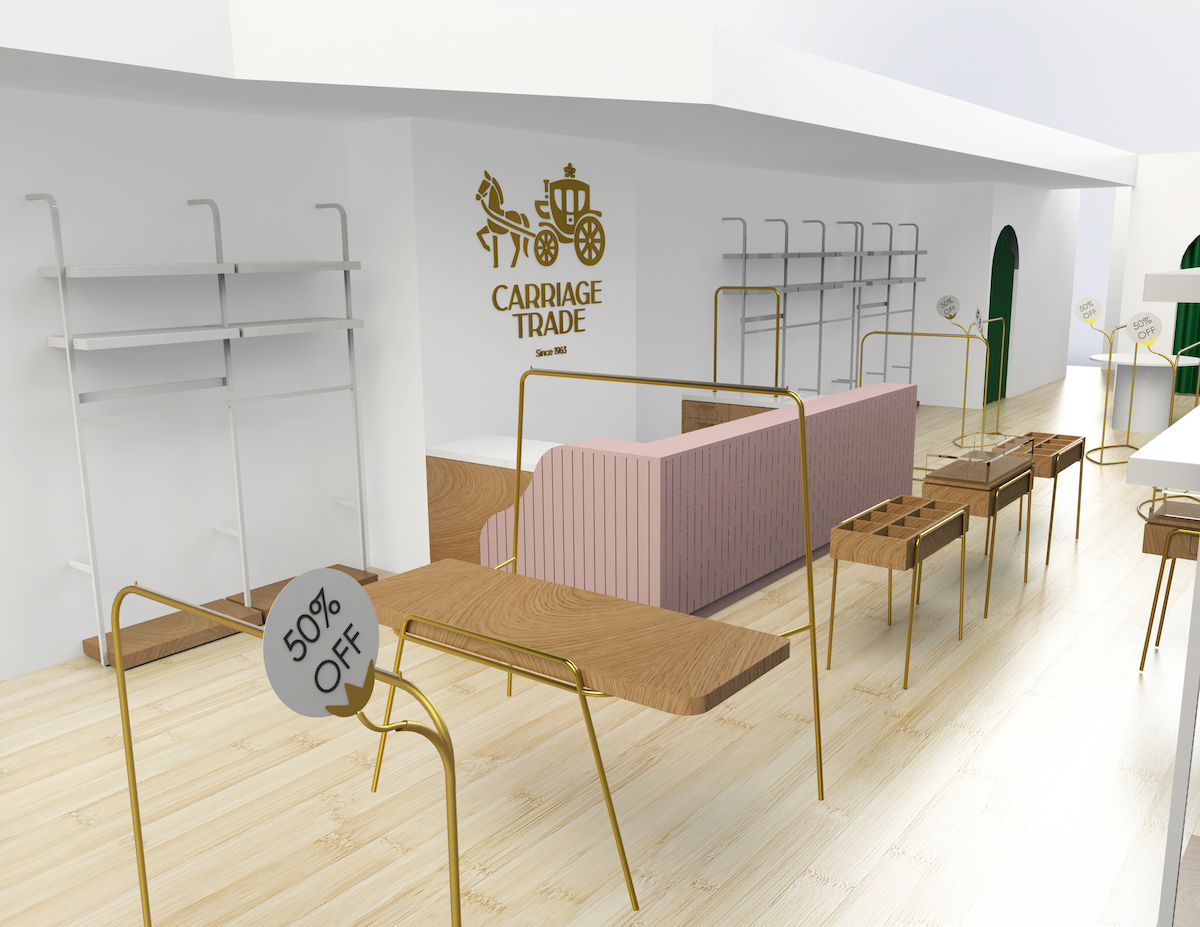
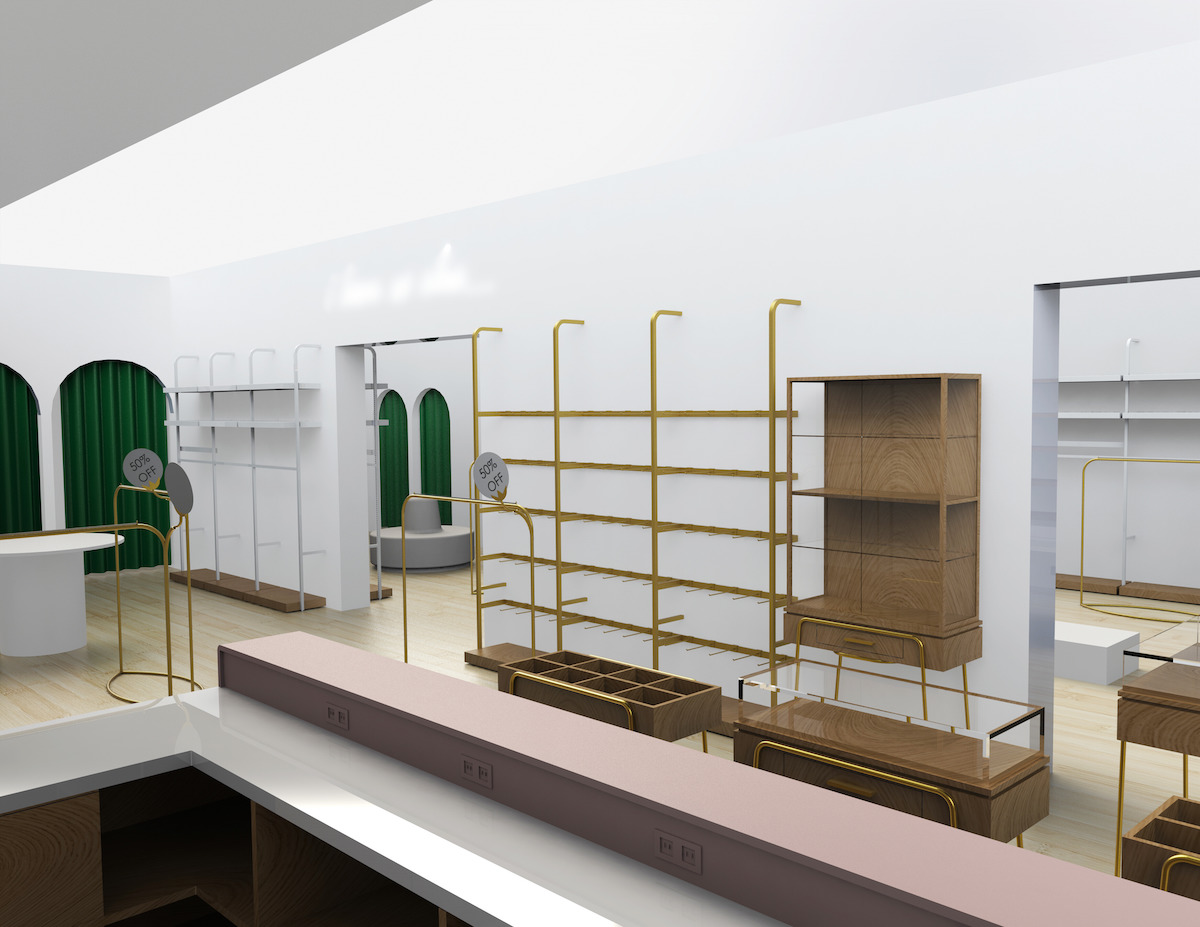
The new space has been designed to be as welcoming as the staff. “We didn’t want that cold, black-and-white marble look,” says Mirza. “It’s warm, it’s feminine, it’s inviting.”

Fixtures will feature gold finishes and walnut shelving, complemented by design elements in dusty rose and emerald green velvet drapery. One of the standout features will be a custom-designed mural turned into wallpaper, greeting guests with a symbolic image of a woman with a horse and carriage.

“Our brand story is important,” Mirza notes. “The name Carriage Trade comes from an old English adjective describing a refined, first-class clientele. When I took over, some people thought the store was for their grandmother. But you can’t buy that kind of legacy.”

To reclaim and modernize that heritage, the boutique has brought back the horse-and-carriage logo, now embroidered on chairs and integrated throughout the refreshed space.

Rendering of the interior of the renovated/expanded Carriage Trade storefront in Toronto. Image supplied

Supporting Canadian Designers and Facing Tariffs

While Carriage Trade has long featured high-end imports, Mirza is placing increasing emphasis on Canadian talent.

“We’ve always had a lot of imports, but we’re trying to support more Canadian designers,” she says. 

Still, challenges remain. Denim, for example, remains mostly American-made due to a lack of Canadian options. “We’re looking for Canadian denim lines, but a lot still comes out of L.A. And with tariffs, some brands absorb the cost—for us, it’s hard to pass on those increases to customers.”

Online and Offline: Meeting Customers Where They Are

Despite doubling down on brick-and-mortar, Mirza has no immediate plans to open additional physical locations. Instead, she sees growth in expanding how customers shop, not where.

“A lot of people ask about other locations,” she says, “but I think our focus is digital. We’re seeing great traction online.”

Carriage Trade now offers curated deliveries, FaceTime styling appointments, and even car service to and from the boutique for VIP customers. “We’ll send a car, bring you in, and you’ll have a stylist waiting for you in the VIP room,” says Mirza.

The store’s online reach grew out of necessity during COVID-19. “We were forced to grow an online business,” she recalls. “Now we’re doing weekly live shopping events every Thursday at 6 p.m.”

Rendering of the interior of the renovated/expanded Carriage Trade storefront in Toronto. Image supplied

Live Shopping Creates Real-Time Engagement

Carriage Trade boutique is one of the few Canadian independent retailers pioneering live shopping events.

“Every week we show vacation edits, seasonal wardrobes, or try-ons,” says Mirza. “We take requests for what people want to see. We have three to nine outfits per session, and they can ask questions in real time.”

This authentic connection has made a big impact. “People say, ‘I feel like I already know you!’ before they’ve even stepped in,” says Mirza. “We’re hugging by the time they leave.”

It’s a grassroots, tech-forward approach to customer service—without sacrificing the boutique’s personal touch. “It’s about showing them who we are,” she says. “Online can feel cold, but we work hard to make it warm.”

A New Chapter for a Toronto Institution

With the expansion nearing completion, Carriage Trade is not just enlarging its footprint—it’s enriching its legacy. Combining warmth, style, and a commitment to evolving retail, Mirza and her team are redefining what a boutique can be in 2025.

“There’s a shift happening,” she says. “People don’t want sterile, editorial campaigns. They want connection. They want personality.”

More from Retail Insider:

DoorDash debuts Festival Activation Fund, helping local restaurants reach more customers

To further level the playing field for entrepreneurs and support the growth of their businesses, DoorDash Canada is debuting the Festival Activation Fund: a new program designed to help Entrepreneurship and Access merchants on DoorDash share their love for food at summer festivals this year.

Equal access to opportunities for restaurant owners and operators is key to creating vibrant, flourishing communities, said the company in a news release.

The company said the Festival Activation Fund will provide 15 restaurants with up to 50% off a restaurant’s summer festival fee (up to $3,000 CAD) that occurs in any Canadian city – no matter how big or how small the community is – from June 1, 2025 to September 30, 2025. 

Heather Cameron
Heather Cameron

“Summer food festivals bring neighbourhoods together, boost local economies, and provide a welcoming space to celebrate the diverse, vibrant cultures that make each of our communities unique,” said Heather Cameron, Head of Brand and Creative at DoorDash Canada. “We’re proud to support restaurants in sharing their love for food with even more diners by helping to remove some barriers for entrepreneurs to succeed.”

Applications are now open and will be accepted until May 16, with successful recipients notified by June. Among other eligibility criteria, restaurants, gastropubs or bakeries must be an active partner on DoorDash, have between one and three physical locations in Canada with less than 20 employees per location and have a valid Canadian Revenue Agency (CRA) business number. 

The Festival Activation Fund builds on DoorDash Canada’s existing Entrepreneurship and Access programs which have provided dozens of grants to underrepresented entrepreneurs through #BlackFoodEnergy, Made By Women, and Kitchens Without Borders. Entrepreneurship and Access partners on DoorDash can also enjoy increased in-app searchability and other resources to help grow their businesses, said the company. 

Related Retail Insider stories:

Reformation opens its first store in Vancouver (Photos)

Photo by Austin Leis for Reformation.

Sustainable fashion brand Reformation is opening its first store in Vancouver in the city’s trendy Kitsilano neighbourhood, marking the brand’s third location in the country and first in Western Canada. 

This retail space follows in the footsteps of Reformation’s first two Canadian locations, both located in Toronto. Situated at 2262 W 4th Ave, Vancouver, and spanning over 1,300 square feet, Reformation’s newest location brings its coveted styles across all product categories to Vancouver shoppers, 98% of which are made with recycled, regenerative, or renewable materials, in line with the brand’s commitment to being circular by 2030.

The Vancouver store marks the brand’s 53rd store globally and third overall in Canada, a global region of emphasis for the brand.

A full list of Reformation stores can be found here: https://www.thereformation.com/stores.html.

As with all of their retail locations, Reformation Vancouver was designed with sustainability in mind. Reformation invests in green building infrastructure in its facilities to minimize its waste, water, and energy footprints and leverages Green Business Certification standards across its global retail fleet. In addition to offsetting 100% of the store’s electricity usage with renewable energy, this location features vintage furnishings, hangers made with FSC-certified wood and reusable deadstock totes, said the company.

Customers can also recycle their well-loved Reformation pieces at any store through RefRecycling. To participate, customers can drop off their items at Ref Vancouver and receive credit towards future purchases, explained the retailer.

Sarah Hooe
Sarah Hooe

Sarah Hooe, VP Global Business Development at Reformation, said Reformation was founded in 2009 in Los Angeles.

“We’ve been a champion for sustainable fashion and climate action since day one, and that’s something that really differentiates us from the broader marketplace. From a product standpoint, we launch new styles in small quantities twice a week online and once a week in store,” she said.

“Once we understand what resonates with our customers, we produce more of it, which helps us mitigate literal and financial waste. Aesthetically, we’re famous for our vintage-inspired apparel that marries the best of timeless and trend-driven style. We really believe in a zero trade off value proposition: beautiful, flattering pieces that make you feel confident and are also better for the planet.

“Our first two Canadian stores are both in Toronto, so we’re excited to finally have a location on the other side of the country. It feels like a natural next step both in terms of reaching a broader audience across the country and a nod to our own roots as a West Coast-based brand.”

Photo by Austin Leis for Reformation.

Hooe said Kitsilano has three major characteristics that made it ideal for the retailer’s first Vancouver store: 1) alignment with its target demographic 2) a well-developed shopping area with a strong sense of community and 3) proximity to downtown and ease of access via public transportation. 

“The store itself is about 1,300 square feet total. What makes it so special is our unique tech-enabled format, which brings the best of online shopping to our physical locations. We have screens throughout the store that you can use to select items for your dressing room just like you would build a cart online. You can also work with one of our amazing store associates to do this, if you prefer,” she explained.

“Our team fulfills the dressing room from our back of house, which functions like a mini distribution centre, so your items are waiting for you when you enter the dressing room and customers don’t have to dig around for their size or carry armfuls of clothing around as they shop. We also have screens in our dressing rooms, which allow customers to request new sizes, colours or different styles altogether as they try items on and figure out what they do and don’t like.”

Photo by Austin Leis for Reformation.

“Selfishly, as someone born and raised in Canada, it’s really fun to lead the process of growing the brand across the country. Canada represents a significant customer acquisition opportunity as we focus on international expansion holistically as a brand. We see an opportunity in the marketplace for beautiful, sustainable apparel – particularly for work and dressier occasions – at our price point that we believe we have a unique opportunity to meet,” added Hooe.

Photo by Austin Leis for Reformation.

Will there be future Canadian stores?

“There’s nothing concrete to share right now, but the short answer is that we envision opening many more stores across the country. Right now, we’re focused on getting to know our customers in Vancouver in a deeper way and making sure we’re delivering the best possible in-store experience for them,” added Hooe.

“We also just formally launched the brand at Holt Renfrew, our exclusive wholesale partner in Canada, which brings Reformation to all of their doors in several major Canadian cities. It’s a huge opportunity to drive brand awareness and learn more about consumer preferences across the country, which we’ll use to inform both our retail and merchandising strategies.”

Related Retail Insider stories:

Photo by Austin Leis for Reformation.
Lela Dress - Rosin
Lela Dress – Rosin

Anatomy of a Leader: Wayne Pommen, Chief Revenue Officer, Affirm Canada

Wayne Pommen, the Chief Revenue Officer of Affirm Canada, is revolutionizing the payments landscape with the “Buy Now, Pay Later” model, providing consumers with a transparent and more manageable alternative to credit cards. In a recent interview, Pommen shared insights into his journey from a rower at Harvard and Cambridge to the leader of one of the fastest-growing financial services companies in Canada. 

His passion for innovation and customer-centric solutions has been the driving force behind Affirm’s expansion in the Canadian market, where it continues to challenge traditional lending practices and offer flexible payment solutions to e-commerce consumers.

Born and raised in Victoria, Pommen’s early interest in rowing led him to prestigious universities like Harvard and Cambridge, where he honed his leadership skills both in the classroom and on the water. It was during his tenure in private equity that he was first introduced to the financial services space, leading him to discover the immense potential of the “Buy Now, Pay Later” model. 

Wayne Pommen
Wayne Pommen

After launching PayBright, Canada’s first BNPL company, Pommen saw its rapid success and eventual acquisition, setting the stage for his leadership role at Affirm. Under his guidance, Affirm has become a trailblazer in the financial services sector, offering an innovative, customer-friendly way to manage payments.

Pommen attributes much of his business success to lessons learned from competitive sports. Rowing taught him the importance of teamwork, delayed gratification, and discipline—values he now applies to his leadership style at Affirm. Pommen emphasized how fostering a motivated team, aligned with a clear mission and a collaborative environment, is key to achieving success. With Affirm, he is reshaping the future of payments in Canada, providing a modern, flexible financial product that prioritizes transparency, integrity, and customer satisfaction over traditional banking practices.

Pommen grew up in Victoria and went to Harvard University for his undergraduate then to Cambridge in England for his PhD.

“When I grew up in Victoria, I started rowing. Right after the 92 Olympics, everybody was interested in rowing in Canada because there was Silken Laumann and I grew up pretty close to the National Rowing Training Centre,” explains Pommen.

“My mom signed me up for a rowing camp and one thing led to another and I ended up being pretty good at it. And I got recruited to row at Harvard. And so I ended up being in my final year, the captain of the Harvard crew.”

He majored in sociology and then his PhD was in international relations, focused specifically on international trade and the North American Free Trade Agreement.

When he was going to university what did he think he would end up doing as a career?

“I didn’t really know. I was always interested in business, in leadership, but I didn’t really know what path that would take. I still had really no idea when I finished my PhD and so I did what people often do in those cases. I went into consulting because it’s a good way to postpone a decision of what you’re supposed to be doing. So I worked at Bain & Company in London for a few years and that was a great experience. I learned a huge amount, worked with lots of interesting companies and met lots of interesting people and that gave me some time to think about what I wanted to do next. I did that for three and a half years,” says Pommen.

During that time he was transferred from the London office to the Toronto office. 

After a period of consulting, he worked at a private equity firm in Toronto called TorQuest Partners for six or seven years, and when he was there, he developed a focus on non-bank financial services. 

“So we were trying to make investments in lending companies, payments companies, things that the big banks didn’t really do where you could actually build and scale business without being stepped on by (a big bank),” he explains.

“I got to learn a lot about some of these businesses and that’s when I met a company, a very, very small company, called Health Smart Financial Services. And Health Smart Financial Services, you could think of as a very early buy now pay later competitor in the healthcare space. We used to do payment plans for dental procedures and veterinary treatments and things like that. I met that company. It was very small. It had five employees. It was part of a larger company actually. And I got involved, became the CEO, partnered with the shareholders, and that is what we then grew into PayBright and became the first true buy now pay later company in Canada where we were the first into the e-commerce business. 

“That turned into a very rapid five year growth until we sold the company in 2021. I didn’t really think I was getting into this really high growth tech sector, but that’s what happened because we realized that HealthSmart was very well positioned to pivot into this new payments trend of buy now pay later.”

Wayne Pommen
Wayne Pommen

There are a number of things Pommen likes about the industry. First there’s so much opportunity to do things better.

“in Affirm, what motivates us is that we think we’re bringing the customer a much more friendly and transparent payment option than they have when they use, let’s say, a credit card or a store card because we never charge late fees. We don’t have a revolving payment account like a credit card does. You can’t carry a balance. You can’t compound your interest. You never pay deferred interest. You never get a negative surprise with the product. And so that opportunity to sort of disrupt how things used to be done in a better way is really what motivates us. And so that’s what sort of gets me and the whole team out of bed each day, I would say,” adds Pommen.

Rowing was such an important part of his life growing up and he ended up being quite good at it. He rowed in the Oxford-Cambridge boat race, which is a big race they have in England. And then he rowed on the Canadian national team and went to the World Championships in 2003 and then decided after 2004 “that I should go and get a real job and not keep rowing.”

Pommen and his teammate had qualified in the men’s pairs for the Olympics in Athens in 2008 but he wanted to finish his education at Cambridge and he had also been elected the President of the Cambridge Boat Club for the 2004 Boat Race. 

“I think I learned more from sports for my business career than anything I learned in the classroom, especially the sport of rowing. Because number one, you have to figure out how to make the boat go with up to eight other people with all different personalities and very motivated, ambitious people, and you’d have to get them to work perfectly together over a long period of time. And so that sort of teamwork is hugely valuable to learn,” notes Pommen.

“And also the other thing is the delayed gratification in that sport is insane. You train all year for a couple of races. And there’s a huge amount of training and discipline and consistency that’s required and you shouldn’t expect results for a long time. And I find that it applies a lot to running companies.”

As a leader, Pommen says the principle he tries to follow is thinking often about what are the conditions he can create to have people do their best work and observing himself over the years and observing others.

“I think people do their best work when a few things are true. Number one, they’re intrinsically motivated because the work itself is interesting and they have ownership over it. Number two, they feel motivated by the mission and they feel connected to a larger purpose. And number three, they really like who they work with. And there’s a sense of camaraderie. Of course, people care about how much they get paid. And is this a prestigious job and what’s their title? But that’s not really what gets people through the hard times. 

Wayne Pommen
Wayne Pommen

“It’s the work, the mission, the people. And so I try to think about how do we make each of those things true for the team? I spend a lot of time connecting the work to the mission. What are we trying to accomplish? Making sure that the team has the right dynamics, low ego, no jerks, everybody’s working constructively together. And that we’re challenging people with work in a way that keeps them motivated, keeps them excited. And so for me, I see my job as a leader is constantly creating those conditions where people can excel. I can’t, I can tell people what to do to an extent, but my real job is to create the world for them to thrive.”

If he has a difficult leadership situation or he can’t figure out how to get people to work together, Pommen thinks about leadership lessons he learned on those rowing teams and about how the best coaches handled similar situations.

“I also find that even the most challenging nerve wracking thing that you encounter in your day-to-day business life is nothing compared to being on the start line at the world championships and so every time I think, oh, I’m getting stressed here, this is a big thing, I think, well, I’ve done this before. It kind of gives you confidence to take through life.”

Related Retail Insider stories:

Tahini’s Restaurants expands across Canada, eyes U.S. and European markets

Source: Tahini's
Source: Tahini's

Tahini’s Restaurants, the rapidly growing Middle Eastern and Mediterranean chain, has reached a major milestone with the opening of its 60th location in Edmonton. 

Founded in 2011 and rebranded in 2016, the restaurant group is poised to dominate the ethnic food scene, offering a diverse fusion menu that blends classic shawarma with international flavours, such as butter chicken, Jamaican jerk chicken, and Korean barbecue.

Omar Hamam
Omar Hamam

Founder and CEO Omar Hamam shared his vision for the brand, which seeks to become the go-to name for shawarma, similar to how McDonald’s dominates the burger industry.

With plans to expand to 100 locations across Canada, Tahini’s is not slowing down. The brand has already set its sights on the U.S. market, with three new locations expected to open in the coming months. Europe is also on the radar as part of the company’s ambitious international expansion plans. 

The key to Tahini’s success, according to Hamam, lies in its consistent product quality and its ability to cater to Canada’s diverse culinary preferences with innovative fusion dishes designed to appeal to both health-conscious consumers and those craving bold flavours.

As ethnic food continues to rise in popularity across Canada, particularly in urban centres, Tahini’s unique approach to combining Mediterranean and global cuisines is tapping into an increasingly sophisticated and adventurous consumer base. With a focus on quality, convenience, and taste, the brand is well-positioned to carve out a dominant spot in the competitive fast-casual dining landscape.

Hamam said “my dream is always to be the brand of choice when it comes to Middle Eastern and Mediterranean cuisine. That means we need to be all over Canada, North America, and Europe hopefully next.”

“We have 60 locations in Canada and we’re opening more. We plan to reach about a hundred, and we’re starting expansion into the US this year, with about three more locations. Hopefully, we can expand into the US as well.”

Hamam said the brand’s success is due to the fact that it’s very organized in the way it works, and the Middle Eastern industry in general is dominated by mom-and-pop shops. 

Tahini's
Tahini’s

“Every single place you go to, sometimes your experience varies completely. So at Tahini’s, we ensure that you have one consistent experience across the board, with familiar products people know. On top of that, we offer fusion cuisine. We’re not just about shawarma. For example, we have a butter chicken shawarma, which is Indian cuisine infused with Mediterranean flavors. We have Jamaican jerk chicken shawarma, and we’ve just introduced a Korean barbecue chicken shawarma,” he explained.

“Because Canada is so diverse, I thought, “Okay, our menu should reflect that too.” That’s how we diversified our menu to align with the Canadian consumer’s palate.”

Hamam said people’s palates have evolved. 

“Don’t get me wrong, I like burgers and hot dogs, but it’s not something I’d want to eat every day. For two reasons: A) it’s very unhealthy, and I’m usually health-conscious about what I eat. I think a lot of Canadians and North Americans are health-conscious in general. That’s a big factor. Shawarma, for example, is roasted chicken—it’s very healthy. It’s grilled, not fried, so you don’t have all the fat, and it’s a lot healthier overall. Plus, it packs a punch in terms of flavour. I think people want to eat healthy, but they also want something flavourful.”

Related Retail Insider stories:

Kinton Ramen expands rapidly, set to open to 50+ locations across Canada by year-end

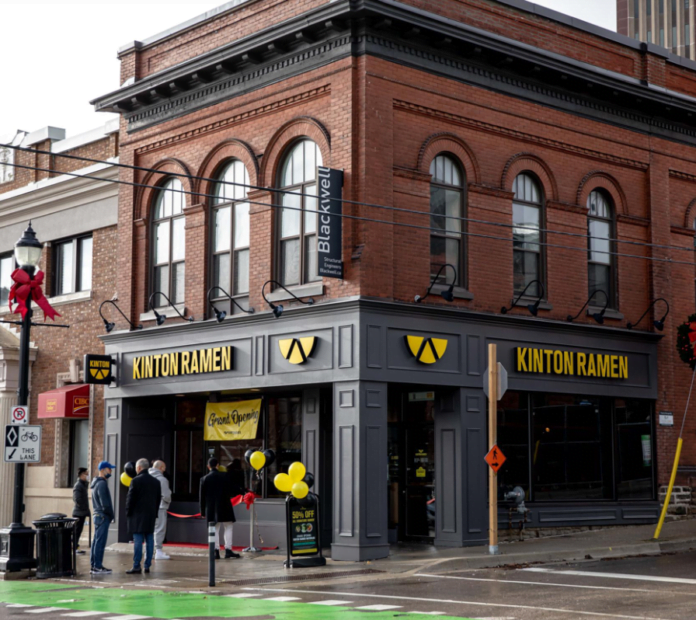
Kinton Ramen Waterloo (Image: Kinton Ramen)

KINKA Family, owners of the popular Canadian Kinton Ramen chain, continues its rapid expansion across the country with plans to exceed 50 locations by the end of the year. 

Currently operating 47 restaurants, the brand’s aggressive growth strategy includes significant moves into new markets, from the Greater Toronto Area to Western Canada and into the East Coast. The company’s ability to tap into the growing demand for authentic Japanese cuisine, particularly ramen, positions it as one of the most exciting players in Canada’s dynamic foodservice landscape.

Targeting a youthful, multicultural demographic aged 18-35, KINKA Family’s success lies in its strategic location choices. The chain focuses on dense urban centres near universities and vibrant, multicultural communities. 

With a footprint already in cities like Calgary, Vancouver, and Winnipeg, the brand is now expanding into major urban hubs such as Victoria, Oakville, and Waterloo. It also plans to explore new locations in high-growth regions, positioning itself for continued national dominance.

Looking ahead, KINKA Family’s growth trajectory is set to accelerate. The company is eyeing over 100 locations across Canada within the next five years, capitalizing on the increasing consumer appetite for ramen and other Japanese culinary experiences. 

As tastes evolve, the brand is benefiting from the booming popularity of ramen among younger generations, a trend that shows no signs of slowing down. With a robust pipeline of sites under construction and a clear vision for future growth, KINKA Family is poised to become a household name in Canadian dining.

Karalyn White
Karalyn White

Karalyn White, Senior Director of Franchising, said the brand looks to expand to areas that are very dense with its target demographic, which is 18 to 35. 

“We also have a very multicultural demographic, so places in urban centres close to universities and things like that. We also require about 1,700 square feet. That’s our sweet spot.”

The space allows for seating of between 40 to 60.

“Predominantly, our restaurants are in Toronto proper. We have expanded into many outskirts, like Oakville. We’re looking to open in Waterloo soon, and we’re opening soon in Barrie. We’ve got one in Newmarket as well. We’re targeting all the GTA locations. Next, we’re focused on the West. Right now, we’re looking for sites in Niagara and a second site in Oakville. We’re looking in Cambridge for sites, and then next, we’ll be looking east toward Pickering.”

“In Manitoba, we have one and are targeting another in Winnipeg. In Calgary, we’ve got one open. We have three under construction there. In Edmonton, we have two signed and one under construction. We’re looking for about two more sites.

“In BC, we have five open, most in the Greater Vancouver area. One is in Kelowna. We have two under construction in Victoria, and we’re targeting Nanaimo and Whistler for sites. We also have one under construction in Coquitlam. We are definitely targeting all the other urban areas in BC.”

Source- Kinton Ramen

White said sushi has been on people’s radars for a long time. 

“I think ramen is the next evolution in both franchising and growth. People just love it. My two kids, in their early teens, are all about ramen. Fifteen years ago, people were all about sushi, but now, they’re all about ramen. I think the younger demographic is really driving that, and they’re dragging their parents along. Their parents are getting into it, too. The flavours are just amazing. It’s something that Asian culture has been eating for hundreds of years, but it’s relatively new to the Canadian population, and it’s growing exponentially.”

Related Retail Insider stories: