Advertisement
Home Blog Page 531

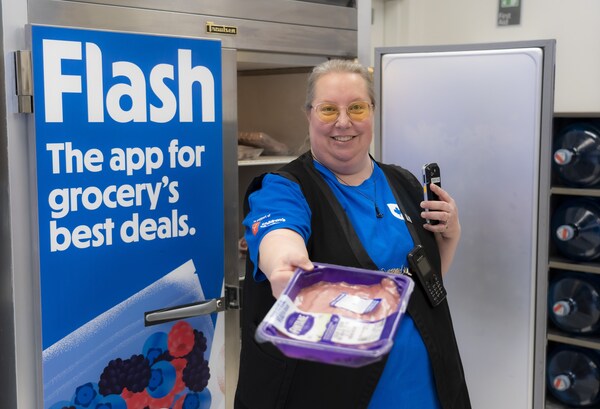
Loblaw’s NoFrills Ad Sparks Controversy with Farmers

Loblaw Companies Limited, Canada’s largest food retailer, has ignited controversy with a recent marketing campaign for its discount grocery chain, NoFrills. The advertisement, which encouraged shoppers to bypass farmers’ markets in favor of NoFrills stores, has drawn sharp criticism from farmers’ market organizations and small business groups across multiple provinces.

The contentious text message, distributed alongside NoFrills’ latest flyer, was first noticed by members of the Farmers’ Markets of Nova Scotia Cooperative and the Ontario Small Business Community in mid-July. Victoria Tinkler, community manager for the Ontario small business group, initially believed the message to be a prank, given its disparaging tone towards local farmers’ markets.

The ad campaign has struck a particularly sensitive chord given the existing tensions between large grocery chains and Canadian consumers. Just two months prior, thousands of Canadians participated in a boycott of Loblaw stores in response to the company’s soaring profits amid rising living costs. This latest marketing misstep has further eroded trust between the retail giant and its customer base.

Both the Farmers’ Markets of Nova Scotia Cooperative and the Ontario Small Business Community took to social media to voice their disapproval. They argued that the ad unfairly targets small business owners who often face significant barriers to getting their products onto grocery store shelves and typically cannot operate year-round.

The controversy has shed light on the complex relationship between food producers and large grocery chains. Tinkler pointed out the apparent contradiction in Loblaw’s messaging, given that the company sells products grown by Canadian farmers from coast to coast.

In response to the backlash, Loblaw issued an apology, stating that the text was intended to highlight NoFrills’ local summer produce program but “fell short of reflecting the true spirit of our campaign.” The company affirmed its commitment to supporting Canadian farmers and growers, but the incident has left many questioning the sincerity of this pledge.

This controversy comes at a time when many Canadians are becoming increasingly mindful of their shopping habits, often planning their grocery trips around promotions and sales to cope with rising food costs. The incident serves as a reminder of the delicate balance large retailers must strike between competitive pricing and supporting local producers. Not to mention marketing messaging.

Sweet Jesus Partnering with St. Louis Bar & Grill [Interview]

Dessert-brand Sweet Jesus has entered into a long-term partnership with Canadian casual dining chain St. Louis Bar & Grill, to feature its frozen desserts on its menu at more than 80 restaurants across Canada.

“We’re thrilled to bring Sweet Jesus to St. Louis Bar & Grill. Its guests expect a highly craveable menu and we’re excited to help enhance their dining experience with our mouthwatering desserts that are just about as addictive as St. Louis’ world-famous wings!,” said Phillip Knox, Director of Operations, Sweet Jesus.

Phillip Knox

“St. Louis Bar & Grill is one of Canada’s most beloved and successful restaurant chains with a dedicated and growing fan base across the country. Canadians love them for their craveable eats, making Sweet Jesus’ flavour-packed desserts a perfect addition to their menu. Since launching at St. Louis, our desserts have been a hit. We’re excited that millions of Canadians are experiencing Sweet Jesus, including at St. Louis locations. As St. Louis continues to open additional restaurants nationwide, backed by its strong food delivery network, access to Sweet Jesus will continue to expand.

“The overwhelming success of Sweet Jesus through this partnership is a key indicator for us. It underscores a significant consumer demand for our innovative, delicious desserts and the vast potential for growth of the Sweet Jesus brand among today’s discerning consumers.”

St. Louis Bar & Grill operates casual dining restaurants with 80 locations across Canada. The chain has served its famous signature chicken wings since opening its first location in 1992.

Royal Nasager

“We’re absolutely stoked about this partnership and our guests just can’t get enough of Sweet Jesus’ amazing desserts,” said Royal Nasager, VP of Marketing & Strategic Partnerships for Aegis Brands which operates St. Louis Bar & Grill. “We’re constantly looking for exciting ways to enhance guests’ experiences, and this partnership is an extension of our commitment to continuously surprising and delighting them.”

Nasager said another three locations will be opening in September.

“We’re expecting more to open this year,” he said.

Sweet Jesus will be part of the menu for all the restaurant locations.

“We identified the need and the opportunity to up our dessert game and bring something special into the St. Louis Bar & Grill. We started testing around this time last year and had about eight months and we had a great guest response to it. Franchisees loved it and it was really a great complimentary product to what we currently do,” said Nasager.

“So starting in May of this year we expanded the program to all locations. This has replaced our sweets, desserts component of our menu and we’ve added in the Sweet Jesus menu as our offering there.

“We’re fully committed to the partnership and we fully expect Sweet Jesus to be our dessert partner going forward.”

St. Louis Bar & Grill

Tableware Retailer Fable Launching New Concept Store in Vancouver [Interview]

Fable

Tableware retailer Fable is launching a new concept in its Vancouver store that could eventually be rolled out to other markets.

The company has retail locations in Toronto and South Granville in Vancouver. The Toronto location is on Queen Street West.

The retail stores originally opened in 2023 with the Vancouver location originally in Gastown but in September the new Granville location was launched.

Joe Parenteau

“Fable is a home decor brand. To date, we’ve been primarily focused on table top, making it as easy and effortless as possible to set this beautiful looking table, helping customers feel right at home with sustainable goods that are all crafted ethically, sustainably and across all of like Europe, for the most part, we have products coming out of Japan, but outside of that, most of our pieces are coming from Portugal and Germany, some from Italy as well,” said Joe Parenteau, Co-Founder and CEO of the company.

“But our main focus and what’s been shifting for us is how we think about the company as a whole. There’s been definitely a big shift towards becoming a full home decor brand. A lot of the new pieces that you’re going to see come out later this year are focused in the living room. We’re calling it our Living Collection. Think things like wall art, rugs, lighting, planters, all these other pieces in parts of your home that outside of furniture help a house feel more like a home, and those finishing touches around that space.

“For us, though, the main goal and long-term objective for the company is to make outfitting your home as easy and effortless as possible. And we really look at ourselves as like that graduation step from IKEA. So after you’ve outfitted your home from IKEA, and that first stage you’re looking to upgrade into something premium, things that are going to last you for the rest of your life. We hope that Fable is that obvious choice for you.”

Fable

When thinking about retail expansion, Parenteau said it is all about complementing its online strategy with physical presence that allows its customer base to come and gather in different locations and to be able to touch and feel the product.

“Home decor is a very tactile experience and it is nice to see the product before it enters into your home and you can understand how that’s going to look and come together in the space,” he said.

“So for us when we think about expansion it’s really about entering into different markets and different regions where we have a strong community and customer base already established. Next year we are looking at ideally opening two new retail locations and advancing our Toronto location. Essentially re-doing our Toronto location with a better space but also a new concept . . . The new Vancouver concept we hope will be our new blueprint as we expand going forward.”

Max Tims, Co-Founder and Head of Operations, said the new Vancouver location will have a cafe soon.

Max Tims

“That’s the big thing we’re hoping to test . . . This will allow us to complement our earlier build out and bring in a full cafe offering. What we’re hoping to test with this cafe offering is two things. One is can we get more customers to touch and feel the product? Our products are really tactile . . . We want to get more people to touch and feel our products, have a nice coffee in a beautiful Japanese glassware and just experience the products,” he said.

“The second thing we’re also hoping to build is more a community. Fable is all about bringing people together, sharing moments, sharing meals and having this cafe concept we really want to test how can we bring people in, have people come in and enjoy coffee with a friend, and have a retail environment that supports people outfitting a home that they love but also a space that we have some community building.”

The Vancouver store is about 3,300 square feet. The Toronto store is currently much smaller.

The retail concept had its roots from a personal problem. Parenteau said most generations looking for home decor initially shopped at IKEA.

“I think IKEA is really great, and they ultimately design all their pieces to match. So when you want to graduate from the IKEA days, which is where I found myself, you turn to the traditional stores, Williams Sonoma, Pottery Barn, Crate & Barrel. But those stores are nothing like IKEA. In fact, they had designed nothing to match each other,” he said in a previous Retail Insider story.

“So the concept behind Fable is to make the shopping experience even easier for home decor and make it as simple as possible.”

$500 Million Loblaw Bread Price-Fixing Settlement Greatly Falls Short [Op-Ed]

The bread price scandal, which has been unravelling since 2001, continues to leave a sour taste in the mouths of Canadians. Despite the recent announcement that Loblaw and George Weston Limited will settle a class-action lawsuit by compensating Canadians approximately $500 million, the matter remains unresolved.

The scandal began when Loblaw and Weston Bakeries, then under the ownership of George Weston, admitted to colluding with other major grocers and Canada Bread to fix bread prices between 2001 and 2015. This price-fixing scheme, according to our calculations, cost Canadian consumers anywhere between $4.3 to $4.9 billion due to inflated bread prices over 14 years. While the $500 million settlement might seem substantial, it pales in comparison to the true cost of the scheme.

In 2017, when Galen Weston first acknowledged the involvement of his companies in the scandal, about 3.84 million Canadians registered to receive a $25 gift card from Loblaw. This amounted to roughly $96 million in compensation, suggesting that Canadians should anticipate an additional $400 million once the courts approve the settlement.

Meanwhile, Loblaw’s recent financial performance indicates modest yet noteworthy growth in the retail sector. The company’s overall revenue in Q2 reached $13,947 million, marking an increase of $209 million or 1.5%, with retail segment sales rising by $187 million or 1.4%. Specifically, Loblaw’s food retail division experienced an increase of 0.2% in same-store sales, despite a national decline in food and beverage sales by nearly 1% since January, according to Statistics Canada. These figures suggest that the purported boycott of Loblaw, driven by allegations of profiteering, had minimal impact on the company’s financial health.

The narrative that social media platforms like Reddit fuelled the protest against Loblaw is largely inaccurate. It was, in fact, poor reporting by certain media outlets that gave rise to the movement. This protest was largely politically motivated and lacked substantial evidence, leading to misguided public outrage. However, the frustration and resentment directed towards the food industry are completely understandable, given the lack of protection against such criminal behaviour.

The Competition Bureau has been investigating the bread price-fixing scandal for nine years. Thus far, Loblaw, Weston Bakeries, and Canada Bread (which paid a record-breaking $50 million fine last year) have admitted their guilt. However, Walmart Canada, Sobeys, Metro, and Giant Tiger, all of whom deny their involvement, remain under investigation. It is imperative that this investigation concludes promptly.

Canadians will receive an additional $400 million in compensation, thanks to the efforts of lawyers and the courts, not the Competition Bureau. This sum represents only about 10% of the estimated $5 billion that Canadians overpaid for bread over 14 years. The public’s outrage is justified.

Moreover, not a single executive has faced arrest, charges, or conviction for price-fixing. In the United States, such behaviour is met with severe consequences. For instance, Chris Lischewski, the former CEO of Bumble Bee Foods who was just released from jail, was sentenced to 40 months in prison for price-fixing canned tuna, during a 3-year period. In contrast, Galen Weston received immunity from the Competition Bureau despite admitting to 14 years of bread price-fixing.

Unless the total compensation approaches the $5 billion mark, Canadians have every right to remain sceptical and upset with the food industry. The current settlement is a step in the right direction, but it falls short of addressing the full extent of the damage caused by this prolonged price-fixing scheme.

Canadian Retailer Bentley Acquired by Owner of Hart Stores [Interviews]

Bentley at Dufferin Mall (Photo: Dustin Fuhs)

The assets and store leases of leading Canadian luggage and travel products retailer Bentley & Co. Ltd. have been acquired by Paul Nassar, owner of Hart Stores.

Walter Lamothe

The majority of Bentley’s 140 stores will be retained as part of the transaction, although around 40 stores may close as part of a restructuring of the businesses retail footprint, said Walter Lamothe, President and CEO of Bentley.

Nassar owns Hart Stores and several other small to medium retail operations in Canada. In 2015, he acquired 60 Hart Stores out of bankruptcy. Since then, Hart Stores have grown to over 120 stores with a presence in Ontario, Quebec and the Maritimes.

Bentley store at CF Toronto Eaton Centre on July 25, 2024. Photo: Dustin Fuhs

Bentley was founded in 1987, and is the largest retailer of suitcases, handbags, backpacks, business bags and travel accessories in Canada.

In November 2019, Bentley Leathers Inc. filed a notice of intention to propose the restructuring of its operations. The changing consumer behavior, the impact of the digital disruptions combined with operating over 250 stores across the nation have significantly impacted the profitability of the company, it said at the time.

According to Insolvency Insider, Bentley & Co. Ltd., filed an NOI on July 17 listing $26 million in liabilities, including approximately $8.8 million in secured debt to HUK 89 Limited.

“The company had previously filed an NOI in 2008 and filed again in 2019, at which time it was acquired by HUK 94 Limited, a subsidiary of turnaround specialist Hilco Capital. Despite Hilco’s significant investment in Bentley, sales have fallen short of expectations in recent years and the business has been facing serious liquidity constraints,” said Insolvency Insider.

“In late 2023 and early 2024, Bentley was the target of two ransomware attacks that compromised its systems and caused it significant financial losses. Furthermore, the company has been unable to maintain profitability in the long-term since the pandemic, in part due to consumer preference for online shopping, which has made it difficult for Bentley to remain profitable while operating more than 140 stores.

“The purpose of the NOI proceedings is to consummate a sale to a company owned by Paul Nassar, a well-experienced player in the Canadian retail market who owns the Hart chain, which has approximately 130 locations in Canada, and recently acquired the Korvette chain, a prominent player in the Quebec retail market with approximately 60 stores and 600 employees in Quebec.”

Bruce Winder, Retail Analyst and Author, said the announcement reinforces just how hard the retail business is in the current consumer environment.

Bruce Winder

“For a company like Bentley, they face several headwinds including: declining mall traffic, changing consumer shopping habits where retailers like Amazon and other discounters, along with specialty luggage brands dominate, price pressure from these same retailers and a very stingy consumer who has lowered demand for discretionary items,” he said.

“With the Hart purchase Bentley gets a new owner with success at street fighting on value and runs a low cost operation. Qualities that will make Bentley leaner and meaner to compete in this very tough market.

“Congratulations to Hart stores and Paul Nassar on the purchase. Bentley lives on to fight another day.”

George Minakakis, Founder and CEO of the Inception Retail Group, said consolidation of retail brands in transition or peril of extinction is a common theme today.

George Minakakis

“This strategy of removing the growing costs of back-of-the-house support has worked as long as the financial burden of acquisitions isn’t overwhelming. The fit seems to be right for Hart. The category still has demand, albeit a great deal of competition, which understandably requires the closing of stores,” he said.

“It is a situation where many midsized brands will find themselves in need of survival, as we have seen the same in department stores. The retail landscape continues to shift, with consumers pulling back and larger retailers making a strong move to become technology-first companies (with AI).

“Retail survival is taking on a new form; in my opinion, this was a good transaction, and it will be interesting to see how Bentley evolves as a result.”

Carl Gagnon, President of IMAGO, said Bentley historically was known for offering a wide – flea market style – variety of travel/work/fashion related items at bargain prices, often without a focus on quality or style – in the most basic shopping experience there is. 

Carl Gagnon

“The challenge arose when the retailer attempted to shift these long-time established consumer habits. This required significant effort from the whole organization and investments to demonstrate and communicate why consumers should now value quality and style and be willing to pay more at Bentley – this while aiming to attract a new customer base that never considered Bentley for travel luggage and accessories. This type of brand transformation required educating consumers on the reasons behind Bentley’s new direction. In this context, changing consumer habits can take a lot of time and be quite costly,” he said.

“Many retailers are proving that omnichannel strategies and physical retail are far from obsolete. On this path, Bentley’s attempt to differentiate itself from both online and offline competitors by going vertical and launching its own house brand, TRACKER, was arguably a step in the right direction. However, the company shift in focus and marketing investment needed to successfully launch a new brand are substantial, and for a smaller company like Bentley, time and resources were unfortunately limited simply by the size and fragile situation of the company.

“Maybe aspirations were simply too big.”

Michael Kehoe, Broker of Record with Fairfield Commercial Real Estate, said the acquisition of Bentley & Co. Ltd. by Hart Stores is good news on the Canadian retailing scene. 

Michael Kehoe

“It’s all part of the shifting sands in retail ownership in a tough retail environment. I am calling this “the summer of discontent” as 2024 consumers are unhappy and it’s affecting shopping patterns and retail sales. As Bentley joins the Hart family of stores a sense of stability is welcomed across the shopping centre sector and other retailing venues for the 200+ stores across the country,” he said.

“Some stores will be transitioned I am sure, all part of the Darwinian struggle that is retailing in 2024. Bentley has been a category dominant fixture on the Canadian retail landscape for 35 years and I am happy to see this legacy brand carry on.”

Loblaw Reports Minimal Boycott Impact, Cites Lawsuit Settlement for Profit Decline

Loblaw Carlton Street (Image: Dustin Fuhs)

Canadian grocery retailer Loblaw reported that a recent consumer boycott had only a minor impact on its sales, with a significant decline in profits attributed mainly to a lawsuit settlement.

The boycott, which emerged due to alleged price gouging during the pandemic, aimed to pressure the retailer into fairer pricing practices. Despite the effort, Loblaw’s latest financial results indicate that the boycott did not substantially affect overall sales figures.

The primary financial setback for Loblaw this quarter was a substantial settlement related to a longstanding bread price-fixing lawsuit. This legal issue, dating back several years, culminated in a financial agreement that significantly impacted the company’s profitability. The settlement highlights the ongoing challenges Loblaw faces in overcoming past controversies and restoring its reputation among Canadian consumers.

Despite the profit decline, Loblaw’s grocery and pharmacy divisions, including Shoppers Drug Mart, showed resilient sales. These sectors have provided stability amidst the company’s legal and public relations challenges, reflecting strong consumer demand and effective business strategies. The steady performance of these divisions underscores Loblaw’s ability to maintain its market position even under adverse conditions.

The minor impact of the boycott suggests that while Canadian consumers are vocal about pricing concerns, sustained boycotts may be less common. This insight is valuable for retailers aiming to understand consumer behaviour and adjust their pricing strategies accordingly. For Loblaw, this period represents an opportunity to rebuild trust through transparent practices and responsive customer service.

Loblaw’s future strategies are likely to focus on reinforcing its competitive edge while addressing consumer dissatisfaction and legal vulnerabilities. Investments in fair pricing, customer loyalty programs, and enhanced service offerings will be crucial for long-term stability and growth. As the company works to recover from its recent setbacks, its actions will be closely monitored by industry analysts and competitors.

Loblaw and George Weston Agree to Historic $500M Settlement Over Bread Price-Fixing Scandal

Image: Loblaw

Loblaw Companies Ltd. and its parent company, George Weston Ltd. have agreed to a $500 million settlement to resolve a class-action lawsuit accusing them of participating in a 14-year bread price-fixing scheme. This case, which implicates other major retailers like Metro, Walmart Canada, Giant Tiger, and Sobeys, represents the largest antitrust settlement in Canadian history. The lawsuit alleges that these companies conspired to artificially inflate bread prices from 2001 to 2015, significantly impacting Canadian consumers.

George Weston will contribute $247.5 million in cash, while Loblaw will pay $252.5 million, which includes $156.5 million in cash and $96 million in credits previously issued to customers through the Loblaw Card program. Galen Weston, CEO of both companies, publicly apologized, emphasizing the need for ethical business practices and the importance of maintaining consumer trust.

The settlement follows extensive investigations by the Competition Bureau, which began probing the alleged price-fixing activities in 2016. Weston Foods and Loblaw previously admitted to their involvement and received immunity in exchange for their cooperation. The Competition Bureau claimed that the conspiracy added at least $1.50 to the price of a loaf of bread, impacting Canadian households over the years.

This historic settlement underscores the critical need for transparency and ethical practices within the Canadian retail industry. It sets a precedent for how anti-competitive behavior will be handled, potentially leading to stricter regulatory oversight and more rigorous compliance standards across the sector. For Canadian retailers, the case serves as a stark reminder of the importance of adhering to ethical standards and maintaining the trust of their customers.

The broader impact on the industry could be profound, prompting retailers to re-evaluate their business practices and foster a more competitive environment. This settlement might also influence consumer perception, leading to heightened demand for fair pricing and corporate accountability.
Moreover, as Loblaw and George Weston work to rebuild their reputations, they may introduce new measures to ensure compliance and ethical conduct. This could include enhanced training programs, stricter internal audits, and greater transparency in pricing policies. The ultimate goal will be to restore consumer confidence and demonstrate a commitment to ethical business operations moving forward.