The Consumer Price Index (CPI) rose 1.8% on a year-over-year basis in December, down from a 1.9% increase in November. Food purchased from restaurants and alcoholic beverages purchased from stores contributed the most to the deceleration. The CPI excluding food rose 2.1% in December, reported Statistics Canada on Tuesday.
A temporary GST/HST break on certain goods was introduced on December 14, 2024. The major components impacted by the tax break were food; alcoholic beverages, tobacco products, and recreational cannabis; recreation, education, and reading; and clothing and footwear, said the federal agency.
On a monthly basis, the CPI declined 0.4% in December, following a flat month in November. On a seasonally adjusted monthly basis, the CPI rose 0.2%, it said.
“Canadians paid less for food purchased from restaurants in December (-1.6%) on a year-over-year basis. This was the index’s first annual decline, paired with its largest monthly decline (-4.5%) amid the GST/HST break,” explained StatsCan.
“On a year-over-year basis, prices for alcoholic beverages purchased from stores declined 1.3% in December, compared with a 1.9% increase in November. On a monthly basis, prices fell 4.1%, almost tripling what had previously been the largest monthly decline recorded for the series in December 2005 (-1.4%).
“Prices for toys, games (excluding video games) and hobby supplies decreased 7.2% year over year in December 2024, down from a 0.6% decline in November. In addition, the children’s clothing index fell 10.6% in December compared with the same month in 2023.”
Year over year, Statistics Canada said prices for gasoline rose 3.5% in December compared with a 0.5% decline in November. The increase was mainly the result of a base-year effect as prices declined 4.4% month over month in December 2023, when there was uncertainty regarding oil demand coupled with high levels of supply, which put downward pressure on prices.
On a monthly basis, gasoline prices fell 0.6% in December 2024, added the report.
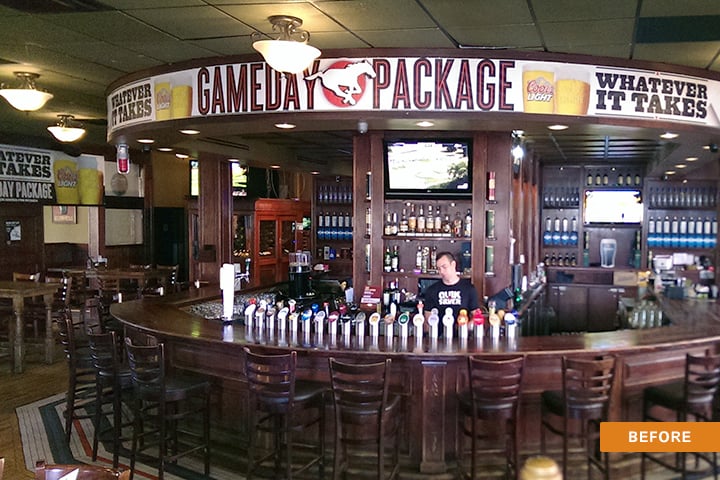
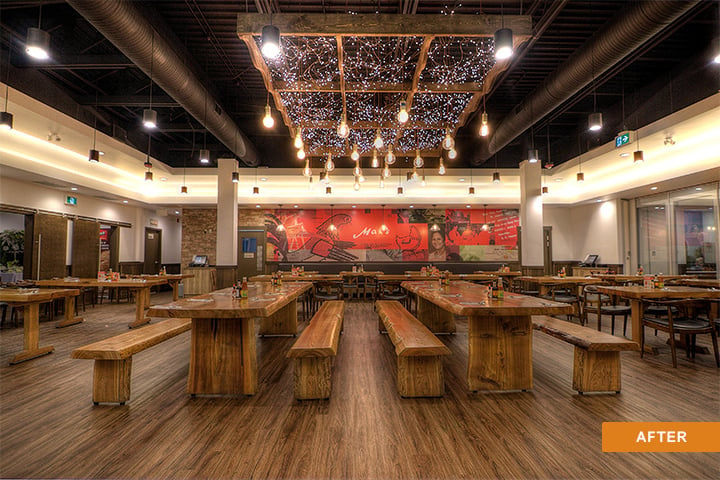
As the retail and commercial landscape continues to evolve, CTM Design stands out as a leader in engineering and design, offering cutting-edge solutions that adapt to emerging trends and client needs. With a rich history spanning over three decades, CTM Design has solidified its reputation for creating innovative spaces that seamlessly blend form and function. As they gear up to attend the ICSC Whistler 2025 event at the end of January, CTM Design is positioning itself as the go-to partner for businesses looking to elevate their physical spaces.
CTM Design’s services span the full spectrum of engineering and design:
Architecture & Design: Balancing aesthetics and functionality to create impactful spaces.
Electrical Engineering: Strategic placement of wiring for lighting and outlets.
Civil Engineering: Site grading, traffic modeling, and parking design.
Mechanical Engineering: HVAC, plumbing, and gas systems tailored to business needs.
Structural Engineering: Focused on building integrity, including outdoor signage.
Permit and Zoning Applications: Streamlining approvals to keep projects on track.
“Choosing a design partner who can integrate these services under one roof makes all the difference,” explains Devin Mahaffey, CTM Design’s President.
Adapting to New Trends in Retail Design
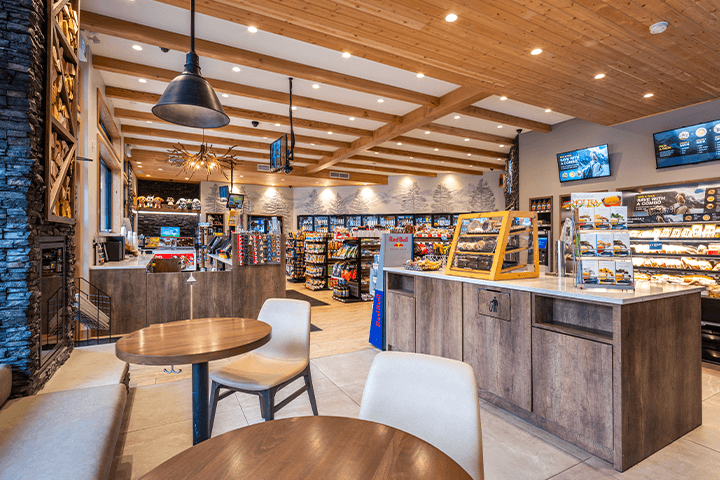
In 2025, trends such as sustainable design, EV charging integration, and optimized layouts are shaping the industry. CTM Design is at the forefront, ensuring clients stay competitive while creating spaces that enhance customer experience.
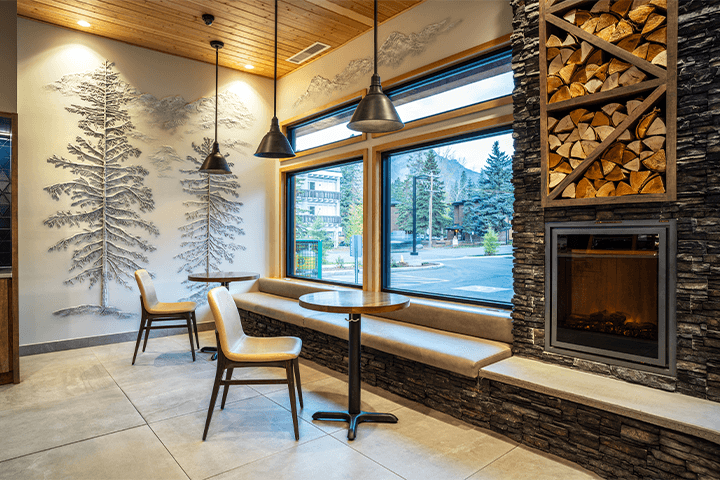
As environmental concerns take center stage, businesses are leaning into sustainable practices. CTM Design helps clients source materials from FSC-certified suppliers and incorporate natural elements like wood finishes and greenery. “Biophilic design not only reduces carbon footprints but also creates inviting, customer-friendly environments,” says Mahaffey.
Smart Floor plans that Drive Sales
Retail success often begins with the right layout. CTM Design’s research-backed floor plans, including grid, loop, and free-flow designs, cater to diverse business models. For example, a free-flow layout works well for boutique spaces, while a grid layout optimizes large stores with extensive inventories.
Lighting also plays a critical role. Accent lighting, strategically placed to highlight displays, can entice customers to explore more and increase their time in-store. CTM Design’s team collaborates closely with clients to tailor lighting designs that align with their brand and operational goals.
Image: CTM Design, Husky Banff
Designing for Efficiency and Brand Consistency
For franchises and corporate retailers, consistency is key. However, even the most templated designs require adaptation to local regulations and unique site constraints. CTM Design’s expertise lies in tailoring corporate standards to specific locations while preserving brand integrity.
CTM Design at ICSC Whistler
CTM Design’s participation in the ICSC Whistler event underscores their commitment to staying ahead of industry trends. The event provides an opportunity to showcase their capabilities and connect with decision-makers in retail and commercial sectors. Ryan Guanlao, CTM Design’s Business Development Lead, will be on-site with Amina Oyakhilome, Senior Architect and Principal in CTM Architecture Ltd., to discuss the firm’s latest projects and explore partnerships.
The Future of Retail and Commercial Spaces
Looking ahead, CTM Design is poised to help clients navigate emerging trends, such as:
Technology Integration: From EV charging stations to automated inventory systems, CTM Design ensures spaces are future-proof.
Customer-Centric Spaces: Upscale finishes and layered lighting designs create inviting environments that enhance customer experiences.
“Our goal is to design spaces that not only meet today’s needs but also anticipate tomorrow’s challenges,” says Mahaffey.
Partner with CTM Design
CTM Design’s track record of excellence makes them a trusted partner for retailers and developers across Canada. Whether it’s a single-location project or a nationwide rollout, their integrated approach delivers results. For those attending ICSC Whistler, meeting with CTM Design’s team is an opportunity to explore how they can bring your vision to life.
The recent GST holiday showed how tax relief can influence consumer behaviour. According to Restaurants Canada, restaurant traffic increased by 18% nationally during the first two weeks of the holiday compared to the same period last year. Provinces with harmonized sales tax (HST), where the combined reduction was more significant, saw even greater results. In Ontario, for example, restaurant visits jumped by 23%, reflecting the 15% total tax reduction from both federal and provincial sources. Similar trends were reported in Atlantic Canada and British Columbia. Restaurants Canada attributes much of this increase to the tax break—a claim that seems entirely reasonable.
The effect was less pronounced in Quebec, where the GST reduction was limited to 5%. Neighboring provinces like Ontario and New Brunswick experienced more substantial boosts, highlighting the role of tax rates in influencing spending.
Did Restaurants Pocket the Savings?
One question remains: did restaurateurs take advantage of the tax reduction to increase prices? This possibility is worth examining, especially given historical precedents. When the federal GST was reduced under Stephen Harper’s government, inflation rose shortly after. In Quebec, however, this effect was mitigated because the provincial government simultaneously raised the Quebec Sales Tax (QST), offsetting the GST cut. Inflation data from the coming weeks will reveal whether a similar dynamic is at play this time.
A Shift from Grocery Stores to Restaurants?
Another noticeable outcome of the GST holiday may have been a shift in spending from grocery stores to restaurants. At grocery stores, only 15–20% of food items are subject to tax, compared to 100% of items sold in restaurants. On average, the GST holiday offered savings of no more than $5 per person over the two months it was in place, but that small reduction may have encouraged some Canadians to dine out more or purchase more prepared meals—also taxed—at their local grocery store.
Restaurants Canada recently proposed a bold idea: eliminating taxes on all prepared foods, whether sold in restaurants or grocery stores. This could be a first for a national organization advocating such a sweeping policy change.
A Solution for Grocery Stores
This proposal deserves serious consideration, especially when it comes to prepared foods sold in grocery stores. Why tax a salad or sandwich when these items are practical options for Canadians who don’t have the time or means to cook? According to the latest census, single-person households account for 29.3% of all households in Canada—over 4.3 million in total. Additionally, over 90% of Canadians aged 65 and older live in private residences. These individuals often rely on prepared foods to avoid food waste, which can be costly for those living alone or eating smaller portions.
Taxing prepared foods is like taxing the use of life jackets at the pool, well, almost. It penalizes those who need a simple, practical solution to keep their heads above water. For millions of Canadians juggling work, caregiving, or other demands, prepared foods aren’t a luxury—they’re a lifeline. Yet our tax system unfairly targets these options while ignoring the realities of modern life.
Reducing Food Waste and Supporting Canadians
Removing taxes on prepared foods could lighten the load for millions of Canadians while also contributing to waste reduction. As the cost of living continues to rise and food insecurity grows, rethinking how we tax prepared foods is a small step that could have a significant impact. It’s time to adjust our approach and ensure our tax policies align with the realities of Canadian households.
Walmart Canada announced Tuesday that Venessa Yates would become its new President and Chief Executive Officer, in the coming weeks and pending authorizations.
The company announced that after a long and impressive 25-year career at Walmart, Gonzalo Gebara, the current President and CEO, will be leaving the company at the end of February in order to return to Argentina to be with his family and pursue other interests.
Venessa Yates appointed as President and CEO of Walmart Canada (CNW Group/Wal-Mart Canada Corp.)
“Venessa is a tremendous retail leader with experience in multiple countries and functions,” said Guilherme Loureiro, Regional CEO, Walmart Canada, Chile, Mexico and Central America. “She is the right person to continue to drive Walmart Canada’s growth trajectory and its transformation to become the country’s leading omnichannel retailer.”
The retailer said Yates has worked with the company since 2016. Most recently, she served as the Senior Vice President and General Manager of Walmart+, the company’s membership program. With a wealth of retail experience, Venessa has assumed various leadership positions at prominent retailers worldwide, such as Walmart, Woolworths, and ALDI Stores.
“I’m thrilled to be joining the Walmart Canada team,” said Yates. “The Canadian business, with its 100,000 associates and impressive 30-year history, has always been a source of pride. We’re currently in growth mode and I’m excited about our future.”
During his time with the retailer, Gebara has played a critical role in accelerating its transformation towards becoming the leading omnichannel retailer in the country, said the retailer in a news release.
Gonzalo Gebara. Photo by Mario Toneguzzi
“I want to personally thank Gonzalo and his family for their 25 years of service,” said Loureiro.
Steve Schrobilgen is joining Walmart Canada as Chief Operating Officer, End to End, overseeing Operations, Supply Chain, Real Estate and Format, pending authorizations (CNW Group/Wal-Mart Canada Corp.)
The company also announced that Steve Schrobilgen is joining the company as Chief Operating Officer, End to End, overseeing Operations, Supply Chain, Real Estate and Format, pending authorizations.
“Schrobilgen currently serves as the Senior Vice President, Business Unit Leader for Walmart in the Western U.S., a role he assumed in 2023. Over his 35-year career with Sam’s Club and Walmart, Schrobilgen has demonstrated exceptional leadership and operational expertise. His commitment and results-driven approach propelled him through a series of increasingly senior roles at Sam’s,” said Walmart.
Since joining Walmart U.S. in 2023, Steve continues to lead with a focus on driving operational excellence, developing high performing and energetic teams while delivering financial results across key areas of the business. Known for his integrity and high standards, he fosters trust and credibility while inspiring associates to embrace growth and innovation, it said.
Walmart Canada operates a chain of more than 400 stores nationwide serving 1.5 million customers each day.
The event will take place at the BMO Centre at Stampede Park from January 23–26, 2025.
As one of Alberta’s largest and most anticipated RV events, the Calgary RV Adventure Sale & Show will feature an impressive selection of vehicles, outdoor lifestyle products, exclusive deals, and expert advice. It’s the perfect opportunity for families, seasoned RVers, and first-time buyers alike to explore the latest models and learn from the industry’s top experts, according to a news release.
Gerry Haracsi
“We are thrilled to bring the Calgary RV Adventure Sale & Show back to Stampede Park,” said Gerry Haracsi, Executive Vice President of RVDA of Alberta. “This is more than just a sale; it’s a celebration of the RV lifestyle. We’re offering a wide range of RV models, family-friendly attractions like the SuperDogs, and exciting new features such as our ‘Ask an Expert’ booth. This is a fantastic opportunity to interact with seasoned RV professionals and get answers to all your questions.”
The show will also feature exclusive on-site discounts and financing options.
RVDA of Alberta is a non-profit association representing over 180 members, including recreational vehicle dealers, service providers, and suppliers throughout Alberta.
Almost 60% of CEOs around the world expect global economic growth to increase over the next 12 months, according to PwC’s 28th Annual Global CEO Survey, launched on Monday during the World Economic Forum Annual Meeting.
The PwC report, which surveyed 4,701 CEOs across 109 countries and territories, also finds that 42% expect to increase headcount by 5% or more in the next 12 months – more than double the proportion who expect headcount decreases (17%), and up from 39% last year. The percentage is highest (48%) among smaller companies (less than US$100 million) and those in the technology (61%), real estate (61%), private equity (52%) and pharma and life sciences (51%) sectors, explained a news release.
“While CEOs are optimistic about the global economy, macroeconomic volatility (29%) and inflation (27%) nevertheless remain the top risks for the year ahead cited by CEOs globally, but with clear differences between regions. Geopolitical conflict is seen as the biggest risk in the Middle East (41%) and Central and Eastern Europe (34%). In Western Europe, cyber risk (27%) is a marginally higher concern than a lack of skilled workers (25%) and inflation (24%) – with macroeconomic volatility topping the list at 29%. Inflation is the top concern in Africa (39%), while North America and Asia-Pacific prioritise risks largely in line with the global averages,” it said.
Mohamed Kande
“This year’s CEO Survey findings highlight a stark juxtaposition – business leaders around the world are optimistic about the year ahead, but also know they must reinvent how they create, deliver and capture value. Emerging technologies such as GenAI, shifts in geopolitics, and the climate transition are all revolutionizing how the economy works. New business ecosystems are forming, transforming how companies compete and create value. To thrive, business leaders must act now and take bold decisions around their strategy – ranging from people, footprint and supply chain, right through to reinventing their business model,” said Mohamed Kande, Global Chairman, PwC.
Consistent with the last two years, four in 10 (42%) CEOs believe their company will not be viable beyond the next decade if it continues on its current path. Among those that do not expect to last without significant change, 42% cite shifts in the regulatory environment as having the biggest influence on their economic viability, said the report.
“But CEOs are taking action – across all sectors, almost two-thirds (63%) have taken at least one significant action to change how their company creates, delivers, and captures value in the last five years, with CEOs that have taken more reinvention actions in the last five years reporting higher profit margins in the last 12 months,” it said.
“As companies look to reinvent their business models, almost four in 10 (38%) say they have begun competing in at least one new sector in the last five years – with about one-third (34%) noting this has represented over 20% of company revenue over this period.
“However, the pace of reinvention is slow and a large majority of companies lack agility. When it comes to moving budget and people between projects and business units, around half of CEOs told us that they reallocate 10% or less of financial and human resources from year to year. More than two-thirds reallocate less than 20%. On average, only 7% of revenue over the last five years has come from distinct new businesses.”
Canadian Tire Corporation has announced that Darren Myers will join the company as Executive Vice President and Chief Financial Officer (EVP and CFO), effective April 1st, on the retirement of Gregory Craig.
Greg Hicks
“As we look beyond our Better Connected strategy at our next horizon, Darren will bring a combination of operational, transformational, and sector expertise to complement our strong leadership team,” said Greg Hicks, President and CEO, Canadian Tire Corporation. “He has a track record of managing near-term performance and long-term planning, and he understands the complexities of retail.
Darren Myers
“Gregory has shepherded our financial performance through an incredibly challenging period, while instilling the operational discipline to invest in priorities that set the stage for our next chapters,” said Hicks. “Over five years, he has been an invaluable partner to me and his executive peers. He has our thanks and best wishes.”
The company said its CFO search followed Craig’s decision to retire after a 31-year career at CTC in which he made notable contributions, both through his career at Canadian Tire Financial Services and in his five years as EVP and CFO of Canadian Tire Corporation.
Gregory Craig
It said Myers comes to the role with over a decade of experience leading operational finance functions and capital markets interactions. He served as CFO of Celestica and subsequently took on the CFO roles at retailer Loblaw Companies Limited and Algonquin Power & Utilities Corporation, both members of the S&P/TSX-60 Composite Index.
“Canadian Tire is an iconic Canadian company, which has been a leader in a dynamic retail sector for more than 100 years,” said Myers. “I’m excited to bring my enthusiasm and experience to the strategic challenge of extending that track record, and to join a team that has made values and trust a strength.”
To provide a seamless transition, the company said Craig will manage its pending Q4 2024 reporting and remain an executive advisor until June 30.
Canadian Tire Corporation will report Q4 2024 earnings as scheduled on Thursday, February 13.
Canadian Tire Corporation, Limited is a group of companies that includes a Retail segment, a Financial Services division and CT REIT. Its retail business is led by Canadian Tire, which was founded in 1922. Party City, PartSource and Gas+ are key parts of the Canadian Tire network. The Retail segment also includes Mark’s, a leading source for casual and industrial wear; Pro Hockey Life, a hockey specialty store catering to elite players; and SportChek, Hockey Experts, Sports Experts and Atmosphere, which offer the best active wear brands. The Company’s close to 1,700 retail and gasoline outlets are supported and strengthened by CTC’s Financial Services division and the tens of thousands of people employed across Canada and around the world by CTC and its local dealers, franchisees and petroleum retailers. In addition, CTC owns and operates Helly Hansen, a leading technical outdoor brand based in Oslo, Norway.
Retail Insider is streamlining its Canadian retail news from around the web to include a handful of top news stories that can be viewed quickly during the day. Here are the top stories from the past 24 hours.
In the fourth quarter of 2024, consumers perceived an improvement in their financial health relative to the previous quarter, mainly due to recent interest rate cuts and consumers’ expectation of further cuts ahead. This contributed to improved consumer sentiment, according to the latest Canadian Survey of Consumer Expectations – Fourth Quarter of 2024 released Monday by the Bank of Canada.
Key findings from the survey:
Fewer consumers reported that they are spending less or plan to reduce their spending; and, for the first time since 2021, people said they expect their spending to increase faster than they expect prices to rise. Still, consumers reported that the high prices of many goods and services, economic uncertainty and elevated housing costs continue to weigh on spending decisions.
Confidence in the labour market weakened in the fourth quarter and is now slightly below the survey average. Survey results show that young consumers and those with a high school diploma or less education perceived more weakness in the labour market than other respondents did. Expectations for wage growth remain unchanged from last quarter, still above where they were before the COVID‑19 pandemic.
Consumers’ inflation expectations have largely returned to historical norms. But perceptions of current inflation and the level of disagreement among consumers about where inflation is heading next year remain elevated.
Photo by Jonathan Borba
“In this survey, consumers perceived an improvement in their financial health, said the Bank in a news release. “Fewer consumers than last quarter reported that their finances had worsened over the past 12 months. In addition, more consumers said they see access to credit as easier than before, and more expect access to continue to improve.
“These positive developments, which are broad-based across both renters and homeowners, partly reflect recent interest rate cuts and consumers’ expectations of further cuts. In contrast, despite this general improvement in perceived financial health, the perceived risk of missing a debt payment increased. This is notably the case for renters, who, according to survey results, generally experience more affordability issues than homeowners. This result echoes the assessment last spring in the Bank of Canada’s Financial Stability Report—2024, when signs of increased financial stress appeared more concentrated among renters.”
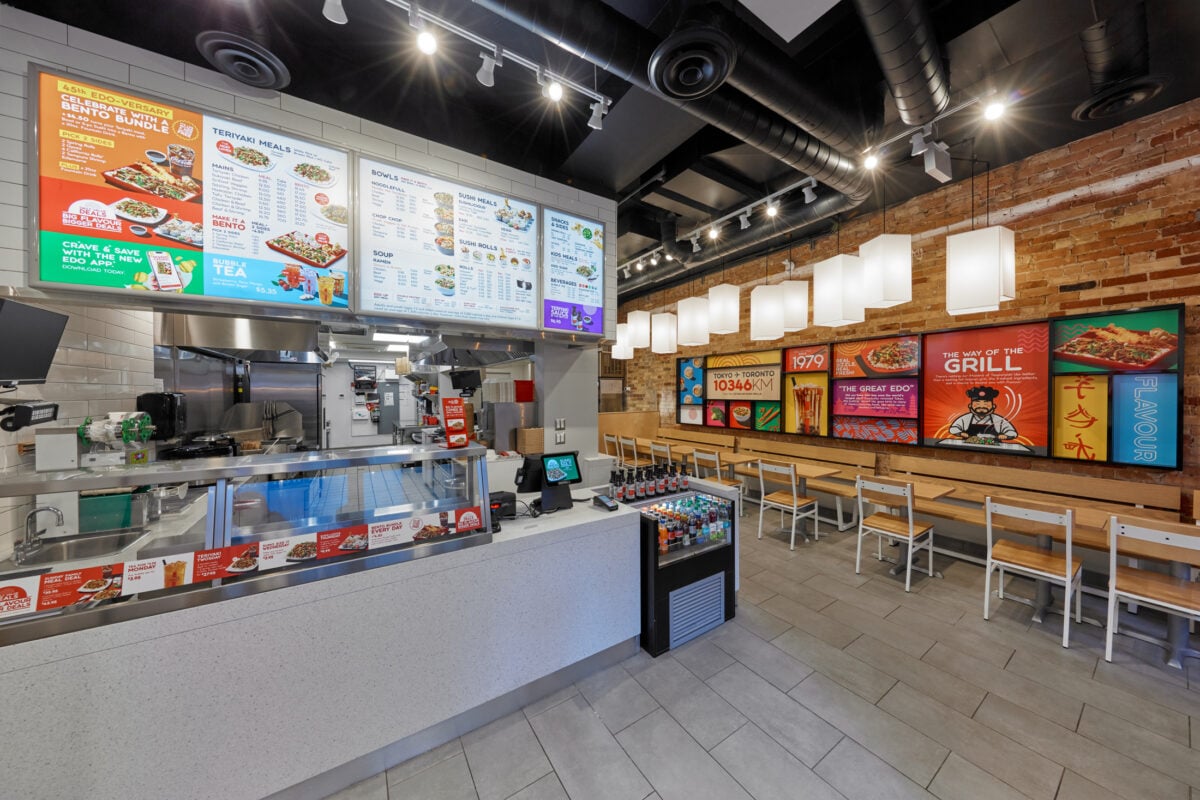
Edo Japan location on College Street in Toronto. Photo supplied
Edo Japan, one of Canada’s fastest-growing quick-service restaurant brands, is embarking on an ambitious expansion strategy aimed at reaching communities nationwide. With over 200 locations already operating and a market potential of quadrupling its current footprint, the brand is poised to redefine quick-service dining across the country.
“We are on a significant growth trajectory, particularly in parts of Canada where we’ve yet to establish a strong presence,” said Jeff Parkinson, Vice President of Real Estate Development at Edo Japan. “Historically, Edo has deep roots in Alberta, and we’ve done well in provinces like British Columbia, Saskatchewan, and Manitoba. A few years ago, we began expanding into Ontario, and now we’re looking to accelerate growth in that province, as well as enter new territories like Quebec and Atlantic Canada.”
Ontario, with its population of 13.6 million, represents a vast opportunity for Edo Japan. According to Parkinson, the company could eventually open several hundred locations in the province alone. In Atlantic Canada, Edo’s first location is under construction in Fredericton, New Brunswick, with negotiations underway for several additional sites.
“Our goal is to truly be a national brand, with a presence in every province,” Parkinson noted. “We recently celebrated the opening of our 200th store at Yonge and College in Toronto, and our vision is to exceed 300 stores nationally in the near future.”
New Opportunities for Franchisees
Edo Japan’s franchising model was initially designed to attract single-unit and small-scale franchisees, with operators typically managing one or two stores. However, the model quickly evolved as franchisees recognized its strong potential and experienced early successes. This led to a significant shift, with many franchisees expanding into multi-unit operations. The brand is now introducing a platform to attract more multi-unit franchisees, including opportunities for development agreements in defined territories.
“We’re launching a larger franchisee platform, which will allow partners to build 5, 10, or even 20 stores in designated areas,” explained Parkinson. “This initiative is targeted primarily at Quebec, Atlantic Canada, and Ontario. We’re confident it will attract growth-minded entrepreneurs who share our passion for expansion.”
The company’s support for franchisees is robust, offering turnkey solutions that include site selection, construction oversight, operational training, and ongoing marketing support. “Our franchisees are independent business owners, but they’re not alone,” Parkinson emphasized. “We provide the same level of support whether someone owns one store or ten.”
Edo has also been recognized for 14 consecutive years by the Canadian Franchise Association (CFA), an award that reflects the trust and admiration of its franchisees.
Diversified Restaurant Formats
Edo Japan is also evolving its restaurant formats to reach more diverse customer bases. While 25% of its locations are in mall food courts, 75% are now street-front stores. “We’re expanding into high-traffic downtown areas, like Yonge and College in Toronto, which represents a new frontier for us,” said Parkinson. “We’re looking to replicate this success in cities like Vancouver, Montreal, and Quebec City.”
In addition to urban centres, Edo Japan is targeting large power centres and primary shopping developments. “Our strategy is to capture high-traffic locations that drive walk-in sales, takeout, and delivery,” Parkinson said.
A Proven Business Model
Founded in Calgary in 1979 by Reverend Susumu Ikuta, Edo Japan built its reputation on freshly prepared meals made on a teppan grill. Over the decades, the brand has introduced innovations like sushi, bento boxes, ramen, and bubble tea, keeping its menu relevant to evolving consumer tastes. Its flagship teppan-style dishes, particularly the beef and chicken teriyaki remain top sellers, thanks in part to the signature teriyaki sauce that has made Edo famous.
“Our menu categories—teriyaki meals, ramen, sushi rolls, and bubble tea—are all experiencing strong growth in Canada,” Parkinson stated. “These offerings cater to multiple dayparts, making us a versatile choice for lunch, dinner, and snacks.”
Edo Japan’s small restaurant footprint (typically 1,200 to 1,300 square feet) and efficient operations make it an attractive investment opportunity. Initial capital investment ranges from $500,000 to $650,000, with franchisees benefiting from strong unit economics and manageable overhead costs.
The company’s loyalty programs, and innovative marketing strategies further enhance the customer experience. The “Edo App,” for example, offers online ordering, rewards points, and exclusive promotions.
Screenshot
Why Now?
Edo Japan’s 45th anniversary in 2024 marked a pivotal moment for the brand. “We’re a mature company with a proven track record,” Parkinson said. “We’ve learned a lot from our initial expansion into Ontario, and we’re ready to apply that knowledge as we grow into Quebec and Atlantic Canada. It’s the right time to make this leap.”
The brand’s growth is also driven by the increasing popularity of Asian cuisine in Canada. “Customers want fresh, flavorful, and globally inspired options,” Parkinson noted. “We’re perfectly positioned to meet that demand with high-quality meals prepared quickly and conveniently.”
Looking Ahead
With plans to reach over 600 locations in the coming years, Edo Japan is set to become a household name across Canada. “Our mission is to grow responsibly while seizing opportunities for both our franchisees and our customers,” Parkinson said. “We see ourselves as a truly national brand, and we’re excited about what’s to come.”
As Edo Japan continues to expand, it invites entrepreneurial franchisees to join its journey. “This is a ground-floor opportunity to be part of a brand that’s winning hearts across Canada,” Parkinson concluded. “The future is bright, and we’re just getting started.”
For those seeking franchise and real estate opportunites with Edo Japan, please visit: franchising.edojapan.com or connect with Jeff Parkinson, Vice President of Real Estate and Construction on LinkedIn.