People shop inside a grocery store in Toronto, on July 18, 2023. THE CANADIAN PRESS/Cole Burston
For several years, the Conservative slogan “Axe The Tax” has resonated with Canadians, driven by the belief that the carbon tax has exacerbated the cost of living. When it comes to food, however, the reality is far more nuanced. Canada has been sleepwalking through this policy issue for years, leaving the public narrative to carbon-tax-supporting academics and politicians who reassure Canadians that everything will improve as the economy decarbonizes.
Carbon Tax Set to Increase in 2025
On April 1, 2025, Canada’s federal carbon tax is set to increase to $95 per tonne of carbon dioxide equivalent emissions, up from $80 in 2024—already more than halfway to the $170 per tonne target for 2030. Yet a recent study, Implications of Carbon Pricing on Food Affordability and the Agri-Food Sector in Canada: A Scoping Review, published in Transportation Research Interdisciplinary Perspectives, highlights a glaring oversight: Ottawa failed to assess how this policy would impact food security before its implementation.
The Debate Over the Carbon Tax’s Impact on Food Prices
Now, academics with ties to the government are scrambling to convince Canadians that the carbon tax has no impact on food prices—despite previously acknowledging it would. The growing skepticism among Canadians is justified.
Research involving scholars worldwide, including 13 peer-reviewed studies, paints a troubling picture of Canada’s approach to carbon pricing. It reveals that the policy’s impact on food security, competitiveness, and affordability has been underestimated. While retail food prices cannot be directly correlated with carbon pricing due to numerous influencing factors, wholesale food prices in Canada have surged relative to other countries. This suggests that the competitiveness of Canada’s agri-food sector has been negatively affected, partly due to the carbon tax. The long-term implications for food security and affordability are significant
The arguments from prominent economists, which downplay the policy’s impacts, are increasingly out of touch with the realities of Canada’s agri-food sector
The Growing Popularity of the “Axe The Tax” Campaign
The “Axe The Tax” campaign has gained traction not because of overwhelming empirical evidence but because it has filled a glaring information void. Since the carbon tax’s implementation, most studies and reports have been government-funded, weaponizing science to reinforce the narrative that the tax is both cost-effective and beneficial. Claims that most Canadians receive rebates exceeding their costs defy logic, given the administrative overhead inherent in any public program.
Moreover, Canadians who genuinely want a greener, more sustainable economy are beginning to realize that the current path is ineffective. As the economic gap between Canada and the United States reaches historic levels, alternative solutions—such as cap-and-trade systems or the adoption of green technologies—warrant serious consideration.
A Call for a Transparent Debate on the Carbon Tax
It’s time Canadians are invited into a transparent, evidence-based debate on the carbon tax. For years, the public has been subjected to one-sided narratives. The growing support for “Axe The Tax” reflects a collective frustration with the lack of meaningful dialogue and policy scrutiny.
While food security, competitiveness, and affordability are distinct, they are deeply interconnected. Misguided policies like the carbon tax risk undermining Canada’s food security over time. A comprehensive, honest assessment of this policy’s broader impacts is overdue.
In the meticulous world of horology, where precision meets artistry, Stoll & Co. stands as a beacon of excellence. For over 44 years, this Dayton, Ohio-based watch service company has set the gold standard for quality and integrity, revolutionizing an industry that thrives on trust and detail.
Founded by Ron Stoll in the back of a jewelry store, Stoll & Co. began as a humble one-man operation. The business grew steadily with an unwavering commitment to quality, earning a reputation far beyond Ohio. Today, with a team of 40 watchmakers boasting over 550 years of combined experience, Stoll & Co has serviced over 3.5 million watches from global clients, including world leaders and luxury brands.
Crafting Careers and Pioneering Innovation
Stoll & Co. isn’t just about restoring timepieces; it’s about building a brighter future for watchmaking. Recognizing the challenges artisans face in this niche industry, the company has created career opportunities beyond the norm. Watchmakers here enjoy competitive pay, access to cutting-edge equipment, and the chance to work on everything from vintage heirlooms to state-of-the-art tourbillons.
Their dedication doesn’t stop at employment. Through partnerships with institutions like WOSTEP, a premier watchmaking school, Stoll & Co. supports aspiring watchmakers and offers them positions upon graduation. This commitment ensures that the next generation of horologists is well-equipped to carry the torch.
Trusted by Brands, Relied Upon by Clients
Stoll & Co’s partnerships with prestigious brands underscore its reputation for unparalleled quality. As a trusted factory service center for globally recognized names, it brings meticulous care to every watch, whether it’s a high-profile piece from a boutique brand or a personal treasure sent in by a local client.
The company’s proprietary software and RFID technology streamline operations, allowing it to service over 100,000 watches annually without compromising on its rigorous quality control process. Each timepiece undergoes multi-step inspections, including a 72-hour timekeeping review and power reserve testing, to ensure it performs flawlessly.
Redefining the Watch Industry
Stoll & Co’s impact extends beyond its workshop. By becoming a cornerstone of eBay’s authentication program, it has transformed online watch buying into a secure and trustworthy experience. Its dedicated team has authenticated hundreds of thousands of watches, protecting buyers and sellers from counterfeit risks while enhancing the platform’s credibility.
But what truly sets Stoll & Co. apart is their heart. Beneath the advanced technology and global accolades lies a family-owned business with values rooted in respect, honesty, and community. Emily Stoll, who grew up immersed in the trade, carries forward the vision of her father, Ron. Together, they’ve fostered an environment that feels less like a corporate machine and more like a neighborhood cornerstone—one where every client is treated with care, and every watch tells a story.
A Timeless Commitment
As Stoll & Co. continues to lead the way in watch servicing, their legacy reminds us of the enduring beauty of precision and craftsmanship. Whether entrusting them with a treasured timepiece or exploring the fascinating world of horology, Stoll & Co. invites you to be part of a tradition where quality always takes the high road.
Learn more about their remarkable journey and impact by visitingAmerica’s Watchmaker.
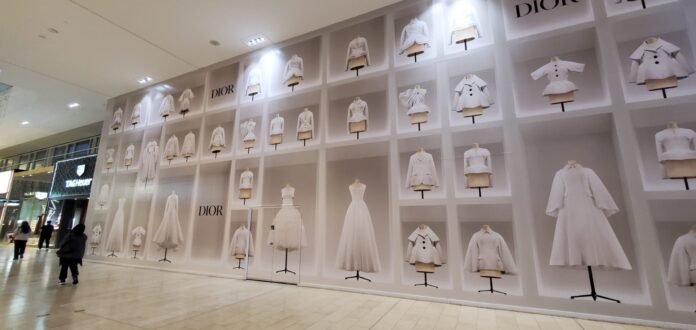
Dior construction hoarding at Toronto's Yorkdale Shopping Centre. Photo: Craig Patterson
Dior, Saint Laurent, and Moncler are set to open expansive flagship stores in Yorkdale Shopping Centre’s highly anticipated luxury wing, solidifying the mall’s position as Canada’s top destination for luxury retail. All three stores are scheduled to open in mid 2025.
Dior: A Dominant Luxury Presence
French luxury house Dior will open a sprawling 10,700-square-foot flagship store in Yorkdale’s new luxury wing. Boasting a striking facade that spans approximately 145 feet, the store is set to make a significant visual and experiential impact on shoppers. Dior’s footprint will appear even larger thanks to the addition of an adjacent 1,270-square-foot Parfums Christian Dior boutique, which will add another 25 feet of frontage dedicated to its renowned fragrance line. A similar Dior fragrance boutique opened earlier this month at Pearson International Airport in Toronto.
This new flagship will be Dior’s second-largest store in Canada. The largest remains its 13,300-square-foot, two-level location at The Colonnade at 131 Bloor Street West in Toronto, which opened in the fall of 2019. It was the largest in North America for Dior when it opened, and remains one of the largest globally for the brand.
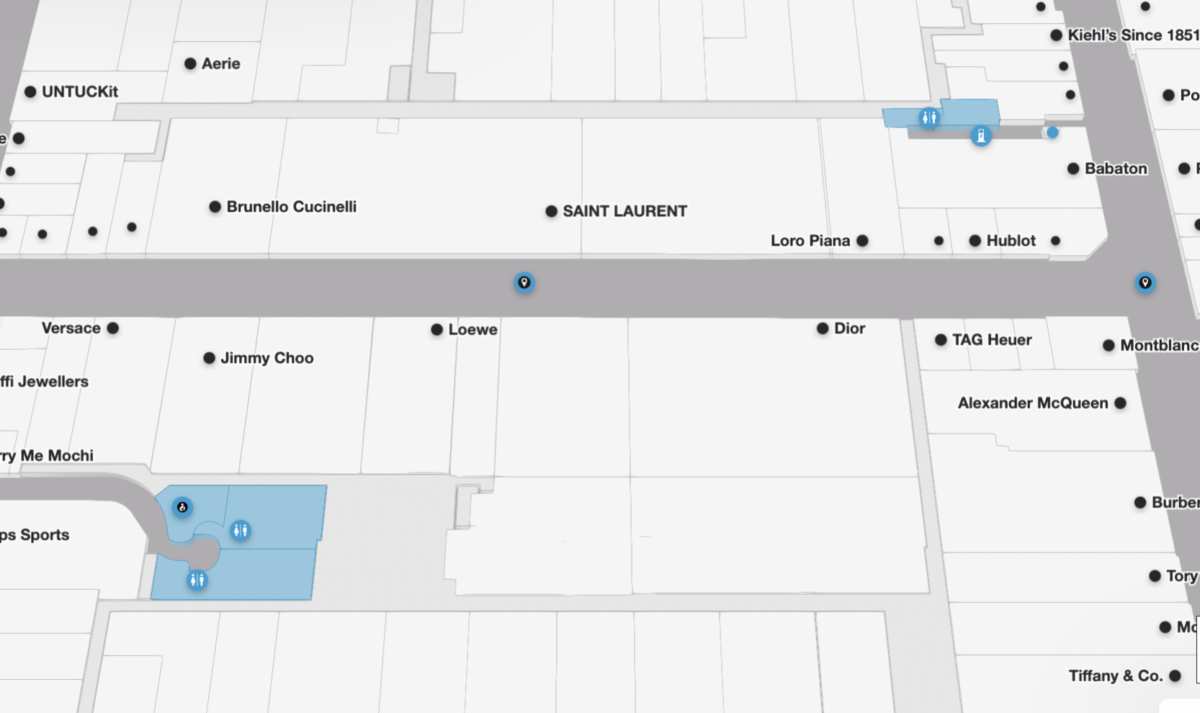
Yorkdale Shopping Centre mall map, showing the new luxury wing featuring massive flagship retail spaces. Click image for interactive map.
Currently, Dior has a presence at Yorkdale through its ‘world of’ concession at Holt Renfrew, which launched in 2019. The expansion into a standalone flagship signals strong demand and the brand’s confidence in Yorkdale as a key market for luxury retail, and the future of the Holts concession is unknown.
Beyond Toronto, Dior operates flagship stores in downtown Vancouver at the Fairmont Hotel Vancouver and has a concession presence in Montreal and Vancouver through Holt Renfrew. This includes a women’s and men’s ready-to-wear concession at Holt Renfrew Ogilvy in Montreal, as well as concessions for men’s and women’s fashions, bags and accessories at Holt Renfrew Vancouver. At Holt Renfrew on Bloor Street, Dior operates a concession on the street level carrying bags and accessories, as well as a women’s footwear concession on the mezzanine level.
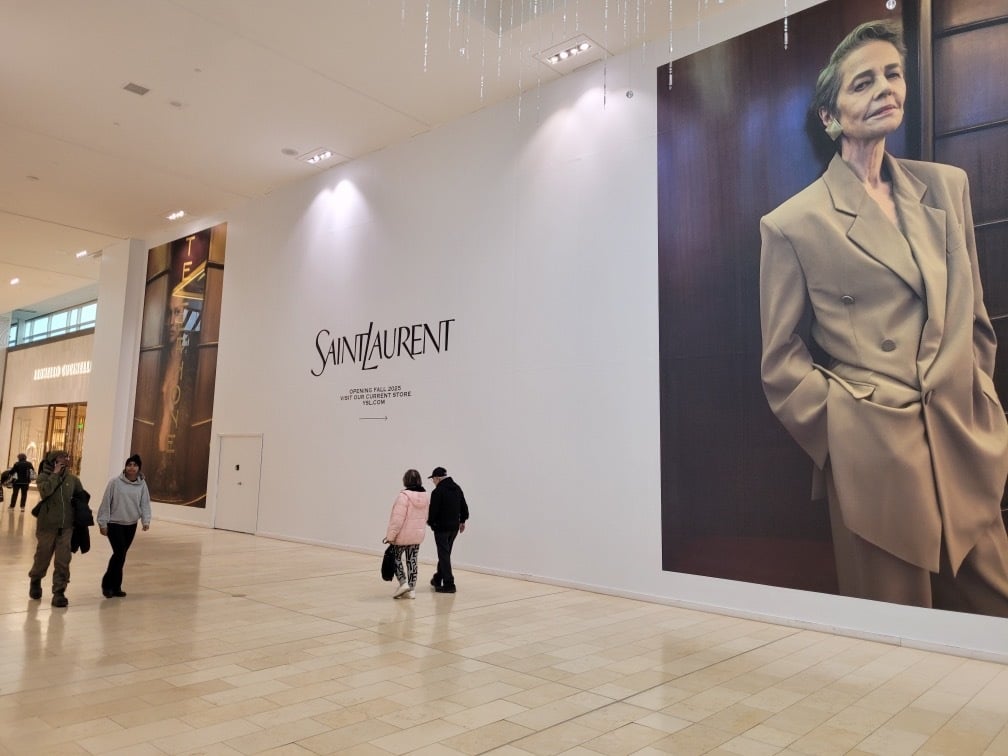
Saint Laurent construction hoarding at Toronto’s Yorkdale Shopping Centre. Photo: Karim Rashwan
Saint Laurent Expands its Footprint at Yorkdale
Parisian luxury brand Saint Laurent will also open a flagship location at Yorkdale, spanning an impressive 11,000 square feet. The new store will replace its existing 3,000-square-foot storefront, which opened at the mall in November 2016.
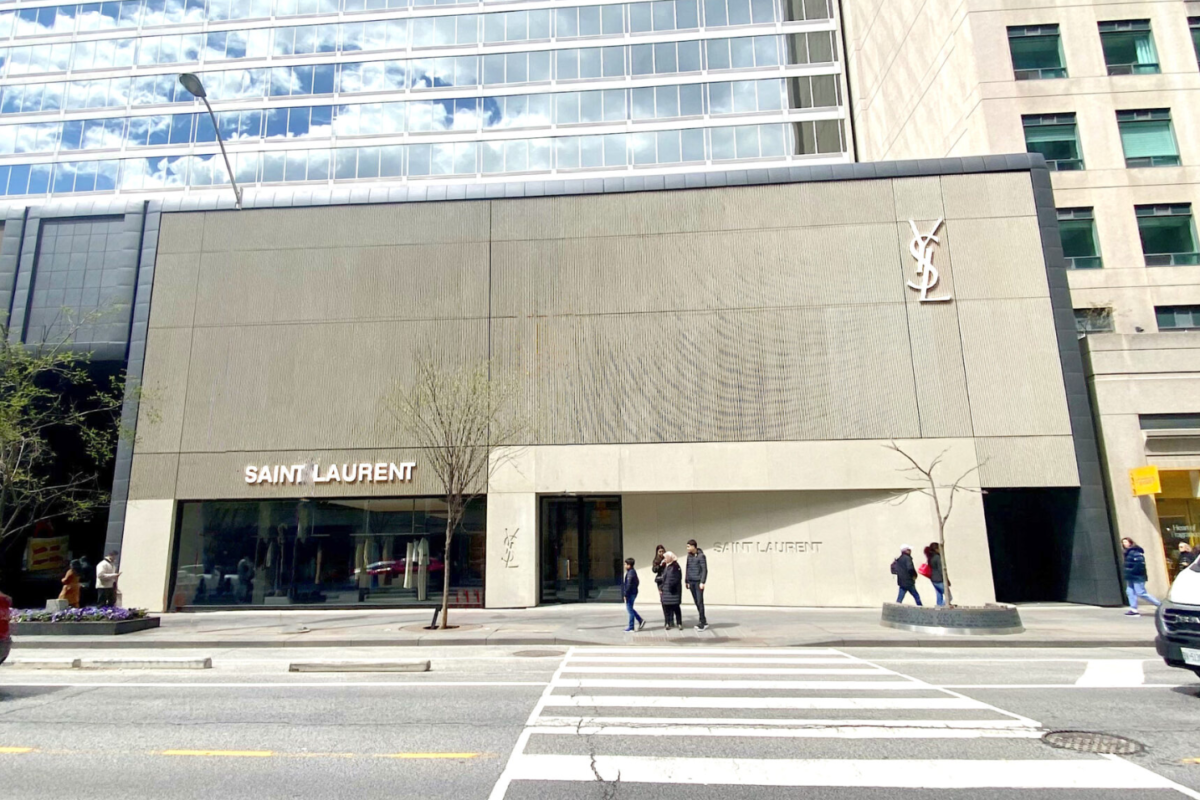
This expansion mirrors Saint Laurent’s recent flagship openings across Canada. In the spring of 2024, Saint Laurent debuted a 10,400-square-foot flagship at 110 Bloor Street West in Toronto, signaling its commitment to larger, more immersive retail spaces. In the fall of this year, Saint Laurent also opened a new 6,000 square foot location at Royalmount in Montreal, further cementing its growing presence in Canada. The new Yorkdale location will reflect a similar strategy, offering an expanded selection of ready-to-wear, accessories, and footwear in a dramatically larger footprint. The store may also feature a brutalist concrete facade, as was built for the Bloor and Royalmount stores.
Facade of the Saint Laurent store at 110 Bloor Street West in Toronto. Photo: Craig Patterson
The original Yorkdale location was Saint Laurent’s second standalone store in Canada, following the summer 2016 opening of its first boutique, spanning 4,800 square feet, on Thurlow Street in Vancouver. The brand has since continued to grow its Canadian presence, including a standalone store at West Edmonton Mall, which opened in late 2020, and an outlet location at Toronto Premium Outlets. Additionally, Saint Laurent operates a 3,000-square-foot concession at Holt Renfrew Bloor Street, which opened in March 2018. Despite the brand having a standalone flagship a few hundred feet west, the concession with a Bloor-facing street door continues to operate.
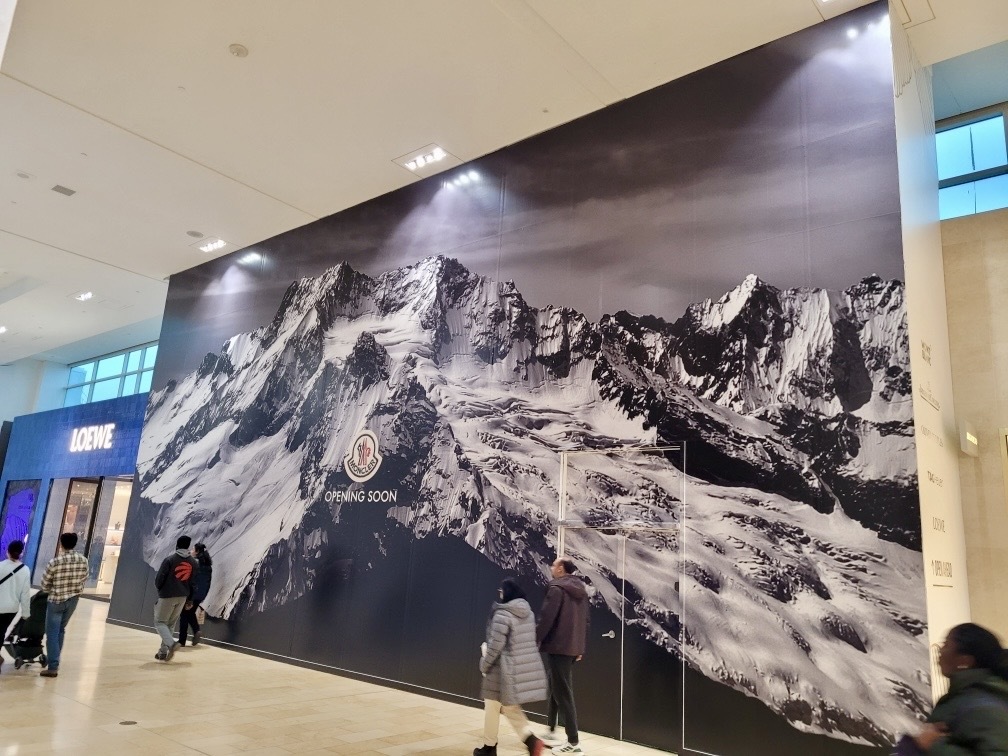
Moncler construction hoarding at Toronto’s Yorkdale Shopping Centre. Photo: Karim Rashwan
Moncler to Join Yorkdale’s Luxury Wing
Italian luxury brand Moncler will also be opening a new store in Yorkdale’s luxury wing. Spanning 4,200 square feet, the new boutique will be located between Loewe and Jimmy Choo, aligning Moncler with other global luxury powerhouses.
The move marks a relocation for Moncler, which has operated since September 2014 in Yorkdale’s original luxury corridor. Notably, the 2,525 square foot Yorkdale location was the first standalone Moncler store in Canada, solidifying the brand’s commitment to the Canadian market early on. The new larger space in the luxury wing will allow Moncler to enhance its offerings and deliver an upgraded shopping experience in a location that is said to be very productive.
Moncler’s Canadian presence has grown significantly since the opening of its first store at Yorkdale. A second store opened in Vancouver in late 2015, spanning about 3,500 square feet over two floors. In the fall of 2016, Moncler opened a standalone storefront in the Colonnade at 131 Bloor Street West in Toronto, with almost 3,100 square feet on one level.
Moncler continued its expansion in Canada with a 4,000-square-foot store opening at West Edmonton Mall in the fall of 2023, followed by its September 2024 opening at Royalmount in Montreal. Moncler also operates a boutique at Vancouver International Airport, which opened in 2019 and spans about 1,000 square feet. Further solidifying its Canadian footprint, Moncler is slated to open another store in the summer of 2025 at Oakridge Park in Vancouver.
The brand has concessions at Holt Renfrew across Canada as well as shop-in-shops in selected Harry Rosen stores for men.
Under development: New luxury wing at Toronto’s Yorkdale Shopping Centre. Photo: Craig Patterson
Yorkdale’s New Luxury Wing: A Hub for Global Brands
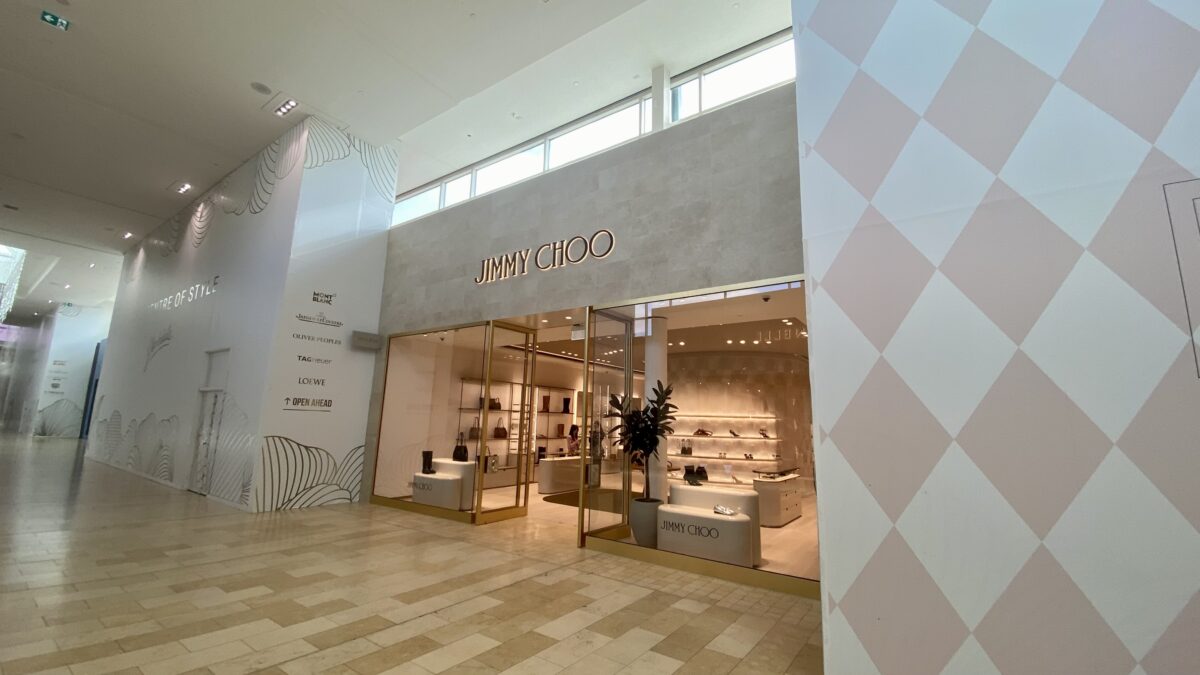
The openings of Dior, Saint Laurent, and Moncler are part of Yorkdale Shopping Centre’s ambitious 65,000-square-foot luxury wing development, which has been underway since last year. Located along the mall’s central corridor, the new luxury space has already attracted an impressive roster of top-tier global brands. The wing has welcomed stores such as Loewe, which opened in the summer, and more recent additions like Brunello Cucinelli, Loro Piana, Versace, and Jimmy Choo.
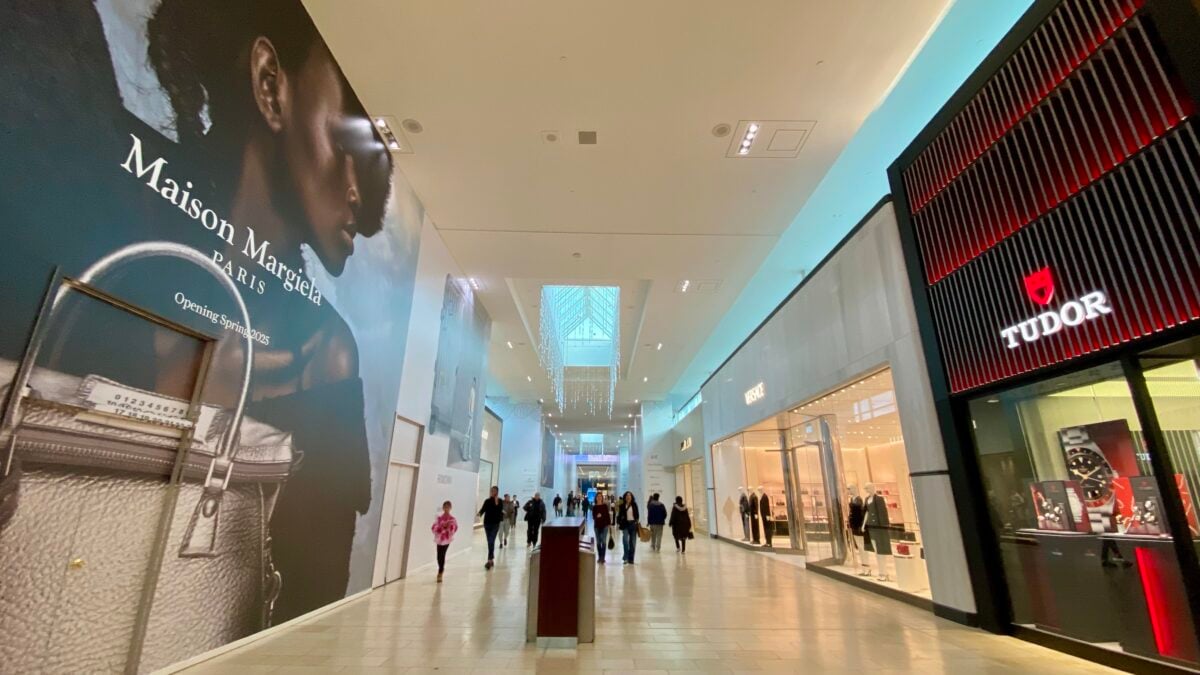
Luxury brands Maison Margiela and Rimowa are also confirmed to join the wing, alongside a selection of yet-to-be-revealed retailers. Adding to the excitement, Tiffany & Co. recently overhauled its Yorkdale store, creating a spectacular 8,300-square-foot Canadian flagship with a stunning facade incorporating 52,000 crystals. The renovation reflects Tiffany’s ongoing investment in the Canadian market and its confidence in Yorkdale as a luxury hub.
Under construction: A new luxury wing at the heart of the Yorkdale Shopping Centre, bringing new brands such as Loewe, Brunello Cucinelli, Jimmy Choo, Versace, Loro Piana, Rimowa, Maison Margiela, and others, to the mall. Photo: Craig Patterson
Additionally, Chanel is building a 9,700-square-foot two-level concession at Holt Renfrew in Yorkdale, which will become the largest Chanel concession in the world once completed. The massive space will offer a comprehensive range of Chanel’s offerings, further enhancing Yorkdale’s stature as a top-tier luxury shopping destination.
Other existing luxury brands in the central luxury corridor at Yorkdale include Tudor, Rolex, Omega, Qeelin, TAG Heuer, and Jaeger LeCoultre. Oliver Peoples is said to be relocating to a new space near the mall’s Zara store.
Yorkdale: A Premier Luxury Destination
Yorkdale Shopping Centre has long been recognized as Canada’s most comprehensive luxury retail hub, offering an unparalleled clustering of prestigious brands. With over 270 retailers, the shopping centre continues to attract international luxury names seeking a strong presence in the Canadian market.
The addition of Dior, Saint Laurent, and Moncler flagships will further solidify Yorkdale’s reputation as a global destination for luxury shopping. The mall’s strategic investments in its luxury offerings have paid off, drawing shoppers from across Canada and beyond.
Retail Insider has previously reported on Yorkdale’s consistent ability to attract flagship locations for luxury brands, often being the first choice for international retailers entering the Canadian market. The mall’s prime location in Toronto, combined with its affluent customer base and strong tourist appeal, continues to drive its success.
Retail Insider is streamlining its Canadian retail news from around the web to include a handful of top news stories that can be viewed quickly during the day. Here are the top stories from the past 24 hours.
Icebug, the Swedish footwear brand known for its industry-leading traction technologies, has officially launched its Canadian e-commerce platform at icebug.ca. With this move, the brand aims to provide Canadians with direct access to its full range of functional and sustainably made footwear, designed to make outdoor activities safer and more enjoyable—even in slippery conditions.
The website marks a significant milestone for the company as it continues its North American expansion. Icebug’s innovative studded and non-studded footwear will now be available to customers across Canada at competitive pricing.
“We are excited to expand our presence as a brand in Canada and to bring our vision for functional, durable, responsibly made footwear to more people there,” said Sebastian Lundfall, Icebug’s Head of Communication. “Thanks to our incredible traction technologies, we’ve changed the way people in Scandinavia feel about winter, and we look forward to doing the same in Canada.”
Pioneers of Grip Technology
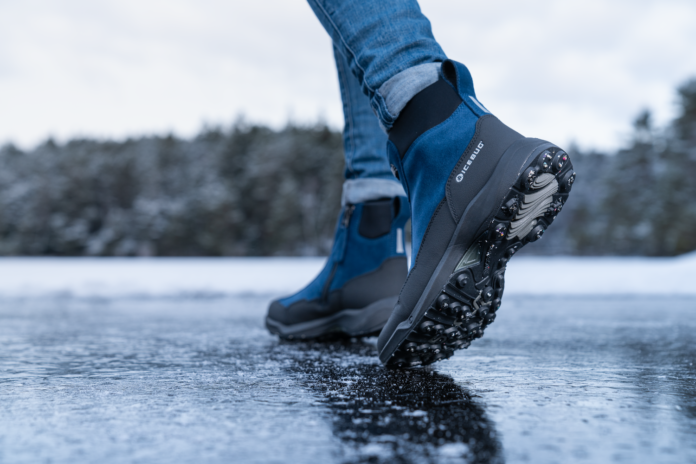
Founded in 2001 in Sweden, Icebug has earned a global reputation for its traction-focused designs. The company’s innovative BUGrip® technology is a standout feature, incorporating dynamic steel studs that provide exceptional grip on icy surfaces. Additionally, Icebug’s proprietary rubber compounds ensure reliable traction in wet and cold conditions, making them ideal for Canada’s diverse and often unpredictable climate.
“Canada is a country where winter means adventure,” said Tom Nilsson, CEO of Icebug. “Icebug’s mission is to help people embrace the outdoors year-round, and we’re excited to bring this experience to Canada.”
Footwear for All Seasons
With its Canadian e-commerce launch, Icebug is introducing a comprehensive range of footwear tailored to various activities and conditions:
Winter Boots: Designed to handle ice and snow with superior insulation and grip.
Walking and Hiking Shoes: Perfect for outdoor adventures year-round, with durable traction technologies.
Running Shoes: Studded options for icy trails and non-studded styles for wet or muddy paths.
Warm-Weather Footwear: Grip-focused options for coastal environments, urban settings, and slippery surfaces during rainy seasons.
This versatile lineup ensures that Icebug’s footwear appeals to outdoor enthusiasts, urban commuters, and anyone looking for reliable footwear in Canada’s challenging conditions.
Photo: Icebug
Sustainability at the Core
Beyond its technical innovations, Icebug is also leading the charge in sustainability within the footwear industry. Through its Follow the Footprints Initiative, Icebug provides transparency around the sourcing, manufacturing processes, and carbon footprint of each shoe style. This initiative allows customers to make informed purchasing decisions based on a product’s environmental impact.
Further solidifying its commitment to responsible business practices, Icebug holds the distinction of being the only footwear company in the world to achieve both Certified B Corp status and membership in 1% for the Planet.
These credentials reflect Icebug’s mission to balance business growth with environmental stewardship, setting a benchmark for sustainability in the global footwear industry.
About Icebug
Founded in Sweden in 2001, Icebug designs and manufactures innovative footwear with world-leading traction technologies. The company’s passion lies in creating functional, durable products that enable people to enjoy the outdoors safely, even in slippery conditions.
Driven by a strong commitment to sustainability, Icebug is a Certified B Corp and a member of 1% for the Planet, working to halve its carbon emissions by 2030. The brand aims to inspire a balance between people and nature through responsible business practices and innovative solutions.
Retail Insider is streamlining its Canadian retail news from around the web to include a handful of top news stories that can be viewed quickly during the day. Here are the top stories from the past 3 days.
October 2024 has presented a boost for Canadian retailers, with overall sales showing a 4.5% YOY increase for All Stores and discretionary spend (All Stores Less Automotive, Food, and Pharmacies growing 3.6% YOY. This growth is on trend with what consumers were reporting, that they would be spending more going into the holidays (according to the Leger x RCC holiday study). However, this boost is significantly influenced by the automotive sector. When removed, growth in All Stores drops to 2.6% YOY, much more in line with inflation.
As noted, the automotive sector has emerged as a standout performer, with Motor Vehicle and Parts Dealers experiencing a robust 9.5% YOY growth. This surge is particularly noteworthy given the economic uncertainties that typically dampen big-ticket purchases. Several factors, as noted in JCWG’s US NRB for November, may be driving this unexpected boom:
New Model Releases: The introduction of 2025 vehicle models has likely stimulated consumer interest, drawing buyers to showrooms.
Favorable Interest Rates: Potential rate decreases may have made vehicle financing more attractive, encouraging consumers to make purchases they had previously postponed.
EV Incentives: After facing challenges in EV sales throughout 2024, automakers have responded with larger incentives, potentially driving a late-year surge in this segment.
The alcohol retail landscape presents a more complex picture. Beer, Wine, and Liquor Stores saw a modest 1.9% YOY increase, a slight improvement for a category that has been struggling throughout the year. However, this uptick doesn’t tell the whole story. Convenience Stores, which recently gained the ability to sell alcohol in some regions, are down -2.0% YOY and -3.7% YTD. This suggests that the introduction of alcohol sales hasn’t been the cure-all these retailers hoped for. The category could be selling, but it is now taking space up in stores that may have been used for faster-moving products in the past. Regardless, this is surprising considering the higher price point of alcohol compared to other products at convenience stores.
Electronics and Accessories Stores have shown remarkable resilience, with sales up 7.8% YOY. This performance is particularly impressive given the category’s struggles earlier in the year. Several factors may be contributing to this turnaround:
Prime Day Effect: Amazon’s Prime Day event likely boosted sales, with other retailers offering competitive deals to capture consumer attention.
Refresh Cycle: Many consumers who purchased electronics during the pandemic may now be looking to upgrade their devices.
Interest Rate Anticipation: The anticipated rate cut at the end of October may have encouraged consumers to make larger purchases they had been postponing, such as major appliances. Similarly, this uptick in electronics sales may also have had a positive effect on other high-ticket categories, such as Furniture Stores and Home Furnishings Stores (seeing modest growth of 1.6% and 2.9% YOY respectively).
As we look towards the end of Q4 and early 2025, JCWG is considering several key factors that will shape the retail landscape:
Will Black Friday and Cyber Monday sales align with early survey predictions of increased spending?
How will major weather shifts across Canada impact retail during early winter?
Can we expect a boost in spending due to the tax holiday and lower interest rates?
Will the anticipated US tariffs take effect in January?
Are tariffs the only significant impact on Canadian retail sales from the new US administration?
How are YOU preparing for the major upcoming changes to Canadian retail?
Canadian Retail Sales by Product Category, Same Month Comparison
Sales for the Month of October
Oct-24
Oct-23
YOY
All Stores
70,730,575
67,675,476
4.51%
Motor Vehicle and Parts Dealers
20,383,383
18,617,216
9.49%
Gasoline Stations
6,433,882
6,855,550
-6.15%
All Stores Less Automotive
43,913,310
42,202,710
4.05%
Food and Beverage Stores
13,054,942
12,487,959
4.54%
Supermarkets and Other Grocery Stores*
9,295,782
8,816,427
5.44%
Convenience Stores
720,255
735,159
-2.03%
Specialty Food Stores
911,263
848,831
7.36%
Beer, Wine and Liquor Stores
2,127,642
2,087,541
1.92%
Health and Personal Care Stores
5,939,257
5,671,507
4.72%
All Stores Less Automotive, Food, and Pharmacies
24,919,111
24,043,244
3.64%
General Merchandise Stores
9,348,167
9,067,437
3.10%
Furniture, Home Furnishings, Electronic and Appliance Stores
3,761,387
3,591,967
4.72%
Furniture Stores
1,215,232
1,196,382
1.58%
Home Furnishings Stores
736,771
716,287
2.86%
Electronics and Appliance Stores
1,809,384
1,679,298
7.75%
Clothing and Accessories Stores
3,740,024
3,526,887
6.04%
Clothing Stores
2,942,880
2,763,210
6.50%
Shoe Stores
409,798
414,611
-1.16%
Jewellery, Luggage and Leather Goods Stores
387,347
349,065
10.97%
Sporting Goods, Hobby, Book and Music Stores
3,840,014
3,739,828
2.68%
Building Material and Garden Equipment
4,229,519
4,117,125
2.73%
Miscellaneous Store Retailers
2,589,881
2,454,863
5.50%
Cannabis Retailers
456,274
449,162
1.58%
Canadian E-commerce Sales
Ecommerce Sales
Oct-24
Oct-23
Percent Change
Year-to-Date
37,772,654
35,456,880
6.53%
Year-Over-Year
4,185,855
3,799,403
10.17%
Canadian Retail Sales by Store Category, Year to Date Comparison
Year-to-Date, Ending October
Oct-24
Oct-23
YTD
All Stores
660,513,382
654,016,664
0.99%
Motor Vehicle and Parts Dealers
183,553,480
180,263,455
1.83%
Gasoline Stations
64,595,863
66,310,147
-2.59%
All Stores Less Automotive
412,364,039
407,443,062
1.21%
Food and Beverage Stores
127,248,553
125,958,705
1.02%
Supermarkets and Other Grocery Stores*
90,513,860
88,733,221
2.01%
Convenience Stores
7,229,377
7,510,394
-3.74%
Specialty Food Stores
8,762,472
8,398,053
4.34%
Beer, Wine and Liquor Stores
20,742,846
21,317,033
-2.69%
Health and Personal Care Stores
55,126,616
52,657,281
4.69%
All Stores Less Automotive, Food, and Pharmacies
229,988,870
228,827,076
0.51%
General Merchandise Stores
87,558,145
84,074,430
4.14%
Furniture, Home Furnishings, Electronic and Appliance Stores
34,417,486
34,836,762
-1.20%
Furniture Stores
11,433,488
11,781,201
-2.95%
Home Furnishings Stores
6,766,452
6,922,138
-2.25%
Electronics and Appliance Stores
16,217,547
16,133,420
0.52%
Clothing and Accessories Stores
32,642,818
32,552,675
0.28%
Clothing Stores
25,297,944
25,139,281
0.63%
Shoe Stores
3,830,122
3,911,293
-2.08%
Jewellery, Luggage and Leather Goods Stores
3,514,753
3,502,099
0.36%
Sporting Goods, Hobby, Book and Music Stores
36,268,682
37,516,923
-3.33%
Building Material and Garden Equipment
39,101,736
39,846,290
-1.87%
Miscellaneous Store Retailers
23,731,056
24,560,644
-3.38%
Cannabis Retailers
4,252,318
4,284,877
-0.76%
Retail Trade, Canada, All Stores, by Geographic Regions
Primaris also presents its inaugural ESG targets. Consistent with the REIT’s financial disclosures, Primaris aims to provide clear and transparent disclosure and communication about the REIT’s business and ESG practices, said the company in a news release.
Alex Avery
“Through a substantial amount of work across all our functional departments, Primaris is making great progress against our ESG plan,” said Alex Avery, Chief Executive Officer. “This year we made significant improvements in data collection across the organization, as well as year-over-year reductions to greenhouse gas emissions, and energy and water consumption. This is a testament to our very engaged and experienced property management team who are continuously looking for ways to optimize our properties. Primaris will continue to work to achieve our business and ESG objectives while acting in a manner consistent with our core values, and the best-in-class profile we have created, being a respected and sought-after partner and transaction counterparty, and a preferred place for employees to work.”
ESG Report Highlights
Governance
Achieved GRESB 3-star rating in 2024 (scored 80 on a 100-point scale, 15-point improvement);
Achieved an “A” MSCI ESG Rating, up from “BBB”;
Developed ESG targets;
Integrated ESG into employee performance review process;
Maintained open and direct engagement between Primaris’ Trustees and Primaris’ investors, in the absence of management; and
33% of Trustees are female.
Environmental
Implemented utility data management software system;
-4.9% change in like-for-like greenhouse gas (“GHG”) emissions;
-3.7% change in like-for-like energy consumption;
-9.0% change in like-for-like water consumption;
100% of shopping centres are green building certified; and
Incorporated green lease language into standard lease form.
Social
Obtained an 83% satisfaction score pursuant to its 2023 tenant engagement survey;
Females comprise of the following:
38% of executives;
54% of senior management;
56% of total employees; and
Formalized and launched tenant and community engagement program.
In 2024, as part of the ESG Plan, the REIT said it developed ESG targets informed by the material ESG factors and their link to key business performance metrics:
Metric
Target
Current
Measurement Period
Board of Trustee Diversity by Gender
30% female
33% female
Annually
Absolute GHG Emissions Reduction1
25% reduction by 2035
4.9% reduction
Against baseline year, 2022
Green Building Certifications
100% Shopping centres LEED or BOMA BEST certified
100%
Annually
Employee Engagement
≥85%
86%
Every 3 years
Tenant Satisfaction
≥85%
83%
Annually
GRESB
≥80%
80 points
Annually
1 This target includes scope 1, 2, and select scope 3 emissions. Select scope 3 emissions includes downstream leased assets such as tenant emissions.
Primaris is Canada’s only enclosed shopping centre focused REIT, with ownership interests primarily in leading enclosed shopping centres located in growing mid-sized markets. The current portfolio totals 13.4 million square feet valued at approximately $4.1 billion at Primaris’ share.
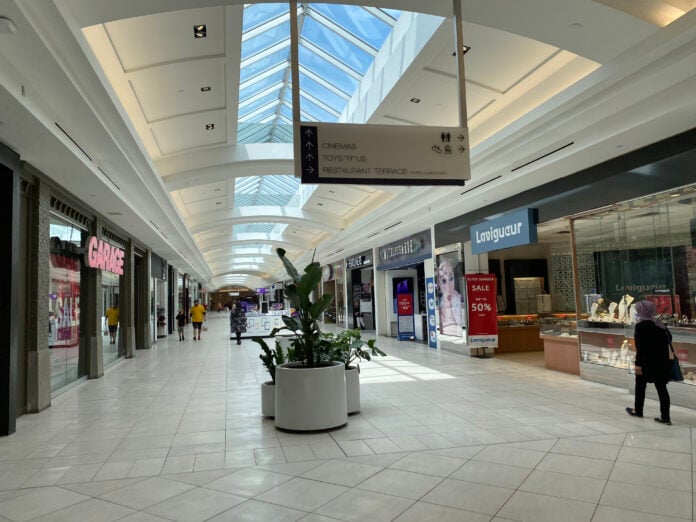
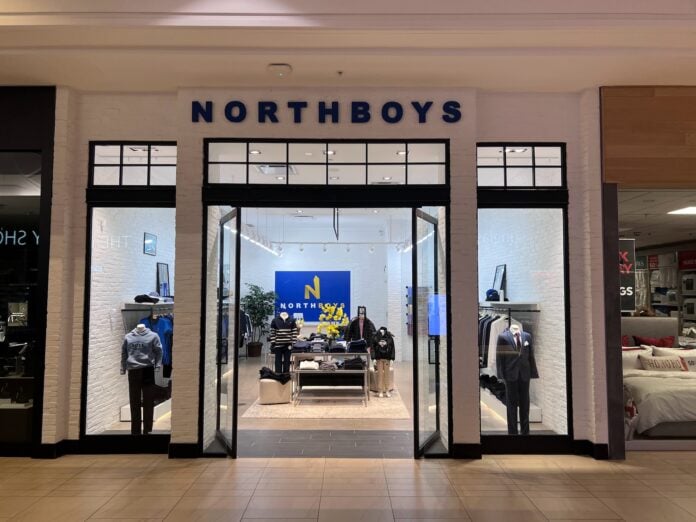
NorthBoys store at Hillcrest Mall in Richmond Hill, ON. Photo: NorthBoys
NorthBoys, a specialty retailer focusing on upscale boys’ clothing, has opened its fourth location at Hillcrest Mall in Richmond Hill, north of Toronto. The expansion is part of a growing vision by Cary Ulster, co-founder of NorthBoys and owner of North Brands Group Ltd., who is dedicated to filling a niche in the Canadian retail landscape with stores tailored exclusively to boys’ fashion.
From One Plaza to Four Locations
Founded after a career in the pharmacy industry, Cary Ulster and his wife saw an opportunity to create a unique retail concept for boys. “We were looking for something else,” said Ulster. “There was this empty space near where we live, and we thought, ‘What kind of store should go in there?’ The idea just unfolded from there. We noticed there were no dedicated boys’ fashion stores in the market, and we wanted to change that.”
Cary Ulster
Ulster spent 14 years in retail pharmacy before transitioning to the fashion industry. “I sold the pharmacy business and was looking for my next venture. Seeing that gap in the market—especially for boys’ formal and casual wear—gave us the perfect opportunity,” he said.
The first NorthBoys store opened in Toronto’s Lawrence Plaza and has since expanded to include locations at CF Shops at Don Mills, SmartCentres Thornhill, and now Hillcrest Mall. Ulster’s other venture, NorthGirls, also operates out of Lawrence Plaza, catering to a similar niche for girls.
Hillcrest Mall: A Strategic Move
The new Hillcrest Mall store represents a strategic expansion into an indoor shopping centre. “Our first three locations are in busy outdoor strip plazas,” Ulster explained. “Hillcrest is different, but it felt like the right move to bring NorthBoys into a well-visited mall. The community here has a strong demand for premium children’s fashion.”
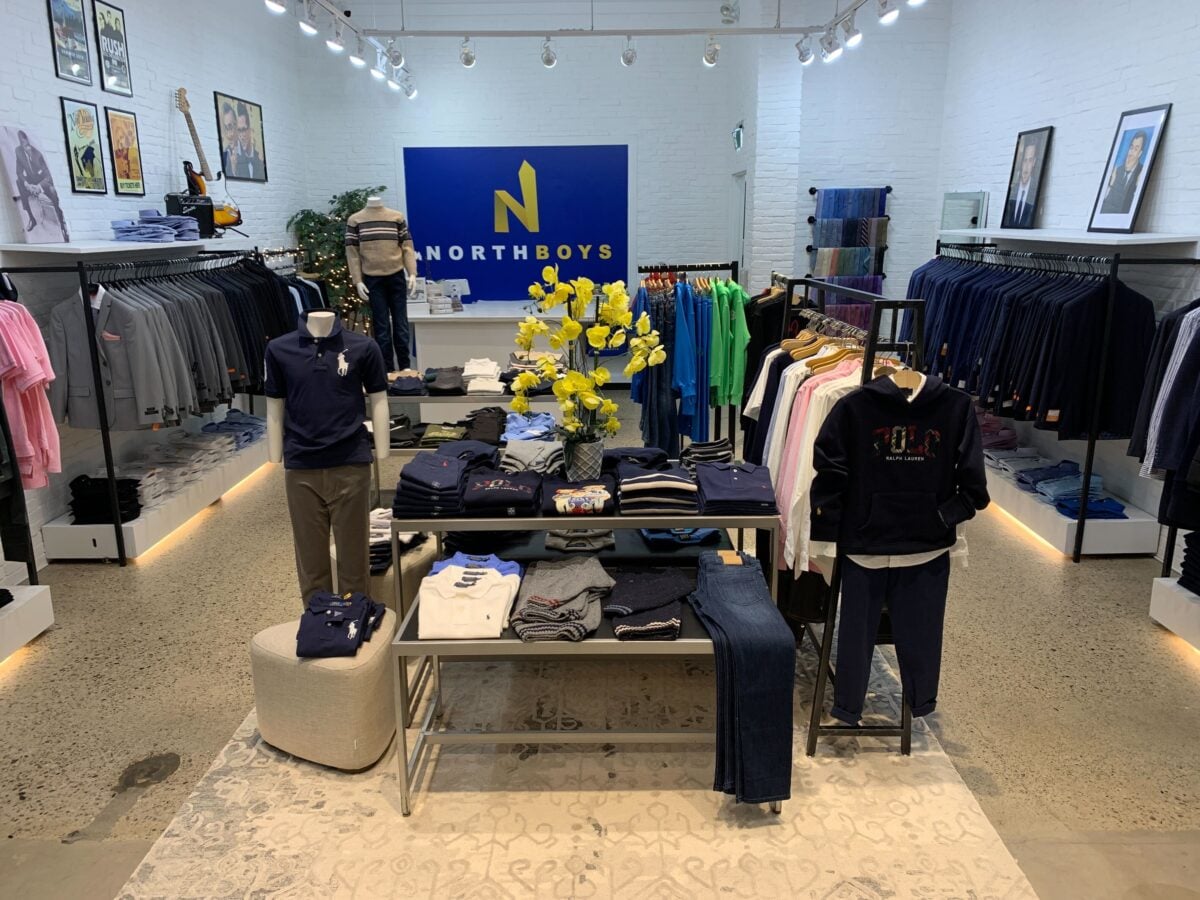
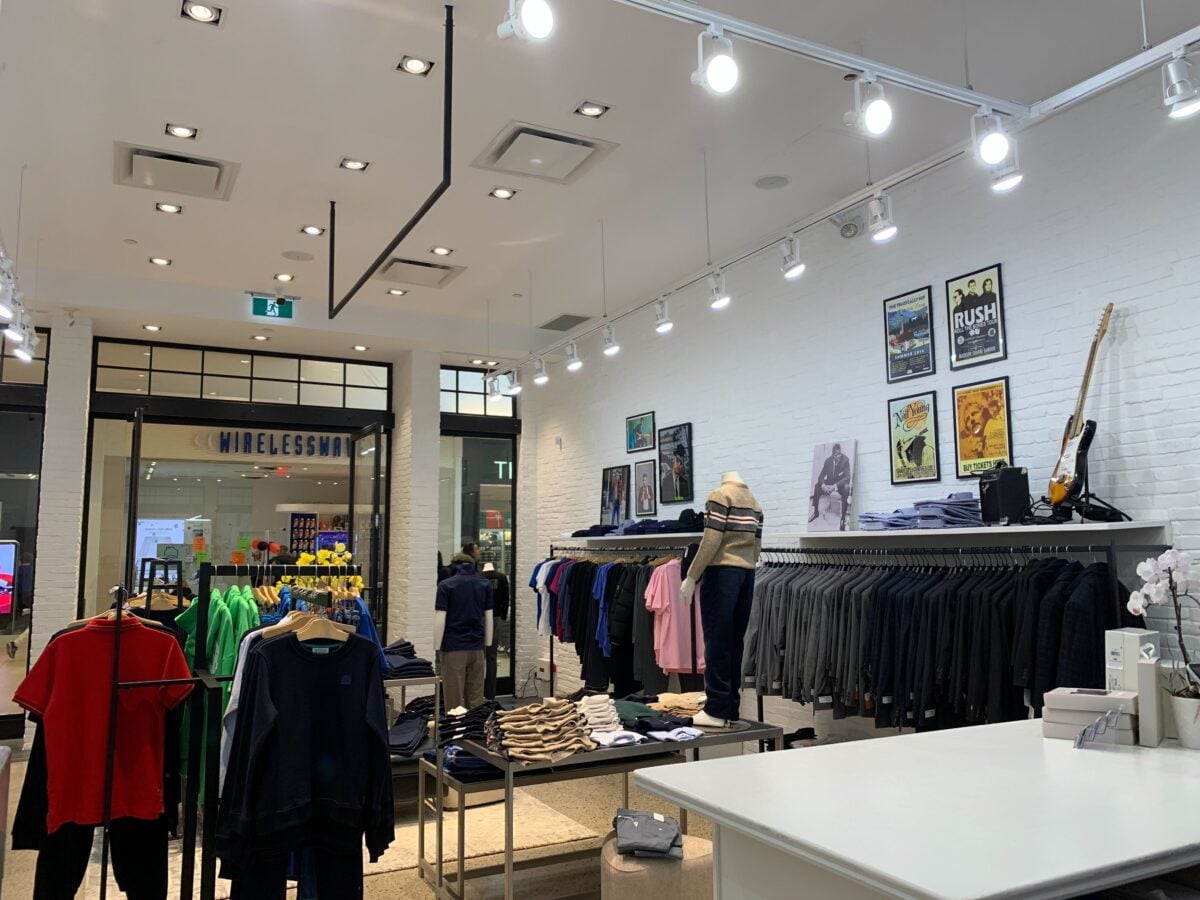
The Hillcrest location offers a similar upscale design as its predecessors, with carefully curated fashion collections. “The interiors are sophisticated. We wanted boys to have their own space, their own store experience,” said Ulster. “You don’t get that anywhere else. Even in department stores, boys’ clothing is often a small corner in the children’s section.”
NorthBoys store at Hillcrest Mall in Richmond Hill, ON. Photo: NorthBoys
A “Harry Rosen for Boys”
Ulster envisions NorthBoys as a specialized retailer akin to a smaller-scale Harry Rosen, but for young boys. “Parents are often surprised when they walk in for the first time,” he shared. “They’re shocked to find a store exclusively for boys—it’s not just a novelty; it’s a complete niche. Boys’ clothing has often been an afterthought in larger retail stores, relegated to small sections with limited options. We realized parents were struggling to find high-quality, stylish options tailored specifically for boys. NorthBoys fills that gap by offering a curated selection of premium brands, formal and casual wear, all in an environment that feels dedicated and upscale. It’s not just about filling a retail space—it’s about giving boys and their families a unique shopping experience they can’t find anywhere else.”
NorthBoys offers everything from casual wear to formal suiting, providing a one-stop shopping experience. “We coordinate everything—shirts, ties, pocket squares—and handle alterations as well,” Ulster said. “It’s a seamless process, and parents appreciate that. Plus, we hope they’ll pick up t-shirts, polos, and jeans on their way out.”
Ulster further emphasized the importance of creating a premium experience: “We wanted NorthBoys to feel like a boutique for boys, not an afterthought. The store interiors reflect that vision, with upscale designs and thoughtful details.”
Serving a Niche Market
The concept resonates with parents searching for premium, multi-brand fashion for their sons. NorthBoys features well-known brands like Psycho Bunny and Emporio Armani, alongside curated seasonal offerings. “We knew we had a niche,” said Ulster. “There’s nowhere else quite like it in Canada.”
The reception has been overwhelmingly positive, with parents highlighting the store’s unique offering. “Customer feedback is a big part of what shapes our business,” Ulster explained. “Parents love the idea, and they often say, ‘Why hasn’t someone done this before?’ Boys’ fashion has been underserved for too long.”
NorthBoys store at Hillcrest Mall in Richmond Hill, ON. Photo: NorthBoys
Growth Plans for NorthBoys and NorthGirls
With the success of NorthBoys, Ulster is eyeing further expansion, both in and beyond the Greater Toronto Area. “We see opportunities in Mississauga and other parts of Toronto,” he said. “But the demand isn’t limited to the GTA. There’s interest across the country. Calgary, Vancouver, and Montreal are all markets where we could see NorthBoys thriving.”
Ulster also hinted at future opportunities for NorthGirls. “We opened the girls’ store four years ago after parents kept asking for something similar,” he shared. “It’s been a success, and there’s definitely room for more locations. The response has been incredible.”
E-Commerce and Tailored Offerings
While brick-and-mortar remains the focus, NorthBoys also operates an e-commerce platform. “We sell a lot of suits online, which surprises some people,” said Ulster. “But suits are often an easier sell because parents know the size they need. Casual wear does well too. In terms of performance, our e-commerce platform complements our physical stores, but the in-store experience remains our focus. Parents often prefer to see and feel the products, especially for tailored items like suits, where alterations are critical. That said, online sales continue to grow, particularly for families who are repeat customers and know our sizing. Online shopping for children’s clothing is trending upward overall, but there is still strong demand for hands-on, personalized service, which our physical stores provide.”
The retailer emphasizes personalized service, both online and in-store. “We have trained staff who know the product and can guide parents through the process. The key is making it simple and stress-free,” Ulster added. “It’s that experience—in-store or online—that sets us apart.”
Future Opportunities
When asked about potential expansion beyond Canada, Ulster remained open but cautious. “Right now, we’re focused on Canada,” he said. “The U.S. is a possibility, but we have so much room to grow here first.”
The retailer’s thoughtful approach to growth reflects Ulster’s commitment to maintaining quality and service. “It’s not about opening stores for the sake of expansion—we want each location to deliver that elevated experience.”
Ulster also emphasized the role of feedback in shaping future plans. “We’re always listening to parents and their kids. Whether it’s about product lines or where to open next, their input is invaluable.”
As NorthBoys continues to expand, Ulster’s vision remains clear: to provide a sophisticated, tailored shopping experience for boys and their families. “The boys deserve their own store, their own space,” he said. “We’re giving them that, and it’s resonating.”
Happy Belly Food Group Inc., a leading consolidator of emerging food brands, has secured a location for its smash burger brand Rosie’s Burgers, located at 1542 Avenue Road in Toronto.
Rosie’s Burgers is a boutique quick serve restaurant brand serving original recipe smash burgers, poutine, onion rings, milkshakes and more.
Sean Black
“The Rosie’s brand continues to expand across Canada, and today’s announcement highlights our ability to secure AAA locations for our emerging brands,” said Sean Black, Chief Executive Officer of Happy Belly.
“With multiple locations now in construction and more on the way for 2025 we are about to realize significant growth thanks to our ability to open corporate stores as well as franchise locations in parallel paths.
“This location will be opened and operated corporately which is the second planned corporate Rosie’s location for 2025 along side our recently secured Shops of Don Mills location as we look to reinvest the free cash-flow back into the brand to deliver accelerated growth.
“When we acquired Rosie’s less than a year ago, the brand was operating just two locations in the GTA and had no franchising program in place. Today, Rosie’s has grown to four operational locations across two provinces, with an additional 12 locations either corporate-owned, assigned to franchisees, or under construction. This remarkable growth trajectory demonstrates the strength of the brand, and we have no plans of slowing down.”
The company said the new location is ideally situated in North Toronto’s affluent Avenue & Lawrence neighborhood, and set to open in Q2 2025.
“It is expected to expand Rosie’s customer base in a densely populated area that aligns with the brand’s target demographics, offering significant opportunities both in-store and through delivery. Toronto’s impressive growth and support for homegrown businesses make it an ideal market for expanding our brands. With its thriving food culture and vibrant dining scene, the city’s growing population and enthusiasm for emerging food brands create strong demand for Rosie’s delicious burger offerings,” it said in a news release, adding that its overarching strategy has always been to focus on the development and growth of emerging brands within the food sector.
Photo: Happy Belly Food Group
“We currently have 421 contractually committed retail locations from area developers across all emerging brands in the Happy Belly Portfolio – whether in development, under construction, or already open. As we open new stores, the Happy Belly footprint continues to grow. Our team is committed to sourcing and evaluating real estate, reviewing franchisee applications, and collaborating closely with area developers to support our asset-light franchising model. At present, several of our restaurant brands are simultaneously under construction, and we are excited to announce openings throughout 2024-2025. By focusing on securing high-quality franchisees and prime real estate locations across Canada, we will further strengthen our expansion efforts,” said Black.