Advertisement
Home Blog Page 534

YETI to Open 1st International Store at CF Chinook Centre in Calgary [Interview]

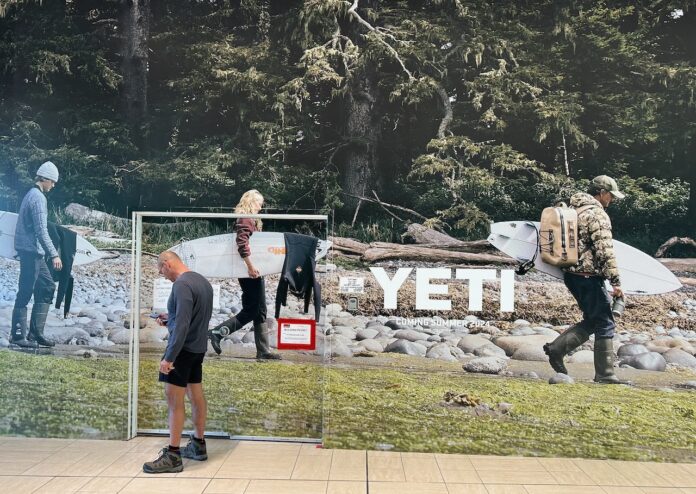
YETI at CF Chinook Centre (Image: Mario Toneguzzi)

CF Chinook Centre in Calgary, one of the top shopping centres in the country, has scored a major coup.

The popular mall will be home for American brand YETI.

“What’s really great about YETI is this is going to be their first international store. They’ve got 22 locations in the U.S. but they don’t have any bricks and mortar stores outside of the U.S. It’s actually a really interesting story,” said Darren Milne, General Manager at Chinook Centre.

“YETI based on their own KPIs (Key Performance Indicator) found that Calgarians scored well on their outdoor activities metrics. In fact, better than any other Canadian city plus Calgary also over indexed on YETI sales based on population numbers. 

“So really it was the behaviour patterns of their consumers here in Calgary that met YETI’s needs and drove their decision to open their first store outside of the U.S. here at CF Chinook Centre. It’s a great story for the Centre but also a really good story for YETI.”

YETI at CF Chinook Centre (Image: Mario Toneguzzi)

The Calgary store will be about 3,600 square feet and will be built by SAJO.

Roy and Ryan Seiders founded YETI in 2006 based on a deep love for the outdoors and the belief that if something doesn’t work, fix it. And if it doesn’t exist, build it. Since then, they’ve been designing products that last for generations, get people out into the Wild, and keep them there longer. 

Sari Samarah, President, CEO and Broker of Record for Value Insight Realty represented YETI for this transaction.

In the past year or so, Chinook Centre has opened iconic retailers such as Uniqlo, Zara expanded into a flagship location, Alo Yoga and Nike. Tilley was the most recent opening a few weeks ago.

“We had a lot of openings in 2023. When we look at 2024 moving forward, this 12-month period coming up we’re going to spend a lot of time working with different tenants to relocate them and right size them,” said Milne.

“The long-term goal is we need to create some additional space for other luxury and aspirational retailers who are interested in coming into the Centre. And so I think we’ll have more to say about that in a year from now about how that looks. Really that’s what our leasing plan is over the next year. So you’ll see some interesting movements in the mall over the next year of different tenants as we execute on that plan.”

Tilley at CF Chinook Centre (Image: Mario Toneguzzi)

Milne said Chinook will have more to say over the next few months about some of the relocations that will be taking place in the shopping centre and how that will impact its leasing mix in the future. 

“We really feel like we’ve got an opportunity here to start creating space for more luxury and aspirational retailers and that’s what we’re going to continue to do,” he said. 

“The market for that in Calgary is really good. If you look at some of our luxury and aspirational retailers right now, sales continue to remain really strong. We’re certainly seeing a demand for that in not only our customer research but what we hear from customers. They’re looking for more of those kinds of tenants here. And there’s really an absence of some of that in Calgary right now. So we certainly have an opportunity to fill that.”

Recently, Chinook hosted the interactive entertainment experience Mirror Mirror, which was at the mall for 16 weeks in some vacated space left behind by the departure of Nordstrom. 

“Fair to say, it met all of our expectations. And we also learned a lot about what it’s like to offer entertainment. So it’s something we’re going to continue to look at. The traffic for it in terms of ticket sales was really strong. It did really well. And we see there’s opportunity to obviously do more of these kinds of things in the future,” added Milne. 

CF Chinook Centre (Image: Mario Toneguzzi)
Ted Baker at CF Chinook Centre (Image: Mario Toneguzzi)

“The Nordstrom space is still under development. Hoping to have something in the near future to announce . . . The other interesting thing that’s going on at Chinook Centre right now is we’re doing some projects to make the customer journey easier and a little bit more accessible for our customers. So for example anyone who is familiar with the centre knows that the 61st Avenue entrance coming into the section the intersection at times could be a little bit better. We’re actually going to be doing a project where we’re going to be just re-aligning that intersection so the entrance into the shopping centre and the exit from the shopping centre is better for vehicle traffic. We’re going to be adding a staircase into the Centre to create better movement for traffic between the first and second floor.

“We’re also going to be exploring next year some different ways to create better pedestrian access particularly from the northwest side of the shopping centre. And then we’re also going to be later this year adding some new seating pods and new mall furniture throughout. Something that better fits the expectations of our shoppers. Nicer seating. Comfort seating. And places where people can come and really feel like it’s the community gathering place that we think it is as well.”

Milne said there is nothing new to say about possible future development plans to densify the site. 

“I think if you ask me later this year we might have a little more to say but nothing right now,” he said.

23,000 sq ft MediterrAsian Restaurant Concept ‘Queens Harbour’ to Open in Former Shipping Warehouse on Toronto’s Waterfront [Exclusive] 

Queens Harbour (Rendering: Provided)

An historic 140-year-old shipping warehouse steps from the Harbourfront Centre on Toronto’s Waterfront is about to see a new lease on life. 

Queens Harbour will be opening in 2025 at 245 Queens Quay West, bringing ‘MediterrAsian’ cuisine – a fusion of Mediterranean and Asian flavours, to the neighbourhood. 

“Our collective goal was to create a new landmark for the market in Toronto,” shared co-founder Kevin Jazexhi. “Before setting out to create something new, we reconnected to our own collective identity. All of us believe in the importance of family and it’s embedded deep in our roots.”

Future Queens Harbour at 245 Queens Quay West (Image: Dustin Fuhs)

The concept is being introduced by experienced restaurateurs Kevin Jazexhi, Ali Badreddine & Iris Jazexhi. 

Chef Bobby Robert Balint collaborated with local world-class chef Julien Laffargue to create a combination of Mediterranean and Asian flavours, termed as ‘MediterrAsian’ cuisine. Both chefs are curating a menu specializing in mezes for sharing, charcoal grilled dishes, complimented by a full raw and sushi bar.

“The impressive culinary program is complimented by a hand crafted cocktail program aimed to surprise and delight with fun and exciting textures and flavours,” shared Jazexhi. “Combining the food and beverage program with a dynamic, multifaceted experience in distinctly different spaces throughout this over 800 seat restaurant oasis by the water, Queens Harbour is bringing something new to the waterfront that Torontonians have been clamouring for some time. Steps away from the hustle of Toronto’s vibrant core, lies an oasis embracing everything we love about waterfront.”

“Our founders are also from parts of the world where Mediterranean influences are strong,” shared Jazexhi. “Despite developing strong operational foundations with combined years of experience in structured chains and developing our own concepts, our entrepreneurial spirit begged the question . . . why can’t we deliver top level food and beverages with world class hospitality that we crave and love, with atmospheres that we seek out when we travel that stimulate ALL our senses, combined with hospitality that is so authentic and sincere, it feels like you’ve come home. 

Future Queens Harbour at 245 Queens Quay West (Image: Dustin Fuhs)

“We believe this will truly be the new era of hospitality bringing the people what they need and deserve,” shared co-founder Ali Badreddine.

“We believe the idea of the Mediterranean’s relaxed ethos – cherishing of family, friends, and loved ones over shared meals, with the vibrant foods that bridge the gap between what you should be eating and what you want to eat, is a  sweet spot that represents where we want to go combined with some strong elements of our very own heritage and history.” 

The 23,000 square foot location will feature a number of elements that were specifically designed for this historic venue, including a one-of-a-kind outdoor patio and a retractable roof. 

245 Queens Quay West was formerly home to Pawsway, a pet museum, cafe and activity centre, sponsored by Nestle Purina. The event space closed in 2017 after close to a decade in operation. 

Pawsway was an example of a hub designed for the community as a whole, with a pet-friendly Williams cafe, daily activations and opportunities for all to enjoy the space. 

When the funding for Pawsway was pulled, the space was discussed for a number of permanent uses over the years, with the most notable being the 2021 application for a new Reptilia facility. That proposal went before Toronto City Council and was rejected, leaving the opportunity for the next stage in the evolution of the waterfront location. 

Queens Harbour will be next to Amsterdam Brewhouse. The 14,000 square-foot waterfront brewpub opened on July 1st, 2013 with 500 indoor seats and 325 on the lakefront patio.

Amsterdam Brewhouse (Image: Dustin Fuhs)
Future Queens Harbour at 245 Queens Quay West (Image: Dustin Fuhs)

With Toronto’s waterfront continuing to evolve, the team behind Queens Harbour is set to bring their a-game. 

“For years we believed Torontonians and visitors to this iconic city have been under-serviced by destinations that embrace the water and the waterfront vibe,” shared Badreddine. “We believe there is a gap for people looking to fuse our type of cuisine with our energetic atmosphere that engages all the senses, while getting great value. We wanted to create a destination that our extended family, our guests, can use in so many different ways to mark so many important and unimportant occasions in their lives.” 

“We set out to be part of the fabric that is weaved in the memories of our guests’ most cherished memories.”

Graham Smith from JLL represented the tenant for this transaction. Alex Edmison from CBRE Toronto Urban Retail Team represented the landlord. 

Toronto Waterfront from Marina Quay West (Image: Dustin Fuhs)

Toronto’s Waterfront continues to see investment in the next stages of development, including first-to-market concepts like NBA Courtside, entertainment concepts like Lighthouse ArtSpace at 1 Yonge, currently home to F1 Exhibition, and the recent Head Office relocations of the LCBO, The Score and Canada Goose. 

Retail Insider will be updating our readers as the project continues to take shape on the waterfront. 

Queens Harbour is set to open in Spring 2025. 

Ontario’s Expansion of Alcohol to Convenience Stores is a Covert Union Avoidance Strategy [Op-Ed]

The decentralization of liquor sales is part of a much longer strategy to erode good jobs in the alcohol retail sector. along the way. THE CANADIAN PRESS/Adrian Wyld

The Ontario government has announced it’s expediting its plan to get beer into thousands of convenience stores.

The announcement received immediate backlash, primarily against the $225 million given to the Beer Store to subsidize its adjustment to a new competitive environment and avoid sudden closures of store locations.

Further criticism of the “boozedoggle” focused on the potential losses to provincial revenue and the other subsidies to corporations.

The decentralization of liquor sales, however, is nothing new in Ontario. It’s a process that has been ongoing over the past few decades and part of a strategy to erode good jobs in the alcohol retail sector. It can be viewed as union-busting by stealth and the public has played its part along the way.

Casualization of work

Once considered to be good jobs, workers at the Beer Store and Liquor Control Board of Ontario (LCBO) retail outlets have been pressured for years. Employers have forced tiered agreements with unions, where part-time and casual workers earn much less than full-time workers.

The United Food and Commercial Workers (UFCW) union representing more than 6,000 beer store workers and the Ontario Public Service Employees Union (OPSEU) representing 8,000 LCBO workers both have agreements that have full-time workers earning almost double part-time and seasonal workers. Today, unionized full-time Beer Store workers earn more than $30 per hour while a part-time workers with four years’ experience earn approximately $17 per hour.

Retailers have turned to part-time workers to reduce their labour costs and meet public demand to keep stores open during evenings and weekends. This process is known as the casualization of work.
In the most recent census, full-time workers — including management — in Ontario’s beer, wine and liquor stores made up less than half of the 16,645 workers employed in the sector, but had an average annual income two to three times higher than part-time workers. In the current round of bargaining, OPSEU is demanding protection for permanent jobs in the face of “marketplace change.”

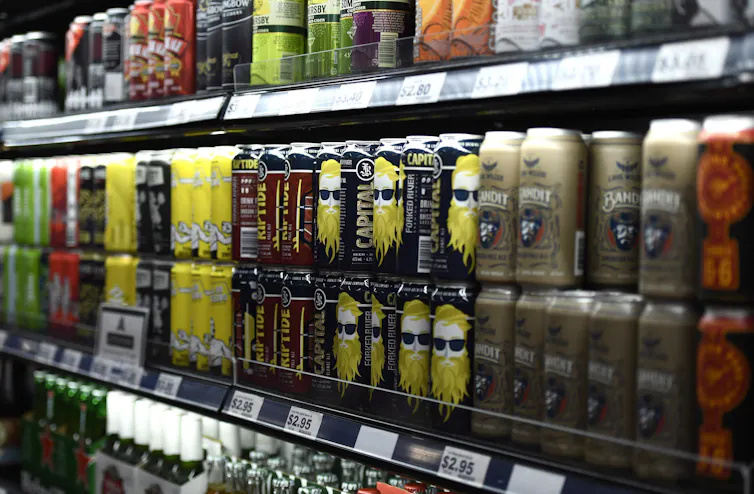
A shelf of beer and other canned alcoholic beverages
The Ontario government announced that by 2026 they will allow sales of beer, wine, cider, coolers and pre-mixed drinks to be sold at convenience stores, grocery stores and ‘big box’ retailers. THE CANADIAN PRESS/Justin Tang

Geographic shift of retail distribution

Beyond the casualization of work, the geographic shift of retail distribution is also threatening wages in the sector.

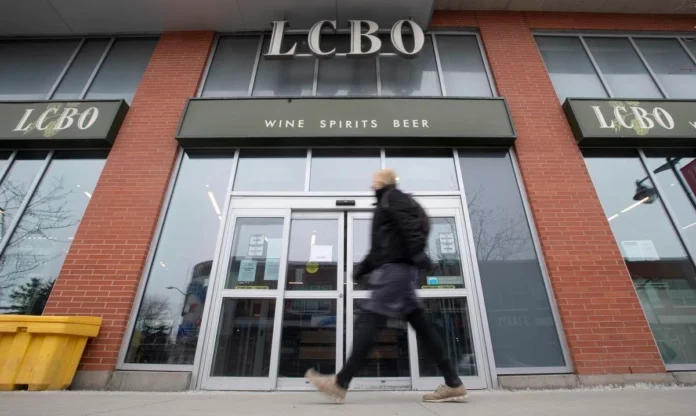
LCBO convenience outlets, also known as liquor agency stores, are small, non-union, owner-operated businesses attached to corner stores and gas stations. A few agents were established in the 1960s to get alcohol to rural areas, but the program rapidly expanded in the 2000s. Over the last decade, the number of agency stores has doubled to almost 400 locations across the province.

More recently, Ontario grocery stores have been allowed to sell beer and wine. In August, more than 450 grocery stores will add ready-to-drink alcohol products to shelves. During the pandemic, grocery and convenience outlet sales exploded.

According to recent annual reports, Ontarians purchase 10 to 15 per cent of their beer, wine and spirits from these agency outlets and grocery stores. The potential addition of more than 8,500 corner stores selling booze is the next big step in decentralizing liquor distribution away from unionized retail locations.

The potential loss of government revenue via decentralized distribution may be overstated. After all, wholesale distribution will still be controlled by the Beer Store and the LCBO, and the government is not going to stop taxing.

Real losses will be in the pocketbooks of beer and liquor workers as work shifts to small, lower wage, non-unionized workplaces. Unions are unlikely to organize chains or small, independent family-run operations, which will lead to further downward pressure on wages across the sector.

Convenience stores rely upon low-wage work and have lobbied the Ontario government to allow them to sell alcohol in order to meet the increases to the minimum wage rate.

The populist appeal

Other powerful forces driving the geographical expansion distribution are populist calls for booze in rural areas and politicians like Ford, whose “Buck-A-Beer” campaign slogan pledged to lower the minimum price of beer to $1 from $1.25.

As historian Craig Heron has noted in his book Booze, Ontario has a long history of prohibition, temperance and disciplining workers through controlling access to alcohol.

It’s not surprising that loosening government restrictions on what, where and when people drink has a populist appeal, and populist politicians like Ford know it very well. Beer has long been used as a political tool in Canada.

An older middle-aged man in a suit smiling while standing in front of a shelf full of canned alcoholic beverages
Ontario Premier Doug Ford attends a press availability at a convenience store in Toronto on Dec. 14, 2023. THE CANADIAN PRESS/Chris Young

It is here where labour unions are trapped. Unions have argued there are economic, social and environmental benefits to having a more centralized system: larger operations are more efficient and can pay higher wages and efficiency, access to alcohol for young people can be more easily restricted, and the recycling and reuse of bottles and cans is facilitated.

As unions draw attention to these advantages to protect union jobs, they risk falling into the trap of echoing the moral panics around out-of-control access or stand accused of limiting rural communities’ access to alcohol.

What can unions do?

Unions do have strategic options. They will continue push back against increased decentralization and casualization, but with the addition of thousands of low-wage alcohol outlets, this is perhaps a lost battle.

Unions may choose a fortress strategy and protect remaining jobs and wages in distribution centres and remaining stores. A more aggressive strategy will be for unions to focus less on workplaces and organize workers in the sector as an occupation or trade.

In order to first reach these workers, unions could demand a role in the certification and training of all new workers who sell alcohol to the public. From here workers could be mobilized to demand minimum standards for all licensed workers.

If good jobs are to remain in the sector, unions will have to be creative and extend their power beyond their stronghold in the retail system to ensure present and future workers in the alcohol sales sector receive fair treatment and compensation.


By Steven Tufts, Associate Professor, Faculty of Environmental and Urban Change, York University, Canada

*

*

This article is republished from The Conversation under a Creative Commons license. Read the original article.

Anatomy of a Leader: Melissa Austria, Founder and Owner, Gotstyle

Anatomy of a Leader: Melissa Austria, Founder and Owner, Gotstyle

As the founder and owner of Gotstyle, Melissa Austria has been creating and delivering a unique and innovative lifestyle concept for men since 2005. 

With a vision to fill the gap in the Toronto menswear retail market, she built a successful brand that offers a curated selection of international and local labels, catering to different lifestyles and body types. She also integrated technology to make shopping easier and to build the future of independent retail.

“With over two decades of experience in the menswear industry, I have developed a passion and expertise for fashion, merchandising, and retail,” said Austria.

She has worked as a sales manager and brand manager for renowned collections such as Mexx, Claiborne for Men, Valentino, and Calvin Klein Menswear, launching the Kenneth Cole men’s sportswear and tailored clothing divisions in Canada.

She also created original content and served as the editor in chief of Gotstyle Man Magazine, a nationally distributed publication that educates and inspires men to dress better. 

Melissa and Donovan Bailey (Image: Gotstyle)
Gotstyle Man Magazine (Image: Dustin Fuhs)

Her work has been recognized with multiple awards, including the Uptown Downtown award for Retail Excellence and the W100 ranking of Canada’s Top Female Entrepreneurs. 

“My mission is to empower men to look good, feel good, and do good,” she said.

Austria was born in Fredericton, New Brunswick. 

“I consider myself a true Canadian. I was born in Fredericton, New Brunswick and then I moved to Vancouver, B.C. when I was 14 and then I moved to Toronto when I was 21,” she said. 

“We didn’t have the money for me to go to university so I was just kind of working in retail and then decided that I wanted to move to Toronto and explore what my options here were. I worked in a couple of different jobs in retail and then I was very lucky that I got a job at Harry Rosen but not in the sales department but actually as a junior administrative person. I was working at the head office when they had the office at Scotia Plaza.”

From there, she went into sales at Harry Rosen and did that for about two years. Then she moved into wholesale with Mexx but still in menswear. She was a sales rep for Ontario. From there she moved to Clairborne.

“Having the background in terms of the finances as opposed to just selling was a great teaching,” she said. 

“(My career) started at Harry Rosen but then every other job I did after was in menswear. I was in wholesale for a good 15 years.

“It was the wholesale experience where I learned the most but with Harry Rosen it was Mr. Rosen himself. The fact that I was such a lowly person on the totem pole, he knew everybody that worked at the store and many, many years later when I had opened up this store I remember meeting Mr. Rosen (Harry) on an airplane and he congratulated me on opening. He just had a memory that he knew everyone. He made you feel special. Because I was lucky that I dealt with all the great menswear stores across Canada I think I learned from all of them in terms of customer service, the product assortment and building a community within your store.” 

What is it about this area of retail that she enjoys and likes?

“I definitely would say that I loved my time in wholesale. After Clairborne, I went to Valentino and Calvin Klein for all of Canada. Got to travel across Canada multiple times because we would visit all the stores, see all the retailers, travel to Italy, travel to Europe all the time, and then from there I was brand manager for Kenneth Cole. So I launched Kenneth Cole’s menswear in Canada. We had seven divisions that we launched . . . Doing the assortment for Canada, doing all the costing, working with all the reps, working with all the department stores, putting shop in shops in all the department stores, planning all the inventory. It was everything.

“Having that ability to control the brand from A to Z definitely sort of helped my career when I decided to open up a retail store.

“It’s so funny that in my entire career in retail I’ve never worked in womenswear, ever. I’ve only been in men. So it’s the only thing I know which is crazy and it kind of started because I had to help a lot of my guy friends put outfits together. They would always call me. ‘I’ve got a date tonight. I don’t know what to wear. Can you come clean out my closet?’ So it was something that I was always sort of excited to do. Womenswear, not so much. It’s always been this overlying mission to help men dress better.”

Image: Gotstyle

In starting her business, Austria went back to the foundations of what she believes in, which is education.

“So if we can educate guys on how to dress better then they’re going to dress better. I like to think of the store as not a clothing store but a solution provider. So we really wanted to use the magazine to push that message even more because the demographic of guy I’m dealing with is guys in their late 30s, 40s and 50s. They’re tactile. They want to look at the magazine, they want to flip through the magazine,” she said.

“I think when we launched the magazine everyone was going to digital . . . It was great because we were able to showcase a lot of our clients in there which they loved and this was before digital media was as rampant as it is. So guys needed a reference point to look back on.”

While describing the retail sector, Austria said she finds its back to about 20 years ago when she first started in the industry.

“The men in North America dressed like shit (then) . . . Now I find coming out of COVID everyone’s in a super casual mode. Hoodies, sweat pants, that sort of vibe. So I think it’s almost a re-education on the younger generation that were never told how to wear a suit, how to wear a sport coat, how to dress up,” she said. 

“If you look at the young guys, they missed their grad. Grad was the first time men or boys got to wear a suit. There’s a whole generation of boys that have missed that point in their lives and now you’ve got everyone else that has forgotten how to dress up again. 

“But it is going back to the roots of retail where even though you’re trying to sell the masses online, you’re still trying to build that community where you are.”

Luxury Jeweller Bulgari Unveils Canadian Flagship Store on Bloor Street in Toronto [Photos]

Bulgari flagship store at 131 Bloor St. W. in Toronto. Photo supplied.

LVMH-owned luxury jewellery brand Bulgari just opened its Canadian flagship store at The Colonnade at 131 Bloor Street West in Toronto. It’s the only location in Canada to carry Bulgari’s pricey high jewellery collection and some fragrances, and the store itself is a showpiece. 

The 3,000+ square foot store features a unique curving glass facade, which has a shifting effect as one walks by. The facade was inspired by Bulgari’s iconic Tubogas (a flexible, tubular chain), referencing the company’s historic signature craftsmanship techniques. The facade of the store is punctuated by white marble in the same shape as the entrance portals at the historic Bulgari flagship on Via de Condotti in Rome. One of these is the entrance to the store, which leads into an impressive space inside. 

Behind the glass entrance within the store is a ‘threshold’, an open space which leads to a series of adjoining rooms that house various jewellery collections, watches, leather goods, and a private lounge — all connected by a central gallery displaying Bulgari jewels. Pieces from Bulgari’s high jewellery collection are also on display, with the new Bloor Street store being the only one in Canada to carry the high jewellery collection which includes some pieces exceeding $1 million. High jewellery items include the Diva’s Dream Peacock collection — Bulgari said in a statement that the Bloor Street store has “one of the most robust assortments” of the brand’s high jewellery collection in North America, signalling that the area is a target for big-spenders. Prior to the Bloor opening, the Yorkdale Bulgari location carried some high jewellery pieces. 

Bulgari flagship store at 131 Bloor St. W. in Toronto. Photo supplied.

The Bloor Street store carries some styles of jewellery and handbags not found elsewhere in Canada. Included are some exotic skin styles of bags that retail well into the thousands, and are of such a limited quantity that only a handful are available in North America. 

Bulari’s ‘Le Gemme’ and ‘Bvlgari Allegra’ fragrance collections will only be available at the Bloor Street Bulgari flagship, according to the brand. Fragrances have their own small area and are displayed in the store. 

Design elements in the Bloor Street Bulgari space are exceptional, including a chandelier in the form of Serpenti by Venini in Murano glass, and a marble inlaid eight-point star in the entrance area. The store’s design is described as being a contemporary interpretation of the company’s Rome flagship.  

Bulgari flagship store at 131 Bloor St. W. in Toronto. Photo supplied.

Artwork featured in the store includes colourful prints from Andy Warhol — the artist was a fan of the brand, once referring to the New York City Bulgari store as “the best exhibition of contemporary art”. Other art work featured in the new Bloor store includes several works from Canadian contemporary artist Nicolas Ruel and his city-based photography.

“I am thrilled to celebrate the expansion of Bulgari’s presence in Canada with the opening of the Bloor Street West flagship boutique in Toronto. The store’s contemporary designs and luxurious materials seamlessly reflect Bulgari’s heritage, creating a multi­ sensorial experience. I look forward to welcoming our clients to Bloor Street West to discover Bulgari’s exquisite craftsmanship in all of its creations and share the Italian Art of Living with this vibrant community,” said Jean-Christophe Babin, CEO Bulgari Group, in a statement. 

“Bulgari is synonymous with the finest luxury experiences around the world through creations that testify to the incredible mastery of craftsmanship and purely Italian design. The flagship boutique on Bloor Street West is a new brand gem where we are eager to share the magnificent world of Bulgari with our Canadian customers,” added Herve Perrot, President, Bulgari North America, in a statement. 

Jane Baldwin of Lennard Commercial Realty represented Bulgari in the lease deal. Morguard is the landlord of The Colonnade. 

Bulgari flagship store at 131 Bloor St. W. in Toronto on June 12, 2024. Photo Craig Patterson
The Colonnade in 2005 — Bulgari occupies space once home to French fashion brand Georges Rech and Canadian retailer Corbo. Photo: Gregor Shaw

The Bloor Street Bulgari store is located in The Colonnade, a heritage-designated building considered to be the first in the country to be ‘mixed use’ (featuring a grouping of retail, offices and residential units in one building). The Colonnade was designed by architect Gerald Robinson and its construction was completed in 1963. Landlord Morguard has recently leased the lower retail levels almost entirely to big-name luxury brands including flagships for Dior, Ferragamo, Prada, Cartier, and Moncler.

Bulgari’s Bloor store is the second standalone location for the brand in Toronto, and Canada — in 2014, Bulgari opened at the Yorkdale Shopping Centre and the store was expanded to about 2,900 square feet in 2022. 

Bulgari opened a concession boutique inside of Holt Renfrew on Bloor Street in the fall of 2019. The concession is expected to close with the opening of the standalone flagship nearby. Bulgari opened a concession at Holt Renfrew at CF Pacific Centre in downtown Vancouver, which is expected to stay open after the brand opens a considerably larger standalone storefront at Oakridge Park in 2025. 

Travel retailer Dufry operates Bulgari boutiques in Vancouver International Airport as well as in Toronto’s Pearson Airport in Terminals 1 and 3. Multi-brand retailer Château d’Ivoire in Montreal also carries Bulgari.

Bulgari flagship store at 131 Bloor St. W. in Toronto. Photo supplied.

Bloor Street’s ongoing transformation has seen various luxury brands open stores on the street, particularly along the stretch between the current Harry Rosen store (82 Bloor St. W.) and Avenue Road. Earlier this month we reported that Tiffany & Co. was relocating to the 1200 Bay Street building (at Bloor Street), expanding the luxury run and providing more luxury brands the opportunity to lease space on the street as it comes available or is built by developers. Major brands operating at press time on Bloor between St. Thomas Street and Avenue Road include Rolex, Loro Piana (under construction at 111 Bloor W.), Dior, Ferragamo, Prada, Cartier, Moncler, Max Mara, Bonpoint, Montblanc, Brooks Brothers (currently liquidating), Roger Dubuis, IWC, Panerai, Louis Vuitton, Tiffany & Co., Burberry, Gucci (which will be expanding into the adjacent St. John space), Lafayette 148, Alexander Wang, Anne Fontaine (under construction), Saint Laurent, Van Cleef & Arpels, and Hermes. 

LVMH acquired Bulgari in 2011 as part of a strategic alliance. Bulgari operates a network of standalone stores, concessions, and wholesale accounts in major markets globally. Marriott operates Bulgari Hotels and Resorts which has nine locations globally with more to come, and there are Bulgari-branded restaurants in Tokyo and Osaka. 

Asian Brand LOJEL Entering Canadian Market with 1st Store Opening in Vancouver This Summer [Interview]

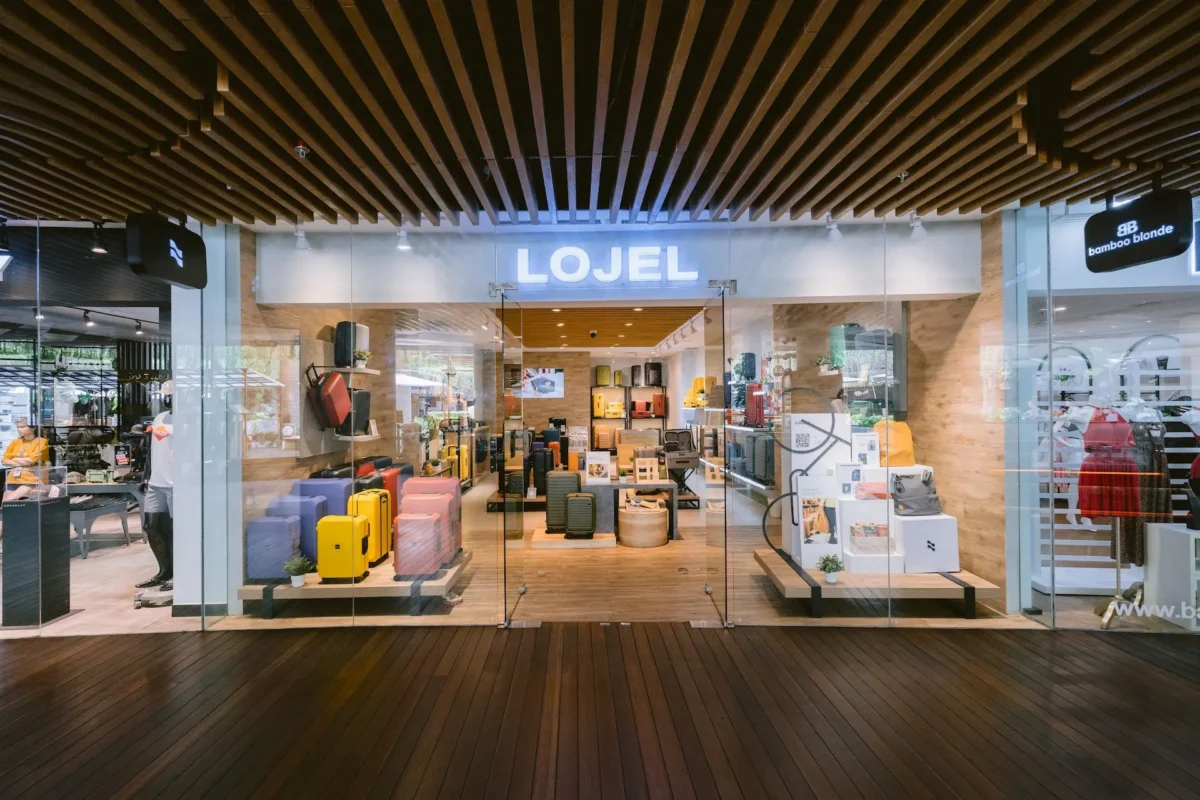
Image: LOJEL

Retailer LOJEL is expanding into the Canadian market with its first store scheduled to open this summer in Vancouver.

Rachel Draper

Rachel Draper, General Manager, North America for LOJEL, said the brand is building its North American team in Vancouver. 

“You could go to New York, LA or Toronto but for us we’re really excited to open our first store in our backyard in Vancouver and specifically it’s a very green city, very diverse, multicultural,” she said.

Beyond Vancouver, Draper said the brand is particularly interested in growing very intentionally.

“We’re very fortunate to be a family business, privately owned. So when we look at growth we look at how do we reach our key audiences. It’s not just west coast Pacific although that is very tied to our audience. It’s getting into the key metro cities, the urban cities where you have people moving every day and travel hubs.

“We’re really excited about growth in North America. We obviously have a big ecom presence that we’re growing but are interested as well getting into the East Coast in some of those key travel hub cities such as Montreal, New York, etc. And that can look different. It could be a pop up or a traditional brick and mortar store like the Vancouver one.”

LOJEL Beachwalk Shopping Centre in Bali (Image: Beachwalk)
Kenzo Yoneno

LOJEL, which stands for Let Our Journeys Enrich Life, is a carry essentials brand.

“We make products that simplify movement whether it’s every day or for travel,” said Kenzo Yoneno, Chief Product Officer. “We have products that range from phone straps all the way through to backpacks, wallets and to luggage. 

“We were founded in 1989 in Japan. We are a family-owned business. The current CEO is in fact the grandson of the person who founded it originally. We have a headquarter in Hong Kong and we have a North American headquarter in Vancouver.”

There are 18 stores in Asia Pacific.

The Vancouver store will be opening on West Fourth in Kitsilano. Target opening date for the just over 1,800-square foot store is late summer.

“The landscape and environment on West Fourth has changed so much. A lot of brands have come first to market in North America on West Fourth so there are a lot of reasons for it but a big reason is our office (is close) to the store,” said Draper.

Mario Negris and Martin Moriarty of Marcus & Millichap handled the transaction for the new location.

An Chieh Chiang, CEO of LOJEL.
Image: LOJEL

Yoneno said a big focus of the brand is sustainability.

“I believe that Vancouver has a massive reputation in that respect. The founding of Greenpeace was here. We thought that this would be an audience that would be receptive to our message. We’re very considerate in the way we make products and we build sustainability into it in very many different ways whether it’s through design for repair and other services that we provide. So we wanted to bring it to the Vancouver market in that respect because I think it will be receptive,” he said.

“Also, we’re in Asia Pacific. We see Asia Pacific more as part of a Pacific Rim type of region which encompasses Australia, west coast of North America and all what you would traditionally consider APAC (Asia-Pacific). So there’s kind of a synergy there. There are people moving from Melbourne to Vancouver, Tokyo to LA, Seattle to Seoul. So there’s a tremendous synergy in the Pacific region. Given our heritage is from Asia Pacific it seemed to make sense to also move onto the west coast.”

Yoneno, speaking about the brand’s acronym, said the company sees the word journey as being anything from popping out to the supermarket to get groceries to obviously a larger journey.

“Today’s industry brands are exhibiting a growing disconnection from the deeper purpose of movement, seen in standard-fare products that neither challenge norms nor present new solutions that facilitate better mobility,” said the company.

“LOJEL is about refocusing on how people move, but more importantly, why: connection. Putting the purpose of our journeys at the forefront of the discussion opens up opportunities for innovation. This process of discovery is what lets us empower people to move better and focus on what truly matters.

“Our mission is to spark the human connections that make the world a better place—by empowering people’s journeys with thoughtful carry essentials for travel and everyday movement. We are Driven By Diversity, Intentional By Design and Purposely Positive—core values upholding our ultimate goal to inspire movement within communities and across the globe.”

LOJEL Hong Kong (Image: LOJEL)

Sustainability is at the core of its mission. 

“By 2026, we aim to achieve B Corp certification, becoming climate neutral, and ensuring that 50 per cent of our products are crafted from recycled or sustainable materials. To achieve these goals, we’re building a team that’s ready to take on this challenge head-on,” it said.

Yoneno said the brand builds in the idea of sustainability beyond just materials.

“You see a lot of surface level noise about ‘we use 15 per cent recycled material, etc’. That’s not good enough for us. While we do work on the material front, one of the key foundational elements of our product design is what we call design for repair. What this means is that everything that’s designed is modular and can be repaired and replaced. Ultimately, entropy being what it is, things break down  . . . We acknowledge that and we make it easy to repair. How this ties back to retail is we have repair labs in our stores and we provide that service and we make it very clear whether it’s repair and eventually other things, customization, potentially upgrade, it’s a key part of our pledge to our customers that we stand by our product. We want it to last for a long time. We want people to buy less but better and that’s how we decide what we design and how we present it.”

LOJEL Canadian expansion job postings are available on the official LOJEL Linkedin page.

Canadian Retail News From Around The Web For June 12th, 2024

Canadian Retail News From Around The Web

News at a Glance

Retail Insider is streamlining its Canadian retail news from around the web to include a handful of top news stories that can be viewed quickly during the day. Here are the top stories from the past 24 hours.

Competition Bureau obtains court orders in investigation into Loblaw, Sobeys (Financial Post)

Why the Salvation Army Thrift Store is having trouble keeping up with demand (CTV)

Canadian Border Services Agency Strike: Negotiations Extended to June 14 (RCC)

How Loblaws grocery store prices compare to Dollarama (CTV)

Loblaws boycott: These Canadian shoppers say they’re done with the grocery giant forever (Yahoo)

Leon’s Furniture Limited Announces Appointment of Victor Diab as Chief Financial Officer (Yahoo Finance)

Sephora expands payment by employee device to Canada (Chain Store Age)

Pardon our dust: Why some businesses remain open during a building renovation (Globe & Mail)

Cadillac Fairview taking time with Vancouver Nordstrom site (Business in Vancouver)

Property owners quarrelling with Ottawa’s heritage designation plans for Rideau Street (Ottawa Citizen)

Shake Shack will finally open its doors in Toronto. Here’s what’s on the menu (Toronto Star)

Why an anonymous complaint has this Toronto corner store worried about the future (Streets of Toronto)

Landmark on Robson signals retail strip continuity with completion (Daily Hive Vancouver)

Luxury Watch Brands Roger Dubuis, IWC and Panerai Open Boutiques at the Park Hyatt on Bloor with Jeweller L’ORO [Photos]

Park Hyatt Hotel at Bloor Street and Avenue Road in Toronto, June 2024. Photo: Craig Patterson

Toronto-based jewellery retailer L’ORO recently spearheaded an initiative that saw several beautiful retail spaces open at the Park Hyatt at Bloor Street West and Avenue Road in Toronto. That includes the opening of a new L’ORO multi-brand jewellery store space, and separate corporately-run boutique spaces for Richemont-owned watch brands Roger Dubuis, IWC Schaffhausen, and Panerai. 

All three of the watch boutiques can be accessed from entrances within the L’ORO jewellery space, which has an entrance at 170 Bloor Street West. The Panerai and IWC boutiques also have street-facing doors onto Avenue Road. 

Each of the watch boutiques feature the brands’ latest store design, and each contains private salons for guests along with showroom spaces. The Roger Dubuis boutique has various watch styles priced into the six figures, according to L’ORO’s President Haigo Derian. The independent boutiques range from 600 to 850 square feet each. 

Roger Dubuis boutique window at the Park Hyatt in downtown Toronto – photo is on Bloor Street. Photo: Craig Patterson
Avenue Road entrances to the new IWC and Panerai boutiques at the Park Hyatt in Toronto. Photo: Craig Patterson

“We are honoured to have been awarded boutiques for Toronto Bloor Street, especially for brands as esteemed as IWC, Panerai and Roger Dubuis. Each location houses the essence and DNA for each luxury maison at its highest interpretation,” Derian said.  “This includes decor, interactive elements, and of course the widest and most specialty product offering available.”  

Derian noted that the new Bloor IWC location represents the first partner project in the country for the brand. He said that the new Panerai boutique is the first in Canada to utilize the watchmakers newest design concept including a watch-bar, and also noted that the Roger Dubuis boutique is a Canadian first. Product carried in each of the three boutiques include pieces that are unavailable within the traditional wholesale network in Canada.

The new luxury retailers are located at the base of the historic Park Hyatt Hotel, situated at the northwest corner of Bloor Street and Avenue Road. Oxford Properties, owner of the Park Hyatt Hotel, spent several years renovating the property while marketing its 20,000 square foot two-level podium retail space for lease. The last retail tenant to occupy the corner was Strellson, which shut its store in 2018. 

Inside the new Panerai boutique at the Park Hyatt in Toronto. Photo: supplied
Inside the new IWC boutique at the Park Hyatt in Toronto. Photo: supplied

“The footprint of this unique property encompasses our vision for luxury trends, especially considering its size and frontage,” Derian said, noting that the entire retail space spans about 130 feet on both Bloor and Avenue Road. At the heart of the multi-brand retail space is a new storefront for L’ORO. 

“At 170 Bloor Street West, clients will also find the newest L’ORO concept. Focusing on warm-luxury, the store is more of a meeting-place where fine timepieces, renowned jewellery brands, and our own house-creations come together,” Derian said. “French luxury maison Messika has a new home here too. Other watch and jewellery brands are in the works, but not yet officially announced. We are excited about the product offering available at this new and special L’ORO!”

L’ORO Jewellery also operates a store at CF Sherway Gardens in Toronto with adjacent Chopard and Omega boutique spaces, as well as at CF Markville in Markham. The L’ORO Group also operates seven Pandora mono-brand boutiques within Ontario and British Columbia. 

Inside the new Roger Dubuis boutique at the Park Hyatt in Toronto. Photo: supplied

Roger Dubuis’ entry into Canada is particularly notable, with the brand having only a handful of boutiques globally. There are only two Roger Dubuis stores in the United States, at South Coast Plaza in Costa Mesa, California, and on Hyman Avenue in Aspen, Colorado. Global cities such as London, Dubai, Hong Kong and Sydney also have standalone locations for the brand. 

Panerai and IWC both operate stores at Toronto’s Yorkdale Shopping Centre — they, along with Vacheron Constantin and Piaget, opened in the mall in 2016. Vancouver’s Alberni Street, another important luxury node for watches and jewellery in Canada, boasts storefronts for Richemont watch brands Panerai, IWC and Vacheron Constantine among others. The L’ORO Bloor Street partnership is unique, given that the other Richemont-owned watch boutiques at Toronto’s Yorkdale Shopping Centre and on Alberni Street in Vancouver are corporate stores.

The opening of the three luxury brands resulted in two other multi-brand retailers no longer carrying the same brands. Royal de Versailles, located 101 Bloor Street West, appears to no longer stock the IWC and Roger Dubuis brands, as the multi-brand Bloor Street Store prepares for a renovation that will include a new facade to match its recently opened Rolex partner store. Birks, located nearby at the Manulife Centre, no longer carries Panerai watches in a dedicated space that was unveiled in the renovated store in 2019

Grand opening event for L’ORO at the Park Hyatt in Toronto. Photo: supplied
Bloor Street entrance to the new L’ORO at the Park Hyatt in Toronto. Photo: supplied

The Park Hyatt Hotel is an iconic 17 storey heritage building that began construction at the end of the booming 1920s — a bankruptcy along with the stock market crash/depression resulted in its opening in 1936. For decades, the hotel was known as the Park Plaza Hotel, with a large lit sign on the roof which also has a bar. 

In 2017, new owner Oxford Properties extensively renovated the property to include the transitioning of the 1936-built 17 storey south tower to a 65-unit luxury residential rental building. The shorter 14 storey north hotel tower, built in 1956, still contains 219 hotel units as well as ground-level and podium commercial units. 

The corner of Bloor Street and Avenue Road in Toronto is also significant, given that it’s one of few major intersections in the city to feature four important heritage buildings at each corner. The buildings on the four corners includes: Northwest – Park Hyatt; Northeast – Church of the Redeemer (1879); Southeast – Lillian Massey Building/former Club Monaco (1912); Southwest – Royal Ontario Museum (1914). Each building features back-lighting, another rarity to see at all four intersections anywhere in Toronto. The former Club Monaco space in the Lillian Massey Building is currently home to a Brooks Brothers store, which is liquidating and preparing for closure following the bankruptcy filing of parent company Ted Baker Canada. 

Toronto’s luxury run is seeing a flurry of activity, including new store announcements and construction of flagships. Last week Retail Insider announced that jeweller Tiffany & Co. will relocate its storefront from 150 Bloor Street West to the new ‘Tiffany Building’ that will be created in the 1200 Bay Street building that has a retail address of 66 Bloor Street West. Tiffany & Co. will elongate the luxury run on Bloor from Bay Street to Avenue Road, which is seeing various other retailer movements. 

That includes Burberry, which is also relocating from a space at 144 Bloor Street West to 100 Bloor, next to a recently opened Van Cleef & Arpels flagship. In the same 100 Bloor podium, Holt Renfrew’s men’s store will exit at the end of the year to relocate back into the large 50 Bloor Holts flagship

Several retail spaces at 110 Bloor Street West are still under construction, with Saint Laurent recently opening a 10,000 square foot store with a brutalist concrete facade. It will join Anne Fontaine and Paris Baguette which will open on Bloor later this year, along with Alexander Wang which opened in the building in December of last year. 

Toronto Tops North American Cities for Celebrity Restaurants, Outpacing New York [Report/Interview]

From left to right: Blue Bovine investor Kevin O’Leary, Toronto Maple Leafs player and investor Mitch Marner, and Nick Di Donato, CEO of Liberty Entertainment Group. (Photo by Ethan Shaw Door24 Luxury Videography and Photography)

Celebrity-backed restaurants are gaining traction in Canada, according to JLL’s latest Celebrity Restaurants Report.

Many celebrities have invested in opening restaurants, with a notable surge in 2021. Tied with Chicago and ahead of New York, Toronto has emerged as a top destination for celebrity restaurants in North America.

In Canada, celebrity chefs, athletes, and musicians account for more than 80 percent of the celebrity restaurants that have opened. These restaurants are located predominantly in retail and office properties, as well as in shopping centres.

(Image: Blue Bovine Steak+Sushi House)

Here are four key takeaways about celebrity restaurants from the report:

  • 361 celebrity restaurants opened in five years in the U.S. and Canada by famous folks from 2019 through 2024. This includes celebrity chefs, actors and musicians;
  • Celebrity restaurants are tourist attractions. Celebrity restaurants are often driven to popular tourist corridors like Las Vegas Boulevard and Nashville’s Lower Broadway;
  • Openings took off in 2021 as celebrity restaurant openings doubled from 2020 to 2021, at a time where overall U.S. restaurant openings only increased by 13 per cent;
  • Chefs and actors opened 69 per cent of celebrity restaurants. 37 per cent of the restaurant openings in the study were made by celebrity chefs. 32 per cent were backed by actors. 
Jordan Sleep-Tulloch

Jordan Sleep-Tulloch, an Associate with JLL with a former career in food and beverage, said in the tourist destinations in the U.S. celebrity restaurants are more prevalent than in Canada “because the U.S. has more markets like that to draw people from all over the world globally.”

“You get a higher concentration in the U.S. than you get in Canada,” he said. “The restaurant names if they are sort of aligned with the celebrity or the celebrity chef that sort of draws your guests into the door and then as an operator it’s your job to maintain a certain level of consistency to keep them coming back.”

Image: Matty’s Patty’s Burger Club

Paul Ferreira, Senior Vice President with JLL, said the restaurant business has always attracted celebrities to a certain extent.

Paul Ferreira

“There was always an allure to the restaurant business and the bar business and they always felt that it was a great place to leverage their profile and monetize it a little bit. So I think it’s always been a part of the industry,” he said. “You can go throughout history. There’s always been an element of that. And I think we’re just seeing it today with the latest crop of celebrities who now have extra ways to do it.

“If you think 20 years ago, they would attach their name in the marketing of that restaurant. Today you can get a celebrity attached to your concept that has a large social media following. A few posts and all of a sudden they can be effective just in that in addition to their names. So their ability to influence the success and the awareness of these concepts using the social media following only brings more strength to associating a concept with one of these celebrities.”

Sleep-Tulloch said the restaurants are using the celebrities as a marketing tool to extend their reach.

Gordon Ramsay Burger Vancouver (Image: Great Canadian Entertainment)

“When you look at some of the restaurants they’re involved with, the celebrity’s following is much larger than the restaurant’s following on a percentage basis,” he said.

Fast casual, followed by full-service, is the preferred concept among celebrities, according to JLL. Matty Matheson, LeBron James, and Drake are responsible for a significant portion of the celebrity restaurant openings in Canada over the past five years.

Celebrities tend to adopt more traditional concepts, often focusing on popular dishes like pizza, burgers, and chicken. Recent notable opening announcements include Kevin O’Leary’s partnership with Mitch Marner and Nick Di Donato to open the full-service Blue Bovine Steak and Sushi House in downtown Toronto’s Union Station, and soon-to-open Gordon Ramsay Steak in Richmond, B.C., added JLL.

Gordon Ramsey Steak Vancouver Construction (Image: @jennieyuen)
Image: T-Squared Social

Ferreira said there is also a broadening into larger entertainment concepts such as T-Squared Social in New York that has an involvement of people like Tiger Woods and Justin Timberlake. 

“It’s part of this movement towards entertainment concepts with better gamefied. This one in particular has golf simulators, it has bowling, it has other activities in it. So it’s an activity based entertainment concept,” he said. “But whenever anyone talks about it, you just always hear it referred to as Tiger Woods’ concept. 

“So while they are involved, they’re obviously not the only shareholders, they didn’t come up with the concept themselves. I’m sure they had influence. It just shows that generationally there’s always a benefit of having somebody connected to your brand just to create awareness instantly.

“The other thing is it creates expectations. People have a certain expectation of what Tiger Woods is all about and Justin Timberlake is all about and I don’t think they’re looking to them to have any culinary involvement with what the food is but at least an F&B concept that’s associated with their names is going to reflect what those two individuals are all about. So I think celebrities to a certain extent look at what they associate themselves with at the same time.”