Pinterest is showcasing its newest and enhanced performance capabilities benefitting retailers. The platform has been expanding its functionality to make shopping an integrated part of the tailored customer experience. And get this: early results showed that the enhanced suite of lower funnel solutions drove a +90% increase in traffic1 and 28% more conversions2.
“It’s a new era of performance at Pinterest,” said Kristie Painting, Managing Director for Canada, Enterprise Sales at Pinterest. “For Canadian retailers, our expanded suite of performance products presents a remarkable opportunity to drive conversions in the lower funnel. Today, Pinterest’s audience is bigger than ever, and they come with active shopping intent; in the past year we’ve seen clicks and saves up 50% for our buyable content formats3.”
Now ads are more relevant, thanks to improvements in how Pinterest uses intent signals. AI is powering ad delivery through the full funnel, putting the right content in front of users with the right context. For retailers, that means that searches, as specific as “galactic metallic vibes” to more exploratory like “living room ideas,” can lead to a purchase.
“It’s easier than ever for retailers to reach shoppers on Pinterest who are primed to act,” said Martin Svensson, Director, Retail Sales Management at Pinterest Canada. “From mobile deep links and direct links to improved shopping ads, retailers can reach their audience in the right context, with the right ad to move their business forward.”
Many marketers are bracing themselves for the upcoming loss of third-party cookies, they won’t have the same ability to optimize and target as they do now. As the digital landscape evolves, Pinterest is providing tools to address the challenge of signal loss for ad partners. Pinterest API for Conversions is a secure and reliable way for brands to send their conversions directly to Pinterest to help maximize conversion visibility.
As Canadian retailers continue to navigate the changing ad landscape, join the brands that are seeing better results with Pinterest’s new suite of performance products. Explore solutions.
(1) Pinterest Internal Data, Global, June 2023 to September 2023, based on beta results comparing 289 advertisers with consideration campaigns before and after enabling with direct links for consideration
(2) Pinterest internal analysis, advertisers adopting the API for Conversions compared to using only the Pinterest tag. Global, Sep 2022.
(3) Pinterest Internal Data, Global, Q2 2023 vs. Q2 2022.
**********
Note: This article is partner content. For more information, contact Craig at craig@retail-insider.com
Recently, in a LinkedIn post, Peter Mammas, President and CEO of Foodtastic which operates the Second Cup brand, said the brand has opened its first Second Cup inside one of the convenience stores.
“We’re proud to announce the long-awaited launch of Couche-Tard’s first Second Cup,” shared the official Foodtastic LinkedIn account. “This iconic collaboration between two giants of the Quebec and Canadian industry opens up exciting new perspectives in our fields.
“Congratulations to the people on our Foodtastic team, as well as at Couche-Tard, whose tireless efforts over the past few months have been able to bring this project to life!”
Retail Insider reached out to Foodtastic last week to discuss the expansion, but further comment was not provided.
Image: Foodtastic
And on Tuesday, DAVIDsTEA announced it will be offering a premium Tea-2-Go in-store experience at over 1,500 convenience stores across Canada.
“We are proud to become the exclusive supplier of high-quality teas across Canada to an industry leader like Couche-Tard,” said Sarah Segal, Chief Executive Officer and Chief Brand Officer, DAVIDsTEA, in a statement. “This landmark agreement enables DAVIDsTEA to introduce a whole new segment of customers to our wide variety of flavourful teas. It also represents a key step in our omnichannel growth strategy to expand our footprint while driving profitable growth.”
The company said its curated assortment of eight best-selling flavours, available in a convenient sachet format, will provide consumers on the move with an elevated tea-drinking moment, while complementing Couche-Tard’s extensive offering of beverages and snacks.
Image: couche-tard.com
Alimentation Couche-Tard, operating under the Couche-Tard and Circle K banners, has a coast-to-coast presence in Canada and is a global leader in convenience and mobility, operating in 29 countries and territories, with more than 16,700 stores, of which almost 13,100 offer road transportation fuel.
“The introduction of quality products from the renowned DAVIDsTEA brand in our stores across Canada will enhance our customers’ drinking experience and allow us to further develop our hot beverage category. We are very pleased with this new partnership,” added Daniel Lapalme, Foodservice Director, Eastern Canada Division, Alimentation Couche-Tard, in a statement.
DAVIDsTEA said the tea collection selected for Couche-Tard customers includes organic flavours such as Cream of Earl Grey, Silk Dragon Jasmine, David’s Breakfast Blend, Cold 911 and Cinnamon Rooibos Chai; herbal, caffeine-free varieties like Forever Nuts and Just Peachy; and popular coffee replacement black tea, Vanilla Cappuccino. In addition, DAVIDsTEA will establish a full tea bar concept at seven Couche-Tard stores to offer a wide variety of hot and iced teas.
Rendering of the full tea bar that will be available in 7 locations only.
(Image: DAVIDsTEA)
DAVIDsTEA offers a specialty branded selection of high-quality proprietary loose-leaf teas, pre-packaged teas, tea sachets, tea-related accessories and gifts through its e-commerce platform at www.davidstea.com and the Amazon Marketplace, its wholesale customers which include over 4,000 grocery stores and pharmacies in Canada and over 330 grocery stores in the United States, as well as 18 company-owned stores across Canada.
Couche-Tard is a global leader in convenience and mobility, operating in 29 countries and territories, with more than 16,700 stores, of which almost 13,100 offer road transportation fuel. With its well-known Couche-Tard and Circle K banners, it is one of the largest independent convenience store operators in the United States and it is a leader in the convenience store industry and road transportation fuel retail in Canada, Scandinavia, the Baltics, as well as in Ireland.
Four years ago, we were all in lockdown. It was total confusion. With empty shelves, many wondered if Canada was facing a food shortage and if prices would be affected, of course. With varying health restrictions from region to region worldwide, supply chains were heavily strained.
And almost two years later, it was a catastrophe in Ukraine. Russia’s illegal invasion pushed the prices of most agri-food products to record levels. For example, the price of wheat reached $12 per bushel for the first time in history. Indeed, our food inflation rate reached 11% over a year ago, much to the dismay of consumers here and elsewhere.
Some believe that food prices have doubled since 2020. Well, if you believe Statistics Canada’s data, prices have increased by 21% since March 2020, across all categories. It’s not double, but 21% is a lot. Due to price volatility, many people feel like the increase is closer to 100%. The product that has increased the most is olive oil at 83%, followed by cantaloupes at 76%. These two categories have been affected by production issues related to climate change. Cantaloupes were even affected by a major recall a few months ago. Vegetable oil has increased by 72%, canola oil by 51%, margarine by 67%, and strawberries by 58%. All products are more expensive than in 2020, but there are exceptions.
Some will be surprised to learn that some products are cheaper than they were in March 2020, four years ago. Yes. First, almonds are 19% cheaper than in 2020. Pork shoulders are 14% cheaper than in March 2020. Pork ribs are also 13% cheaper. Canned tuna is also less expensive, at 14%. Even chicken breasts, according to Statistics Canada, are 3% cheaper. A year ago, a viral photo of expensive chicken breasts angered everyone, leading to a social media campaign condemning possible grocer abuses. It was panic, or almost.
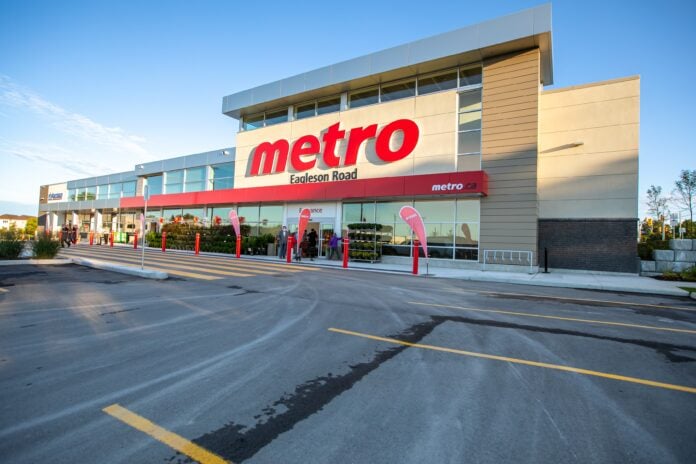
Metro in Old Toronto (Image: Field Agent Canada)
Products roughly the same price are whole chicken, spinach, canned salmon, the famous banana, pears, and tomatoes.
If all this is hard to believe, it may be because our trust in Statistics Canada is not very high. Perhaps.
Despite this data, it is certainly not what people feel when paying for groceries. While some food categories may have some immunity to inflation, likely, our perceptions are often influenced by price volatility. Let’s look at the standard deviations of prices over the past four years.
Since March 2020, the category with the highest standard deviation is beef. Not surprising. Depending on the cut, the standard deviation varies between 4 and 5. The standard deviation of food prices can tell us how much food prices vary compared to their average. Salmon has a standard deviation of over 4. Chicken breasts and vegetable oils also have high standard deviations compared to the average. As well as margarine, tomatoes, peppers, white rice, and mayonnaise.
Interestingly, meats have increased about as much as plant protein products like hummus, tofu, lentils, and dry beans, but popular perception is that meat counter prices have skyrocketed more than elsewhere in the store. Perceptions often deceive us.
Innovative Fitness Bloor, Toronto, ON (Image: Nick Lachance)
Innovative Fitness, a personalized wellness and fitness gym in Canada, has recently opened its newest flagship location on Bloor Street in Toronto, has ambitious expansion plans, and is looking to add new services.
Unlike a traditional gym, Innovative Fitness focuses on one-on-one services such as personal training, nutritional coaching, rehabilitation and wellness services, and will keep innovating new services to meet consumer needs – distinguishing Innovative Fitness from other fitness companies in Canada. It is also the largest personalized wellness studio in North America.
Curtis Christopherson
Innovative Fitness currently has locations in British Columbia and Ontario with a total of 16 locations, including Innovative Fitness Toronto (The Ritz-Carlton), Forest Hill, Riverside and Club Apex at The Maple, The Selby and The Taylor, along with its newest location at 33 Bloor Street in Toronto
“Innovative Fitness has been around for more than 25 years. We are an established brand as we are one of the first personal training businesses in the market in North America, and we have become the leaders in personalized wellness and fitness,” says Curtis Christopherson, the CEO of Innovative Fitness. “Bloor Street was actually signed before Covid and we were getting ready to launch in Spring of 2020, unfortunately we had to navigate close to four years of determining how we were going to launch. It was destined to be our flagship in Canada and we are so excited to have that as our flagship location of the brand.”
Moving forward
Innovative Fitness Bloor, Toronto, ON (Image: Nick Lachance)Innovative Fitness Bloor, Toronto, ON (Image: Nick Lachance)
As for expansion plans in Canada, the company is looking to expand by ten locations in Ontario and is exploring potential growth opportunities in British Columbia. The Ontario locations will primarily be surrounding the Greater Toronto Area and in BC, Christopherson says they will be looking at Burnaby and Richmond – locations and timeline for both provinces are unknown as of right now.
“We believe that Ontario is a significant market for us and is our primary focus, we believe that there is a unique opportunity to continue to grow our brand. We believe that Ontario and British Columbia offer significant opportunities for future franchise growth there. We have a couple of areas to explore, such as Burnaby and Richmond, but other than those two regions, we have really captured most of the markets we are looking for.”
The Lundrigan brothers, David and Ryan, are the driving force behind opening new locations and establishing the brand in the Toronto market. They have an extensive background in the health and wellness industry and have made the Bloor St location a reality.
Innovative Fitness Bloor, Toronto, ON (Image: Nick Lachance)
As for other provinces in Canada, Christopherson says they will not be expanding further in Canada right now as its main focus is directed towards Ontario, British Columbia, and into the United States.
Christopherson says the brand plans to enter the United States by 2025 with focus on the West Coast. Locations Christopherson is interested in include the State of Washington with key interest in Seattle and Bellevue; California with key interest towards San Diego, and the East Coast with interest in Chicago, Boston, and Miami.
Expanding Services
Innovative Fitness Bloor, Toronto, ON (Image: Nick Lachance)
In addition to its expansion plans, Innovative Fitness continues to innovate its service offerings. Christopherson says the brand has introduced assessment tools, video screening, and body composition testing.
The brand has also recently launched a digital recommendation tool where its professional training coaches can recommend products that “they love and trust, helping people reach their goals. So whether it is supplementation, equipment, or nutritional offerings, they can now recommend through a digital platform. They can offer products to the client without having to go to a store or buy online, so it is a unique innovation that we just launched.”
As for future services, Christopherson says the brand is looking into hot and cold therapy, including saunas and cold plunges. The brand is also looking at external partnerships to include full body MRIs as well as blood profiling assessments that are going to evaluate both hormone and immune health.
“We are just going through the process right now. I mean, our big focus is personalization and optimization as that is a primary focus of our business going forward. And so, we are planning on launching some of these new services by Q4 of this year.”
Innovative Fitness Bloor, Toronto, ON (Image: Nick Lachance)
All Innovative Fitness locations Christopherson says are mostly the same as some locations offer other wellness services such as osteopathy and massages, but “for the most part, it is personalized one-on-one training as well as nutritional coaching.”
Christopherson says he is in the process right now of getting all its services approved by insurance company health spending accounts so more people can access Innovative Fitness.
‘Main Street’ — the most quintessential of community geographies. It’s where neighbourhood residents go to shop.
But who runs these places, and represents the interests of the shopkeepers?
While municipalities are the ‘local government’, they provide a range of services to the entire city. Their jurisdiction includes investing in infrastructure, maintaining streets, creating parks, operating recreation centres, planning land uses, processing development applications, setting budgets, to dog licenses and general administration – order of importance may vary depending on who one asks.
Cities and Business Improvement Associations
Robson Street (Image: ROBSONSTREET.CA)
A Business Improvement Association or Area (BIA) is an organizational structure created to support the success of businesses in specific commercial areas, through funding, programing, coordination, and pooling of resources to address local priorities. Normally they cover retail streets or districts to improve their vibrancy and viability. BIAs are established as a non-profit organization, and have a board of elected volunteers and paid staff.
BIAs are, as proponents say, the voice and advocate of the small business owners and local merchants.
The City of Vancouver has 22 BIAs, a significant proportion of the 70 BIAs in the province of British Columbia. City Council is responsible for the periodic renewal of BIA mandates, through establishment of bylaws.
While it may seem like a BIA is an extension of the city, it’s different and more than that. BIAs supplement city services, rather than replace them. BIAs support their area and membership through programs like marketing campaigns, promotional branding, special events, ongoing services, and information sharing. To improve the image of the area and make it a more desirable place to visit and operate, BIAs may also deal with social issues such as homelessness, panhandling, graffiti, and parking. The cycle of enticing more people to the area in turn further attracts shoppers and grows businesses.
Hyperlocal Services
Unlike a shopping centre that is operated by a single property manager that wants to optimize the mix of unit tenants and may organize some programs for the overall facility, properties along retail streets are all individually owned, operated, and occupied. This lack of programing may lead to less cohesion – or to an interesting eclectic mix of independent shops that can’t be found at the mall.
In terms of budgets, BIAs are funded through an additional levy on properties within their defined benefiting area. Although this money is collected by the city, it is transferred to the BIA to cover their operating costs. The BIA levy on the business varies by assessed value and size of the property. To provide a sense of the amount, for example: a small restaurant would pay about $2,000 annually towards the BIA, which is equal to about five percent of their property tax bill.
Benefits, and Costs
Image: Love Your City Contest
While there’s benefits, there’s also costs. The additional BIA levy is applied to all non-residential properties in the geographic area. Through standard triple-net commercial leases these additional charges are paid for by the tenant occupant rather than the building owner. This is the same for property taxes, building upkeep, and overall maintenance.
While the BIA is providing a service to all its members, not all if its ratepayers may understand the operation or feel like they benefit. This can create tension between parties, with issues including:
Lack of clarity about what exactly the BIA does. Questions about if the BIA is providing some services that otherwise could or should be delivered by the city, and thus would instead be covered through general property taxes. This can be especially touchy as property taxes increase and overburdened businesses struggle.
Some types of businesses do not benefit as much from BIA programs. Often BIAs focus on attracting shoppers to a commercial area, directly benefiting street-fronting retailers with more customer traffic. This may be of less relevance to other tenant types like offices, industry, and hotels who serve different groups.
There should as much as possible be a match between the funding sources and the distribution of assistance. Those who receive the majority of benefits from the BIA should be the ones who pay the majority of its costs. However, a precise financial allocation of service provision arrangement would be difficult to administer. Nevertheless, the BIA needs to demonstrate the value it provides to members.
Past Failure, and Considerations for Future Success
Image: Downtown Victoria Business Association
BIA mandates are reconsidered typically every five years though a formal engagement program and decision-making process. Almost always they are renewed, with ongoing refinement and consultation to align the association programing with the needs of members.
Often, but not always.
In 2001, the Downtown Victoria Business Association’s (DVBA) mandate was not renewed, and thus it ended after ten years. While that was two decades ago, some lessons are still relevant today.
From a report exploring the matter at the time, some contributing factors were identified (An Investigation of the Dissolution of the Downtown Victoria Business Association, by Eric Aderneck, Queen’s University, 2002). Although many merchants were satisfied with the association, property owners overwhelmingly opposed the DVBA. Some participants indicated that the mandate of the Victoria BIA was unfocused – trying to address too many issues but not well, and that the proposed programming and funding mandate expansion was too ambitious for ratepayers.
Specific lessons learned from the Victoria experience that could be applied to other BIAs to better ensure success:
Widely agreed upon mandate and focused objectives.
Full communication and participation with stakeholders, particularly property owners.
A match between those who pay for the association and those who benefit from it.
Strong support for the association and its goals among all stakeholders must be developed from the onset and continuously communicated. Objectives and programs to fulfill these goals should be focused with clear deliverables. Ultimately, members must feel that the association provides value and is addressing the concerns that are important to them.
Eric Aderneck
Eric Aderneck, RPP, MPL, BCOM, DULE has two decades of diverse experience including working for the public and private sectors in the Metro Vancouver region through several different capacities including planning policy, real estate development, consultant, and instructor. His expertise is in industrial and employment land use planning and associated matters. He can be reached at eric@aderneck.ca or https://www.linkedin.com/in/ericaderneck.
Retail Insider is streamlining its Canadian retail news from around the web to include a handful of top news stories that can be viewed quickly during the day. Here are the top stories from the past 24 hours.
3 Brasseurs Grande Allée (Image: 3 Brasseurs Canada)
Unique craft brewery concept 3 Brasseurs, based in Quebec, is expanding its footprint with its first two franchise partners and more growth planned for the future.
The brand started in France in 1986. It was one of the first microbreweries and restaurants in one place in France – very new for that market.
The concept arrived in Canada in 2002 with the first restaurant in Montreal on Saint Denis Street.
The brand today has about 80 restaurants in France with 15 in Canada, 11 in Quebec and four in Ontario. There are also two restaurants in Brazil as well as a presence in overseas French territories.
Image: 3 Brasseurs3 Brasseurs La Capitale (Image: 3 Brasseurs)
There are eight restaurants around Montreal and three in Quebec City. There are two in Ottawa, one in Oakville and one in Toronto.
Nathalie Canivet
“What is unique about the brand is that in each location you do have a microbrewery,” said Nathalie Canivet, Marketing & Communication VP. “ You have in each restaurant a brewer who is brewing the beer. So regarding sustainability, it’s the closest way from a brewer’s path to your table because we don’t deliver beer in other restaurants. We really produce our own beer.”
She said the brand’s values are simplicity, generosity and warmth.
Éric Demoncheaux and Mélanie Trudeau are the company’s first franchise partners in Canada.
Éric Demoncheaux and Mélanie Trudeau (Image: 3 Brasseurs)3 Brasseurs Grande Allée (Image: 3 Brasseurs)
Jean-Marc Zerbib, Franchise Development Manager, said the company was initially only corporate locations.
Jean-Marc Zerbib
“We have started the franchise process,” he said. “The first step of the process of the franchisee was to franchise the existing corporate restaurants but also after COVID we have a new development program to open new restaurants which is going to be the second step.
“We have tested in France before here the franchise process and we realized that in terms of development the development is going faster when we have franchisees than to open the restaurant in corporate . . . We now want owners in their own restaurants to operate more fastly, close to the market. It’s a really different process for us but we realized in France it works very, very well.”
The Quebec City franchisee is taking over two existing locations in that city with one store to remain corporate – 3 Brasseurs La Capitale – Québec City and 3 Brasseurs Grande Allée – Québec City are now franchise run.
Richard Tranchant, Director of International Operations, said the company has also found a franchisee for its location on Yonge Street in Toronto, Tej Bhatti.
Tej Bhatti (Image: 3 Brasseurs)
Zerbib said Ontario is a very active province and the brand only has four restaurants there. The potential is great for that market. There is also continued potential for growth in Quebec.
“After that we can think about going outside of those two provinces,” he said. “We have to first continue to develop in Quebec, re-start the development in Ontario and after that think about other provinces. Nova Scotia and New Brunswick. And why not in the future maybe British Columbia.”
3 Brasseurs La Capitale (Image: 3 Brasseurs)
The company on its website says: “Our story began over 100 years ago in Lille, France when three brewers joined forces to create a brewery that would grow to become one of the most important in the country. In 1985, the descendents of the original founders opened their first neighbourhood microbrewery – long before anyone had even heard of a “microbrewery” or “craft beer”.
“The key to our success then, as it is now, is an unrelenting passion for creating the perfect pint. That’s why our beer is brewed in-house, just steps from your table, by brewers who understand that brewing beer is a magical combination of art, science and dedication. They also have a great respect for the history of brewing and the craftsmanship of those who brewed before them.
“Each of our neighbourhood locations truly pays homage to the past – when each village had its own brewer. While our passion for beer remains unchanged, we do embrace change if it elevates your beer experience. We’ve crafted a menu of food that pairs with individual beers to enhance the flavours and to elevate your overall sensory experience. In that case, change is good. And delicious.”
Toronto-based operations consolidation platform Intelocate has partnered with workforce optimization platform Shiftlab. The expanded platform supports the retail industry by enhancing interconnectivity while streamlining operations for frontline staff in stores and company headquarters.
The partnership comes at a time when retailers are economizing while seeking integrated solutions for efficient operations management to save money. Intelocate already has proven to be tremendously useful to retailers by consolidating operations in a platform that delivers a single dashboard. The dashboard helps empower and engage frontline staff in stores through simple issue reporting, task management, and centralized communications. It also provides head office departments with real-time data needed to make informed decisions, ensuring seamless operations across multiple locations.
Shiftlab’s AI-powered scheduling software is being integrated into Intelocate’s platform as part of the partnership. And the partnership with US-based Shiftlab only enhances Intelocate’s robust platform, by providing an expanded workforce optimization tool that helps retailers and other businesses maximize performance and employee engagement while reducing labour costs. Shiftlab’s automated scheduling solution enables retailers to create sales-optimized and compliant schedules with one click. The company is growing quickly as retailers have found time and cost savings using the platform.
Yulia Vasilyeva, Founder & CEO of Intelocate
Retailers also want to hold onto their best employees, and a unified engagement platform can help retain them by making their jobs easier and more fun. The built-in efficiencies of scheduling software also means that head offices can operate with less staff. As many retailers watch their finances during this challenging time, achieving more with less is becoming paramount.
“This collaboration with Shiftlab is a testament to our commitment to enhancing the overall retail experience,” said Yulia Vasilyeva, Founder & CEO of Intelocate. “By integrating Shiftlab’s exceptional employee scheduling software with Intelocate’s powerful operations consolidation tools, we are elevating efficiency and staff communication to unprecedented levels,” she went on to say.
“Our mission is to transform workforce management, and this partnership with Intelocate aligns perfectly with our goals,” said Devin Shrake, CEO of Shiftlab. “Together, we bring major improvements to day-to-day retail operations, creating sales-optimized schedules and ensuring that employees receive clear instructions and guidance only when they are on shift. It’s about making every moment at work count.”
Image: Shiftlab
“The combined capabilities of Shiftlab and Intelocate provide a holistic solution for retailers.” added Ryan Esteb, VP of Sales at Shiftlab. “Intelocate is all about creating clear lines of communication with staff throughout the entire organization, and Shiftlab ensures that those communications are optimized to be delivered only when the staff member is at work. Together, our aim is to respect the work/life balance and create optimal delivery of communications – what staff members need to know, when they need to know it.”
Mad Radish at 4 King West in Toronto (Image: Dustin Fuhs)
Healthy fast-food chain Mad Radish has opened its first Toronto franchise location as it continues to expand its footprint.
The latest opening is at 4 King Street West and is the company’s fourth Toronto location but first as a franchise.
Adam Tomczyk
Mad Radish was founded in 2017 in Ottawa on Albert Street in the downtown and today has a total of nine locations. Five stores are in Ottawa.
“We’re at King and Yonge and it’s a really prime location. We are in between Starbucks and Chipotle so we couldn’t ask for a better location. It’s an absolutely outstanding store,” said Adam Tomczyk, CEO and co-founder of Mad Radish, of the company’s latest store.
“In Toronto we’re dominating in the downtown right now.”
Mad Radish at 4 King West in Toronto (Image: Dustin Fuhs)Mad Radish at 4 King West in Toronto (Image: Dustin Fuhs)
Other Toronto locations are the Bay Adelaide Centre, the Exchange Tower and Bloor Street.
“In Ottawa we’re kind of covering the whole city. We’re trying to find more locations in Ottawa because there’s a lot of interest from franchising as well. We have three downtown and we opened our first franchise in Kanata at the beginning of last year. And we also have one in Barrhaven.”
Image: Mad Radish
“It’s been a phenomenal story of ups and downs, and obstacles and triumphs,” said David Segal, Founder and Owner.
David Segal
Segal said the concept has evolved dramatically since its inception.
“The vision hasn’t changed. Our north star remains the same. We really want to bring healthy, fast food to everyone in Canada. Really high quality food that makes you feel great after you eat it, that doesn’t cost too much and make it accessible to all the neighbourhoods across the country,” he said.
“That’s what hasn’t changed for us. What we stand for as a brand has remained a constant and that vision and that north star is still there. I think now we’re much closer to realizing that vision. Between COVID and the opening, it’s easier said than done and we’ve focused a lot over time on perfecting some of the most important things in healthy fast food.
Image: Mad Radish
“For example, chicken. We have the best chicken you’re ever going to have in a fast food restaurant. We cook it fresh every single day from scratch, marinated, in an oven. It’s outstanding. That matters. That’s your key protein. To be able to find hot ingredients with cold ingredients.
“Adam and the team through painstaking effort figuring it out, we’re healthy bowls and by bowls we mean something more hardy. You’re not going to feel like it’s rabbit food, like you’re hungry two hours after you eat it.”
The brand is known for its bowls and burritos and salads.
Mad Radish Franchising Image: Mad Radish
Mad Radish began franchising in 2021, with their first franchise location opening in Kanata, a fast-growing suburb of Ottawa.
Tomczyk said the company is in negotiations currently for a few more leases with four more locations to open this year. He couldn’t reveal those locations as they have not been finalized yet.
“Right now the focus is in Ontario because we really believe in responsible growth,” he said. “But we do have conversations with master franchisees across the country. So we’re trying to find the right partners that we can build this together.
“It’s a mainstream brand. We put so much effort, so much money to bring this together and bring it to the point where we can proudly take it anywhere.”
“I’m incredibly proud of what we’ve achieved as a brand,” said co-founder Stephanie Howarth. “Our commitment to compostable packaging, responsible sourcing and inclusivity has always set Mad Radish apart. We realized that we were doing something really special and the best way to reach new communities was by engaging owner-operators who are as passionate about our values as we are.”
Image: Mad Radish
Segal, who was co-founder of DAVIDsTEA, said he’s never been more excited about a concept as he is about Mad Radish right now.
“It’s because of the focus Adam and the team has on the most important thing which is delivery of this incredible food quickly for customers on the go at a very, very fair price,” he said.
“I think we’ve nailed the model and we’re now ready to expand it. But we’re not just going to sell franchises. We’re going to award them. We’re going to be very careful on who we bring on as partners. They need to share our vision for quality and that’s really, really critical. We want to of course bring this everywhere in Canada. We think Canadians are going to love it. We have proof of concept in Toronto and in Ottawa. But we need the right people who are going to really love what they do and bring the same level of passion to this as we have right now.’
During his time at DAVIDsTEA, Segal grew the company from a single store on Toronto’s Queen Street West to a $200 million retail giant. In June 2015, DAVIDsTEA became a publicly-traded company on the NASDAQ, and since launch, the brand has been featured in the Wall Street Journal, Women’s Wear Daily, The Globe and Mail, and Fast Company.
Segal left DAVIDsTEA in 2016 and started Mad Radish – a quick service restaurant concept.
In 2017, David was named one of Canada’s Top 40 under 40.
In 2021, Segal also started Firebelly tea to create exceptional loose leaf teas tailored to modern living, and gorgeous tea accessories to shake up the category.
Retail Insider is streamlining its Canadian retail news from around the web to include a handful of top news stories that can be viewed quickly during the day. Here are the top stories from the past three days.