Canadians might be trimming their budgets but they’re not trimming the romance this Valentine’s Day, according to new data from Moneris.
Also, a survey by the Retail Council of Canada survey suggests fewer Canadians will celebrate Valentine’s Day, but those who are, plan to spend just as much if not more.
The survey said the number of people planning to celebrate Valentine’s Day this year has dropped significantly by nine percentage points compared to 2023 with 48 per cent. It also found that 48 per cent of males and 49 per cent of females celebrate Valentine’s Day. The male versus female split celebrating Valentine’s Day has remained unchanged compared to 2023.
Valentine’s Day Signage at Fancy Face (Image: Dustin Fuhs)
The Retail Council of Canada’s survey said 67.1 per cent of Canadians expect to spend the same amount of money on celebrating Valentine’s Day as they did last year. About one in six Canadians (16.5 per cent) expect to spend more this year on purchases related to Valentine’s Day. The number of people planning to spend the same or more as compared to last year has decreased by only 0.6 percentage points compared to 2023.
It found that approximately 41 per cent of Canadians will plan at least a week ahead before Valentine’s Day to make purchases. This number has changed by only one percentage point compared to 42 per cent in 2023 and 4.2 per cent of Canadians are impulse shoppers and make purchases on Valentine’s day. The number of people shopping on impulse has gone up by 0.7 percentage points compared to 3.5 per cent in 2023.
Around 49 per cent of Canadians spend $50 or less on Valentine’s Day. Compared to 2023, this number has decreased by 2.6 percentage points and 28.7 per cent of Canadians spend between $51-$100.
David Litwin
David Litwin, Senior Communications Specialist at Moneris, said Valentine’s Day, which falls at the beginning of the year can be an interesting bellwether for what businesses and consumers might expect for the rest of the year.
Right around the corner is Mother’s Day and Father’s Day and graduation season.
Image: purdys.com
He said Valentine’s Day spending can project what these businesses for those days might expect this year.
Here’s what spend data from Moneris indicates:
All the usual suspects on Valentine’s Day can expect a boost based on 2023 week-over-week spend volume (total dollars spent). Florists see the biggest boost with volumes five times higher (407 per cent). Candy, nut, and confection shops also more than double (130 per cent). Meanwhile, Restaurants (80 per cent), Jewellery stores (66 per cent), Card shops (46 per cent), and Bakeries (44 per cent) all see double-digit growth;
When it comes to spending on gifts and flowers, Canadians are cutting back instead of cutting out. Confectionary stores, card shops, and florists all saw an increase in transaction count but a decrease in average transaction size week-over-week last year. Florists saw the most significant increase of 739 per cent for transaction count and a decrease of 40 per cent for average transaction size. Confectionary stores saw an increase of 166 per cent for transaction count and a decrease of 13 per cent for average transaction size. Card shops saw an increase of 63 per cent for transaction count and a decrease of 11 per cent for average transaction size;
Jewellery stores and bakeries saw an increase in transaction count while the average transaction size was unchanged. Consumers aren’t necessarily spending more on jewellery but businesses will see more shoppers (65 per cent increase in transaction count), rather than size of purchase;
For bakeries, one can only eat so many baked goods before they go bad. Again, Valentine’s Day might mean more net new customers (40 per cent increase in transaction count), rather than larger orders;
Restaurants are cashing in on “funflation”. While customers save on experiences throughout the year, Valentine’s Day is an invitation to celebrate. Restaurants are the only category to see growth in both transaction count (35 per cent) and average transaction size (33 per cent).
Miniso Valentine’s Day Signage (Image: Dustin Fuhs)
“Restaurants oftentimes for special occasions will run set menus and a set menu is a great way to kind of appeal to customers, communicate value and encourage them to spend a little bit more than they might have otherwise,” said Litwin.
“Inflation comes into play here as well. Canadians are really cost conscious day to day but a special occasion like Valentine’s Day is an opportunity for them to spend a little bit more and to celebrate. And Valentine’s Day is exactly that.”
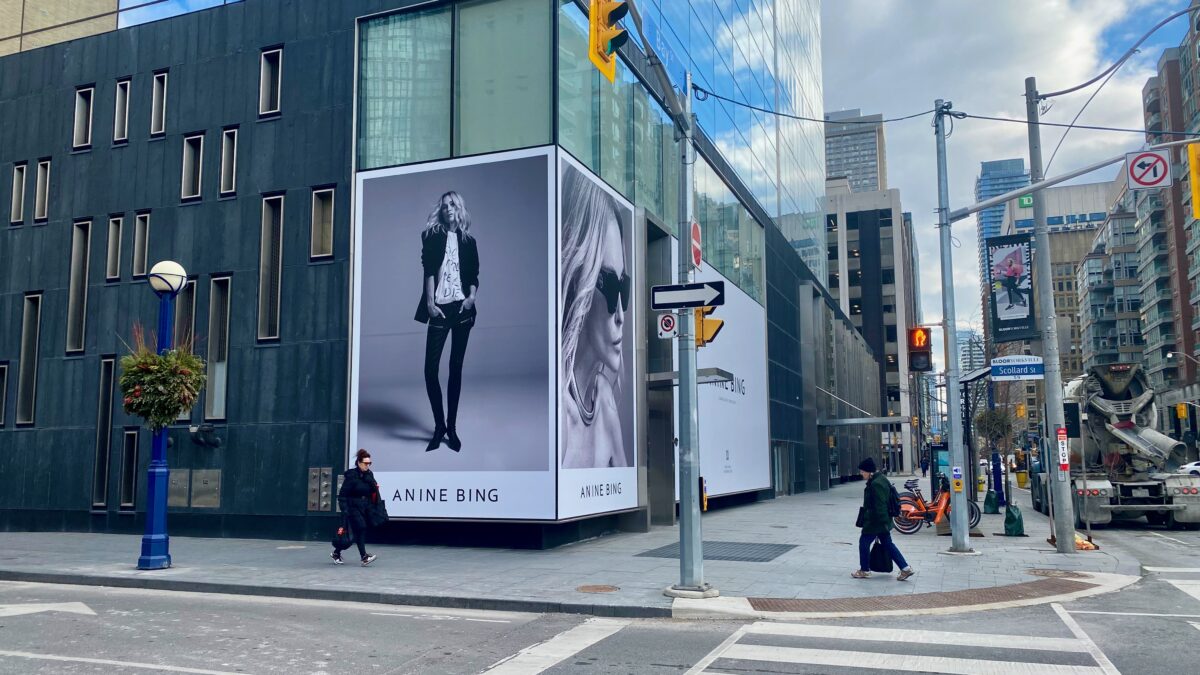
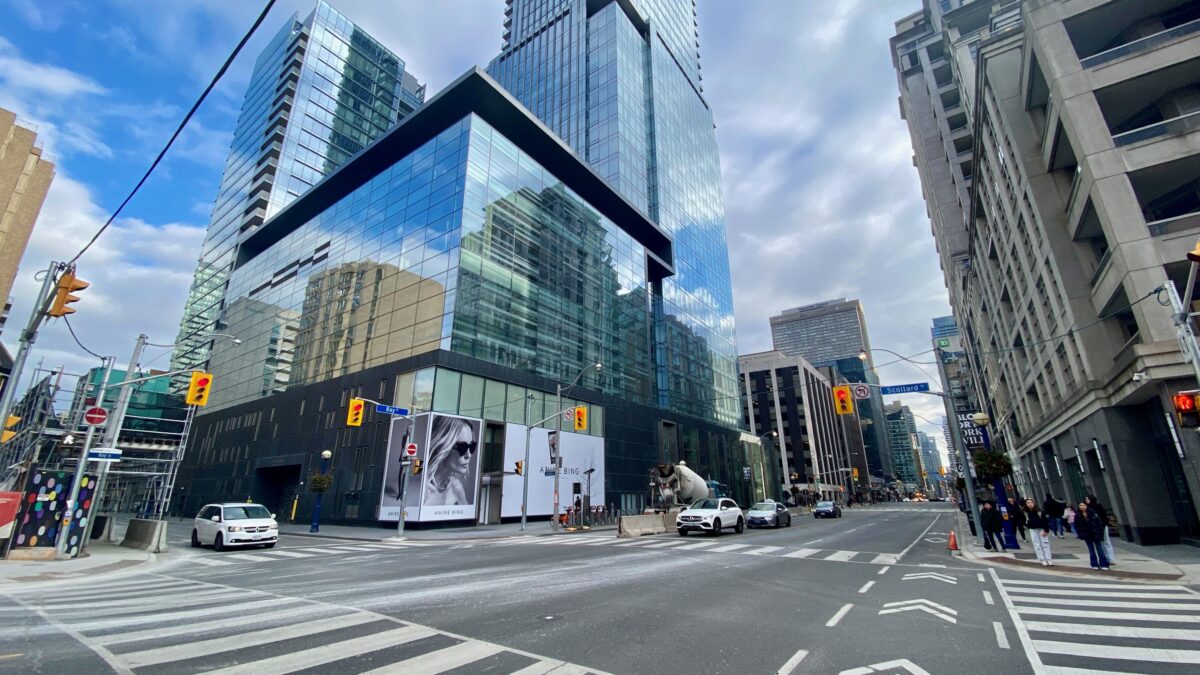
Construction signage for the new Anine Bing at the Four Seasons in Toronto at the corner of Bay and Scollard Streets. Photo: Craig Patterson
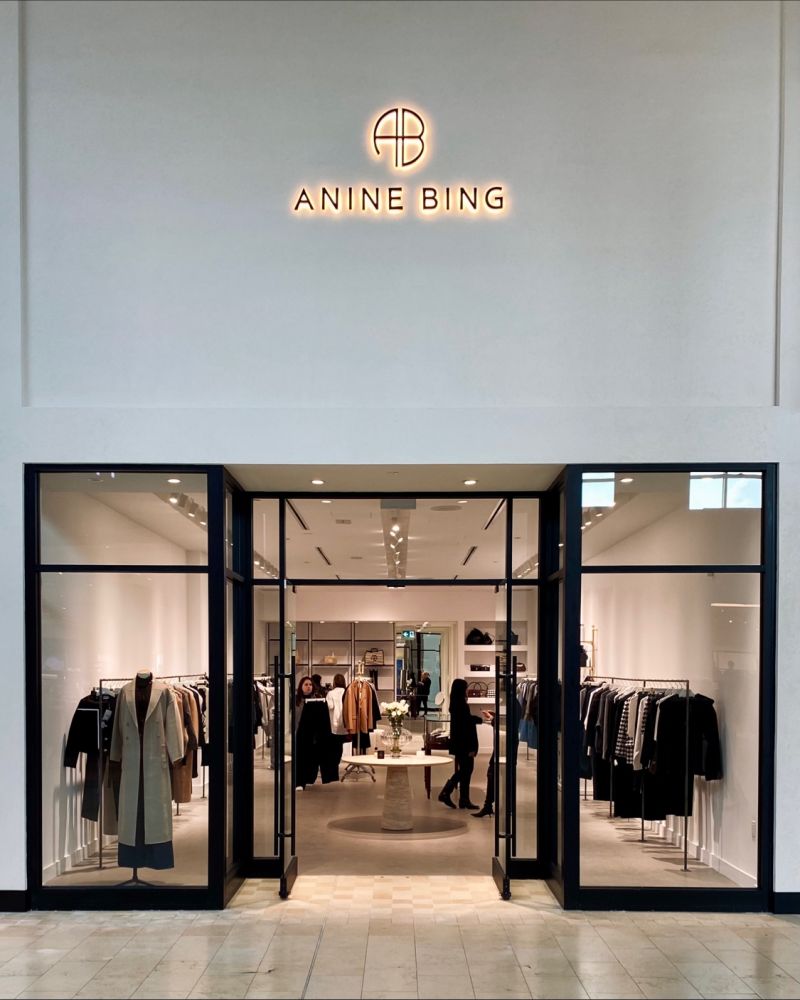
Los Angeles-based women’s contemporary fashion brand Anine Bing is opening its second Canadian storefront in a retail space at the Four Seasons Hotel in Toronto’s Bloor-Yorkville area this spring. It follows the recent opening of Bing’s first Canadian storefront at Toronto’s Yorkdale Shopping Centre.
The new Anine Bing location at the Four Seasons, in a retail space at the southeast corner of Bay and Scollard Streets, was previously occupied by retailer Archives which shut its physical store during the pandemic. The retail space spans 1,193 square feet with a wide frontage at 1275 Bay Street. Mitchell Dearman of MCD Retail represented Anine Bing in the lease deal, with CBRE’s Urban Retail Team, under the direction of Arlin Markowitz and Emily Everett, acting on behalf of the landlord.
Arlin Markowitz said in a statement that the opening of Anine Bing at the Four Seasons Hotel, “marries the two world class brands at the height of fashion and hospitality in a lease that while small in square footage, will have a big impact on the Bloor-Yorkville node”.
Future Anine Bing at 1275 Bay Street in Toronto. Photo: Craig PattersonAnine Bing at Yorkdale (Image: Anine Bing)
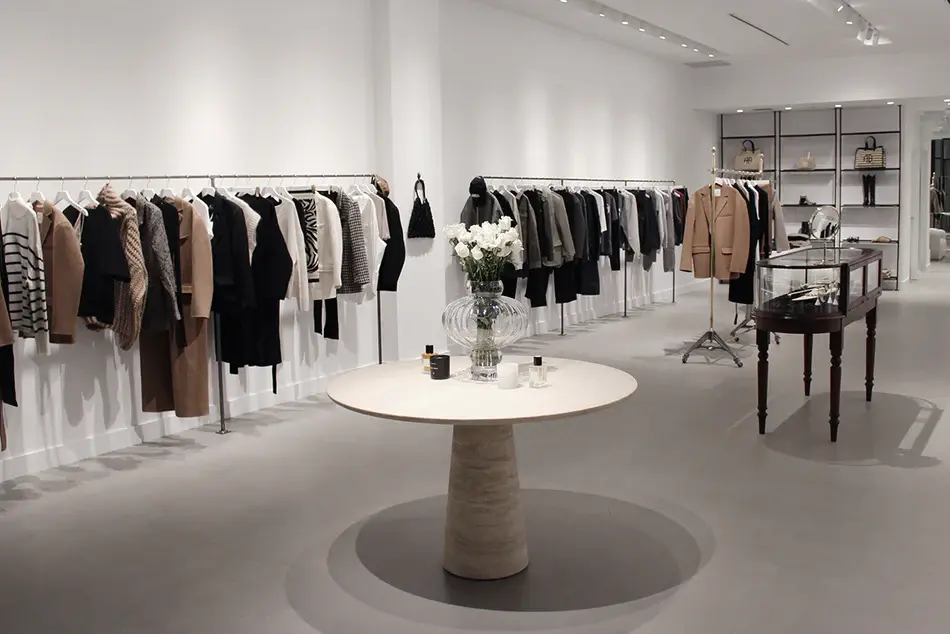
Anine Bing opened its first Canadian store at Toronto’s Yorkdale Shopping Centre in the fall of 2023. The 1,400 square foot location between Longchamp and a new Marc Jacobs store is across from Holt Renfrew, and features a minimalist interior.
The Anine Bing brand was founded by the designer of the same name in 2012, and is known to bring in “elements of Scandinavian simplicity with American energy” to its clothing and other product categories that include jewellery, accessories, bags and footwear. The brand has a following, which means despite fact that the Four Seasons Hotel is a distance from Bloor Street and Yorkville’s main shopping areas, Anine Bing is expected to attract clients and see success in the new Bloor-Yorkville store.
Anine Bing has 15 stores in the United States, including a mix of street front and mall stores. The company also has nine stores internationally in markets including London (3 stores), Paris (2 stores), Berlin, Melbourne (2 stores), and Sydney.
It’s not known yet if Anine Bing will open more stores in Canada — one could guess that Vancouver could be a target at some point, either a location downtown or at Oakridge Park, which will be completed in the spring of 2025.
Yorkdale store. Image: Anine Bing
The upper portion of Bay Street, North of Bloor Street, is seeing some changes that include new retailers and foodservice businesses. Last year, Israel-based Miznon opened its first restaurant location in Canada at 1235 Bay Street, which was followed by Pet Valu in the same building. Rumble Boxing recently opened on the building’s lower level and soon, Carrie’s Pilates will open above it at 62 Cumberland Street.
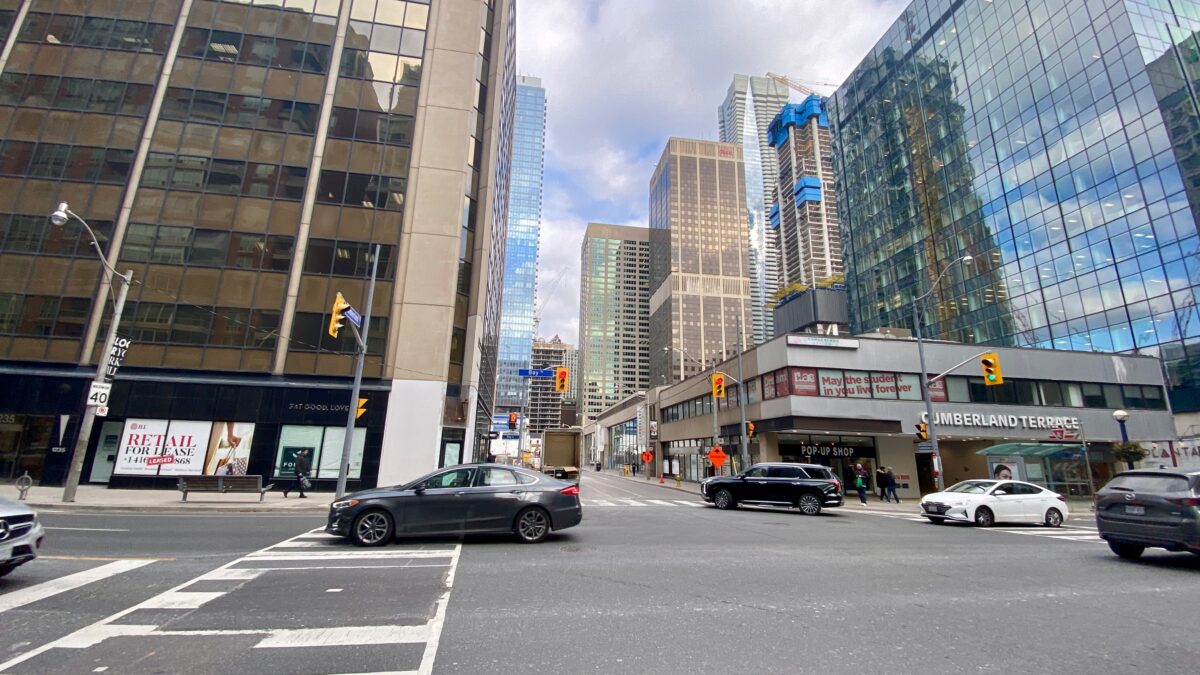
The office tower at 1255 Bay Street will eventually be demolished for redevelopment, with new ground-floor retail spaces being part of the mix. Cumberland Terrace, at the corner of Bay and Cumberland Streets will also eventually be demolished with a multi-tower development planned. Towards Bloor Street, more changes will be happening on the west side of Bay Street including an updated office tower on the corner and an extension of the Village of Yorkville Park that will involve demolishing the 1240 Bay Street office building that also houses various retail businesses.
Looking towards 1255 and 1235 Bay Street from the corner of Yorkville Avenue. Photo: Craig Patterson Looking towards Cumberland Street from Bay Street. Photo: Craig Patterson
Bloor-Yorkville is seeing a retail transformation that includes the opening of flagship locations for luxury brands. One of the most exciting upcoming retail openings will be Saint Laurent, which is building a 10,400 square foot flagship store at 110 Bloor Street West. It’s not yet known when the store will open, and construction appears to be delayed but is progressing. Canada’s first location for French women’s fashion brand Anne Fontaine will also be opening at 110 Bloor this year, joining Alexander Wang which opened in December and soon-to-open foodservice businesses including Paris Baguette and Mandy’s Gourmet Salads.
In terms of retail offerings, Bloor-Yorkville is competing primarily with the Yorkdale Shopping Centre for brands and shoppers willing to part with money on big-ticket items. Over the past decade, Yorkdale has managed to secure the largest single clustering of luxury brands of any place in Canada, and this year it’s adding another 100,000 square feet of luxury retail space to the mall. Bloor-Yorkville has managed to hold its own with new brands opening stores, while also offering a wide range of restaurants, bars, beauty services and other reasons to visit the area. Bloor-Yorkville also has one key brand not at Yorkdale — Hermes, which operates its Canadian flagship at 100 Bloor Street West. It’s next to a Holt Renfrew Men’s store which will be relocating back into Holts’ flagship at 50 Bloor Street West towards the end of this year.
Retail is seeing a growing concern of burnout among store managers due to operational pressures and the need for empathetic leadership. Miriam Feldman, a partner at fishRecruit for digital and retail practices, and Jeff Wahl, retail consultant at The Architect, share insights of retail burnout among managers. Here they dive into the issues, repercussions, and strategies.
Unveiling the signs of manager burnout
Image: Linkedin
Burnout begins with subtle changes in behaviour and performance, as Wahl says: “Typically, dedicated managers start calling in sick more often than they were before … if that starts happening, then leaders need to check in.” This early warning sign, mixed with unexplained decreases in store performance, lack of energy and joy in their work, decreased productivity, not completing tasks on-time, changes in body language, less engaged with customers are all signs of burnout and are from deeper rooted issues within the retail industry.
Jeff Wahl
“We are really only going to be able to see this if regional and district managers have boots on the ground. When you walk into a space, you can kind of tell the level of positive engagement from the leadership just by how everyone is engaging you as a customer,” says Wahl. “We just walked in with a customer lens and everyone’s body language is held back, are on their phones, or are not really as engaging as you expect them to be – that is coming from leadership and is a sign of burnout.”
Wahl and Feldman say it’s important for retailers to recognise these early indicators to take critical steps towards intervention, and a proactive approach in supporting retail managers navigate through the pressures of their role.
One person, multiple jobs
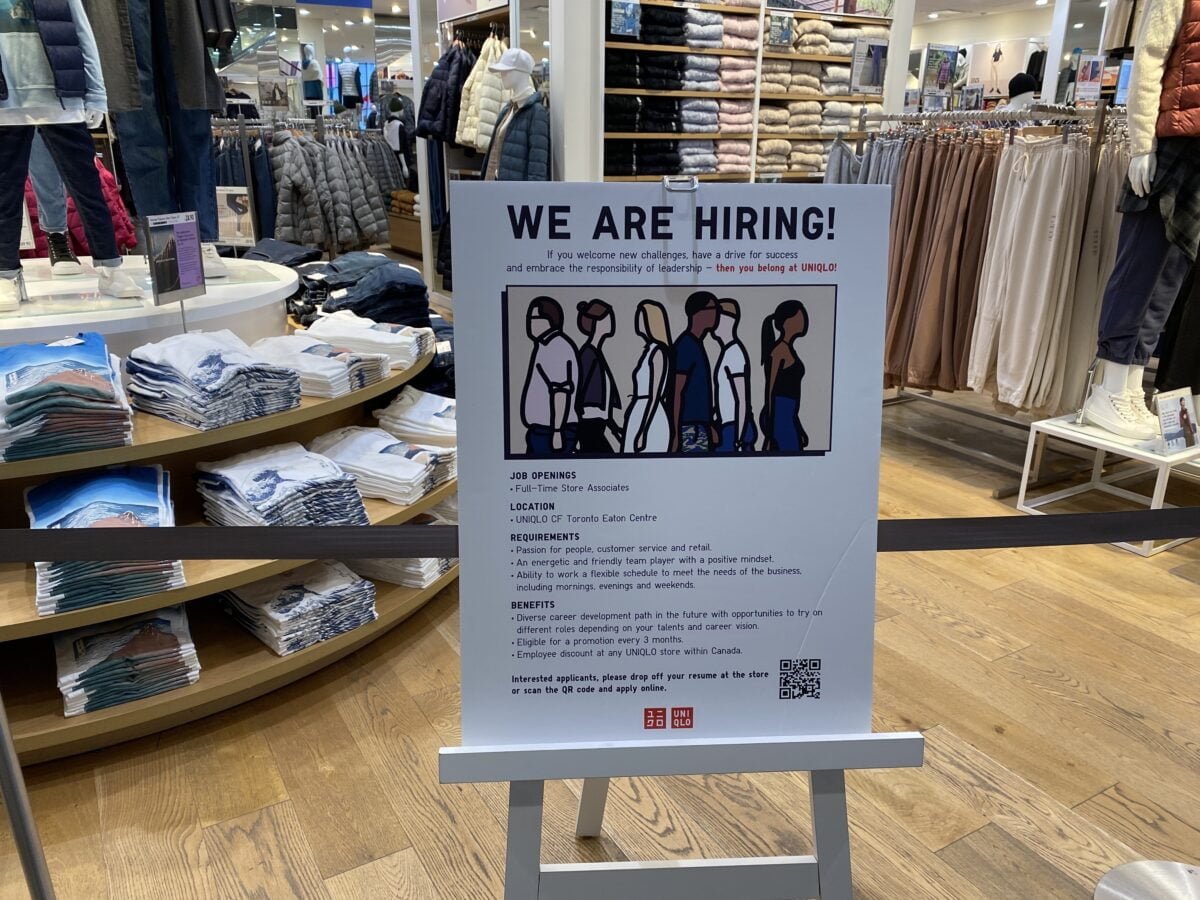
Uniqlo Hiring Sign at CF Toronto Eaton Centre – Photo by Dustin Fuhs
“The store manager is literally doing everything … The manager is the cashier, the receiving person, the person handling customer complaints. If someone is on break then they also have to answer the back door if there is a shipment. The reality is, the store manager does bear the brunt of the work and these big stores that we are accustomed to with these robust teams just don’t exist anymore. It is very hard, and this is even before we start talking about things like violence, theft, loss prevention, and mental health issues of the team – so it is just a tough business, the leader has to wear so many different hats and they are pushed and pulled in so many different directions,” says Feldman.
Miriam Feldman
Feldman says this type of environment is not seen in luxury stores where the retailers have the budget for more staff – but mostly seen in middle class stores such as Old Navy where staff is minimal and budgets are lower.
Middle-class stores usually experience higher foot traffic than luxury stores, leading to a greater volume of transactions and customer interactions, resulting in a more hectic work environment with managers and staff facing pressure to meet sales targets, manage customer service effectively – with fewer resources.
“Lipstick on a pig”
Wahl says there are some things retailers can do such as offering financial rewards such as employee compensation or bonuses.
“I think the hottest potato we can talk about is the financial rewards. I think that saying the answer is ‘if you pay people more it cures it’ is wrong – it is not the answer, just to come in and say ‘we are going to give everyone a 20 percent raise does not all of a sudden make people more dedicated, there needs to be different solutions,” says Wahl.
The problem lies in the nature of retail challenges – ranging from meeting sale targets to managing foot targets. When store performance is low and traffic is lower than expected – the quickest reaction involves cutting labour costs, a strategy Wahl says is “short-sighted.” This approach not only increases pressure on staff, but damages the customer experience.
“You are squeezing labour, but you are still spending millions on marketing, that approach is kind of like lipstick on a pig. If you are driving traffic into that space, but you have squeezed the labour, that experience is not going to be where it needs to be. So guests are going to be driven in there from these marketing initiatives, but their experience is not going to be there and service levels are going to be destroyed. If that is the customer’s first experience with that brand – you may never see them again,” says Wahl.
From Wahl’s experience, he says it requires more dedication and support from the regional and corporate teams to come in and make sure the store is where it needs to be.
Leaving the retail industry altogether
A sign on the door at the Canada Post outlet on Alloy Drive advised customers it was closed due to a staff shortage (Reddit)
Wahl says he has seen quite a bit of people suddenly leave the industry as “they no longer see a future for them.” Wahl says there are a couple of reasons for this, but these people are generally leaving to join another industry, such as an office job, for a balanced lifestyle.
“I see a lot of women doing this because a retail schedule and being a parent is very often not a cohesive marriage. If you are a single parent – forget about it. I was able to navigate having a retail manager schedule and being a parent because I had a partner who was able to pick up a lot of the heavy lifting when I couldn’t be there – now being a single parent, I can’t do that. Anyone who has kids and has to do it on their own, trying to work a retail schedule is almost impossible,” says Wahl.
As daycare is costly, Wahl says this is also a reason why people, primarily women, are having a difficult time having a retail career as “it is a huge out of pocket expense for them and also the amount of time they are not spending with their children that they want to – it is pulling a lot of very talented people, primarily women, out of the retail workforce. Another reason for managers leaving is job hunting to get a quick pay increase.
“It just seems that it is becoming less and less of an attractive career,” says Feldman. “It is really about service, and you need to pay people to deliver good service and I do not see this happening.”
Ripple Effects: From individual burnout to team disengagement
The fallout extends beyond the manager as it affects the entire team’s engagement levels and productivity: “As soon as a manager decides to check out, the rest of the team will have checked out within two to four weeks,” says Wahl.
Manager burnout can decrease team spirit and provides lack of support and motivation. A few weeks later, a retail store might have both a burnout manager and associates, causing a damaging effect to the consumer experience – driving away business and damaging the store’s reputation. By keeping communication open between managers and corporate leaders, retailers hopefully can reduce the amount of burnout and pinpoint when burnout symptoms start so they can get ahead of the problem before it affects the entire store team and starts to lose customers.
“If you have an employee and a team that is very engaged and creates a positive energy, then customers are going to spend more versus if you are not taking the time and not giving a great service to every single customer,” says Feldman.
“Million dollar question” – What can retailers do?
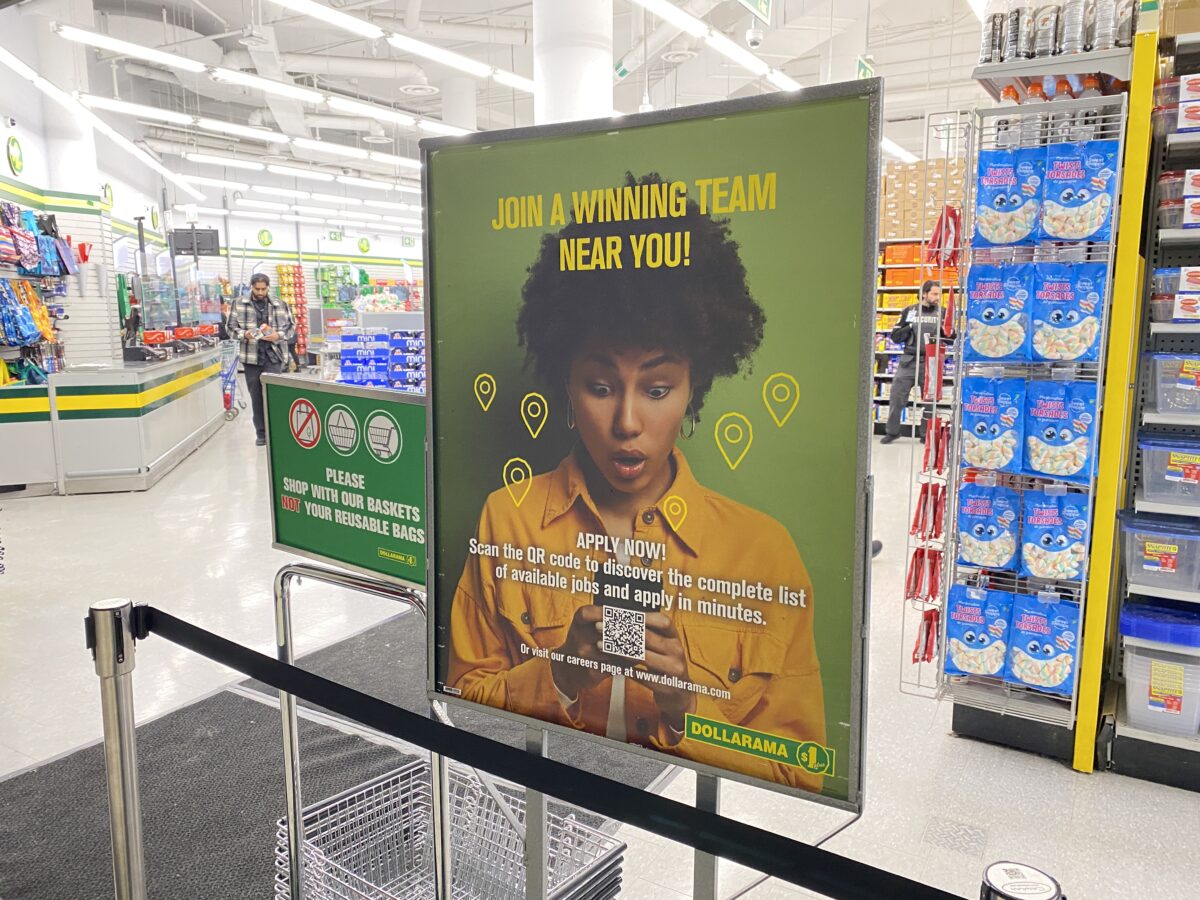
Dollarama Hiring Sign at The Tenor in Toronto (Image: Dustin Fuhs)
Enhance support and empathy: Having support can significantly reduce anxiety levels and prevent feelings of isolation. “When you have a very positive person, very constructive, and a very collaborative relationship with your district or regional manager, that is when anxiety levels go down and can lower the chances of burnout,” says Feldman.
Compensation Strategies: As discussed, simply raising the salary or handing out bonuses is not enough, this strategy could be successful if included in a broader plan that addresses burnout.
Operational Adjustments: Retail managers, as Feldman points out, have to wear multiple hats due to high workloads and under-staffing. Strategies to alleviate these pressures could include optimising work schedules, “adequate coverage to prevent overwork,” and also adjusting expectations. Retailers also need to ensure its cost-saving measures are not damaging staff or service quality.
Invest in employee development: Engaging personal and professional growth can also rescue burnout. This includes offering training, opportunities for advancement, and creating a culture that values learning and improvement – making the workplace more engaging and motivating.
Open Communication: Having open communications in the workplace can make employees feel comfortable sharing concerns without fear of consequences. This can help both managers, district managers, and regional managers understand more about burnout, symptoms, and how to address them.
Work-life balance: Encouraging a healthy balance between work and personal life is essential to preventing burnout.
“If you feel like you are abandoned, or you don’t have that connectivity with corporate – that is when you start to see anxiety levels rise. That is when the feeling of hopelessness starts and the thought of ‘what am I doing here starts. This is a people business, you need to be people focused first. If that relationship dynamic is not present, you are going to see burnout, you are going to see turnover,” says Wahl.
“I think the buzzword that has come out over the last few years, but is so true, is having a leader, whether that is a district manager, a store manager, is having a leader with empathy and who knows how to validate people’s emotions. Empathy is just a crucial skill. Finding a leader that can hustle and have empathy is a bit of a magical formula,” says Feldman.
“Have a robust exit interview”
As for advice for retailers who are seeing managers burning out, Wahl says retailers need to have a “robust in-depth exit interview.”
“A lot of people don’t feel confident to express their concerns with senior leadership and they don’t think it will be taken seriously, or somehow hurt them in some way by being fully honest. So if you don’t already have that infrastructure setup or that culture in place to have open feedback, you may never understand why managers are leaving. So the easiest thing you can do is to have a productive exit interview so you can take that feedback from an outgoing leader and implement change,” says Wahl.
As the retail industry faces the ongoing issues of burnout, they have to make improvements. By choosing to invest in its people – through strategic, empathetic, and proactive measures – retailers ensure a vibrant future. By embracing change, having a supporting environment, and prioritising well-being of managers and employees – the retail industry can navigate the storm of burnout.
“There is so much room for improvement in training and development – starting with proper onboarding, giving your manager the tools and confidence to execute their job with continuous training and development so they can acquire new skills. If they feel invested, it will be a huge help in reducing burnout. But to anyone who is reading this, I don’t want to convey negativity – retail is fantastic and I genuinely enjoy it. If you are someone that is fast paced, dynamic, and likes to connect, it is a fantastic career,” says Wahl.
Retail Insider is streamlining its Canadian retail news from around the web to include a handful of top news stories that can be viewed quickly during the day. Here are the top stories from the past 24 hours.
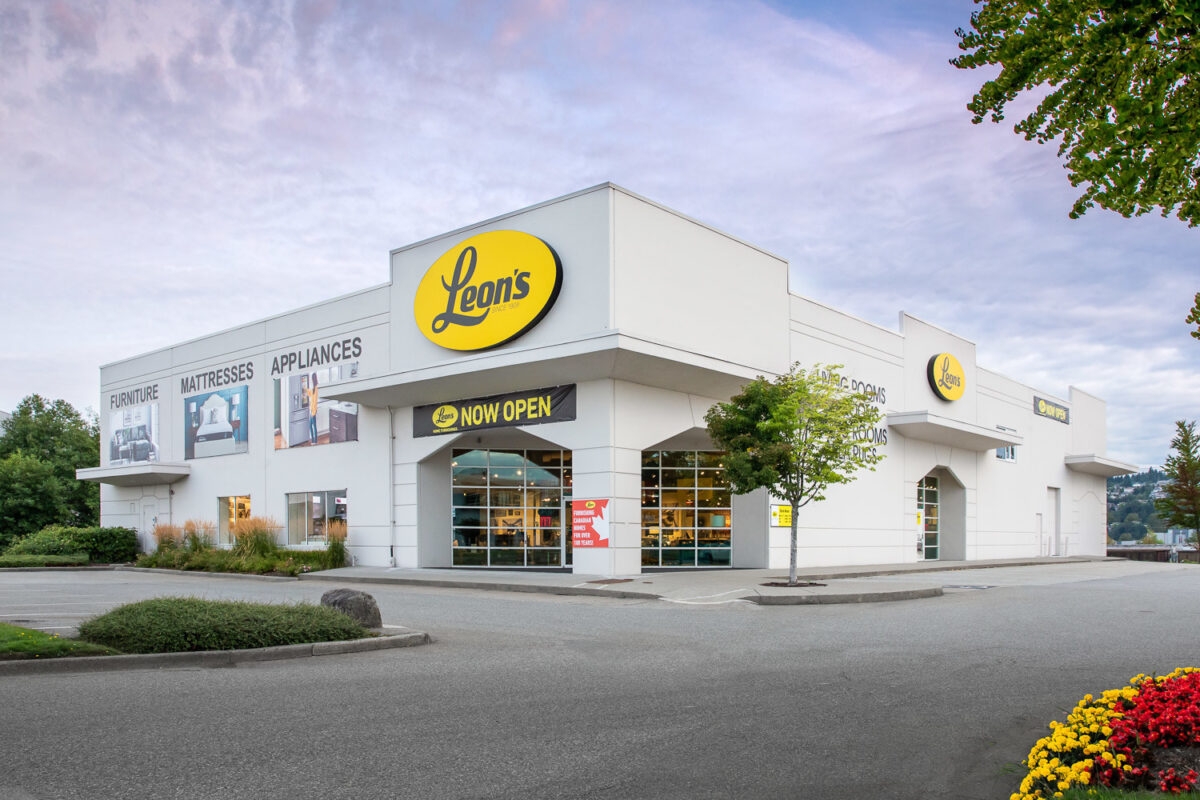
Leon’s Furniture Limited is planning a massive mixed-use development, with about 4,000 residential units, on 40 acres of land it owns in Toronto at the crossroads of Highways 401 and 400.
Phase One of the development will be focused on the building of a new flagship retail store and corporate headquarters on the site. LFL’s home office has been located on this parcel since the company went public on the TSX in 1969.
Subsequent phases will focus on plans for 4,000 homes which will include townhouses, mid and high rise buildings and community spaces. LFL will be partnering with top-tier developers to co-lead the project.
“The Company has a successful track record building retail showrooms and large scale distribution centres across Canada as it continues to move toward a centralized distribution model,” it said.
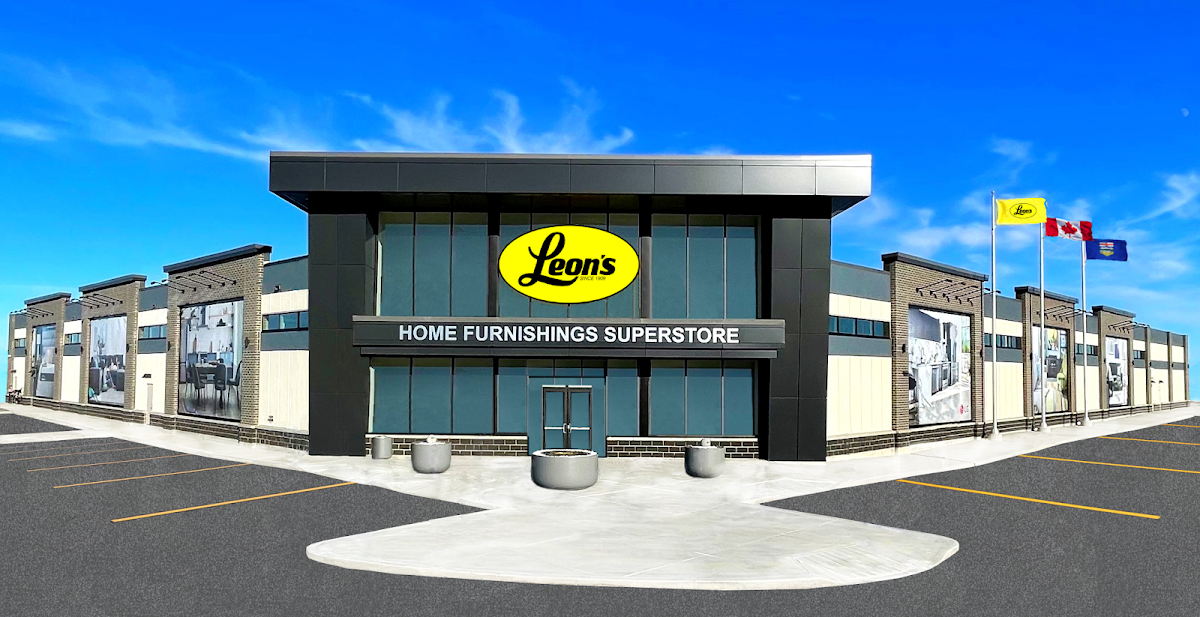
Image: Leon’s Furniture
“By establishing more density as part of a multi-year, multi-phase development, we will be helping to meet the overwhelming demand for additional housing within the city, while generating substantial value for LFL shareholders,” said Michael Walsh, President and CEO of LFL.
Michael Walsh
Leon’s Furniture Limited is the largest retailer of furniture, appliances and electronics in Canada. Retail banners include: Leon’s; The Brick; Brick Outlet; The Brick Mattress Store; and Appliance Canada. The company has 303 retail stores from coast to coast in Canada under various banners.
Walsh said there are 52 Leon’s corporate stores; 35 Leon’s franchise stores; 118 Brick corporate stores; 66 Brick franchise stores; 21 Brick Mattress stores; six Brick Outlet stores; and one Appliance Canada store.
“On the Leon’s side, we’d love to open up more stores in B.C. because we only have six and the challenge is we’ve only opened up one since the first five were opened back in 2017,” said Walsh. “One of the reasons for that is the cost of entry. Land costs and lease costs in B.C. are super, super high and there’s no vacancy.”
LFL recently received approval from the Province of Ontario to change the original Employment Use zoning to Regeneration zoning for the 40 acres, bordered by Highway 401 to the north, Highway 400 to the west/southwest and Jane Street to the east.
The next step in the development will be to complete a secondary plan with the City of Toronto which the Company expects to complete during mid 2025.
Image: LFL Group
Walsh said rezoning this large parcel of land creates an unprecedented and historic opportunity for both Toronto and the company.
“We acquired the Brick in 2013 and I think in order to realize all the synergies with that acquisition it took to about 2016 and in 2017 we actually started the work on this property and pandemic and everything else it took until December 2023 before the approval for the Regeneration area was given,” said Walsh.
“And the reason why there’s houses on this is we wanted to maximize the 40 acres and in order to do that we got to the point where we believe we can build 4.6 million square of gross floor area and how you get to maximize that is by going vertical and vertical is generally high rises, mid rises, low rises. It’s a function of how you maximize the plot of land.”
Leon’s Rocky View Store (Image: Leon’s)Image: The Brick
Walsh said one or two of the company’s banners as well as its new head office will be located on the site.
“We bought this parcel of land back in 1967. The thought on how to build a business was build gigantic warehouses all over the place, build retail and then they will come and they will buy stuff and they’ll take it with them,” said Walsh.
“We started a number of years ago in B.C. and built the first-ever DC that would house both Brick and Leon’s product in one building and would be delivered by one set of driver teams. Then we mimicked that in Halifax with a 168,000-square-foot DC and we’re just about to open this fall a new distribution centre in Edmonton that’s 500,000 square feet which we can do the same thing. So centralized distribution is basically the hub and spoke approach. You would have one large DC servicing a very, very large area, which goes away kind of on how the foundation of the company was built on.”
Future Distribution Centre in Edmonton (Rendering: Qualico)
Currently on the proposed development land is 65,000 square feet of retail and 90,000 square feet of warehouse space – about six acres of the 40 total acres.
Walsh said the first phase of the new development will be the retail and home office followed by the master community planning phase. Walsh said he hopes the master plan phase is complete by mid 2025. The current structures on the land would be “disposed” to make room for the overall development.
In the company’s most recent financial quarterly results, it reported in November that for the third quarter, which ended September 20, 2023, revenue was $661 million compared to $662.2 million in the third quarter 2022. Revenue decreased $1.2 million or 0.2 per cent as compared to the prior year quarter.
Adjusted net income for the quarter totaled $51.7 million, a decrease of 12.7 per cent.
Same store sales in the quarter decreased by 0.6 per cent compared to the prior year’s second quarter.
The gross profit margin for the third quarter 2023 was 44.04 per cent compared to 45.92 per cent for the third quarter of 2022, a decrease of 188 basis points. The decline in the gross profit margin is driven by sales mix due to strong growth in the commercial business, higher promotional activity, along with comparing to an exceptionally strong performance in the third quarter of the prior year, said the company.
The company’s next quarterly financial results come out February 21.
“There’s pretty serious headwinds out there with interest rates. We saw it with one of our competitors that is no longer around. We’re seeing in the increase in bankruptcies both personal and business wise. So I think the headwinds are pretty strong. But I also think that there’s a favourable outlook if rates start to get adjusted downward,” said Walsh. “I think the retail landscape is going to be a challenging environment. When I look at it from the perspective of our company, I’m feeling good because I believe that consumer confidence in buying in a brand that they can trust is going to be something that is very, very important.
“As the market share, or the pie, shrinks, generally what happens because we’ve been through every market condition over the last years, our piece of the pie generally grows so that when the whole pie increases we generally have a little bit more market share.
“The big one for me is consumer confidence. From a retail perspective, a lot of the headwinds I can’t control nor can the company. But what we can control is making sure that your shopping experience is amazing, your omnichannel experience is amazing, that you got good people and you treat them well. That’s really how you’re going to get out of whatever you want to call it we’re in.”
LFL’s Board of Directors approved the company’s resolution to create a Real Estate Investment Trust (REIT) via initial public offering (IPO). The timing is subject to prevailing market conditions and receipt of required regulatory approvals.
“Right now we’re going through a lot of the behind the scenes work which is valuations on the property and all the other legal stuff you need to do with the REIT,” explained Walsh. “It will be a separate publicly-traded company with a separate CEO and separate CFO and a separate board of trustees.
“The timing is really when the REIT market starts to come back and some of that will be predicated on some relief on the interest rates. So it will be really when the market is ready for this type of IPO.
“The beautiful thing of having a REIT is because of the properties we have for example our Mississauga Leon’s location is in an industrial location and it does really well on the retail side but we could one day move that retail into a lease area in our retail node and given that this is an industrial node then the REIT could redevelop that land. That’s how you could connect the REIT to Leon’s Furniture Limited.”
Retail Insider the magazine (Volume Two, Issue Four)
Now well and truly into the thick of the new year, retailers operating in every city and community across the country continue to move forward with a focus on the consumer and a willingness to innovate in order to meet their tastes and desires. However, to do this most accurately and efficiently, organizations need to be aware of the trends and forcing functions that drive consumer behaviour and gain a keen understanding of the reasons they shop with their favourite brands, while also remaining abreast of market shifts and operational challenges. With this in mind, Retail Insider the magazine has developed a special issue of the publication that highlights some of these operational factors and consumer purchasing influences, along with ways by which retailers might capitalize on some of the related opportunities and enhance their businesses.
2024 trends
With help from some of the industry’s brightest and most insightful analysts and observers – including Bruce Winder of Bruce Winder Retail, J.C. Williams’ Lisa Hutcheson, and Radicle Loyalty’s Lia Grimberg – we capture a comprehensive and holistic perspective concerning the current state of the Canadian retail industry and the prompts that are resulting in the most significant impacts for those operating across the country. From the consumers’ continued penchant for convenience and increasingly fragile sense of loyalty, to pervading uncertain financial and economic conditions and the impacts of an ever-digitized world around us, our industry experts share their views on the evolution of the industry.
Bruce WinderLia GrimbergLisa Hutcheson
The role of data
Michelle Grant
In addition, we sit down with Michelle Grant, Director of Strategy and Insights, Retail and Consumer Goods at Salesforce, to talk about some of the most significant technology-inspired influences and the important role that meaningful data plays in helping to identify shifts within consumer behaviour and market conditions. Whether referring to the introduction of artificial intelligence-assisted devices and applications or the explorative potential posed by augmented reality, technology and data are paving the way toward an entirely new retail world that Grant says will shape the future of the retail shopping experience.
New retail entrants
Craig Patterson
Craig Patterson, Retail Insider Founder, provides his annual roundup of the brands that entered Canada over the course of the past 12 months. The comprehensive nature with which the retail guru approaches this article, which has become a resource that’s hotly anticipated by industry professionals and onlookers alike each year, results in as complete a list of new international brands operating in Canada as you’re likely going to find. And, lending his keen insights, Patterson also provides his prognostications concerning the impact of these entrants on the rest of the industry.
A brand of its own
Selwyn Crittendon
When it comes to trends, one brand that has largely walked to its own cantor is IKEA. The Swedish-based home furnishings giant recently named Selwyn Crittendon as the company’s new CEO and Chief Sustainability Officer for Canada. And Retail Insider the magazine had the opportunity to chat with him about the brand’s current focus, its vision of the future, and the ways it continues to enhance its experience, making it even more accessible to more Canadians across the country.
And, as always, we also feature columns provided by the Canadian Federation of Independent Business and George Minakakis, respectively, helping to keep our fingers on the pulse of the Canadian retail scene and eyes on the trends that are set to bear the greatest influence on the industry.
Bill 96 represents a labyrinth of regulations for businesses in Québec that operate under non-French trademarks—especially burdensome and bewildering for retailers with exterior signage.
The Retail Council of Canada has been voicing concerns about the cost of updating signs which it says the government grossly underestimated. The Office of the United States Trade Representative has also voiced its concerns about trademark provisions of Bill 96. This prompted the Bloc Québécois’ leader to write to Secretary of State Antony Blinken that “as the only French jurisdiction in North America, Quebec has a duty to ensure the continued existence of the French language on the continent and the cultural expressions it carries with it.”
Not surprisingly, this prompted federal Liberal Minister Pablo Rodriguez to add that “The Americans, when they go to Mexico, they post (signage) in Spanish, when they go to Argentina, they post in Spanish. When they go around the world they adapt. They are able to adapt. Here, they’ll adapt in French.”
Source: CBC
Far from defending the law, I seek to illuminate the recently released regulations and suggest that there might actually be an opportunity for brand building in this troublesome law.
Anyone watching the CBC’s Isaac Olson’s segment last month about Quebec’s new French-language sign rules would have been scratching their head.
In a nutshell, the new draft regulation, published in Quebec’s Official Gazette on Jan. 10 requires non-French trademarks to be accompanied by French descriptions that are twice the size. This makes for a clever creative opening to Olson’s story on video.
He goes on to show images of store fronts with the same French descriptor plastered all over.
Again, it’s ridiculous.
He rightly refers to the guide recently provided by the government showing how the two options: a descriptor twice as large as the non-French trademark, or a bunch of descriptors which, together, take twice as much space as the non-French trademark.
Source: Gouvernement du Québec
“Basically, stores with non-French names need to add French descriptions that are twice as large as the name itself,” said Olson. “The provincial government produced this document to help businesses understand. It showed two options: a larger description above the store name, or add a bunch of descriptive words that take up twice the space of the name.”
The complexity of compliance is daunting, potentially involving costly investments in new signage and hoping for the best until an OQLF inspector arrives with a ruler in hand.
Yet, let’s not overlook the potential for brand enhancement here.
In his segment, Isaac Olson says there are two options. In fact, there is a third option: adding a slogan to the non-French trademark and its descriptor and ensuring that the space used by French words is twice the size of the non-French trademark.
Consider Winners, for instance.
Previously, Winners adhered to the law by adding the descriptor MODE to its signage. Others, like Burger King, added the words “Les restaurants”.
Now, under the new stipulations, MODE would need to be twice the size of its non-French trademark—a challenging prospect amidst the crowded signage landscape of Quartier DIX30.
However, many Winners locations across English and French Canada feature their slogan on their storefronts—a practice common among retailers. In most cases, it’s unlikely to be enough to comply if the total space used by the descriptor and the slogan isn’t twice the space used by the non-French trademark. But if you add it elsewhere, it should.
Admittedly, my outlook may be considered pollyannaish, but incorporating a business’s value proposition into its storefront can distinguish a brand from its rivals and reinforce customer loyalty—especially when price wars tempt them elsewhere.
A slogan isn’t merely descriptive—it’s the essence of a brand. It can define: “There is a lot more to Canadian Tire than tires,” promise value: “Where the lowest price is the law,” encapsulate an experience: “Glasses in less than an hour,” or even pose a challenge: “Why buy a mattress anywhere else?”
I’m not minimizing the impact of the law; the forced expense of updating and adding signage is substantial. However, like any form of advertising, exterior signage is an investment in brand equity and a lure for foot traffic.
When Home Hardware rolled out its slogan “Here’s How” in 2017, it embraced the French “Savoir. Faire.”—a clever play on words for “know-how” and the verbs know and do. “‘Here’s How’ is more than just a tagline, it is a cultural reflection of our company,” explained Rick McNabb, vice-president of marketing and sales. “It captures everything that makes Home Hardware unique”.
Home Hardware and other retailers should make lemonade from Bill 96’s lemons and proudly display their slogans permanently on their storefronts across Québec.
[This opinion is based on a review of the draft rules provided by the Quebec government and interpretations by various law firms. Retailers (and marketers) looking to navigate these waters should consider turning their legal counsel sessions into collaborative, creative branding opportunities.]
Éric Blais
Éric Blais is President of Headspace Marketing – a Toronto-based marketing-communications consultancy helping clients build their brands in Québec.
Retail Insider is streamlining its Canadian retail news from around the web to include a handful of top news stories that can be viewed quickly during the day. Here are the top stories from the past three days.
Notice of Termination of Lease at 165 King Street East (Image: Dustin Fuhs)
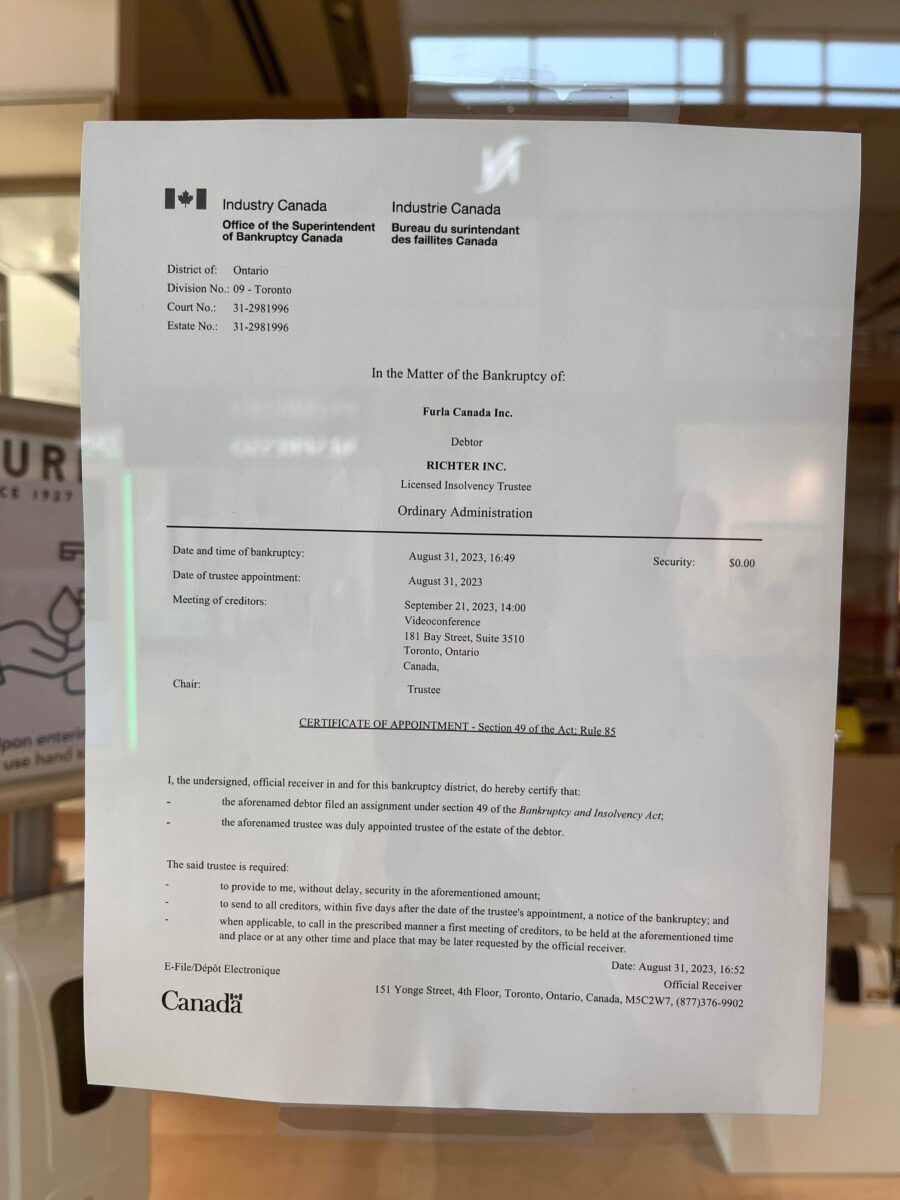
Canadian business and consumer insolvencies are surging these days across the country as people continue to try to cope with rising costs and rising inflation.
Citing data from the Office of the Superintendent of Bankruptcy (OSB), the Canadian Association of Insolvency and Restructuring Professionals (CAIRP) said business insolvencies in Canada surged by 41.4 per cent in 2023 compared to the previous year, the sharpest increase in 36 years of records from the Office.
It said business insolvency filings rose 34.7 per cent in the fourth quarter of 2023 compared to the previous quarter, and more than doubled (51.6 per cent) compared to the same quarter of 2022.
Consumer insolvencies in 2023 rose 23 per cent, the highest rate of increase since 2009, highlighting the increasing financial pressures faced by Canadians. An average of about 337 Canadians filed for insolvency each day in 2023, over 123,000 consumer insolvencies for the year.
Furla Yorkdale (Image: Provided)
In the fourth quarter of 2023, consumer insolvencies increased 4.4 per cent compared to the previous quarter. Consumer insolvency filings grew 22.9 per cent in the fourth quarter of 2023 compared to the same quarter of 2022.
Andre Bolduc
“Businesses have been struggling to cope with a myriad of financial challenges over the past year, including higher input costs, wage costs, and debt servicing costs, exacerbating the rocky footing many have been on ever since the pandemic,” said André Bolduc, Licensed Insolvency Trustee and Chair of the Canadian Association of Insolvency and Restructuring Professionals (CAIRP), the national voice on insolvency matters in Canada.
“I’m not shocked. We knew that consumers have a lot of issues to deal with in terms of rising cost of living, rising interest rates and the debt levels are near record highs. They were there before the pandemic but things just got put on pause for a bit because of the pandemic. And we just took off where we left off. I call it the great pause. Insolvency filings dropped dramatically due to the pandemic. People’s concerns were not finances. It went from the number one spot to probably third or fourth right after health and taking care of their loved ones with the uncertainty of the pandemic.
“What we’ve seen on the consumer side is the gradual return to pre-pandemic levels. We’re not quite there but we’re just on the cusp. The issues we had in February 2020, which were people were talking about the higher cost of living, they were talking about the higher interest rates. It was 1.75 per cent at the time. It had gone up a couple of years before. It had gone up from I think half of a per cent. And consumers were starting to feel the impact of that. Now it’s five per cent and it’s still relatively new.
“So I’m not surprised. People with variable mortgages are starting to see that right away. People with fixed mortgages as they’re renewing their budgets are in for a big shock. For that segment of the population that’s in debt, that’s a big factor. Almost 50 per cent of households are living paycheque to paycheque still. So there’s a lack of savings there.”
Vacated Jardin de Ville
in Toronto (Image: Dustin Fuhs)
The report said 4,810 businesses filed insolvencies in 2023, the highest annual volume in 13 years, a sign companies are struggling with higher debt-carrying and other costs.
Bolduc said debt accumulated by businesses during the pandemic lockdowns, are weighing heavily on many Canadian businesses and, in some cases, making them no longer viable or in need of debt restructuring options.
“Weakened consumer spending is also making it challenging for some businesses to increase their sales and offset the additional debt servicing costs and other financial pressures,” said CAIRP.
“Some businesses may not be able to manage the increases to their monthly bills, especially if they are already finding it difficult to drum up sales. That strain, combined with any additional financial challenges or setbacks this year could force businesses to shutter,” said Bolduc.
“Often, we see business owners close up shop and simply walk away rather than taking formal steps to wind the business down or get restructuring advice.
“There’s always been churn on the business side. Businesses open. Businesses close. There’s a little bit more churn now and if this tells us anything it’s like businesses that are not viable are closing now. But we still have new businesses opening. The numbers are probably going to stay up there for 2024 and they may increase because a lot of small businesses got that (Canada Emergency Business Account) loan and for a lot of small businesses that’s huge. If they weren’t able to pay it off, now they have to pay monthly payments, pay interest. For your small restaurant for example, it might be their whole profit margin.”
Brooks Brothers at 157 Bloor St W (Image: Dustin Fuhs)
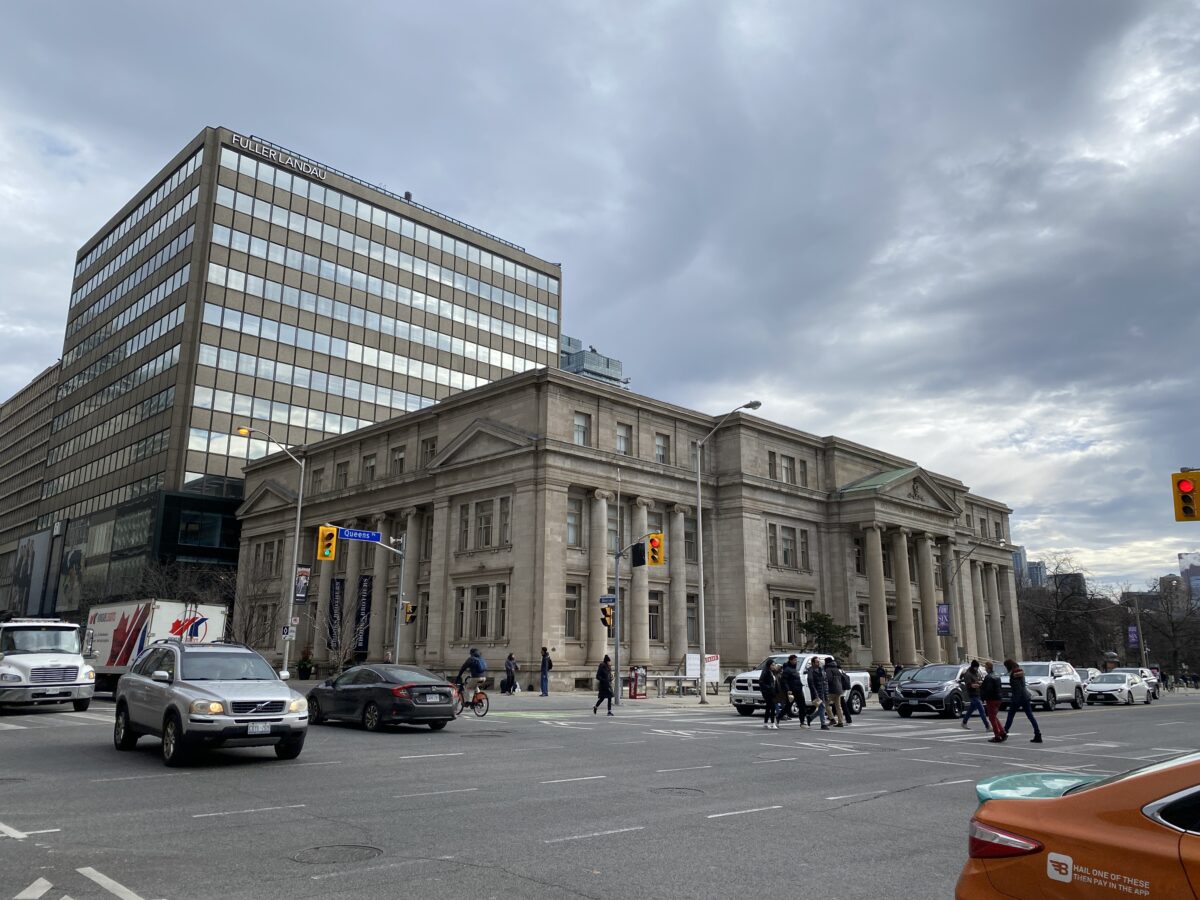
US-based fashion brand Brooks Brothers has relocated its Bloor-Yorkville storefront to the iconic Lillian Massey building at the southeast corner of Bloor Street and Avenue Road. The Bloor Street-facing retail space was occupied by Club Monaco from March of 1996 until its closure in March of 2021.
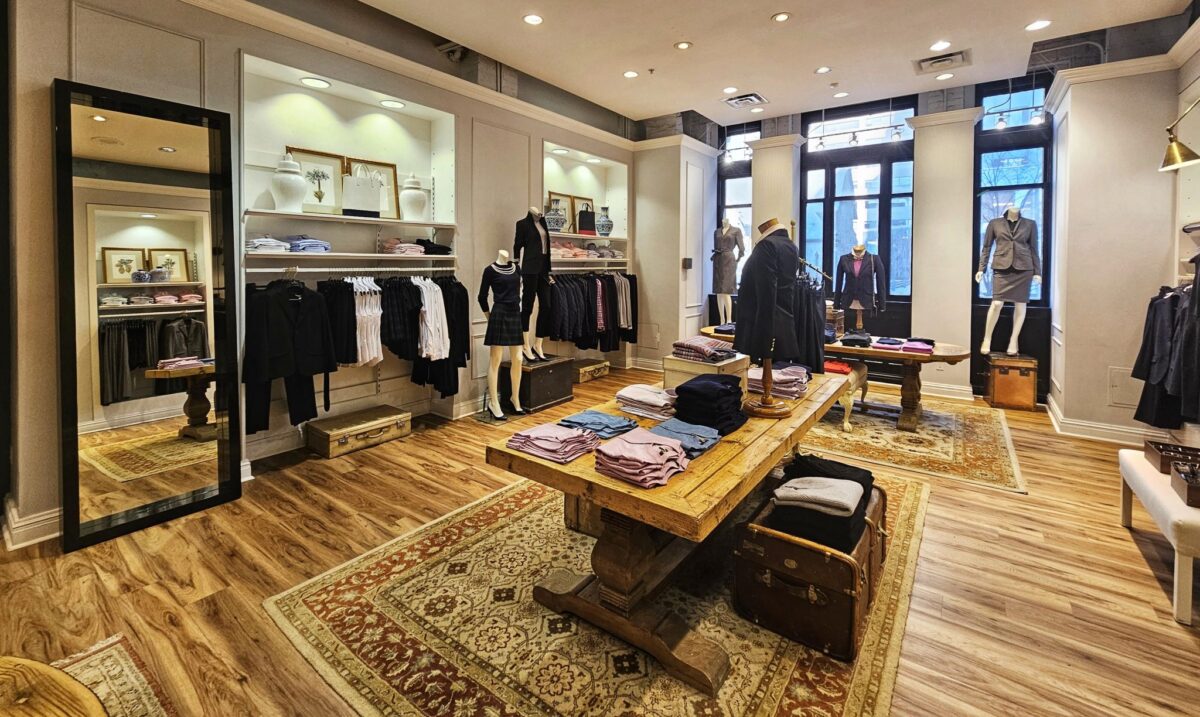
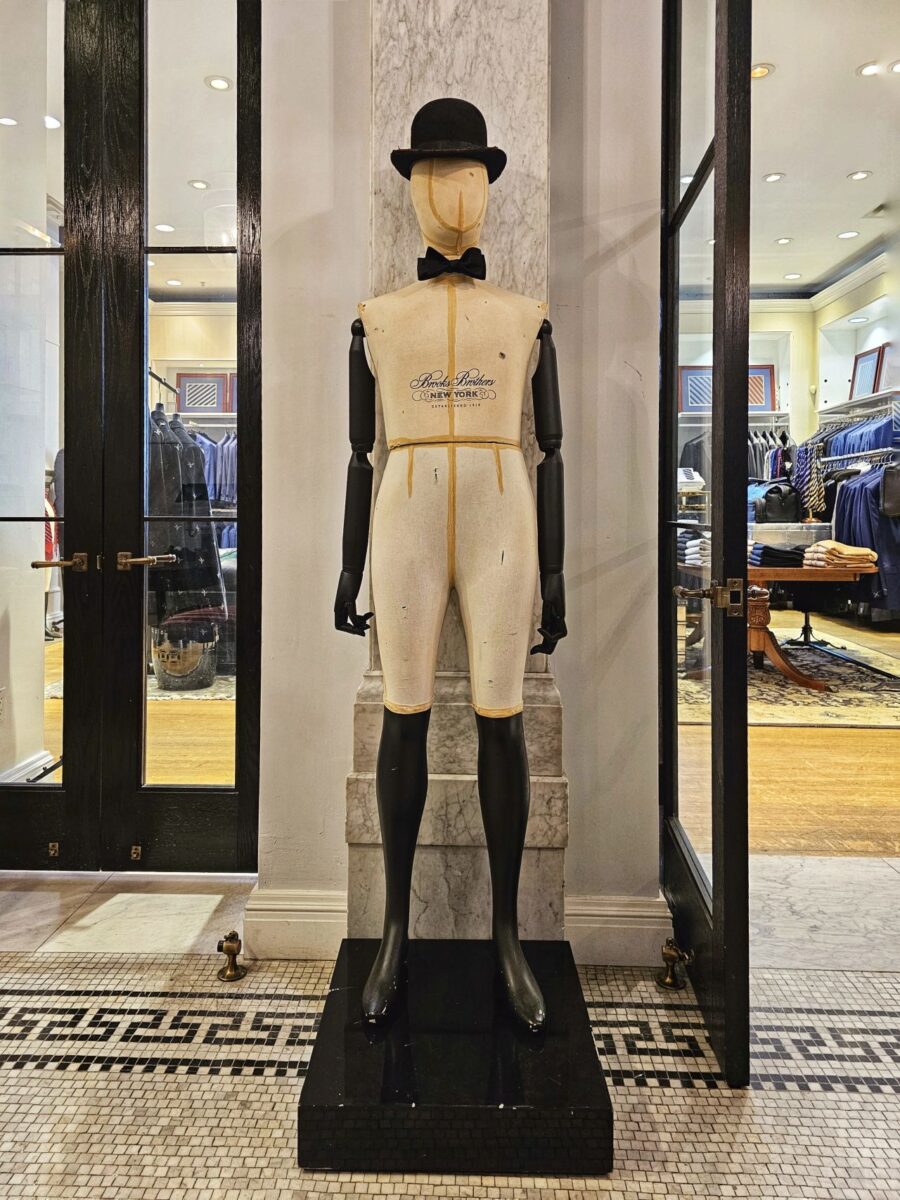
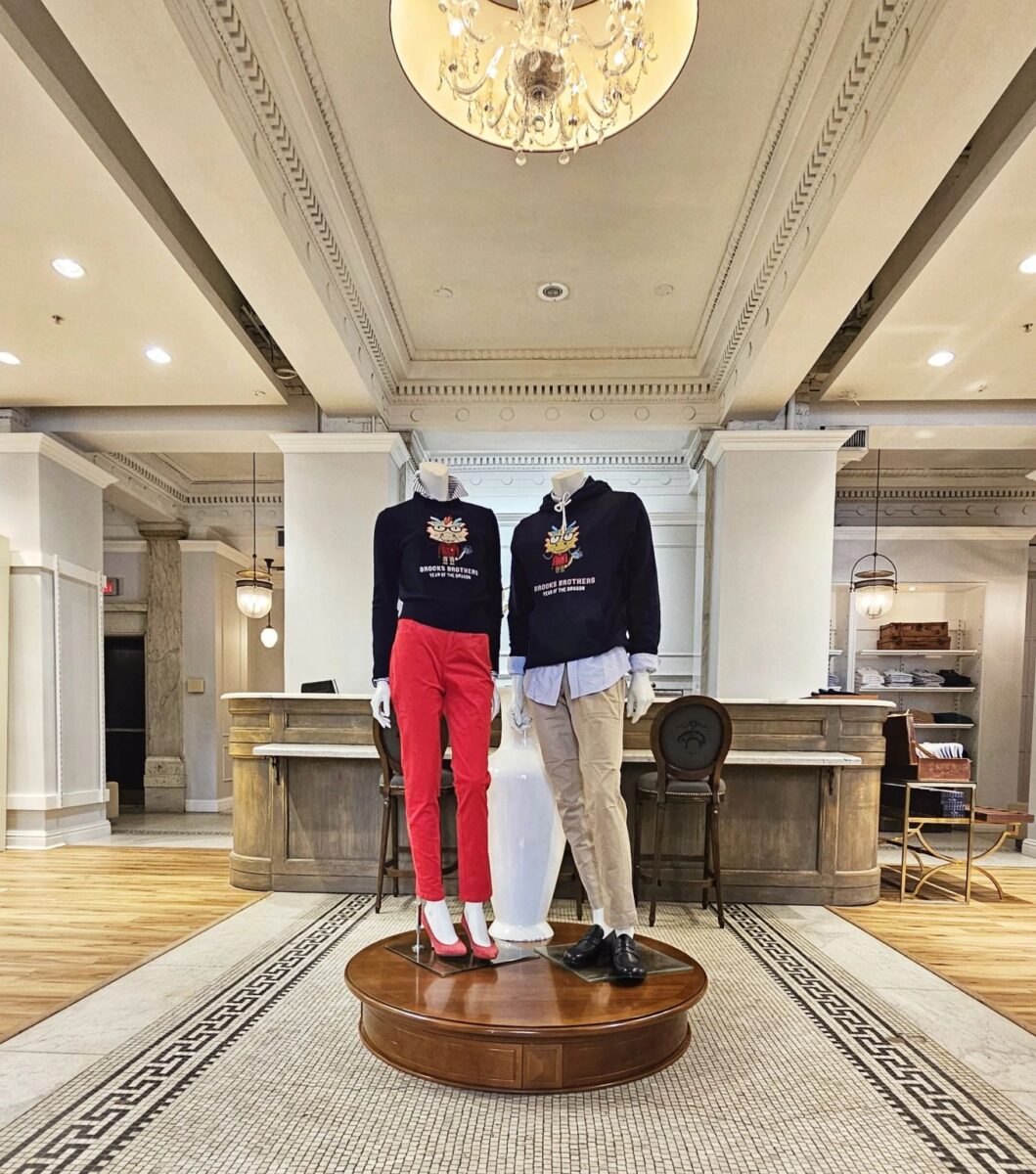
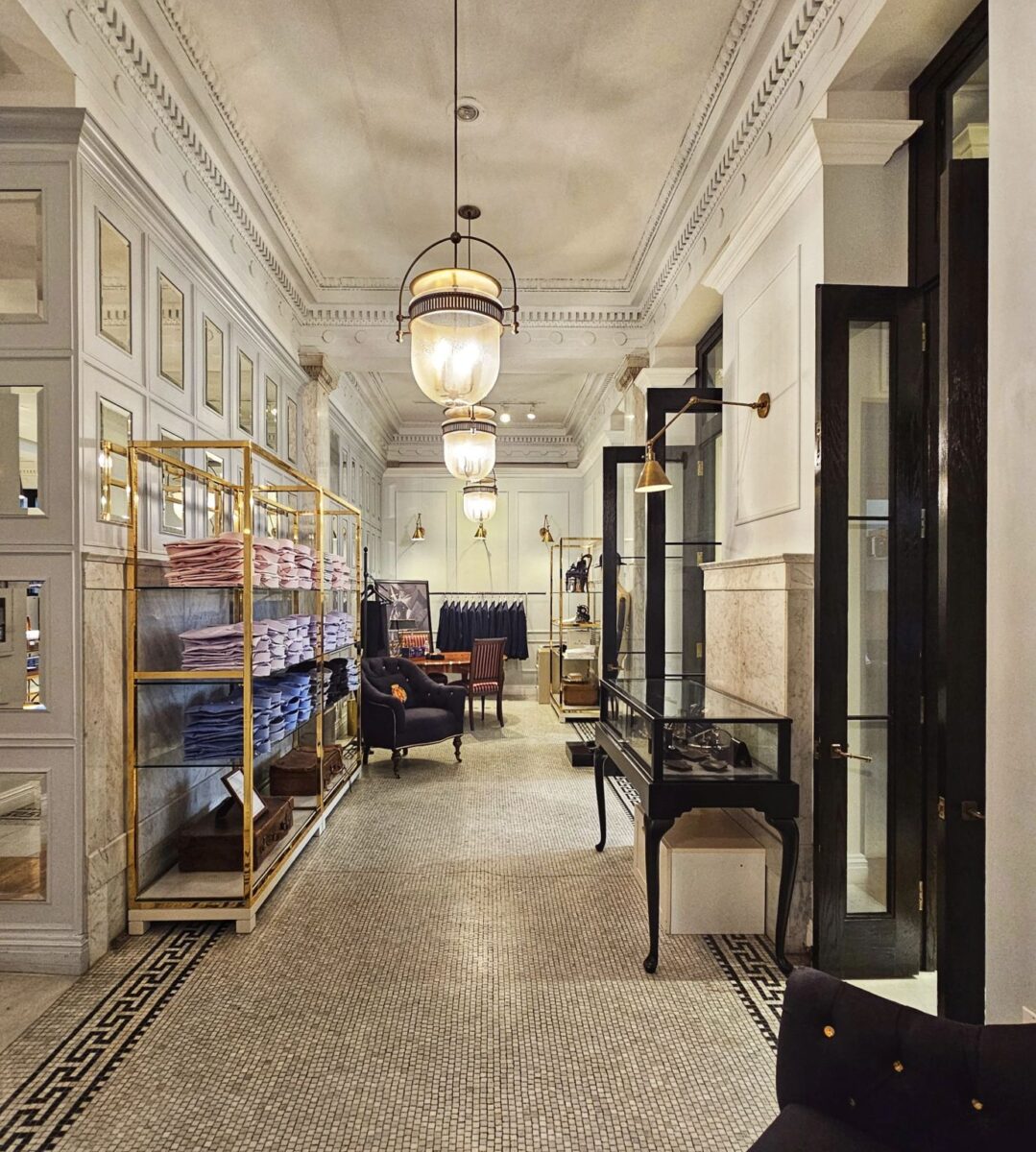
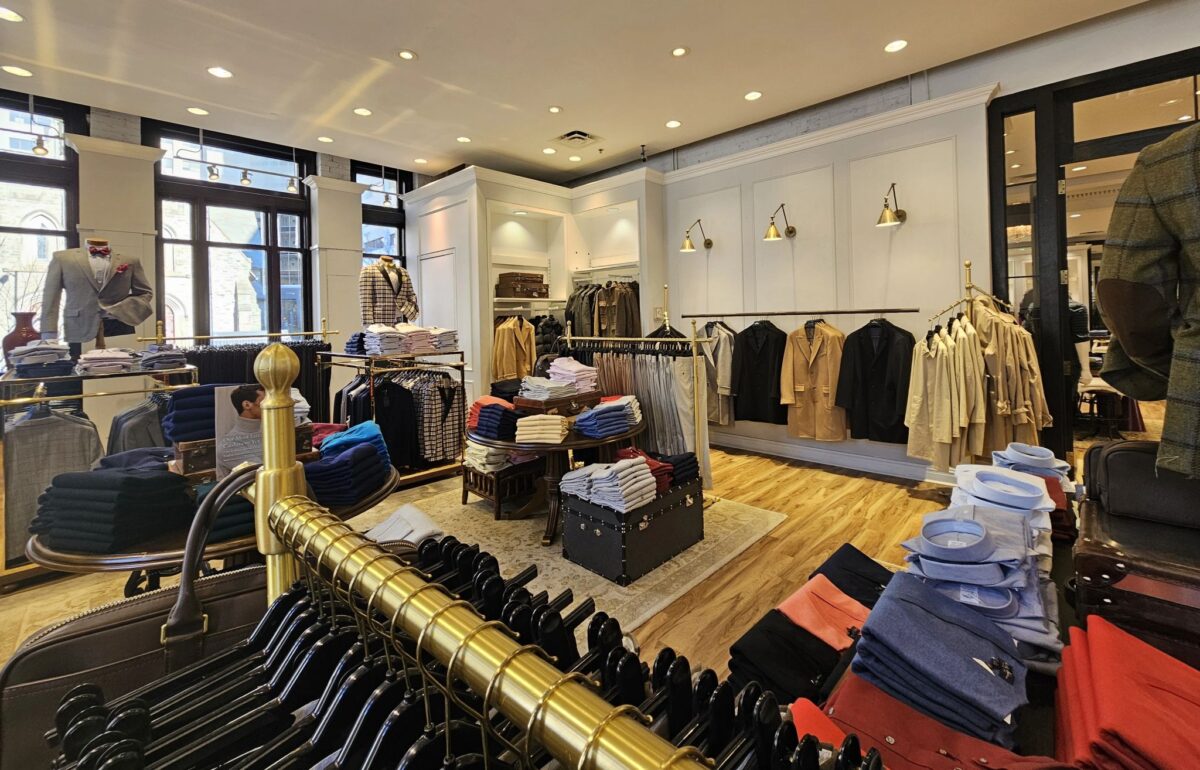
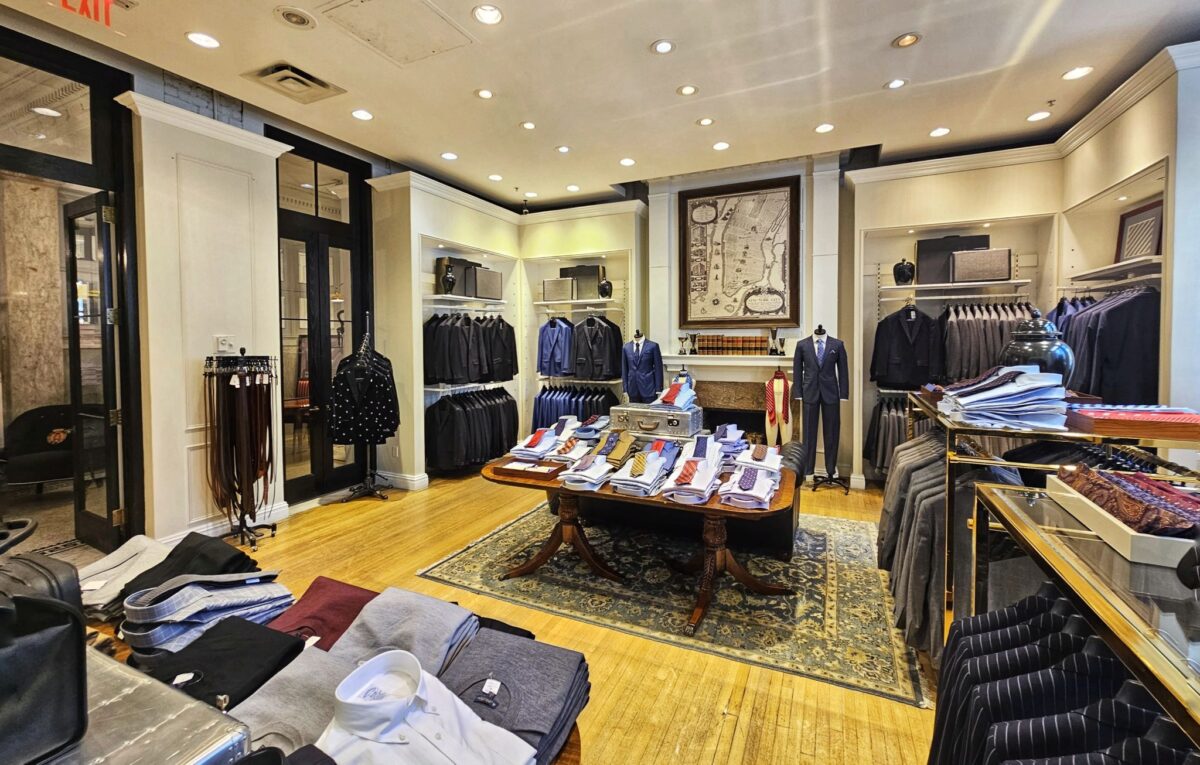
The new Brooks Brothers store features men’s and women’s collections, housed in rooms within the historic building. When one enters the store from the street, a marble cash desk greets visitors. To the right is menswear, including a range of casual styles and formalwear. To the left of the cash desk is womenswear — the lower level of the former Club Monaco is currently not in use.
Brooks Brothers at 157 Bloor St W (Image: Dustin Fuhs)Brooks Brothers at 157 Bloor St W (Image: Jeffery Hall / Brooks Brothers)
Brooks Brothers is hoping to potentially extend its 1 + year lease at the Lillian Massey building. Brooks Brothers opened last week and the store has been busy with customers.
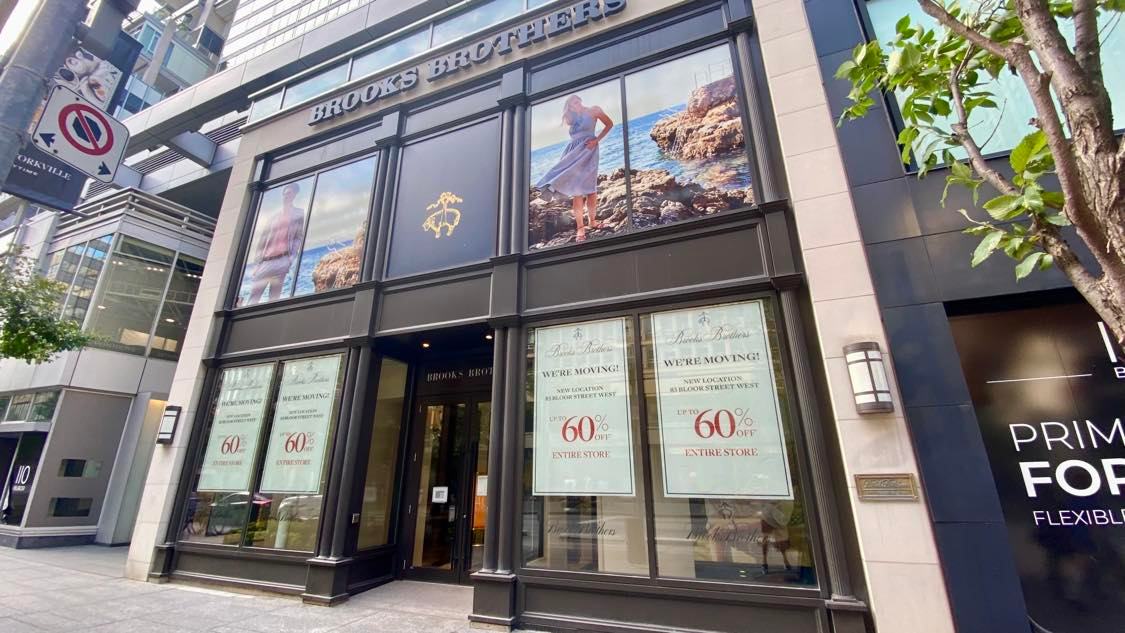
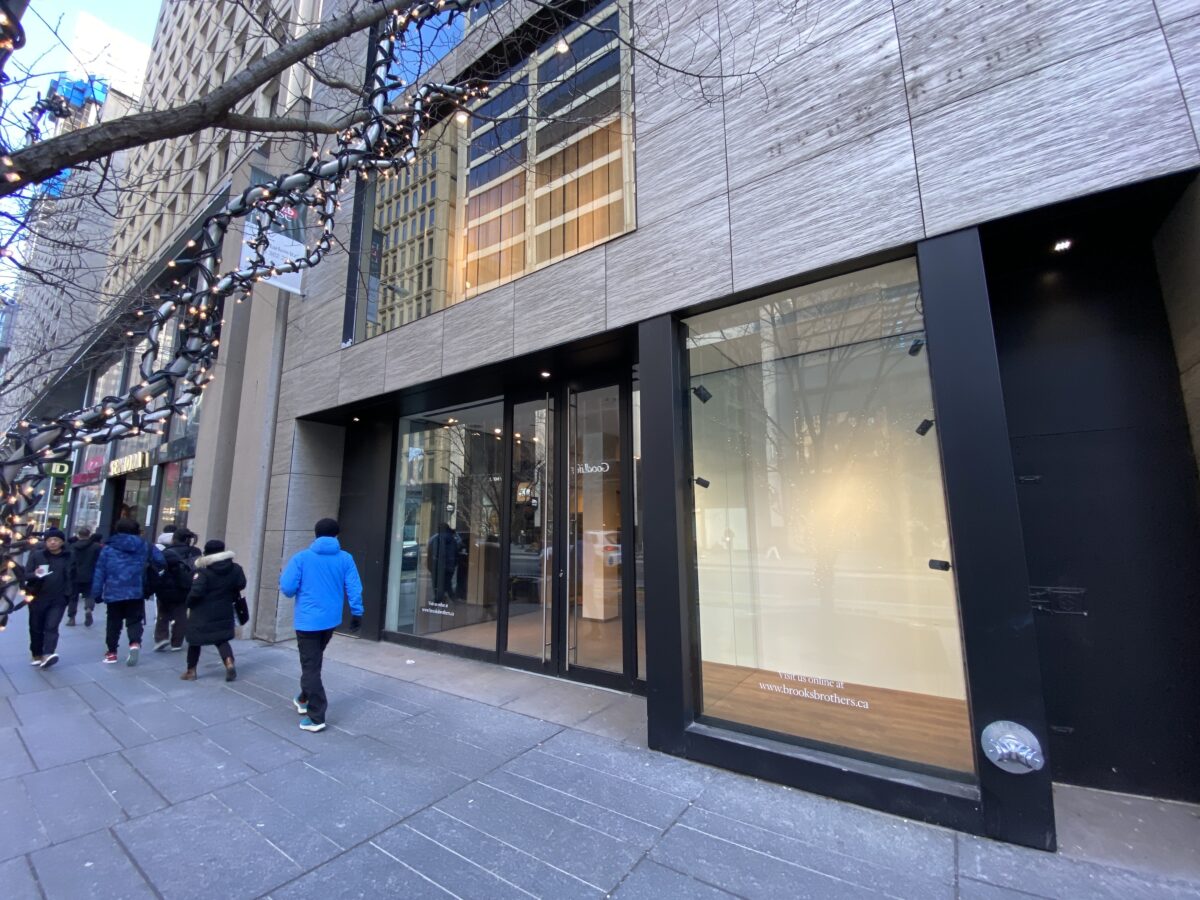
Brooks Brothers relocated from a storefront nearby at 83 Bloor Street West, which opened in the summer of 2022. It closed at the end of January so that the retail building could be converted to a sales centre for a new 70+ condominium tower that will eventually be built on the site.
The first location for Brooks Brothers in the Bloor-Yorkville area opened in the spring of 2014 at 110 Bloor Street West. It shut in the summer of 2022 for the construction of a Saint Laurent flagship store, which is still under scaffolding and construction hoarding.
Former Brooks Brothers store at 110 Bloor St. W. on July 24, 2022. Photo: Craig PattersonFormer Temporary Brooks Brothers Location at 77 Bloor Street West (Image: Dustin Fuhs)
Located at 157 Bloor Street West, the Lillian Massey Building’s Neoclassical architecture includes a prominent facade of Indiana limestone with columns topped with Ionic capitals and was designed by architect George Martell Miller. Construction on the building was completed in 1912 for the University of Toronto’s Household Science program that was created by Lillian Massey Treble, the daughter of wealthy businessman Hart Massey.
The building is owned by the Victoria University in the University of Toronto and it also houses the University’s Department of Classics and Centre for Medieval Studies, as well as the offices of the University of Toronto’s Division of University Advancement.
In years past, renovations to the building saw Club Monaco’s CMX brand move downstairs into a room that once housed a swimming pool. The pool was covered over and merchandise was displayed in the space. Most recently, menswear was housed in the space prior to Club Monaco’s closure about two years ago.
Brooks Brothers at 157 Bloor St W (Image: Jeffery Hall / Brooks Brothers)Brooks Brothers at 157 Bloor St W (Image: Dustin Fuhs)
Brooks Brothers’ Canadian footprint has been downsized as of late. The brand recently closed its store on Alberni Street in downtown Vancouver where it had operated for about 15 years. Brooks Brothers currently operates full-priced stores in Toronto including the new Bloor Street location, a 22,000 square foot store at Royal Bank Plaza in the Financial District (the largest Brooks Brothers store in the world), and a location at the CF Shops at Don Mills. A location in downtown Calgary at The CORE is the only other full-priced store in Canada, besides a small location inside of Vancouver International Airport.
Brooks Brothers also operates a network of six outlet stores including at Toronto Premium Outlets in Halton Hills, Outlet Collection at Niagara in Niagara-on-the-Lake, CrossIron Mills near Calgary, South Edmonton Common in Edmonton, and Tsawwassen Mills in South Delta, near Vancouver.
Additional Photos of Brooks Brothers at 157 Bloor Street West
Brooks Brothers at 157 Bloor St W (Image: Jeffery Hall / Brooks Brothers)Brooks Brothers at 157 Bloor St W (Image: Jeffery Hall / Brooks Brothers)Brooks Brothers at 157 Bloor St W (Image: Jeffery Hall / Brooks Brothers)Brooks Brothers at 157 Bloor St W (Image: Jeffery Hall / Brooks Brothers)Brooks Brothers at 157 Bloor St W (Image: Jeffery Hall / Brooks Brothers)Brooks Brothers at 157 Bloor St W (Image: Jeffery Hall / Brooks Brothers)Brooks Brothers at 157 Bloor St W (Image: Jeffery Hall / Brooks Brothers)Brooks Brothers at 157 Bloor St W (Image: Jeffery Hall / Brooks Brothers)Brooks Brothers at 157 Bloor St W (Image: Jeffery Hall / Brooks Brothers)