GoBolt, a technology company building the largest sustainable supply chain network, announced Wednesday it achieved 562% year-over-year growth in electric vehicle (EV) deliveries through its flagship service, GoBolt Parcel.
In 2024, GoBolt Parcel completed 1.5 million shipments powered by EVs, solidifying its leadership in sustainable logistics across Canada and the U.S, it said in a news release.
Mark Ang, co-founder of GoBolt
“Our 562% YoY growth in EV deliveries is a testament to our commitment to transforming an antiquated logistics industry into a more sustainable, forward-thinking one,” said Mark Ang, CEO of the company. “This milestone reflects the collective efforts of our team and merchant partners to create meaningful environmental change.”
Leading the Charge in Sustainable Logistics
The company said its transformative growth highlights the company’s dedication to reducing emissions and creating a more sustainable delivery network. In 2024, it completed 1.5 million shipments via electric vehicles, avoiding 1,090 tons of CO₂ equivalent (tCO₂e) — the same as eliminating the use of 111,267 gallons of gas. Additionally, GoBolt planted 35,028 trees in partnership with restoration platform veritree, further reinforcing its commitment to sustainability, it said.
Empowering Brands to Reduce Their Carbon Footprint
“Several leading brands with strong sustainability missions have partnered with GoBolt Parcel to significantly reduce their carbon footprint. These brands include North America’s largest athleisure retailer, the fastest-growing global marketplaces, and leading personal care companies. Many of these merchants now complete more than half of their deliveries using electric vehicles, with some achieving EV adoption rates close to 70% of their total shipments with GoBolt, said the company.
Record-Setting Quarterly Growth
“GoBolt’s 562% YoY increase in EV deliveries demonstrates its ability to scale sustainably. Quarterly EV deliveries surged from 156,000 in Q1 to 694,000 in Q4, a remarkable rise of over 345%. This consistent upward trajectory highlights GoBolt’s success in expanding EV-powered operations to meet the rising demand for sustainable delivery solutions,” it added.
After another challenging financial year, a new survey from TD Bank Group has found 49 per cent of Canadians surveyed still foresee inflation/cost of living as their biggest financial challenge this year, although this is down 9 per cent from last year.
Canadians appear to be feeling somewhat more financially optimistic as they head into the new year, with 24 per cent also stating they are feeling more confident about their finances in 2025, up 4 per cent from last year, said TD in a news release on Wednesday.
Emily Ross
“As 2024 came to a close with a fifth consecutive interest rate cut from the Bank of Canada, Canadians have responded with increased optimism,” said Emily Ross, VP, Everyday Advice Journey at TD. “Although the cost of living is still clearly a concern for many Canadians and again tops their list of financial challenges for 2025, the survey results indicate that things are moving in the right direction, and Canadians are starting to feel more positive about achieving their financial goals.”
Spending and saving decisions
The TD survey uncovered Canadians’ financial priorities in 2025, with 56 per cent of those surveyed indicating a main priority was their day-to-day expenses, down 3% from last year, saving and investing for the future (47 per cent) and paying down debt (30 per cent). Interestingly, Millennial Canadians were most likely to indicate paying down debt as a priority (38 per cent), compared to only 21 per cent of Boomers, said the report.
When it came to Canadians’ plans for spending, TD said the survey uncovered additional insights:
Over half (51 per cent) indicated their intention to cut back on spending, overall, down 4% from last year.
Among those not planning to, 42 per cent say it’s because they have already cut back as much as they can.
Gen Z and Millennials (49 per cent each) are more likely to say they have cut back as much as they can, compared to Boomers (35 per cent).
“While some will avoid cutting back further out of necessity, 12 per cent of Canadians surveyed indicated they won’t be cutting back simply because they don’t want to. In contrast, among those who will cut back, 63 per cent plan to do so by making fewer retail purchases of items like clothing and electronics, 56 per cent plan to eat out or order food less often, 52 per cent say they will shop around to save more on purchases, and 41 per cent say they will spend less on entertainment like concerts and sporting events,” it said.
Planning for financial growth
“Although the survey revealed Canadians’ 2025 financial goals, it also found that 61 per cent do not have a financial plan in place for 2025. In addition, 63 per cent of Canadians surveyed do not currently work with a qualified financial professional and 70 per cent don’t use budgeting tools like spreadsheets or mobile apps to help with their finances.”
TD said Canadians’ financial ambitions were also measured in the form of resolutions, and 61 per cent noted they had a financial New Year’s resolution in mind:
18 per cent said it was to build up their savings as much as they are able to;
15 per cent said it was to pay off their credit card or pay down debt;
Toronto-based startup SELLIT9 has announced the successful completion of a $1.45 million (CAD) pre-seed funding round, led by Drive Capital and Northside Ventures. This oversubscribed raise also included support from family offices, strategic investors, and angel investors. The funds will propel the launch of SELLIT9 Pay, an innovative platform aimed at transforming how consumers trade in household items, empowering brands to enhance customer loyalty, and promoting sustainability in e-commerce.
Transforming Household Clutter into Shopping Power
SELLIT9 is built on a simple yet transformative idea: turning household clutter into digital currency. By offering consumers the ability to trade in items such as electronics for instant shopping credits, SELLIT9 Pay creates a seamless shopping experience. The initiative aligns with growing consumer demand for sustainable solutions and addresses the economic pressures that have altered spending habits.
Oswaldo Alvarez, left, with Josh Guttman. Photo supplied
“This funding enables us to bring SELLIT9 Pay to market and fundamentally reshape how people shop,” said Josh Guttman, Co-Founder and CEO of SELLIT9. “Our vision is to unlock the hidden wealth in items sitting idle in homes and use it to create a more flexible, sustainable, and empowering shopping experience.”
Oswaldo Alvarez, Co-Founder and CTO, added, “The technology behind SELLIT9 Pay eliminates barriers for consumers and retailers alike. We’ve built a platform that makes trading in as simple as checking out.”
SELLIT9’s innovative model integrates seamlessly with e-commerce platforms, allowing consumers to trade in old items for credits that can be applied toward new purchases. “We want SELLIT9 Pay to be as integral to e-commerce as ‘buy now, pay later,’” Guttman emphasized. “Imagine every retailer offering trade-ins as a sustainable payment option. That’s our mission.”
Expanding Opportunities for Growth
The pre-seed funding will focus on several key areas of development:
Early 2025 Launch of SELLIT9 Pay: The company plans to debut the platform with key design partners.
Partnership Expansion: SELLIT9 aims to onboard additional retail brands and grow its network of buyer and reseller partners.
Category Expansion: While the initial focus is on electronics, the platform will broaden to include baby products, sports equipment, and other items with high residual value.
Meeting a Growing Demand for Sustainable Shopping
The global second-hand market is expected to exceed $1.12 trillion by 2030. Rising living costs and a growing emphasis on sustainability have reshaped consumer behaviour, with 72% of shoppers adjusting their habits. SELLIT9 Pay taps into these trends, enabling consumers to maximize purchasing power while reducing waste. For retailers, the platform offers a turnkey solution to drive sales and showcase sustainability initiatives.
“This is about more than just transactions,” Guttman explained. “We’re building a circular economy where consumers and retailers can thrive together.”
Alvarez highlighted the consumer experience, saying, “Trading in should feel as exciting as buying. By simplifying the process and integrating it into checkout, we’re transforming the way people shop.”
Consumer Insights Drive SELLIT9’s Vision
SELLIT9’s founders were inspired by their own experiences. “As a family of five, we constantly outgrow or replace items,” Guttman said. “From strollers to laptops, the challenge has always been how to unlock the value of these things without the hassle. SELLIT9 Pay solves that by making it easy and flexible.”
Alvarez, who has lived in five countries over the past decade, added, “Each move was a struggle. Selling items to start fresh was time-consuming and often wasteful. SELLIT9 Pay eliminates these pain points, allowing people to focus on what matters most.”
The success of their first offering, SELLIT9 Cash, provided validation for their concept. “We processed over 700 devices and garnered nearly 140 five-star reviews,” Alvarez noted. “The feedback reinforced that people aren’t just looking for cash—they want to fund meaningful purchases.”
A Simple, Seamless Process
SELLIT9 offers multiple collection options, making it easy for consumers to trade in items:
Pickup Services: In select cities, customers can arrange for an Uber-style pickup.
Drop-Off Locations: Dedicated centres across Toronto, Winnipeg, Montreal, and London, Ontario, allow users to drop off items for immediate payment.
Prepaid Shipping Labels: For those outside pickup zones, prepaid labels make shipping items as simple as returning an online purchase.
“We’ve designed SELLIT9 Pay to integrate with retailers’ existing systems while providing a seamless experience for customers,” Guttman emphasized.
Launching in Canada and Looking Ahead
While the initial rollout will focus on Canada, the company has ambitious plans for international expansion. “We’re committed to starting here, but the potential is global,” Guttman said. “With sustainability and affordability as priorities, SELLIT9 Pay can revolutionize e-commerce worldwide.”
Alvarez expanded on their vision: “Our goal is to transform the experience of trading in items. Selling old items has always been a hassle, but we want to make it just as exciting as buying something new. By combining both transactions into one seamless process, we’re eliminating barriers and creating something truly revolutionary.”
A New Era for E-Commerce and Sustainability
SELLIT9 is more than a tech startup—it’s a movement toward more conscious, efficient shopping. By enabling consumers to unlock the hidden value in their homes, the platform supports both financial and environmental well-being.
“Our goal is to make trade-ins the norm,” Guttman concluded. “Whether it’s a new laptop or a flight for your family, SELLIT9 Pay empowers you to make it happen in a sustainable way.”
Redberry Restaurants will open the first downtown Toronto Jersey Mike’s Subs location in the Union Market area of Union Station on Wed., Jan. 22, 2025. (CNW Group/Redberry Restaurants)
Redberry Restaurants will open the first downtown Toronto Jersey Mike’s Subs in the Union Market area of Union Station on Wed., Jan. 22, giving Toronto’s business district, commuters and visitors the chance to enjoy the authentic fresh sliced/fresh grilled sub sandwiches offered by the iconic brand, the company reported on Wednesday.
Ken Otto
“We have arrived at the heart of Canadian commerce in Toronto’s downtown business district, and we are just getting started,” said Ken Otto, CEO, Redberry. “We can’t wait to offer effortless access to our ‘sub above’ experience from the venerable halls of Union Station to countless Toronto commuters, shoppers and tourists.”
“The downtown opening is part of Redberry’s long-term plan to open 300 Jersey Mike’s locations in the next 10 years. It is the fifth Jersey Mike’s Redberry that has opened since August 2024 including Markham, North York, Brantford and Guelph. A Pickering location is coming early this year. These six locations will employ nearly 180 crew members. Redberry also owns two existing and recently remodeled Jersey Mike’s locations in Kitchener and London,” said the company in a news release.
A 25% U.S. tariff on Canadian products, followed by potential Canadian retaliatory tariffs, would lead two-thirds (65%) of small businesses to increase prices for consumers to offset tariff impacts, warns the Canadian Federation of Independent Business (CFIB).
Additionally, 69% of small business owners said tariffs would lead to higher costs of doing business, it said.
Corinne Pohlmann
“A trade war would be disastrous for both Canadian small businesses and consumers. We need to ensure that as governments face the tariff threat with their American counterparts, they must also stay focused on keeping Canadian businesses competitive at home,” said Corinne Pohlmann, Executive Vice-President of Advocacy. “The solution is a no-brainer. This is an SOS call to all governments: reduce red tape, eliminate internal trade barriers, and ease the tax burden on small businesses.
“It’s ridiculous that it’s still easier for Canadian small firms to do business overseas or across the border than within their own country. Now is the time for governments to step up and support Canada’s small businesses so they can be more productive and competitive in the face of tariff threats.”
CFIB is Canada’s largest association of small and medium-sized businesses with 100,000 members across every industry and region.
The CFIB said new data found that a strong majority (82%) of businesses would be impacted by tariffs in some way. The U.S. is Canada’s largest trading partner, with over half (51%) of small businesses directly involved in either importing from or exporting to the U.S., and this does not include thousands more that rely on suppliers or customers that are trading with the U.S. Overall, businesses expect to face limited inventory or product availability and a need to find alternative markets or suppliers if tariffs are imposed.
CFIB said it sent a letter to all premiers earlier this week, expressing concerns over the tariff threat and providing recommendations.
“To address the impact of a potential tariff on Canadian goods, a strong majority of business owners (62%) agree that Canadian governments must reduce the tax burden, with an equal percentage supporting the strengthening of border security measures to address U.S. concerns. Governments must also take bold action on interprovincial trade,” it said.
Retail Insider is streamlining its Canadian retail news from around the web to include a handful of top news stories that can be viewed quickly during the day. Here are the top stories from the past 24 hours.
Peace Collective x Toronto Tempo merchandise launch, photo: Amanda Lee Coffey
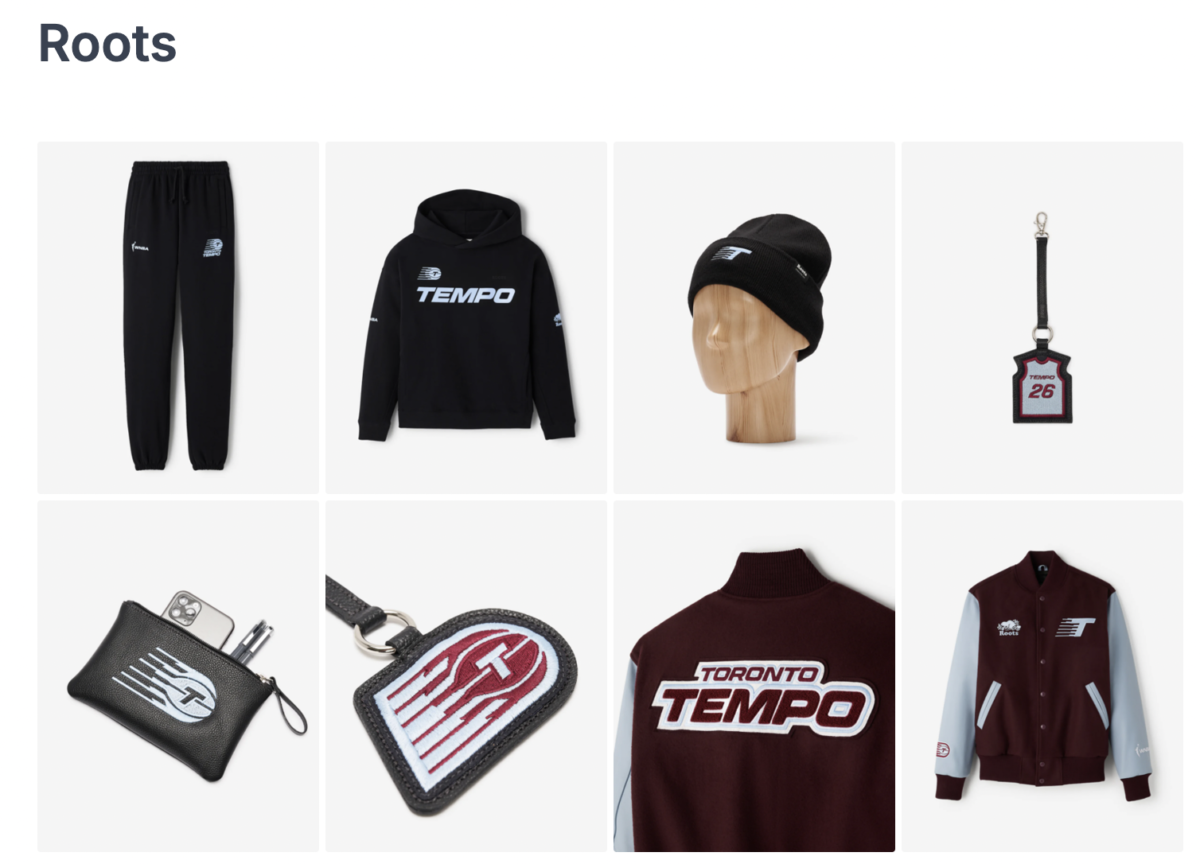
The Toronto Tempo, Canada’s first Women’s National Basketball Association (WNBA) team, has officially launched its inaugural merchandise collection, bringing a fresh wave of excitement to Canadian sports and retail. Featuring a wide range of apparel and accessories, the collection is now available online at shop.torontotempo.com and through select retailers in Toronto.
The merchandise launch signals the team’s entry into the sports scene and also highlights its commitment to local collaboration and community engagement. From partnerships with iconic Toronto-based retailers like Roots and Peace Collective to collaborations with female-founded businesses, the Tempo is setting a new standard for sports franchises in Canada.
A Collaborative Celebration of Toronto’s Retail Culture
The merchandise collection embraces the Tempo’s distinct branding, with items featuring the team’s vibrant Hydrogen Blue and Bordeaux colours, along with newly unveiled logos and wordmarks. Highlights include hoodies, hats, jackets, leather goods, candles, and baby clothing. Notably, many items were produced in partnership with Canadian companies, ensuring a local touch that resonates with fans.
Roots, known for its heritage leather goods and athleisure apparel, brings its signature craftsmanship to the collection. Peace Collective, a Toronto-based brand celebrated for its community-focused designs, lends its urban aesthetic to the lineup. Both brands have deep connections to the city’s sports culture and represent a seamless integration of Toronto’s identity into the Tempo’s offerings.
Whitney Bell, Chief Marketing Officer of Toronto Tempo
Whitney Bell, Chief Marketing Officer of Toronto Tempo, expressed her excitement for the launch. “‘When can I get my hands on merch?’ is, without a doubt, the most-asked question we’ve had since we announced the launch of this team,” she said in a statement. “We’re thrilled to finally give our community the chance to wear their support for the Tempo proudly.”
Empowering Female Entrepreneurs
In a powerful nod to gender equality and innovation, the Tempo has partnered with several female-founded brands, including Round21, Playa Society, The Give & Grow, and Scents by Fay. These collaborations go beyond traditional merchandise, offering lifestyle accessories and home fragrances that align with the Tempo’s brand values.
The partnerships reflect the team’s dedication to uplifting women in business, a mission that aligns with the broader goals of the WNBA.
Accessible Merchandise for All Fans
The Tempo’s retail strategy ensures widespread availability of its merchandise. Fans can shop online or visit local retailers, including Makeway, Real Sports, and Sport Chek. Makeway, a store focused on women-led brands, aligns with the Tempo’s ethos.
The merchandise, produced by licensees such as Fanatics, Nike, New Era, and Peace Collective, caters to a variety of tastes and price points. Notably, Fanatics, the team’s official omnichannel retail partner, will oversee both e-commerce and in-venue sales, ensuring seamless access for fans across Canada.
Future Plans for Merchandise
While the current collection is diverse, it’s only the beginning. Additional gear and licensing partnerships will roll out throughout 2025. The Tempo’s official team jersey, a highly anticipated item, will debut closer to the team’s inaugural tip-off at Toronto’s Coca-Cola Coliseum in 2026.
“This is just the beginning,” said Bell. “We can’t wait to hear from fans; what are your favourite pieces? What’s missing? What should we make next?”
Bridging Sports and Community
The Tempo’s approach to merchandise transcends retail, creating a meaningful connection between the team and its community. The decision to collaborate with local brands and focus on inclusivity underscores the team’s commitment to empowering women, fostering local pride, and embracing Toronto’s dynamic retail landscape.
For Toronto’s retail sector, the Tempo represents a unique opportunity. By integrating professional sports with local partnerships, the franchise is creating a blueprint for future sports-related retail initiatives in Canada.
Where to Buy
Fans can purchase the collection at shop.torontotempo.com or through local retail partners including Makeway, Sport Chek, and Real Sports.
About Toronto Tempo The Toronto Tempo was announced as Canada’s first WNBA team in May 2024. Owned by Kilmer Sports Ventures, the franchise will play its first season in 2026 at Coca-Cola Coliseum. For more information, including season ticket waitlist registration, visit tempo.wnba.com.
Former Sears Canada store at CF Fairview Mall in Toronto, January 2018. Photo: Dustin Fuhs
January 14, 2025, marks seven years since Sears Canada—a retail giant once synonymous with shopping in Canada—closed its final stores. This milestone prompts reflection on the retailer’s legacy, the reasons for its failure, and its lasting impact on the Canadian retail landscape. From its ambitious beginnings to its ultimate demise, Sears Canada’s story offers lessons for retailers navigating today’s ever-evolving market.
Sears Canada: From Entry to Expansion
Sears Canada began as a joint venture between Sears, Roebuck & Co. of Chicago and Simpsons of Toronto in 1952, forming Simpsons-Sears Limited. This partnership combined Simpson’s understanding of the Canadian market with Sears’ extensive catalog and retail expertise. The first Simpsons-Sears store opened in Stratford, Ontario, in 1953, followed by rapid expansion across the country.
At its peak, Sears Canada operated hundreds of stores and was a staple of Canadian households. Its catalog business became iconic, reaching millions of homes with a wide array of products, from appliances to clothing. The catalog, often called the “Wish Book,” was particularly significant during the holiday season, influencing consumer culture and creating nostalgia for generations of Canadians.
Former Sears Canada store, photo: Dustin Fuhs
The Beginning of the End
Despite its early dominance, cracks began to appear in Sears Canada’s foundation by the 1990s. The company struggled to adapt to changing retail dynamics, facing increasing competition from Walmart, Canadian Tire, and later Amazon. The acquisition of the bankrupt Eaton’s chain in 1999 was a pivotal misstep. Sears attempted to reposition Eaton’s as a luxury brand, but the strategy faltered, and the Eaton’s stores were shuttered by 2002.
Leadership changes and strategic missteps further eroded the retailer’s position. By the early 2000s, Sears Canada faced mounting challenges, including an aging customer base, a lack of investment in e-commerce, and an inability to clearly define its brand. These issues compounded as competitors modernized and captured market share.
Former Sears Canada store at Upper Canada Mall in Newmarket, ON (Image: Sears Canada)
What Went Wrong?
Several factors contributed to Sears Canada’s downfall:
Failure to Innovate: The retailer lagged behind in adopting e-commerce, leaving it ill-equipped to compete with Amazon and other online retailers. Its website lacked the functionality and user experience needed to attract modern consumers.
Leadership and Ownership Issues: Under Eddie Lampert’s leadership, Sears Holdings Corporation (Sears Canada’s largest shareholder) focused on cost-cutting and real estate sell-offs rather than reinvestment in the core business. This short-term strategy exacerbated the retailer’s decline.
Brand Identity Crisis: Sears Canada struggled to appeal to younger demographics while retaining its traditional customer base. Its product mix lacked focus, alienating both groups.
Competitive Pressure: The rise of big-box retailers like Walmart and Costco, alongside the growing popularity of e-commerce, left Sears Canada unable to maintain its market share.
Economic Challenges: The 2008 financial crisis and subsequent economic shifts further strained the company’s resources and customer base.
Former Sears store at CF Toronto Eaton Centre in Toronto, 2013. Photo: Dustin FuhsSEARS METROTOWN: FORMER SEARS CANADA CEO RON BOIRE VISITED THE BURNABY STORE IN 2015 AS PART OF HIS B.C. TOUR. BOIRE STOPPED TO VISIT WITH METROTOWN EMPLOYEES JOYCE CHIEN, VICKY HERNANDEZ AND BIANCA LEUNG. PHOTO: LARRY WRIGHT/BURNABY NOW
Competitor Analysis
While Sears Canada faltered, its competitors thrived by adapting to new trends. Walmart expanded aggressively, offering low prices and a robust e-commerce platform. Canadian Tire solidified its market position by innovating within its niche and investing in loyalty programs like Triangle Rewards. Amazon disrupted traditional retail with its convenience and vast selection, attracting tech-savvy consumers that Sears failed to engage.
Hudson’s Bay, a fellow department store, survived by leveraging its history and focusing on upscale and high-margin products. However, even it faced struggles, highlighting the challenges of the department store model in the digital age in North America.
Former Sears store at CF Toronto Eaton Centre. Photo: Dustin Fuhs
The International Context
Sears Canada’s struggles mirrored those of its parent company, Sears, Roebuck & Co., in the United States. Both entities failed to adapt to the changing retail environment, facing similar challenges with leadership, innovation, and competition. While the U.S. division also entered bankruptcy, Sears Canada’s fate was sealed by its unique challenges in the Canadian market, including differences in consumer behaviour and market dynamics.
The rise and fall of Sears globally reflect broader trends in the retail industry, including the decline of department stores and the rise of e-commerce giants. The story of Sears Canada highlights how even established brands can falter if they fail to evolve.
Scarborough Town Centre Sears Box Redevelopment (Image: Matheson Constructors)
Aftermath and Legacy
The closure of Sears Canada left a significant void in the Canadian retail landscape. Many of its former stores, particularly in suburban shopping malls, remained vacant for years. Some of the large retail spaces proved difficult to repurpose, with some malls struggling to attract new tenants. This has contributed to the broader challenges faced by shopping malls in an era of declining foot traffic and changing consumer preferences.
However, many Sears Canada locations eventually found new life. Former Sears spaces have been repurposed into new retail space, mixed-use developments, fitness centres, and even educational institutions. This adaptive reuse reflects the shifting priorities of property developers and the evolving needs of communities.
For employees, the closure was devastating. Approximately 12,000 workers lost their jobs, many of whom faced difficulties finding comparable employment. The liquidation process also left pensioners in a precarious position, sparking debates about corporate responsibility and the protection of worker benefits.
Conclusion
Seven years after its closure, Sears Canada remains a cautionary tale of a retail giant that failed to adapt to a rapidly changing market. Its legacy endures in the memories of Canadian consumers and the lessons it offers to today’s retailers. As the industry continues to evolve, the story of Sears Canada underscores the importance of innovation, adaptability, and strategic leadership in achieving lasting success.
Montreal-based Lightspeed Commerce Inc., a global leader in omnichannel commerce solutions, has unveiled its latest retail innovation: Selling on Lightspeed Scanner. The feature, now available on iPhone, is set to transform in-store shopping by allowing sales associates to complete purchases directly with customers. This eliminates the need for checkout lines and enhances personalized service.
This breakthrough comes as retailers face growing pressure to deliver frictionless and customized experiences. According to Lightspeed’s State of Retail 2024 Report, 39% of shoppers cite exceptional customer service as their top reason for spending more. The new feature empowers retailers to meet this demand head-on, addressing common frustrations such as long queues and inefficient service.
Transforming the In-Store Experience
Selling on Lightspeed Scanner equips sales associates with tools that redefine the in-store shopping experience. By enabling employees to finalize purchases directly on the sales floor, the feature eliminates the bottleneck of traditional checkout counters. Customers can enjoy a more seamless experience as transactions are completed on the spot.
The technology also enhances the role of sales associates, enabling them to deliver more personalized service. Employees can check inventory in real-time, provide tailored consultations, and process purchases without ever leaving the customer’s side. This approach not only improves operational efficiency but also strengthens the connection between retailers and their customers.
Additionally, the feature is designed for versatility. It works effectively across diverse retail settings, including pop-up shops, events, and large-format stores. By providing flexibility, Lightspeed is catering to the evolving needs of modern retailers and the dynamic environments in which they operate.
Elevating Customer Service
Personalized and efficient service is becoming increasingly vital in retail. Research from Lightspeed indicates that 42% of shoppers are open to VIP shopping experiences, such as skipping lines and receiving tailored recommendations. The new feature aligns with these expectations by enabling sales associates to create faster, more customized interactions.
Dax Dasilva, Founder and CEO of Lightspeed
“This launch marks a pivotal moment for retailers,” said Dax Dasilva, CEO of Lightspeed. “By closing the sale directly with the customer—no lines, no disruptions—retailers are meeting shoppers’ needs for speed and personalization, all while creating moments of delight that turn transactions into lasting relationships.”
Retailers using the system are already seeing results. Cody Coleman, owner of Do It Yourself Pest and Weed, shared his experience: “The new selling function on Lightspeed Scanner for X-Series with Tap to Pay has given our team peace of mind. It provides a backup ready when unexpected issues occur, without the added cost of extra hardware. Plus, we now have the flexibility to quickly add an additional register when the store gets busy.”
A History of Innovation
The introduction of mobile checkout is the latest in Lightspeed’s long-standing commitment to revolutionizing retail. The company has consistently delivered solutions that address modern challenges, from optimizing inventory management with Retail Insights to streamlining employee scheduling through enhanced Homebase integration.
These tools reflect Lightspeed’s vision of empowering merchants to thrive in a competitive landscape. By providing technology that simplifies operations and enhances customer experiences, Lightspeed helps retailers stay ahead of evolving market trends.
Why This Matters for Retailers
The benefits of Selling on Lightspeed Scanner extend beyond customer satisfaction. By enabling faster, more efficient transactions, the technology reduces bottlenecks and allows retailers to optimize their workforce. It also supports retailers in environments requiring flexibility, such as pop-up shops or busy seasonal periods, without the need for costly additional hardware.
For customers, the feature delivers a frictionless shopping experience that meets their growing expectations for speed and personalization. For retailers, it’s a valuable tool for improving operational efficiency and building long-term relationships with shoppers.
About Lightspeed
Founded in Montreal in 2005, Lightspeed Commerce Inc. has grown into a global powerhouse in retail and hospitality technology. The company’s cloud-based platform enables merchants to unify online and in-store operations, manage multichannel sales, and simplify payments. Serving over 100 countries, Lightspeed continues to lead with innovation, empowering businesses to deliver exceptional customer experiences across all touchpoints.
Lightspeed’s tools provide merchants with the capability to scale, adapt, and thrive in a dynamic market. With Selling on Lightspeed Scanner, the company is taking yet another step toward shaping the future of retail—one seamless transaction at a time.
Montreal-based outerwear brand Quartz Co. has launched its ambitious Winter 2025 marketing campaign, aiming to redefine how Canadians embrace winter. Known for its eco-conscious innovation and sophisticated designs, Quartz Co. has unveiled a message that positions winter not as a challenge but as an opportunity for confidence and celebration.
The campaign, titled “Keep Your Cool,” is spearheaded by Quartz Co.’s Vice President of Marketing and Communications, Francis Guindon. It aims to shift perceptions of winter through a blend of wit, charm, and bold visual storytelling. “We’re redefining how people perceive winter—giving them the tools, the confidence, and the style to truly own it. This campaign is about more than outerwear; it’s about a mindset,” says Guindon.
Francis Guindon
Striking Visuals and Taglines
Designed to resonate deeply with the brand’s ethos, the campaign showcases Quartz Co.’s commitment to style and performance. The visuals are infused with striking taglines such as “Got Our Survival Kit,”“Too Warm to Handle,” and “Arctic Air? Don’t Care.” These, paired with bold colour palettes of red, blue, icy tones, and luminous beige, echo Canadian pride and the latest in winter fashion trends.
Drawing inspiration from 1990s advertising while embracing a contemporary aesthetic, the campaign bridges the brand’s history with its vision for the future. “It’s bold, it’s confident, and it’s unmistakably Quartz Co.,” Guindon explains.
Celebrating a Global Presence
Since its reimagining in 2015, Quartz Co. has evolved from a Canadian favourite to an international outerwear brand. With flagship stores in Montreal and a presence in global markets, the company has become a leader in sustainable, high-performance outerwear. Its nomination for the 2024 CAFA Awards as Outerwear Brand of the Year underscores its prominence in the fashion industry.
Quartz Co. campaign images. Photo: Quartz Co.
“Montreal is the heart of Quartz Co., the world is its playground,” says Guindon, highlighting the brand’s creative inspiration from its home city and urban landscapes worldwide.
Behind the Scenes
The campaign features creative direction by Francis Guindon, photography by Samuel Pasquier, and styling by Marianne Dubreuil and Raphaelle Simard. The result is a compelling narrative that celebrates both the rugged spirit of Canadian winters and the elegance of global fashion.