PLEASE NOTE: After today, Retail Insider is taking a break until August 12, 2024, and will return with more articles and news from around the web.
Retail Insider is streamlining its Canadian retail news from around the web to include a handful of top news stories that can be viewed quickly during the day. Here are the top stories from the past 24 hours.
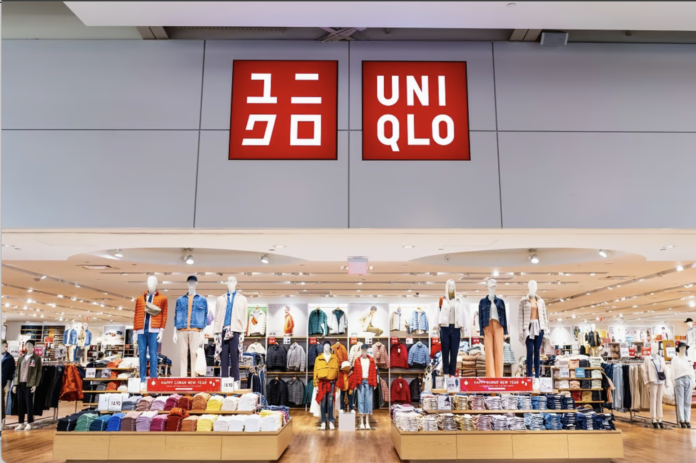
Japanese fashion retailer Uniqlo is continuing with its Canadian store expansion with four locations announced for fall 2024, and an additional fifth store confirmed. It’s part of a bigger growth plan for the company which entered Canada with its first stores in 2016.
On Wednesday, Uniqlo announced that it would open three stores in Ontario, as well as one in British Columbia. The three Ontario stores will be either in or close to Toronto, and will include locations at CF Sherway Gardens in Toronto, Heartland Town Centre in Mississauga, and Bramalea City Centre in Brampton. Uniqlo also announced that it would open another store in the BC Lower Mainland at the Willowbrook Shopping Centre in Langley.
The CF Sherway Gardens Uniqlo store will move into a retail space vacated by retailer Laura, according to sources, as well as adjacent spaces to create a Uniqlo store spanning about 15,000 square feet or so. It’s a size that appears to be a sweet spot for the retailer for its non-flagship locations in Canada.
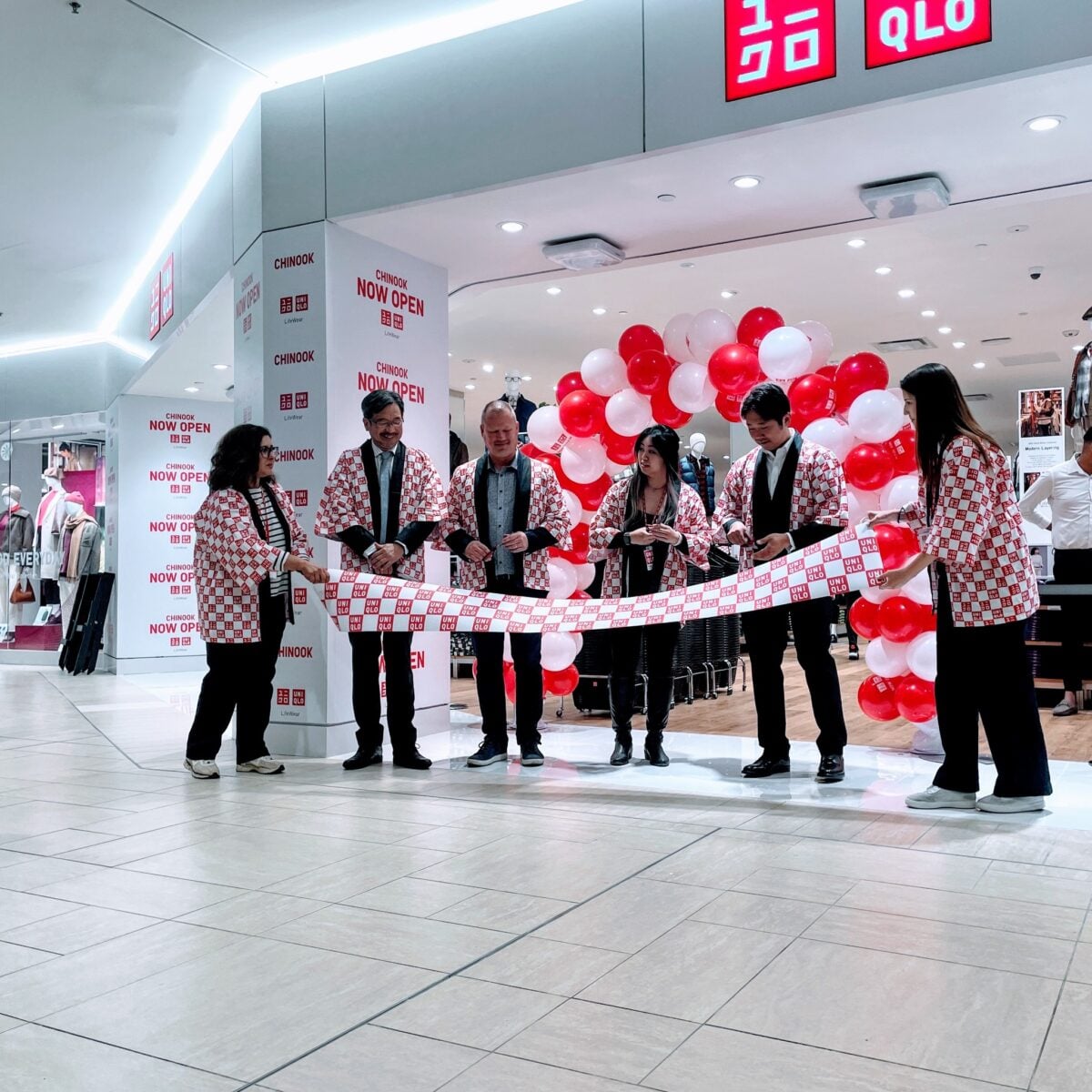
Grand Opening Ceremony at Uniqlo CF Chinook Centre (Image: CF Chinook Centre)
Heartland Town Centre will be Uniqlo’s first Canadian store to open in a power centre, making it rather unique. Heartland Town Centre is considered to be one of the country’s top big-box power centres in terms of retail offerings and consumer spending dollars. Uniqlo is taking a retail space formerly occupied by Designer Depot, according to lease plans.
Bramalea City Centre is an enclosed super regional shopping centre in Brampton, and Uniqlo’s location in the mall will be 12,167 square feet according to a lease plan.
Uniqlo will also be opening a fifth Canadian store in September, which wasn’t announced in Wednesday’s press release. Uniqlo’s website states that it will open a store at Royalmount in Montreal — Royalmount’s opening date was recently moved from August 15 to early September, and it’s not 100% confirmed if Uniqlo’s Royalmount storefront will be ready for the mall’s opening day, given that we’re announcing the store before Uniqlo’s PR team. The Uniqlo website indicates that the Royalmount location will be a ‘standard store’ and not one of the flashier flagships such as the downtown Montreal store or at CF Toronto Eaton Centre in Toronto.
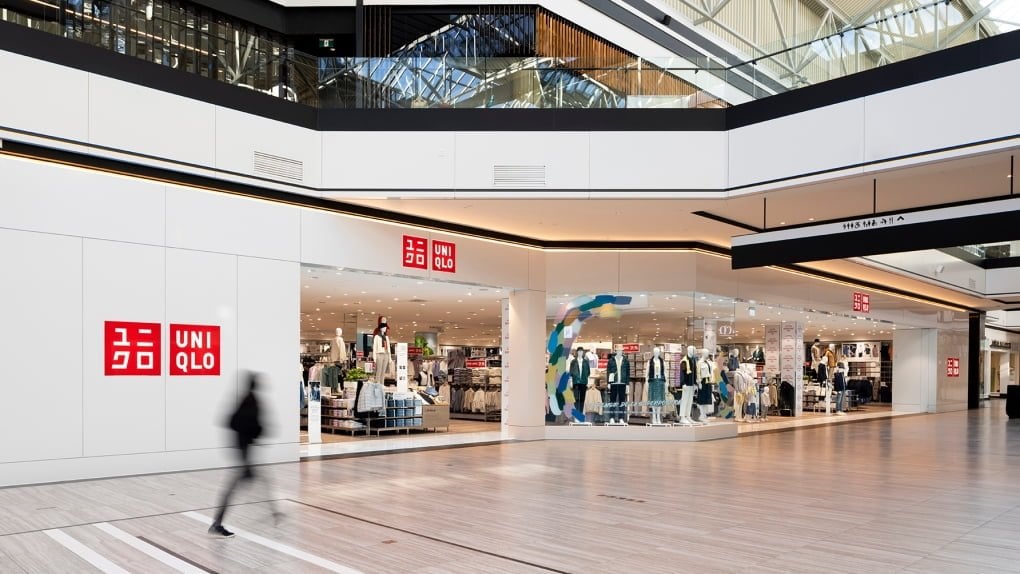
Uniqlo store at CF Fairview Pte-Claire in Montreal. Image: Uniqlo
Jeff Berkowitz of Aurora Realty Consultants has negotiated Uniqlo’s leases since the brand entered the country nearly eight years ago, and continues to do so with the most recent store announcements.
In the fall of 2016, Uniqlo opened two stores in Toronto at the CF Toronto Eaton Centre and at the Yorkdale Shopping Centre, kicking off a national expansion that has seen Uniqlo become an important player in the fast-fashion space in Canada. The company currently operates 23 stores in Canada, a number that will increase to 28 by the end of the year.
Uniqlo said in a press release late last year that it planned to open more than 20 stores in North America in 2024. Uniqlo is still conspicuously absent from the city of Vancouver, where it has several stores in the suburbs.
Following the opening of the first two Toronto stores nearly eight years ago, Uniqlo has since opened a total of nine locations in the Greater Toronto Area, all in major shopping centres. Three more stores will be added this fall as mentioned above. The Greater Vancouver market currently has four Uniqlo stores, with the fall opening of the Langley store marking the fifth in the region. The Montreal area has four Uniqlo stores as well, with Royalmount being the fifth in the region. Calgary, Edmonton, and Ottawa are all home to two Uniqlo stores. Uniqlo’s Canadian locations have opened incrementally since 2016 and over the past 18 months, the pace of store openings appears to have accelerated.
UNIQLO Centre Eaton de Montreal (705 Sainte-Catherine St. W.) Photo: Maxime Frechette
At this point, it would appear that Uniqlo is targeting store locations in potentially every major shopping centre in Canada that is commercially successful. Uniqlo may also target cities where it currently does not have stores, including Winnipeg, Halifax, Quebec City, London/Southern Ontario centres, and eventually even markets such as Victoria and the two largest cities in Saskatchewan. Uniqlo is also expected to secure a downtown Vancouver location, either within part of the building vacated by Nordstrom or nearby on Robson Street, though nothing is yet confirmed.
According to the Aurora Realty website, the ideal size for a Uniqlo store is between 15,000 square feet and 40,000 square feet. The downtown Montreal flagship, which opened in October of 2020, is the largest in Canada with 45,000 square feet over two levels on Ste Catherine Street in the Montreal Eaton Centre.
Globally, Uniqlo has more than 2,400 stores, including 60 locations in the United States and 23 in Canada. Uniqlo’s first store opened in Hiroshima Japan in 1984, and the company is a brand of Fast Retailing Co., Ltd., a leading Japanese retail holding company with global headquarters in Tokyo. Uniqlo is the largest of eight brands in the Fast Retailing Group, which is one of the world’s largest apparel retail companies, and Uniqlo is Japan’s leading specialty retailer.
Uniqlo has said that it plans to operate about 200 stores in North America by 2027. It’s not known how many of those would be in Canada. When Uniqlo entered Canada, its original targeted number of stores was about 100, according to the Globe & Mail. That number could have since changed, given the pandemic and shifting consumer dynamics.
Uniqlo’s store expansion comes at a time when more consumers are shopping online. Shopping centres are still busy, with brick-and-mortar retail showing signs of longevity. The retailer has experimented with retail concepts such a pop-up in Toronto’s Financial District in 2019, and could look to such locations as South Edmonton Common in Edmonton if more power centres are deemed worthy locations. Only a handful of streets in Canada see enough foot traffic for such a retailer.
Uniqlo is competing in Canada with a range of relatively affordable retailers with stores, though Uniqlo’s styles tend to be more staple-based than trendy. H&M and Zara are strong players in the fast-fashion market in Canada, with both having a high penetration of stores across the country. To a degree, even La Maison Simons is a competitor, with a range of well-priced fashions as the retailer opens two more stores in Toronto next year as part of a national expansion. Another international entrant into Canada will soon be announced, which will feature large-format stores and a trendier range of fast-fashion options at price points that could grab market share. Despite competition already in the market, Uniqlo appears to be bullish in terms of signing leases in anticipation of growth in this country in the years to come.
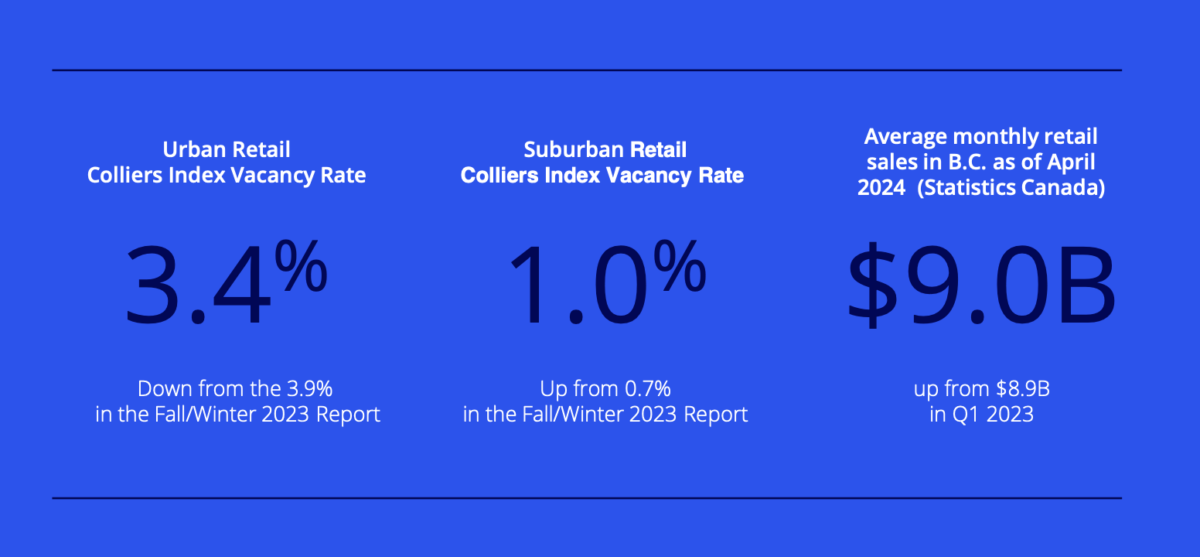
The Greater Vancouver Area (GVA) retail market is entering a period of more stabilized vacancy rates, experiencing minor movement, but with lease rates continuing to inch upwards, according to a recent report by real estate firm Colliers.
“Retail spaces for previously fitted-out restaurants are in high demand considering today’s high costs building and fixturing an unfinished location,” said the company’s Greater Vancouver Retail Report, Spring/Summer 2024.
“City initiatives to improve the public realm and attract foot traffic to high-vacancy areas such as Gastown are underway where Water street is being closed to cars creating a pilot pedestrian only zone. As new supply is limited, landlords are keen on curating retail offerings in communities they are creating, causing availability and rates to vary based on perceived need and type of tenant.”
“We’re seeing an upward pressure in most markets on rental rates. There’s just a lot going on on the leasing front, which is nice compared to some of the other asset classes like office. It’s been a good market.”
Scott said population growth in the area and an increase in tourism have been big drivers for the retail market in the Vancouver area which bodes well for retailers in the future.
“There is some new supply coming on line but I don’t think there’s as much supply coming on line to meet the demand.”
It’s mainly on the ground floor of new residential buildings.
Colliers Retail Report
“Among the urban streets monitored, Gastown has, in recent years, experienced one of the highest vacancy rates. However, this has slowly improved with a decrease in 4 percentage points in vacancy half-over- half and stands to continue to improve moving forward. The City of Vancouver has made strides to improve foot-traffic in the area by introducing a pedestrian only area along Water Street. This pilot project will take effect this summer and local businesses have already observed an uptick in business activity since the project has been put in place. The popularity and success of the program this year will determine if it will be made permanent or brought back for future seasons,” said the Colliers report.
Photo credit: Jeremy Lee
“Demand continues to be high for existing built-out restaurant spaces. This intense competition for locations is due to the steep increase in costs associated with building out a restaurant space from scratch which can cost upwards of 50-75 per cent more compared to adopting a recently vacated restaurant space. Though patrons remain budget conscious, British Columbia remains the third highest province for spending on food service and drinking establishments, with an average spending of $1.4 billion per month.”
The report said Canada Emergency Business Account loans, which matured early in the first half of this year, ended up being less of a story than feared. There were broad expectations of changes to the retail landscape as this loan deadline had the potential to pose feasibility challenges for some businesses already challenged through increased costs and pandemic restrictions. Those businesses that were going to close for financial reasons mostly had already, while most others managed to secure loans from other parties to extended their repayment programs.
“Rent continues to grow across urban and suburban markets, as limited new supply will continue to push rates higher. Rental packages from landlords will vary greatly on a case-to-case basis to attract the right tenant. This selection process is particularly critical in curated retail centres where retailer/ product mix affects the market positioning of the location. The retail market has seen a steady level of tenant replacements instead of vacancies, which has kept the vacancy rate low,” said Colliers.
“The population in Metro Vancouver is projected to reach three million residents in 2024 according to Statistics Canada projections and achieve about 21% growth over the past ten years. The continued growth in population supports economic growth, including the consumer base, as well as heightening competition in retail business to attract consumer attention by providing an evolving variety of goods and services.”
Colliers said continued interest rate cuts and stabilization of inflation would make a big impact on retail businesses. Lower borrowing costs may bring new retailers to the market and allow existing retailers opportunities to expand.
“While consumer spending per person may be down due to the high cost of living in Metro Vancouver and inflation pushing the costs of goods and services ever upwards, a rising population is pushing total spending up. Necessity retail businesses, such as grocery stores, pharmacy-drugstores, and medical clinics are seeing strong business as well as businesses catering to new residents setting up households,” added the report.
“Tourism is an additional driver of demand for retail, especially restaurants and destination shopping in the vicinity of the cruise port. While visitor counts are just short of pre-pandemic levels, the recreation and entertainment sector indicate that growth is returning to employment for the industry, contributing to the positive outlook.”
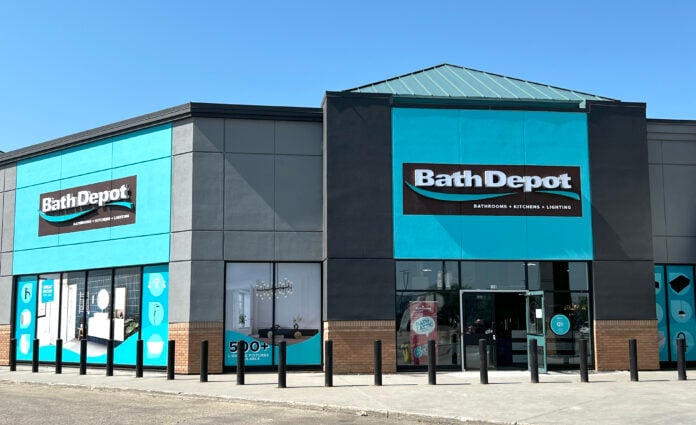
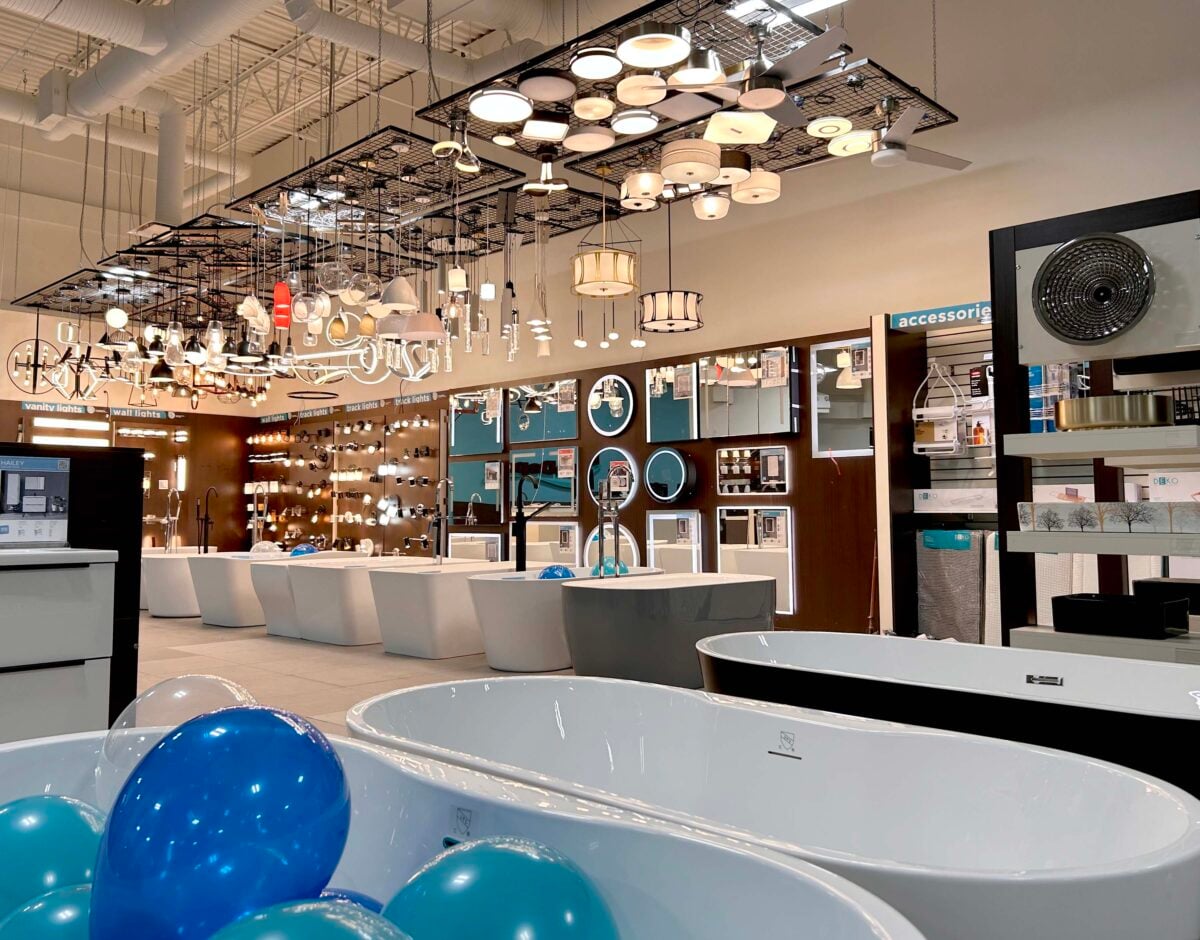
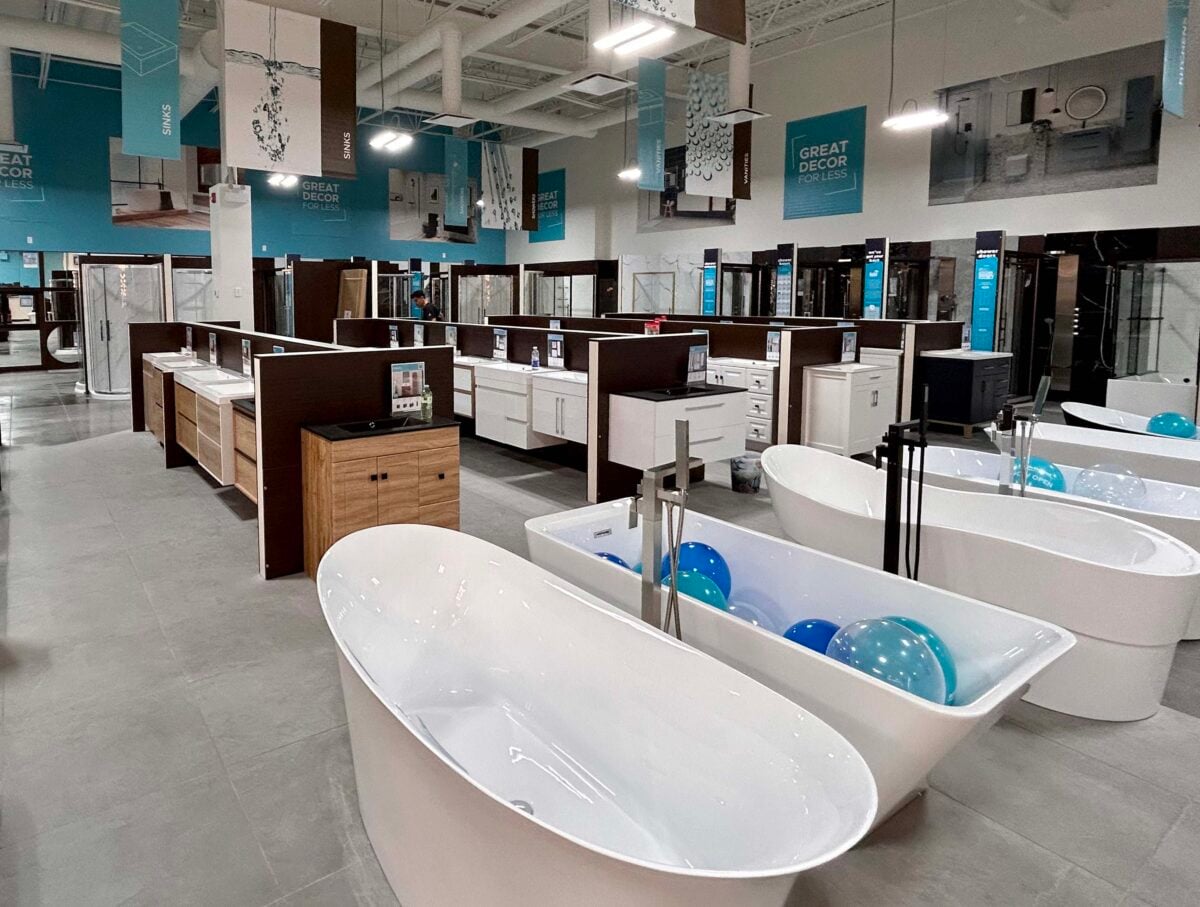
Quebec-based Bath Depot, Canada’s destination for bathroom and kitchen essentials, continues to expand its physical footprint with the recent opening of its first store in Edmonton at Mayfield Common.
The brand, founded in 2008 by four brothers who are plumbing enthusiasts, now has 43 stores nationwide with plans to continue its growth trajectory.
“The furthest we are is in Ontario and now we’re finally traveling across the Ontario border into Western Canada. We’re opening another one at the end of August in Calgary,” he said.
In mid-August, Bath Depot is opening in Barrie, Ontario and in September a location is planned for Saint John, New Brunswick.
“That’s what’s confirmed for this year. Next year we do have other locations coming up,” added St-Charles.
“Our objective is about eight stores. More locations in Edmonton and in Calgary as well. We’re looking at Saskatoon and Winnipeg.”
St-Charles said the brand stands out as being unique in the business in its market share.
“You don’t see much competition within our line of business. We’re vertical. We’re very direct with our partners in Asia. We also have an office in Asia. So we’re able to do a lot on our own compared to other retailers out there who are using brands, not being able to be as quick and moving in terms of product selection for our customers,” he said.
“We see an opportunity in Western Canada. We’re not there. We have 20 locations in Quebec, 20 locations in Ontario but nothing out West. For us, it’s an opportunity to grow and gain market share and be a national retailer from coast to coast.”
Photo credit: Bath Depot
He said the typical size of a store is about 5,000 square feet.
“We’re looking at strip malls with locations with docks ideally where we have space to be able to deliver the product. That’s why we don’t look for mall locations. We’re looking mostly at strip malls usually located near a high traffic area whether it be a competitor like a Home Depot, a RONA, a Costco. Somewhere where we can see high traffic for us.”
The first location for the brand was on the North Shore of Montreal in Blainville.
Retail Insider is streamlining its Canadian retail news from around the web to include a handful of top news stories that can be viewed quickly during the day. Here are the top stories from the past 24 hours.
Canadian retailers are facing potential supply chain challenges as wildfires and ongoing labour disputes threaten to disrupt rail and port operations across the country. These developments could have significant implications for inventory management and product availability in the retail sector.
The Canadian National (CN) Rail main line in Jasper, which had been temporarily halted due to wildfires, has recently resumed operations. However, the threat of wildfires continues to loom over both CN Rail and Canadian Pacific Kansas City Limited (CPKC) rail systems. This ongoing risk poses a potential challenge for retailers relying on these rail networks for product transportation.
Adding to the complexity, the Port of Vancouver is experiencing heightened demand and vessel delays. This situation could further complicate the supply chain for retailers, particularly those importing goods from overseas or exporting products through Canada’s busiest port.
Labour disputes are also contributing to the uncertainty. The Canadian Industrial Relations Board (CIRB) is scheduled to resume hearings between ILWU Local 514, representing 730 dock forepersons at Canada’s West Coast port terminals, and the B.C. Maritime Employers Association from August 6 to 9, 2024. The union is currently conducting another strike vote, expected to conclude by August 9, 2024. Should a strike be called, a 72-hour notice would be required before any disruption occurs.
The retail sector is also closely monitoring the impending CIRB ruling on the CPKC and CN Rail labour disputes, due by August 9, 2024. No labour disruption can occur until 72 hours after this date, unless the ruling includes an extended “cooling off” period. The Retail Council of Canada (RCC) has stated that it is applying maximum pressure on all parties to achieve a resolution and avoid any work stoppages.
These potential disruptions come at a critical time for Canadian retailers, many of whom are preparing for the busy back-to-school and fall shopping seasons. The combination of natural disasters and labour unrest could lead to delays in product shipments, increased transportation costs, and potential inventory shortages.
Retail analysts suggest that companies with diverse supply chains and multiple transportation options may be better positioned to weather these challenges. Some retailers are reportedly exploring alternative shipping routes and increasing their inventory levels as precautionary measures.
Gary Newbury, Strategic Advisor and Delivery Executive, RetailAID.ca, said that retailers have struggled with supply chain issues since the pandemic, and that issues remain.
“During the restrictions retailers became vitally aware of opportunities and challenges presented by their existing supply chain capabilities. Many found creative ways, both internally and working with their partners, to overcome levels of what seemed then, unprecedented levels of disruption,” said Newbury. “As the restrictions lifted, many retailers found themselves with excess inventories and resumed the business of managing their sales channels, product merchandising and focusing on brand building in a “cost of living” crisis, to an extent, pushing supply chains into the backroom.”
Newbury says that supply chain disruptions have become more localized, and are still posing challenges for retailers.
“Disruption has not receded, it has merely shifted and become, to a degree, more localized, leaving Canadian businesses pulling their hair out,” he said. “Some have ventured into multi-shoring, near-shoring, friendly shoring and attempted to increase their sources and transportation modes to provide more flexible responses to demand or supply variation, under the guise of adopting agile principles, alas, it remains early days in such strategic moves, and often transformational plans are disjointed and not aligned with business objectives.”
Newbury said that technology is a solution, as well as leadership that can navigate the challenges.
“Vital lessons learnt during disruption seemed to have waned. Technology remains a key area that will not only transform supply chain management (automating many tactical and strategic decisions), but also how to compete,” Newbury said. “Those not actively progressing their digital transformation will be found flat footed.”
“This challenge, for many, remains ahead beyond these localized and highly challenging disruptions. Leadership talent, boldness and courage remain the key strengths to enable solution creativity, development of resilient capabilities and executional excellence.”
Bubble tea concept Chatime has aggressively expanded its footprint across Canada growing to 100 stores since it opened its first location in 2011 in downtown Toronto.
And the sky is the limit for future growth for the popular concept.
Chan said Kevito only manages the Ontario and British Columbia markets at the moment but Chatime is pretty much in every Canadian province.
Thomas Wong, Co-Founder and President, said the company has always had an intuition that the product was going to have a massive opportunity with Canadians.
“I think it’s being borne out by the data and the trends that you are seeing. You can see our product is part of a broader cold beverage category which is just growing phenomenally,” said Wong.
Thomas Wong
“On the backs of it, a number of trends, including demographically, it’s just more popular among younger demographics, the beverages themselves are also very photogenic. They let people really express themselves. You can really customize our products. Chatime comes in very many different types of flavours, and formats and colours. It’s just something we think the market is really interested in right now.”
Chan said one of the big reasons why Kevito Group has been successful and why Chatime has been able to hit 100 locations, while other brands have not seen that same level of success, is the company’s commitment to quality and consistency.
“That’s what sets us apart. We only use high quality ingredients and for the most part imported directly from Asia,” he said. “Just to ensure that consistency is there with every single cup and meets our standards.
Photo credit: Chatime
“Innovation has played a huge part in our success as well. We’ve introduced many trend-setting (drinks) not just in Canada but worldwide trend-setting drinks.”
Some drinks Chatime has partnered with other companies such as Red Bull and Kit Kat.
“In terms of brand awareness, that’s really put us out in the forefront,” added Chan.
In a previous Retail Insider story, Wong said: “We see Chatime as the leader in the bubble tea market. The bubble tea market has been historically an ethnic concept that has originated from Asia historically but it’s now becoming a worldwide phenomenon. What we’re finding is that in markets around the world there’s an amazing receptivity to the concept. The best way I can describe it for Canadians who haven’t had bubble tea before, but probably have heard of it, is when you think about the kind of culture associated with coffee that we’ve historically had in North America and Europe, it sort of transcends just the beverage . . . It’s really associated with strong positive emotions.
“In the coffee case, it’s very much a comfort and a routine and a stability. For millions of people around the world Chatime represents that injection of happiness in their day. It’s really bringing that joy of the beverage and that experience. A lot of people come to Chatime certainly because they’re craving something but they’re really looking for also all the positive emotions that are associated with grabbing a couple of bubble teas during the day with friends and family. For a lot of people it becomes an incredible part of their lifestyle. It’s just something they look forward to every day. It’s bringing that joy of bubble tea to a really broad Canadian audience and that’s where we’re finding tons of opportunity.”
Wong said there are definitely more locations on the horizon.
Chatime Canada is part of the Kevito Group Canada which also has brands Bake Code, Chatime Atealier, and Chatime Innovation Bar.
The global Chatime brand is based in Taiwan. The brand exists in more than 30 countries with more than 1,000 locations.
The Kevito Group recently won the Best in Retail 2023 award at the CanadianSME Small Business Magazine Awards, presented by Google Canada.
“We continue to really innovate on the categories. With Chatime we’ve got into a lot of new more innovative, non-traditional formats . . . trying to expand Chatime much more into the professional crowd and more premium crowd that we haven’t previously had a lot of exposure to,” explained Wong.
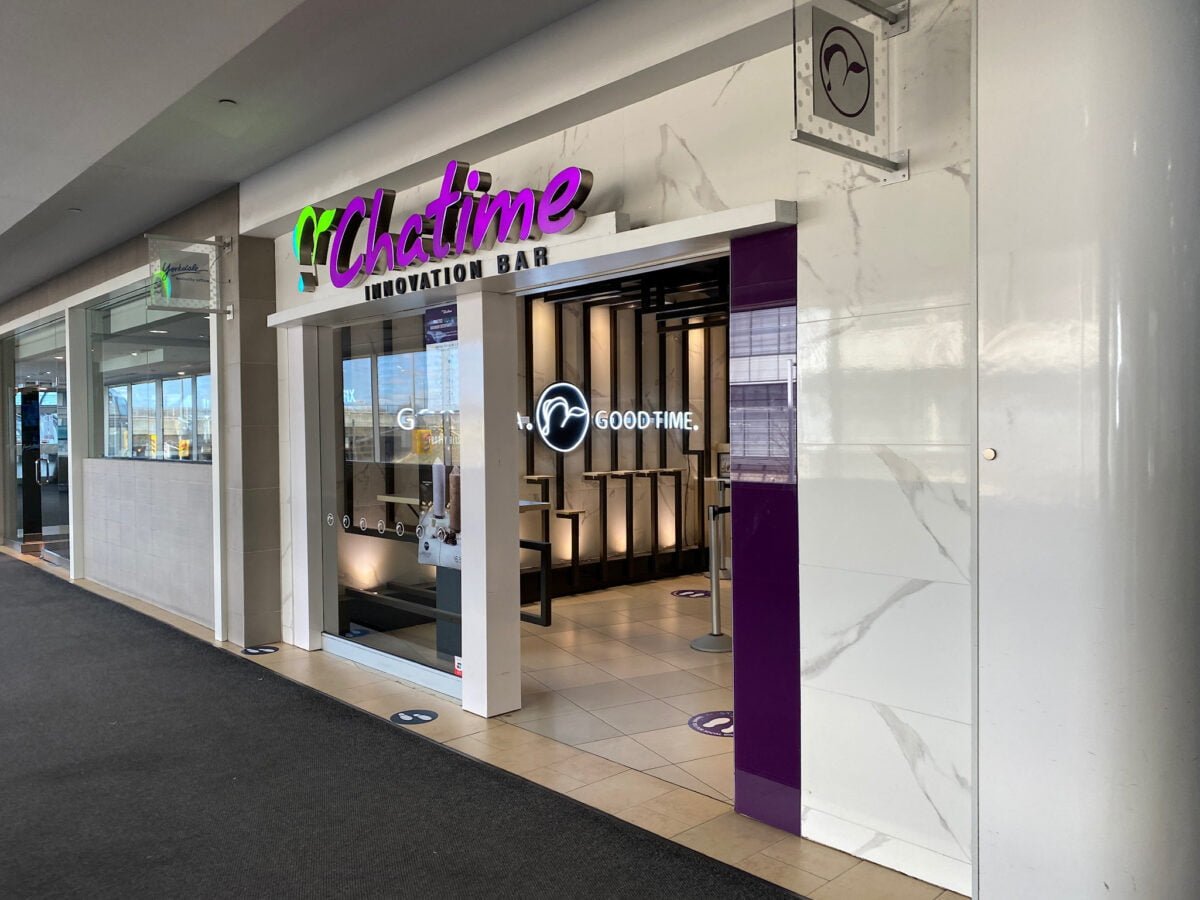
Chatime at Yorkdale – Photo by Dustin Fuhs
“At Yorkdale Mall, we’ve got a Chatime Innovation Bar where we’re testing a new concept, really pushing our category forward.”
Wong said the brand has been expanding to many non-traditional locations such as universities and grocery stores. Its first store in a Walmart is coming up in Vaughan, Ontario.
“The broader Canadian population is really demanding and looking for Chatime. There’s amazing growth in non-traditional channels as well. If you ask us for a unit count, it’s easily doubling, quadrupling, I’m not exactly sure, but we’re going to get to a much larger footprint.
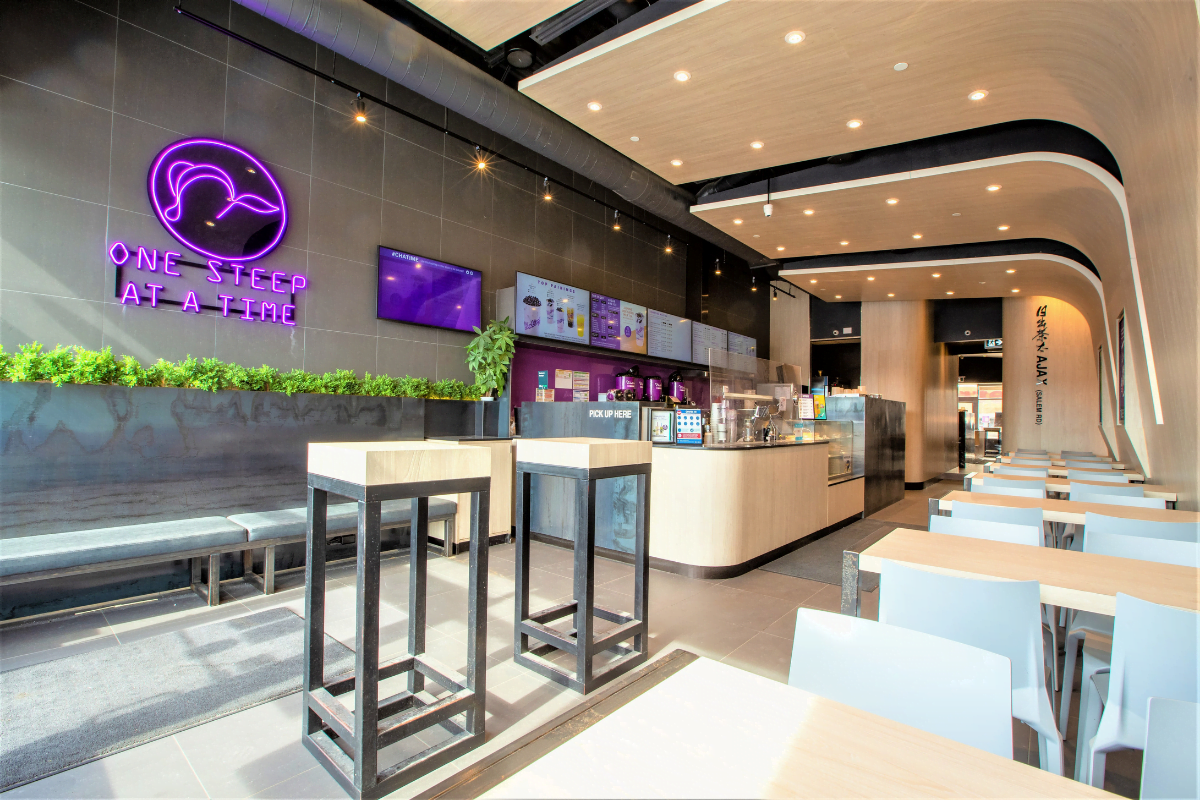
Image: Chatime Ajax
“We’re really excited in the Canadian market for all sorts of international food and beverage innovation and that’s something we’ve really tried to position the Kevito Group to be a platform for.”
Chatime Canada is launching a bold new brand campaign, positioning bubble tea as the ultimate beverage for every date and social occasion. Running from July 18 to September 1, the campaign is a celebration of modern social interactions and the connections people make over bubble tea.
“We’ve been listening to our audience and discovered that many couples have had their first dates at Chatime,” said Chan. “We’ve even seen couples come full circle, celebrating their weddings with a Chatime drink truck as a treat for guests. This campaign is about celebrating those connections and making every date special with our bubble tea.”
Jump+ is Canada’s first and largest Apple Premium Reseller, an independently owned Canadian family operated chain of stores, recognized by Apple for achieving the highest standards of expertise and customer service.
Established in 2011, following a 30-year history and experience with Apple products, jump+ started in Guelph, Ontario and has grown quickly to have a presence across Canada from coast to coast.
“The plan is focused on aggressively growing the company across Canada. Other than the Apple store itself we’re the only retailer that brings the full Apple experience to Canadians. Every Apple product, every Apple service, every Apple offer,” said McGuire, who previously built Mobile Klinik into Canada’s largest and fastest-growing store network of professional smartphone and tablet repair services.
“We’re first to market with new Apple products. When the iPhone comes out you’ll get in our stores before any other stores. You’ll get every colour, every size, every memory, every configuration. We talk a lot about iPhones but the majority of the business is actually in the computing side. So we sell more in Mac computers, MacBook Air, iPads, in addition to a very healthy business in iPhones. I should include Apple Watch and soon Apple Vision Pro. You name it, we’ve got it.
“Not just sales but also service. We’re the largest provider of Apple Care retail service for covered products no matter where you buy them. We’re the authorized service provider in the communities that we’re in.”
McGuire said the plan is to grow from the current 17 stores to about 30 in the next two and a half years and probably 50 in the next four to five years to fill out the national footprint.
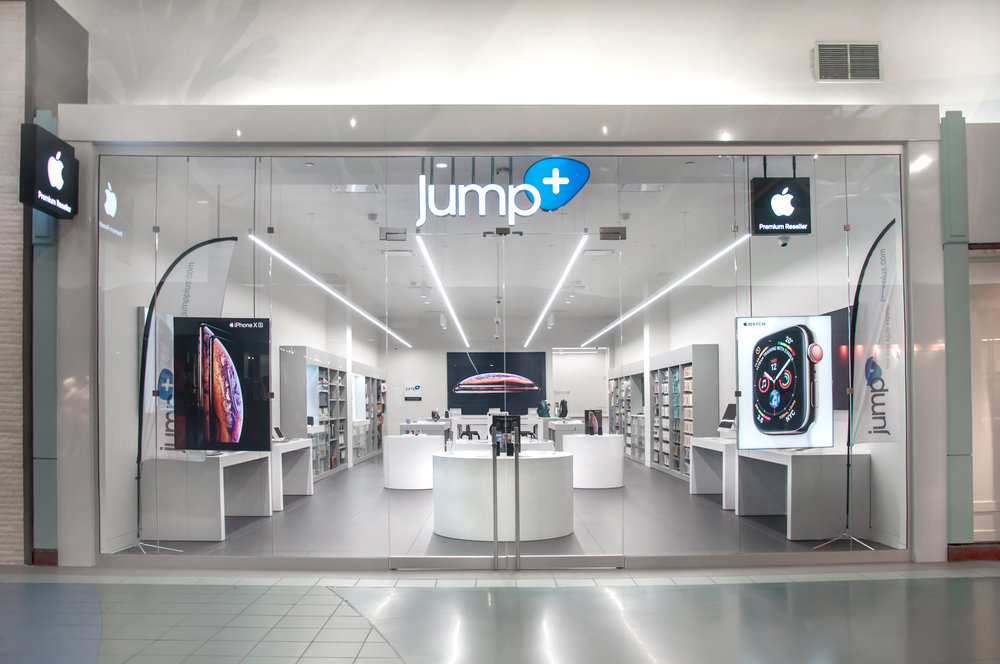
Jump+ in Toronto. Photo: Dustin Fuhs
“(Apple) is the most powerful brand in the world. So if your wagon is hitched to a brand to pick a winner, Apple has dominated the ecosystem for all things computing and telecommunications for the last dozen or so years. We expect that to continue over time. You see that through the introduction of new products,” he said. “The Apple Watch has been a tremendous hit. The new Apple Vision Pro spatial computing system will be another big hit.
“All of these products prove that there’s an innovation pipeline coming out of Apple that is better than any other electronics company in the world. So we’re delighted to focus our attention on being the provider of the ultimate Apple experience in those small to medium size communities across the country where anyone can walk in and know that they’re going to get everything Apple.
“My partner in crime on this is James Ferguson who was previously with me at Mobile Klinik. James was the VP of Sales and Operations there running the whole store network and James is now our Chief Operating Officer here. We’ve done it once, we’re going to do it again. We’ve proven we can really grow this business.”
Photo credit: jump+ website
McGuire said in addition to geographic expansion the company is also going to focus on category expansion.
“Particularly, we will dramatically increase the sales of wireless plans within the store. We’re already selling tens of thousands of Apple iPhones, iPads, every quarter. But we’re not doing a good enough job yet of selling people to wireless plans to go with them. We did that successfully in our previous roles at Mobile Klinik making that one of the highest productivity wireless plan selling retailers in Canada and we’re fully confident we can do that here,” he said.
“There’s no reason why we can’t be Canada’s highest sales per store multi-carrier activations retailer. So we’ll be putting a dedicated team in growing that business very aggressively.
JUMP PLUS VAUGHAN MILLS PHOTO: AMACHRIS
“We’ll also be growing the repair business. Our roots are in repair. That’s how Mobile Klinik started. The jump+ stores do a very good job right now but we have significant capacity to grow market share there and make sure that we’re the number one spot of choice whenever they need a repair whether that’s under an Apple Care program or whether that’s an out of warranty repair.”
McGuire said people may think about jump+ as only a retailer but about 25 per cent of its sales is with a sister company jumpIT which is a provider of Apple hardware and services to major corporations, government agencies, universities, schools, etc.
“Our 17 stores right now there’s 11 in Ontario, three in Atlantic Canada, two in Alberta and one in BC. There are none in Quebec. That will be a core focus for us and certainly I would expect eight to 10 stores in Quebec over the next two to three years.”
Most investors would caution betting against McDonald’s. The world’s leading restaurant chain has consistently demonstrated resilience, continuously modernizing and adapting to market changes. However, the company now faces significant challenges, as revealed in its most recent quarterly results. McDonald’s has experienced a global decline in sales for the first time in almost four years, driven by rising prices, weaker demand in Asia, and ongoing boycotts related to the conflict in Gaza.
The fast-food giant reported a 1% decrease in same-store sales for the second quarter, marking its first drop since the pandemic led to the closure of thousands of branches in early 2020. This decline is substantial, particularly given that higher food inflation is typically advantageous for the fast-food industry. Yet, McDonald’s has not been able to capitalize on this trend.
Boycotts against the company began last year after McDonald’s Israel announced it was donating thousands of free meals to Israel’s troops engaged in combat in Gaza. The company acknowledged during their earnings call that these boycotts have negatively impacted their sales.
McDonald’s today is markedly different from a decade ago. In 2014, the chain employed over 400,000 people to support its operations and restaurants. That number has now decreased to 150,000, excluding restaurant outlet employees, thanks to significant operational efficiencies. The introduction of self-service kiosks and automation has transformed the customer experience, albeit making it slower and more cumbersome as patrons navigate menu options and payment methods.
The company’s product offerings have also evolved. McDonald’s now offers Happy Meals for adults, priced between $16 to $18 before taxes, and the Big Mac is no longer as substantial, appearing more medium-sized. Consequently, McDonald’s is no longer perceived as fast or cheap. This has prompted the company to rethink its pricing strategy as reduced customer spending has impacted sales. Despite offering discounts in certain markets, the perception of McDonald’s as an affordable option is waning, exacerbated by price increases of 21 to 23 percent, aligning with general food inflation in many countries.
A critical issue for McDonald’s has been the speed at which it has raised prices compared to its rivals. The company’s price increases are almost double those observed at competitors like Burger King, Wendy’s, and Harvey’s. In today’s market, consumers are more price-sensitive and have noticed these differences.
Despite these setbacks, McDonald’s continues to grow. The chain now operates nearly 41,900 restaurants worldwide, a record number. For every restaurant they close, they open two more, maintaining a significant lead over the second-largest chain, Starbucks. Canada, with 1,466 McDonald’s restaurants, ranks ninth globally in restaurants per capita. While Canada’s growing population offers room for expansion, many Canadians question if McDonald’s can remain viable in a budget-conscious market.
McDonald’s supply chain practices prominently feature Canadian farmers, and the company heavily advertises its commitment to local agriculture. McDonald’s Canada is one of the largest purchasers of beef, potatoes, and eggs in the country, maintaining strong support for farmers, which bolsters its reputation in farming communities.
Currently, Canadians spend about 35% of their food budget on dining out, compared to 39% before the pandemic. As mobility increases, spending on food away from home is likely to rise, even though menu price increases are currently double those seen in grocery stores.
Historically, every time McDonald’s has faced adversity, it has rebounded stronger. The current economic situation mirrors conditions from 40 years ago, when inflation, unemployment, and interest rates were all above 15%. During that period, McDonald’s not only survived but thrived, growing even more influential. It stands to reason that the chain will navigate the present challenges and emerge resilient once again.
Retail Insider is streamlining its Canadian retail news from around the web to include a handful of top news stories that can be viewed quickly during the day. Here are the top stories from the past 24 hours.