Home Blog Page 633

Canadian Retailers Struggle to Innovate Loyalty Programs Amidst Consumer Dissatisfaction [Interview]

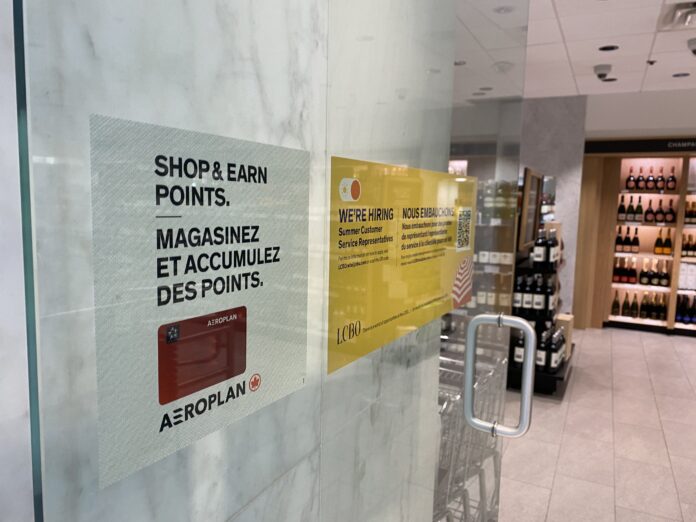
Aeroplan at LCBO (Image: Dustin Fuhs)

When it comes to retail loyalty programs – is Canada falling behind? Lia Grimberg, a loyalty expert in Canada and Principle and Consultant at Radicle Loyalty says yes, and discusses the current state of loyalty along with its future.

Lia Grimberg

Programs are everywhere and more brands are getting on board with having their own reward programs – however, the traditional “spend a dollar, earn a point” is causing programs to be the same and consumers are not seeing innovation.

“I would say right now, the biggest problem with loyalty programs is the sea of sameness. There was a study done that was just published that talks about the fact that a whopping 91 percent of consumers think that loyalty programs are all the same – and unfortunately, I could not disagree,” says Grimberg.
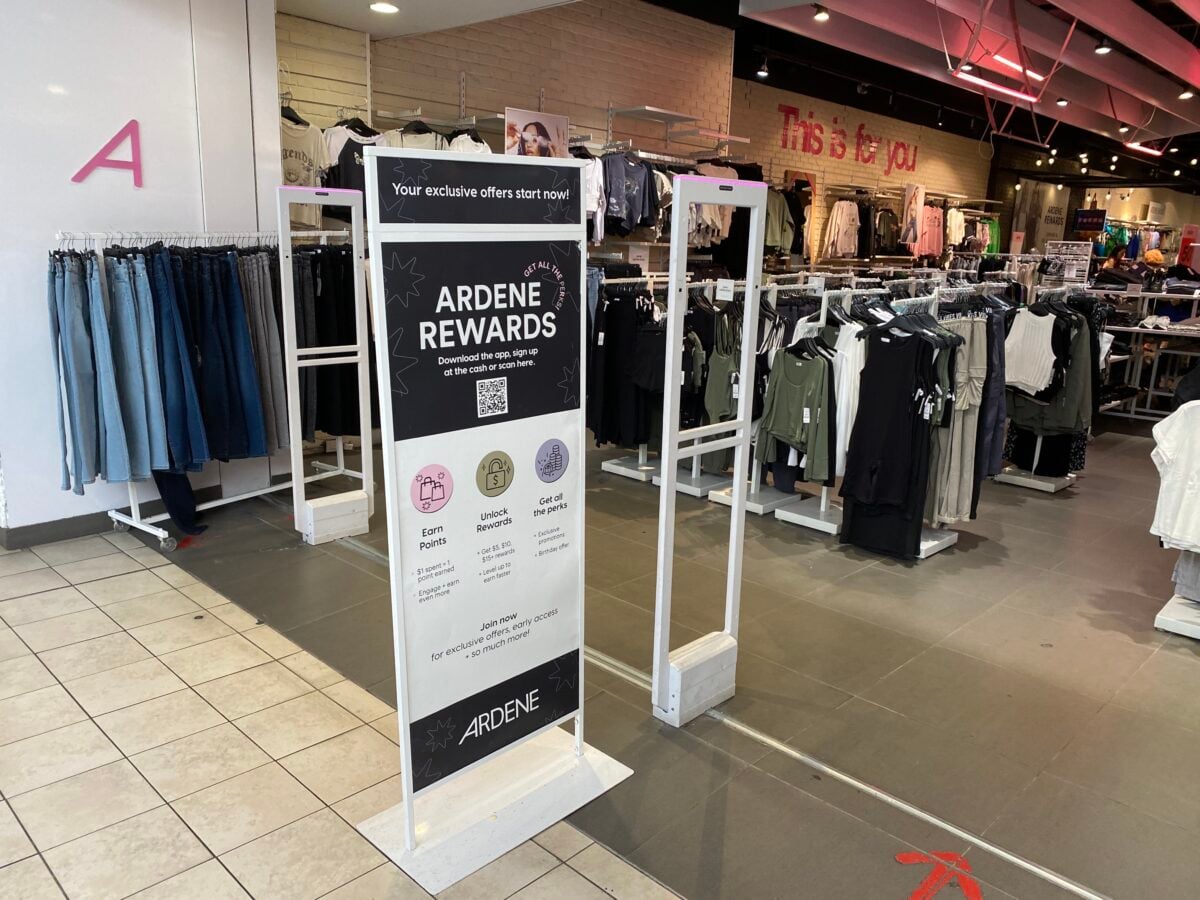
Ardene Rewards (Image: Dustin Fuhs)

This is a downfall as each reward program that uses a point base metric will end up blending in with other retail brands, and make it hard to stand out.

“This is the format of you spend a dollar, you earn a point and redeem that point for something in the store and repeat and so because consumers are not seeing innovation. Are we actually gaining any loyalty in our programs or are we just giving away points? And if everyone is the same, then it does not really matter what consumers are spending.”

The Shift in Loyalty Programs

Particularly after the pandemic, and with the recession and high inflations, consumers are now looking for programs that provide good value. Because of this, retail brands should start looking at their own loyalty systems and start asking themselves how they can add more value and how they can stand out from others in the market.

“During Covid, consumers started seeing a lot more of which companies were there for them. They are willing to use their wallets to support those organizations, along with brands that are aligned to the same values. Some retailers are starting to recognize the change and MasterCard is saying that 88.5 percent of loyalty members are looking for loyalty programs to help them through this period.”

Rexall x Hallmark (Image: Dustin Fuhs)

Grimberg is also seeing an increase in innovative partnerships. One example is the change in Aeroplan, as they have recently added Bell as a partner to provide free messaging. Also mentioned was the recent announcement from Air Miles, adding Dollarama as of August.

These two changes were not contemplated in the old economy and previously, dollar stores were not part of loyalty programs. Dollar stores and discount stores were not previously part of any loyalty programs, as they relied on price as a differentiating factor.

Along with these new partnerships, Grimberg says she is also seeing a shift of long-term partnerships, to a rise of temporary partnerships. This allows banks or other third party providers to put together a temporary partnership, where retailers can join and provide offers to consumers who link their credit card information. With temporary partnerships, brands are able to “attract new customers by providing these kinds of offers.”

Keeping Consumers Happy With AI

“I am seeing a lot more AI in international markets. To be honest, Canada is still lagging behind in both when it comes to loyalty. It is a huge enabler on the playing field in terms of our ability to access data and put it to better use.”

There is so much that can be done with new technologies for loyalty plans, and should be used as loyalty programs are a great support to the overall marketing strategy. By using AI, retailers can create a more personalized experience for consumers. They will be able to retrieve data and put it to better use, and create an experience that is more relevant to our consumers – “so it is a win win.” Grimberg says companies that do not look at personalization or use its collected data effectively will see a decrease of 33 percent of consumers whom will simply walk away.

“There seems to be a lot of questions around how AI will play a role in loyalty in the future, and it has already started as we are already seeing it but on smaller scales. There is a lot of ground and opportunity for more retailers to explore in terms of how AI can be used to personalize rewards, personalize content, and how it can provide a more immersive experience.”

What is Coming Next?
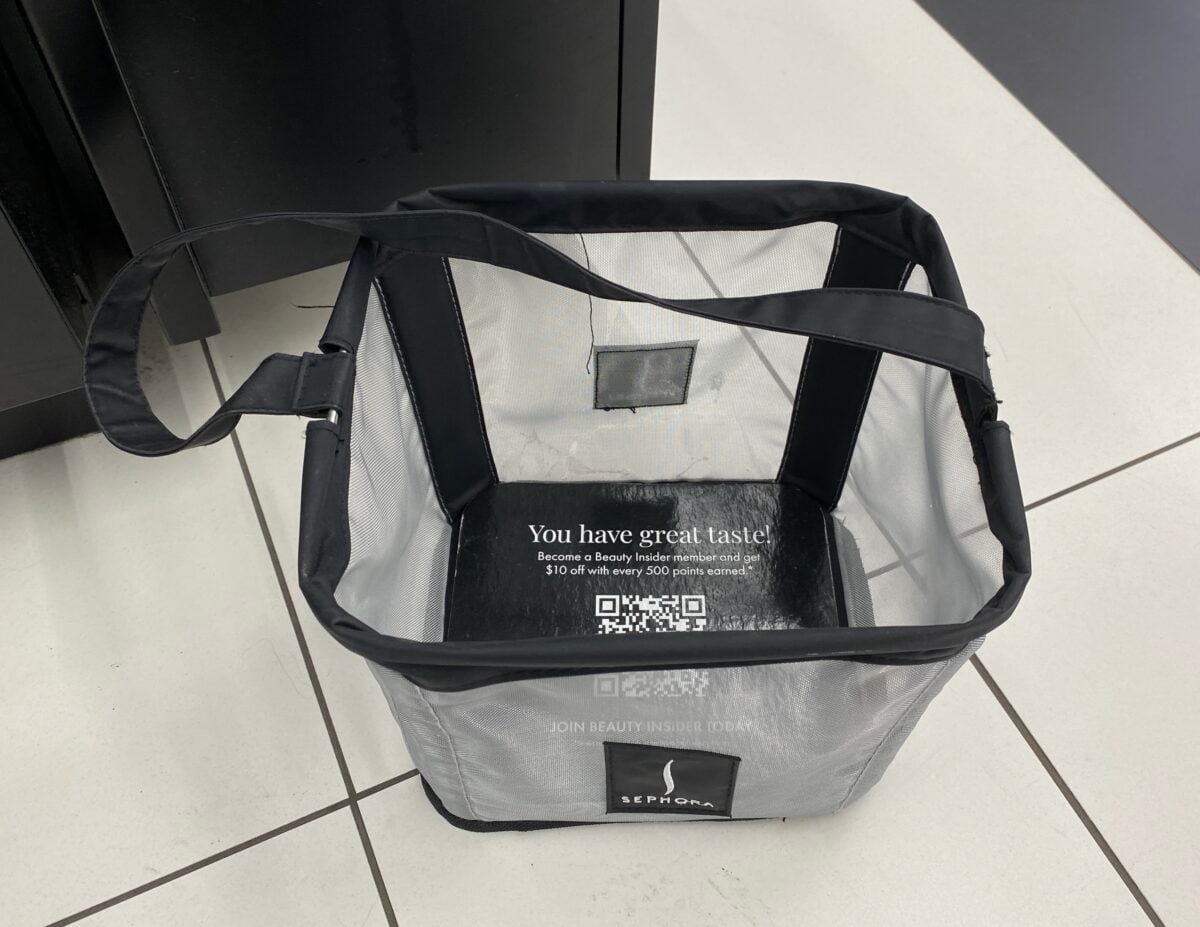
Sephora Rewards (Image: Dustin Fuhs)

The loyalty expert says she hopes to see more brands use loyalty plans – but in different ways, such as rewarding services instead of money.

“What I would like to be able to see is more platforms that allow many smaller players to work together to create a network effect that will provide more meaningful value to consumers. So could your dry cleaner work with your local flower shop? Depending on the frequency of the consumer, the customer will be able to earn a reward that is meaningful.”

Bottom line, Grimberg says each loyalty program shouldn’t be the same and should start looking at other unique ways they can support, give value, and provide a rewarding experience to consumers.

“There is a tendency for retailers to look at their competitors for inspiration, and that is when you get into trouble due to lack of differentiation – so I would say stop looking at your competitors. Figure out what your consumer needs, how you can uniquely support them, and look at what you can bring to the table that will be different.”


New Retail Relevancy Report Unveils ‘Smart Spending’ as Dominant Consumer Mindset in Canada

In the age of accelerated technology adoption, innovation and infinite possibilities, it is crucial that retailers are aligning consumer priorities with new value-based systems. 

To help retailers gauge consumer priorities, Mastercard developed The New Retail Relevancy report, looking at how businesses can navigate the exciting future of retail. 

Balinder Ahluwalia

Balinder Ahluwalia, Senior Vice President, Market Development and Digital Partnerships at Mastercard in Canada, said the trend recently among consumers is ‘smart spending’.

“This is a clear thing we’ve identified. The COVID impacts are real. Folks didn’t shop, they saved a bunch, had an opportunity to shop, drove up inflation and a bunch of other things that they were shopping, prices went up. It was a tough thing,” he said.

“The other thing we saw during that time, let’s call it the great reset would be one component which is COVID then the great rewire which we’ve sort of called bringing in new technologies, using the chips on our phone, the tapping when you get to the store, the acceleration of one-touch checkout on Amazon. Those two things taken together are really impacting the way consumers are looking at their spending.

“We found that over the last four years, e-commerce growth, the idea of folks buying stuff online has gone from about 10 per cent to about 18 per cent. That’s a big shift. Folks are buying more stuff, getting more comfortable with the new technologies, more comfortable with what they have to do.”

As a result of all of this, Ahluwalia said 70 per cent of consumers surveyed said they’re changing their patterns of buying due to inflation.

“As prices are driving things up, they have an opportunity here to save a little bit of money. If I understand the algorithms right with Amazon or understand the algorithms with some of the other things, maybe if I buy it at a different time of the day, or if I buy off cycle, or if I start to pay attention to when the stuff goes on sale, I can save a few bucks, which has been a really interesting nuance I would then offset against what we’re calling consumers focusing most on what they want they want to spend money on, discretionary spend – the travel, the restaurants, the apparel.”

The key points from the Mastercard report include:

  1. Smart spending is consumers’ dominant mindset in the current climate. The turbulence of recent years, alongside rapid technological progress, have set the stage for major changes to the retail industry. Seven out of 10 consumers say that high inflation has changed the way they shop and they are most likely to categorize their current spending mindset as “smart.” Rather than cutting back across the board, consumers are dialing into what matters most to them, with many splurging on luxuries while cutting back on basics. This is reflected in retail sales, with growth in joy-driven categories like experiences and jewelry;
  2. Virtual retail levels up style and functionality.  Today, “ambient” technologies — like voice commerce and augmented reality — focus on making the retail experience more seamless. Looking ahead, consumers are eager to explore more immersive virtual retail, which provides new opportunities for self-expression, sensory experiences and crossover with the physical world. The adoption of digital currencies will also gamify and accelerate spending in virtual environments;
  3. Retailers must deliver more joyful and convenient experiences. More joyful shopping means an experience that offers more than shopping alone. Immersive exposure to innovation is on consumers’ wish lists as 83 per cent would like to view and test the latest products when they shop. Another 57 per cent of consumers also express interest in accessing immersive virtual experiences while shopping in store that can augment the meaning of the shopping experience. Convenience in the retail experience is the other key lever to dialing up joy. That’s why 59 per cent of shoppers are interested in “on-demand” retail — whereby online orders are delivered at lightning speed;
  4. Regenerative retail is critical to shaping the future. As more consumers seek to leave their communities and the environment better off, support for “regenerative retail” is spreading fast. As part of this transition, consumers are seeking transparent reporting from retailers about their progress toward their social and green commitments. More than half (53 per cent) say they prioritize brands that reveal their carbon footprints. Consumers are also weighing the deeper purpose of their own shopping choices as 82 per cent prefer to support small or local businesses, whenever possible.

The Mastercard report identified five opportunities to drive innovation in retail:

  1. Encourage meta-commerce by creating retail experiences and rewards ecosystems that span virtual and physical worlds and embrace the crossover between them;
  2. Provide alternative-payment solutions that meet consumers in the way they want to pay, such as cryptocurrency, biometrics and buy now, pay later;
  3. Facilitate different shopping mindsets by designing retail environments that can meet multiple needs such as optimizing for joy and convenience with delightful experiences that provides seamless engagement;
  4. Leverage personalization to maximize convenience with technology that enables seamless, digital-first shopping;
  5. Empower consumers with data to support socially and environmentally-conscious shopping.

Other key highlights from the report include:

  • Spending prevails as retail exceeds pre-pandemic levels: According to Mastercard’s SpendingPulse in Canada, spending on apparel is running at a +11.9 per cent year-over-year pace (Q1 2023 vs. Q1 2022) and spending on restaurants is running at a +24.3 per centYOY pace (Q1 2023 vs. Q1 2022);
  • Consumers are focusing on intentional spend in the current climate: The current spending mentality amongst most Canadians is a ‘Smart Spender’ with seven in 10 Canadians saying inflation has changed they way they shop;
  • Retail transitions from omni-channel to metaverse: With six in 10 Canadian consumers having already or are interested in shopping virtually for real-world items, retailers are continually looking for new ways to offer in-store services to their digital customers by expanding sales across a wider range of platforms, including the metaverse. Additionally, 62 per cent of Canadian Gen Z are looking forward to brands offering personalized experiences in the metaverse;
  • Offloading convenience with on-demand: With the on-demand economy estimated to be worth $335 billion by 2025, a blend of retail elevation with rising innovation will be required to streamline the overall in-store experience;
  • Carbon conscious shoppers: Regenerative retail is becoming non-negotiable as 54 per cent of Canadian consumers prioritize brands that inform their carbon footprint while making purchases. 

Ahluwalia said the Mastercard Economics Institute pays close attention to some key economic factors that influence consumer behaviour. One is unemployment and the rate of unemployment. The other thing is the housing market.

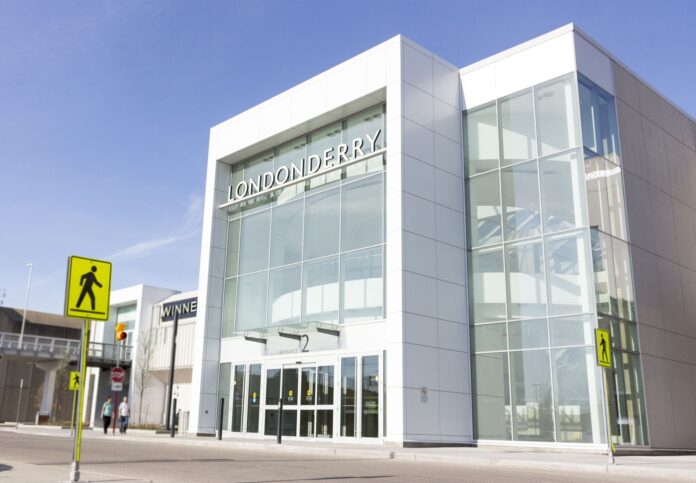
Londonderry Shopping Centre in Edmonton Adding Tenants, Hudson’s Bay Store Downsizing and Remaining Open 

Londonderry Shopping Centre (Image: Cushman & Wakefield)

The Londonderry Shopping Centre in Edmonton is adding new retailers and amenities to serve the local community. And the mall’s Hudson’s Bay store, which was supposed to shut in August of this year, will now be staying open in a smaller footprint. 

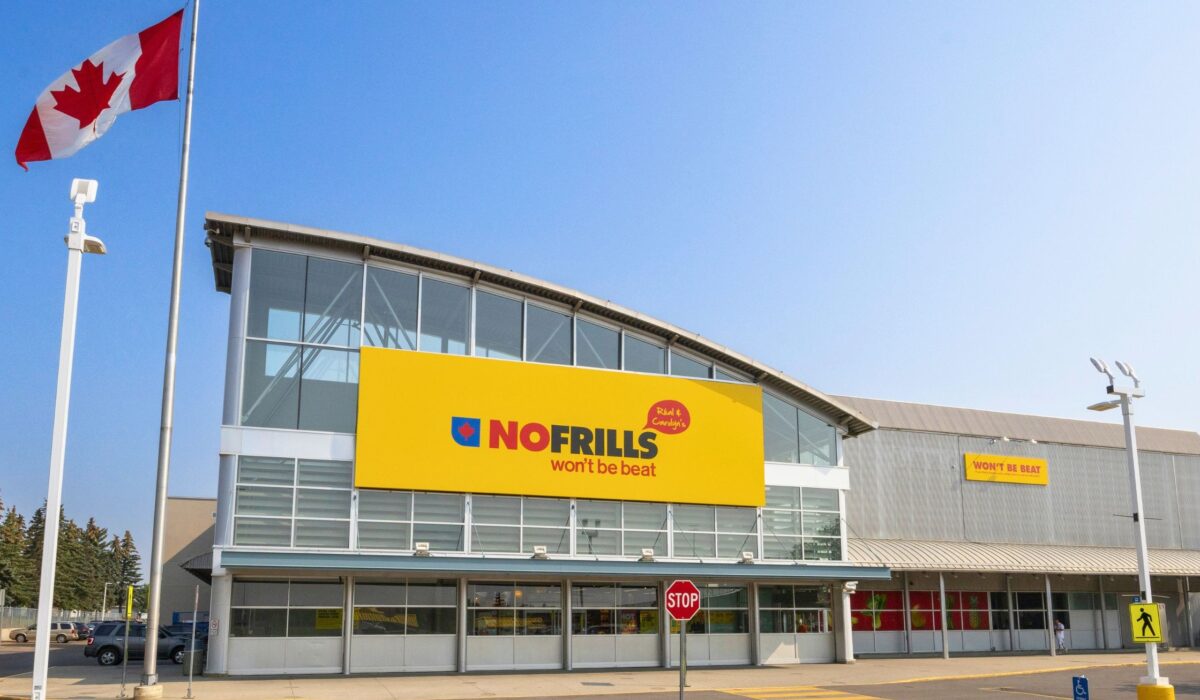
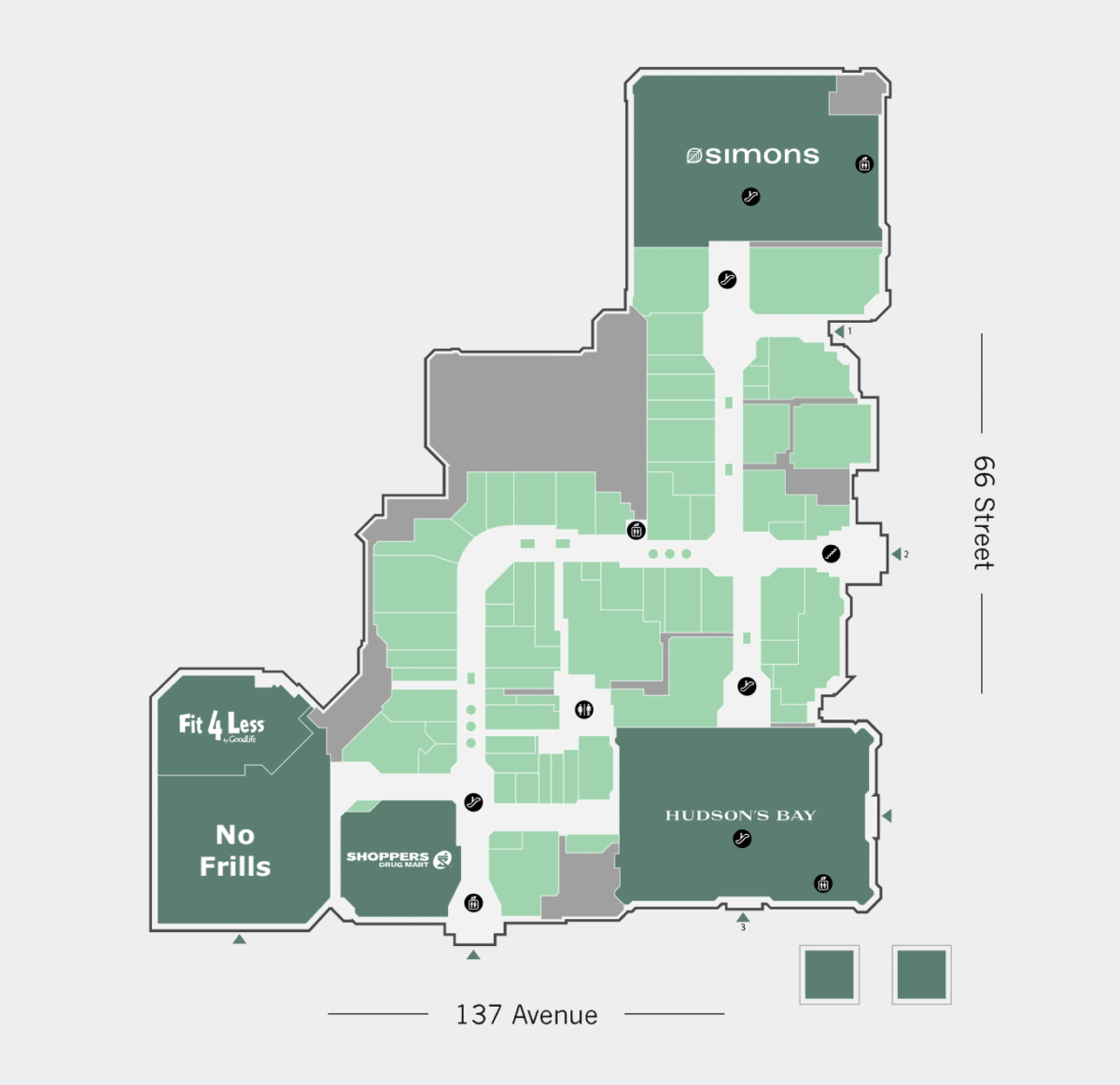
Landlord Cushman & Wakefield says that sales numbers at Londonderry have surpassed those of 2019 before the pandemic, both for the mall’s food court as well as for the centre as a whole. Recently, a 38,000 square foot No Frills grocery store opened at Londonderry, replacing a Save-on-Foods that shut several months ago. The new grocery store is said to already be very busy. 

Other new tenants at Londonderry include Service Canada, which next year will be opening a 10,000 square foot facility at Londonderry including a passport office. It will serve the local community and be a “win” for the mall according to landlord Cushman and Wakefield. The goal of adding the new passport office is to continue diversifying Londonderry’s retail offerings by adding more service based providers to drive regular traffic.

Click image for interactive Google Map
No Frills at Londonderry Shopping Centre (Image: Londonderry)
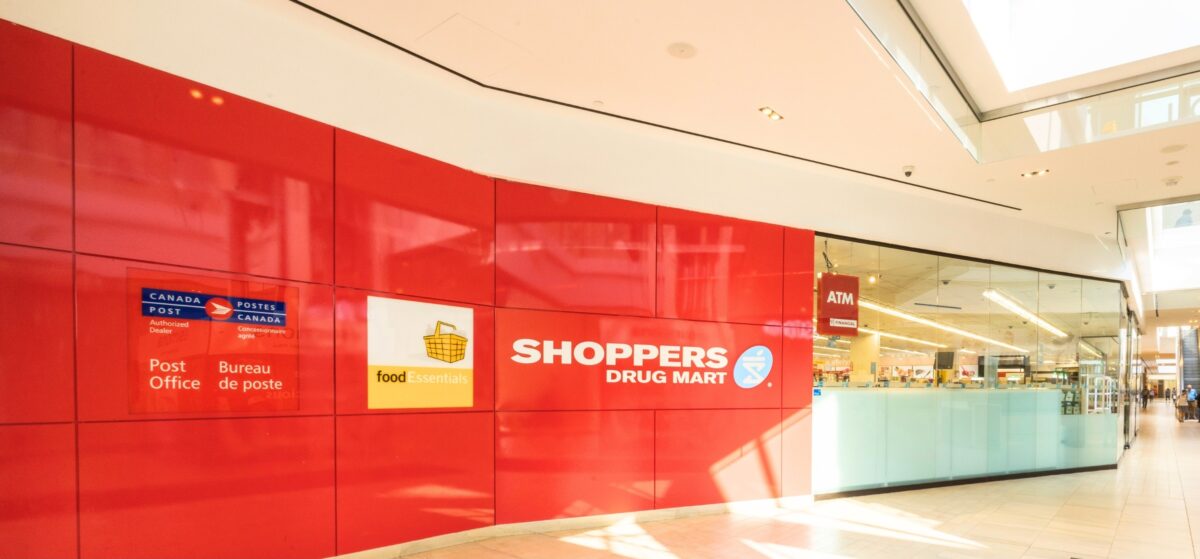
Shoppers Drug Mart at Londonderry Shopping Centre (Image: Londonderry)

The mall’s Shoppers Drug Mart store recently expanded its offerings to include a new BeautyBOUTIQUE component, offering a range of cosmetics and fragrance brands at Londonderry. The Shoppers Drug Mart store at Londonderry spans about 17,000 square feet on the main floor in a space adjacent to No Frills. 

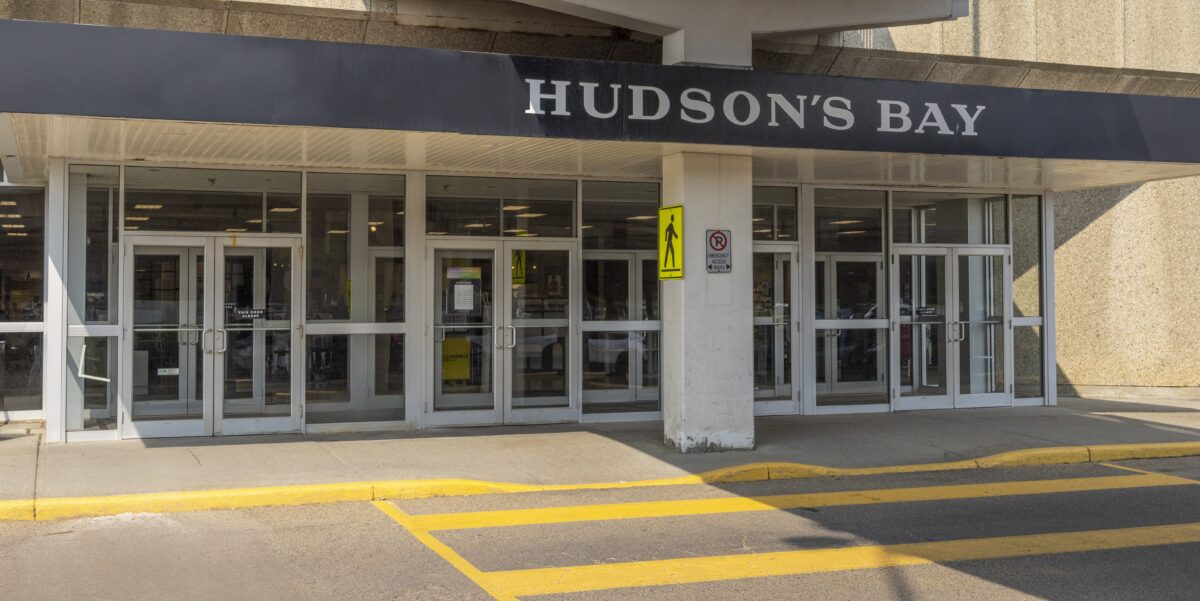
And the biggest announcement as of late is the retention of the Hudson’s Bay department store at Londonderry, albeit in a smaller footprint than what has operated for decades in the mall. Hudson’s Bay is downsizing its store from about 118,000 square feet over two floors to about 60,000 square feet on one level, which will feature outlet pricing. The store downsizing will be completed by the beginning of September according to the landlord. 

The Hudson’s Bay store will occupy the first level of the shopping centre, creating an opportunity upstairs for the landlord to re-set the mall’s tenant mix with multiple leasing opportunities. New tenants could include retail and services depending on what’s conceptualized and signed. 

In 2014, it was announced that Londonderry would see an investment of more than $130 million to overhaul the centre, including major interior alterations and exterior elements. With that, many new retailers were added to Londonderry including anchor La Maison Simons. In 2017, the mall’s overhaul was revealed to the public with Simons opening its beautiful two-level store in August of that year

New tenants have continued to be added, including in the fall of 2019 when H&M opened a large store in the mall near Simons. Londonderry is also home to a substantial number of independent retailers operated by local entrepreneurs. 

Hudson’s Bay at Londonderry, Image: Londonderry
Main floor of Londonderry. Click image for interactive mall map, featuring both levels.

Londonderry opened in 1972. At the time, it was the largest mall in Canada west of Toronto, as well as the only two-level mall in Western Canada. Today, the 780,000 square foot centre features about 150 retailers with anchors including Hudson’s Bay, La Maison Simons, No Frills, Winners, Shoppers Drug Mart, Dollarama, Fabricland, and Fit 4 Less. 

When Londonderry originally opened, its three department store anchors included Hudson’s Bay, Eaton’s, and Woolco. The No Frills store now occupies part of the former Eaton’s space on the main floor with Fit 4 Less, while Fabricland, Dollarama and the food court are located on the second level of the former Eaton’s. Simons is located in the part of the mall that had been Woolco — Army and Navy occupied the space after that and it shut in 2016.

LensCrafters Unveils 1st State-of-the-Art Canadian Flagship Store in Toronto’s Yorkville Area [Photos/Interview]

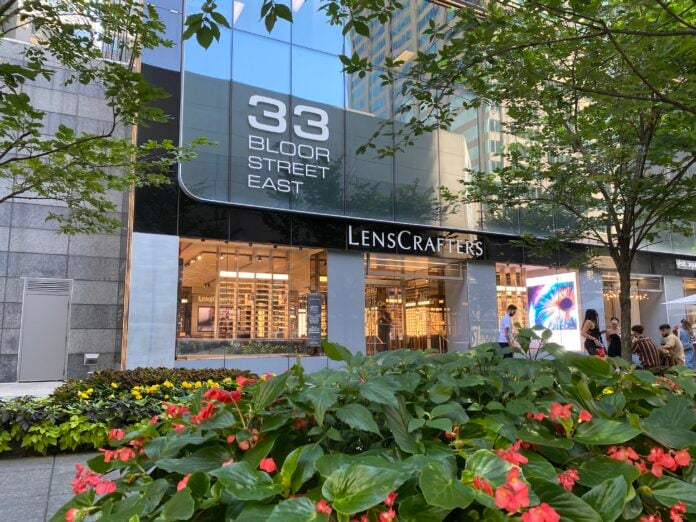
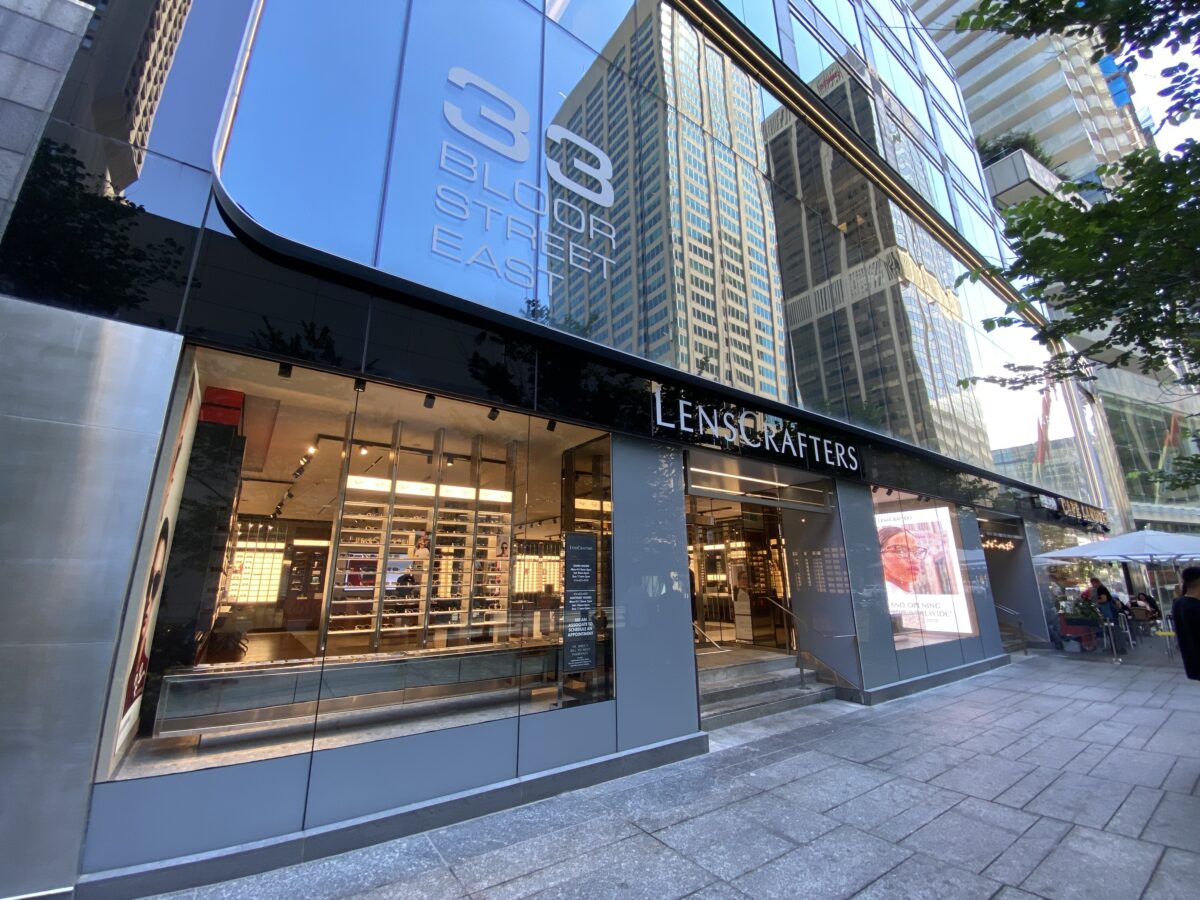
LensCrafters at 33 Bloor Street East (Image: Dustin Fuhs)

LensCrafters, one of the largest optical retail brands in North America, has opened its new and first flagship store in Canada in Toronto at 33 Bloor Street East in the Bloor-Yorkville shopping district.

The company said the opening will further position LensCrafters as a modern optical retail leader of exclusive brands and reinforce the company as a trusted eyecare and eyewear authority in the region.

Alfonso Cerullo

“As LensCrafters continues to expand in the US and Canada, we look forward to advancing the brand this year with the rollout of our new flagship store in Toronto,” said Alfonso Cerullo, President & GM of LensCrafters, North America. 

“Appealing to the well-known local shopping hub on Bloor Street, the store will reflect the effortless integration of design and technology, giving customers a more individualized experience that allows them to easily browse the vast luxury assortment of both optical and sun frames. At the end of the day, we want to be a top destination in the community when it comes to finding the best vision care solutions that resonate with our customers and help people express themselves while seeing well at the same time.

“We are very happy about it. It is really beautiful. The team is very excited. We have the doors open. The customers are coming and we have been accepted in the community.”

LensCrafters Bloor Street (Image: LensCrafters)

LensCrafters was founded in 1983 and currently operates over 1,000 stores in the U.S., Canada, and Puerto Rico. It has about 90 stores in Canada. 

The newest flagship store is close to Toronto’s high-end fashion destination on Bloor Street and is part of LensCrafters’ continued North America expansion plans. The company opened its first two flagship stores in New York City in 2020 and two more in San Francisco in 2021 and Palo Alto last year.

“Toronto is one of our major markets and Bloor Street was a location and area we were trying to target for awhile because of course it’s a high premium retail area and for LensCrafters this is part of the target market that we want to try to get a position,” said Cerullo.

“LensCrafters in terms of vision, in terms of strategy, we want to be the high quality optical retailer and the experts of the community.”

LensCrafters Bloor Street (Image: LensCrafters)

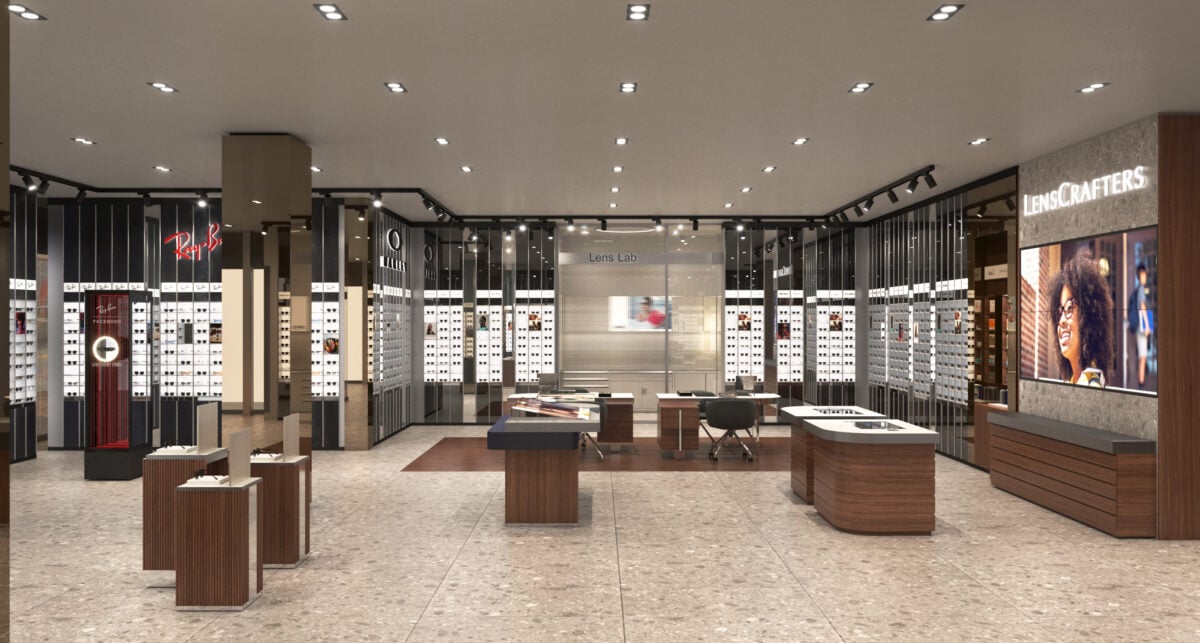
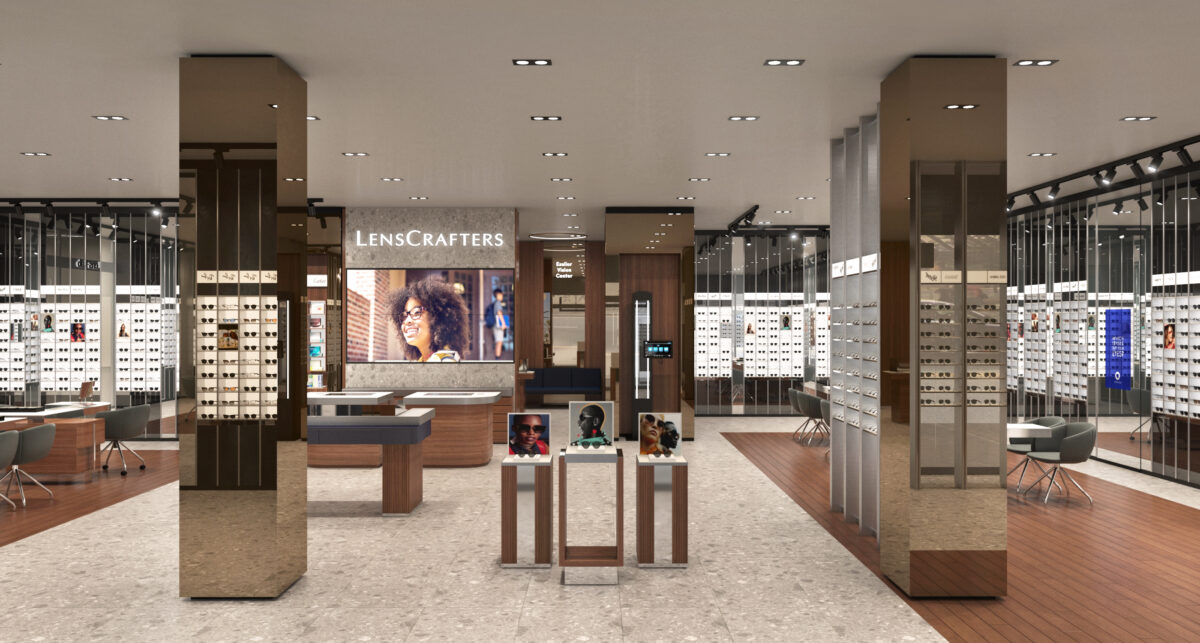
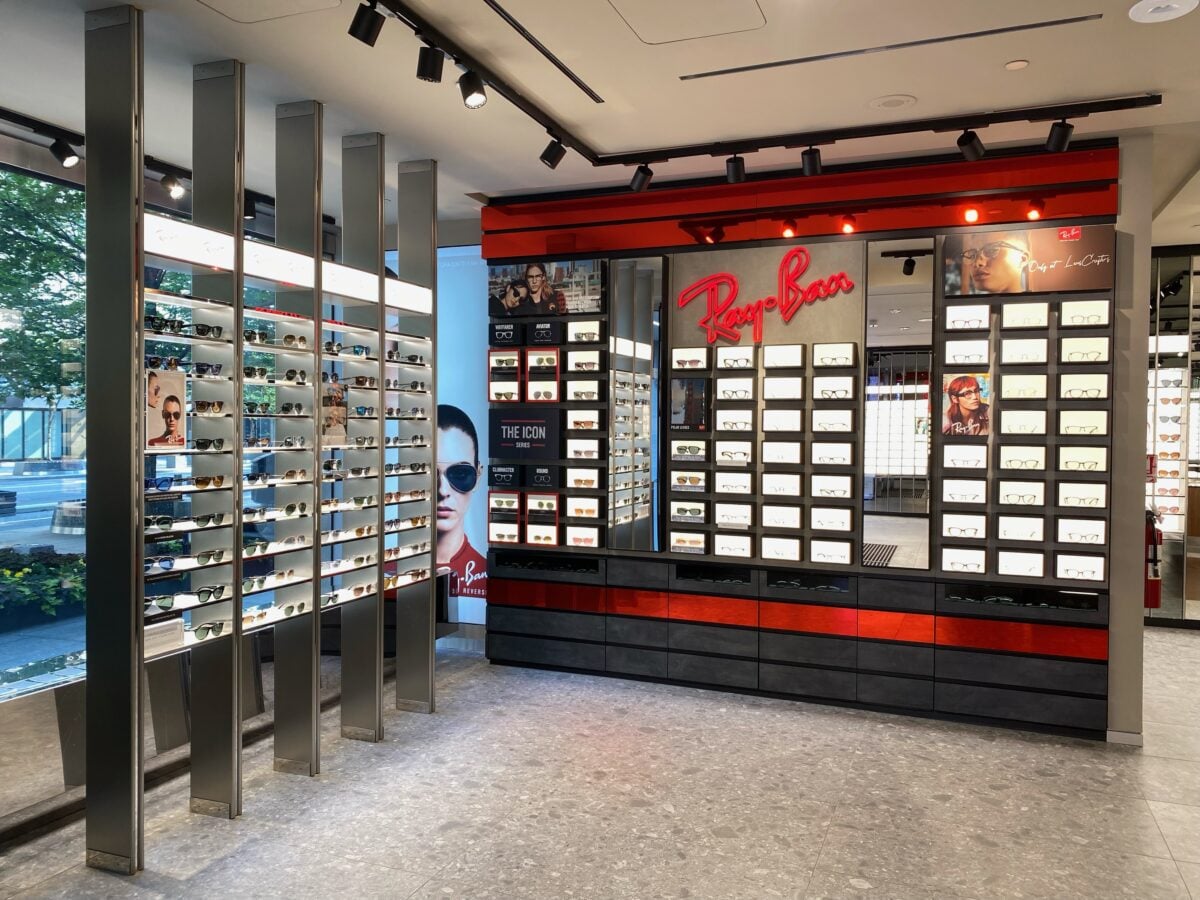
The company said the new elevated flagship will encompass the latest advanced digital technology and state-of-the-art design blending eye-catching finishes to create a dynamic customer journey. From quality eye exams to shopping for the perfect frame, the new location will showcase an expanded selection of designer eyewear styles and brands that include Burberry, Dolce & Gabbana, Persol, Versace, and Prada. 

“The flagship will leverage a wide range of tools to afford customers more opportunities to meet their needs for a premium in store experience. Customers will be able to digitally explore the wide variety of EssilorLuxottica collections and brands, customize Ray-Ban and Oakley frames, and virtually try-on any frame thanks to the Virtual Mirror technology through LensCrafters’ Smart Shopper interactive in store tool,” said the company.

“The collection of luxury optical and sun styles along with superior lens design and technology by Essilor, will give the brand a larger footprint in the eyewear market. The new flagship will be equipped with high-resolution digital screens and LED-walls displaying eyewear and campaigns to allow customers an immersive experience around the brand’s offering. An added focus will be given to the storytelling of prescription lenses through interactive applications installed both on iPads and touch screens, leveraging the see-through technology to simulate lens features and effects for better vision.

When asked if he sees more flagship stores in Canada, Cerullo replied: “For now, I think we may have another couple of opportunities overall in Canada. They are not short term. I think it’s more on the medium term. Consider them for this type of premium, high-end real estate areas, from when you start looking for locations that you like and when the store is built and you open, you can probably spend a couple of years overall,” he said.

The eyewear and eyecare industry in Canada has become a very competitive one in recent years with global brands setting up shop in the country.

“I believe that you cannot be successful by definition on everything. You should define your target, your piece of the cake where you really want to make an impact,” said Cerullo, adding LensCrafters wants to position its banner as the leader in the medium to higher class space.

“For this type of demographic, for this type of consumer, we want to really make sure that we are going to be the leader . . . We want to be the high quality optical retailer and trusted expert of the community that we serve. So in that community we want to make sure in all the things we’re doing that there’s no doubt for everything about the sight where you want to go for an eye exam.”

LensCrafters Bloor Street (Image: LensCrafters)
LensCrafters at 33 Bloor Street East (Image: Dustin Fuhs)

Cerullo said the retailer has presence in both shopping centres and streetfronts with most of its stores in malls.

However, in the future, he said a big part of the company’s investment is in relocation and remodelling of existing stores. He said the strategy is to also make a small shift to more stores in the future being streetfront or outside malls.

Exceptional Roster of Speakers at eTail Canada Conference: Toronto September 27-28 2023

The  will be taking place this year on September 27-28 in downtown Toronto. Over 60 speakers have already been confirmed, 75% of which are new, and over 40 are C-Suite/VP level executives. 

Register now and get 25% off the current price with code RETINSIDER []

The eTail conference has been designed to help businesses increase profits with action-packed strategies and connections made with the top mind’s at Canada’s most successful retailers. As with previous years, the conference will be held at the  located at 370 King Street West in the city’s downtown core. 

The impressive speaker list at eTail 2023 includes some very prominent names. Key learnings on what’s happening in the industry from these speakers will benefit those looking to the digital future following the pandemic. You’ll learn actionable strategies to perfect omnichannel, revolutionize customer service, harness the power of social commerce, drive personalization, and embrace sustainable business practices.

Some notable speakers and sessions will include: 

Sherin Yassin, Vice President, Marketing & Customer Experience, Walmart Canada

Keynote: Bringing Your Brand Promise And Customer Experience Into Alignment. Discussion point will include: 

  • Communicating a brand promise and what it stands for,
  • How to gain a deep understanding of customers’ needs, preferences, and expectations,
  • How to develop a uniform customer experience journey for in-store and online operations,
  • Training to empower employees to deliver the desired customer experience and brand promise, and
  • Monitoring and measuring the effectiveness of customer experience strategy.

Scott Adel, AVP, Digital & Store Experience, Canadian Tire

Panel Discussion: Strategies And Technologies Helping Retailers Create A Seamless And Personalized Omnichannel Customer Experience. Discussion points will include: 

  • Using tech solutions for in-store and online channels for a cohesive experience,
  • Leveraging data analytics to inform omnichannel marketing and sales efforts,
  • Developing an effective supply chain management system to ensure efficient fulfillment across channels, and
  • Training employees to effectively deliver on the omnichannel promise and provide exceptional customer service

Daniela Yanez, Director, Digital Ops & Strategy, The Source

Panel Discussion: Generative A.I. And Machine Learning As An Enabler For Retail Growth.

The panel will discuss AI and machine learning as tools that have helped to revolutionize the customer experience, tackling all of your AI questions so that your online experience is effective and efficient. That includes the topics of: 

  • How AI is alleviating manual processes your team used to perform,
  • From creating content to campaign execution—the digital marketing uses of AI,
  • From Bots to Buy—using AI to help shape onsite experiences, and
  • Challenges identified in AI implementation – what obstacles are the hardest overcome. 

Andrew Go, Chief Digital & Data Officer, Staples Canada

Fireside Chat: Hacking Customer Loyalty: Proven Strategies And Techniques For Strengthening Customer Relationship And Loyalty

The discussion will be on how to create a loyal customer base that can enhance your revenue, reduce business expenses, and generate more referrals compared to companies lacking devoted followers. Included in the discussion: 

  • Building a strong brand identity that connects with your customers,
  • Creating a sense of community around your brand,
  • Use data to personalize the shopping experience for customers, and
  • Use rewards and incentive programs to help build loyalty

Retail Insider’s Craig Patterson is also speaking at this year’s eTail Canada. 

Download the  to see the complete  and inspiring sessions at this year’s eTail Canada Conference. 

eTail Canada is a conference not to be missed. Register now and get 25% off the current price with code RETINSIDER

[]

[]

[]

[]

*****

*Partner content. To work with Retail Insider, email: craig@retail-insider.com

What the Metro Strike this Week Could Mean for Canada’s Grocery Industry [Op-Ed]

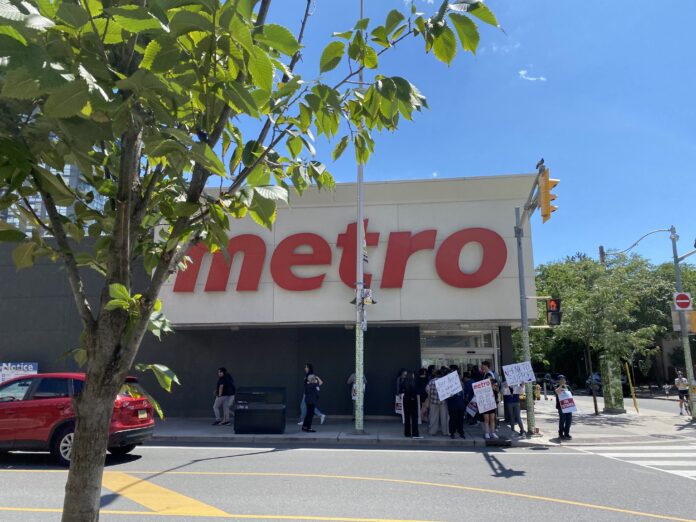
Metro Bloor & Spadina (Image: Dustin Fuhs)

The outcome of the Metro labour dispute will undoubtedly exert a profound influence not only on the Metro grocery chain but also on other grocers throughout the country.

The labour dispute currently unfolding at Metro’s 27 grocery stores in the Toronto area has emerged as a pivotal focal point in the ongoing struggle for worker rights and equitable treatment within the food retail industry. With an impressive workforce of 3,700 dedicated employees engaged in strike action, this conflict has already garnered considerable attention from scholars, policymakers, and the public alike. Beyond its immediate ramifications, the resolution of this dispute possesses the potential to reverberate across the entire Canadian grocery sector, thereby establishing a precedent for the broader frontline food industry.

At the crux of the matter lies the collective aspiration of the workforce to negotiate improved working conditions, just wages, and enhanced benefits. However, such a plea is far from simplistic within the confines of a low-margin business environment. The issues raised by the union reflect systemic challenges afflicting numerous frontline workers operating within the sector. Amidst the mounting cost of living and economic uncertainties, employees are earnestly endeavoring to safeguard their rights and livelihoods, and their demand for fair treatment is both rational and justified. Who, indeed, could contest such a noble pursuit?

Adding fuel to the motivation of union workers to strike is the recent disclosure of hefty bonuses bestowed upon grocery executives in recent months. As per company documents disclosed earlier this year, the total compensation for the top five Metro executives for the year concluding in September 2022 amounted to a staggering $13.2 million, signifying a four per cent upsurge from the previous year’s equivalent period. Notably, the bonus component of their compensation witnessed an astonishing 13.7 per cent escalation, reaching a sum of $3.7 million. This disparity equates to a stark $1,000 for each employee currently partaking in the strike. Comparable announcements of corporate bonuses by other grocery retailers have elicited disapproval from both Canadians and grocery employees alike.

It is noteworthy that most employees at Metro have, in the past, received bonuses in the form of gift cards, typically amounting to $300 for full-time workers. While such a gesture may be perceived as commendable, it also raises concerns about the potential self-serving nature of these rewards, considering they emanate from one’s own employer.

An intriguing aspect of this dispute lies in how union workers have, to some extent, undermined their own union leadership. Despite the latter’s acceptance of Metro’s offer, the workers themselves outright rejected it, citing a significant gap between the perception of acceptability by union leaders and the actual desires of the union workers. A similar scenario unfolded at ports in British Columbia, which have also been grappling with labour issues since the end of June, focusing on matters of salaries and concerns about automation potentially displacing human workers. These occurrences signal a broader trend.

Eric La Flèche, President and CEO of METRO, at the Annual General Meeting of Shareholders, January 25, 2022. (CNW Group/METRO INC.)

Undoubtedly, Metro acknowledges the indispensable value of its frontline workers in their indispensable contributions to maintaining the supply chain and guaranteeing consumers’ access to vital goods, particularly during the pandemic when their unwavering dedication and service came to the fore. Nevertheless, these efforts are frequently undervalued in terms of compensation and job security. Despite a substantial proportion of these positions being occupied by young students or individuals seeking supplementary income, the industry is not renowned for providing ideal and desirable working conditions. It may be time to contemplate novel approaches to the management of grocery stores.

Metro’s current business model inherently poses challenges to accommodating higher wages and nurturing career-building positions at the store level without reducing the number of employees. For instance, to implement a 10% increase in salaries without impacting retail prices, the workforce would need to be reduced to below 50 employees, at a minimum. This scenario necessitates the incorporation of automation and artificial intelligence, consequently transforming the nature of numerous jobs within the industry. Worth noting is Metro’s vast presence, with over 325 grocery stores and more than 600 pharmacies across Eastern Canada, making it a prominent player within the sector, despite not being the largest.

The outcome of this labour dispute will undoubtedly exert a profound influence not only on the Metro grocery chain but also on other grocers throughout the country. A triumph for union workers could embolden frontline employees in other sectors to advocate for their rights, thus potentially setting in motion a chain reaction that could reverberate across the entire retail industry.

Regrettably for grocers, the optics of the situation are not in their favor. Frontline grocery workers currently possess considerable political capital, and they are well aware of this fact. Although most Canadians may not be acquainted with Metro’s CEO, they certainly recognize and appreciate the dedicated individuals such as Jim, Carrie, or Tom, who attentively serve them during their visits to the grocery store. These personal connections carry significant weight, particularly in contemporary times.

Canadian Retail News From Around The Web For July 31st, 2023

Canadian Retail News From Around The Web

News at a Glance

Retail Insider is streamlining its Canadian retail news from around the web to include a handful of top news stories that can be viewed quickly during the day. Here are the top stories from the past 3 days

Majority of Canadians believe food prices will continue to rise. Stats show they’re right. (CityNews) ********

Loblaw moves to counter ‘grocer profiteering’ narrative, but experts say it may not be enough (BNN)

The nonsensical ban on compostable plastic bags (Globe & Mail)

Colby Cosh: Small retailers will pay the price for Liberal crime policies (National Post) ********

Nearly 100 Percent of Canadian Food Samples Tested for Microbial Contaminants Deemed Satisfactory (Foodsafety Magazine)

Metro stores in Greater Toronto Area close as workers go on strike (CP24) ********

Striking Toronto-area Metro workers speak out: ‘This is definitely about money’ (Global) ********

Self-serve grocery market chain Aisle 24 is expanding in Western Canada (Grocery Business) ********

T&T Supermarché partners with Asian night market in Montreal (Grocery Business)

Recent violent crime in Winnipeg reignites demand from business owners for urgent action (Global)

Ontario is lowering its markups on pot, as cannabis companies struggle to stay afloat (CBC) ****

Montreal’s Old Port Has A Brand New Sneaker Store Where You Can Get Kicks & Your Coffee Fix (MTL Blog)

Shein opens pop-up shop in Montreal area amid multiple controversies (CTV)

‘Shoppertainment’ trend hits Regina mall with opening of new play structure, arcade (CTV Regina)

Mala Mtl brings thrifting to Montreal plus-sized community (CTV)

After their cafe was destroyed in the war, Ukrainian couple opens pierogies shop in Strathroy, Ont. (CBC) ****

Quebec family shows resilience after fire destroys beloved Lower North Shore business (CBC)

Massive Costco Store Set to Anchor Innovative Bingham Crossing Retail Development Near Calgary [Interview]

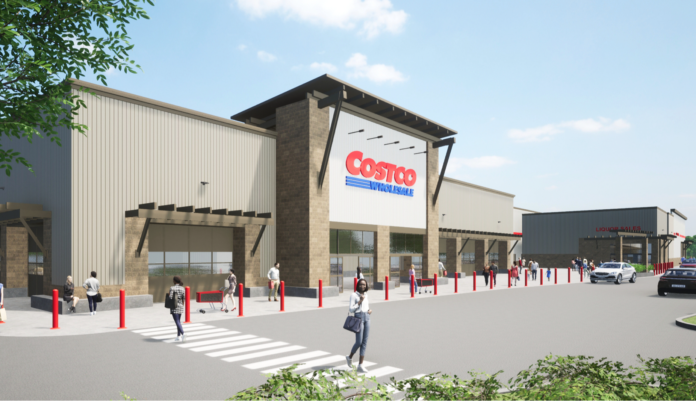
Costco Rendering at Bingham Crossing (Image: Costco)

The recent approval of a massive Costco store will be the anchor of the Bingham Crossing retail development just outside of Calgary.

The project by Renco Developments Inc. is being described as a unique, state-of-the-art pedestrian-oriented shopping and lifestyle centre which will eventually include about 500,000 square feet.

The development is located in the Springbank area along the TransCanada #1 Highway and across the road from the amusement and entertainment facility Calaway Park.

Rendering: Bingham Crossing
Image: Bingham Crossing

Ron Renaud, Owner Rencor Developments, said he believes the Costco store will be the biggest in Alberta at about 170,000 square feet. 

Ron Renaud

“We have a Phase One approved for total square footage of 270,000 square feet plus Costco,” he said. 

The Development Permit has now been approved, with Costco scheduled to open its doors to its first Members in the Fall in 2025.

The overall project is about 300 acres and will eventually include a residential component to it.

“The massive amount of infrastructure that we have to build. Basically anything in Rocky View (County) at least in the Springbank area has no servicing. That’s why this thing has taken so long to get to this point. We’ve had to buy water licences, we’ve had to build a water treatment plant, we had to have a wastewater plant approved which we did. We’ve now changed that and we’re connecting to the Harmony line (another development nearby),” said Renaud. 

“In total, it could be north of two million square feet but that would be a mix of retail, residential. We have approval for a seniors’ facility of about 240 units and we’re hoping to start that with Phase One. Costco is planning to start construction next year, open for 2025.”

Image: Bingham Crossing

Eve Renaud, Vice President of Rencor Developments, said depending on how Phase One is demised the total number of businesses could be anywhere from 50 to 90.

Eve Renaud

“We have the ability to do a grocery store and basically it will be that fundamental retail, that amenity retail, that you would come to expect in a town centre,” she said.

Costco would be the first retailer to open in the first phase of the development.

Ron Renaud said the company is hoping to start Phase One in early 2025 for a Fall 2025 opening or possible Spring 2026.

“The advantage that we have is there are no amenities. There are no services in Springbank right now,” said Eve Renaud. “Grocery stores, banks, medical/dental, QSR, a smattering of fashion. Other national retailers you would come to expect to see in a retail hub.

“So we’re really building from the ground up from a use perspective. Right now Springbank doesn’t even have a town centre per se. It’s a group of 35,000 people that don’t really have a place to go. It is a high street. We’ll have those services that everyone needs to congregate. A  dry cleaner. A shoe repair. That type of thing.”

Bingham Crossing (Rendering: RTKL Architects Canada)

The vibrant open-air gathering place will provide access to high quality shops, dining, services and amenities in a village-like atmosphere. The first phase of Bingham Crossing will be 80 acres, including the development of a new senior’s housing complex and vast municipal green spaces.

“The location is pretty key and this is why Costco selected it. It really is regional. It’s located on a major highway which is going to go at some point to 10 lanes. With the opening of the southwest Ring Road, the amount of traffic that it’s going to generate will be pretty significant,” said Ron Renaud.

“It serves not only what I call West Calgary, but Springbank, Cochrane, Canmore, Banff. Basically anybody driving westward to the mountains or the mountain parks or any of those vacation spots are going to drive by this site. So it has a pretty key regional importance.”

Rendering: Bingham Crossing

He said Costco’s presence in the project is like the “Good Housekeeping Seal of Approval.”

“It basically solidifies the regional location. The Costco guys are very excited about it. They’re expecting some very big things from the store. They’ve done well in the Calgary market.”

“It’s very important for our tenant mix for the surrounding property,” said Eve Renaud, “because having such a great regional draw really elevates the quality of retailer that we can attract in the centre. So it really will improve the tenant mix.’

Eve Renaud said Harmony is a new residential community three minutes away from Bingham Crossing which at full build out will be home to about 15,000 people.

“They have a very small component of retail. We work closely with them and they view that we will be the main amenity base for that community as well,” she added.

Ron Renaud said the company purchased the land in 2007. 

“Everybody says why has it taken so long? The approval process was complicated and lengthy for everything we were doing  . . . No potable water, no wastewater, no off-site improvements. All of that. And layer on top of that the approval process to get things approved. To get a development permit,” he said.

“There will be additional retail. We’ll bring forward other development permits to build out what I call the west quarter section which has the concept plan in place for over a million square feet. I think the majority of that will be commercial with some residential. The east quarter section lands will more than likely be a mix of different forms of residential development.”

Urgent Action Needed to Tackle Out-of-Control Commercial Rent Crisis, Report Warns

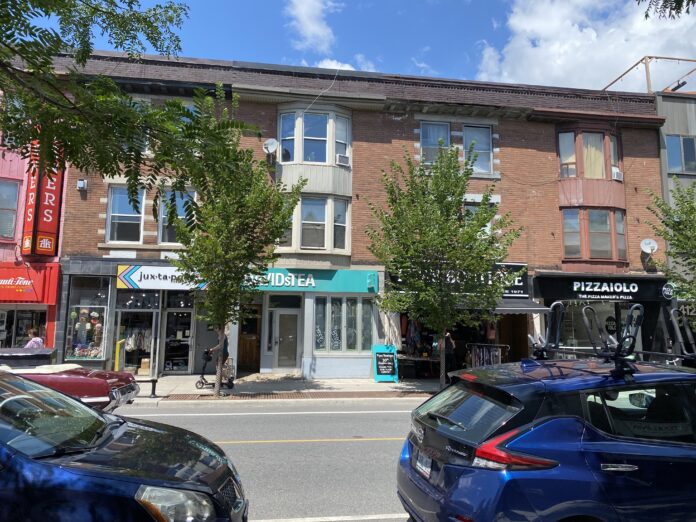
Vacated DavidsTEA on Bloor Street in the Annex (Image: Dustin Fuhs)

Small businesses need urgent action on the commercial rent crisis that is out of control in Ontario.

A report, called Out of Control, by the Better Way Alliance, says the COVID pandemic has deepened a pre-existing crisis – unaffordable commercial rent that is shutting down small businesses. 

“Even before the pandemic, rents were so high that it was difficult – sometimes impossible – for small businesses to break even or tuck away a small profit for a rainy day. Media headlines regularly shared news of businesses forced to close because of increasingly insurmountable rent costs. In Ontario, there are 400,000 small businesses, and across Canada small businesses employ almost 70 per cent of people in the private sector,” says the report.

“Small businesses are the heart of vibrant, friendly communities – places to gather, do some shopping, and take care of errands. Entire neighbourhoods are named for the diversity of the small businesses and people that inhabit them. Places like Little Jamaica, Little India, and Chinatown enliven our cities. But a lack of commercial rent protections in Ontario is threatening small businesses, the jobs they have created, and the vibrancy they bring to our communities. 

“People who are not small business owners may be shocked to learn there are neither guidelines for fair and predictable rent increases nor set standards for leases and shared costs. Commercial landlords can charge, change, and do almost anything they want. It is legal to increase rent by any amount. Landlords can evict small businesses in favour of new tenants or leave the space vacant, even after small business owners have paid out-of-pocket to renovate their space. Landlords can pass on surprise bills for thousands of dollars at their sole discretion. They are not held to basic building maintenance repair or heating and cooling standards. Commonly accepted guidelines and standards that exist for residential tenants are not in place for small business tenants. And, there is no official mechanism to resolve disputes between commercial landlords and tenants. This leaves small business tenants at the mercy of landlords, whose property investment appreciates in value with or without rental income. Even the most savvy small business owners have little leverage to negotiate fair lease agreements.”

Yonge at Dundonald (Image: Dustin Fuhs)

The commercial rent affordability crisis is threatening their livelihoods, the jobs they create, and benefits they bring to neighbourhoods. It is clear that action is needed by the Ontario provincial government to remedy the commercial rent affordability crisis for small businesses, added the report.

The commercialrent.ca website was launched to bring awareness to the issue.

Aaron Binder, Director of the Better Way Alliance, said the business group put together a survey of its members and a few non-members in late 2021 and 2022 because it had been receiving a lot of feedback about rent costs and lease agreements.

Aaron Binder

“We’re hoping to develop some deeper dives into the philosophy of free market versus fair markets in relation to commercial property,” said Binder.

“We’re a group of businesses that advocate for ethical employment, for decent work, paid sick days, higher wages, fair scheduling practices. All of our businesses exemplify these ideals and we’re across every industry in Canada. 

“And the evidence we see not just from our businesses but from across the globe is that when you treat your employees well, they treat your business well.”

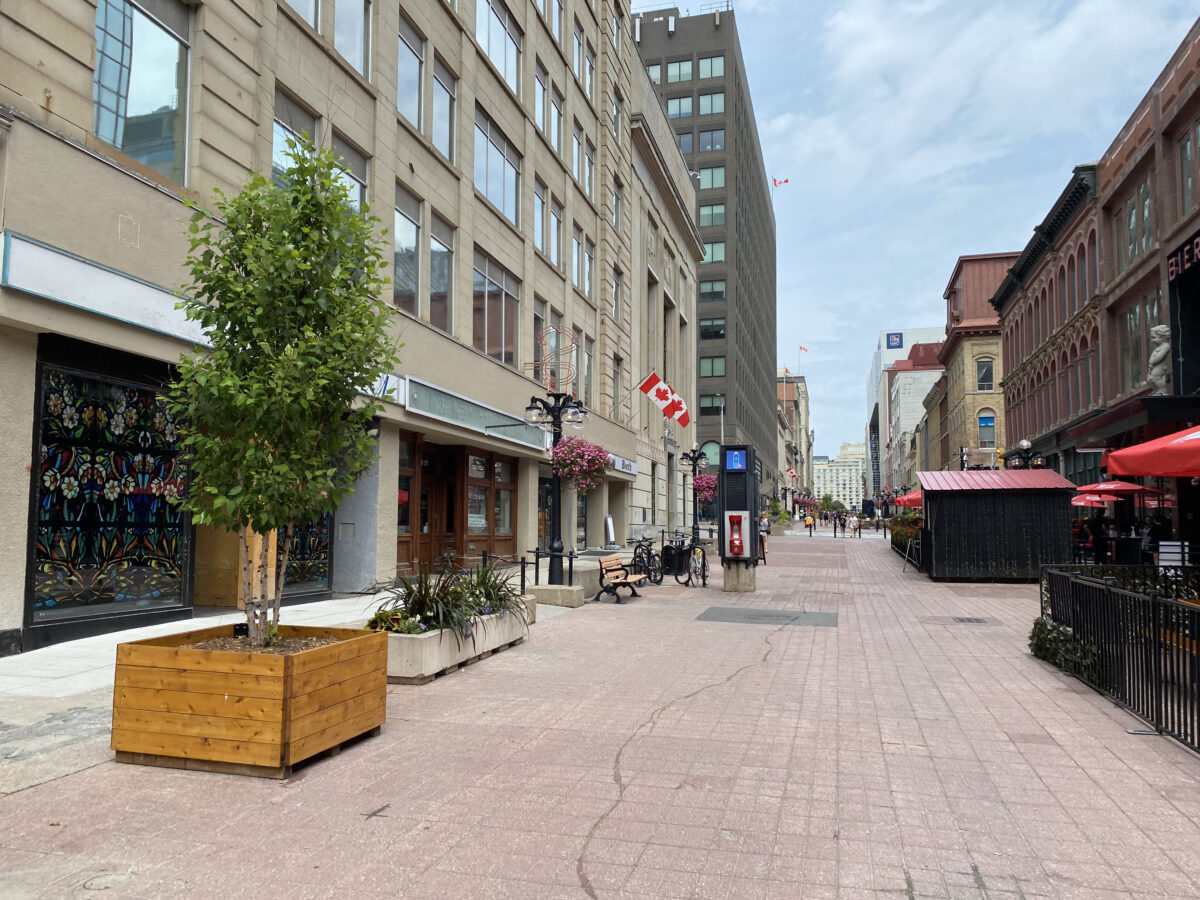
Sparks Street in Ottawa (Image: Dustin Fuhs)

The report found that nine in 10 small businesses list rent as one of their top three expenses. For over half, rent accounts for more than 60 per cent of overall expenses.

The report added that three quarters of small businesses have experienced a one-time rent increase of 10 per cent or more; one in six have experienced an increase of 50 per cent or more; one in 10 have seen their rent double during a single increase. 

It also said that over 40 per cent of small businesses have moved in the past due to rent increases or difficulties with their leases or landlords. Over half anticipate being forced to move at the end of their current lease for these reasons.

The report said the provincial government must:

• Create rent guidelines for year-overy-ear increases that apply to all commercial tenants, including new tenants;

• Standardize leases to ensure fairness and transparency for shared costs, and ensure priority is given to existing tenants when lease term is up; and 

• Create a mechanism to enforce rules and resolve disputes.