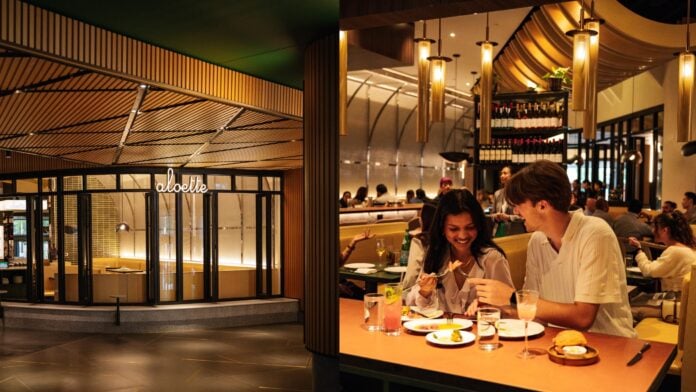
Experience Aloette Bay, conveniently situated just steps from Union Station, Scotiabank Arena, and the heart of downtown Toronto. (CNW Group/Alo Food Group)
Michelin-recommended Aloette, one of Toronto’s most beloved and celebrated dining institutions, is opening its newest location, Aloette Bay on August 22.
Located on the fourth floor of 81 Bay Street at CIBC SQUARE’S TABLE Fare + Social, this new venture marks Alo Food Group’s continued expansion in the city, bringing its renowned casual yet elevated dining experience to one of Toronto’s most dynamic and vibrant food destinations in the heart of the South Core across from the Scotiabank Arena, it said in a news release.
“We’re thrilled to open our doors at this new location and bring Aloette’s unique blend of approachable luxury to a new audience,” said Chef Patrick Kriss, Chef and Owner of Alo Food Group. “This location is an opportunity to share our passion for great food in a setting that caters to both the fast-paced lifestyle of the Financial District and the vibrant energy of Toronto’s South Core.”
The company said Aloette Bay will offer both dine-in and takeout options, making it a convenient choice for those looking to enjoy a delicious meal during a busy workday or a leisurely lunch with friends. It will be open for breakfast, lunch, happy hour and dinner featuring daily specials that highlight seasonal ingredients and the creative fare that has made Aloette a favourite among Toronto food lovers. Expect exciting new menu items plus signature Aloette dishes, including the famous Burger, Iceberg Wedge, Fried Chicken and Lemon Meringue Pie. Guests can also enjoy a selection of craft cocktails, wines, and beers, carefully chosen to complement the menu.
CIBC SQUARE’S TABLE Fare + Social is a premier food destination in downtown Toronto, featuring a curated selection of local and international culinary offerings.
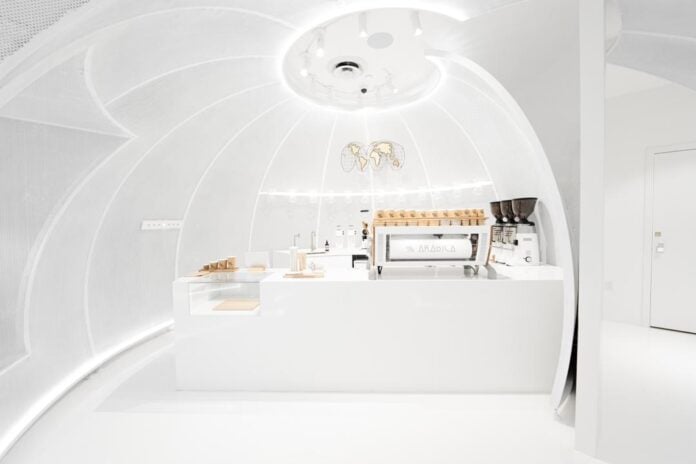
New Whistler Village %Arabica location. Photo: supplied
% Arabica, a Japanese coffee brand, opened a new location in Whistler Village in British Columbia earlier this summer. The new location offers a unique experience as consumers can enjoy the natural beauty around them. The brand will also be expanding into the CF Toronto Eaton Centre.
“% Arabica Whistler Village is a key piece in % Arabica’s expansion puzzle. It allows us to reach coffee lovers in a premier tourist spot while complementing our urban presence with the upcoming CF Toronto Eaton Centre branch. This dual strategy of embracing both bustling city environments and serene, nature-rich destinations helps % Arabica connect with a diverse range of customers. By doing so, we are not just expanding geographically, but also enriching the % Arabica experience across different settings,” says the % Arabica team.
There is one location at the CF Toronto Eaton Centre that will open in the future and the brand already has a location at the Toronto Union Station, which opened last year. The Toronto Union Station was % Arabica’s first location downtown Toronto and its second location in Canada. Its first location opened in 2022 at Toronto’s Yorkdale shopping centre.
The brand was founded in 2013 by Kenneth Shoji and now has around 190 locations worldwide. Michael Betal of Cushman & Wakefield represents % Arabica in finding real estate within Canada.
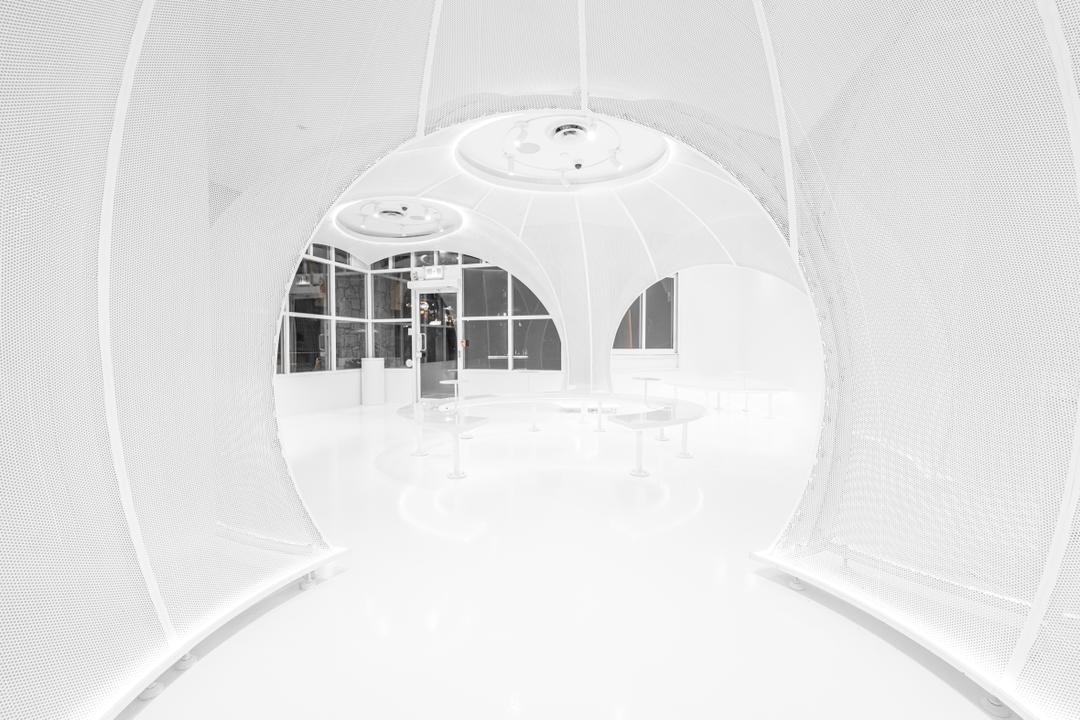
New Whistler Village %Arabica location. Photo: supplied
Modern twist alongside nature
The new Whistler location opened on June 22nd and visitors can expect a modern interior by Chris Precht, an architectural designer from Studio Precht.
“Our Whistler Village location is designed to be a cozy retreat that mirrors the beauty and tranquillity of the mountains. We have incorporated a cool, glacier-like ambiance with a modern twist that allows you to soak in the natural beauty. Imagine sipping on your favourite % Arabica coffee while enjoying panoramic views of the snow-capped peaks or the lush forests. This exact experience is what we wanted our visitors to savour.”
Guests can expect the space to connect “coffee with Canada’s natural landscape” with the design inspired by ice caves. The space also features white metal mesh domes on the ceiling, a centrally placed counter, and a % symbol sign.
While the new location won’t have any specials on the menu, the brand will be adding its “Canadian exclusive Maple Latte.” This drink will be available at all % Arabica’s locations within Canada and uses locally sourced maple syrup, “offering a uniquely Canadian twist to our menu. It is a perfect way to enjoy a taste of Canada while savouring the exceptional quality of % Arabica coffee.”
All % Arabica locations are committed to remain sustainable and use locally sourced ingredients. The brand also tries to be more involved in local communities by participating in events.
“Sustainability and community are at the heart of % Arabica’s Whistler Village branch. We are committed to using eco-friendly materials and energy-efficient practices in our operations. Our packaging is compostable, and we are sourcing local ingredients to support nearby farmers and businesses. % Arabica also plans to participate in community events, giving back to the beautiful place we now call home and ensuring % Arabica operates responsibly,” says the % Arabica team. “Sustainability remains a core focus, and % Arabica will keep investing in eco-friendly practices and sourcing methods.”
New Whistler Village %Arabica location. Photo: supplied
Looking ahead
The % Arabica team says the brand will be continuing to expand globally along with improving its online presence.
“Looking ahead, % Arabica is excited to continue our global expansion, reaching new and diverse markets. We are also focusing on enhancing our digital presence and customer engagement through innovative technology, such as mobile ordering and personalized loyalty programs.”
And to keep on coffee trends, the brand will also be listening to what consumers are looking for through customer feedback and will explore new coffee blends and brewing techniques.
“Whistler is not just a destination; it is an experience filled with vibrant energy, breathtaking scenery, and a sense of adventure that perfectly aligns with the spirit of % Arabica. We are inspired by the idea of bringing our love for exceptional coffee to a place where people come to enjoy the best of nature and outdoor activities. It is about creating a special spot where both locals and visitors can gather, relax, and savour a perfect cup of % Arabica coffee amidst the stunning backdrop of Whistler.”
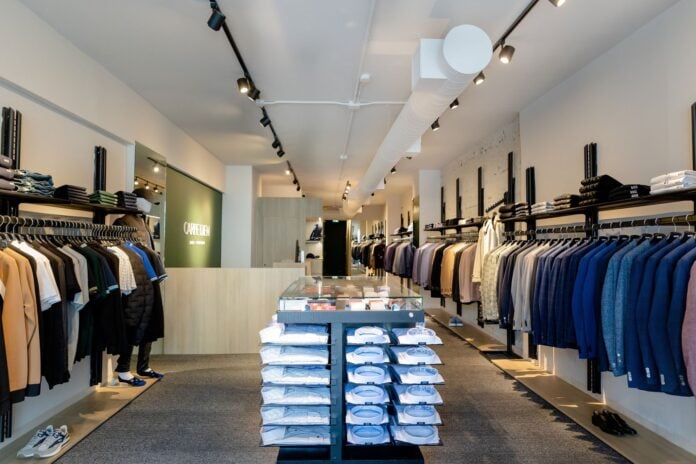
Carpe Diem menswear in Toronto - Nersessian worked with the retailer to create effective displays. Photo supplied
By Ani Nersessian
In the realm of retail, the synergy between in-store and online experiences is more crucial than ever. Visual merchandising bridges the gap between these two worlds and elevates the customer journey to new heights of engagement and satisfaction. As we explore this topic, let’s uncover the untapped potential within the union of brick-and-mortar and e-commerce landscapes.
A well-merchandised brick-and-mortar store does not necessarily guarantee a well-merchandised e-commerce shop, and the same applies for the other way around as well. It is quite common for retailers to initiate their retail businesses with a website before they open their first brick-and-mortar store, which can steer the visual merchandising plan of the physical space. An optimized website, in regard to visual merchandising, is one that has fulfilled a full consumer journey: That means capturing the audience’s attention from the home page, enticing them to explore further, making it easy to navigate, encouraging add-ons, and taking them to the cash out point. If the website itself was first optimized, it could be used as a more effective reference for guiding a new in-store set-up. The same would apply in reverse as well: If you have invested more planning into the set-up of your physical shop rather than your website, you can apply some of the consumer journey strategy from your in-store set-up to your website.
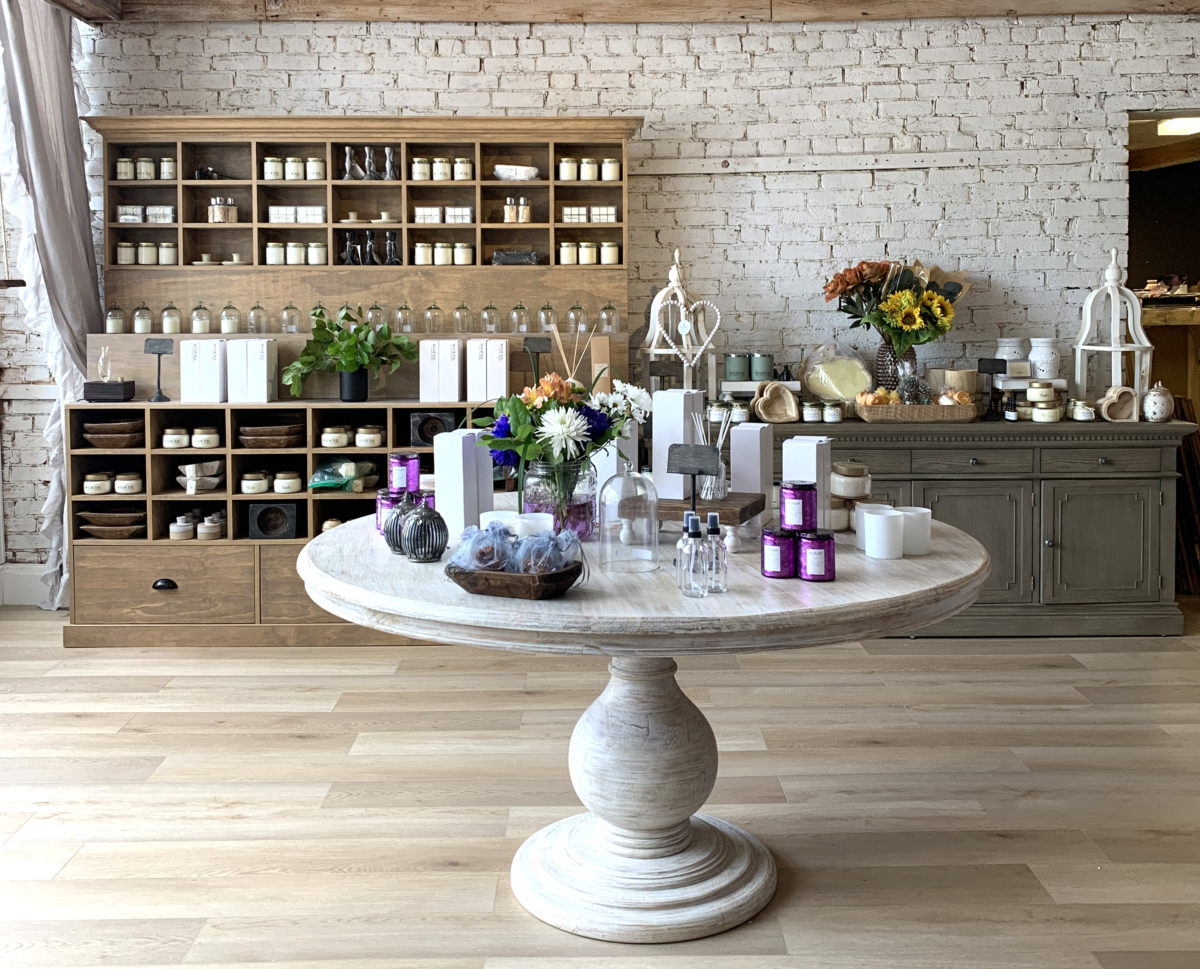
Wick’Ed Fragrance House is an independent home and fragrance shop in Cookstown, Ontario. While Wick’Ed Fragrance House’s online presence is strong, Ela Onisto, the owner, has noticed a surprising trend. Despite the potential for greater online traction due to its smaller-town location, the majority of sales still occur in-store. Ela’s customers often express a preference for the physical shopping experience, finding the ambiance of the store to be particularly inviting and relaxing. Ela has put considerable effort into optimizing the physical space with professional visual merchandising services, resulting in a welcoming environment that resonates with her clientele. While the website offers the same inventory, there remains an opportunity to enhance its appeal to match the inviting atmosphere of the store. Compared to the in-store visual merchandising, the website shopping categories, product groupings, general flow and add-on suggestions are less defined. In-store set-ups can be used as a guideline for setting up the consumer journey on the website in all of the areas that they related to one another, which we will explore further in.
Inside WICK’ED FRAGRANCE HOUSE, image supplied
So how can we use e-commerce to unveil opportunities within in-store merchandising, or vice versa? By assessing if and how each consumer journey stage can be further optimized, taking inspiration from the successes of one, to adapt to the other. To do this, we first need to understand the connection between these two worlds.
Let’s compare each key stage of the consumer journey within visual merchandising:
The Intro
In-Store: Storefront, window display, and in-store front feature area
Online: Home Page and Banner
“The Intro” of each space communicates the brand overall, as well as a reason to walk in. Since these “intro” points are the gateways to the shops, currency and relevance are key, meaning the “Intros” are top in terms of freshness and planning. The most timely significant product features belong here.
The Space Organization
In-Store: Space Plan and Category Zones
Online: Main Navigation and Sub-Categories
It is quite common to categorize the assortment by their product types. Yet, this could be quite uninspiring for customers. A part of the customer service is not only presenting the assortment, but presenting it as a story, highlighting it as a way to fulfill a need. Let’s look at two familiar yet very different industry titans: Loblaws and Anthropologie. Given their distinctive brands (one being essential and the other being specialty fashion), you may assume consumers’ shopping behaviours and needs are just as different. And while that may be true, both rely on relevant categories on their sites to inspire and ease shopping decisions. Loblaws, for example, has curated sections focusing on the most current relevant themes, in addition to the typical categories by food types; They have a seasonal shop including themes like Parents’ Day, Seasonal Décor, Summer Grilling, Seasonal Allergy Relief, etc.) Their Seasonal produce section highlights the top grocery picks beyond the standard product categories. As well, they have a Discover section to include popular ideas to shop for (e.g. Kids Meal & Snack Ideas, Shop Local, etc.)
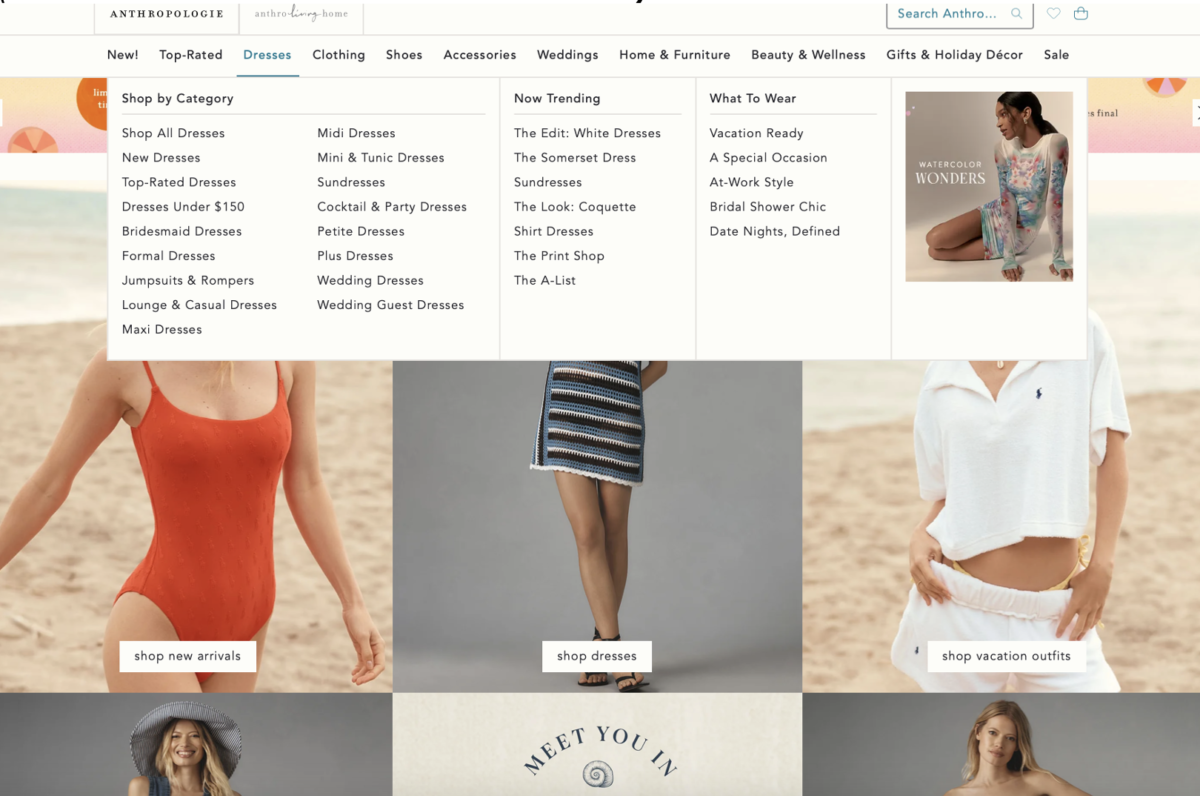
Similarly, Anthropologie ‘s navigation sub-categorizes its overarching product categories for ease, but also includes inspiring themes labelled as “Now Trending” and “What To Wear” sections to present the collections in a more inspiring way. No matter the size of the business, looking at larger companies could be a great source of inspiration for strategy.
Screen shot of the Anthropologie website
Let’s reverse that as well. If an in-store merchandiser has intuitively or strategically curated set-ups based on their observations of shoppers’ behaviours or needs, these curated themes could be guidelines for the e-commerce navigation as well. Practically speaking, you may list more curated themes on a website than in-store due to space constraints.
The Product Packages
In-Store: Product Adjacencies
Online: Product Listing Pages
Product groupings on a website’s listing page or within the zone of a physical store are known as product adjacencies. Once the categories are selected, deciding which products belong here are key as part of the merchandising and buy plan. This means the products would relate to each other logically, but the order of them also matters. On a webpage, the first positions for the products would be the most important, while in-store, we would prioritize products at eye-level. The data pulled to assess the best sellers would also help decide which are worthy of these key spots within their zones. Placing the main product in the most focal areas with the coordinating pieces in secondary sections would communicate their relationships. For example, on a shelf, you may decide that the main attraction is a cake stand in the centre, gaining the most attention, while the coordinating serving utensils and dessert plates are conveniently placed on either side.
If the quantity of products allocated per webpage or per zone are overwhelming, it would be worthy considering categorizing even further, or using the help of filters to decrease the quantity. Generally, relying on the customer clicking through several webpages would risk them losing interest and losing visibility on the items on the later pages. In-stores, overabundance would mean sacrificing key negative spaces that helps to define one grouping from another. The amount of negative space that is needed would be dependent on the type of retailer, however, it is rare, if ever, that no negative space is needed between product groupings.
It is important to organize products clearly enough and efficiently in order to ease the shopping selection as a part of customer service. The way that our customers shop in-stores could also unveil the filters and tags that would help them to make quicker purchasing decisions online. For example, if the product category is Beauty and Skincare, do the customers shop by brand, skin concern, usage, product type, or all of the above? The order of the customer’s decision-making is important and would affect the overall hierarchy of categorization, as well as define the filters that are needed to help quicker purchasing decisions. For example, If the customer shops by brand first, then by skin concern, the product would be grouped by brand, and within each brand, by skin concern, and lastly by usage. If the brands are less important (or lesser known) than the skin concern, the products would reverse being grouped by skin type first, and then by brand.
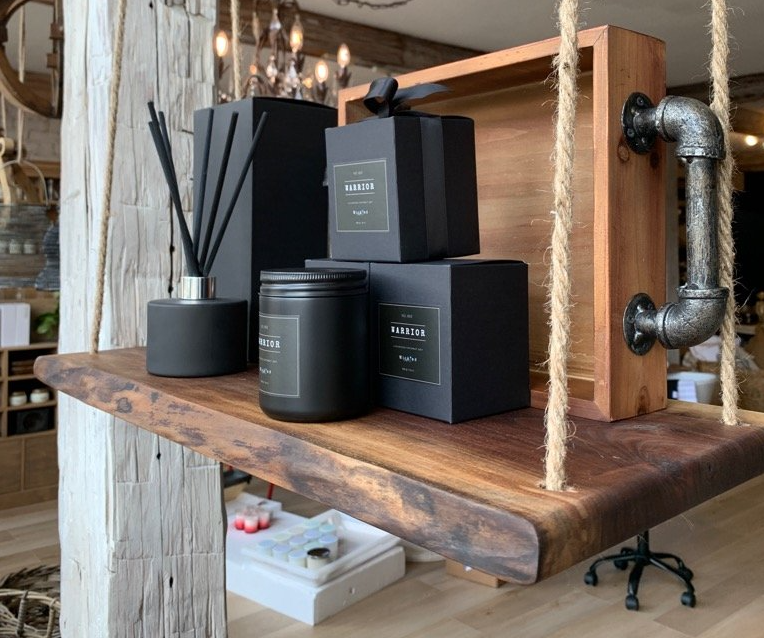
Inside WICK’ED FRAGRANCE HOUSE, image supplied
The Key Product Info
In-Store: Product Displays
Online: Product Display Pages
While business owners may know every selling point of a product, we cannot assume they are evident to a customer. Each product display page would need to include every key information about the product including specs and key selling points to help make that shopping decision. While this could be the way it is displayed online, it would mostly rely on the informational text and graphic design to make the information as comprehensible as possible. In contrast, it is not practical nor effective to highlight every piece of information about every product in-stores. There is also less need, given the in-person conversation is also an option in-stores. Therefore, the key selling points of featured products would be important to highlight, which would be communicated by showing the products in context, in usage in a display, highlighting the key features visually, as well as supportive signage. The prioritization and proportions of all of these would be important during planning, so that they are truly effective. In each space, we would need to consider all of the questions that would play a factor in a customers’ shopping decision, for example, options for sizes, colours, price points, materials, etc.
Last Chance for Add-Ons
In-Store: Impulse Buys or Product Accessories
Online: Product Recommendations
The final opportunity to add-on sales are at the cash desk (the point-of-purchase section) or the bottom of the product listing page, commonly shown under the header of “You may also like….”. Another point, before getting to the end of the consumer journey, is within the product adjacencies: If a consumer is attracted by the main item (e.g. a teapot set), what accessories could be added on to coordinate with this item? You may hope to find teacups, napkins, or tea. These accessories could then also be a part of the add-ons in the online shop, either as product adjacencies within a curated page, or under the “You may also like” section online. To leverage this section, it is advisable to see this truly as an add-on section rather than as an alternative, where the customer may be swapping out their original purchase. In contrast, the point-of-purchase add-ons would be items that are fairly neutral and generic enough to add-on to any purchase, rather than specifically relate to it. It is important to be mindful of what would realistically be added on; smaller items with lower prices would be an easy upgrade, while a larger, more substantial item would be less tempting.
Since we have drawn similarities, it is also important to understand the nuances of each side. It is common for a shop with multiple locations to edit each location based on its local demographic. One way we see this is in its curated assortment plan; while the bulk of it may be cohesive in style for a consistent brand image, the exact same assortment range would not be relevant for every single neighbourhood. In the case of the online world, we do not have the case of considering different neighbourhoods. We do, however, have the capability of catering to an even broader audience, given there is less geographical limitation. That typically means a larger range of assortment which has advantages and disadvantages: The advantage is that you do not have to be quite as selective on what to stock, as long as it is generally relevant (e.g. particularly in the cases of seasonal goods.) However, the hierarchy of features would apply based on the seasonality. The disadvantage is not having the same targeted curation, which means the key feature areas are even more significant to kick off the shopping momentum and gain the interest. It is even easier to give up on the shopping experience when shopping online due to its convenience and ease of exiting. This is why the “key feature areas” are critical to master, as well as understanding which of those curated themes would apply to each local brick-and-mortar location.
In the ever-evolving landscape of retail, mastery of visual merchandising is a cornerstone of success. By embracing the convergence of in-store and online worlds, retailers can unlock a treasure trove of opportunities to captivate audiences, foster brand loyalty, and propel their businesses to new heights of excellence.
Ani Nersessian
After 15+ years of industry experience with various retailers and environments such as Holt Renfrew and Adidas Group Canada, VM ID Inc. was founded by Ani Nersessian to help retailers get set-up with a VM culture that is right for them.
VM ID Inc. is a Visual Merchandising service company which provides catered support for retail businesses through consulting, designing and labour services. Email: ani@vm-id.com
Canadian parents are grappling with increased back-to-school expenses this year, despite purchasing fewer items.
According to a recent survey conducted by NerdWallet Canada, the average projected spending for back-to-school shopping has surged to $743 per family, a significant increase from $524 in the previous year. This uptick comes even as 23% of parents report buying fewer items due to inflationary pressures.
The findings align with a separate study by the Retail Council of Canada, which indicates that 85.7% of Canadian consumers are either maintaining or increasing their back-to-school expenditures compared to last year. The NerdWallet survey further highlights that while 92% of parents will engage in back-to-school shopping, a concerning 18% may incur debt from these purchases.
Interestingly, Canada’s latest Consumer Price Index (CPI) data presents a nuanced picture. While prices in the recreation, education, and reading category have seen a slight year-over-year decrease of 0.2% for July, the clothing and footwear category has experienced a more substantial decline of 2.7% over the same period.
To mitigate rising costs, Canadian consumers are adopting various strategies. The NerdWallet survey reveals that 53% of respondents plan to take advantage of sales, 26% will use coupons, and 20% intend to purchase some secondhand items. Additionally, 65% of those surveyed plan to use credit cards for their purchases, potentially benefiting from cash back or other incentives. However, financial experts caution that this approach could lead to higher costs if the resulting bills are not paid in full or on time.
The Retail Council of Canada’s survey also sheds light on evolving shopping preferences. In a reversal of pandemic-era trends, 71.6% of respondents now prefer in-store shopping for back-to-school items. Furthermore, Canadian consumers appear to be planning their purchases earlier this year, with 40% intending to shop between two and four weeks before the school term begins – a 10% increase from the previous year.
This shift in consumer behaviour comes against the backdrop of Canada’s cooling inflation rate, which slowed to 2.5% in July – the lowest since March 2021. The moderation in shelter inflation, a key economic pressure point, has also contributed to this trend, with both rent and mortgage interest costs experiencing downward pressures.
Unified Commerce Group (UCG) is expanding its portfolio with the acquisition of substantially all assets of GREATS Inc., a digitally-native footwear brand specializing in premium sneakers for men and women, as well as a strategic investment in Utah-based womenswear retailer Böhme.
Unified Commerce Group was founded in 2019 as a platform to enable purpose-driven lifestyle brands to scale through shared services, anchored by data-driven customer insights and operational excellence. GREATS becomes the third brand in UCG’s portfolio, in addition to Canadian fashion brand Frank And Oak, and LA-based athleisure brand Spiritual Gangster.
GREATS Inc. was previously owned by Steven Madden, Ltd., the globally renowned leading designer and marketer of fashion-forward footwear, accessories and apparel. Unified Commerce Group will assume operational responsibility and, as part of the deal, Steven Madden, Ltd., through one of its subsidiaries, will become a shareholder of UCG.
Dustin Jones
“GREATS pioneered the direct-to-consumer model in footwear, and continues to delight its customers with high-quality, beautiful fashion sneakers” said Dustin Jones, CEO and Founder of Unified Commerce Group, “We have admired the brand for a long time, and the clear synergies with our existing apparel brands, along with its valuable customer base presents an excellent opportunity to leverage our operational expertise to drive further scale.”
Edward Rosenfeld, Chairman and CEO of Steven Madden, Ltd., said: “We have known Dustin and his team for a number of years, and are very confident that GREATS will find a strong strategic fit with the fast-growing portfolio of brands at UCG.”
With the recent acquisition of GREATS and investment in Böhme, the UCG shared services platform- UCG Hub- is now providing operational support, leadership and strategy to four brands, which each have growing direct-to-consumer eCommerce businesses, and a combined footprint of 30+ retail stores and 200+ wholesale partners.
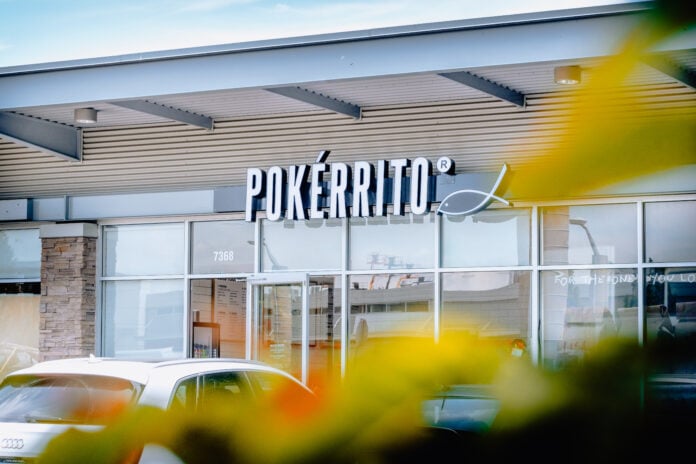
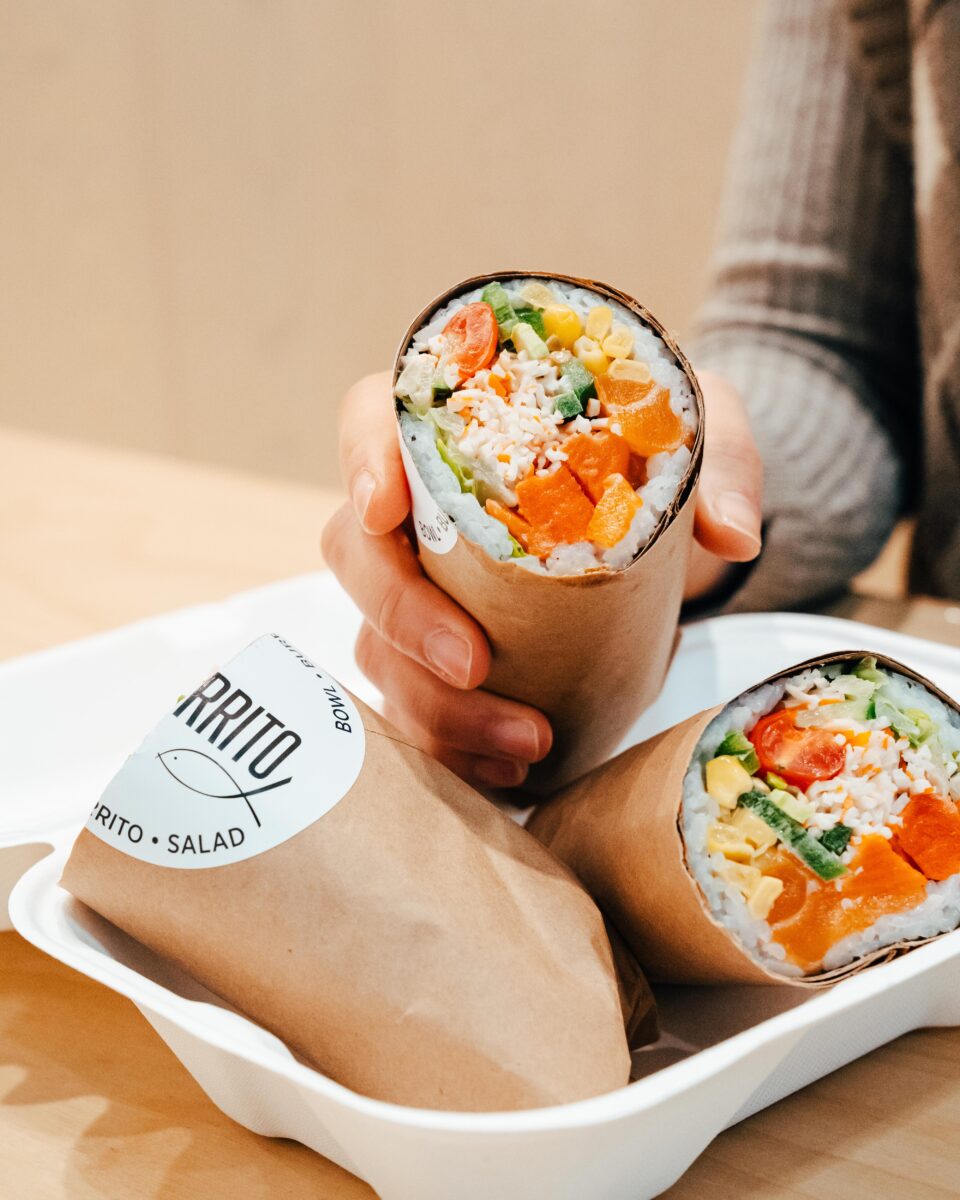
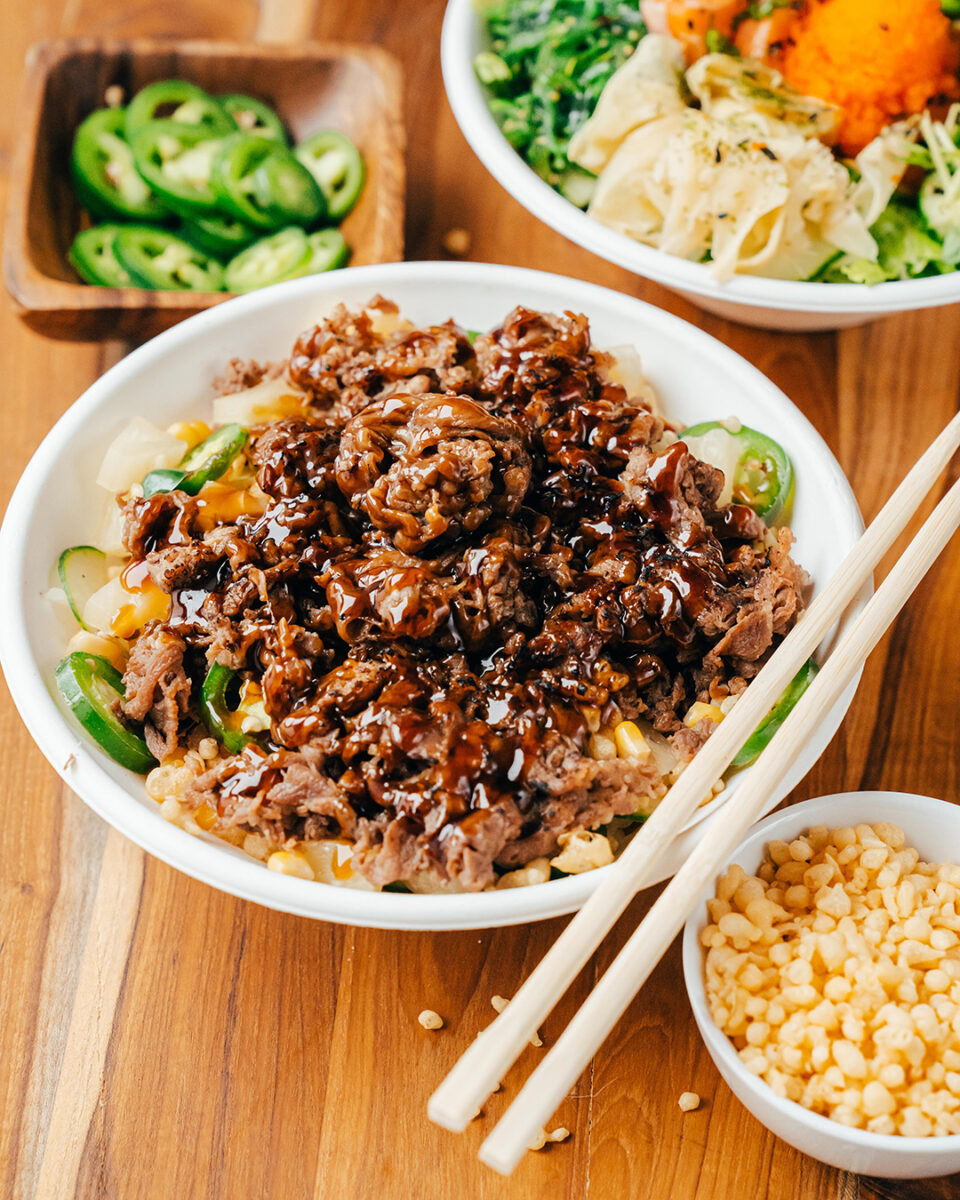
Pokerrito started in Vancouver with a commitment to redefining the poke experience, now embracing a broader pan-Asian flair with additions like authentic Korean BBQ bowls and Bul-Dogs.
Today it has nine locations in British Columbia in the Greater Vancouver Area and is set to open more including in Mexico.
“The Pokerrito name originated like a Hawaiian and Pan-Asian fusion. Poke is where the Hawaiian part came in and rrito is like burrito, Mexican and Pan-Asian mix into it. It’s kind of a fusion where you can have an all mixture of your proteins like fish but also because of the Pan-Asian part we have marinated beef, pork and chicken and all these other mixes,” said Chun.
The brand began in 2016.
Chun said the customer base is typically from the early 20s to late 50s.
“People are looking for quality but fast. QSR (quick service restaurant) made healthy,” he said.
Photo credit: Pokerrito
“I do see a trend going up in regards to new food. A lot of people want something quick for work or home but then don’t typically want something that’s not healthy and an alternative option would be us.”
Chun said the future includes expansion into Mexico.
“We’re talking to the real estate developers and realtors in regards to locations and we’ve already have a master franchisee that’s willing to open. So we’re currently allocating locations,” he said.
“Our project usually would be ready to start when we have a set location. That’s usually the most prolonging part of it. We’re currently sourcing all the suppliers. So hopefully in the near future, for example next year, (we’ll open in Mexico) but we don’t have a fixed date.”
Chun said the company is also looking to expand in Canada.
“We do have two locations that are currently in the process of building and then we have a few franchisees signed up for the British Columbia area. We are looking for prospects in Toronto as well.”
He said the United States is not in the company’s plans right now but it would be open to expansion there if there is a master franchisee that would show interest in the brand.
Chun said the average size of a location is about 1,000 square feet.
“I believe the best of our business model is that everything is pre-prepped from a central kitchen and sent to each location. It reduces staffing costs and also labour. The amount of work that each individual store needs to do. All they need to do is cut open a bag then put into slots and then serve.”
According the company: “Our evolution reflects a journey of flavour and innovation, grounded in the use of fresh, quality ingredients.
“Our ethos goes beyond the menu. We believe in strengthening community ties and living mindfully, with an approach that benefits both people and the planet. This philosophy is woven into our operations, aiming to foster connections, encourage healthier choices, and create a positive impact through our offerings. At Pokerrito, every bowl is an opportunity for creativity, connection, and making a difference.
“We believe in serving tasty yet healthy and sustainable foods to our communities. It has always been our priority to serve food that is sourced responsibly and sustainably. Which is why our continuous goal is to keep growing our responsibility to be conscious about protecting our people and our planet. The way we prepare and source our ingredients is just as important to us as the great taste.
Retail Insider is streamlining its Canadian retail news from around the web to include a handful of top news stories that can be viewed quickly during the day. Here are the top stories from the past 24 hours.
In a LinkedIn post, Paul Burns, CEO of SkipTheDishes, announced the company is letting go 100 of its Canadian market employees as well as 700 operations employees servicing the global Just Eat Takeaway.com organization based out of Canada.
Here’s the full post:
Executives most often use LinkedIn to share good news stories about their companies. Today, I’m sharing some difficult news: Following a comprehensive review, we are restructuring our business and reducing the size of our workforce. This move affects approximately 100 Canadian market employees, along with 700 operations employees servicing the global Just Eat Takeaway.com organization based out of Canada.
For a brand and business built around community and belonging, having to say goodbye to valued team members lays heavy. In the spirit of transparency and respect, I’d like to share more on why this decision was made.
Decisions that impact people’s jobs are never simple or easy, however the measures we took are necessary to ensure we have the right resources and organizational structure in place to drive sustainable growth. A more focused approach will also ensure we continue to provide an enhanced offering to customers and exceptional service to all our stakeholders.
I want to recognize the human impact of these business decisions. We have hard-working, talented people leaving Skip. These decisions were not made based on the quality of their work or the contributions they have made to our business, brand, and culture, but on how closely roles map to our future vision.
To those of you leaving Skip, I want to express my heartfelt gratitude to each of you for everything you’ve poured into this business. Thank you for sharing your talents with us – talents I have no doubt other companies will see tremendous value in. Whether you’ve been part of our journey from the start or recently joined our team, your contributions have mattered – to me, your colleagues, and to the business.
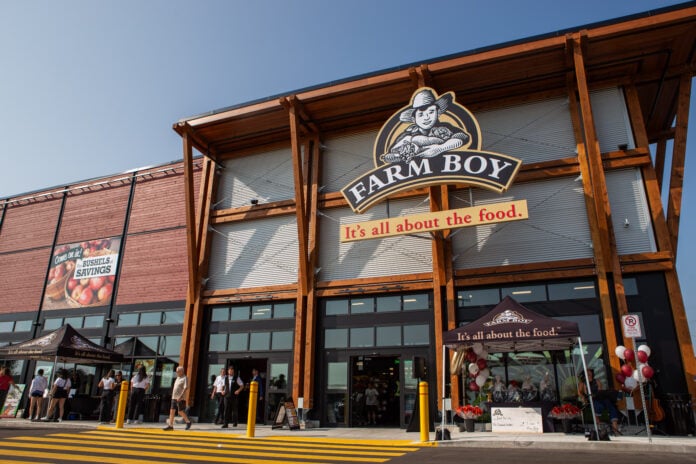
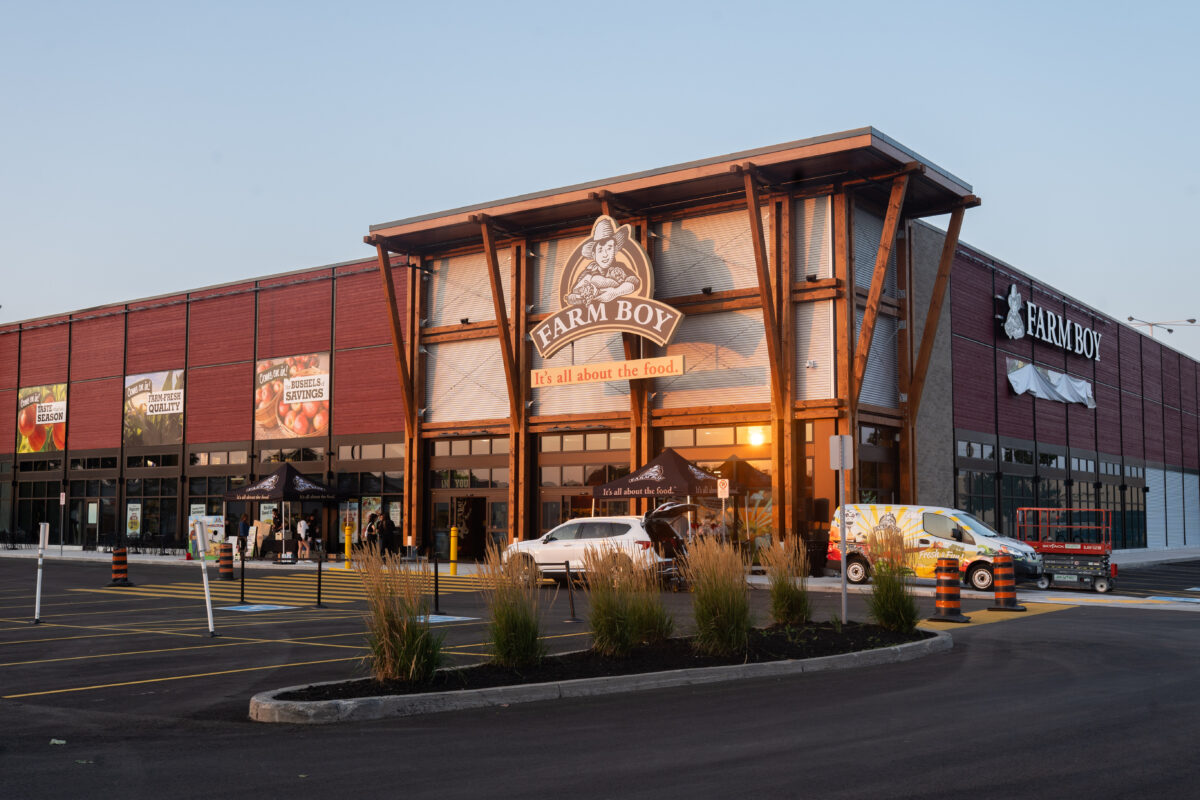
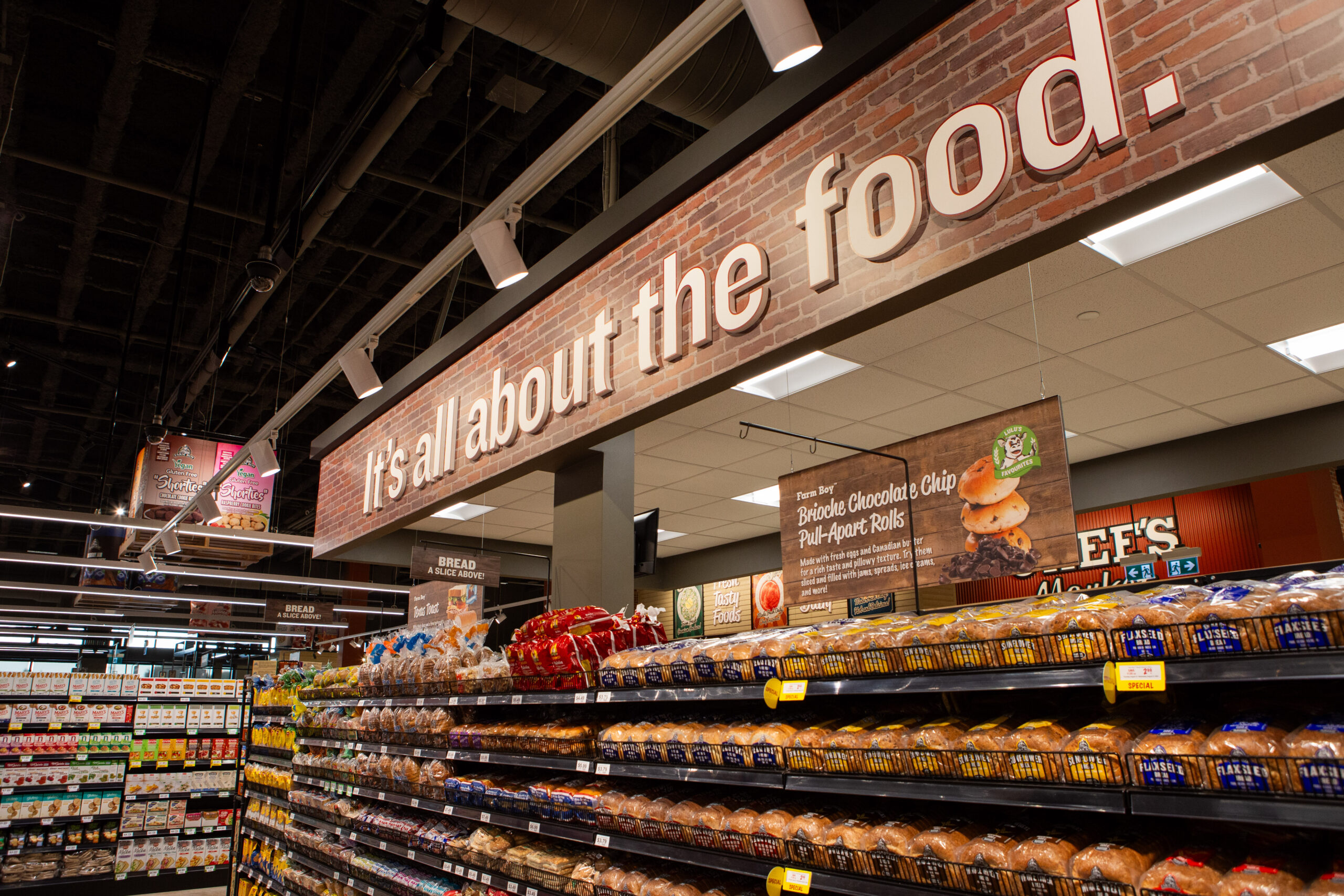
“Joining the Burlington South community is a significant step for us, and we look forward to bringing our fresh-market experience to this vibrant area. Our commitment remains to deliver fresh, high-quality products at excellent value, and unparalleled customer service, while fostering a strong connection with our new neighbours.”
The new store is located at 3230 Fairview Street. It features Farm Boy’s signature offerings, including a vibrant assortment of fresh produce, quality Canadian meats, local dairy, and a wide variety of popular Farm Boy exclusive private-label products. Complementing these offerings will be a selection of gluten-free, plant-based, vegan, and vegetarian options, catering to diverse dietary preferences.
Farm Boy in Burlington Ontario
Highlights of what awaits Burlington South residents at Farm Boy:
Abundant high-quality farm-fresh produce, including local and organic products.
Hundreds of Ontario-sourced, fresh dairy, meat, and grocery products.
Hormone-free, organic beef, chicken, and pork.
Premium-quality, 100 per cent Canadian beef, pork, and chicken.
Hot bar and salad bar selections with a wide variety of quality grab-and-go items, catering to diverse tastes and busy schedules.
A curated collection of exclusive Farm Boy private-label products.
A diverse selection of local, international, and Canadian cheese.
Sustainable shopping options, including reusable bags.
Farm Boy has grown from a small produce stand starting in Cornwall in 1981 to 50 stores located across Ontario with further expansion plans underway.
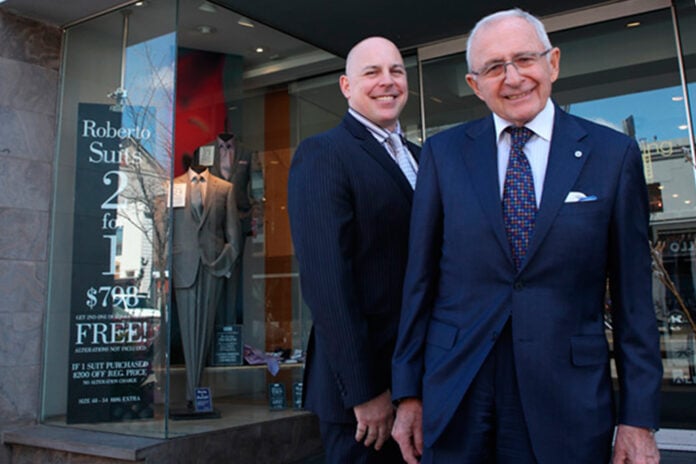
The late Saul Korman in front of his store. Photo: Korry's
By Everly R Price
In the vibrant heart of Toronto’s Greektown, where cultures and traditions weave together, is 569 Danforth Ave—a beacon of high-quality menswear.
For decades, this iconic address has been more than just a location; it’s a symbol of mens style and community.
The story begins with “Korry’s Clothiers and Gentlemen”, a name that became synonymous with exceptional men’s fashion and personalized service.
Today, Carpe Diem Men continues the legacy, embracing the spirit of innovation and excellence that defines this iconic Toronto location.
And if you were ever curious to learn more about Korry’s story, then you are in the right place because Angelica Lianko, who now leads Carpe Diem Men, was Saul’s right-hand woman for over 14 years.
Let’s revisit the rich history and evolution of this legendary site, and see how Carpe Diem Men is writing the next chapter in the tradition of outstanding men’s designer wear and personalized styling services.
The Rise of Korry’s Clothiers
Korry’s was founded by Nathan and Saul Korman in the 1950s at the bustling corner of Danforth and Coxwell, before moving to the legendary 569 Danforth Ave. Saul Korman, affectionately known as the “Duke of the Danforth,” was the magnetic personality behind the store’s soaring popularity.
Saul’s engaging personality was a key factor in the store’s success. His radio commercials were a spectacle in themselves: he would use a stopwatch, talking about anything and everything under the sun—except the store, and in the last moments, he would enthusiastically pivot to remind listeners of the sales and the iconic Toronto address, 569 Danforth Ave.
“…And if you ever went into Temptation–and this is a great story–and order a martini, my wife yells, ‘Stop pouring it, stop pouring it! It’s too big!’ You have one martini, your teeth chatter. So as soon as I have the martini, Myrna drives the car back, back to the Maho Resort anyway. But in the meantime, wonderful food! […]. And you know what else? Beer–75 cents! And you walk with it. Hey, where else are you gonna get that? And great weather–I wear a tank top. But meantime–Last Call Sale at Korry’s! Everything’s been dropped more! Up to 75%! At five-six-nine Danforth Avenue.”
– Saul Korman
Saul’s unpredictable story-telling and energy drew listeners and etched the store’s address into the very fabric of the city’s cultural memory. Combined with Saul’s dedication to personalized service, this approach fostered a devoted clientele that stood the test of time.
Community Involvement and Legacy
Saul Korman was far more than a businessman, he was the heart and soul of the Danforth.
His contributions to the community were widely recognized, earning him accolades from the Retailers of Canada, the radio broadcasting industry, and even the Queen’s Golden Jubilee Medal. Mayor John Tory described Korman as the ambassador, the salesperson, the inspiration that helped make the whole of the Danforth what it is today: a destination.
Saul Korman once reflected on his decision to stay on the Danforth:
“Everybody told me to move. Bay and Queen was the place to be then for better men’s stores. But I believed in the Danforth and wanted to stick it out”.
-Saul Korman
The store’s closing may have signaled the end of an era, but Saul Korman’s influence continues to resonate in the community he helped shape.
Transition to Carpe Diem Men
With the closure of Korry’s, the iconic address at 569 Danforth Ave found a new steward in Carpe Diem Men.
This men’s designer clothing store in Toronto continues the tradition of offering high-quality menswear while catering to a discerning clientele of business owners and top executives in Toronto and the Greater Toronto Area (GTA).
Meet Angelica and Eddie
Carpe Diem Men is co-owned by Eddie Gabel and Angelica Lianko, both of whom bring a wealth of experience and passion for menswear to the store.
Angelica Lianko, previously Saul Korman’s Executive Assistant for 14 years, now leads Carpe Diem Men with the same dedication and insight she acquired under Saul’s mentorship.
Her role at Korry’s was central to its operations, serving as Saul’s right hand and handling major projects with precision and commitment that earned his trust and confidence.
Angelica’s transition to co-owning Carpe Diem Men has been a natural progression, deeply influenced by Saul’s legacy. She has instilled the same “Hug Your Customers” philosophy at Carpe Diem Men, focusing on personalized service and exceeding customer expectations.
“There’s a book called “Hug You Customers” that Saul Korman swore by and said it to his staff everyday. We understood and knew the importance of it then. But as an owner, you realize that this is what the whole operation is all about. So just like Saul Korman as the owner swore by “Hug Your Customers” during his 70 year run, Carpe Diem Men’s everyday efforts are built around the same “Hug Your Customers” belief.”
-Angelica Lianko
Eddie Gabel complements Angelica’s expertise with his extensive background as a Wardrobe Consultant and Senior Buyer at esteemed retailers such as Korry’s Clothiers, Hugo Boss, Harry Rosen, and Holt Renfrew.
At Korry’s, Eddie was instrumental in driving significant sales and crafting an exceptional customer experience, earning him a position as one of the top salesmen at the store. His ability to remember personal details and engage clients with a genuine and humorous approach mirrors Saul’s own engaging style. Eddie’s skillful curation of fashion collections and his knack for remembering customer preferences continue to shape the store’s success.
Together, Angelica and Eddie have merged their unique strengths—Angelica’s operational acumen and Eddie’s personable approach—to ensure that Carpe Diem Men not only honors the rich legacy of Korry’s but also embraces a new era of men’s fashion.
With clients ranging from marketing professionals and investment bankers, to doctors and corporate lawyers in Toronto, Eddie and Angelica always make sure they are dressed their best.
Master Tailor Muna
A continued example of Carpe Diem Men’s commitment to quality is its in-house Master Tailor, Muna. Muna has spent over a decade with Korry’s Clothiers to Gentlemen and has been an integral part of Carpe Diem Men since its inception.
He began honing his exceptional tailoring skills at the age of 13, under the guidance of his uncle, who was also a Master Tailor.
At Carpe Diem Men, customers have the opportunity to watch Muna in action and appreciate the art of personalized tailoring. His exceptional skills in garment fitting and alterations ensure that every piece of clothing is tailored to perfection.
The New 569 Danforth Ave
The address 569 Danforth Ave epitomizes a legacy of unparalleled quality, community, and tradition.
From the golden days when Saul Korman’s memorable radio commercials established it as a hallmark of style, to today where Carpe Diem Men carries on this esteemed legacy, 569 Danforth Ave remains the quintessential destination for high-end men’s fashion in Greektown on The Danforth, and all of Toronto.
Angelica Lianko and Eddie Gabel continue to carry forward the values that defined Korry’s Clothiers – the importance of customer trust and consistently honoring promises.
At Carpe Diem Men, they focus on understanding and meeting each customer’s unique needs, ensuring a personalized service where the business adapts to the clients, not the other way around.
“I learned from Saul that when you’re confident you get more done, but only if you’re true to yourself. Don’t wear anything that doesn’t suit your personal taste – don’t do anything you don’t firmly believe in! Saul Korman always spoke his mind and he wore dress shirts with contrasting white collar and cuffs everyday at work! It was his style, he believed in it, it didn’t matter if it was out of style for a bit. He felt he looked good in it – he actually looked good in it. And guess what, its back in style again!”
-Angelica Lianko
Their experience at Korry’s has also shaped their approach to fashion, blending timeless pieces with a touch of fun to maximize the value of every clothing article.
Carpe Diem Men champions the idea of authenticity by encouraging individuals to remain true to themselves and embrace their unique tastes, drawing inspiration from Korman’s distinctive style and confidence. This commitment to genuine self-expression and personal style is at the heart of the experience that Carpe Diem Men offers today.