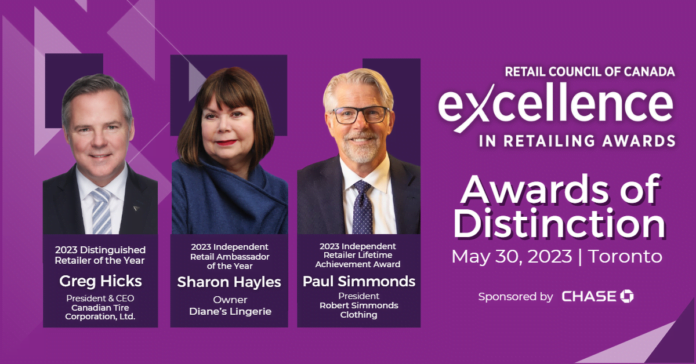
The Excellence in Retailing Awards Gala, hosted by Retail Council of Canada along with presenting sponsor CHASE, is an annual celebration of the individuals and companies who are pushing the boundaries and making a difference in the world of retail. This year’s gala will be held on May 30, 2023, at the Toronto Congress Center, and it promises to be an evening of glitz and glamour, where Canada’s best retail talent will gather to celebrate retail excellence and innovation. The highly anticipated reveal of the winners of the 2023 Excellence in Retailing Awards program will be announced, and three recipients of the prestigious Awards of Distinction will also be honoured.
Winners of The Excellence in Retailing Awards Program to be Announced
The Excellence in Retailing Awards program recognizes outstanding innovation in various categories, including eCommerce Experience, Environmental Leadership, Health, Safety & Wellness, In-Store Experience & Design, Loss Prevention, Omni-Channel, Philanthropic Leadership, Pop-up Experience and Design, Retail Marketing, and Talent Development. The impressive level of excellence to reach finalist status was achieved by more retailers in 2022 than in previous years, demonstrating how retailers across the country are stepping up with forward-thinking solutions to meet the opportunities ahead.
The finalists for the 2023 Excellence in Retailing Awards include dynamic brands such as Amazon, Canadian Tire Corporation, IKEA Canada, Loblaw Companies Limited, Best Buy, Tim Hortons, METRO, LCBO, Sobey, Rona, Rexall, Longos, London Drugs, Golf Town, The Body Shop, II x IV, Mastermind Toys, Peavey Industries, Aldo, Toys R Us, Staples, Pet Valu, Harry Rosen, Big Bear Trading Company, Hillberg & Berk, Ardene, The Ordinary, Telus, Well.ca, Home Hardware, Habitat for Humanity Canada and Walmart Canada, as well as many others. These companies have demonstrated standout success in the various categories while showcasing their commitment to delivering exceptional retail experiences.
Awards of Distinction Recipients to be Honoured
In addition to the Excellence in Retailing Awards, the Gala will also recognize three exceptional individuals with the Awards of Distinction. This year, Paul Simmonds, President of Robert Simmonds Clothing, will receive the Independent Retailer Lifetime Achievement Award for his careers long contribution to his customers and community as independent retailer and advocate. Greg Hicks, President and CEO of Canadian Tire Corporation, will be celebrated with the 2023 Distinguished Canadian Retailer of the Year Award for his visionary leadership and commitment to customer satisfaction. The gala will also recognize Sharon Hayles, Owner of Diane’s Lingerie, as the 2023 Independent Retail Ambassador of the Year for her leadership in helping the beloved store become known for its highly personalized, relaxed shopping experience, and its exceptional commitment to inclusivity.
The Excellence in Retailing Awards Gala on May 30, 2023, 4:30pm -8:30pm, will be hosted by international food and travel celebrity and founder of Follow Me Foodie, Mijune Pak. Guests will enjoy an exceptional dinner, prepared under the consultation of world-renowned chef Mark McEwan.
The Excellence in Retailing Awards Gala end the first day of RCC STORE 23, Canada’s biggest retail conference, from May 30 – May 31, 2023. RCC STORE 23 that will feature 75+ speakers and is attracting retail leaders from across North America and around the globe.
Retail Insider is streamlining its Canadian retail news from around the web to include a handful of top news stories that can be viewed quickly during the day. Here are the top stories from the past several days.
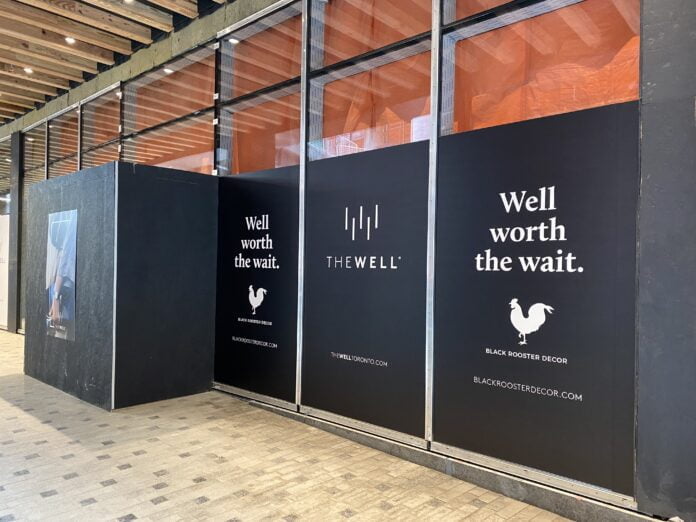
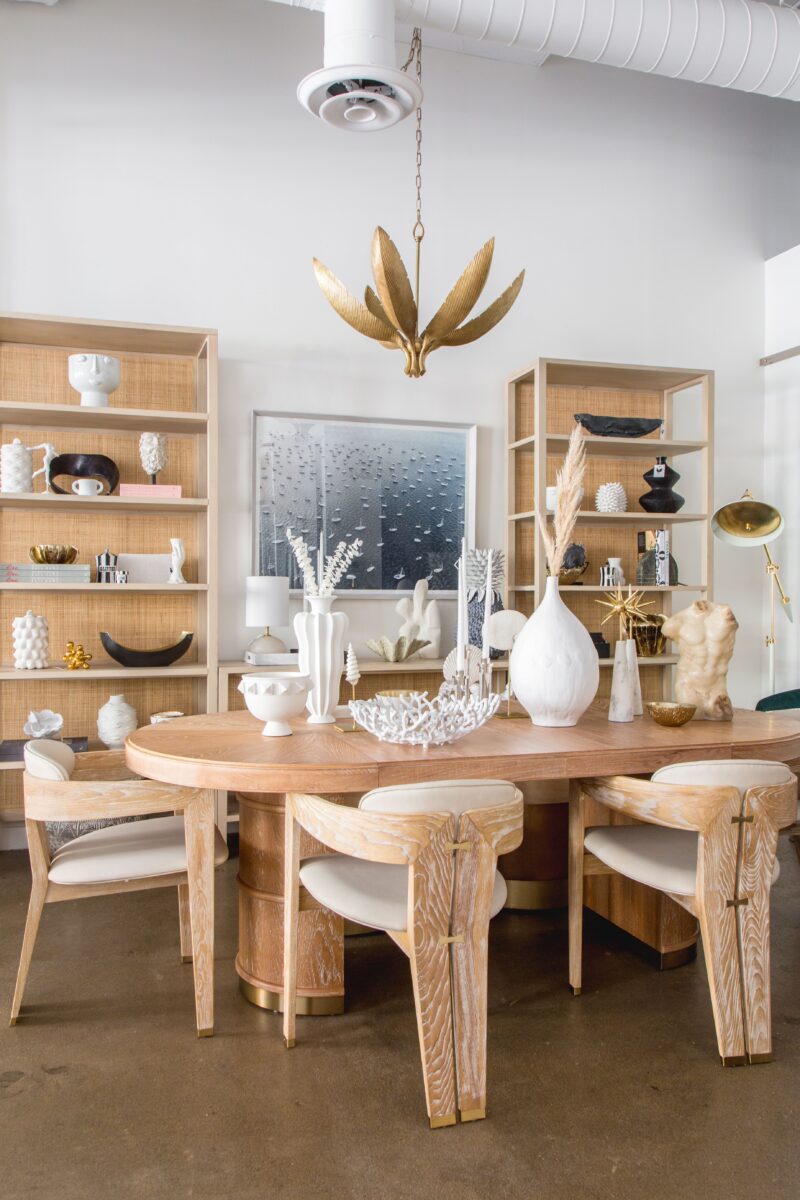
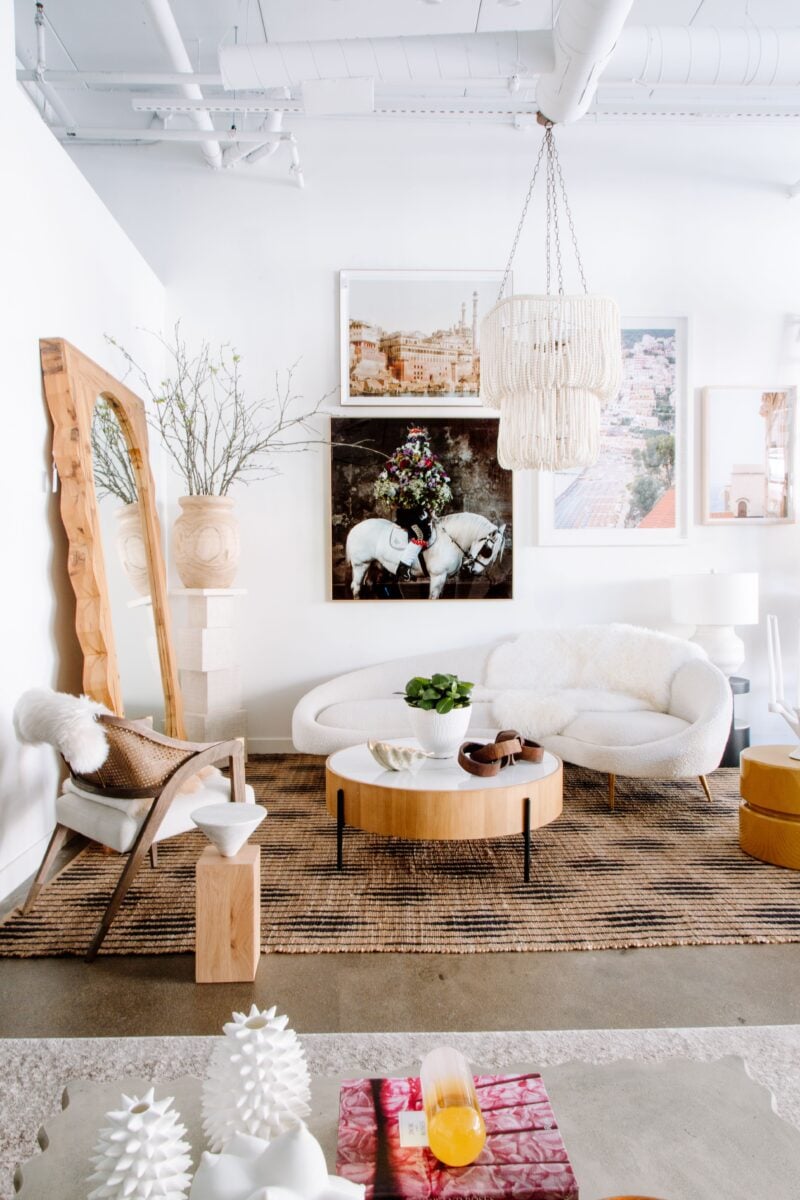
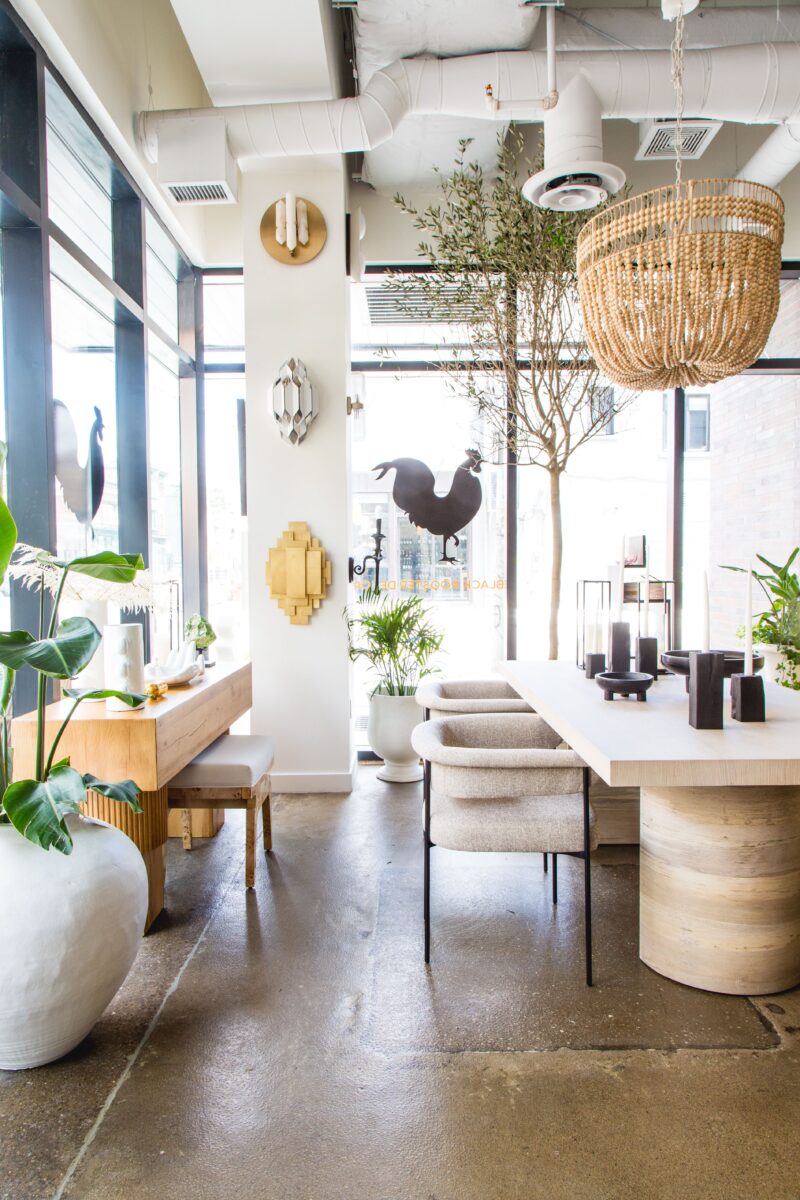
Future Black Rooster Decor at The Well (Image: Dustin Fuhs)
Furniture store Black Rooster Decor has secured a location in The Well, a massive mixed-use development in downtown Toronto.
“The Well is a transformational project and one of the most complex, multi-faceted developments Toronto has ever seen,” said Oliver Harrison, SVP Leasing and Tenant Experience with RioCan Real Estate Investment Trust, which is developing the project with Allied.
“This is choreographed city-building, and this carefully curated retail mix will play a vital role in establishing The Well as a vibrant, lively destination for residents and visitors to Toronto. We are excited to welcome Black Rooster Decor into the fold. This independently-owned and operated furniture and accessories brand diversifies our retail offering. It is well-situated to appeal to the 1,700+ residents living at The Well and to shoppers from across the city.”
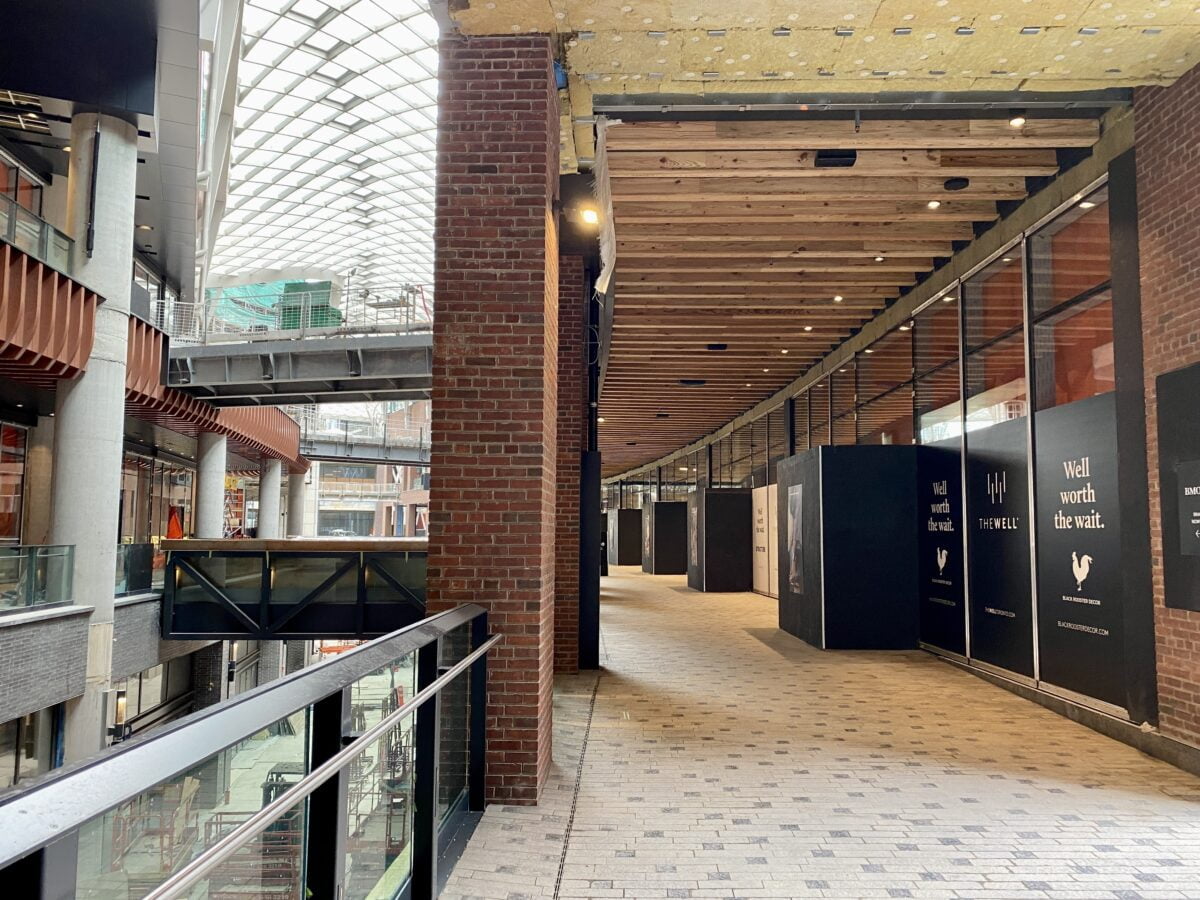
The Well is a massive 7.8 acre site in downtown Toronto which will be home to about 1.2 million square feet of office space and 1.5 million square feet of residential space including 1,700 condominium and purpose-built rental units. At the base of the project is a retail and foodservice offering that will also include a massive 70,000 square foot multi-tenant food market that is expected to become a significant attraction.
Future Black Rooster Decor at The Well (Image: Dustin Fuhs)The Well in Downtown Toronto (Image: Dustin Fuhs)
Nina Ber-Donkor, Owner of Black Rooster Decor, said when she initially visited The Well site she was “blown away by the community, the space, and the space we’re getting we’re really pleased. It’s a corner unit. It’s perfect for us and we loved the whole vibe of the whole community and the entire Well project. We were really inspired by that and really impressed by it.”
“It’s a game changer for us. We really feel we’re going to be able to expand our brand not just outside of the U.S. but also Toronto. I feel it’s going to put us more in people’s thoughts when it comes to home decor,” she said.
Black Rooster started online about 11 years ago. It was an e-commerce business only until 2014 when it opened a bricks and mortar location.
“We’re a home furnishings store. Lighting. Arts. Rugs. Accessories. Plants. We’re a fully furnishable home decor store. Online we have a lot more. We have a very large showroom online and in store at our current location a small showcase of what we carry.”
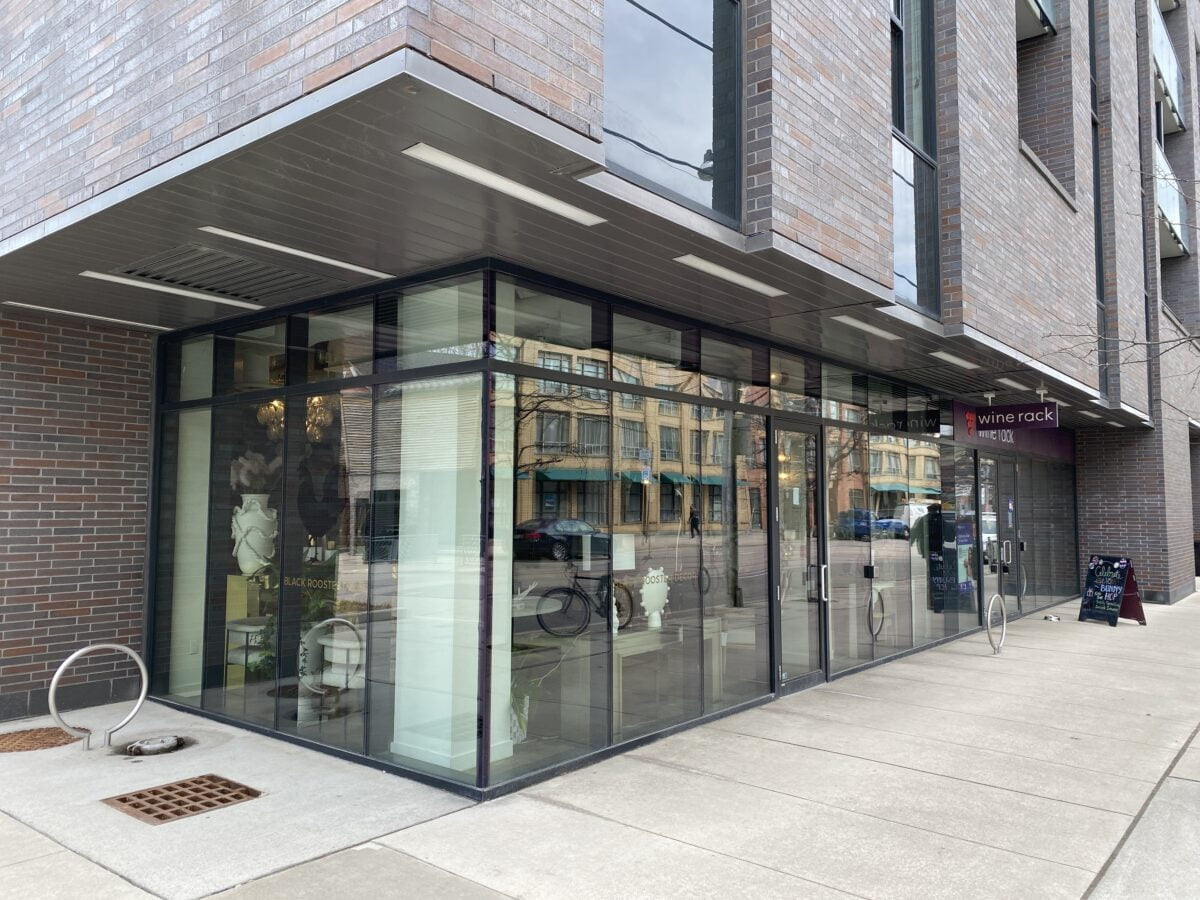
Black Rooster has been in Leslieville for the past nine years at 1075 Queen Street East.
Black Rooster Decor at 1075 Queen St E (Image: Dustin Fuhs)Image: Black Rooster Decor
Ber-Donkor said Black Rooster will keep its current location and its second location at The Well will open in the fall.
The location at The Well is going to be about 2,500 square feet. At Leslieville it’s about 1,500 square feet. At The Well, it will be located next door to Structube.
“We’re primarily an online store. Most of our business is done online. We ship to the U.S. and a lot of our customers are from the U.S.,” said Ber-Donkor.
“Most of our brands are luxury brands and everything is very well curated and thought out. We try not to do mass-produced items. We don’t have things that people are going to see in everybody else’s home. So when you shop with us you’re shopping for something that’s going to be unique and that’s also a piece you can move with you as you go through life and expand your family or move different houses. Most of our pieces are timeless.”
Image: Black Rooster DecorImage: Black Rooster Decor
Black Rooster Decor says it scours the world for unique and stylish furniture and accessories that are top-quality and made to last.
Its catalogue ranges from mid-century modern to European furnishings.
It now ships worldwide, and has warehouses in the United States.
“We support North American companies and like-minded small businesses and artisans as much as possible. Many of our larger pieces are made from reclaimed material. We only sell merchandise we have seen ourselves and vouch for 100 per cent,” says the company.
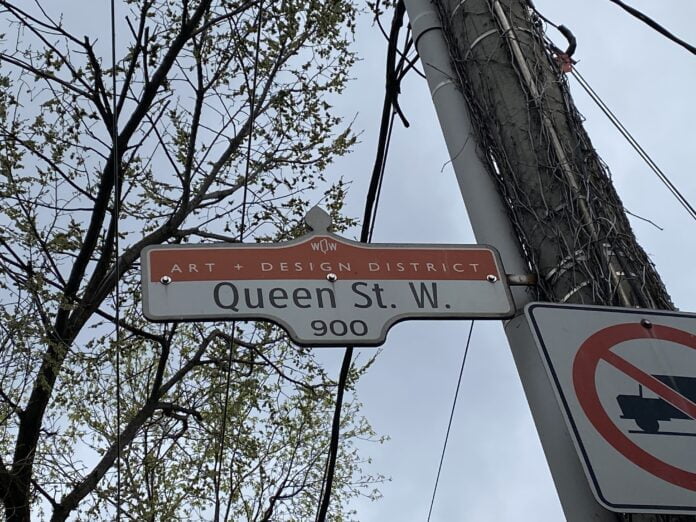
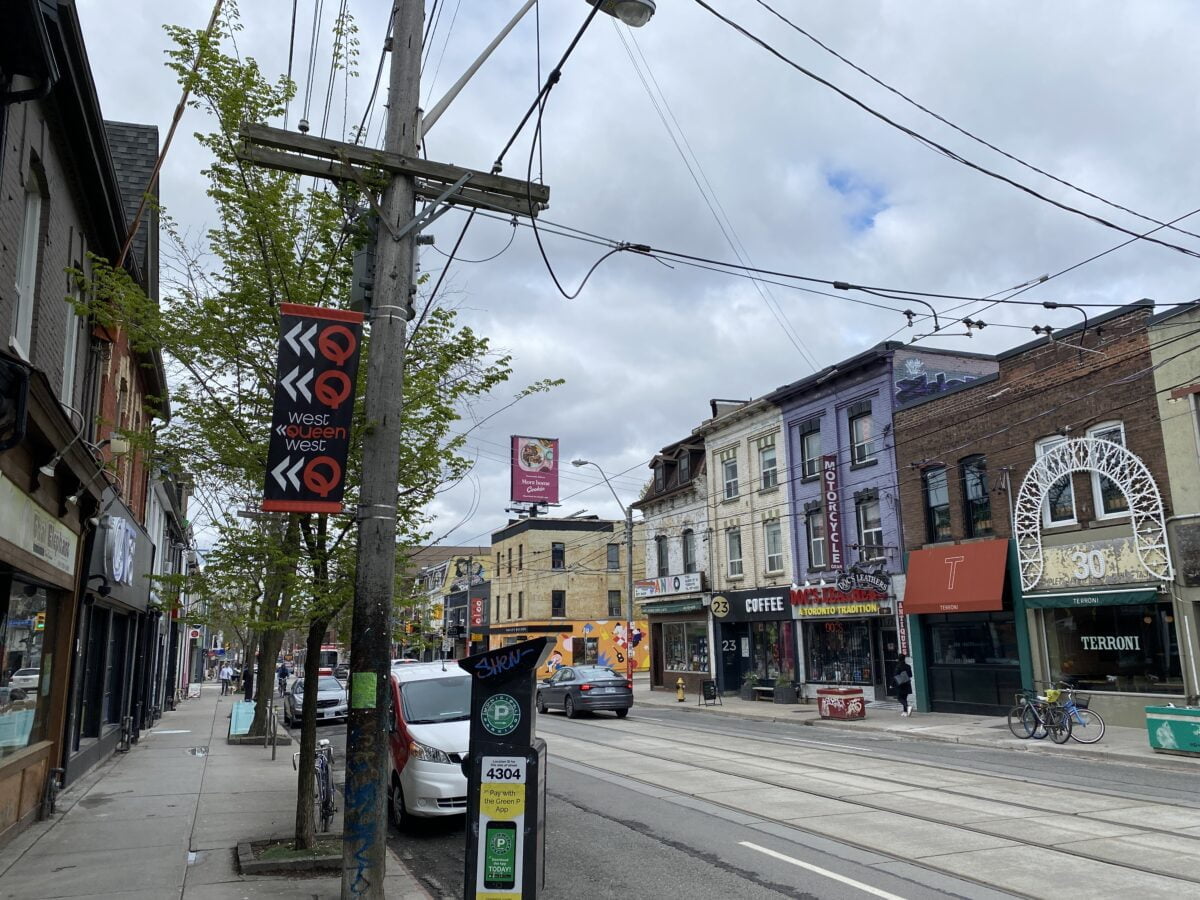
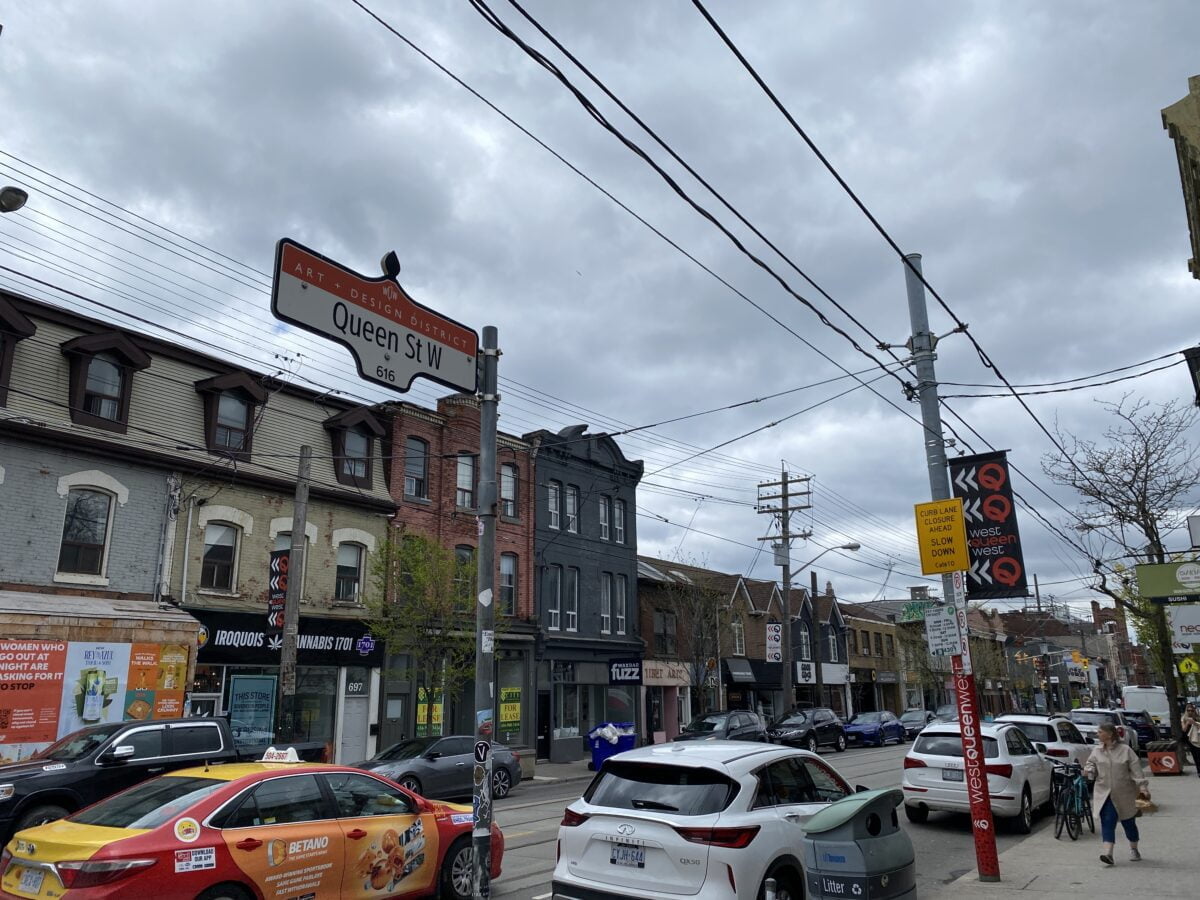
“Arts + Design District” Queen Street West signage (Image: Dustin Fuhs)
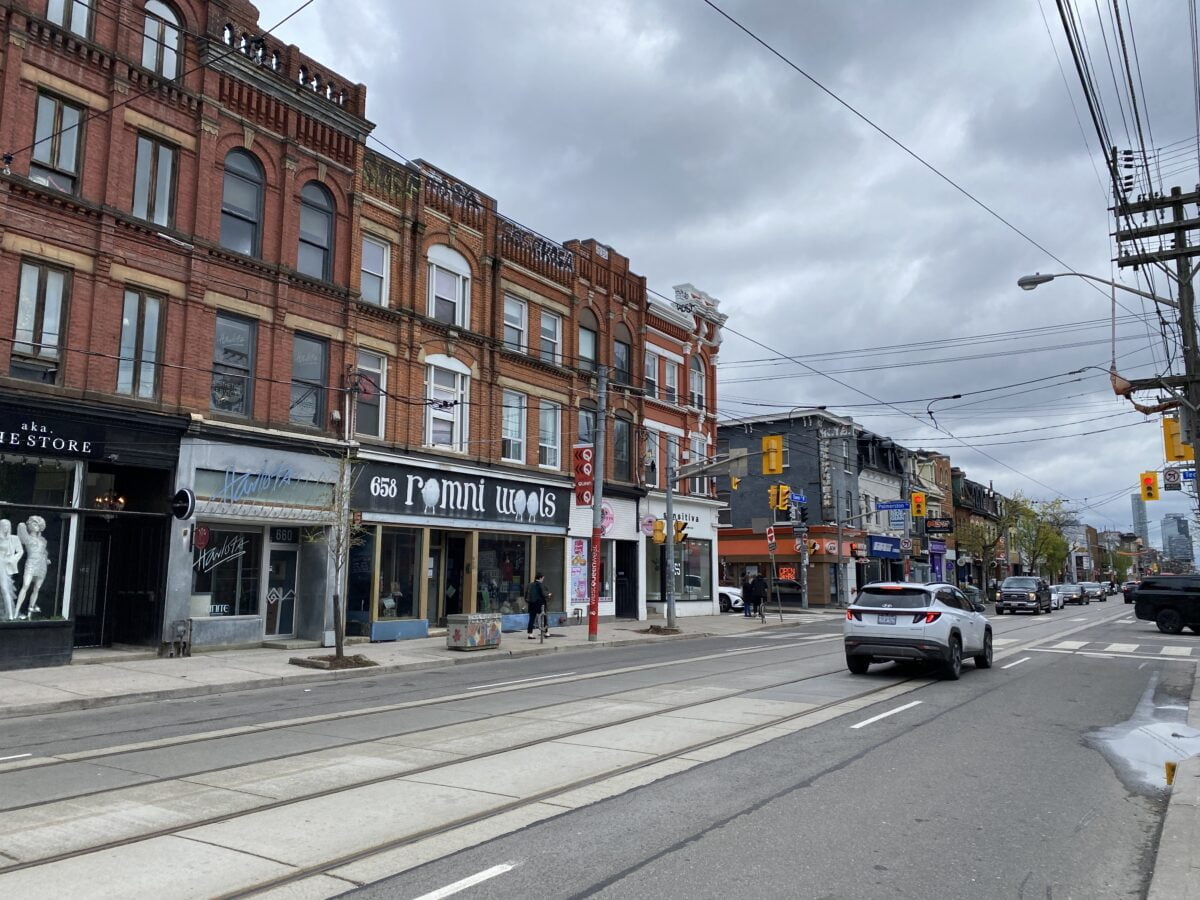
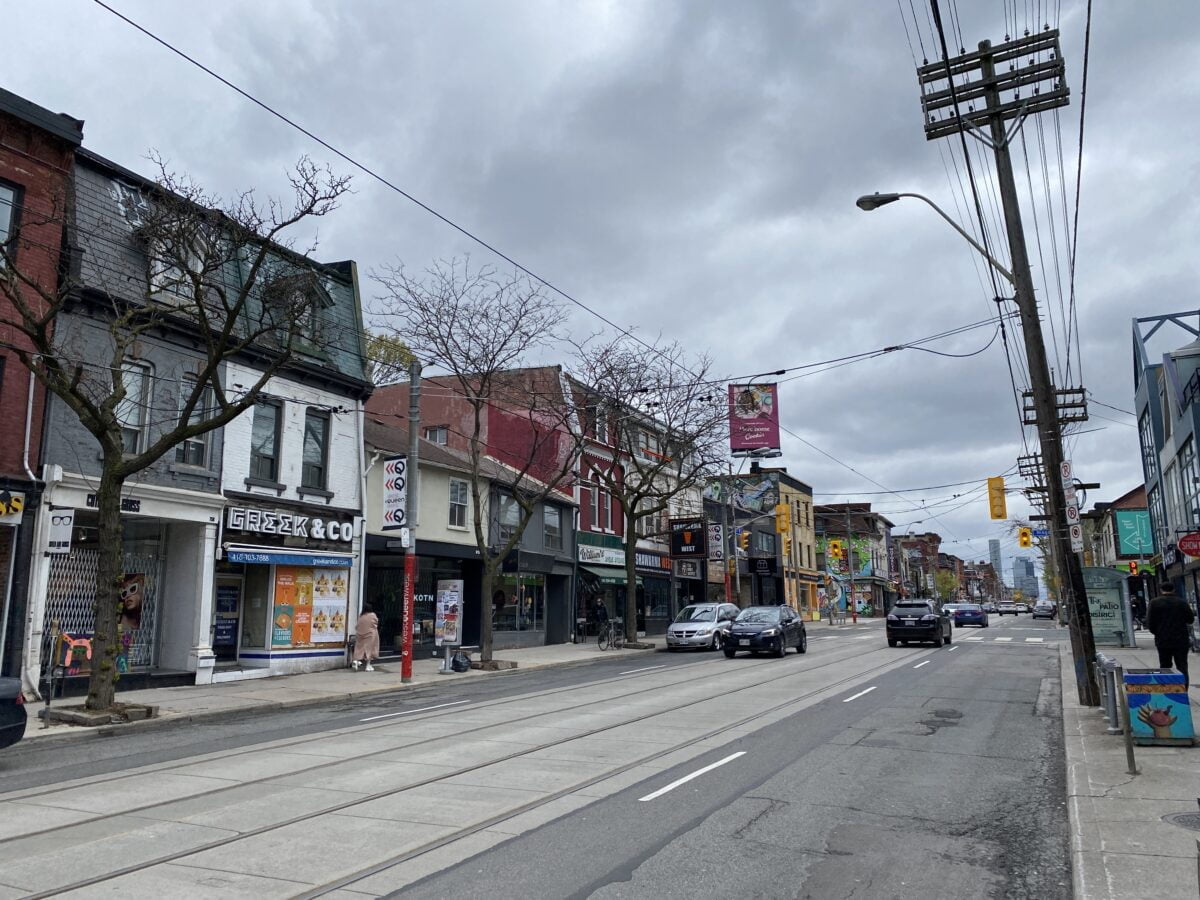
West Queen West in Toronto, also known as the “Arts + Design District,” lost more than 76 per cent of its galleries in the last decade, and locals say this has drastically and irreversibly shifted the strip’s very identity.
Since 2004, West Queen West – spanning from Bathurst Street to Gladstone Avenue – has been defined by its artists. The strip had the highest concentration of galleries per kilometre than any other street in North America, with a total of 33. Today, there are only six. Even government-funded galleries like the Museum of Contemporary Art (MOCA) – who moved away in 2018 – fell victim to this exodus.
Robert Sysak, executive director of the West Queen West BIA, said in a phone interview that surging rent – brought on by an increase in property values due to the arrival of high-density housing – drove out the galleries.
Queen Street West (Image: Dustin Fuhs)
Beginning in 2013, Sysak said the strip saw an increase in the number of condominiums being built. He believes the developers moved in because West Queen West land was relatively cheaper than the surrounding areas. He estimates since then, property values have surged by over 50 per cent.
Sysak added developers purchased many of the properties being leased out to galleries. In 2013, developer Urbancorp applied for a permit from the city to demolish the buildings housing MOCA, the Clint Roenisch Gallery and the Edward Day Gallery to make way for a nine-storey condo tower, which would aptly be called “MOCCA Condo.” Since then, all three galleries have moved away.
“I don’t like to say it, but we got gentrified,” Sysak sighed.
Stephen Bulger, owner of the Stephen Bulger Gallery, echoed Sysak’s observation. He said in a phone interview that he opened his business in West Queen West in 1995 before relocating to Little Portugal in 2017 for a larger space. When he first moved to the street, his rent was approximately $10 per square foot. By the time he left, it had more than doubled.
“But others had it worse,” he said in a phone interview.
Bulger added his neighbours’ rent more than tripled or quadrupled in the same period.
“In that way, I was one of the lucky ones,” he quipped.
Landlords had their ‘hands tied’
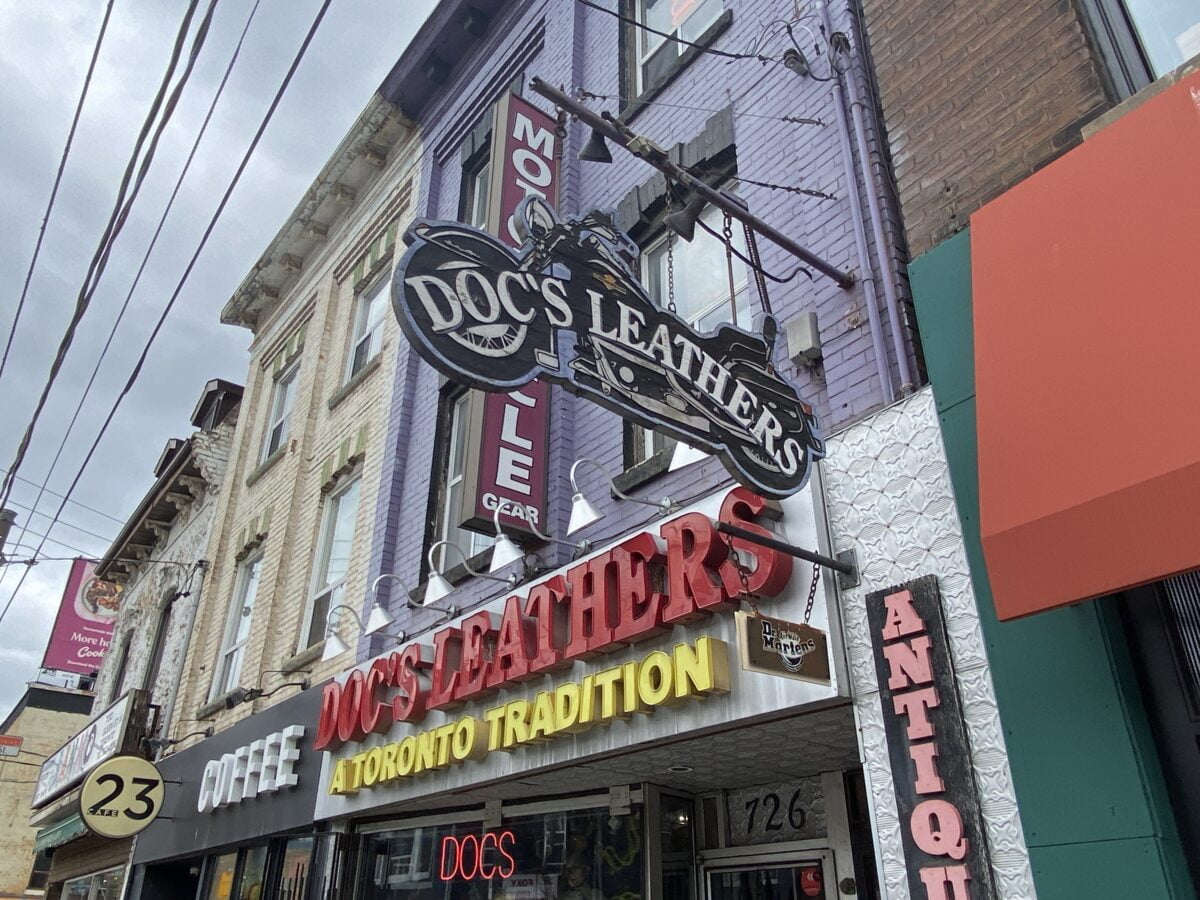
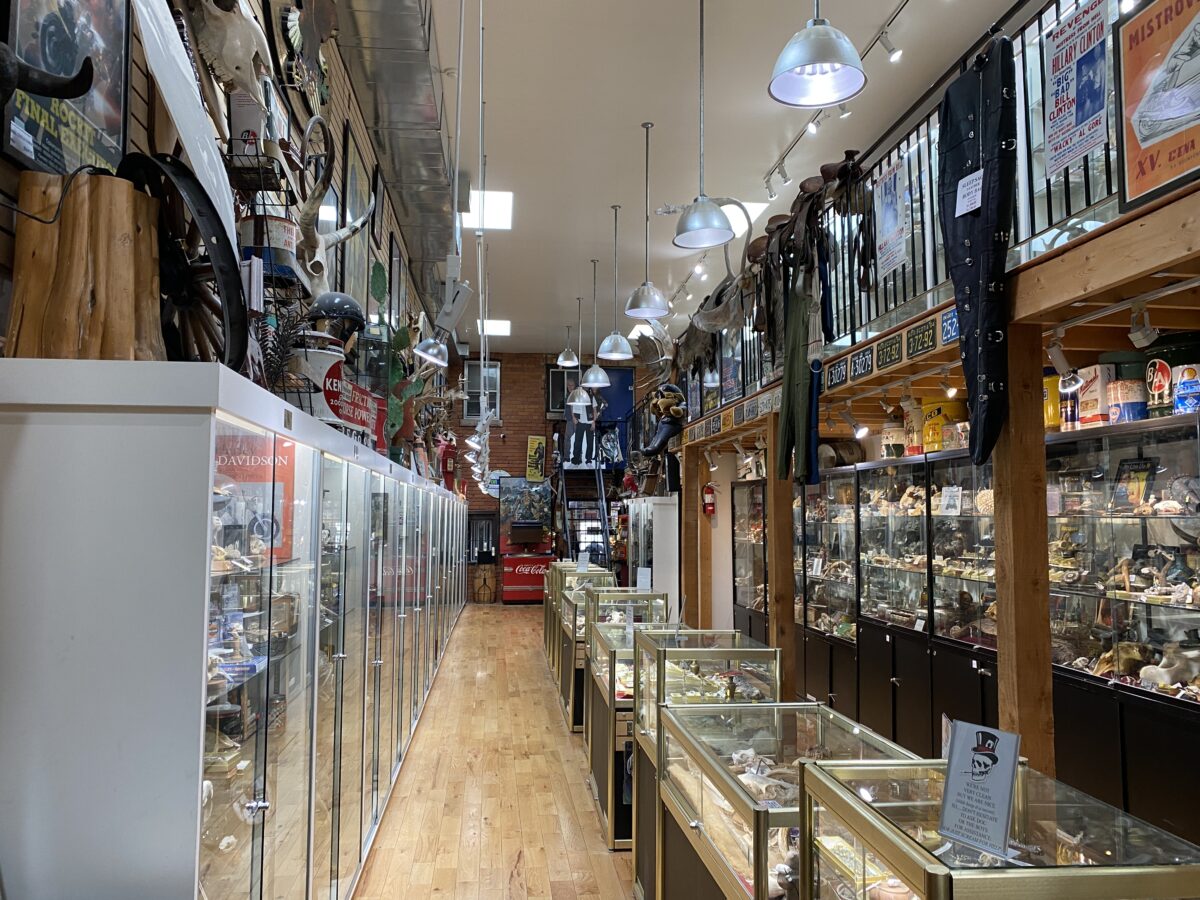
Doc’s Leathers on Queen Street West (Image: Dustin Fuhs)Doc’s Leathers on Queen Street West (Image: Dustin Fuhs)
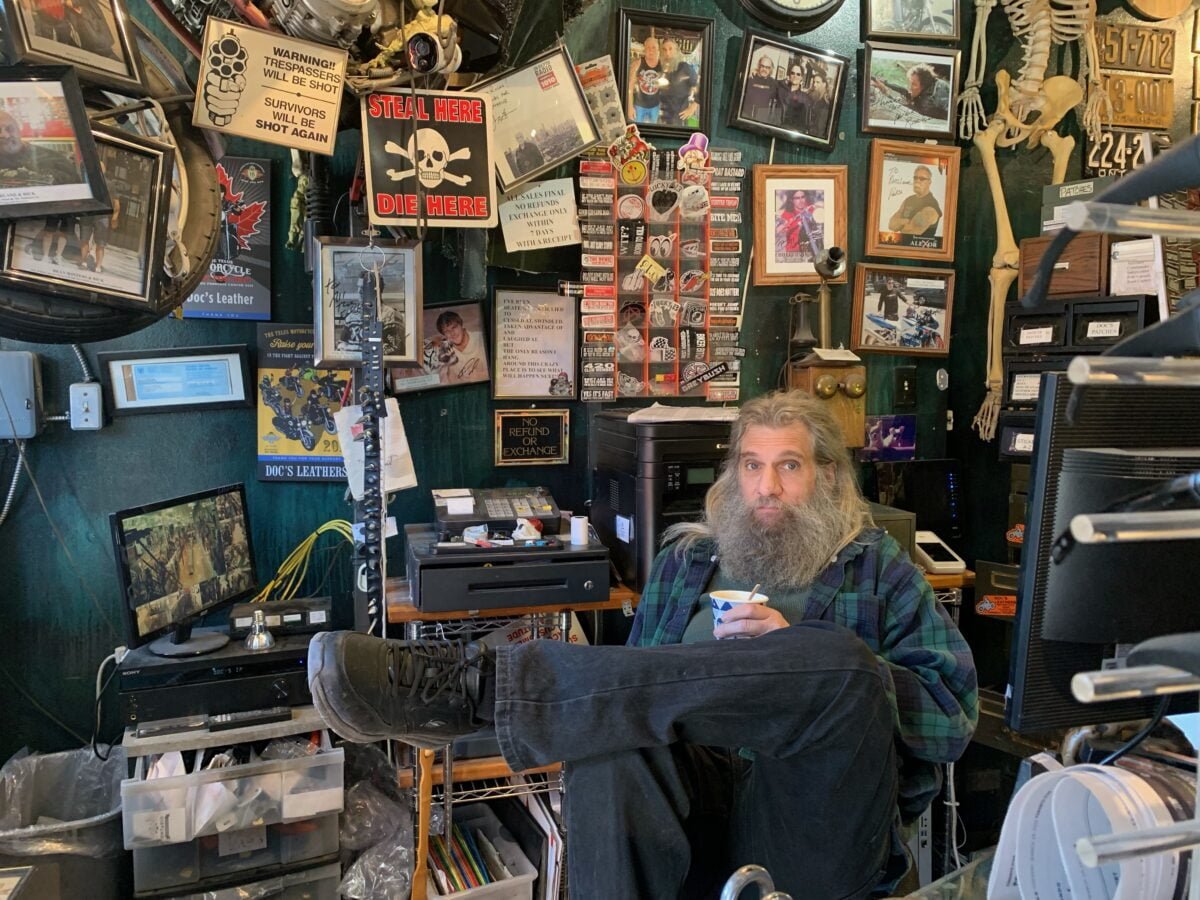
Doc von Lichtenberg, owner of Doc’s Leathers on Queen Street West, said in an interview at his store that when the developers moved in, the city rezoned many parts of the area to accommodate them. This meant that under Ontario’s highest and best use tax policy, landlords were being taxed under the assumption their properties were multi-storey condos, even if this wasn’t the case.
Lichtenberg, coffee in hand, mans the register at his West Queen West store. (Image: Zaid Kaddoura)
Local landlord Joseph Gatto said these factors forced property owners to raise their rents up to three times more than what their gallery tenants could pay.
“We had our hands tied. There was nothing we could do except adapt,” Gatto said.
Sysak believes this gentrification has shifted West Queen West’s demographics. He noted the street today attracts more tourists and families than ever before.
“It’s still a mix. But now more than ever, at places like Trinity Bellwoods park, you see families with baby strollers or playing tennis. We have schools near us,” Sysak said.
Queen Street West (Image: Dustin Fuhs)
Bulger said he also observed this demographic shift. He said he initially moved to West Queen West because he was attracted to the independent businesses characterizing the street.
“But when I left, those vendors were all but gone. Inevitably, the families and tourists didn’t want handcut fabrics, they wanted designer brands,” Bulger said.
Sysak added that specialized retailers – like galleries – can’t adjust to drastic market shifts by virtue of their business models. Consequently, when there isn’t a demand for independent galleries, it becomes unprofitable to run one.
West Queen West pre-gentrification
Drapell’s Museum of New, just off of Trinity Bellwoods Park. Toronto, Ont. (Image: Zaid Kaddoura)
Lichtenberg said when he bought his building 29 years ago, it went for a relatively measly $60,000 because the folks who called West Queen West home scared away wealthier investors.
“The ladies of the night made their homes here, so the bohemians followed them. Consequently, so did the galleries,” he recalled.
Today, the only Bohemian you’ll find in the neighborhood is the owner of the Museum of New: Joseph Drapell – who hails from Humpolec, in Czechia’s Bohemia region.
Drapell settled in West Queen West back in 1990 when he bought his building for approximately $100,000, which he acquired from previous art dealings.
Because Drapell owns his building, he is one of few gallery owners fortunate enough to avoid being impacted by the surge in rents.
“The renters weren’t so lucky,” he said in an interview at his gallery.
In 1998, Drapell opened his Museum of New. He said back then, profitability was not a priority. It didn’t need to be. Despite his self-professed lack of business acumen, his paintings resonated with the street’s bohemian audience.
Today, Drapell said galleries can’t break even unless they cater to the strip’s new clientele, consequently compromising their artistic integrity.
“They had to sell out or move out,” he lamented.
An identity ever-changing
Queen Street West (Image: Dustin Fuhs)
Robert Sysak said he believes that for better or for worse, neighbourhoods are always changing.
“We’re growing. That means change. It’s how we survived the pandemic,” Sysak said.
But, he also added that West Queen West has not lost its unique identity as Toronto’s premier art destination.
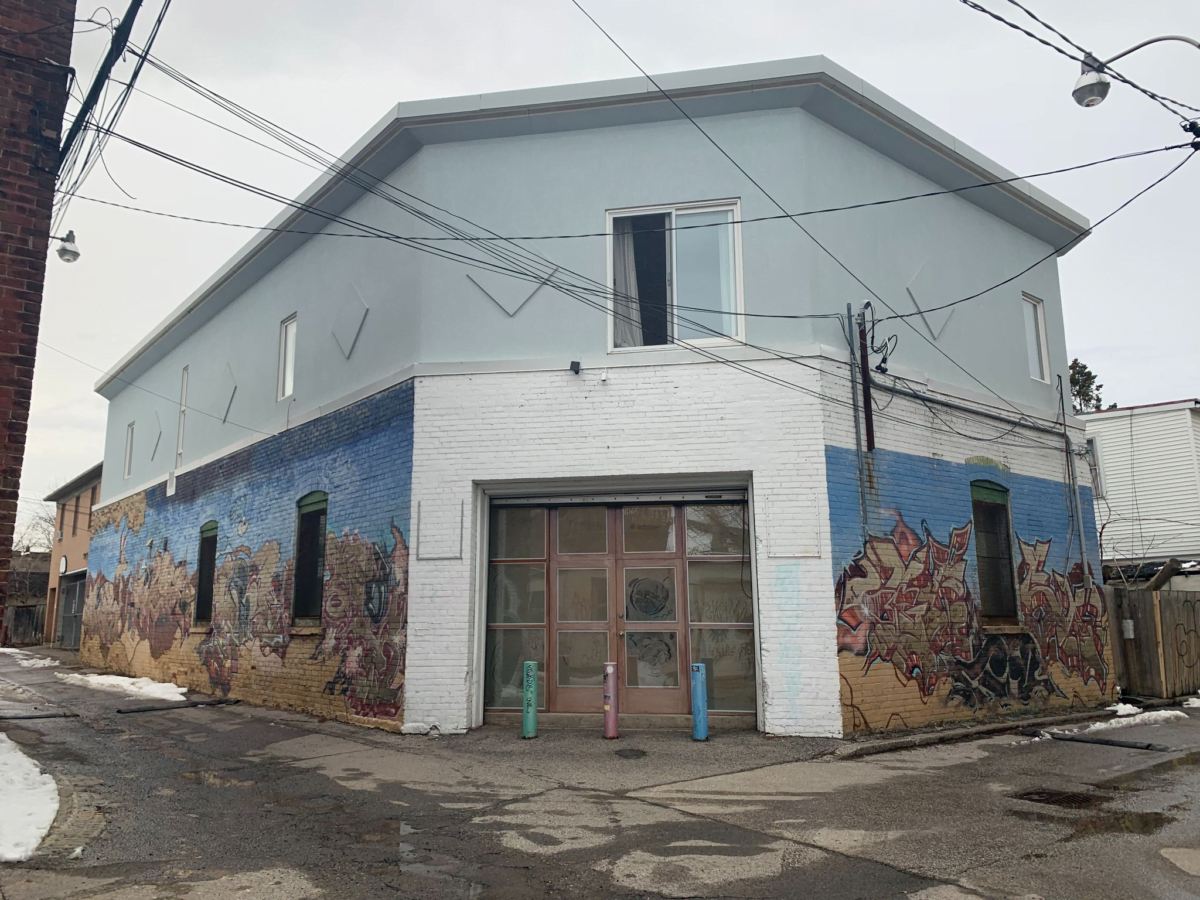
“We still have fabric shops, Michelin-starred restaurants and BIA-sponsored graffiti murals. That’s art, too,” Sysak said.
However, just like many other West Queen West community members, he still mourns the loss of the strip’s art galleries.
“But when you lose amazing people like Stephen Bulger, you can’t sit and mope about it. You have to ask yourself, ‘What do we do now?’” he said.
Sysak said the BIA has introduced and sponsored many initiatives to support the street’s galleries.
“When we noticed we were losing galleries, we did an outdoor art and artist gallery with QR codes, tours and sculptures with OCAD students,” he explained.
Queen Street West (Image: Dustin Fuhs)
On the other hand, Gatto said this isn’t enough. He believes the stakes are too high for West Queen West to leave it only to the BIA to protect the street’s art galleries.
“The galleries are West Queen West,” he asserted.
He said because they brought in interesting people, they brought in interesting businesses, too.
“They brought a kind of texture to the neighbourhood that we’ve now lost,” he said.
He believes more subsidies, grants, and initiatives from all levels of government or the nearby OCAD University could bolster the strength of the strip’s remaining galleries.
“If the city or province wanted to implement a tax reduction for properties being leased out to art galleries, landlords would definitely accommodate,” he suggested.
Drapell lounges in front of his painting after a long day’s work preparing for an upcoming exhibition. (Image: Zaid Kaddoura)
And like Gatto, Drapell believes this exodus is a cultural blow not only to the community, but to Toronto art as a whole.
“When you focus on breaking even, you can’t dare. You make democratized, sanitized, family-friendly art catering only to the lowest common denominator of the masses,” he said.
Two of Drapell’s paintings in the central room of his gallery. (Image: Zaid Kaddoura)
Amid all this uncertainty, Gatto believes one thing is certain for West Queen West.
A report by Salesforce indicates digital online sales in Canada were down eight per cent year over year in the first quarter of this year compared to a year ago and the decline was worse than globally where it was only two per cent.
In its global Q1 Shopping Index, Salesforce, a global leader in Customer Relationship Management, said digital e-commerce in Canada was down nine per cent year over year in the fourth quarter of 2022.
The report said the per-visit average shopper spend sat at $1.99 in Q1, down from $2.71 in Q4 of last year and the overall conversion rate in Canada was 1.9 per cent compared to 2.5 per cent in the previous quarter.
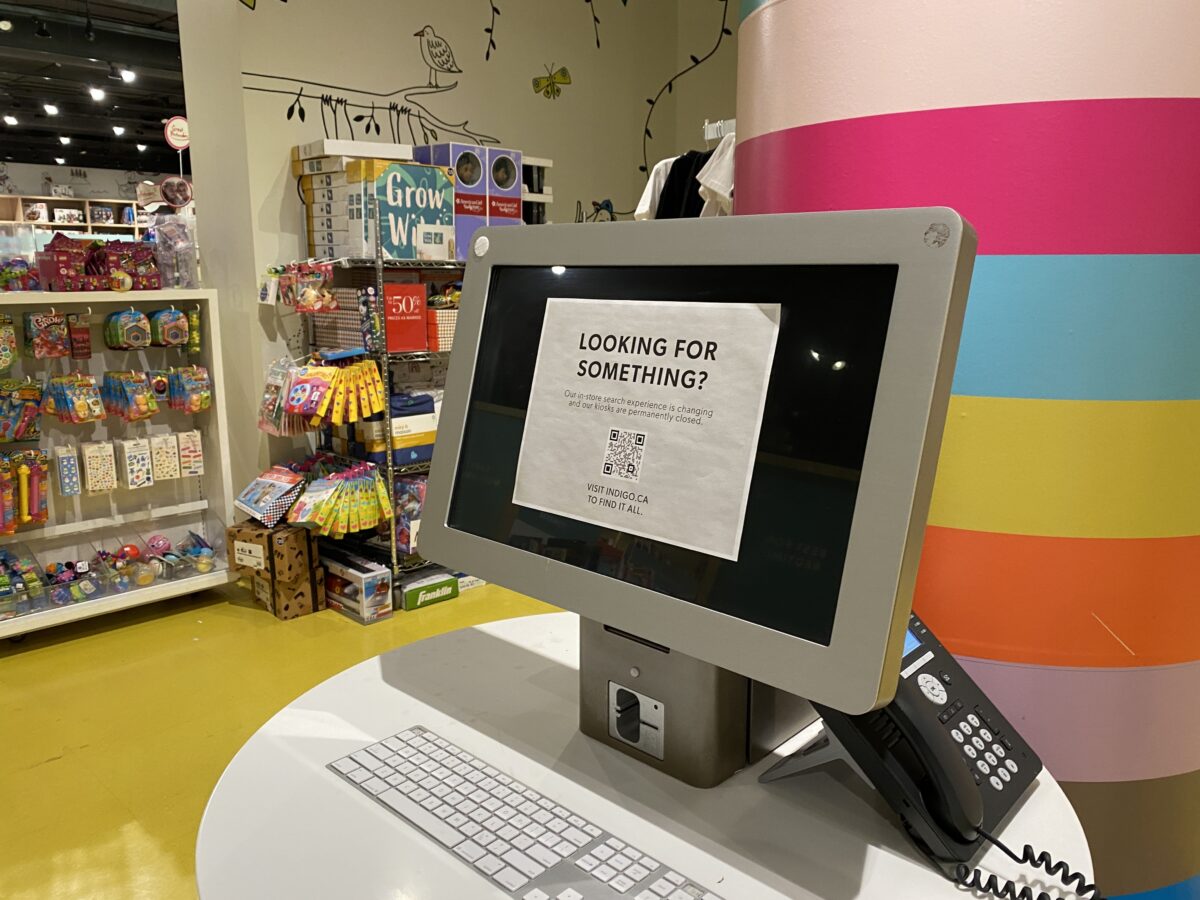
Indigo Square One Kiosk (Image: Dustin Fuhs)
Caila Schwartz, Director of Consumer Insights and Strategy, Retail & Consumer Goods at Salesforce, said Europe experienced a big drop in digital sales starting to occur in late 2021 and into early 2022 and that continued throughout the year.
Caila Schwartz
“Now we’re seeing in North America – Canada and the U.S. – very similar behaviour. So we’re starting to see drops or flatness happening in digital commerce. It’s really being driven by two main factors. A decrease in traffic and a decrease in order volumes,” she said. “And our hypothesis is that it’s primarily been driven by decreased consumer sentiment.
“There’s a lot of economic headwinds at the moment and consumers are feeling pinched economically and we know that they’re making purchasing decisions – based on our research – price is the number one reason why they’re switching brands and making purchasing decisions.”
Those economic headwinds are also having an impact on the amount of average spend by consumers these days.
“The amount spent per visit is declining and we’re seeing this in Canada and we’re seeing this on a global scale. The traffic that we’re seeing coming to retailers’ websites is less profitable. So we’re seeing some really distinct shifts happening,” said Schwartz. “New customers or customer acquisition is not as lucrative as it has been for the past several years. And we’re seeing a shift now to more loyal customers driving value. The per cent or share of orders coming from repeat buyers in Q1 grew. It grew for Canada and it grew on a global level which means that those existing customers are doubling down and they’re being loyal whereas it’s getting harder to attract and retain a new customer.”
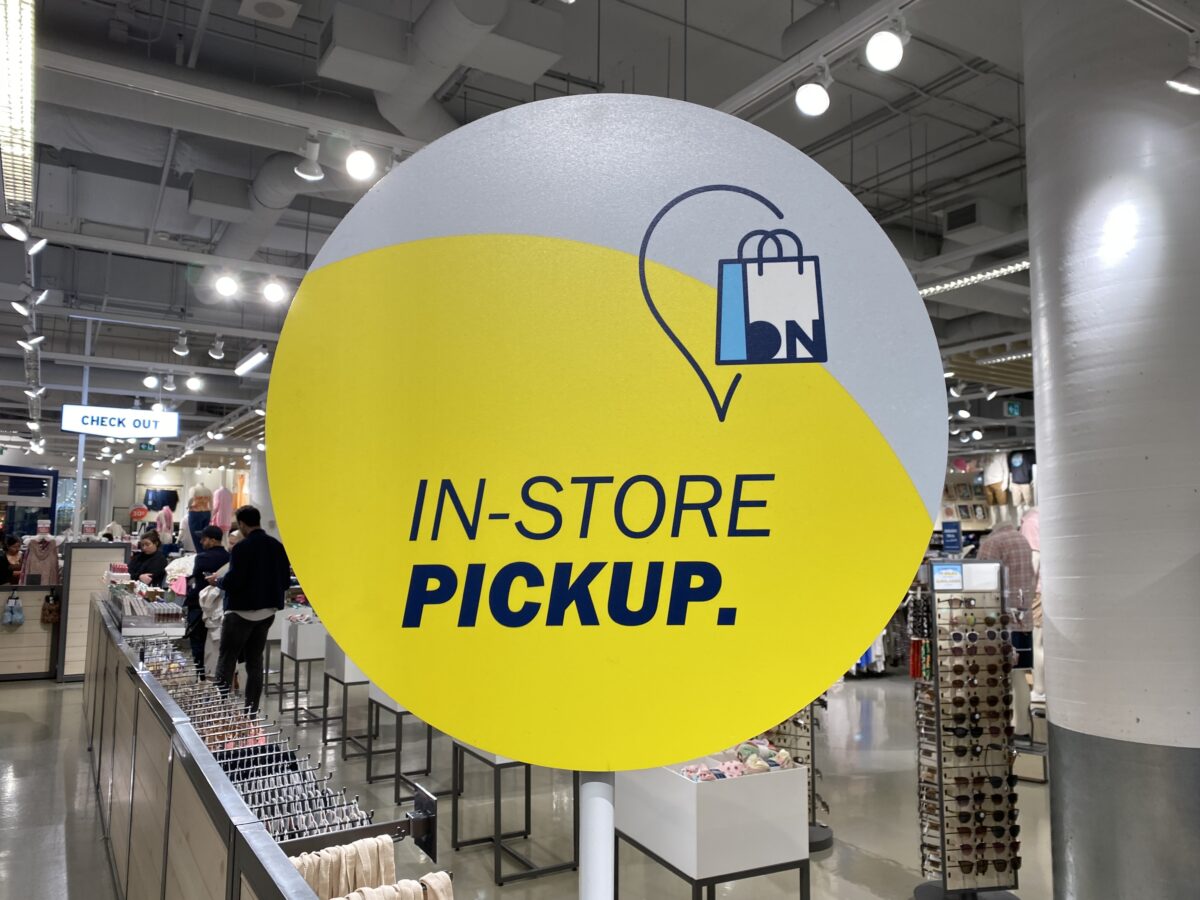
In-Store Pickup at Old Navy (Image: Dustin Fuhs)
She said the retail sector will continue to face challenges for the rest of this year.
“I see it continuing especially in North America. I think what we saw is that economic headwinds hit in Europe first and they bore the brunt of those issues for the entirety of last year,” she said. “I see warning signs that here in North America – Canada and the U.S. – it’s going to continue. This downward trend could continue for the remainder of 2023.
“What will be a leading indicator when you look at the Q2 data, and we won’t have that data until the beginning of July, but if it’s two consecutive quarters, it’s heading into a pattern. We’ve done some research, some consumer-based studies, and we found that consumers are feeling pessimistic about their economic situation and the majority of consumers say that they’re pulling back on their spend. They’re not buying as much as they were this time last year or this time two years ago. That’s in Canada and on a global level.”
Schwartz said the reason why conversion rates are trending down on a global level is because there’s strong traffic growth which is growing by six per cent year over year.
“But we’re seeing decreased order volume growth. So consumers are still coming to retailers’ websites, they’re doing more research but they’re not converting at the same rates they once were,” she said.
“In Canada, it’s actually interesting. We saw traffic volumes decrease, order volumes decrease, which resulted in conversions being essentially flat.
“What’s interesting for markets like Canada and the U.S. is we’re going to see, and we’re starting to see this with some brands that have come out into the market and laid plans for this, is a strong emphasis back on their core customer base. So understanding who their customer is and catering to the experiences that those customers want . . . I think that’s a pivot we’re going to see happen across the industry which means we’re going to see more and more emphasis on having really good data. So what is a retailer’s data strategy, how are they integrating and operationalizing that data. Ultimately what that’s going to do is set them up for success using new tools that are coming out, especially in AI. There’s a lot of excitement happening there not only on the customer experience side but on the optimization, cost-cutting side that’s going to help retailers and ultimately all of these things are going to help drive a better customer experience for those customers.”
Hudson’s Bay at Queen Street (Image: Dustin Fuhs)
Some global highlights of the Salesforce report:
After a Q4 comeback, global online sales fell two per cent year over year, largely driven by decreased demand in the US
Globally, shopping spend is at its lowest in two years at an average of $2.30 compared to $3.02 in 2021 Q4 and $2.85 in 2022 Q4
Digital traffic via desktops dropped significantly at 11 per cent, while mobile maintained at zero per cent growth ;
Desktop reigned in follow through, with cart abandonment lowest at 68 per cent compared to 79 per cent on mobile.
The full report, including global data, can be found in the full Q1 Shopping Index.
East Coast Lifestyle, a clothing brand based in Nova Scotia, is celebrating its 10th anniversary this year, is preparing to open its new headquarters, and will be expanding more in Canada and internationally.
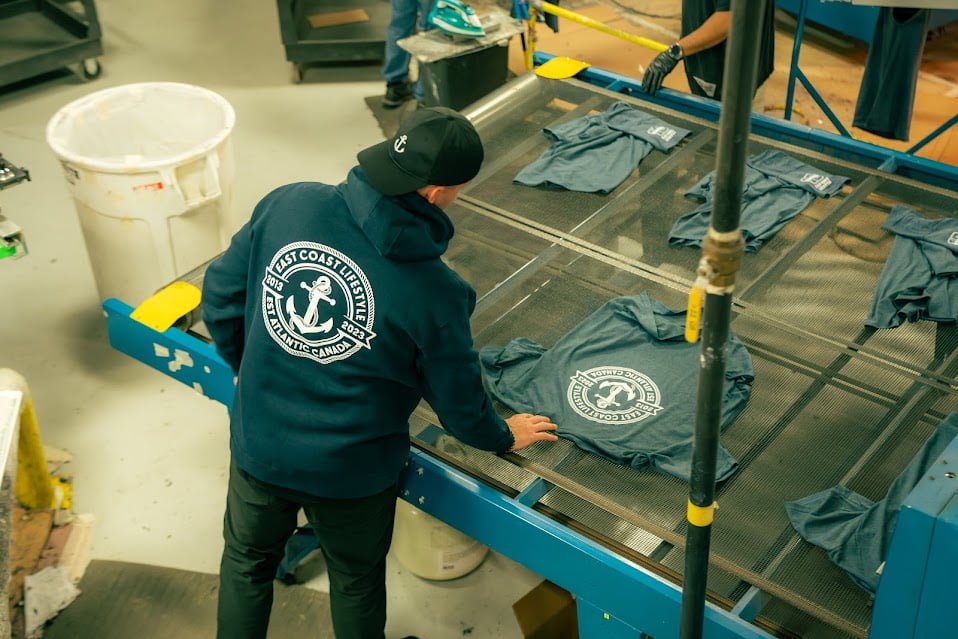
To celebrate its 10th year, East Coast Lifestyle will be launching its anniversary limited clothing collection in May. The CEO, Alex MacLean, started the company in 2013 while studying at Acadia University and has steadily been growing.The iconic clothing symbol was created for a class project and the brand took off from there, MacLean started by just selling hoodies but now the brand includes a variety of clothing for women, men, and children, accessories, drinks, and chips.
“We have brought back the original hoodie which was the very first design before the anchor and logo and we have brought in a bunch of different designs that kind of incorporate the number ten, 2013 to 2023, and some roman numerals. You will be able to see t-shirts, hats, hoodies in the collection and then we are going to be doing more down the line – but our first capsule collection will be shirts, hoodies, and hats.” East Coast Lifestyle will also be doing a large back to school collection for its tenth year that will be released in the Fall. These collections will only be available once.
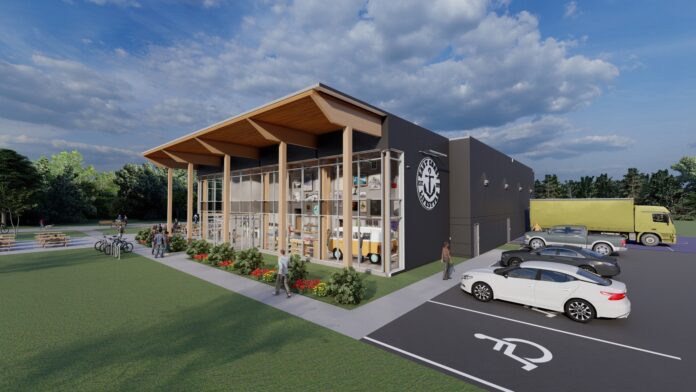
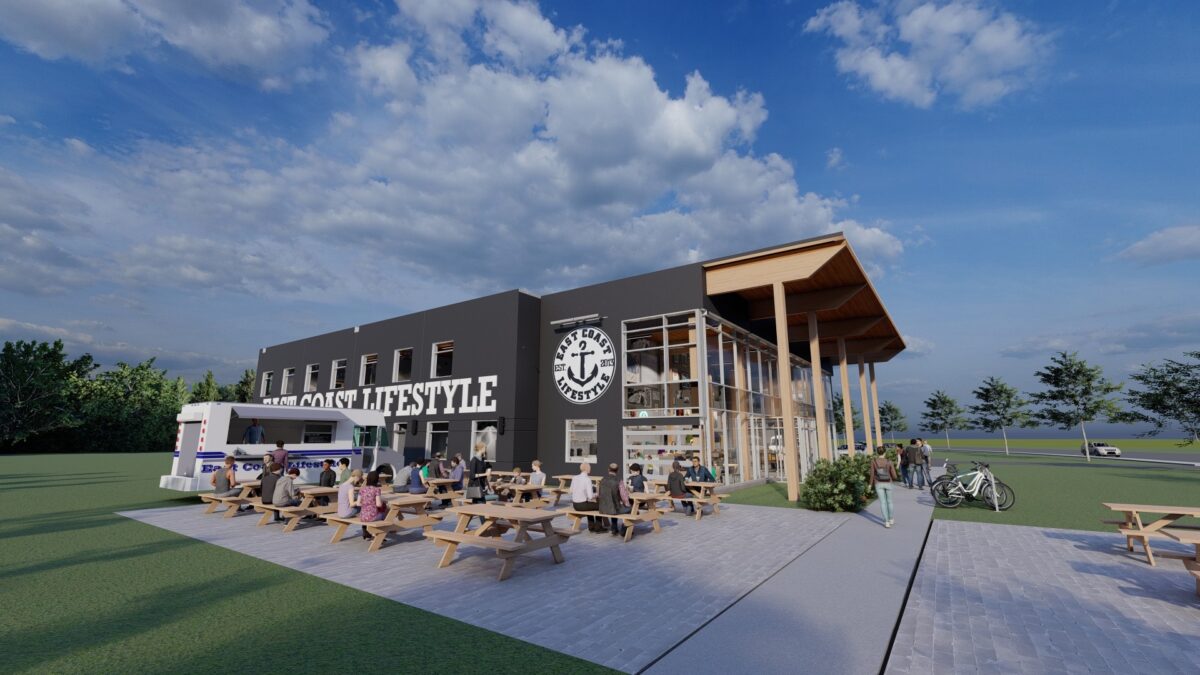
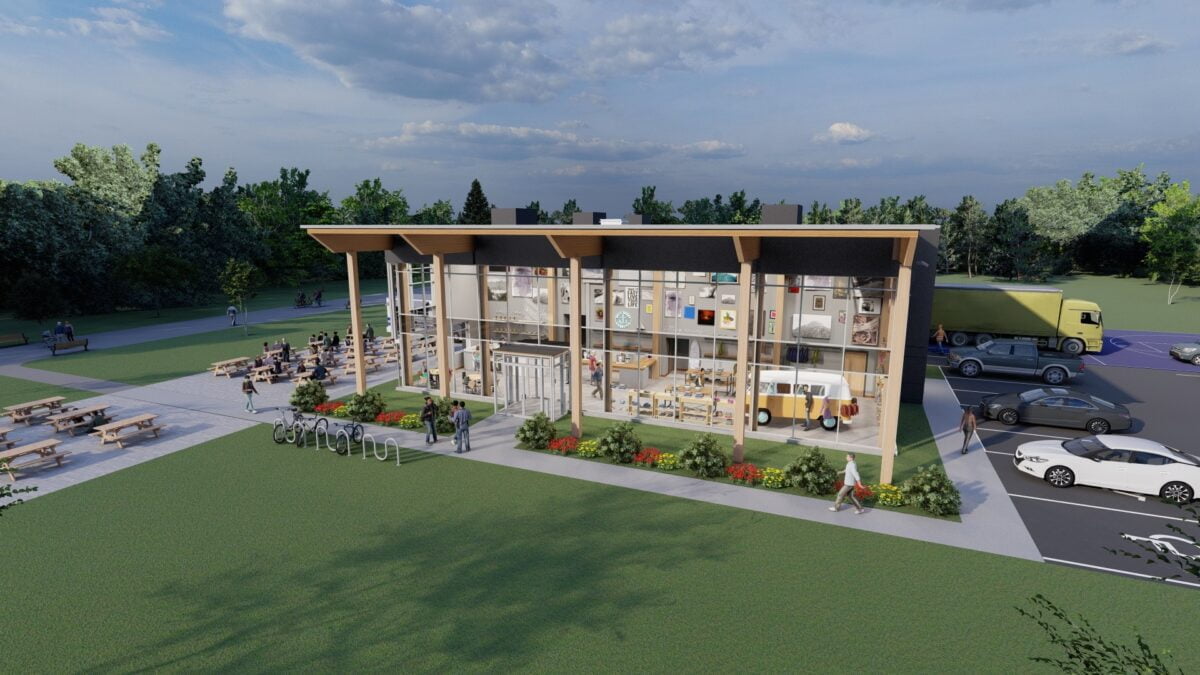
Rendering: East Coast LifestyleRendering: East Coast Lifestyle
For the 10th year, MacLean said they will be celebrating with a party when the new East Coast Lifestyle headquarters is up and running and will hopefully have a DJ, catering and new collections. MacLean said they are looking forward to celebrating the grand opening of the new building, which has been a two year project, and to have a “big ten year party” with the community.
New Headquarters
Image: East Coast Lifestyle
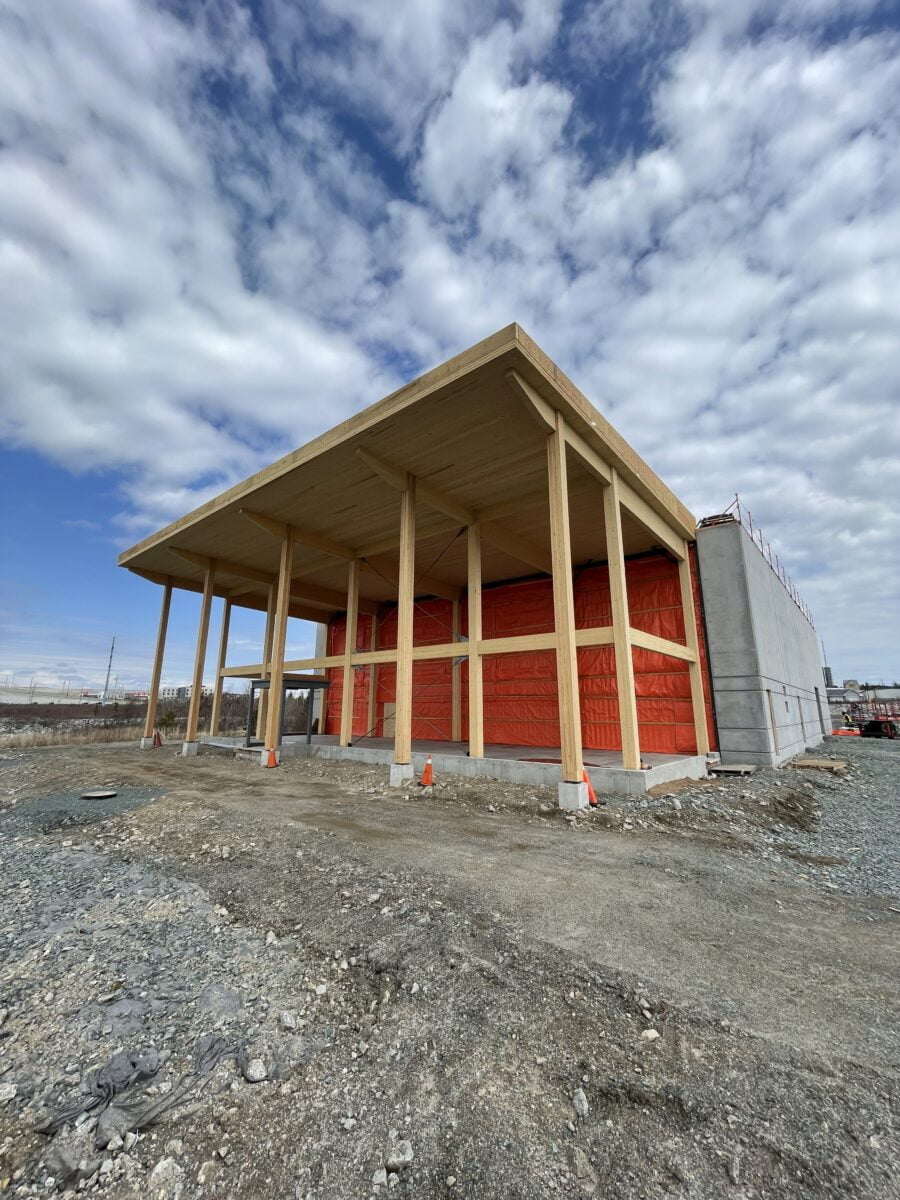
The new East Coast Lifestyle headquarters, located in Bayers Lake, broke ground in June 2022 and after years of planning the building is now in the final stages. MacLean said the goal is for it to be ready by September. The headquarters will not only be for retail space, it will also be a place for the community as it will include picnic tables, a coffee shop, a basketball court, and a place where people can enjoy its East Coast Lifestyle beverages.
“The building is just over sixty percent right now, so they are saying they will be completed by the end of June, which will allow us to get in the building by July and start fabricating the inside of the building with things like desks and office tables. We will need at least a month or two to prep the interior of our storefront. It has been a long two years working on it and we are really excited to see it come to life and we can’t wait to get in there.”
10 Years of Growing and Future Plans
Image: East Coast Lifestyle
“I was 21 when this all started out and I was very new to the world of entrepreneurship. It was challenging and I had to do a lot of research and hire great people which allowed the businesses to grow pretty quickly. I was really focused on marketing and was really bad with accounting and finance, so knowing my skill set when I was 21, I was thankful to be able to hire people who could help me in those areas.”
Looking at today, MacLean says his main challenge of a growing business is finding the right staff and has learned throughout the years to not rush the process and to take things slowly.
“Hiring is important to us. So instead of going out and rushing to hire someone today, we really hire slow. We take our time to look at the pool of people that applied and really take our time to hire the right people. We are really passionate about what we do and we need our staff to feel the same way. All the people working with East Coast Lifestyle love what they do so we need to make sure we hire the right people for the brand.”
MacLean mentioned he has recently hired an additional salesperson to take on East Coast Lifestyle’s expansion into the United States as the US market is their main focus right now: “we are really trying to break down the door of the USA and try to get into that new market – particularly by attacking a few states.” No locations are known at this time.
East Coast Lifestyle also has plans to continue its growth within Canada. Back in 2022, the brand collaborated with Bauer Hockey which allowed its products into more stores out West. Now East Coast Lifestyle is looking to make the collaboration stronger by looking at expanding into more stores throughout Ontario and Alberta as MacLean sees high potential as there are a lot of people who are familiar with the brand. Stores and locations are unknown, but will be announced once confirmed.
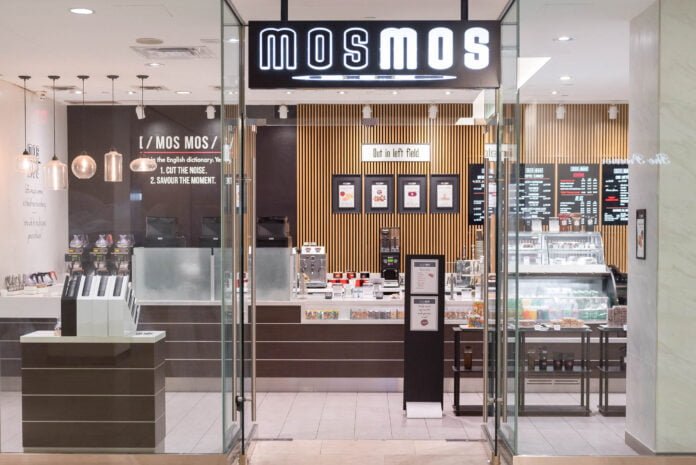
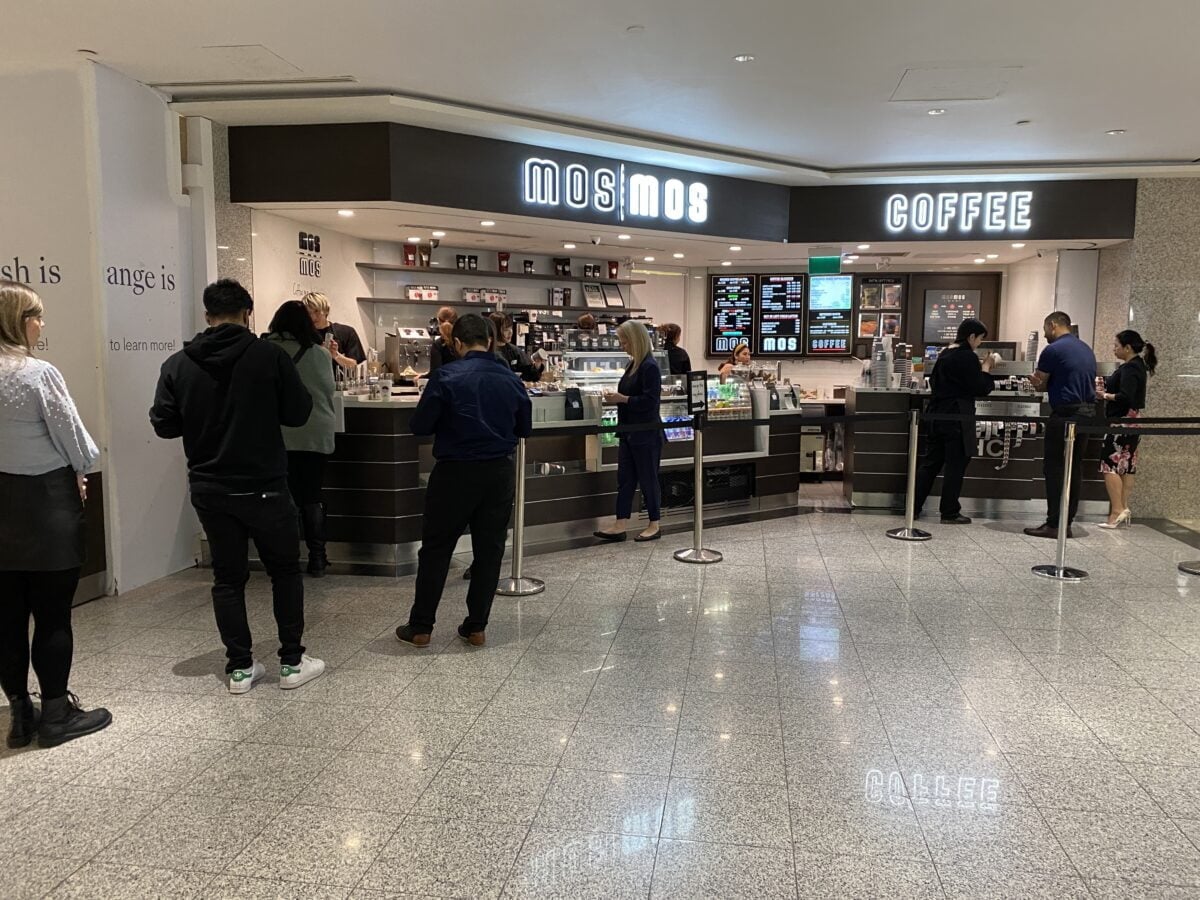
Mos Mos at WaterPark 20 Bay Street (Image: Mos Mos)
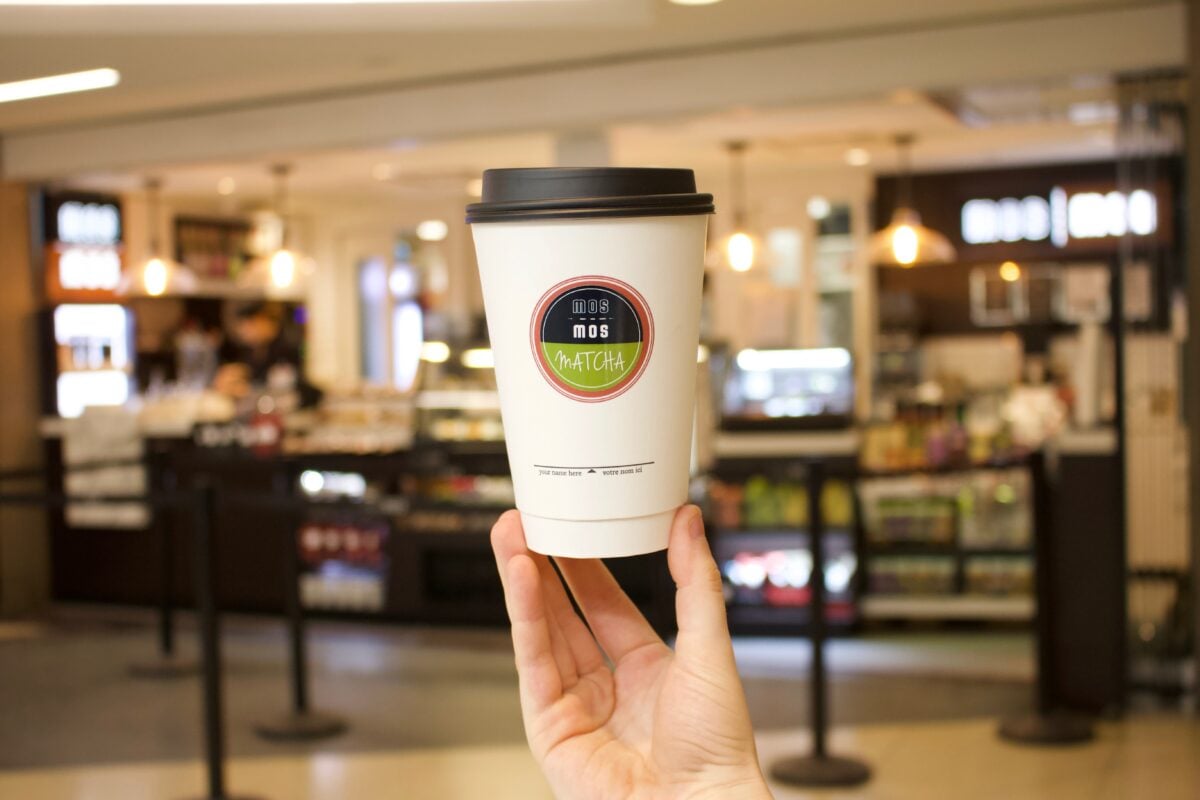
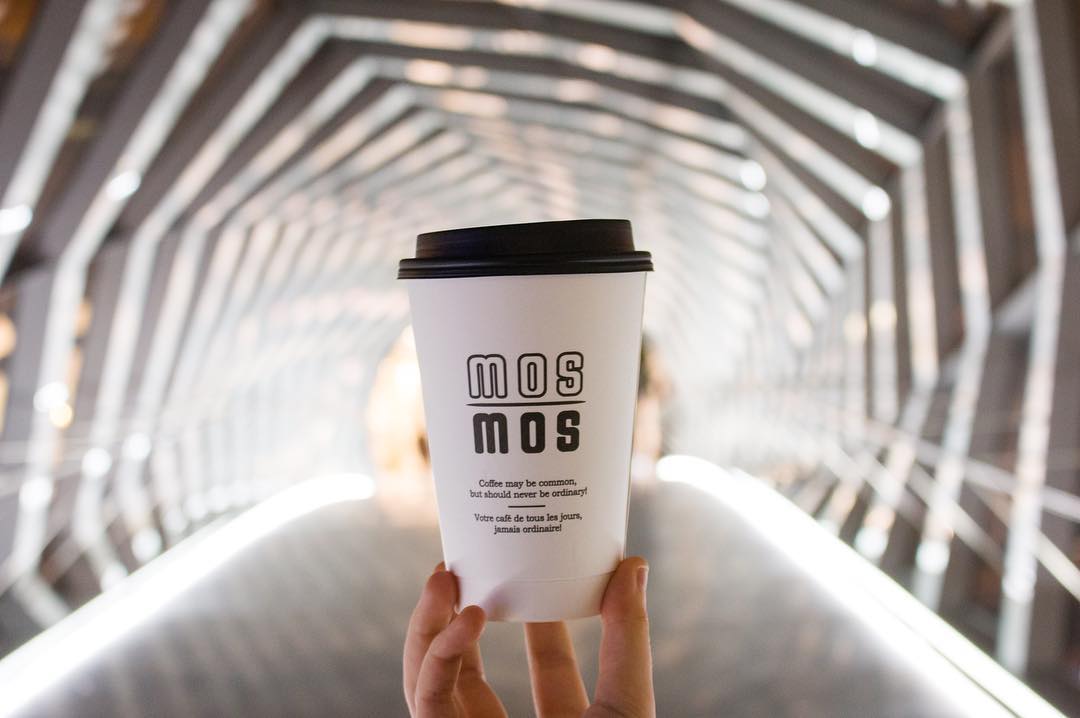
Mos Mos Coffee is the new generation coffee experience. Created in 2014 in Toronto, the Mos Mos view is simple – brew the perfect cup of coffee experience. There is no doubt that life in the city can be busy, but Mos Mos is on a mission to help remind us to take a few minutes out of our day to “Mos Mos”: cut the noise and savour the moment.
And the coffee shop is continuing to expand its reach in the greater Toronto area with plans to extend its footprint beyond the Toronto region.
There are currently 10 locations with two more under construction. The most recent opening was at 1 University Avenue across from Union Station.
Mos Mos at Commerce Court (Image: Mos Mos)Mos Mos at Exchange Tower (Image: Dustin Fuhs)
Armin Yassaie, one of the partners in the business, said after the opening of the first Mos Mos location at 199 Bay Street (Commerce Court), the first three years were dedicated to fine tuning its concept, curating the well-known drinks that Mos Mos customers have come to know and love. In 2017, Mos Mos opened its second location at 130 King Street West (Exchange Tower), and what would initiate its expansion.
Armin Yassaie
“We found out we had something special here and we wanted to bring that experience to more and more people in the Downtown core,” said Yassaie. “Later that year we opened our third location, and we continued to expand from there”. In 2019, Staples Canada approached us prior to the launch of their co-working concept to join forces.
“The debut of the Staples [STUDIO], which is a co-working concept where people can come and have a coffee, have meetings while also able to shop and access an array of marketing and printing services. We opened our fifth location at the Staple’s 375 University location. The launch went great and we decided to join forces again to open a second location at the Staples 517 Richmond Street East location.
“The impacts on COVID were not something we could foresee. We had to quickly pivot. We are proud to say that we did not permanently close any locations, although during peak COVID, the stores were drastically slower. We had to fine-tune the operations and logistics to get through that time and saw it as an opportunity to focus on other aspects of the business like launching our franchising platform. We launched franchising at Mos Mos and we now have five franchisees that own eight stores. We have fantastic franchisees that are dedicated to the Mos Mos mission and ensuring our customers are getting the same quality experience they have come to know us for. We work with our franchisees to collaborate so they can come to us if they have an idea on how to elevate our experience at Mos Mos. We want feedback from everyone, whether that’s our franchisees or our customers.”
Image: Mos Mos
He said the company has been approached for other areas outside of downtown Toronto in other cities including Vancouver and out west, however, we want to be fully ready for an expansion outside of Ontario, and are hopeful that day will come sooner than later.
“That may not be in the works right now since our focus is on our Ontario operations but it’s certainly a goal for the future,” said Yassaie.
The coffee shop’s name comes from Yassaie’s business partner and Mos Mos founder, who is Kenyan. The word originates from a dialect of Swahili they speak in Kenya and it means ‘savour the moment.’
“We try to go above and beyond and it’s not just the product. It’s also the service and the experience.”
“At Mos Mos there is something for everyone. Whether you are looking for the perfect cup of morning coffee, a new wave “double, double” experience, a smooth and balanced handcrafted latte, or a warmed spiced Chai, we have you covered. We are excited to see where we can take this and thank all of our loyal customers who have been with us throughout the years and who we share a part of each day with”
A new survey by Vibes, a mobile engagement platform, says more than 40 per cent of consumers say they would share more data to get more personalization.
The survey also found that younger consumers prefer SMS from brands over email, and show significant enthusiasm for using Mobile Wallet on their smartphones.
“Consumers are telling us that they’ll gladly interact with brands on their smartphones, as long as offers are personal, timely and relevant, and if they allow them to take the next step to using a mobile wallet”, said Jay Hinman, Vibes’ VP of Marketing. “Nearly 70 per cent of consumers already receive text messages and push notifications from brands on their phones, and younger consumers in particular are saying that they love it, with many saying they want even more.”
Younger consumers say they now prefer SMS (32 per cent) over email (26 per cent) as their primary channel of communication from brands, and that 28 per cent of consumers under age 40 actually cited a frequency of too few messages as a reason to stop receiving communication from a brand;
More than 40 per cent of smartphone users say the information they’re willing to give a brand in exchange for better personalization includes their zip code, their name, their mobile phone number and zero-party survey data;
Mobile Wallet, a wallet on the smartphone that allows consumers to pay for items online or at the register, is taking off in popularity, particularly among younger consumers aged 25-54. 54 per cent of this group say they’re either already using or are interested in using Mobile Wallet to store items such as digital offers and loyalty cards – a terrific opportunity for brands looking to bridge the engagement gap between high-reach, low-engagement channels like email and low-reach, high-engagement channels like a brand’s own mobile app;
More than 70 per cent of smartphone users even said they are likely to save and redeem personalized mobile wallet offers or coupons that are enhanced with their name, and that are tailored to their personal shopping preferences.
In this video interview, Hinman discusses the reasons behind the growing trends and what the future holds.
The Video Interview Series by Retail Insider is available on YouTube.
Connect with Mario Toneguzzi, a veteran of the media industry for more than 40 years and named in 2021 a Top Ten Business Journalist in the world and the only Canadian – to learn how you can tell your story, share your message and amplify it to a wide audience. He is Senior News Editor with Retail Insider and owner of Mario Toneguzzi Communications Inc. and can be reached at mdtoneguzzi@gmail.com.
Also check out the other series offered by Retail Insider, including The Weekly podcast and The Interview Series, which are both available on Apple Podcasts, Stitcher, TuneIn, Google Podcasts, or through our dedicated RSS feed for Simplecast and other podcast players.
Craig has a discussion with Jenn Gregory and Linda Farha about consultancy Retail Strategies and its expansion into Canada. Jenn Gregory is President of Downtown Strategies at US-based Retail Strategies Group, and Linda Farha is Founder and head of Zenergy Communications in Toronto, as well as Chief Connector at pop-up go. The conversation includes helping businesses in smaller communities thrive along with courses for education.
If you prefer to listen to the audio version, it is available below:
The Interview Series audio podcasts by Retail Insider Canada are available on Apple Podcasts, Stitcher, TuneIn, Google Play, or through our dedicated RSS feed for Overcast and other podcast players. Also check out our The Weekly audio podcast where Craig and Lee discuss popular content published on Retail Insider which is part of the The Retail Insider Podcast Network.
Featured during this interview:
Jenn Gregory, President, Downtown Strategies at Retail Strategies
Craig Patterson Welcome to the Retail Insider video series. I’m your host, Craig Patterson. And we’re joined here today with Jenn Gregory. She’s the President of Downtown Strategies at US based Retail Strategies Group, based in Birmingham, Alabama. And we’ve also got Linda Farha. She’s the Founder and President of Zenergy Communications, which is based in Toronto, and has also been involved in Retail Strategies, as have I. So welcome both of you.
Jenn Gregory Thank you.
Linda Farha Thank you. So good to be to be here.
Craig Patterson I’m gonna ask a few questions here. I’ll start with Jenn, tell me about Retail Strategies, and this plan to expand into the Canadian market.
Jenn Gregory Sure, Craig. So Retail Strategies, was formed as a commercial real estate brokerage house about 15 years ago. And after the 2008 recession, we really decided to branch out a bit and identify other opportunities beyond real estate, but rooted in real estate. And so from there, Retail Strategies was born. And we are a community development consulting firm. And so communities, municipalities, towns, villages across the United States, hire us to recruit National retail to their commercial corridors, but also to revitalize their downtown’s. And what we’re here to talk about today support their small businesses. So over the last 10 plus years or so, we’ve worked with about 750 localities in the United States, in about 27, states coast to coast. And we are very excited about expanding our North American footprint and are really excited to share some of that with you today.
Craig Patterson Wonderful, what brought about the expansion into Canada and to share any plans that might be in place so far?
Jenn Gregory Absolutely. Well, you know, we knew that during the pandemic, specifically that community’s needs were changing a little bit. While they still did want National retail on their commercial corridors, and they wanted to have a vibrant downtown. They knew that their small businesses were really hurting. And from an optics perspective, they couldn’t focus on bringing in a big box retailer while their businesses at home, their neighbors, their friends, were really struggling. And so we started really listening campaign, talking to our communities and talking to businesses about what they needed, how can we support them? And through a couple of different partnerships, specifically, some surveys that were done from Main Street America, which is a National downtown revitalization organization, we learned that small businesses needed poaching, training, and assistance more than they needed cash. So of course, the American Government prioritized funding in the you know, immediate term after the pandemic to try to help those businesses pay their rent, stay open. And while they were shuttered due to some of the regulations. And while that was helpful, these businesses reported to us that they needed to modernize, they needed to learn how to get their businesses online, and really respond to some of the changes that were happening in consumer behavior. So we were so fortunate enough to know Linda at Zenergy, and partner with her. And we can talk more about that later. But that’s really what led us to consider the Canadian market, of course, Zenergy is so well known in Canada and has a great footprint there. And the more that Linda and I started talking and forming our partnership, we realized that businesses in Canada had the very same needs as those in the United States. And so we felt like that the programs and resources that we put together would be a natural fit for the small businesses in Canada. And so that’s really what brought about our focus on bringing these services that we think are so needed and so impactful to small businesses and municipalities in Canada.
Jenn Gregory Now, Jenn, I know here in Canada, we’ve seen downtown’s and smaller and larger communities, sometimes struggling a little bit competing with say Shopping Centres or Big Box Retail that’s on the edge of the community. Are you seeing the same thing in the United States? I’m guessing probably. But tell me a little bit more about downtown revitalization and how you’ve been working with that.
Jenn Gregory Absolutely. Craig, we have seen the very same challenges. But we’ve also seen a real opportunity for rural communities and for those downtown’s and really, that’s because post pandemic, a lot of people are still working from home. They haven’t been called back to their office if they’re working in corporate office spaces in larger urban areas. And so they’re spending more time at home and many times that’s in kind of suburban and Rural Communities. And so because of that people like myself are working remotely They are interested in exploring and kind of being reintroduced to their own downtown’s and their local community. So while it’s certainly been a challenge of resources and kind of a competition of resources, we know that access to Capital is still really slow right now. And some of these businesses, if they were struggling before the pandemic, they’re still struggling. And certainly, you know, things have not necessarily gotten easier for them. But we’ve seen that those businesses that can adapt, really take advantage of that kind of return back to the rural market. And so in terms of American downtown’s, really, those that are investing in placemaking, are the ones that are winning, you know, we know that if people are working in a co working space, they want to go down the street and grab a cup of coffee, and they love to drink that coffee outside, if there’s a beautiful mural next to them, if there’s nice music being played overhead. And so these are the things that we are working with our Rural Communities on, as they sort of compete with these larger Shopping Centres and Malls is how can you invest in a sense of place and really playing up the authenticity that downtown and community has to offer? And we’re seeing those that do that really, really win through this time?
Craig Patterson I love it. I love it. This is something that I’m passionate about as well. So now question for Linda Farha, you’ve been involved with Retail Strategies involved with some education courses and whatnot. I’ve been involved as well. I’ve done a few lectures around Marketing and Communications. Linda, how did this come about? And what else? What other topics have you been involved with, with Retail Strategies here?
Linda Farha Well, it’s been very exciting that to partner up with Retail Strategies on on this project. And what we started with, we put in, by the way, thank you so much for being involved to Craig, I think your involvement has been very, very helpful to those who have been part of the unit and listening to your lectures, and so on, we put together a program based on our conversation with Jenn and her team. And the first module is basically called the Omni Channel Retail Strategies. And really, it was put together with the local Merchants and Retailers and the economic development centres in mind. So you know, going back to what Jenn was saying, to help these Retailers and to help these Merchants, drive business, create awareness and get people into their stores and buying products. So what we did is we put together the module and the module basically is an hour Program Webinar that is then followed by very focused accelerator sessions that are 30 minutes long. And so we started off with like this broad Omni Channel Retail Strategy kind of fairly broad, the content that is then developed further with the sessions. So the sessions really include everything from content development, which is what you covered, customer segmentation, social content, and social commerce, and live stream selling, as well as pop-ups, pop-ups, and collaboration. So all those things really cover all the the gamut in terms of what are the elements that you can do in terms of driving traffic to your store, and also creating awareness. So it’s also helping the merchants who may believe that they’re small, and they can’t actually create a lot of social content, or they don’t, they’re too small to have live stream selling, or that they believe that you know, that online does not support driving traffic to their stores. So really, to give them a bit of a broad education in terms of how could you actually drive traffic to your store, drive sales without spending a lot of money, and understanding that they have limited people, you know, on their payroll, maybe they’re a one person operation or two. So really looking at their operation and giving them the guidance so that they can actually, you know, sell and create more revenue or awareness and get new customers, the Collab, for example, is a really great one. Because if they actually collaborate with other brands, or they have Pop-ins in their stores, all of a sudden, now they’re driving traffic from the the customer database, or the databases and these other people they’re collaborating with. So there are a number of different things that they could do to drive traffic without spending a lot of money. But it’s really to give them that education. And a lot of the information, I would say is fairly basic, but not basic, not too basic, so that they could actually move the needle, you know, they can actually make things happen. So, you know, it’s been really a great thing. And we’re still working on on a number of different programs for you know, with these particular content in mind will be done by the end of May. And then we’ll move on to other other potential geographic areas and a new format, which we’ll talk about in a few minutes.
Craig Patterson Terrific. Now, Linda, also, there’s some one on one assistance, I think, after some of the lectures tell me a bit about that as well.
Linda Farha So you know, when we provide the content, of course, we don’t know every individual in terms of the intricacies of their business. So what we do is after the session And after each of the six sessions that we have, we provided an opportunity for them to reach out the people that are in attendance to complete a handout, where they start thinking about, you know, diving deeper into their own personal content, so they can actually understand their business relative to the content that we presented. And then we booked a personalized one on one session, and that personalized one on one session allows us to give them in essence consultation for them, you know, providing them real guidance to, if they’re talking about social content, how are they going to develop social content specific for their needs, and they’re, who they’re trying to try to attract in terms of customers, and who their target audiences so really dive deeper into their specific needs. So that it’s actually not just a very generic assistance, but a really personalized assistance. And I think that that’s a really good thing, because the reality is, is that we can all listen to content. But you know, we the content, we’re not quite sure how to adapt it to our own personal needs. But that’s where you know, that personalized one on one session is really helpful.
Craig Patterson Terrific. Now, is there anything about the new content that’s gonna be coming after may that can be shared? And that’s a question for either of you.
Linda Farha Well, what I was referring to there, and I’m sure, Jenn, would like to chime in as well, is that what we’re a lot of people are really time starved. You know, a lot of these people that we’re talking to you, they’re small players, what we’re all time, so whether we’re large businesses or small, so what we’ve decided to do is create an environment where you can listen to the content at your leisure. So basically, it’ll be you know, hosted on a specific platform. And in the time depending on the, agreement that we have, they’ll be able to actually access the content, when they can, at their leisure, when they’re able to actually listen to it. And the one on one sessions, however, the personalized sessions will still remain, so they can listen to the content, and then they can dive deeper at a later time, at their leisure when they can and will book a time specifically for them. So that has, it’s in the works. I don’t know if you want to comment anymore, Jenn. But really, that’s pretty much what it is. Because really, we understand that people, you know, we all sign up for sessions and webinars, and then all of a sudden, our lives become so busy, we can’t make them. So we want to make it so that it’s much easier for people to actually have the ability to listen to the content when they can and learn from it.
Jenn Gregory Yeah, that’s right. I mean, I think we know that entrepreneurs are busy people, right, all of us are busy. But those that are starting new businesses, many times are still in a full time job somewhere else, or maybe they are raising a family and trying to start this business, trying to scale it, trying to grow it. So time is limited. And so we’re so excited about kind of this evolution of the training programs, so that there’s still going to be that element of FaceTime, one to one, if those opportunities are requested. But by March, these business owners will be able to access this information, you know, on their couch at midnight, if that’s the best time for them, or first thing in the morning, you know, on their way to school, whatever it may be. And so really meeting these business owners where they are is what our goal is make this as accessible as possible. And while still providing that kind of ongoing training that Linda mentioned, which is what we love so much, you know, they get a worksheet or a template, you know, to help them kind of put what Linda and her team has taught into practice. So they’re not just hearing it, they’re receiving a tool that can help them, you know, put it into practice for their specific business immediately. And we’ve heard just really great reviews about that component as well. You know, I compare it to go into a conference, those of us that are professionals, you know, we go to conferences, professional development opportunities, and we get so inspired, and we, you know, we, the moment we leave, or we get on that airplane, and we go home, we start putting out fires and, we lose a lot of times the momentum that we had, you know, from that point of inspiration, so our goal is really to keep them inspired, make sure that these elements get implemented. And the first piece of that is making sure that it’s accessible in a way that meets their needs. And I think this new evolution really does that.
Linda Farha And also I you know, what we will do and this is certainly part of the evolution is dive deeper. So for example, they may we may take content on social content development, for example, and maybe a session is all about Facebook, or all about Instagram. So over time, you know, this program is certainly going to evolve beyond just the elements that we have now in it and actually, you know, maybe it’ll evolve beyond an Omni Channel Retail Strategy to another topic. So this is really a program and evolutionary program that you know, touches a lot of Industries. Of course, we’re talking about Retail right now, but there’s a lot of components that we can actually touch on that we haven’t even started. So this is a really a great start to what we believe to be something that can grow tremendously, and provide a lot of guidance, a lot of Retail businesses out there that are looking to, you know, who are struggling to find ways to, you know, to grow their business.
Craig Patterson Now a question for Jenn, Retail Strategies has obviously worked with lots of smaller businesses in the United States, as well as smaller communities and what not, is there anything you can share in terms of expansion plans for Canada, as we’re, you know, obviously a country that also has all kinds of small businesses and lots of smaller communities as well.
Jenn Gregory Yeah, we feel like you know, that it’s somewhat universal in terms of like you just mentioned, most economies, especially in North America, certainly are driven by small businesses, the majority of businesses in the United States, the majority in Canada, you know, Linda and her team, did some research, and it’s about two thirds of all businesses in the United States and Canada, are considered small. And so this is a major part of the economies of both of our countries. And so kind of our plans are in terms of, of moving into the Canadian market, it’ll be relationship based. So we are excited to be going to the ICSC Vegas show. And that’s going to really give us an opportunity, Linda and I both to kind of officially launch this expansion and meet with, you know, Influencers, may be regional economic development leaders. You know, I think the other interesting component of this is funding that’s available. One thing that we think makes this program very unique is that the business that businesses that are participating, they don’t, they don’t invest in these courses themselves. They have sponsors, and naturally, through either the municipality, you know, in the United States, the locality, that local government, or even, you know, the Federal Government’s, there has been really a large amount of funding prioritized for technical assistance for small businesses in both the United States and Canada, and also in our indigenous populations. And so we are really working our way through those opportunities and making sure that our services align with the priorities of both National Governments so that we can really be a tool and a provider of technical assistance that meets the needs. And I think the last thing I’ll mention is that, and Linda hit on this, you know, most of the businesses that we’re working with, you know, they’re successful businesses, but they’ve been doing things a certain way for a really long time. And moving into this digital space is a big jump for them. Also, they their staffs, like Linda mentioned, are small, you’re talking one or two, certainly under five people kind of Micro Enterprises is the term we use. And, you know, so it’s really vital that we focus on what are the first what is the first step and the next step in terms of implementation. Like Linda mentioned, sometimes the training to those of us that are accustomed to Digital media and, and resources like that may think it’s basic, but we want to be sure that, you know, kind of our first job is to convince these businesses that this is something that they need to do, that they can’t not exist in the digital space. Post COVID. We know that that online shopping percentage is creeping up incrementally, you know, it’s not. It’s not an apocalypse by any means. But that number is ever increasing. And so we have met with some businesses through our downtown revitalization partnerships, in particular, that have said I was scared to jump into this, but I did and now my online sales, eclipse my Brick and Mortar sales. And so when we think about kind of what that means for downtown’s, it really shifts the Real Estate also. So you know, we’re seeing Retailers take on smaller square footage, footprints, you know, for kind of that main street frontage space, and reserving a lot of the back of house space for order fulfillment. And that creates jobs, right when people are needing to pack lots of orders for a whole additional store that exists online. You know, they’re hiring folks in that local economy. And we start to see kind of these small scale little Industries being built in rural downtown. So it’s it’s a proven concept, but a lot of the work that Linda and her team are doing is convincing the businesses to take that jump into the digital space, and then kind of work their way through. It’s just very overwhelming and I would imagine that is a universal concept. across both of our countries,
Craig Patterson I think it is here in Canada, we definitely saw a digital shift, they say we moved into the future much faster than we would have normally, because of the pandemic, people were online because they couldn’t go into physical spaces for periods of time, depending if there was Lockdowns. But now we’ve seen people online more than ever, and I know that some small businesses haven’t necessarily been able to keep up. So services like this are terrific.
Linda Farha Yeah, and I think that I think that was really important is that people, you know, we talked about on the tab, but the reality is, is that you can’t look at your business in silos, you’ve got to look at it as a holistic business. So the Digital is part of it, and it can’t be seen as a separate entity, it’s got to be seen as part of it. So you’re dealing with your business in a very integrated way, as opposed to, you know, looking at your online versus your in store and treating them separately, we’ve got to be looked at as part of the whole package. And I think that’s really where the transformation has to occur is that people have to understand that your Brick and Mortar store may drive online sales, but the presence of your store really allows people to actually come in and understand or your your online drives people to your store. I mean, there’s there’s, you know, there are shifts on both sides, and depending on, you know, how you actually utilize a social media and, and your database that you have in terms of communicating to people and, and your website and all the way that you communicate, it allows people to really kind of drive traffic, whether it’s online or in store, but you know, you can’t look at it as two separate entities. And to Jenn’s point, I mean the store becomes your backup, you know, because your shipping center as well, your fulfillment center. So I mean, the reality is, is that they need to look at things in a very holistic way and not in a siloed way. And I think that that’s really what’s the crux of the Omni Channel Retail Strategies program is that you’ve got to look at everything not as separate entities but holistically and integrated.
Craig Patterson Terrific. Now, Linda, you’re Founder of Zenergy communications, you’re also the Chief Connector of pop-up go. Congratulations on 20 years for Zenergy. How did it get started? And tell me a little bit about both of these endeavors?
Linda Farha Yeah, well, I started Zenergy communications, actually to fill a need that I thought was non existent, which is basically helping all sides, all company sizes, you know, if I was working in an Organization, and I tried to find an agency to help me out, and maybe I had limited budgets, or didn’t have budgets of a large Fortune 500 company, but I had the same needs. And I thought, why not set up a boutique firm that answers the needs of whether you’re a small entity or a large entity in the same way and treat each one of those companies or the size of organizations the same way. Because at the end of the day, every company has the same needs a granted, everybody has different budgets. And of course, the needs are very different in terms of the breadth or the depth of the services. But the reality is that we all need the same thing, we all want to drive awareness, we all want to drive sales. So I started off as a PR firm. And over time, now if I fast track to 20 years later, of course, over time, things have changed. And now we have become a service provider of an Omni Channel, Retail, but Omni Channel service provider, where we actually provide services that can cover all gamut in terms of Communications and Marketing. And, you know, we don’t do it in a in a very, you know, individualistic way, we do it in a very holistic way. So that we can, you know, help customers that are looking to develop awareness or grow their brand or, or create new customers or actually even identify gaps in the marketplace. We help them to identify those things. But we do so in a holistic way. And we do it the same way we do with Retail Strategies, we’re looking at it from a broad perspective, but making sure that when you’re on somebody’s website, it’s you’re communicating in a very similar way than if you walk into a store or your whatever your product is. But the reality is, is that we we take what we’ve been doing with Retail Strategies, we’ve been doing those kinds of things for, you know, B2B companies, or, you know, Manufacturers, etc. Because everybody has the same needs, the reality is, that we need to make sure that we’re not, that we’re seeing the same way and that a brand ethos, or the persona of a brand is properly represented across all channels. So I think, you know, we started off as a PR firm, but really, we, you know, you evolved to becoming one that provides those services. Because really, at the end of the day, that’s really what it takes, right? It takes that whole approach of, of understanding what are we trying to achieve, who our customers are, etc, and breaking it down so that we really, you know, at the end of the day, we’re driving ourselves, and we’re actually succeeding, and we’re, you know, our bottom line is growing. So, that’s what we do for all of our customers and we’re really excited but looking at, you know, what are we doing with those who are on our program or with Retail Strategies? How are we helping these small vendors, you know, move the needle, may be not so fast. but move the needle. So we do that with all sorts of Organizations.
Craig Patterson Let’s quickly talk about pop-up go as well. We can talk about a pop-up Retail even in smaller communities. I don’t know if that’s quite as big of a thing. But, but But Linda, you started pop-up go a few years ago.
Linda Farha Yeah. So pop-up go, I started five years ago. And I would say actually pop-up go is interesting, because really, what we were doing at the time was to serve a need, which was basically, you know, there a lot of vacancies, people wanted to test a product, or they want to test a new brand, they wanted to test something, but they didn’t want to commit to a long term lease. And five years ago, people were saying, Well, you know, it was very difficult for a lot of brands to do so because a lot of Landlords were, you know, they were reticent, they didn’t really want to, you know, open the door to short term leases. It’s interesting how the pandemic and the changes in the marketplace have really created an environment where actually landlords are happy to have that, because they recognize the fact that, you know, if I have a pop-up, well, you know, you create that whole FOMO fear of missing out. So you know, you create that traffic, because normally pop-ups are shorter, you know, they’re the shorter term, they’re maybe there for a few months, or 10 days, or whatever it may be, but they’re driving traffic in a, in a more was higher volume in general, because, you know, they’re creating an environment where they may not be there for long and, and I would say that pop-ups, they’re not only in big centers, there are a lot of we’ve been getting a lot of requests for pop ups in secondary markets and smaller markets, you know, from all kinds, right, they’re not just for, you know, brands of or retail brands, or the only fashion brands, but they could be, you know, entertainment or art exhibitions or, you know, whatever. Basically, they’re all over the map in terms of the types of, of activations and, you know, I touched on pop-ins earlier, but what pop-ins are basically a pop-up within a store. So, you know, even though we’re talking about small town, USA, or a small town, Canada, you may have a small retailer who maybe has a small part of let’s say, a jewelry pop-up their fashion retailer, but they don’t sell jewelry, but they get a pop up that comes in pop in that goes into their store, a jewelry brand. And all of a sudden now that retailer is driving traffic from that jeweler that they may not have had before. And again, you know, if it’s a short term thing, it drives traffic. And it creates a urgency because they’re not there for a long time. So I would say that pop-up go really helped a lot of these smaller merchants find a place to actually drive traffic and you know, and create awareness. So pop-up, though, was really in need of the reality of the public goes supported by his energy services. Because once you do a pop-up or when you’re creating a pop-up while you need all the services that we talked about in our omni channel program. So it all fits together very nicely.
Craig Patterson Thank you so much for joining me today. This has been Jenn Gregory. She’s the President of Downtown Strategies at US based Retail Strategies in Birmingham, Alabama. Thank you so much for joining us, Jenn.
Jenn Gregory Thank you so much, Craig, great to be with you.
Craig Patterson And Linda Farhan out of Toronto. You’re the Founder and President of Zenergy Communications as well of course the Chief Connector of pop-up go. Thank you so much for joining us today here as well, Linda. Pleasure.
Linda Farha Pleasure, Thank you for having us.
Craig Patterson And I’m Craig Patterson. I’m the founder, CEO and publisher of Retail Insider Media Limited. I’m also the host of the Retail Insider video interview series. Thank you so much everyone for joining us today. Whether or not you’re watching us here on video or listening to this through our podcast channel. Thank you so much again. Take care and bye for now.
Subscribe, Rate, and Review our Retail Insider Podcast!
Drop us a line at Craig@Retail-Insider.com. You can also rate us in Apple Podcasts or recommend us in Overcast to help more people discover the show!
Background Music Credit: Hard Boiled Kevin MacLeod (incompetech.com). Licensed under Creative Commons: By Attribution 3.0 License. http://creativecommons.org/licenses/by/3.0/
Retail Insider is streamlining its Canadian retail news from around the web to include a handful of top news stories that can be viewed quickly during the day. Here are the top stories from the past 24 hours.