Advertisement
Home Blog Page 664

Halifax ReTales Tallies Number of Store Openings and Closings in 2022 with Surprising Findings [Interview]

Image: Downtown Halifax

Despite another challenging year in the retail sector, overall there were positive numbers for the Halifax region when it came to business openings and closures.

Halifax ReTales, a tracker of the goings on of the Halifax Regional Municipality retail and restaurant scene, recorded 175 new openings and 68 closures in 2022.

“However, as I was compiling the data, I noticed a trend and 106 of the openings happened the first half of the year where only 69 were in the second half of the year,” said Arthur Gaudreau who operates the website.

“So overall positive numbers with 2.5 openings in 2022 to every one closure. Last year it was 2.1 openings and in 2020 it was 1.2 openings.

“The retail market itself is relatively flat but the restaurant industry or food related things are up more-so.”

And Gaudreau attributes that to the city’s population growth.

Inkwell Modern Handmade at 1453 South Park (Image: Halifax ReTales)
Arthur Gaudreau

“We’re growing way faster than we had anticipated. Per capita, I think we’re growing the second fastest in the country and it’s just starting to show. The funny thing about it is the diversification of what’s happening. So probably up until say about 2010 we had an Indian grocery store that was literally called Indian Groceries. And now we probably have a store that represents every different culture and there’s probably around 18 to 20 of them. There’s population growth and in certain sectors that’s really pushing how things change. So there’s a lot of population growth here based on immigration and of course the change in the population base means these things that those people coming to Nova Scotia want.”

Gaudreau said one area of growth was the Esquire Plaza on Bedford Highway. The former motel saw many food businesses open, including Korean rice-dog shop Kon Dog. Bahamian restaurant East Coast Conch. A second location of Turkish spot EFES. The Syrian/Yemeni eatery Tanoor. A new coffee roaster, Beanville. Hanin Mart, a Korean grocer and a motorcycle accessory shop Route 66. A second location of Antionette’s Cheesecake will join in the new year, he said.
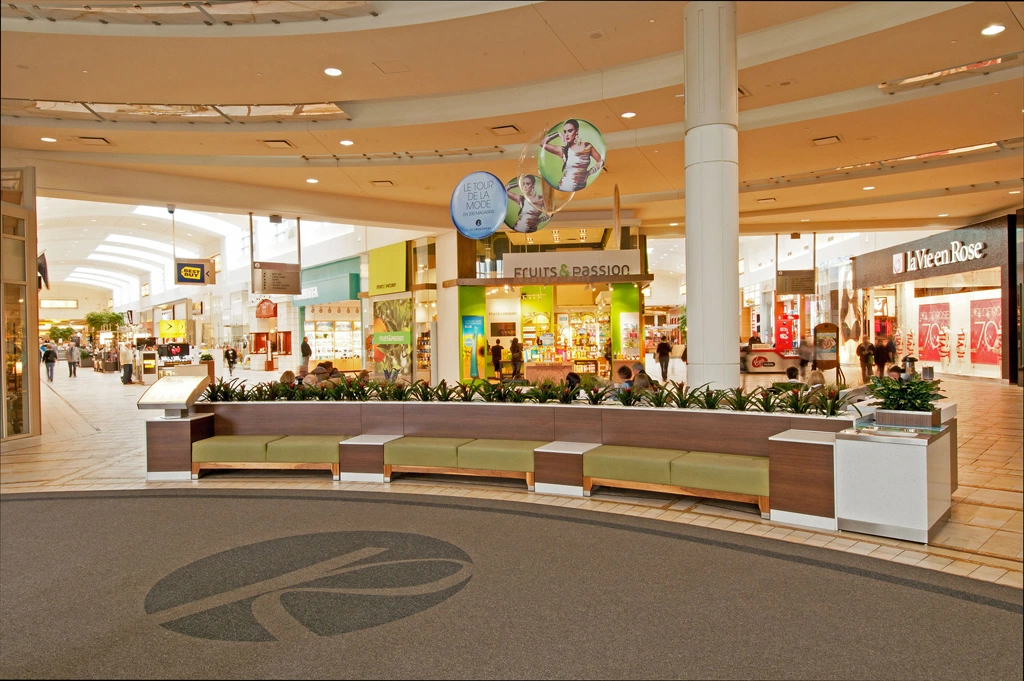
“Freehand Hospitality really helped the numbers with their continued growth at the Queen’s Marque on Lower Water Street, Downtown Halifax. The first eatery Drift opened late 2021, but this year Darya, Cafe Lunette, Bar Sofia and Peacock Wine Bar joined it. Next year will see the openings of Salt + Ash, Swanky Burger, Toridori Noodle Bar and coffee and ice cream spot The Fog Company,” he said.
“Some longtime spots like the Art Expo in Park Lane, Fairview eatery Mexico Lindo and dim sum spot Kee Heong all closed this year. Pizza, of course, was involved with the Lakeside and Fairview Alexandra’s becoming Belle Vita Pizza. Alexandra’s opened a new Fairview location a few months later, replacing Coins Pizza a crosswalk away. Pizza Pizza came to Spryfield with another coming to Sackville Drive. Sackville Drive also saw Quebec chain Pizza Salvatore, which has no connection to legendary North End pizza shop Salvatore’s. Downtown Pizza replaced Snappy Tomato in Woodside and Papa John’s opened in Woodlawn.”

Gaudreau expects continued growth in the market because of the population growth in the city. For example, two new locations for Popeye’s and a Home Sense are already in the books for early 2023. A major Asian grocery store is coming as well.

“So if you’re seeing outside companies like that and franchise models coming in you know the numbers are saying the right things to grow,” he said. 
Gaudreau said the market is also seeing new construction with about eight major buildings to open in the first half of 2023 and all of them have ground floor retail.

“And those spaces are getting filled . . . It’s really kind of growing in a weird and wonderful way,” he said.
“They also changed the rules in the centre part of Halifax so that you can put retail in certain different places now. Like they’ve rezoned everything. Over the next few years we’ll see how that plays out too.”

Promenade Shopping Centre in Thornhill to be Redeveloped into Vibrant Urban Centre [Renderings/Exclusive Interview]

Promenade Shopping Centre (Concept rendering – subject to change)

The Promenade Shopping Centre, north of Toronto in the heart of Thornhill, will be the centrepiece of a multi-phase development as part of an emerging vibrant urban centre.

Residents will be able to find all their needs at Promenade Shopping Centre including two grocery stores, an LCBO, a health club, a drug store and more. The vision is that the Shopping Centre will provide all the amenities for the residents and workers of the new residential and office towers as well as the surrounding Thornhill community and beyond.

The first two condominium towers are currently under construction with occupancy expected in 2024. With direct access to the existing shopping centre, these 35 and 30-storey towers contain more than 750 residential condominiums and approximately 80,000 square feet of new retail space.

Molly Westbrook

“This type of transformational, mixed-use development is a perfect example of how visionary investors and retailers are reimagining large-format mall and shopping centre sites in the GTA and across Canada. It’s also emblematic of a trend we’re seeing across cities in Canada and the USA as well,” said Molly Westbrook, Executive Managing Director, Cushman & Wakefield Asset Services.

“Retail redevelopment and the addition of high-end, vertical residential and office components can build on traditional malls’ and shopping centres’ history as both business and social hubs, reinvigorating, adding density and creating more vibrant neighborhoods and complete communities.”

The approximately 540,000 square-foot Promenade, sits on more than 50 acres of land at Bathurst and Centre streets, near Highway 407.

Promenade Shopping Centre (Concept rendering – subject to change)

Promenade Shopping Centre opened in 1986 and underwent a $45-million upgrade in 2009, that included the redevelopment of the food court and common areas. Promenade Limited Partnership, a partnership between Serruya Private Equity and a Liberty Development managed corporation, purchased the Promenade Shopping Centre in 2017.

Liberty Development Corporation is a full-service real estate development company. It is a leading development manager of commercial, office, and residential buildings in the Greater Toronto Area. The principals of Liberty have over 40 years of hands-on experience in the development and construction industries.

Serruya Private Equity is a global private equity firm focused on transforming companies by collaborating with management to develop and implement strategies which leverage SPE’s existing operational and financial resources. SPE invests capital in a broad range of asset classes with an emphasis on franchising, retail, and real estate. SPE’s real estate portfolio is currently comprised of ownership interests in more than 50 properties; a collection of office, retail, residential and industrial assets, located in Canada and the U.S., with a combined gross leasable area of over two million square feet.

Promenade is under new management with Cushman & Wakefield Asset Services, a leading global real estate services firm.

Image: Promenade Mall

The City of Vaughan’s Promenade Centre Secondary plan said the area around the shopping centre, known as the Promenade Centre, will be home to many, a place to shop, gather and grow.

“As Vaughan’s population continues to grow, there is a need for housing and transportation options, business and retail enhancements to accommodate people who want to live in a city that has the best to offer,” it says.

“The City is undertaking a secondary plan study for the Promenade Centre that will establish a vision, key principles and a complete land-use plan to guide the community’s future evolution and development. The study will include an extensive transportation review to help move people through Promenade Centre by all modes of travel – walking, cycling, transit and driving. It will also determine the plan for achieving a complete community featuring a mix of uses and attractive, functional and pedestrian-friendly spaces.

“Promenade Centre is identified as a place for growth and will evolve over time as a distinct urban centre. Promenade Centre will maintain and enhance its role as an important place for people to gather, socialize, shop, work, learn and live. The Centre will be planned for pedestrians, cyclists, transit users and motorists, providing a network of complete streets and ease of access to high quality local and rapid transit services. These streets, in concert with a network of parks, indoor and outdoor open spaces and gathering places, will be vibrant, safe and accessible for the needs of a multi-generational community. New development within Promenade Centre will be sustainable and provide for a mix of retail, entertainment, community and office uses, as well as a variety of housing types. The evolution of Promenade Centre will respect the surrounding neighbourhoods.”

Rapidly Growing Canadian Outerwear Brand FREED Opening Multiple Pop-Ups as Business Expands

Image: FREED

FREED, a Canadian Vegan outerwear company, is going to be opening multiple pop up locations in Canada and internationally. 

Opening in 1921, the international company is a fourth generational garment manufacturer based in Winnipeg Manitoba. The brand originally started out as a pant factory; however is now known as a luxurious outerwear brand focusing on sustainability and vegan products. 

“I took over 13 years ago. My great grandfather started the business and it originally started out as a pant factory and then when my grandfather took over it was still a pant factory – but started leaning into outerwear. When my father took over, he continued onwards with more of a focus on outerwear and structured goods such as blazers. I essentially grew up living and breathing in the garment industry so it really is ingrained in me. We are 100 years old and in our fourth generation – very few companies last like we do,” says Marissa Freed, the CEO of FREED. 

New Pop Ups Coming Soon 

Image: FREED

As FREED focuses on outerwear for the winter months, Freed said the pop up locations will be opening hopefully by the end of October. Before the pandemic, Freed said consumers would typically start looking for their winter clothes in July and purchase in August; however, today she has noticed a difference. 

“We are finding now that people are purchasing more on a needed basis, so more in real time. We are trying to open pop up stores in October when the weather begins to turn and people truly start focusing on outerwear. We are from Winnipeg – nobody knows the cold like we do and we want to make sure that everybody understands that FREED has something really luxurious to keep people warm, to make people feel better, and elevate their look.” 

As for pop up locations, Freed announced there will be a couple opening in Toronto, one opening in Winnipeg, one opening in Montreal, a couple opening in the United Kingdom, and one in New York City. 

In addition to opening new pop up locations, Freed said she is gearing the company towards focusing on more zero waste initiatives. Freed started thinking more about these initiatives once she started her family. 

“Once you start having kids, you start to look at things differently. Like you start to worry a bit more about the environment than you used to, what the world is going to look like when they are older, what you should or should not be eating and the list goes on – it is endless. So I am being more mindful about the world my kids will grow up in and that leads me to the zero waste initiative that is currently in the Freeds line, to be much more mindful of animal welfare, and we truly believe we can achieve our zero waste goal as possible.” 

Consumers can count on all products at FREED to be made and designed in Canada, be 100 percent vegan, cruelty free, uses eco textiles, slow waste production, and Freed said she is always looking for new ways to be more sustainable and every year she brings on a new sustainability initiative and will in 2023. One way Freed says she reduces waste is she doesn’t do deep discounts because of how that drives overconsumption in stores – which is “not the point of FREEDS mission.” 

FREED also keeps everything local as all of its products are designed and made in Winnipeg Manitoba, where the company first began, as it is important to manufacture in Canada. 

Individuality at FREED 

Image: FREED

Each product at FREED celebrates individuality as the outerwear can be worn in different styles and for different reasons. The FREED product line also consists of matching outerwear for children and their mothers – creating a stylish look for everyone. 

The products at FREED include jackets for adults and kids, accessories, and also collaborations with other companies such as Indigo and Section 35. 

“We celebrate individuality at FREED. We truly believe we have put a collection together that is trendy but it also serves a variety of needs for our target market which is truly between 25 years old to 85 year old customers. By serving those age groups, we are celebrating individuality as our products can be worn in so many different styles, for different reasons, and at the same time be mindful of the changing world and continue our initiatives every year.” 

Image: FREED

To show individuality at FREED, Freed says they recently completed a photoshoot for its new collection in a local Winnipeg grocery store and entered a lot of Manitobah products. The new photoshoot includes every different age group, gender, how customers can have fun with the coats, and how they can use the products. The new lookbook will show how FREED has elevated its products while pulling in the town where it all started. 

In 2023, customers can also expect FREED to expand its vegan leather offerings, accessories, and to have increased its collection. Freed says they have always been known as producing high quality products and because of that she does contract work for a lot of major brands such as the Canadian Olympics athlete uniforms and she even designs for the RCMP. 

“We stand above and beyond any competitor in regards to quality, fabric, and also our zero waste initiatives. There is nobody that knows quality like us, fabric, and I don’t think there is anybody that knows outerwear like us. To still be there, not only as a fourth generation, but after the pandemic, I am grateful. There is so much more to come from us and I truly believe that the sky’s our limit.” 

Quebec-Based Sneaker and Streetwear Retailer Centrall Launches Store Expansion with Plans for New Locations [Interview]

Centrall at Les Galeries de la Capitale Mall in Quebec City (Image: Centrall)

The idea of Montreal-based streetwear retailer Centrall really had its roots in the basement of where Lujah Dauphin Rénélique lived.

It was initially known as Dolphin Kicks before its incorporation in October 2019 and specializes in selling sneakers and high end streetwear.  Today, the company has five locations with plans to expand the market.

Centrall at 1382 Saint-Catherine St W, Montreal (Image: Centrall)
Lujah Dauphin Rénélique

Its flagship is in downtown Montreal at 1382 Sainte-Catherine Street. Other stores are at major suburban shopping centres including CF Carrefour Laval in Laval; Carrefour de l’Estrie in Sherbrooke; CF Promenades St. Bruno in St. Bruno; and Galeries de la Capitale in Quebec City.

The first store opened June 2018 in a little basement 300-square-foot space. The current retail space for stores is about 1,500 square feet.

“What we do specialize on is carrying the biggest selection of sneakers across Quebec and maybe Canada for our clients. So we have all the exclusive sneakers. The rarest sneakers. We have that all under one roof,” said Rénélique, the retailer’s President and CEO. “Whenever we have events like Black Friday or Boxing Day, we have crazy deals and we often have lineups that go up to two, three, four, five hundred people in lineups.”

When he was younger, he had some shoes that he thought were nice from Yellow. But when he got to school other kids told him they were not real sneakers. The real sneakers are brands like Nike and adidas. 

Rénélique did some research. He’s a collector at heart. It used to be Pokemon cards, Bakugan, LEGO. At first, he didn’t have the money to buy sneakers because he wasn’t working. 

“So I did my other passion street dancing. I used to dance on the street in downtown Montreal with my friend. I got a bit of money together and I bought my first pair and after that it kind of became an addiction. I bought a second pair, a third pair, a fourth pair. But at that time I was still 13, 14,” he said. “But as the time passed by I grew bigger. So all my other shoes I saved money for a long time for. They didn’t fit me anymore. So I started selling or trading my shoes for a bigger size. I sold one shoe and made a profit and that’s when I realized there was a business behind it.
“After that I kind of grew my brand using a lot of Instagram, YouTube. I was the first person in my town here to start using Instagram to sell sneakers. And then when we went to YouTube we started doing pop-up shops and I think around our third pop-up shop in that space was 300 square feet. We had a crazy turnout and we had over 300 people in line over the whole day of the event. That’s when I realized there was really a business.”

Centrall at 1382 Saint-Catherine St W, Montreal (Image: Centrall)

The first pair of sneakers he bought were the Air Jordan 9 Barons.

Rénélique is only 22 years old but has ambitious plans to grow the retail concept. The first location outside of Quebec will be opening in the Halifax Shopping Centre at the beginning of April followed eventually with expansion west of Quebec into the other provinces. 

“I don’t know how many stores we can grow to be honest. The business grew so much in the first few years. It’s hard for me to plan in the long term because there’s so many things happening and things that happen super quickly. But we’re definitely looking to open as far as we can in the future,” he said.
Rénélique said plans are also to introduce an online app to buy and sell sneakers across Canada in a marketplace setting where Rénélique will authenticate the shoe, clean it, collect pay for the seller, and send it to the end user. 

Ben Labrecque, Managing Partner with Oakmont Real Estate Services Canada, which is spearheading the retailer’s expansion plans, said Rénélique built an empire out of his basement.

Ben Labrecque

“He’s becoming super well known in this sneakerhead community,” said Labrecque. “He graduated from his basement to a basement retail store to on the street and then to a prominent location on Sainte-Catherine, obviously in a very impressive fashion and timeline. And now he’s venturing into permanent stores in shopping centres. It will still remain a combination of street and shopping centre, going after AAA assets.”

Oakmont is looking for select locations across Eastern Canada in enclosed malls and exterior locations of between 1,000 to 2,000 square feet.

‘Rough Ride Ahead’ for Retailers in Canada as Reality Sets In: Doug Stephens

Granville at W Georgia in Vancouver (Image: Lee Rivett)

Bestselling author and retail futurist Doug Stephens says there’s a very much “back to reality, nose to the grindstone, pragmatism” environment right now among retailers.

“While they’re trying to repair some of the damage maybe that we’ve done by the pandemic they’re now kind of battening down the hatches for the possibility and the probability of recession,” said the Fortune 100 Business Advisor, Founder and President of Retail Prophet and author of Resurrecting Retail: The Future of Business in a Post-Pandemic World.
Doug Stephens

“There’s just this real sense of tightening things down, controlling costs, trying to get a handle on supply chain and ultimately trying to brace themselves for what could be a fairly rough ride through the first half of the year if things unfold the way we think they will.

“A lot of the fanciful stuff. I think there’s a sense of disillusionment about the metaverse and how that played out. I think it’s really about just investing in the tools that will help them make it through another day.”

Image: Loblaw Marketplace

Stephens said the “rough ride” will be the result of a “cornucopia” of problems. He doesn’t believe the retail industry is out of the woods yet in terms of supply chain. Retailers are still wrestling with issues in that respect and it’s anybody’s guess right now what will happen in China as it’s dropped its zero COVID policy.

“Everyone’s on pins and needles to see if we wind up in a very similar situation to last year with factory closures and problems at docks and ports around the world,” he said. 

“There’s also a very clear, especially in Canada, pullback on consumer spending. The fourth quarter (of 2022) wasn’t what a lot of retailers anticipated – 83 per cent of consumers in Canada right now as we speak according to a new survey from Pollara believe that we are in a recession whether we are or not and technically we’re not. And the vast majority of Canadians do not feel that their financial situations are going to improve. They feel overburdened by debt and inflation particularly as it applies to food which is hammering their behaviours pretty hard. So I think retailers are trying to brace for that.

“And I think through the pandemic there was just this broadening and expansion of merchants carrying all kinds of new products. The advent of third-party marketplaces that has allowed brands like Loblaw to expand their range of products.”

Stephens said there is a sense on the part of retailers that everybody is crawling into everybody else’s categories and there really is no such thing anymore as product exclusivity. And that makes for a pretty tough environment.

Taking aside the value discount retailers and the luxury end of the scale, the “amorphous blob” of retail in the middle their value is really nebulous to consumers, he said.

“Is the value in the products that they sell? Is it in the service that they say they give? Is it in their pricing or promotion or is it in a convenience aspect? Oftentimes it’s a big question mark,” explained Stephens.

Reitmans at CF Toronto Eaton Centre (Image: Dustin Fuhs)

“And I think the battle cry for retailers has to be to clarify that once and for all. To really decide who are we? What is the unique selling proposition that we offer to consumers? Because given the crowding in the market, given the saturation of product and the availability of product and convenience, it’s going to be really important for retailers to determine who is it that we are, who is the customer we’re selling to and what sort of radical level of value can we drive for them?

“If we don’t, we’re just going to be overlooked. There are too many options and there are too many other brands out there that do have that clear sense of value. I may not love shopping on Amazon but I sure as hell know why I go to Amazon and spend. I don’t remember the last time I was disappointed. I get what I asked for. I think it’s time for brands like the Bay, for example, to finally draw a line in the sand and say hey who are we and what do we do and who do we do it for?”

Stephens said the number one problem that afflicts most retailers today is they’re in the business of distributing a product. He was recently reading an article about Reitman’s. “Here’s a perfect example”, he said. “There are consumers out there for whom Reitman’s means something and holds some value. But for the average person looking on, you’re asking the questions: Is Reitman’s offering products nobody else sells? No. Are they offering a better pricing structure than anyone else? No. Is it a service proposition? No. Is it a customer experience proposition?”

“What is it? So Reitman’s is a perfect example of a brand that really needs to sit down and say okay look, if we’re going to dominate in some aspect of the value proposition, what’s it going to be? Because as long as we’re sort of languishing in the middle we’re just a bullseye for Amazon and everybody else to go after. To my mind that’s the biggest problem and it’s also the hardest one to solve because you don’t buy a solution off the shelf for that. It takes a lot of introspection and work.”

Zellers will have Uphill Battle to be Successful and Drive Profits for HBC: Expert [Interview]

Image: Zellers

Canadian retail expert Bruce Winder believes it’s going to be a tough challenge for Zellers as the brand resurrects itself with the opening this spring of 25 stores within Hudson’s Bay locations.

“Obviously Zellers has a warm place in the hearts of Canadians as it relates to sentimental value and nostalgia. It naturally creates a lot of buzz in the media and on social media,” said Winder, author of RETAIL Before, During & After COVID-19 and president of Bruce Winder Retail.

Bruce Winder

“But when you really look at the situation, though, I think it’s going to be a real steep uphill climb for Zellers to do any meaningful business just based on the situation at hand where they’re going to go into different Bay stores and there’s just a lot of headwinds in terms of seeing this make a major impact in Canada.”

Winder, who worked for Zellers for almost two years as general merchandise manager for seasonal, said many Canadians know the brand because many children used to go to the restaurants with their parents when they were kids. 

“Now those kids are adults and they’re sort of at the prime age to start spending on products . . . But the question is what’s your perception of them. There’s a reason why Zellers went away in the first place. So I’m sure some people have a really heartfelt, warm heartfelt, memory of the company and there’s others who think well you know what they didn’t do a great job versus Walmart or other folks so that’s why they left,” said Winder.

ZELLERS’ FORMER MASCOT “ZEDDY” PHOTO: VIA CTV NEWS BC

The last Zellers stores in Canada were closed in recent years.

Reports indicate the new Zellers stores will be opening in smaller formats and likely not include restaurants. Zellers shop-in-stores will include a mix of urban and suburban locations spanning between 8,000 and 10,000 square feet — much smaller than the typical standalone Zellers stores that Canadians knew from the past which were on average 94,000 square feet. 

“I understand why they’re doing it because they already have the space in Hudson’s Bay locations. Many of the stores have too much square footage already so they have a lot of dead space. So I understand why they’re looking to put them in Hudson’s Bay stores for that reason. To save on costs,” said Winder.

“But I honestly think that the real estate strategy doesn’t make any sense because people who go to Hudson’s Bay aren’t really people who would shop at a Zellers. If they’re appealing to the discount consumer, we have to see what their price points are and their assortment. But if they’re appealing to the discount consumers similar to the way Zellers was, that’s a different real estate strategy altogether. That’s more sort of second tier malls where the real estate’s cheaper but also where the demographic is different.

“Hudson’s Bay tends to be in malls where some of the demographics are a little higher income. There’s a bit of a mismatch there from my perspective.”

Image: Zellers

When asked if this concept is going to work, Winder replied: “It depends on how you define what success is. There’s a lot of things here going on. Is success successfully defending our trademark so that we can tell the courts that the Quebec family who allegedly filed for our trademark has no business having it because we’re using it? Is that success? If that’s success then maybe it’s a good strategy.

“If success is having meaningful sales and profit contribution to HBC, I don’t think that’s going to work because if they’re targeting sort of a value price point, you know how it works in retail, the more you buy the cheaper your price, and if you only have 25 stores and a few categories you’re not going to get the best pricing out there versus Dollarama, Dollar Tree, Walmart, any of those folks. So they’re going to beat you every day on price. Or you match them and make zero money and lose money. So I don’t think it’s going to be an economic success.

“If it’s a trademark blockade success then maybe that’s good. Is it using dead real estate to do something? Maybe. But I really don’t think it’s going to be a big contributor to sales or earnings for HBC.”

Calgary Co-op Expands with Acquisition of Alcohol Business [Interview]

Image: Calgary Co-op

Grocery store chain Calgary Co-op continues to expand its business and revenue streams with the acquisition of other businesses.

The company has announced it has entered into an agreement to acquire all the shares of Calgary-based Willow Park Wines & Spirits, established in 1994, with the transaction expected to close early this year.

The agreement includes two Calgary locations (in Willow Park and Eau Claire), a location in Regina, its Business to Business sales (B2B) and distribution centres in Calgary, Edmonton and Regina.

“The acquisition of Willow Park Wines & Spirits demonstrates our ongoing investment in the community and our business. This represents the coming together of two long-time, community-focused Calgary retailers with deep roots in the Calgary community. We look forward to building on the strong legacy of the Willow Park brand. We are committed to the Willow Park Wines & Spirits team, and we will learn from them to create new opportunities together,” said Ken Keelor, CEO of Calgary Co-op.

Left to Right: Jeff Ambrose, Senior Vice President, Operations and Merchandising, Calgary Co-op Ken Keelor, President and CEO, Calgary Co-op Scott Henuset, President, Willow Park Wines & Spirits Reid Henuset, Vice-President, Willow Park Wines & Spirits (Image: Mark Shannon)

In the past three years, Calgary Co-op has purchased Community Natural Foods and Beacon Pharmacy. Organic Box, an ecommerce company specializing in online deliveries, was acquired by CNF.

Owned by members, Calgary Co-op is one of the largest retail co-operatives in North America. Locations in Calgary, Airdrie, Cochrane, High River, Okotoks, and Strathmore include food centres, pharmacies, gas stations, car washes, home health care centres, wine, spirits and beer locations, and cannabis.

With over 400,000 members, 3,850 employees, assets of $627 million and annual sales of $1.2 billion, Calgary Co-op was recognized as one of Alberta’s Top 75 Employers of 2022.

Willow Park Wines & Spirits was established in 1994 by the Henuset family, growing as a Calgary-based, family-owned business in the retail, B2B and wholesale sector. 

“We have found a great partner and we are thrilled that the business will continue to be locally-owned. Through this acquisition, Willow Park Wines & Spirits will continue to grow as a brand in its key markets,” said Scott Henuset, outgoing owner of Willow Park Spirits & Wines.

Image: Willow Park Spirits & Wines

Keelor said Calgary Co-op plans to keep the brand as a wholly-owned subsidiary, meaning it will operate as a separate entity and purchases there will not apply to Calgary Co-op membership rewards. But the business will contribute to the overall company’s bottom line which impacts membership patronage returns.

“Just like Calgary Co-op, Willow Park does a lot to give back to the community and they’ve been doing that for years. That was very much a fit for us,” said Keelor. 

“The brand they have built is very much focused on customer experience around wines, around events. So that’s really a wonderful part of it. It’s really an experience going to Willow Park to shop. It’s an exploration of different parts of the world. It’s a whole experience for customers. What they built was very attractive in terms of caring for the community as well as what they’ve done to build the customer experience in the store. 

“It’s an amazing brand. We have huge respect for what the Henuset family has done over the years to build it.”

Keelor said the Willow Park brand has an opportunity to expand beyond Calgary.

“We’ll be firstly seeking to understand the brand and this business and the team members but it certainly gives us an opportunity to get beyond Calgary’s borders, selectively,” he said.

Image: Willow Park Spirits & Wines

Keelor said the purchase of other companies is important as the grocery store chain finds ways of growing its business.

“Food is a very tough business. It’s very competitive. We don’t run discount banners and discount stores . . . So our end of the market definitely is feeling the squeeze as consumers are focused on managing their budgets because of inflation. Our fuel business we know over the next several years potentially could decline because people will shift to electric vehicles. 

“So we have to find new ways to grow and all of our business has been in Calgary as well. Ways to grow are through some of these subsidiary brands and the focus is very much on health care, through pharmacy, Community Natural Foods, home health care, organic products and then secondly on recreational usage which would be liquor and cannabis.

“So this is very much part of the strategy overseen by our board who represents our membership and the board has been very instrumental in overseeing and approving these on behalf of our membership.”

Calgary Co-op stores include:

  • Calgary Co-op Food Stores: 24
  • Calgary Co-op Gas Stations: 39
  • Calgary Co-op Wine Spirits Beer: 30
  • Calgary Co-op Pharmacies: 24
  • Calgary Co-op Home Health Care: 4
  • Calgary Co-op Cannabis: 10
  • Beacon Pharmacy: 2
  • Community Natural Foods: 3

CF Chinook Centre in Calgary to See Several Global First-to-Market Retailers Open in 2023 [Interview]

CF Chinook Centre (Image: Cadillac Fairview)

Calgary’s CF Chinook Centre experienced a very busy holiday shopping season and the city’s most popular mall is gearing up for a very positive 2023 with the addition of a number of high profile retailers this year.

“We’re going to be giving shoppers a whole bunch of new reasons to come here in the upcoming year in part because of the tenants that we’re going to be bringing on,” said Darren Milne, General Manager of CF Chinook Centre.

“So if you looked at 2022 and 2023 we did and will do 120,000 square feet of new leasing here at the centre. Not including renewals or anything like that. Just strictly new leasing. And in 2022 a couple of those deals that were really well received was a first to market Athleta. And then we opened the Peloton store.

Herschel Supply Co at CF Chinook Centre (Image: Herschel)
Peloton at CF Chinook Centre (Image: Mario Toneguzzi)
CF Chinook Centre Leasing Map (Image: Cadillac Fairview)

“2023 we have a lot of new to market stores that are coming. For example, the first Uniqlo, for Calgary, is going to be opening later this year. We have a Nike flagship store that’s going to be opening later this year. We’re doing a pretty significant expansion of the Zara. We’re going to be relocating and expanding Victoria’s Secret. Herschel just opened and that’s been a really popular brand and a brand that a lot of people have wanted.

Darren Milne

“Mejuri is about to open. Jo Malone is going to be opening later this year. And we’re also in the process of relocating and expanding Birks and then within the Birks store will be a Rolex shop. That’s been a brand that our shoppers have wanted for quite a long time.

“And over and above that we’ve got a couple of more deals that are pretty firm. One is firm. It will be a new tenant in an athleisure category. We’re just not able to announce yet. But they’ll be here later this year. And then we’re very close to doing a deal with a U.S. based restaurant who will have a first to market and probably their only store in Calgary will be here at Chinook Centre. That one is not finalized yet.”

Future Birks at CF Chinook Centre (Image: Mario Toneguzzi)
Future Chatters at CF Chinook Centre (Image: Mario Toneguzzi)

Milne said full December sales for the shopping centre are not in yet but looking at November sales Chinook had a really strong month heading into Christmas.

He said sales productivity for the mall as a whole in November compared to November 2021 was up double digits and some categories that really got hit hard by COVID have more than fully recovered. For example, the food court and specialty food seem to be coming back.

“Even if you looked at categories that still actually did relatively well during the pandemic, like athleisure for example because nobody was really buying dress clothes anymore, athleisure did quite well during the pandemic,” he said, adding that this category also saw a double digit increase. Jewelry was also strong.

Future Mejuri at CF Chinook Centre (Image: Mario Toneguzzi)

“We saw some really strong sales coming into Christmas. Our expectation is that would have continued through to Christmas. Certainly traffic was very good.”

Milne said there’s been some pent-up demand for sales but also the economics for Calgary and Alberta are good with a high average household income. And people are feeling relatively comfortable about their disposable income and their desire to spend that. 

“If you combine that not only with Chinook Centre but CF properties in general, we offer the kinds of retailers that people want to shop at and they want to purchase from. And retailers for their part this year, I think a lot of retailers felt like there might have been some headwinds coming into Christmas so you saw some really good sales prior to Christmas even prior to Black Friday. You saw some really good coordination from retailers across their whole omnichannel platform versus just focusing on one or the the other. I think just in general there was a lot of pieces that contributed to the strong sales. The foundation is really starting to firm up,” explained Milne.

Future Victoria’s Secret at CF Chinook Centre (Image: Mario Toneguzzi)
Future Pink by Victoria’s Secret at CF Chinook Centre (Image: Mario Toneguzzi)

One of the trends these days with shopping centre properties is the densification of land, adding buildings specifically for residential use but also some commercial space.

“We still have plans to densify. I don’t know if that will start this year. We not only own CF Chinook Centre proper but we have some outparcels that we own as well,” said Milne. “I think that if you don’t see the densification on some of those pieces start this year you’ll see it start potentially the year after. Nothing’s finalized yet. But certainly we’ve got plans in place and that’s a piece that we want to move forward as well.”

Future Le Creuset at CF Chinook Centre (Image: Mario Toneguzzi)