Underwear and apparel retailer Knix has plans to open six stores in the next six weeks in Canada to take advantage of the holiday shopping season as the brand continues to aggressively expand its footprint across the country.
Joanna Griffiths
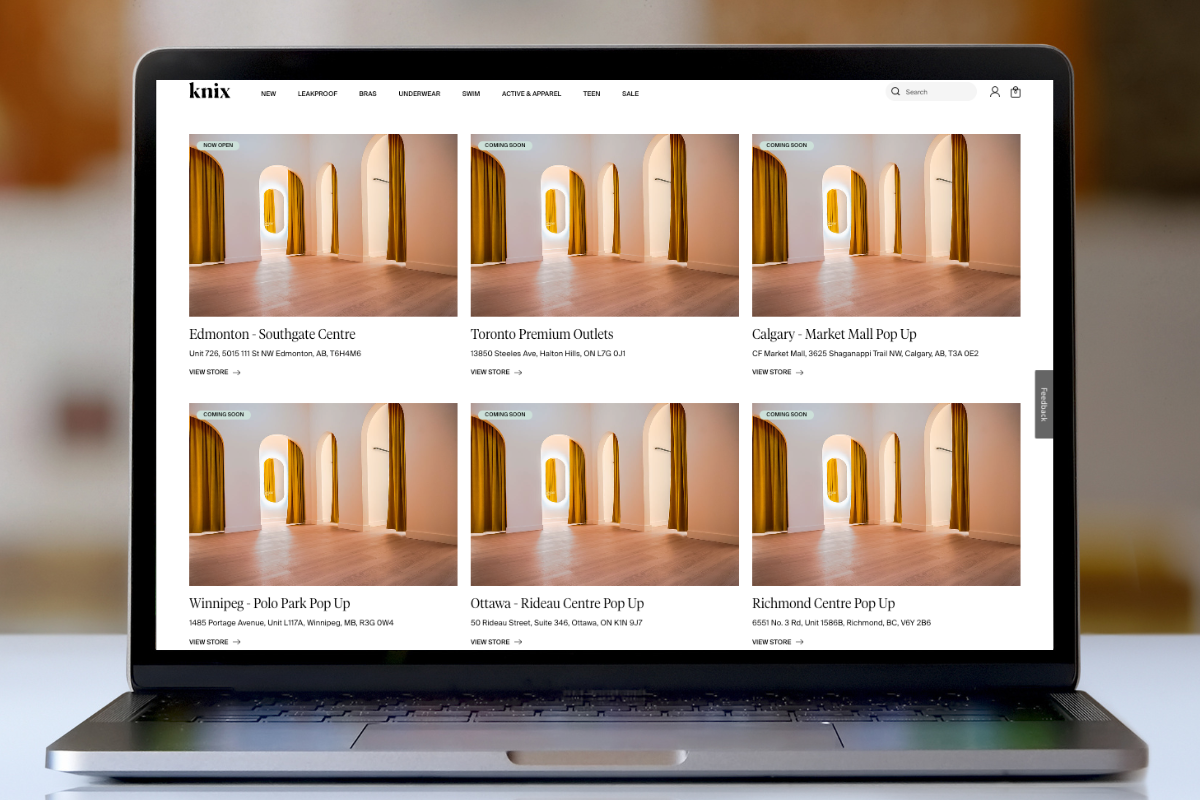
Joanna Griffiths, Founder and President of the company, told Retail Insider those stores will be located at CF Market Mall in Calgary, Southgate Centre in Edmonton, CF Polo Park in Winnipeg, Richmond Centre in the West Vancouver area, CF Rideau Centre in Ottawa and Toronto Premium Outlets in Halton Hills.
“This is part of a broader expansion plan within Canada. We’re continuing to think about opening a similar group of stores to what we did this year. Six to eight locations a year,” she said. “And looking for penetration across Canada. In some instances opening a second or third location within a market and also looking at net new markets as we’ve just done with Edmonton and Winnipeg.”
Currently, Knix has nine locations – six in Canada and three in the U.S. The Canadian locations include two in Toronto, two in Vancouver, one in Calgary and one in Ottawa. The U.S. locations are all in California – Santa Monica, San Francisco and San Diego.
Knix.ca
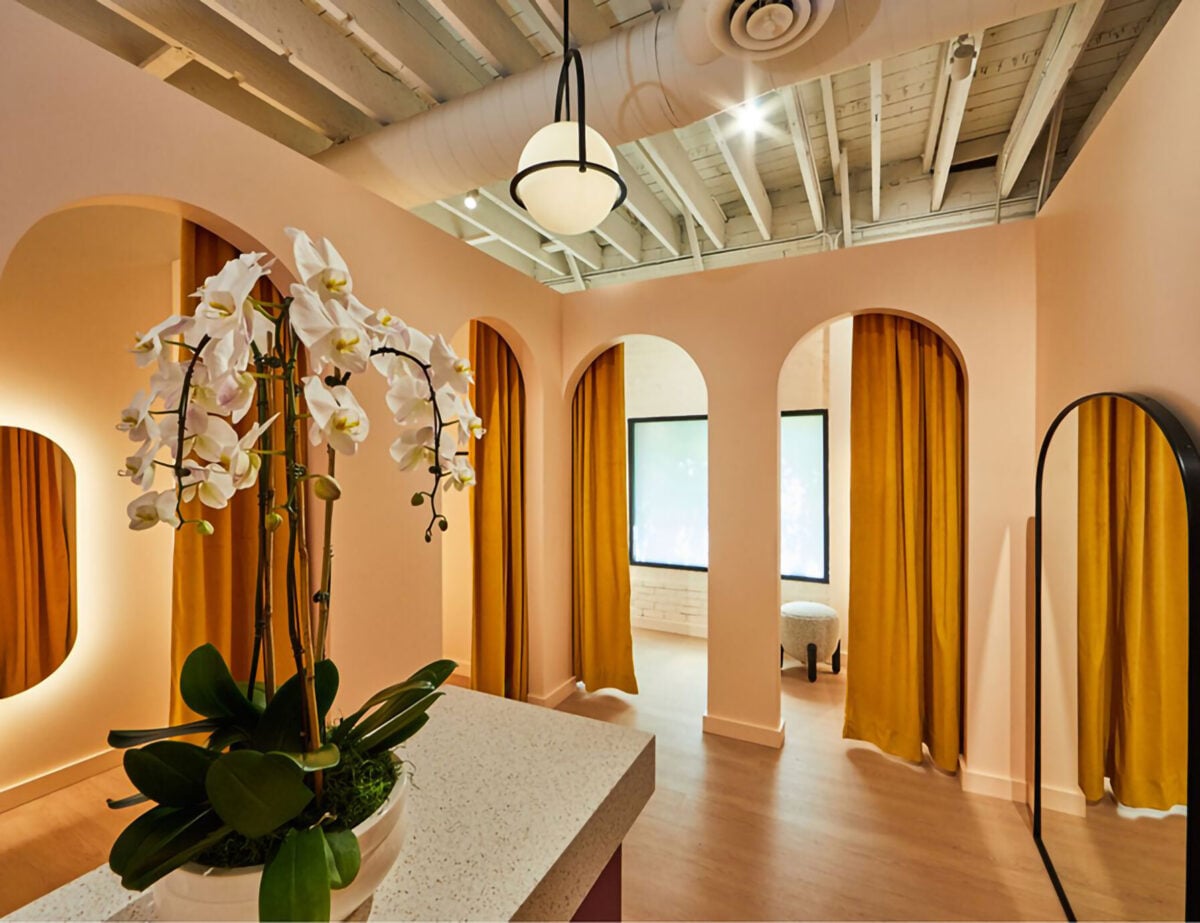
Griffiths said the retailer’s typical footprint is about 2,500 square feet.
“We’re in the process of sort of evaluating what is the best path forward for the U.S. So when we launched our three California stores we kind of took three very different approaches. One’s in a mall. One’s kind of like a community store and then another one is on more of a tourist, shopping street,” she said.
Griffiths launched Knix with the goal of transforming an underwear market that had too much frill and not enough function. A trailblazer with the creation of Leakproof Underwear, she continues to focus on listening to what people want and bringing revolutionary solutions to life.
In 2013, Knix introduced Leakproof Underwear to the world. In 2015, Knix released their first wireless bra. In 2016, Knix is the first brand to use real women–of all ages, sizes, and backgrounds–on their site. In 2017, Knix launched the first period underwear brand for teens and tweens, Kt by Knix. In 2019, Knix is the first brand to release a lingerie campaign exclusively featuring women from ages 50 to 81. And in 2022
Knix launched the first of its kind Confidence Tour, empowering people to be their most confident selves on a live runway in their intimates.
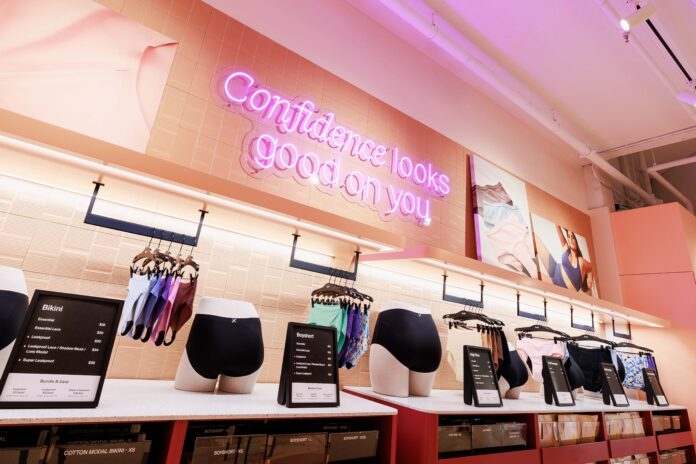
Knix Santa Monica (Image: Knix)
Griffiths said the retailer has discovered it has a nice white space within the Canadian market.
“A lot of feedback from our growing Canadian consumer base that they want to see and touch and feel product and try it on. That’s kind of gearing our strategy,” she said. “We’ve been experimenting over the past couple of years. With (CF) Sherway (Gardens in Toronto) we entered into our first mall concept. The stores before were all more community-driven concepts. We’re seeing great success in both which is leading to the desire to continue to roll out stores.”
Today, the retailer is a trailblazer with its comfortable wireless bras to super absorbent underwear, which are designed to make women feel more comfortable in their own skin.
“We have a pretty unique product assortment. So a lot of our products are highly differentiated via the innovation and the technology that we offer. We’re a bit more fashion forward than I think maybe some of the more traditionally active apparel companies as an example,” said Griffiths.
“People are loving the product and they’re loving the brand as well. We’ve been on a decade-long journey to really reframe how women are portrayed in the media and portrayed in marketing. Taking a more diverse and inclusive approach and it’s really speaking to people of all ages and backgrounds where they feel like Knix is a store where they want to shop at and they feel comfortable coming into the location and being helped by our incredible retail team members.”
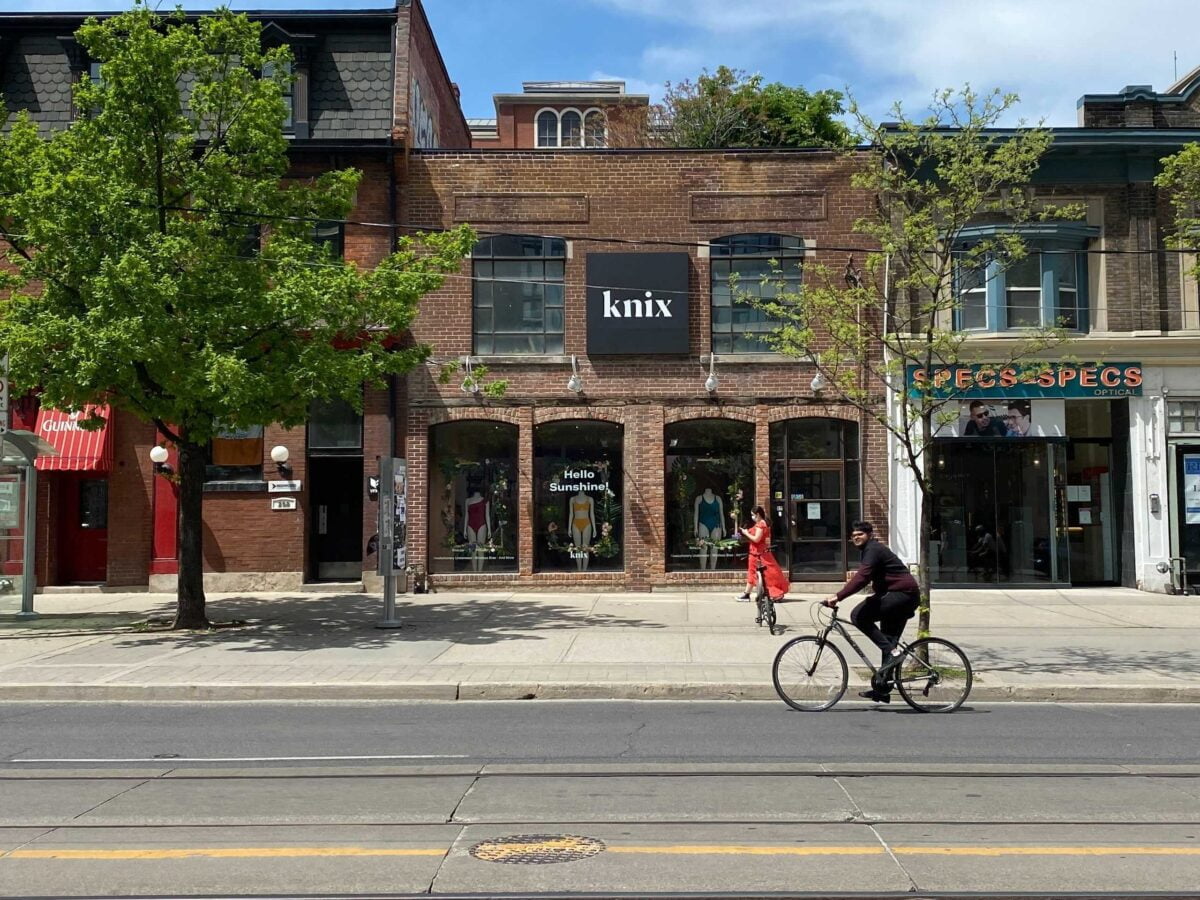
Knix on Queen Street West – Photo by Dustin Fuhs
Given the success of the brand’s Canadian stores, Griffiths said the retailer is seeing a desire for people to connect again in person following COVID.
“From our perspective, the physical retail side of things is really taking off within Canada,” she added.
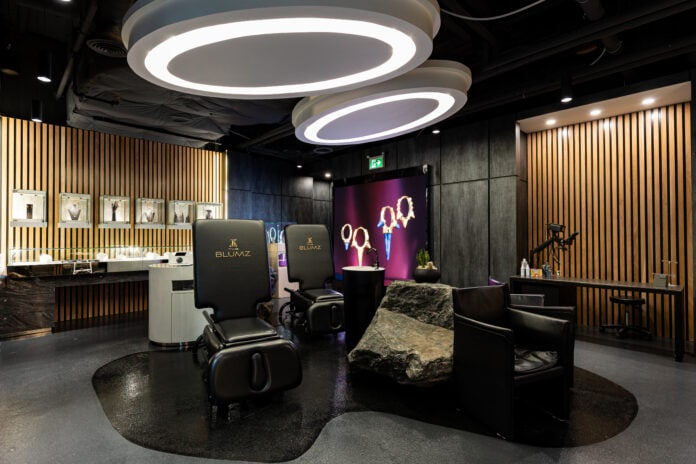
The BLUMZ: house of fine jewelry and piercings, is looking to bring new experiences to the city. The brand currently has one location open and will be opening a new concept store connecting food with jewelry.
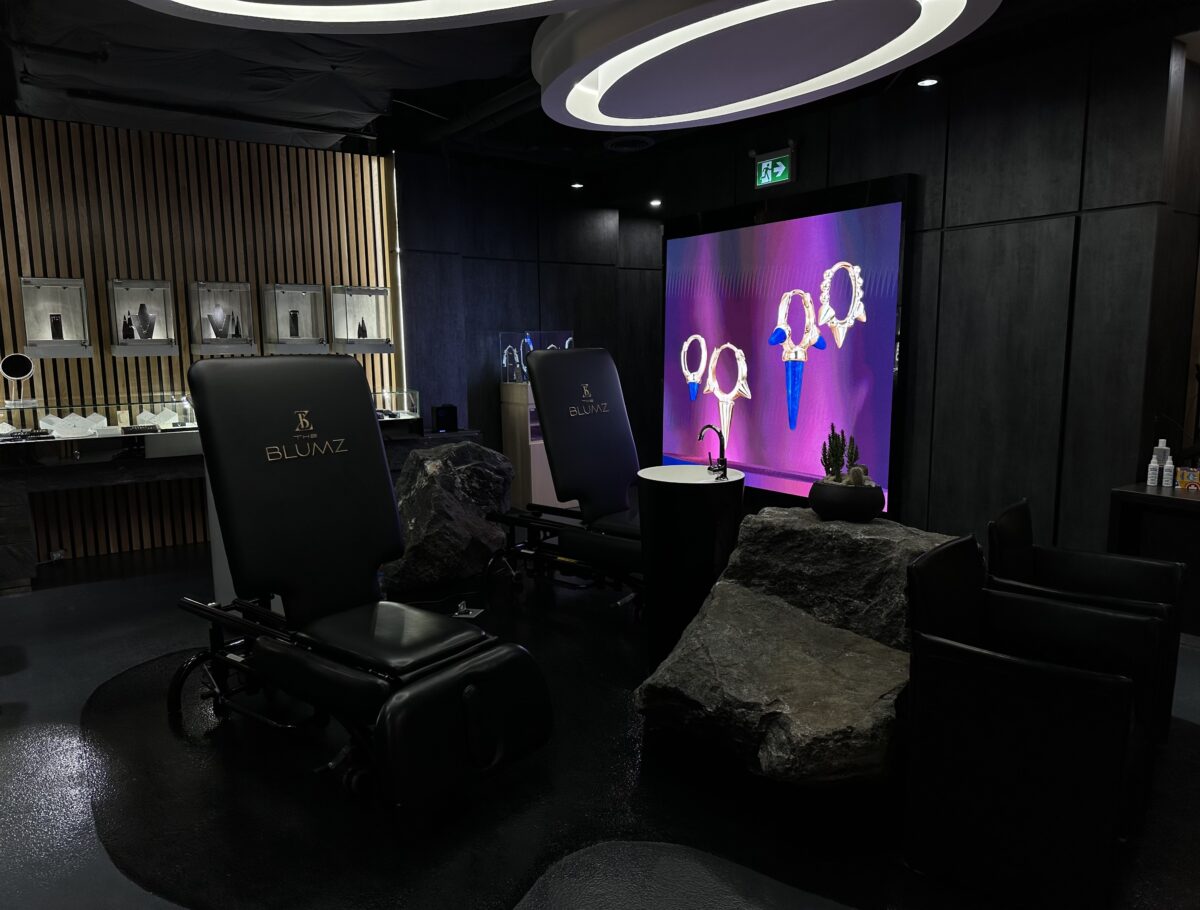
The Blumz opened its flagship in Toronto at 343 King Street West and is 1,000 square feet. Ion Blum, Co-Owner of The Blumz, decided on this location because of being in the new hotel hub such as Bisha and Nobu – a great spot for tourists.
“We shopped around and looked at so many different areas in Toronto. We feel what we are doing is different and we wanted to really create an experience like no other, not only for Toronto residents, but for the tourists coming in Toronto,” says Ion.
The brand’s second concept, The Blumz Privè, is currently under construction and will open by Valentine’s Day. The store will be 600 square feet and is located at 44 Mercer Street in Toronto.
Each location will offer different services, products and experiences to consumers.
The Blumz
Image: The Blumz
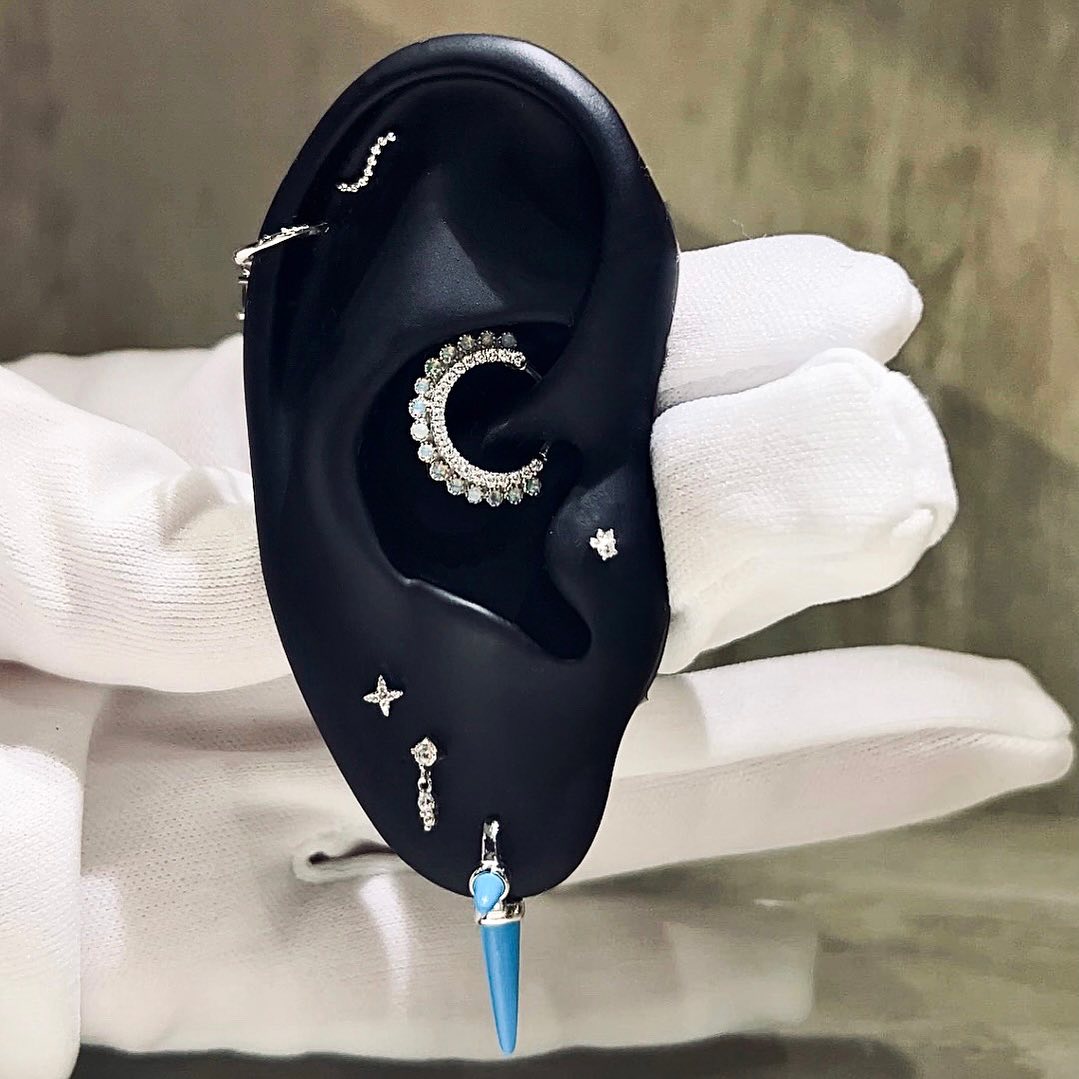
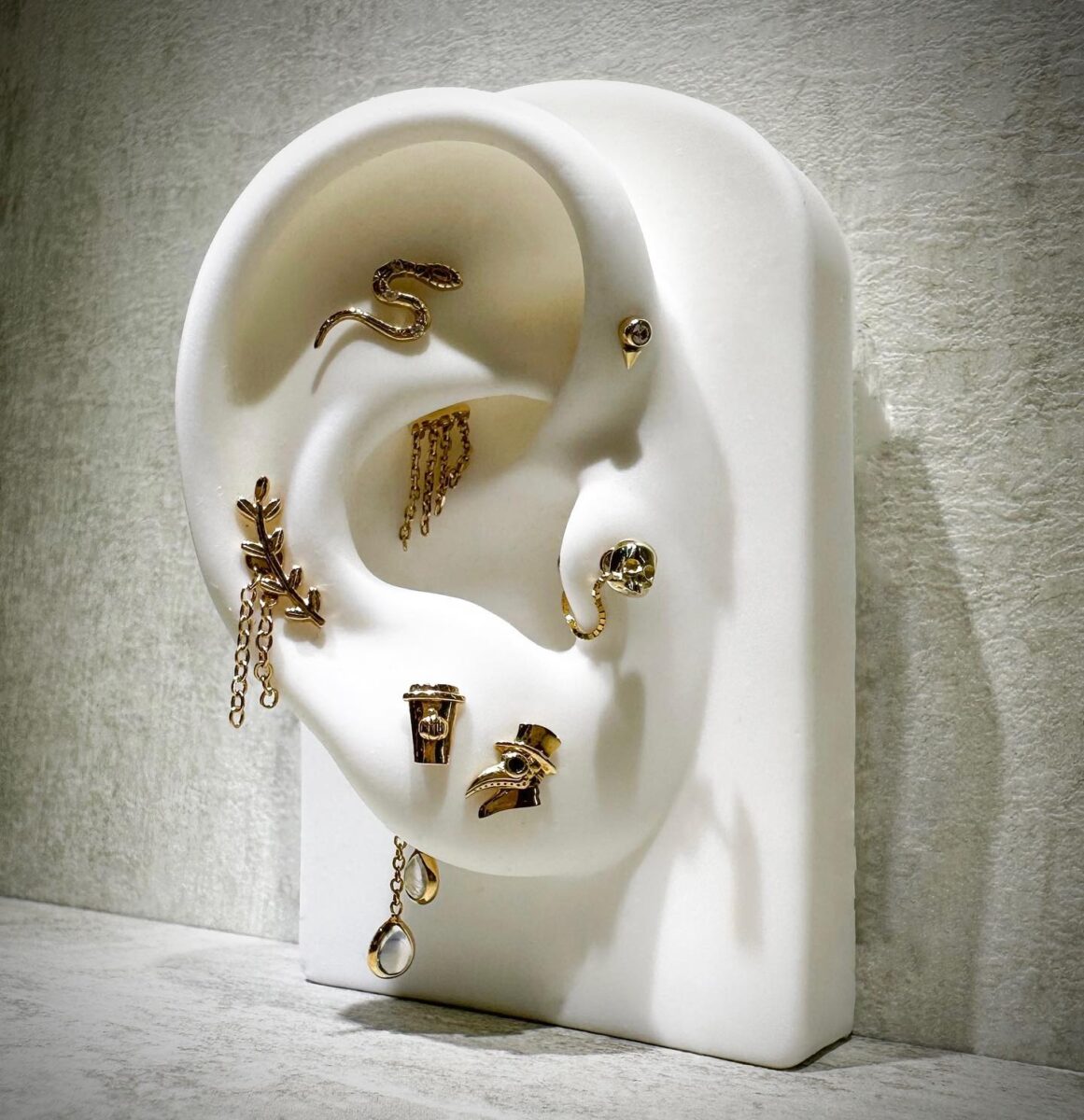
At this location, a variety of fashionable jewelry such as earrings, necklaces, ear chains and charms, piercing studs and hoops. The store also offers piercing services in addition to a permanent bracelet bar, chains, anklets, and rings. jewelry is sourced from around the world and includes designers such as Jacquie Aiche, Anita Ko, Kismet By Milka, and its unique line called Anion Jewelry, who is also co-create with Anna Blum, co-owner of The Blumz.
“At The Blumz, we offer brands that are hand picked by Anna and I based on our personal interest, love for the arts and travel destinations. We carry Maria Tash, Anita Ko, Jacquie Aiche, Kismet by Milka, and more. If you go onto our website, you are going to see all the different lines we carry. What that gives the consumer, is the ability to mix and match based on style and also on price points or budgets.”
The BLUMZ | House Of Fine PiercingsThe BLUMZ | House Of Fine Piercings
When someone goes in for a piercing, the team can recommend different types of jewelry based on the anatomy of the ear. Blum says it offers piercing jewelry that expands from the traditional piercing/tattoo shop.
“They don’t have to be jewelry that you normally would start off with and then kind of upgrade to something that is more fashionable later. The fact that we pierce with a needle, which is far more precise and much better for piercings – we can actually utilize fancy jewelry to pierce with from the start.”
The brand started selling jewelry online; however, after noticing an increase in jewelry and piercing trends, the owners decided to proceed with a brick and mortar store.
The Blumz Privè will offer a different experience than The Blumz and other jewelry retailers in Toronto as it will focus on a unique experiences that combines sight, touch, smell and taste.
The new concept will offer private shopping experiences that can also include menus designed by a number of Torontonian chefs. Unlike The Blumz, this location will require reservations.
“We are in the talks with some restaurants in Toronto to create an experience like no other. Since Elegance is a journey and jewelry has an intimate and sentimental connection with the body that wears it, yet often enough only created by association through sight and touch, at Blumz Privè we want to revolutionize the experience by tapping into the other human senses: smell and taste.”
Blum says the menu will be decided on where the jewelry is manufactured, what kinds of diamonds they use and will let the chefs create different dishes that will represent the region of the world where the jewelry came from.
“We are aiming to have this done for Valentine’s day in 2024, because for Valentine’s day you think of amazing dinners, chocolates, champagne and pampering.”
Anna & Ion Blum
Along with the mentioned locations, Ion and Anna Blum also own a tattoo studio, Black Line Studio, which is also in Toronto and has been operating for the past 17 years. Black Line is an “upscale tattoo shop” offering tattoos, body piercings and laser treatments. Consumers can book appointments or see walk-in availability.
“We have separated the businesses. So Black Line studio is focused on tattoos primarily, then The Blumz is focusing on jewelry and piercings, and the third one that will be opening will be more focused towards fashion jewelry.”
Anna Blum says the main focus right now is to focus on the three brands they have right now, but eventually would like to consider expanding.
“For the past 17 years, we have built different concepts such as Black Line Studio, the 350 Fahrenheit restaurant and a couple of furniture stores. As entrepreneurs, we always look at expanding and creating different concepts, but one thing that always brought us together is that love makes us “Blumz”.”
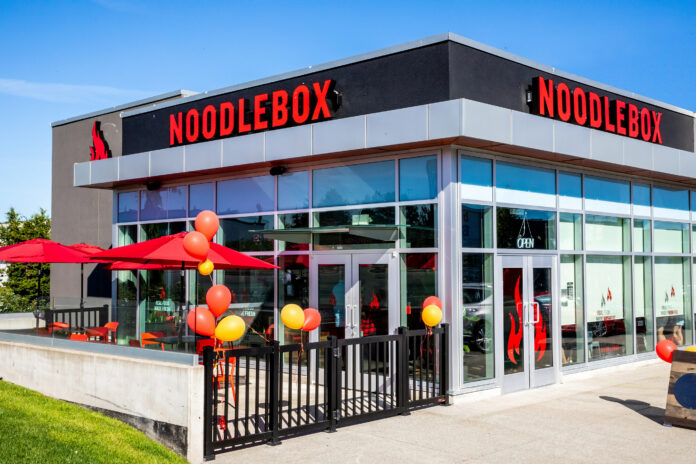
Foodtastic Inc., a leading franchisor of restaurant brands in Canada, has added another banner to its portfolio with the recent agreement to acquire Noodlebox, which it says is one of the fastest growing quick service restaurant brands in the country.
“We are delighted to welcome Noodlebox into the Foodtastic family,” said Peter Mammas, President and CEO of Foodtastic. “Noodlebox’s reputation as a top-tier quick service restaurant brand aligns perfectly with our commitment to providing exceptional dining experiences to our customers. We look forward to working closely with all our new franchisees and driving the growth of the Noodlebox brand across Canada.
Peter Mammas
“I think it’s an amazing brand. We had gone down on a trip to BC and we just happened to eat there. We actually talked to the owners and we were lucky enough to make a deal. But it’s great in the sense that it fits right into our strategy and portfolio and what’s even better, the food is just outstanding.
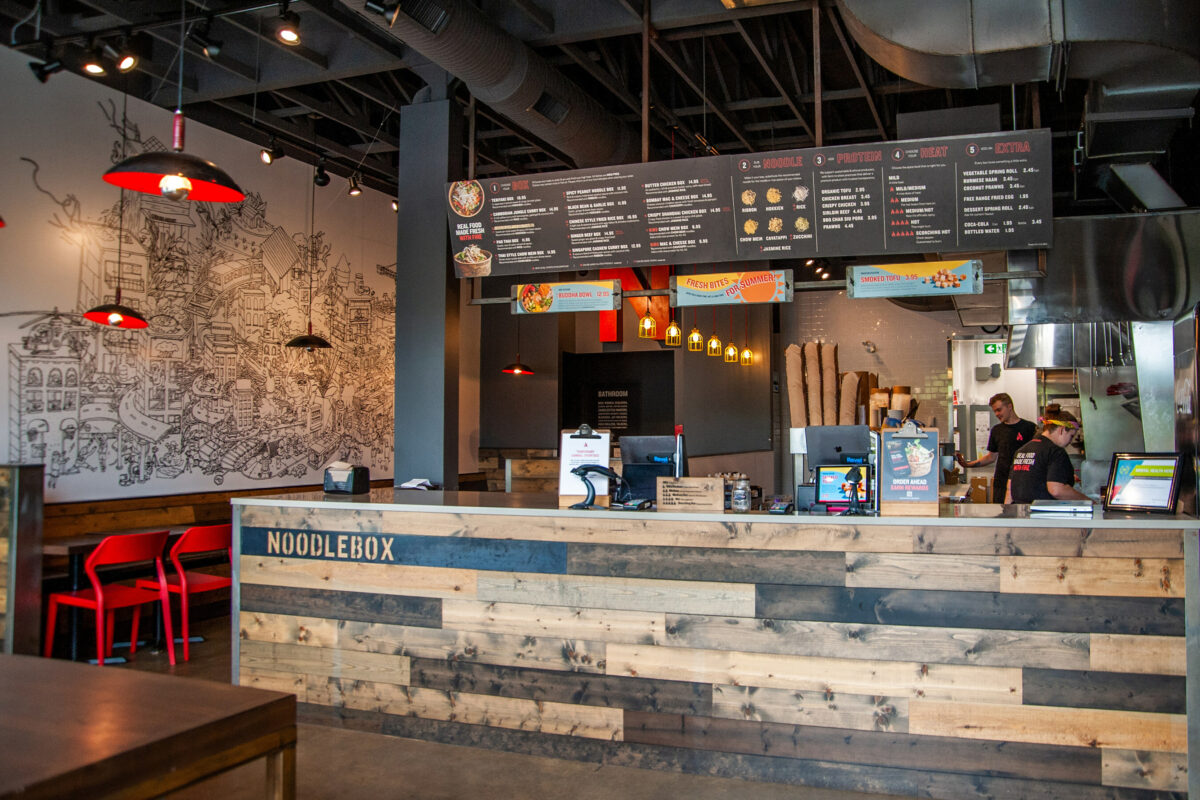
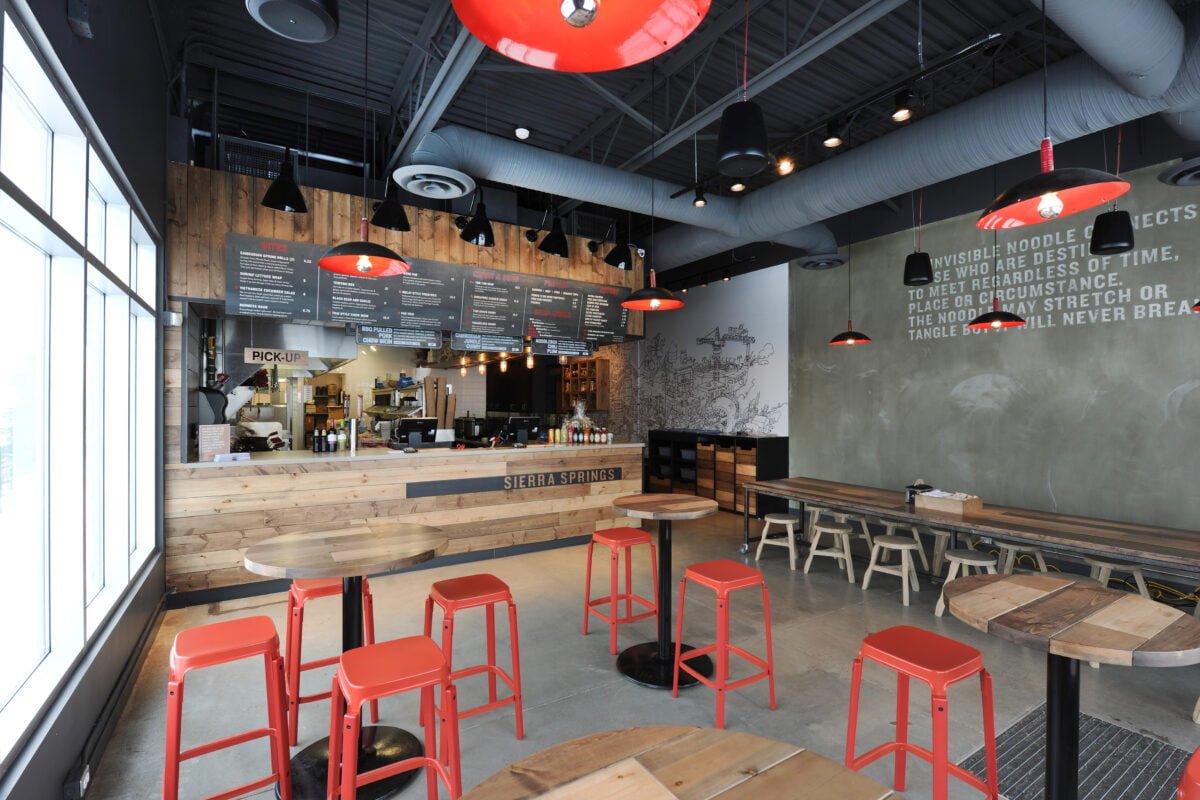
“It’s prepared on the spot. It’s fresh. It’s healthy. It’s tasty. You get a lot of value for your dollar. The portions are big. The stores look great. I mean what’s there not to like. That one I think is a homerun. It’s just a great concept and it just needs a scope of something like Foodtastic that we could take it coast to coast.”
Noodlebox (CNW Group/Foodtastic)
Mammas said he thinks Noodlebox could be a 215-unit chain just in Canada.
“I think there’s just an enormous opportunity in this. Asian Thai is a great category. It’s probably under-served throughout Canada with the exception of maybe Quebec. There’s a great deal of opportunity in that category,” he said.
Over the next year, including Noodlebox, Foodtastic expects approximately $1 billion of North American system sales across a network of over 1,200 new and existing stores. Foodtastic continues to drive growth through strategic acquisitions, new store development, and innovation.
“We are always on the lookout. Our goal is to actually triple this company in the next five years. We’re going to do that organically. We have plans to grow organically at roughly 10 per cent and on top of that we want to be purchasing three, four great brands every year to get us to that goal of tripling the company in five years.”
Foodtastic’s diverse range of brands includes popular names such as Freshii, Quesada, Second Cup, Pita Pit, Milestones, Fionn McCool’s, Shoeless Joe’s, Benny, La Belle et La Boeuf, and Monza.
Image: Noodlebox Airdrie
Noodlebox started as a food cart in Victoria, BC’s Chinatown in 2001.
Its unique style of Southeast Asian street food was so popular that people waited hours to get their fill.
Dustin May
“We believe that Foodtastic is the perfect home for Noodlebox, and that together we will continue to uphold the values and quality that Noodlebox is known for,” said Dustin May, CEO of Noodlebox.
“Noodlebox has thrived with 46 locations now open and a further 50 in the development pipeline, and we believe that Foodtastic and our Noodlebox leadership team will create a bright future for our dedicated franchisees, team members and loyal guests.”
Mammas said Foodtastic looks to acquire other food establishments that fall into two categories. One is like a Noodlebox where the company thinks the brand is amazing, well run, the financials make sense and it can use its platform to grow that brand. The other category is to buy brands it thinks it can fix.
“There’s a lot of brands that we bought in the past like Second Cup, Milestones and Freshii that we looked at and said ‘you know what, we think we could fix these brands and bring them to where they need to be and once that’s done we can actually grow them’,” he said. “The first one we did with Second Cup and we fixed that brand quite quickly within 12 months. We stopped the hemorrhaging and actually now it’s going to be the first year in probably a decade that Second Cup is going to have net new additions in their pipeline. We’re going to actually open more stores than are going to close this year, which is the first time that’s happened in a decade.
“The second one we acquired was Milestones and . . . they were an under-supported brand within Recipe. It was something that we knew very well because I used to own Baton Rouge. So I knew that segment really well and I looked at it and thought just by changing a few little things I think we could take that brand up. In the first year that we took it over we changed the menu, we changed a bit of the look, we changed the whole marketing, we changed the strategy of where that brand was going and right now it’s probably the number one brand in Foodtastic and we just opened some new stores and we’ve actually brought the concept to Quebec and the Quebec store has been open now for eight weeks and for the last four weeks it’s been the busiest restaurant in the whole country.
“We’re really good at fixing brands and once they’re fixed, growing them. And then you have Freshii that we just bought this year. We’ve only had it for a few months. So we’ve identified what we want to fix there. All the new ideas, the menu upgrades are going to be launched shortly and over the next six months. Again, I think that’s another brand that starting mid next year we’re going to be able to do like Second Cup and open more stores than are closing. And again that hasn’t been done since the last five years at Freshii as well.”
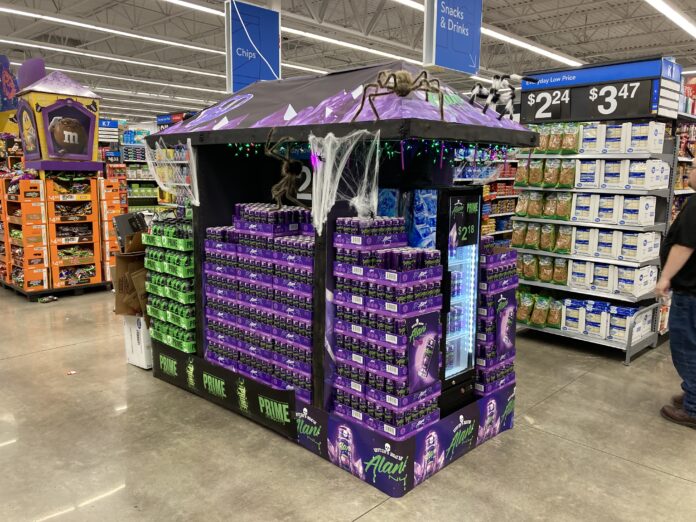
Prime Energy Drink Halloween Display in the US (Image: Jeff Doucette / Field Agent)
Has Halloween in Canada gone stale? The general manager of Field Agent Canada, Jeff Doucette, says yes. Doucette discusses what is missing from the shelves in Canada for Halloween, how retailers are decreasing excitement by overlapping seasons and how we can bring back excitement.
Jeff Doucette
Just like consumers saw the back to school shopping hit stores earlier, Halloween came out earlier this year as Doucette says some retailers were stocking their shelves with Halloween products in August. Although retailers were prepared earlier this year, Doucette is noticing a lack of innovation and for next year – Canada needs to up its game.
“Halloween has been out for a while, we start to see it creep into the stores in September, or even August. The back to school candy gets repositioned to Halloween candy, so we have been seeing the candy and all of that stuff out there for quite a while. But, we have not seen a lot of innovation this year in terms of new things for Halloween or anything unique and in fact – we are now already seeing Christmas,” says Doucette.
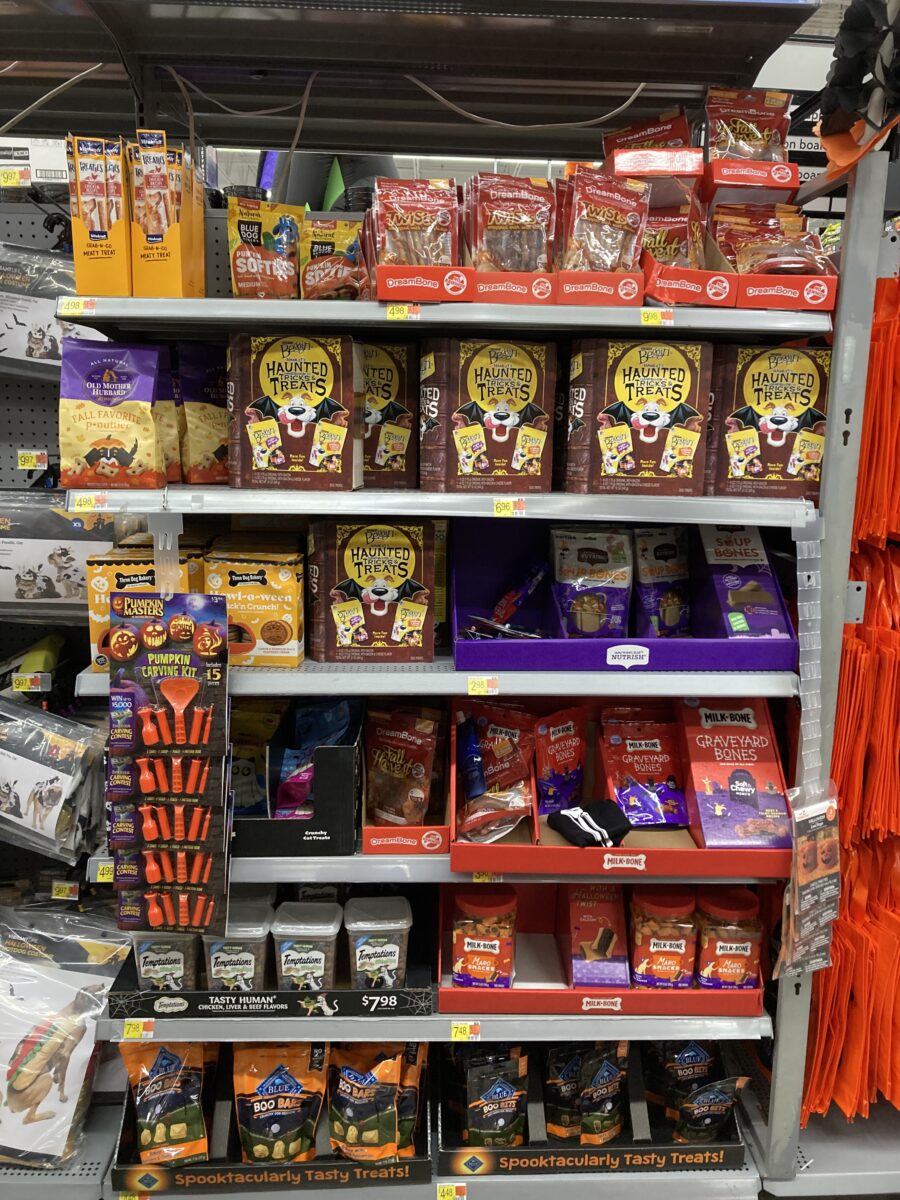
Halloween Display in the US (Image: Jeff Doucette / Field Agent)
Doucette visited the United States weeks before Halloween and noticed a difference in excitement and innovation. Doucette says Halloween in the US was more prevalent, there were no Christmas products on the shelves and instead, had a huge Halloween selection compared to Canadian stores. Meanwhile in Canada, retailers have mixed Halloween with Christmas.
“Retailers have brought Christmas in sooner and it kind of overlapped with Halloween. Sometimes you see some overlap, but when I was at Safeway there were more advent calendars than there were Halloween products. And it just seems a bit out of context.”
“Seasonal Creep Up”
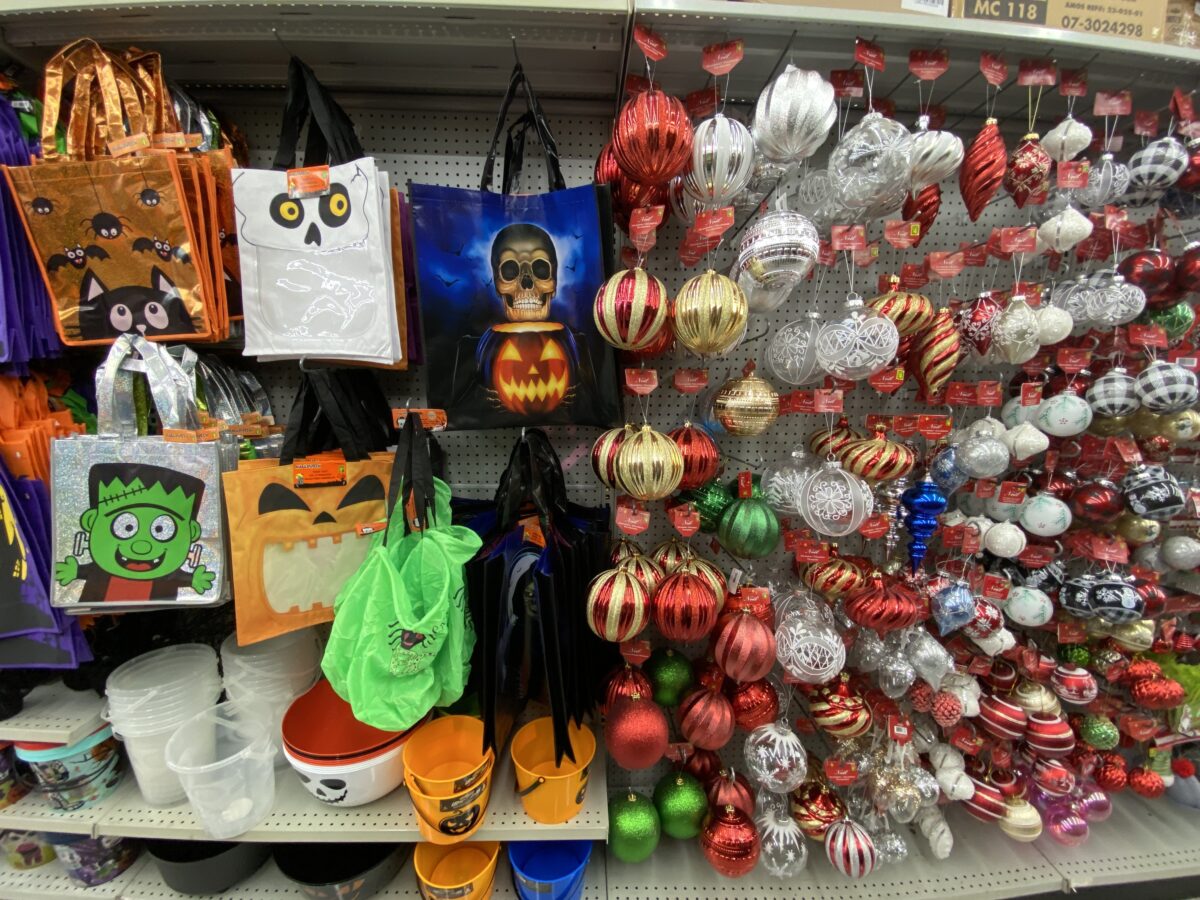
Holiday Decorations at Dollarama (Image: Dustin Fuhs)
Doucette says seasons tend to get earlier and earlier and is reaching a tipping point in retail. As inventory becomes available and gets pushed through the supply chain – everybody wants to be first and it is just getting too early: “right now is on my mind.”
“It is way too early for me to get my head around buying an advent calendar, it just seems a bit out of sorts. We know Halloween is an important holiday for retailers and everybody wants to be out there and be first. But it just seems like Christmas is now taking over and is starting to take over the stores. It seems disjointed.”
Christmas Display at Indigo Bay/Bloor on September 25th, 2023 (Image: Dustin Fuhs)
One reason why Doucette thinks seasons, like Christmas, are being pushed up is because retailers do not want to be last and miss out; however, it is not in line with what consumers are expecting to see in stores. Doucette said the normal flow would be to have Halloween, Remembrance Day – and then you would see Christmas, “and it seems like everyone has just pushed everything up a lot earlier in the cycle.” A second reason would be for consumers who have a tight budget; however, Doucette says it is unlikely people who are currently on a tight budget will be buying an advent calendar in the middle of October.
In a time where retailers are looking to connect with consumers, Doucette says by pushing up holidays like this will cause the reverse effect. Rushing through holidays can cause consumers to become confused, distracted or have a less enjoyable time shopping for the current holiday.
“Retailers are forgetting most consumers do not want to be shopping ahead of holidays, or skipping holidays. When people are focussing on Halloween – their focus is on Halloween, not getting a tree.”
Loss of Excitement
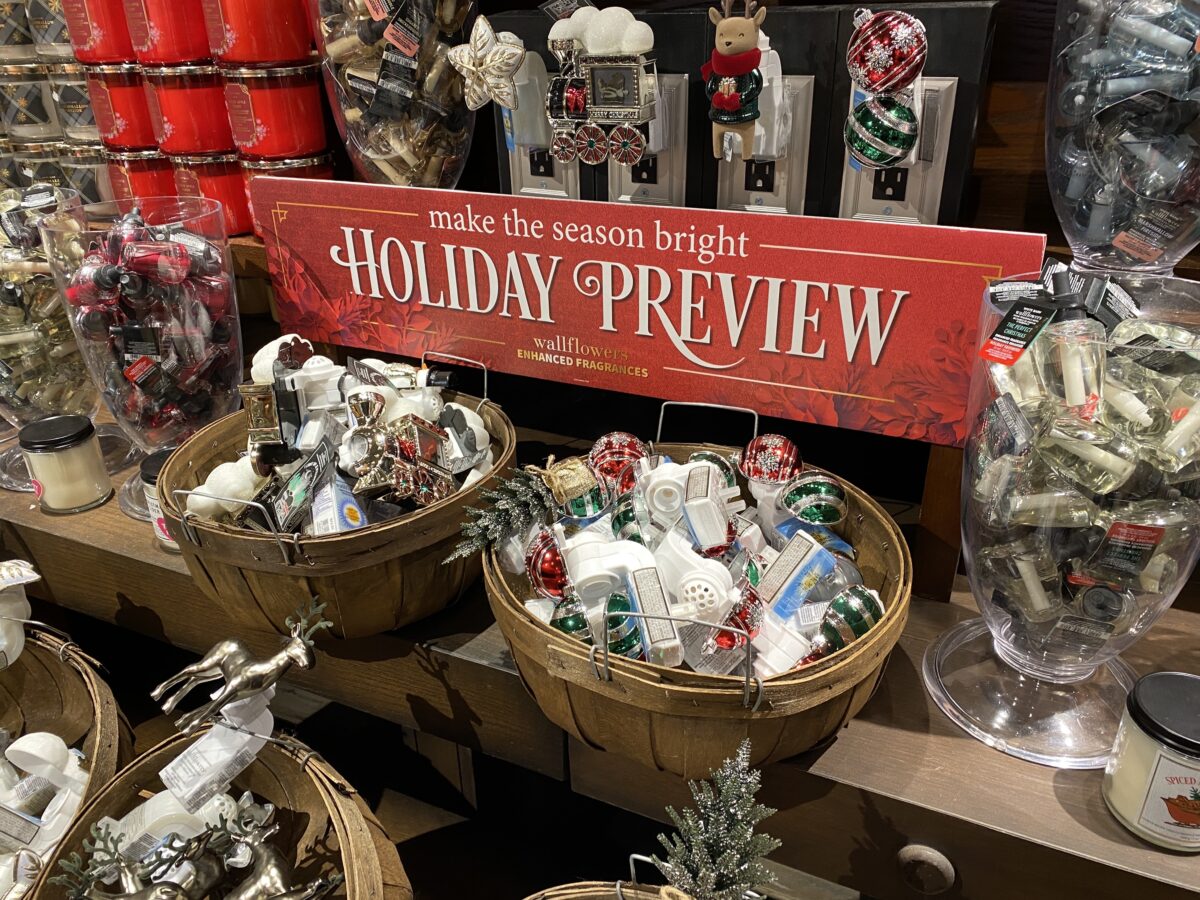
Holiday Preview at Bath & Body Works in CF Toronto Eaton Centre (Image: Dustin Fuhs)
By joining holidays, Doucette says it can cause a loss of excitement and also be exhausting for consumers.
“The Halloween excitement gets cut off by Christmas taking over. I understand if retailers don’t want inventory sitting around and waiting to get out the door, but it just seems like a lot of retailers have gone too early into the next holiday causing consumers to be less excited and more distracted.”
As a change for Halloween for this year is already too late, Doucette’s advice to retailers for next year is to slow it down, manage one holiday at a time and allow consumers to enjoy shopping for each holiday.
When comparing Canada and the US, Doucette said “it was quite interesting to compare and contrast the two” as in the US, the stores did not even have enough room for Christmas products yet as it was filled with Fall and Halloween products.
“Maybe Canada is Stale”
In terms of product creativity, Doucette says retailers in Canada should try and do more. Ideas he had in mind, sparked by his trip to the US, included Halloween theme products, more Halloween themed dog products and treats, and an increase in innovation for Halloween decorations.
“One thing I saw while in the US, which was kind of interesting, was Halloween themed Prime energy and hydration drinks. They had a whole display setup in their stores around Halloween for specific Halloween skews. So that was something I have not seen in the past, of having energy drinks be included in the Halloween experience.”
This is just one example of how brands can be more innovative for Halloween, and also other holidays.This way, consumers would be less distracted and more excited.
Christmas on the Right and Halloween Clearance on the left at Winners in Toronto (Image: Dustin Fuhs)
As for decorations, Doucette says he is not seeing anything new or exciting.
“To be honest, my feeling for this year is there is just not a huge amount of excitement. We have a huge data collection of seasonal displays and I just have not seen anything this year that really caught my eye in the Canadian space. I just see it as more of the same, I do not see anything exciting – not the most exciting answer, but there is a lot of truth to it.”
Bring It On For Next Year’s Spooky Season
As it is too late for this year for retailers to be creative, Docuette says there is hope for the future if retailers and communities change their ways.
Currently, Doucette says a lot of people just “copy and paste” what they did in previous years and make little tweaks, but to change the stale Halloween climate in Canada, people need to start seeing how other places are being creative for the season and try to stand out.
“There is no real innovation anymore. Maybe we need to start looking to the US for some ideas or other cultures that celebrate Halloween, and try it. I think everybody seems to have the same stuff and is taking the same approach – it is just not attractive and does not create much excitement for anybody.”
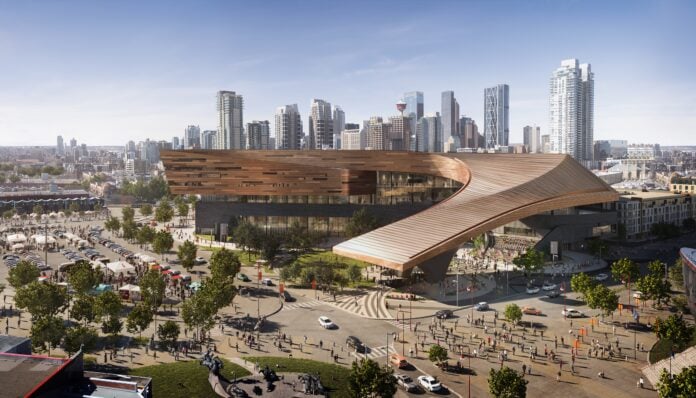
Recent news that final agreements have been signed for Calgary’s new Event Centre, which will become the new home of the NHL’s Flames, will be the catalyst for new commercial, retail and residential development in the city’s old Victoria Park neighbourhood just north of Stampede Park.
Today, most of that property is an urban wasteland made up of primarily surface parking lots.
But much of the land is held by private developers, who may now think of pulling the trigger on projects that have been on hold because of the long-drawn out process to move forward with a new Event Centre that will also be home to future major concerts.
Culture + Entertainment District
Michael Kehoe
“The publicly-owned Event Centre will be a major piece of the ongoing efforts to revitalize downtown Calgary and an important component of the new Culture + Entertainment District located in the Rivers District in southeast Calgary,” said Michael Kehoe, Broker of Record for Fairfield Commercial Real Estate in Calgary.
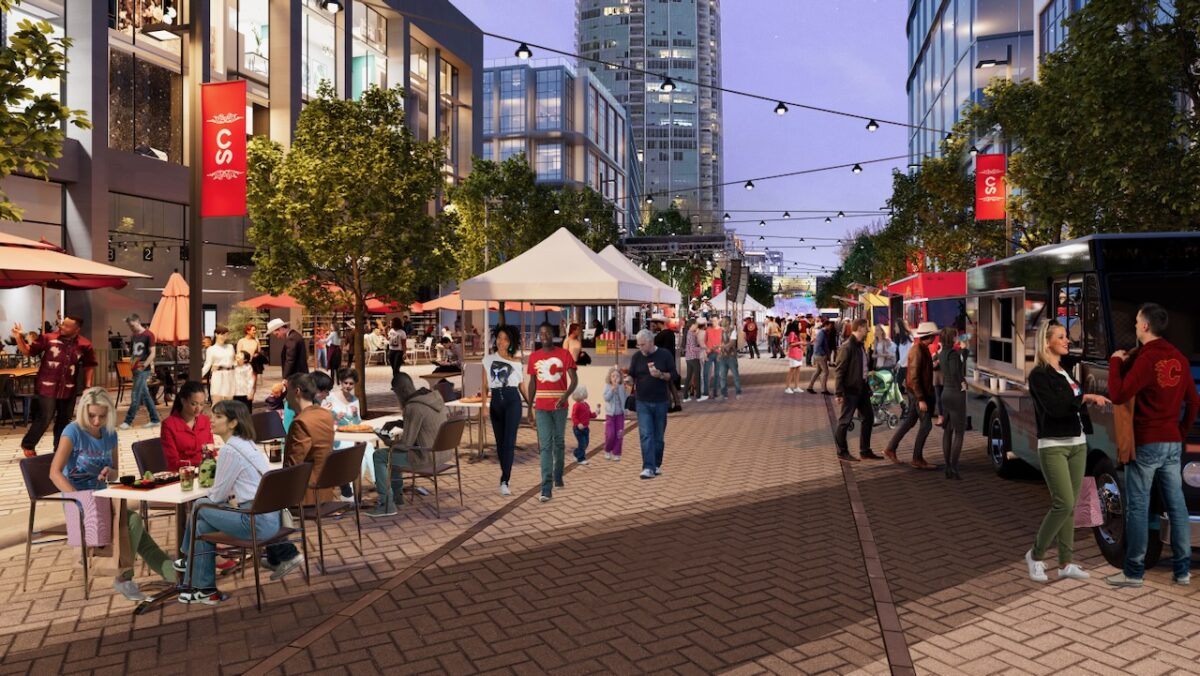
“The Event Centre will anchor the Culture + Entertainment District that will feature walkable celebratory / gathering public spaces along with private investment commercial opportunities such as hotels, restaurants, and retail over 10 acres. Expectations are high that unique dining and shopping venues will enhance the visitor experience for locals and visitors from all over the world.
“I am expecting that Calgary will learn from Edmonton’s commercial space success and challenges at Rogers Place and their Ice District along with other such projects across North America. I feel that it is important that a unique year-round Calgary destination be envisioned that will not be dependent only on event dates. The Calgary Flames, Calgary Hitmen, Calgary Roughnecks and Calgary Wranglers and major North American concerts will ensure a solid base of customer footfall and visitation. The long-term success of the Calgary Culture + Entertainment District will need destination food service and retail in an experiential and pedestrian friendly environment.”
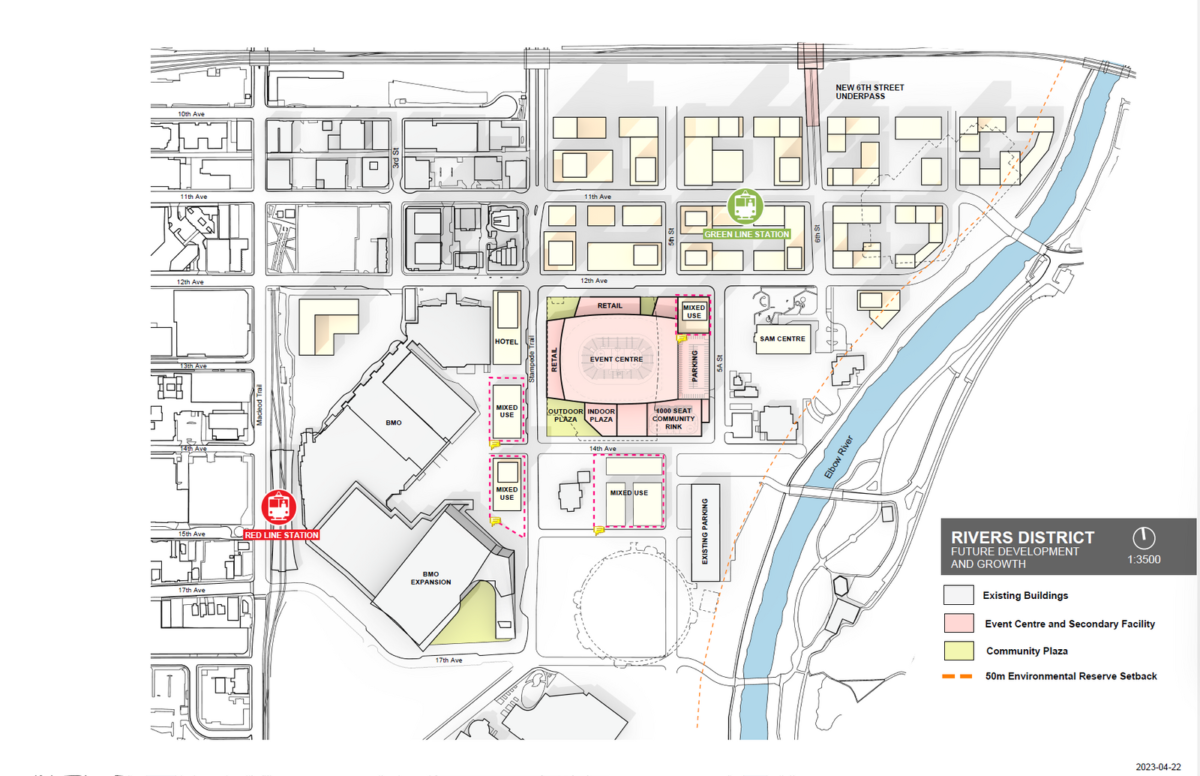
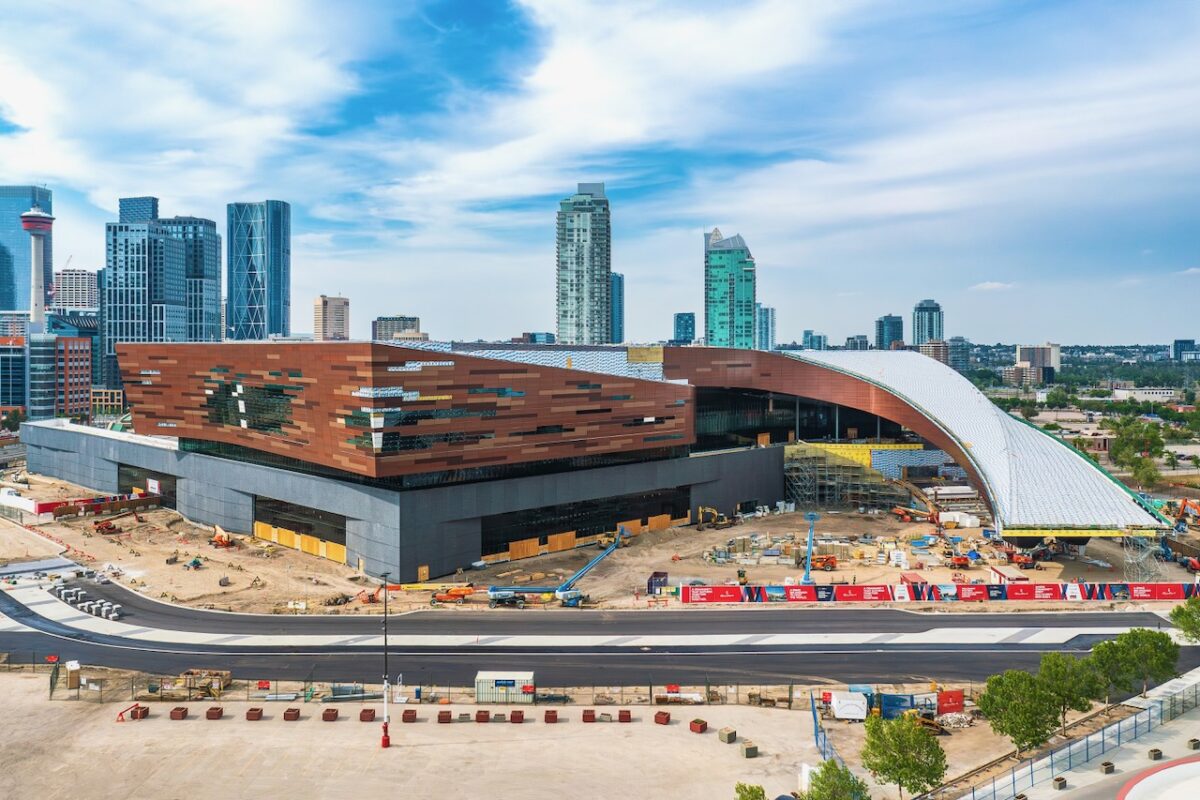
Calgary Culture + Entertainment District (C+E District)BMO Expansion
Calgary Municipal Land Corporation (CMLC) is spearheading the Rivers District Master Plan. It’s a commitment that supports Calgary’s downtown revitalization and growing a vibrant and welcoming city.
Kate Thompson
Kate Thompson, President and CEO, CMLC, said the addition of the new Event Centre and its supporting infrastructure is a significant step forward in realizing the vision for this dynamic community.
“The ripple effects builds on the previous waves that are ongoing right now. When we started the Rivers District Master Plan, there’s over 40 per cent of underutilized land in the area as vacant parking lots or as surface parking lots. So we see that and see a lot of potential,” she said. “That comes with all the infrastructure we’re building right now and the BMO (Centre) expansion (on Stampede Park). The Event Centre is the next layer of the District which really starts to catalyze development in the area.
“And you know with developers, developers and development crave certainty. So having the deal move forward, having a good budget behind it, support for infrastructure around it, is good for everyone in the District.”
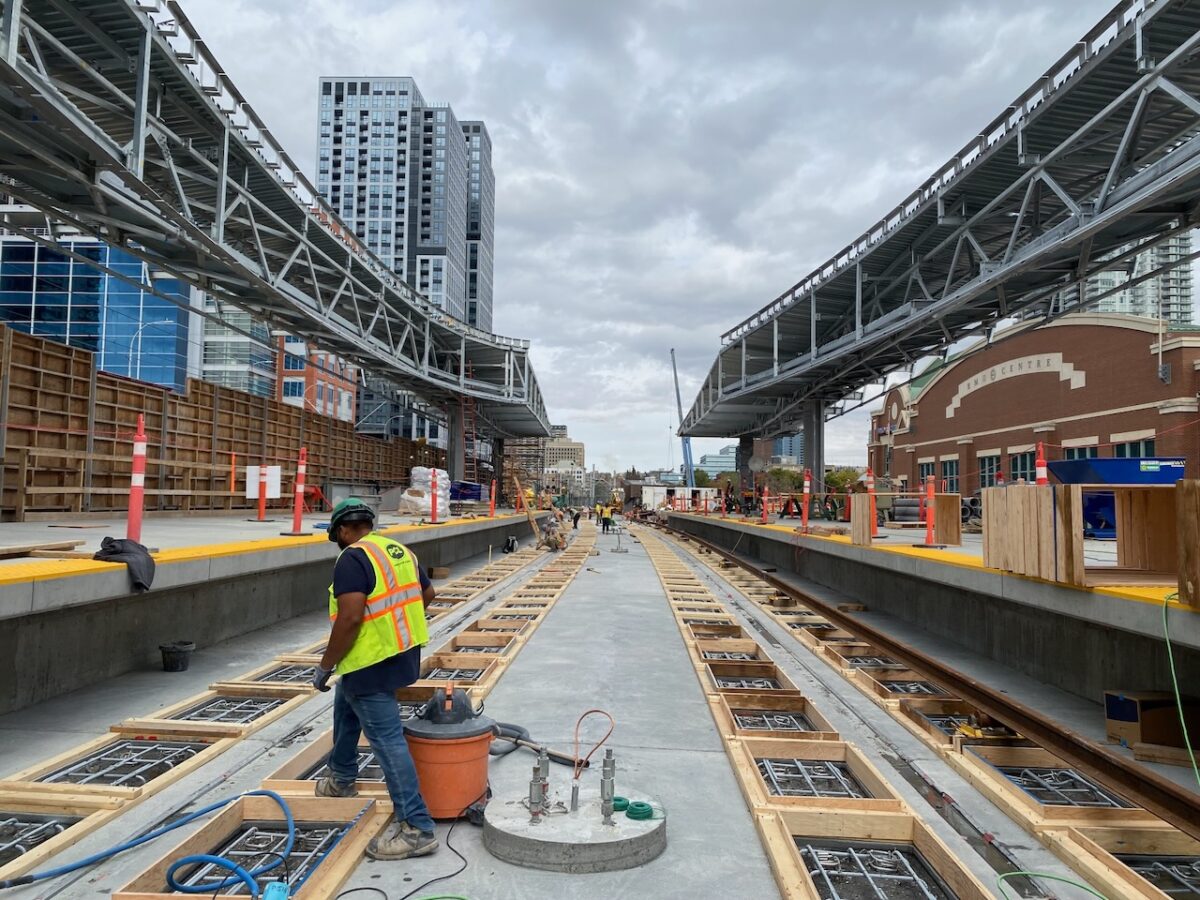
Station Rebuild (September 2023)
In the entire Rivers District which is just south and east of Calgary’s downtown core, there are more than 50 unique landowners including some major developers and the City of Calgary, added Thompson.
Just north of the Rivers District is Calgary’s East Village, which is now a vibrant mixed-use neighbourhood. Years ago, like Victoria Park, it was an urban wasteland dominated by vacant and empty lots.
Years ago, there were plans to turn the main entrance into Stampede Park, called Olympic Way, into an entertainment district.
“It’s very much about activating that street edge and putting as many restaurants and retail as you can right at grade and I know the Event Centre will be motivated to do the same. Retail streets work the best when they’re double sided and they have something active on both sides so when you walk up and you walk down it creates the vibe,” said Thompson.
“So that will be really important. That continuity and I know everyone involved in the District gets that and is going for that.”
BMO Centre expansionBMO Centre expansion
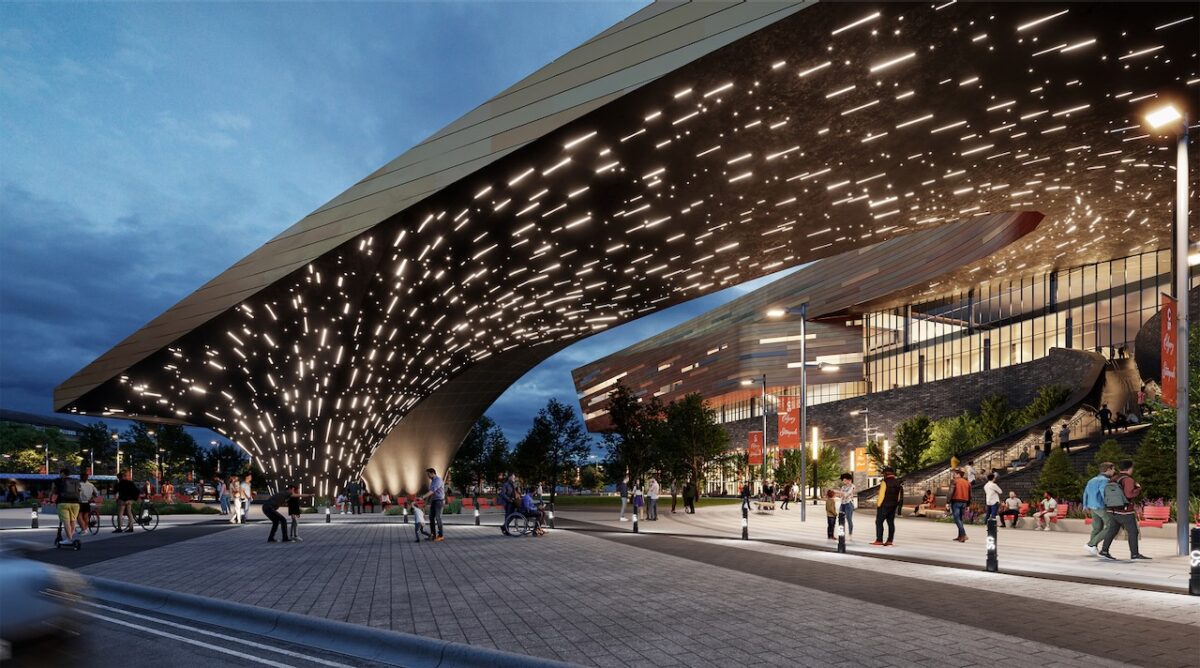
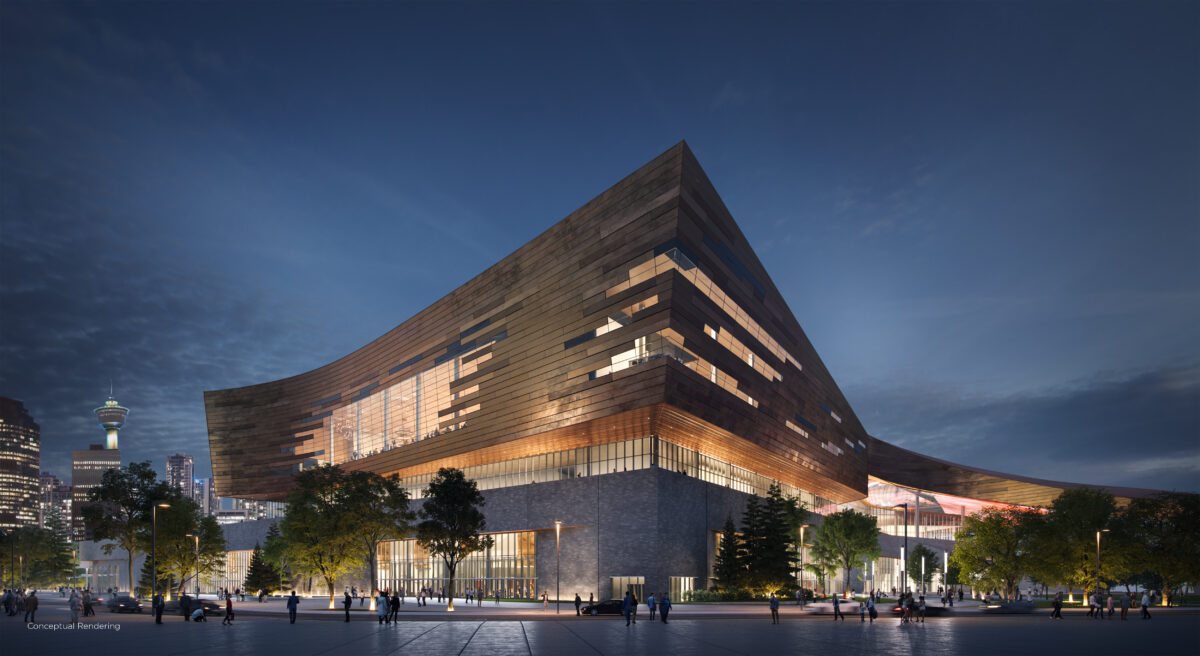
The Rivers District development includes the Event Centre, the BMO Centre expansion, a new hotel and a pedestrian friendly Stampede Trail.
“It will be a very different place to visit in an eight-year time span which in city building is actually really quick. It just took awhile to get that eight years started,” added Thompson.
“I think physically in terms of our city taking 17th Avenue across Macleod Trail (across the LRT tracks) and connecting it into (Stampede) Park and extending our downtown into this area . . . starts changing how we view our downtown and how we use our downtown. The infrastructure will enable us to see our city differently and use our city differently than we do today.
“2024 is actually a huge year for the District in terms of $600 million worth of work coming online. The demo and all the infrastructure. It’s a really transformative year for how Calgarians experience our city and so I think we’ll start seeing a lot more land assembly based on the definitive clarity that developers see as ‘wait a second, this is not just changing, but it is changed’.”
Stampede TrailRiverWalk
The BMO Centre $500-million expansion is adding an additional 565,000 square feet of space in time for next year’s Calgary Stampede.
Joel Cowley, CEO of the Calgary Stampede, said the Event Centre will serve as a catalyst for development nearby.
Joel Cowley
“With the BMO Centre expansion coming on, that has already spurred some interest. We’ve heard from some local developers, particularly with regard to hotel development, and we need that for the BMO Centre to be successful. But also we talk about a new facility and kind of the vision for this is we worked with the city, the province and CSEC (Calgary Sports and Entertainment Corporation which owns the Flames), yes this will be an additional anchor for that Culture + Entertainment District,” said Cowley.
“We will definitely see additional development in this area whether it’s retail, restaurants, entertainment facilities and not just . . . the area where the Stampede operates but there’s a lot of land to the north of Stampede Park and the Culture + Entertainment District that would be prime for development as well for all of those purposes.
“So we’re really excited about that because it will really transform this area and will be a benefit as we book conventions because it will help us become established as a true tier one convention city with the BMO expansion but also with everything that will be going on near the BMO expansion. Look no further than Nashville as a great example of how you combine a convention centre in an entertainment district and the draw that has globally in terms of bringing in conventions and generating economic impact. So we’re really excited for what this means for the Culture + Entertainment District and for the Calgary Stampede.”
BMO Expansion Ballroom
Cowley said the current Saddledome building is fully programmed right now with three hockey teams, a lacrosse team and concerts.
“If we can surround it with other things to do, either before or post event, it really becomes a draw and it becomes a draw on non-event days which is what’s really exciting about this because of all the development,” he said.
“Right now it’s the Saddledome, it’s the BMO Centre, it’s whatever we might host. Obviously Cowboys Casino is there on the corner. But unless there’s an event happening, people aren’t coming into this area. With this surrounding development that we’re talking about, it will give people reason to come to this area even in the absence of an event.
“The space between Stampede Park and East Village I see a lot of development there. Both in terms of residential, hotels, restaurants, retail, nightclubs and entertainment centres . . . The new Event Centre is built on land that now belongs to the Calgary Stampede. Well, in essence we have traded that land for the land where the Saddledome now sits and so once the new Event Centre is open and functioning, the Saddledome comes down and the Calgary Stampede receives that land that we can further integrate into both our 10-day festival and our year-round programming. One thing in particular that excites me about that is the riverfront.”
The first hotel in the area is envisioned to be a 300-room building connected to the BMO Centre through Cowboys Casino. Cowley said the Stampede has two additional sites it would like to develop hotels on in the future. One at 12th Avenue and Macleod Trail which would be connected to BMO and another at 17th Avenue on Stampede Park in what is now called Weadickville.
“The building itself (Event Centre) and the subsequent development is what seems to be capturing most of the attention but we’re really excited about the infrastructure improvements that are going to come about as part of the provincial contribution of this project,” said Cowley.
“If you look at an aerial view of Stampede Park and therefore the Culture + Entertainment District, we are surrounded by rivers and rails and that is not conducive to access and so you can have the most spectacular facilities in the world but if they’re not accessible they are not the most spectacular facilities in the world. And because of those rivers and rails we only have a limited number of routes to get into and out of this area.
“So to really get better at providing access to the area, whether it’s ingress or egress, you either add another artery so that you can get vehicles and buses and things in or you become more efficient on the roads you have. And the provincial contribution allows for both. The provincial contribution includes a new 6th Street underpass (at the rail tracks) which will complement the 4th Street underpass to get people in and out easier. 17th Avenue opening up to vehicle traffic for the first time since the 1980s will help in that regard. But also envisioned in the provincial contribution is improvement to roads both on Stampede Park and around Stampede Park. Making the roads better.”
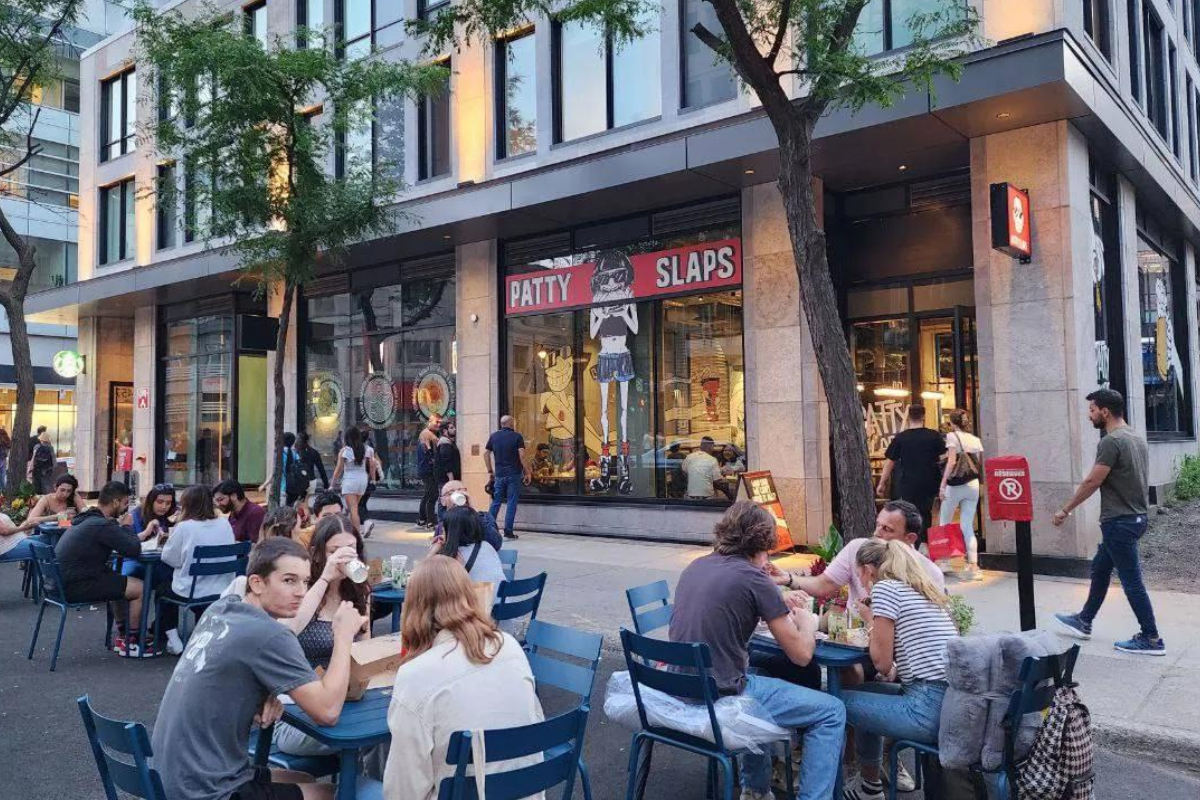
After debuting in Montreal early summer 2023, Patty Slaps is ready to take its brand to the next level, with plans to roll out 40 locations in Canada in the next five years.
“Since opening on Sainte Catherine Street West in June, the smash burger restaurant has made headlines and earned rave reviews for its burgers that feature a carefully crushed beef patty, with gooey cheese, sauces and mouthwatering toppings, all housed in a decadent pretzel bun—you have to try it to believe it. And those fries!,” said Flanz.
Image: Patty SlapsPatty Slaps in Montreal (Image: Yelp)
“Patty Slaps has four co-owners— Ehsan Baghaki, Hamed Massoumi, Mohammad Mehmanchi and Keyvan Moradi—who possess a strong passion for good food and a strong vision for the future.
“In addition to next-level burgers and fries, there’s a well-curated drinks menu that spans unique soft drinks and beer, in cans or kegs, from an area brewery. This is next-level fast food dining, where people want to hang out and soak up the atmosphere.”
Image: Patty SlapsImage: Patty Slaps
Melina Yousefi, Brand Marketing Strategist with Patty Slaps, said the company has kept the menu very simple as it is focusing on quality.
Melina Yousefi
“We have plans to expand,” she said.
Yousefi said the brand wants to continue to expand in the Montreal area first then move into the Ontario market with about eight locations in the province and six in British Columbia.
“Customer experience is really important for us,” she said.
Image: Patty SlapsImage: Patty Slaps
Patty Slaps takes pride in its culinary artistry, she said. Every element of its food from its locally-supplied pretzel buns to housemade sauces are made fresh each day.
“Beyond crafting exceptional burgers, we’re dedicated to creating an atmosphere that fosters community and connection,” says the company. “Our social tables are a testament to our belief that good food brings people together. Whether you’re enjoying our handcrafted creations with friends, family or fellow burger enthusiasts, you’re in for an experience that transcends the plate.
“We’re not just about food; we’re about innovation. Our in-house artists pour their creativity into every graphic and animation, giving our brand a unique visual identity. Our cutting-edge technology, from our convenient self-serve kiosks to our user-friendly app, ensures that your experience is seamless and hassle-free. And we’re not stopping there – stay tuned for exciting seasonal offerings and creative collaborations that push the boundaries of burger perfection.”
Image: Patty SlapsImage: Patty Slaps
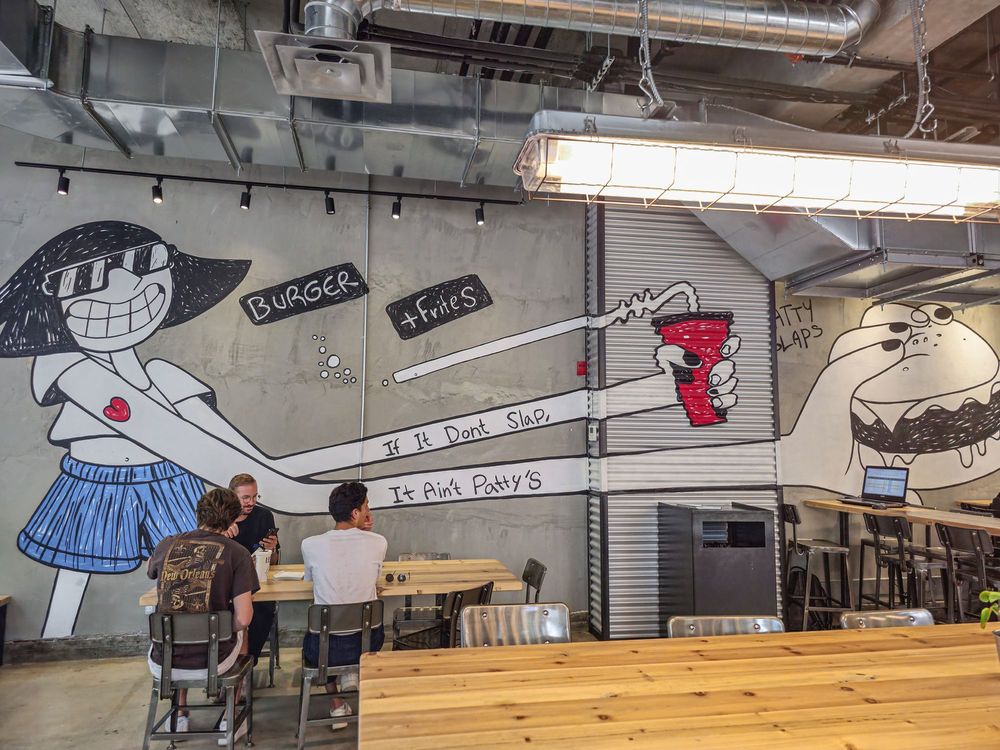
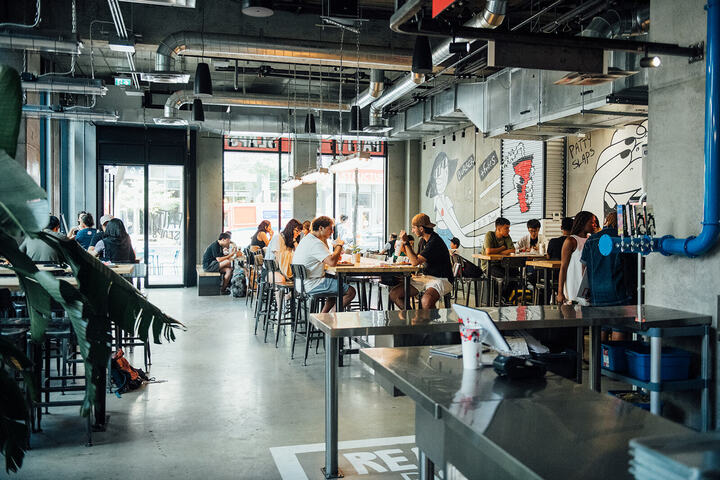
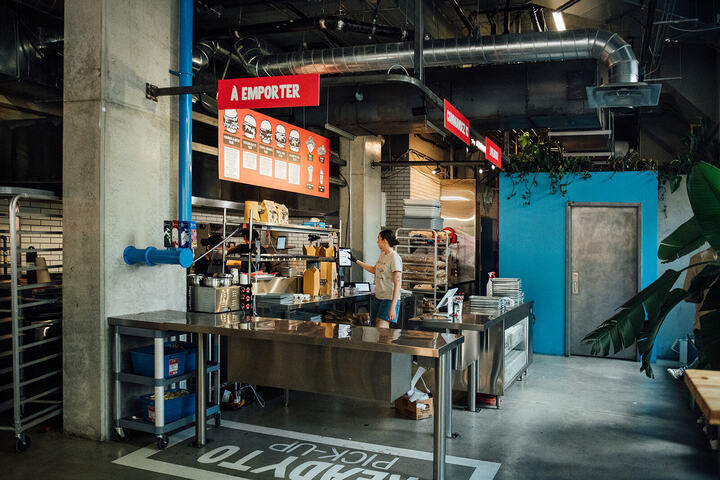
Flanz said the restaurant itself is cool and friendly, with a welcoming industrial vibe that perfectly captures the company’s simple, yet well-designed tongue and cheek brand. From décor to packaging, every detail is flawlessly articulated.
“The Patty Slaps team embraces technology with a self -automated ordering system that enables customers order their food using an iPad. When the food is ready, customers are called to the counter for pickup. Friendly staff can help if customers need help navigating the system,” he said.
“With a popular menu that satisfies foodies and hungry students alike, as well as strong brand offering, this is a company that’s ready for expansion. The immediate focus is on opening more locations in Quebec, specifically the island of Montreal, before moving further afield. Ideal spaces are about 2,500 square feet in high-traffic areas.”
Canada’s luxury retail market has seen a significant increase in interest over the past 24 months from international retailers, many of which had already established roots in this country, says Casdin Parr, Vice-President of Retail Advisory Services for commercial real estate firm JLL.
Casdin Parr
“They’re looking to reinforce and expand. We also have a number of new entrants into the marketplace at the same that may have been considering Canada over the years but have finally been ready to take the jump into the Canadian marketplace,” he said.
“I think what’s been interesting for retailers amongst many things is that Canada is a relatively new luxury market by the global luxury sphere. I think they still feel there’s untapped potential, primarily in the three major markets being Toronto, Vancouver and Montreal. And obviously there’s some mix in there like West Edmonton Mall and in Calgary Chinook Centre as well.”
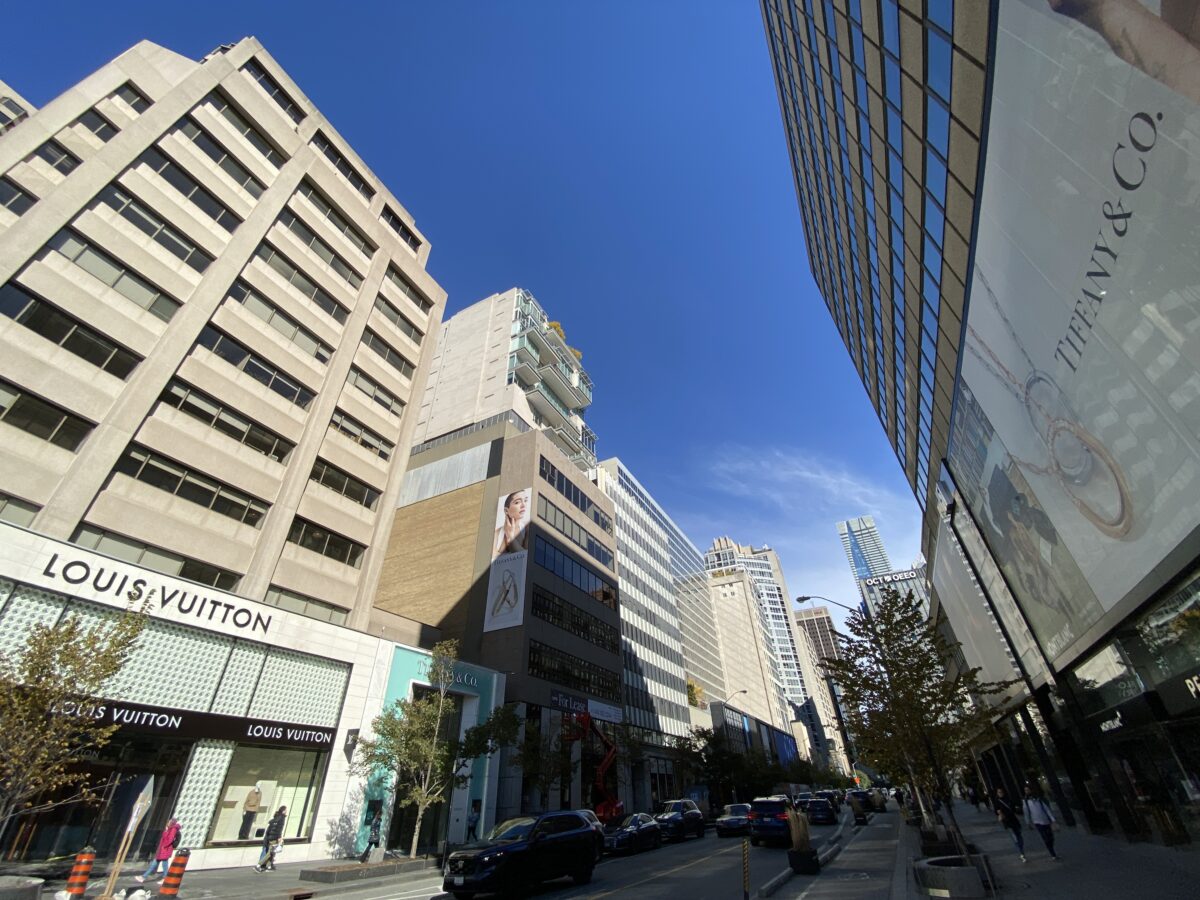
Bloor Street in Toronto (Image: Dustin Fuhs)
In today’s consumer world, spending has been impacted with elevated inflation and rising costs to live in the country. That’s affecting retailers across Canada.
The trend also touches on the high end of the retail market.
“The definition of luxury has changed quite a bit over the last number of years,” said Parr. “Luxury can be defined in many different ways. For some groups of core customers, a pair of unique Nike shoes for instance could be a luxury purchase and for others a designer handbag is a luxury purchase.
“The luxury consumer is no longer defined as a household earning over a certain level of income. Now we have younger consumers, students, who are playing in the luxury sphere. So the customer profile of luxury has changed substantially.
“The level of impact due to the cost of living is impacting different sectors of the luxury consumer in different ways.”
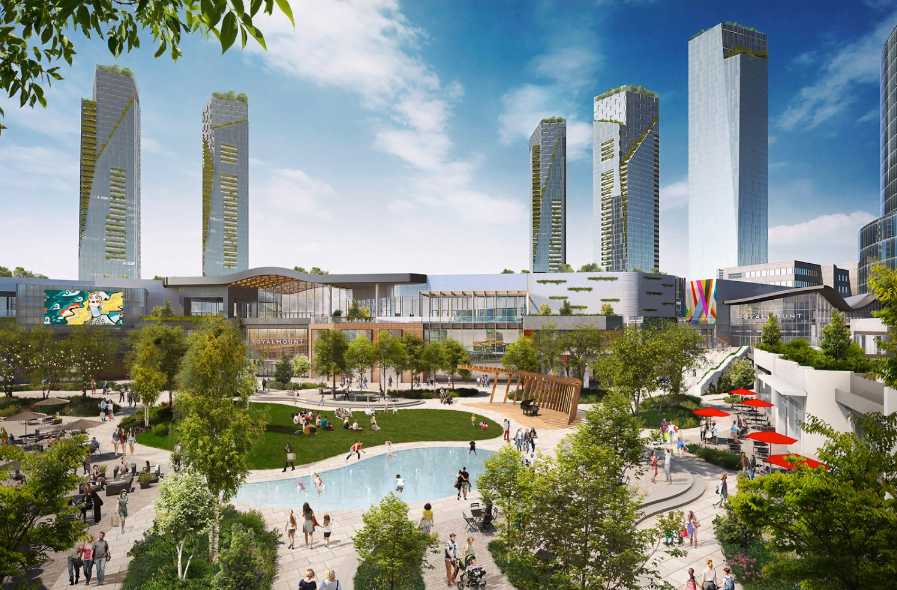
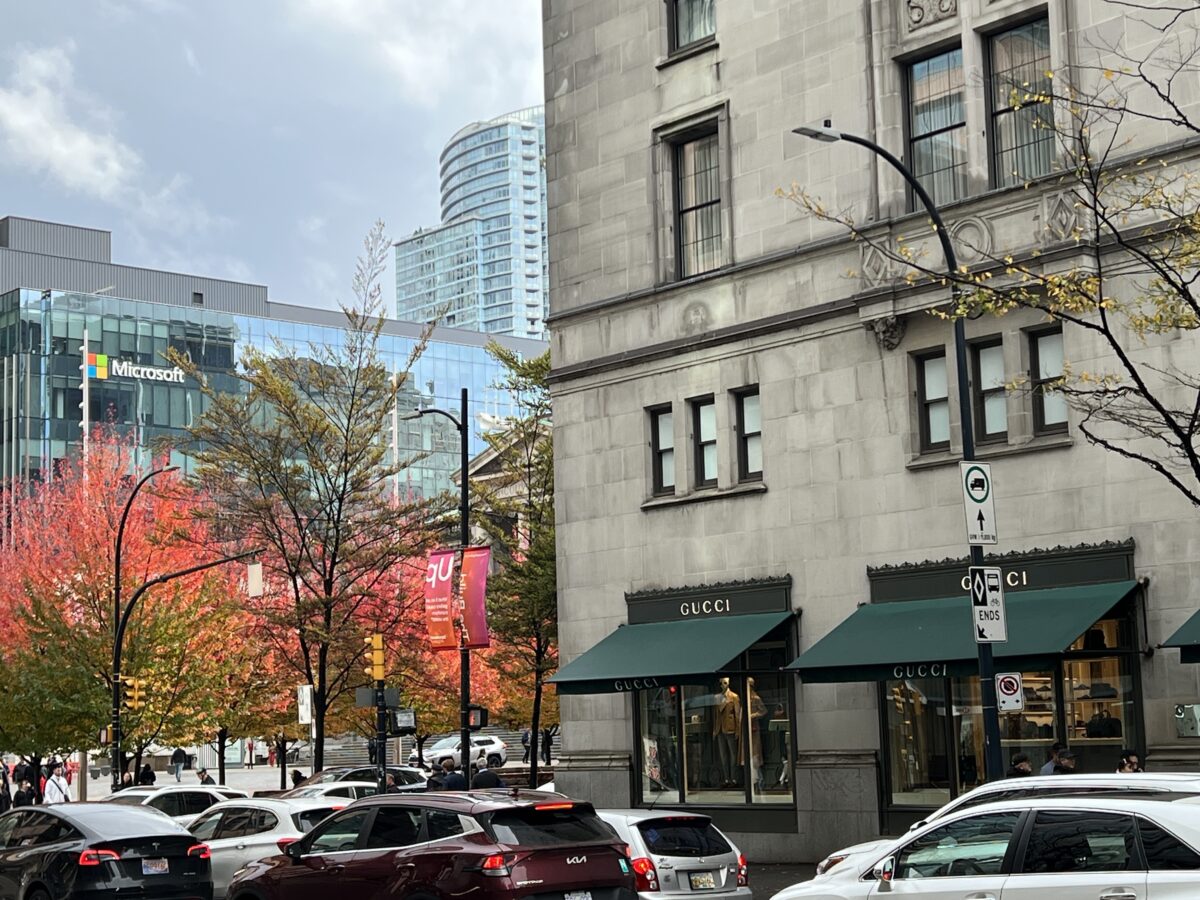
Royalmount (Rendering: Carbonleo)Gucci at Fairmont Hotel Vancouver (Image: Lee Rivett)
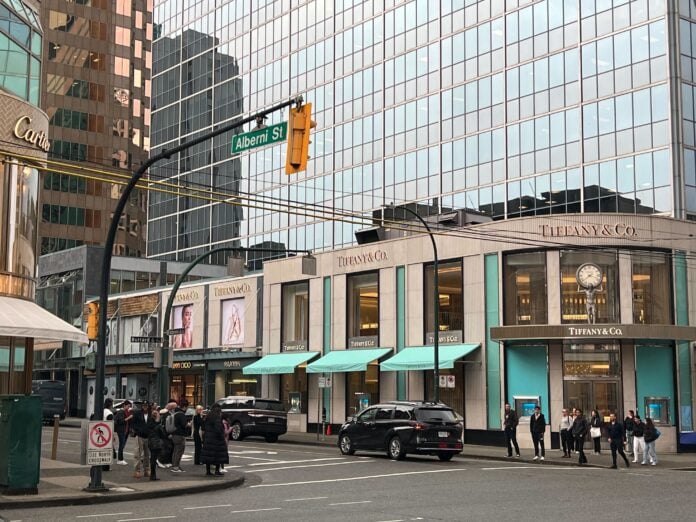
Parr said Toronto and Vancouver remain the first choices for international luxury retailers when they are entering the Canadian market.
“Toronto and Vancouver have proven over the last number of years to be strong international luxury markets,” he said. “Some of the other markets in the country are developing luxury markets. Montreal probably being the largest developing one with the Royalmount development and the collection of luxury that’s set to arrive there in 2024 and beyond.”
Parr said tourism has always been an important part of the luxury spend whether it’s in the Canadian marketplace, the U.S. or otherwise.
“I would suggest that pre-pandemic the retail community or the broader retail community thought maybe tourism over-represented the spend in the Canadian marketplace, particularly international tourism into Canada,” he said.
“Through the pandemic and where we sit today, Canada has proven to have an extremely robust local and national, Canadian, luxury consumer that has candidly grown the top line revenue of many of these groups without the same level of international tourism as we’ve historically seen within the marketplace.”
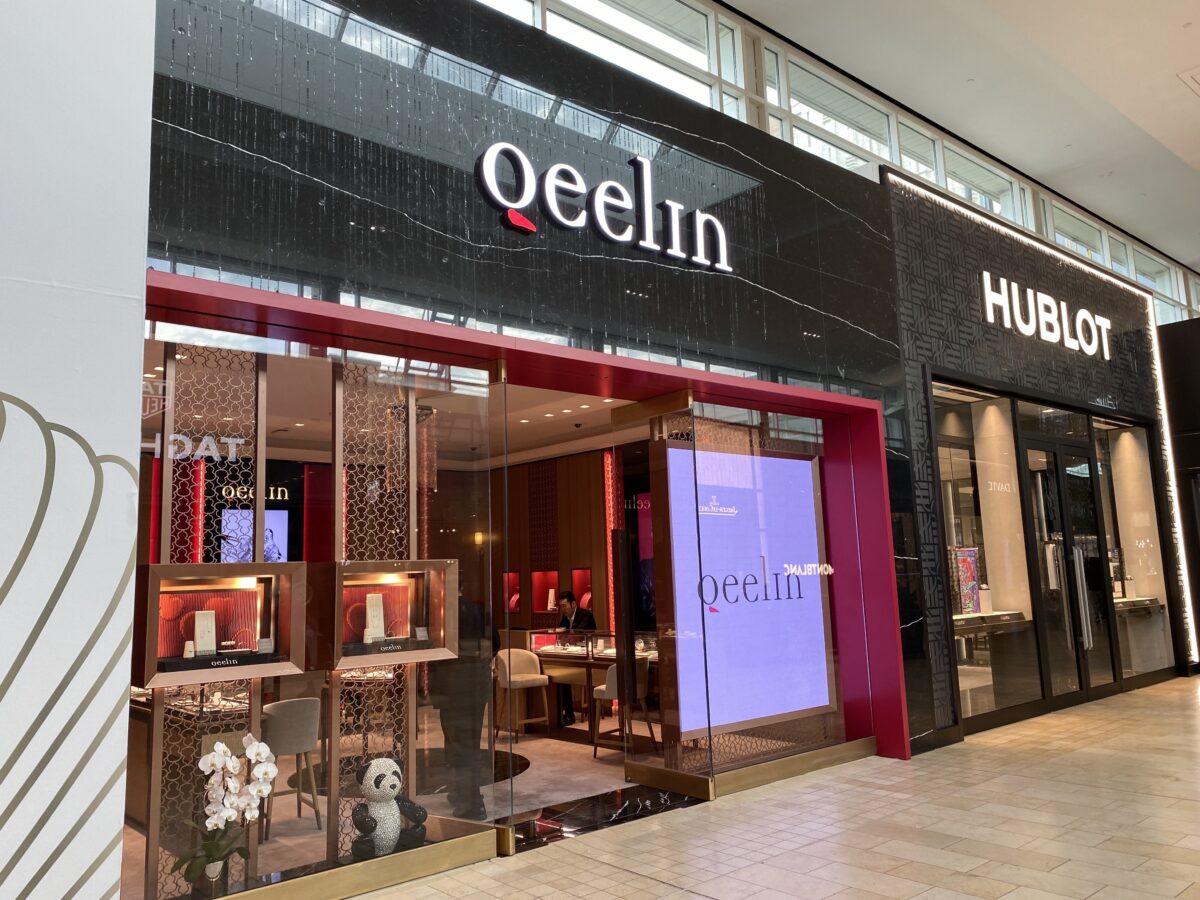
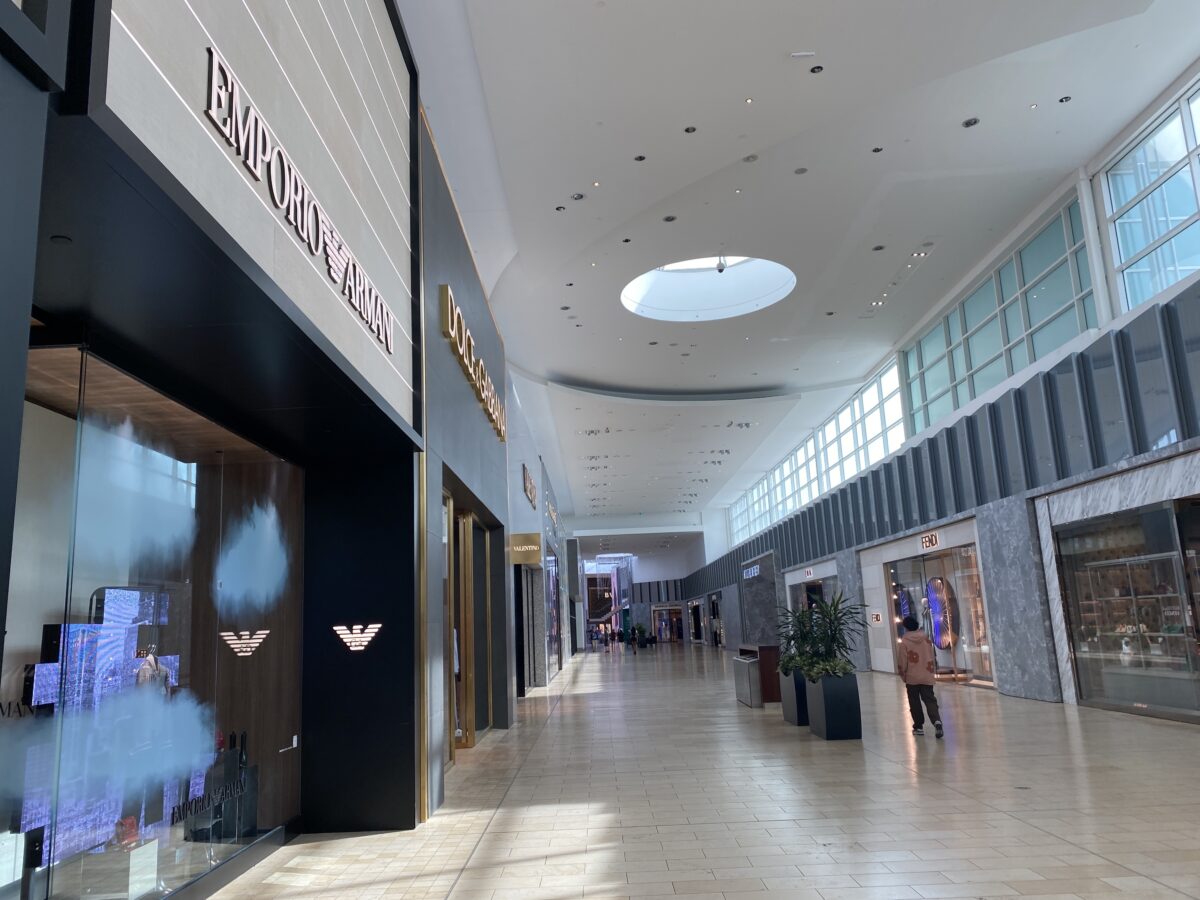
Qeelin and Hublot at Yorkdale Shopping Centre (Image: Dustin Fuhs)Yorkdale Shopping Centre (Image: Dustin Fuhs)
Parr said the luxury retail market has been on an incredible run over the last number of years. The high street nodes in the country in Toronto and Vancouver have more demand than supply right now.
“That’s in significant contrast to what that was as little as 18 months ago. We have seen a very steep acceleration in terms of deal making and stores getting open, particularly in these high street nodes and the strength of some of the enclosed luxury with Yorkdale leading the way. And Yorkdale really finding its place not only on the Canadian or North American luxury map but Yorkdale now being recognized as an international global spot for luxury retail,” he said.
“It’s been an incredible couple of years and there’s still momentum in the marketplace. Like we’re seeing with other trends across North America and globally, I think we all anticipate there will be a softening of demand but still demand that outpaces right now at least available supply.”
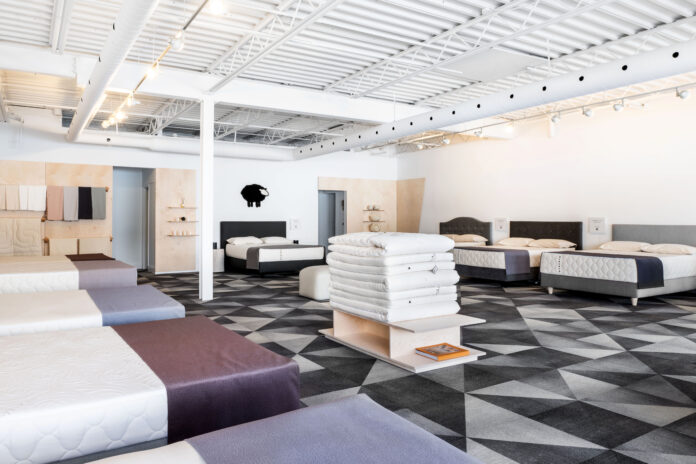
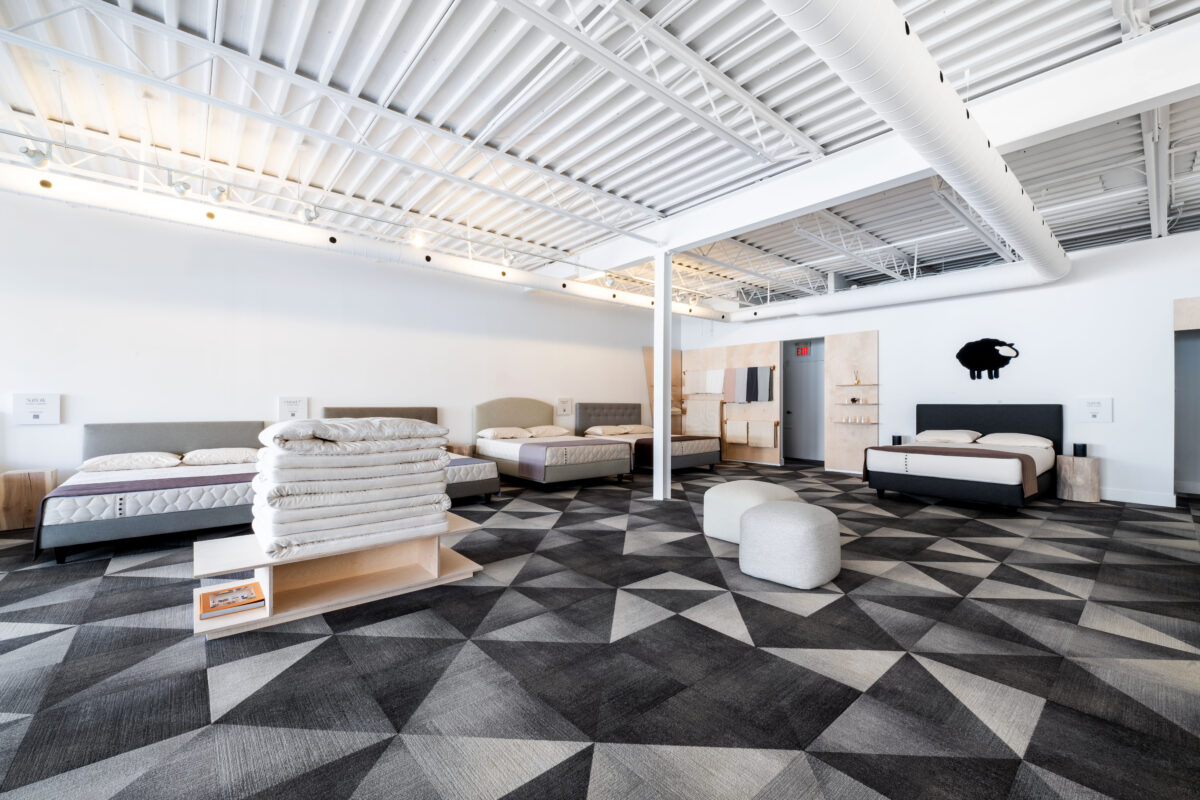
After twelve years of operations, Black Sheep Mattress Company, a premium mattress brand based in Calgary, opened its second location in Toronto this past summer and is looking to expand to four or more stores in Canada within the next five years.
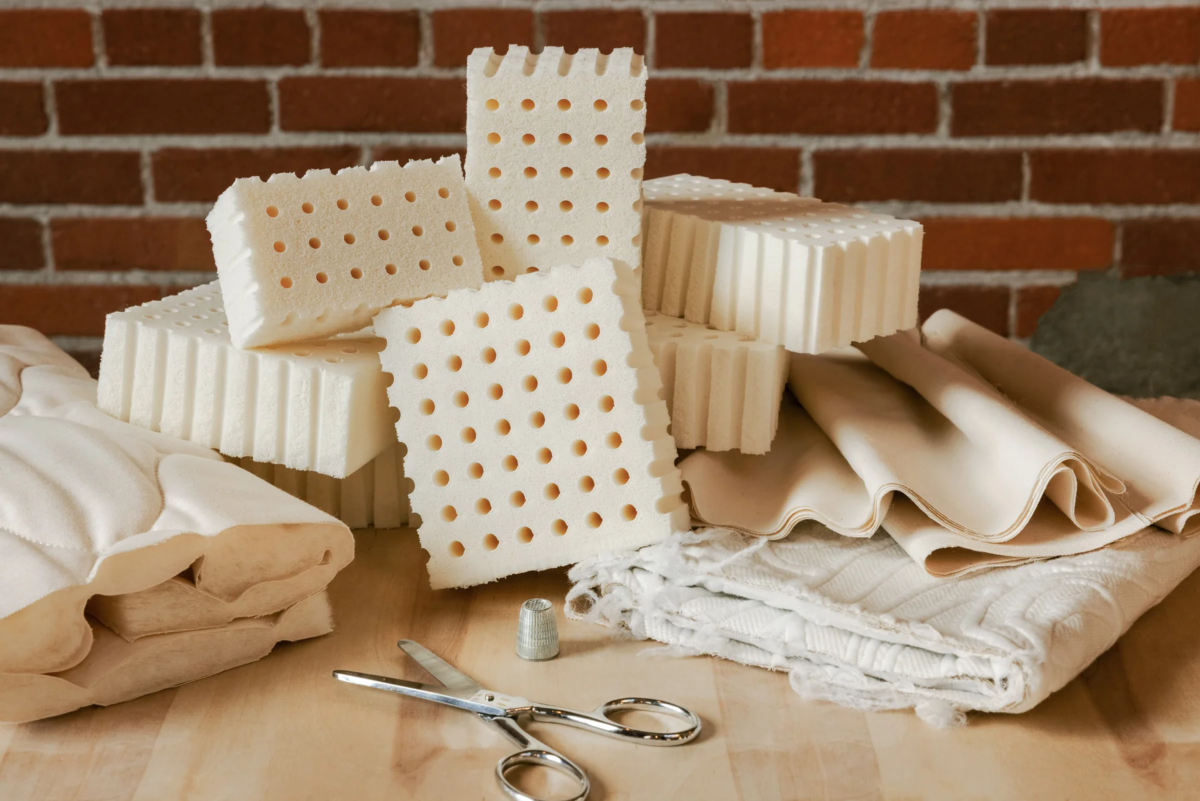
The brand is passionate about creating sustainable mattresses to Canadians as all products are made with high quality materials, have zero chemicals, and are also handcrafted in Calgary.
Christian Schmidt
“We are passionate and pursue the idea of natural materials more than others as we have wool springs, natural latex from the rubber tree, our mattresses are non-toxic, and handcrafted. We have been in business for twelve years and have only been in Calgary – and Toronto was the next step for us as it is our second biggest market,” says Christian Schmidt, the owner of Black Sheep Mattress Company.
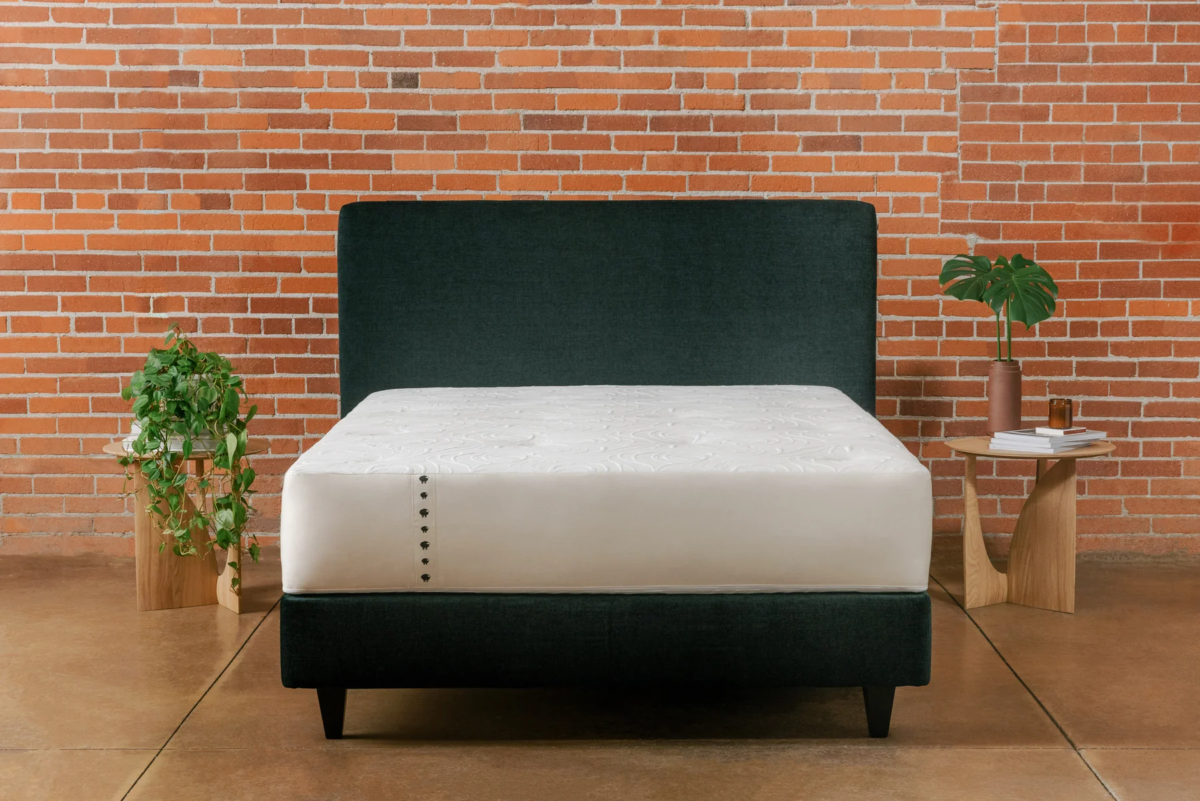
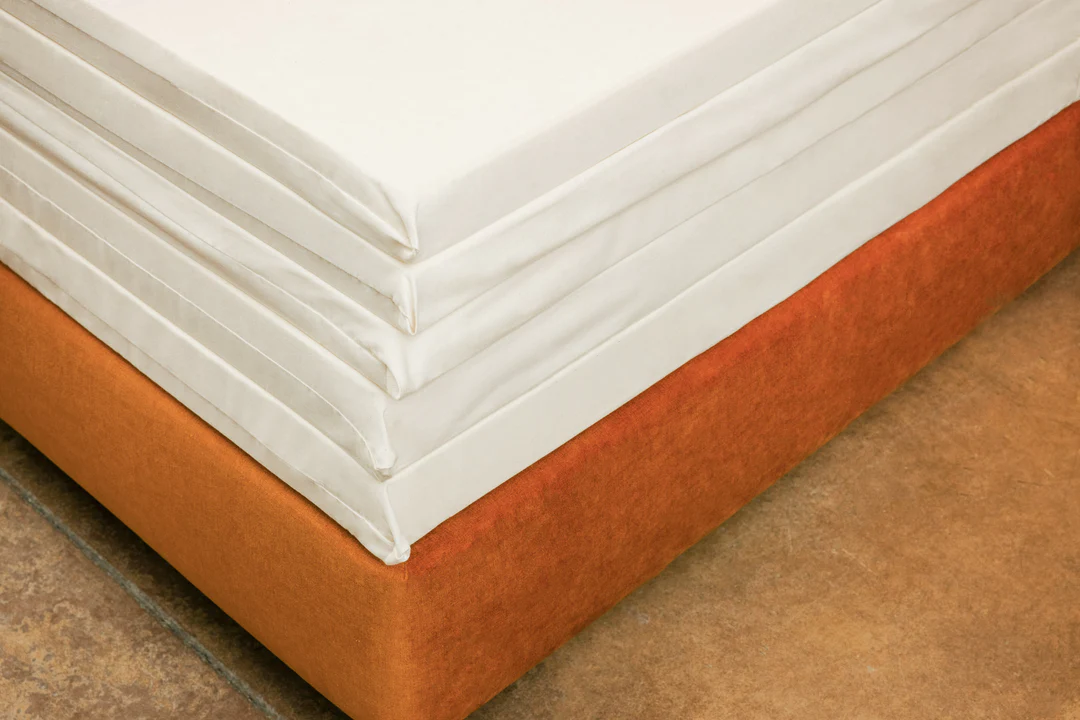
At both locations, shoppers can find a variety of mattresses, toppers, headboards, bedding such as organic cotton sheets, and bedding accessories. The brand provides options for adults, but also options for kids and babies. All products are available for shipping across Canada.
Shoppers can find the Black Sheep Mattress Company at 601 Manitou Road in Calgary and the second showroom which opened this past July is located at 287 Davenport Road in Toronto and is 1700 square feet.
Same Mattress, Different Needs
Image: Black Sheep Mattress CompanyImage: Black Sheep Mattress Company
One way Schmidt says the company is different from other mattress brands is its level of customization.
The Black Sheep Mattress Company offers consumers the opportunity to customize their mattress to their likings – even if it is only their half: “We can customize each half of the mattress quite a bit in order to accommodate different partners, different needs, and different levels of support and comfort.”
In addition to mattresses, headboards also have the option for customization – giving your bedroom a more personalized look and feel.
In the past couple of years, Schmidt says because of the lockdowns during the pandemic – they were quite busy.
“It has been different. During Covid, we were actually quite busy and I think a lot of the home furnishing places were seeing more interest from people as they were home a lot. Then last year, we noticed it has toned down a little bit and it has been more back to normal, which is okay. Along with that, we are definitely able to get supplies back on a normal schedule and timeline.”
Sustainability
Image: Black Sheep Mattress Company
One of the main focuses for the brand is to continue and evolve its sustainability measures and this includes its programs of recycling, tree planting, and reducing its carbon footprint.
While making mattresses the brand uses any leftover material to make other products such as wool dryer balls, decorative sheep, raw natural materials, and sells sheep toys for kids. Consumers can find these products in-store or online under Upcycled Products.
When the lifespan of a mattress is over, consumers have the option to use the brand’s mattress recycling program which is free of service. Currently this program is only an option for consumers who use the local delivery service. When a mattress is recycled, the company will “break it down into raw materials” and will be recycled or reused for different uses such as moving pads. In 2021, the company was able to save 170 mattresses from ending up in landfills.
Black Sheep Mattress Company also partners with Wearth Farms, a local Alberta company, for its tree planting program. For each mattress ordered, the brand will plant a tree with Wearth Farms, helping the environment with one mattress at a time. Black Sheep Mattress Company also looks at reducing its carbon footprint by using BullFrog Power which uses “a blend of wind, solar, and low-impact hydro power.”
Expansion Plans – Where To Next?
Image: Black Sheep Mattress Company
Although Schmidt says he is focused on the Toronto location currently and wants to see how well it does before expanding further – he would like to expand the brand with possible locations being Edmonton as it is close to Calgary, or Vancouver.
“Toronto is the first step and we will look at a bit of a balance between East And West and then once this location gets its legs – we will start to look for the next location. I think probably Edmonton or Vancouver even perhaps for next year as it depends on how well Toronto does – it is something we are considering.”
Within the next five years or so, Schmidt says he would like to expand the brand by opening around four or five locations and might even look at expanding internationally in the United States, “but that is a whole other challenge that will be looked at later.”
Image: Black Sheep Mattress Company
As it looks to continue to expand in Canada, Schmidt says the number one thing he is after is awareness and product expansion.
“The big thing is just getting awareness out there, making connections in the community for Toronto and continuing to evolve both the existing product, but also add new products. Such as products that complement the bedroom such as headboards, bases, dog beds, and accessories – just expanding the lineup a little bit. We are excited for the Toronto space and we continue to focus on Calgary of course as that is our home base and now we are just getting the word out.”
Yellowknife (Image via Lenora Barrett / Northwest Territories Tourism)
Canadian retail sales experienced another month of minimal growth in August 2023 with All Stores up 2.5% YOY and All stores Less Automotive, Food, Pharmacies up only 0.8% YOY. Whereas sales were still up slightly, the regional differences continue to play a large factor with the price of housing, and in August, migration due to wildfires.
The regional differences in Canadian retail spending are continuing to polarize. The more expensive a location is to live (primarily Ontario and British Columbia) are getting the hardest hit for retail, and those who experienced terrible wildfires through August (mainly British Columbia and the Northwest Territories) declined similarly:
Vancouver retail sales were down -1.82% YOY in August. Considering people were fleeing the Okanagan in August and heading to the lower mainland, this decline is even more significant.
Toronto retail sales, though up 3.5% YOY in August, are still down -0.3% YTD.
Though it makes up a relatively small percentage of overall Canadian retail sales, Northwest Territories experienced a decline of -20.2% YOY in August due primarily to wildfire evacuations, higher than the trend of -2.9% YTD.
Though the Okanagan and the Northwest Territories were most affected by the wildfires in August, they continued well into September. With many people waiting at their homes as long as possible, we are expecting to see an even larger drop in retail sales in these two areas in September Canadian Retail Sales.
Housing remains top of mind for many Canadians as the availability decreases and prices increase. There are many categories being affected by this, but most directly affected are:
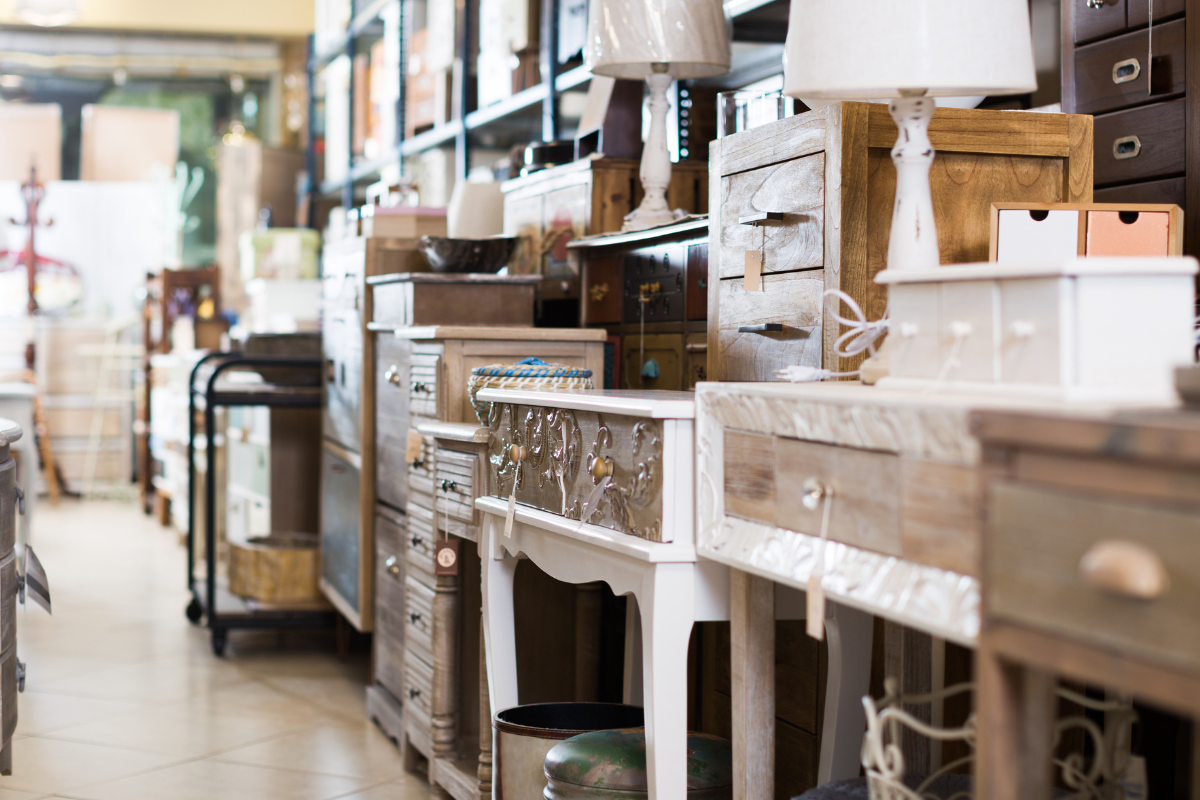
Furniture Stores, down -6.6% YOY,
Home Furnishings Stores, down -8.44% YOY, and
Building Material and Garden Equipment, down -7.2% YOY.
As consumers spend more on their housing, they are forced to spend less on furnishing them or repairing them. In addition, recent laws in B.C. cracking down on short-term rentals could have a lasting effect on these categories. With people looking to get out of investment properties, this could flood the secondary market with the furniture that used to fill their Air BNBs. These regulations are undoubtedly going to come to Toronto and the rest of Ontario very soon, so it is just a matter of time until another large market experiences the same secondary market increase.
Health and wellness related categories continue to outperform most other categories in September 2023, Health and Personal Care Stores were up 9.1% YOY. In addition, Cannabis Stores continue to grow in Canada with retail sales up 19.1% YOY. This is a direct effect, it appears, of the decrease in alcohol sales, as Beer, Wine, and Liquor Stores are down -4.0% YOY. Interestingly, the difference between cannabis and alcohol seem to be nearly identical. Cannabis Stores experienced a growth of $74.4 million, and Beer, Wine, and Liquor Stores experienced a decline of just over $100 million. This “redistribution” of funds will be very interesting to watch closing out 2023 and into 2024.
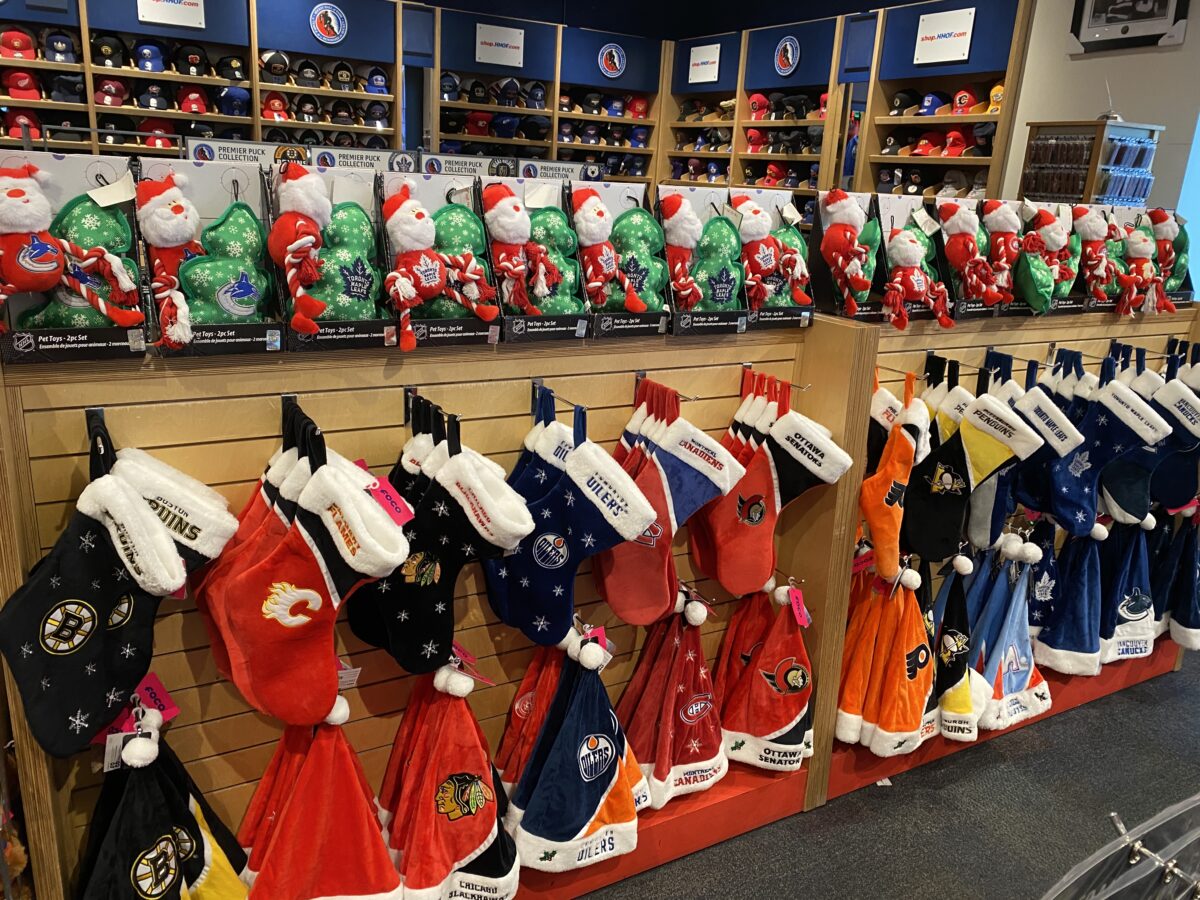
Holiday Shopping at The Spirit of Hockey / Hockey Hall of Fame (Image: Dustin Fuhs)
Canadian Retail Sales by Product Category, Same Month ComparisonCanadian Retail Sales by Store Category, Year to Date ComparisonRetail Trade, Canada, All Stores, by Geographic RegionsCanadian Ecommerce Sales
Retail Insider is streamlining its Canadian retail news from around the web to include a handful of top news stories that can be viewed quickly during the day. Here are the top stories from the past several days.