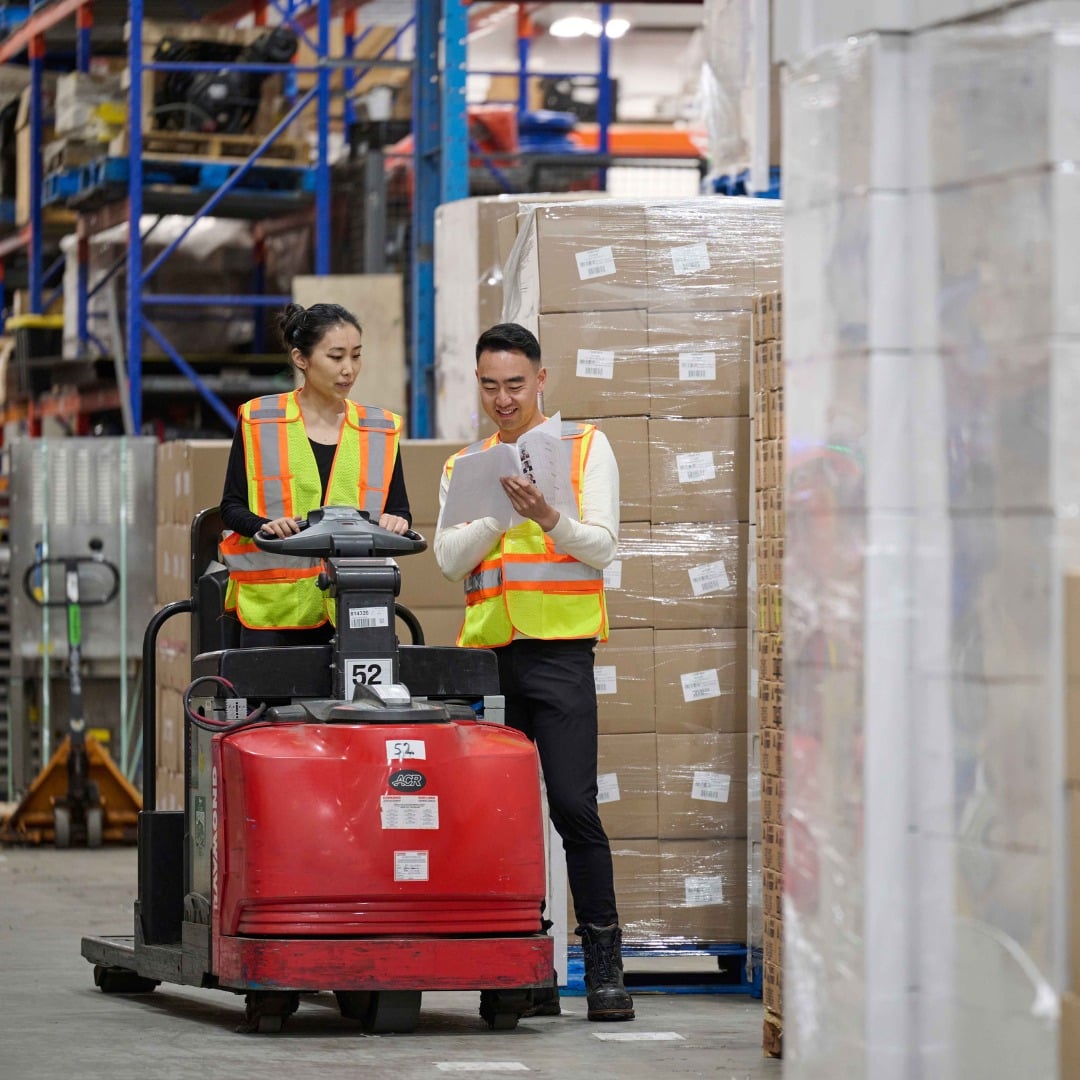
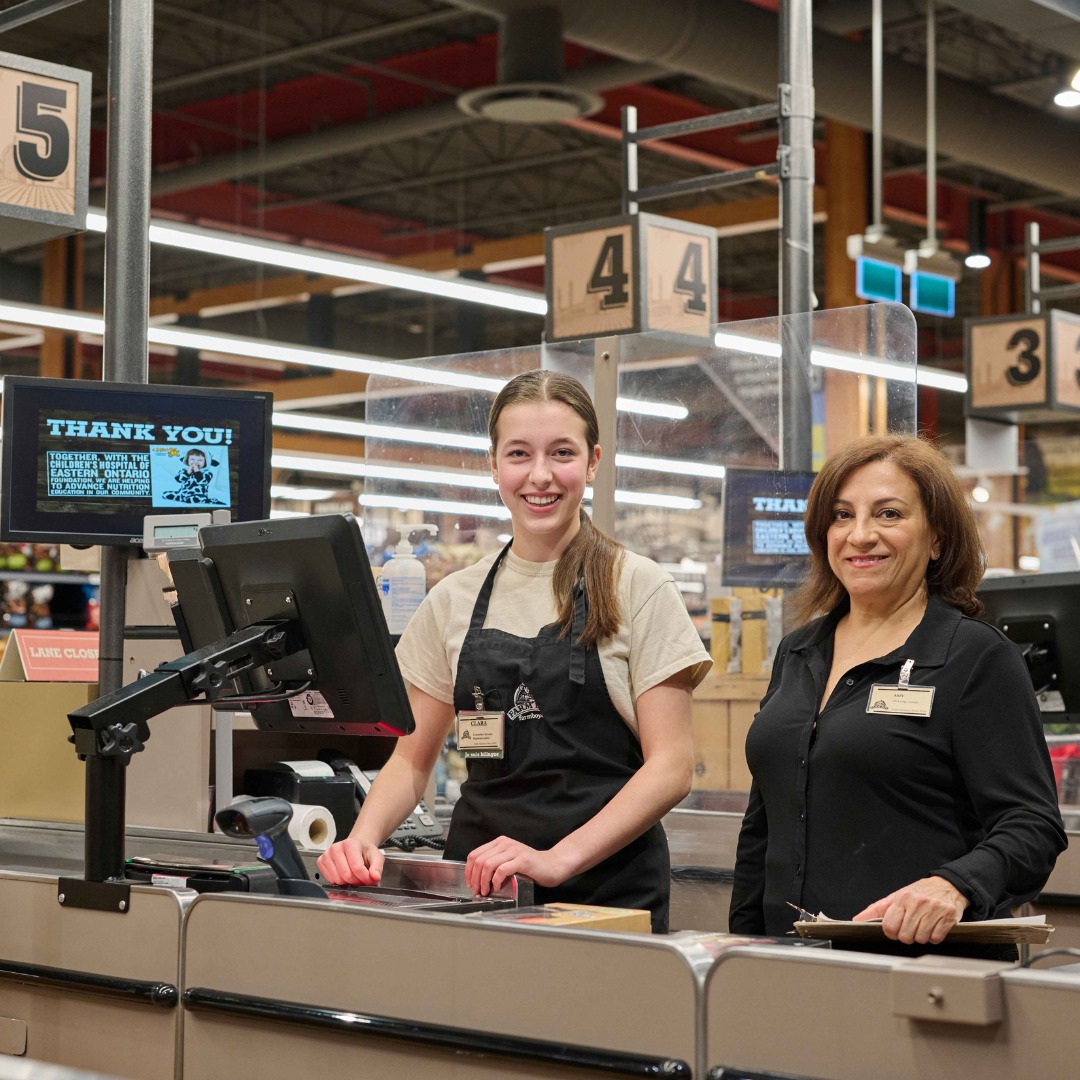
In this dynamic era shaped by AI-driven advancements, retail human resource professionals navigate a landscape rich in complexity and transformation. Understanding and addressing employee needs has become more crucial than ever for cultivating vibrant workplace environments and cultures. Embracing this challenge, Retail Council of Canada (RCC) is excited to host the essential one-day Retail Human Resources Conference on April 25, 2024, at the International Centre in Mississauga. Promising a packed agenda with distinguished speakers, this event is set to be a pivotal gathering for retail HR professionals, offering a wealth of insightful strategies and valuable knowledge as well as 3.5 hours of HRPA pre-approved professional development credits .
The conference will explore the pressing issues shaping the future of retail HR. Attendees will learn to strike a balance between leveraging AI and other technologies for operational efficiency and the critical task of engaging with employees to nurture thriving workplaces. Discussions will encompass AI’s impact on workforce development, the nuances of compensation and labor relations, and inventive tactics for attracting talent, enhancing employee experiences, and boosting retention.
Featured sessions include:
Just announced!Mastering Finance for HR: Winning Executive Buy-In for Change
Robert Laufer CFO of Browns Shoes Inc. and RCC President and CEO Diane J. Brisebois discuss crafting a compelling HR investment proposal, focusing on alignment with leadership and demonstrating HR’s role in supporting organizational growth and change.
What Employees are Seeking Beyond “Competitive Pay”
John Mortimer and Shelly Patel from LabourWatch present frontline strategies to enhance retail workers’ daily experiences, boosting engagement, customer loyalty, and business performance.
Building Bridges, Breaking Barriers: Empowering your DEI Strategy
Rochele Padiachy, Learning Manager at the Canadian Centre for Diversityand Inclusion will lead a session on transformative DEI strategies and their integration into business plans for an inclusive future.
AI-Driven Innovations for Tomorrow’s Workforce
David Lloyd, Chief Data and AI Officer at Ceridian, examines the role of AI in retail HR, from streamlining tasks to providing actionable insights and improving workforce efficiency.
Revitalizing Inspired Employee Engagement
Deb Craven of Longo’s shares their journey in enhancing employee engagement, highlighting key lessons, accountability, and the positive impact on workplace dynamics.
Additionally, RCC’s Retail Human Resources Conference offers extensive networking opportunities, complete with delicious snacks and a filling lunch. It’s the perfect setting for participants to connect with peers, meet other HR professionals, exhibitors, and solution providers. This year introduces peer-to-peer learning and roundtable discussions, providing a unique forum for sharing ideas and addressing common industry challenges.
Secure your spot at this unmissable conference at www.rcchrconference.ca. Groups of five or more can enjoy a 20% discount, making it an ideal opportunity for team building and mentoring junior HR professionals.
*Partner content. To work with Retail Insider, email: craig@retail-insider.com
Leger, the largest Canadian-owned market research and analytics company, has released its 27th annual Reputation study – unveiling the list of the most reputable companies according to Canadians in 2024.
The Top 10 Most Reputable Companies in Canada in 2024
The maximum possible reputation score is 100. This year, according to Canadians, the most reputable companies are:
Google (Reputation Score: 75)
Sony (Reputation Score: 72)
Canadian Tire (Reputation Score: 71)
Samsung (Reputation Score: 71)
YouTube (Reputation Score: 70)
Shoppers Drug Mart (Reputation Score: 69)
Microsoft (Reputation Score: 69)
Amazon (Reputation Score: 68)
Dollarama (Reputation Score: 68)
Costco (Reputation Score: 68)
Leger surveyed more than 38,000 Canadians to explore their perspectives on close to 300 companies across 30 different sectors. Conducted annually, it is based on Leger’s exclusive model of six recognized pillars of reputation—financial strength, social responsibility, honesty and transparency, quality, attachment and innovation.
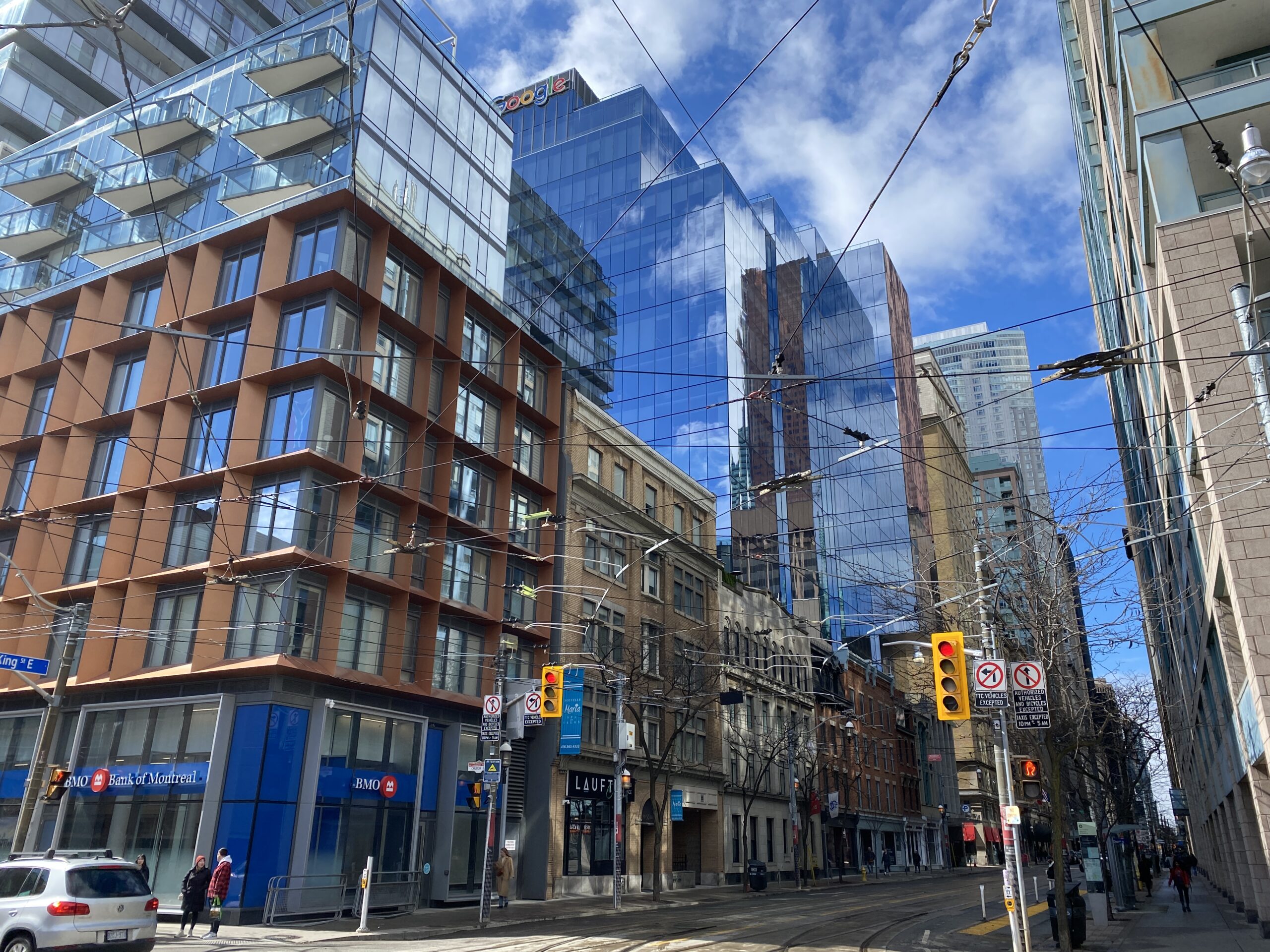
Google on King Street East (Image: Dustin Fuhs)
As Canadians struggle with turbulent economic times throughout the country, Canadians are looking for companies that can cater to their needs during these tough times and will be more forgiving to those companies that understand and respond to consumers’ needs, said Leger.
Lisa Covens
“Although certain sectors experienced greater reputation losses and gains than others during these unsettled economic times, we also see an overall resiliency of corporate Canada in this year’s study. The overall reputation of Leger’s cross-section of corporate Canada has remained stable with an average company reputation change of 0,” said Lisa Covens, Senior Vice President.
“This stability highlights the dynamic equilibrium within the landscape of corporate reputation, showcasing resilience even as Canadians shift their confidence among various brands.”
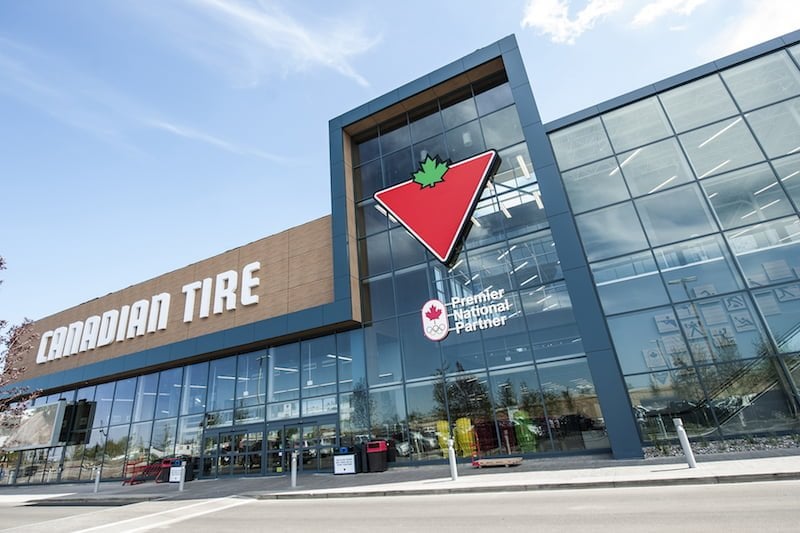
Canadian Tire (Image: Canadian Tire)
Leger said eight of the top 10 companies in 2023 remain in the top 10 this year (Google, Sony, Shoppers Drug Mart, Samsung, and Canadian Tire, Dollarama, and Costco). Google, remaining at #1, has kept its reputation stable and remains in the top spot for the second year in a row. Keeping consistent with the current fiscal climate, Canadian company Dollarama reaches #9, while Costco, geared towards Canadians looking for maximized savings, remains in its position in the top 10 this year (#9).
“(Reputation) attracts customers. It brings their attention, their spending. If you lose reputation then the customers aren’t as likely to engage with you and less likely to go into your stores or go to your website and just do business with you overall,” explained Covens.
“When there is a problem with reputation, customers want to disassociate with you. For retailers if you think of some of the big brands that are sort of splashy in their branding and I’m thinking of those brands we have seen on people’s shirts, with reputation if a company such as one of those ran into reputation trouble you really wouldn’t want to wear that on your body anymore.
“That’s an extreme example of where reputation really matters. And just generally people know where their friends and family shop for retail. If you run into trouble, you’re not going to want to be seen as shopping there, you’re not going to want to talk about it, you’re not going to want to actually shop there and spend your money. It’s important. It’s important for everybody and every company across our society really.”
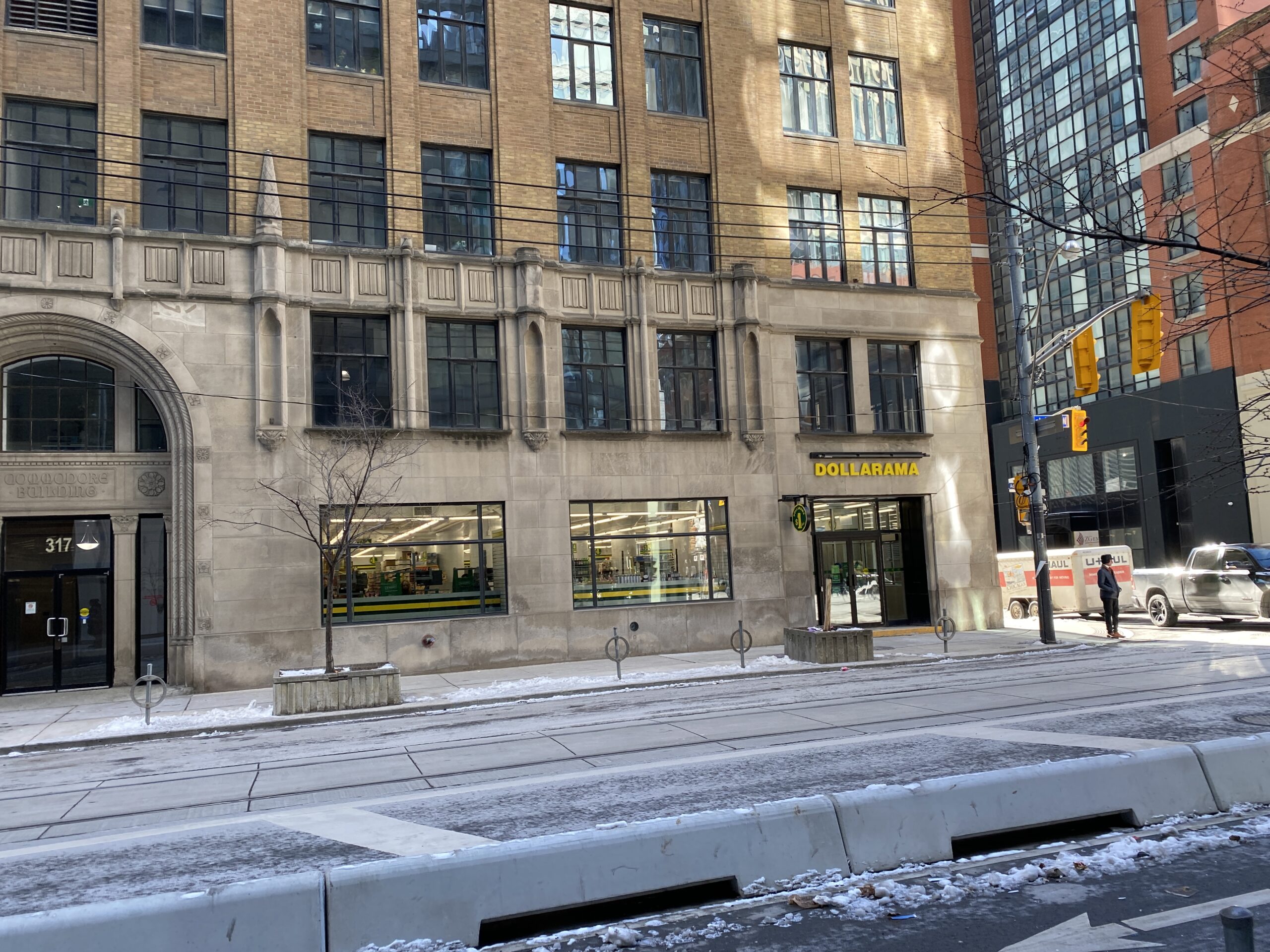
Dollarama at Adelaide and Peter Street in Downtown Toronto (Image: Dustin Fuhs)
Covens said companies can always move the needle if for some reason they have a bad reputation.
“You can always figure out what’s important to your sector and do the good work, the hard work, that goes with that,” she said.
“So if you run into trouble you want to turn things around . . . You really need to invest where things make sense. Obviously try to address whatever the crisis got you in hot water in the first place but then to do the hard work that follows, really invest your time, your money and your energy into what makes sense for your sector.”
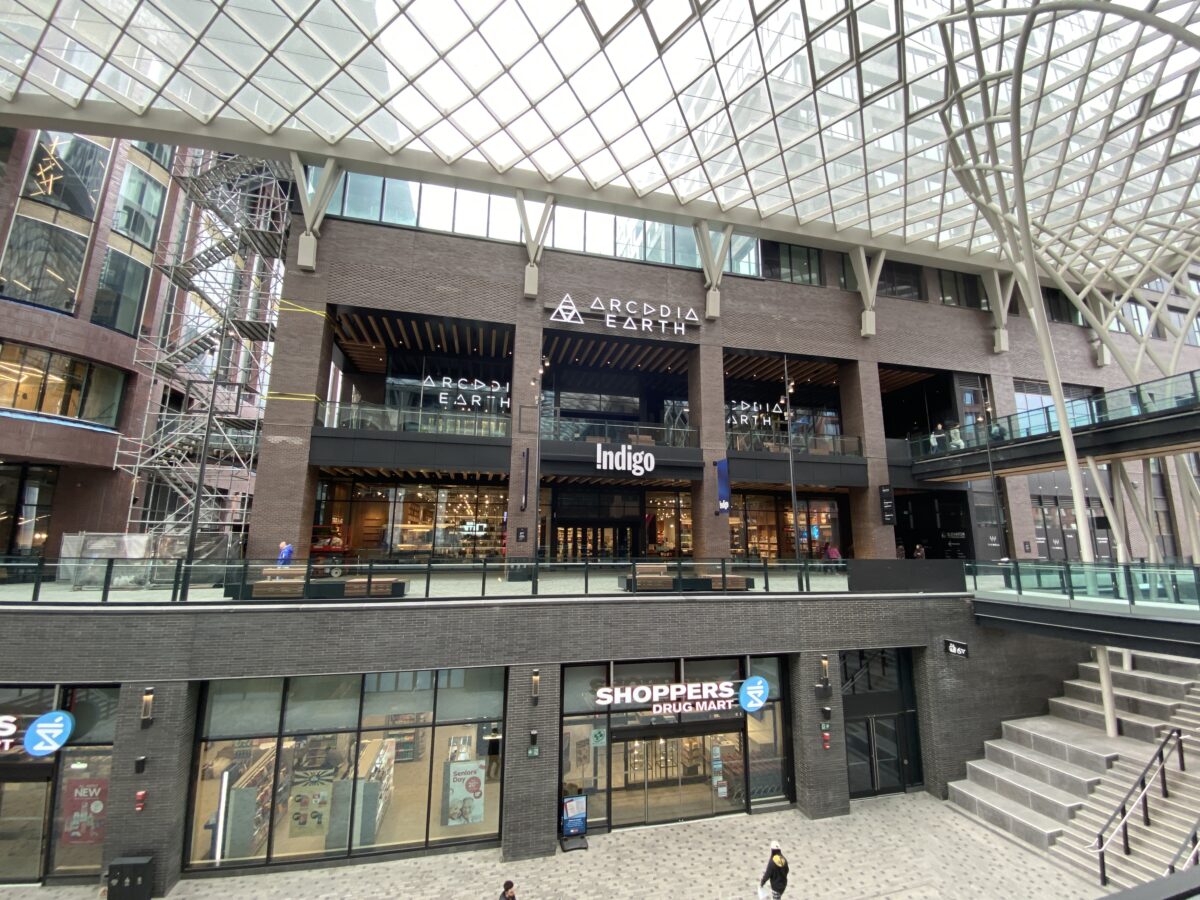
Shoppers Drug Mart at The Well (Image: Dustin Fuhs)
She said retailers should invest their efforts in corporate citizenship in reducing their carbon footprint.
Leger said there were a few industries/sectors whose reputations improved in the last year.
“For example, as sports leagues returned to pre-COVID attendance levels and fan experiences, the MLB (+5), MLS (+5) and the CFL (+4) all had their reputations increase through the lens of the Canadian public,” said the company.
“The telecommunications industry also had a rebound year, and had an average of +5 in their score this year. This increase was highlighted by Rogers, who appear to have recovered from their service reliability issues of a year ago with a 14-point increase in their reputation from last year. As well, Telus saw their score increase by 5 points this year.
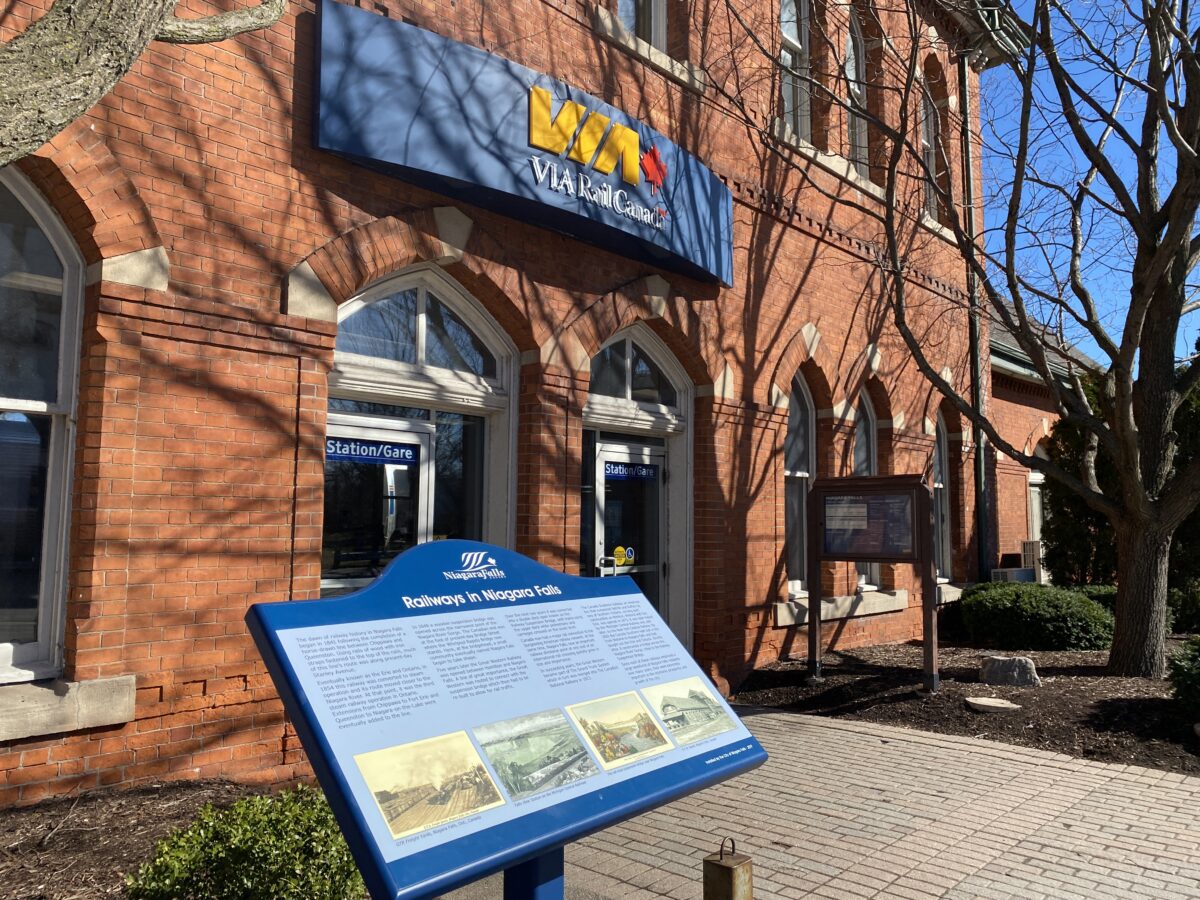
“At the other end of the Reputation spectrum, the transport industry saw many of its companies’ reputations drop. For example, the public’s perception of Sunwing’s reputation declined by 9 points from last year. It is possible negative news coverage associated with last-minute holiday cancellations and pulling out of Saskatchewan contributed to this decline. Other similar providers in the sector also experienced declines as VIA Rail dropped by 6 points, followed by WestJet (-4) and Air Canada (-3).”
Via Rail Niagara Falls (Image: Dustin Fuhs)
The Leger study also looked at ESG (Environmental, Social and Governance) as a driver of corporate reputation.
Shanze Khan
“What we found is the data underscores a critical insight: consumers are increasingly discerning, rewarding companies that truly integrate their stated values into their business models.,” said Shanze Khan, Senior Research Director.
“In a competitive landscape, with companies vying for finite attention, it is imperative to focus efforts on sector-relevant initiatives rather than diluting them across numerous fronts. This shift towards authentic and impactful action, aligned with their sector, is indicative of the evolving expectations of consumers, who are looking for more than just surface-level commitments that can come across performative.”
Retail Insider is streamlining its Canadian retail news from around the web to include a handful of top news stories that can be viewed quickly during the day. Here are the top stories from the past 24 hours.
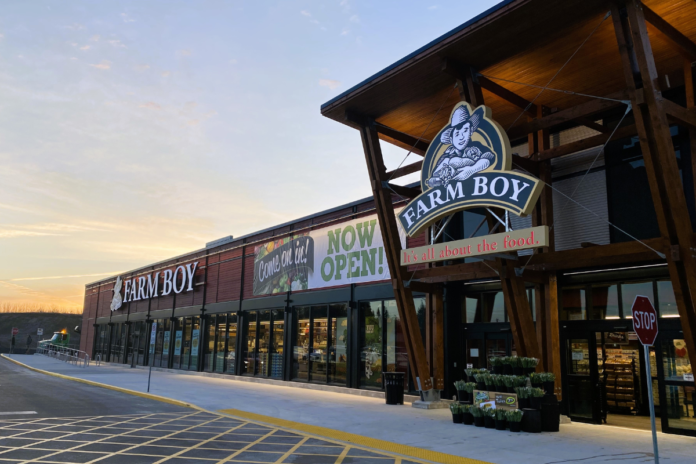
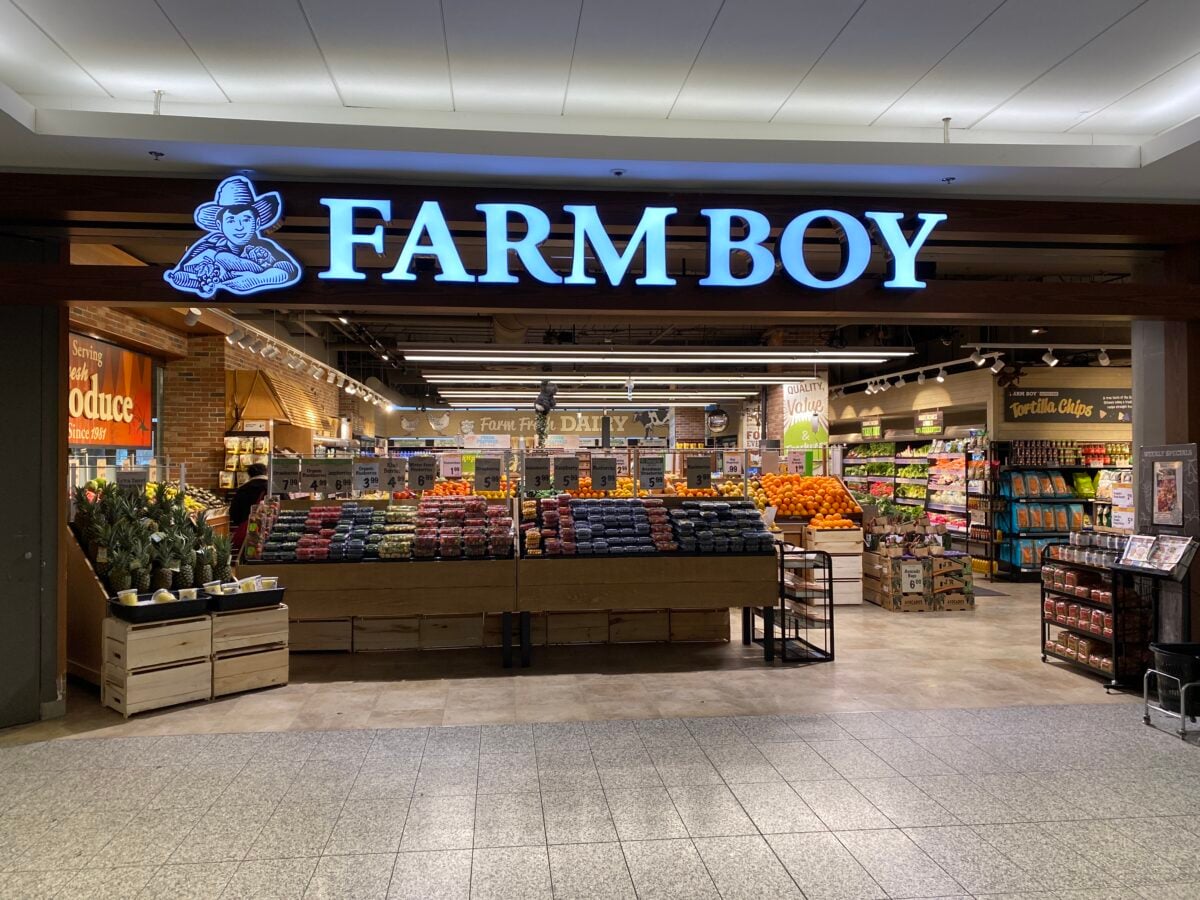
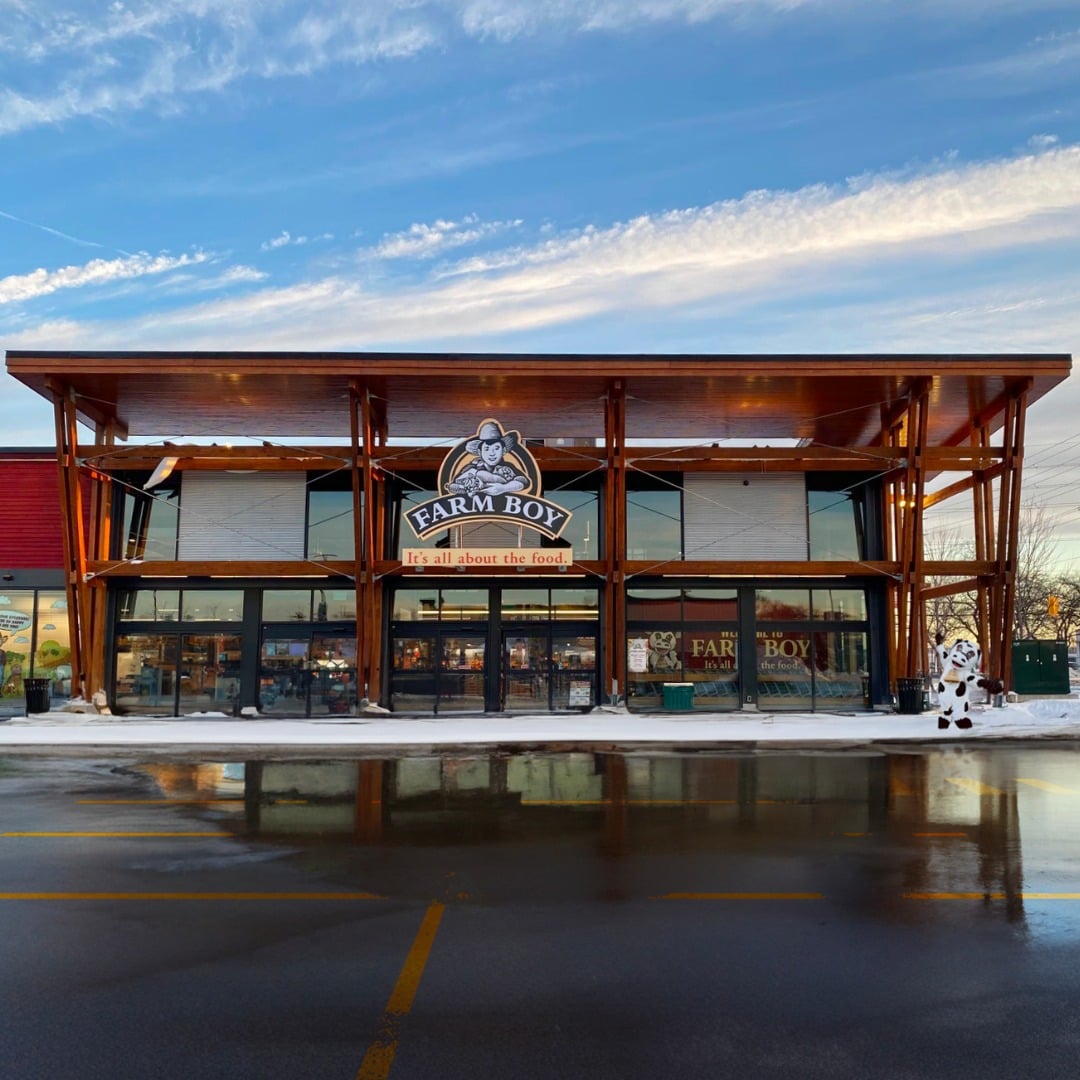
Farm Boy in Oshawa, Ontario (Image: Invest Oshawa)
Fresh food retailer Farm Boy, part of Empire Company Ltd., has opened a new store in Oshawa, its 48th store in Ontario.
The new Oshawa location is an expansive 26,000-square-foot store that is located at 1280 Clearbrook Drive at Taunton Road East, and embodies Farm Boy’s hallmark commitment to freshness, value, and an unparalleled shopping experience, said Shawn Linton, President & General Manager.
Shawn Linton
“Oshawa was selected due to its popularity in adjacent markets and the growing community near the new location. The location was specifically recommended by the city’s economic development team (the Mayor in 2016). As the 48 th store in the province and the 19th in the Greater Toronto Area, the new Oshawa Farm Boy location has a wide range of offerings for residents including: Farm-fresh produce and organic product offerings; Hundreds of Ontario-sourced, fresh dairy, meat and grocery products; Hot bar and salad bar selections, catering to diverse tastes and schedules; A curated collection of exclusive Farm Boy private-label products; A diverse selection of local, international and Canadian cheeses; and Sustainable shopping options, including reusable bags,” said Linton.
Prior to the recent opening of Oshawa, it has been slightly over a year since the brand’s last two store openings – Aurora in January 2023 and Sugar Wharf on Queens Quay in Toronto in February 2023.
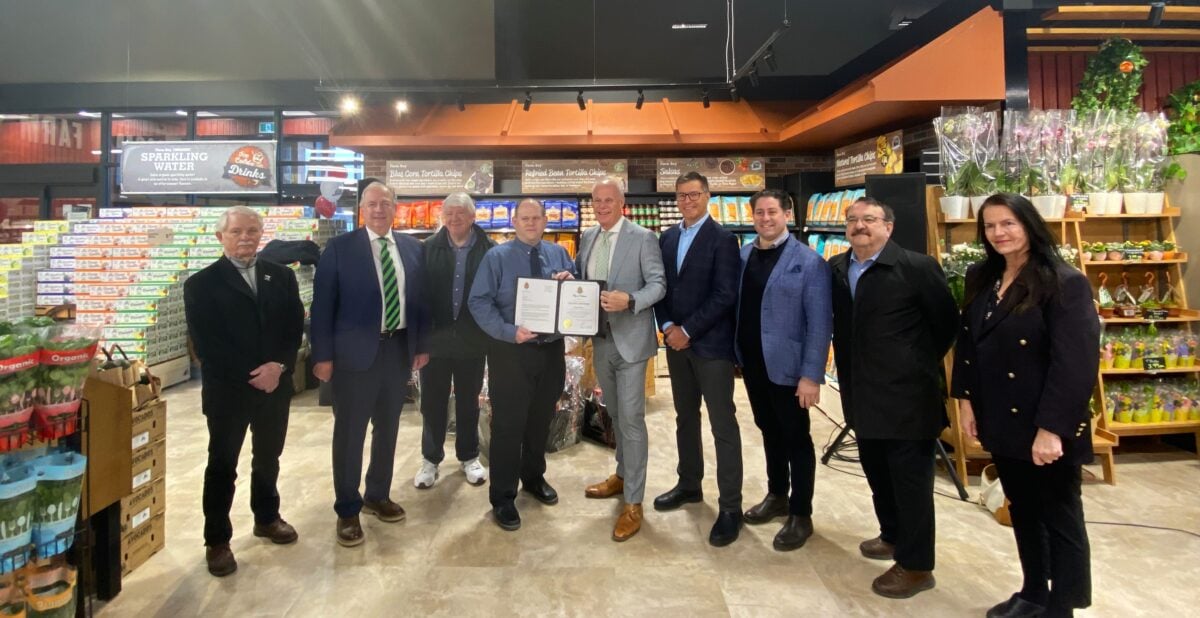
Farm Boy in Oshawa, Ontario Grand Opening (Image: Invest Oshawa)
Linton said Farm Boy is continuing to expand with two additional stores opening this year.
Those include Port Credit, located at 175 Lakeshore Road West in Mississauga, tentatively opening in the Spring and Burlington South, located at 3230 Fairview Street in Burlington, tentatively opening in the Summer.
“Farm Boy continues to grow and deliver best-in-class customer service, a unique in-store shopping experience, friendly staff and high-quality fresh product to new communities across the province,” said Linton.
“As of right now, we have announced the stores coming later in 2024. We’re committed to continuing that growth and will announce upcoming locations when they are confirmed. Farm Boy strives to bring unparalleled value to our customers and we look forward to continue opening more stores and meeting new customers in those regions.
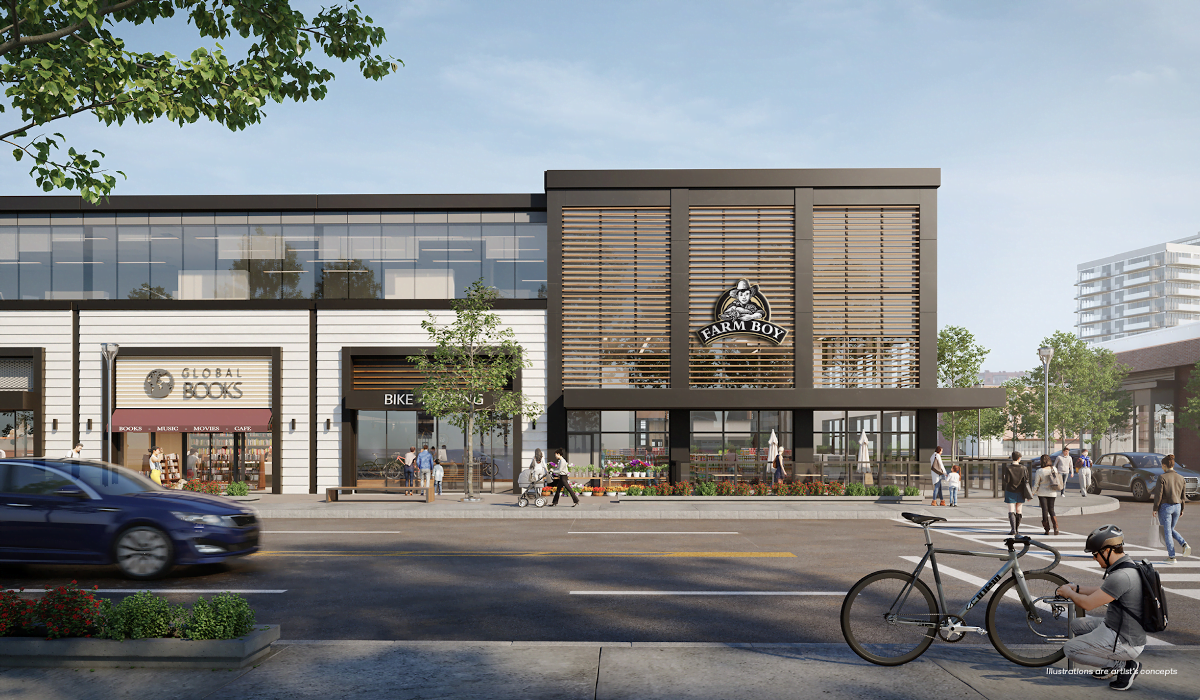
Farm Boy at Brightwater (Rendering: Brightwater)
“The Farm Boy brand resonates with customers because of our commitment to creating a best-in-class customer experience with a selection of high-quality product at great value. We recognize, among other reasons, like our wonderful in-store experience, exceptional customer service, and focus on fresh, that a significant factor drawing customers back to us is the value connection inherent in our private label line.
“There’s a joy that resonates when picking up one of our fan favourites, like the Eda-Yummy Spicy Kale Edamame Dip, or the thrill of trying out one of the many innovative new products we launch every year. Farm Boy also fosters a deep connection with the local communities our stores call home, by partnering with grassroots organizations in the community. For example, in Oshawa we partnered with Canlan Sports to support girls’ hockey within the community. In Toronto, we support the North Toronto Soccer Club. Farm Boy also supports local food banks through partnerships with organizations like Feed the Need in Durham, Second Harvest and Feed Ontario.”
Farm Boy College Park (Image: Dustin Fuhs)
The image of big grocery chains in the public has taken a hit in recent years with the perception of price gouging. How does Farm Boy combat that perception?
At Farm Boy, we recognize that value is more than just price; it also includes the freshness and quality of our products, the overall customer experience, and the ease of the pathway to purchase – those factors are where Farm Boy stands out,” said Linton. “We focus on ensuring that customers shopping in our stores have a memorable experience, are greeted and helped by friendly staff and leave with the highest quality products.
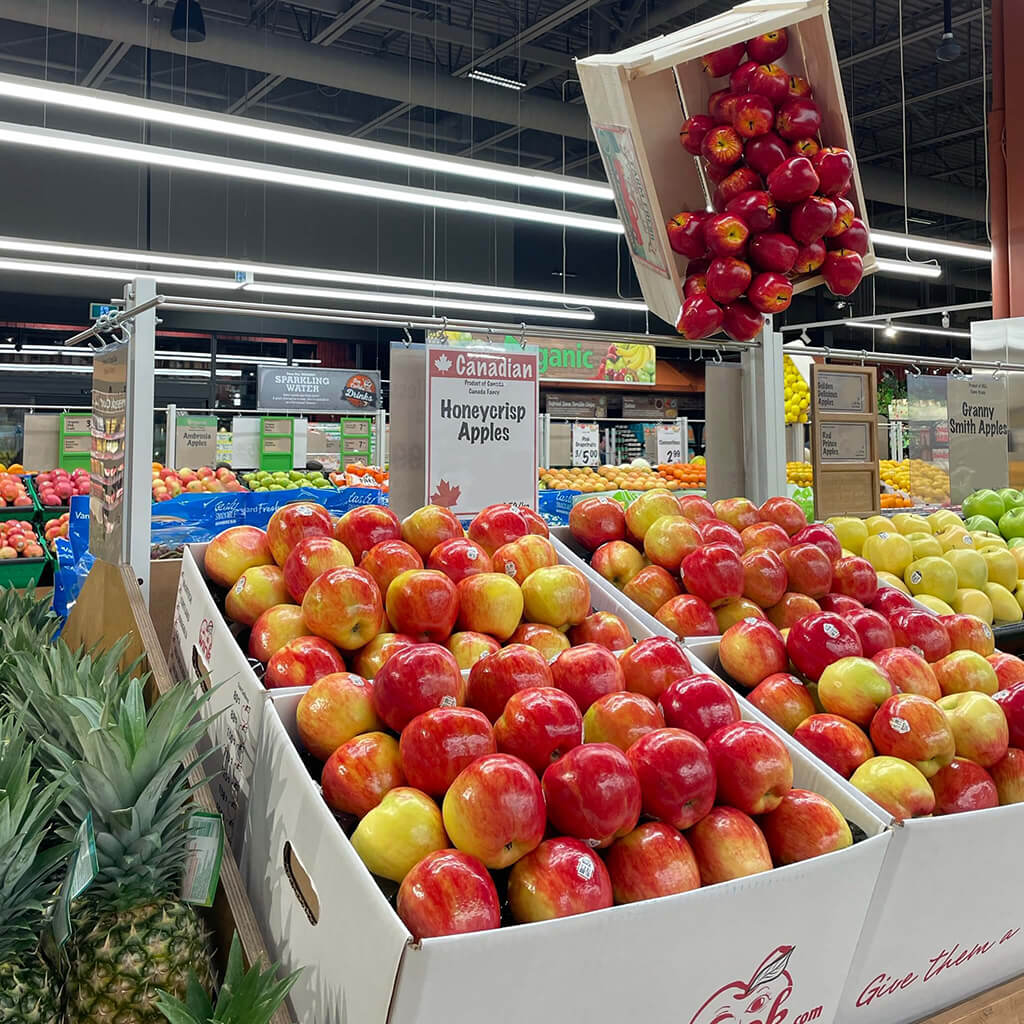
“Freshness is a top priority at Farm Boy; we bring in high-quality Canadian meats, dairy, and produce. This means that our products, such as our produce, last longer because of the efficiencies created through that priority, allowing us to pass on savings to our customers. We also offer a wide selection of options that fit our customers’ lifestyles including gluten-free, plant-based, vegan, and vegetarian products. Providing all-around great value is top of mind for us and price is just one factor in the value equation.”
Farm Boy in Oshawa, Ontario (Image: Farm Boy)Farm Boy in Oshawa, Ontario (Image: Farm Boy)
Labour is an issue for everyone in the these days in the retail sector.
“As with all retailers, ensuring that we have the best team members is an ongoing endeavour and we are always excited to provide opportunities to anyone who would like to be part of the Farm Boy experience,” added Linton. “Farm Boy is very fortunate with the talent that we have across the business, with the friendliest people working in our stores and support facilities that bring to life our commitment to that best-in-class customer experience.
“Our team shares a passion for excellence and continuous improvement, and we foster a culture of asking ourselves “why not,” which allows our staff to feel like they can make a real impact on our business. In terms of attracting new talent, we’re currently working on a relaunch of our recruitment marketing materials, which will highlight the above. The new campaign will be launching this summer.”
Image: Farm BoyImage: Farm BoyImage: Farm Boy
Linton said a trend the company is seeing in the market is that customers are becoming more value-oriented with a growing pull to its private label offerings, not only for their quality, value, variety, and taste but also for the exclusivity factor they bring.
“Convenience is also an important benefit and factor that our busy family shoppers and city professionals are looking for. Our excellent quality, chef-prepared meals and ready-made salads are highly sought-after, on-the-go meals, for those busy weeknights where our customers don’t have time to cook but are looking for something of great quality and taste, that still remains wholesome,” he said.
“This combination of value, convenience and our commitment to high- quality products is what sets Farm Boy apart and is part of what makes us the preferred destination of choice for our customers.”
Linton said Farm Boy continues to focus on “fun” with its store designs.
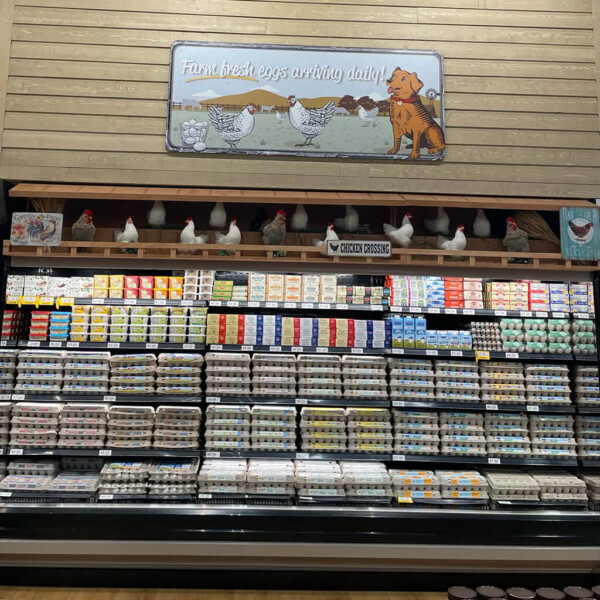
“Key aspects of the brand continue to be the farmer’s market feel to our stores with little surprise and delight features: Mikey the Swinging Monkey over the bananas; Lulu the Cow throughout the store; The clucking chickens above our eggs,” he said.
“These become more meaningful when they are focused on the community the store operates in, such as the CN model train that travels through our Train Yards store in Ottawa.”
Farm Boy has grown from a small produce stand starting in Cornwall in 1981 to 48 stores located across Ontario.
The Canadian Retail Landscape with Josh Katz: Trends, Growth, and Exciting Brand Expansions [Video Interview]
Craig and Josh Katz, Assistant Vice President of Leasing at RioCan Real Estate Investment Trust, discuss Katz’s extensive career in commercial real estate, starting with his entry into the industry right before the 2008 financial crisis.
Katz highlights the resilience of certain retail categories and the innovative approaches taken by RioCan to navigate these challenging times, including the development of The Well in Toronto. This mixed-use project is a transformation of urban retail, offering a blend of necessity-based and unique retail experiences, including a significant focus on fitness and food tenants.
Katz also discusses RioCan’s strategies for future developments and leasing trends, including the move towards mixed-use projects and the importance of creating engaging retail environments that cater to community needs. The conversation touches on specific projects including 11 Yorkville Avenue, where Sweat and Tonic will be a tenant. They also discuss South Edmonton Common and the introduction of Chick-fil-A to the Edmonton market, showcasing RioCan’s proactive approach to reimagining retail spaces and enhancing consumer experiences. The interview concludes with a look at the broader implications of these strategies for the retail and commercial real estate industries.
Episode Sponsor:
SAJO – Canada’s first specialized retail builder. Visit SAJO to see their holistic approach and transdisciplinary team to explore and understand your needs.
Featured This Podcast:
Josh Katz, Assistant Vice President, Leasing at RioCan Real Estate Investment Trust
If you prefer to listen to the audio version, it is available below:
The Interview Series audio podcasts by Retail Insider Canada are available on Apple Podcasts, Stitcher, TuneIn, Google Play, or through our dedicated RSS feed for Overcast and other podcast players. Also check out our The Weekly audio podcast where Craig and Lee discuss popular content published on Retail Insider which is part of the The Retail Insider Podcast Network.
Subscribe, Rate, and Review our Retail Insider Podcast!
Drop us a line at Craig@Retail-Insider.com. You can also rate us in Apple Podcasts or recommend us in Overcast to help more people discover the show!
Background Music Credit: Hard Boiled Kevin MacLeod (incompetech.com). Licensed under Creative Commons: By Attribution 3.0 License. http://creativecommons.org/licenses/by/3.0/
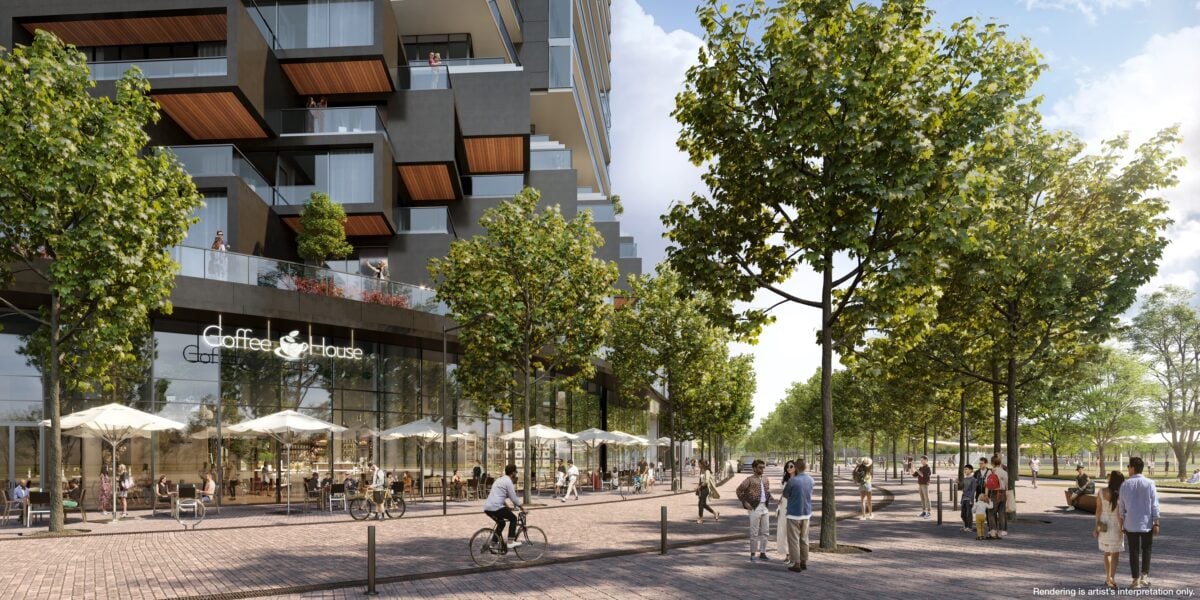
The new master-planned community Galleria on the Park, at Dupont and Dufferin in Toronto, is ideally located in an area currently experiencing a major development boom, which is being accelerated by this massive project.
The development, by Almadev, will consist of eight buildings totalling 2,956 residential units and 279,000 square feet of commercial space. It will also have an eight-acre public park and a 95,000-square-foot community centre.
Galleria on the Park (Image: Almadev)
Arlin Markowitz
Arlin Markowitz, Executive Vice President, CBRE Limited, Urban Retail Team, which is handling the commercial leasing for the property, said construction for the project is well underway.
“It’s a multi-phase project. The building being built now is Block 5 at the western end,” said Markowitz, adding that commercial space in that building is about 25,000 square feet, plus 12,000 SF on level 2. That will include about six different tenants and the phase is expected to be finished this year.
“What we’re actively working on leasing right now is that phase of the project, I can’t say who it is yet because they’re not firm deals yet but we’re in great conversations with national financial institutions and coffee brands to occupy space at the western side . . . That’s going to be next to a really amazing community centre which has a swimming pool and a skating rink because when these lands were assembled there was a community centre on there. It was a really important part of a vibrant community.
“That’s why this is called Galleria on the Park because the developer Almadev is building a multi-acre park in the middle of the site and that park will be anchored on the western edge of it with a community centre. It’s a really huge draw of the project.”
Galleria on the Park (Image: Almadev)
He said they are targeting to have a grocery-anchored retail space at a later phase of the development.
The developer said the project is in a diverse neighbourhood filled with hidden gems, hip bars, cafés and single family homes filled with young families and urban professionals. Its close proximity to downtown Toronto, access to transit and unlimited restaurants, shops and amenities make it an ideal neighbourhood to live, work and play.
“There’s a lot of moving parts in terms of some tenants who were in the existing plaza that would like to come back,” said Markowitz.
For the overall development, there will be a broad mix of commercial tenants because it’s such a large project.
“Block 5 is an example. Because it’s next to the community centre we’re targeting some uses that we think will be synergistic with community uses. Every day there’s going to be tons of kids going in and out of there and families. So potential for sporting good retailers, potential for education uses like we’re seeing a lot of music and singing and dancing schools popping up around the city. Tutor businesses,” he said.
There’s definitely room for a pet store or a doggie daycare centre. There’s also room for entertainment concepts such as social gaming and wellness.
“We see that block as a very family-oriented block,” added Markowitz. “Of course, coffee and fast food will do well there. Maybe brunch . . . In the other parts of the project you’ll have your everyday needs for sure – grocery, banking and fitness. And those will take up a lot of space.
“But then to complement that all around you’ll have some smaller different spaces where you can have more micro retail along the corridor that connects the different blocks near the park. There I think you’ll see more like urban artisanal, unique uses. Similar to some of the things we did at The Well. We’re definitely going to leverage some of the relationships with brands that we placed into The Well here.
“It would be nice to see other types of just cool uses here. Different culinary themed uses. We’re going to have the world of big chains pretty much covered with the banks and grocery so when it comes to food and beverage and unique uses we’d love to have cool local brands.”
Markowitz said the area where the project is being built is a pocket of the city where a ton of density is coming on.
“There’s a few mega projects in what I’m going to coin Midtown West. There’s Mirvish Village from Westbank at the corner of Bathurst and Bloor. Then you head further west and you have another large project that we’re working on with Hazelview at Bloor and Dufferin. Hazelview and Fitzrovia have a joint venture project that’s also thousands of condo units,” he said.
“Just south of them at Bloor and Dufferin, you have the Dufferin Mall which is being redeveloped and there’s tons of residential being added.
“There’s a really cool mix of great residential and great retail. It’s also very much adjacent to transit. So I think there’s going to be more and more density to come. At Bloor and Lansdowne there’s two big applications in for more highrise from RioCan and from Kingsett Capital. Also if you look at Bloor and Lansdowne that’s where the Union Pearson Express is. So you can take the train from Union Station to Pearson Airport.”
Retail Insider is streamlining its Canadian retail news from around the web to include a handful of top news stories that can be viewed quickly during the day. Here are the top stories from the past several days.
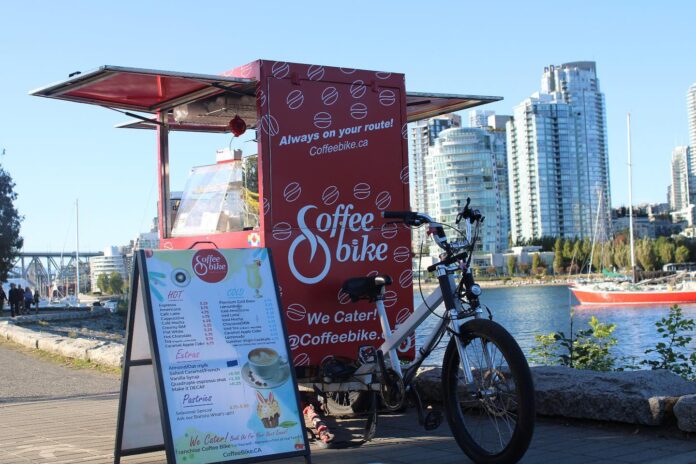
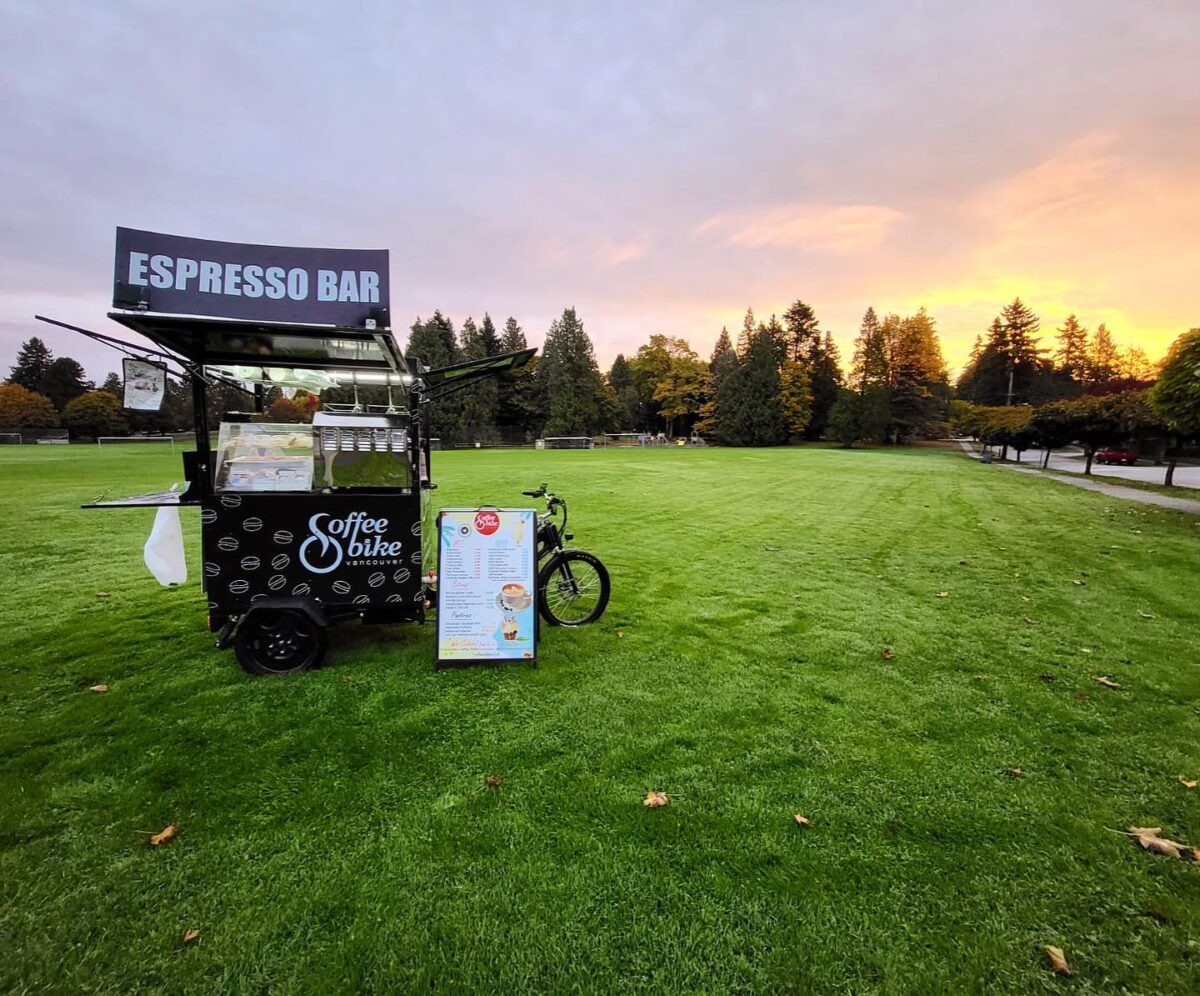
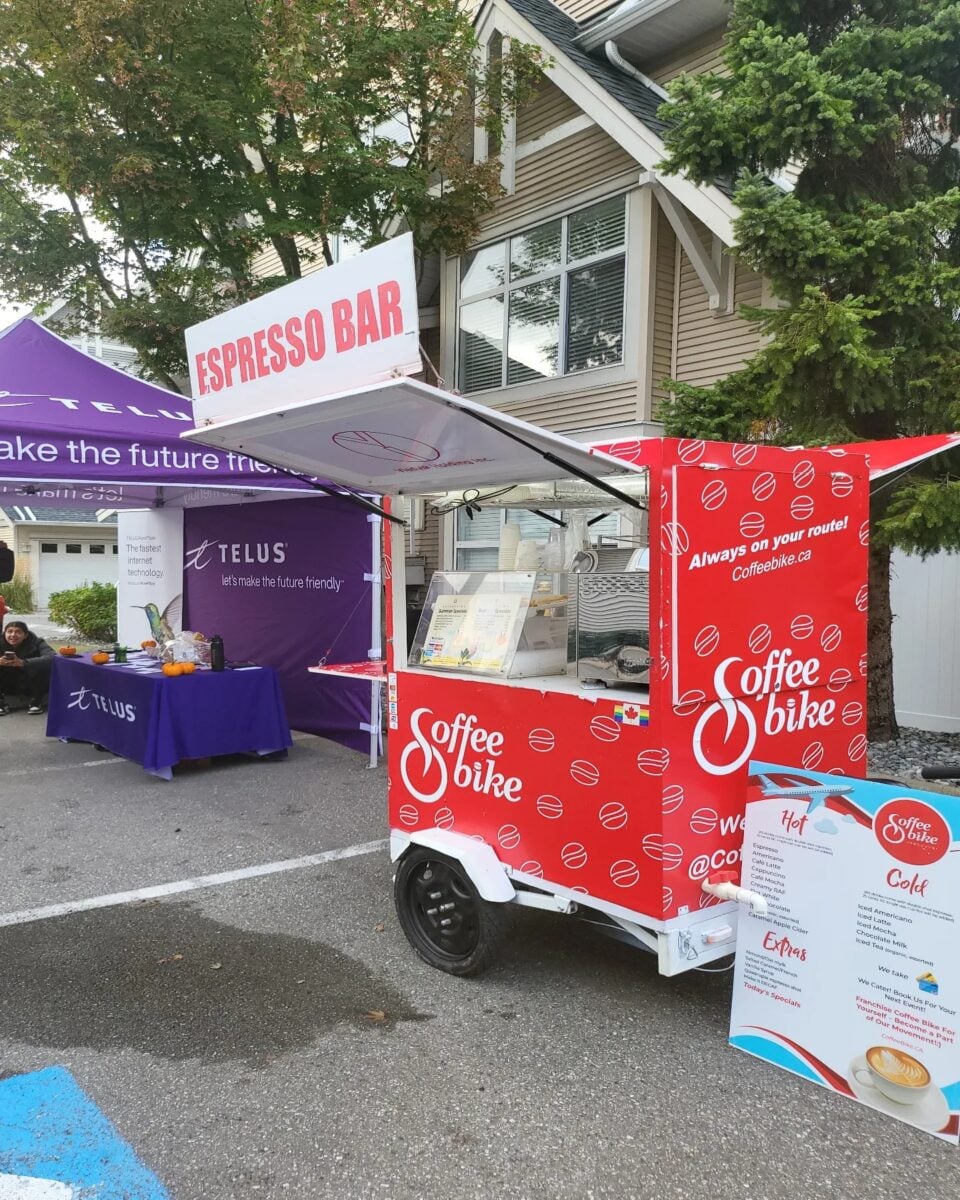
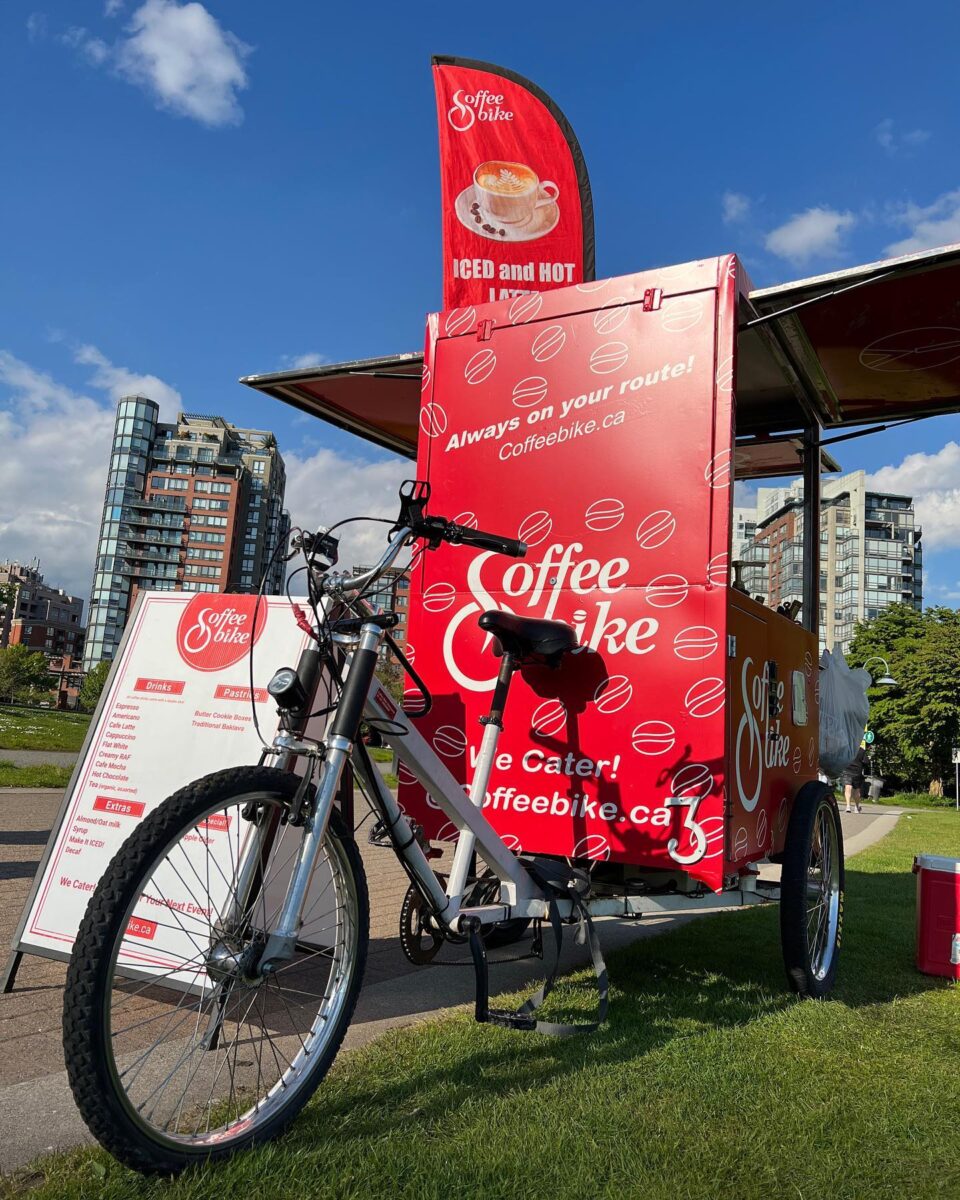
Vancouver-based Coffee Bike has launched a crowdfunding initiative to expand its innovative mobile espresso bar concept globally.
The concept began in 2017 and it has served over a million cups of coffee in Vancouver as well as participating in more than 1,000 private and public events and festivals.
Recently, it launched its Indiegogo crowdfunding campaign.
“We’ve seen incredible success in Vancouver, and now it’s time to share our innovative mobile coffee concept with the world. The Coffee Bike Vol. 2 is more than just a product; it’s an opportunity for individuals to embark on their entrepreneurial journey in the booming mobile food industry,” said Coffee Bike’s founder Vladislav Priadko.
Image: Coffee Bike World
He said Coffee Bike is breaking new ground by offering a turnkey solution for aspiring entrepreneurs worldwide. Unlike traditional franchises, Coffee Bike is committed to providing an opportunity for individuals to start their own mobile coffee business without the constraints of franchise obligations, while saving tons of time and money on the research and development stage – once someone purchases a unit, it is fully theirs, and no one controls their operations.
“The company’s mission is to build a global community of like-minded individuals passionate about the mobile food industry. In pursuit of this vision, Coffee Bike has partnered with a reputable factory to manufacture and distribute its latest model, Coffee Bike Vol. 2. To kickstart this ambitious venture, the company is seeking to fulfill a minimum order of 20 units and aspires to see thousands of these mobile coffee shops operating worldwide,” said Priadko.
After seven successful years with eight thriving Coffee Bikes in Vancouver, and empowering eight new owners across Canada, Priadko said the company has set its sights on worldwide distribution.
For US $19,850, the buyer will receive a complete mobile coffee shop – an espresso bar fully equipped with all the necessary big and small equipment and utensils for turnkey operations.
“Originally I got this idea in 2016,” said Priadko. “I was browsing the web and one of my friends guided me to this online platform which is very similar to Kickstarter – Indiegogo. There was a Sweden-based company which was pretty much introducing this mobile coffee shop concept which looks completely different from what I’ve got right now but what I did I used my savings and ordered one of those coffee carts.
“What I received at the end of the day was absolute crap. It took me roughly an extra one year and an additional 200 to 300 per cent of the initial investment to make this thing work. But the final product was so overweight I just couldn’t see any future for it.”
Image: Coffee Bike WorldImage: Coffee Bike World
In 2017, he launched the cart, worked a couple of months then closed it down.
“The idea was great. I received a lot of local support in Vancouver but the application was completely wrong,” he said.
Priadko had an idea to move from a push unit to a pull bike concept. He came up with a new Coffee Bike which was launched November 2018.
Last year, the company decided to expand by building and selling the units. Last year it sold six Coffee Bikes.
“Basically, it’s an ideal business for someone who has never had business experience before. It’s a very low investment as opposed to say any other brick and mortar coffee shop,” said Priadko. “Another advantage of it is that the overhead costs are absolutely minimal.”
He said the potential is for brick and mortar coffee shops to expand their businesses as well by launching a bike service on the streets of Vancouver or elsewhere.
“It’s like a turnkey solution if someone wants to have a little pop-up coffee shop,” he added.
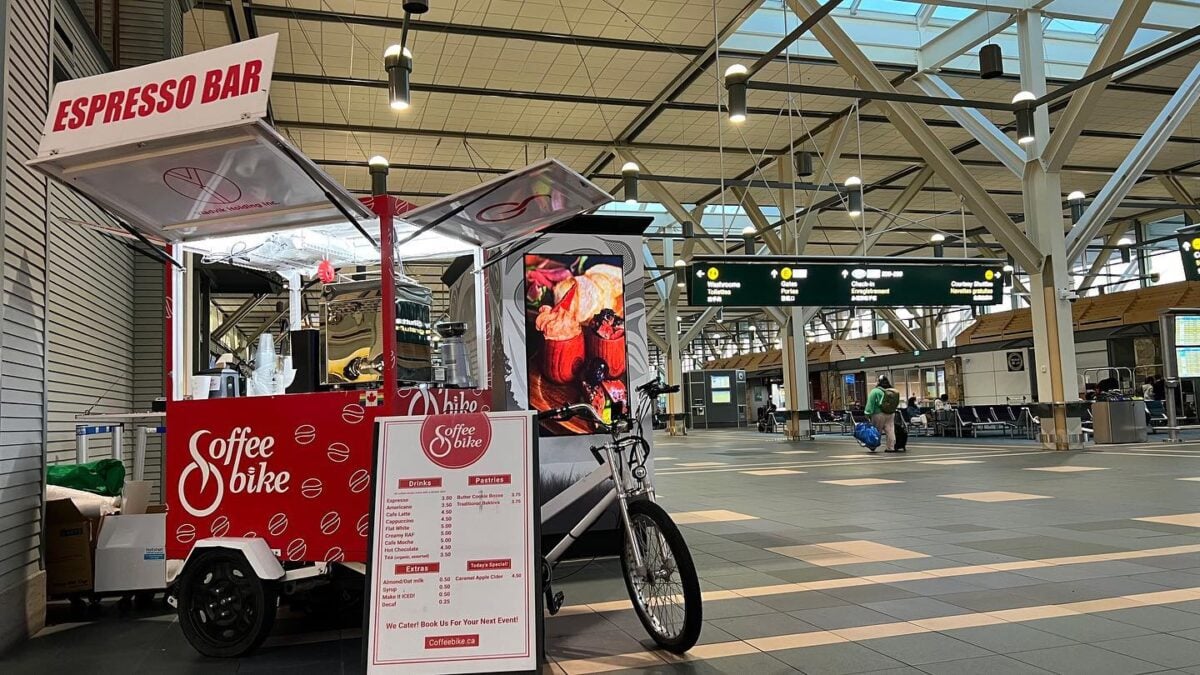
Image: Coffee Bike WorldImage: Coffee Bike World
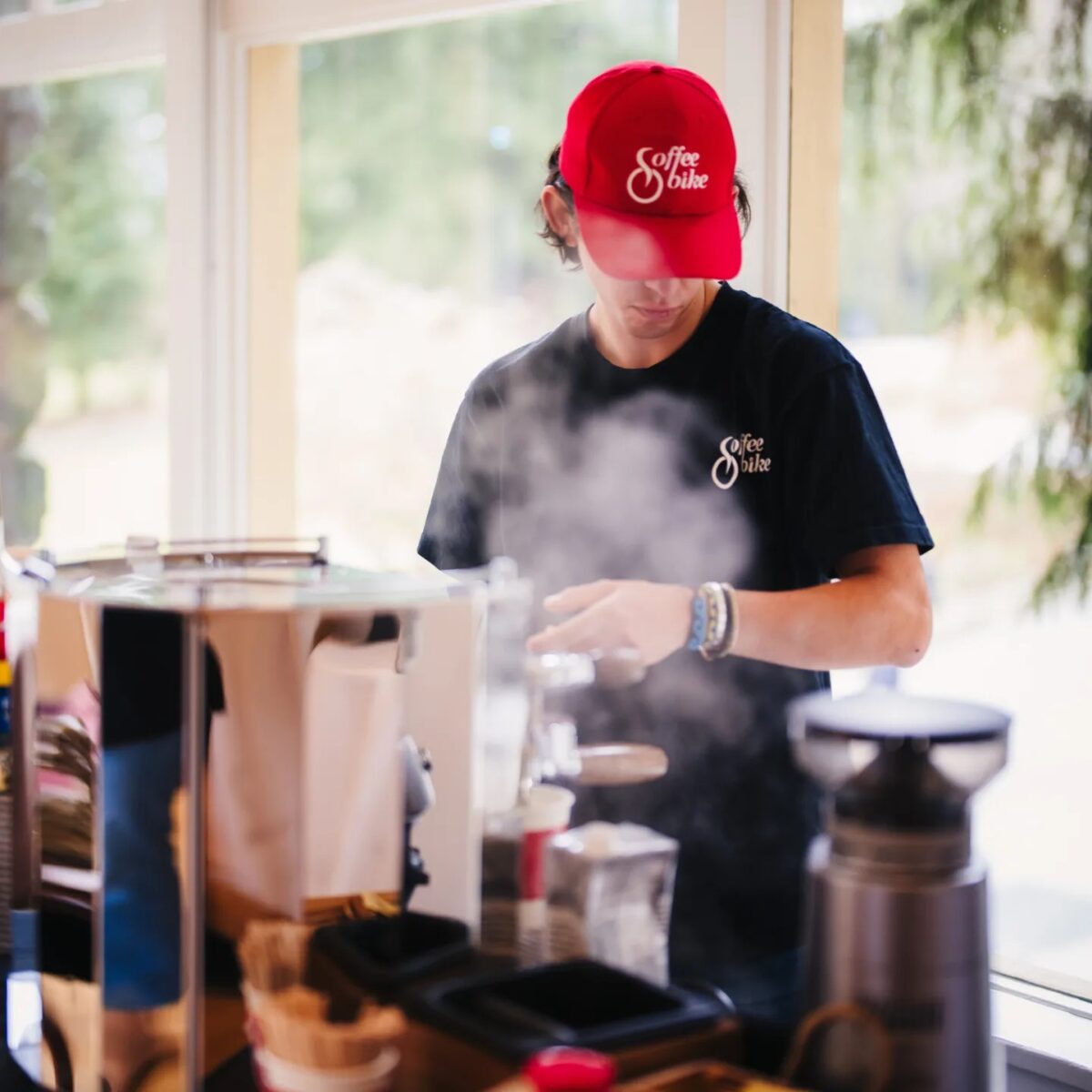
The heart of the bike is a commercial grade espresso machine. Most of the drinks on the menu are espresso based.
“The sky is the limit. For us for example we bought a sparkling machine last summer and we started sparkling ice drinks,” said Priadko. “There is also a bakery display on each bike so you can partner with your local bakery and just resell their products from the coffee bike as well or you can make your own production if it makes sense financially.”
The coffee machines are dual powered with propane for outdoors and electrical for inside. There’s batteries for appliances like a coffee grinder. And some solar panels are on the roof as well.
“From public racing to group events, K1 Speed Cambridge promises unmatched excitement. Our diverse Arrive and Drive, corporate packages, team building sessions, and customized events position us as a top-tier destination for adrenaline seekers in the region,” said Daniel Zychlinski, Managing Partner of K1 Speed Canada.
Image: K1 Speed
Established in 2003, K1 Speed has rapidly grown as North America’s premier indoor karting experience with over 75 locations worldwide, now including three in Ontario.
“Eventually we will start to expand to the other provinces as well,” said Zychlinski.
“K1 Speed is the world’s largest go-kart company and we have tracks primarily in North America. It started in California in 2003 and then it started to expand throughout the U.S. first and then eventually K1 Speed started to go international. Their first franchise location opened in Mexico in 2015 and eventually we obtained the rights to bring it to Canada. There are now tracks in Korea, Europe and South America as well.
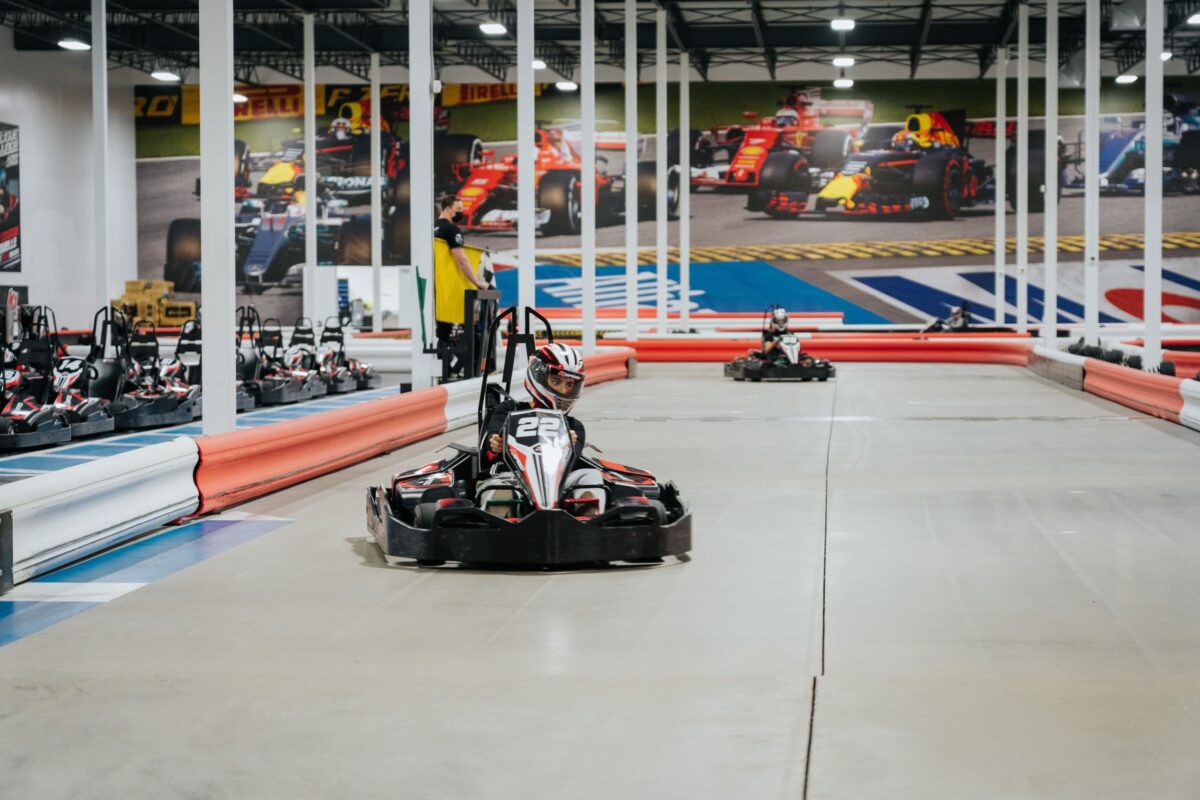
“The K1 concept is kind of an upscale version of what go karting used to be. And because we’re electric we have very clean facilities.”
The other tracks in Canada are in Downsview Park in Toronto and in Mississauga on Eglinton Avenue.
K1 Speed Cambridge
The Cambridge location was in a previous ice rink location.
“Normally K1 Speeds are not located inside a mall just because of the footprint that we require. Normally most of our locations are around 50,000 square feet,” said Zychlinski. “So for that amount of space usually we would take over an industrial warehouse and then we would build our track there. That’s where the Toronto location and the Mississauga location are at. They’re actually in industrial warehouses.
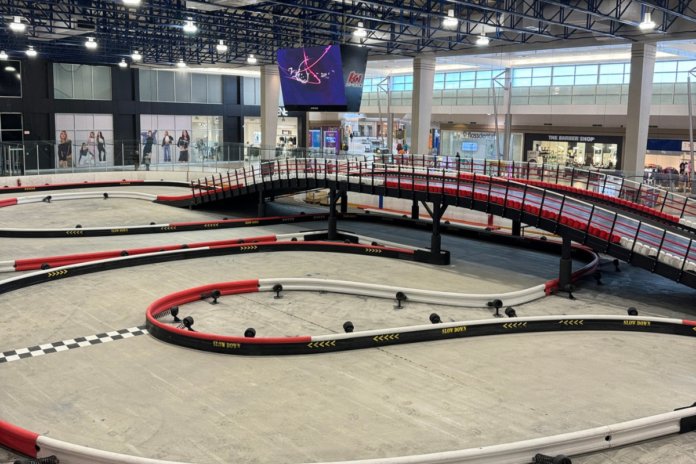
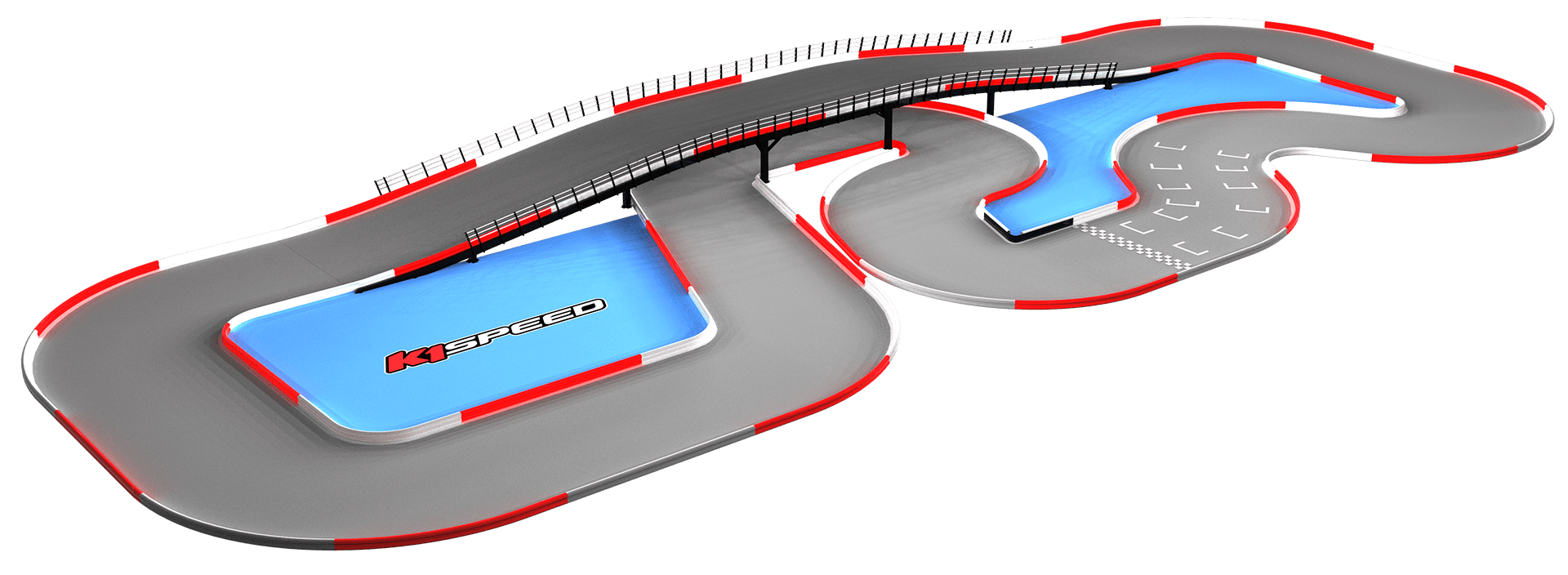
“This particular opportunity in the Cambridge Centre is a unique one because we don’t have that amount of availability in commercial spaces that are required for K1 Speed. But this one we’re able to actually convert the ice rink and because it is an open space we actually installed a multi-level track which means we have an overpass. That allows us to extend the track and build a track on a smaller footprint.”
K1 Speed, renowned as North America’s premier indoor karting venue, offers an electrifying experience with Canada’s swiftest electric go-karts that can touch impressive speeds of up to 45 km/h for adults and 30km/h for juniors. Along with the standard “arrive and drive” sessions, K1 Speed Cambridge offers special event nights, racing leagues, and instructional classes, ensuring racers of all skill levels have a platform to compete, learn, and grow.
Mark Bingeman
“The Cambridge Centre offers an incredible dynamic space and superb viewing area. It’s a thrill to watch races unfold from a unique vantage point, with the added delight of food, beverages, and arcade gaming,” said Mark Bingeman, in a statement.
“Our corporate entertaining packages, which include sponsorship opportunities, lunch and learn racing, and tailored events for clients, promise a unique blend of thrill and camaraderie. We are ecstatic to bring elite kart racing back to the Waterloo Region, making K1 Speed Cambridge a landmark attraction.”
K1 Speed Cambridge has an exclusive second-floor viewing platform, offering panoramic views of the racing action. This strategic location, adjacent to Kingpin Cambridge, further amplifies the experience by combining exhilarating races with extensive arcade gaming, bowling, and diverse food options, said the company.
“Now that we have established ourselves in Ontario, we’re looking at other provinces. We normally expand into cities of one million or more people in demographics. Obviously the largest cities in Canada are of interest to us,” said Zychlinski. “Having said that, in Alberta we have Edmonton and Calgary. In British Columbia, we have Vancouver.
“Again we’re looking into different markets to see which is our next move. It is about acquiring the real estate or making sure that we have the right space available and that’s what guides our expansion.”
He said the concept’s core demographic is males between 20 and 35 years old. There’s also a large corporate following with meetings and events.
Bingemans is a leader in the Waterloo Region’s hospitality and tourism and tourism industry. Bingemans is the entertainment destination, multi-use amusement park, camping resort, full-service caterer, and conference centre located in Kitchener, Ontario.
Grocery basket in a grocery store. Image: iStock/licensed
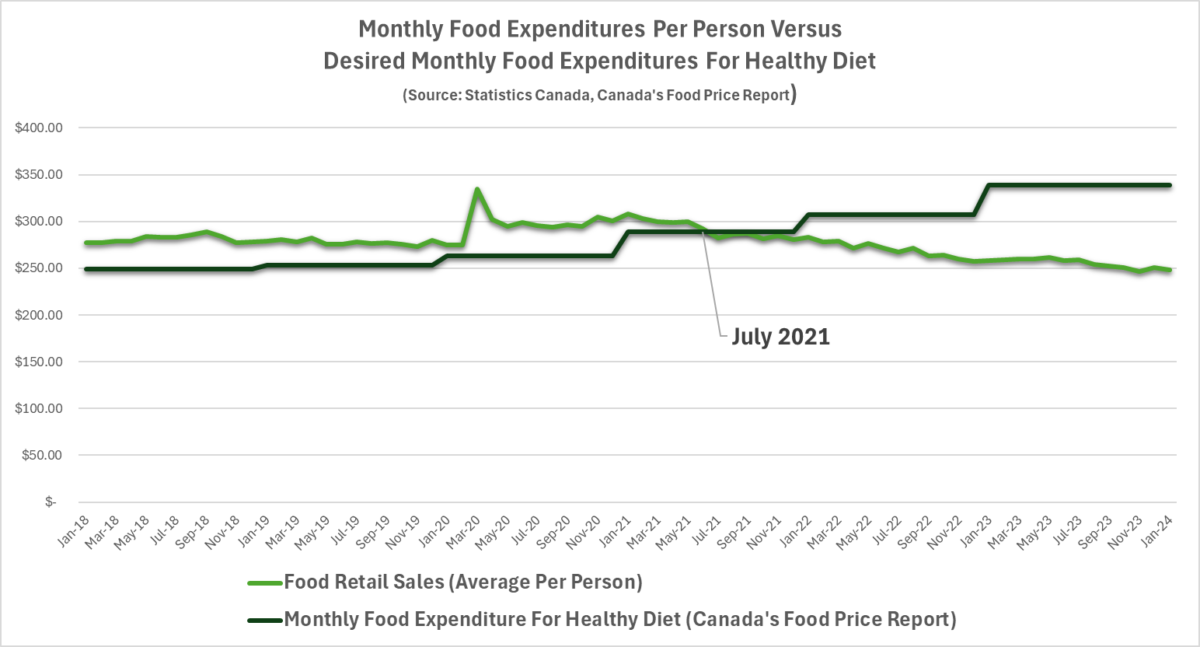
A note from the author: “According to Canada’s Food Price Report 2024, the recommended monthly expenditure for a healthy diet per individual is $339. Currently, the average monthly spending stands at $248. Until July 2021, Canadians were typically spending above the suggested budget for a nutritious diet. However, this is no longer the case. Now, we are facing increased risks as the carbon tax rises, without a clear understanding of its long-term effects on food prices.”
Canada appears to be a “trading-down” market, a trend that may persist for some time. Recent data from Statistics Canada on the food retail and service industries, as well as fresh GDP figures, paint a concerning picture, especially for those looking to attract more food companies or grocers to our country.
Our population grew by more than 3% last year, yet our GDP increased by less than 1%. While other industrialized economies, such as France and Germany, are experiencing worse economic headwinds, Canada’s economy is highly integrated with the world’s most robust economy at present. Despite our proximity to this economic superpower, the benefits of our geography seem to have stalled. The most alarming aspect of the January GDP numbers is that Canada’s hottest economic sector is currently the public service, while private investments have stalled, largely due to higher interest rates.
The gap in GDP per capita between Canada and the United States has widened by 106% since 2015, and this trend shows no signs of reversing. In other words, despite our growing population, Canada is becoming poorer, not richer.
For those in the food business, this is certainly not good news. Statistics Canada’s reports on food and service sales confirm that consumers are dealing with less wealth while facing higher food and menu prices. As of January 2024, the average Canadian is spending $248 a month on food retail sales per capita, down from $258 in January 2023 and $282 in February 2017. These figures are all in real dollars, which makes the situation even worse. Based on Canada’s Food Price Report 2024, an individual’s monthly expenditure for a healthy diet should be $339. Again, the current average monthly spending is $248. Until July 2021, Canadians were spending more on average than the desired budget to support a healthy diet. Since then, it has clearly been a challenge (see graphic).
Canadians are either wasting less or finding alternative ways to source food outside conventional channels like grocery stores, such as dollar stores and non-traditional grocery discounters. Per capita food expenditures in our country have never been as low as they are now.
One might think that grocers are struggling with this situation, but they are readjusting their strategies and putting more pressure on suppliers with higher fees and lower prices. These are perfect conditions for a potential price war later this year, so don’t be surprised if it happens.
St Lawrence Market in Toronto (Image: Dustin Fuhs)
The data on food service provides a different perspective. On average, Canadians spent $169 at restaurants in January, which is about the same as last year and an increase from $149 in January 2018. However, these sums are in real dollars. The current retail/service split in Canada is that about 41% of all money spent on food is at restaurants, compared to a split closer to 54% in the United States, favoring food service. Considering the frugality of the market, it’s astonishing to see so much money being spent at restaurants, where you typically get less food for your money.
The days of uncertainty regarding the balance between working from home and working away from home are long gone. The food economy has, for all intents and purposes, normalized. Food inflation is causing Canadians to spend less at grocery stores, which may seem counterintuitive, but is what the data is telling us. Currently, about 18% of all retail dollars are devoted to food, compared to 21% in 2017. Simply put, the cost of living is a problem for many Canadian households, and trading down is much easier with food. People may be “ordering in” more often to avoid tips and overpriced beverages, for example.
All of this is based on our trust in Statistics Canada, which may not be all that strong. However, Statistics Canada is merely an indicator, and Canadians have no other way to know what is really going on out there other than reading reports from the federal agency.
Regardless of how we interpret the data, the numbers are simply not encouraging. This is what happens when our population grows, but not our collective economic wealth.