Brace for impact: RCC STORE 24 is set to shake up the retail world on May 28-29, 2024.
As Canada’s biggest retail event, RCC STORE 24 merges innovative insights with practical strategies. Hosted by the Retail Council of Canada, the 2024 agenda explores the industry’s most pressing topics, fostering a meeting ground for the brightest minds and influential networking. The event addresses today’s retail challenges and future trends.
The conference will cover a wide range of key themes, including AI applications in retail, sustainability through circular economy practices, global retail perspectives, the future of retail innovation, data privacy in marketing, and mastering adaptive strategies in a rapidly evolving retail landscape.
Highlight sessions and speakers include:
Tomorrow’s Customer: Strategizing for Growth and Community Engagement – Michèle Boudria, President & CEO, McDonald’s Restaurants of Canada: Explore growth strategies and community engagement insights
Turning GenAI Magic into Business Impact – Eric Morris, Managing Director and Head of Retail, Google Canada; Boston Consulting Group: Experience the transformative potential of generative AI in retail to enhance efficiency supercharge personalization.
Inspiring Innovation: European Retail Trends for Retailers in Canada – Diana Dimitian, SVP Managing Director South Europe, North Africa, Levi Strausse & Co.: Gain insights from European retail trends to inspire innovation and maintain strong customer connections in Canada.
Sustainable Strategies Achieving Customer Connection – Maya Colombani, Chief Sustainability & Human Rights Officer, L’Oreal Canada; Derrick Emsley, CEO & Founder, Tentree: Discuss the role of circular economy practices in inspiring innovation and strengthening customer connections.
Designing the Future: Insights from IKEA Canada on Adapting to Change – Selwyn Crittendon, CEO and Chief Sustainability Officer, IKEA Canada: Learn about brand evolution in response to constant change, balancing customer needs with commitment to affordability.
People, Culture and Belonging at Sephora Canada – Thomas Haupt, Country General Manager, Sephora Canada: Explore the dynamics of workplace culture and inclusivity in the retail sector.
Transforming Challenges into Your Future Competitive Advantage – Doug Stephens, Founder, Retail Prophet: Navigate the intersection of challenge, innovation, and disruption to build future competitive advantage.
Maximize Marketing Impact with Data – Jan Kestle, President and Founder, Environics Analytics: Discover ethical and effective ways to use data for brand building and sales enhancement.
Creating Exceptional Experiences – Peter Hughes, National Customer Experience Practice Leader, KPMG Canada, and Holt Renfrew: Investigate strategies for creating customer loyalty building experiences both online and in-store.
Closing Keynote with Canadian Tire Corporation CEO Greg Hicks: Gain insights and future perspectives from the leader of one of Canada’s most iconic retail brands.
RCC STORE 24 is an unmissable opportunity. With Early Bird rates offering savings up to $200 UNTIL MARCH 1, 2024 and a 20% discount on group purchases of 5 or more tickets, now is the time to buy tickets. https://storeconference.ca/buy-tickets/
Join the who is who of retail in Canada at RCC STORE 24 – where retail’s future is both envisioned and brought to life.
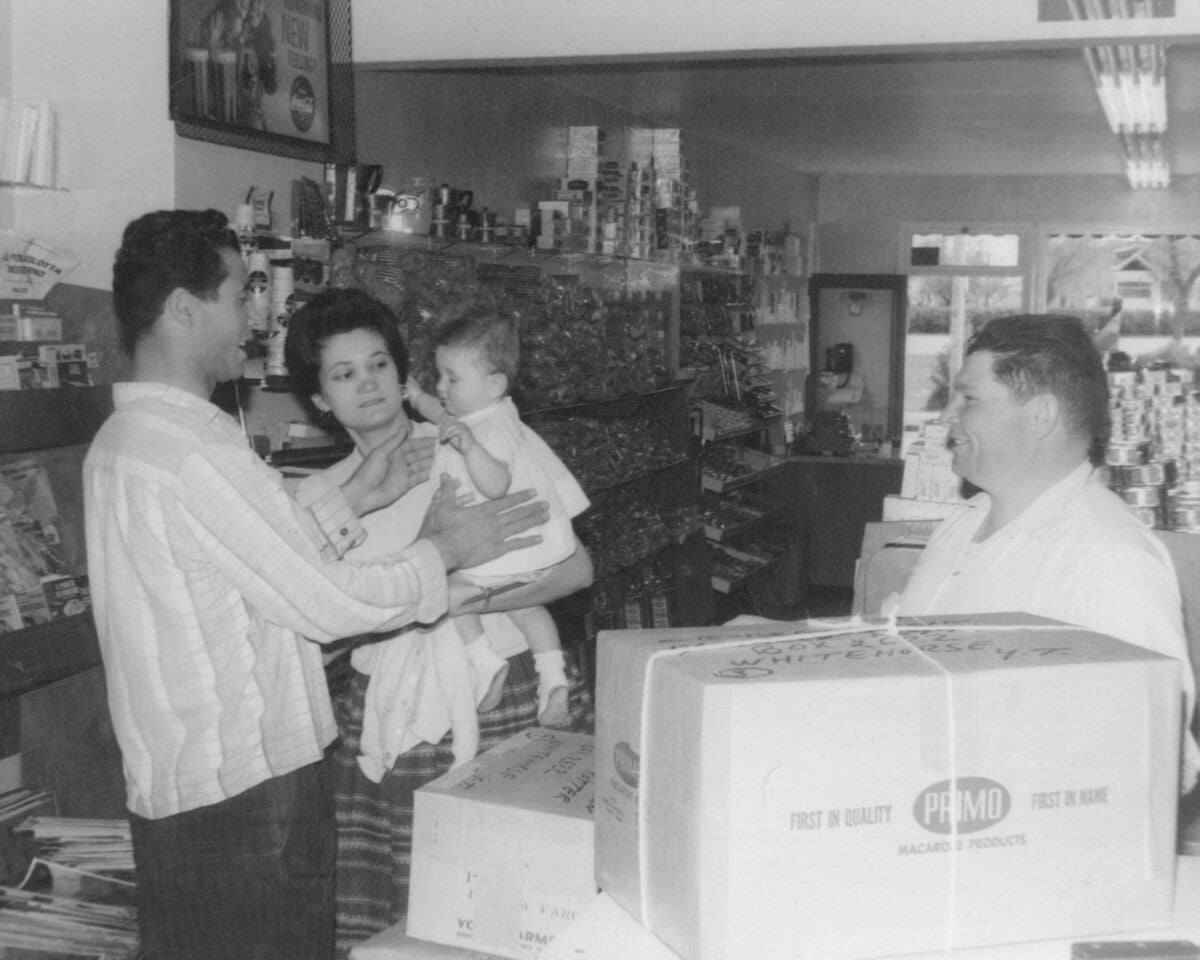
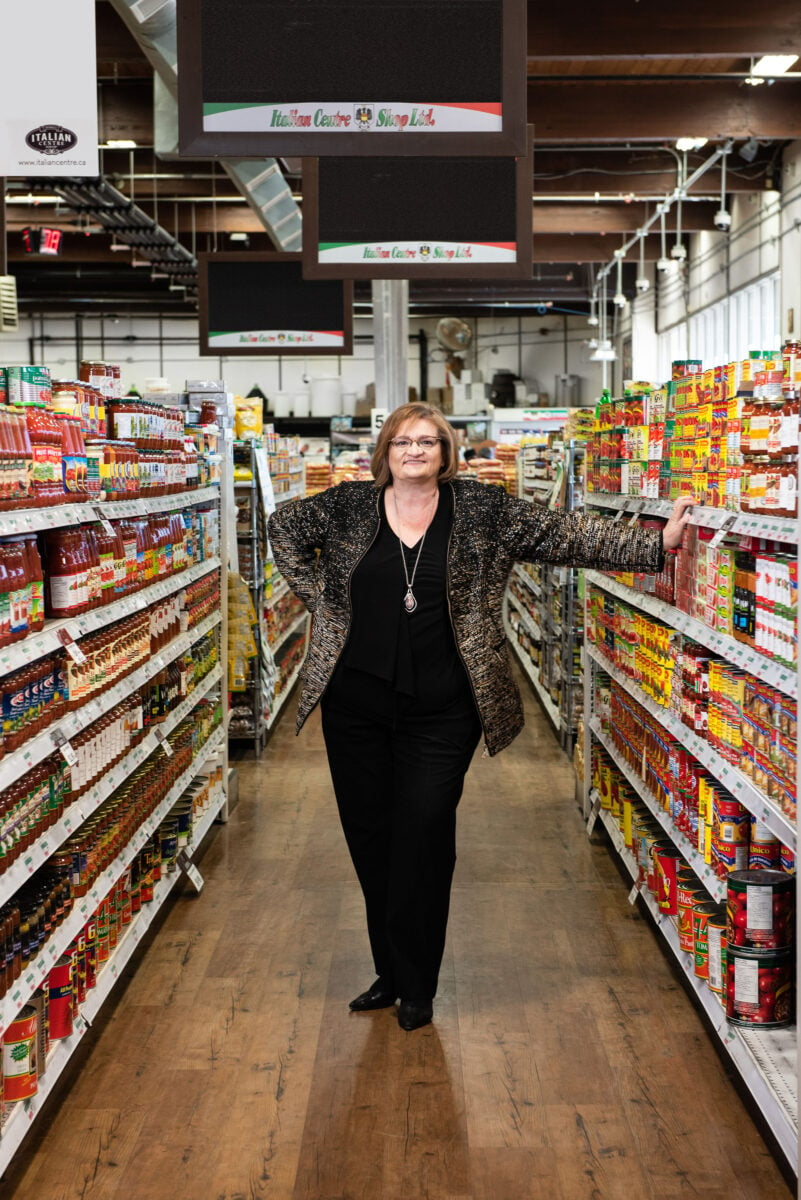
It wasn’t in the plan for Teresa Spinelli to take over the family business even though she pretty much grew up in the Italian Centre Shop her father Frank started in Edmonton in 1959.
“I had a brother. So a very traditional Italian family. My brother was going to take over the business. That’s just the way it was because he was the boy,” says Spinelli. “He was very smart. Way smarter than me for sure. That’s just the way it was.
“I was supposed to get married, have a bunch of kids and live happily ever after kind of thing.”
But her brother Pietro died suddenly just before his 33rd birthday in 1996 and a few months later her father was diagnosed with cancer. He died in 2000.
“I worked at the store since I was 13 years old. A cashier. And when I graduated university, trying to find my way, trying to figure out what I was doing, I was working with my dad in the office in accounts receivable, accounts payable, all that kind of stuff,” she says.
“I never had another job.”
Image: Teresa Spinelli
When Spinelli took over the family business in 2001, there was one Italian Centre Shop with $8 million in sales and 30 staff. Today, the chain has 672 people, five stores (three in Edmonton and one each in Sherwood Park and in Calgary) and $113 million in sales.
Spinelli was born and raised in Edmonton. She went to the University of Alberta and graduated with a degree in psychology.
“I wanted to be a social worker. When I did a lot of field placements, I wanted to take everybody home with me. To be an effective social worker, you want to take care of everybody. It was really, really hard. It was always depressing. I wanted to bring everybody home, I cried all the time. I knew it wasn’t for me. I just couldn’t do it. God bless those that can. It’s a hard job,” says Spinelli.
When she initially took over the running of the Italian Centre Shop, it was really tough.
“It was mostly males that worked at our store and most of them had been here longer than me. So they were long-time employees and very loyal to my dad and they thought of me as that little girl that used to play cashier,” says Spinelli. “So taking direction from me, they thought of me as a little kid, and a woman and it was really hard.
“But it was also really hard for me because I really admired them and respected them. There were some tough times.”
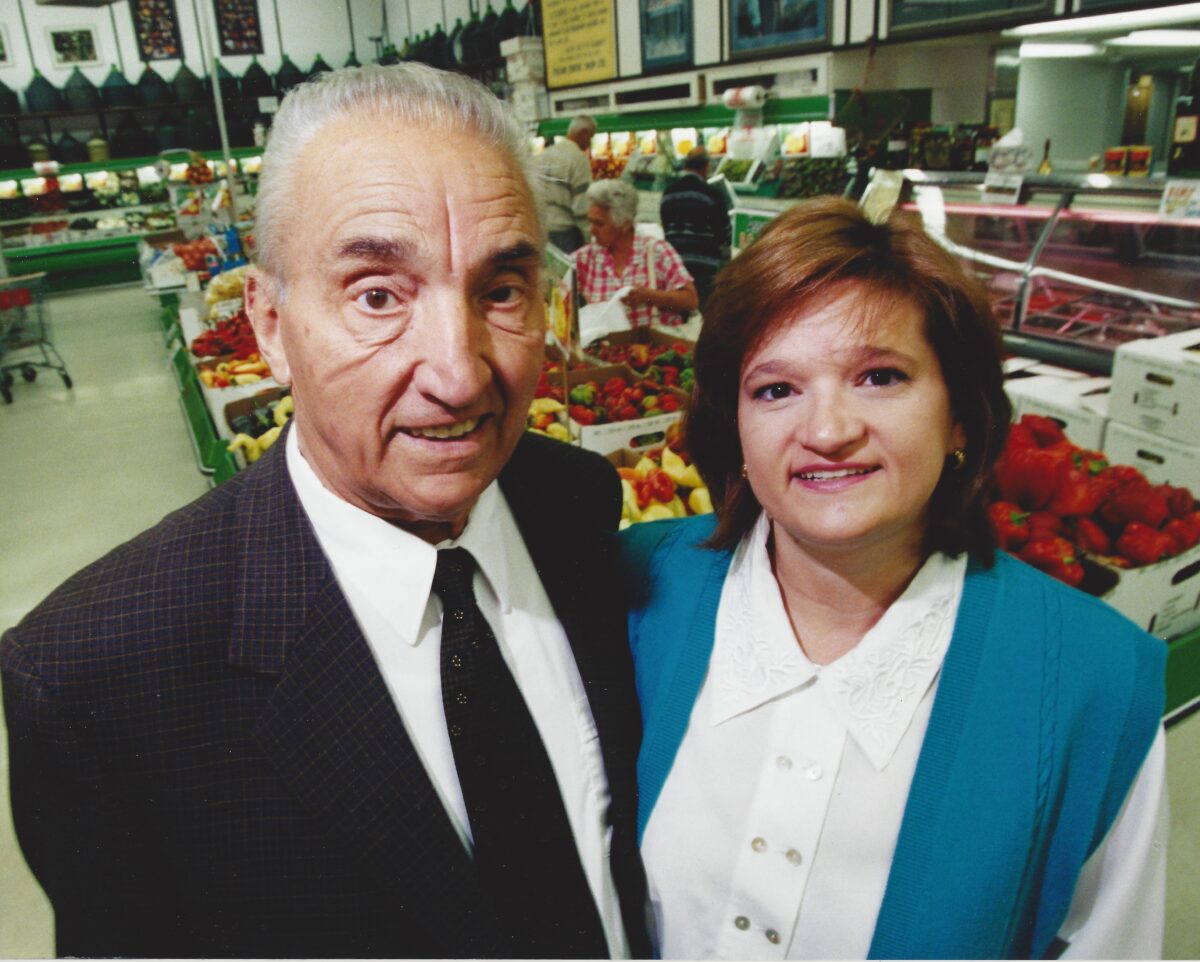
Image: Teresa SpinelliFrank and Teresa Spinelli
But Spinelli got through that initial tough time and put into practice all the things she had learned from her father while growing up in the store.
“I think the most important thing I learned was that you have to put in your time. That nothing happens overnight and you have to create loyal relationships. It took a lot of time, a lot of effort. Building those relationships was very, very important to my dad as it is to me whether it was relationships with our customers, our vendors, our team. All of them are equally important,” she says.
“My dad did that very well and I think that I do that pretty well too. My dad was more concerned about what our customers wanted. My dad had a big sign that said customers are always right. I don’t believe that customers are always right. I don’t believe anybody is always right. We all make mistakes. I just want to make sure that we’re all very safe and that we’re all treated respectfully.
“My dad was very much the boss. It was his way or the highway. I’m pretty much bottom up where he was top bottom. He was the boss and what he said went. And I’m the very opposite.”
Frank and Teresa Spinelli
When asked what that first year of running the business was like, Spinelli describes it as “horrible.”
“I had just gotten married. We were trying to start a family. We couldn’t have any kids. My brother died. My father died. My mother was severely depressed. I wasn’t sure I wanted to do this job. It was not something that I thought I would ever do,” she says.
“It was very tough times. A lot of soul searching. Why am I doing this? Was I doing this for my dad? All those kinds of things. So lots of battles with my team. I’d always have to scream and yell a lot. Things weren’t going my way and every time I did make a decision I always had to back it up because everybody would say ‘oh my God your dad wouldn’t do that, what a stupid idea, oh my God that’s not going to work’.
“There were always those doubts. And of course self doubt becomes more self doubt. It was a very difficult time for sure. Very difficult.’
Spinelli had some very big shoes to fill because her father was an amazing human being. Nobody thought she could fill them, especially her. Her father was always around the store for hours each day. Meeting and greeting customers.
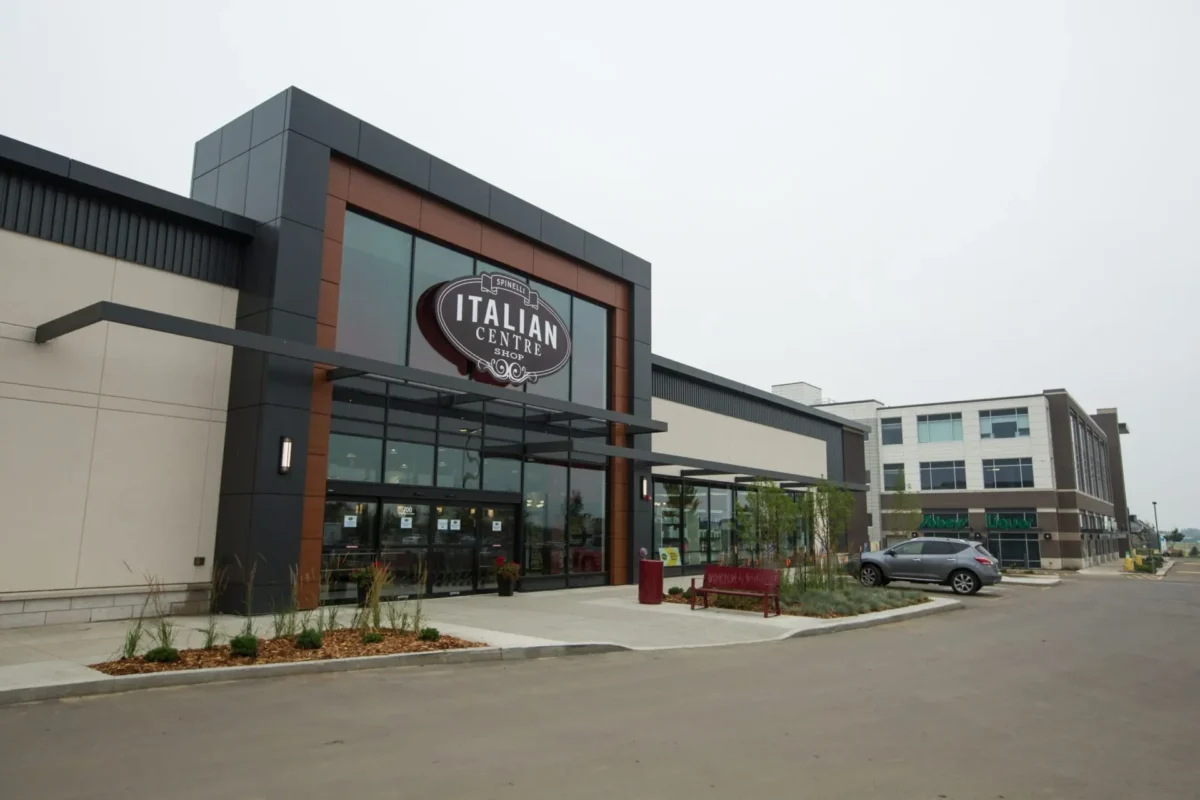
Italian Centre Shop Sherwood Park (Image: Italian Centre Shop)
Today, Teresa Spinelli carries on that legacy, spending time with customers in the stores.
“I think it’s important because that’s where you hear what your customers are really looking for or your team,” she says. “Customers will tell me something whether good, bad or negative and I’m able to work on those things. And my team will tell me something that they probably wouldn’t pick up the phone to tell me.
“Life is very different from my office than it is at the floor level.”
Spinelli says being a business owner is a hard job and people who want to become entrepreneurs should think hard on whether they really want to do it. Why do they want to do it?
“I find a lot of people think they’re going to become millionaires overnight. It doesn’t work that way. So a lot of people start a business, they don’t become millionaires overnight and they throw in the towel,” she says. “It takes a long time. A long, long time. You have to put in the time. You have to build those relationships. You have to build the products. All those kinds of things. So it takes a lot of hard work and a lot of sacrifices for sure. You have to be really clear that you’re willing to do that.
“I’ve been very fortunate because my father had a very good business. I already had a good business. I just got the opportunity to make it even better. But he did an amazing job. And so if you start off with nothing, it’s really hard.
“I don’t think I’m ever going to retire. I love my job. I really really love what I do.”
Image: Teresa Spinelli
Spinelli is trying to finalize a second location in Calgary for the store and hopefully a third location in Calgary.
“We feel if Edmonton can do three stores, then Calgary can,” she says. “Calgary is a big challenge because it just doesn’t have as much retail space as Edmonton does. That’s the big struggle.
“We are now looking at a spot in Saskatoon. I’ve always wanted to go to Saskatoon. We think a good spot is coming up for us. And then we’ll see. I get lots of requests for stores in Victoria. I get lots of requests for stores in Grande Prairie.”
As Spinelli reflects back on her business career, she says being the child of an immigrant family was a big difference.
“When immigrants come to Canada with nothing, you watch them work hard every day of their life. You see the struggles that they put in. You see that they put family first. That makes a difference. Things I try to teach my son. Even though you have the money it doesn’t mean you have to spend it,” she says. “And it takes work to make money. Putting family first and putting health first. All those kinds of things are really really important.
“And enjoying life. My dad and mom worked really, really hard but they had good times. They had lots of family over. They went back to Italy. That’s really important that you remember to do that and I think immigrant families exemplify that the best. They come with nothing. They build houses, futures. They leave everything behind. It doesn’t matter if you’re Italian or from Uganda or from Ukraine.”
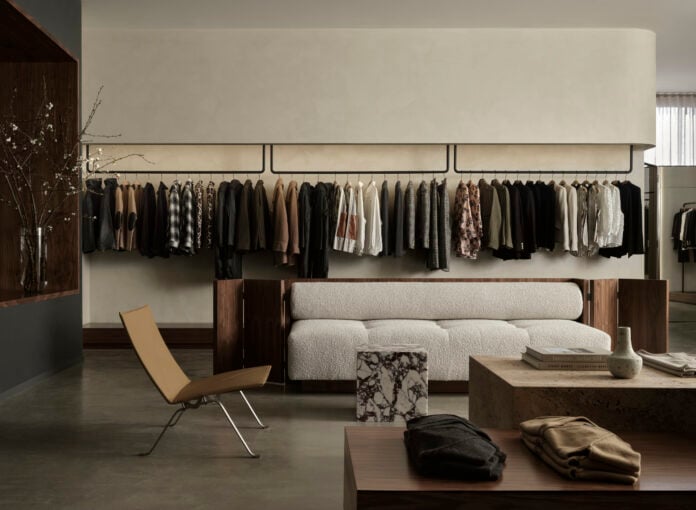
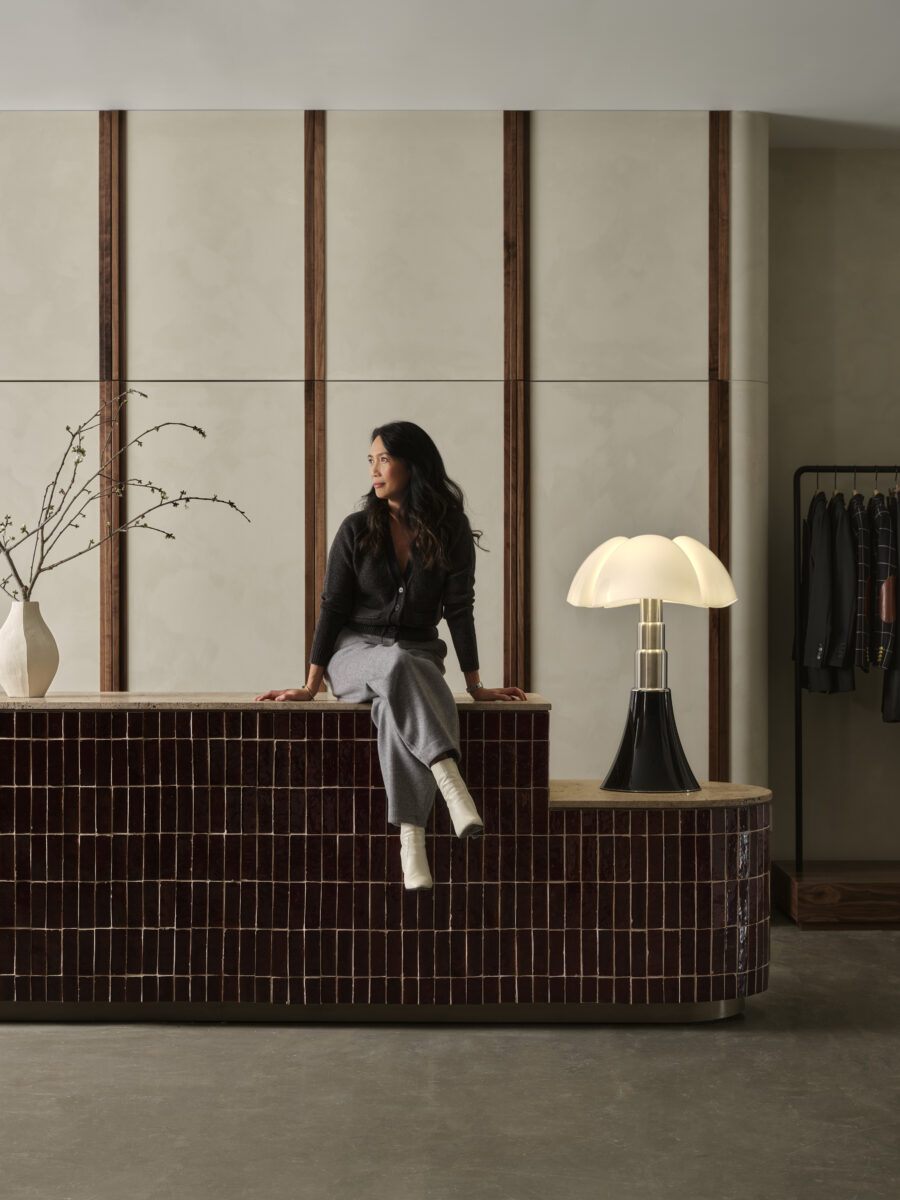
SMYTHE, a luxury women’s brand based in Toronto, is opening its second standalone store location in Calgary. The brand is recognized for its ready-to-wear fashion, and is evolving to meet consumer needs as it looks to continue to expand.
“We are super excited to be expanding our bricks and mortar in Calgary this week. We chose Calgary because we have a strong customer base there and actually, Alberta is our strongest customer base outside of Ontario where we are from so that is really exciting. We are chasing growth like everyone else is and we do it in a lot of different ways,” says Andrea Lenczner, co-founder of SMYTHE.
SMYTHE Calgary (Image: SMYTHE)
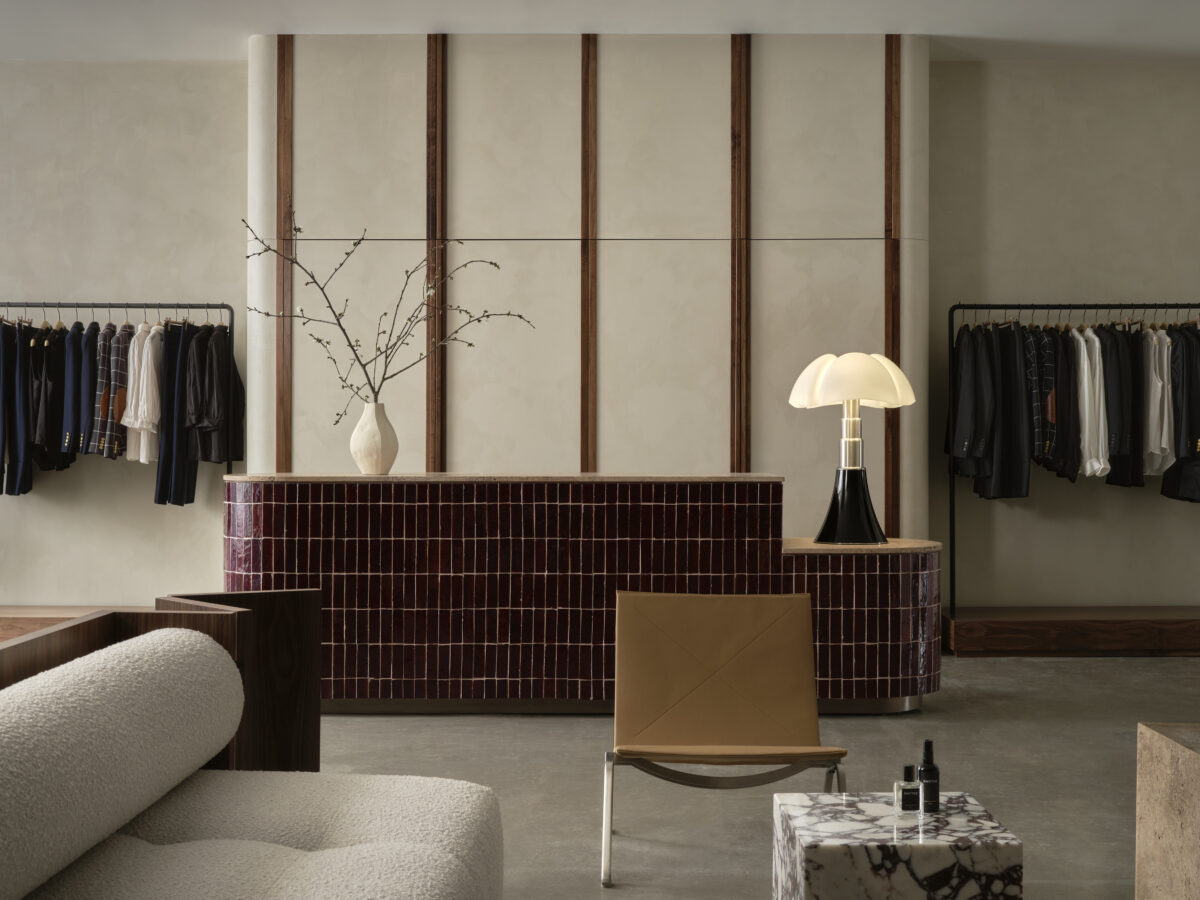
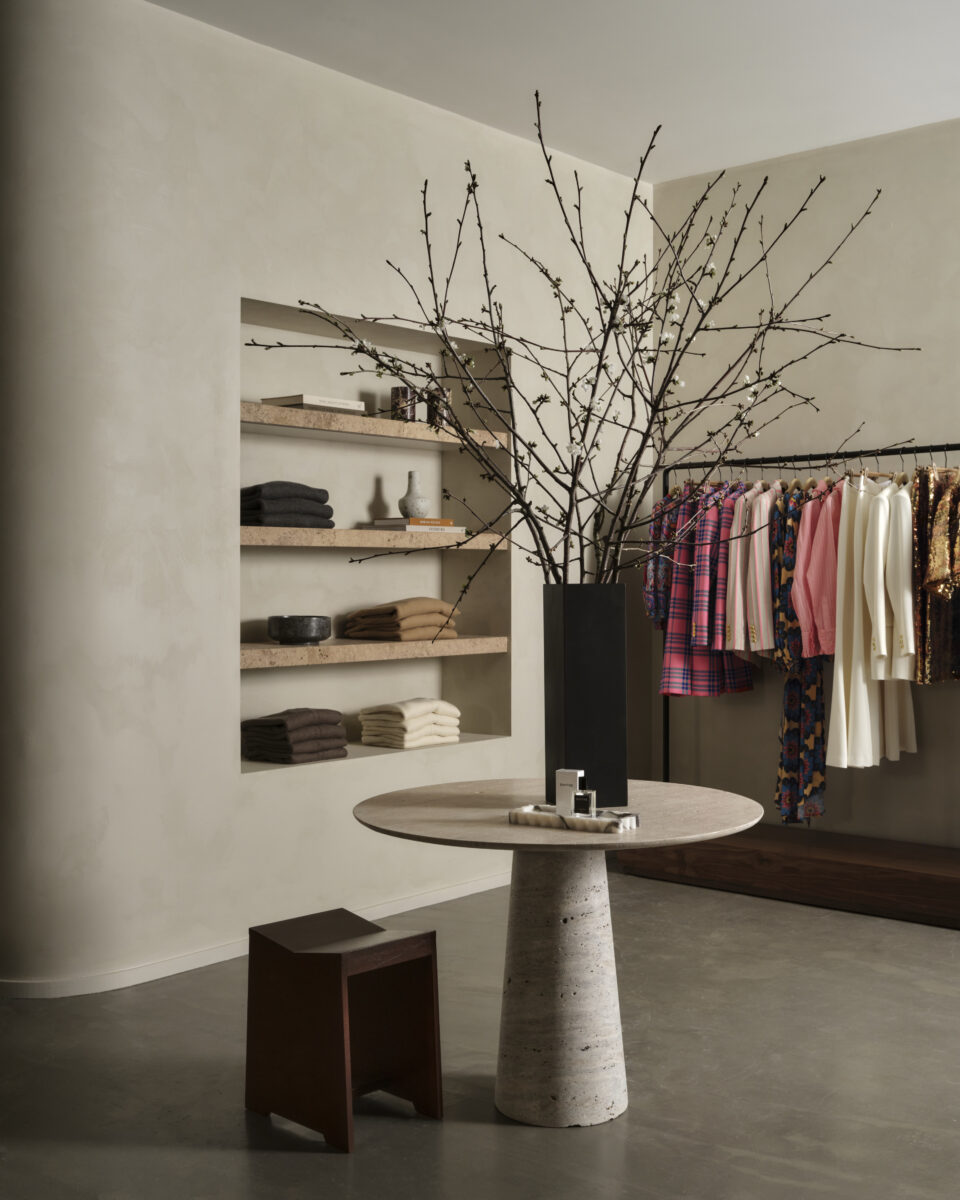
The new store, located in CF Chinook Centre and spanning 1,500 square feet, will offer an extensive assortment of SMYTHE clothing. This includes its latest seasonal offerings as well as SMYTHEHOUSE, the brand’s signature line featuring design updates, fabrics, and colours. The Calgary location is opening on February 23rd, 2024 and Lenczner says they will be hosting a grand opening where guests can explore the new space with treats and refreshments.
“We felt like there was a big hole in the market when Nordstrom Canada left, and so in we go to Chinook. We are very excited to work with a local designer there, Nam Dang Mitchell. She lives in Calgary and she is a designer Christie and I admired for many years. We showed her our Toronto store and we asked her to put her own spin on that and make us a sister store in Calgary, which she has done impeccably and beautifully and we are so thrilled with how it looks.”
Background and expansion
Image: SMYTHE
Launched in 2004, the brand opened its first location in Toronto two years ago, and has plans to expand. While Lenczner was reluctant to provide specific details regarding where or how many locations within the next few years, she said they “have expansion plans throughout North America.” In a past Retail Insider interview, Lenczner mentions interest in expanding standalone locations into areas such as Montreal, New York, Los Angeles, and Nashville markets: “The ideal SMYTHE storefront would be between 1,000 to 1,500 square feet and be located in upscale shopping areas near home furnishing retailers, fitness and cafes,” writes Craig Patterson in his article back in 2022.
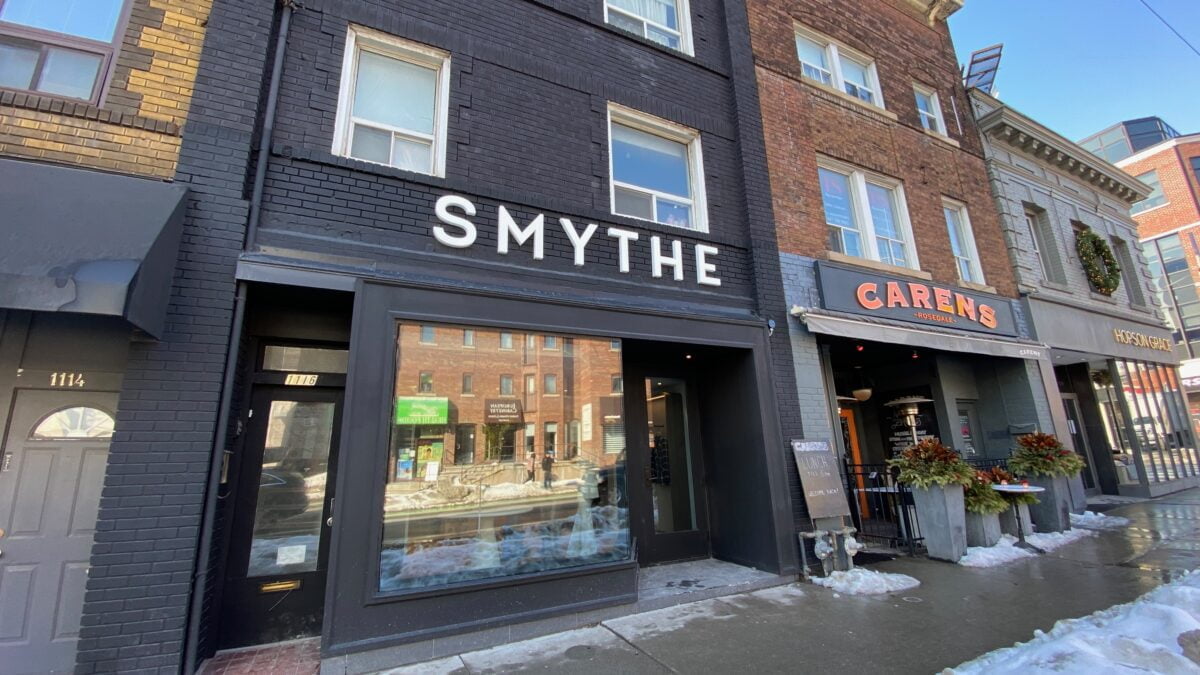
The Toronto storefront is located at 1116 Yonge Street and is 1,250 square feet. The location was designed by Ashley Bottom and Tommy Smythe. The inspiration of SMYTHE began when the founders Lenczner and Christie Smythe wanted to create perfect blazers for women. Along with clothing, the brand is also known for accessories such as hats and scarfs, and fragrances which includes a partnership with the brand Fueguia 1833.
The brand is not solely focusing its efforts on store expansions, but is also looking to improve its digital presence and product offerings: “We are looking to grow, build our team, and build infrastructure to meet growth targets. And we also have product expansions always in the works, we are always developing new products.”
As the brand has seen a lot of success with its exclusive collection SMYTHEHOUSE, which is available through the brand’s channels, Lenczner says the brand will continue to grow the collection by listening to what consumers are looking for.
“We are just really growing that business because we have seen such a response to it. It seems to be really resonating with our customers … we are always working on collaborations to bring excitement, newness, and activations to our store and to our customers.”
Consumers can expect a new collection for every season and its collection for Spring 2024 is already out: “It is a seasonal business, there is always a collection … so there is constant newness to the stores.”
Making a difference
SMYTHE has a collaboration with Augden which celebrates the craftsmanship of indigenous incan artists who create each piece by hand using locally-sourced alpaca yarns from the Andes Mountains. Beyond the designs and products, the collaboration empowers women artisans and allows them to support families and their communities. The collaboration provides a step forward in fashion as the brand is not only luxurious, but is also ethically and socially responsible.
SMYTHE’s collections can be found in multi-brand retailers including Holt Renfrew, Saks Fifth Avenue, Neiman Marcus, Andrew’s, Carriage Trade, Simon’s, and more.
“The store itself is worth a visit, Nam Dang Mitchel from Calgary did an unbelievable job. We are super proud of it.”
Retail Insider is streamlining its Canadian retail news from around the web to include a handful of top news stories that can be viewed quickly during the day. Here are the top stories from the past 24 hours.
Popular Toronto shopping centre CF Sherway Gardens has been busy over the past year opening new store locations.
And it’s going to be even busier in the next few months as several new places are set to begin operations at the mall.
Liem Vu
“We are at an all-time high (for sales per square foot),” said Liem Vu, General Manager, CF Sherway Gardens. “I’m very pleased that the shopping centre came a long way and I think the best days are still to come.
“One of the things I’m so proud of this shopping centre is that it provides a great shopping experience for the customer, for the guests. And the reason for that is the space is safe and it feels super at ease when you come shop here.”
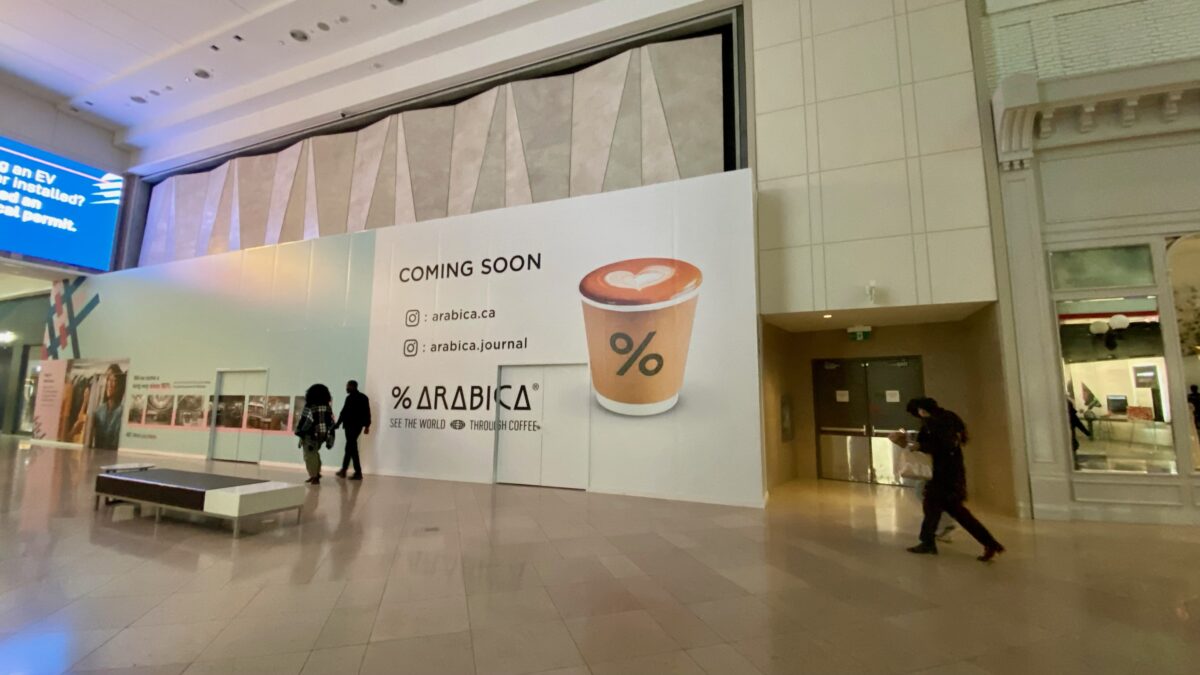
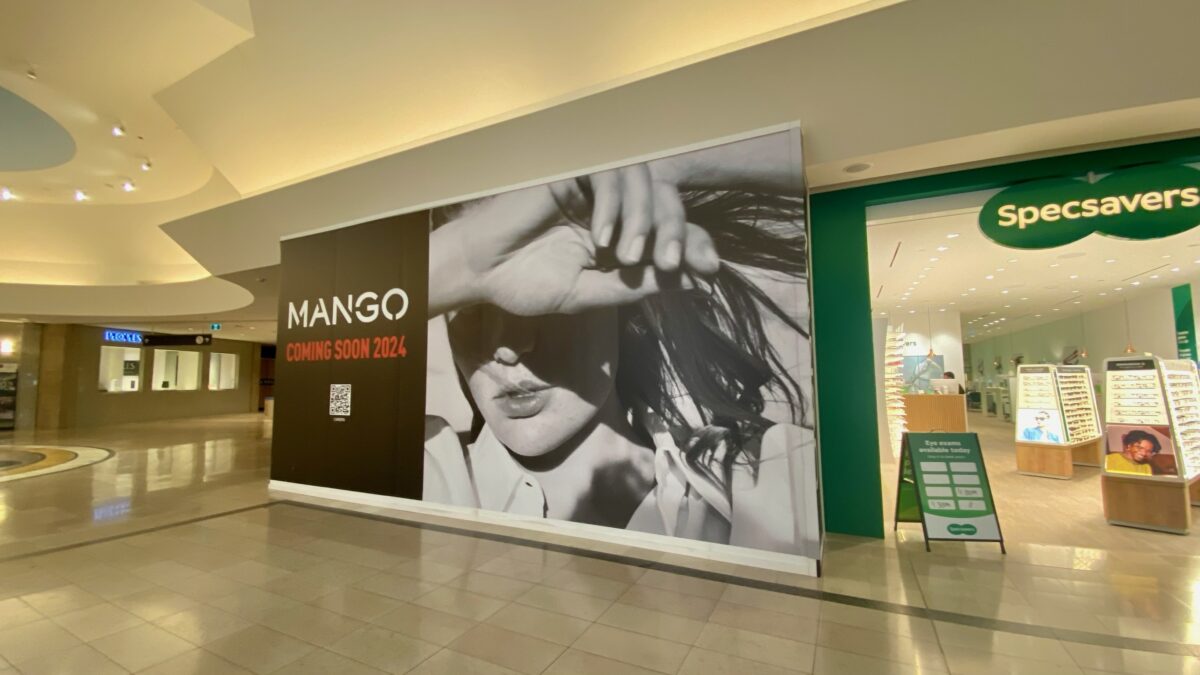
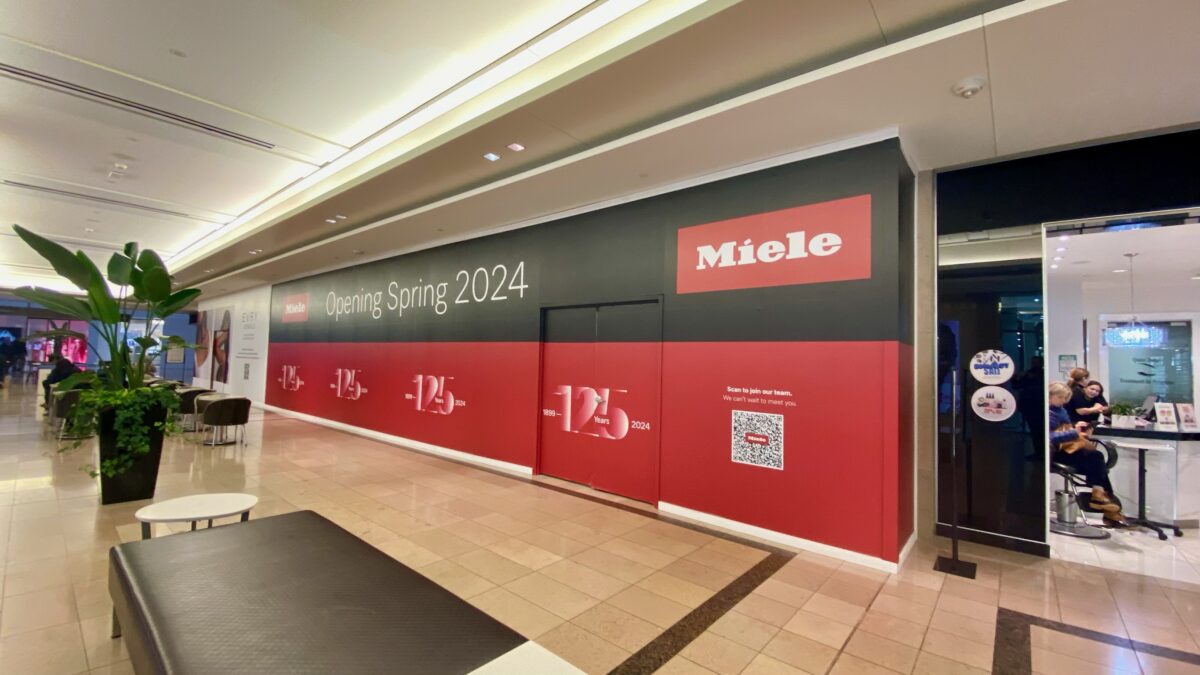
% Arabica is under construction, with the brand looking towards a Q4 opening. Miele is also under construction with an opening in late spring as well as Mango.
Jo Malone is expected in early May.
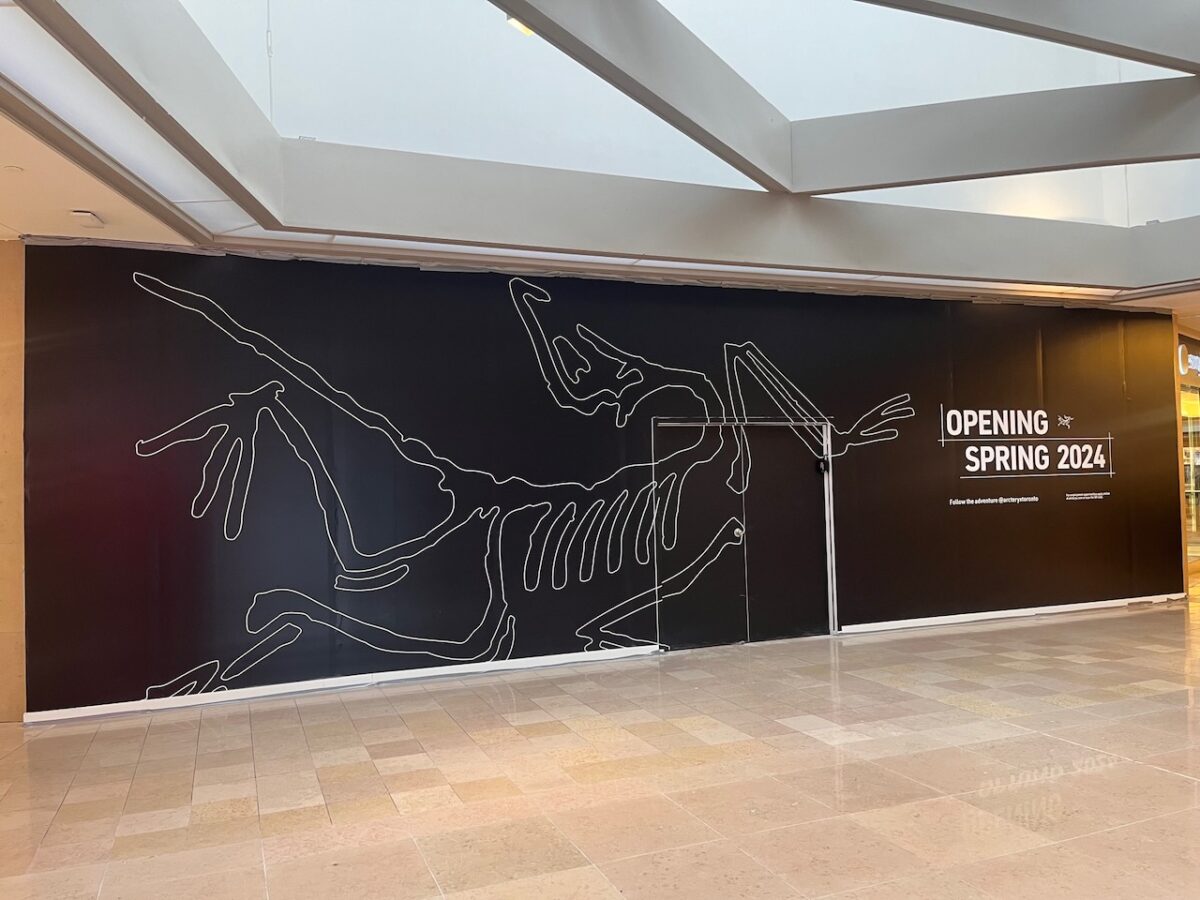
Arc’teryx is also expected by early May and Ray-Ban hopefully in April with New Balance in a couple of weeks away from opening and Alo Yoga in early May too.
Future Mango at CF Sherway Gardens (Image: Craig Patterson)Future Miele at CF Sherway Gardens (Image: Craig Patterson)
Poulet Rouge is slated to open in the near future while Villa Madina is also one of the early May openers and Being Human in early April. Gemlet too is opening in early spring.
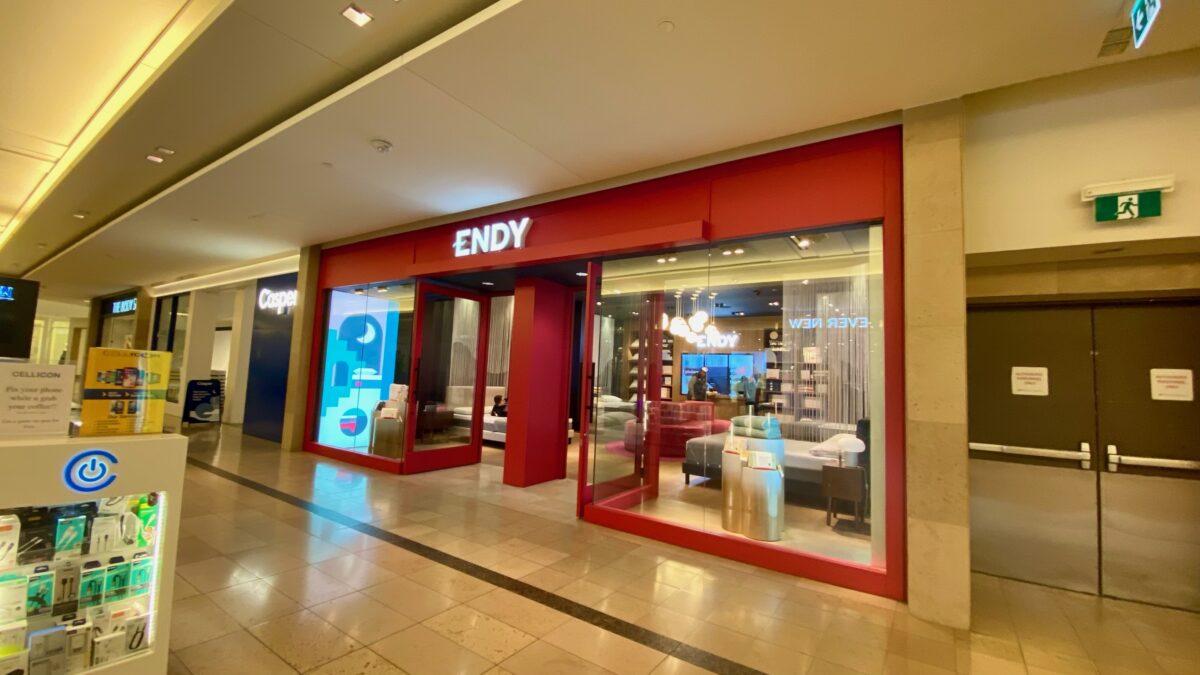
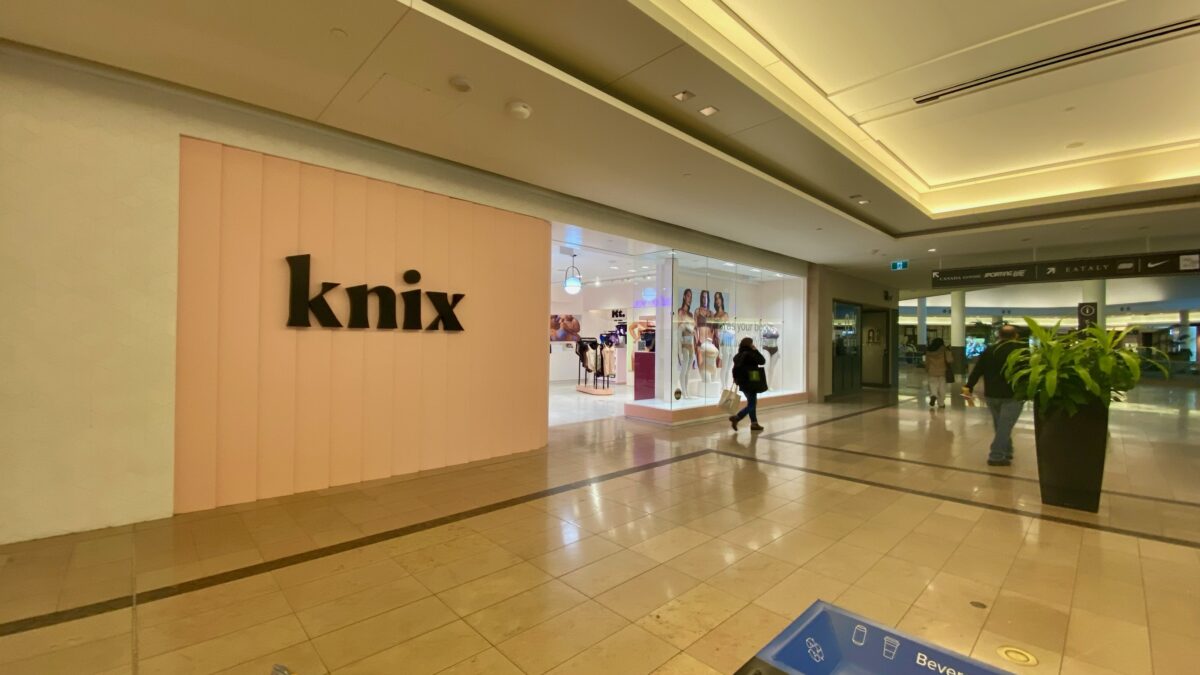
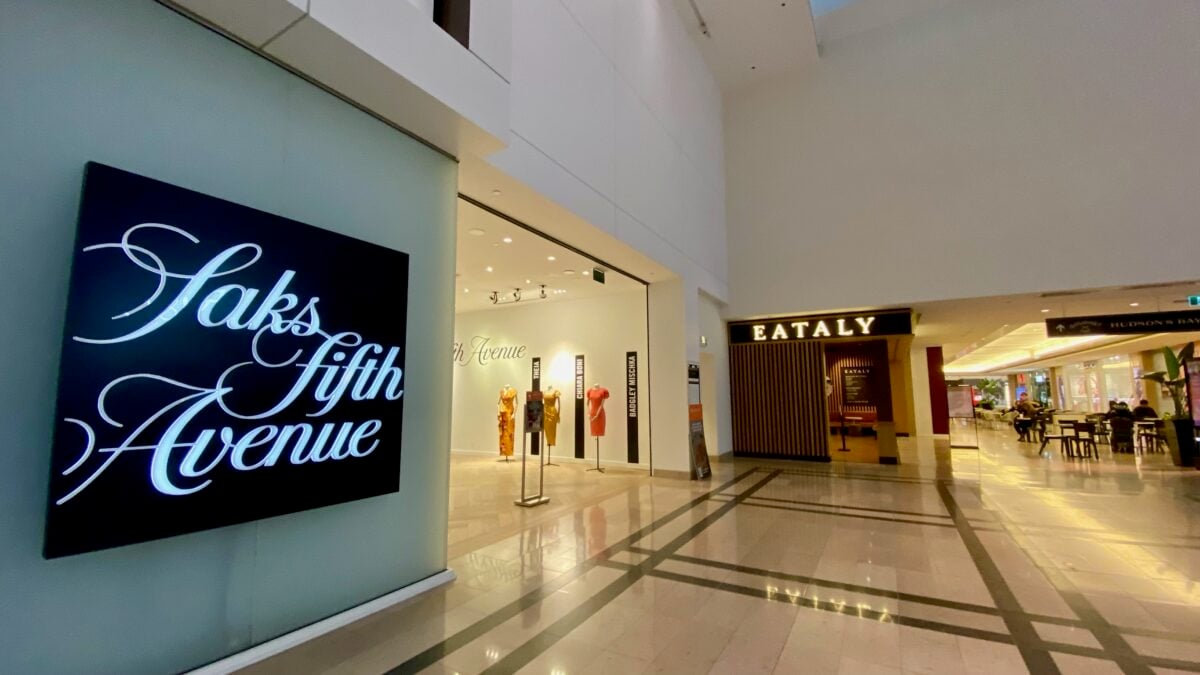
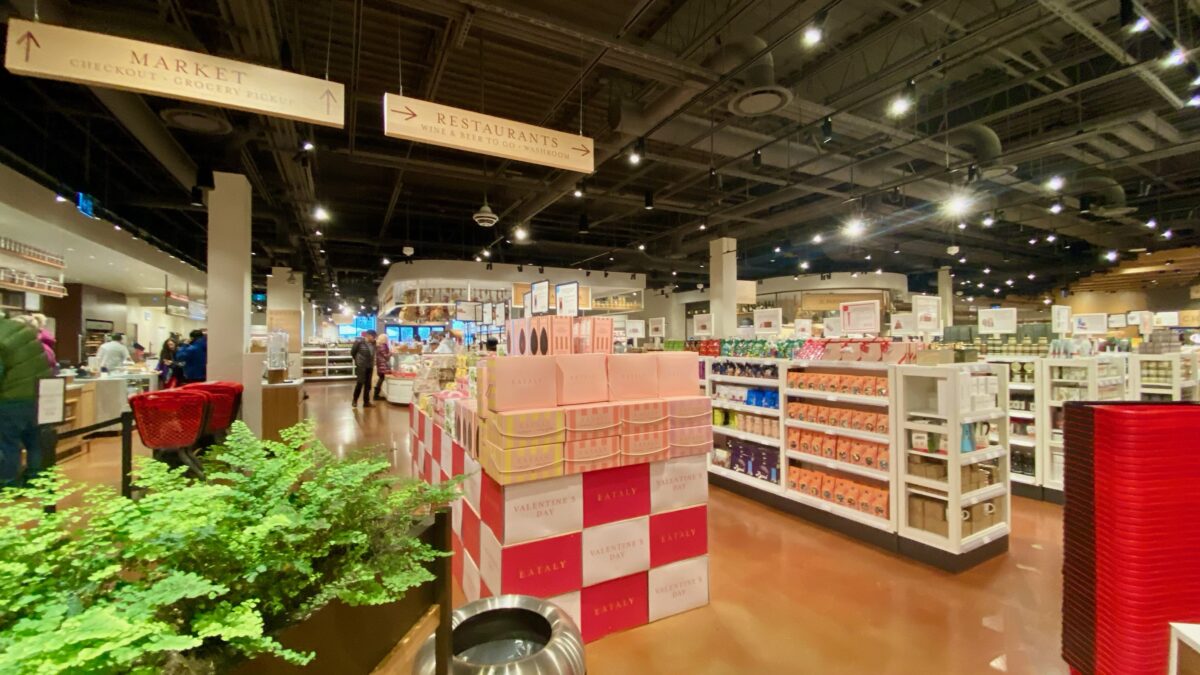
Vu said the shopping centre has welcomed recently new stores such as Lids, Solmaz Patisserie, Kiokii and…, Verona Suits, Eataly, Endy, and Fox Home. Also opened were a dental studio, Laser Clinics, and a hearing solutions store.
Endy at CF Sherway Gardens (Image: Craig Patterson)KNIX at CF Sherway Gardens (Image: Craig Patterson) Saks Fifth Avenue and Eataly at CF Sherway Gardens (Image: Craig Patterson)Eataly at CF Sherway Gardens (Image: Craig Patterson)
“During COVID times we had quite a bit of turnover in occupancy. With this comes along great opportunity. And Sherway Gardens is located where luxury meets sophistication. That’s what we call our mall,” said Vu.
“So we have brands that are dying to get in here and we want to make sure that we’re not just luxury, luxury. We want to be a place that everyone can shop whether you are a luxury, sophisticated customer that demands high brands or you’re just an everyday customer that we want to make sure that you have the opportunity to shop here. We have different types of products for everyone.
“With the opening of Eataly this past November, our shopping centre has been just incredibly on the upside. We see a great traffic coming back to almost the pre-COVID number now.
“Now we are catering not only retail but we want to be a business shopping centre that also people can come do business, have services and do the retail. Our restaurants are doing tremendously well. We have The Keg, Cactus Club, Joey and during COVID time we opened Fresh. And most recently Eataly.”
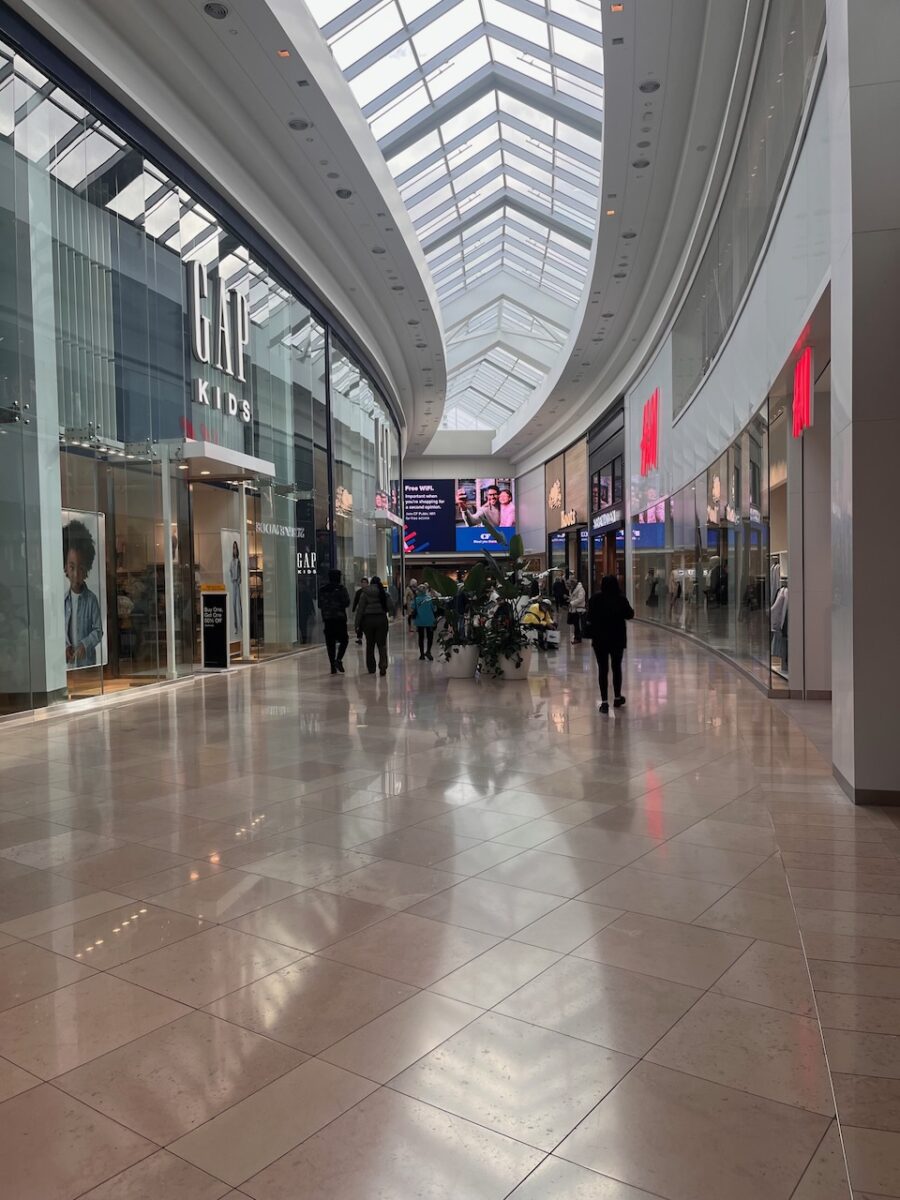
CF Sherway Gardens is just over 1.2 million square feet primarily over one level but some of the mall has a second level. The mall has been around since 1971.
The mall is situated on the west end of Toronto near the interchange of Highway 427 with the Queen Elizabeth Way and Gardiner Expressway with great proximity to the airport and to downtown Toronto.
Vu said the mall’s leasing team continues to explore options for the vacant Nordstrom space in the mall which is about 147,000 square feet.
In the fall of 2021, Cadillac Fairview along with partner DiamondCorp announced a rezoning submission for the first phase of a new Master Plan that anticipates a series of developments, which will ultimately surround and complement CF Sherway Gardens.
CF Sherway Gardens (Rendering: Cadillac Fairview)
At that time, they said the first phase of development is located on the north side of the shopping centre, fronting The Queensway. This phase is approximately 1.28 million square feet of mixed-use development, which will consist of four new buildings, two condominiums and two CF rental residential buildings, with retail and amenities. A new public park is proposed as well as a pedestrian urban plaza and a large landscaped zone along The Queensway, which will include a multi-use path, planting and seating opportunities.
“That’s in the works. With the proximity to downtown Toronto and the airport, it makes great, great sense for us to attract a lot of densification here for years to come. Big plans coming in for Sherway Gardens,” said Vu.
“We’re very, very optimistic. This is the second time of us coming in for rezoning which is very promising. I’m very optimistic and we’re confident with our densification plan with the city.”
In 1996, ECS Coffee started part time out of a garage in North Burlington, Ontario.
“Since then, we have grown from one employee with one truck to over 40 employees in retail, ecommerce, distribution and coffee service. With in house service and repair, and a state of the art website serving all of Canada – we are your number one source for coffee and espresso brewing gear and coffee,” said Neil Madden, the company’s President.
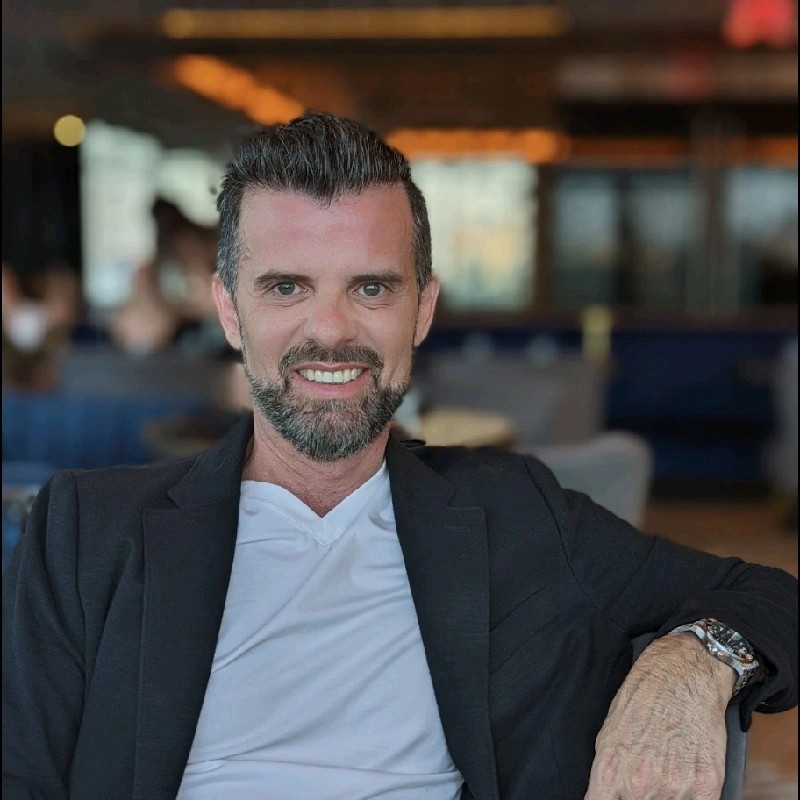
Neil Madden
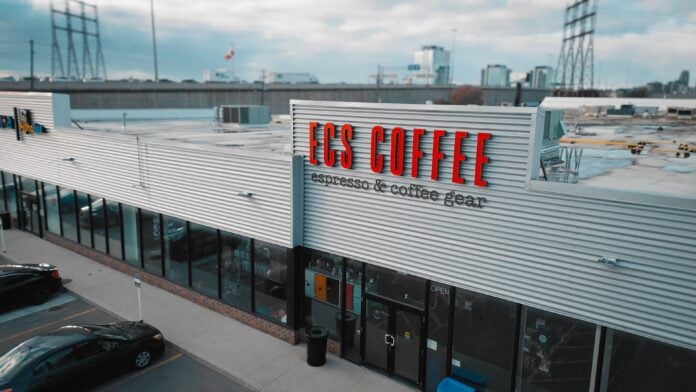
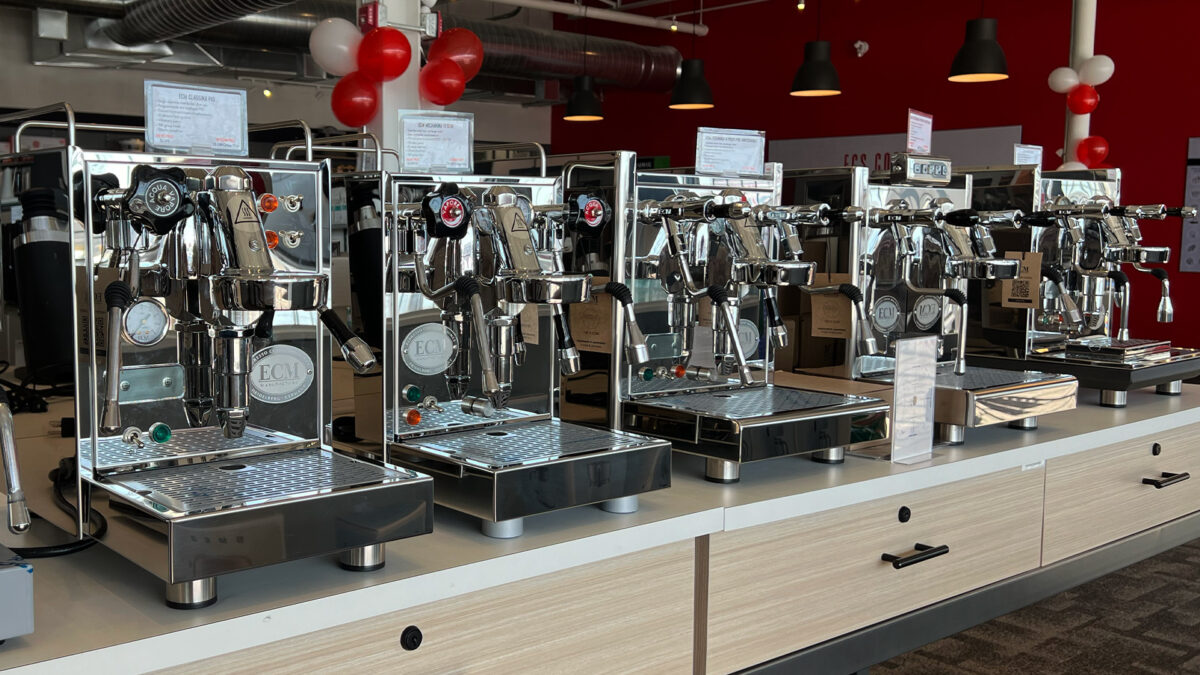
And recently it opened its first new Coffee Experience concept store in the bustling area of Etobicoke in Toronto, conveniently close to CF Sherway Gardens and IKEA, at 130 N Queen Street.
Image: ECS Coffee
Image: ECS Coffee
Madden said the concept is “unique to Canada if not North America.”
“It includes some exciting concepts that have never been done all in one place before,” he said, listing the following:
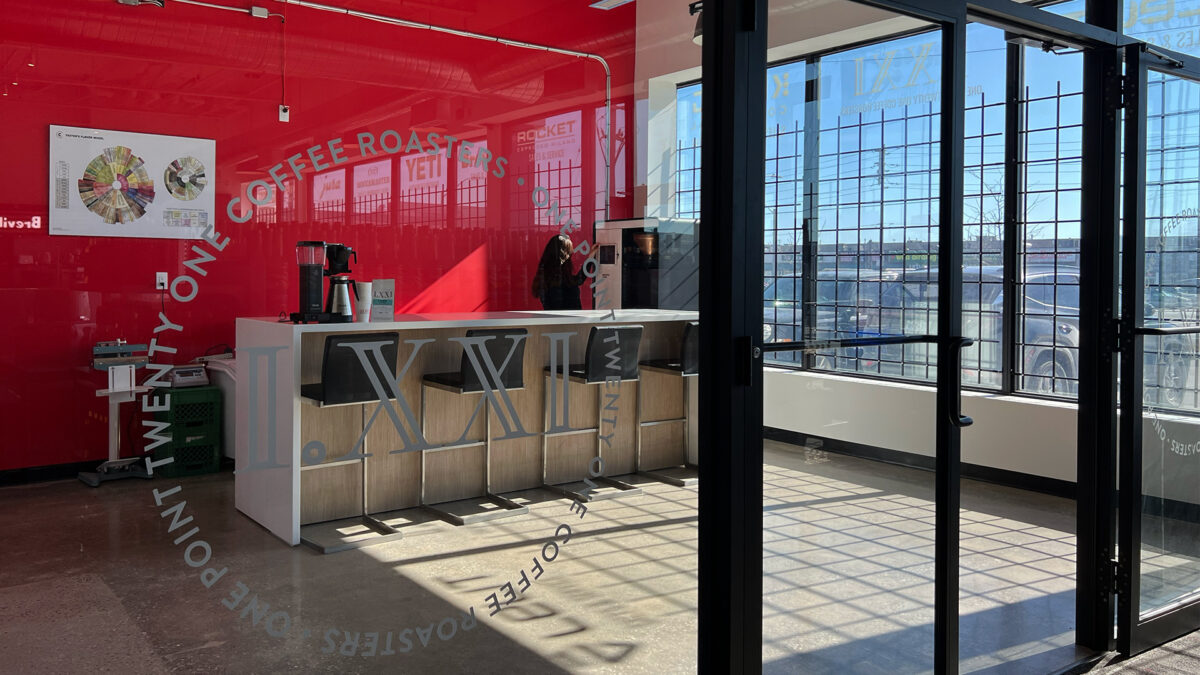
Coffee Roasting in house on a state-of- the-art emissions-free roaster
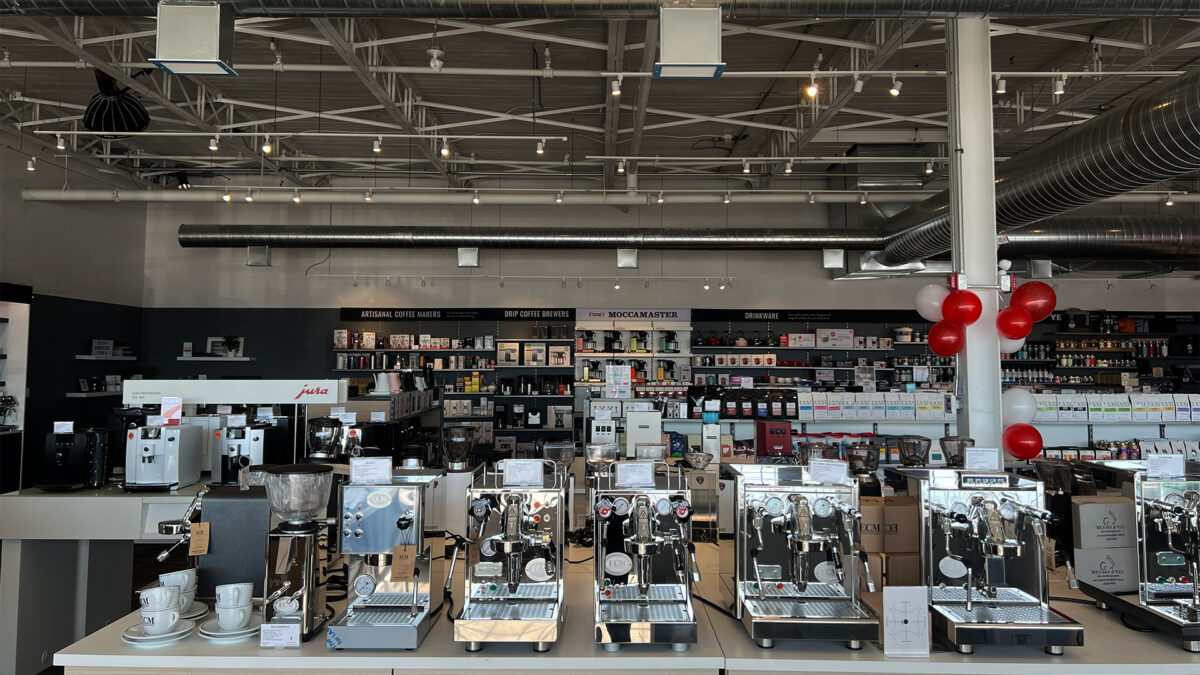
Showroom of operational equipment for home espresso and coffee enthusiasts to come try
Full service and warranty centre on site
YouTube studio
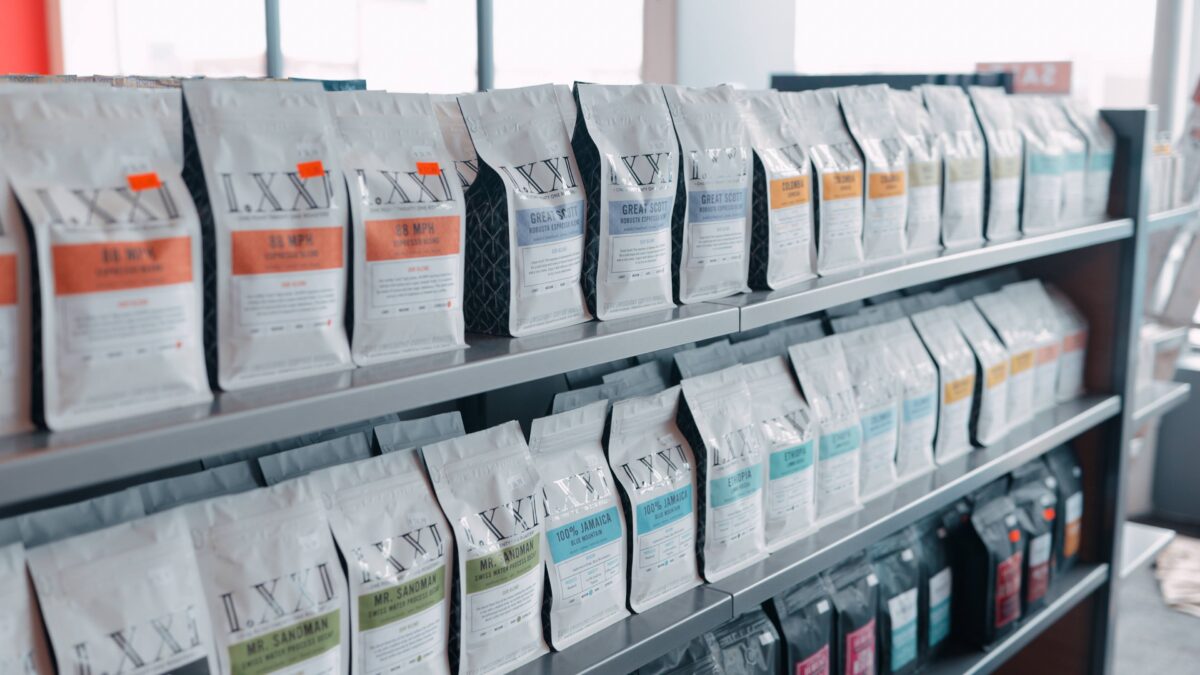
Over 500 varieties of coffee on site with free samples
Educational and Fun classes. From Coffee Cuppings to Coffee and Yoga, to Coffee and Canvas. With more planned.
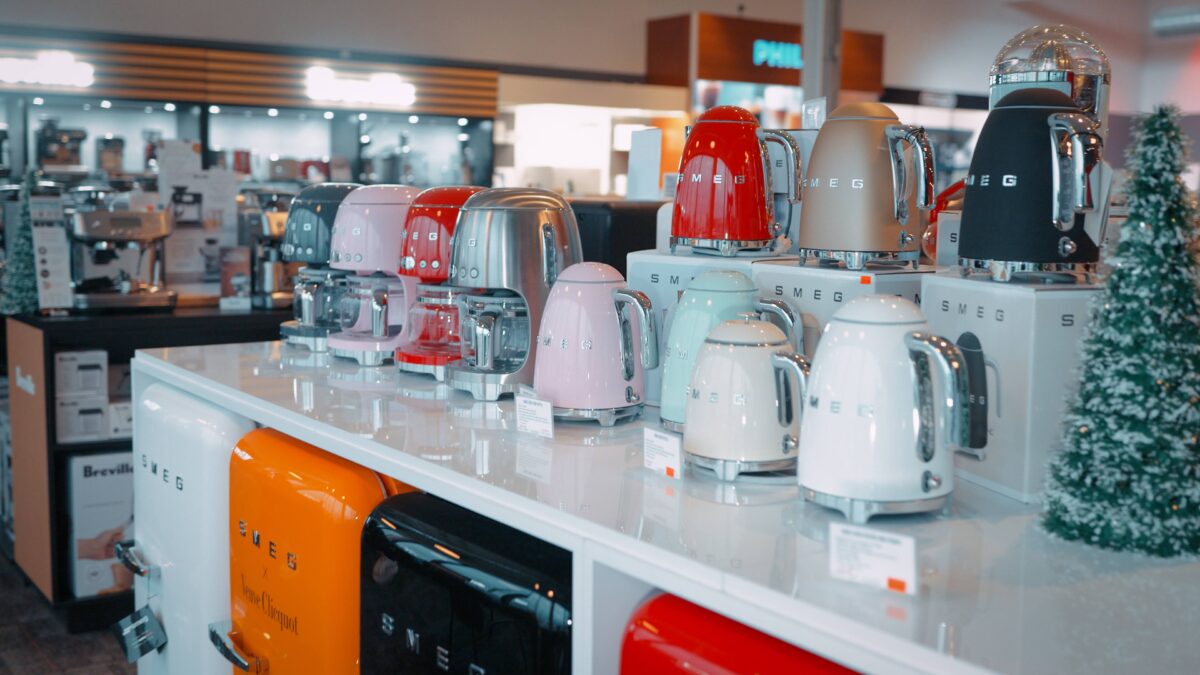
The location is about 7,300 square feet and Madden’s describes it as Canada’s largest coffee and espresso equipment gear showroom.
“Overall the community response has been great and we are excited to bring this very unique concept that we have developed over our 27 years in business to Toronto,” said Madden.
Image: ECS Coffee
Image: ECS Coffee
In 2000, Madden went into the office coffee business doing B2B. Then in 2008 during the “big, impending doom recession that was coming”, he decided to do a one-day sale in his warehouse. He advertised in the local paper. At the time it was Keurig KCups as nobody really had them in Canada. He was one of the early adopters of it.
“We had so much business that one day. I thought people might be actually interested in coming to pick some stuff up. Our one-day sale was so successful out of a little, tiny warehouse, it was nothing but an office and a computer, there’s no room . . . I decided to open up. Hire someone to be a receptionist, we started a little bit of advertising and we went viral. In the early days of Facebook we were a pretty big influence on the coffee market in Canada – Tassimo, Keurig, and Nespresso all wanted to work with us,” said Madden.
“We kind of created that category for them in retail before they were in stores. It just went nuts for about five years until they all decided to join major retail. We just continued to pivot in the coffee business and now we find ourselves we’re kind of a coffee journey store. We help people with whatever aspect of the coffee journey they’re in. Whatever level they’re at. If you’re a beginner or advance, we can take you through the entire journey and continue to add on to that as the market changes. It’s where our niche fits in. I think we’re the only one really doing it completely.”
The brand has three locations in Ontario and a huge presence online. The main location with the warehouse is 14,000 square feet in Burlington. There’s also a 3,000-square-foot store in Ancaster, Ontario and the new one now open in Toronto.
He said the new store is a culmination of all the years put together into its newest concept going forward.
“In the 27 years, I’ve seen everything change. Coffee I see as a journey. People that like to cook, like chefs, they’re always looking for new tools. Some people are beginners, some people are advanced. So what we decided to do with our company was rather than just being transactional which we all can do online . . . we want to get people’s journey to another level,” said Madden.
The journey can begin online through the website and social media with an active YouTube presence. The stores have machines that are all operational for people to try them out. There are classes to learn about the coffee journey. The company also roasts its own coffee developed for all the equipment it sells and it creates its own products. There’s a service centre for pretty much all the brands it carries and a warranty centre for most of the brands.
“It’s not just giving somebody a machine or selling them a product. It’s giving them the full experience which no one is doing I don’t believe in Canada or North America,” said Madden.
Image: ECS Coffee
He said there’s probably room for five or six of these new concept stores in Canada. The company wants to perfect its Toronto location first before expansion across Canada to major urban centres.
“Canada is much more advanced than a lot of people in the rest of the world (when it comes to coffee), surprisingly,” said Madden. “It’s even a surprise to me. Compared to the States, we are probably more snobby in our coffee tastes. You wouldn’t think so. You would think we’re Tim Hortons country. There’s definitely a level of that and we sell Tim Hortons coffee . . . but it’s become a hobby for so many people.
“It even surprises me at times . . . the levels of which Canadians have adopted this new hobby and to brew the perfect cup of coffee. Canada’s a big market. People take it very seriously.”
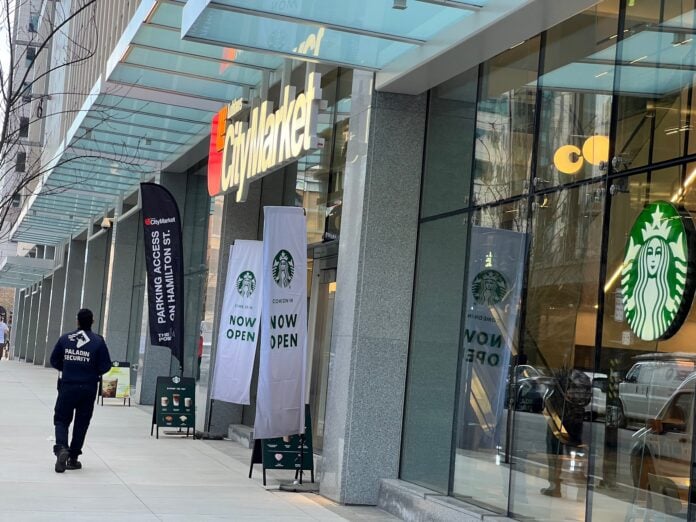
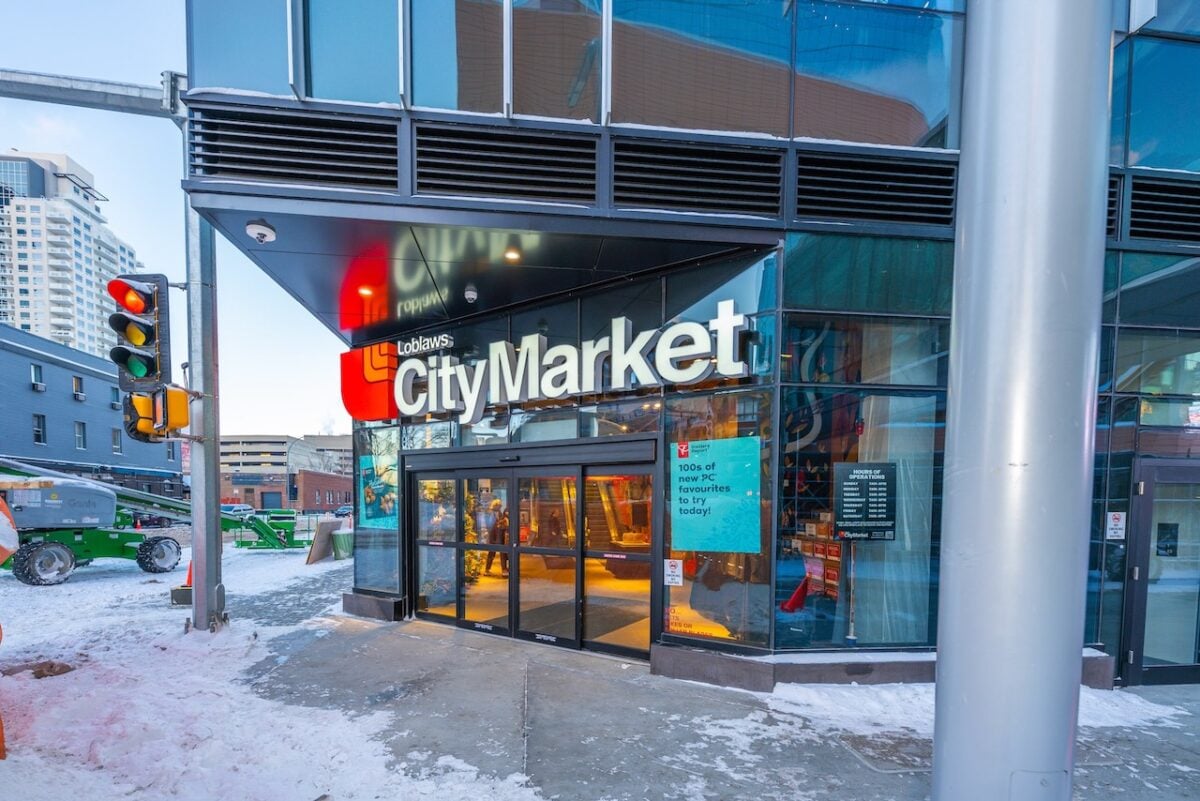
Loblaw's City Market entrance at "The Post". Photo: Lee Rivett.
Craig and Lee discuss the recent opening of a Loblaws City Market in downtown Vancouver’s historic The Post building, an important addition to the city’s grocery shopping availability. The store occupies a substantial 45,000 square feet on the second floor of the renovated Canada Post building, introducing a vast retail and grocery space to the area. They highlight the store’s layout, including a wide array of departments such as bakery, dairy, deli, and seafood, and its strategic location near prominent city landmarks and office buildings.
They delve into the challenges and opportunities presented by the store’s location. Despite its impressive size and variety, the Loblaws City Market faces competition from numerous nearby grocery stores serving the densely populated downtown area. Craig and Lee discuss whether the store’s location—lacking immediate residential towers—might impact its foot traffic, contrasting it with other areas of downtown Vancouver that boast higher residential densities. They speculate on the store’s potential role as a destination for specific products and its appeal to office workers in the vicinity.
Further, they discuss the broader implications of the store’s opening for downtown Vancouver’s retail landscape and urban living. They touch on the convenience of living in a downtown area with high grocery store penetration and how the new Loblaws City Market fits into this ecosystem. The conversation covers payment experiences, with a particular focus on the store’s acceptance of payment methods and how this reflects on Loblaws’ customer service. Overall, Craig and Lee provide insights into how the new store contributes to downtown Vancouver’s convenience, retail diversity, and the ongoing evolution of urban grocery shopping.
New Loblaws City Market Opens in Vancouver’s ‘The Post’ Building
The Weekly podcast part of theThe Retail Insider Podcast Network by Retail Insider Canada and is available on Apple Podcasts, Stitcher, TuneIn, Google Play, or through our dedicated RSS feed for Overcast and other podcast players.
Subscribe, Rate, and Review our Retail Insider Podcast!
Drop us a line at Craig@Retail-Insider.com. You can also rate us in Apple Podcasts or recommend us in Overcast to help more people discover the show!
Background Music Credit: Hard Boiled Kevin MacLeod (incompetech.com). Licensed under Creative Commons: By Attribution 3.0 License. http://creativecommons.org/licenses/by/3.0/
Retail Insider is streamlining its Canadian retail news from around the web to include a handful of top news stories that can be viewed quickly during the day. Here are the top stories from the past 24 hours.
Loblaw Companies Limited Head Office (Image: Loblaw)
Loblaw Companies Limited, Canada’s food and pharmacy retail leader, announced Tuesday it expects to invest more than $2 billion into the Canadian economy in 2024.
That includes the creation of more than 7,500 jobs, more than 40 new stores, expansion or relocation of another 10 and renovation of more than 700 others.
Per Bank
“This year, we are investing where Canadians need it most. We will introduce more than 40 new discount stores and 140 new pharmacy care clinics in communities across the country – making healthcare and affordable food more accessible to more people,” said Per Bank, President and CEO, Loblaw Companies Limited, in a statement. “These investments in Canada are a catalyst for job growth and the creation of countless opportunities, in our stores, in our company and with the many partners who work with us.”
Image: Loblaws
The company said this year’s investment is in addition to more than $10 billion the company has invested since 2016.
In an email response to questions, the company said: “This is our 2024 Capex plan and we’re investing where Canadians need it most. This announcement demonstrates our commitment to helping Canadians live life well by improving our store network, creating jobs, and increasing accessibility to affordable food and healthcare services nationwide.
“We’re opening both grocery and pharmacy stores across the country, but at this point aren’t breaking down locations. We are happy to provide more details as the stores open.”
Loblaw Companies Limited is Canada’s food and pharmacy leader, as well as its largest retailer and private sector employer. With approximately two billion transactions each year in its network of 2,500 stores and national e-commerce options, Loblaw brings food, pharmacy, beauty, apparel and financial services to customers through many brands: President’s Choice, No Name, Loblaws, Shoppers Drug Mart, No Frills, Real Canadian Superstore, T&T, Joe Fresh, PC Express and PC Financial. The company’s loyalty program, PC Optimum, has more than 18 million members.
Doug Stephens
“That Loblaw is growing comes as no surprise, given their profitability. What is interesting however is how Loblaw is using this announcement to frame themselves as a champion of the Canadian economy. Clearly part of a broader charm offensive on Loblaw’s part, aimed at countering what has been several years of scathingly negative media and public sentiment over the company’s behaviour. Perceived price gouging, shrink-flation, and heavy-handed vendor relations have all taken a toll on the brand’s image,” said Doug Stephens, Founder of Retail Prophet.
Loblaw Sugar Wharf (Image: Dustin Fuhs)
George Minakakis, CEO of Inception Retail Group, said Loblaw has garnered negative publicity over the last two years.
George Minakakis
“There is no question the company is a significant contributor to the retail, grocery sectors and the overall economy. How do you prove your commitment to consumers and a nation struggling with inflation and difficult financial hardships? Announcing store growth, redevelopment plans means more work is being created. The 7,500 new jobs is a good news story for the nation,” he said.
“They mention healthcare and food affordability, unless the global economy settles down affordability will remain a challenge. On the other hand the news from Walmart says that consumers are putting less in their carts and shopping more frequently. Canadian Tire had a very challenging fourth quarter which speaks to consumers looking after their households first. Loblaw will have to change consumer perceptions and prove that they are that trusted source of affordability. This is a significant opportunity for them that should not be misplaced.”
Bruce Winder
Bruce Winder, President of Bruce Winder Retail, said this is good news for Canada’s economy.
“It is nice to see Loblaw investing capital back into Canada which will create jobs and invest in communities. I also think that focusing on the discount segment will offer Canadians greater reach of value priced product in this tough economy. Hopefully we see other companies doing the same. Hats off to Loblaw,” he said.
Michael Kehoe
Michael Kehoe, Broker/Owner of Fairfield Commercial Real Estate, said the Loblaw food and pharmacy juggernaut with over two billion transactions each year and a network of 2,500 stores is a critical part of Canada’s retail infrastructure.
“The announcement of a $2 billion investment in the firm’s store network is a significant event on the national retail and consumer real estate scene. The anticipated employment spinoffs and construction activity building new stores and pharmacy care clinics, store renovations, expansions and relocations will have a positive impact on the Canadian economy in the years ahead. I found it interesting that 40 new discount stores are in the mix recognizing the significance of the value end of the grocery retailing spectrum,” he said.
Loblaws City Market (ICE District) Image: Loblaw
Liza Amlani
“This is great news for Canada and the workforce but this doesn’t solve for what customers need most. Better pricing on grocery and essentials. Canadian customers don’t want the same four grocery stores to continue to monopolize the market – they need more choices and better prices,” added Liza Amlani, Principal and Founder of the Retail Strategy Group.
David Ian Gray, Founder and Strategist of DIG360 Consulting, said Loblaw is in a fantastic fiscal position, perfectly suited to make these expansion moves to try to further boost market share.
David Ian Gray
“The news is how it is packaged; it is notable this is not positioned as an investment in Loblaw, but an investment in Canada. Why? To attempt to blunt the mounting pressure from politicians and the public image that their strong finances are creating for budget crunched shoppers. I doubt it will change public and lawmaker perception, one way or another. However, this does signal a strong move and I will await response from Empire, Metro and Walmart Canada.”
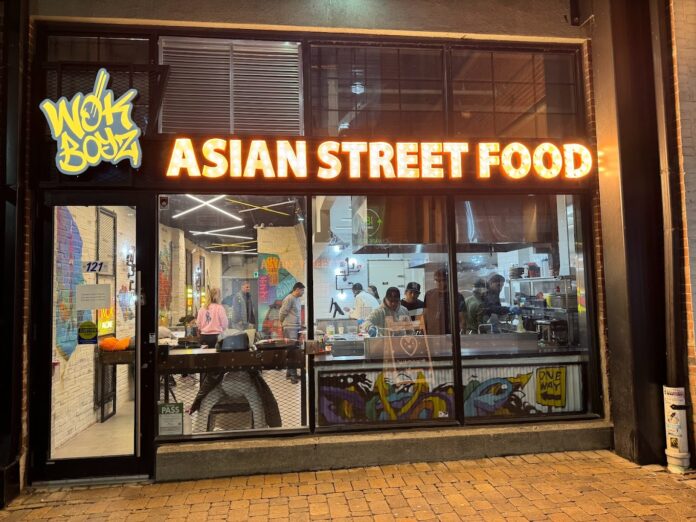
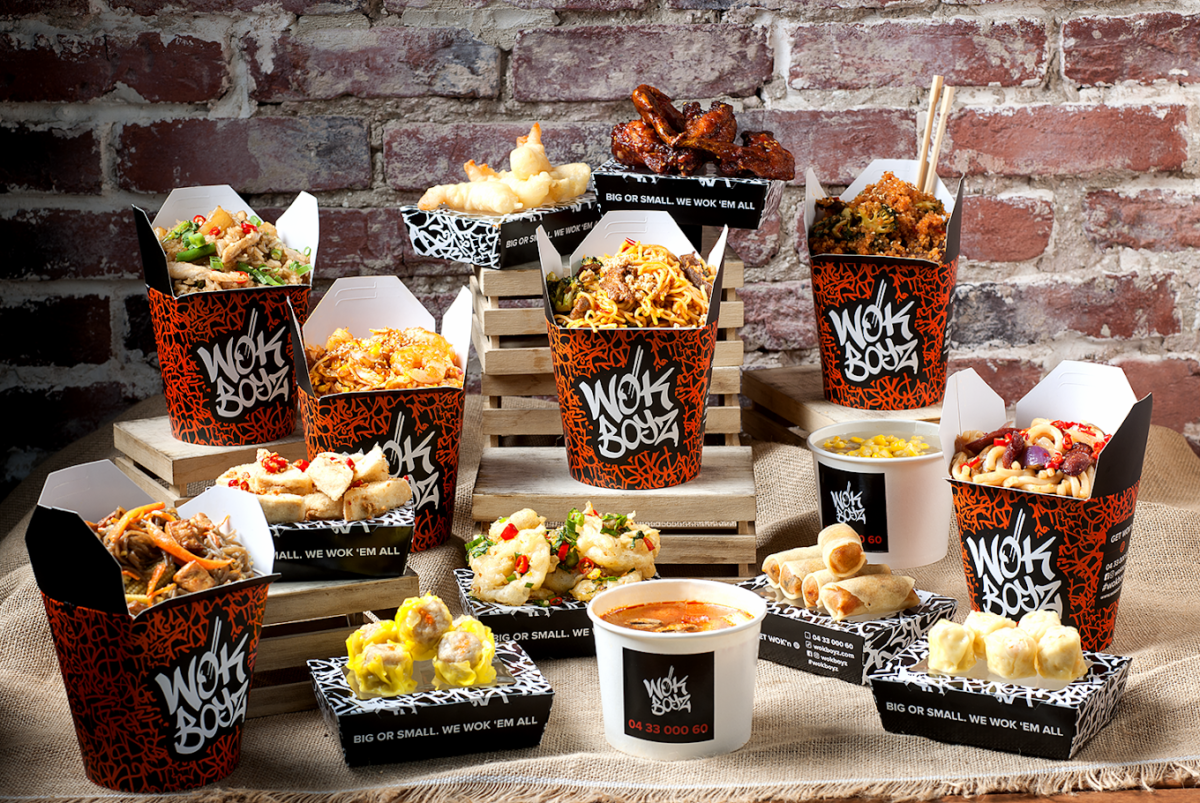
Wok Boyz, an Asian street food restaurant based in Dubai, has opened its first location in Canada and is looking to expand by at least 15 stores within the next five years.
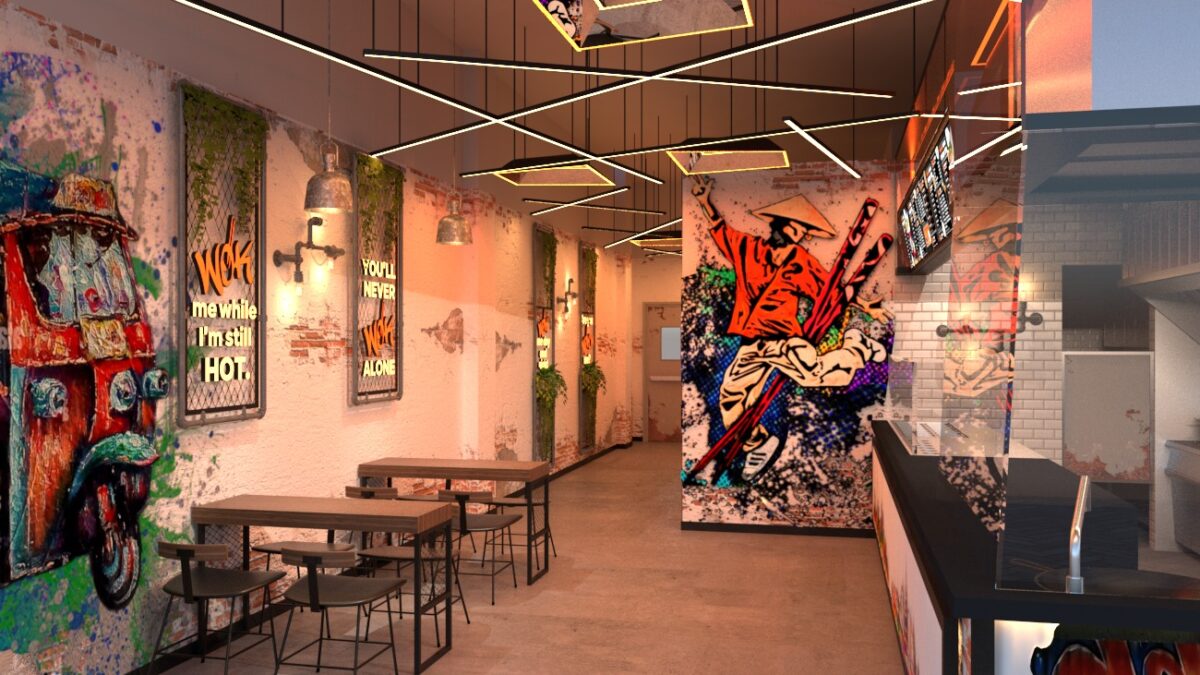
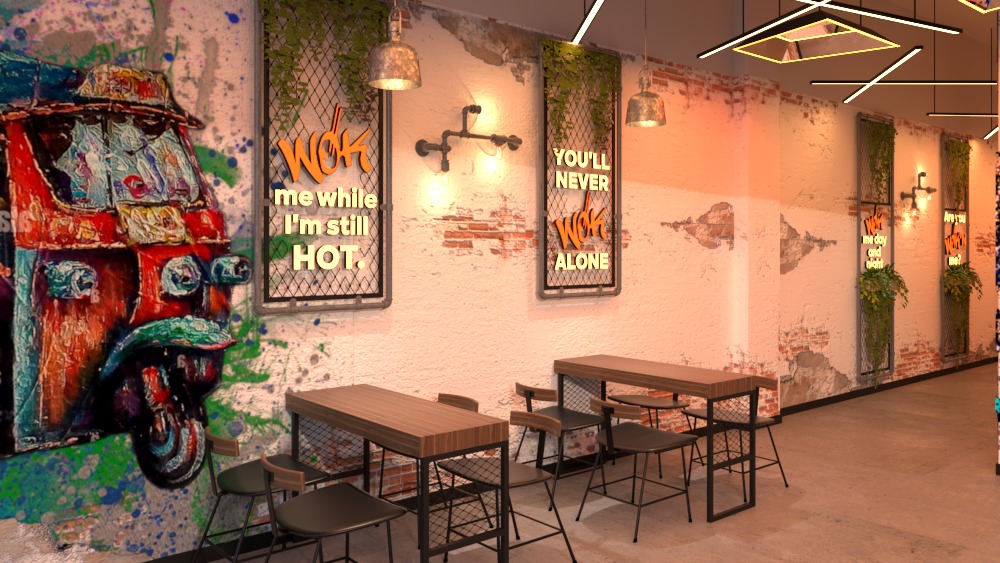
The first location in Canada opened on January 26th in Liberty Village in Toronto and is 1,000 square feet.
“Starting in Dubai in 2017 as a humble homegrown brand, we have woven our journey through expansions and challenges, notably the global pause brought by the pandemic. Adaptation became our strategy, leading us to explore the cloud kitchen model, which significantly propelled our growth. Today, with immense pride and a sense of coming full circle, we are introducing our unique blend of personalized Asian cuisine to Toronto, a city I have always considered a second home. It is not just about opening another location; it is about bringing a piece of our journey, our flavours, and our innovative dining experience to the vibrant heart of Canada,” says Gaurav Sabharwal, CEO and Founder of WOK BOYZ.
Toronto, known for its vibrant food scene and diverse population, was a natural choice for the brand’s first location in Canada. Sabharwal, who is Canadian himself, was drawn to Toronto because of its dynamic growth and the opportunity to introduce a new culinary concept to his home. Liberty Village, with its mix of young professionals, offered the perfect setting for the brand’s first location.
Personalized Meals
Image: WOK BOYZ
The Liberty Village location offers an innovative dining experience, where customers can take the lead in their meals. Customers can choose from a variety of noodles, rice, proteins, vegetables, and sauces that represent different Asian countries – “offering a culinary experience that is diverse and delicious.”
The experience is topped off with a “theatrical flair” as meals are prepared on a fiery wok in front of customers.
“Imagine walking into our space, where you become the artist of your meal, crafting it with a palette of flavours from across Asia. At the core of our menu is the build your own concept … It is all about creating a dish that is uniquely yours watching it come to life on a fiery wok right before your eyes. This personalized experience, where you are not just a spectator but a participant in the creation of your meal, is what sets us apart.”
Expansion Goals
Gaurav Sabharwal
(Image: WOK BOYZ)
Looking ahead, the brand has ambitious plans for the Canadian market. The goal is to open at least 15 stores in the Toronto area within the next five years, including Mississauga, Milton, and Kitchener, and wants to grow its footprint to “become part of the Canadian dining landscape.”
This year, WOK BOYZ will be opening three new locations, with the next one potentially in Kitchener.
Outside of the GTA, the brand is going to be starting its search to expand into new provinces, such as British Columbia. Sabharwal says he hopes to secure the location as soon as possible and start development, but until then, an exact location will be unknown. As for other locations, the brand is looking for the right opportunity, and would “love to get into Mississauga. Once we have the right location, I think we will commit and move forward with the development plan.”
Image: WOK BOYZImage: WOK BOYZ
15 store locations is the minimum to expect within the next five years as Sabharwal says if there are other opportunities to take up, he will.
“As far as our vision for Canada goes, we are just getting started. This year, we are aiming to unveil three stores in the Toronto area alone. With the first one already making waves, we are on the hunt for our next location, eyeing spots in Kitchener for its dynamic atmosphere and potential – but why stop there? Over the next five years, we have set our sights on a minimum of 15 stores within the GTA, and let’s not forget about our dreams for Vancouver and beyond. It is not just about numbers for us; it is about weaving our brand into Canadian communities, bringing our unique flavours to every corner of this vibrant country. The Canadian market is huge and the opportunity is immense.”
Sabharwal says he is also looking to continue expanding internationally as WOK BOYZ has already had successful launches in places such as Ghana and has recently opened in Oman.
As for keeping up with what consumers are looking for, the brand continues to innovate by tracking feedback and adapting to be aligned with their preferences. WOK BOYZ’s in-house chef is also constantly creating new recipe developments and is currently working on a new dish for the next quarter.
“I look forward to working in Canada and our start has been brilliant. We managed to have about 250 people on the day of the launch at Liberty Market, so it was fantastic and a very encouraging launch – Toronto is showing us a lot of love. The level of feedback and comments we are getting is amazing and I think Torontonians really know how to express their comments that we can use. So we are really thankful for all the love that Toronto is showing us and we look forward to leveraging on all of that and tracking our growth.”