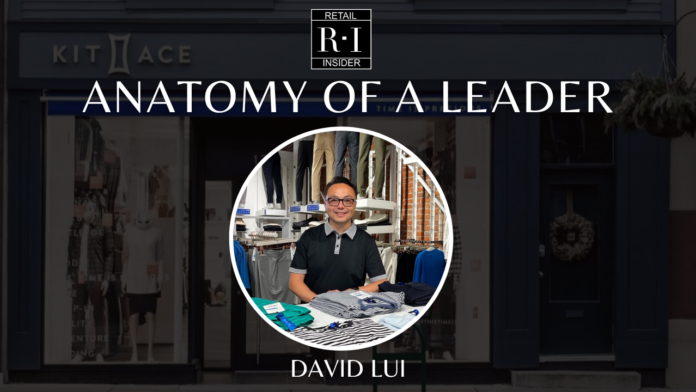
Retail has been part of David Lui’s DNA from a very young age.
David Lui
“I was born and raised in an entrepreneurial family. My dad immigrated here to Canada,” said Lui, who is CEO of Kit and Ace and Casca Designs, and co-founder of Unity Brands. “I was inspired by what he was doing. He was running retail like grocery, restaurants. Somewhat typical of an immigrant family.
“I was inspired and I just thought I want to get into the business. So what I did when I was 18, at that time there was a huge influx of folks from Hong Kong coming into the city, and I wanted to do something that was relevant to them. So I just made cold calls into Hong Kong to some companies to a fax machine. Received their response. Flew over there to negotiate. I won exclusive licence for a Hong Kong-based brand and brought it into North America.
“So I started opening my own freestanding stores. I had 12 stores. Six stores in Vancouver. Six stores in Toronto. Had a great 10-year run with it. Women and men’s apparel built more around the casual and work inspired and it was a very popular brand in Hong Kong at the time. My motto was let me bring something from their home to their new home in BC and Canada. That was my vision.”
Eventually, he moved out of the business due to some issues with a partner, took six months off and then went into corporate life.
David Lui (Photo: Andrew Marek – Supplied by David Lui)
Lui was born and raised in North Vancouver.
“At the young age of 18 I had the decision of to either go post-secondary or go into business. So I just decided to go into business. I was too impatient. I wasn’t a fan of school. So I didn’t pursue school.”
He did however go back to school and received his Executive MBA in 2013 from the Ivey Business School at the University of Western Ontario.
Lui is a co-founder of Unity Brands, a company he formed with Joe Mimran and Frank Rocchetti. Unity Brands acquired Kit and Ace and Casca footwear. The company also purchased Mastermind Toys. He is also the co-founder and CEO of Motive Brands Collective, a company that specializes in investing in emerging consumer brands.
Lui has an extensive background in retail with over 30 years of retail and marketing experience and is known for his award-winning brand transformations, e-commerce and digital knowledge along with his passion for scaling businesses.
David Lui from Business in Vancouver Article, November 25th, 2003 (Photo: Dominic Schaefer – Supplied by David Lui)
He has worked and led many retail brands including Theme, Esprit, Mark’s, SportChek (Canadian Tire Corporation) and most recently, he was the CEO at Korite International. In 2022, he was ranked 11th in the Global CEO Awards. His portfolio includes being named CEO of one of the Fastest Growing Companies in Canada (2x), Fastest-Growing Company in British Columbia, Canada (2x), winner of Canada’s BDC Young Entrepreneur Award, and a Business in Vancouver Forty under 40.
“My parents being in retail it was just something I fell in love with,” said Lui. “Quite frankly I’ve never left retail. I just love the pace of it, the energy, ever-changing. I’m a bit of an adrenaline junkie – one that takes some risks.
“I tried my hand into software, marketing for software, there’s some transferable skills from a marketing perspective but I missed the action of retail. Quite frankly, I missed the action of apparel. I love the fashion. I love trends. I love how people dress. What is casual. What is formal. I just love apparel.”
Lui said his father taught him a lot as a young kid. How to stock shelves. How to stock milk. How to cut vegetables. He would accompany him on buying trips at wholesalers or auctions.
“I was working the cash desk at a very young age. I just loved it. Meeting people with the customer on the floor. My dad taught me well. I think my dad probably wanted me to carry on the business but I decided I wanted to get into fashion,” he said.
David Lui from Richmond Review Article, December 6-7, 2003 (Photo: Chung Chow – Supplied by David Lui)
When it comes to business, Lui’s philosophy is the importance of reinventing oneself and challenging oneself.
“It’s never steady Eddie. It’s really continuously evolving. Challenge yourself. And don’t get complacent,” he said.
“Details. Be very detail oriented. If you’re an entrepreneur, you have to know your numbers. You have to know how things work. And as you progress, grow and scale, let your team do the work but have a foundation of understanding how things work that you can still stay on the pulse of it but not micro manage it.”
David Lui from Profit Magazine, June, 1996 (Photo: Perry Zavitz – Supplied by David Lui)
Lui said retail never was easy for him. Not an easy ride. It’s ever changing. Bricks and mortar to e-commerce and now a re-acceleration of bricks and mortar with an e-commerce and omni channel presence. Coming out with better product is the key.
“It’s a tough business but it’s an exciting one at the same time,” he said.
Image: David Lui
Lui is a busy man juggling all the brands these days. The busy schedule of an entrepreneur can take its toll both mentally and physically on people.
“About 13 years ago I decided I am going to get healthy,” he said. “When I went through my career in being busy, moved around quite a bit, fortunate to have an understanding wife that traveled with me, but I was 50 pounds heavier. I just decided that health was way more important.
“I decided I’ve got to get back into it, I confess. I do a lot running, cycling. That’s what I love doing. I think that calms my mind and I need to do more of that now. My kids always inspire me. At their activities and events. I would coach their soccer team. My family is definitely an electrical outlet for me because they charge me up.
Retail Insider is streamlining its Canadian retail news from around the web to include a handful of top news stories that can be viewed quickly during the day. Here are the top stories from the past 24 hours.
Automated retail, like this smart cart seen at a Sobeys grocery store in Oakville, Ont. in November 2019, is on the rise across Canada. THE CANADIAN PRESS/Nathan Denette
The new coffee automat consisted of a touchscreen for placing orders, a window that allows customers to watch a robotic arm prepare their coffee, and a slot that dispenses the completed order.
As of the writing of this article, there are at least 10 coffee automats, six automated pizzerias and 14 unstaffed convenience stores within Toronto — and even more in the Greater Toronto Area.
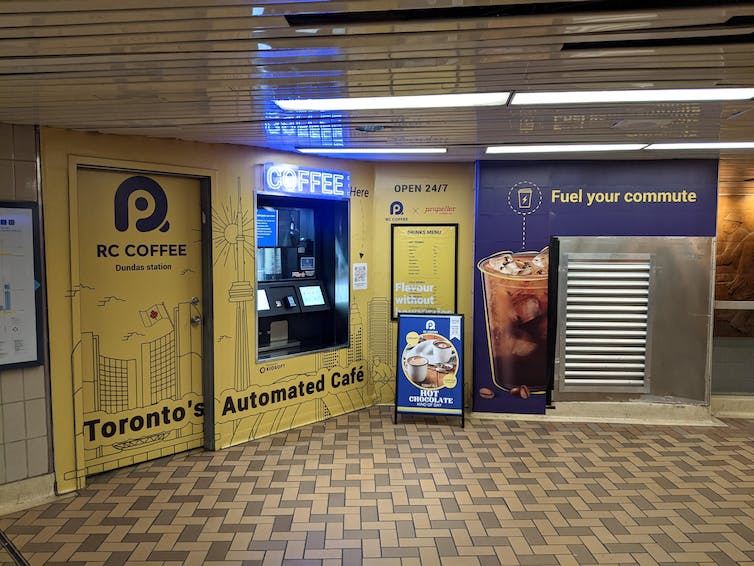
There are currently ten RC Coffees in Toronto, including this one inside of Dundas Station, one of the busiest subway stops in the city. (Mathew Iantorno)
These novel businesses often emphasize unparalleled convenience enabled by innovative new technologies. As RC Coffee advertises on their website: “our ground-breaking robotic coffee is available 24/7 and stays open every day of the year.”
Although the contactless convenience of these stores can be captivating, it’s important to pause and consider who benefits most from these innovations and who is left behind.
No card, no phone, no service
One concern is that automated stores generally operate on a cashless business model. Checkout is accomplished through a touchscreen interface paired with a point-of-sale device that only accepts debit, credit or smartphone payments.
Although convenient for many, cashless checkout arrangements can prevent certain individuals from patronizing these businesses.
Those currently experiencing homelessness are often cited as the primary demographic that still relies on cash; however, it is estimated that about 15 per cent of Canadians are “underbanked,” meaning they have limited knowledge of or access to digital banking services.
Since these underbanked individuals often hail from low-income communities, they are already disproportionately burdened by the transaction fees associated with debit payments.
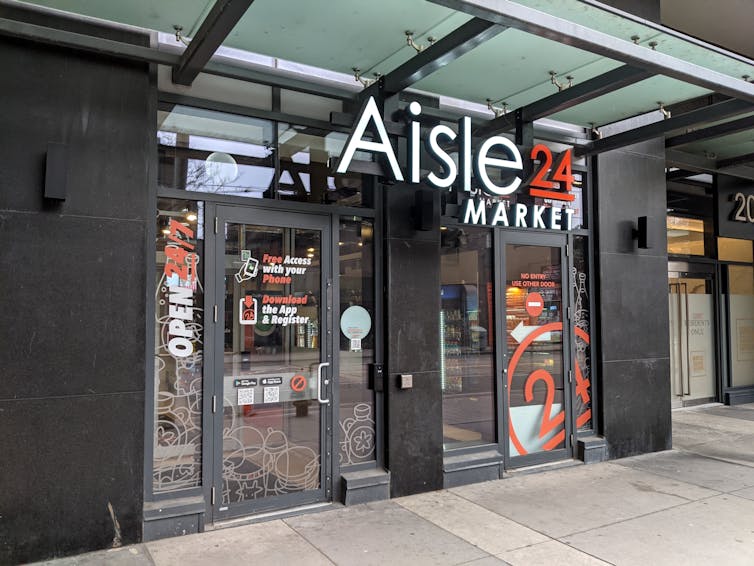
The Aisle 24 location at Dundas Square Gardens provides instructions for downloading the app and creating an account on the front door. Customers cannot gain entry without registering. (Mathew Iantorno)
Aisle 24 goes one step further by requiring customers to download an app and create an account to enter their unstaffed convenience stores. This not only presents an obstacle for the communities mentioned above, but also impacts seniors, who still lag behind in smartphone adoption.
Automation and accessibility
Unlike the self-checkout aisles in grocery stores, which typically maintain staff to help troubleshoot technical issues, automated stores generally have no onsite employees. This poses a potential problem should a customer require immediate assistance — specifically, assistance related to a disability.
Similarly, instructions for navigating these autonomous experiences — which can already be physically or cognitively challenging due to their atypical interfaces and floor plans — are predominantly provided visually through electronic signage, printed instructions and floor decals.
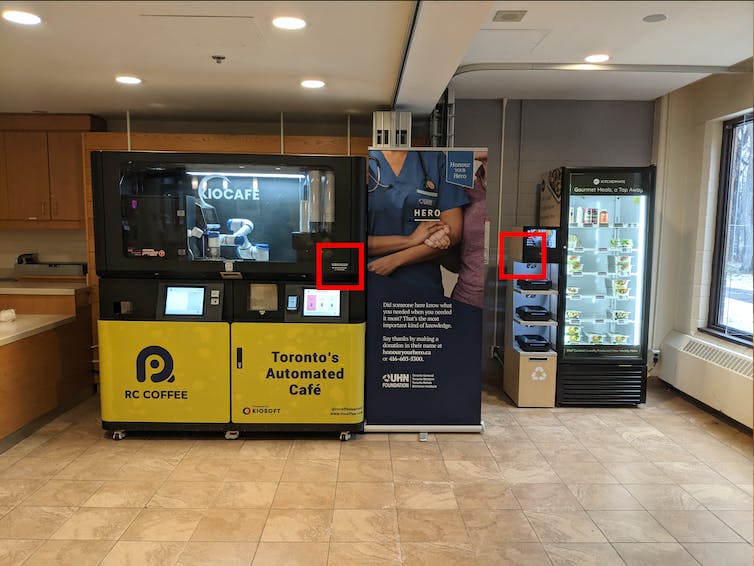
Contact information is typically printed on an automat, but it is often difficult to spot. (Mathew Iantorno)
Although these businesses generally provide a phone number or email address for remote assistance, the absence of onsite staff raises questions about the compatibility of unstaffed retail with the Accessibility for Ontarians with Disabilities Act (AODA).
The customer service standard under the AODA mandates that all customers should have equal access to services without having to accept more inconvenience. It specifically addresses concerns about businesses over-relying on visual displays instead of customer service.
Disappearing public amenities
Lastly, the automation of these retail locations often closes off taken-for-granted public amenities. In large North American cities like Toronto, spaces like public parks, shopping malls and subway stations are increasingly being designed without expected amenities like sitting areas, drinking fountains and public bathrooms.
The architecture of automats like RC Coffee are characterized by such omissions. The bathrooms, indoor seating and free Wi-Fi that we would normally expect from a cafe are notably absent from these locations.
Instead, the building façades have been converted into seamless interfaces for taking orders. And, in many cases, amenities were previously available at these sites but were removed during renovations.
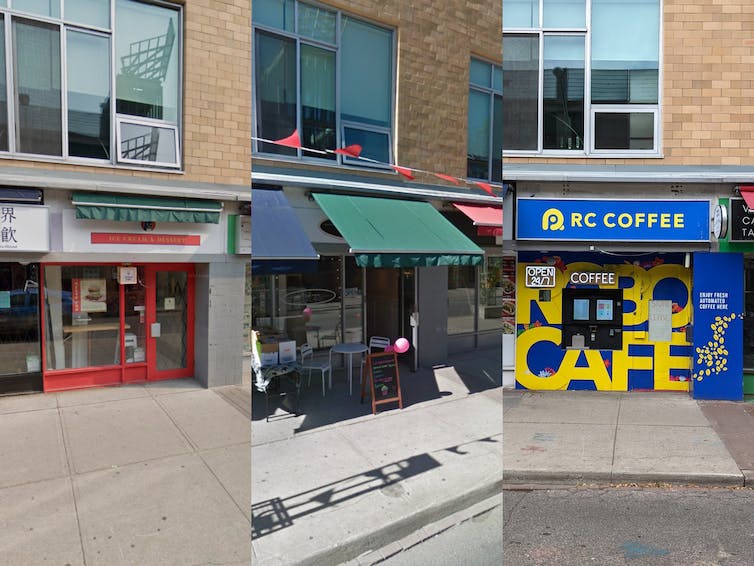
Transition of the 160 Baldwin Street retail location over time. Note the removal of amenities, including an awning that would otherwise provide shade and shelter to passersby. (Google; Mathew Iantorno)
Historical Google Street View data reveals that the RC Coffee on 160 Baldwin Street in Kensington Market, for example, was home to two traditional sit-in cafes prior to the opening of the automat in 2021.
Oakridge Park Announces Luxury Retail Expansion, Attracting Top Brands to Vancouver
Craig and Lee discuss Oakridge Park’s transformation into a luxury retail hub, which will include a mix of luxury and upper contemporary brands such as Christian Louboutin, Miu Miu, Alexander Wang, Maison Margiela, and Versace. This marks a significant upscale shift for the shopping centre which was formerly known as Oakridge Centre. With about 20% of its retail space dedicated to luxury brands, Oakridge is set to become an exclusive mall attracting a wealthy clientele. Craig shares insights from Crystal Burns of QuadReal, emphasizing the strategic positioning of Oakridge Park in Vancouver’s retail scene.
The discussion extends to the introduction of new-to-market brands to Vancouver and the implications for the city’s luxury retail landscape, highlighting the city’s capacity to support this influx of high-end retailers.
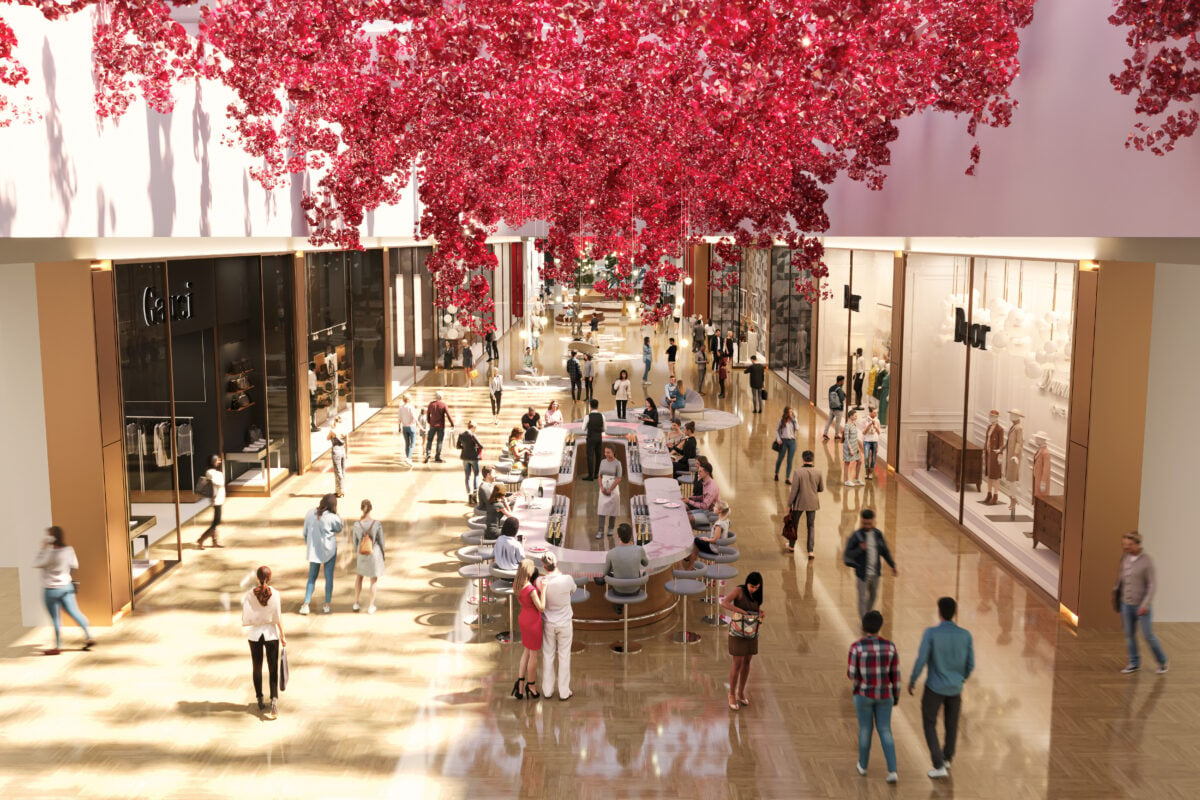
Rendering of the ‘luxury run’ at Oakridge Park. Image via QuadReal
Craig and Lee further explore the presence of existing brands in downtown Vancouver and their expansion to Oakridge, including Louis Vuitton, Prada, and others. They ponder the future of luxury retail in Vancouver, considering the potential for market share shifts between downtown and Oakridge Park. Craig says that he anticipates future announcements and discusses the development’s impact, drawing parallels with Royalmount in Montreal. The conversation concludes with optimism for Oakridge Park’s contribution to Vancouver’s status as a luxury retail destination, eagerly awaiting the project’s completion and the arrival of new retailers in the spring of 2025.
The Weekly podcast part of theThe Retail Insider Podcast Network by Retail Insider Canada and is available on Apple Podcasts, Stitcher, TuneIn, Google Play, or through our dedicated RSS feed for Overcast and other podcast players.
Subscribe, Rate, and Review our Retail Insider Podcast!
Drop us a line at Craig@Retail-Insider.com. You can also rate us in Apple Podcasts or recommend us in Overcast to help more people discover the show!
Background Music Credit: Hard Boiled Kevin MacLeod (incompetech.com). Licensed under Creative Commons: By Attribution 3.0 License. http://creativecommons.org/licenses/by/3.0/
One thing Ottawa-based Lee Valley Tools has focused on over the years has been elevating the consumer experience.
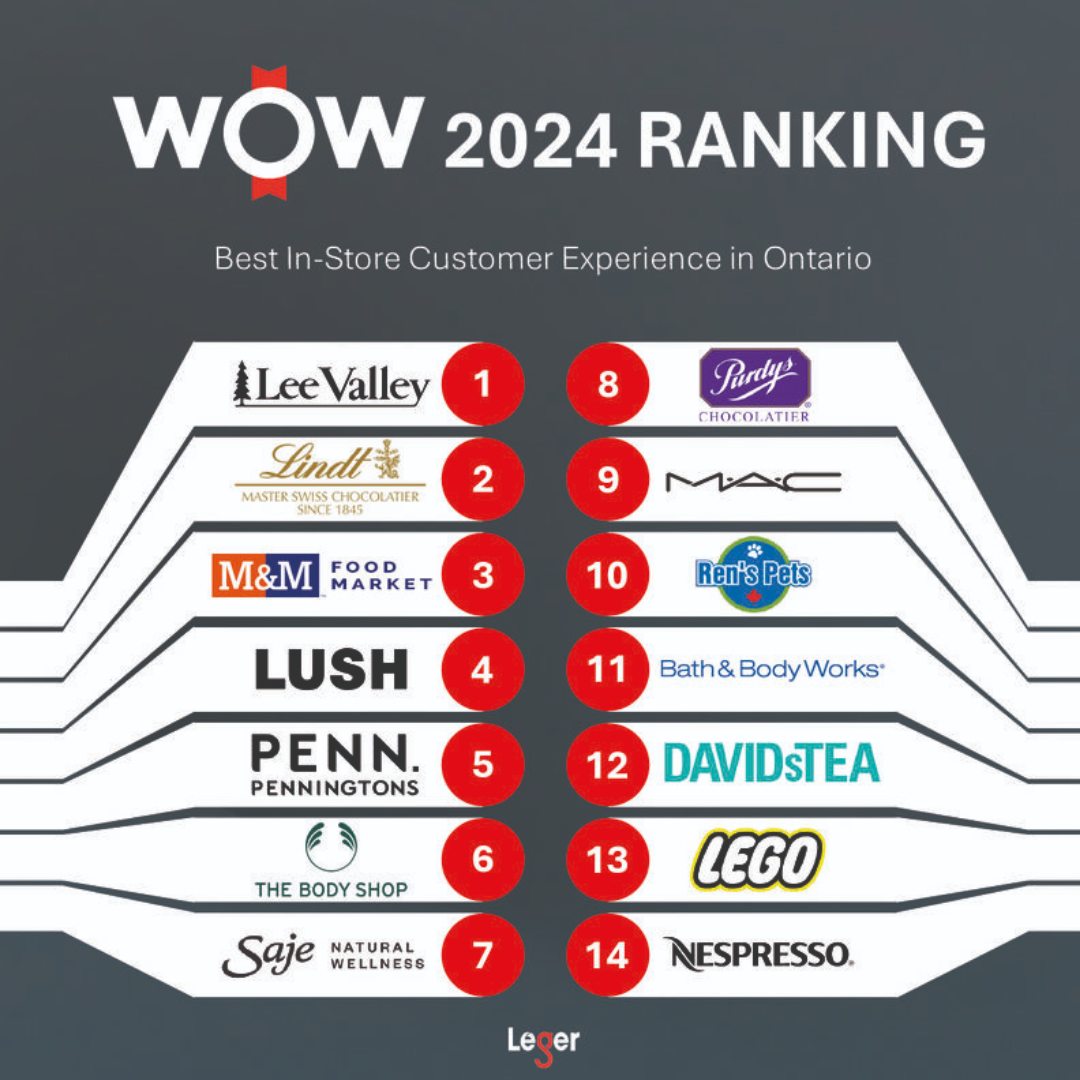
It’s what the brand has become known for in the marketplace. And recently the retailer was recognized as the top retailer in Ontario with the annual WOW In-Store study, published by Leger.
Jason Tasse
Jason Tasse, President and Chief Operating Officer, said the company is exploring pop-up locations as well as a full store in Toronto as it expands its brand in Canada.
“The fact that little Lee Valley against 162 brands, I think 30 per cent on the list are billion dollar companies, came out number one, for us, that’s what’s spectacular how this little company was able to achieve such a wonderful recognition,” said Tasse.
Image: Leger
Lee Valley Tools was founded in 1978 by Leonard and Lorraine Lee and today has 18 stores as well as one pop-up location in Saskatoon. There is also a satellite store in Almonte, Ontario called L.G. Lee and Sons. The company is from Victoria to Halifax.
The pop-up is in the Lawson Heights Mall in Saskatoon.
“It was a brand new initiative for us this year and it’s been a wild success,” said Tasse, adding more pop-ups are to come.
“We were going through our standard lease re-negotiation process with our landlord in Saskatoon and despite our best efforts, beginning the conversation typically a year before the lease ends, we were told with very short notice they weren’t renewing. I jumped on a plane, went to Saskatoon. We found a few locations and we really loved this location in Lawson Heights in one of the key malls there.
“But we had an extremely tight timeline. We had two months to fit up the store and move in. As a contingency plan, they had a pop-up initiative in the Lawson Heights Mall. So what we decided to do was as a contingency plan in case we couldn’t open for the holiday season, of at least a customer interface, a physical customer interface. And we’ve been talking about pop-ups for close to a decade. Let’s learn from it. Develop an internal capability. And what a wonderful way to capitalize on mall traffic because we’re a destination, specialty retailer to introduce our brand.”
No new stores opened in the past year but Lee Valley is actively looking and negotiating in the central Toronto area.
“We’re focusing on one right now,” said Tasse.
He said his primary objective is to “take this wonderful brand and help it reach its full potential.”
“Full potential yet to be defined. What I will tell you about Lee Valley being a family-run business, it’s not growth for growth’s sake or profit optimization. It’s growing responsibly in a way that we are able to preserve the brand, help it grow but not lose our way along the way.”
Tasse said the number one factor in the company’s success and in its Leger ranking is its people.
“They’re amazing. I visit our stores on a fairly regular basis and I say no matter what we do with technology and internal relevance and assortment, the conversation that you have with our customer by far will define the Lee Valley brand. Good days. Bad days. Up and down economies. A new person to hobbying craft or an experienced one. It is absolutely the personal interaction between our customer and our people that make the biggest difference,” he said.
“The second I would say . . . is we are really, really involved when it comes to the customer experience . . . We have heavy commitment from the most senior leadership and ownership in the organization to the store to the customer relationship and we are involved unlike I would say any other company I’m familiar with or have had feedback on.”
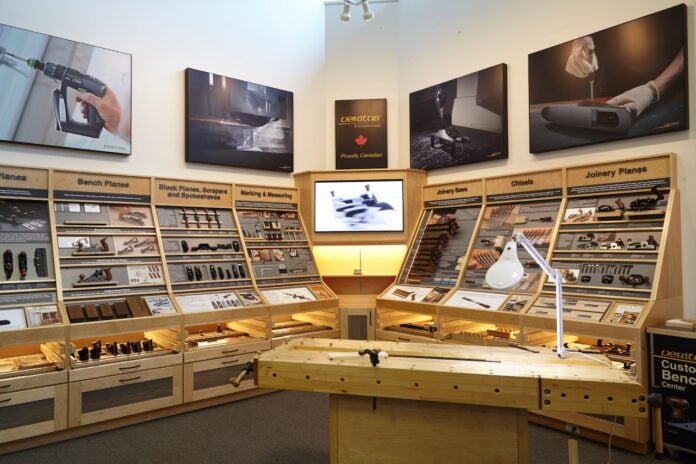
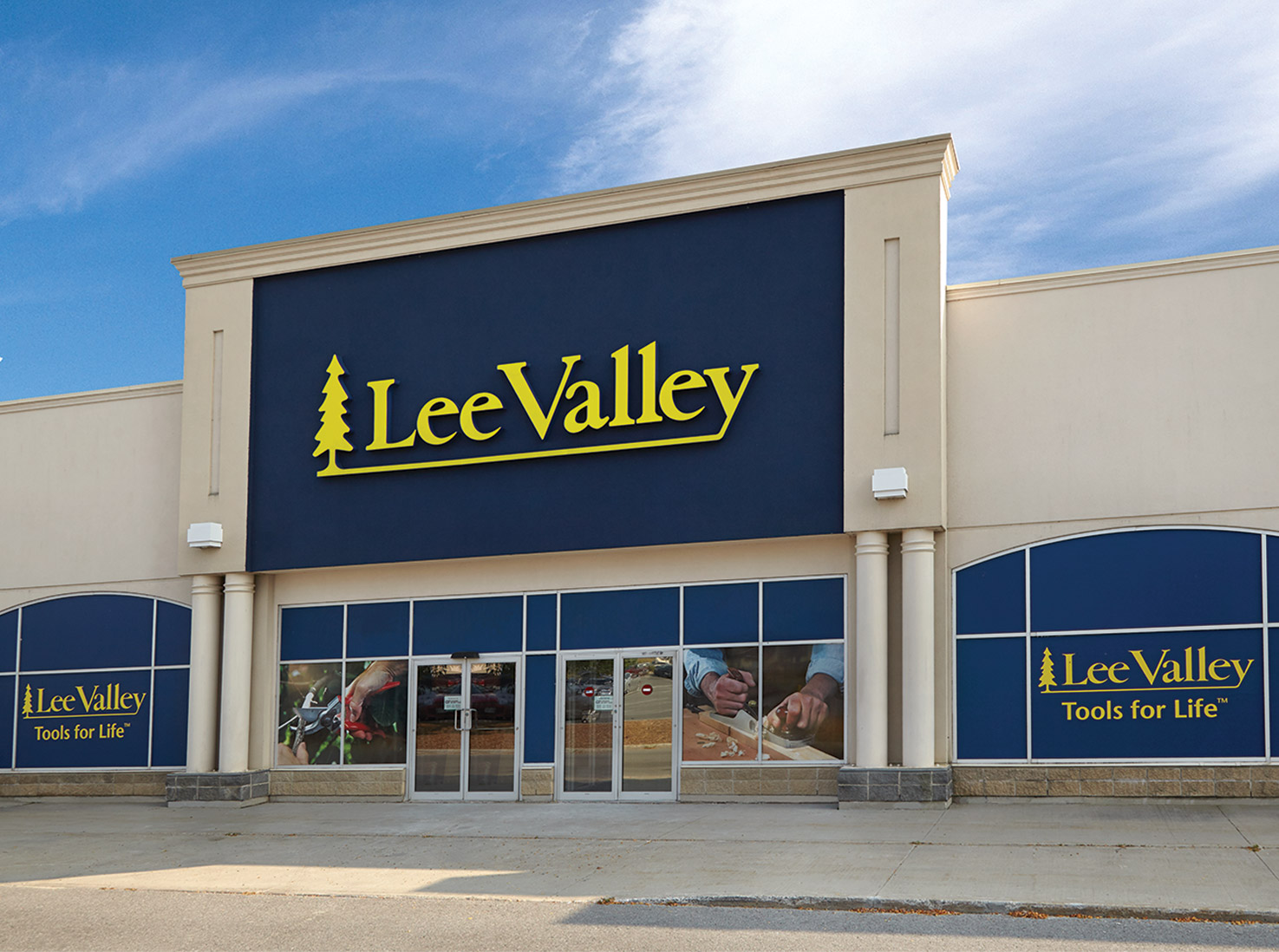
Lee Valley Tools in Kingston, Ontario (Image: Lee Valley)
Tasse said the brand is also extremely passionate about its products with 355 retail employees across the company and 86 per cent of them identified as a subject matter expert in either gardening, woodworking, hardware, power tools.
“That means the chances of you walking into a Lee Valley store and talking to somebody who really knows what they’re talking about is like almost every visit. And for us as an organization, it’s strategically important. We’ve institutionalized the fact that we’re passionate about the tools and if you’re going to sell product, you better know your products.”
Tasse was appointed President of Lee Valley in January 2021.
“What’s really special about this reward is that it was pretty much the response of 12,000 consumers . . . This is Ontario population. Our buyers deciding. That makes it pretty special for us,” he said.
“Our staff is really proud of it. This is a testament to the care and attention and the passion our employees share with the brand.
“Everything we do. All conversations in the organization. All touchpoints are relative to the customer focus and that’s special to have it at all levels of the organization like that and to win something like this just validates everybody’s hard work and genuine care. I use the word care intentionally because that’s what sets us apart. You can’t buy that.”
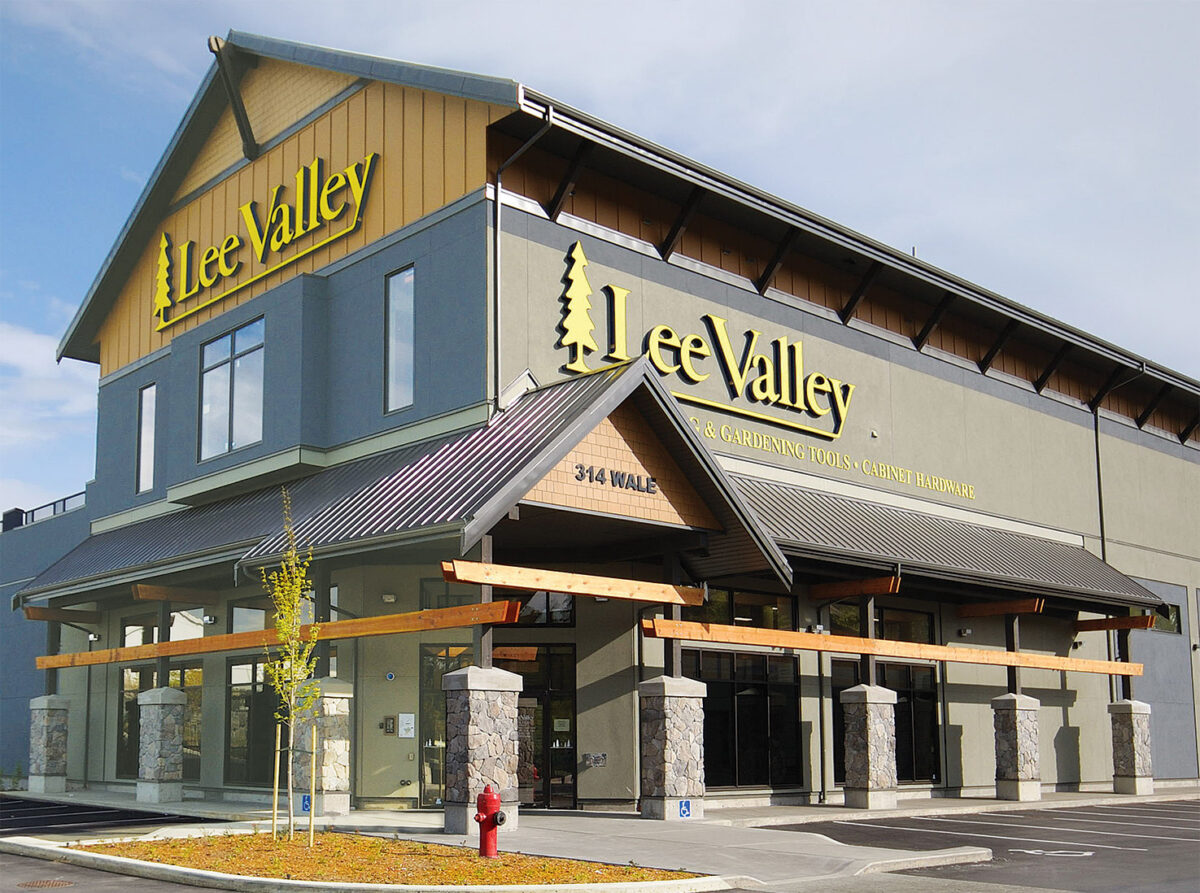
Lee Valley Tools in Victoria, BC (Image: Lee Valley)
Tasse said what the Leger award underscores is how important differentiating in today’s market is.
“Retail is ever-changing. Relevance is always being redefined. But boy, at a time when everybody’s really focused on channel integration and technology, what’s most important? The analog, human element. Of course, brand is important, the product and price, and all that academic stuff, but just surrounding yourself with incredible people, that’s really what matters the most.”
Tasse said customer expectations are higher today. Transparency today is greater than it has ever been.
“I would say there’s pressure on, if you’re faking it. But if you’re authentic, to the core, tell the world about it. We believe in that and it’s a good experience.”
He said the experience in-store is ever-changing and evolving. From entering the store, the idea is to grab the customer’s attention so they see it is unique in the marketplace.
“We’re always different. Our differentiation begins with physically how we show up and then of course there’s the importance of the product,” added Tasse. “We’re heavily involved right from ownership to senior management to all levels. It’s always on our strategic agenda to remain and to really focus on the experience. And we’ve done everything from in-depth understanding of our customer base through research, we’ve worked with KPMG in defining our value proposition so that’s codified so we can understand it. And we are constantly experimenting in the store.
Retail Insider is streamlining its Canadian retail news from around the web to include a handful of top news stories that can be viewed quickly during the day. Here are the top stories from the past 24 hours.
Canadians might be trimming their budgets but they’re not trimming the romance this Valentine’s Day, according to new data from Moneris.
Also, a survey by the Retail Council of Canada survey suggests fewer Canadians will celebrate Valentine’s Day, but those who are, plan to spend just as much if not more.
The survey said the number of people planning to celebrate Valentine’s Day this year has dropped significantly by nine percentage points compared to 2023 with 48 per cent. It also found that 48 per cent of males and 49 per cent of females celebrate Valentine’s Day. The male versus female split celebrating Valentine’s Day has remained unchanged compared to 2023.
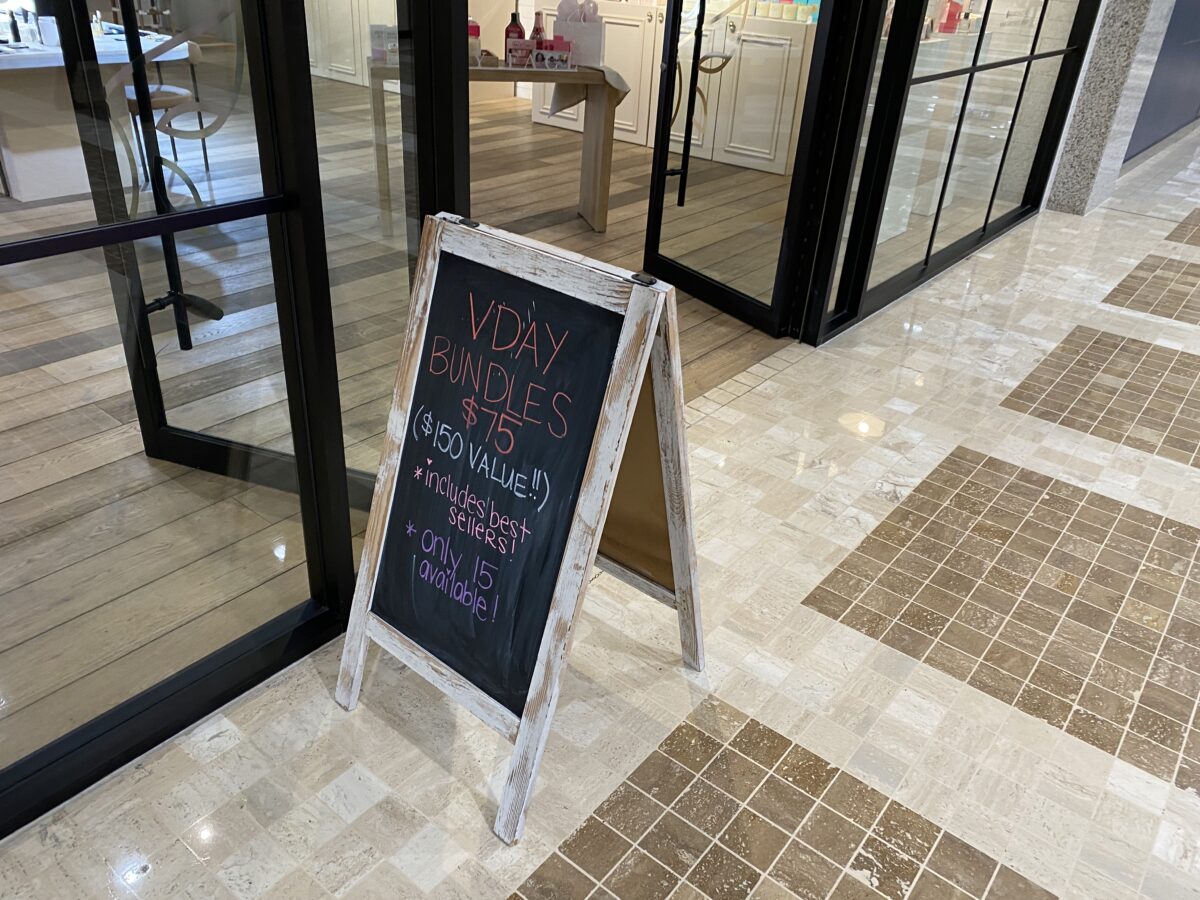
Valentine’s Day Signage at Fancy Face (Image: Dustin Fuhs)
The Retail Council of Canada’s survey said 67.1 per cent of Canadians expect to spend the same amount of money on celebrating Valentine’s Day as they did last year. About one in six Canadians (16.5 per cent) expect to spend more this year on purchases related to Valentine’s Day. The number of people planning to spend the same or more as compared to last year has decreased by only 0.6 percentage points compared to 2023.
It found that approximately 41 per cent of Canadians will plan at least a week ahead before Valentine’s Day to make purchases. This number has changed by only one percentage point compared to 42 per cent in 2023 and 4.2 per cent of Canadians are impulse shoppers and make purchases on Valentine’s day. The number of people shopping on impulse has gone up by 0.7 percentage points compared to 3.5 per cent in 2023.
Around 49 per cent of Canadians spend $50 or less on Valentine’s Day. Compared to 2023, this number has decreased by 2.6 percentage points and 28.7 per cent of Canadians spend between $51-$100.
David Litwin
David Litwin, Senior Communications Specialist at Moneris, said Valentine’s Day, which falls at the beginning of the year can be an interesting bellwether for what businesses and consumers might expect for the rest of the year.
Right around the corner is Mother’s Day and Father’s Day and graduation season.
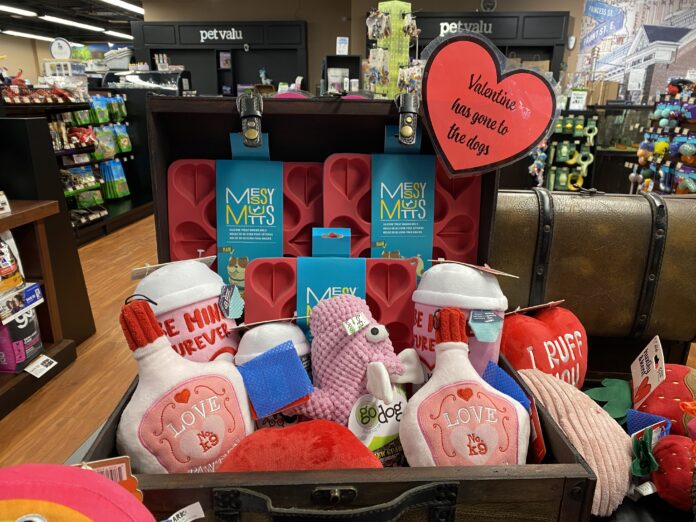
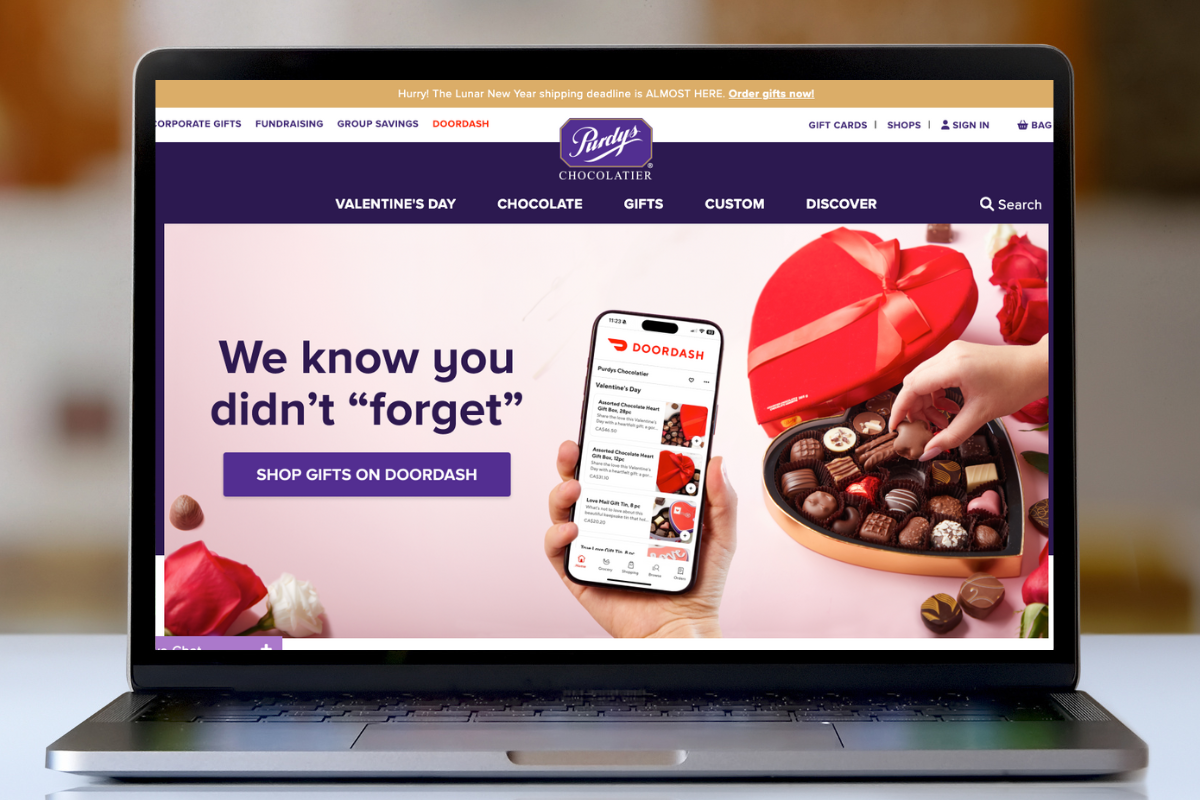
Image: purdys.com
He said Valentine’s Day spending can project what these businesses for those days might expect this year.
Here’s what spend data from Moneris indicates:
All the usual suspects on Valentine’s Day can expect a boost based on 2023 week-over-week spend volume (total dollars spent). Florists see the biggest boost with volumes five times higher (407 per cent). Candy, nut, and confection shops also more than double (130 per cent). Meanwhile, Restaurants (80 per cent), Jewellery stores (66 per cent), Card shops (46 per cent), and Bakeries (44 per cent) all see double-digit growth;
When it comes to spending on gifts and flowers, Canadians are cutting back instead of cutting out. Confectionary stores, card shops, and florists all saw an increase in transaction count but a decrease in average transaction size week-over-week last year. Florists saw the most significant increase of 739 per cent for transaction count and a decrease of 40 per cent for average transaction size. Confectionary stores saw an increase of 166 per cent for transaction count and a decrease of 13 per cent for average transaction size. Card shops saw an increase of 63 per cent for transaction count and a decrease of 11 per cent for average transaction size;
Jewellery stores and bakeries saw an increase in transaction count while the average transaction size was unchanged. Consumers aren’t necessarily spending more on jewellery but businesses will see more shoppers (65 per cent increase in transaction count), rather than size of purchase;
For bakeries, one can only eat so many baked goods before they go bad. Again, Valentine’s Day might mean more net new customers (40 per cent increase in transaction count), rather than larger orders;
Restaurants are cashing in on “funflation”. While customers save on experiences throughout the year, Valentine’s Day is an invitation to celebrate. Restaurants are the only category to see growth in both transaction count (35 per cent) and average transaction size (33 per cent).
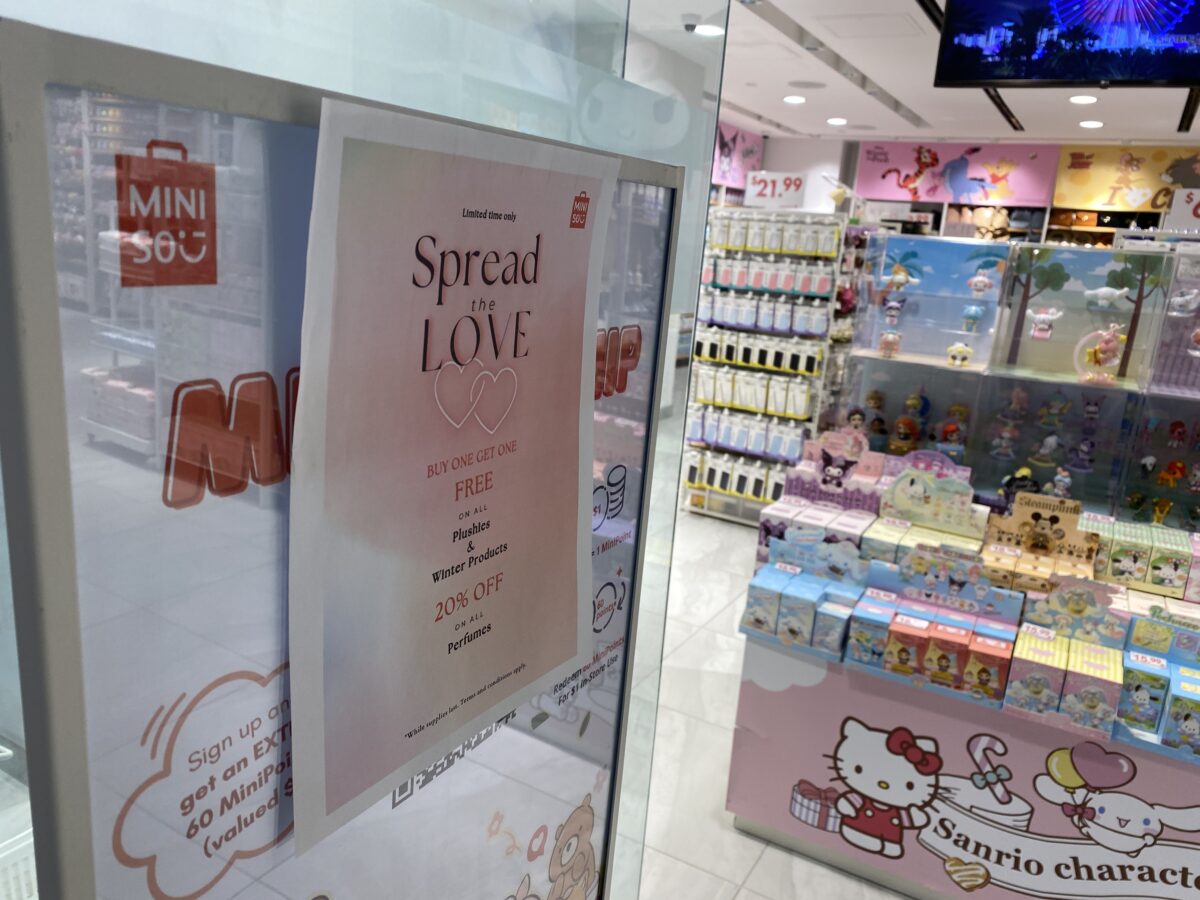
Miniso Valentine’s Day Signage (Image: Dustin Fuhs)
“Restaurants oftentimes for special occasions will run set menus and a set menu is a great way to kind of appeal to customers, communicate value and encourage them to spend a little bit more than they might have otherwise,” said Litwin.
“Inflation comes into play here as well. Canadians are really cost conscious day to day but a special occasion like Valentine’s Day is an opportunity for them to spend a little bit more and to celebrate. And Valentine’s Day is exactly that.”
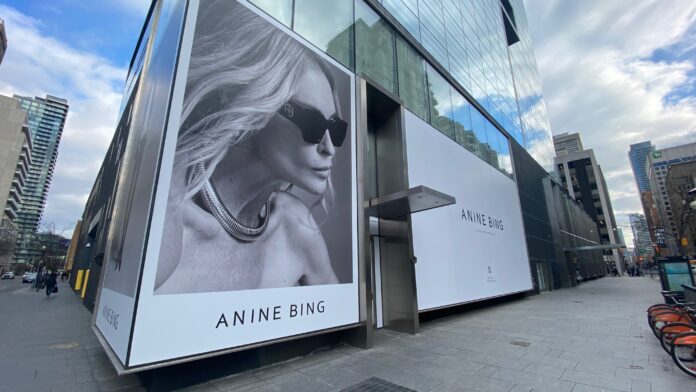
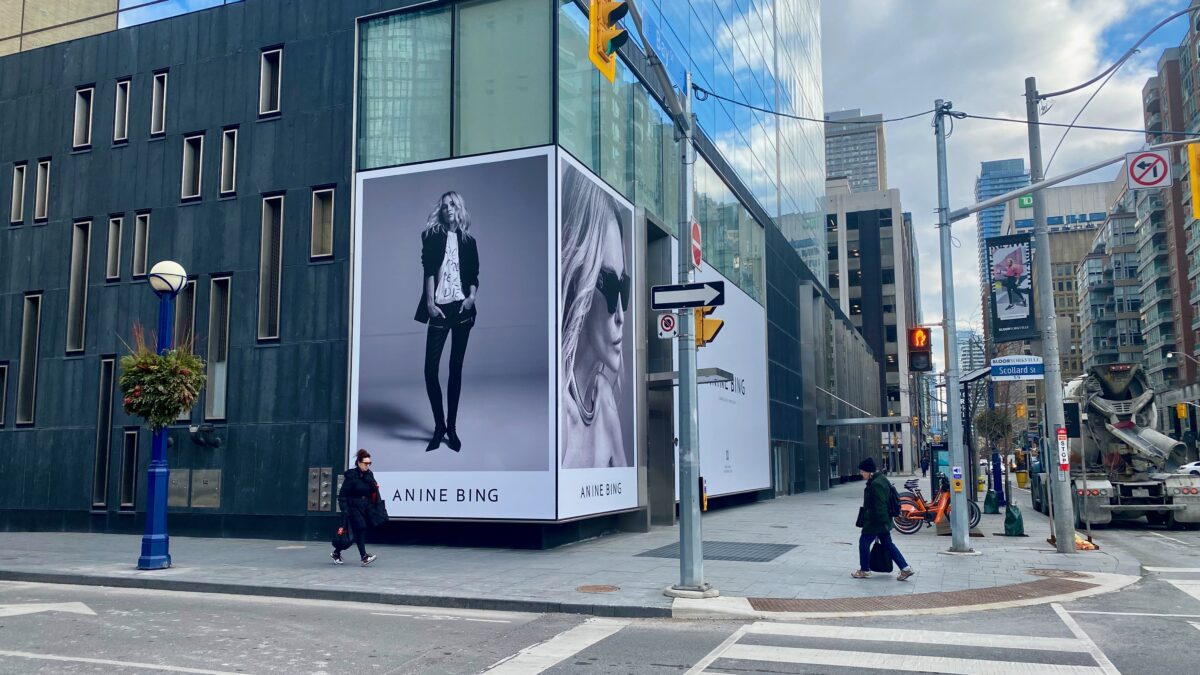
Construction signage for the new Anine Bing at the Four Seasons in Toronto at the corner of Bay and Scollard Streets. Photo: Craig Patterson
Los Angeles-based women’s contemporary fashion brand Anine Bing is opening its second Canadian storefront in a retail space at the Four Seasons Hotel in Toronto’s Bloor-Yorkville area this spring. It follows the recent opening of Bing’s first Canadian storefront at Toronto’s Yorkdale Shopping Centre.
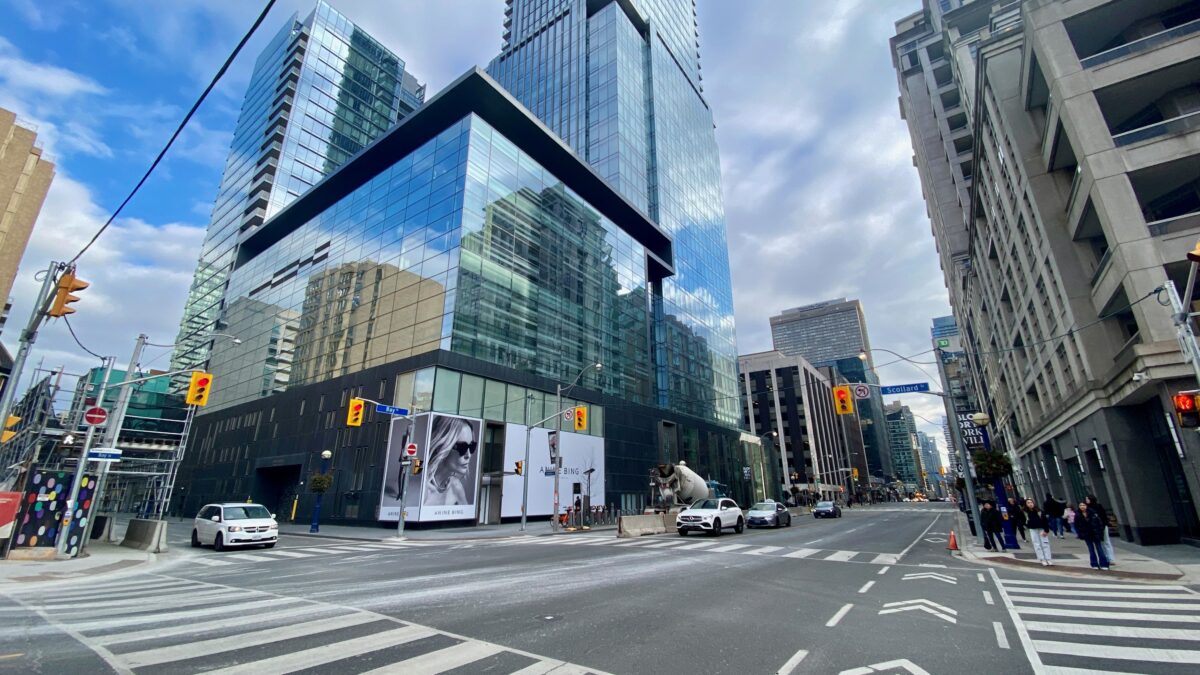
The new Anine Bing location at the Four Seasons, in a retail space at the southeast corner of Bay and Scollard Streets, was previously occupied by retailer Archives which shut its physical store during the pandemic. The retail space spans 1,193 square feet with a wide frontage at 1275 Bay Street. Mitchell Dearman of MCD Retail represented Anine Bing in the lease deal, with CBRE’s Urban Retail Team, under the direction of Arlin Markowitz and Emily Everett, acting on behalf of the landlord.
Arlin Markowitz said in a statement that the opening of Anine Bing at the Four Seasons Hotel, “marries the two world class brands at the height of fashion and hospitality in a lease that while small in square footage, will have a big impact on the Bloor-Yorkville node”.
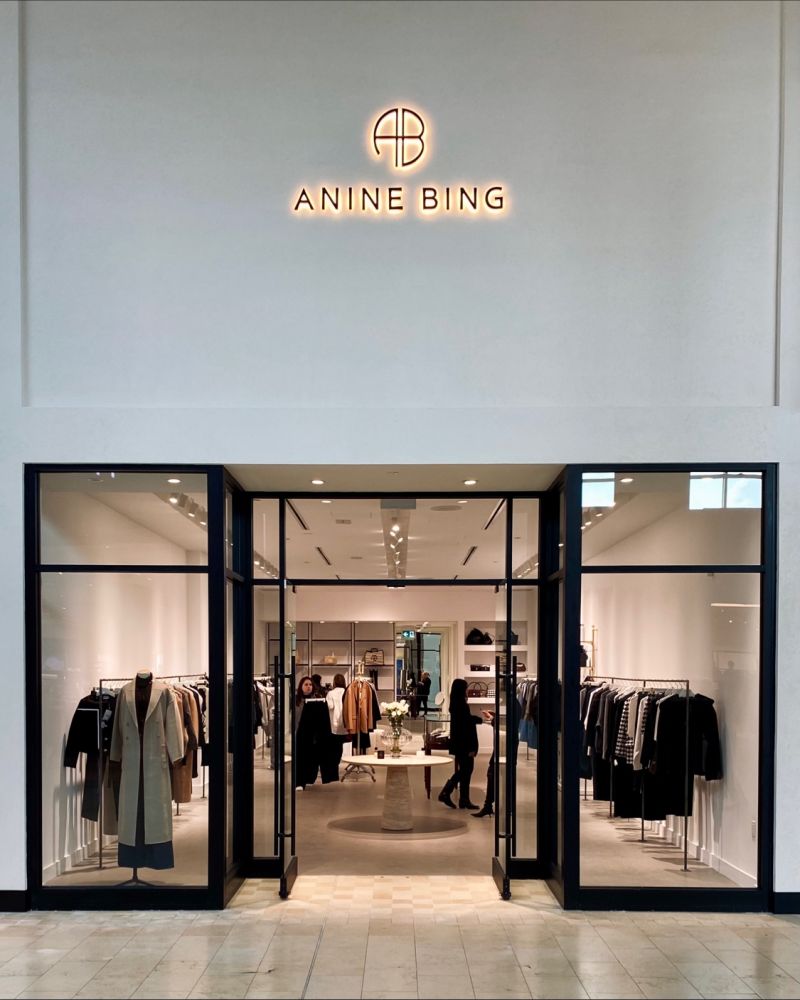
Future Anine Bing at 1275 Bay Street in Toronto. Photo: Craig PattersonAnine Bing at Yorkdale (Image: Anine Bing)
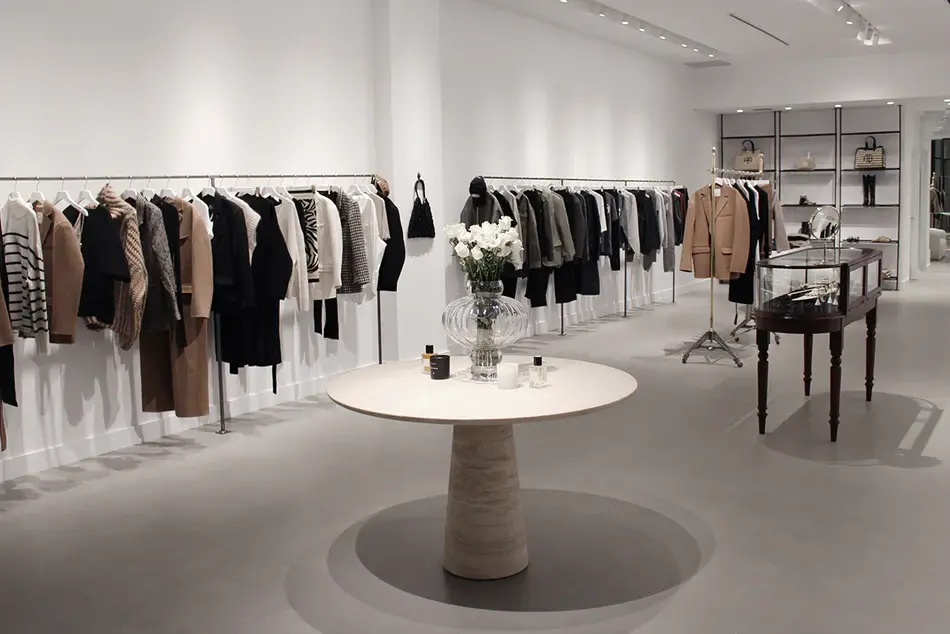
Anine Bing opened its first Canadian store at Toronto’s Yorkdale Shopping Centre in the fall of 2023. The 1,400 square foot location between Longchamp and a new Marc Jacobs store is across from Holt Renfrew, and features a minimalist interior.
The Anine Bing brand was founded by the designer of the same name in 2012, and is known to bring in “elements of Scandinavian simplicity with American energy” to its clothing and other product categories that include jewellery, accessories, bags and footwear. The brand has a following, which means despite fact that the Four Seasons Hotel is a distance from Bloor Street and Yorkville’s main shopping areas, Anine Bing is expected to attract clients and see success in the new Bloor-Yorkville store.
Anine Bing has 15 stores in the United States, including a mix of street front and mall stores. The company also has nine stores internationally in markets including London (3 stores), Paris (2 stores), Berlin, Melbourne (2 stores), and Sydney.
It’s not known yet if Anine Bing will open more stores in Canada — one could guess that Vancouver could be a target at some point, either a location downtown or at Oakridge Park, which will be completed in the spring of 2025.
Yorkdale store. Image: Anine Bing
The upper portion of Bay Street, North of Bloor Street, is seeing some changes that include new retailers and foodservice businesses. Last year, Israel-based Miznon opened its first restaurant location in Canada at 1235 Bay Street, which was followed by Pet Valu in the same building. Rumble Boxing recently opened on the building’s lower level and soon, Carrie’s Pilates will open above it at 62 Cumberland Street.
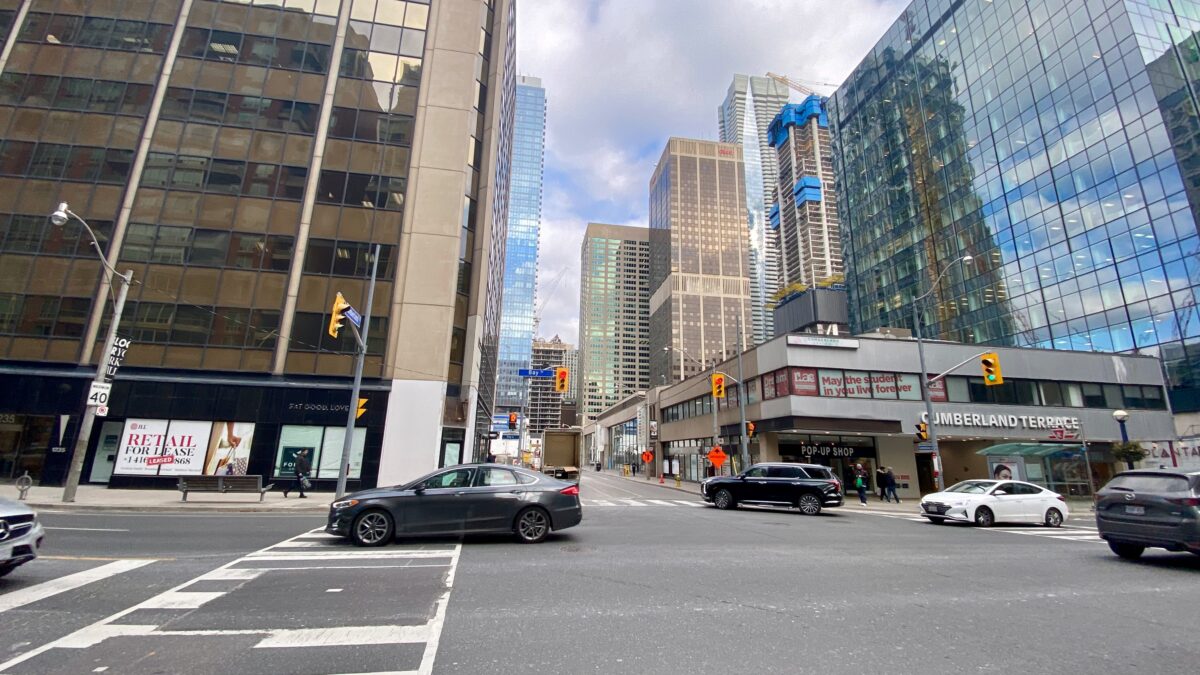
The office tower at 1255 Bay Street will eventually be demolished for redevelopment, with new ground-floor retail spaces being part of the mix. Cumberland Terrace, at the corner of Bay and Cumberland Streets will also eventually be demolished with a multi-tower development planned. Towards Bloor Street, more changes will be happening on the west side of Bay Street including an updated office tower on the corner and an extension of the Village of Yorkville Park that will involve demolishing the 1240 Bay Street office building that also houses various retail businesses.
Looking towards 1255 and 1235 Bay Street from the corner of Yorkville Avenue. Photo: Craig Patterson Looking towards Cumberland Street from Bay Street. Photo: Craig Patterson
Bloor-Yorkville is seeing a retail transformation that includes the opening of flagship locations for luxury brands. One of the most exciting upcoming retail openings will be Saint Laurent, which is building a 10,400 square foot flagship store at 110 Bloor Street West. It’s not yet known when the store will open, and construction appears to be delayed but is progressing. Canada’s first location for French women’s fashion brand Anne Fontaine will also be opening at 110 Bloor this year, joining Alexander Wang which opened in December and soon-to-open foodservice businesses including Paris Baguette and Mandy’s Gourmet Salads.
In terms of retail offerings, Bloor-Yorkville is competing primarily with the Yorkdale Shopping Centre for brands and shoppers willing to part with money on big-ticket items. Over the past decade, Yorkdale has managed to secure the largest single clustering of luxury brands of any place in Canada, and this year it’s adding another 100,000 square feet of luxury retail space to the mall. Bloor-Yorkville has managed to hold its own with new brands opening stores, while also offering a wide range of restaurants, bars, beauty services and other reasons to visit the area. Bloor-Yorkville also has one key brand not at Yorkdale — Hermes, which operates its Canadian flagship at 100 Bloor Street West. It’s next to a Holt Renfrew Men’s store which will be relocating back into Holts’ flagship at 50 Bloor Street West towards the end of this year.
Retail is seeing a growing concern of burnout among store managers due to operational pressures and the need for empathetic leadership. Miriam Feldman, a partner at fishRecruit for digital and retail practices, and Jeff Wahl, retail consultant at The Architect, share insights of retail burnout among managers. Here they dive into the issues, repercussions, and strategies.
Unveiling the signs of manager burnout
Image: Linkedin
Burnout begins with subtle changes in behaviour and performance, as Wahl says: “Typically, dedicated managers start calling in sick more often than they were before … if that starts happening, then leaders need to check in.” This early warning sign, mixed with unexplained decreases in store performance, lack of energy and joy in their work, decreased productivity, not completing tasks on-time, changes in body language, less engaged with customers are all signs of burnout and are from deeper rooted issues within the retail industry.
Jeff Wahl
“We are really only going to be able to see this if regional and district managers have boots on the ground. When you walk into a space, you can kind of tell the level of positive engagement from the leadership just by how everyone is engaging you as a customer,” says Wahl. “We just walked in with a customer lens and everyone’s body language is held back, are on their phones, or are not really as engaging as you expect them to be – that is coming from leadership and is a sign of burnout.”
Wahl and Feldman say it’s important for retailers to recognise these early indicators to take critical steps towards intervention, and a proactive approach in supporting retail managers navigate through the pressures of their role.
One person, multiple jobs
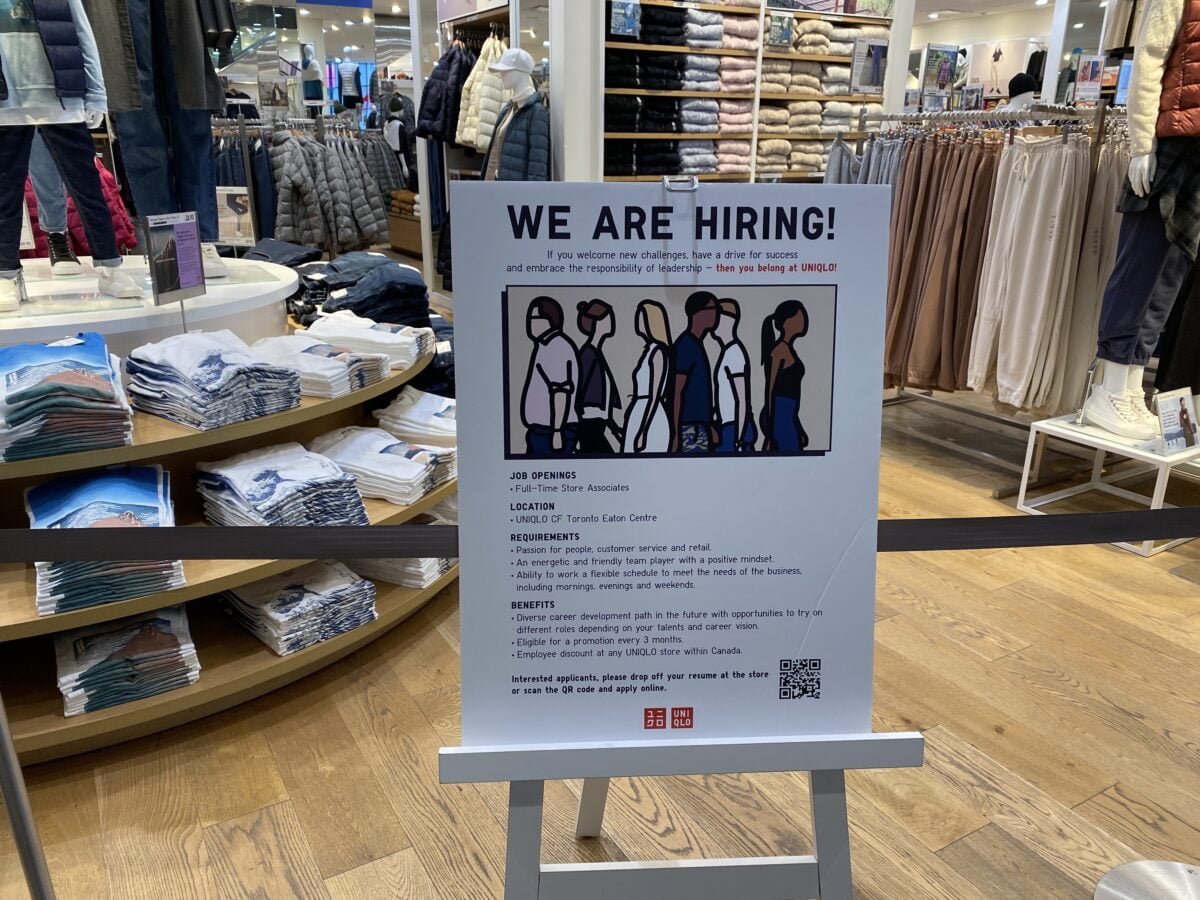
Uniqlo Hiring Sign at CF Toronto Eaton Centre – Photo by Dustin Fuhs
“The store manager is literally doing everything … The manager is the cashier, the receiving person, the person handling customer complaints. If someone is on break then they also have to answer the back door if there is a shipment. The reality is, the store manager does bear the brunt of the work and these big stores that we are accustomed to with these robust teams just don’t exist anymore. It is very hard, and this is even before we start talking about things like violence, theft, loss prevention, and mental health issues of the team – so it is just a tough business, the leader has to wear so many different hats and they are pushed and pulled in so many different directions,” says Feldman.
Miriam Feldman
Feldman says this type of environment is not seen in luxury stores where the retailers have the budget for more staff – but mostly seen in middle class stores such as Old Navy where staff is minimal and budgets are lower.
Middle-class stores usually experience higher foot traffic than luxury stores, leading to a greater volume of transactions and customer interactions, resulting in a more hectic work environment with managers and staff facing pressure to meet sales targets, manage customer service effectively – with fewer resources.
“Lipstick on a pig”
Wahl says there are some things retailers can do such as offering financial rewards such as employee compensation or bonuses.
“I think the hottest potato we can talk about is the financial rewards. I think that saying the answer is ‘if you pay people more it cures it’ is wrong – it is not the answer, just to come in and say ‘we are going to give everyone a 20 percent raise does not all of a sudden make people more dedicated, there needs to be different solutions,” says Wahl.
The problem lies in the nature of retail challenges – ranging from meeting sale targets to managing foot targets. When store performance is low and traffic is lower than expected – the quickest reaction involves cutting labour costs, a strategy Wahl says is “short-sighted.” This approach not only increases pressure on staff, but damages the customer experience.
“You are squeezing labour, but you are still spending millions on marketing, that approach is kind of like lipstick on a pig. If you are driving traffic into that space, but you have squeezed the labour, that experience is not going to be where it needs to be. So guests are going to be driven in there from these marketing initiatives, but their experience is not going to be there and service levels are going to be destroyed. If that is the customer’s first experience with that brand – you may never see them again,” says Wahl.
From Wahl’s experience, he says it requires more dedication and support from the regional and corporate teams to come in and make sure the store is where it needs to be.
Leaving the retail industry altogether
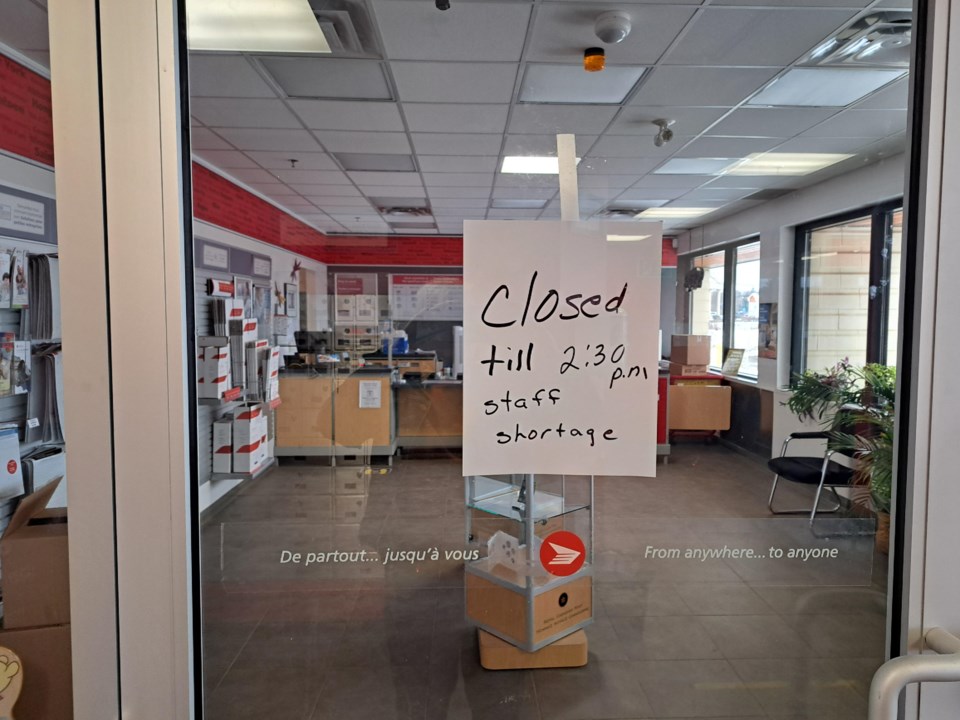
A sign on the door at the Canada Post outlet on Alloy Drive advised customers it was closed due to a staff shortage (Reddit)
Wahl says he has seen quite a bit of people suddenly leave the industry as “they no longer see a future for them.” Wahl says there are a couple of reasons for this, but these people are generally leaving to join another industry, such as an office job, for a balanced lifestyle.
“I see a lot of women doing this because a retail schedule and being a parent is very often not a cohesive marriage. If you are a single parent – forget about it. I was able to navigate having a retail manager schedule and being a parent because I had a partner who was able to pick up a lot of the heavy lifting when I couldn’t be there – now being a single parent, I can’t do that. Anyone who has kids and has to do it on their own, trying to work a retail schedule is almost impossible,” says Wahl.
As daycare is costly, Wahl says this is also a reason why people, primarily women, are having a difficult time having a retail career as “it is a huge out of pocket expense for them and also the amount of time they are not spending with their children that they want to – it is pulling a lot of very talented people, primarily women, out of the retail workforce. Another reason for managers leaving is job hunting to get a quick pay increase.
“It just seems that it is becoming less and less of an attractive career,” says Feldman. “It is really about service, and you need to pay people to deliver good service and I do not see this happening.”
Ripple Effects: From individual burnout to team disengagement
The fallout extends beyond the manager as it affects the entire team’s engagement levels and productivity: “As soon as a manager decides to check out, the rest of the team will have checked out within two to four weeks,” says Wahl.
Manager burnout can decrease team spirit and provides lack of support and motivation. A few weeks later, a retail store might have both a burnout manager and associates, causing a damaging effect to the consumer experience – driving away business and damaging the store’s reputation. By keeping communication open between managers and corporate leaders, retailers hopefully can reduce the amount of burnout and pinpoint when burnout symptoms start so they can get ahead of the problem before it affects the entire store team and starts to lose customers.
“If you have an employee and a team that is very engaged and creates a positive energy, then customers are going to spend more versus if you are not taking the time and not giving a great service to every single customer,” says Feldman.
“Million dollar question” – What can retailers do?
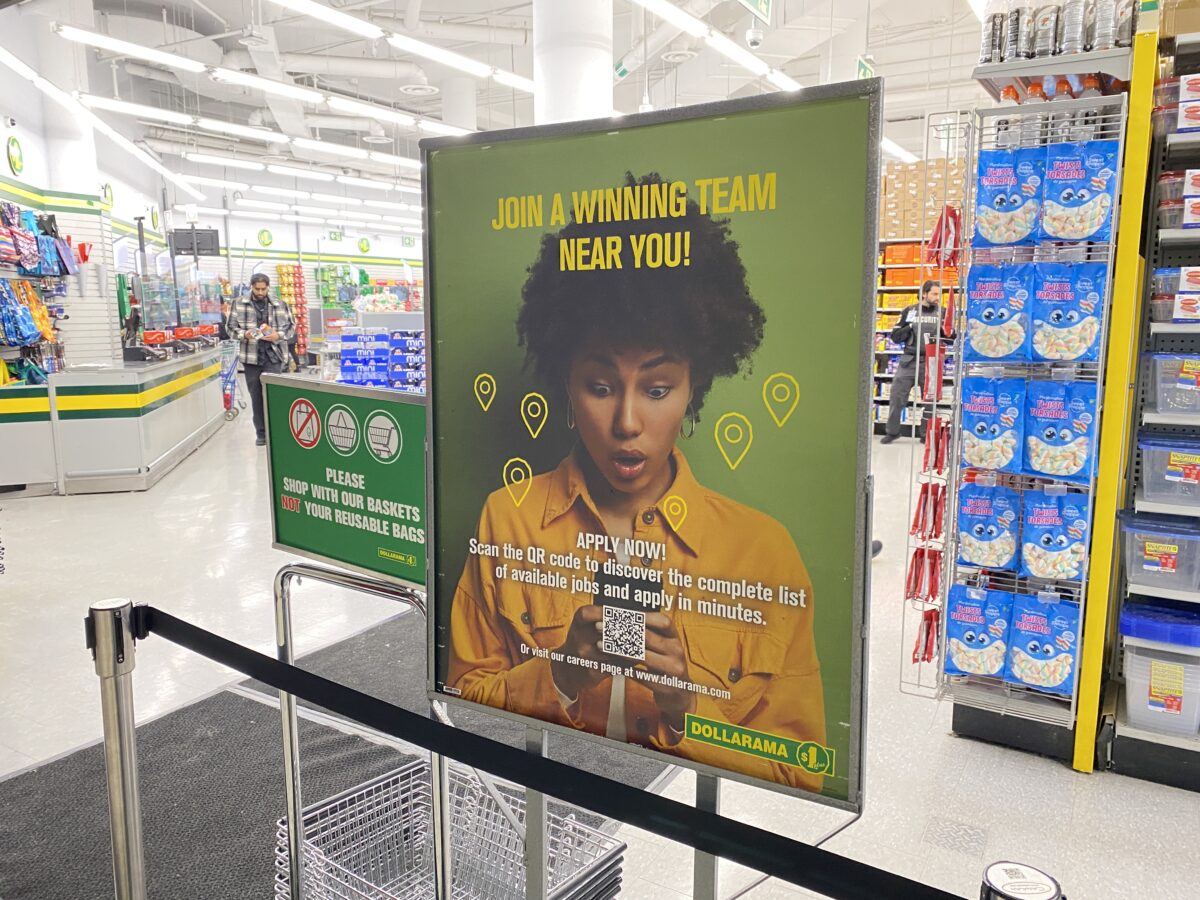
Dollarama Hiring Sign at The Tenor in Toronto (Image: Dustin Fuhs)
Enhance support and empathy: Having support can significantly reduce anxiety levels and prevent feelings of isolation. “When you have a very positive person, very constructive, and a very collaborative relationship with your district or regional manager, that is when anxiety levels go down and can lower the chances of burnout,” says Feldman.
Compensation Strategies: As discussed, simply raising the salary or handing out bonuses is not enough, this strategy could be successful if included in a broader plan that addresses burnout.
Operational Adjustments: Retail managers, as Feldman points out, have to wear multiple hats due to high workloads and under-staffing. Strategies to alleviate these pressures could include optimising work schedules, “adequate coverage to prevent overwork,” and also adjusting expectations. Retailers also need to ensure its cost-saving measures are not damaging staff or service quality.
Invest in employee development: Engaging personal and professional growth can also rescue burnout. This includes offering training, opportunities for advancement, and creating a culture that values learning and improvement – making the workplace more engaging and motivating.
Open Communication: Having open communications in the workplace can make employees feel comfortable sharing concerns without fear of consequences. This can help both managers, district managers, and regional managers understand more about burnout, symptoms, and how to address them.
Work-life balance: Encouraging a healthy balance between work and personal life is essential to preventing burnout.
“If you feel like you are abandoned, or you don’t have that connectivity with corporate – that is when you start to see anxiety levels rise. That is when the feeling of hopelessness starts and the thought of ‘what am I doing here starts. This is a people business, you need to be people focused first. If that relationship dynamic is not present, you are going to see burnout, you are going to see turnover,” says Wahl.
“I think the buzzword that has come out over the last few years, but is so true, is having a leader, whether that is a district manager, a store manager, is having a leader with empathy and who knows how to validate people’s emotions. Empathy is just a crucial skill. Finding a leader that can hustle and have empathy is a bit of a magical formula,” says Feldman.
“Have a robust exit interview”
As for advice for retailers who are seeing managers burning out, Wahl says retailers need to have a “robust in-depth exit interview.”
“A lot of people don’t feel confident to express their concerns with senior leadership and they don’t think it will be taken seriously, or somehow hurt them in some way by being fully honest. So if you don’t already have that infrastructure setup or that culture in place to have open feedback, you may never understand why managers are leaving. So the easiest thing you can do is to have a productive exit interview so you can take that feedback from an outgoing leader and implement change,” says Wahl.
As the retail industry faces the ongoing issues of burnout, they have to make improvements. By choosing to invest in its people – through strategic, empathetic, and proactive measures – retailers ensure a vibrant future. By embracing change, having a supporting environment, and prioritising well-being of managers and employees – the retail industry can navigate the storm of burnout.
“There is so much room for improvement in training and development – starting with proper onboarding, giving your manager the tools and confidence to execute their job with continuous training and development so they can acquire new skills. If they feel invested, it will be a huge help in reducing burnout. But to anyone who is reading this, I don’t want to convey negativity – retail is fantastic and I genuinely enjoy it. If you are someone that is fast paced, dynamic, and likes to connect, it is a fantastic career,” says Wahl.
Retail Insider is streamlining its Canadian retail news from around the web to include a handful of top news stories that can be viewed quickly during the day. Here are the top stories from the past 24 hours.