Retail Insider is streamlining its Canadian retail news from around the web to include a handful of top news stories that can be viewed quickly during the day. Here are the top stories from the past 48 hours.
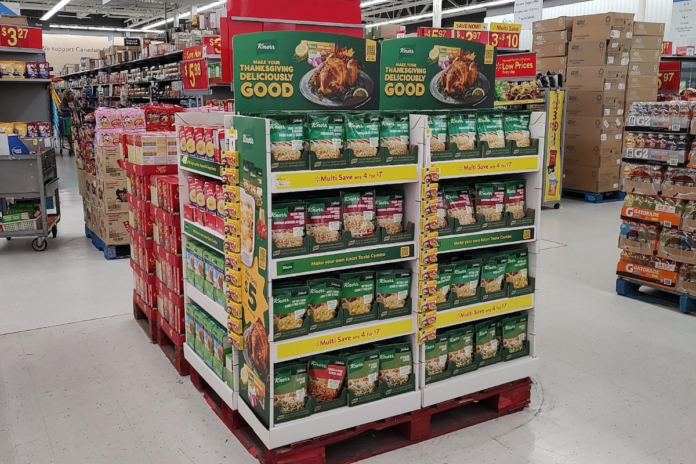
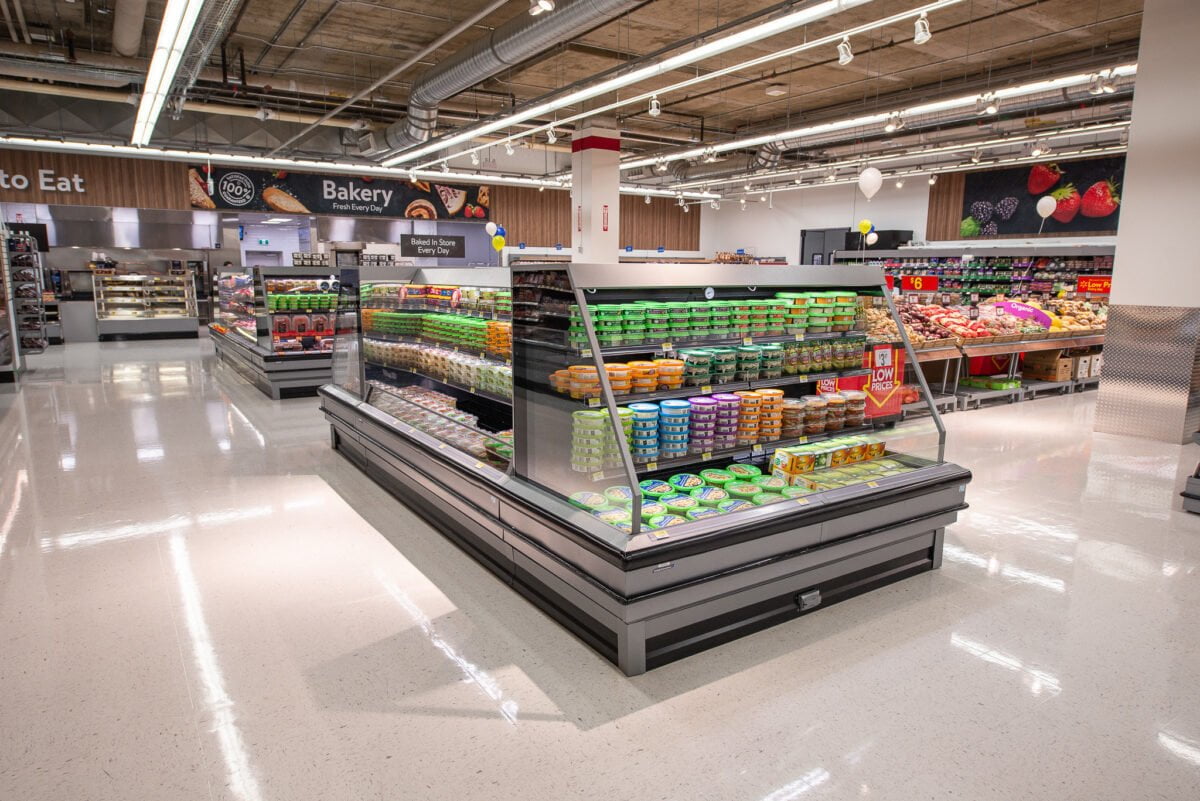
Walmart Canada in Brampton, Ontario (Image: Field Agent Canada)
It’s undoubtedly been a challenging time for consumers at the grocery store, as dynamic shifts in economic landscapes and global challenges redefine our daily lives. In this era, the resilience and adaptability of individuals and communities have become paramount. Among the fundamental aspects of daily life, the cost of groceries has experienced significant fluctuations in recent times, raising concerns not only in Canada but also reverberating worldwide. These fluctuations have had multifaceted impacts on households and individuals. As Thanksgiving approaches, a recent survey conducted by our Lab at Dalhousie University, in collaboration with Caddle, sheds light on how Canadians are navigating the complexities of higher food prices and the profound impact on their nutrition and well-being.
Shifting Habits in the Face of Soaring Prices
The survey results are indicative of the fact that 64.1% of Canadians have substantially altered their grocery shopping habits in response to the economic realities of our time. An astonishing 86.4% of Canadians now consider themselves more price-conscious compared to a year ago. Evidently, Canadians are actively seeking ways to save on their grocery bills, with 55.1% employing cost-saving mechanisms more frequently than they were 12 months prior. These mechanisms include utilizing coupons, apps, loyalty programs, and referencing flyers, with 79.2% of Canadians having availed themselves of loyalty programs in the past year and 74.8% actively using coupons. Additionally, 52.8% have explored food-rescuing apps, and 41.4% actively seek “enjoy tonight” deals. Furthermore, 49.7% of Canadians have contemplated growing their own food to counteract the impact of food inflation on their budgets.
Diverse Shopping Destinations
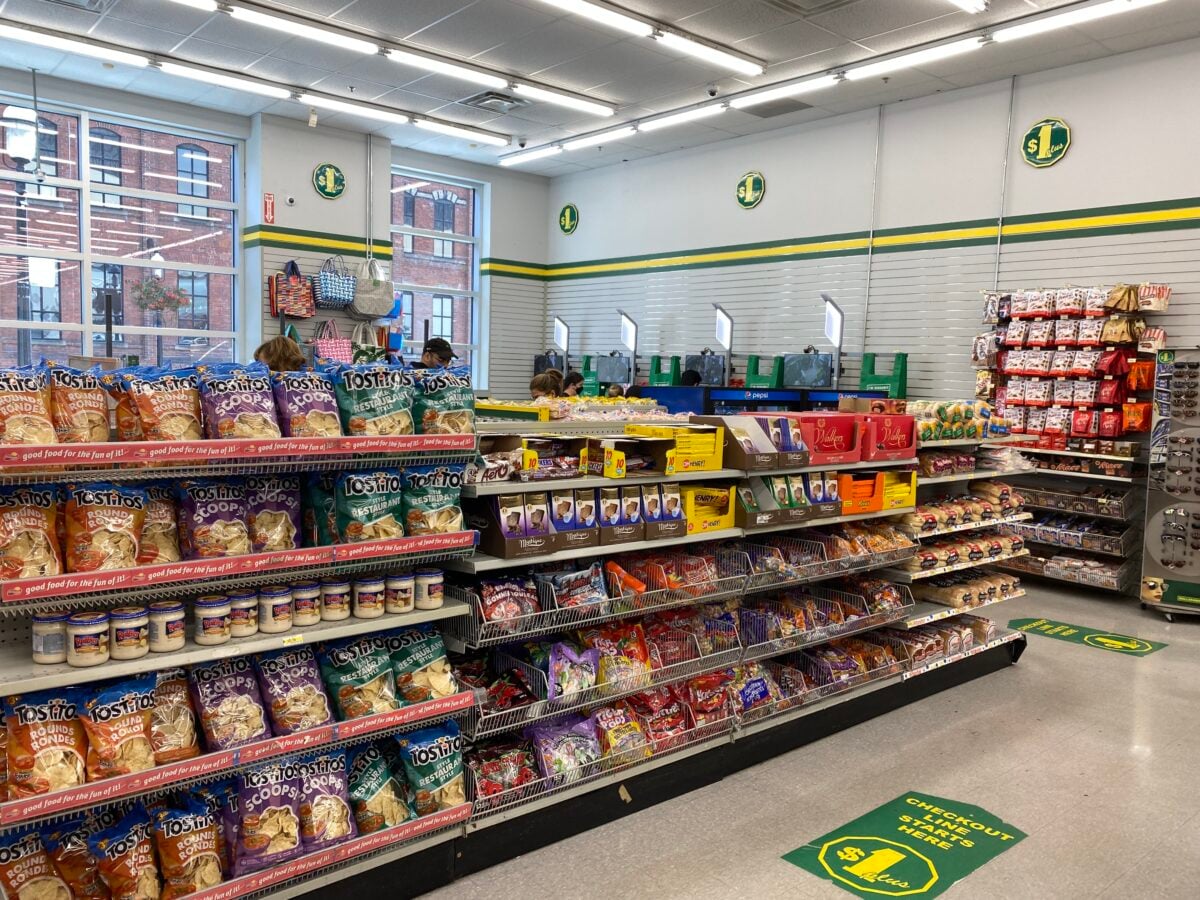
Dollarama on Front Street in Toronto (Image: Dustin Fuhs)
The survey reveals that Canadians are diversifying their shopping destinations in pursuit of more affordable groceries. A noteworthy 59.3% of Canadians are now more inclined to visit discount stores, reflecting a significant increase from the past 12 months. Similarly, 47.0% have increased their visits to dollar stores compared to a year ago, reflecting their efforts to save on grocery expenses. Furthermore, 18.5% of Canadians are frequenting farmers’ markets more often. In tandem with these trends, a substantial 17.0% of Canadians have embraced online transactions for food purchases for over a year.
Rise of Store Brands
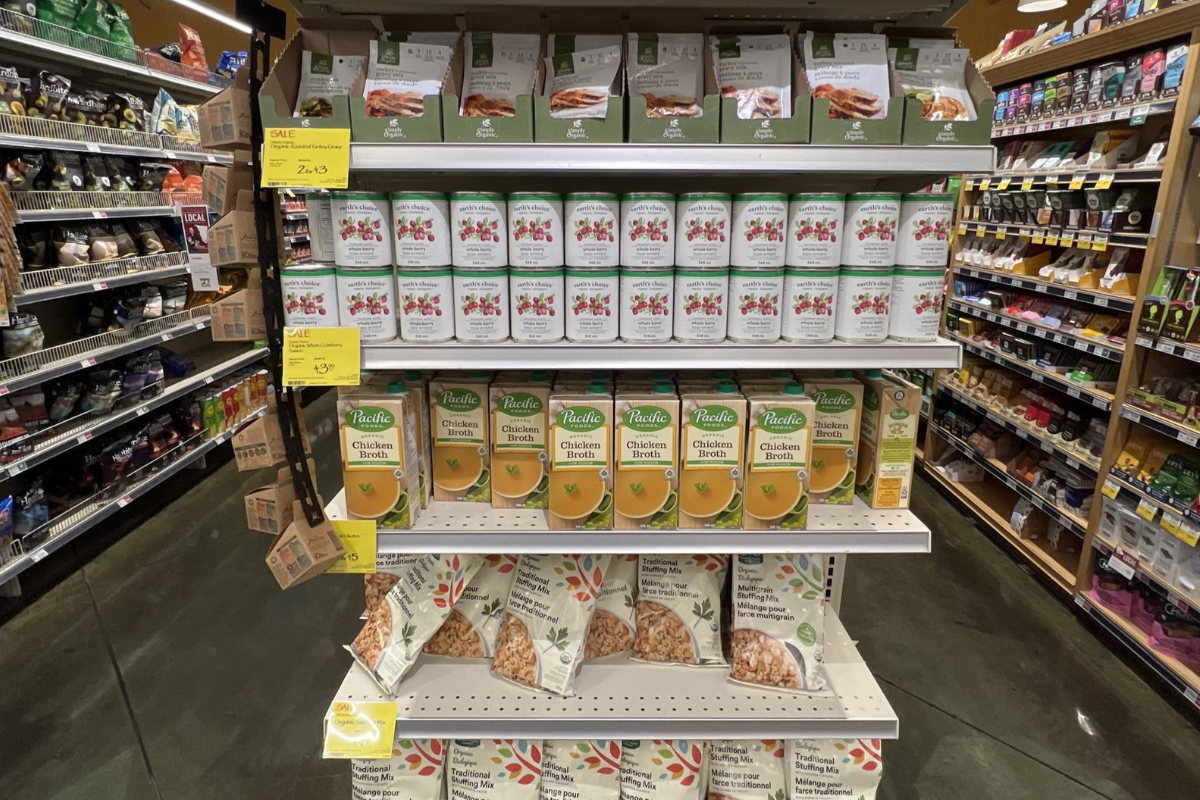
Whole Foods Market in Vancouver, BC (Image: Field Agent Canada)
Store brands, also known as private labels, are gaining prominence in response to the market’s heightened frugality. A significant 63.8% of Canadians are now more inclined to opt for generic brands over national brands as a cost-saving measure, particularly when compared to the previous year.
Altered Grocery Shopping Patterns
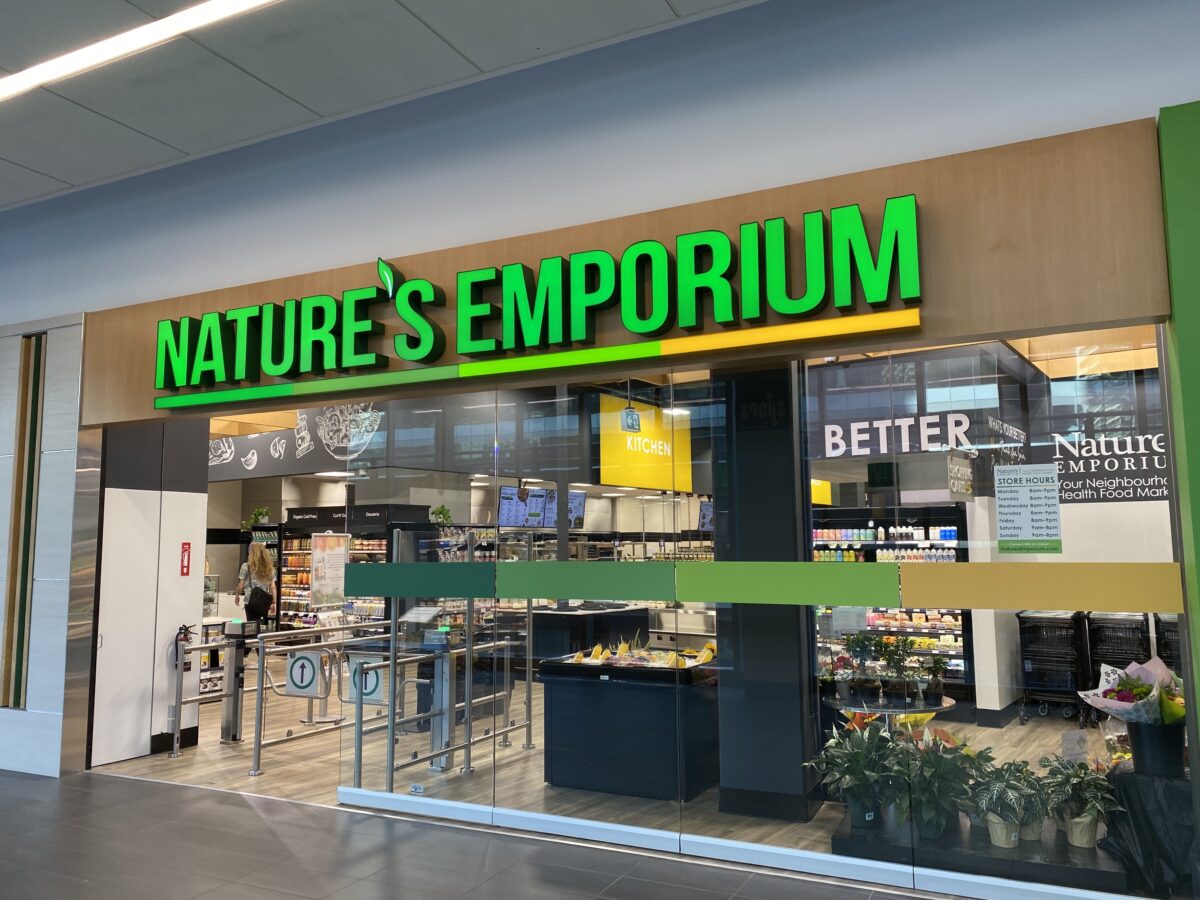
Nature’s Emporium at Shops at One York (Image: Dustin Fuhs)
Canadians have modified how they visit grocery stores and manage their inventories in response to rising food prices. Approximately 41.2% of Canadians now visit grocery stores less frequently and are adopting more strategic stocking practices. Conversely, 26.5% are increasing their visits to grocery stores, capitalizing on deals and purchasing only what is needed for two or three days. A substantial 79.1% of Canadians assert that they have significantly reduced food waste in the past year, demonstrating a willingness to consume leftovers or repurpose ingredients.
Nutritional Compromises: A Growing Concern
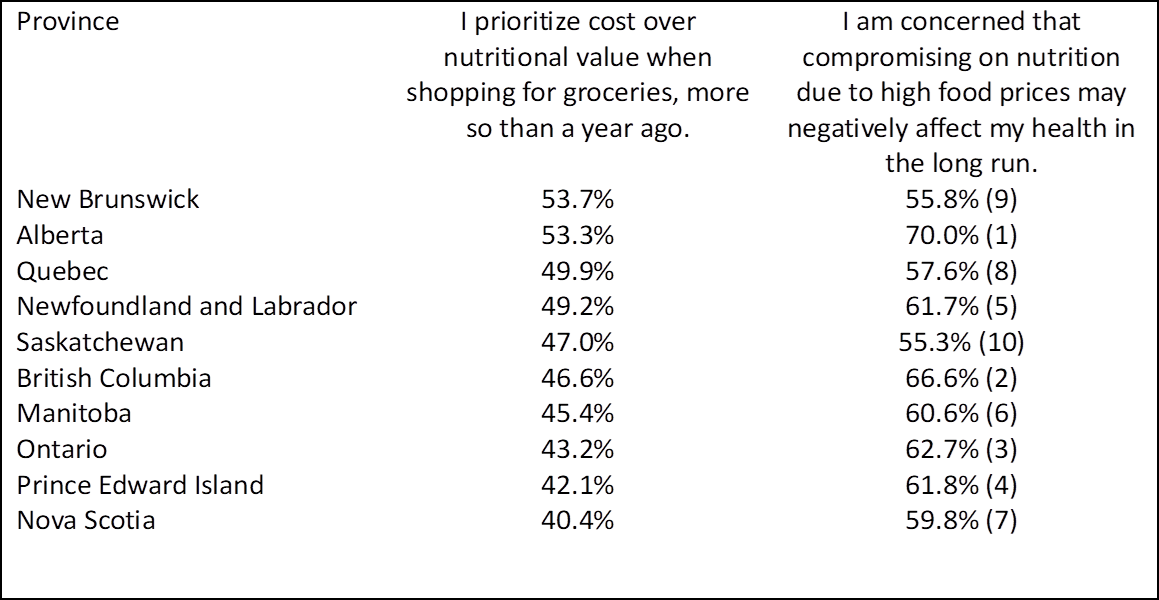
Rising food prices have compelled Canadians to make challenging dietary choices. Nearly half of Canadians (49.2%) have reduced the quantity of meat or protein sources they purchase due to increased food costs, a greater number than the previous year. While 45.5% of Canadians prioritize cost over nutritional value when grocery shopping, a larger proportion than last year, 63.3% of Canadians are apprehensive that compromising on nutrition due to high food prices may have adverse long-term effects on their health.
Regional, Generational, and Income Disparities
The survey’s breakdowns by province, generation, and income level illuminate how Canadians are grappling with the impact of elevated food prices. While regional disparities show variations in grocery shopping priorities and concerns across provinces, generational differences highlight the heightened concern among Millennials about the potential health implications of prioritizing cost over nutrition. Income levels also play a significant role, with higher-income individuals being less likely to prioritize cost over nutritional value.
The findings of this survey offer a compelling glimpse into the evolving challenges that Canadians face when it comes to their grocery shopping habits and their concerns about nutrition amidst rising food prices. It is evident that these challenges are not just economic but also deeply tied to the daily lives and well-being of Canadians. As we gather around the Thanksgiving table this year, it is crucial for policymakers, industry stakeholders, and individuals alike to reflect on the profound impact of food inflation on our choices, our health, and our collective resilience in these uncertain times.
Things are improving, food inflation is slowing and Canada fared better than most countries this past year, which is why we should all be thankful.
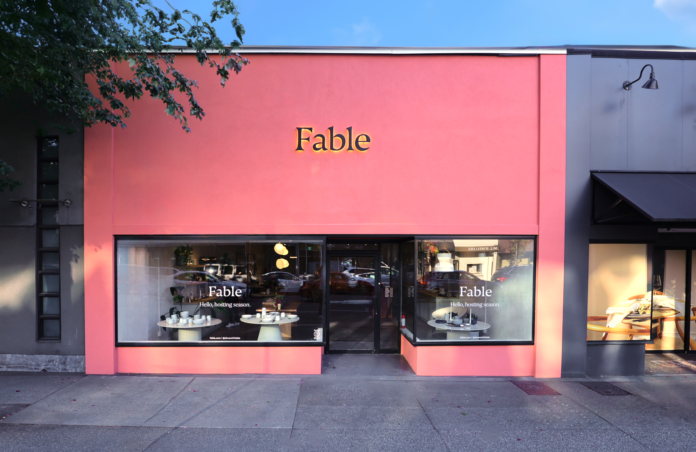
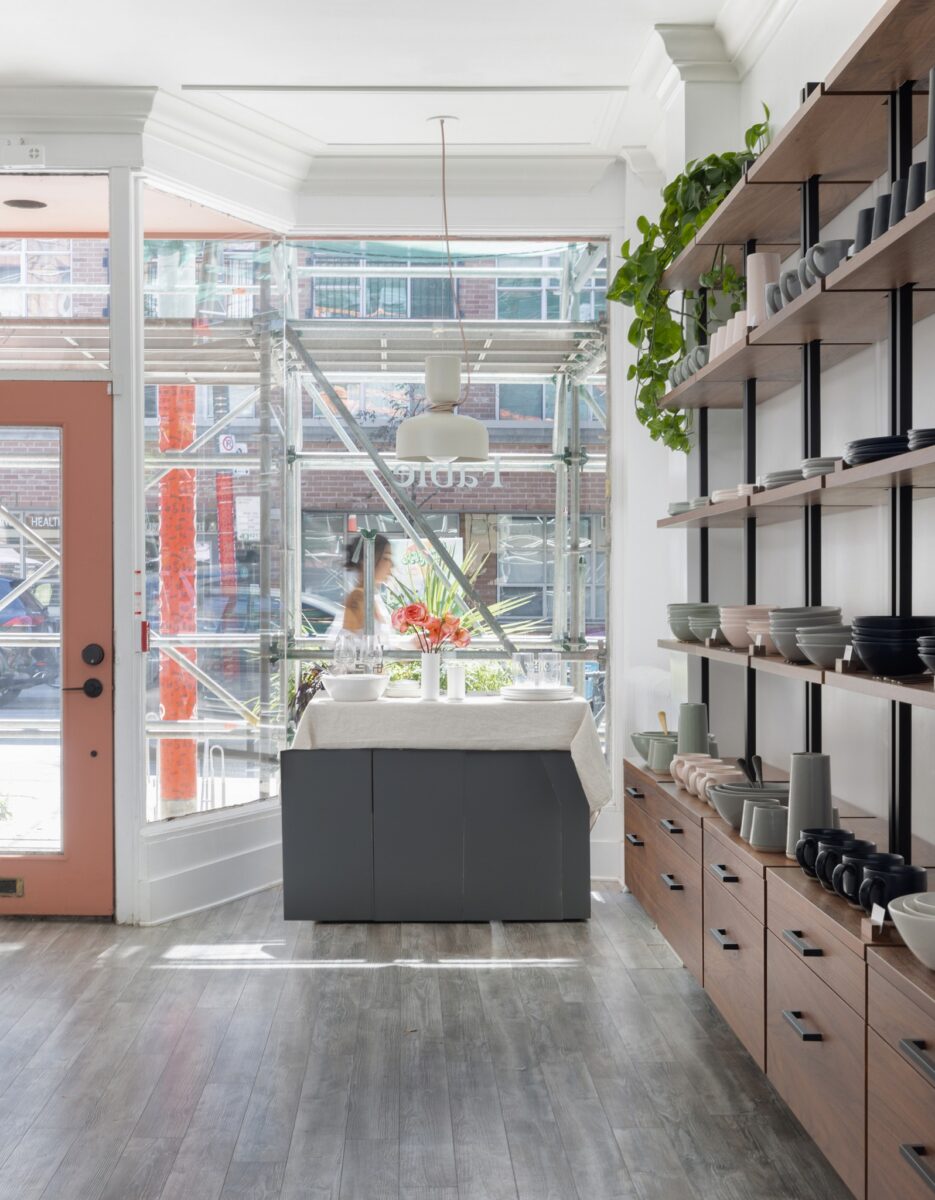
Fable at 2871 Granville Street in Vancouver (Image: Fable)
Tableware retailer Fable has expanded with the opening of a new store in Vancouver.
Joe Parenteau, Co-Founder and CEO of the Vancouver-based company, said the retailer is in expansion mode these days.
Joe Parenteau
“One is through product expansion. So we’re working on a lot of new pieces for the living room and part two is through different channel growth. We do some wholesaling like Hudson’s Bay and Indigo,” he said. “But we’re also starting to open up more and more stores for us.
“It’s a combination of a lot of things for the future.”
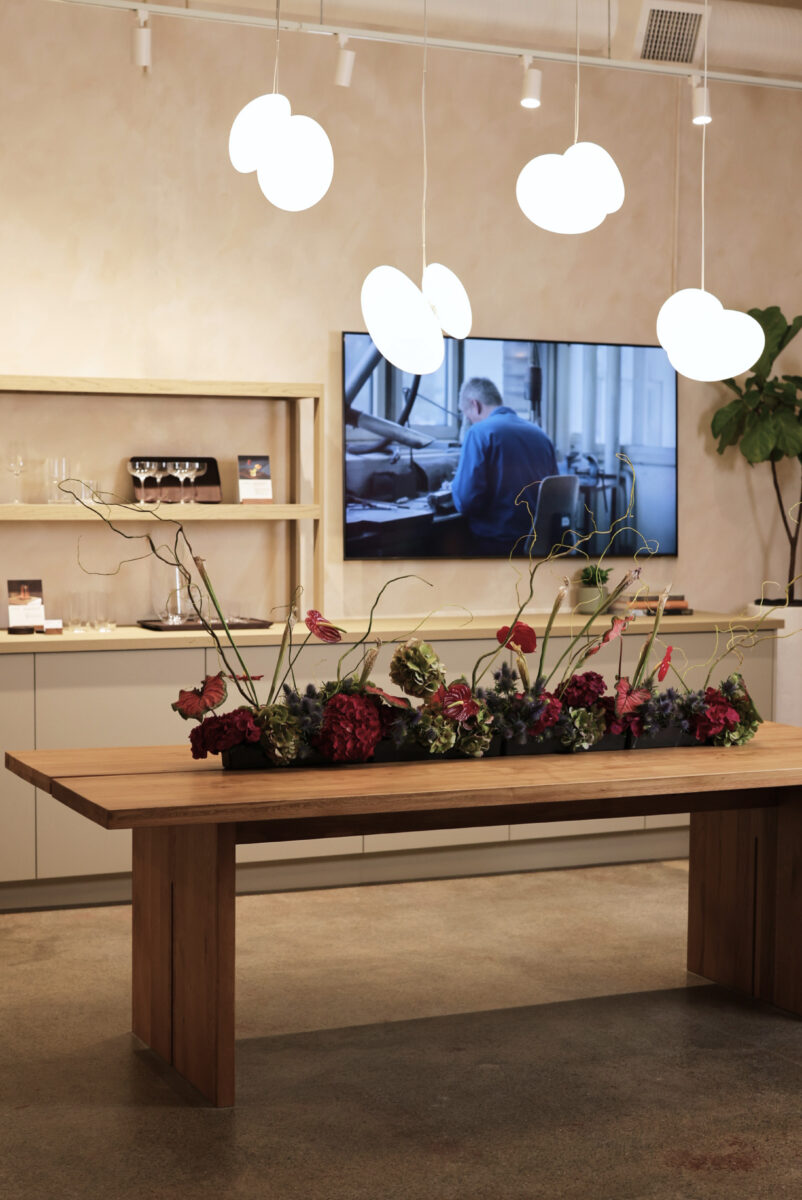
Fable at 2871 Granville Street in Vancouver (Image: Fable)Fable at 2871 Granville Street in Vancouver (Image: Fable)
With The Bay, products are sold online currently. At Indigo, they are sold in the stores.
“We’re in a variety of restaurants and places like that too,” said Parenteau. “Like some Earl’s locations. CRAFT Beer. We’re in a lot of places.
“When we’re looking at new store locations, we’re hoping to open up one or two more next year, primarily in markets where we have a good community base. We’re thinking something like Calgary, Edmonton. They’re big markets for us today. We’d like to complement those online markets with an in-store experience but we also consider locations like New York, L.A., where again we have a lot of community there, a lot of customers, as a great opportunity for expansion as a good portion of our sales does come from the United States.”
Fable began in November 2019.
“We are crafting home decor, starting with tabletop, you’ll see us do more home decor pieces in the future. Primarily working on creating a design concept that is timeless. Pieces that are all designed to match each other and items that are all crafted ethically and sustainably,” said Parenteau, whose partners are Tina Luu and Max Tims.
“So we do quite a vetting process on the people who make our products and the way in which we design them and the technologies we use. Hopefully we’ll have your product lasting you a lot longer than typical home decor.”
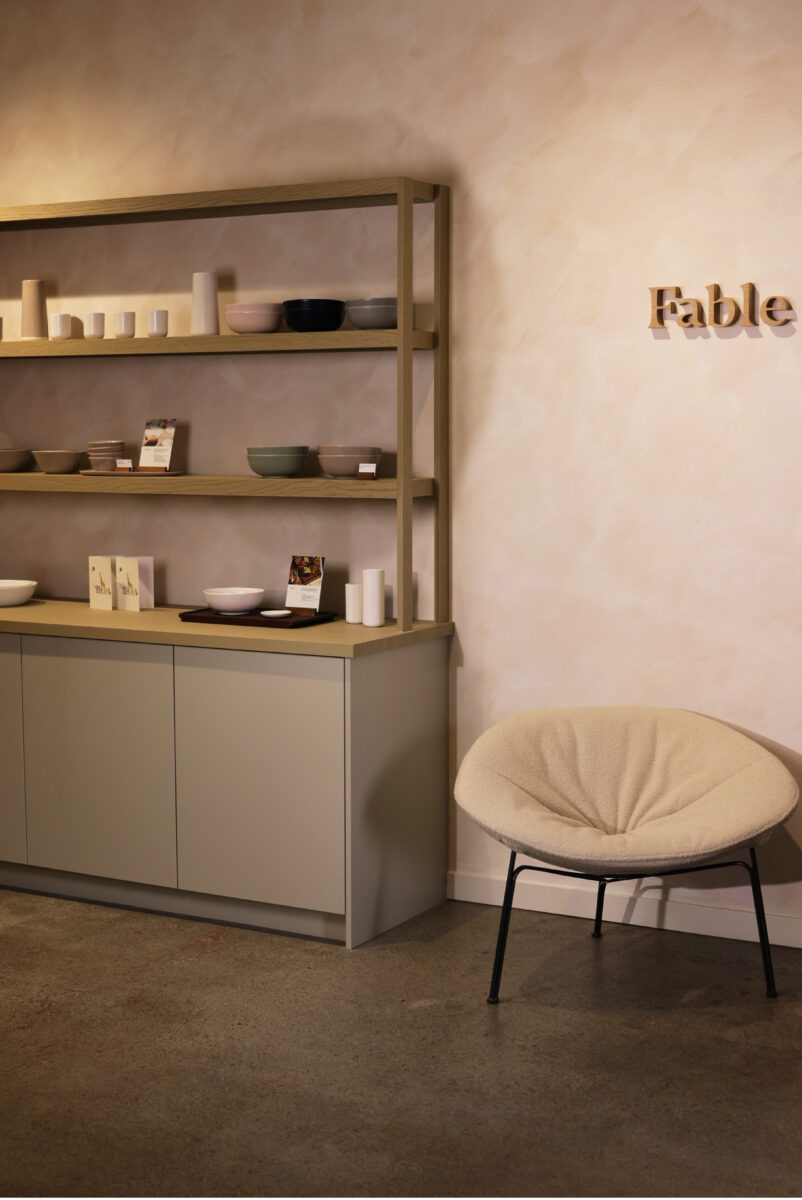
Fable at 2871 Granville Street in Vancouver (Image: Fable)
The concept had its roots from a personal problem. Parenteau said most generations looking for home decor initially shopped at IKEA.
“I think IKEA is really great, and they ultimately design all their pieces to match. So when you want to graduate from the IKEA days, which is where I found myself, you turn to the traditional stores, Williams Sonoma, Pottery Barn, Crate & Barrel. But those stores are nothing like IKEA. In fact, they had designed nothing to match each other.”
And for a consumer like himself, Parenteau found that challenging.
“So the concept behind Fable is to make the shopping experience even easier for home decor and make it as simple as possible,” he said.
Parenteau said its products are made in Portugal, Germany, Italy and Japan. They are sold in Canada, the U.S. and the UK. Products are also sold online and in other retail stores.
Image: FableImage: Fable
The first store opened on Queen St West in Toronto and the latest one in Vancouver opened at 2871 Granville Street in South Granville “which is kind of the home decor mecca,” he said.
The new store is about 3,500 square feet.
“I think a lot of people are looking for a more sustainable option when they’re shopping and they want products that are timelessly designed and can last a longer time,” said Parenteau. “That’s ultimately what we offer.
“Most of our customers love our products not only because of the sustainability and transparency focus but the design style is much more modern take and it’s not too in your face and it’s not too old timeless classic. It hits the modern mark but not being too bold or over the top.”
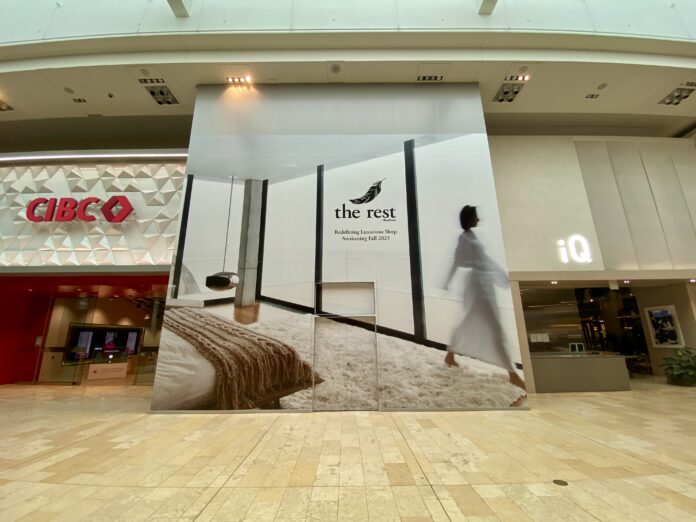
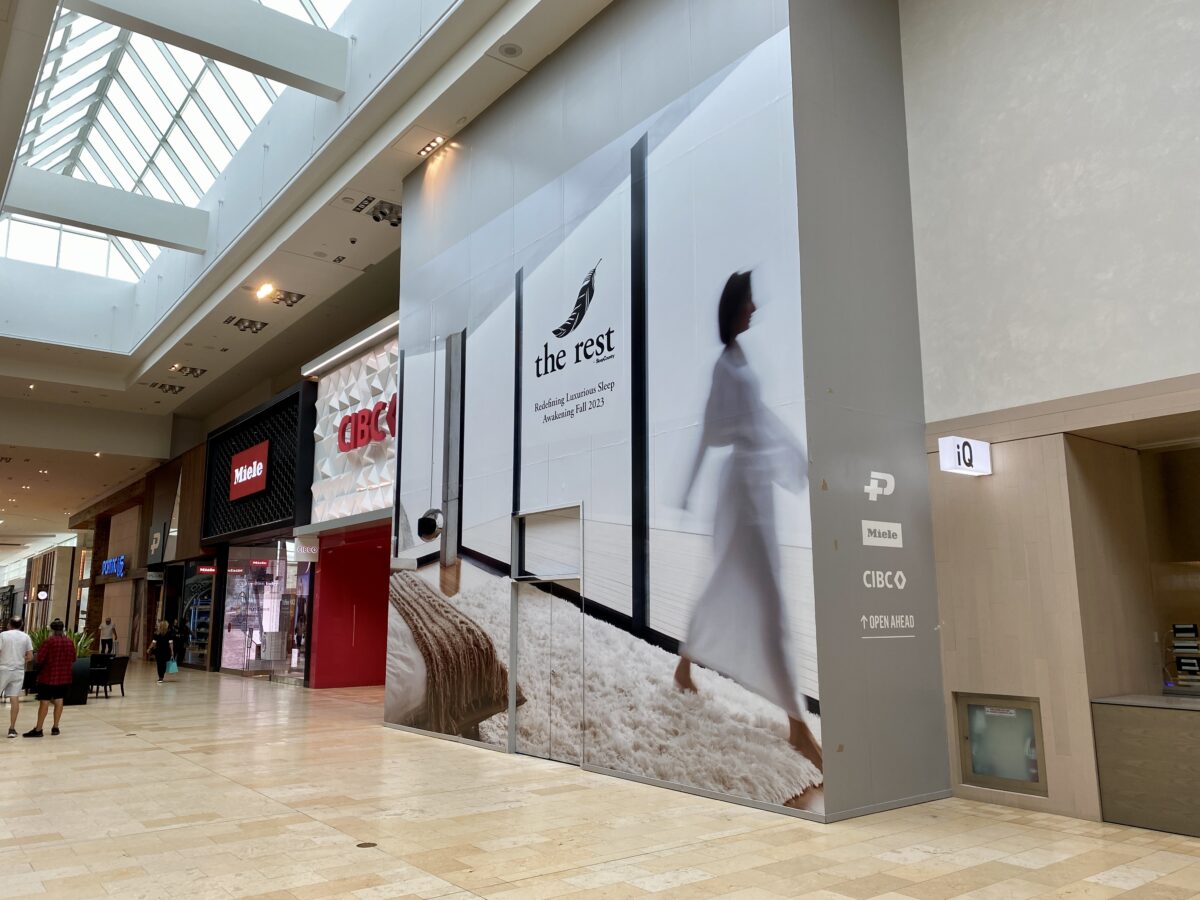
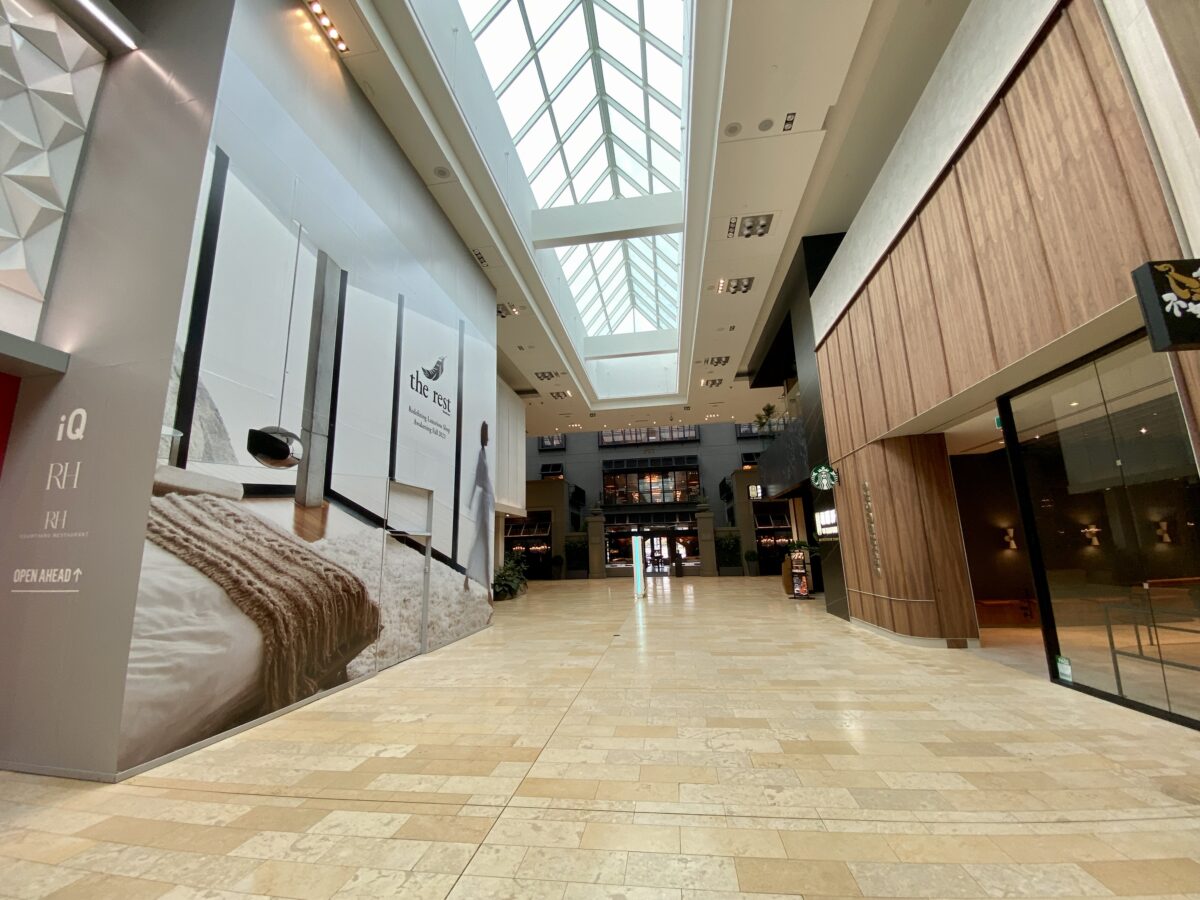
The Rest by Sleep Country at Yorkdale Shopping Centre (Image: Dustin Fuhs)
Canadian retail giant Sleep Country is launching a new concept store this fall in the Yorkdale Shopping Centre.
Stewart Schaefer
“We’re opening up a very new, exciting luxury concept, a very bespoke experience. It’s called The Rest,” Stewart Schaefer, President & CEO of Sleep Country Canada and Dormez vous, told Retail Insider.
“It really is a collection of mattresses and linens, sheets and pillows and duvets that we don’t carry in Sleep Country that is a much more luxurious line above whatever we sell at high end at Sleep Country for obviously a very refined taste where they believe their sleep is priceless.
“It’s a much smaller concept. It will also be a heightened experience. Within our team we talk about it as a seven-star hotel over a five-star hotel. And it comes to life somewhere around mid to late November.”
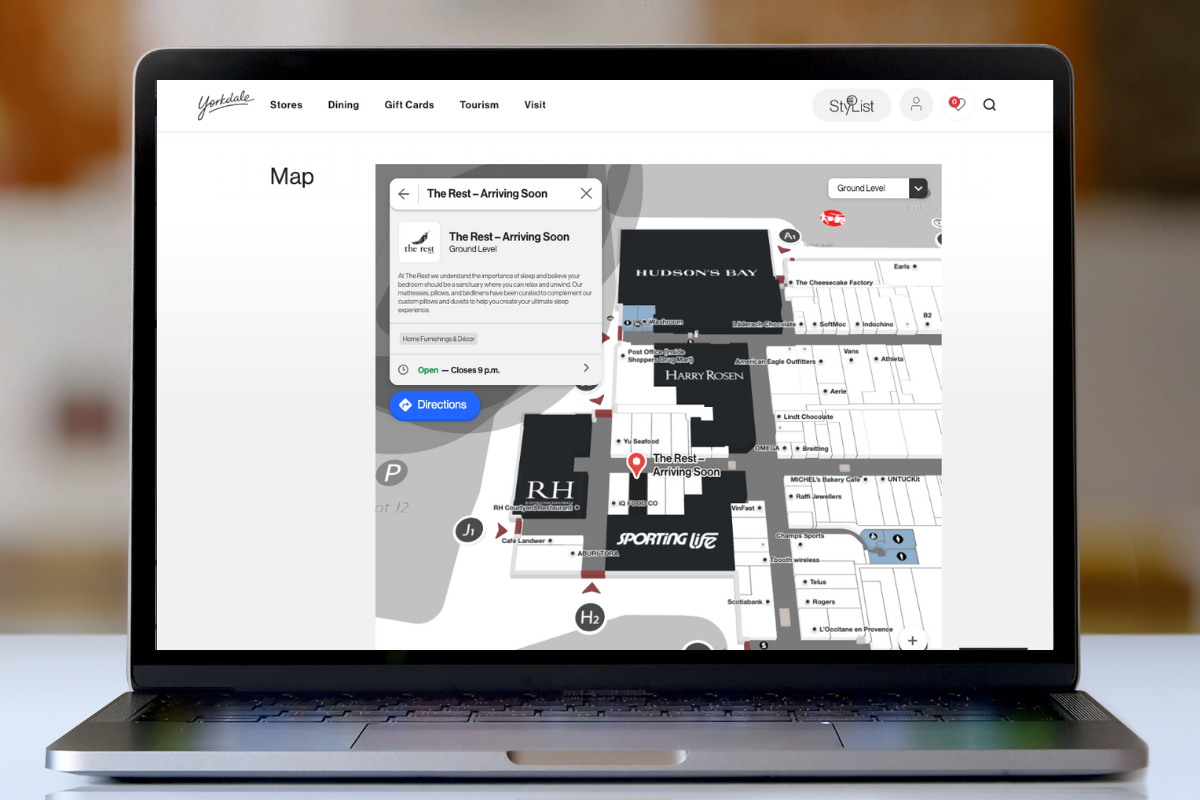
Image: Yorkdale.comThe Rest by Sleep Country at Yorkdale Shopping Centre (Image: Dustin Fuhs)
Robert Horst
“It’s exciting to see Canadian brands evolve to capture new customer segments with in-store experiences,” said Robert Horst, Vice President, Retail, Oxford Properties.
“The Rest is another first-to-market concept at Yorkdale that complements the range of home décor retailers. We’re delighted to welcome The Rest among the new brands opening at Yorkdale this year.”
Schaefer said the store is about half the size of a regular location. It will be about 2,500 square feet.
“And it is strategically located right near Restoration Hardware because we do believe it does appeal to a similar demographic and it will feature, where we have roughly 40-odd beds in a Sleep Country 5,000-square-foot store, this store which is 2,500 square feet will only feature 13 uniquely, customized, fabulous beds at different price points, at different luxury levels with special ingredients into these beds that are all the luxury materials that you can think of.
“Yorkdale being Canada’s number one high end, premium mall, was chosen for all the unique tenants that they have including being next to Restoration Hardware and all the other people that they bring in. As well, launching a brand new concept the thousands upon thousands of people that enter through that mall during the holiday season is a huge part of our marketing where we hope to receive a lot of exposure in a very short period of time.
“It’s also a concept that will be very exclusive across the country where we could probably have maybe only five to a maximum of 10 of these locations opened in various cities – Vancouver, Calgary, Edmonton, Montreal. That has not yet been decided upon but the first one we figured that Yorkdale mall is that pristine mall in Canada we had to try it out. If we believe, which we do, that there is an opportunity to cater to a more customized bespoke higher end clientele that just want something more luxurious and if it works in Toronto we’re going to try and appeal to that market across the country.
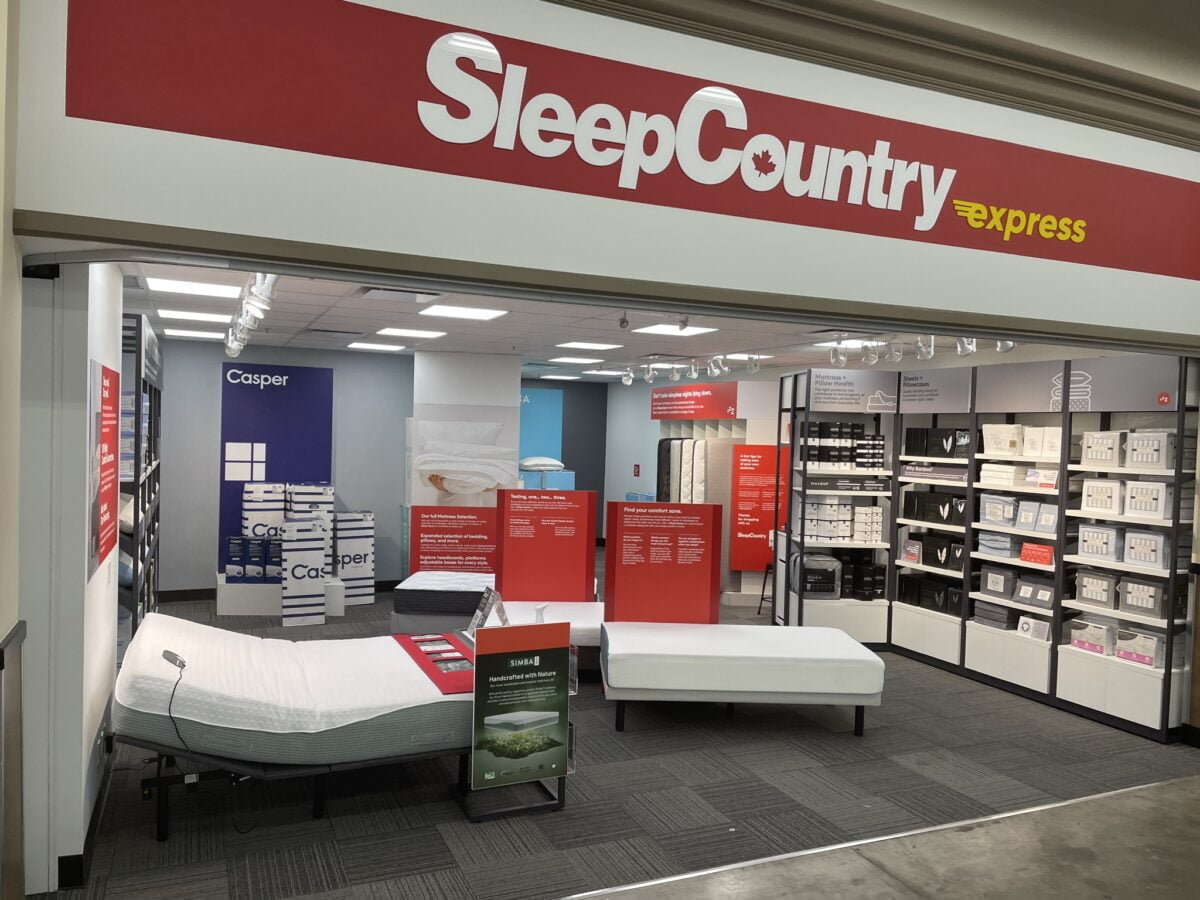
The Rest by Sleep Country at Yorkdale Shopping Centre (Image: Dustin Fuhs)Sleep Country Express at Walmart Canada (Image: Sleep Country)Image: Sleep Country Canada Head Office
Sleep Country currently has 296 locations across Canada. That doesn’t include its six Casper stores.
“There’s a bunch of (new) stores already in the pipes. So we’re excited about that,” said Schaefer. “Next year, it happens to be our 30th year anniversary and coincidentally we’re going to be opening our 300th Sleep Country-Dormez vous store. We’re going to create some type of an event around that.”
As the retail landscape in Western Canada accelerates into the future, Retail Council of Canada’s Retail West Conference is once again proving itself as the cornerstone for innovative thought sharing, transformative insights, and invaluable networking. With the Agenda designed to address the issues facing retailers in Western Canada, each session will provide both unique perspectives and solutions-based recommendations.
For any retailer considering whether to attend, let’s look what Western Canadian influencers Sharon Hayles from Diane’s Lingerie, Jackie Ross from JRoss Recruiters, and Polly Tracey from Best BuyCanada and are saying about Retail West 2023:
1. Given the changing retail landscape, how crucial is participating at Retail West in providing insight to today’s retailers?
Sharon Hayles (Diane’s Lingerie): “Retail West isn’t just another conference; it’s the conference. This conference touches on relevant issues trending in the retail landscape. It brings together global insights with Western Canadian considerations for building forward-thinking strategies and offering unique insights to navigate the evolving retail terrain. I especially like that there are both big and independent retailers sharing their learnings. “
2. Of the many sessions on the packed Agenda, which holds the most interest for you and why?
Jackie Ross (JRoss Recruiters): “I’m a raving fan of David Lui. I’m looking forward to his opening mainstage session with Michael LeBlanc, exploring the development of Unity Brands and its recent acquisition of Vancouver-based Kit and Ace and local footwear brand Casca. David’s optimistic nature and enthusiasm about the future of Canadian retail is always infectious. He is a progressive leader and outstanding entrepreneur. His partnership with Joe Mimran and Frank Rochetti, brings a trifecta of talent to the table with marketing, product design and operational expertise to promote products that focus on fashion, wellness, and an active lifestyle on a national and global scale. It’s exciting to watch more Western Canadian-centric and Canadian-focused brands thriving.”
3. With many retail leaders and visionaries present, who are you most looking forward to connecting with at the conference?
Jackie Ross (JRoss Recruiters): “Michele Guimond from MEC as well as Kriston Dean from PurdysChocolatier, Rachel Mielke from Hillberg & Berg, and Ashely Freeborn from Smash + Tess are such inspirational leaders whose work and accomplishments I have also admired for years. And I always love seeing my friend David Ian Gray from Dig360. We love to get together for drinks and insights afterward and recap the day.”
4. How do you think Retail West offers a different perspective or set of insights compared to other conferences in the industry?
Polly Tracey(Best Buy): “Retail West is a ‘for retail, by retail’ conference, so I find it tackles real issues, happening right now.”
Jackie Ross(JRoss Recruiters): “I like the intimate setting. There are opportunities to make meaningful connections and expand your network, providing you and your teams with exposure to peers, experts, and potential partners. I’ve made so many great connections at this conference over the years and have lots of friends in the room! So, if you are looking to get introductions, come find me, introduce yourself and I’m happy to help! ”
5. Finally, for retailers on the fence about attending, what would you say is the ‘can’t miss’ component of this year’s Retail West?
Polly Tracey (Best Buy): “ I think it’s the efficiency of so much offered in one day – jam-packed schedule, a wide variety of topics and formats, networking and connecting. I particularly like the breakout sessions – the smaller audiences mean there are often more candid questions asked.”
The endorsements are clear: Retail West 2023 is an experience, an opportunity, and perhaps most importantly, one of the most effective forums for exploring the changes in retail in Western Canada and the opportunities for innovation. Whether you’re a seasoned retail veteran or a new entrant, the promise of the event is undeniable.
Ticket for Retail West can be purchased here. A 20% discount applies to groups of 5 our more.
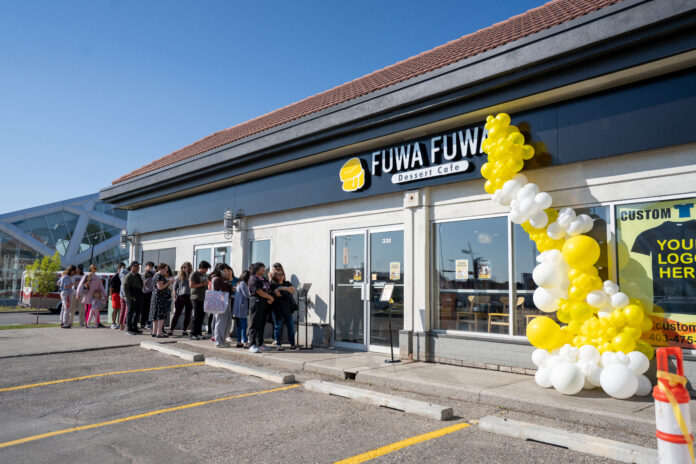
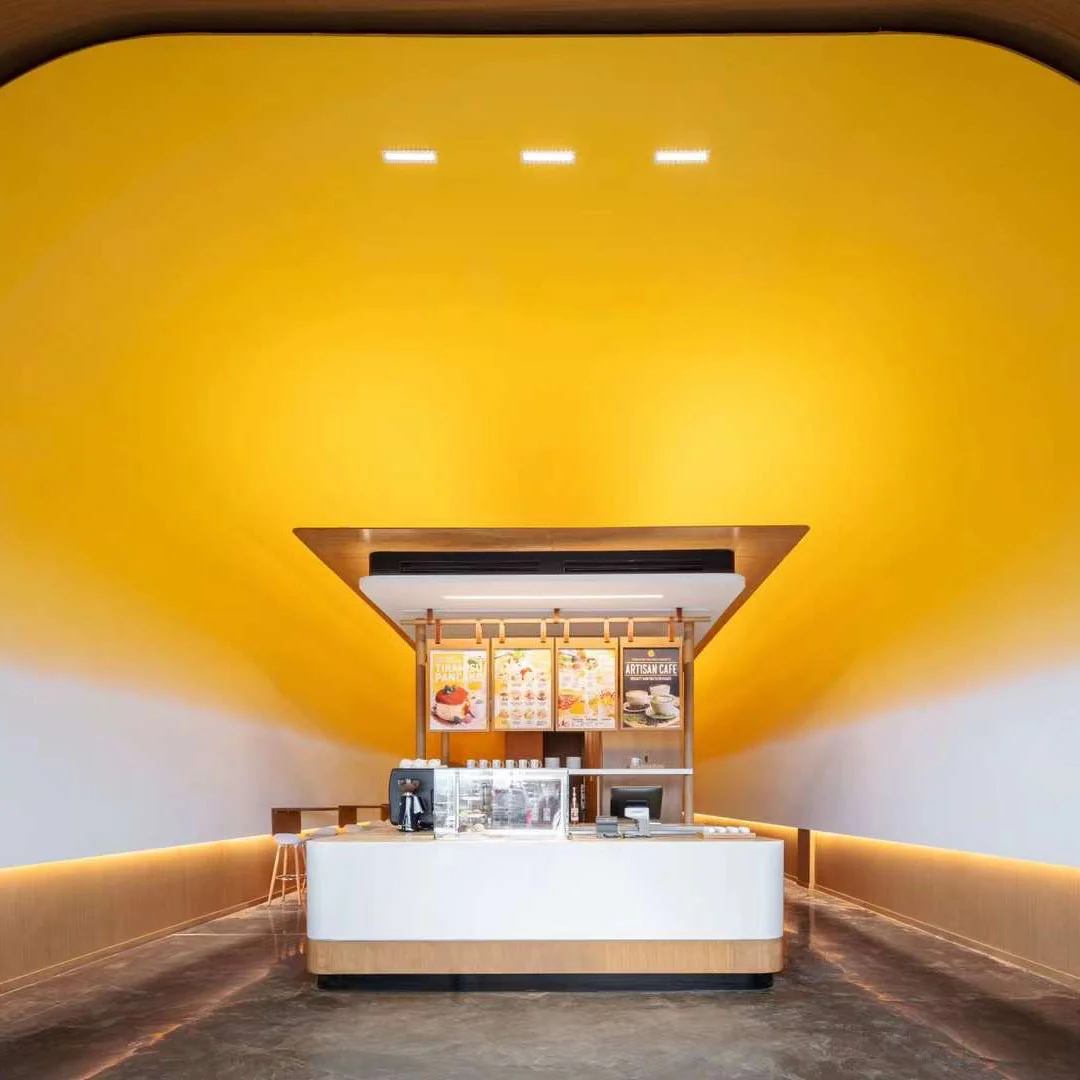
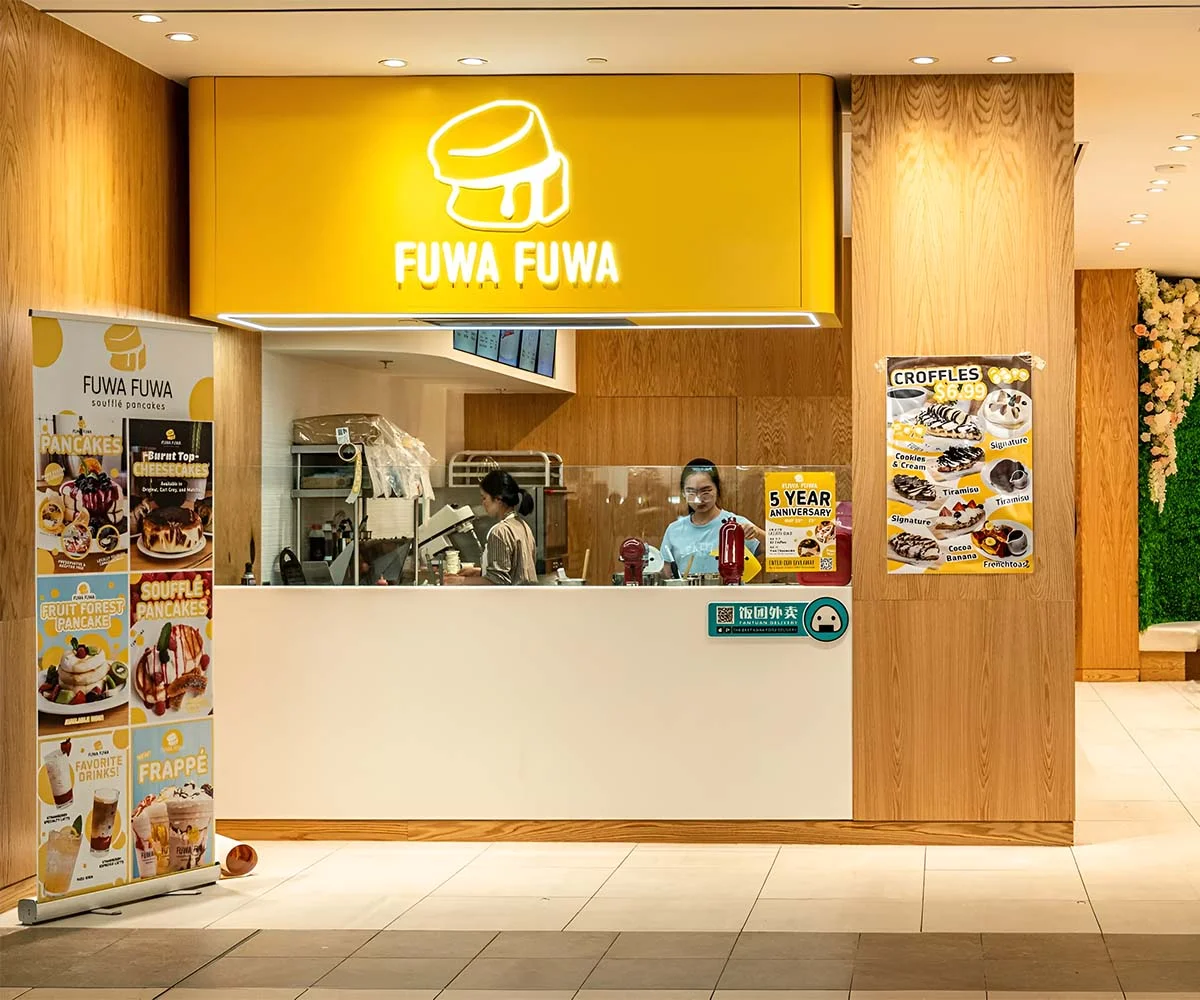
Fuwa Fuwa Pancakes at Chinook Plaza Calgary (Image: Fuwa Fuwa)
One of North America’s most popular dessert brands Fuwa Fuwa Pancakes has opened its third location in Calgary as it continues to expand in the market.
The new location at Chinook Plaza is the company’s fifth location in Alberta. Other locations in Calgary are in the University District and Kensington neighbourhoods. The other two in Alberta are in Edmonton. The brand currently has 22 locations in Canada and internationally.
And there are plans to continue expansion.
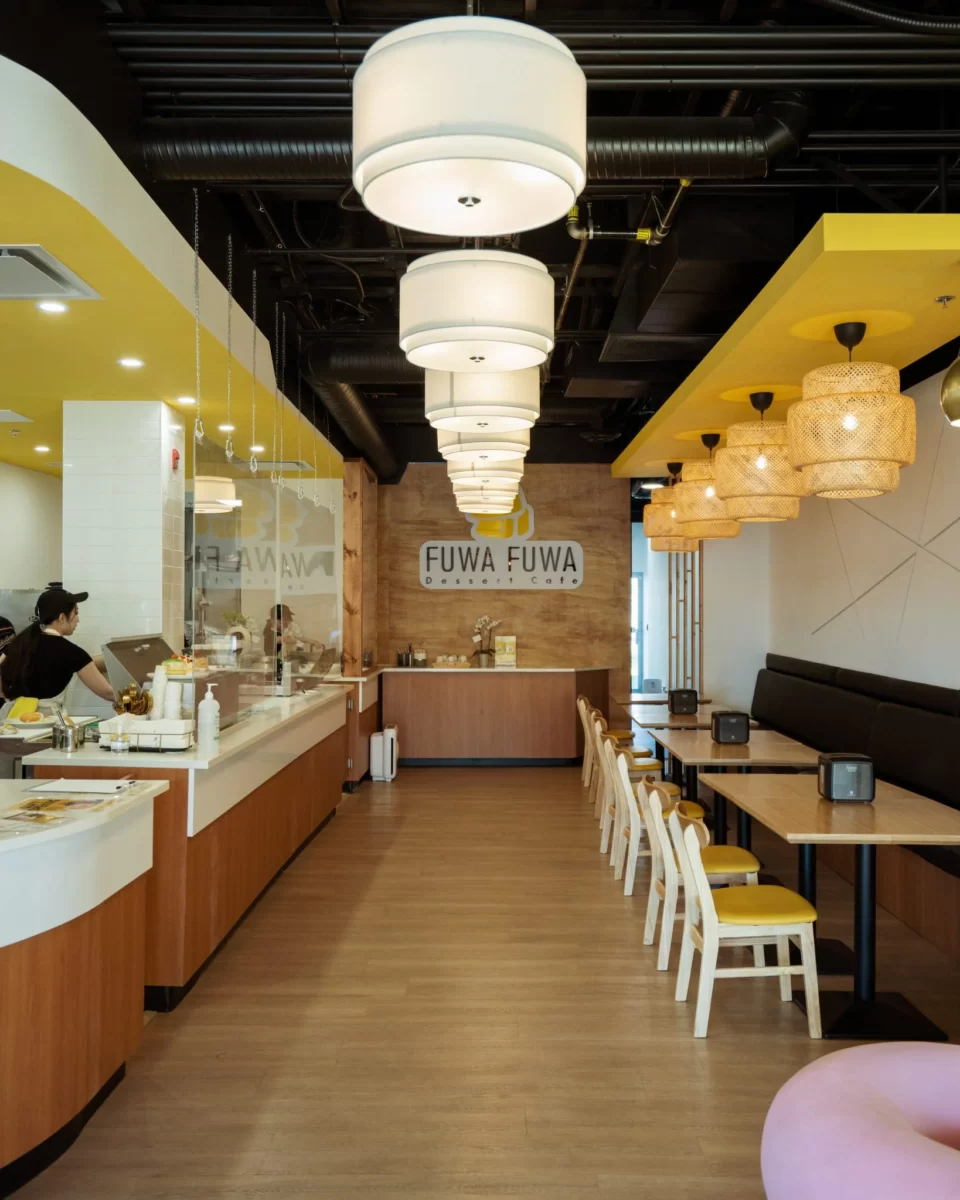
Fuwa Fuwa Pancakes at Chinook Plaza Calgary (Image: Fuwa Fuwa)
Fuwa Fuwa was founded in 2018 in Toronto where Nicolas Poon, COO, and his co-founder Benson Lau, wanted to bring their love of Japanese desserts and a unique concept to Canada, a place where multiculturalism, diversity and innovative products are welcomed.
“We have more to be coming as well in the West Coast,” said Poon. “We have expanded across Ontario. And we have expanded across Alberta and now we are expanding across to Quebec, to British Columbia and other provinces as well.”
Fuwa Fuwa is known for souffle pancakes, which are light, fluffy, high in protein and low in sugar. Poon said every souffle pancake dish at Fuwa Fuwa is handcrafted and carefully plated to produce an artisanal piece that is popular on social media for its “photogenicism.”
“We often get DM’s and emails from enthusiastic followers around the world asking us to open a store near them,” he said.
Fuwa Fuwa Pancakes at Golden Square Mississauga (Image: Fuwa Fuwa)
Fuwa Fuwa won the Best Asia Pacific Business Award 2023 in the Association of Chinese Canadian Entrepreneurs.
“We have actually already expanded internationally. We have presence in the UK, in France. We’ll be expanding to the U.S. We will roll out on the first phase about 15 locations in the U.S. from Atlanta to Florida to the east coast like New York, New Jersey area as well as Boston. And then we also have down south in Texas and west in California, Los Angeles.”
Fuwa Fuwa Pancakes at Fairview Mall North York (Image: Fuwa Fuwa)
Six locations are currently opening internationally with 20 more locations that will be opening by the second quarter of 2024.
“Fuwa Fuwa literally means fluffy, fluffy. We specialize in something called the Japanese souffle pancakes. Unlike a traditional pancake, it’s light as air, fluffy as cloud pancakes. It’s actually also high in protein and low in sugar,” said Poon.
“There’s a lot of care that is also put into every plate in how we craft and place our products. It’s very artisanal and social media friendly as well.”
Image: Fuwa FuwaFuwa Fuwa Pancakes at Chinook Plaza Calgary (Image: Fuwa Fuwa)
Robson Yuen, who is operating the Chinook Plaza location, said he’s quite happy with the location of the new store and it feels like his dream has come true.
Yuen said most Fuwa Fuwa stores are about 1,000 to 1,200 square feet but his is slightly bigger with about 1,700 square feet.
Food and beverage concepts from Japan have become increasingly more popular in Canada.
“Our product is really a symbolism of multiculturalism and diversity because the origin of souffle pancakes actually originated from France. So pancakes is like bread and butter for North Americans and it’s also slightly reinvented in Japan,” said Poon.
“So this product has gone around the world and now as the largest souffle pancake chain in North America we also tie them in as a multicultural and globalized product and it ends up to be one of the very unique products that we have and it’s an innovation of a traditional product.”
Are grocery store lease terms increasing the cost of food?
Recently commercial real estate firm CBRE posed that question following a report from the Competition Bureau which confirmed that food costs are on the rise and significant changes may be required to bring grocery prices back down to earth.
“One unexpected idea floated by the Competition Bureau is to ban clauses in commercial leases that stop landlords from having competing uses or similar tenants at a property or in the surrounding area,” said the CBRE.
Walmart Canada officially opened its new Edmonton Kingsway Walmart Supercentre in Alberta today (CNW Group/Walmart Canada Corp.)
“Exclusive use clauses, known as restricted covenants in leases, effectively make it impossible for landlords to allow rival stores to open up near one of Canada’s Big 5 grocery chains (Loblaws, Metro, Sobeys, Walmart, Costco), who control more than two-thirds of domestic grocery sales.
“Those lease clauses allow grocery stores, and other retailers, to ensure that their investments are safe from excessive competition.”
Matthew Jackson, Vice-President with CBRE’s National Retail Group, said every retailer, not just grocery stores, likely has a clause barring a similar use from the property where they are located.
Matthew Jackson
“I personally think looking at the Competition Bureau and talking about the lease terms, I just don’t think that should be the specific focus. It’s not just in the real estate,” he said.
“What I understand the government basically is just saying if they’re able to take away the restrictive covenants within a lease in a centre and prohibit any restrictions going forward on a property, if a grocery store leaves, then it would allow new groceries to go on, other smaller deli’s, bakeries and other types of retailers to go into the centre.
“From what I understand what they’re saying, if we take the control away from the top five then there will be more competition. From reading the articles it says the UK, New Zealand and Australia have put in measures that have been successful. So I think they’re saying do that here.
Loblaw in Toronto (Image: Field Agent Canada)
“But my personal opinion and I know some people disagree with me – I do predominantly tenant representations – when we go into a centre and there’s a ground up development and you’re wanting to negotiate a deal and get prime positioning and you’re the first one to the table, you sometimes will pay to get the right spot and the right centre.
“If I’m Metro or Loblaws or Sobeys and I’m up in a centre paying $25 a foot and all of a sudden in year three they put in a Giant Tiger and then potentially a Farm Boy and other smaller grocery in a bigger plaza, my profits might be eroded away and I shouldn’t be paying the same rate as I did before because I did the pro forma to do the build out.”
He said a ban would trigger significant changes in how grocers and landlords approach leases.
CBRE said landlords are happy to land a grocery store because they bring in shoppers multiple times a week and that traffic helps boost sales and surrounding tenants. If there were no exclusions, grocers would likely pay landlords a lower rent, which could impact the value of that retail property.
“Government tools are rarely subtle and this change could have a domino effect,” said Jackson. “If there aren’t any restrictions, grocers would offset the rent offering for the potential decrease in sales due to competition. And if they pay less rent, that translates into a lower value for the retail centre.
“So does the landlord want to have the highest rents and the highest value for their retail property and give a grocer exclusions, or not have that exclusivity and have a diversity of other grocery options but lose some value?
“Even if that decision is taken out of the landlords hands.I’m not sure we’ll see the increase in competition the Competition Bureau is looking for due to some other important factors.”
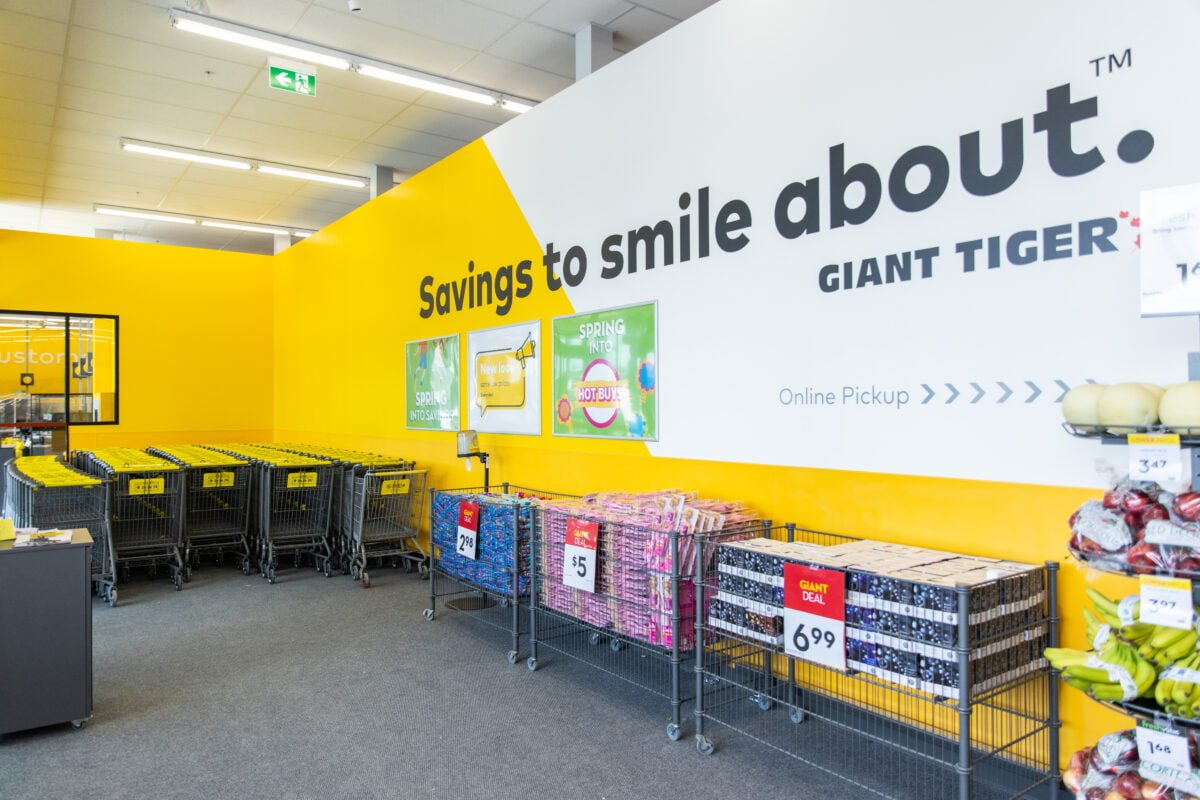
Giant Tiger store on Walkley Road in Ottawa. Photo: Giant Tiger
Jackson said real estate isn’t necessarily where the solution to lower grocery prices will be found.
CBRE said smaller communities are where this change is likely to have the greatest impact. If a town only has one property that can house a grocery store, then exclusive use terms would stop butchers, bakeries and other independent businesses from locating in that centre. This would limit competition in a significant way.
“But the bigger culprit in most communities would be supplier agreements,” said CBRE.
“Large chains have agreements with suppliers to put their products on shelves. Independent stores don’t generally get the same deals as the Big 5, and so they are at a significant disadvantage in accessing the product and competitive pricing they would need to compete, even if they could sign a lease wherever they wanted.”
“Real estate isn’t prohibiting new entrants to the market,” added Jackson. “It’s more the control that grocers have through supplier agreements.
“If potential new entrants want to profit off the success of a Big 5 grocer’s presence, they can’t do it because those grocers have a strong hold on suppliers.”
While doing away with exclusive use clauses could increase competition between grocers in sought after locations, Jackson said the change could have unintended consequences that actually result in higher prices for shoppers.
“But if I’m a grocery store looking at signing up for a 20-year term and then I know in year three the landlord will bring in competition, I don’t want to be stuck paying a premium for 17 years,” he said.
“So length of term will be affected. And unfortunately if you shorten term, the investment is amortized over a shorter period, and that means higher rents for the grocery stores. Which is the domino effect again. Because higher rents will eventually impact grocery prices.
“You can attempt to solve for food prices through real estate lease clauses and rents and other things. But if you have 20 new competing grocery stores that can’t get the product on the shelves, then you realize that real estate wasn’t really the problem to begin with.”
Loblaws autonomous vehicles outside Toronto Loblaws grocery store. Photo: Loblaws
Dr. Sylvain Charlebois, Senior Director, Agri-Foods Analytics Lab, Dalhousie University, said there are different levels of what’s happening in the grocery business.
Sylvain Charlebois
“Leases are certainly a concern. The fact that some grocers are really trying to control certain micro markets, whether it’s a shopping mall or a small district, I don’t think it’s a secret for Canadians. But I think what has changed is our collective tolerance towards some of that control,” he said. “I think a lot of people are saying well maybe that’s a problem.
“And the other issue of course is our non-written deals between certain retailers. I do know for a fact that some discount stores nearby major grocery stores aren’t allowed to sell certain products, like bread for example, and staples . . . Those are things that I think people are less and less tolerant about.
“The other thing I can tell you is there are a lot of pieces of land owned by grocers all over the place that have been basically sitting there idle, vacant, and nothing is going on and they just basically bought land to make sure that the competition doesn’t come in and buy that property and build a new store. I’ve always believed that urban Canada, people in big cities, we’re fine. We have options. But it’s in rural communities where often you basically have one option unless you want to drive half an hour.”
The federal government’s main policy to tackle this is a program called Nutrition North Canada that was launched in 2011. The program pays $131 million a year in subsidies to retailers based on the weight of eligible food they ship by air to communities without year-round surface transportation.
Subsidy rates vary based on the remoteness of communities as well as item type. For example, milk receives the highest subsidy, orange juice receives a lower subsidy and potato chips receive no subsidy.
Tables of pre-prepared food hampers sit ready inside the Qajuqturvik Community Food Centre in Iqaluit on March 15, 2023. THE CANADIAN PRESS/Dustin Patar
Under the program, retailers sign an agreement promising to pass subsidies on to consumers in a process known as a “pass-through.” This means that if the government pays a retailer $1 to ship an item, the price of that item should be $1 lower for consumers.
To determine how much of the Nutrition North Canada subsidy was passed on to consumers, our recent study examined how much subsidy increases in October 2016 and January 2019 lowered food prices. We controlled for factors like food inflation, energy prices and high freight/operating costs.
We found that for every dollar paid to a retailer to reduce shipping costs, the prices paid by consumers fell by only 67 cents. When we considered communities with a single grocery retail store affected by the January 2019 subsidy increase, we found that an extra dollar paid to retailers reduced consumer prices by only 26 cents.
Our main finding — that the subsidy was not fully passed-through to consumers — remained unchanged when we considered only the most perishable goods, or accounted for economies of scale in shipping and other community characteristics.
The North West Company owns and operates a number of grocery stores in Northern Canada, including NorthMart. THE CANADIAN PRESS/Sean Kilpatrick
Better addressing the problem
Why do existing accountability measures fail? First, it’s difficult to measure subsidy pass-through and retailer margins, especially with traditional audits. The contribution of retailer profits to high food prices today is still being debated.
Second, it may be even harder to punish retailers in this setting. A substantial share of the subsidy still goes to consumers, so punishing retailers by removing the subsidy would make food even more expensive.
How, then, can the federal government better address the problem of food affordability and insecurity in remote northern communities? Recent additions to the Nutrition North program, like the Harvester’s Support Grant, are a response to communities demanding more control over their food systems. This could involve subsidizing traditional hunting activities and funding community-led initiatives to support those in greatest need.
While these measures are promising, they are unlikely to replace the importance of store-bought food shipped by air. Measures to increase competition may help since retailers in these communities face far less competition than in the rest of Canada, but it’s still challenging for small, remote communities to have substantial competition.
A simple and more market-friendly approach would require retailers to publish the price of all subsidized goods online. Greater transparency about food prices would help communities and their leaders hold retailers accountable in the court of public opinion, and make analyses like ours easier to conduct. While not a standalone solution for food affordability and insecurity in these communities, it could ensure more of our tax dollars go to support those in need.
By Nicholas Li, Assistant Professor, Department of Economics, Toronto Metropolitan University and Tracey Galloway, Associate Professor, Department of Anthropology, University of Toronto
Craig and Johanne Marcotte, Executive Vice President, Portfolio Management, Retail at JLL Canada, discuss property management trends, emphasizing the importance of a global network, sustainability, and adapting to changing tenant expectations and technology. They delve into JLL’s approach to navigating these trends, offering insights for property owners and investors.
Johanne Marcotte
Property management has evolved from merely overseeing spaces to curating experiences, with a focus on health and well-being. Johanne highlights the challenges posed by regulatory variations in sustainability efforts. She emphasizes the need for a nuanced approach, prioritizing people, technology, and sustainability to excel in property management.
JLL’s extensive expertise and global network enable them to deliver exceptional results for their clients, promoting trust, transparency, and execution.
The Interview Series audio podcasts by Retail Insider Canada are available on Apple Podcasts, Stitcher, TuneIn, Google Play, or through our dedicated RSS feed for Overcast and other podcast players. Also check out our The Weekly audio podcast where Craig and Lee discuss popular content published on Retail Insider which is part of the The Retail Insider Podcast Network.
Drop us a line at Craig@Retail-Insider.com. You can also rate us in Apple Podcasts or recommend us in Overcast to help more people discover the show!
Background Music Credit: Hard Boiled Kevin MacLeod (incompetech.com). Licensed under Creative Commons: By Attribution 3.0 License. http://creativecommons.org/licenses/by/3.0/
Retail Insider is streamlining its Canadian retail news from around the web to include a handful of top news stories that can be viewed quickly during the day. Here are the top stories from the past 48 hours.