In the ever-evolving landscape of ecommerce, the intersection of generative artificial intelligence (AI) and online retailing represents a key advancement that warrants scrutiny. Generative AI has already had a profound influence on ecommerce, encapsulating its manifold dimensions from personalization to productivity enhancements. The underpinning contention posits that generative AI constitutes a veritable paradigm shift in the realm of online commerce.
Redefining Personalization Through Generative AI
The core premise of generative AI in ecommerce is the augmentation of personalized product recommendations. That’s according to Kelly Thacker, SVP, Product Marketing & CMO, Retail & Consumer Goods at Salesforce. Although AI-driven recommendations have historically been integral to the online shopping experience, generative AI transcends convention by instilling a nuanced, bespoke feel, she said. This is achieved by harnessing a confluence of data points encompassing customer purchase history, real-time inventory status, and the meteorological forecasts at the customer’s intended destination.
What distinguishes generative AI is its ability to curate recommendations tailored to individual preferences in terms of size, colour, and product type, according to Thacker, all without necessitating the creation of distinct models for each customer. A salient feature of this paradigm is the iterative refinement of recommendations through user feedback, culminating in heightened conversion rates and elevated customer satisfaction.
Kelly Thacker
Effortless Product Discovery and the Role of Digital Concierges
A critical dimension of generative AI in ecommerce is the facilitation of effortless product discovery, noted Thacker. Analogous to the in-store experience of sales and service agents who adeptly discern customer cues and proffer relevant product suggestions, generative AI manifests this capability in the digital sphere. This is primarily executed through the deployment of digital concierges imbued with natural language processing capabilities, said Thacker in a recent interview at the Salesforce Dreamforce conference in San Francisco.
These digital concierges, she noted, serve as the conduits for customers to organically explore product offerings. Such a user experience is ultimately paramount for fostering customer loyalty, underpinned by the familiarity and comfort associated with natural language interactions.
Generative AI’s Multi-faceted Impact on Ecommerce Productivity
The transformative impact of generative AI is not confined to personalization but extends comprehensively across ecommerce operations. One facet of this impact is the automation of routine tasks, thereby conserving time for merchandisers, marketers, and ecommerce managers. From generating product descriptions to crafting promotions, generative AI obviates manual configurations, fostering agility within teams.
Thacker said in an interview that the advent of generative coding accelerates innovation processes. Through the discernment of actionable insights, AI empowers teams to navigate strategic goals effectively. This includes endeavours such as inventory clearance, abandoned cart optimization, and the augmentation of average order values. These data-driven strategies precipitate increased revenue and heightened customer engagement.
Optimizing Post-Purchase Operations: A Profound Inroad into Inventory Management
Post-purchase operations, conventionally marked by expedited shipping, self-service order tracking, and seamless returns, have entered a phase of optimization through generative AI, notes Thacker. This is exemplified by leveraging returns reports and customer reviews to fine-tune product descriptions, ameliorating return rates.
Furthermore, generative AI lends its prowess to route managers for devising environmentally sustainable delivery routes. Operations teams benefit from data analysis, enabling them to orchestrate sourcing and shipping operations more efficiently and cost-effectively.
The Crucial Role of Generative AI in Fraud Detection
In the intricate tapestry of ecommerce, the perennial challenge of fraud detection is met with a formidable adversary in generative AI. By acquiring an understanding of evolving scammer tactics, AI’s predictive capabilities ascend beyond the capabilities of malicious actors, according to Thacker. Consequently, the discernment of fraudulent activities is augmented without impeding legitimate transactions.
However, the potency of generative AI is inherently tethered to the quality and uniformity of the data it relies upon, she noted. Therefore, achieving data harmonization remains a pivotal prerequisite for the refinement of existing large language models (LLMs) and the unleashing of generative intelligence’s potential.
The Academic Discourse on Generative AI in Ecommerce
Ultimately, the advent of generative AI in ecommerce signifies a transformative epoch marked by personalization, productivity amplification, streamlined operations, and fortified fraud detection. The early adopters of this technology are already reaping the dividends through elevated customer satisfaction and augmented revenue streams, said Thacker. Industry stakeholders are thus poised to traverse a dynamic landscape where the promise of generative AI augurs an era of efficiency and personalized engagement in online shopping.
As the trajectory of this technology continues to unfurl, its profound implications for ecommerce warrant further inquiry and exploration as retailers in Canada and beyond adopt new technologies.
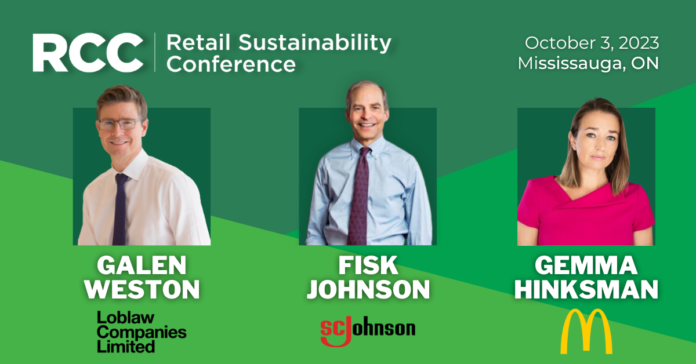
Retail Council of Canada gathers the most influential and passionate change-makers from the retail and CPG industry, manufacturing, technology, and policy landscape for the inaugural Retail Sustainability Conference on October 3, 2023, at the International Center, Mississauga. Beyond a mere event, it signifies a watershed moment in Canada’s push for a more sustainable future.
Why This Conference?
As the world grapples with environmental challenges, Canada takes the lead in North America’s pivot to extended producer responsibility (EPR). This important gathering will serve as a collaborative hub, uniting retailers, manufacturers, suppliers, technology providers, and policy visionaries. Together, they’re sharing sustainable packaging solutions, resilient supply chains options, and actionable paths to zero plastic waste and net-zero emissions.
“The essence of this conference is sparking collective action,” says Diane J. Brisebois, Retail Council of Canada President and CEO. “It’s our unique space where the industry unites, where we learn, engage in vital dialogues, and where visionary concepts seamlessly blend with actionable strategies. Together, we’re setting the stage for a sustainable future for Canadians and the world.”
A Glimpse at the Speaker Line-up:
The 40+ speakers talking on October 3, 2023 include hugely recognized leaders effecting change:
• Fisk Johnson, CEO and Chairman, and Chairman of the Board, SC Johnson
• Galen Weston, President and Chairman, Loblaw Companies Limited
Sessions will be on issues like the shift to product and plastics sustainability, navigating EPR, innovative strategies to slash greenhouse gas emissions, reporting, and more will fill the jam-packed agenda.
Retail Insider is streamlining its Canadian retail news from around the web to include a handful of top news stories that can be viewed quickly during the day. Here are the top stories from the past 48 hours.
Craig and Lee dive into the dynamic changes taking place on Bloor Street West in downtown Toronto. The episode explores the city’s evolving luxury run, focusing on the influx of luxury brands, extensive renovations, and exciting store openings that are reshaping the retail landscape.
Craig highlights the grand arrival of Ferragamo, a renowned Italian luxury brand, on Bloor Street. He shares insights from his interview with Ferragamo’s CEO, shedding light on the brand’s strategic choice to establish a presence on one of the world’s most prestigious luxury retail streets. Alongside Ferragamo, children’s retailer Bonpoint has also set up shop, adding to the diverse mix of offerings on Bloor Street.
The hosts delve into the developments at iconic addresses like 110 Bloor Street West, 100 Bloor Street, and even discuss the closures and future plans for the area. Craig underscores the flurry of construction activity and the promising outlook for Bloor Street’s retail scene, debunking earlier concerns of vacancies and emphasizing the street’s resurgence as a retail powerhouse. With new luxury boutiques, renovations, and intriguing arrivals on the horizon, Bloor Street continues to be a captivating retail destination in Toronto.
The Weekly podcast part of theThe Retail Insider Podcast Network by Retail Insider Canada and is available on Apple Podcasts, Stitcher, TuneIn, Google Play, or through our dedicated RSS feed for Overcast and other podcast players.
Transcript
[00:00:00] Announcer: This is a Retail Insider podcast. You’re listening to “The Weekly”.
[00:00:07] Lee Rivett: Welcome to this week’s episode of “The Weekly” by Retail Insider. I’m Lee Rivett and I’m joined with the owner and publisher of Retail Insider Media, Craig Patterson, to discuss this week’s most read articles on retail-insider.com. So thanks for joining me, Craig.
[00:00:22] Craig Patterson: Hello, everyone.
[00:00:23] Lee Rivett: Now for this week, there’s been a number of changes in Craig’s neighborhood in downtown Toronto on Bloor Street. So Craig, let’s go through that but where would you like to start?
Ferragamo Bloor Street (Image: Craig Patterson)
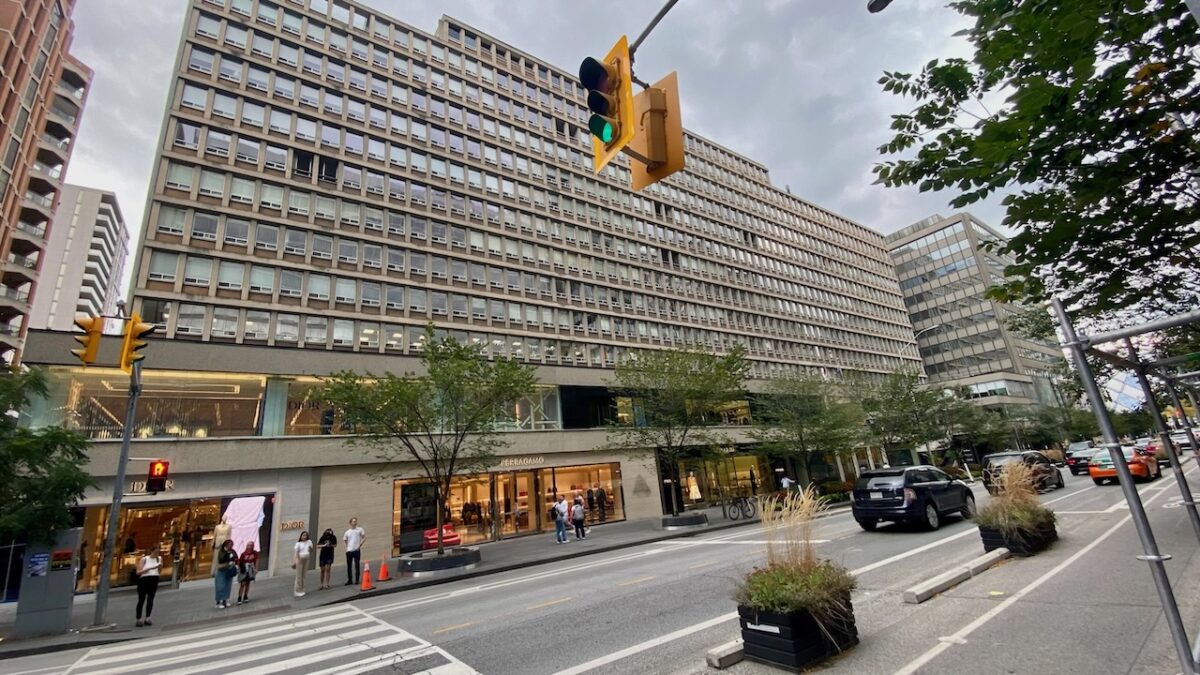
[00:00:34] Craig Patterson: Let’s start with a retailer that just opened – Ferragamo. Or maybe still called Salvador Ferragamo. A luxury brand out of Italy has opened a beautiful store on Bloor Street. It’s in The Colonnade, which is a historical building built in the 50s. It was the first mixed-use building in Canada with retail office and residential all in one building. And Ferragamo has opened almost a 6,000 square foot store there. It looks beautiful. It’s got a wide range of product. I spoke to the CEO, did an interview, and recently we did an article on it as well.
[00:01:08] Lee Rivett: And before we move on… for Ferragamo, was there any strategy for the Bloor location that you got from the brand (as far as why they’re opening there)?
[00:01:17] Craig Patterson: Yes, I spoke to the CEO and she was saying that Bloor Street is one of the most important luxury retail streets in the world and that Ferragamo had wanted to be there for a long time. And was just looking for the right space and I guess eventually this one space made sense for Ferragamo.
It was actually two spaces. It was a combined former “Coach” store (Coach being the brand for its bags and whatnot) and a former location for “Mulberry” (which is a UK based luxury brand) which had pulled out of the Canadian market during the pandemic.
So Jordan Karp being the broker for Ferragamo in this case, representing the tenant negotiated a deal with Morgard, which is the owner and landlord of the Colonnade at 131 Bloor Street West. A deal was done to bring Ferragamo to Bloor Street.
Ferragamo has been somewhat of a staple in luxury retail. Many cities have these stores, but downtown Toronto just didn’t have one, but Yorkdale has had one. There’s also one at Square One in Mississauga and one in downtown Vancouver, which is also going to be relocating at some point.
Bonpoint on Bloor (Image: Dustin Fuhs)
[00:02:21] Lee Rivett: Nice. And moving along on Bloor Street, Bonpoint is another retailer that recently opened up on the block, right?
[00:02:28] Craig Patterson: Yeah, it’s a children’s retailer. I haven’t popped in yet as of the time of this recording, but it looks like a beautiful store from the outside. I was just running by to get some lunch nearby and a Bonpoint (a children’s retailer out of France) has opened.
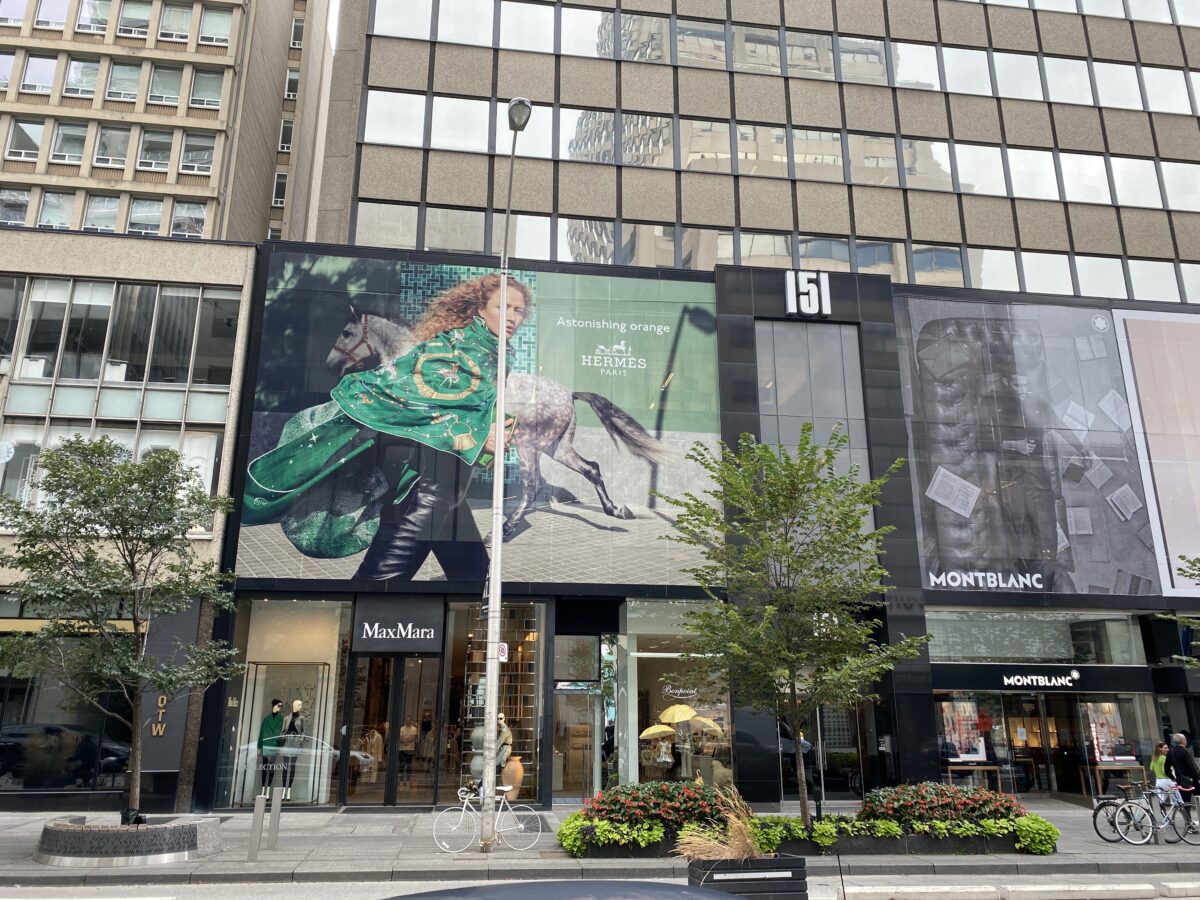
I think it’s probably its first corporate store in Canada. It’s the second location for the brand in Canada. One opened a couple of years ago in Vancouver on South Granville. And this is the second location, so it’s on Bloor Street, and we’re hoping to bring some wealthy parents downtown, and maybe they’ll shop at some other stores as well in the neighborhoods.
It looks lovely. It’s at 151 Bloor Street West, which is at the base of an office tower. It has three other retail tenants. Peloton, Max Mara and Mont Blanc. Two luxury brands and one exercise bike brand. And they’re not cheap, those things.
[00:03:21] Lee Rivett: And moving down the street to Van Cleef & Arpels, I love their “Midnight in Paris” watch. I’ve tried it on and I adore it. I’m super glad to hear that there is some news of that opening up on Bloor Street, right?
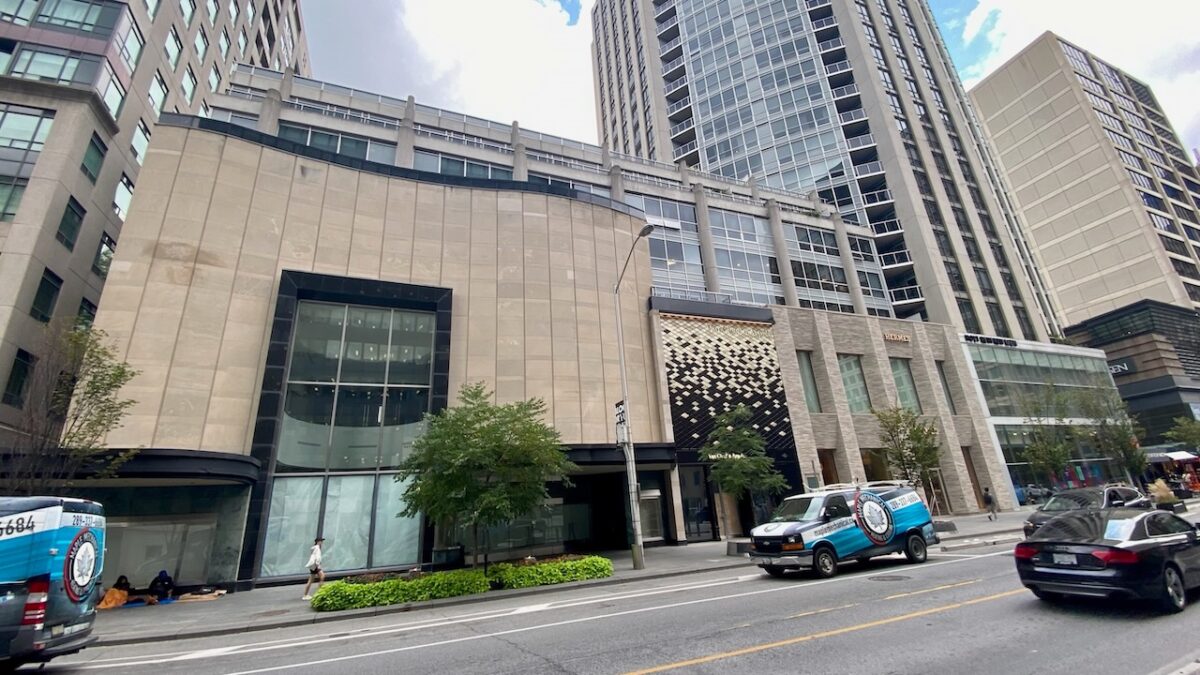
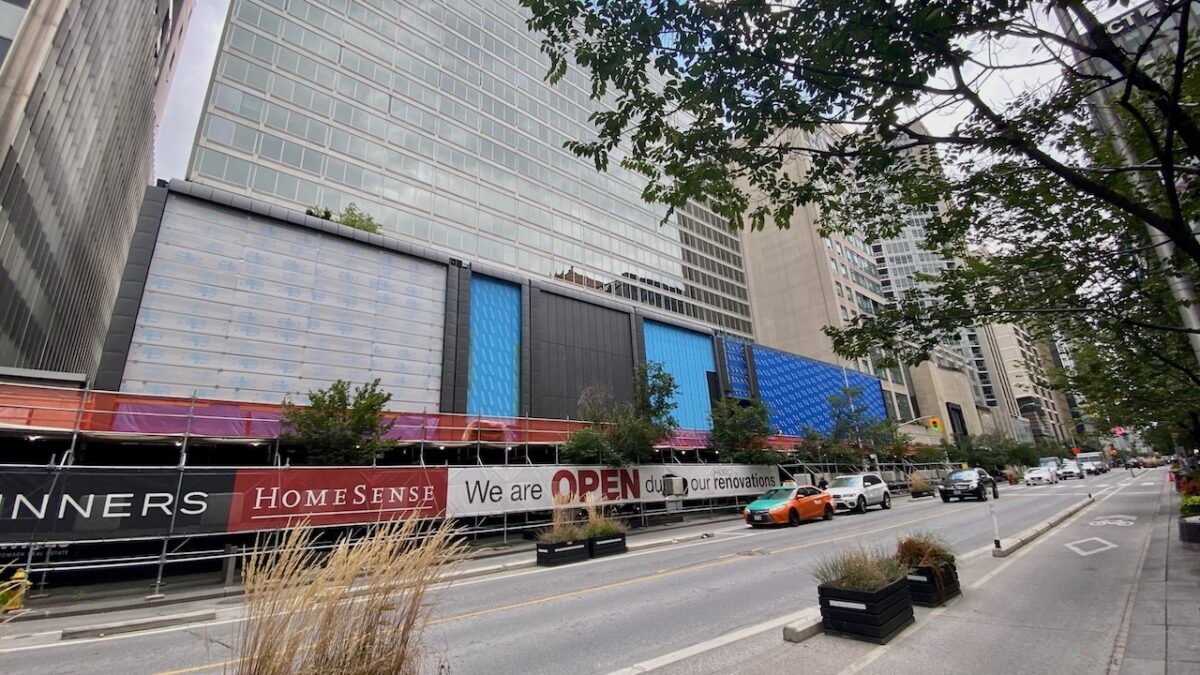
[00:03:34] Craig Patterson: Yes, Van Cleef & Arpels is pulling down hoarding getting ready to open its Bloor Street store. Very exciting news – it’s looking beautiful. It’s 100 Bloor Street West, so it’s located next to Hermes and which opened in, I think, 2017 on Bloor Street. Van Cleef & Arpels’ location most recently housed a Zegna store, which was a partnership with Ermenegildo Zegna (the brand) and Harry Rosen (the retailer). That shut down a while ago and now Van Cleef Arpels is the new tenant. Stunning beautiful store with a chandelier inside and the interior reminds me of the Vancouver and Yorkdale locations for Van Cleef & Arpels.
Shuttered Pottery Barn and Soon-to-Open Van Cleef & Arpels Bloor Street (Image: Craig Patterson)
It’s very dark and moody, luxurious. It’s got the silver around the windows the chandeliers. It’s got that very iconic look for the retailer and a great addition to Bloor Street and carrying some apparently very expensive jewelry as well. Which will compliment, of course, Rolex, which is in the process of finalizing its build out for its flagship store across the street.
And it’s a partnership with its host retailer, Royal De Versailles. Which has a store in the same building that’s located at, I have to get my addresses right here, 101 Bloor Street West, which is the base of an office building. I’ve got to try to remember my addresses now because I’m doing this by memory, but Rolex, again, it’ll be a great retailer to have in the neighborhood.
And then the Royal De Versailles jewellery store, which actually has a little Rolex shop with its own facade onto Bloor Street. I think Royal De Versailles is supposed to do a renovation and that will be interesting to see. I think around 2024 or maybe 2025 is when that’s going to be completed. These are all expensive stores and they’re all clustered in one area.
[00:05:12] Lee Rivett: And moving into some unfortunate news, there’s been some closures on Bloor Street as well, right?
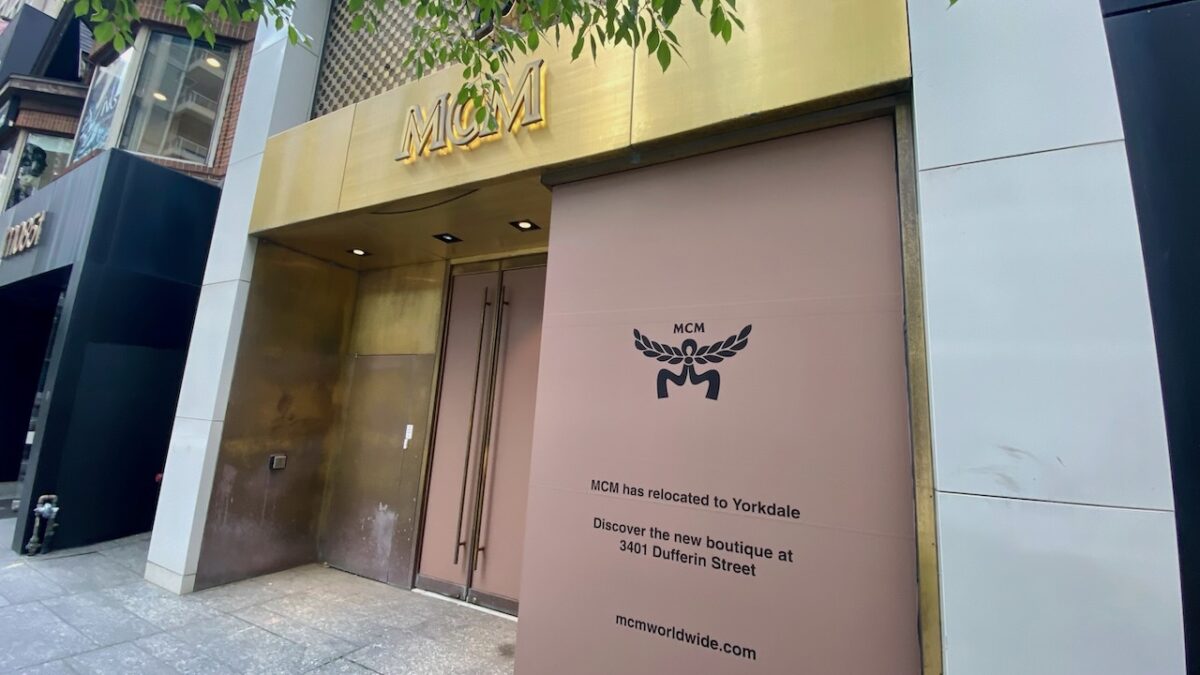
[00:05:17] Craig Patterson: Yes. It was not a surprise, but it finally happened. MCM, a German brand (I think it’s actually Korean owned now) shut its store recently on Bloor Street. So there’s paper or covering over the windows, there’s a sign that says that the store has relocated to the Yorkdale Shopping Centre. It’s a little bit disappointing, but the building that MCM was in on Bloor Street, as well as a few other retailers connected, even Brooks Brothers, and COS …. they’re all on temporary leases now because the plan is to eventually demolish that block and put a very tall residential building there. They’re proposing 70 something floors and it would have retail at the base. So hopefully it’s good retail. I think that’s important. High ceilings, deep, hopefully, wide facade, something that luxury brands might like. So I hope the developer actually does that.
Former MCM on Bloor Street (Image: Craig Patterson)
But again, that’s another big change coming to Bloor. I don’t know exactly what the timeline is. I got something in the mail from a law firm saying that they were holding meetings with residents and are trying to get opinions and what can be built there.
It sounds like that process has not gone through yet. But all kinds of stuff is happening. Another retailer that had shut it was more of a pop up. It was OTW, which was a sneaker store. It was located in The Colonnade. It had been in, I think, a couple of other locations in the neighborhood as well. It’s gone, but I think it’s got some other locations anyways that was not a luxury retailer, I would say.
Another space that’s for lease now is the Kit & Ace space at 102 Bloor Street West. Something good or maybe more than one brand will move in if they can split the space up, but it’s looking good.
[00:06:51] Lee Rivett: Well, there’s a couple things happening at 110 Bloor Street as well, right?
[00:06:54] Craig Patterson: Yeah. So 110 Bloor Street West. That’s an overhaul of that retail podium of that building, which is pretty iconic. That address has had a lot of luxury retailers over the years. I think Canada’s first Louis Vuitton was in there. Marc Laurent, the luxury multi brand retailer, had been in there years ago. Celine had a store in there many years ago.
So there’s been all kinds of retailers, but now it’s being ripped apart, almost finished very exciting development. It’s going to have the largest, at least for now, Saint Laurent store in North America. It’s about 10,000 square feet with a massive two level facade on Bloor street.
110 Bloor Street (Image: Craig Patterson)
I think that’s very exciting. And on the Bloor street side of 110 is also going to be Alexander Wang, which is a New York city based fashion designer who’s got some controversy behind him. You can Google it. I’m not going to get into it here, but it’s not good, and Ann Fontaine known for beautiful white shirts, the French brand and Paris Baguette, which is probably almost finished now. It’s a food service business, which is going to occupy a space at 110 across from Saint Laurent. Probably where I’ll be going because that’s my price point, but it’s exciting stuff that is going to be happening at 110 Bloor. And then in the back, there’s some stuff happening as well.
There’s going to be Othership, which is a they call it a bathhouse. It’s not that type, but it’s a place where people can go and socialize and sweat. And I don’t know what else, but I’m going to go and check it out when it’s open and something else I won’t talk about yet. An exciting development. It’s, I think, the largest construction project on the street in terms of an overhaul of a facade and of the retailers within it currently on Bloor Street.
[00:08:27] Lee Rivett: And what about 100 Bloor Street?
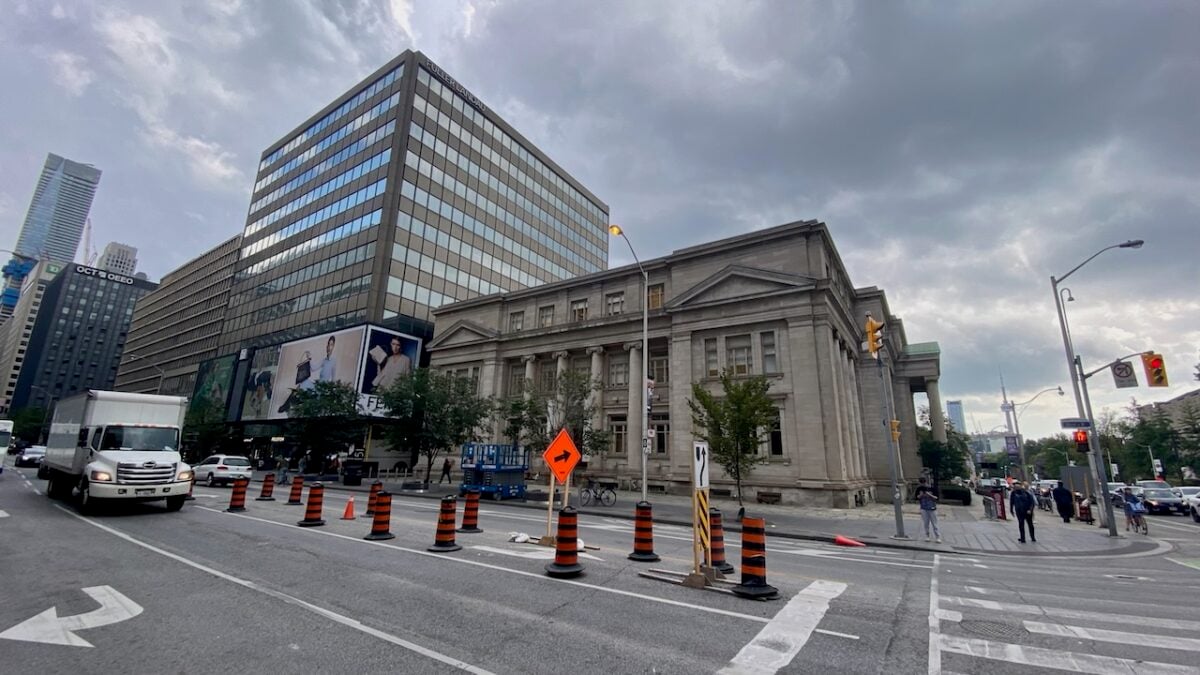
[00:08:28] Craig Patterson: Yes, so 100 Bloor, we don’t know yet, but those who’ve been wondering for years about that Pottery Barn space. With the theater facade part of it’s been leased, so we don’t know to who yet, but we’ll be announcing that at some point here. Exciting stuff, but not the entire space has been leased.
JLL is still leasing some of it we’ll be talking more about that eventually. We’ll also be talking a bit about the corner of Bay and Bloor Street, something big is going to be coming there, but we won’t talk about that yet. Another thing we’ll mention too more on the luxury stretch is the former Club Monaco building, which I really think should have become a Ralph Lauren store. So I believe it’s still for lease.
Basically, the reason I wanted to talk about this Lee is because there’s this flurry of construction activity on Bloor Street right now. And I’m only talking about Bloor Street. I’m not even talking about Bloor-Yorkville or Yorkville Avenue, which we’ve talked about recently.
Former Club Monaco Bloor (Image: Craig Patterson)
But the construction, I guess you’d say it’s been a bit disruptive, but. It’s part of a good news story because I remember during the pandemic, the Toronto Star did an article and basically to sum it up, it was like the ‘woes of Bloor Street’. ‘There’s all kinds of vacancies’. The Hudson Bay story just closed, but the journalist who did the story didn’t know everything that was going on at the time.
I think, on the surface, it did look like things were really bad on Bloor Street, but what was really happening was a shuffle. Brokers were doing deals with landlords plans were being made and I was told by one broker doing deals on Bloor Street that now there’s an issue of really not enough space left to put tenants that people want.
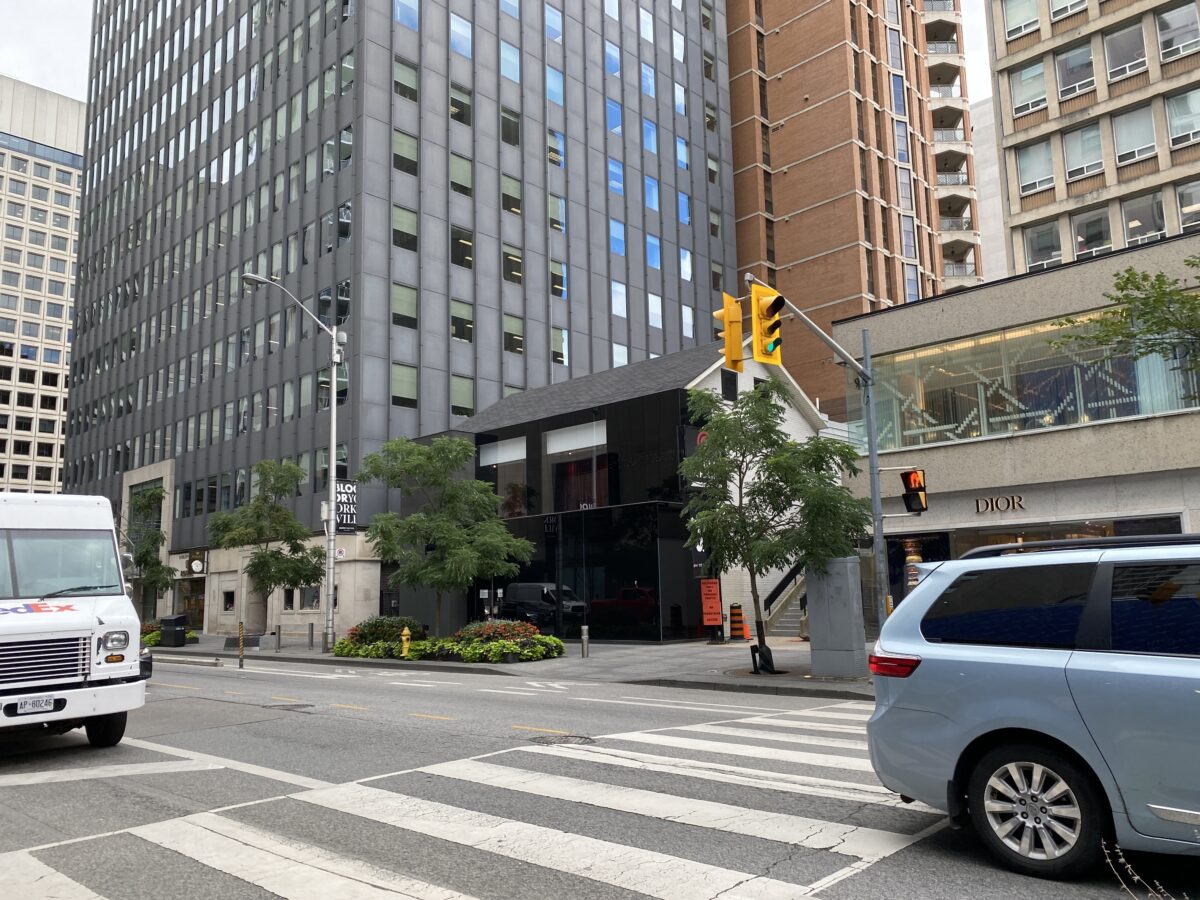
Shuttered Dolce & Gabbana (Image: Dustin Fuhs)
There was a Dolce Gabbana store on Bloor Street till recently. It relocated up to the Yorkdale Shopping Centre but the building’s been leased. I’m not going to say to who because I’ve agreed not to, but these deals have been done. It’s exciting news. This is all wonderful stuff happening on Bloor Street right now.
[00:10:32] Lee Rivett: I think you were worried about the Bloor-Yorkville area, weren’t you?
[00:10:35] Craig Patterson: I was a bit worried about Bloor-Yorkville in terms of the neighborhood competing against Yorkdale and Yorkdale getting all of these stores. Yorkville and Bloor Street are also getting all kinds of luxury retailers and sometimes they’re bigger than the Yorkdale locations. And so we will see where it goes. But what’s interesting is the brand that’s moving into the old Dolce Gabbana is also opening up at Yorkdale and these will be first to Canada stores.
I’ll be reporting on these things for a while here now. I think I’ll fill in the gaps of what I’ve just talked about here in the coming weeks and months as we continue to report on what’s happening in Bloor, Yorkville and on Bloor Street.
[00:11:20] Lee Rivett: Oh, and before you go you wanted to also talk about the Holt Renfrew on Bloor Street, right?
[00:11:25] Craig Patterson: Yeah, so we’ll talk about the stretch of Bloor Street. It’s not quite as luxurious, I guess you would say, between Yonge Street and Bay Street. It’s got a Fabricland, but, we’ve talked about this in previous podcasts and I wrote about it, the Kimmel family that’s going to be co developing that piece of real estate there at Bloor and Balmuto Streets also owns Fabricland and so therefore put its retail tenant into the former H&M building until it’s demolished.
But nevertheless, that block has two major retail things happening. We’ve already announced one of them that was Arc’teryx doing what I believe would be its largest store in the world to date. That’s located in the Holt Renfrew Centre with a door, it’ll have a door on to Bloor Street. It’ll be almost 10,000 square feet and I think it’s going to have a facade that’s going to look like it’s two floors.
Future Arc’teryx Bloor (Image: Craig Patterson)
The store won’t be two floors inside, but it’s going to have an incredible presence. I’m really excited to see what this Arc’teryx is going to look like when it’s done. Not a luxury brand, but it’s a good quality Vancouver based outdoor lifestyle brand that must have a lot of money behind it right now because I’m seeing all kinds of stores being built.
There’s one being built at Yorkdale as well.
[00:12:31] Lee Rivett: Weren’t you also talking about Brown Shoes coming in as well?
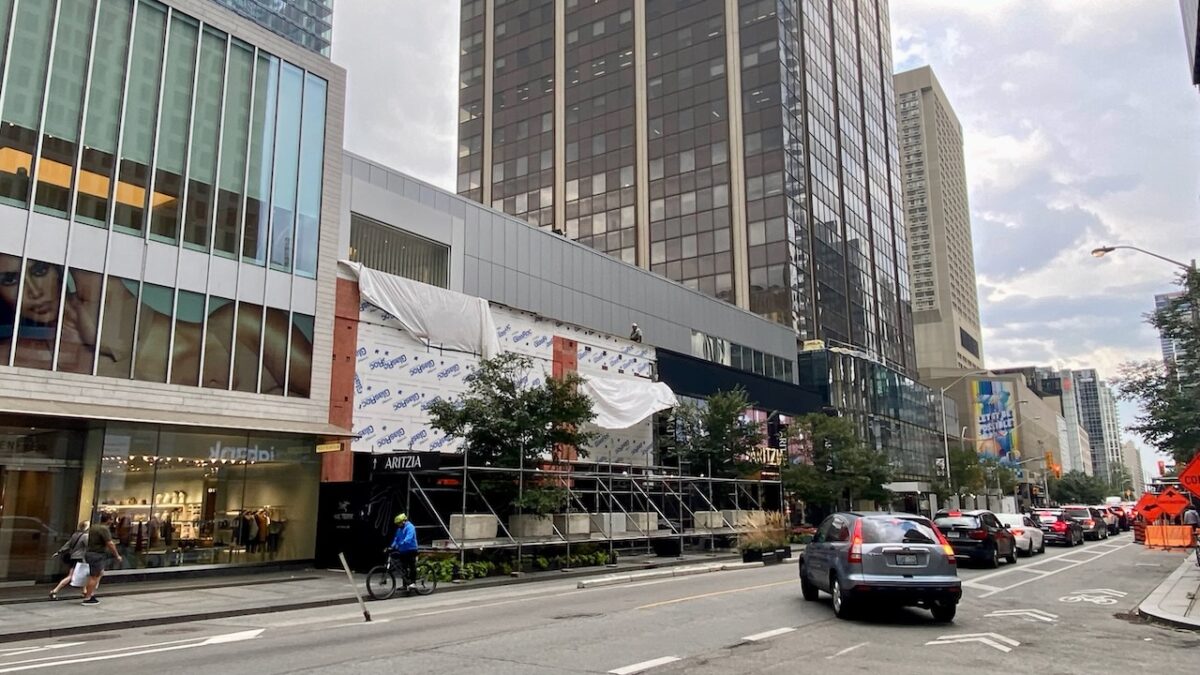
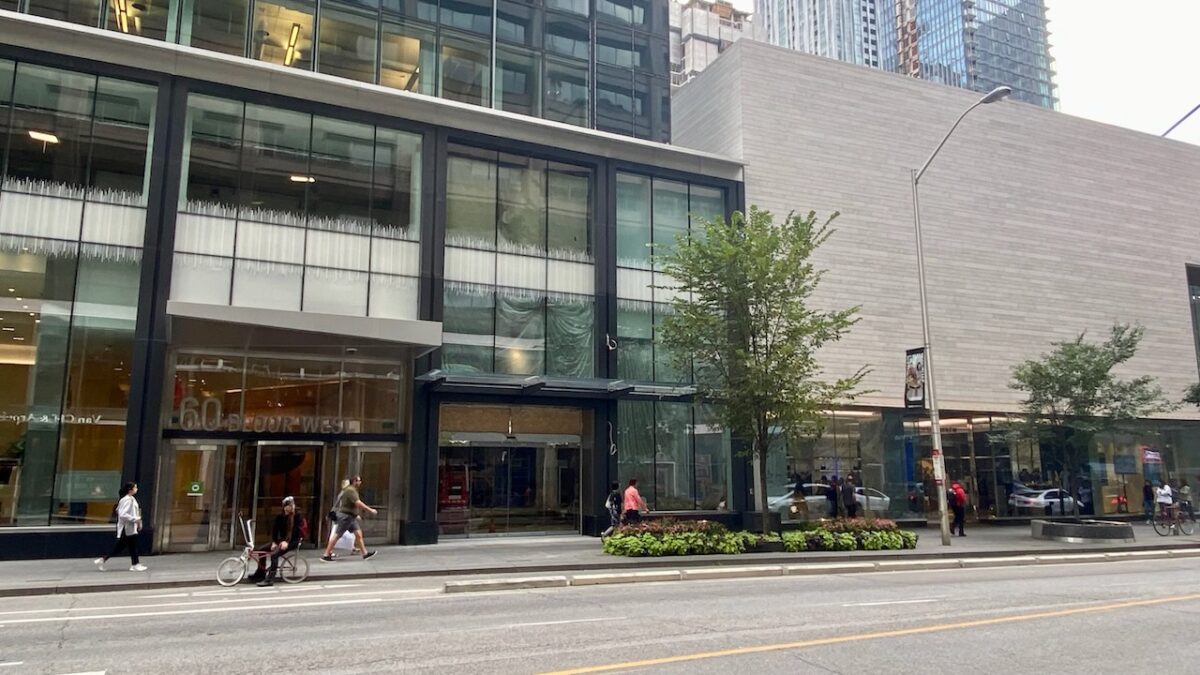
[00:12:34] Craig Patterson: And another tenant coming, which I think people were questioning. It will be between the Alo Yoga store (this is at 60 Bloor Street West, there’s an Alo Yoga right on the corner). And then Holt Renfrew has its big store at 50 Bloor Street West, and it’s got a Saint Laurent concession currently, which I’m assuming is probably moving because I don’t know why Saint Laurent would keep its concession at Holt Renfrew when it’s going to have a 10,000 square foot store within a stone’s throw away, but we never know.
But nevertheless so Brown Shoes is going to take about 4,300 square feet is what Eric Ouaknine was telling us head of retail for Browns and a 60 Bloor Street West located in between Holt Renfrew and Alo Yoga. So this is I think a great tenant, the space actually sat vacant for a few years.
Future Browns Shoes on Bloor (Image: Craig Patterson)
And in fact, I think it’s been vacant since 2018. It had been part of the Holt Renfrew store for a while connected to it. So it was actually a situation where Holt Renfrew had blasted through from 50 Bloor Street West into 60 Bloor Street West to retail to add an extra about 3,800 square feet. Years ago it was part of a men’s store that used to be there, but the men’s store relocated in 2014 over to 100 Bloor Street West it has been vacant for a while, but yeah, so I think it’s terrific. We don’t have enough shoe stores in Bloor- Yorkville.
There’s only a handful there. There’s Ron White and Jean Paul Fortin. And then Holt Renfrew has a footwear department in each of its stores, the men’s and women’s stores. But I think Brown Shoes coming into the neighborhood is a wonderful thing.
I’m a fan. Brown’s has had a presence in Yorkville since I think the 70s when it opened a store in Hazleton Lanes. I don’t remember that. I’m too young, of course.
[00:14:14] Lee Rivett: But thanks for going through a lot of this stuff. There just seems to be so much going on Bloor Street, so it’s really exciting.
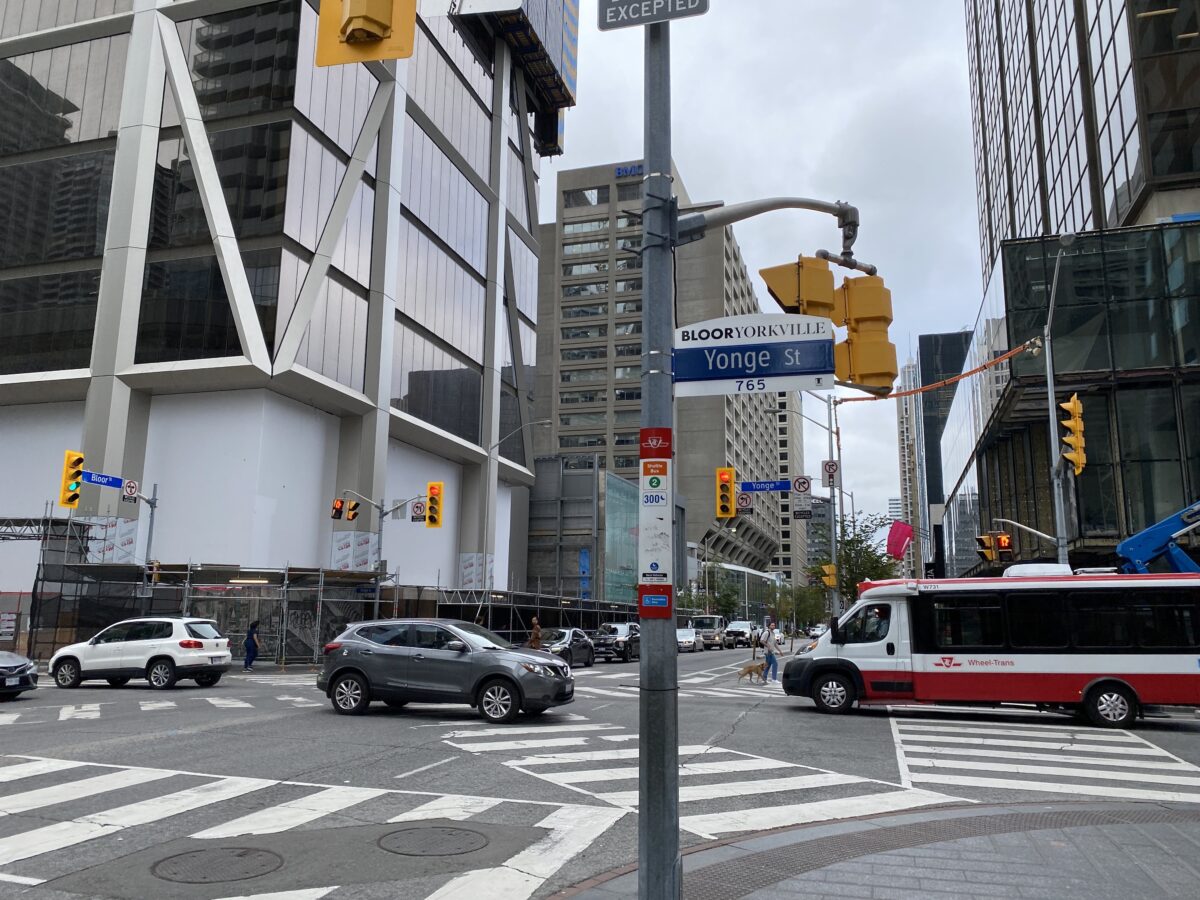
[00:14:20] Craig Patterson: So what we’ll do moving forward is we’ll continue to discuss what’s happening on Bloor Street in Toronto. We’ll announce what’s going to be coming where Nordstrom Rack used to be. There’s Yonge and Bloor. Across from what will become an Apple store, there’ll be a Lululemon store on another corner, and then there used to be there’s a Royal Bank on the other corner, but a Hudson Bay department store used to occupy the space in behind.
Yonge and Bloor (Image: Dustin Fuhs)
But lots of stuff again happening even just right at that core iconic corner of Yonge and Bloor and more to come. So I think it’s really exciting. We’ll be reporting on these things here. So everyone keep following us.
Subscribe to our newsletter and keep following us at Retail Insider because we’re going to keep trying to report on these things here as we can. So it’s exciting news and we love retail here.
[00:15:05] Lee Rivett: That sounds like a bumper sticker. But thanks for going through the updates on Bloor Street. We’ll have more of these and otherwise chat with you next week, Craig.
Thank you so much, everyone. Take care and bye for now.
Subscribe, Rate, and Review our Retail Insider Podcast!
Drop us a line at Craig@Retail-Insider.com. You can also rate us in Apple Podcasts or recommend us in Overcast to help more people discover the show!
Background Music Credit: Hard Boiled Kevin MacLeod (incompetech.com). Licensed under Creative Commons: By Attribution 3.0 License. http://creativecommons.org/licenses/by/3.0/
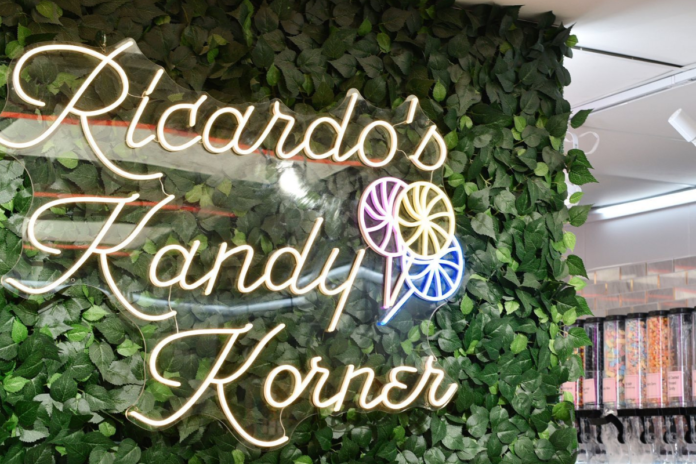
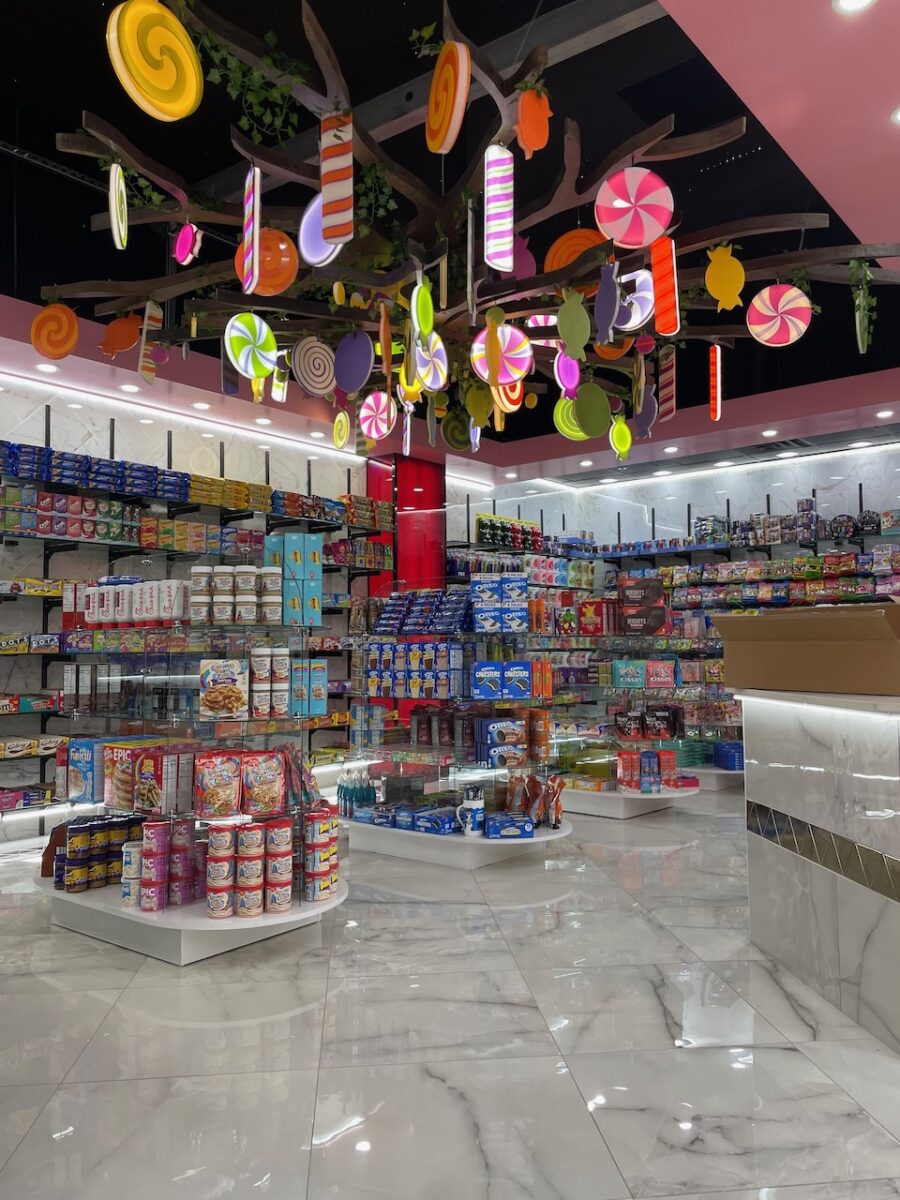
That’s the feeling Ricardo Rizaie wants to create for kids of all ages when they walk into a Ricardo’s Kandy Korner shop. Whether they are kids by age or just kids at heart, the store offers a ‘wow’ experience for those looking for some sweets and some treats.
Rizaie has two stores operating in the Vancouver area and a flagship store planned for the downtown CF Toronto Eaton Centre in Toronto.
Image: Ricardo’s Kandy Korner
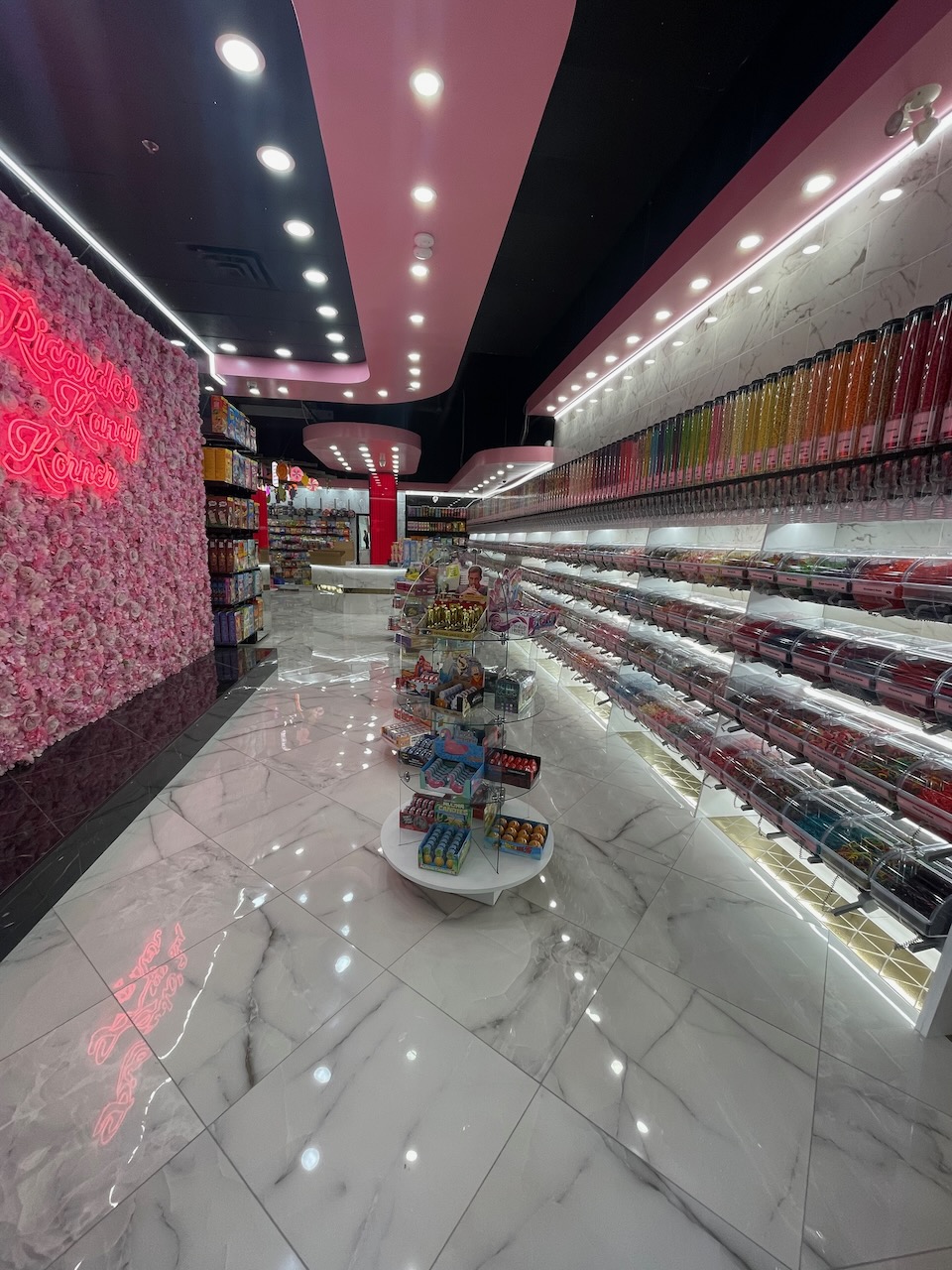
Image: Ricardo’s Kandy Korner
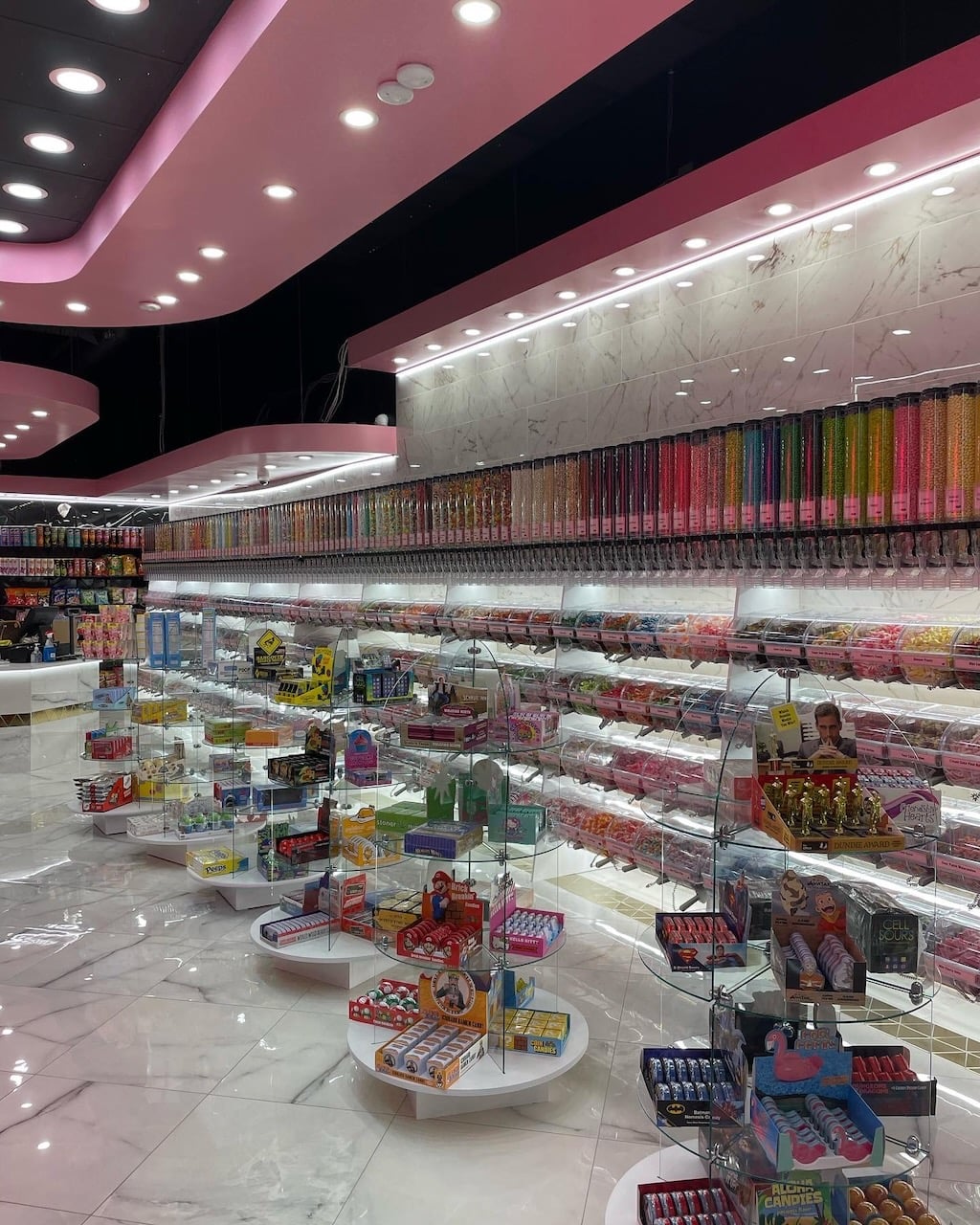
Image: Ricardo’s Kandy Korner
The first location opened in June 2021 in White Rock Beach in B.C., followed by another location in July 2022 in downtown Vancouver on Granville Street.
“We are B.C.’s biggest candy store,” said Rizaie. “And this will be Ontario’s biggest candy store. We have the biggest selection of bulk candy with over 450 different (candies). So people come in and choose their bulk candy, mix and match, all at one price.
“We have a lot of imported candy as well.
“Our idea basically is when a customer walks in we want to give them that experience like they’ve never had before. Super fun. Exciting. And when they leave there it’s like ‘oh wow, this store was really cool’.”
The stores are about 1,500 square feet.
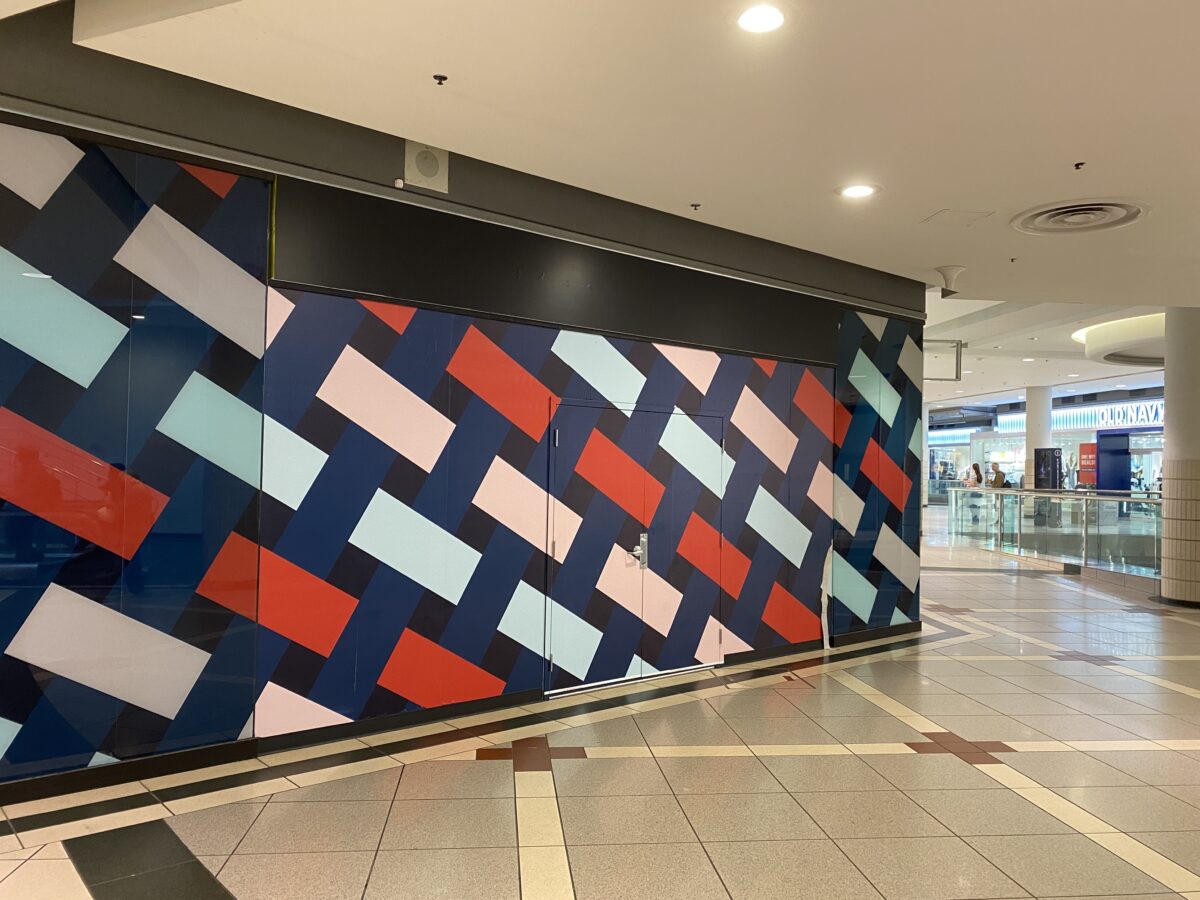
Future Ricardo’s Kandy Korner at CF Toronto Eaton Centre (Image: Dustin Fuhs)
Rizaie was initially thinking of opening a location outside of a mall in downtown Toronto. While he was looking, a realtor showed him some locations and asked Rizaie if he would consider going inside a mall.
But Rizaie thought it would not be possible as a huge mall wouldn’t want the concept of a candy store.
“That’s what I thought. This is only a third location and I don’t think they’d be interested,” he said.
But Cadillac Fairview, which operates the CF Toronto Eaton Centre, made Rizaie an offer which he jumped at.
“Foot traffic wise this is Canada’s busiest mall I would say. You’re in the heart of downtown Toronto. You have like the biggest reach possible in the most populous city in Canada, province as well,” he said.
“So it’s a huge reach and it opens more doors going somewhere else potentially. I want to have one in every major province in Canada. For example, Montreal would be ideal for our next spot. Calgary would be nice too, somewhere downtown.
“The good thing with Ontario is we could do three, four stores easily. It’s such a big area. We could do one in Niagara Falls, Yorkdale. So many different options here. We’re going to continue to grow.”
Rizaie said the brand’s customers are from five years old to seniors. There’s something for everybody.
“The kids love their Pez dispensers. The adults, like seniors, like their licorice candy, their chocolate selection. We have a big chocolate selection. Our biggest audience is the young adults, anywhere from 20 to 35 actually.
“When people walk into the store we want them to feel excited. It’s like ‘holy shit, this is a lot of candy’. You don’t even know where to start. Most of the customers that walk in they are wowed at the decor, the selection, just the vibe in general. They’re amazed by it.”
Rizaie used to be in banking and wasn’t too happy with that. So he bought a convenience store from a family friend, renovated it and did really well. He saved some money and opened the first Kandy store then the second one.
He’s got an ice cream store as well in White Rock called Ricardo’s with about 100 flavours of ice cream. He also has a vape shop on White Rock Beach called Smoke Culture.
“I’m involved in a lot of different businesses,” he said.
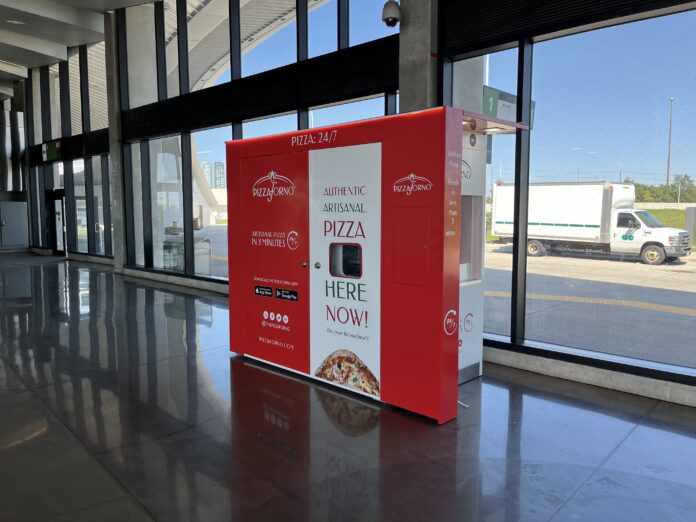
PizzaForno at Highway 407 Bus Terminal (Image: Go Transit)
The automated pizzeria concept PizzaForno is continuing to expand its footprint in North America now moving into the public transportation sector as well as eyeing airport locations for growth.
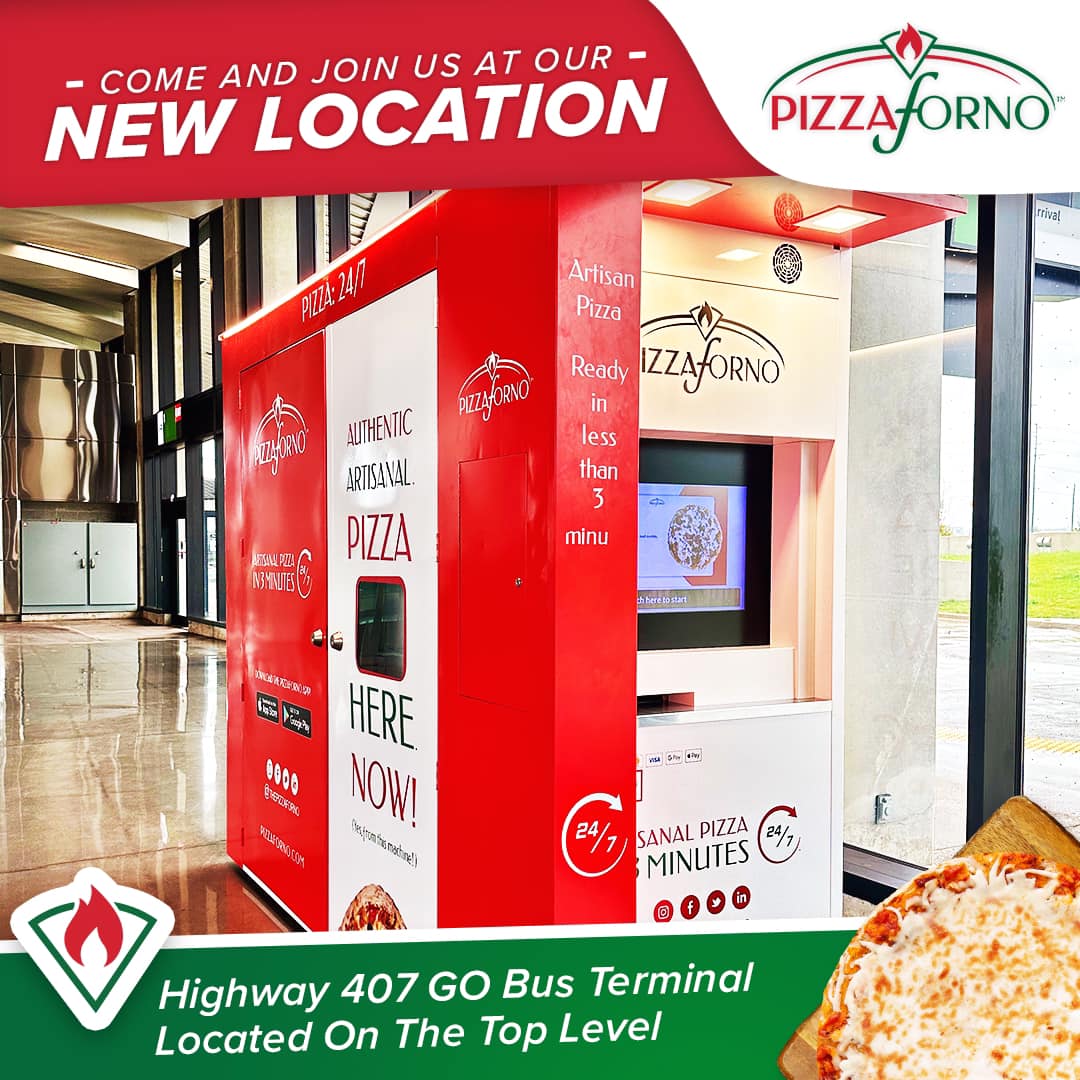
PizzaForno has debuted with Metrolinx in Toronto with three transit stations, and growing, serving hot pizza, baked fast and fresh in three minutes, 24/7.
“This is the world’s first agreement of its kind with a public transit operator in Canada, and further strengthens PizzaForno’s leadership position in the automated food space in North America,” said Les Tomlin, Co-Founder and President of PizzaForno. “We are well on our way to becoming the fastest-growing pizza chain in North America by 2024.”
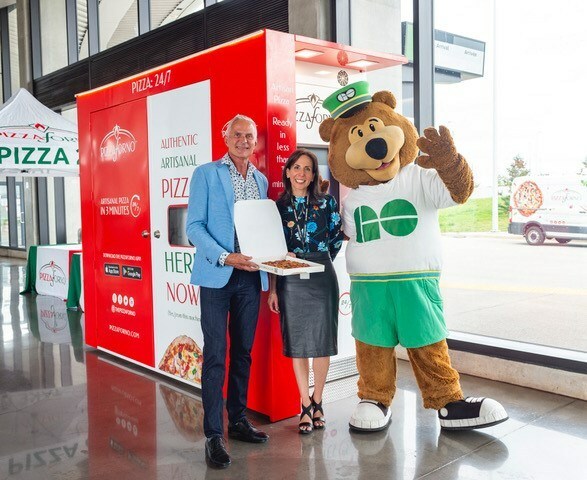
Les Tomlin, Co-Founder and President of PizzaForno, Jessica Greisman, Retail Partnership Manager at Metrolinx, and GO Bear celebrate the official launch of PizzaForno at the 407 GO Bus Terminal. (CNW Group/PizzaForno)
The concept, which began in 2018, currently has 70 units across North America.
“We have about 800 on order for the next 18 to 24 months,” said Tomlin.
“The whole concept of PizzaForno, the technology originated in France, and it’s been in France for the better part of 18 years believe it or not. And it’s obviously been reiterated technologically since then. PizzaForno has been in several transit hubs throughout France and even into Spain.
“A part of our plan has always been to launch at transit hubs. We started talking to Metrolinx in the middle of COVID as they were also looking to offer hot food offerings to their passengers. This is the right place at the right time with the right technology. Our next big hit is going to be airports and then we will have accomplished all our different channels.”
Tomlin said the number of locations with Metrolinx will expand quite rapidly.
“The initial sales numbers have been extremely positive with that first launch location at Jane and 407,” he said, adding the company will look at transit station locations in major markets in Canada and the U.S.
PizzaForno at GO Transit Highway 407 Bus Terminal (Image: Pizzaforno)
He said the concept is growing quite rapidly because of convenience and cost.
“And the fact you can actually get a great fresh baked pizza in three minutes. It’s quite remarkable,” said Tomlin. “I think the whole world during COVID went through a sort of instant demand situation where they want everything instant gratification wise. So the fact that you can actually step up to a kiosk and not have to interact with anybody either order through an app or touch a few buttons on a screen and get a fresh baked pizza in under three minutes is pretty unique to North America and I think its time has come.
“I think it was actually quite accelerated by COVID where everybody was getting used to ordering and not necessarily doing dining and eating.
“It’s really a grab and go business.”
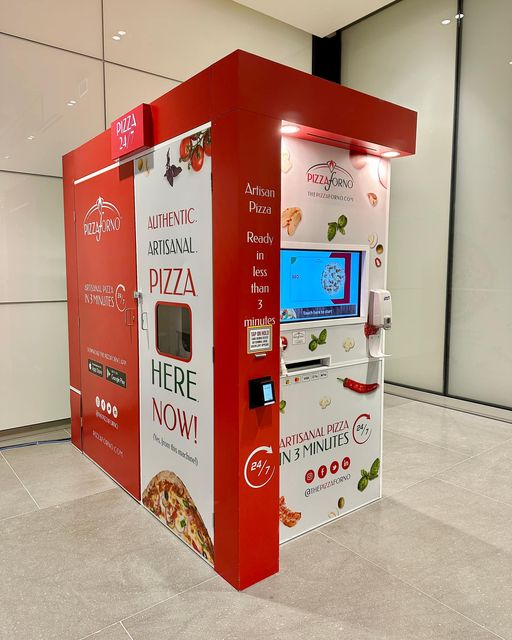
Image: PizzaForno
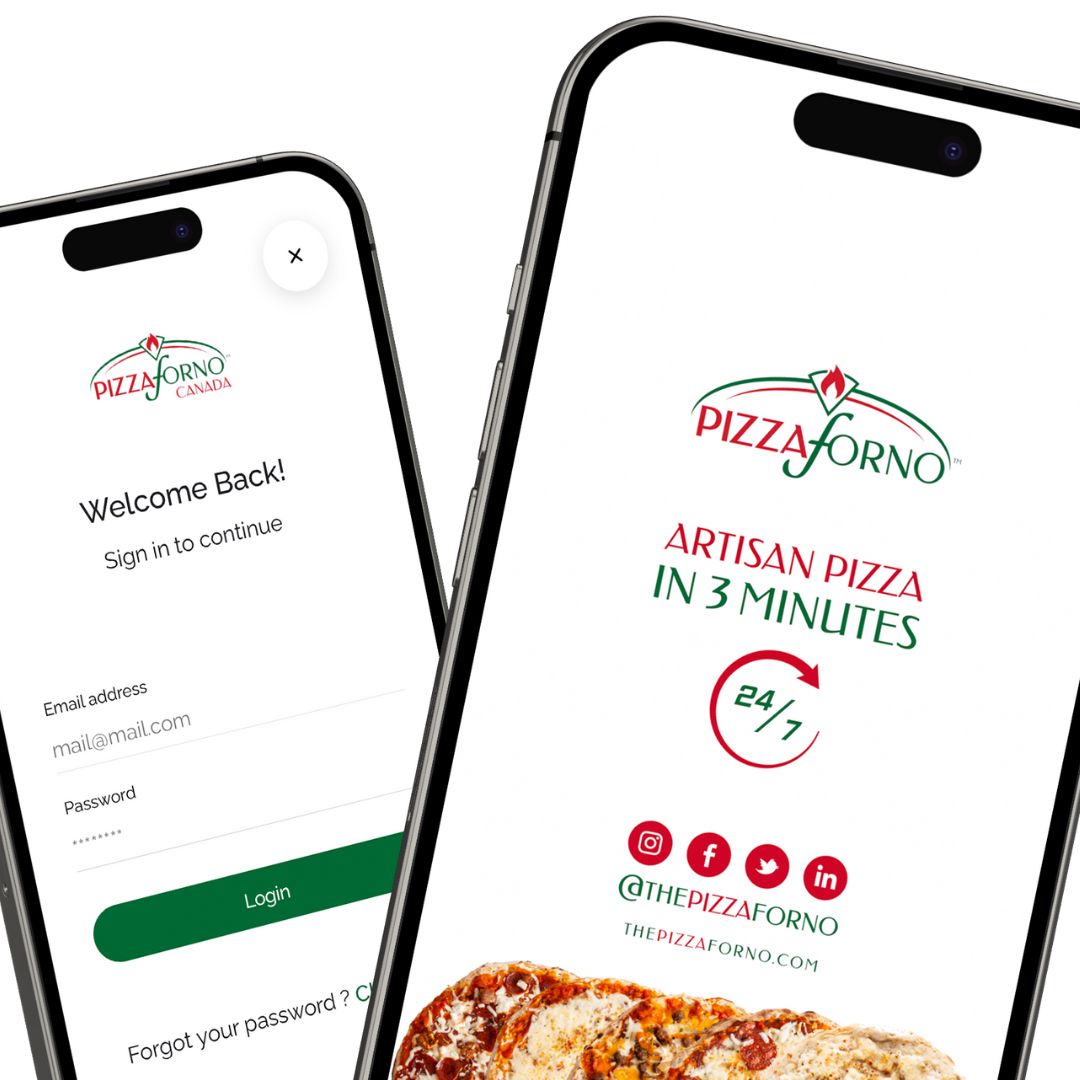
PizzaForno app
Metrolinx is responsible for the operation of GO Transit, UP Express, and PRESTO. It operates over 400,000 buses and trains and serves over 100 million commuters.
“We’re excited to welcome PizzaForno to GO. Customers are now able to access great pizzas through a seamless ordering experience on the PizzaForno app as they arrive at their destination or prepare for their next trip or adventure,” said Mark Childs, Chief Marketing Officer, Metrolinx.
Mark Childs
PizzaForno marks the transit leader’s first automated hot pizza option with additional kiosks anticipated to be announced at GO Transit stations in the coming months.
The PizzaForno 9 x 6 ft. kiosks are seamlessly installed and operating in food courts, convenience stores, post-secondary schools, military bases, tourist destinations, and boating marinas throughout Canada and the US.
PizzaForno customers have the benefit of touchless ordering. They can use the new PizzaForno app to pre-order to make the experience even speedier or order directly at the kiosk from an automated screen. A robotic arm takes the refrigerated pizza and puts it into an oven for baking. Less than three minutes later, a hot pizza in a box emerges from a slot. PizzaForno also offers a take-and-bake option to enjoy at home.
“We deliver a really high quality product,” said Tomlin. “I think consumers are a little bit skeptical at first thinking how good can a pizza be from a robotic pizza machine and once they try it we’ve got them for life. They really are quite blown away by the quality of the pizza that comes out of our PizzaForno units.”
Downtown Calgary 2023, view from Crescent Heights (Image: City of Calgary)
A tightening of supply for retail space in Calgary is leading to jumps in demand and rental rates at existing centres, according to a mid-year market report by commercial real estate firm CBRE.
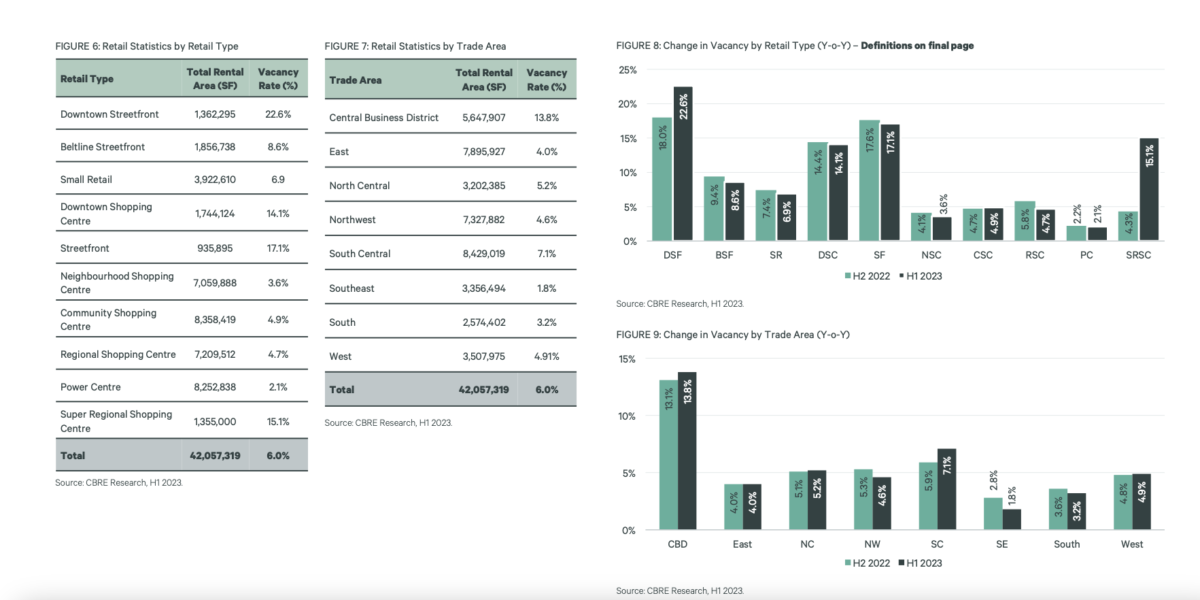
The report said Calgary’s overall retail vacancy rate has risen by 10 basis points to six per cent, half-over-half, as the year started with headwinds with the prime lending rate now at its highest in over two decades.
CBRE said asking rents have appreciated in response to a combination of demand, limited supply, and elevated construction costs. Suburban communities and neighbourhood centres continue to see exceptional demand, and for mixed-use noticeably less.
Image: City of Calgary
John Moss
John Moss, Senior Vice President of CBRE in Calgary, described the city’s retail market as “robust” despite some economic challenges.
The market is being buoyed by residential growth, the city’s vibrancy and the stability of retail.
“There’s still some headwinds from retailers that exist,” said Moss. “But what is great is the momentum of the city and the momentum of our market is outweighing any of the challenges. So it’s still making the retail activity quite strong.
“Calgary has always done exceptionally well and I would say it’s almost insulated somewhat compared to the rest of Canada because we have the highest disposable income. We have the highest disposable spending. That’s what props us up exceptionally well.”
CBRE Calgary Retail Figures H1 2023
Moss said the market will be interesting to watch in the future. First there are a number of businesses that received federal government loans to help them through COVID and repayment is coming up for them.
“I’m curious to see what’s going to happen in Q1 of next year once those loans start having to be paid,” he said.
“But the other thing that is going to put upward pressure on our market is landlords are really reconsidering where we are in the business cycle from a retail standpoint. Construction costs are going through the roof and it’s putting pressure on the net rents that landlords have to get. So what’s happening is some landlords are starting to stall on their projects and tenants are then having to capitalize or take advantage of pre-existing inventory.
“That’s been good because we’ve had some vacancies over the course of COVID. So it’s naturally absorbing all of those spaces that might not have had the same interest. That’s a great thing. We’re starting to see absorption of pre-existing inventory because construction is slowing down for new product.”
Also, formerly vacant space in some of the larger boxes, like Bed Bath and Beyond and Nordstrom, will bring new life into the retail landscape.
Calgary’s influx of residents has helped to support a range of economic activities throughout H1 2023, including filling some of the labour vacancies that employers face and driving retail demand throughout the city, said the CBRE report.
The increase in retail vacancy was mainly due to the sizable return of space from Nordstrom, buybuy BABY and Bed Bath & Beyond exiting the market.
“Existing centres benefit from a slowdown in new retail construction, putting upward pressure on rates and lowering inducements as retailers look to expand while facing increasingly limited leasing opportunities. Competition increases amongst retailers searching for space for restaurants, groceries, pharmacies, personal services and especially daycares. Landlords are looking for solid covenants and involvement from franchisors to secure space when franchises are involved. Retailers and landlords alike are facing some headwinds to start the year as the prime lending rate is at the highest point in over two decades. This high-interest environment is new territory for many businesses and some landlords, which has caused some hesitation on new-build retail options and postponed construction financing for some new-build retail developments,” said the report.
“Those developers with construction underway or with standing inventory will see benefits of the demand for the remainder of the year. Tenant financing is a challenge, however, it is not limiting the need for growth in Calgary. Daycare operators have boomed in the City, along with personal services. Fashion retailers, meanwhile, are exploring alternative brick-and-mortar locations and continuing to push content through social commerce efforts.
“Large-format restaurants continue to come back to the market. Good locations are transacting, however, stale locations may also have opportunities to reposition into other uses based on the local demand. Smaller format restaurants (under 4,000 square feet) and QSR spaces continue to be in high demand, with a healthy amount of turnover occurring. The Southeast quadrant holds the lowest vacancy rate and highest demand of any submarket at 1.8 per cent. The strongest sub-categories are Power Centres and Neighbourhood Shopping Centres with vacancy at 2.1 per cent and 3.6 per cent, respectively. This contrasts the glaring vacancy in Downtown Street Front and Super Regional Shopping Centres, both experiencing vacancy rates of 22.6 per cent and 15.1 per cent, respectively. The Central Business District (13.8 per cent vacancy) and South Central (7.1 per cent vacancy) areas continue to struggle from the lingering effects of COVID-19 and the resulting reduction in the commuting customer base. Suburban communities and neighbourhood centres continue to see exceptional demand; for mixed-use noticeably less.”
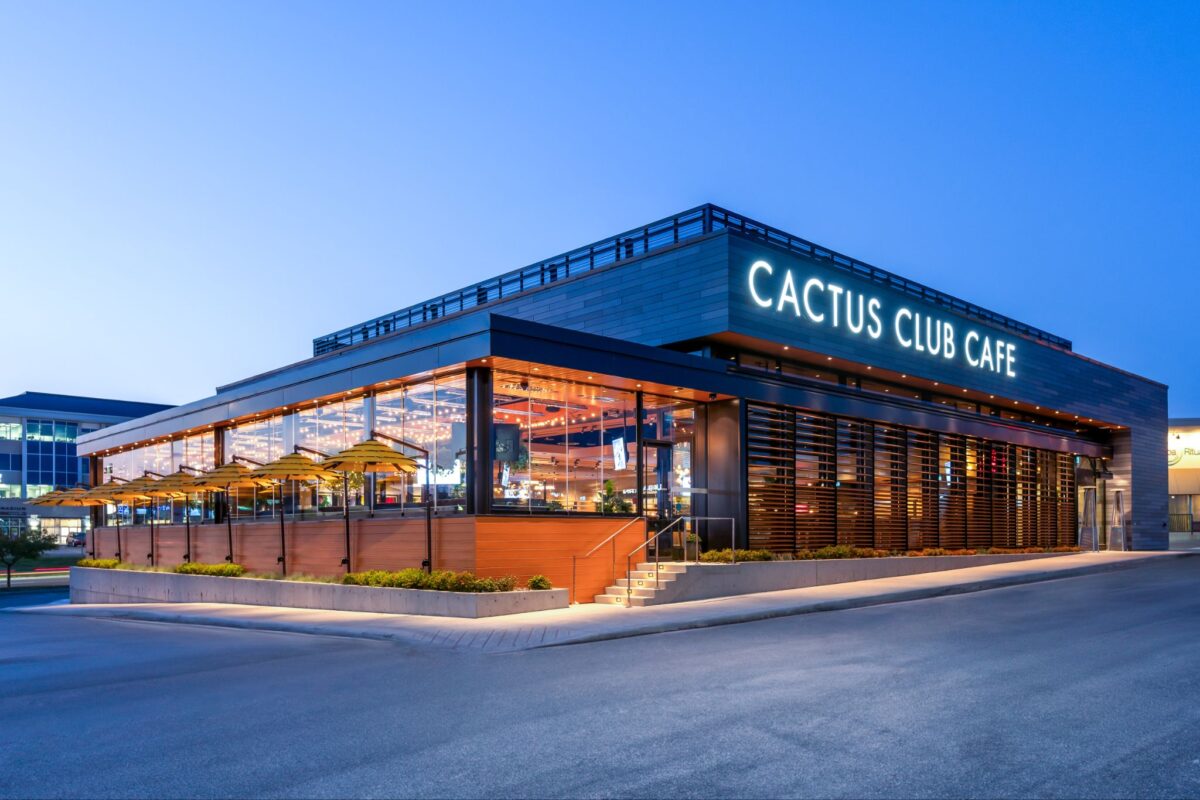
Cactus Club Cafe Crowfoot
A tightening on the supply side is leading to jumps in demand, rental rates at existing centres and, in many cases, significant bumps in renewal rents as tenants face limited relocation options, expensive buildouts, and increasing competition if they move, added the report.
“Last year’s new supply to market from retail development was at a nearly ten-year low, supplying only 546,159 square feet of new product to market. In the first half of 2023, developers have added only 277,916 square feet of retail space. As demand intensifies, shrinking inventory levels and reduced pre-leasing options will increase prices as retail tenants jockey to position themselves in desirable areas. Asset managers in Calgary are researching how much residential density can be added to the sites they own or looking to purchase adjacent lands to increase residential density close to their centres. These densification plans result in redevelopment and relocation clauses in many leases that take some negotiation,” said CBRE.
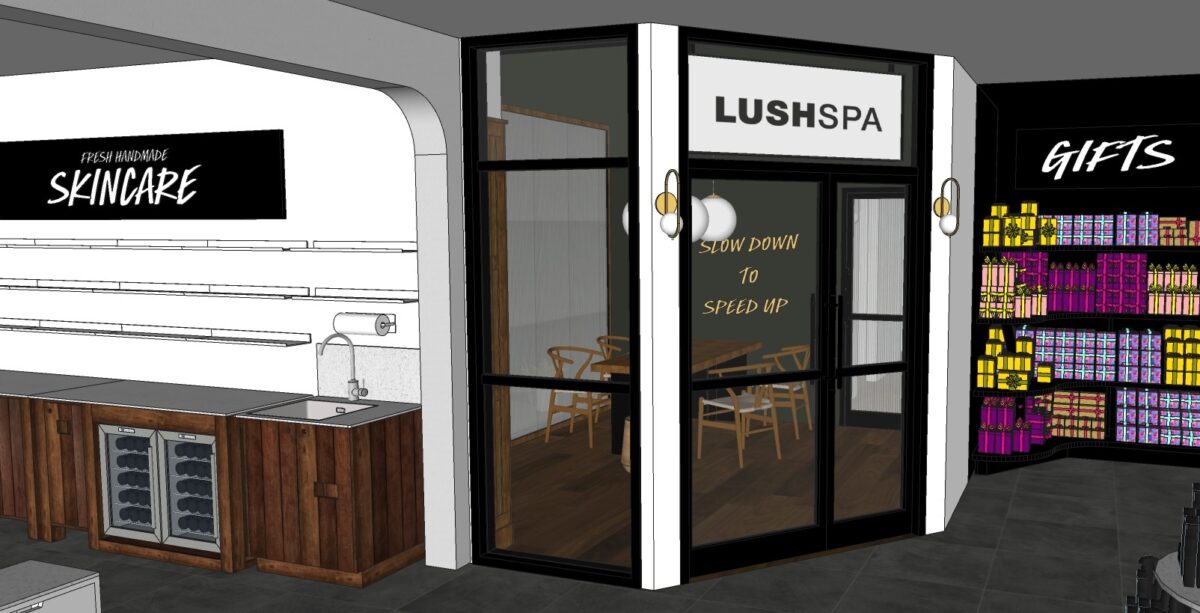
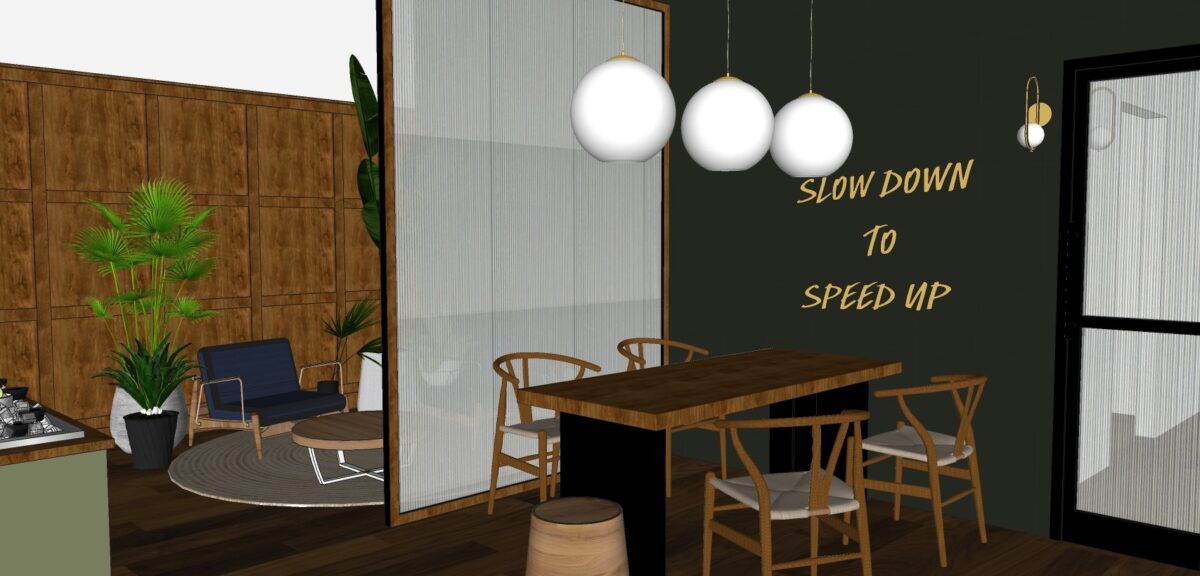
Lush is planning on expanding more throughout Canada next year, adding spa locations, has plans to add new services, and wants to explore more lifestyle and entertainment partnerships.
At the end of the month, Carrie Harambasic, Head of Business Development at Lush, says Lush has opened a new location in CF Champlain in New Brunswick and has plans to open a few more shops in Ontario early next year. The new locations in Ontario have been signed off; however, the exact addresses will be released at a later date once things have been finalized.
Carrie Harambasic
With these new locations arriving in Canada, more SPA locations will be added to Canada with a possible location in Toronto.
“There is an overwhelming excitement around the upcoming SPA in Vancouver and we are already looking at expanding in Canada and in the United States. Toronto is a potential location in Canada,” says Harambasic. “There is a need and enthusiasm for SPA in Canada and in order to enhance the client’s experience, the Lush founders always wanted to incorporate a warm and homely feeling SPA, which gave customers an oasis away from the busy world to relax and renew.”
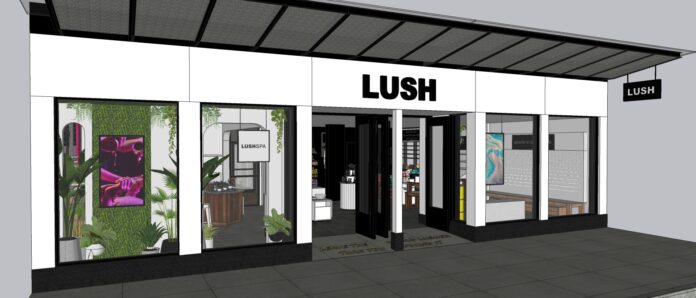
Lush Spa on Robson (Rendering: Lush)Lush Spa on Robson (Rendering: Lush)
The Lush SPA location in Vancouver was supposed to open this summer; however, it has seen setbacks. Harambasic says the new Lush SPA which will be 1350 square feet will open at the end of the year at 1020 Robson Street. This will be the first SPA location in Canada.
Harambasic said Lush will be adding two new spa locations and along with the traditional treatments such as facial and body treatments, lush will be adding another service.
“In addition to new facial and body treatments next year, we are also working on new services that showcase our dedication to fresh handmade cosmetics. This is still a work in progress, but all we can say is – there will be no more bad hair days.”
The Lush Spas will offer the same treatments and will have treatment rooms for facials, body massages, bath spa treatment, and more. Every spa appointment will be unique to each guest as they can decide how they would like to feel during their treatment, music, which bath bomb to use, and guests can decide the scents. Each appointment is customized to what the consumer is looking for as Lush wants everyone to have a unique experience and to leave fresh.
New App Updates
Lush App
Harambasic said Lush will be launching a new SPA section to introduce consumers to its new services.
“The App is definitely the platform you want to prioritize with extended features. You can now scan your favourite ‘naked’ Lush products, like massage bars for example, with the Lush Lens tool which will provide more information on the stores, ingredients, and even tutorials behind the products.”
The updated version of the app is also where consumers can book treatments at the Lush SPA once available in their area. This will make it easier for consumers to feel connected to the brand, understand each product, keep a history of which products they have used and enjoyed, and the app will make it easier for consumers to book appointments. The Lush app also offers early access to product launches, exclusive products, music playlist and guided meditations that match your product, wish lists, and provides an easy shopping experience.
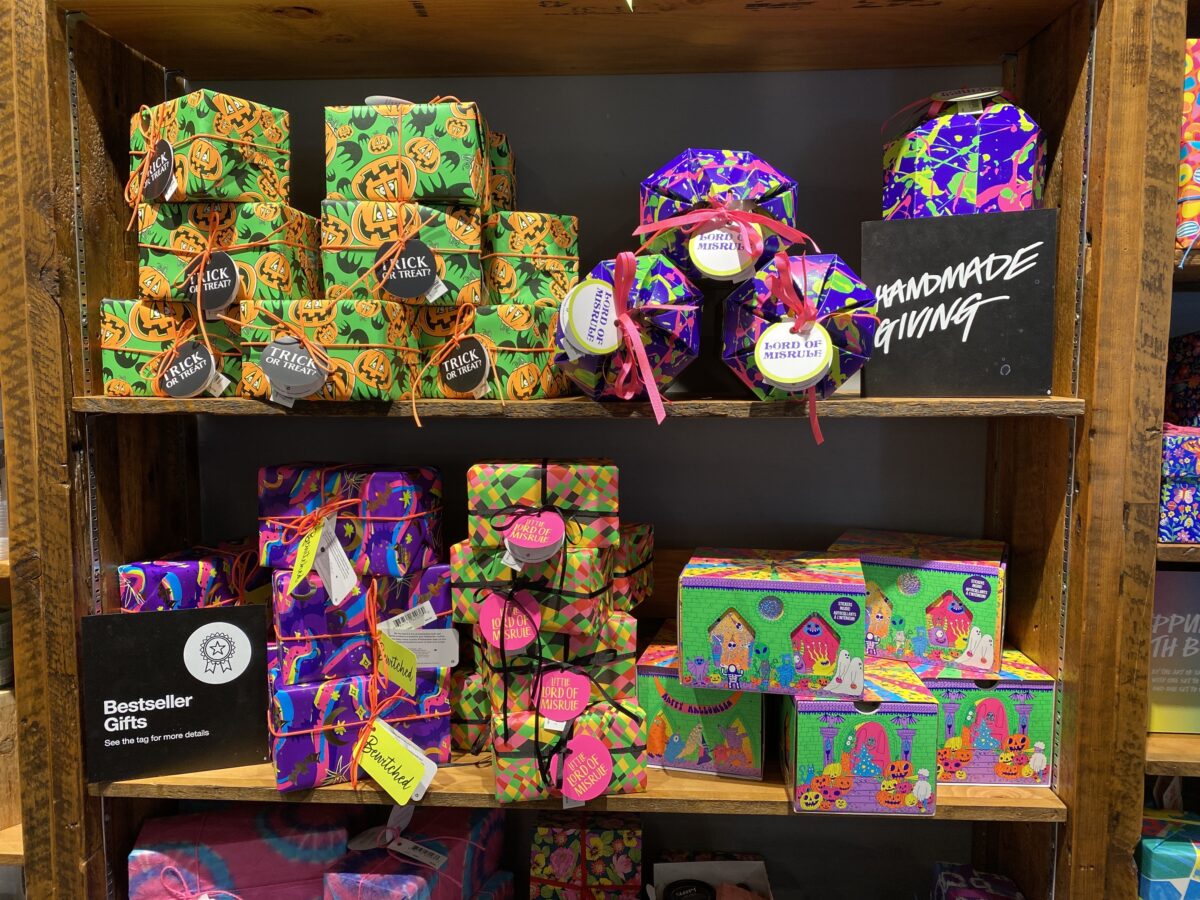
Lush Gifting (Image: Dustin Fuhs)
“The new global app comes with exciting new features – including early access to product launches, improved search functionality, access to Lush Lens, Lush Bathe, and more! We are working to bring all the features you love from the old North American app to the new global app,” states on Lush’s website.
Lush will also be working on adding more features such as the buy online and pick up in store program and gift cards.
Lifestyle and Entertainment Partnerships
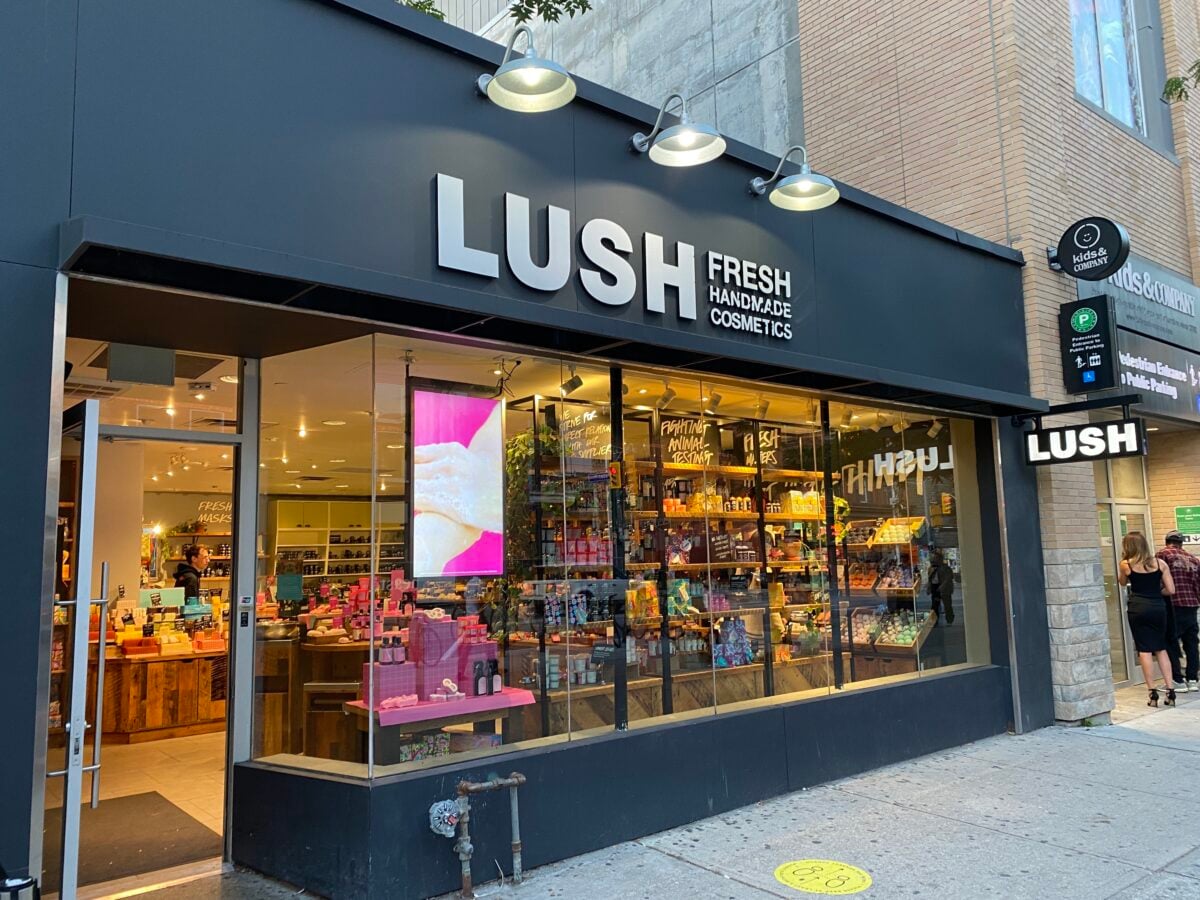
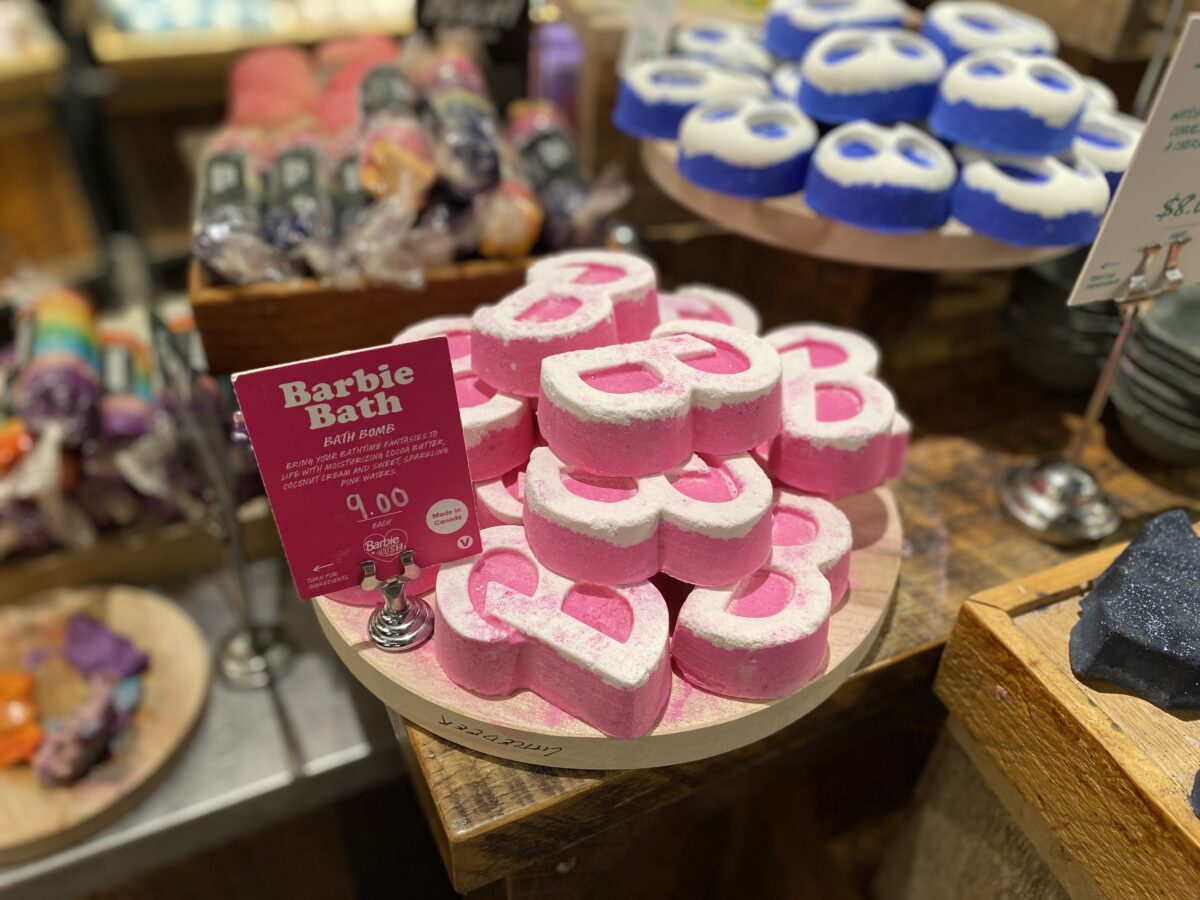
Lush Queen Street West (Image: Dustin Fuhs)Barbie Partnership at Lush CF Toronto Eaton Centre (Image: Dustin Fuhs)
Harambasic says Lush also brings in new products for consumers to enjoy and have new collaboratives coming soon. Partnering with lifestyle and entertainment brands has been new to Lush this past year and they have launched eight collaborations so far, such as Super Mario Bros Movie, Stranger Things, Barbie, and have a Netflix partnership coming this year.
“Lots of exciting things. We have some new collaborative concepts that are hitting some key shops in markets across the US and Canada, similar to the concept shop that recently opened at the Miracle Mile Shop timed to our collection with Wes Anderson’s Asteroid City.”
As these partnerships have brought in around 30 percent more customers and are a great way to connect with shoppers, Lush will continue to add more .Along with the new collaboration with Netflix this year, Lush already has five new collaborations planned for next year.
Travel and in-person events have been back for some time, with many Canadians also returning to the office. While lockdowns and restrictions are no longer at play, some economic concerns that emerged through the pandemic still remain.
Moneris, Canada’s largest provider of innovative solutions for mobile, online and in-store payments, commissioned a survey in partnership with Angus Reid to capture the pulse of Canadian consumers as they navigate elevated inflation, a higher cost of living and a potential recession.
The survey took a close look at consumer sentiment and Canadians spending behaviours.
Moneris x Angus Reid Group Data Story 2023
When analyzing these areas, Moneris data and the survey revealed:
1. When it comes to saving money, Canadians are cutting back instead of cutting out. Compared to last year, more Canadians said they were purchasing fewer items at restaurants (38 per cent in 2023 versus 34 per cent in 2022), while the number of outings remained unchanged.
2. Despite inflation falling, concern is rising – more Canadians (62 per cent) are stressed about their financial future as they grapple with a higher cost of living compared to 59 per cent in 2022.
3. More Canadians (80 per cent) are looking for ways to make their dollars do more through sales/deals, an increase from the sentiment last year (75 per cent).
4. If they had $1,000 less, 79 per cent of Canadians said they would buy fewer items with more than half saying they’d sacrifice entertainment (56 per cent in 2023 compared to 31 per cent in 2022) and restaurants (52 per cent in 2023 vs. 28 per cent in 2022).
5. If they had $1,000 more, 62 per cent said they would buy more items with travel topping the list for a second year and groceries following closely behind with 48 per cent (up from 44 per cent in 2022).
The Video Interview Series by Retail Insider is available on YouTube.
Connect with Mario Toneguzzi, a veteran of the media industry for more than 40 years and named in 2021 a Top Ten Business Journalist in the world and the only Canadian – to learn how you can tell your story, share your message and amplify it to a wide audience. He is Senior News Editor with Retail Insider and owner of Mario Toneguzzi Communications Inc. and can be reached at mdtoneguzzi@gmail.com.
Also check out the other series offered by Retail Insider, including The Weekly podcast and The Interview Series, which are both available on Apple Podcasts, Stitcher, TuneIn, Google Podcasts, or through our dedicated RSS feed for Simplecast and other podcast players.
Retail Insider is streamlining its Canadian retail news from around the web to include a handful of top news stories that can be viewed quickly during the day. Here are the top stories from the past 24 hours.