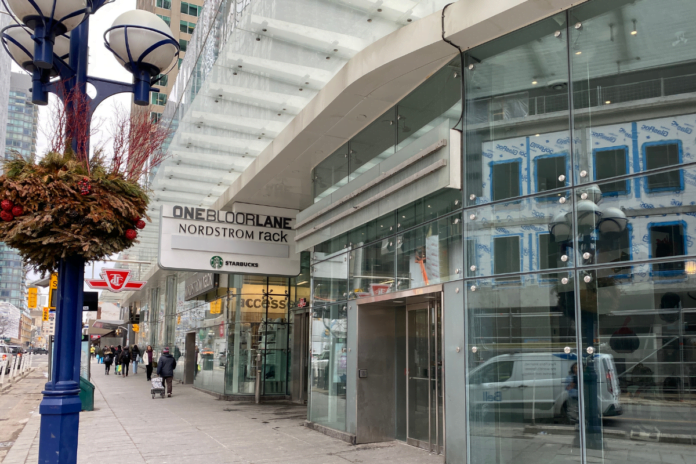
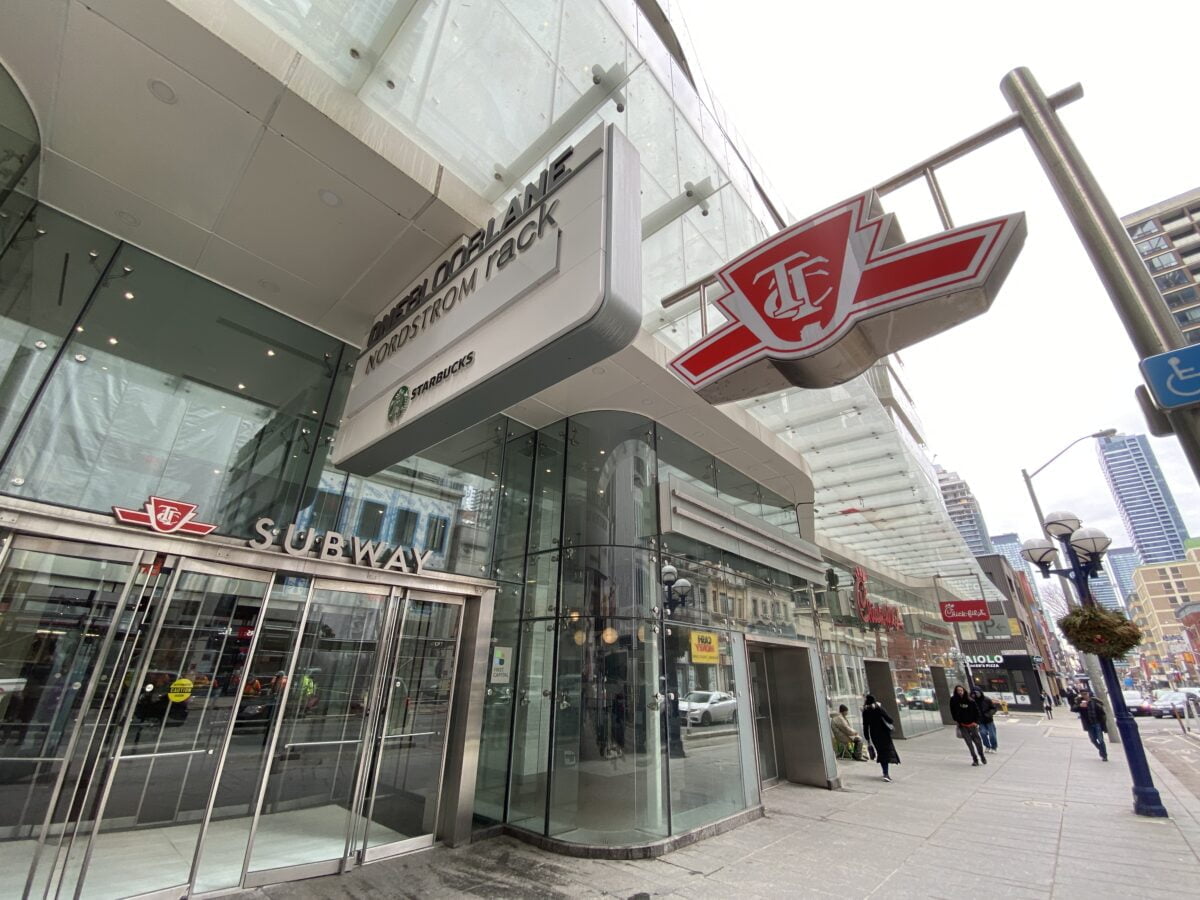
The Toronto Designers Market has relocated its permanent storefront from the city’s Parkdale area to Bloor-Yorkville. The new location is on the concourse level of the Holt Renfrew Centre which is anchored by luxury retailer Holt Renfrew.
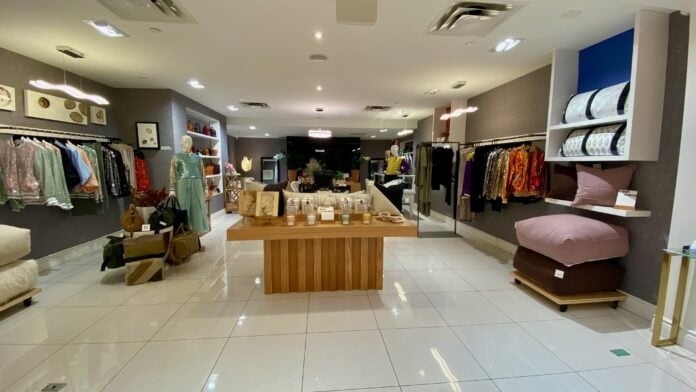
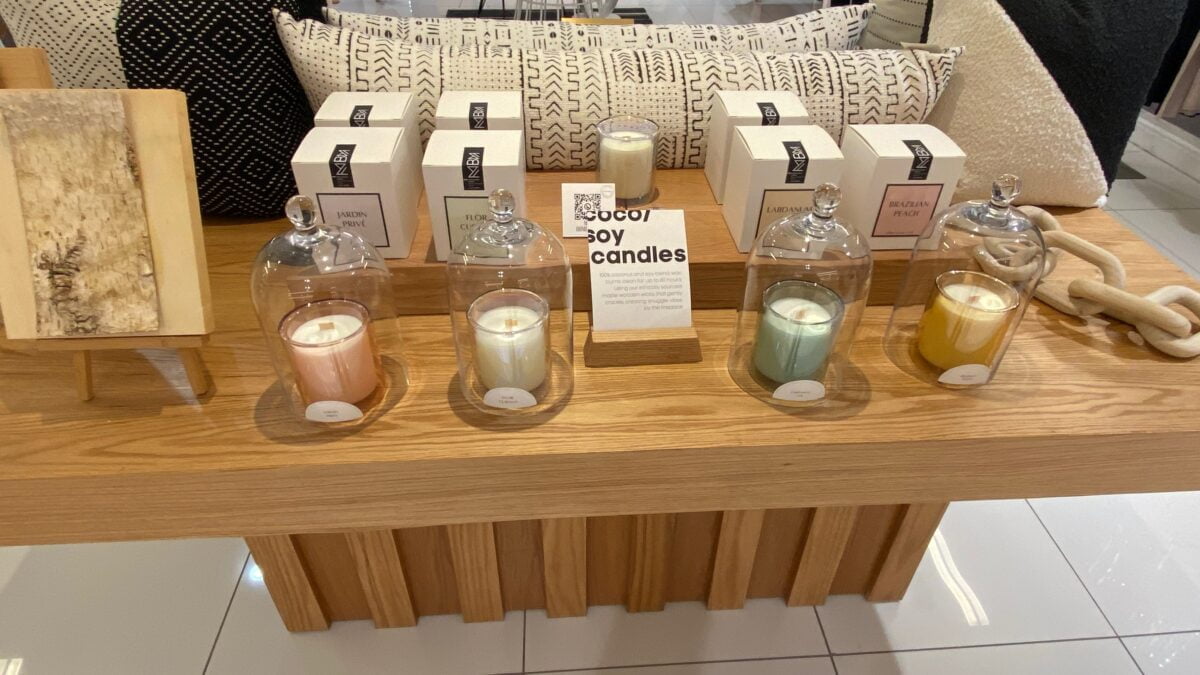
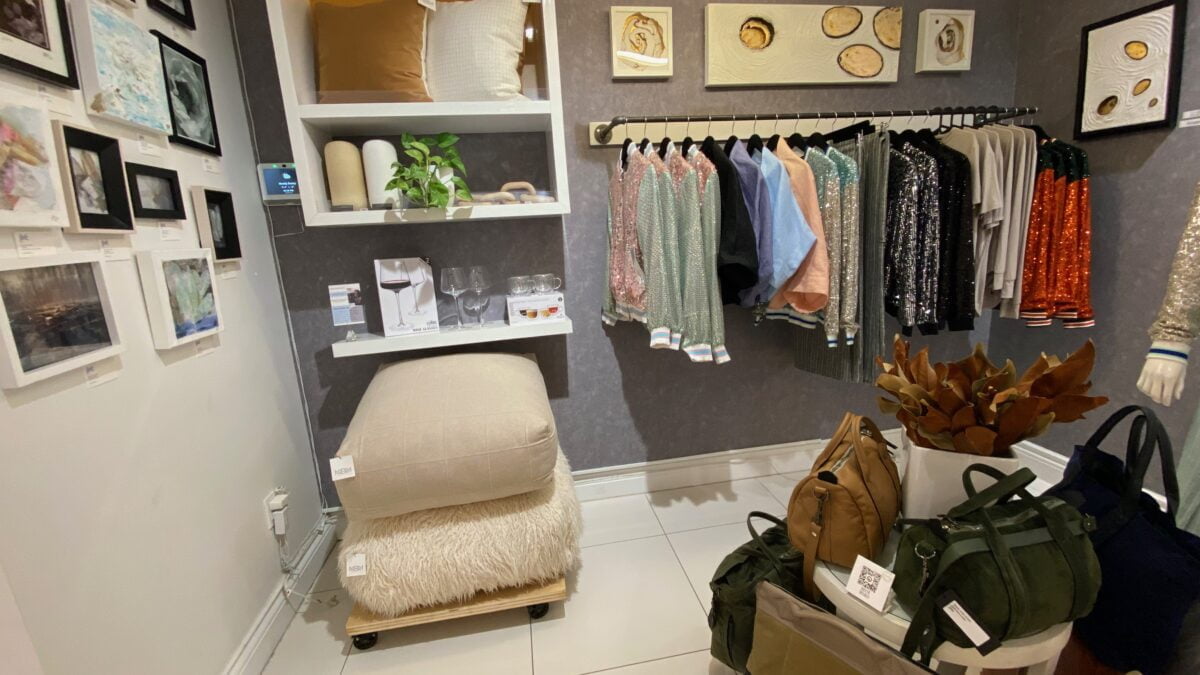
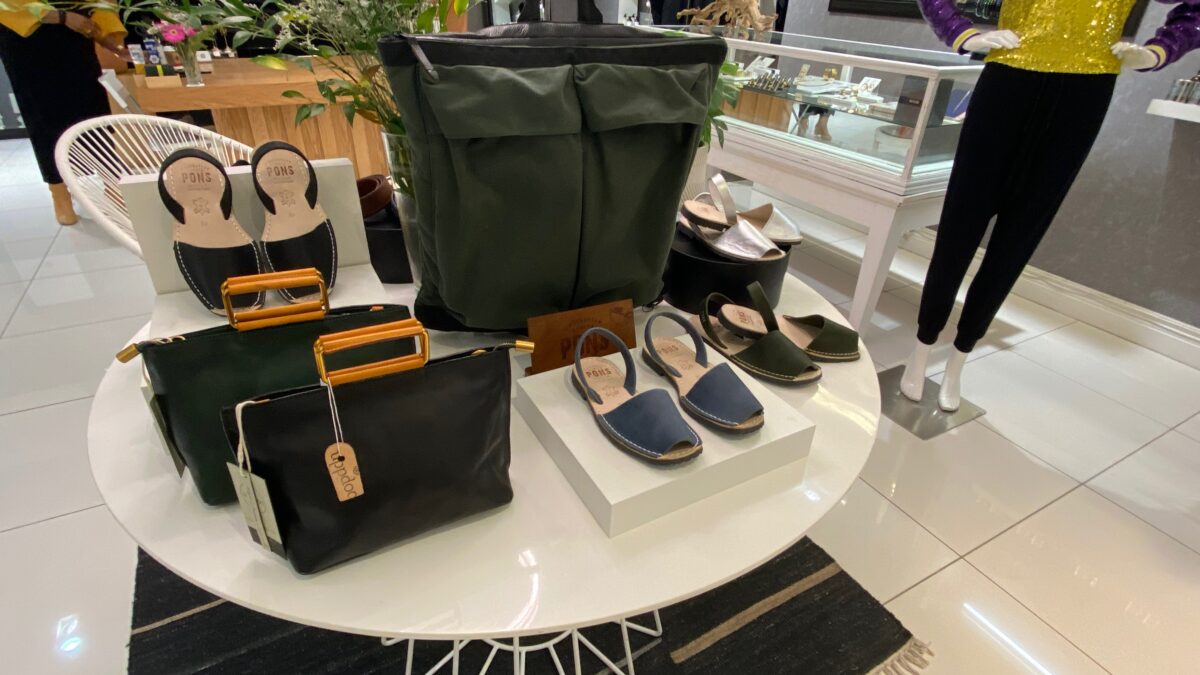
The new Toronto Designers Market features an attractive interior in a 1,450 square foot space. Contained within are a range of local designers’ products curated specifically for the new store. The retailer was recently honoured with its second Le Petit Futé Award.
Designer and entrepreneur Karen Ferguson now owns Toronto Designers Market, which has an interesting history. The retailer’s humble beginnings included, until recently, a storefront at 1605 Queen Street West in Toronto’s Parkdale area.
Toronto Designer Market was founded by entrepreneur Joshua James in 2015. He was a gallery owner and part of Parkdale Flea at the time, and he founded Toronto Designers Market with a roster of designers of jewellery, clothing, and artists in the Queen Street space.
Inside the Toronto Designers Market at the Holt Renfrew Centre in Toronto. Photo: Craig Patterson Inside the Toronto Designers Market at the Holt Renfrew Centre in Toronto. Photo: Craig Patterson
Looking to pursue different things, James sold the business in 2016 to entrepreneur Marcus Kan, who was the Director Of Operations at the retailer — in 2019 he sold the business to Karen Ferguson who was also one of the original designers at Toronto Designers Market when it was founded four years prior. Kan continues to work with Ferguson in the store as well as with his other business ventures.
Ferguson said in an interview that the pandemic was a challenging time for the retailer and that she had to innovate to keep things going.
Owner Karen Ferguson with the Petit Futé award. Photo supplied
“It was crazy scary, we didn’t know what to do because our designers had their own websites. It didn’t make sense for us to shift online because our designers already had their own websites.”
Ferguson said that she pivoted the business to include an education component and kept things going until people returned to physical spaces such as stores. When things began to go back to normal, the business began to thrive again. At the same time, she decided to change the business model which had originally included a collection of shop-in-stores for individual designers.
“With the shop-in-store model, the level of brands in the store were inconsistent,” Ferguson said. Some brands were just beginning while others were established, and some were good at merchandising while others were not.”
Ferguson said that she tried curating a section of the store and found success, and soon decided to curate all brands in a single space so that merchandising would be consistent within the store. Brands now pay for space within the Toronto Designers Market based on the square footage required.
There’s a vetting process involved to get into the Toronto Designers Market, she explained. “They have to be ready for retailing,” Ferguson said, which includes having stock and the ability to supply enough product to the store in an organized and timely fashion including turnaround time. Toronto Designers Market reviews a designer’s portfolio as well as social media and website if they have one as part of the vetting process to determine if there’s a fit.
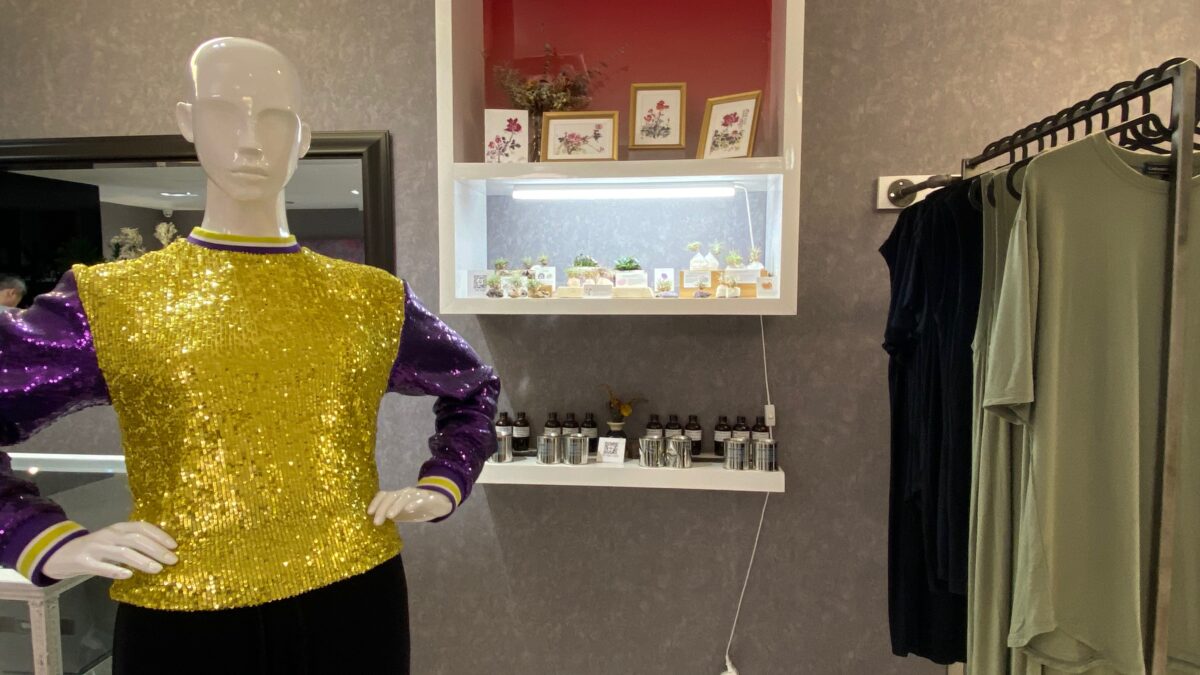
Inside the Toronto Designers Market at the Holt Renfrew Centre in Toronto. Photo: Craig Patterson Inside the Toronto Designers Market at the Holt Renfrew Centre in Toronto. Photo: Craig Patterson
The retailer is also continuing with its education component, working with one new designer yearly in a mentoring capacity at no charge that includes everything from getting a brand established to creating tags to merchandising to visuals. Toronto Designers Market has become a ‘community’ according to Ferguson, which includes referring brands to trusted sources such as photographers and communications professionals.
The owners of 1605 Queen Street West recently decided to transition the space which is now an event space called Parkdale Hall. Ferguson moved Toronto Designers Market into the Holt Renfrew Centre last month — the shopping centre is connected to the Bloor-Yorkville PATH system which also connects to Toronto’s Line 1 and 2 subway lines. Bloor-Yorkville is also home to a range of luxury retailers and shoppers that support them.
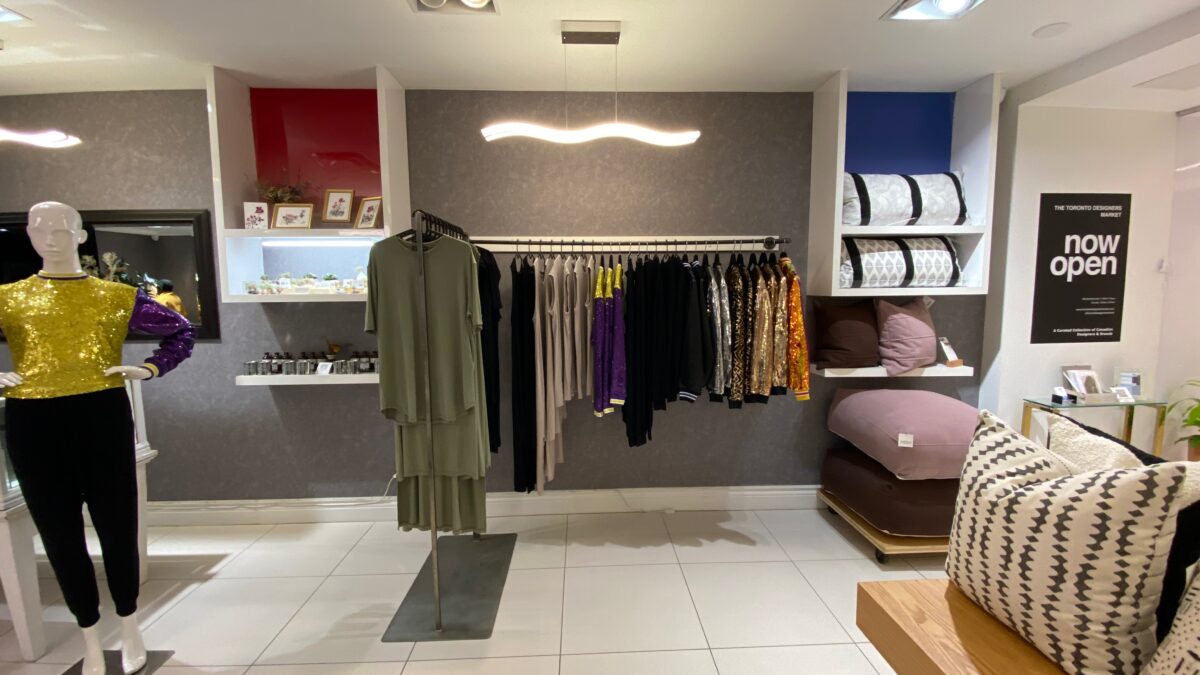
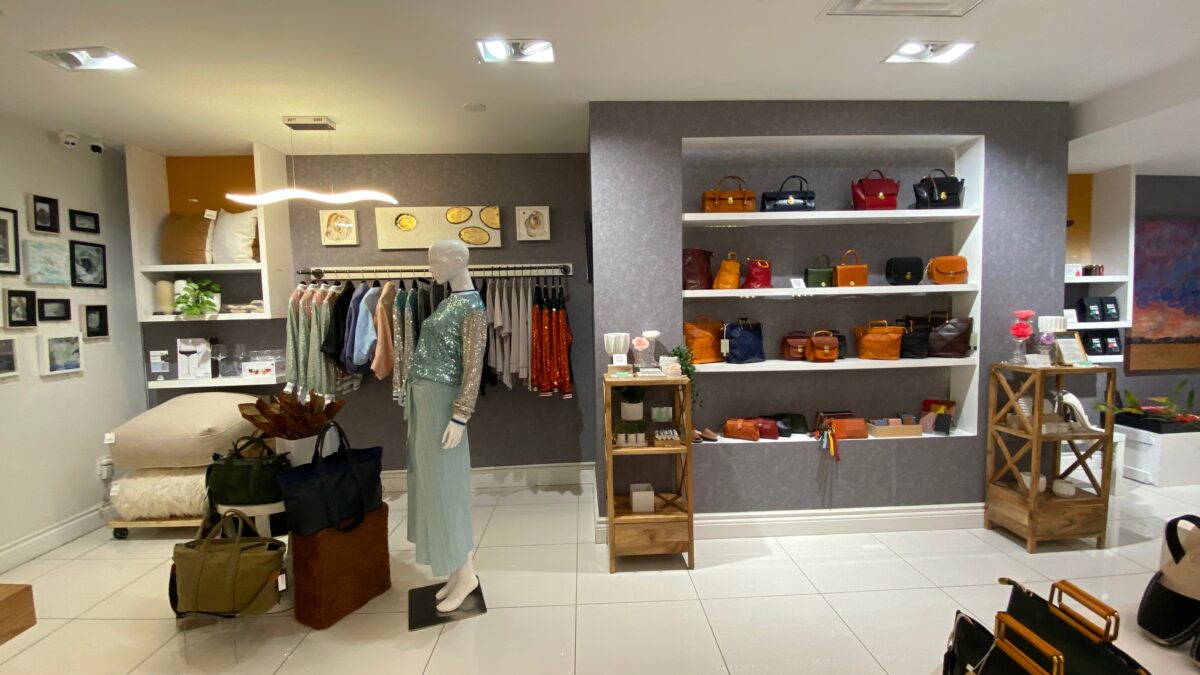
Prices in the new, attractive and bright Holt Renfrew Centre Toronto Designers Market store range from about $35 to over $3,000. Some one-of-a-kind pieces include a lamp by an artisan priced at $550. Categories range from consumable goods to fashions to jewellery and art.
Marcus Kan, left, and Karen Ferguson in the new store. Photo supplied.Inside the Toronto Designers Market at the Holt Renfrew Centre in Toronto. Photo: Craig Patterson Inside the Toronto Designers Market at the Holt Renfrew Centre in Toronto. Photo: Craig Patterson
Ferguson said that she hopes to expand the business in the coming years. That could include expansion in the Toronto market or even in another city. She said that the Toronto Designers Market is unique when compared to other local market retailers — her business focuses on designers while others tend to focus more on crafted goods.
Earlier this month, Toronto Designers Market hosted a well-attended opening party in the space that included various designers and local influencers. Ferguson said that her business will continue to foster community in the city.
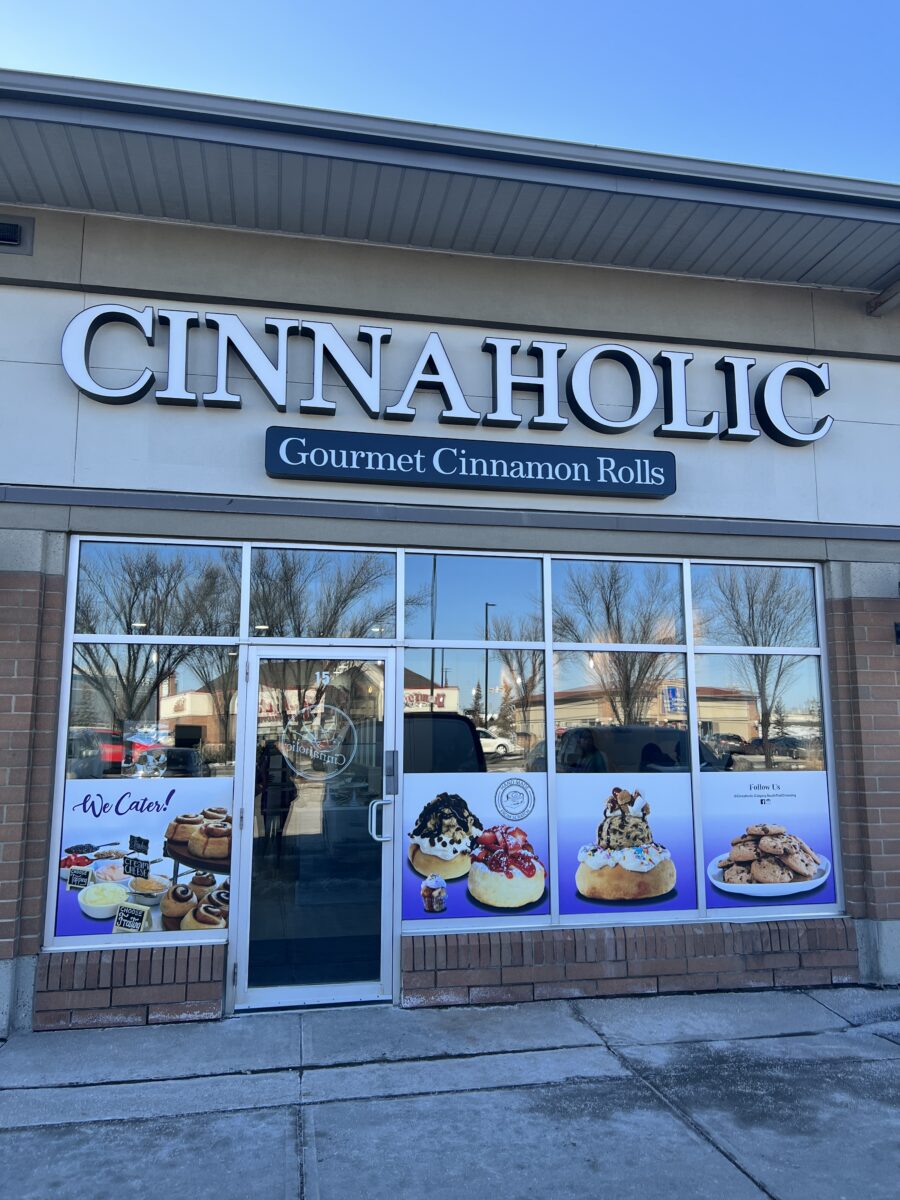
Gourmet cinnamon roll bakery Cinnaholic is expanding in the Calgary market.
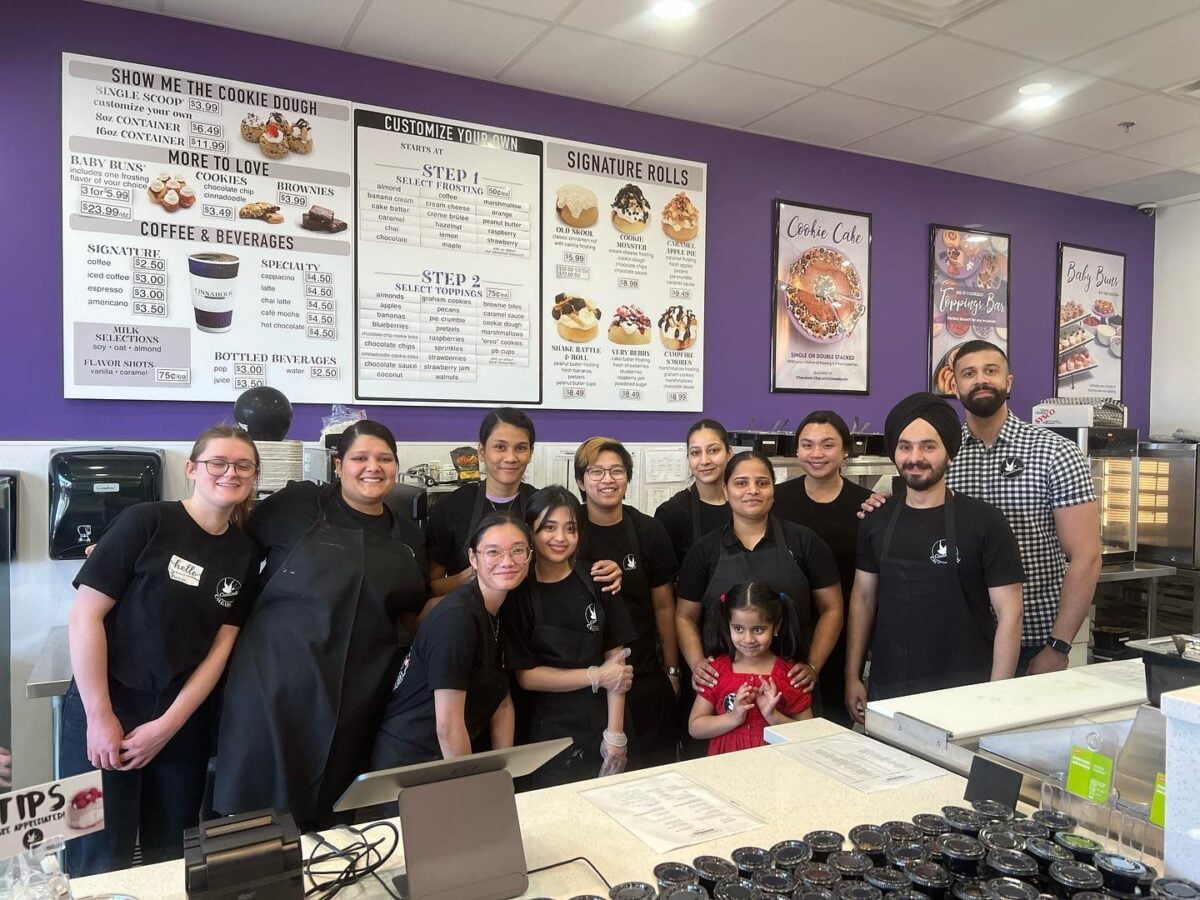
President of Cinnaholic Calgary, Robby Teja, has the rights for the brand in Calgary and Airdrie, said the company currently has two locations.
Another location will open in the Township Shopping Centre in the southwest neighbourhood of Legacy in a few months followed by one in northwest Calgary right after that.
“We’re going to have four in Calgary and one in Airdrie,” he said.
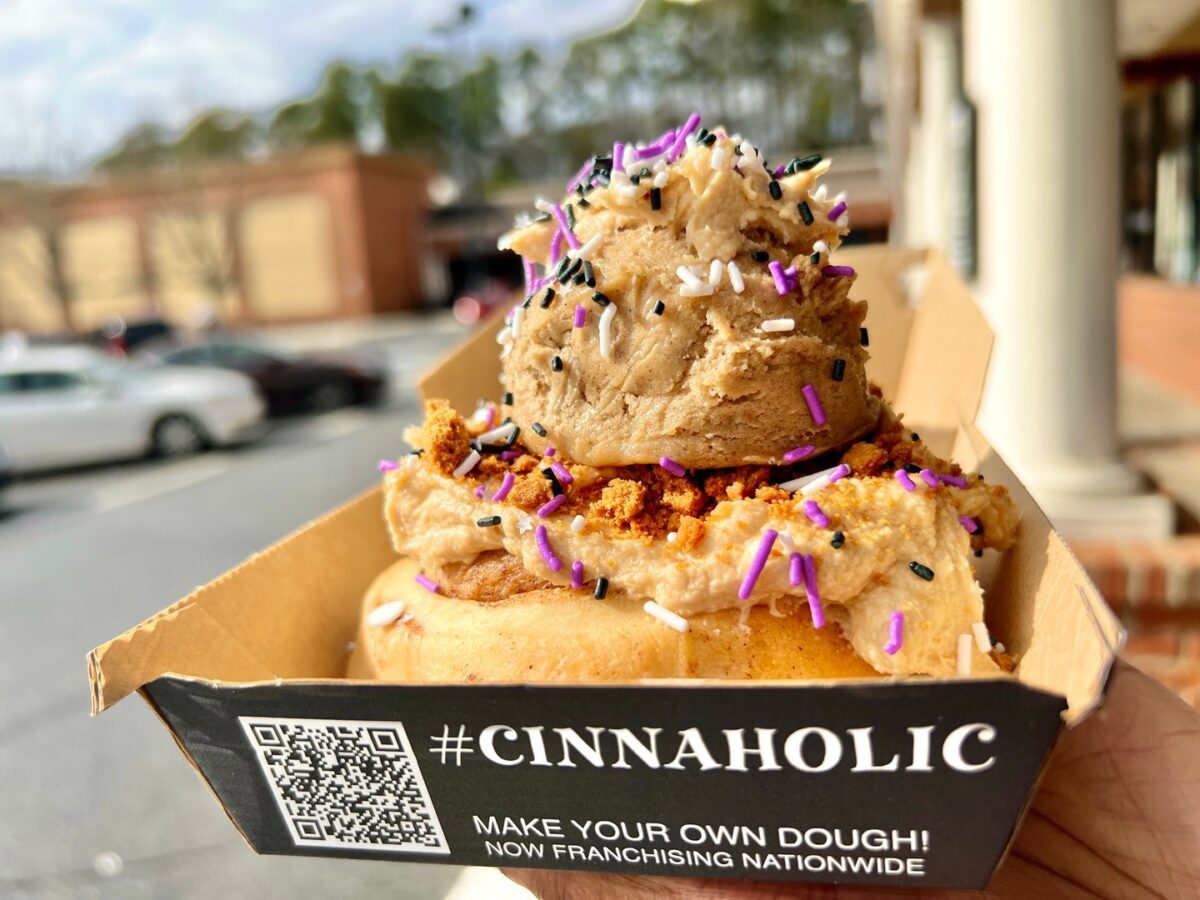
Cinnaholic is the original, gourmet cinnamon roll bakery, acclaimed for serving “create your own” cinnamon rolls and other sweet treats like made from scratch brownies, cookies and edible cookie dough. Cinnaholic offers something to satisfy every sweet tooth, with products that are fresh baked and 100 per cent vegan, dairy and lactose free, egg-free and cholesterol-free.
Image: Cinnaholic CalgaryCINNAHOLIC CALGARY – SOUTH TRAIL CROSSING
The first location opened last year at the corner of 17th Avenue and 5th Street S.W., in the Beltline area. The second location just opened at the South Trail Crossing at 130th Avenue S.E.
“The Township location will open in June or July of this year. The northwest one we’re just signing a lease for (in the Royal Oak area) and we’re signing a lease in Airdrie soon as well,” said Teja.
“When Cinnaholic first opened its doors last year, Calgarians welcomed us with overwhelming enthusiasm and the demand has only grown stronger. That’s why we’re thrilled to serve Calgary and Airdrie with more mouth-watering cinnamon rolls made with the highest quality, animal-free ingredients.
“Cinnaholic is a gourmet cinnamon roll company. We actually have customized toppings. We have 20 different frosting flavours and 20 different topping flavours. The real big thing is we’re 100 per cent vegan. All of our items are vegan. There’s no dairy or eggs in our products.”
All products are fresh-baked and Cinnaholic has over 80 locations across Canada and the U.S.
Image: Cinnaholic CalgaryImage: Cinnaholic
Teja has the rights for Calgary and Airdrie.
“I feel in the City of Calgary five could work. I would think so. So each store would be busy. We don’t want to flood the market like Subway. I would say five could work in Calgary. Right now I have four I’m really interested in. I might put a fifth one, I’m not too sure yet,” he said.
“I feel in the 2020s vegan has been a huge thing with everybody. Now there’s actually vegan franchises like a McDonald’s with Odd Burger. I feel vegan is in now. People are liking plant-based more. So I really feel that was one good thing we went to the market with.
“A lot of our customers don’t know we’re vegan so it’s great and they enjoy it. And a lot of people know we are vegan and they can actually now eat dairy like they couldn’t before.”
Typical sizes of the locations are about 1,000 to 1,200 square feet with some seating area.
Retail Insider is streamlining its Canadian retail news from around the web to include a handful of top news stories that can be viewed quickly during the day. Here are the top stories from the past 48 hours.
Future Ballroom Social at 1 Bloor (Image: Dustin Fuhs)
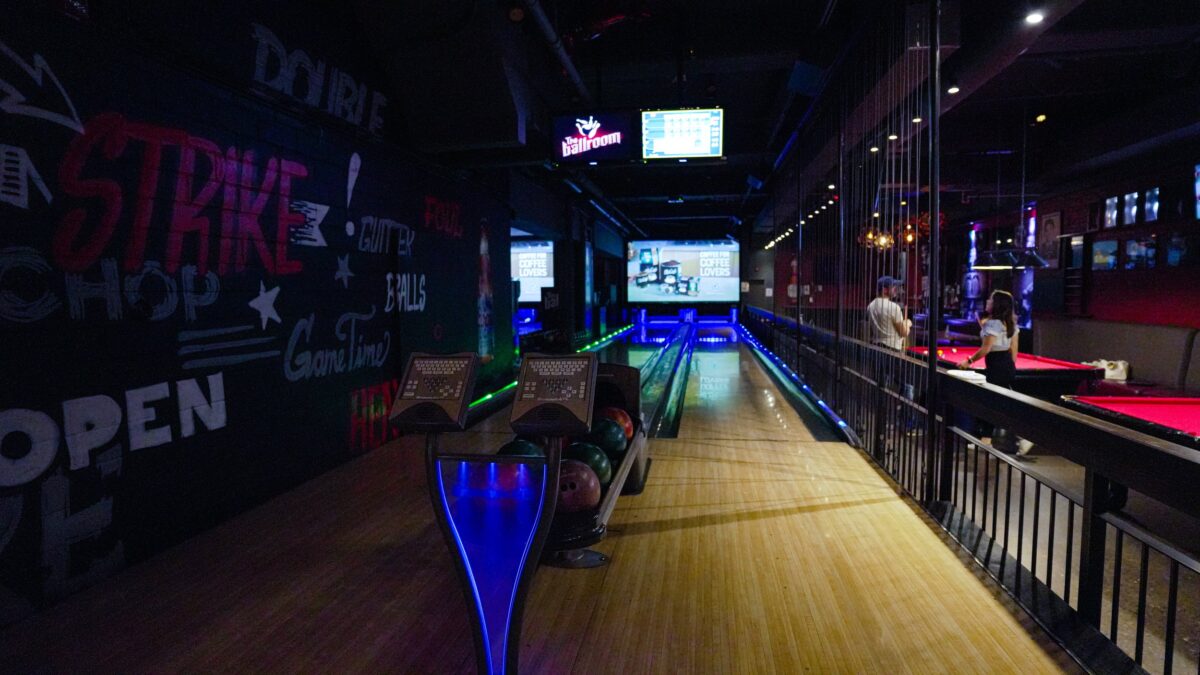
The Ballroom Bowl is where the good times roll in Toronto.
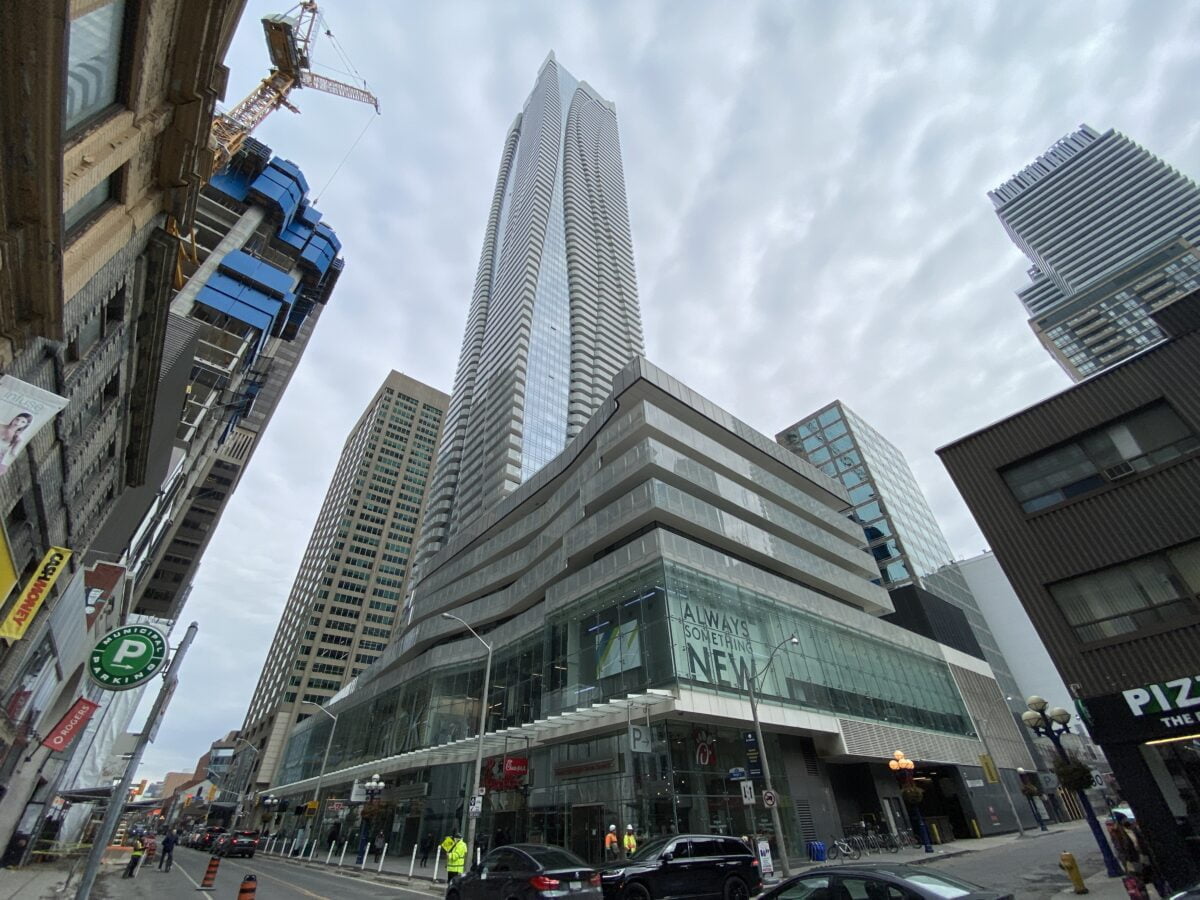
And the concept is rolling into more locations including replacing the McEwan grocery store at 1 Bloor East in Toronto, just off the corner of Yonge and Bloor Streets, and offering its Ballroom Social experience with bowling and an elevated food and beverage menu.
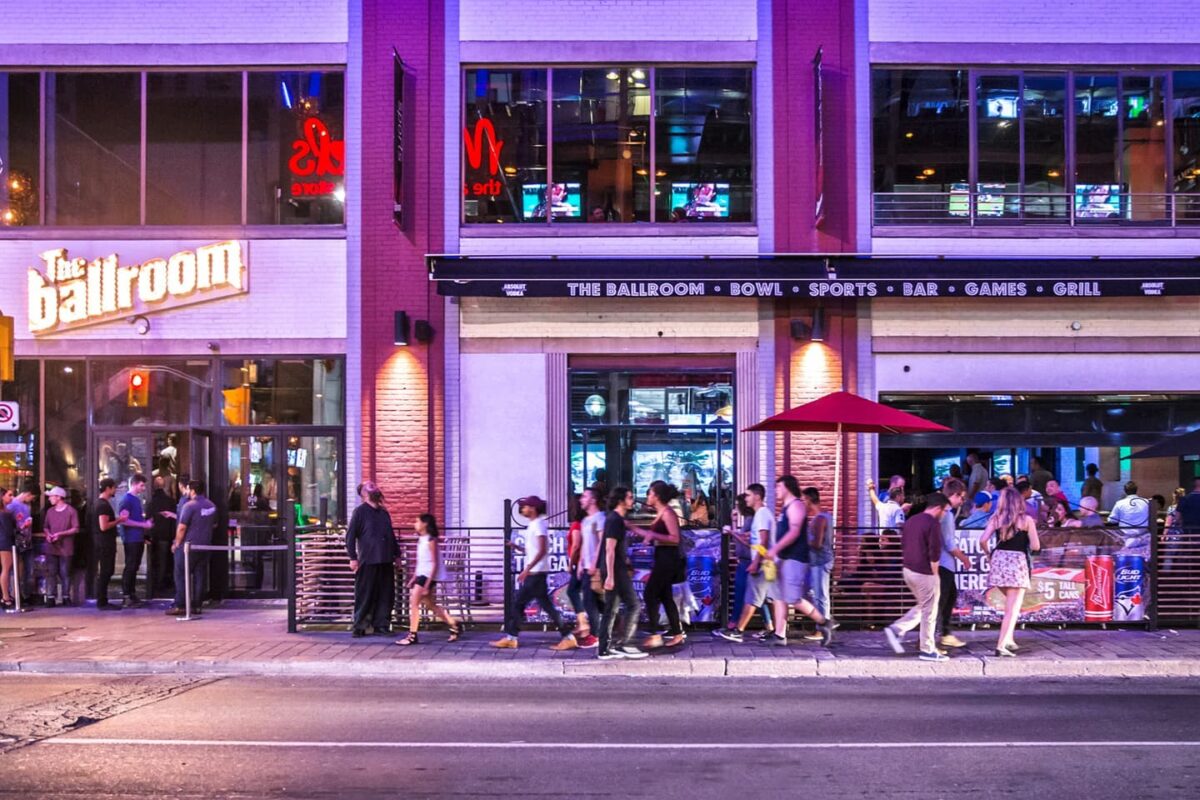
The launch comes following the success of the downtown Ballroom Bowl in Toronto’s Entertainment District. Ballroom Bowl describes itself as Toronto’s “coolest” interactive entertainment centre with 23,500 square feet including 10-pin bowling, dozens of TVs, a rooftop patio, music and elevated pub fare.
The Ballroom Social is expected to open in the fall.
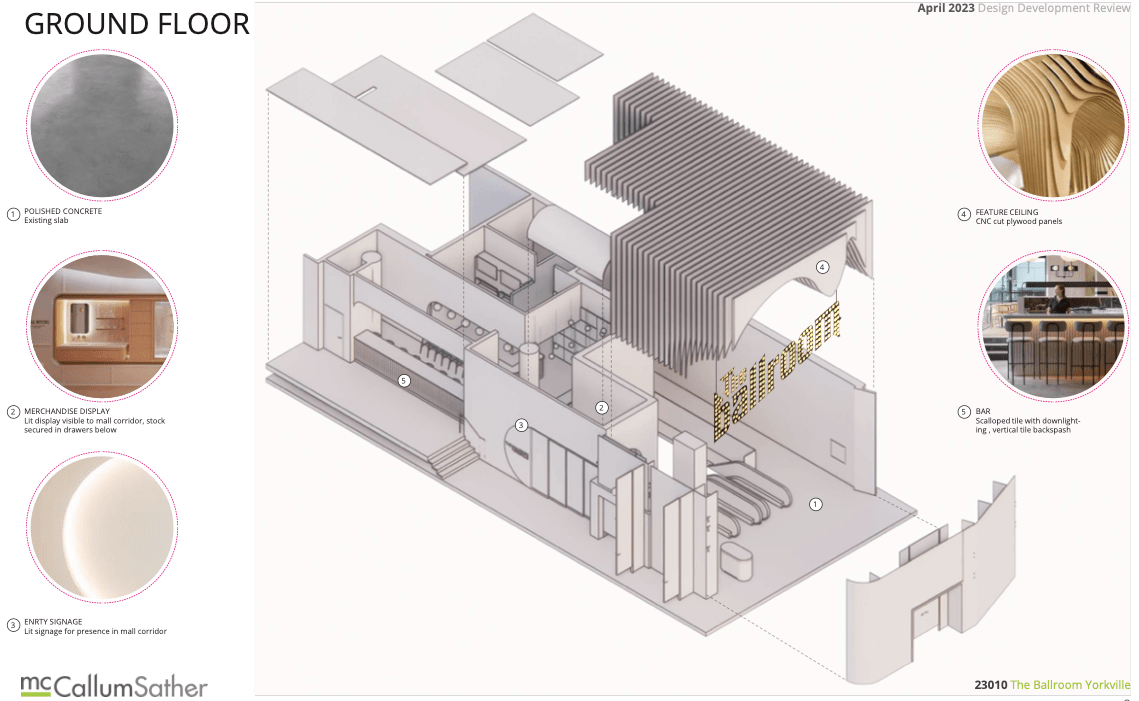
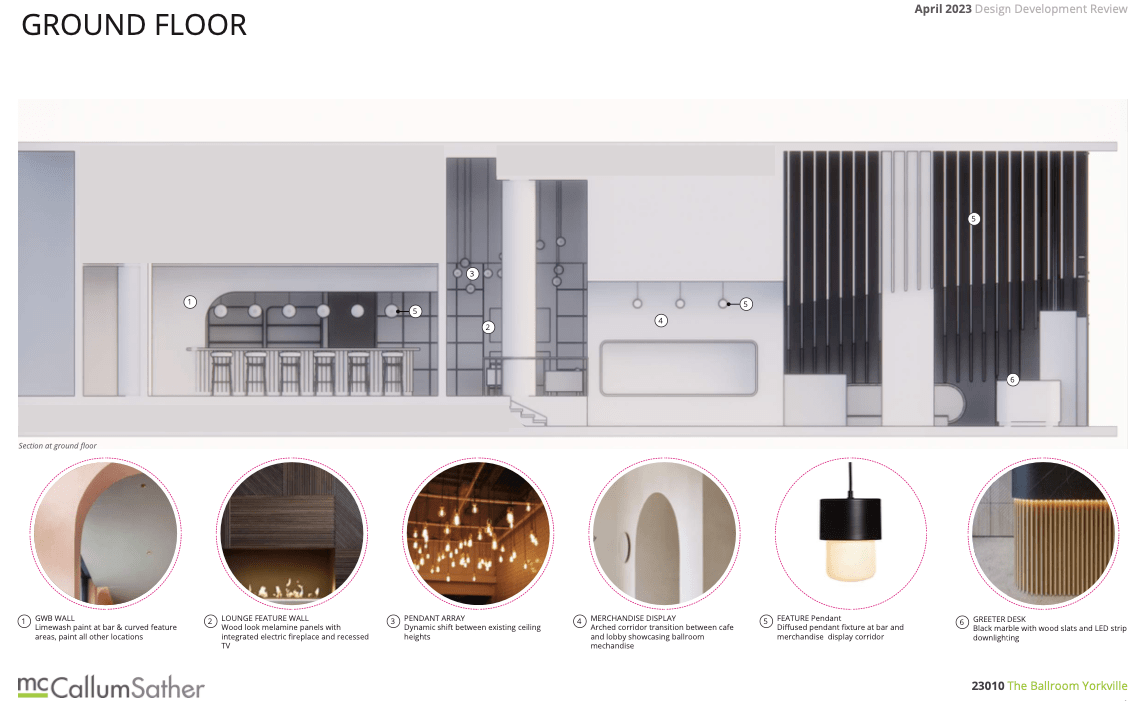
Future Ballroom Social at 1 Bloor (Image: Dustin Fuhs)Rendering The Ballroom Yorkville (Image: mcCallumSather)
“We are the only bowling alley in the City of Toronto for 13 years running. Obviously moving into Yorkville in the fall of this year, the holiday season, that in and of itself is very unique and I’m very excited about that opportunity and looking forward to bringing what we do downtown in the Entertainment District, bringing the chique, luxe, aspect of it to Yorkville and knocking it out of the park with First Capital (property owner),” said Donato.
“There’s going to be no competition. We’re going to a great location, a great building in Yorkville. It’s going to bring a whole new dimension to the neighbourhood. That’s the most exciting part. We’ll be beside Chick-fil-A’s Canadian flagship location. I’m really pumped about going in there.”
Alex Edmison of CBRE negotiated the lease deal on behalf of Ballroom and is representing the brand nationally for any potential future location expansions.
Future Ballroom Social at 1 Bloor (Image: Dustin Fuhs)Rendering The Ballroom Yorkville (Image: mcCallumSather)
Eric Sherman, Vice President of Real Estate for Yorkville with First Capital Realty which owns the property where the Ballroom Social will debut, said the new location will be close to 20,000 square feet with a street level presence but the majority of the space on the lower level.
Eric Sherman
Sherman said First Capital owns about $1 billion worth of assets in the neighbourhood including Yorkville Village, several properties along Yorkville Avenue and the retail at Yonge and Bloor.
“For us, we’ve been looking to bring unique concepts that bring a level of entertainment, a level of destination, something that is going to create excitement and activity in the neighbourhood,” said Sherman.
“Paul has been operating the Ballroom for 13 years so he brings a track record of a very good operation, very well-known and recognized in the city and across the country. His vision to create a concept in Bloor Yorkville that elevates and brings a bit of a different spin on his already successful concept is something that’s very attractive to us. It’s a very good use for this challenging space.”
Image: The Ballroom BowlImage: The Ballroom Bowl
Donato said the goal is to add many locations of the concept including outside of Toronto.
“I’ve been aspiring to make this move for some time but it takes awhile to get things where you need them and to learn the business and to move forward and turn it into the national brand that I intend to turn it into,” he said.
“When I signed the deal to finance the original project in 2010 obviously there were no bowling alleys in the core of the City of Toronto and the industry in Canada was dying. On death’s door. The US was going through a bit of a struggle as well. I would say that the Ballroom Bowl – it’s a bold statement and I know it to be true from other proprietors now in the country – has re-pioneered the growth and popularity of bowling, not just in the city but in many other cities across the country.
“To be going into Yorkville and other locations subsequently after that is really exciting. It’s a growth industry. People love doing it and unlike golf and hockey and all the other sports, Canadians in general kind of forgot about bowling. We’re always busy downtown and we’ll always be busy in Yorkville and we’re going to bring a high end boutique to that neighbourhood and I’m sure it’s going to be a grand slam.”
There are four basic concepts – Ballroom Bowl, Ballroom Social, Ballmart (which will move out into the suburbs) and the Ballroom Bowl Mechanical, going into Yonge and Dundas and other locations.
“There are four different concepts that we will be rolling out across the country,” explained Donato.
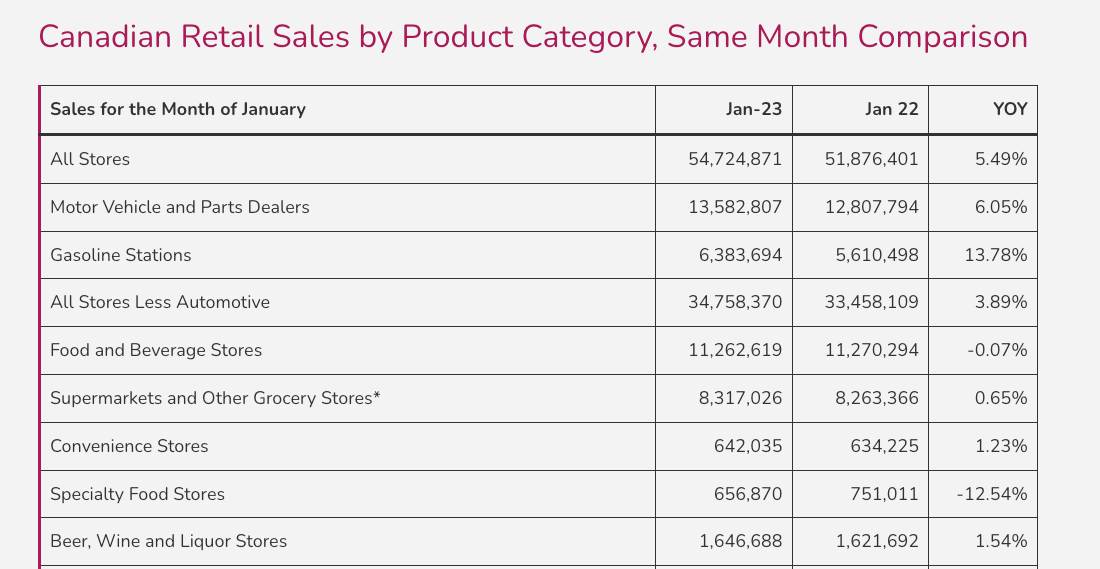
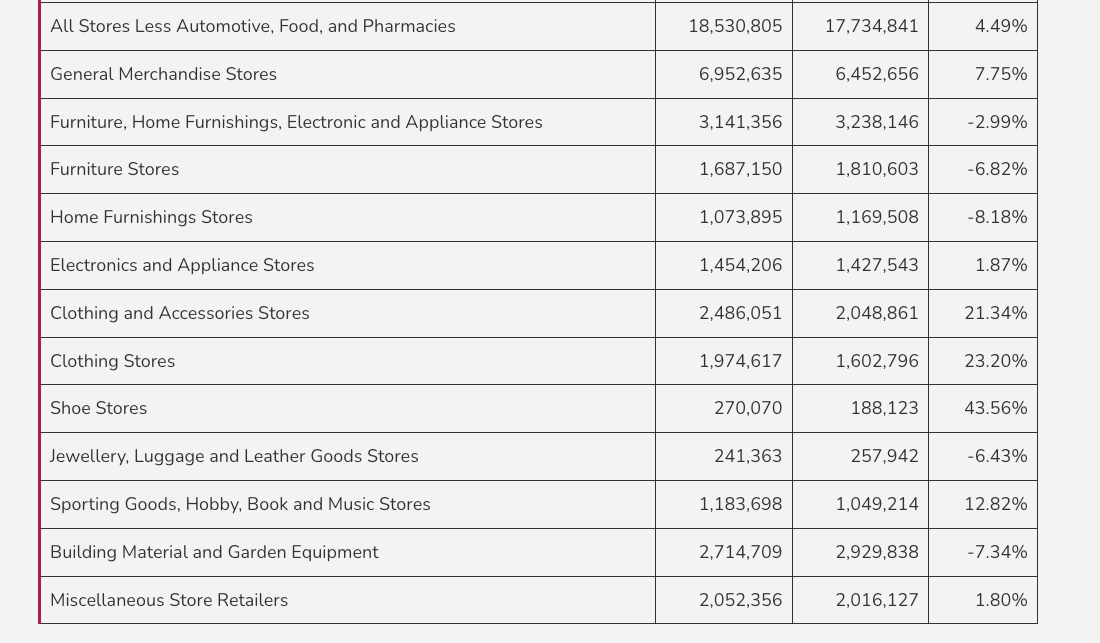
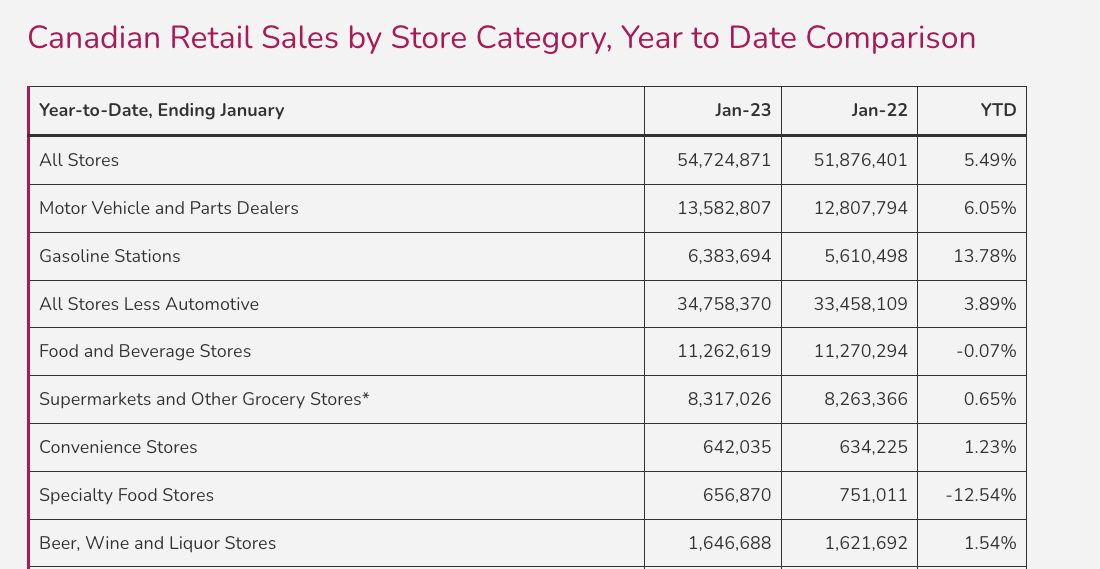
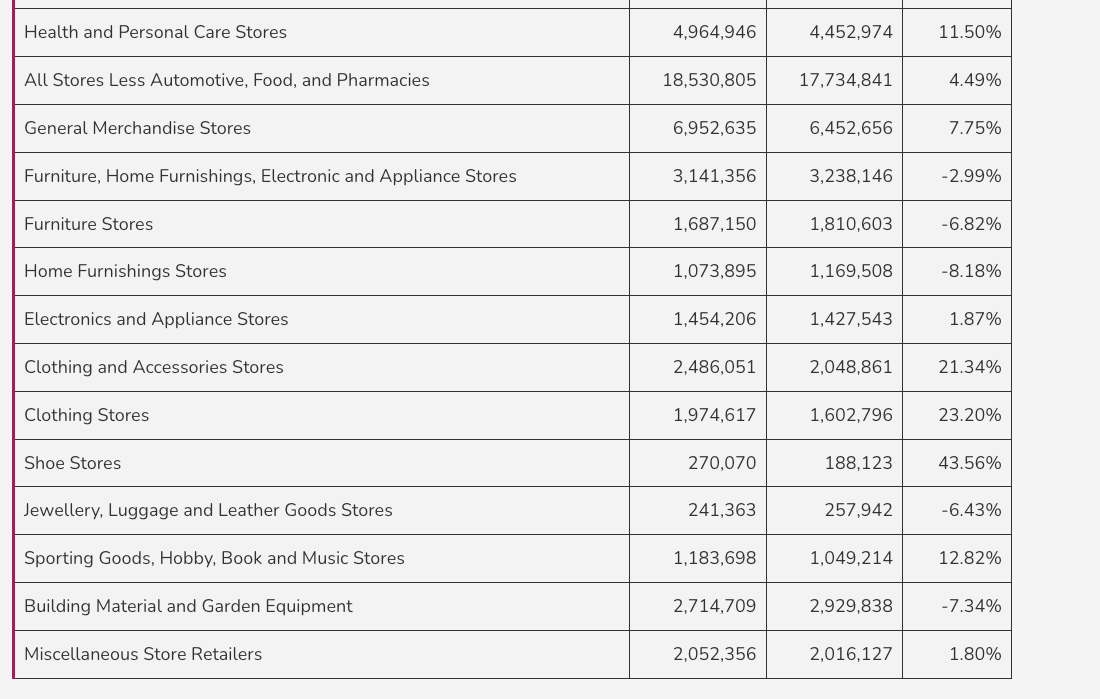
Continuing the trend towards the end of 2022, Canadian retail sales started with minimal growth in 2023 with All Stores in January growing 5.5% YOY and All stores Less Automotive, Food, Pharmacies up 4.5% YOY.
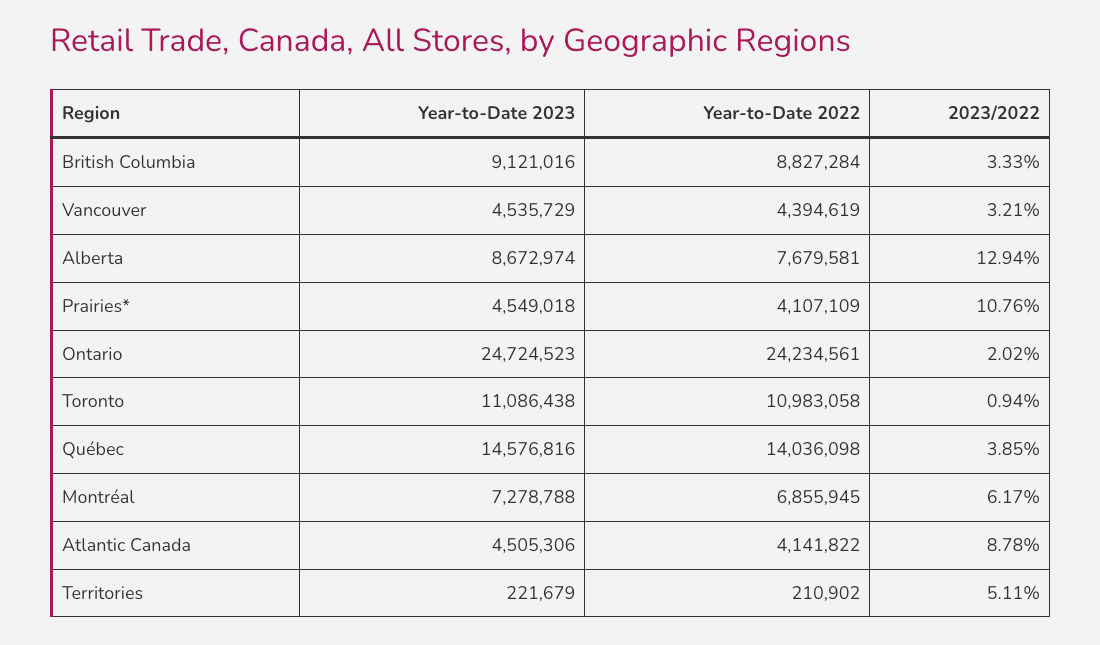
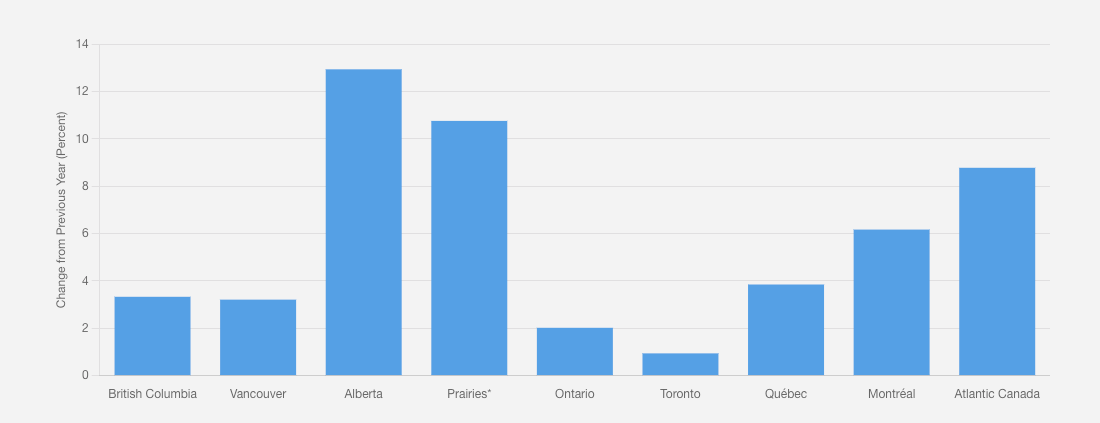
The first element to remember when comparing January 2023 to January 2022 is that there was a lockdown in Ontario last year. With Ontario typically contributing to around one-third or more of total Canadian retail sales, this has a large impact on national retail sales.
Even when considering the lockdown, it is still surprising to see that Clothing and Accessories Stores increased by 21.3% YOY in January. The subcategories grew impressively, at rates of:
Clothing Stores: Up 23.2%,
Shoe Stores: Up 43.6%, and
Jewellery, Luggage and Leather Good Stores: Down -6.4% YOY.
These abnormalities are likely directly related to the fact that Ontario was in lockdown in January, 2022. When comparing sales to 2019, the numbers are much more normalized:
Clothing Stores: Up 11.3%,
Shoe Stores: Up 11.4%, and
Jewellery, Luggage and Leather Good Stores: Up 20.6% YOY.
The other standout category in January is Food and Beverage Stores, down -0.7% YOY. The largest drop off in this category is Specialty Food Stores, down -12.5%, but all categories grew at a rate below inflation, which is 10.4% in January for food prices. When the JCWG team discussed these changes, we landed on the fact that people are still only spending what they have. There are few people whose income has increased by 10% over the past year, so the distribution of where they are spending their food budget has changed. Consumers are looking for better pricing, moving towards Walmart, Costco, etc. for grocery, which was shown through the 7.8% YOY increase in General Merchandise Stores. Specialty Food Stores include butcher shops, cheese shops, etc. which have been some of the most impacted products from inflation.
Nordstrom at CF Chinook Centre (Image: Nordstrom)
2023 promises to be a tumultuous year for Canadian retail sales. Inflation is very relevant, customers have resumed most of their previous shopping habits (hopefully for good), and we are still in the throws of a recession. With that being said, major disruptions with chain retailers in Canada, namely the exit of Nordstrom and the re-entrance of Zellers will impact the coming months. This has the team thinking about:
Where will current Nordstrom customers shop for their mid-luxury/luxury products?
How long will it take for shopping centres to fill the Nordstrom vacancies and how will the vacancy impact traffic flow and footfall?
How many, if any, current discount department store customers will change their habits to Zellers, and away from Walmart, Costco, Dollarama, etc.?
What international retailers are currently eyeing Canada for expansion opportunities?
How are YOU prepared for the changed Canadian retail landscape?
Canadian Retail Sales by Product Category, Same Month ComparisonCanadian Retail Sales by Product Category, Same Month ComparisonCanadian Retail Sales by Store Category, Year to Date Comparison (Part 1)Canadian Retail Sales by Store Category, Year to Date Comparison (Part 2)Retail Trade, Canada, All Stores, by Geographic RegionsRetail Trade, Canada, All Stores, by Geographic Regions
This analysis by J.C. Williams Group is updated monthly as new numbers are published by Statistics Canada.
J.C. Williams Group focuses solely on Retail sector strategy and consulting. The breadth and depth of our functional areas of retail specialization enable us to bring to each engagement a holistic perspective and expertise that provides both insightful and actionable recommendations.
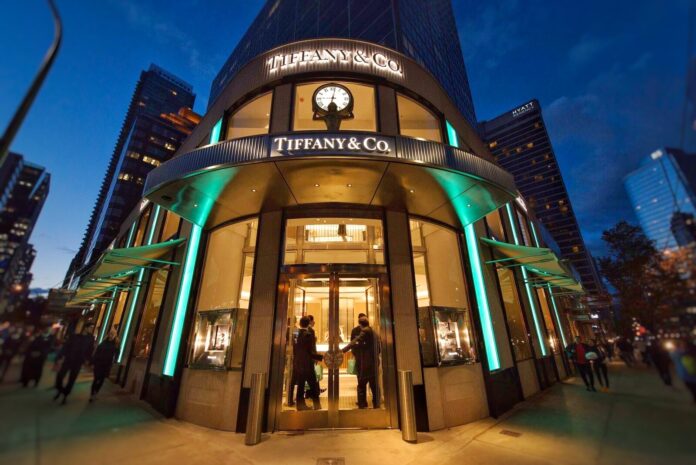
Tiffany on Burrard Street in Vancouver (Image: SAJO)
Within the fast-paced confines of retail – an industry that moves at speeds unimaginable to most people – time is of the essence. Its use by those operating in and around the sector most often defines outcomes that range from unforgiving failure to incredible success. It can yield benefits that are derived from its passing, like the tenure and experience that’s amassed by virtue of bearing witness to a plethora of consumer and market trends, shifts in behaviour and the evolution of preferences and desires. And, depending on the amount of it that’s been accrued, in combination with the ways in which resulting experiences have been leveraged and learned from, time can bestow wisdom, knowhow and credibility upon its holder. For SAJO – the globally renowned design-build firm that’s celebrating more than 45 years in successful operation – its time is marked by the company’s innovation, creativity and artisanal approach, and the continued growth of its remarkable reputation.
Evolution and growth
Nick Tedeschi & Sal Guerrera
Founded in 1977 in Montreal, Quebec, SAJO has steadily built on its operations through the years, from its humble beginnings in a single rented room in a Montreal office building to its presence and stature today with offices in Miami, NYC, London, and Milan, in addition to a number of satellite locations in cities throughout North America. During its nearly half century of business, the company has also expanded the suite of services that it offers its clients to include everything from design and procurement to project management and construction all the way through to post hand-off, while covering all points in between. It’s evolution and growth that’s testament to the quality of work that SAJO has been responsible for over the course of the past four-plus decades. And, according to Sal Guerrera, CEO and Co-Founder of the design-build giant, its evolution and growth that’s been driven by the company’s holistic and artistic approach.
“The company was founded with an appreciation for art and culture and the ways that those elements in combination with architecture can be applied to create extraordinary environments,” he says. “We set out to express ourselves through building and design and to provide the services that our clients and partners need in order to execute their vision. We never intended to build a national or international company. It wasn’t ever one of our goals. We simply wanted to create and contribute our expertise where it was needed. We also never intended for our services to have expanded in the ways that they have or to be involved in as many sectors as we are. It’s all happened very organically. Its an evolution that we’re extremely proud of, and one that continues today.”
Seizing opportunities
Guerrera’s sentiments are echoed by fellow Co-Founder and President, Nick Tedeschi, who recognizes the ways in which the pair have leveraged their shared love and admiration for art and culture to succeed in such a competitive market. However, he adds that it’s their penchant to challenge themselves and their capabilities that has ultimately provided them with the impetus to sustain persistent expansion.
“Sal and I are both very curious by nature,” he admits. “And that curiosity has always challenged us and driven us to seize on every opportunity that’s made itself available. Instead of shying away from these opportunities, fearing the difficulties that might be involved or the complexities related to expanding into the U.S. or Europe, we approach things in a different way. Our curiosity compels us to figure out the complexities of any given opportunity and build a business plan around it.”
Retail synergies
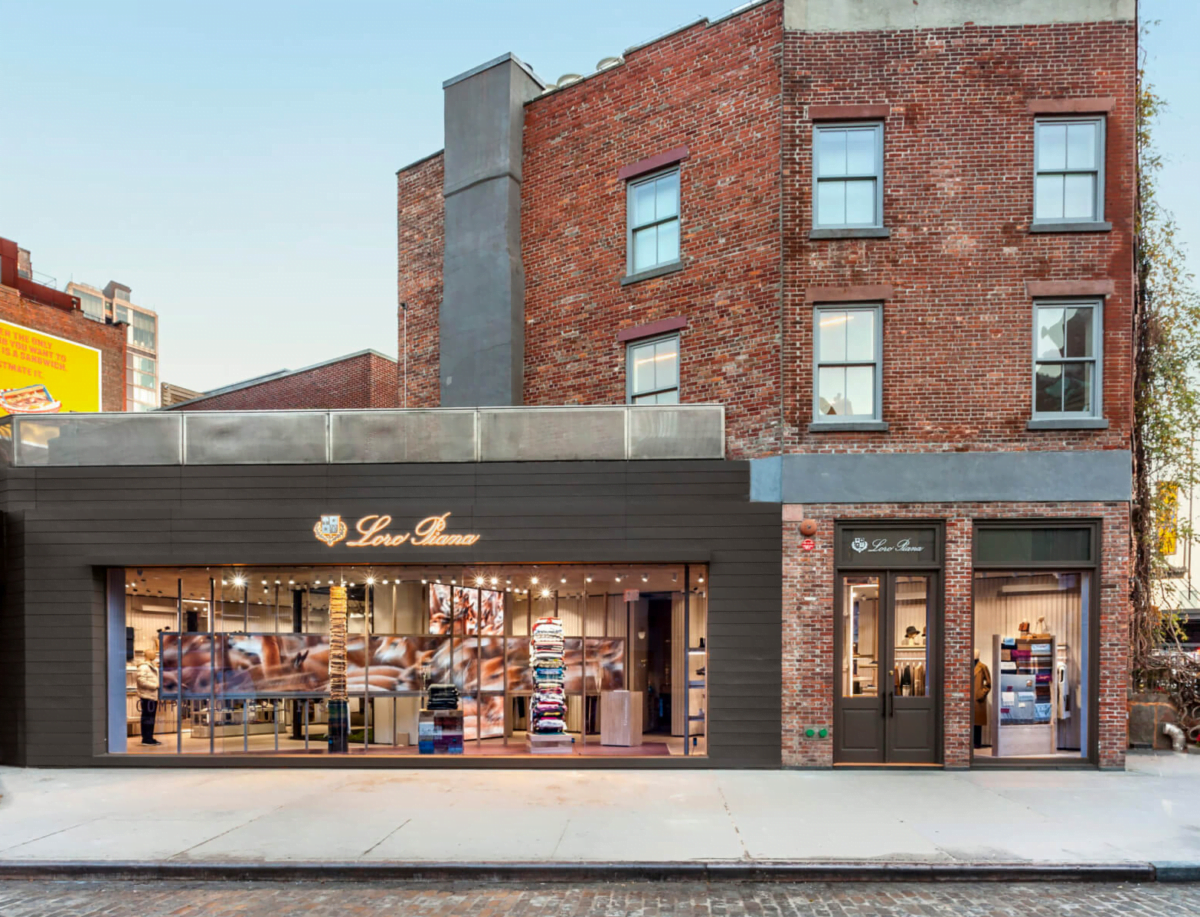
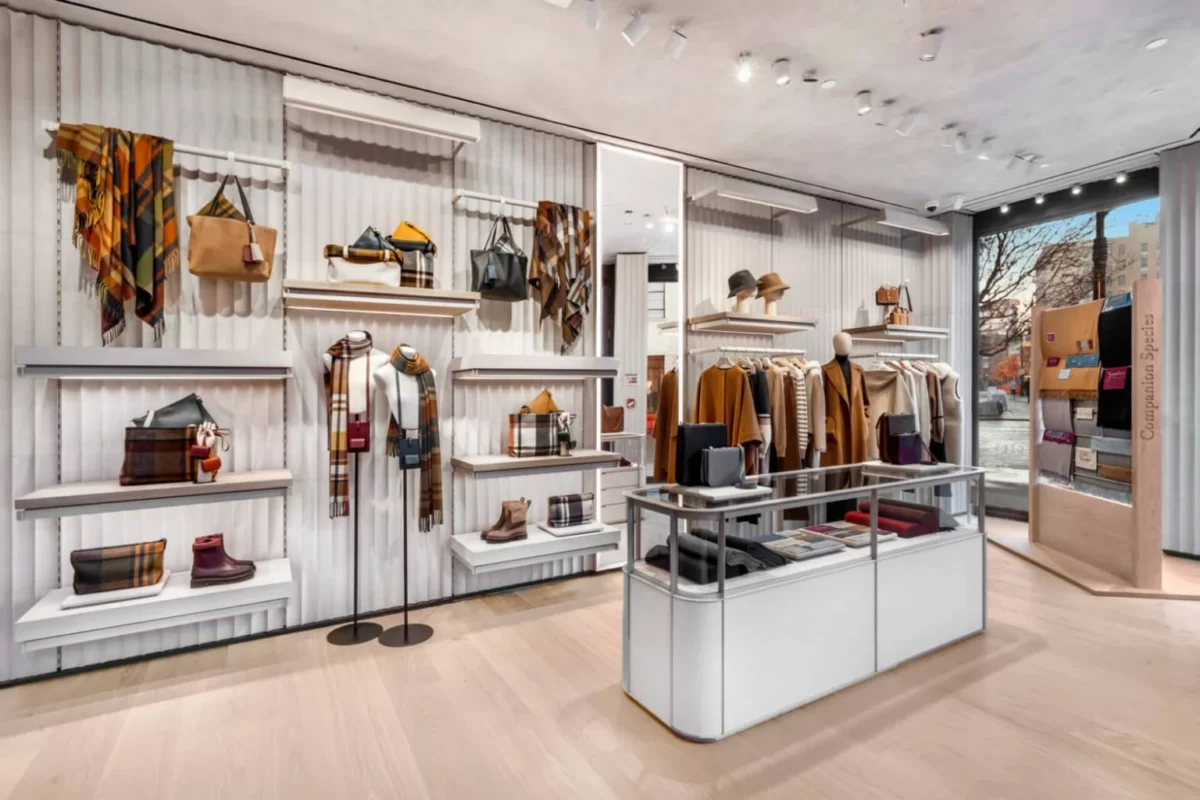
Loro Piana Flagship in NYC’s historical meat packing district (Image: SAJO)Loro Piana Flagship in NYC’s historical meat packing district (Image: SAJO)
Tedeschi likens the opportunities that the company’s capitalized on through the years as seeds that have been planted, cared for through the sprouting process and nurtured into a full-grown plant. As the analogy goes, SAJO’s seeds have flourished throughout a number of sectors, working to conceptualize and convert real estate properties into multi-dwelling housing projects; building infrastructure projects related to public education, healthcare, social housing, recreational facilities and institutional buildings; upgrading utilities and telecommunication infrastructure; and, of course, a vast amount of work within commercial retail. In fact, SAJO is known throughout the industry as the first specialized retail builder in Canada, working with some of the biggest, most prestigious brands that have operated within the country over the better part of the past 50 years. It’s work that represents a significant piece of the company’s legacy, and made possible, suggests Guerrera, by the synergies it shares with the industry.
“Retail is all about instantaneous sensations,” he says. “It’s about a give-and-take relationship between the retailer and the consumer. And the environment in which this relationship takes place is critically important, helping to create an atmosphere that facilitates engagement, reenforcing a brand’s story and enhancing the experience received by the customer. Creating, being able to execute on the construction and building of a vision, also results in the same kind of sensations, imbedding our influence into the environments we conceive. The fact that we’ve made a name for ourselves designing and building retail spaces has a lot to do with this connection – the art behind the entire experience.”
Deep industry understanding
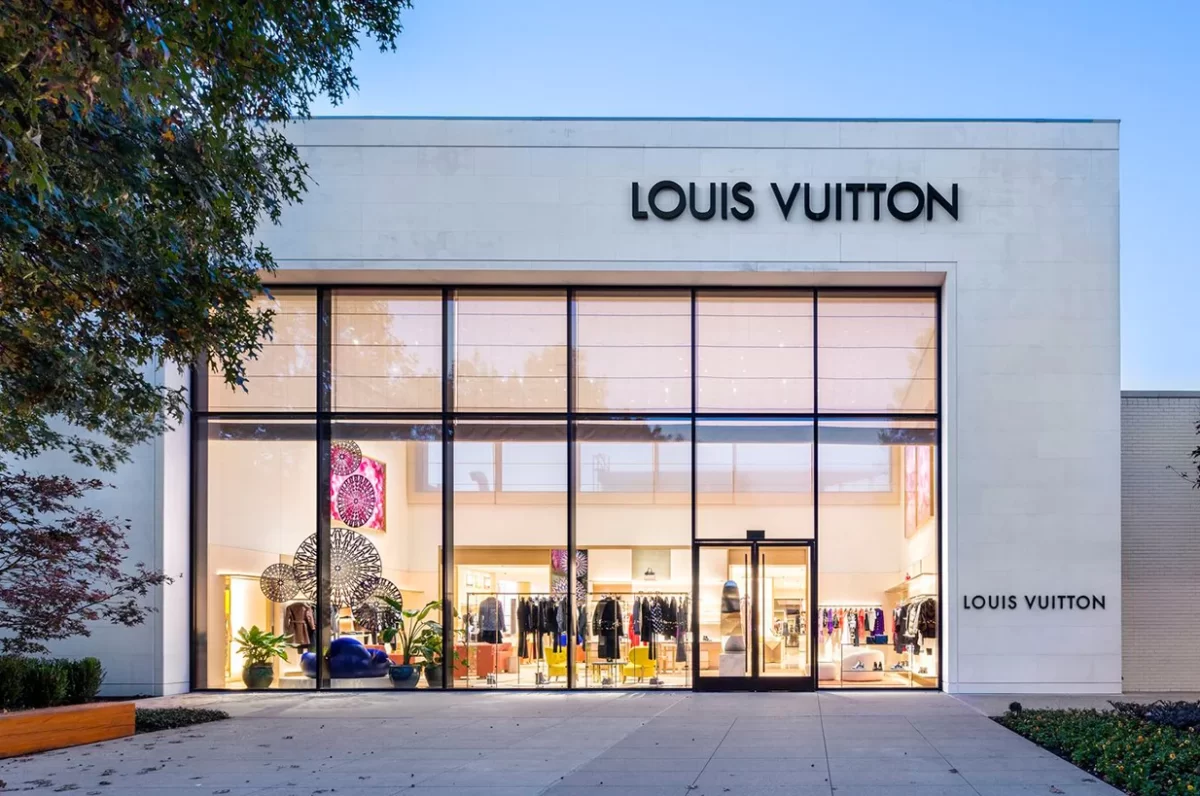
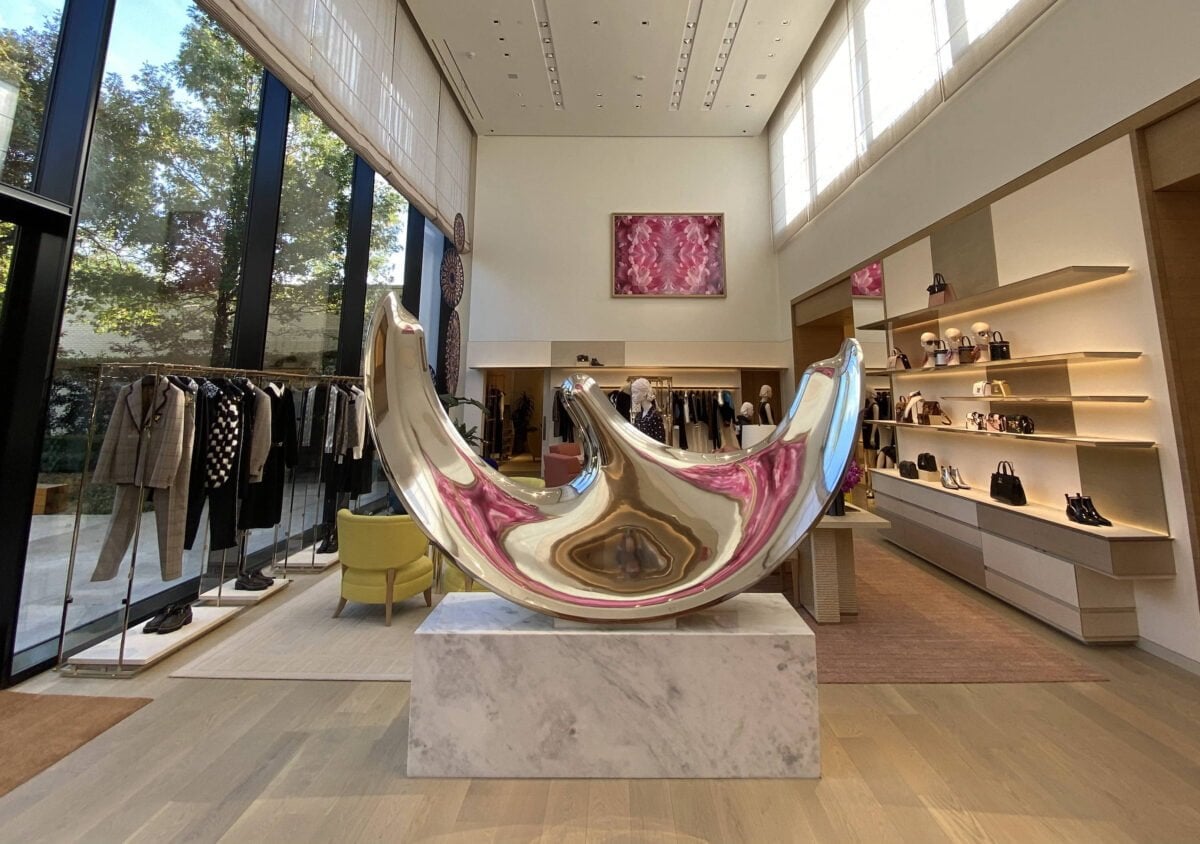
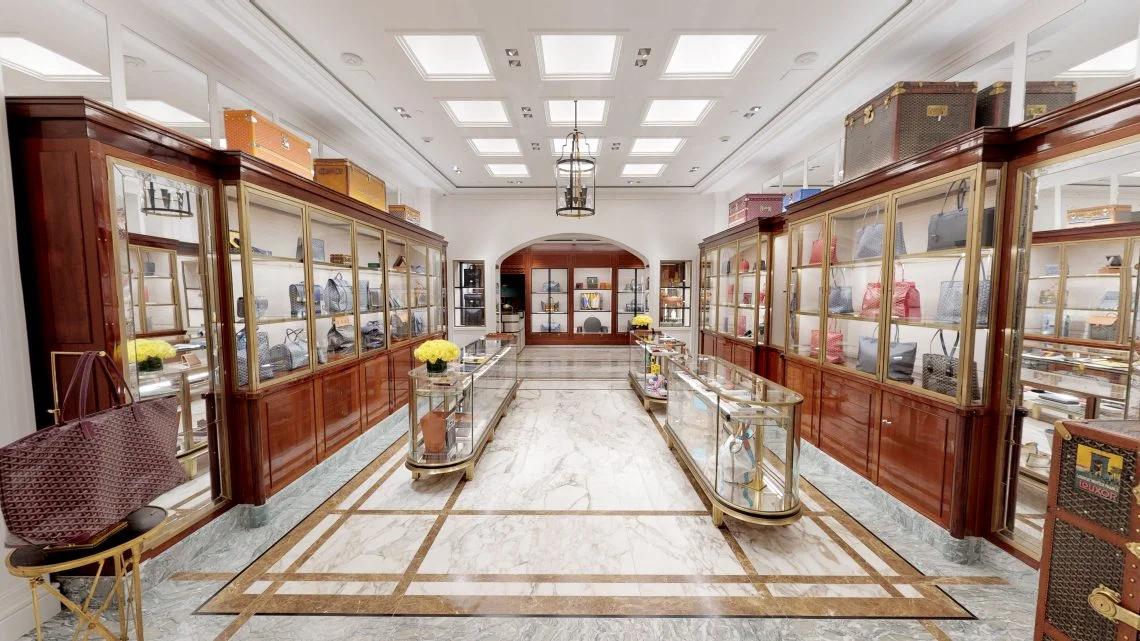
Louis Vuitton Flagship at NorthPark Mall in Dallas (Image: SAJO)Louis Vuitton Flagship at NorthPark Mall in Dallas (Image: SAJO)Goyard at Highland Park Village in Dallas, Texas (Image: SAJO)
It’s a connection that’s recognized by Tedeschi who says it’s one that’s been cultivated through years of experience and hard work. It’s one that’s also allowed SAJO to hone its expertise, positioning it as one of the leaders in the commercial retail construction space. And, during this time, adds Tedeschi, the credibility of the company’s services and offering has grown exponentially in the minds of its clients, helping to build on its reputation as a trusted partner and developer of world-class projects. It’s also provided the SAJO team with an inordinate amount of market experience, lending toward what Tedeschi describes as a “deep understanding of the industry” and a wealth of knowledge.
“Retail is an incredibly fast-moving industry,” he asserts. “Brands are required to think fast and act fast in order to continue advancing their businesses and improving their offering. A big part of this requirement involves frequent transformation or else brands will find themselves left behind. We know this about the industry and the fact that brands have got to constantly reinvent themselves. It’s an understanding that allows us to ask the right questions. But, in the end, it’s all about listening to the retailer to understand exactly what they want. It’s up to us to execute to help satisfy those needs.”
Design-build expertise
SAJO collaborated with Foster + Partners on Building an Iconic Apple Flagship in Brooklyn
Celine at 40 Bond St. London, UK (Image: SAJO)
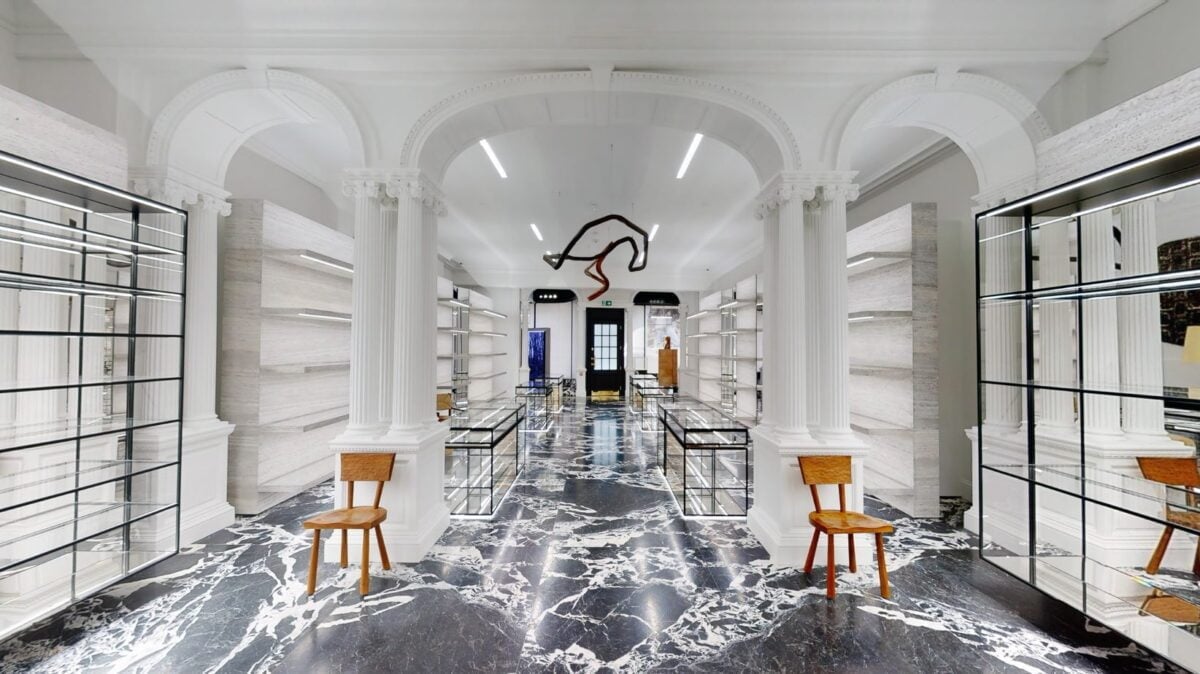
For a company that’s helped to erect environments for Louis Vuitton, Dolce & Gabbana, Celine, Christian Dior, Kith, Goyard, Loro Piana, Tiffany & Co, Alexander McQueen, Moncler, Prada, St-Laurent, Apple, Nike, UNIQLO, and Tesla, just to name a handful, it almost seems as though it could rest on its laurels, so to speak, and bask in the fruits of its prior labours. However, Guerrera, Tedeschi and their team have no such plans. In fact, SAJO is extending its relationship with Apple to develop its latest iteration of store environment. In addition, it recently designed and built the first Lucid Motors locations in the country in Toronto, Vancouver and Montreal, as well as helping to introduce Vietnamese electric vehicle company, VinFast, to the Canadian market with its smart design and building expertise.
It’s a highly impressive list of current retail projects and accounts – one that’s reflective of SAJO’s scope of capabilities and focus on continuing to realize opportunities within the sector. However, what might be even more inspiring is the way the company’s embraced corporate and social responsibility throughout its history, providing sponsorship to numerous charitable causes and organizations, and steadfastly supporting and contributing to the betterment of the social fabric within the communities that it works. It’s a responsibility that Tedeschi says the company takes very seriously, making it a necessary lens through which each project must be viewed.
“Just as we’re committed to contributing to social causes that improve the communities around us, we also pledge to always improve and develop new green building practices and promote the responsible use of materials and natural resources in order to enhance our sustainability efforts and improve our environmental impact,” he says. “It’s an incredibly important aspect of what we do at SAJO and a way in which we can help protect the future of the planet.”
What’s in store?
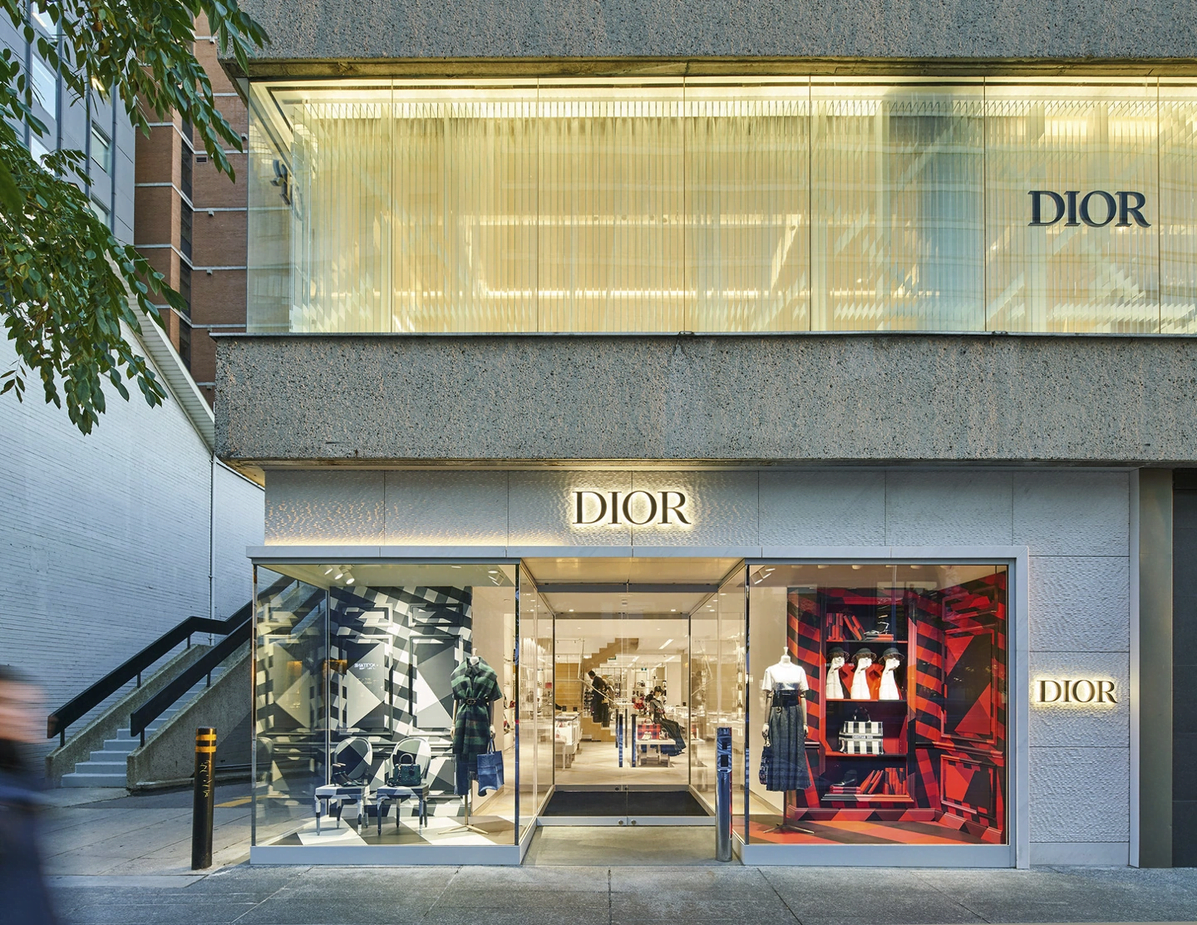
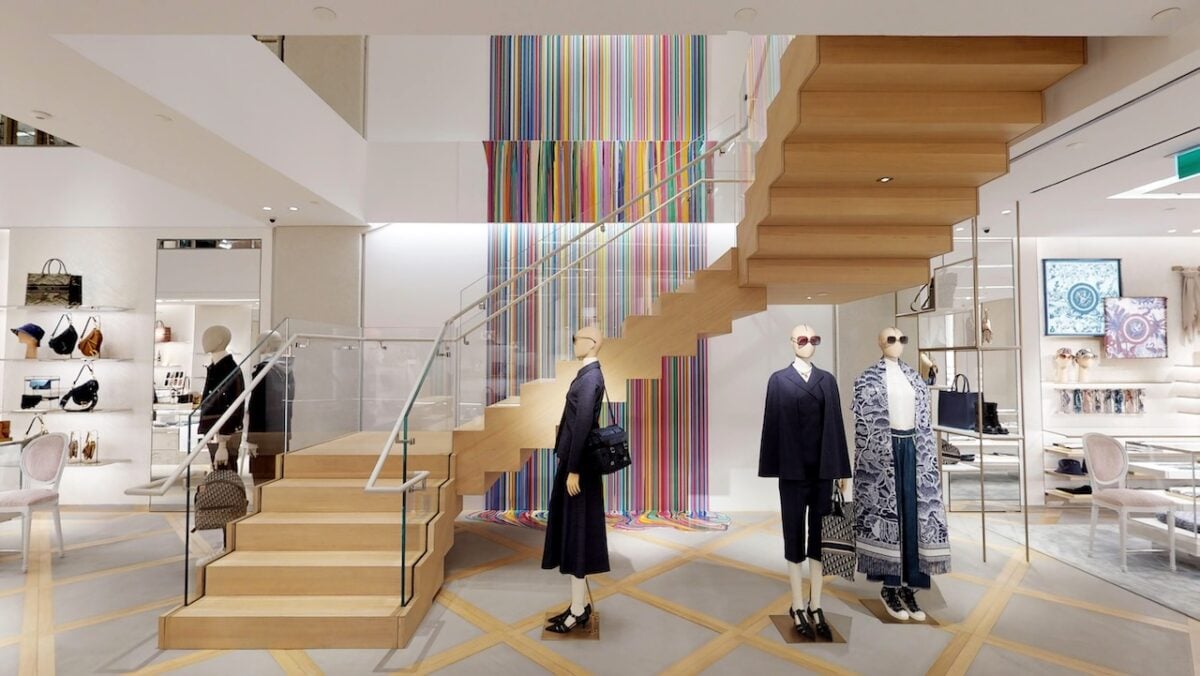
Dior at 131 Bloor Street West (Image: SAJO)Dior at 131 Bloor St West (Image: SAJO)
Having amassed such a storied history to this point, and a list of credentials and project executions as lengthy as any out there, SAJO has clearly achieved the goal that Guerrera and Tedeschi set out for themselves when the company was founded more than 45 years ago – to help create environments through artful creation. And, when asked about the future of the company and what it has planned, the pair are as focused and committed as ever to delivering quality and knowhow of the highest possible standard. In fact, Guerrera says that SAJO is currently expanding further in efforts to continue diversifying its services and support its core offering.
“We’re on the verge of opening Astra IPT, which is a studio of integrated project technology meant to enhance the services provided by general contractors, architectural firms and developers. And, we also want to start leveraging data and artificial intelligence in order to enhance project management even further and simplify the work, enabling the identification of potential issues and ways in which those issues can be addressed. The construction industry is one that hasn’t really changed over the course of the past 100 years or so. And what we’re doing is creating an intersect of architecture, art and technology that will revolutionize the way things are done and the way environments are designed and built, helping to create those instantaneous retail sensations.”
Loblaw Lower Jarvis in Toronto (Image: Dustin Fuhs)
Many surveys suggest that Canadians firmly believe grocery chains are profiteering from food inflation and pushing prices higher unnecessarily. Meanwhile, many experts believe some profiteering is a reality in parts of the industry, and not just in food retail. The reality is that food inflation is a worldwide phenomenon, as Canada has the third-lowest food inflation rate within the G7+EU (9.7% for February, 2023), after Japan (7.5%) and the United States (9.5%). However, consumer trust is critical for governments and the food industry. We wanted to know how much that trust has been eroded in recent months. While the Competition Bureau is currently studying the food industry and will table its report in June, the Standing Committee in Agriculture and Agri-Food in the House of Commons (in which many experts have participated so far, including the top CEOs of major grocery chains in Canada) is investigating food inflation.
Working with Caddle, our Lab conducted a cross-national survey at the end of March 2023, which included 9,884 respondents, a massive sample. With this investigation, we looked at how Canadians saw CEO’s performances when they testified before the Standing Committee in Ottawa. We also looked at which factors Canadians believe contribute the most to food inflation, and what can be done about it.
We first asked if respondents have been following the recent parliamentary committee hearing on agriculture, where the leaders of Canadian grocery chains were defending themselves regarding food inflation. Only 35% said that they have been following the proceedings. Of those Canadians who did follow the proceedings, only 32.9% felt grocers were either very convincing or convincing during testimonies. The majority remained unconvinced. Only 24.7% felt grocers were transparent and forthcoming enough about the data they shared. So, in general, Canadians were not overly convinced by grocers.
While grocers are heavily criticized, answers are a little more varied when asked to choose one factor contributing to higher food prices. A total of 30.3% of Canadians think grocery chain price gouging is the main reason food prices have been rising in Canada recently. A total of 29.9% believe inflation (or monetary/fiscal policies) are to blame as the main contributing factor for higher food prices. In fact, both Quebec and Saskatchewan are the only provinces where the highest percentage wasn’t grocer price gouging, but rather inflation/monetary/fiscal policies. A total of 36.1% of Quebecers believe monetary policies are the main factor for higher food inflation, and 32.1% of people in Saskatchewan think the same.
We asked questions about what grocers can do to help consumers. While 46.6% would appreciate more price freezes, 44.2% expect more transparency related to food sales specifically. While 36.4% of respondents wish loyalty programs would be more generous, a total of 33.4% of respondents would like more competition in Canada.
We asked questions about what governments can do. A total of 44.0% of respondents believe that governments should intervene and regulate the price of some staples at the grocery store. Only 19.1% believe government should implement a windfall tax. A windfall tax would be a tax levied by the government on unexpected profits or gains that are not part of a company’s normal business operations. A total of 4.5% of Canadians believe the government should create a crown corporation and start its own grocery chain. Can you imagine seeing the government run its own grocery chain? The government already runs a crown corporation which competes with banks in the agri-food sector. It’s called Farm Credit Canada. So, it’s not impossible.
The survey asked specifically about the proposed “Grocery Code of Conduct,” for which we should get an update in April from Minister Marie-Claude Bibeau. We asked if Canadians were supportive of the “Grocery Code of Conduct” which would lessen the influence of some major grocers and help independent grocers and processors. Of Canadians who were aware of a “Grocery Code” (n=3366), 68.1% are supportive of such a code. The province with the highest percentage of support is Nova Scotia where 76.5% of respondents are supportive of the Code, followed by British Columbia with 74.5%. The lowest levels of support are in Prince Edward Island (53.2%) and Manitoba (64.2%). These are surprising results, higher than expected.
The Grocery Code of Conduct is not just a set of rules, it’s a lifeline for Canadian shoppers. It ensures fair pricing, transparency, consistency, and accountability from retailers, giving consumers the peace of mind they deserve when purchasing their groceries.
In a nutshell, this survey showed that a good number of Canadians do understand what the real issues are in our Canadian food economy, and we shouldn’t rely on social media to make any judgment on how Canadians understand how food prices are set. We simply need more competition and more protection for consumers. While we need a practical Grocery Code of Conduct, we also need to make Canada a more attractive place to invest.
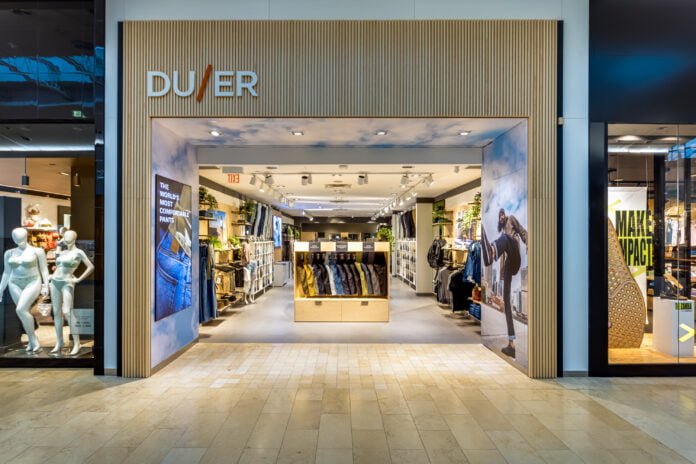
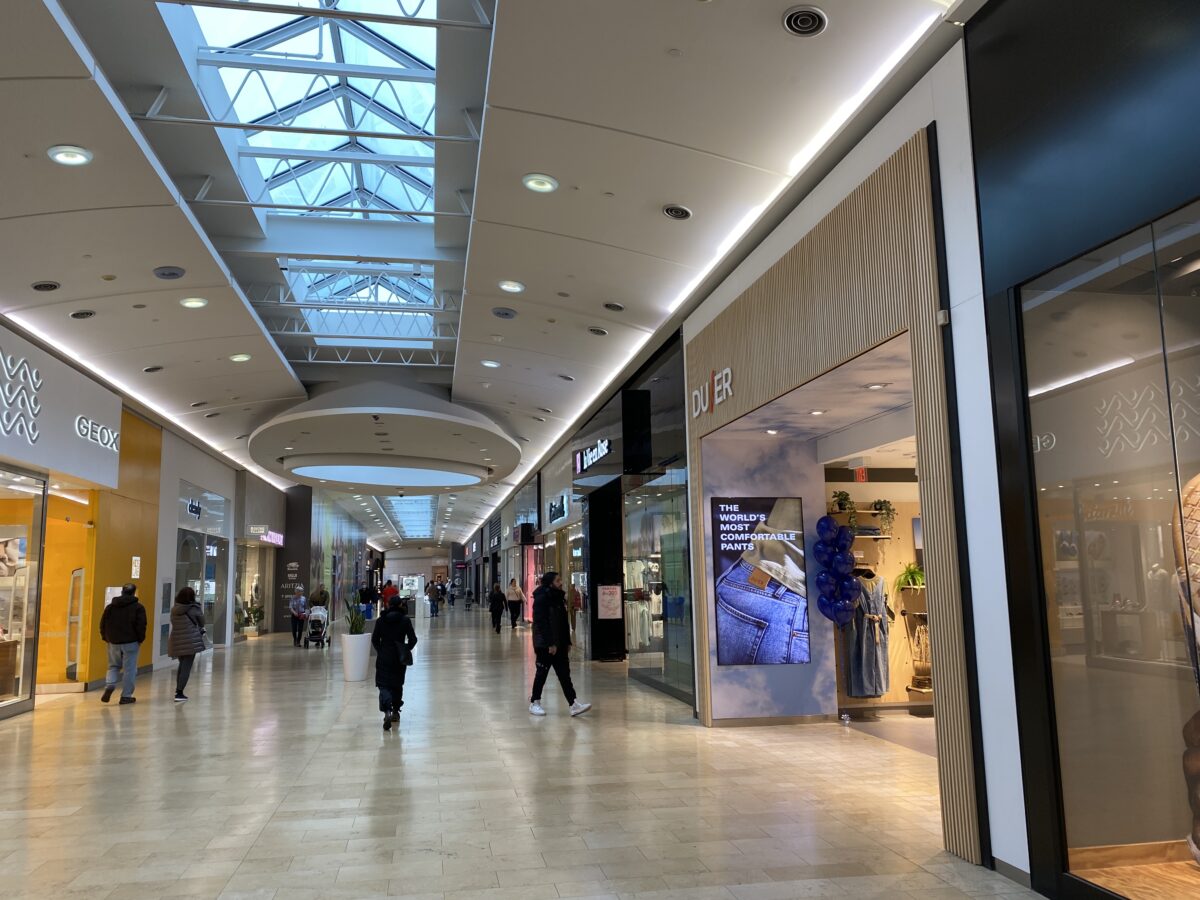
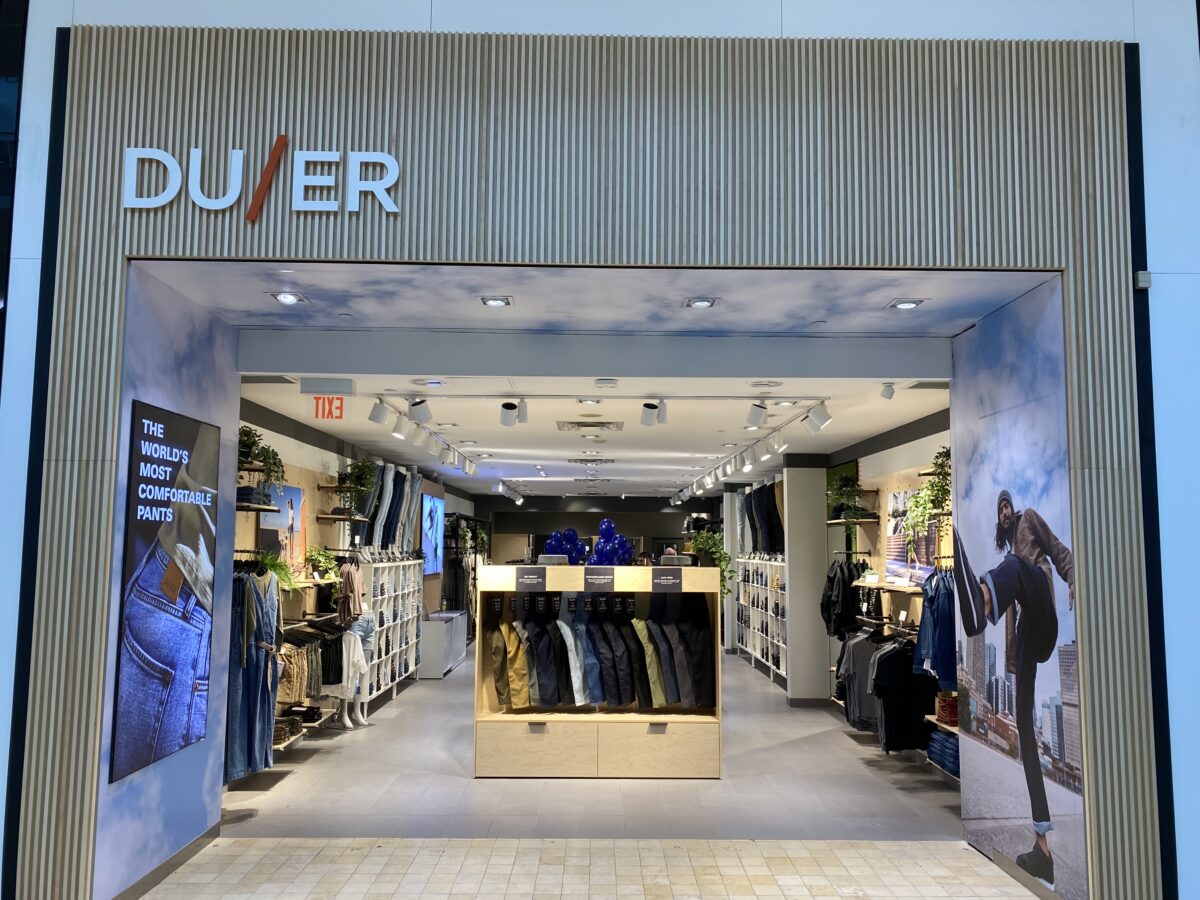
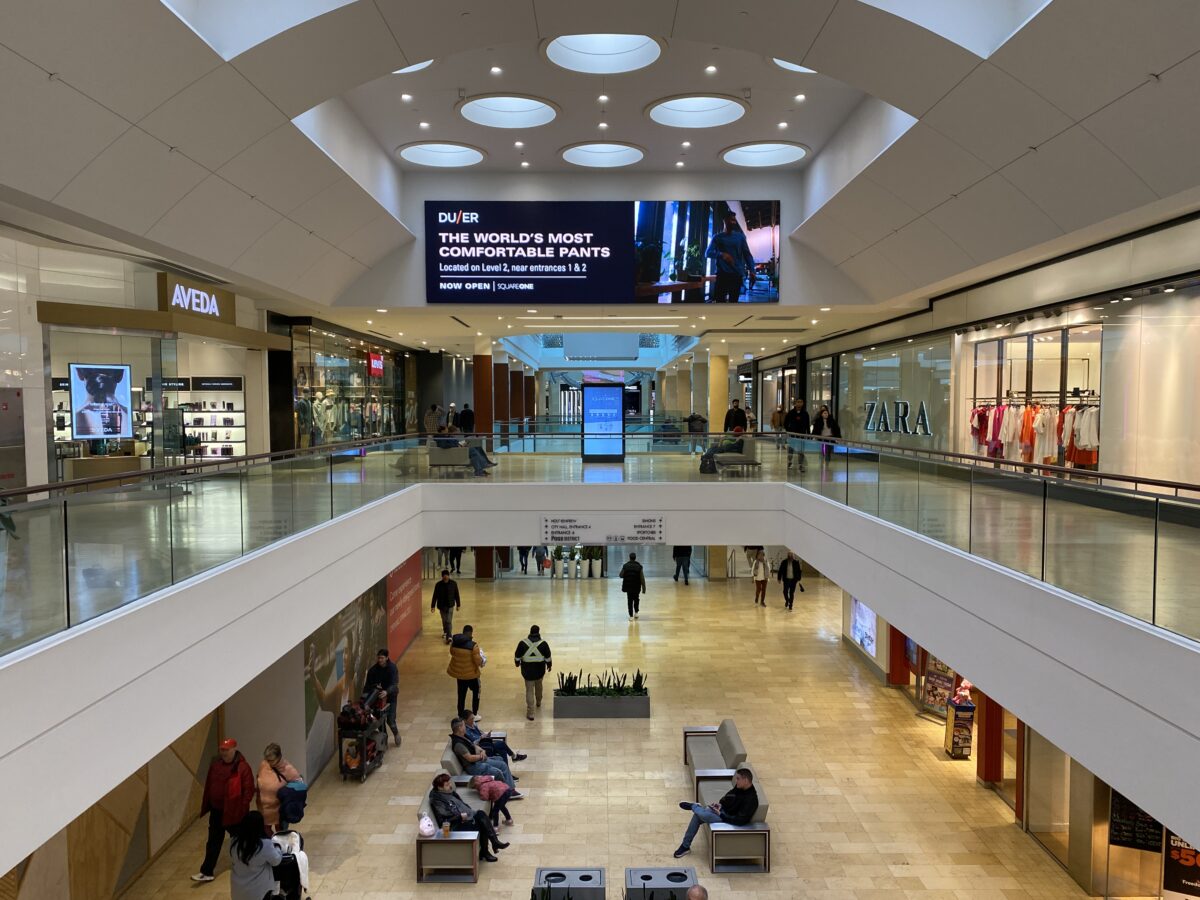
Canadian performance apparel brand DUER has officially opened its newest concept storefront in Mississauga’s Square One Shopping Centre.
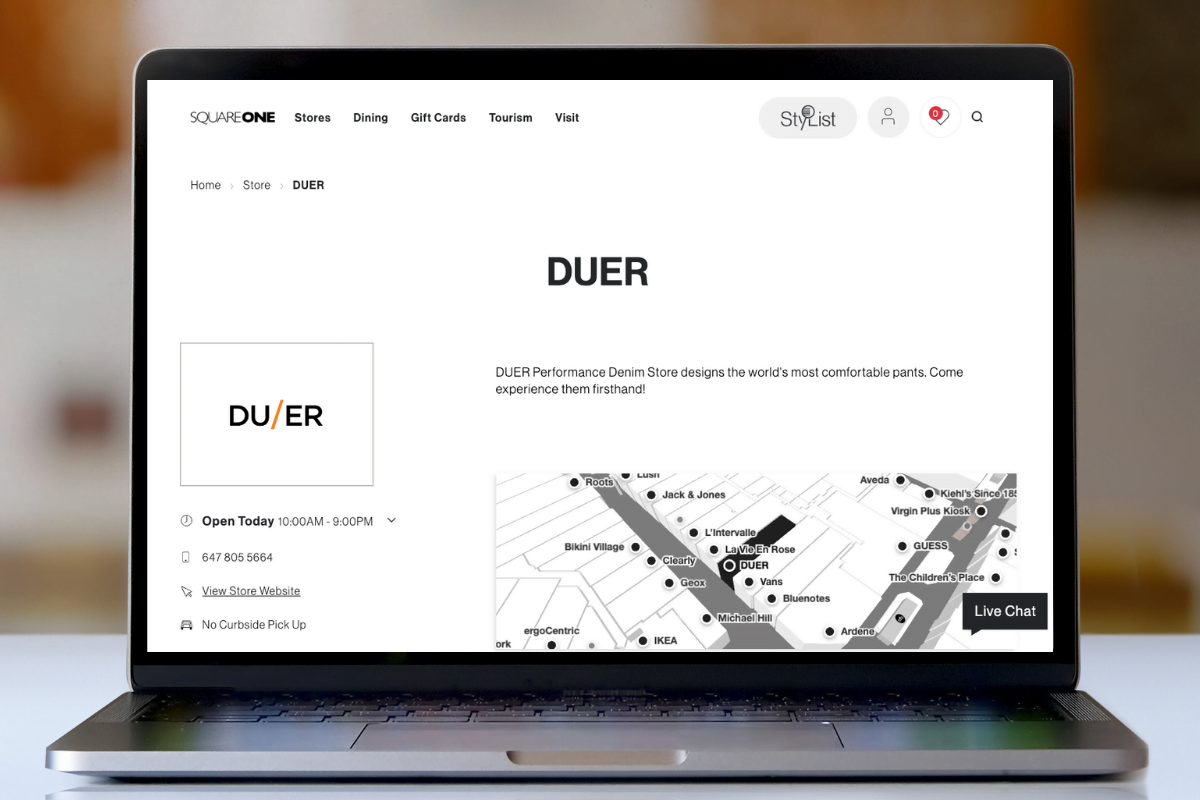
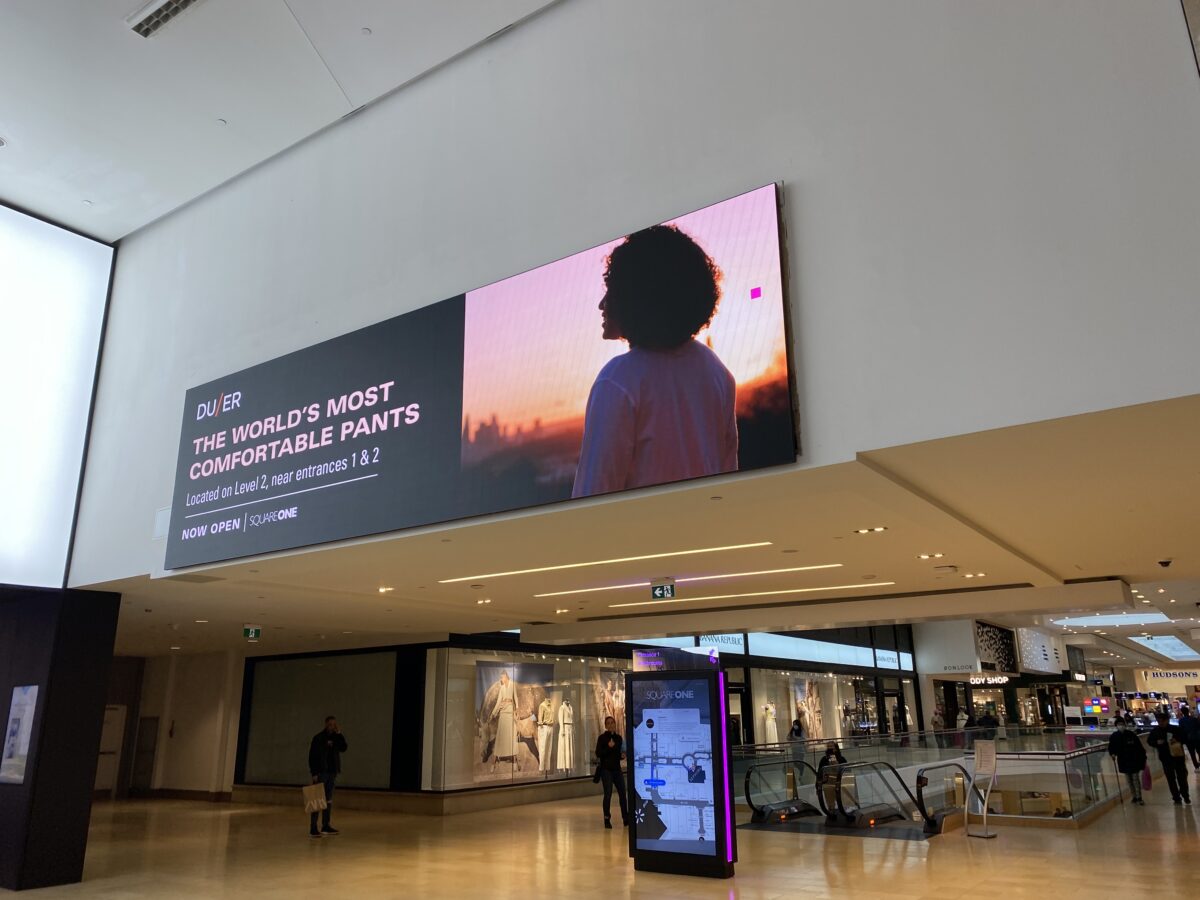
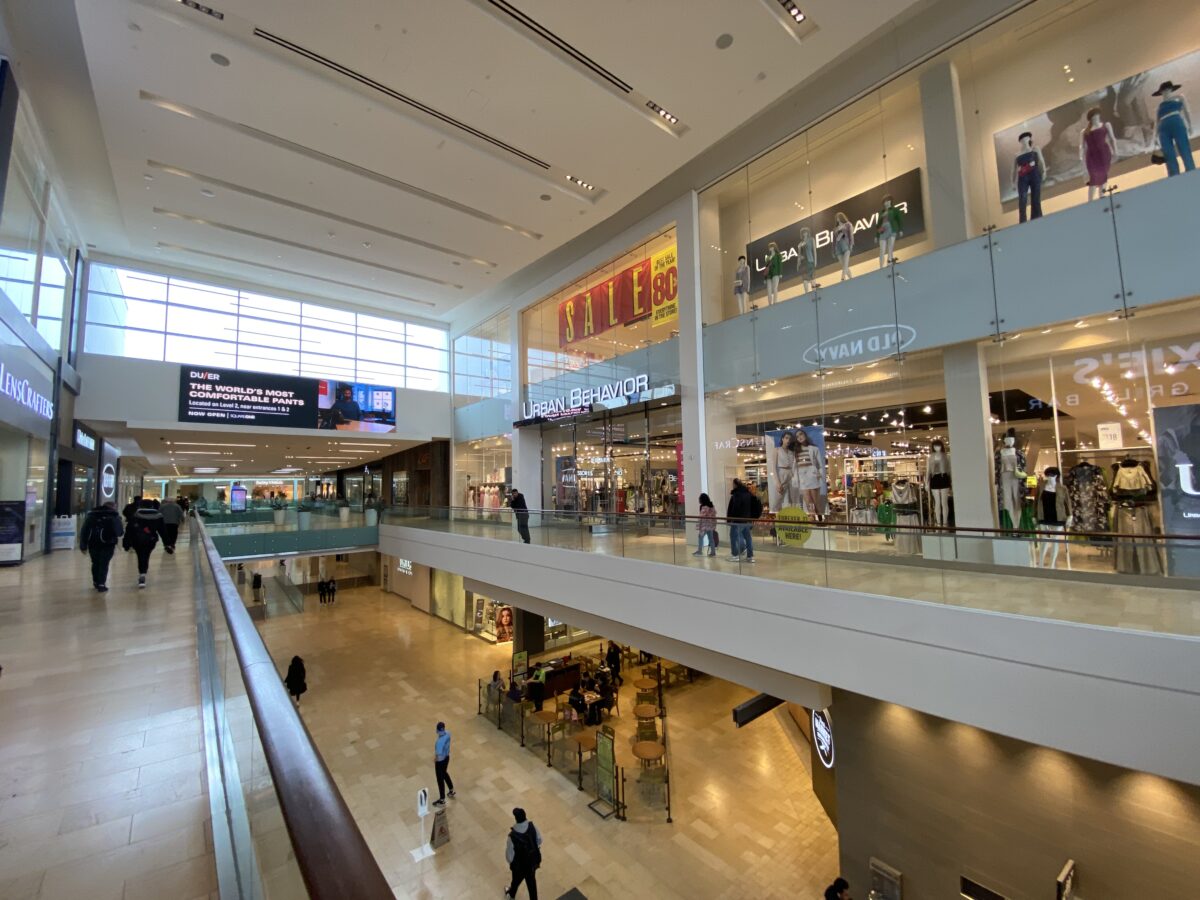
The 1,700 square foot Square One store is located on the second floor of the shopping centre, across from Michael Hill and around the corner from Hudson’s Bay and the recently opened MEC shop-in-shop.
“The Greater Toronto Area is Duer’s fastest growing Canadian market so we’re optimistic about how these stores will perform,” shared Gary Lenett, Co-founder and CEO of Duer in Retail Insider’s expansion interview. “We see our new retail footprints as a way to connect people with the brand but also as community hubs where we can bring the Duer ethos to life.
DUER opened its first location in Vancouver with a Gastown storefront in 2016 and has since established Canadian physical brick & mortar stores in Calgary and Toronto.
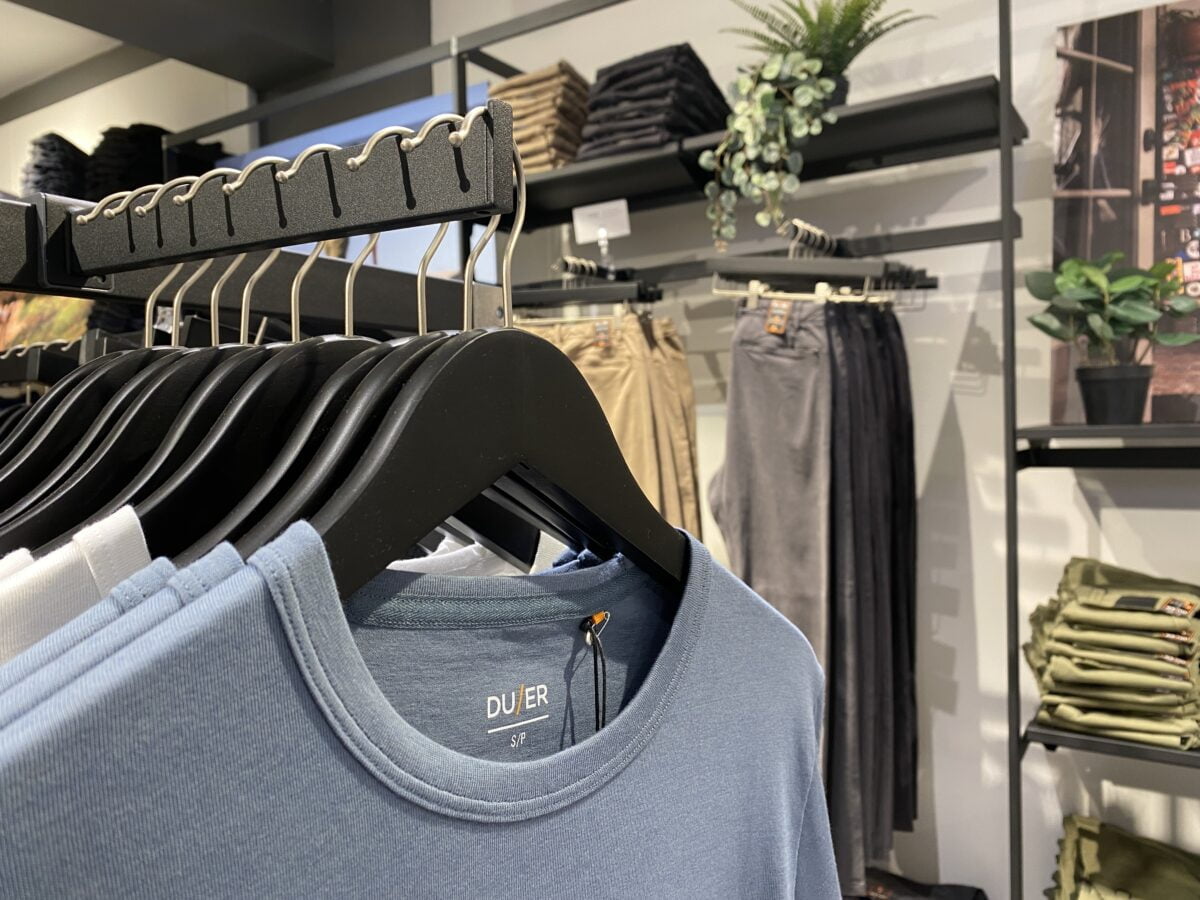
DUER Square One (Image: DUER)Duer at Square One
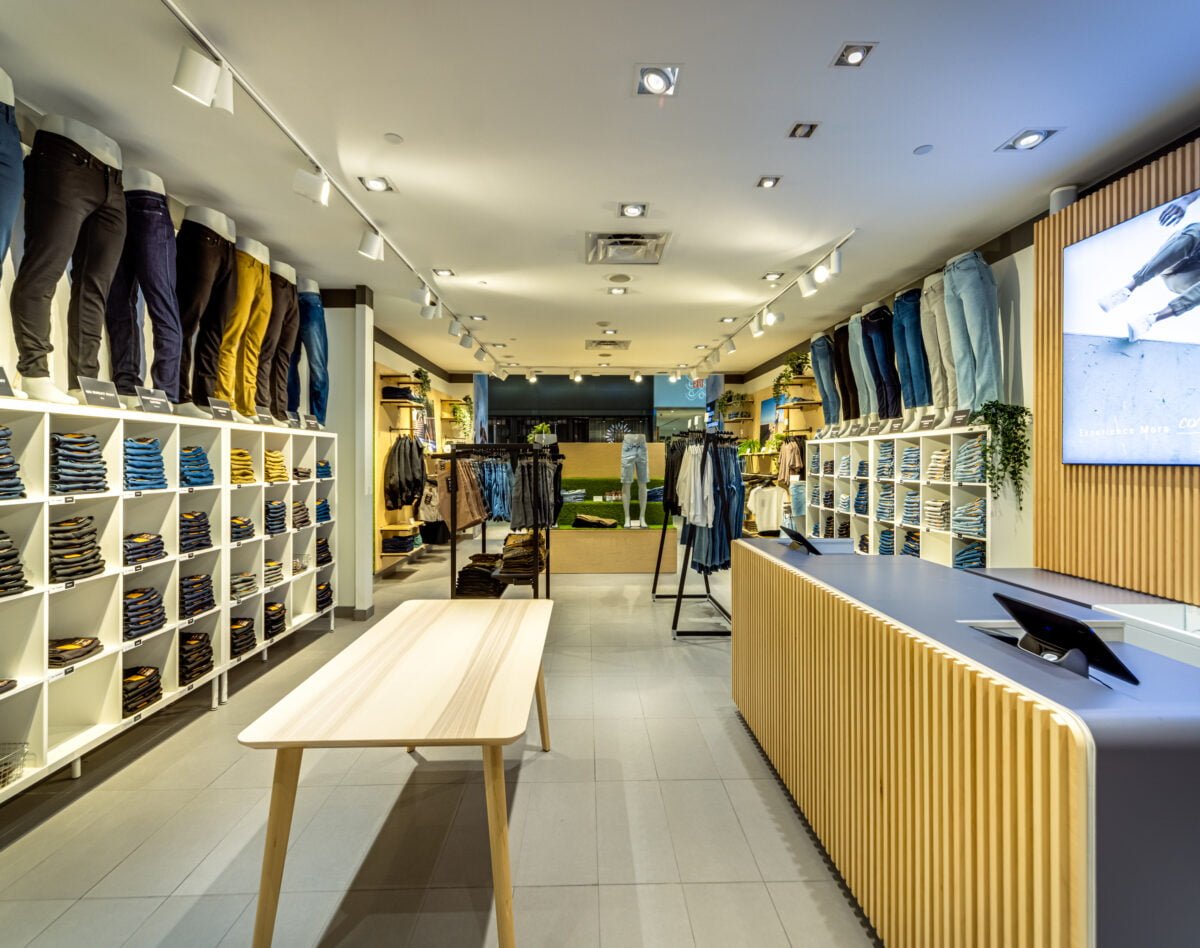
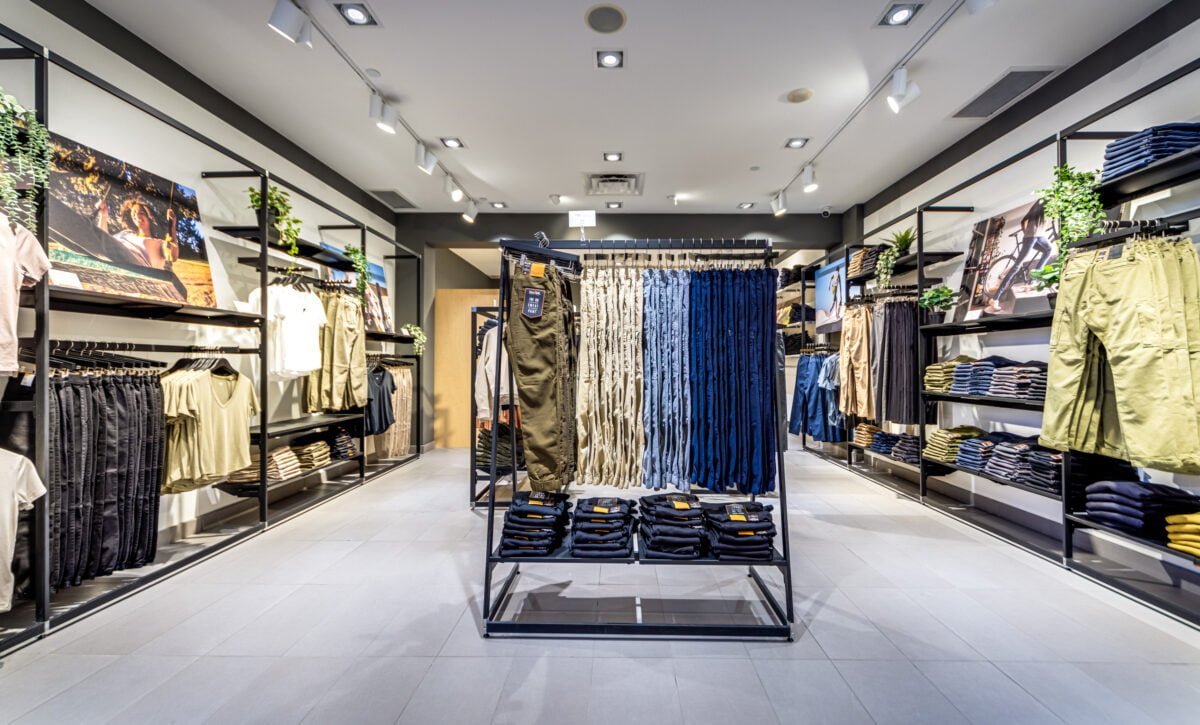
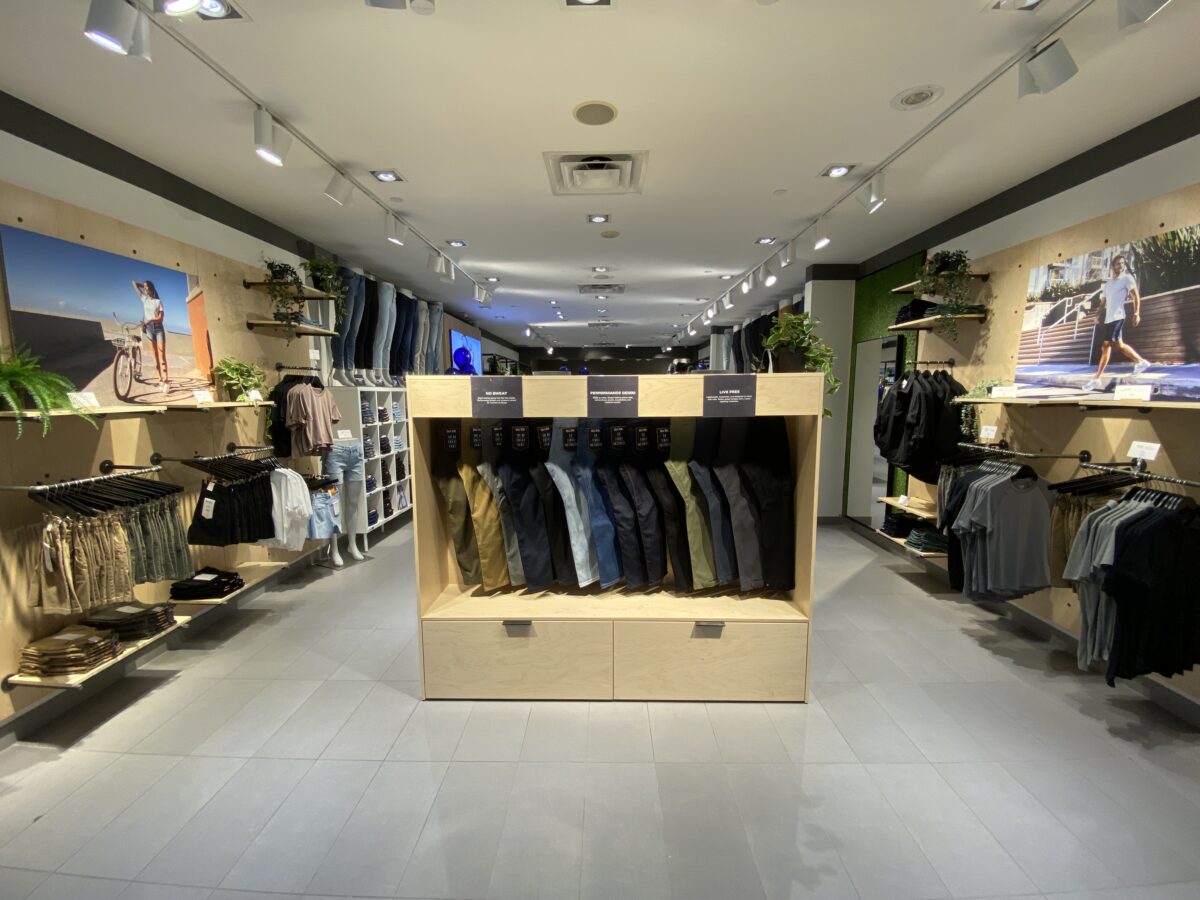
The Square One pop-up store features adventure and landscape photography, storytelling the environment the clothing was designed for along with the brand’s preference for plant-based fibres over synthetics.
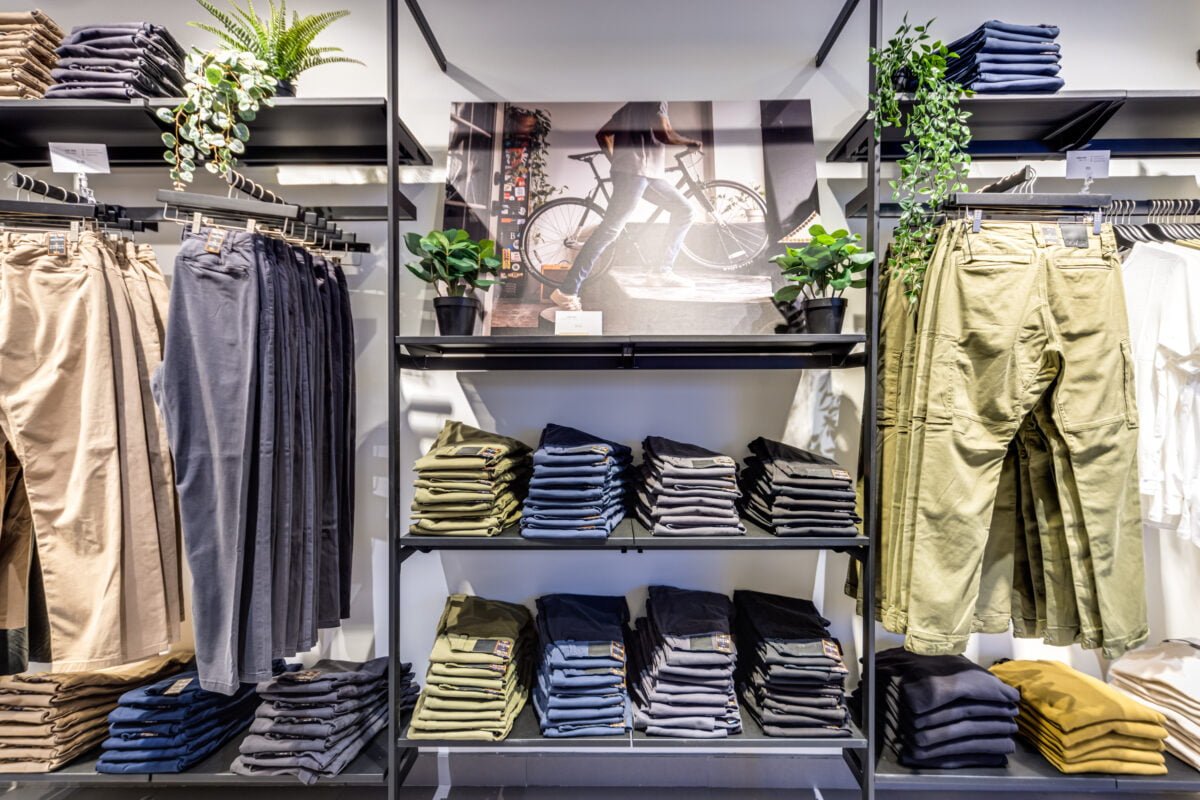
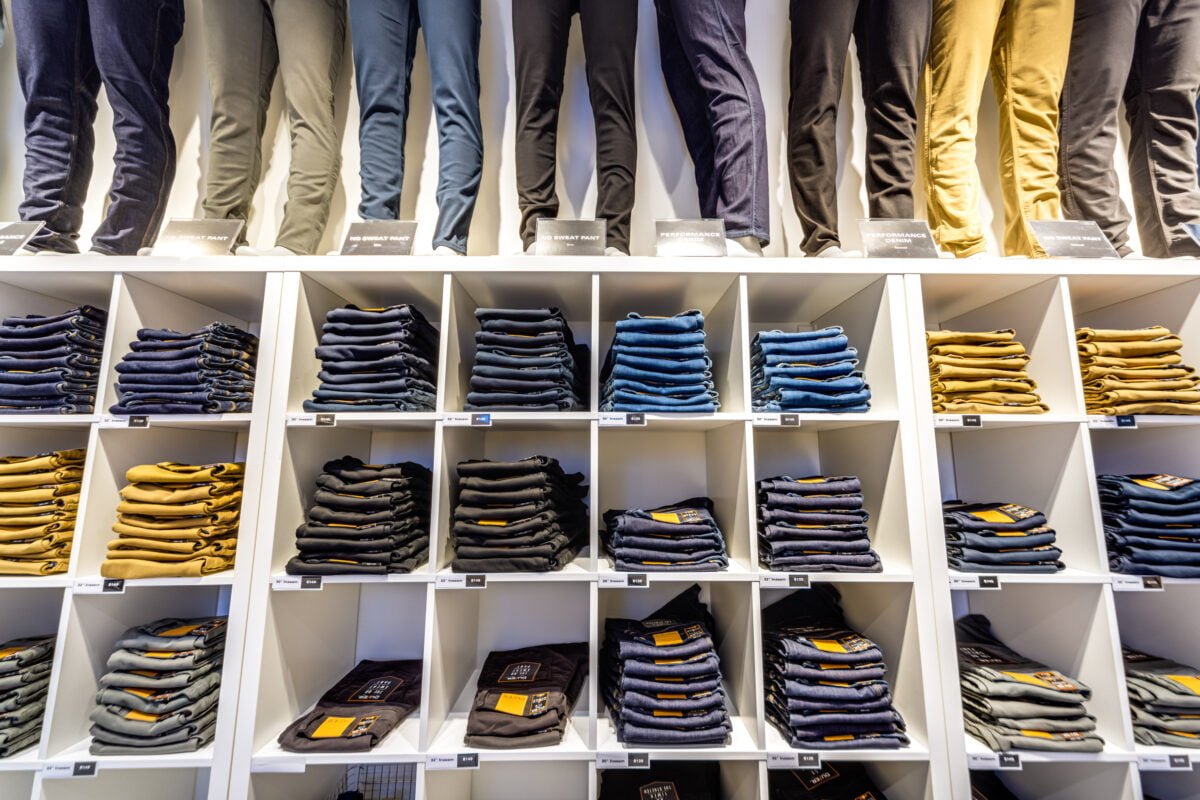
And, because it all started with the world’s most comfortable pants, the store features a dedicated “pant wall”, highlighting some of the brand’s bestselling pieces including Performance Denim (which started it all) and the No Sweat Pant.
DUER’s Square One pop-up store opened on April 1st, 2023.
DUER Square One (Image: DUER)DUER Square One (Image: DUER)DUER Square One (Image: DUER)
DUER has continued to grow its global business throughout the pandemic, which has included significant investment in the US market with openings in Denver (2020) and Los Angeles (2021).
The brand now has a distribution model of over 800 independent wholesale retailers and store-in-store offerings at REI, MEC and Holt Renfrew.
Additional Images from DUER at Square One Shopping Centre
DUER at Square One (Image: Dustin Fuhs)DUER at Square One (Image: Dustin Fuhs)DUER at Square One (Image: Dustin Fuhs)DUER at Square One (Image: Dustin Fuhs)DUER at Square One (Image: Dustin Fuhs)DUER at Square One (Image: Dustin Fuhs)DUER at Square One (Image: Dustin Fuhs)
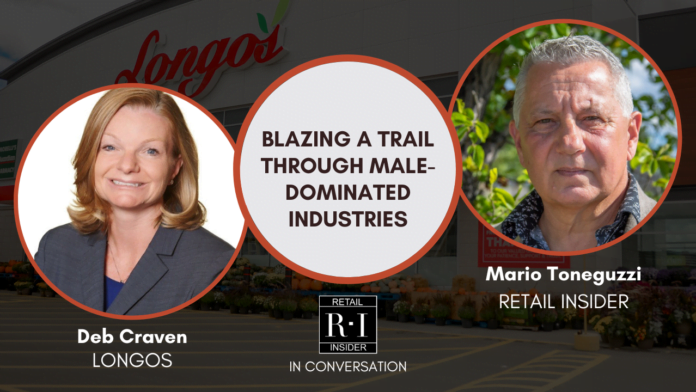
Blazing A Trail Through Male-Dominated Industries [Interview]
For years, Deb Craven has been blazing a trail through male-dominated industries including sports and apparel, logistics and now grocery retail as the Chief Operating Officer of Longo’s.
Her career path has been unique with positions over the years with NIKE, SportChek, Marks and Purolator.
She has built an incredible career grounded in hard work, supportive managers, curiosity, and having the confidence to speak her mind, even when she was the only woman in the room.
From her decades of experience, Craven is a treasure-trove of advice:
Don’t worry about what everyone else in the room is thinking about you. (A piece of advice one of her first managers ever told her. That same manager continues to be a mentor for Deb.)
Be curious and ask questions.
Learn everything about where you are. Don’t be afraid to go outside of your swim lane.
Count on yourself. There is strength in being independent (a lesson she learned from her grandmother and mother, and her daughter)
Use your skill set to your advantage. They have many uses and give you more opportunities than you know.
Surround yourself with people who champion you. (Deb is still friends with a group of women who met in Kindergarten!)
Determine what balance means for you and get comfortable with it.
Make sure there are diverse voices around the table and encourage them to speak by giving them the space to do so.
Every complex issue is solvable if it is understood and worked through as a team.
Women are unique in their ability to empathize, bring emotional intelligence, and create safe spaces, something others can struggle to do. When our team members open up to us, we can more easily unearth what is really going on and what needs to change. As a leader, we can then champion those changes.
People think that being strong doesn’t translate to being kind, but it does; there is a lot of strength and success in being kind. The best relationships at work happen when you take the time to get to know people and allow vulnerability on both sides. These are traits of women leaders.
Career Highlights:
Received her Certified Accountant designation after graduating from university
Chief Financial Officer for Nike Canada
Chief Financial Officer for Purolator Canada
Senior Vice President for Sport Chek and Mark’s
Chief Operating Officer, Longo’s
Receiving the peer-nominated Star Women in Grocery award
In this video interview, Craven discusses her career and advice she has for other women looking to advance in the world of business.
The Video Interview Series by Retail Insider is available on YouTube.
Connect with Mario Toneguzzi, a veteran of the media industry for more than 40 years and named in 2021 a Top Ten Business Journalist in the world and the only Canadian – to learn how you can tell your story, share your message and amplify it to a wide audience. He is Senior News Editor with Retail Insider and owner of Mario Toneguzzi Communications Inc. and can be reached at mdtoneguzzi@gmail.com.
Also check out the other series offered by Retail Insider, including The Weekly podcast and The Interview Series, which are both available on Apple Podcasts, Stitcher, TuneIn, Google Podcasts, or through our dedicated RSS feed for Simplecast and other podcast players.
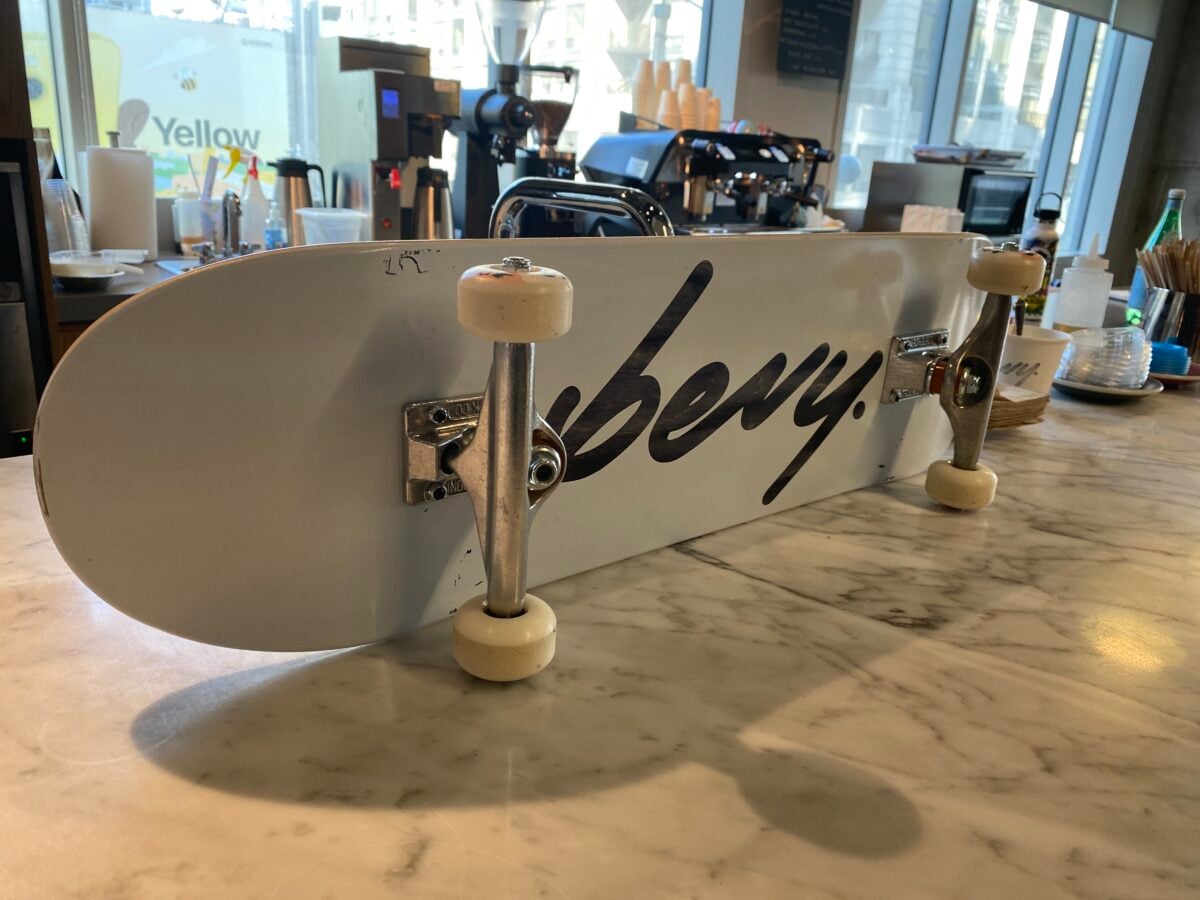
Phil Song’s passion all rooted from skateboarding led to kadence.world, a sub-culture agency in the world of arts and culture, including the new bevy cafe.
Song said kadence.world is all about co-creating with brands that want to connect with sub-culture communities offering unique methods and re-invented marketing services.
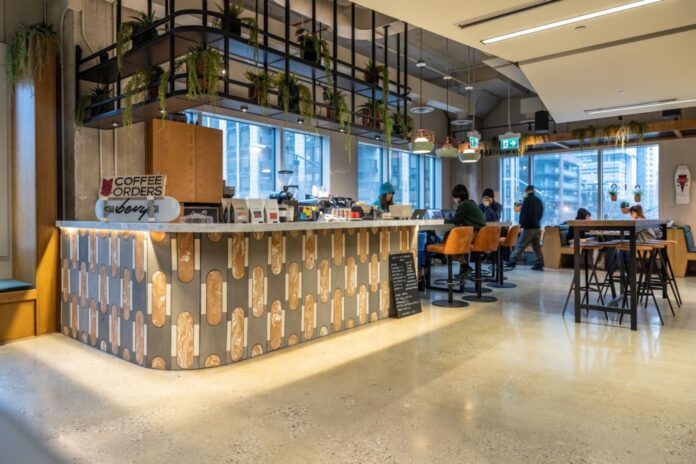
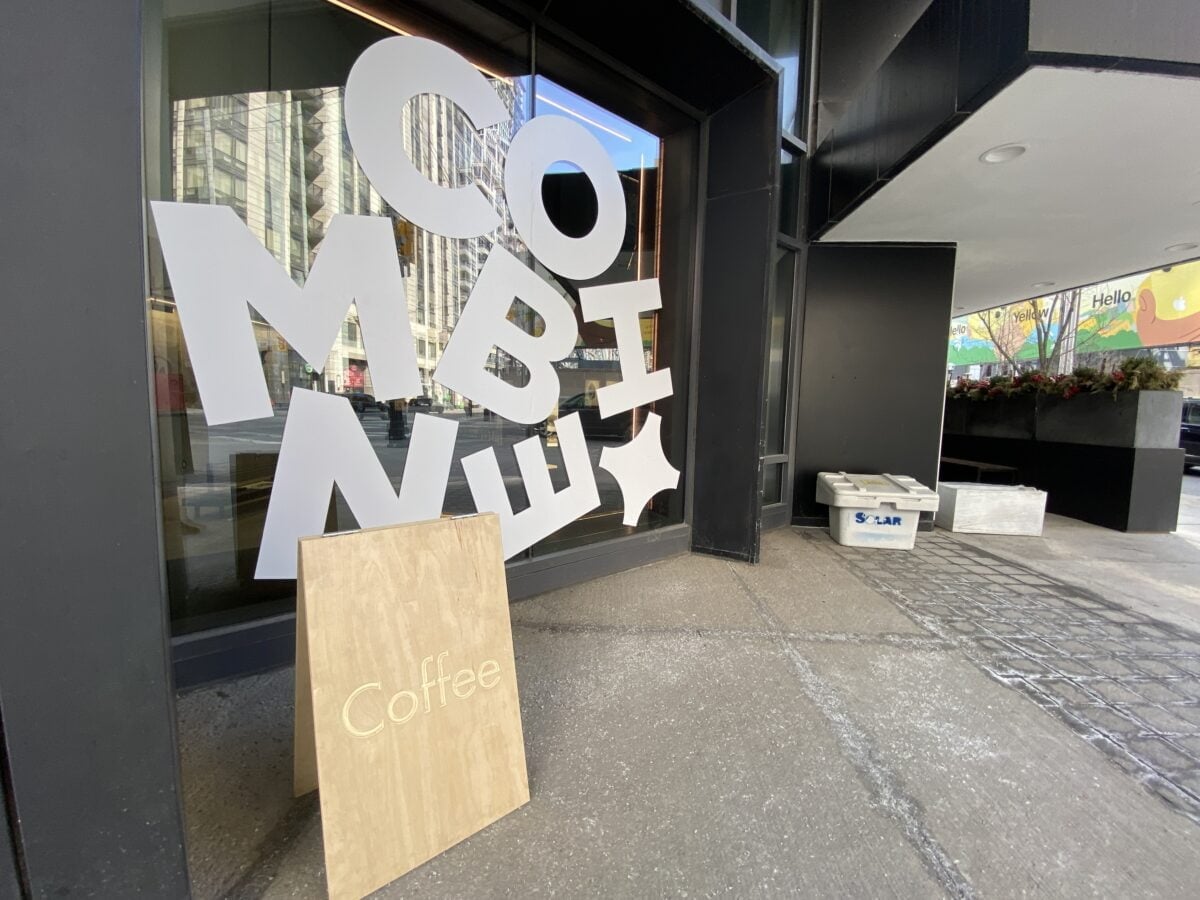
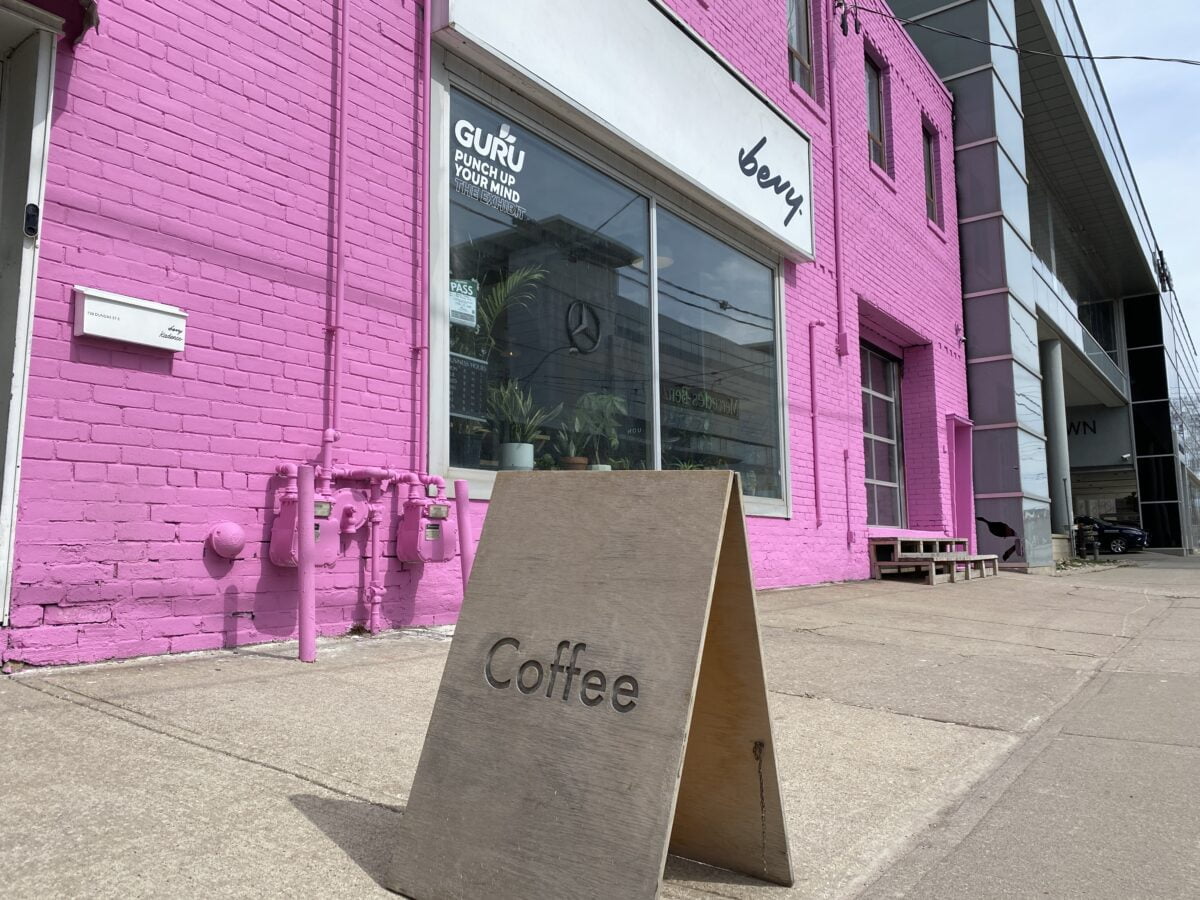
Part of the initiative includes the bevy cafe and space which now has two locations in Toronto – the first at 738 Dundas St. E. and the latest in The Combine complex at 225 Wellington St. W.
Bevy Cafe at The Combine (Image: Dustin Fuhs) Bevy Cafe at The Combine (Image: Dustin Fuhs)
Phil Song
“During the pandemic when we got hit, we really wanted to create like a home base for what we were doing pre-COVID in creating a hub for the sub-culture communities that we’re a part of to come and be able to produce art and skate,” said Song.
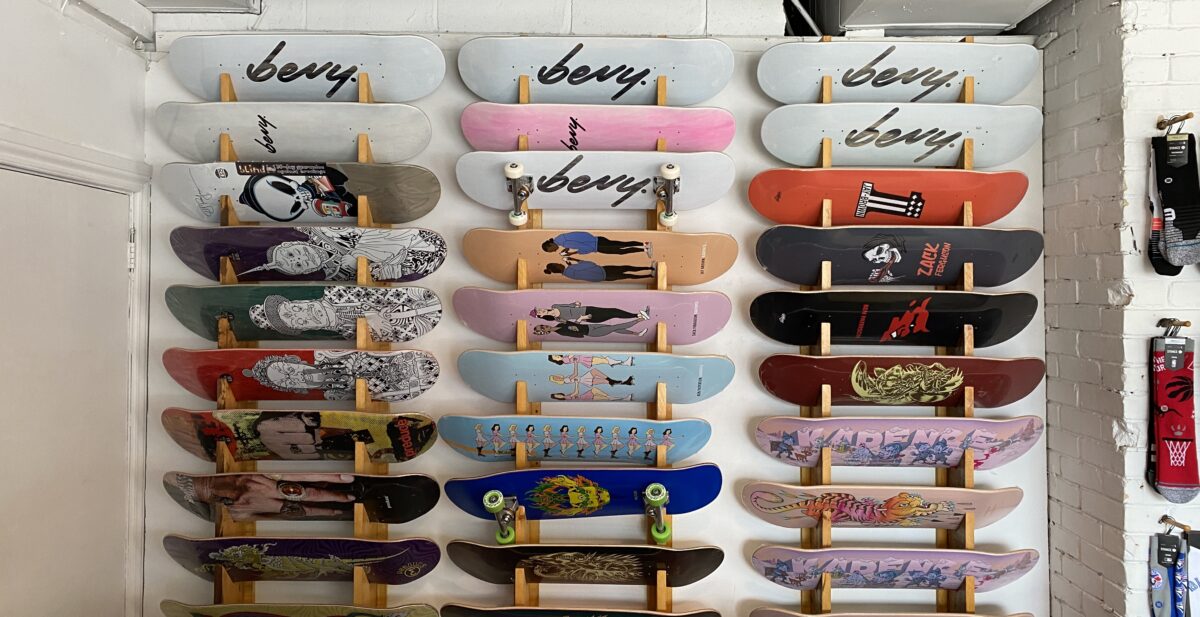
“And I guess like when things were really closed have a platform for people to come together. We actually acquired the original bevy space in Regent Park in Toronto during the pandemic times. So we’ve had this space for over two years but what’s great about it is we didn’t open until about eight months ago. The space was built with the community. It’s a multi-use space. We have a cafe, skate, paint shop and an event space.”
Song said the two locations are a pretty big contrast.
“The first location is in Regent Park which is a pretty hard core, revitalized neighbourhood. It was the first I believe government housing project in Canada, or maybe North America. The other location, The Combine, is in the CBC building so it’s right in pretty much the core financial district of Toronto.”
At The Combine, kadence.world is also helping curate some events in the event space area and helping rotate concepts for a pop-up retail shop.
Song said he has plans for more locations but not any time soon.
“We just (opened) the two locations. I’m pretty happy and blessed that we have a lot of steam and we’ve got a lot of community love and support,” he said. “It is a goal. It’s a platform for the community but it’s a business as well. Even the cafe side. I’m not going to pretend I’m a great coffee barista/owner so I’ve partnered up with another coffee business which is really great at building community and have five other locations across the city.”
Bevy at 738 Dundas St E (Image: Dustin Fuhs)Bevy at 738 Dundas St E (Image: Dustin Fuhs)
Song said the goal of kadence.world, which began just over a decade ago, is to co-create with friends with sub-culture communities.
“Originally it was a skateboard distribution, licensing, retail model. It sounds like it was a planned business but it was a lot of community building which gave us opportunities. A lot of brands started reaching out and said hey we loved your support on the brand licensing side for all of sudden I learned how to do an import/export business but doing I think the marketing side and being able to get budgets and do rad things for the community is kind of what led us to today on a more service model type of business,” he said.
It includes MURUS (Mural Production & Outdoor Media).
“Rather than your traditional billboards we have an inventory of walls across Canada where we co-create with brands and street artists to do murals. We do activations like listening parties, video premieres, workshops and talks to a lot of content creation,” he said.