Ladurée Canada Executive Pastry Chef Alexandra Launay at Toronto Lab (Image: Ladurée)
Ladurée Canada is opening its latest pastry laboratory in Toronto to service the company’s stores.
Olesya Krakhmalyova, company owner of Ladurée Canada, said the laboratory is located in Markham.
The laboratory is combined with the company’s warehouse.
Ladurée Canada Executive Pastry Chef Alexandra Launay at Toronto Lab (Image: Ladurée)
“The laboratory is around 1,830 square feet,” she said.
“This project has been in the works for us awhile. A lot of our pastries they have to be produced fresh every day from scratch by the Ladurée French-trained chef. So in order for us to have the croissants and the cakes at our retail locations, we need to have this facility.
“This is where Ladurée cakes and pastries for Toronto locations will be produced and they will be produced fresh from scratch every single morning.”
The lab will be ready from June 26.
Ladurée Canada Chef Alexandra Launay at Toronto Lab (Image: Ladurée)
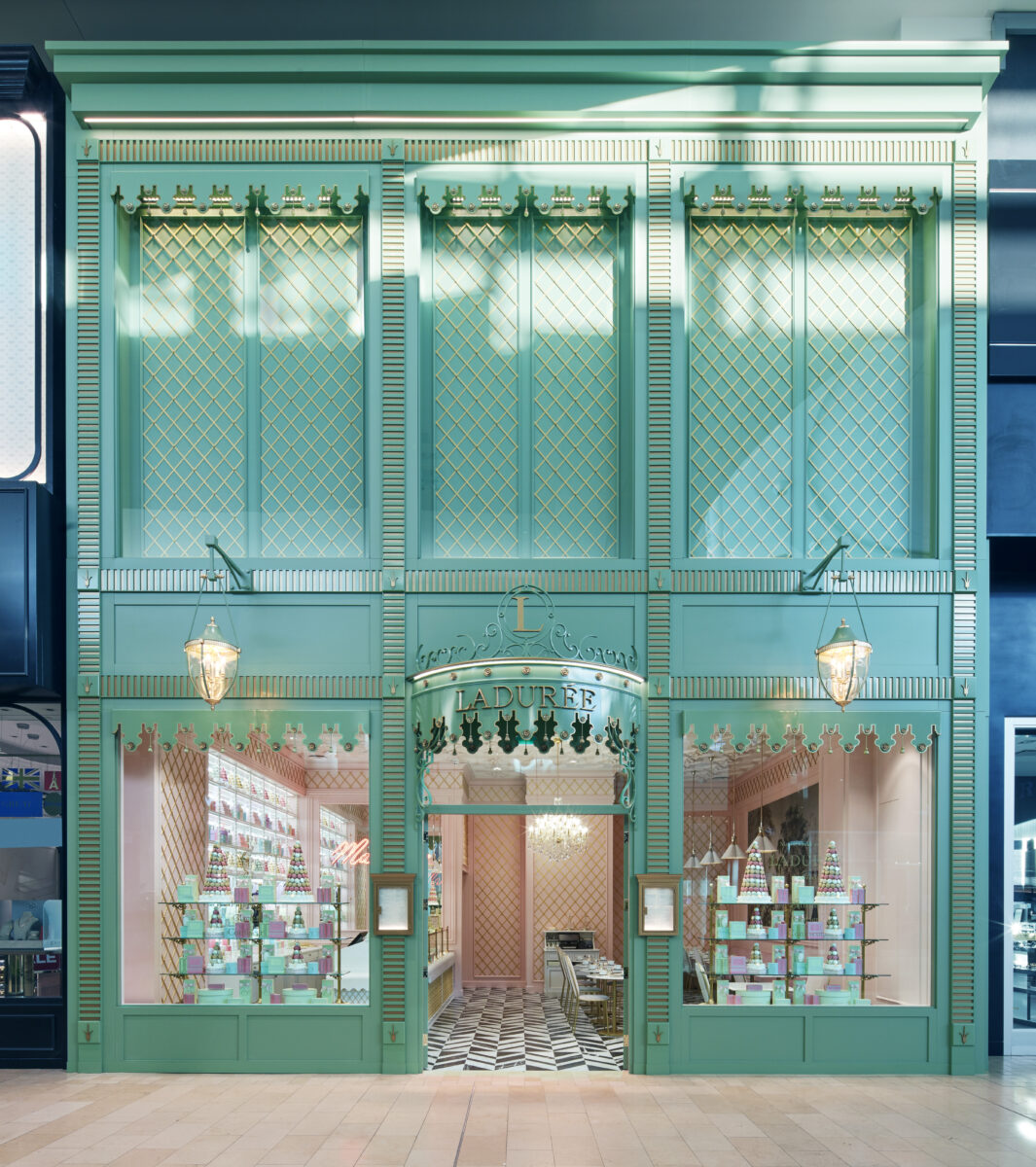
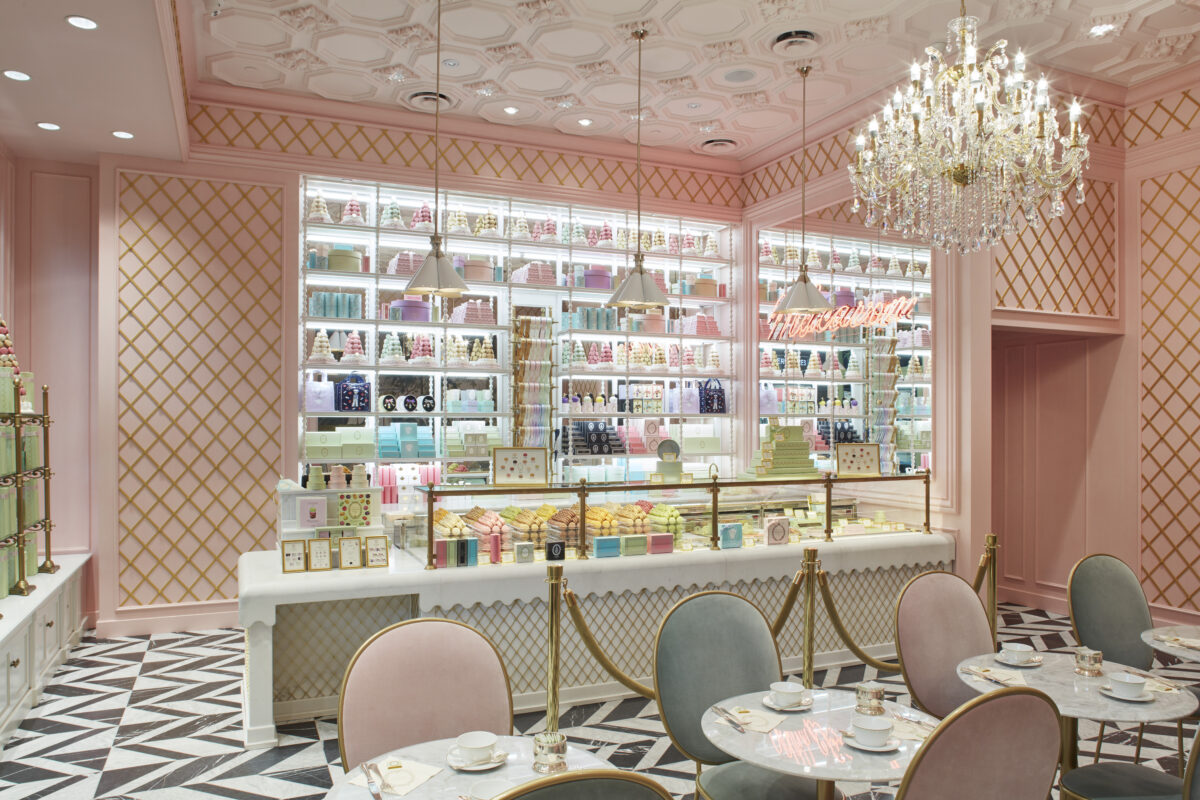
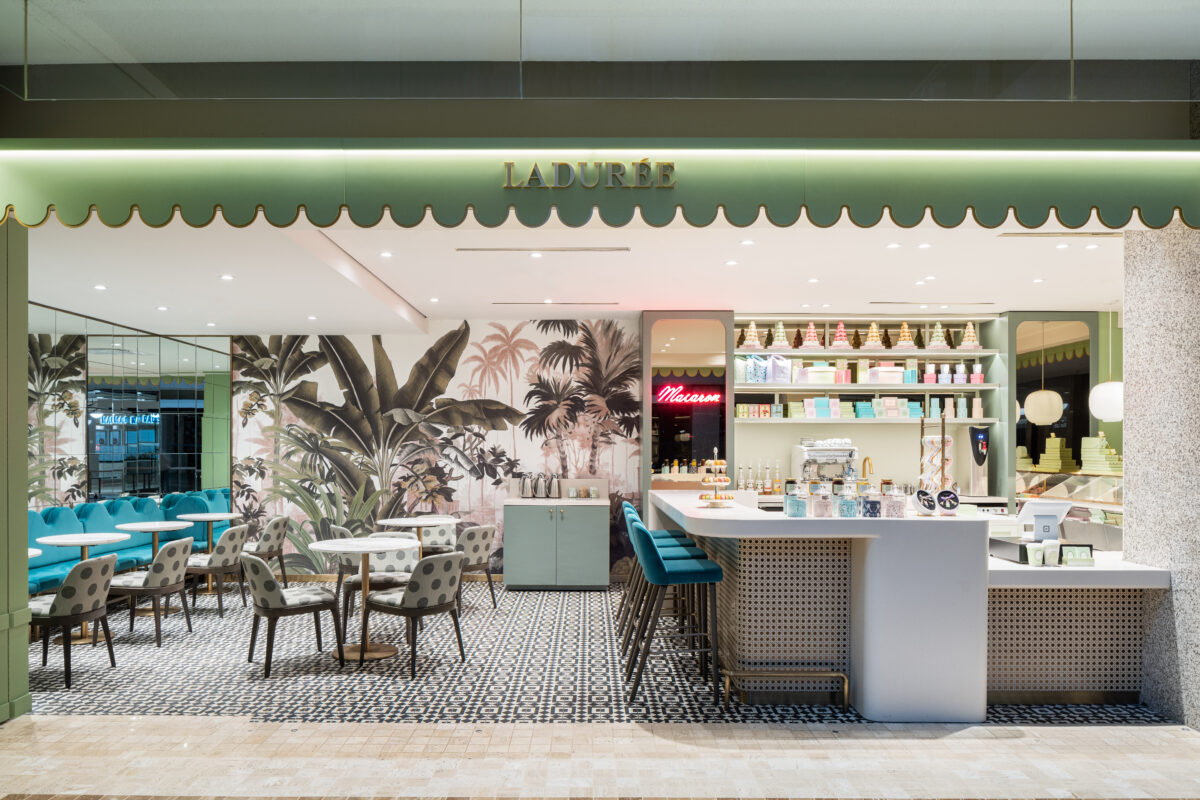
The company in Canada has stores in the Yorkdale Shopping Centre and the Exchange Tower in Toronto, Robson Street in Vancouver, and pop-up locations at the Vancouver International Airport and CF Pacific Centre.
There is also another pastry lab in Burnaby, B.C.
The first store location opened in 2016 in Vancouver. The first Toronto location opened in 2017 at Yorkdale. The B.C. laboratory opened in 2018.
Ladurée at Yorkdale Shopping Centre (Image: Ladurée)Ladurée at Yorkdale Shopping Centre (Image: Ladurée)
Ladurée Canada’s executive pastry chef is Alexandra Launay with 13 years experience with the company, starting in 2010 in Paris. She was the leading chef for the company in London for six years.
“Ladurée pastries and cakes are produced by a Ladurée trained chef,” said Krakhmalyova.
“She wanted a new challenge and she joined Ladurée Canada which I think is an incredible aspect for the company. This differentiates us because we have this authentic Ladurée chef who will be making these croissants and cakes just as they are in Ladurée Paris.”
Paul Belanger, of Elevate Build, is the contractor who built the Toronto laboratory. He was also in charge of building Ladurée’s Yorkdale tea salon and its Exchange Tower location.
Krakhmalyova said the company does have plans to have more stores in Canada.
“Absolutely. I think definitely Montreal is on the radar and I think the Greater Toronto Area is such an incredible market. We will be opening more in the Greater Toronto Area and there are still opportunities in Vancouver as well,” she said. “So yes in terms of regular locations those are in the plans.
“But this laboratory was a priority for us to open.”
She said the laboratory was due to open by now but the COVID pandemic delayed those plans.
Ladurée Exchange Tower in Toronto (Image: Ladurée)
According to the global brand, the history of Parisian tea rooms is intimately tied to the history of the Ladurée family. It all began in 1862, when Louis Ernest Ladurée, a man from France’s southwest, created a bakery in Paris at 16 rue Royale.
“The same year, the first stone of the Garnier Opera House was laid, and the area surrounding the Madeleine was rapidly developing into one of the capital’s most important and elegant business districts. The most prestigious names in French luxury items had already taken up residence in this neighbourhood,” says the company.
“Under the Second Empire, cafés developed and became more and more luxurious. They attracted Parisian high society. Along with the chic restaurants around the Madeleine, they became the showcases of the capital. Women were also changing. They wanted to make new acquaintances, but literary salons and literature circles were outmoded.
Louis Ernest Ladurée’s wife, Jeanne Souchard, had the idea of mixing styles: The Parisian café and pastry shop gave birth to one of the first tea rooms in town. The ”salon de thé” had a definite advantage over the cafés: women could gather in complete freedom.
“Since the beginning, Ladurée has held women and children at its heart. Each pastry’s attractive colouring and flavours are designed to stimulate visually as well as gustatorially – patisserie is consumed by the eyes before it even reaches the mouth, after all. Clients come to Ladurée for a pistachio or rose religieuse, not just plain chocolate, and upon entering they find a picturesque scene, an ornate new world. They feel welcome and at home with a flavour range that you won’t find anywhere else; flavours dug out from days gone by, that they can discover with a sense of childish glee.”
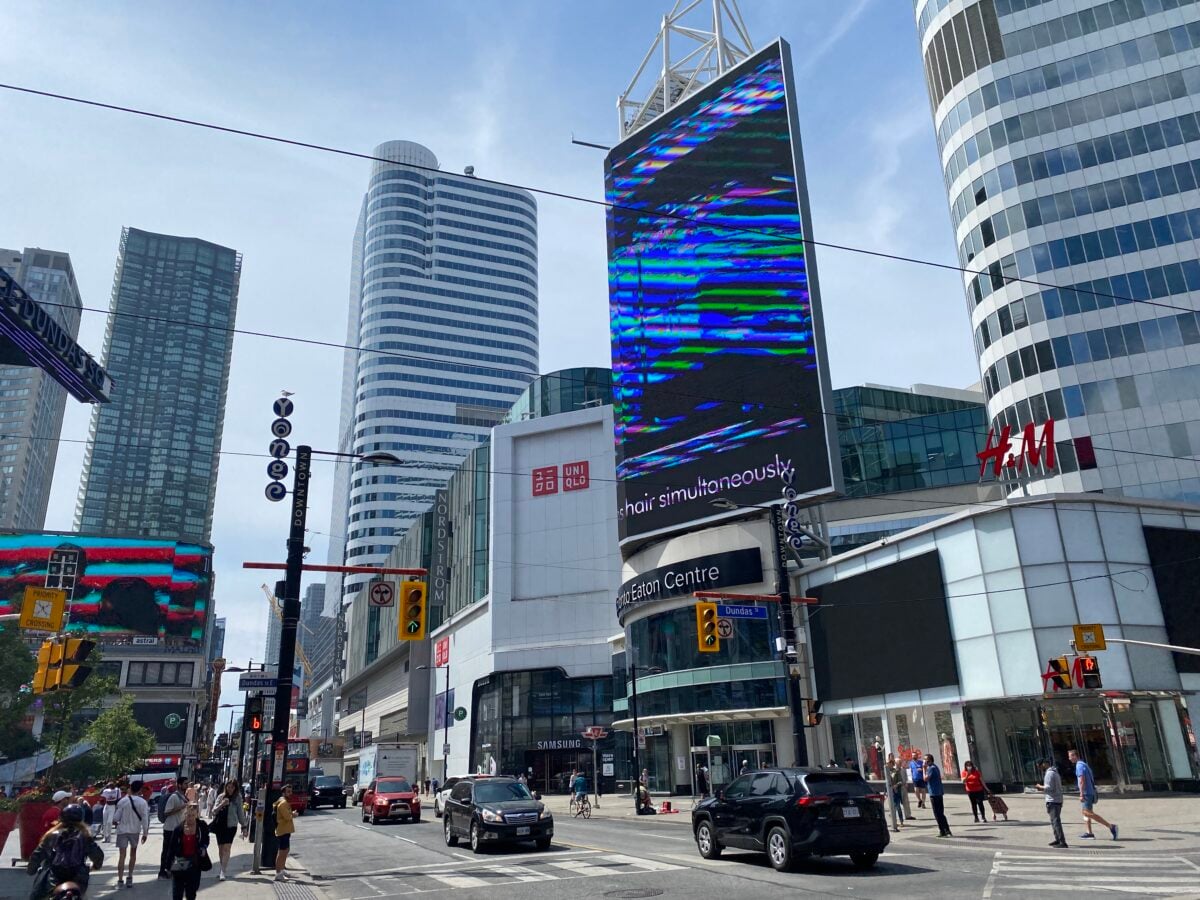
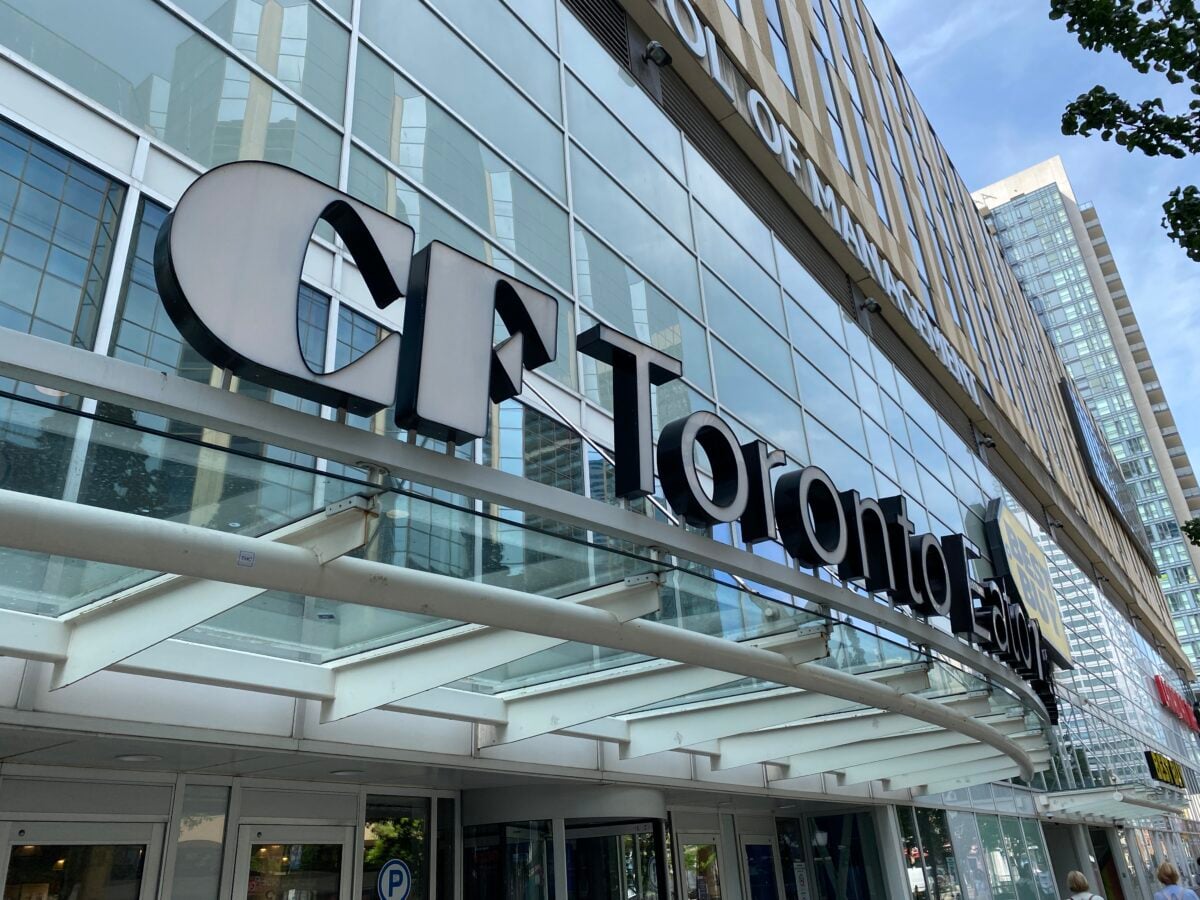
While downtown traffic in Toronto is still lagging from pre-pandemic levels, the iconic CF Toronto Eaton Centre continues to be a beehive of leasing activity with the addition of several new tenants in the past year and more to come.
Patrick Murray
Patrick Murray, Property Manager for the shopping centre, said the mall is consistently evolving its retailer offering.
“Overall, retailer health is quite good. It continues to be strong. Productivity has recovered to our pre-pandemic levels,” he said. “We are absolutely and actively looking for different and new clients and we’re thrilled that over the last three months we’ve had a number of significant additions to the property.
“We just went through a really exciting and big wave of openings. As we look forward to the future we’re seeing some significant food and beverage offerings that will be opening here as well.”
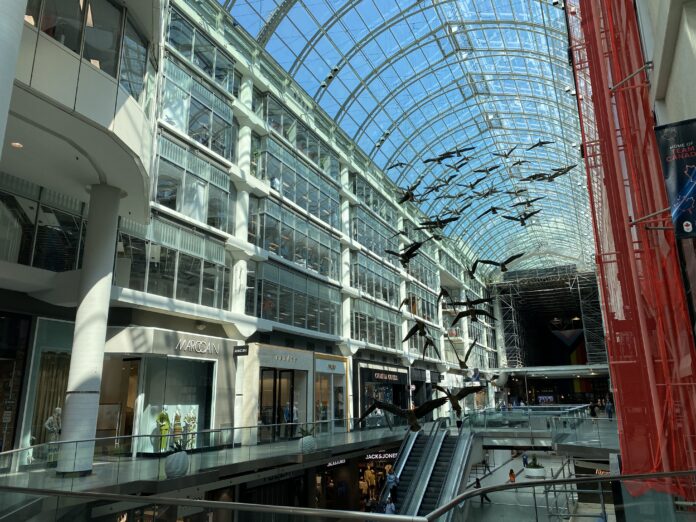
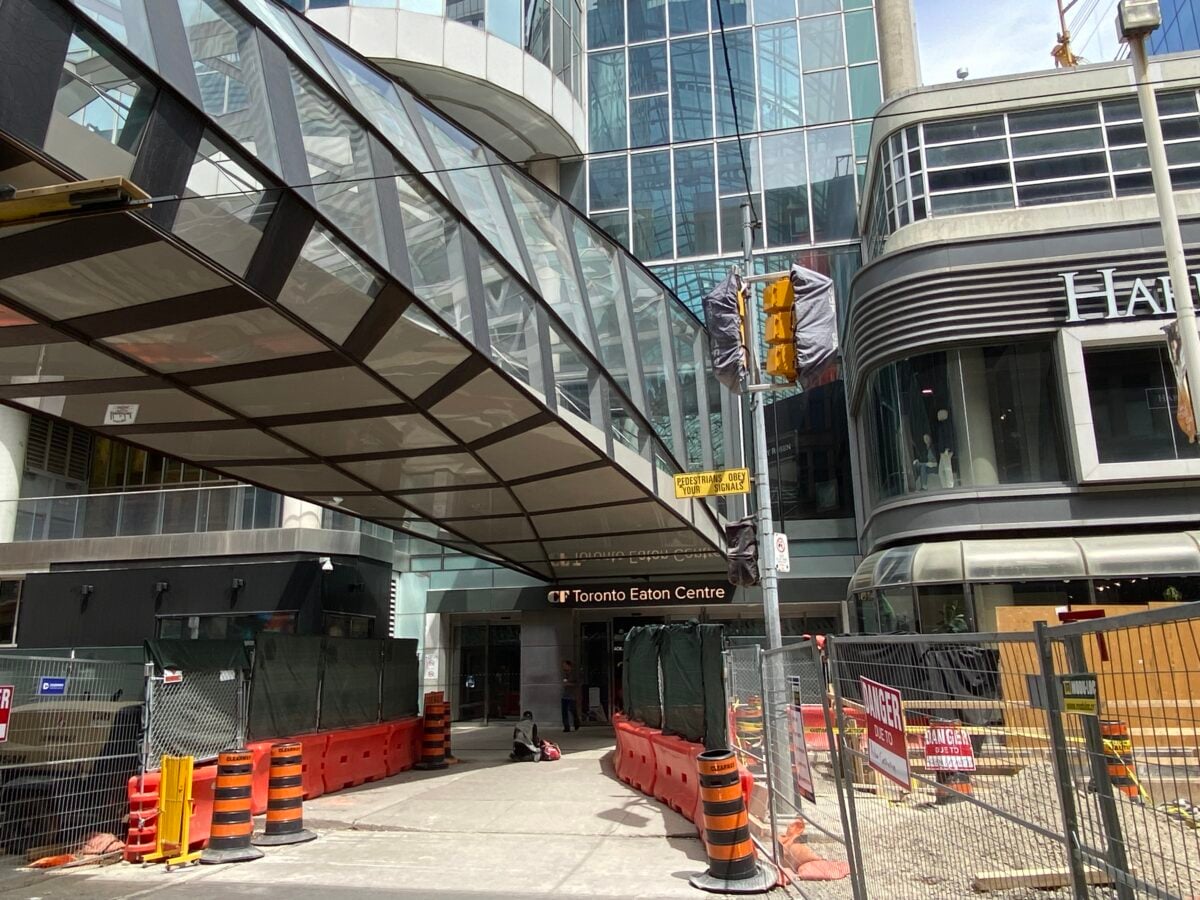
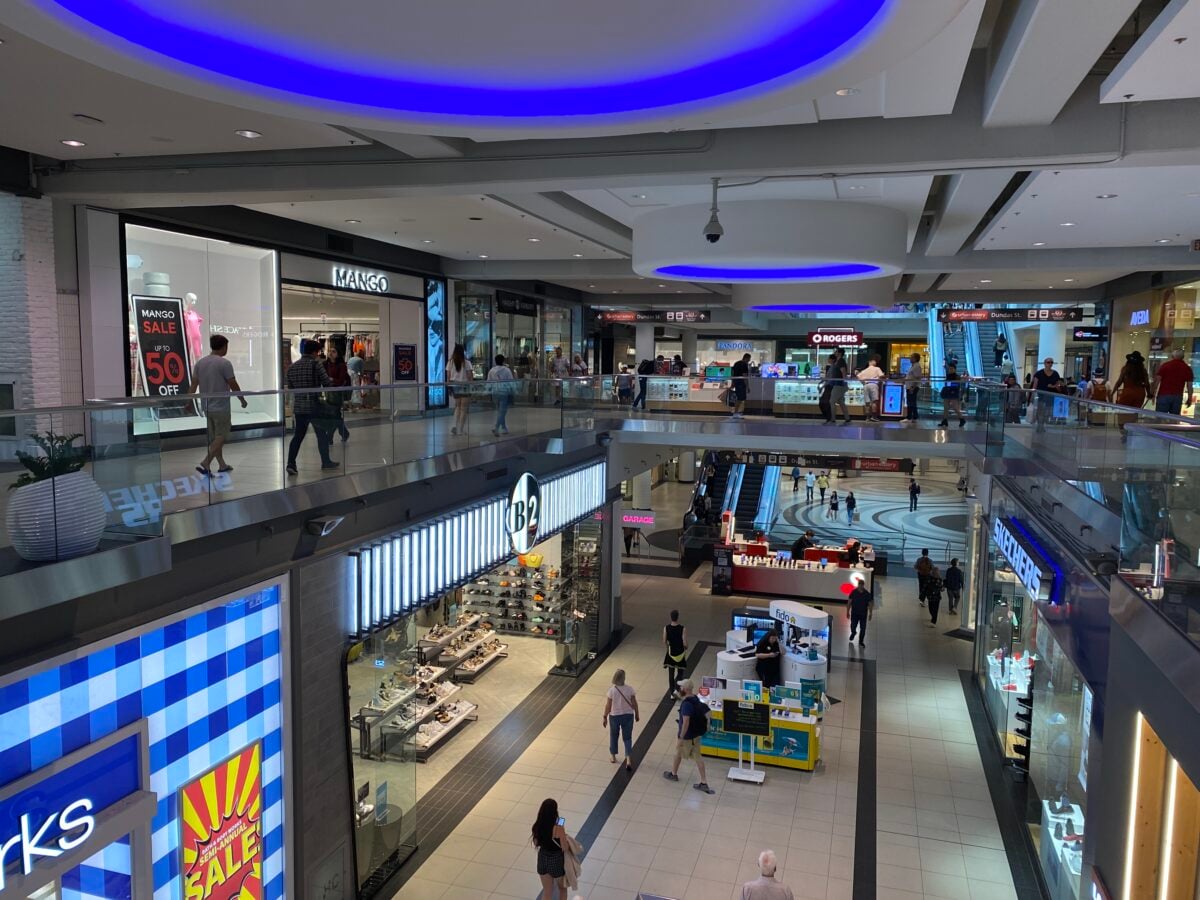
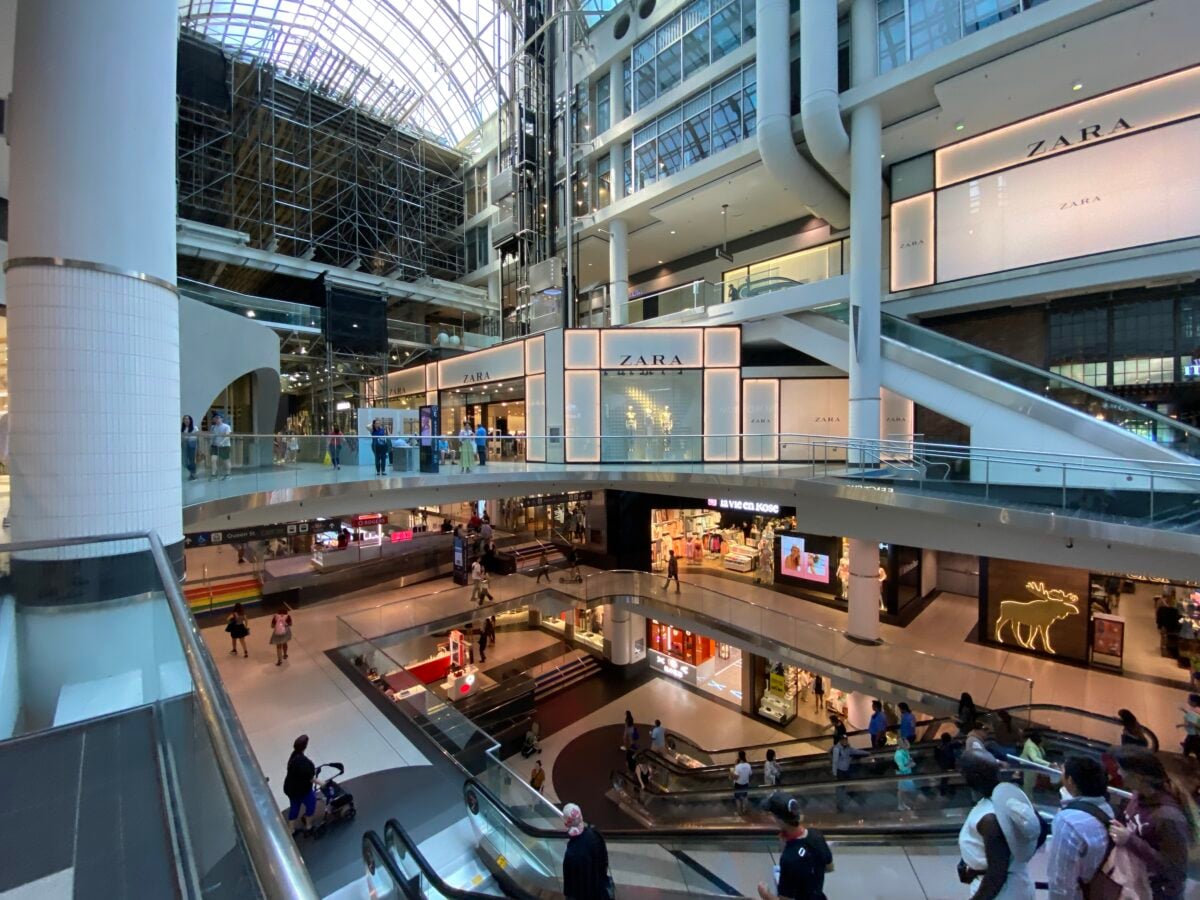
CF Toronto Eaton Centre (Image: Dustin Fuhs)CF Toronto Eaton Centre (Image: Dustin Fuhs)
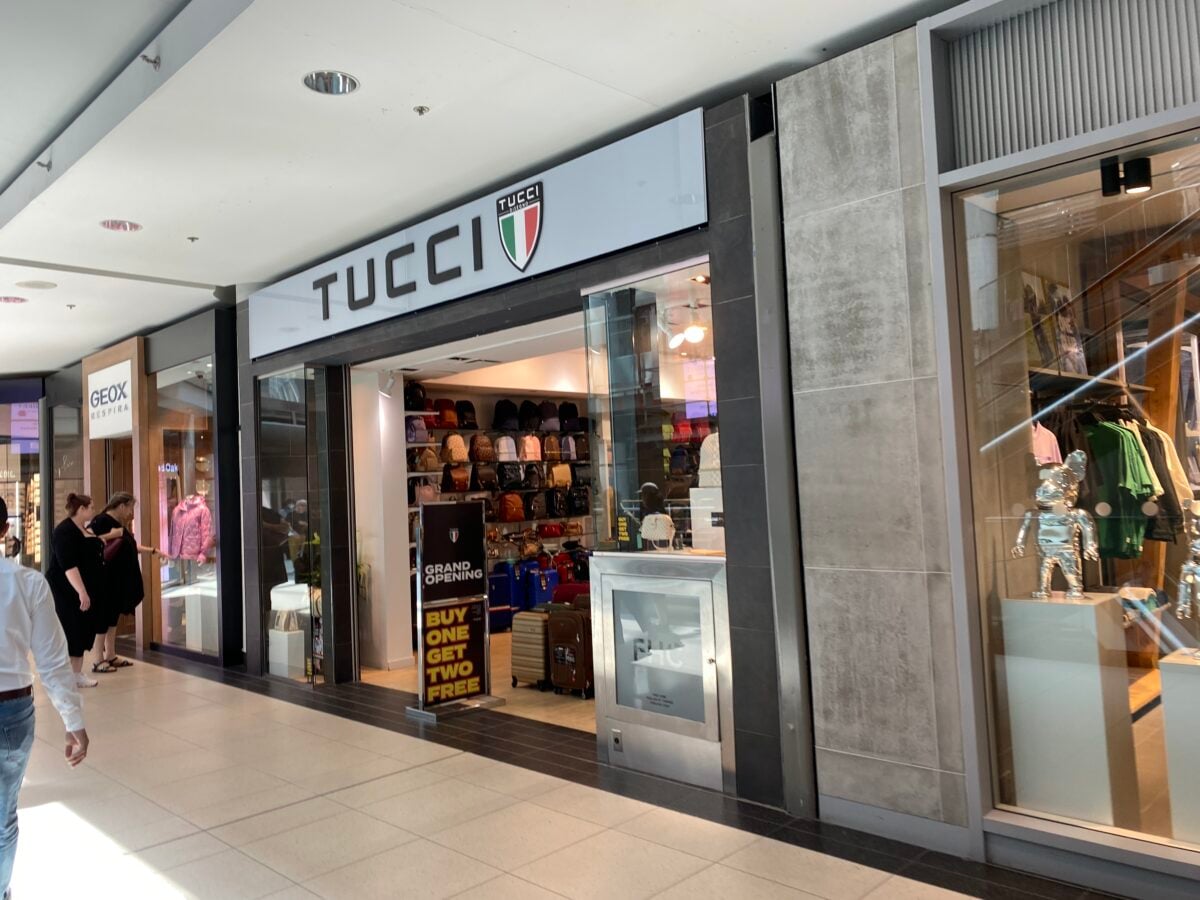
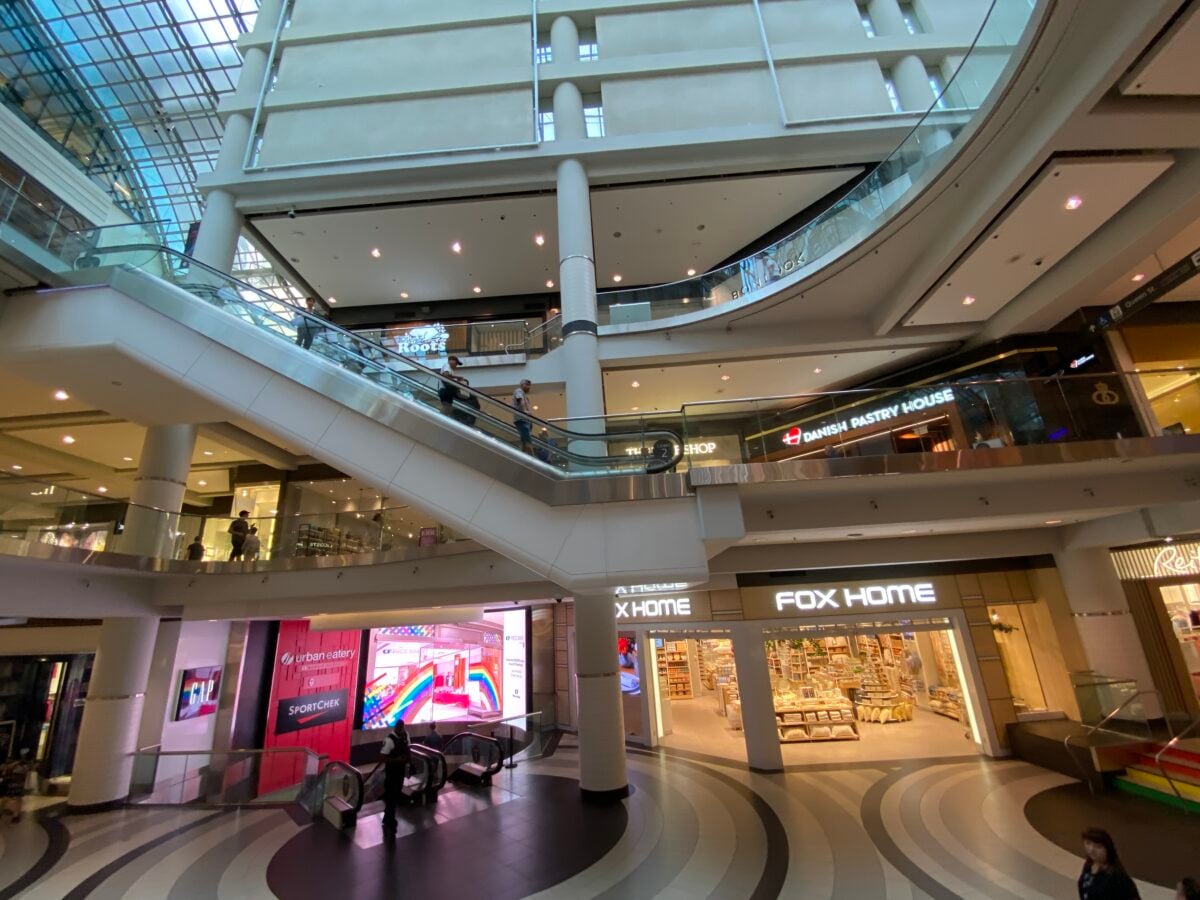
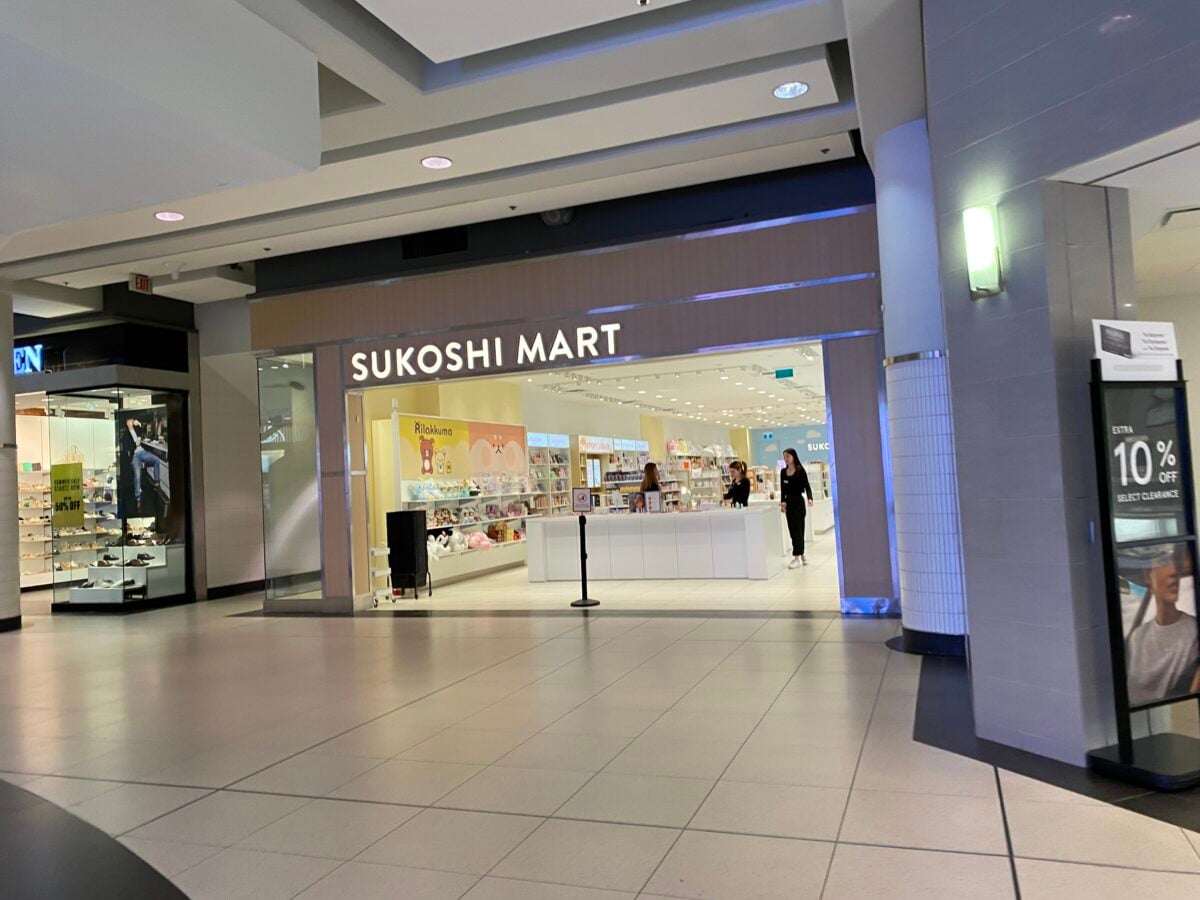
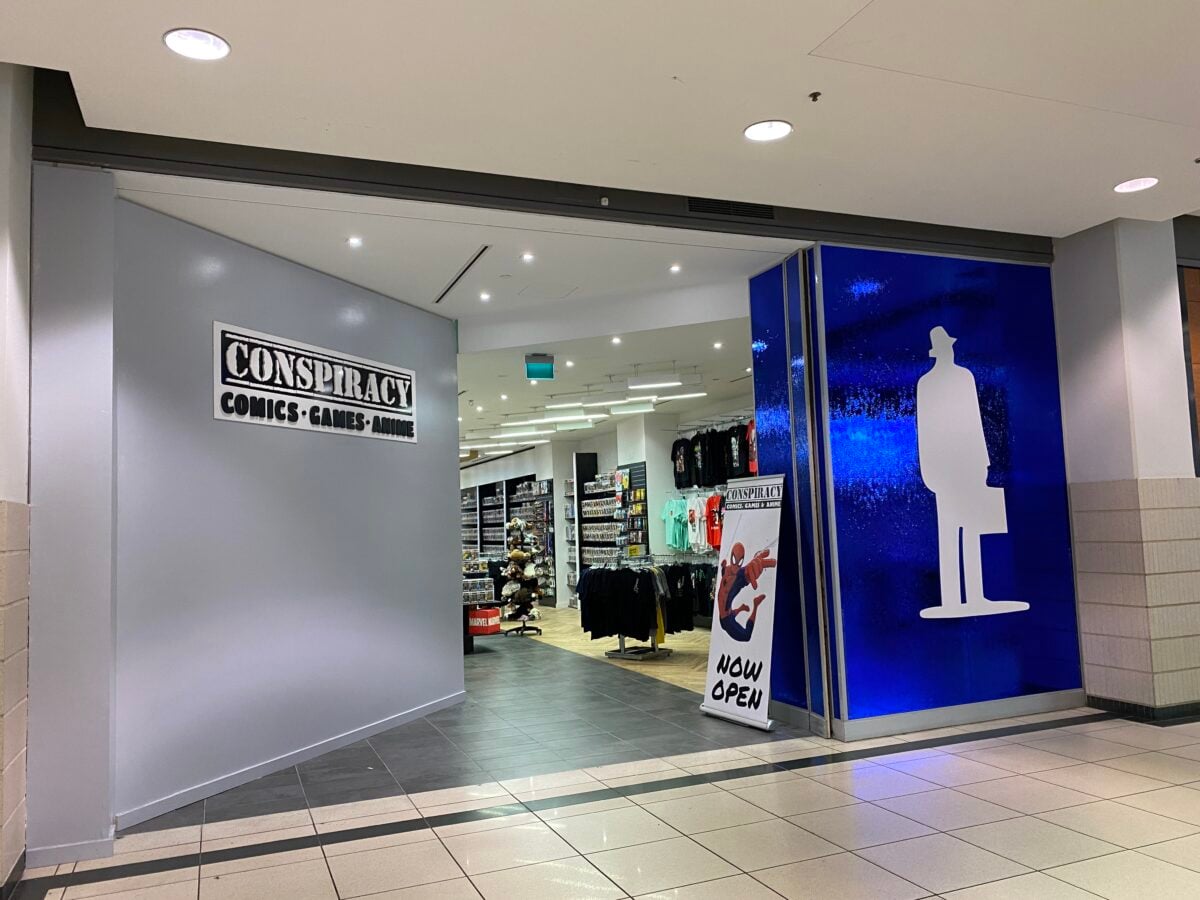
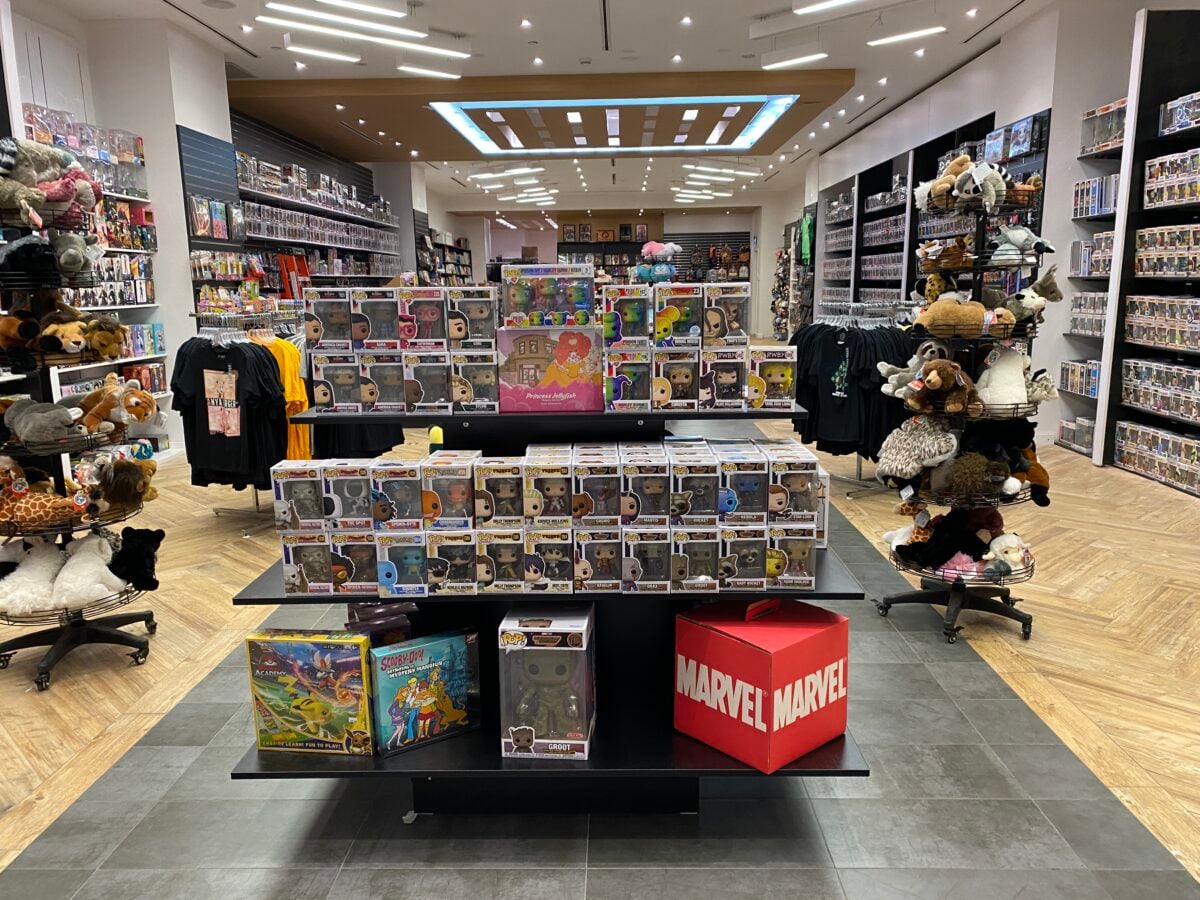
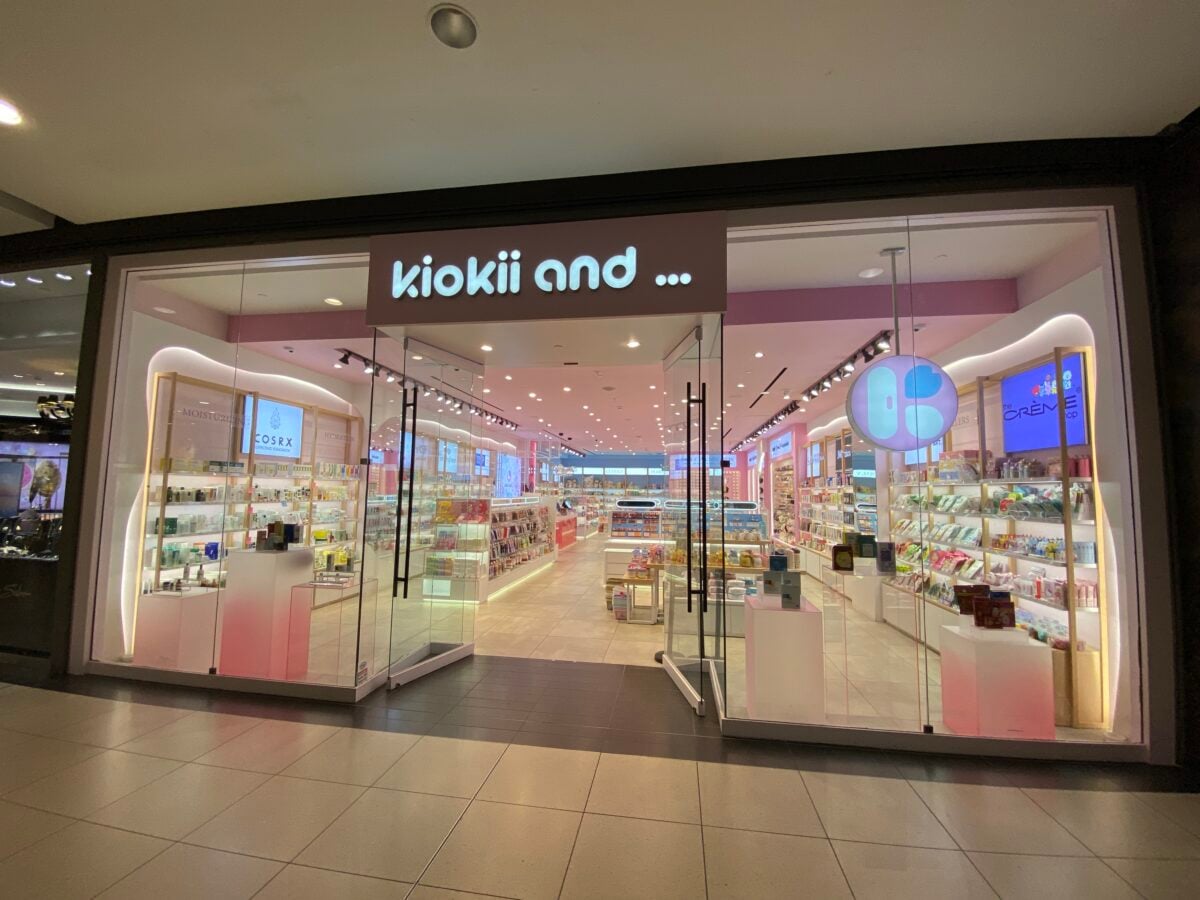
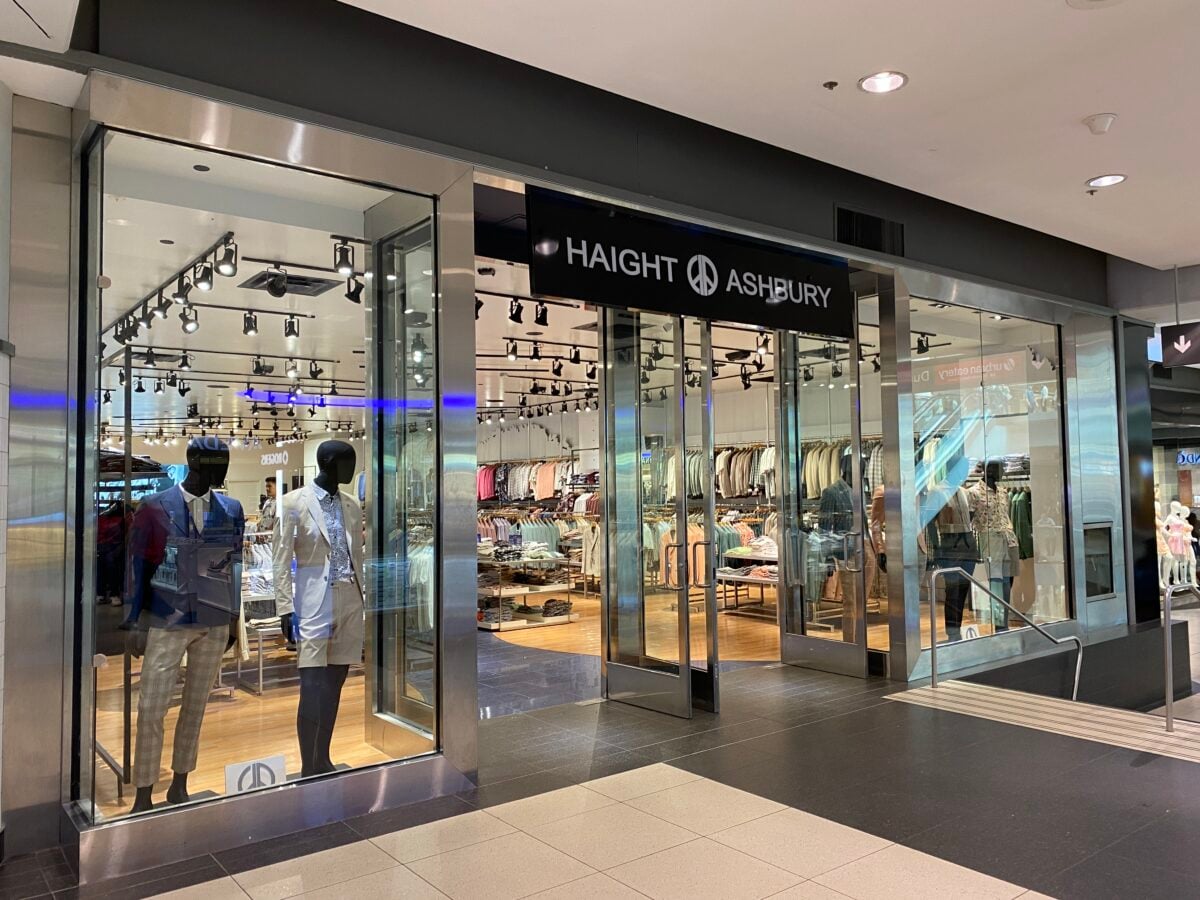
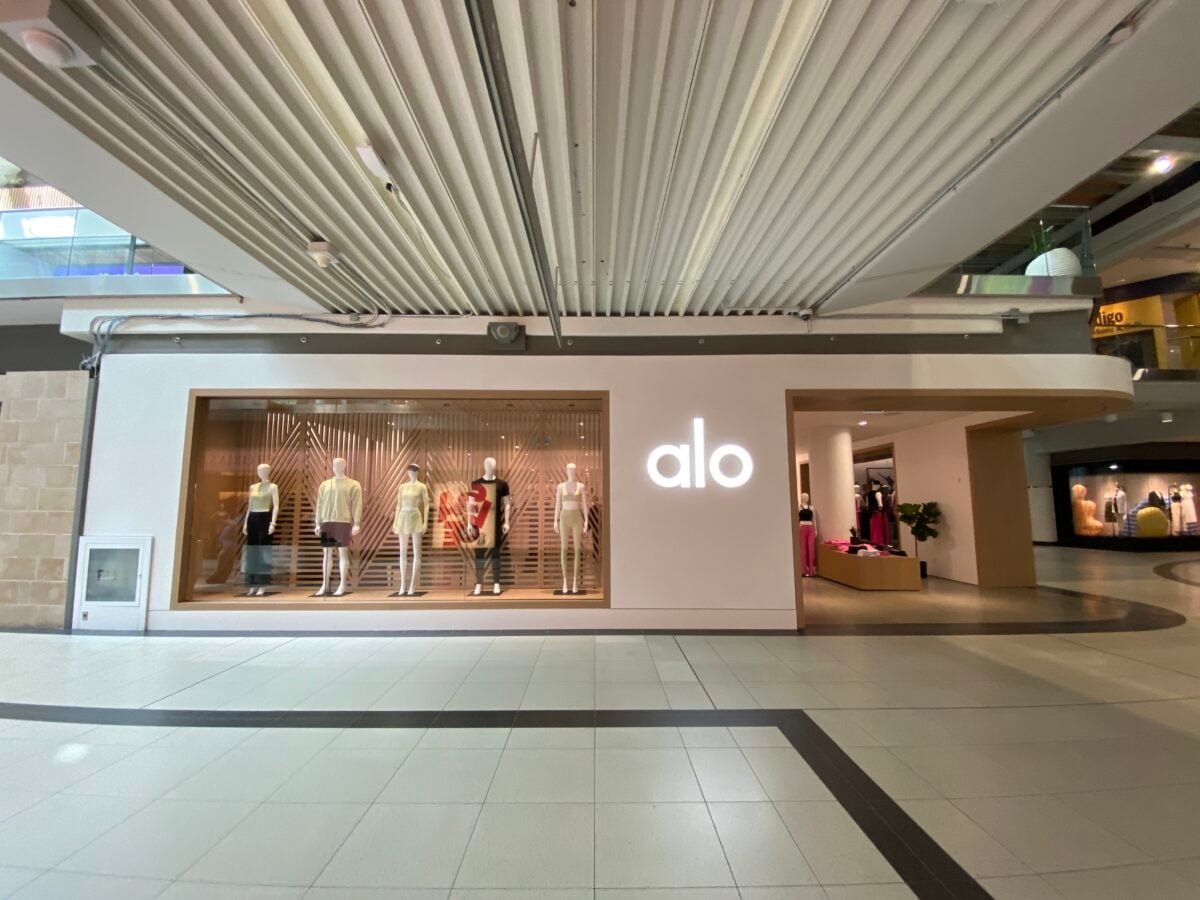
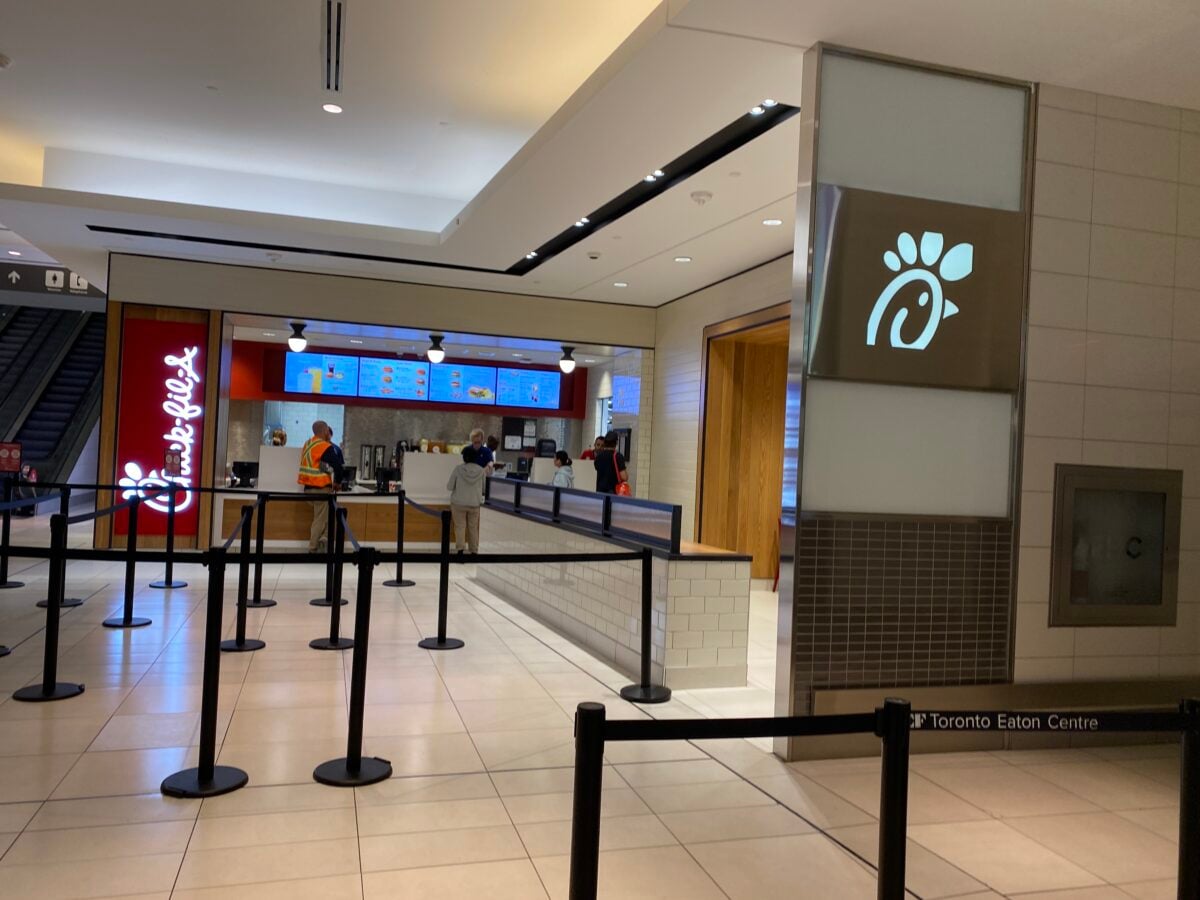
Those include Tucci, Wireless Fix, Conspiracy Comics, Haight & Ashbury, Alo, FOX HOME, Chick-fil-A, Sukoshi Mart, Kiokii and… Inc., Athleta, LINE FRIENDS & B21, and Mango.
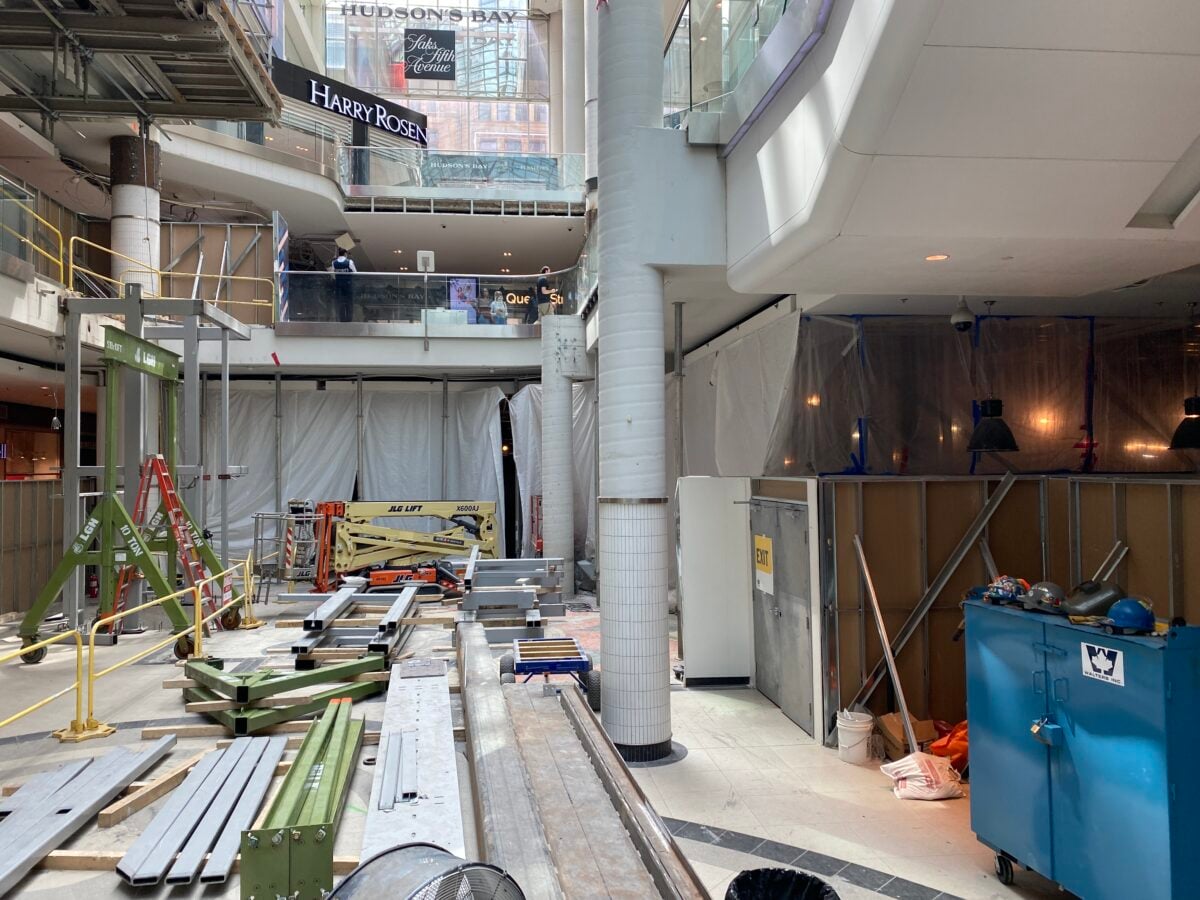
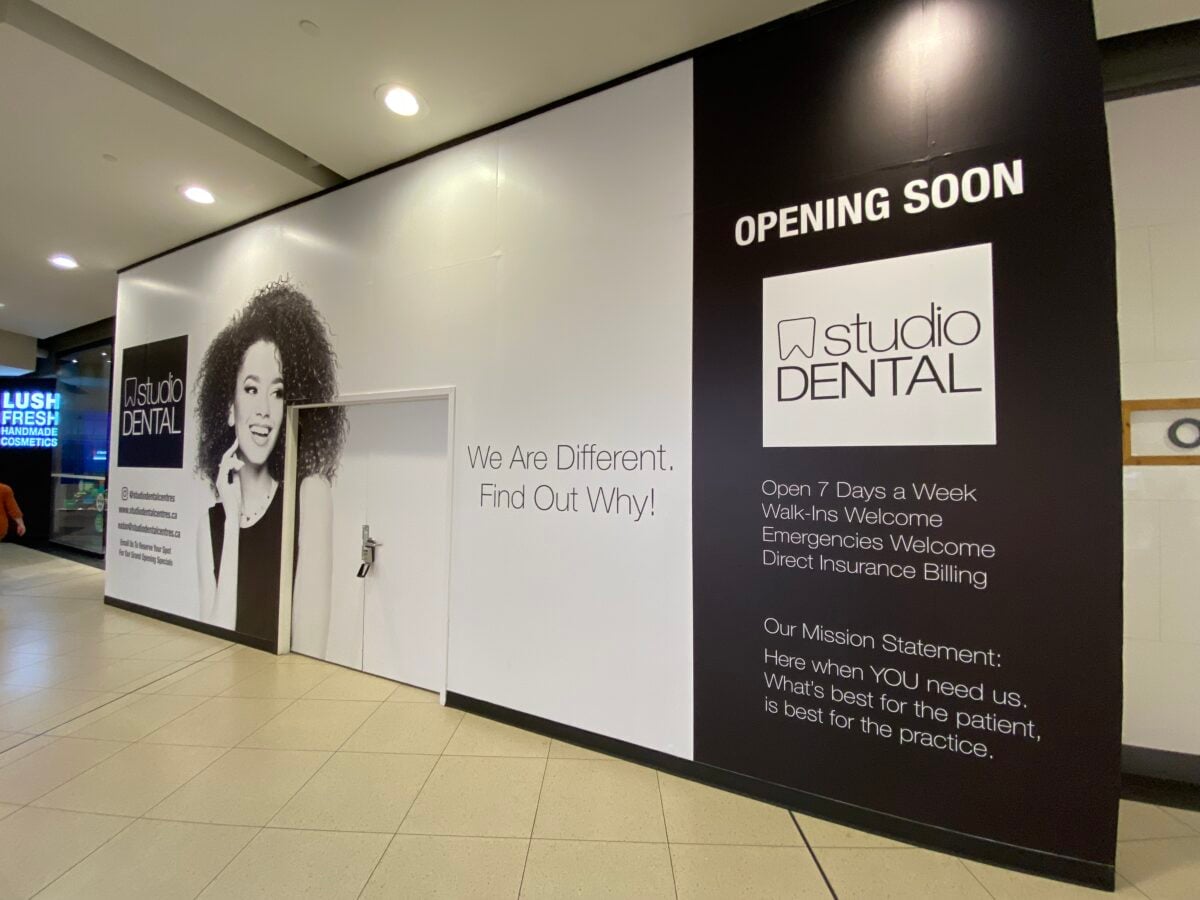
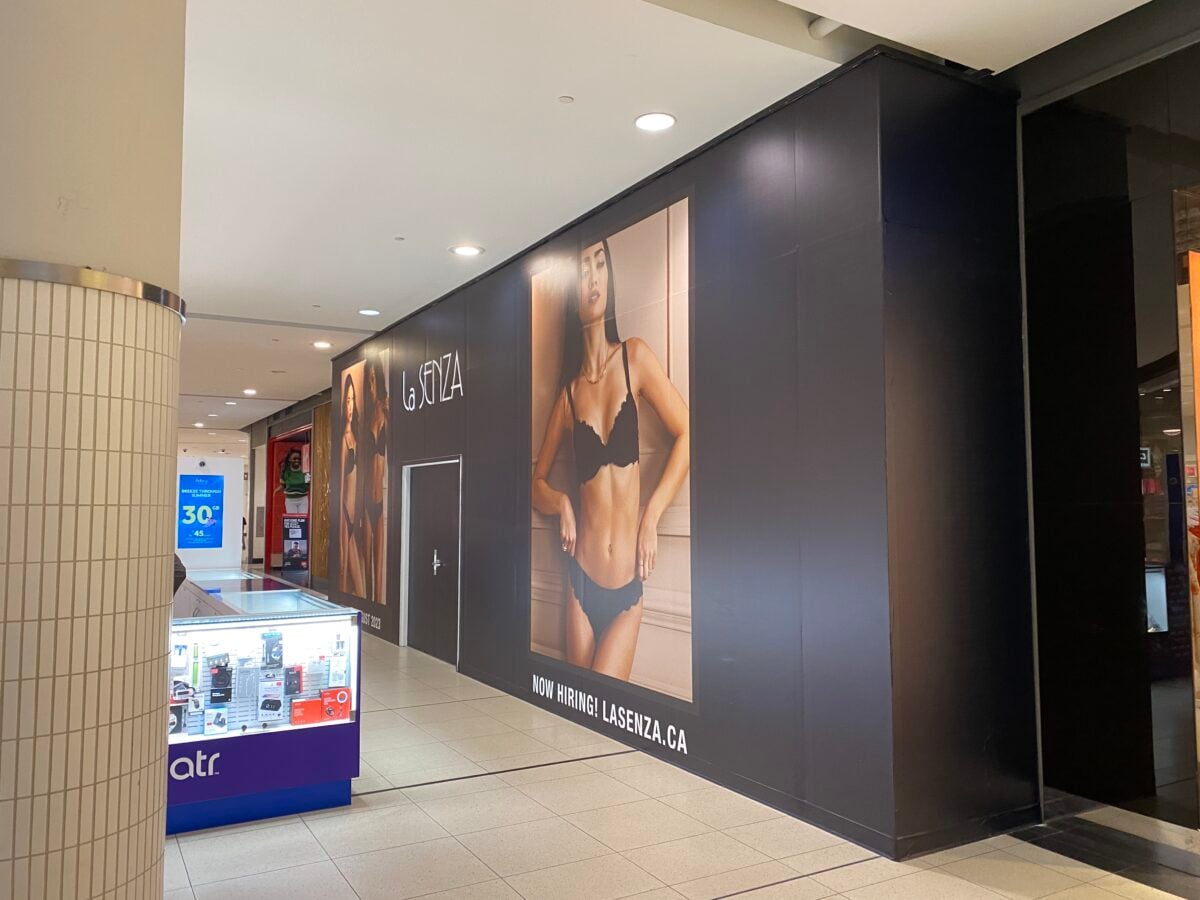
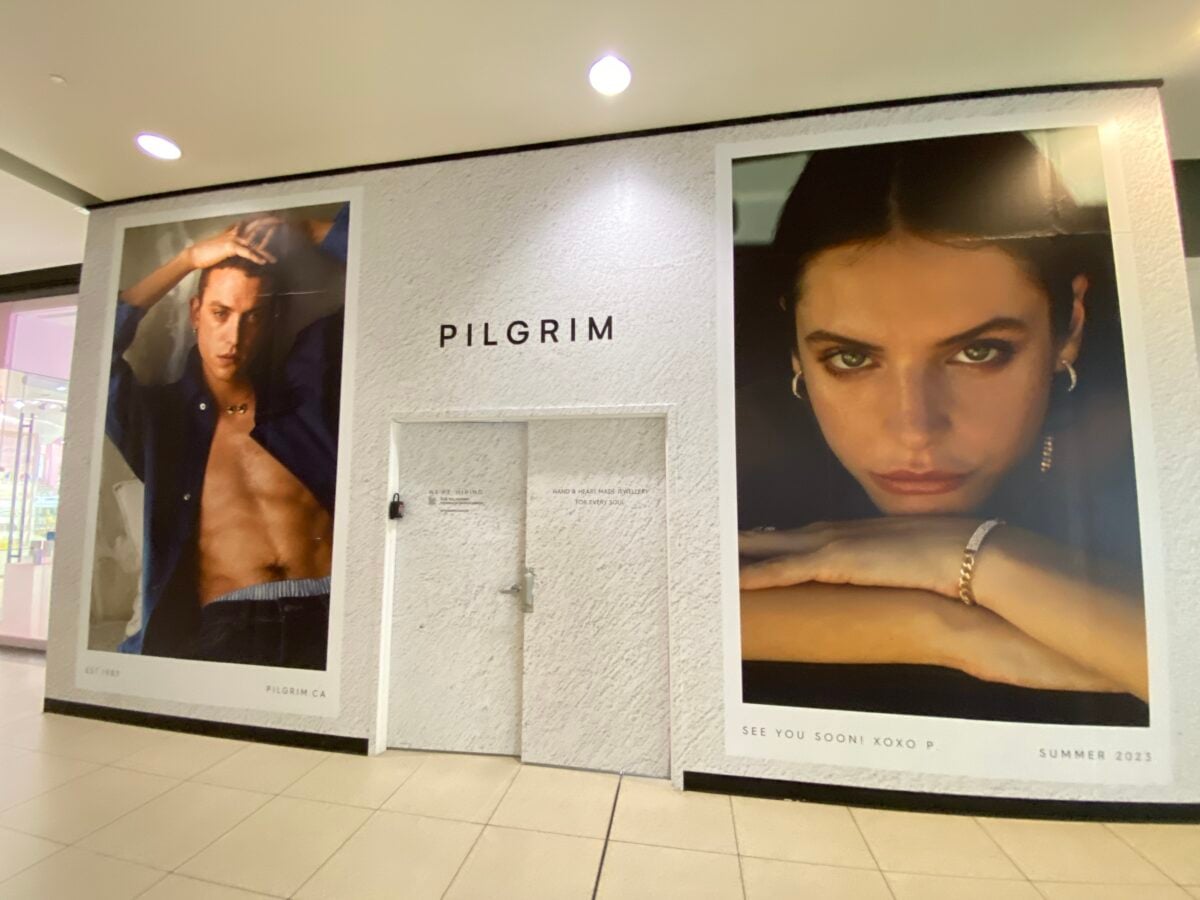
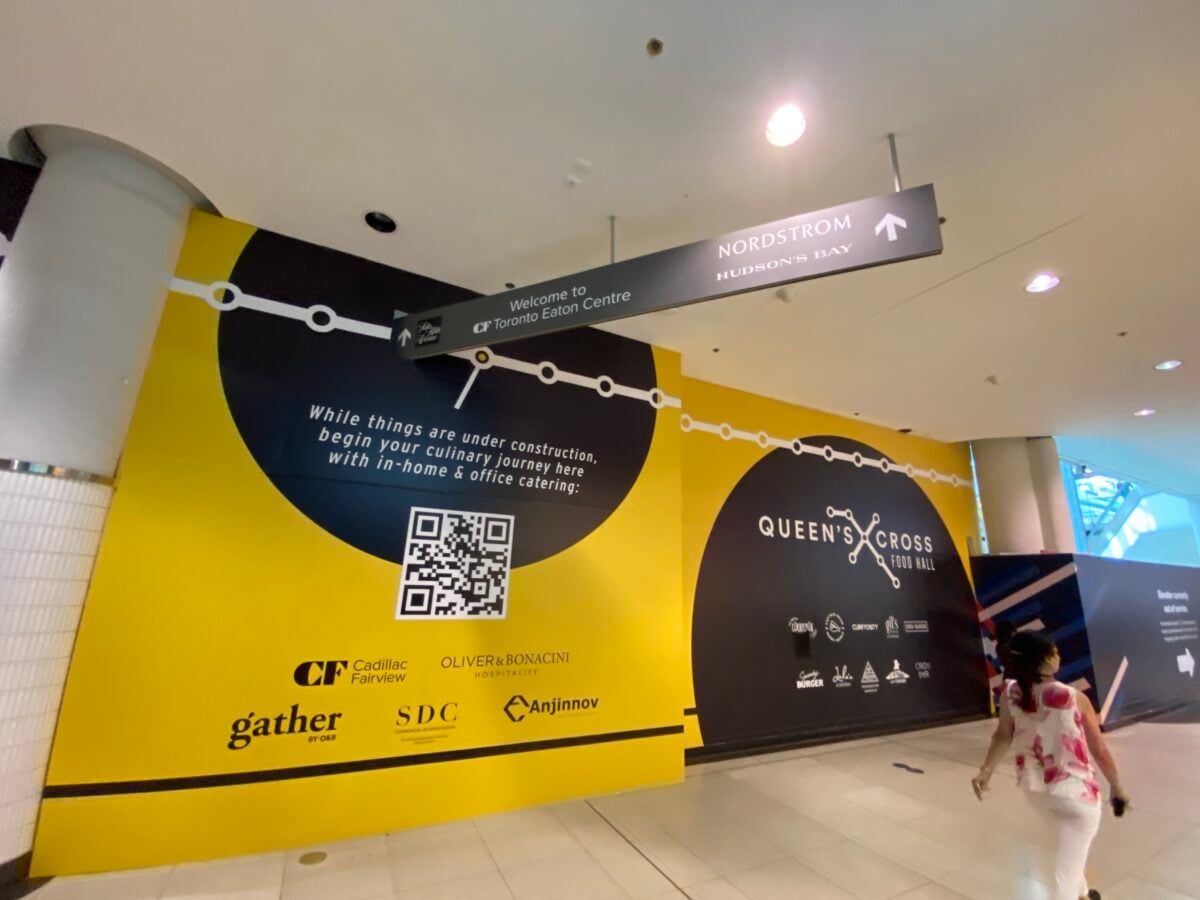
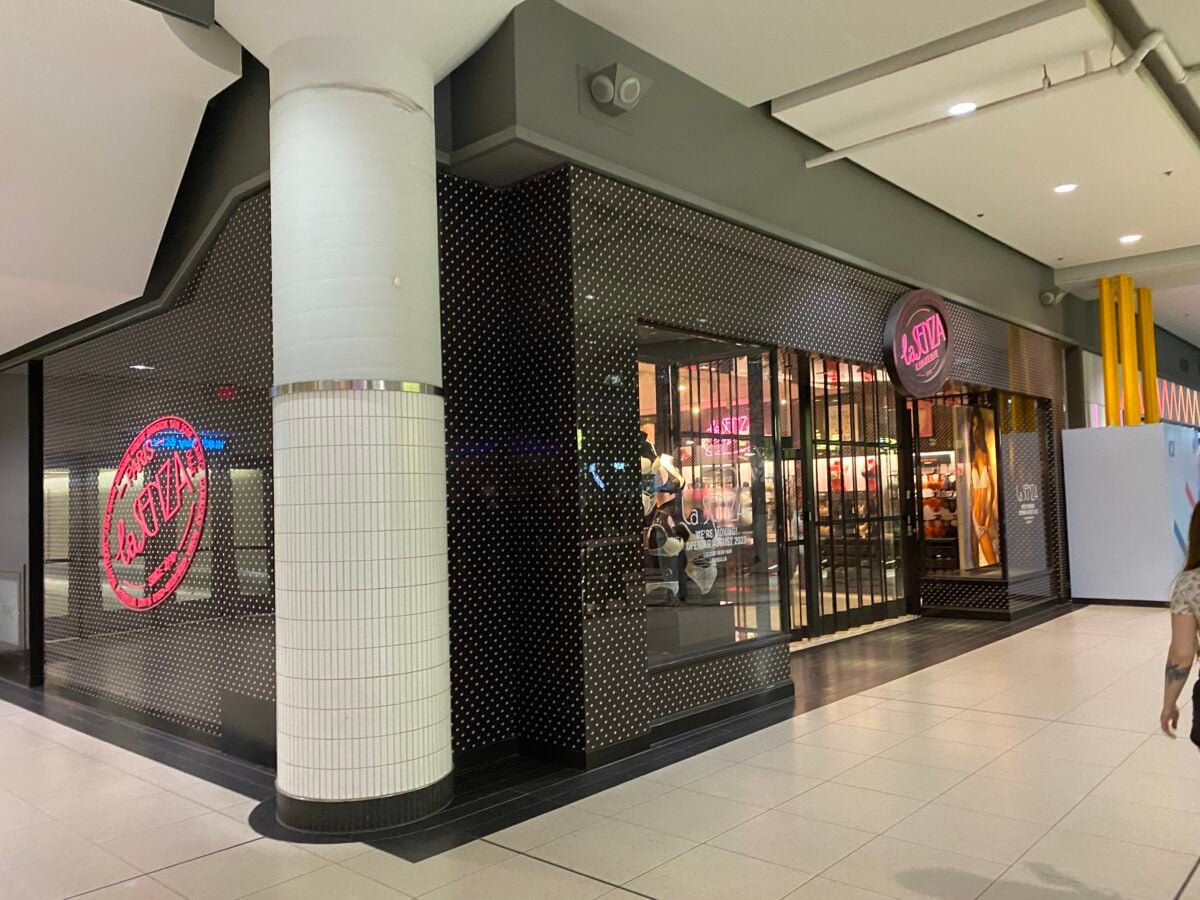
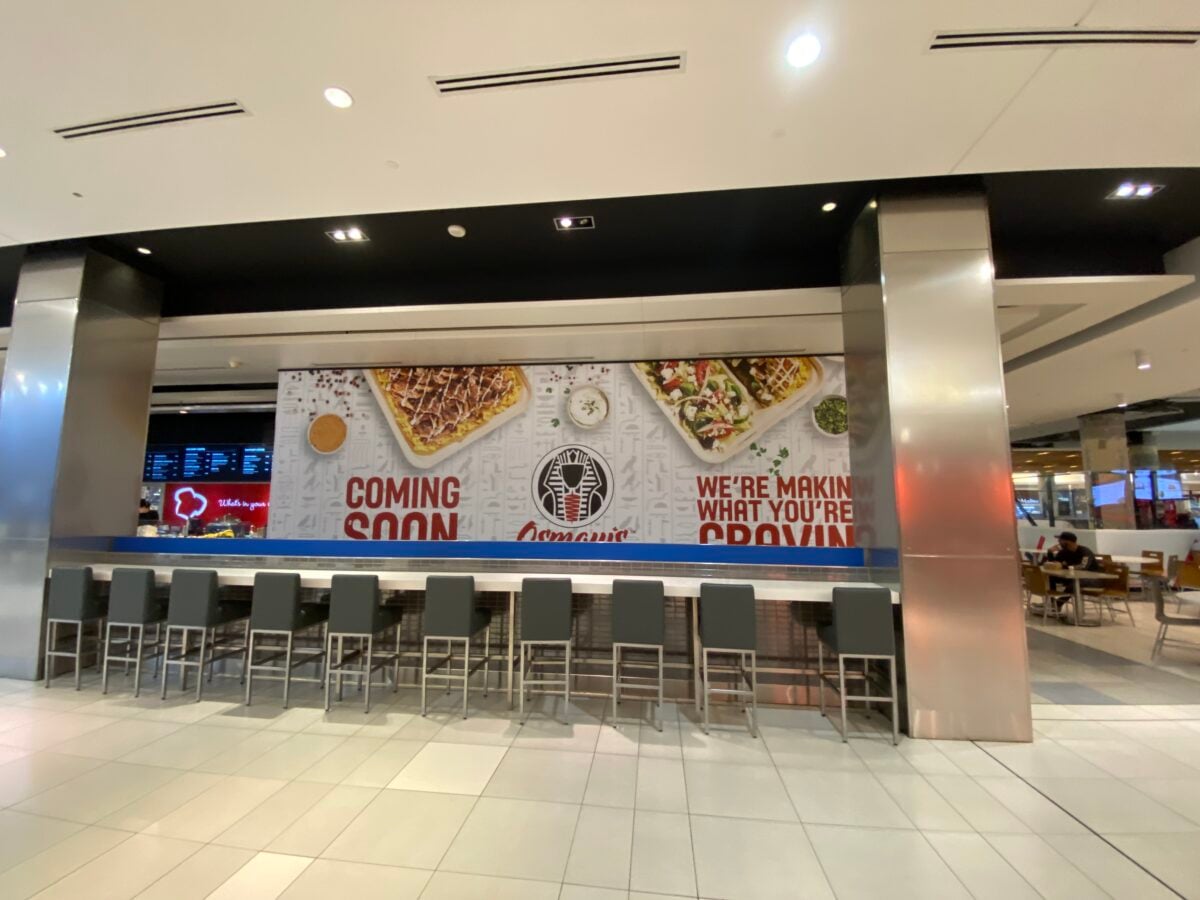
Pilgrim and Osmow’s is coming soon. Future openings include The Constance Taverne and the Oliver & Bonacini Queen’s Cross Food Hall (a 17,000-square-foot concept with 15 chef-driven establishments opening early next year). A new, renovated La Senza is also opening in early July. Studio Dental will open by the end of this year.
The shopping centre is about two million square feet as part of a mixed-use complex with four office towers and a total overall 4.5 million square feet of office and retail. There’s about 250 tenants in the retail component.
“When we look at CF Toronto Eaton Centre, it’s true that the office downtown traffic isn’t back but when we look at our other key core demographics being tourism we’re really starting to see the influx of tourism back where last year we saw certainly the Canadian tourists come back and the American tourists. Now we’re starting to see a greater presence and it’s really amazing with international tourists to the property as well,” said Murray.
“Despite office not being back to what it was, a lot of the other key clients that we rely on here for our overall health have come back nicely and the other thing we’re really seeing here as well is the emergence of another key demographic which is that downtown urbanite.
“Over the last four or five years, there’s been a lot of residential growth down in the centre of Toronto, down at the core. We’re starting to see more and more, call it, local visitors. People who live, work, shop in the neighbourhood and are really part of that Toronto Eaton Centre community.”
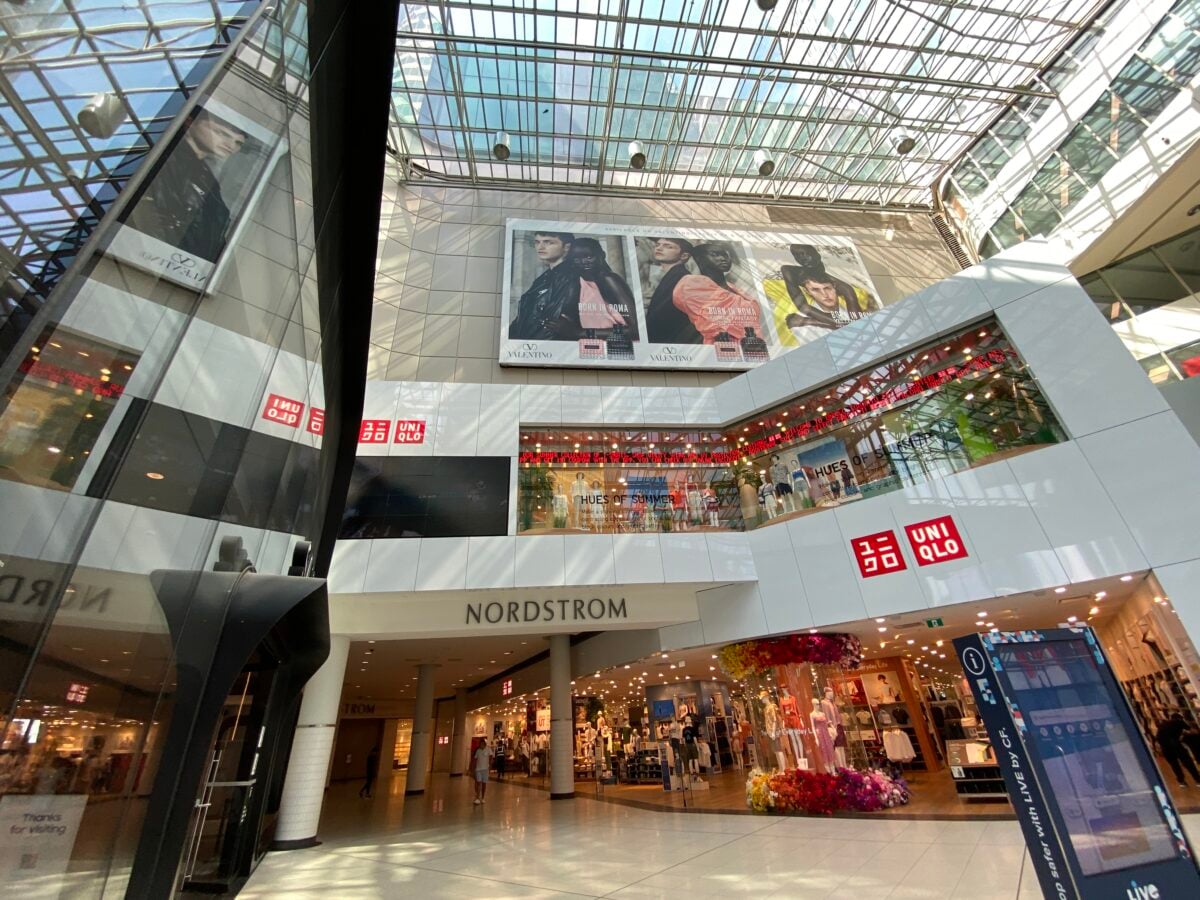
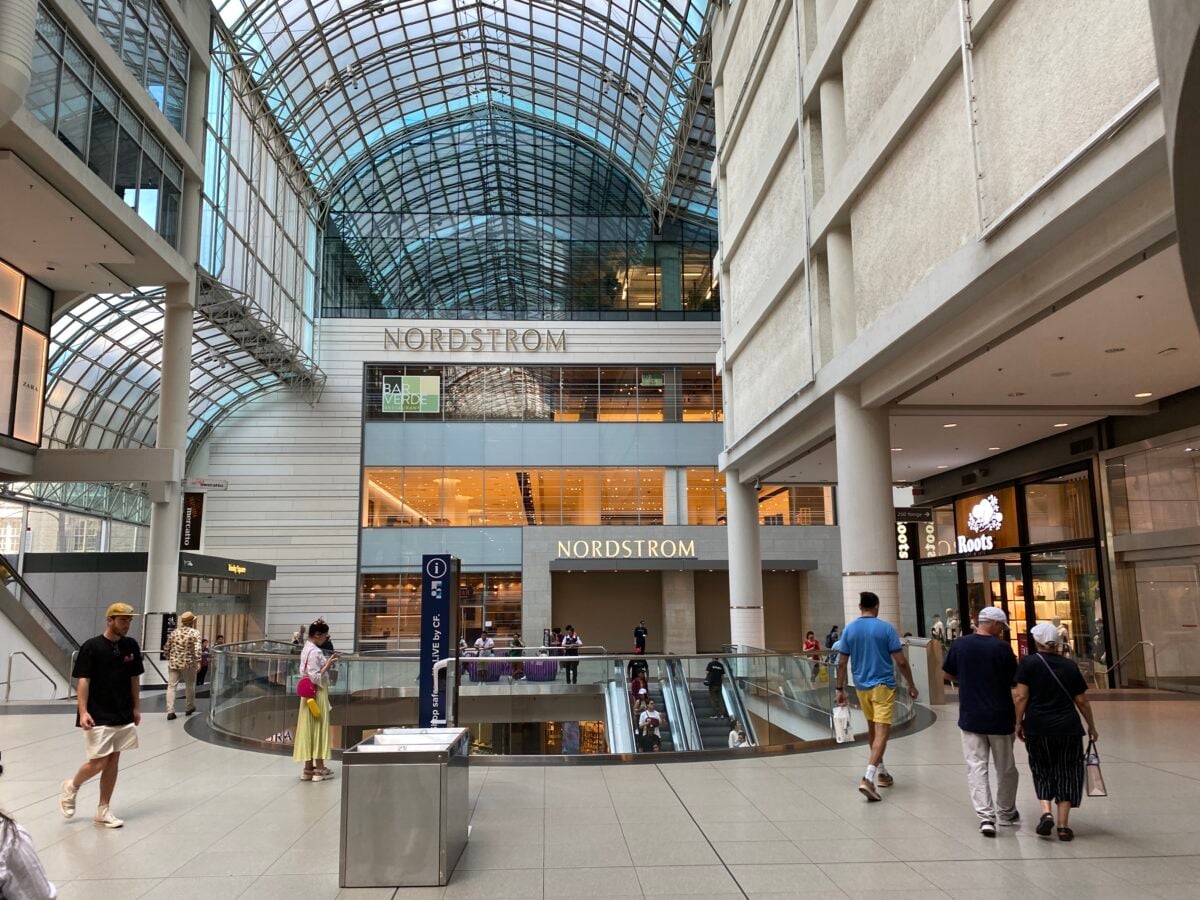
CF Toronto Eaton Centre (Image: Dustin Fuhs)Uniqlo and the Shuttered Nordstrom Canada at CF Toronto Eaton Centre (Image: Dustin Fuhs)
With the departure of American retail giant Nordstrom from the Canadian market, like many other shopping centres across the country CF TEC is trying to determine what to do with that vacant space.
“While the Nordstrom news was disappointing, overall retailer health continues to be strong and retail sales productivity has recovered to pre-pandemic levels. CF’s leasing teams continue to sign new deals and growing with existing clients,” said Murray.
“At Cadillac Fairview we’re evaluating all options concerning the future of the Nordsom Box at CF. Although there is nothing we can specifically share at this point in time we are confident that the end outcome will be a positive result for CF Toronto Eaton Centre and our customers.”
Shuttered Nordstrom Canada at CF Toronto Eaton Centre (Image: Dustin Fuhs)CF Toronto Eaton Centre (Image: Dustin Fuhs)
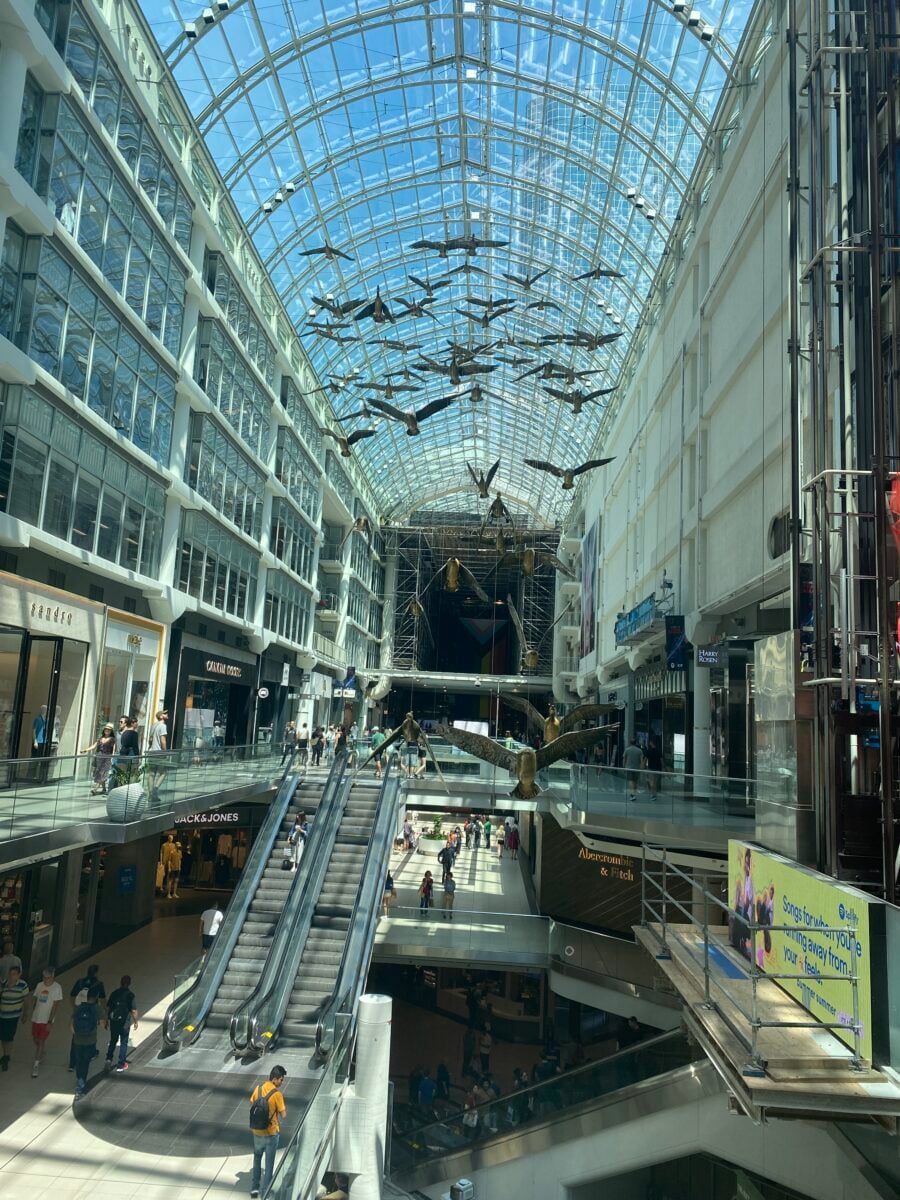
Murray said one of the big things happening at the shopping centre is the galleria skylight roof revitalization.
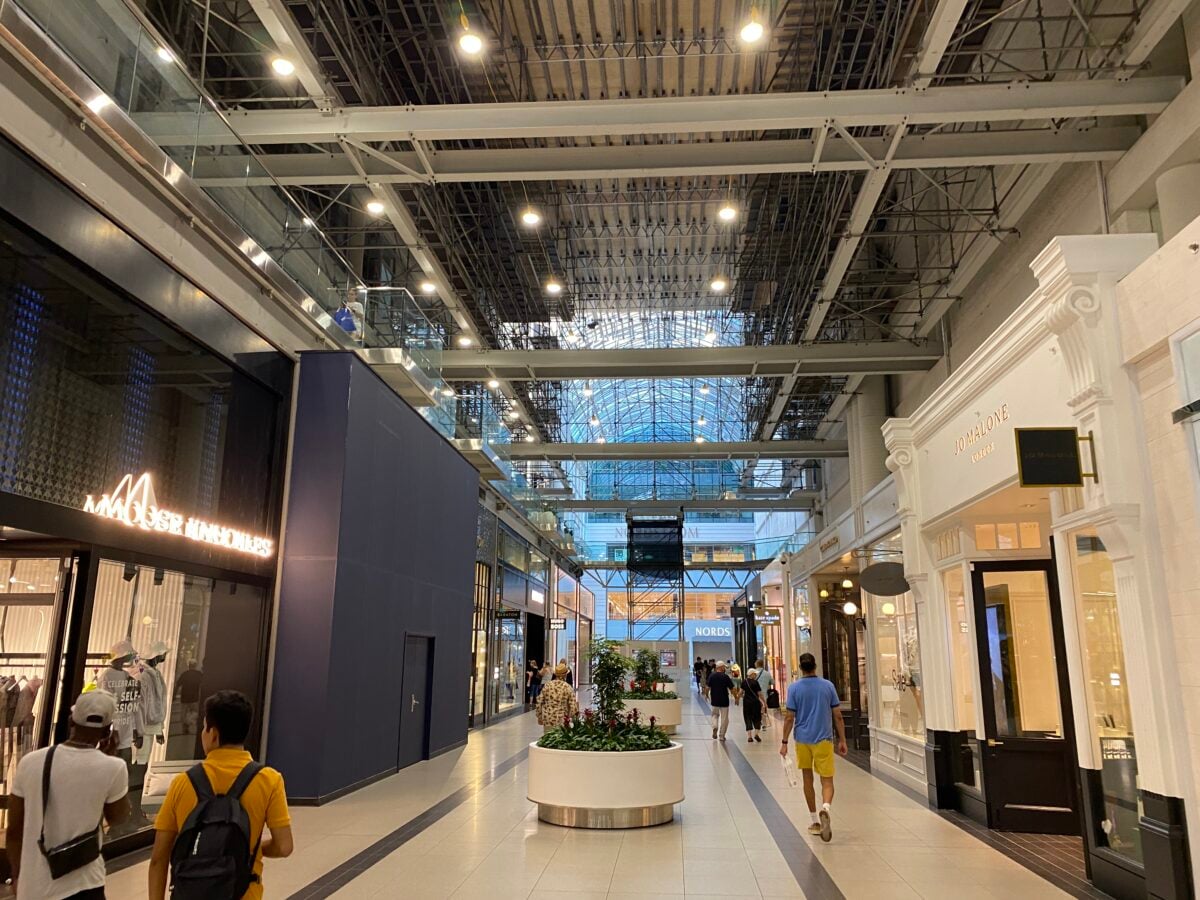
“We are about halfway through the galleria dome replacement here at CF TEC. I would describe this project as absolutely transformative. We are replacing the famous dome that all of our visitors know and expect and see and appreciate. It’s been with us since day one,” he said.
“The new look, feel of our brand new galleria dome is going to be transformative. It’s really going to change the overall environment at the top level of CF TEC. It’s a massive investment ($60 million). It is just stunning how the new galleria dome changes for the better the look and feel of our top level of the shopping centre.”
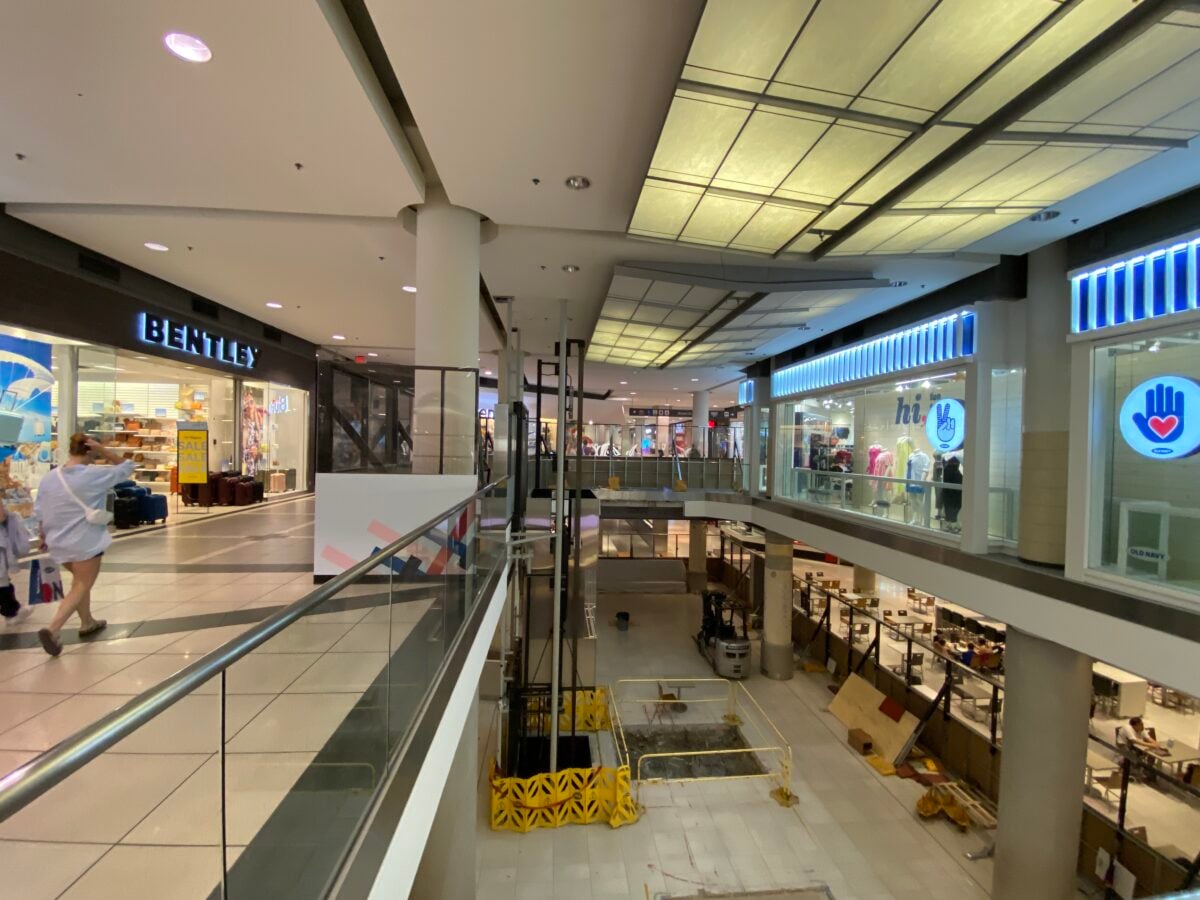
Future Urban Eatery Elevators and staircases at CF Toronto Eaton Centre (Image: Dustin Fuhs)
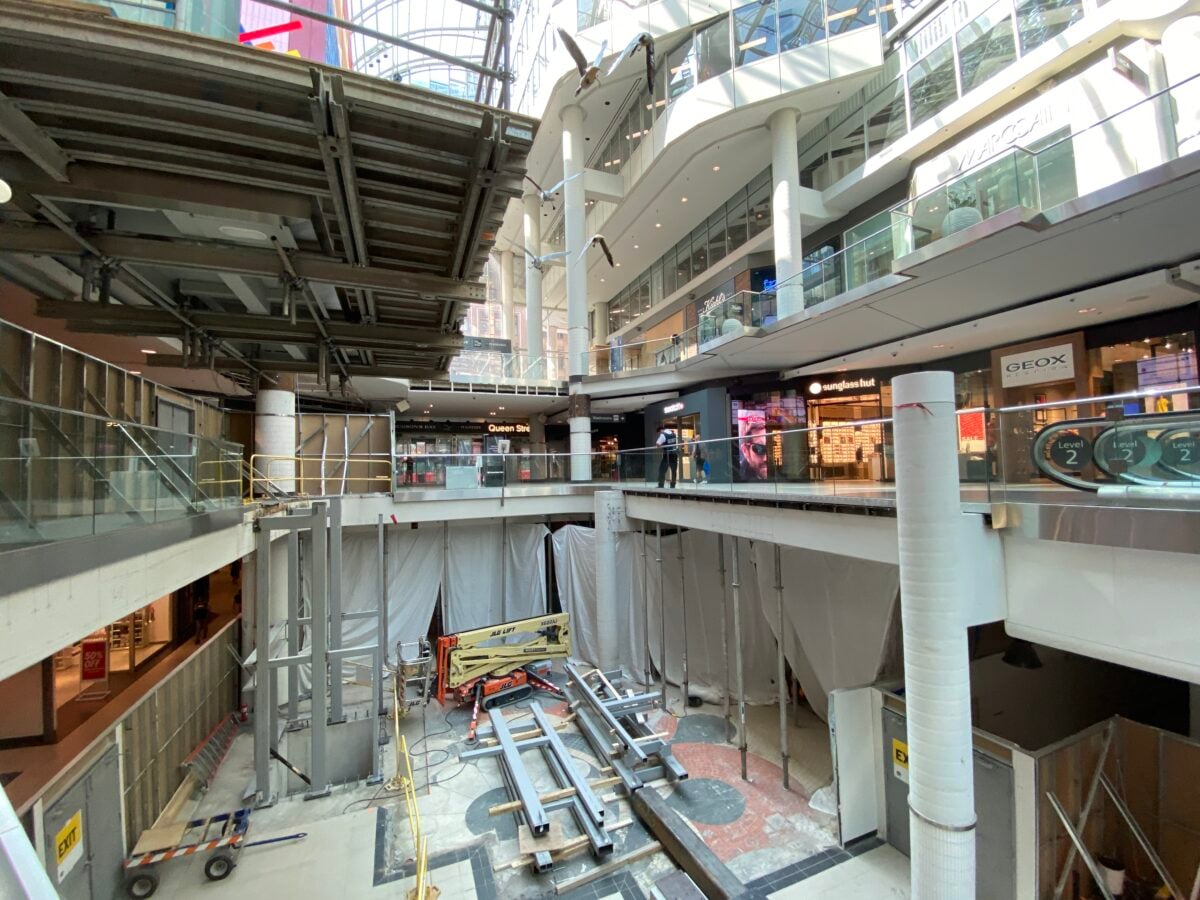
CF is also investing $17 million to improve shoppers’ movement and accessibility with the addition of three new staircases in the South Court and Urban Eatery, improvements to elevators, and the installation of a larger cab in an existing elevator to better accommodate strollers and mobility scooters. The enhancements will facilitate convenient connections, while creating a more welcoming environment throughout the property.
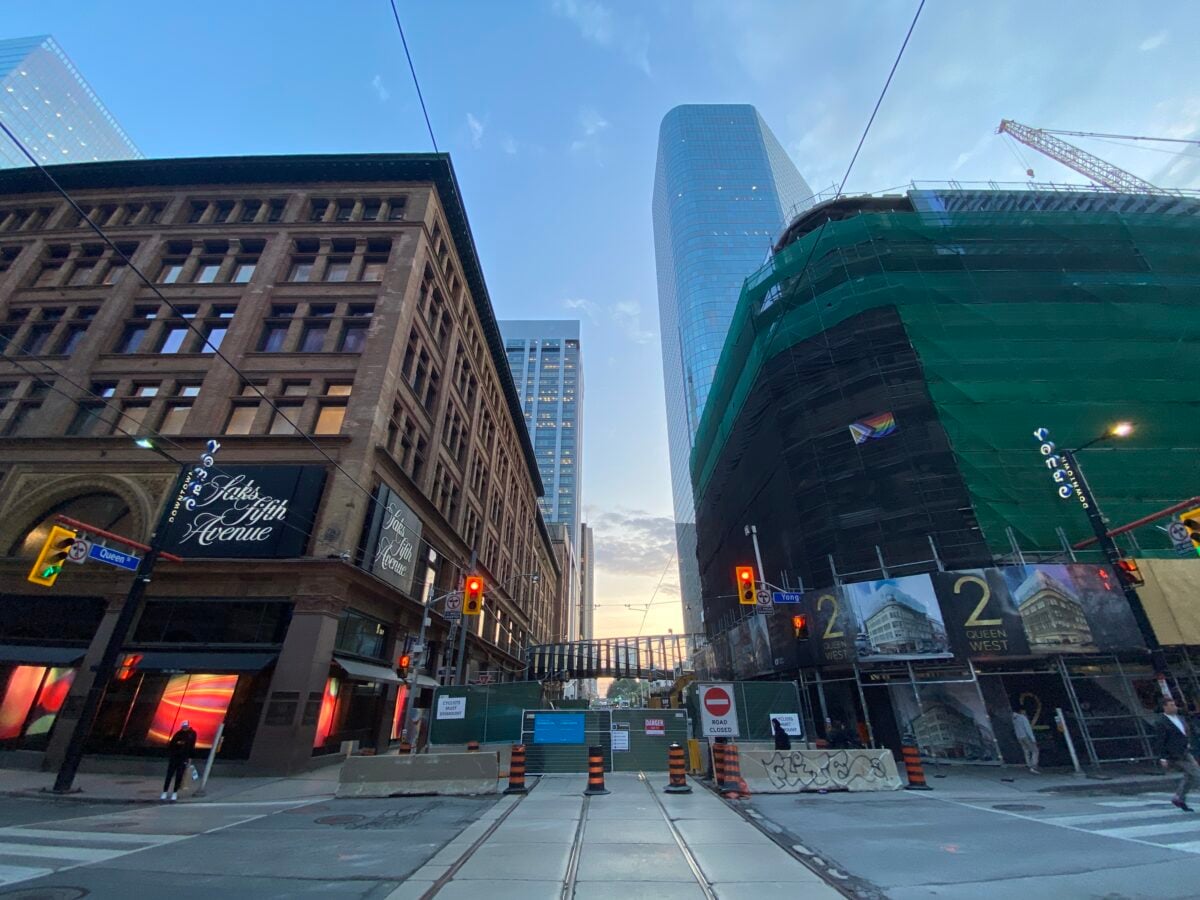
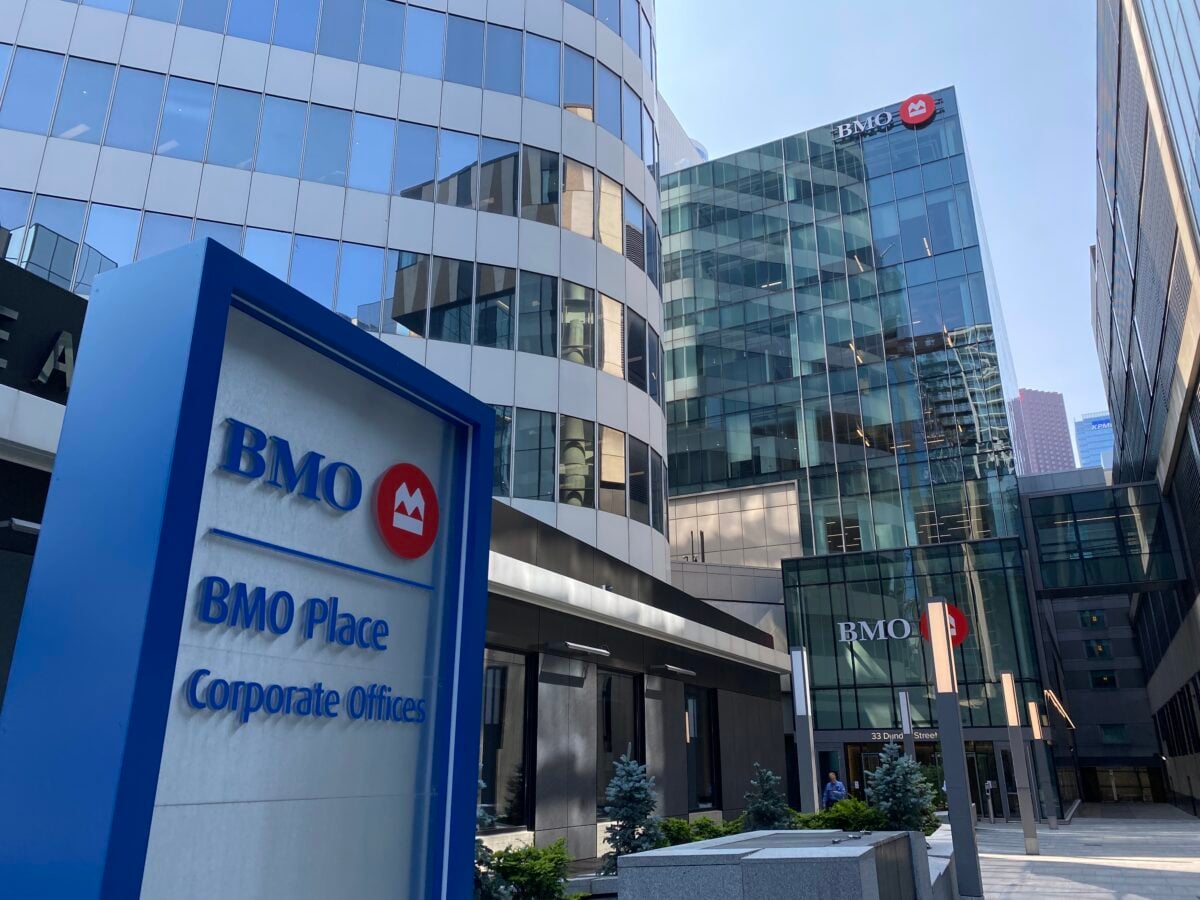
Since 2010 Cadillac Fairview has invested more than $1.6 billion in CF Toronto Eaton Centre, including the redevelopment of the Queen Street pedestrian bridge, the purchase of the Hudson Bay Centre block and 401 Bay Street; the buyback of the Sears space and its redevelopment to accommodate Nordstrom, as well as the creation of the BMO Urban Campus opening in 2022, to name only a few of the revitalization projects undertaken.
“When we look at client and customer experiences, these development projects are absolutely focused on improving the experience when you’re in the Toronto Eaton Centre,” added Murray.
CF Toronto Eaton Centre (Image: Dustin Fuhs)
Additional Photos from CF Toronto Eaton Centre
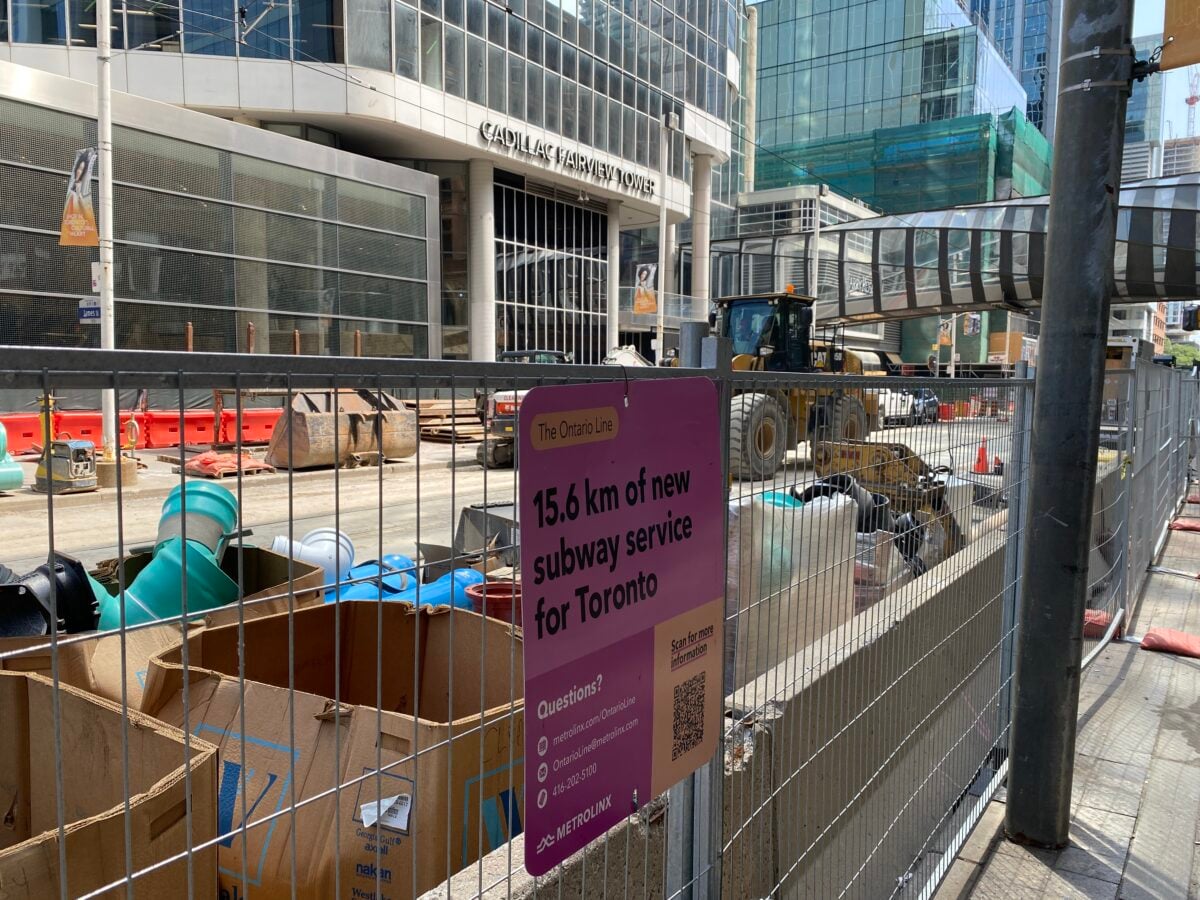
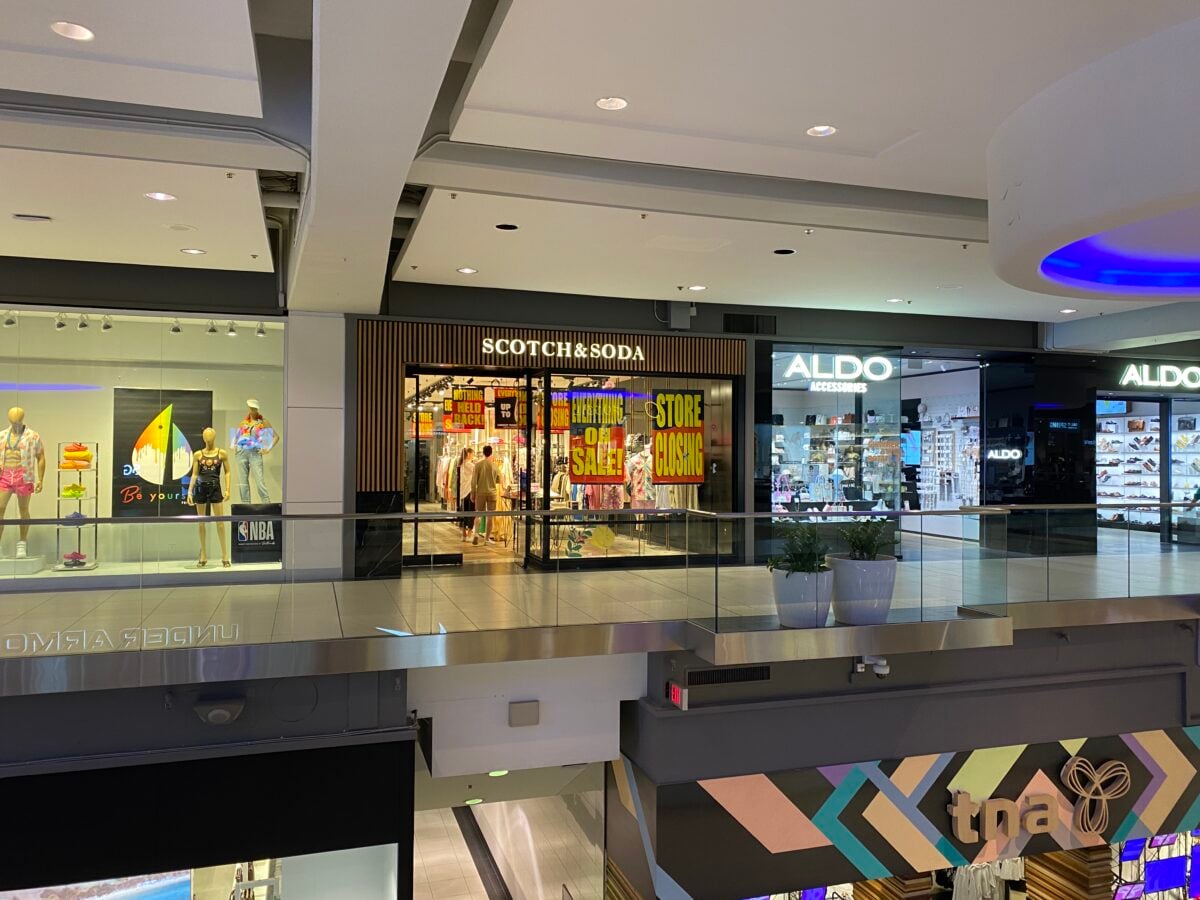
CF Toronto Eaton Centre (Image: Dustin Fuhs)Ontario Line Construction at CF Toronto Eaton Centre (Image: Dustin Fuhs)CF Toronto Eaton Centre (Image: Dustin Fuhs)Future Queen’s Cross at CF Toronto Eaton Centre (Image: Dustin Fuhs)CF Toronto Eaton Centre (Image: Dustin Fuhs)Tucci at CF Toronto Eaton Centre (Image: Dustin Fuhs)FOX Home at CF Toronto Eaton Centre (Image: Dustin Fuhs)Sukoshi Mart at CF Toronto Eaton Centre (Image: Dustin Fuhs)Conspiracy Comics at CF Toronto Eaton Centre (Image: Dustin Fuhs)Conspiracy Comics at CF Toronto Eaton Centre (Image: Dustin Fuhs)Studio Dental at CF Toronto Eaton Centre (Image: Dustin Fuhs)Future La Senza at CF Toronto Eaton Centre (Image: Dustin Fuhs)Future Pilgrim at CF Toronto Eaton Centre (Image: Dustin Fuhs)Scotch & Soda Closing at CF Toronto Eaton Centre (Image: Dustin Fuhs)Kiokii and… at CF Toronto Eaton Centre (Image: Dustin Fuhs)Recently Opened Haight & Ashbury at CF Toronto Eaton Centre (Image: Dustin Fuhs)BMO Corporate Offices at CF Toronto Eaton Centre (Image: Dustin Fuhs)Future Queen’s Cross at CF Toronto Eaton Centre (Image: Dustin Fuhs)La Senza at CF Toronto Eaton Centre (Image: Dustin Fuhs)alo at CF Toronto Eaton Centre (Image: Dustin Fuhs)New Chick-fil-A at CF Toronto Eaton Centre (Image: Dustin Fuhs)Future Osmows at CF Toronto Eaton Centre (Image: Dustin Fuhs)CF Toronto Eaton Centre (Image: Dustin Fuhs)CF Toronto Eaton Centre (Image: Dustin Fuhs)
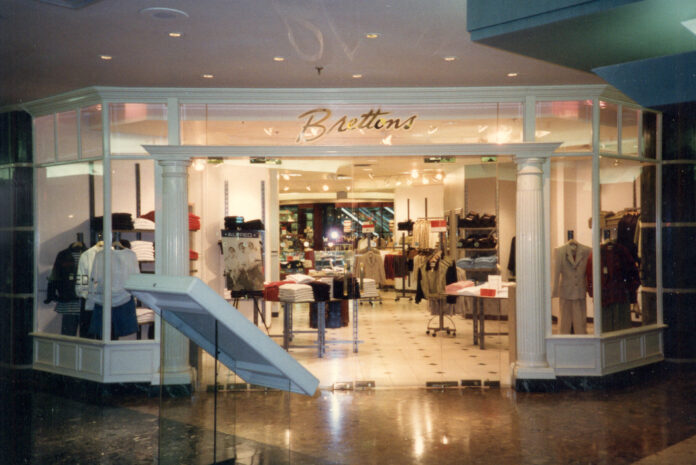
Bretton's at Manulife Centre (Image: Martin Vendryes)
Retail Insider’s Craig Patterson interviews retail exec Daniel Ritchie about his past with several notable retailers. The interesting conversation is a walk down memory lane that many will enjoy. Daniel Ritchie is still at it after an attempted retirement, and is working with brand Dr. Vranjes to get it into Canadian stores.
If you prefer to listen to the audio version, it is available below:
The Interview Series audio podcasts by Retail Insider Canada are available on Apple Podcasts, Stitcher, TuneIn, Google Play, or through our dedicated RSS feed for Overcast and other podcast players. Also check out our The Weekly audio podcast where Craig and Lee discuss popular content published on Retail Insider which is part of the The Retail Insider Podcast Network.
Craig Patterson Welcome to the Retail Insider video interview series. I’m your host, Craig Patterson. And we’re joined here with a special guest. Daniel Ritchie is a retail veteran with all kinds of experience in all kinds of areas. Thank you so much for joining us, Daniel.
Daniel Ritchie Pleasure. I’m really happy to be here and to talk about my experiences over the last 45 years in the Retail business, so yeah, it’s a long time. But, you know, it started for me back in Montreal, and in 1978 When I joined Holt Renfrew, and I joined them there as the Traffic Manager looking after the movement of products into the country and around the country. And at the time, the business was owned by Carter Hawley Hale, a big US conglomerate, and over the course of the previous 15 to 20 years had put together department store regional department store chains into a bigger group like Emporium Capwell, from San Francisco and Thalhimer’s from Virginia and Wanamaker from Philadelphia. And then of course, the jewels in the crown, Neiman Marcus, Bergdorf Goodman, and eventually Holt Renfrew, which prior to that had been privately owned by the Walker family. So it was, it was a really good introduction. Because at the time, in the in the late 70s, early 80s, with Carter Hawley Hale, we had an opportunity to interact with our colleagues across North America, and go to conferences and learned about different ways of doing things and look at economies of scale. But like everything else, you know, those things sometimes come tumbling down when they don’t keep up with the times. And, you know, we’ve seen over the years, what’s happened in the department store business in Canada, but also in the US, all these regional players have gone now. You know, eventually they all got sucked sucked up into Macy’s, and Bloomingdale’s. But it’s, it was a fun time. It was a heady time in Retail. Until 1986 When Galen Weston came along and said, I think I’d like to try this. So the Weston family through their private investment holding company Whittington investment, bought Holt Renfrew from Carter Hawley Hale in 1986. And then we we started on a new journey with a new team of people change at the top, the President was swapped out. And we went on from there during the time I was there. I couldn’t say that the company made a lot of money, couldn’t say the company lost a lot of money. It was kind of just wipe your face situation. And, you know, they were looking for their niche. We spent a lot of time refocusing our buying team on ensuring that we didn’t have any overlap. Previously, we had a lot of buyers, who had specific remits, but there were overlapping suppliers and so on. So it was a matter of cleaning all that up and getting some focus and we bought, we brought in a retail consulting group to help with that management, Horizons in the UK. So it was it was a lot of fun. It helped us to reinvent the business. At the same time, we were starting to look at profitability by store, expanding in some markets closing down other markets, getting out of suburban stores, and both mostly in Montreal, but in Quebec City. And even in Winnipeg, where we had multiple stores, and then looking for the right format to move forward. We had a couple of shops that were designed by the Watt Group, famous for their involvement with with the Westons and Loblaws in particular, working through with Dave Nicol from President’s Choice at the time. But they became just a little bit too pedestrian and not special enough for our consumers. So they didn’t really survive in the long run. But it was it was a great experience. I was there for 15 years, and then rode off into the sunset as you do to try something different.
Craig Patterson Daniel, you were there when Holt Renfrew relocated its store on Bloor Street from I think it was 144 Bloor Street which is about a 60,000 square foot tall narrow store to the current flagship location which is located at 50 Bloor Street West. What was that transition like to create that flagship store which is still there today on Bloor Street, it’s a little bigger. It looks a little different.
Daniel Ritchie It is a lot bigger and it looks a lot different. But at the time, my major focus at the time, my role at the time was to get the products and that we’re going to fill that store less so about how it was run and managed. But the interesting thing was that that store opened in 1979 but it never really took off. We had trouble from almost from day one, creating that buzz and that excitement and that customer focus that we needed. And it was one of the major reasons that the business decided to up stakes in Montreal and move its head office to Toronto. And in doing that, there’s the theory that the store that has the biggest buys and the biggest opportunity is always the one that the merchants have their eye on. So our buying office our head office, when we moved was actually right in the store in in the part of the shop today that is home where and you know, the the accessories and things that are up that little staircase when you go through the store, to the to the east side, that was the buying office back then. And you know, eventually it’s all been turned into retail space, which was the right thing to do. But at the time having the buyers actually physically have to walk through the store multiple times a day, is what really put focus on what customers needed in Toronto, because the markets are very different. And so you know, so that was a big benefit. And I think it was then that Toronto suddenly started to take off and Bloor Street became the number one store in the chain.
Craig Patterson Interesting what happened with Montreal it had a store that closed a while ago, a flagship store in Sherbrooke Street. Now there’s of course, there’s Holt Renfrew Ogilvy. But Montreal saw a bit of a downturn in its retail from the late 70s, I think into the 80s.
Daniel Ritchie I would say that it did. I mean, it was a time when we had a number of suburban stores in Montreal as well. So, you know, we looked at profitability around all those models and started to pull it back in and really focus on the main shops and the time would have been Fairview in the West End, Rockland, which we renovated and rebuilt. We had left Rockland and came back when the project where the the mall was actually being renovated, and really focused on a fewer parts of the city and fewer consumer profiles. And we were at the time trading in that beautiful 1300 Sherbrooke street art deco building. That was actually an amalgamation of a couple of buildings. So you would get off on one floor, and you’d have to figure out wherever you needed to get to go to the other floor. But over time, I guess the one thing about that building is that you couldn’t do much with it in terms of expansion. And the the each floors footprint was really tiny. You talked about that Bloor Street store the old one at 144. It was Sherbrooke was similar to that. It was a lot of what was seven or eight floors, all small footprints. And you couldn’t do a whole lot with it. So I think when the old movie thing came along, and I was long gone by then, but I think it made sense for boats to look at how they could actually do the things they wanted to do in a more productive way.
Craig Patterson No, yeah. And I’m going to say in Western Canada, the Vancouver store at the Pacific Center had already been opened by the time you joined Holt Renfrew. I think that was around 1975 that it opened.
Daniel Ritchie Yeah, it was already there. And again, that’s a footprint that changed dramatically over the years from then to what it is today. But Vancouver was a city that was starting to catch fire then that were you know, there was an influx of, of Asians, particularly Japanese tourists. So it was a matter of how you how you catered to them and how you got money out of that population when they when they arrived in the city because they weren’t there for that long. But over time it grew. There was always speculation that we wouldn’t have a second store in Vancouver. There was talk around Oakridge, there was talk around Park Royal in West Vancouver. And then ultimately, we ended up with a store in Whistler, which was in the new Chateau Whistler, it never really took off. It was hard to merchandise. The problem was you never knew who was going to be in town profiles were so different, wildly different.
Craig Patterson And it was tiny. I remember it was about 1991 I think it opened.
Daniel Ritchie And the other challenge that we always had in Vancouver was around being able to get the brands that we wanted in the shop because there were a couple of stores that had been around forever and they they had these brands that you really needed at the time. They’re locked up so you couldn’t get them. And that that meant that we had to we had to have in some regards brands that were not as popular. You know, I’m sure the platform has changed completely today. But back then it was. It was a challenge. You just couldn’t get the brands that you wanted to have.
Craig Patterson Yeah. Now let’s talk Western Canada a little bit more. I remember when I was a kid, Holt Renfrew in Edmonton left Jasper Avenue and moved to the Manulife Place. Because you would have been in there around that time. So that was around the 1982,
Daniel Ritchie It was 82, I think, yeah. Yeah. I was I was there at the time. We were on an expansion kick. We were looking for property in Calgary because we had a terrible shop on Eighth Avenue. And then we had Chinook. And eventually, we opened downtown Calgary as part of that new Eaton Centre development, and close Chinook. And it was a similar thing at Edmonton, we had an old tired store and we went into that brand new Manulife Place made a huge difference to the business and we were quite a force and Edmonton for a long time. Similarly, with Ottawa we opened Ottawa on Sparks Street in 1978. And it was a great little store for the longest time but that whole Ottawa markets changed so dramatically now that you just couldn’t you just they eventually left Sparks Street. I think it was partly an access issue too. You couldn’t get to the store all that easily. So you know, it was on a mall on one side of a pedestrian mall. So that was a challenge. And then Winnipeg same thing. We had two stores in Winnipeg. We eventually got rid of one in Polo Park. Eventually, when Portage place was redeveloped, we went in there and and ditched the Polo Park store. So lots of change over time, Quebec City similar story. The legacy store in downtown Quebec on Baude Street was eventually closed and all the attention was put onto Ste-Foy. So that’s where the consumer has migrated to from downtown. In a lot of Canadian cities. It’s just not that important anymore.
Craig Patterson And what happened to the Quebec city population, we actually discussed this before where there was an aging of the carriage trade and that the younger generation moved elsewhere.
Daniel Ritchie I think that there’s a fair number of people during that timeframe who left Quebec City completely because of opportunity or lack thereof, the population aged, but those who stuck around, didn’t stay in the downtown core. So they were in Ste-Foy, they were in Sillery. Well, they were in communities that were more the sleepy town communities, suburban communities around the city. So trying to get somebody downtown was a real challenge. And the other thing that I don’t think you can discount is that one of the things that changed the profile during those days with Holts was that it was very much reliant on a fur trade that was disappearing. For obvious reasons, people, you know, were moving away from, from real furs to have faux furs or no furs at all. And I think that was a big change, I mean that the whole run for business really revolved around fur trade back in 1837. And that was there even until you know, not that long ago, where you had not just the sale of fur coats, you also had the winter, the summer storage of fur coats. And that was a massive business for Holts. You know, we had in the Montreal store, we had a massive fur vault that was two stories high and the building adjacent to the main store, and it was temperature controlled and all that sort of thing. And we had similar fur storage businesses right across Canada, which were supplemented by or led by depending on the city the actual sale of fur coats. So you know as as that changed it really changed the business big time. And that’s something that I think probably Quebec City tale I’ll have its own because Quebec City you know, those customers were either gone or dead. Nobody was wearing furs.
Craig Patterson That is so interesting. And the stores like say Polo Park in Winnipeg. Do you remember how large they were? They were smaller, sort of boutique size.
Daniel Ritchie They were smaller, they probably were in it around 5-6 thousand square feet. They weren’t huge stores, you know, maybe stretching to 10,000 square feet in some cases but they weren’t big stores. And they were definitely not big stores.
Craig Patterson And today all the Holt Renfrew stores are quite big. I think the smallest one is about 130,000 square feet, at least in gross square footage. And I think that’s the Yorkdale store in Toronto. still big. Yeah.
Daniel Ritchie And well, considering that it’s their biggest volume, the productivity per square foot is really, and pretty good in in a place like Yorkdale, isn’t it?
Craig Patterson Sure is. And after Holt Renfrew, you left in 1993. You went on to become VP of Operations at Bretton’s.
Daniel Ritchie I was there for a short time, there were a number of people that were at Bretton’s too,or in the Etac group. One of them I had a really great relationship with his name was Alfred Chan. And he owned Etac Sales with his brother. And Etac Sales was an Importer Exporter kind of business is not at the high end and the low end, but he had bought Ports International from the family that owned it and was running that and then he bought brands and couldn’t figure out then, you know, Alfred was the kind of guy who would buy something and then try and figure out what to do with it. So it wasn’t strategic. It was it was just kind of let’s have a bigger piece of the pie. So at the time I went there, he had brought in Don Evans and I don’t know if you knew Don Evans, he was the president of TipTop for years and years and years. Anyway, Alfred brought him in. And you know, it wasn’t too long before the parent company got itself into a massive amount of trouble. And we, you know, the divisions I’ll just start up falling like dominoes, whether it was Ports or Tabi. At the time, it was also part of the group, or others, it just didn’t have a happy ending. He had bought Bretton’s from the C&A group. Because they could never make it work. It ended up being for them, just a store full of their own brands. And you know, over time, that’s not what the customer was looking for. They didn’t want another place where they would just go and buy things they could get down the mall and kind of freestanding store. So the timeframe there was really short. I worked with Alfred and Don on trying to reestablish Bretton’s and then I worked with the receivers on trying to sell it and then eventually with the with the liquidator to get the best amount of money out of the assets that we possibly could. But it was it was too bad really because I think at the time the country could have supported something that was that bridge between department store and and specialty store. I don’t know where that market is even is today. To be honest, I don’t think it exists in the same way that it did then. And what we’ve seen is not just that go away, but the entire mass market of middle mid market of department stores doesn’t exist anymore.
Craig Patterson Yeah, I remember Bretton’s being a teenager, I bought my Alfred Sung jeans on sale you know but they had a area for fragrances I remember including for men. They didn’t have seem to have a lot of footwear but it was very much a fashion store I think.
Daniel Ritchie Oh yeah. It was a fashion store we had we had all the brands that we needed in that market but it maybe just wasn’t special enough for the right people to shop at and we definitely couldn’t sell it to anybody. We tried a number of suitors but I think at the end they were more tire kickers just to try and figure out what was going on in business and actually serious purchasers.
Craig Patterson And the locations were interesting for Bretton’s which started in Ottawa. I’m just going by memory from being younger and doing some research of course as well. Yeah, there was one at the Manulife Centre in Toronto, but there was like Metropolis at Metrotown in Burnaby in the Vancouver area. We had West Edmonton Mall Calgary had Market Mall. I’m trying to remember now.
Daniel Ritchie Oh Calgary was Chinook, Yeah, but what what what they were looking at at the time was trying to identify by market where the right customer was that Holt Renfrew wasn’t, so in Ottawa Rideau Centre far away enough from Sparks Street and then there was a second store in St. Laurent mall to capture that suburban market. When it came to Toronto, the first store here was actually Promenade and it opened before Bloor street did a couple of years before Bloor street did, Bloor Street was a suicide mission from the beginning. Nobody ever expected that store was going to survive and it didn’t. And it sucked dry a lot of money from the rest of the chain. But yes Chinook again, Holt Renfrew had left Chinook. So there was a theory that there was an opening there, Vancouver at the time, there really was nothing available at the downtown core. It was pretty tight. So the thought was let’s go out to Burnaby to Metrotown and that’s where the store ended up. But all those stores were in place by the time I arrived. You know, like the, the beginning of the end, not the end of the beginning.
Craig Patterson Do you remember Creed’s was in the same shopping centre as Bretton’s the at the Manulife Center in Toronto?
Daniel Ritchie Creed’s was the big competition to Holts on Bloor street and Creed’s, they lived and died also on the fur trade. And, you know, their business started to get really tough when furs really became not very popular anymore. And they they were running a massive fur storage business that over a few years evaporated. So yeah, it was a great business, a great family. They’re still around doing a few things here and there. But I don’t think that Bretton’s was ever a challenge to Creed’s or, you know, just would have been a completely different customer. I could imagine the Creed’s customer who was probably a little more tony even than Holt Renfrew. I couldn’t imagine them going into a Bretton’s store ever.
Craig Patterson How did Holts and Creeds interact off of each other, or in terms of consumers with Creed’s being almost the the fancier store, at the time there was Chanel and a few of the other brands like Valentino. I think that Creed’s might have had things locked up for a little bit there compared to Holts maybe.
Daniel Ritchie it was a similar challenge to what Holts had in Vancouver, the brands that they really coveted —they couldn’t get because Creeds had them. And then, you know, at a certain point, Holts tried to build a different proposition to go after things like Ralph Lauren, you know, the top of the range and built a huge Ralph Lauren boutique. So there, there were challenges there. As you say, the Creeds had all the big name brands. So it was difficult. And I think one of the things folks did and did well, was that they had the fashion eye to be able to identify what the up and coming brands were. So you know, getting in on the ground floor with with some of those people made a huge difference.
Craig Patterson Yeah, and also, we had a recession, 90-91 and Creed’s shut, we lost a lot of stores at the Hazelton Lanes as well, which was probably one of the world’s top luxury malls, at least in terms of the brands that were available there. From the late 70s, I think until the early 90s.
Daniel Ritchie I mean, it’s the whole downtown phenomenon. It’s not just what it’s not really just one thing, I think you have an over stored situation for the customer profile you’re chasing, but I think that it’s become really difficult to shop downtown. You know, you look at trying to access some of the stores along that to, you know, billion dollar mile or whatever they call it on Bloor Street. And it’s, it’s a challenge is to find parking, it’s a challenge to to find a point of difference somewhere where you want to be that you feel you want to be that you don’t have to trudge from store to store in the heat of the summer or the freezing cold of the snowy winters. So you know that that whole that whole downtown find I find so different than it used to be. And you’ll look at some of the things that are popped up along the Bloor Street. You know, Fabricland is coming.
Craig Patterson It’s open. I went to the opening.
Daniel Ritchie Right Fabricland on Bloor Street across from Holt Renfrew. I think that’s hilarious.
Craig Patterson It was a fun tour. But it’s not the right location for that retailer. I agree completely.
Daniel Ritchie No I can’t imagine who’s gonna go shop there unless, unless you’ve got young kids who are in fashion school or like to sew and they go to Holts. And they remember what they saw and run across the street and buy the Fabric to make it themselves but it’s a weird place for them to be I’m sure there’s a real estate play going on. But it’s bizarre.
Craig Patterson Yeah, let’s talk about Dylex next. You were working I think more with TipTop tailors because there was a CCAA situation right?
Daniel Ritchie Yeah, I was VP opposite the Top. We were in the process of trying to reinvent the business by cutting down layers of management. I think when I got there, they were underneath in my in my A portfolio, there were 160 or 108 stores. So it was way over stored. We didn’t really have a great handle on stores that should be closed because of, you know, losses. And then when we did, sometimes we were tied into the lease because of the corporation more than the brand. So, you know, we had to be there because it was good for Fairweather and Biway and whoever else was there at the time. So that was a challenge. But in my portfolio, I had three regional managers, and each regional manager had about eight or 10 district managers. And then by the time you narrowed it down, you ended up with a situation where each store manager, each district manager had maybe three to five shops to manage, which really meant that a store manager wasn’t making any decisions, they were just there. So what we tried to do was blow that all away. And we went from this massive structure to just having eight regional managers across the country and nobody below them. So each one of them then had between 15 and 20 stores. And then the store managers really had to go on this massive reeducation program. So that they would have the skill set to actually run a business. So that was, it was a lot of fun. And I know that it was the beginning of a great turnaround. But again, with Tip Top, we struggled because the top of the pyramid fell down. And you know, it was it was a really sad ending because I know of one senior corporate executive who actually took his own life because his savings were completely wiped out. He had nothing he went from being somebody with, you know, great home in Toronto and cottage, cottage country and all sorts of things, to having absolutely nothing to his name. And he couldn’t cope with it. And you know, when those things happen, it really drives home, the reality have lots of different things, but you know, the humanity of it, but also, you know, if there’s a lesson in it, the lesson is, you know, eggs in one basket, not really is not a good idea. So, again, I worked with the liquidator there because of the experience I’d had, the president of Tip Top actually said to me, You know what, you’ve got a handle on all this work. So even though there’s the CFO, I’m gonna get you to run the cash flow, because you know how to do it and you know how to get money out of the liquidator. The court appointed monitors they were at that point. And you know how to to forecast what cash we need, what cash we have what so I was actually doing all of that work was a lot of fun. But at the same time I was being courted by Nuance which was Allders at the time to go and run their merchandising team. But 95 but not not being sure where the Tip Top thing was gonna fall out. Especially after the Bretton’s experience, I thought it made more sense for me to take an opportunity when it was in front of me. And I wasn’t at Allders for more than six months when Nuance came along and bought the business. So that changed things dramatically, because at the time Allders Duty Free was was a joint venture between Allders department stores in the UK, and an engineering firm in Canada who really had no skin in the business except for money. And, and because you needed a partner, foreign companies couldn’t own businesses in Canada back in those days, you had to have a Canadian majority shareholder. So they found someone who was completely disinterested in the actual running of the business. And it was an engineering firm from Mississauga. And they were the majority shareholder. So what was curious was that some of the people in the team worked for the Canadian business, like my team of people worked for the Canadian business, but I actually worked for the UK. And at the time, when that divorce happened, and Nuance was coming in, there was a massive due diligence project and my office was deemed to be the soil of the Brits, and not of the Canadian team. So all the confidential documents and everything were in my office surrounded me and boxes until all that due diligence took place and things shook out. But it was it was a tough situation because it was one of those things where a a fish swallowed a whale. And then the whale said great, you know, because nuance at the time was a very tiny player, they bought this massive duty free business. And they bought it on the basis that there was going to be all kinds of economies of scale of this global business. And they never really materialized. So it, it was a challenge. And I know that it actually brought down the CEO at the time, but it’s ready deaf, long, crazy Swiss guy loved him, absolutely loved him. But you know, the business just didn’t have enough direction. We worked on all of these committees and groups and different project teams where we were looking for ways to save money and, and get more margin from suppliers and all that sort of thing. And it just never happened. The assumptions before they bought the business, we’re not very good.
Craig Patterson That is so interesting. The first time I ever heard of Allders actually, were the first time I ever saw something was I’m not joking, an episode of Mr. Bean when I was younger, it’s where Mr. Bean is crawling to the cosmetic section kind of choking, whatever. So I knew as a kid, when I saw that there was an Allders duty free store in Vancouver was the same name in the same logo. And I was quite confused. Of course, they became Nuance duty free. The stores were in I think, Vancouver at the airport and downtown. Were they in Toronto at all? Do you remember? I don’t remember back then. No.
Daniel Ritchie We had Pearson Airport as well. And we had Calgary. Okay. So and we had we had satellite stores and Banff, for example. So yeah, it was, it was across Canada. But we also were running the US business. So we had the Las Vegas airport, we had concessions at the Boston Airport at Logan. But our biggest US business, which was really quite interesting was the cruise ship business. And we had big, vital lines like Holland America and Celebrity. And we, we ran all the shops on board. So all of the people working in the stores on the retail, in the retail shops on the cruise ship worked for us. And that was that was a fun part of doing store visits, because you would get on one port. And they are only allowed to open when they’re at sea. So if you want to see a shopping operation, you can’t do it from a dock, you have to you have to sail, which was such a hardship. So you just walk around, get on in in Fort Lauderdale and jump off in the Bahamas or, you know, jump on the Bahamas and jump off into Puerto Rico or whatever. And so that was a lot of fun, a really tough business because just like an airport, retail, the margins, the rent margins are so ridiculously high, what you’ve got to promise in order to get the contract leaves you like pennies on the dollar to kind of squeeze out. And if you can’t squeeze them out, you’re gonna lose a lot of money.
Craig Patterson Now with duty free in Vancouver, there was there was a big Duty Free Store in downtown Vancouver that closed in the early 2000s. It was actually I think, at that point being run by Aldeasa the Spanish group which had bought out Nuance and had fired everybody I know because I know they fired the store manager because he’s good friend of mine. But let’s talk about downtown Vancouver for a moment because things have changed with duty free, we don’t have stores in Banff anymore. You know, I don’t know if the laws changed me any insight into that?
Daniel Ritchie I think the customer behaviour has changed. And I think that you know, back in the day, we used to get the the most lucrative customer group which were the Japanese tourists, and they Japanese tourists don’t wander. They don’t do things on their own. They’re not what we call independent packs. They are tour group packs. So they stay as a group. They go everywhere as a group, whether it’s the hotel, the restaurants, the shopping, the entertainment, they do it all together a bus loaded at a time. So what I think what’s happened over time, is a number of things. First of all, the prices will really good in Canada for a Japanese consumer, because there was a level of distribution in Japan that had layer on layer on layer on layer that made things really expensive. And the Japanese renovated their economy back in the late 90s, early 2000s to take a lot of those layers and so suddenly, goods were not as wildly advantageous to them from a price point of view. Second thing that happened was that the younger Japanese consumer was becoming more independent and they didn’t want I have to shop in these big groups and go on the bus and everything else. So, you know, when they started venturing out on the road, the world change, then whereas back in the day you had people that came to Vancouver, they spent a couple of days in Vancouver. Then they would be bused to or flown to Calgary. They would do Lake Louise and Banff back to Calgary and then back to Japan and or vice versa of Calgary and then Vancouver didn’t matter. But that golden triangle suddenly started to become more about Seattle, San Francisco, Los Angeles, Japanese tourists started going into places where they never really went before. And I think the biggest benefactor of that was Las Vegas. And you saw this massive influx of Japanese tourists into Las Vegas. So as the customer changed, I think the need for having a store massively expensive store in downtown Vancouver became less obvious. So, you know, over time, it just just didn’t didn’t really have a place anymore.
Craig Patterson And I have some bizarre insider information too, there was a lawsuit, I try to remember everything that was involved. But the gist of it was a tour bus parking spot in front of the Duty Free Store was taken out. And this had a profound impact on sales because there were tour groups, they ended up started coming from China after the Japanese. I think the sales at that store went from over $70 million dollars a year to something like $3.2 million.
Daniel Ritchie That was when I was there, that still was a $50 million store. Yeah, it was it was by far the biggest thing that Allders had in their group as an individual unit. Some of the the Australian stores were good, too. They had they had Sydney and Brisbane. And they were great. But they have multiple stores in those locations. So individually, they didn’t have one that was as big as you know, the and the other place we had, which was really hilarious was we had Washington DC, the International airport terminal, but we also had a downtown store in Washington. And it was a completely different focus because it wasn’t Japanese it was Koreans and all they wanted were Burberry raincoats. So we used to have to make sure that we had this massive selection of Burberry raincoats when the Koreans showed up, because that’s what they wanted. But it just shows you how much is driven by consumer behaviour. And in some ways there are things you can do to mitigate the changes and go with them. In other ways, you just can’t. So the business morphs around you and you can’t do anything about it.
Craig Patterson Interesting, interesting, though, I remember, in Vancouver, it may have been around the time that I think it was around the time you were there. DFS duty free. I think it’s actually part of LVMH now but had opened a store in the Carlyle, which is now a luxury shopping center towards Alberni and Thurlow streets, but I don’t think it got a license. Do you remember anything about that?
Daniel Ritchie No, they hadn’t opened when I was there. But their idea was to open and have it as a duty paid shop, and just trade off their name. Because you know, at the time, DFS was huge and huge in the Far East. So they owned Singapore and Hong Kong and Macau. And actually a lot of Australia to the difference at the time, was that in, in some markets like Australia, you can have multiple duty free players trading against each other. In Canada, it’s an exclusive contract. So whoever wins the bid, has the exclusive rights to run the business. So it was a little bit different. But they had such a massive play in the Far East. It was just crazy. And they they also had San Francisco, they had Los Angeles. They had a big off airport store in Koreatown in LA. And they had a big store in San Francisco as well. Over time, I think those businesses have all shrunk down, but still an important part of what they do. And yes, you’re right. They are owned by LVMH, LVMH bought the business as a way to boost their beauty brands. Really same reason that Sephora was interesting.
Craig Patterson Yeah, that is so interesting. I mean, I found the duty free interesting. I’ve been watching that for years. It seems like such a waste that DFS site the store was about 25,000 square feet on Alberni Street. It was a failure. I don’t know how long it was open for, like, I don’t know, two to three years or something. It was shocking.
Daniel Ritchie Yeah, well, at the time, I mean, people are still price conscious. But if you could control the tour guides, you didn’t need a thing, it came down to that. But that was the thing about duty free is, first of all, the rents were extortion, then you had to pay everybody off all along the food chain, you had to pay the tour guides, bus driver, we had to pay everybody along the way. So you really had to help them with something left at the end.
Craig Patterson Just fascinating. After duty free you got into well, I think you went into a bit of a “retirement”, but you’re never going to retire? You got some franchises for the Body Shop, right?
Daniel Ritchie I’ve proven over time, I’m not good at retirement. So you know, and I think most people who really seriously retire are dead in six months. But yeah, I bought at a Body Shop store, one of the guys that worked for me as a regional at Tip Top. I had said to him once upon a time, you know, just keep your ear to the ground, if anything pops up, because he had gone to the Body Shop as the director of sales. So one day out of the blue, he called me, he said a store was for sale, you should probably talk to the current owner. So I did that and very quickly made a deal. I think that was in January of 1999. And by May, I had taken the store over. And I loved it because it was a chance to do my own thing, it was a chance to control my own destiny, it was a chance to get back with the customer. Again, there was nothing more invigorating than spending time on the floor, talking to the folks that came in. And it was in the heady days of the Body Shop. Business was booming, sales per square foot in Canada were the highest in the world, you made a lot of money. I mean, it was always outrageous to me that a store that did $1.4 million a year did 60% of that in four weeks at Christmas. But you know, you’ll learn a lot about how to run a business, because if you didn’t come out of Christmas strong, you wouldn’t make it to the next Christmas, you kind of had to bide your time and make sure you had enough cash to feed everybody that needed to be fed in the store. But at the time, and Anita was still there, she was still actively involved in the business. And it was when she pulled back and handed it over to other people to run and then eventually sold it to L’Oreal, that it got really, really difficult. They started to do things that they’ve never recovered from, like taking out a refill program at stores, you know, when you’ve got when you’ve got a clear point of difference and competitive advantage on the green economy. And you suddenly decide that you’re going to move away from that, it’s a really interesting, I guess, is the right move to make. And you know, it was things like that, that were the beginning of the end, I used to have a bin in stores where people would bring in their empty containers for recycle. And the business got rid of all of those things that made it unique and different. And went to more of a corporate global position. Even with product at the time, we used to have a buyer, a vessel buyer, who would go to the various trade shows, and find the right containers for us to build our gifts in every Christmas. And then we had a choice. Either we could buy our pre-made gifts in these vessels from the head office in Canada, or we can have the vessels sent to us. And we can have our own little cottage industry building them ourselves. I always bought them because they didn’t want the mess. But they took all that away. And they went from having these great containers that you could use after the fact for all sorts of different things, to having these standard boxes that all look the same and had no real character or point of difference. And, you know, the other thing that we were doing at the time, we were sourcing all of our accessories, centrally in Canada, and they took all that out and started doing it as a global proposition. We were actually bringing product into Canada and filling all the bottles here. It was all filled here in a facility at Domino’s and they took all that away and did everything centrally for North America in New Jersey and North Carolina. And it just changed the whole complexion of the brand and they went through some really tough times and I don’t think they’ve recovered. I don’t think they’ll ever recover. They just, they’ve just working on replacing the CEO, again, for Body Shop. So in the meantime, L’Oreal is brought up again, which I thought was really interesting because they screwed up the Body Shop, here we go again.
Craig Patterson So interesting, let’s talk a bit about the Middle East, because you continue to work sort of in the beauty space, but in a different realm. Let’s talk a little bit about the Middle East, because you were saying earlier that you found some interesting learnings about how things were done differently and how to be open minded.
Daniel Ritchie You have to go there with an open mind. And the problem with the West is that we only know what we’re told by the press and the media. And at the time, you know, the region, it’s had a bad name for a long time for various reasons. But what I discovered when I went there was I could either spend my time pointing out things that I thought they were doing wrong, or I could change my paradigm and say, it’s not really wrong. If they don’t know another way, it’s just different. So I had to look at it from a different point of view, because if you are unable to do that, you’ll never survive in that region. It’s really quite an eye opening of cultural experience. But I absolutely loved it. And I went in running the beauty halls for the company I was working with, which is the largest franchise retailer in the world running locally. And their success has really been very simple. They find brands that have an affinity to the consumers in the region. And then they bring those brands to the region make a franchise deal and just replicate. So they’re not merchants, they’re not store designers. They are property that sell for them. I mean, being able to sit down with a new development and say to the guy, we really liked them while you’re building, we’ll take 30% of the space, and then we’ll decide how to divvy that up amongst our brands. I mean, it’s not quite that simple, but it is that simple. And this This company has its arms in all different industries. So we had a massive food business with Cheesecake Factory, PF Changs, 1200 Starbucks locations in about 15 different countries. So it when I arrived there, the company had I think 15,000 employees when I left it was close to 50,000 employees. When I got there, the company had about 35 brands that it represented in the region. When I left it was about 75 brands. And I had a couple of roles. One is to run the beauty halls and at the time, we had the franchise rights for Penhaligon’s. And in fact, it’s the only place in the world that I’m aware of is still running bricks and mortar because they made a deal with the new owners to just keep going. Whereas in the UK, it’s an online business only. And then we had Harvey Nicholas, for example. And then we had a standalone perfumery chain that was competing with Sephora at the time. But part of my role, which became really exciting was to find brands that we would bring and open freestanding stores for like Charlotte Tilbury, like NYX, which was very popular, and a host of others. And one of the brands that I found on my journey was Dr. Vranjesand we brought it to the region and started opening stores for it. Of course, if you know that consumer in the Middle East, fragrance is what it’s all about. I mean, people here would laugh when I tell them that 65% of my sales were fragrance in the beauty aisle, whereas here, they’d be lucky to be 20% of sales. You know, it’s here, it’s more about skincare, and then makeup. In the Middle East. It was it was about 65% was fragrance. And then you had a makeup business of 20 or 30%. And then you have five to 10% which was skincare. And people would say to me, Well, you know, the conditions there, why would they not be more engaged in skincare regimes? Simple because they’re never outside. They go from the house to the car, to the mall and back again. So in the Middle East when in Kuwait, it’s 55 degrees in the summer. You’re not at walking, just not done. So you have that aspect of it. And then the other aspect which is becoming less of an issue, but certainly in 2010 was in its prime people, the women they’re covered up, especially in places like Saudi Arabia. So, you know, between not being outside and being covered up, they didn’t really feel the same kind of need to take on a skincare regime. That’s changing now, because, you know, they’re catching up with where everybody else is, particularly because they spend more time on their mobile phones on Twitter. The highest usage of Twitter per capita in the world is Saudi Arabia. Most people don’t know that. But there’s nothing else to do. So that’s what they do. Their entertainment is all about connecting online. So yeah, great, great opportunity. I brought a lot of brands to the region. And after I came back to Canada, they contacted me to say, hey, we don’t have anybody in Canada, would you be interested in taking the brand on so I didn’t have to think too hard. I jumped on it pretty quickly got up and running pretty quickly. We’re about 18 months in distribution in Canada now. And we have three online channels, and one of which is our own website, we have Amazon and The Bay. But we also have 16 retail partners across Canada, in major cities in Vancouver, Montreal, and Toronto. So we’re in the process of looking for more of those. And you can never have too many retail partners if they know what to do with your brand. So we’re actively looking for more retail distribution at the same time actively growing our own website business because obviously that’s where the margin is.
Craig Patterson And tell me a bit about the products because I even have a couple of them. There’s everything from from the home you’ve got kind of diffusers are telling you a bit about you’ll be able to describe it better than I will be able to.
Daniel Ritchie We’re broken down into three major categories. We have our diffuser line, which starts with 100 ml refill, sorry, 100 ml room spray. And then we’ve got an assortment of diffusers that start at 250 ml and go up to 5000 ml. So that’s really meant for big spaces. And then the second category that we dance around it is candles. And again, our candles start from a very small 80 gram candle all the way up to a six kilogram candle, which is massive again. And then our third category that we’re doing in Canada is car paraffin, which is a diffuser for your car. We have 14 different scents that we carry in Canada, we’ve got the most popular ones. And the scents are broken down into two categories. There’s what we call collection. And then traditional, we have three collection fragrances that tend to be about 20% more money than the traditional. And then we have 11 in the traditional range. And the brand is constantly developing and growing. And we have some very interesting points of difference. I think the biggest one for me is that we have a refill program. So with some of our competition, you buy a diffuser. And when it’s empty, you have to throw it out and buy a new one. With ours, you can buy a refill and just keep topping it up. And every time you buy a refill, we give you a new set of wick sticks. So your thing always looks fresh, your diffuser looks fresh, it performs better, it looks better. And then we also have aside from the refill program, we have a gift set program. And we traditionally do gift sets in two ways. We have a holiday assortment, and we have an everyday so we’ve got something for everybody really, at really good prices. And you know, our opening price point for a diffuser is $110. It’s not a lot of money if you consider the value you get out of it. And the refill is half half the price for that container so it’s not not that it’s half the price. It’s double the amount of liquid. So for for almost the same price that you’re paying for the diffuser. So that works that works out well for us and we we see big things ahead.
Craig Patterson Excellent and yes, like you said you’re looking for more retailers in Canada in terms of distribution so we’ll have some links in the show notes. What’s the best way for people to get in contact with you including retailers interested in carrying the line?
Daniel Ritchie Best way would be through the website. And the the magical thing is that this is the 40th anniversary of the brand. So it’s been around for a while not in Canada, but in the US for sure. Big in the Far East, big in the Middle East. And pretty big in in Europe, primarily Italy, France, Spain, and in the UK. Where are you expected to be? So, I’m really excited about what we’ve created so far. And I think the next little while we’re gonna just explode. It’s a category, Craig that I find is really on trend. It got goosed a lot by COVID because people found new ways of doing lots of different things. But people stay home more frequently now. They entertain at home more frequently now. So our products are great to give that atmosphere to your home. They’re also great as hostess gifts, you know to bring somebody a diffuser or a gift set or a candle. It’s just really easy to do.
Craig Patterson Thank you so much again, Daniel Ritchie, for joining us today.
Daniel Ritchie Thank you for your time.
Craig Patterson And thank you so much, everyone. Whether or not you’re watching this on our YouTube channel or listening to this and one of our podcast channels. I’m Craig Patterson. I’m the founder and the publisher and CEO of Retail Insider Media. Thank you so much again for joining us here today. Take care and bye for now.
Subscribe, Rate, and Review our Retail Insider Podcast!
Drop us a line at Craig@Retail-Insider.com. You can also rate us in Apple Podcasts or recommend us in Overcast to help more people discover the show!
Background Music Credit: Hard Boiled Kevin MacLeod (incompetech.com). Licensed under Creative Commons: By Attribution 3.0 License. http://creativecommons.org/licenses/by/3.0/
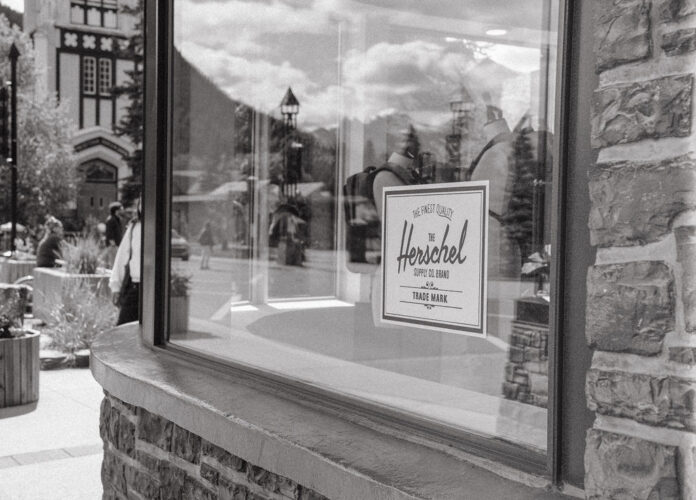
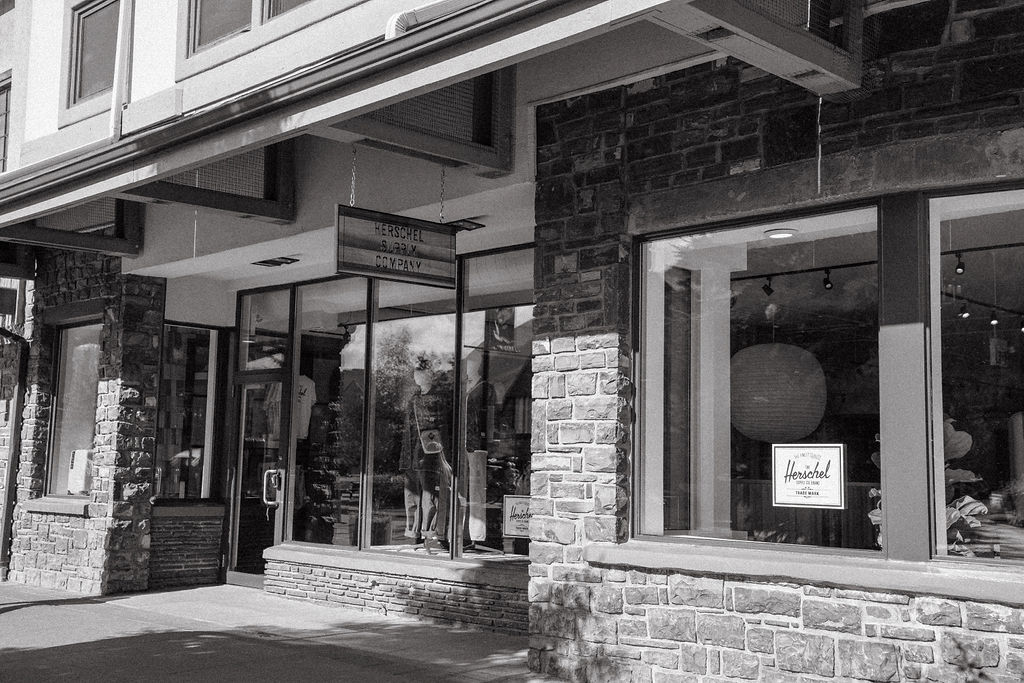
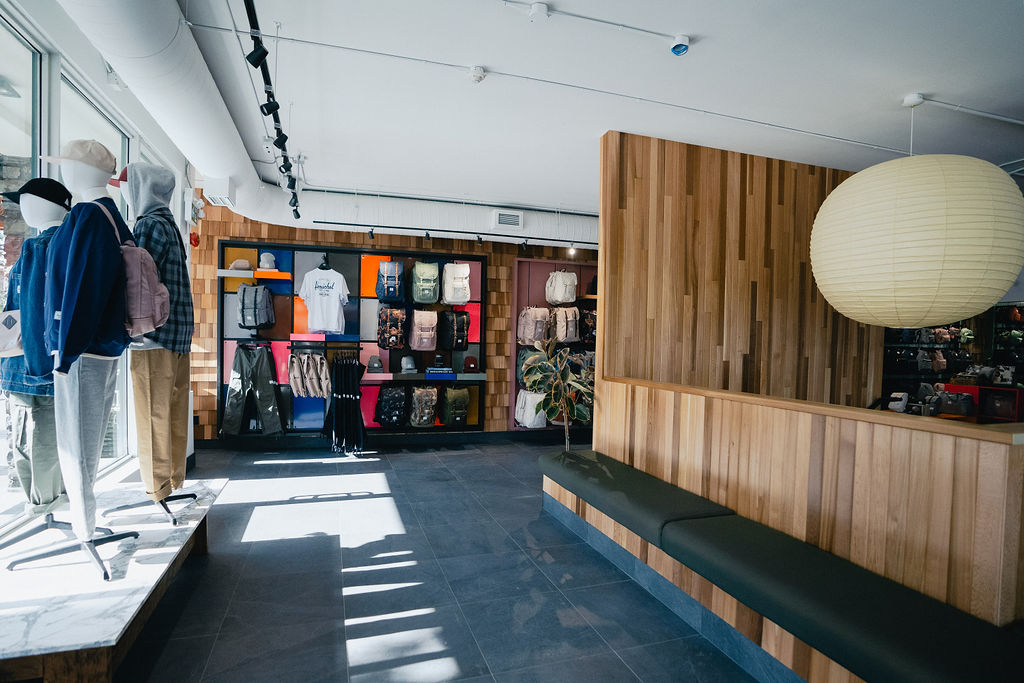
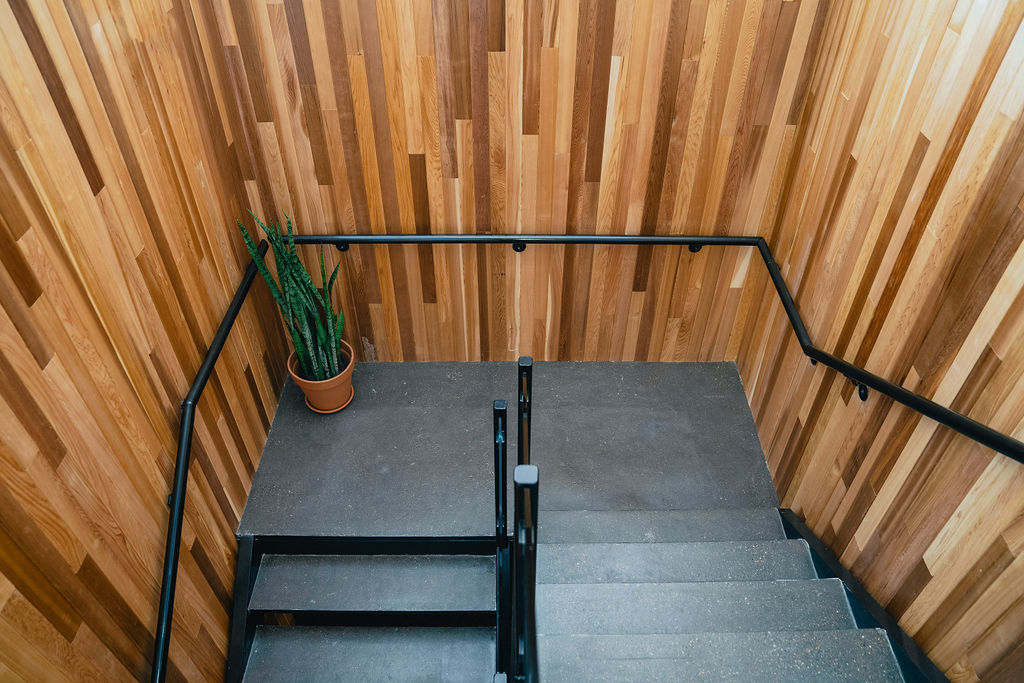
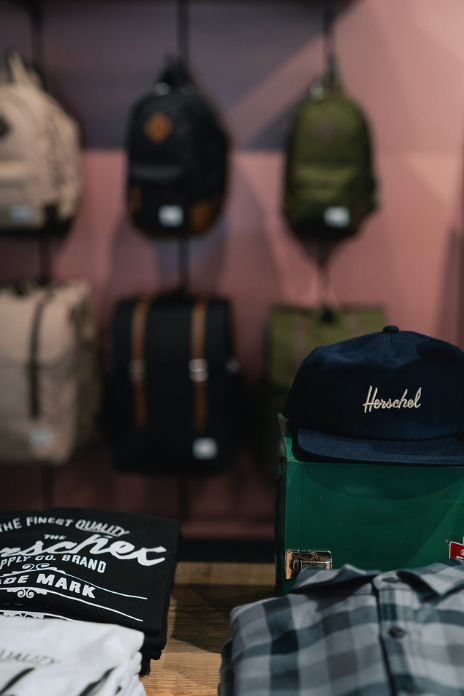
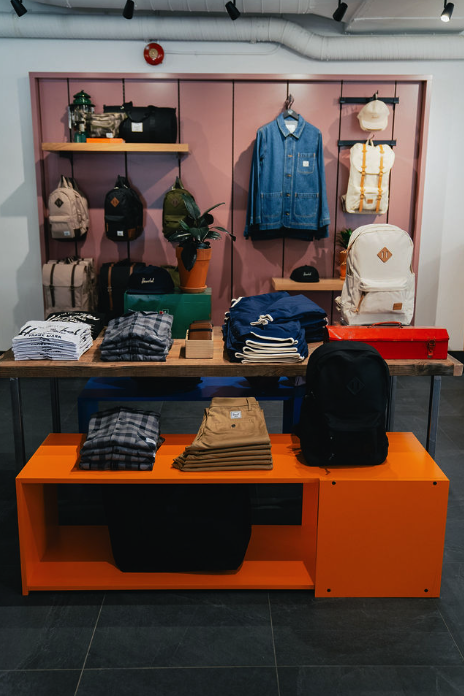
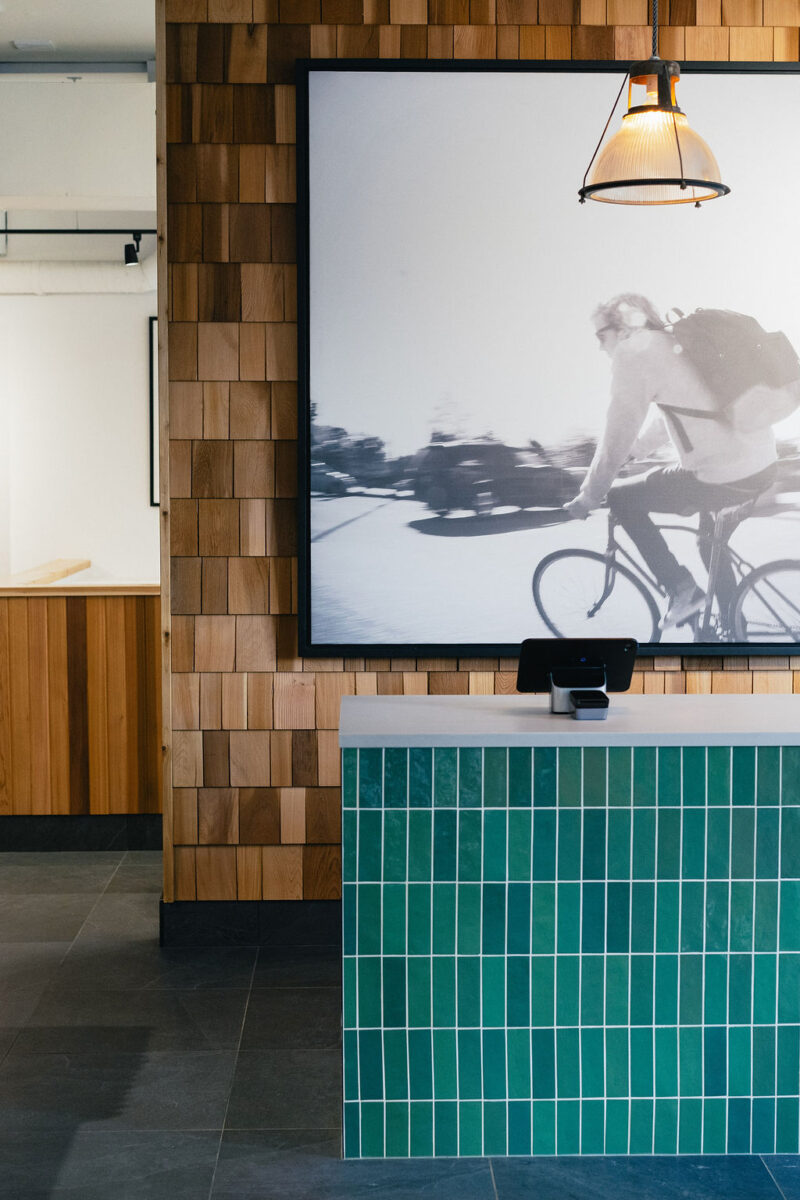
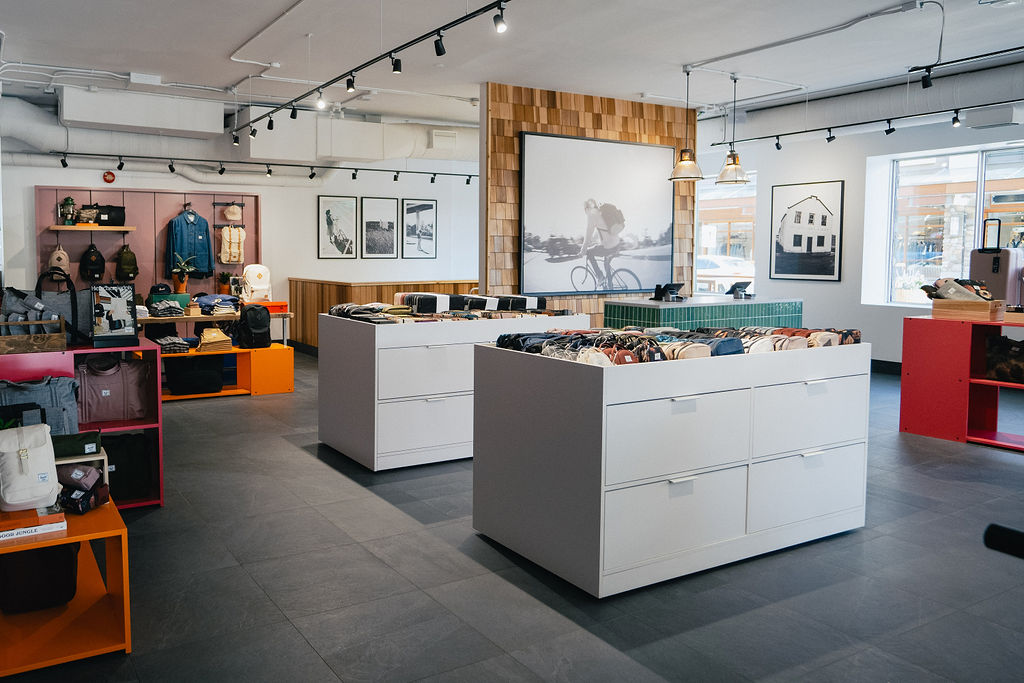
Herschel Supply Co. in Banff, Alberta (Image: Herschel Supply Co)
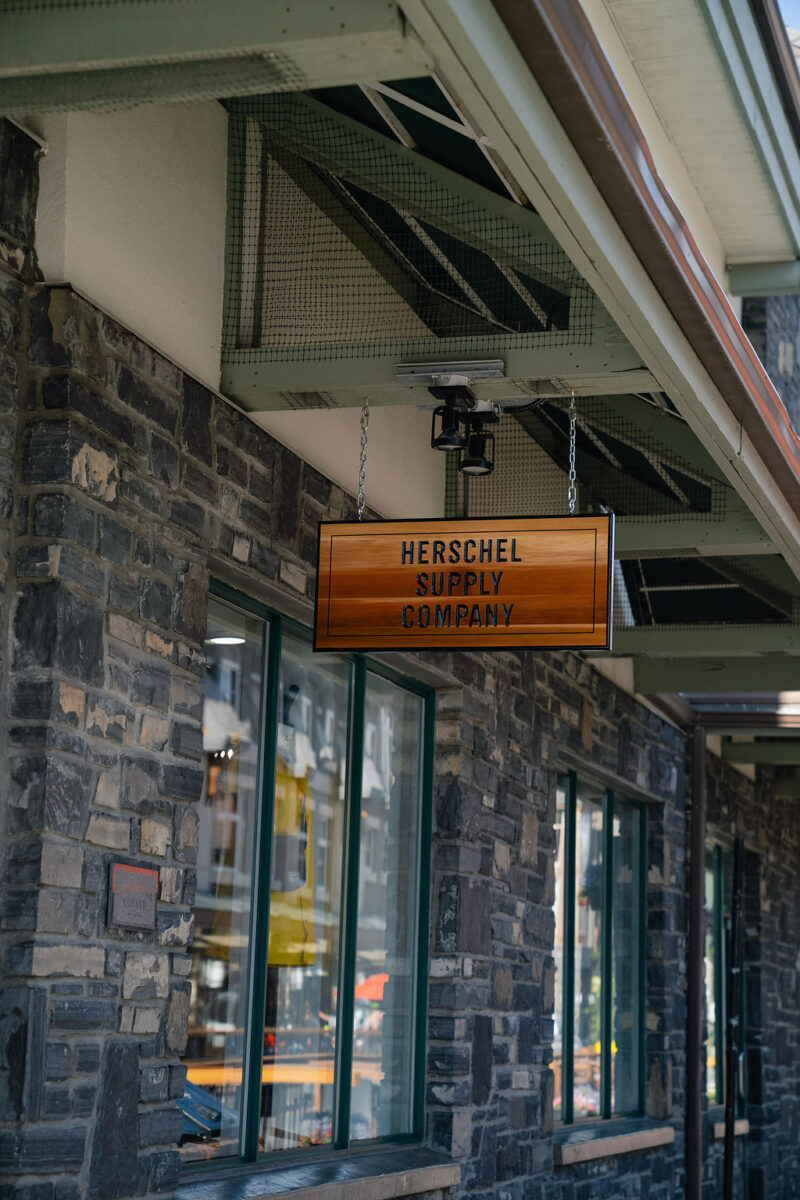
Vancouver-based Herschel Supply Co. has opened a new store in Banff, Alberta with a two-level, 2,800 square foot location at the corner of Banff Avenue and Wolf Street in the heart of the Canadian Rockies.
Retail Insider sat down with Lyndon Cormack, Co-Founder & Managing Director of Herschel Supply Co. to discuss the Banff store and what it means to the brand moving forward.
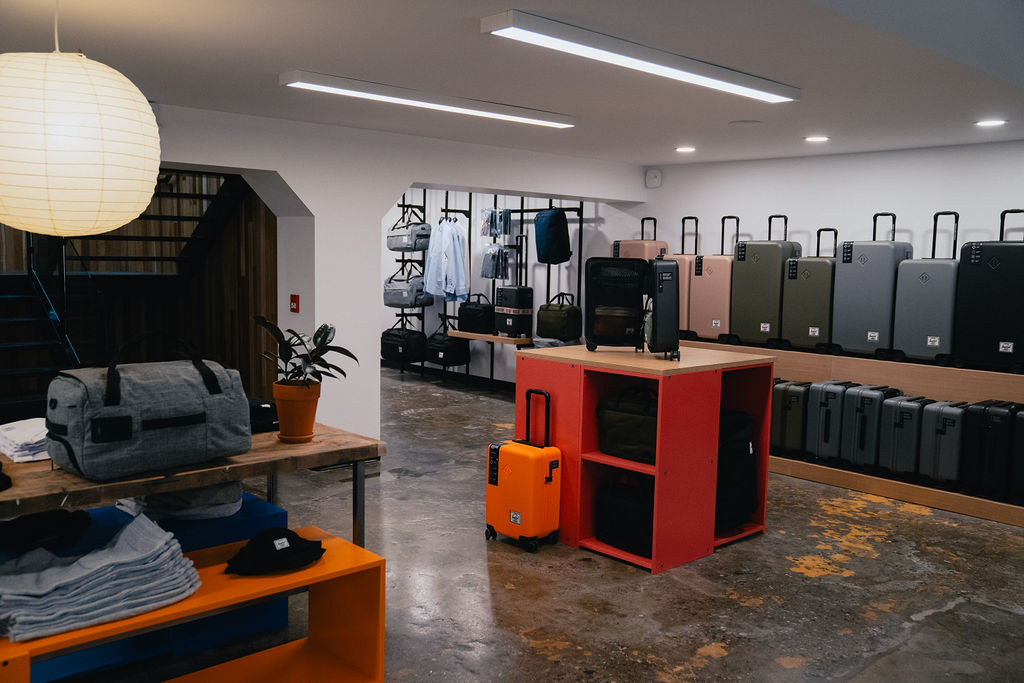
Herschel Supply Co. in Banff, Alberta (Image: El Fitz / Herschel Supply Co)
RI: What’s unique about the Banff location, and what spoke to you about the actual space – what made you sign on the dotted line?
Lyndon Cormack
LC: Growing up we spent a lot of time exploring the town of Banff and wandering those mountains. It’s our favorite place that holds a lot of memories, and to open a store in the heart of it, well it just doesn’t get much better than that. Part of it was actually lucky timing. We were on a work trip in Banff, and a flyer for 229 Banff Avenue caught my eye. The same business was in that space for decades. It’s one of the most prime locations you can have on Banff Avenue: a corner lot, playground right across the street, and the first corner most people hit when they enter the town. You don’t get locations as good as this.
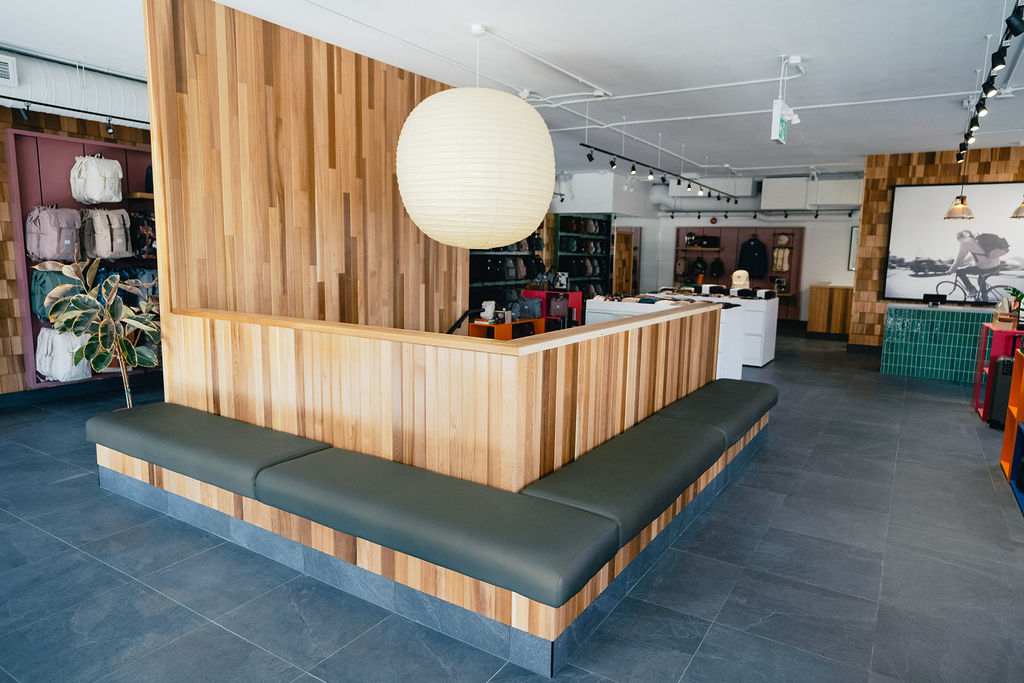
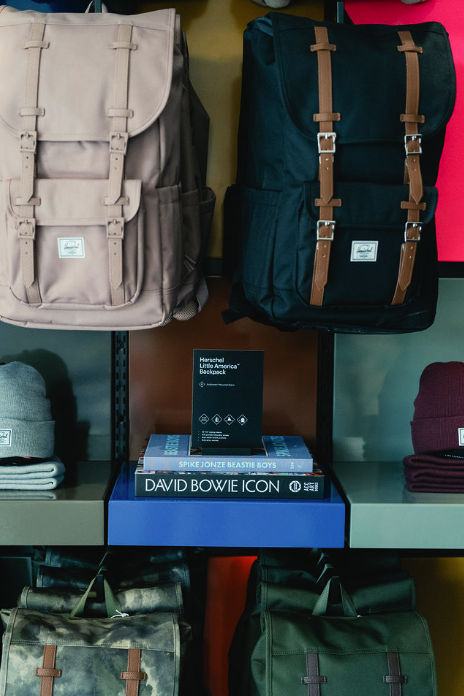
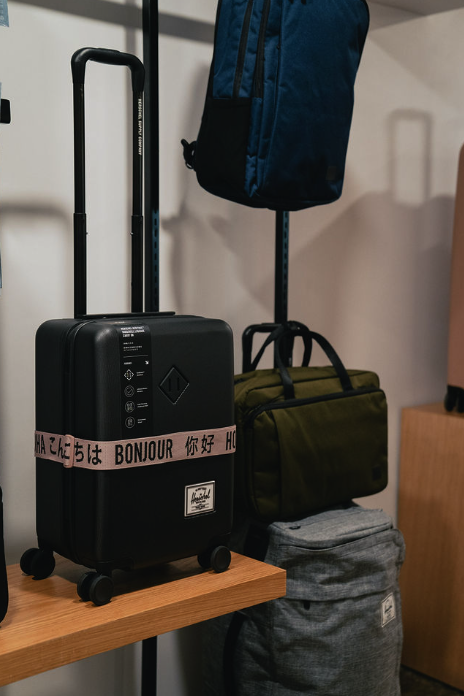
In terms of the actual space, Herschel Supply Banff is a two-level store, allowing us to showcase a wide selection of Herschel products. You’ll find our signature collection of backpacks, bags, travel accessories, luggage and apparel.
Herschel Supply Co. in Banff, Alberta (Image: El Fitz / Herschel Supply Co)
RI: With Banff undergoing a transformation in a post-pandemic travel era, what can you see the store focusing on and how can the brand look at the overseas traveller vs the out-of-province visitor?
LC: The pandemic highlighted the beauty we have in our own backyard, and Banff is a prime example. The town has seen more visitors than ever before, and there’s a renewed importance of being outside for both travelers and locals. The hope is that our Banff store will bring everyone together. Our bags have always been designed to get you to every journey, whether you’re taking a day trip to Banff or you flew across continents to get here. Our products speak to everyone.
Herschel Supply Co. in Banff, Alberta (Image: El Fitz / Herschel Supply Co)
RI: With this being in Retail Insider, our readership would be interested in hearing about what’s next for Herschel Supply Co. for Q3 and Q4 2023 and if there’s anything that you can share with us about the future plans past this fiscal year?
LC: Herschel has two more store openings later this year. We’re moving from the mountains of Banff to the busy cities of California and New York. The California store will be Herschel’s first on the west coast of the US, followed by our second location in New York City. As with all of our retail spaces, these stores will blend our roots in the Pacific Northwest and the unique local environment of each city.
“Today we are congratulating Howard and Pat Martin the owners of 229 Banff Avenue in Banff Alberta on the grand opening of the new Herschel Supply Company store at their building,” shared Fairfield. “This high-profile corner location has been held by their family for generations and is known locally as the ‘Earls Building’ with the well know restaurant operating on the second level for many years. Monika Blachut & Michael L. Kehoe at Fairfield Commercial Real Estate Inc. were engaged by Howard & Pat as their exclusive leasing broker for the building. Fairfield Commercial secured the Vancouver BC based apparel brand Herschel Supply Company to lease 4,700 square feet on the main and lower-level retail spaces.”
Additional Photos of Herschel Supply Co in Banff, Alberta
Herschel Supply Co. in Banff, Alberta (Image: El Fitz / Herschel Supply Co)Herschel Supply Co. in Banff, Alberta (Image: El Fitz / Herschel Supply Co)Herschel Supply Co. in Banff, Alberta (Image: El Fitz / Herschel Supply Co)Herschel Supply Co. in Banff, Alberta (Image: El Fitz / Herschel Supply Co)
Herschel Supply Co. in Banff, Alberta (Image: Herschel Supply Co)
Herschel Supply Co. in Banff, Alberta (Image: Herschel Supply Co)
Herschel Supply Co. in Banff, Alberta (Image: El Fitz / Herschel Supply Co)Herschel Supply Co. in Banff, Alberta (Image: El Fitz / Herschel Supply Co)
Herschel Supply Co. in Banff, Alberta (Image: Herschel Supply Co)
Herschel Supply Co. in Banff, Alberta (Image: Herschel Supply Co)
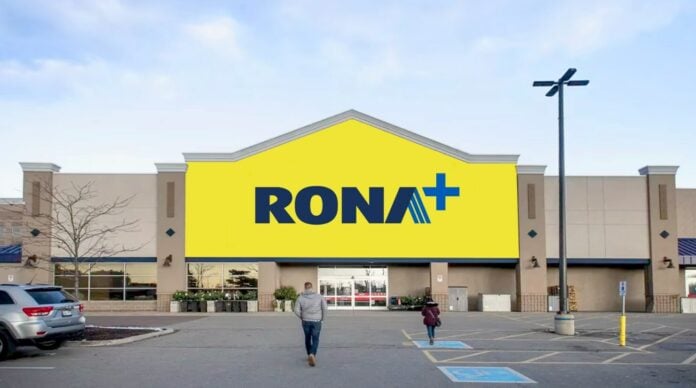
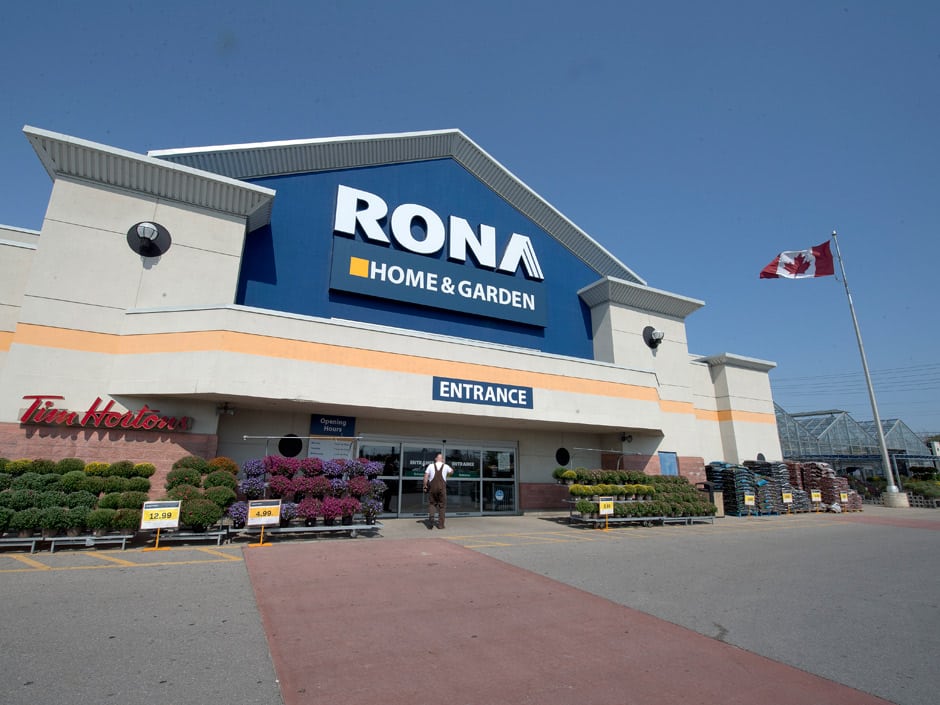
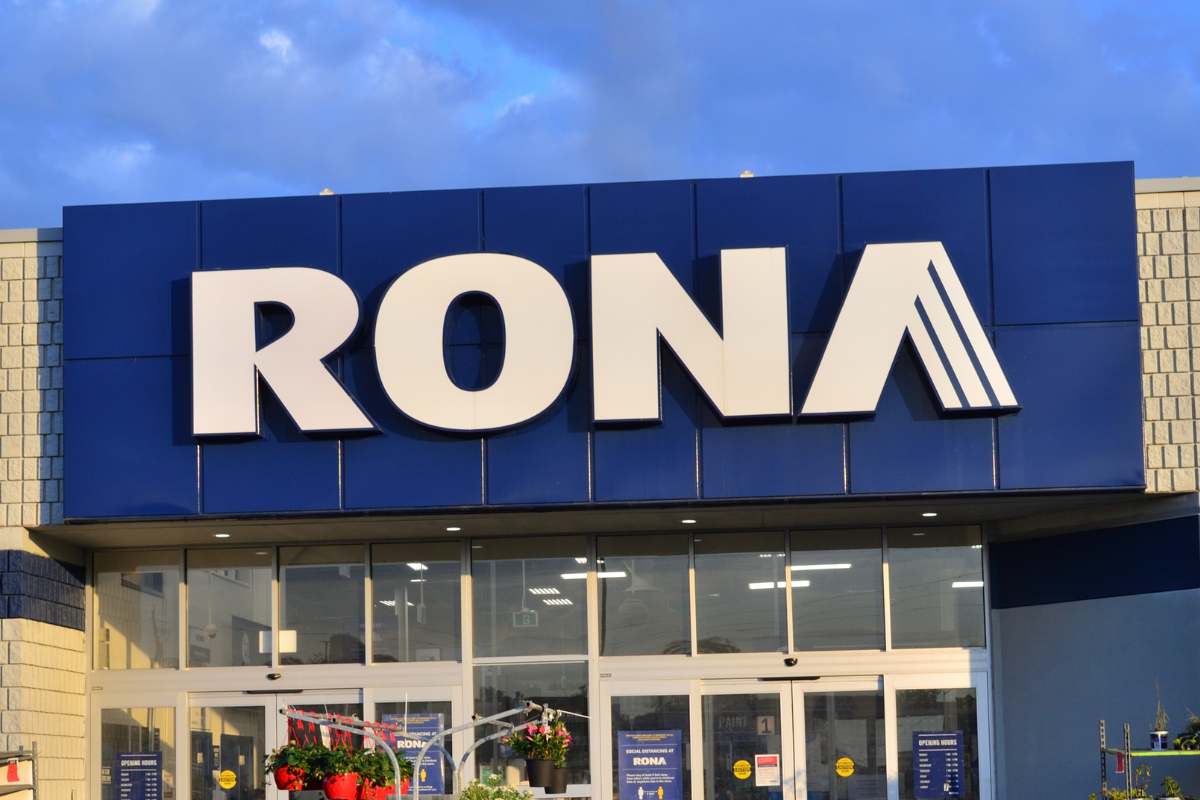
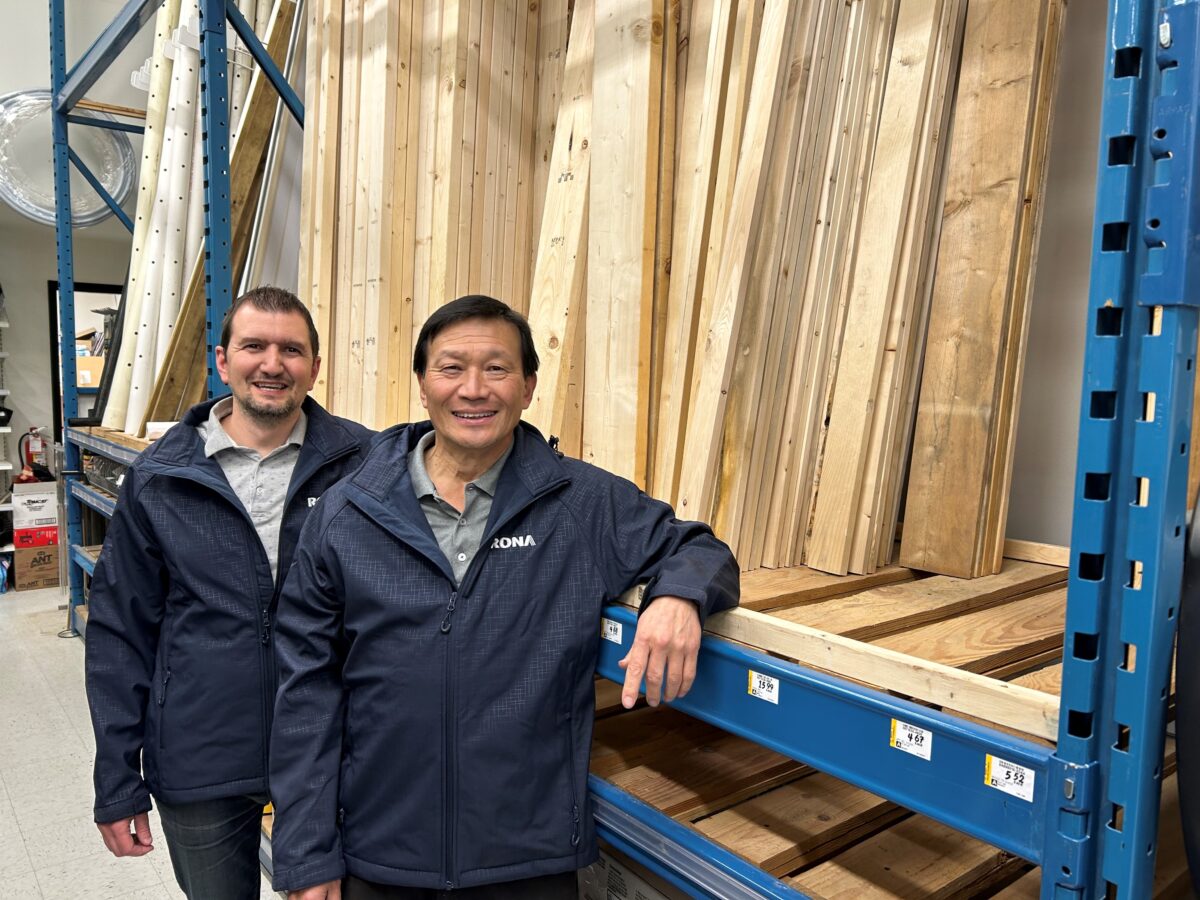
RONA, one of Canada’s biggest home improvement retailers, has announced it will be converting 10 Lowe’s stores in July to a new banner called RONA+.
Catherine Laporte
“This is an important step in our vision for the future of RONA,” said Catherine Laporte, Vice-President, Marketing at RONA, in a statement. “With these conversions, we are making a significant investment and renewing our commitment to the RONA brand. The new RONA+ banner is the first step in a wider plan aimed at redefining how Canadians shop for home improvement, creating new opportunities to improve how we serve them.
“This news is positive for all our stakeholders, including RONA’s employees, affiliated dealers, vendors, customers and the communities in which RONA’s operates. For close to 85 years now, RONA has been a household name standing for great service, exciting product and brand assortments, good value, and a strong sense of community. We want to build on that and create momentum for this beloved Canadian-operated brand. We recently redefined the mission of the RONA Foundation, which plays an essential role in the vision we have for the future of RONA, a leader that not only challenges and improves how the industry serves Canadians, but who also shows up in meaningful ways to support communities across the country.”
RONA, which is based in Boucherville, Quebec, operates or services approximately 450 corporate and independent affiliate dealer stores in a number of complementary formats under different banners, which included, Lowe’s, RONA, Réno-Dépôt and Dick’s Lumber.
RONA recently announced it is simplifying its organizational structure to strengthen its position on the market and be more efficient and that translates into the elimination of 500 positions.
“The organization firmly believes that its transition plan aimed at positioning RONA as the leader of the Canadian home improvement industry will support its viability and benefit stakeholders in the long run,” said the retailer.
“Decisions like these are never taken lightly as they impact the organization’s employees and their families. Employees affected by this change will be supported throughout this transition. The company’s head office will remain in Boucherville, on the South Shore of Montréal.”
RONA Markham (Image: Wikipedia)
It also announced the appointment of Andrew Iacobucci to the role of Chief Executive Officer. Prior to joining RONA, he was Executive Vice President and Chief Commercial Officer at US Foods, a leading US food distribution company.
Garry Senecal, who occupied the role of Interim CEO, has agreed to stay with RONA until the end of the year to ensure a smooth transition.
RONA also recently announced it had opened its first urban-style store in the Greater Vancouver Area in Walnut Grove in Langley, BC.
It is partnering with T & T Hardware Group owners Al Tsuchyia and Michael Trentalance in its affiliated dealer network. For RONA, the new urban style format continues to grow for the brand with more growth planned in the future.
RONA was founded in Quebec in 1939. The company said the conversion of Lowe’s stores to RONA+ will start at the end of July and take place over several months. The first 10 Lowe’s stores to be converted are all located in Ontario:
Lowe’s Ancaster
Lowe’s Brantford
Lowe’s Cambridge
Lowe’s Hamilton
Lowe’s Kitchener
Lowe’s Niagara Falls
Lowe’s Sarnia
Lowe’s Waterloo
Lowe’s Windsor
Lowe’s Windsor East
The company said all converted stores will remain open during the conversions, guarantees offered by Lowe’s will be honoured, gift cards will still be accepted and private brands will remain in the stores’ offering.
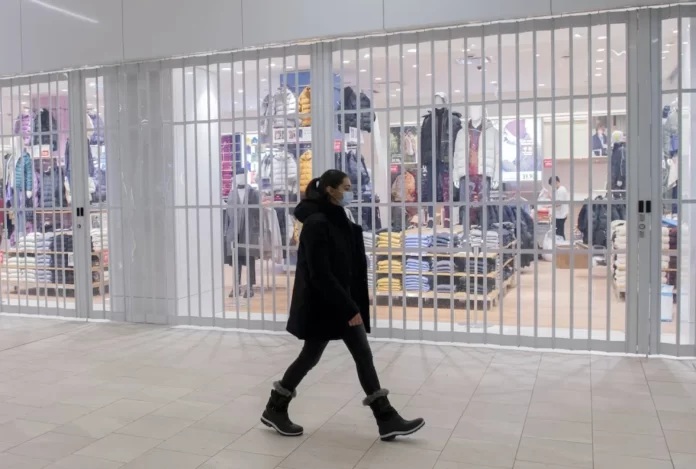
A woman walks by a closed store in a shopping mall in Montréal, in January 2022, during the COVID-19 pandemic. THE CANADIAN PRESS/Graham Hughes
The retail industry has experienced major upheavals over the past few years due to the rise of online retailing and the decline of shopping malls. One retail sector that has been hit especially hard is department stores.
The challenges faced by retailers were made even worse by the COVID-19 pandemic. Retailers and department stores struggled to stay afloat during lockdowns. To survive the tough retail environment, they needed to be both resilient and innovative.
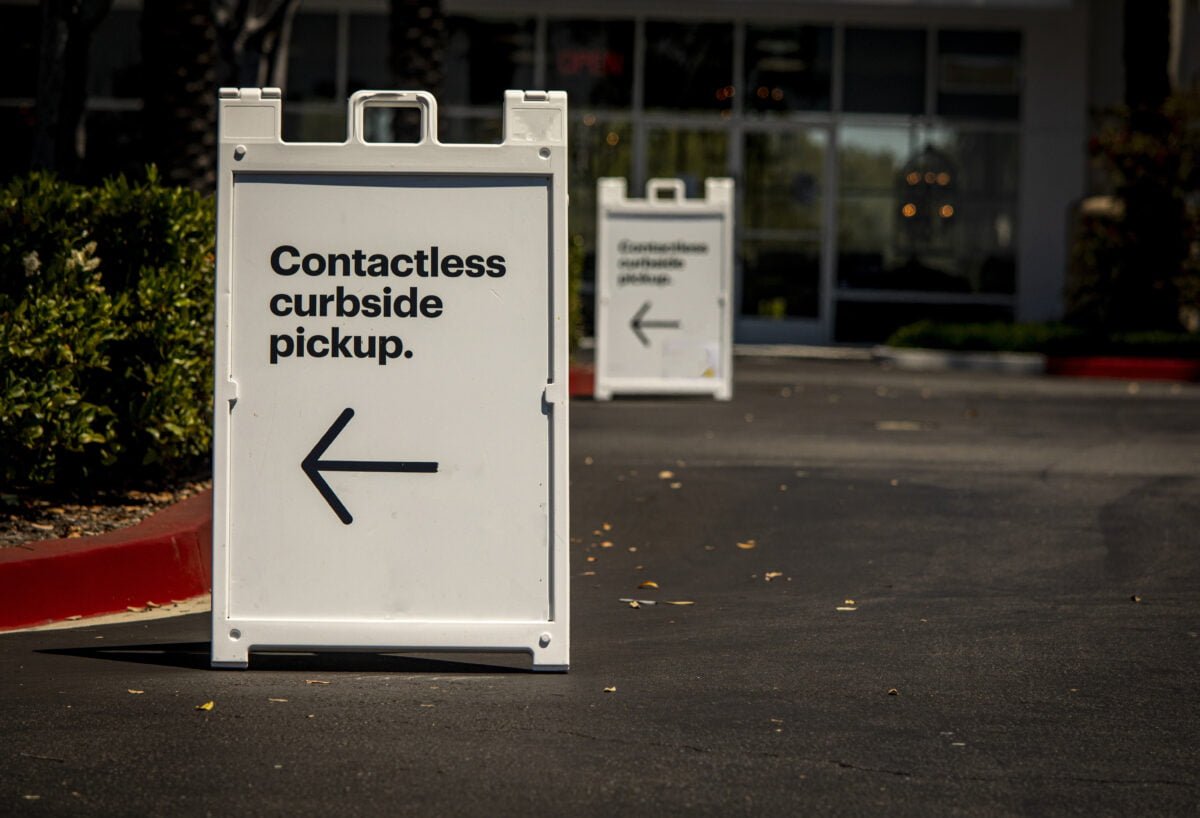
Sign advertising contactless curbside pickup at retail store parking lot
The first strategy was the use of curbside pickup. This allowed customers to shop safely and conveniently by ordering online and collecting their purchases outside physical stores.
In addition, another similar strategy — buying online and picking an item up in-store — was widely used prior to the pandemic, but the additional safety of parking lot deliveries made curbside pickup a welcome option for shoppers.
This strategy did more than just uphold operations during the pandemic — it also underscored the importance of prioritizing customers and their safety in the face of adversity.
Giving customers more time to return an item — sometimes even up to a year — gave customers more time to test out items and return the ones they didn’t want.
Like curbside pickup, longer product return windows were also used prior to the pandemic, but health and safety restrictions accelerated its use.
Virtual try-on technology
Virtual try-on technology allows customers to test items virtually before committing to a purchase. (Shutterstock)
A third approach — the use of virtual try-on technology — helped retailers survive lockdowns and could also prove to be valuable in the long run.
This technology allowed customers to “try on” items virtually before committing to a purchase, either online or in-store. Customers were able to try on products from their homes, like clothing or jewellery, using their camera-equipped devices, reducing the need for physical store visits and dressing room usage.
Our research found that the impact of try-on technologies on department store sales was highest when COVID-19 restrictions were low.
The closure of physical stores and safety concerns greatly accelerated the adoption and use of this technology. It not only boosted sales for apparel items, but also unlocked opportunities for a wider range of product offerings, like apps that let you virtually test out furniture or makeup at home.
These department stores were able to retain customer trust and loyalty by offering alternative shopping options and flexible return policies. This demonstrates the importance of prioritizing customers and being prepared to adapt to evolving consumer behaviours.
The future of retail
The narrative of department stores during the pandemic was one of adaptability and the pursuit of innovation. The lessons gathered during the pandemic will continue to shape department store strategies and guide their transformation in the future.
By leveraging their unique strengths — such as having a wide range of products, a brand history and customer relationships — department stores can re-imagine their role in the retail ecosystem and reignite consumer interest.
As the retail landscape continues to evolve, department stores have the opportunity to reclaim their relevance by capitalizing on their strengths and staying attuned to emerging consumer trends.
The journey ahead may be challenging, but with strategic foresight and a commitment to innovation, department stores could still thrive in this new era of retail.
By Xiaodan Pan, Associate Professor, John Molson School of Business, Concordia University, Martin Dresner
Professor, Logistics, Business and Public Policy, University of Maryland and Ruifeng Wang, PhD Student in Supply Chain Management, University of Maryland.
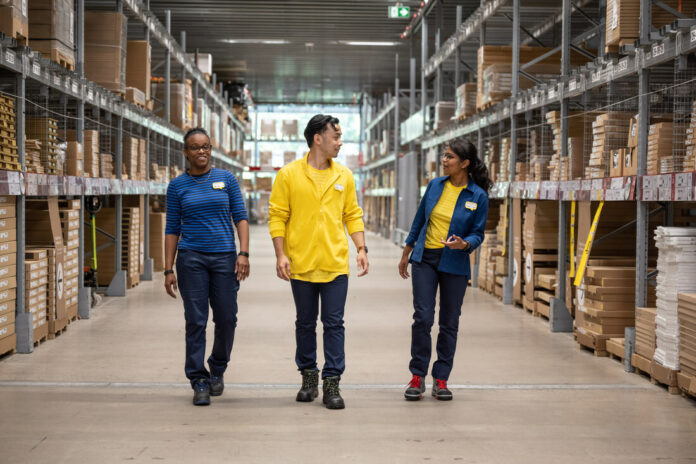
IKEA Canada announces plans to expand fulfillment capabilities in the Greater Vancouver and Toronto Areas with investments of more than $400 million. (CNW Group/IKEA Canada)
IKEA Canada is expanding its investment in omnichannel with more than $400 million dedicated to expanding the retailer’s fulfillment capacities in the Greater Vancouver and Toronto Areas.
Geoffrey Macdonald
“At IKEA, we are always looking for ways to optimize our operations to better meet our customers’ need for convenience and speed, while continuing to help fulfill their aspirations for a better life at home,” said Geoffrey Macdonald, CFO, IKEA Canada, in a statement.
“We are focused on further transforming and developing our fulfillment networks in key markets across the country to ensure that our products are available to customers whenever, wherever, and however they choose to shop with us.”
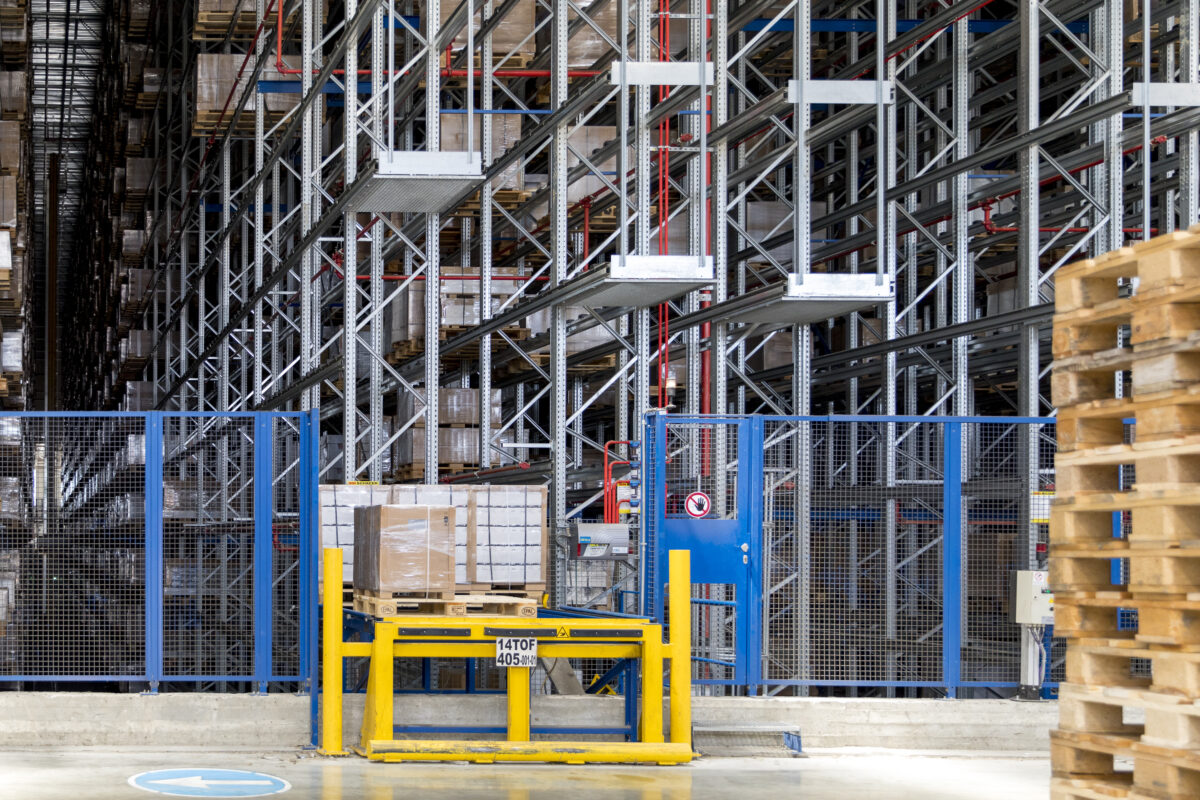
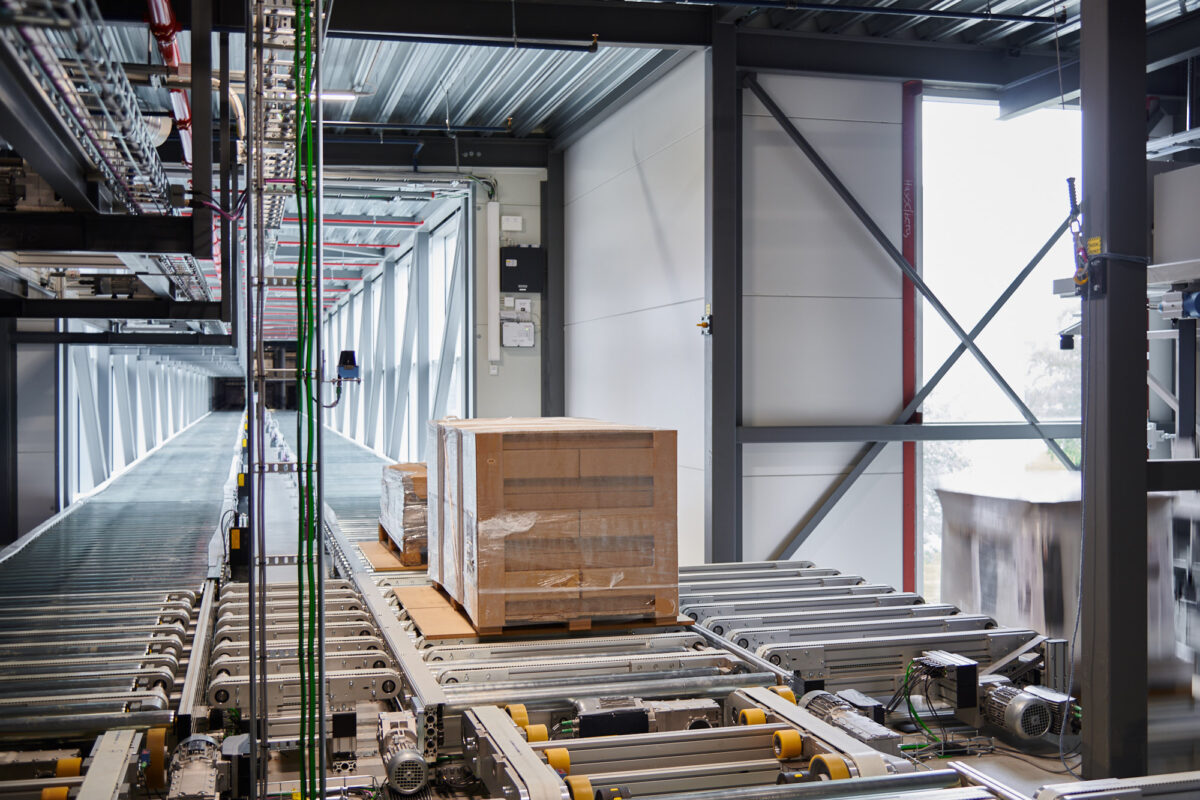
Image: IKEA CanadaImage: IKEA Canada
In the Greater Vancouver Area, IKEA Canada said it aims to expand fulfillment capabilities at IKEA Richmond. Should the expansion project be approved, upon completion, the expanded IKEA Richmond store will provide customers with enhanced click and collect and locker pickup services, while supporting truck, parcel, and collection point delivery throughout the Greater Vancouver market. Expansion plans have been developed in alignment with the brand’s climate-positive ambitions, and the new facility will help support short and stable lead times to customers while reducing costs and supporting market growth.
In the Greater Toronto Area, IKEA Canada said it intends to build a new Customer Distribution Centre in Hamilton, Ontario in 2025 that will support expansion throughout southwestern Ontario. IKEA Etobicoke and IKEA Vaughan will also undergo expansions by 2025 to strengthen their store fulfillment capabilities and further enable the company to keep in-demand products available and delivery times as short as possible, while also supporting future growth in the market.
“This omnichannel transformation includes introducing new ways to shop, enhancements to existing store experiences, strengthened digital capabilities and services, along with optimized fulfillment networks to ensure that regardless of when, where or how customers choose to shop, their experience is integrated and seamless,” said the company.
“Renowned worldwide for its large-format stores boasting home furnishing inspirations and solutions where customers can shop and return home with their purchases in-hand, today customers can also shop the brand’s affordable and sustainable products and solutions digitally through IKEA.ca and the shoppable IKEA app. Further, customers can choose to receive their purchases through a variety of pickup and delivery services that best suit their needs and budget.”
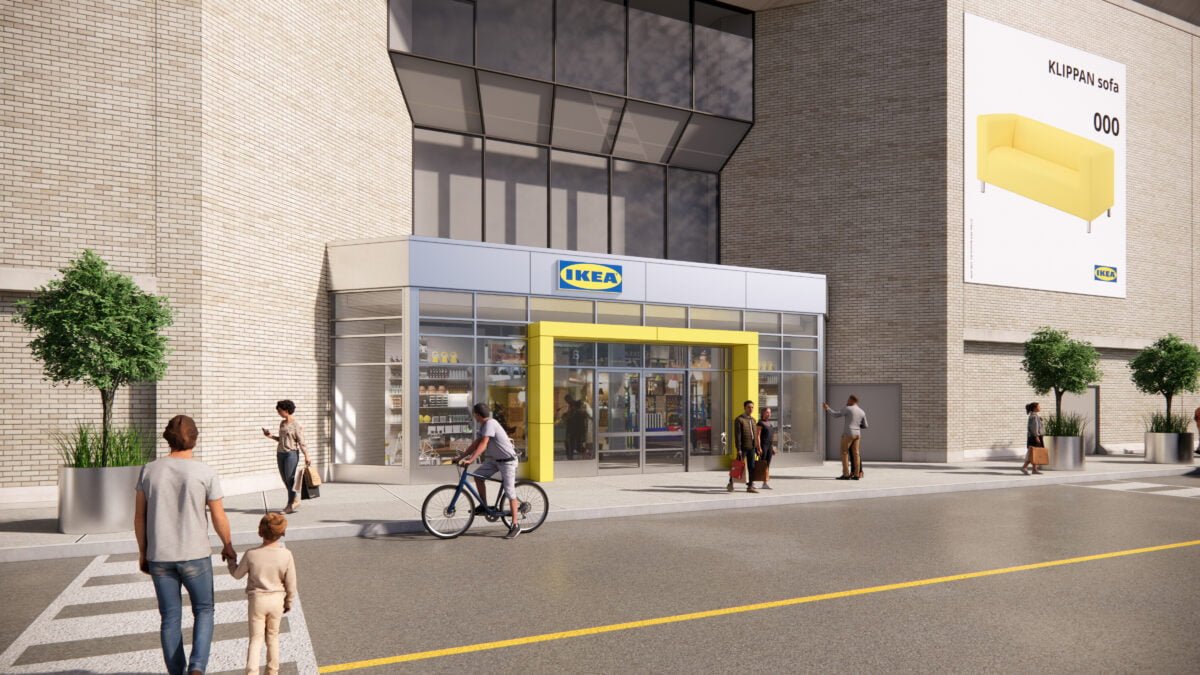
IKEA Pick and Order Point Boisbriand (Image: IKEA Canada)IKEA Scarborough Town Centre Rendering (Image: IKEA)
IKEA Canada continues to expand its diverse network of customer meeting points including Plan and order points now open in Boisbriand and Brossard, QC as well as Kitchener, ON, Canada’s first city-centre store in downtown Toronto, and the highly anticipated small-format store at Scarborough Town Centre.
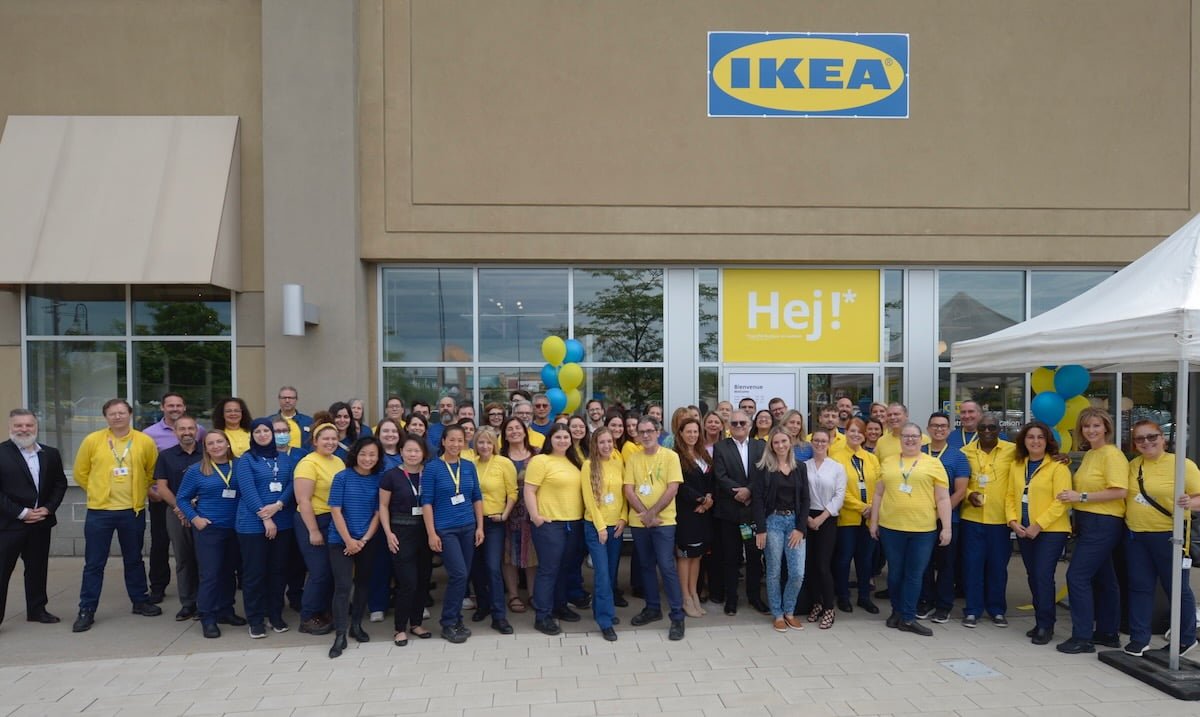
Founded in 1943 in Sweden, IKEA is a leading home furnishing retailer. IKEA Canada is part of Ingka Group which operates 389 IKEA stores in 32 countries, including 14 in Canada. Last year, IKEA Canada welcomed 21.2 million visitors to its stores and 236 million visitors to IKEA.ca.
“At a time when customers want fast and affordable home deliveries, having a network of stores with logistics capabilities close to where our customers live is a huge advantage both for our customers and our planet. As fulfillment hubs, our stores can handle home deliveries for items bought at the store and orders placed online and through our Customer Support Centre, Plan and order points and Design studios. By fully realizing the potential of our stores, it will allow us to meet our customers with speed in a more sustainable way. To achieve this, the IKEA Ottawa store added automation that allows for efficiencies in picking customers’ orders. By having more products stored onsite and readily available instead of being shipped from our Distribution Centre, we can reduce lead times to our Ottawa customers along with our carbon footprint,” said the company in its annual report.
“To ensure that our products are available for customers when they choose to shop with us, we are continuing our journey to expand and develop our fulfillment network. We want to ensure that we meet our customers with a seamless omnichannel shopping experience that is delivered with convenience and speed. In our four Central Fulfillment units, we added technology that creates customized boxes to fit the size of a customer’s online order. Our co-workers can pack boxes faster because they require less “paper filler” which reduces the amount of packaging by up to 20 per cent. This is another way we’re reducing our carbon footprint. And to better serve our customers in eastern Canada with improved product availability, we have invested in constructing a new Distribution Centre and Customer Distribution Centre in Beauharnois, QC.”
Toronto Waterfront from Marina Quay West (Image: Dustin Fuhs)
The Toronto waterfront is always continuing to evolve and improve its image by adding new condominiums, shopping spaces, and more interactive spaces.
Michael Wolfe, the Director of Development of Waterfront Toronto, and Tim Kocur, the Executive Director at the Toronto Waterfront BIA, discuss what is next for the waterfront, including new projects and a possible move to make it a year round destination.
New Developments
Parliament Slip and Bayside Developments (Image: Dustin Fuhs)
Tim Kocur
As for new developments along the waterfront, Kocur says there are several on the go including the Quayside development and Bayside Development – both projects will bring residential and retail spaces along the waterfront.
Quayside is going to be a mixed-use development which will include residential units and retail spaces. Wolfe says there will be approximately 300,000 square feet of non-residential space which breaks down into 100k for institutional, 100k for office spaces, and approximately 100k for retail and community spaces.
Michael Wolfe
Bayside, Kocur says, will also be a place where people can “work, live, and play.” The development is located south of Queens Quay and will be the next destination for people to check out at the waterfront as it will be mixed-use. The development will have around 2 million square feet of mixed-use residential, retail, and community spaces and in that will have approximately 1,800 new residential units.
Bayside Construction on Toronto’s Waterfront (Image: Dustin Fuhs)
In addition to building developments, Kocur and Wolfe say the Toronto waterfront is also working on the Parliament Slip, located at East Bayfront, which will bring more people to the waterfront year round as it will have all season activities. The size will be 1.67 hectares and once completed, it will be a place where people can come down to swim, see performances, will have floating restaurants, and will complement the waterfront developments surrounding it.
More of the waterfront developments can be located on the Waterfront Toronto website.
Going Forward, What Retails Would Work Best?
100 Queens Quay at Sugar Wharf (Image: Dustin Fuhs)100 Queens Quay at Sugar Wharf (Image: Dustin Fuhs)
Wolfe and Kocur say the main demographic at the waterfront is between twenty and forty years old and focus and spend more on food and lifestyle than across the city.
“The demographics in the waterfront are a little different than the city average. People at the Toronto waterfront tend to be younger and tend to spend more time on food, fitness, and wellbeing. People here generally walk to work as a lot of people live and work in the same area and why they live at the waterfront, and based on the ages, we have a lot of singles rather than families,” says Wolfe. “So I think in terms of retailers, we are targeting some various fitness retailers and various food options. We will have to see what makes sense, but we are hoping that we can fill spaces with a very diverse collection.”
NBA Courtside Restaurant at Pier 27 The Tower On The Lake (Image: Dustin Fuhs)
Wolfe says since the waterfront will probably look a bit different in about twenty years from now, they are looking to also have flexible retailers such as pop-ups, local, and destination retailers.
“What works on day one might be a little different than what works ten years from now, so we are trying to create flexibility so those things can be shifted because I think we are trying to create a presence here that is a little different than the rest of the city. So we are trying to get a diverse mix at the waterfront,” says Wolfe.
Seasonal to Year Round
Corner of Lower Jarvis at Queens Quay East (Image: Dustin Fuhs)
One of the main challenges Wolfe says he sees on the waterfront is that it is seasonal – something he would like to change.
“The general struggle right now is that right now the waterfront is a bit seasonal. So there is just a lot more activity in the summer months than the winter months. This is one of the things we will be working on and kind of thinking about how we can activate and what we can bring down there to try and draw people to the waterfront all year round,” says Wolfe.
The Toronto waterfront is not the only one with this challenge as the Halifax waterfront BIA has also noted that they are also working on making the Halifax waterfront a year round destination as well. Both cities will do this by bringing more retailers and activities to the area, Wolfe says making the waterfront a year round destination will take time and will start working on the project later on.
“I don’t think it is something we will address in the next year, but later and we are thinking about what active spaces to bring down to the waterfront to draw people down, not just in the summer but also in the winter, Winter activations can create both foot traffic down there that will spill over to retailers, but also just to remind people that this is a place to visit and there are things to do in the winter months even if it is not necessarily top of mind,” says Wolfe.
Another challenge Wolfe says is construction as it disrupts the flow of the waterfront and sometimes blocks access, but the improvements and developments will make the waterfront an “incredibly attractive location in the coming years, but it is a work in progress,” says Wolfe. The ongoing construction, Wolfe says, makes tension around the areas, especially for retailers, as it is not a selling point; however, despite this Wolfe says he is seeing an increased number of retailers to the area.
The Quay Rental Towers at 370 Queens Quay West (Image: Dustin Fuhs)Aqualina at Bayside and George Brown College: Limberlost Place (Image: Dustin Fuhs)
As challenges come and go, Kocur says the main focus for the BIA is to support businesses on the waterfront.
“We don’t try and change direction for the waterfront, we are more about making sure we are giving feedback, support, and assistance wherever we can to make sure everyone is working together and make sure the developments are on track to being completed. So we try not to get in the way, we just provide our feedback and nudge the waterfront in the right direction businesses would like them to go in,” says Koncur.
This summer, locals and tourists can expect various summer activities including Smorsgasburg, a food market which will bring a diversity of food vendors from across the city and will run for several weekends over the summer, the Underpass Park Farmers Market, and there will be several live music events to draw people to the waterfront.
Love Park at York Street and Queens Quay West (Image: Dustin Fuhs)
RONA, one of Canada’s leading home improvement retailers, has opened its first urban-style store in the Greater Vancouver Area in Walnut Grove in Langley, BC.
RONA, operating or servicing some 450 corporate and affiliated stores under different banners, is partnering with T & T Hardware Group owners Al Tsuchyia and Michael Trentalance in its affiliated dealer network.
Tsuchyia and Trentalance, two former RONA employees, have rebranded their previous Ace Hardware store into the first RONA urban-style store in the Greater Vancouver Area.
“We know really well the strength of the RONA brand and its efficient distribution network. RONA has a diverse retail offering, so it’s the perfect banner to bring our vision to life,” says Trentalance.
Michael Trentalance and Al Tsuchyia (Image: Rona)
Tsuchyia said the store is being expanded from its current 5,500 square feet to about 7,000 square feet.
“We realized the community we’re in needed a lot more. So then we started expanding it and expanding it. We’ve been expanding our building supply stuff,” he said, of the store which originally began primarily as a hardware store about four years ago.
“When we first opened up with Ace, we were part of RONA/Lowe’s and we were getting most of our stuff, 95 per cent of our stuff we’d buy through the RONA/Lowe’s network. Then Lowe’s got rid of the Ace part and sold it to Peavey Mart. So we were getting our supplies through them but we were kind of struggling all along because Peavey Mart’s more of I guess farm supply. So they didn’t have much hardware. And for us for the building material, it was non-existent. So we would have to source all that stuff ourselves.”
The new affiliation with RONA was a natural progression.
RONA store in Anjou (Image: RONA)
For RONA, the new urban style format continues to grow for the brand with more growth planned in the future.
Jean-Sébastien Lamoureux
Jean-Sebastien Lamoureux, Senior Vice President of RONA affiliates, wholesale, and public affairs, said the company has a handful of these stores in the Montreal area.
He said the company has been looking to expand the concept in the West in urban centres.
“What we’ve been focusing on in the last couple of years is more on the rural side of things. We do have relationships with dealers on the island of Montreal which would be close to . . . the geography (of Walnut Grove) serving the types of customers they’re serving,” said Lamoureux. “We feel that for those types of dealers RONA offers a very unique toolbox for them to succeed and be able to grow in their market.
“Our ability from an online perspective to support our dealers with this is a major, major traction for dealers in more urban regions because people are able to order whatever they want online and pick up in store close to their neighbourhood. It’s unrealistic to have a big box close to all Canadians and that’s where we feel having those types of dealers, wearing the RONA banner, is a plus for us. So that’s why we’re very happy to say it was our first one in the Vancouver region but it’s a format that does exist in the island of Montreal and in some other major cities in the country. But something quite frankly we want to push way more in the future.
“We think we have the most compelling offer for those types of stores in the country and we want to be at the forefront of this in the future.”
Image: Rona
Lamoureux said a big box store is typically about 100,000 square feet and more.
“We look at what’s going on in the country and we’re going to be very aggressive approaching some of those dealers just to share with them the compelling offer that RONA has for that type of store,” he said. “We envision that’s something that’s going to become more and more appealing in the future because you need that proximity store right next to that neighbourhood.
“And those stores, their markets can be counted by blocks, not by kilometres. That’s the place you want to go when something’s missing instead of driving a long way. That’s where we think there’s a great opportunity first and foremost for any dealers who would have a store like that but also for us is to have the most compelling offer . . . That’s where we think we can differentiate ourselves from the competition.”
Meanwhile, RONA recently annouced it is simplifying its organizational structure to strengthen its position on the market and be more efficient and that translates into the elimination of 500 positions.
“The organization firmly believes that its transition plan aimed at positioning RONA as the leader of the Canadian home improvement industry will support its viability and benefit stakeholders in the long run,” said the retailer.
“Decisions like these are never taken lightly as they impact the organization’s employees and their families. Employees affected by this change will be supported throughout this transition. The company’s head office will remain in Boucherville, on the South Shore of Montréal.”
Andrew Iacobucci
It also announced the appointment of Andrew Iacobucci to the role of Chief Executive Officer. Prior to joining RONA, he was Executive Vice President and Chief Commercial Officer at US Foods, a leading US food distribution company.
Garry Senecal, who occupied the role of Interim CEO, has agreed to stay with RONA until the end of the year to ensure a smooth transition.
Samsung Canada has partnered with Code Ninjas in the Greater Toronto Area to launch ‘Galaxy Builders’, an interactive learning experience to encourage coding for young Canadians.
Youth, between the ages of 5 and 14, are invited to attend free coding workshops where they can learn how to code and create an interstellar digital Galaxy and test their innovations using Samsung Galaxy devices at select Samsung Experience Stores and Code Ninja locations across the GTA.
Raj Doshi
“As the digital landscape continues to evolve, computer coding skills are more important than ever and we’re proud to work with Code Ninjas to empower Gen Alpha coders to unlock their potential to learn with Samsung Galaxy technology,” said Raj Doshi, Head of Mobile Business at Samsung Electronics Canada. “Equipped with our Galaxy mobile devices, these digital experiences not only give youth the opportunity to learn a key digital skillset, but also provide them with a space to unleash their imagination and bring their worlds to life.”
“As our future generation of leaders, Code Ninjas believes that there’s never been a more exciting time to advance our culture – starting with our youngest ones,” said Sapan Jot, owner of Code Ninjas South Etobicoke in Toronto. “Every kid deserves the chance to unlock their innate, unlimited capacity to learn, and coding helps nurture key skills such as teamwork, problem solving, and critical thinking. We’re thrilled to work with Samsung Canada to provide seamless coding experiences and expose even more youth to these skillsets.”
Image: Samsung
Using the Code Ninjas curriculum catered for youth, the activations will be equipped with Samsung Galaxy Tab S8 Ultra, Galaxy Z Fold4 and Galaxy S23 Ultra devices. The Android open source platform paired with the intuitive usability of Galaxy devices makes learning how to code more accessible to anyone. With Code Ninjas instructors on hand providing step-by-step lessons, participants will build their own personalized constellation using code on an easy-to-use software app that allows them to adjust parameters such as number of stars, colours, planets, and rate of pulsation.
The Samsung-created Galaxy Builders camp will be available to participants at Code Ninjas locations in Etobicoke North, Etobicoke South and Leaside on June 10, June 17, June 24, and July 8, 2023. These locations will also be integrating Samsung Galaxy technology, including the Galaxy Tab S8 Ultra, Galaxy S23 Ultra and Galaxy Z Fold4, into the existing camp curriculum from June 1, 2023.
The Galaxy Builders workshops will also be hosted at Samsung Experience Stores on the following dates:
CF Sherway Gardens from July 8 to July 9.
CF Toronto Eaton Centre from July 15 to July 16.
Parents and guardians looking to bring their youth to participate in these workshops can register on the following site, www.samsung.com/ca/galaxybuilders.
Image: Samsung.ca
Krista Collinson, Head of Direct to Consumer and Retail Excellence, Samsung, said the company has nine Samsung Experience Stores located in Canada’s biggest and busiest shopping destinations across the country, including Toronto, Montreal, Edmonton, Burnaby, and more.
Krista Collinson
“We also continue to look for expansion opportunities in other cities across Canada. In each community, we are proud to offer consumers a chance to experience the latest Samsung products, and receive tips, guidance and support from our Samsung experts onsite,” she said.
Its two newest locations are the Square One Shopping Centre in Mississauga and Bramalea City Centre Mall in Brampton.
“As part of Samsung Canada’s retail strategy, we’re constantly updating and evolving our retail footprint designs and locations to effectively service our existing and potential customers,” said Collinson.
“Square One and Bramalea City Centre are top shopping destinations in Mississauga and Brampton, which are both growing markets. Our two new locations are designed to invite consumers to conveniently discover our connected device ecosystem hands-on and encourage connections with our knowledgeable staff.
Samsung SmartThings Home at CF Toronto Eaton Centre (Image: Dustin Fuhs)Samsung SmartThings Home at CF Toronto Eaton Centre (Image: Dustin Fuhs)
“A Samsung Experience Store (SES) is a physical and immersive consumer experience for guests to try our latest products hands-on. Customers can see, touch, and feel products to understand how they can seamlessly integrate technology into their lifestyle and receive expert guidance and service support from our team. Stores offer a seamless online-offline shopping experience to meet the needs of Samsung Customers. Many of our SES locations also host unique in-store events to showcase our new innovations in real-life scenarios.
“Currently we are running several photography workshops featuring the Galaxy S23 Ultra at our SES locations in Montreal and Burnaby. We’ve also partnered with Code Ninjas on a program called ‘Galaxy Builders’ to encourage coding amongst young Canadians – with upcoming classes at our SES Yorkdale and Sherway locations. And, our SES location at the Toronto Eaton Centre features a new SmartThings Connected Home Experience, which showcases the possibilities of a Samsung connected world.”