It’s understood by anyone possessing at least a rudimentary understanding of retail that the industry is one of significant complexity. The pace at which it moves, inside a confluence of shifting consumer behaviour and merchant innovation, is breakneck. The need for teams and departments within organizations to constantly evaluate, assess and tweak strategies in the face of rapidly changing market conditions is intense. And, the responsibility that’s incumbent upon brands to effectively and consistently meet and surpass the growing expectations of an ever-evolving consumer with the right product and exceptional service is perhaps more considerable than in any other industry. Add to these layers the challenges that have been brought about by the COVID-19 global pandemic – challenges that have lent toward the creation of an altered and somewhat chaotic environment – and the notion of running a successful retail business becomes that much more complex. In fact, according to industry expert and analyst, Bruce Winder, the number of variables and forcing functions impacting retail operations today is mindboggling, serving to continuously drive merchants to explore and discover better, more efficient ways of doing things.
“Canadian retailers really are being pressed by a whole range of issues that are impacting their ability to meet the needs of today’s consumer,” he says. “And it’s a consumer who’s also under a lot of pressure financially. Both retailers and consumers have been hit by rising costs which don’t look like decreasing any time soon. As a result, what we’re seeing is a lot of retailers, despite the category or sector they operate in, start to innovate in a number of different ways in efforts to find cost-effective ways they can enhance the experience and offering for their consumers, tightening and creating greater efficiencies through the entire organization. The past couple of years have been a time of frustration and uncertainty for many within the industry. But, for those that have survived all of the challenges that they’ve been presented with to this point, many will be looking ahead to the next 6 to 12 months with a focus on creating those enhancements and efficiencies to spur growth and success for their organizations as we hopefully continue to approach an end to the pandemic period.”
Winder explains that he expects many of the issues and challenges that have been created by the pandemic, including disruptions to the global supply chain, the sharp rise of ecommerce, a shortage of retail talent and escalating inflation, to sustain, at least for the near-term. And, according to the retail expert, there are more forcing functions at play that are just as significant, which are explored below in the second half of Bruce Winder’s list of top 10 trends that are impacting the current and future state of the industry.
The return of retail sustainability

One of the most significant impacts of the pandemic is reflected in the effect it’s had on the average Canadian consumer with respect to their attitudes and beliefs. Many people across the country have taken their own internal stock of sorts, focusing more intently on their values and the things they care about most, and engaging with retailers and brands that align with their philosophies. It’s a shift in mindset that’s casting a brighter light on a number of different concerns, compelling businesses everywhere to place greater emphasis on corporate, social and governance issues, and review the policies and procedures that they have in place within their organizations to ensure that they’re meeting the growing expectations of a value’s driven consumer. As part of this focus on values, suggests Winder, is renewed and concerted efforts around environmental sustainability.
“About 15 years ago, environmental sustainability kind of came out of nowhere with respect to the industry and became a major trend for a brief period of time,” he reflects. “When the Great Recession hit, everyone stopped talking about it. But, as a result of rising sentiment among Canadian consumers, a sentiment that’s accelerated throughout the pandemic, environmental sustainability is back, and it’s not going to go away this time. So, for retailers, particularly those that are higher profile, they’ve really got to build sustainability into their business models and decision-making process. It’s no longer about buying the product at the lowest possible price. Today, it’s becoming more about reducing carbon emissions, developing improved packaging and any other enhancements that might lessen their negative impact on the environment. It’s an issue that’s gone from a nice to have on a company’s annual report to one of the key considerations of businesses, many of which are now managing toward a triple bottom line – people, planet, profits. Everything within retail is going to be measured by environmental impact going forward. And the entire industry will need to respond by using resources wisely and minimizing the harm they cause to the environment.”
The burden of debt
Perhaps the most catastrophic consequence of the COVID-19 global pandemic is the impact that it’s had on small businesses on main streets across the country. It’s been estimated by the Canadian Federation of Independent Business that the small business community in Canada owes in excess on $135 billion, equating to somewhere in the region of $180,000 owed by each individual business in the country. It’s yet another result of the instability that’s pervaded the past two years. And, Winder says that given the significant social and economic contributions made by the small business community in Canada, it’s a result that may pose long-lasting effects on main streets everywhere.
“Small businesses make such a tremendously positive impact on the communities they operate in,” he asserts. “They’re often part of the fabric of their neighbourhoods. But, when they’re all generally carrying that much debt, with rising interest rates and costs, that positive contribution they make is jeopardized. Any cash flow that an independent business is able to generate will need to go to servicing their debt, resulting in less cash flow going to renewal and keeping concepts updated, stores fresh and inventory stocked. There’s going to be a lagging negative drag on smaller retailers with this debt, restricting their degrees of freedom and putting many at risk of going under. Another COVID variant could mean that the debt of some just isn’t serviceable anymore, leading to their unfortunate demise.”
Automation boom
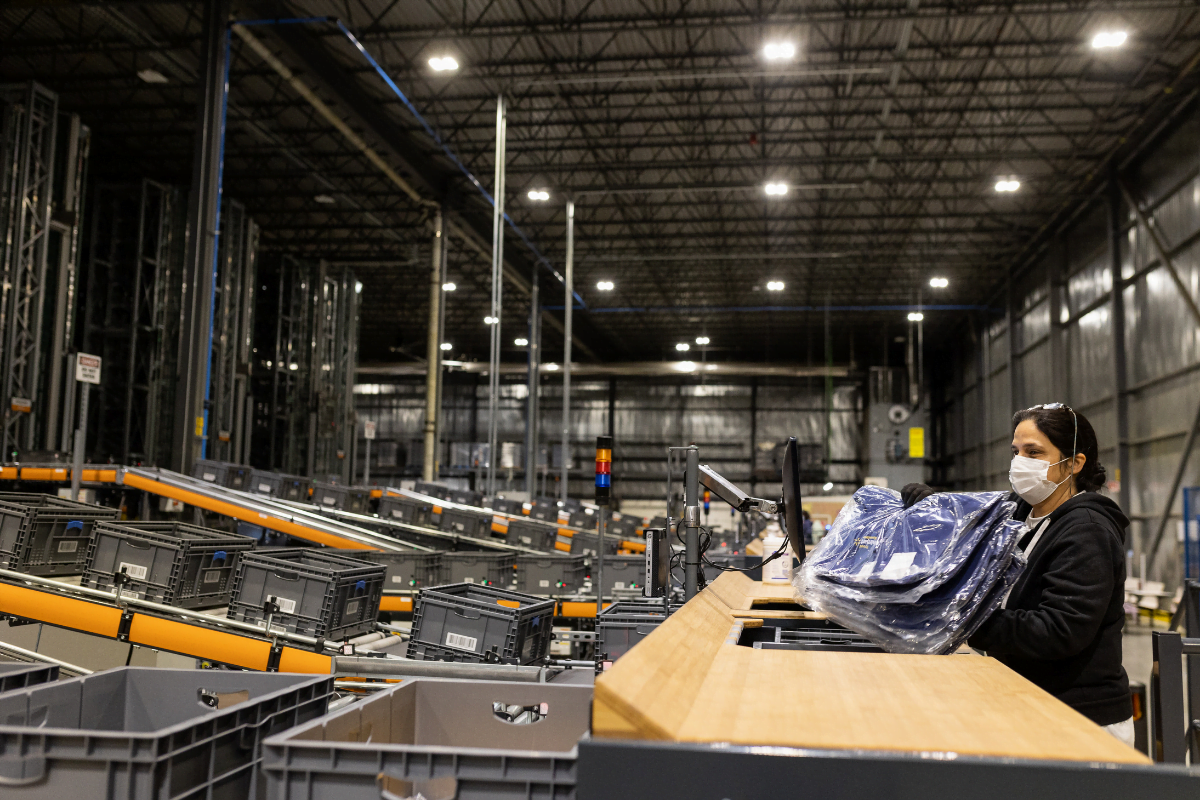
In search of efficiencies and enhancements to retail operations, many throughout the industry are looking to automation as a viable means to help them achieve their objectives. Robots are being deployed in warehouses across the country and being leveraged in transportation, lowering cost and finding ways to increase accuracy of orders by eliminating the potential for human error, freeing up human capital that can be applied to more strategic tasks and responsibilities. Winder recognizes that the leveraging of this type of technology has been limited to those operating within low margin sectors, but adds that it’s only a matter of time before automation begins to meaningfully influence and change the in-store retail environment.
“Grocers are currently utilizing automation throughout their operations really well to find efficiencies and lower costs,” he says. “Grocery is incredibly low margin. So, any savings that can be found goes straight to the bottom line of the business. Pre-pandemic, grocery stores would have five or six cash registers open and maybe two or three self-checkout machines. Today, the ratio is more like ten self-checkouts and one cashier. And this is really just the tipping point of automation in retail, with the days of unstaffed stores just on the horizon. Automation is lending toward the creation of less friction within the retail experience and a more seamless journey for the consumer on their path to purchase and collection of products. But, the real sweet spot for retailers with respect to automation is when people can be relieved of these oft-repetitive duties and tasks, allowing them to take on more significant roles within the organization.”
Technological revolution
There isn’t really any doubt that the forcing function driving the most change within the retail industry and, indeed, the entire world around us, is the accelerated digitization that’s occurred as a result of social lockdowns and restrictions on business. It’s a revolution of innovation that’s changed the way we interact, communicate and share information with one another. And, it’s also altered the ways Canadians like to engage and shop with their favourite retailers and brands. Spawning trends like the rise of automation in retail and the explosive success in ecommerce sales, recent developments in technology are lending to the same kind of ease and convenience while adding a dynamic, experiential layer to the overall retail experience. And, with respect to the current implementation and execution of technology happening across the industry, Winder says that Canadian retailers are now on the verge of creating a truly omnichannel experience for their customers.
“A lot of retailers and brands are exploring and assessing the use of technologies like augmented reality in the way of virtual fitting rooms and mobile apps so consumers can see what an outfit looks like on them or what a piece of furniture looks like in their living room,” he says. “And, of course, the use of virtual reality and its potential is causing a big stir at the moment around the notion of the metaverse. It’s something that’s going to take a long time to grow and develop, similar to the way in which ecommerce grew in the nineties. But it’s got a lot of people talking and a lot of retailers exploring ways that it might be integrated into the retail experience. The same can be said about cryptocurrency and the idea around NFTs. They are both developments in their infancy with applications to retail that are still a little bit unclear. However, what’s clear to every retailer operating today is the enhanced power and capability that artificial intelligence presents the industry. It’s tables stakes and is being used, at least to some degree, by merchants large and small to inform decisions, predict trends and market influences, and allow them to elevate the effectiveness of marketing and promotions like never before. All told, these technologies and their uses by retailers are making the lives of consumers easier while improving the experience they receive, while helping organizations find efficiencies and lower costs. There are a lot of opportunities inherent in the use of technologies within retail and the potential to completely transform the industry.”
Real estate reset
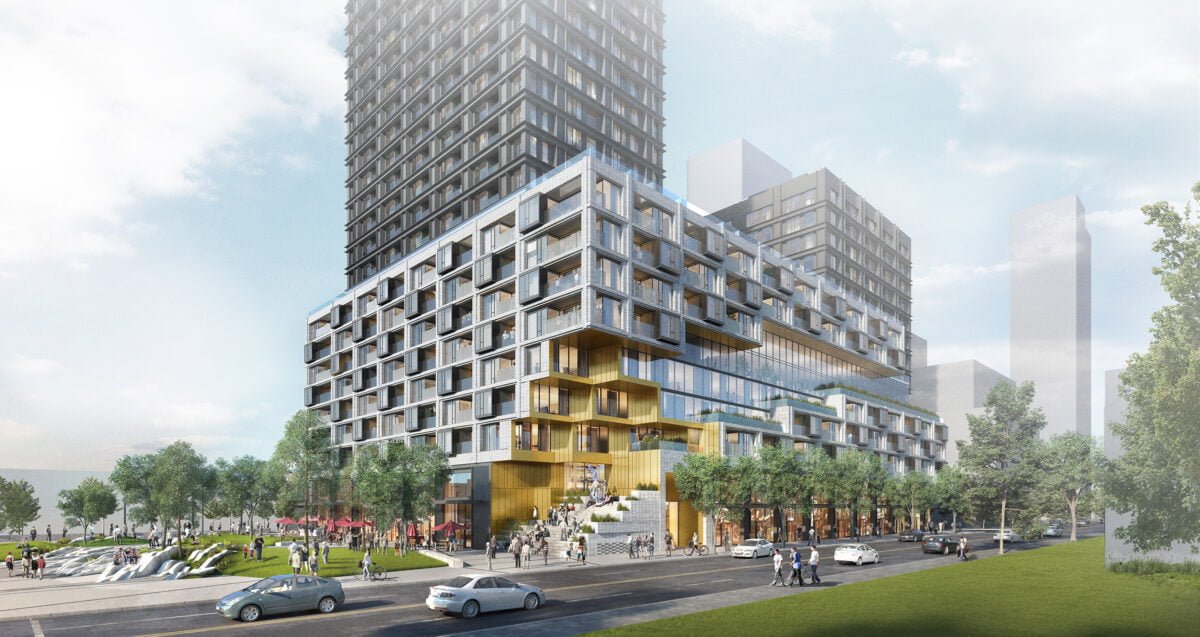
With a more immersive and experiential offering being developed by retailers and brands every day, supported largely by the aforementioned developments in technology, the role of the physical brick-and-mortar store is being questioned and analyzed. It’s leading many, particularly the landlords and developers of shopping centres, to take a close look at the utility and function of commercial real estate and reimagine their spaces to more accurately reflect the evolution of the industry. It’s yet another component of the retail landscape and ecosystem that’s reflective of the change and digitization occurring all around us, perhaps indicating a required rethink concerning the use of shopping centres if they are to remain viable. And, as Winder points out, it’s a rethink that will yield benefits to those willing to be creative.
“There’s a real polarization of Canadian malls that’s happening between the tier one, two and three locations,” he explains. “The top centres and locations like Yorkdale and Sherway Gardens continue to do well. They aren’t going anywhere and will become more experiential. The tier two malls are going to serve more of a function and become more transactional, with different kinds of tenants coming in, like doctors and dentists and other types of services. They’ll also provide one or two pick-up locations where packages can be picked up by consumers and may even do some micro-fulfillment. And then tier three malls are just going to be bulldozed. Some may still offer some sort of local convenience. But they will be repurposed entirely. In addition, we’re seeing a lot of the digital native retailers that were once online-only begin to open brick-and-mortar locations, recognizing that a physical presence can really help them grow their market. There are also a number of ecommerce warehouses popping up across the country. And, because warehouse space within major urban centres is already at a premium, I think what we might see sooner rather than later is retailers begin to leverage shopping centres for warehouse or local fulfillment space.”
When rubber hits the road
Winder’s list of trends certainly gives any retailer a lot to think about, presenting a host of challenges to overcome and opportunities available to realize. They are a collection of influences and effects whose potential to impact retail operations are significant on their own. But, when viewed holistically, considering the possible ramifications for merchants that don’t address them effectively, they begin to paint a picture, pointing the direction in which the industry is heading. And, according to Winder, many of the trends that he discusses will sustain well into the future, coming to fruition as many of them continue to gain momentum as we head toward a post-pandemic world.
“Most of these influences are going to continue to have the same, if not greater, impact on the industry going forward. A lot of the innovation that retailers have been experimenting with is going to go live with the rubber really hitting the road overt the coming months and years. And, a lot of this evolution is going to be supported by demographic changes as Gen Z starts to rise up and increase their purchasing power. Everything looking ahead is going to be chock-full of technology and convenience. And, as a result of this new normal, we’re going to be introduced to a number of new retailers and brands that are going to make their mark on retail and become the next wave of innovators within the industry.”