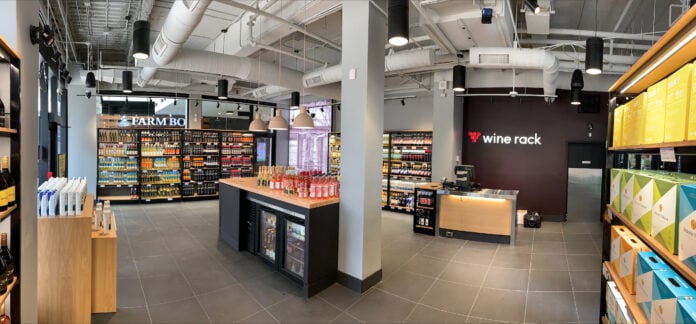
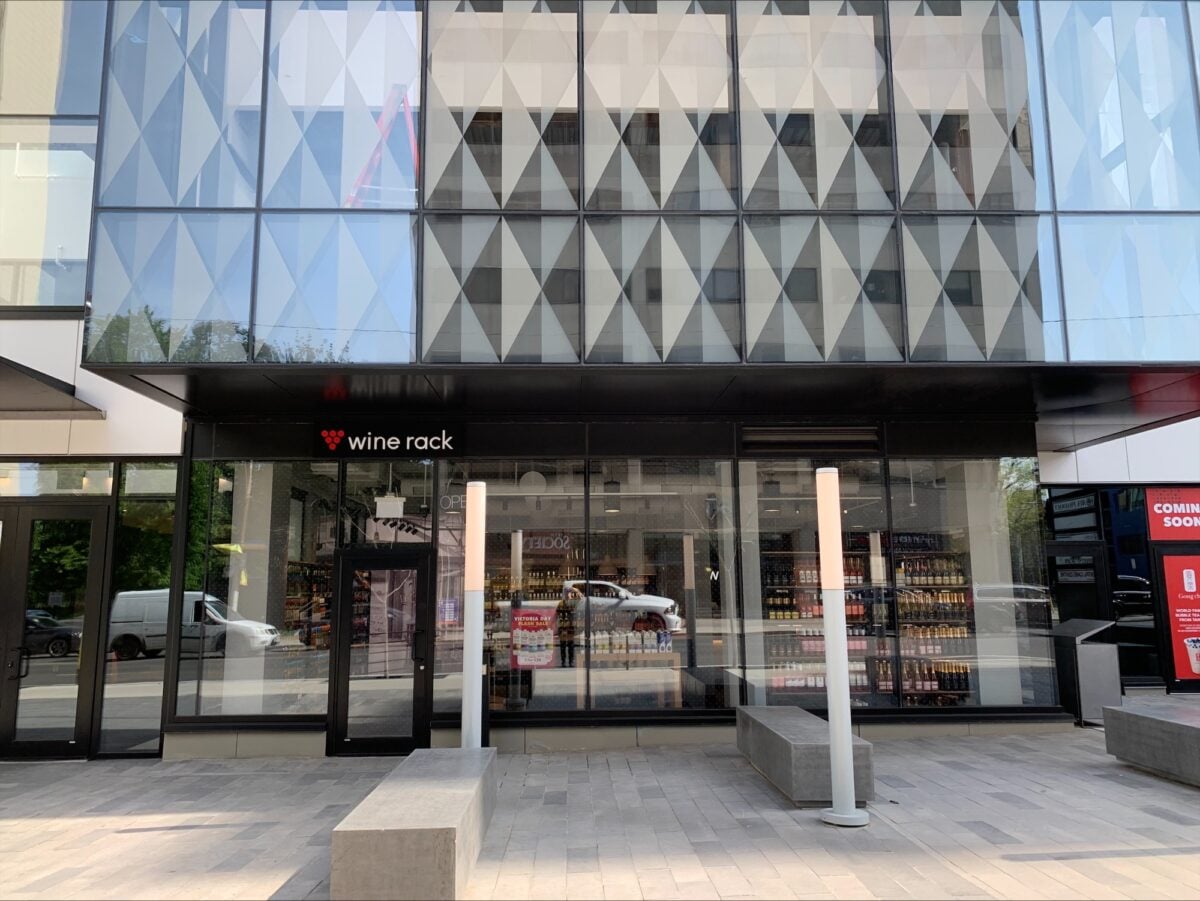
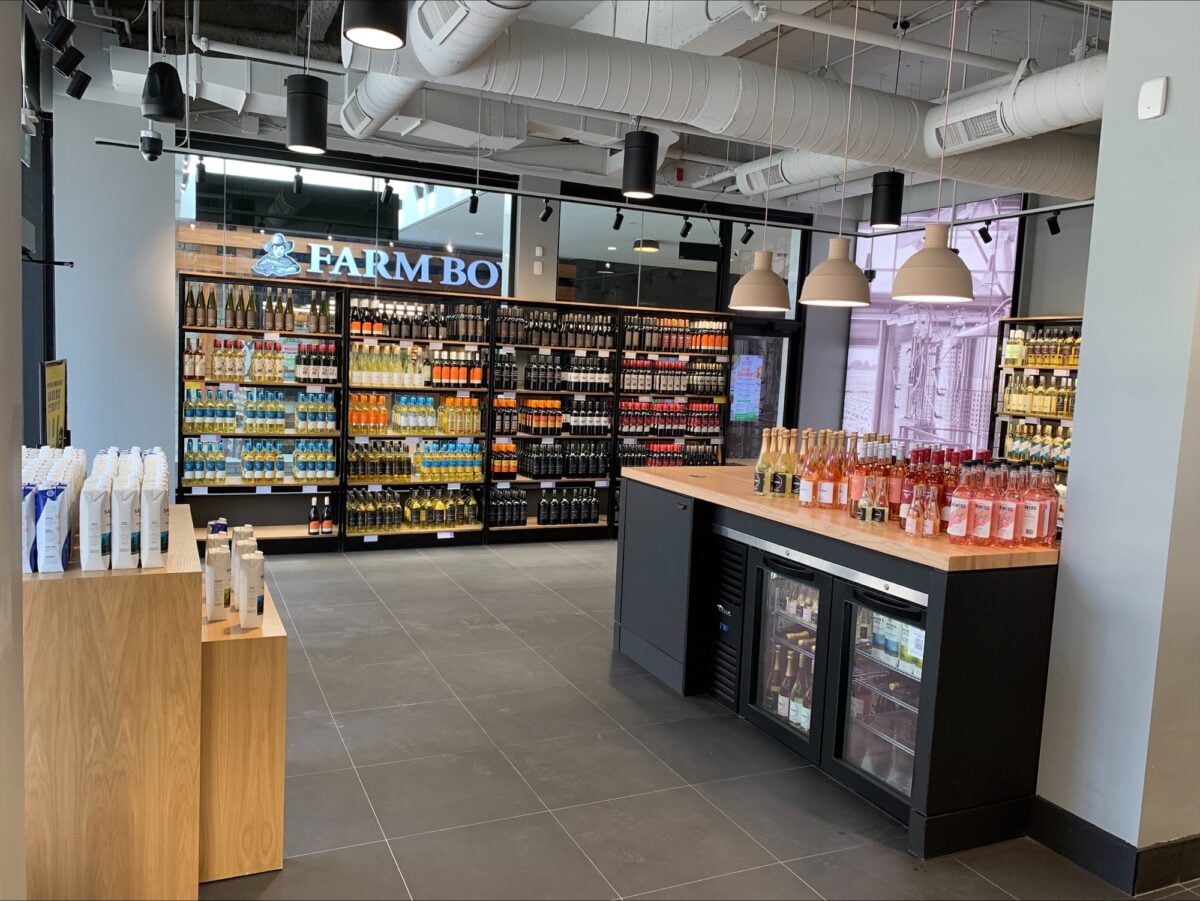
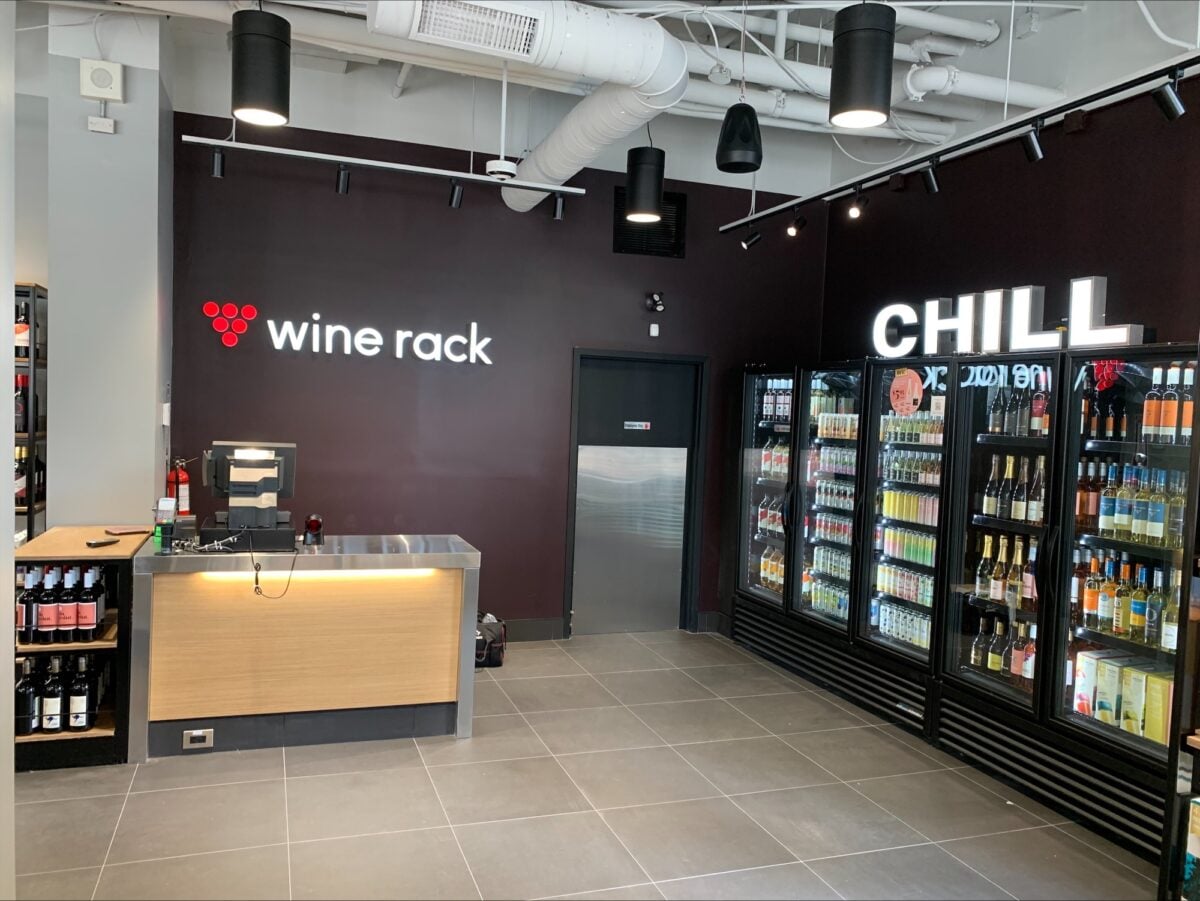
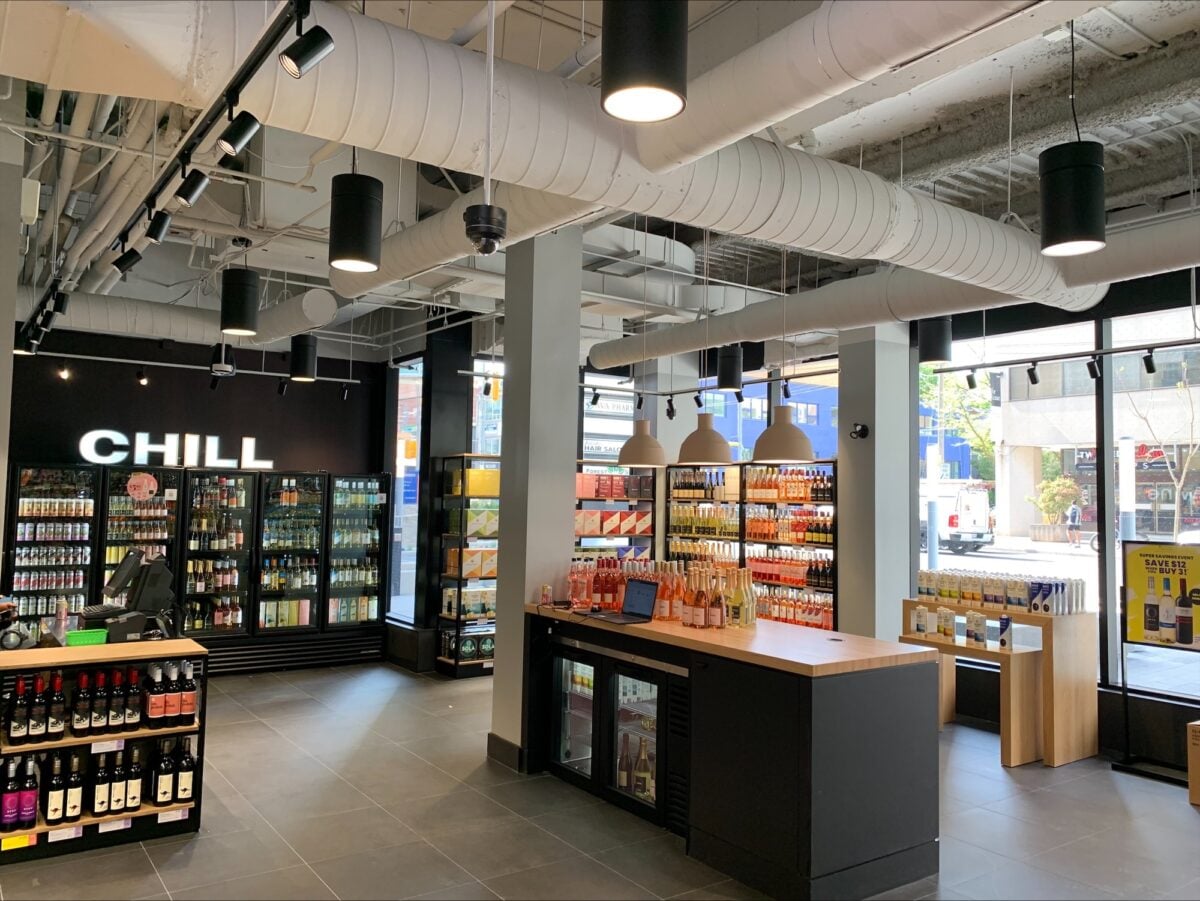
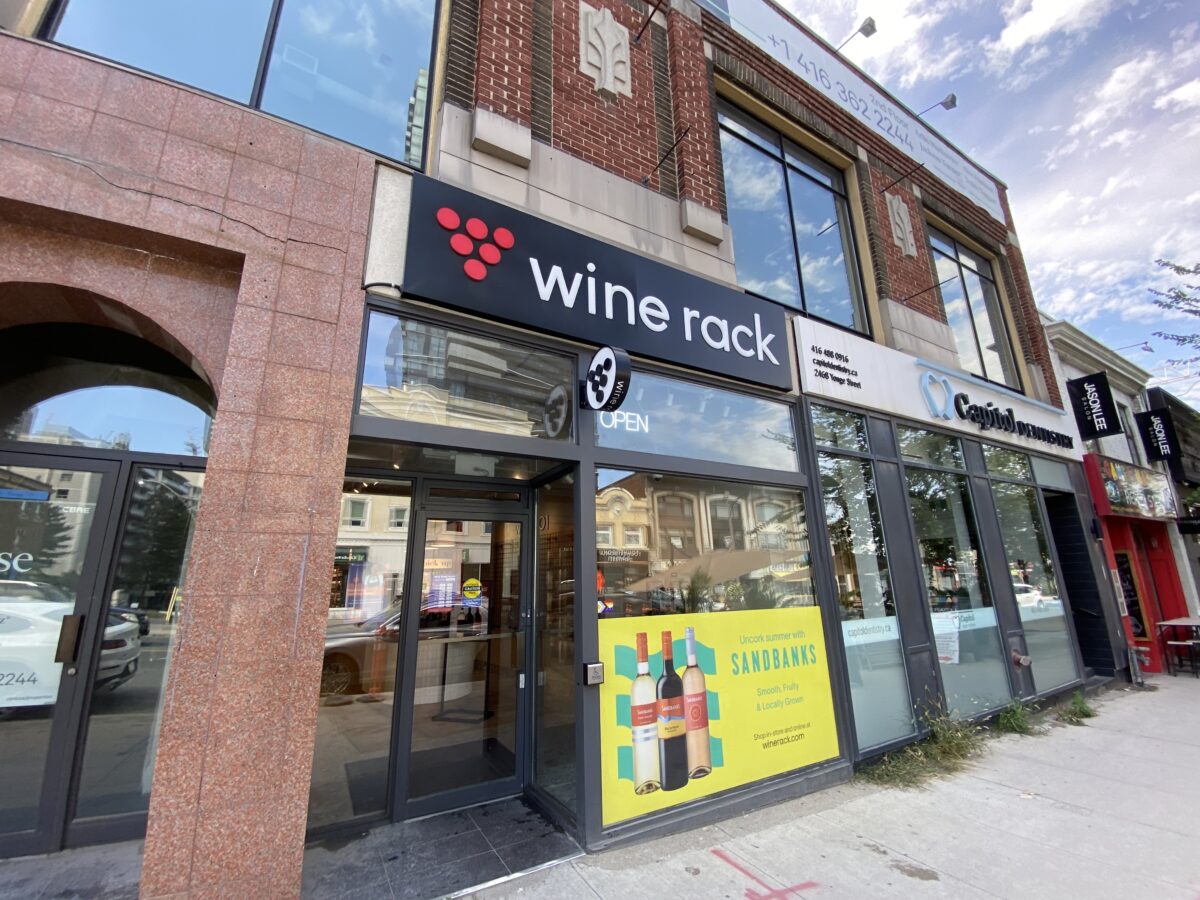
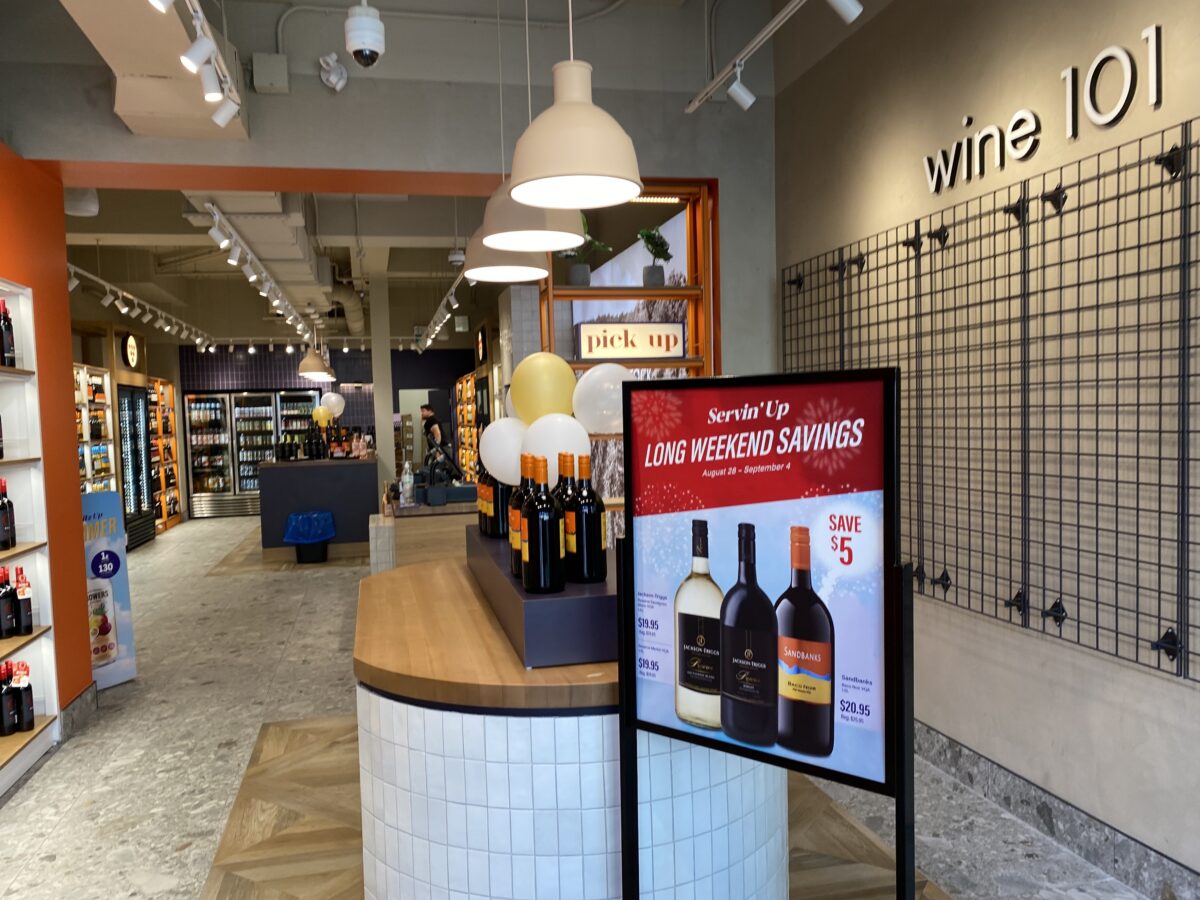
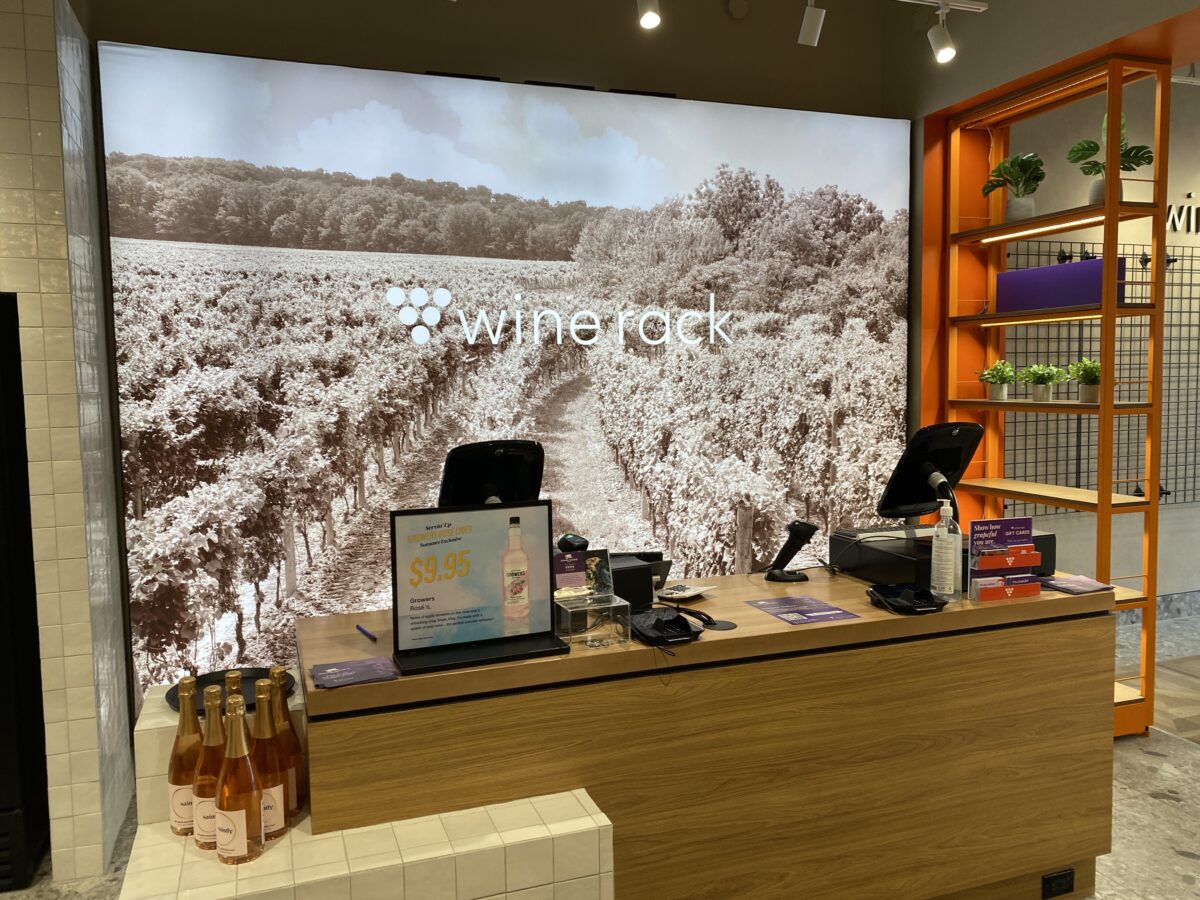
Wine Rack, the retail division of Arterra Wines Canada, has opened its 164th store in Ontario.
The Yonge Street and St. Clair Ave E Wine Rack location is the newest store expression for the brand.
Will Meijer
Will Meijer, Executive Vice President of Sales at Wine Rack, said the brand is all about local Ontario wines. It sells exclusively the products made in Ontario – wines and ciders.
“Our focus is to make Ontario wine accessible for all,” he said. “We’ve got convenient locations all across the province. We’ve got very handy online and delivery options and we have award-winning staff. Leger Marketing rated us in the top 10 in 2022 in best in-store experience in Ontario. So we have great, knowledgeable staff that can host any consumer from novice to enthusiast and help them make a great selection for their needs.”
Wine Rack Yonge and St. Clair (Image: Wine Rack)Wine Rack Yonge and St. Clair (Image: Wine Rack)
Wine Rack was established in the early 1990s when some wineries came together. They had their own individual winery stores at the time.
“We have a mixture of footprint. We have some standalone stores that are street stores, some are in strip malls, and some are in the footprints of select Ontario grocery stores,” said Meijer.
Arterra Wines Canada has been a pioneer in the Canadian wine industry. Its origins date back to 1874 when the Niagara Falls Wine Company was founded. One hundred twenty years later, it became known as Vincor International. Throughout the 20th century, trailblazing wineries like Jackson-Triggs and NK’Mip were founded and it acquired well-known wineries and brands such as New Zealand’s Kim Crawford. In 2006, it was acquired by Constellation Brands, a U.S.-based company that is a leading international producer and marketer of beer, wine and spirits. In 2016, the Canadian branch of Constellation Brands was acquired by the Ontario Teachers’ Pension Plan, and Arterra Wines Canada was born.
Meijer said the opening of the new location is following how the different communities in Ontario are evolving and the density that is building up within Toronto.
“When you look at the population that is surrounding those areas, it’s a really important destination and locale for us,” he said. “We used to have a store there some time ago and we’re constantly moving around and moving and renovating stores to address our community needs. This was a really important place for us to open back up into.
“And this is one of our larger stores. In the larger footprint, we’ve got a bigger chill zone or more available cold single serve products for more convenience. It’s a larger footprint so we can activate winemaker talks, we can do special programs, we can hold special events. We have a much more diverse assortment, including Wine Rack exclusives that you can only get at Wine Rack and also some more premium VQA (Vintners Quality Alliance) wines as we expand our estate properties in Ontario as well.”
Wine Rack Yonge and St. Clair (Image: Wine Rack)Wine Rack Yonge and St. Clair (Image: Wine Rack)
Meijer said the 164 stores are tied back to winery licences.
“So we won’t have more than 164 stores. So we’re not going to be opening net new ones but we will continue to evaluate the footprint, make sure we’re serving the province with super convenient locations with award-winning wines and access to Ontario’s amazing wines and our customer service in the stores,” he said.
“We’re constantly evolving but we are all across the province – northern Ontario down to Windsor and wineries east and west.”
Meijer said wine can be an intimidating category. It’s one of the reasons Wine Rack places such an emphasis on customer service.
“We do recognize that a lot of consumers in Canada right now are struggling. It’s a tough economic time right now. So we’ve got a lot of really good offers and promotions and SKUs really geared towards recession-busting and helping people get value out of their wine experience if they are struggling with their disposable income.
“Ontario consumers are very interested in local . . . Consumers are really interested in sustainability. They’re really interested in local businesses. And wine is one of Ontario’s largest value-added, agri-food businesses. We grow it, we harvest it, we bottle it and we sell it. All within a couple of hundred kilometres. It’s a really significant part of Ontario’s economy.”
Wine Rack Yonge and Eglinton (Image: Dustin Fuhs)Wine Rack Yonge and Eglinton (Image: Dustin Fuhs)Wine Rack Yonge and Eglinton (Image: Dustin Fuhs)
Meijer said the most important thing that Wine Rack does is connect Ontarians to Ontario wine country.
“There’s a couple of ways we do that. In our new stores, we’re putting more and more digital assets in so consumers can connect more directly. We’re piloting digital price tags and QR codes so we can connect consumers to a brand to hear about it from a winemaker directly to learn more (about wine). Digitally trying to connect all Ontarians to Niagara and Prince Edward County.
“And also through convenience. All of our stores are open on statutory holidays because people celebrate differently. They celebrate the way they want to celebrate. We want to be convenient and accessible for them. And also delivery options. Not everyone lives close to a Wine Rack store. As much as we’re spread out really well across the province, not everyone has one down the street so winerack.com offers a bunch of shipping options, we also have Skip and Uber for more immediate delivery but we really want to connect consumers digitally and physically as much as we can to wine region whether you’re in Niagara’s backyard or you’re in northern Ontario.”
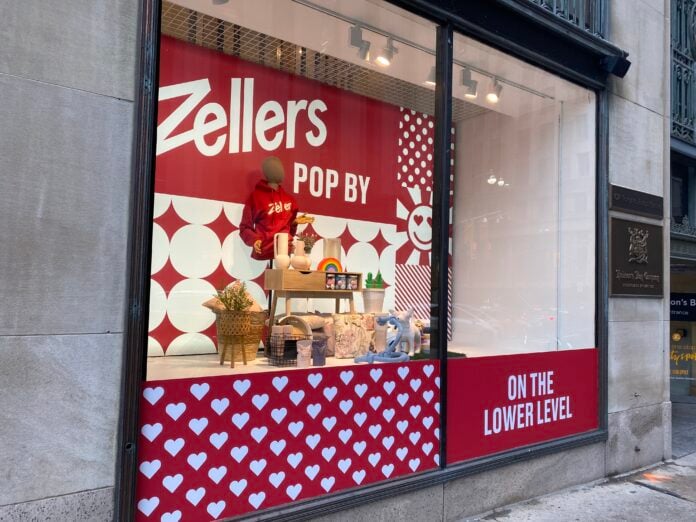
Zellers at Hudson's Bay Queen Street (Image: Dustin Fuhs)
Retailer Zellers will launch pop-up locations in all remaining Hudson’s Bay stores across the country in time for the upcoming holiday season.
Sophia Hwang-Judiesch
“We continue to see Canadians embrace Zellers, and are delighted by the experience of people discovering the amazing quality and style of the assortment we carry,” said Sophia Hwang-Judiesch, President of Hudson’s Bay.
“As I’ve said before, pop-ups are a key ingredient in our expansion strategy, allowing us to explore and test in new markets and fine-tune our offering before establishing larger format store locations. Our customers are in the driver’s seat – they will tell us how and where to grow.”
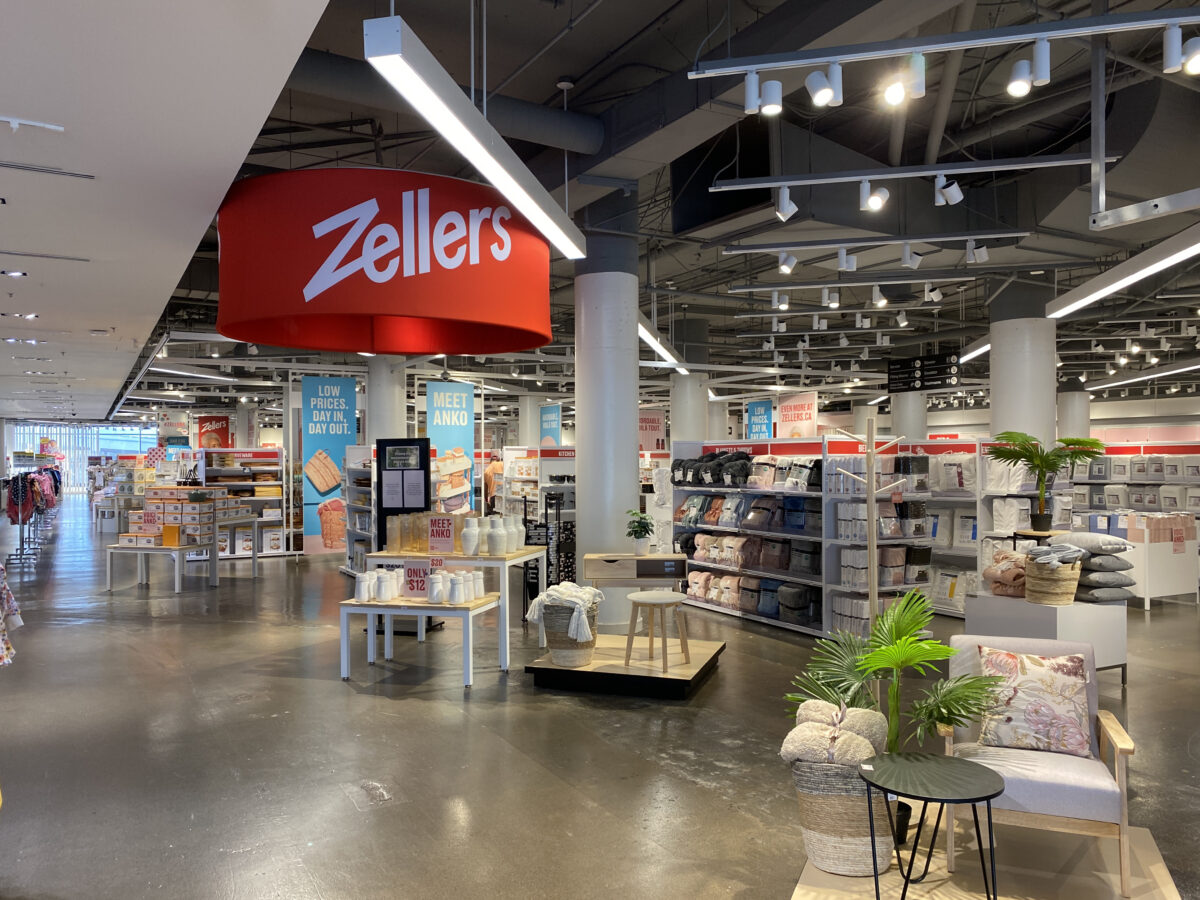
Zellers at Hudson’s Bay Ottawa Rideau (Image: Dustin Fuhs)
Currently, Zellers has 24 store-in-stores (and one more on the way) as well as 22 pop ups that opened earlier this year.
As previously announced, a new Zellers store-in-store will open at Bramalea City Centre in Brampton, ON, on Sept 27. With these additional pop ups, 78 Hudson’s Bay stores in Canada will now offer customers a Zellers experience.
The retailer said pop-up footprints will vary from store to store, ranging from 1,000 to 2,800 square feet (with the exception of Queen Street in Toronto) depending on location. Zellers stores within Hudson’s Bay range from 8,000 to 10,000 square feet.
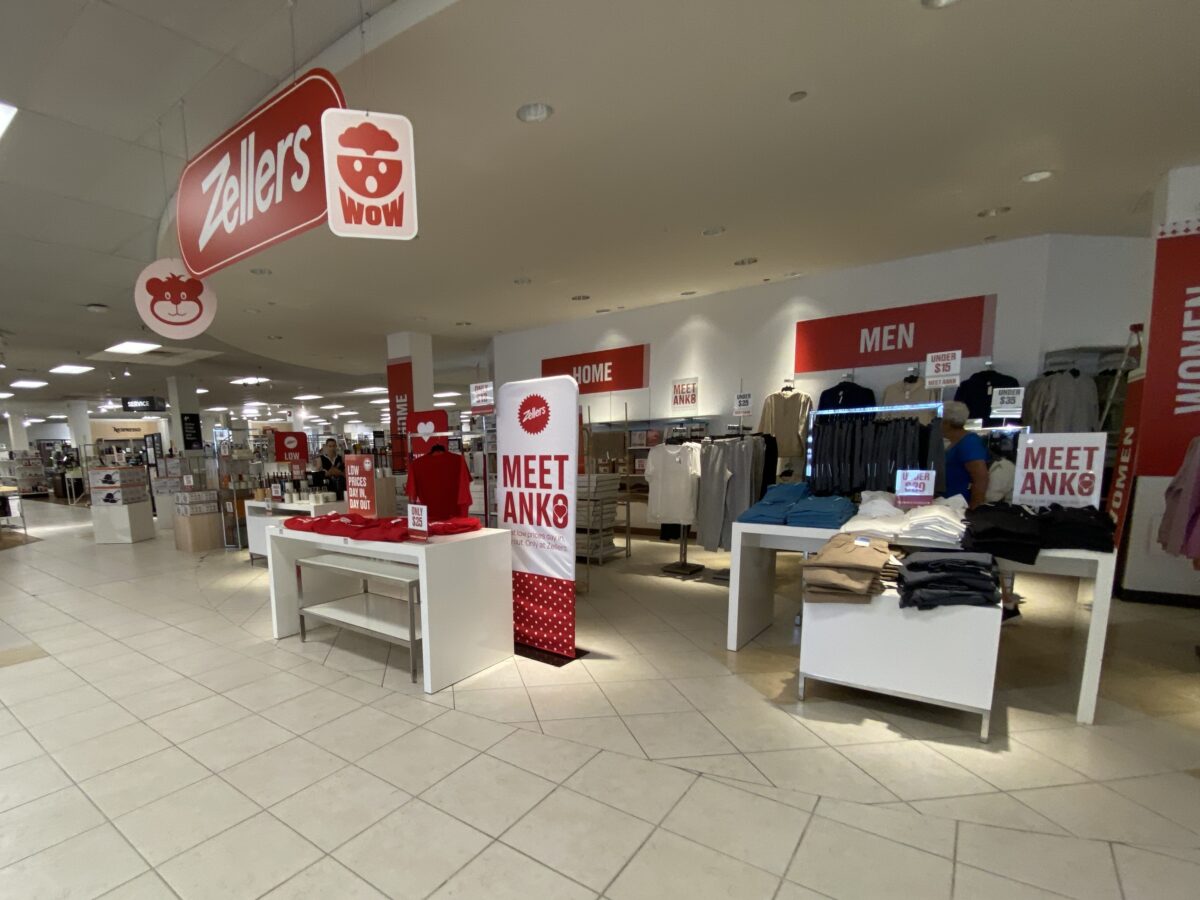
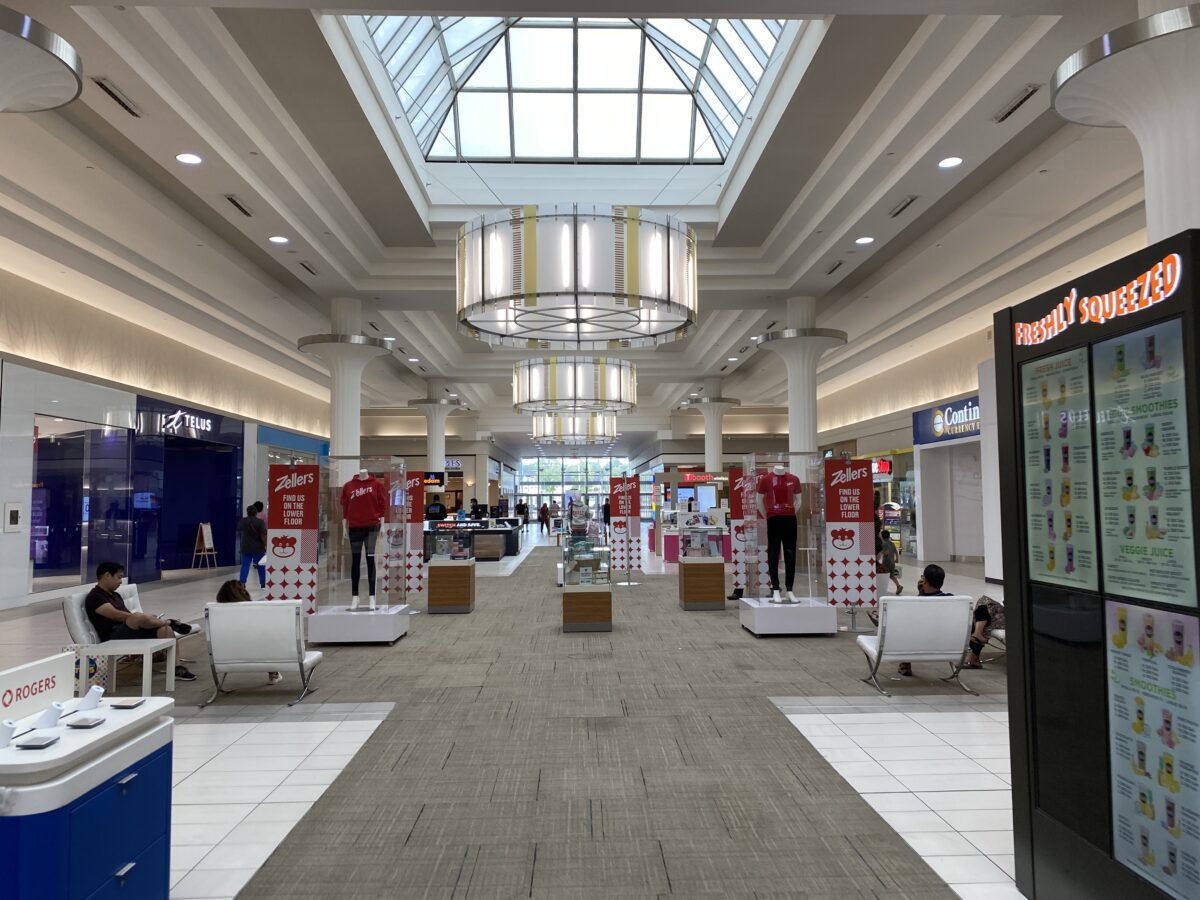
“The pop-ups serve as strategic market tests to determine future Zellers store locations.,” said the company.
Zellers Pop-up at Pickering Town Centre (Image: Dustin Fuhs)Zellers Display at Pickering Town Centre (Image: Dustin Fuhs)
The final Zellers pop ups within Hudson’s Bay will open by Sept 22, at the following locations:
Alberta
Calgary Downtown, Calgary
Chinook Centre, Calgary
Market Mall, Calgary
Southcentre Shopping Centre, Calgary
Southgate Shopping Centre, Edmonton
West Edmonton Mall, Edmonton
British Columbia
Coquitlam Centre, Coquitlam
Mayfair Shopping Centre, Victoria
Metrotown Centre, Burnaby
Orchard Park Shopping Centre, Kelowna
Park Royal Shopping Centre, West Vancouver
Richmond Centre, Richmond
Village Green Mall, Vernon
Manitoba
Polo Park Shopping Centre, Winnipeg
Ontario
Bayshore Shopping Centre, Ottawa
Centrepoint Mall, Willowdale
Conestoga Mall, Waterloo
Fairview Mall, Willowdale
Hillcrest Mall, Richmond HIll
Limeridge Mall, Hamilton
Markville Shopping Centre, Markham
Masonville Place, London
Oakville Place, Oakville
Sherway Gardens, Etobicoke
Square One, Mississauga
Woodbine Plaza, Toronto
Yorkdale, Toronto
Quebec
Carrefour Laval, Laval
Centre Laval, Chomedey
Fairview Mall, Pointe Claire
Montreal Downtown, Montreal
“One of HBC’s most beloved brands, Zellers holds a special place in Canada’s maple leaf-shaped heart. With a brand new zellers.ca website and 25 locations (to start!) within Hudson’s Bay stores across the country, customers can expect a helpful, playful shopping experience packed full of low prices day in, day out. With a core focus on design and value – and a hint of the nostalgia that Canadians know and love – Zellers is gearing up to become the new go-to, from lifestyle to home and almost everything in between,” said the retailer.
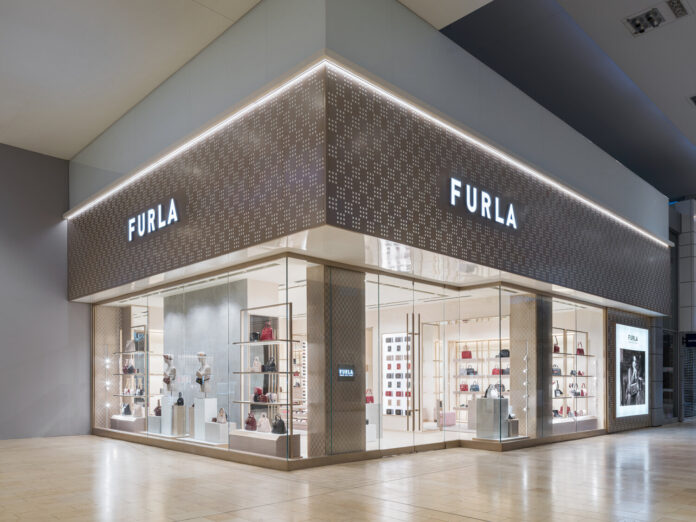
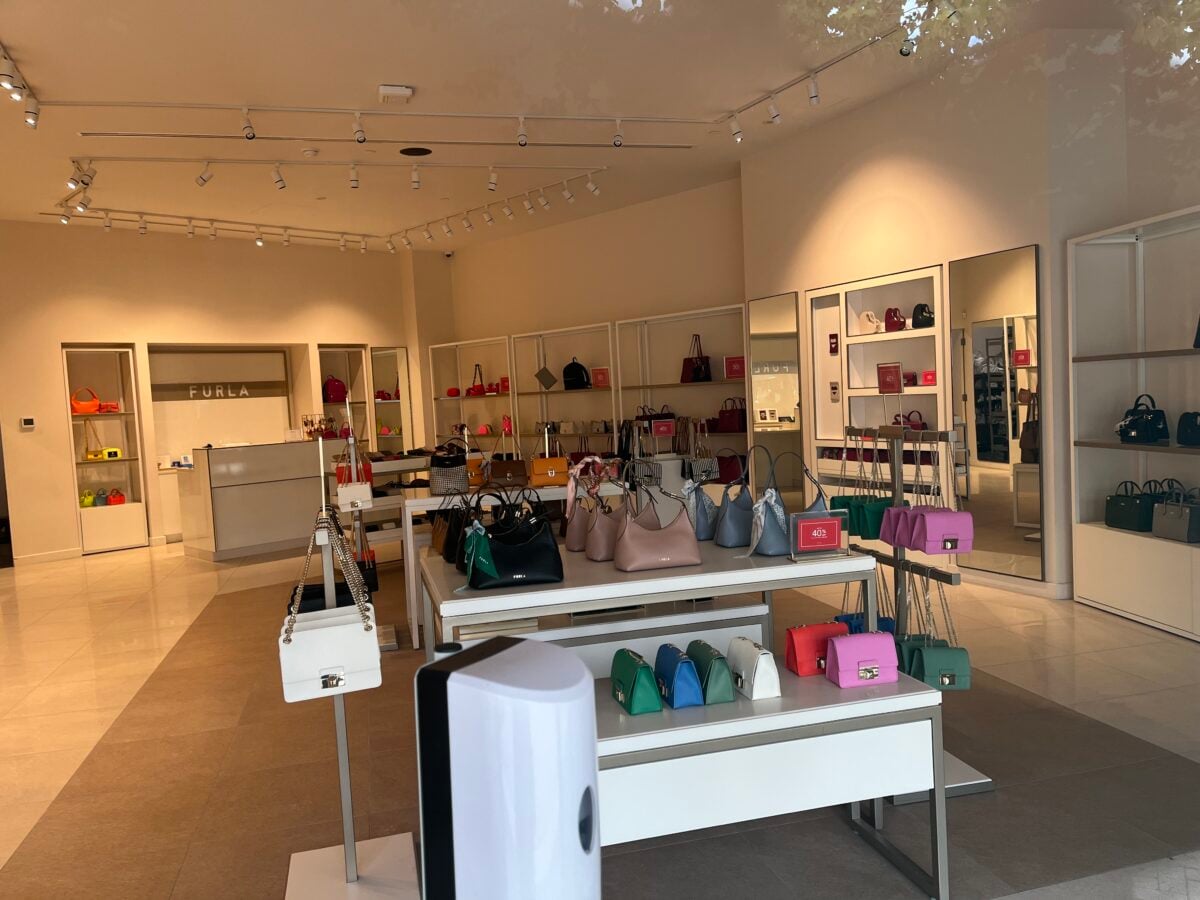
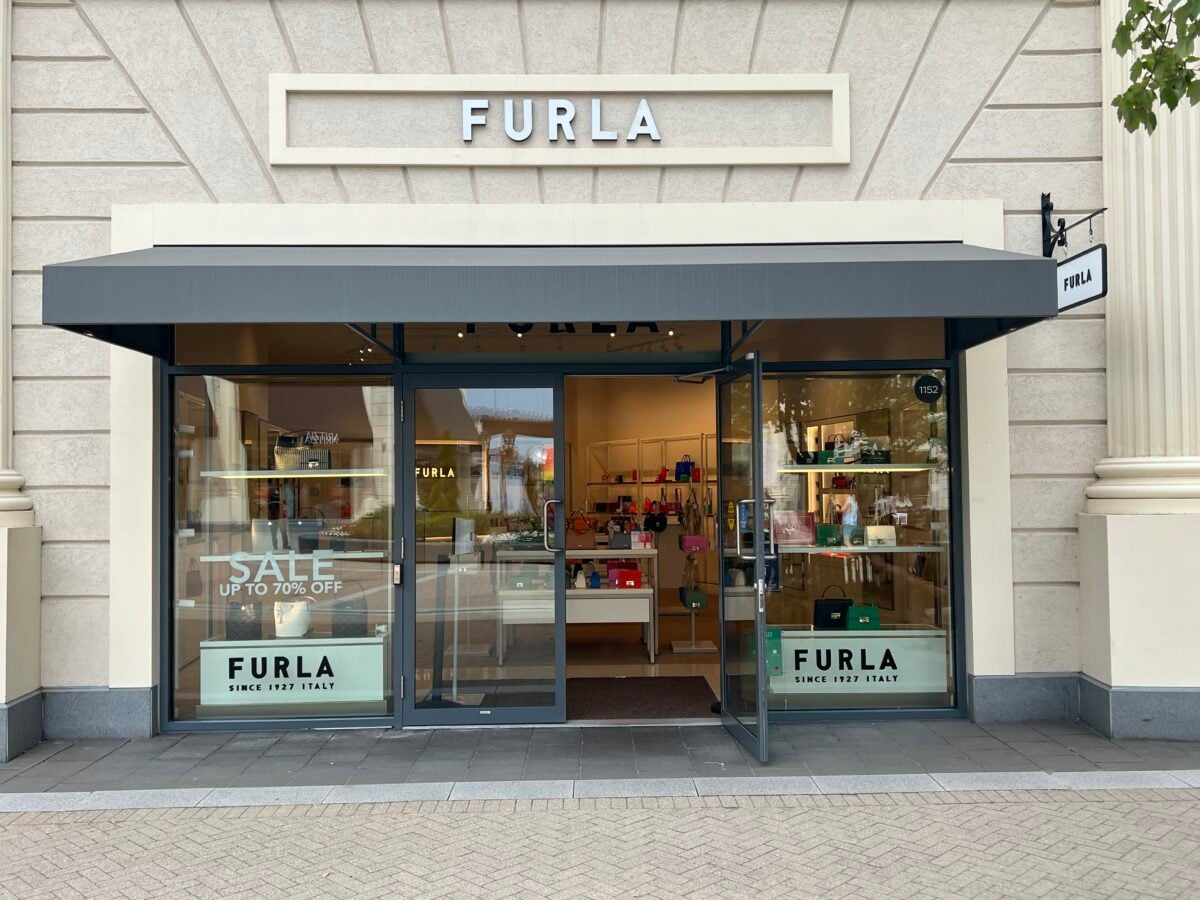
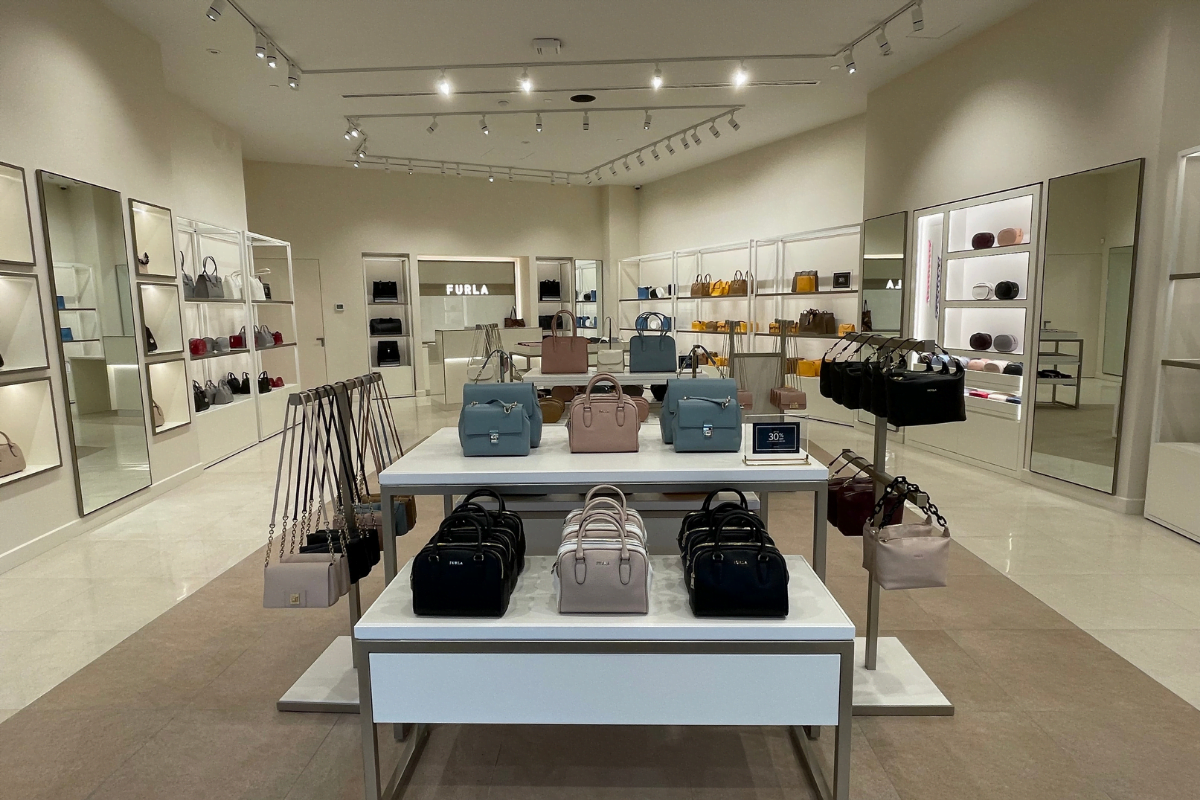
Upscale Italian brand Furla abruptly shut its Canadian stores last week in the middle of the day without any notice given to staff. The retailer opened its first of three locations in Canada prior to the pandemic and the Italian corporate entity is said to be responsible for the decision to exit the Canadian operations.
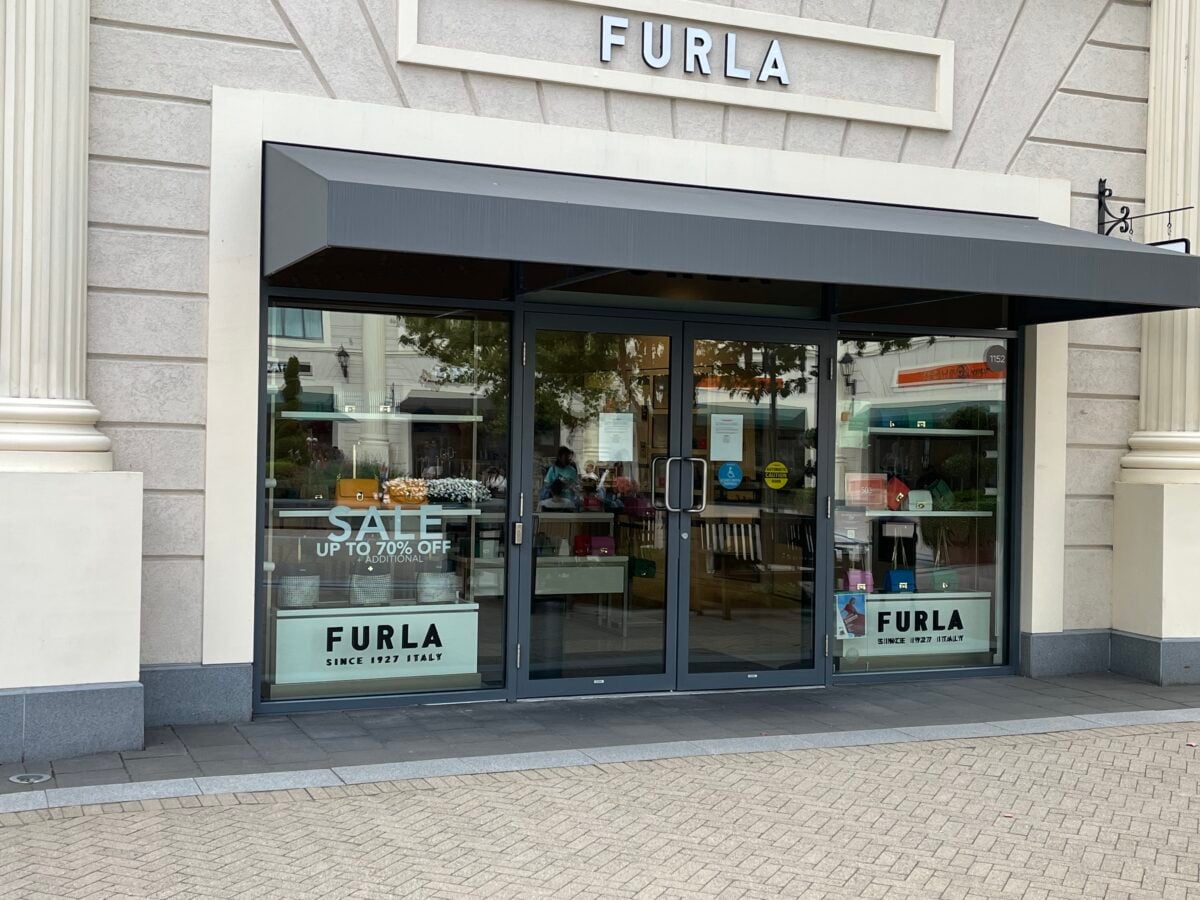
Furla, known primarily for its bags and accessories, opened a full-priced store at Toronto’s Yorkdale Shopping Centre in the fall of 2019. Two outlet stores subsequently opened in Canada, including at the Toronto Premium Outlets near Toronto in the fall of 2020 and a Vancouver location at the McArthurGlen outlets in early 2022.
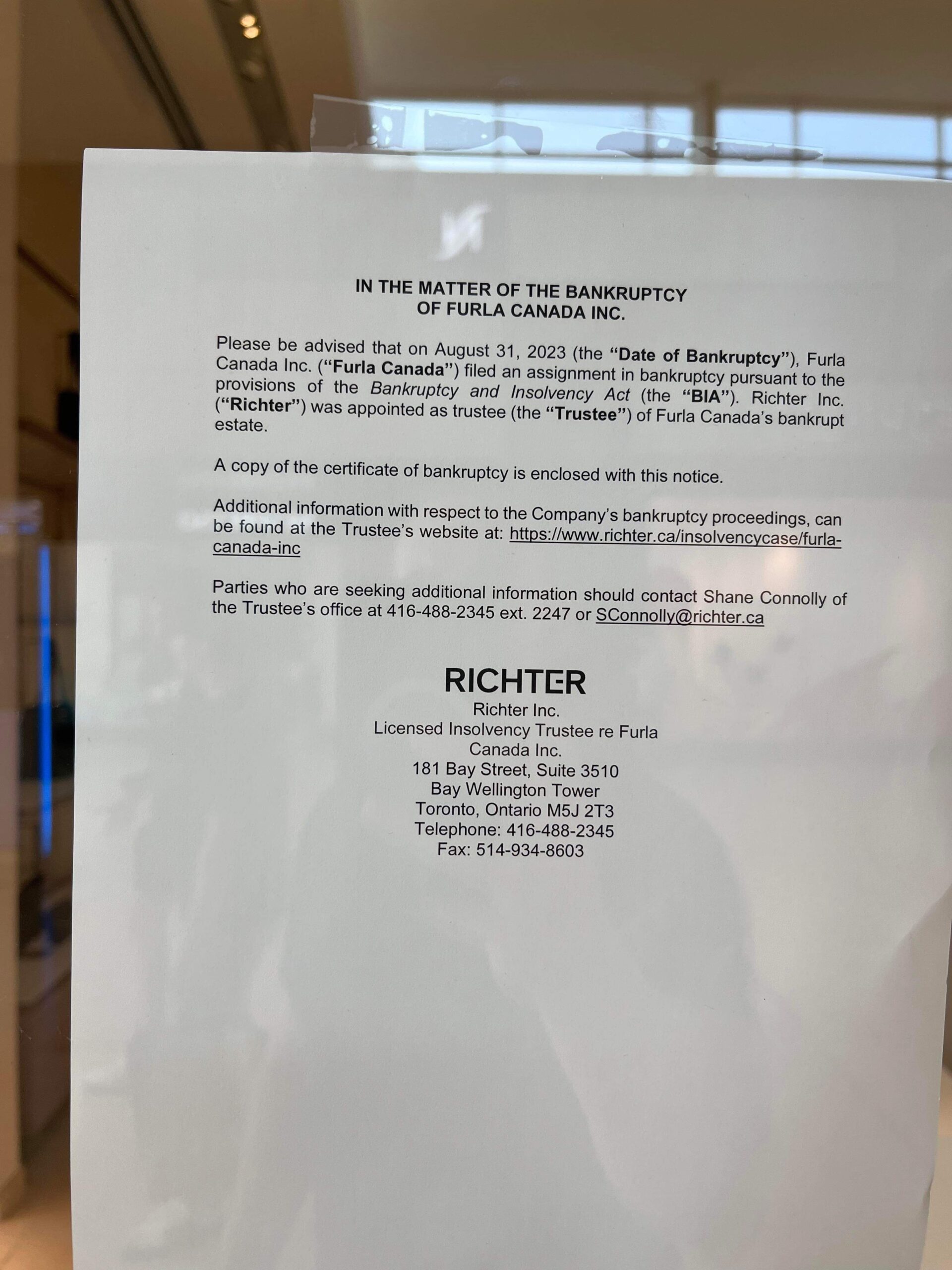
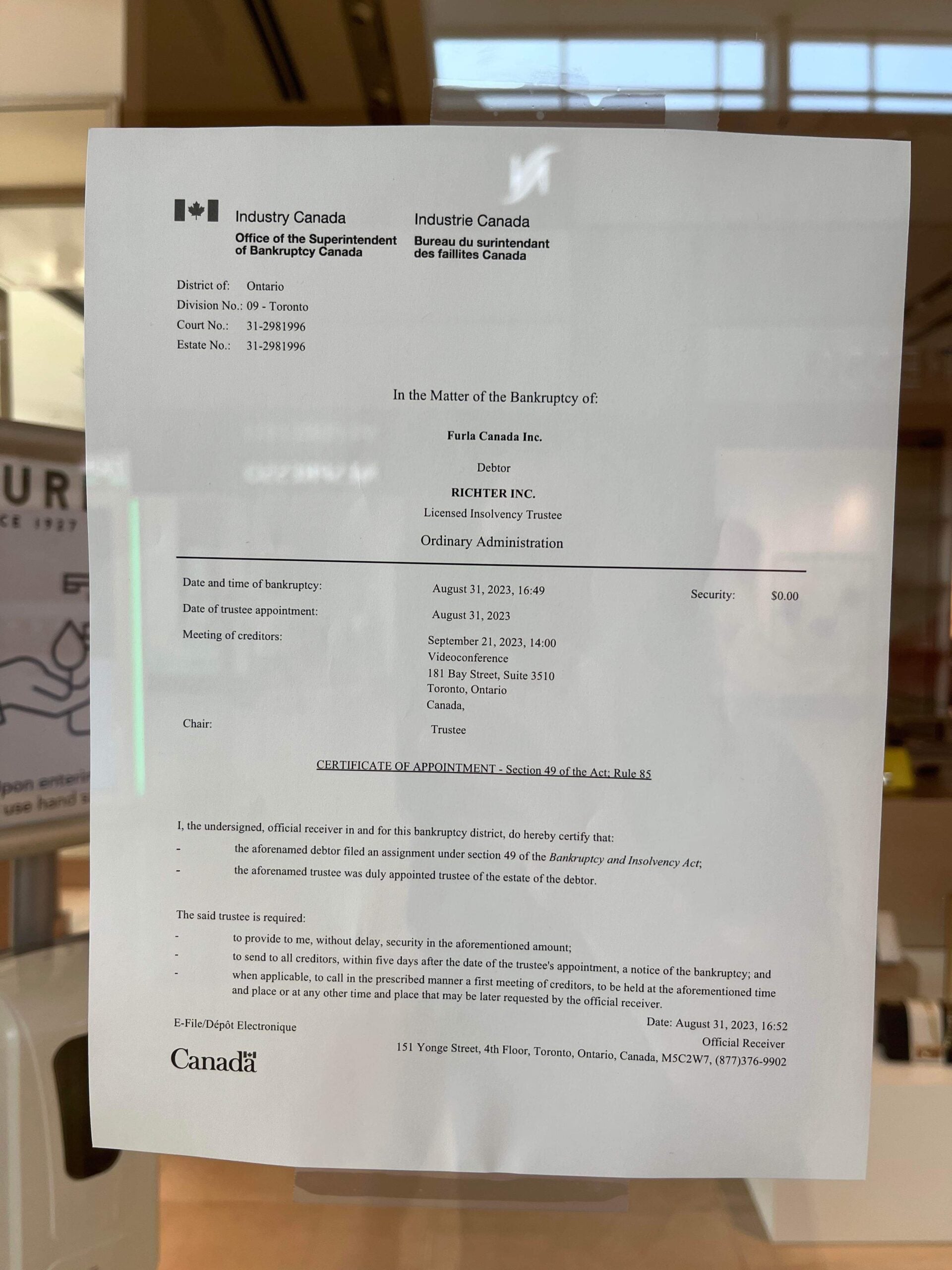
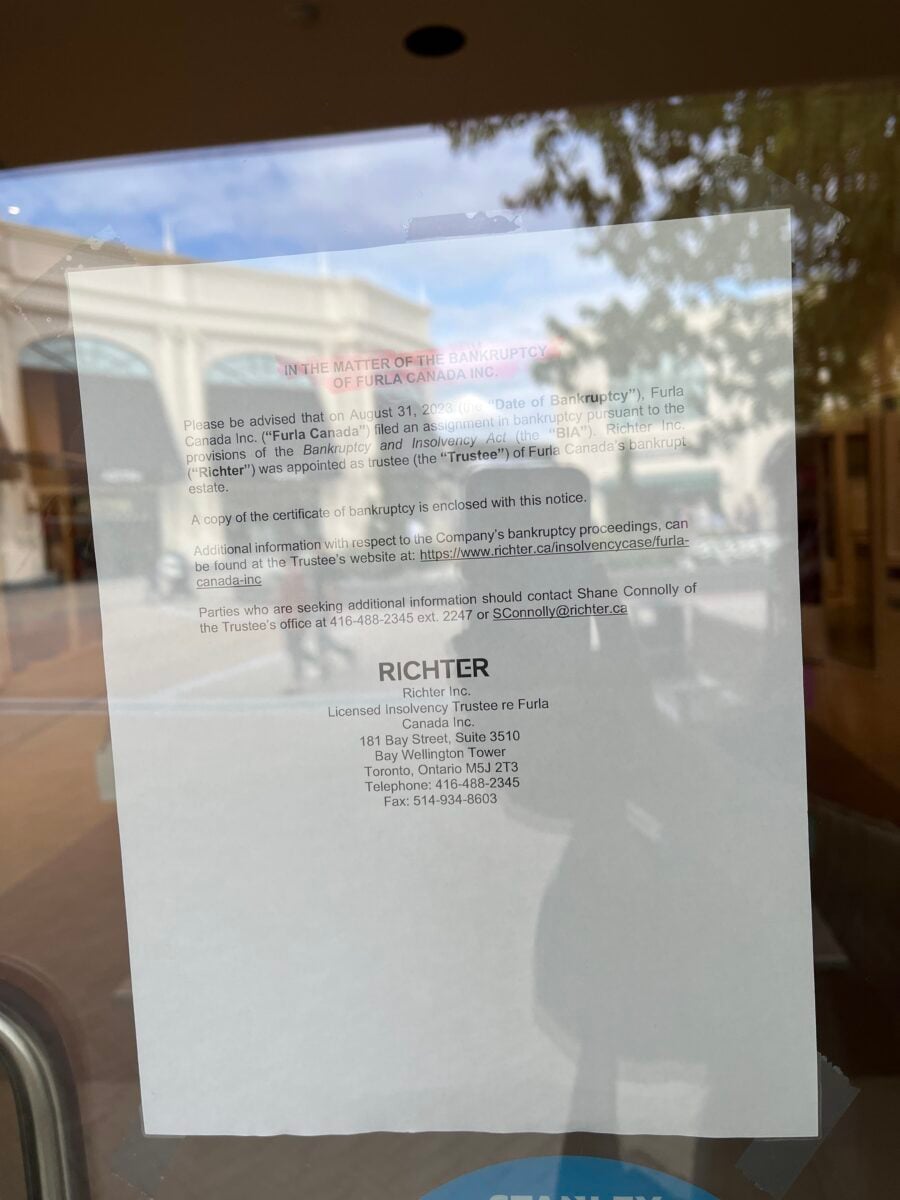
All three stores were shuttered abruptly and the locks changed on the afternoon of Thursday, August 31st — staff and management were not notified prior, according to a source that spoke to Retail Insider about the situation. Richter is the receiver handling the winding down of Furla.
Furla Yorkdale (Image: Provided)
Furla Yorkdale (Image: Provided)
Furla’s Canadian entry in 2019 was in partnership with Montreal-based Halcyon Brands. It’s said that Halcyon was not the decision maker for Furla’s abrupt store closures and exit from Canada, and that Italy had “made the call” to shutter operations.
Lockdowns during the pandemic are said to be partly to blame, with sales numbers at the Yorkdale Furla store being ‘steady’ but not having recovered since the pandemic. Sales at the Vancouver Furla location were said to be strong following its opening last year. Furla hadn’t yet set up a dedicated Canadian e-commerce site despite being in Canada for nearly four years although quite recently, it began offering shipping to Canada from its international website.
Shuttered Furla at McArthurGlen Designer Outlet in September 2023. Image ProvidedShuttered Furla at McArthurGlen Designer Outlet in September 2023. Image ProvidedShuttered Furla at McArthurGlen Designer Outlet in September 2023. Image Provided
A lack of a dedicated marketing budget for Canada could also be to blame — Furla had some brand awareness in Canada and arguably, it could have been much better. The same lack of advertising dollars is said to be one of the reasons why UK-based luxury brand Mulberry pulled out of Canada by shutting its stores here during the pandemic.
A new CEO was recently hired at Furla, which could be another reason why a decision was made to exit Canada, according to a source.
One source said that Furla was making inroads into the Canadian market in terms of sales, and that its exit was “too soon”. The perception of the brand in Canada could have been influenced partly by what is seen in its US operations. In the US, Furla might be seen more as an ‘outlet brand’ given its real estate with all but two stores functioning as outlet stores. Furla operates just two full-priced US stores in New York City and at South Coast Plaza near Los Angeles.
Furla Yorkdale (Image: Michael Muraz)Furla Yorkdale (Image: Michael Muraz)
In Canada, Furla products are still available online. A limited selection is also available wholesale at La Maison Simons in Montreal and Mississauga.
Years ago, Furla operated licensed stores in Canada, including a storefront at 41 Avenue Road (south of the former Hazelton Lanes) in Toronto as well as at 1008 West Georgia Street in Vancouver where an Hermes flagship store is now located.
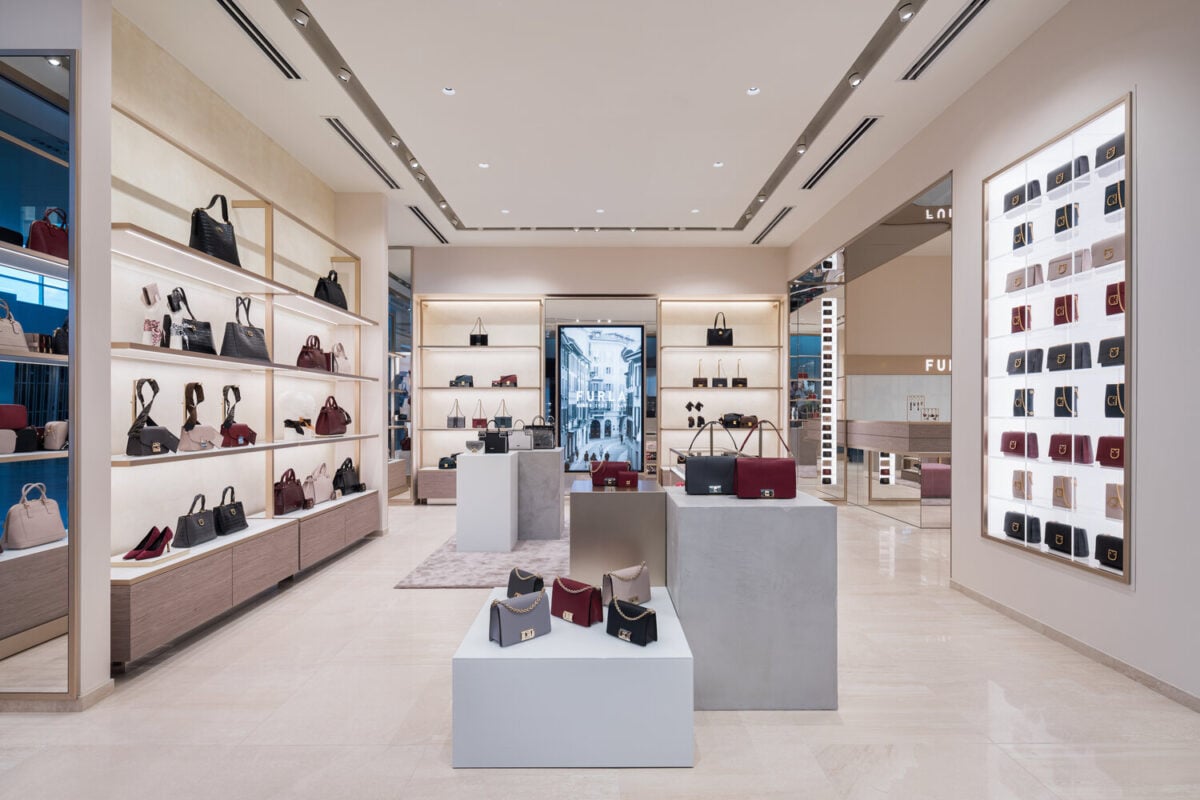
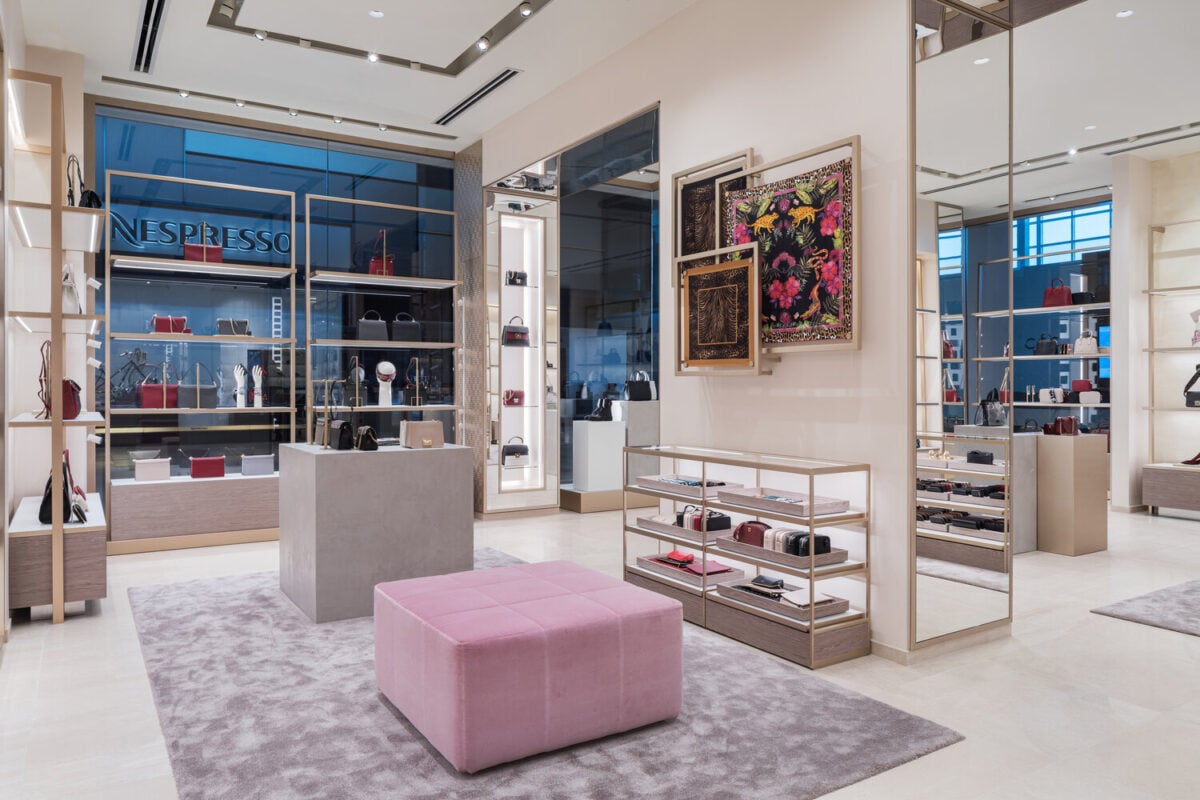
Furla at McArthurGlen Designer Outlet in July 2023. Photo: Lee Rivett.Furla at McArthurGlen Designer Outlet (Image: Furla)
Furla was founded by the Furlanetto family in 1927, and it continues to remain family-owned. The company produces various product categories that include leather goods such as handbags and shoes, as well as an expanding category of accessories that include eyewear, jewellery and watches. Furla’s headquarters are in Bologna, Italy, in a historic 18th-century villa. In 2015, the company opened a five-storey tall ‘Palazzo’ in central Milan.
Furla’s pricing is lower than that of brands such as Chanel, Hermes and Louis Vuitton, which Furla says gives it a competitive advantage. “It is the only brand in the fast-growing premium segment that gives customers an authentic Italian experience with an attractive value for money proposition, positioning itself as one of the major global players in the leather goods market,” according to the company.
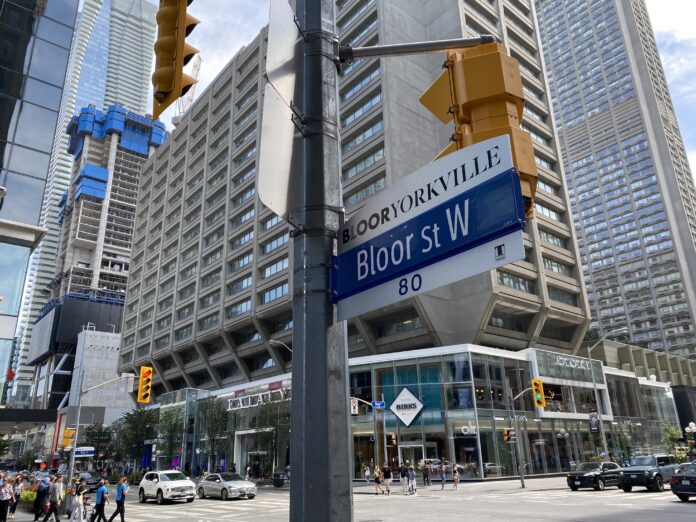
Bloor Yorkville at Bay Street (Image: Dustin Fuhs)
Craig and Lee discuss the fierce rivalry unfolding between Toronto’s Bloor-Yorkville and Yorkdale Shopping Centre in the realm of luxury retail. Delving into the nuances of this competition, they highlight the contrasting strategies and advantages each entitiy brings to the table. While Yorkdale’s dominance owes much to the streamlined approach offered by its single landlord, Oxford Properties, and its climate-controlled environment that appeals to shoppers during harsh Canadian winters, Bloor-Yorkville’s allure rests on its unique offerings and potential for a personalized shopping experience. Craig and Lee also draw parallels to similar trends in the United States, where luxury shopping has transitioned from vibrant downtowns to suburban malls due to shifts in consumer preferences and city landscapes.
Moving beyond Toronto’s borders, the hosts elaborate on luxury retail expansion in cities such as Vancouver and Montreal. They spotlight upcoming developments like the Oakridge Park in Vancouver and Royalmount in Montreal, both poised to reshape luxury shopping landscapes in their respective regions. The conversation shifts to the challenges posed by fragmented property ownership in Bloor-Yorkville, contrasting with the more cohesive approach of shopping centres like Yorkdale. As Lee aptly points out, navigating through individual building owners and their unique personalities can complicate retailer placement and leasing negotiations, underscoring the distinct advantages of mall environments for luxury retail expansion.
The Weekly podcast part of theThe Retail Insider Podcast Network by Retail Insider Canada and is available on Apple Podcasts, Stitcher, TuneIn, Google Play, or through our dedicated RSS feed for Overcast and other podcast players.
Transcript
Announcer 0:00 This is a Retail Insider Podcast. You’re listening to “The Weekly”.
Lee Rivett 0:08 Welcome to this week’s episode of “The Weekly” by Retail Insider. I’m Lee Rivett and I’m joined with the owner and publisher of Retail Insider Media, Craig Patterson, to discuss this week’s most read articles on retail-insider.com. So thanks for joining me, Craig.
Craig Patterson 0:22 Hello, everyone.
Lee Rivett 0:23 Now in our last article on Yorkdale getting a luxury expansion. We didn’t touch upon the Yorkville impact where traditionally a lot of the luxury retailers would be showing up there. So and again, not to confuse the Toronto “Yorkdale Shopping Center” with the “Yorkville shopping neighborhood” that’s outside. But Craig, where would you like to start?
Craig Patterson 0:43 One thing in the article that I didn’t address was Bloor-Yorkville, these updates to Yorkdale are exciting. This is really interesting in terms of what’s happening with luxury retail but I think to a degree this is also a little bit at the expensive of the Yorkville area and Bloor Street because the shoppers that are going up to Yorkdale to buy these expensive things at these new stores (especially the ones that are coming). If Yorkdale wasn’t there, they’d all be going to Bloor Street basically and Yorkville Avenue. That’s where all the fancy stores would be. Yorkdale certainly dominating. There’s a lot of stores up there that are not in Bloor Street. I have been told that a good number of the stores that may have opened first at Yorkdale will eventually make their way down to Yorkville and that Toronto was a “two store town”, I guess you can call it that but nevertheless, I think the Bloor-Yorkville area, I mean if you’re seeing an amplification of VIP programs and of the valet parking and have this experience at Yorkdale – I think Yorkville needs something like that as well.
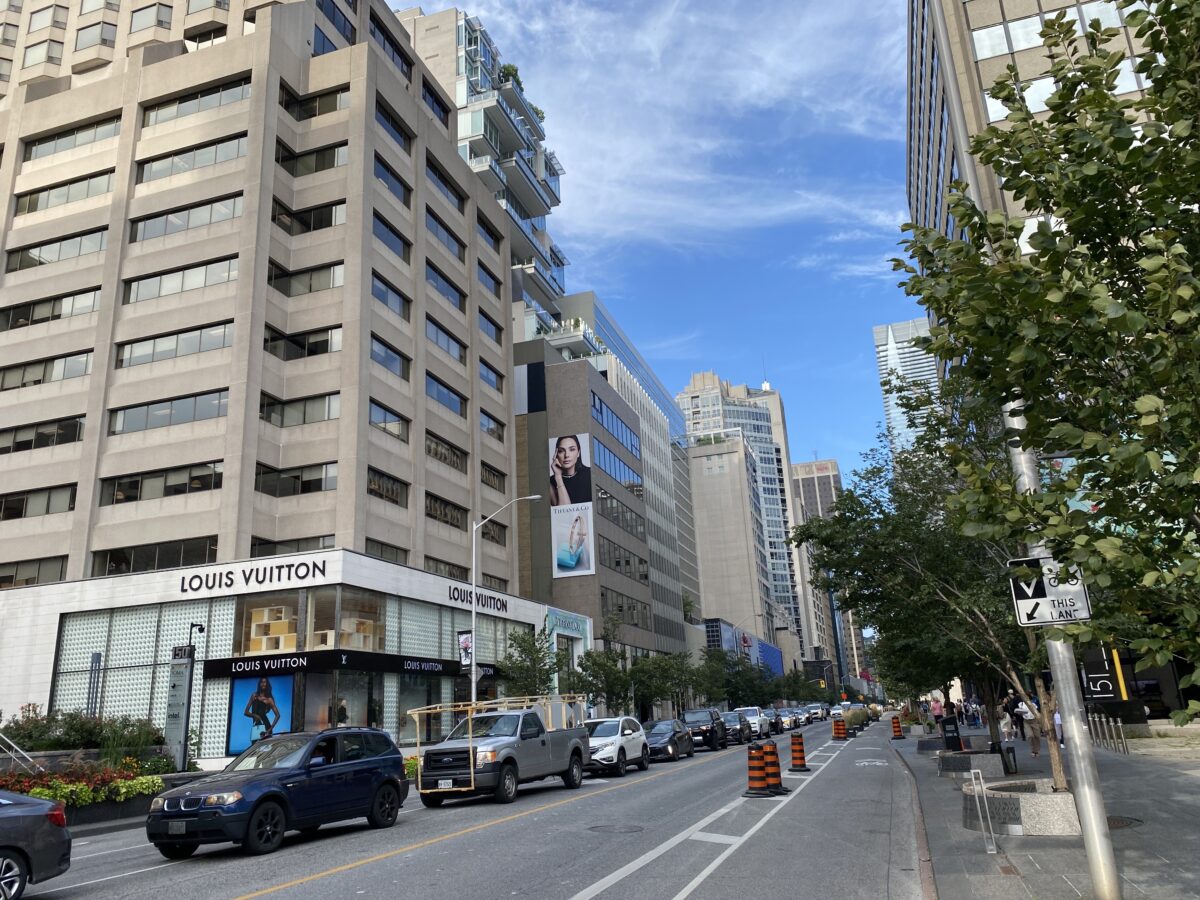
Bloor Yorkville (Image: Dustin Fuhs)
Craig Patterson 1:40 But it’s it’s harder because Yorkville has independent landlords, it’s you know, a neighborhood with all kinds of different buildings, it’s not connected, it doesn’t have one landlord like Oxford Properties. So Yorkdale definitely has that advantage. And so you know, it’s gonna be interesting again to see how this plays out with Yorkville versus Yorkdale
Lee Rivett 1:58 And do you think this is unique to the Toronto area?
Craig Patterson 2:01 That’s happening in Toronto this is going to happen in Vancouver and Montreal next year and into 2025. I’ve talked about this before but Vancouver’s getting the Oakridge Park which is the overhaul of the Oakridge shopping center. It’s going to have lots of like two luxury stores. I think also about 100,000 square feet I think in total – so Yorkdale will have more in terms of square footage. I think Chanel and a few others are coming to Oakridge Park so this is exciting. And then in Montreal I’ve talked about this quite a bit but Royalmount is going to have also I think somewhere 100 or 150,000 square feet of luxury retail. They’ve named a few of the tenants – Louis Vuitton, Saint Laurent, Gucci, Tiffany and I think a few more like Jimmy Choo and Versace – there you know there’s a few others that I saw on the floor plan. I think Prada. I shouldn’t be naming these but there’s gonna be more expensive stores coming to Royalmount. So again, we’re gonna see the split or even perhaps the suburban dominance in the shopping center. And in Retail Insider the magazine. I wrote a very in depth article on this. So we’ll be posting this in Retail Insider.
Lee Rivett 2:59 And it’s the same thing unfolding in the United States?
Craig Patterson 3:03 The United States is a little bit different because in Canada, we still have these vibrant downtown’s, at least in Toronto, Montreal and Vancouver, in United States doesn’t have many cities left the vibrant downtown’s that support luxury retail I think there’s like five American cities and those would be San Francisco, Chicago, Boston, obviously Manhattan, Washington DC, – there isn’t much else out there. You know you with the downtown in an American city. So really, the luxury shopping in American cities is now in the in shopping centers. And usually in the suburbs. That’s where the fancy stores are. So in Canada, having Toronto, Montreal and Vancouver getting these luxury shopping centers in the suburbs, or having an addition of more luxury to existing shopping centers is really Americanizing these cities. And I just hope it doesn’t result in our downtown’s getting killed, or at least suffering significantly. That’s been, I think, a benefit to Canada as having these vibrant downtown’s. I mean, we’re definitely compared to United States doing better in terms of having vibrant downtown cores in major cities. Mainly again, Toronto, Montreal and Vancouver.
Lee Rivett 4:11 Looking at the American versions of Yorkdale Are there any that come to mind that we just want to highlight before we get into the wrap up?
Craig Patterson 4:18 Yorkdale isn’t certainly in a silo in terms of what it’s doing. We’re seeing some American shopping centers also adding more luxury retail so this is you know, Toronto is not the only city in the world where this is happening. I was recently reading (I want to do a little bit more reading and then I want to visit when it happens) is the Scottsdale Fashion Square in suburban Phoenix is taking the wing where Nordstrom is and turning it into a luxury wing with an even bigger Hermes store. I can’t wait to see this when it’s done because it’s it sounds like it’s gonna be another really innovative project that’s going to repurpose a whole bunch of retail space. We’ve seen this in different cities in California with Westfield Topanga center, a University Town Center in San Diego. Westfield Valley Fair in Silicon Valley, or Santa Clara added a whole bunch of luxury stores of the Bloomingdale’s. It wasn’t super recent, but it’s been the last within the last few years that we saw that progression happening. So it’s happening around the United States as well with with shopping centers.
Lee Rivett 5:16 Let’s just focus our last two questions here on just Yorkville and Yorkdale in Toronto. And firstly, like, imagine a normal winter in Toronto. It’s minus 30 degrees, it’s snowbanks everywhere, its blowing snow and you have this luxury shopper that’s potentially going to the Yorkville shopping street, and then having to go from one store, trudge through the elements to be able to schlep into the next door to the next door in the harshness of the Canadian winter. So that is a hard sell versus let’s say, just rolling up in a covered parking lot in Yorkdale Shopping Mall, you valet park your car and then be able to go from store to store in a covered heated comfortable environment. So the question for you, Craig is how is that going to be overcome by Yorkville – when its a shopping area/street that is in the elements of the Canadian winter?
Craig Patterson 6:10 I don’t even think I have to answer this question. I think we know the answer. I live in Yorkville, the downtown area where you know, I have to deal with the elements. I mean, no, you’ve hit it bang on – Yorkdale Shopping Center has valet parking. You drop your keys off and go into the mall. Honestly, because I don’t I don’t drive a car in the city. I take the subway up to Yorkdale. But I know there was valet in a great parking area under Nordstrom. So Nordstrom is closed, of course. But I so I don’t know what’s happening down there. But nevertheless, that opportunity is there if it’s not being utilized. I just haven’t looked to be honest, because it’s not relevant to me. Wintertime at Yorkdale. I mean, it’s climate controlled. It’s always a certain temperature in there and that temperatures comfortable for almost everybody. I’m sure. That’s the way it’s designed. It’s minus 20 in Toronto, and you’re walking down Bloor Street, it’s not fun. Yes, they clean the sidewalks of snow but it’s chilly. And it’s again it’s unpleasant. This is Canada. Let’s let’s face it. This is we don’t have great weather here. This is a huge advantage for Yorkdale. And then when do people do a lot of their shopping? It’s before Christmas. And yeah, that’s typically not the best weather in Canada. I mean, Toronto is not as chilly as Edmonton and Calgary, Winnipeg and at that time of year, but it’s still not the most hospitable weather.
Craig Patterson 7:31 Yorkdale definitely has some advantages, other advantages that Yorkdale has, as well as I mean, among other things, a lack of vagrancy I mean, I know there’s been the odd shooting and there’s been you know, a few issues here and there at Yorkdale. But Bloor-Yorkville has respite centers, you’ve got the mentally ill that walk around doing things (screaming), you’ve got vandalism, there is sometimes a little bit of at least a perception of a lack of safety. And yeah, there’s incidents that happen. I live in the neighborhood, I can tell you exactly what happens here. It’s not always pretty. And again, this is another reason why I think Yorkdale has an advantage over Yorkville is among many other things is the fact that they can control who comes in and out of that property. And because of the laws of Canada, people can freely come in and out of Bloor-Yorkville as they want. And that can be any type of person that you want. And there’s a lot of panhandling and there’s a lot of drug use (I shouldn’t say a lot but there it does happen and it happens openly).
Craig Patterson 8:28 You brought up a good point here, be it whether it be it just even personal safety or just the environment generally. Another thing again with Bloor Yorkville is – it’s great that Toronto is a boom town. It really is. It’s one of the world’s leading boom towns in North America. I think it’s the fastest growing city, but that means there’s a lot of construction. I mean, Bloor Yorkville is just basically a construction zone right now. And that’s not the most pleasant thing to be and I granted Of course, Yorkdale has a lot of construction, with its new stores coming but it’s not this obnoxious condominium construction, you know, the sidewalks on Bloor Street and other parts of the neighborhood in Yorkville are, you know, hard to pass through because there’s so many stores being built right now and it’s really, really exciting stuff. You know, new Lululemon, new Arc’teryx, new Brown Shoes, it’s just endless – Van Cleef and Arpels, Rolex – there’s all these stores under construction literally right now – but you just got to navigate those sidewalks. So all together the experience is not quite as nice as Yorkdale – I guess you would say. At the same time, I encourage people to come to Bloor-Yorkville and shop because there’s stuff down here you can’t get at Yorkdale. There’s a Hermes store for example. And also I believe that Van Cleef and Arpels is going to be carrying the high jewelry line that you won’t be getting at Yorkdale so I you know, the product might be a little different and maybe a little more expensive than Bloor-Yorkville so I think that the stores downtown are counting on rich people in places like Rosedale and Forest Hill and some tourists (high spending ones) coming in and shopping So, and hopefully that continues again because I don’t want to see Bloor-Yorkville fail – and also I don’t want to see Yorkdale fail and it won’t. Together this creates a double node situation for luxury retail in Toronto.
Lee Rivett 8:28 And just to wrap up the podcast, what’s your final thoughts on having a single landlord like Oxford Properties for Yorkdale versus having individual building owners for every single like building on Yorkville Avenue in Bloor Yorkville?
Craig Patterson 10:29 Yeah, I mean, having one individual landlord at Yorkdale is certainly an advantage because and I can use the new luxury wing, the center run, as a great example because what Oxford Properties is able to do is basically just take out all the demising walls – all the little individual stores that had been there before – they can just clear the walls in between and basically start afresh. Or they can take a spot they where Club Monaco was and say, “Okay, Club Monaco, you go up here, we’re putting Ralph Lauren here”. That’s what happened. That’s the new tenant for the former Club Monaco space at Yorkdale. And so Oxford Properties has the ability to control that space to give a brand what space it wants, say in this new luxury wing or to move brands around. It’s got all that flexibility. On Bloor-Yorkville, you’re at the discretion of all kinds of different landowners and building owners and some of them have different personalities and some of them are more interested and some are disinterested, and may leave a building sitting empty, they may want a certain rent. I mean, it’s much more complicated for brokers to do deals and put tenants into buildings in Bloor-Yorkville, because you’re dealing with existing buildings, of certain sizes on certain pieces of land, with different owners. Some of the buildings might be older, some literally like where Dolce Gabbana recently was closed was a house or two houses, it’s kind of hard to tell, because it’s been modified so much, but literally was a residential building 100 years ago probably. And so dealing with all of that is really quite complicated. And it works. I mean, you see big cities in Europe, and of course, it works there. Take a Strauss in Frankfurt, or Oxford Street in London. They’re all individual landlords for the most part, maybe there’s a landlord owning a few buildings, but they’re putting tenants in there, that’s much harder to do than a shopping center, where it’s almost like “fill in the lines and do what you want” type of situations. So if I had a choice of being a mall landlord and having to do a bunch of deals on a street in a city – Dear God, of course, you’re going to go with the shopping center, because it’s just got so much more flexibility, it’s just easier.
Craig Patterson 12:45 It’s it’s all around just gonna be a simpler process. Overall, to put retailers in a place like Yorkdale Shopping Center (or any shopping center) versus trying to navigate the ownership and landlords in a major urban center where you got all kinds of different buildings. So, again, I mean, this is a score-one for Oxford Properties, they’ve got an advantage here, I think, and that’s why I think Yorkdale has really taken off is the Oxford Properties has been able to create this mass clustering of brands and has been able to do it both with the flexibility of having that opportunity to do what it wants with that space. And also having all of the sales numbers from the stores that it’s able to show other brands and say “You should come here too, because Cartier does really well and Gucci does really high sales”. So that’s why we’re seeing even West Edmonton Mall succeeding. Downtown Edmonton has essentially died. No more luxury shopping downtown Edmonton essentially – other than a few stores that might be have some high end brands and who knows for how long. Triple Five, the owner and landlord of West Edmonton Mall, can say our Louis Vuitton or Gucci and Saint Laurent are doing very well. Tiffany’s a top producer. They’ve got these sales numbers and they can take space, they can move retailers around and say “Hey, come in here and move in here”. So, we’ll be reporting on Montclair opening a store at West Edmonton Mall and a couple of others that I won’t name yet. But it was much easier to do this than say if this was a bunch of buildings on a street.
Lee Rivett 14:17 Fair enough. And thanks for going through and talking about Yorkville versus Yorkdale. And as well as even going into a little bit further into the United States and such. And I’m looking forward to chatting more about all the different various things and otherwise, we’ll see you next week. Craig.
Craig Patterson 14:31 Thank you so much, everyone for listening. Take care and bye for now.
Subscribe, Rate, and Review our Retail Insider Podcast!
Drop us a line at Craig@Retail-Insider.com. You can also rate us in Apple Podcasts or recommend us in Overcast to help more people discover the show!
Background Music Credit: Hard Boiled Kevin MacLeod (incompetech.com). Licensed under Creative Commons: By Attribution 3.0 License. http://creativecommons.org/licenses/by/3.0/
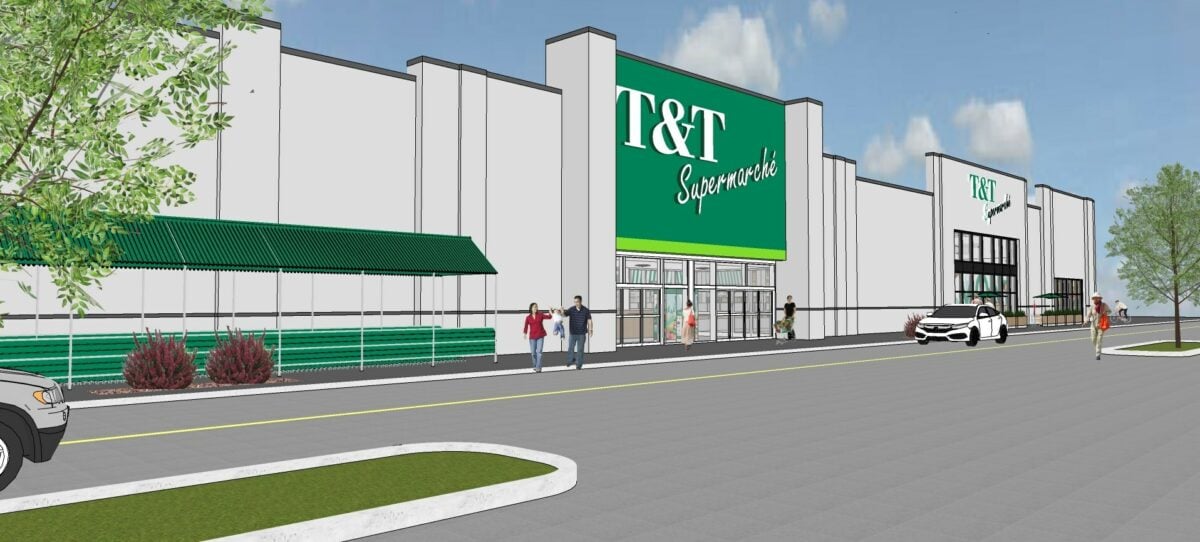
The launch next year of a new T&T Supermarket at Quartier Dix30 in Brossard will give a huge boost to the redevelopment and transformation of the massive shopping centre in the Montreal area.
The successful Asian grocery chain will open in the fall of 2024.
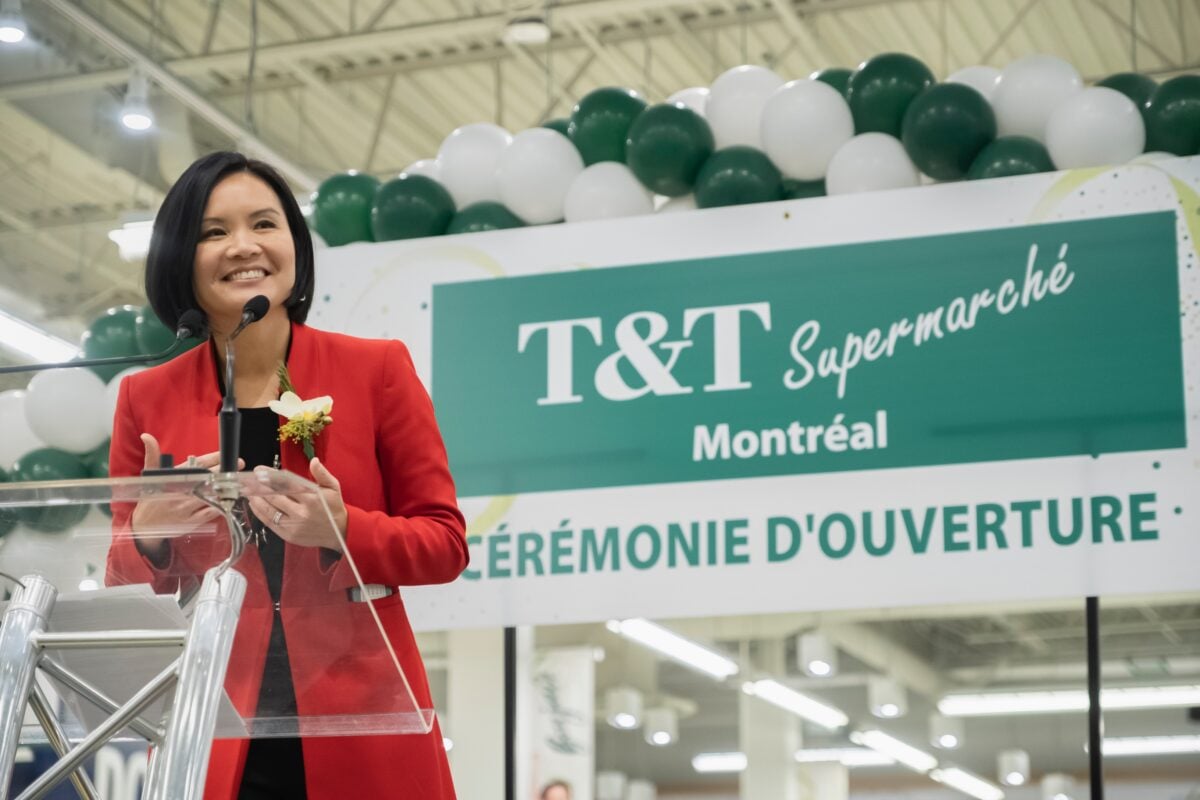
Tina Lee, CEO of T&T Supermarkets (CNW Group/Loblaw Companies Limited)
“South Shore was one of the most requested locations from the community ever since we announced we’re coming to Quebec. After receiving such a warm welcome in Montreal last year, we’re looking forward to opening a second T&T Supermarket in Quebec,” said Tina Lee, Chief Executive Officer of T&T.
“We looked at many development opportunities, and Brossard’s Quartier Dix30 proved to be the obvious choice – it’s a popular and ever-expanding mall, and we aim to be an integral part of the vibrant community that is growing around us. With numerous residential units planned in the coming years, we see immense potential in catering to the evolving needs of our customers, ensuring convenience and a delightful shopping experience.”
Quartier DIX30T&T’s New Brossard Location Rendering Photo (CNW Group/T&T Supermarkets)
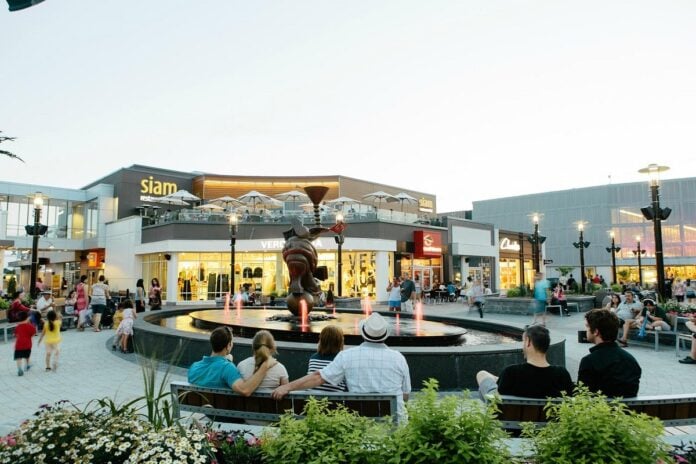
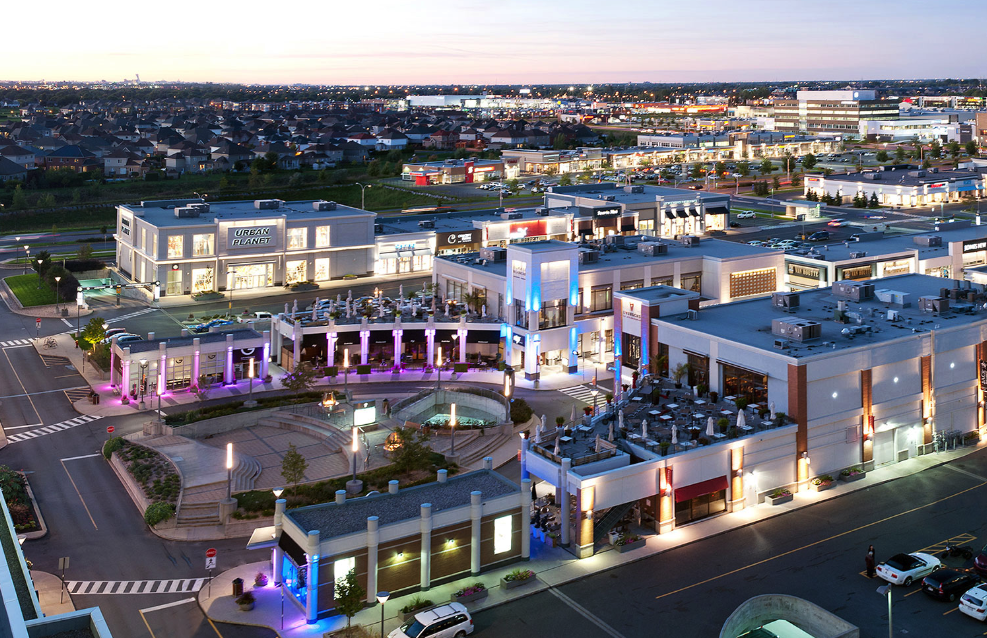
Quartier Dix30 is the second-largest retail centre in Canada in terms of size, with 3,200,000 square feet of retail and office space, as well as a direct connection to the REM and thousands of residential units planned over the coming years.
Nicholas Kassis
Nicholas Kassis, Head of Leasing for the shopping centre, which is operated by Carbonleo, said the arrival of T&T is massive for Quartier Dix30.
Carbonleo took over the management of the shopping centre in June 2022.
“Really one of the first things we knew that we wanted to do was how could we revive that centre. It’s the second largest shopping centre in Canada after West Edmonton Mall. It’s massive. It sits on about nine million square feet of land. The redevelopment potential for that site is massive,” said Kassis. “There was a lot of vacancy and we started looking at how can we improve in the short term the property.
“We knew already the new LRT train, the REM, that the government of Quebec were building, we were the only site in Quebec that had two stations. So we needed to capitalize on this. And we knew as well how the arrival of these new customers which (are) estimated at about 18.5 million visitors a year only for the southern portion of the REM, we knew that all this new customer base would change also the face of this mall.
“When we started looking at what we can improve, we realized that obviously there’s a huge Asian community on the south shore. We knew the T&T team pretty well and we knew what they were doing in Western Canada as well. We knew the success they were having. And having that type of offering is such a draw. Back in 2013, if I have my dates correct, Adonis opened on the South Shore and it really rapidly became one of the best grocery stores in Quebec and obviously became a huge draw for the southern part of Montreal. I think it was doing $1 million in sales per week at that time. So bringing a lot of traffic flow. And when you’re able to differentiate in your offering people will come from further than your typical day to day customer of this town.”
T&T Supermarket Montreal (Image: T&T Supermarket)
Kassis said T&T is a perfect fit for Quartier Dix30.
Nicolas Desourdy
“We’re proud to be working with T&T and to be able to contribute to the growth of this Canadian brand, while expanding the Quartier Dix30 offering. The arrival of this major player in the food industry represents added value for the dynamic and growing community of Brossard and the surrounding area and confirms Quartier Dix30 as the destination of choice for the South Shore,” said Nicolas Désourdy, President and Partner, Carbonleo, in a statement.
T&T Supermarkets is Canada’s largest Asian supermarket chain, with 33 stores located in British Columbia, Alberta, Ontario and Québec. T&T stores offer customers a vast selection of Asian products, including a wide variety of fruits and vegetables, meats, seafood, groceries, fresh breads baked daily, ready-to-eat meals and popular T&T private label products.
The company was founded in Vancouver in 1993 and is under the Loblaw Group of Companies.
IKEA Pick and Order Point Boisbriand (Image: IKEA Canada)
Over the past year, Quartier Dix30 has added several new retailers including IKEA, Arc’teryx, Bath & Body Works.
“There’s a lot of new signatures that we’ll be able to announce shortly,” said Kassis. “What’s been great is that with all of the signatures that we’ve done since June of 2022 we’ve been able to reduce the vacancy of this (centre) by 47 per cent.”
Quartier DIX30 opened in 2006 with a third phase being completed in 2009.
“There’s really a lot of activity and if we look at our sales of 2023 versus 2019 have increased by 31 per cent,” said Kassis. “It’s really, really positive.”
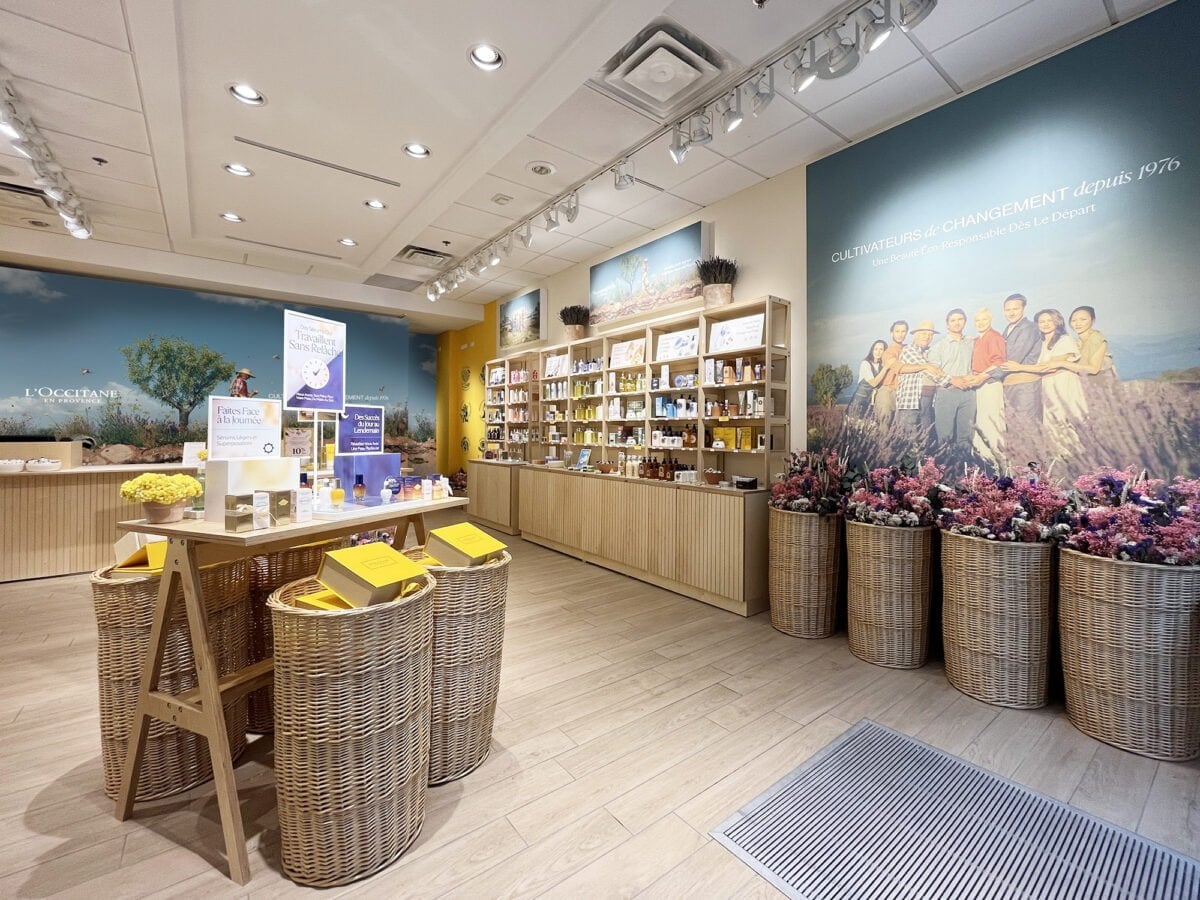
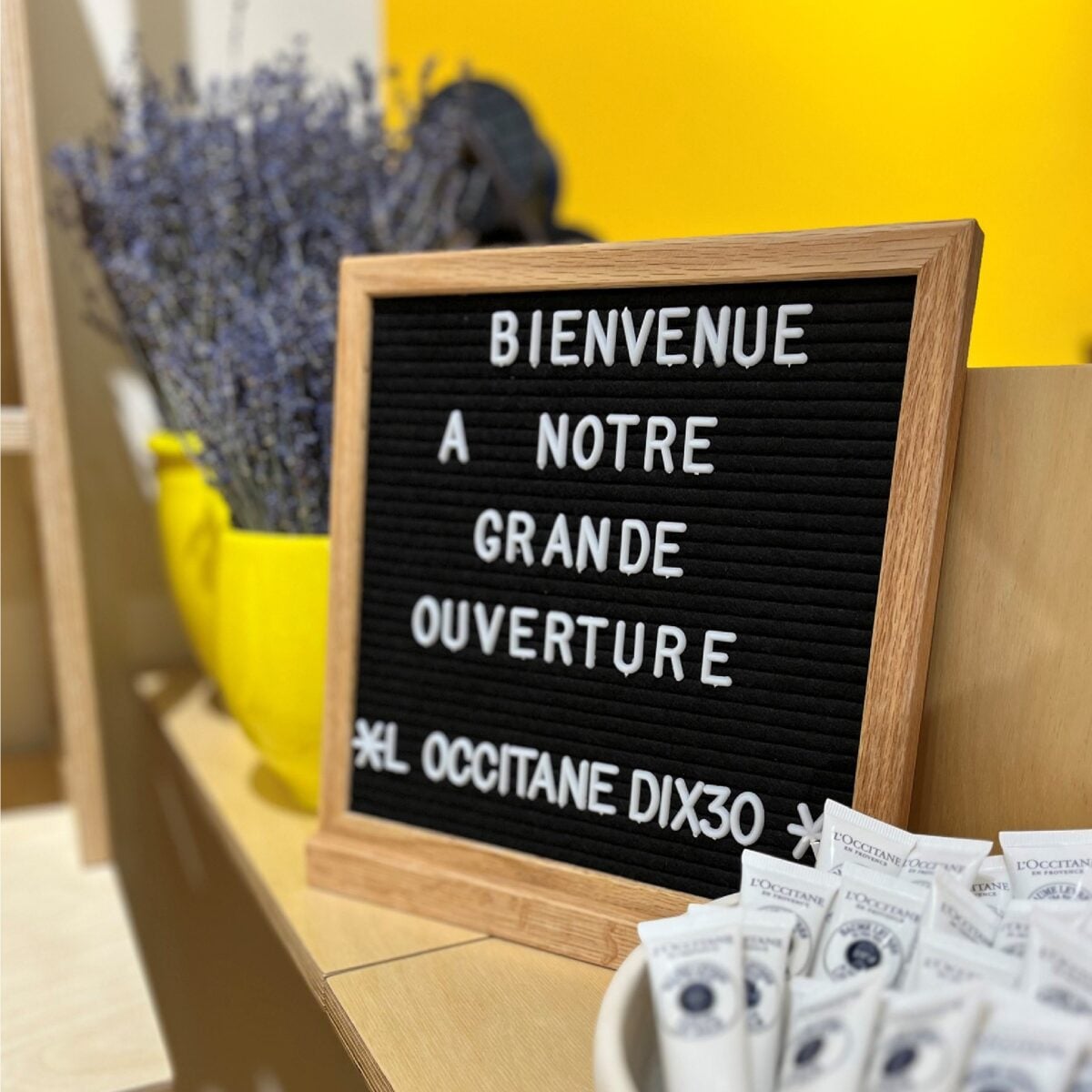
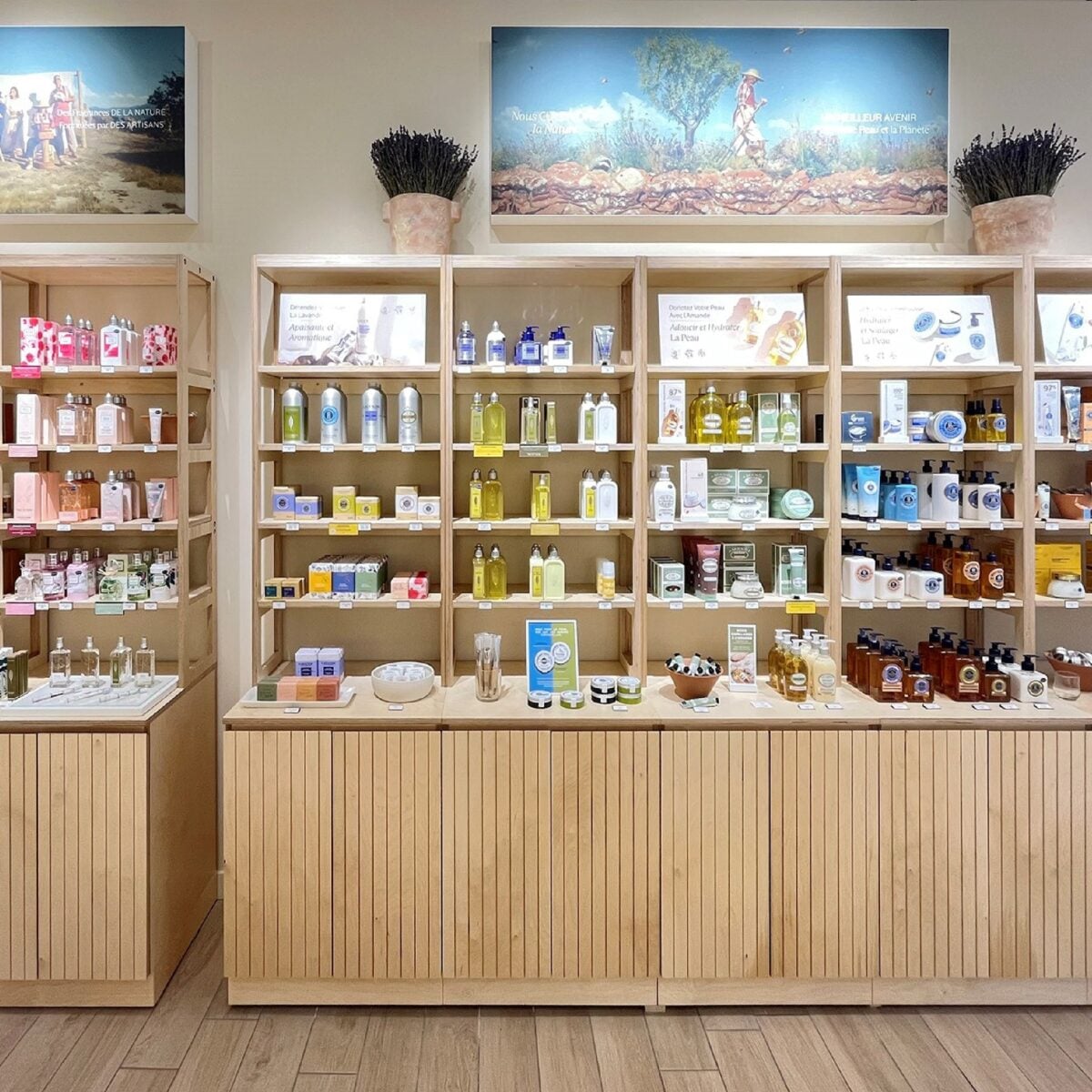
L’OCCITANE en Provence opens new store location at Quartier DIX30 in Brossard. (Image: L’Occitane)L’OCCITANE en Provence opens new store location at Quartier DIX30 in Brossard. (Image: L’Occitane)L’OCCITANE en Provence opens new store location at Quartier DIX30 in Brossard. (Image: L’Occitane)
The REM has greatly increased the number of visitors that are now coming from the Island of Montreal.
Plans are to build about 2,000 residential units over the years.
Kassis said the company will be investing between $15-20 million to put a linear park in the shopping centre area.
In addition to Quartier DIX30, Carbonleo is also developing the massive Royalmount project on Montreal Island that will include a retail shopping centre, offices, hotels and thousands of units of residential. The company also developed and owns the Four Seasons Hotel in downtown Montreal which is connected to Holt Renfrew Ogilvy.
Retail Insider is streamlining its Canadian retail news from around the web to include a handful of top news stories that can be viewed quickly during the day. Here are the top stories from the past several days.
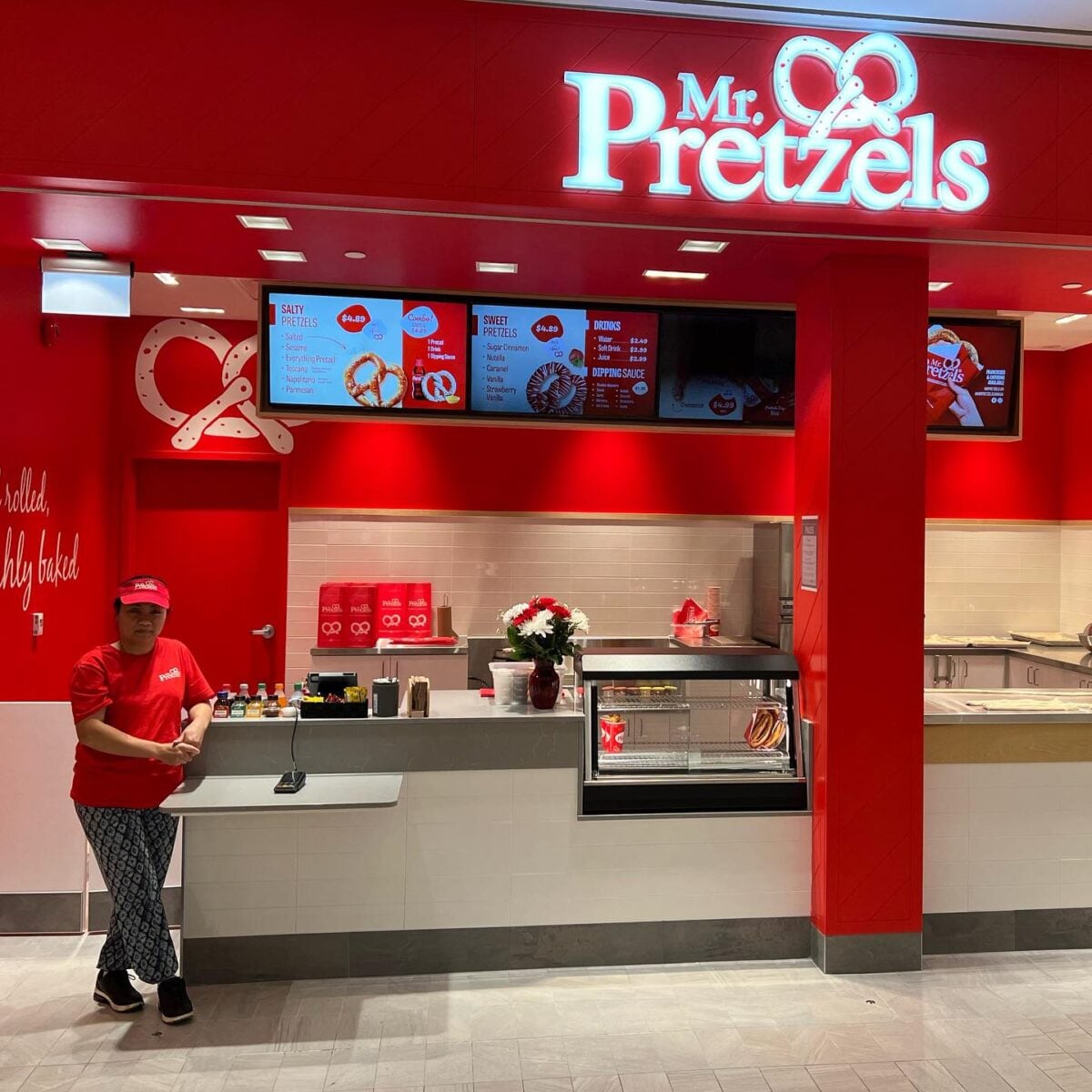
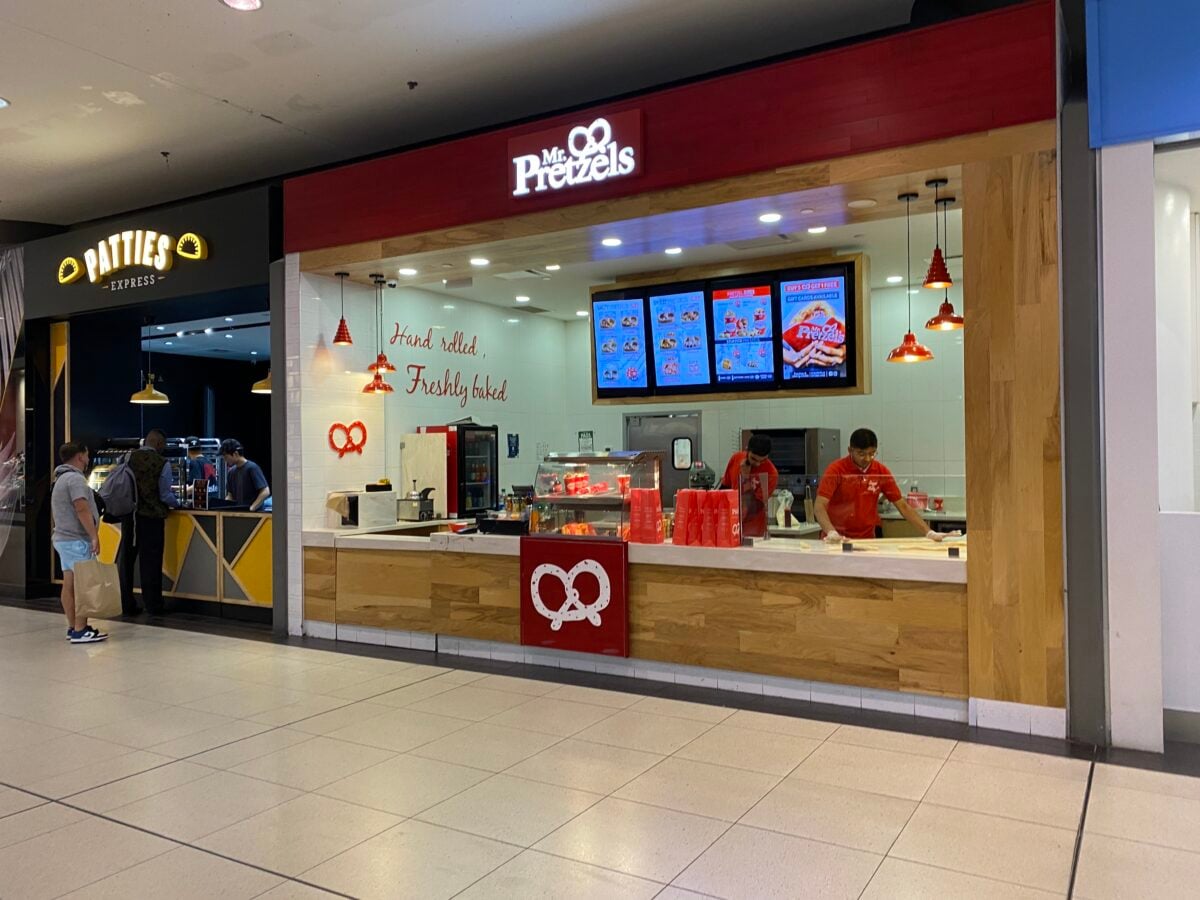
Mr. Pretzel at Conestoga Mall (Image: Mr. Pretzel)
Mr. Pretzels has been known over the years for its presence in shopping malls across the country.
But the brand is expanding into other areas as it builds its presence in Canada.
Carmine Di Fruscia, president of Mr. Pretzels in Canada, said the company currently has 80 locations, approaching 90 by the end of next year.
“What happened during COVID obviously every mall shut down, every province was a bit different to handle. That was a bit confusing. Quebec handled it one way, Ontario handled it another way, Alberta another. So we had to juggle all these things. At one point every single store was closed,” he said.
New Mr. Pretzel at CF Masonville Place
(Image: Mr Pretzel)Image: Mr. Pretzel
“But then we kind of bounced back. We took that opportunity to reinvent ourselves. We came out with a baking kit. People were going crazy baking at home. So we created this baking kit that we sell in our stores. Then our competitor from the U.S. decided to leave Canada and we ended up picking all their locations up except for one.
“So during the time the malls were slowing re-opening and closing and re-opening, we were continuing to open stores. Still business as usual. When we re-opened a lot of our customers came back. So our sales year-to-date are up easily about 12 per cent, 15 per cent which is a good number to be in. We came up with a few different flavours on our product.”
Di Fruscia said the company has recently opened five stores across Canada – Quebec, Ontario, Vancouver and Alberta.
“And we’ve seemed to have gone to different markets. We’ve opened up in the airports, in the University of Calgary and that’s new for us,” he said. “We’re opening up our second location in the airport of Montreal. We’re in international and now we’re going into the domestic side. These numbers are just incredible, breaking all records.
“University of Calgary was our first. Now we’re talking to the University of Ottawa, looking to go into different markets. Our primary market is always the malls.”
Image: Mr. PretzelImage: Mr. Pretzel
Mr. Pretzels has been present in Canada since 2013 and today has more than 300 locations across 20 countries.
“One area we haven’t been able to penetrate for a long time, which we are now, is the Maritimes. That’s our focus right now. We’re going to open one to two stores in the Maritimes,” said Di Fruscia. “What’s happening now going forward is we still have two more stores to open this year.
“Next year we’re looking at another maybe seven or eight stores.”
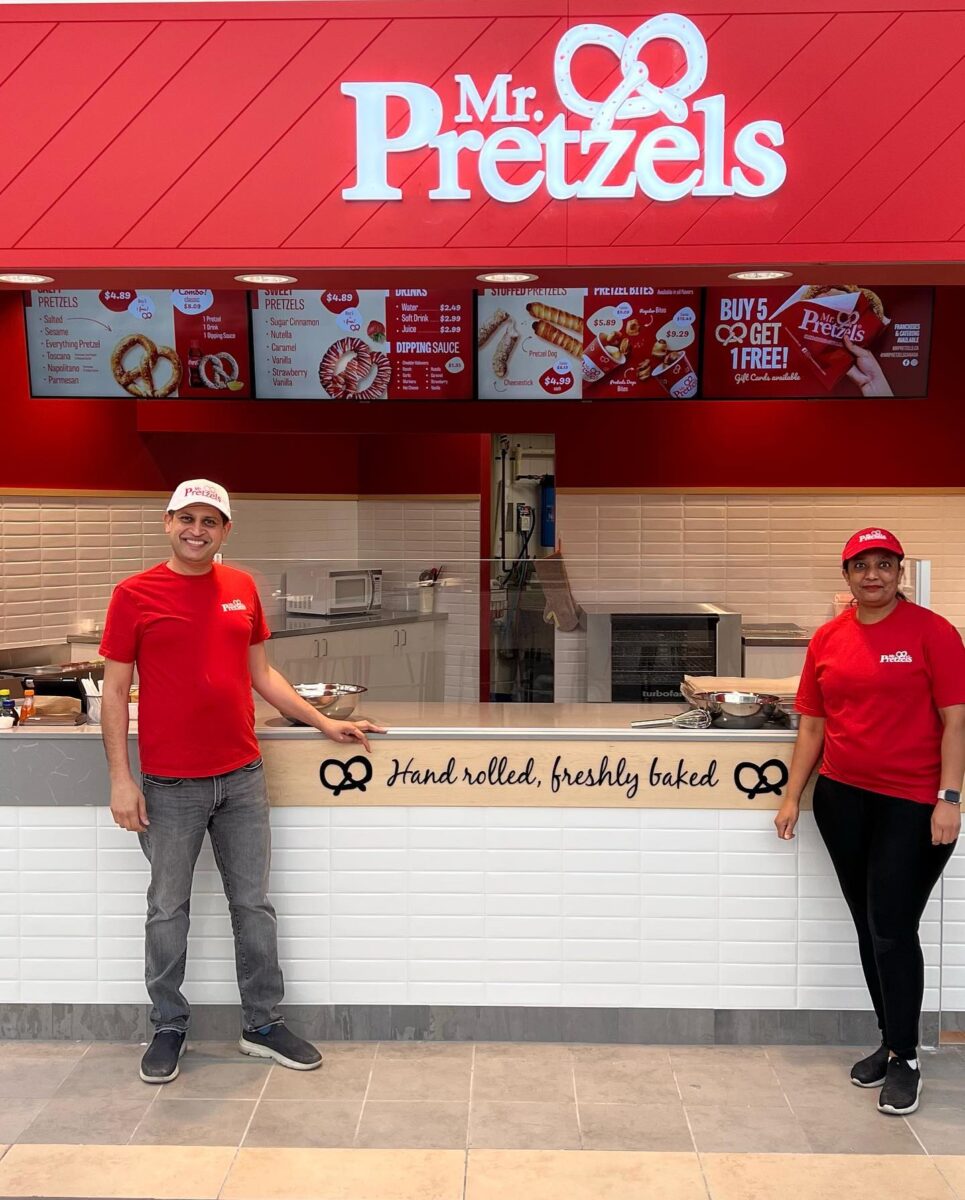
Image: Mr. PretzelMr. Pretzels at CF Toronto Eaton Centre (Image: Dustin Fuhs)
Di Fruscia said high traffic areas is a very important part of the business.
“We prefer obviously the kiosk model but we’ve done a lot of in-lines that have been very successful. Our primary is kiosk. If that’s not available we look at a small in-line,” he said.
All of the pretzel dough is freshly prepared throughout the day and hand rolled on site for people to feast their eyes on.
The company’s founder is Luiz Penna.
Canada’s first location was opened in Place Vertu shopping centre in Montreal four years ago after Di Fruscia met the founder of Mr. Pretzels at that time.
“That franchise didn’t go well. It didn’t survive COVID,” he said. “O bag is a brand from Italy and in COVID times they were not receiving any merchandise. I guess they were buying some products from China. The import/export was horrible, bringing product in. They ended up closing or filing for bankruptcy protection. We had no choice. We weren’t getting the inventory. We ended up closing the two stores that were open.”
Future POUTx TORONTO on King Street East (Image: Dustin Fuhs)
The Canadian retail landscape experienced positive but mixed results in the first half of the year, with stronger performance being reported in select formats or nodes, according to the CBRE’s H1 2023 Retail Rent Survey.
“The current economic climate, inflation and elevated interest rates have paused leasing activity amongst some retailers, but not all. The most active category groups vary by market and are most frequently led by QSR and personal services. As has been the case, good real estate continues to be leased quickly, resulting in limited vacancy amongst the most in-demand formats, particularly those that are unenclosed,” said the report.
“This is expected to continue, and when paired with a softening supply pipeline – a byproduct of higher construction costs – could result in further rental appreciation over the next six months.
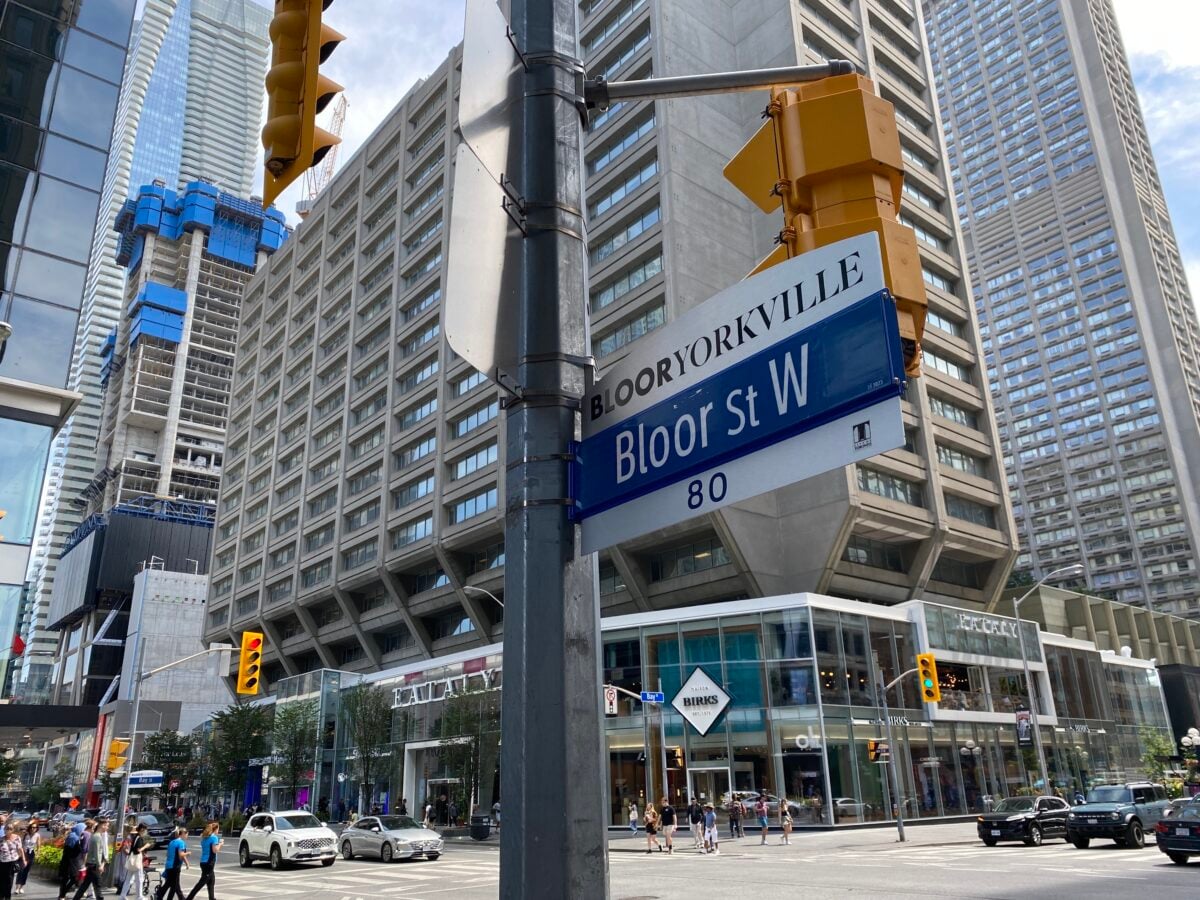
Bloor Yorkville at Bay Street (Image: Dustin Fuhs)
“Select cities have noted challenges with downtown areas, citing slower foot traffic from reduced office occupancy. This sentiment and its subsequent impact on urban retail formats are not uniform across the country; however, this category represents the greatest share of rent increases reported in this survey. In fact, five of 11 markets saw rental appreciation in two or more key urban nodes. High streets in Toronto, namely Bloor-Yorkville, remain a top destination for high profile retailers. Meanwhile, Sainte Catherine Street West in Montreal has seen an uptick in activity with initial phases of construction of the street revitalization nearing completion.
“More upward market movements were reported in H1 in comparison to prior editions of this report with 29 noted increases and only one reduction in benchmark rent prices. Geographically, Montreal and Calgary reported the highest number of rental rate increases, respectively up in eight and six formats or key urban areas.”
Key findings of the report:
Open-air centres are reigning supreme with community (unenclosed), neighbourhood and convenience centres noting increased rental rate ranges in three of 11 markets. Demand remains strong for space in these formats, especially if grocery or food anchored;
Key urban areas face various headwinds, however demand remains strong for the most desirable nodes: 30 per cent of high streets or streetfronts included in this report saw rental rate appreciation;
Mixed-use, both urban and suburban, is gaining traction with each noting rental rate increases in three of 11 markets;
Montreal and Calgary reported the highest number of rental rate increases, respectively up in eight and six formats or key urban areas. This was followed by Halifax (+5) and Toronto (+4); and
Sentiment remains optimistic across markets despite economic conditions. Activity remains positive, with best- in-class locations leasing quickly.
Canada Retail Rent Survey H1 2023
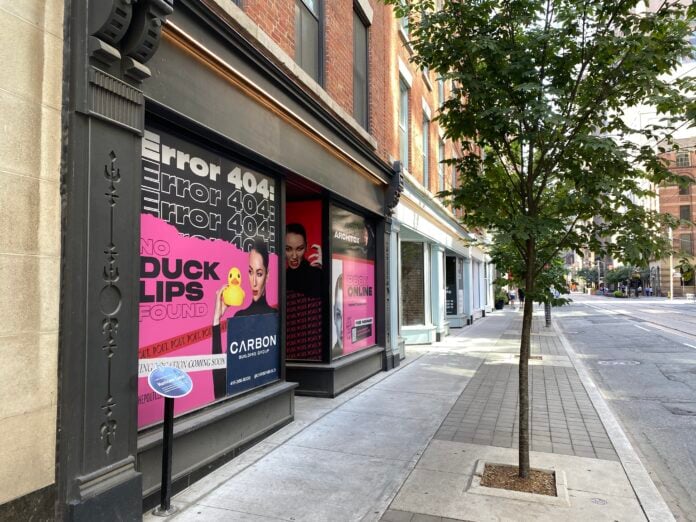
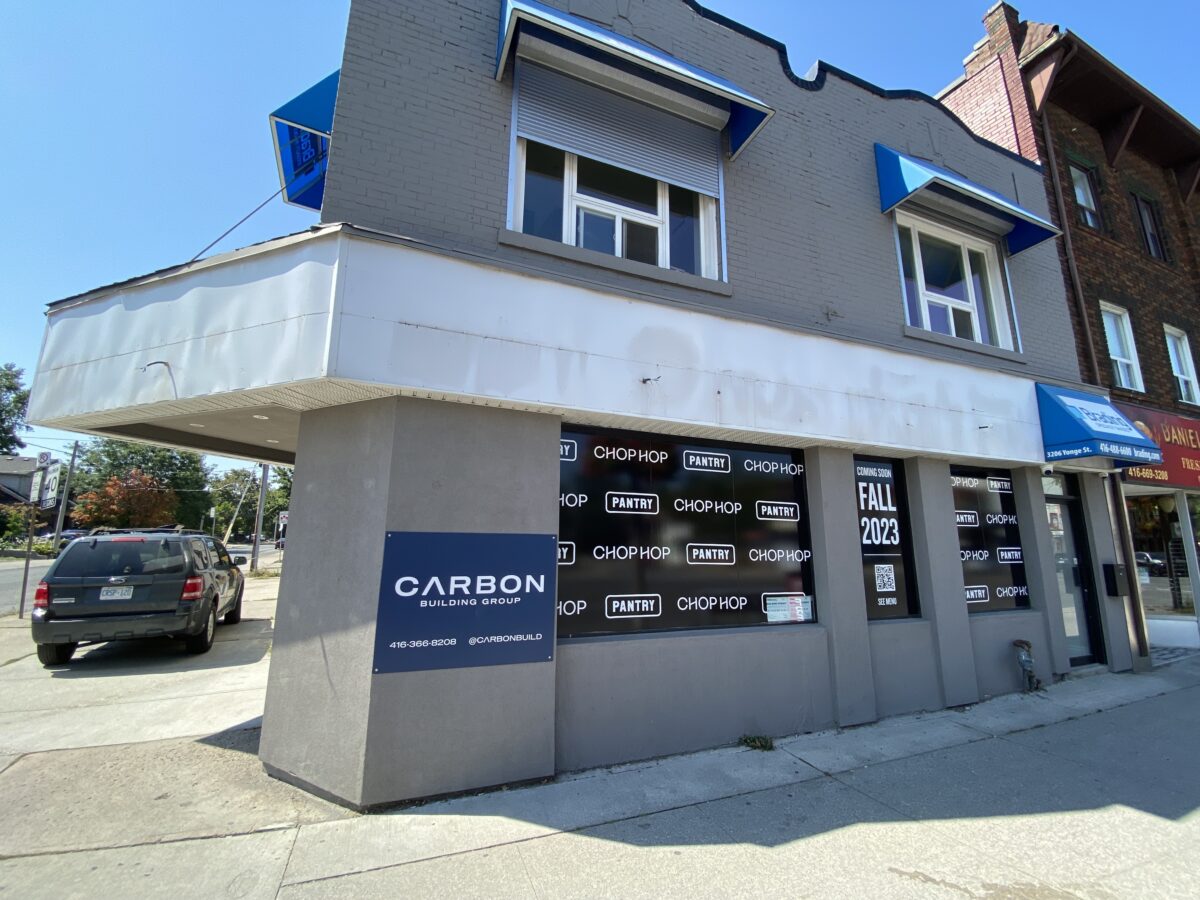
Future Chop Hop Pantry at Yonge and Woburn Ave (Image: Dustin Fuhs)
“We’re back in retail,” said Kate Camenzuli, Vice President of CBRE and Practice Lead, Occupier for Retail, Canada and Cross-Border. “Good real estate is moving quickly. We’re seeing growth in the retail sector. High streets are continuing to grow.
Kate Camenzuli
“We’re excited to see how it continues to be a very tight market. The difficulty is that when it’s not a tight market it’s usually not super active. So it’s a very active market and across all metropolitan markets.
“I think we are seeing really good growth back into the cores of the city. I think we are seeing continued growth in community-based areas and suburban malls and streets.
“Overall high tides rise all ships and that’s one of the stories for this quarter that we are definitely seeing.”
Camenzuli said one trend that the retail industry is experiencing is groups that are traditionally street and new innovative street retailers are now coming back to the market.
“So we might see high street, suburban high street and sort of the out of enclosed malls outperform enclosed malls only because those are the new retailers right now that are coming into the market,” she said. “But the enclosed mall landlords have done a great job at attracting those traditional street retailers into the malls.”
She said moving quickly on good real estate is going to continue to be important.
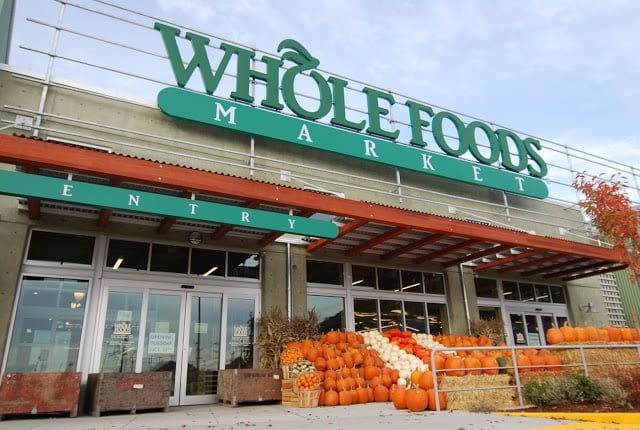
The necessity for increased competition within Canada’s grocery industry is a consensus that resonates across the nation. The identification of a prospective entity capable of catalyzing transformation within our food retail landscape, however, remains a formidable task. Contemplations veer towards the potential entrants, such as the Germany-based Aldi and Lidl, already ensconced in the United States, or perhaps Alimentation Couche-Tard, which embarked on a notable bid to acquire France-based Carrefour last year. Furthermore, one cannot dismiss the erstwhile anticipation surrounding Amazon, notably when it acquired Whole Foods for a princely sum approaching $14 billion USD in 2017. Yet, this anticipation has since given way to a more tempered assessment of Amazon’s performance in the grocery sector.
At the juncture of the acquisition, there was a prevalent belief among analysts that Amazon would seamlessly transfer its online successes into the realm of physical grocery markets, both in the United States and Canada. Indeed, the announcement of Amazon’s acquisition of Whole Foods elicited a pronounced downturn in Canadian grocery stocks. Loblaw and Empire, the conglomerate behind Sobeys, experienced share price depreciations exceeding 3.5 percent, while Metro observed a nearly three percent decline in its stock valuation. Canadian grocery retailers swiftly pivoted towards the burgeoning food virtual market, marked by the proliferation of “Clicks and Collects.” Despite these efforts, however, e-commerce continues to constitute less than four percent of Canada’s comprehensive food retail market, even amidst heightened investments in response to the exigencies of the pandemic.
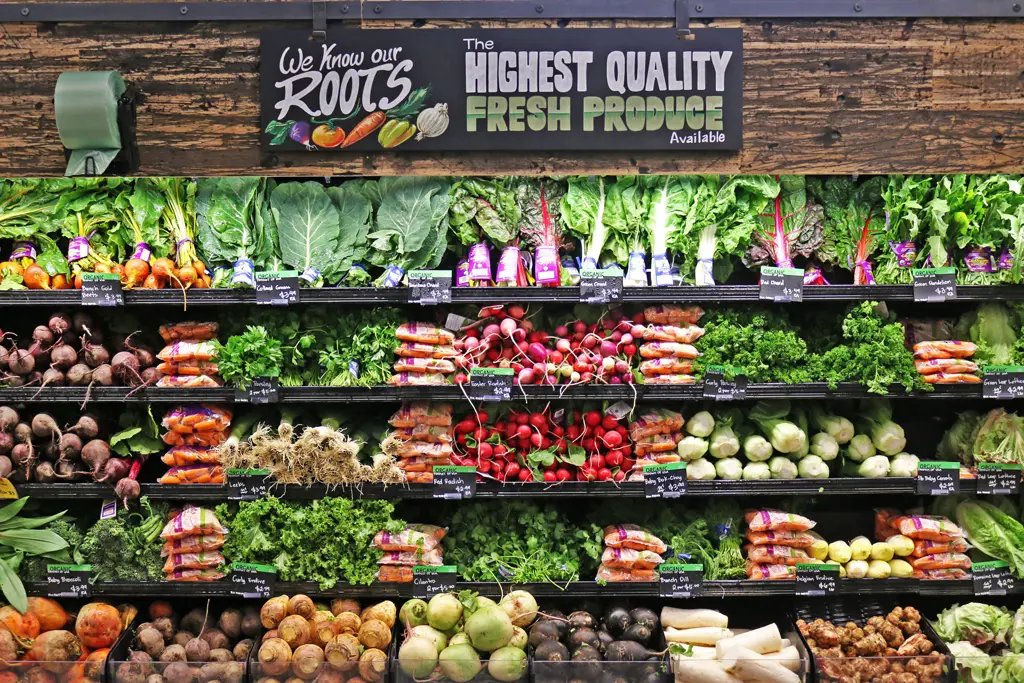
Image: Whole Foods
Yet, since its acquisition, Whole Foods has failed to exhibit substantial growth. The preceding year witnessed virtually stagnant net income growth, a stark contrast to the promising eight percent experienced in 2017. Amazon’s strategic reliance on high-tech augmentations to the Whole Foods shopping experience, including self-checkout lanes bolstered by biometric payment mechanisms, garnered lukewarm reception at best. Moreover, the footprint of Whole Foods has remained unchanged since its acquisition. While the United States boasts approximately 500 stores, Canada’s count remains fixed at a mere 14. It is imperative to note that the cost of the average grocery basket at Whole Foods substantially eclipses the norm, a disconcerting observation in an era marked by skyrocketing food prices.
In addressing the topic of escalating food prices, Amazon’s ambitious foray into cashier-less grocery retailing, as evidenced by Amazon Fresh, has encountered its own set of challenges. This venture, perceived as a technological revolution in food retailing, eliminates the need for cashiers and employees, relying instead on sensors and smartphones. Presently, Amazon Fresh operates 38 stores, none of which are situated in Canada, although a few are scattered across Europe. Notably, Amazon temporarily halted the expansion of this venture less than a year ago, ostensibly for a comprehensive reassessment. In practice, these stores have often provided lower-quality products at inflated prices, resulting in an underwhelming consumer experience. Amazon, as it stands, is in search of a stable footing within the grocery industry, and Amazon Fresh remains, at best, a work-in-progress.
For those Canadians yearning for increased competition, the onus for improvement falls upon Amazon. Regrettably, Amazon is not poised to serve as Canada’s culinary budgetary guardian angel in the immediate future. Nevertheless, one may ponder whether the Canadian market poses unique challenges compared to its American counterpart. Ironically, the small grocery chain T&T, under the auspices of Loblaw, is preparing to embark upon the American market, commencing operations next year in the greater Seattle area. This development stands in stark contrast to the last attempt by an American grocery retailer to penetrate the Canadian market, a venture undertaken by Target in 2014, which concluded with well-documented challenges.
In summary, the imperative for increased competition within Canada’s grocery sector is irrefutable. The search for a catalyst to drive transformation within this domain continues to be a complex endeavor. While the promise of Amazon’s entry into the grocery realm was a cause for excitement, its performance to date has left much to be desired. Consequently, the Canadian market awaits a formidable entrant capable of reshaping the grocery industry landscape, as the quest for heightened competition persists.
Retail Insider is streamlining its Canadian retail news from around the web to include a handful of top news stories that can be viewed quickly during the day. Here are the top stories from the past 24 hours.