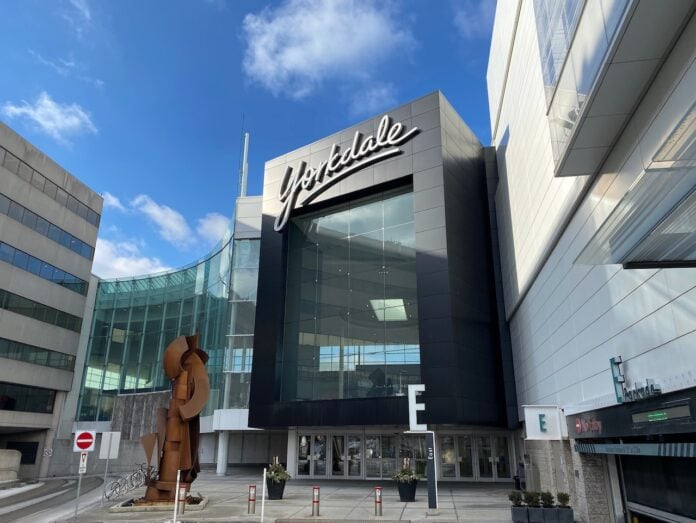
Sales came roaring back to Toronto’s Yorkdale Shopping Centre in 2022 after pandemic lockdowns hammered the retail industry. A new report from ICSC indicates record-breaking sales per square foot at Yorkdale for 2022, while overall sales at the centre surpassed $2 billion for the first time.
The ICSC report shows Yorkdale’s sales at $2,226 per square foot, surpassing previous numbers in Retail Council of Canada’s shopping centre studies that were published from 2016 up to 2019.
The two million square foot Yorkdale Shopping Centre also saw sales surpassing $2 billion for the first time, making it among the top performers globally for a major fashion mall. A decade ago we reported that Yorkdale was the first mall in Canada to surpass sales of $1 billion.
“For almost 60 years, Yorkdale has been a leader in the industry with its unrivalled mix of first to market, luxury, and flagship retailers, that attracts both brands and shoppers from across Canada and the world,” said Bradley Jones, Head of Leasing and Operations, Oxford Properties.
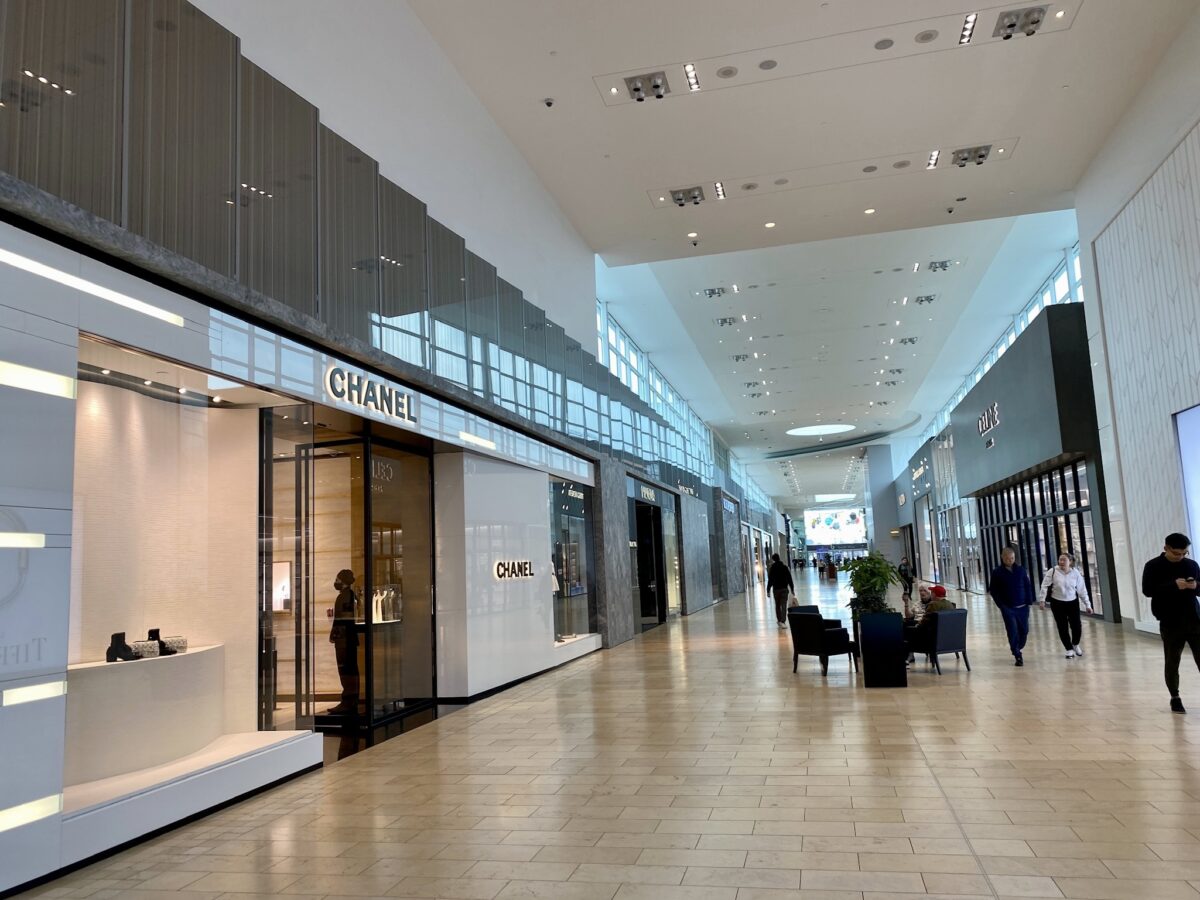
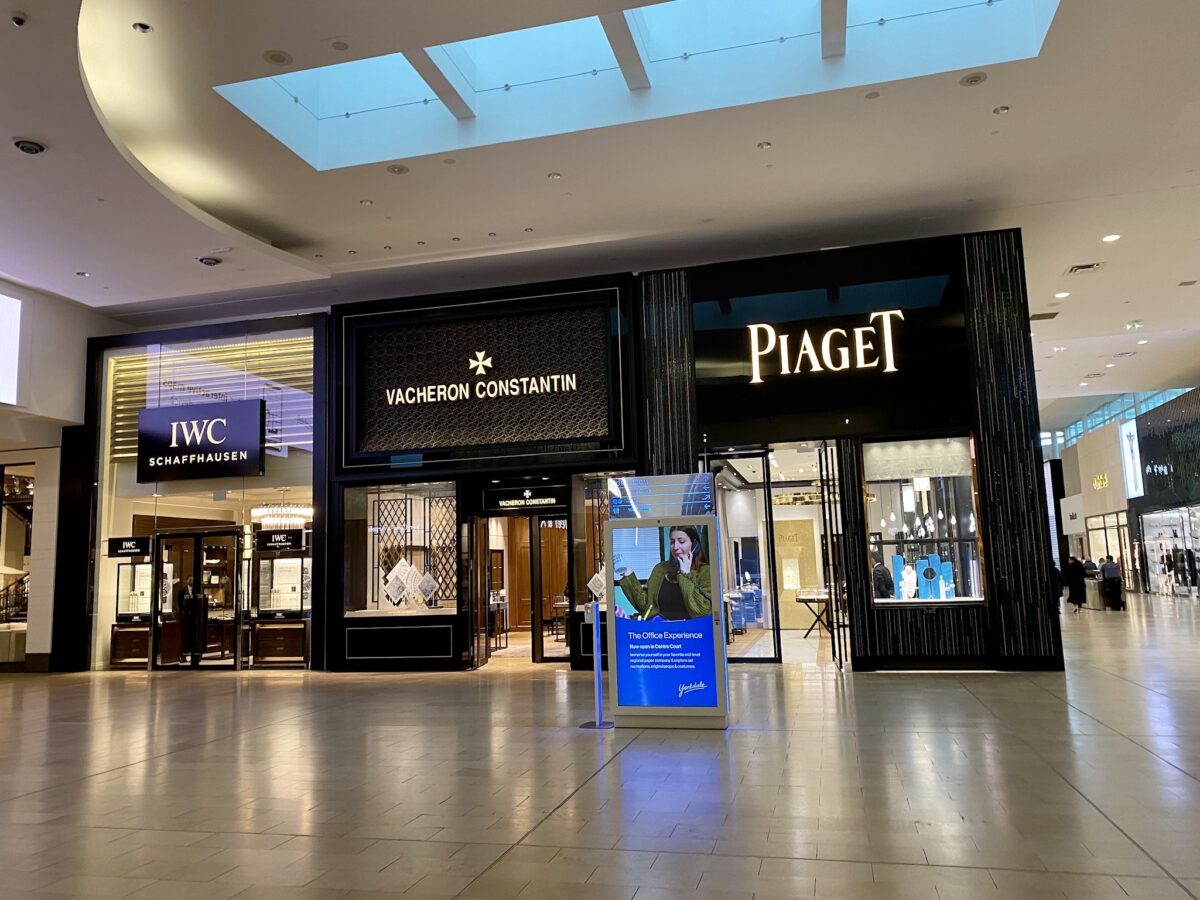
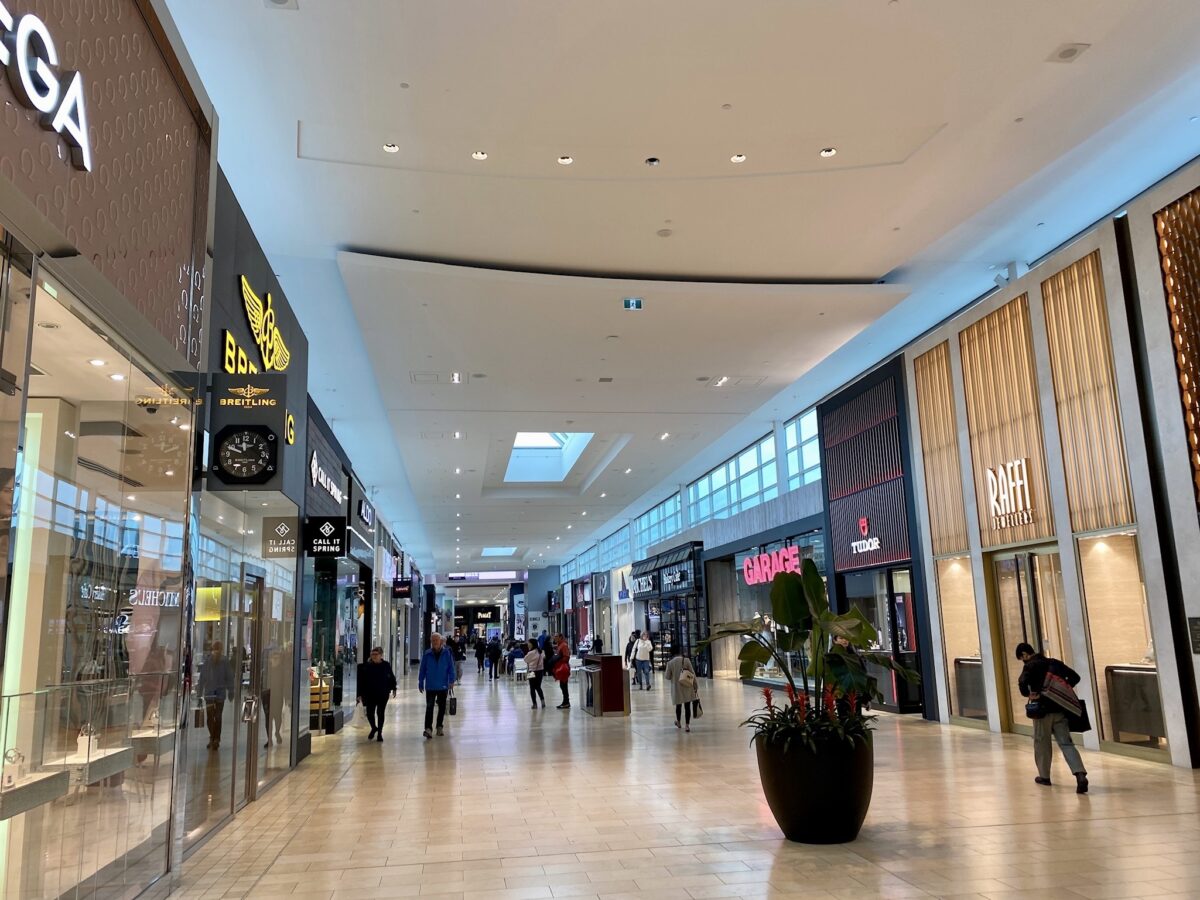
Holt Renfrew, left, currently operates several luxury brand concessions at Yorkdale with entrances facing into the mall including Chanel, Brunello Cucinelli, Dior, Fendi and Gucci. To the right in the image are storefronts for Tiffany & Co., Celine, Balenciaga, Bottega Veneta and Valentino. Photo: Dustin Fuhs.In 2016, Richemont Group opened four luxury jewellery/watch boutiques at Yorkdale including Piaget, Vacheron Constatin, IWC and Panerai. All four are in a space formerly occupied by a Williams Sonoma store. Photo: Dustin Fuhs.
Yorkdale launches more first-to-Canada retailers than any place in the country. Landlord Oxford Properties said in a statement that 53 new retailers have opened at Yorkdale over the past five years. Of those, 29 retailers were first-to-market, and over half of those are in the luxury category. The high sales per square foot at Yorkdale can be attributed partly to the performance of the many luxury brands that are located at Yorkdale, with some of those retailers doing tens of millions of dollars in sales annually. Other productive retailers boosting the mall’s performance include highly productive locations for Apple, Tesla and Canada Goose, among others.
“Yorkdale is the destination where designers choose to open first in Canada. The centre has welcomed an impressive number of first to market luxury retailers and destination food and beverage offerings over the last few years,” said William Correia, Director, Yorkdale Shopping Centre. “Yorkdale continues to elevate the shopping experience to draw visitors from across Canada and internationally with the centre’s sense of discovery and sophistication.”
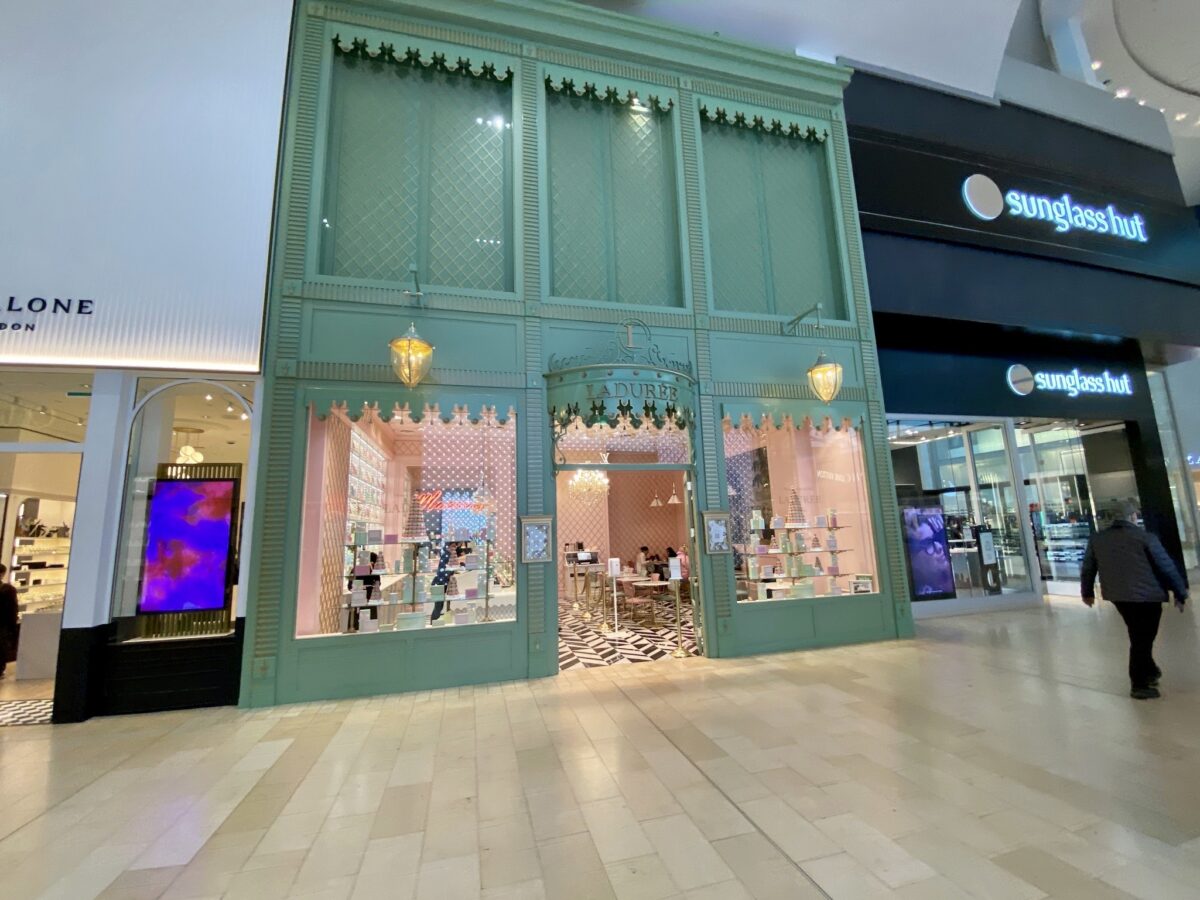
Yorkdale has been beefing up its food and beverage offerings, including a soon-to-open Earls restaurant that joins several other full-service options including a busy location for Canada’s only Cheesecake Factory. Upscale offerings such as Ladurée (which will soon be expanding its offerings) serve shoppers as well as retailers that purchase items as gifts for customers. The mall also has a busy third-level food court which has recently seen renovations as well as the addition of new vendors such as Chick-fil-A.
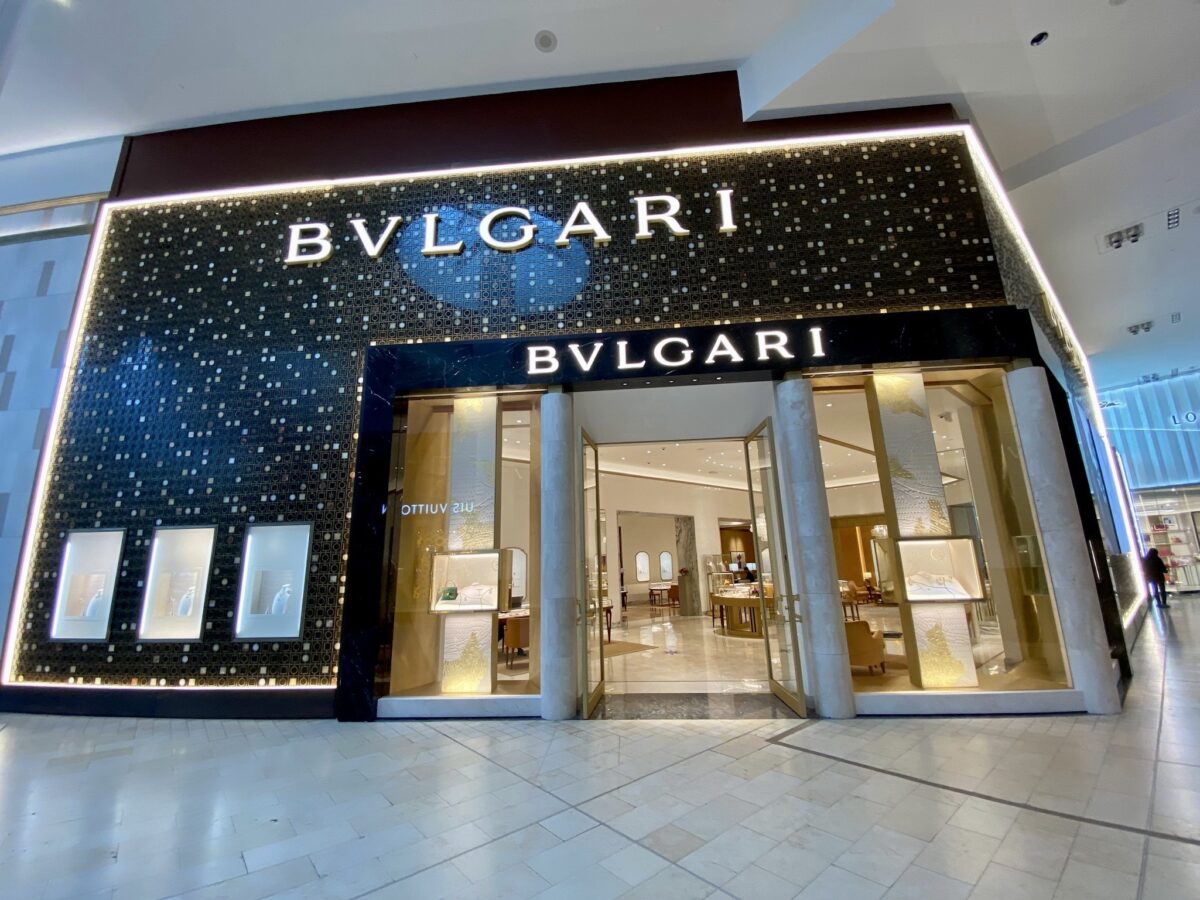
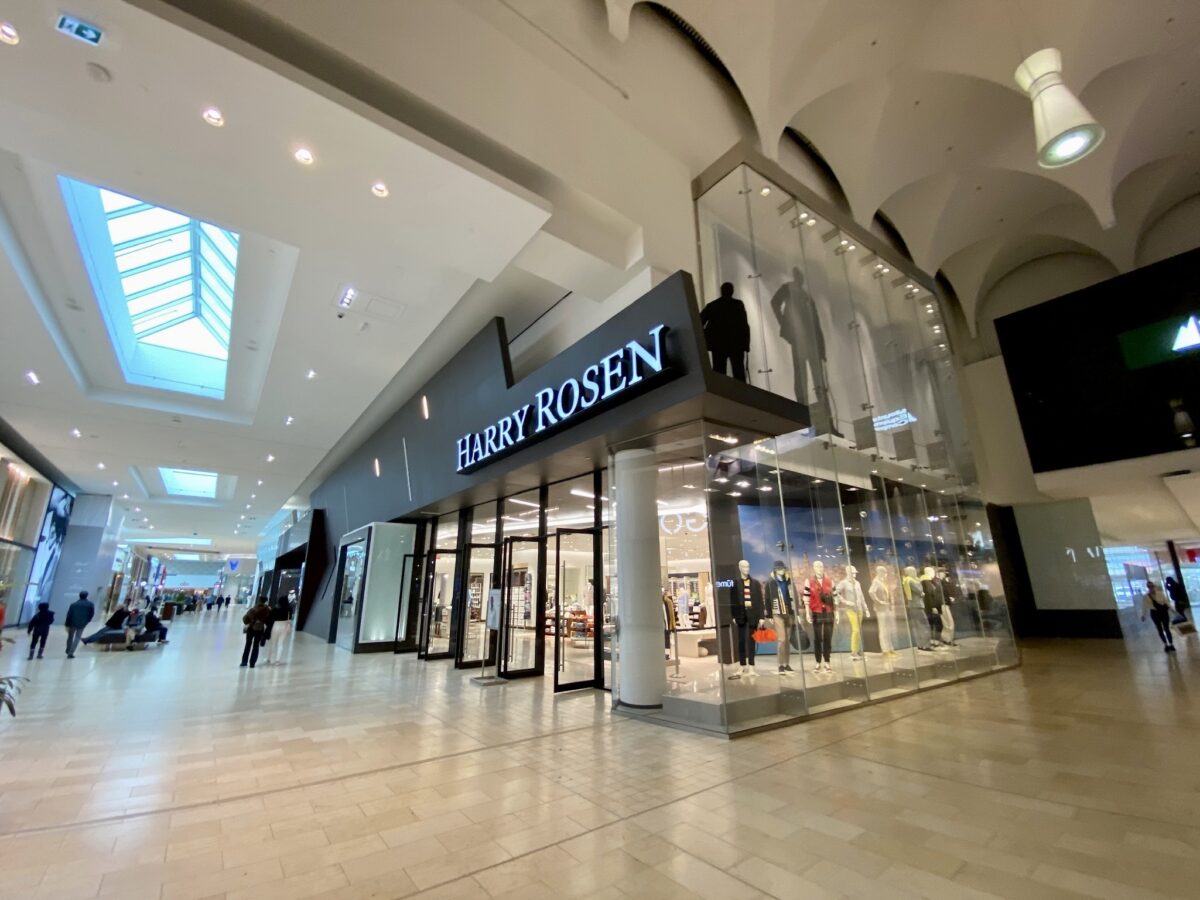
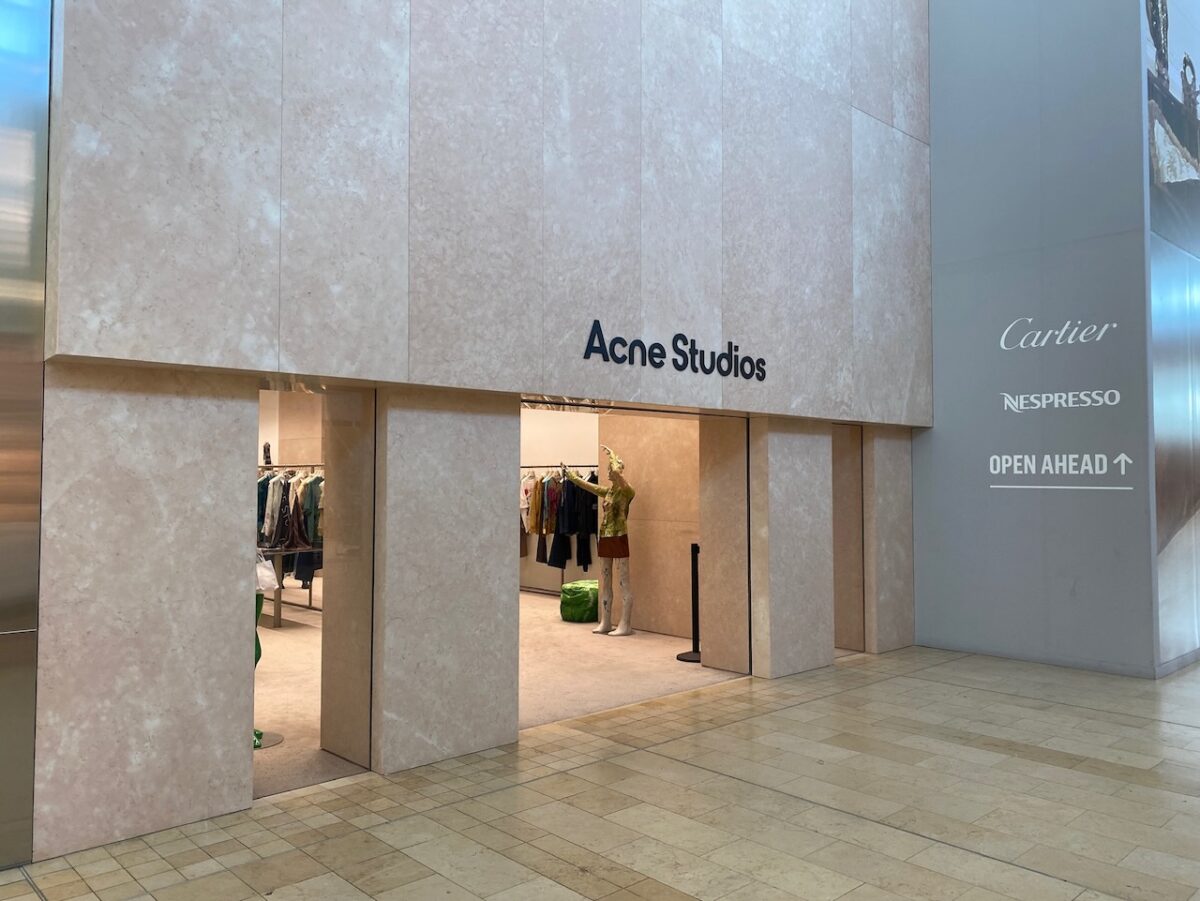
French bakery concept Ladurée opened its first Toronto location at Yorkdale in late 2017. Photo: Dustin Fuhs.Italian jeweller Bulgari recently expanded and renovated its Yorkdale location, which is one of the top in North America in terms of sales. Photo: Dustin Fuhs.Luxury menswear retailer Harry Rosen operates one of its largest and most productive stores at Yorkdale. Photo: Dustin Fuhs.Swedish fashion rand Acne Studios opened its first store in Canada last year at Yorkdale. The unique store design is inspired by a temple, including a low-height entrance leading into a cavernous space. Photo: Dustin Fuhs.
Yorkdale is an interesting case study in consumer shopping — in 2020 Louis Vuitton opened a 7,000 square foot standalone store in the mall while maintaining its concession presence at Holt Renfrew. Despite the new standalone store, sales at the Holts concession are said to have remained stable, speaking to a market expansion for the luxury Vuitton brand in the mall.
Jewellery brands are said to be doing gangbuster sales, although some luxury fashion retailers such as Alexander McQueen and Valentino are said to not be meeting sales targets at Yorkdale. Regardless, the offering of luxury brands at Yorkdale are unmatched in Canada, surpassing the offerings of Toronto’s Bloor-Yorkville and downtown Vancouver in terms of the number of luxury brand stores available.
More luxury and big brands will come to Yorkdale over the next couple of years with plans to “re-merchandise key corridors to make room for more brands,” according to Oxford Properties. There’s already buzz that more than one big-name concession could exit Yorkdale’s Holt Renfrew store to open a standalone flagship presence in the mall.
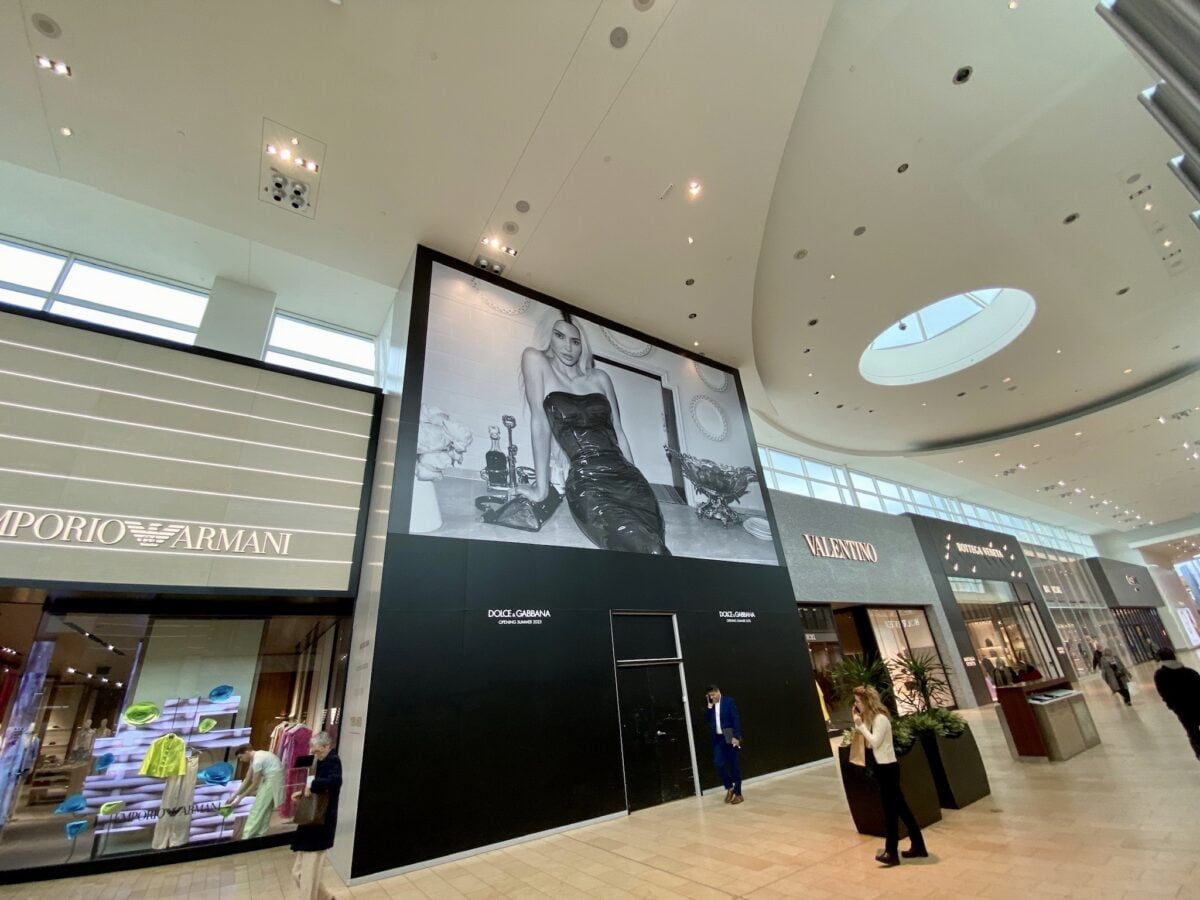
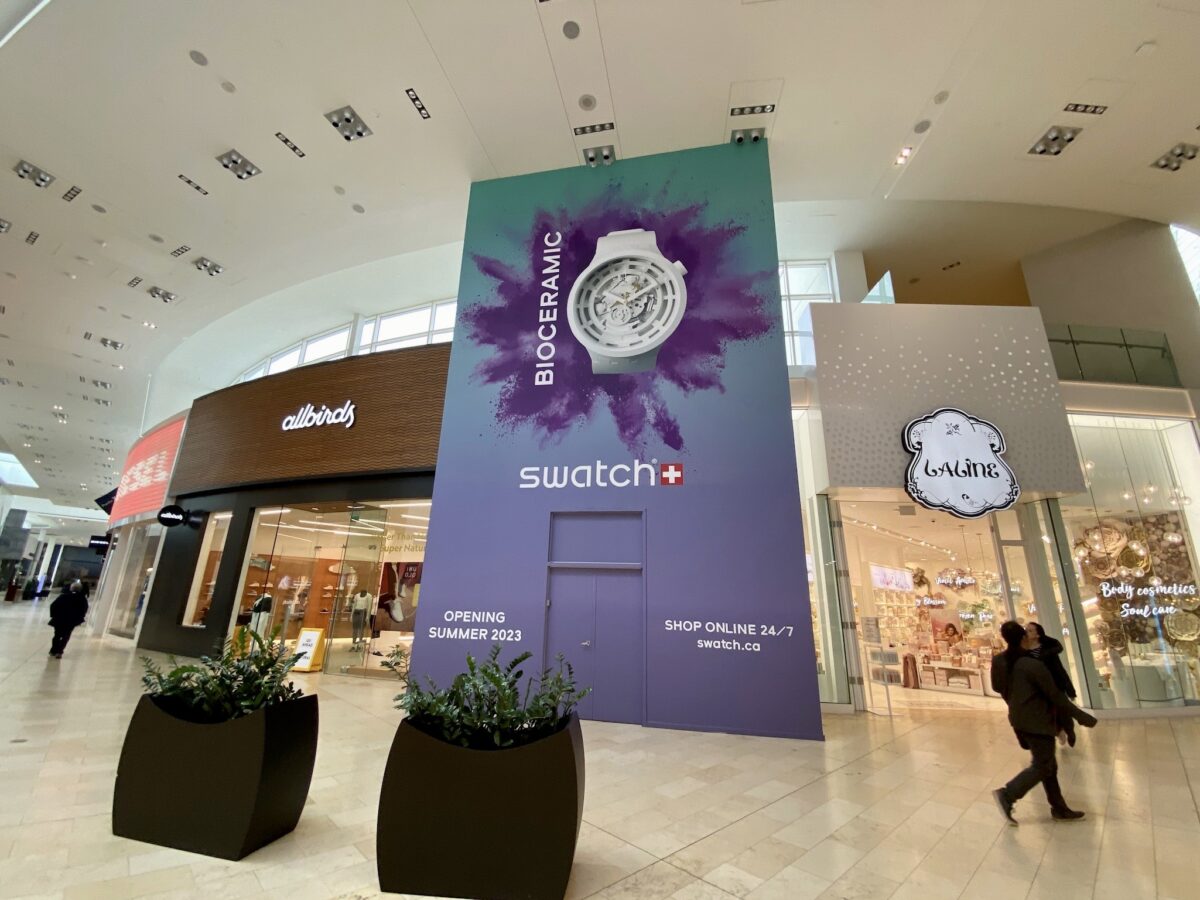
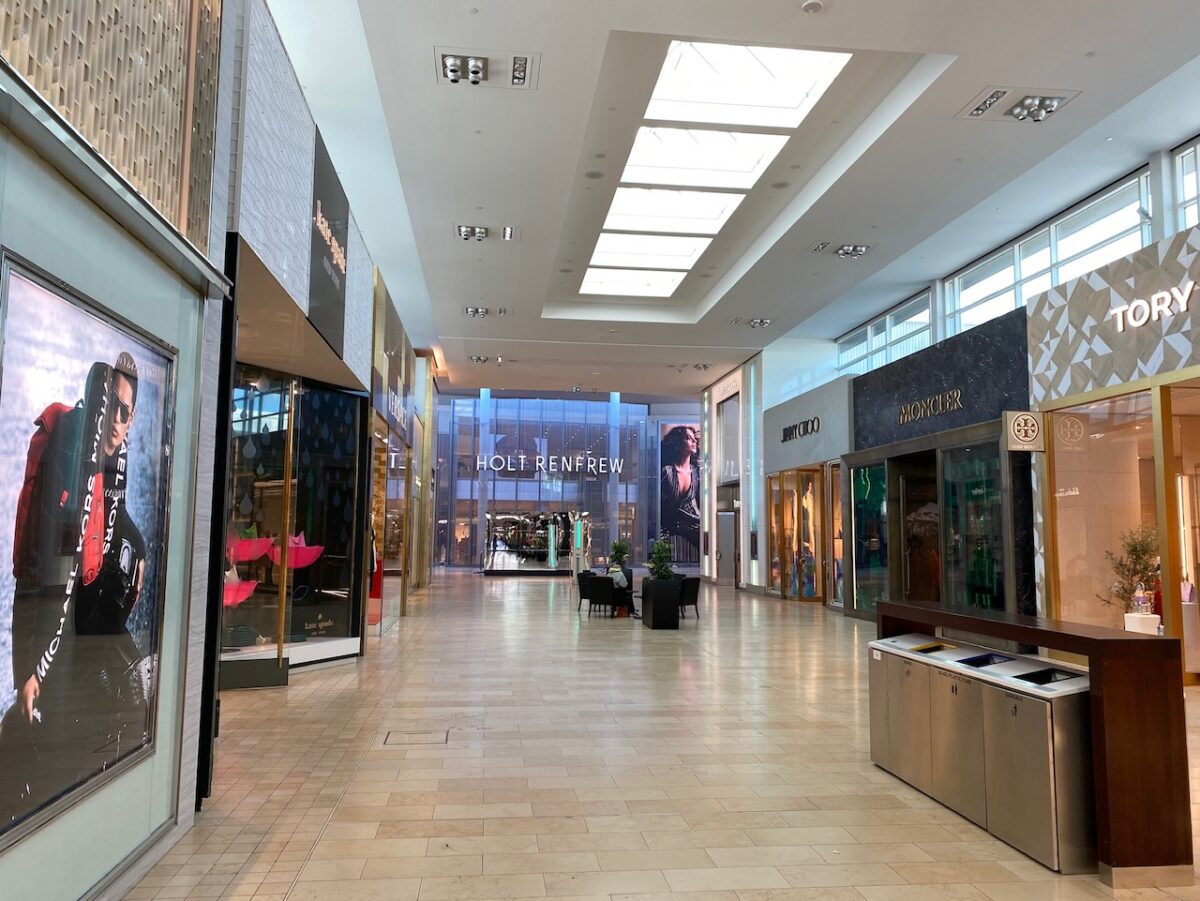
Italian luxury brand Dolce & Gabbana will soon join other luxury brands near Holt Renfrew at Yorkdale. Photo: Dustin Fuhs.Central corridor at Yorkdale — sources say interesting new things will be coming to this wing with details to follow. Photo: Dustin Fuhs.Another new retailer set to open at Yorkdale. Photo: Dustin Fuhs.
The Holt Renfrew store at Yorkdale is said to be the second top-performing location in the chain, surpassed only by the highly productive downtown Vancouver flagship store at CF Pacific Centre. The Yorkdale Holt Renfrew store will be seeing some changes, according to the retailer — the store’s restaurant will shut next month and phased renovations to part of the store are expected to be completed by mid-2025. More details will follow according to Holts.
Yorkdale is also anchored by one of Hudson’s Bay’s top stores, located in a box that originally housed a Simpsons department store until 1991. Anchor Nordstrom, which opened in 2016, will shut this summer and its receiver is currently advertising a clearance sale to coincide with the retailer’s exit from Canada. One big loss is the closure of a Delvaux concession at Nordstrom — the Belgian luxury brand is considered to be one of the top in the world in terms of quality (with prices to match), and it remains to be seen if Delvaux will move either into Holt Renfrew or open any standalone stores in Canada.
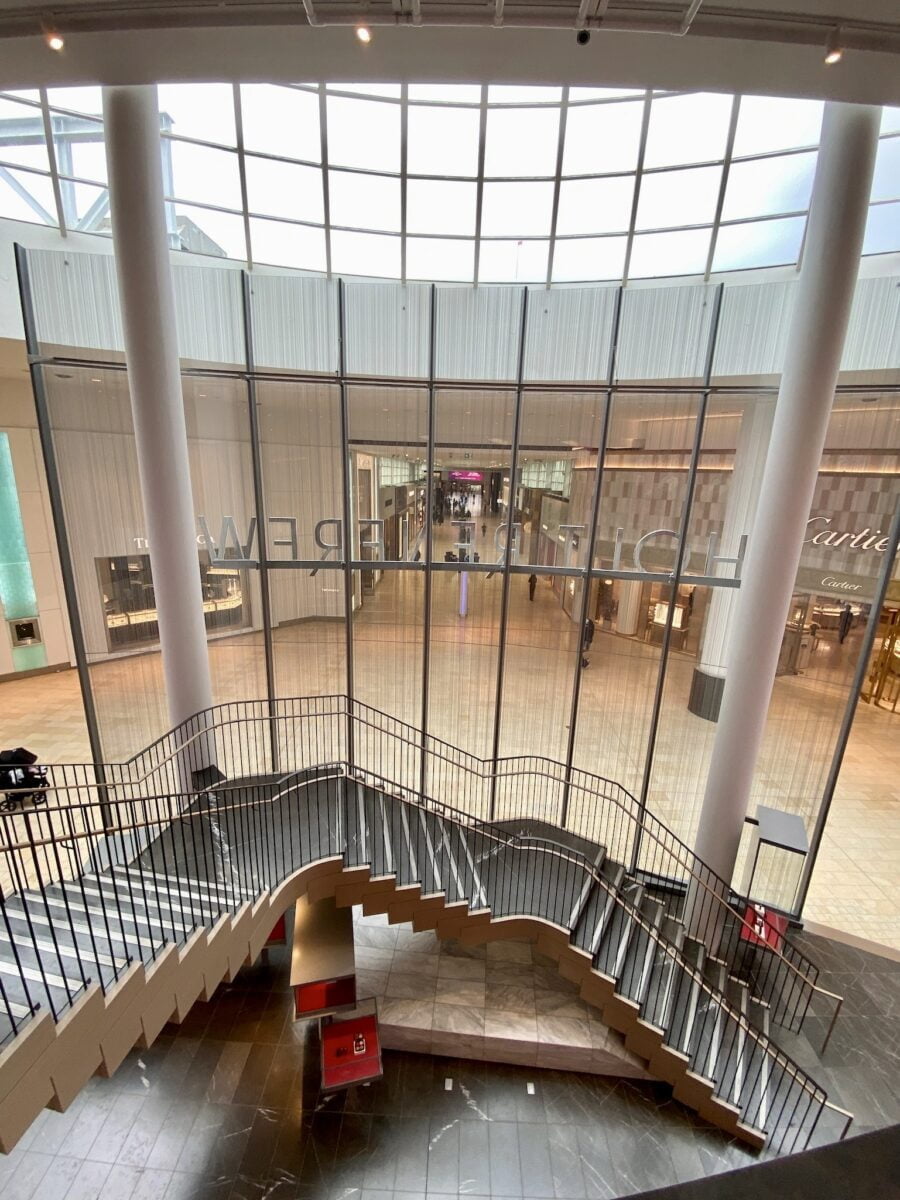
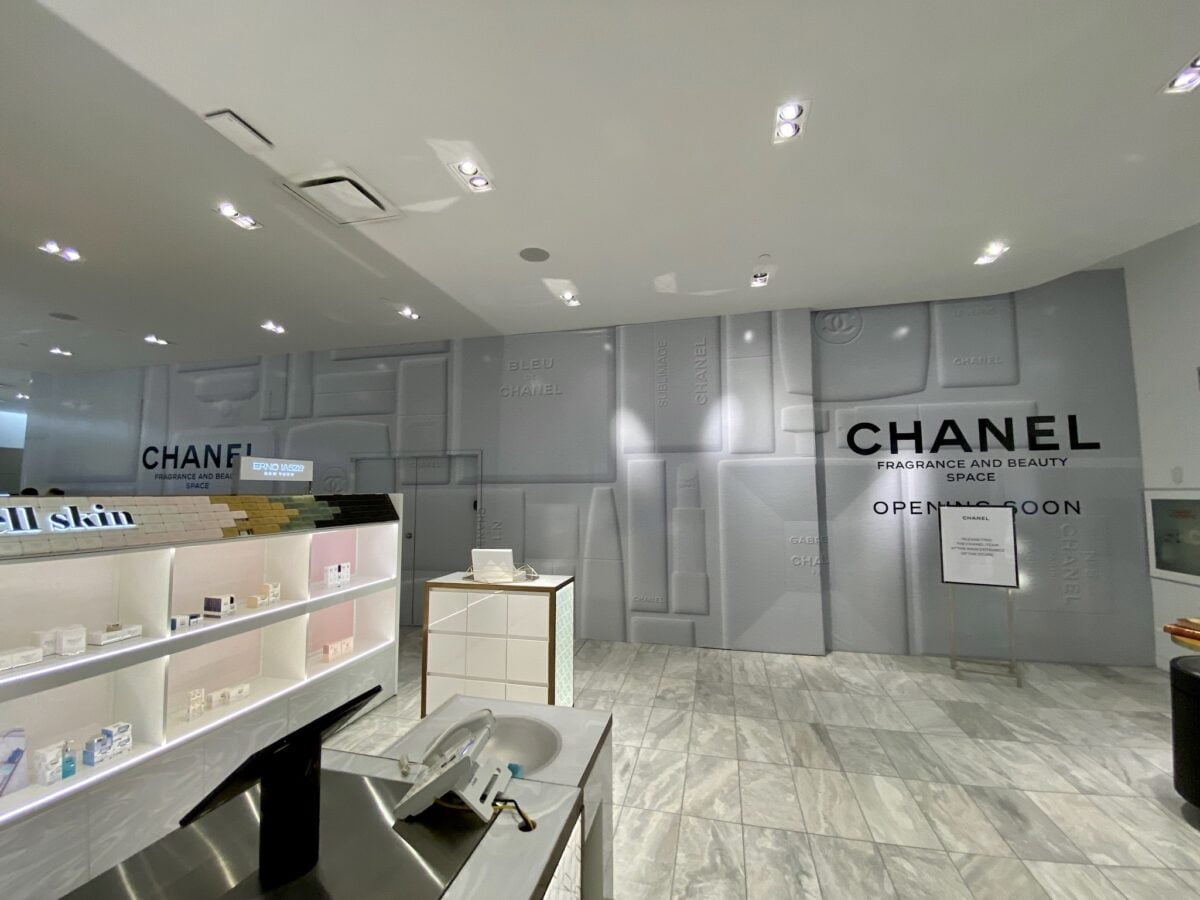
Yorkdale’s first luxury wing leads to the main entrance of Holt Renfrew. Photo: Dustin Fuhs. Looking down into the mall from the second floor of Holt Renfrew Yorkdale. Photo: Dustin Fuhs. Chanel will soon open an elevated boutique beauty space at Holt Renfrew Yorkdale. Photo: Dustin Fuhs.
Toronto’s Yorkdale Shopping Centre is in a constant state of flux with new retailers and other offerings continually being added to the mix. Retail Insider will continue to report on new stores as the dynamic centre continues with its transformation.
The ICSC study listed other top shopping centres in Canada in terms of sales per square foot in 2022. Other malls in the top five included CF Pacific Centre in downtown Vancouver at $1,678 per square foot, CF Toronto Eaton Centre in downtown Toronto at $1,367 per square foot, CF Sherway Gardens in Toronto at $1,245 per square foot, and Square One in Mississauga which saw sales of $1,226 per square foot last year. Yorkdale ranked fourth in North America according to ICSC, with three shopping centres in the US surpassing Yorkdale’s sales per square foot numbers last year.
The Women’s National Basketball Association has launched a new platform with Mastercard to support Canadian female entrepreneurs ahead of the league’s first game in Canada.
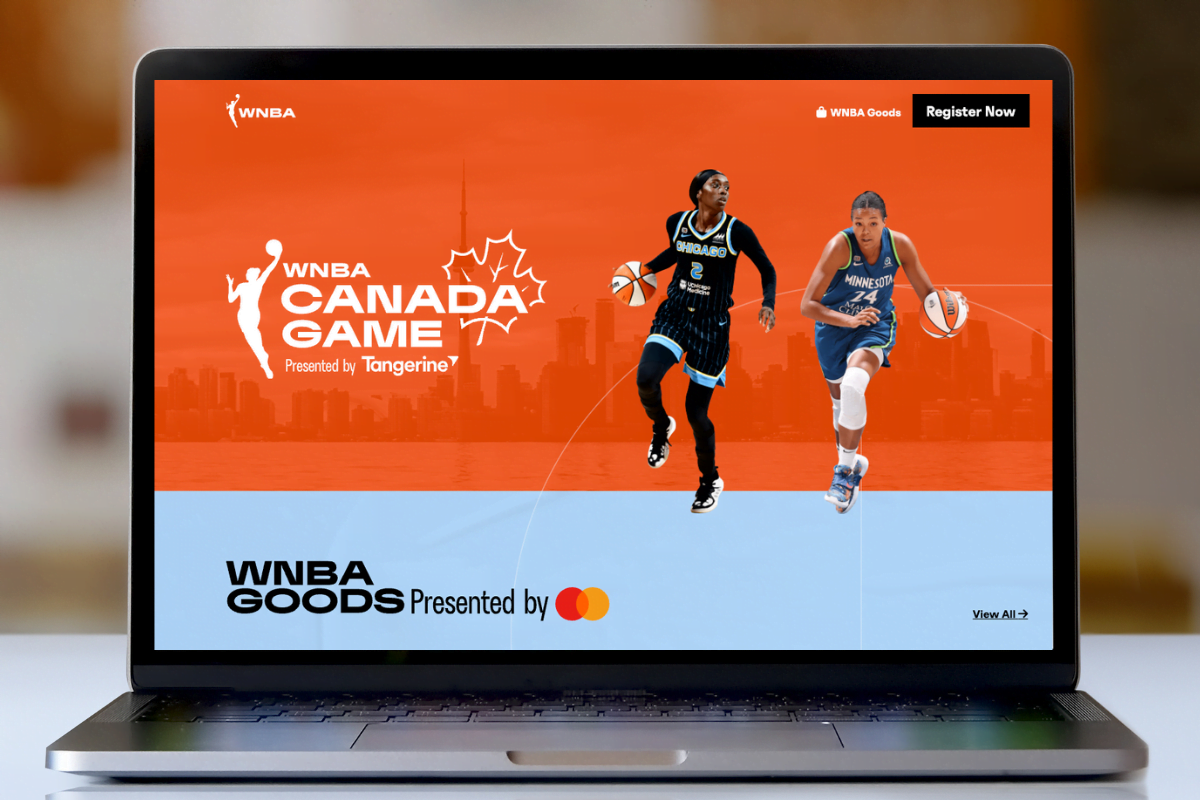
“WNBA Goods presented by Mastercard” is a new retail platform designed to promote and empower Canadian female entrepreneurs as 10 women-led or owned Canadian small businesses have a range of original, limited-edition WNBA merchandise ahead of the sold-out WNBA Canada Game presented by Tangerine, featuring the Chicago Sky and the Minnesota Lynx playing a pre-season game on Saturday, May 13 at Scotiabank Arena in Toronto.
“The WNBA Canada Game presented by Tangerine will not only mark a historic moment for women’s sports in Canada, but also presents an opportunity to showcase and celebrate successful women across so many different industries,” said NBA Canada Senior Vice President and Managing Director, Leah MacNab. “This program unites talented female entrepreneurs and offers WNBA fans new and unique Canadian merchandise.
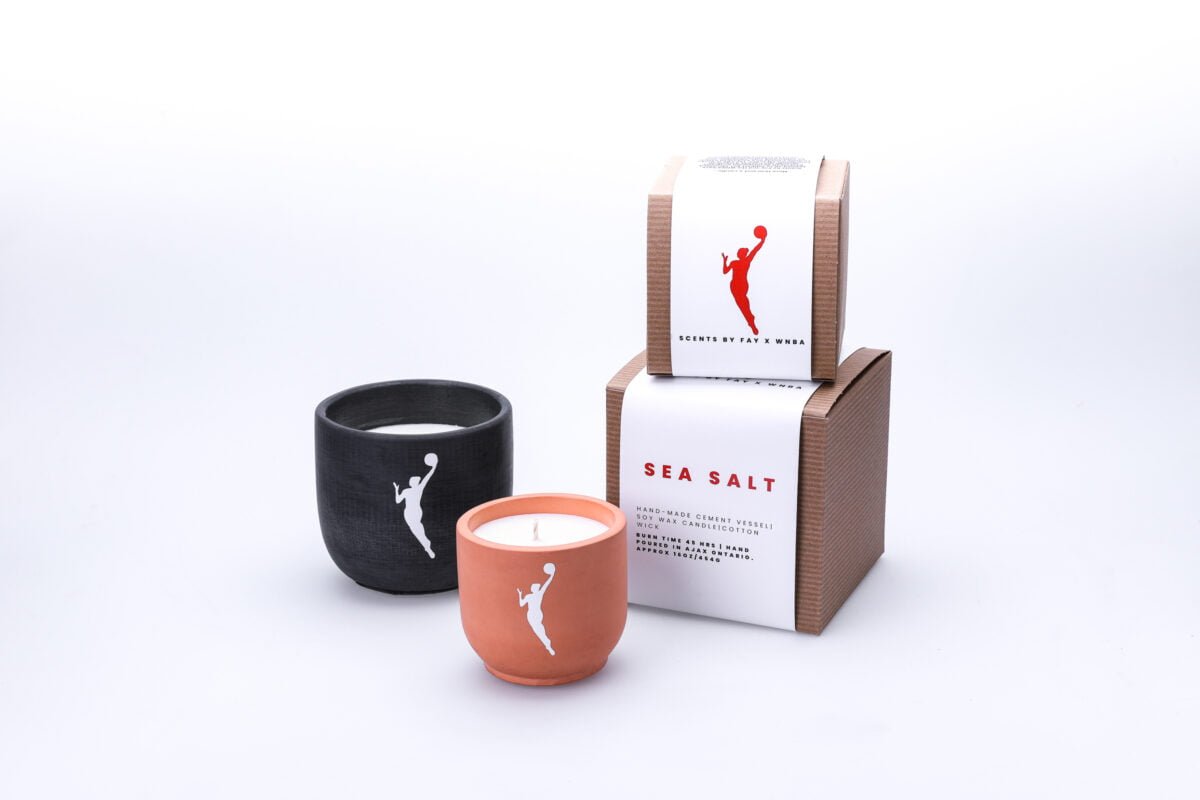
Scents by Fay (Image: WNBA)Image: wnbacanadagame.com
“We were incredibly thrilled to bring the first WNBA game to Canada. A big part of the values behind the WNBA are around women’s empowerment and sort of hero-ing women athletes and also entrepreneurs. It made sense to partner with Mastercard because they’re already deeply committed to equal access for women and they recognize the impact this game will have on the professional sports landscape but also on this ability to draw attention to small women-led businesses in Canada.
Leah MacNab
“We are excited about this platform because it essentially aggregates a handful of really, really different businesses that are offering probably our widest selection of both price point and product categories that we’ve ever put forward in Canada. Every consumer that we drive to that micro site is actually going to transact on the individual businesses’ platforms and the hope is they will add new customers for life. We’re hoping to get repeat customers for these businesses and just sort of use the megaphone of our brand to make people aware of them.”
The full range of products is available at WNBACanadaGame.com and can be purchased through each retailer’s website. Prices for the collection range from $9 to $495 CAD, and a portion of proceeds from the sales of all items will be donated to the Canada Basketball Foundation (CBF).
Sasha Krstic
“Mastercard is thrilled to help bring this inaugural game to Canadian fans,” said Mastercard Canada President, Sasha Krstic. “We’re deeply committed to enabling equal access for all girls and women to pursue their dreams. As an official partner of the WNBA Canada game and presenting partner of WNBA Goods, we’re celebrating the historical impact this will have on women’s professional sports and proudly continuing our support of women-owned small businesses in Canada.”
The WNBA Canada Game will also air live in Canada on Sportsnet and TSN, and in the U.S. on WNBA League Pass.
The game will draw more than 19,000 people in attendance.
“I’ve been at the league 18 years next week and in that time every single one of our business metrics has just skyrocketed upwards. Our viewership this year on U.S. matchups, games that don’t involve the Raptors, are up over 20 per cent year over year. Raptors’ ratings have been up over 60 per cent over the last four years. So Raptors have grown even more quickly,” said McNab.
“But to see the other teams grow is really impressive for us as well and that is a big part of our mission to grow the entire ecosystem of basketball. At the youngest levels we have grassroots participation starting to comeback. It was really affected during the pandemic when gyms couldn’t be open to the public. We now almost have the same number of kids. Pre-pandemic we had 20,000 kids in our Junior NBA program. We’re getting closer to that number this year and I think we will achieve it next season.”
Sponsorship has also grown for both the NBA and WNBA.
Stacie Cohen, Senior Director, Branded Attractions at the NBA, said the overall NBA fan base is enormous, approaching about one billion fans around the world.
Stacie Cohen
“But less than one per cent ever get to go to an NBA game. So for us we wanted to create unique touch points from our brand for those who don’t have access to the sport. In doing so, we looked at all our different types of fans,” she said. “There are so many segments of fans . . . There’s this large fan base that truly are in it for the culture and celebrity of the NBA, getting as close to the players as possible, as close to their lifestyle.
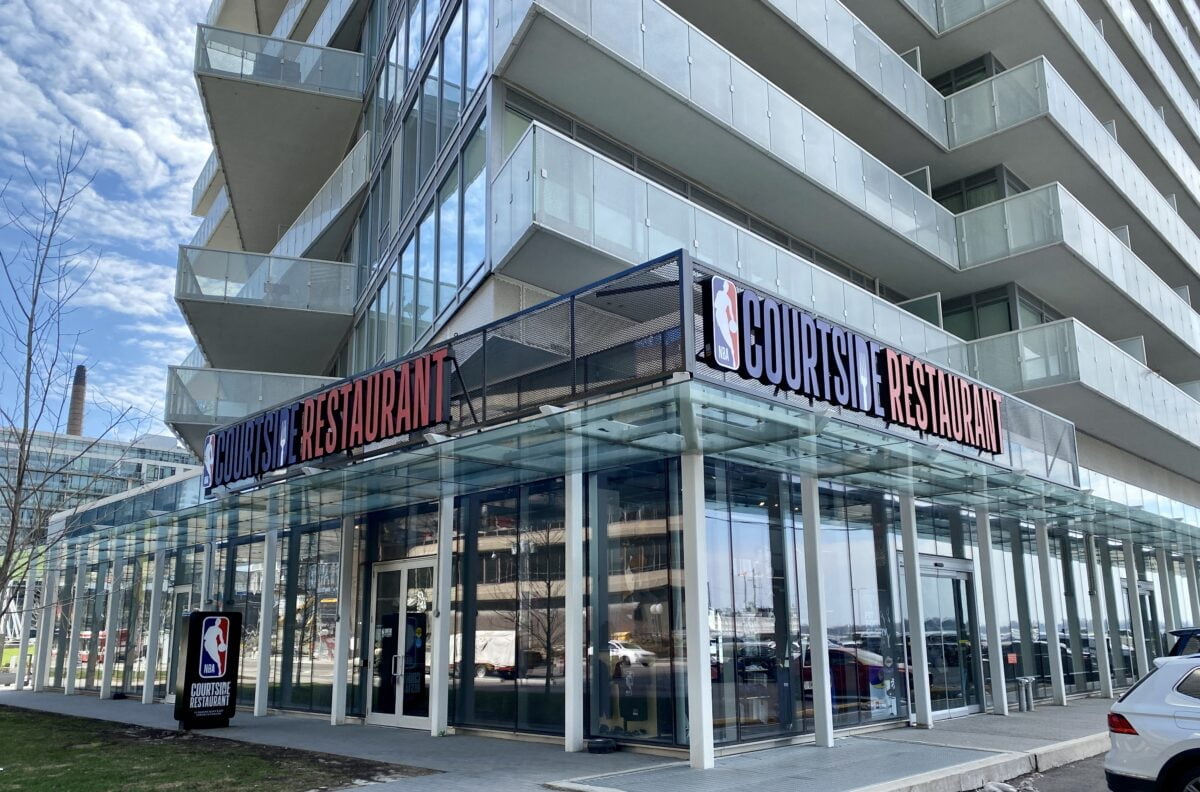
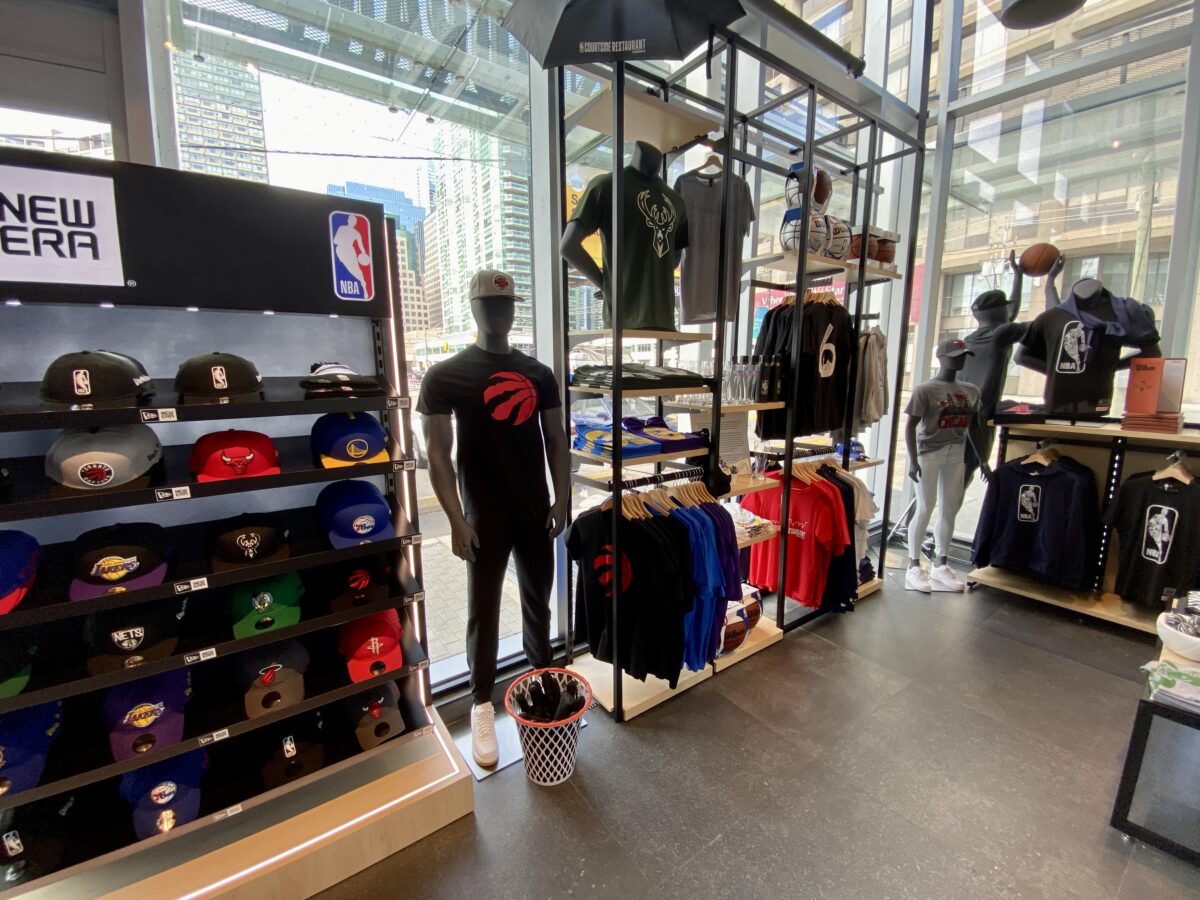
“That’s really where the NBA Courtside Restaurant came to be. Bringing people into the community of the NBA.
“Retail as an attraction is not only a pretty great revenue driver but it also delivers on fan expectations.”
NBA Courtside Restaurant in Toronto (Image: Dustin Fuhs)NBA Courtside Restaurant in Toronto (Image: Dustin Fuhs)
Cohen said the NBA celebrates community.
“I think NBA fans are pretty solid fans. It’s not a brand that you come in and out of. Representing their favourite team or their favourite player really just representing the community affiliation with the NBA is a part of how our fans express themselves,” she said.
“The NBA has really infiltrated culture. For us, we just don’t see it as a sport. We see it as an impact on culture and that’s why when we created the restaurant it really was a statement of culture of the NBA and not just the sport.”
Below is an overview of the 10 women-owned Canadian small businesses and their products, participating in the new retail platform:
BARBAYS: Hair scrunchies featuring the WNBA logo
Born out of a demand for high-quality scrunchies and hair accessories, founder Adrienne Decaire’s vision is to build Barbays into a fashion-forward Canadian brand while maintaining small-town family values.
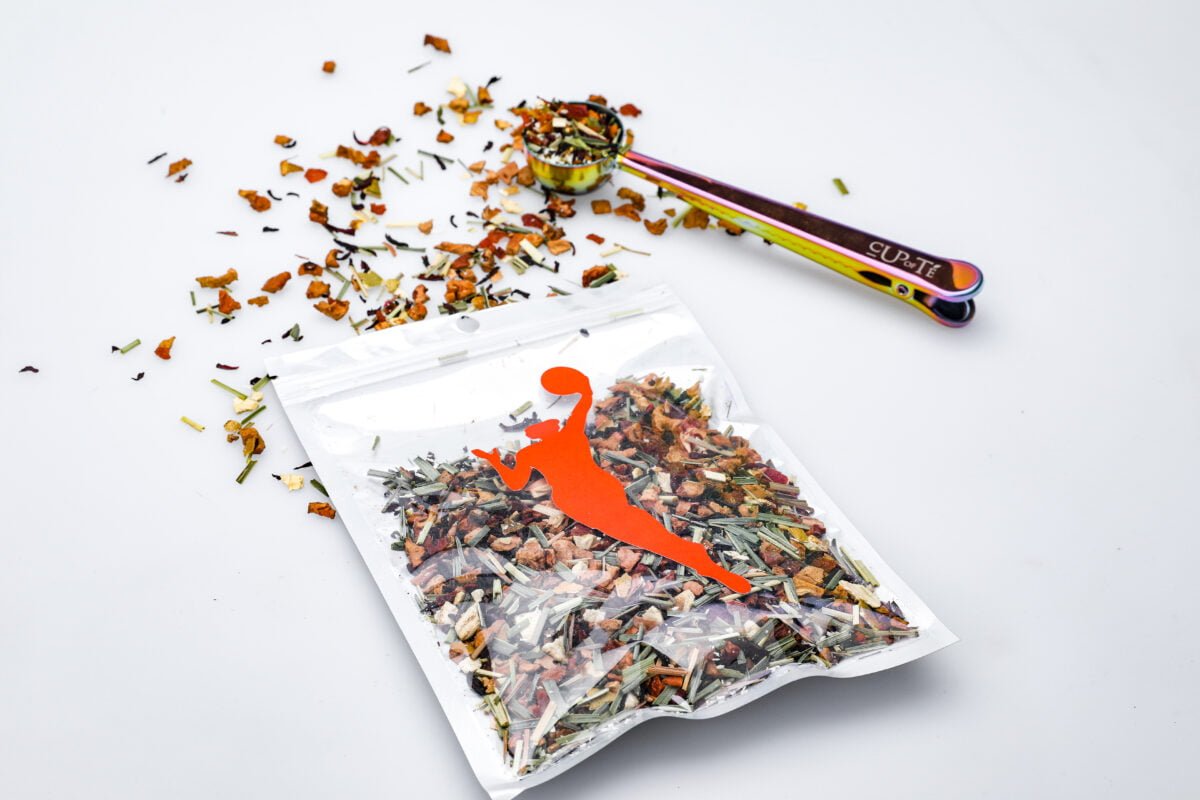
CUP OF TÉ: Loose-leaf WNBA-themed tea and tea accessories
Driven to overcome challenges from an accident that left her paralyzed, founder and owner Taylor Lindsay-Noel launched Cup of Té with the goal of providing the world’s finest loose leaf organic teas and teaware.
MAKEWAY: “It’s Just Basketball” sweatshirt and sweatpants
Co-founded by Shelby Weaver and Abby Albino, both long-standing members of Toronto’s basketball community, Makeway is Canada’s only standalone women’s sneaker and streetwear boutique.
Cup of Te (Image: WNBA)
MOOD UNKWN: Hydrating under-eye masks
Founded by Raman Gidda in the midst of the pandemic, Mood Unkwn was created to emphasize the importance of daily self-care. Their products were made for all genders and skin types and designed to suit any lifestyle.
NAKED BEAUTY BAR: WNBA logo nail decals
NAKED owners and sisters Julia and Gabrielle Bautista built a nail shop in downtown Toronto designed to redefine the self-care experience, with community-building at its core. NAKED has also expanded into an eponymous skincare and lifestyle product line to fit its community’s needs.
RASHELLE: Hand-pulled rugs featuring the WNBA logo
Rashelle Campbell (she/her) is a Nehiyaw Iskwew multidisciplinary designer who exemplifies a diverse standard of beauty, producing limited-edition, small batch rugs. She believes in embracing thoughtful handmade slow work that has notes of nostalgia and joy.
SANTA ISLA: Hand-beaded jewelry featuring WNBA imagery
Santa Isla’s owner Jess Sanchez works in partnership with Embera Chami artisans of Colombia to make playful jewelry that sparks joy, while honoring Embera’s weaving practices and cultural significance.
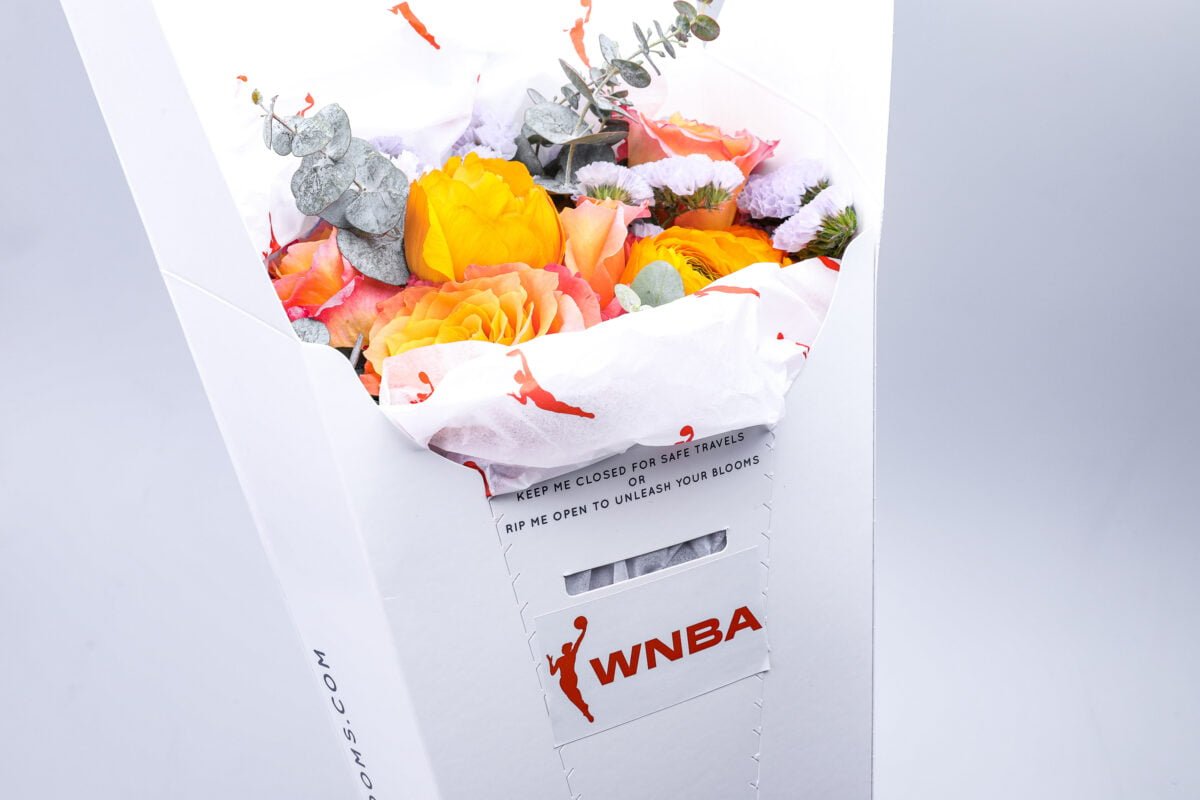
Tonic Blooms (Image: WNBA)
SCENTS BY FAY: Aromatic Candles featuring the WNBA logo
Founded by Furhana Glass-Smith, Scents by Fay is a hobby-turned-business born out of the pandemic, using clean, natural ingredients to create unique candles and handcrafted home décor pieces.
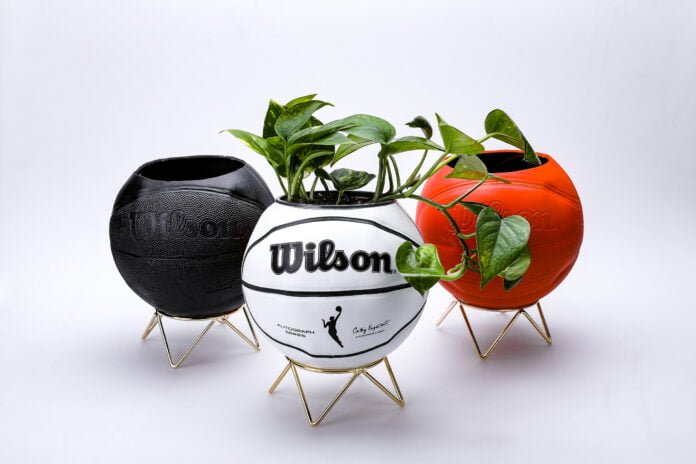
THE GIVE & GROW: Planters made out of Official Wilson® WNBA Balls
Owned & operated by Olivia Ho, The Give and Grow is a women-led initiative developed with one purpose: growth. Their one-of-a-kind basketball planters combine a passion for sports and community.
TONIC BLOOMS: On-demand florist showcasing a WNBA-themed bouquet
Co-owned by Corrie Pollock, Tonic Blooms is Toronto’s on-demand florist, offering curated bouquet designs and indoor plants through a seamless delivery experience in as little as two hours.
Ren’s Pets, a leading Canadian specialty retailer of pet food and supplies, has been named the Pet Product News, 2022-2023 Omnichannel Innovator Retailer of the Year Award winner.
“We are proud of all of our brick-and-mortar expansions,” said Larissa Wasyliw, Vice President of E-Commerce and Marketing. “Our stores are part of our omnichannel strategy, and customers like the convenience and simplicity of being able to shop online as well.”
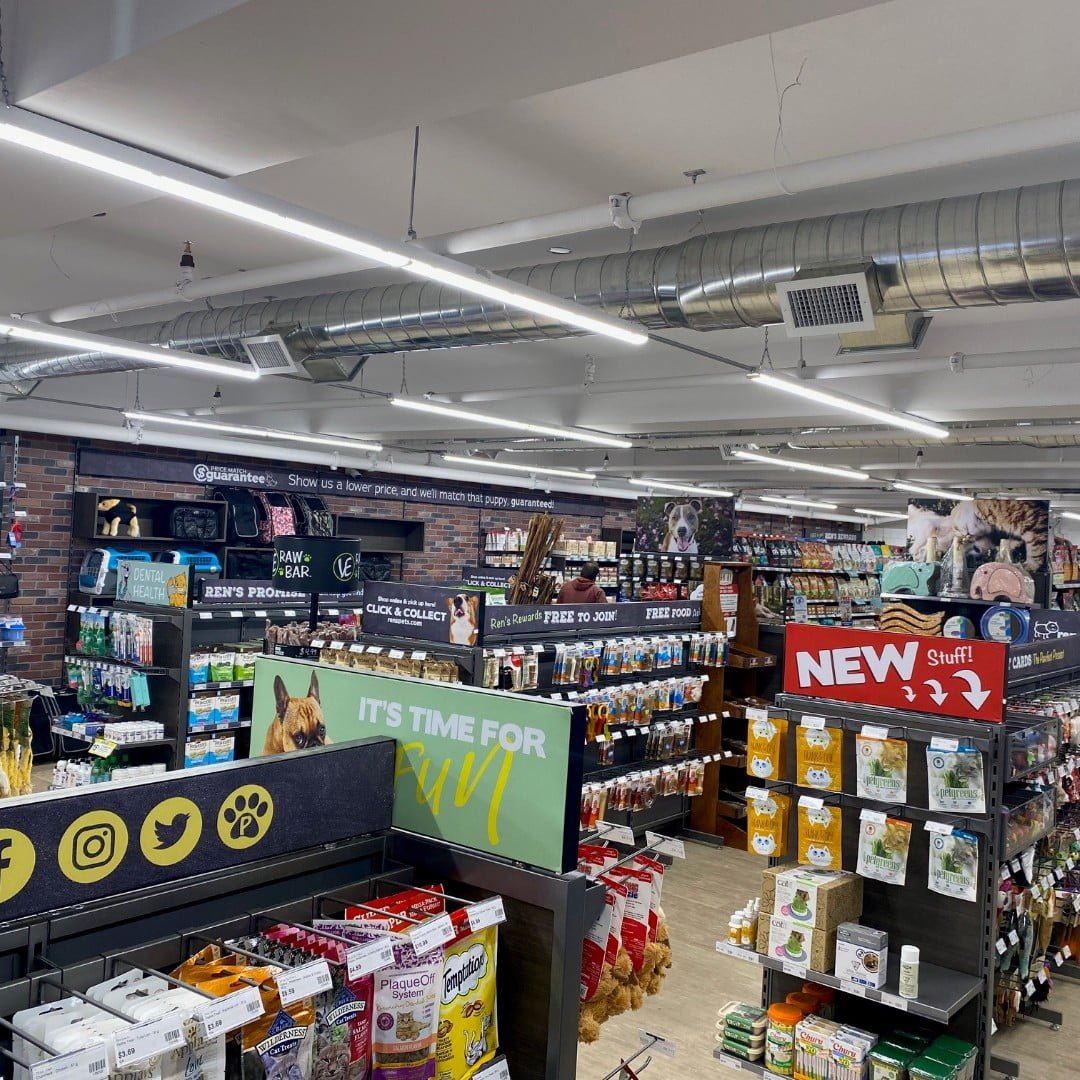
“Our stores are clean, the floors are polished, we don’t have live animals or any aquatic, so the stores smell great,” said Scott Arsenault, CEO of Ren’s Pets. “With the tiered concept, unlike a grocer, customers can see that food is at the back, or where the frozen foods are located. Toys and treats are in some of the gondolas.”
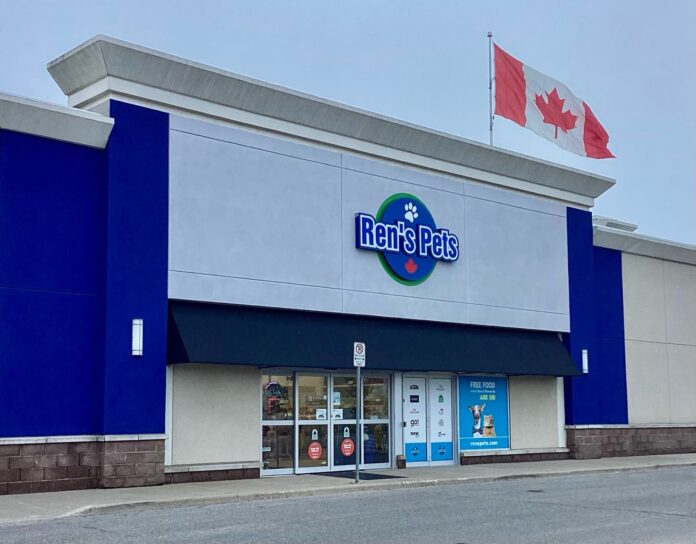
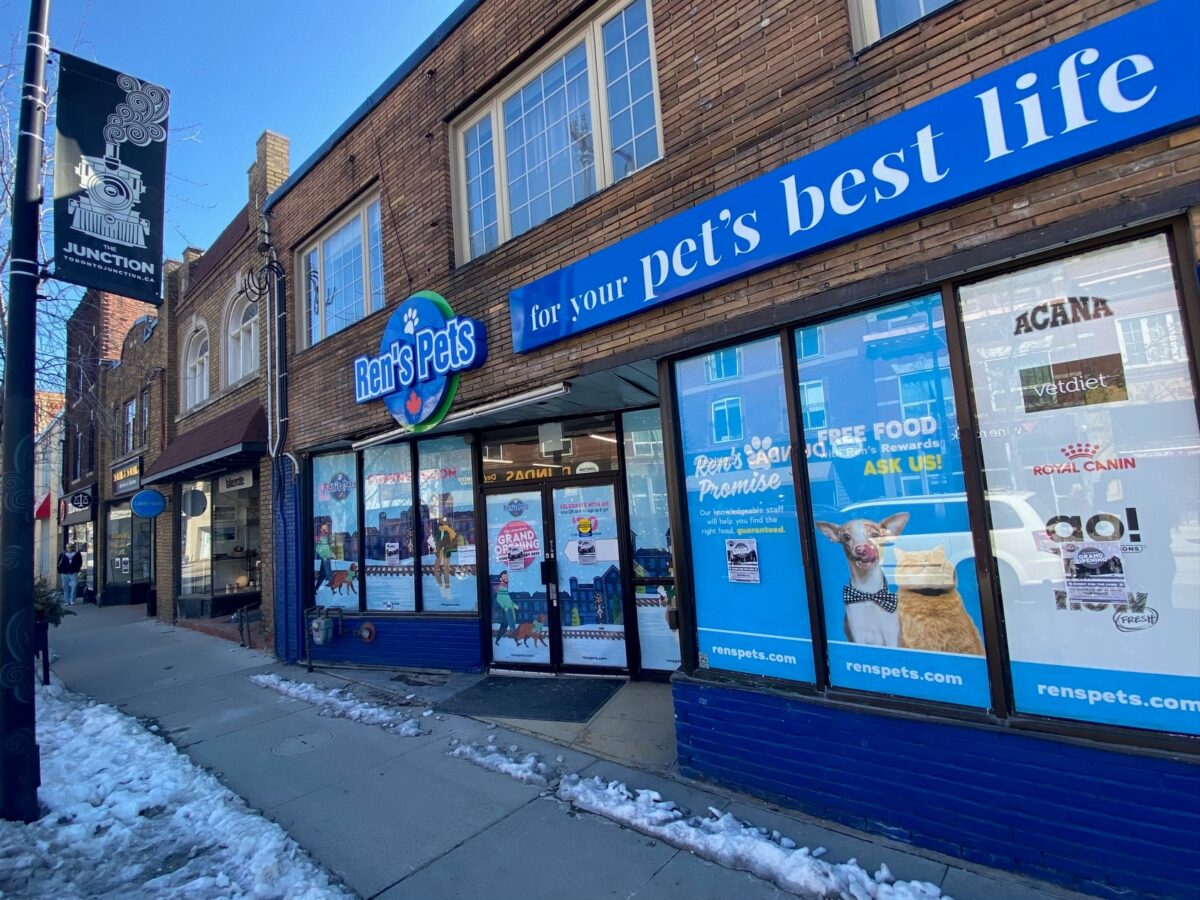
Ren’s Pets in The Junction (Image: Ren’s Pets)Ren’s Pets in The Junction (Image: Ren’s Pets)
Recently, Ren’s Pets opened its latest store in Saint John, New Brunswick. It is the company’s 48th location, and its sixth store in Eastern Canada. There are already Ren’s stores in New Brunswick in Dieppe and Fredericton.
“The Maritimes are a key part of our strategy for store locations, and we’re so excited to have the doors open to a store in Saint John,” said Arsenault. “We know how passionate the pet owners are in this community, and couldn’t wait to show them the premium food, treats, and toys Ren’s has for your Pet’s Best Life.”
The company was founded in 1975 and is headquartered in Guelph, Ontario. It was acquired by the Legault Group in August 2021.
In this video interview, Arsenault discusses the company’s recent award, its growth plans and trends in the pet industry.
The Video Interview Series by Retail Insider is available on YouTube.
The Video Interview Series by Retail Insider is available on YouTube.
Connect with Mario Toneguzzi, a veteran of the media industry for more than 40 years and named in 2021 a Top Ten Business Journalist in the world and the only Canadian – to learn how you can tell your story, share your message and amplify it to a wide audience. He is Senior News Editor with Retail Insider and owner of Mario Toneguzzi Communications Inc. and can be reached at mdtoneguzzi@gmail.com.
Like, Share and Subscribe to Mario Toneguzzi on YouTube!
Also check out the other series offered by Retail Insider, including The Weekly podcast and The Interview Series, which are both available on Apple Podcasts, Stitcher, TuneIn, Google Podcasts, or through our dedicated RSS feed for Simplecast and other podcast players.
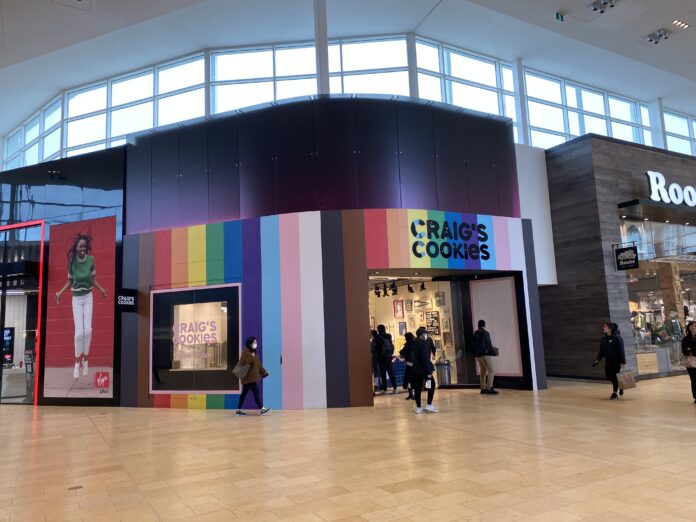
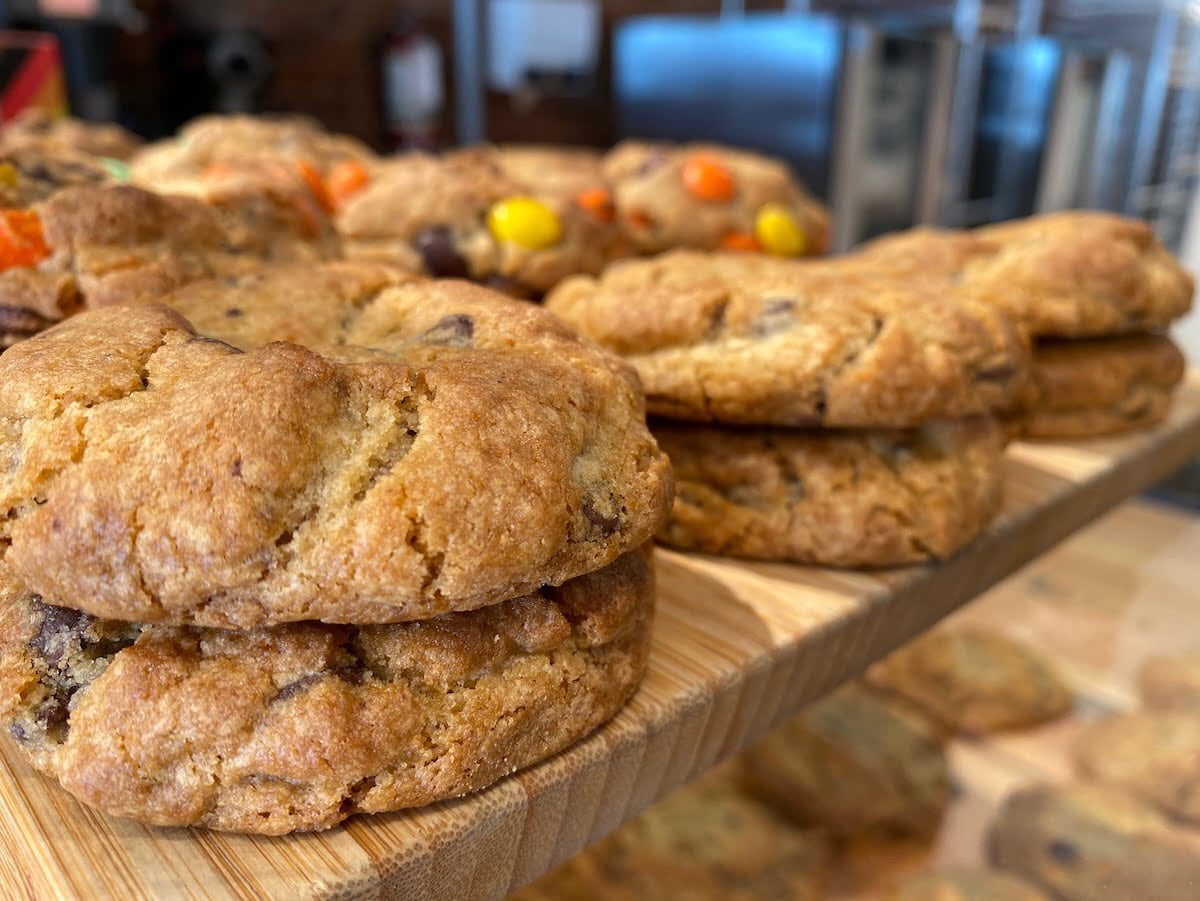
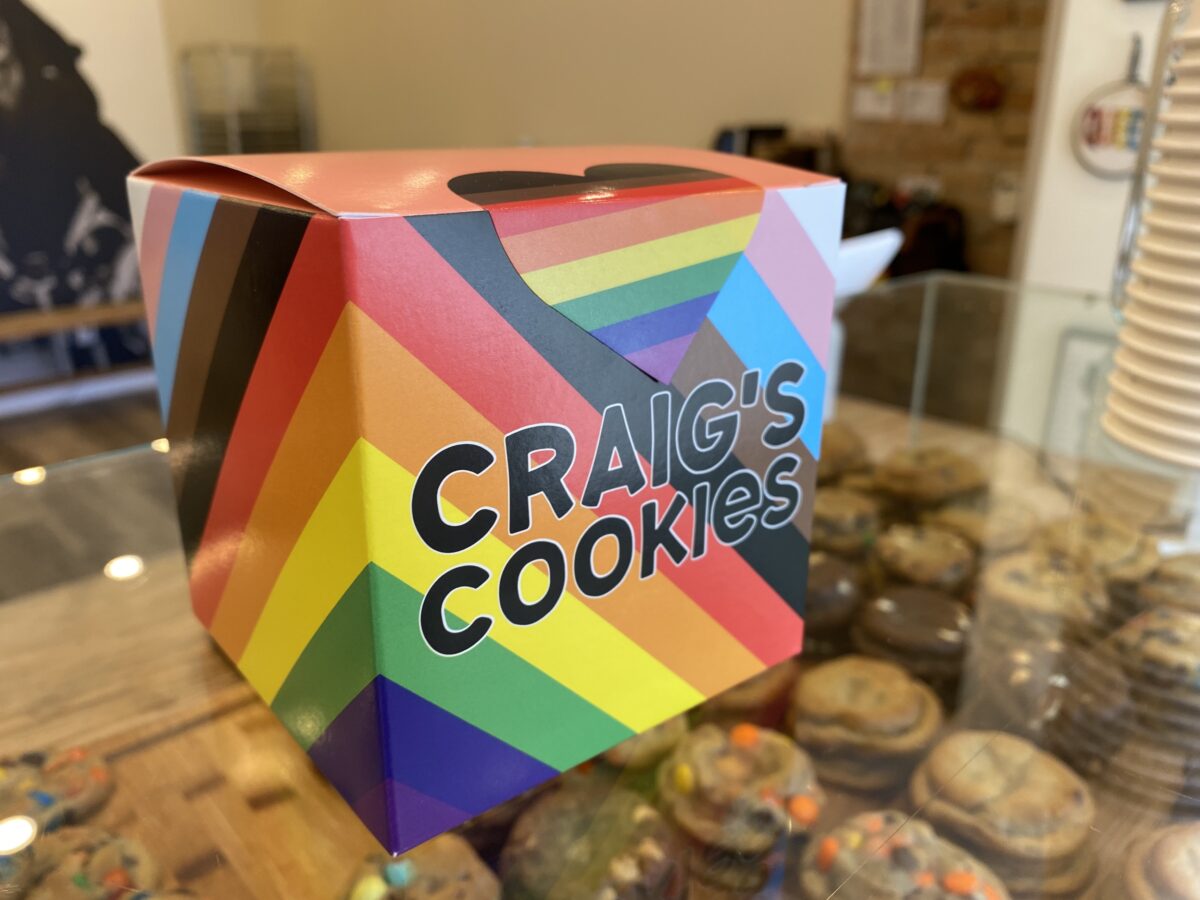
Craig's Cookies at Yorkdale Shopping Centre (Image: Dustin Fuhs)
Craig Patterson sits down with Craig Pike of Craig’s Cookies. They discuss how Pike got started, how the business grew into multiple stores, and how he’s planning to expand the business under a new franchise model.
A transcript of the conversation can be found below.
If you prefer to listen to the audio version, it is available below:
The Interview Series audio podcasts by Retail Insider Canada are available on Apple Podcasts, Stitcher, TuneIn, Google Play, or through our dedicated RSS feed for Overcast and other podcast players. Also check out our The Weekly audio podcast where Craig and Lee discuss popular content published on Retail Insider which is part of the The Retail Insider Podcast Network.
Craig Patterson 0:03 Welcome to the Retail Insider Video Series. I’m your host, Craig Patterson, and we’re joined here today with a special guest. This is Craig Pike. He’s the founder of Craig’s Cookies, which has a few locations primarily in Toronto as well as I think now in Newfoundland?
Craig Pike 0:17 Yeah, we have a location in St. John’s.
Craig Patterson 0:20 St. John’s, Newfoundland, where you’re from welcome, Craig.
Craig Pike 0:23 Oh, thanks for having me. Greg.
Craig Patterson 0:25 Tell us how you got started. Because I think you’re from Newfoundland originally, is that correct?
Craig Pike 0:29 I am, I was born and raised in St. John’s. I moved to Toronto in 2004. To go to theater school, I went to George Brown. After I graduated, I was working in the city doing independent theater. I ended up working at the Shaw Festival in Niagara-on-the-Lake. I was there for four seasons. And then I moved back to the city in 2012. And in 2013, I was working at a restaurant downtown and they fired everybody. And I had a month off of work, and I needed to pay my phone bill. So I thought I would sell cookies for fun. And I hopped on Facebook and Instagram and at the time, Facebook and Instagram were relatively new and definitely no one was even marketing on Instagram. So I thought it would be a really great free tool to be able to get the word out about this pimped out bake sale that I was starting. And in a month I sold 200 dozen chocolate chip cookies, delivering them on my bike around the city and I went away, did some theater, came back and started selling cookies again while I was bartending and acting. Did that for about five years. In 2018, I opened my first location in Parkdale and now we have five locations across the GTA as well as you said, in St. John’s Newfoundland.
Craig Patterson 1:51 Holy cow, can you take us through a timeline of when these stores opened? Parkdale obviously was the first one I think was Church Street the second?
Craig Pike 1:58 Absolutely, yeah. So technically, for the first four years starting in 2013, I was selling cookies on my bike, but also doing flea markets in the city (Parkdale flea, the Bellwoods flea) and I would literally sell cookies on the side of the road on a sidewalk. I’d wake up at midnight or one of the morning, bake a dozen cookies every eight minutes, do that for seven hours, put them all into Zip-lock bags, went and sold them for six hours and then I would head home. So I did it for about four years.
Craig Pike 2:30 And then in 2017, I was approached by EnRoute magazine (which is a magazine that Air Canada used to offer) and they put me onto the cover as a cookie company story that we’re doing. They matched me up with a Montreal-based cookie store. That kind of opened up a business to more of a Bay Street crowd. Before then it was definitely friends and family delivering cookies to people’s homes and neighborhoods. Now I noticed (starting in 2017, after this article came out with EnRoute) I was doing a lot more corporate gigs, catering, and business work. So that led to a relationship with William Sonoma. They reached out and asked if I would do a pop-up shop. So I went in and I made some cookies and got up at one in the morning and the whole dozen every eight minutes and went up to Yorkdale Mall. And we sold that I think in like two hours. They asked me back a month later. William Sonoma, I’m not really sure if you or your listeners know, but they had little kitchens inside of their locations. So I thought, well, this is a great opportunity that I can actually bake on-site and not have to wake up one morning. Still, they were totally on board with that. So the next time I came back, I just bought my ingredients and baked on site and the smell of the freshly baked cookies wafted into the mall. So people were coming in asking “What’s that smell?”. We sold a bunch of cookies, but also William Sonoma was selling products as a result as well. So they saw a really great opportunity and invited me to be part of a six month permanent pop up shop.
Craig Pike 4:14 So in November of 2017, I took a huge risk and they rented me this little like 6×3 foot space where I could put two little Breville ovens, a mixer and a cutting board and sell cookies there. And it got to a point where after two months, we were doing really, really well but I was also rehearsing a play. I also conduct a choir called ‘Backfire’ in the city and I just was burnt out. I couldn’t I couldn’t keep up with it. I almost stopped “Craig’s Cookies” because it’s not necessarily my passion. The Arts is really where my passion is. And then this space became available in Parkdale. It was 300 square feet. I’d always thought that I was going to open something I want it to be small to feel like you’re going into your grandmother’s kitchen to grab a cookie. So when I looked at it, and I thought it was perfect. The landlord, you know, didn’t necessarily need much background checks based on his integrity, but that’s a whole another story. So between the jigs and reels, you know, I have $4,000 in my bank, I gave my bank draft, and I gave him all of my money first and last month’s rent. And I thought I could just open a cookie shop. And very quickly, I learned that it would be a lot more than just $4,000 to open a business in Toronto. So I was able to start an online fundraiser, somebody came on board and was able to lend me some money who found out about the store opening just from the public. We opened our first location on April, the eighth in Parkdale so that in 2018.
Craig Pike 6:15 That was supposed to be just me and one other person for two years, that was the business plan. I was going to give up acting and the arts for two years, and just really commit and see how this going to work. And like I have a really great career in theater but it was more that I was curious (at that point in my life five years ago) “What would happen if I if I tried this completely different thing?”. Within a week, BlogTO came by and did a little video. That video got 1.4 million views or something in like, the first month and we went from two employees to I think eight employees within four days. We were expecting to sell something like maybe $80,000 and cookies that year, and we ended up doing $600,000 in sales.
Craig Patterson 6:15 Wow!
Craig’s Cookies at 483 Church St (Image: Dustin Fuhs)
Craig Pike 6:16 Which was which was wild. And you know, let’s six months later Nordstrom reached out and we started with our relationship with Nordstrom and at Christmas of 2018. Which has been long lasting, but until now.
Craig Patterson 7:32 Funny enough, I’d actually discovered Craig’s Cookies at Nordstrom at the CF Toronto Eaton Centre. It was a kiosk by the escalators. Because my name is, of course, is Craig. And I thought, Oh, these look great and I tried one and I thought, Oh my God, these are amazing. Are these special recipes or how did you come about creating these? Because people love them, and they’re delicious.
Craig Pike 7:59 To answer your last question very quickly, I opened the Church location and in 2019. The Bayview location, then opened 2020 during the pandemic during the Halloween weekend. And then in 2021, I opened Leslieville. And then in 2021, in the fall, I opened Yorkdale Mall. So that’s the kind of the timeline, of major part of our growth as far as ‘bricks and mortar’ that happened during the pandemic. The recipe is my mom’s recipe. It’s a really good chocolate chip cookie recipe, and then I kind of went bonkers and started putting stuff inside of them.
Craig Patterson 8:41 That’s amazing. How many different varieties of cookies (I’m not sure if I’m using the right terminology) are there?
Craig Pike 8:50 Perfect, it’s, it’s perfect. Everything is kind of the same dough and whether or not we put chocolate chips in it or not. And then if it’s the chocolate cookie, then sometimes we put a Mars Bar inside or Peanut Butter Cup inside. Sometimes you just don’t put chocolate chips in it at all, which then makes like a toffee cookie or a butterscotch cookie. But in total there, anywhere between 80 and 90 flavors at our locations, the menu board can only fit about 20 to 22 flavors at a time. So part of the charm is that there are different flavors every time you come in. So you get to try something new every single time they come to a Craig’s Cookies.
Craig Patterson 9:30 Amazing, amazing. How large are the stores typically? I’ve been to the one on Church Street and I mean, I’m not even sure what the square footage is. But the first one in Parkdale was 300 square feet. What typically are the stores now in terms of size?
Craig Pike 9:43 I mean, the store in Parkdale. 300 square feet. We used to like it was four but they used to sit around or stand around a table that was about the size of like a typical bathroom vanity and made hundreds of cookies. So three square feet was definitely not ideal. What we usually try to look for is a minimum right now of 1000 square feet per location.
Craig Patterson 10:06 No, no, that makes sense. Absolutely. Now, the initial expansion, it sounds like it was quite successful. You mentioned this location. Bayview, Parkdale, Church St, Bayview Avenue, which is I think in Leaside. Is that the part of Bayview that it’s located?
Craig Pike 10:19 I believe so. I feel like Leaside is this kind of like mysterious place where my phone changes, and I need a passport to go to. But I think yeah, I think that’s what it’s called the Leaside.
Craig Patterson 10:19 Yeah. And Leslieville, which is becoming a very hot area in itself. Is it Queen Street East?
Craig Pike 10:36 Queen Street East, yeah! I don’t have a business background. So I kind of just remember reading an article years ago about Starbucks, and the amount of time and effort their team spends looking into where they should open locations. So when I started expanding, I just started really thinking, “Well, where is there a Starbucks?”. If a Starbucks just opened in the neighborhood, then I should probably open to Craig’s Cookies in the neighborhood since they’ve done a lot of research on whether or not a neighborhood is viable. So don’t tell anyone, but I kinda piggyback on Starbucks. Its really brilliant way of doing things like that. We can all have opinions on coffee and flavor, and etc., etc., etc. but as far as that brand is concerned, and their ability to continue incredible customer service over so many stores across the world, it’s quite impressive.
Craig Patterson 11:38 Absolutely. I mean, and also Starbucks has closed a lot of locations, but that’s probably irrelevant. I mean, they chose locations that were considered to be optimal for the most part. A lot of them are successful, that’s for sure. There’s a bit of an expansion, I think, happening now with Craig’s Cookies. And it involves franchising. Can you tell us a bit about that?
Craig Pike 11:59 Yeah, absolutely. So, I opened six stores and what I’ve learned is that, in the last five years, there’s been so many great opportunities that Craig’s Cookies has been able to offer marginalized communities, local community centers, schools, arts organizations. But there’s also challenges that come with owning six stores and the HR around that and the day to day running an operations. So I got to a point where, after the pandemic, and about about a year ago, I thought, you know, I’m happy with the six stores now. This isn’t necessarily my complete passion (owning a business). I love so many things about it, I love being able to employ folks. I love being able to give people jobs, I love offering a safe, welcoming space for people to come and enjoy baked goods. But you know, my passion is the arts. So I was able to take a second and think, if there’s an expansion within the company, how can that then feed into a not for profit that I ended up starting this past August. Its called “That Arts Group” which is the parent company to “That Theatre Company” and “That choir”. “That Choir” is a professional ensemble that I conduct. And “That Theatre Company”, we have our first play being produced in a month. We start rehearsals in a week. And so with the growth of the company, you know, we’ve been getting so many inquiries about franchising over the years. Anywhere from Vancouver to Abu Dhabi. So there’s definitely interest. We started some really interesting, slow, but serious conversations about a year ago, and certainly within the last two or three months that things have really ramped up. And we’re in serious conversations about franchising, and it’s been really eye opening to me, it’s I’m learning quite a bit, but also really forcing me to reflect on how to continually have protection over the integrity of the brand as it grows. So not going too fast, but also recognizing the opportunities when they arise.
Craig’s Cookies at 1332 Queen St W (Image: Dustin Fuhs)
Craig Patterson 14:31 Absolutely. Is there a goal in terms of the number of franchise locations that we might see for Craig’s Cookes across Canada?
Craig Pike 14:38 Yeah, there really isn’t. It’s a good question. I think at the end of the day, I’m happy if there’s one if there’s one store that opens in a year, there are folks that I really enjoy and they stand behind the ethos and the culture of Craig’s Cookies. And if there’s 40 stores that can keep the integrity of what I’ve built them that’s also fine. I mean, it’s also kind of making sure that us at head office here, which is a small team of only five people, where we are prepared for that kind of growth. So while like I said, you want to take advantage of an opportunity, if it arises, you also want to make sure that you don’t grow too fast. Because if you do not have an infrastructure in place to be able to support it, then that’s where, in my opinion, in my little research, that’s where businesses kind of can begin seeing quite serious challenges.
Craig Patterson 15:33 And in terms of the baking with the franchisee be involved in that? Say, if they opened a location or what would be the plan there?
Craig Pike 15:40 You know, it’s pretty, it’s pretty exciting, because all of these kinds of decisions can be super fluid, and we’re learning as we go. But currently, all Craig’s Cookies are baked fresh on site. That is the that’s really important for the integrity of the product that all cookies are made and baked fresh on location. Right now all six stores, all cookies are made at each specific location.
Craig Patterson 16:07 Oh, yeah, no, that’s instead of having one centralized kitchen, which I know that some places will do. Like, I think Carlos Bakeshop everything is made in (the are only two locations that are standalone in Toronto) Port Credit. But I was at the one in Yorkville, and they said that it’s too small. They don’t make the stuff there. They just get it shipped. And it’s not that far anyways.
Craig Pike 16:27 Yeah, we make everything on site.
Craig Patterson 16:31 Yeah. In terms of the design ethos of the spaces, is there a sort of a consistent design? I’m just thinking like, you know, in the village and Toronto on Church Street, you know, there’s wood floors. At Yorkdale, the Yorkdale Shopping Center location has a large rainbow awning on the top. Are the locations – do you do foresee sort of a similar design or something unique for each location? Or what are you thinking? Any ideas there yet?
Craig Pike 16:54 Well, I feel like it’s twofold. I think that there’s the culture of crates and keys that meet that that needs to be represented with every location. Myself, being a member of the queer community and being a business owner. I think it’s important for me, and I think it’s also important for any business owner for their business to reflect their own values. So Craig Cookies is quite vocally and publicly a queer owned business. So when you speak of the rainbow colors, that Yorkdale, including the bipoc and trans colors, I did that on purpose, because I think I have an opportunity as a business owner to be able to give visibility to that community. And I decided to go bold with it. So as far as the culture, it’s really important culture stays the same at every location, but Craig’s Cookies remains a business that advocates for, for the queer community and marginalized communities in general. I would say as far as the look and vibe, the physical look and vibe of each location. Absolutely. You know, when I opened our second location, I remember. I mean, I’m kind of like a sponge. That’s the I think that’s the only thing I really had. Not the only but one of the things I had to offer to my growth of businesses, I kind of listened to everything that people say. And I remember somebody along the way said, if you’ve ever opened a second location, make sure it looks that like your first location and spend the time to do that. So then you’re building a brand and you’re building a visual for for your brand. Okay, cool. So when I opened the second location, I made sure it was same blue tiles, the same hardwood floor, stain countertop art on the walls, black and white checkered floors. So now all six locations have the exact same vibe. It’s hardwood floors up front, blue tiles, hardwood is the call back to my grandmother’s Victorian home. In St. John’s, the blue is for that ocean. Some people assume that its a cookie monster blue, but it’s that actually blue for the for the Atlantic Ocean, the black on my top and the back are just kind of stereotypical kitchen tiles to make you feel like you’re going to somebody’s home as opposed to a store. That is going to be something that’s in place and mandated moving forward with any franchise.
Craig Patterson 19:24 That’s terrific. That’s terrific. Do you think you’ll tie anything around the art into the business at some point given that that’s your passion as well?
Craig Pike 19:31 Yeah, what the opportunity is is to be able to then see how the cookie shop (my six locations and then also anything that’s coming from the from the franchisees) can then go back into the arts. Whether or not it’s financially or just visibility as far as being able to support the donations of cookies or other opportunities that might arrive.
Craig Patterson 20:04 Terrific. Terrific. Has anything else you want to talk about here in terms of Craig’s Cookies today?
Craig Pike 20:09 Oh, no, I’m good. Yeah. What’s your favorite cookie?
Craig Patterson 20:14 Oh, my goodness. I mean, that’s a tough one. I like the straight up chocolate chip ones. They’re just amazing. It’s I don’t know if I have a favorite because we’ve gotten you know, dozens at a time or bought purchased a dozen at a time and a different ones. And it’s sometimes hard to choose.
Craig Pike 20:34 It is hard to choose, it is hard to choose.
Craig Patterson 20:38 I’ll try not to be a glutton because, you know, kind of workout and go on a diet, but it’s hard when you got cookies out there.
Craig Pike 20:46 Exactly. And you got to enjoy life. It’s very true.
Craig Patterson 20:49 Well, thank you so much for joining us today. This has been Craig Pike. He’s the founder of Craig’s cookies, which is grown to six locations is now going to be franchising, which means there’s going to be opportunities to not only Craig’s Cookies, but to even perhaps own a franchise at some point. So I’ll put some information in the show notes here as well. Thank you so much, Craig, for joining us today on this video interview.
Craig Pike 21:10 Thank you, Craig. It’s pretty good to see you.
Craig Patterson 21:14 And I’m Craig Patterson. I’m the founder and CEO of Retail Insider Media. I’m the host of the Retail Insider Video Interview series. Thank you so much for watching, watching or listening. If you’re listening to this on your podcast channel. Take care and bye for now.
Subscribe, Rate, and Review our Retail Insider Podcast!
Drop us a line at Craig@Retail-Insider.com. You can also rate us in Apple Podcasts or recommend us in Overcast to help more people discover the show!
Background Music Credit: Hard Boiled Kevin MacLeod (incompetech.com). Licensed under Creative Commons: By Attribution 3.0 License. http://creativecommons.org/licenses/by/3.0/
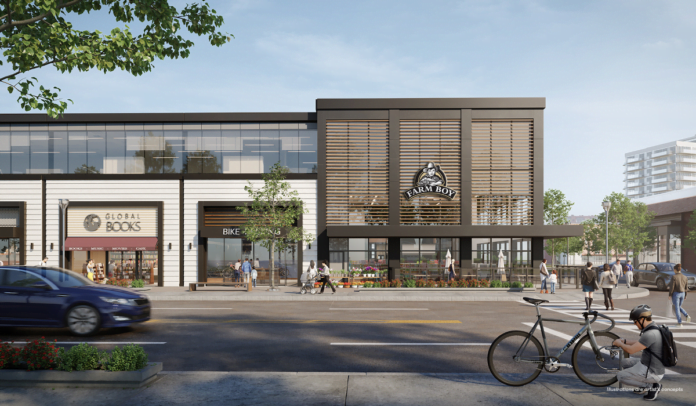
The massive 72-acre Brightwater master-planned community in Port Credit, Ontario, will have Farm Boy as its anchor retail tenant.
The development will revitalize the Port Credit waterfront with more than 18 acres of new parks and green spaces as well as walking and cycling trails, 300,000 square feet of new retail, commercial and office spaces including a new Village Square flanked by pedestrian mews and piazzas and will create 2,995 new residential units and 150 affordable housing units.
Shawn Linton
“For over 40 years, Farm Boy has always put quality food, great value and best-in-class service first. We are delighted with how customers across the province have responded and we are looking forward to expanding our presence across the GTA with our first location in Port Credit, Mississauga,” said Shawn Linton, President, Farm Boy.
Image: Brightwater
Farm Boy started in 1981 in Cornwall, Ontario and has expanded to 47 fresh market stores across Ontario.
“This new 25,000-square-foot store will offer the same fresh market experience Ontarians have come to know and love. Customers will be able to explore and indulge in our fresh, locally-sourced produce, high-quality meats, thousands of Farm Boy private label products, and chef-prepared meals. We are delighted to be welcomed into the Port Credit, Mississauga community and look forward to residents exploring and tasting all that Farm Boy has to offer,” said Linton.
The company’s 10th Toronto location and most recent store opening is Farm Boy Sugar Wharf. This 29,600-square-foot location can be found on the second level of 100 Queens Quay East in the same building as the new LCBO.
“Farm Boy has two additional fresh market locations under development that will be opening in the next year and a half. We continue to look for new opportunities across the province, with many suggestions submitted by our loyal Farm Boy customers,” said Linton.
The Port Credit Farm Boy will be located along the gateway into the community.
Christina Giannone
“As part of our commitment to extraordinary people-centred community-building, we are extending Port Credit’s vibrancy along the main street with new retail space and tenants,” said Christina Giannone, Vice President, Brightwater, Port Credit West Village Partners.
“Farm Boy is a natural fit as an exceptional local partner known for their quality and freshness. We know their remarkable product mix will be a great addition to the community.”
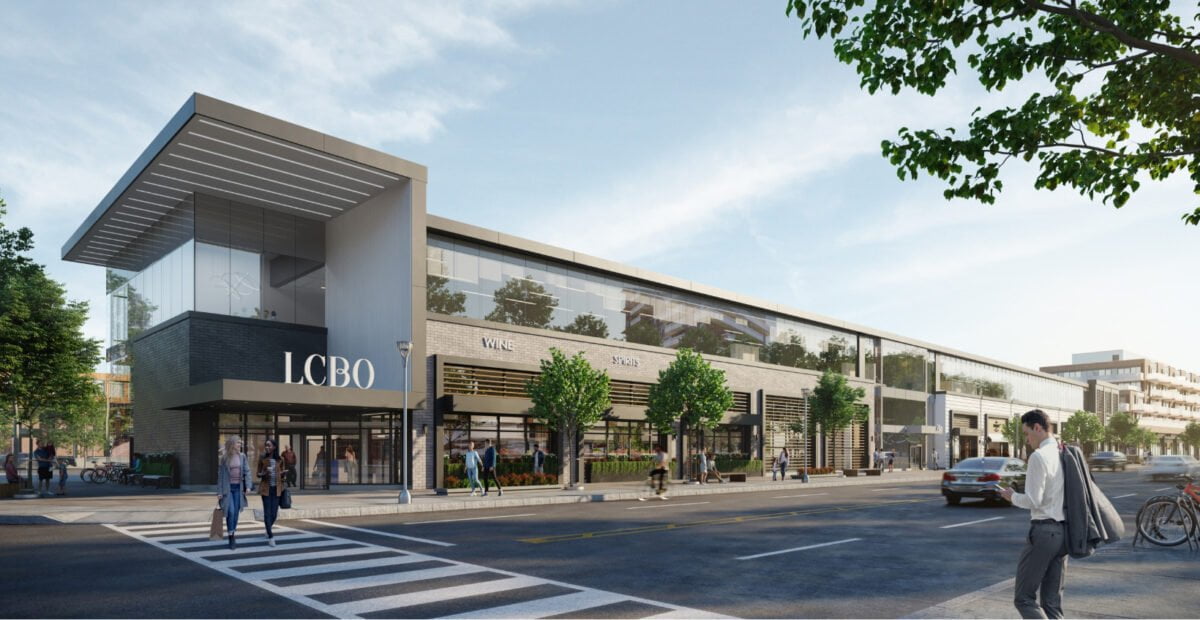
LCBO at Brightwater (Rendering: Brightwater)
Brightwater broke ground in October 2021 and the most recent phase Bridge House was launched last summer.
The development has partners West Village Partners, Kilmer Group, DiamondCorp, Dream and FRAM+Slokker. Dream leads the commercial development and leasing activities.
Paul Cope, Senior Director of Development with Dream, said the first phase of the overall development which Farm Boy is going into is just over 100,000 square feet of leasable area. And that includes about 16,000 square feet of second-floor professional office/medical space.
Paul Cope
“We’re really excited to have Farm Boy come to Brighwater. From what we hear, there’s a great reaction too from the community,” he said. “We think that the brand is perfectly aligned with Brightwater.
“Farm Boy has certainly grown in scale and the number of stores over the past few years and we think they’re going to be incredibly successful here and it’s going to be a terrific amenity not only for new residents of Brightwater but also just for the Port Credit community at large.”
The first phase is expected to open in 2024. The LCBO is in the same building as Farm Boy with about 7,000 square feet.
“There’s approximately 15,000 square feet in what’s known as the Brightwater One condo building. And then we have two additional spaces. One is about 8,000 square feet and that’s the mass timber building,” said Cope.
“We’ve got another about 10,000 square feet of space at the base of the Brightwater Two condo.”
More phases of development will bring additional retail to the project.
“We see retail here being very important to the Brightwater community,” said Cope.
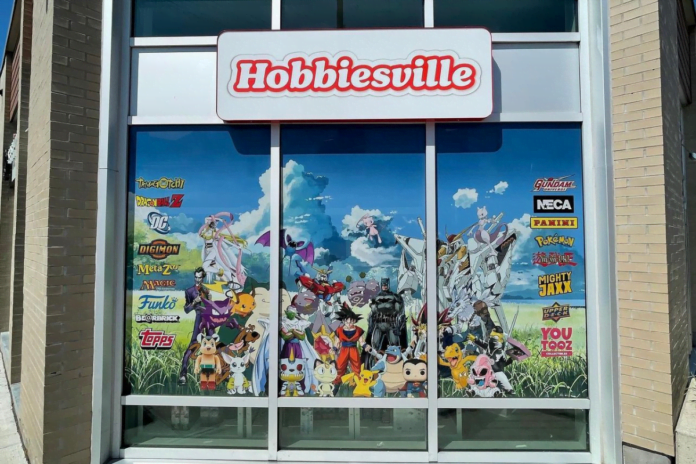
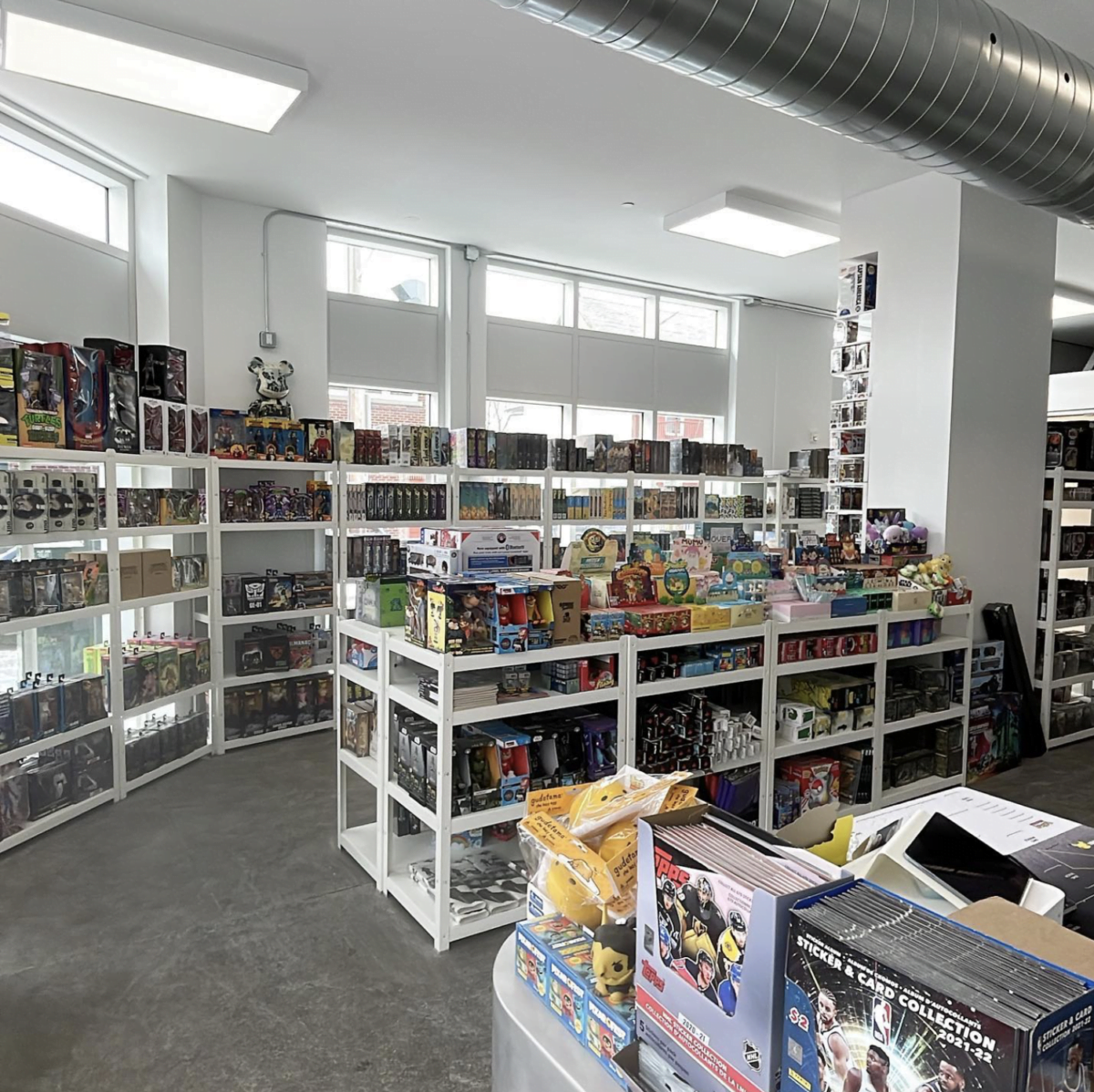
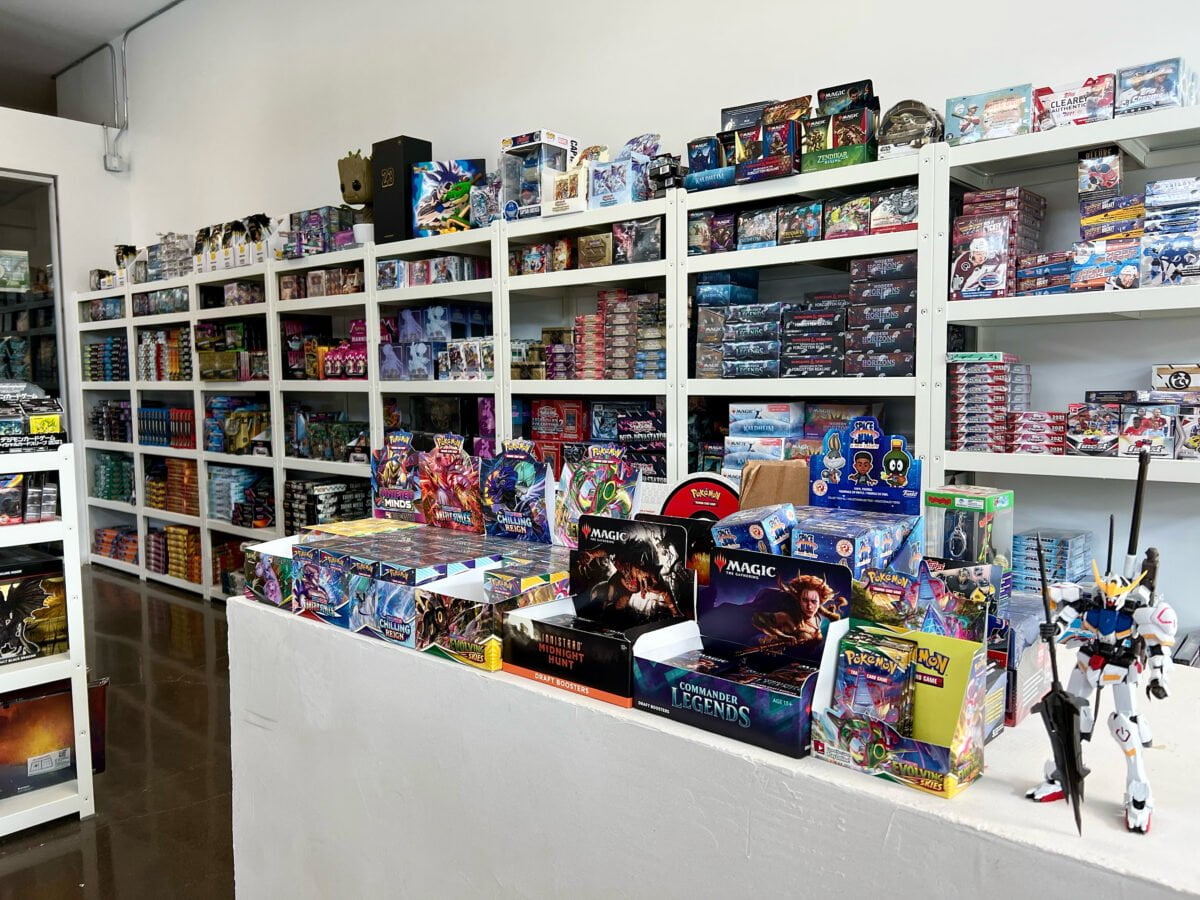
Hobbiesville at 607 Somerset st. W in Ottawa (Image: Hobbiesville)
Unique concept Hobbiesville is the latest retailer to be setting up shop along the popular Ossington Avenue strip west of downtown Toronto.
The idea began through a relationship between Edmond Georges and his friend Logan Fournier in Ottawa when they discovered there was money to be made in collectables.
“Hobbiesville kicked off in the summer of 2020. I had met Logan through a previous business that I was involved in. We used to do luxury men’s streetwear and he was one of our good customers,” said Georges.
“I met Logan through that business. He was working for Shopify and then fast forward to early summer 2020, COVID hits, everyone’s kind of home, Logan ends up finding a binder of Pokemon cards at his parent’s place, and he used to be a big collector when he was younger, and online sees what they’re worth, sells them and takes that money, turns around and pops up a free Shopify store.
“He messages me and says check this out. I just launched a pre-order for this new product that’s coming and essentially the sales are just kind of rolling through. This was just before the big wave of collectables that kicked off around September 2020. Around 2020, I think everyone figured out we’re not back to work, everyone’s sticking around remotely, COVID’s not going away anytime soon. Around July 2020, we started talking about how do we turn this into a thing and how do we set ourselves up for success. What are some of the main barriers that we need to overcome?”
Hobbiesville at 607 Somerset st. W in Ottawa (Image: Hobbiesville)Image: Hobbiesville
One was having a physical storefront. At a coffee shop, the two did some ‘napkin math’ and discovered they could afford a store for about $1,500 per month. They found one in Kemptville, Ontario, about an hour outside of Ottawa.
The concept was selling online by August but the store opened at the beginning of September that year.
“Month over month over month within that first four-month period our sales kept doubling. So we did something like $2 million in sales in four months between September 1 and December 31,” said Georges. “We outgrew Kemptville within six months.
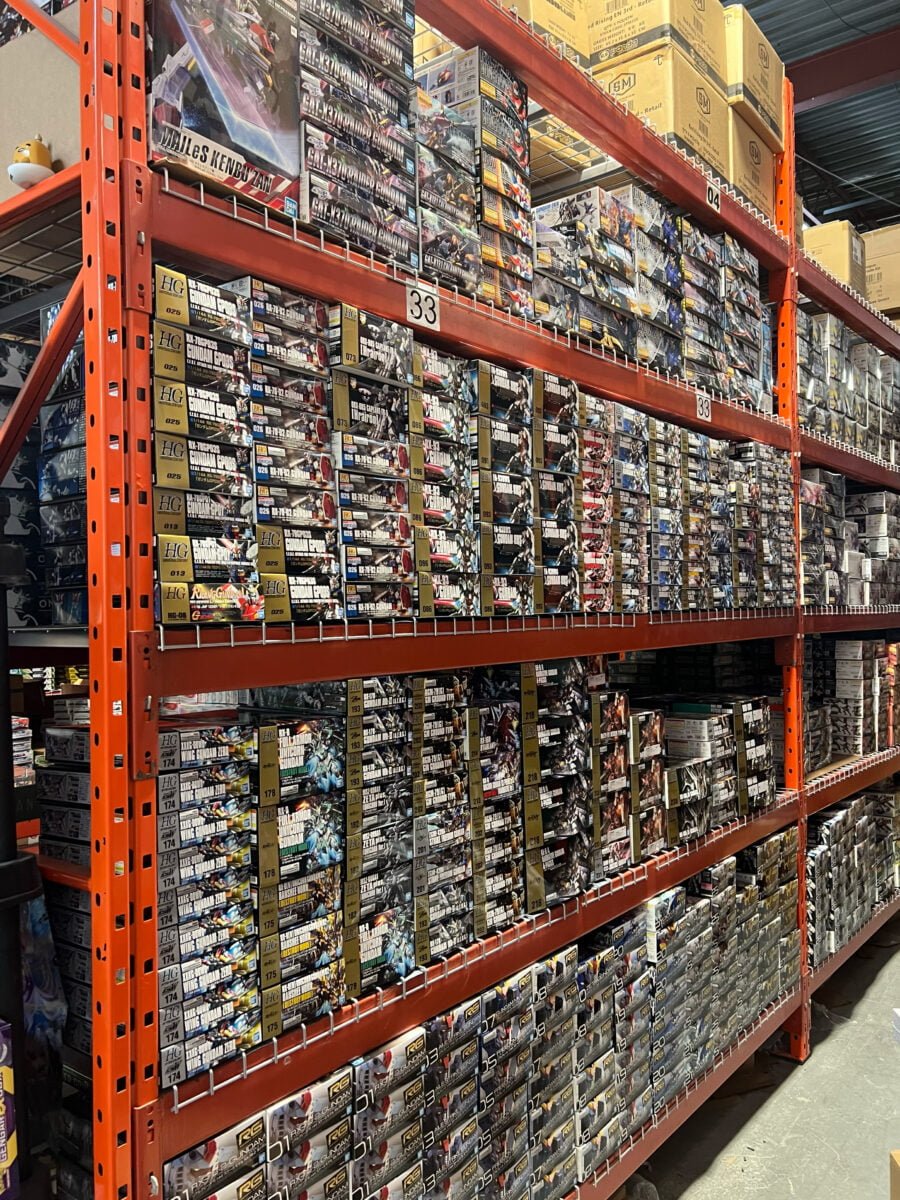
“We ended up moving the store to Ottawa and opened up a store right downtown Ottawa. That was about a year in. And we had already outgrown Ottawa in about six months and then we decided that in order for us to continue to support the growth we needed a fulfillment warehouse. So we opened a 4,400-square-foot warehouse not far from downtown Ottawa.”
Hobbiesville Warehouse
Georges said Toronto has always been the goal from day one. He said 27-28 per cent of sales on any given month are through Toronto. And all of the products initially come into Toronto.
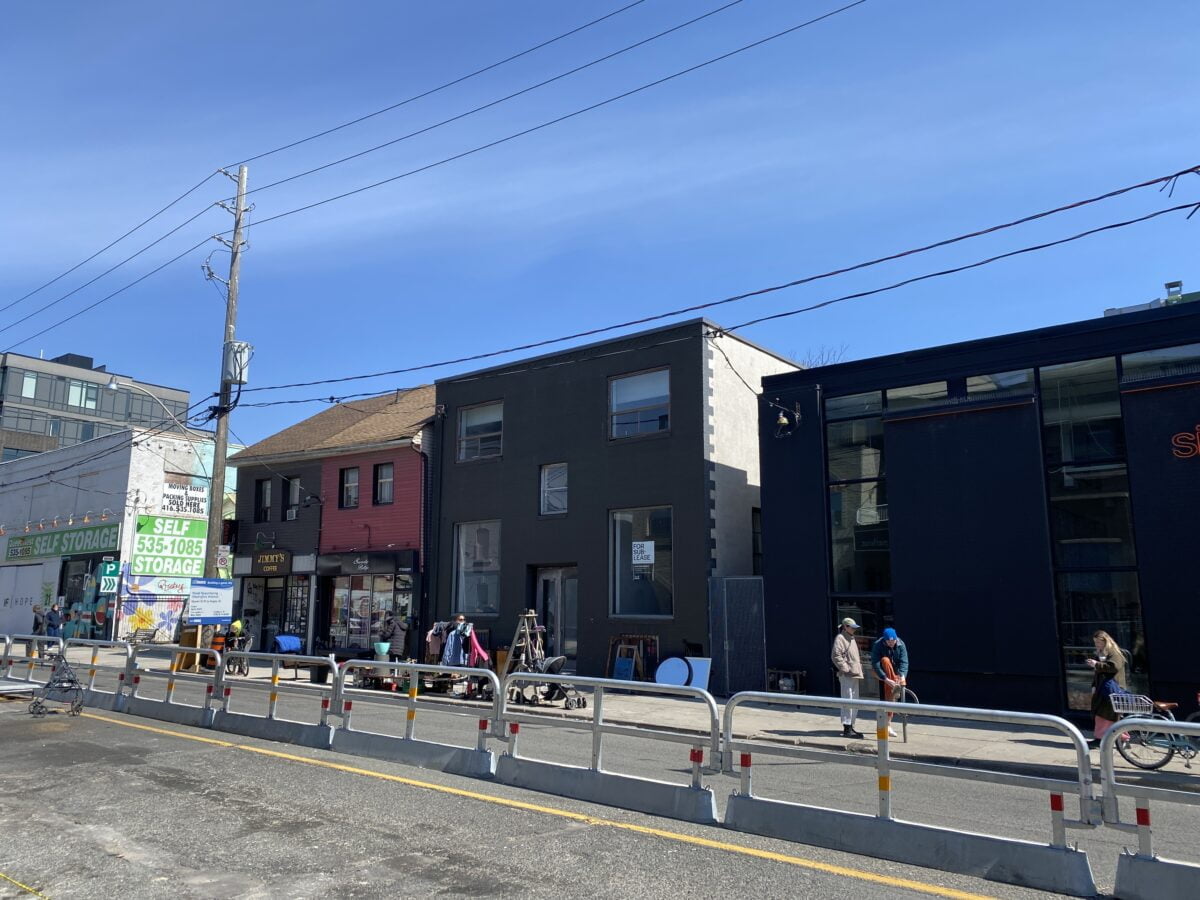
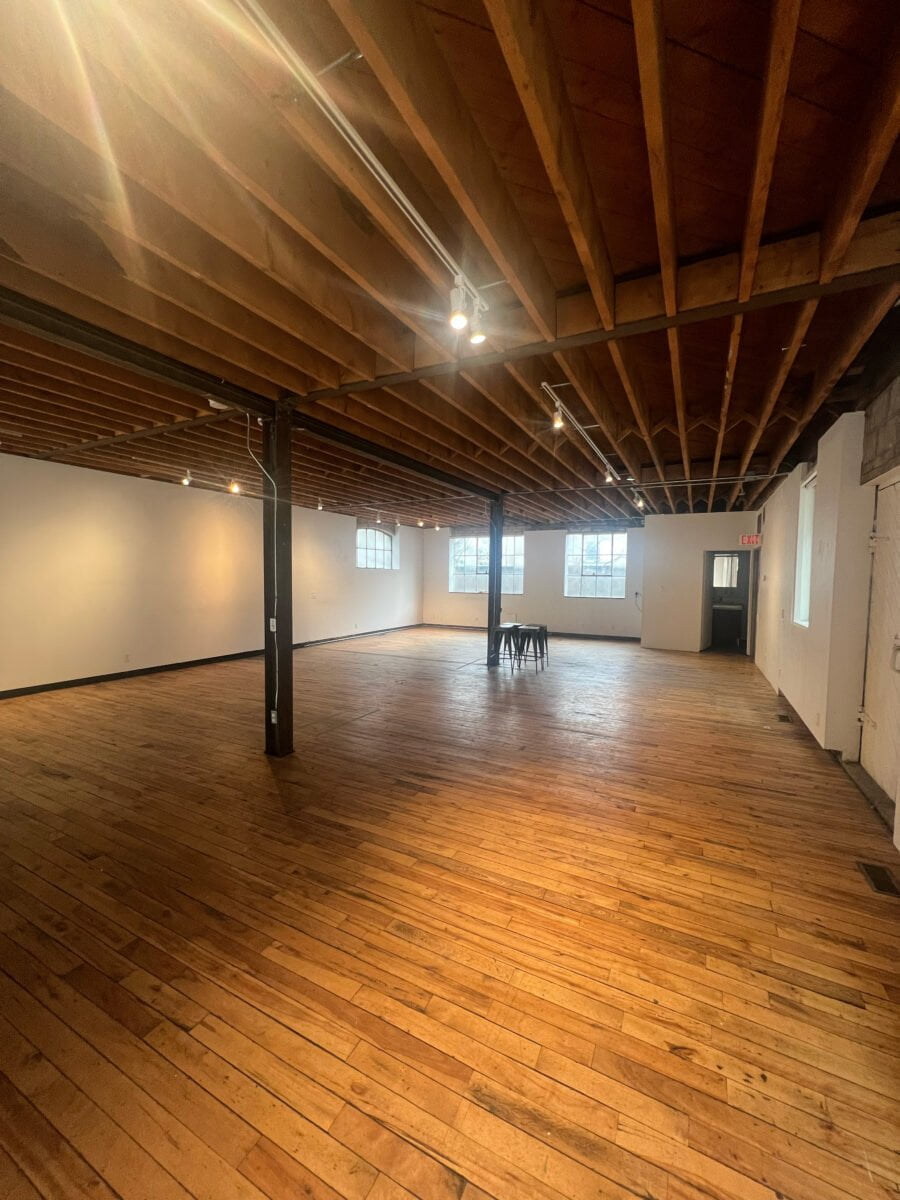
“We’ve got pretty big expansion plans in Toronto over the next couple of years. We’re opening a store on Ossington and Queen West right on the corner in a 3,600-square-foot store, two floors. It’s going to be our Toronto flagship store,” he said, adding it will open within weeks.
Fournier lived in the area for about five years and described it as a nice up and coming neighbourhood with not much competition for this type of concept. The idea is to change what the hobby industry looks like. The two want to make it more exciting and inviting which would fit in well with the Ossington area.
“We have an opportunity to kind of elevate the hobby industry on that street and bring in new customers that we would not have seen before,” he said.
Future Hobbiesville at 9 Ossington Avenue (Image: Dustin Fuhs)Future Hobbiesville at 9 Ossington Avenue
Georges said the focus right now, and the bulk of sales, is online, but the company wants to have a physical footprint in major cities that it services so that people can leverage experiencing the store and buy online and pick up in store.
“The long-term goal is having a flagship in every major city that we service,” he said. “So probably Montreal, Vancouver. And then Toronto we’ll see. If we start to get a lot of customer demands to open up closer to certain suburbs then we could maybe look at that. But as of right now we want to focus our efforts on really building an immersive retail experience on Ossington. We also have plans to expand into the US.”
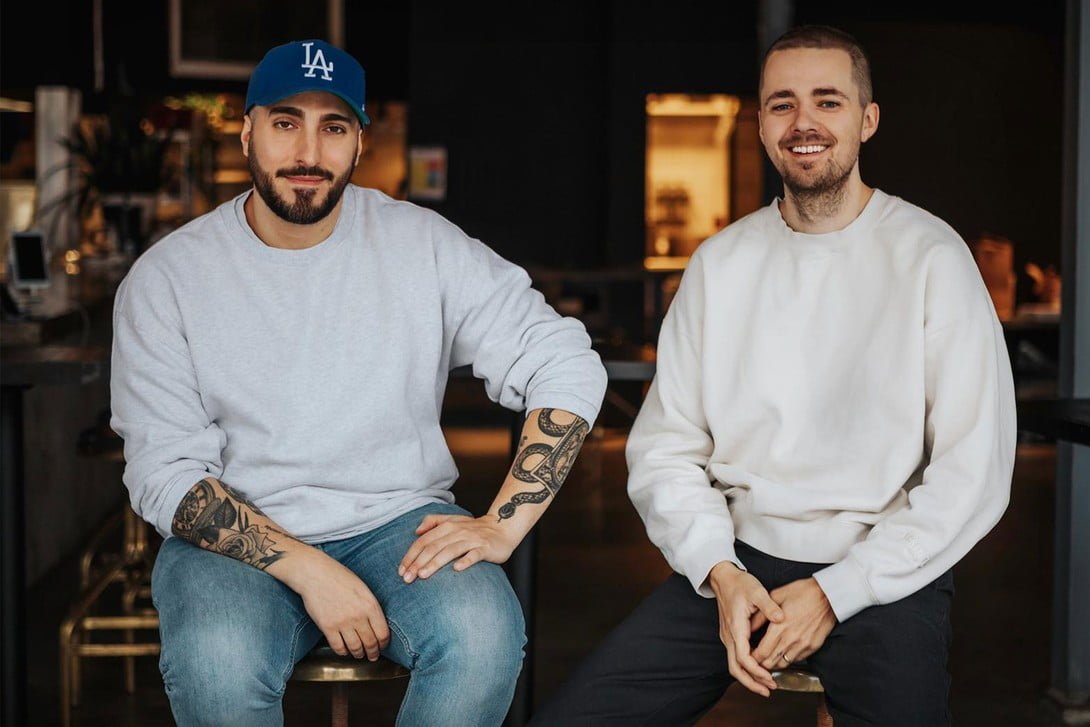
Hobbiesville Co-Founders Logan Fournier x Edmond Georges
The key thing with the Ottawa flagship is its boutique feel when customers walk through the doors. It’s not the typical strip mall collectable store. It’s brighter for one.
“It feels a little bit more like a luxury retail store than it does a collectable store. So the goal down the line is to build spaces that really kind of give you the feeling of being a portal into Japan,” said Georges. “The Ossington store will be a first step in that direction. It’s not going to be a full-blown immersive retail experience. That’s going to be coming down the line.
“But things like having arcade games, giving people the opportunity to try snacks and drinks that are imported from Japan. Japan is really the main hub where a lot of what we sell comes from. It’s bridging that gap . . . What we’re trying to build under that roof is a space for like minded people that enjoy all those things.”
Retail Insider is streamlining its Canadian retail news from around the web to include a handful of top news stories that can be viewed quickly during the day. Here are the top stories from the past 24 hours.
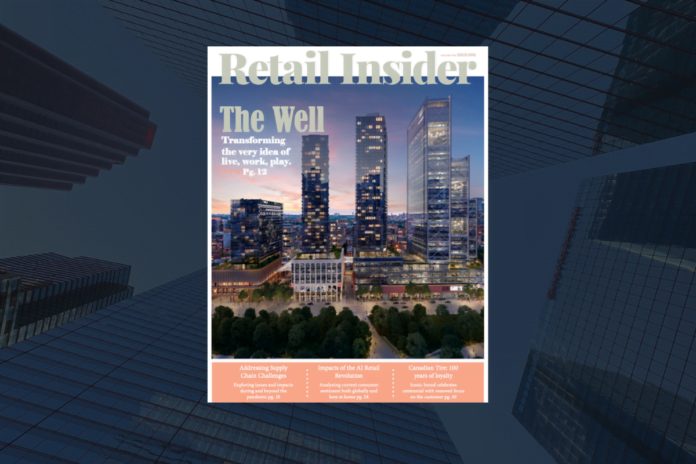
Out Soon: Retail Insider the magazine, Volume Two Issue One
Retailers, both in Canada and around the globe, have been faced with a considerable amount of challenges and hurdles to overcome in recent years in order to sustain growth and success within the industry. And, those challenges, nor the hurdles, are set to abate anytime soon. Amid a continuously shifting landscape and ever-evolving consumer preferences and behaviour, brands are perpetually required to assess and reassess their operations in efforts to find efficiencies and cost reductions. To help retailers, large and small, throughout the country navigate through the current climate, Retail Insider the magazine is pleased to announce the start of development of its second volume of content with the release of Volume two Issue one of the digital publication on Monday, April 17.
Expert analysis
Within the upcoming jam-packed issue, a number of industry experts weigh in, providing their perspectives on some of the trends impacting retailers most significantly today. Supply chain guru, Gary Newbury, contributes an article that highlights the challenges that have blighted supply chains around the world since the onset of the COVID-19 global pandemic, while addressing the increasingly critical redesign of the supply chain that’s required in order for retailers to effectively manage inventory and deliver the experiences that their customers are demanding.
Renowned industry analyst and advisor, George Minakakis, shares his views on the revolutionary power inherent in AI technologies, focusing on the potential that AI chatbots represent when it comes to improving retailer interactions with customers through personalized recommendations, powerful browsing tools, targeted marketing messages, and exceptional customer service.
With the advancement of digital technologies come opportunities for retailers to get closer to their customers through the collection of their personal data. But, how much is too much? Data privacy thought-leader, Ritchie Po, contributes an article that goes a long way toward helping retailers understand their obligations concerning data collection, identifying the things brands can do to avoid or address overcollection.
State of the Canadian shopping centre
In addition, a robust examination of the Canadian shopping centre is executed to determine its current state and the direction in which it might be heading. To help assess the state of the Canadian mall thoughtfully and accurately, the perspectives of some of the most insightful commercial real estate players and developers were sought, including those of Andy Clydesdale, Executive Vice President – Retail at QuadReal Property Group; Paul Lessner, Senior Vice President, National Shopping Centre Leasing at JLL; Michael Kehoe, Broker of Record at Fairfield Commercial Real Estate; and Lisa Hutcheson, Managing Partner, Retail Strategy, Master Planning and Operations at J.C. Williams Group.
The Well
Toronto’s soon-to-be-opening massive mixed-use development, The Well, and its breathtaking array of features and attractions is spotlighted. Speaking with Alex Edmison, Senior Vice President at CBRE, and John Ballantyne, Chief Operating Officer for RioCan, the potential impact of the endeavour is explored, as well as the enhancements to Toronto’s, and Canada’s, global reputation that the project may trigger when it comes to world-class innovation and development.
A Canadian icon
And, to help celebrate its first century of success, and launch its second, Canadian retail icon Canadian Tire is featured in a special brand profile. Diving into the history of Canadian Tire Money and the evolution of the company’s loyalty programs and initiatives, its efforts to continuously and consistently improve and enhance the products, offering and experience that it provides its customers is highlighted.
Intent on keeping its finger on the pulse of the Canadian retail scene, Retail Insider the magazine is committed to continue reporting on the trends and influences shaping the current and future state of the industry. Don’t miss Volume two Issue one of the digital publication, available Monday, April 17, 2023.
Craig interviews the team at J.C. Williams Group, who share their experiences at the new Zellers 2.0 locations. The conversation includes what The Bay has done right with the first 25 Zellers shop-in-stores locations, as well as some concerns and what could be improved.
A transcript of the conversation can be found below.
If you prefer to listen to the audio version, it is available below:
The Interview Series audio podcasts by Retail Insider Canada are available on Apple Podcasts, Stitcher, TuneIn, Google Play, or through our dedicated RSS feed for Overcast and other podcast players. Also check out our The Weekly audio podcast where Craig and Lee discuss popular content published on Retail Insider which is part of the The Retail Insider Podcast Network.
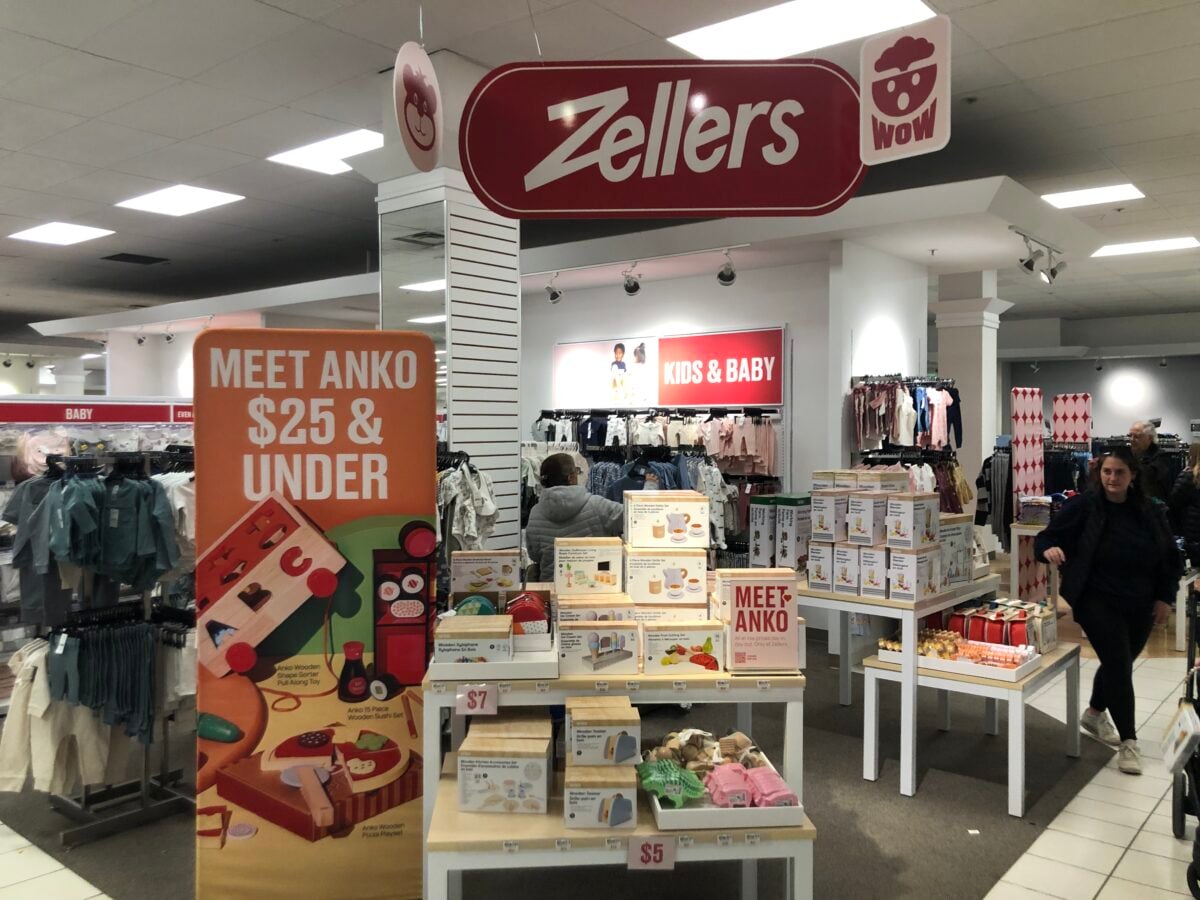
Craig Patterson Welcome to the Retail Insider Video Interview Series. I’m your host, Craig Patterson, and we’re joined here with three special guests today. This is the first time I’ve had this many on in a video. We’re going to be talking about Zellers and its return. A bit of a Zeller’s 2.0 situation here. Now for those that are familiar, which probably would be no one watching this at this point, but The B ay is brought back the Zellers brand, it disappeared as we know it basically about 10 years ago. This brand has been brought back as Shop-in-Stores somewhere between eight and 10,000 square feet, located within Hudson’s Bay department stores in Canada. With this Zellers 2.0 relaunch a few brands have been brought in, including primarily a private label brand called Anko, which was developed for Kmart in Australia. Now I’ll introduce my three guests here. They’re all experts in their own areas within the retail industry, but all are within the J.C. Williams Group. Being a very highly respected consultancy based in Toronto, we’ve got Lisa Hutchinson. She’s the managing partner and a very well known strategist within the retail industry. Welcome, Lisa.
Lisa Hutchinson Thanks for having me.
Craig Patterson We’ve got John Torella. You’re a senior advisor with the J.C. Williams group and you’re a marketing and branding specialist. Welcome, John.
John Torella Great to be here.
Craig Patterson And Graham Heuman, you’re research and insights associate at J.C. Williams group and your work with strategic planning all kinds of other stuff there. Welcome, Graham.
Graham Heuman Thank you, Craig. Looking forward to the conversation.
Craig Patterson Let’s dive into it here. We’re going to talk a little bit about Zellers. Now at least Ben Graham, I know that you had an opportunity to visit the Scarborough Town Centre location and you’ve been poking around a little bit to have a look at what’s in this Zellers here. Let’s talk about your experiences so far and what you think of the brand.
Lisa Hutchinson Yeah, we were there for the opening day, the opening fanfare was quite a show it was quite a sight. I will say the marketing folks have done an amazing job. They’ve done a great job in terms of – I’ve been following them on Instagram for a couple of weeks watching what’s happening, there’s definitely been the curiosity and a fun level and it was not let down. We came into the shopping centre before the store opened, and we could hear the DJ going, it would help us figure out which direction we were going. We heard the DJ going, then there was a lineup and lots of excitement. They had a marching band march everybody into the store, which was helpful because it was a bit difficult to find after we went up another level on an escalator, and then taken back to the back of the store where it was positioned, which we thought was a bit unusual – tucked back between lingerie and furniture. But once we were back there, it was really well branded. We can it’s certainly was well merchandise. And we thought that the department was well laid out. And yeah, so that was our first impressions as we started to dig around. And we started to look a little bit more with our critical lie in terms of the product. And as you mentioned, it’s pretty much in my guesstimate about 80% of the Anko private label, which is as we know is the Kmart private label product. So the majority of it was that, but that didn’t seem to be stopping the shoppers. People were picking up products. There was definitely a demographic that was older that was really playing off the nostalgia. And they were having the fun with it and picking it up. We didn’t see as many young people and the young people that we did see would be you know, some moms and babies shopping in the toy department and the baby department. And then lots of people making purchases. Again, one of the downsides was that there was no dedicated point of sale, and there was no Zellers bag, so people were leaving with HBC bags (or The Bay bags). And but definitely lots of excitement people were in there. And, you know, that’s sort of my first impressions. Graham has a different eye and a different understanding and history with Zellers. So I’ll let him chime in.
Craig Patterson And I wanted to I want to bring up as well, Graham, you’re a little bit younger than us. So I’m curious what you think of, for example, the Anko products because I think you’re in your 20s, is that correct?
Graham Heuman Correct. Yeah, I am.
Craig Patterson Let’s talk about that as well because again, I’m just curious, what do younger people think of the brand because again, I’m a couple of decades older. So, you know, I know the old Zellers and what it was like I remember the “Truly” brand and it was truly not amazing, but tell us what you’re thinking about. You saw it the new Zellers.
Graham Heuman Well, it was definitely very aesthetically pleasing the brand. It was very well laid out the visual merchandisers at the Zellers did a great job of laying it out. And the product was definitely design oriented. I can’t say whether or not (because we didn’t purchase any) how it would hold up over time from a quality standpoint, but it was definitely very visually appealing. It definitely played into the younger demographic as far as design/color palette, things like that. But the one thing is it, to my recollection, doesn’t really have any of that nostalgia there playing off of. It doesn’t attribute much to the Zellers branding as it was from 2013 and before. I never thought of Zellers as sort of a place to go to get the trendy ‘new item’. And now that seems to be where they’re moving. So and, you know, one of the things that we have to give them kudos for is the Zellers branded clothing. I mean, that was flying off the shelves while we were there. And that was not demographic specific. That was people who, from older generations to buying little clothes for their babies, it was all all flying off the shelves while we were there.
Zellers at Erin Mills Town Centre (Image: Erin Mills Town Centre)
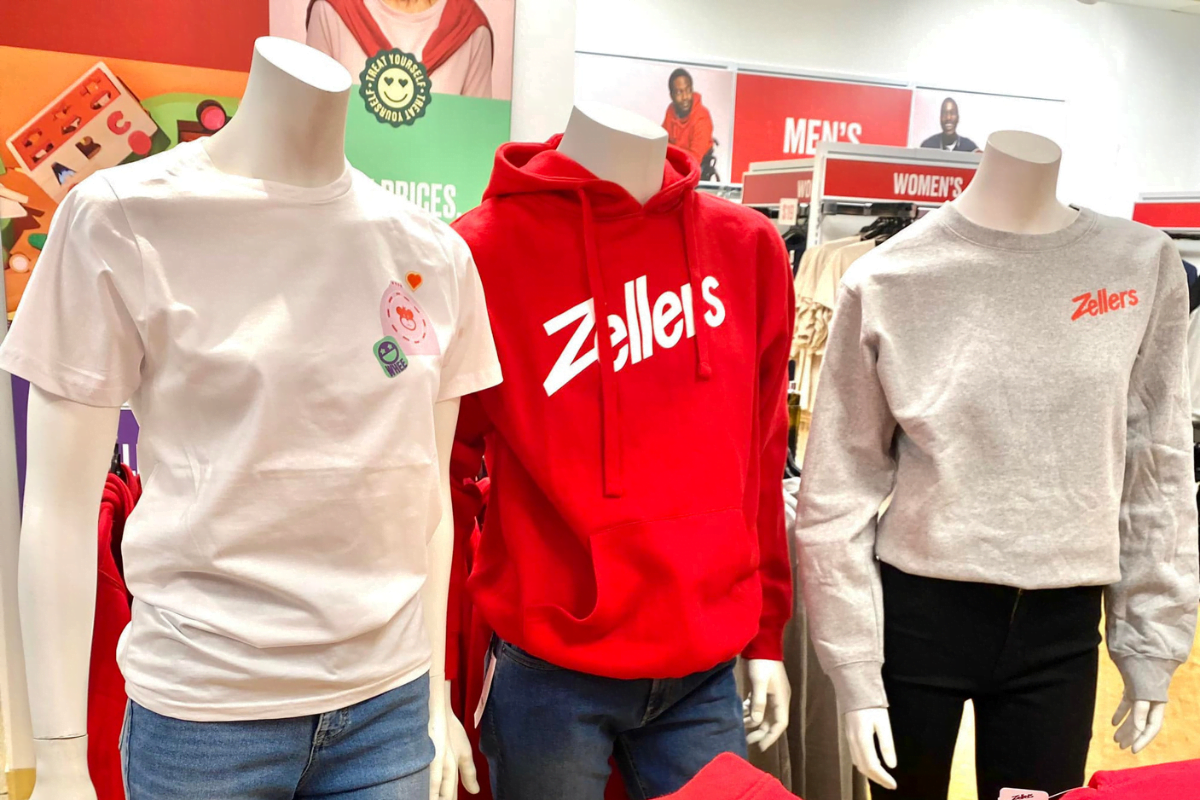
Craig Patterson I think the hoodies have sold out with the red Zellers hoodies I wore one when I was teaching a class recently.
Lisa Hutchinson Yeah, so then I followed up with a visit to Erin Mills, on the second day of their opening, having seen all the fanfare of one location. I wanted to go and see maybe something a little bit more typical. The second day, a little later in the day, certainly still very busy. Still a lineup, but it was at a central cash point. And so, it’s hard to tell, I was trying to distinguish whether it was, you know, Zellers products only or were there other other HBC products in there. And so that was difficult to tell. But there was definitely a long lineup. And typically, the HBC stores don’t have long lineups. So I think that has an impact on it. But the the red hoodie was completely sold out at that location when I was there. And there was lots of product that was sold out there. And so I don’t know if that was an ‘out of stock’ or there just wasn’t a team dedicated to doing the replenishment on the weekend.
Craig Patterson I’ve been told it’s hard to get everywhere. It’s not just in Toronto, so they may have run out everywhere, including online – which I don’t even know if it’s online. Now, John Torella, you’re a senior advisor at J.C. Williams group. Tell me a little bit about your just general impressions of this new Zellers, the branding and how the marketing is coming about and what Zellers is going to need to be doing (and I guess, the Hudson’s Bay Company as a parent company) to maintain that success longer term, because right now, it seems like nostalgia and buzz are really propelling this popularity for this new Zellers concept, at least to grasp, we’re still in the first week of it being in existence to the public.
John Torella Well, Craig, my sense is that while the Zellers plan may add some hype, sales, and certainly some traffic. HBC’s issues are much bigger and greater. My storyline now with all my buddies is – the Zellers plan is like shuffling chairs on the deck of the Titanic. If The Bay doesn’t really issue, deal with the fundamental issues, like what’s the compelling competitive advantage? What’s the point of difference? What’s their USP? What’s their value proposition, whatever you want to call it? If you look at the ‘brand’, you guys are all using “brand’ as logos and graphics, but my definition of ‘brand’ is much deeper than that. So it’s how are you distinctive? Are you unique? Are you special? Brands have to be distinctive in their look and feel at every touchpoint online, and in store. Most of all, they have to be relevant to the new norms and the new realities. This is a different world. And they have to be sustainable, not just in the short term, but the long term infinite view. So if I had to boil it all down. It’s no noble purpose beyond profit. And that’s not going to lie.
Craig Patterson What about the Anko product itself? This is a question for anyone on this small panel that we have here. Like we mentioned before, this is a line that’s been brought in from Australia. And it was developed by Kmart specifically for I believe the Australian and the New Zealand markets. Now, those in the United States may remember Anko coming in, they had a few stores in the Seattle area as well. But that was only from about 2018 until just after the pandemic, which disrupted a lot of retail and the stores unfortunately, shut down. But let’s talk a bit about the Anko line itself. It’s really inexpensive, at least for the most part, the design is quite modern, not what we remember from Zellers, at least from the modern part, we remember the prices.
John Torella One of the things I talked about is “The New Norm”, new realities. One of the new realities is that it goes beyond product and service. We’re really in the era of experience. And so while they may be intrigued by the product, one off here and there and so on. If I’m going to build any kind of loyalty, particularly with the younger customer, then there’s got to be an experience in there. And it’s got to be an emotional experience, there’s got to be some relevance. I’ve got to have some sense of belonging, some simpatico with that brand, or it’s not gonna last.
Zellers at Hudson’s Bay in Sunridge Mall, Calgary, AB (Image: Mario Toneguzzi)
Lisa Hutchinson I think Graham was touching on that in terms of “Is the customer looking for this modern, more modern, refreshed brand?” and it being Anko. And so, you know, I guess we first learned a bit partly with our Australian partner had posted an article about Anko was going to be the partner for a Canadian brand to open in the later this month, which putting two and two together is Zellers. So, you know, is it as Zellers brand? Or is it just a Zellers department and bringing back some of the values that Zellers is playing on? There is some space right now, for an economic value-based retailer and there is space within the Hudson Bay stores. Is this an opportunity to fill that space partner with somebody that’s got a brand and product that’s able to fill this opportunity, and the space within the store.
Graham Heuman To speak to the pricing, what has been touched on is that when we were originally were talking about it – we were comparing it to the pricing that was being seen at Kmart Australia for the Anko product. There’s not a ton of relevancy to the Canadian consumer, but with Zellers (specifically with their ‘Lowest Price Is The Law’ is part of their nostalgia. When we actually compare similar products from a Walmart or if it’s a product that can be bought in bulk (comparing it to Costco), they aren’t necessarily going to be the least expensive. So they’re not the least expensive, but they’re also not the trendiest as far as even what John was saying with a noble purpose, right? They’re not the most purpose driven, but they’re also not the least expensive. They’re kind of putting themselves into an awkward position with little differentiation.
Craig Patterson One thing to note, too: The $175 chair by Anko at Zellers here in Canada, I think in Australia is $79 Australian, if we want to talk about some pricing. I don’t know but other prices, but this was brought to my attention by a reader. $175 still isn’t a lot of money for a chair as things are expensive in Canada. But things are expensive in Australia as well. At $79, its a pretty good price and the dollar in between Australia and Canada are not not that far off.
Lisa Hutchinson Yeah, we noticed the same thing when we did some price checking.
John Torella I also see a basic flaw in their strategy of nostalgia. Because once on one hand, they’re saying “Hey, nostalgia, memories, and all about the remembering and belonging of the past”. Then on the other hand, their senior executives are saying their focus is on a younger customer. And that’s what they really want to get. So the nostalgia thing just doesn’t work with that younger customer.
Lisa Hutchinson And is nostalgia a strategy?
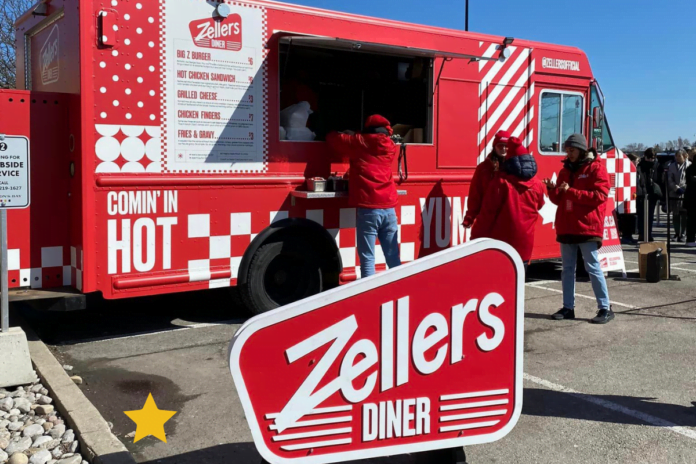
Craig Patterson Now speaking of nostalgia, what Zellers has done is it did not bring back the full-size or full-service restaurants that the stores were known for. I’m actually sometimes questioning whether or not (I’ve said this in a previous podcast that we are putting out) that maybe they should have started with restaurants, if that was feasible in terms of the kitchen facilities and had some sort of Zellers merchandise, but nevertheless, what we’ve got now is food trucks driving around the country with five of the menu items that had been originally had Zellers are similar to it anyways. Do you think that the food truck strategy that Zellers has brought forward is going to be successful? And will this even bring people into the stores? Or are they just going to get their grilled cheese sandwiches and run?
John Torella The problem with it? Craig is it’s one dimensional. I mean, if you’re really going to develop this Zellers brand, then you need a full MarComm plan (a marketing and communications branding plan). Both online/virtual and in store. It has to have both traditional media (certainly the most effective traditional retail media like flyers and promotion and events and activities) and it has to have consistency. The food truck has a kind of clever, unique, buzzy idea – but where is the MarComm Plan? If I go back to my reference to The Bay, where’s The Bay’s marketing plan? Where’s the excitement of the past with “Bay Day”? Remember the hype with Bonnie Brooks and her use on TV? There is no semblance of any thought in any of that.
Lisa Hutchinson With the restaurant, and I think that’s a cool idea in terms of a restaurant with some Zellers product. We didn’t get to try any food because it was pouring rain and they were trying to keep people dry and keep a tent down to try and figure out how people could come in. Then it wasn’t there on the Sunday when I was there again.
Lisa Hutchinson It all feels a little ‘pop up’ to me. We’re all about testing, believe me, we believe in testing and whatnot, but it does feel a bit ‘pop up’. There was no big construction requirements, it was just emptying 1000 square feet and moving in some sort of ‘off the rack’ racks, if you will, some generic fixtures with signage. And similarly, with these food trucks are not a permanent thing. So it all feels a bit of a work in progress, and which is nothing wrong with that. To your question about the food trucks bringing people in – where they’re positioned is not even near the Zellers. So they’re just out in the parking lot. Maybe it’s a great, great way for people to come and park at the food truck and then go into the store. And it’s just another way to drive some traffic. Let’s face it, the outside of the department stores need some animation. And so maybe this is the solution for them to come in though those entrances is to have the food truck there.
John Torella It’s to ‘one of’, it’s not enough substance. To me, it just as you say it’s a kind of ‘pop up’. And everybody’s excited about it. But where will we be in the deep dark days of August? What are they going to have going on then? How are they going to launch fall? What’s Christmas going to be like and where’s the annual plan? How committed as a staff into this thing. I mean, these are the essence of retail and you can’t just do it with ‘one of’ hype.
Graham Heuman And I think what you said John about where will we be in August? Just as an interesting question for the food truck specifically. The beauty of the food truck is the fact that it’s mobile. And obviously, for this time being to have it in front of the store makes sense. But it’ll be interesting to see how they use it as a touch point for the brand and maybe expand it. Having the ability to go to food truck festivals, or to be able to go to music festivals, or try to activate spaces that they aren’t in right now, because maybe it will drive traffic to the store. But ideally, it’ll still create some buzz around the brand if they do show up to different events. Right. So I mean, maybe not a good strategy for holiday, but could be a great one as they’re moving through summer.
Craig Patterson Very interesting. Now, there’s been some chatter around maybe Zellers opening full size stores or at least standalone units. We don’t know how big those would be at probably not as large as the old Zeller stores just because you need a lot of stuff to put in them. Do you think that this would be a concept from what you’ve seen so far with this Zellers 2.0 relaunch that would possibly see success with something that would be larger? Or do you think maybe the Hudson’s Bay Company wants to utilize these smaller units to drive traffic into existing Hudson’s Bay department stores?
John Torella Where are you going to put your money, Craig? Walmart or full line Zellers store? Where are you going to put your money?
Craig Patterson Walmart.
John Torella Winners? Are you going to put your money against Dollarama? Come on. I mean, again, it’s just the shuffling the chairs. They have gone through five presidents in the last six years, each one of them came with their hot idea. Well, we’ll see.
Lisa Hutchinson I thought that we were going to see it more isolated. We were kind of surprised when we went in and had to make our way through the store. And is that part of the strategy to make people go through the store and maybe buy some other products?
John Torella Don’t make them do thing. Create a want or a desire. That’s what you want.
Lisa Hutchinson I was expecting it to see kind of like the locations of the Top Shops. An exterior corner of the store with big exterior signage. I was surprised to make my way through the store to a department. If there’s a future, it is either carved off some of the existing store space, or it’s a standalone, but to keep it just as a department. To be multi-department department within a department store. What’s it taking from the rest of the Bay’s assortment?
Graham Heuman I think the other thing to add is that there’s different departments already existing and people having these stores-within-stores. I agree with what Lisa said – I was expecting it to be more of like what we saw with “Mac” at Yorkdale. They put Mac’s into numerous locations, but the one in Yorkville is really prominent. And fronted right into the mall. But with a small red sign in front of the store doesn’t have as much of a draw. And yeah, moving that smallest assortment they have currently into a full line store be a lot of a lot of work.
Craig Patterson It makes sense. Now, this Anko line, the prices are good. And it’s got different categories that you also find within that host, Hudson’s Bay store. Is always competing directly with its host store, The Bay?
Lisa Hutchinson Yeah, I think, I think in some ways, they certainly are. And, I think they moved out some of the departments that they do compete with to make some space. But for sure, I think that, you know, that, you know, you’ve got children’s wear in Scarborough downstairs, and then up in the Zellers department, they also have children’s wear. So, it’s some point, are they just competing with themselves is what you’re saying? And I think the short answer is yes – by keeping it as a department within the store, in my opinion.
Graham Heuman I think one of the other things that they’re definitely competing with is, cannibalize their own e commerce, right? I mean, they already had this marketplace concept where you had some opportunity to bring in some lower cost options from whatever vendors were interested in hosting with The Bay. So you know, some of those people might find a lot the competition in some of those Anko products that are lower price. And now there’s marketplace products in the Zellers, ecommerce assortment. So it will be really interesting to see how they decide where they’re going to be placing it with a separate website, it starts to get a little fuzzy as to where I’m buying my product.
Craig Patterson And I’ve got one final question here. This is a general question. What do you think is the future of the department store generally? Say in North America and globally, because there are different types and and different examples around the world. I should probably start with you, John, because I know you’ve done some traveling, and you’ve got to look at some of these department stores around the world. Certainly before the pandemic, you were traveling quite a bit.
John Torella Yeah, and you know, as I travel around the world, and look at department stores, it’s almost always my first visit. What I’m struck by is just the joyfulness, the exuberance, the excitement, the experience of it all, the sensible longing when you’re in there, the people. And it’s that to my point, you know, today, it’s not just about the products you have, it’s not just about the service you have. It’s the emotional connection that you make with that customer, where they feel a sense of, hey, there’s a store for me, there’s a store that’s going to help me, you know, in my joy of life, my family my whole, if it’s not that, who needs it, you know, I mean, there’s all kinds of specialists. So you better be pretty special, you better be pretty unique, you better be pretty distinctive, and you’ll make it good. If you’re not, you’re doomed.
Lisa Hutchinson I was just going to share that share an example that John shared with us because he’s spent Christmas in Paris. So he had a magical experience in Paris,
John Torella When you walked in. You just the staff was there, you were greeted. Can I help you? Go up to the food floor? I mean, these incredible food floors. You just see every expression of the food culture, the excitement, the sporting goods. It just restored my faith in the department store business, but it’s got to be, you know, it’s gonna knock your socks off.
Lisa Hutchinson I think for me, the challenge continues to be the density of the population base in Canada. I think that there is a space for them. But to John’s point, there are lessons to be learned. You know, as you know, Craig, you know, we get to travel to meet with our international partners. Graham and I just got back from Germany. And I was in Poland in the fall. And you know, there are some amazing department stores in these European countries. And they certainly are doing it well. But they’re also don’t oversaturate. And, you know, we saw this great, this great outdoor retailer called Globetrotter in Cologne, and well, it’s not a department store, per se. But it is a huge format outdoor retailer. You know, they have people that drive two hours or hours, the drive to come see to come and shop in this store. And they stay for two hours, because it’s experiential. And you know, they can so you know, when you think about these other really successful department stores there, there’s the service element, and there’s all that experience. And I just find our department stores are lacking that. And there’s definitely this lifestyle opportunity. And so I think that there is still a lifeline for department stores, but I think they have to change and I think we don’t need as many of them I think they need to be a destination.
Graham Heuman We spend a lot of time at JC WG thinking about this noble purpose. And I think a lot of these department stores have really lost that essence. If you look at our most recent exit of Nordstrom right there, their service excellence didn’t translate to Canada once they got past the six month mark, and started to really run into some issues. Another store we visited, again, wasn’t a department store, but one of the sales associates was so, so excited to show our group around and knew had so much product knowledge, and endlessly passionate about the brand that they were representing. And we aren’t getting that at our department stores. So I think this this idea of these global brands that shock the world for you, and bring in these products and know everything about it and can easily talk about it and make you fall in love with it as well is what’s the future, but what’s currently lacking.
Craig Patterson Now, Graham, is someone in your 20s, do you shop at department stores? Are you a fan?
Graham Heuman I’m a fan of the right ones, you need to have a reason to shop there. I mean, if I’m, if I’m shopping for a certain brand, a lot of the time one, I could either get it online or two, they might have a an actual boutique, somewhere in the vicinity. Or if I’m looking for a specific brand, there’s also a lot of small retailers who have a deeper connection with them. Nordstrom lost its its its glamour over the years as well as the Hudson’s Bay and Saks. I mean, we were right downtown Toronto. So the options we have for department stores are few and far between for somewhere with a great experience.
John Torella Craig, if you if you want to see the model for the department store of the future, go to China and look at the ecosystem. The Chinese department stores are not just selling you products, they build up enough data they know more about you than you know about yourself, they’re going to take you on a holiday, they’re going to do your insurance for you. They’re going to help you buy a car, they’re going to teach your kids about education. So this ecosystem of information and data is giving them a real sense of knowing that customer, not from a demographic, but from a real ‘persona’ point of view. And then to me if if I were looking at departments or the future, that would be my start.
Craig Patterson That is fascinating. This is something we should look at more in another segment because I want to dive a little bit more into the future of the department store. Generally, it’s something that I’ve been passionate about. I’m old enough to remember when there were lots of department stores in North America with all kinds of different names, particularly in the United States. That is almost not the case anymore. Unfortunately, we have seen the death of the local department store again, primarily in the United States, but in Canada, of course, we’ve lost Eaton’s, Woodward, Simpsons, Morgans and a few others as well. So I lament those losses, but at the same time, the world is changing as well. So I want to say thank you so much, all three of you for joining us today.
Lisa Hutchinson Thanks for having us.
John Torella Thanks, Craig.
Craig Patterson This has been Lisa Hutchinson. She’s the managing partner and strategist at J.C. Williams group. John Torella, your senior advisor. You’re a marketing and branding specialist. Of course, we’ve spoken to you before. Graham Heuman your research and insights associate with J.C. Williams group. Again, thank you so much for joining us today here on the retail insider video interview series. I’m your host today Craig Patterson. I’m the founder and CEO of Retail Insider Media Limited. This has been the Retail Insider Video Interview series. Thank you so much for watching, or listening on the podcast channel if that’s how you’re listening to us here today. Thank you so much again. Take care and bye for now.
Subscribe, Rate, and Review our Retail Insider Podcast!
Drop us a line at Craig@Retail-Insider.com. You can also rate us in Apple Podcasts or recommend us in Overcast to help more people discover the show!
Background Music Credit: Hard Boiled Kevin MacLeod (incompetech.com). Licensed under Creative Commons: By Attribution 3.0 License. http://creativecommons.org/licenses/by/3.0/
The demand for physical retail remains a crucial part of the shopping experience among luxury shoppers, according to insights from The Evolving Art of Luxury Experiential Retail, a new report from BoF Insights and Royalmount.
Key findings from the report include:
77 per cent of shoppers expect to visit a luxury store as or more often in the year ahead;
Sustainability narratives should be reflected in the composition of physical spaces, as 61 per cent of luxury shoppers agree stores should meet higher environmental standards;
49 per cent of shoppers believe a store should be more than a space to simply buy luxury products, presenting opportunities for brands to build deeper connections with customers.
“It’s clear from this report that luxury players in the industry must continue to invest in physical spaces, and the three pillars around sustainability, inclusivity and connectivity are essential to creating a place where people want to spend their time. At Royalmount, years of research and thought have gone into creating a space where people feel happy and fulfilled – it’s not just about transactions but developing a destination that creates connections and an emotional journey,” said Andrew Lutfy, CEO of Carbonleo.
Photo: Carbonleo
“At the end of the day, we are as humans social creatures and regardless of what nature of retail you’re looking for, people basically want a physical experience. I know that the best experience is one where you can marry a physical and a digital experience. Call it an omni experience.
Andrew Lutfy
“At one point the pendulum was if you go back let’s say 20 years ago, 15 years ago, it was entirely physical, physical, physical. And then we went through a period where the pendulum kept moving towards digital, digital, digital at the expense of physical to the point where everyone said hey the malls are dead. And then I think we’ve come to appreciate maybe that is not exactly true and maybe the truth is somewhere in the middle and really this is where you bring a fusion of the two and at the end of the day customers end up interacting with brands, brands are emotional relationships, and to me the best way of leveraging that emotional relationship is through digital medium and physical premises.”
Royalmount is a new Montreal destination located in the heart of midtown, where connectivity, creativity and sustainability meet and thrive. The district will be the first 100 per cent carbon-neutral mixed-use development in North America, as well as the largest LEED Gold retail project in Canada. The project is under construction with opening slated for 2024.
It will feature more than 170 retailers, including 60 restaurants as well as experiential attractions. Conceived by real estate development and management company Carbonleo, Royalmount’s aims to bring the best brands, experiences and offerings to the Quebec market. The first phase will consist of an 824,000-square-foot., two-level retail and lifestyle complex. The district will also house a three-kilometre elevated linear park, Le Champ LibreTM, as well as a 1.8-acre urban park.
Confirmed luxury retail tenants include Louis Vuitton, Gucci, and Tiffany & Co., with others said to be on the way. Home concept RH will also have a location at Royalmount.
“In a time when fashion brands and retailers are increasing their digital presence and technology from the likes of AI to the metaverse is becoming more sophisticated – it is clear the importance of physical stores cannot be ignored. For brands wanting to attract luxury shoppers, the report highlights the key factors this valuable audience is looking for and how to implement strategies necessary to appeal to them,” said Rahul Malik, Managing Director, North America, at The Business of Fashion.
Image: Royalmount
BoF Insights, the data and analysis think tank at The Business of Fashion (BoF), partnered with Royalmount to examine the shopping preferences of luxury consumers in North America.
Rahul Malik
The report said it draws on Royalmount as a key case study by highlighting the need for a holistic approach to retail concepts, drawing insights from a survey of over 1,500 US and Canadian shoppers.
The report said nearly one third of luxury shoppers cite green spaces as being important to them when shopping, and a similar proportion (37 per cent) report feelings of happiness when they shop in-store.
“Despite operating in an increasingly digitally focussed world, where brands are investing in digital methods to engage customers – from AI to the metaverse – it is clear that stores still play a pivotal role. The physical store is still a major draw for shoppers, with 77 per cent of consumers expecting to visit luxury stores as or more often in the year ahead. The report found the desire to shop in-person remains strong in the luxury sector, and consumers are increasingly demanding more from a shopping experience, meaning brands must continue to evolve to create an experience that satisfies these valuable shoppers,” said the report.
“BoF Insights reveal nearly a third (31 per cent) of luxury shoppers visit a physical store at least monthly. Drivers of this behaviour are often based around the tangible benefits of face-to-face interactions; for example, 68% of shoppers prefer to involve a physical store when it comes to customer service.”
It said three key pillars create dynamic retail experiences for luxury consumers: connectivity, sustainability and inclusive luxury:
Supercharged connectivity
“The value of technology lies in its ability to enable deeper human connections, rather than replace them altogether. For luxury shoppers, the benefit lies in being rewarded for their loyalty and access to services they can only enjoy in person. More than half (51 per cent) say tech-enabled loyalty programmes are the most important offering when visiting a luxury shopping destination, closely followed by complimentary amenities (50 per cent) like free WIFI that enhance their customer journey.”
Sustainable Retail
“61 per cent of consumers agreed that retail stores should meet higher environmental standards, which is why more brands are utilizing their physical stores as a way of representing their values. From Nike recycling old apparel and footwear in order to create building materials to Reformation encouraging customers to recycle by paying customers to drop off pre-loved items, sustainability is now an imperative for brands to actively demonstrate how they are taking a responsible approach to the environment.
“In tandem, it is clear consumers in urban areas are looking for destinations that convey elements of nature within them. Nearly one third of shoppers rated an abundance of green spaces as one of the most important factors to a retail destination.”
Inclusive Luxury
“Mixed-use facilities appeal greatly to shoppers. The defining factors that attract people to these spaces include dining options (58 per cent), entertainment (31 per cent) and green spaces (27 per cent). The data also reveals these curated physical retail experiences invoke an emotional reaction in the shopper, with feelings of happiness (37 per cent), curiosity (35 per cent) and inspiration (34 per cent) being some of the most common emotional reactions.
“Harnessing inclusive luxury to attract a wider demographic to stores, rather than allowing it to alienate certain customers, means brands can speak to a wider cohort of individuals. Shopping destinations that appeal to the wider community, from retail and entertainment to leisure and public spaces that everyone can enjoy, will create greater long-term engagement and loyalty compared to short-term sales.”
Image: Royalmount x BoF
“We’re building a project that’s a very long-term project. There’s nothing short term about this project. We always have a long-term view,” said Lutfy.
“Right now we’re most certainly dealing with issues of inflation and its impact on consumer spending and what not. But over time everything reverts back to a mean. Everything reverts back to the average. Eventually wages will catch up to the inflation and prices and supply chains will improve. There’s always a reversion back to the mean. Short term there’s most certainly some heavy constraints but ultimately I think everyone will find their place and there will be an equilibrium. Not that I think things are so out of whack right now. I’m not concerned about it.
“Consumers have loved their brands. I don’t anticipate that abating anytime soon. I think as a matter of fact the consumer’s relationship with brands will only escalate over the next five, 10, 20 years as it has over the last five, 10, 20 years. Brands are emotional relationships. They’re variable and the consumer’s relationship with it is emotional. With all these mediums of communication, social media, physical, digital, CRM, Artificial Intelligence and personalization, these relationships will only intensify over time. The tools are there for them to intensify. That’s ultimately what matters.”