Home Blog Page 765

Vessi Opens First Permanent Storefront at Metropolis at Metrotown Near Vancouver

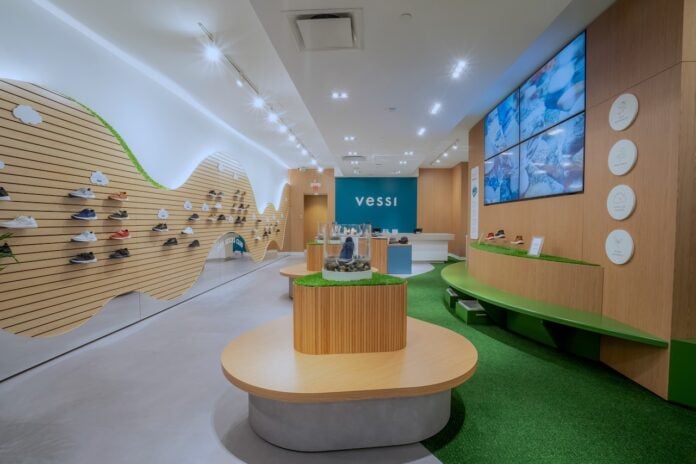
Vessi Metropolis at Metrotown (Image: Vessi)

Vancouver-based waterproof footwear brand Vessi has opened its first permanent storefront in Burnaby’s Metropolis at Metrotown. Retail Insider first reported on the anticipated opening several days ago.

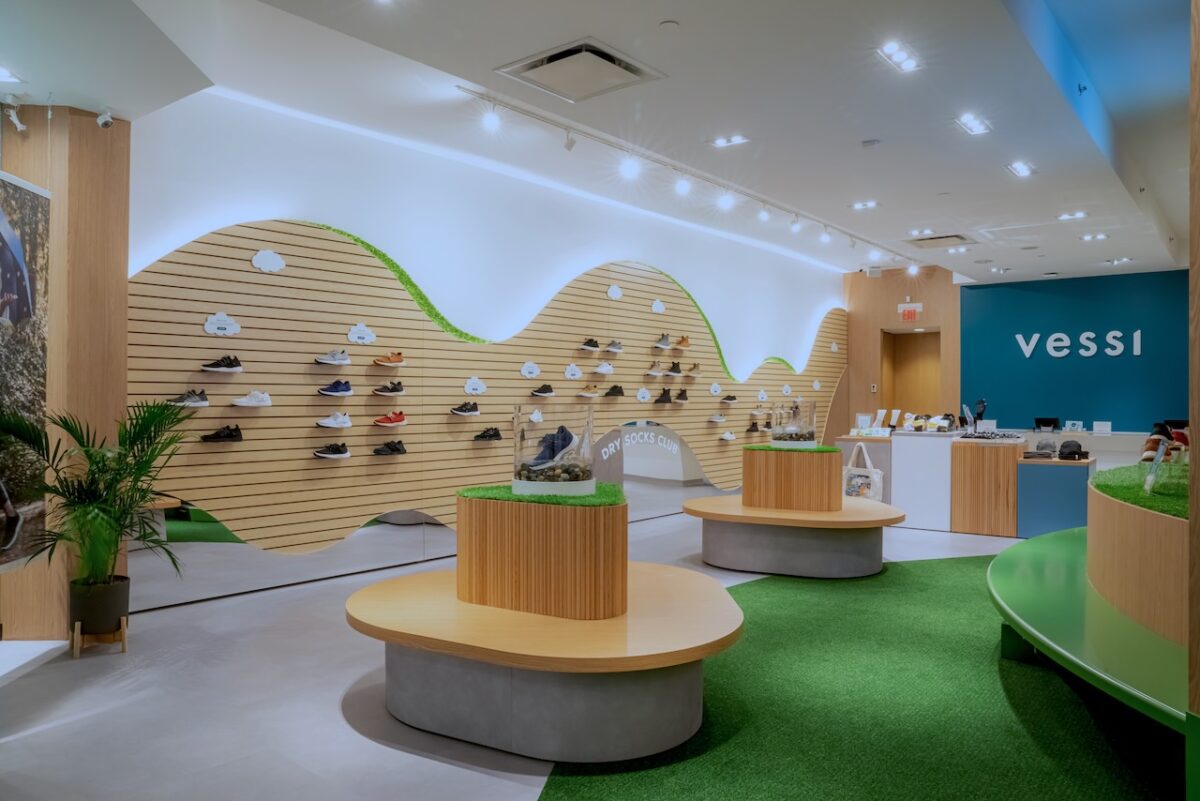
The 1,000 square foot retail location is designed to showcase the city of Vancouver, including a feature wall which reflects Vancouver’s mix of nature and urbanism.

Mikaella Go

“We’re incredibly proud to open Vessi’s very first retail store in our hometown when we started off with a humble Kickstarter campaign four years ago” says Mikaella Go, Co-Founder of Vessi.

“We attribute a lot of our success to the strength of our community. Listening to our fans has been a big commitment of ours and we heard that they want an in-person shopping experience in Vancouver. It was a no-brainer for us to open up our first store in the city we love and live and work in. We’re excited to meet our existing customers in-person and to introduce more customers into the Vessi community.”

Vessi Metropolis at Metrotown (Image: Vessi)

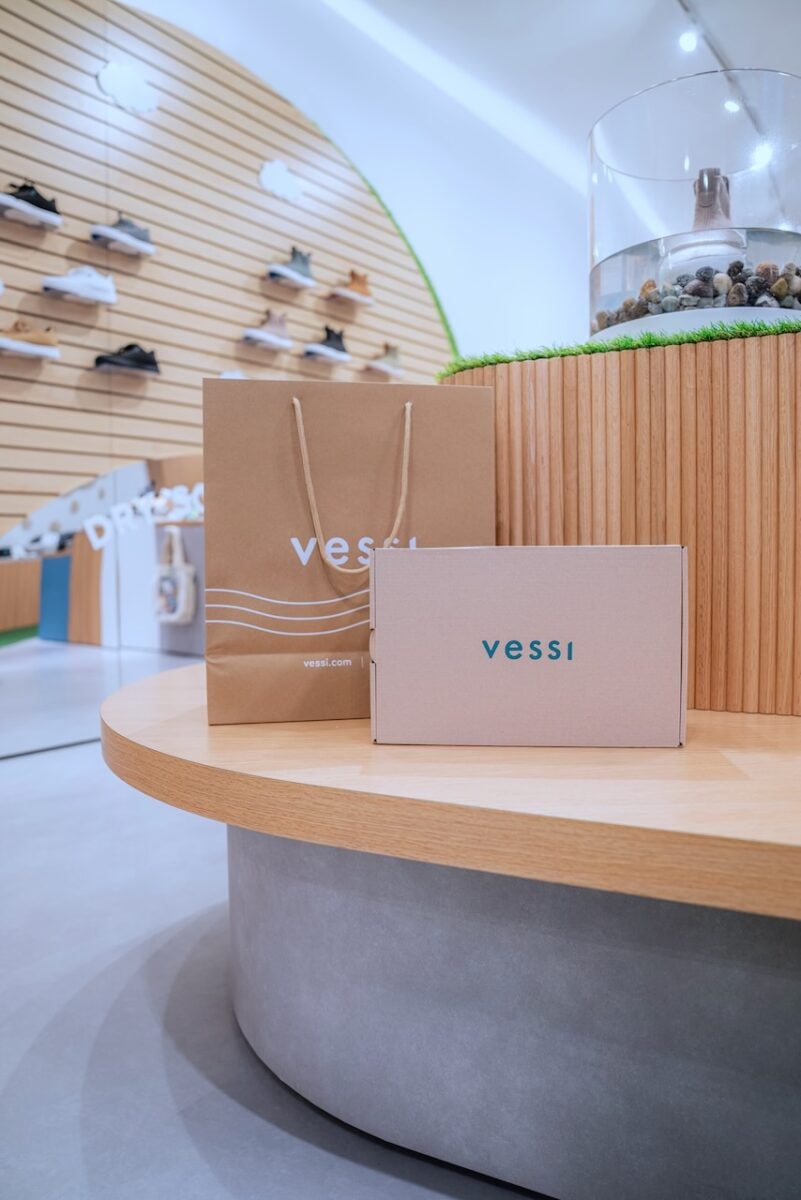
Vessi will offer the full range of footwear and accessories, in addition to featuring a limited edition store-only line of two pins, a tote and three postcards, designed by local Vancouver artist Cynthia Vo.

The retail storefront is one of the next steps for the company, which is seeing expansion on multiple fronts. Vessi will be testing additional markets with pop-up stores in other Canadian cities, and will be continuing to build its presence in U.S. markets through pop-up trunk shows at select Nordstrom locations.

David Garbuz of brokerage Oberfeld Snowcap is representing Vessi in its Canadian store expansion.

JD Sports to Open 15 More Stores in Canada in 2023 After Successful Market Entry [Interview]

JD Sports Canada Future Location at CF Polo Park (Image: Field Agent Canada)

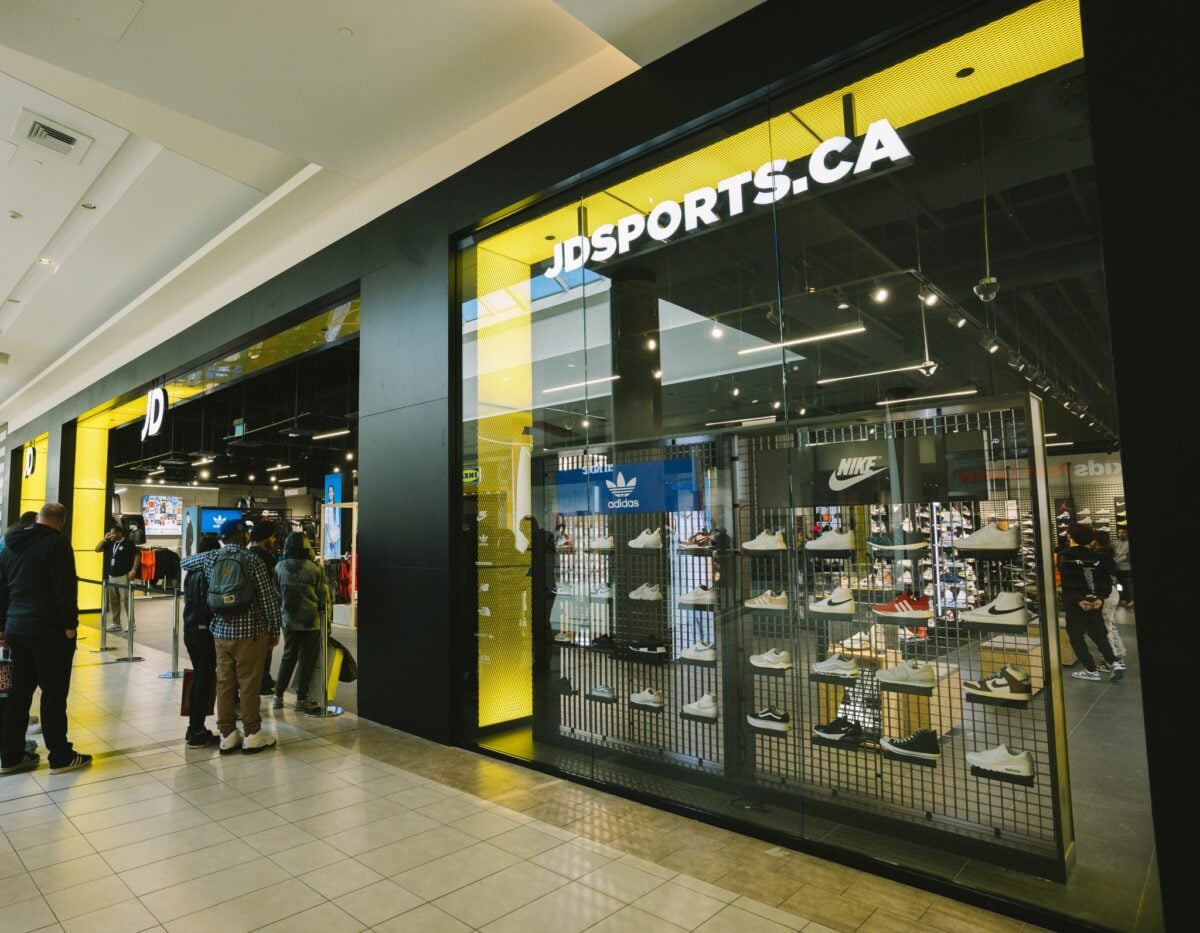
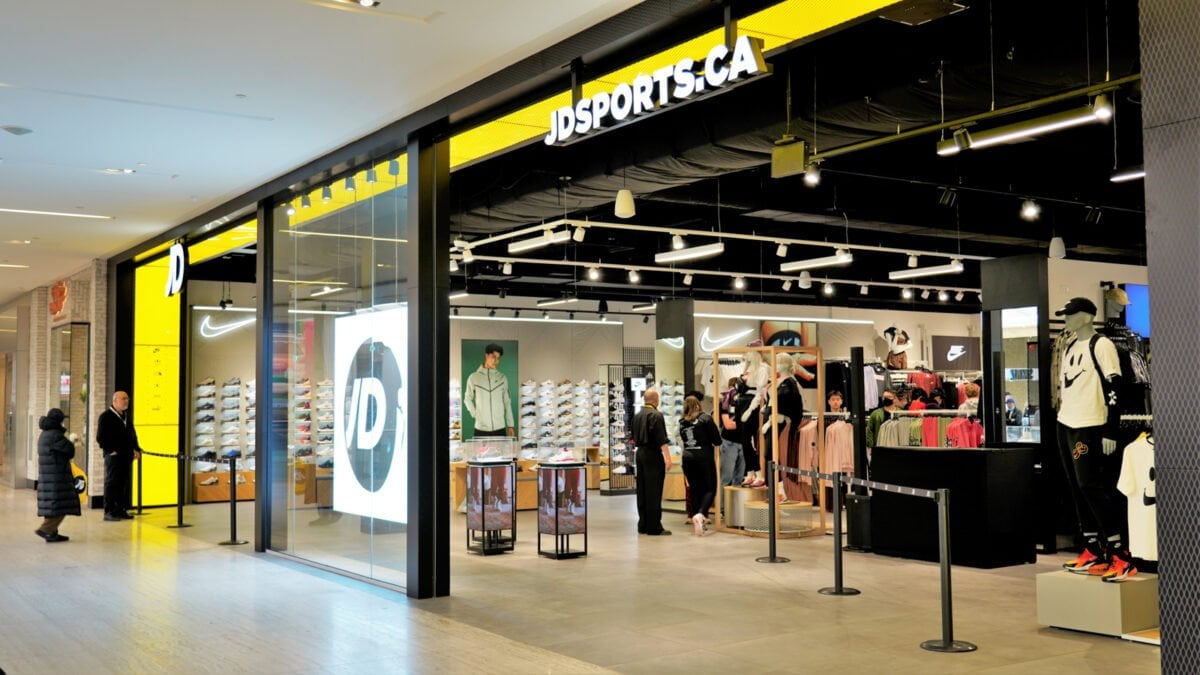
JD Sports, a sports fashion retailer, is opening its 10th location in Canada and is looking to open around fifteen more in 2023 – including expanding into the Quebec market.

The retailer is celebrating its first year in Canada in two weeks and since then has successfully opened ten stores, including a new location that is opening in Winnipeg on November 19th.

“In the last month, we have opened three stores. The new stores are in CF Lime Ridge in Hamilton, Scarborough Town Centre in Toronto, and in Bramalea City Centre in Brampton. And now we are going to be opening in Winnipeg at CF Polo Park in a few days. It is a market we are really excited to be in and there is a big range of JD customers in that area. From our social media, the response seems to be positive and people are looking forward to us coming to town,” says Khori Williams, the Director of Sales for JD Sports Canada.

JD Bramalea (Image: JD Sports Canada)
Youtube video

Spanning 8,000 square feet, JD Sports at CF Polo Park in Winnipeg and will have a grand opening to celebrate being in a new market. CF Polo Park has top brands such as Michael Kors, Club Monaco, and Forever 21. It also includes a variety of restaurants and entertainment.

This store will be the 10th JD Sports store in Canada and the other locations are:

  • CF Fairview Mall in Toronto (First store in Canada)
  • Guildford Town Centre near Vancouver
  • West Edmonton Mall in Edmonton
  • CF Chinook Centre in Calgary
  • Vaughan Mills near Toronto
  • Scarborough Town Centre in Toronto
  • Bramalea City Centre in Brampton
  • Oshawa Centre near Toronto
  • CF Lime Ridge in Hamilton
Youtube video
JD Sports at West Edmonton Mall (Image: JD Sports)

JD Sports was founded in 1981 in Greater Manchester in England and carries top brands such as Nike, Adidas, The North Face, Puma, Reebok, and more. Today, JD Sports has over 950 stores in 32 territories worldwide including the United Kingdom, Australia, New Zealand, Ireland, Asia, France, Singapore, Portugal, Germany, South Korea, and the United States. JD Sports decided to open stores internationally in 2010 where it opened its first international store in Lille, France. The retailer offers a variety of shoes, clothing, and accessories for men, women, and children. Where Will You See JD Sports Next? Although Williams was not able to specifically say where new locations will pop-up at this time, he mentioned JD Sports is looking at going into the East Coast, Saskatchewan, and into the Quebec market.

“What I can say is that we are looking at the Quebec market. It seems like a market that is growing, and we are seeing a lot of energy out there, especially for our industry.”

Williams said next year, he would like to see 10-15 new store openings and 80-100 new stores within the next five years in Canada.

With every store, JD Sports makes sure it feels “very local.”

“We want to represent the community we are in very well and service them with specific products. We recognize that it is not a one size fits all throughout Canada and every province is different. As a result, we want to make sure we are catering to those differences and ensuring that the entire family is able to shop at JD Sports – we have something for everyone.”

In addition to making stores feel local, Williams said JD Sports also offers sponsorships through the community, participates in different events, allows programs to occur within stores, and are always looking at local business to partner with to create experiences within the community.

Youtube video
JD Sports at West Edmonton Mall (Image: JD Sports)

Don’t miss out on new sneaker launches as with JD Sports, you can check out its Sneaker Release Dates for new sneakers that are coming out. Currently, the list is for all confirmed 2022 sneakers that have already been released and has launch dates of new sneakers where customers can track new releases and know what is coming. Customers can also make the decision to be notified once a sneaker they like is available. Right now, the release shows there will be two sneakers being released on November 11th. Sneaker release dates bring a new excitement into shopping as a customer can preview the shoe before it is in-store and knows exactly when the shoe will be available.

“This has been a long and entertaining ride that we have had and it has been fun and exciting. Everyone on our team is extremely happy to bring the JD Sports experience to Canada and we appreciate the positive feedback we have received since opening our first store at Fairview Mall a year ago now. In two weeks we will be celebrating our one year anniversary in Fairview Mall. Last year we had zero stores, and now we have ten – it is quite the accomplishment for us.”

Jordan Karp of brokerage Savills Canada has the mandate for JD Sports in Canada and is negotiating leases for new stores.

Chick-fil-A to Triple Canadian Footprint by 2025 with Planned Ongoing Expansion [Interview]

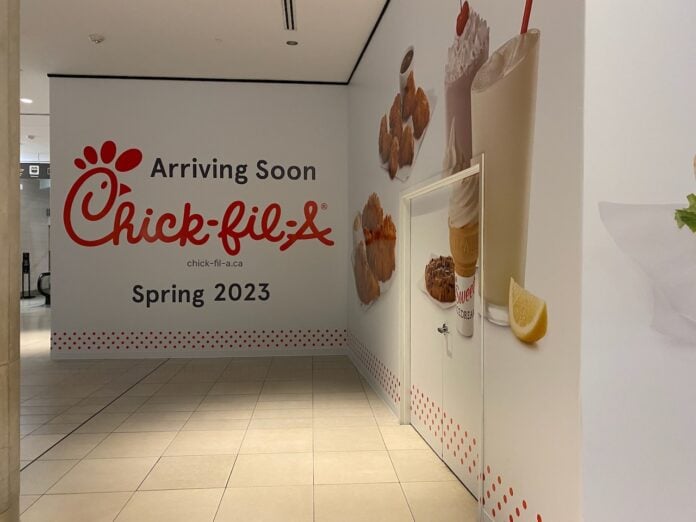
Future Chick-fil-A at CF Toronto Eaton Centre (Image: Dustin Fuhs)

Chick-fil-A is set to triple its Canadian footprint, expanding to 20 new locations by 2025.

The US-based restaurant chain, which currently has six stores in Canada, plans to open seven to 10 locations per year after 2025 as well.

Anita Costello

Construction is already underway on new locations in Vaughan and Barrie, with additional future locations expected at CF Toronto Eaton Centre, Square One, and CF Shops at Don Mills. Chick-fil-A also expects to continue its expansion into new Canadian markets in the coming years, including Ottawa and Alberta. 

“We’re excited for the opportunity to serve more guests and to invest in more communities across the country,” said Anita Costello, Chief International Officer. “Canadians can look forward to an authentic Chick-fil-A experience at each of our locations: delicious food prepared with high-quality ingredients, served with our signature hospitality.” 

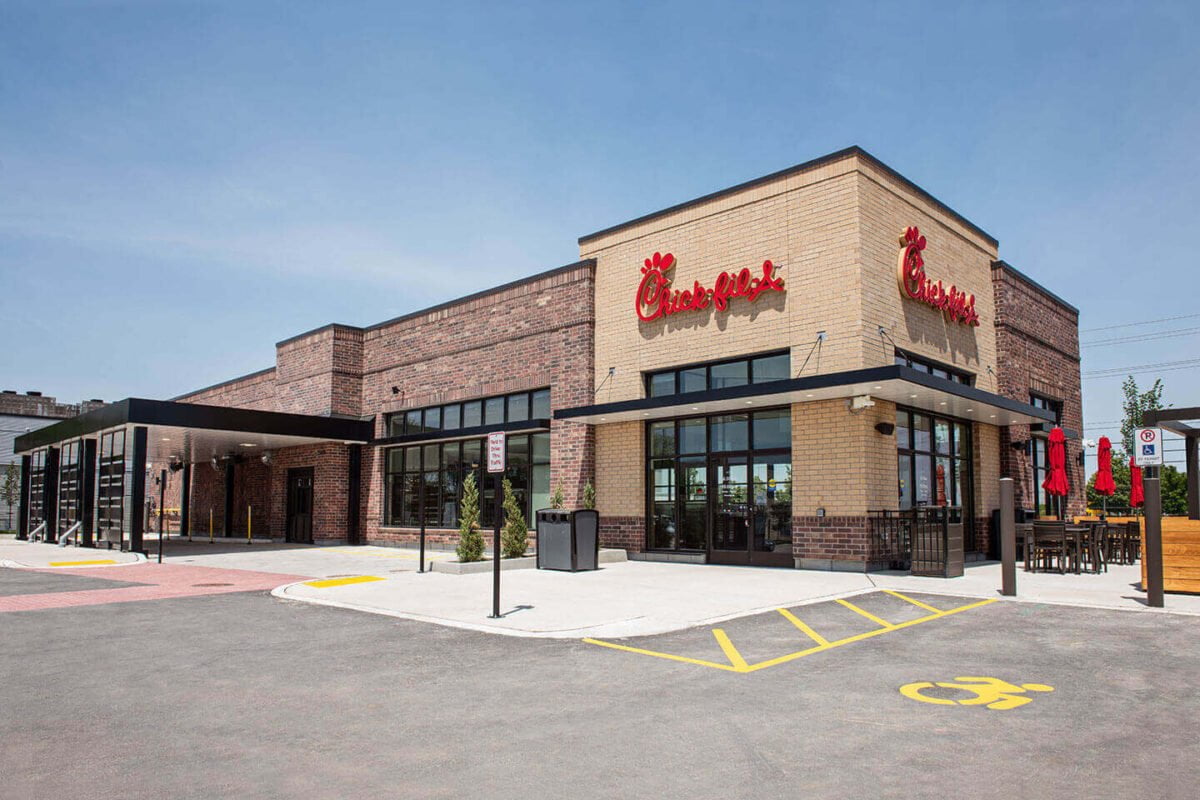
Chick-fil-A Kitchener (Image: Chick-fil-A)

David Ariaratnam, Senior Real Estate Representative for the company in New Restaurant Development for Canada group, said the restaurant chain will initially be focused on the Ontario and Alberta markets.

He said the company grows with care and confidence and its initial entry in the Canadian market in 2019 has been a cautious step forward.

David Ariaratnam

“Now that we have learned some understandings and learned from certain things that we need to do different and also understanding what our Canadian consumer looks for, we are now starting to grow a little bit faster,” said Ariaratnam. “I think we have what we need to expand carefully in Ontario and we’ve now done some market research in other provinces and we’ve selected Alberta to be our next province.

“We want to go into partnership with local operators that will live in their communities and expand Chick-fil-A.”

The company said the Canadian entrepreneurs who will be local Chick-fil-A owner/operators are expected to hire approximately 80-120 additional employees at each new location, joining the more than 400 already working at the six existing locations in Toronto, Scarborough, Windsor, and Kitchener.  

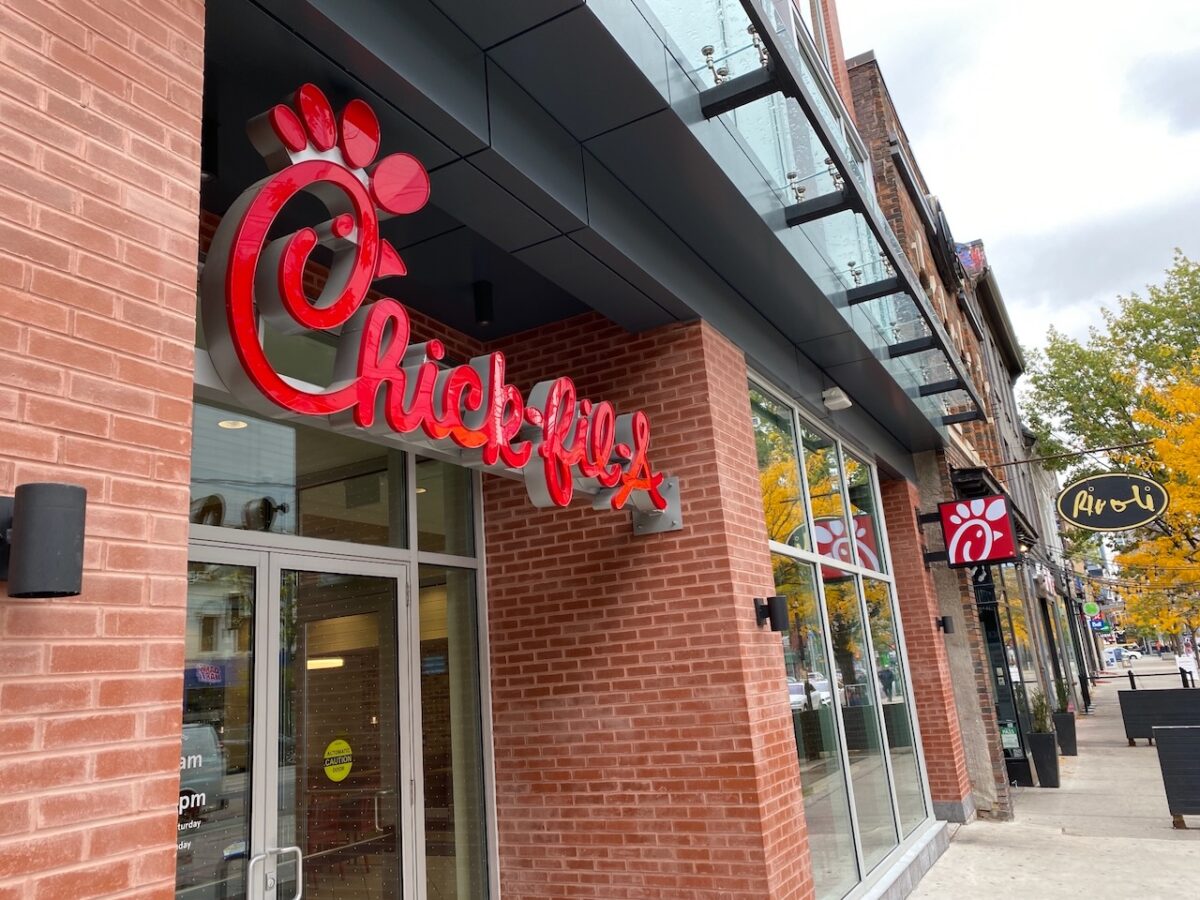
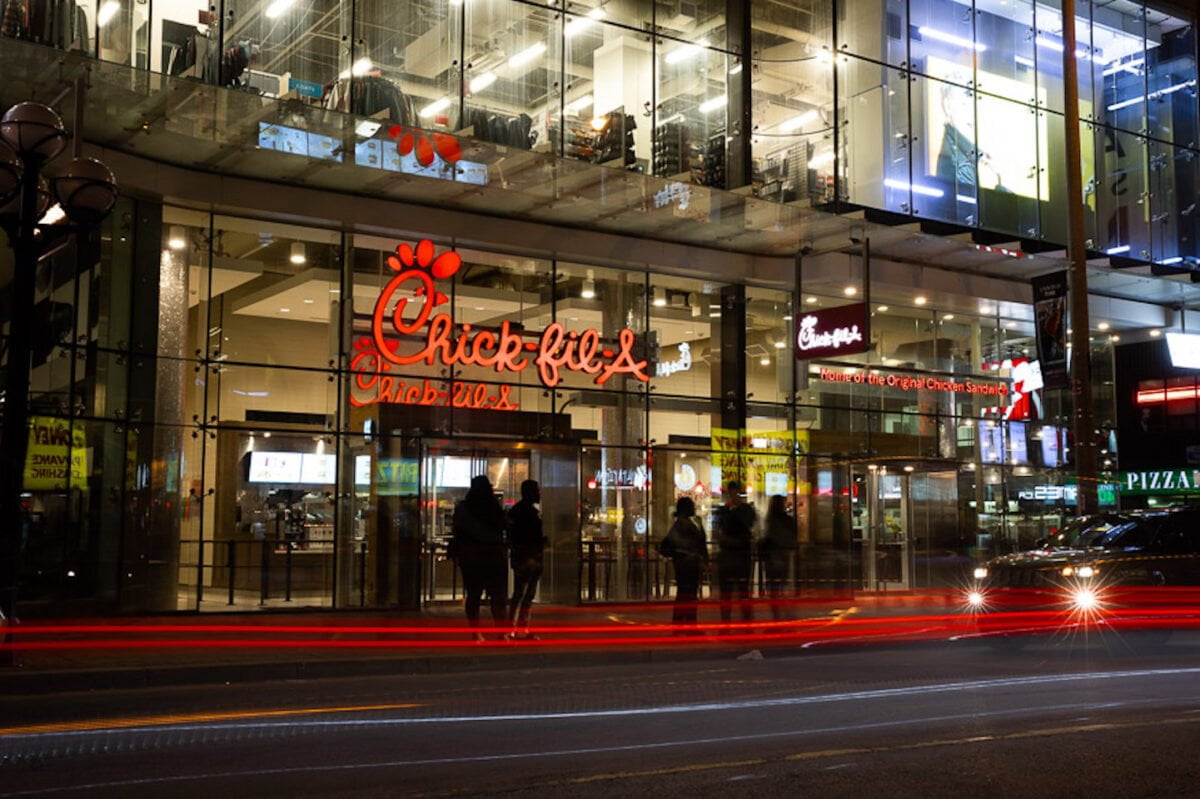
Chick Fil-A Queen St. Toronto

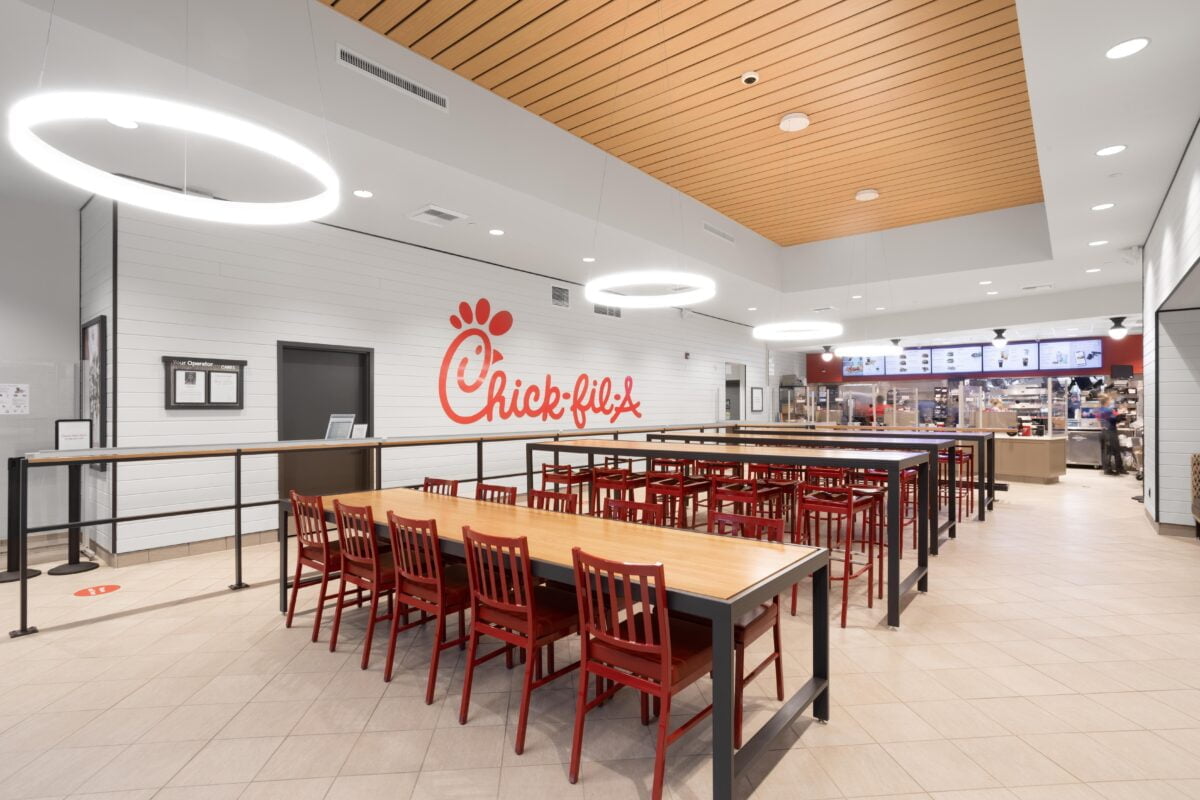
Ariaratnam said the company has three different real estate asset types – freestanding units, inline units and mall units. The footprint is different for all of them. Freestanding is 4,500 to 5,000 square feet, which is on the larger size for a quick service restaurant. An urban inline would be about 4,500 square feet. Malls could be 1,500 square feet in the food court area or it could be expanded to about 3,500 square feet to include a lineup area and seating area.

He said the company has learned a lot from its drive-thru’s in the past and right now it has a double drive-thru that goes right from where a customer places the order to the area where the customer picks it up. The order area is covered by a canopy. Staff outside are taking orders on iPads. At peak times it can have up to six staff taking orders. There’s a drive-thru door where staff members come out and deliver the food. 

Ariaratnam said the company is looking for high traffic areas with a strong retail draw with anchors such as Walmart and Costco and a strong residential population nearby – as well as areas with strong daytime traffic.

“We need to understand how Canadians trade and we need to understand trading patterns, we need to understand volumes and we need to focus on operators and the operate opportunity,” he replied, when asked how many Chick-fil-A stores will eventually open in Canada.

Chick-fil-A Queen Street West (Image: Dustin Fuhs)

“Chick-fil-A transacts directly from a corporate perspective with landlords. So we would transact and then we would construct and we would put all the money in. That is very different from most other QSR’s where operators are required to invest. This is very different because Chick-fil-A does the investment. And the reason for that is we want to select great operating partners that share in our values and want to grow with us and quite often what we’ve seen in the past is some of the best operators unfortunately don’t have the capital investment and vice versa. Our focus right now is to make sure that we find the right operators.”

Every time a Chick-fil-A restaurant opens, $25,000 is donated to a local non-profit organization in the area to help reduce hunger and food waste. So far, Chick-fil-A has donated over $100,000 USD to local Canadian organizations in celebration of restaurant openings. Chick-fil-A and Chick-fil-A restaurants also support the communities they serve through a number of programs, which include: 

  • An ongoing partnership between Chick-fil-A with Second Harvest, a non-profit that gathers surplus food and facilitates getting it to communities in need, through local charities and community groups. Through this partnership, the financial support from Chick-fil-A has helped Second Harvest directly provide almost 2.5 million meals worth of surplus food for people in need and supported the national expansion of Second Harvest’s food rescue app to 900 communities across Canada. 
  • Participating Chick-fil-A restaurants’ donation of surplus food from restaurants to local shelters, soup kitchens and charities through the Chick-fil-A Shared Table program. In Canada, over 34,000  meals have already been donated from Chick-fil-A restaurants since 2019, with the number growing each day.
  • Chick-fil-A’s awarding of 15 Canadian Team Members with nearly $35,000 in scholarships since 2020 to support their goals of pursuing post-secondary education.  
Chick-fil-A Yonge/Bloor (Image: Chick-fil-A)

Chick-fil-A is currently accepting expressions of interest for individuals who are interested in becoming Chick-fil-A franchise owner/operators in Ontario and Alberta. To learn more, visit chickfila.ca.franchise.info

The Atlanta-based company has more than 2,700 restaurants in 48 states, Washington, D.C., Puerto Rico and Canada. The family-owned and privately held restaurant company was founded in 1967 by S. Truett Cathy.

In 1946, S. Truett Cathy opened his original diner, the Dwarf Grill, in the Atlanta suburb of Hapeville (later renamed Dwarf House). In 1964, Truett created the original Chick-fil-A® Chicken Sandwich with two pickles on a toasted butter bun.

The first Chick-fil-A restaurant opened in 1967 in Atlanta at Greenbriar Mall. In 1986, Chick-fil-A opened its first stand-alone restaurant on North Druid Hills Road in Atlanta.

In 2019, the company opened its first international restaurant in Toronto at Yonge & Bloor followed by one in the Yorkdale Shopping Centre in 2020.

In 2021, it opened its first standalone and drive-thru restaurant in Canada in Kitchener.

Video Interview: The State of Canada’s Grocery Industry with Sylvain Charlebois

The State of Canada's Grocery Industry

Sylvain Charlebois, Senior Director, Agri-Foods Analytics Lab, Dalhousie University, discusses what’s happening in the grocery store industry these days.

Charlebois talks about the industry’s relationship with the Competition Bureau, its profitability, supply chain issues, labour shortages, rising food prices, and consumer behaviour.

Youtube video

The Video Interview Series by Retail Insider is available on YouTube.

Connect with Mario Toneguzzi, a veteran of the media industry for more than 40 years and named in 2021 a Top Ten Business Journalist in the world and the only Canadian – to learn how you can tell your story, share your message and amplify it to a wide audience. He is Senior News Editor with Retail Insider and owner of Mario Toneguzzi Communications Inc. and can be reached at mdtoneguzzi@gmail.com.

Interviewed this episode:

Like, Share and Subscribe to Mario Toneguzzi on YouTube!

Follow Mario:

Also check out the other series offered by Retail Insider, including The Weekly podcast and The Interview Series, which are both available on Apple Podcasts, Stitcher, TuneIn, Google Podcasts, or through our dedicated RSS feed for Simplecast and other podcast players.

Follow Retail Insider:

Share your thoughts!

Retailers in Canada Require Integrated Business Plans Following Threats such as Supply Chain Disruptions [Report/Interview]

The past two years or so of the pandemic have highlighted the growing importance of companies’ supply chain networks and some of the key challenges they face as an industry. 

A report by EY Canada says organizations that failed to plan agilely have faltered over the last two years due to supply chain breakdowns and logistical nightmares. 

The report, co-authored by KB Brinkley, EY Canada Integrated Business Planning Leader, and Georgianna Ma, EY Canada Integrated Business Planning Leader, says IBP can bring finance, operations and supply chain closer, but requires organizations to dismantle functional silos to fully unleash it.

In an interview, Ma said the change in consumer behaviour has had a drastic impact on the operations of many companies.

“If you look across the supply chain, value chain, from beginning to end, there’s definitely disruption across the board,” she said. “More from an input perspective. We’re seeing a bunch of raw materials being short, there’s a lot of pressures on that front, the costs are rising, supply shortages, there’s unexpected demand across the board.”

Abrupt inflation, geopolitical tension, soaring energy costs. Empty shelves, delayed deliveries and supply chain shortages. The pandemic may be receding, but businesses continue to face a barrage of challenges and an urgent need to plan quickly across scenarios, said the EY report.

“From supply chain breakdowns to labour woes and logistical nightmares: organizations that failed to plan quickly or agilely enough have faltered over the last two years. As planning fell short, companies in all sectors lost out on key market opportunities, earnings and growth. As a result, CEOs around the world are now rethinking operations to tackle a post-pandemic market that’s nothing like the one we knew before. Labour, energy and raw material costs are all up. Freight rates have jumped more than 400 per cent since 2019. Nearly 90 per cent of global CEOs have seen a significant increase in input prices. And more than half say geopolitical challenges are forcing adjustments to strategic investments,” according to the report.

Image: EY

“Among those CEOs, 79 per cent say they have, or will, change their operations and supply chains to cope. IBP can play a pivotal part in that transformation. By aligning key business functions through a unified strategy, it can create a fundamentally sustainable, transparent and collaborative planning approach. This generates an integrated business plan that serves as a powerful source of truth the entire organization can pursue together. It connects functions and accelerates speed to impact by empowering leaders to react more quickly in light of external challenges, shocks and disruptions.

“In today’s reality, integrating finance to supply chain planning must become the central focus of running the business. Each step in the IBP process — including product review, demand review, supply review, reconciliation and management business review — brings unique insight that can then be integrated into stronger financial planning. Linking finance and supply chain planning in this way helps companies achieve financial forecasts two to five times more quickly. It also significantly decreases the need for data consolidation. We’ve seen these results play out in the market time and time again.”

Ma said organizations have a challenge of predicting demand and matching the supply to enable that. Many times companies don’t have a good grasp of how to marry the two together. And when companies do planning, many are actually doing them in silos. 

“Rarely do you see organizations all talk in the same way and when they do the planning look at it in an integrated manner,” she said, adding where she’s seeing success is with companies that marry them together.

Petland Looks to Expansion in Western Canada with 10,000 sq. ft. Store Footprints [Interview]

Image: Petland Canada

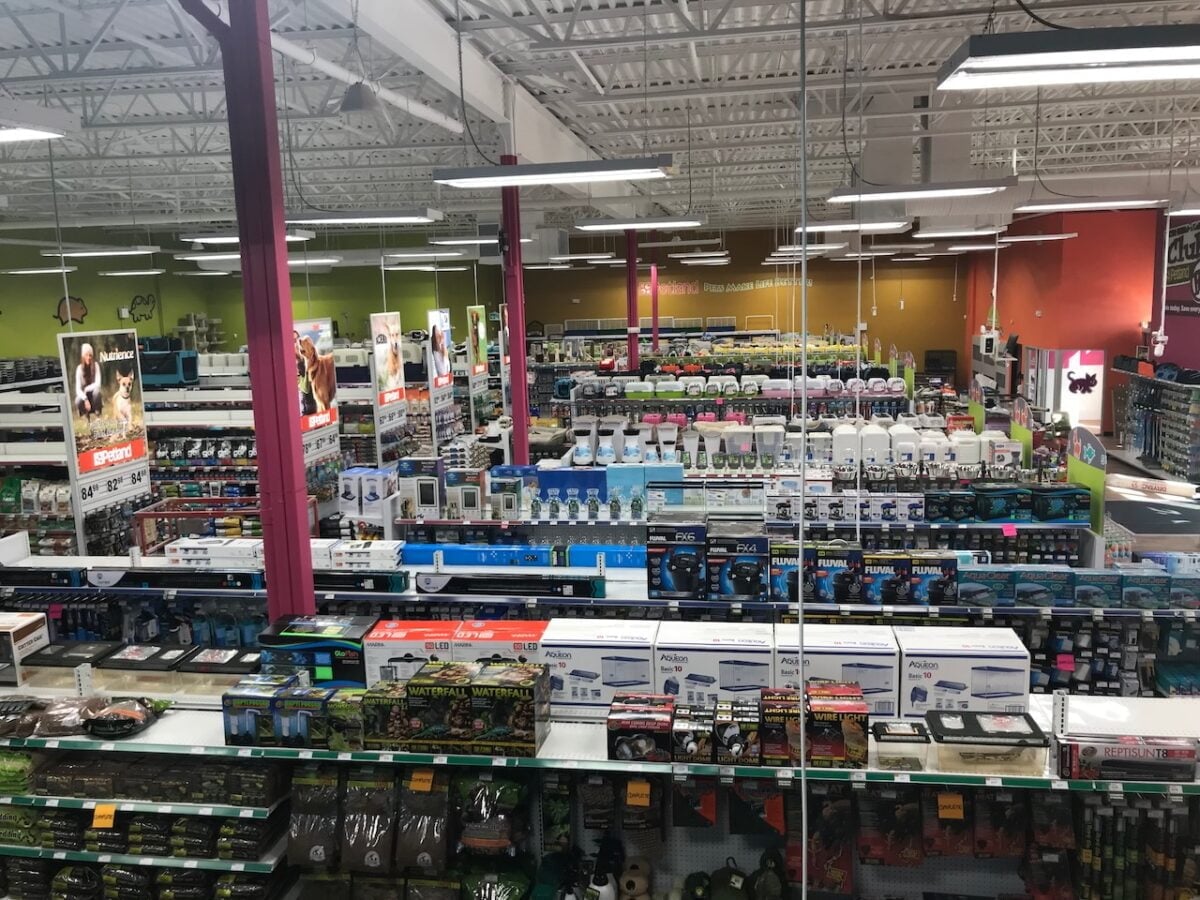
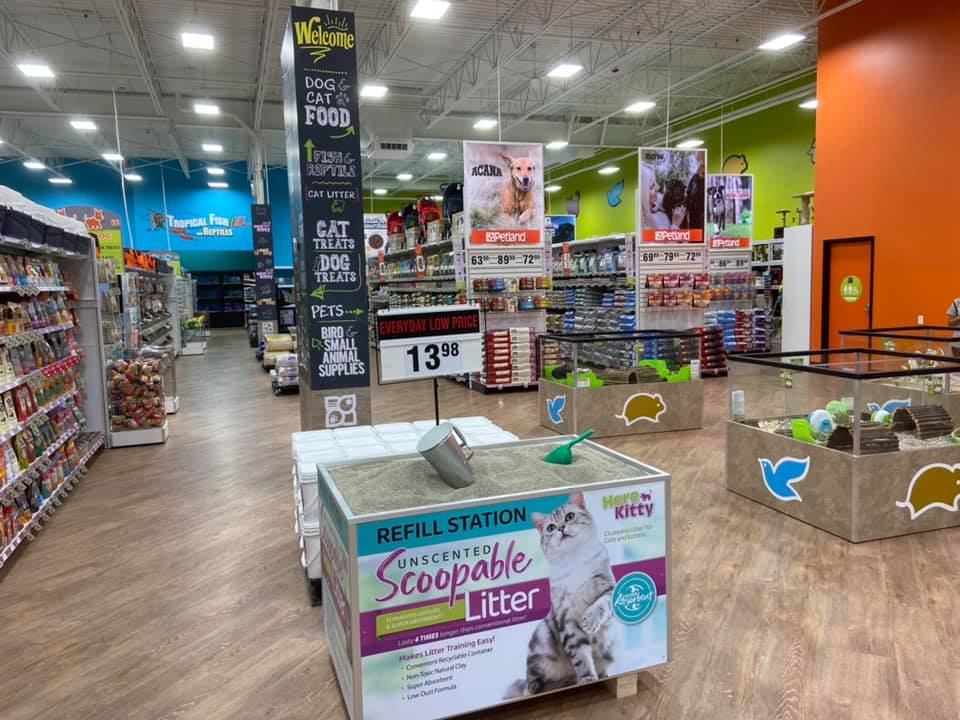
Petland Canada is looking for retail space across Western Canada to expand the brand to different markets with a focus on British Columbia.

The retailer has 42 corporate stores plus five franchised locations in smaller markets. It is opening its 43rd store next summer in the Sevenoaks Shopping Centre in Abbotsford, BC.

Grant Kosowan

Grant Kosowan, President of Orange Group Commercial Real Estate Inc. which is overseeing real estate for Petland, said the company is looking for locations of about 10,000 square feet in power centres, grocery-anchored centres and high profile streetfronts.

Petland Canada Inc., is a privately held Canadian Corporation founded in 1975.

“BC is kind of the primary focus of growth. We’ve got pretty good coverage in Alberta and Saskatchewan and Manitoba but BC’s been a bit more of a challenging market for a variety of reasons. Looking for infill markets in the Prairies and solid growth in BC because we’re good for a couple of stores a year at least and want to keep pounding away,” said Kosowan.

Petland in Fort Saskatchewan (Image: Petland Canada)
Image: Petland Canada

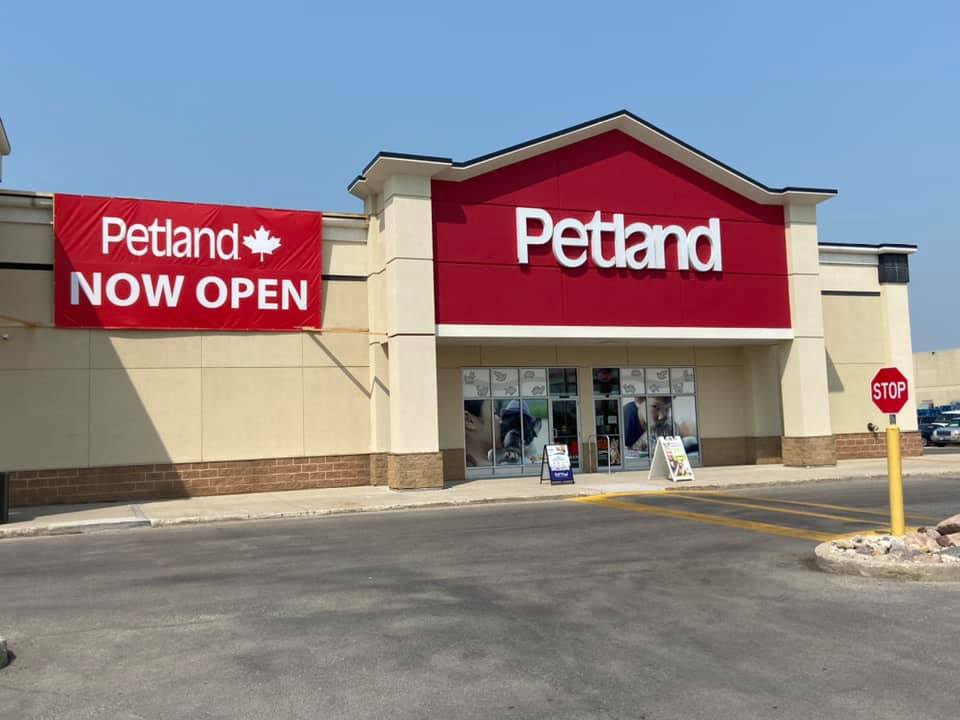
Recently, Petland opened new locations in the Seton community in Calgary as well as Polo Park in Winnipeg.

“It’s not inconceivable that we could hit 60-70 locations in Western Canada. I certainly think there’s another 10-15 in BC that we could wind up doing and maybe a little bit infill in the Prairies. But once we start getting to low to mid 50s I think at some point in time we’ll start working our way towards Ontario that’s for sure,” he said.

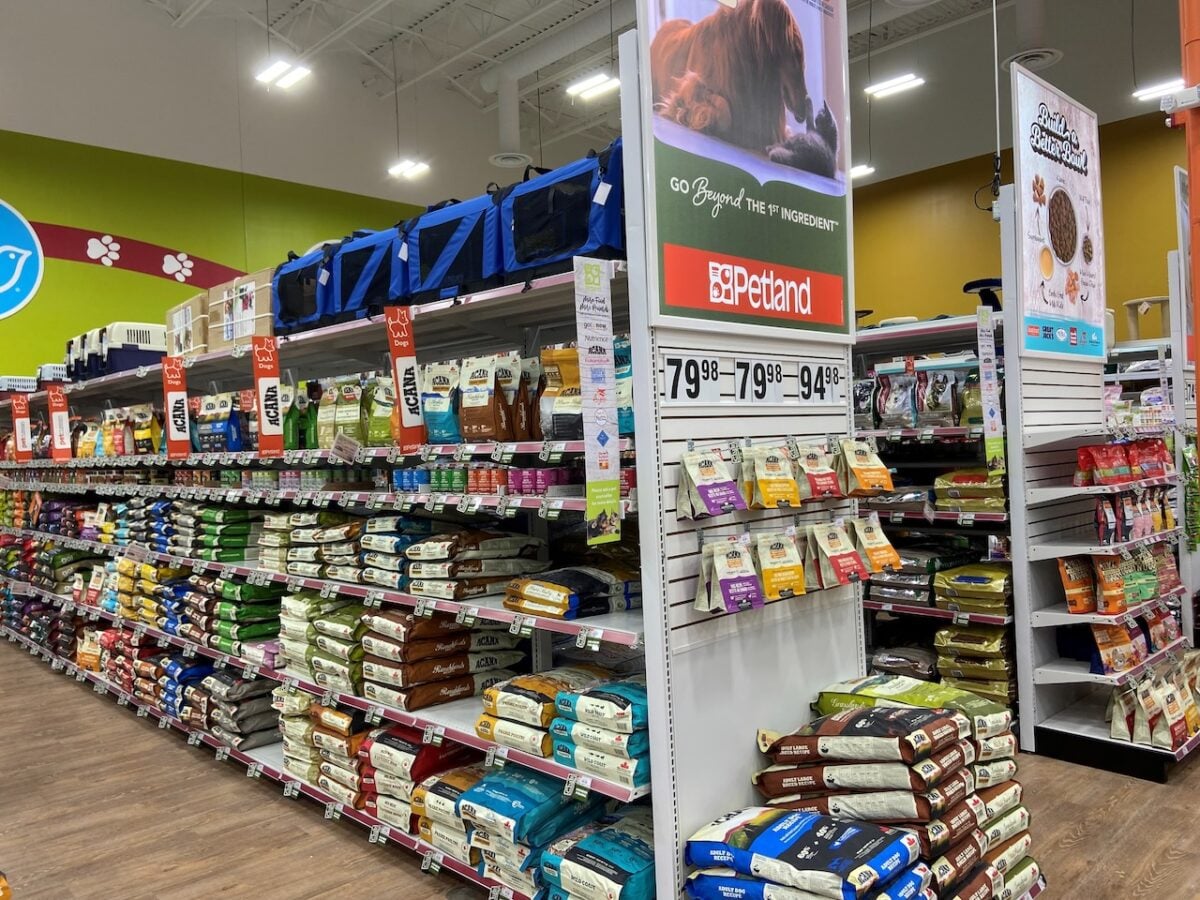
The pet industry has seen significant growth in the past few years as more people have taken in pets and they’ve spent more money and time on their pets.

“These guys have been long-term players in the industry. They’ve been around for a long time,” said Kosowan. 

Petland Polo Park in Winnipeg (Image: Petland Canada)

“Our focus is on corporate stores of 10,000 square feet in major markets. We’re a good player in that field. Not really interested in going to markets that are less than 30,000, 40,000 people.”

According to the Canadian government, the pet population in Canada has increased by a compound annual growth rate (CAGR) of 0.4 per cent from 27.5 million pets in 2016 to 27.9 million pets in 2020.

“Retail sales of pet food in Canada has increased 5.8 per cent in CAGR from Can$3.4 billion in 2016 to Can$4.2 billion in 2020 and is expected to increase in CAGR by a further 4.9 per cent attaining Can$5.3 billion by 2025,” said the government.

Image: Petland Canada

The pet population is expected to grow from 28.1 million pets in 2021 to 28.5 million pets in 2025.

According to a report by market intelligence and advisory firm Mordor Intelligence, the Canadian pet food market is projected to register a CAGR of 6.8 per cent during the forecast period ( 2022-2027). 

“The COVID-19 pandemic affected the manufacturing and supply chain of the market due to the lockdowns and restrictions imposed. The worldwide restrictions on the movement of goods across countries and locally resulted in the manufacturers putting a halt to their production due to the lack of raw materials. On the other side, the demand for pet food has increased after the relaxation in restrictions as more people rely on pets during the lockdown period,” it said.

“The pet food market in Canada is a booming industry, with hundreds of pet stores across the country serving pet cats and dogs living in Canadian households. Canada has more than 2000 pet stores, with a major number in Ontario. Consumers have become progressively more concerned about the diets of their pets and spend on buying protein-rich, nutritious, and customized pet foods for their pets. Furthermore, they highly prefer natural and organic products. The factor that drives the market is pet refinement/humanization, which is influencing the purchase decisions, increasing the adoption of pets by elderly people, and increasing the trend of nuclear families.”

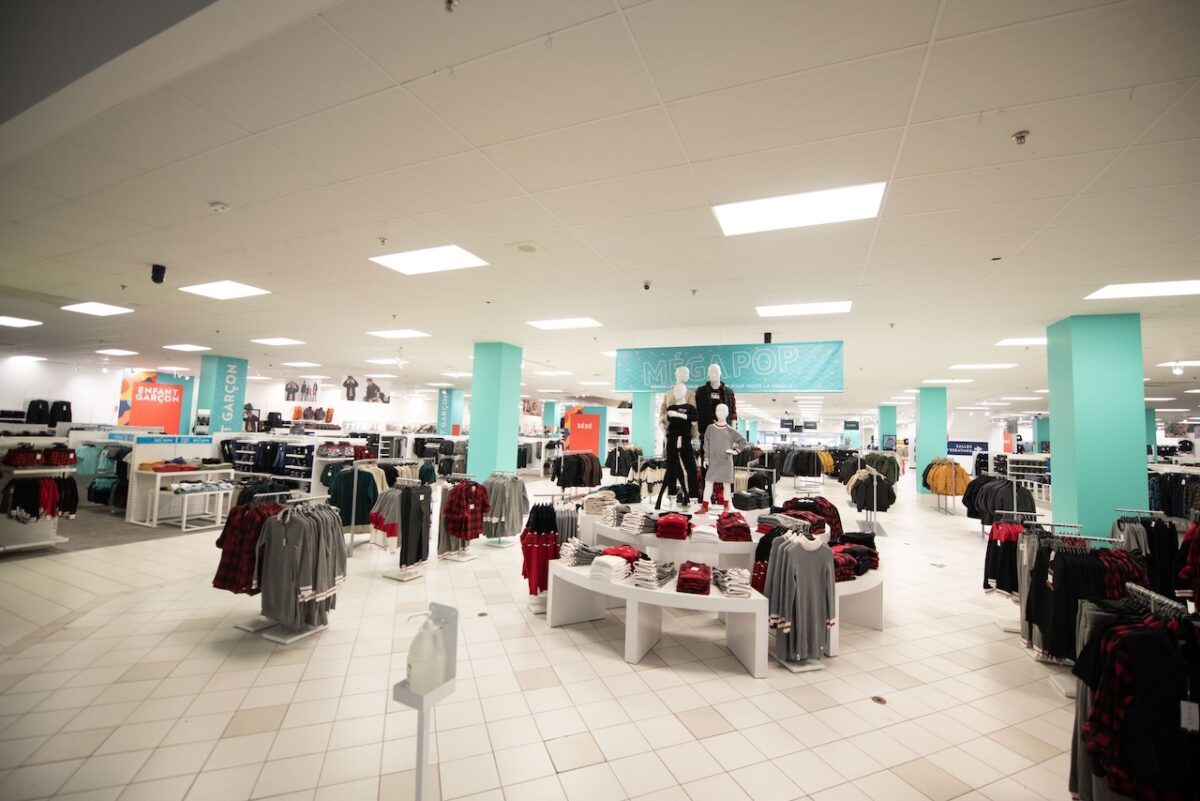
Aubainerie Opens 50,000 sq. ft. MEGA POP Concept Store in Montreal [Photos/Interview]

Image: Aubainerie

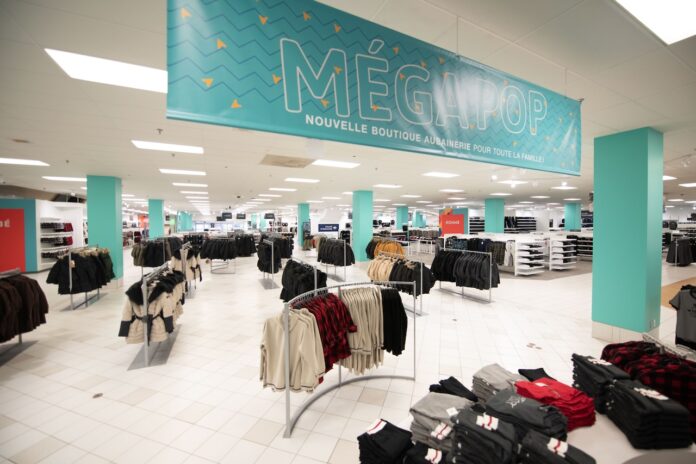
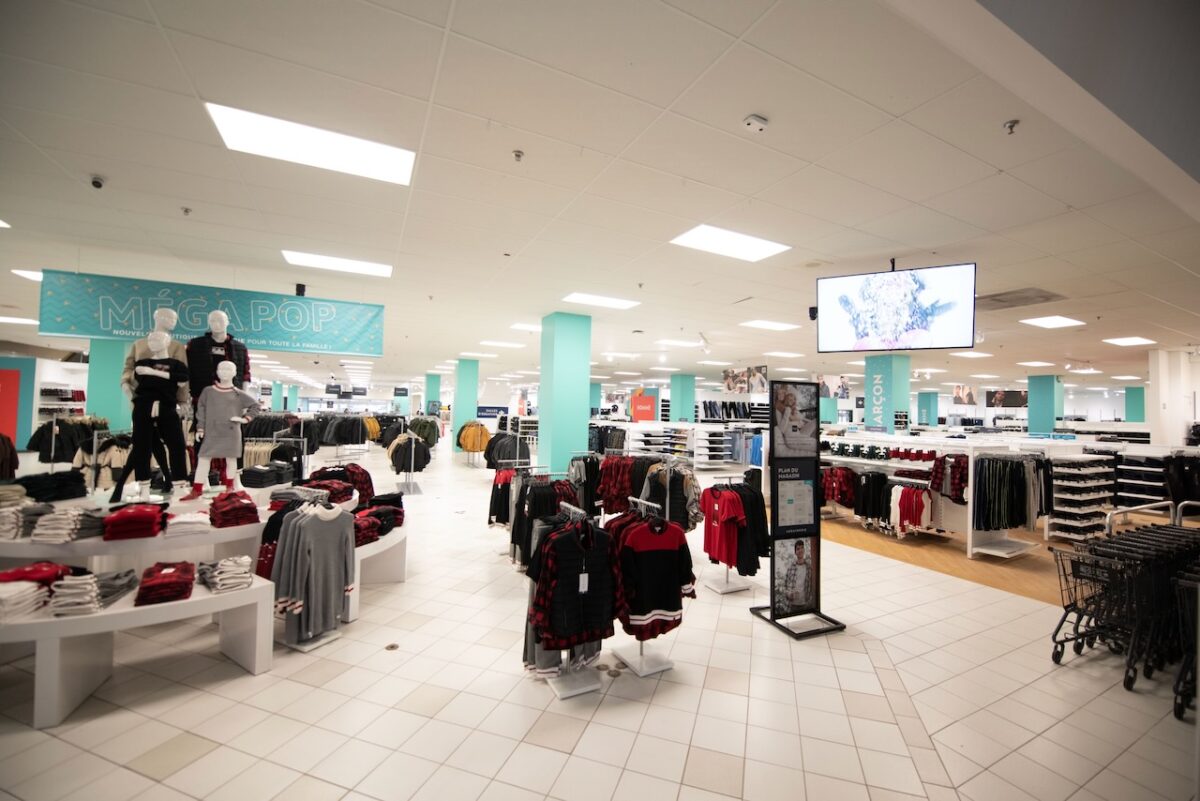
Aubainerie, a Quebec family owned fashion retailer, has opened up a MEGA POP concept store spanning 50,000 square feet in Montreal. As the company has recently made a few changes to its product quality and is looking to expand its presence in Montreal, Aubainerie wanted to make a big statement with size to introduce more people to the brand.

With a more challenging economy with inflation and increasing interest rates, Aubainerie has been working hard in the last two years to provide families with affordable clothing.

Ginette Harnois

“Our focus has been and will continue to be about really understanding the needs of families and that has been our core. It is about moving beyond fast fashion and into smart fashion – and to high end quality solutions at a price that is accessible to families. So for the past two years we have been working hard on improving the quality and the designs of our products as we saw the possibility of a more challenging economy,” says Ginette Harnois who is the Vice President, Customer Experience, and Spokesperson of Aubainerie.

The MEGA POP, located at CF Galeries d’Anjou, opened this month and will stay open for several months. The space is 50,000 square feet and provides a variety of affordable clothing options, such as everyday sportswear, and has been gradually expanding to include winter wear, athletic wear, lingerie, and swimwear. Customers can find products for women, men, and children in different price ranges.

Image: Aubainerie
Image: Aubainerie
Image: Aubainerie

Aubainerie has changed its products by increasing the quality of clothes, using more innovative fabrics. It has also taken a closer look at the design of products, fit, and detail.

“Offering the best quality at an accessible price is what makes us different from our competitors. Families are often introduced to us when shopping for their newborns and come to realize that we also sell to adults. Through every single product we offer, the balance between the quality and the price is what we are able to give to families.”

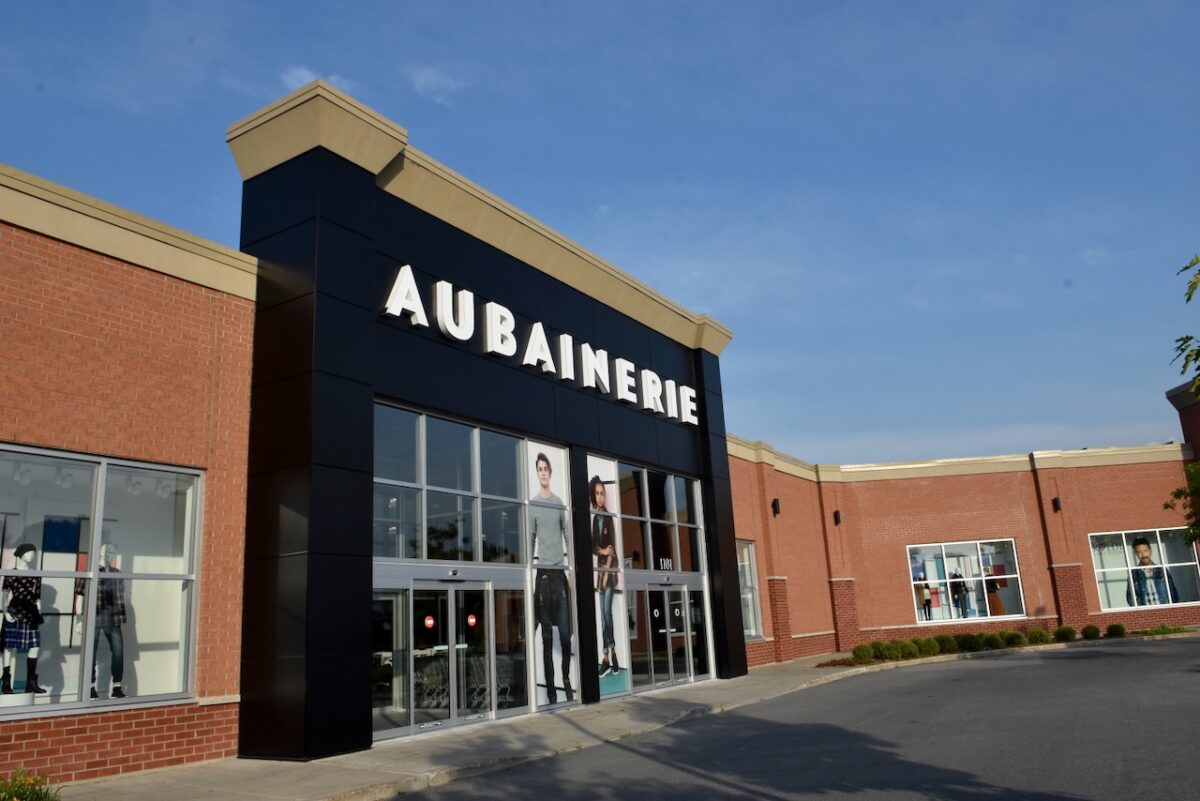
The company originally started in 1994 and has always been focused on selling well-priced fashions. Today Aubainerie has 54 stores. Four are in Montreal, one is in Ontario, one is in the Maritimes, and the rest are outside of Montreal in Quebec. As the company wants to increase its presence in Montreal, opening the MEGA POP store was a great opportunity to introduce the brand to the customers in the city.

Aubainerie at St Bruno (Image: Aubainerie)

“We are working and looking for more opportunities. Right now, our focus is to expand more in urban areas in Quebec, and then we will see what the future holds. We really believe in offering the best possible quality at accessible price, so we are looking to expand further but time will tell what we will be able to do.”

The store opening event occurred on November 2nd where Aubainerie welcomed its first 200 customers with gift cards, on the 5th it welcomed families with an event, and on the 12th it is having surprises and in-store events that are more geared towards women.

“Our focus remains on families and understanding what their needs are. We offer something in response to the present economic needs that today’s families are facing. The MEGA POP is a one time event but it is the first of more projects to come. There will be other opportunities to increase our presence in Montreal so customers should be looking forward to seeing what we will be offering them.”

By the Numbers: Are Grocery Retailers in Canada Gouging Consumers? [Op-Ed]

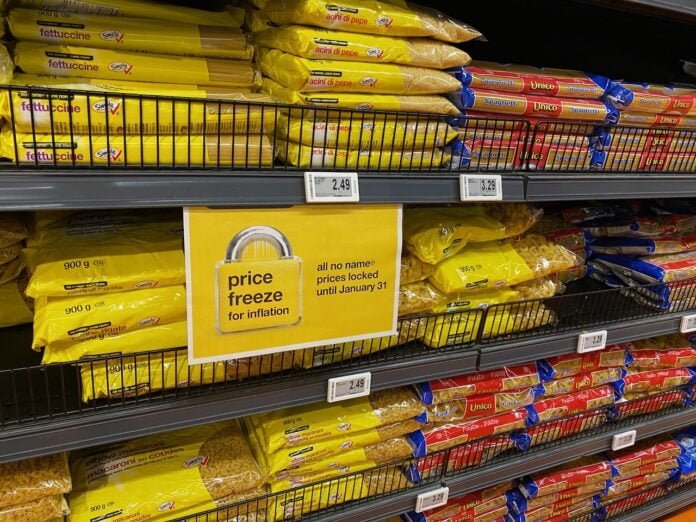
No Name Brand Signage at Loblaws Maple Leaf Gardens (Image: Dustin Fuhs)

“Measuring greed can be one of the most challenging things to do in the food business. The best way to avoid abusive behaviors is to have proper and compelling oversight, which doesn’t exist in Canada. And Canadians know it.”

As food prices rise, many are quick to blame grocers for profiteering and taking advantage of consumers. The notion of “greedflation” has emerged as one of the most talked about issues in the last month. Food inflation in Canada is at a 41-year high, at 10.3%, and chances are that consumers won’t get a break anytime soon.

Finding out whether grocers have been inflating prices to benefit their bottom line is not that simple. If greed exists in our grocery sector, how do we measure it? Well, our lab tried.

In a recent report, we used publicly available data to look at the gross profit (revenue minus cost of revenue) for each of the three big Canadian grocers: Empire/Sobeys, Metro, and Loblaws. We then calculated their respective “best” and “average” performances for the past five years. Next, we compared each company’s two most recent quarters of 2022 against their best and average years’ performances and quantified the excess (deficit).

Empire/Sobeys’ performance in 2022 was over-performing relative to their best years in Q2 by $7 million, while their Q3 numbers had them under-performing by $44 million. For the most recent two quarters of 2022, Empire/Sobeys had a net deficit of $37 million relative to their best years’ performances. Metro’s 2022 performance, on the other hand, relative to its best years, over-performed in Q1 by $3 million and under-performed by $14 million in Q2.  For the most recent two quarters of 2022, Metro Inc. had a net deficit of $11 million relative to their best years’ performances. Nothing overly scandalous.

Loblaws, though, is an exception. In Q1 of 2022, Loblaws outperformed their best years’ performances equivalent to $68 million; in Q2 2022, they outperformed their best years’ performances by $112 million. So Loblaws’ gross profit thus far in 2022 outperforms its best performances of the past five years by $180 million, or about one million dollars a day to date.

Does this mean Loblaws is greedy? Not quite. Loblaws’ reported revenues combine food, health, beauty, apparel, and other general merchandise into one category. Grocers are incredibly diversified, and sell cosmetics, drugs, and clothing. Margins are different for these verticals, and of course the ethics and social responsibilities of selling bananas or eggs are quite different than when selling lipstick. Loblaws’ 2022 Q2 News Release attributes its increase in sales to an increase in same-store sales for food retail (0.9%) and drug retail (5.6%). Readers of Loblaws’ financial statements cannot definitively say whether an increase in non-food sales has driven the bulk of the “excess” gross profit, which is why accusations of profiteering are pointless.

But this doesn’t mean changes are unnecessary. Perhaps, companies like Loblaws should be required to report their food operations separately from their non-food operations. Unlike selling t-shirts or perfume, selling food, a necessity of life, is inherently ethical and the stakes are very different.

We find it interesting that Loblaws can justify food and non-food (healthcare, beauty, apparel, and other general merchandise) as a combined operating segment which satisfies both IFRS 8.12(a) the nature of the product and services, and IFRS 8.12(b) the nature of the production process. It is unclear how food retail and drug retail are similar in nature, sales, or production. Canadians deserve to be informed of the details, especially when food inflation is in the double-digits. This is worth investigating.  

Still, the blame game continues, and Canadians want a scapegoat. This points to another change required, and it has to do with the Competition Bureau. The Bureau has constantly failed the Canadian public by not providing forceful support to lawmakers in Canada, when it simply endorses acquisitions and oversees investigations with little or no vigor. The bread price scandal is a good example. After seven years, the investigation is still ongoing. We’ve also seen investigations into meat and salmon, neither of which have provided definitive results.

Grocers are easily blamed, simply because we know them. The more obscure part of our food supply chain has been spared by “greedflation” accusations for months, even if several multinationals like Unilever, Kraft-Heinz and Kellogg’s have posted significant profits of late. The constant food inflation politicization has led to more irrationality and confusion within the population. Farming also contributes to higher prices at retail but few are willing to point to farmgate economics as a contributing factor. The Bureau should look at the entire food system, from both ends.

The anger directed towards grocers is truly unique to Canada. Our nation may be experiencing a consumer trust crisis which is spilling over into our relationship with grocers due to the Competition Bureau’s baggage, that is, the awkward unfinished business it has with many files. Canadian consumers feel grossly unprotected. 

In the U.S., things are different. Their inherent hatred for monopolies and oligopolies has pushed lawmakers and bureaucrats to act swiftly and forcefully. Kroger is currently trying to acquire Albertsons for almost $25 billion, which would make Kroger the second largest grocer in America. The deal is hitting major regulatory roadblocks. Kroger could be asked to let go of almost 400 stores, creating a rival to the new grocer. The initiative led by lawmakers has been relentless, and yes, politicized. This would never happen in Canada. When Provigo was acquired by Loblaws in 1998, or when Metro acquired A&P in 2005, or even Sobeys buying Safeway out west, barely anyone raised an eyebrow during the proceedings.

In essence, with more financial data to clarify food sales and a more authoritative watchdog in the Bureau, industry and grocers may have a shot at getting consumers’ trust back.

— Sylvain Charlebois is professor in Food Distribution and Policy and director of the Agri-Food Analytics Lab at Dalhousie University and Samantha Taylor is professor in Accounting and a Research Associate at the Agri-Food Analytics Lab at Dalhousie University.