Home Blog Page 783

Canadian Retail Sales Had a Good 2021, But Things are Cooling Down Going into 2022: Strapagiel

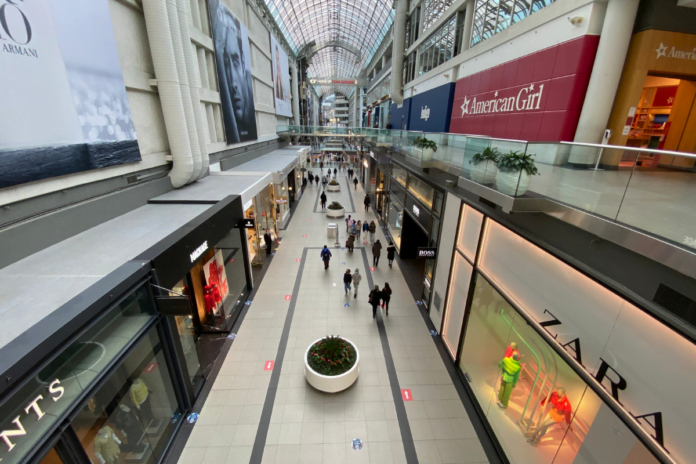
CF Toronto Eaton Centre (Image: Dustin Fuhs)

Statistics Canada has just released numbers for last December and we can now look at the year 2021 overall. A summary of annual Canadian retail sales growth over the last few years is as follows.

Retail sales growth in 2021 was 11.6%, the highest in the last 5 years. While this looks good, there are a number of caveats. First of all, the high sales gain in 2021 reflects a rebound from the previous year, when total retail sales actually declined thanks to COVID. The annual gain was also significantly boosted by the Automotive & Related sector, especially gasoline stations whose 2021 sales increased 24.4% due to gas prices. Furthermore, most of last year’s gain occurred in the first half of the year; by the time the 4th quarter rolled around, retail sales were up a more modest 6.4% year-over-year.
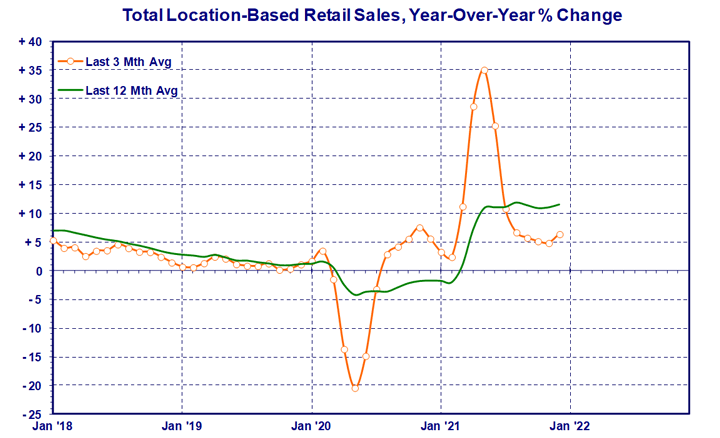
The chart above shows the slowing momentum of Canadian retail sales. The 3 month growth trend (orange line) peaked in Q2 2021 and has significantly declined since. The underlying 12 month trend (green line) has now gone flat and is poised to decline going into 2022.

Food & Drug
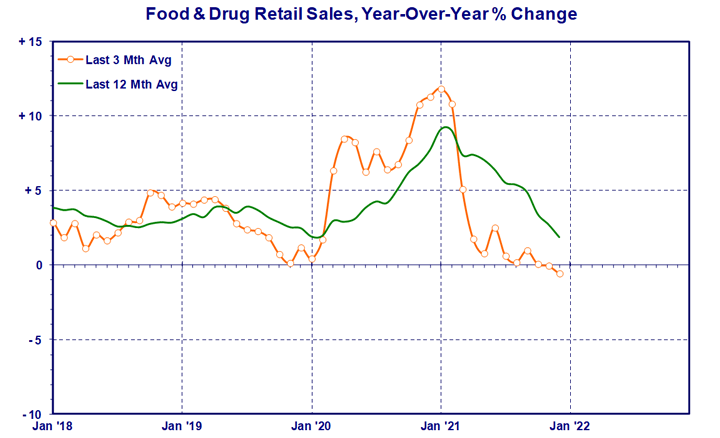
After setting records in 2020, the Food & Drug sector had very modest growth in 2021, with sales up just 1.9%. The trend lines declined over most of the year. In Q4, retail sales recorded a rare dip into negative territory, down 0.6% year-over-year. The underlying 12 month trend has also taken a nosedive, despite inflation and population growth. None of this bodes well going into 2022.

Grocery stores account for just over half of retail sales in the sector, but their sales were down 1.1% year-over-year in Q4 2021. Convenience stores also saw a large Q4 decline, with retail sales down 8.9% year-over-year. Among all food & beverage retailers, only beer, wine & liquor stores recorded a sales gain in Q4 of 4.8%.

Health & personal care stores had a fairly strong start to 2021, but this evaporated over the course of the year. Their retail sales were down 1.8% in Q4.

Store Merchandise
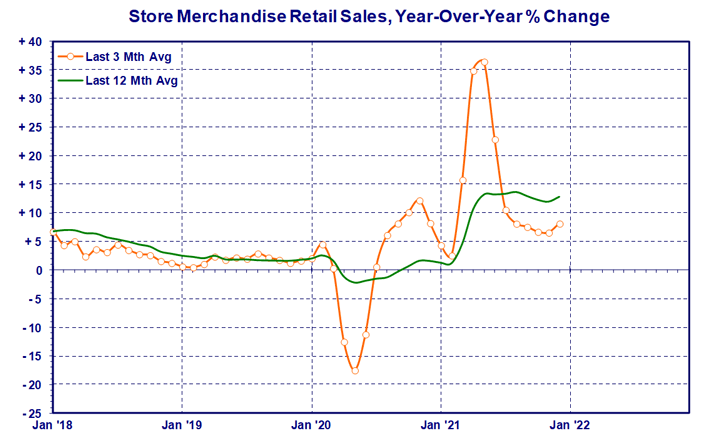
Retail sales for the Store Merchandise sector were up 12.8% in 2021, a record high. But again, this was a rebound from slow sales from the year before due to COVID. Also, most of this sales increase happened in Q2 and things have slowed somewhat since. In Q4, year-over-year retail sales were up 8.1%, which is still a healthy increase, but just not as good as earlier in the year.

Clothing & clothing accessories stores did have an exceptionally good 2021. Their retail sales were up 21.2% for the year and 24.5% in Q4 alone. General merchandise stores also did well, with sales up 8.7% for the year and up 10.7% in Q4.

Electronics & appliance stores tended to lag the rest of the Store Merchandise sector in 2021. Nevertheless, they did manage a 4.5% retail sales increase for the year, although this deteriorated to a 6.5% decline in Q4.

Automotive & Related
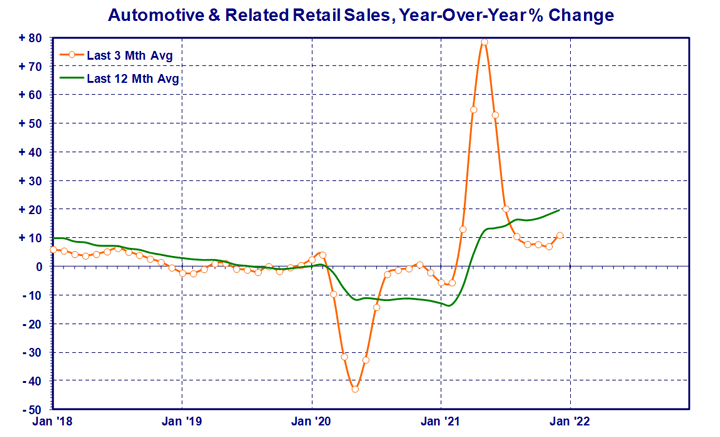
Retail sales in the Automotive & Related sector were up a whopping 19.5% in 2021. This was due to strong gains in vehicle sales earlier in the year combined with big gains in gasoline station sales throughout most of 2021. By Q4 however, sales gains at new car dealers slowed down to 3.4% year-over-year. This was more than offset by a nosebleed 34.8% increase in gasoline station retail sales in Q4.

Gas stations’ huge sales gains are due to high increases in pump prices, and this tends to distort the overall retail picture. While overall Canadian retail sales were up 6.4% in Q4, this would be only 4.0% if gas stations are excluded. When you pay more for gas, your vehicle doesn’t go any further and the ride isn’t any better – but you do have less money to spend on other things. Furthermore, increasing gas prices are inflationary, both directly and because everything one buys has to trucked to a warehouse, distribution centre, store, or home.

By The Numbers

Note that the data and analysis in this report are always based on not seasonally adjusted (or unadjusted) retail sales statistics.
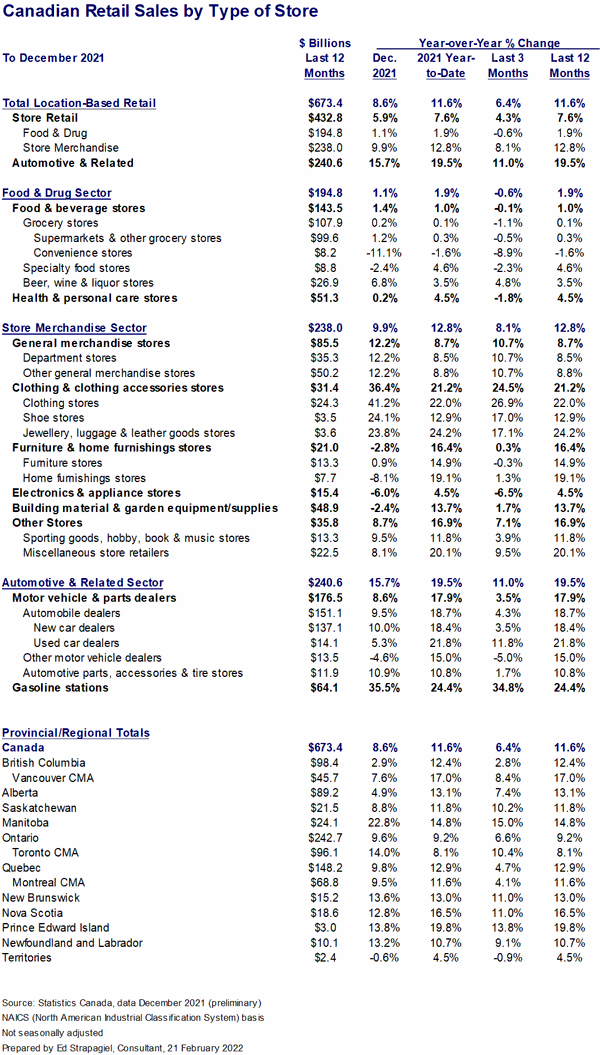
For definitions of store types, see Statistics Canada NAICS.

Canadian E-Commerce Sales
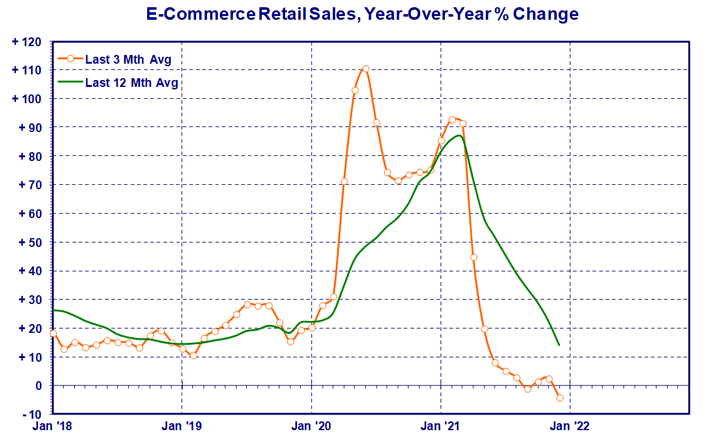
Annual Canadian e-commerce retail sales increased by 74.2% in 2020 as COVID hit, and then by a further 14.2% in 2021. E-commerce is still growing, but not as fast as it used to. In Q4 2021, e-commerce sales actually declined by 4.2%, and growth may be flat going forward as COVID restrictions continue to be lifted.
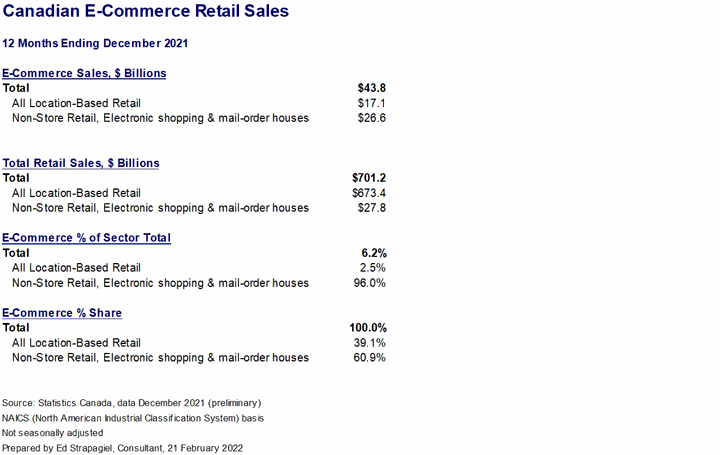
Overall, e-commerce represented about 6.2% of retail sales over the past 12 months, according to Statistics Canada, including both pure plays as well as bricks & clicks stores. Note that Canadian consumers may also buy online from foreign websites which is not captured in these numbers.

Location based retail is the same as that in the preceding “By The Numbers” table. It’s what’s normally reported as Canadian retail sales. Except that it isn’t. Location based retail excludes another section called Non-Store Retailers (NAICS code 454), which includes electronic shopping and mail-order houses, which in turn is where (mostly) pure play e-commerce businesses are. In 2021, electronic shopping and mail-order houses had an estimated $26.6 billion in e-commerce sales.

But that’s not the only source of e-commerce, as (mostly) bricks & mortar location-based retailers also sell online. For 2021, this group had an estimated $17.1 billion in e-commerce sales. With electronic shopping and mail-order houses, there’s a grand total of $43.8 billion in e-commerce sales by Canadian operators. Note that this does not include foreign e-commerce purchases made by Canadian consumers, but it does include e-commerce purchases made by foreigners at Canadian operations.

For electronic shopping and mail-order houses, an estimated 96.0% of their sales are currently allocated to e-commerce. For (mostly) bricks & mortar retailers, it can be estimated that 2.5% of their total sales are attributable to e-commerce.

In the final section of the above table, (mostly) pure play operators (namely, under electronic shopping and mail-order houses) generated an estimated 60.9% of all e-commerce sales in Canada, while (mostly) bricks & mortar location-based retailers’ share of e-commerce was 39.1%.

For more explanation on the e-commerce numbers, see Statistics Canada: Retail E-commerce in Canada.

Monthly Update Notification

This analysis is updated monthly as new numbers are published by Statistics Canada. If you would like notification from Linkedin of when an update becomes available (and you’ve read this far), please connect with Ed Strapagiel on LinkedIn.

22 February 2022

Buy-Now-Pay-Later Company Klarna Enters Canadian Market

Image: Klarna

Swedish fintech company Klarna announced Tuesday that it has officially entered the Canadian market. The buy-now-pay-later platform includes an app and Klarna has already secured some big name retailers in Canada including homegrown brands Harry Rosen, Mejuri, and Frank And Oak and international players such as Sephora Canada, L’Oreal Canada, and GameStop among others. 

“Consumers across the world are moving away from traditional credit models to alternatives that better meet their expectations by offering smarter and more transparent ways to purchase, and the Canadian shopper is no different,” said Klarna Co-Founder and CEO Sebastian Siemiatkowski

Sebastian Siemiatkowski

“Recent Klarna research has found that at least half of Canadian shoppers ages 25-56 are looking for flexible payment options at checkout. With our expansion to Canada, we are bringing consumers the more sustainable, flexible payment alternatives they are looking for, empowering them to save time, money and make more informed financial decisions.”

Klarna’s “Pay in 4” allows consumers who use Klarna at a retail partner’s checkout to be able to split their purchases into four interest-free payments paid every two weeks from the time of purchase. Klarna says that the benefits include “greater transparency, financial control and choice”.

The Klarna app has over 23 million monthly active users globally. App users can track and manage Klarna payments, access to exclusive rewards via Klarna’s Rewards Club, along with price drop notifications, curated content, and delivery tracking. 

Klarna said in a release that Canadian consumers will soon be able to access additional app features including Klarna’s innovative “Shop Anywhere” service that allows users to “Pay in 4” at any online store, regardless of whether they are a Klarna retailer or not, as well as money saving tools, and live shopping experiences. 

Kristina Elkhazin, Head of Canada, Klarna; John Tory, Mayor of Toronto; David Sykes, Head of North America, Klarna; Stephen Lund, Chief Executive Officer, Toronto Global (Photo: George Pimental)
Kristina Elkhazin

“We look forward to working closely with our fast-growing network of Canadian retail partners to help them to navigate the increasingly omnichannel retail landscape, adapt to new consumer demands, and help them reach new audiences,” said Kristina Elkhazin, Head of Canada, Klarna.

Toronto is Klarna’s hub in Canada. The company has opened its first North American product development and tech hub in the city with plans to hire more than 500 engineers by 2025. Offices are also planned for Vancouver and Quebec at some point and Klarna said in a release that it plans to work with local academic institutions to “help develop a skilled workforce that will deliver new innovative solutions, and, in turn, help other businesses thrive and grow.”

Klarna partnered with Moneris for its expansion into the Canadian market. Klarna was founded in 2005 and has over 100 million global active users and 2 million transactions per day. Klarna boasts over 250,000 global retail partners, including such names as H&M, Saks, Sephora, Macys, IKEA, Expedia Group, and Nike. Klarna has over 5,000 employees and is active in 20 markets and has a valuation of USD $45.6 billion.

Bentley Launches Line of Fully Vegan Handbags and Wallets

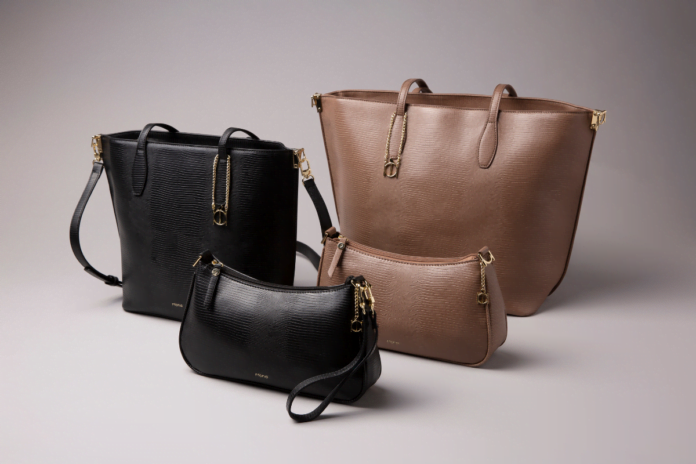
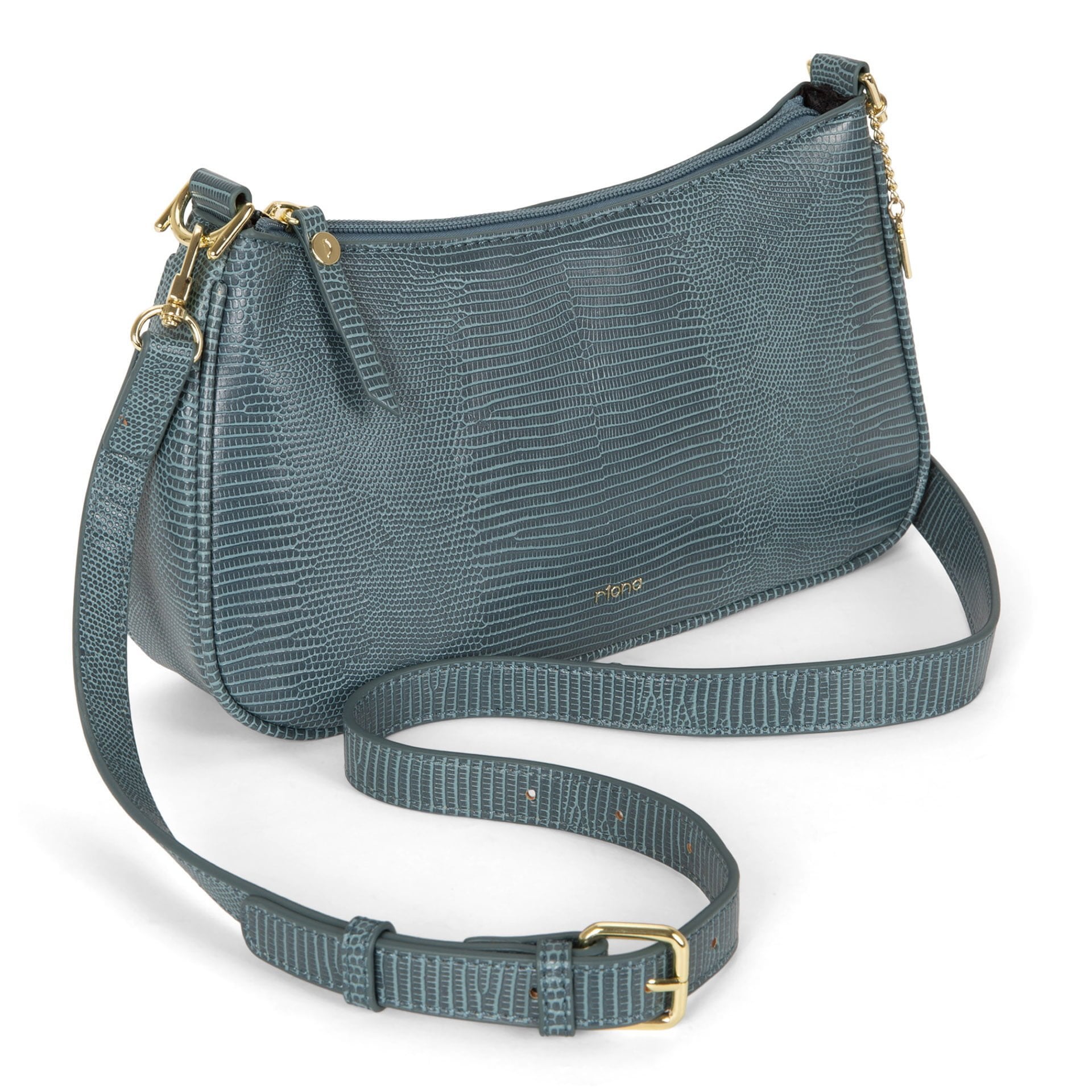
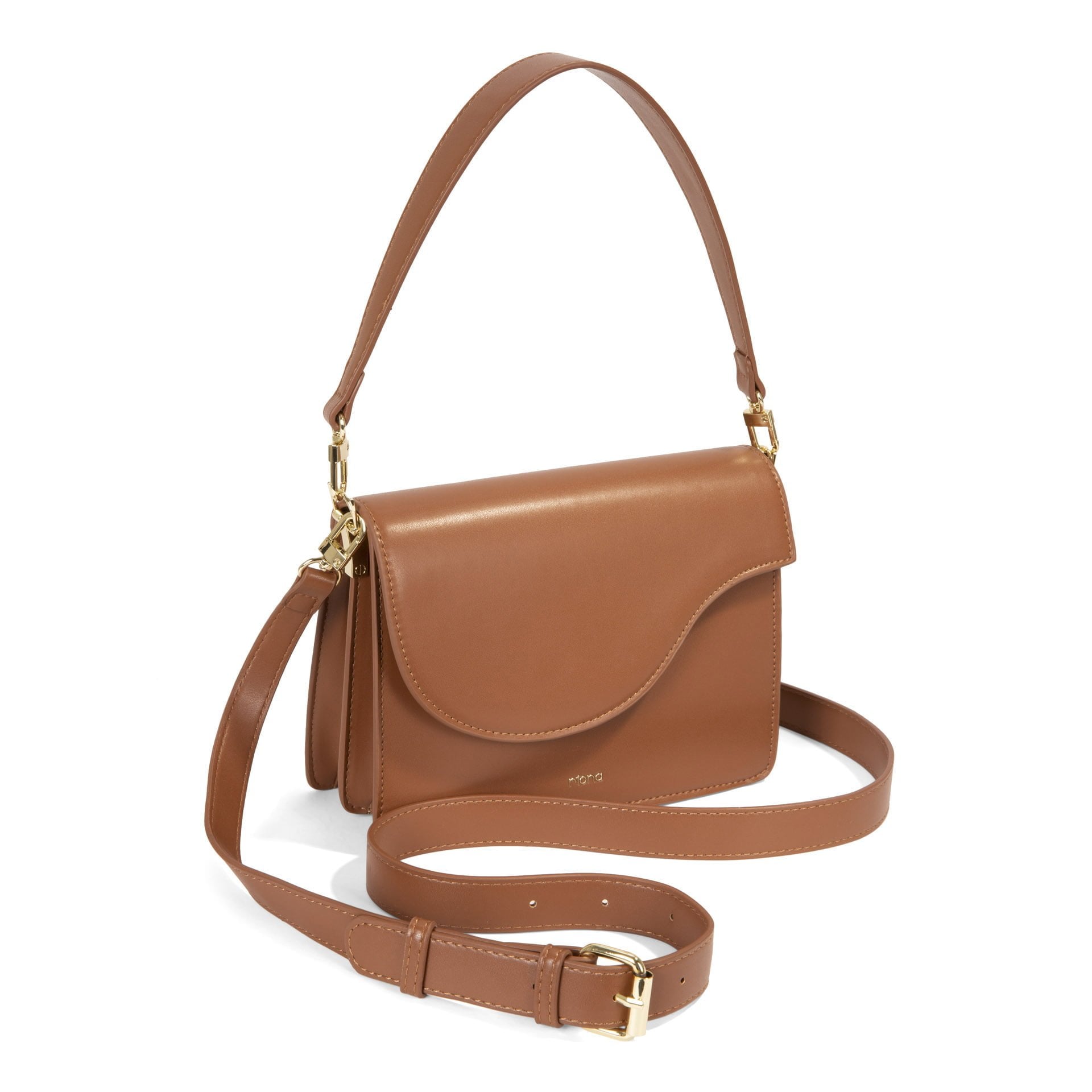
RIONA Vegan Collection (Image: Bentley Leathers)

Montreal-based luggage, bag and accessory retailer Bentley has launched a new line of eco-friendly cruelty-free vegan handbags and wallets that the company says is approved by PETA. The new line is called the RIONA collection and it is part of a trend away from utilizing leather and other real animal skins. 

The RIONA collection is being designed in Montreal under the direction of Bentley’s Category Manager for Handbags, Maddie Ciccone. She sought-out high-quality polyurethane as a material which is a a biodegradable material that is less harmful to the environment. 

The bags are beautiful and modern and will resonate with a wide range of consumers. The gilded components on RIONA handbags are made with high-grade zinc which Bentley notes is a strong and durable alloy that does not tarnish over time. The interior finish of the bags is made with 100% recycled plastic bottles with approximately 10 bottles being utilized for the monogram Jacquard lining for each bag.

Sustainability is a hot topic as many consumers seek out ways to preserve the environment. Vegan fashions is another hot topic as more people seek out animal alternatives.

“Bentley continues to constantly improve our ways, be creative, strive for excellence, and never stop learning while providing our customers with high-quality and timeless handbags and wallets. Our RIONA Collection is a beautiful evolution of styles, providing sustainability, practical and functional silhouettes at affordable prices, while helping to protect the planet and animals,” said Walter Lamothe, President of Bentley.

The collection includes handbags, crossbody and satchel bags, totes, mini essential bags, pouches, make-up cases, wallets, card holders, key chains, and coin purses in a variety of colours such as black, pink, cognac, taupe, burgundy, and khaki.

Bentley added RFID protection in its handbags and wallets, incorporating the latest RFID signal blocking technology to ensure that a user’s personal data, cards, and keys are safe. Metallic layers are integrated into the card slots (in wallets) or interior zipper pockets (in handbags) preventing thieves from electronically scanning or skimming one’s cards and personal data.

Retail Insider recently partnered with Best Edmonton Mall and its Youtube channel which features a biweekly quiz night that has been well received. Retail Insider sponsors the show and recently worked with Bentley to give away three $100 gift cards during the Best Edmonton Mall segments. Sunday February 13 saw the first $100 lucky winner and two more will be given away on the evenings of February 27 and March 13 (8pm Mountain time/10pm Eastern).

Canadian Retail News From Around The Web For February 22nd, 2022

Canadian Retail News From Around The Web

News at a Glance

Retail Insider is streamlining its Canadian retail news from around the web to include a handful of top news stories that can be viewed quickly during the day. Here are the top stories from the past four days including the long weekend Monday.

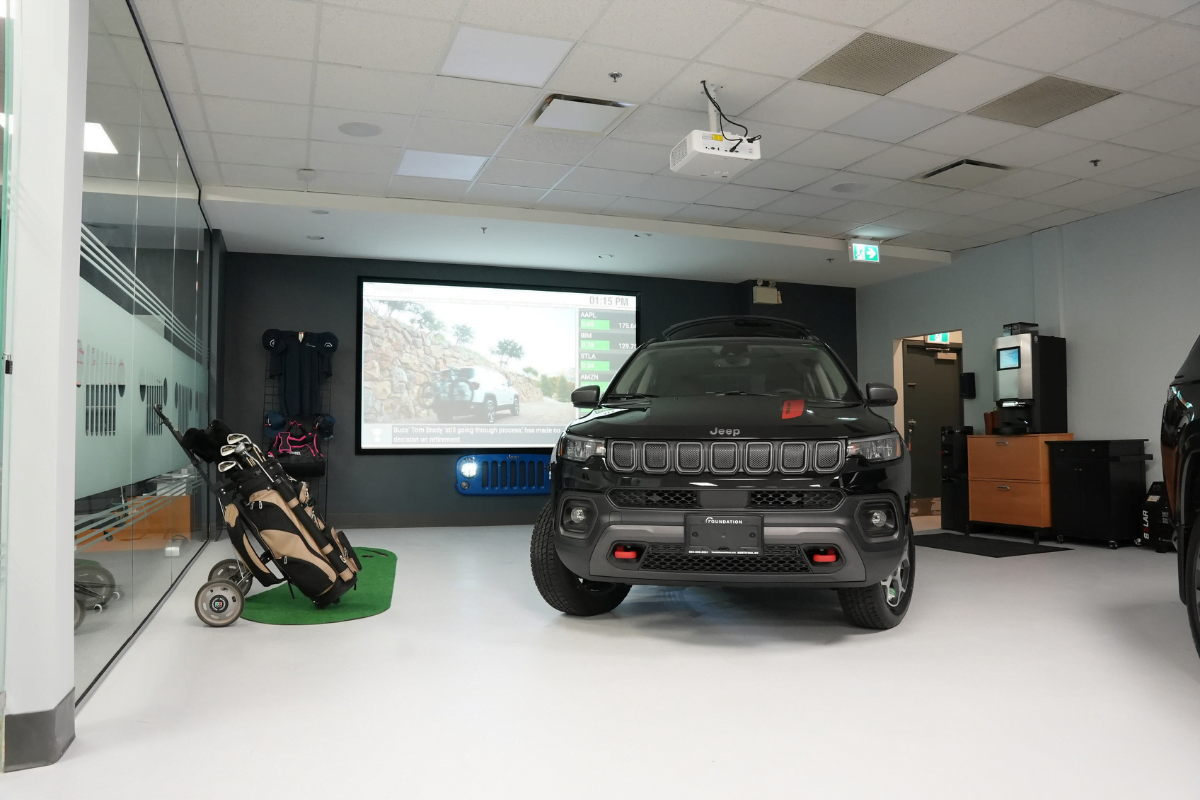
Capilano Mall in North Vancouver Adds New Concept Jeep Showroom

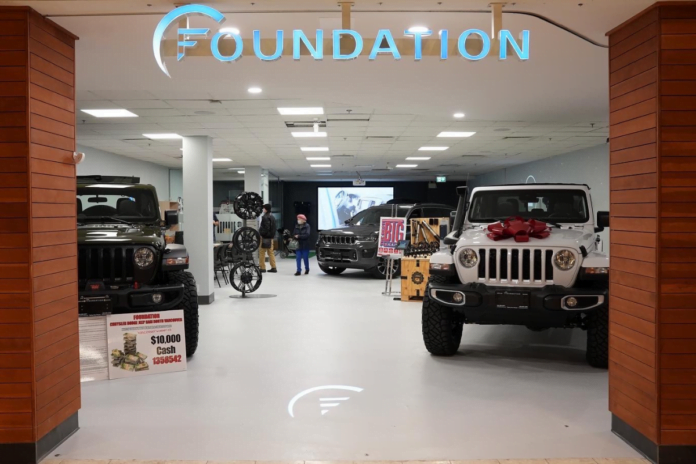
Foundation Auto Vancouver Jeep at Capilano Mall

Foundation Auto Vancouver has opened a 2,457 square foot automobile showroom and apparel store at North Vancouver’s Capilano Mall, with the debut of Foundation Auto Vancouver Jeep Store.

The “Jeep Lifestyle Centre” features Jeep vehicles on display with branded clothing and merchandise, which is the first-ever enclosed shopping centre storefront for the Jeep brand.

“Given that Jeep is the top SUV brand in Canada and many Jeep enthusiasts live on the North Shore, Capilano Mall was the perfect venue to display our incredible Jeep products,” says Clive Stanley, Director of Business Development for Foundation Auto Vancouver.

Foundation Auto Vancouver Jeep at Capilano Mall

The brand will be implementing a number of strategies that have been utilized at a number of other showrooms, including test drive appointments, complementary car appraisals and credit approvals.

Jeep joins the increasingly competitive Canadian shopping centre automotive market, with two separate strategies taking place – the dealership and concept store.

West Edmonton Mall Toyota opened in a full-scale 125,000 square foot dealership in 2021, taking over the former Sears location in Phase One of the iconic shopping centre. Yorkdale Shopping Centre has a Tesla showroom and the Nissan Studio, with Lucid Motors and VinFast opening in 2022. Lucid opened at CF Pacific Centre recently amid a Canadian expansion.

Rise of Social Commerce Helps Bolster Ecommerce Performance and Further Expands a Growing Retail Ecosystem in Canada [Feature]

The past couple of years have proven to be a very interesting and challenging time for retailers operating all over the world. Fluctuating restrictions on business combined with a customer who’s apprehensive about physical brick-and-mortar experiences, both the result of health and safety concerns related to the COVID-19 global pandemic, have served as a backdrop to an industry that’s currently rife with uncertainty and disruption. It’s also, however, been a time representative of innovation as merchants everywhere shifted and pivoted to keep up with the demands of a rapidly evolving retail landscape. It’s an evolution that’s been driven primarily by an accelerated digitization of the industry, prompting many retailers to develop or enhance their online offering amid a sharp escalation in ecommerce sales. Canadian merchants have, in general, risen to the challenges that they’ve faced extremely well. And, according to Chris Sheridan, BD and Sales Enablement Lead at Square, the increasing assurance with which retailers are operating online is helping them meet consumer needs and fuel further growth of the retail omnichannel ecosystem.

“Back during the beginning of 2020, when the pandemic first hit, retailers realized very quickly that they needed to ensure that their website was equipped to handle an influx of online customer orders,” he reflects. “But what that primarily meant during the initial months of the pandemic was enabling the online placement of pickup and delivery orders. They were by far the two most popular fulfillment channels, particularly when in-store operations were closed or limited. And they continued to gain momentum and adoption throughout the two years that have followed. However, the way retailers responded at the onset was very operationally-focused, and rightfully so. But today, after experiencing a lot of success rolling out and developing curbside pickup and delivery service, what we’re seeing is a higher level of confidence among retailers in managing these channels and fulfilling all of the online orders, which is in turn leading to greater experimentation and an expansion of online channels.”

Expanding retail ecosystem

One of the Canadian retail industry’s trusted partners, Square has served as a critical support for merchants attempting to navigate through the current challenges and optimize their omnichannel offering. Its suite of hardware and software tools, including an array of in-store and online commerce solutions, has been pivotal in equipping its clients with the capability of competing and thriving within today’s economy and to continue growing to satisfy the expectations of an increasingly digital consumer. And, just last month, in an effort to simplify the fulfillment of local deliveries for merchants, the company launched Square Online and On-Demand Delivery, leveraging the reliable courier services of DoorDash. It’s all part of the overall support that Sheridan says Square is proud to provide merchants, adding that it’s an incredibly exciting time to be partnered with the industry. Retailers across the country have really started to ramp up their ecommerce capabilities, he explains, deepening their understanding of ecommerce and beginning to capitalize on the opportunities that are inherent in emerging sales channels.

“There’s a much broader awareness of ecommerce now among those operating within the industry,” he says. “Retailers no longer view the website as a separate entity from their in-store operations. A new retail world has developed over the course of the past couple years, and all channels, whether physical or online, are being given the same level of priority. They’re understanding now that each is an extension of the other, which is an incredibly powerful realization for retailers to make. It really shows how intensely they are focused on the consumers’ experience in-store as well as their experience online. And, now that the infrastructure has been built, the retailer mindset has shifted to contemplate whether or not they are leveraging the full power of the available channels and explore ways to grow them. Considering this perspective, retailers are now seeing that social channels provide a very natural next step to the evolution of ecommerce and their businesses.”

The rise of social commerce

Indeed, channels such as Instagram, Google Shopping, Facebook, TikTok and Snapchat are all presenting viable, potentially lucrative, streams of revenue and growth for merchants within the industry. And, given that it’s where the majority of consumers spend their time, researching, sharing and now increasingly shopping, it makes, as Sheridan points out, perfect sense for retailers to leverage these channels in order to tap into the rise of social commerce and complement their existing ecommerce offering. He believes that social channels may end up serving as the next big opportunity for retailers. And, if recent social statistics are at all accurate, he may just be right. According to Statista, there are now 31.8 million active users of social media sites in Canada, representing a penetration rate of 83 percent, standing Canada as one of the world’s most connected populations.

“The potential posed by social media sites when it comes to the promotion and selling of product is immense,” he asserts. “It’s where much of any retailers’ audience is gathering all the time, finding ideas and inspiration. It’s a great place for brands to represent themselves and to direct consumers to their catalogues and offering. They present a fantastic way for retailers to extend their core set of online fulfillment channels of shipping, pickup and delivery by expanding into social selling and bolstering their online ecosystem with the inclusion of more channels. It’s an expansion and evolution of the online world that’s really been made possible by the way retailers have matured and built confidence in managing volumes through their existing channels, resulting in their desire to leverage additional channels and grow further.”

Challenges and opportunities

Although the recent trajectory of online retail sales has been impressive, there remain obstacles in retailers’ way. Disruptions to the global supply chain has created instability across the industry. And, of course, an ongoing retail staffing crisis also threatens to stunt any growth that those within the industry might be vying for. They are impediments that are currently wreaking havoc throughout the entire retail enterprise. Despite these challenges, however, Sheridan believes that there are still significant opportunities available for growth if merchants are concentrated and focused on the right areas of the business.

“The more channels that a retailer launches, the more focus needs to be paid to properly managing inventory,” he says. “Having tools in place that can help merchants track inventory in real-time, providing them with alerts that signal low stock or sold-out items is extremely important. It’s definitely an area in which data and analytics are helping to better inform decisions and create greater efficiencies. Marketing is another critical piece of the retail operation that’s been dramatically impacted by the expansion of the online world and the amount of data that’s generated. With so much information about what the customer is looking at buying in-store and online, marketing has been able to evolve to better promote all of the channels at a retailers’ disposal and drive awareness of them, enticing customers to use them. In addition, rewards, such as gift cards and loyalty program points, can be earned and redeemed around pickup and delivery orders and applied across all fulfillment channels. Retailers that can get tighter controls on their inventory, leverage marketing to engage consumers in the online world and create that consistent experience across channels will position themselves well for omnichannel success going forward.”

Supporting growth and success

As the digitization of the world around us continues unabated, retailers continue to tweak and develop their online capabilities, enhancing the service they offer and shopping options that they provide their customers. Their efforts are lending to an expansion of the channels available to consumers through which they can engage with and make purchases from their favourite brands, transforming the retail environment toward a simpler and more seamless way of transacting. And, as the industry propels forward into this brave new world of retailing, exploring the seemingly endless possibilities that it presents, Sheridan says that Square will be there every step of the way to support merchants and help them reap the benefits of a growing omnichannel environment.

“Whether retailers across the country realize it or not, they took a massive step toward achieving a truly omnichannel presence when they launched pickup and delivery in 2020. At Square, we want to help retailers understand that it’s possible to go omnichannel, positioning them well to pursue the opportunities that are abound online. The confluence between all of the different channels that are available today and the data that can be generated around consumer behaviour and sentiment is extremely powerful. And there seems to be a growing awareness among retailers of the ways they can leverage everything in front of them in order to continue their progress, moving toward the creation of meaningful and lasting growth for their organizations.”

For information concerning the ways Square and its suite of commerce solutions can help your business optimize opportunities for success and growth in an increasingly digitized world, visit squareup.com

Retail Insider partnered with Square for this sponsored article.

Italian Luxury Brand Furla Continues Canadian Store Expansion with 1st Vancouver Location: Interview

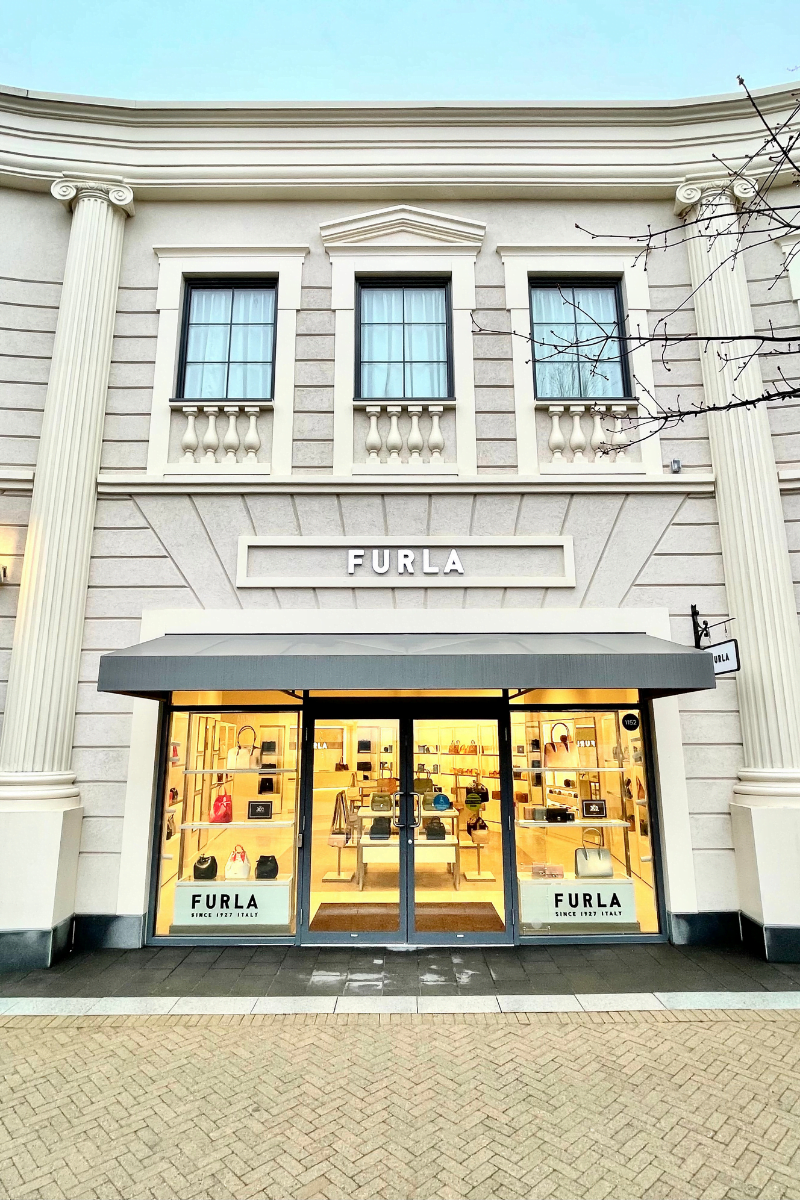
Furla at McArthurGlen Designer Outlet (Image: Furla)

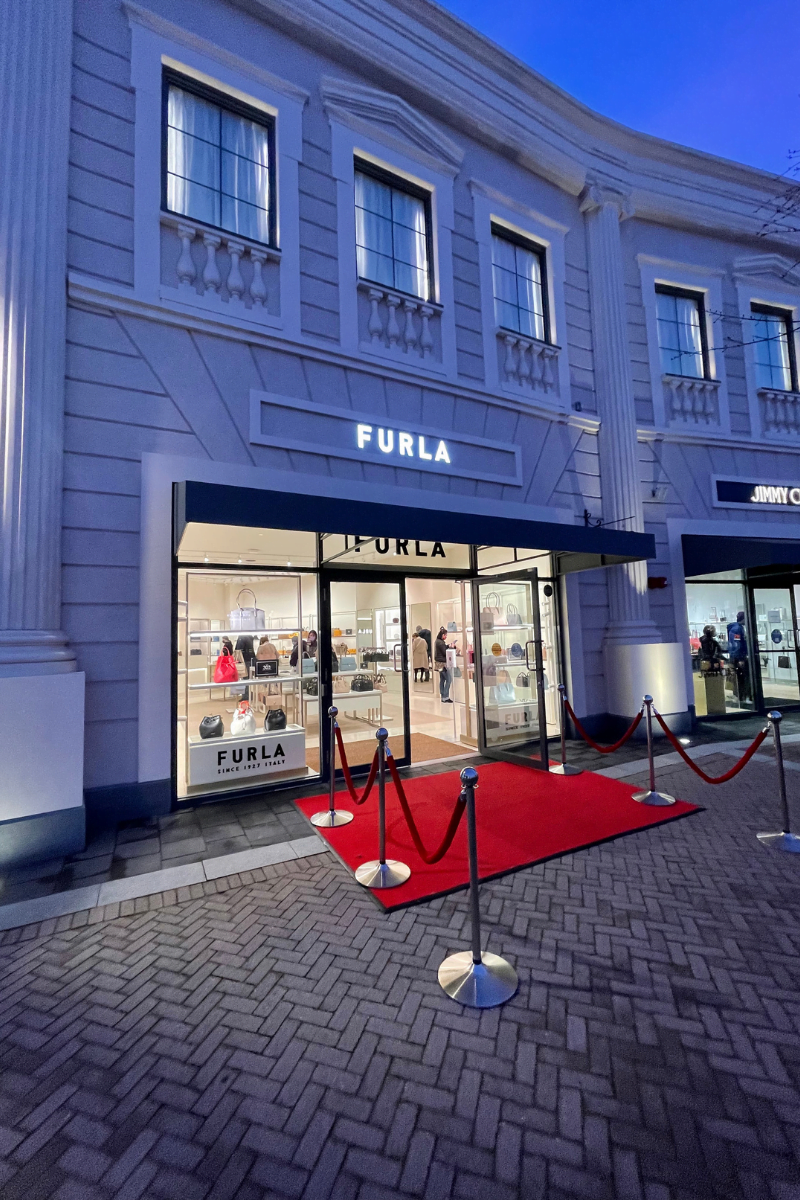
Italian luxury brand Furla has expanded its footprint in the Canadian market with the opening of its third location in the country at the McArthurGlen Designer Outlet retail complex at the Vancouver Airport.

Its first store opened October 2019 at the Yorkdale Shopping Centre in Toronto then its second store was launched in October 2020 in the Toronto Premium Outlets retail mall in Halton Hills, Ontario.

Carole Teitelbaum, President of Halcyon Brands which operates the Furla brand in Canada, said it’s always been the company’s intention to take Furla nationally.

“With Toronto being our first foray into the market, we thought it was quite timely to now move out West. Vancouver is a very, very strong retail market. And this project in particular has a very high traffic component, particularly from the airport,” she said. “So as travel resumes we’ll only see that increase as well.

“There was also a demand for the brand out in Vancouver and we just thought in the climate it was really great timing.”

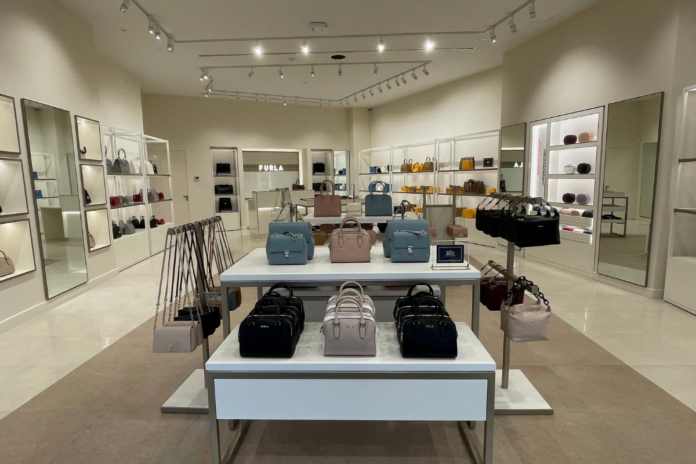
The Vancouver store is 1,500 square feet at the open air mall with a very bright and clean design that truly enhances the product.

“Customer reaction in the first few days has been phenomenal. We’re pulling the local clientele but as well pulling tourists and travelers from across Canada.”

The Vancouver store is the same square footage as the Yorkdale location but about double the size of the store in Halton Hills.

Halcyon, which is based in Montreal, was established in 2019. 

“We are very experienced in the Canadian market. I myself have brought in American brands and expanded them across the country and have a great passion for retail and opening retail shops here in Canada where we feel there’s white space. Furla is our first brand in this venture,” said Teitelbaum.

“We have a spectacular store in Yorkdale. Great location. Corner. We’re very, very pleased with that store. Then came the dreaded pandemic and things in Ontario were very difficult. We were closed probably in the last two years for about eight months due to government mandated closures but we’ve reopened in Yorkdale since July of 2021 and now we’ve just opened our third location in Vancouver which we’re very, very excited about.

“It’s another jewel in our crown.”

Furla at McArthurGlen Designer Outlet (Image: Furla)

Teitelbaum said notwithstanding the pandemic years the company is pleased with the results from the Toronto locations.

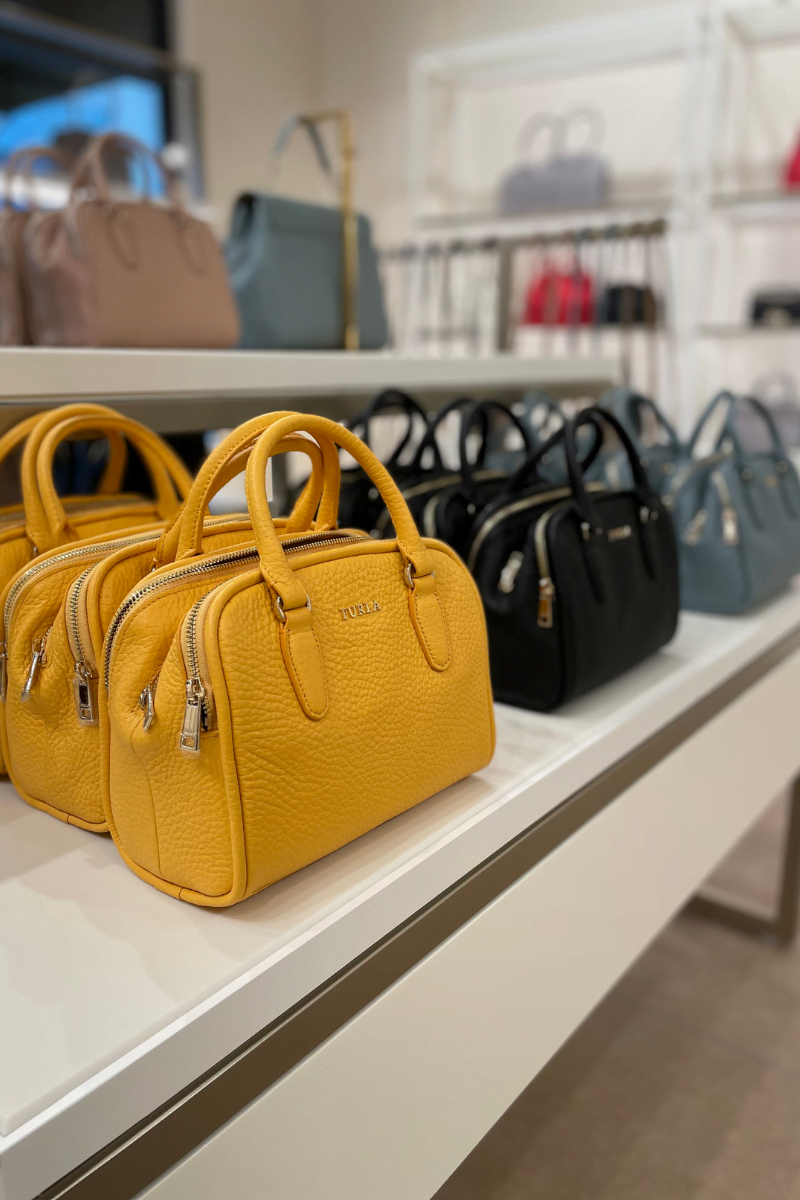
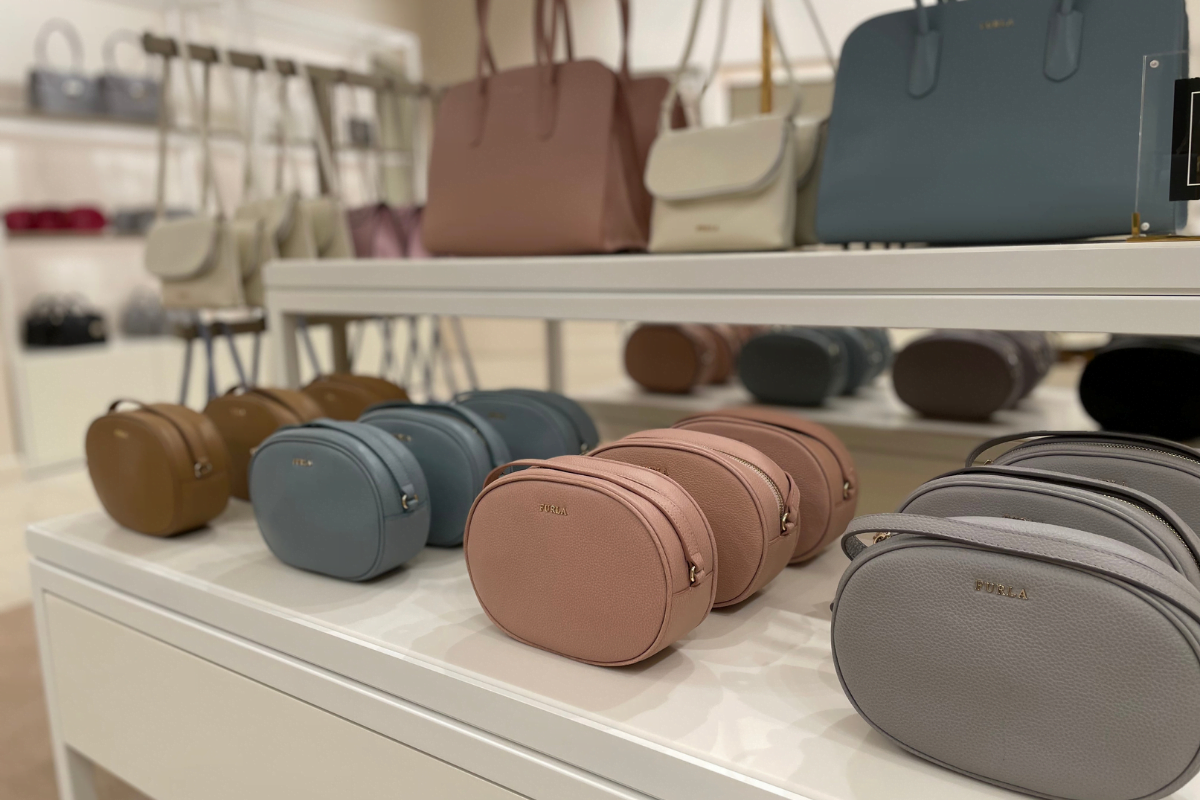
“Customer reaction has been extremely positive. We have a lot of Furla fans out there,” she said. “Furla is a premium luxury brand which sells handbags, designed and manufactured in Italy. They’re all proprietary designs from our design house in Milan and it’s a family owned business that was established 90 years ago. The head office is based in Bologna and the design and product development office is in Milan.

“The future is very cloudy right now in my crystal ball. But I really do foresee further growth for the brand (in Canada). Definitely. We just hope we have clear sailing as far as health and safety of Canadians and we no longer face restrictions in being able to conduct business and expand our brand across the country.

“What sets us apart in the marketplace is the Italian craftsmanship, the wonderful quality, price, the value quotient of the bags and that’s been really embraced by the Canadian consumer.”

Jeff Berkowitz of Aurora Realty Consultants is brokering lease deals for Furla as it opens this and other stores in Canada.

Company Launches Canada’s 1st Coworking Facility for Ecommerce Brands in Vancouver: Interview

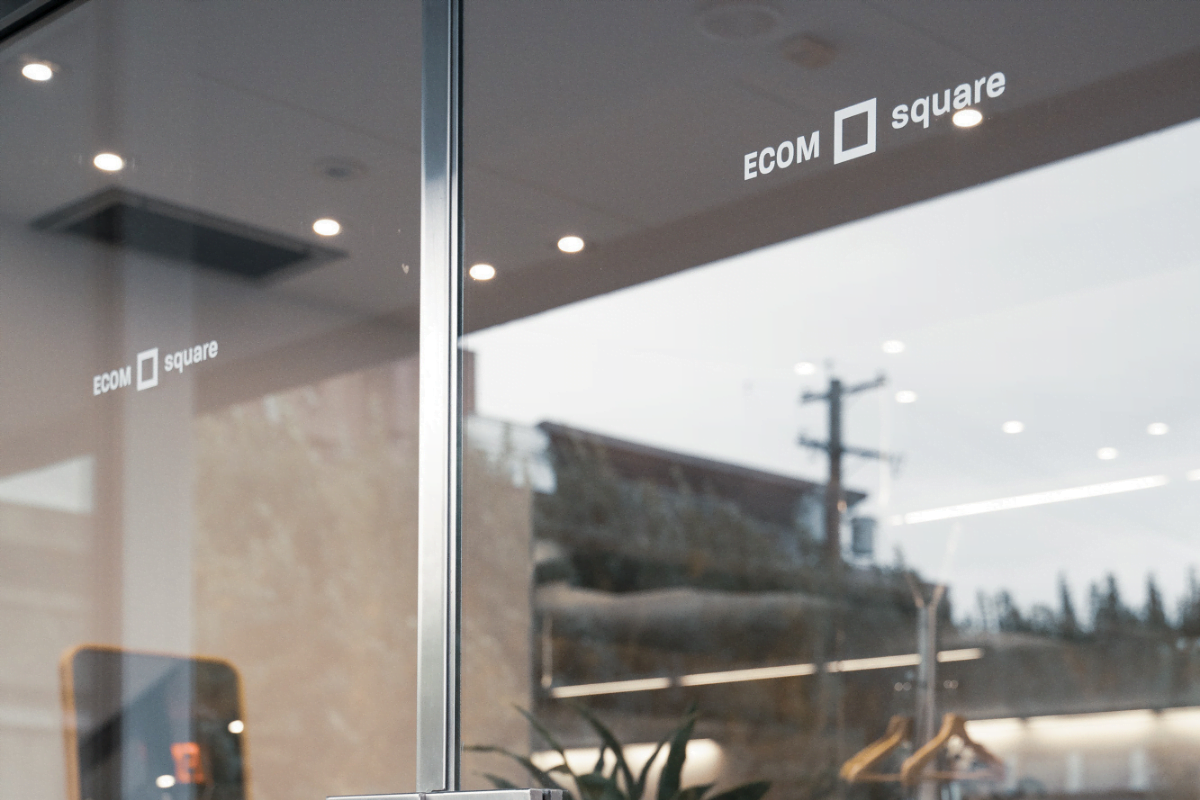
Image: ECOMsquare

A unique and innovative co-working facility built specifically for ecommerce brands has launched in Vancouver to help them grow their business.

ECOMsquare, a bi-level, 7,000-square-foot space at 1758 West 8th Ave., was established by JIBE, which helps brands elevate their ecommerce business.

“It’s been a journey over the last year prepping for the launch of our space. Our event activations over the fall were amazing confirmation that our community is eager to collaborate and build ecommerce businesses in this city. We’re looking forward to welcoming early-stage ecommerce business owners and practitioners,” said Steve Krueger, founder and CEO of JIBE and ECOMsquare.

JIBE has worked with brands such as 7mesh, Arc’teryx, Sugoi and Organika. The company started in 2009.

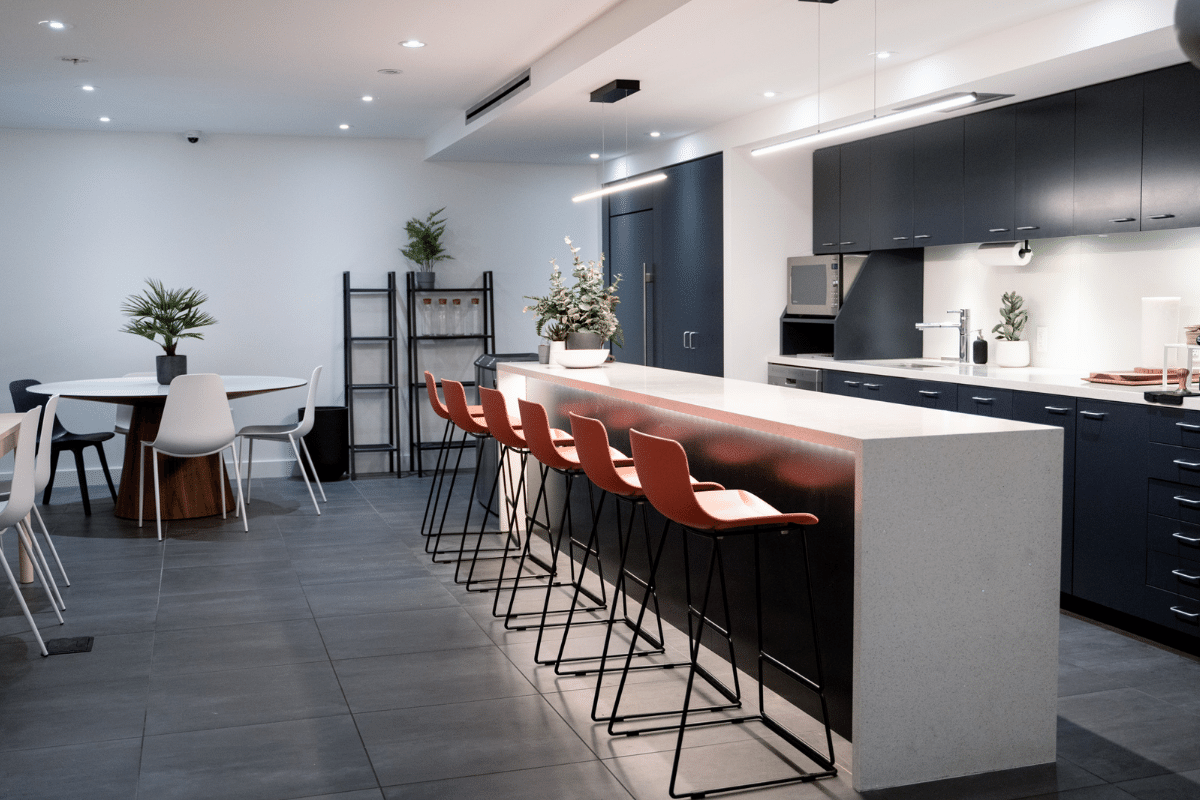
Image: ECOMsquare

“We help facilitate in building up their infrastructure and operation and we essentially become the ecommerce department for some of the smaller brands that we work with and we work on special projects to help implement and expedite their builds,” said Krueger. “We work with vendors like BigCommerce, Shopify and Magento on the technology side.

“It’s been an amazing journey for us.”

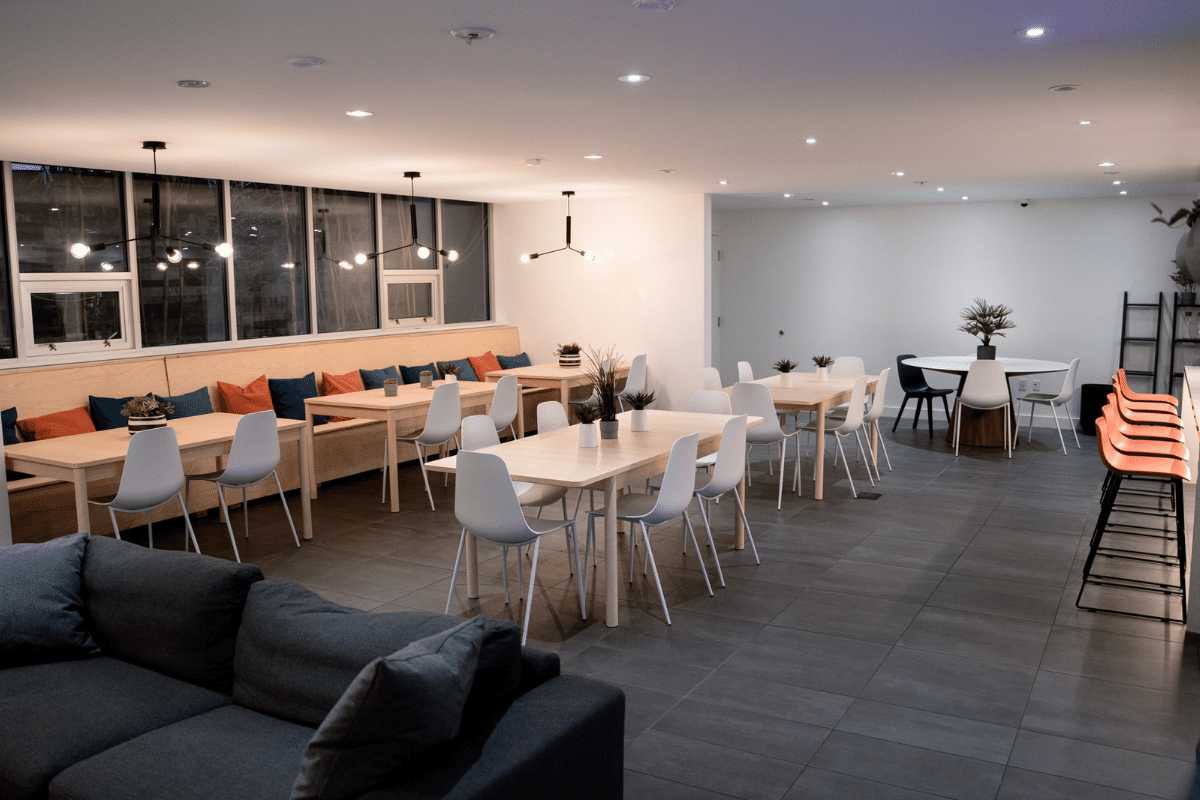
ECOMsquare offers business memberships via an á la carte menu and provides all the necessary elements for running a successful small-scale ecommerce business: photo studio with lighting, cameras and backdrops, small-scale pop-up spot for product launches or retail events, a podcasting sound booth, a small-scale storage facility for inventory, a community clubhouse for networking (accessible for all members), plus meeting space, workstations, bike storage, parking and showers.

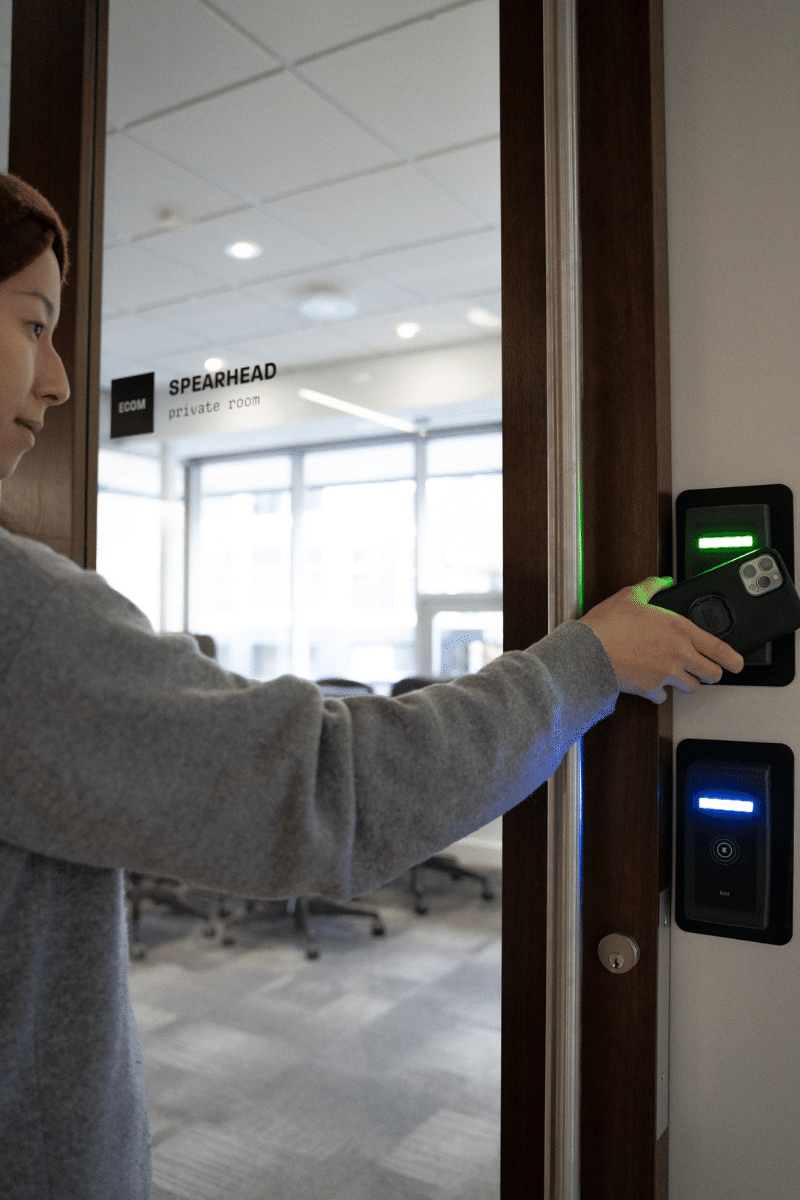
Community memberships are $59 per month and provide access to reserve amenities and the community clubhouse, while space membership pricing starts at $459 a month for full access. All members have unique access to the ECOMsquare app, which allows for easy booking for meeting rooms, workstations, events, equipment and more. Additionally, the app provides Wi-Fi support, location details, a public events calendar, and customer support all in one place.

The idea has its roots in 2014 with a group called ECommerce Vancouver with events, conferences and meetups with the sole purpose of creating a community and being able to share information between small business owners who were just starting their business to mid-level or enterprise level businesses.

“We did those pretty much for six years . . . We did them all throughout the city and then we started doing them down in Seattle, Portland, San Diego, Chicago, Boston and then we were going to do Toronto and New York but COVID ended up happening,” said Krueger.

“ECOMsquare is kind of the product of a lot of the problems that we ended up hearing throughout the years through those events. We looked at a  lot of the pain points of scaling a small business up to a certain size and having that support structure for SMBs. A lot of people were solopreneurs so they were working by themselves, they had no co-workers, or they couldn’t hire anybody. They had no outlet for networking, no option for sharing their problems and also looking for solutions for those.

Image: ECOMsquare

“The other problem on the other side is that once you start scaling a business you start to procure systems and processes in tooling that help either create or expedite a more personable experience to the end customer or a greater or higher quality of that engagement . . . We looked at capex exposure for these brands and we wanted to address how do we subsidize that cost while creating an ecosystem to help support these early stage small business owners. So ECOMsquare was our place where we can put all of that underneath the same roof. We have the content studios where you can do your photography and video for your products, we have a little small self fulfillment storage, we have Canada Post right across the street from us so you can do all your shipping and pick and packing for your product and we have our co-working space which is mostly a community space for business owner to talk about their ideas and their challenges.”

For more information or to book a membership, visit ecomsquare.co. Find images of the space HERE.

Shawn O’Neill of SpeedSense, an eCommerce website performance consultancy in Vancouver, said ECOMsquare is a “no-brainer home base for up-and-coming D2C brands in Vancouver.”

“Where else could you possibly find office space, boardrooms, a photo studio and warehousing, all under one roof, with a postal depot next door? Great vibe in the environment, in a great location,” he said.

“ECOMsquare inspires our company to drive forward, and the space enables us to move steps forward each day,” said Aaron Laslo, CEO of Cando, a green technology company based in Vancouver with a presence in Helsinki, Finland, and Austin, Texas. “We can engage with our team in a productive environment and collaborate with like-minded technology startups and entrepreneurs.”

Birks to Shut Government Street Store and Exit Victoria BC Market After 74 Years 

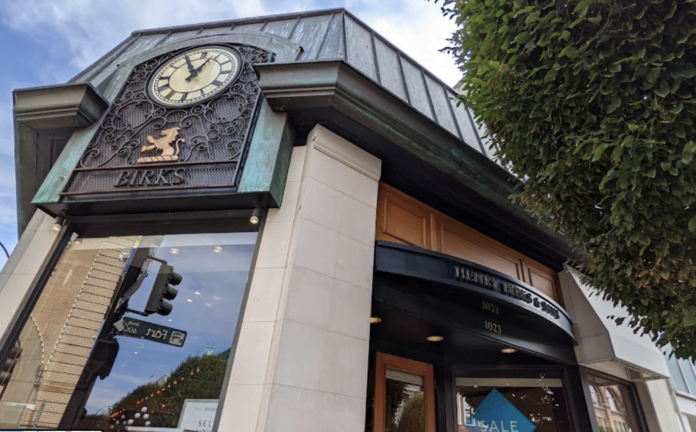
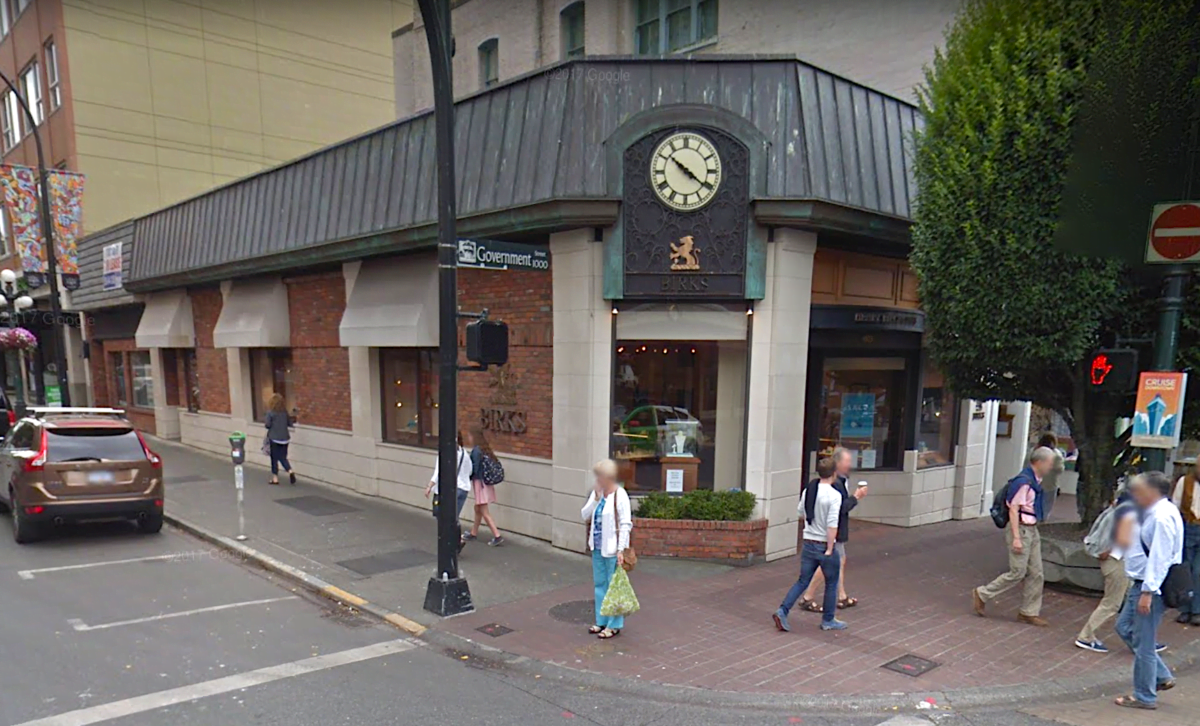
Maison Birks at 1023 Government St, Victoria, BC (Photo: 'Amir' via Google Images)

The prominent Birks jewellery store in downtown Victoria will shutter next month on March 26, marking the end of a 74-year run for the retailer in the Victoria market. It’s also the second downtown Birks store to close in Canada in less than a three month timespan. 

The current Birks store at 1023 Government Street opened in June of 2001. The store, which includes a facade along Fort Street, spans 1,561 square feet and opened as part of a major investment at the time to create a more “contemporary” fleet of stores across Canada. The downtown Victoria store reportedly cost about $500,000 to build. A year before, Birks reportedly spent $300,000 to outfit a store at Victoria’s Hillside Mall, which has since closed. Birks was owned by Italy-based Iniziativa Regaluxe SrL at the time. 

The location of the downtown Victoria Birks store is exceptional, being across the street from the entrance to the Government Street Hudson’s Bay department store. The area features quaint historic architecture and is a short walk from the beautiful Inner Harbour area. As with many cities, Victoria’s downtown core has recently suffered from a lack of tourism and increased vagrancy and drug use which some say was partly responsible for the exit of iconic and historic 160-year-old clothing retailer W&J Wilson from Government Street last year. 

Government Street Birks store, image via Google Maps screen shot
Image from the Victoria Times Colonist for the opening of the Birks store on Government Street in Victoria BC on June 13, 2001. Image via newspapers.com

The 1023 Government building that Birks currently occupies in Victoria was formerly occupied by a METRO Today’s Clothing store, which opened in 1994. From the mid 1950s to 1993, an Indigenous art retailer called The Quest operated a store there. A 1952 newspaper advertisement noted a “K Shoe store” that occupied that address at the time. 

Prior to moving to Government Street in 2001, Birks occupied a significantly larger storefront at 706-708 Yates Street. The location would become considered too remote as the city’s retail core shifted from Douglas Street to Government Street a block west in more recent years. 

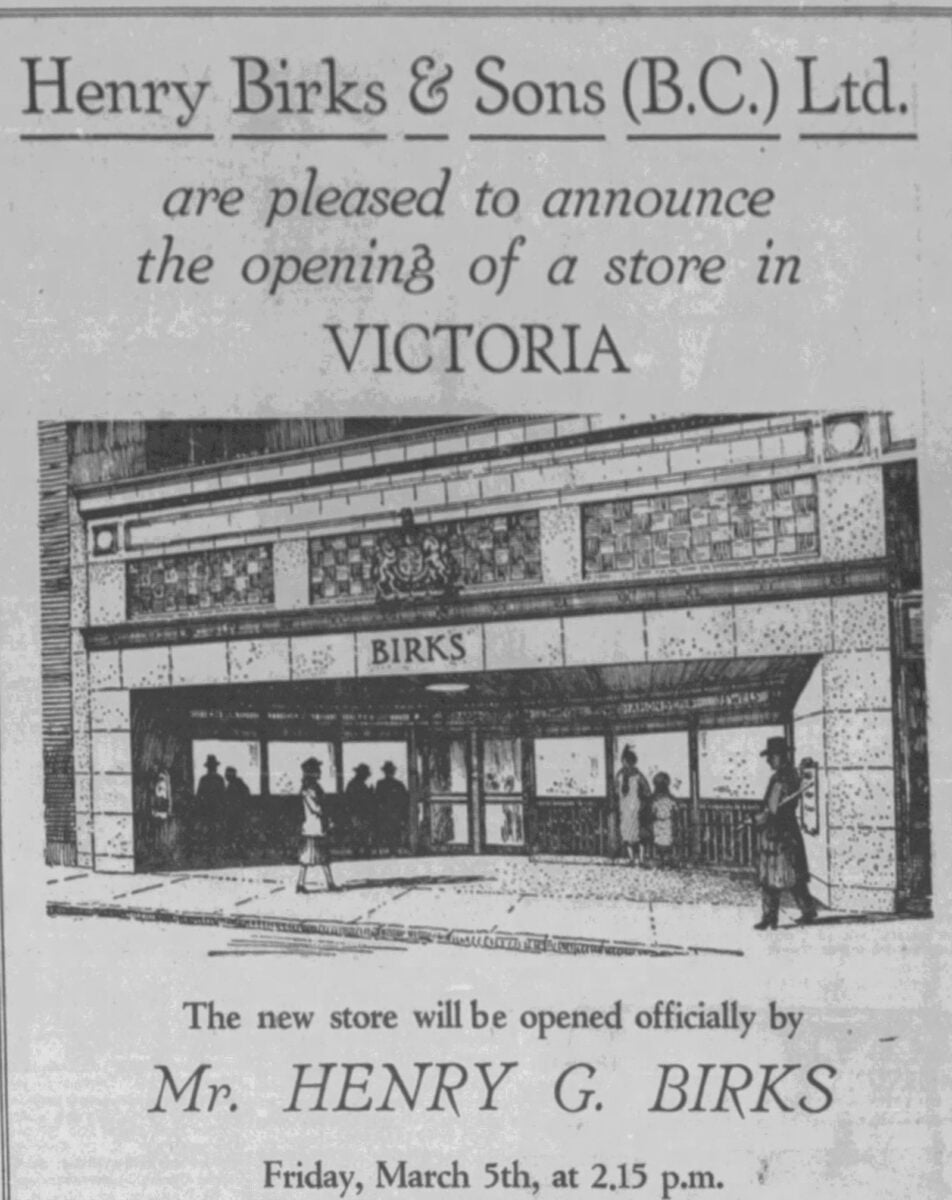
The March 1948 opening of the Yates Street Birks store was met with fanfare as Henry G. Birks, grandson of the founder of the retailer, was on site for the day. The Poodle Dog Cafe occupied the site prior to its owner’s retirement. 

Image from the Victoria Times Colonist for the opening of the Birks store on Yates Street in Victoria BC on March 4, 1948. Image via newspapers.com

Birks has closed several downtown stores in Canada in recent years. Most recently in December, Birks’ downtown Saskatoon store closed. That closure came with sadness for some given the 92-year run for Birks in the city as well as the prominence and prestige the store brought with its own standalone building in the downtown core. Downtown Saskatoon’s streetfront retail has lost out to the foot traffic of the Midtown Centre which is an enclosed downtown mall anchored by a Hudson’s Bay department store. 

Over the past decade, Birks has closed several stores in Canadian downtowns. That includes stores in downtown Edmonton at the Manulife Place, Cornwall Centre in Regina, and downtown St. John New Brunswick. In years prior Birks had many more stores with the Hamilton Ontario market alone once boasting three Birks stores alone. 

We’ll be reporting on plans to renovate the Vancouver flagship Birks store following major renovations to the retailer’s downtown Montreal and Toronto Manulife Centre flagships in recent years. Birks also operates downtown stores in the Vancouver, Calgary, Winnipeg, and Ottawa markets. The Montreal-based retailer was founded by Henry Birks in 1879 and has a storied history in Canada.