Home Blog Page 784

Peavey Mart to Expand into Canadian Maritime Provinces with 1st Store in Nova Scotia [Exclusive]

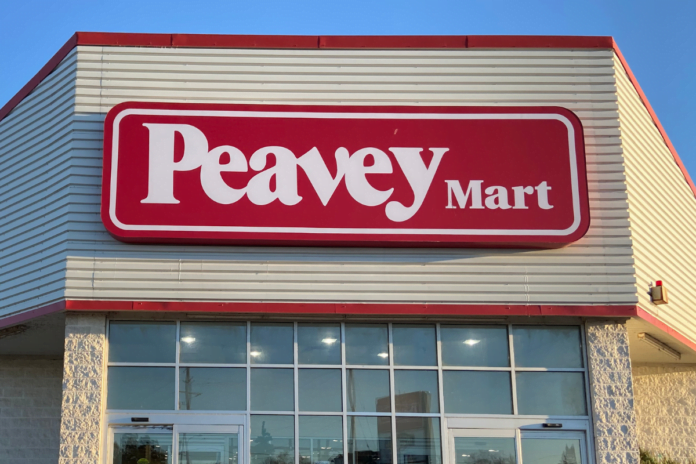
Peavey Mart Peterborough (Image: Peavey Industries)

Peavey Mart, Canada’s largest farm and ranch retailer, will be expanding its national footprint to truly become a coast-to-coast brand when it opens its first store east of Ontario in September in Bedford, Nova Scotia, just outside of Halifax, Retail Insider has learned.

It will be the 90th location for the company which is headquartered in Red Deer, Alberta.

Jest Sidloski, Vice President of Marketing for Peavey Mart, said the company’s President and CEO, Doug Anderson, is an opportunist. “He wants to continue growing the brand across Canada – a proud Canadian organization, a proud Canadian retailer. The opportunity came up in that community where there was a location and demographics that fit the mold for a Peavey Mart.”

Peavey Marts offer a unique selection of agriculture, farm and ranch, pet, work wear, lawn and garden, hardware and homesteading supplies for those who enjoy a down-to-earth rural lifestyle.
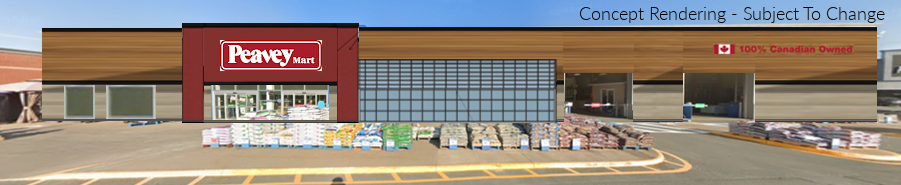
Peavey Mart in Bedford, Nova Scotia (Rendering: Peavey Mart)

A representative with Elad Canada says “Peavey Mart’s new store of 39,000sf will be a vibrant addition to Bedford Place, a 265,000 sf community shopping centre also anchored by Giant Tiger,  Fit 4 Less (by GoodLife) and Dollarama. Elad Canada is extremely pleased to partner with Peavey Mart in their first store in Atlantic Canada.”

The company’s roots go back to 1967 in Canada when it started as National Farmway, a chain of “super farm markets” whose first location opened in Dawson Creek, BC. By 1975, the chain became known as Peavey Mart, a subsidiary of Peavey Company of Minneapolis. In 1984, the company returned to Canadian ownership and to this day remains 100 per cent Canadian and employee owned. In 2017, Peavey Industries LP acquired the TSC Stores banner, based in London, Ontario with stores operating in Ontario and Manitoba. In 2021 it converted all remaining TSC Stores to the Peavey Mart brand.

“We’re very agriculture focused. You’ll have all of your feeds and supplies for livestock and animals, you’ll have your garden centres, your growing goods. Anything for life in the country, or as a homeowner, you will find at a Peavey Mart.” said Sidloski.
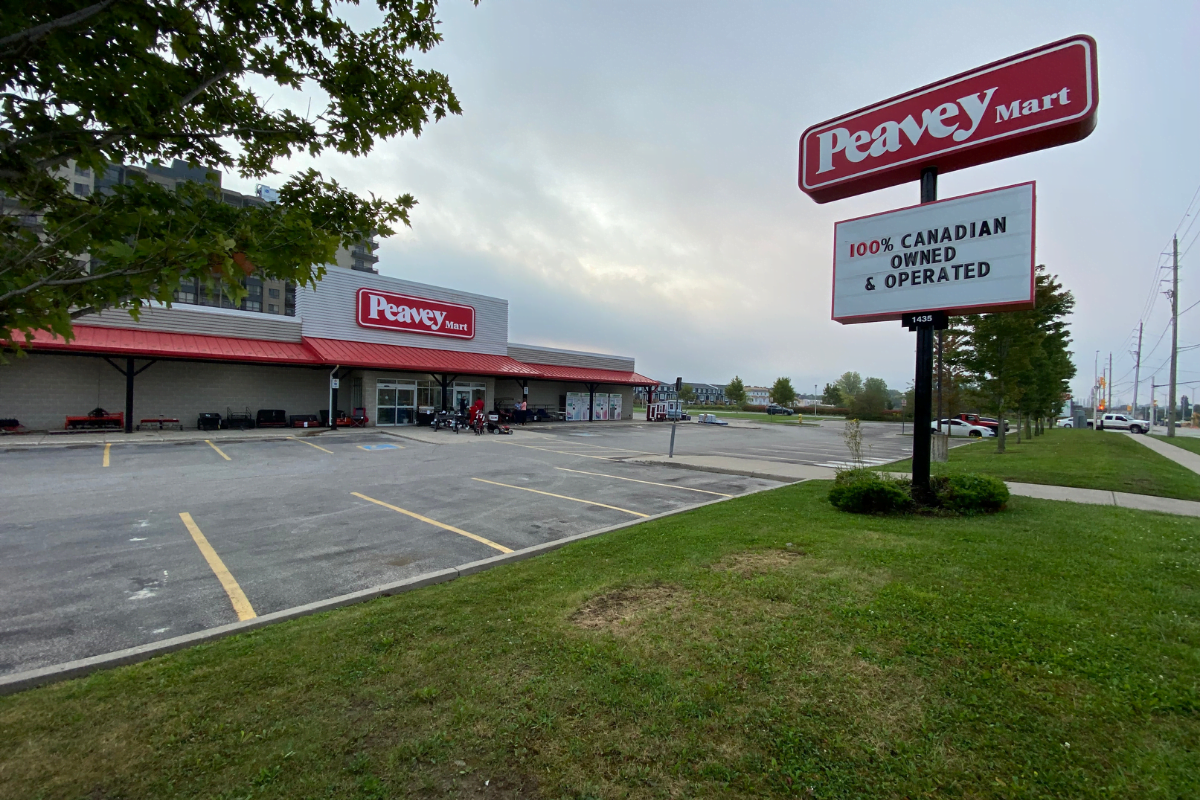
Peavey Mart Hyde Park (Image: Peavey Industries)

Typically, Peavey Mart has been located in smaller more rural centres but in recent years two were opened in Winnipeg and one in Edmonton.

“What’s so great about those urban centres is that there is a shift for people, and this was especially true with COVID, of getting back to living in their backyards and growing their own foods, growing their own gardens, fixing and projects, and homesteading. We really became this lifestyle store even for people in large urban markets that shared that lifestyle,” said Sidloski.

The companies COO, Dave Simmonds had these final words “People on the east coast have been asking us to come that way for many years. We’ve heard your feedback and we are very excited and proud to be joining the east coast for the first time later this year. We look forward to meeting you soon, Nova Scotia”
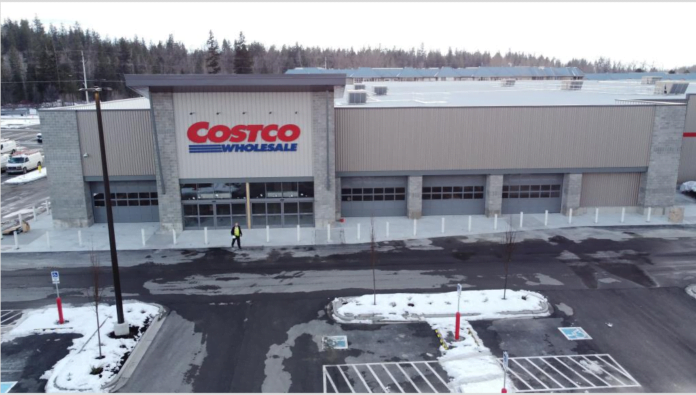
Costco Wholesale Continues Canadian Expansion with 167,000 Square Foot Relocated Store in Kelowna

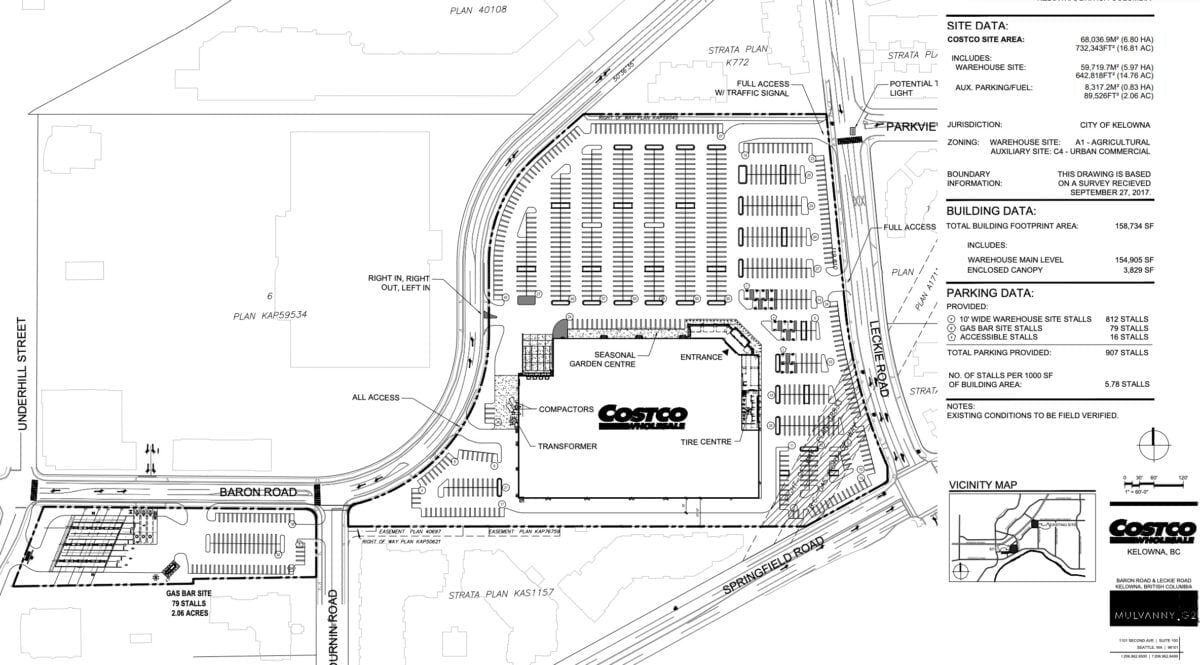
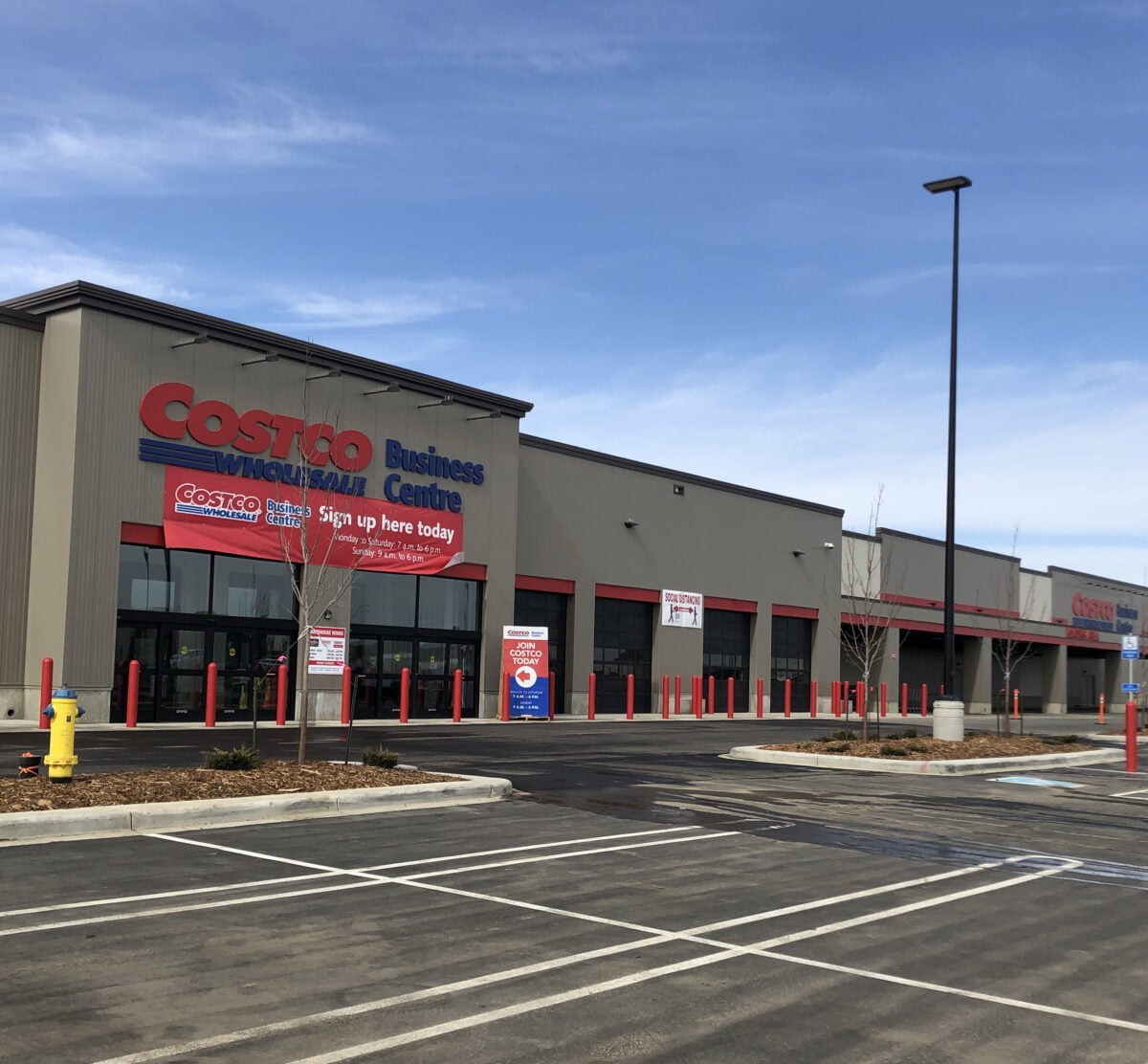
Costco Wholesale in Kelowna, BC (Image: Costco)

Seattle-based retail giant Costco Wholesale is continuing with its strategy of opening new warehouses in communities that had older format stores in Canada, with the newest location opening in Kelowna BC.

The store at 2125 Baron Road is over 24 percent larger than the previous location and is increasing the overall scale of the operation in categories across the table.

“With the opening of this new warehouse, we can serve all of our members in the Kelowna and surrounding area and can bring new consumers and businesses to uncover the benefits of a Costco membership,” said Pierre Riel, Senior Vice-President and Country Manager, Costco Wholesale Canada. “We are very proud to share this new location with our valued members and member businesses in the local community and throughout the area.”

Kelowna was named the fastest growing Census Metropolitan Area in Canada according to Statistics Canada, which released the 2021 Census data from last week. The population grew from 194,892 in 2016 to 222,162 in 2021 – an increase of 14%.

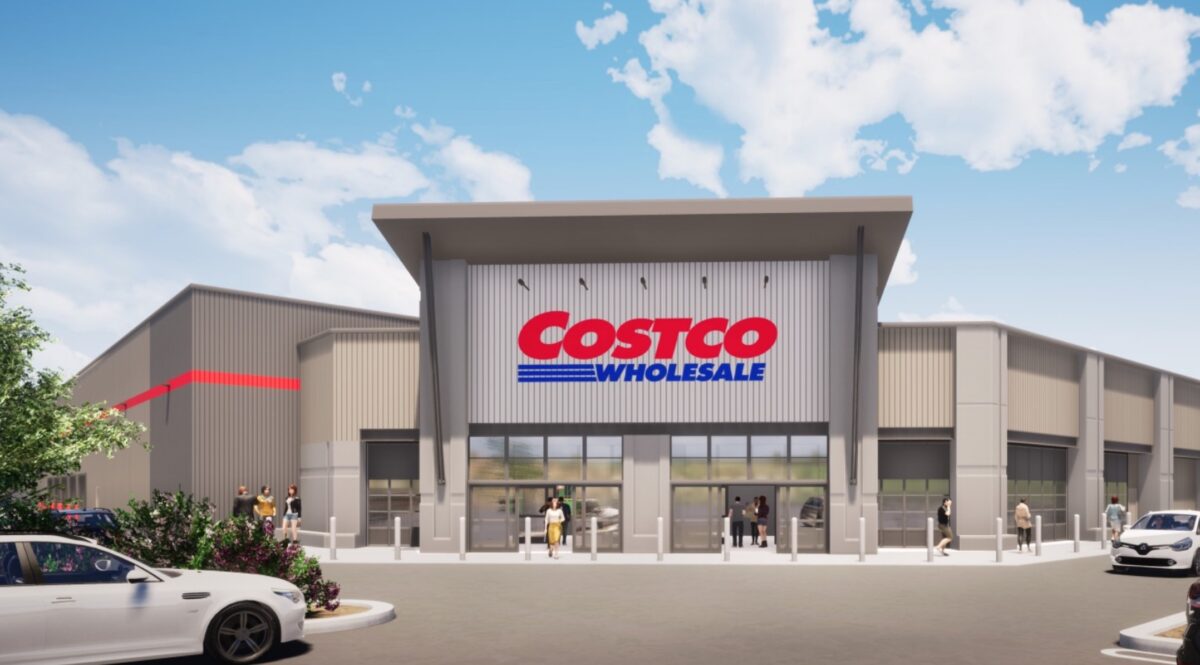
Rendering of the Kelowna Costco Wholesale Image Credit: Submitted/City of Kelowna
Site Plan: WSP Canada Group Limited
Mayor Colin Basran

“We are thrilled about the Costco Wholesale Kelowna relocation,” said Kelowna Mayor Colin Basran. “The upgraded Costco has created valuable employment opportunities for the region, and will strengthen the local economy by offering a wider selection of goods and services to our residents and visitors.”

The brand provided a full breakdown of the location, which “features wider aisles and a larger selection of food offerings than in the past. It also includes a larger variety of specialty departments, such as an on-site bakery, fresh meat, expanded produce area, rotisserie chicken section, optical centre – including an on-site independent optometrist – a newly-introduced hearing aid centre, five tire centre bays, large food court, gas station with 24 pumps, propane station and an expanded pharmacy. With 14 checkout registers, a new self-checkout section with nine stations and 1,000 shopping carts, the warehouse features 871 parking spots – 246 spots more than the former Kelowna location.”

Costco Wholesale has been introducing the new store concepts for relocations across the country, including a 155,000 square foot location in Montreal that opened in October. The brand has also been expanding its footprint of Business Centre concept stores, with three new stores debuting in 2021 in Gloucester and St. Catherines in Ontario and in Edmonton. Those stores joined the the original location in Scarborough which opened in 2017 and Saint-Hubert in Fall 2020.

Exterior of new Costco Business Centre in Edmonton. Photo: Costco

The warehouses are open to members only, with an annual fee of $60 for a Business Membership or $60 for a Gold Star Membership.

The retailer currently operates 817 warehouses worldwide and 105 warehouses across Canada.  The first Costco Wholesale location opened in Burnaby, BC in October 1985 and has since grown to an organization that employs more than 40,000 people in Canada.

Canada has a higher concentration of Costco stores than the United States per capita, speaking to the success of the Canadian market for the retailer.

David Yurman Unveils Beautifully Renovated Yorkdale Flagship in Toronto [Photos]

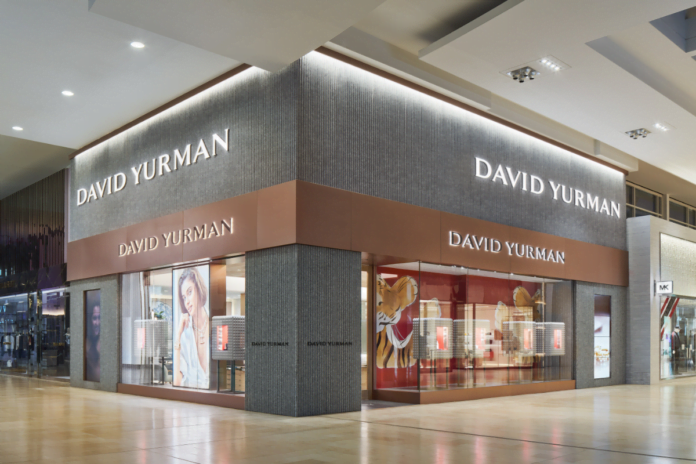
David Yurman Yorkdale (Image: Michael Muraz)

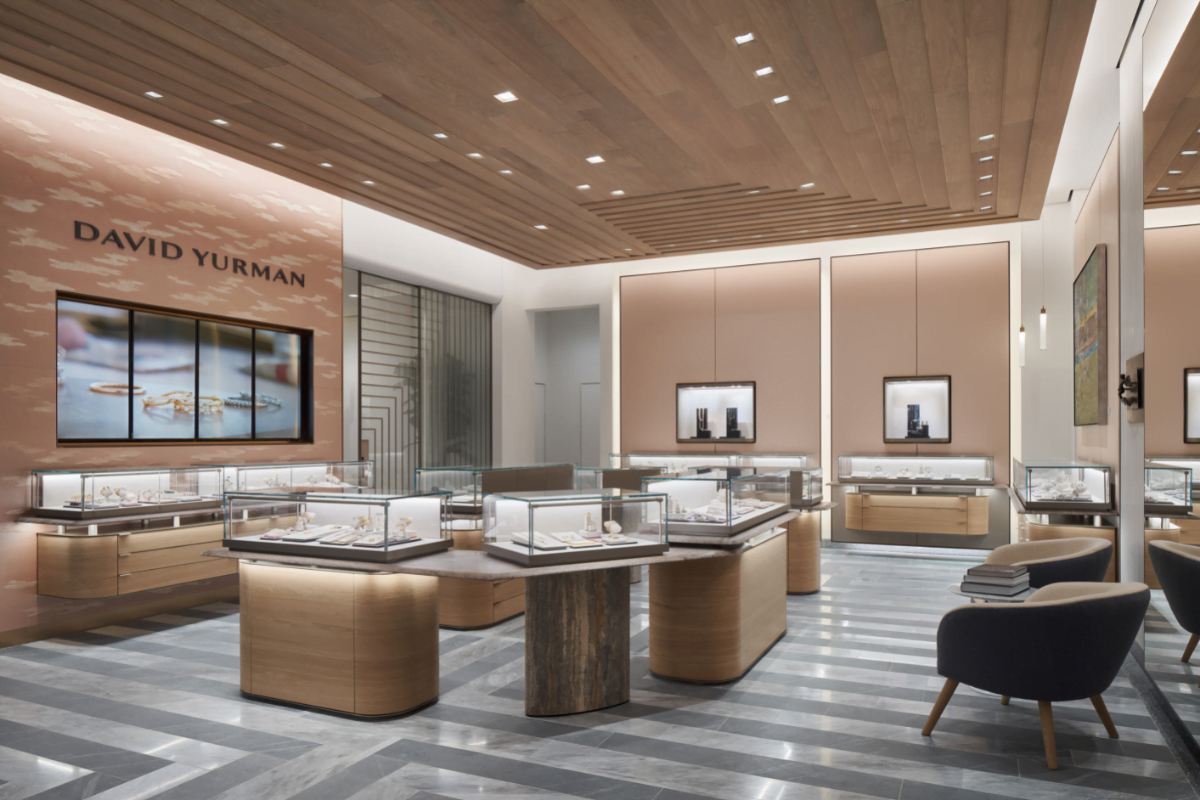
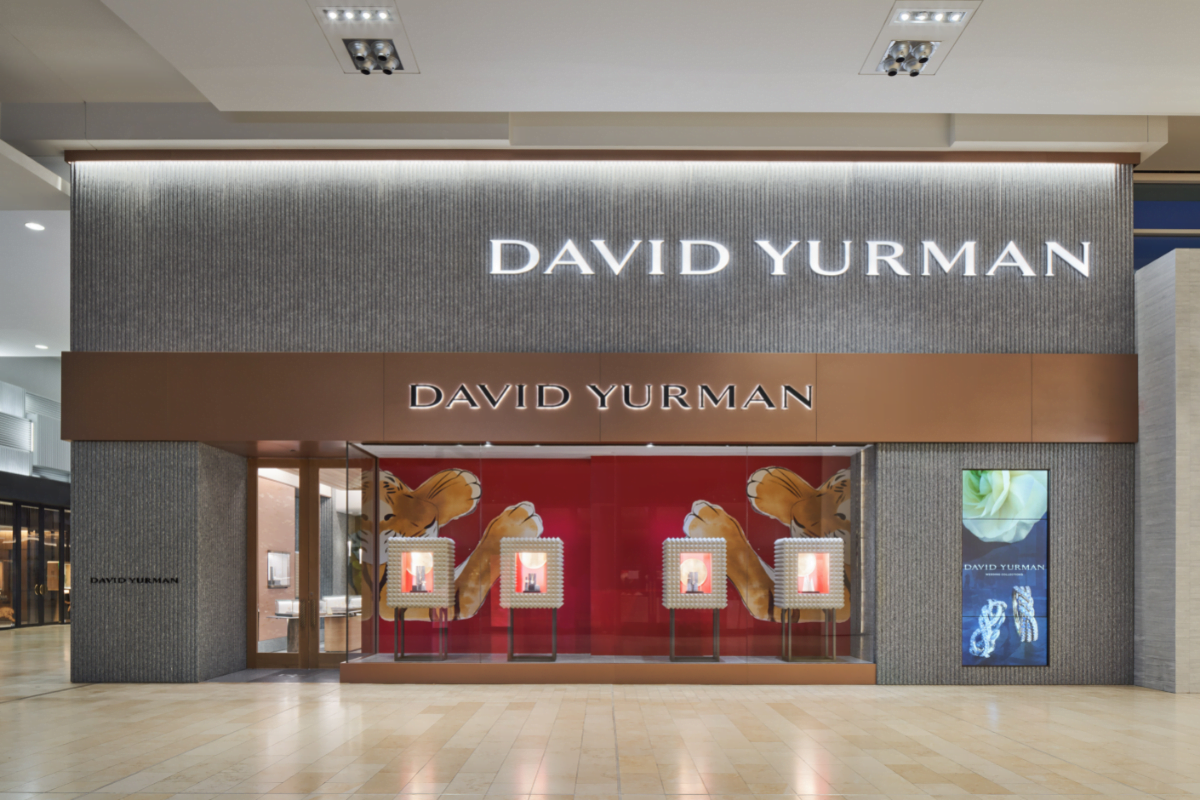
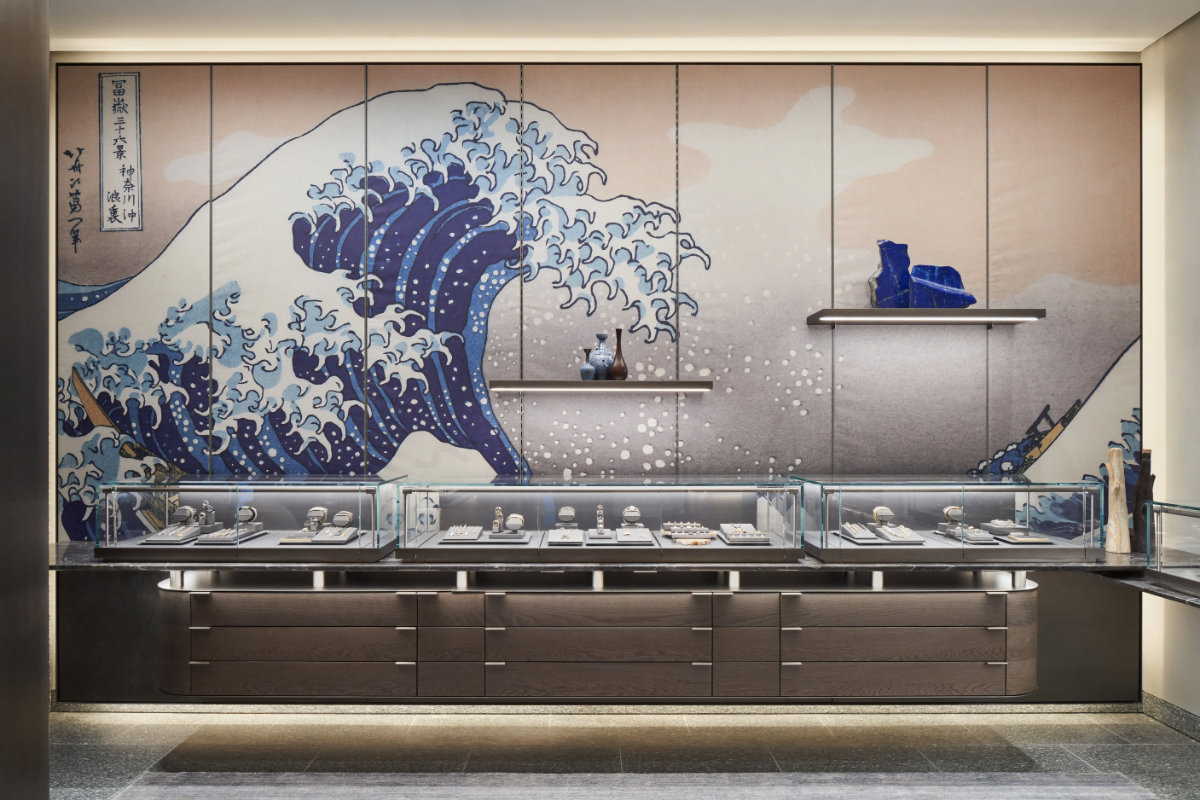
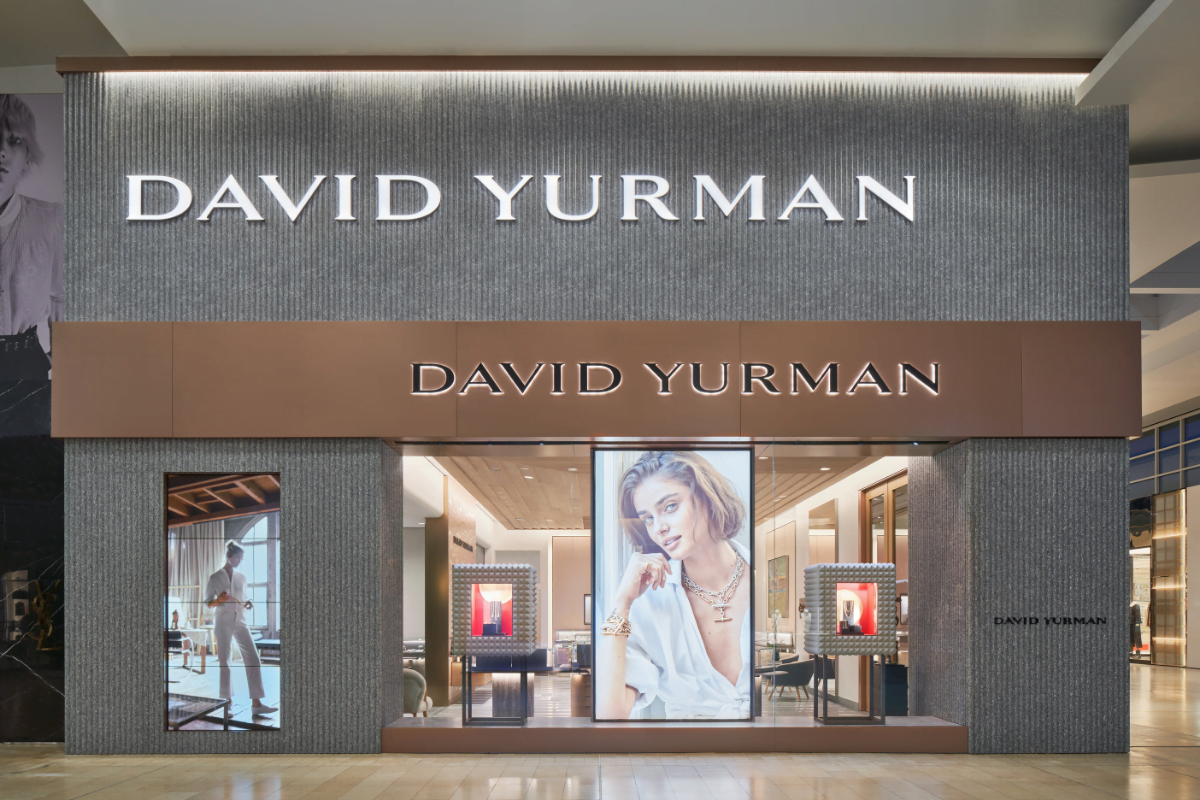
New York City-based jewellery and watch brand David Yurman has unveiled its beautifully renovated storefront at Toronto’s Yorkdale Shopping Centre. The Yurman Canadian flagship store’s look is inspired by the retailer’s new 57th Street New York City flagship which features an updated design using high-quality materials in a decidedly more casual yet luxurious space. 

The 1,625 square foot Yorkdale David Yurman store opened in late 2013 and recently relocated temporarily for several months for the full store renovation. What has been unveiled is a new more informal space featuring a mix of stone and wood that is meant to be both welcoming and luxurious. 

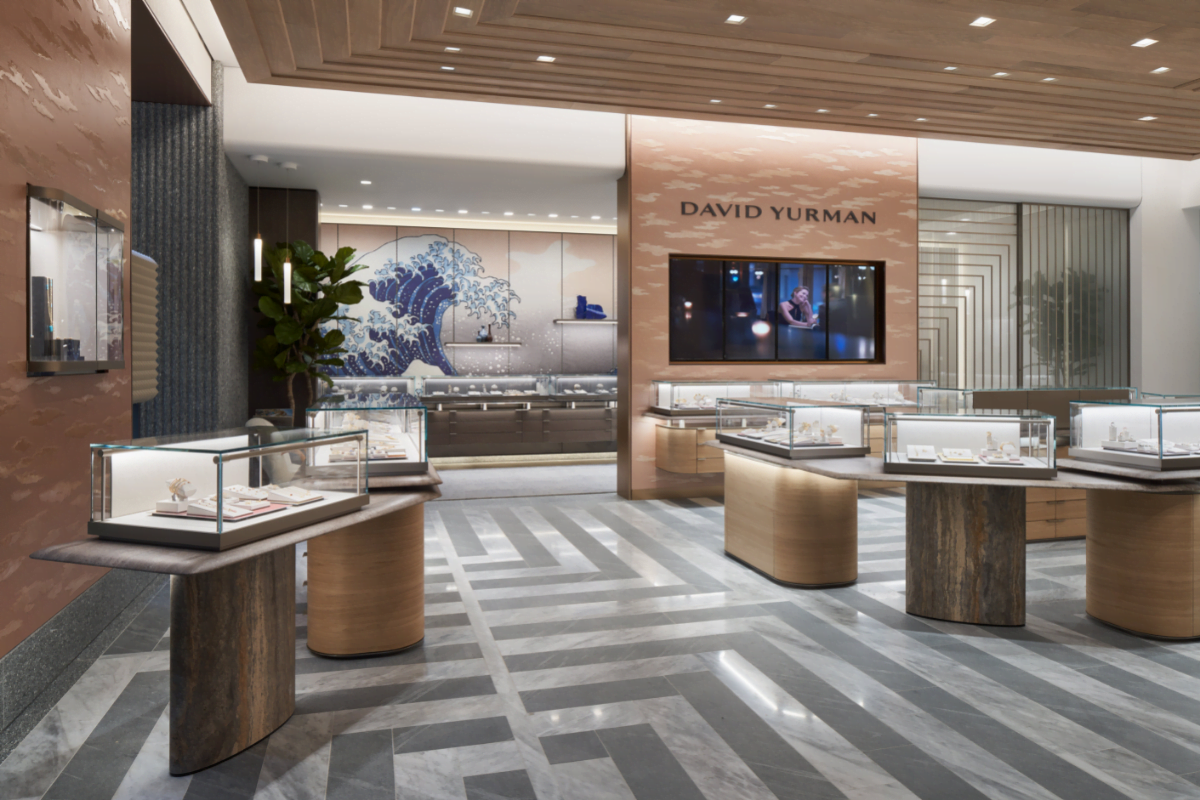
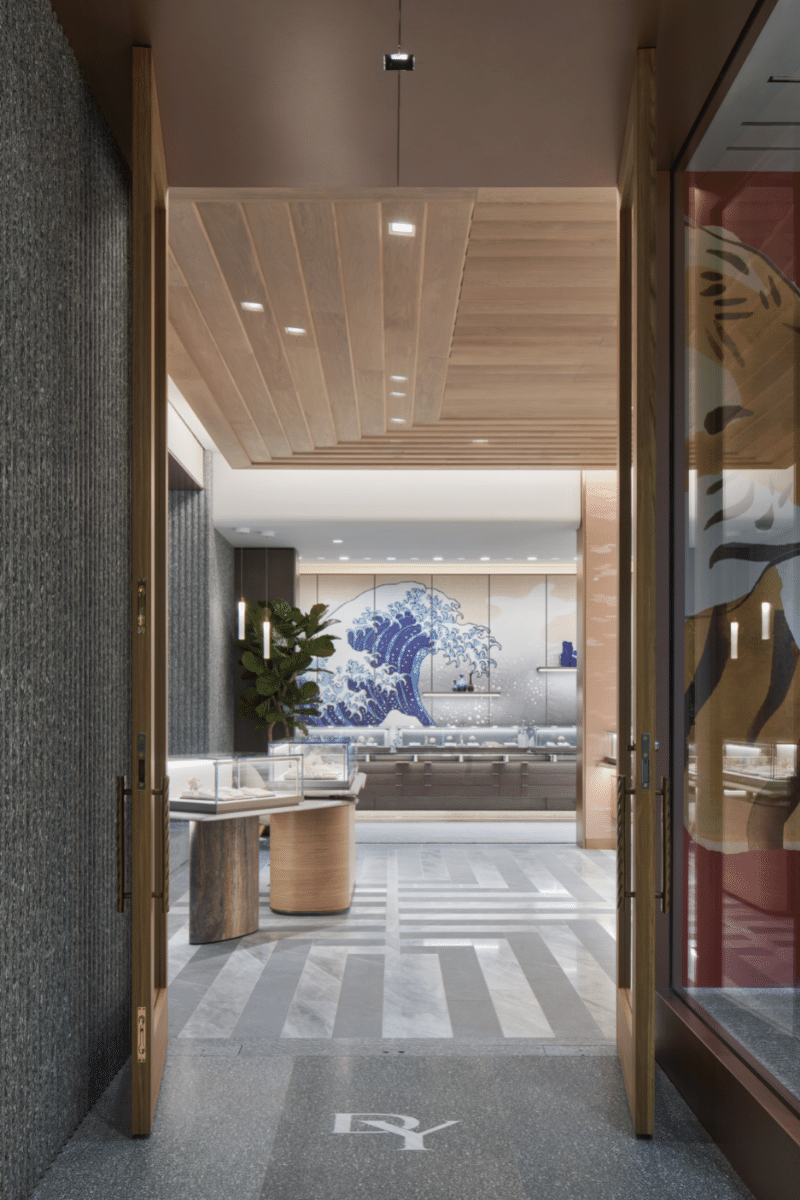
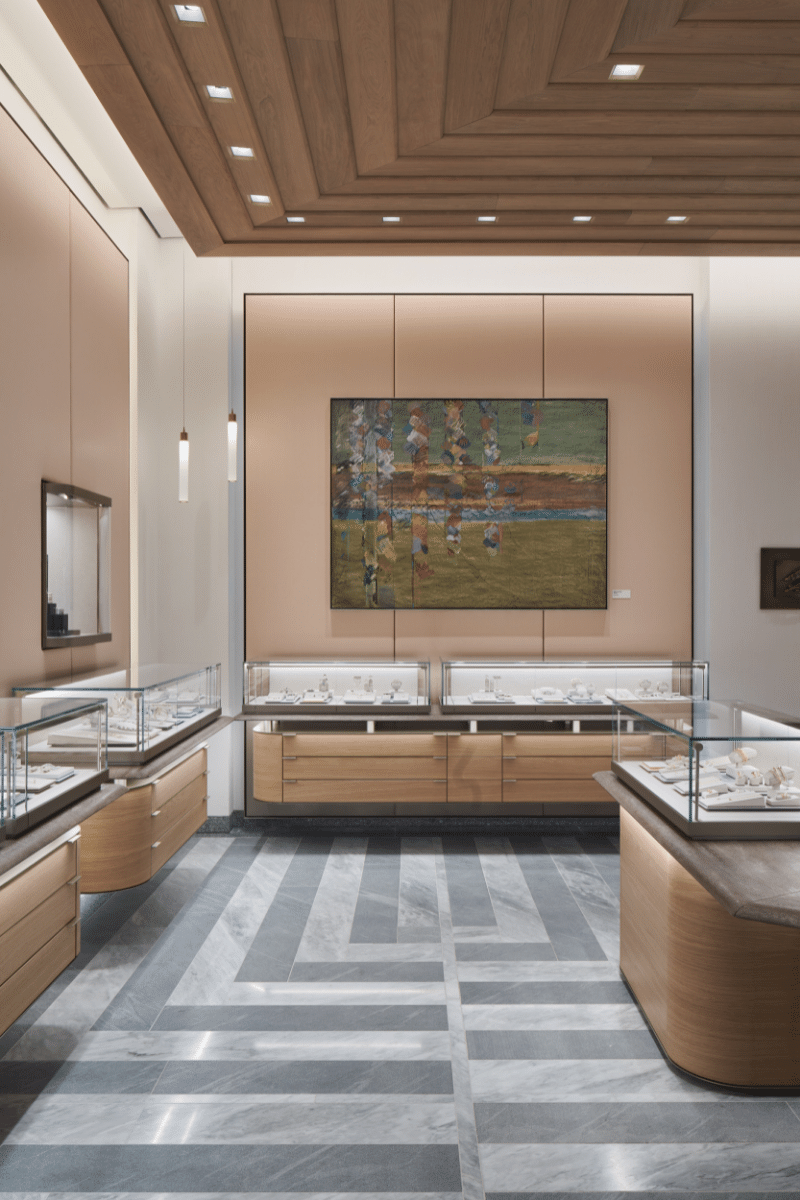
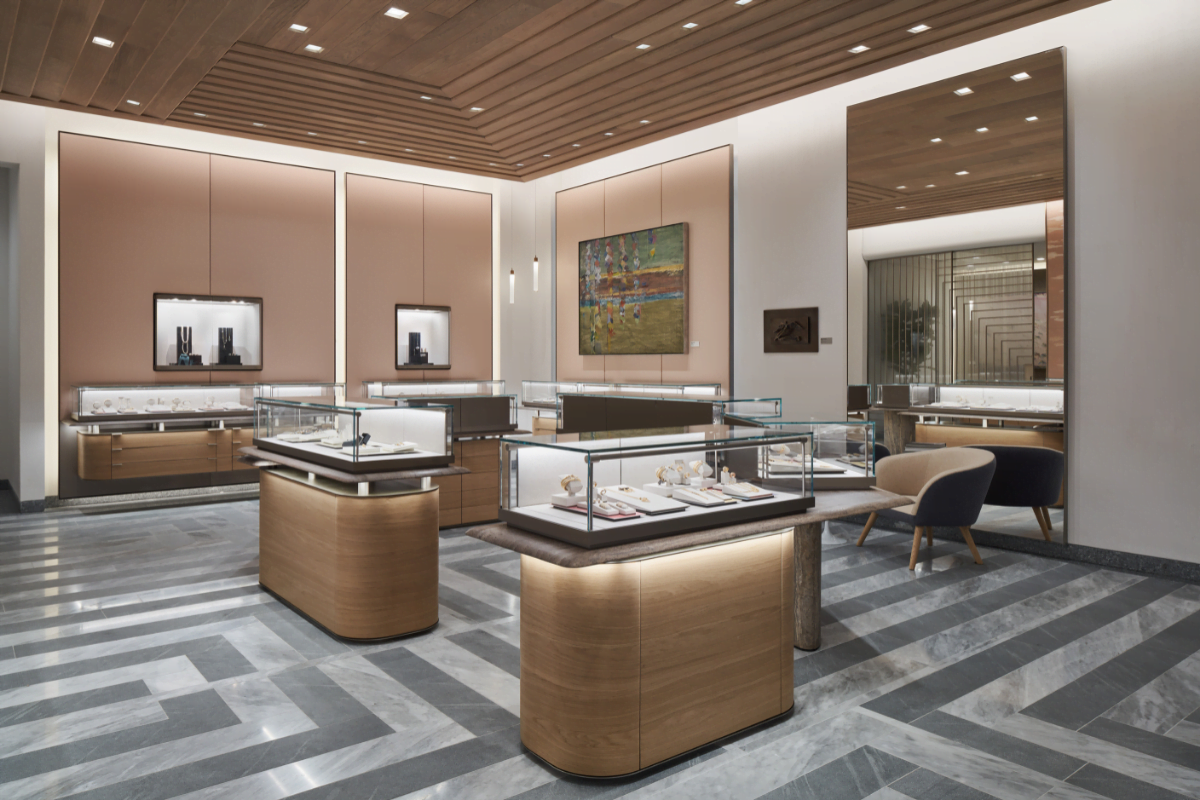
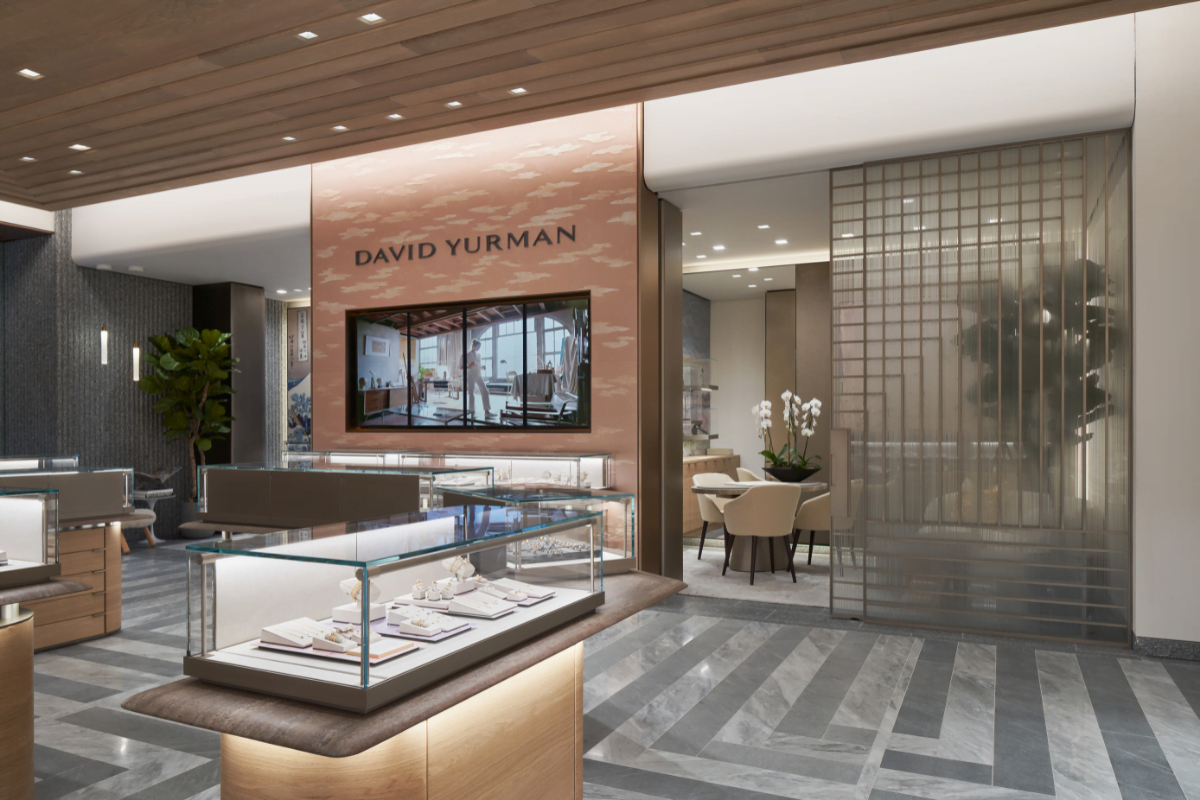
The store’s new design was conceptualized by President Evan Yurman who also holds the title of Chief Creative Officer for the David Yurman brand — Evan is also David Yurman’s son. Evan collaborated with award-winning architect Michael Gabellini on the store that features a floor made of dark cardoso stone and pale Bardiglio marble slabs, interior millwork made from white oak, and nickel and silver travertine countertops. Other design elements include a solid oak decorative ceiling, a rose gold and stone façade, and custom rose gold plaster feature walls. 

David Yurman Yorkdale (Image: Michael Muraz)

Luxurious private shopping rooms in the store are furnished with mid-century modern pieces inspired by the Yurman family’s personal collections and their connection to art and design. Artwork is also featured throughout the store, including sculptures and paintings by David Yurman and his wife Sybil. 

While the current store was being renovated, Yorkdale’s David Yurman boutique relocated into a temporary 2,250 square foot retail space in the mall formerly occupied by British luxury brand Mulberry which exited the Canadian market in 2020. Now that Yurman is back in its original space, the former Mulberry space will be split up so that adjacent luxury brands Cartier and Bulgari can both expand their existing Yorkdale stores. 

It’s not yet known if David Yurman will open any more standalone stores in Canada. David Yurman currently operates several concessions which feature an older store design that is also luxurious and impressive. A 1,649 square foot Yurman boutique at Holt Renfrew’s Bloor Street flagship store opened in 2019 on the main floor carrying a range of women’s and men’s designs in dedicated areas. That year as well, David Yurman unveiled a 1,200 square foot concession on the main floor of Holt Renfrew Ogilvy in Montreal. 

David Yurman Yorkdale (Image: Michael Muraz)

In late 2016, David Yurman opened a 1,226 square foot concession at Holt Renfrew in Vancouver which at the time was the largest concession in the world for the brand. The Vancouver store was one of only five globally at the time to feature Yurman’s ‘high jewellery’ collection with some pieces exceeding $100,000. Currently, the Vancouver concession is the only David Yurman boutique in Canada to feature the pricey pieces. 

David Yurman also operates concessions at Holt Renfrew stores in downtown Calgary and at Square One in Mississauga. The brand also has a shop inside of Nordstrom in downtown Vancouver. 

When it opened in September of 2014, Nordstrom’s first Canadian store at Calgary’s CF Chinook Centre housed a David Yurman concession area, as did Saks Fifth Avenue’s downtown Toronto store which opened in February of 2016. Both of those Yurman shops have since closed.  

David Yurman Yorkdale (Image: Michael Muraz)

Designer David Yurman founded his eponymous company in 1980, and in 1983 introduced his signature bracelet which propelled the brand. The bracelet features a twisted helix adorned with gemstones on its end caps, available at different price points depending on materials. Designs now include pieces for women and men that range from earrings to necklaces to gift items such as pens, as well as a line of timepieces and engagement rings. 

The company operates numerous standalone stores in the United States as well as concessions and shop-in-stores in upscale department stores. Various upscale jewellery retailers also carry the brand in the United States and Canada. 

Additional Photos

David Yurman Yorkdale (Image: Michael Muraz)

World’s Largest Global Cosmetic Clinics Company Enters Canadian Market with 1st Location and Plans for More

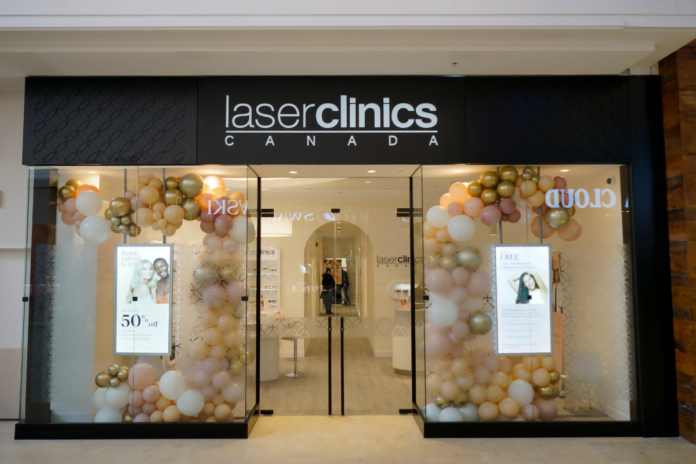
Laser Clinics at Hillcrest Mall (Image: Laser Clinics)

Laser Clinics, the world’s largest global cosmetic clinics company, has entered the Canadian market with its first location at Hillcrest Mall, Richmond Hill, in the Greater Toronto Area. 

George Jeffrey

And Laser Clinics Canada, which offers advanced beauty treatments, skincare services and products, plans an aggressive expansion throughout the country in the near future.

The brand has 194 clinics in Australia, New Zealand, Singapore and the United Kingdom.

George Jeffrey, Managing Director for Laser Clinics Canada, said the company is convinced Canadians will appreciate having greater access to more affordable medical-grade, top quality aesthetics treatments that are tailored to their individual needs and desired results.

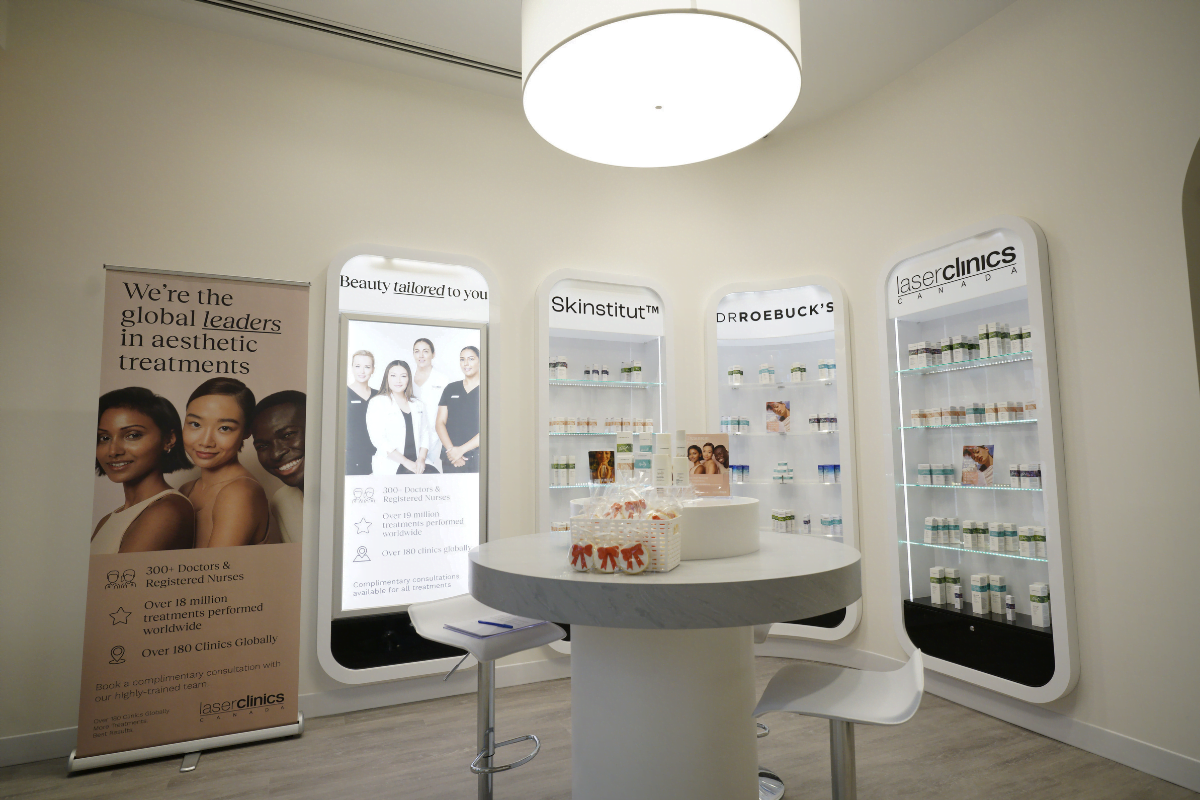
Laser Clinics at Hillcrest Mall (Image: Laser Clinics)

“Laser Clinics originated in Australia back in 2008 and it really is a business focused on clients in the advanced beauty and aesthetics space. It’s primarily known for laser hair removal with medical grade lasers  . . . The business evolved from there to also include skin treatments,” he said.

“We hope to have a lot more (in Canada). We plan to have nine open and operating by June 30. We have leases active and signed on multiple locations now and it should be reachable . . .  We do have a plan for the next calendar year for an additional 20-plus clinics across Canada. We’re going to be a national brand. 

“We’re starting in the GTA with a smaller team for market entry and leveraging our assets there first but we will be coming and most likely head west from the GTA actually. It’s on the radar on the near term.”

Laser Clinics also offers cosmetic injectables and Skinstitut and Dr. Roebucks – two clean and sustainable cosmeceutical skin care products made with Australian botanicals that enhance treatment results. Skinstitut specializes in high-performance cosmeceutical skincare with clinically proven ingredients that are as effective as they are affordable, because its mission is that everyone should experience the confidence that comes from happy, healthy skin. Dr. Roebuck’s line is a pioneer in the clean, sustainable skincare movement that delivers maximum results with minimal ingredients, bringing complexions to their healthiest, most radiant state, said the company. 

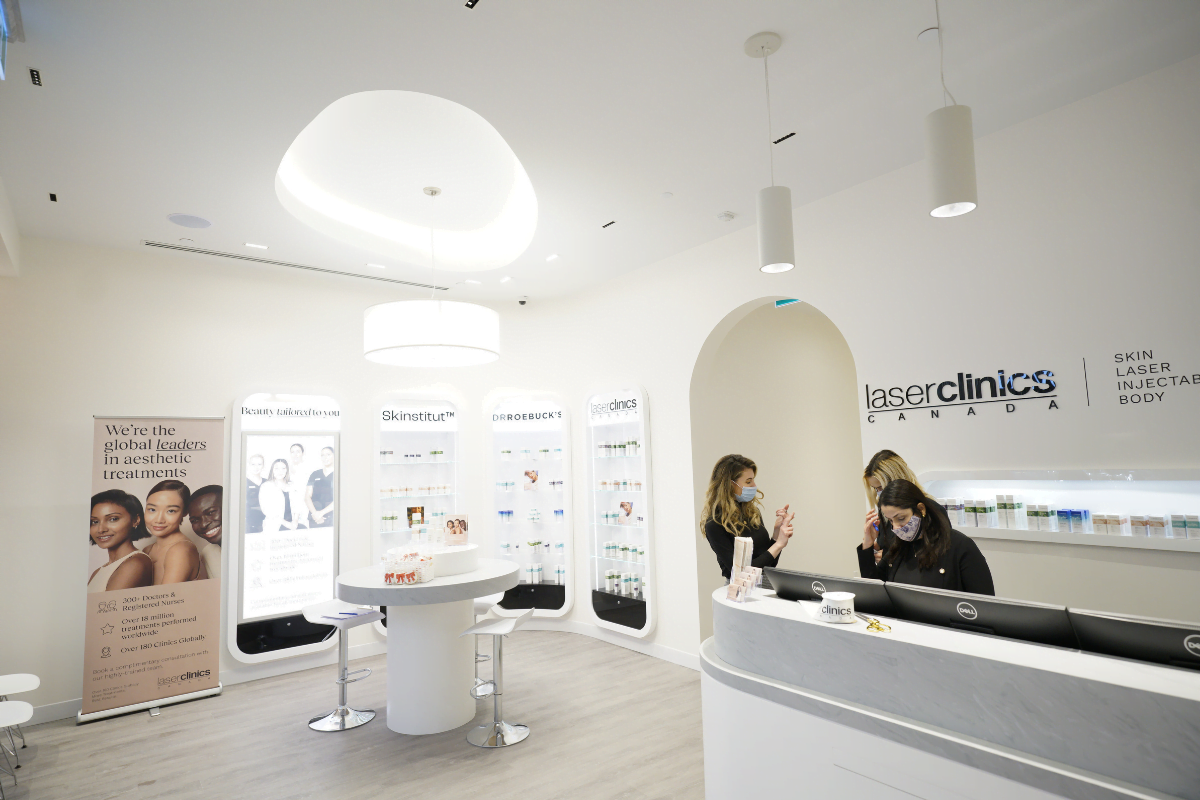
Laser Clinics at Hillcrest Mall (Image: Laser Clinics)

“Our tagline probably says it all. Beauty tailored to you. There’s an element of the client’s journey, the client’s experience, here that really starts with transparency. I think for a long time, services that have been provided from dermatologist offices and the availability and access to advanced beauty and aesthetics has been fairly closed and high priced. The transparency around what someone would expect to pay for some of these types of services and treatments was less known,” said Jeffrey. 

“You typically would go in for a consultation in the past. You would pay for that consultation. The market is opening so these types of consultations are now typically complimentary – though not everywhere. But at Laser Clinics we are. You can come to us and have a free consultation to talk to a trained medical aesthetician about what you’re looking to achieve. We design and prescribe a treatment path for Canadians that is affordable – affordable relative to other service providers that are in the market today.

“We democratize advanced beauty. We’re trying to make it more available and open access. There’s certainly a growing demand for these services in Canada but the access and the market is under-developed and under-served today. So we’re very excited to create great points of access for Canadians.”

Laser Clinics at Hillcrest Mall (Image: Laser Clinics)

He said Laser Clinics counts on the expertise and vision of a Medical Advisory Committee that oversees and approves equipment and treatments offered by the Laser Clinics network. The committee is comprised of leading dermatologists and non-surgical aesthetic doctors who meet regularly to review and engage in careful governance of the network’s product and service offering while overseeing the quality of the customer experience. Its priority is to ensure client safety always remains first.

Jonathan Hopkirk

“We’ve curated a treatment menu that was previously available only at a high cost from dermatologists,” said Dr. Jonathan Hopkirk, Global Medical Director and head of the company’s Medical Advisory Committee. “We have more than 300 experienced doctors, registered nurses, and cosmetic injectable experts who create a tailored treatment program for each and every client.”

Jeffrey added that Laser Clinics Canada is actively seeking expansion through the same unique 50-50 franchise-corporate co-owned business model that has worked exceedingly well in other markets. The company is now scouting for Laser Clinic co-owners who meet eligibility requirements, have a proven record of leadership and are passionate about helping clients look and feel their best selves. 

Laser Clinics is owned and operated by KKR, a leading New York-based private equity firm and it delivered more than three million treatments globally in 2021. 

Jackson Turner and Kate Camenzuli of CBRE are representing Laser Clinics in its Canadian expansion.

Spending Boost to Come as Restrictions Lift in Canada Says Study by Moneris

CF Fairview Mall (Image: Dustin Fuhs)

Pandemic restrictions have certainly had a negative impact on spending as ongoing and recent restrictions have made it difficult for Canadian small businesses to operate. 

However, data from 2021 by Moneris, Canada’s largest financial technology company that specializes in payment processing, demonstrates that as restrictions lift, Canadians’ spending and support for businesses increases. 

As restrictions lift in 2022, spending will likely increase, as Canadians continue to prioritize health and wellness and spend on experiences they missed out on during lockdowns.

Peter Goldsztajn, Director of Corporate Data Analytics for Moneris, said 2021 was an interesting year in consumer spending.

“We did see some pretty substantial growths over 2020. When you talk about lockdowns, especially when you’re comparing them to 2020 they had significant impacts. Now I would say it’s much more focused on certain areas of the economy.

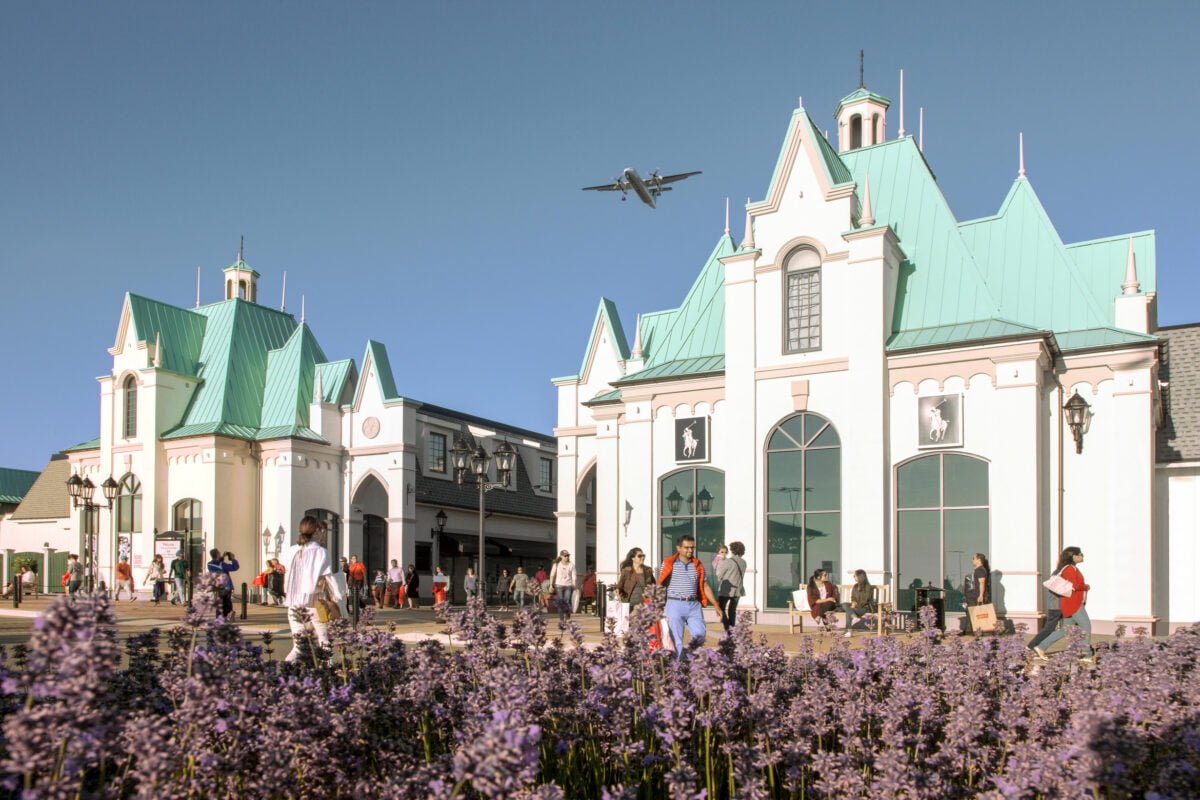
Image: McArthurGlen Vancouver Airport

“There’s no surprise that restaurants and travel have been a common theme. On the positive side, things tend to rebound quite quickly. It’s pretty obvious. As soon as we lift restrictions people tend to hit the stores and try to get their fixes for going out as well as spending some money on the things they wouldn’t have otherwise.”

Goldsztajn said the household industry as well as the health and wellness industry benefited through the lockdowns because as people couldn’t go out and shop as much as they’d like they were buying things for their home and buying items for their personal fitness.

“These are areas that are still growing and it hasn’t changed with the exception that I think consumers are being a little bit more adjusting their behaviour with regards to concerns about supply chain issues,” he said.

Data by Moneris indicates that between January to March 2021 many Canadians continued to work from home and chose to spend their money on home office and general home upgrades. In the first quarter of 2021, Moneris saw a 52 per cent volume growth in the household spending category compared to March 2020. Health and wellness and outdoor recreation were also prioritized by Canadians in the early months of 2021.

Between April and June 2021, as reopening phases began to roll out across the country and stores and restaurants started to open their doors again, Moneris saw retail sales volumes increase by 15 per cent and restaurant sales volumes increase by 35 per cent compared to the second quarter of 2020. With travel restrictions still in place, Canadians spent their money on local recreation, services and hobbies.

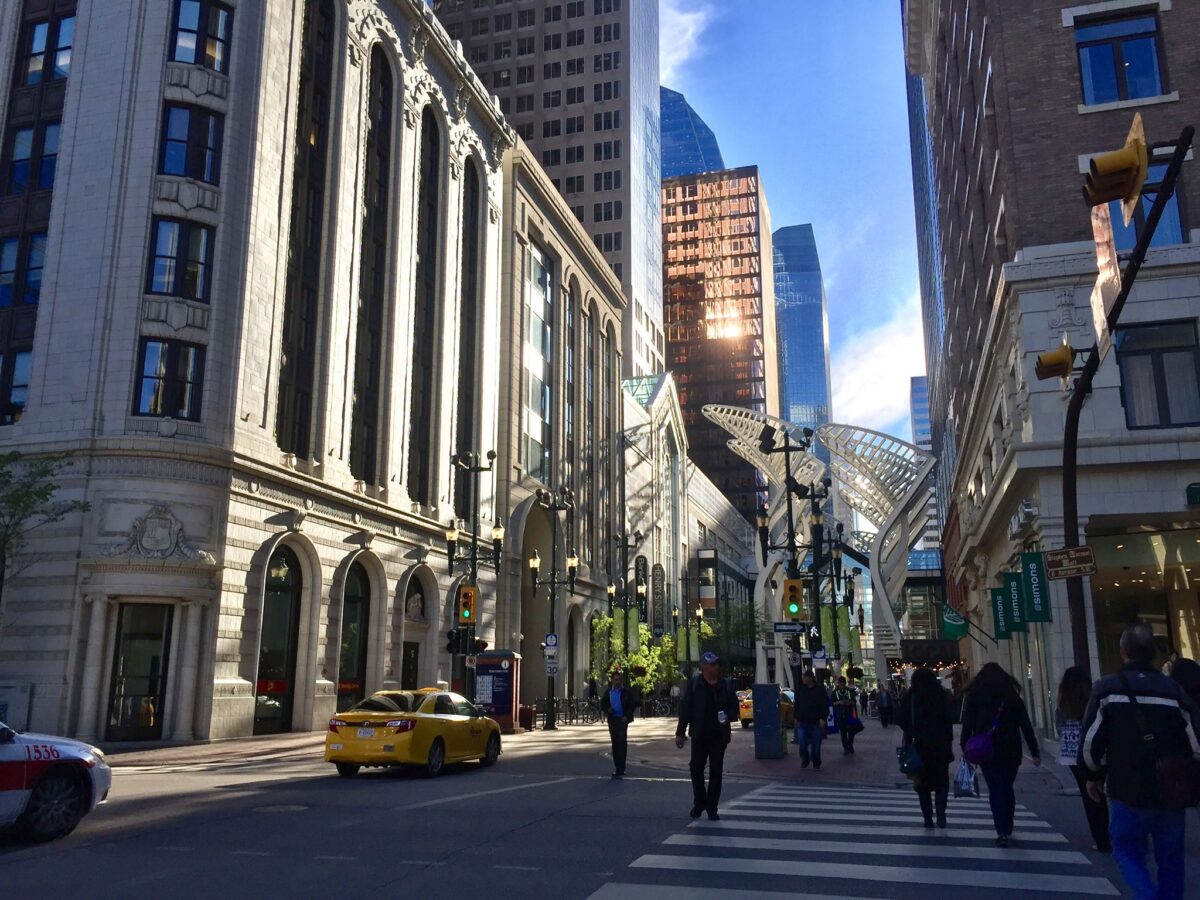
Image: Calgary Downtown Association

Then between July and September 2021, the lift on travel restrictions caused a dramatic spike in plane ticket purchases (282 per cent) and hotel bookings increased by 45 per cent compared to the third quarter of 2020. Looser restrictions on get-togethers caused Canadians to make up for lost time spent with friends and family during lockdowns; significant spending increases were seen at: Amusement parks: +183 per cent; Bowling alleys: +57 per cent; Movie theatres: +406 per cent; Bands & orchestras: +166 per cent; Tourist attractions: +132 per cent; and Recreational sports leagues/camps: +82 per cent.

From  October to December 2021, Moneris said spending on entertainment continued with an increase of 89 per cent compared to 2020 and sales at indoor recreational and entertainment facilities increased as the temperatures dropped.

“People have been spending money,” said Goldsztajn. “I can tell you that 2020 was below the normal no doubt about that but 2021 after March, in Alberta specifically, according to our data we’re actually seeing above the normal stats. There’s probably some element of pent-up demand. I can imagine that. People are also saving money and not commuting. Staying at home.

“But I do see substitutions. We’re basically at the same level or above in some industries. So people are still spending their money.”

Goldsztajn said that overall e-commerce has done well throughout the pandemic. 

“I suspect as things open you’re going to see some more substitution around that. People will be heading to the stores more frequently. As we always say, shop local. You really want to support your local small businesses and if you can order directly from them or perhaps just go visit them in the store or curbside pick up and things like that.”

Inequality Still Present in Corporate Canada as Retailers Mark Black History Month: Op-Ed

For those who, for some reason, don’t already know it, February is Black History Month. Recognized in the United States, Canada and Germany, it’s a time set aside each year in order to observe and pay honour to the contributions and achievements made by the Black community within each of these countries, and toward the improvement and progression of the world in general. It’s a time that provides us all with the opportunity to salute some of the well-known names of the fight for equality and civil rights, including Dr. Martin Luther King, Harriet Tubman, Malcolm X and Rosa Parks, as well as some of the lesser-known figures, like Bayard Rustin, Dorothy Height and Claudette Colvin. Though Black history differs somewhat between the United States and Canada with respect to the turbulence and injustice that’s occurred within the two countries, it nonetheless serves as a necessary platform to celebrate the evolution of Canadian society with respect to racial equality, while also representing a reminder of sorts concerning the distance that we have left to travel. 

A business imperative

For the Canadian business community, it’s a month that’s come to signify a similar importance. However, it also tends to cast a focus on the broader context of diversity, equity and inclusion (DEI) within the world of corporate Canada. It serves to prompt retailers and other businesses within the country to take a critical look at their own DEI initiatives and efforts, identifying where they may be making positive gains, as well as the areas in which more concerted work might be required. They are initiatives and efforts that are applauded by many astute industry observers and analysts who recognize the necessity in undergoing these endeavours in order to not only do the right thing, but to elevate their brands through the expansion of creativity, development of perspectives and attraction of the very best talent. And, if recent statistics around the issue are any indication, there seems to be quite a bit of runway ahead of Canadian businesses to create a more diverse, equitable and inclusive workplace for employees.

According to a recent Osler report entitled 2021 Diversity Disclosure Practices: Diversity and leadership at Canadian public companies, there have been some gains made with respect to DEI within Canadian businesses. For instance, women now hold approximately 23.4 percent of board seats among Canadian companies and account for the filling of 39.1 percent of newly created or vacated board seats. In addition, members of visible minorities also made slight progress, making up approximately 6.8 percent of positions on Canadian boards. These are significant improvements that are being made as a result of the development and maintenance of policies within companies across the country. In fact, the report suggests that more than two-thirds (67.3%) of Canadian businesses have adopted such policies and guidelines, a number that increased from 64.7 percent in 2020. 

Eliminating inequities

Though this progress should certainly be acknowledged, there remain inequities within the walls of Canadian businesses. The report shows that, despite progress made by women, very little of it can be identified in the executive suite. In 2021, the proportion of women holding executive level positions increased by the barest of margins to 18.2 percent, up from 17 percent over the previous year. And, when analyzing the progress made by Aboriginal peoples and persons with disabilities, the uptick in results is just as meagre. Among over 2,200 board positions within the 316 CBCA companies that provided disclosure for the report, only 8 positions are held by Indigenous peoples, while the number of director positions held by persons with disabilities is just 9.

The ethical catalyst for Canadian companies to develop, nurture and evolve DEI initiatives and policies, and adhere to them, is clear: it’s simply a fundamental right for all humans, despite their race, creed, colour, gender, sexual orientation or identification, to enjoy equal opportunity to advance and progress within their jobs and careers. However, when viewing the issue through a business lens, the impetus to build a culture of inclusion is much more interesting and represents a means to build and strengthen brands and improve the quality of the work they do. When opening up the organization to the input and influence of many different perspectives and experiences, creating a tapestry of insights and innovation, barriers to thinking and creativity are removed, leading to a more holistic view of the market and the community of customers the brand serves.

Continuing our progress

Diversifying the talent that gains representation within the organization will also more accurately reflect the society in which it operates, attracting the attention of an increasing number of consumers who shop with brands based on their values and the things they stand for. And, it’s not just the attention of prospective customers that will yield impressive dividends for brands. Creating and promoting a strong DEI culture within the organization will also serve as a conduit for the best and brightest young talent out there. It may seem trite to even suggest, but when an employee feels welcome and comfortable within their workspace, and appreciated and valued by their coworkers and associates, it will be evident in the work they produce and dedication they show toward their employer.

It’s been suggested by a growing number of industry pundits that, in order for there to be any meaningful movement in the area of DEI within Canadian business, something of a change or shift in mindset must be made at the very top of organizations. There seems to linger an antiquated view concerning the issue. However, with a groundswell of importance building around DEI, one that continues to grow every day, and the recognition by more professionals of its criticality, it may not be long before the barriers to entry and progression are removed completely, and the idea of diversity, equity and inclusion in society and the Canadian business community becomes a given fact. Until then, however, thank goodness for Black History Month and the enduring contributions of the Black community toward ensuring that we continue fighting for equality and the rights of every Canadian.

Related Retail Insider Articles

Canadian Retail News From Around The Web For February 16th, 2022

Canadian Retail News From Around The Web

News at a Glance

Retail Insider is streamlining its Canadian retail news from around the web to include a handful of top news stories that can be viewed quickly during the day. Here are the top stories from the past 24 hours.

Accessibility consultant ‘disappointed’ Calgary Lululemon store inaccessible despite Paralympic partnership (CTV)

‘The Grocery People’ Launches New Concept Flagship ‘Wholesale Market’ Store in Edmonton with Plans for Expansion

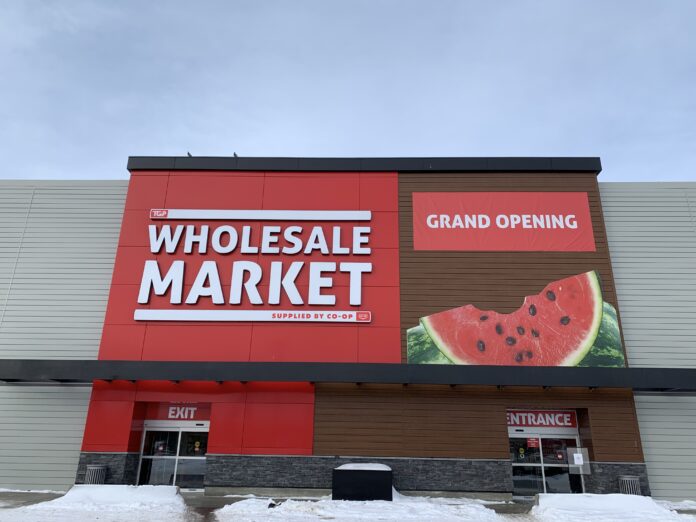
Image: Wholesale Market (The Grocery People)

The Grocery People have launched a new concept flagship Wholesale Market in Edmonton that could be the model for other similar store openings in Western Canada.

Adele Kostura, Director of Independent Business with Federated Co-operatives Limited which is the umbrella company for TGP, said the 56,000-square-foot store serves both foodservice operators and consumers.

“We’ve been in business of course in Edmonton for a number of years. The first thing that prompted us to look at a move was the ongoing expansion of the Yellowhead Trail, making access into our previous location really quite challenging. When we saw that, we knew we needed to make some sort of change and we thought it was a great opportunity to really expand our business and deliver a better experience for our customers,” she said. 

Image: Wholesale Market (The Grocery People)

The new store is located at 11628 142 Street NW. The previous location was at Yellowhead Trail and 149th Street. The company took over an existing building for its new store and underwent extensive renovations. 

“What you’ll see in Edmonton is a really interesting mix of standard retail product that you might see at any grocery store but then also some foodservice products. Bulk items, that sort of thing, that a chef or restaurants would use in food preps. So you kind of get both of those worlds coming together which is kind of unique,” said Kostura.

“Also in the new location we were able to include a really state-of-the-art culinary centre with industrial prep equipment, commercial kitchen. We’ve done some consumer chef demonstrations to help consumers understand products and how to utilize products and we’ll also use it for business reviews with our commercial clients to help them look at different options for their business and different products they might be able to use or different ways to use products in their business.”

The brand also operates the High Prairie Wholesale Market, TGP Cash & Carry Lloydminster, TGP Wholesale Kamloops, TGP Your Jasper Grocer, and TGP Your High Level Grocer.

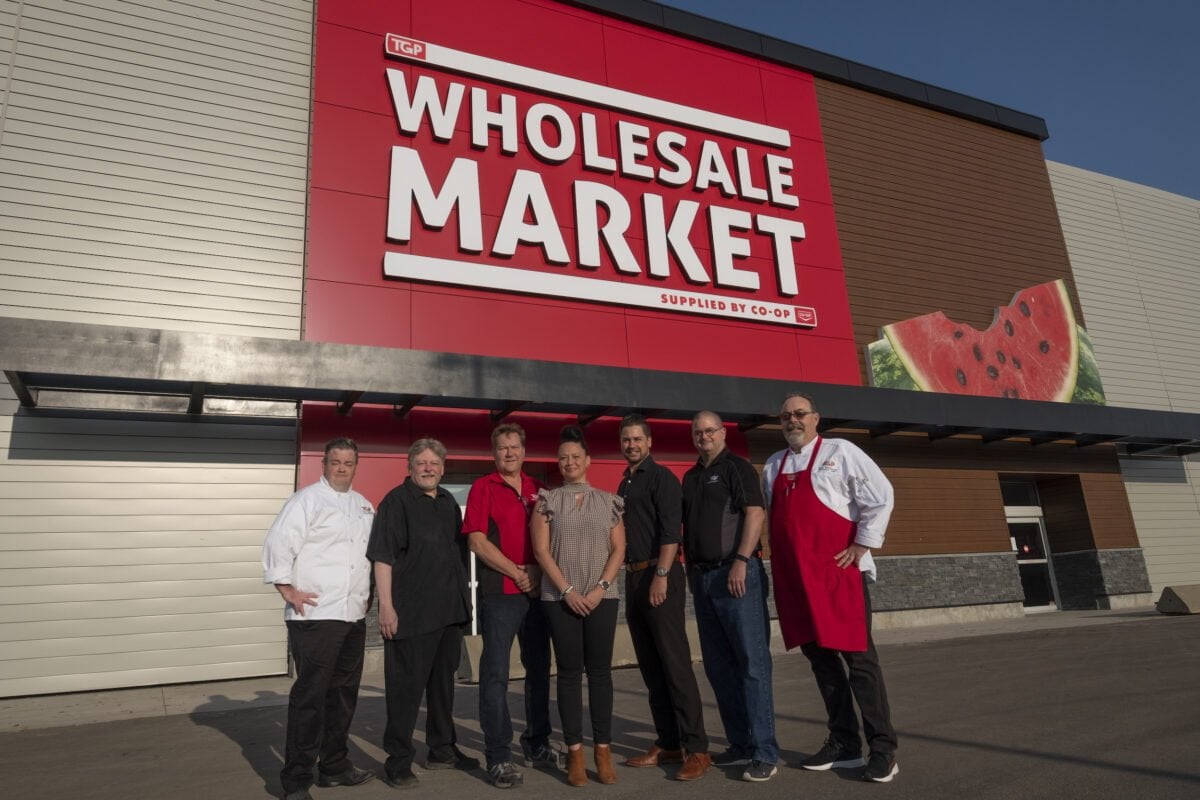
Image: (L-R) Chef Chris McMaster, Kevin Hollinger, Sales Manager Foodservice, Paul Osterhaus, Fresh Supervisor, Alisa Yeoman, Sales Consultant Foodservice, Craig Lalonde, Sales Consultant Foodservice, Rob Farrell, Store Manager, Doug Robertson, Culinary Specialist

“We’re in here and we do think there’s absolutely an opportunity for these to be in other centres as well,” said Kostura of the new flagship model. “In Alberta, across Western Canada really. We don’t have any firm plans right now for next locations but we’ll be watching here to see what we can learn. But we do think there will be that opportunity.”

According to the TGP website in the late 1950s, two of Alberta’s independent grocers, Wilson Lee and Bob Cherot, recognized the need to develop an independent wholesale that put independent grocers in control of where they were going. Lee and Cherot brought 39 of them together in January of 1960, and formed Alberta Grocer Wholesale Ltd.

In 1967, Alberta Grocers acquired Sun Fruit Company, a fruit wholesale, and began operating it as a subsidiary. Then, in 1983, Alberta Grocers amalgamated with the foodservice company, The Grocery People, and adopted the name, realizing it was a better fit for a company that no longer operated solely in Alberta, it says.

In 1992, TGP became a wholly-owned subsidiary of Federated Co-operatives Limited, and the produce supplier to all Co-op stores across Western Canada. TGP began expanding its retail and foodservice base into Southern Alberta, Saskatchewan, Manitoba and Northern Ontario using FCL’s distribution centres in Calgary, Saskatoon and Winnipeg, according to the company.

Today, TGP operates a head office and state of the art, 437,000-square-foot distribution facility in Edmonton, a produce wholesale operation based in Calgary, and regional branch offices and warehouse facilities in Kamloops, Saskatoon, and Winnipeg – all of which support community based, family owned and operated retail stores and foodservice establishments.

“Consumers are always looking for value and this concept is really based on every day great pricing rather than the high/low of flyer advertising that you’ll see in a lot of retail grocery stores. Really making sure that you get that fair price every day,” said Kostura.

“The mix of product is quite unique and provides another value opportunity for consumers to be able to try some of those products they might otherwise not have access to.

“For smaller commercial operators, sometimes they don’t want the giant size of a certain product and they would have an option to then use a retail product that might better meet their needs and reduce the waste that they might see in their business.”

Upscale Menswear Retailer ‘The Helm’ Announces New Downtown Edmonton Flagship Store [Exclusive/Renderings]

Image: Helm

Despite some recent and current challenges for retailers in downtown Edmonton, entrepreneur Chad Helm is bullish about the future and in the process of building a new flagship store for The Helm menswear store.

The new store currently under construction, which will likely open in April, will more than double the size of its original existing store to 8,200 square feet on three levels in the newly-developed ICE District on 102nd Avenue and 103rd Street.

The move shows confidence in the heart of the capital city that has seen high-profile retailers such as Hudson’s Bay and Holt Renfrew exit the core in recent years.

“The deal with us is we’ve invested in the downtown core now for a decade. This was a serious conversation I was having with staff and family. Do we continue to pursue the downtown image, the downtown store, everything we’ve sort of worked towards? Or do we shift a little and move the store to a handful of other places that are still central and easily accessible to your customer and not downtown?,” said Helm.

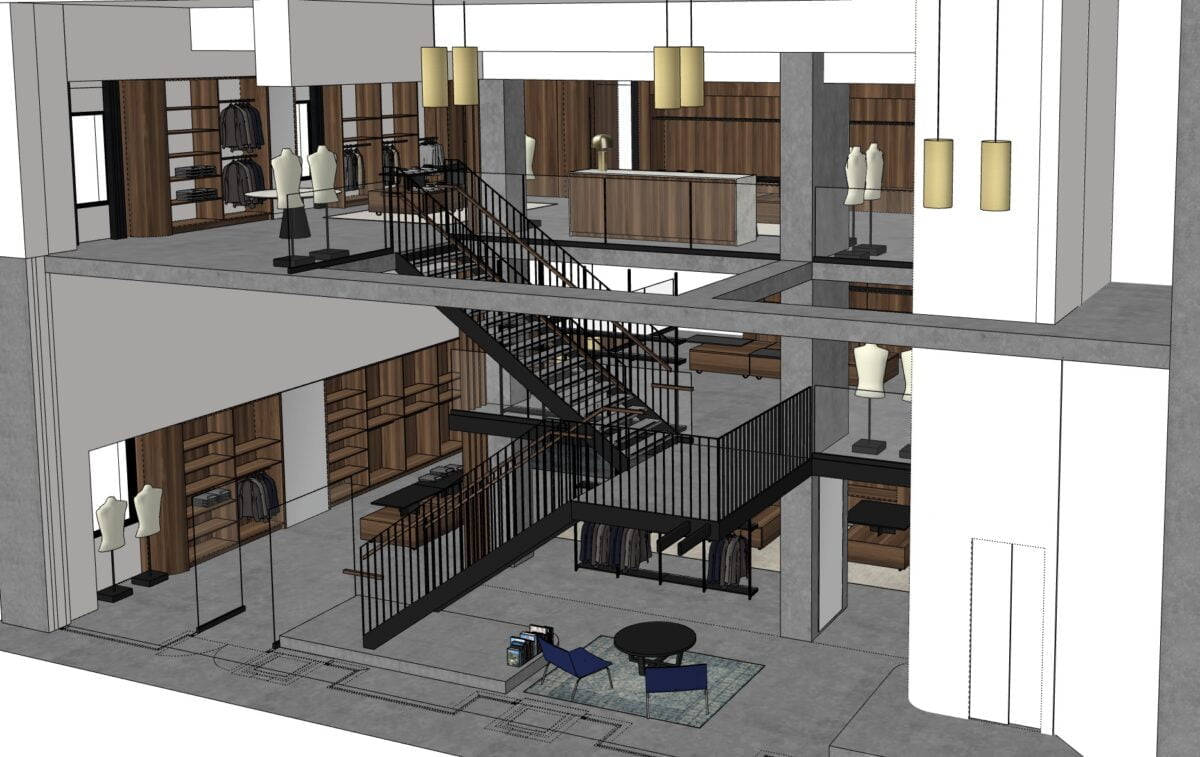
Rendering: Helm

That was a conversation that went on for a while. Ultimately it chose to remain downtown because it’s where they built their clientele. There’s no doubt that times have been bad for Edmonton’s downtown core even before COVID with the decline in oil prices. That has shuttered a bit the vibrancy of the core. The path for the future became clear. Will we continue to see the downtown core suffer or is it going to rebound?

“I do believe it’s going to rebound and the investment in the downtown core for us was important because it’s people like us that facilitate that rebound. If we all turn our backs and say we’re never going to occupy an office tower again or no retail doesn’t work downtown, that creates a pretty negative environment. I don’t believe that is dead.”

The former Hudson’s Bay site is going to be redeveloped and it’s located kitty corner to The Helm’s new store. 

“I think long-term the outlook is actually quite positive the way that the city is shaping up downtown. Yes, at the current moment it does feel a little bit like we’re taking a risk but as I zoom out on the lens I don’t have the same jitters. I feel the downtown core should come around. It’s just gone through a moment. This has happened many times in the past.”

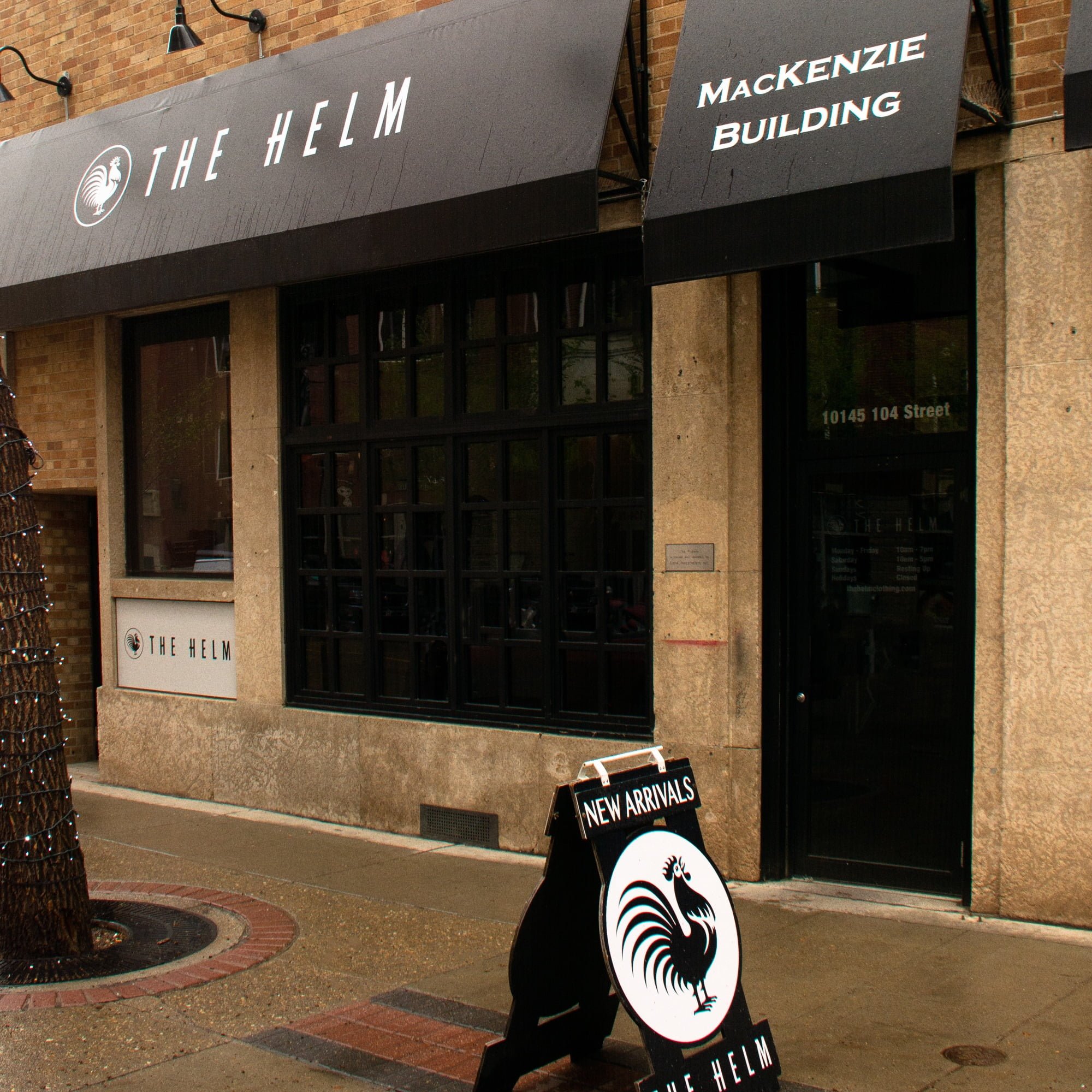
Helm opened his first store in the summer of 2012 on 104th Street in downtown Edmonton. 

“There was a lot of enthusiasm from the city but it was a steep learning curve for the first three years or so. But we’re proud to say that we’re closing in on 10 years in business,” he said. 

“It was and still is a cool street, multiple street front shops. Good vibe anywhere from bars to retail to coffee shops down here. We felt it was important to be part of a greater community versus just being in an area surrounded by similar types of retail.”

The initial store is 3,000 square feet. Everything was run out of that space. The website, social media, all the goods sold out of the space, some back office use. 

“It was sort of a mom and pop setup for the first five, six years. But since then we’ve grown. Not only our sales team and assortment has grown but also our marketing and communications team and our need for just more space overall. Our tailor shop. Hence the move into a new bright, shiny location.

“At the time, the store was I guess you could say traditional. We had 40 to 50 per cent of our inventory in tailored clothing and sportcoats and suits and dress shoes. Shirts and ties. We’ve adjusted our perspective into something that’s a little bit more progressive and more lifestyle focused versus just business.

“As a business we’ve been focused on, I hate the word luxury but it’s kind of the easiest word to use because it easily identifies us to the consumer. We are a luxury men’s clothing retailer and we’ve been chipping away at this slowly and it’s evolved into quite a thing at this point.”

Helm said the new store will be a very open and contemporary design, adding that it’s very similar to places a shopper would see in Midtown New York or Milan, Italy.

The main floor has a 2,600-square-foot open floor plan, another 1,400-square-foot mezzanine and then another 3,300 square feet on the top floor. 

“It’s got a massive opening that spans the entire front of the store. As you walk in, you’ll look up and you’ll see nothing but 35-foot ceilings and tons of windows,” said Helm.