Retail Insider is streamlining its Canadian retail news from around the web to include a handful of top news stories that can be viewed quickly during the day. Here are the top stories from the past 24 hours.
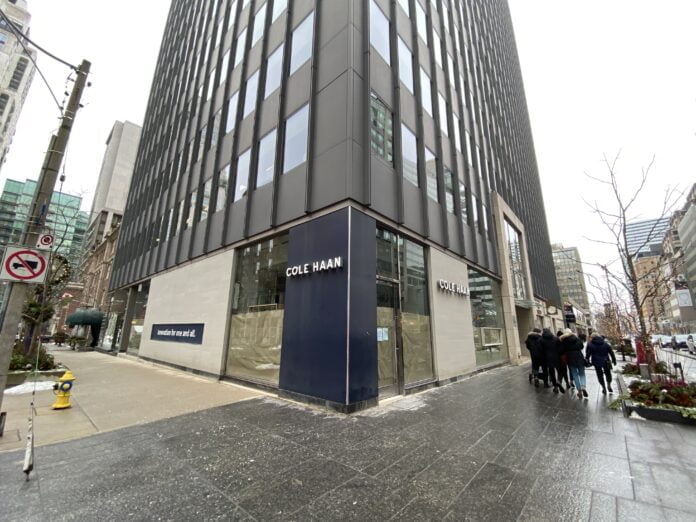
A large Rolex store will be replacing Cole Haan on Bloor Street in Toronto according to sources. The store will be operated by Royal de Versailles jewellers and could become one of the largest Rolex stores in North America when it opens.
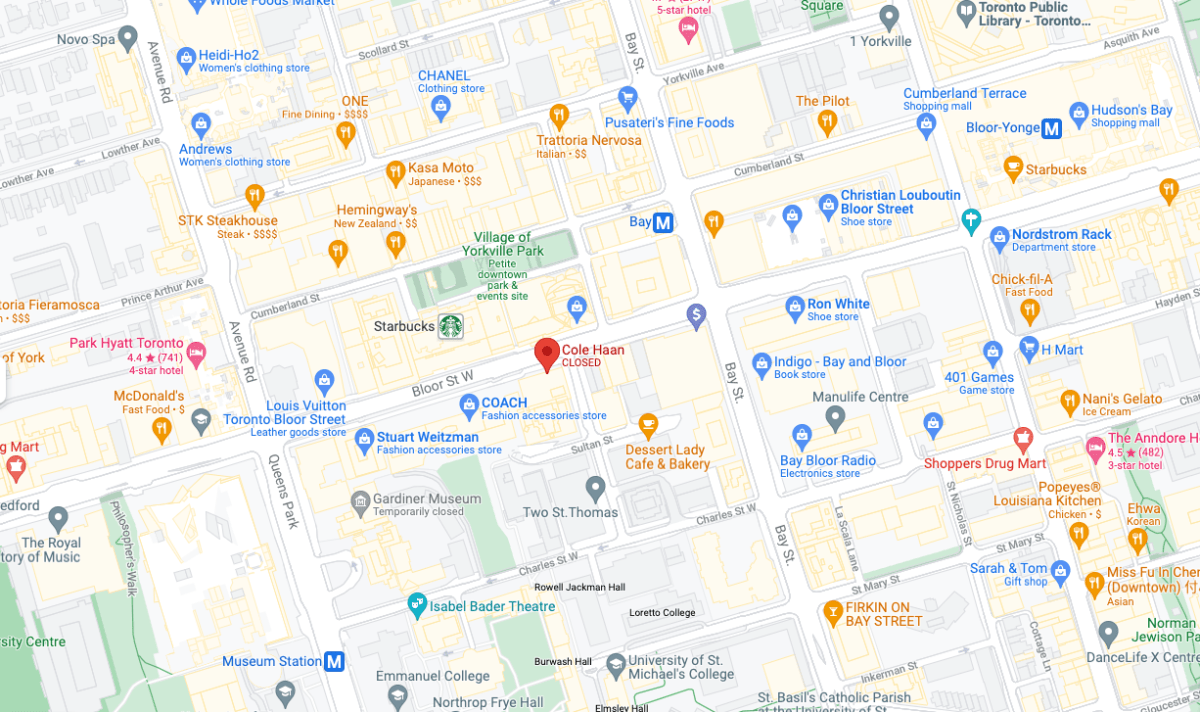
Rolex will occupy the corner retail space of 101 Bloor Street West, located at the southwest corner of Bloor and St. Thomas Streets. The building which includes an office tower also contains multi-brand jewellery retailer Royal de Versailles which currently operates a 700 square foot Rolex boutique space with a small facade and signage on Bloor Street.
That presence for Rolex will expand substantially this year with the new standalone corner store by Royal de Versailles which will be a welcome addition to the rapidly changing Bloor Street retail offering.
Rolex will occupy about 1,850 square feet of the former ground floor of the Cole Haan space which spans just over 2,700 square feet. A listing showed a basement level available with over 2,800 square feet of space. DWSV Realty listed the space.
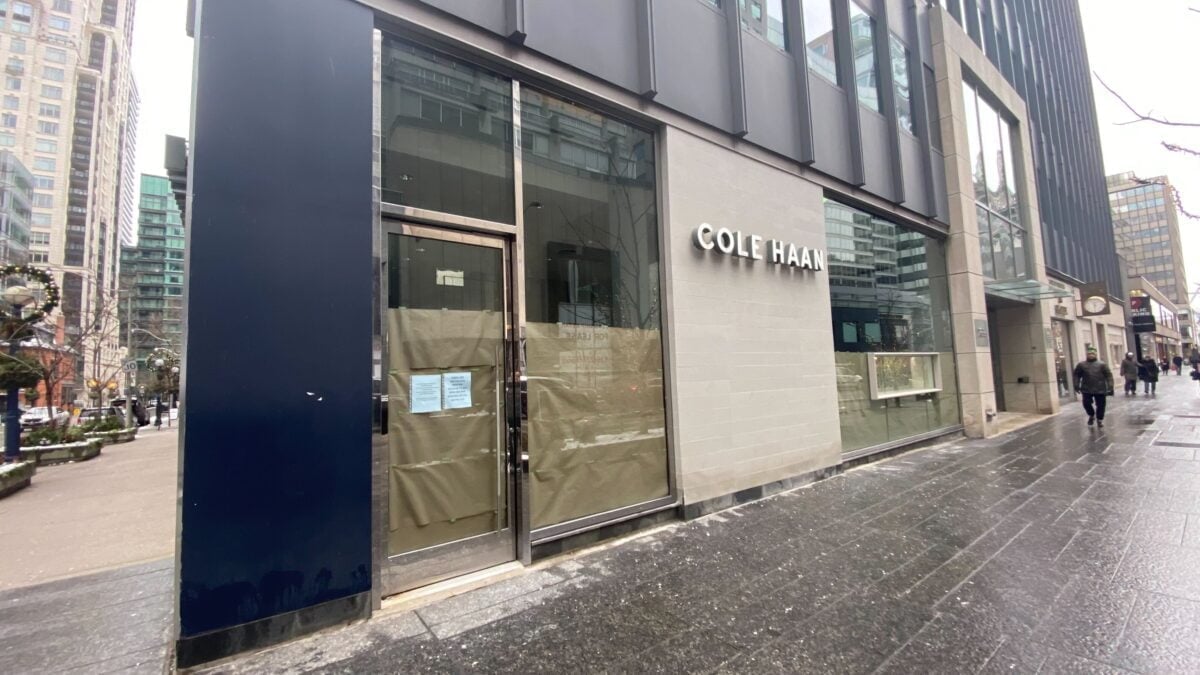
Click for interactive Google MapShuttered Cole Haan on Bloor Street (Photo: Craig Patterson)
Cole Haan shut its only standalone full-priced Canadian store just before Christmas, and the space has been cleared out in anticipation of construction for the new tenant. Cole Haan opened on Bloor Street in 1991 to fanfare along with other US-based brands including Tiffany & Co. and Talbots.
In the immediate area, several developments will change retail on Bloor Street. Urban Toronto recently reported that the row of stores on Bloor across St. Thomas Street from the new Rolex store will be redeveloped with a tall residential tower with over 12,000 square feet of retail space at its base. Across the street, the block including the current Harry Rosen store and 80 Bloor W. office tower will also see a significant tower development that has been approved.
Bloor Street has seen several recent changes on its luxury stretch between Bay Street and Avenue Road. The Zegna store, operated in partnership with Harry Rosen, shut in December after operating for about 2.5 years at 100 Bloor Street West next to Hermes. Other new retailers opening on Bloor Street this year include Lafayette 148 at 130 Bloor Street West (negotiated by DWSV Realty representing both the landlord and tenant) as well as Anne Fontaine and Paris Baguette at 110 Bloor Street West. More negotiations are said to be underway and Retail Insider will follow these stories.
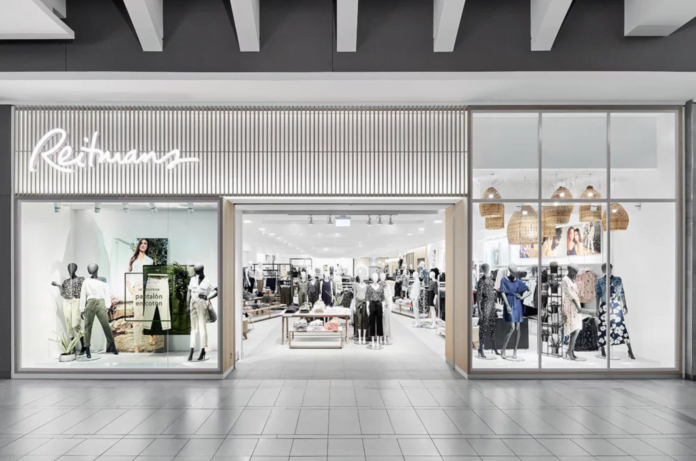
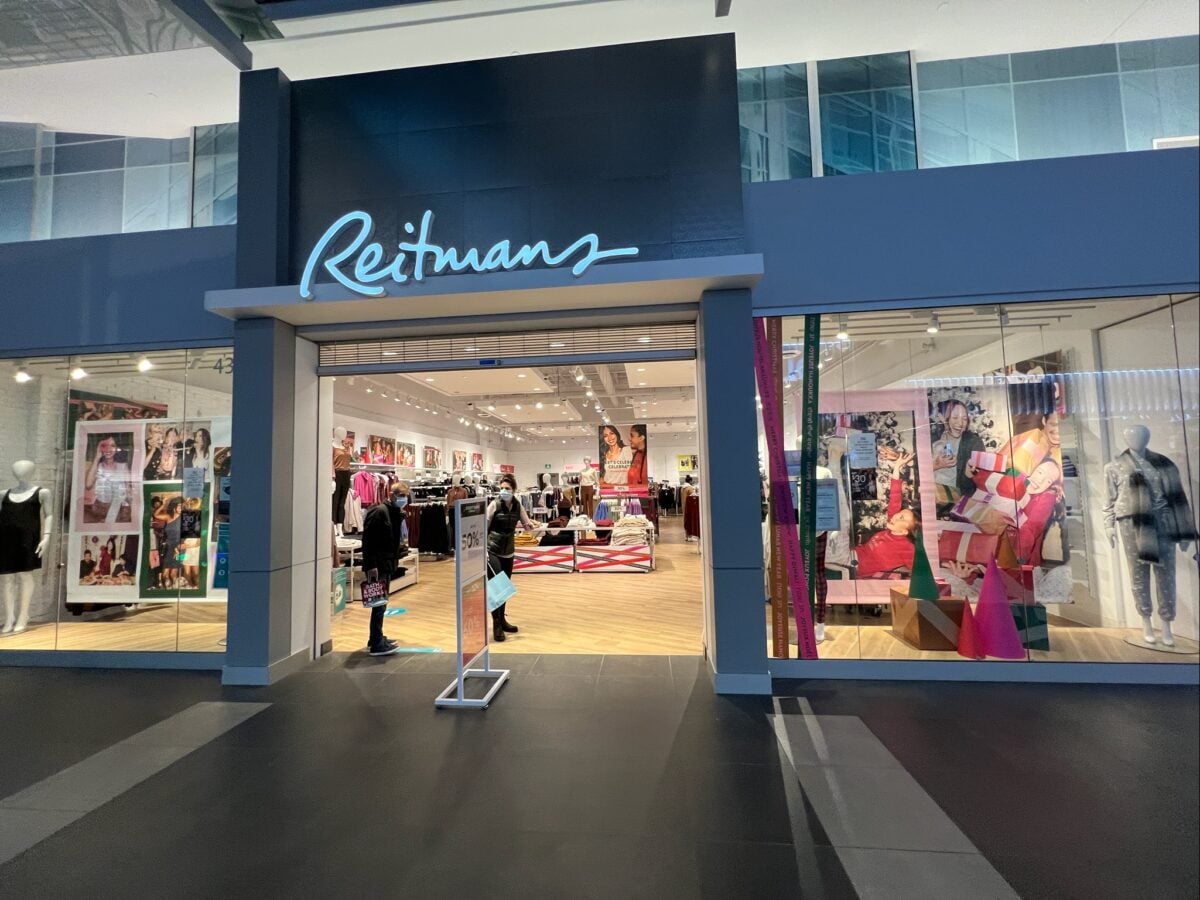
Reitmans' New CF Carrefour Laval boutique. Photo: Reitmans
Canadian retail giant Reitmans recently announced it has emerged from its restructuring proceedings through the Companies’ Creditors Arrangement Act and its President Stephen Reitman said he’s confident that its brands (Reitmans, Penningtons and RW&Co.) will flourish.
“We now begin a new chapter in our company’s almost 100-year history,” wrote Reitman in a publicly-released letter. “We remain a proudly owned and operated Canadian company, committed to serving millions of people across this country.”
Reitmans had filed for creditors’ protection on May 19, 2020.
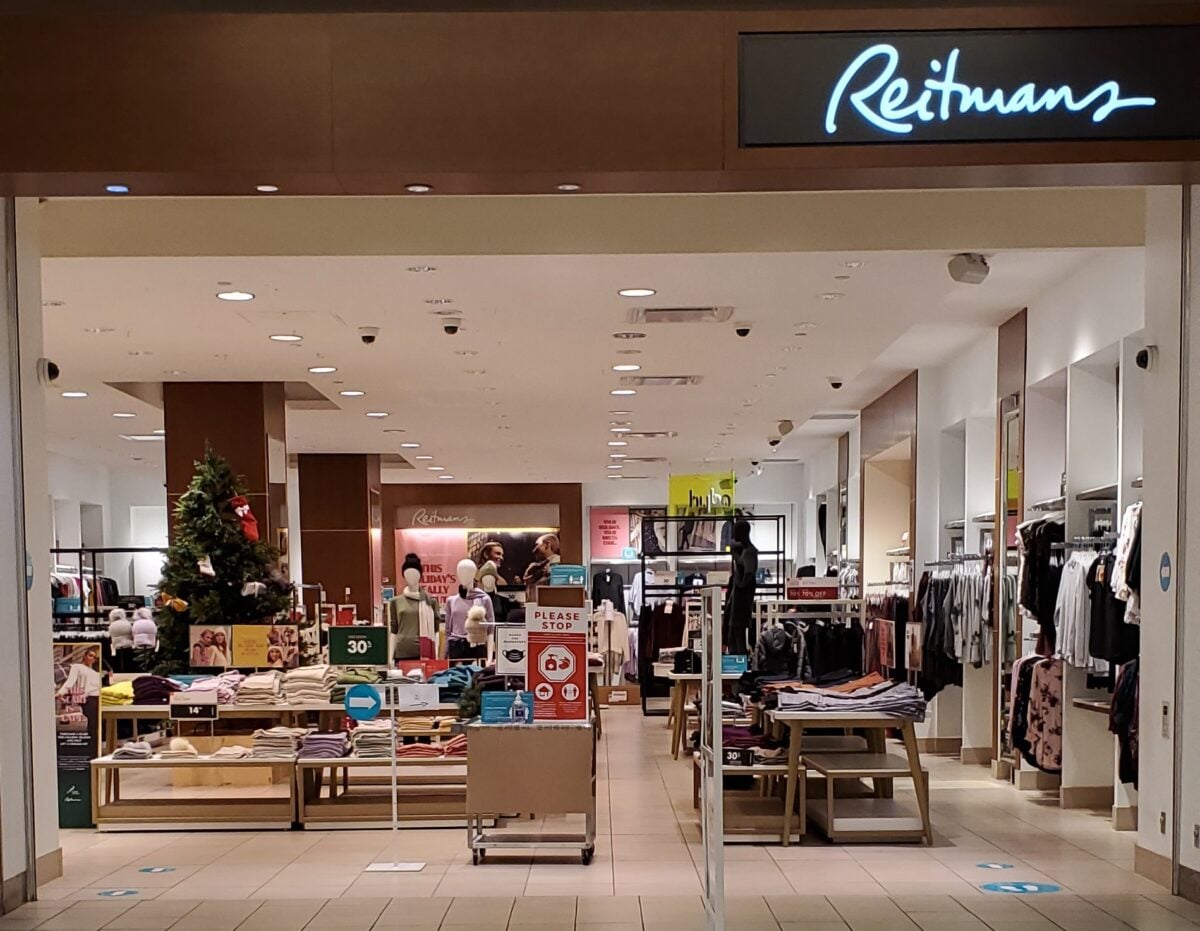
Reitman’s at Tsawwassen Mills in Delta, BC (December 2021). Photo: Lee Rivett.
Stephen F. Reitman
In a recent news release, the retailer said it has paid to the Monitor appointed under the CCAA process, Ernst & Young Inc., the aggregate amount of $95 million with the Plan of Arrangement. It also announced it had entered into a senior secured asset-based revolving facility of up to $115 million with Bank of Montreal.
“The Credit Facility has a term of three years. Funds advanced under the Credit Facility will be used, among other things, to finance the amounts payable under the Plan of Arrangement and to fund Reitmans’ working capital needs and for its ongoing general corporate purposes, including new store openings and renovations,” said the retailer.
“As many of you know, Reitmans (Canada) Limited has been a family-run business based in Montreal for over ninety years,” wrote Stephen Reitman. “During this time, our organization has confronted difficulties and experienced great success. I have always been extremely proud of how our employees and leadership team have handled these ups and downs, and the resilience they have demonstrated.
“Nothing could have prepared us for the challenges we faced in the beginning of 2020.
Reitmans at Metrotown – Photo by Geetanjali Sharma
“With the start of the pandemic and the temporary closing of all 575 of our retail stores in March, we became completely reliant on our e-commerce business. It became clear that we would have to change our business model due to the uncertainty of when our stores would reopen. On May 29, 2020 we entered the Companies’ Creditor Arrangement Act (CCAA) in order to restructure the company and modify our work methods and processes. We were forced to close two beloved brands, Thyme Maternity and Addition Elle, and we made the painful decision to let go many dedicated and hard-working employees.”
In its latest press release, the retailer said it operates 412 stores consisting of 241 Reitmans, 93 Penningtons and 78 RW&CO.
In December, the company released its financial results for the third quarter of its fiscal 2022, ending October 30.
Sales for the third quarter of 2022 increased by $14.8 million, or 9.1 per cent, to $178.2 million, primarily due to an increase in store traffic and number of transactions, as customers transitioned back to a “brick and mortar” shopping experience, it said.
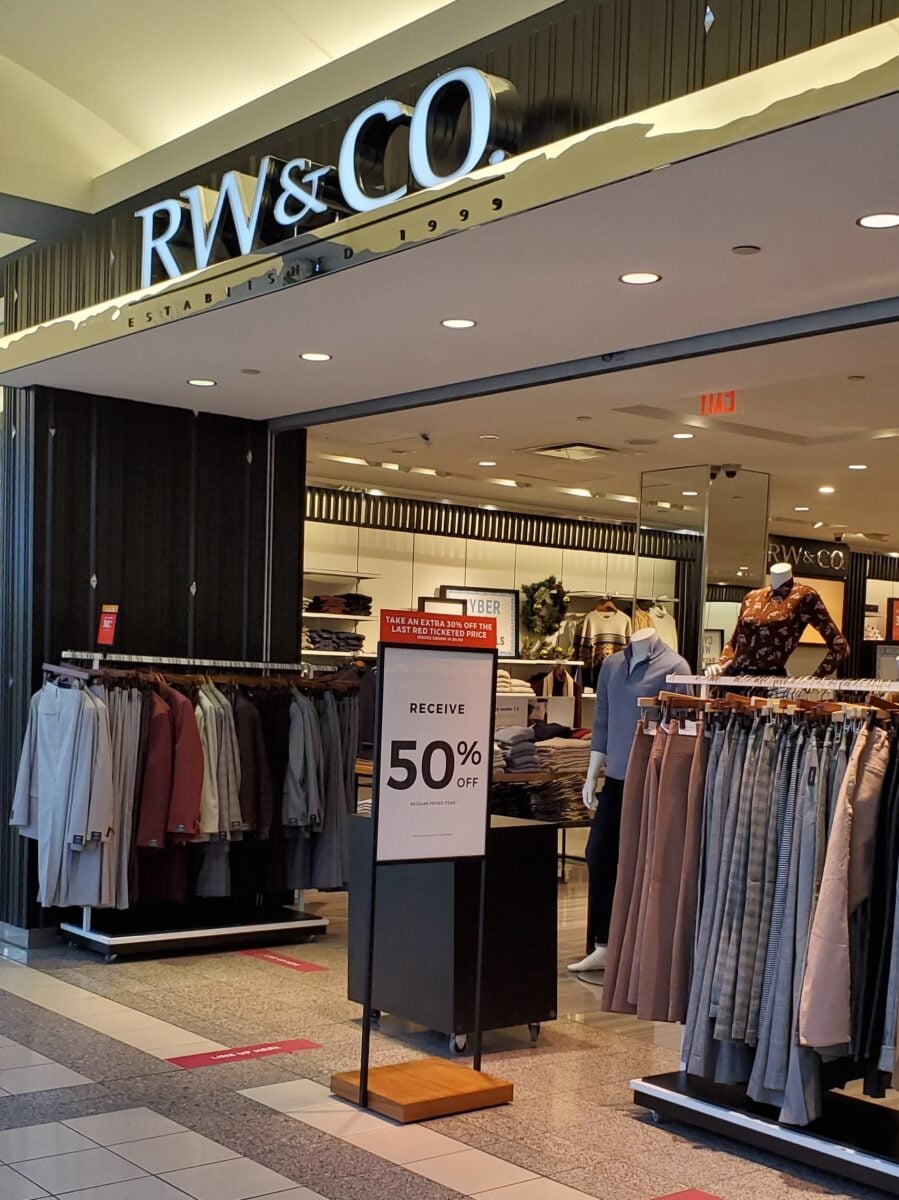
RW&CO at Metrotown – Photo by Geetanjali Sharma
Gross profit for the third quarter of 2022 increased $19.8 million to $101.4 million as compared with $81.6 million for the third quarter of 2021. Gross profit as a percentage of sales for the third quarter of 2022 increased to 56.9 per cent from 49.9 per cent for the third quarter of 2021.
“The increase both in gross profit and as a percentage of sales is primarily attributable to lower markdowns and promotional activity in the third quarter of 2022 combined with a favourable foreign exchange impact on U.S. dollar denominated purchases included in cost of goods sold, partially offset by higher merchandise freight costs as the global shipping industry disruption required an increased usage of air freight shipments to meet customer demand,” said the retailer.
In his letter Stephen Reitman said: “When I reflect upon our experiences over the last 22 months, I am struck by the number of people, both within and outside of our organization, who enabled us to emerge successfully from CCAA, and who have supported us during this most difficult time.
“While the uncertainty of Covid-19 may continue, I am confident that Reitmans (Canada) Limited and our brands, Reitmans, Penningtons and RW&CO., will flourish. I look to the future with hope and optimism for us all, our partners and our valued customers.”
Metro on Front Street in Downtown Toronto (Image: Dustin Fuhs)
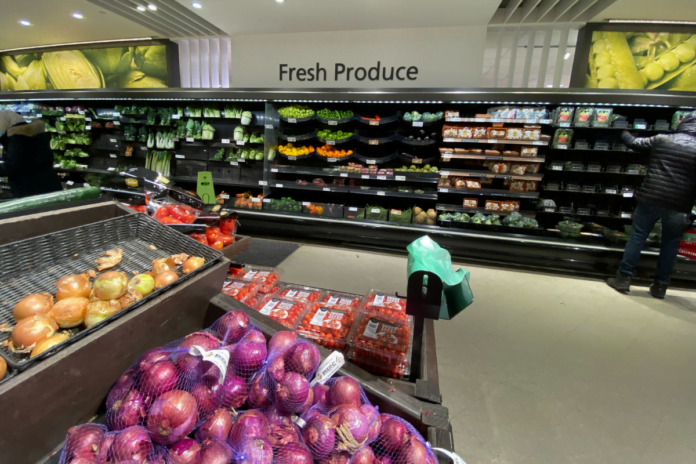
In many parts of the country, Canadians are now reporting a growing number of empty grocery store shelves. It’s happening here, in the United States, and in many other parts of the industrialized world; it’s not just a Canadian phenomenon.
Before Omicron, empty shelves were already visible, but few noticed. They were sporadic in the fall as supply chain woes continued, and our food industry was essentially experiencing supply chain fatigue. After many months of dealing with public health protocols, labour issues, and higher input costs (which tends to create more tension across the supply chain), something had to give.
But due to its viral viciousness, Omicron just made matters worse. Most food companies, from farm to store, have been operating with 20 to 30 percent fewer people available to handle the work. And most of the time, the labour involves perishable goods. For many farmers, processors and retailers, waiting is just not an option.
The storyline for January 2022 at the grocery store is not the same as it was in March 2020. Far from it. Most concerningly, supply chain issues are the driving factor behind food shortages and rising costs—not consumer demand. Shortages of both toilet paper and food were the result of consumer panic coupled with a collapsing food service industry. This time around, supply chain challenges are Omicron, the winter weather, and (of course) public health measures at the border, which may have compromised its fluidity.
Nevertheless, while Omicron was a “gut punch” to the food industry, vaccine mandates for truckers are robbing the industry of the oxygen it desperately needs right now.
Canadians are likely underappreciating how the border is so critical to North America’s food security. Whether you are for or against global trade, Canada has an unforgiving northern climate, along with a moderate population size living in one of the world’s largest geographic areas. Unless a sector builds a significant competitive advantage, and some have, it is difficult to produce food in Canada while keeping affordability for consumers in check. The vaccine mandate disqualified anywhere between 8,000 to 16,000 Canadian truckers from crossing the border; on the American side, about 125,000 drivers. With such a high absence of people, food access will undoubtedly become an issue.
Additionally, if food continues to cross the border, and it probably will, expect that food to be more costly. To motivate truckers to cover the Canadian market will likely come at a price. Reports suggest that getting a truck to cover the Canadian market is 25% more expensive compared to just a few days ago. Higher logistical costs, like anything else involving the supply chain, will catch up to consumers. That’s the reality of supply chain economics. And with fewer people driving around, major buyers will be prioritized over smaller ones. Many processors will have a harder time getting the ingredients they need to manufacturer the food we buy every day, on both sides of the border.
With food distribution, short-sighted government interference can generate market failures, more disruptions and, yes, more empty shelves at the grocery store.
However, the food industry has been able to deal with a lot over the past several decades. The pandemic has been nothing if not challenging, but it has continued to execute and deliver the goods, despite some government-level lack of forethought. The regulatory environment has always been a pain for the food industry, and always will be. The pandemic is no different. Canadians should not underestimate how resilient our food industry is. Consumers may not always find what they want at times, but they will always find what they need at the grocery store. This is due to the work and effort of companies, and people willing to deal with whatever is thrown at them.
Now, a trucker convoy against vaccine mandates at the border has raised almost $800,000. The convoy will continue into next week. It blames news outlets for the collective “COVID-19 hysteria”, as it’s called. Truckers have every right to protest, but transporting goods is what we need them to do. The convoy itself is not likely to make much of a difference.
Meanwhile, Canadian consumers should know they will be fine. Operations across the supply chain are incredibly choppy right now, but they will continue to find what they need, albeit with fewer choices. Some of the choppiness is policy-induced, but it is what it is. Still, expecting perfection at the grocery store for the next little while would be unreasonable.
Retail Insider is streamlining its Canadian retail news from around the web to include a handful of top news stories that can be viewed quickly during the day. Here are the top stories from the past 24 hours.
Canadian shopping centres have among the highest occupancy rates in the world, says the Vice President of Retail Leasing for Cadillac Fairview.
Darryl Schmidt
In a recent webinar with the Consumer Real Estate Canada group, Darryl Schmidt said in the UK vacancy levels are sitting around 30 per cent in some very large well-established shopping centres.
“Likewise in the US, so where our portfolio and the Canadian average is probably sitting somewhere between 85 and 92 per cent occupied. We’re in really good place. But excess vacancy and large box vacancy, there’s a number of huge department store boxes that are vacant in the US and Europe, is forcing those landlords to get super creative,” said Schmidt.
“There’s a big push in Europe and the US into the leisure category. I saw some concepts where you had indoor go kart tracks, full indoor go kart tracks, EV, electric so they’re super high speed, within department store space and then all the ancillary leisure uses that would go along with that in terms of indoor golf . . . There seems to be a huge movement afoot to try and fill the void of these large boxes with leisure.
CF Chinook Centre (Image: Cadillac Fairview)
“I don’t know if that’s going to be a long-term solution. It’s a great short-term traffic driver.”
Schmidt said he was pleasantly surprised at how robust retail sales in Canada were in the third and fourth quarters of 2021 once the industry emerged from a lot of the lockdowns earlier in the year.
“We’re getting good initial feedback from a number of our clients in terms of what holiday sales looked like. I would say that in almost 50 per cent of our portfolio amongst our retailers we saw a return to 2019 sales levels or exceeded 2019 sales levels, especially Q4 and a portion of Q3. So that’s a great news story,” said Schmidt.
“It’s not all great news. We’ve still got some issues in our urban assets because of the lack of return to office in the major markets. I’d say right now given what we’ve seen in the last two years it’s a positive news story certainly for the last six months.”
CF Sherway Gardens (Image: Cadillac Fairview)
Schmidt said luxury retail has performed exceedingly well through COVID.
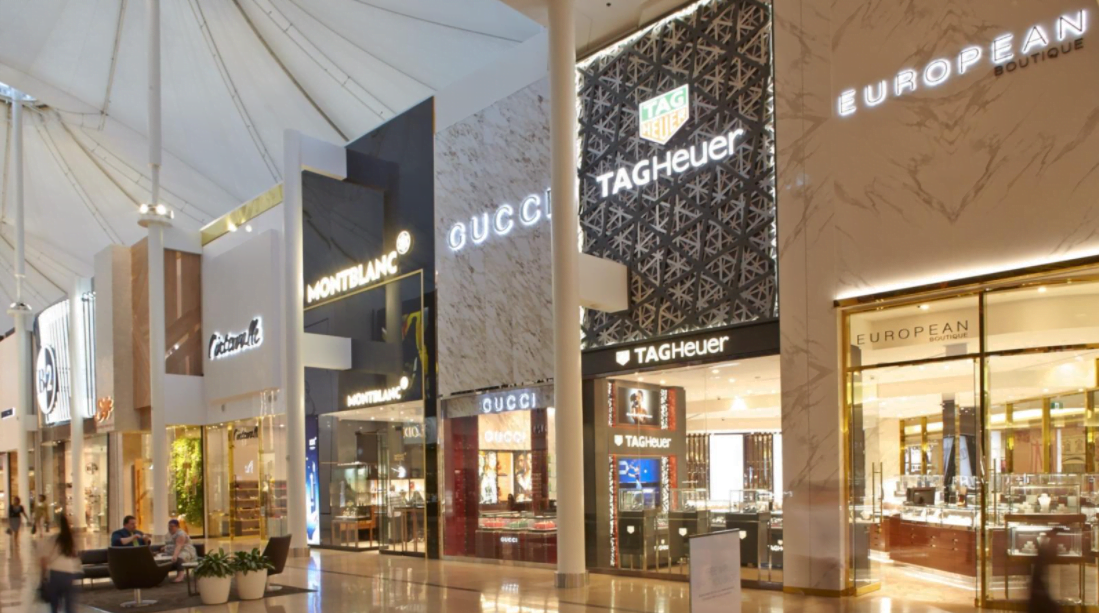
“When the going gets tough, the tough go shopping. We take a look at Holt Renfrew in Vancouver, they’re exceeding 2019 sales. They didn’t miss a beat. Same with Louis Vuitton. Tiffany. Any of the luxury brands performed exceptionally well and we’re seeing the byproduct of that now. We’ve got a number of luxury brands in market that are looking to expand. Some of it is re-trenching out of the department stores and looking for freestanding locations. Others it’s just expanding their footprints on the global standpoint and doing new freestanding locations,” he said.
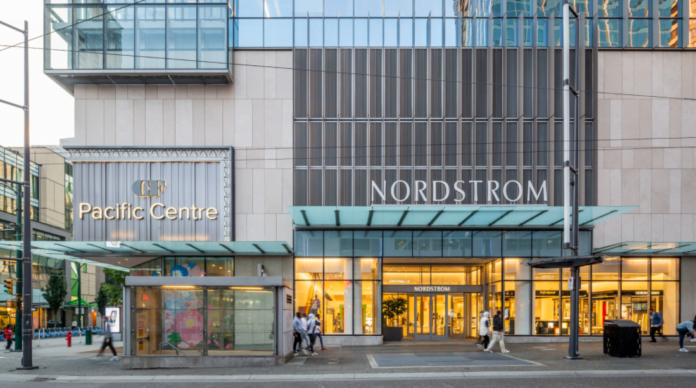
But Schmidt said there remains some real systemic weakness in footfall in the major urban markets. The Cadillac Fairview portfolio includes CF Pacific Centre in downtown Vancouver, CF Rideau Centre in downtown Ottawa and the downtown Toronto CF Eaton Centre.
“In those markets, we’re only seeing a maximum return to office occupancy in our towers of about 20 per cent and that’s having negative impacts on footfall. In best case scenarios on the weekend we’re seeing footfall return to 50 per cent of pre-pandemic levels. Mid-week it’s probably weaker. It’s somewhere between 35 and 40 per cent. And that’s a challenge. It’s a huge challenge for our food operators in that diminished footfall. They live and die on the number of people coming through the shopping centres,” said Schmidt.
CF Rideau Centre (Image: Cadillac Fairview)
“That’s still an issue for us but the good news side of that is we’ve seen disproportionately high sales for the footfall. In a number of retailers in those urban assets we’ve seen retail sales return to 80-85 per cent of pre-pandemic levels with that light of traffic.
“Conversely in the suburban markets, our fortress type suburban shopping centres have gone back up to 80-85 per cent footfall pre-pandemic. CF Chinook Centre being an example. CF Carrefour Laval being a good example. And we’ve seen sales to my earlier point exceed 2019 sales basically since August. So, higher conversion rate for the footfall that we’re seeing. Very intentional shopping. A sign of the times. Nobody’s going out to the shopping centre unless they’re intending to spend money. That’s kind of the silver lining.”
Schmidt said there is no question there is a trend toward having auto dealerships in malls these days. He said Cadillac Fairview likes the trend because it’s a category that appeals to a male shopper. Schmidt said CF is putting the finishing touches on a Mazda deal in CF Richmond Centre which is backed by Mazda in Japan. It has also replaced one of its largest boxes in CF Markville with a Porsche dealership.
Schmidt said another retail category trend athleisure is “red, red hot.”
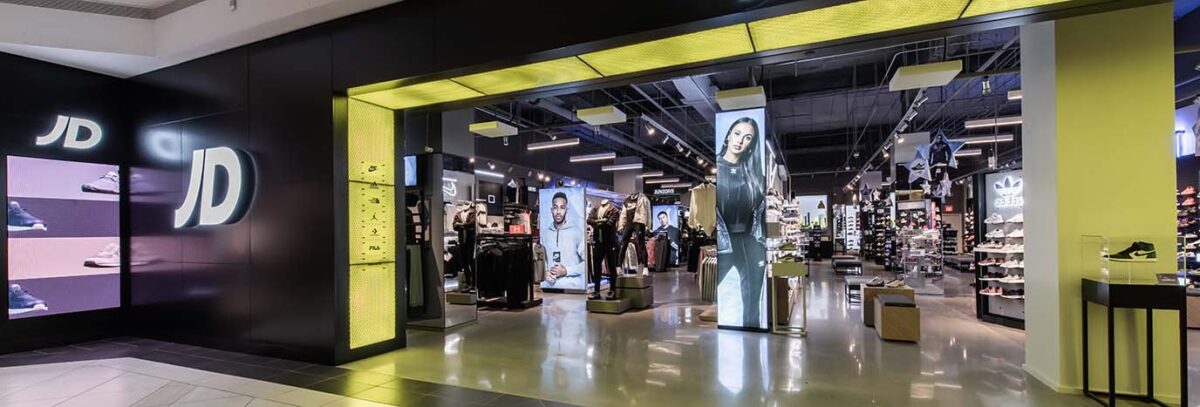
Image: JD Sports
“We’ve done five deals with JD Sports out of the UK and we’ve opened the first one in CF Fairview Mall in Toronto. They’re performing exceptionally well. We’re going to have a number of the openings through the spring of this year,” he explained.
“We’ve done a number of deals with Decathlon out of Europe, a large sporting goods chain. And they’re going to be quite aggressive. But also we’ve signed up new business with NIKE, Athleta. We’ve got other yoga players from Australia, US and Central Europe looking.
“And we’ve got other footwear players looking. So athleisure is far and away the hottest category and it’s good. For the first time in probably 25 years in our corporate history we’ve got some larger blocks of real estate that we can accommodate these players.”
Schmidt said Peloton’s space at CF Chinook Centre will be tripling its footprint at the mall, which is another example of how the fitness and health category will grow in the future and more of a blurring of fashion and fitness.
Schmidt said Cadillac Fairview is looking to diversify both its asset class and geographically by investing in Central Europe, the UK, Latin America and Asia.
TESLA at CF Sherway Gardens (Image: Cadillac Fairview)
Live at CF Richmond
Centre (Rendering: SHAPE Properties)
“We’re unweighting of retail and office right now, trying to weight more heavily into residential, mixed-use and logistics,” he said.
There’s a big push to differentiate the company’s existing portfolio and assets from their competitors and much of that will be through mixed-use developments on a lot of existing shopping centre sites,” said Schmidt.
“A good example of that is what we’re doing in Richmond with CF Richmond Centre where we’ve got the entitlements in place and we’re under construction on 12 towers that’s going to represent 2,000 condominium units that will be developed out over the next seven years. And we’ve already pre-sold 1,000 units in the last 14 months in that market.”
International Retail Brands That Entered Canada Over 12 Months
This week Craig and Lee talk about the new international retail brands that entered Canada over the course of 2021. Included is an analysis as well as a projection for 2022.
The Weekly podcast by Retail Insider Canada is available on Apple Podcasts, Stitcher, TuneIn, Google Play, or through our dedicated RSS feed for Overcast and other podcast players. Also check out ourThe Interview Seriespodcast where Craig interviews guests from across the Canadian retail landscape as part of theThe Retail Insider Podcast Network.
Drop us a line at Craig@Retail-Insider.com. You can also rate us in Apple Podcasts or recommend us in Overcast to help more people discover the show!
Background Music Credit: Hard Boiled Kevin MacLeod (incompetech.com). Licensed under Creative Commons: By Attribution 3.0 License. http://creativecommons.org/licenses/by/3.0/
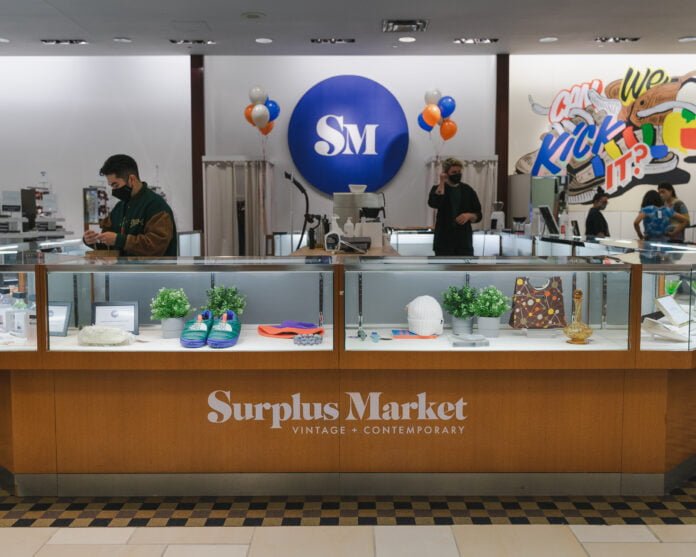
Surplus Market at CF Polo Park (Image: Surplus Market)
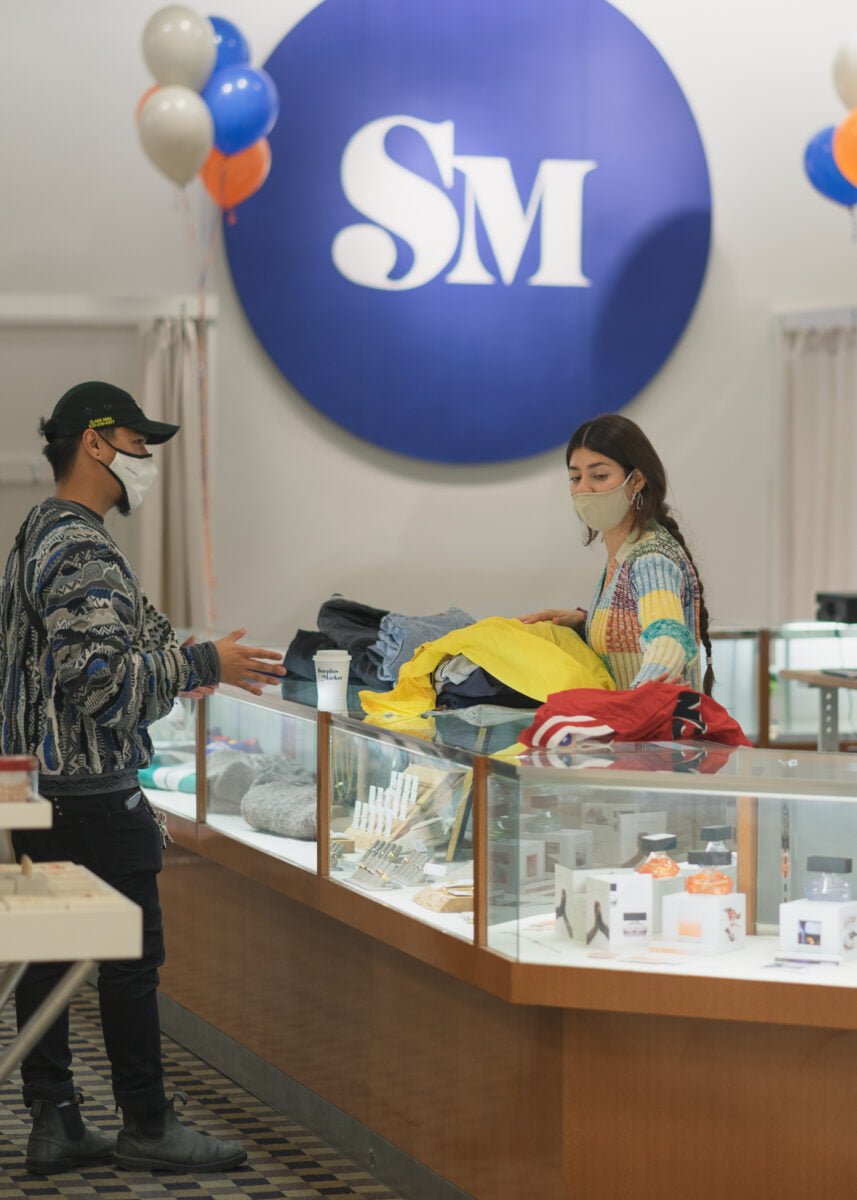
Andrew Sannie, Anthony Sannie and Kyle Goldstine discovered the thrift/vintage culture in Japan and that has led to the launching of the unique retail shop Surplus Market in Winnipeg at Hudson’s Bay CF Polo Park.
Anthony Sannie
“We discovered the excitement of thrift shopping in Tokyo, Japan three years ago. That trip was one of the motivators to come back home and create an event around the culture of thrifting and vintage shopping,” said Anthony Sannie.
“Thrifting is such a large cultural component in Japan, so we were definitely influenced on that trip. We wanted to share these experiences with our customers. When you come into our store, everything is curated, categorized, and merchandised, like you would see in Japanese vintage stores. “
Surplus Market at CF Polo Park (Image: Surplus Market)
The trio has been working on the concept of Surplus Market since 2019 and in October opened their first shop in shop inside Hudson’sBay at the popular Winnipeg shopping centre, featuring vintage and upcycled apparel and offering high-touch services including a café powered by Never Better Coffee – the first independent coffee shop in the mall.
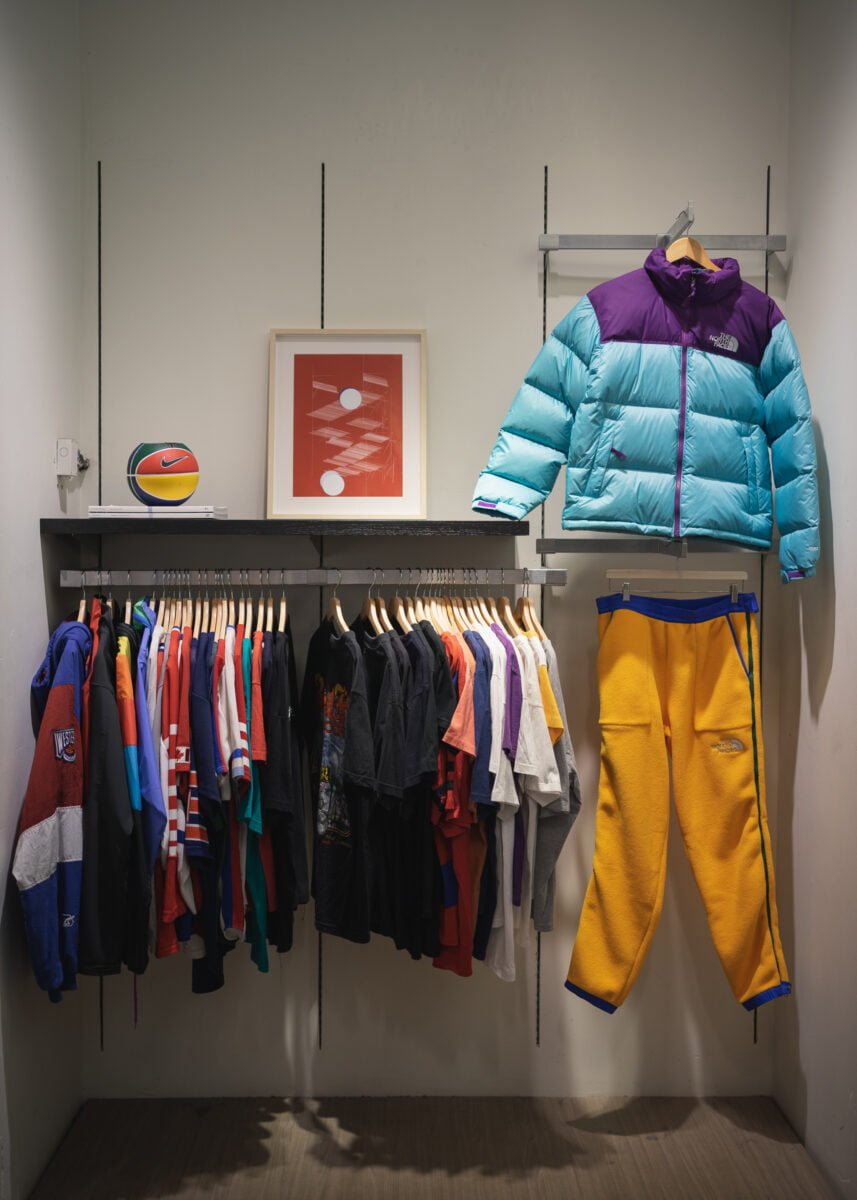
Surplus Market is a vintage and contemporary retail brand selling rare vintage and independent contemporary apparel, accessories, and homegoods – with an eye toward sustainable fashion and technology. After starting as a series of experience-driven events, the Winnipeg-based company launched its first experiential retail boutique, in collaboration with Hudson’s Bay. The curated store carries its own unique array of goods, while featuring select local vendors, many of whom sold at previous events. The first location, at CF Polo Park, also features a café with a pour-over coffee bar, and food and music pop-ups.
Originally, the Surplus Market operated as a periodic event, offering consumers a chance to buy rare and limited second-hand pieces like clothing, housewares, and even vinyl. The events buzzed with appearances from an array of food vendors, freshly squeezed juice and cocktail bars, record shops, visual artists and DJs.
Anthony Sannie said Surplus Market was originally a vintage resale event that was hosted at the downtown Hudson’s Bay location which started in 2019.
Surplus Market at CF Polo Park
Surplus Market at CF Polo Park
“We held a few events at that location and then we were obviously met by COVID, we got locked down, couldn’t do any other events and then shortly after that, a few months after March of 2020, the regional team at Hudson’s Bay contacted us to see if we were interested in collaborating on a physical store in store at the Polo Park location and we already had ideas of turning Surplus Market into a physical store anyways,” he said.
“We brought that idea to their team. They were very keen on it. So we started building out this concept.
“It’s an experiential clothing store that focuses on sustainability because we’re a resale vintage store. So 95 per cent of the things that come in are one of a kind. They’re one-off things that you can’t get any other place. It’s all vintage, it’s all second hand. There’s also an experiential component to the store too. We have lots of pop up events, we connect with the community, we’ll host artists, DJs, local makers. We really try to engage with our community in different creative ways.”
Andrew Sannie
Andrew Sannie, Co-Founder of Surplus Market and Grape Labs, which is an incubator behind the retail concept, said sustainability in retail needs to be prioritized by big box stores, “so we’re thrilled that Hudson’s Bay sees the value in what we are doing here. It shows that they’re thinking about the same things we are.”
Kyle Goldstine
“It’s just the beginning. Based on all the data out there, we predict a tectonic shift in retail when it comes to consumption, and a gradual shift toward sustainability, resulting in major growth in the second-hand retail industry,” said Kyle Goldstine, Co-Founder of Surplus Market and Grape Labs.
Anthony Sannie said the vision for the company is to expand into more than one retail space with Hudson’s Bay in Canada and potentially overseas.
“We’re kind of leaving that up for discussion and that possibility open. We’re hoping to expand and obviously stay at our current location at the Hudson’s Bay in Polo Park as well,” he said.
The company has also launched its e-commerce business. Two of the owners are black and one is a member of the LGBT community.
“It’s a diverse group of people leading this project,” said Anthony Sannie.
Retail Insider is streamlining its Canadian retail news from around the web to include a handful of top news stories that can be viewed quickly during the day. Here are the top stories from the past 24 hours.
A ‘Perfect Storm’ for Criminal Activity: US-Style Smash-and-Grab Retail Crime Expected for Canada [Feature] (Image: Anadolu Agency/Getty Images)
The COVID-19 global pandemic has been responsible for the spawning, or acceleration, of a number of different trends since the onset and spread of the virus. It’s influenced a more digitally-savvy consumer, sparked a reimagination of the service and experience retailers provide and introduced a new way of working for many. In short, it’s changed, at least in some small way, just about every aspect of the retail operation, forcing an evolution in the way things are done and a financial reconfiguration of the retail balance sheet. For loss prevention professionals, the new retail landscape and expanding ecosystem changes their jobs substantially, presenting them with a host of new challenges and threats to consider and address. Not least of these potential threats, according to industry expert and President of retail consultancy Bottom Line Matters, Stephen O’Keefe, are incidents of smash-and-grab style attacks against retail locations similar to those that are occurring with frequency in California. And, they are incidents that he warns will inevitably occur north of the border as a result of a ‘perfect storm’ for criminals operating across the country.
“There are a few factors that have been contributing for some time toward the creation of a scenario that’s ideal for the type of criminal activity that they’re currently experiencing on the West Coast of the United States,” he asserts. “Reductions to law enforcement budgets and the number of active police officers in provinces and cities across the country has been a growing issue over the course of the past decade or so. It’s a serious problem on its own for a number of different reasons. However, when you combine that fact with a Canadian legal system that’s reluctant to tie up the courts with crimes that they often consider petty, in favour of more serious crimes, then you’ve got a system that isn’t addressing these threats against the industry. And, because there is an understanding that nothing will be done to prosecute retail crimes like shoplifting and theft, most retailers have instituted ‘no stop’ policies in order to avoid violent incidents that put the health and safety of their employees at risk. The result is a scenario which presents criminals with very little risk and plenty of potential reward, and retailers everywhere with a serious dilemma.”
Copycats in Canada?
O’Keefe also points to unfortunate economic conditions that have been brought about by the pandemic as another layer of influence adding to the complexities of the ‘perfect storm’, rendering certain areas of the country more susceptible to crime. South of the border, San Francisco is an example of one such place that’s been blighted by smash-and-grab crimes against retail locations. The trend began some time ago shortly after the onset of the pandemic with a handful of isolated incidents that seemed to fly somewhat under the radar without catching the attention of law enforcement. However, it wasn’t long before the crime trend spread throughout the city, growing to involve multiple individuals in organized groups and planned attacks against retailers. Many of these attacks have targeted high-end luxury retailers with perpetrators leveraging tools and weapons like hammers to smash glass display cases in order to grab items like jewelry and other valuable merchandise. It’s an alarming situation, and one that O’Keefe believes should serve as a warning of sorts to retailers operating in Canada.
“Circumstances in San Francisco, and now other parts of California, have gone from bad to worse,” he says. “It’s concerning for everyone involved. It’s led many retailers in the affected areas to barricade their premises and for local law enforcement to increase their presence within the city’s retail districts. However, what’s perhaps most worrying is the fact that there have been copycat incidents cropping up across the United States in urban markets like Minneapolis, Chicago, Nashville, and elsewhere, by groups that are leveraging the same methods and behaviours to commit their crimes as those that originated in San Francisco. Because of this factor, these crimes are catching the attention of quite a few retailers in Canada. They’re starting to ask whether or not these types of crimes will migrate north of the border. And the short answer is: yes, they absolutely will, unless the threat is dealt with appropriately by retailers and law enforcement.”
Developing appropriate response
It’s a situation that O’Keefe explains has been made that much more difficult to accurately understand and address as a result of a lack of reporting on the part of retailers. In both the United States and Canada, he says, industry players often refrain from doing so to law enforcement because retail crime, incidents of shoplifting in particular, do not receive adequate attention from the legal system. Non-reporting lends to the creation of inaccurate data that skews perception and undermines the seriousness of the crimes being committed. And, with the smash-and-grab trend sweeping across the United States, O’Keefe says that there are considerable concerns mounting here at home with respect to the ways in which the threat of these types of crimes can be properly dealt with.
“There are a number of retailers in Canada that are looking at these incidents in the United States and trying to figure out how they can remove that target from their stores,” he says. “And this is when the theory of crime displacement is often considered when attempting to determine the appropriate way in which to respond to the threat. For instance, in most traditional cases, cameras have been used as a critical tool in helping to curb shoplifting. The idea is that if someone wants to steal without being identified, cameras will significantly mitigate the risk of theft. However, the criminals committing these smash-and-grabs in the U.S. are masked. And, given that we’re living through COVID-19, a time when everyone needs to be wearing a mask for public health reasons, the cameras do little to remove the threat of these crimes being committed. Because of this, retailers are being advised to respond to these incidents by backing off and calling 9-1-1. There are many within the industry who aren’t satisfied with this advice and have been left feeling as though their hands are tied behind their backs.”
The power of loss prevention management systems
Retail Loss Prevention
Although barricading a storefront seems completely unreasonable, and in-store cameras will not serve to prevent these types of crimes against retailers, O’Keefe suggests that there are ways in which merchants can safeguard their stores, merchandise and employees. By properly maintaining and adhering to their loss prevention management systems, they can more accurately detect trends like these smash-and-grabs and help the business determine the tools and measures that need to be in place in order to effectively address the situation. In fact, according to the veteran loss prevention expert, it may just be the most important aspect of the retail business when it comes to quelling the effects of the ‘perfect storm’.
“For retailers that have made the decision not to arrest shoplifters stealing from their stores, they need to do what they can in order to make themselves softer targets to criminals. And, to do this most effectively, they’ve got to rely heavily on their loss prevention management systems – the underlying foundation of the company that allows everything to operate optimally and safely. It’s a system that assists retailers in understanding the strategies and methods that are required in order to appropriately address the crimes that are being committed. It allows them to develop and sustain a logical thought process to guide and direct decision-making. It helps in identifying technologies that can be implemented to mitigate and, in some cases, eliminate the threat of theft altogether, including smash-and-grab incidents. And, until law enforcement and the Canadian courts treat these incidents of crime with the seriousness that they deserve, it will likely serve as the most significant mechanism at retailers’ disposal, preparing them and equipping them to take the matter of retail crime into their own hands.”