Huge annual shopping events over the upcoming holiday season, such as Black Friday, Cyber Monday and Boxing Day, are expected to be busier this year than last year, according to the Retail Council of Canada.
Diane J.Brisbois, President and CEO of Retail Council of Canada
And Canadian consumers expect to spend more money on average.
“Canadians are ready to put the disruption of COVID behind them and are looking forward to returning to brick-and-mortar stores,” said Diane J. Brisebois, President and CEO of the Council.
“Nevertheless, they are buying differently than they were prior to the pandemic. While it is expected that there will be more in-store buying this year, the blend between physical and online shopping will continue to evolve and consumers expect to have more choices in how and where the products they purchase are picked up and delivered. Additionally, with the removal of some of the more restrictive COVID mitigation measures, consumers will need extra assurances that physical distancing and other safety measures will be maintained so that they can enjoy the products, promotions, and unique festive experiences retailers will be offering.”
The RCC’s 4th annual Holiday Shopping Survey, of over 2,500 Canadians from coast to coast, found that average holiday spending this year is expected to be $792 compared to $693 last year. The Council said historically consumers’ actual spending is more than they plan so this year’s actual spend could be more than $800.
Brisebois said the results of the survey are certainly better than those of 2020 and are starting to mirror the results of 2019, pre-pandemic.
“That’s encouraging. And what’s also encouraging is that the majority of consumers are saying they want to make those purchases in-store which is welcome news for a lot of our retailers who even though they may have a strong online presence they’re also very focused on their brick and mortar operations,” she said.
A key factor in the strong consumer response to spending this year during the holidays is the fact that most provinces have reopened businesses. Brisebois said late fall in 2020 was when governments started to put in additional restrictions on retail and for a good part of that holiday season many of the brick and mortar retailers were considered non-essential and had to close.
Woman shops online during the holiday period.
“That meant that people could not shop in-store. The other element that changes the numbers year over year is the fact that because we have such a large number of Canadians vaccinated they are starting to socialize and so they are planning for holiday get-togethers, for family gift giving. Last year, people were just not buying their friends, or cousins, or acquaintances or colleagues, gifts for the holidays because they couldn’t see them. They were really buying for themselves and within their household whereas now people are saying yes we’re planning to get together, we’re planning holiday events, we’re seeing more people, hopefully in a socially safe manner, which means they’re buying more food, more liquor, more wine. They’re buying gifts for those they haven’t seen or been able to socialize with for a long time.”
Brisebois said this holiday shopping season will be a boost for retailers across the country who have struggled with the challenges of the COVID-19 pandemic over the past year and a half.
The RCC report said supply chain issues facing consumer packaged goods manufacturers and retailers have been widely reported around the world.
“As a result, it is anticipated that retail availability of certain items may be tighter than in years past, particularly in late November and December. Consumers that plan ahead and shop early will increase their chances of finding the products and brands they want for the holiday season. And, with expected labour shortages, shopping early will allow consumers to avoid long line-ups or shipping/delivery delays,” said RCC.
The report also found:
Canadians are planning to begin shopping earlier and more are planning to take advantage of holiday sales and product availability. 30 per cent vs 23 per cent in 2020 plan to begin shopping before November;
November will remain the busiest shopping month. 36 per cent of consumers plan to begin their 2021 holiday shopping in November. 43 per cent (vs 41 per cent in 2020) plan to shop on Black Friday, 35 per cent (vs 34 per cent in 2020) plan to shop on Cyber Monday and 34 per cent per cent (vs 32 per cent in 2020) plan to shop on Boxing Day;
In-store shopping will increase but online will continue to be strong, emphasizing once again the importance for retailers to provide seamless experiences across their selling channels. 63 per cent (vs 58 per cent in 2020) of total purchases are expected to be in-store this year and 37 per cent (vs 42 per cent in 2020) will be online. Pre-pandemic in 2019, 72 per cent of total purchases were planned to be in-store and 28 per cent online;
Supporting local retailers continues to be important to Canadians. 78 per cent feel it is important to shop locally, with 81 per cent of those respondents saying it is especially important to support local retailers that have suffered due to lockdowns; and
Product categories that Canadians will spend the most on have shifted, with clothing taking top spot this year, surpassing food, alcohol, and candy that has dropped to second spot. Top categories are: clothing (16 per cent vs 15 per cent in 2020), food, alcohol, candies or sweets for entertaining (12 per cent vs 19 per cent in 2020), toys (10 per cent vs 10 per cent in 2020) and personal electronics (eight per cent vs eight per cent in 2020).
The Canadian Federation of Independent Business is relieved that some broad-based business supports will remain in place following Thursday’s federal announcement on wage and rent subsidies for businesses affected by COVID-19, but concerned that the eligibility rules and thresholds will put them out of reach for many.
Dan Kelly
“Restaurants and tourism businesses will need to see a revenue drop of 40 per cent and all other businesses a 50 per cent drop in order to access these critical programs. This means small businesses that see revenues lower by one-third will not be able to access the previous wage and rent subsidies – potentially signing them up to lose money every single day they are open and putting them at risk of permanent closure,” said Dan Kelly, President and CEO of the CFIB, Canada’s largest association of small and medium-sized businesses with 95,000 members across every industry and region.
“CFIB will be pushing the federal government to be flexible in how it defines businesses in the tourism, restaurant and hospitality sectors for its targeted programs. Gyms, recreation facilities like bowling alleys, dance studios, dry cleaners all continue to suffer massive COVID-related losses but may be ineligible for the higher levels of support.
“New businesses that started after March 2020 must be included in any new government support programs if they meet the eligibility criteria. As it stands, they have not been able to access any of the government support programs, despite facing the same challenges and restrictions as other businesses.”
Kelly said the extension of the Canada Recovery Hiring Program to May 2022 and its return to 50 per cent is more welcome news for small businesses that are in a position to hire back staff.
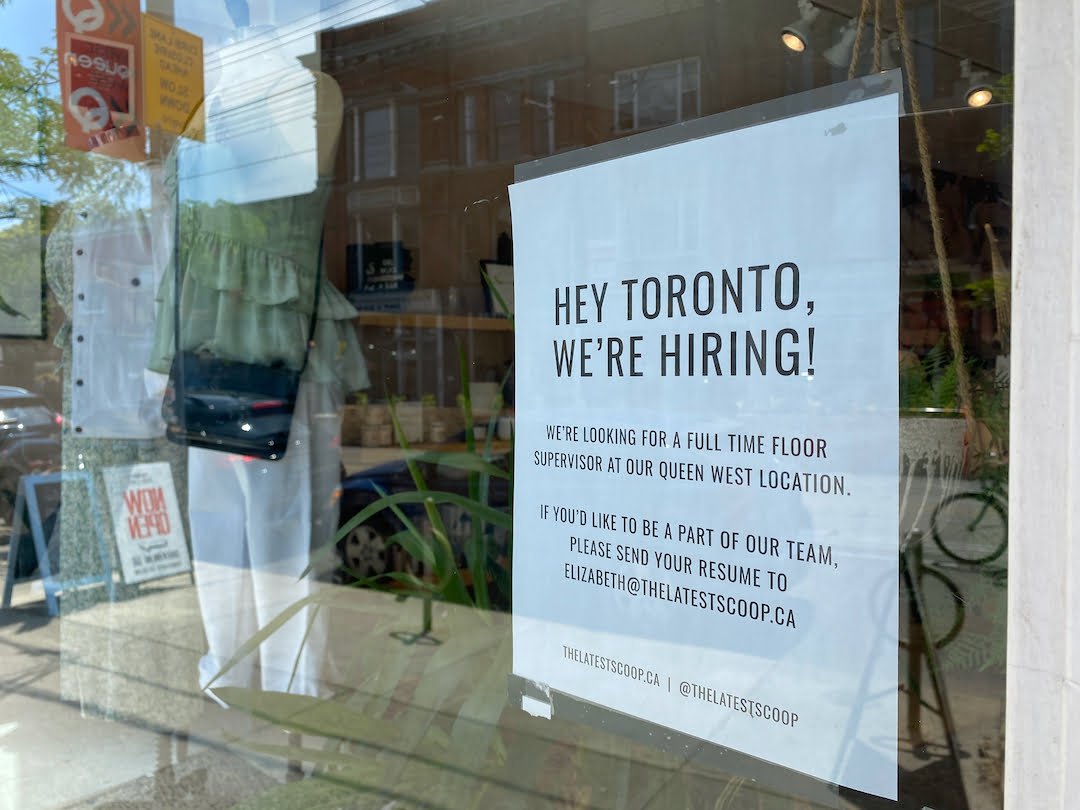
Hiring Sign on Queen Street – Photo by Dustin Fuhs
“CFIB is also pleased that the government is pivoting to supporting workers affected by lockdowns, as many businesses are facing a major labour shortage, which is throttling their recovery. The new support program for businesses facing local lockdowns will also restore some much needed certainty for businesses heading into the winter months,” he said.
“CFIB appreciates that the government has shown willingness to listen to the needs of small business owners and is counting on the Deputy Prime Minister to make important changes to ensure the programs will continue to do their job”
Mark Agnew, the Canadian Chamber of Commerce’s Senior Vice President, Policy and Government Relations, said businesses in the hardest-hit sectors continue to face capacity restrictions that prevent them from operating at full capacity.
“No business operator opens with a viable model based on half capacity, and these companies need continued support before the 2022 tourism season to ensure they do not permanently close their doors. The new retooled government support programs announced today will allow businesses who continue to be impacted by public health restrictions to survive until they can recover. This is the fair thing to do for businesses that are playing their part to protect public health,” he said.
“We look forward to seeing further details of these newly announced programs and urge Parliamentarians to expeditiously consider legislation once Parliament resumes.”
In a blog on its website, the Chamber said ongoing public health measures and travel restrictions have significantly reduced the capacities of many businesses, whose operations will once again be viable after the pandemic.
Facing these continued public health restrictions and a highly volatile and uncertain outlook, support should continue for the hardest hit sectors that still face situations far worse than those experienced for other sectors during the depths of the Global Financial Crisis in 2008-09. Ending government support programs prematurely would be self-defeating, leading to waves of job loss and unnecessary hardship that would hamper the ability of Canada’s economy to fully recover after public health measures are lifted.
“The on-the-ground reality is that we are still far from normal business operations, and the majority of businesses continue to struggle. In Statistics Canada’s 2021Q3 Canadian Survey on Business Conditions (undertaken in July and August 2021), almost one-in-five businesses (19 per cent) reported that they cannot take on any more debt, primarily due to concerns about cash flow and elevated uncertainty about future sales. Perhaps not surprisingly, corporate debt constraints for companies are highest in the hardest hit sectors including: accommodation and food services (27 per cent); and arts, entertainment and recreation (26 per cent),” said the Chamber.
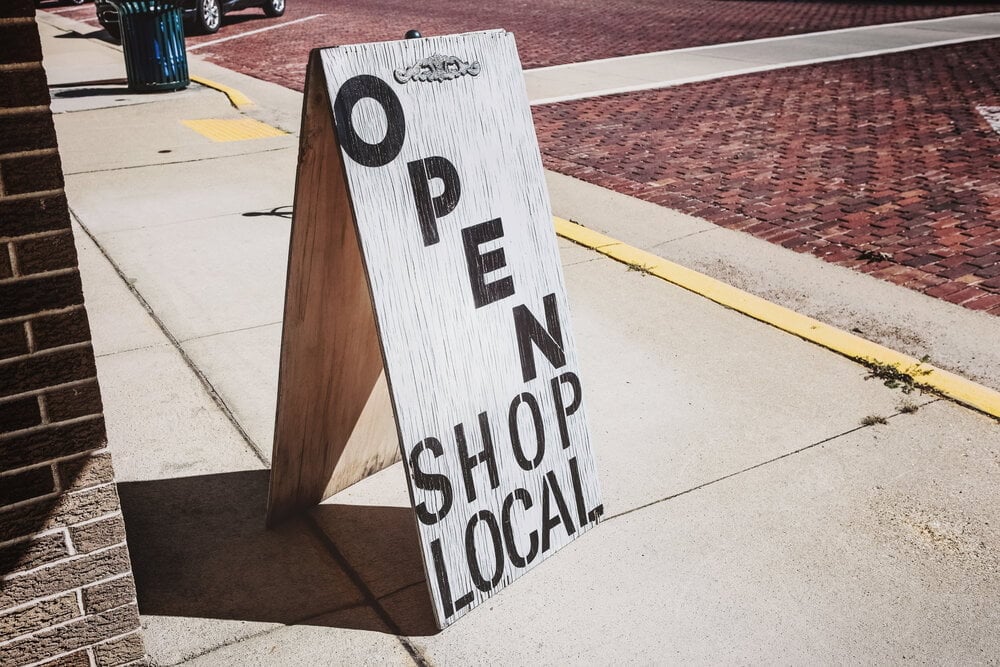
SHOP LOCAL SANDWICH BOARD OUTSIDE STORE.
“According to the Canadian Federation of Independent Business, most small businesses (60 per cent) continue to operate below pre-pandemic sales levels, while 55 per cent are not fully staffed, and one-in-four are not even fully open for business. We are seeing this pain acutely in the hardest-hit sectors, where employment and real GDP remain well below pre-pandemic levels . . . The situation remains dire indeed with employment still more than 10 per cent below pre-pandemic levels in sectors that are difficult to physically distance, such as accommodation and food service (-15 per cent, or 180,300 jobs); and “other services” (-12 per cent or 95,500 jobs). During the depths of the Global Financial Crisis in 2008-09, the worst comparable sectoral employment declines were less severe than those currently impacting these sectors.”
In a statement, Restaurants Canada said the fact that restaurants are being included in the new targeted approach to the rent and wage subsidy programs is a positive sign, reflecting how the organization has been at the table with the federal government throughout the pandemic, ensuring the needs of the uniquely hard-hit sector have been heard by key decision-makers.
“However there is still work to do so that the eligibility requirements reflect the realities of our industry. It’s critically important that businesses who desperately need this support don’t lose access to it if they have been operating at 39 per cent revenue loss for months on end and not 40 per cent,” said the organization. “Restaurant operators are innovative and resourceful, but the COVID-19 crisis has stretched their resiliency to the limits.
According to survey data from Restaurants Canada:
Eight out of 10 restaurants have been operating at a loss or barely scraping by with a profit margin of two per cent or less throughout the pandemic; nearly half of all foodservice businesses have been consistently losing money ever since the first wave of lockdowns ended last year;
Seven out of 10 restaurant operators are still receiving the federal wage and/or rent subsidy, and if they lose access to these critical sources of support nearly 80 per cent said they will struggle to keep paying existing staff/have to cut staff hours. More than half said they will struggle with hiring back staff/hiring new staff;
Eight out of 10 respondents to the latest Restaurants Canada survey said their establishments were still experiencing less traffic from July to September compared to before the pandemic;
52 per cent said their guest counts were more than 30 per cent lower in Q3 2021 compared to Q3 2019;
18 per cent said their guest counts were more than 50 per cent lower in Q3 2021 compared to Q3 2019.
“With colder weather coming, the fate of Canada’s 90,000+ restaurants is still uncertain. At least 10,000 establishments have already closed. The rest need government support to help them survive the fall and winter so they can continue feeding our recovery,” said Restaurants Canada.
The Canadian Taxpayers Federation, however, applauded the federal government’s announcement that temporary COVID subsidies are ending.
“Reining in the COVID-19 spending is a good first step towards taking the $1-trillion federal debt seriously,” said Franco Terrazzano, Federal Director with the CTF. “Taxpayers need to see more details, but Finance Minister Chrystia Freeland deserves credit for acknowledging these subsidies were always supposed to be temporary.
“This extra spending was always sold to Canadians as temporary supports and taxpayers can’t afford for these programs to become permanent red ink. Reining in the temporary COVID-19 borrowing and making sure this spending is more targeted and less expensive is a good first step.”
The CTF cited the Parliamentary Budget Officer’s estimate that COVIDspending cost $271 billion in 2020. It said the federal government is more than $1 trillion in debt – meaning that each Canadian’s average share of the debt is about $30,000.
The wage subsidy, rent subsidy and Lockdown Support programs were set to expire on October 23..
On Thursday, Chrystia Freeland, Deputy Prime Minister and Minister of Finance, announced that the government is taking targeted action to create jobs and spur economic growth by “moving from the very broad-based support that was appropriate at the height of lockdowns to more targeted measures that will provide help where it is needed, while prudently managing government spending.”
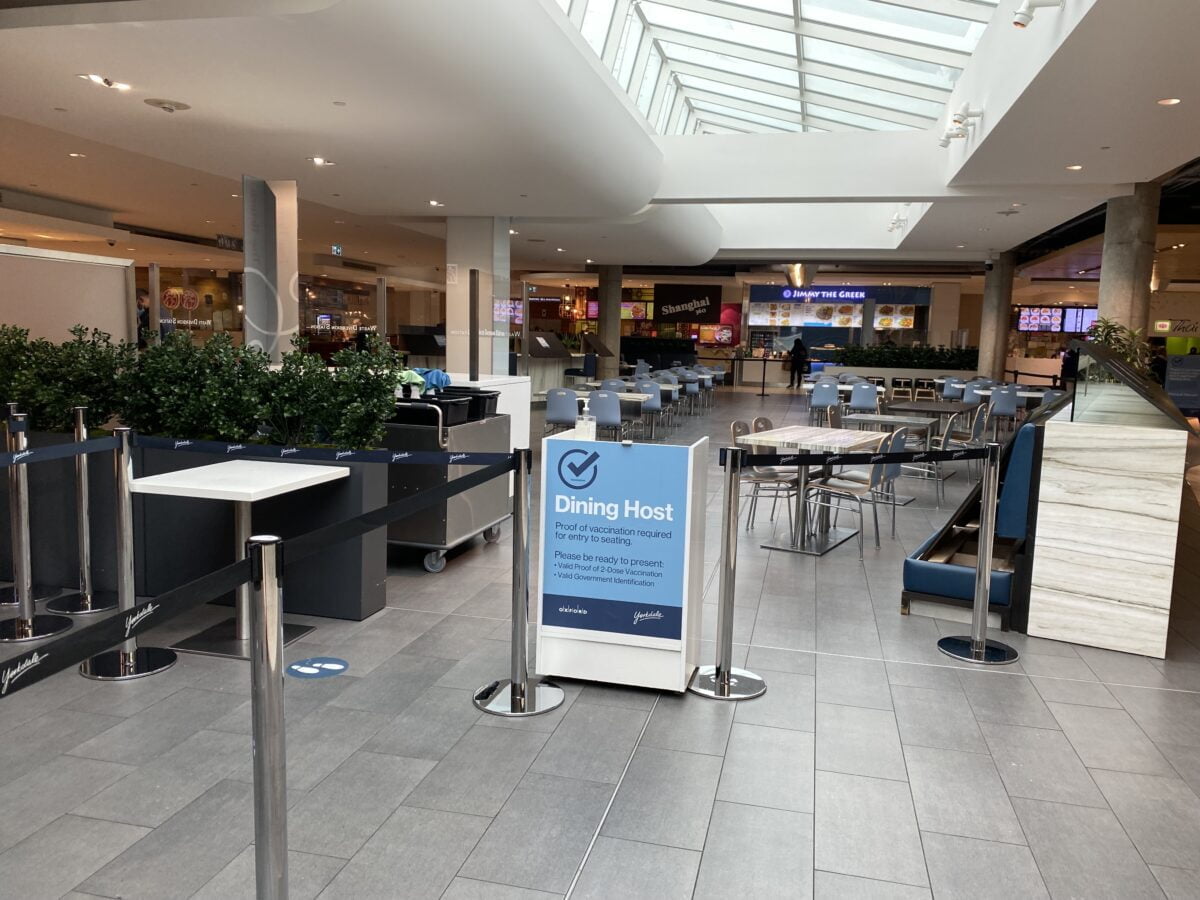
Dine on 3 at Yorkdale Shopping Centre – Photo by Dustin Fuhs
The government said it is proposing the following changes to business support programs:
Extend the Canada Recovery Hiring Program until May 7, 2022, for eligible employers with current revenue losses above 10 per cent and increase the subsidy rate to 50 per cent. The extension would help businesses continue to hire back workers and to create the additional jobs Canada needs for a full recovery;
Deliver targeted support to businesses that are still facing significant pandemic-related challenges. Support would be available through two streams:
Tourism and Hospitality Recovery Program, which would provide support through the wage and rent subsidy programs, to hotels, tour operators, travel agencies, and restaurants, with a subsidy rate of up to 75 per cent.
Hardest-Hit Business Recovery Program, which would provide support through the wage and rent subsidy programs, would support other businesses that have faced deep losses, with a subsidy rate of up to 50 per cent.
Applicants for these programs will use a new “two-key” eligibility system whereby they will need to demonstrate significant revenue losses over the course of 12 months of the pandemic, as well as revenue losses in the current month.
Businesses that face temporary new local lockdowns will be eligible for up to the maximum amount of the wage and rent subsidy programs, during the local lockdown, regardless of losses over the course of the pandemic.
These programs will be available until May 7, 2022, with the proposed subsidy rates available through to March 13, 2022. From March 13, 2022, to May 7, 2022, the subsidy rates will decrease by half.
To ensure that workers continue to have support and that no one is left behind, the government said it is proposing to:
Extend the Canada Recovery Caregiving Benefit and the Canada Recovery Sickness Benefit until May 7, 2022, and increase the maximum duration of benefits by two weeks. This would extend the caregiving benefit from 42 to 44 weeks and the sickness benefit from four to six weeks.
Establish the Canada Worker Lockdown Benefit which would provide $300 a week in income support to eligible workers should they be unable to work due to a local lockdown anytime between October 24, 2021 and May 7, 2022.
“Our economy is rebounding and we are winning the fight against COVID. It is also true, though, that the recovery is uneven and the health measures that are saving lives continue to restrict some economic activity,” said Freeland.
“That is why today we are announcing what we very much hope and believe is the final pivot in delivering the support needed to ensure a robust recovery – for everyone. Our focus is to protect and create jobs. And ensure the strongest possible recovery for everyone. And we will continue to deliver on this promise we have made to Canadians.”
The government said the Canada Emergency Wage Subsidy has helped more than 5.3 million Canadians keep their jobs, with over $95 billion in support already paid out through the program to help employers rehire workers and avoid layoffs.
The Canada Emergency Rent Subsidy and Lockdown Support have helped more than 210,600 organizations with over $6.8 billion in support for rent, mortgage, and other expenses, it said.
WYRTH at Yorkdale Shopping Centre - Photo by Dustin Fuhs
Canadian home goods store WYRTH has opened a 3,000 square foot pop-up location at Yorkdale Shopping Centre in Toronto.
The store compliments a flagship concept which opened in 2019 in a 5,000 square foot stand-alone storefront on Orfus Road in Toronto.
“We couldn’t be more excited about our new location at Yorkdale Mall,” said Founder & CEO Rachel Benitah. We believe our curated collection of aesthetically pleasing, quality home goods bodes well with the Yorkdale clientele, including our amazing loyal clients as well as new customers that we look forward to getting to know.
WYRTH at Yorkdale Shopping Centre (Photo: WYRTH)
The Yorkdale location will carry an assortment of products, including home decor and tabletop, bath and baby products.
“We believe that there is a need for more accessible, yet trendy home decor in the market, and we intend to deliver on that need. We hope that this new exposure in Yorkdale Shopping Centre opens further opportunity for our brand.”
In addition to the pop-up at Yorkdale, WYRTH was able to share additional news that it had secured a pop-up location at Sherway Gardens that will open in November.
“We want to personally thank our broker, Jay Freedman from Oberfeld Snowcap as well as Oxford Properties for believing in us and making this store a reality,” Benitah shared. “We are grateful for these amazing partners in bringing this opportunity to fruition.”
WYRTH at Yorkdale Shopping Centre (Photo: WYRTH) WYRTH at Yorkdale Shopping Centre (Photo: WYRTH) WYRTH at Yorkdale Shopping Centre – Photo by Dustin FuhsWYRTH at Yorkdale Shopping Centre – Photo by Dustin FuhsWYRTH at Yorkdale Shopping Centre – Photo by Dustin FuhsWYRTH at Yorkdale Shopping Centre – Photo by Dustin FuhsWYRTH at Yorkdale Shopping Centre – Photo by Dustin FuhsWYRTH at Yorkdale Shopping Centre – Photo by Dustin FuhsWYRTH at Yorkdale Shopping Centre (Photo: WYRTH)
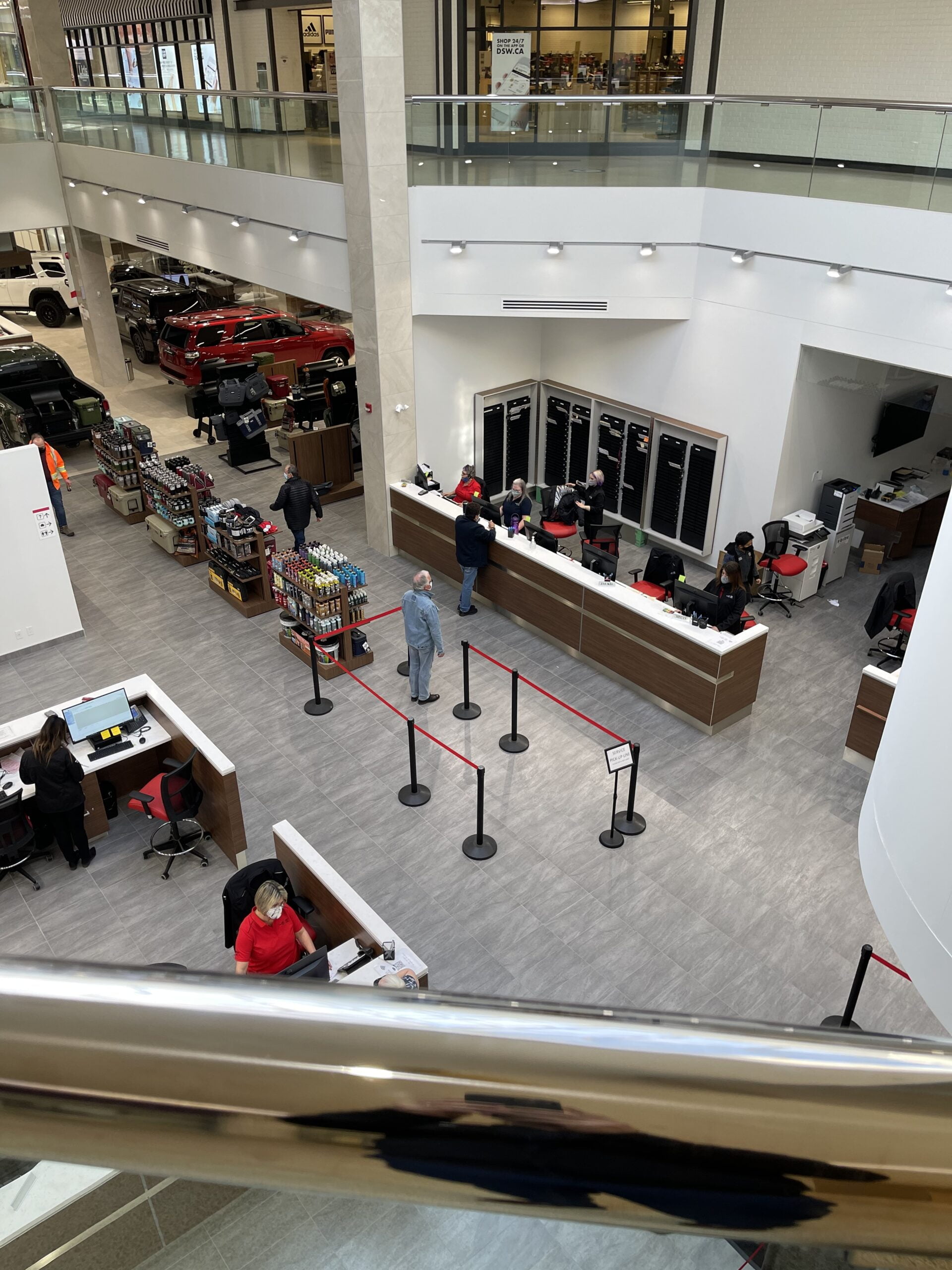
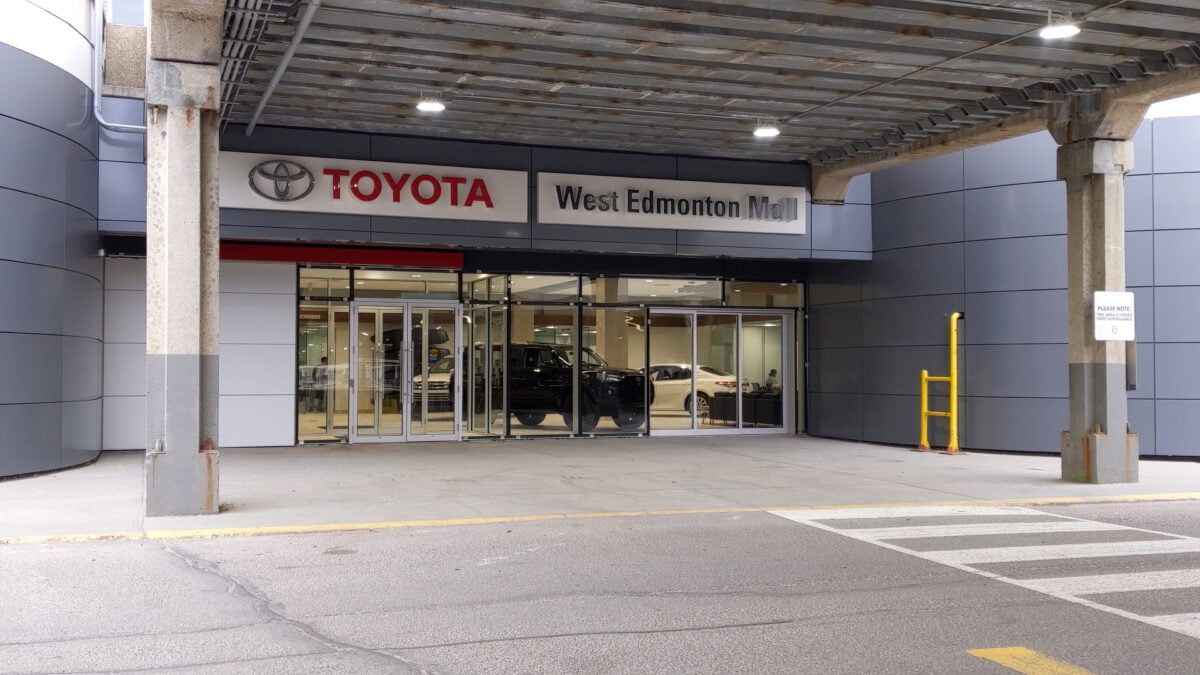
An Edmonton Toyota dealership has moved into the West Edmonton Mall saying it could be the largest full-service dealership inside of a shopping centre anywhere on the planet.
Mayfield Toyota had operated since 1998 under that name and for many years prior under previous ownership.
David Friesen, General Manager & Managing Partner of the dealership, said the business moved from about 56,000 square feet at its old location to about 125,000 square feet in the northeast corner, Phase One, of WEM.
Image: West Edmonton Mall Toyota
“At the end of the day we were really looking for a way to make using our facility convenient for everyone. Every ounce of marketing we’ll ever do is all about convenience for all,” said Friesen. “Our slogan is West Edmonton Mall Toyota, all makes, all models, all day, every day. It’s a gorgeous Toyota store. The showroom is unbelievable. It will blow your mind. Cars everywhere.
David Friesen
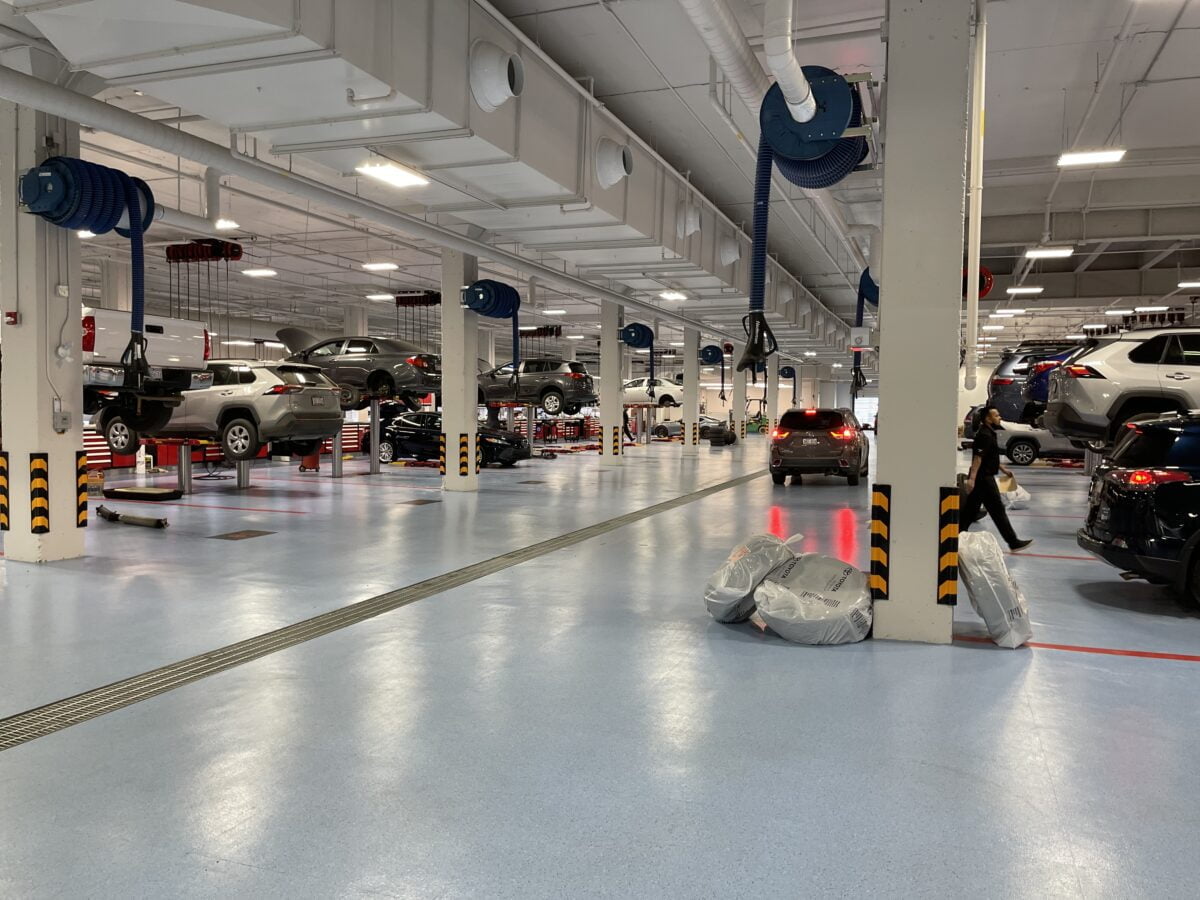
“It’s the servicing aspect of it that really is just remarkable. We built it service forward meaning that three quarters of the space is really designated to service and parts departments. Our drive-thru at Mayfield if you were coming for an appointment held six cars. Then once the six cars were full you were waiting in line outside in your car to come in the drive-thru. This particular one will fit up to 33 cars. It’s a massive drive thru.”
Friesen said the new showroom has 38 vehicles. There’s a covered carport outside that shows display units, holding up to 65 vehicles. It also has a section of the parkade that will hold up to another 600 vehicles. The previous company showroom had a capacity of about 15 vehicles.
West Edmonton Mall Toyota brings a variety of services for all makes and models, including: full detailing packages, quick and convenient express oil changes, complete mechanical services, over-the-counter parts purchases, tire sales/swaps and storage, windshields and – most importantly – all of their services will now be open seven days per week from early until late.
Image: West Edmonton Mall Toyota
In their all new state-of-the-art, indoor, fully interactive showroom, shoppers will have the ability to shop inside; no more trekking through the snow or through a heat wave.
They will offer shoppers even more convenience by constructing a massive valet centre at Entrance 50, that can be used by all WEM shoppers and employees as an easy way to drop off their vehicle for parking, full detailing packages or even express services.
West Edmonton Mall Toyota will also be offering an exclusive loyalty program through their newly created West Edmonton Mall Toyota App. The app will give their customers access to many exclusive offers and programs throughout West Edmonton Mall.
“To our knowledge we have yet to find anything like this anywhere on the planet,” said Friesen.
Image: West Edmonton Mall Toyota
“We’re 100 per cent certain we’re the largest dealership in the largest mall in the planet. There’s no question there. We think we may be the only one.”
David Ghermezian, President, West Edmonton Mall Property Inc., said “West Edmonton Mall is excited to partner with Mayfield Toyota in the development of a unique customer-focused Dealer Experience at a scale which has never been seen in a shopping centre before.”
“We’ve seen firsthand how our customers have embraced Mayfield Toyota at WEM through the last five years with many successful sale events at the Mayfield Toyota Ice Palace. This innovative partnership supports our customer’s lifestyles by providing a level of service and convenience that is unparalleled in the industry.
“We’re excited to be at the forefront of this groundbreaking automotive experience.”
Image: West Edmonton Mall Toyota
Image: West Edmonton Mall Toyota
Image: West Edmonton Mall Toyota
Cyril Dimitris
Cyril Dimitris, Vice President, Sales and Marketing at Toyota Canada Inc., said the company is excited about this unique opportunity to serve its customers in West Edmonton.
“We look forward to supporting Mayfield Toyota as they work with West Edmonton Mall to make this move a success.”
Friesen said other dealerships may look at the possibility of setting up shop in a mall especially as more big box stores close and malls need something to fill large space. Plus, a dealership would not be competing with any other retailer in a mall.
“It’s a good addition we bring in. Good customers who have some time to spend and what do they do? They can shop if they want. It’s a good marriage between the two but there’s got to be a lot of things that line up right. You’ve got to have the right space. You’ve got to have the right access. Putting a 130,000-square-foot dealership into the mall is not for every manufacturer. You have to be able to service the volume of people that come through here,” he said.
West Edmonton Mall Toyota (Image: Best Edmonton Mall)
Michael Kehoe
Michael Kehoe, an Alberta-based retail specialist, said the collaboration between West Edmonton Mall and Mayfield Toyota is part of a growing trend across North America where automotive dealerships are absorbing significant tracts of former department store spaces at major shopping centres.
“Toyota will have a major footprint at West Edmonton Mall in the former Sears store plus some space formerly occupied by retail stores,” said Kehoe, broker/owner of Fairfield Commercial Real Estate in Calgary.
“The dealership will enjoy a prominent retail location and the Mall will benefit from a significant number of dealership customers bringing their vehicles in for service where the average visit will be a minimum of three hours. It seems like a win / win to me as major malls transition large portions of their space to non and quasi-retail tenancies.”
Bruce Winder, author of RETAIL Before, During & After COVID-19 and President of Bruce Winder Retail, said Toyota’s move to the West Edmonton Mall appears to make sense. With the amount of traffic that the mall generates the dealership is bound to pick up some business.
Bruce Winder
“Tesla pioneered this approach by locating showrooms in premium malls near Apple stores. Unlike Tesla, Toyota will have a complete offering of amenities including detailing, service bays, inventory storage and showrooms. Other vehicle brands have used malls to sell including Porsche,” said Winder. “I think this represents the changing tenant mix of malls that now includes select digitally native brands, cannabis stores, health care providers, educational service providers and many other unique sellers that may have used standalone units in the past. As malls polarize into distinct lifestyle solution providers, Toyota will fit in well with their quality focused offering.
“The brand will need to ensure it is integrating e-commerce into the facility as the way consumers shop for vehicles has changed. The internet plays a much greater role in terms of information search, comparison shopping, vehicle customization, purchase, and post-purchase behaviour than previously used – and shoppers demand it. Toyota has an opportunity to leapfrog Tesla in terms of experiential retailing and take it to the next level if they wish to.
“Obviously, one would need to know what they are paying in terms of rent and how much they spent on renovations to determine the financial viability of such a move but judgmentally it feels positive.”
When it comes to ensuring the economic and social wellbeing of communities in every province and territory across the country, the health and success of small businesses is crucial. In fact, the prosperity of small businesses isn’t just a critical element lending to the vitality and verve of neighbourhoods, they are the lifeblood of the areas they serve. It goes without saying that impacts of the COVID-19 global pandemic have been devastating on their operations, limiting their ability to open their storefronts to customers and their capacity to progress and grow. As a result, it’s been recognized by many that small businesses currently require help and support in order to get through this extremely difficult period in retail history. Fortunately for some Canadian communities, there are Business Improvement Areas (BIA) that are doing everything they can to provide that much-needed help and support. However, according to Annie MacInnis, Executive Director of the Kensington Business Revitalization Zone (BRZ) in Calgary, the need for all BIAs to do so going forward is paramount.
“The role of BIAs is more critical now than ever before,” she asserts. “They were created to help communities and neighbourhoods deal with crisis. In fact, the first BIA in the world in Toronto’s Bloor West was created in order to deal with all of the issues that came with the introduction of the subway through the area. And there are so many more similar examples that can be pointed out around the world where organizations were formed in order to assist struggling businesses, protect merchants and business owners from violence and crime or to help revitalize a downtrodden community. They are the organizations that are best equipped to help businesses in communities adapt and persevere through adversity by working as a collective to address their issues and overcome their challenges. And, in light of the impact that the COVID-19 pandemic has had on small businesses in communities across the country, their efforts are going to be so important in ensuring the survival of Main Streets everywhere.”
Built for crisis
MacInnis goes on to explain that the Kensington BRZ that she manages was also formed in the wake of disruption to the area. Nestled between Sunnyside and Hillhurst in the heart of Calgary, the BRZ was organized in 1985 as a means to help support local merchants navigate the turbulence and interruptions to business that resulted from the construction of the Calgary Light-Rail Transit line through the area. By way of initiatives and advocacy on behalf of merchants, the BRZ enabled local business owners to maintain strength and continuity and continued foot traffic to the neighbourhood amid the adversity. The role that the BRZ served during its inception was pivotal in safeguarding the financial health of the area’s businesses. And it’s a purpose that it continues to fulfill today, benefitting everyone in the district.
“A healthy city is a city that evolves and grows,” says MacInnis. “And the communities and neighbourhoods within those cities are also going to go through evolution and change. It’s up to the BIAs in these communities to help them manage that growth and change, representing the collective business voice of the area. It requires strong collaboration with community associations and with the municipality to understand potential benefits of the many changes that might occur and inform business owners of them. As communities grow, so do the opportunities available to them. It can help increase the numbers of local shoppers who can be encouraged to spend their money in the community at the cool local shops, restaurants and bars. Having a lot of people who live and shop locally is the difference between a business district thriving and a business district barely surviving.”
Image: Kensington Calgary
Dedication and hard work
Today, the Kensington BRZ serves more than 270 member businesses. And, with the recent addition of new retail and office space as well as mixed-use developments, membership continues to grow. MacInnis’ work in leading the BRZ for the better part of the past 20 years has been instrumental in the success of its members. She’s also the Chair of the umbrella organization of Calgary BRZs and one of the founding members of the country’s first national organization – the Canadian chapter of the International Downtown Association. It allows her to be involved in advocacy at the municipal, provincial and federal levels. In fact, MacInnis is so active and passionate about the health and wellbeing of Canadian small businesses that when the City of Calgary developed the Business Sector Support Task Force at the onset of the pandemic, she was appointed as one of the representatives. As a result of regular meetings with the City, the Calgary Council made the decision to pay the BIA levy for more than 6,000 small businesses within 15 BIAs throughout the city. It’s an initiative that received international recognition, and one that MacInnis says is reflective of the dedication and hard work put in by everyone involved on the Task Force.
“This resulted in money in the pockets of business owners,” she exclaims. “And it was made possible because of our creativity, engagement and commitment to helping as many businesses as possible. Calgary was four years into a severe economic downturn when the COVID-19 crisis began and businesses in every district throughout the city were struggling. As a result, in order to deal with the downturn, a council had already been set up to focus on ways to help local businesses. So, when the pandemic hit, we were able to hit the ground running. But it seems that in response to its impact, everyone involved in efforts to help support merchants doubled down, going above and beyond to ensure the health and survival of their local business communities.”
Ensuring strong engagement
Beyond the advocacy efforts with government on behalf of small business owners, MacInnis stresses that one of the most important things that a BIA can do for its members during a time as difficult as the past 18 months is to maintain strong engagement with them. To do this for her own members, she made sure to speak personally with every one of Kensington’s business owners to understand their individual needs. In addition, she increased the number of newsletters that she distributes in a year from 10 to 45, advising members of provincial regulations, financial aid information and mental health resources, among other useful content. However, it was the budgetary decision that she made when the pandemic’s impacts began that has yielded perhaps the biggest reward for members.
“When we were determining our budget in Fall 2020, although a lot of BIAs were making the decision to lower fees to their members out of respect for their businesses, we were a bit of an outlier and decided not to lower our fees,” she explains. “When you lower your fees, you have to lower your budget. We figured that a crisis like COVID is what our organization was built for, and we can do so much more with that money. It allowed us to put on a campaign earlier this year with the goal of putting money back into our small businesses and to encourage people that our business district was a safe place to come back to. In order to do that, we set up live entertainment in our public plaza every Saturday for six months where visitors could come and socially distance and enjoy live entertainment. The events helped support local artists. And, as part of the event series, we also supported a different local charity organization each month, helping to raise awareness of their services. It was a great success and helped to promote Kensington as a safe, fun and vibrant place to enjoy a Saturday afternoon.”
Image: Kensington Calgary
Love conquers all
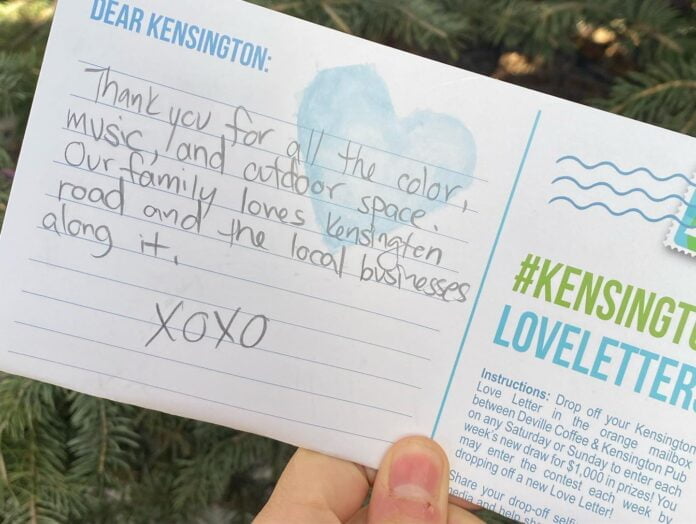
As part of the six-week entertainment series, MacInnis also initiated a contest that visitors to the area can enter every week for six months. To do so, people are encouraged to write a ‘love letter’ to Kensington, explaining their admiration for the community, and submit it in person into a mailbox located in the plaza. Each week, the mailbox is emptied and a letter is chosen as the winner, whose writer receives $1,000 in gift cards to local shops in town. To fund the project, the Kensington BRZ used $40,000 of its budget, purchasing $300 in gift cards from every business in the community. And, because many of the gift cards are $25 denominations, each winner’s prize consists of 30 to 35 gift cards to individual merchants, ensuring traffic, repeat visits, new customers and hopefully more spend above the value of the gift cards.
In addition, as part of the campaign that MacInnis calls Kensington’s ‘Love’ campaign, the BRZ and its local business members also hosted three massive community fire pits with community seating in the deep cold of February. It lit up the community with bright colourful lights. And it introduced a big heart bench in the centre of the district, reflective of the campaign and Kensington as a safe and welcoming community. Each of these initiatives on their own reaped benefits for local business owners and the Kensington community. However, as part of a collective, the success that’s been generated to date has been incredible, evidenced by the health of the Kensington business district.
“When the pandemic hit, I set a goal to save more businesses than I’d lose during this time,” she admits. “In the four years of economic downturn, prior to the pandemic, I had lost 16 businesses. At the start of COVID, when there were a number of problems between landlords and their tenants, I lost another 14 businesses. Since then, 17 businesses have opened in Kensington, 2 took the time to rebrand, 6 have expanded or moved to a larger location in the area and 6 are opening soon. In the end, the health of small businesses is critical to the health of the municipal economy, provincial economy and federal economy. I understood how important it was to protect Canada’s entrepreneurs from the devastating impacts of the pandemic and thereby protect the economic wellbeing of the country.”
Preparing for a ‘new normal’
Response to MacInnis’ initiatives has been tremendous to date. And, looking ahead, she has a number of plans to further improve Kensington, making it more welcoming than it already is, including the enhancement of the community’s plaza with better lighting, the inclusion of power sources and access to water. She’s also in the process of working with local businesses to realize new opportunities that might arise from a ‘new normal’, including the chance to reimagine their stores and the way they do things and to consider creative partnerships with other businesses that might involve a type of lease-sharing agreement. All of her efforts are aimed at helping to create more useful spaces within the district and to help support merchants in understanding the changed landscape and to embrace a new way of thinking. In doing so, she believes that there are bright days ahead.
“Things have undoubtedly changed over the course of the past 18 months. And it’s up to small business owners, with the help and support of their local BIAs, to think creatively and connect with their customers on another level. People are really starting to embrace the shop local mentality and are understanding more clearly how important small businesses are to the health of their communities. They’re seeing now more than ever that their local small business owner is also their neighbour and their friend. We’ve experienced quite a bit of support for our merchants throughout the pandemic. And, it’s support that I only anticipate strengthening as we continue moving forward.”
Goodfood Market Corp., a leading online grocery company in Canada, recently launched a fully electric refrigerated vehicle fleet which it says is a first for any private entity in Canada.
The launch is initially in Vancouver with 10 vehicles.
Jonathan Ferrari
“Innovation in technology is a core pillar for us at Goodfood. As we continue to set the bar for a sustainable future, like our fully recyclable Goodfood meal kit boxes and our plant-based ready-to-eat salad packaging, we want to go beyond our products and bring sustainability in grocery through delivery,” said Jonathan Ferrari, Goodfood’s Chief Executive Officer.
“The idea behind the initiative was over the past few years it’s become evident to us that all of our stakeholders are incredibly focused on sustainability and the whole ESG movement and so one of our key initiatives on the environmental side was we gave our team the challenge of figuring out how to create a fully electric refrigerated vehicle fleet. We thought of Vancouver as our first market because we did get some government support . . . So our fleet in Vancouver is now fully electric including the refrigeration unit in the trucks and the operation of the electric vehicles.
“What’s pretty incredible is that we’re the first private entity to participate in this program and to build a fully electric and refrigerated fleet in Vancouver. It’s still early days but the customer feedback has been excellent.”
Image: Goodfood
Goodfood is collaborating with Lightning eMotors, Volta Air and Frigid Rentals on the initiative and the company says it is the first private entity to receive a pre-approved grant from Plug-In BC for electric charging infrastructure. The vehicles themselves have an estimated range of 200 kilometres on a full charge of its 86-kWh battery pack, regenerative braking, and can comfortably hit 120km/hour – silently.
Goodfood was launched in 2014 based out of Montreal. Today, it services all the major cities across Canada with offices and fulfillment centres in Montreal, Toronto, Calgary and Vancouver.
“When we first started the business, our intent was to completely revolutionize the way that Canadians did their weekly meal planning as well as their grocery shopping,” said Ferrari. “So the first five years of the business we really focused on creating the meal kit category in Canada. Every week our customers get a box of delicious ingredients. Everything they need to prepare their weeknight meals.
“By 4 p.m. every single day 80 per cent of Canadians don’t know what they’re having for dinner. So to be able to offer them fresh ingredients, flavours and to be able to get out of that weeknight recipe rut, the meal kits are a perfect solution. So that was kind of the first five years of our business. We expanded nationally. We created fulfillment centres. We built a brand. We have over 3,000 employees across the country.
Goodfood Rendering in Toronto. (Image: LIDD Toronto Brokerage)
“And we’ve since turned our attention to being able to service more of our customers’ weekly needs. So we now offer a selection of prepared meals as well. The meals are fully cooked and ready to heat and serve as well as a growing selection of grocery products. Our intent as we look forward over the coming years is to be able to become a one-stop shop for grocery shopping needs, prepared meals and meal kits.”
Goodfood currently has about 300,000 households that are subscribers across the country and it delivers millions of meals every single month.
Ferrari said neighbourhoods across the country will be getting the electric refrigerated vehicles soon as well.
“This first fleet was intended to prove out two things. The first piece was really these trucks are fully custom. We actually customize the electric vehicle, the refrigeration. Everything. This is not like an off-the-shelf vehicle,” he said.
“The first step was to understand how would they perform in a real life setting, real life environment. And then the second piece was to be able to understand how we could set up the process to recharge the vehicles, what the performance would look like throughout the winter months for example when the battery lifes become shorter. That’s what we will be testing out over the coming months and once we get that feedback from our drivers and customers who understand the performance of the trucks and the economics of the vehicles, at that point we’ll be able to scale nationally with our electric vehicles.”
Inger Miller
Plug-In BC Program Lead, Charging Infrastructure, Inger Miller, said Goodfood is continuing its commitment to pushing boundaries of what food and grocery look like across the country.
“Going electric allows fleets to save on operational costs and reduce emissions for a sustainable future and we continue to do this through great partnerships with Canadian owned companies like Goodfood,” said Miller.
Today, about 80 per cent of the company’s deliveries are in Eastern Canada – Ontario and Quebec. If you think about the Vancouver market being 10 vehicles, the company could multiply that number by five times to meet current needs there and continue growing over time.
Richmond at Spadina in Toronto - Photo by Dustin Fuhs
The Toronto retail leasing market will see improved activity in 2021 but should remain below 2019 levels despite its recent rebound. A series of lockdowns has impaired the ability of many retailers to make plans, so leasing is still catching up, says a new report by commercial real estate company JLL.
Despite a severe third wave, overall retail leasing activity rose by 21 per cent in the first half of 2021 compared with 2020, but remained 28 per cent down compared with 2019, according to the Retail Outlook for the Fall 2021 report.
“Retailers have certainly looked at foot traffic to lease spaces. The focus remains outside the CBDs, as many office workers have stayed beyond the downtown areas and worked from home. Scarborough has seen strong space absorption during the pandemic,” it said.
“Available space decreased in 2021 as developers readjusted to lower demand and significantly reduced new supply. The trend to move in remained stronger than the trend to move out, although not at the strength of previous years. In this context, neighbourhood centres, anchored by essential shops a few steps from shoppers’ homes, have seen increased interest across the GTA.
Signage in The PATH – Photo by Dustin Fuhs
“In fact, neighbourhood centres, power centres, and general retail were the biggest contributors to the decrease in availability. In contrast, only malls experienced a significant increase in availability, offsetting some of the overall decrease.”
Tim Sanderson
Tim Sanderson, Executive Vice President, National Retail Lead for JLL, said the Toronto market is starting to come back.
“If we haven’t hit the bottom of the market yet, it’s imminent and things are beginning to pick up. There is some more vibrancy to the marketplace on the both the landlord and the tenant side. People need to remember that Toronto was the most locked down city in North America in terms of days of closures,” said Sanderson. “We were in a very dark spot. Vancouver wasn’t locked down to the degree Toronto was. Calgary wasn’t. Montreal wasn’t.
“So the dip, the bottom of the trough, was much deeper here. But we’re definitely seeing signs of vibrancy in the marketplace. We’re seeing retailers starting to talk about looking at space. And that’s good. That’s very good for the marketplace.”
Sanderson said a little bit more certainty is turning things around in the retail real estate market.
CF Toronto Eaton Centre – Photo by Dustin Fuhs
The JLL report said that while net effective rents for occupied space decreased by 14 per cent in 2020, they have moderately rebounded in 2021, demonstrating that the trend for base-rent concessions and adoption of percent sales agreements has receded and rent collections have improved. Retail sales in 2021 are down five per cent compared with 2019, although they increased by eight per cent compared with 2020.
“The ramp-up to the recovery of food services will be also slow as Ontario’s 2021 sales are down 32 per cent from pre- pandemic levels. After reporting full patios and reaching maximum capacity during the summer, full-service restaurants should see a weakening in business as the fourth wave moves through and the weather cools. QSRs will continue to perform better, although sales in the province haven’t recovered completely,” it said.
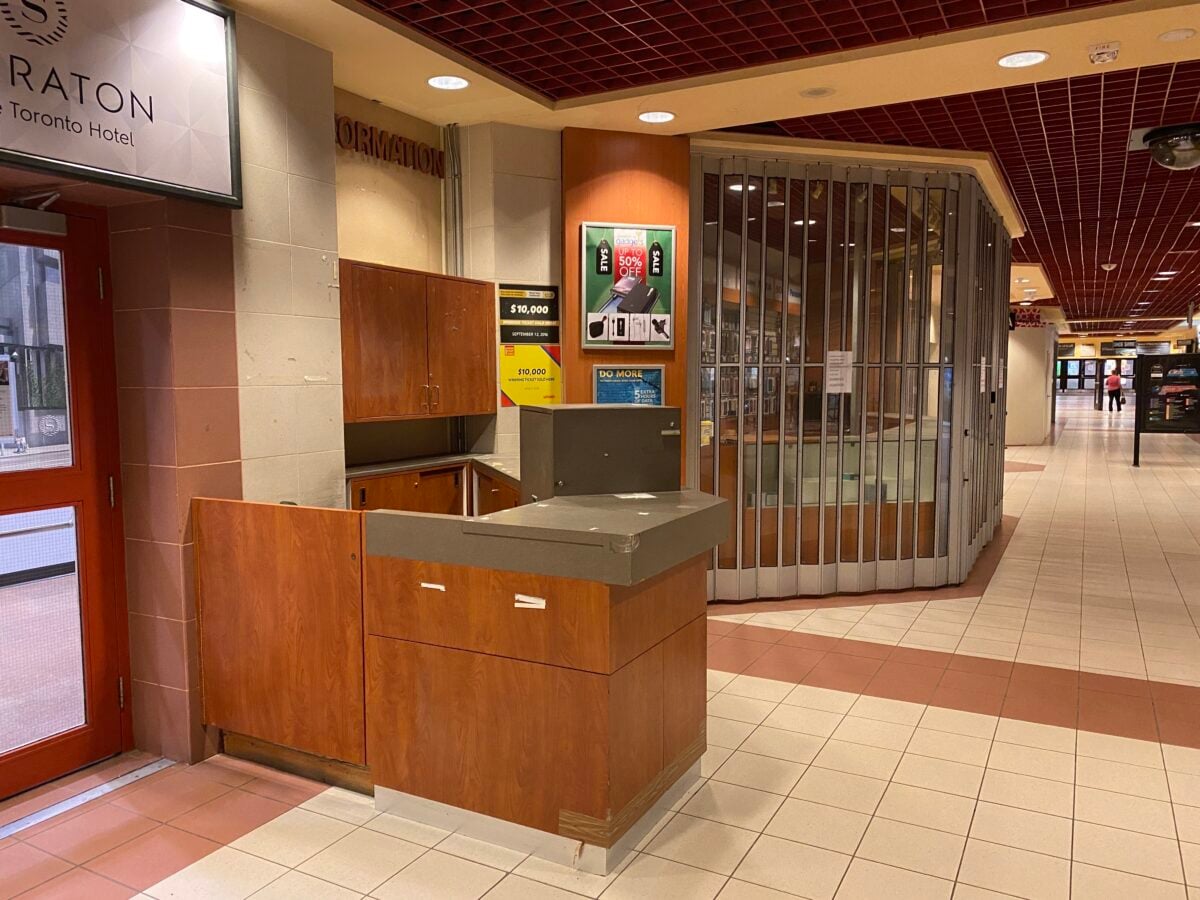
Business owners in downtown Toronto continue to deal with reduced foot traffic in areas, like the PATH, that were once bustling with office workers. More than half-a-million workers used to visit the downtown area every day, added JLL.
Former Lotto Centre at Sheraton Centre in Downtown Toronto – Photo by Dustin Fuhs
“The financial cores of the major cities in Canada have been hard hit. Keep in mind that the amount of office space in downtown Toronto compared to Calgary or Vancouver is gargantuan and it fuels a whole lot of other activity in the marketplace, restaurants, retail, etc., “ said Sanderson.
“What I do find interesting is the areas, the neighbourhoods, around the core if you look at downtown Toronto – King West, King East, the Distillery, Yorkville – these are vibrant. Things are going on.
“One thing worth noting. Many of the trends that take place in the United States often end up coming to Canada. I was on a call with my colleagues in New York (recently) and they’ve definitely seen an uptick since Labour Day of people going into Manhattan. Traffic is up. Subway traffic is up. Train traffic is up. So people are starting to come back to the offices in Manhattan. If you argue that Toronto is the New York of Canada, does that mean we’re going to see a similar trend here? And if so when? I think one of the biggest challenges in this market, in Toronto in particular, is still what seems to be people’s reluctance to get on the Go Train and the Subway – whether you’re worried about the person next to you coughing on you or whether you’re getting two hours back in your day when you’re not on sitting on the Go Train by working at home.”
The retail industry is, at the best of times, an unpredictable one which results in a number of different uncertainties that merchants must contend with every day. There’s no denying that events and circumstances over the course of the past year-and-a-half have ratcheted this notion up significantly, forcing much of the industry to shift and pivot in order to remain successful and continue servicing customers. However, with a gradual reopening of communities and economies across the country and a return of foot traffic to physical brick-and-mortar retail locations, the outlook on a near-term recovery for the industry seems optimistic, albeit cautiously so. Despite the lingering headwinds, there will be opportunities for growth, says, Roelof van Dijk, Senior Director, National Research & Analytics, Canada at Colliers, adding that the critical element likely required to attract customers back to the physical store will be centred around the experience.
“It’s been an incredibly uncertain time over the past 18 months,” he says. “And, although there are still a number of regions and provinces with capacity restrictions still in place, as well as some areas that are experiencing a resurgence of the virus’ spread, much of the country continues to reopen. Consumers are returning to physical stores as well. And so, there’s quite a bit of optimism around a brick-and-mortar retail recovery over the months ahead and opportunities for those retailers to offer the experience that today’s consumer is looking for. People are very much social beings. And there are many Canadians across the country who have saved money during the pandemic, unable to spend on things like travel, entertainment and eating out. They’re craving experiences. And the developers and landlords that can create the right mix of experiential components within their properties, making them destinations, will be the ones who enjoy the most success going forward.”
Unequal recovery
van Dijk goes on to explain that although retail was one of the hardest hit commercial real estate sectors throughout the pandemic, total retail sales continue to be strong. In fact, according to Colliers’ recent Mid-Year 2021 Canada Retail Update, the retail recovery is well and truly underway as total retail sales have already surpassed pre-pandemic levels. However, the report also points out some nuances in the recovery, citing an unequal rebound as a result of massive gains in ecommerce in addition to a disparity of gains among different retail sectors. As a result, says van Dijk, the road to recovery is set to be just as disproportionate for the industry.
“There are some sectors, which have not been able to open up and serve customers, that have been suffering a lot more than others during the pandemic,” he says. “Restaurants, malls and downtown commuter-based retailers are all starting to see a return of foot traffic. But what we’re seeing looking ahead is a potential slowdown in overall retail sales, a shift that will impact the sectors that have been doing extremely well through the past year-and-a-half, like home improvement and renovations, furniture, appliances and other similar types of retail. So, the trajectory of recovery and a rebound in sales may be extremely unequal through the next year-plus.”
Headwinds to growth
He recognizes the fourth wave of the COVID-19 virus as the obvious headwind to growth and impediment to an increase in physical retail sales over the short-term. Any further lockdowns and tightening of social restrictions and protocols could be devastating for some. However, there are a number of other factors, he says, that retailers and other businesses will need to contend with going forward as they continue to navigate through to a post-pandemic environment and a return to something as close to normal as possible.
“The potential for retailers to truly make some sort of recovery through the fourth quarter of the year and into 2022 is directly linked to their ability to ramp up their operations,” he asserts. “Currently, a big piece of that equation is being impacted significantly by a labour shortage. There are certain areas through the country where restaurants, venues and other establishments can’t hire enough staff to fully reopen, turning customers away and closing early because they don’t have enough staff. On top of that, there are still increased costs associated with PPE and cleaning and sanitization. So, operating hours are being impacted for some, reducing their revenue while their costs continue to increase. And, of course, there continue to be major concerns and disruptions related to the global supply chain. All of this creates a major issue for some. If you don’t have staff to service customers or product to sell them, it’s hard to generate revenue.”
Ecommerce impact
As mentioned, the Colliers report also cites the dramatic increased adoption of online channels for purchases as the most significant impact of the pandemic on retail. Ecommerce as a percentage of total retail sales (excluding automobiles and gasoline) reached a peak of 14.5 percent in April of 2020, doubling the pre-pandemic peak of 7.2 percent in December of 2019. On a dollar basis, e-commerce sales peaked at $4.8 billion in December of 2020, surpassing the pre-pandemic peak of under $2.8 billion in December of 2019. And, although online purchases have slowed of late, they still sit around an estimated 12 percent and will, according to van Dijk, continue to impact total retail sales going forward.
“We know that ecommerce is still growing at a much faster rate than that of total retail sales,” he says. “And it will likely continue to grow at a faster rate. During the pandemic there were many individuals who were perhaps a bit reluctant to purchase orders online prior to the pandemic who became quite comfortable doing so over the past 18 months. There’s an obvious ease and convenience to the experience that a lot of consumers appreciate. And, given the high ceiling of ecommerce penetration in the country, we’re expecting the trend toward online to continue for some time.”
The cost of returns
The increased adoption of ecommerce is not the only challenge that the digitization of today’s consumer presents retailers. With the shift in shopping behaviour comes additional costs associated with returns logistics. The report points out the fact that the handling of product returns at physical retail locations is far less problematic than through ecommerce platforms. In addition, as a result of the inability for the consumer to touch and feel the product in a physical setting, product returns have increased significantly through the pandemic, from anywhere between the pre-pandemic average of 5 to 10 percent to 20 percent and, in some cases, as high as 40 percent today. And, as the total general costs of returns are still estimated at nearly 10 percent of the product sale price, it’s proving to be an extremely costly challenge for many. Indeed, retail returns are ugly. However, there are some things that van Dijk suggests might help alleviate the challenge and the costs associated, particularly for those operating within malls.
“An omnichannel shopping environment is where we’ve been heading for some time and where we’ll continue to move toward,” he says. “What landlords do to help tenants deal with ecommerce returns is going to be really important going forward. We’ve seen many institutional retail landlords across the country working on solutions at scale to help make the process swift and cost-effective for all parties involved.”
In fact, the report points to Cadillac Fairview as one example in which the landlord has partnered with ReturnBear in order to provide an improved return experience for customers of its shopping destinations. The service offers the ability for customers to return items from a number of retailers at once, either at a single drop-off location at a CF shopping centre or shipped back together in a single box to a ReturnBear processing centre. It’s an inventive and holistic way in which shopping centre landlords can work with their tenants, becoming part of the solution.
Commercial real estate stabilization
Van Dijk goes further to suggest that anything landlords and developers can do to strengthen their relationships and develop collaborations with their retail tenants will be critical to ensure the success of their properties going forward. And with the right collaborations and a return of footfall to retail stores over the coming months, he says that it could mean very good things for the commercial retail real estate market.
“When it comes down to the performance of retail assets, we anticipate some improvements. As soon as capacity limitations are lifted, social restrictions are removed, foot traffic really starts to return and commuter traffic is restored, there’s a lot of upward potential for retail properties over the next 6 to 12 months. And if retailers continue to drive traffic to their stores and mall landlords can keep tenants in their buildings, creating opportunities to continue driving engagement, vacancy rates will continue to decrease, which will in turn help drive rental growth. And, as we continue to move forward into the fourth quarter of the year and into 2022, we expect to see a return to downtown activity across the country and a bit of a stabilization of the commercial real estate market.”
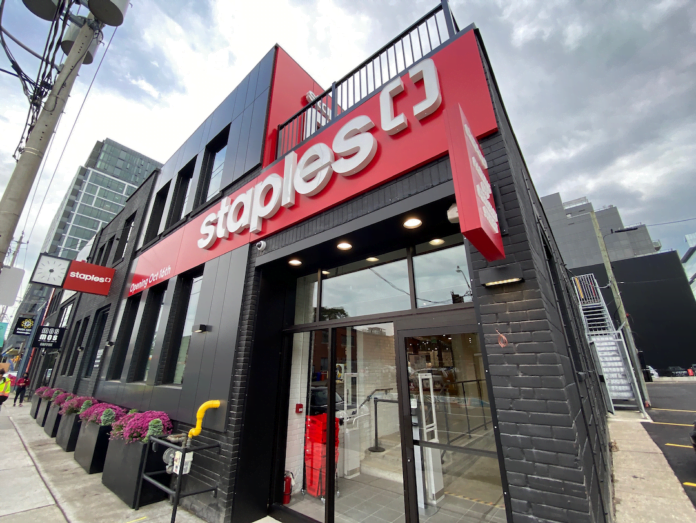
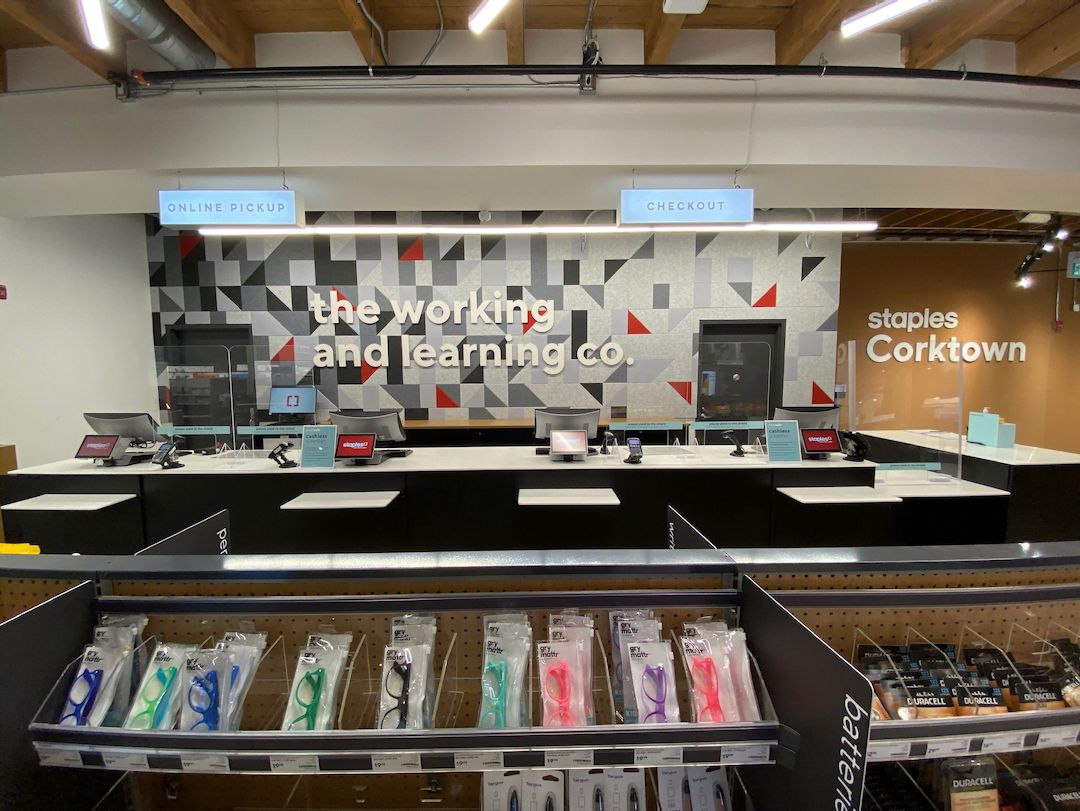
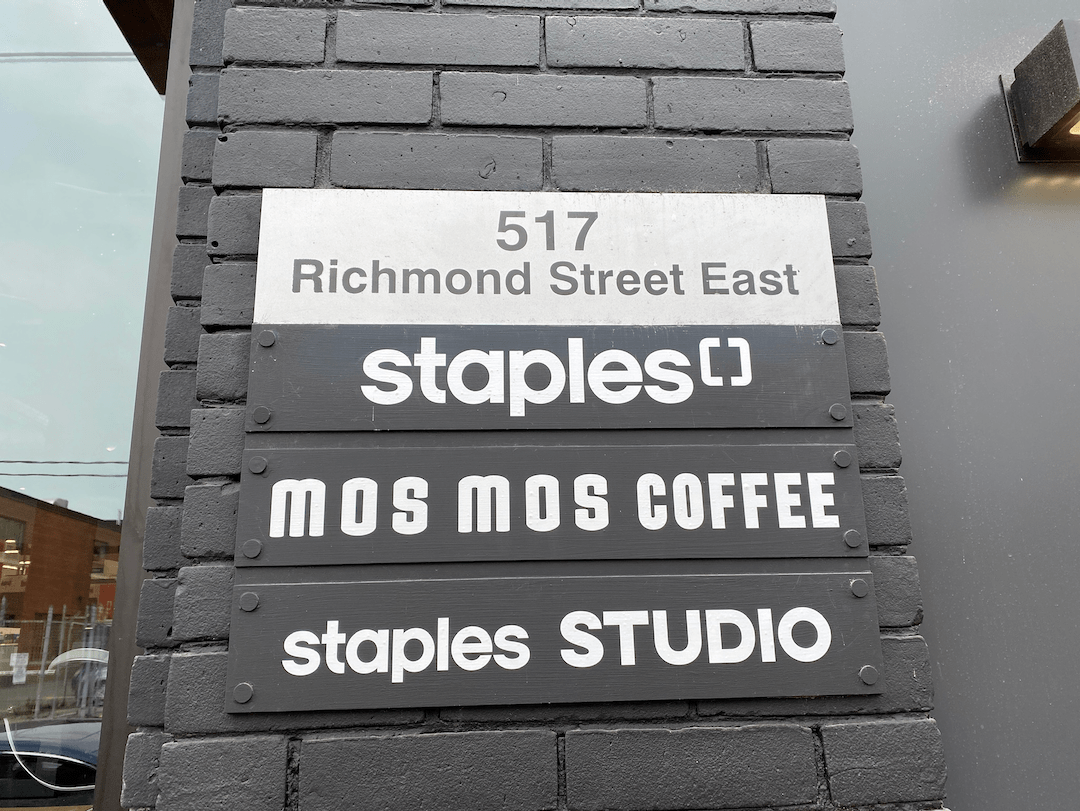
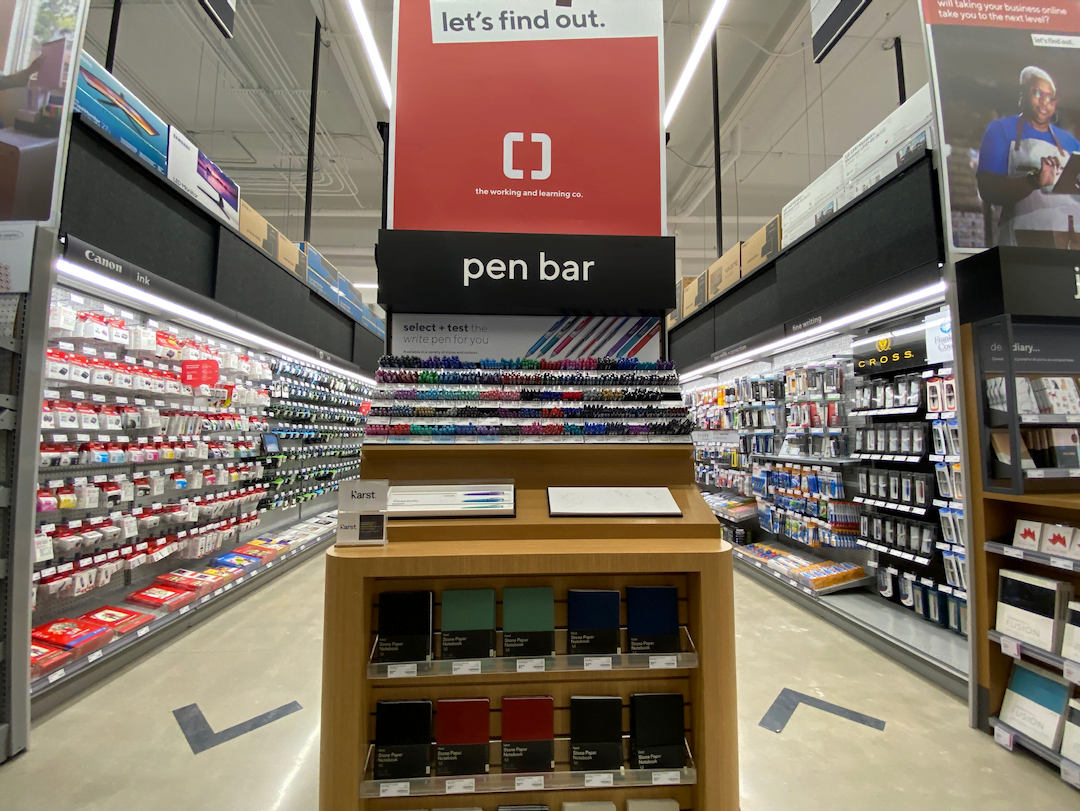
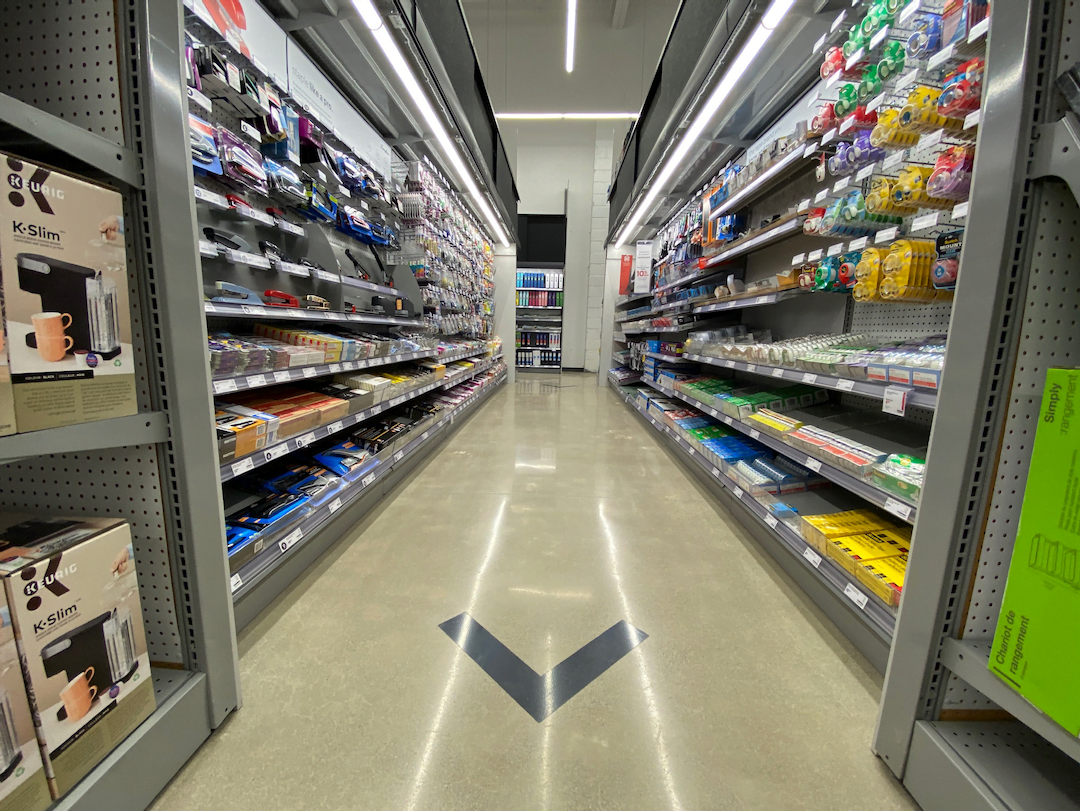
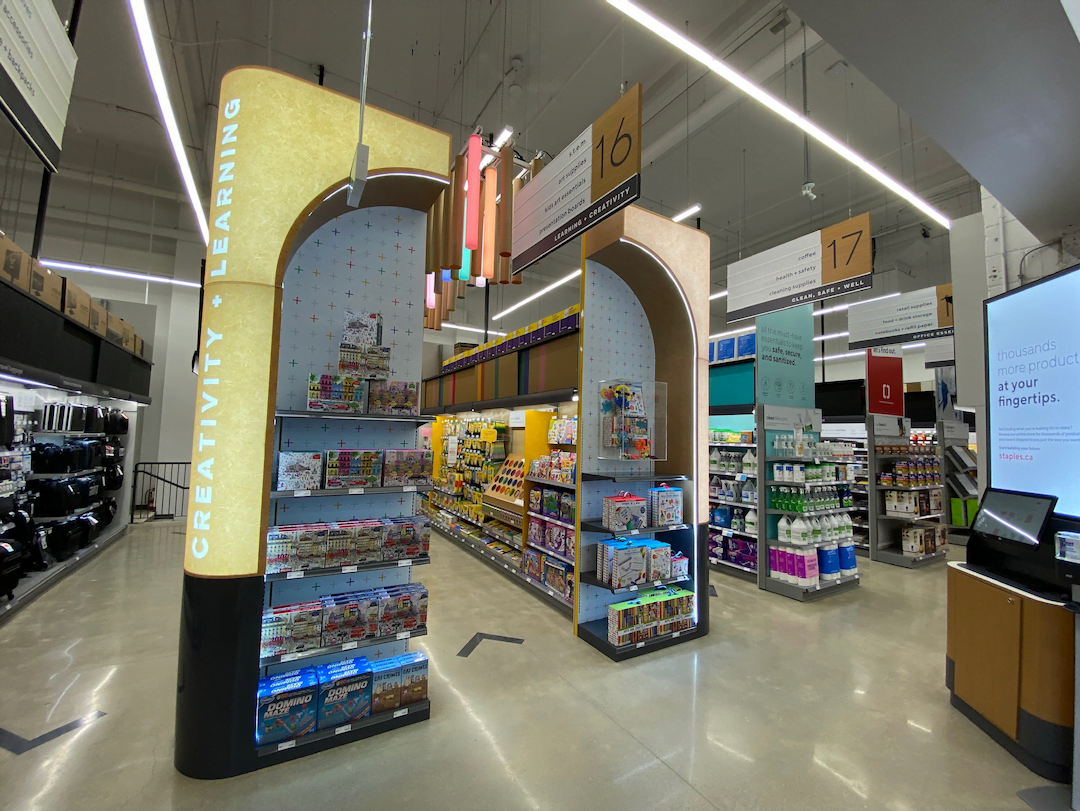
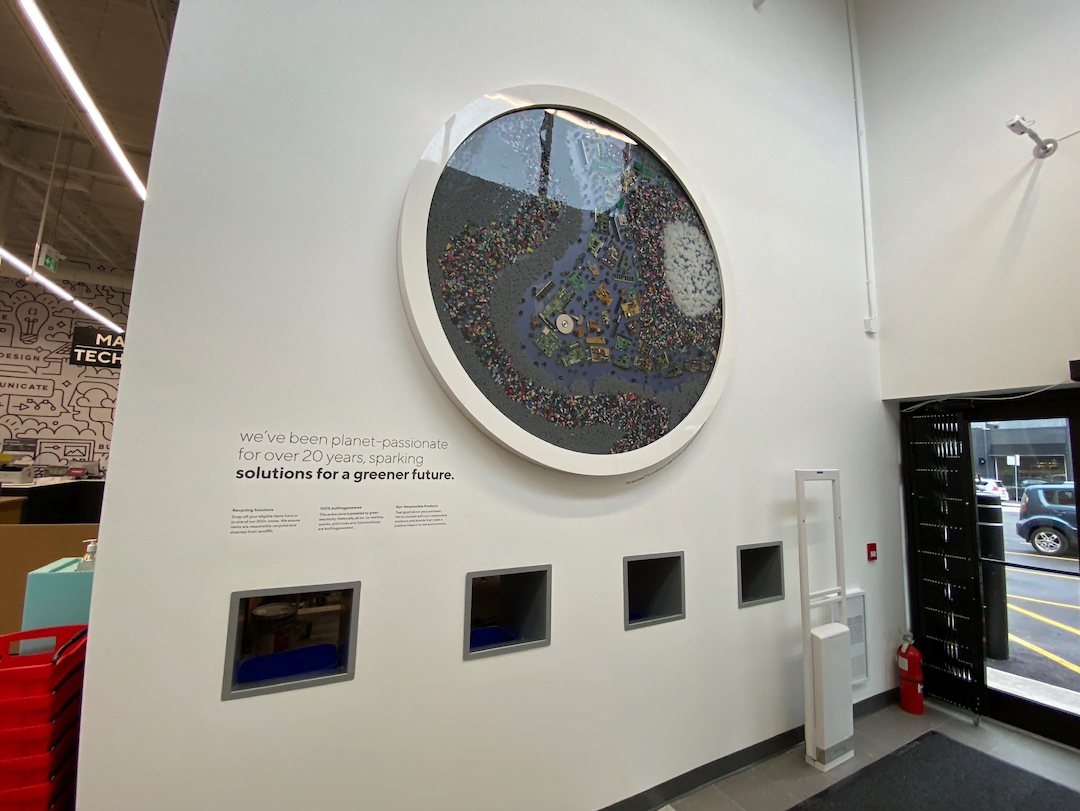
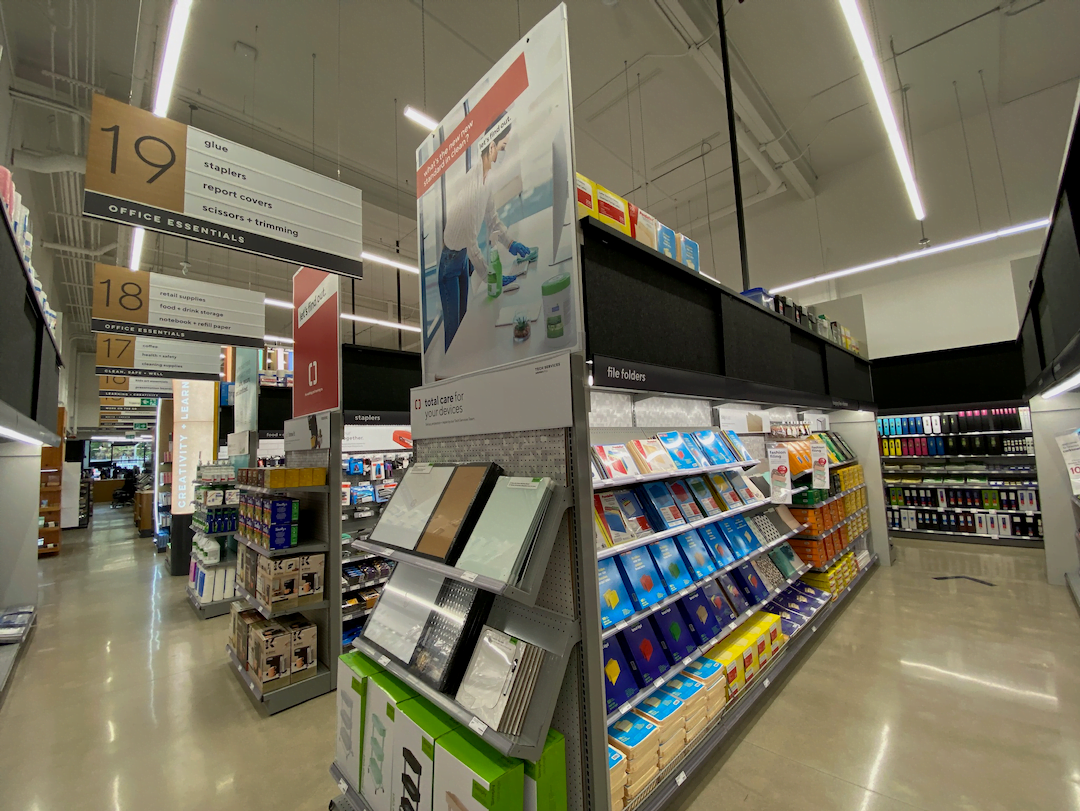
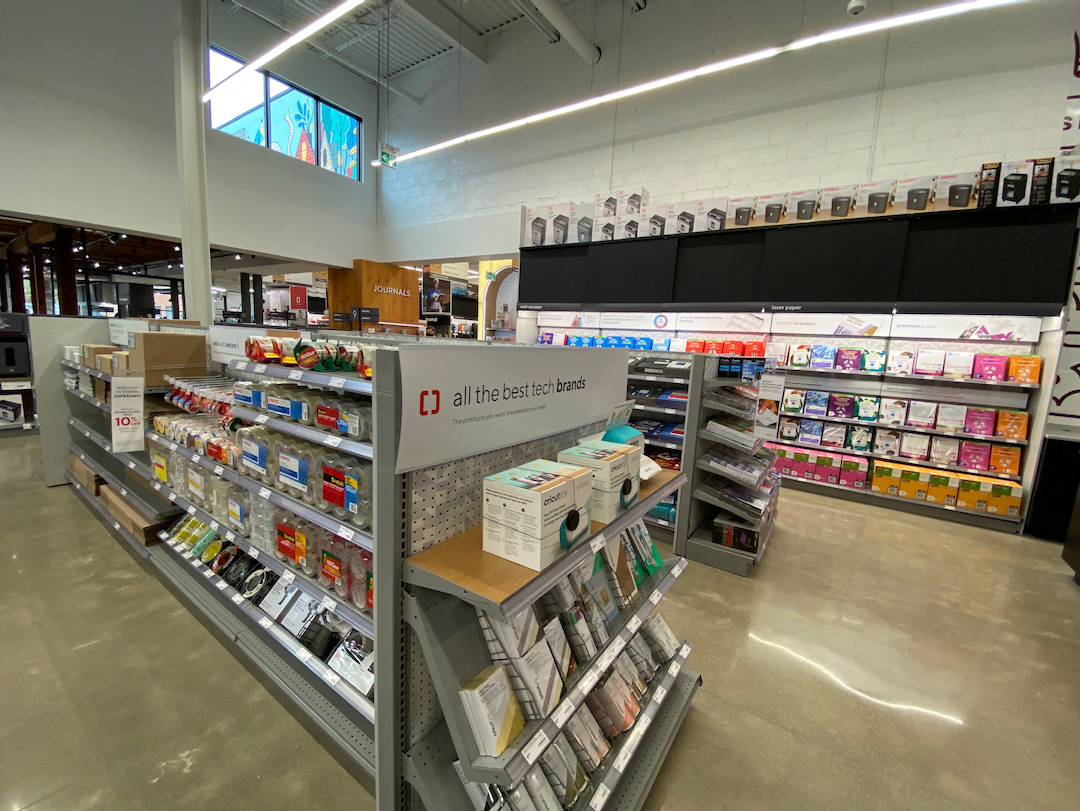
Richmond Hill-based Staples Canada has opened its newest ‘Working and Learning Company’ concept store at 517 Richmond Street East in downtown Toronto’s Corktown District.
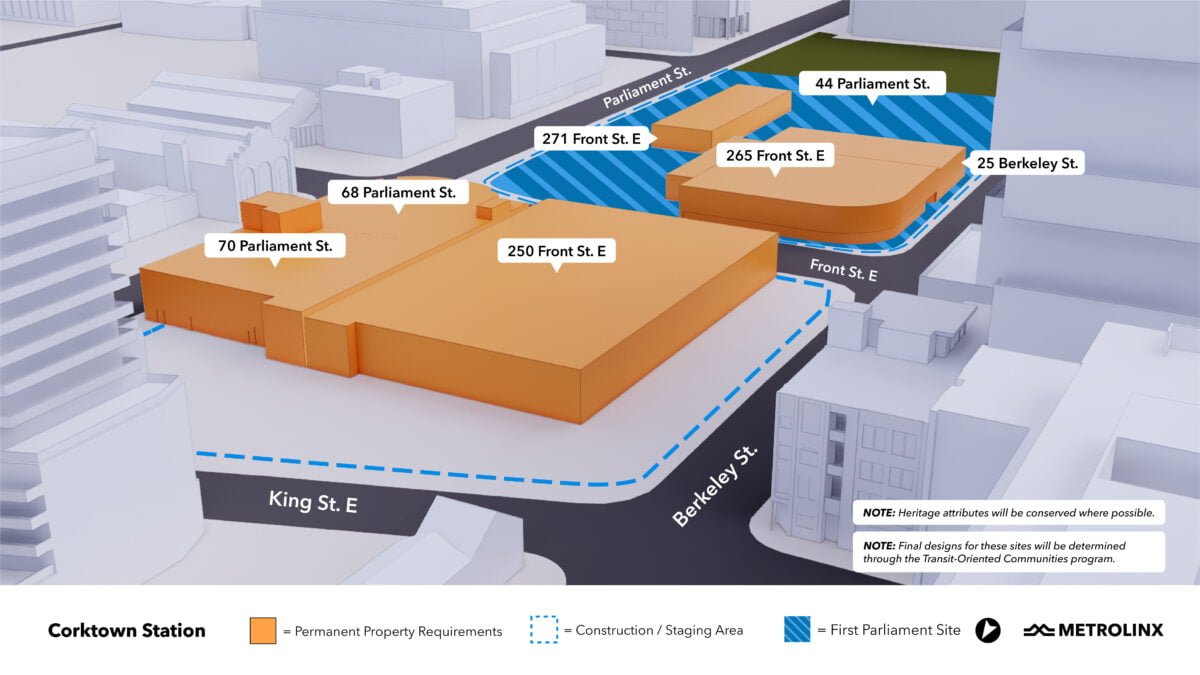
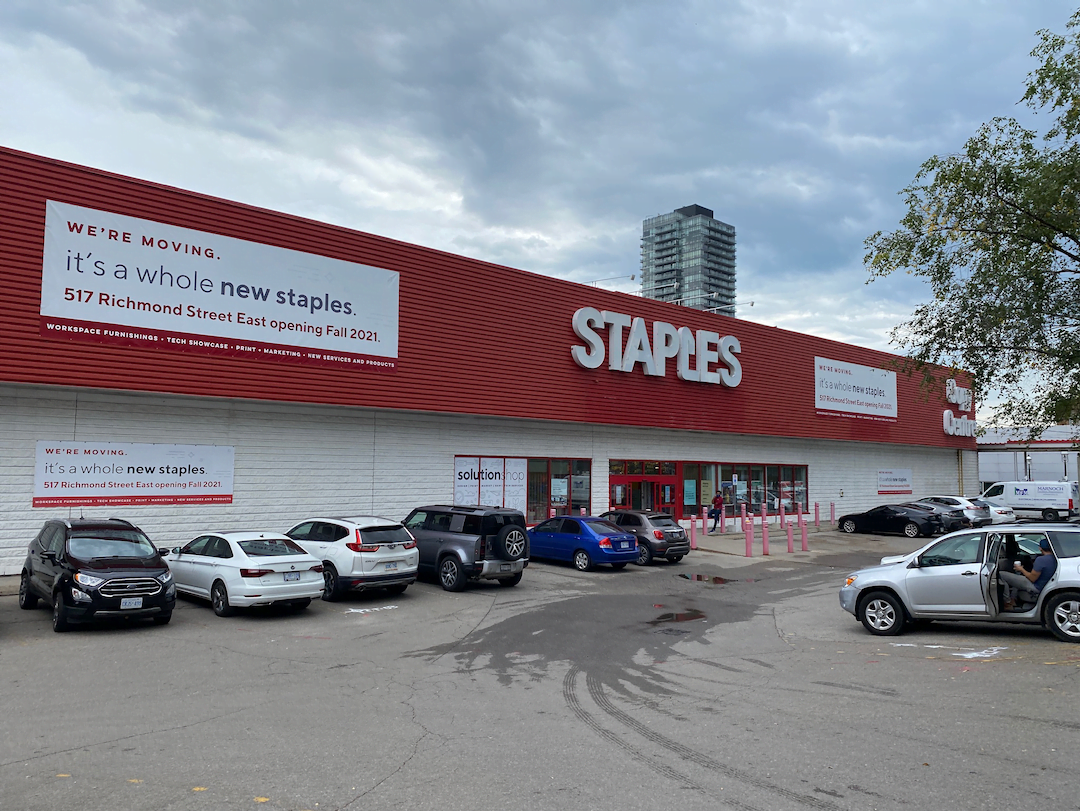
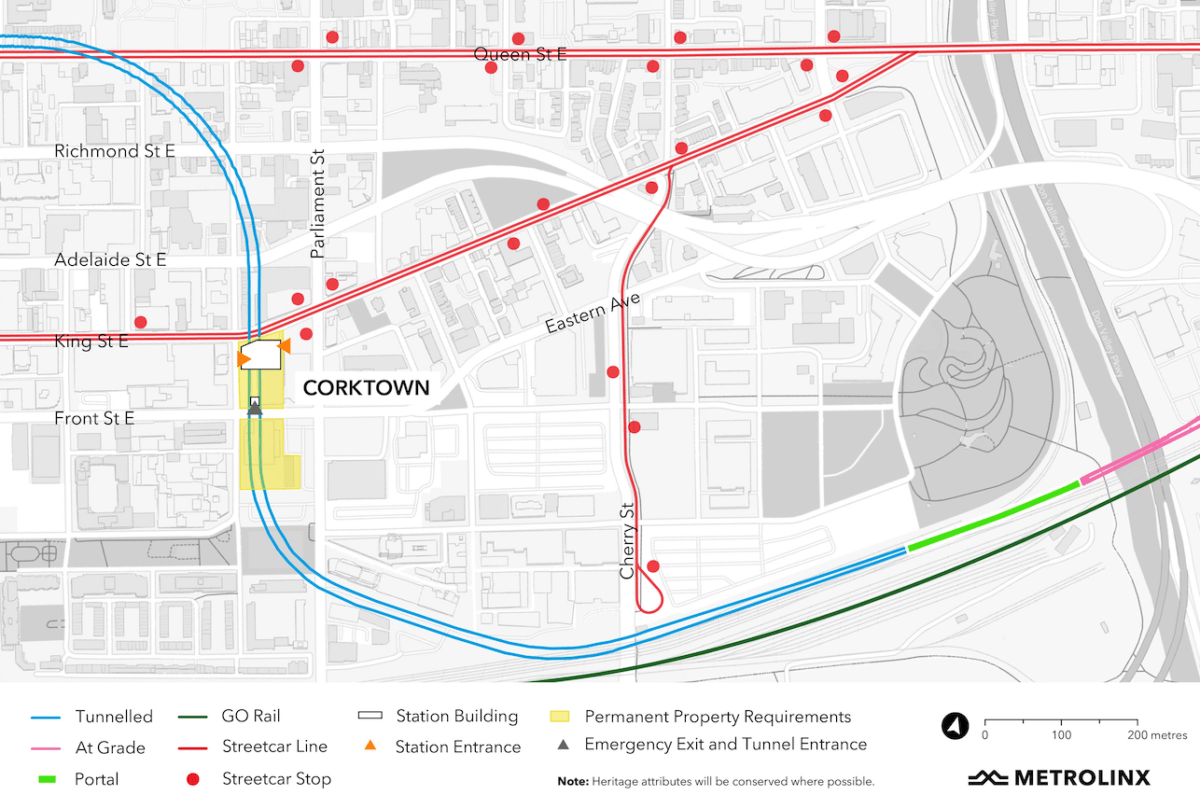
The relocation of the downtown Toronto store was precipitated by the announcement of the rapid transit ‘Ontario Line‘ which is bringing 15.6 kilometers of mass transit from Exhibition Place to the Science Centre. Plans for the transit project will take track along Queen Street to Moss Park and then continue south to the First Parliament site and former Front Street Staples location.
“Community is more important now than ever before, and we value the role we play in the communities we serve through our network of 300+ stores across Canada,” said Staples Canada CEO David Boone. “While our new store is exciting, we’re equally excited to give back to the community that we’ve been a part of since our Front Street store opened in 1993.”
Corktown Ontario Line Station – Image: MetrolynxFormer Staples store on Front Street – Photo by Dustin FuhsCorktown Ontario Line Station plans – Image: Metrolynx
David Boone
The brand was looking towards keeping the existing network of stores intact while building for the future concepts and technologies.
“We’re able to secure another location downtown with parking, easy accessibility, which was important for our customers. This gave us the opportunity to create the best representation of Staples as The Working and Learning Company.”
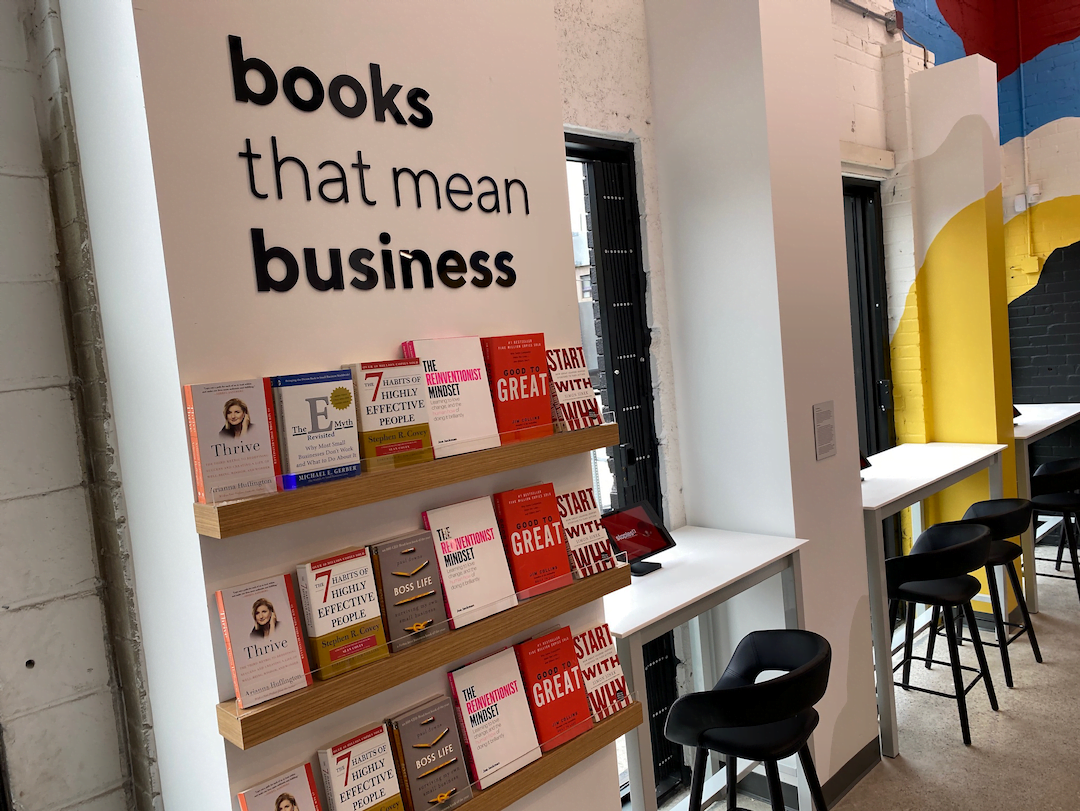
“Two big things about this store: Community based (co-working, services and a cafe as part of the design) and bringing together solutions with new brands, new innovative products, services and content which will allow people to be more successful in their learning lives.”
New Staples Canada Corktown – Photo by Dustin Fuhs
The store is housed in a former industrial manufacturing facility for the DECIEM brand, which operated there from 2015 to 2019 before exiting. Plans for this location were in process before the COVID-19 pandemic hit.
“This is a continuation of the strategy that we started three years ago as a company. What the pandemic has done has convinced us that we were on the right track. The notion of opening more co-working, we’re starting to see the co-working spaces that we have fill up with people who are in this hybrid model.”
“The sets of products and services that people need to work from home – we’ve just accelerated and made sure that we have the assortment in our stores so that our customers can be successful. It is not a change from our strategy – its just getting better and more relevant, and more exciting, and more inspirational for Canadians.”
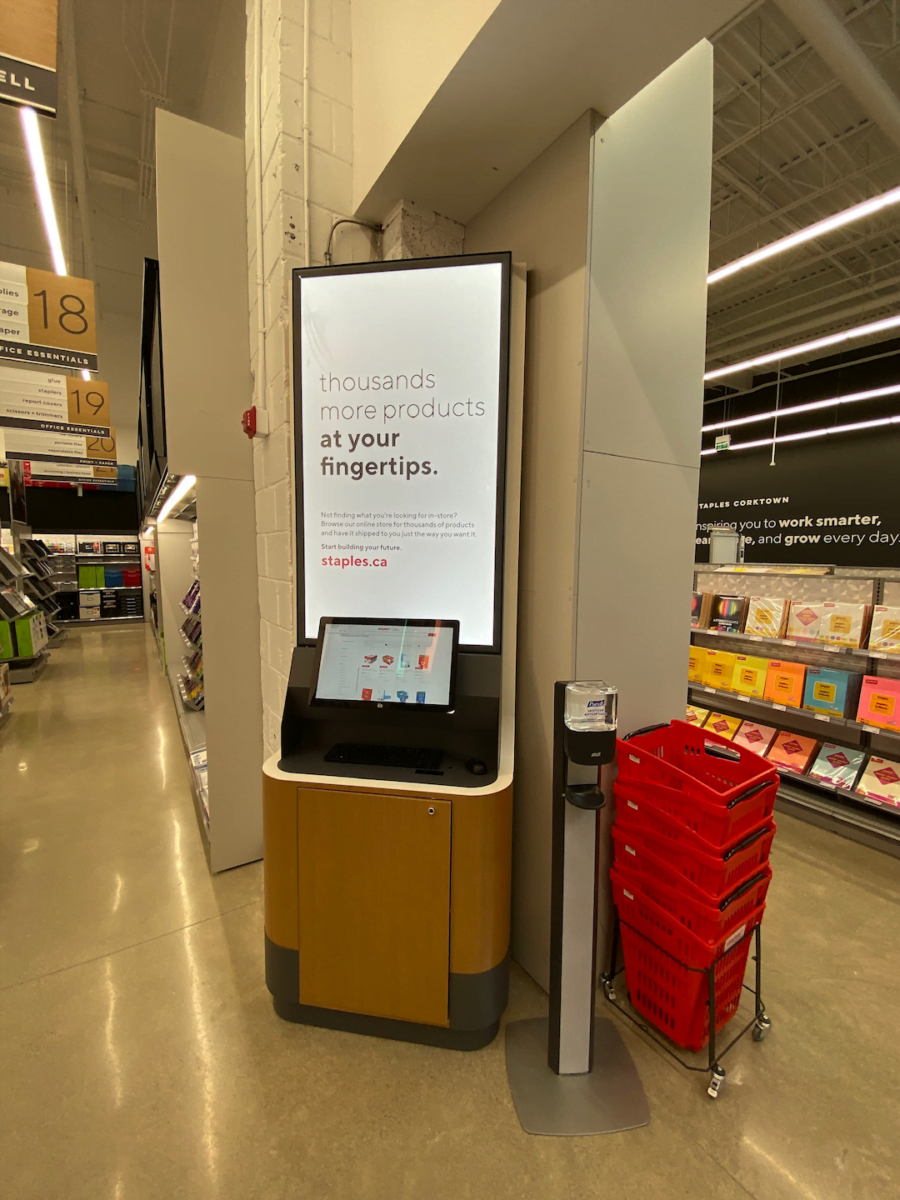
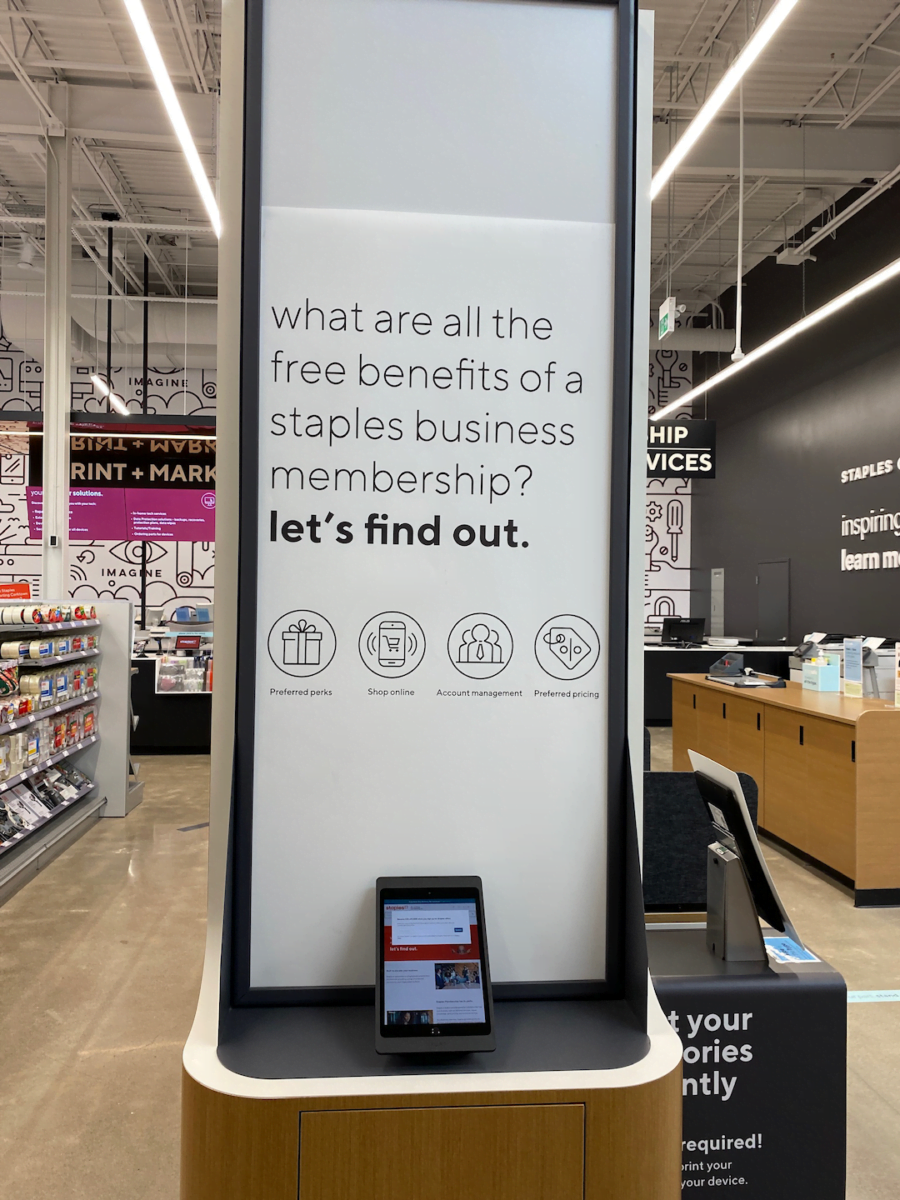
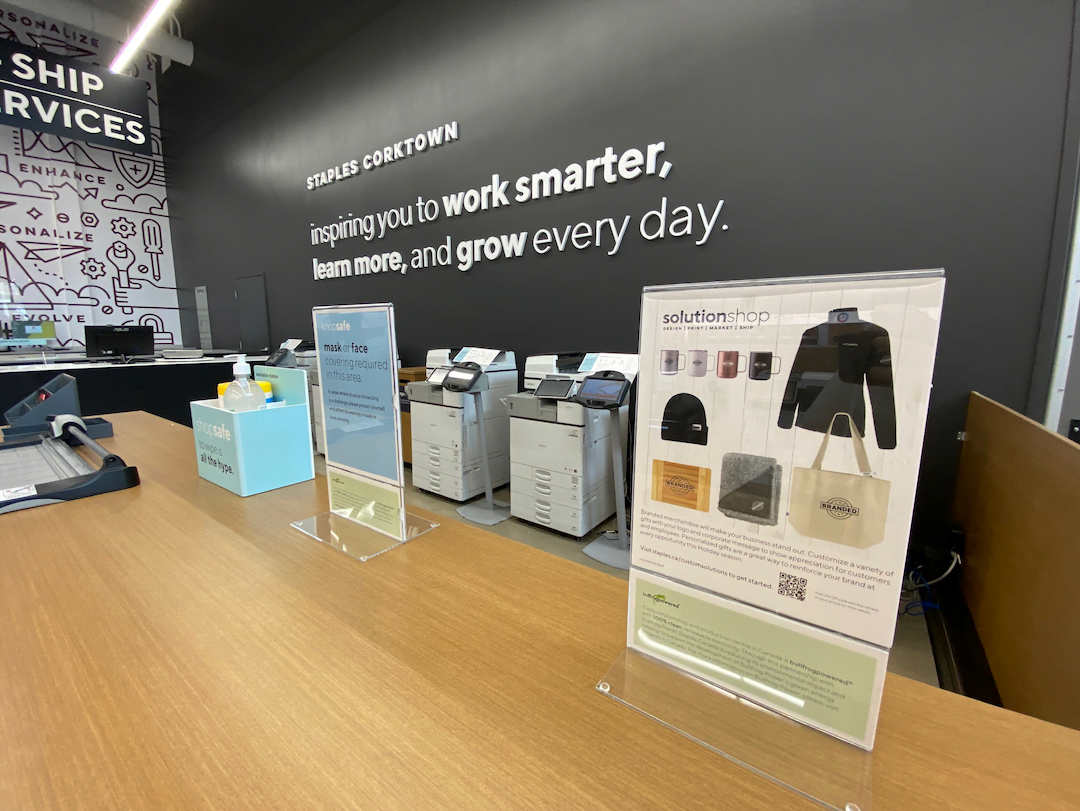
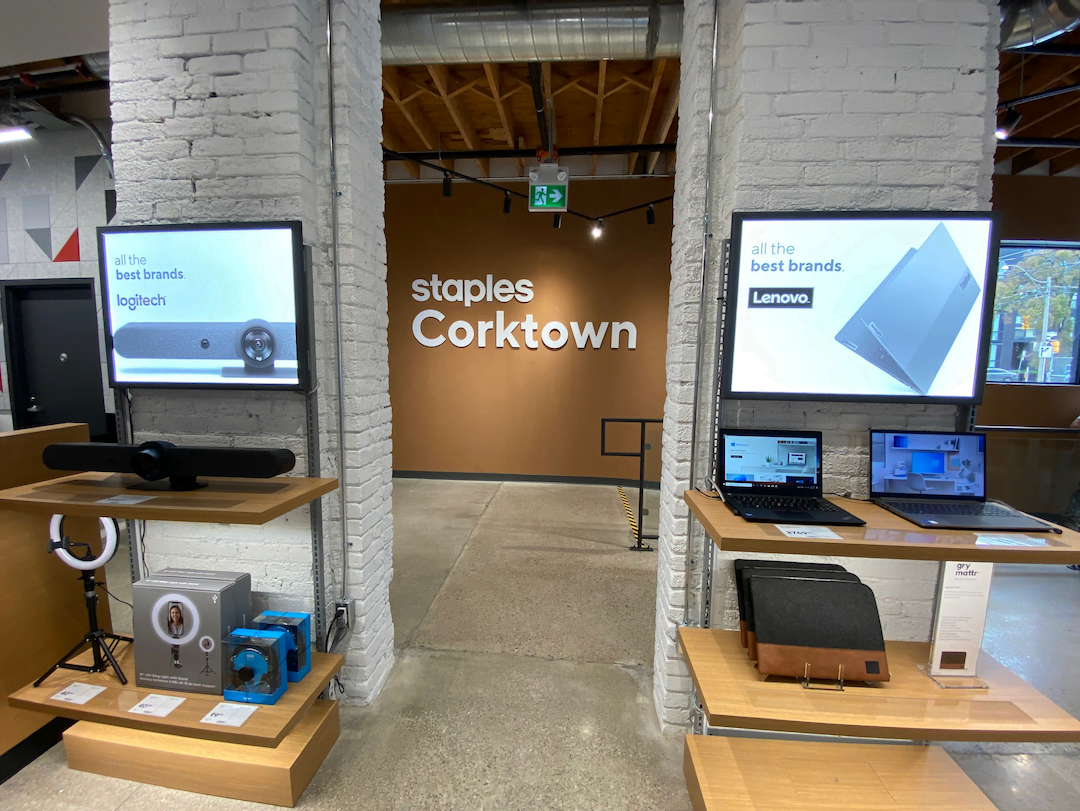
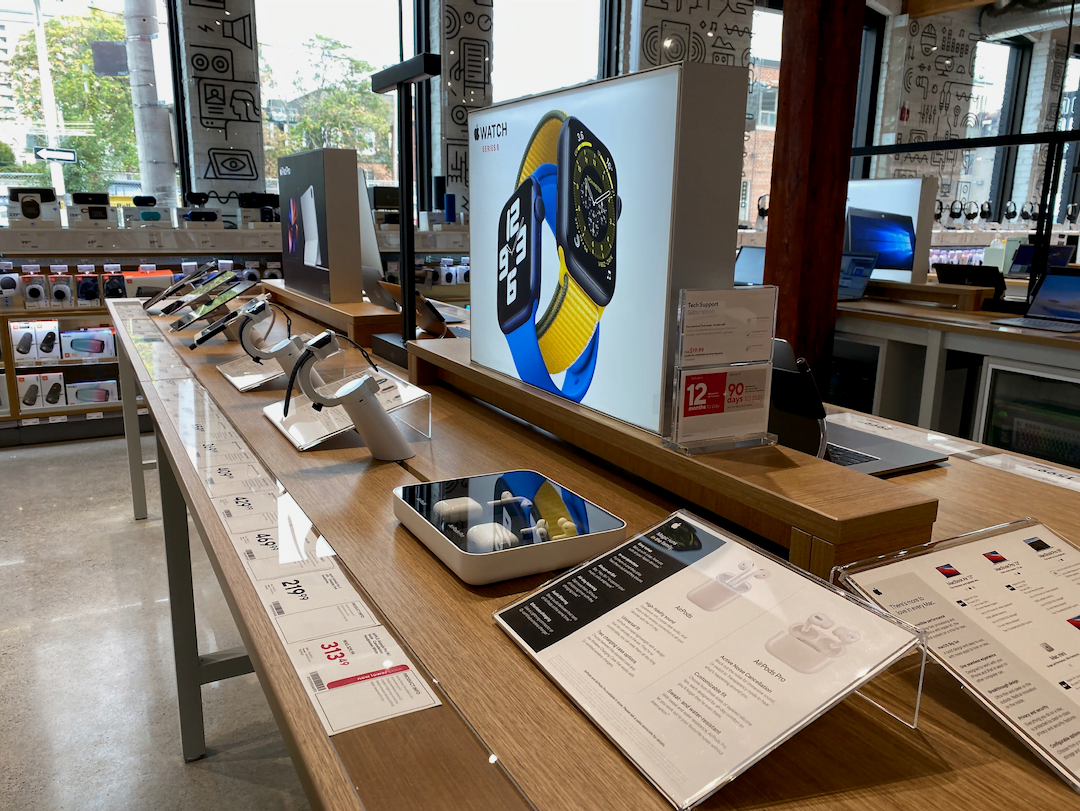
Corktown has a number of features built in, including technology for stock availability and information. It also connects customers to a broader set of products in the system that may not be on site.
Staples Canada Corktown Front Registers- Photo by Dustin Fuhs
Staples Canada Corktown – Photo by Dustin Fuhs
Staples Canada Corktown – Photo by Dustin Fuhs
“One of our strengths as a company is we have an unmatched last-mile distribution network”, shared the Staples Canada CEO. “We deliver next day across Canada. We own our own fleet of vehicles. I’m incredibly proud of how our team delivered through the pandemic. We did not lose a beat and we did not have issues.”
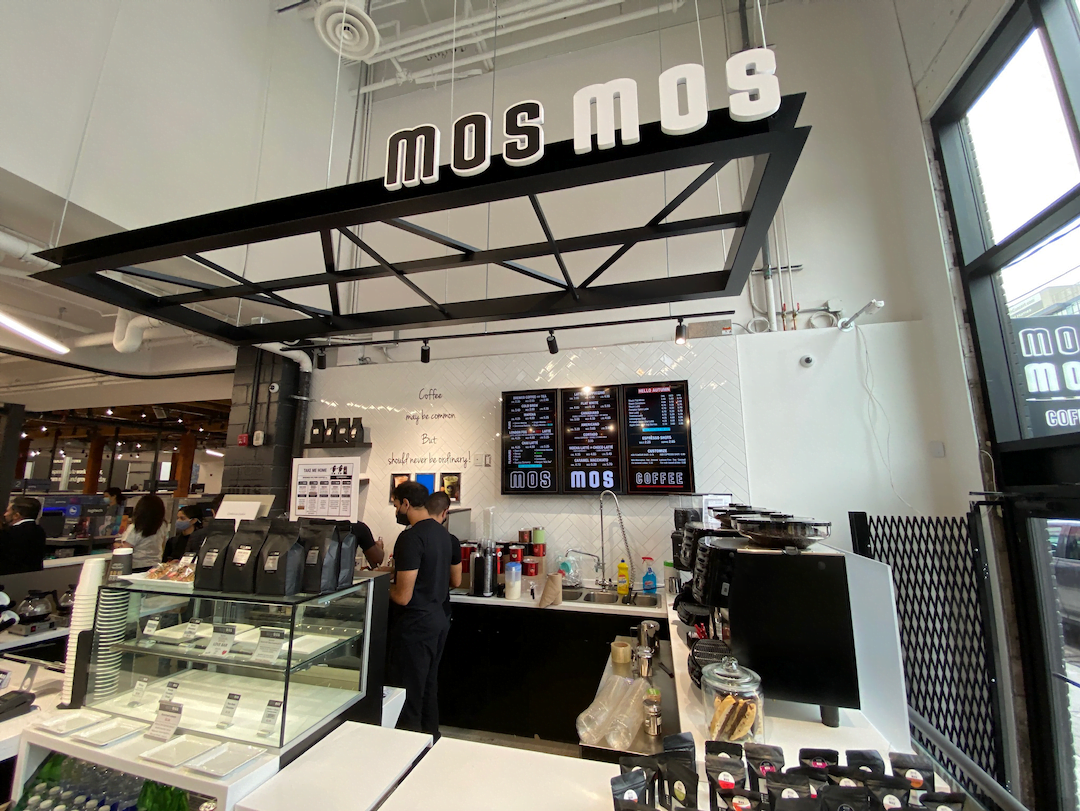
Mos Mos has continued its in-store cafe partnership with Staples Canada after a successful launch at the University Avenue location.
“Wherever we have created one of these store concepts, we have wanted to introduce a cafe. Our customers love it. We’ve been looking for local business partners because that is the lifeblood of the Canadian economy and its who most of our customers are.”
“Mos Mos was in our University Avenue location. Very successful and our customers love it. When this opportunity came up, we had a conversation and they were keen to be part of it. They love the location and wanted to be in this part of town.”
Staples Canada Corktown Mos Mos Corktown Cookie – Photo by Dustin Fuhs
Staples Canada Corktown Mos Mos – Photo by Dustin Fuhs
“This is a great marriage between a set of local entrepreneurs who care deeply about product and about the experience. In fact, you have to check out the cookie. Created specific for this location and inspired by the food that was consumed locally. We just love them.”
The Corktown location is the sixth Staples Studio location and the first with a second-floor patio with a stage for future Spotlight talks and community events.
Other highlights at Staples Corktown include:
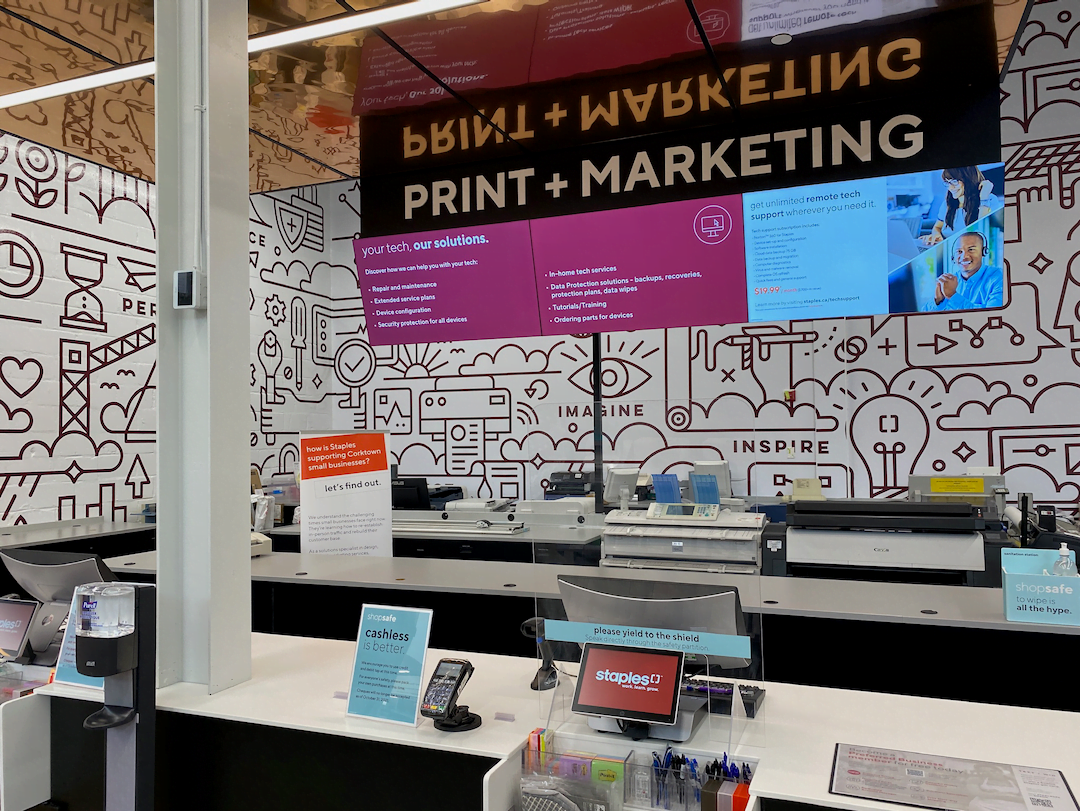
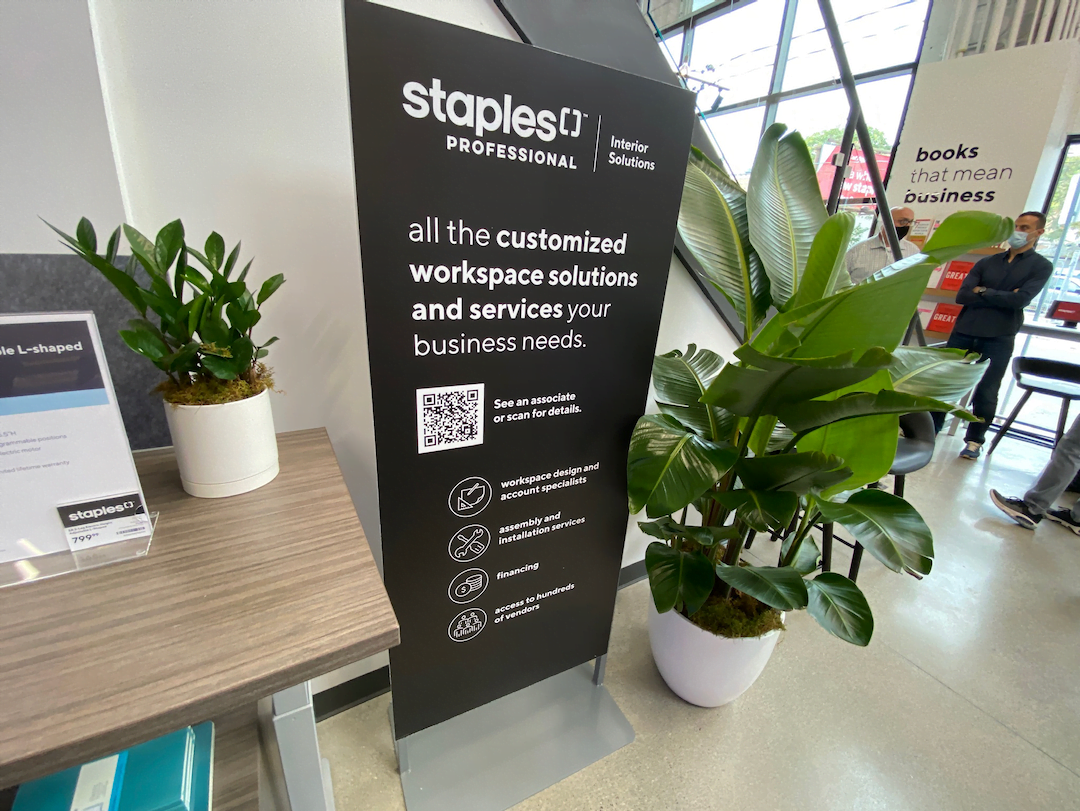
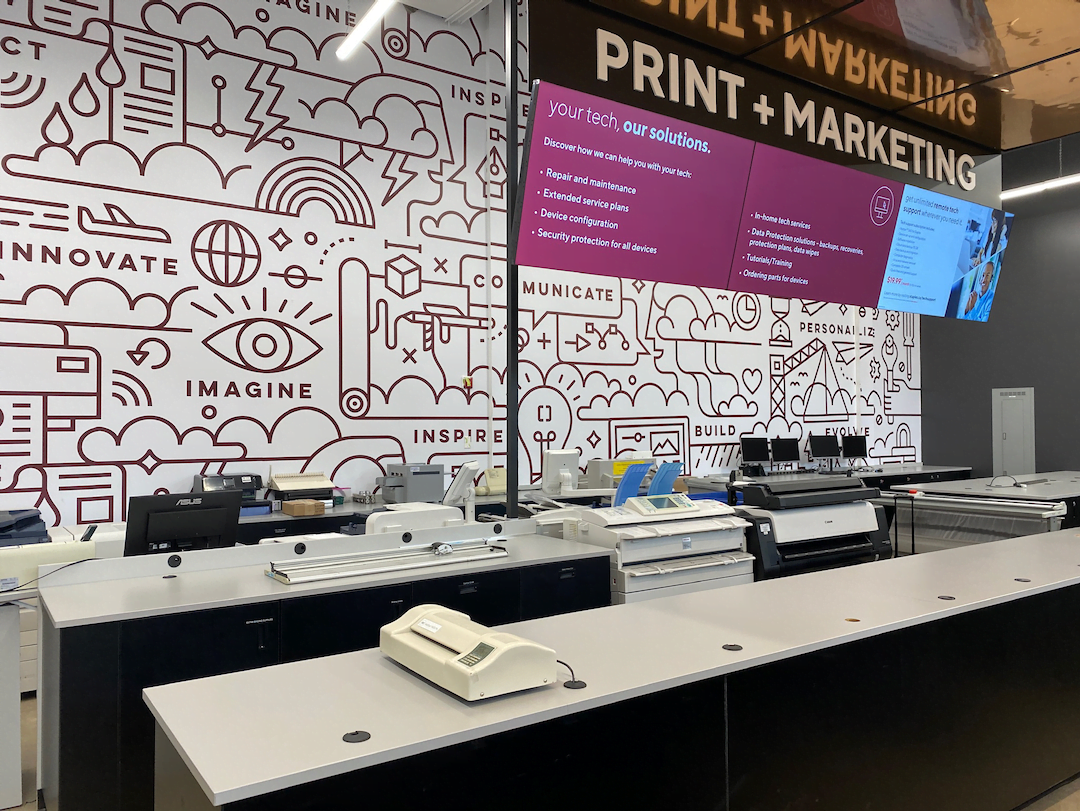
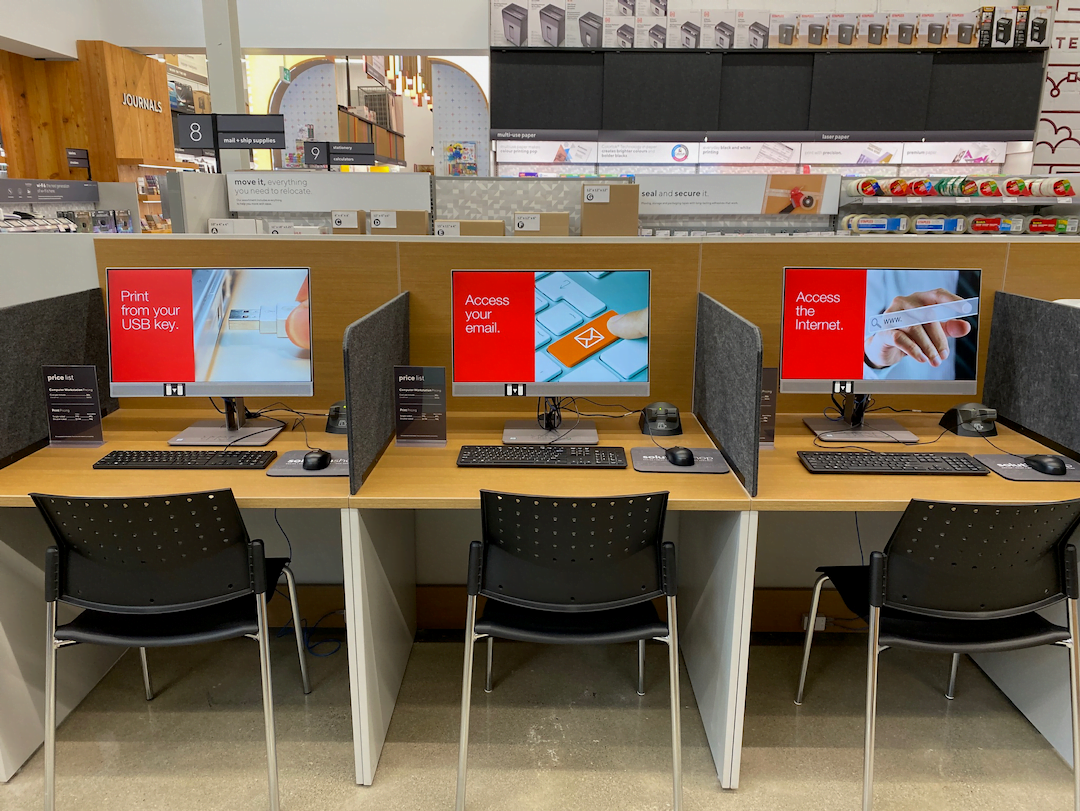
Solutionshop: Assisting locals with enhanced services that include tech services, graphic design, marketing solutions, shipping, print services and much more.
Murals by Local Artists: The Corktown Store is flanked with murals from Pascal Paquette and Zuna Amir, bringing joy and wonder to the in-store experience, making a creative mark on the Corktown community and supporting local artists.
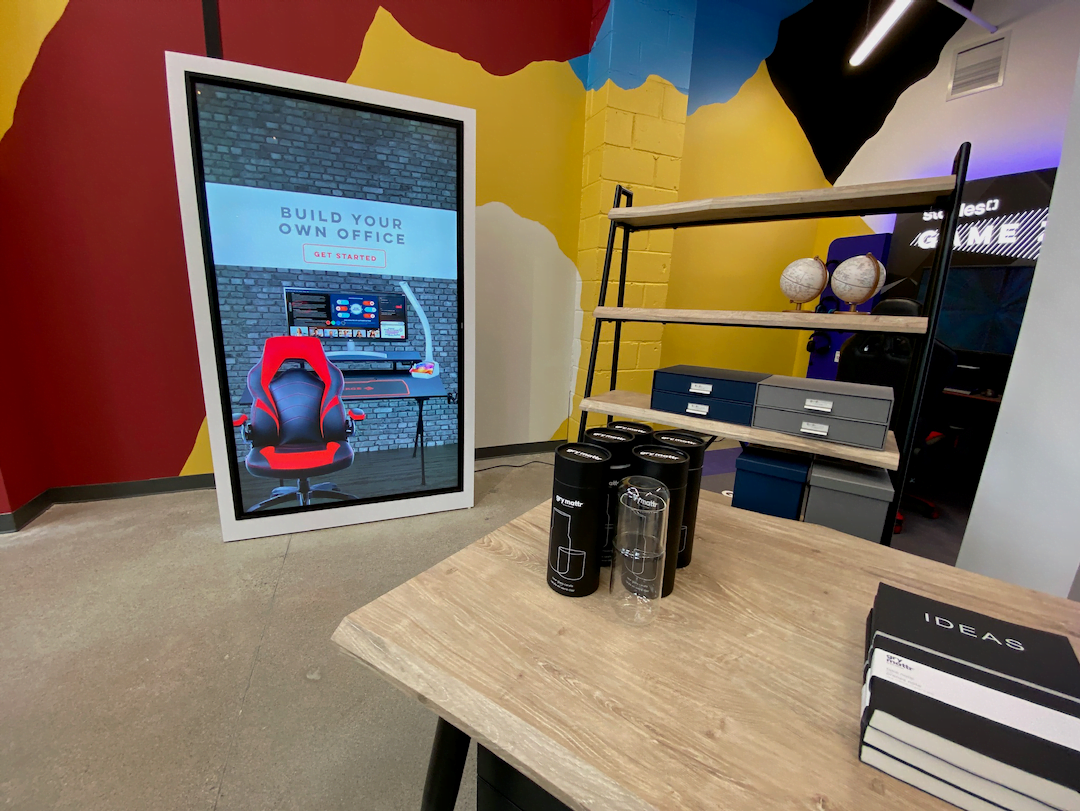
Technology throughout: The store will feature an interactive workspace experience, including a six-foot touchscreen that can help customers build an effective work from anywhere space in their homes.
Staples Canada Corktown – Photo by Dustin Fuhs
We asked Boone about the next steps and what Retail Insider readers would be hearing from the company in the future.
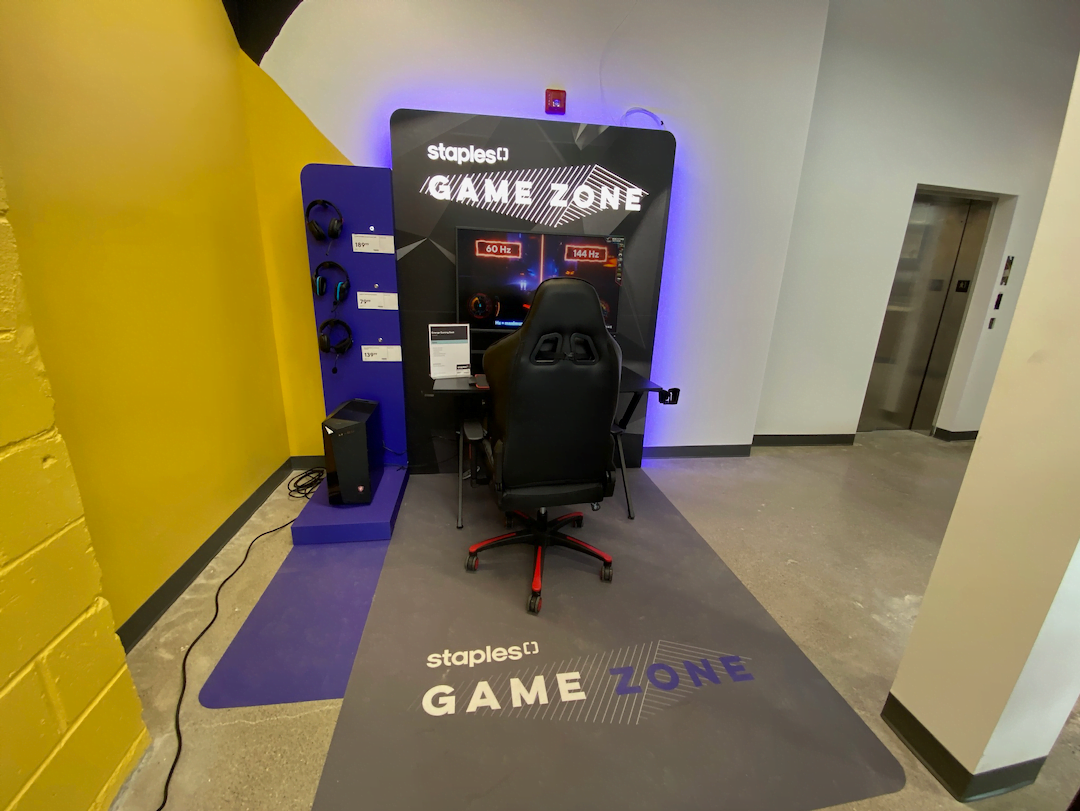
“You’re going to see us continue to update our retail network. You’re going to continue to see us bring more solutions to market to help people with hybrid work, cleanliness, safety and wellness. We have lots of opportunity in gaming and learning and creativity. You’re going to see a lot more of that from Staples.”
“We have a major push to serve Canadian businesses a better way. So we have a membership program – we brought together our B2B business with our retail business and we are doing everything that we can to make sure that Canadian businesses are successful for the next few years. You’re going to hear a lot more about B2B business from us.”
Photos from the Media Preview with Senior Leadership
Staples Canada Corktown Media Preview – Photo by Dustin FuhsStaples Canada Corktown Media Preview with CEO David Boone – Photo by Dustin FuhsStaples Canada Corktown Media Preview with Rachel Huckle, Chief Retail Officer at Staples Canada – Photo by Dustin FuhsStaples Canada Corktown Media Preview – Photo by Dustin FuhsStaples Canada Corktown Media Preview with John DeFranco, Chief Commercial Officer at STAPLES Canada – Photo by Dustin Fuhs
Photos from the Staples Canada Corktown Store
Staples Canada Corktown – Photo by Dustin FuhsStaples Canada Corktown – Photo by Dustin FuhsStaples Canada Corktown Technology – Photo by Dustin FuhsStaples Canada Corktown Front Registers- Photo by Dustin FuhsStaples Canada Corktown – Photo by Dustin FuhsStaples Canada Corktown – Photo by Dustin FuhsStaples Canada Corktown – Photo by Dustin FuhsStaples Canada Corktown – Photo by Dustin FuhsStaples Canada Corktown – Photo by Dustin FuhsStaples Canada Corktown – Photo by Dustin FuhsStaples Canada Corktown – Photo by Dustin FuhsStaples Canada Corktown – Photo by Dustin FuhsStaples Canada Corktown – Photo by Dustin FuhsStaples Canada Corktown Game Zone – Photo by Dustin FuhsStaples Canada Corktown – Photo by Dustin FuhsStaples Canada Corktown – Photo by Dustin FuhsStaples Canada Corktown – Photo by Dustin FuhsStaples Canada Corktown – Photo by Dustin FuhsStaples Canada Corktown – Photo by Dustin FuhsStaples Canada Corktown Podcast Studio – Photo by Dustin FuhsStaples Canada Corktown Rooftop Mural- Photo by Dustin FuhsStaples Canada Corktown – Photo by Dustin FuhsStaples Canada Corktown – Photo by Dustin FuhsStaples Canada Corktown – Photo by Dustin FuhsStaples Canada Corktown – Photo by Dustin FuhsStaples Corktown – Photo by Dustin FuhsStaples Corktown – Photo by Dustin Fuhs