Advertisement
Advertisement
Home Blog Page 836

How Deciem’s Head of Retail in North America, David Penrice, Blends Experiences and Ethics

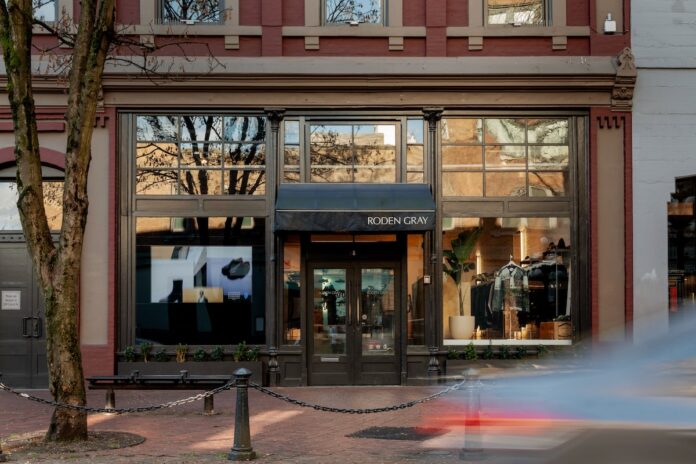
Image: Deciem (Vancouver South Granville)

By Robert Collins

Not everyone would look for a key boardroom level position at an international skincare and beauty company during a global pandemic. With his new role of Head of Retail for North America at Deciem, the company behind skincare lines The Ordinary, Niod, Hylamide and The Chemistry Brand, David Penrice has thrown himself into a high-pressure position in a rapidly changing market. But then again, not every beauty professional has a philosophy like David.

“I say to my teams that your customer is purchasing the souvenir of the experience you’ve given them,” explains David from his base in New York. “I firmly believe that. People aren’t shopping in bricks and mortar stores as much now but there will always be a place for those stores. We need them to evolve to stay relevant. The most important thing, now more than ever, is the experience. People walking into stores are looking for something they can’t get online. We want to make our stores incredible experience centres. Stores aren’t just there to make sales. They have to be so much more than that.”

David’s beauty business career (a career that’s taken him from Vancouver to San Francisco, Los Angeles and his current home in New York) began the moment he decided to follow his creative heart and sign up for the Makeup Program at Blanche Macdonald

David Penrice

“I was always intrigued by fashion,” he continues. “The models and their makeup were fascinating and inspiring to me. I eventually decided that I should give makeup a try. At that time the movie industry in Vancouver was exploding and I initially thought I would go into TV and film. I couldn’t see a career path for myself in beauty or fashion, even though that was my passion.” 

David had been an artistic child growing up on Vancouver Island but had zero makeup experience when he walked into his first class at Blanche Macdonald. It made every day’s new discoveries even more exciting. 

“I’d not done makeup on anyone when I started. We began on fundamentals and I could immediately see potential in myself. I fell in love with what I was learning. It was the first time I loved going to school. I was discovering a passion.

“Our Cosmetic Retailing classes were eye-opening. Our instructor told us that the best thing we could do coming out of School was to get a job in Makeup retail where we could work on thousands of different faces. She said that it’s easy to make a model look beautiful but working on the general public will really elevate your art and career. That stuck with me. Straight after that class I went out hunting for a retail job.”

That job-seeking mission led to a part time position at the Smashbox counter at Holt Renfrew, which in turn led to a full-time post with Make Up For Ever. 

“It felt like I was playing all day. Fortunately, I’ve always been good at selling too. When I had a paper route as a kid I would win prizes for getting the most subscribers. I easily connect with people and I enjoy it. Listening to people and asking the right questions came naturally to me. There are so many talented artists out there. What sets you apart is personality, a positive attitude and a genuine interest in connecting and working with people. You need to be the person people want to work with and continue requesting to work with.” 

After a brief break from Makeup and a short stint working on a cruise ship, an unplanned shopping expedition in Vancouver and a chance encounter with an old colleague led to a part-time position with MAC. It was the beginning of a 20-year relationship with the brand that took him backstage at New York Fashion Week, to the VMAs in Los Angeles and eventually led to the position of Manager of Retail Sales and Operations for New York City.

“It was an amazing ride with MAC but I wanted a new challenge and new possibilities. I was looking for a smaller company, almost like a start up, where I could share my knowledge and help fuel their growth. 

“As Deciem’s Head of Retail for North America my key responsibilities are to drive retail sales, elevate the consumer experience and oversee the employee engagement and development throughout Canada and the US. Right now I’m having a lot of virtual meetings, ensuring my teams have the resources and support to be successful at a very challenging time. Our brand is all about education. We cater to ‘skintellectuals,’ so we created a team of online ambassadors that can support and educate customers all over the world.” 

For David and the rest of the team at Deciem, economics and ethics go hand in hand. This past November, rather than join the frenzy of Black Friday, Deciem announced Blackout Friday, closing its web site and stores for that day. Instead, they extended discounts for the entire month and focused on education to ensure that customers were making informed decisions rather than rash and rushed ones. 

“Consumers are making choices that reflect their values,” stresses David. “Our company is socially responsible. Brandon Truaxe and Nicola Kilner, our co-founders, wanted to disrupt the market. With The Ordinary the price point is so low but the ingredients are effective. We wanted to show that this kind of skincare should be accessible for everyone.” 

It’s an organization that suits David perfectly; even if it’s a destination he would never have anticipated when he began his makeup journey. 

“I started out as a creative mind and never thought much about the business side of makeup. That’s why I tell Makeup Artists to not turn down opportunities when they don’t fit the career path they see for themselves. I was dead set on TV and film but I was humble enough to give retailing a try. It became a passion of mine and turned into an amazing adventure. 

“Math was by far my worst subject in school. If someone told me all those years ago I’d be in charge of leading the retail business across North America for a Global Company I would have laughed at them! I am so grateful to everyone I’ve worked with over the years who have given me nuggets of knowledge about driving retail business. I absorbed everything and carved out a career for myself that I wouldn’t have thought possible”.

Robert Collins

Robert Collins is a professional copywriter and journalist. His work has graced the pages of The Sunday Times, Globe and Mail, Toronto Star, NME, Melody Maker, Playmusic and thelondonpaper, animation scripts for ITV Mobile, and marketing copy for the Blanche Macdonald Centre, Sennheiser and The Prostate Cancer Charity.

Read More From Retail Insider:

Canadian Retail News From Around The Web For May 27, 2021

Canadian Retail News From Around The Web

Top Stories: National

Central/Eastern Canada News

Western Canada News

Boom in Clothing Purchases in Canada Anticipated as Pandemic Restrictions are Relaxed: NPD Group

Image: Pexels

More than 50 per cent of Canadian consumers plan to purchase new clothing once pandemic restrictions are relaxed, according to a new report from The NPD Group.  

The report indicates the desire for a wardrobe refresh is even stronger when it comes to consumers aged 18-34 as over 25 per cent plan to purchase and wear only new clothing once restrictions are lifted. 

The market research company said the sentiment represents a significant growth opportunity for the industry as the 18-34 consumer segment represents over 37 per cent of apparel sales. 

Tamara Szames, Canadian Retail Industry Advisor with The NPD Group, said the pent-up demand is good news for the Canadian apparel industry, which has struggled greatly since the beginning of the COVID-19 pandemic in March 2020. The apparel industry declined by 13 per cent in the 12 months ending March.

Tamara Szames

“There’s that built up demand. Essentially that’s what we’re talking about. For the past 12 months, we really saw the apparel industry, specifically compressed. That compression, when we saw that decline, over 60 per cent of that had come from social apparel,” said Szames. “So that was clothing that was attributed to purchasing for wearing to work, wearing to school, special occasions, or weekend social use.

“That brought down the industry quite significantly. So I think when it goes to wanting to buy more it’s also wanting to socialize. We can see how the two are going hand in hand. We’re also ready to feel good again. There was a stage, if we think back to this time last year, where essentially the market compressed by more than 50 per cent. We saw priorities shifting. We saw some industries really capitalize on our priority shifts like tech and toys and home. We saw growth there. We saw what we were spending on really change. And fashion apparel really was one that took a back seat. 

“Then we fast forward to when we started to get into the new norm, adjusting our lifestyle. We saw comfort. It was all about sweat pants and sweat shirts. And then we saw categories like sleepwear and slippers. And then there was the athletic performance. It was really a distinct story of either comfort at home or movement outside. And now we’re ready to socialize. We’ve had enough of being hunkered down in our homes and we want to explore. That’s where that demand comes from. The demand of wanting newness, wanting excitement and wanting to feel good.”

She said the younger age group is more fashion forward and care more about style. 

The NPD Group report said nearly a quarter of Canadian consumers plan to continue doing most of their shopping online even after pandemic restrictions are removed and the percentage jumps to almost one third of consumers when looking at the under 44 age segments.

Szames said everyone is trying to understand the post pandemic consumer and, through the data the company captured, it is clear that consumers are looking to go back to the stores and looking to buy.

“We also know that the apparel industry almost 50 per cent of sales have been through online. So that’s a big change we’ve seen shift over the past 12 to 14 months but also when we became DIY’s, we became our own experts, because salons were closed and professional services were closed. We looked at some of the data and we identified that even though we did shift to DIY, we’re going to go back to salons and there’s also the demand to go to salons. However, we’re going back to salons at a new rate, at lower levels,” she said.

“Another habit that will stick with us is working from home. We did a survey out of the U.S. and we identified that 40 per cent of current workers could possibly work from home after COVID-19 and 45 per cent said that they prefer to work from home. So all of those trends that came from working from home are likely here to stay with us as our lives evolve past COVID.”

Entrepreneur Launches Virtual ‘Made in Canada Mall’ and is Welcoming Businesses to Join

Image: Made in Canada Mall

Winnipeg-based entrepreneur Doug Touchette has launched a virtual shopping centre that is dedicated to brands that manufacture products in Canada as well as Canadian food and service providers. The Made in Canada Mall is welcoming businesses to join nearly 80 companies that have already signed up to be on the platform since February. The official grand opening for the mall is July 1st. 

The layout of the online shopping centre mimic the floor plan of an actual mall which is part of the attraction of the colourful website. As with a physical shopping centre, the Made in Canada Mall’s website is broken down into categories ranging from fashion to home and garden and recreation, and users can also play music that is embedded into the site. Visitors to the site can click on a business and shop its website directly. 

Founder Doug Touchette said that he was laid off from a Fortune 500 company at the end of June 2020 due to the pandemic, and by July he’d  already started creating the initial prototype for the Made in Canada Mall. After several months of planning and creating, the online mall launched on February 20th of this year. With that, social media accounts were launched to grow awareness for the initiative. 

Simplified graphics were used for impact, and Touchette said that the site purposely lacks any web pop-ups, cookie tracking or external advertising that might otherwise slow the website down. “We have come up with something that is fully functional in todays 4G and spotty 5G landscape and is the world’s first true online shopping centre where shoppers can flow from screen to screen full of incredible websites, and support Canadian businesses and jobs to boot,” Touchette said. 

The website is in a first phase and Touchette said that the interactivity will grow as the delivery systems become more capable of giving shoppers a functional experience. 

“The premise is simple — curate manufacturers and merchants of Canadian-made goods and services and present them to dedicated Canadian shoppers in a unique and fun-to-use fashion. Hence the claims I make of the world’s first true online shopping centre, using familiar map-like commands, a shopper can navigate through screens of merchant websites blending bricks-and-mortar window-shopping nostalgia with modern e-commerce.” 

The Made in Canada Mall’s layout aims to encourage visitors to stay and shop. Touchette said that since the soft-opening Feb 20, the online mall has had over 5,000 legitimate visitors who have averaged four merchant websites each while in the mall on that shopping trip.  

“Our Mall is built with the shopper experience in mind and this is evident in our approach to search fields, including a dozen shopper ‘interests’ instead of dozens of specific product searches that might yield nothing.” 

Image: Made in Canada Mall

Retailers and other businesses can sign up to be part of the Made in Canada Mall with one annual ‘rent’ payment which is kept very affordable, according to Touchette. “Being a virtual landlord with affordable ‘rent’, we can boast one accounting transaction a year and the merchant can concentrate resources on their existing website where they already have investment.  We have counters programmed for the Merchant’s window visits and website referrals from the mall to include with future invoices.  No middle man means greater profit on goods sold for the merchants.” 

“Further, the latest Federal budget is introducing GST collection for online Markets, but the rules don’t change for Merchant website direct sales to consumers,” Touchette went on to say. 

Services such as Indigeno Travel and Out of The Blue Outfitters were brought in to encourage travel within Canada.  Curbside Concerts was included as well to help the performing music community, and the Canadian Fashion Network was given a store as they advocate for Canadian fashion manufacturers. “We will continue to do whatever we can for things like animal causes, veterans, arts and culture, education and fitness, Canadian travel and hospitality,” Touchette said. 

The ‘soundtrack for the mall’ is a streaming radio station built and run by Phil Cyr in Montreal.  “We are working together to build a Mall ‘stage’ where we will video stream concerts by Canadian artists from some theatre in Montreal.  We’re also going to have streaming Santa for the kiddies and am putting together the concept for the Mall ‘Food Court’ which is coming in due course”.  

For more information and to sign up as a merchant on the Made in Canada Mall, visit: madeincanadamall.ca 

The Era of Voice-Activated Shopping Is Here for Canadian Retailers: David Ciccarelli

Image: Contactless Payment Systems

By David Ciccarelli

Imagine if every Google search you ever made was read aloud. It sounds like a horrifying prospect, right? If you’re one of the 26% of Canadians who own a smart speaker, you probably only use it in your home or car. (For instance, Amazon’s Echo Auto provides users with weather and traffic information when they say, “Start my commute.”) However, the next wave of voice technology wants you to feel comfortable asking questions aloud wherever you are.

In the wake of COVID-19, hotel chains are incorporating voice tech that allows guests to check in and out without physical contact. In the food retail sector, a recent partnership between Google and French grocery chain Carrefour indicates that a voice-activated grocery shopping experience is on the horizon.

Due to the growing range of voice-activated options and a growing preference for touchless payments brought on by the pandemic, it’s not hard to fathom how the future of retail could be voice. The potential for voice technology is virtually limitless, and retailers in any industry can benefit from incorporating it. If you’re ready to gain a competitive edge, here’s how you can tap into voice-activated shopping:

1. Use virtual cashiers in self-checkout lanes.

More retailers located in Canada are turning to self-checkout lanes to serve customers better. According to Dalhousie University’s Grocery Experience National Survey Report, more than half of Canadians (54%) like self-checkout lanes, and 66% use them at least some of the time.

Self-checkout lanes allow customers to move at their own pace, but they’re not always as efficient. By incorporating voice technology, you can ensure that customers are guided through the checkout process quickly and effectively. Verbal instructions can help remind customers to swipe their rewards cards, weigh their produce, and pick up their change if they pay using cash.

2. Teach customers to tap into voice assistants.

According to a PricewaterhouseCoopers survey, 90% of people are familiar with voice-activated technology, and 72% have used voice assistants before. This usage, however, doesn’t mean people have mastered the devices. Most people who use voice assistants do so in private, and they tend to rely on the technology for specific tasks like cooking or driving.

This tendency to use voice assistants only under certain circumstances means that you must actively encourage adoption and experimentation if you want to gain a competitive edge. Offer discounts or rewards to customers that order your products via voice, or consider giving voice shoppers access to exclusive product releases. These upfront investments will pay off when voice technology becomes more widely implemented.

3. Develop an SEO strategy for voice.

If you own a smart speaker, you might have noticed that your queries are different than what you’d type into a search engine. You might ask an Amazon device, “Hey Alexa, what’s the weather like in Toronto tomorrow?” But on a computer, you’d probably type “Toronto weather.” The former query is more like what you’d ask a friend, and it’s a drastic change from how people have searched so far.

Because voice search is becoming more prevalent, you’ll need to develop an SEO marketing strategy that accounts for wordy search phrases. To optimize for voice queries, you’ll want to start thinking about how you would ask another person a question versus a machine. And don’t forget to account for cultural norms: Pew Research Center data indicates that about 54% of users occasionally or often say “please” to their devices when they ask for something.

Voice-activated shopping is on the rise, and it will remain popular long after the pandemic. Thanks to a growing familiarity with voice assistants and how easy they are to use, customers will eventually be ready to ask questions aloud while they shop. If you want to stay ahead of the curve, you’ll want to start tapping into voice-activated technology today.

David Ciccarelli

David Ciccarelli is the founder and CEO of Voices, the largest marketplace for audio and voice-over products and services in the world with more than 1 million business and voice actor registered users. David is responsible for setting the vision, executing the growth strategy, creating a vibrant culture, and managing the company on a day-to-day basis. He is frequently published in outlets such as The Globe and Mail, Forbes, and The Wall Street Journal.

Canadian Retail News From Around The Web For May 26, 2021

Canadian Retail News From Around The Web

Top Stories: National

Central/Eastern Canada News

Western Canada News

Wayfair Expanding Canadian Operations with New Office

Wayfair.ca Mississauga Office (Google Streetview)

Wayfair Inc., one of the world’s largest online destinations for the home, is opening three new Engineering sites in Toronto, the San Francisco Bay Area of California, and Austin, Texas.

“We will be opening office space for roles in Wayfair’s Engineering organization, which includes software engineers, product managers, experience designers, analysts, and data scientists. Our expansion of the engineering organization to sites in Toronto, Austin and the San Francisco Bay Area is intended to provide more opportunities for talented technologists in these markets to join our growing team as we execute our ambitious roadmap as we continue building the leading destination for shopping for the home,” said Jeremy King, General Manager of Wayfair Canada.

“Wayfair is home to more than 3,000 engineers and data scientists. The new locations that we are introducing will be extensions of our headquarters and will allow us to continue to build and foster a global community of world-class technologists who are powering the best possible shopping experience for home. Our teams have built the pre-eminent e-commerce platform for the home category, and this expansion will allow us to continue to build innovative solutions for our customers and suppliers; from machine learning and data science to next-generation merchandising, logistics innovations and more. Our cutting-edge, bespoke technology is key to delivering an intuitive, inspiring, seamless experience – for both our 31 million customers and our 16,000 suppliers across the globe – across our massive catalog of more than 22 million items.”

The company plans to hire approximately 1,000 technologists to its world-class Engineering organization globally over the next year. Wayfair is expanding its Engineering footprint to locations outside of its technology hubs in Boston and Berlin for the first time to further advance its innovative technologies. Wayfair said it will initially hire for up to 200 positions at each new Wayfair Engineering site over the next year.

“We looked at a variety of cities for these new locations. Toronto is a world-class city with high-calibre universities, infrastructure and community institutions. We’re thrilled to contribute to the energy and culture of the city, and have been impressed by the strong technical talent in the area. We’ve built a best-in-class engineering organization across our two technical home bases of Boston and Berlin, and expanding the team into rich tech hubs like Toronto will help us meet our ambitious goals for the Wayfair platform and expand upon the level of technology excellence seen in our U.S. and E.U. hubs,” said King.

“Wayfair has been serving Canadian customers for years, and is the number one place Canadians think of for shopping for their home online. Wayfair serves millions of Canadians across every province and territory with our endless selection, fast delivery and easy returns. Wayfair also acts as the home for Canada-based suppliers to reach global markets, with products flowing through our state-of-the-art Mississauga warehouse. As one of the leading e-commerce companies in the country, Wayfair.ca is redefining how Canadians think of shopping online.”

Wayfair Engineering – Photo Wayfair

The Wayfair family of sites includes:

  • Wayfair – Everything home for every budget.
  • Joss & Main – Stylish designs to discover daily.
  • AllModern – The best of modern, priced for real life.
  • Birch Lane – Classic home. Comfortable cost.
  • Perigold – The widest-ever selection of luxury home furnishings.

Wayfair generated $14.1 billion in net revenue for full year 2020. It is headquartered in Boston, Massachusetts.

“Over the years, more and more customers have started shopping for the home online, especially as they experienced the many features that make the Wayfair experience exceptional. From an unparalleled product selection and discovery tools, to our millions of helpful customer reviews, to outstanding service and fast-and-easy delivery and returns, our Canadian customers benefit from an end-to-end experience that is tailored especially for the home category. We have purpose-built our business to solve the unique needs of the Home category and transform how customers shop for the home, giving them the inspiration and confidence needed to create spaces they love,” said King.

“During the pandemic, Wayfair helped customers make their homes more comfortable. Whether they’re shopping for outdoor furniture so that they can safely entertain, revamping their home office to create a more productive work or educate-from-home environment, or tackling a big renovation project, more and more people are turning to Wayfair.ca to find everything they need for their home. As we look ahead, we expect to see customers refreshing their style in anticipation of bringing guests back into their homes, finding new items to fit a lifestyle change and returning to Wayfair to help make their home reflect their ever-changing needs. 

“From discovery to delivery, we offer an exceptional experience to these customers through technology and innovation. We’re excited for the technologists we plan to hire in Toronto to help us continue to build and grow our world-class platform.”

Sylvain Charlebois: Are Self-Checkouts Winning the Machine vs. Human Battle?

SELF CHECKOUTS, SHOPPERS DRUG MART

Only a few years ago, self-checkouts were seen as job killers by many Canadians. For a few years, grocers just did not know what to think of self-checkouts. Consumers had a love-hate relationship with them. Some saw them as job killers, relacing humans who desperately needed employment. Others quietly used them, either preferring a speedy exit or simply avoiding unnecessary human interaction, making self-checkouts valuable for anti-socialites. But with the pandemic, self-checkouts are becoming more popular, and grocers have noticed.

Since the start of the pandemic, 25% of Canadians have changed where they typically shop for groceries, according to a recent survey by the Agri-Food Analytics Lab at Dalhousie University, in partnership with Caddle. The survey was conducted in mid-to-late May of 2021 and included 10,024 Canadians. 25% is an astonishing number. Of this percentage, a good portion of respondents admitted that a switch was necessary due to declared COVID cases related to the store they were regularly visiting. Consumers are clearly concerned about potential exposure to the virus, or anything else for that matter.

In the same survey, Canadians were asked about how they intend to exit the grocery store in months to come. A whopping 53.2% of Canadians intend to use self-checkouts regularly over the next 6 months or so. 60.1% of Gen Zs (born between 1997 and 2005) and Millennials (born between 1981 and 1996) are planning to use self-checkouts more often. Self-checkouts are almost as popular as cashiers now.  

Barely two years ago, these numbers were quite different. According to CivicScience, in 2019 only 19% of customers ages 55 and older were willing to use self-checkout counters, compared to 35% of customers between the ages of 35 and 54. The youngest customers have always been more open to using them, but that percentage was only at 42% in 2019. At the time, cashiers were still the most popular choice for all demographic groups.

Throughout the pandemic, grocers have noticed more people are using self-checkouts and, therefore, more stores are installing more machines. Even those stores that removed their machines are now putting them back again. Many will remember record-breaking sales by grocers last year, but 2021 is a very different scenario. Statistics Canada recently reported that grocery store sales had dropped more than 1.5% for the third month in a row. Grocers will need to work hard to retain their market share and make their customers feel safe, and self-checkouts will likely be part of the strategy.

While visiting the grocery store, our focus now is to stay physically distant from other human beings. It is only natural to do the same while exiting the store. Some Canadians will continue to use cashiers, but their numbers will still be less than before the pandemic. We are expecting more grocers to adopt more technologies to make the whole grocery shopping experience safer, and perhaps even less social, in the aftermath of the pandemic. We do not know how long this will last, but the use of new technologies to make everything more efficient, more capital-focused, and less dependent on labour will likely grow, to the dismay of organized labour. But few want underpaid employees who are constantly exposed to contamination. With margins being so low in food retailing, paying them more would mean eventually increasing food prices. This is something we will need to appreciate at some point if we want employees in the grocery business to earn a decent living.  

The self-checkout technology is and never has been great. Scanning issues, weighing the wrong produce, coding discounts, and other problems at self-checkouts are numerous. Unlike ATM banking machines, which have been operating seamlessly over the last 30 years, grocers have had issues creating an enjoyable self-checkout experience for most customers. In many cases, the experience is interrupted by an embarrassing call for assistance from a nearby clerk whose only job is to save you from technological misery. But with more shoppers committed to using them, we are expecting some changes, for the better.

For grocers, the exit has always been the most mismanaged part of the grocery shopping experience. Self-checkouts are only part of our grocers’ journey to embrace innovation that helps make our trips less onerous. Grocers went from fast cashiers with few items in the 70s and 80s, to self checkouts in the 90s, to perhaps a self-checkout model for which stopping at the exit will no longer be necessary. One day, we will likely be able to exit a store as everything in our smart carts is automatically scanned. A cart that could do the thinking and calculating for you and the store.

Self-checkouts are not about replacing humans. Instead, they are more about how we can more effectively utilize humans to make our grocery industry more efficient. 

Gregory Signs Positioned to Help Retailers Make Positive Post-Pandemic Impression

Image: Gregory Signs

Though the impacts of the COVID-19 global pandemic persist along with concerns regarding public health and safety, hope, it seems, may be just around the corner. As doses of the vaccine continue to roll out across the country, neighbourhoods and communities in every province and territory can now realistically begin to think of reaching our collective societal goal of achieving herd immunity and returning to life as we all knew it. There will inevitably be alterations and modifications to the way we do some things going forward, but something close to normal will be restored, resulting in the return of public gatherings, community events and full-fledged retail service and offering. And when that day arrives, says Boris Kaminsky, Vice President of Sales and Marketing at Gregory Signs, the Toronto-based provider of end-to-end signage services will be poised and ready to help the industry welcome back scores of customers to their stores.

“The store façade, that first impression that any business makes on prospective customers, is a really powerful thing,” he asserts. “If designed and executed properly, a store’s signage and exterior should go a long way toward complementing everything that it has to offer and providing an introduction to the experience that people can expect when they enter the establishment. It serves a crucial purpose, conveying the attitude and style of the store. And going forward, as we’re hopefully headed toward a post-pandemic world in which people are able and willing to venture out to shop with their favourite retailers again, the value of creative, well thought out store signage and exterior facades will be greater than ever and incredibly important for businesses in capturing the attention of customers and reintroducing them to their product, service and offering.”

Mutually beneficial partnerships

Currently celebrating 40 years of operation, Gregory Signs provides a full range of services to a number of different industries to help them meet their signage and exterior façade needs. Boasting decades of experience and know-how within the signage space, the company specializes in the development, fabrication and installation of exterior signage, interior, structural and custom signage, wayfinding and digital signage. In addition, it also helps its clients properly execute on their vision and needs through its expert consultation and project management offering. It all adds up to a relatively holistic suite of benefits available to any business seeking the services of Gregory Signs. But, as Kaminsky points out, they are benefits that go far deeper than the services that the company provides.

“We don’t just work with clients,” he says. “We develop strong relationships with every business that we engage with, forming partnerships that are mutually beneficial. Whether it’s a $1,200 order or a $1 million order, we approach each and every task as a company with the same dedication and commitment to helping businesses succeed and grow. With some of the businesses that we work with, we’re very involved in just about every aspect of the project, from design and consultation through to the installation and post maintenance of the signage structures. With others who may have hired a design firm to execute on their vision from a design perspective, we may be provided with a template to then fabricate and install. Our clients vary from small, independent mom-and-pop shops to national chains with head offices and major infrastructure projects like the Eglinton Crosstown development in the City of Toronto. Servicing this range of business, each with differing requirements and expertise across multiple industries, really helps us to constantly understand the needs of each of our clients and the ways we can help them achieve their desired signage results.”

Experience and expertise

Included in its scope of offering, and supported by the company’s vast amount of industry acumen, Gregory Signs also works to ensure permits for its clients if necessary. Ensuring that a business’s signage needs fits within local bylaws can be a complex headache, explains Kaminsky. For that reason, the company will do all of the work for its clients, determining whether or not a bylaw variance is required in order to install the desired signage as well as the cost and viability of the variance for the business. It’s this kind of expertise, among other things, that stands Gregory Signs apart from many of its competitors. And, according to Kaminsky, it’s expertise that the company proudly shares with the businesses it works with.

“Understanding all of the different nuances and specifications when it comes to store signage can be complicated,” he explains. “Many times, an organization’s vision from conception through to execution needs to change. When designing signage, it’s really important to follow a strict prototype process and consult with an experienced sign company. The depth of the sign may need to be bigger because of hot spots. Maybe engineering wasn’t properly conducted, requiring us to provide all of the technical information concerning foundational requirements and explanations and recommendations based on the size of the sign. It can end up causing a lot of issues for businesses that they could not have anticipated. To mitigate these issues, we work with our clients to understand their constraints and limitations with respect to their signage while helping them achieve the desired impact for their operation.”

Post-pandemic success

Kaminsky is quick to credit the entire team at Gregory Signs and their extensive amount of experience working within the signage industry for the exemplary service that the company consistently provides for its clients. It serves as a distinct differentiator for the company, separating it from its competitors, placing it in good stead to be able to continue supporting the signage needs of retailers in a post-pandemic world. And, although he recognizes the adversity and challenge faced by much of the industry over the course of the past 14 months or so, Kaminsky’s approaching the near-term with a hopeful optimism and anticipation that we’ll all soon experience a return to normalcy, followed closely behind by a bit of a rejuvenation and revitalization of communities and industries everywhere.

“A lot of people have been going through some really difficult times during the pandemic. The impacts of COVID have been severe, resulting in a lot of store closures. And, unfortunately, I don’t think we’ve seen the last of the negative effects on the industry. But what we’ve also seen is quite a bit of movement on the design end of things as businesses are starting to take a look at rebranding their signage and their stores. As the vaccine is administered to people across the country, communities and neighbourhoods will be able to start functioning the ways they did prior to the pandemic, and stores and businesses will once again open up to the public. And, although nobody can accurately predict right now what will happen over the course of the next 6 to 12 months, I really think that people are going to want to get out again, attend events and gatherings and shop at their favourite stores. As a result, the retailers that have survived will want to refresh their look. And I think we’re also going to see a number of new businesses opening. It’s going to help create a new kind of environment. And we’re looking forward to continuing to assist the industry in achieving its signage needs and making an incredible impression on customers.”

*Gregory signs partnered with Retail Insider for this article. To work with Retail Insider, contact Craig Patterson at: craig@retail-insider.com

Wild Ride for Canadian Retail Sales in the Spring of 2021: Ed Strapagiel

Image: Stock e-Commerce

According to the latest numbers from StatsCan, total Canadian location-based retail sales in Q1 2021 were up 10.7% from the same time last year, possibly an all-time record high. The worst of COVID-related retail sales declines last year were in Q2 however, so there may be more record high year-over-year gains to come in 2021. Note that “location-based” refers to bricks & mortar retailers but also includes their direct e-commerce sales. Pure play e-commerce operators’ retail sales were also up an estimated 78.2% in Q1 2021.

The 3 month growth trend (orange line in the above chart) is remaining strong, despite a mild setback at the start of the year. The underlying 12 month trend (green line) has now finally slipped into positive territory for the first time in a year, and is poised to improve further in the next few months.

The disparities among the major retail sectors however have become more pronounced. Food & Drug has softened abruptly, while Store Merchandise and Automotive & Related have just as abruptly shot up.

Food & Drug

Last year, the Food & Drug sector was the Cinderella story of Canadian retail, but things have changed now. The 3 month growth trend has cooled off to its lowest level in a year, and the underlying 12 month trend has reversed course after a very strong run in 2020. In Q1 2021, the sector’s retail sales were up 4.8% year-over-year, which is still quite respectable, but also significantly down from the 11.3% gain recorded in Q4 2020.

Retail sales at supermarkets & other grocery stores were up “only” 3.9% in Q1 2021. This is well down from the 12.6% gain made in the previous quarter.

The story for health & personal care stores was similar. Their year-over-year retail sales gain in Q1 2021 was 4.8%, significantly less than their 12.0% increase in Q4 2020.

Store Merchandise

The Store Merchandise sector has also experienced a reversal of fortune, but this time in the upward direction. Their retail sales were up a record high 15.0% in Q1 2021, a major recovery compared to just a 1.6% gain for all of last year. The underlying 12 month trend has now also strengthened to its highest level in two years.

A number of retailer types had double digit year-over-year sales increases in Q1 2021, including building material and garden equipment & supplies dealers (+35.6%), electronics & appliance stores (+22.6%), miscellaneous store retailers (+21.0%), furniture & home furnishings retailers (+18.7%), and general merchandise stores (+10.6%).

Clothing & clothing accessories stores have been a major weak spot in this sector. Their retail sales were still down 7.8% in Q1 2021, but this actually represents an improvement over the 26.7% decline suffered in 2020.

Automotive & Related

The Automotive & Related sector was a basket case for most of last year, but has roared back in March. For Q1 2021, retail sales spiked up to a 12.4% year-over-year gain. The underlying 12 month trend, although still in negative territory, has also improved.

New car dealers led the way. Their retail sales in Q1 2021 were up 17.7%, a significant recovery over the 12.5% decline recorded for all of 2020. In part, the current gain is because of poor sales performance a year ago.

At the same time, retail sales at gasoline stations became “less bad”. While their sales were down 4.9% in Q1 2021, this was better than the 18.5% decline experienced last year.

By The Numbers

Note that the data and analysis in this report are always based on not seasonally adjusted (or unadjusted) retail sales statistics.

For definitions of store types, see Statistics Canada NAICS.

Canadian E-Commerce Sales

E-commerce in Canada exploded last year due to the COVID-19 pandemic. This has continued into 2021, with e-commerce retail sales up 87.6% in Q1.

Overall, e-commerce represented about 6.7% of Canadian retail sales over the past 12 months, including both pure plays as well as bricks & clicks stores. Note that Canadian consumers may also buy online from foreign websites which is not captured in these numbers.

Location based retail is the same as that in the preceding “By The Numbers” table. It’s what’s normally reported as Canadian retail sales. Except that it isn’t. Location based retail excludes another section called Non-Store Retailers (NAICS code 454), which includes electronic shopping and mail-order houses, which in turn is where (mostly) pure play e-commerce businesses are. Over the 12 months ending March 2021, electronic shopping and mail-order houses had an estimated $26.3 billion in e-commerce sales.

But that’s not the only source of e-commerce, as (mostly) bricks & mortar location-based retailers also sell online. For the 12 months ending March 2021, this group had an estimated $17.0 billion in e-commerce sales. With electronic shopping and mail-order houses, there’s a grand total of $43.3 billion in e-commerce sales by Canadian operators. Note that this does not include foreign e-commerce purchases made by Canadian consumers, but it does include e-commerce purchases made by foreigners at Canadian operations.

For electronic shopping and mail-order houses, an estimated 96.0% of their sales are currently allocated to e-commerce. For (mostly) bricks & mortar retailers, it can be estimated that 2.8% of their total sales are attributable to e-commerce.

In the final section of the above table, (mostly) pure play operators (namely, under electronic shopping and mail-order houses) generated an estimated 60.7% of all e-commerce sales in Canada, while (mostly) bricks & mortar location-based retailers’ share of e-commerce was 39.3%.

For more explanation on the e-commerce numbers, see Statistics Canada: Retail E-commerce in Canada.

Monthly Update Notification

This analysis is updated monthly as new numbers are published by Statistics Canada. If you would like notification from Linkedin of when an update becomes available (and you’ve read this far), please connect with Ed Strapagiel on LinkedIn.

Read More Canadian Retail Analyses From Retail Insider: