Podcast [Interview] Éric Blais Discusses Quebec’s Language Laws and How Bill 96 will Impact Retailers
Craig interviews Éric Blais, President of Headspace Marketing, about how Bill 96 will impact retailers with rules around signage on stores and other businesses. They also discuss language laws generally and how consumers are greeted in stores — and what the penalties might be for businesses in Quebec not complying.
The Interview Series podcast by Retail Insider Canada is available on Apple Podcasts, Stitcher, TuneIn, Google Play, or through our dedicated RSS feed for Overcast and other podcast players. Also check out our The Weekly podcast where Craig and Lee discuss popular content published on Retail Insider which is part of the The Retail Insider Podcast Network.
Drop us a line at Craig@Retail-Insider.com. You can also rate us in Apple Podcasts or recommend us in Overcast to help more people discover the show!
Background Music Credit: Hard Boiled Kevin MacLeod (incompetech.com). Licensed under Creative Commons: By Attribution 3.0 License. http://creativecommons.org/licenses/by/3.0/
Retail Insider is streamlining its Canadian retail news from around the web to include a handful of top news stories that can be viewed quickly during the day. Here are the top stories from the past 24 hours.
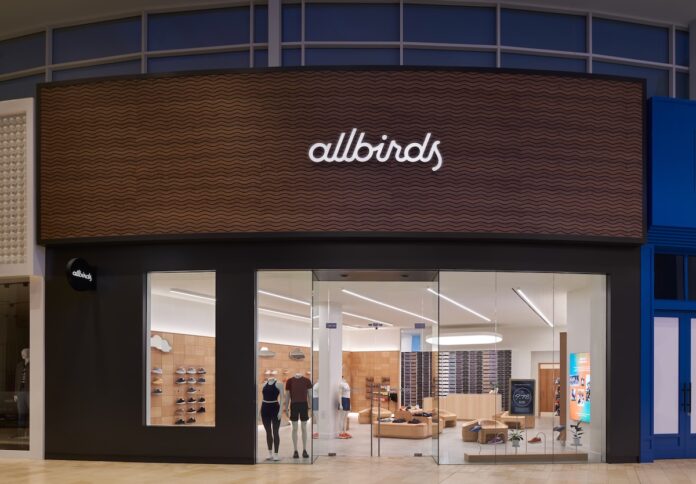
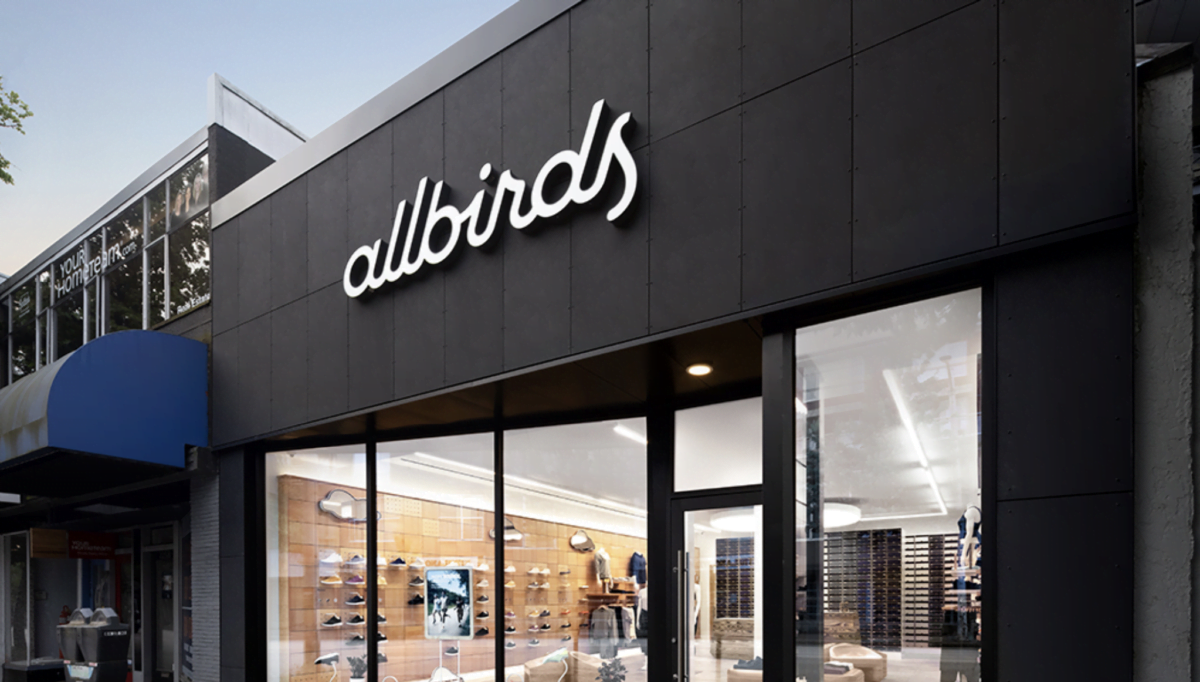
Allbirds at Yorkdale Shopping Centre (Image: Allbirds)
San Francisco-based sustainability-focused footwear and fashion brand Allbirds recently entered the Canadian market with a storefront in Vancouver and this week, a second Canadian location opened at Toronto’s Yorkdale Shopping Centre. Retail Insider met with Allbirds co-founder and Co-CEO Tim Brown in Toronto to discuss the new Yorkdale store as well as plans for any further expansion.
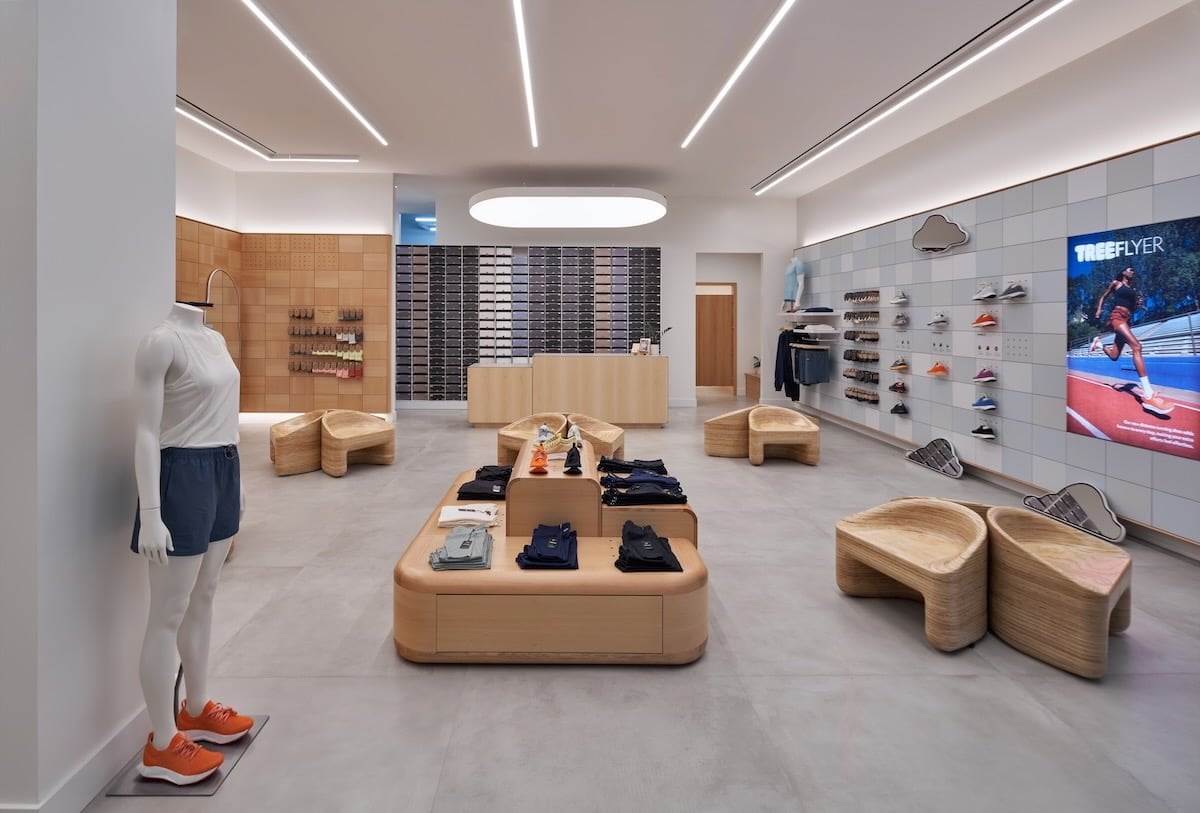
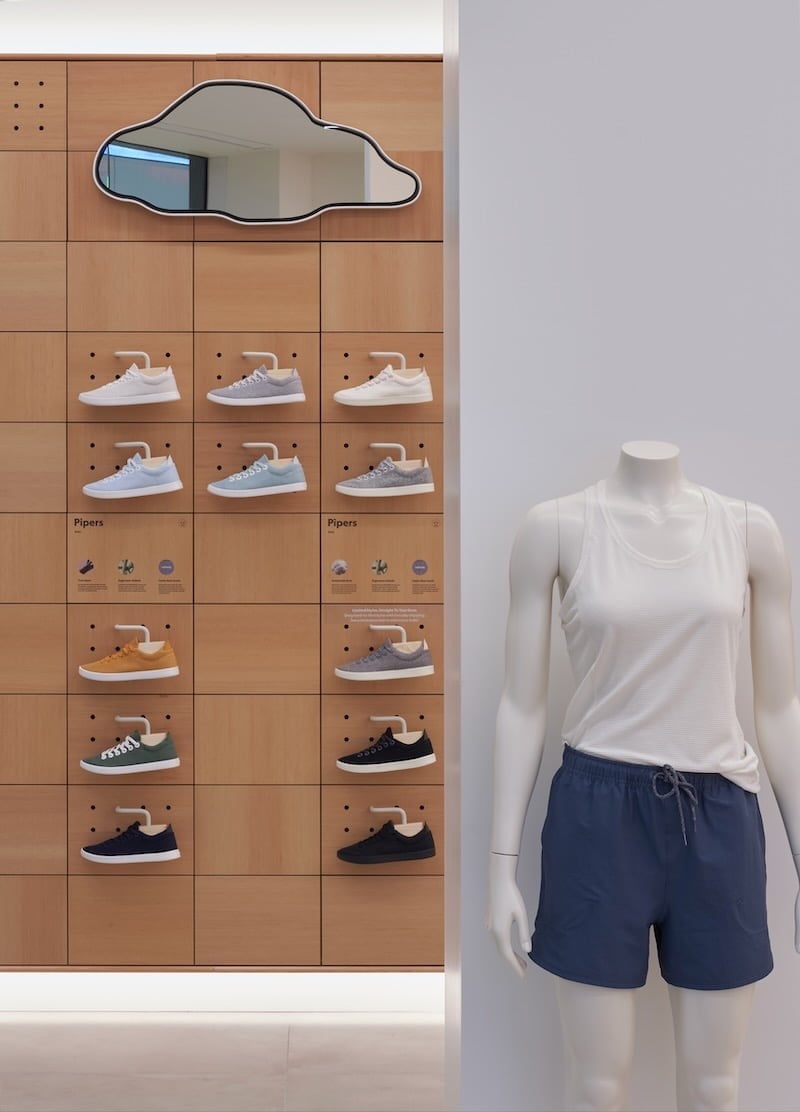
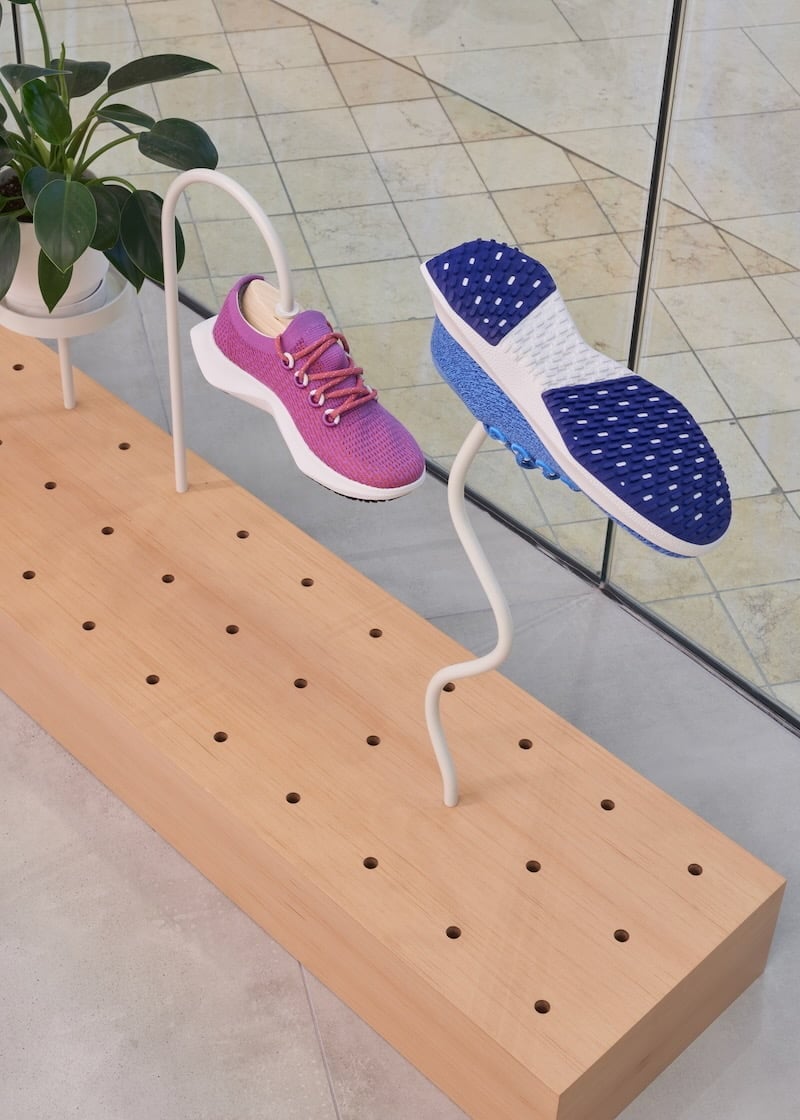
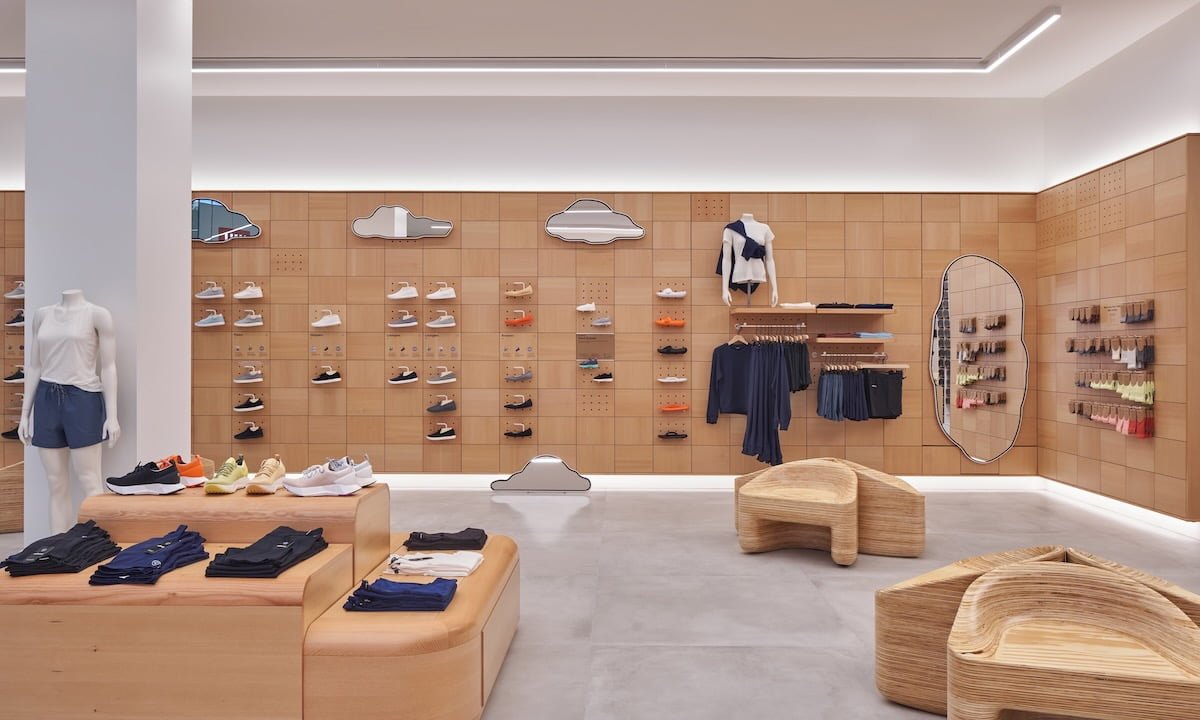
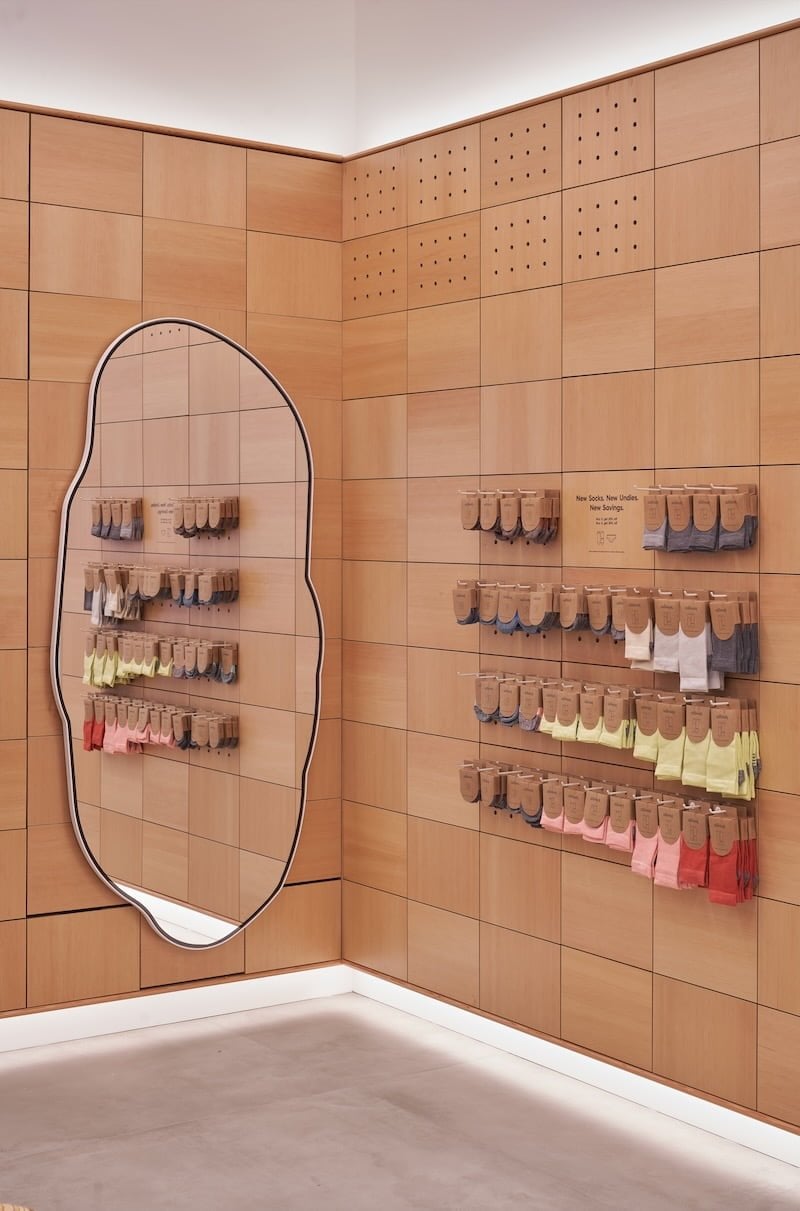
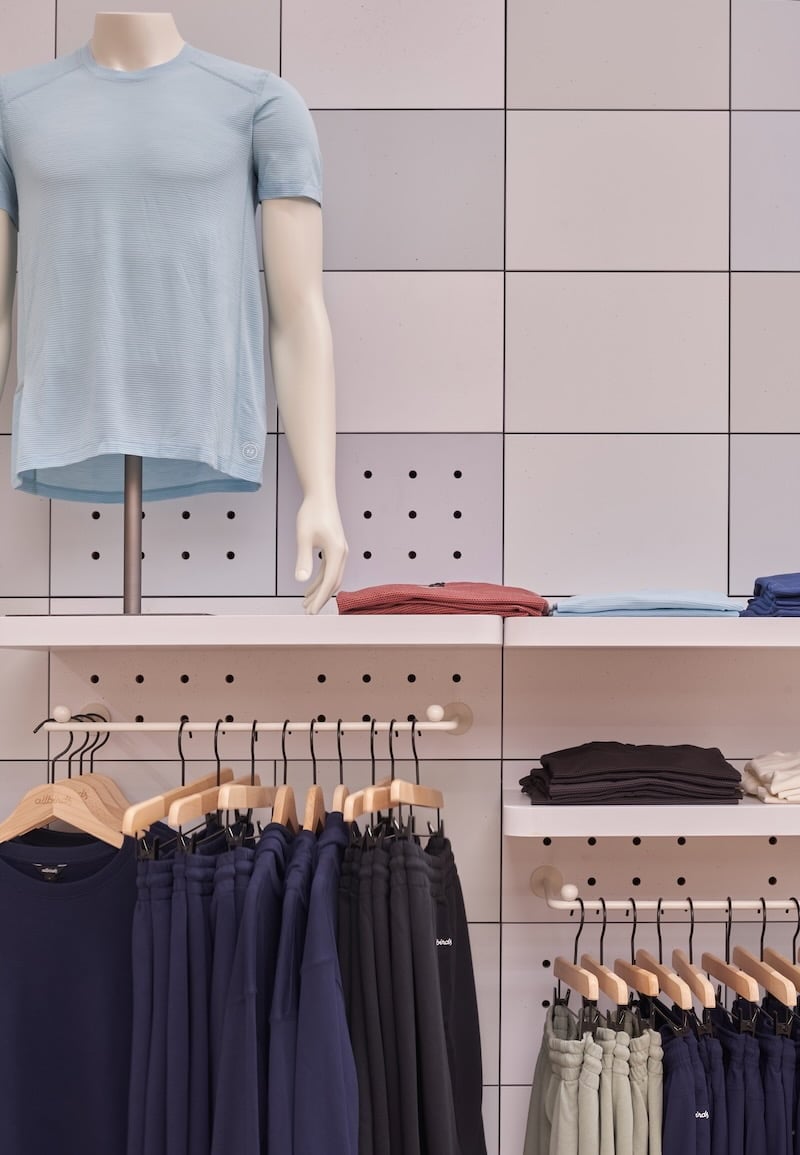
The Yorkdale Allbirds spans more than 2,400 square feet and features a bright and casual interior reflective of the brand. Included are displays of Allbirds’ sustainably-sourced footwear, ranging from original styles to the company’s newest design, the Tree Flyer. A range of apparel, socks and underwear are also available in the store. Sustainability is a key message for the brand throughout.
In an interview, Tim Brown explained that the Yorkdale store was designed to be a welcoming space for guests, featuring unique customized wood chairs that rock forward slightly to allow customers to better try on shoes. A display behind the cash desk features boxes of shoes, creating both a relevant visual element as well as more storage for various footwear styles.
Allbirds at Yorkdale Shopping Centre (Image: Allbirds)
Allbirds at Yorkdale Shopping Centre (Image: Allbirds)
Allbirds at Yorkdale Shopping Centre (Image: Allbirds)
As the Toronto market develops, so will elements of community with Allbirds partnering with local influencers to help spread the message. Experiential elements such as a run club, artists, food and ambassadors will become part of the mix.
Physical retail, Brown explained, is a way for Allbirds to engage with consumers while enhancing brand awareness through educating visitors on the brand. Brown said that consumers may subsequently shop online for products after being introduced to the brand in-store, while some may choose to return to the store repeatedly for a positive retail experience.
The experience also translates to staff in the store according to Brown. Back-of-house has been optimized so that employees are able to find products quickly.
Brown noted that the vibrancy of Yorkdale on opening day is indicative of the health of the mall overall. Crowds passing by the store will also help enhance the Allbirds brand to consumers with the retail space being located across from the mall’s Uniqlo store in an expansion anchored by Nordstrom that was unveiled in the fall of 2016. The space where Allbirds opened at Yorkdale had been occupied by Korean beauty brand Innisfree which exited its Canadian stores during the pandemic. Broker David Steuer negotiated the Yorkdale lease for Allbirds on behalf of the retailer. Yorkdale’s landlord is Oxford Properties.
Allbirds at Yorkdale Shopping Centre (Image: Allbirds)
Allbirds at Yorkdale Shopping Centre (Image: Allbirds)
Allbirds at Yorkdale Shopping Centre (Image: Allbirds)
In Vancouver about a month ago, Allbirds unveiled its first Canadian store at 2262 West 4th Avenue in the city’s Kitsilano neighbourhood. That store includes 2,150 square feet on its main floor as well as a mezzanine of 970 square feet. While several other direct-to-consumer brands have opened on the trendy street, its foot traffic is less than what one would find at Yorkdale. Trevor Thomas of JLL Canada negotiated the Vancouver deal on behalf of Allbirds. The landlord in the lease deal was represented by Mario Negris and Martin Moriarty of Marcus & Millichap.
Tim Brown of Allbirds said that there are no immediate plans to open more standalone Allbirds stores in Canada. Vancouver and Toronto were chosen for stores based on strong e-commerce sales and it remains to be seen if other markets will see stores. Brown said in an interview that he was a fan of Montreal and enjoyed the city while visiting when he was a professional soccer player.
This isn’t the first time that Allbirds has had a retail presence in Canada. The brand also tested the Canadian market in 2018 with pop-ups at Nordstrom as well as a street front pop-up store on Queen Street West in Toronto that was reported on in Retail Insider at the time. The pop-up closed after about a year and itself offered a unique retail experience, including an obstacle course where visitors could try out different shoe styles on different terrain.
Vancouver store. Image: Allbirds
In a previous interview this spring, Allbirds co-founder and Co-CEO Joey Zwillinger said that wholesale could also be part of the mix for Allbirds in Canada, though at the time retail partners had yet to be secured. In the US Allbirds recently announced its first wholesales deals this month with Zalando and Public Lands.
Allbirds was founded by Brown and Zwillinger in 2014. Prior to founding the company, Zwillinger was a biotech engineer and renewable materials expert and Brown was a professional soccer player from New Zealand (he also has a degree from the London School of Economics).
A Kickstarter crowdfunding campaign in 2014 kicked-off the brand with the campaign reaching over $100,000 in sales in just four days. Zwillinger’s background helped design the construction of the rapidly growing brand while introducing additional sustainable materials such as a vegetable oil-based polyurethane insole.
In 2016, Zwillinger and Brown renamed the footwear brand as ‘Allbirds’ and launched products for the public. The Allibirds name is a historical reference to New Zealand having been so remote at one time that its only inhabitants were ‘all birds’.
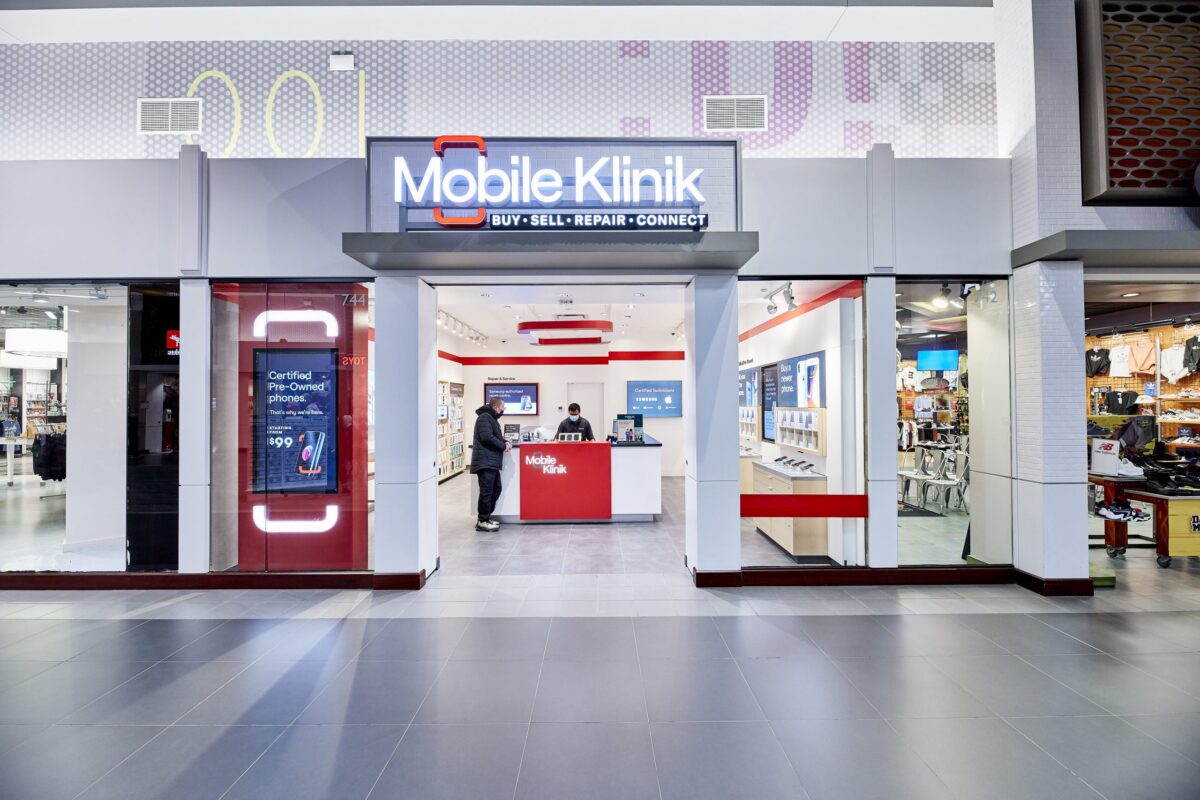
Mobile Klinik at Vaughan Mills (Image: Bennett Design)
As retailers expand and build out their brands, it’s important they get the right space and understand the space that they need, says a leading national interior design firm.
That will ultimately help them achieve success as well as keeping their costs in check.
“We spend a lot of time with our clients really identifying what they should even be hunting for,” said Sue Bennett, Principal and CEO of Bennett Design.
Who is the demographic? Where do they want to be located? What do they expect from the landlord? Looking at the size and the attributes of the space. And making sure all the infrastructure is in place before signing a lease.
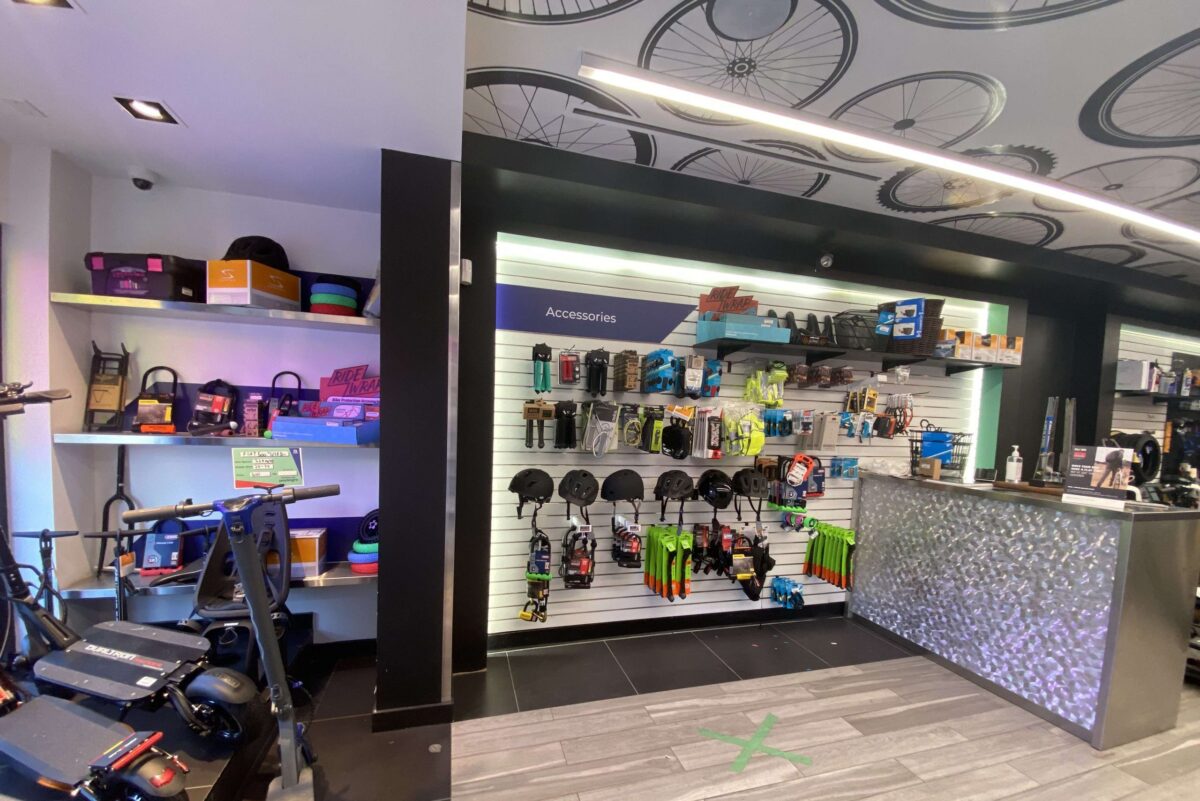
Repair and Run (Image: Bennett Design)Repair and Run (Image: Bennett Design)
Sue Bennett
Picking the right space is crucial in keeping costs in line.
“There’s just so much money that they waste. We need to be able to streamline and create efficiencies in the process not just to execute the design faster but to be able to be smarter about how we’re executing them. So from a material standpoint what’s going to last longer, what’s going to be easier to maintain, what’s going to look better longer and also what’s available today with the global shortage and supply chain issues we have right now,” said Bennett.
Bennett Design is one of the largest independent design firms in Canada. It does corporate and retail interior design right across the country from Nanaimo to Newfoundland. The award-winning company has a staff of just over 40 people.
“We do almost specifically retail rollouts. We work with clients in order to establish the design for their brand then we will implement their branded locations right across Canada but we also do all the program management. So understanding their thoughts, how much work is coming down the pipe, when are the projects going to happen and then we also have a project management division that will actually execute and help get all of these built,” said Bennett.
Mobile Klinik at Vaughan Mills (Image: Bennett Design)
Mobile Klinik at Vaughan Mills (Image: Bennett Design)
“We do a lot of work in the QSR, the quick service restaurant space. We do a lot of one offs if we are looking for a design kind of piece. But where our sweet spot is is really in doing the execution of the design and then the application of that design across many spaces across Canada.
“The biggest challenges we’re working on right now are clients that are coming to us with designs that have been done by marketing companies. So they’re not executable or they’re very expensive to be executable. We need to make sure from a legal standpoint that they comply with all the building codes, fire codes and things like that which is something that is our expertise but not a marketing firm’s expertise. What we like to have the opportunity to do is interpret their brand standards right into their store design and to be able to execute that store design so it is . . . easily replicable.”
Bennett said it’s important that clients be able to stand out in a crowd because today there are so many stores and there is huge growth. The company will also work with the retailers on the back end.
“One of the concerns that we have always is how they are dealing with the real estate. What autonomy are they providing their franchisees? And so when they allow their franchisees just to go and lease any damn space we end up spending a fortune on construction,” she said.
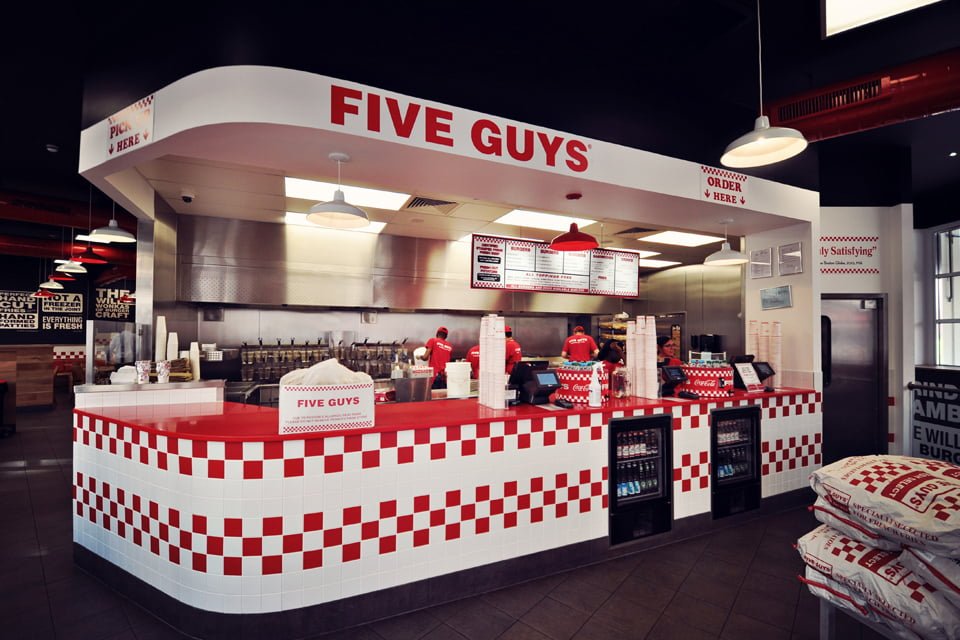
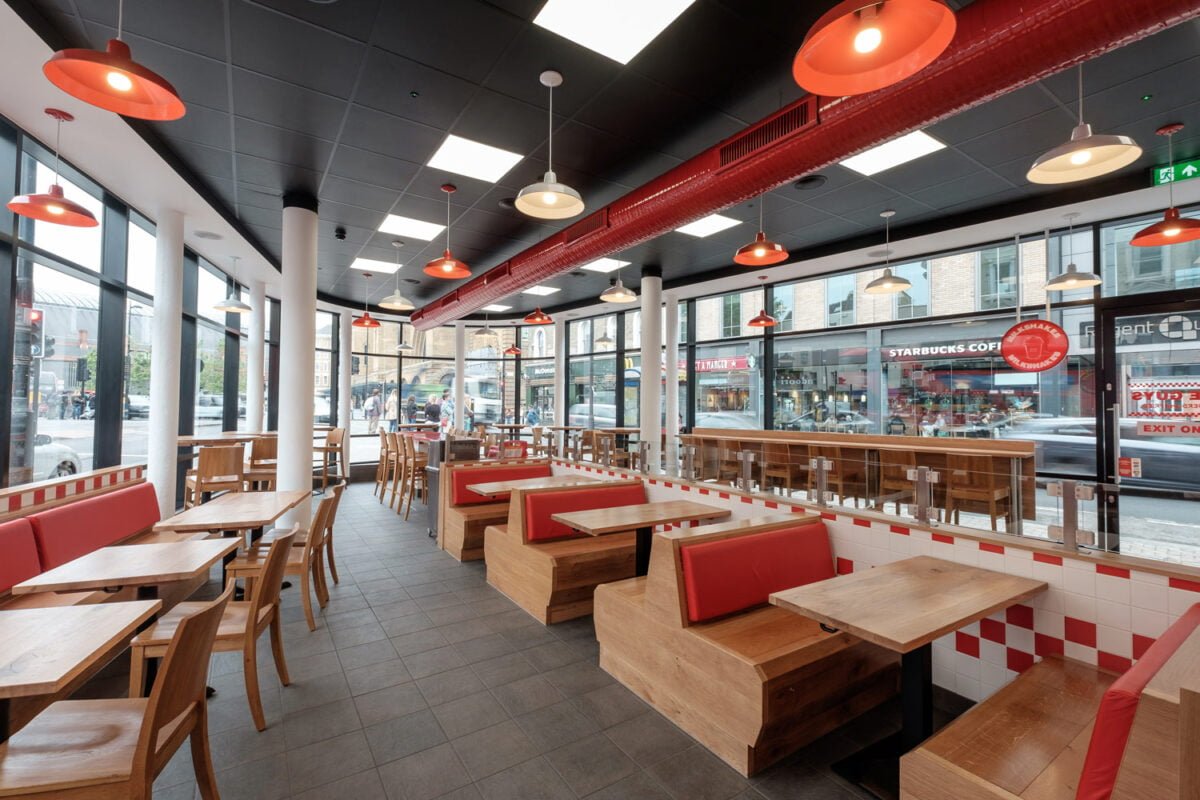
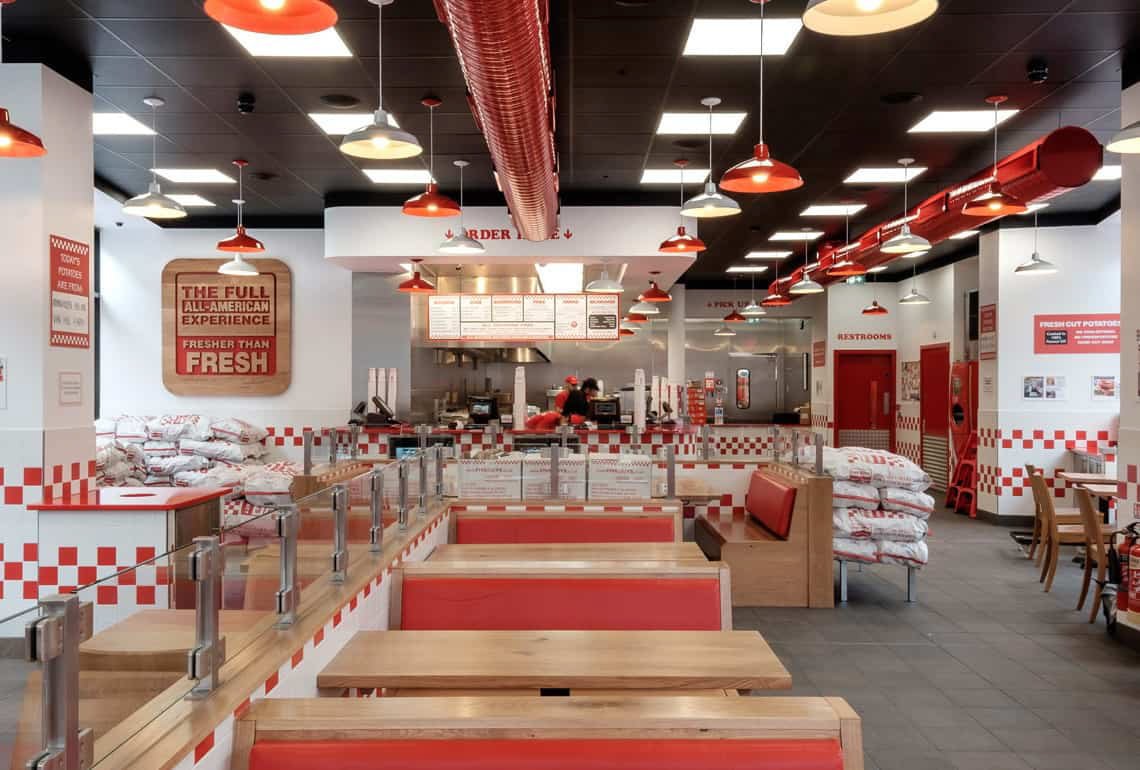
Five Guys (Image: Bennett Design)
Five Guys (Image: Bennett Design)
Five Guys (Image: Bennett Design)
Initially working with retailers, Bennett said it’s important that the interior design firm needs to understand what the store’s success criteria looks like. At the end of the day, who are they appealing to and what’s going to create that success story? What is the long-term plan? How many stores do they plan on rolling out, the time frame and what does the growth look like? And who are their partners? Who is looking for their real estate? What is their real estate strategy? Do they have any criteria in place to understand what their ideal location is, what their ideal size and shape of store is?
“Retailers are working hard to invite people back. I know that there’s been a ton of creativity over the course of the pandemic just to get people into stores but I think that there is a loyalty. The service is going to be huge. And how you position your service. Making sure that there’s a visibility to your client. Making sure you’ve created space for your client to actually maneuver through your space in an effective way so that they’re not coming in being roadblocked, turning around and leaving,” said Bennett. “We want to invite them all the way to the back of the store.”
She also said that for retailers these days Instagrammable moments are huge.
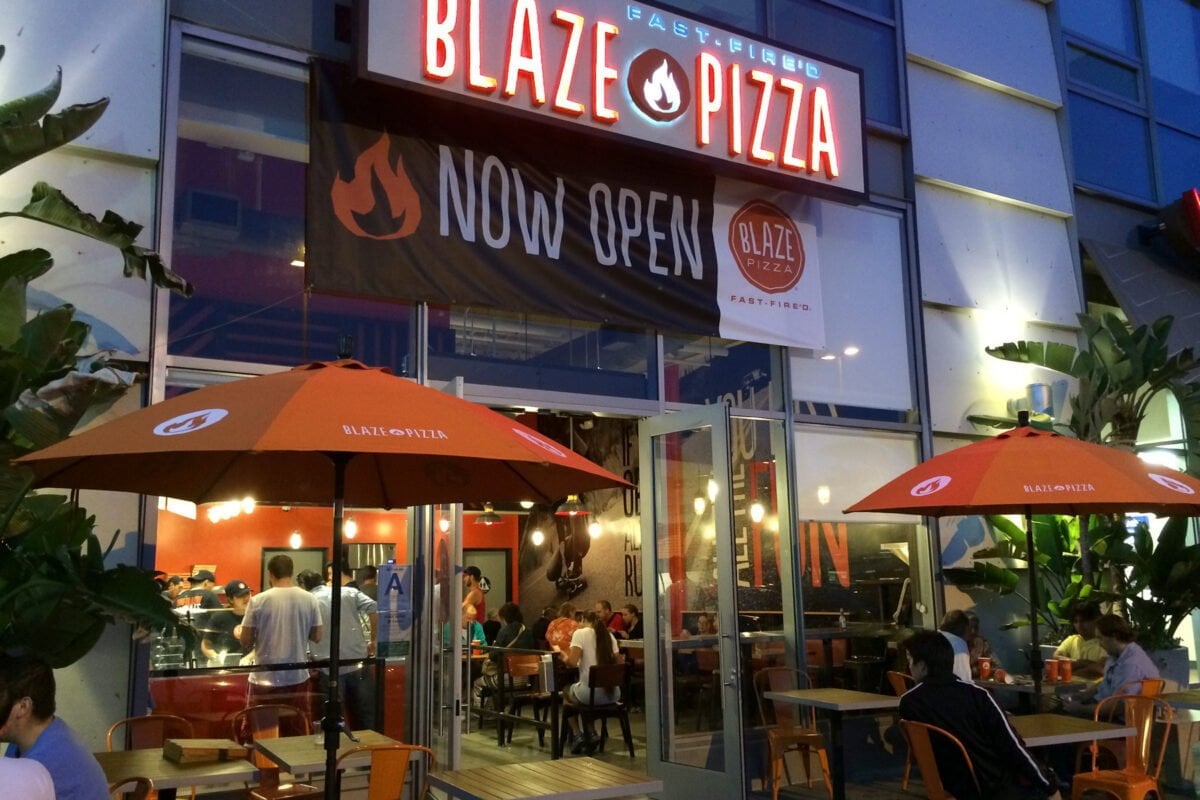
Blaze Pizza (Image: Bennett Design)
“We want to create moments. We want people to go in and have these beautiful little ahha moments to say that they really thought about the detail or the inside of the store was completely representative of what I thought it was going to look like from the outside. This is their brand and so I have an impression of what that’s going to be and when I walk through the door I want that to be realized,” added Bennett.
“Those are the things we’re thinking about because there has to be almost an emotional draw to get people into the store. There’s got to be a reason. What is that reason? And when we get people to walk through those doors we don’t want them to have lunch bag letdown. We want them to be able to realize this is what I expected when I walked through this door and that the service experience and the aesthetic experience, all of those things are all aligned.”
Retail Insider is streamlining its Canadian retail news from around the web to include a handful of top news stories that can be viewed quickly during the day. Here are the top stories from the past 24 hours.
Ottawa-based Bridgehead Coffee, the first coffeehouse in Canada to offer fairly-traded coffee more than 40 years ago, was forced by the pandemic to double down on plans to grow outside Ottawa.
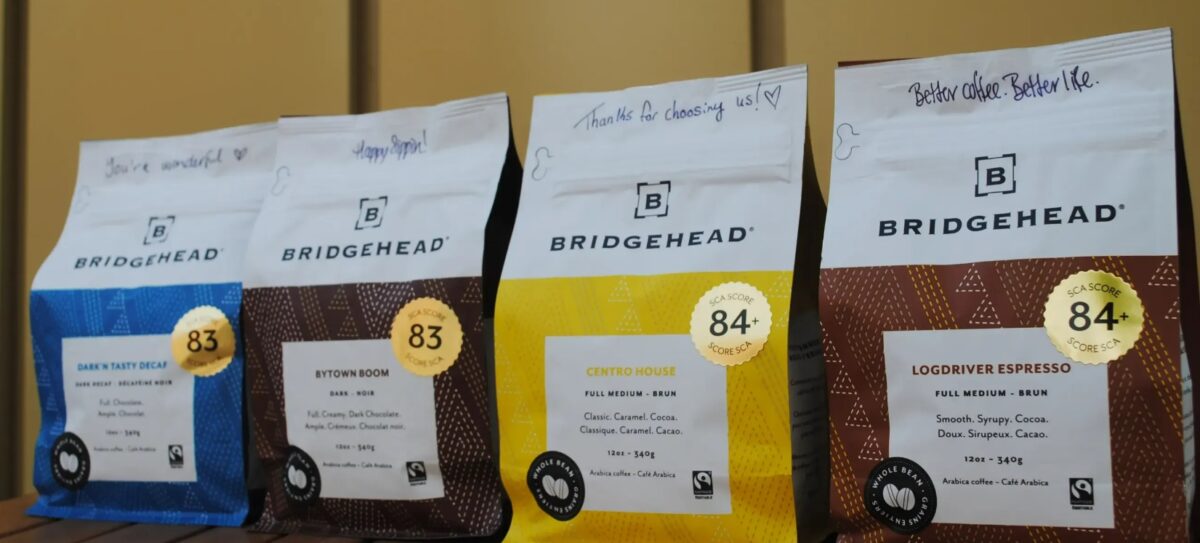
Through ecommerce, a digital evolution and retail strategy, Bridgehead is now available to Canadians from coast-to-coast and at more than 100 grocery store locations across Ontario.
Its specialty coffee is available in grocery stores including Farm Boy, Sobeys, Costco and select Whole Foods locations as well as recently Longo’s in nearly all of its southern Ontario locations.
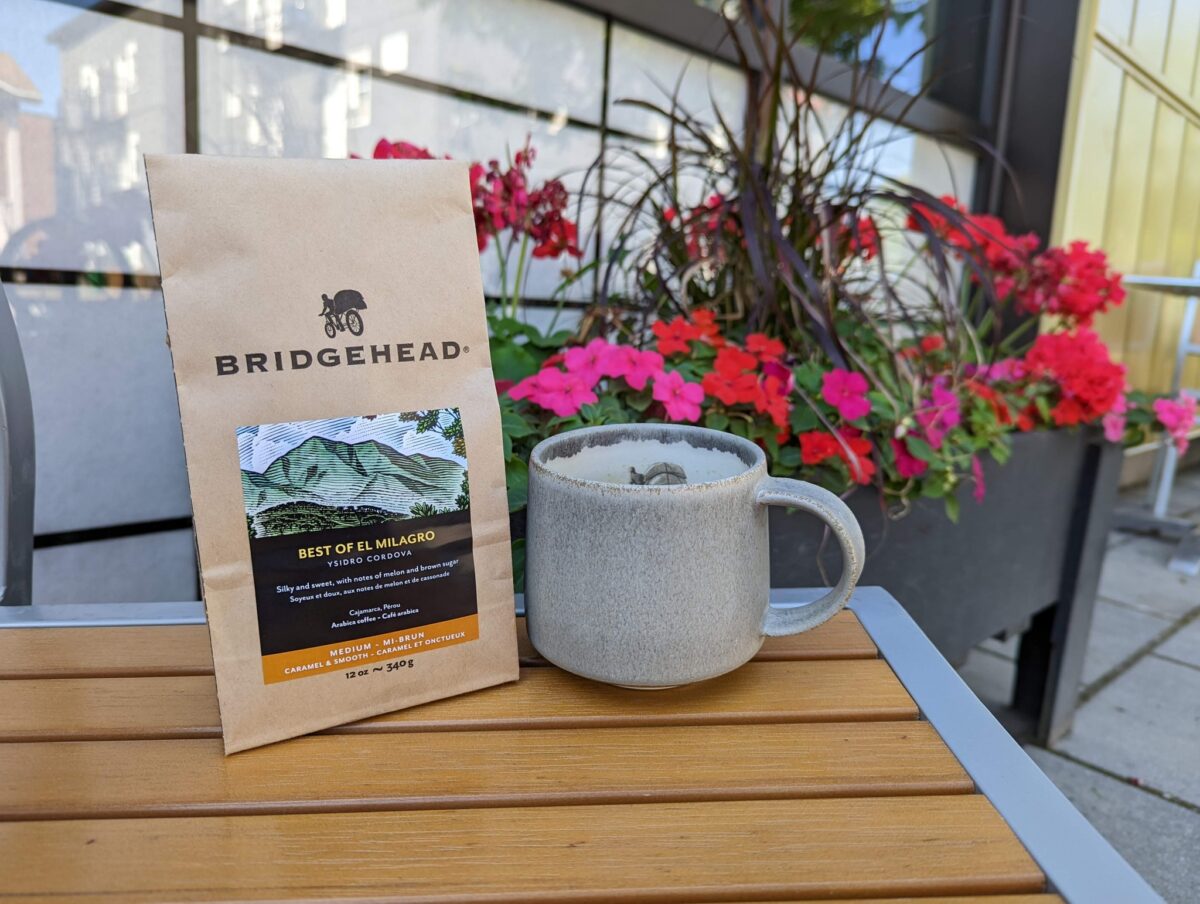
Image: Bridgehead Coffee
The history of the company dates back to 1981 with the original founding store under Bridgehead Trading. The current company was established in 2000.
But in January 2020, the company was sold to Aegis Brands and Kate Burnett took over its leadership.
Bridgehead has 21 coffee houses all in Ottawa.
Kate Burnett
“(The company sale) was a few weeks before the pandemic and we’ve been working through the pandemic which really allowed us to double down and forced us to double down on the strategy around diversification. Expanding into ecommerce in a significant way and grocery and really using in addition to coffee houses the ability to start to expand outside of Ottawa which has always been important to us. But the timing really never seemed right,” said Burnett, the company’s President.
“But the pandemic’s silver lining is we were actually able to make very quickly really strong partnerships with Farm Boy, Costco, Whole Foods, Longo’s now, to get our coffee into the hands of the Bridgehead community – new and existing customers – where at the time of the pandemic we had eight weeks or so to shut down our coffee houses entirely. So that sort of expedited a new strategy that we pivoted with and that’s where we’re going now.”
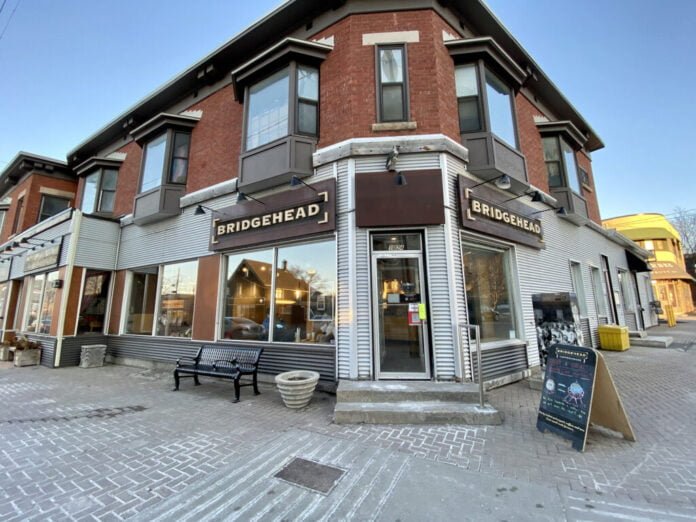
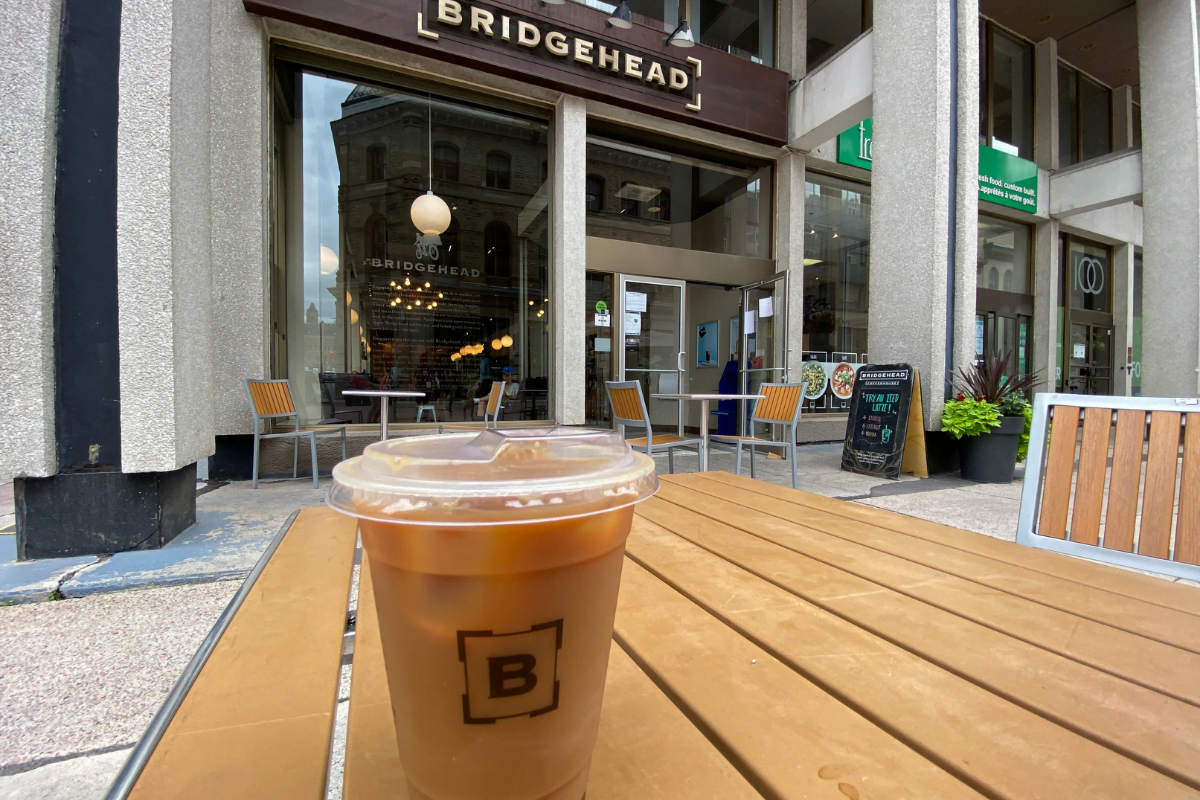
Bridgehead Coffee in Ottawa, Ontario (Image: Dustin Fuhs)
The first grocery store selling the Bridgehead coffee was Ottawa-based Farm Boy in April 2020.
The presence in those grocery stores is great for brand exposure and the ability to get in front of more customers.
Burnett said the brand is looking to expand its partnerships focusing on Ontario and its core cities first and then to eventually expand nationally.
Image: Bridgehead CoffeeImage: Bridgehead Coffee
For many people, grocery stores will be the first introduction of the brand and that will allow the brand to expand across the country.
“We see a big opportunity with ecommerce and the digital space with the goal of bringing that community hub, that really intentional, authentic experience that you get in the coffee house, online. So how do we bring that to the digital space as a big opportunity and a huge area of growth for us throughout the pandemic and continuing to be?,” she said.
“Likely we will expand brick and mortar but in a very intentional destination focused way and helping encourage that omni channel approach . . . That’s something in a couple of months we’re going to look at now. What is the brick and mortar plan? If we were to have a physical presence in a place like Toronto or beyond, would that help to spread the awareness and be that pinnacle of the brand experience. So it’s definitely on the table in terms of conversations.”
According to the company’s website, two United Church ministers and two social activists concerned for the prospects of small-scale coffee farmers in Nicaragua formed Bridgehead Trading in 1981. These farmers were contending with formidable odds: the pressure to trade through ‘coyotes’ or intermediaries (often local traders or moneylenders who exploited growers); a civil war; and the restrictions of a U.S. trade embargo, it says.
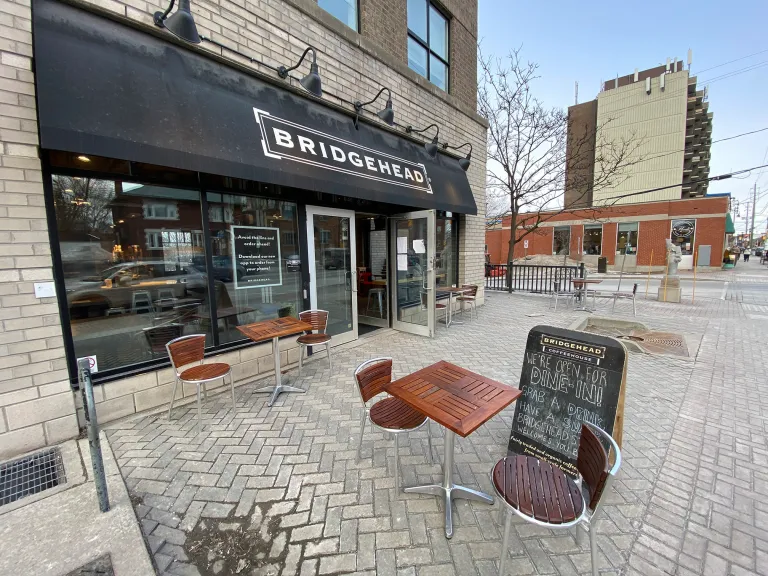
Bridgehead Cafe (Wellington Village) Image: Wellington West BIA
“Bridgehead became the first company in Canada to offer consumers fairly traded coffee. A devoted group of volunteers sold Bridgehead coffee from Toronto church basements and interest spread rapidly. With headquarters in Toronto, Bridgehead ‘fairly traded’ coffee was well received by consumers, and within three years the business outgrew its informal structure and voluntary management,” says the company.
“In 1984 Oxfam-Canada acquired the business and formally incorporated Bridgehead as a federal, for-profit company. Oxfam-Canada, an international development agency, sought to bring more fairly traded products to market and to share the stories of the small-scale artisans and farmers who made the products. Diversifying the product line to include handicrafts proved to be more troubling than expected. As sales revenues grew, profits dwindled then turned to losses.
“In May 1998 Bridgehead underwent restructuring, culminating in new ownership by Shared Interest, a cooperative lending society based in the U.K. that specializes in financing the fair trade sector. Shared Interest held Bridgehead for one year in the interest of finding a buyer who could offer a future path for the company.
“In the Fall of 1999 Shared Interest accepted an offer from Tracey Clark to purchase the name and return Bridgehead to its roots as a fairly traded coffee and tea company. In April 2000, Bridgehead (2000) Inc. was formed by three individuals with support from family and friends and on June 17, 2000 Bridgehead opened its flagship coffeehouse at 362 Richmond Rd. in Ottawa, Canada and renewed retail and wholesale sales of coffee and tea.”
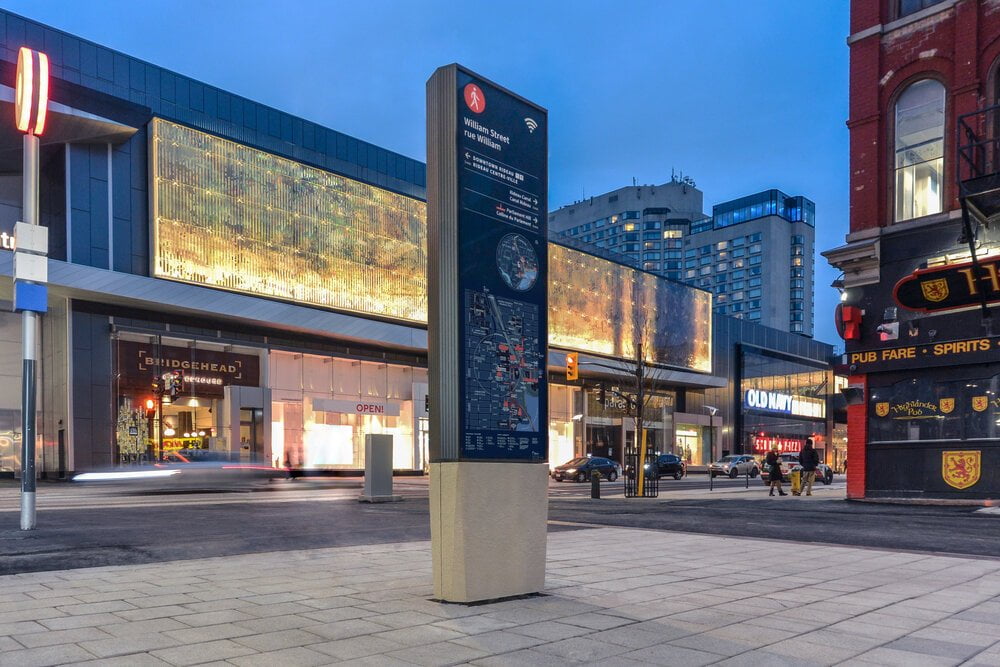
Rideau Centre Bridgehead Coffee (Image: Design for Movement / Steer)
Bridgehead opened its own Roastery in June 2012 and now roasts all of its coffee in-house. The Roastery imports green beans from co-ops all over the world and roasts about 6,000 pounds of fairly traded, organic coffee every week. The coffee is used in all of the Ottawa coffeehouses as well as sent to a variety of wholesale customers and online customers all across Canada.
“When we opened new coffee shops, we really focused on always fair trade and always organic, especially at a time when that was very new and very environmentally focused,” said Burnett. “And basically grew one coffee shop a year in sort of the urban core of Ottawa. In the old city neighbourhoods and into the downtown core.
“We started roasting our own coffee in 2012 and really forming direct relationships with the coffee farmers that we work with. Really long term, sustainable, year-over-year relationships, and helping support them on achieving the highest quality standards because ultimately at the end of the day fair trade’s great and it’s important but quality is really what helps farmers make the most income that they can and that’s really become our focus. Quality, because people love quality and the coffee’s delicious.”
Toronto-based Nick Iozzo continues to build his real estate consultancy company The Ancillary Agency through the pandemic and into its recovery.
One of the unique areas the company has been working on is matching the real estate needs of creative agencies, brand storytellers and retailers in finding real estate space for promotional activations and campaigns.
Image: Nick Iozzo
Iozzo said brands are realizing that digital will always have a play in brand storytelling but as COVID restrictions are starting to come down, many retailers and brands are wanting to engage potential customers in person. They want to be where people are. They want to get those types of impressions beyond the digital world.
“If it means an activation in a promo court in a mall, if it means a sampling program in an office tower, if it means aligning their brand with a sponsorship opportunity at a commercial property, we’re there to help match those needs with the availability of inventory within the country,” he said.
Iozzo said the Agency has been focused on three sectors. One is to help grow ancillary revenue for commercial landlords. Secondly, it works with retailers, agencies and brands directly to help them find real estate for their brand storytelling, any of the campaigns they may be launching. And thirdly, the Agency has been helping businesses grow through business development to reach new customers within the retail and commercial real estate sectors.
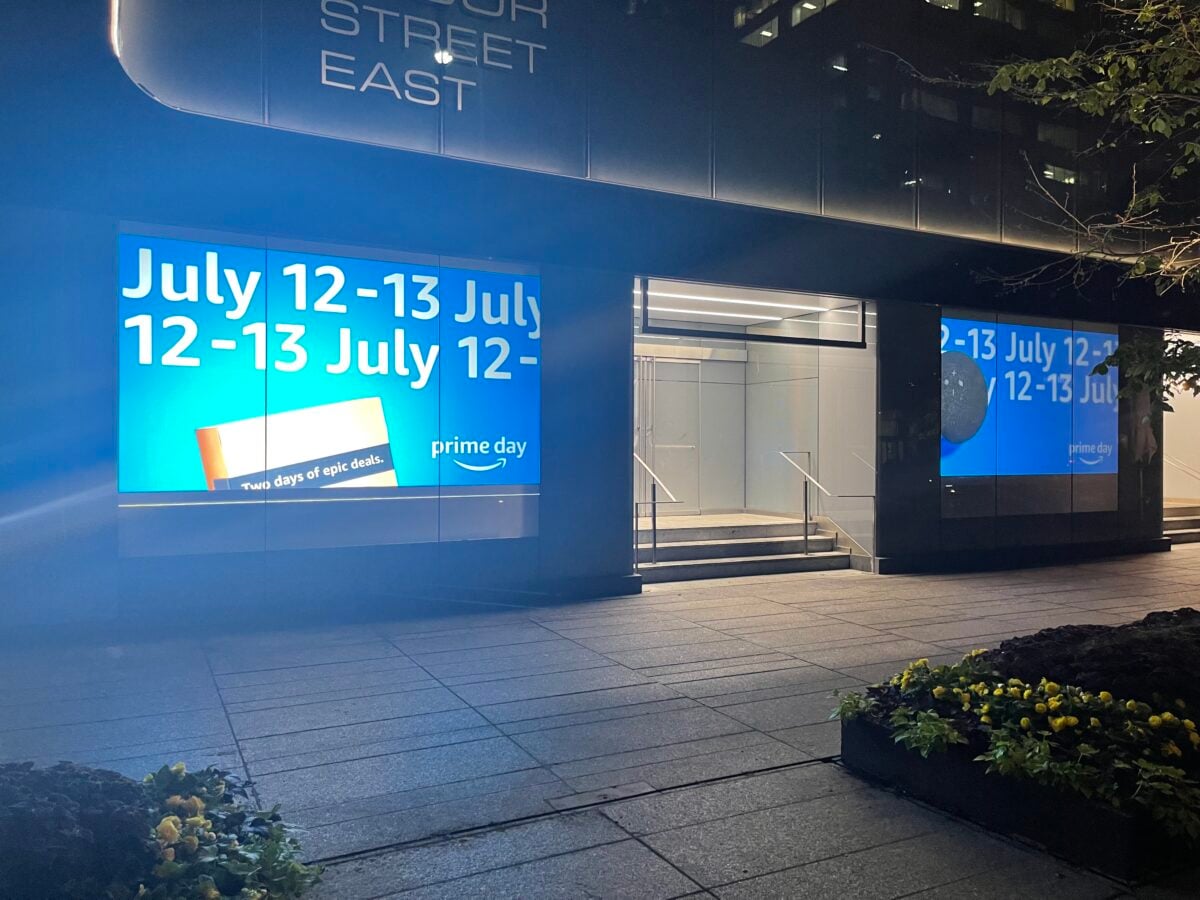
33 Bloor Street East (FrontRunner via Epic Investment Services)
“It’s been fantastic. On the landlord side, we’ve been working with Strathallen nationally for their retail portfolio. We are supporting KingSett for their Canadian portfolio and QuadReal’s national office portfolio. DREAM Office REIT for Film Management in Toronto representing their assets in the film community. Crestpoint for their national portfolio of retail, office, and industrial assets,” said Iozzo, adding the company is also working with some smaller independent sites such as Stackt Market in Toronto and RendezViews which is an entertainment centre in Toronto.
“We’ve really been growing and making inroads with a number of large and regional commercial real estate owners,” he said.
“Also helping on the creative brand storytelling. We’ve been working with brands, direct agencies, to assist them in finding real estate to help them with their campaigns. We have worked with agencies that represent Labatt/Stella, Coca-Cola, Nike and Converse just to name a few. We’ve assisted them on some of their brand activations, events, throughout the country. And that’s been really good because we’re not a creative agency. We leave the creative thinking and the brainstorming to those creative agencies who represent those brands and those agencies either don’t have the connections or the expertise on finding the right piece of real estate. So they partner with us to help them find the real estate to help them execute on the campaigns.”
Another key area is helping entertainment uses expand into different parts of the country.
Image: Stackt Market
The Agency is also supporting Stackt Market with their ancillary revenue projects including pop-up retail, sponsorship, out-of-home media, and experiential activations.
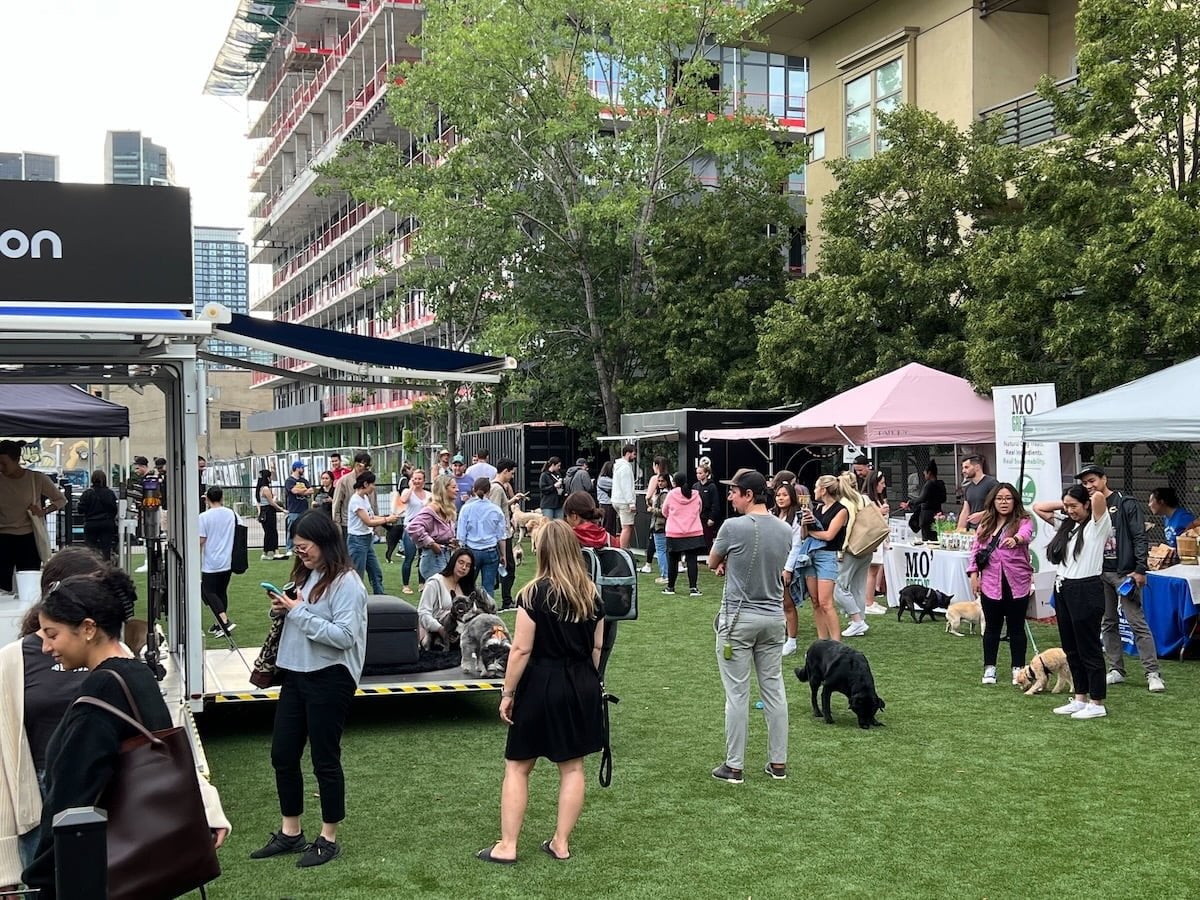
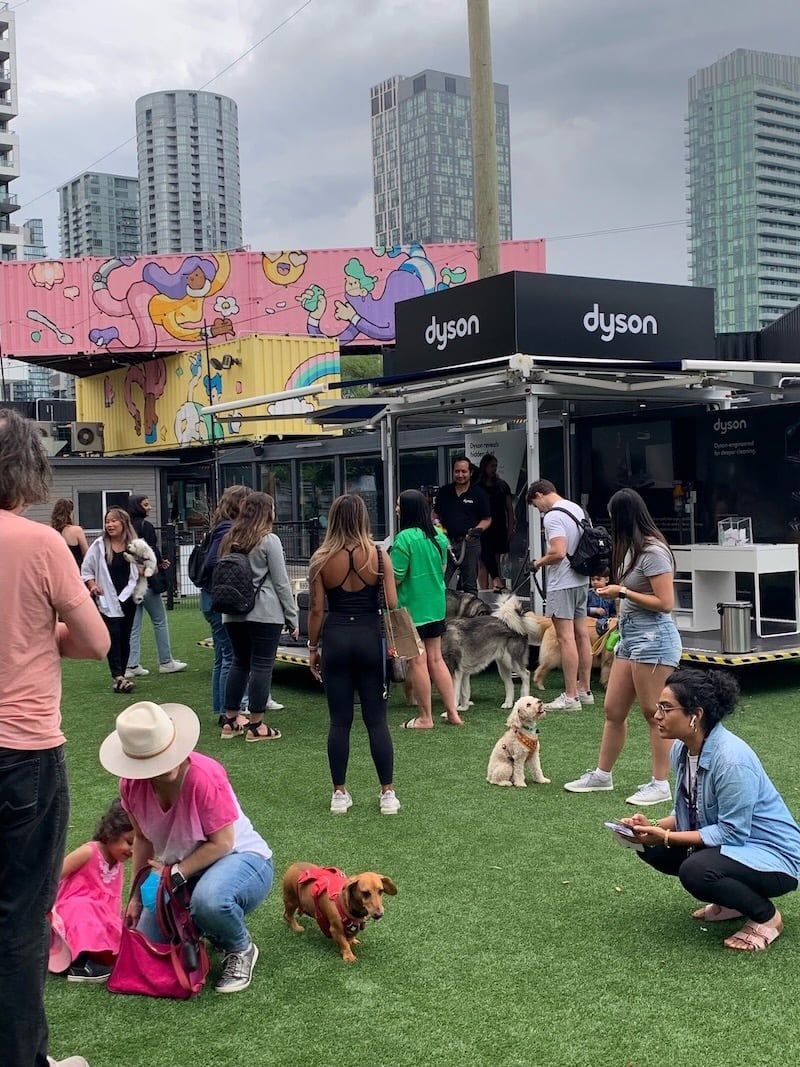
“The three big projects we’re working on now is Canada’s first licenced dog park which has opened. We are working on brand partnerships for this asset. Dyson was one of the first brands we brought in. We are supporting Stackt on their Three-On-Three basketball PlayZone that has opened and we’re looking at the athletic brands, the health and wellness brands that want to be aligned with this sporting product,” said Iozzo.
“And they’ve opened up an organic garden and bee pollinator garden. And so again aligning with brands that want to promote themselves within a sustainability aspect.
“That’s been really exciting for us at Stackt and it’s sort of a site that has been leading within Canada as a first to market and Stackt has always been known as a first to market type venue. We’re really excited to be working with the proprietors there to help evolve their sponsorship and brand activation partnerships.”
Bark Yard at Stackt (Image: The Ancillary Agency)
Image: Stackt Market
Stackt is Canada’s largest shipping container market, established in April 2019 on Bathurst St. Designed entirely out of shipping containers, it is an ever evolving cultural marketplace. The ecosystem features a mix of local and international retailers, a brewery, unique service providers, start-up incubators, and innovative culinary adventures. It is anchored by a strong mandate to support local art, music, social enterprise and cultural communities.
To further expand the offering of services in the retail and commercial real estate sectors, The Ancillary Agency has also formed a partnership with the Savills Retail Toronto team, for clients seeking temporary and permanent leasing solutions and The T1 Agency, to provide sponsorship audit and valuation services.
Iozzo’s previous experience includes time with Canadian corporate giants Oxford Properties Group, Cadillac Fairview, and Rogers Communications.
Retail Insider is streamlining its Canadian retail news from around the web to include a handful of top news stories that can be viewed quickly during the day. Here are the top stories from the past 24 hours.
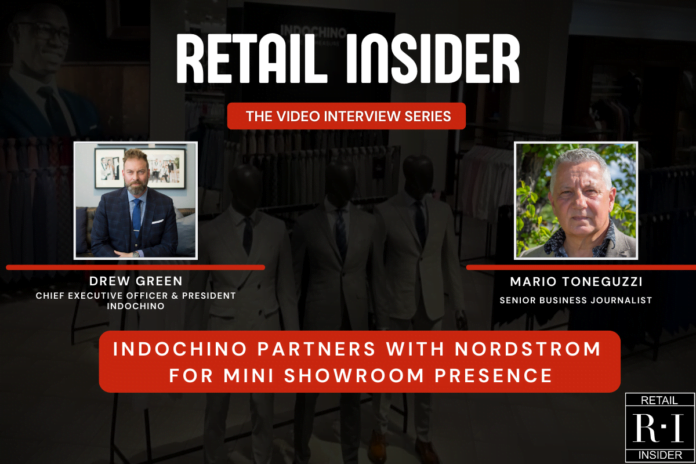
Video Interview: Indochino Partners With Nordstrom For Mini Showroom Presence
Drew Green, CEO/President, Indochino, discusses the brand’s partnership with Nordstrom.
Green talks about the concept of mini showrooms within the retailer’s stores, how many exist today, plans for the future, if more are coming, whether Indochino will look at other retailers to introduce the concept, any recent developments for Indochino, the introduction of a women’s line and the impact of the pandemic on the business
The Video Interview Series by Retail Insider is available on YouTube.
Connect with Mario Toneguzzi, a veteran of the media industry for more than 40 years and named in 2021 a Top Ten Business Journalist in the world and the only Canadian – to learn how you can tell your story, share your message and amplify it to a wide audience. He is Senior National Business Journalist with Retail Insider and owner of Mario Toneguzzi Communications Inc. and can be reached at mdtoneguzzi@gmail.com.
Also check out the other series offered by Retail Insider, including The Weekly podcast and The Interview Series, which are both available on Apple Podcasts, Stitcher, TuneIn, Google Podcasts, or through our dedicated RSS feed for Simplecast and other podcast players.
Calgary-based thrift store WINS (Women In Need Society) continues to use innovation and creativity in its business model to thrive in the post pandemic period.
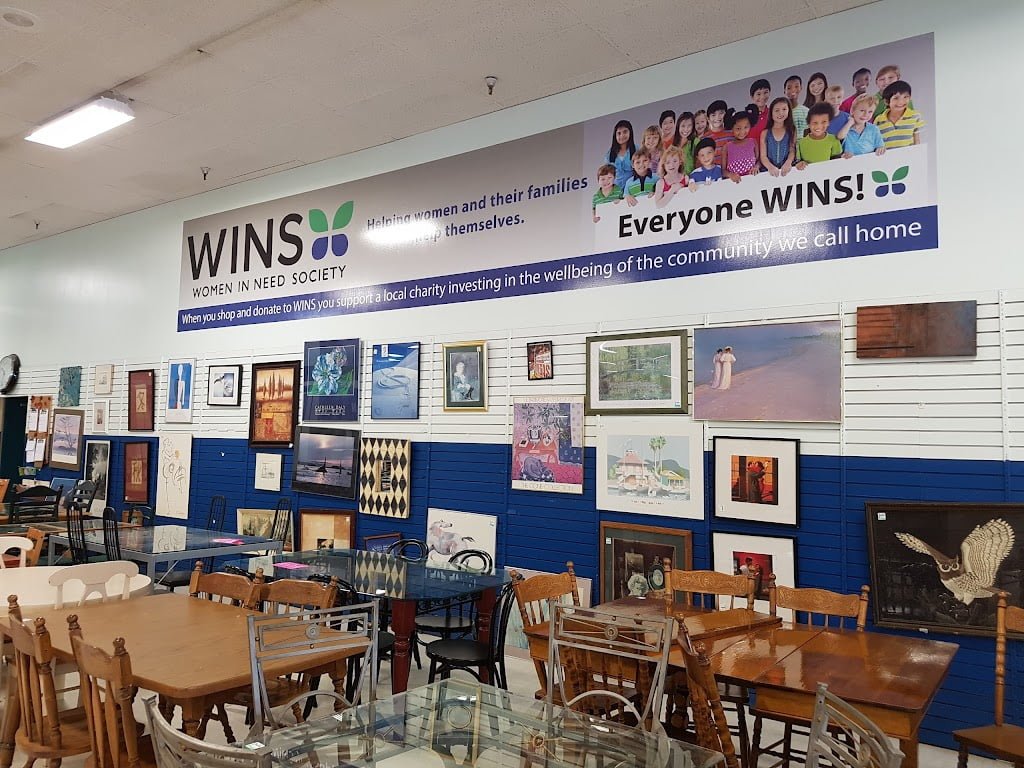
Founded in 1992, WINS is a thrift charity, providing basic needs resources and support to women and their families. It started with one thrift store location then and today has six across Calgary in addition to its Donation Centre. In 2020 it launched a bulk thrift store, MORE! along with an online thrift box service, TwiceNEW.
Today, people from all walks of life frequent the thrift stores knowing that their purchases and donations make a difference.
Image: WINS (Women In Need Society)
Karen Ramchuk, President and CEO of WINS who has been in the role for almost five years, has seen the tremendous growth of the concept in recent years with more growth to come.
Karen Ramchuk
“One of the things that is super interesting for me is actually the fact that I came from corporate retail. I worked at Loblaw for over 20 years and I learned a lot. I was 10 years in operations, 10 years in merchandising at Loblaw Companies,” said Ramchuk.
“They taught me so much and I’m so thankful for everything they taught me because when it came to WINS, I really stumbled upon that social enterprise model and I could see how WINS could become something that was totally sustainable, that really could impact the community. And it gave me a passion to take my retail learnings and do more than just generate profit for an organization.
“I got, almost for lack of a better word, addicted to the social good. At WINS through my course of five years we’ve been able to double our budget and we’ve been able to introduce new types of ways of selling donated goods. We’re locked in by CRA (Canada Revenue Agency) to selling donated goods because we’re actually a charity run as a business and the CRA defines business for charity only in selling donated goods.”
During the COVID-19 pandemic, WINS launched Twice New by WINS, a nationwide online thrift shopping enterprise that brings thrifted clothing to Canadians in a safe and convenient way.
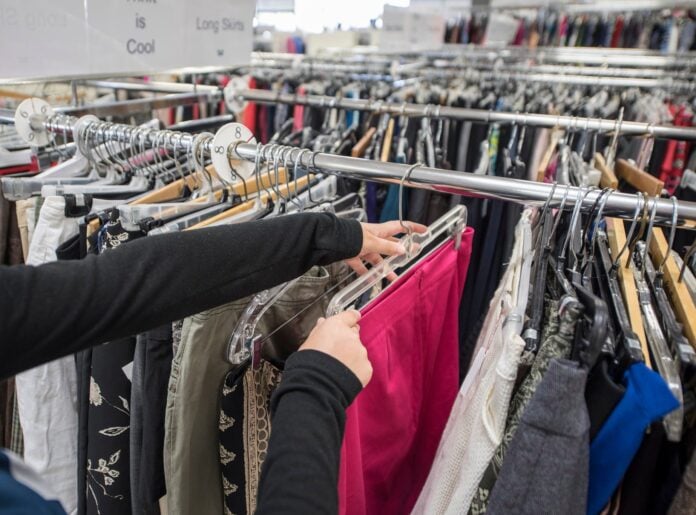
WINS also recently celebrated the second anniversary of the More Store, a unique bin-style thrift store that was launched in June 2020. An extension of WINS’ existing thrift store enterprise, the More Store offers a wide variety of gently-used clothing at discounted prices where every item is sold for one dollar or less – the more someone buys the less it costs them.
“When I look at the business model WINS has in Calgary, you can take this business model and pop it into any location. You could do it in a small town, you could do it in a city,” said Ramchuk. “You could do it from one end of Canada to the other end of Canada and have something that would really be able to help support more Canadians in a more wholesome way.”
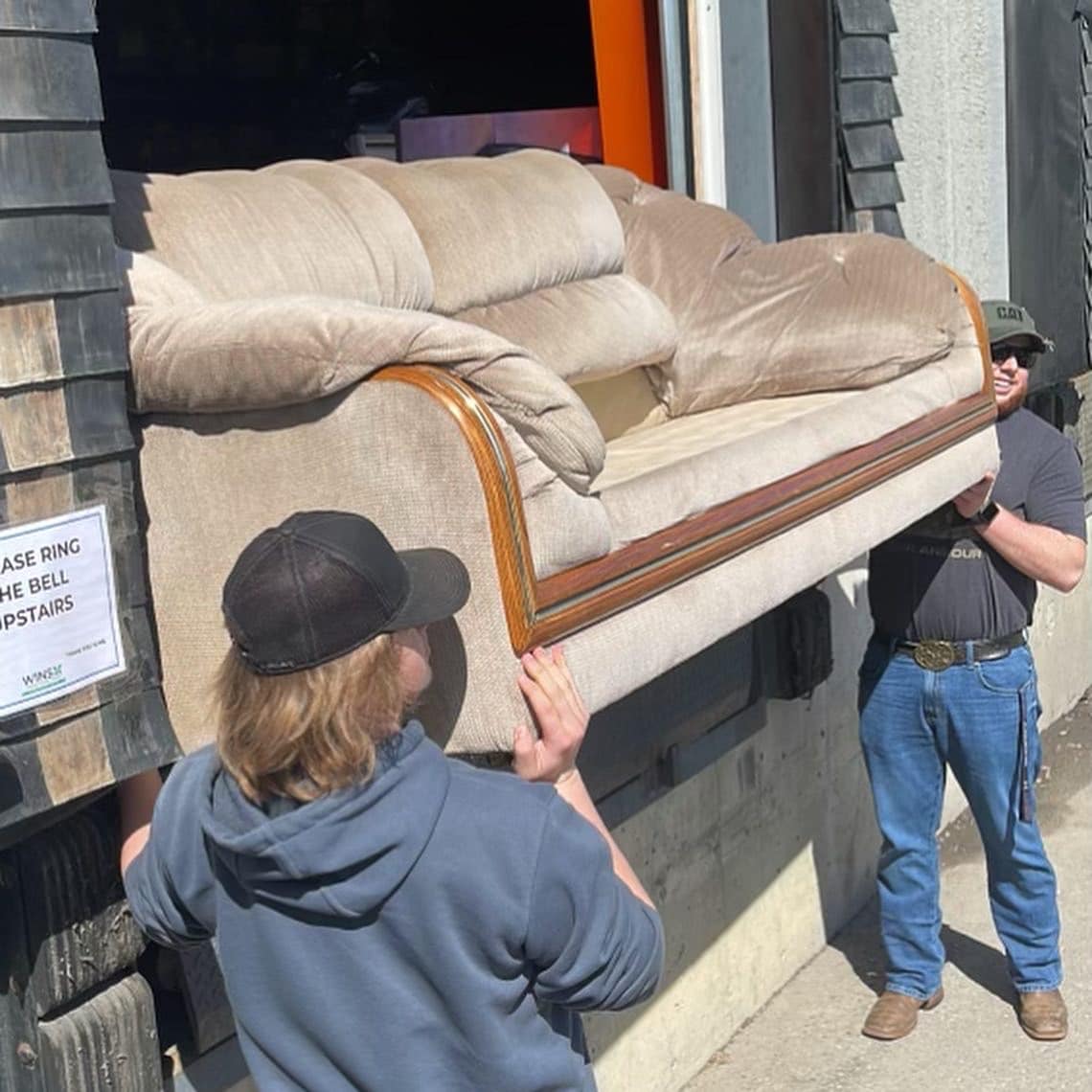
In 2021, WINS provided 22,255 services to more than 14,000 Calgarians and diverted 4.1 million pounds of clothing, household items and furniture from Calgary landfills.
Image: WINS (Women In Need Society)
Image: WINS (Women In Need Society)
“Between what we sell, what we give away and what we recycle, this year we will keep over five million pounds out of the Calgary landfill,” said Ramchuk.
“We’re also a low cost, sustainable shopping option for all Calgarians. For our social impact, this year we’re going to probably help 15,000 Calgarians in their fight against poverty and we do it through a wholistic wraparound approach which is really unique in the area that we’re in. We help first off with basic needs support and in that way we’re a lot like the food bank, although we do emergency food, we also do hygiene items, we do clothing, we do furniture, we do household.
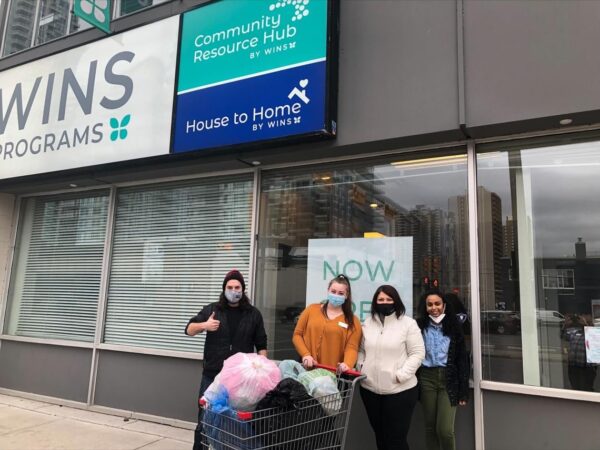
“We supply all of that for free for women and their families. We also supply through our community resource hubs emotional support and navigation of the system of care so helping her to build her confidence and giving her all the tools and the resources to help her to stay sustainable on her journey. And we have an employment training program which is very different and very supportive and caring to prepare women for careers in retail and wholesale warehousing through our employment service that we do.”
Ramchuk said WINS also works with many for-profit retail companies around diverting goods from the landfill. WINS is able to take some items that those retailers could potentially put on clearance at stores but they don’t want to use the sales floor space, saving them from ending up in the landfill.
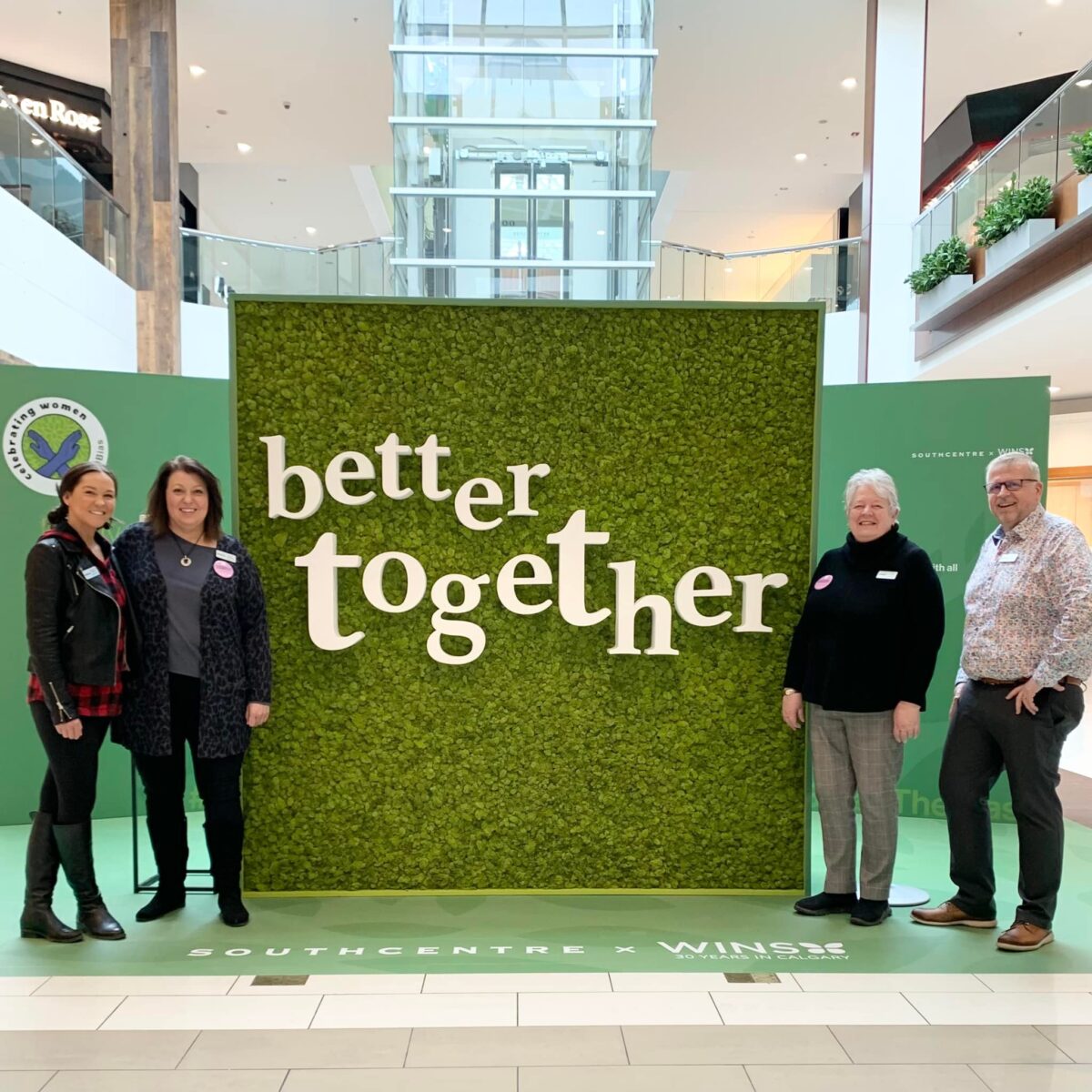
WINS (Women In Need Society) x Southcentre
WINS (Women In Need Society) x University of Calgary
“It gives them an option to repurpose that in a way that does community good,” she said. “We have some really great partners. TJX Canada is one of our major partners and we also have a partnership with Endy Mattress . . . We also have a great partnership with Amazon that’s fairly new where items that they’re overstocked on, they give to us to give away to our families in need as well.”
Ramchuk said one of WINS’ goals is “a great place to be for everybody.” Whether that’s a customer, an employee, a volunteer, someone coming for help, the organization wants everyone to leave WINS “feeling fabulous.”
“The thrift market is absolutely growing. Obviously I think everyone’s aware of the inflation and the cost of living across Canada. So thrift is great low cost, sustainable shopping. And it’s not just only about the inflation, it’s about being kind to the environment as well. That’s a big part of the work that we do. We believe in being kind to people and being kind to the environment. So everything we’re doing is to make Calgary a better place whether we’re helping women, whether we’re diverting stuff from the landfill, whether we’re offering Calgarians a fabulous place to shop at low prices, whether it’s someone from Ontario shopping our online. Everything we do is to help,” said Ramchuk.
She said the WINS’ strategy is to continue opening more locations in Calgary.
“My personal goal is one day to move beyond Calgary but that’s a personal goal that’s not approved by the board yet or anything. But I would love to take this model and have it grow,” said Ramchuk, adding that WINS could easily have a total of 12 stores in Calgary.