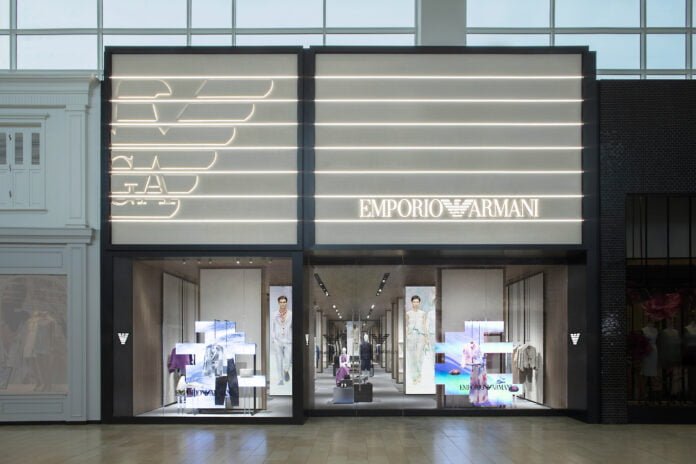
Italian luxury brand Giorgio Armani has opened the only Canadian location for its sub-brand Emporio Armani at Toronto’s Yorkdale Shopping Centre. The beautiful new store took several months to build.
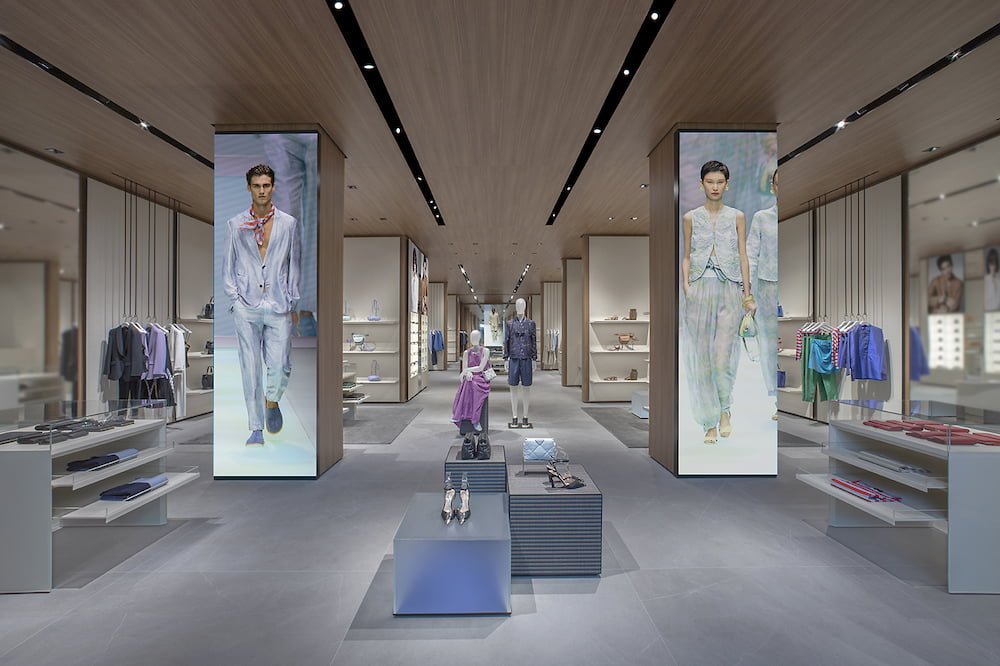
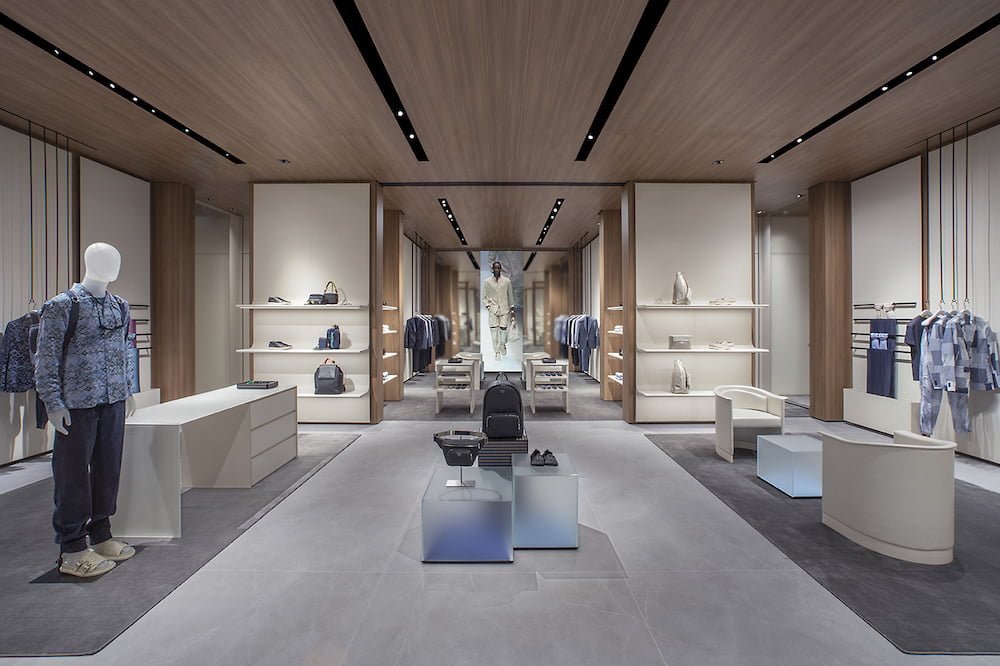
The 4,200 square foot store houses Emporio Armani’s collection of men’s and women’s lines, including Emporio Armani ready-to-wear, accessories, and small leather goods as well as Emporio Armani watches, jewellery and sunglasses.
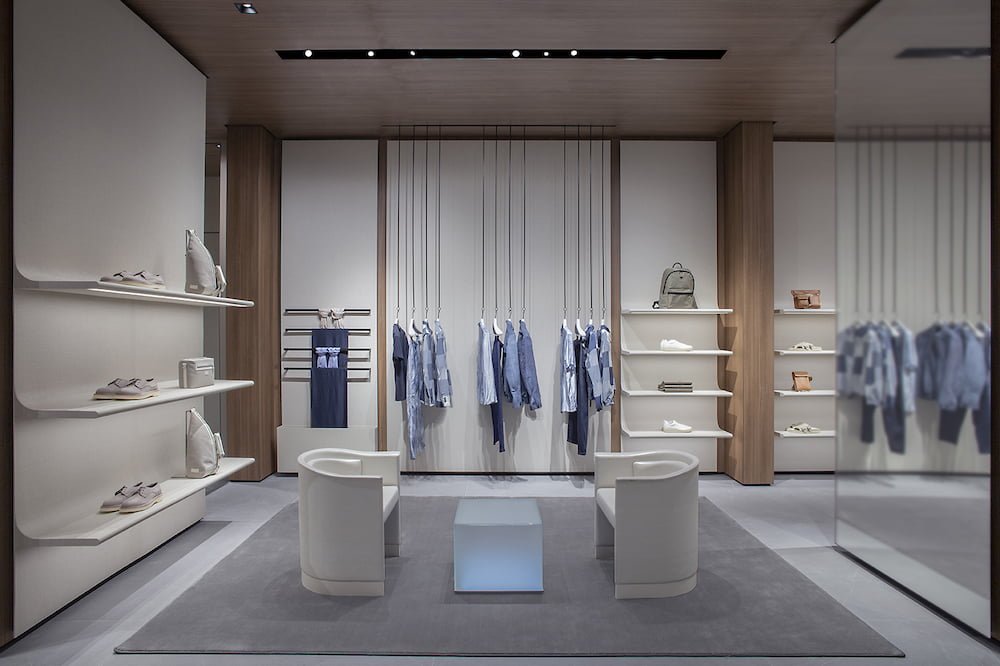
The Emporio Armani storefront, which replaces an Ann Taylor store in Yorkdale’s 2012 expansion wing, was designed by Giorgio Armani himself along with a team of architects. The store’s design is described as blending “craftsmanship and modernity” with materials used throughout that include hardwoods and fine textured wall coverings that match with the neutral ceramic grey flooring.
Photo: Giorgio ArmaniPhoto: Giorgio Armani
Ceilings in the store are clad with wood, and wooden panels continue onto the walls and alternate with wallpaper-covered sections that provide a backdrop for the display of the products within the space. The choice of natural materials in light colours, from grey to almond, were intended to give the space a light and fresh air according to Armani.
After Ann Taylor exited its Canadian stores in 2020, Montreal-based Quartz Co. leased the Yorkdale space for a pop-up that operated for several months. Construction of the Emporio Armani store started in late 2021 and it opened to the public several weeks ago.
Neighbouring luxury retailers in the mall’s wing include Valentino, Bottega Veneta, Balenciaga, Celine, and Hugo Boss. Across the hall is a large Holt Renfrew store which houses large mall-facing concession boutiques for brands including Chanel, Gucci, Fendi, Dior and Brunello Cucinelli.
Technically this isn’t the first time that Emporio Armani has had stores in Canada. Between 1990 and 1995 the brand had a 6,000 square foot storefront at 80 Bloor Street West in Toronto where Banana Republic most recently operated. In 1998 Holt Renfrew opened a licensed Emporio Armani store at the Holt Renfrew Centre at 50 Bloor Street West that operated until the early 2000s.
Photo: Giorgio Armani
In Canada, Emporio Armani is also carried as a stockist at several upscale retailers. Menswear is carried at several Harry Rosen stores in Canada and women’s fashions are available at Holt Renfrew as well as at The Room at Hudson’s Bay in Toronto and Vancouver. It remains to be seen what effect the standalone Toronto store will have on wholesale distribution for Emporio Armani in Canada. It’s also not yet known if the brand will open more Canadian stores.
Armani also operates standalone A/X Armani Exchange stores in the Vancouver, Calgary, Toronto and Montreal markets. At one time the A/X sub-brand had numerous other stores in Canada that have since closed.
Holt Renfrew carries Giorgio Armani’s top ‘Black Label’ line for women in its stores in Vancouver, Toronto, Mississauga and in Montreal where at Holt Renfrew Ogilvy the brand has a beautiful boutique space. Giorgio Armani’s top men’s line is also carried in a handful of Harry Rosen stores in Canada. The brand is said to be planning to have more of a presence in Canada with details to follow.
Designer Giorgio Armani, who is 88 years old, founded his retail brand in 1975 in Italy. Armani has become a lifestyle brand with hundreds of stores globally as well as music, sport and luxury hotels. He’s said to be the world’s wealthiest openly gay man with a net worth of $9.53 billion USD in 2021 according to Bloomberg’s Billionaire Index.
Retail Insider is streamlining its Canadian retail news from around the web to include a handful of top news stories that can be viewed quickly during the day. Here are the top stories from the past 24 hours.
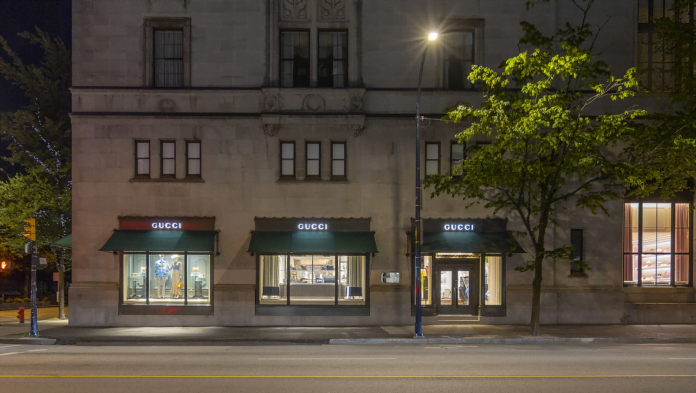
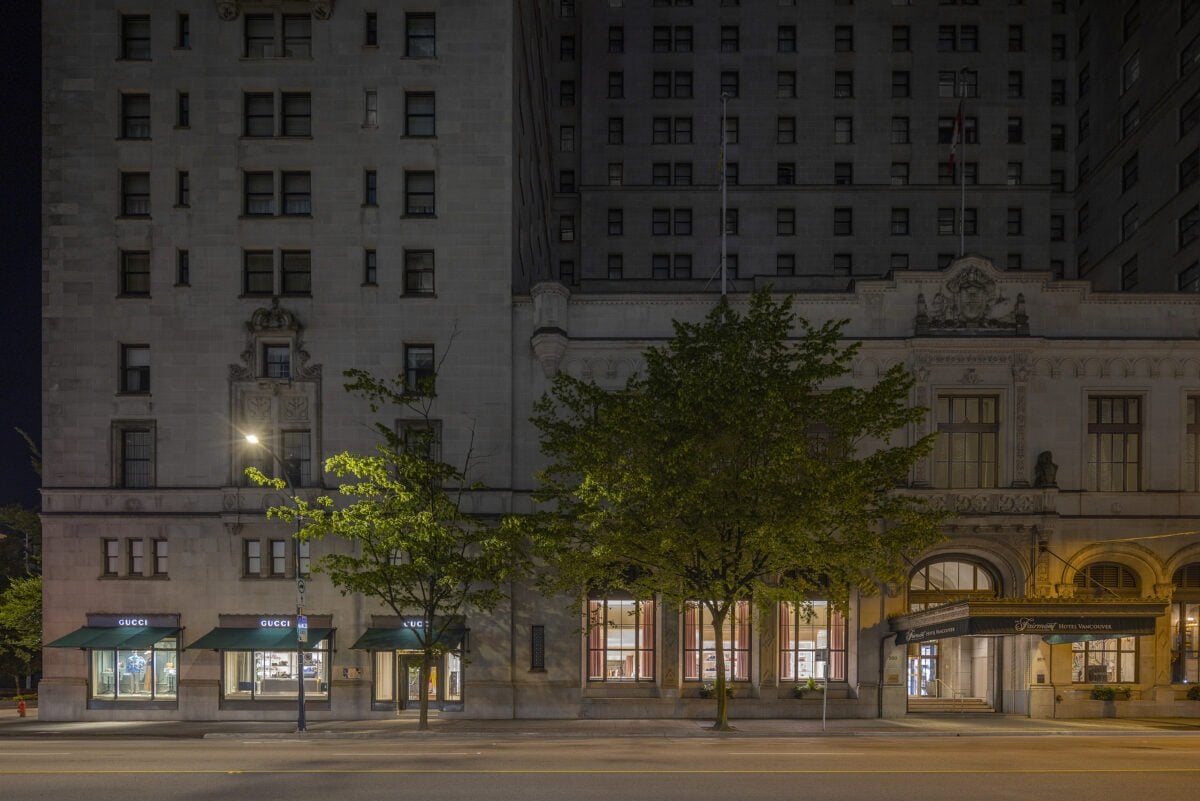
Italian luxury brand Gucci has reopened its store at the Fairmont Hotel Vancouver at 900 W. Georgia Street in downtown Vancouver. The store recently saw a significant expansion to add new product categories which involved joining an existing Gucci store with a neighbouring retail space.
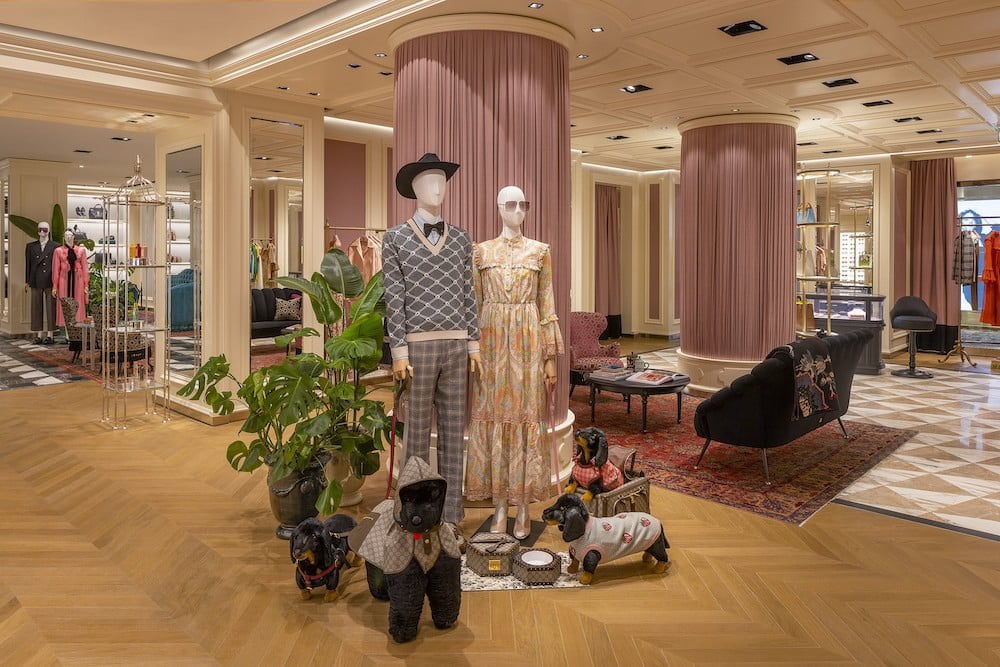
For the first time, menswear is now available in the standalone downtown Vancouver Gucci store — when it opened in 2006, the location catered primarily to women. Now the Vancouver store, considered to be a flagship, is large enough to house men’s categories as well as the new Gucci Pet collection — prior to the expansion Gucci men’s ready-to-wear was only available in the Vancouver market at Holt Renfrew where Gucci has a concession presence.
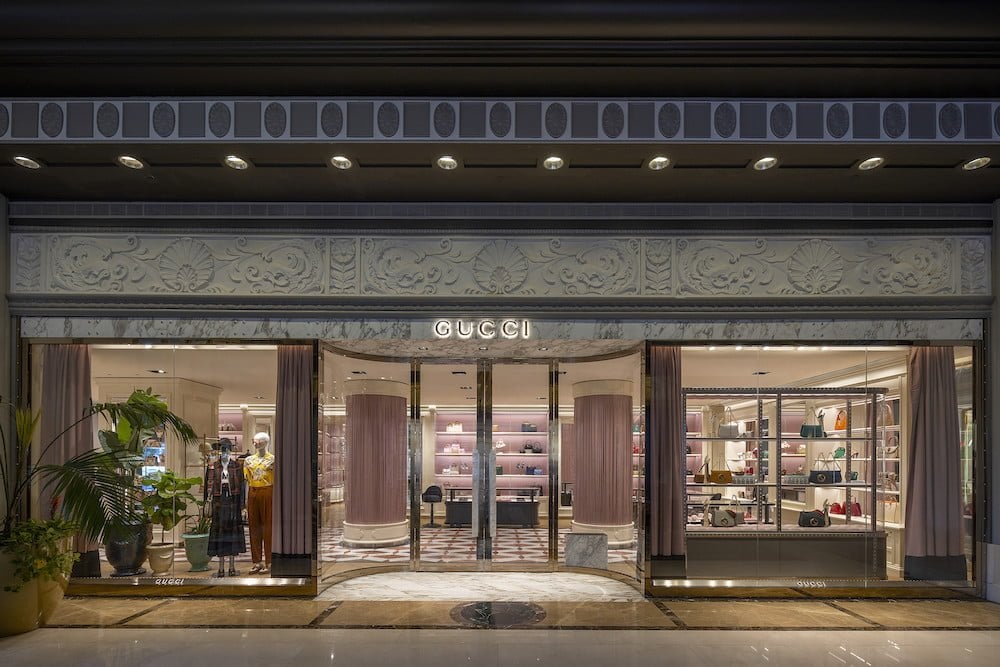
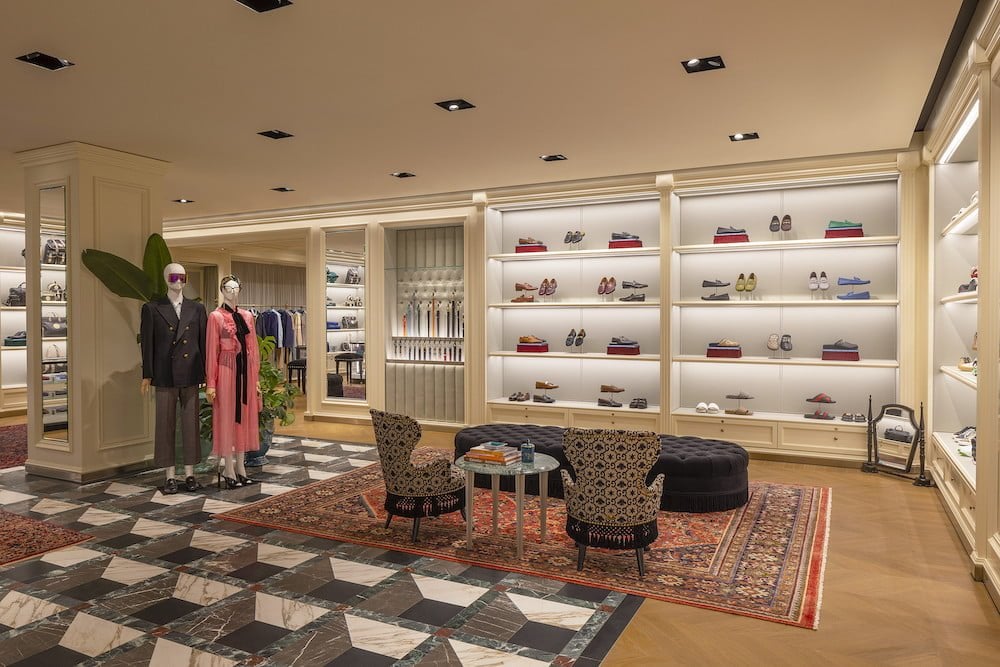
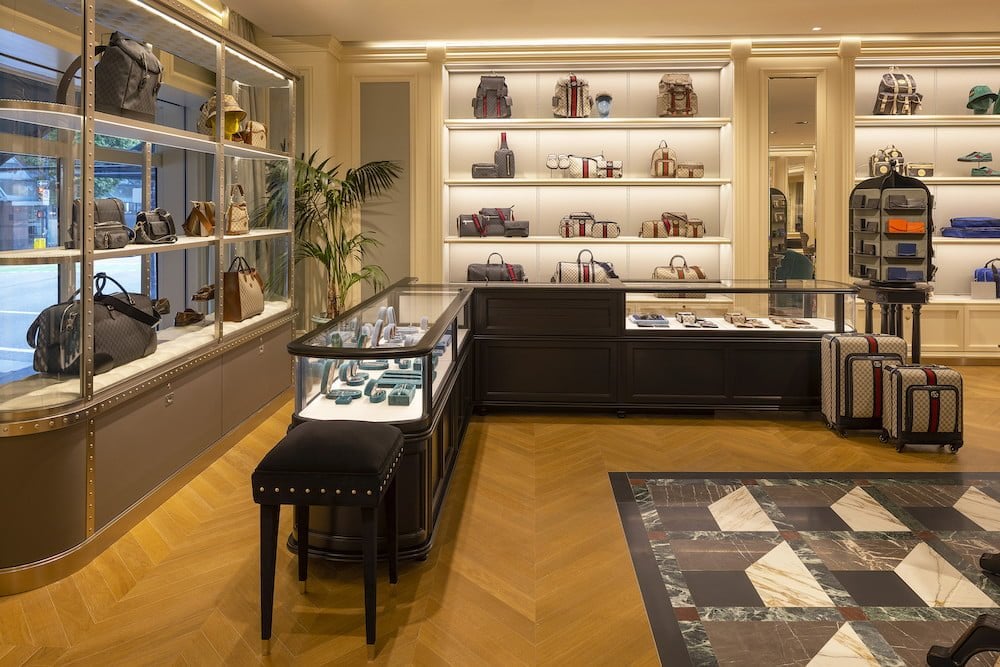
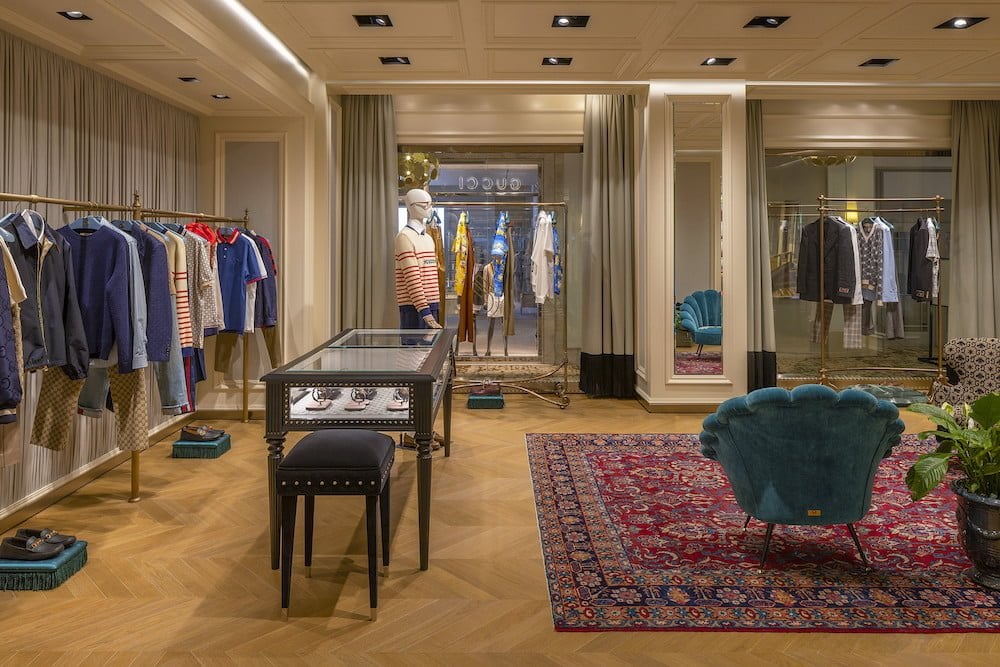
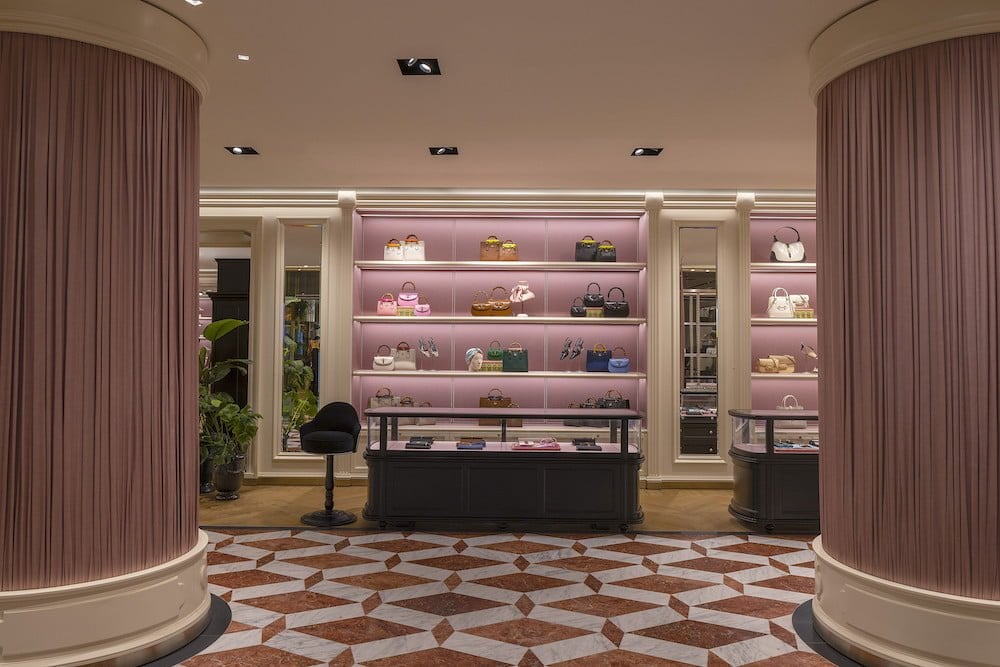
The expanded flagship store’s design includes custom geometric painted wood floors and marble polychrome inlays that produce decorative three-dimensional effects on the floors. As with other updated stores, Vancouver’s Gucci location also includes ample use of herringbone wood flooring which contrasts with rich fabrics in some rooms. Varnished pink iron wall finishes complement the moss green velvets used for upholstery of some furniture items as well as in fitting rooms. Plush chairs and vintage oriental rugs are found throughout the space which features LED lighting to promote energy efficiency.
North hotel facade showing the newly reopened Gucci Vancouver – Fairmont Hotel – Photo by Pablo EnriquezHotel lobby interior entrance to Gucci Vancouver – Fairmont Hotel – Photo by Pablo EnriquezDisplay showcasing the new Gucci Pet line at Gucci Vancouver – Fairmont Hotel – Photo by Pablo Enriquez
The expanded store has become the largest in Canada for Gucci. The original Fairmont Hotel Vancouver Gucci store opened in 2006 and spanned just under 4,000 square feet on one level. An adjacent 2,300 square foot storefront for luxury watch and jewellery brand Omega was annexed by Gucci which now occupies about 6,200 square feet on the main floor of the hotel as well as some space upstairs on a mezzanine level that was once part of luxury retailer George Straith, which had a store in the hotel until the mid 1990s. Omega relocated to a new interior storefront space on the main floor of the hotel last year.
Gucci has been investing heavily in the Canadian market over the past several years and is said to be seeing strong sales in its stores in this country. The brand opened a standalone store in Edmonton in the spring of 2021 at the West Edmonton Mall, spanning more than 5,000 square feet on one level. That location is said to be doing so well that parent company Kering will be opening another luxury brand store in the mall with details to follow.
In 2020 Gucci renovated its 6,000 square foot flagship at 130 Bloor Street West in Toronto and in the summer of 2019 Gucci unveiled a stunning 6,000 square foot ‘world of’ concession at Holt Renfrew in Toronto’s Yorkdale Shopping Centre which to many would appear to be a standalone store, given its dedicated mall entrance. Since 2019 Gucci has also unveiled concession spaces for women, men, footwear and accessories at Holt Renfrew Ogilvy in Montreal.
Gucci also has a presence at Holt Renfrew in Calgary where it has separate concession boutique spaces for women’s and men’s ready-to-wear and bags/accessories — rumour has it that a standalone store is on the way. At Square One in Mississauga, Gucci operates a bag/accessory concession with a facade facing onto the mall corridor. In Toronto, Gucci also operates a bag/accessory concession at the Nordstrom store at CF Toronto Eaton Centre. Gucci shoes and belts are also carried at Nordstrom and Saks Fifth Avenue stores in Canada.
Women’s footwear area at Gucci Vancouver – Fairmont Hotel – Photo by Pablo EnriquezBags and accessories at Gucci Vancouver – Fairmont Hotel – Photo by Pablo EnriquezMen’s ready-to-wear area at Gucci Vancouver – Fairmont Hotel – Photo by Pablo EnriquezWomen’s handbags at Gucci Vancouver – Fairmont Hotel – Photo by Pablo Enriquez
Historically, Gucci has had a presence in Vancouver for decades in Holt Renfrew. A small boutique for bags and footwear operated in the former/smaller Holt Renfrew store at CF Pacific Centre in the 1990s and the brand expanded its presence to include ready-to-wear as Vancouver’s locals and tourists began increasingly purchasing luxury goods. Between 1985 and 1987 when Gucci had a lower price-point, the brand had a bag and accessory boutique in the Hudson’s Bay flagship store in downtown Vancouver at 674 Granville Street (as well as at Bay stores in Calgary, Ottawa, Montreal, and at then-HBC-owned Simpsons in downtown Toronto).
Gucci, owned by Kering Group, is one of the world’s leading luxury brands with billions of dollars in annual sales. Gucci was founded in 1921 and is now part of the Kering conglomerate of luxury brands. Gucci operates about 500 stores globally. In the United States, Gucci operates a network of standalone stores as well as boutique spaces in large-format/department stores such as Neiman Marcus, Saks Fifth Avenue, Bloomingdale’s, Nordstrom, and Macy’s (Manhattan Herald Square store only).
The Gucci brand was recently the subject of the 2021 Ridley Scott film House of Gucci, starring Lady Gaga, which was watched by millions and created a new buzz for the Gucci brand. Lyst also recently ranked Gucci as the second hottest brand in the world after Balenciaga, which is also owned by Kering Group and will be opening a standalone store in the Vancouver market with more details to come.
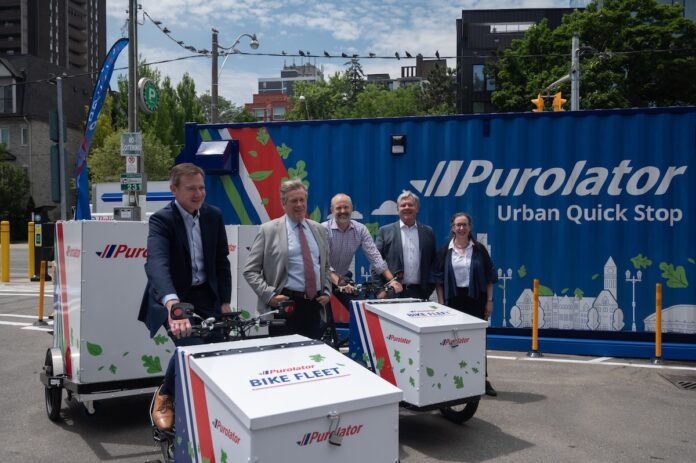
Purolator, City of Toronto and Toronto Parking Authority launch Urban Quick Stop pilot program (CNW Group/Purolator)
Purolator, a leading integrated freight, package and logistics solutions provider, has launched its Urban Quick Stop ‘mini hub’ pilot program in downtown Toronto with a second one to come in the near future.
Laurie Weston, Senior Director, Retail at Purolator, said the two Urban Quick Stop mini hubs in Toronto will operate full retail services (for customers to drop off and pick up shipments) and a total of five electric cargo bikes (e-bikes) to deliver packages to the surrounding areas, decreasing traffic congestion and CO 2 emissions by 68 tonnes per year.
She said the program aims to innovate last-mile delivery and provide consumers with a superior customer experience and improved convenience.
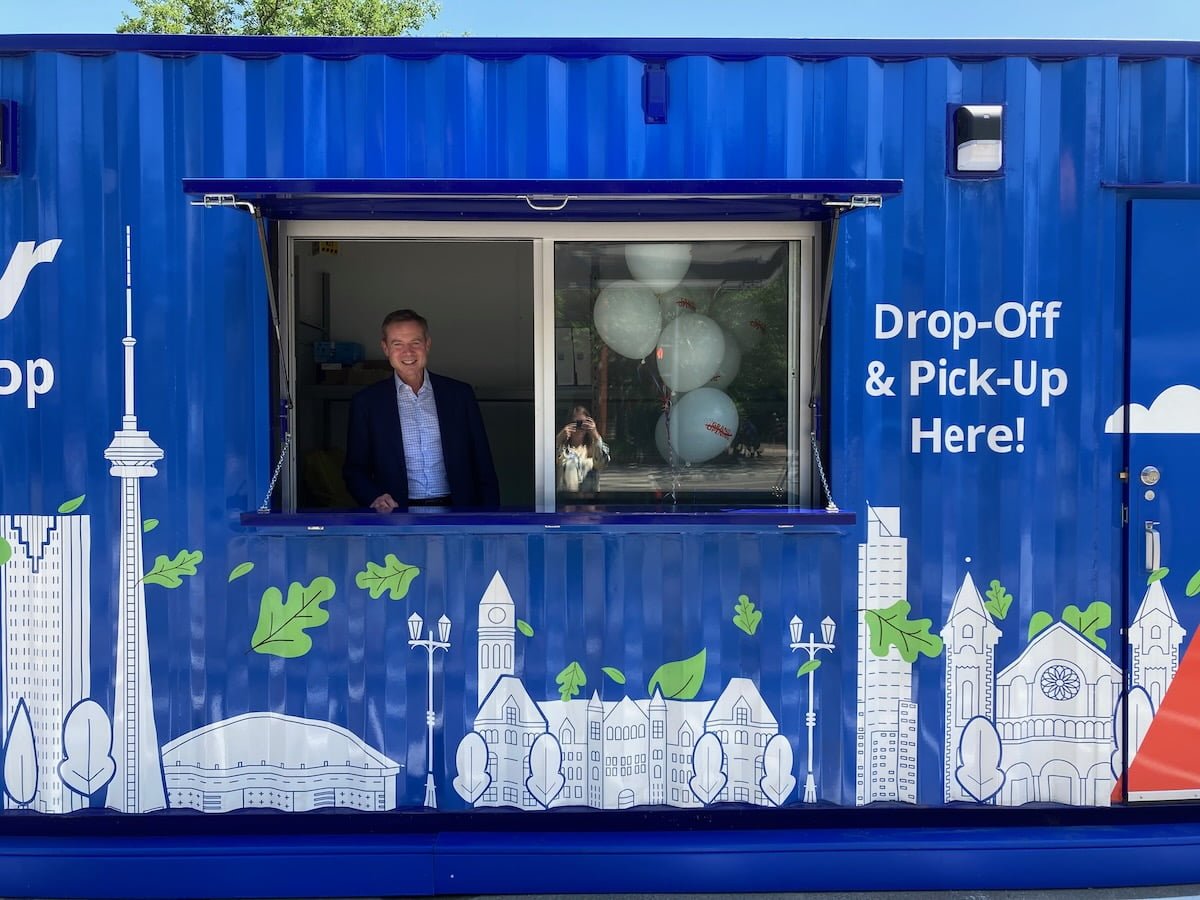
“Basically the whole concept behind this is getting a mini distribution hub in the heart of a city to be able to deliver packages via e-bike. Our goal is to remove the big, heavy trucks off the road, replace it with mini e-bikes, but what’s unique about this container . . . we’ve got a window popping open and full retail services – pickup, drop off,” said Weston.
Image: Purolator
Laurie Weston
“At the end of the day, we have aggressive goals to reducing carbon emissions and this is a unique way for us to be able to remove large vehicles off the road and it also helps with reducing congestion, traffic and allows us to be able to deliver to the customer faster simply because the e-bikes don’t have to worry about trying to find parking.
“It’s easier for us to deliver on our customers’ promises while at the same time it’s all about green. “
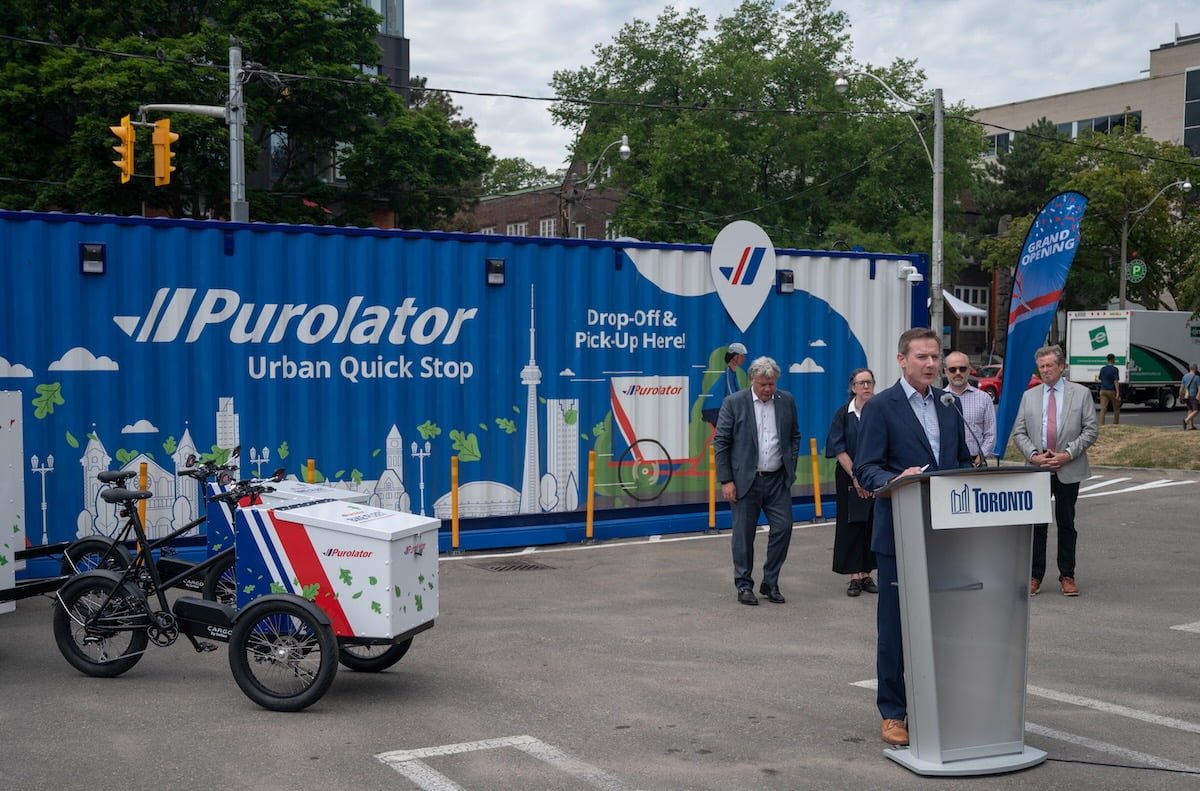
The first mini hub is a 40-foot shipping container located at the Green P parking lot at 19 Spadina Road (north of Bloor Street West). It has partnered with the Toronto Parking Authority on the project.
Weston said this is a six-month pilot.
Image: Purolator
The second mini hub is launching in September at the University of Toronto campus on St. George Street. The mini hub will replace Purolator delivery trucks on the St. George campus with e-bikes deployed from an on-street container located near 60 St. George Street. This will mark the first time on-street parking in Toronto has been replaced with this type of use. On this project, Purolator has partnered with the City of Toronto’s Transportation Services division and the University of Toronto’s Transportation Research Institute.
Weston added that this mini hub is an 18-month pilot.
“Our goal is for it to be super successful and just extend the lease. Keep it in the community,” she added.
“Our goal is to bring awareness to this particular initiative. I’d love to get into the City of Vancouver, Calgary, Montreal. We’re going to do more in Toronto. We’re going to continue to roll out more with (Toronto Parking Authority). But I think it’s a unique way for us to get e-bikes into the city. It’s easier. The e-bikes will be parked in the containers at night-time. So the couriers show up, we bring the freight, we off-load the freight, the couriers load up their e-bikes and off they go.”
Weston said Purolator does a very detailed market analysis in the GTA. The analytics team is able to provide a heat map indicating where the highest and most dense deliveries exist. Also, where the company does not have a lot of access points where customers can go to pick up and drop off.
Image: Purolator
“We factor that in. It’s really where the gaps are for us in Toronto with high, high volumes and lower Purolator presence. So we combine that and find exactly where we want to put it,” she said.
The first location will have two e-bikes and the second location will have three e-bikes.
“We continue to grow in volume. What’s interesting is the growth of e-commerce for us, especially with the pandemic. We’re seeing more and more door-to-door residential deliveries. So that’s really changing the way we do business, trying to find unique opportunities to service the receiver,” said Weston.
“We’ve implemented foot courier operations. That’s been going on for a while. We’ve hired more couriers. Kiosk self-service is very big as well.
“We’re going to be launching more. I’ve got an e-bike operation going live in Ottawa at the end of this year. Hopefully doing another e-bike with Metrolinx at Cooksville in Mississauga. So we have a lot on the go.”
Image: Purolator
“Purolator’s Urban Quick Stop is our innovative approach to solving the many challenges of delivering in a busy urban environment like Toronto,” said John Ferguson, President and CEO, Purolator, in a statement. “Our ambition is to be the greenest courier company in Canada, and this puts us one step closer to achieving that goal. This solution helps minimize traffic congestion and CO 2 emissions using e-bikes in a location that brings package delivery and pickup closer to the customer.”
“We are thrilled to partner with Purolator to expand the services we offer residents by innovating and unlocking value across our property footprint,” said Toronto Parking Authority President, Scott Collier. “Following the launch of our four-year Bike Share Toronto growth plan and multi-year electric vehicle charging initiative, this pilot is another example of how we can create a more convenient customer experience and meet customers’ changing needs, while supporting the city’s green initiatives.”
In November 2018, Purolator also introduced a new Mobile Quick Stop service – the first of its kind in Canada – to provide consumers, online retailers and businesses exceptional convenience and customer service when delivering to and picking up packages in city centres. Ten Mobile Quick Stop trucks took up residence in four of Canada’s busiest cities to serve as convenient package pickup spots for shipments that aren’t left on doorsteps. The Mobile Quick Stops are located close to residents’ homes and places of work and are open evenings, when consumers are more likely to have the time to pick up packages.
Weston said the company now has a fleet of 29 Mobile Quick Stop trucks across Canada. Five of them are operational full-time. It has partnered with Metrolinx so they are at selected stations year-round. The others are used during peak times such as November and December where Purolator partners with companies like Lowe’s and Best Buy to support its peak volume.
By Sylvain Charlebois, Director, Agri-Food Analytics Lab, Dalhousie University and Samantha Taylor, Professor in Accounting, Rowe School of Business, Dalhousie University.
Accusations of gouging in the food industry have reached an all-time high. According to a recent survey, 68% of Canadians believe food corporations are taking advantage of the inflationary cycle to increase prices, and it’s not just in retail. While both Quebec and British Columbia now have class-action lawsuits against the beef industry, many trade groups and politicians are now asking the federal government to investigate.
We will hear complaints from consumers about prices being exaggeratedly inflated in different sectors, such as automotive, telecommunications, pharmaceuticals, and airlines. But food is different. The stakes are different for everyone. The balance between profits and profiteering is incredibly delicate. Along with energy, food is the most volatile element when measuring inflation, essentially due to how the category is easily affected by weather, labour and geopolitics. Half of the products you see in a grocery store are perishable and rely on cold chains. That aspect alone of the business makes things more complicated than moving car parts or wood around. Getting food from farm to store, or to restaurant, is a battle of time and pressure, every day. Failure means more waste, more problems, more costs, and higher food prices.
It’s easy to blame food companies; it’s populist, really. Grocers get most of the backlash from consumers due to their exposure. In recent weeks, many have criticized grocers for recording historically high profits, and accused them of taking advantage of the current inflationary cycle. Grocers have been desperate to be ahead of the market and beat the unpredictable nature of what is happening. When carrying 18,000 to 20,000 products, it’s not that simple. Looking at the financial performance of our three largest grocers, the numbers have been consistent for the most part.
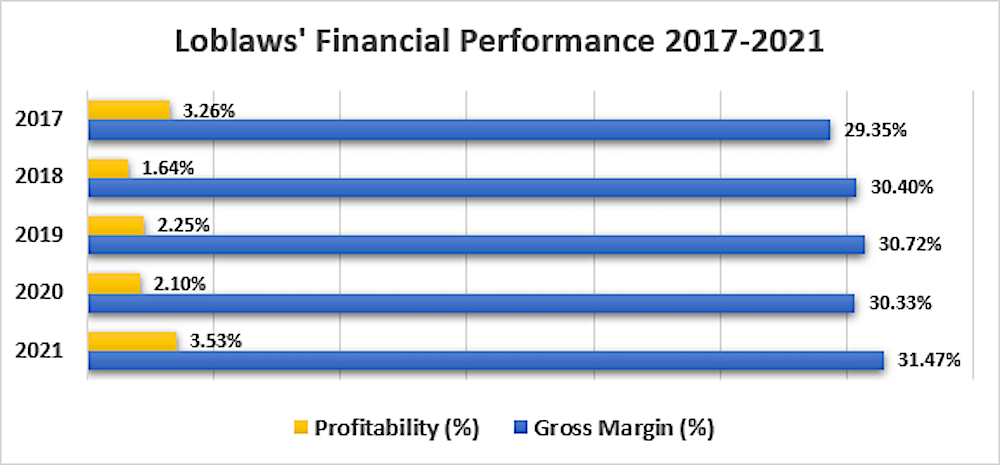
Our largest grocer, Loblaws, has posted consistent gross margin and profit ratios since 2017. While gross margins have varied between 29.35% and 31.47%, profits are anywhere between 1.64% and 3.53%. For Empire/Sobeys and Metro, the results are similar. Gross margins for Empire/Sobeys varied between 23.97% (2017) to 25.47% (2021) and profits from 0.67% (2017), to 2.48% (2021). For Metro, similar variations except for 2018, when profitability was at 11.93%. That was likely due to Metro’s acquisition of Jean Coutu. Acquisitions will skew how these companies perform financially, and we’ve seen many acquisitions in recent years. This is something we need to keep in mind.
Indeed, profits and margins are higher, but ever so slightly. Compared to some banks and other major economic players in our economy, the difference is relatively small. We also need to keep in mind that many Canadians will benefit from these decent financial outcomes as most pension plans in Canada will own shares in at least one of the big three.
The fact remains that any evidence of “greedflation” in food retail in Canada is weak at best. That said, some prices in some food categories have behaved unreasonably in recent years, so it doesn’t mean “greedflation” does not exist. Accepting that “greedflation” exists and accusing companies of being abusive, though, is the easy part. Where it gets challenging is to set thresholds. How much is too much? Where’s the line between good business practice and greed? Some consumers are still willingly paying $28 for steaks at the grocery store, pushing prices higher for the rest of us.
Further investigation would be warranted. Other links of the supply chain are harder to analyze, since many companies are privately owned, and contracts are not public. And consumers have every right to be doubtful, considering that we have seen our share of price-fixing scandals in recent years. The bread price-fixing scheme is just one example. Everyone would gain from looking at the more obscure sectors of the food industry, beyond retail, to better understand how our food supply chain works. A government-led inquiry would benefit us all, but the focus would need to be narrowed. The food industry is just too vast of a market to make any analysis worthwhile.
It’s also worth noting that the percentage of consumer expenditure spent on food consumed at home is one of the lowest in the world in Canada. According to the World Economic Forum, the average consumer spends 9.1% of a total budget on food. In the United States, it is about 7%. In 1950, that percentage was over 30%, so we have come a long way.
Food inflation will peak soon in Canada, or it may have peaked already. Food prices will continue to rise, but at a much slower pace in the coming months. The year 2022 was to be the year of recovery from the pandemic, but Russia had other plans. It’s important to keep in mind that food inflation is a normal economic phenomenon. In order to properly equip the industry in a way that Canadians get quality products at consistent pricing, prices should continue to rise. In recent months though, it’s been unsustainable for many families. Food inflation’s ideal rate is between 1.5% and 2.5%, which is what we have been getting for the last 20 years or so, except for this past year.
Canadians do have a strong food industry, but food affordability has been a challenge for many of us. But we need to look at “greedflation” rationally before slinging mud at everything and anything.
Retail Insider is streamlining its Canadian retail news from around the web to include a handful of top news stories that can be viewed quickly during the day. Here are the top stories from the past three days.
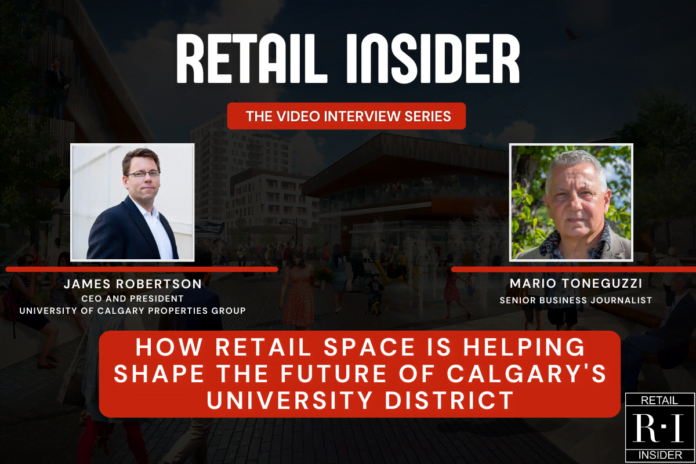
Robertson provides an update on the overall development, why retailers are setting up shop there, the overall importance of having retail to build a community, and what’s in store for the future.
The Video Interview Series by Retail Insider is available on YouTube.
Connect with Mario Toneguzzi, a veteran of the media industry for more than 40 years and named in 2021 a Top Ten Business Journalist in the world and the only Canadian – to learn how you can tell your story, share your message and amplify it to a wide audience. He is Senior National Business Journalist with Retail Insider and owner of Mario Toneguzzi Communications Inc. and can be reached at mdtoneguzzi@gmail.com.
Also check out the other series offered by Retail Insider, including The Weekly podcast and The Interview Series, which are both available on Apple Podcasts, Stitcher, TuneIn, Google Podcasts, or through our dedicated RSS feed for Simplecast and other podcast players.
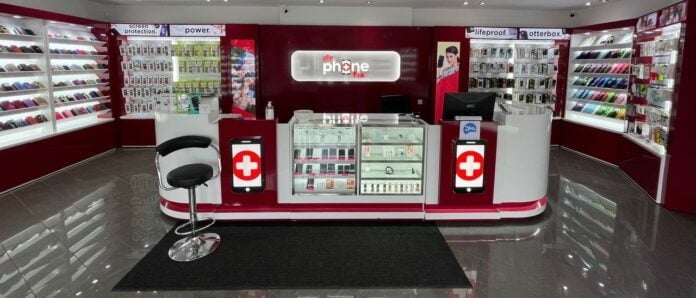
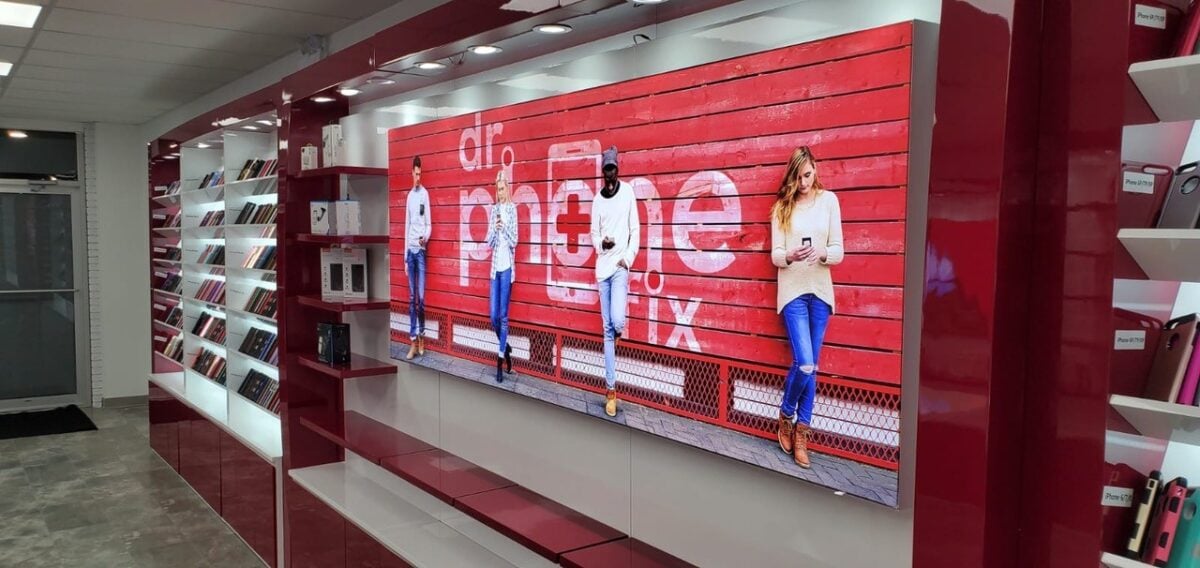
Edmonton-based Dr. Phone Fix, Canada’s fastest growing cell phone and electronics repair chain, recently entered the Ontario market opening three stores in the GTA as part of its national expansion plan.
It also opened two new stores in Edmonton, bringing to nine the number of Dr. Phone Fix stores it has in the Greater Edmonton area.
The five openings bring to 29 the total number of stores the company has opened since it began in 2019. By this Christmas it expects to have 40 stores – one-fifth of the way towards its intermediate goal of 200 stores.
“It’s crazy. It’s a crazy pace,” said Warren Michaels, Director/Brand & Business Development for the company. “It’s quite challenging. Next year our goal is probably to open one every two weeks. We’re doing one every three weeks this year.”
Image: Dr. Phone Fix
Michaels said Dr. Phone Fix is the fourth largest cell phone and electronics repair company in Canada.
“We’re the second largest in terms of selling pre-owned certified phones,” he said. “Our ultimate goal is 200-plus stores. And away we go.
Warren Michaels
“One of our competitive advantages is that we have a very unique supply chain and inventory strategy only known to the CEO by the way. It’s like our recipe – a Coke or KFC kind of recipe where only he knows it . . . It’s such a unique arrangement that it gives us the decided price advantage in the marketplace. We guarantee our prices are the best.
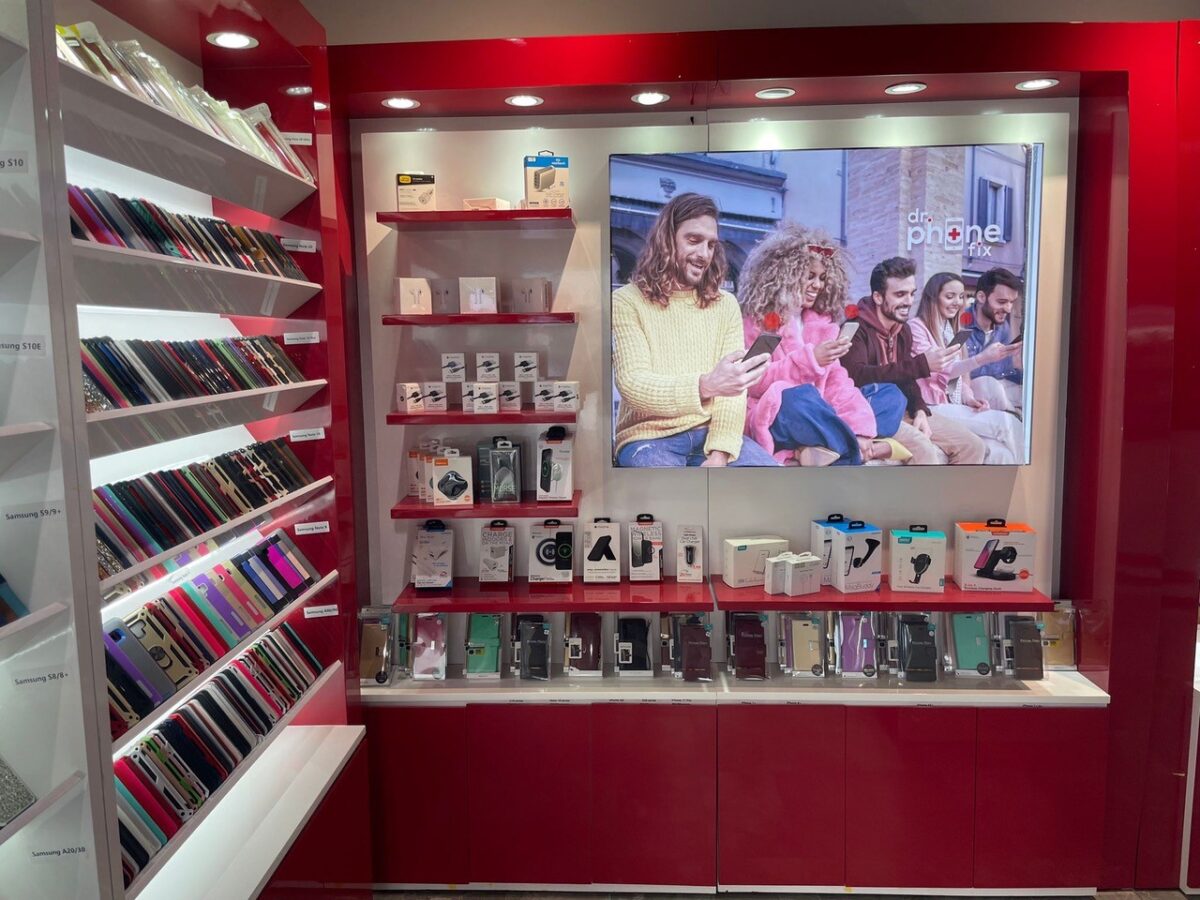
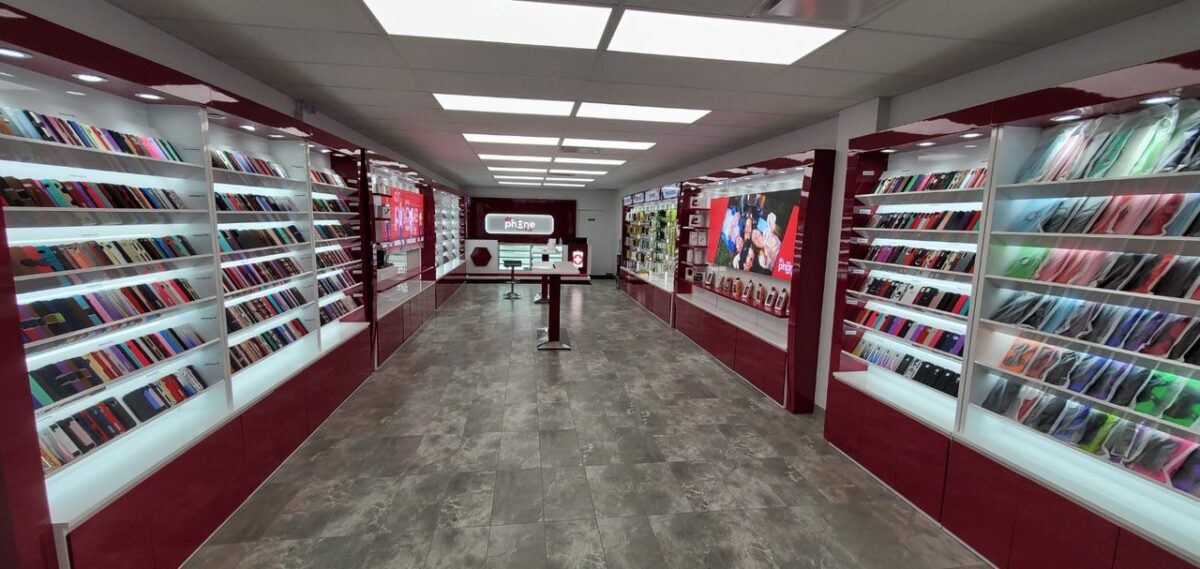
“One of the other things is that our inventory is quite substantial. So as a result when someone comes in we’ve got the parts. Some of the other stores have to ship parts in. We have unique parts. We have parts other guys don’t have. As an example we’ve got 3,000 cases but we’ve got 300 different kinds of cases. So our inventory is quite substantial. That gives us that speed advantage. Everybody wants speed. They want speed and price. And we’ve got both.”
Image: Dr. Phone Fix
The growth in the industry is pretty obvious these days with staggering number of people with cell phones and many of them have more than one device.
“I wouldn’t say we’re recession-proof if a recession happens unfortunately but we’re pretty well protected. Everybody has cell phones and there’s certain things they would not do without and a cell phone is one of them,” said Michaels.
“People are now keeping their phones slightly over three years as opposed to model changes almost yearly. And so if a recession was to hit, people would be buying our pre-owned phones rather than buying up.
“It’s a massive, massive growth industry. It’s hard to get solid numbers.”
Dr. Phone Fix said it is a nominee, finalist or winner of 18 local, national and international business awards. Recently, it was chosen as winner of one of Canada’s top awards for customer excellence. It is also a finalist for EY’s Entrepreneur of the Year.
Image: Dr. Phone Fix
With more than 4,000 positive customer reviews, Dr. Phone Fix swept to victory recently in a competition for Alberta Chambers of Commerce’s top ‘Customer Service’ award.
“We’re very honoured to win the Business Award of Distinction for Customer Service. This award is a reflection of our commitment to exceed customer expectations and the thousands of positive reviews posted on the web. We feel we’re on the right path,” said Dr. Phone Fix CEO Piyush Sawhney.
“We’re extremely grateful for our customer reviews and their loyalty. And to further express our gratitude, we recently partnered with AIR MILES Reward Miles to offer reward miles to customers . . . “
The Canadian retail leasing market will see increased activity for the remainder of 2022 as it recovers from the slowdown in the first quarter as Omicron disrupted business activity, especially in Ontario and Quebec, in January and February, raising business uncertainty and freezing leasing plans, says the Retail Outlook report by commercial real estate firm JLL.
The report said this follows a strong 2021 for retail leasing which fully rebounded from the initial pandemic shock. Overall retail leasing activity in 2021 surpassed 2019 by 12 per cent.
“Businesses and shoppers remain optimistic about the future. Businesses anticipate increased future sales over the coming months, and shoppers are less hesitant about enclosed spaces and reasonably confident about their future spending,” said the report.
“Retailers still consider exterior entrances an asset, but enclosed spaces are increasingly attractive again. Mall leasing activity has intensified, and mall vacancy is starting to trend down after peaking in Q4.
“Calgary and Edmonton have led the retail recovery with the most robust space-absorption. A higher oil price ‒ exacerbated by the Russia-Ukraine conflict ‒ has benefited both of these markets, driving strong economic and housing activity and employment. In addition, unlike Ontario and Quebec, Alberta experienced a more relaxed health framework that did not affect space-absorption levels last year.”
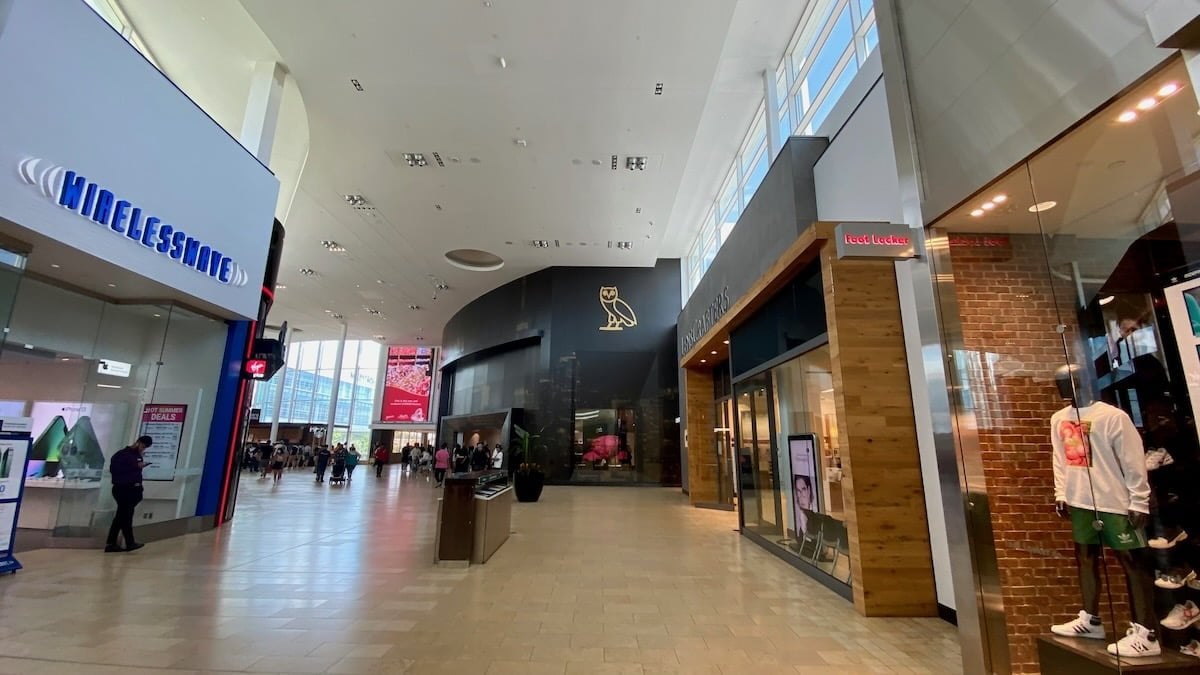
Temporary OVO at Yorkdale Shopping Centre (Image: Craig Patterson)
In Canada, total availability was 2.9 per cent in the Spring, near the pre-pandemic 2019 level of 2.8 per cent. It increased to 3.5 per cent in 2020 then dipped down to 3.0 per cent in 2021.
Total retail inventory in Canada is 753.6 million square feet. Net absorption so far this year has been 1.5 million square feet with another 6.2 million square feet under construction.
“Overall, Canada’s economic momentum should continue to drive down available space, while driving rents and space absorption up. The economy resiliently weathered the Omicron wave in Q1, with a tighter labour market, pent-up demand, and excess household savings,” said the JLL report.
“Due to rising construction costs and a labour shortage, retail construction levels have lowered a notch, and no major retail building boom is expected in the short-to-mid-term. Retail completions have consequently decreased, which reinforces the expectation of a tighter market in the following quarters.
“However, Calgary retail construction has been an outlier as the market sees a robust stream of completions fueled by population growth. Calgary is a magnet for young, skilled professionals whenever there’s an acceleration of job growth, especially positions with high wages.”
77 Edmonton Trail, Calgary, AB (Image: CDNGLOBAL Alberta)
Tim Sanderson, Executive Vice President & National Lead, Retail, JLL Canada, said availability numbers nationally are pre-COVID numbers.
Tim Sanderson
“That’s a healthy place to be quite frankly. Anything less than that and basically there’s nothing available,” said Sanderson. “We’re not overbuilt in this country. Thankfully.”
He said the amount of current construction out there is a big number.
“On the face of it, across the whole country, that’s a lot. A lot of that would be stuff that was in the pipeline pre-COVID. One of the toughest things we’re up against these days is construction costs. Transactions take a long time from beginning to end and when a landlord and a tenant try to agree on construction budgets and you’ve still got a permitting process to go through which means I’m not going pull my construction budgets for another 12 months and you say I’m going to spend $8 million building this store, well you’ve got no way of knowing if it’s going to be $8 million or $12 million,” he said.
“There were a lot of artificial tenancies through COVID. There were people who were not paying rent. There were people who still occupied space but maybe weren’t open because they couldn’t have staff or whatever. And there was a lot of temporary tenants filling the space. Pop-up stores or what have you. That 3.5 per cent (availability rate in 2020) if you really dug into it was probably more like 4.5.”
The JLL report said retail tailwinds are stronger than headwinds in the market today.
Those tailwinds include:
Healthy labour market: Job market conditions remain tight with the unemployment rate falling to a record low of 5.1 per cent in May. A tight labour market is a strong indicator that shoppers have disposable income to spend;
Favourable consumer confidence: Consumer spending as a whole is expected to remain healthy in 2022, supported by pent-up demand and elevated savings;
Excess household savings: Canadians saved a lot during the pandemic, especially in the first half of 2020 and first half of 2021. For Canada, the average household savings rate was about two per cent before pandemic and we finished Q1 with a rate of 8.1 per cent. At the current rate, there’s still fuel left to burn before it recedes to its historic average rate in one to two years; and
Pent-up demand: During the shutdowns of physical space, Canadians put a pause on store spending and only redirected a fraction of their shopping to online. With the reopening of physical retail, food services, gyms, cinemas, and bars, many Canadians are eager to go out again.
The headwinds include:
Supply chain: This year, most retailers expect facing challenges maintaining inventory levels or acquiring inputs, products, and supplies. The top obstacles should be the rising cost of inputs, shortage of labour force, and transportation costs;
Inflation: Inflation is likely approaching a peak, and forward-looking indicators point to a moderation in economic activity in the second half of this year. Goods prices will soon decline or decelerate as demand shifts back towards services with the relaxation of social distancing measures;
Labour shortage: While attracting and retaining talent remains a concern across all industries, it is especially acute in hospitality and construction. Although these temporary circumstances will fade over time, labour markets will remain employee-favourable in the long run, due to the secular aging of the workforce and the mass retirement of the Boomer generation;
Shift from goods to services: While shoppers aren’t clearly substituting goods with services, spending on travel and hospitality services have surged over the past few months. Goods sales, particularly groceries, remain elevated; and
Rising interest rates: As the cost of borrowing rises, more shoppers will rein in spending in favour of saving. Households that pay mortgages will have less free money to spend on discretionary goods. Commercial rents tend to rise as landlords pass on additional financing costs to preserve profitability.
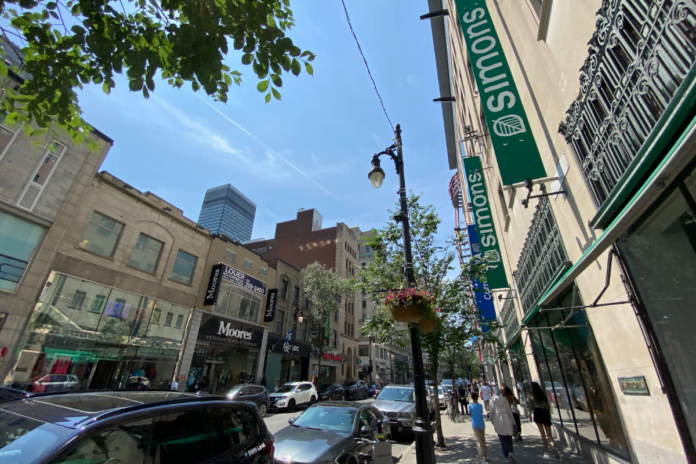
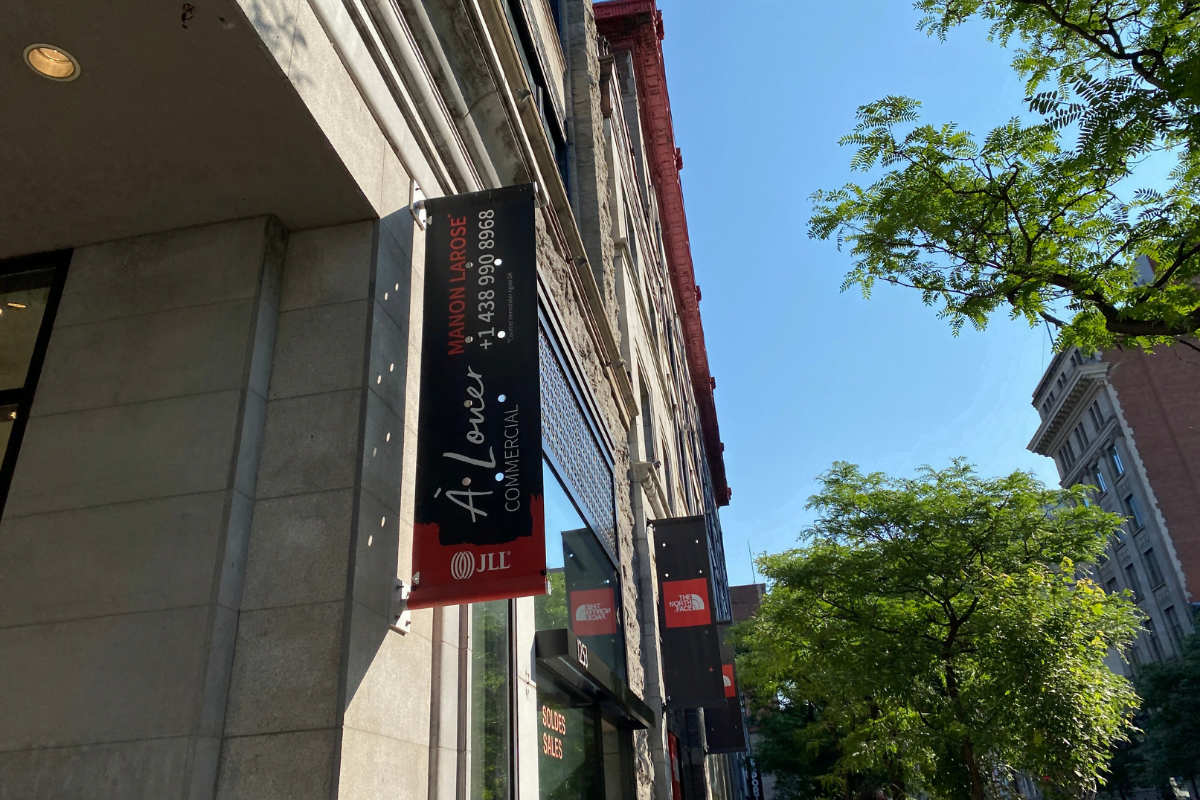
JLL Listing on Rue Sainte-Catherine Ouest (Image: Dustin Fuhs)
The JLL report said general retail remains by far the most sought-after retail type. Retailers are still interested in neighbourhood centres, but their interest has waned. In contrast, businesses have shown signs of gradually returning to enclosed malls.
“Net effective rents continue their recovery trajectory, demonstrating a slight positive increase this past Q1 compared with Q1-19. Rent concessions and adoption of per cent rent leases continue to dwindle, accompanied by a gradual tapering of government rent subsidies,” said the report.
“Montreal, Toronto, and the Atlantic region have experienced the strongest rate rebound. Calgary still lags the other major markets, as rates in Calgary have yet to reach pre-pandemic levels. Like net effective rents, asking rents continue to trend up as retail sales and foot traffic recover. Particularly in Ontario and Quebec, as space-absorption increases we should see a strengthening of this trend.”
The report said e-commerce has receded from its highs during the pandemic, but activity remains elevated relative to pre-pandemic levels. During each lockdown, the pattern was that e-commerce would accelerate, but then reduce once physical stores reopened. True to form, e-commerce sales slid this March following the peak of the Omicron wave. However, the overall trendline continues to ascend and e-commerce as a percentage of total retail sales should continue to rise, added JLL.
“While physical stores remain the preferred shopping method, curbside pickup has captured a significant share during the pandemic. For each of the past two holiday seasons, about 18 per cent of shoppers bought online and opted to pick up at the store rather than wait for delivery. Before the pandemic, curbside pickup was hardly a viable option,” it said.
Retail Insider is streamlining its Canadian retail news from around the web to include a handful of top news stories that can be viewed quickly during the day. Here are the top stories from the past 24 hours.