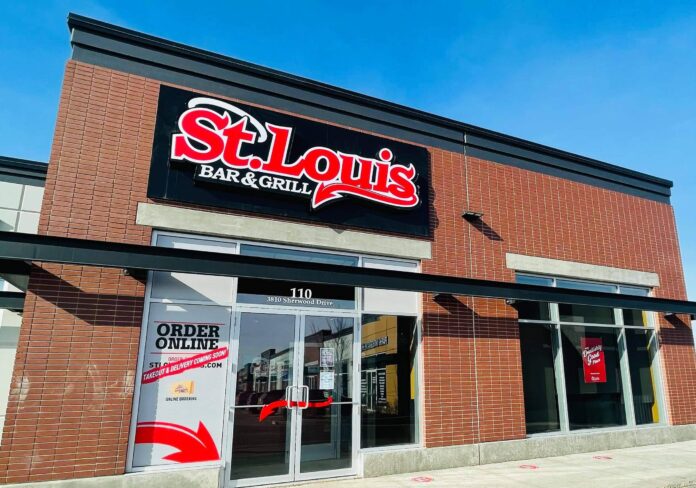
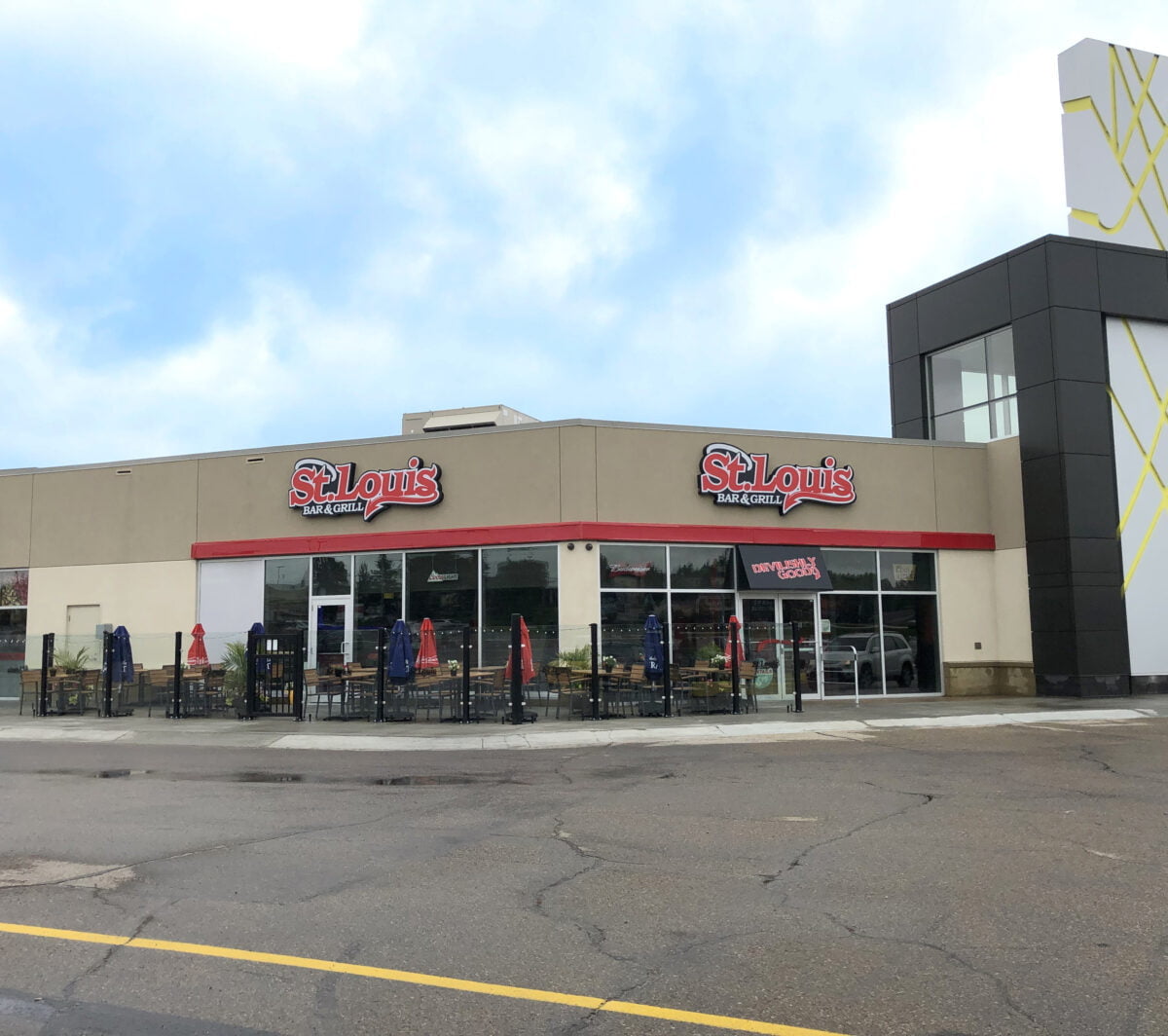
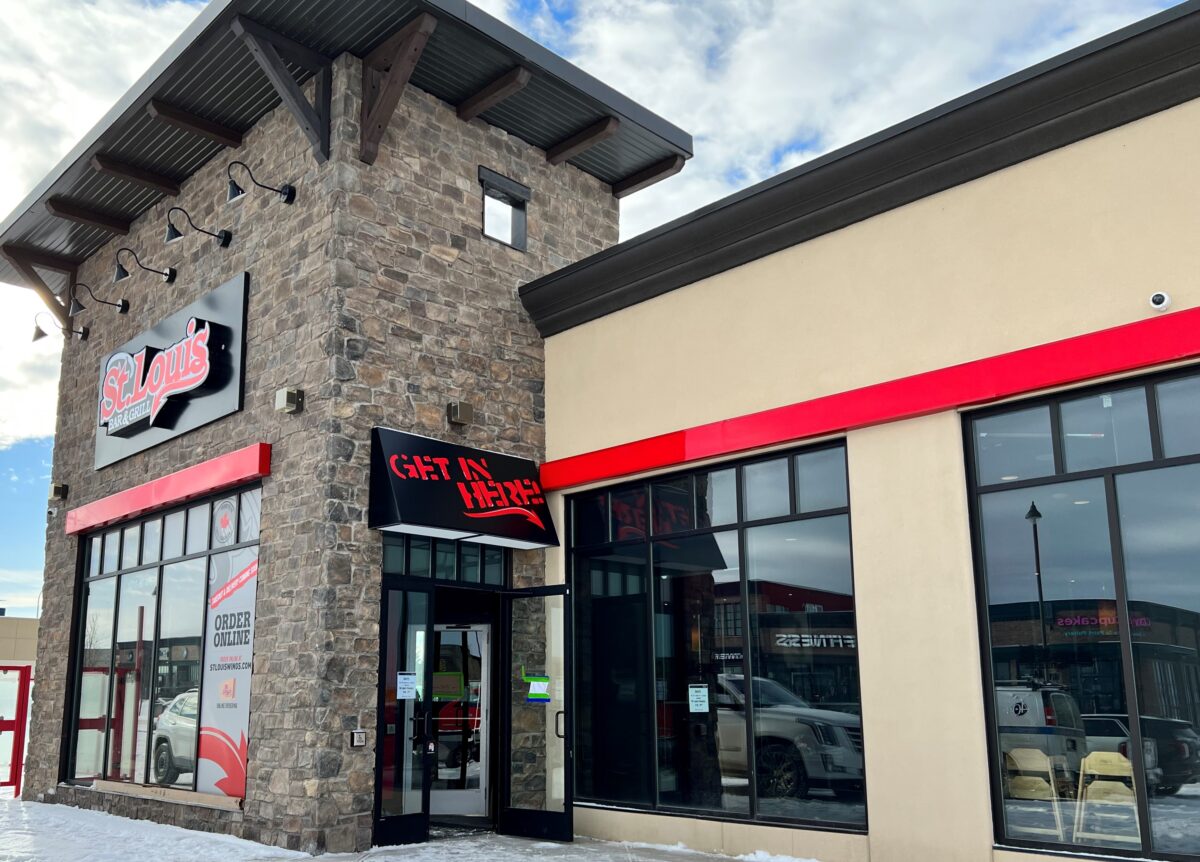
St. Louis Bar & Grill, which bills itself as Canada’s favourite game-day destination known for its ‘Devilishly Good’ food and friendly atmosphere is in growth mode as it prepares to open its 74th location in Canada in Grande Prairie, Alberta on Monday February 28.
Royal Nasager
It will be the restaurant’s third Alberta location, with the other two in the Edmonton area, and it’s part of the brand’s expansion plans in Western Canada.
“There’ve been a lot of fans asking when we’ll have more of a presence in Western Canada so we’re thrilled to make that happen in a bigger way over the next three years,” said Royal Nasager, VP Marketing, St. Louis Bar & Grill.
St. Louis Bar & Grill in St. Albert, Alberta
“St. Louis was born in Toronto but made in Canada. We have our roots here in Ontario. What makes us incredibly unique compared to anyone else in North America is our proprietary products. That’s our wings. They’re the best wings in Canada. Beyond the amazing food that you cannot get anywhere else, it’s our atmosphere and our Devilishly Good atmosphere and that’s all about authenticity, the welcoming environment and really making people feel at home. You know what, there’s lots of people that make those claims but we make good on them.”
Nasager said the brand’s name doesn’t come from the city in the United States but Louis was the name of a man who was involved in perfecting one of the proprietary recipes for the wings over 30 years ago.
According to Restaurants Canada, Alberta’s foodservice industry is expected to surpass the $10 billion mark for the first time in 2023. Currently, St. Louis operates two locally-owned and run locations in Edmonton at St. Albert and another in Sherwood Park. The chain plans to have at least 10 restaurants operating across Alberta and the West by early 2023.
St. Louis Bar & Grill in Grande Prairie Alberta
David Polny
David Polny, Senior Vice President of International Development for the brand, said this year the company will be opening its first location in Winnipeg, as well as Calgary, and Port Coquitlam. A third location will also open in Edmonton this year.
The brand, with headquarters in Toronto, first opened in 1992 and today serves 2.2 million pounds of wings each year.
“We really consider ourselves as a national, a Canadian brand. But starting in Alberta as part of that Western expansion was really born out of strong, strong demand either from folks who had come from this way and we have a strong presence on the East Coast and went out to Alberta or folks who had visited and tried the product. There’s nothing else like St. Louis out there and when people interact with the brand whether it’s franchisee investors or our guests there’s nothing else that compares to it. So there was a very high level of interest prior,” added Nasager.
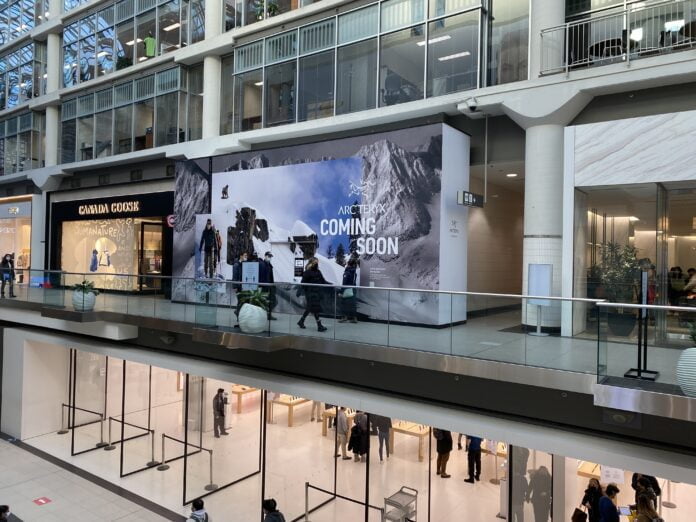
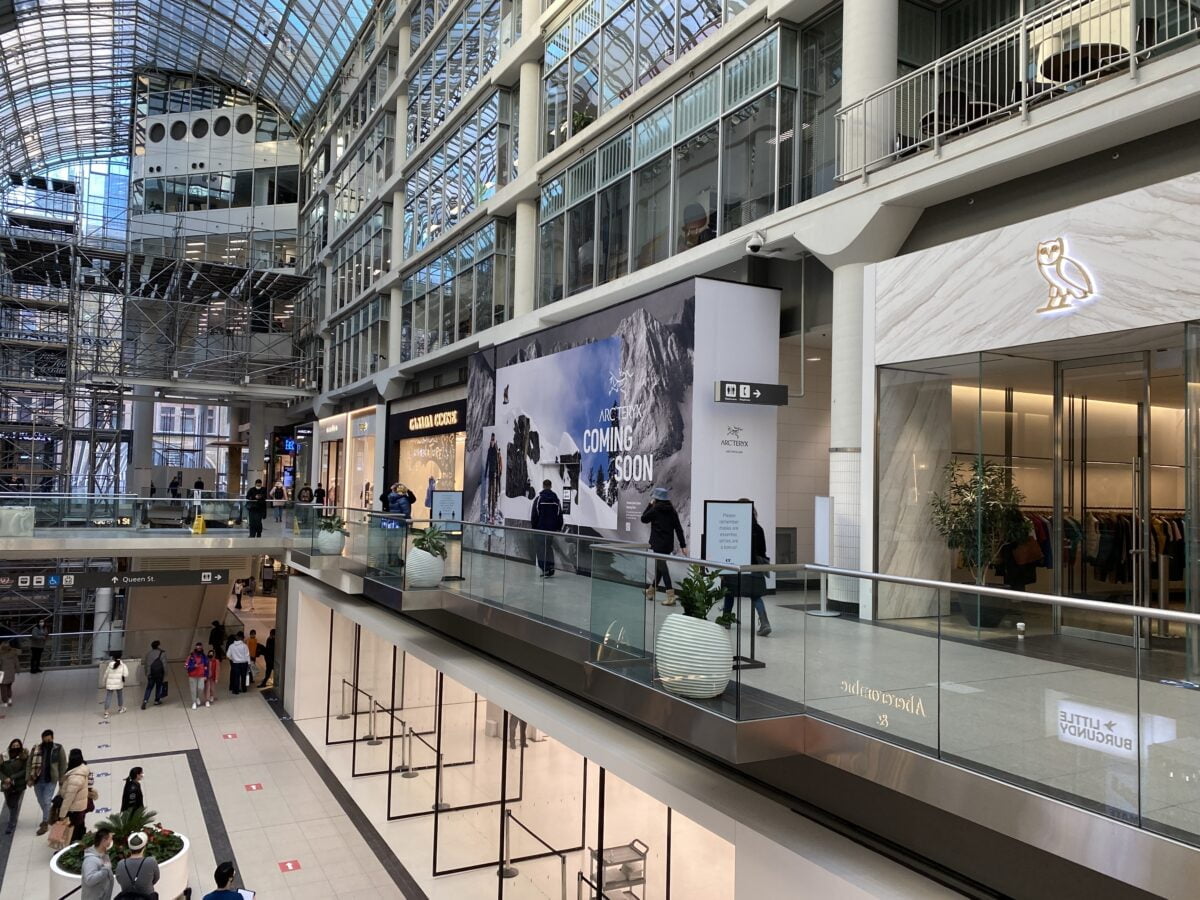
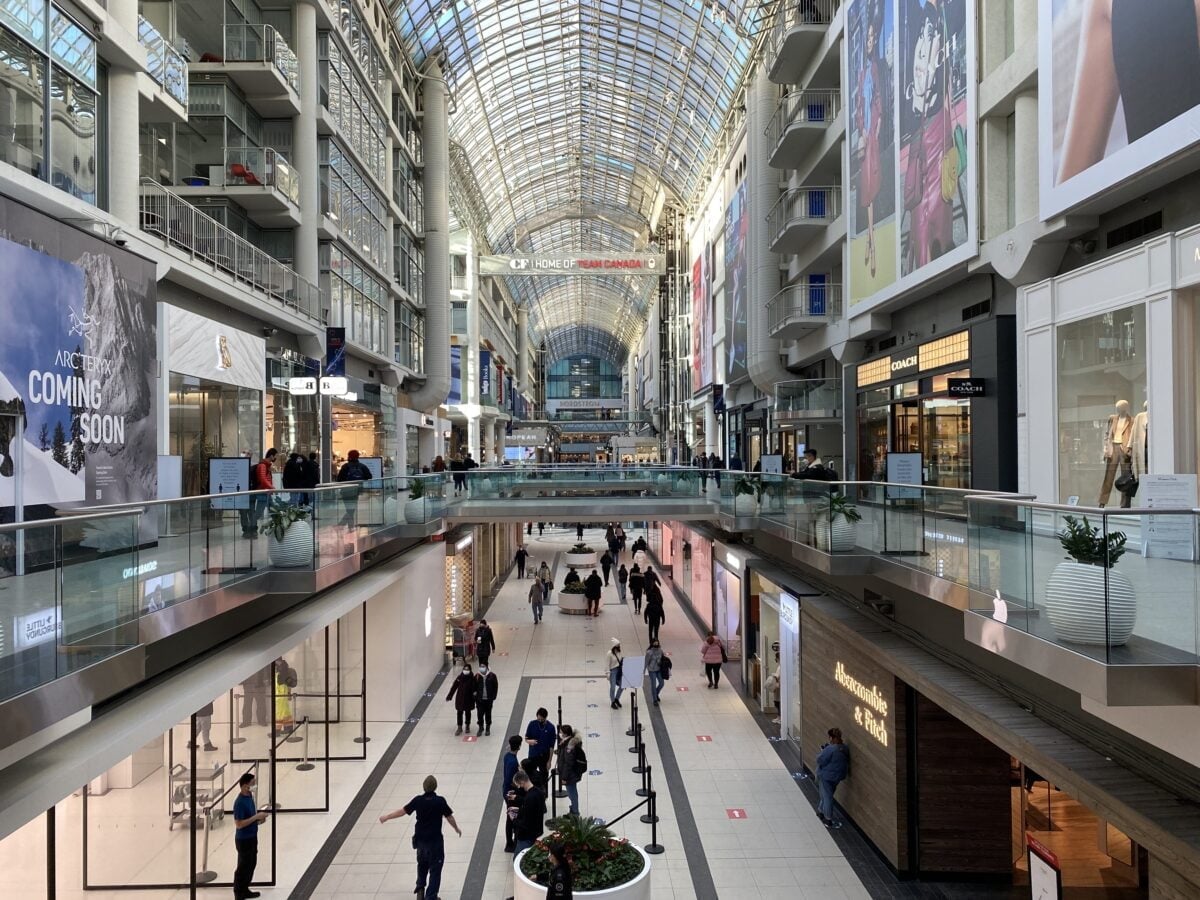
Arc'teryx Signage at CF Toronto Eaton Centre (Image: Dustin Fuhs)
Vancouver-based technical apparel and equipment brand Arc’teryx will open a 3,900 square foot storefront at CF Toronto EatonCentre this summer. Construction hoarding was installed this week in a retail space that was previously home to PLUS on the 3rd floor of the downtown Toronto shopping centre.
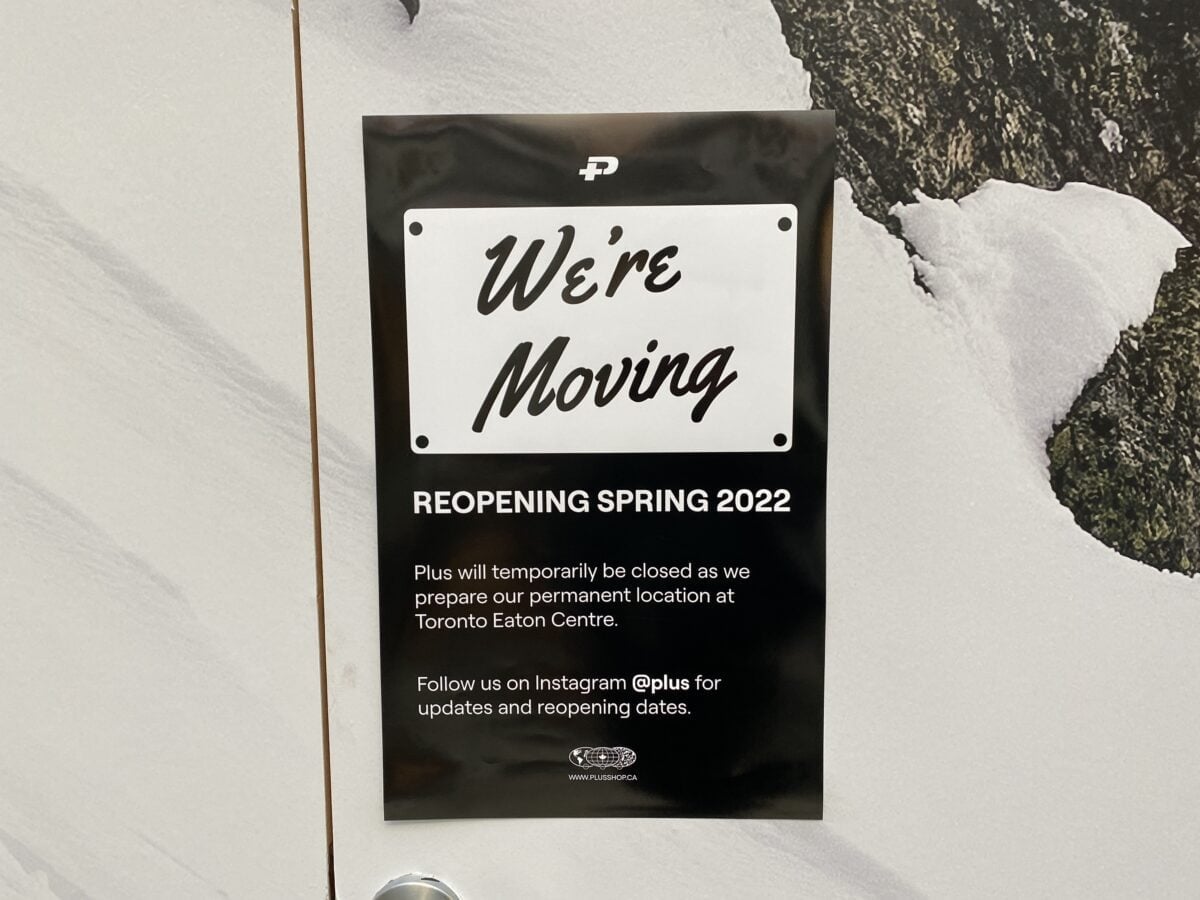
PLUS will be relocating within the mall to a permanent location, as per social media posts and a sign on the door. The brand originally secured the former Ann Taylor location as part of an expansion, which included stores at CF Sherway Gardens, Yorkdale and Square One. This specific location at CF Toronto Eaton Centre was constructed to utilize less than half of the overall square-footage of the space, giving the opportunity for the brand to find a more suitable storefront when it became available. We will follow up with PLUS on its future location.
With the new Arc’teryx location being on the third floor, the galleria roof construction project will have an impact of the area, including substantial infrastructure of scaffolding to be installed and used throughout the lifespan of the project. CF Toronto Eaton Centre has recently added a number of new brands to the third floor, including Moose Knuckles and Jo Malone.
PLUS Relocation Signage at CF Toronto Eaton Centre (Image: Dustin Fuhs)Arc’teryx Signage at CF Toronto Eaton Centre (Image: Dustin Fuhs)
The Arc’teryx location will be the 15th in the Canadian market, following the opening of a new 2,028 square foot store at CF Carrefour Laval, near Montreal, in December.
Arc’teryx, named for the Archaeopteryx Lithographica, the first reptile to develop the feather for flight, was founded in North Vancouver in 1989. Arc’teryx products are distributed through more than 2,400 retail locations worldwide and includes 115 branded stores in the chain.
We’ll be following this announcement with a store tour when the location opens this summer.
Retail Insider is streamlining its Canadian retail news from around the web to include a handful of top news stories that can be viewed quickly during the day. Here are the top stories from the past 24 hours.
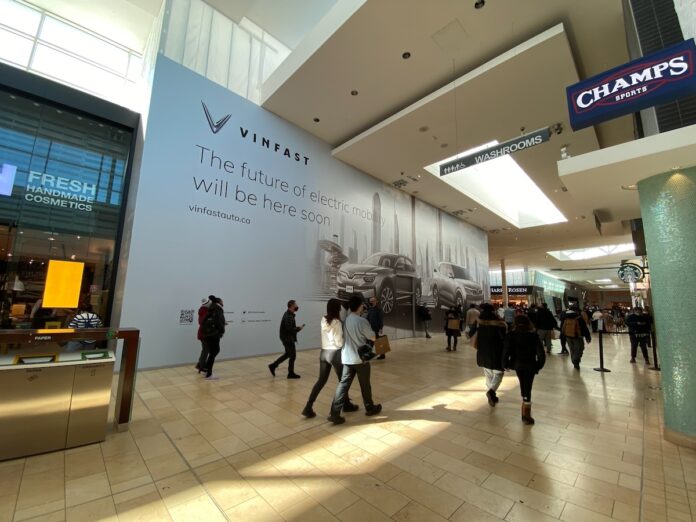
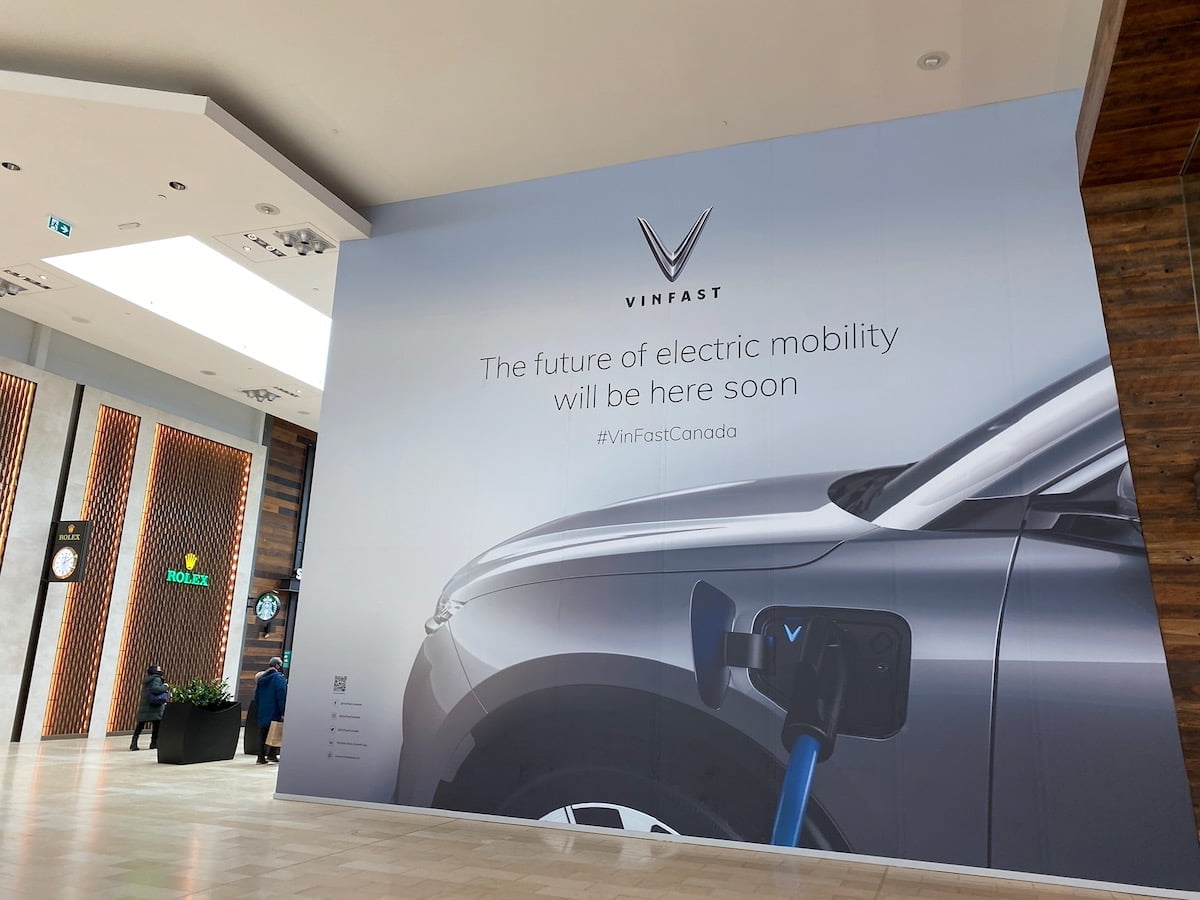
Vinfast at Yorkdale Shopping Centre (Image: Dustin Fuhs)
Vietnamese electric automaker Vinfast is launching in Canada with plans for nearly 40 store locations before the end of next year. At least two showrooms are already under construction in top regional shopping centres.
VinFast is part of Vingroup, Vietnam’s largest conglomerate, which has pledged USD $3.5 billion to the company and its growth. Vinfast is said to be the first large automotive manufacturer in Vietnam as well as the first Vietnamese automaker to participate in a major international auto show. The direct-to-consumer company says that it can make up to 500,000 cars per year and its global expansion will start with Canada the United States and Europe in 2022.
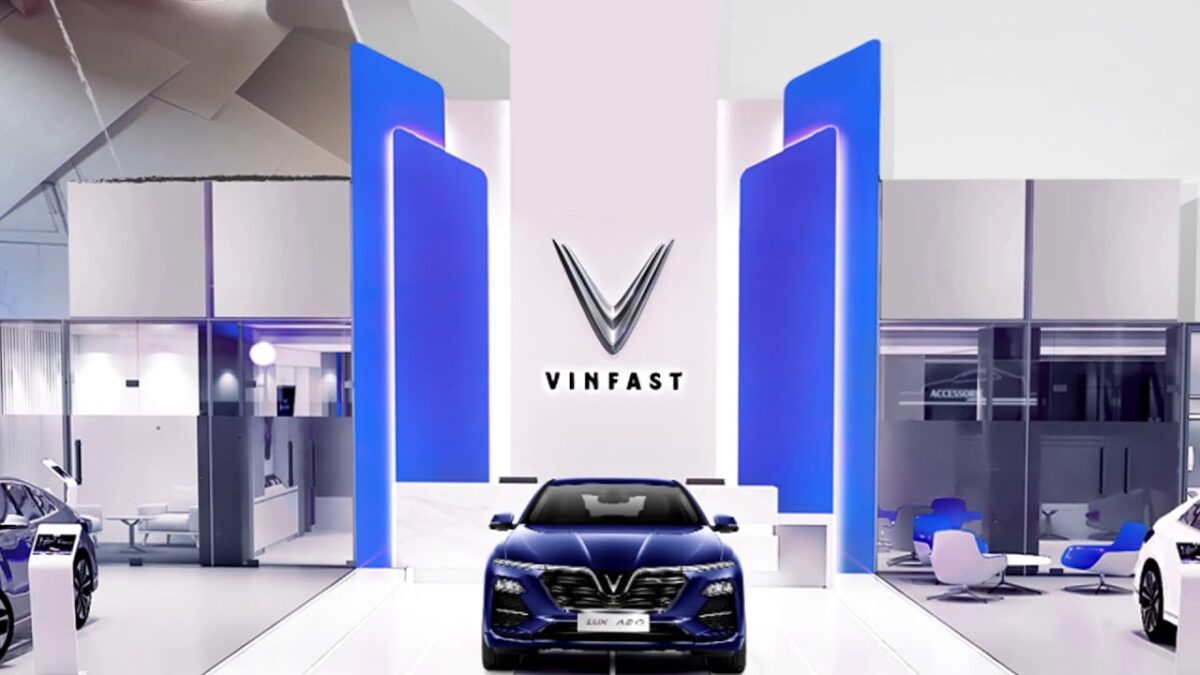
The company has said that it plans to release two electric SUVs in Canada this year and the store expansion will create a network of consumer-facing showrooms as Vinfast seeks to rapidly gain market share. Vinfast’s VF8 is expected to be priced at slightly over $50,000 CAD while the VF9 will cost about $70,000 or so.
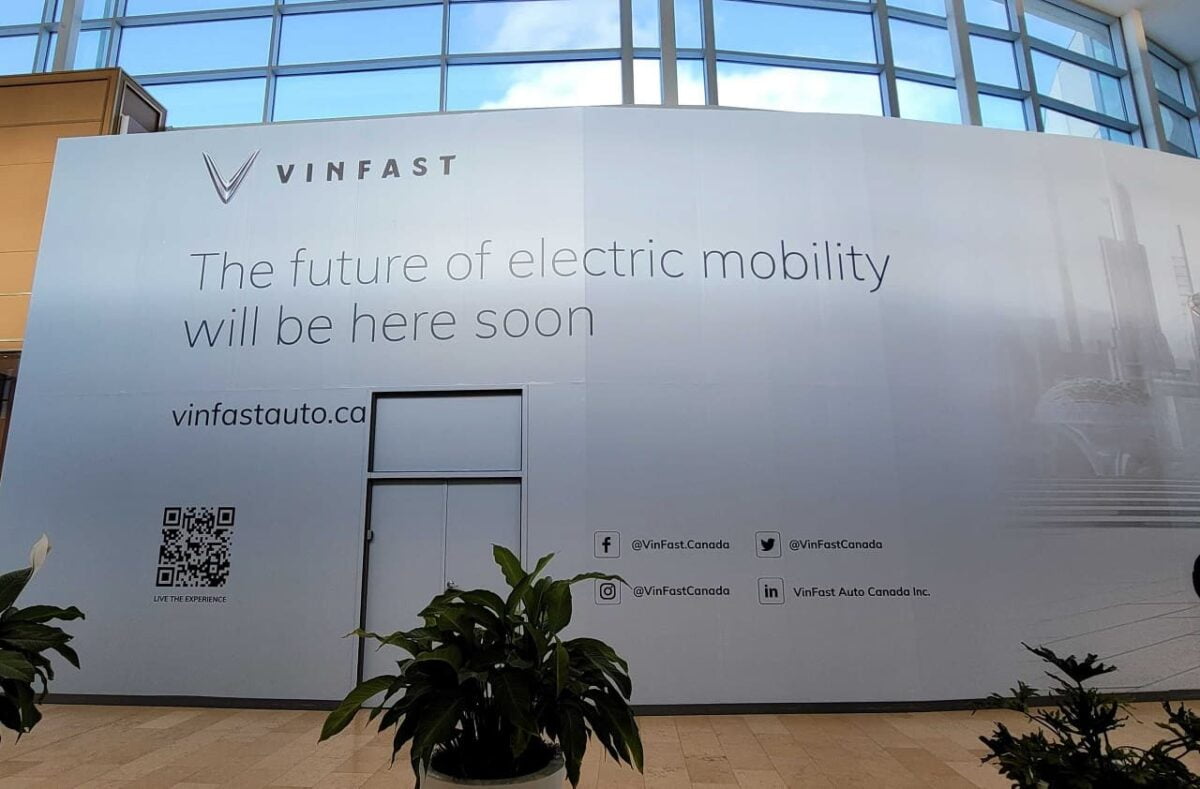
Vinfast at Yorkdale Shopping Centre (Image: Dustin Fuhs)
Interestingly, battery packs are not included in the price of a Vinfast vehicle — rather, users rent them (for about $40 CAD/month) up to a distance of 500km and then pay an extra 5 cents per kilometre.
The company said last year that it plans to open 38 retail locations in Canada by the end of 2023 with an initial presence in Quebec, Ontario and British Columbia. The Montreal, Toronto and Vancouver markets will be first before targeting smaller markets as Vinfast gains brand awareness and sees sales. Retail locations in Canada will be a combination of retail showrooms, combined sales and service facilities, and service-only locations.
So far we know that Vinfast will be opening storefronts at the Yorkdale Shopping Centre in Toronto and at Square One in Mississauga. Construction hoarding is now up in both malls. The Vancouver market is said to be a target and given that nearly 40 stores will operate in Canada, all major centres will likely see at least one Vinfast location.
Image: Vinfast Vinfast Square One (Image: Insauga)
And while 38 locations sounds like a lot, Vinfast has said that it plans to open 60 showrooms and service centres in California alone as part of a bigger US expansion.
Vinfast is one of several automobile retailers to be targeting opening in major Canadian shopping centres. Several other electric automobile manufacturers also have storefronts in major malls including Tesla, Genesis, Polestar and most recently Lucid Motors. Other car companies with mall-based locations include Nissan, Mercedes, Porsche and of course Toyota which recently opened a massive facility at West Edmonton Mall.
At Toronto’s Yorkdale Shopping Centre alone, four automobile showrooms will be present by this spring including Vinfast’s new location, Lucid Motors, Tesla and Nissan.
We’ll follow up on this story when Vinfast begins opening its Canadian storefronts.
Montreal boutique developer MTRPL has a knack of finding unique but under-utilized or unused, buildings in high traffic areas and turning them into gems that not only fit into their neighbourhoods but draw people to those areas.
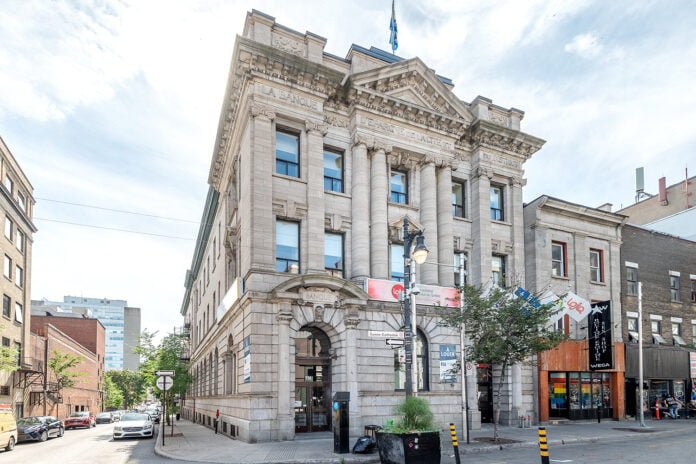
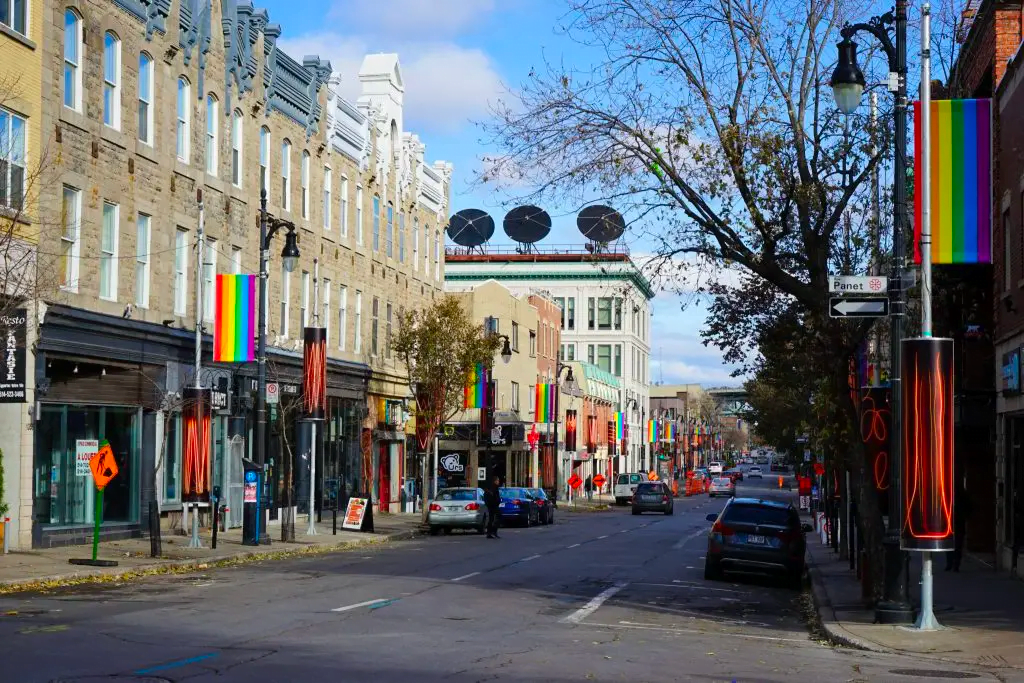
The latest project is a historic bank property from the 1920s located on Sainte Catherine E in the heart of Gay Village, said BryanSpatzner Co-Founder of MTRPL.
“It’s a primary commercial artery that is in need of some urban revitalization, which we plan to be a big part of. The area has a tremendous amount of master planned projects going on. The city of Montreal has coined the area the Quartier des Faubourgs.
“We’ve certainly been busy and Gay Village, Sainte Catherine Street is like a new area we’ve identified as a target.”
Image: QueerintheWorld.com
Spatzner said the Gay Village is a historic Montreal neighbourhood and the street is one of Montreal’s most famous. Sainte Catherine West attracts some of the most expensive rents in Montreal, let alone in all of Canada for retail – mostly high-end boutiques, national and international retailers.
The Gay Village area is to the east of that and is home to L’Université du Québec à Montréal (UQAM) and the Jacques Cartier Bridge which is emblematic of Montreal engineering and infrastructure.
The area has a ton of development going on including Esplanade Cartier with about 2,000 residential units and two office towers; Quartier des lumières which is a mixed-use, multi-phase project; and a huge master-planned development on the old Molson Brewery site.
“So a bunch of huge, huge master planned projects going on in the area. The area is also a historic area. It’s serviced by Montreal’s metro system. Depending on where you start there’s roughly three or four Metro stations servicing the area. The area is well-serviced by transit and of course you’ve got the Jacques Cartier bridge bringing people in from the South Shore that pops out right in the neighborhood,” said Spatzner.
“So we just feel the neighbourhood is ripe for revitalization, for renewal. Like many of these historic neighbourhoods, well into transition. One could say that the area got a little bit rusty and got a little bit of a reputation for being a little bit more rough. But we just feel there’s so much positive economic development in the area as well as just the proximity to downtown, the proximity to Montreal’s core. It really is downtown East.
“All the ingredients are already there so it really is a bit of a question mark why it’s taken so long for the area to come to its full potential. We feel the whole area is in a state of effervescence and we’re just trying to be a small part in it doing what we specialize in best, which is repositioning older buildings that are either under leased or under managed, giving them a new lease on life and this site is no different.”
The building was originally built by the District and Savings Bank which later was purchased by the Laurentian Bank. In the early 2000s, Laurentian divested most of its real estate. The building is 18,000 square feet with two upper floors fully leased out to the Quebec government.
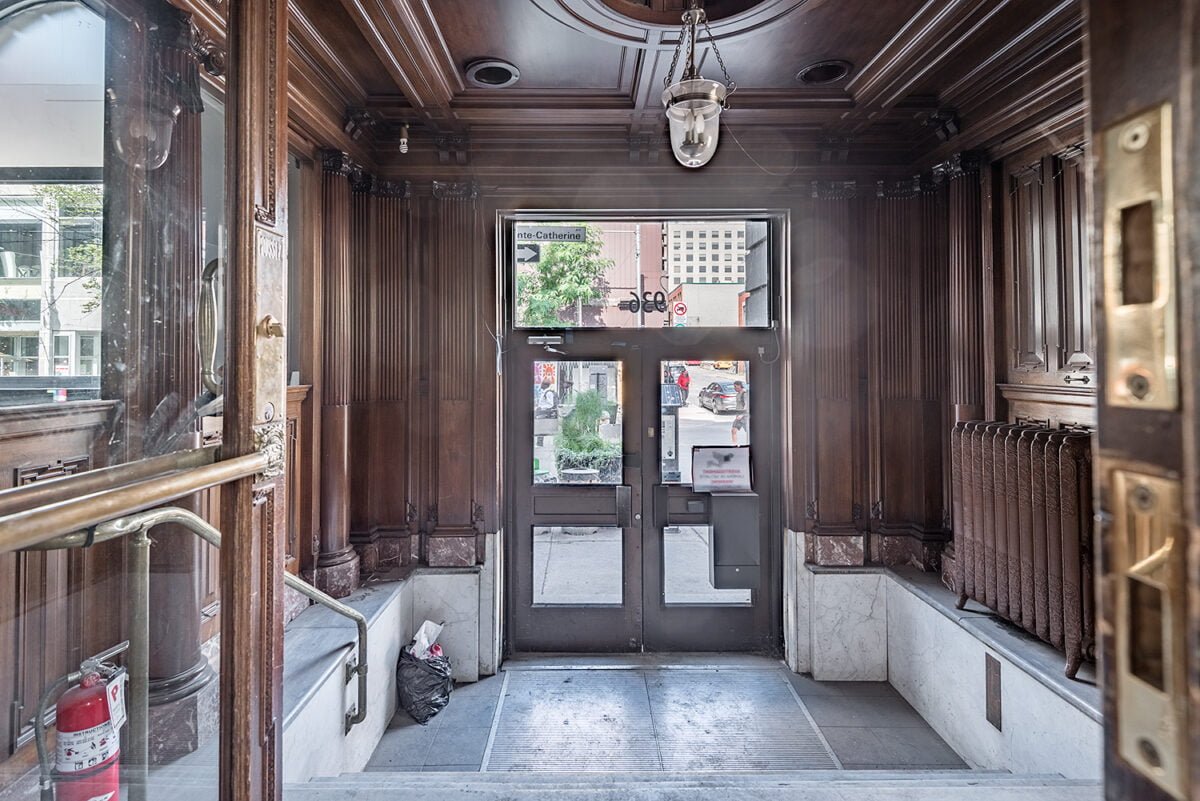
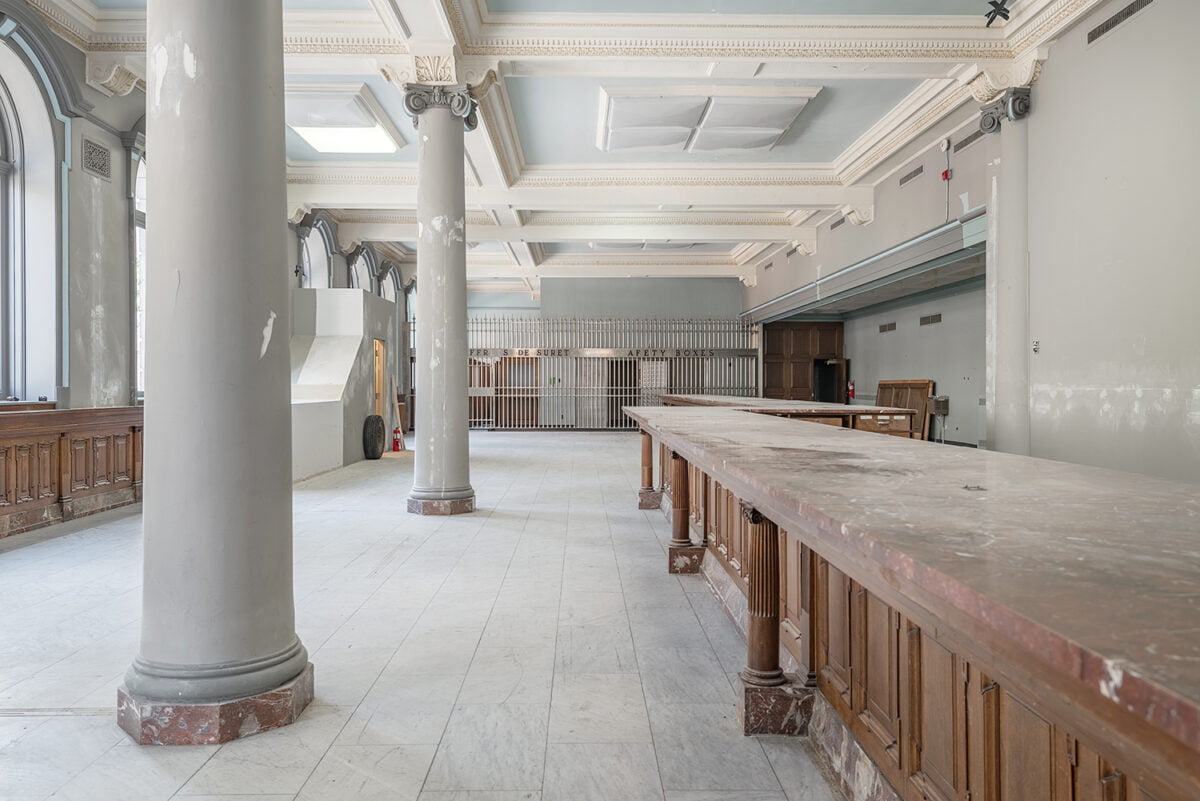
“There’s about 6,000 square feet of vacant space on the ground floor which is where we create the value and where we’re looking for a tenant. It’s a beautiful space,” said Spatzner, adding it has coffered ceilings, a marble floor, intricate woodwork throughout, gold leaf on the ceiling, with about 15-foot high ceilings, arched windows.
It’s at the corner at Saint-Timothée Street right next to the Metro Station.
Image: MTRPLImage: MTRPL
MTRPL purchased the building about three months ago. The space on the ground level has been vacant for several years.
“It’s not going to be your standard retailer. It’s really going to take either someone in food and beverage, someone who is looking for a boutique feel and a boutique location, albeit in an up and coming area. We’re also directly adjacent, on the corner across the street from us, is the Olympia Theatre which is also a historic theatre,” said Spatzner. “Somebody who could make use of the proximity to the theatre would also be fantastic.
“Sainte Catherine Street famously starting about 10 years ago started shutting down the entire street and pedestrianizing it over the summer months and they’ve invited artists who have designed different type of canopies, colourful balls, different type of very cool urban design art projects that really create a fantastic feeling for the street during the summer months and it is quite something when the whole street is shut down to traffic. It’s become a tourist destination, also a great walking street – similar to what they did with Mount Royal and St. Lawrence over the last few years.”
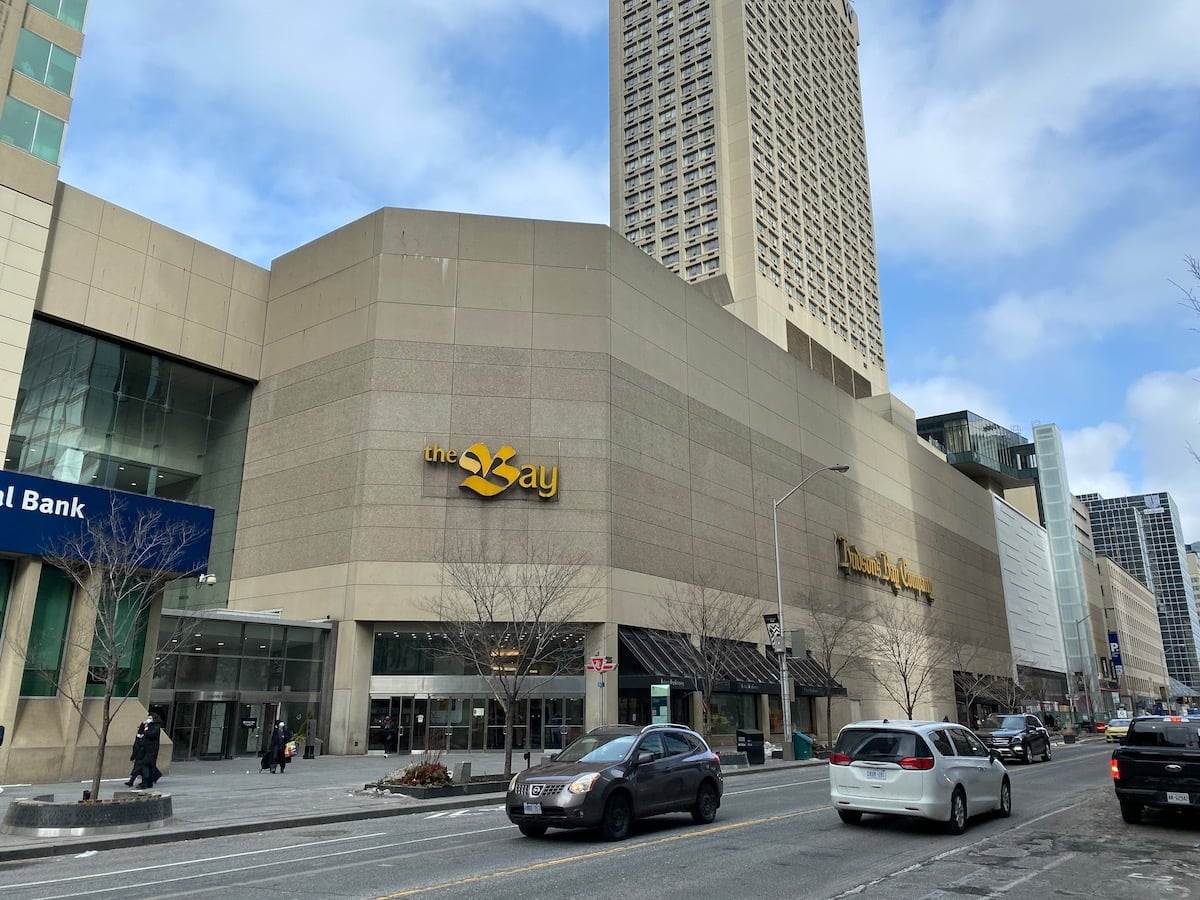
Hudson's Bay at Yonge & Bloor (Image: Dustin Fuhs)
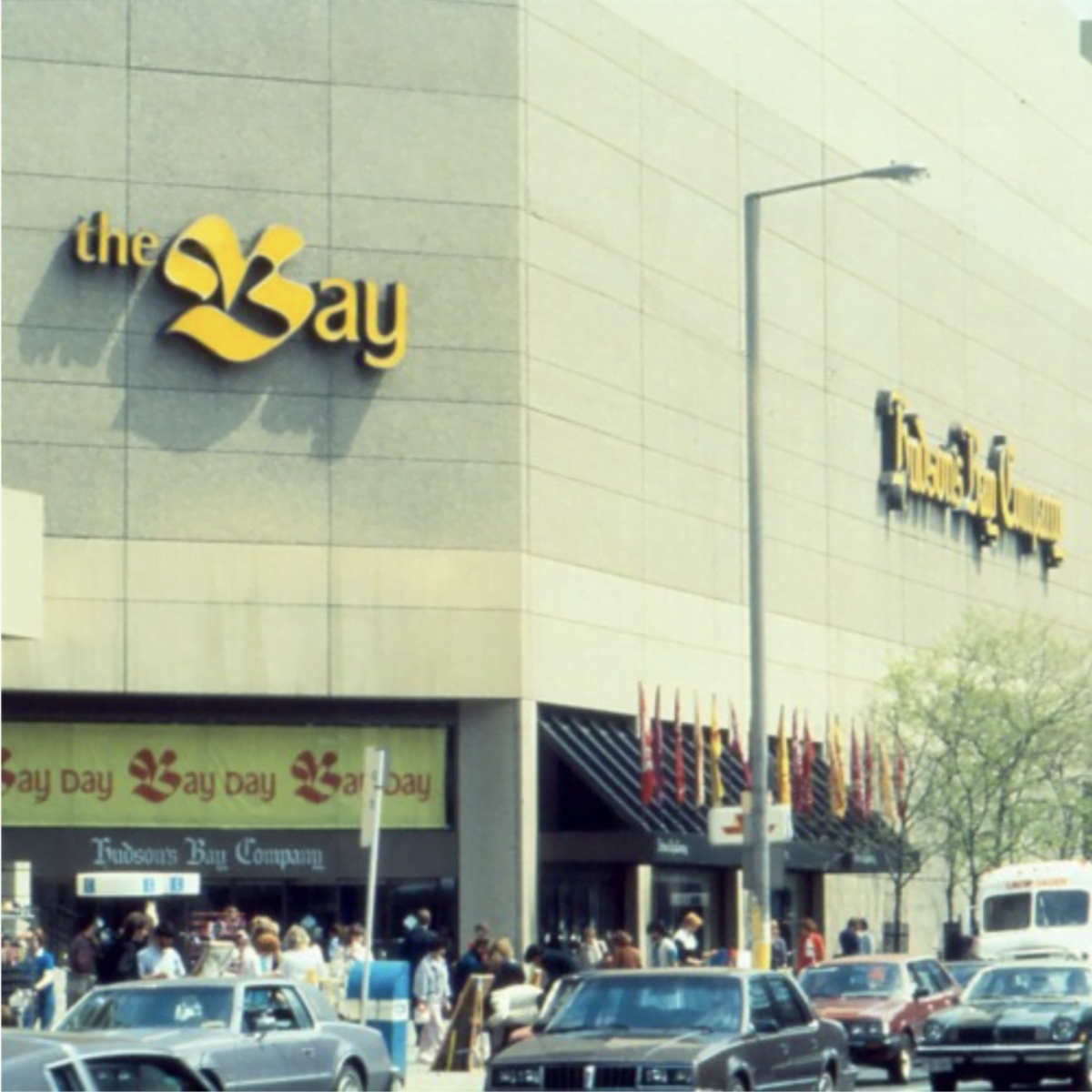
The prominent downtown Toronto Hudson’s Bay department store at 44 Bloor Street East will shut down permanently this spring, marking the end of a 47-year run for the store. From 1974 to 1991 the Bloor & Yonge Hudson’s Bay store acted as the company’s flagship until a former Simpsons store in downtown Toronto was rebranded to a Hudson’s Bay nameplate to replace it.
The news follows a Retail Insider report in July of 2021 after landlord Brookfield removed Bay-branded signage from the top of an office tower on the Hudson’s Bay Centre site. The Hudson’s Bay Centre opened in 1974 with a multi-level Hudson’s Bay department store as an anchor with the adjacent new tower containing its new head offices.
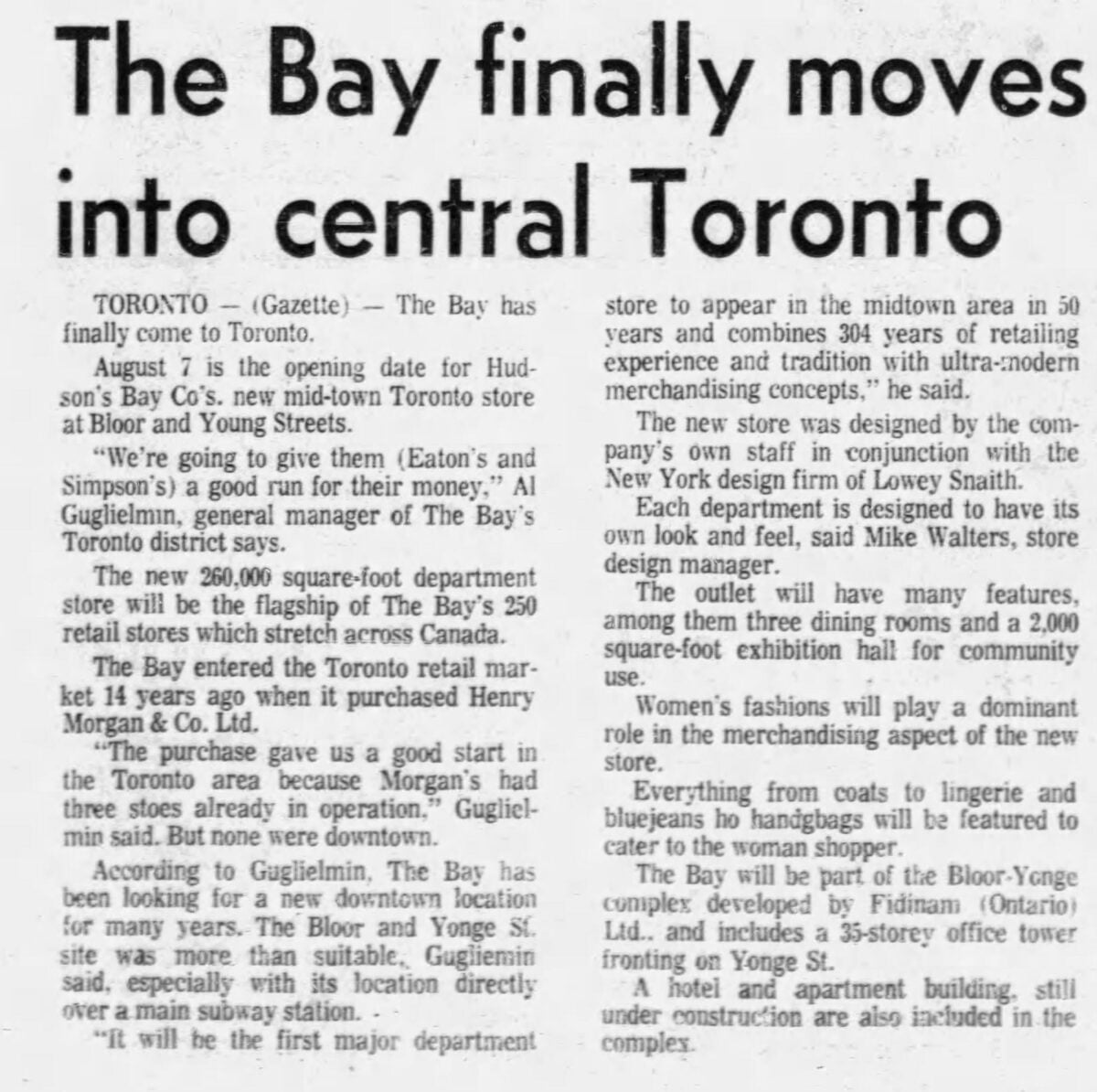
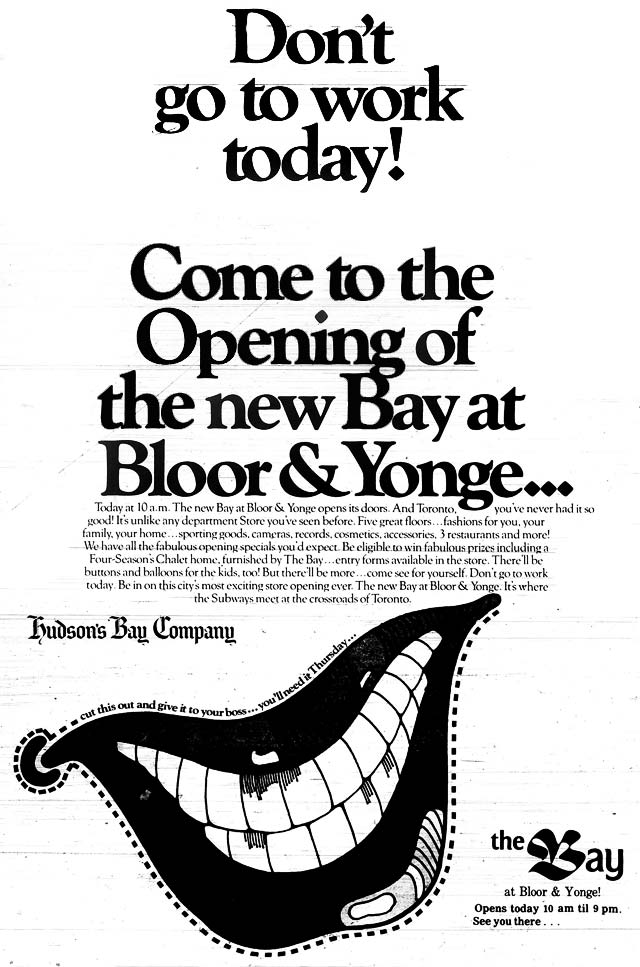
The then-260,000 square foot store opening on August 7, 1974 was an exciting one given that this was the first Hudson’s Bay-branded location in Toronto, not to mention its new flagship. For years prior to that, the downtown Winnipeg store served as the company’s flagship — the downtown Winnipeg store shut permanently in late 2020.
Hudson’s Bay Centre on February 23, 2022. Photo: Dustin Fuhs The store in 1974 looks almost identical to today. Photo: Hudson’s BayMontreal Gazette, July 18 1974 via newspapers.com
In 1974 the shiny new Toronto Bay store became a competitor in the market as it added women’s luxury fashions to compete with other department stores already present in the downtown core. That included Eaton’s which had a massive standalone store on Queen Street at the time, and Simpsons which operated across the street. In 1979 a new Eaton’s store opened closer to Dundas Street in the new Eaton Centre complex that prior to the pandemic was the busiest shopping centre in North America in terms of footfall, by far. Closer to Hudson’s Bay on Bloor is Holt Renfrew which in 1979 unveiled its current store, albeit a bit smaller at the time.
Toronto Sun, August 7 1974
In 1978, the Hudson’s Bay Company acquired competitor Simpsons which had a store spanning nearly a million square feet at the southeast corner of Yonge and Queen Streets. The store continued to operate as Simpsons until 1991 when the Hudson’s Bay Company made the decision to retire the Simpsons nameplate from all stores including the downtown location which became Hudson’s Bay. Given the architecture and vastness of the former Simpsons flagship, it was deemed to be the new company flagship for Hudson’s Bay. Only two years prior, the Simpsons store saw a $30 million investment that some referred to as “the miracle on Queen”. Included in the store renovation was the world’s largest cosmetics department as well as a gourmet food hall in the basement.
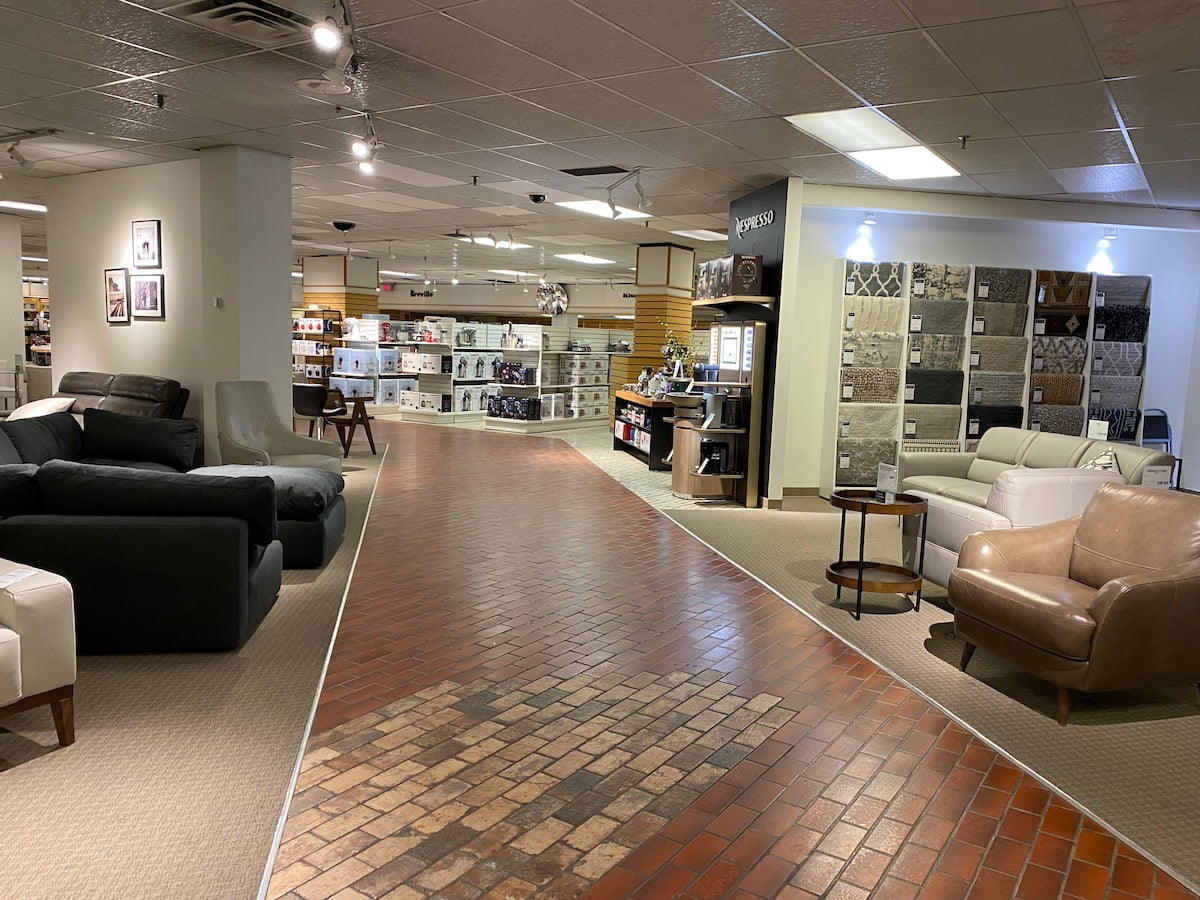
5th floor furniture level at Hudson’s Bay in the Hudson’s Bay Centre on February 23, 2022. Photo: Dustin Fuhs
For over 30 years Hudson’s Bay has operated two stores in downtown Toronto, and that will come to an end when the Bloor Street store closes in May of this year. Staff in the store have been notified of the closure.
For this report, the Hudson’s Bay Company provided the following statement:
“HBC continually looks at opportunities to optimize its real estate portfolio. Given the unique proximity to the Hudson’s Bay Queen Street flagship location in Toronto, Hudson’s Bay has made the decision to close its Bloor Street store on May 31, 2022. The flagship store is located just 2.5 km from Bloor on Queen Street, and we will continue to serve the community with a seamless omnichannel experience at that location and through TheBay.com.
We are committed to treating every associate with respect and fairness through this process. All eligible associates will receive appropriate employment separation packages and transfer opportunities will be explored where feasible.”
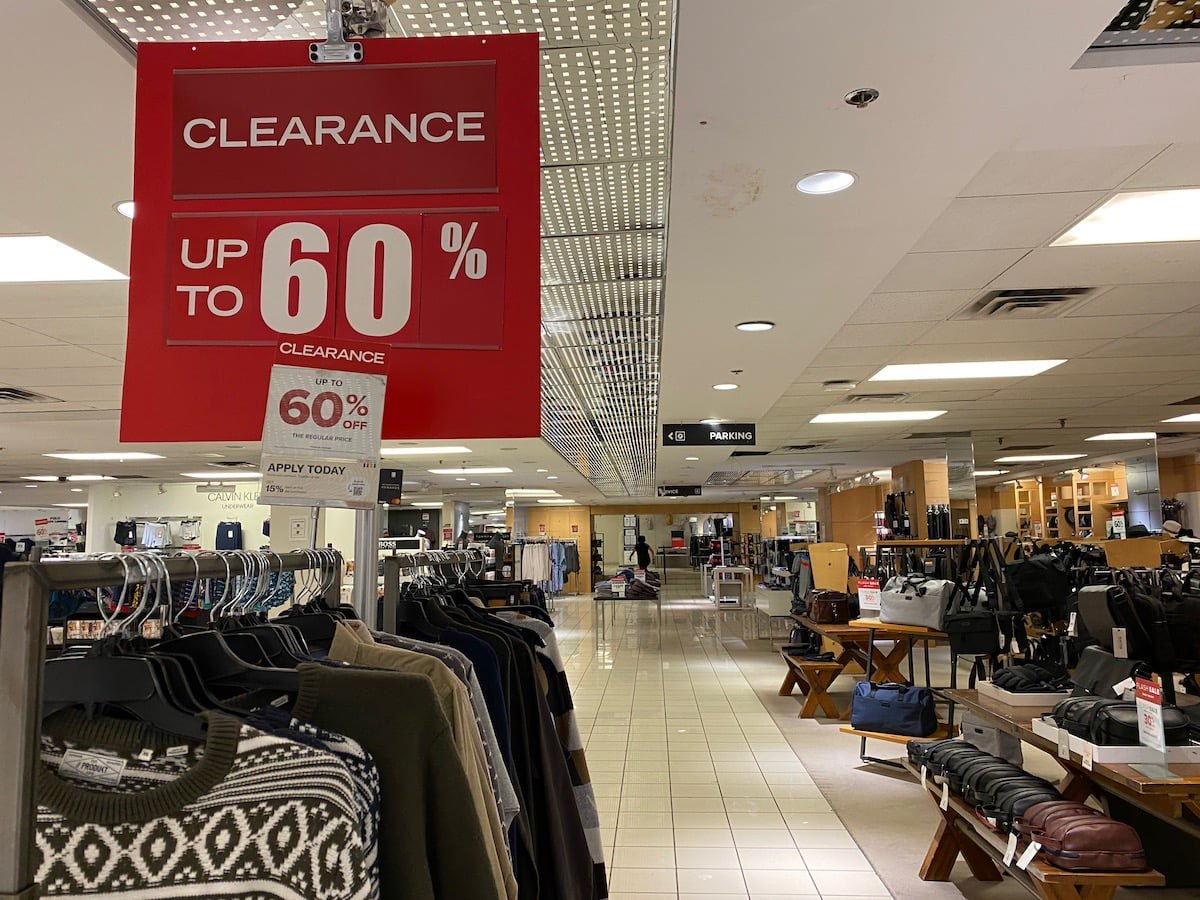
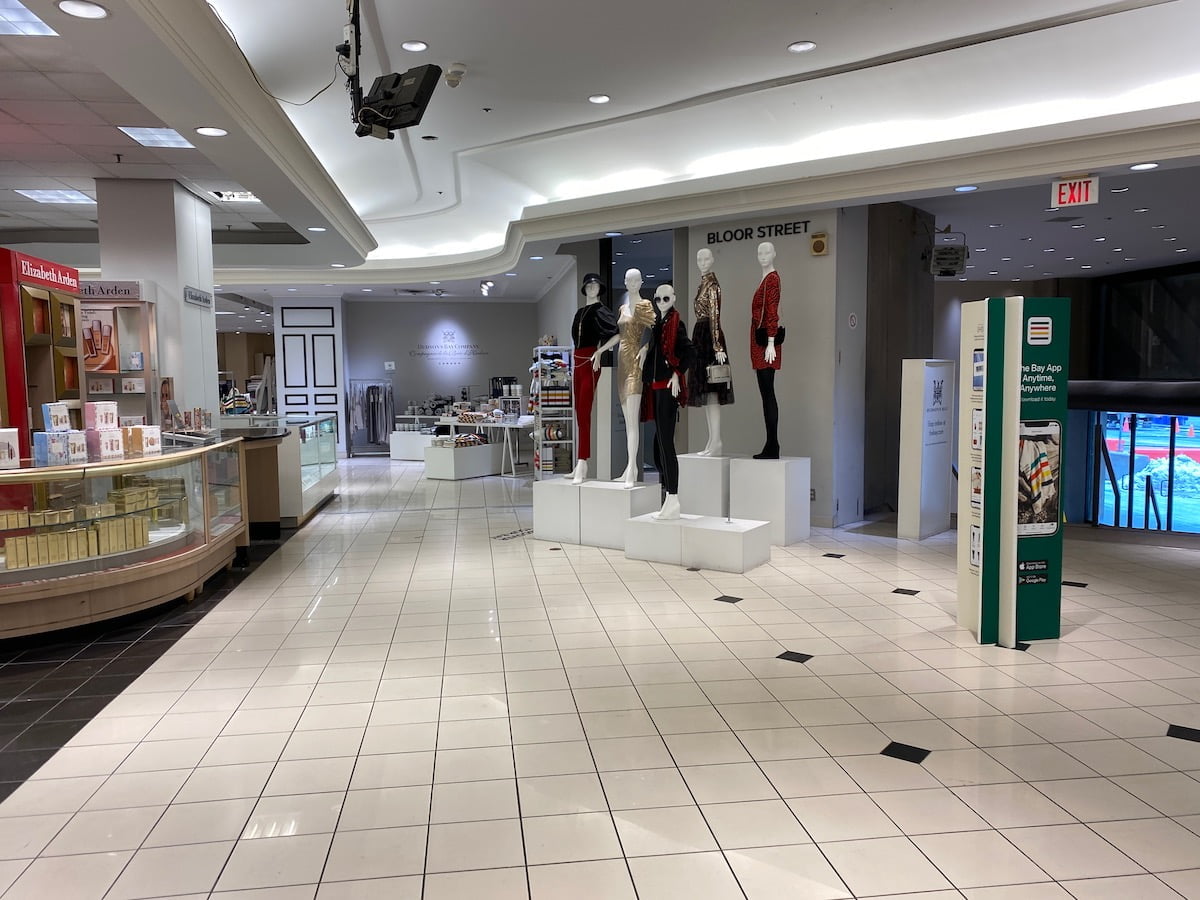
Main floor men’s department at Hudson’s Bay in the Hudson’s Bay Centre on February 23, 2022. Photo: Dustin FuhsMain floor of the Hudson’s Bay store at Hudson’s Bay Centre on February 23, 2022. Photo: Dustin Fuhs
Interestingly, in 2013 the Hudson’s Bay Company had looked at replacing the Hudson’s Bay Centre Hudson’s Bay store with a 300,000 square foot Saks Fifth Avenue location that would have competed with nearby Holt Renfrew. A deal was eventually reached where Cadillac Fairview bought the Hudson’s Bay building on Queen and its adjacent office tower, with Saks opening its first Canadian store in 2016 within the Hudson’s Bay building. Sources said that the proposed Hudson’s Bay Centre Saks announcement was part of a tactic in HBC’s negotiations with Cadillac Fairview to buy the Queen Street flagship store.
The Hudson’s Bay Centre is a massive complex housing the current department as well as a retail mall, 1,100 stall parking facility and a 35 storey office tower. A W Hotel is under construction on the site at the base of a tall rental apartment building.
The Hudson’s Bay Centre connects to the subway interchange below with a mall retail component spanning 213,000 square feet according to landlord Brookfield Properties. Tenants other than Hudson’s Bay include a Longo’s grocery store, Dollarama, LCBO, and small businesses in the concourse-level mall and a food court. The 35-storey office tower above it spans 535,000 square feet and was designed by architect Craig & Boake. When it was built, the 2 Bloor East office tower housed offices for the Hudson’s Bay Company and with Workmen’s Compensation Board — both tenants were announced in 1971 before the tower’s completion.
Landlord Brookfield provided a statement for this article:
“While we are sorry to see the departure of an iconic long-term tenant from this location, Hudson’s Bay remains a strong and valued tenant at a number of Brookfield’s properties and we look forward to our ongoing partnership with them.”
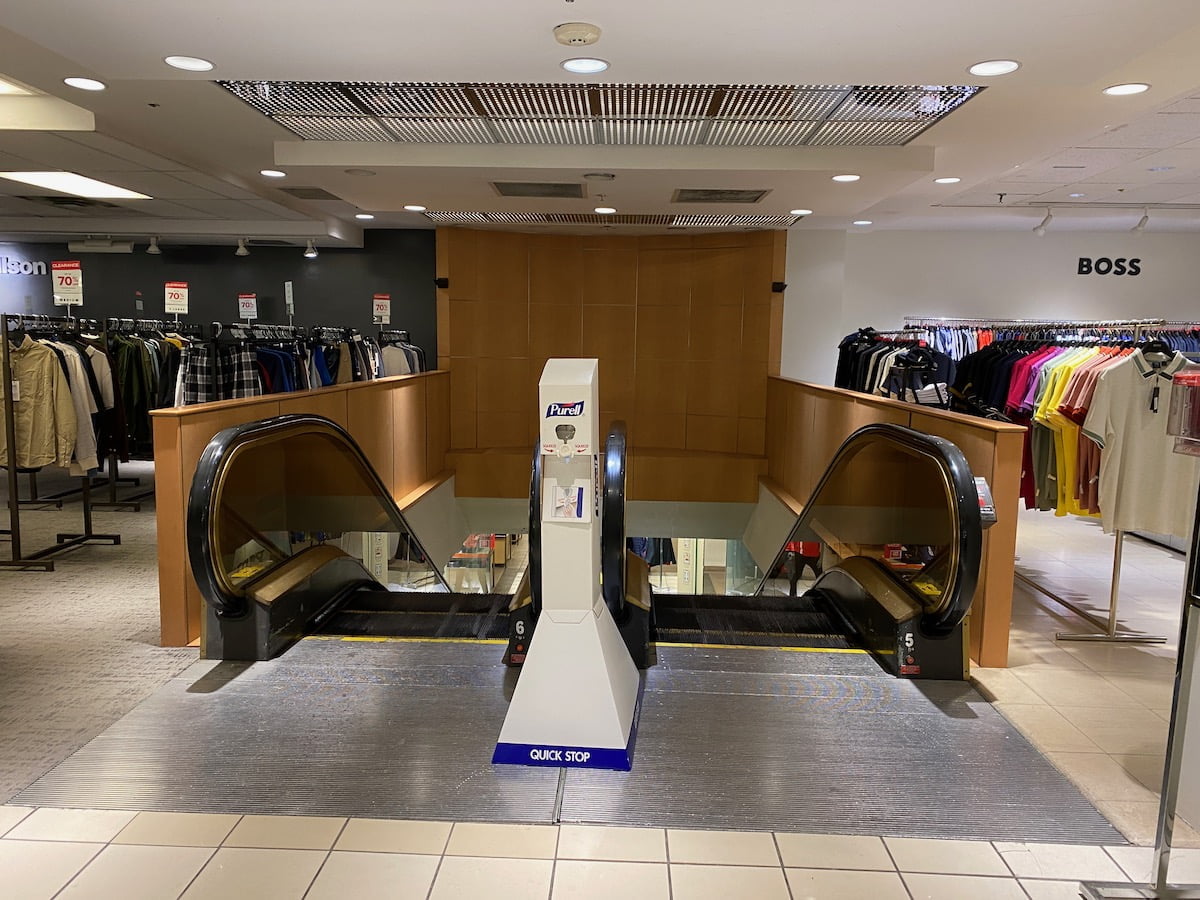
Escalators from the main floor menswear department to the basement menswear floor at Hudson’s Bay in the Hudson’s Bay Centre on February 23, 2022. Photo: Dustin Fuhs3rd floor women’s fashions at Hudson’s Bay in the Hudson’s Bay Centre on February 23, 2022. Photo: Dustin Fuhs
The exit of Hudson’s Bay from the complex this spring will usher in redevelopment. A Brookfield representative went on to say in the statement, “We are excited by the opportunity to re-envision and transform this key asset at one of the most important locations in the City of Toronto. We will be submitting an application to the City of Toronto for planning approvals to bring Brookfield’s vision for the future of the property in the coming months.”
That vision wasn’t explicitly shared, and plans are expected to involve a partnership with the City of Toronto which has earmarked well over a billion dollars to overhaul the subway interchange under the Hudson’s Bay Centre. Some are also speculating that the on-site office tower at the Hudson’s Bay Centre could be demolished for a much taller building.
We’ll follow up on this story with more photos of the final days prior to the store’s closing at the end of May.
Retail Insider is streamlining its Canadian retail news from around the web to include a handful of top news stories that can be viewed quickly during the day. Here are the top stories from the past 24 hours.
Future Hudson's Bay Store in Vancouver (Image: Perkins & Will-Hudson's Bay Company-Streetworks Development)
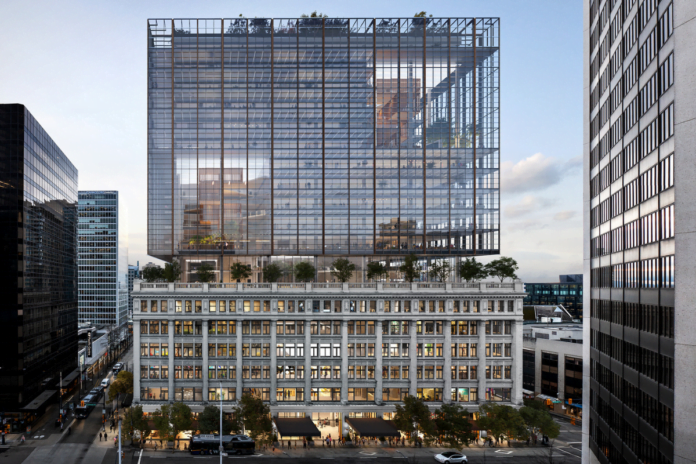
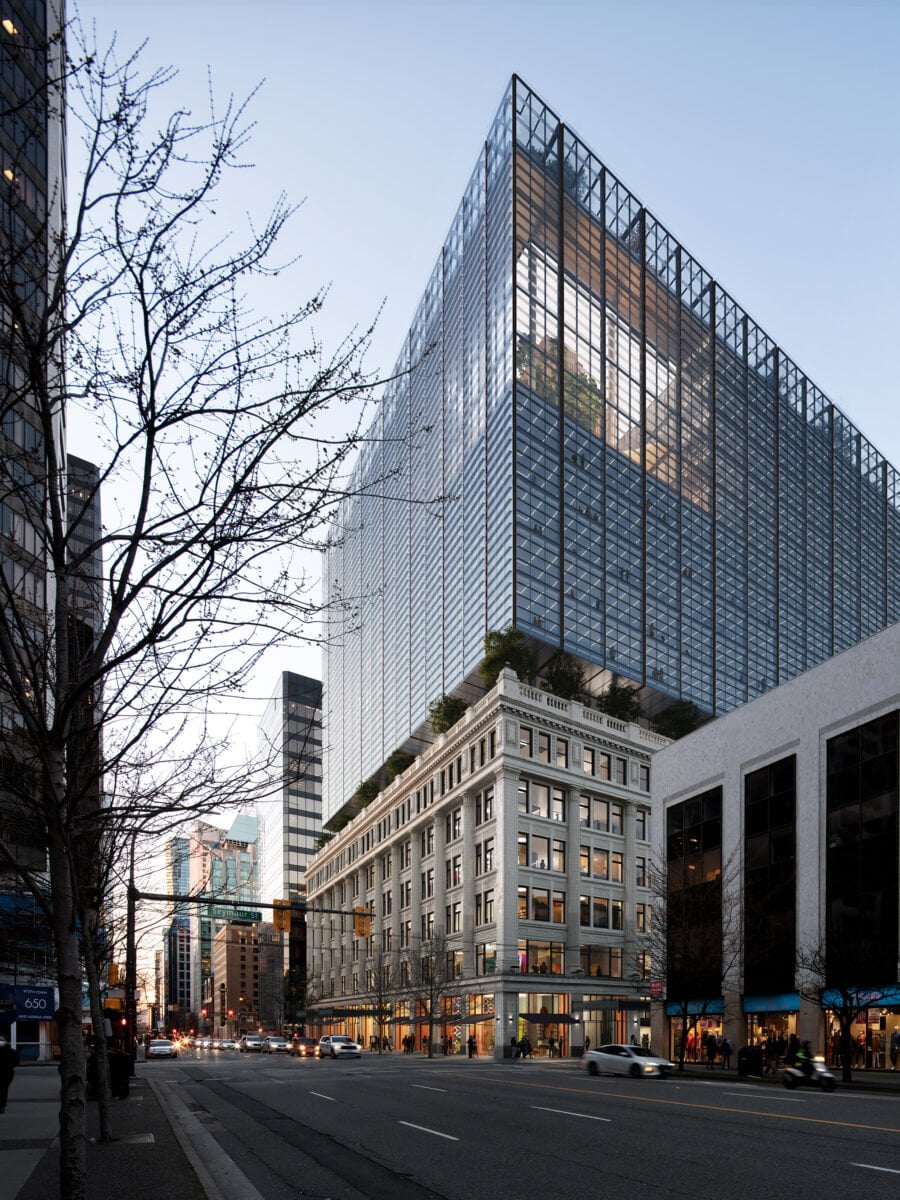
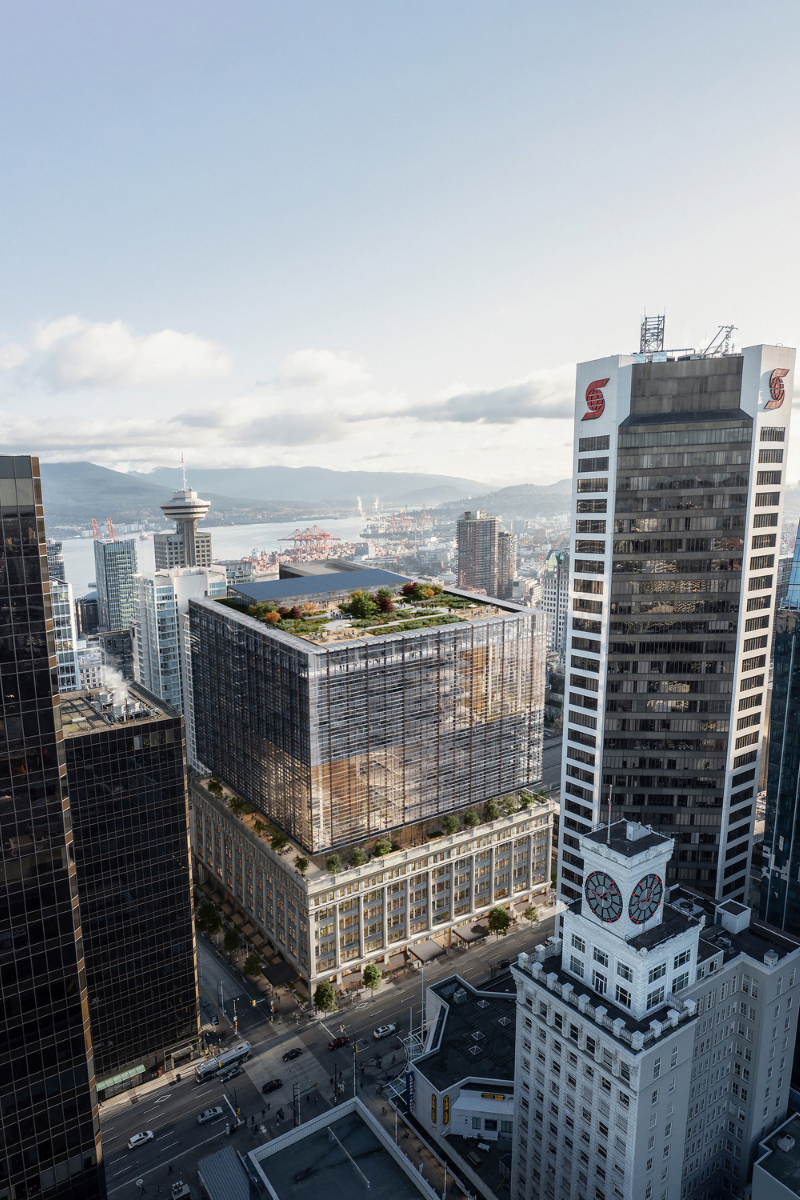
The Hudson’s Bay Company and its real estate arm Streetworks Development announced the redevelopment of downtown Vancouver’s iconic and historic Hudson’s Bay building on Wednesday. Included will be a smaller new format department store and new food and beverage offerings as well as a massive office building above and a new transit interchange. The incredible project will anchor the corner of Granville and Georgia Streets where Hudson’s Bay had occupied the northeast corner for more than 100 years. Construction is expected to begin as soon as 2024 once approved by the city.
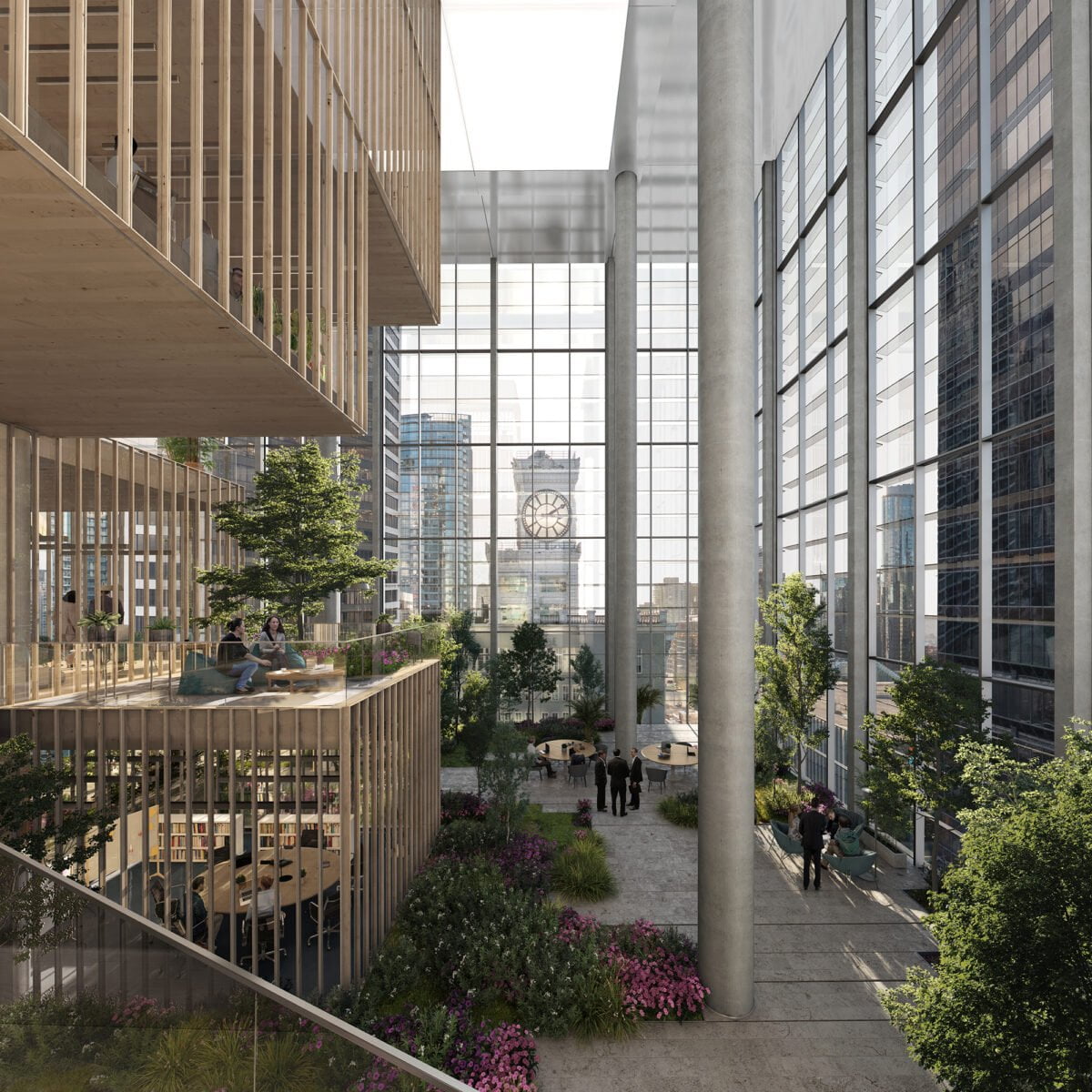
Rising above the updated retail component will be an imposing 12-storey office component spanning about a million square feet expected to house about 5,000 employees. Floorplates exceeding 60,000 square feet will target tech sector tenants that will also enjoy a rooftop garden and other amenities. Improved access to the existing SkyTrain stations on site and an underground hub for up to 1,500 bicycles will also be added.
Retail Insider had the opportunity to speak with Wayne Drummond, President of Hudson’s Bay department stores about the announcement. Drummond said that the current store spanning about 637,000 square feet will be reduced in size to about 350,000 square feet on the lower levels of the new complex.
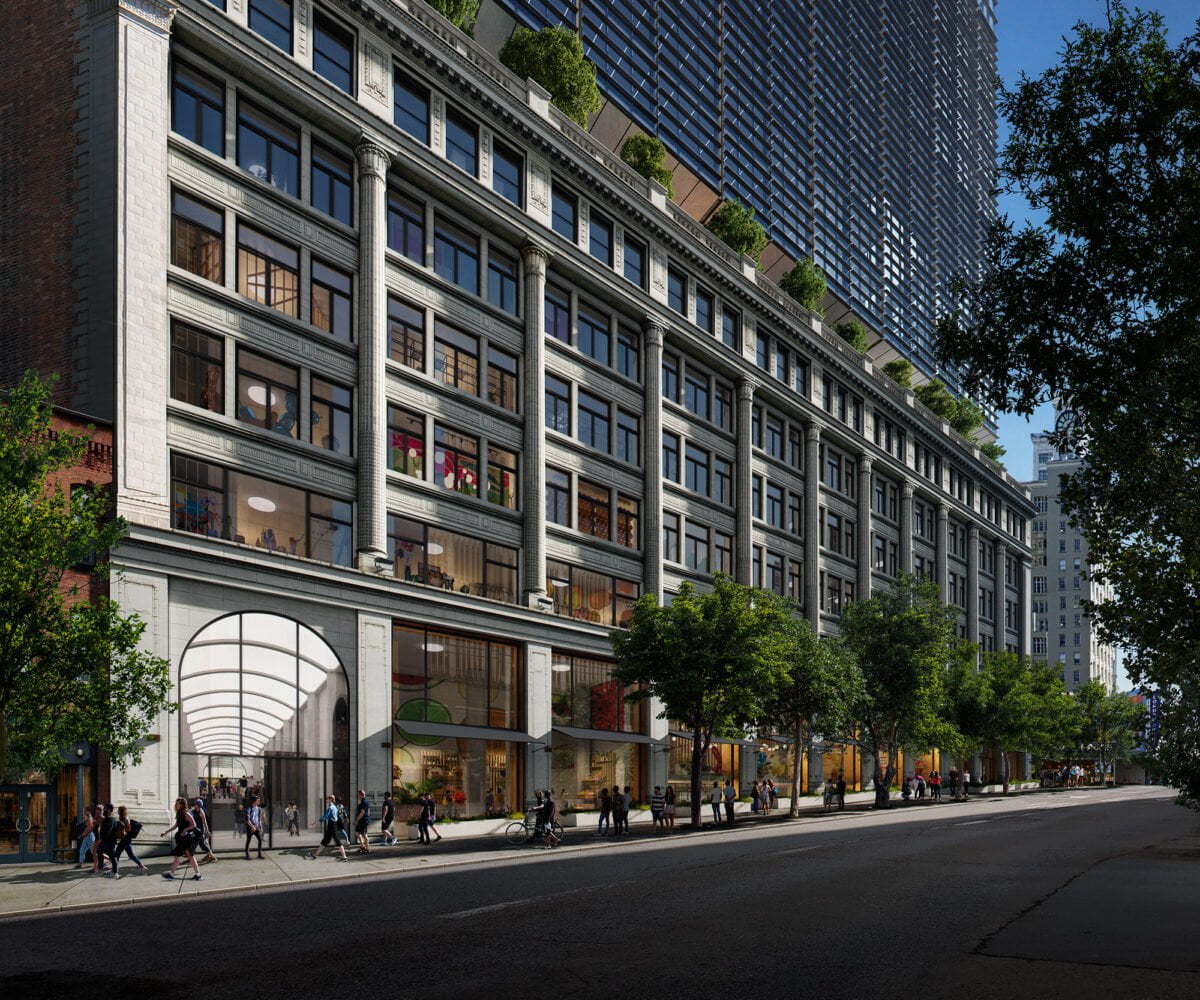
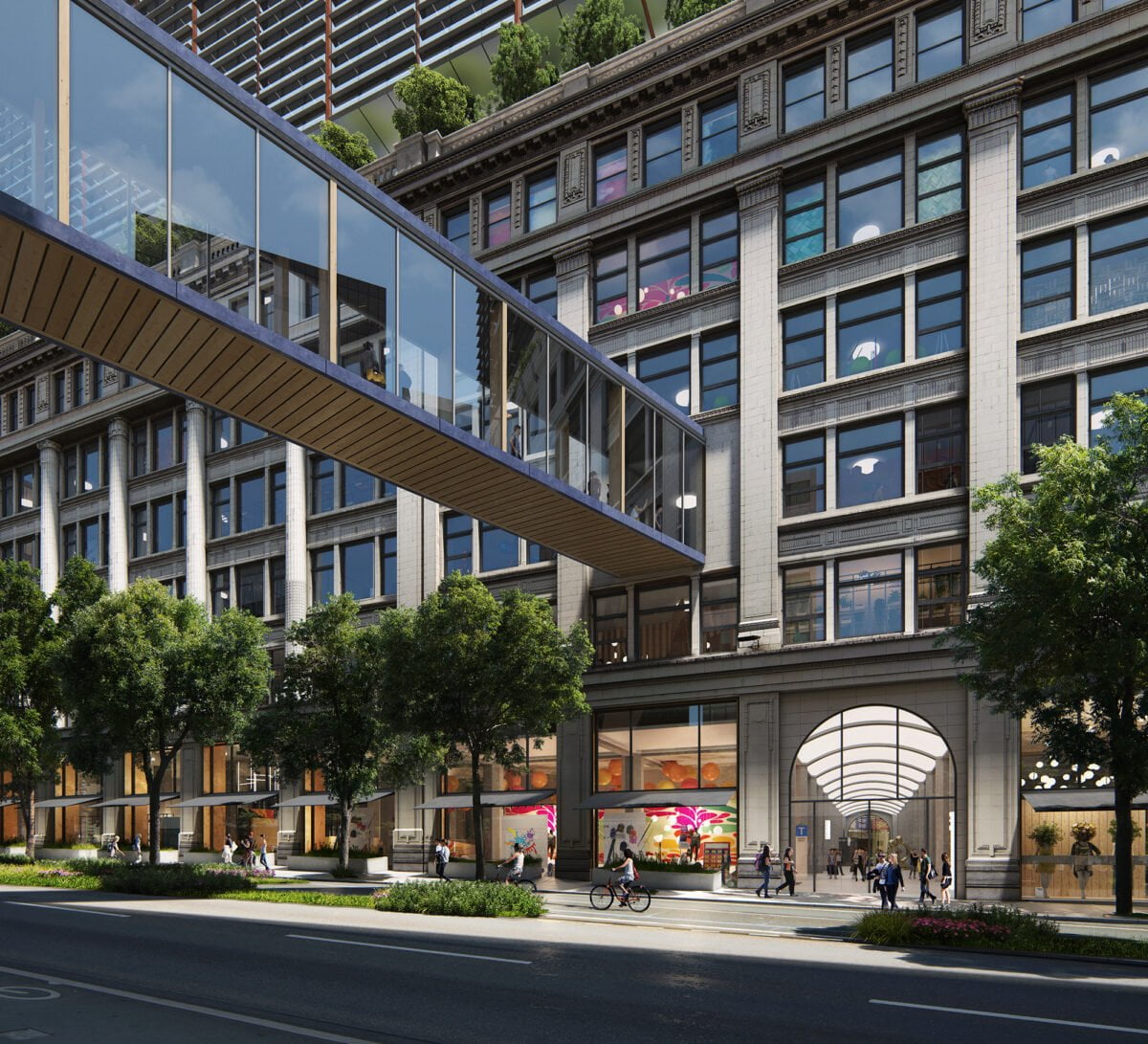
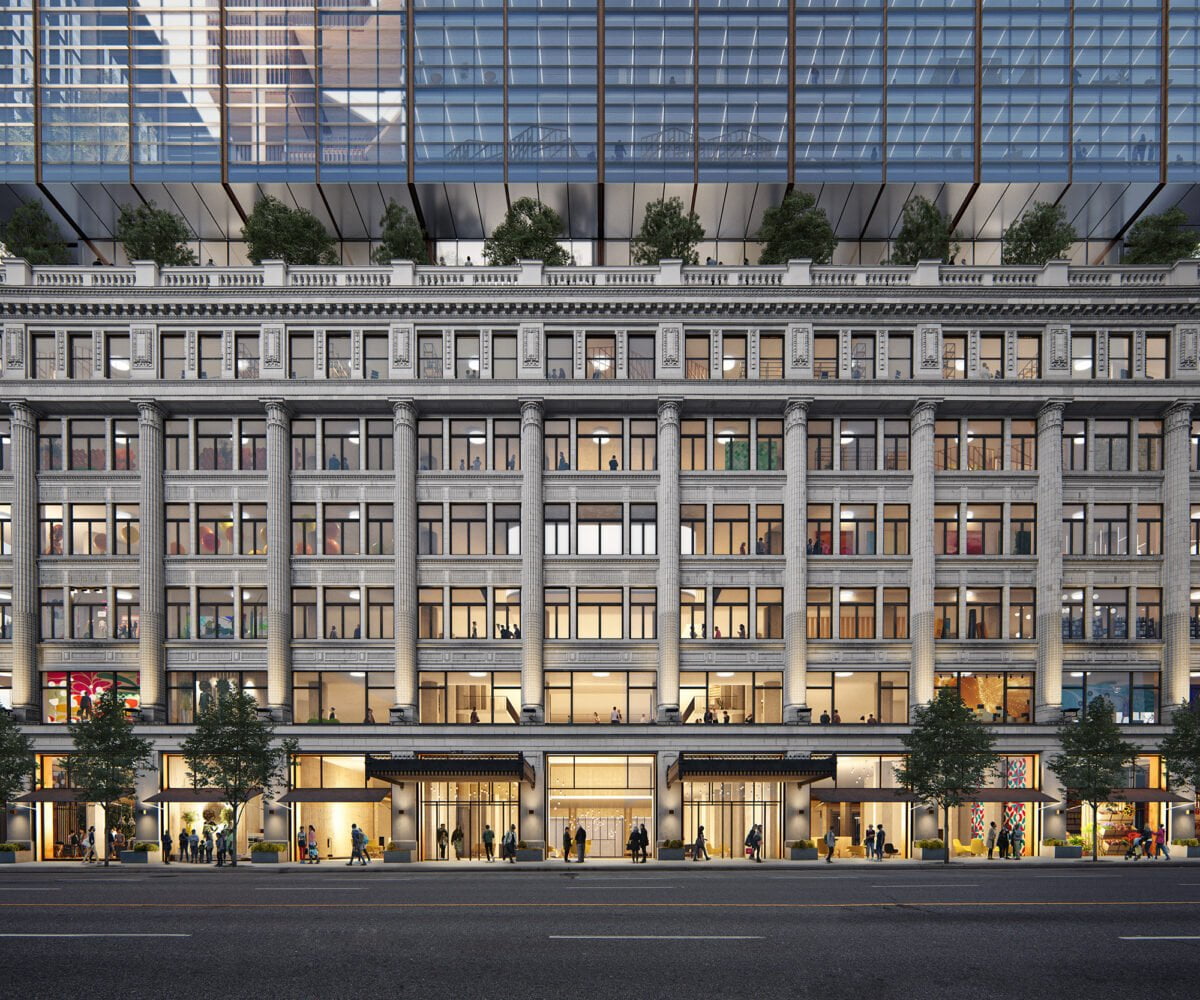
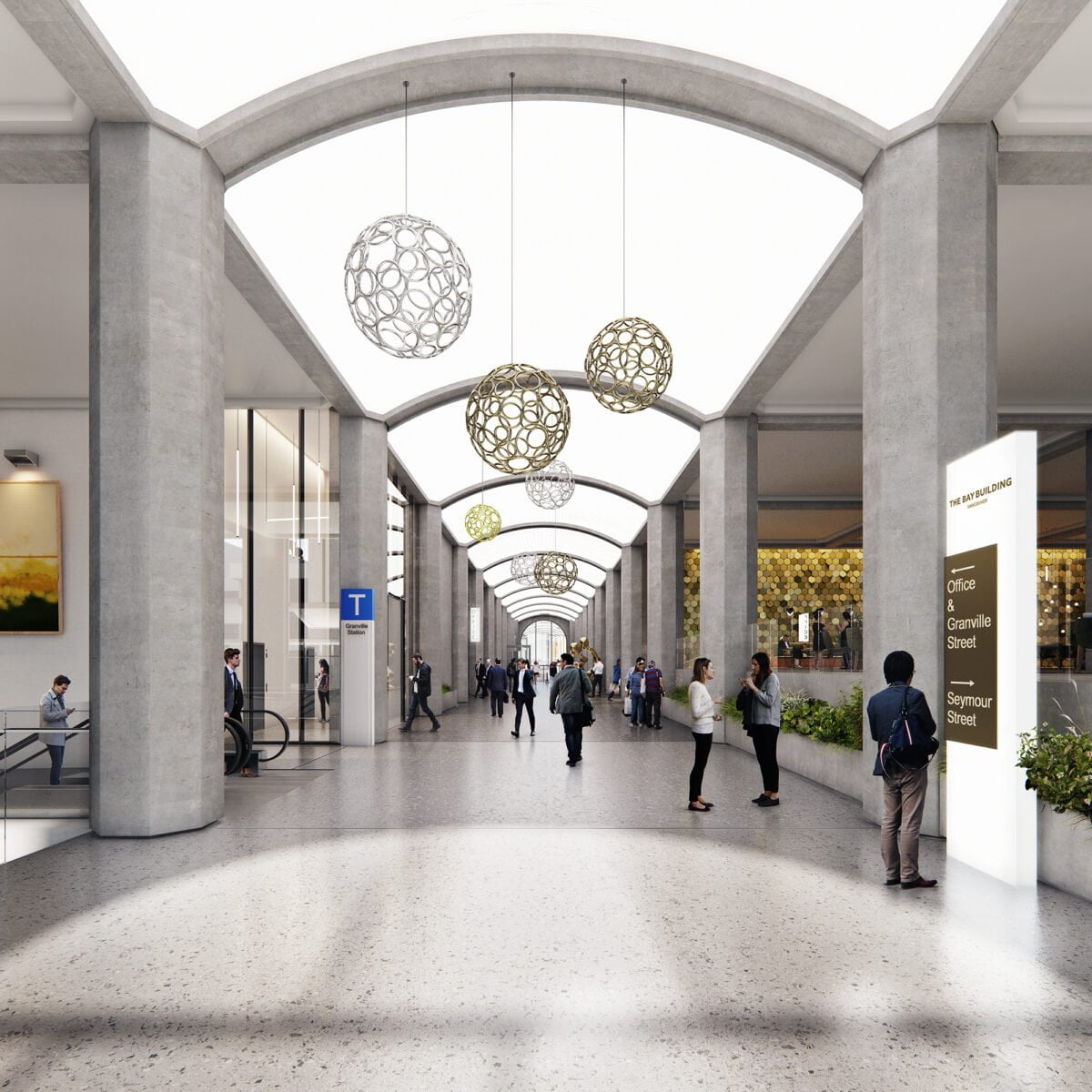
The Hudson’s Bay Building on Granville Street, showing the updated store and galleria that will link transit interchanges and a new office building lobby. (Image: Perkins & Will-Hudson’s Bay Company-Streetworks Development)The Hudson’s Bay Building from Seymour Street showing the updated building and galleria. (Image: Perkins & Will-Hudson’s Bay Company-Streetworks Development)
The design of the retail component is still in the planning phases as the proposal works its way through the City of Vancouver approval processes over the next year or so. The current store includes six large retail levels above ground spanning more than 70,000 square feet each as well as two basement levels. Drummond said it hasn’t yet been decided how many floors will be dedicated to retail in the newly conceptualized mixed-use flagship property.
Some things are sure to change with the downsizing of the retail footprint. The store’s beauty hall is said to be the largest in North America, spanning about an acre in size. That’s expected to be downsized with the redevelopment, as is the award-winning 70,000+ square foot menswear department on the sixth floor that is the largest west of Toronto.
The downtown Vancouver Hudson’s Bay store will become a place of “discovery” and will integrate technology to enhance the customer experience according to Drummond. Already Hudson’s Bay is conceptualizing the future of retail as it tests innovations at the Queen Street flagship. That includes virtual selling through its ‘The Bay’ online platform and marketplace that will be rolled out into stores across the country with more details to come.
The Hudson’s Bay Building as seen from the corner of Seymour and Georgia Streets when the project is done (Image: Perkins & Will-Hudson’s Bay Company-Streetworks Development)The Hudson’s Bay Building ‘Sky Atria’ above the retail store — this view is looking south (Image: Perkins & Will-Hudson’s Bay Company-Streetworks Development)
Luxury department The Room will also be part of the mix in the newly conceptualized Vancouver Hudson’s Bay store. We reported last year that The Room had added menswear to the Vancouver offerings, showcasing some of the world’s top luxury brands as well as some edgy harder-to-find labels that in some cases are unavailable elsewhere in North America. Hudson’s Bay is one of the last remaining traditional department stores in North America to house dedicated luxury fashion departments in its stores (also in the downtown Toronto flagship).
“We are creating a shopping experience that promotes discovery in our store, and excites visitors with modern, relevant and inclusive product and services. This newly-developed space will deliver an environment that will take the Hudson’s Bay shopping experience to the next level,” Drummond said in a statement.
Vancouver will become a focus for innovation with Hudson’s Bay also building a new store at Oakridge Centre which is set to open in a couple of years. Drummond said that Hudson’s Bay continues to look for new brands to add to its stores and several new ones have been added. Some brands occupy concession spaces within Hudson’s Bay stores and that will continue.
The Hudson’s Bay Building W. Georgia Street Entrance (Image: Perkins & Will-Hudson’s Bay Company-Streetworks Development)The Hudson’s Bay Building’s New Arcade with Sculptures (Image: Perkins & Will-Hudson’s Bay Company-Streetworks Development)
Retail Insider also had the opportunity to speak with Douglas Adams, Senior Vice President of Development at Streetworks Development. He explained that the massive structure to be built above the existing department store would be made possible through a construction process where existing heritage elements of the existing store will be maintained, including its facade, while new construction will allow for a vertical addition with seismic upgrades. The existing store component will look as it does now with additions such as a new awning to better reflect the heritage of the store. More natural light in the store will make the building appear to be more translucent he said.
Adams said that Streetworks began conceptualizing the Vancouver redevelopment in earnest in the summer of 2019 and that Streetworks is looking forward to a great partnership with the city and other stakeholders as the project moves forward.
The mixed-use building will aim to bring in shoppers from across the Vancouver region. The store is well-serviced by transit including the SkyTrain subway system and bus system. Visitors will also be attracted to the food and beverage offerings in the new Hudson’s Bay complex which will include about 50,000 square feet dedicated to restaurant space.
(Image: Perkins & Will-Hudson’s Bay Company-Streetworks Development)
Sustainability will be key to the project that Adams said will meet or exceed the aggressive goals set out by the City of Vancouver. The transportation hub and unique bike storage facility are also part of a green initiative and Adams said that Streetworks looked to examples in Denmark and Sweden for inspiration.
Last year the Hudson’s Bay Company announced that it had plans to redevelop its downtown Montreal flagship store with an office component as well, with the 655,000 square foot store being downsized to about 300,000 square feet. The downtown Calgary flagship was also reduced to three floors of retail space from six, and Streetworks says that it’s too soon to talk about that redevelopment opportunity just yet.
It is looking as if the Hudson’s Bay Company is looking in time to capitalize on its real estate which means Calgary and other stores will likely see interesting redevelopment in years to come. Ian Putnam, President and CEO of HBC Properties and Investments, said that the company is looking at “unleashing the full value of our prime properties and reinvigorating the urban districts in which they are situated.” He went on to say, “HBCPI is excited and looking forward to unlocking the value and full potential of our flagship Vancouver building, and our entire joint venture portfolio with RioCan.” Besides the Montreal, Vancouver and Calgary stores, the other Hudson’s Bay stores jointly owned by HBC and RioCan include the downtown Ottawa flagship store and both landlords jointly hold ground leases for Hudson’s Bay stores including Yorkdale in Toronto, Scarborough Town Centre in Toronto, Square One in Mississauga, CF Carrefour Laval near Montreal, CF Promenades St. Bruno near Montreal, and Devonshire Mall in Windsor.
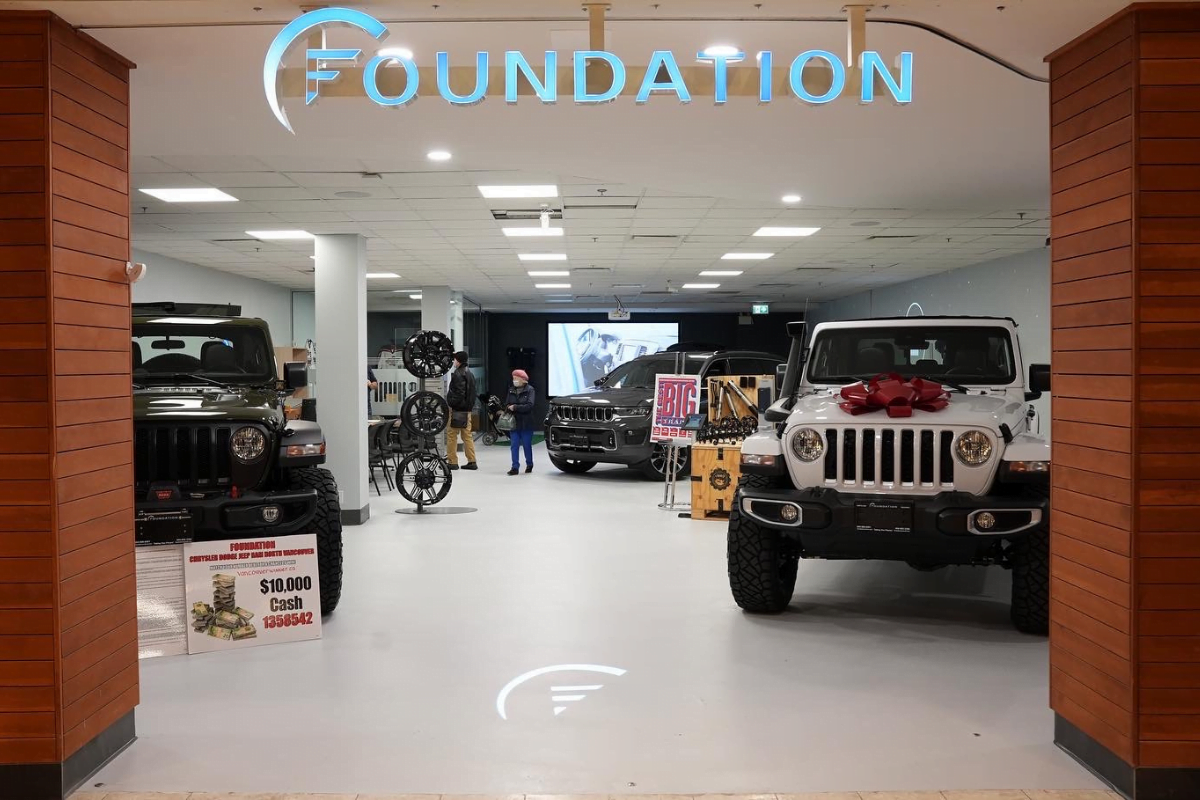
The “Jeep Lifestyle Centre” features Jeep vehicles on display with branded clothing and merchandise, which is the first-ever enclosed shopping centre storefront for the Jeep brand.
The buy-now-pay-later platform includes an app and Klarna has already secured some big name retailers in Canada including homegrown brands Harry Rosen, Mejuri, and Frank And Oak and international players such as Sephora Canada, L’Oreal Canada, and GameStop among others.
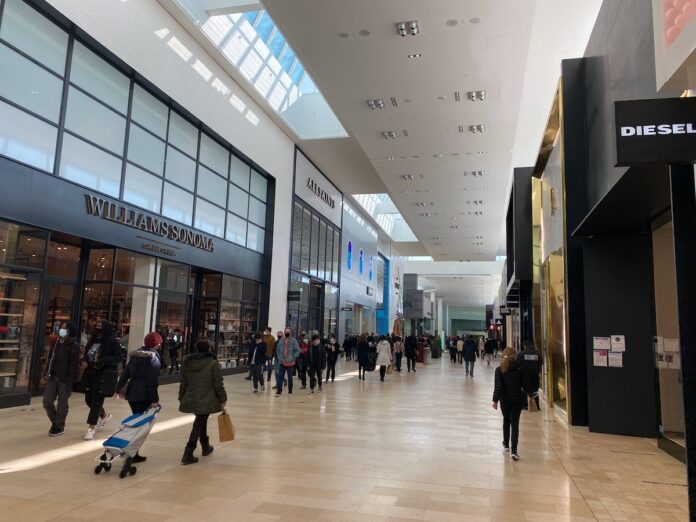
Despite experiencing restrictive measures in major markets, Canada maintained strong retail sales as core retail sales in 2021 are projected to be up 13 per cent compared with 2019, and retail sales should continue to grow in 2022, says a report by commercial real estate firm JLL.
The ‘Canada Real Estate Outlook’ research report says leasing activity in the sector is expected to increase with the arrival of a more stable environment, likely in the second quarter of this year.
Tim Sanderson
“In Q1, rents should see their recovery trajectory slow, but they could quickly resume in the event of a short Omicron wave. While rates across Canada increased moderately in 2021, slowly approaching those of 2019, they could surpass pre-pandemic levels by the end of the year. Vacancy and availability rates have trended down. This will become more visible in 2022 and 2023 when deals are finalized and new stores open,” says the report.
Tim Sanderson, Executive Vice-President, Retail, for JLL, said the outlook heading into the second quarter of this year is one of optimism.
“Retail leasing activity and interest in the marketplace seems to have picked up, certainly in the major markets of Canada,” he said. “I think it’s a couple of things. One, overall spending increased in late January and in early February as the restrictions were eased in the major markets. Restaurant sales jumped in Ontario and Quebec with the reopening of indoor dining.
“Travel expenses have rebounded after plunging during the holidays but they’re still at only about 40 per cent of pre-COVID levels in Canada. In the US, they’re back up to 80 per cent of pre-COVID travel numbers.
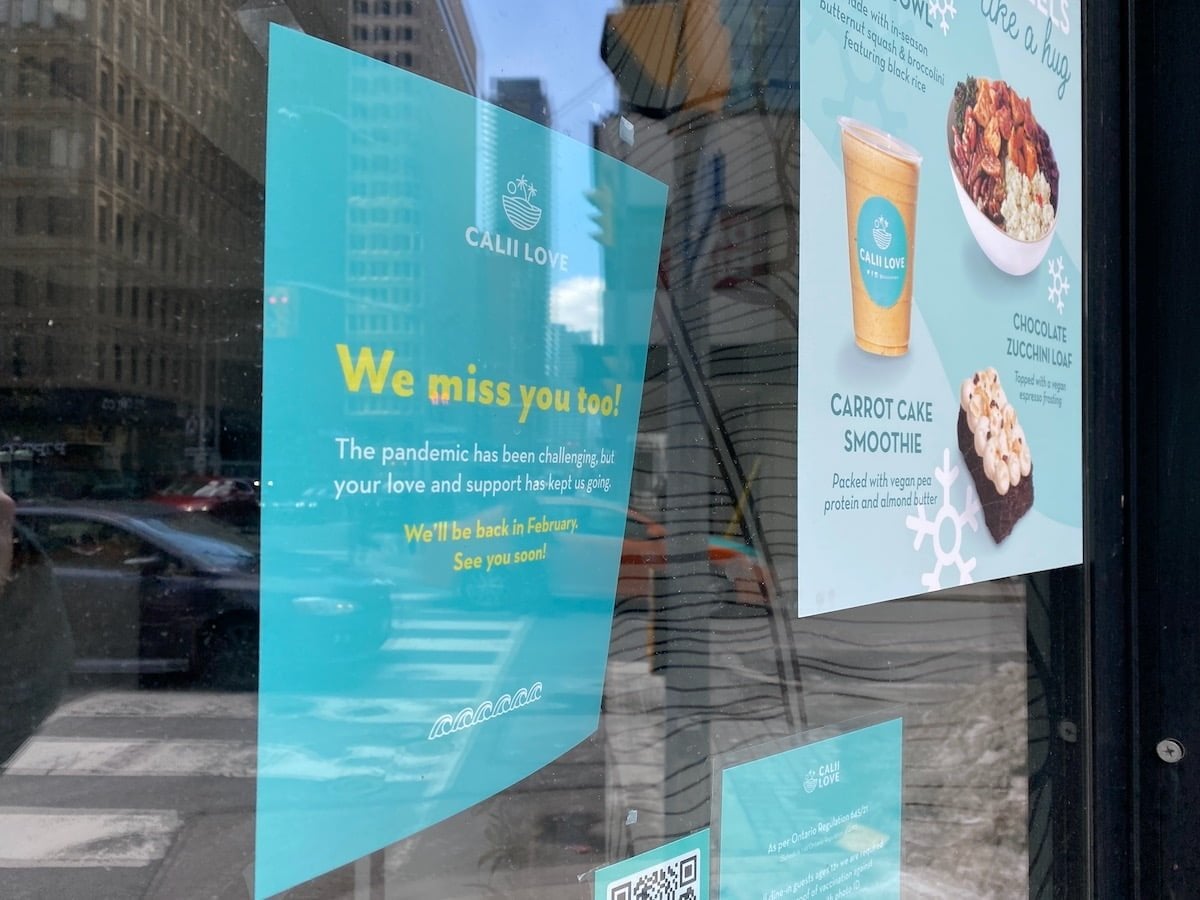
Calii Love on Bay Street (Image: Dustin Fuhs)
“And all that pent-up demand coupled with the amount of savings Canadians have in their bank accounts is saying to retailers hey it’s time to wake up and get going and open some stores again.”
Sanderson said real estate markets don’t like uncertainty and the retail sector has had way too much of it for way too long.
He cited a previous JLL survey showing that 72 per cent of shoppers in 2021 said they would go to a physical store to buy or pick up goods compared to 67 per cent in 2019.
But the JLL report also outlines some challenges still facing the retail sector. Labour and supply chains have been bottlenecks to meeting increased consumer demand. The ongoing pandemic, especially during surges, prolonged supply-chain disruptions, leading to slow production and logistics delays. Job vacancies are expected to remain high after vacancy rates soared in both the accommodation & food services and the arts, entertainment & recreation sectors in 2021, says JLL.
“Labour is still a problem – especially in food services because so many people have left that industry that getting staff back is a major problem. I can’t understand where they’ve all gone or what alternative employment they’ve been able to come up with during COVID but that seems to be a real problem,” said Sanderson.
“And supply chain is starting to ease a little bit but it’s still a concern now that we’ve seen this truckers’ thing (protest) hopefully come to an end, the biggest problem there was the food service, fresh produce for example coming into the country at those major border crossings. The sense is that supply chain is going to get resolved and going to get back to normal later this year if not early next.”
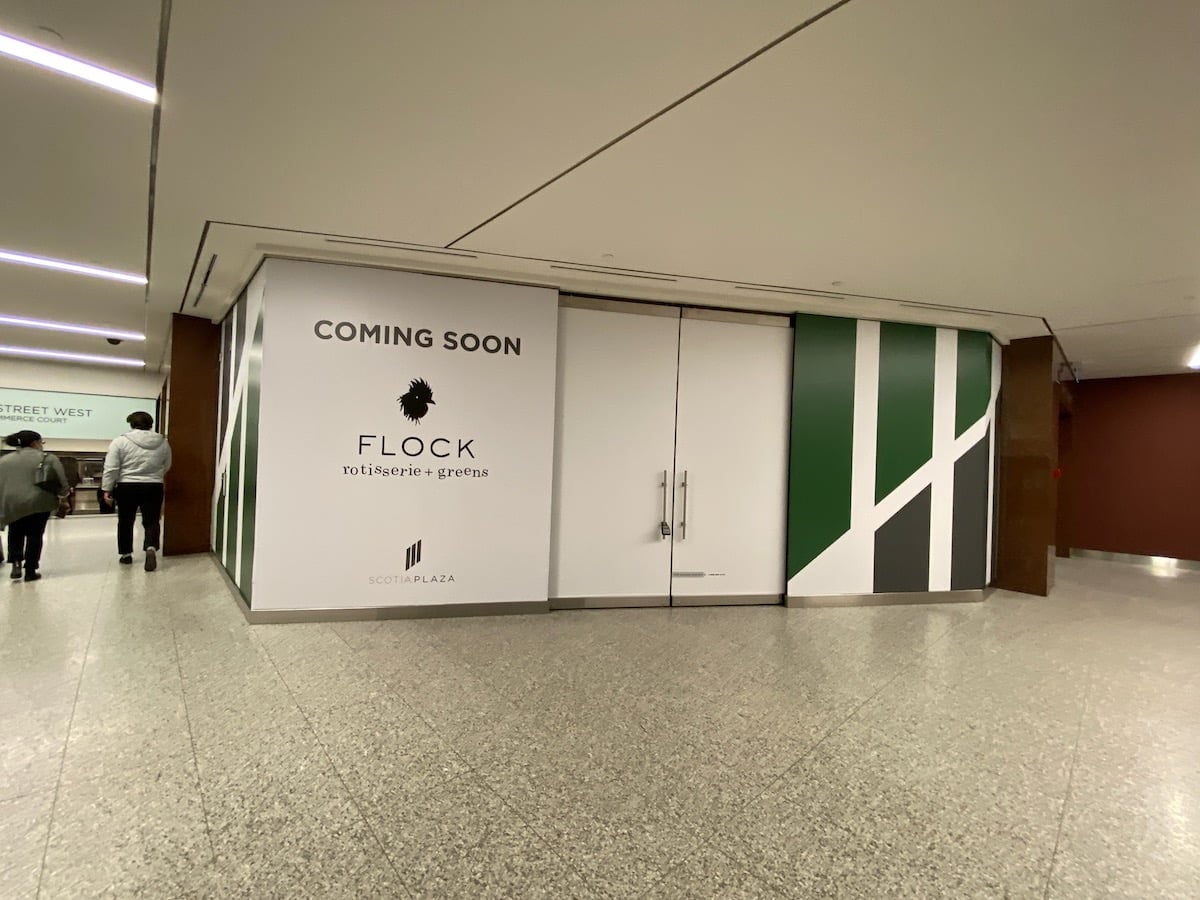
Future FLOCK Location in Scotia Plaza (Image: Dustin Fuhs)
The JLL report says restaurants should see a strengthening in business in the spring as the weather warms and quick service restaurants will continue to outperform other food services and drinking places. Fast food restaurants quickly rebounded from COVID-19 and have consistently seen increased sales from 2019.
“(Food services) scratched the bottom of the barrel and that entire food services industry was on its knees unfortunately. God forbid, we would have had another lockdown. It would have just been that much worse. Clearly it’s the independents which fuel a lot of the food service that are the hardest hit. Big companies can survive, they can shed costs, they can close stores, they can do a lot of other things and stay in business,” said Sanderson.
“But it’s been toughest on those people for sure. Sadly.”
Sanderson said Canadian retail sales in January increased 4.3 per cent largely driven by in-store spending which was up 14.8 per cent. The apparel sector has also experienced growth for the last 11 consecutive months as consumers refresh their wardrobes and dress to impress for gatherings and as they go back to work.
“Those are both good signs because those were categories that were hard hit for sure,” he said.