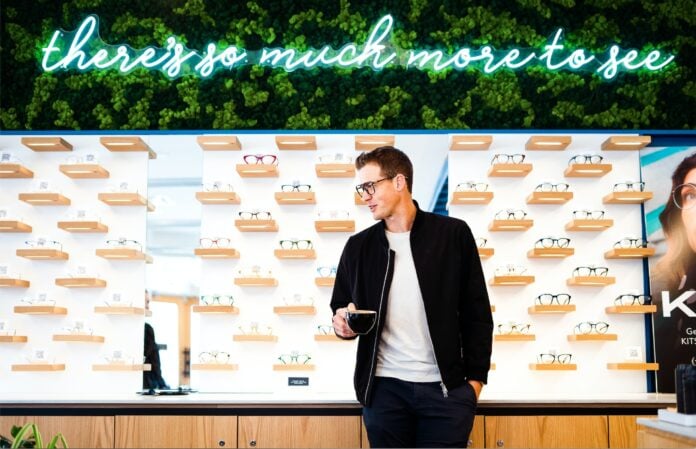
KITS Announces over 31,000 pairs of Eyeglasses Manufactured and Delivered in May 2022 (CNW Group/KITS)
Vancouver-based eyewear manufacturer KITS recently hit a new monthly record producing more than 31,000 pairs of eyeglasses in May which was more than double the 15,000 pairs it manufactured and delivered in May 2021.
Since its launch, KITS has manufactured and delivered over 350,000 pairs of eyeglasses.
Joseph Thompson
“We are thrilled to achieve these results without requiring hundreds of brick-and-mortar retail locations,” said Joseph Thompson, KITS co-founder and COO. “The KITS online-focused business model allows us to pass on these savings to our customers.”
The company was founded in 2018 by Thompson, Roger Hardy and Sabrina Liak.
KITS is primarily an online business but it does have one retail location in Vancouver that is more of a community flagship store on Kits Beach in Kitsilano.
Thompson’s background was with Amazon.com in Seattle running a couple of the retail groups there. The company was always intrigued with optical because it felt that glasses and contact lenses were an underserved market. After some investigation, it found that what Roger Hardy had started previously with Coastal Contacts, which is known as Clearly in Canada, was really the most Amazon-like optical retailer in the world. It sold in 2014 to Essilor.
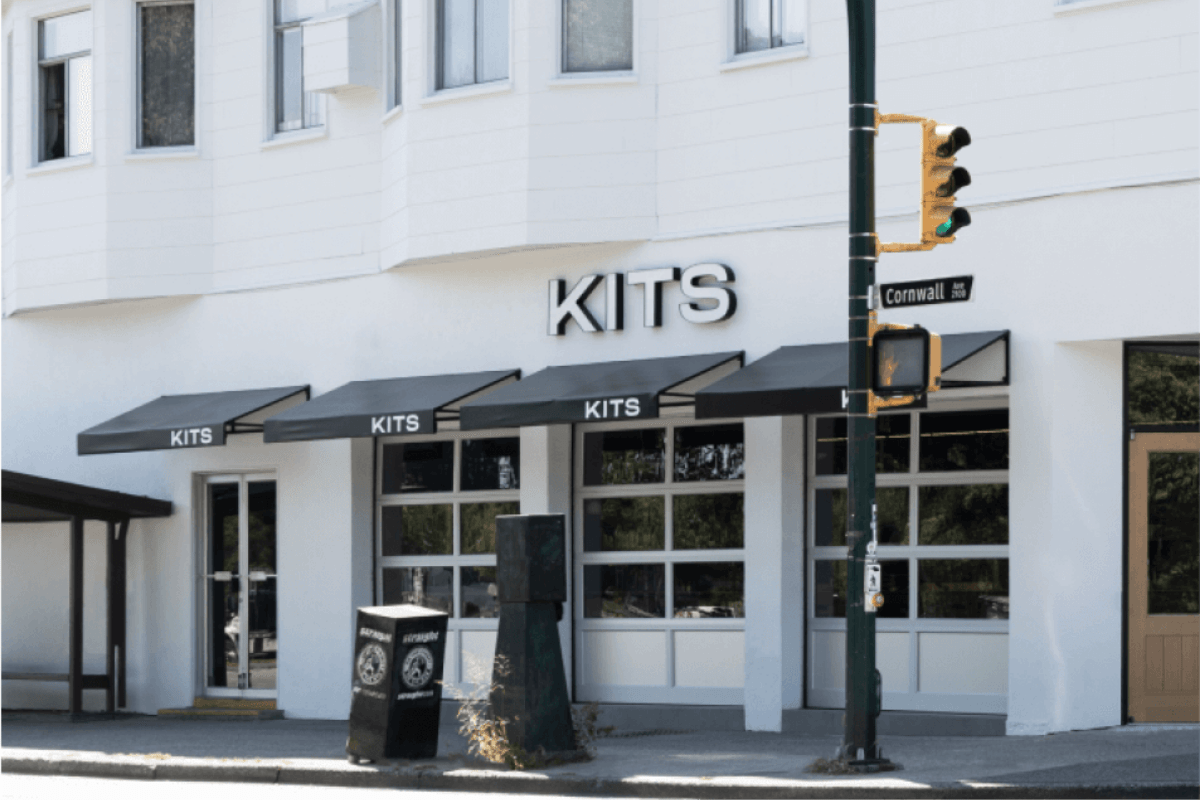
Kits at Yew and Cornwall in Vancouver, BC (Image: Kits.ca)
Kits at Yew and Cornwall in Vancouver, BC (Image: Kits.ca)
Kits at Yew and Cornwall in Vancouver, BC (Image: Kits.ca)
“And so Roger and I stayed in touch and thought it would be great to start up a business together. We continued to look at the optical industry and thought there was a lot of good that we could do in the industry, a lot of work to be done,” said Thompson.
“About eight out of 10 adults require glasses or contact lenses just to get through the day and that number is growing. But the price of glasses just keeps going up. So we set out to build an optical company with more selection, unbeatable value, and the best convenience in the industry. And to do that we built an optical lab right here in Vancouver. Whereas most retailers over the last 10 years have been offshoring the manufacturing, we knew that if we had our manufacturing lab right here in Vancouver we could control the quality, we could control the cost, vertically integrated all the way through and pass that savings and convenience on to customers. That’s how we got started.”
The company said about 30 per cent of revenue from frames delivered in May 2022 came from returning customers.
“We are excited to reach the 1,000 pairs of glasses per day milestone in May” said Hardy, KITS co-founder and CEO. “To reach this level while reducing marketing spend on eyeglasses month-over-month is a further testament to the power of word of mouth, and customer satisfaction with our offering. Net Promoter Scores in the optical category are consistently below 30. Achieving an NPS of over 80 on our KITS eyeglasses continues to validate that our direct channel delivers the most efficient and satisfying experience for customers and inspires them to rave about the experience to others. This is evident in the thousands of comments we see from customers online and through social sharing, a key driver of our success.”
Thompson said KITS makes a pair of single-vision, prescription glasses in about 10 to 15 minutes in its vertically-integrated lab.
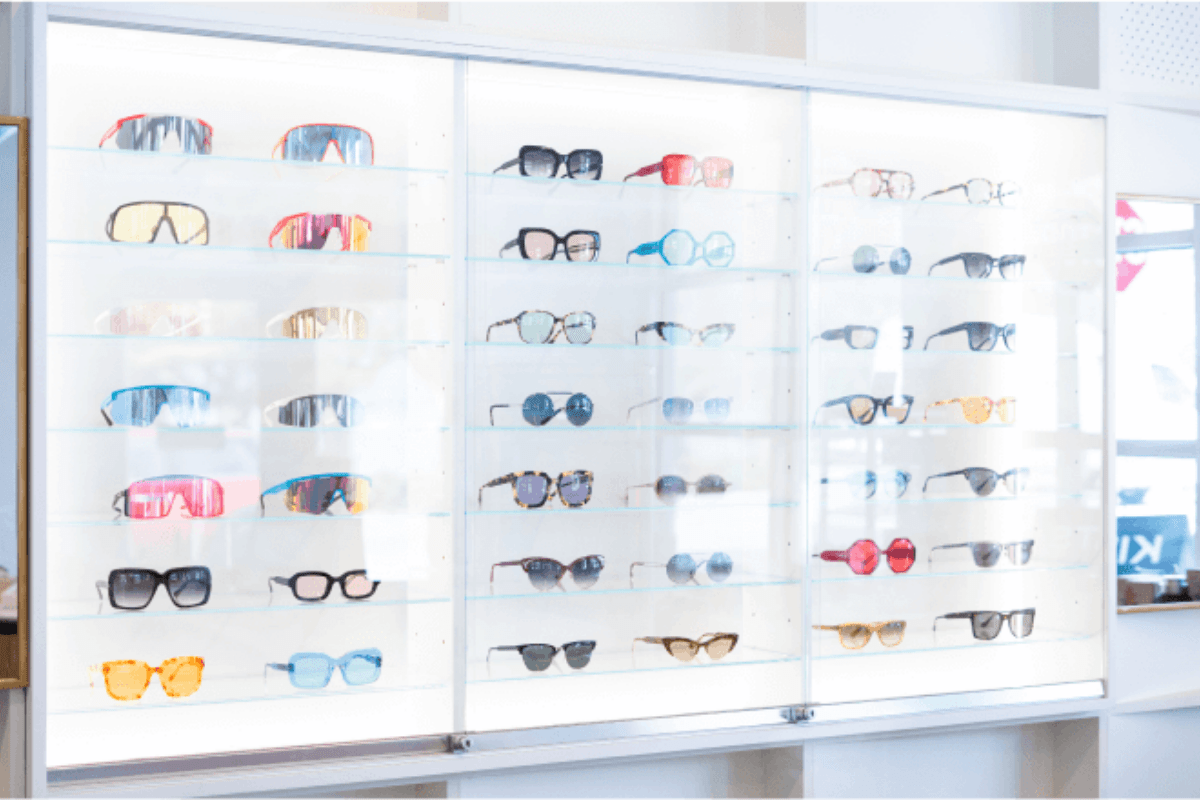
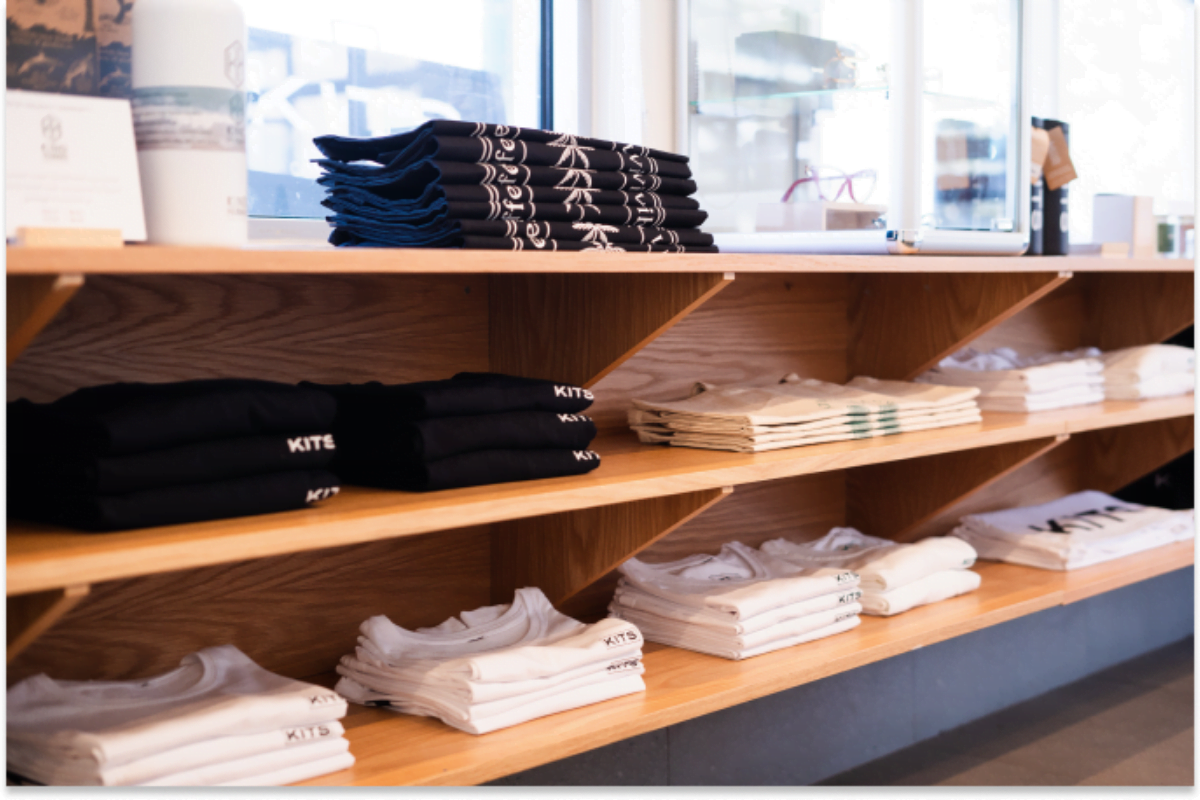
Image: Kits.ca
Image: Kits.ca
“And we get that into the carrier network right away so it’s in the customer’s hands within a day or two,” he said.
The company has customers coast to coast in Canada as well as a business in the US.
“But we’re growing most rapidly in Canada for sure. We serve customers in every province or territory over the last year and they’re all growing. The benefit of a digital footprint is we can reach customers across the country whether it’s through their insurance or whether they find us on site. We can get a pair of custom-made prescription glasses to them anywhere within a few days – or contact lenses.”
Yesterday’s mall was a place that acted as a shopping destination for consumers.
But the mall concept has evolved over the years and the mall of tomorrow will become more of a hub of daily life consisting of a social gathering place, food and entertainment, fulfillment and logistics, discovery and recreation – and of course shopping.
John Crombie, Executive Managing Director, Retail Services, Canada, Cushman & Wakefield, who gave a presentation on the topic at the recent Land & Development Conference in Toronto, said in his report that In 2015, 72.7 per cent of a mall was retail. By 2020, that had shifted with retail decreasing to 65.8 per cent.
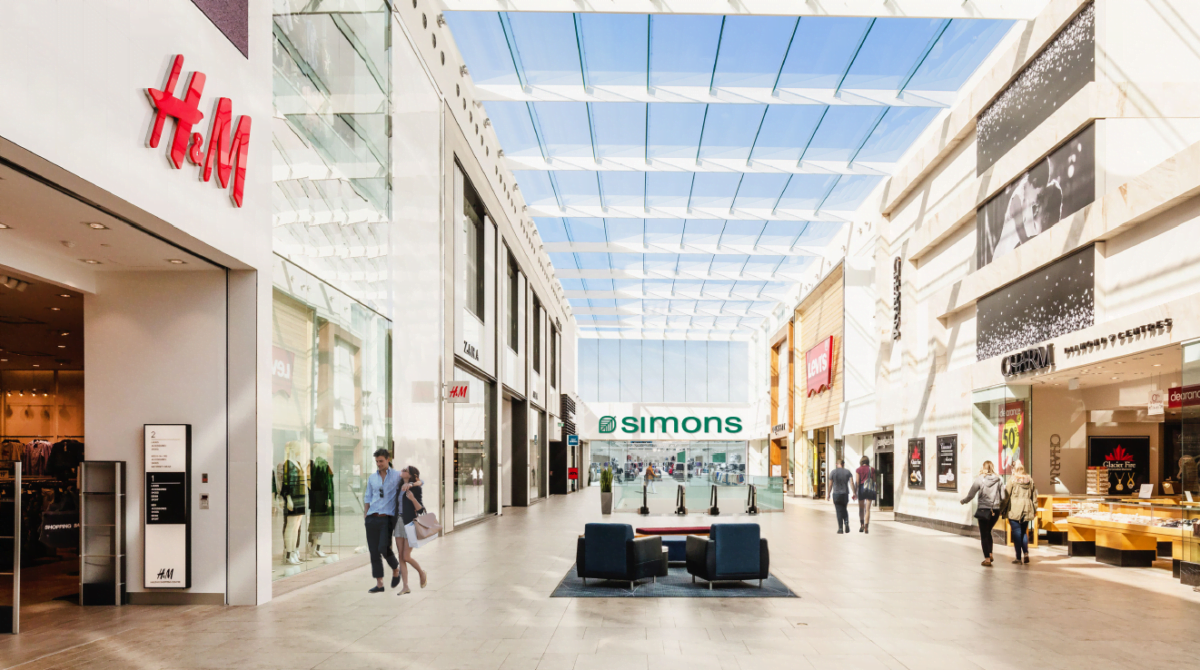
Rendering: Simons at Halifax Shopping Centre
John Crombie
“You’ve got to look at it historically where the mall originally was. The landlord owned it, rented the space to a tenant, a retailer, and then the retailer dealt with the customer. It was very linear in terms of its arrangement,” he said.
“I think now, and this is where technology has certainly come into play, and how landlords need to look at the business differently, the landlords now need to be and have been more involved with understanding the customer base in as much as the retailer understands the customer base. A lot of it has to do with marketing their properties. If you’re going to be attracting retailers, you have to understand who your demographics are, the customer profiles and then you want to ensure getting the right tenant mix. That there’s complementary retailers and there’s a lot of cross sales opportunities.
“Landlords need to get more engaged that they’re as much in the customer service as the retailers and it’s creating this environment that’s appealing to them. It’s as simple as having events which is obviously a great draw of business from Mother’s Day to Christmas events and Santa Claus, to having areas where people can enjoy times together and realizing that food is becoming a huge component of that.”
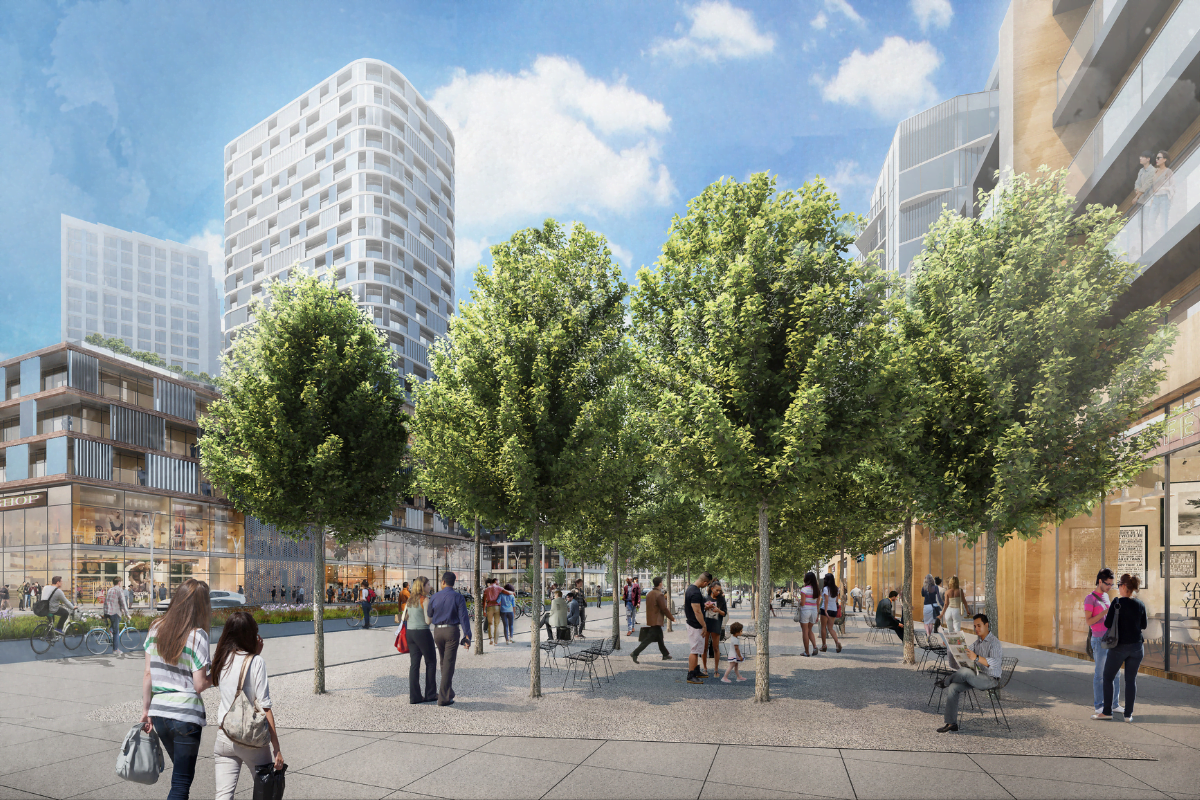
Lined with publicly accessible, diverse open space and a bosque of trees, the pedestrian promenade is a unique landscape feature which creates a connection between Etobicoke Creek and the new urban centre. (Image Courtesy of BDP Quadrangle / SvN Architects + Planners)
Crombie said landlords also have to pay more attention to the food mix in their properties.
Crombie’s presentation, What Lies Ahead For Retail Real Estate In Canada: A Look at the Current Market & Future Predictions, outlined the following predictions for the future of retail:
Tenant mix will shift to more non-retail uses and food;
Omni-Channel is the future for physical stores;
Upbeat on revenue growth for Canadian retailers in 2022;
Better efficiencies and technology in stores;
Long live the automobile in a post COVID world;
Shoppers will shift more spend to secondhand products;
More retailers will sell into the metaverse world; and
Revival of experiential retail.
Also, Crombie said that by default we’ve seen the shift in malls. While many retailers are all right sizing, they can be as productive in a smaller footprint. We’ve also had the demise in Canada and the United States of department stores with Hudson’s Bay being the sole remaining Canadian traditional retailer.
“And so as landlords, you have to look at that old dumbbell. A department store anchor on each side and shops in between. Well, without department stores what do you do? So you’re forced to look at smaller boxes or to eliminate that and move towards things that will drive people to your shopping malls to create that (foot traffic),” said Crombie.
“Unfortunately with e-commerce nipping at retailers’ and landlords’ sales, and that’s a big concern for them, how do they drive more traffic into the malls. They have to be much more understanding that they’ve got to be as much of a traffic driver as the retailers are a traffic driver.
“The best thing about retailers and landlords is that they have an ability to be innovative and try new things. Some things don’t work and some things do work. The pandemic as we all know has been the big accelerator for a lot of these changes. I still think the idea of a shopping mall to cater more to the last mile delivery, we need to do more of that in what’s happening in the malls. I think you’ll continue to see a huge growth in that area. The buzz word is omnichannel. From a landlord’s perspective, they also need to think more omnichannel.”
Crombie said the industry has missed out on the excitement of shopping in the last couple of years during the pandemic. That needs to be reinvented.
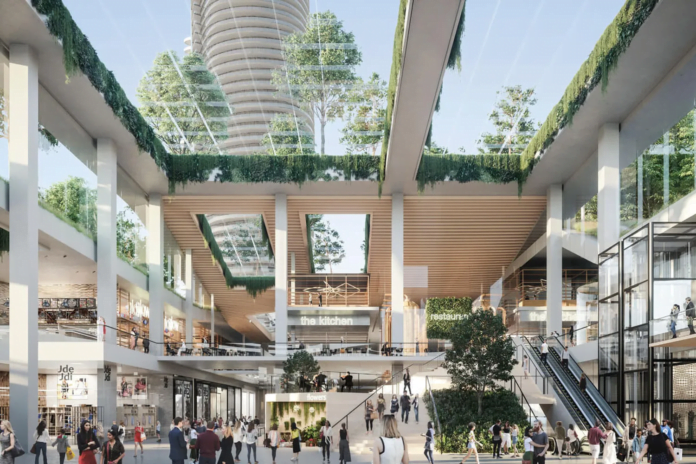
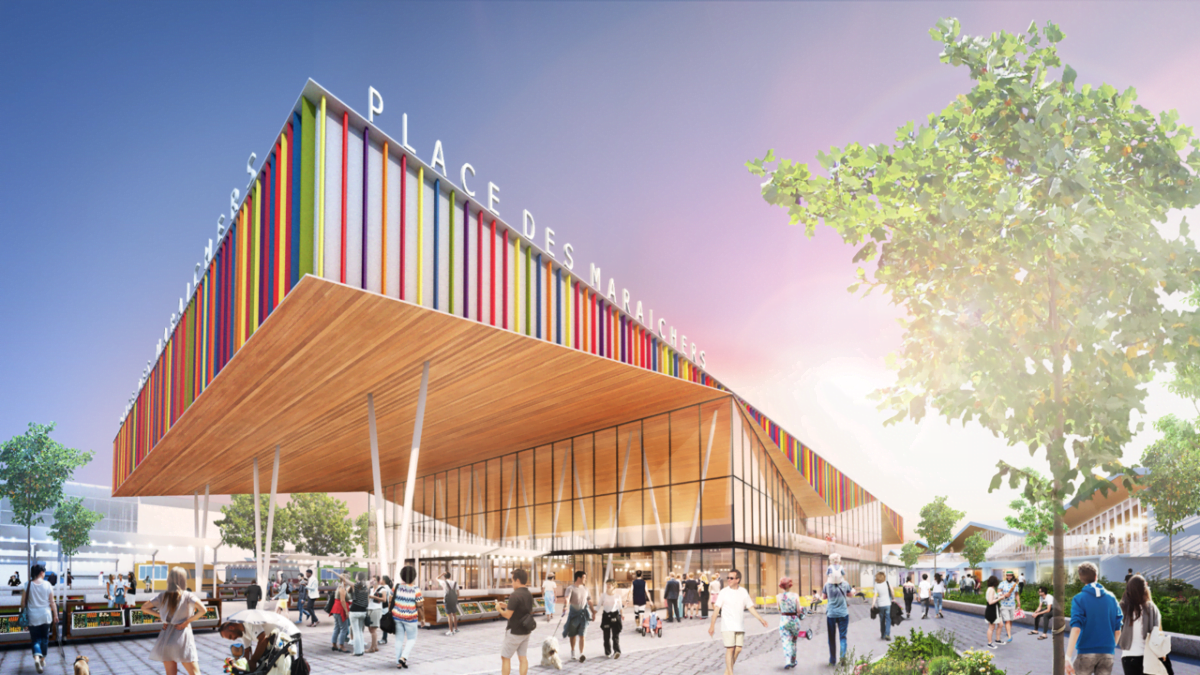
Marché Central (Rendering: QuadReal)
Also, one of the trends is mixed-use for shopping malls by adding multi-residential homes. And that will increase the asset value of those properties. The malls of the future could also have senior housing on their properties.
There will be more fitness centres as well as more drive-thru food and coffee establishments.
“About a year ago people weren’t talking about the metaverse and it was something that really wasn’t addressed and never really thought of. I can tell you that in the last six months everybody seems to be talking about it,” said Crombie. “In the metaverse world there’s people actually buying virtual real estate. There’s a lot of people in the gaming world and living virtual worlds in the metaverse and 2.7 billion playing it. This plays into the omnichannel. The metaverse is really just another extension of the omnichannel.
“It is hitting everybody’s radar screens.”
Crombie said experiential retail is very, very important.
Forever 21 Metaverse Shop City (Image: Forever 21)
“This is where back to being lifestyle architects as owners of retail properties we need draws to bring in (foot traffic) and there’s things you just can’t do online,” he said. “Experiential retail is the way to do it. It is definitely not going away and it’s nice to see.” He cited the Friends immersive exhibit at the Yorkdale Shopping Centre as an example of that.
Crombie also said short-term spaces will also be a trend. There were a record number of retail closures in 2020. That created vacant retail space, particularly in secondary and tertiary malls. Direct to consumer brands have been filling up the space as well as independents.
And Crombie said there’s a growing trend in high-end second-hand goods being sold through consignment.
“We see a huge growth area in that over the next couple of years,” he said. “There are issues that a lot of malls don’t allow second-hand products coming in there but I think retailers have got to realize that there’s an advantage to having some of these in there and the landlords are going to see some real growth in that,” he said.
Retail Insider is streamlining its Canadian retail news from around the web to include a handful of top news stories that can be viewed quickly during the day. Here are the top stories from the past 24 hours.
Video Interview: Summer A Critical Period For Canada's Restaurant Industry
Matt Davis, OpenTable Canada Country Director, discusses the importance of this summer for the well-being of Canada’s restaurant industry.
Davis talks about online reservations versus customer walk-in, the surge in international cuisine, how restaurants are expanding to be lifestyle brands, and the global guide Michelin coming to Canada.
The Video Interview Series by Retail Insider is available on YouTube.
Connect with Mario Toneguzzi, a veteran of the media industry for more than 40 years and named in 2021 a Top Ten Business Journalist in the world and the only Canadian – to learn how you can tell your story, share your message and amplify it to a wide audience. He is Senior National Business Journalist with Retail Insider and owner of Mario Toneguzzi Communications Inc. and can be reached at mdtoneguzzi@gmail.com.
Also check out the other series offered by Retail Insider, including The Weekly podcast and The Interview Series, which are both available on Apple Podcasts, Stitcher, TuneIn, Google Podcasts, or through our dedicated RSS feed for Simplecast and other podcast players.
While Canadians continue to feel the harsh pinch to their pocketbooks with rising costs across the board, that’s not impacting their appetite to spend money at retail stores, restaurants and bars in the country.
Recently, Statistics Canada reported that consumer inflation rose 7.7 per cent year over year in May, which was the largest yearly increase since January 1983. The federal agency also noted that the Labour Force Survey found that average hourly wages rose 3.9 per cent year over year in May, meaning that, on average, prices rose faster than wages in the previous 12 months.
Yet consumers are spending more today than before the pandemic.
StatsCan data indicates that retail sales in April 2019 were $51.429 billion, rising to $60.721 billion in April of this year. Sales at food and drinking establishments rose from $6.087 billion in April 2019 to $6.921 billion in April of this year.
So what gives?
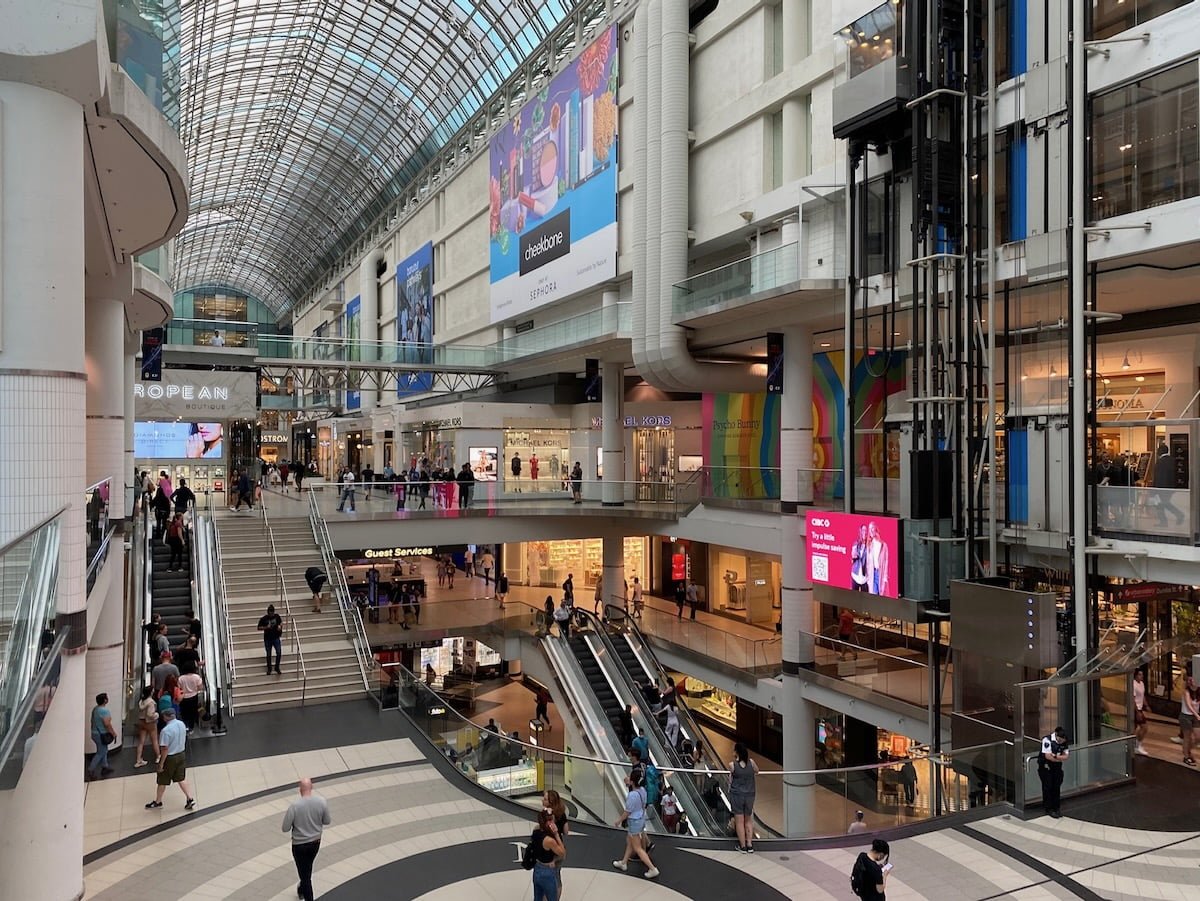
CF Toronto Eaton Centre (Image: Dustin Fuhs)
Michael Kehoe, a commercial real estate broker with Fairfield Commercial Real Estate in Calgary and a spokesperson for Consumer Real Estate Canada, said retail sales and consumer footfall at Canadian shopping, dining and entertainment venues are robust across the country to date in 2022.
Michael Kehoe
“Many regional shopping centres are enjoying double-digit sales increases as consumers are back with a vengeance as things have normalized after the COVID-related restrictions over the past two years,” he said. “This past Spring was a period of optimism, and we are likely headed into a summer of continued free spending and indulgence for many Canadian consumers.
“Moderate levels of consumer confidence and optimism are likely to continue during 2022 as world events, high energy prices, inflation and other concerns may be top-of-mind in the media, but it seems that these factors appear to not be affecting consumer behaviour in a negative way at this time.
“It is the best of times in the worst of times and retailers, restaurateurs and other entrepreneurs have adapted their business models in these post-pandemic days to suit ever-changing market conditions and Canadian consumer preferences.”
“After being unable to enjoy life with the pandemic, going out it’s no surprise it was going to take some consumers longer to adjust to some normal routines. But these routines cost more today than they did a year ago and even before the pandemic,” he said. “I would like to see the data on the consumers that are out spending. I would not be surprised that credit card debt and especially fast credit granting and almost free money with buy now pay later are likely fueling spending as well. A number of people I know had their credit card limits increased without asking for more credit.
George Minakakis
“There is no question in my mind that most consumers under 40 are not thinking about the implications of high inflation, after all they were not born yet since the last inflationary period like this one. And they have no context on how this can hurt financially and psychologically. And when I hear higher revenue numbers versus a year ago, I want to know what their sales were last year and how much has inflation impacted that sales growth and their costs. I am not convinced that all growth is as profitable as it used to be. Growth in restaurants should be double-digit as many were restricted in their operations last year. If you back out inflation it could be single digits. That’s not healthy.
“Is there a day of reckoning coming? Absolutely! If you can’t make those credit card payments it will be a problem. I also believe that buy now pay later will come back to haunt retailers as that could shrink up as things get tougher in the coming months. One of the problems is that a younger generation of consumers and retailers are too optimistic. They may think that inflation is their grandparents’ or parents’ problem from a generation gone by. However, all it will take is two to three purchases with buy now pay later plans to break the most inexperienced and optimistic consumers from spending further. Couple that with 50-60 per cent of Canadians saying they are a couple of paychecks away from not being able to pay their bill. I expect plenty of pain to come.”
Yorkdale Shopping Centre in Toronto on July 3, 2022. (Image: Craig Patterson)
Bruce Winder, author of RETAIL Before, During & After COVID-19 and President of Bruce Winder Retail, said we are at an unusual time from an economic and consumer behaviour standpoint. A period not seen for a few decades if ever.
Bruce Winder
“Inflation has roared through the world’s economies due to several factors including rising commodity and raw material costs – war in Ukraine, etc.- , rising freight costs – although I hear these are starting to level off- , wage increases and other input costs. At the same time economic growth has been muted and we find ourselves in a state of stagflation. Yet we are seeing consumer spending take flight in a few categories. Why?,” he said.
“I think a number of factors are contributing to this dynamic. After being restricted for two years, consumers can finally travel again, and they are making up for lost time. Also, with several white-collar workers being asked to return to the office, at least part of the time, they are spending on a refreshed wardrobe. Although one can argue that government stimulus supports have been spent, Canada’s unemployment rate is extremely low and supply and demand effects within the labour market have increased wages – but not enough to keep up with inflation as we are seeing more in the way of unionization and labour unrest. From a restaurant perspective, I think a number of people are sick of eating at home and want to get back out and socialize like they used too. Also, as interest rates rise, some consumers have given up on home ownership and are living it up in the short term.
“There are significant differences between customer segments within retail also. If you are a low-income consumer, you are limiting spending and buying more private label where possible. You are also deferring discretionary spending until things pick up again. If you are a more affluent customer, you are still able to enjoy many of the luxuries you had before the pandemic and although real estate and equity assets have lost some value, your disposable income remains high.’
When you take into consideration our current inflation rate nearing eight per cent, any sales increase numbers we are seeing need to be adjusted for rising prices and should be also viewed from a unit perspective, he added.
“From a retailer perspective I think we will see a contraction in retail unit sales but not necessarily a contraction from a retail dollar perspective. Most retailers have passed on input cost increases to retail prices, and then some in some cases, to protect margins/make up for lower unit volume. Value retailers within the dollar segment and the discount grocery segment will continue to thrive while middle retail will take a dive. Luxury retail will remain strong. Look for discounts on excess inventory within middle retail as chains mark down product overbought during the supply chain crisis felt during 2021. We will also see more retailers close doors as government commercial supports have stopped and small to medium sized retailers quietly shut down, with or without formal bankruptcy proceedings. New retailers will emerge to cater to the new post pandemic normal,” said Winder.
“E-commerce has taken a bit of a holiday from the growth enjoyed during the pandemic as customers rekindle their love affair with in-store shopping for a little while. This will reverse a little in 2023 when e-commerce begins to slowly start to grow again but not as fast as during the pandemic.”
New Balenciaga flagship at 92 Yorkville Avenue in Toronto on July 5, 2022. Photo: Craig Patterson
Kering-owned luxury brand Balenciaga has opened one of its its largest storefronts in North America at 92 Yorkville Avenue in Toronto. It’s also the first location for the brand in North America to feature a new distressed look that was recently unveiled with Balenciaga’s flagship store opening on New Bond Street in London.
The new Toronto store spans about 7,000 square feet over two levels in a prominent retail space once occupied by a Diesel store. The look of the Balenciaga store is “raw and dishevelled” with exposed concrete walls and flooring. Smooth floors in the former Diesel store were sandblasted to create a more industrial look, and even doors in the store’s dressing rooms were intentionally ‘scratched’ to create a distressed look.
The main floor of the store houses bags and accessories at the front with separated sections for women’s footwear and ready-to-wear at the back. An exposed concrete staircase leads to the second floor which houses men’s ready-to-wear as well as bags, accessories and a large footwear area. The south-facing retail space will be flooded with natural light on sunny days.
Front of the new Balenciaga flagship store at 92 Yorkville Avenue in Toronto on July 5, 2022. Photo: Craig Patterson Main floor of the new Balenciaga flagship store on Yorkville Avenue in Toronto on Tuesday, July 5, 2022. Photo: Craig Patterson Main floor women’s bags and accessories, photo: Craig Patterson Women’s ready-to-wear on the main floor. Photo: Craig Patterson
Being a global flagship store, Balenciaga’s latest designs are featured in the new Toronto store including a range of rare and hard-to-find items.
On Tuesday at noon the store quietly opened to the public. On Saturday July 9, a more formalized opening will take place which will include Champagne service and the store will be giving out red carnations, founder Cristobal Balenciaga’s favourite flower, which is something that Balenciaga did for the opening of its London New Bond Street store in London this spring.
For the time being, Balenciaga is keeping its roughly 2,000 square foot ‘world of’ concession at Holt Renfrew at 50 Bloor Street West, located a stone’s throw from the new Yorkville Avenue Balenciaga flagship. Balenciaga also currently operates a concession at Holt Renfrew in Vancouver housing men’s and women’s ready-to-wear as well as bags and footwear in a single ‘world of’ space.
Main floor looking towards the concrete stairway. Photo: Craig Patterson Close up showing exposed concrete on the stairwell. Photo: Craig Patterson Second floor area with elevator and seating. Photo: Craig Patterson Second floor dressing rooms with distressed doors. Photo: Craig Patterson
The Yorkville Avenue flagship is Balenciaga’s second standalone storefront in Canada. The first opened in December of 2019 at Toronto’s Yorkdale Shopping Centre in an impressive space spanning about 4,700 square feet with just over 3,300 square feet of retail space. The look of the Yorkdale store is very different than the new Yorkville Avenue flagship.
Balenciaga will continue with its Canadian expansion with two standalone stores set to open later this year in Vancouver and Edmonton.
Several other high-end retailers in Canada carry Balenciaga. Saks Fifth Avenue’s flagship at CF Toronto Eaton Centre in Toronto currently features an area for bags and accessories and womenswear and men’s collections are also available. Rumours are circulating that Balenciaga could pull out of the store following three other major luxury brands including Louis Vuitton, Dior, and Saint Laurent that exited the store months ago ahead of a store renovation.
Second floor men’s shoes and ready-to-wear. Photo: Craig Patterson Second floor men’s footwear overlooking Yorkville Avenue. Photo: Craig Patterson Second floor men’s ready-to-wear, photo: Craig Patterson Second floor men’s bags/accessories. Photo: Craig Patterson
Nordstrom’s Vancouver flagship features a Balenciaga accessory boutique on the main floor as well as a dedicated women’s Balenciaga boutique space on the women’s floor. Balenciaga footwear can also be found at Nordstrom’s stores in Toronto and Vancouver.
According to the Q1 2022 Lyst Index (the most recent at press time), Balenciaga was ranked once again as the world’s most popular brand while Gucci was ranked second. Balenciaga is also having an ongoing fashion moment — the brand returned to haute couture after 53 years last year, launched a Fortnite collaboration, and teamed up with Kanye West on the launch of his Donda album. Last year the brand also showcased its fashion collection in cartoon format at Paris Fashion Week via popular television program ‘The Simpsons’.
Yorkville Avenue is shaping up to become a significant luxury address for Toronto and more brands are on the way. Some names will be revealed at later dates and already there’s chatter that brands including Reformation and Zadig & Voltaire have already signed leases on the street.
Retail Insider is streamlining its Canadian retail news from around the web to include a handful of top news stories that can be viewed quickly during the day. Here are the top stories from the past 24 hours.
Friends fanatics are expected to boost retail traffic to pre-pandemic levels at Toronto’s top luxury destination once the immersive exhibit opens in mid-July.
“It is definitely an experience that we hope would draw people back into the shopping centre,” said Yorkdale’s director Will Correia, adding foot traffic volume is increasing every week and “getting closer to those 2019 numbers” of 18 million annual shoppers.
William Correia
That’s good news for “our retailers, our food and beverage tenants, et cetera,” he said.
The shopping centre is located at Highway 401 and Allen Road, spanning two million square feet. It’s managed by Oxford Properties Group, housing roughly 270 stores.
The 20,000-square-foot space being used for the Friends tour was home to the Marvel Avengers S.T.A.T.I.O.N. immersive exhibit last year, “so that space was a perfect location to continue with an experience there,” said Correia.
Visitors traveled from the Greater Toronto Area, London, Kingston, Ottawa and even out of province, he said.
Getting people back into Yorkdale Shopping Centre physically, then hoping they’ll stay to spend and eat likely won’t be hard for those simultaneously channeling their inner Rachel and Fat Monica.
The FRIENDS Experience at Yorkdale Shopping Centre (Image: Craig Patterson)
Fans of the syndicated NBC sitcom can visit starting July 14 and find the immersive experience across from the LEGO store. General admission is $44.50 plus tax.
Yorkdale is home to the Friends tour’s first Canadian location.
Linda Farha
That’s likely “because of its stature,” since the mall appeals to urban and suburban shoppers, said pop-up go founder and chief connector Linda Farha.
“It just certainly is an attraction to all.”
She’s not involved with the Friends exhibit but helps clients create pop-ups for brand activations.
The shutdowns in Canada due to COVID-19 have led to “incredible growth of all these immersive experiences,” Farha said, noting the shift from transactional exchanges.
Image: The FRIENDS Experience
Friends fans can saunter through 12 rooms – and even Chandler and Joey’s apartment – plus coffee shop Central Perk and the fountain from the show’s opening credits.
In terms of guest satisfaction, “I think it’s gonna increase it. I think it can only help,” Correia said. “It just adds another layer of the experience of coming to Yorkdale … I think it’s going to draw people in, just providing a complementary experience that they wouldn’t have gotten otherwise.”
Another major immersive event is taking place nearby at a different Oxford shopping centre: Square One in Mississauga, where the World of Barbie opens July 15.
Image: The World of Barbie
Image: The World of Barbie
Image: The World of Barbie
That’s an ideal location for families, Farha said.
Back in Toronto, the Friends exhibit is scheduled at Yorkdale until January 2, 2023.
“Sometimes these things carry on longer than we initially anticipate,” Correia said.
For those wanting to leave with something tangible, Friends merchandise will be available at a gift shop.
“We’re not aware of the partnerships but I wouldn’t be surprised if various retailers take advantage and come up with cross-promotions or other things that would work for both the Friends Experience and the retailer themselves,” he said.
There’s more on deck at Yorkdale this summer.
Another pop-up experience is ArtworxTO’s Carnival Portal, running until September 4.
It’s a partnership with the City of Toronto, featuring stories of Caribbean Carnival.
“We’re just looking for alternative things that we can do that’s going to bring the community together,” Correia said.
Then there’s fashion.
Future Cartier at Yorkdale Shopping Centre (Image: Craig Patterson)
A number of stores are expanding, including Bulgari, Browns, Burberry, Cartier, David Yurman, OVO and Tory Burch.
There’s an “abundance of leasing activity” from tenants “that are going to renovate their stores and are looking for temporary space, to new retailers looking for space in the shopping centre,” Correia said.
“So we’re quite fortunate and happy that there’s a lot of action happening.”
Yorkdale Shopping Centre (Image: Craig Patterson)
WHAT’S NEW AT YORKDALE
Fashion:
Emporio Armani*
Ganni*
Fendi (standalone store)
Acne Studio
Offline
Mango
Allbirds
Mejuri
Food:
TWG at Yorkdale Shopping Centre (Image: Craig Patterson)
Future Cafe Landwer at Yorkdale Shopping Centre (Image: Craig Patterson)
The unique Cafe Landwer establishment, specializing in Mediterranean and Italian cuisine as well as coffee, is expanding its footprint in Toronto with plans to grow the business even more in the coming years.
Eran Shram, CEO and major owner of the Canadian operations of Cafe Landwer, said the brand’s roots go back to 1919 in Germany as a coffee roaster. It expanded to Israel and then to Canada and the US.
“Today, we’re a roaster, a specialty coffee shop inside a restaurant,” said Shram. “We serve breakfast, lunch and dinner.”
Currently, there are five locations in Toronto and it is in the midst of renovating its sixth location set to open in the Yorkdale Shopping Centre. Shram said the anticipated opening of that location is September or October.
Future Cafe Landwer exterior entrance at the Yorkdale Shopping Centre in Toronto on July 3, 2022 (Image: Craig Patterson)
The first location in Toronto opened in February 2017 at 9340 Bathurst St.
In March, the brand opened its latest location at Yonge and Bloor.
“We’re a full-service restaurant and we also offer anything a specialty coffee shop would have. We went very deep into both fields of coffee and Mediterranean food,” said Shram.
“It’s very hard to go for breakfast and get a great latte today. Or a cold brew. If you go to a specialty coffee shop, we have probably as much or maybe even more offerings. We’re a specialty coffee shop within a restaurant and that’s hard to find.
“Also our breakfast is very unique. We go very far with our breakfast. The Shakshuka is a signature dish we have and we make it in-house. We’ve got a very tapa style breakfast that is also very unique. We’ve got very specialized dishes. We’ve done a lot of research and spent a lot of money in every category. It starts with coffee but breakfast, lunch and dinner as well. We’ve gone very, very far. We’re casual dining and it’s very good value for people.”
Image: Cafe Landwer
Image: Cafe Landwer
Cafe Landwer at 33 Bloor Street E
Landwer said the design of the restaurants are nice and slick. Future location growth would be based on how many the market would allow.
“Right now all our stores are in Toronto but we would look into doing some franchise stores as well,” said Shram. “Once we get outside of the GTA we’ll go to the rest of Ontario and then the next step we’ll figure it out from there. That’s kind of what we’re looking at right now.
“We want to do things right. Our expansion is fairly slow. I see ourselves in the next five years sticking to Ontario.”
Image: Cafe Landwer
Image: Cafe Landwer
The history of the brand is described on its website:
“From a small establishment in turn-of-the-century Berlin, to a modern day destination, the Landwer story is one of tradition and quality. In 1919, on a picturesque Berlin street, Mr. Moshe Landwer founded his first business, a small café which would soon become a magnet for the city’s socialites. Just a few doors down from the café, Moshe oversaw production at his own coffee bean roastery. His entire family worked there, helping to roast the finest quality coffee to be served to the patrons of his establishment.
“Our unique history and constant innovation helps us to continue establishing new frontiers for coffee, while we serve only the highest quality beans from ethically sourced destinations.
“Our insistence to preserve tradition, while ensuring love and care is put into every cup, is what makes us proud to serve you each and every day.”
Jeff Young is the Chief Development Officer for Cafe Landwer in Canada and is a point of contact for future locations in terms of strategy and negotiations.
Crombie REIT, one of the country’s leading owners, operators and developers of real estate in Canada, is incorporating sustainability considerations into all aspects of its business to meet key stakeholder and community objectives.
In its latest Sustainability Report 2021, the REIT, with a portfolio which primarily includes grocery-anchored retail, retail-related industrial, and mixed-use residential properties in Canada’s top urban and suburban markets, said it has improved its ability to measure its sustainability performance and impact on the environment.
It has also developed policies and procedures that will enable it to set targets and implement actionable processes necessary to achieve its short- and long-term sustainability goals. And the company said it has formalized and published Crombie’s Sustainable Development Policy, which commits the company to incorporating sustainability considerations into all aspects of Crombie’s development process.
Glenn Hynes
“In order for Crombie to successfully deliver on our sustainability commitments, we need to bring our stakeholders along with us on this journey and we need to convince each one of them that the trip is worth the cost,” said Glenn Hynes, Executive Vice President & Chief Operating Officer.
“We are partnering with our tenants to introduce smart technology that helps reduce our collective energy, water and waste impacts and ultimately, our costs. As part of sustaining their focus, Crombie REIT is working collaboratively with various stakeholders to combat key environmental issues in the real estate industry. One such initiative involves partnering with technologies focused on sustainable landfill leachate treatment. This process aims at minimizing harmful leachates resultant from landfills, substantially aiding environmental conservation.
We are partnering with governments to leverage sustainability incentive programs, and with industry to drive green building certification standards. Most importantly, we are partnering with our employees to help us build a better tomorrow.”
Le Duke located between the blossoming Griffintown neighbourhood and the charming Old Port of Montreal (Image: Crombie REIT)
In the report, Don Clow, President & Chief Executive Officer of Crombie, said the company’s goal is to create value by developing and operating properties in a way that enhances local communities and protects the environment.
“We are guided in our work by a strong set of values and business ethics, which help shape and strengthen our sustainability commitments. In 2021, we brought new focus and energy to our sustainability program and advanced a number of environmental, social, and governance (ESG) priorities,” he said.
Donald Clow
“We have enhanced our environmental leadership structure, welcoming Dan Bourque, as Vice President of Sustainability, to our leadership team. Formerly our Director of Operations – and having served as the President of BOMA Nova Scotia over the past four years, and a current member of BOMA Canada’s Board of Directors – Dan knows our business inside and out and is leading a team dedicated to lowering our environmental impact and reducing our carbon footprint. Together, we will identify opportunities where we can make a difference and set credible targets for sustainability improvements across our portfolio.”
That portfolio includes 270 open-air centres with a total space of 13.68 million square feet, five office properties at 954,000 square feet, five enclosed malls at 1.372 million square feet, 11 joint ventures and properties under development at 530,000 square feet and four retail-related industrial properties at 1.855 million square feet.
Zephyr (Image: Crombie REIT)
Empire owns 41.5 per cent of the REIT, which has $5.4 billion in fair value including properties held in joint ventures. It also has a $5.3-$7.5 billion development pipeline in future investment potential. And 96.2 per cent of the portfolio has committed occupancy.
“Going forward, we want to certify more space with trusted certification bodies, identify opportunities to introduce more renewable energy into our portfolio, and continue to enhance the health and well-being of our teams, as well as those who spend time in our spaces,” said Clow.
Dan Bourque
“We will continuously increase the transparency and accountability of our ESG and climate-related financial disclosures. The last few years have brought into focus the real-time threats of climate change, social unrest, and the impact of global pandemics. While we can never predict the future, we can prepare for it. At Crombie, we understand that climate concerns are accelerating and we must own and operate resilient and sustainable real estate assets that will stand the test of time. It is the passion, determination and ingenuity of our employees that allowed us to support our tenants and communities during another challenging year.”
Hynes said that in the company’s open air centres about 80 per cent of the carbon footprint is actually controlled by its tenants.
“We control the common areas. The parking lots, the lighting, etc. The consumption of water, electricity, waste, etc. for the tenant spaces is controlled by our tenants. So for that reason, a key part of Dan’s job as VP of Sustainability is going to be working with our tenant community to find ways that we in partnership can work through those 270 properties to reduce our carbon footprint over time,” said Hynes.
Image: Crombie REIT
“Since we only control 20 per cent we can only do so much. But we know we’ve got great tenants like Sobeys and lots of other great tenants in our portfolio that will be positive.”
Bourque said the focus is to operate with the least amount of environmental impact on the communities where Crombie’s properties exist.
“We’re trying to develop as sustainably as possible as we build new buildings and bring them online as well as operating and managing the sites we have. It’s becoming such a key. Our clients are asking for it. Our customers will be asking for it. It’s just that expectation that we really want to lead by example here in this space,” he said.
“It does make good business sense,” added Hynes. “But at the end of the day it is about the planet. We want to bring this down to every one of our 350 employees because at the end of the day, we can develop properties sustainably, we can operate properties, but it’s also what every one of us do in our daily lives . . . There’s so many little things that we can do and in the same way that our planet got to where we got to by lots of incremental little steps that were maybe not productive, now it’s the opposite.
“Now we want to get all of our team thinking about what their correction of the action can be to create a more sustainable future for our company and our planet. It is good business. Some of it is more expensive. We know that to build a green building today it’s going to be more expensive, but it’s the right thing to do.
Broadway and Commercial (Image: Crombie REIT)
“But there could be benefits. If we build better buildings, more green buildings, I expect our operating costs will be lower because they’re going to be better for energy consumption. We think we’ll be able to finance some of them cheaper. There’s some incentives out there to have better financing for greener buildings.”
Crombie has implemented an industry-leading ESG software platform – Measurabl – built exclusively for the global commercial real estate sector – to better track, measure, and report on its performance. It also has systems in place to track and report on metrics related to its occupational health and safety performance, employee volunteer commitments, the diversity of its workforce, and other core programs.
Its new Sustainable Development policy is the lens through which all development decisions will be made at Crombie with a commitment to reducing energy consumption and related GHG emissions, and to advancing carbon-neutral design in all new projects.
Crombie has several interesting initiatives in place.
For example, Bourque said the company installed its first two hives this past Spring, including at Scotia Square Complex in Halifax.
Scotia Square is celebrating 10 years of award-winning sustainability achievements and certifications. Over the last 10 years, the Scotia Square complex – which consists of seven buildings covering over 14.5 acres – has reduced energy consumption by over 33 per cent, or almost 18 million kWh, said the Crombie report.
It has reduced water consumption by over 33 per cent, or over 19 million gallons. With the installation of motion sensor lighting in the office tower stairwells it now saves almost 300,000 kWh/year. It recycles an average of 235,000 pounds of cardboard and 260,000 pounds of paper products every year. A complete lighting retrofit in the CIBC Building saves almost 400,000 kWh/year. Its Bike Room has earned the title of Most CyclingFriendly Landlord from the Halifax Cycling Coalition. The parkade features car charging stations, dedicated carpool parking, and is bullfrog powered with 100 per cent green energy. A lighting retrofit in the parkade saves over 1,000,000 kWh/year. Additionally, since the 2019 installation of Ecopilot®, an AI system used to predict the current and future requirement for heating and cooling in a building, Scotia Square has achieved HVAC energy savings of 19 per cent, HVAC cost savings of 17 per cent and a CO2 reduction of 1,215 metric tonnes.
In 2020, Crombie completed the $111 million redevelopment of the Avalon Mall, in St. John’s, Newfoundland, which covers 53 acres of land. From the outset, it designed and rebuilt this retail mall with sustainability in mind. It introduced a number of energy efficiency measures, including lighting and mechanical upgrades, in order to reduce overall consumption.
Crombie is preparing a BOMA BEST submission for Avalon Mall.
Crombie undertook a number of sustainability initiatives for Avalon including: an LED retrofit and installed occupancy sensors in service corridors; the purchase of efficient HVAC units for new tenants; the installation of touch-free elevator access for health, safety and inclusion; the addition of green space and bicycle racks as part of the redevelopment program; the improvement of overall site accessibility and signalization, and the addition of a new 800+ vehicle parking structure to simplify vehicle flow; the diversion of waste through a clothing drive, collecting and returning refundable bottles and donating the deposit return to various community groups.