Retail Insider is streamlining its Canadian retail news from around the web to include a handful of top news stories that can be viewed quickly during the day. Here are the top stories from the past several days.
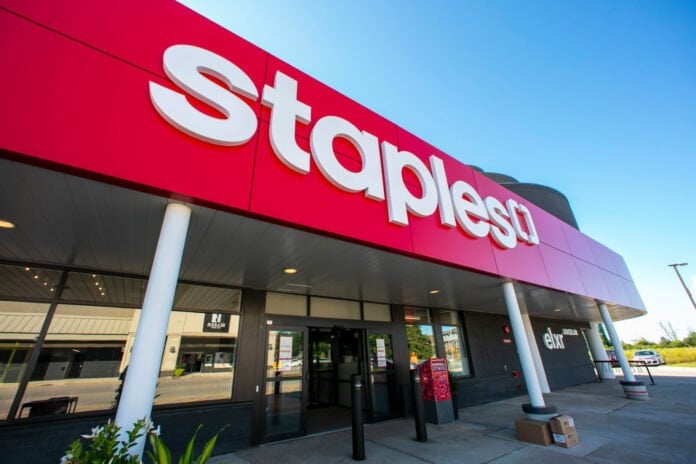
The retailer, which has branded itself as The Working and Learning Company, said the acquisitions are part of an ongoing strategy to continually improve support for businesses across Canada.
This acquisition will allow Staples to expand its product and service offering in Print and Marketing, Technology, Facilities and Commercial Furniture to Denis Office Supplies and Furniture and Supreme Basics customers. Jean-Guy Robillard, Vice-President of Operations for Denis Office Supplies and Furniture will join the Staples Canada leadership team.
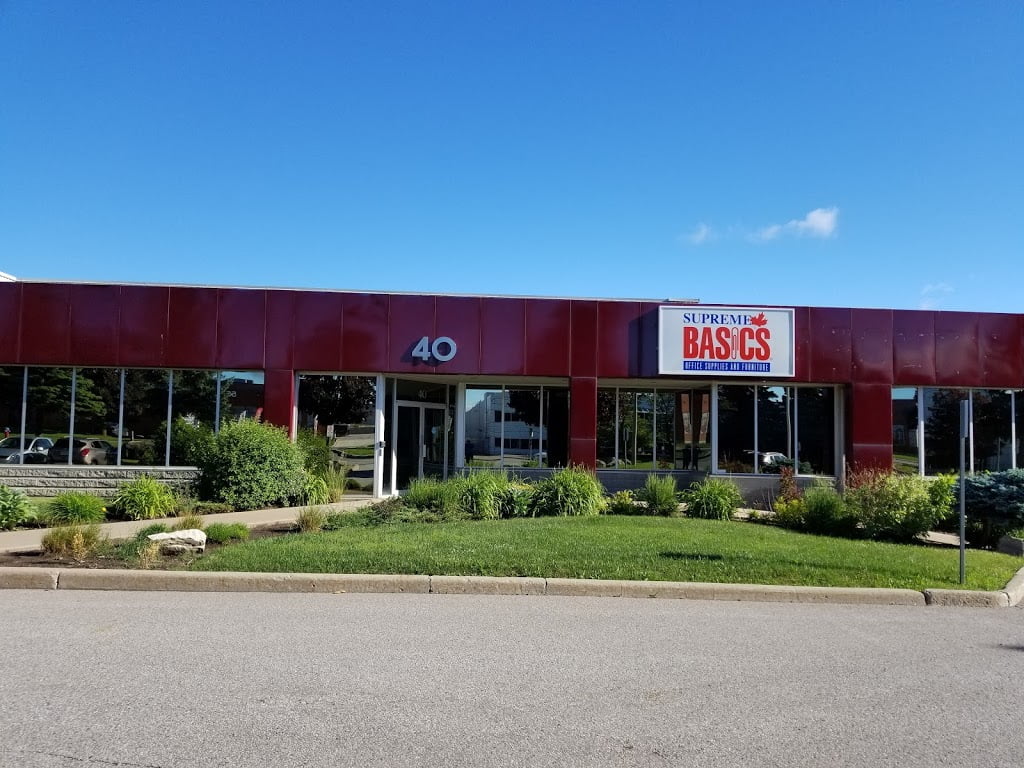
Image: Supreme Basics
David Boone
“We are pleased to partner with Denis and Supreme to bring together three exceptional Canadian brands to amplify the way we support businesses across the country,” said David Boone, CEO, Staples Canada. “In working together, we will strengthen and grow our product and services offering, while continuing to provide the exceptional customer service that our brands are known for.
“Staples is a B2B and B2C company. We found two terrific organizations that fit our B2B business. Incredibly well run with great staff. And we want to do a better job serving businesses in Canada. So we’re excited by that.
“The way people work is changing and so those organizations are going to add value to Staples. We think there’s a few things we can do to help their customers be more successful as well.”
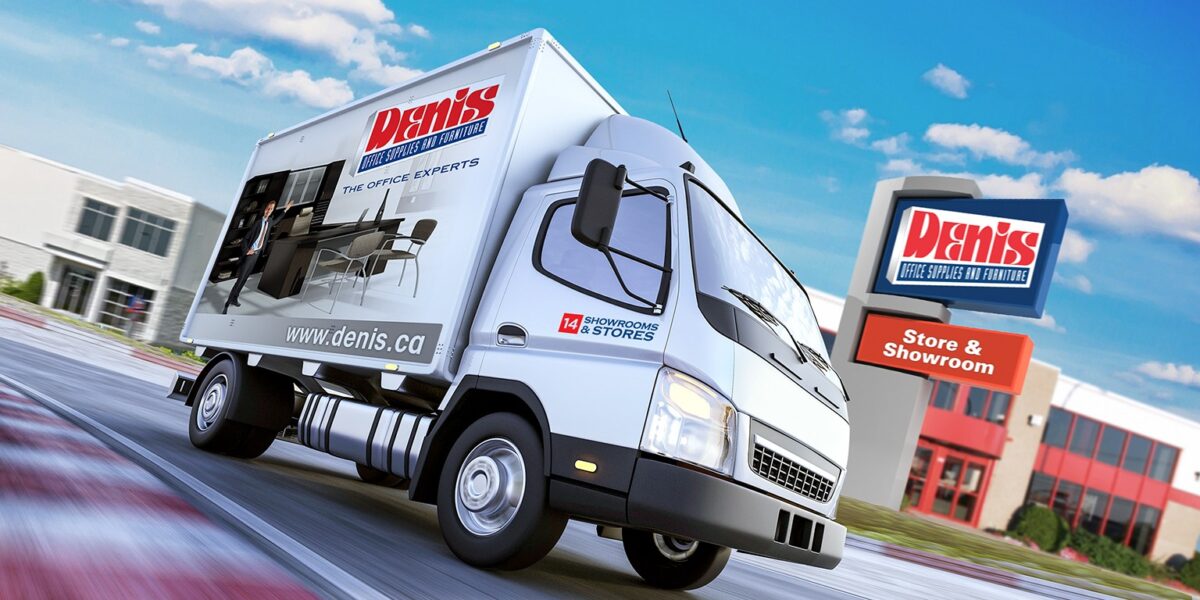
Denis Office Supplies and Furniture is a family-owned business founded in 1972 and the largest independent supplier of office supplies and furniture in Canada. It services business customers throughout Quebec and Atlantic Canada through its network of stores/showrooms and Fulfillment Centres.
Image: Denis Office Supplies and Furniture
Supreme Basics is a family-owned company in Alberta, Saskatchewan, Manitoba and Ontario since 1974. It has become an industry leader in office supplies and furniture, as well as learning products, legal products and wholesale distribution.
“What a lot of people maybe don’t know about Staples when they’re attached to coming into a store occasionally is that 85 per cent of businesses in Canada have a relationship with Staples,” said Boone. “One of our goals is to do a better job servicing business and use all of our assets to do that whether that’s retail, ecomm, our B2B sales teams, etc. So it is about fusing it together and growing in B2B.
“We started our transformation in 2018. We’ve been working on our store experience, our digital experience, in bringing those together. We’ve been working on our services, our merchandise. And now over the past 24 months, we’ve been really scaling and working on how do we bring the business community into these programs and make these programs come alive in our retail experience and in all of our experiences.”
Staples Canada in University District in Calgary (Image: Staples)
When asked if Staples would look at other company acquisitions, he said the retailer is currently happy with what it has.
“We will look at anything that’s available in the marketplace but we’re pretty content where we are,” added Boone.
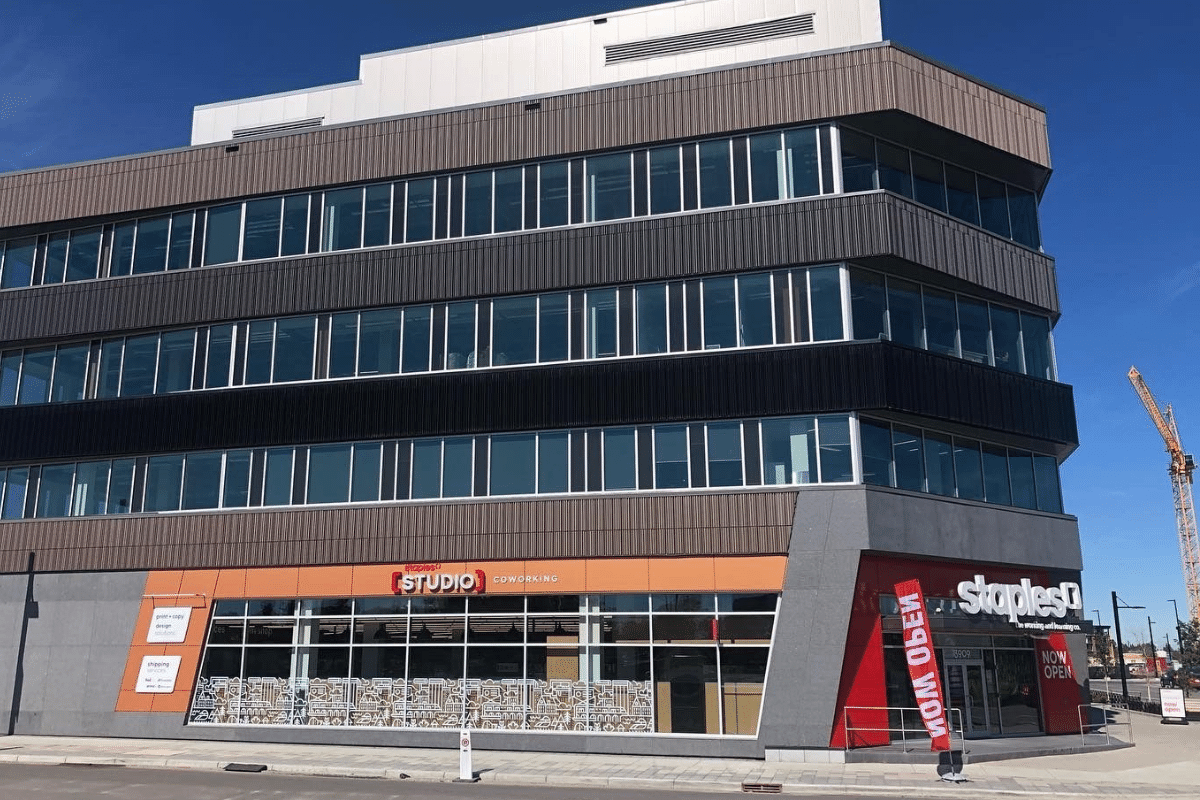
Staples has more than 300 locations. It has two brands that support business customers, Staples Preferred for small businesses and Staples Professional for medium to large-sized enterprises, as well as seven co-working facilities in Toronto, Kelowna, Oakville, Ottawa and Calgary under the banner Staples Studio.
“This is a great opportunity for our teams to offer more products and services to our valued customers, while creating winning conditions for our employees that will continue to ensure their success,” said Robillard. “Our customers will benefit from the additional support and resources that our combined resources will provide.”
Michelle Micuda
The retailer said Staples Professional customers will benefit from an expanded assortment of Education and Legal products from Denis and Supreme. The acquisition will also expand the supply chain for the three brands with an expanded delivery and furniture installation network, broadening the ability to reach more customers effectively and efficiently.
“We are excited to provide customers with an unparalleled product and services assortment to support them when, how and where they want to meet us,” said Michelle Micuda, President, Staples Professional. “This partnership reaffirms our commitment to our customers to provide the deep expertise and exceptional customer service that they have come to expect.”
Altitude Sports, a Canadian ecommerce retailer, is looking to expand its product selection, ship products globally, and the company as launched its own brand.
Alexandre Guimond
CEO’s Alexandre Guimond and Maxime Dubois took over the company in 2011, dedicating their time to find and create the best brands and to provide exceptional customer service even without a physical storefront.
Altitude Sports was founded in 1984 and was under different ownership. The retailer had a physical storefront on St. Denis Street in Montreal and in 1999 it was the first in Canada to have an online sports store. Guimond and Dubois were both employees of the store and they eventually took it over. From there, the goal was to find products that were both functional and stylish. The last storefront of Altitude Sports closed in 2016.
“Max and I were high school friends and living together during our undergrad and started talking about this online business. We decided to jump into it,” says Guimond. “We needed to place everything into giving the best customer service experience online. Over time we have built a business, and today we are about 400 employees.”
Long Lasting Products
Image: Altitude Sports
Altitude Sports carries a variety of products including jackets, footwear, and clothing in Men’s, Women’s, and Children sizes. Guimond said that the retailer has also expanded its equipment gear to include products such as snowboards, skis, and gear for water sports, while working to add bikes in the near future. Their main goal is to be able to provide exceptional products that will look great and will last a long time.
“We make it our mission to provide the best possible products for our customers,” says Guimond. “Max and I compliment each other as I would investigate the durability of the products, and Max would look at the style. We often would argue about products, but at the end we realized the best way was to offer the best to the customer – selling products that looked as good as they were made.”
Maxime Dubois
At Altitude Sports, customers can expect to buy a jacket from this store that will last ten years or more. “And these products should still be in good condition as we deal with unique brands that are pushing the limits and finding better textile and durability,” says Guimond.
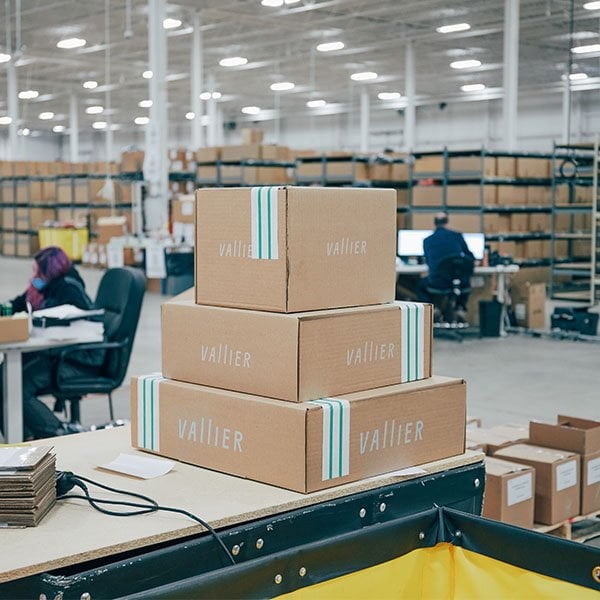
Customers can keep in style while enjoying the durability of the products whether the product is made to be lightweight, warm, or waterproof – it will be both functional, fashionable, and long lasting. Brands customers can find at Altitude Sports include Canada Goose, The North Face, Osprey, and Altitude Sports own brand, Vallier.
“Maybe a jacket should be a little longer or a little warmer and we are proud of the products we have built. For me it is amazing. After 30 years we have our own brand, and we are using our creativity to build our own products,” says Guimond.
Next Steps
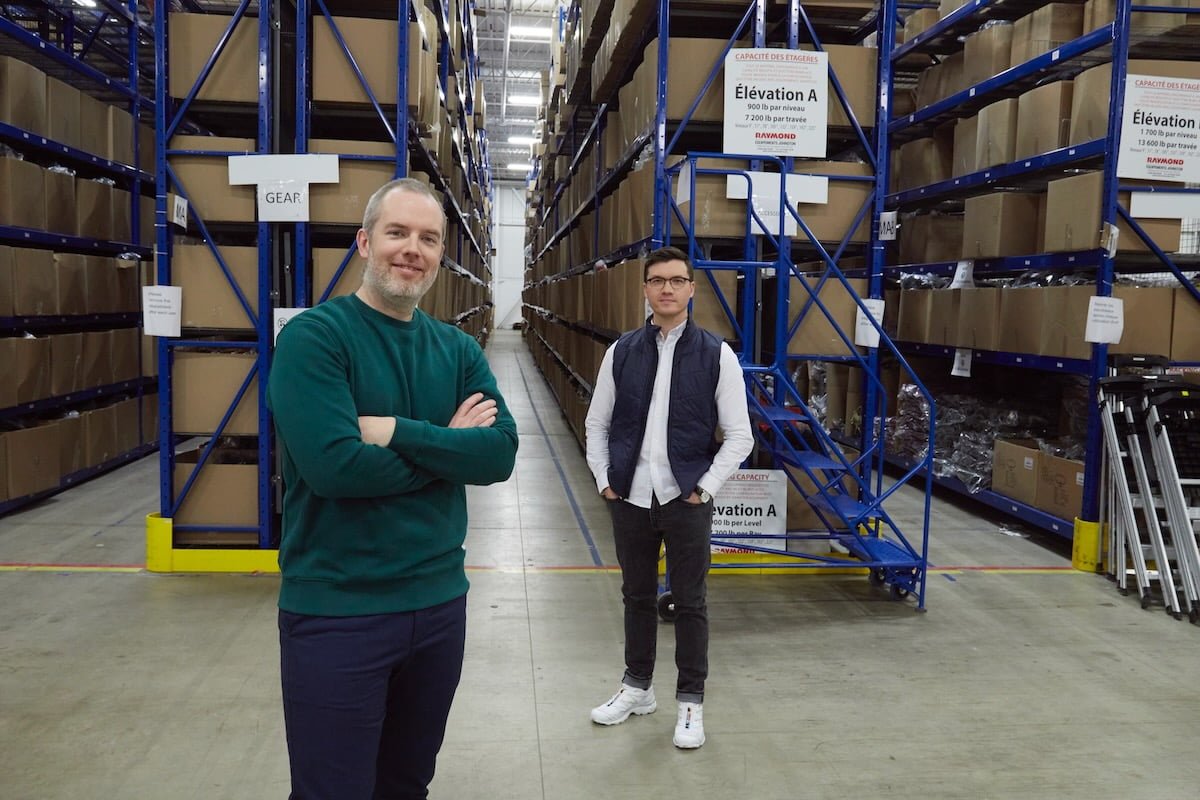
Maxime Dubois and Alexandre Guimond (Image: Altitude Sports)
Right now, Altitude Sports is 100 percent online; however, the retailer is looking to expand to have a storefront within the next few years. Until then, the company is looking at growing its products, providing variety for customers, reducing its carbon footprint, and is working on expanding globally.
“We have plans to go international within the next two years,” says Guimond. “In recent years, we have really wanted to focus on the Canadian market, but now we have customers reaching out from a lot of different countries. If we open international, we really want to make sure we maintain the level of the experience as in the Canadian market.”
Guimond says that the retailer is working on changing its systems, which includes having the right delivery system in place to maintain the fast delivery system they already have in place.
Currently for residents in Montreal the delivery is one day and for everyone else in Canada, it will be next day delivery. Guimond said they are hoping to keep the same expectations when opening in the United States; however, for Europe, customers can expect a two or three-day delivery wait which is still faster than most companies.
Image: Altitude Sports
Image: Altitude Sports
“That was always the dream we had. One of the limitations of ordering online is you won’t leave the store with it. But the same day or next day delivery really brings us close, so when you place your order, we will prioritize and ship it very fast. It brings excitement when you order as you know you will get it soon,” says Guimond.
Altitude Sports also has a partner site TheLastHunt.com where customers can find products at a discounted price giving another life to exceptional items from well-known brands.
Altitude Sports donates to several charities such as the Wildlife Preservation, Protect our Winters Canada, and The Trans Canada Trail through the retailer’s semi-annual Alti-Action initiative where they focus on nature conservation and climate awareness. Altitude Sports has raised over $580,000 since the initiative began in 2017.
“Our goal is to do better and introduce the world to better brands, better products, and to a company who cares about the environment and takes action,” says Guimond. “We are proud to say that we are a Canadian business, and we are very successful. We have significantly grown since we have opened, doubling in size every 2-3 years, and it is exciting and fun for us.”
Video Interview: Fashionably Old-Fashioned Butter And Ice Cream Crafted In Western Canada
Bill McKenzie, CEO, Foothills Creamery, discusses the company’s growing reach throughout Western Canada with its ice cream and butter products.
McKenzie talks about the history of the company, how it has grown over the years, future plans, the impact of the pandemic on business and his personal background in the craft beer industry and how it relates to his current role.
The Video Interview Series by Retail Insider is available on YouTube.
Connect with Mario Toneguzzi, a veteran of the media industry for more than 40 years and named in 2021 a Top Ten Business Journalist in the world and the only Canadian – to learn how you can tell your story, share your message and amplify it to a wide audience. He is Senior National Business Journalist with Retail Insider and owner of Mario Toneguzzi Communications Inc. and can be reached at mdtoneguzzi@gmail.com.
Also check out the other series offered by Retail Insider, including The Weekly podcast and The Interview Series, which are both available on Apple Podcasts, Stitcher, TuneIn, Google Podcasts, or through our dedicated RSS feed for Simplecast and other podcast players.
Retail Insider is streamlining its Canadian retail news from around the web to include a handful of top news stories that can be viewed quickly during the day. Here are the top stories from the past 24 hours.
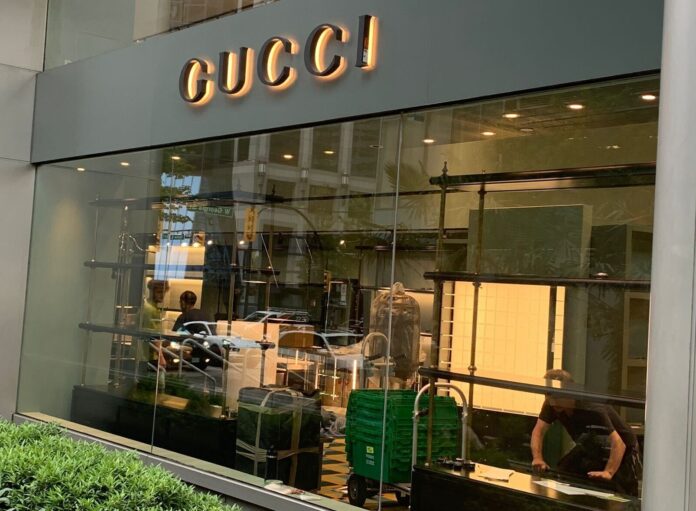
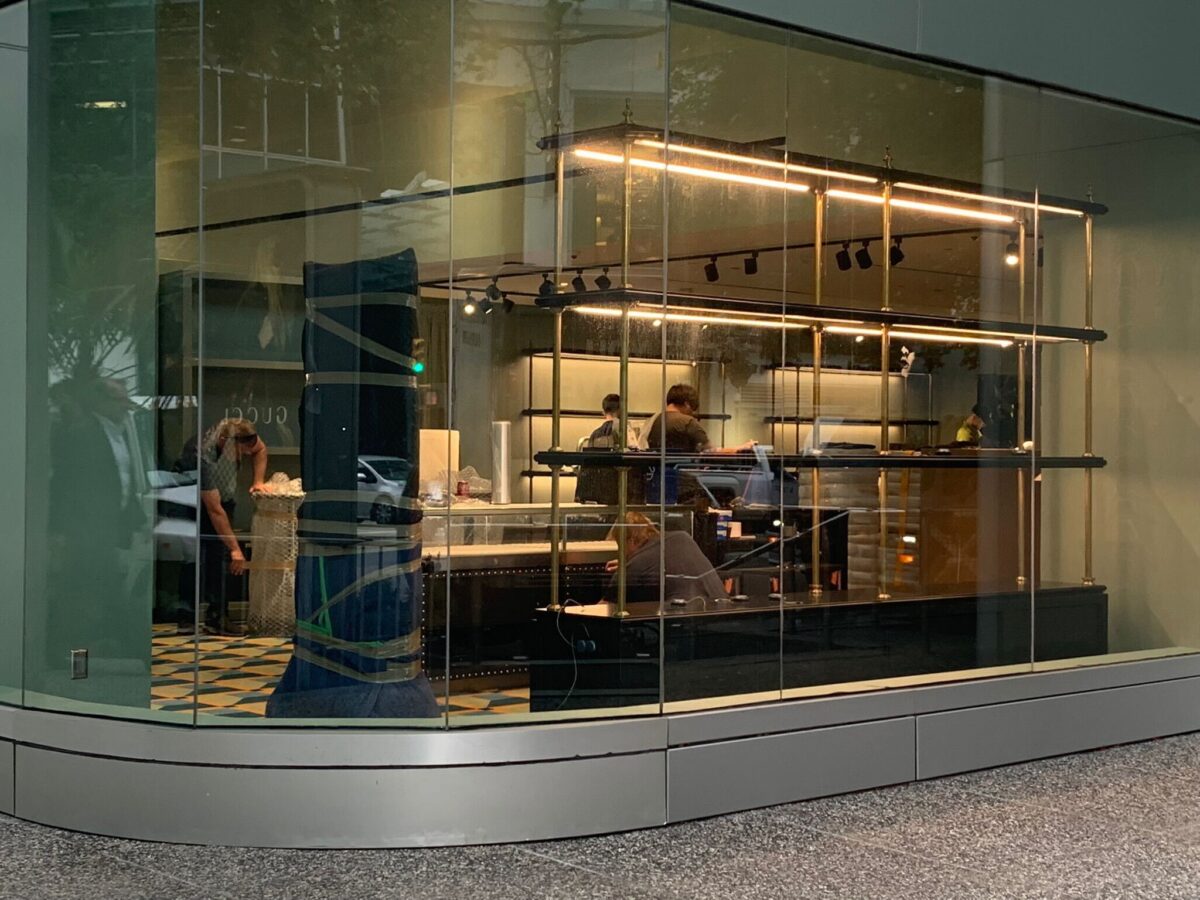
Movers inside GUCCI's pop-up location at Thurlow and Alberni on June 29, 2022. Photo: Retail Insider.
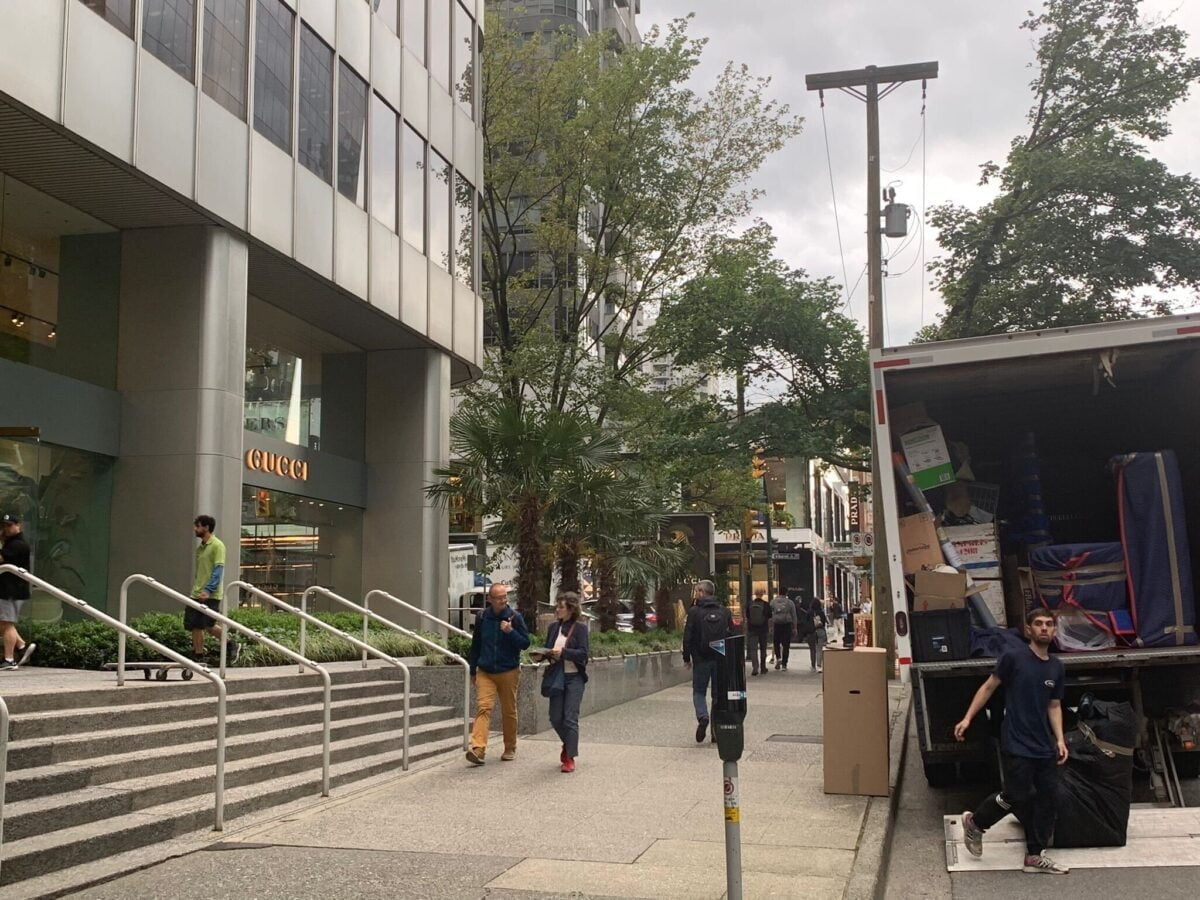
Retail Insider has noted Italian luxury brand Gucci is packing up its 710 Thurlow Street location in downtown Vancouver. The location in Vancouver’s prestigious “Alberni Luxury Zone” was reported in September 2021 as being a temporary location while renovations were underway at its new space at Hotel Vancouver.
Movers inside GUCCI’s pop-up location at Thurlow and Alberni on June 29, 2022. Photo: Retail Insider.Movers in front of GUCCI’s pop-up location at Thurlow and Alberni on June 29, 2022. Photo: Retail Insider.
Within the July 2021 report, Retail Insider also elaborated on the luxury brand expanding by annexing an adjacent space occupied by an Omega luxury watch boutique. The watch brand temporarily relocated to the basement in the hotel until reopening in December 2021 in its new space across the hallway from the new Gucci retail space on the main floor.
The former 3,900 square foot Gucci store, which opened in the Hotel Vancouver in 2006, annexed the 2,300 square foot Omega store next to it to create a flagship-sized 6,200 square foot location to house Gucci’s entire collection of ready-to-wear for women and men as well as bags, accessories, footwear, jewellery and other categories.
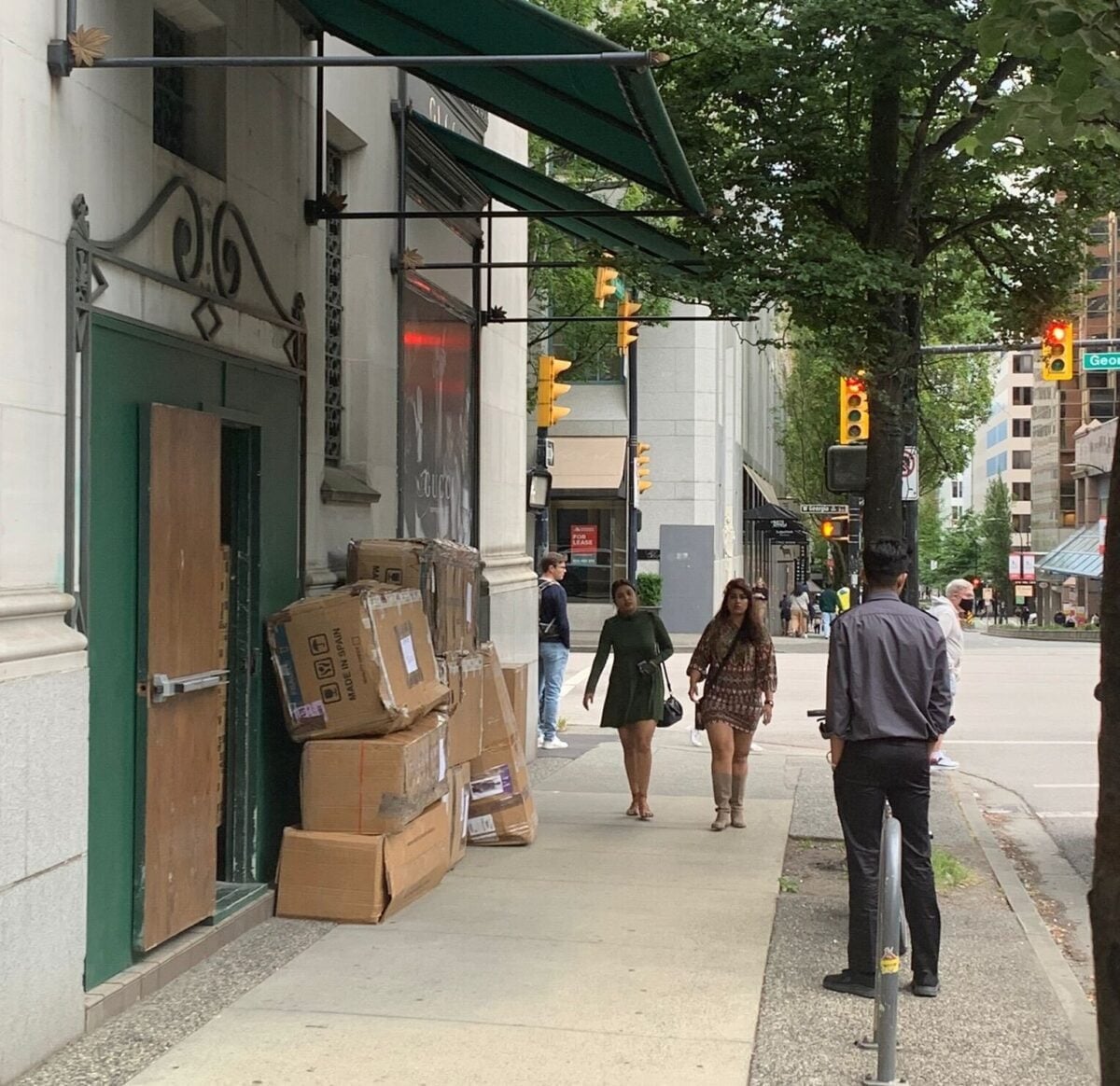
GUCCI inventory being brought back to Hotel Vancouver from the GUCCI Pop-Up on June 29, 2022. Photo: Retail Insider.
The expanded Hotel Vancouver store will feature Gucci’s most updated store concept that was recently rolled out with new Gucci stores at West Edmonton Mall in Edmonton and a renovated Bloor Street flagship store in Toronto. Interiors will be plush with velvet, marble and wood. The store will also add men’s ready-to-wear for the first time.
We will continue to monitor for details pertaining to the grand opening of Gucci’s newly expanded Hotel Vancouver boutique.
The past two-and-a-half years or so have proven to be an incredibly challenging time for many operating within the retail industry. Social restrictions, combined with public concern over health and safety, severely limited the efforts of merchants to drive traffic to their storefronts and provide a physical experience for their customers. However, as we slowly and methodically continue to enter what is being considered by many as the “post-pandemic” period – a time when communities everywhere approach closer to life as it was once enjoyed – there is renewed optimism within the industry as foot traffic returns to brick-and-mortar establishments. And, according to Annik Desmarteau, Vice President, Québec, for Ivanhoe Cambridge, it couldn’t be happening at a better time for many retailers and brands across the country.
“There’s no doubt that the pandemic forced a shift in consumer behaviour and preferences when it comes to the channels they leverage to shop and make purchases,” she says. “It prompted an accelerated digitization of the world around us and an increase in online activity and sales. But, for quite some time now, we’ve been experiencing a significant increase in foot traffic to stores, which is ultimately critical to the service they provide, the experience they offer and their ability to provide the type of physical engagement that helps drive loyalty among consumers. Driving physical traffic is even more critical for retailers operating in downtown urban locations, many of whom are dependent upon it for survival. After such a long period of uncertainty and challenge, it’s encouraging to see people returning to shopping centres and stores, providing a real boost for retailers and brands heading into the second half of the year.”
Repositioning Galerie PVM
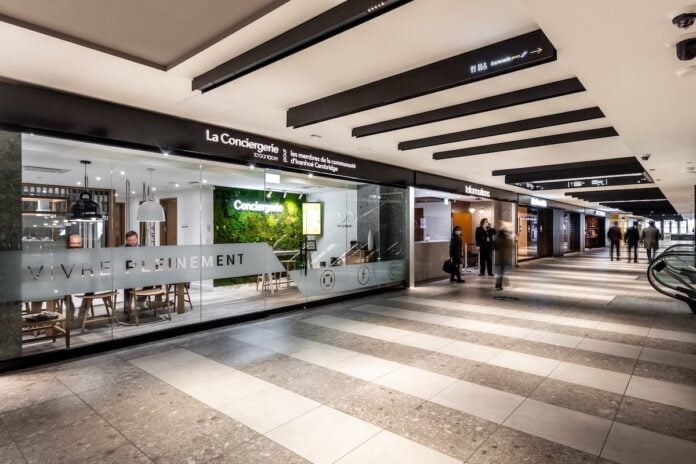
The return of footfall to Main Streets and downtown cores across the country is also encouraging to Desmarteau and her team who manages multiple properties, including Galerie PVM in Montreal. Built more than 60 years ago in the heart of the city – bordered by Cathcart Street, René Lévesque Boulevard, Robert-Bourrassa Street and Mansfield Street – the Galerie is an impressive office and shopping complex comprised of four buildings and an underground plaza. Serving as the official headquarters for Royal Bank of Canada, Place Ville Marie is already widely recognized as one of Montreal’s most prominent urban gathering hubs. And, in order to enhance its status and bolster the experience it offers its visitors, it’s currently undergoing an ambitious transformation that Desmarteau describes as an “exciting next step” toward the future of Galerie PVM and the retailers and brands involved.
“Galerie PVM is such a unique destination,” she asserts. “It’s right in the heart of the city. There are more than 12,000 people working within the office buildings. And, because we’re at the centre of business within the city, most people working within Montreal have to pass through the Galerie on their way to their offices. During the pandemic things were obviously a little different. We took the time to accelerate our plans to reposition Place Ville Marie and are really proud and excited to see the city has come back to life with foot traffic and activity now returning to near-normal levels.”
Upgrading an iconic destination
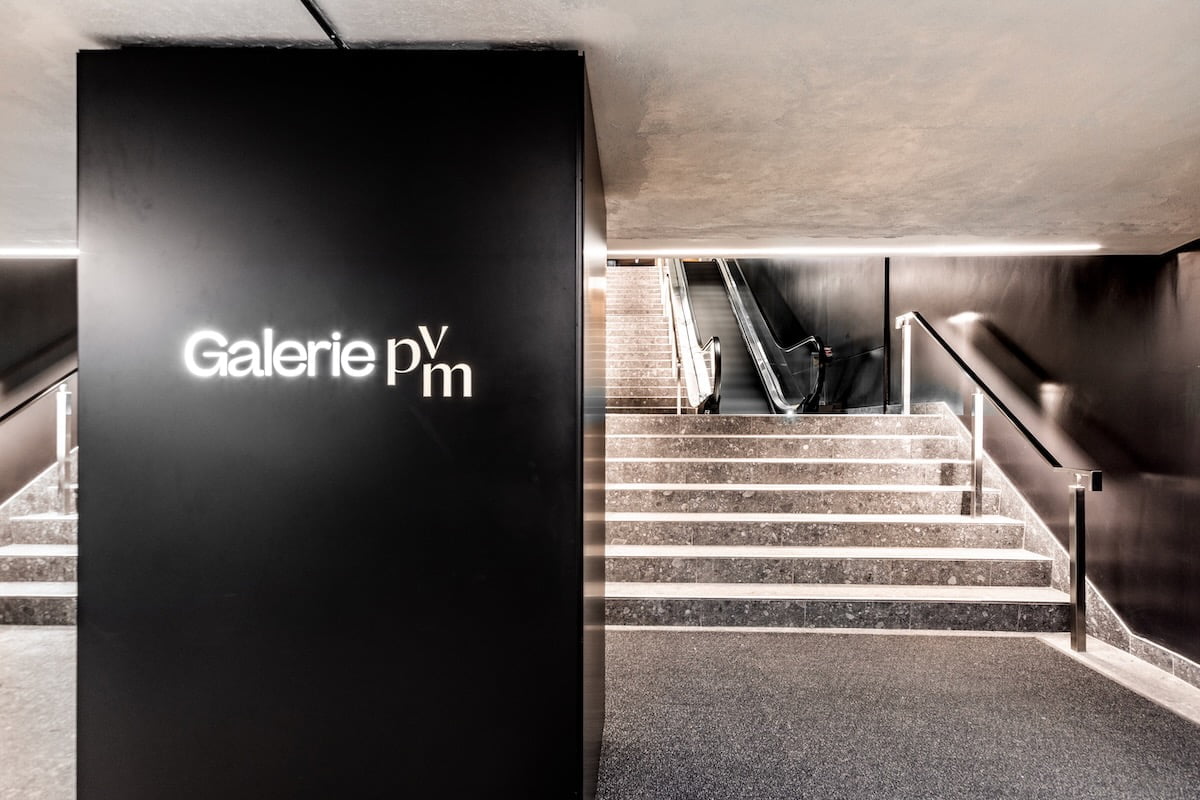
Galerie PVM (Image: Alex Parent)
The “repositioning” that Desmarteau refers to involved significant enhancements and upgrades made to the retail gallery. Surrounding a modern food hall concept, Galerie PVM has been designed to bring lifestyle, culture and cuisine together under one roof, offering its visitors an experience like no other. And, helping to support the execution of the Galerie’s retail component, Ivanhoe Cambridge has partnered with Aurora Realty Consultants. It’s a project that Jeff Berkowitz, Founder of the realty firm, says is a really appealing one to work on, adding that he and his team are proud to be able to help facilitate the evolution of one of Montreal’s most central and frequented sites.
“Place Ville Marie is iconic and was already very well-known throughout Montreal as a destination that is unique from most others prior to its redevelopment,” he asserts. “However, the enhancements that have been made really bring attention to the amazing retail and food offering that’s available within the gallery. The pandemic sort of halted almost everything within the industry for a while. And it’s taken some time to start to build momentum back up again. But as consumers begin returning to their favourite stores and shopping destinations, we’re making enhancements to the Galerie PVM offering, approaching the project with a two-pronged strategy. We need to make sure that we offer the goods and services that are needed by the tenants above. And, we also want to provide the retailers and brands that Montrealers will be most interested in as well as those that will provide an attraction for tourists to the city. It’s such an iconic destination right in the heart of Montreal. And so, the retail and food offering has got to complement that fact.”
Elevated retail offering
Berkowitz goes on to explain that because Galerie PVM does not offer the same size of shopping space that some other centres might be afforded, he and his team have got to get things right from a leasing perspective every time. They hope to build on an already impressive roster of retailers and brands on offer at Galerie PVM, which includes Browns Shoes, L’Occitane en Provence, ECCO Shoes, Moneysworth & Best Quality Shoe Care and more. And, to help support Aurora’s efforts, Desmarteau insists that there are further upgrades and improvements being made to Place Ville Marie – upgrades and improvements that she says are meant to ensure a constant flow of traffic to the area, providing maximum exposure for the retailers and brands in the gallery.
“The city is currently working on the entirety of McGill University Avenue, which runs from the gates of McGill University all the way to the parking and pedestrian entrance to the Place Ville Marie retail gallery, in order to introduce the city’s light rail transportation as well as to make it more pedestrian-friendly,” she says. “This is going to result in a beautiful, Parisian-type thoroughfare that will lead visitors right to the door of Galerie PVM, instigating a major shift in the feel surrounding the building. In addition, we have a lot of great plans to activate the esplanade above the gallery inside and outside of business hours over the coming months, bringing people to the area throughout the day and week, creating a community-type of atmosphere.”
Increasing foot traffic
They are additional embellishments that Berkowitz says will go a long way toward supporting the continued success of the retailers and brands with locations within the gallery, boosting the reputation of Place Ville Marie even further. And, best of all, according to Berkowitz, is the fact that the ongoing improvements which continue to create an even more welcoming and inspiring space for visitors only result in enhanced opportunities for prospective tenants. And that, he says, makes the development of he and his team’s proposition that much easier and straightforward.
“There is usually so much traffic that flows through Place Ville Marie on any given day that the value for any retailer or brand to be involved in the space speaks for itself,” he asserts. “However, the opportunities seem to be even bigger because of the tie-ins with activities, shows and performances that will be taking place upstairs. We’re in conversations with current tenants to find out how we can work collaboratively in efforts to look forward with respect to the vision of their particular business and services. And, we’re also bringing in new categories and players in order to further invigorate this amazing gallery of retailers and brands and carve out Galerie PVM’s appropriate place within the eclectic and diverse Montreal shopping ecosystem.”
Maintaining high standards
With respect to the work that’s been put into the repositioning of Galerie PVM, it’s easy to see why there’s so much excitement around the project. Berkowitz says that it’s one that is keeping his team on their toes, innovating to maintain the high standards that have been set through the years at Place Ville Marie. And, according to Desmarteau, they are standards that are helping to drive every decision that’s made with respect to the experience that’s offered by the extraordinary business and commercial complex.
“We’ve approached this project with the idea of making the shopping environment at Galerie PVM even more vibrant than it already was. By doing so, we’re delivering a first-class experience to our visitors that is unlike any other that they’ll find anywhere else in the city. Every decision that we’ve made so far has been thoughtfully arrived at, keeping the customer – the Galerie PVM visitor – at the centre of our focus. We’re really proud of the results of our efforts so far and are really looking forward to continuing our work to advance Place Ville Marie’s reputation as a world-class destination for everyone to enjoy.”
Video Interview: CF Chinook Centre Welcomes Back The Full Calgary Stampede Breakfast Experience
Paige O’Neill, General Manager, CF Chinook Centre, discusses the return of the annual Stampede Breakfast to Calgary’s most popular mall.
O’Neill talks about what the breakfast means to the shopping centre and the city, what is going to be there, its history, what it was like the past couple of years, and what’s new at Chinook.
The Video Interview Series by Retail Insider is available on YouTube.
Connect with Mario Toneguzzi, a veteran of the media industry for more than 40 years and named in 2021 a Top Ten Business Journalist in the world and the only Canadian – to learn how you can tell your story, share your message and amplify it to a wide audience. He is Senior National Business Journalist with Retail Insider and owner of Mario Toneguzzi Communications Inc. and can be reached at mdtoneguzzi@gmail.com.
Also check out the other series offered by Retail Insider, including The Weekly podcast and The Interview Series, which are both available on Apple Podcasts, Stitcher, TuneIn, Google Podcasts, or through our dedicated RSS feed for Simplecast and other podcast players.
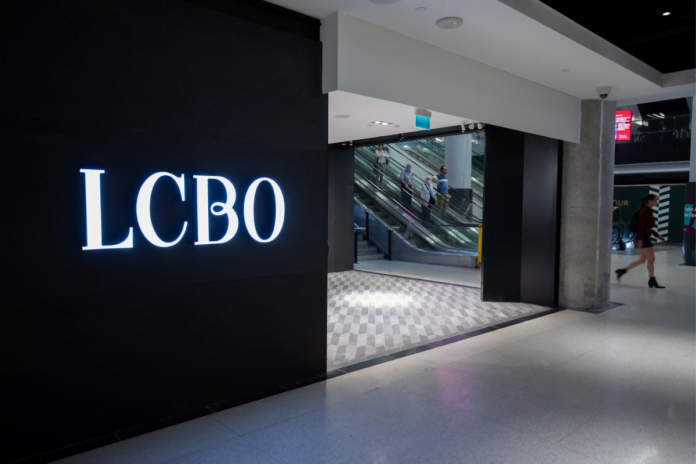
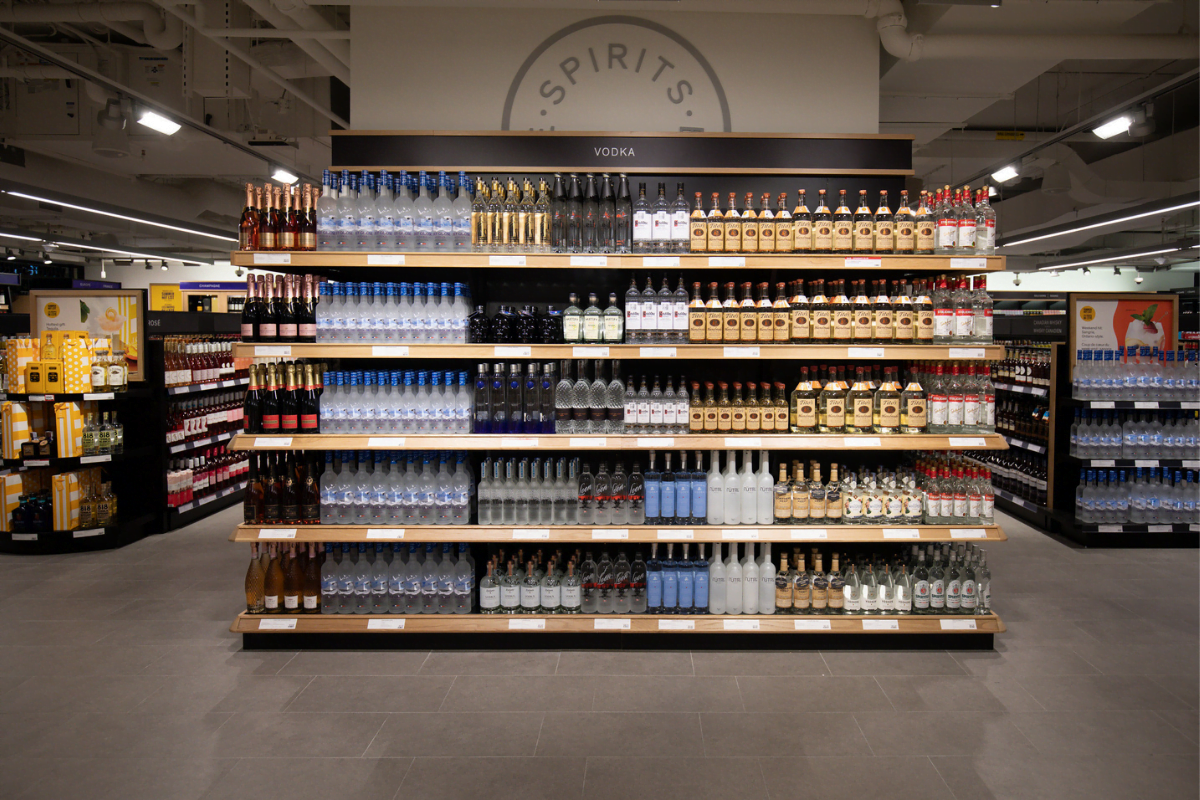
The LCBO has opened a 6,944 square foot storefront in the new Bay Street Promenade section of Toronto’s Union Station.
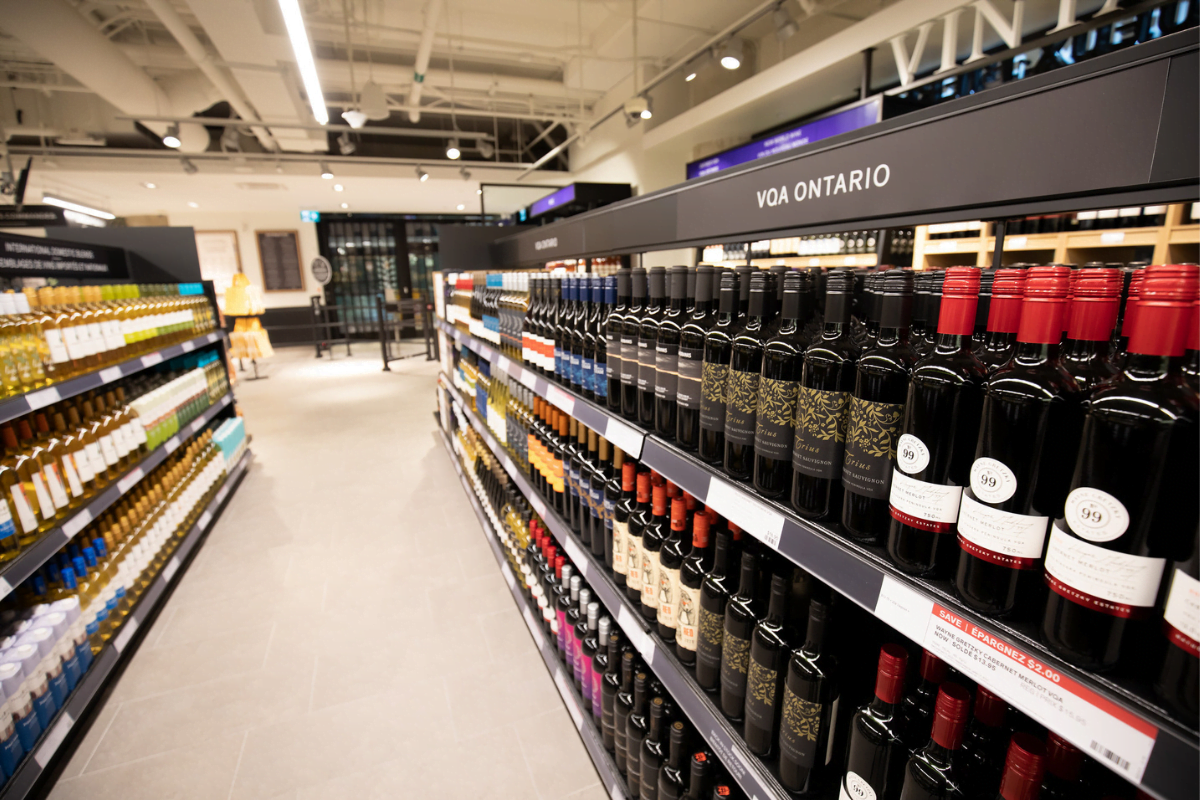
Servicing over 75,000 community members and 300,000 daily visitors, the location has 4,840 square feet of display space and features 144 linear feet of refrigerated space. Union Station LCBO also features over 1000 wines, spirits, beers, ready-to-drink cocktails and coolers.
The store offers Same-Day Pickup service: orders placed on lcbo.com will be ready for pickup at the store’s express counter within two hours (if in stock).
LCBO at Union Station (Image: LCBO)
LCBO at Union Station (Image: LCBO)
Joining Sephora, which opened last week, the LCBO is the latest brand to open in the promenade at Union Station. Over the next few months, the retail component of Canada’s busiest commuter hub will see a number of new stores and restaurants open, including Decathlon, TD Bank, The Queenston and % Arabica.
Union Station is seeing a massive multi-year overhaul which includes repositioning and redevelopment of the retail component of Canada’s busiest transit hub, which will expand to about 170,000 square feet of space when complete.
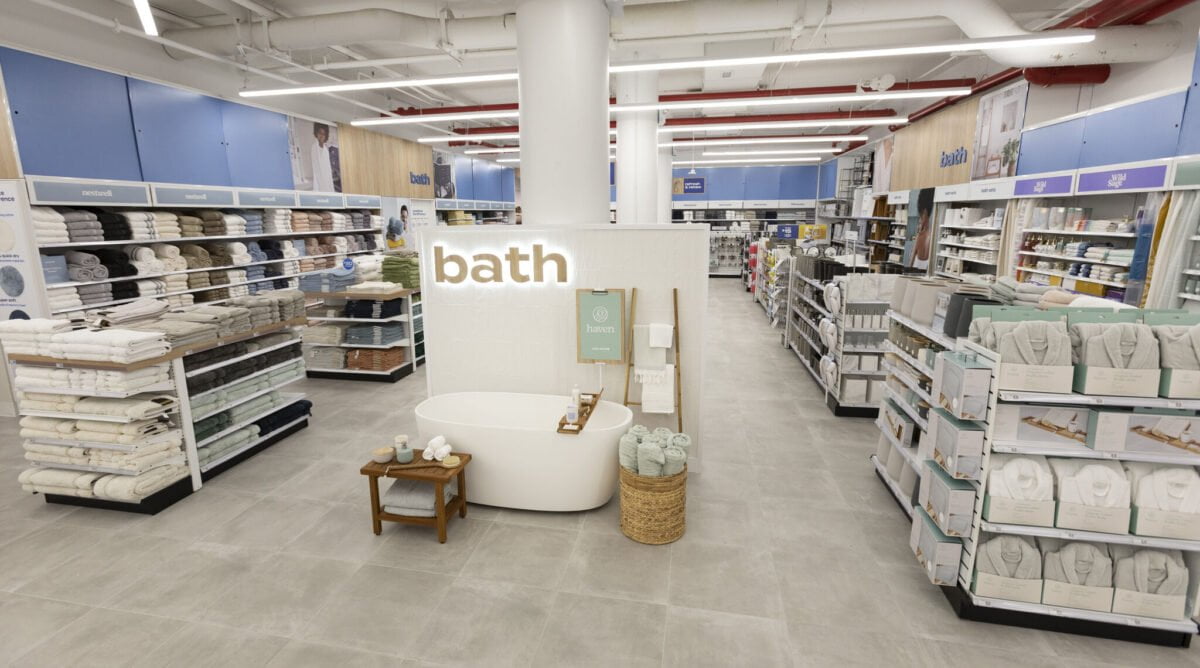
American retailer Bed Bath & Beyond has hit a rocky road in its retail recovery following the COVID-19 pandemic.
The company announced first quarter sales have plunged by 25 per cent compared with a year ago to $1.5 billion with a net loss of $358 million and it has made some management changes with Sue Gove being named as Interim Chief Executive Officer, replacing Mark Tritton who leaves his role as President and CEO and as a member of the Board.
Sue Gove
Also, news reports in the US have indicated the brand has reduced some store hours and reduced air conditioning in some stores to cut down on costs.
“I step into this role keenly aware of the macro-economic environment. In the quarter there was an acute shift in customer sentiment and, since then, pressures have materially escalated. This includes steep inflation and fluctuations in purchasing patterns, leading to significant dislocation in our sales and inventory that we will be working to actively resolve,” said Gove in a statement.
“The simple reality though is that our first quarter’s results are not up to our expectations, nor are they reflective of the Company’s true potential. The initiatives we are instituting today are just the first steps in putting our business on firm footing to drive our future success. I look forward to working with the Board, the management team, and our Associates to immediately address our supply chain challenges, market share recapture, inventory and cash optimization, and cost structure alignment.
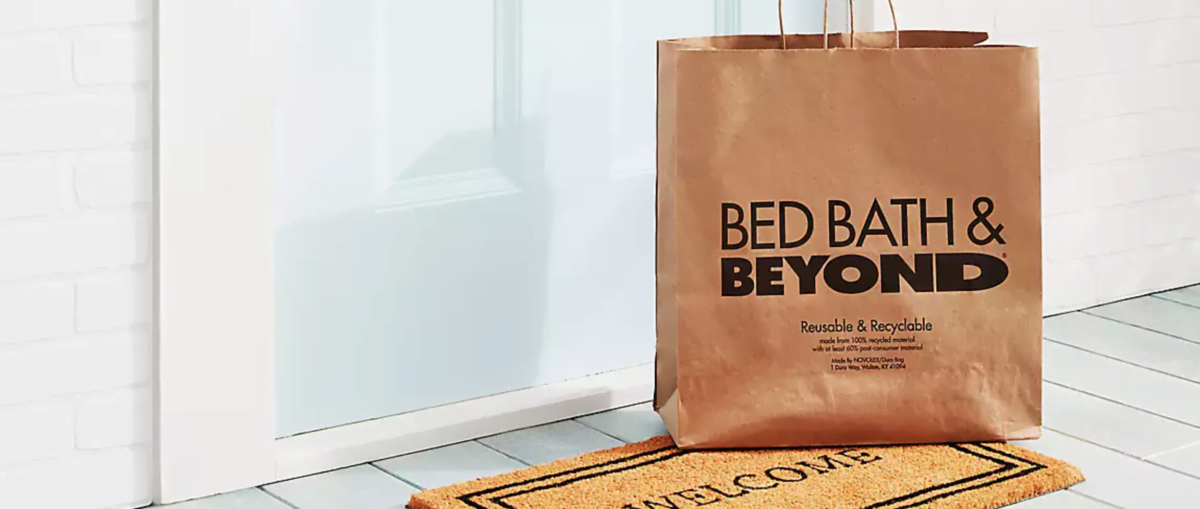
Bed Bath & Beyond now offering same-day delivery. Photo: Bed Bath & Beyond
“We must deliver improved results. Our shareholders, Associates, customers, and partners all expect more. We are committed to providing customers with a one-stop destination to meet their needs through our assortment, experience, and services, whether online or in stores. Top-tier execution, careful management of costs, greater supply chain reliability, prudent capital spending, a stronger balance sheet, and robust digital capabilities will all be important to our success. I’m eager to start working more closely with our leaders and our Associates across all banners to make the necessary strategy adjustments and create a brighter future for Bed Bath & Beyond Inc.”
“The CEO came in 2019 and ousted a number of executives. Granted that’s normal. Sales did increase after a dozen quarters of sales declines.
That was a low easy bar to recover from at least short-term. I have seen this pattern before. However, I also saw many of the press releases and that propped up the stock price. Apparently, they made a lot of new hires and fixed merchandising. Okay the basics were covered. Clearly that was not enough,” he said.
“It had me wondering where was “the new brand story” that they were going to inspire consumers with? Traffic clearly did not grow. They did not deliver a value proposition that defines them from all the other shopping options and channels where consumers can buy the same goods. For me that was the biggest failure adding in they did not have control of their supply chains as they had highlighted issues in some of their past quarterly calls.
“What’s next? There will be no Best Buy like recovery story here. Best Buy didn’t wait for their world to collapse; they entered the e-commerce world with the intent to keep their physical world relevant. And became a marketplace. I believe Bed Bath & Beyond missed that opportunity.
Certainly the pandemic, supply chains and the current economy weigh heavily. However, management and the board failed to address these strategic challenges effectively. The new interim CEO is a board director and that may demotivate existing management with no one being appointed from within.”
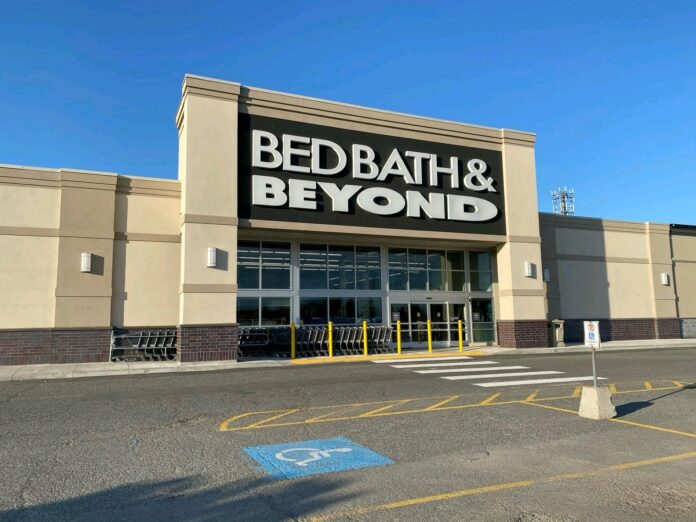
Bed Bath & Beyond in Mississauga (Image: Google)
Liza Amlani
Liza Amlani, Principal and Founder, Retail Strategy Group, said that the brand was on this path pre-pandemic with internal transformations to discover their core customer.
“BBB has always had a challenge with understanding their customer and developing a merchandise assortment strategy that can speak to right product at the right time. We saw this the last few years when they wanted to shift into more private brand development.”
“Their fire sale and drastic measures that were reported on today tells us they never did try to fix their merchandising strategy. It comes down to mismanagement and an inventory management problem. A brand cannot get closer to market their customer if they are not bringing the right strategists to change the way they go to market. If product doesn’t resonate with customers, they will always be in fire sale mode.”
“Once dominant in specific categories for soft home, the retailer out assorted department stores and discounters during the 90’s and perhaps the 2000’s. But the world changed and more of this business was moving to e-commerce while discounters like Target improved their offering significantly with exclusive brands and better value. Bed Bath & Beyond invested in e-commerce but was slow to obtain the payback needed to make the financials work,” said Winder.
“Sales started to soften, and activist investors circled the retailer forcing changes within management. A new CEO from Target gave hope to stakeholders, but the brand was already in a death spiral. As the pandemic comes to an end and consumers buy less home products in favour of travel and experiences, Bed Bath & Beyond’s troubles have found them again perhaps for the last time.
“I don’t see them making it long term as folks like Amazon, Target, Walmart, and Costco will get even stronger in this category as the world flirts with a recession.”
Image: Bed Bath & Beyond
Doug Stephens
Doug Stephens, Founder of Retail Prophet, said Bed Bath & Beyond has succumbed to something affecting huge swaths of specialty merchants today.
“That is that their bedrock value proposition – depth of assortment – is no longer unique or exclusive. Not that long ago, having an entire store dedicated to one or two categories was a unique competitive position relative to, at the time, department stores and general merchants. The internet and third-party marketplaces have obliterated that advantage – perhaps even turning it into a vulnerability,” he said.
“Now, even specialty merchants have to bring much more and differentiated value to the equation and Bed, Bath & Beyond has seemingly failed to discover what that new value is or could be.”
Michael Kehoe
Michael Kehoe, a commercial real estate broker with Fairfield Commercial Real estate in Calgary and a spokesperson for Consumer Real Estate Canada, said the sudden departure of Bed Bath & Beyond CEO Mark Tritton follows recent shakeups in the executive ranks at several other major retailers.
“Retailing is a ‘Darwinian Struggle’ and this is an example where the drive for market share, sales increases and profitability are commanding an immediate leadership change in the top ranks driven by an activist investor / shareholder in these times of disruption and difficult macroeconomic conditions. The new CEO will be tasked with enhancing the in-store and online merchandise assortment and the customer experience among other immediate challenges such as supply chain reliability,” he said.
In a news release, Harriet Edelman, Independent Chair of the Bed Bath & Beyond Inc. Board of Directors, explained the leadership change at the retailer: “After thorough consideration, the Board determined that it was time for a change in leadership. Our banner’s heritage is built on the premise that when customers are shopping for the home, Bed Bath & Beyond is the perfect destination for unique solutions and inspiration. We must deliver that proposition for customers, drive growth, and unlock the value of the banners. Today’s actions address company performance, the macroeconomic conditions under which we are operating, and the expectations of the Board on behalf of shareholders. We are committed to addressing the urgent issues that have been impacting sales, profitability, and cash flow generation. We are confident Sue brings the right combination of industry experience and knowledge of Bed Bath & Beyond’s operations to lead the Company, focus our resources, and revise strategy, as appropriate.”