Advertisement
Advertisement
Home Blog Page 857

Canadian Retail News From Around The Web For February 16, 2021

Canadian Retail News From Around The Web

Top Stories: National

Central/Eastern Canada News

Western Canada News

Special Edition 26: Growing a Small Business, Loa Skin Targets Canadian Retailers

An off-schedule podcast discussion with Tyler Yang, Chief Executive Officer at Vancouer-based Loa Skin. Craig and Tyler discuss the enterprise that he and his business partner, Spencer Angeltvedt, have expanded focusing on skincare with plans to expand the product into retailers in Canada.

Interview Details

The Weekly podcast by Retail Insider Canada is available on Apple Podcasts, Stitcher, TuneIn, or through our dedicated RSS feed for Overcast and other podcast players.

Subscribe, Rate, and Review our Retail Insider Podcast!

Follow Craig:

Follow Retail Insider:

Listen & Subscribe:

Share your thoughts!

Drop us a line at Craig@Retail-Insider.com. You can also rate us in Apple Podcasts or recommend us in Overcast to help more people discover the show.

Judith & Charles Introduces New Eco-Sustainable Coat as Part of Outerwear Expansion [Exclusive]

Judith & Charles new eco-sustainable coat. Photo: Judith & Charles

When discussing the highest-quality and most-adored women’s fashion brands in Canada, participants would be remiss not to include Judith & Charles among their conversation. Associated with the finest craftsmanship, a superior fit and style of elegant and essential taste, the Montreal-based womenswear brand has been excelling within the retail and fashion industries for more than three decades. By maintaining its commitment to consistently providing solutions to satisfy women’s wardrobe needs, it continues to cultivate a multitude of admirers, bolstering even further the already strong reputation it enjoys among its clients. In celebration of 30 successful years, and as a clever response to impacts that the COVID-19 global pandemic has had on its business, the brand recently made the decision to expand the range of products it offers to include outerwear, highlighted by a collection of 100 percent eco-sustainable coats which will be introduced in September 2021.

Loyal and Inspiring Customers

It’s a move that was a thoughtful one, according to the company’s President, Charles Le Pierrès. And it’s also one that he explains was inspired, at least in part, by the tremendous amount of support that the brand received from its customers shortly after the onset of the pandemic and the resulting store closures.

Judith and Charles Le Pierrès

“It was really quite amazing,” he says. “We received a lot of messages of support from the Judith & Charles community, urging us to focus and to remain strong through these challenges. It helped to remind us just how much our brand means to our customers and emphasized our obligation to them. I immediately increased my efforts, thinking of ways by which we could remain relevant during these very difficult times for the fashion and apparel industries while continuing to grow for the future.”

Adding High-Quality Value

Given that one of the mandates of the brand is to simplify the working woman’s life, facilitating confidence, strength, and comfort through its impressive line of businesswear, the task of remaining relevant during lockdowns and an emptying of urban office buildings seemed at first to be a monumental one. However, in thinking pragmatically about the needs of the brand’s loyal clients, Le Pierrès, who runs the business with his wife Judith, realized that although women may not be visiting their offices anymore or attending business meetings, they still want to get outside, and to look their best when they do. He describes the decision to expand the brand’s offering into outerwear as a bit of a reinvention of the company and an extension of its commitment to its customers.

“Though there have been many implications caused by the pandemic and resulting restrictions on business,” he laments, “For Judith & Charles, one of the more negative effects has been the decline in the need and reasons to wear suits and attire for the office. Because the numbers of people working in downtown cores across the country have been drastically reduced, along with social distancing protocols and the canceling of events and other gatherings, providers, and manufacturers of businesswear have suffered immensely. I knew that we needed to introduce something new to our offering. But the key was to create something that would complement what we already offer to our existing customers, adding value to our assortment, while maintaining the same high quality and style that they’re used to receiving from us. Once I developed the idea to produce a collection of winter coats for the brand, I quickly started to imagine the ways that we could not only grow as a company, but to do better as a company as well.”

Eco-Sustainable Collection

Hence, the new 2021 collection of Judith & Charles eco-sustainable winter coats was born. Produced using high-quality biodegradable fabric that’s free of harmful poly-fluorinated chemicals, the impact of the products lifecycle is significantly reduced. And, considering the fact that Judith & Charles specialize in the creation of investment pieces for the working woman’s wardrobe — stylish garments made with preserving quality — the decision to leverage more environmentally sustainable and friendly materials seems to be a perfect fit for the brand and what it represents. In addition, the down fill used in the making of the coats is recycled, reclaimed from used cushions, bedding and other items that cannot be resold. And, all of the packaging and accessories included with each coat is also 100 percent sustainable. It’s a product that Le Pierrès is extremely excited about, and one that he says represents yet another step forward for the brand concerning its commitment to its customers as well as the environment.

“Sustainable practices in fabric and garment manufacturing have been important for quite some time,” he says. “And the importance that companies place on their individual environmental impact continues to increase as we move forward. It’s always been something that we’ve taken very seriously. But it’s an area where we knew that we could make improvements, to do more as a company and a brand in order to reduce our fashion footprint and help create a better tomorrow for everyone to experience.”

Difficult Time for Apparel Retail

The decision to expand the brands offering through the inclusion of outerwear represents a bold statement by Judith & Charles during an extremely difficult time for the retail and fashion industries. According to Statista, the Canadian apparel market experienced a significant decline in retail sales as a result of the pandemic and associated restrictions, with year-over-year sales in Canadian apparel retail decreasing by 52 percent and 86.8 percent in March and April 2020, respectively. Further, marketing intelligence company, Trendex, which specializes in the monitoring of the Canadian apparel sector, has estimated that total retail apparel sales decreased 28 to 32 percent for the whole of 2020, with luxury apparel sales dropping an estimated 16.8 percent, adding that it expected the pandemic to result in 10 to 15 major apparel chains either closing or drastically reducing their retail footprint. Le Pierrès has plans to do neither, and hopes that the company’s pivot will reap dividends, helping it to withstand the impacts of the pandemic and positioning it for further growth.

Judith & Charles Store at 55 Avenue Road in Toronto. Photo: Judith & Charles

Despite its innovative thinking, however, Le Pierrès admits that the brand, like most others, has been challenged over the course of the past year, coping with government-imposed restrictions and drastically reduced traffic to stores. Operating ten locations across Canada, he says that there have been some ups and downs during the pandemic. The company has been forced to reduce its number of employees and the hours required by staff to service its stores. It’s also suffered what the company’s President describes as “huge” wholesale cancellations from some of its larger retail partners, putting further strain on its operations and forcing price markdowns in efforts to sell mounting unsold inventories. In addition, its proud tradition of being locally-produced has also come under pressure. As a result of the shuttering of Canadian factories, Judith & Charles have been forced to move some of its production outside of the country. Le Pierrès stresses the importance that the brand has always placed on keeping production local in order to support the Canadian economy, adding that it is doing everything it can to bring full production home as soon as it’s possible to do so.

Focus on the Customer

In light of these challenges, or perhaps in spite of them, Le Pierrès describes the past year as a time that the company has embraced as an opportunity to focus even more on their customers, shifting to meet their continued needs and finding new ways to engage with them. He says that it’s provided a bit of a learning curve, but is one that he believes the company has risen to with success.

“As soon as we had to close our stores during the first lockdown, we realized that we had to find a way to continue communicating with our customers, to keep them engaged with our brand and products,” he says. “We have increased our efforts on social media and with the distribution of our newsletter in order to achieve this. We’ve also introduced a virtual shopping tool and have customer care representatives and store managers available to address any questions or concerns that our customers might have concerning any of our garments. We’ve always enjoyed strong relationships with the Judith & Charles customer. But we’ve used our current situation as an excuse to strengthen those relationships further and to gain an even deeper understanding of their desires and preferences to continue enhancing the service we provide.”

Evolution of the Business

Another way in which the brand responded to store closures and a lack of footfall to its physical locations was through its accelerated omnichannel efforts. In order to meet continued demand for its product, demand reflected in a 45 percent growth of the company’s ecommerce sales, it ramped up its delivery and curbside pickup options. It’s all part of what Le Pierrès describes as a further evolution of the brand and the business, and a willingness of Judith & Charles to not necessarily welcome the challenges of its time, but to face them head on nonetheless.

“The business of retail is unpredictable at the best of times, in particular the business of fashion and apparel retail. It’s always been this way. Obviously, the current climate has posed some extraordinary challenges for Judith & Charles and the rest of the industry to step toward and overcome. But that is what retail is all about – adapting and innovating to continue meeting the needs of the customer in order to grow and succeed. It’s what we have planned for the near-term and beyond, focusing on our product and the extension of our outerwear collection, and constantly raising the bar concerning improvements to our brand and the experience that we provide to our valued customers.”

Commercial Real Estate Broker Grace Yan Announces Candidacy for Mayor of Calgary: Exclusive

Grace Yan's mayoral campaign poster
Grace Yan's mayoral campaign poster.

Well-known Calgary commercial and residential Realtor Grace Yan is throwing her hat into the ring to become the city’s next Mayor in the October municipal election, Retail Insider has learned.

“It is my belief that public service is a responsibility that we all share and we should all be willing to contribute our time and best effort toward the well-being of the community in which we live, work, and play,” said Yan, who will officially launch her campaign in the coming days.

“Muhammad Ali said it well, ‘Service to others is the rent you pay on earth’.

Having lived in the City of Calgary for over 40 years, and having worked in the business sector for 20-plus years, I am aware of the needs of the community, the resources available and am aware of the public concerns that face our city.

“My service to our community began 20 years ago sitting on various boards, having achieved the Distinctive Women of Canada, Women of Inspiration — Inspire Award and Mount Royal Alumni Achievement Award Nominee. My commitment is to serve the citizens of our great city and contribute to its growth and prosperity; I will support public safety, encourage the continued improvements of city infrastructure, support marketing efforts of arts and entertainment, and encourage new economic development while supporting our local business.”

Calgary City Hall. Photo: The City of Calgary

Yan said she wants to work on improving communication between the city administration and the citizens of Calgary.

“With respect, grace, and humility I pledge to help the citizens of Calgary by promising to work wherever and whenever possible to keep Calgary the best city to live, work, learn, and play. I have traveled the globe and from all of this, I have developed an image of Calgary as fulfilling a noble and resilient role as the defender of freedom and growth in a challenging time — and of the people of Calgary as confident, courageous, and persevering. It is with this image that I begin my campaign,” said Yan.

She has launched her website at GraceYanforMayor.com.

Yan was born in Manila, Philippines and moved to Calgary in 1980. She is a successful commercial broker at Coldwell Banker MC Commercial. She also has 20 years of Paralegal experience and is a former President of the Alberta Association of Professional Paralegals. She is a Notary Public and Commissioner for Oaths in and for the Province of Alberta. Grace has been Board of Directors for many organizations including past NAFTA Alberta Director for Alberta Association of Professional Paralegals.

Yan is a trained A.F.L.C.A. fitness instructor and is an accomplished pianist under the former direction of Dr. M. Munn in the Royal Conservatory of Music at Mount Royal University. She is an accomplished artist specializing in abstract expressionism and has been commissioned by various private collectors with works displayed in several law firms in Calgary including a major international law firm. Yan prides herself as being a philanthropist donating to many charitable organizations including B+ Foundation.

Yan has won many different awards during her career including Distinctive Women of Canada 2016 and 2017, Women of Inspiration — Inspire Award, Miss Jetset International 2016 and 2017, and Mount Royal University Alumni Achievement Nominee.

“I support Grace Yan in her Mayor for Calgary candidacy because she is a true leader and is mindful of today’s economic challenges. She has shown upstanding citizenship and involvement in supporting the community and supporting businesses and the growth of the economy,” said Kent Leong, Owner Melrose Café / Infinite Restaurant Group.

Calgary skyline
Calgary skyline

“Calgary needs a new approach from our Mayor. Our city needs to attract more business and keep our business and property taxes lower. Grace Yan is a business minded professional who supports our community. Grace understands Calgarians and she has a plan to deal with all the issues ranging from road safety to the unacceptable 30 percent downtown vacancy,” said Coldwell Banker Mountain Central Owner, Rob Vanovermeire.

Yan said various groups and business owners have approached her, telling her that Calgary needs new leadership at city hall and asked if she would step up to the plate and run for Calgary’s top political job.

“I’m here for the people and by the people,” she said.

“My biggest accomplishment has been the ability to have the opportunity with my skills and my background to really help with leadership, business development for the city, and actually create a whole new Calgary. If we were going to rebuild a Calgary, that’s taking from the old. The old clearly is not working. So we need to create a new Calgary and create a Council that will work together, not against each other, so that we all achieve success.”

Yan said many citizens believe the state of the economy is the key issue facing the city these days.

Yan believes Calgary needs to attract international recognition and that is an essential part of the new Calgary.

Canadian Retail News From Around The Web For February 12, 2021

Canadian Retail News From Around The Web

Top Stories: National

Central/Eastern Canada News

Western Canada News

Retail Profile: McArthurGlen Designer Outlet Vancouver

McArthurGlen Entrance. Photo: Stantec

Retail Insider continues its Photo Tour series of Canadian malls to provide a window into shopping centres which may be less frequented lately due to the COVID-19 pandemic. This edition takes us to the McArthurGlen Designer Outlet Vancouver in Richmond, near Vancouver, which was the first designer outlet mall in British Columbia.

The open-air village style centre, which features piazzas, cobblestone walkways, and a variety of historical-looking facades, was architected by Edmonton-based firm Stantec Inc.

The centre is a joint venture between McArthurGlen, Europe’s leading owner, developer, and manager of designer outlets, and the Vancouver Airport Authority, a community-based, not-for-profit organization that operates the Vancouver International Airport.

Location of McArthur Glen Vancouver. Photo: Google Maps
Overall McArthurGlen Vancouver Map. Photo: McArthurGlen
McArthurGlen Concept Rendering. Photo: McArthurGlen

History of McArthur Glen Designer Outlet

The master plan for the shopping centre includes three phases, of which two have been built so far. The design was European-inspired; however, design elements were also inspired by iconic Vancouver architecture such as the city’s first post-office building that was built in 1937, the Vancouver Rowing Club (1911), and the distinctive brick facades associated with the city’s historic Gastown district. The prime location with access to YVR International Airport as well as the Templeton Skytrain public transit hub made the space perfect for the sprawling outdoor European retail pathways.

McArthurGlen Vancouver Map, by Phases. Photo: McArthurGlen Map with overlay by Retail Insider.
McArthurGlen Vancouver Plan (presented in 2015). Markup highlighting Phase 3 by Retail Insider. Photo: McArthurGlen

Access to McArthur Glen Designer Outlet

The shopping centre can be reached by vehicle or by public transport. The Templeton Skytrain station opened in August 2009 in anticipation of servicing the centre as well as light industrial and long term airport parking in the area. Vehicular traffic accesses the centre from Templeton Street which connects to the major Grant McConachie Way that services the airport. Patrons choosing to arrive by road are greeted with single level, 2,000 parking space lot.

McArthur Glen Vancouver Parking. Photo: Geetanjali Sharma

Breaking up the McArthur Glen Designer Outlet

As previously mentioned, the shopping centre is intended to be completed with three phases. For the purposes of this retail tour, we will be proceeding through the centre in the following zones:

McArthurGlen Vancouver Map, by Tour Zones. Photo: McArthurGlen Map with overlay by Retail Insider.

The tour zones include the following (with the corresponding color coding):

  • Phase One Upper (Red)
  • Phase One Middle (Green)
  • Phase One Lower (Blue)
  • Phase Two (Purple)

Phase One Lower Zone Tour (Blue)

Coming from the Templeton Skytrain, the photo tour begins at the bottom left of the overall map.

McArthurGlen Lower Left Entrance. Photo: Geetanjali Sharma
Levi's and Under Armour around seating area at McArthur Glen Vancouver.
Levi’s and Under Armour around seating area at McArthur Glen Vancouver. Photo: Geetanjali Sharma
Row of Retailers circling covered seating area at McArthur Glen Vancouver, including Burberry and Gap FactoryStore. Photo: Geetanjali Sharma

The cobblestone pathway brings patrons between the European clad exteriors lit by lanterns to the first piazza. This gathering place is encircled by a Gap Factory Outlet store, a Banana Republic Factory Outlet store, Burberry, Levi’s, Swarovski, Sunglass Hut, and Under Armour. The Burberry outlet is the only one in British Columbia.

Moving between first Piazza and second Piazza in lower Phase One Zone at McArthur Glen. Photo: Geetanjali Sharma

Continuing along the lower zone of Phase One brings patrons to a second piazza. The popular Nike outlet is one of the retailers circling the piazza along with Icebreaker Merino, Mavi Jeans, People’s Jewellers, Columbia Sportswear, Vans, and Skechers. A food pavilion also is along the south side of the piazza, including Vancouver’s crowd favourite JAPADOG.

Nike has been particularly aggressive with its direct-to-consumer expansion which includes standalone stores and digital channels as the brand pulls out of multi-brand retailers.

Nike Outlet at McArthur Glen. Photo: Geetanjali Sharma

Phase Two Tour Zone (Purple)

Officially opening in August 2019, Phase Two of McArthurGlen Vancouver opened four years after Phase One completed. The new expansion featured 84,000 square feet which was part of the intended, original plan disclosed in 2015. The new phase continued the outside, open-air European concept to provide a seamless continuation along cobblestone walkways lit by lanterns.

Phase Two Tour Zone at McArthurGlen Vancouver. Photo: McArthurGlen Map with overlay by Retail Insider.

Approaching the large, open air piazza from the south, we passed Adidas, Old Navy, Soft Moc, La Vie En Rose, and the North Face.

The North Face at McArthur Glen. Photo: Geetanjali Sharma
Wayfinding at McArthur Glen.
Wayfinding at McArthur Glen. Photo: Geetanjali Sharma

Continuing to the north half of Phase Two, on the cusp between the south and north sections was Australian jeweller Michael Hill and a location for luxury watch brand Movado.

Michael Hill and Modova at McArthur Glen
Michael Hill and Modova at McArthur Glen. Photo: Geetanjali Sharma

The final, expansive piazza for Phase Two on the tour is circular-ish with an open area in the centre.

Large piazza on opening day in August 2019 at McArthurGlen Vancouver. Photo: Fuhrious Construction.

The retailers encircling the piazza included some luxury design labels such as Max Mara, Stuart Weitzman, Tory Burch, and Jimmy Choo. This is a particularly pricey section of the mall — Italian luxury brand Max Mara operates a handful of stores in Canada, and the Vancouver franchise is owned by Vestis Fashioni Group. Tory Burch recently opened four outlet stores with other locations in Calgary, Edmonton, Ottawa, and Toronto. The Jimmy Choo outlet store is one of two in Canada, with the other at Toronto Premium Outlets.

Max Mara, Blubird and Aritzia at McArthur Glen. Photo: Geetanjali Sharma

Between Aritzia and Starbucks was construction signage blocking access for patrons. This would be the future entrance to the future Phase Three which details on its construction and opening have not been released.

Future Phase Three Entrance from Phase Two at McArthur Glen
Future Phase Three Entrance from Phase Two at McArthur Glen. Photo: Geetanjali Sharma

Exiting the large piazza from Phase Two, we continued along the cobblestone walkway passing other high caliber retailers including Canadian brand Roots, Montreal-based vegan leather brand Matt & Natt, Jack & Jones, AllSaints, L’Occitaine, Aldo, and Aritzia. L’Occitane recently filed for bankruptcy protection with most stores to remain open, and Aldo also shocked many when it announced a filing last year.

Walkway in Phase Two at McArthur Glen
Walkway in Phase Two at McArthur Glen. Photo: Geetanjali Sharma

Phase One Middle Zone Tour (Green)

Returning for the rest of the photo tour to Phase One, the centrepiece of the planned development is the centre piazza for McArthur Glen Vancouver.

Phase One, Middle Zone Tour at McArthurGlen Vancouver. Photo: McArthurGlen Map with overlay by Retail Insider.

The centre focal point piazza has a massive sculpture called SEI by artist Michael Nicoll Yahgulanaas. The 12-meter-long sculpture was revealed as part of the Phase One opening in 2015 and has 8.5 tons of stainless steel, copper, granite, and marble. The contemporary piece towers four meters high with a copper underbelly.

SEI statue at McArthur Glen
SEI statue at McArthur Glen. Photo: Geetanjali Sharma

The retailers surrounding the SEI statue include several heavy hitting luxury brands including Giorio Armani (plus the lower-priced Armani Exchange attached), Mackage, Kate Spade, Brooks Brothers, Ted Baker, Maje, Sandro, Michael Kors, Ports 1961, Ted Baker, UGG, and Lacoste. Montreal-based Mackage, which recently opened a Manhattan flagship, has been expanding its direct-to-consumers stores globally. Sandro and Maje have also opened stores across Canada in recent years.

Row of Retailers circling the SEI statue at McArthur Glen Vancouver, including Ports, Maje and Mackage
Row of Retailers circling the SEI statue at McArthur Glen Vancouver, including Ports 1961, Maje and Mackage. Photo: Geetanjali Sharma
Armani Outlet at McArthur Glen
Armani Outlet at McArthur Glen. Photo: Geetanjali Sharma

Moving onto the the last large architectural piazzas is in the left (or west) side of the middle zone of Phase One. This is one of the dramatic entrances welcoming patrons into the outlet centre with Caffe Artigiano taking up residence in the centre of the piazza.

Large Plaza with Caffe Artigiano in the middle at McArthur Glen Vancouver
Large Plaza with Caffe Artigiano in the middle at McArthur Glen Vancouver. Photo: Geetanjali Sharma

The retailers encircling the large plaza include Polo Ralph Lauren, Club Monaco, Cole Haan, Tumi, Boss, Coach, and The Cosmetics Company Store.

Polo Ralph Lauren at McArthur Glen Vancouver
Polo Ralph Lauren at McArthur Glen Vancouver. Photo: Geetanjali Sharma

Phase One Upper Zone Tour (Red)

The last area of McArthurGlen Vancouver is the north end of Phase One with several retailers residing in this tour zone.

Phase One, Upper Zone Tour at McArthurGlen Vancouver. Photo: McArthurGlen Map with overlay by Retail Insider.

With coffee in hand from Caffe Artigiano, the photo tour moved north to enter the left (or west) end of the upper zone. Passing Guess and Calvin Klein, another entrance is accessible at this point and it is the beginning of the row of retailers.

Looking back at Caffe Artigiano en route to northern section of Phase One at McArthur Glen Vancouver. Photo: Geetanjali Sharma
Reaching the Western edge of the Northern section of Phase One was Tommy Hilfiger at McArthur Glen Vancouver. Guess and Calvin Klein were also nearby. Photo: Geetanjali Sharma

Standing at Tommy Hilfiger in front of one of the entrances from the parking lot, the channel European corridor of retailers continues to the end of the Phase One. The first main retailers are Fossil and The Body Shop.

North Corridor in Phase One at McArthur Glen Vancouver.
North Corridor in Phase One at McArthur Glen Vancouver. Visible is Fossil and The Body Shop. Photo: Geetanjali Sharma

The retailer row has several retailers including Herschel Supply, Guess Accessories, Zwilling, Mountain Warehouse, Naturalizer, Rossignol, Samsonite, Rebok, Puma, and Geox. Herschel’s outlet store is a first for the company, and Naturalizer is expected to close soon given that all North American units will shutter.

At the very end of the retailer row is a square courtyard which brings us to the end of our photo tour. Still within the north end of Phase One, this square courtyard includes Carter’s | OshKosh, Lindt, ASICS, Ammolite & Jade, and Desigual. At one time, Spanish fashion brand Desigual had stores across Canada and were operated by J.Michaels which quietly shut down last year.

Carter's | OshKosh at McArthur Glen Vancouver
Carter’s | OshKosh at McArthur Glen Vancouver. Photo: Geetanjali Sharma

Similar to in Phase Two, between Lindt and Carter’s | OshKosh is the future entrance to Phase Three which was currently blocked off for patrons.

Blocked off future entrance to Phase Three from existing Phase One at McArthur Glen Vancouver
Blocked off future entrance to Phase Three from existing Phase One at McArthur Glen Vancouver. Photo: Geetanjali Sharma

This concludes our retail photo tour of McArthur Glen Designer Outlet. We had a very interesting photo walk around and we hope you enjoyed coming along with us.

Phase One walkway at McArthur Glen Vancouver
Phase One walkway at McArthur Glen Vancouver. Photo: Geetanjali Sharma

How Online Markets Are Helping Local Retailers in Canada Survive COVID-19

The COVID-19 pandemic has resulted in border closures and an increased desire to localize production and use supply chains that are close to home. Photo: Arthur Franklin/Unsplash

By Myriam Ertz, Damien Hallegatte, Imen Latrous, Julien Bousquet

Retail giants like Amazon are blurring the boundaries of consumption. But thanks to platforms that link online consumption to local interests, the desire to buy local, a trend fuelled by the COVID-19 pandemic, is now giving rise to a new phenomenon known as “digital localism”.

In Québec, this spawned the creation of new platforms to sell local goods, such as Le Panier BleuMa Zone QuébecBoomerang, Inc. and J’achète au Lac, a site for purchasing local goods in the province’s Lac St-Jean region.

A local e-commerce platform for shopping malls also sprung up, as well as Eva, a rideshare co-operative platform that works with taxi companies and gives drivers more control over the business.

These new companies are bringing back meaning to consumption and production. And in these times of transition, aren’t we all looking for ways to add more meaning to our lives?

The Era of the Consumer-Supplier

Whether you want to carpool using the Eva platform, trade goods with someone on Kijiji, participate in a crowdfunding effort on Ulule or do business on a site like Dvore, it’s the consumer-supplier concept that’s making this transition possible.

While the pandemic has resulted in border closures and an increased desire to localize production and use supply chains that are close to home, large platforms like Amazon have been criticized for cashing in on the economic misfortune for small local businesses brought about by the crisis.

Consumption methods have become increasingly divorced from production since the beginning of the 20th century. Consumers have become strictly buyers. However, new concepts like collaborative consumption, the sharing economy and crowd-based capitalism are now mixing the modes of consumption and production.

The passive consumer is being replaced by an active consumer who takes on the role of supplier, volunteer or even partner.

For example, by using NousRire (a play on the French “nourir”, “to feed”), a Québec-based bulk-purchasing group for eco-responsible food sites, clients become both suppliers and volunteers. In other words, they are partners in the organization.

In the NousRire buying group, the customer takes turns playing the role of consumer, volunteer, supplier and partner. (Nousrire.com)

In the NousRire buying group, the customer takes turns playing the role of consumer, volunteer, supplier and partner.

Similar changes are taking place in the world of large-scale distribution. Examples include IKEA’s “second life for furniture” service, and Marks & Spencer’s shwopping (a contraction of shopping and swapping), a service that allows shoppers to donate used clothing in boxes located in the British retailer’s stores.

The term “collaborative consumption” has been used to describe this new trend of consumers who, thanks to these different platforms and applications, are also serving as suppliers. The same concept applies to Facebook Marketplace, Kijiji, InstaCart and VarageSale.

Not Just About Saving Money

What’s motivating consumers to adopt these new practices?

While buyers and suppliers have both financial and utilitarian goals, suppliers in this model can also be motivated by factors that go beyond pure financial gain. Those motivations may include financial constraints (debt, liquidity problems), a desire to socialize with others, to contribute to society or simple altruism.

In addition to the aforementioned trading platforms, sites like Coursera offer individuals training and advice resources. For outsourcing tasks, people can turn to Amazon’s Mechanical Turk.

In health care, a transition towards digital care is underway that is making it possible to better distribute resources and allows people to offer advice and services through online forums, groups or patient communities.

Read more: Good governance is the missing prescription for better digital health care

Democratizing Markets

The financial sector has also become more democratic. Crowd-funding platforms such as Ulule make it possible for individuals to donate or invest in projects carried out by other parties, while platforms like eToro make investing in financial markets more of a democratic process.

These platforms allow individuals to revitalize local economies by redirecting capital toward areas that are typically neglected by public or private investment.

Cryptocurrency and blockchain are also interesting examples. Thousands of cryptocurrency systems like Bitcoin are operating right now that involve cryptocurrency miners replacing central banks. Facebook’s Diem blockchain-based payment system project suggests that there is a “total digital ecosystem” emerging: a dematerialized and demonetized society entirely centred on individuals.

Read more: Financial professions must pivot to stave off technological extinction

In 2016, India even tried to set up a cashless society. The policy had an impact on practices specific to emerging countries, including cash on delivery, which was transformed into payment on delivery. It’s hard to say if this is good news or bad. On one hand, collaborative transactions, which are often informal, are getting easier to perform. On the other, they are totally traceable and taxable.

A Controversial Economy

The collaborative economy is probably the most visible, well-documented and disruptive example of the ongoing marketplace transformation. Hotel owners complain about Airbnb and taxi businesses about Uber because, in principle, any individual can now supply lodging or transport for a fee. These debates in Québec have resulted in laws that are more accommodating to the new players. Those laws have, in turn, helped new platforms boost their activities.

This change has allowed authorities to transfer some of the responsibility for public services to the private sector. In public transportation, the availability of carpooling services could compensate for shortages in public transit. Citizens appreciate these practices because they satisfy their needs, maximize the use of dormant resources, provide better access to resources for the poor and reduce unemployment.

However, it is still unclear whether, by turning suppliers into “entrepreneurs,” these platforms are reinventing working conditions or damaging them given the many issues facing precarious workers.

Read more: California’s gig worker battle reveals the abuses of precarious work in Canada too

A Foodora courier picks up an order for delivery from a restaurant in Toronto in February 2020, shortly after the company pulled out of Ontario due to an unfavourable Labour Relations Board decision. Photo: THE CANADIAN PRESS/Nathan Denette

An Illusion of Power?

It’s essential to understand the impact that the algorithms used by these platforms are having on governance, questions of inclusion and user rights. The exponential amount of data generated by the platforms has increased large companies’ ability to identify the needs of their users quickly, and evaluate their payment capabilities precisely.

These capacities could lead to discriminatory practices. In addition, platforms are notoriously opaque about their pricing practices: they often customize and adjust prices in real time for each user.

Finally, since the collaborative economy is monopolized by technological giants, it’s less likely that smaller platforms will emerge, let alone survive. In short, by becoming a supplier — either as an entrepreneur or self-employed worker or through a flexible work schedule — consumers may only be gaining an illusion of power when they’re still in the service of mega-platforms.

Will digital localism be able to make its place in this world? Will platforms born during the COVID-19 pandemic in a bid to support local economies have any chance of surviving in the longer term?

According to a case study of small and medium-sized car-sharing platforms in China, the only way smaller platforms can hope to survive is by addressing needs that are not being met by the giants: leveraging a particular customer segment, type of partner, value proposition or their cost structure and revenue stream.

Nonetheless, recent developments in digital technologies are clearly giving individuals more ways to contribute. This digital transition, already well underway, has accelerated during the COVID-19 pandemic and is unlikely to stop soon.

Article Authors:

This article was originally published in French on TheConversation.com

Season 3, Episode 5: Canadian Luxury Retail Forecast for 2021 [Podcast]

This week, Craig & Lee discuss the potential luxury retail growth across Canada for 2021, including new standalone stores as well as in multi-brand retailers. Despite the pandemic, sales have been strong for luxury brands in Canada over the course of the past year.

The Weekly podcast by Retail Insider Canada is available on Apple Podcasts, Stitcher, TuneIn, Google Play, or through our dedicated RSS feed for Overcast and other podcast players.

Discussed this episode:

  1. Luxury Retail to See Growth in Canada in 2021
  2. BRIEF: Frey Wille Exits Canada, All Restaurants Shut at Aura at College Park

Subscribe, Rate, and Review our Retail Insider Podcast!

Follow Craig:

Follow Retail Insider:

Listen & Subscribe:

Share your thoughts!

Drop us a line at Craig@Retail-Insider.com. You can also rate us in Apple Podcasts or recommend us in Overcast to help more people discover the show!

Background Music Credit: Hard Boiled Kevin MacLeod (incompetech.com). Licensed under Creative Commons: By Attribution 3.0 License. http://creativecommons.org/licenses/by/3.0/

Canadian Retail News From Around The Web For February 11, 2021

Canadian Retail News From Around The Web

Top Stories: National

Central/Eastern Canada News

Western Canada News

Luxury Retail to See Growth in Canada in 2021

Holt Renfrew Ogilvy exterior. Photo: CNW Group/Holt Renfrew

Luxury retailers continue to target the Canadian market despite the COVID-19 pandemic. Several are confirmed to be opening stores in Canada this year, while at the same time multi-brand retailers add brands in selected markets. Online channels for luxury brands are also expanding in Canada as ecommerce grows amid lockdowns in parts of the country.

It’s somewhat of a surprising trend given the challenges that the pandemic has created. International tourism has plummeted in Canada and many luxury stores were reliant on a brand-conscious Asian shoppers in years past. It appears that some brands have managed to secure local shoppers that may have gone elsewhere or spent money on other things and as a result, some brands are seeing higher sales during the pandemic than in 2019.

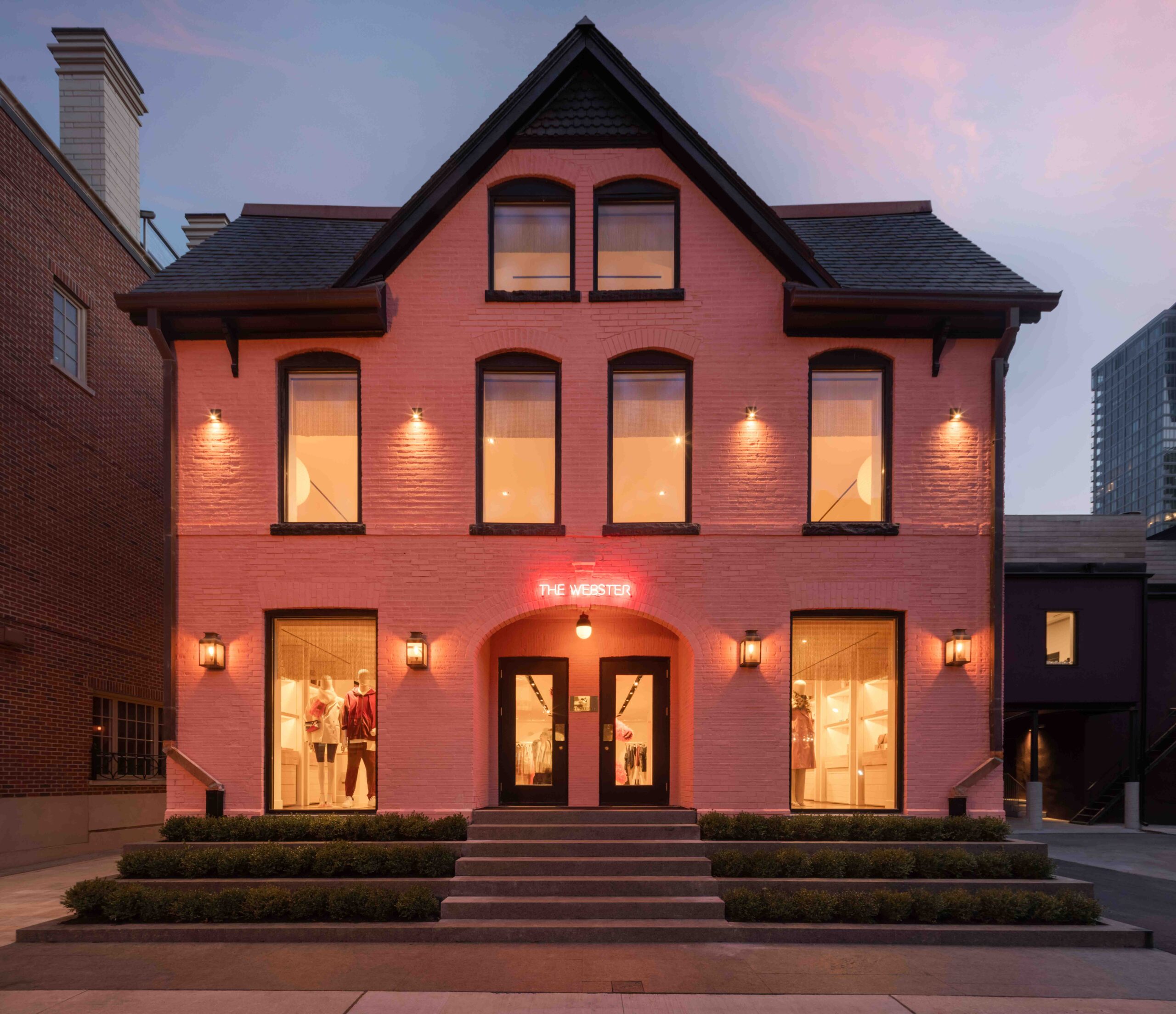
The expansion includes new luxury brand stores that will be opening this year. The Toronto market is leading the trend with several store opening announcements — the Greater Toronto Area is home to more than six million people, some high earners and others very wealthy. This spring, Italian luxury brand Isaia will open at 77 Yorkville Avenue in Toronto and nearby, Miami-based The Webster will open a multi-brand store on Scollard Street. They will join recently-opened luxury stores at Toronto’s Yorkdale Shopping Centre that include New York City-based Thom Browne and Italian brand Golden Goose. The Toronto market continues to see interest from luxury brands with more announcements to come this year, including a first-to-Canada retailer from New York City on Toronto’s famed Mink Mile.

In Vancouver, Thom Browne will open its second Canadian store in a retail space to be vacated by Versace. The Vancouver market, which is heavily reliant on international visitors and cruise ship traffic, is taking a hit as international travel is limited and cruise ships are not permitted to dock in Canada until February 2022. The local market includes thousands of wealthy households that have settled in the city from other parts of the globe, which means there are still opportunities for luxury brands to make money from local residents. Luxury brands have embraced the 1000 block of Alberni Street and adjacent environs, and Holt Renfrew at CF Pacific Centre is home to almost 100 concessions, many luxury brands. The brands contained within Holt Renfrew are said to continue to see strong sales from locals. The storefront of Austrian luxury accessory brand Frey Wille, located a block north of Holt Renfrew on Howe Street, recently shuttered and we also reported last year on the closure of iconic luxury fashion retailer Leone.

The Montreal market saw the addition of Holt Renfrew Ogilvy in the spring of 2019, with the build-out of the 250,000-square-foot luxury store completed in the summer of 2020. The concession-based store acts as a central luxury node for the Montreal area, which otherwise lacks substantial luxury retail streets found in cities such as Vancouver and Toronto. This week, a women’s Prada boutique was unveiled on the third floor of Holt Renfrew Ogilvy which had been shut since December 25 due to provincial lockdowns. Off-White fashions were also added to the store, while at the same time it appears that The Row fashion line for men was dropped by the store according to Retail Insider’s Montreal correspondent, Maxime Frechette, who also noted that the Brioni shop-in-store on the men’s floor will also be closing. A planned Miu Miu women’s fashion boutique on Holt Renfrew Ogilvy’s third floor has been cancelled according to the brand, though Holt Renfrew Ogilvy still remains one of the most beautiful stores in North America, housing an expansive assortment of luxury labels.

Industry talk has it that Italian luxury brand Moncler could open a standalone store in downtown Montreal this year, though we have yet to learn the exact location. At one time, Sherbrooke Street West was Montreal’s luxury address though in recent years it has lost much of its lustre from a retail perspective. A smaller Holt Renfrew store shut on Sherbrooke Street over the summer to coincide with the opening of the new Holt Renfrew Ogilvy, leaving Tiffany & Co. at the Ritz and an Escada store on Sherbrooke Street as the only remaining luxury brands on the street. Rue de la Montagne, extending south from Sherbrooke Street towards Holt Renfrew Ogilvy, features several luxury brand stores including Montblanc and Pavillon Christofle. Last year, Toronto-based multi-brand retailer CNTRBND opened nearby on Crescent Street, carrying pricey brands with an emphasis on streetwear. The Montreal market is home to some very wealthy households — some say that the market spends less on luxury fashions as many embrace style, quality, and value over mere brand names.

The Edmonton market, which lost its Holt Renfrew store in January of 2020, is seeing luxury brands move onto the second level of the ‘main run’ at West Edmonton Mall. A Saint Laurent boutique opened in December and this spring, a 5,000-square-foot Gucci store will join it. Both follow Louis Vuitton which opened in the mall in the summer of 2019, and Tiffany & Co. which was a trailblazer when it opened at West Edmonton Mall in 2013. While not a luxury brand per se, upscale jeweller APM Monaco is confirmed to be opening at the mall, and several luxury brands are said to be in talks to open near the luxury clustering focused around Louis Vuitton. With the shuttering of its downtown Holt Renfrew store, Edmonton is now seeing some of Holt’s more successful brands opening standalone stores at West Edmonton Mall.

While the Calgary market is home to many wealthy households, there will likely be a slowdown in terms of luxury brands entering the market. An array of luxury stores have developed at CF Chinook Centre, including a Louis Vuitton store that opened there in 2019, joining Burberry and several others. In downtown Calgary, the Holt Renfrew store acts as a magnet for those seeking luxury brands with Chanel having opened an impressive street-level storefront at Holts last year.

Nordstrom, for its part, is expected to introduce more luxury brand concessions into the Canadian market. Last week during an earnings call, Nordstrom President, Jamie Nordstrom, said that the retailer is looking to grow its partner and shared revenue from 5% of business to 30%, which means that Nordstrom stores will be seeing more leased brand spaces than in years past. Most of these concession spaces are expected to be for luxury brands, which have seen success in Nordstorm stores particularly in the US and Vancouver markets. Current concessions at Nordstrom in Canada include Christian Louboutin footwear at Nordstrom in Vancouver, Delvaux at the Toronto Yorkdale Nordstrom store, and Gucci at Nordstrom at CF Toronto Eaton Centre — given the closure of the main floor wholesale vendor shops at the CF Toronto Eaton Centre Nordstrom for Loewe, Stella McCartney, and Miu Miu, new high-end concessions are rumoured to be replacing them. Prior to last week’s earnings call, Nordstrom was already beginning to expand its concession offerings when it partnered with SuitSupply in late 2019 to open three shop-in-stores at Nordstrom in Vancouver and Toronto.

The battle of the brands in Canada is ongoing after Nordstrom and Saks entered the Canadian markets several years ago. Holt Renfrew, which for decades was the leading luxury retailer in Canada, went on the offensive and secured LVMH-owned Spanish luxury brand Loewe, in a big way, coinciding with the brand’s reduction at Nordstrom. When Saks Fifth Avenue opened in Toronto in early 2016, it included a Boucheron jewellery boutique which closed last year — the closure coincided with Holt Renfrew opening Boucheron boutiques at the retailer’s Vancouver and Yorkdale stores, both of which are said to be seeing strong sales. The battle of the brands will continue into 2021 as Holt Renfrew looks to maintain its dominance in the market, which means it needs to hold onto its core concession vendors that include Louis Vuitton, Dior, Fendi, Saint Laurent, Bottega Veneta, Chanel, Hermes, and many others.

Several luxury brands that Retail Insider interviewed for this article said that sales were surprisingly strong despite the pandemic. In places where stores remained open, many consumers still stayed away from physical stores. Brands with consumer contacts were able to sell goods through mobile devices via text messaging as well as apps such as WhatsApp and WeChat. Some sales were being shipped overseas according to some sources in stores, as a luxury brand store operating in Canada will most certainly not be selling counterfeits as is a concern in some parts of the world.

Some are predicting a reduction in luxury retail sales in Canada, including a Trendex report covered by Retail Insider in October. That report focused more on luxury apparel, which in some segments will continue to struggle — that particularly includes evening gowns and men’s formalwear, which are less relevant given the lack of social gatherings at this time. Accessories and footwear appear to be another story however, with some brands seeing a spike in sales and some styles selling out entirely. Interestingly, several luxury brands selling t-shirts told Retail Insider last year that they saw a sales spike from young consumers whenever CERB cheques were issued.

Lockdowns could put a further damper on luxury retail sales in parts of Canada if a ‘third wave’ comes to fruition as some are predicting. Mutations of the virus are resulting in concerns that new variants could be more contagious and deadly, which could result in some consumers avoiding stores in months to come — that is, if governments don’t again shut stores altogether. In places where stores are open, the shopping experience is, in some respects, less comfortable given a mandate that face masks be worn and other precautions be taken. Traditionally, high-involvement luxury purchases have been done in store as part of an elevated experience, and now it appears that some of these luxury buyers are willing to buy pricey items online or through an app, at least for now. The future of luxury retail in Canada could end up being a hybrid in-store and online experience, and given the luxury brands that are still interested in entering the Canadian market, we are likely to continue to see new store openings into 2021 and beyond.