Retail Insider is streamlining its Canadian retail news from around the web to include a handful of top news stories that can be viewed quickly during the day. Here are the top stories from the past 24 hours.
Eric Morris at RCC STORE Conference 2022 (Image: Retail Council of Canada)
Over the last few years, the Canadian retail landscape changed forever, says Eric Morris, Managing Director of Google’s Retail practice in Canada, leading sales, operations, research, strategy and analytics.
E-commerce surged during lockdowns and peak COVID periods and while the pandemic has subsided e-commerce is well above historical rates in Canada, said Morris.
Eric Morris
“It’s 14 per cent of all retail sales. That’s double where we were just a few years ago,” he said. “That shift towards e-commerce has been very durable.
“Canada’s e-commerce moment is now. We said that in 2020 and that was true through 2022. E-commerce and retail in Canada has changed forever. Related to that, the broader digital transformation isn’t just an e-commerce story only.”
Morris was one of the guest speakers at the recent RCC STORE Conference put on by the Retail Council of Canada.
He said a large number of people are coming online to research products in stores whether they buy it online or in-store. That’s a transformation from where the industry was a few years ago.
“Canadians are increasingly turning to digital channels to discover brands and products whether they want to buy it online or in-store,” said Morris.
People are tending to search online now before going to a store. This is not only browsing for products but also to see if the products they want to buy are available in the store that they choose. This trend has accelerated during COVID and is one of those “durable changes” in the retail landscape, added Morris.
He also said video is playing an increasingly more important role and about 70 per cent of shoppers in Canada purchase from a brand after watching a video on YouTube.
“What’s interesting here is shopping online used to be something that was very sort of methodical and functional. Increasingly with video, whether it’s with YouTube or elsewhere, shopping has become more immersive, more engaging, more fun due to more content from brands and stores and creators,” he said.
“We live in a world where people want choice. They want choice in brands, choice in stores, choice in whether to buy something online or in-store. Choice to work from home or to work from an office. So we want more choice than ever. I think digital gives us those choices and I think it’s incumbent on successful retailers to give consumers as much choice as possible – what they buy and how they buy it, whether it’s online or in-store. Those are the attributes of the most successful retailers that we work with.
“Canadians are returning to stores and stores have reopened. Sometimes a store is more convenient whereas with e-commerce I can get something delivered to my house in a day or two. A store let’s me get something right now. I think that’s really important. Related to that, we want those store visits, those trips to stores, to be efficient and purposeful. If we’re going to a store, we want to make sure the item we want to buy is in stock. That is a new habit that has been formed, Canadians going online to see if the product is actually available in-store.”
Those are the broad trends retailers are experiencing these days heading into the holiday season. And that holiday season is a long one beginning with the back to school sales that can start in August right through to Boxing Day and Boxing Week.
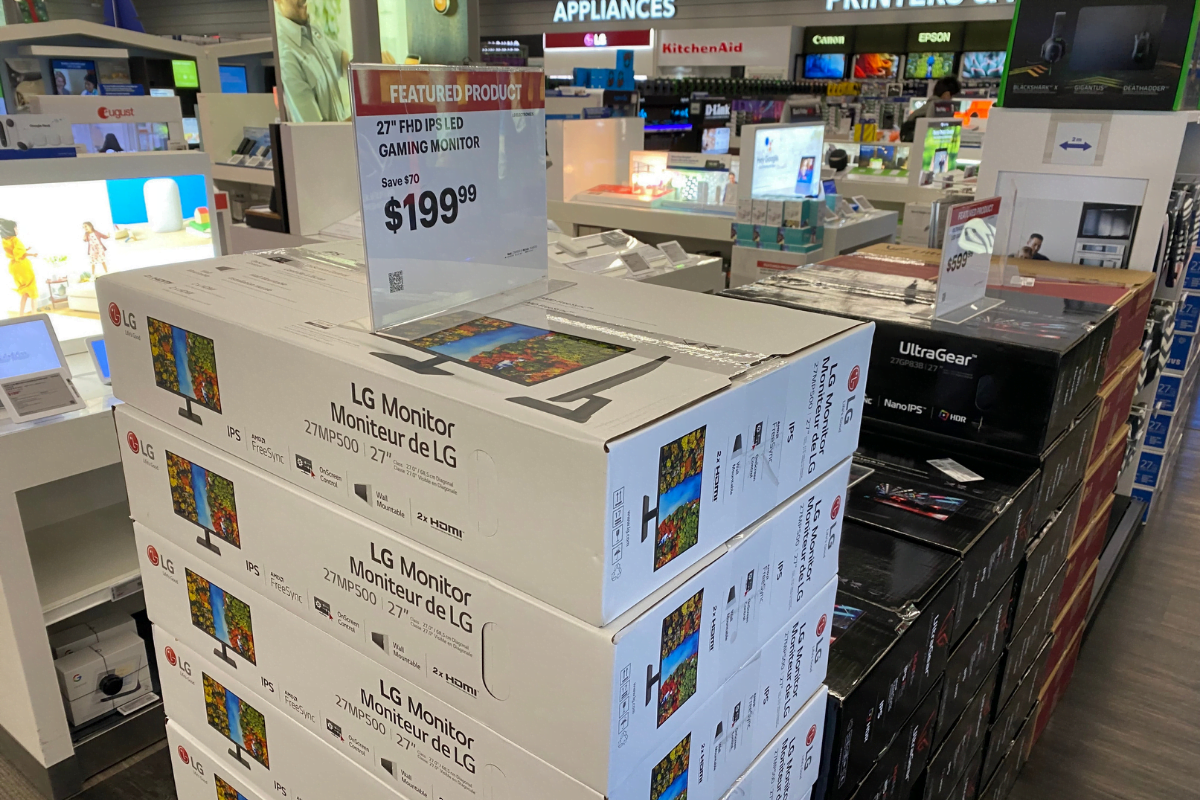
Best Buy Black Friday 2021 (Image: Dustin Fuhs)
“I liken holiday shopping to this. It’s a marathon and not a sprint,” said Morris. “It’s no longer just about a peak day, Boxing Day or Black Friday or Cyber Monday or Cyber Week. It’s a holiday shopping season.
“And the retailers we see driving the most success are the ones who start early. They lean into early holiday shopping intent. They rise to the occasion on those peak moments, that being Cyber Week, and they continue to push hard to capture last-minute shoppers and last-minute gifts. It’s about doing all three of those well. I think the retailers that do that, they win the holiday shopping moment, they win sales and they win share.
“It varies by category. People shop differently for clothing than they do for toys, than they do for appliances. So we really encourage retailers to understand the products they sell, when do people start shopping, when does it start to increase, when does it peak.”
Morris said it is also important that retailers focus on their best customers. Retailers need to win new customers. Critical to the success of every retailer and brand is to introduce new customers.
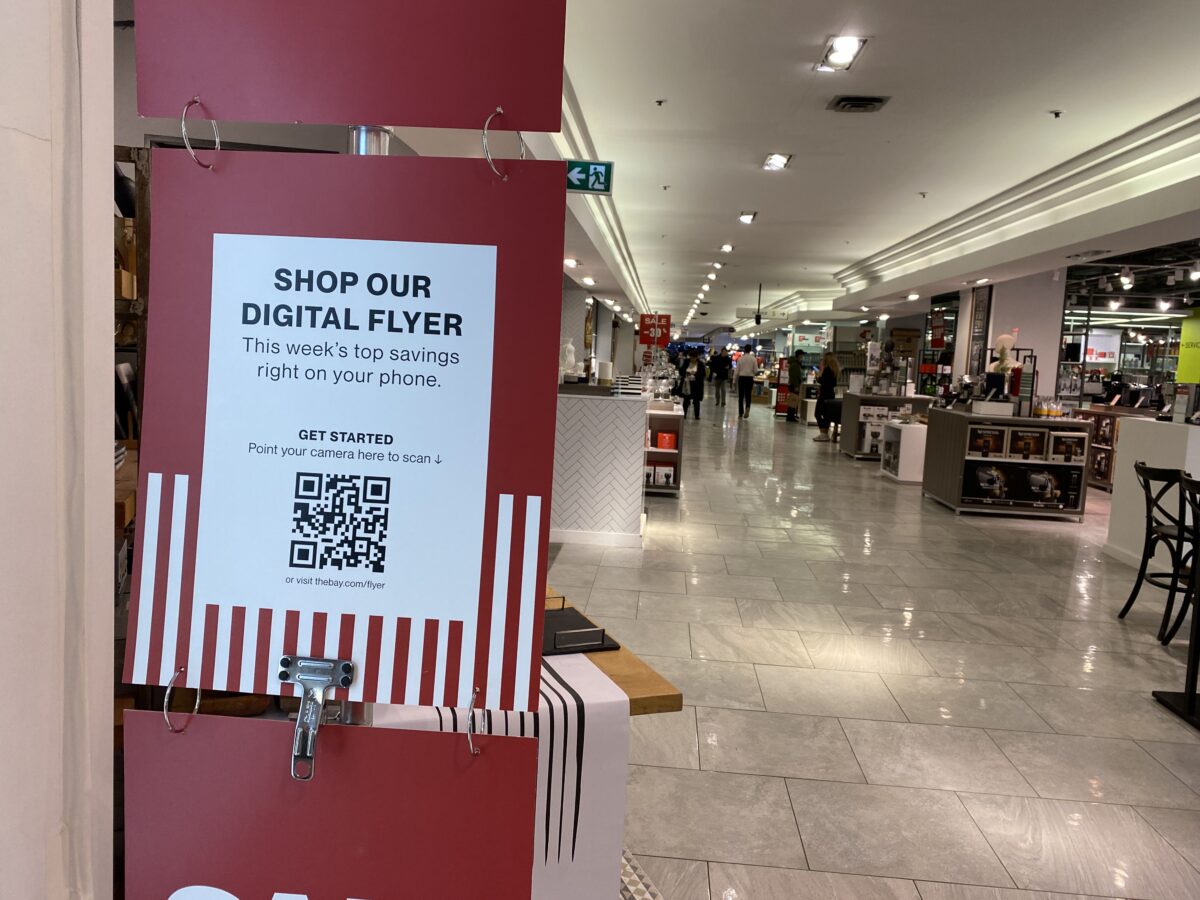
Digital Flyer Signage at The Bay on Queen Street (Image: Dustin Fuhs)
“We’ve observed really from the start of COVID, and it’s continued to this day, 40 per cent of Canadians have recently shopped for a new brand or at a new store,” he said. “We’re increasingly discovering new places to buy things. And so we encourage retailers to have a new customer acquisition strategy to build sort of future customers and future high value customers. It starts with acquiring new shoppers.
“That’s one element. The second would be to focus on your best customers. Every retailer knows that some customers are more valuable to them than others. They shop more frequently or they spend more and we encourage those retailers to have a different customer experience, experience online, in-store, different emails, different marketing, different offers to cater to your best and most valuable customers.”
He said retailers have to increasingly think about online and in-store together. No one knows what the fall will bring. If there will be another variant or if COVID turns again and what that dynamic would look like between stores and e-commerce.
“So we really do encourage retailers to think customer centric and not channel centric,” said Morris. “And have a strategy that optimizes for total sales whether they occur online or in-store.”
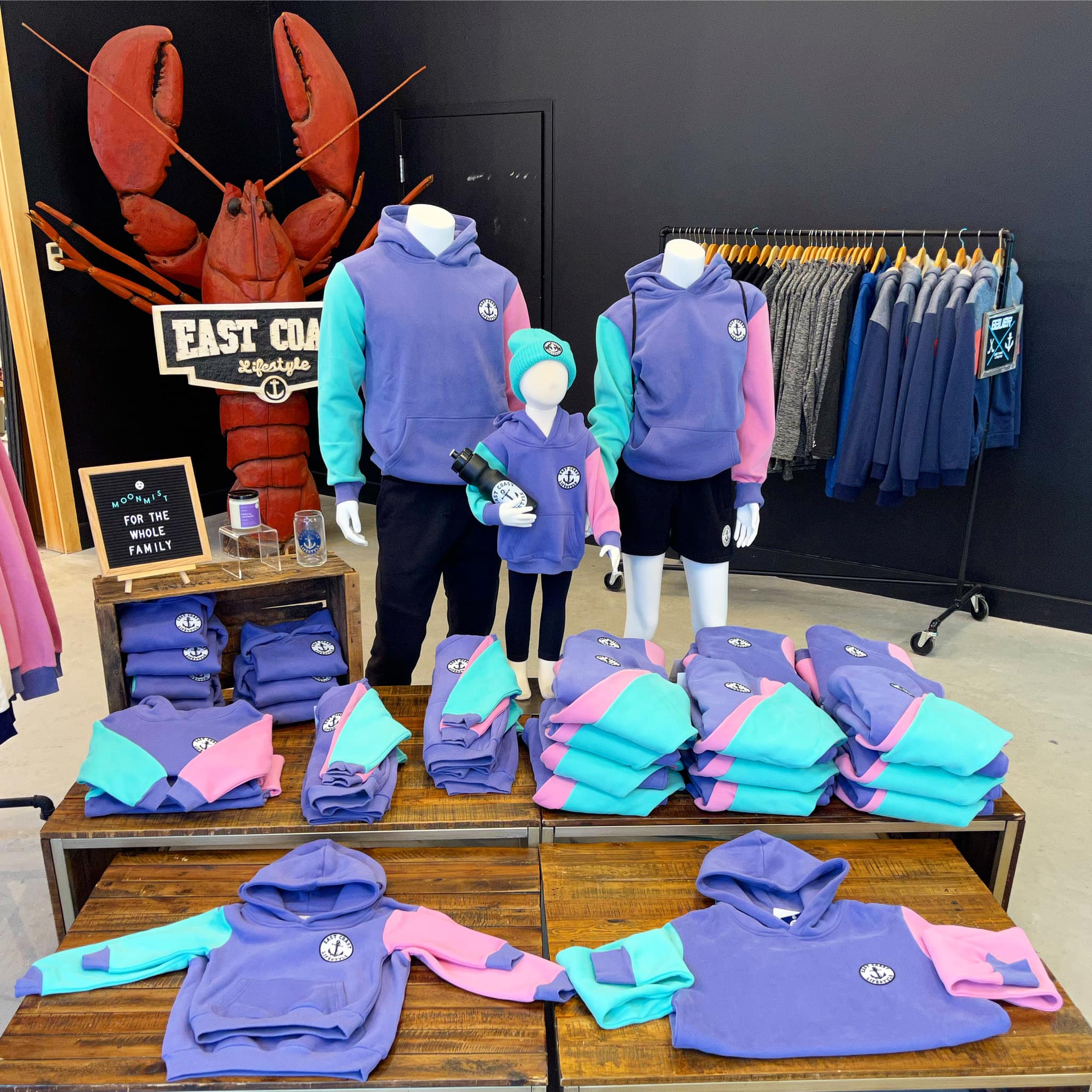
East Coast Lifestyle, based in Nova Scotia, is expanding and building its first headquarters in Bayer’s Lake, Halifax.
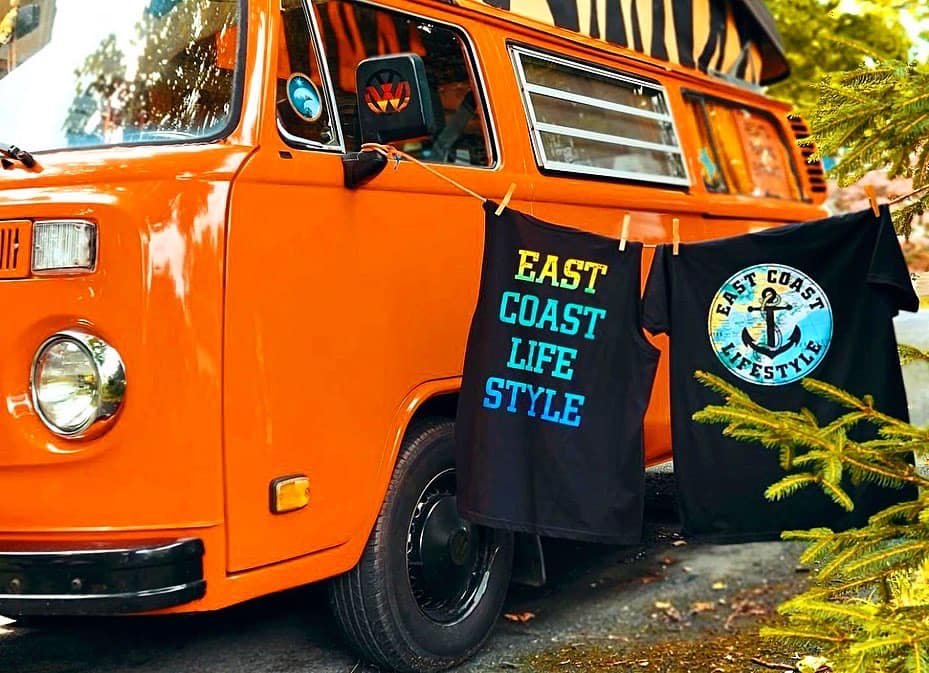
The CEO of East Coast Lifestyle, Alex MacLean, started the company in 2013 studying at Acadia University. One of his classes focused on creating a design representing the East Coast. With an $800 loan from his father, MacLean was able to buy and design blue hoodies to sell to his friends, family, and people around his school.
“The goal was to only sell thirty hoodies”, MacLean said. But these thirty hoodies turned into the East Coast Lifestyle Brand. After the first hoodies sold, MacLean used the money to buy sixty more, and then 100 more. Suddenly Sydney Crosby asked for a hoodie, and it was a steep climb from there.
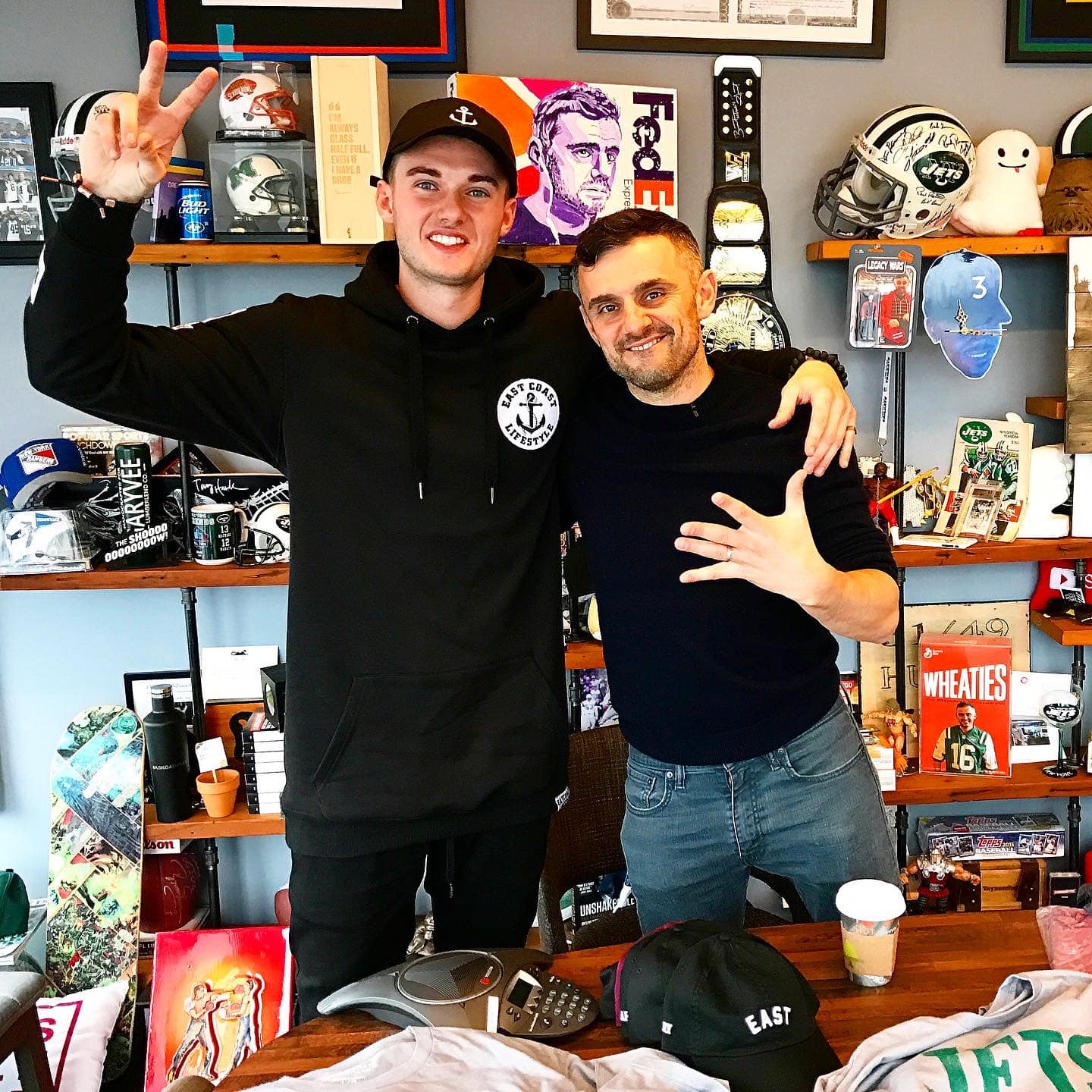
CEO Alex Maclean and Gary Vaynerchuk (Image: East Coast Lifestyle)
CEO Alex Maclean and Sidney Crosby (Image: East Coast Lifestyle)
“The brand took off like wildfire, “says MacLean. “It was just a steep incline and I had to learn a lot of things on the fly. I was literally having to order hundreds of hoodies. This gave me the opportunity to really put more money into the clothing brand and try different colour hoodies and shirts.”
With Sydney Crosby wearing the logo and national news attention, MacLean had a lot to learn – and quickly. One of the challenges was to find a trademark lawyer so he could secure the East Coast Lifestyle logo.
“We were really getting knocked off by dozens and dozens of people after Sydney Crosby and the news interview,” says MacLean. “People were doing Newfoundland Lifestyle, New Brunswick Lifestyle, Alberta Lifestyle, there was even an E Coast Lifestyle with a piece of toast in the middle, there was everything you can think of.”
With the protection of the trademark, MacLean was able to secure his brand and logo which has since come a long way from just being a class assignment and will be celebrating their 10thanniversary next year.
New Developments
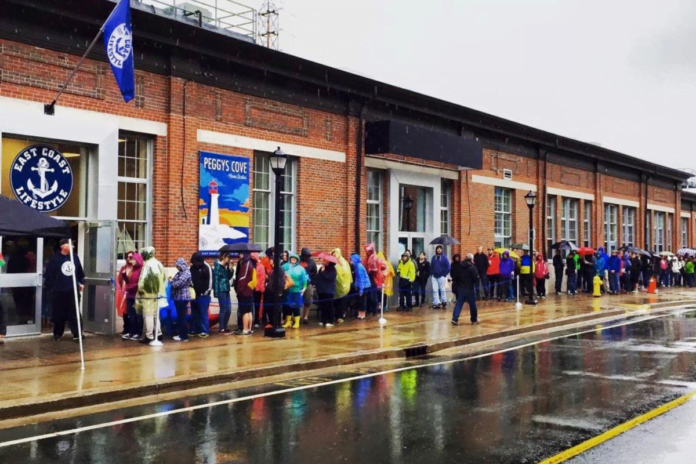
Image: East Coast Lifestyle
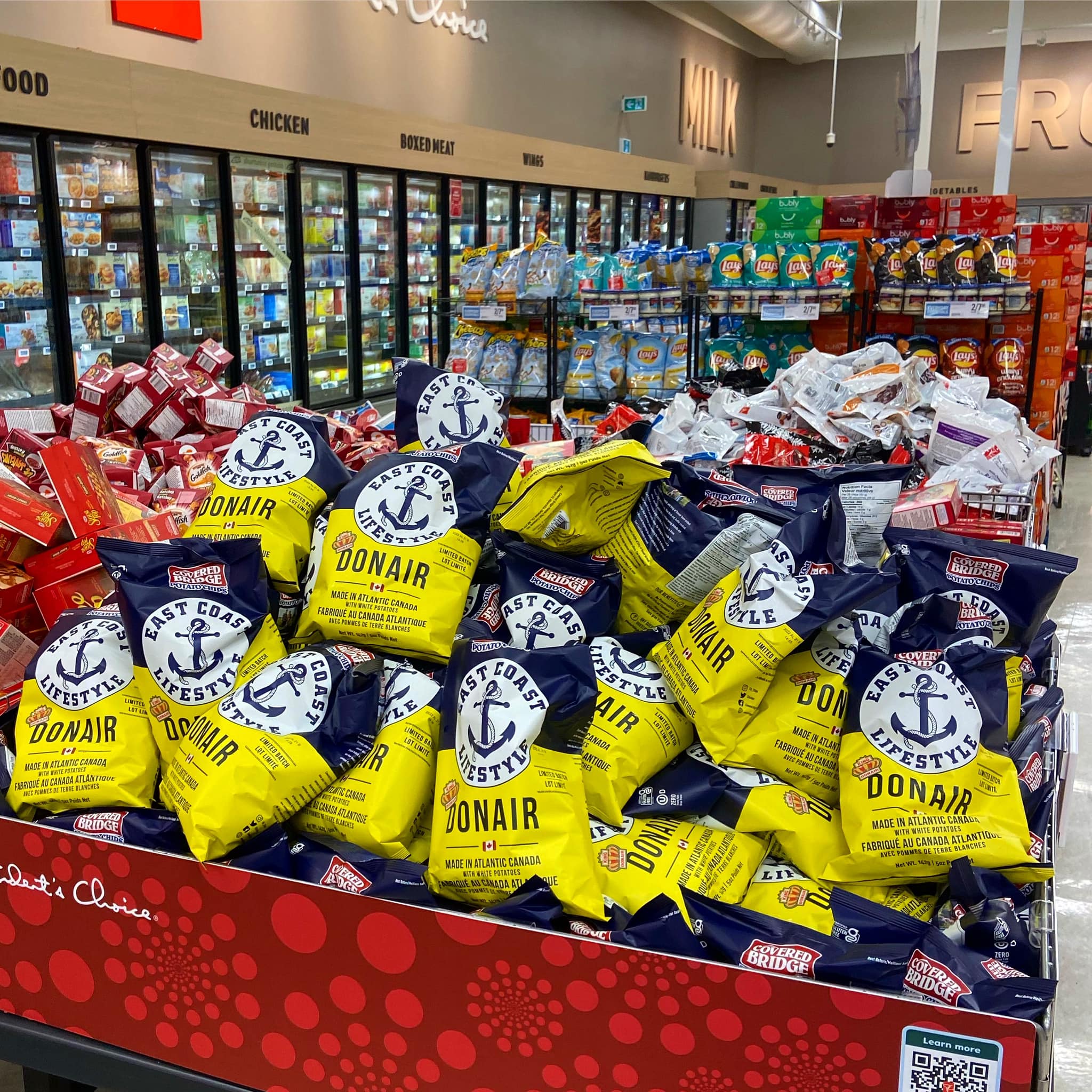
East Coast Chips are stocked in Atlantic Superstores & Sobeys across Atlantic Canada
During Covid-19, East Coast Lifestyle started new projects such as expanding the brand to include alcoholic beverages and chips. So far MacLean says they have sold over 600,000 bags of chips in just over a year, and they are all made locally in New Brunswick.
“East Coast Lifestyle got into 2,000 new stores across Canada, but not with shirts and hoodies, it was with chips,” says MacLean. “It allowed us to sell a lot more clothing because the brand went through the roof with all these new stores.”
The biggest development is the new headquarters for East Coast Lifestyle that will be breaking ground at the end of this month. It will be located on Bayer’s Lake and on the number one bike path in Nova Scotia – the BLT Rails to Trails.
Customers will be able to enjoy the new development as in addition to the main store, it will include a basketball court, a coffee shop, East Coast beverages, picnic tables, and they are “going to make it a very inviting and a hopeful destination for people,” says MacLean.
Being Proud of Where you are From
Image: East Coast Lifestyle
“The whole premise of the brand was about being proud of where you are from,” says MacLean. “Nobody had really branded the East Coast at all in terms of clothing. There is a lot of Nova Scotia shirts or Newfoundland shirts, but there was really nothing for the East Coast.”
As a sports fan, MacLean wanted to create a brand people could be proud of, just like a sports team has their fan logo – MacLean wanted a logo that represents the East Coast.
“In the East Coast there is no professional hockey teams, basketball teams, football teams, soccer teams, and we don’t have a logo where we can all wear and represent,” says MacLean. “I wanted to create a brand that allowed all four Atlantic Canada provinces to really represent where they are from proudly.”
Awards, 13 and Counting
East Coast Lifestyle has won 13 awards since starting in 2013.
The awards include Student Entrepreneur National Winner in 2014, EY Emerging Entrepreneur of the Year in 2015, Start Up Canada High Growth Award in 2016, Atlantic Business Magazine’s Top 50 CEO, and just recently MacLean also won the Go Daddy Entrepreneur of the Year in Canada.
“Some of those awards have given me my favourite moments so far, like going to the White House to meet Barack Obama,” says MacLean.
MacLean was at the Entrepreneurs’ Organization’s Global Student Entrepreneur Awards where he was the 1st Runner Up. He got the attention of President Barack Obama and was invited to the White House along with members of Shark Tank.
“It was crazy, I was 22 years old, and I was the only Canadian who got to go down. Just being in the White House was neat, the whole experience was very surreal. I was very young and just in shock the whole time,” says MacLean.
What is next for East Coast Lifestyle?
In addition to the new store development, MacLean says East Coast Lifestyle has recently released its Bauer hockey collection which includes hoodies, shirts, hats, and a duffle bag.
East Coast Lifestyle will also be releasing a golf collection this summer and customers can expect to see it in stores in about two weeks.
“Our focus is bringing to life new products and exciting people and keeping people off their toes so definitely keep your eye out for new products,” says MacLean.
As for expanding the brand, they are going to focus on brining stores to the East Coast of the United States. They will also be looking to expand throughout Canada by adding a store to a new province each year.
Image: East Coast Lifestyle
The best thing that has happened with the brand, MacLean said, is how the logo connects the East Coast community, no matter where you are.
“We hear a ton of cool stories about people who have met people because of what they are wearing, the East Coast Lifestyle, and it is fun,” says MacLean. “It is my favourite part because everyone usually has a good story about when they had a hoodie on somewhere and someone started a conversation, like that is really cool to hear.”
Thankfully for East Coasters, MacLean did not stop after receiving a passing grade. Everyone can enjoy the logo and can now represent the East Coast throughout the world!
Canadian apparel sales rebounded in 2021 and are forecast to continue to grow in the coming years, according to a new report by Trendex North America, a marketing research and consulting firm.
Sales in that retail category plunged by 23.6 per cent in 2020 as a result of the pandemic but came back with a year-over-year gain of 16.2 per cent last year.
Trendex is forecasting annual gains of 14.8 per cent this year, 5.0 per cent in 2023, 2.9 per cent in 2024, 1.5 per cent in 2025 and 1.8 per cent in 2026.
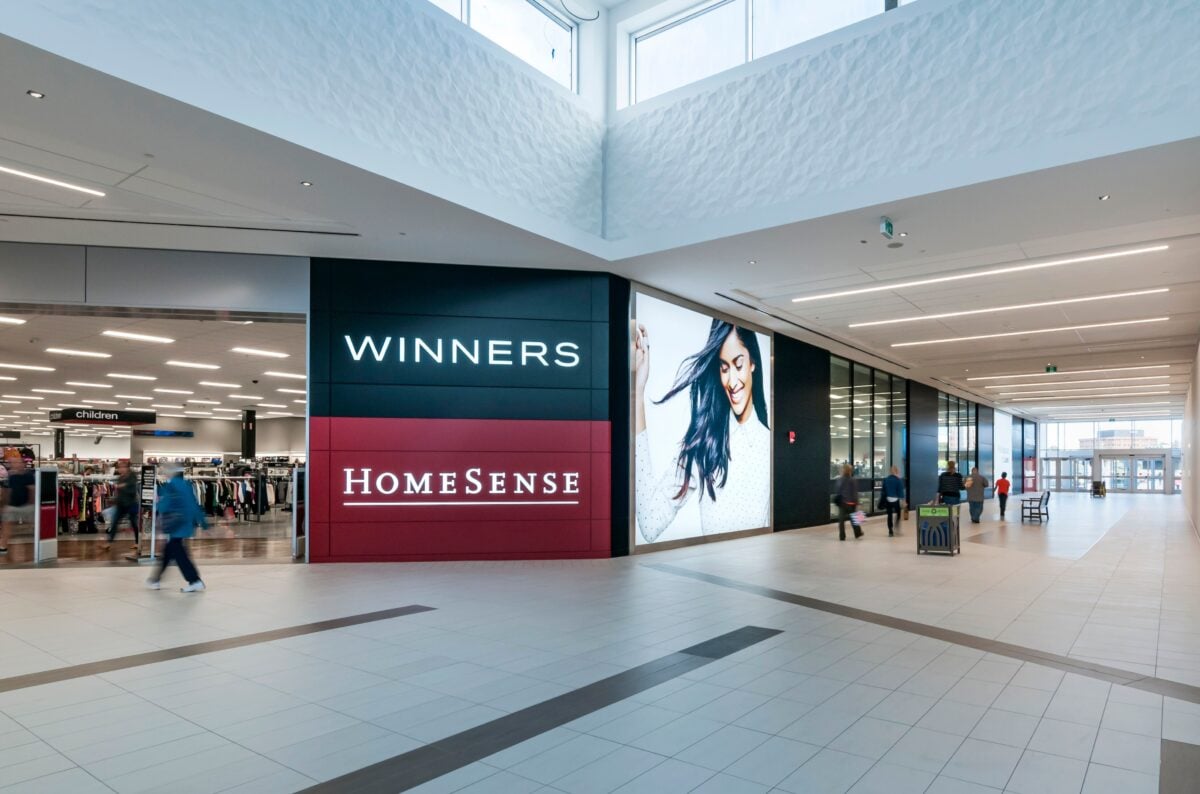
Winners Homesense at Avalon Mall – (Photo Crombie REIT)
Randy Harris, president and owner of Trendex North America, said that beginning in March 2021 the Canadian market returned to “normalcy as consumer demand began to increase and stores were opened.”
Randy Harris
“Two channels of distribution in 2021 went in different directions. In 2021, the off-price retailers such as Winners, OFF Fifth and the Rack, gained market share but the previous year in 2020 they lost market share,” said Harris. “And the very simple reason for that is that off-price retailers had no e-commerce offering. As a result with e-commerce booming, the off-price retailers lost market share.”
He said e-commerce sales decreased in 2021 and off-price retailers rose. The net effect is a return almost to normalcy pre-COVID when it came to the channels of distribution.
“Luxury apparel sales rebounded slightly last year but they weren’t as much up as the total market. And the reason we have relatively low growth in 2021 for luxury apparel is that foreign tourism almost completely was at a standstill,” explained Harris. “With no Chinese, with nobody coming in, that hurt the luxury apparel business.
“The other thing that hurt the luxury apparel business is the growth of luxury apparel resale. So all of these platforms where you can buy a used GUCCI dress or a Prada bag, are eating into the regular retail sales of luxury apparel retailers. This is a change that nobody is reporting but I think it makes sense to everybody who thinks it through.”
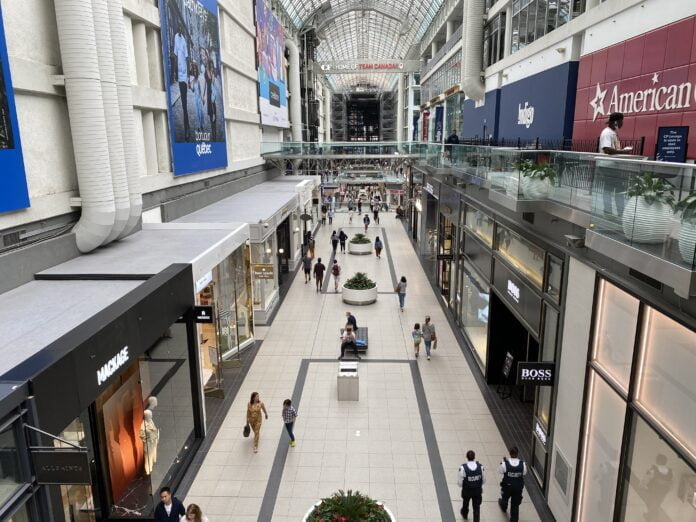
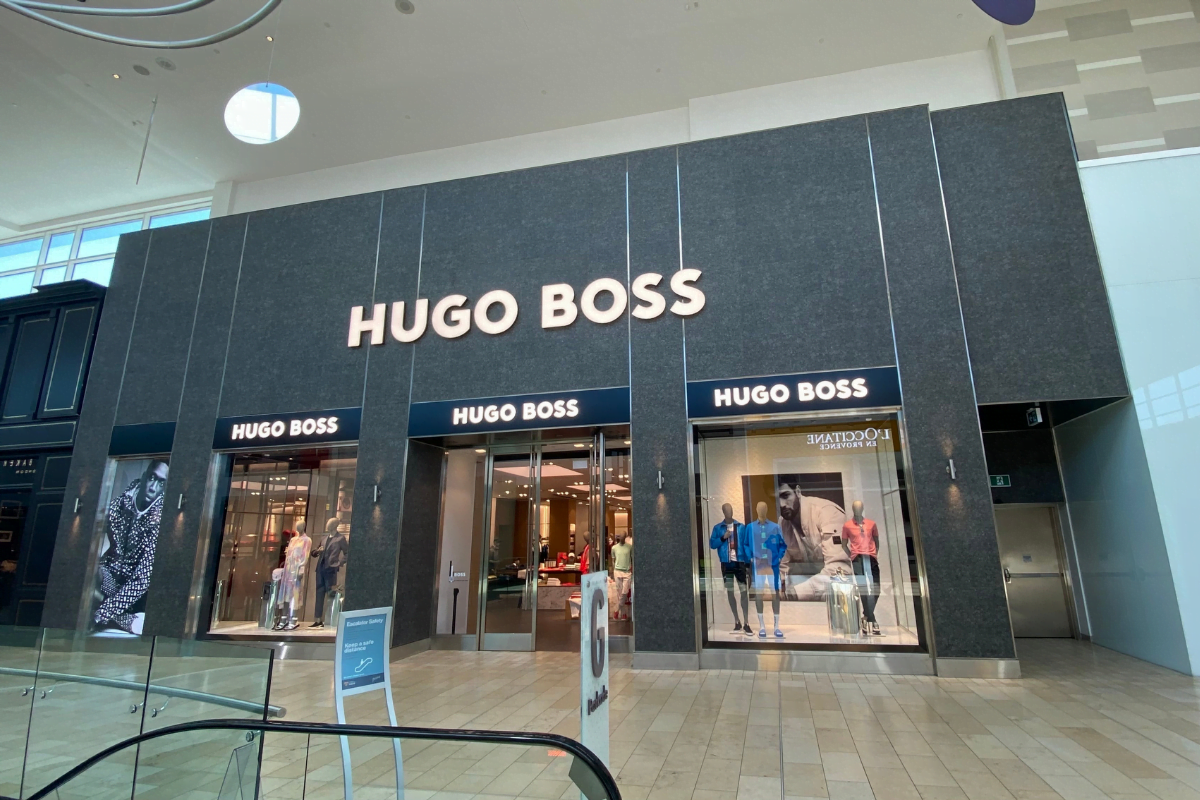
Huge Boss at Yorkdale Shopping Centre (Image: Craig Patterson)
Harris said there is no inflation with apparel prices. As general inflation heats up, it’s not affecting apparel directly but it is in the sense that the consumer has less discretionary money and that means less spending on apparel.
“Inflation overall will affect the demand for apparel in the long term,” he said.
Last year, there were three major market share winners in the Canadian apparel sector – Winners, lululemon Canada and Aritzia Canada, explained Harris, adding that Reitmans’ (Canada) strategic initiatives over the past two years began to pay off in the second half of 2021.
The Trendex report said Old Navy’s failure to increase its share last year was directly related to its year-long logistic problems that limited the retailer’s inventory. Walmart’s failure to gain share was due to Giant Tiger’s apparel related initiatives and Walmart’s less than compelling apparel e-commerce offering. Roots could have lost share last year but given its performance at the end of 2021 it is well positioned to gain share in 2022.
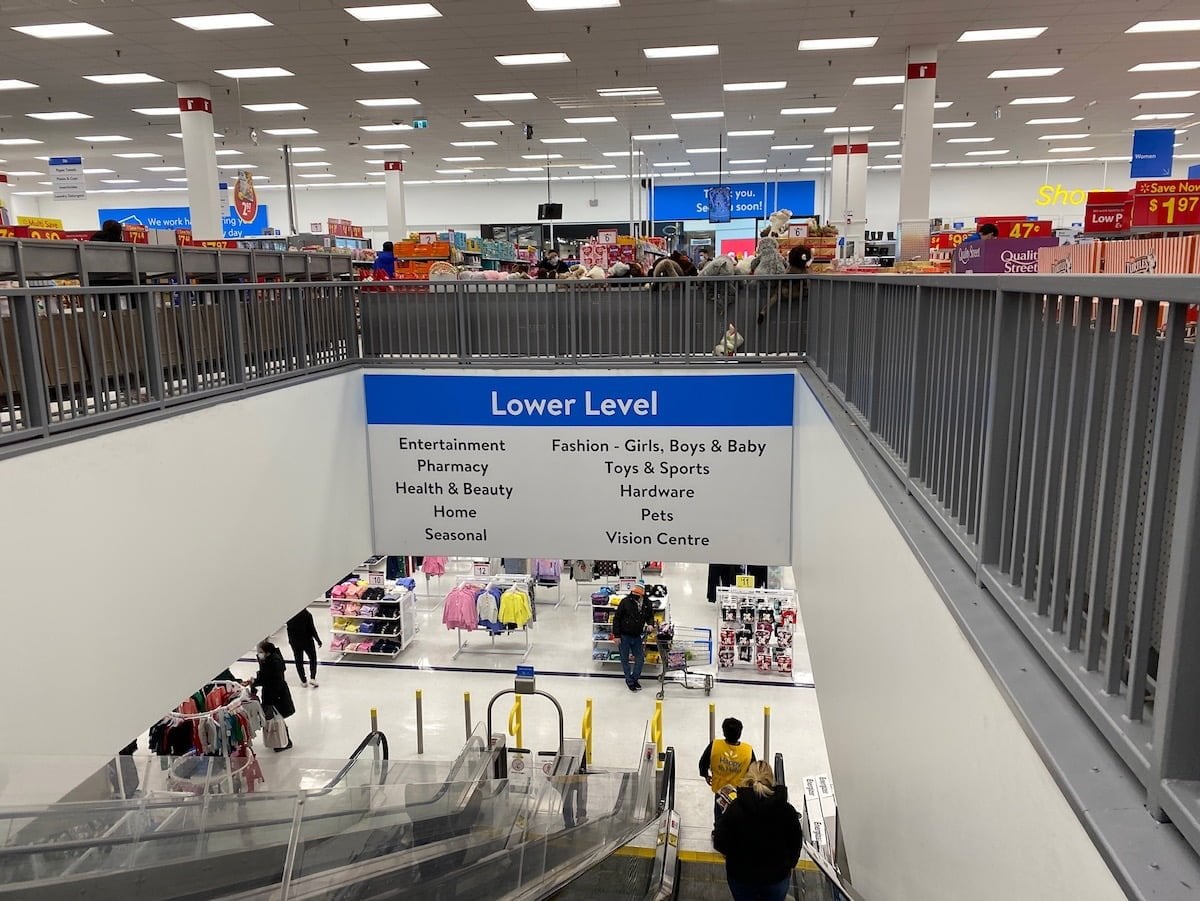
Dufferin Mall Walmart Supercentre in Toronto (Image: Dustin Fuhs)
“Roots’ fourth quarter report reflected a lot of the changes that they made last year and I’m confident that this will be a good year for Roots coming up,” said Harris.
He said three things could affect the Trendex forecast for this year – the growth of resale apparel, an extremely high rate of inflation overall, and the possibility of collateral damage as a result of the war in the Ukraine.
“They’re three issues that are there but you don’t know how to quantify them and put them into some type of statistical model if you will,” added Harris.
“There will be continued growth in the buy now, pay later option that up to 50 per cent of Canadian retailers are now offering their customers. This is an interesting change with buy now, pay later because all research has shown that the consumer spends more money than they normally would if they avail themselves of the buy now, pay later option. It’s a new phenomena that’s no more than two years old in Canada but growing very fast.
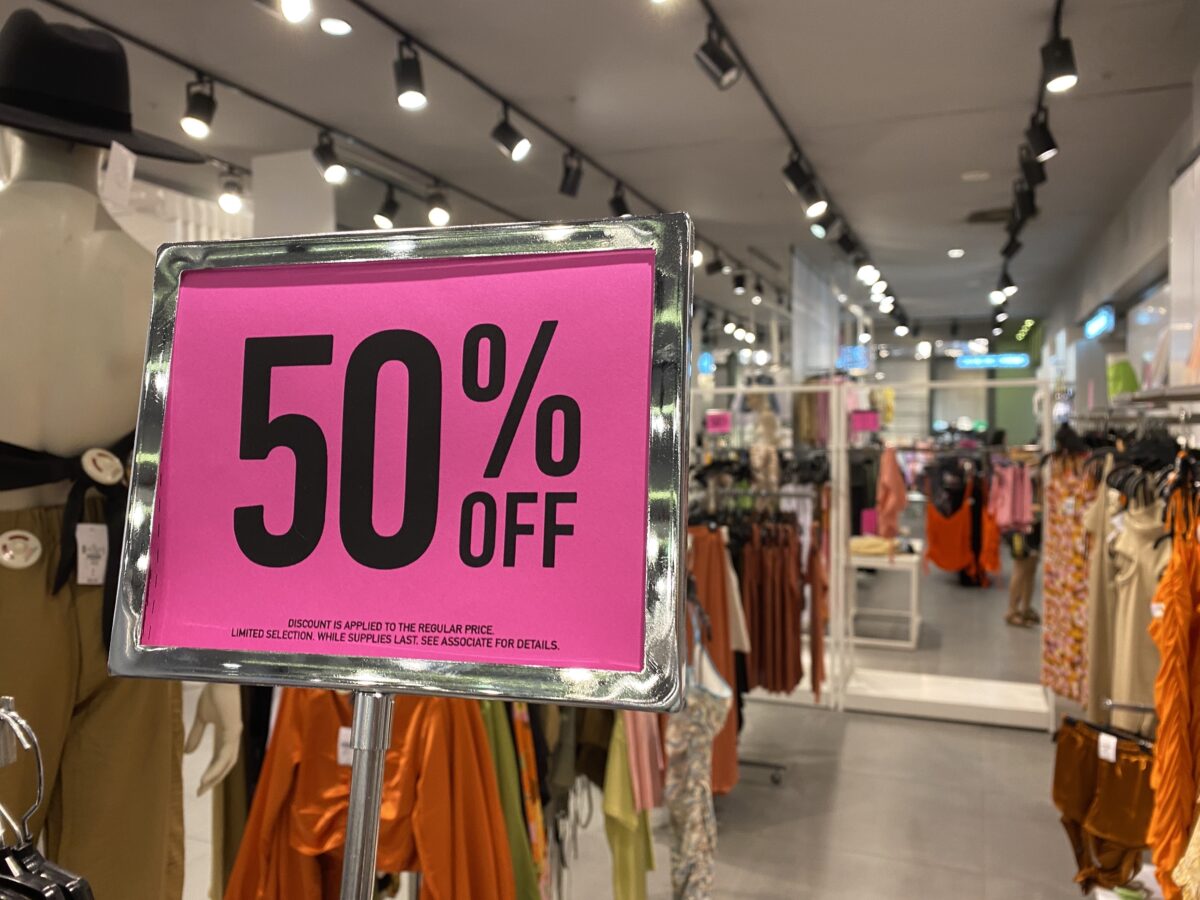
Discount Sign at Forever 21 at Hudson’s Bay Queen Street (Image: Dustin Fuhs)
“We’re also seeing foreign retailers once again coming back into Canada but it’s got to be noted that the invasion of foreign retailers will have minimal effect because most of these retailers that are coming in from Europe or Asia are opening one or two stores only. And none have the potential if you will of an H&M, or a Uniqlo or a Zara in terms of number of stores. But the number is up and will continue to grow this year but it will have minimal effect on the market.”
He said that in the future some brands will increasingly open their own stores in Canada.
“We’ve had this with people like Nike and Adidas and we’ve had it with some women’s apparel brands, the good ones. I think you’re going to continue to see them follow the Canada Goose model and have more control over their own destiny by having their own stores,” said Harris.
“That’s a longer term trend but you’re beginning to see it happen.”
Retail Insider is streamlining its Canadian retail news from around the web to include a handful of top news stories that can be viewed quickly during the day. Here are the top stories from the past three days.
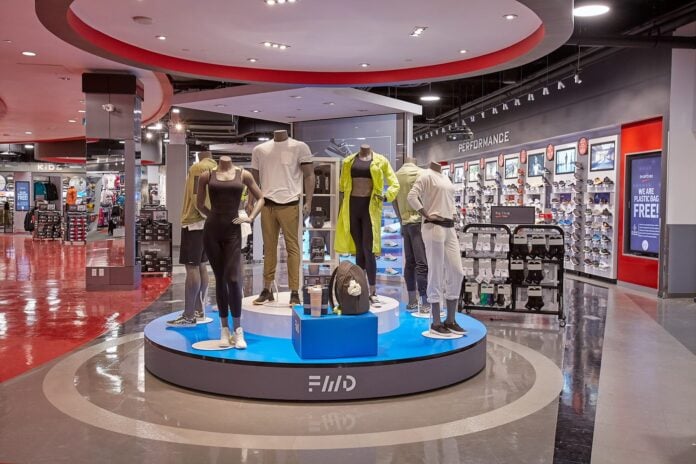
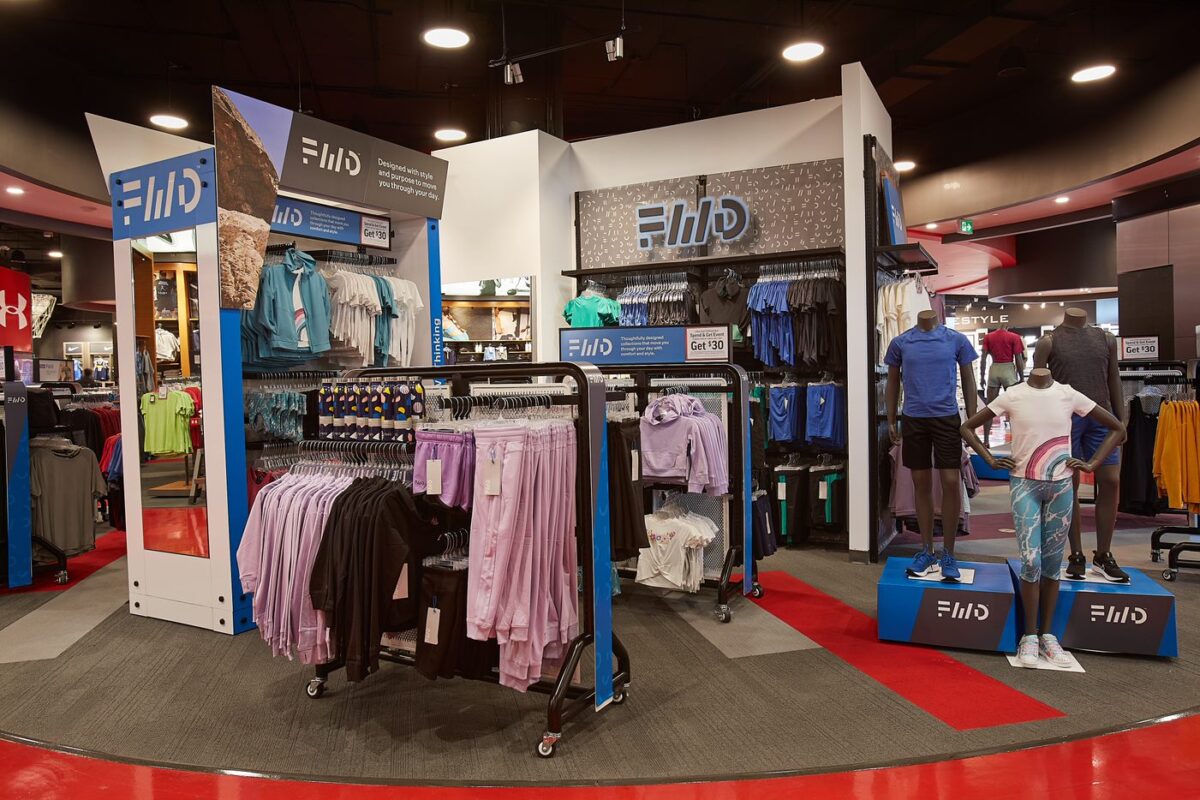
Forward With Design at Sport Chek (Image: Canadian Tire Corporation)
Canadian Tire Corporation has launched its first-ever active activewear brand Forward With Design, which has been designed, developed and incubated in-house for active, on-the-go Canadians.
“Knowing the lines between work and play are often blurred, Canadian Tire Corporation brought together its top talent to develop an activewear brand rooted in versatility,” said Anthony Wolf, Vice President, Product Development at CTC. “Forward With Design not only highlights our in-house brand-building capabilities, it delivers a customer-centric collection that combines style with functionality, mindfully designed to transition with Canadians throughout their daily activities.
“I think that was an important part of the brand that blend of style and performance and the name itself captured that Forward With Design. This is a brand designed to move you forward in your day no matter where your day takes you and design and style and looking good and feeling good are part of that. That’s really the purpose of what we set out to do.”
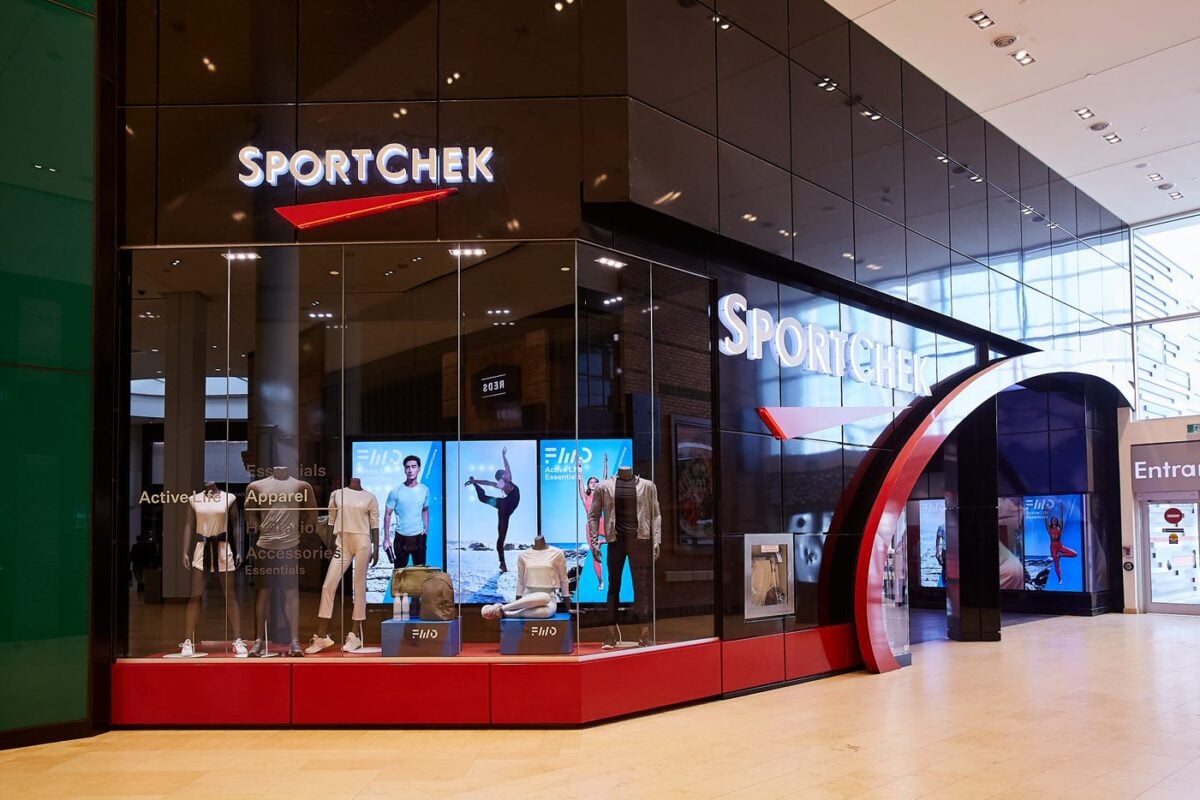
Forward With Design at Sport Chek (Image: Canadian Tire)
Forward With Design’s full assortment for women, men and kids is now available at over 200 Sport Chek and Sports Experts locations across Canada and online.
Anthony Wolf
Canadian Tire said Forward With Design apparel was built from the ground up in just over 900 days from concept ideation to full brand launch.
“On the heels of CTC’s Better Connected strategy, the goals were to design and deliver world-class products that reinforce emotional connections with customers, and to create a brand that transitions seamlessly wherever life takes Canadians,” said the company.
“Sport Chek, part of the Canadian Tire Group of Companies, is the exclusive home of Forward With Design’s three capsule collections – Push, Friday and Free. Each functional, yet interchangeable capsule incorporates sustainable fabrics and responsible production methods combined with style, comfort, and convenience.”
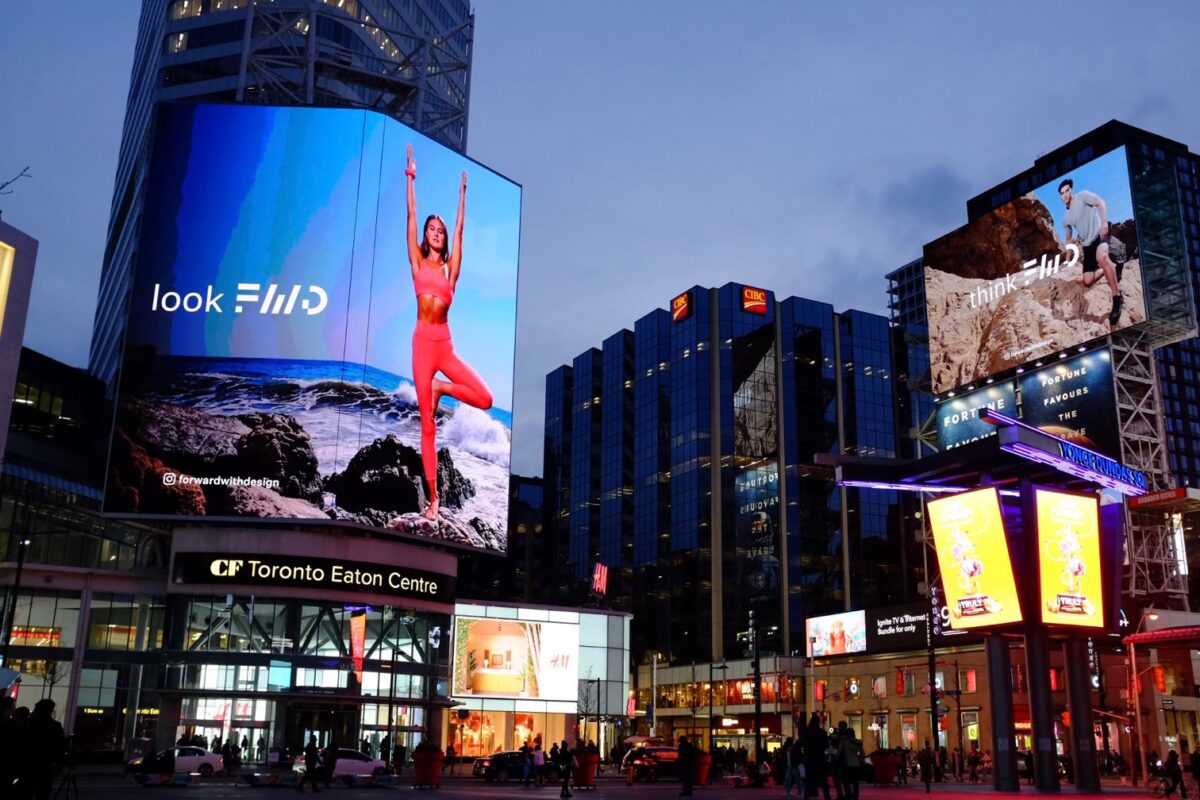
Forward With Design at Yonge Dundas Square (Image: Canadian Tire)
Wolf said Canadian Tire’s purpose is to make life in Canada better. He said he’s very fortunate to run a team that is focused on designing and engineering products that serve a number of the company’s brands.
“We’re always looking for opportunities, always looking for new customers to target, new opportunities in the market . . . The interesting thing with Forward With Design is that is exactly what its impetus was. We had a recognition that there’s a new customer, someone we later named the active nomad, who is somebody that transitions through different parts of the day,” he said.
“They’re constantly moving between work, working out and going out. And they bounce back and forth between those and they were sort of underserved because they were always on the go, always on the move, carrying various bags and equipment, and trying to seamlessly transition through different parts of the day. There was nothing really meeting the needs of this customer.
“So we started with this very strong sort of customer insight around the active nomad and sought to build a range of solutions, active lifestyle essentials as we call them, with a range of products to help them in this quest to pack everything into their day, fit everything in and transition seamlessly.”
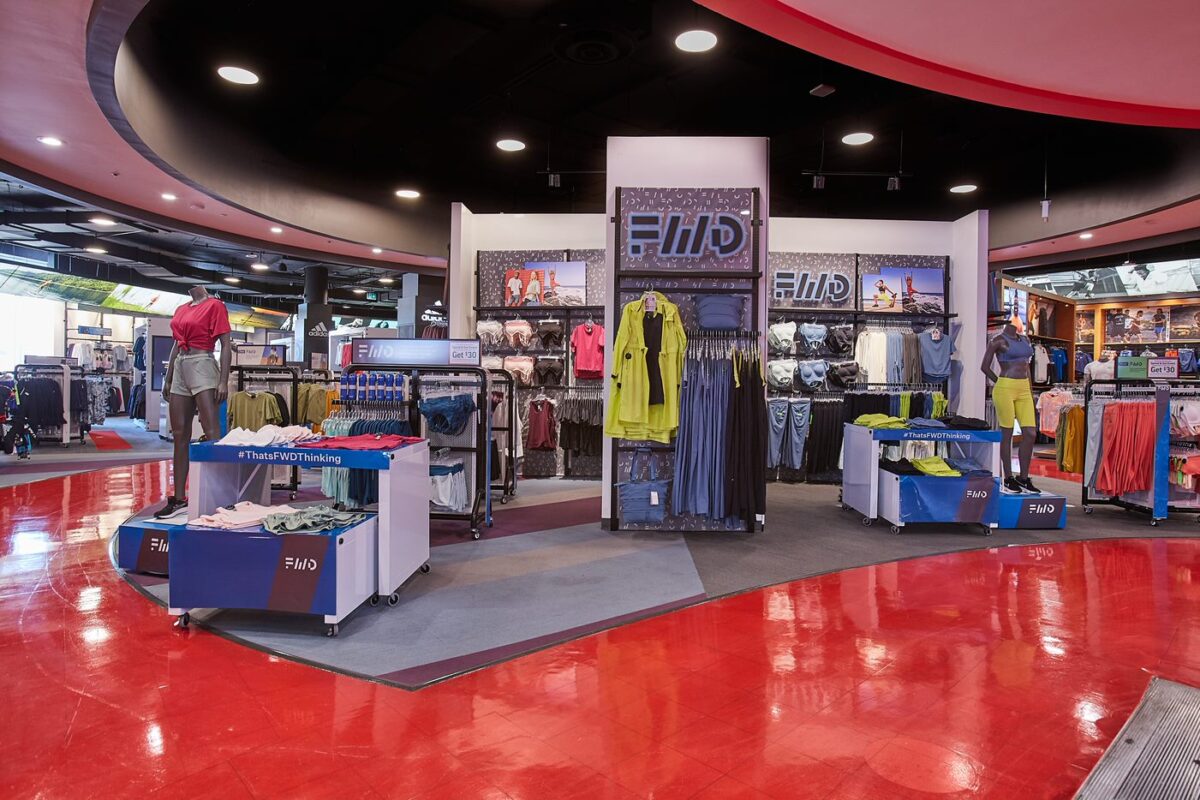
Forward With Design at Sport Chek (Image: Canadian Tire Corporation)
Wolf said the focus was not to think of it as an athletic or athleisure brand but think of it as a solution for a specific pain point for people. It has grown to include athleisure wear, a range of apparel, hydration, self-care and a range of products.
The retailer described the three collections this way:
The Push collection focuses on elevated activewear built for the active generalist with high-intensity in mind;
The Free collection focuses on relaxed loungewear for the in-between moments in life, with a focus on sustainable fabrics, trend-driven silhouettes, and fashion-forward colours; and
Fusing clean, minimal design with activewear technologies, the Friday collection is transitional work-leisure designed for life on the move.
Dale Skulsky
“We’re continuously striving to bring our customers the highest quality products to support their healthy, active lives, and couldn’t wait to bring Forward With Design into our assortment,” said Dale Skulsky, Vice President Purchasing, Sport Chek. “Forward With Design not only complements the Sport Chek brand promise, but brings a complete product offering to our customers that’s rooted in active-style, quality and mindfulness.”
Wolf said the customer for this new brand is a mix of male and female with it skewed slightly more female. The assortments cater to men, women and children.
“Customers who place a high value on wellness, fitness, physical wellness and mental wellness, as part of their life and are busy and active. They’re constantly moving from one place to another,” he said.
Forward With Design at Sport Chek (Image: Canadian Tire Corporation)
Wolf said the brand has focused on sustainability and inclusive sizing.
“Good for our customer and good for the planet,” he said. “We’re on a journey on this like most companies but we’ve used Forward With Design as an opportunity for us to really push the bounds of material choice, choice of some manufacturing processes, or low impact dyeing, in terms of including that into our assortment. That’s a really important pillar of the brand – it’s sustainability focus.
“As well as inclusive sizing. We’ve got sizing that is much broader than might typically be expected and the goal here was to make sure that this met the needs of all Canadians. We really wanted to include everybody in their pursuit of wellness. We wanted everybody to have an opportunity to enjoy these products.
“It’s a blend of style and technical performance. All products, no matter which part of the assortment, whether it’s our core assortments or our capsules, we have three capsules . . . they all have a slightly different flavour to which part of the day you’re sort of leaning into. But all of them use sustainable materials where we can. They also use technical fabric. So the products have a huge style focus, making sure that they look great, that they’re on trend in terms of colour . . . but in addition they’re using technical fabric. They all have anti-odour, four-way stretch, a lot of technical features built into the right products to make sure they are comfortable to wear, that they move with your body, they fit great whether you’re sitting on a Zoom call or whether you’re doing squats as part of your workout.”
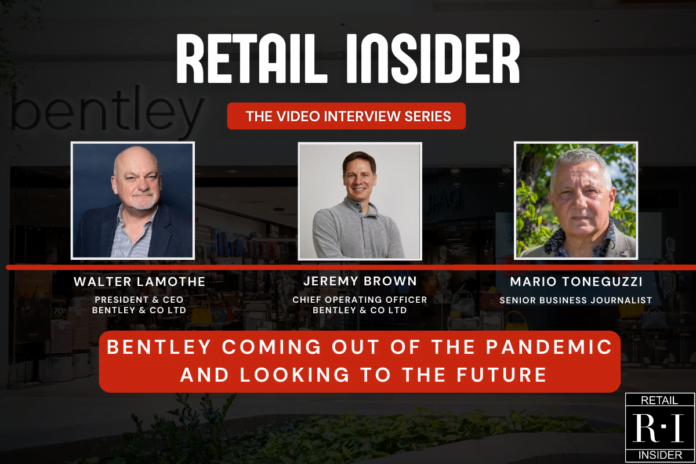
Video Interview: Bentley Coming Out Of The Pandemic And Looking To The Future
Walter Lamothe, President/CEO, and Jeremy Brown, Chief Operating Officer of Bentley, discuss how the retailer came through the pandemic and its outlook for the future.
They talk about how travel restrictions impacted the business, key lessons learned in the past couple of years, how business has changed, Brown’s background and why he recently joined the company, what they’re excited about for the future, the current store presence and plans for growth.
The Video Interview Series by Retail Insider is available on YouTube.
Connect with Mario Toneguzzi, a veteran of the media industry for more than 40 years and named in 2021 a Top Ten Business Journalist in the world and the only Canadian – to learn how you can tell your story, share your message and amplify it to a wide audience. He is Senior National Business Journalist with Retail Insider and owner of Mario Toneguzzi Communications Inc. and can be reached at mdtoneguzzi@gmail.com.
Also check out the other series offered by Retail Insider, including The Weekly podcast and The Interview Series, which are both available on Apple Podcasts, Stitcher, TuneIn, Google Podcasts, or through our dedicated RSS feed for Simplecast and other podcast players.
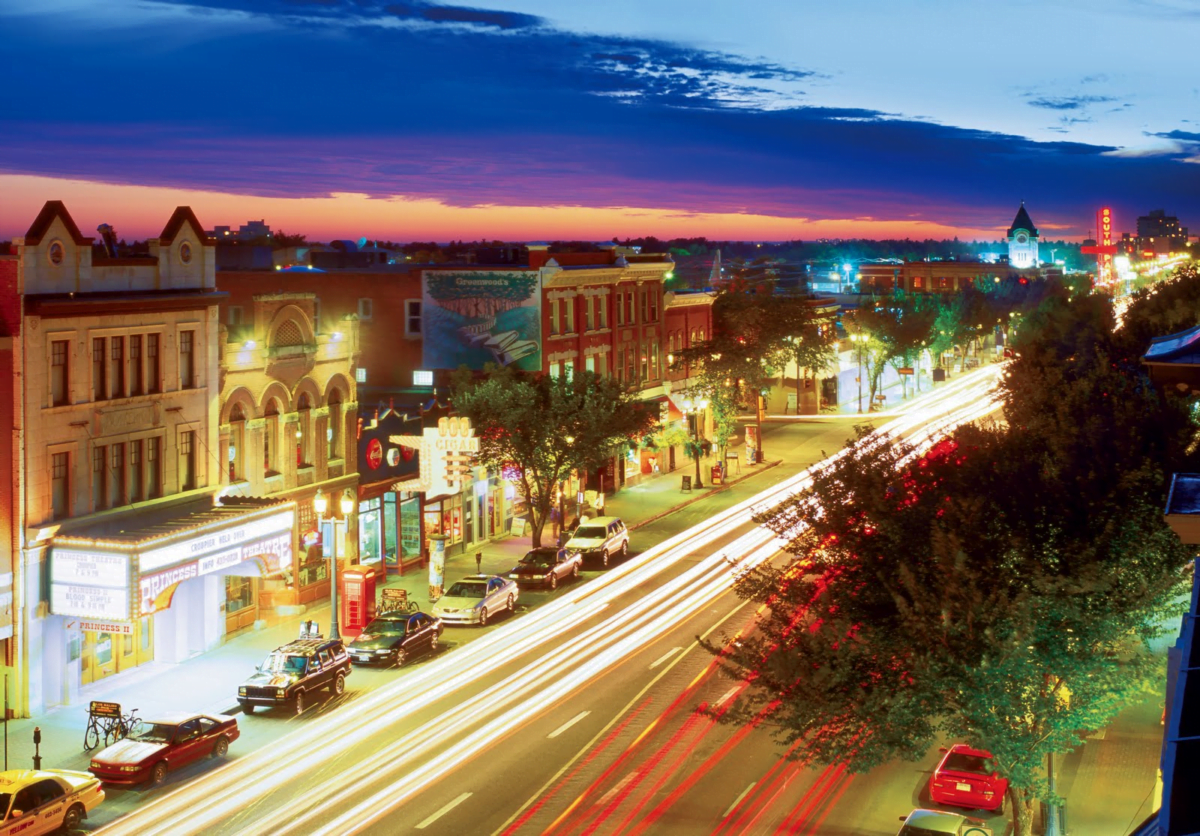
The retail outlook for Edmonton is slowly improving as the sector comes out of a challenging time during the pandemic.
A report by commercial real estate firm JLL said the retail market in the Alberta city has seen steady improvements in leasing activity through the start of 2022, despite not yet reaching pre-COVID levels.
“The pandemic has created pent-up demand for retailers and consumers, driving a surge in retail sales,” said the report. “Asking retail rents have remained relatively stable, with a slight dip to begin the year. The trend in rents is still upwards. As vacancy continues to drop with the help of the recovery, landlords are expected to raise rental rates.
“The growing net absorption and declining vacancy have been strong signs that the market is tightening. Most of the positive net absorption is attributable to general retail, malls, and neighbourhood centres. Many of the major corridors have been recovering and are now at healthy vacancy levels. Whyte Avenue is the slowest to recover, and currently has more vacancy than it’s had in a long time.”
Whyte Avenue in Edmonton (Image: Tourism Edmonton)
The availability rate in Edmonton has increased from 4.3 per cent in 2019 to 5.1 per cent today. It had peaked to 5.8 per cent in 2021.
Paul Raimundo, Vice President, Retail Leasing and Sales at JLL in Edmonton, said the retail sector in Edmonton today is very active.
Paul Raimundo
“There’s lots going on. Everybody you speak to has a lot of transactions in the queue, a lot of people looking, which is all really positive. I would say it’s the busiest we’ve been since we lifted most of our restrictions,” he said. “We have a lot of variety of product that we work on here. There’s significant interest. Paper moving back and forth, which is good.
“People are trying to do deals. Franchise groups are back out sourcing sites because they’ve got franchisees in the queue and they’re looking for spaces which is usually a pretty good indication that the market is moving in the right direction. That hasn’t happened very much over the last two and a half years. It’s been fairly quiet on that front. So that’s a good thing.”
Raimundo said the flight to grocery-anchored, daily needs sites continues. They remain the strongest sites in the market.
“You’re starting to see good commuter sites now come back. Those two to three acre C-store gas bar sites. The interest has picked back up in those,” he said. “New growth areas are still big here and we’re doing a couple of projects in a couple of areas.”
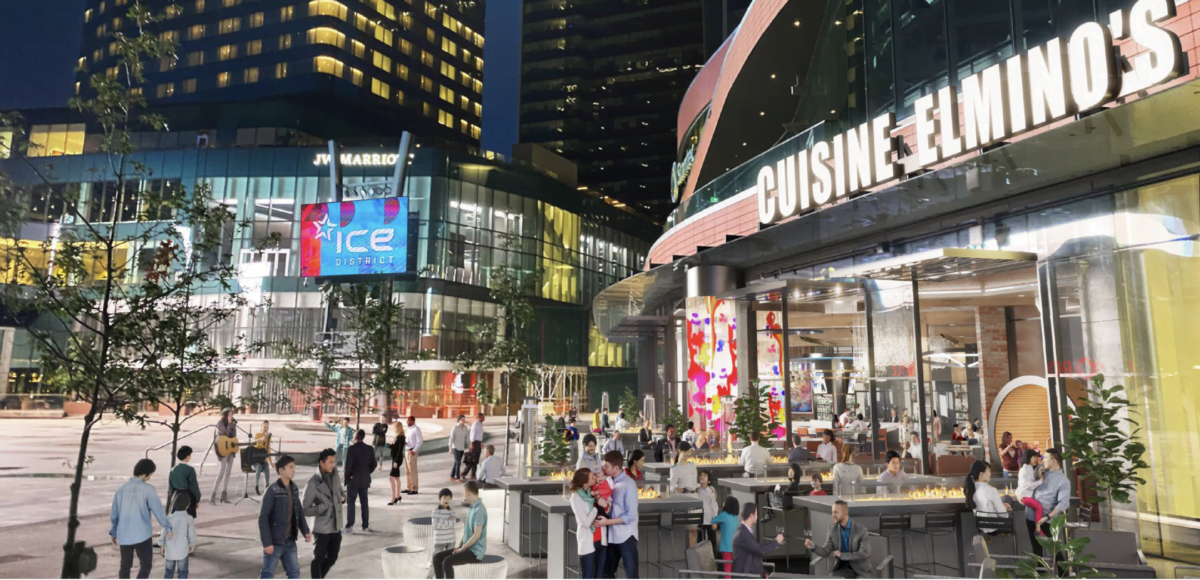
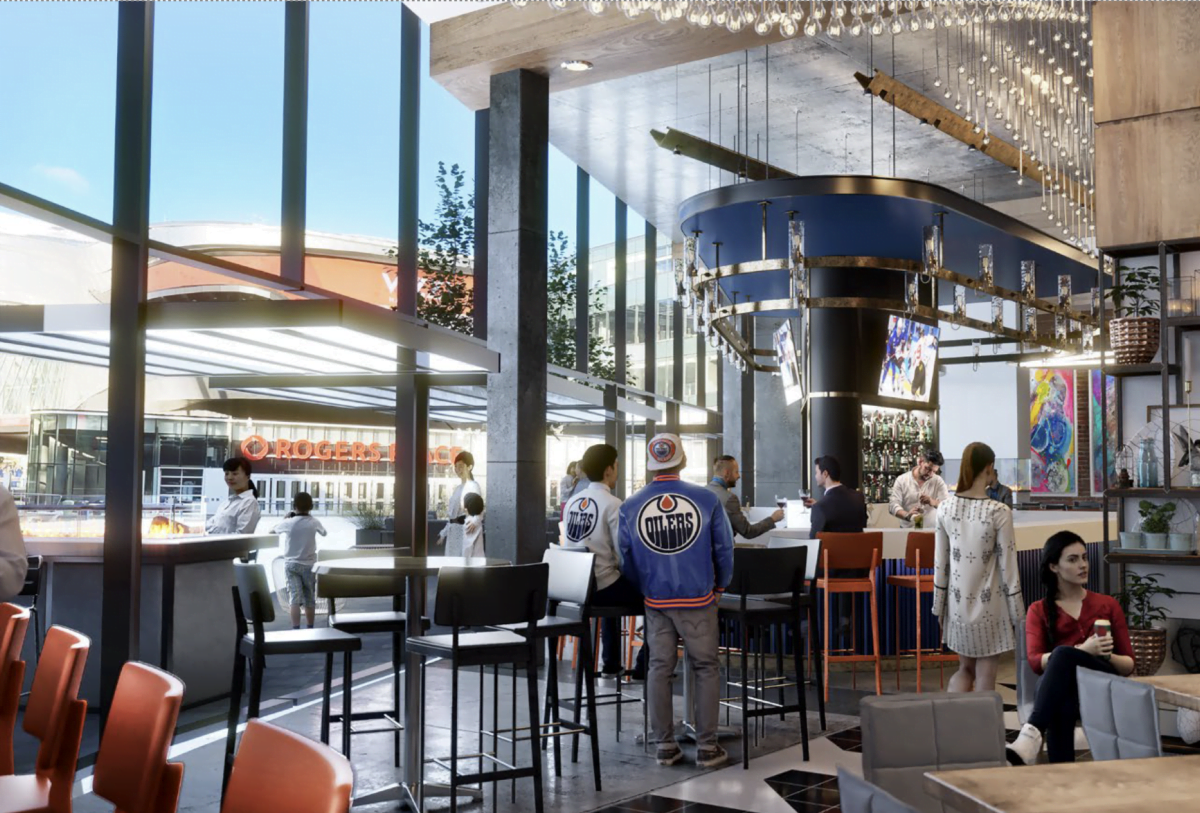
ICE District in Downtown Edmonton (Image: Colliers International and Savills)ICE District in Downtown Edmonton (Image: Colliers International and Savills)
The JLL report said the food and beverage industry in Edmonton has suffered perhaps more than others. More specifically, full-service restaurants that occupied spaces between 5,000-7,000 square feet are becoming vacant as fewer shoppers dine in. Restaurant owners are finding spaces between 3,500-4,000 square feet as optimal for their businesses and ever-changing consumer behaviour, it said.
“With a dramatic increase in inflation and rising interest rates, we’re starting to see deals take longer to complete. Many tenants and landlords who seek financing approval for their expanding projects have been waiting much longer. As interest rates continue to rise, this issue will persist,” said JLL.
“Shopping centres structured with good anchor tenants have been performing well. Specifically, centres anchored by grocery stores or pharmacies have seen little-to-no vacancy as repeat customers contribute to overall sales within the property. Tenants are also more likely to seek positions next to anchor tenants while avoiding shopping centres that have none. This has led to vacancy in properties without anchor tenants.
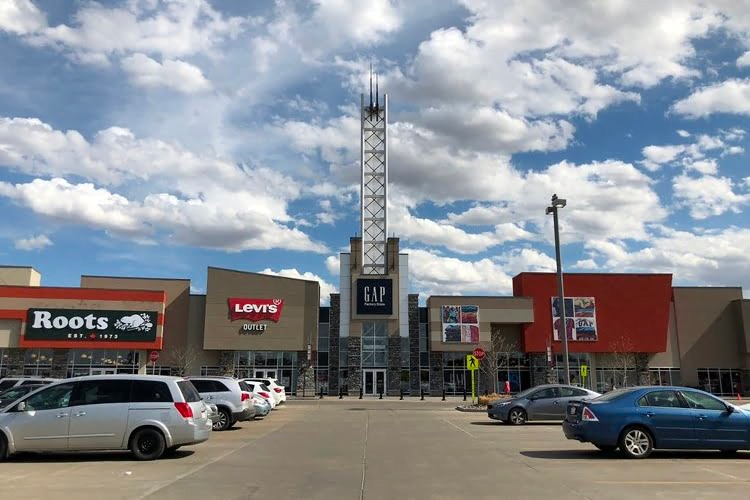
Image: South Edmonton Common/Cameron Corp
“As people have been eager to go out and spend money on shopping and eating out, we should continue to see robust retail sales. We’re just coming out of physical store restrictions, decreased opportunity to spend, and a sustainment of savings, which is leading to more consumer confidence and higher spending power pushing demand for spending.”
Raimundo said construction costs are still hindering the market, making it more difficult to renovate as well as slowing the development process.
The report also said new tenants in malls have been more confident to sign long-term deals, as they don’t anticipate the same recurring COVID restrictions that hurt them in the past.
“Before it used to be this real tug of war. It’s a landlord’s market, then it’s a tenant’s market, then it’s a landlord’s market. That seems to have gone away a bit. It needs to be both our markets otherwise this doesn’t work,” said Raimundo. “It helps with the transparency and it helps that they’re partners.”
Retail Insider is streamlining its Canadian retail news from around the web to include a handful of top news stories that can be viewed quickly during the day. Here are the top stories from the past 24 hours.
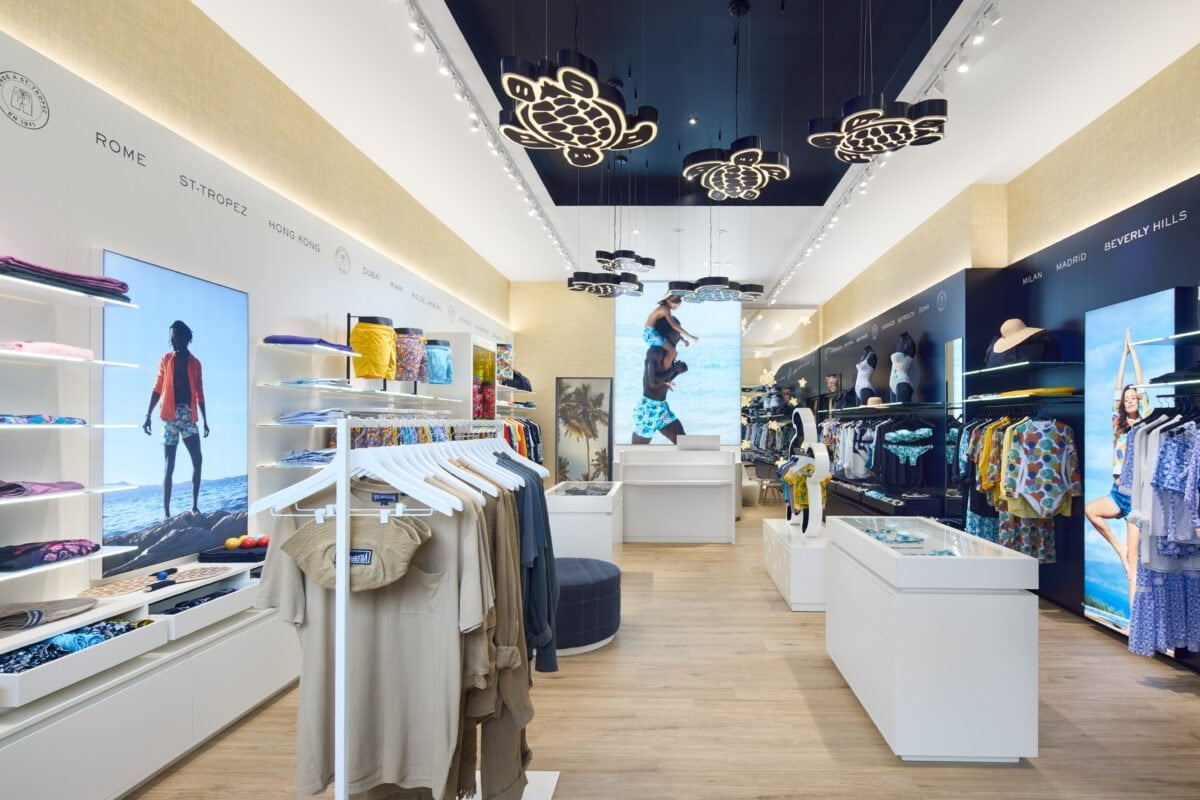
French luxury brand Vilebrequin, known for its colourful swimwear and fashions for men and women, has opened its first Canadian storefront in Montreal’s affluent Westmount area.
The store is located at 4912 Sherbrooke Street in a 1,148 square foot space. Included is a range of swim styles for men, women, boys and girls as well as ready-to-wear, accessories and beach day essentials.
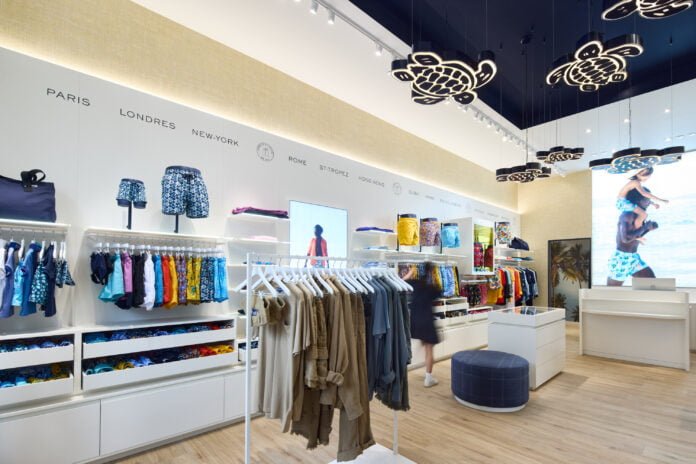
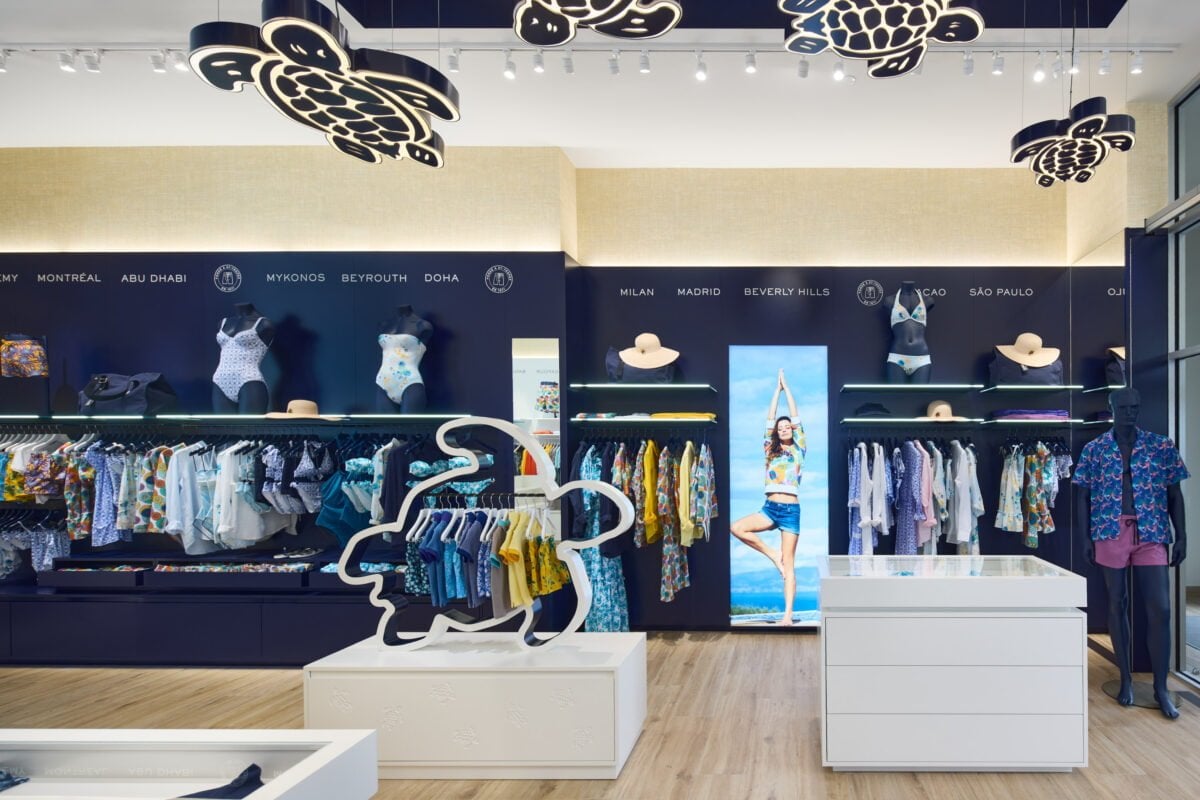
The store design is inspired by the vibrant azure and white hues of the Mediterranean Sea. The brand said in a statement that the colourful environment “brings its signature sense of laidback, seaside cool while hinting at the glamourous lifestyle of the French Riviera”.
Vilebrequin Montreal (Image: Vilebrequin)Vilebrequin Montreal (Image: Vilebrequin)
The brand is known primarily for its pricey swimwear. Vilebrequin has expanded into fashions for men, women and kids including an assortment of fashion and accessories and even flip flops priced at $110 CAD according to the retailer’s website. The brand says that it celebrates “the art of carefree living in the sun all year long” and that it is focused on developing and implementing sustainable solutions, fabrics, and processes “that only make an impact on vacation, not on the ocean”.
The Westmount storefront is owned by franchisee Cheryl Glense, who has been a staple in Montreal and Westmount fashion for decades. Glense owns two high-end independent boutiques a block away from the new Vilebrequin store. That includes Courval Fine Lingerie which she recently acquired as well as the 40-year-old Ritsi women’s fashion boutique.
No other Vilebrequin stores are planned for Canada at this time.
Vilebrequin was founded in 1971 in Saint Tropez by Fred Prysquel, a photographer and sports automobile journalist and his wife Yvette, a fashion designer. Interestingly, Fred is colorblind and Yvette picks out all the colours. In 2012 the company was acquired by US-based G-III Apparel Group Ltd. The company has over 170 stores globally in 62 countries as well as distribution in multi-brand retailers.