Advertisement
Advertisement
Home Blog Page 878

Retail Banking: Security Surveillance’s Role in Branch Transformation

WOMAN USES AN ATM MACHINE. PHOTO: AXIS COMMUNICATIONS

By Rick Snook

Retail banking has changed so much in the past decade that we even have an official term for it: ‘Branch Transformation’. As banking moves increasingly to digital formats, the role of the bank branch is evolving fast – revising and revamping for today’s needs. Things you’d never see in a branch 10 years ago are becoming more common, like casual meeting spaces, digital hubs and cafés.

As branch transformation and fintech (short for “financial technology”) continues to evolve, so will the needs for security surveillance, cybersecurity, and advanced digital technology. Surveillance systems enhanced with artificial intelligence are now becoming the standard. Adding a global pandemic to the mix of threats fuels our motivation to examine how security technology – specifically, video data analytics and network audio systems – can play a key role in taking banking into the future.

WOMAN HOLDING CASH AND A CREDIT CARD WITH A MAN BEHIND HER ATTEMPTING TO STEAL HER POSSESSIONS. PHOTO: AXIS COMMUNICATIONS

Building a Better, Safer, and Socially-Distanced Experience

Network surveillance cameras can now give us a plethora of data to use to our advantage. Equipped with insights about exactly how and when customers use branches, banks can optimize their branch assets and customer experience. Queue monitoring and occupancy estimating (or “people counting”) are two cost-effective ways to accomplish this.

Nobody likes to wait in line and queue monitoring analytics can provide real time data for how many people are “lined up,” giving an alert and notifying staff when a threshold is hit. It also provides statistics about queue fluctuations over the course of the day, which can help ensure your resources match future visitor traffic and needs.

If your branch is equipped with a network audio system (more on that later), queue monitoring can even help to ensure social distancing to prevent the spread of COVID-19. For example, when an event triggers a network camera, it will prompt a speaker to play a pre-defined clip such as: “Please remember to stay six feet apart until the customer in front of you has completed his or her transaction.”

Occupancy estimating provides real-time data on how many people are present in your branch or in a certain area at a certain time. This can help you improve how a space is used, get an indication of the revenue opportunity, plus optimize workforce planning and opening hours. It can also tell you when occupancy exceeds a set threshold, crucial in helping to prevent the spread of COVID-19. For example, occupancy estimating can play an audio message to people outside, so they know to wait until it’s safe to go in. When integrated with a building management system, occupancy estimating can even help to optimize HVAC system usage and reduce energy consumption.

Sounds like the Future – How Audio Analytics can Enhance Retail Banking

Network Audio Systems may not currently be a standard within retail banking, but they can improve a customer experience, which is why retailers have done it for years. Some examples of how network audio could enhance the branch environment are:

  • Background Music – Creates a pleasant environment and can help during times when customers are waiting to be assisted by relieving agitation and allowing them to enjoy their time in-branch, creating a positive overall experience.
  • Announcements – Audio alerts can help mobilize staff to assist visitors when the floor becomes busy. For customers, they can provide a new service offering or other important messages.
  • Zoning – Provides ability to define different audio zones in each location and manage and connect remotely with multiple locations at any time, providing a consistent brand experience.
  • Soundmasking – Background music can be used to increase confidentiality. By having distracting music, it makes conversations more difficult to hear and follow, thus keeping private conversations with customers confidential from those who may be within earshot.
  • Reduce Loitering – a triggered audio message can help to prevent unwanted activity in the ATM vestibule or around the branch. Music playing outside can also deter loitering as well.
  • Enforce Rules – when used with cross line detection analytics, an audio message can be triggered whenever someone crosses a user-defined virtual line. For example, to help prevent the spread of COVID-19, a pre-recorded audio clip can remind customers and employees to use hand sanitizer as they enter the store or washroom and as they’re leaving the building.
MAN USING ATM WITH ANOTHER WAITING IN LINE. PHOTO: AXIS COMMUNICATIONS

Detecting and Deterring Suspicious Activity from the ATM to the Parking Lot

Having just passed its 50th anniversary, the ATM (Automatic Teller Machine) plays a critical role in the customer experience and ATM numbers are actually increasing worldwide. But recent research shows us that customers often feel unsafe when using them. That’s why discreet network cameras in the ATM vestibule are a must, deterring potential assaults on customers and the ATM itself. A great example of network cameras “doing their job” is with a loitering detecting solution in the ATM vestibule, which can notify the system operator whenever too much time is spent in front of the ATM. Zooming in can catch criminal activity such as card skimming and “shoulder surfing,” allowing for immediate, real-time action in the case of an incident and improved investigation, thanks to hi-def video footage.

With a licence plate recognition solution, you can also, in theory, catch criminals before they even have a chance to walk into the branch. This type of analytics application captures a license plate in real-time, compares it to a pre-defined list (such as organized crime rings or vehicles associated with missing persons), and generates an alert. Today’s pan/tilt/zoom cameras with instant laser focus can also catch the license plate of vehicles even when they are moving.

Aggression and gunshot detection are excellent layers of defence for bank branches. Since many safety and security incidents are preceded or initiated with sound, a camera and advanced audio analytic software can “listen” for predefined noises. A system like this provides algorithms that can detect an acoustical pattern and pick up on aggressive voices or sounds, then notifies the operator, who can evaluate the situation by watching live video feeds and take necessary measures.

Biometrics and Facial Recognition – Slowly Gaining Acceptance as the New Normal

Biometrics, for those not familiar with the term, are defined as “body measurements and calculations related to human characteristics… used in computer science as a form of identification and access control.” Facial, fingerprint and voice recognition are all examples of biometrics. In branches, facial recognition is particularly beneficial for accessing high security or restricted areas, identifying organized crime rings, finding a missing person, or protecting a person’s assets through validation.

Because of privacy concerns, facial recognition is currently a controversial topic. While facial recognition with smartphones has gained acceptance, banking and other industries have been slower, limited for public deployment and only used for high security data centers, vaults and other secure areas of their facilities. There are, however, specific technologies that protect customer data while facial recognition is in use, which include things like video redaction; which is the ability to blur others in the video that are not directly involved in the incident.

The pandemic has also certainly increased receptiveness for touch free solutions via facial recognition, as keeping surfaces (particularly doorknobs) constantly clean is challenging. With a network door station, banks can setup up keyless entry into private areas to reduce the spread of germs. When an employee looks into the camera, the solution identifies them from a database of authorized personnel. Once the system authorizes the person, the network solution automatically unlocks the door. Facial recognition can also help with mask or no mask detection, automatically locking doors whenever someone tries to enter a mask mandatory area with no mask.

BANK HOSTESS USING TABLET. PHOTO: AXIS COMMUNICATIONS

Cybersecurity – Why OT and IT Must Work Together

As technology evolves, so do the threats. Hackers or “bad actors,” as they are known in the industry, are finding new ways in through your IoT (Internet of Things) devices, which includes network cameras. Because every network device is now a potential breach point, this is why your IT department (who manages the flow of digital information), and OT department (who manages the operation of physical processes, machinery and physical assets), must become a tighter team to create a better defence. One often-overlooked way to accomplish this is through device management software solutions – which can assemble a full real-time inventory of all your network surveillance devices, spelling out exactly where you stand on the cybersecurity front and what steps need to be taken to protect your technology – saving on both time and stress.

Making Today’s Solutions Sustainable for Tomorrow

Short term solutions for the pandemic have long term potential as well. Occupancy estimators today will lead to branch optimization tomorrow. Face mask detection today can be used for robbery detection tomorrow. There is even software being reinvented to capture facial features left uncovered by masks.

The current change in branch style to get more of a relaxed customer experience – such as moving staff from behind a counter to a lounge area – will require a different design in placing cameras and increase demand for smaller cameras that blend into the interior. These cameras will expand to provide not only security and safety but also business intelligence via AI data.

Planning for a safe and profitable branch transformation means anticipating future needs. The only way to accomplish this is to involve all stakeholders and partners in a total discussion, covering the needs of today and tomorrow. There are countless ways that having intelligent “eyes on everything” can prove to be a huge return on investment.

Rick Snook

Rick Snook is the Business Development Manager for Retail and Banking at Axis Communications. In this role he provides support and education and assists with providing comprehensive and sustainable solutions to our large end users while protecting our channel partners. Rick holds a Physical Security Professional (PSP) certification from ASIS International, Loss Prevention Qualified (LPQ) from the Loss Prevention Foundation, CPTED Level 1 as well as an Axis Certified Professional (ACP) designation from Axis Communications.

Evolution of the Physical Distancing Sticker in COVID-19

By Andrew Witkin, CEO, StickerYou

“Stay six feet apart.”

“Curbside delivery now available.”

“Yes, we’re open — but only if you’re wearing a mask!”

You’ve probably seen these messages and many more like them lately as businesses attempt to safely reopen their doors. Messaging plays a vital role in the nation’s ongoing efforts to bounce back from COVID-19, but it’s not just what you say that matters; it’s how you say it. And these days, it might be a bit surprising to learn that stickers, decals, and other “temporary” solutions are becoming a permanent part of the solution.

A Quickly-Evolving Sticker Message

In the early days of the pandemic, handwritten signs and hastily-printed messages were being taped up to shop windows and doors across the nation. When we all thought that things would be back to normal in a few weeks, these homemade solutions seemed sufficient. In the months since, it’s become much more common to see these messages printed professionally on stickers, labels, and decals. As it turns out, they’re the perfect medium in a situation that calls for rapid changes.

COVID turned our economy on its head virtually overnight, and the resulting social distancing restrictions have reshaped the way we do pretty much everything. As we learned more and more about the way the virus spreads, these social distancing guidelines changed as well. In a rapidly evolving situation like this, the fast turnaround time of printing stickers and decals lets businesses keep up with the latest requirements while ensuring their customers are safe and informed.

Speed to market is just one benefit of using stickers to communicate important pandemic-related information. They are also far more affordable than permanent signage or changes to product packaging. This is a time when many businesses are operating on even tighter budgets than usual, and custom stickers hit a sweet spot for affordability and their capacity to look professional.

Stickers Working Everywhere

Adhesive labels are incredibly versatile. By now you’ve surely seen stickers covering the floor of your local grocery or convenience store, advising people where to stand to maintain their six feet of spacing. That’s a valuable solution that’s perfectly suited to a sticker’s overall durability. But it’s not the only way businesses are using decals in their COVID reopening plans.

Many businesses are now using stickers and decals to promote new services and products. They’re ideal for advertising a business’s new contactless payment systems, altered hours of operation, or delivery options. And if you’re one of the many companies introducing bespoke masks and hand sanitizers to your product line, a big sticker in the shop window is a great way to get attention from your clientele.

It’s the versatility and affordability that make stickers a great choice for these applications. Businesses are able to display new information quickly or alter existing signage while avoiding overspending to promote temporary products or conditions.

Adapting the Sticker for the Future

The battle against COVID-19 is sure to be an ongoing struggle, and new solutions will play an important role in both economic and societal recovery strategies. It should be no surprise by now that stickers will be a central part of that fight.

Stickers and decals have always been great for injecting personality into everyday objects, and that role has become absolutely vital for bringing positivity into a society hidden behind facemasks and other PPE. Stickers provide the ability to personalize PPE, which can be as simple as adding a name or other personal identifier. For many, this is simply a way to keep tabs on their gear or to show a little bit of individuality. But for frontline workers who deal with children or groups with special needs, these custom touches can make all the difference. Brightening up a mask with stickers, adding a name tag to make the wearer more easily identifiable, or even adding a custom-printed picture of the person wearing the mask, can make a huge difference.

And like the messaging itself, the medium is evolving as well. One new tool in the fight against COVID is the iron-on transfer, which is being used to customize cloth masks quickly and easily. Much like the sticker, this is a technology that’s been around for a long time but is finding a new and important role in showing the world that we’re still smiling behind our masks.

Andrew Witkin is the founder and CEO of StickerYou, a global, e-commerce leader in custom-printed, die-cut products that empower consumers and businesses to create high-quality materials for personal expression, marketing, and packaging.

Empire’s Michael Medline Discusses the Future of Grocery Retail Amid Second Wave [Interview]

EXTERIOR OF SOBEYS GROCERY STORE. PHOTO: SUPERMARKET NEWS

The head of one of Canada’s biggest grocery chains says the company in the Canadian food supply chain is ready today for a second wave of the COVID-19 pandemic.

“We haven’t loosened our protocols. They’re as strong now as they ever were. We’re ready,” said Michael Medline, President & CEO of the Empire Company and Sobeys Inc., who recently spoke at the Empire Club of Canada event titled Managing through Crisis and Building a Winning Culture.

headshot of Michael Medline
MICHAEL MEDLINE. PHOTO: LINKEDIN

“Our real worry now to quote Game of Thrones is that winter is coming. Winter is coming. It could be very bad. We have to keep people safe and we have to be able to allow them to come in and get the food.

SOBEYS INNOVATING IN THE FACE OF CANADIAN WINTERS AND COVID-19

“We are looking at innovations in our stores. It’s going to be cold. We don’t want people lining up outside but we want it safe. We’re going to do some structural changes to our vestibules to allow that. We’re going to put in structures so people are protected from the elements where they need to be. We are now about to pilot some innovative technology for queuing that if it’s cold out or it’s snowing out or it’s sleeting out, we’ll let you know. You can sit in your car, stay warm, stay out of the elements and we’ll let you know when you can come in. At certain locations we’re going to be able to do that. So we’re always innovating and getting ready and we’re also ready in terms of supply chain.”

Medline said the initial stages of the pandemic back in March was a “blur”.

“We were moving as quickly as we could and the only way to get through this was to get back to basics . . . a few key priorities. We distilled down to three priorities – keep the stores open and keep those shelves stocked, keep our teammates and customers safe, and give back to the communities in terms of philanthropy,” said Medline. “That’s what we did during that period of time and we stayed true to our values throughout that time. And that’s how you have to act.

“Our team, including me, we worked around the clock from wherever we were. And the team did a great job. We just had such a duty. We don’t necessarily think of ourselves as essential services. For a number of months there we were an essential service. We had to keep people safe and we had to keep them fed. And we didn’t know where this was going. It was a very, very scary time and indeed unprecedented.”

COVID-19 HAS PROVEN THE STRENGTH OF CANADIAN FOOD SUPPLY CHAIN

Medline said the pandemic experience, especially in its early stages, proved that the Canadian food supply chain is strong.

“I’m not going to sugar coat it. I like to be transparent. It was hanging by a thread back in March and April. We were being asked to run our stores, run our supply chains at a level we didn’t actually think was possible. Our great supplier partners throughout the country were doing things they never thought were possible and the people who supply had to do that too,” he said. “It was hanging by a thread. We made it through because we worked together, because we innovated, and we partnered across the country. Everyone was helping each other. We were in constant communication with our supplier partners.”

Medline was quite blunt referring to reports that competitors have been or want to impose fees on suppliers.

“This is the worst relationship I’ve ever seen in my couple of decades in retail. Some of the practices that have been in the news right now are for me hard to believe and repugnant actually,” he said. “And taken to the extreme, some of these behaviours are just plain bad for Canada and that’s our view at Empire. They’re bad for the consumer goods companies and for clear reasons they feel bullied, it doesn’t seem fair. That in turn hurts our farmers that we have to take care of.

“It’s not good for small mom and pop food retailers. How can they compete with that? It’s terrible for consumers when things like this happen because the fear is it’s going to raise prices for consumers which we’ve been resisting with all our might. It’s even unfair, don’t cry for us, but it’s even unfair to large grocers like us who try to play by the rules, who try to play fairly, and want a good food supply chain.”

WHILE ECOMMERCE GROWS, IT REMAINS A SMALL % OF GROCERY SALES

Medline said people will continue in the future to visit brick and mortar stores. While ecommerce has grown, and more so through the pandemic, it still remains overall a small percentage of sales for grocery stores.

“The foreseeable future most grocery will be in bricks and mortar. Ecommerce will be sexy. It will be the highest growth but bricks and mortar will be what funds all this ecommerce growth and it will be the heart of how people shop for a long time,” said Medline.

“(Ecommerce) will continue to accelerate far faster than any other part of the business.”

Medline said he believes that if companies don’t innovate they will die.

“I’m a huge fan of innovation. We have all sorts of plans I’m not going to make public today. To be honest though, looking back five years ago, I’m disappointed in how little and surprised at how little progress retail has made in terms of innovation over a five-year period where I thought, and many thought, it would explode,” he said.

Welcome to the New Retail Insider Website

Retail Insider would like to welcome everyone the newest version of our website. The transition has taken months of hard work and we would like to thank everyone on the team who made everything come together. 

The look of the new website is a modern take on the previous version which hadn’t been changed significantly since 2014. Since then, Retail Insider has grown substantially to include new employees and correspondents, an expanded content assortment, and a readership which has more than doubled since March of 2020.

New Retail Insider Website Launched October 31, 2020

The new website is also part of an expansion for Retail Insider, which recently partnered with Best Retail Careers International Inc. to launch the new Luxury Careers Canada job board and staffing firm.

Retail Insider launched podcasts which have become popular, and now we are in the process of launching curated research as well as other initiatives. 

We would like to thank everyone for reading Retail Insider over the years. We will continue to bring you Canadian retail news that includes our exclusive content as well as an aggregated news from around the web

If you aren’t already, be sure to subscribed to our Retail Insider Daily Newsletter.

Mad Radish Foodservice Concept Expanding with Partners

MAD RADISH LOCATION IN FIRST CANADIAN PLACE IN DOWNTOWN TORONTO.

At a time when most restaurants are scaling back or closing their doors, the unique Mad Radish concept is going against the trend and expanding its business.

The brainchild of David Segal, who is also founder of DAVIDs TEA, has launched two new brands for its offerings at the gourmet fast-food chain – Luisa’s Burritos & Bowls and Revival Pizza.

MAD RADISH INNOVATING IN THE FACE OF COVID-19

As a response to COVID-19’s impact on the restaurant industry, Segal saw an opportunity to establish a new kind of convenience in the gourmet fast-food category by offering three unique menus under one roof (and on one app).

And he’s created a hybrid of a ghost kitchen with its working function capacity and a customer-facing restaurant.

REVIVAL PIZZA. PHOTO: MAD RADISH

Mad Radish was founded in 2017.

“Mad Radish started out being all about food that’s good for you but also makes you feel good and tastes good. It stemmed out of the idea that I lived in the U.S. and found that there’s so many options available for eating on the go and when I moved back to Canada there just seemed to be such a void in the market. I like to eat healthy but I also don’t want rabbit food. I want food that’s filling and has tons of flavour and that’s what Mad Radish was about,” said Segal.

“That’s how we started but we’ve since evolved the concept completely. Mad Radish is all about gourmet fast food now and it’s a family of gourmet fast foods. And we’ve since introduced two new brands into our stores. One is Luisa’s Burritos & Bowls and the other is Revival Pizza.

“Luisa’s is an authentic South American ingredients. Revival is Neapolitan style pizza with a modern twist. And all three brands share this philosophy of gourmet fast foods. The idea basically is food that’s made quickly but doesn’t compromise on flavour or on quality. It’s very simple ingredients at the highest quality. It’s food that’s made to order but built to travel.”

LUISA’S BURRITOS & BOWLS MEAL OPTIONS. PHOTO: MAD RADISH

There are six Mad Radish locations of which two are closed right now due to the COVID-19 pandemic. Three locations are in Ottawa and three in Toronto. One in downtown Ottawa and one in downtown Toronto are temporarily closed. A seventh store in Ottawa will be opening in January.

The first location for the concept was in downtown Ottawa.

“Right now we’re just really focused on nailing the model. I don’t know how many stores we’re good for. But we think there’s a lot of communities and there’s a void in the market around this higher quality fast food which is what we’re about and we’re trying to tackle that with three amazing brands that are run out of one space and they’re both available for instore purchase, contactless pickup on our Mad Radish app and we’ll be adding delivery to our app as well and then also on the third parties like Uber Eats.”
COVID FORCED BRICK & MORTAR RETAILERS TO RETHINK BUSINESS MODELS

Segal said when the pandemic hit it really caused everyone in the brick and mortar businesses to rethink their business model.

“We look at the future of restaurants or retail in the food world and it is multi-channel. It’s customers being able to get what they want, how they want it. We’re prepared for anything whether that’s instore purchases, contactless pickup and delivery,” said Segal. “What’s Mad Radish fundamentally about? We landed on the food philosophy. We think that’s really our differentiating factor. This idea of gourmet fast foods.

“And we said to ourselves how can we extend our value proposition to serve our customers more often in the kinds of foods they like to eat. And that’s where we landed on introducing a new burrito brand in Luisa’s and introducing a new pizza brand in Revival. They all share that common food ethos. We think it’s a market position that no one has. We see us much stronger with the three together, particularly with the shift in more delivery. This hopefully allows us to become a bigger part of our customers’ weekly meals and in turn generate more volume out of the spaces to be able to handle the shift towards delivery and do it really, really well. That’s been our focus. Takeout and delivery. We’ll still have seating in our restaurants but we’re dedicating more of our space to kitchen, to prep areas, to customer flow, to be able to handle takeout and delivery in a first-class way.”

Segal said the pandemic has taught people that many services now come to the consumers who are more comfortable dealing in a digital environment.

“The other thing we’ve learned is we kind of crave human contact sometimes and it’s part of being human to want to be around each other and face to face, and smile to each other, and be with people live. That’s going to have its place potentially in the future of restaurants. So we’ve developed a hybrid model between a ghost kitchen and a restaurant. We’re kind of trying to take the best elements of both with yes we’re going to operate with multiple brands, yes we’re going to have more space dedicated towards preparing food for delivery and takeout, and facilitating that effectively, but we’re not going to get rid of our seating entirely. We’re still going to be visible and accessible for customers that want to come in person.”

Letter to the Editor: “Behind the Bikini Bankruptcy” (Swimco story)

Swimco Square One

By Lisa Wise

Dear Editor,

Selling swimwear in Canada was, at first glance, a bad business idea. Swimco’s closure was not because it was a bad idea. In fact, Swimco was an international leader within its sector. Swimco’s early passing is another sad reality of COVID-19 and the current economic challenges.

Lori Bacon, CEO of Swimco
Lori Bacon

What the news story doesn’t tell is how Swimco was a champion for women in business. Started by a mother and entreprenuer, Corinne Forseth, and passed over to another mother – her daughter and business leader, Lori Bacon – the Swimco story started and ended with females at the helm. Additionally, over 90% of their workforce was female which meant women were leading the way in all company roles. Swimco created the right culture of professional dedication to the business that also supported women being promoted within the company. Additionally, the contractors and others that Swimco worked with were almost all female. It was a success story that supported women in our city and throughout Western Canada.

As well, the Swimco culture was based on family values that included working hard, being your best and respecting others. The owners, Lori and her brother Steve and her husband Dave, provided role-model business practices and did so by respecting each other without falter. The company received awards for this hard work including the Calgary Award for Commerce and The Alberta Business Family Institute Signature Family. Lori was also recognized for the Enterprising Women of the Year award. Swimco had sizable economic benefits especially within Calgary, Vancouver, and the greater community of Western Canada with recent expansion into Ontario.

Despite the headwinds being too strong, the Swimco success story is well respected in the Canadian retail industry. In fact, the president of a major surfwear brand once noted that he just had to understand it for himself, how a store located in a land of snow, could out-sell retailers located along the California coast. Known in the industry to outsell nearly all other swimwear stores in North America, Swimco had a reputation for being professional and positive. Recognized as a leader by significant swimwear brands, Swimco’s reputation was far bigger than its bricks and mortar stores. Swimwear manufacturers throughout the world, including Australia and America, held Lori Bacon and the Swimco team in high regard. They represented Calgary and Canada well for many decades.

Many customers came to know and trust the Swimco brand that was established for over 45 years as the one to support every type of body. Proponents of having a positive self-image, no matter your body shape or size, the fabric of the Swimco culture was built upon acceptance and positive self-image. Beyond selling bikinis, Swimco’s foundation was to empower people who worked for the company, who in turn empowered tens of thousands of customers to be their best.

Supporting aquatic athletes was an integral part of Swimco’s impact for many years. It was the beginning of Swimco’s history and in fact for many years, Swimco provided swimwear to hundreds of competitive and recreational swimmers including young children, lifeguards, swim teams, Olympic and Special Olympic athletes.

It’s important to pause and give thanks to Swimco’s CEO Lori Bacon and her family for providing the leadership and bravery that entrepreneurs take on. Thanks to their leadership, Swimco provided an excellent place of employment for thousands of young women over the past 45 years. For many of them, it was their first job and gave them a positive start.

Swimco, and all the people associated with it, will be missed. My name is Lisa Wise and I am honoured to say I was part of the Swimco team for years.

Axis Communications Retail Solutions Going Well Beyond Security

SECURITY SURVEILLANCE AT GROCERY STORE. PHOTO: AXIS

The world around us has changed significantly over the course of the past seven months or so, the impacts of COVID-19 endured by just about every person in every community on the planet. Consequences on society at large that resulted from the first pandemic wave were severe, creating scenes not too dissimilar from those imagined in some of the most chilling science fiction stories ever written. In efforts to curb the initial spike, mandatory health measures were instituted in most cities and countries, which often included the cordoning off of city parks and other spaces that had once served as common gathering areas, the cancellation of any and all public events, and the implementation of physical distancing rules which limited the number of people who could congregate in a public or private space at any one time. In short, the ways we had become so used to doing things were suddenly turned inside out, imposing on us a new kind of normal that we’re now collectively familiarizing ourselves with.

The repercussions felt by most segments and sectors of business around the globe as a result of these measures were also immediate and harsh, to say the least, the bottom lines of most companies taking an indefensible hit. And for retail, an industry so heavily reliant on human interaction and engagement, the effects were staggering, as brick-and-mortar storefronts and offices shuttered temporarily, reducing once bustling Main Streets to centres of relative inactivity, restricting the operations of retailers everywhere and inhibiting all possible growth.

Although precautionary restraints began to ease across Canada back in June of this year, populations in many provinces, as recognized by numerous health officials across the country, are now well and truly experiencing the impacts of a second wave of the life-threatening virus. And as the 2020 holiday shopping season quickly approaches, many experts in and around the industry, including Rick Snook, Business Development Manager for Retail and Banking at Axis Communications, contemplate just what our new normal looks like and the solutions that will be required to help retailers recover, sustain and grow in the short-term, as well as realize and capitalize on opportunities to flourish in the years ahead.

“The retail environment has been altered dramatically as a result of COVID-19,” says Snook. “And it seems very likely that many of the impacts of the pandemic will remain ongoing. It’s resulted in a big rethink for many within the industry as we all continue to learn the full extent of the effects caused by the virus and how subsequent changes to retail operations will impact the shopping journey for customers going forward. When you think of things like the implementation and increased use of curbside pick-up and delivery options, as well as other processes and aspects within the retail environment that have been impacted by the pandemic, an entirely new set of considerations and challenges are introduced to retailers. As part of these challenges, they’re tasked with the responsibility of continuously ensuring a shopping experience for their customers that’s as enjoyable, efficient and safe as possible.”

Altered Environments; Evolving Challenges

Now accountable for the responsible management of customer flow and occupancy levels within physical stores, as well as the safeguarding of their spaces by ensuring that visiting customers are abiding by physical distancing and facemask requirements, the burden on retailers related to the operation of their physical stores has perhaps never been greater. When these new demands are combined with traditional in-store complications like shoplifting and internal shrinkage, merchants’ need for retail technology solutions to help them meet these challenges and demands is just as great. And this, according to Snook, is where Axis Communications and its suite of services comes in.

The company, founded in 1984 by Mikael Karlsson, Martin Gren and Keith Bloodworth, has for decades been known as one of the global leaders in loss prevention and security network technology. However, a few years ago, recognizing a shift in the market and an evolution of the needs of the end user, Axis made the decision to expand its offering and services beyond video security surveillance to include a series of robust digital solutions. Through the combination of video analytics and network cameras, the company is today positioned to provide retailers with what Snook refers to as an “overall collateral” to help their businesses run as efficiently and safely as possible.

As part of Axis’ overall collateral, it offers retailers a means by which to meet these new challenges, providing technology that allows them to digitally monitor queues at the cash register and to count and track the number of visitors in their stores to accurately determine current occupancies. Snook explains that the latter of the applications can be used to assist greeters at store entrances or act as a standalone solution which electronically displays the number of customers in a building at any one time. Audio trip lines can also be integrated inside the store’s interior door to remind people to keep their physical distance of two metres or six feet and to make them aware of hand sanitizer stations located throughout the premises. In addition, Axis’ video technology is equipped to detect whether or not a person entering the store is wearing a facemask, and will alert the retailer with the information which they can then act on at their discretion.

AXIS SECURITY SURVEILLANCE. PHOTO: AXIS

Enhanced Business Intelligence

It’s all part of an offering that represents an added layer to Axis’ already dynamic levels of safety and security features and detection technology, providing protection for both visitors to retail locations as well as the in-store staff. However, what seems most compelling about the company’s offering today is the confluence of uses and applications of the technology, allowing retailers to not only ensure a safe and secure space, but to elevate their day-to-day and long-term strategies via the generation of data that enhances business intelligence, helping to inform everything from staff allocation and site performance to decisions concerning marketing, merchandising and operational efficiencies.

“What we’ve achieved by continuously building onto our solutions is make them multidimensional and multipurposed,” says Snook. “They’re built to help retailers tackle a number of different challenges that they face within their physical stores. Whether you’re talking about shoplifting, organized crime or slip-and-falls, or understanding the customer journey through your store, our solutions are equipped with the intelligence to help with all of these things, right across the board. In most cases, retailers have already got the cameras on site. It only makes sense for them to leverage the technology to help identify where customers are spending most of their time in the store, which products catch their interest and attention, and to analyze any and all other visitor trends that might help increase efficiencies and enhance the in-store experience, all while keeping their guests and employees safe and secure.”

Of course, there are a plethora of other uses for this kind of technology, their number limited only by the amount of in-store challenges. Store locations can be remotely monitored and audited for merchandising purposes, to identify required marketing signage updates, and to simply ensure that the premises is safe and secure. Axis’ video technology can even be used to alert retail staff of the need to clean their restrooms based on the number of visitors who have gone in to use them. And the list goes on. Snook describes this range of applications and uses as “video technology beyond security”, a range that leverages analytics and the Internet of Things to enable retailers to gain a much deeper understanding concerning the effectiveness of their operations.

“It’s all about being creative and innovative to find other purposes for video within the store, to figure out how to expand those applications and uses, and to share the intelligence with all stakeholders,” Snook says. “In this way, armed with all of the data and business intelligence that our technology and analytics produces, the retailer then has the wherewithal to dramatically improve the experience for their customer. And at the end of the day, it’s what retail is all about: selling product and making shoppers happy.”

Impacts on Holiday Shopping

Snook goes into some detail regarding the emphasis that Axis places on the work it carries out on behalf of retailers, recognizing the industry as one of the company’s main areas of focus. He speaks proudly of the engineering that’s taken place behind the scenes for years in efforts to continue supporting retail operations, helping to contribute toward their successes. And he admits that with the 2020 holiday shopping season approaching amid a confirmed second wave of COVID, the need for Axis’ intelligent analytics will be immense and widespread.

“The holiday shopping season is obviously going to look considerably different this year as opposed to previous years,” he says. “And, because COVID has triggered a bit of a dip in the economy, we’re likely to see an increase in theft and robberies. Malls, in particular, will be faced with unique challenges, including concerns around lineups and parking lot space and securing that mass amount of people that are going to descend on their properties. It creates a host of dilemmas that retailers in malls and their landlords are going to need to overcome. And our focus as a solutions provider is to help strengthen retailers during this time, equipping them with the tools to support a successful holiday shopping season by helping them ensure that the right product offering is on the shelf, and assisting them in preventing disruptions to their customers and staff by making sure that the policies, protocols and safety measures they have in place are adhered to. Because of these needs, I think video technology, for all of its uses, will be leveraged to significant importance over the next few months”

Beyond the Pandemic

Snook’s prediction, considering all of the factors that will be at play through to the end of the year, seems like an adept one. And, although video technology and analytics have been in use for some time, he believes that 2020 and the impacts of the COVID-19 pandemic may prove to be a bit of a watershed moment for these types of solutions as retailers reimagine what brick-and-mortar stores will look like beyond the holiday shopping season and pandemic restrictions. How will businesses operate differently post-COVID? How will the global health concerns that have been caused by the virus impact store design? How will the perceived need for office space and travel be impacted? These are only some of the questions that retailers will be asking themselves during the next 6 to 12 months. And Snook is confident that companies with solutions like Axis are well positioned to be able to help them navigate through them.

“We’re taking a three-dimensional view at how brick-and-mortar locations will operate in the future,” he says. “And through our solutions, we’ll be able to provide retailers with applications that can help lighten some of the financial burden that they feel associated to operational costs, increase their level of security onsite, and turn their cameras into smart technology to help enhance the customer experience. There are so many business benefits that will revolve around video technology, surveillance and artificial intelligence in the years to come. The combination of their uses is a real game-changer. And because of the obvious and tangible return on investment that can be achieved as a result of their use, we’re going to see an increase in the number of retailers leveraging these types of technologies – sustainable solutions – that will allow them to properly and effectively overcome the challenges they face today and prepare them for those that they’ll be faced with tomorrow and into the future.”

Edgy Canadian Luxury Apparel Brand ‘Mr. Saturday’ Opens 1st Storefront [Photos]

INTERIOR OR MR. SATURDAY STORE IN TORONTO. PHOTO: MR. SATURDAY

For Toronto-based fashion brand Mr. Saturday, international travel is usually a regular part of day-to-day business. With the global pandemic having halted non-essential travel, the brand decided to take advantage of its extended stay in Toronto to temporarily open a storefront with a twist—a portable pop-up that could be packed up and shipped elsewhere in the world once travel becomes safe again.

Mr. Saturday, founded by designer Joey Gollish, launched in 2017 as a luxury direct-to-consumer fashion label selling merchandise mainly through its website and occasional pop-ups. In the years since, the brand has begun participating in wholesale showrooms at major international fashion events such as Paris Fashion Week. “Since then, we’ve been stocking luxury boutiques worldwide, and continuing to sell direct online,” Gollish says.

This fall, Mr. Saturday opened its “ephemeral” flagship in the building where its headquarters are located, at 950 Queen St. West, between Shaw St. and Ossington Ave. Gollish describes the two-storey store as a “museum in progress”.

“It’s really a mix between gallery and retail that takes on this museum aesthetic mixed with our headquarters,” he says. The large 3,300-square-foot store features large wooden crates typically used for delivering art. In fact, the change room itself is a massive wooden crate. The space also features various mid-century-inspired furniture and design elements.

The top floor, which contains the desks where Gollish and his team typically work, has been transformed into a hybrid working and retail space, showcasing the brand’s full luxury retail offering. The main floor contains a logistics centre and inventory, as well as a retail space showcasing the ‘Department of Research and Records’—the brand’s more affordable fashion collection.

Combining Mr. Saturday’s headquarters with the retail space creates an authentic experience for clients, Gollish says. “You get a glimpse into the process while you’re shopping.”

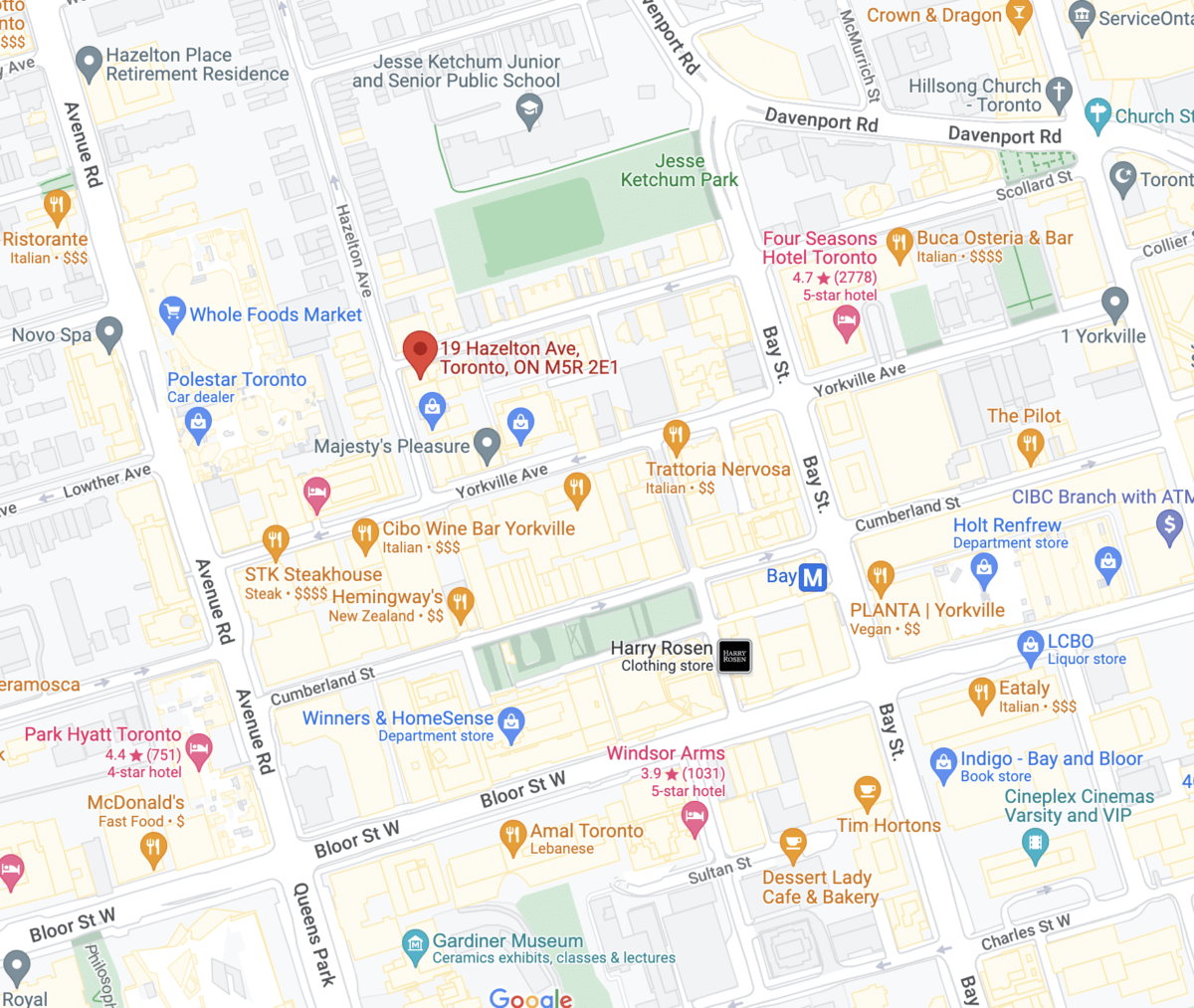
CLICK FOR INTERACTIVE MAP OF AREA

Read Related Articles (Queen Street West – Toronto)

A Wearable Museum

The museum concept is fitting for Mr. Saturday’s retail approach since Gollish describes the brand itself as a ‘wearable museum’. The label’s collections tell stories inspired by ephemera, historical events and social movements. In particular, many of Mr. Saturday’s collections pay tribute to iconic nightclubs around the world, especially from the 1970s and 80s, and the contributions they’ve made to society.

“For me, it’s always been super clear that nightclubs are like safe havens for marginalized communities and they’re usually at the forefront of any socio-political movement,” Gollish says. Examples of nightclubs acknowledged through Mr. Saturday designs include Le Palace in Paris, Amnesia in Ibiza, and New York clubs The Ritz, Danceteria and Paradise Garage.

Social injustice is also a key theme in Mr. Saturday designs. In light of the massive racial justice movement that gained momentum earlier this year, Gollish decided to pay tribute in his Spring/Summer 2021 collection to black graffiti artist Michael Stewart, who tragically died following his arrest in New York in 1983. Gollish says the case reflects the long history behind the current discrimination and police brutality movement.

“This injustice isn’t new; it’s something we’ve been fighting for forever and something we need to keep pushing for,” Gollish says. “Many young artists have been taken from the community before they were able to reach their prime. This kind of theme comes through our work a lot.”

To support the black community, Mr. Saturday designed an ‘End Racism’ shirt earlier this year, with 100% of proceeds donated to the Black Solidarity Fund.

Adapting Mr. Saturday to a COVID landscape

Despite the challenges associated with opening and operating a retail store during the COVID-19 pandemic, Gollish says it’s been a very positive experience. In fact, he says the realities of 2020 are what inspired the idea to open the store.

“The world feels like a bit of a strange place at the moment, and now more than ever we feel the need for community,” he says. “The idea was to create a place where we find a new sense of community, and bring life back to the city that’s given us so much.”

The reception from customers has been extremely positive, according to Gollish. “The community here has been really receptive, and we’ve been getting a lot of new customers, which is really exciting.”

To ensure a safe shopping experience, store capacity is limited to 10 customers at a time. Mr. Saturday is also encouraging customers to book appointments before coming in. Educating customers has been important to help people understand that appointment-based shopping is a convenient option for everyone, and doesn’t mean customers need to spend a lot of money, Gollish says.

“Private shopping can seem unapproachable to a lot of people—some people might think it’s not within their realm,” he says. “But we’re saying that shopping should be appointment-based now. It’s just all about education.”

On the Move

The Toronto store is set to remain open until the end of 2020. In March 2021, Mr. Saturday plans to pack up the store and ship everything to L.A., where the store will reside temporarily. After that, Gollish says he hopes to bring the store to major global fashion destinations such as New York City, Tokyo, London, Paris and even Australia.

Although he loves the idea of a travelling store, Gollish says he’s also considering a permanent retail location in Toronto. “Because of the success in Toronto and the fact that we work here most of the time, I think a permanent location is definitely on the horizon for us,” he says. Mr. Saturday is also considering a permanent location in New York City.

How Best Buy Canada Pivoted Amid the COVID-19 Pandemic [Interview]

BEST BUY LOCATION IN VANCOUVER. PHOTO: BEST BUY

Electronics retail giant Best Buy Canada continues to pivot, innovate and adapt to the challenges brought on by the COVID-19 pandemic to better reach consumers in the marketplace.

Headshot of Mat Povse  from Best Buy Canada
Mat Povse. Photo: LinkedIn

Mat Povse, Senior Vice President for Best Buy Retail, Geek Squad Services and Best Buy Canada for Business, said the pandemic created an immediate shift in terms of the retailer’s primary objective which was first and foremost providing customers with options to shop how and when they want.

The safety of customers and employees was paramount and it has driven every decision by the company all year long.

“We’re in constant consultation with our team members and our customers. We use surveys and consumer insights to make sure we’re on the ball and people are feeling good,” said Povse.

“The first thing we do is make the consumer aware that there are multiple ways to shop with us and get the things that they need. Specific to the store, all year long we’ve iterated our operating model from almost full closures in some provinces to what we’re calling a fully open store but we’re limiting the amount of customers who get to come in to make sure we have the social distancing. The stores are constantly cleaned and we’ve got the mask policies in place and the protocols you would expect around retail in general.

“We’ve done a few other things as well. For those that still want to come to the store, we’ve introduced ways to grab that product. So we were the first retailer in Canada to offer a reserve and pickup process which is way before COVID. We’ve iterated that way of shopping with us so that you can now come to the store but you don’t even have to get out of your car. We’re working on curbside pickup. We’ve iterated on the reserve and pickup process to make it faster so customers can get in and get out and we can let more customers in and do it in a safe way.”

Interior of a Best Buy Canada Store
INTERIOR OF A BEST BUY STORE. PHOTO: BEST BUY

Related Articles:

BEST BUY CANADA RE-ENGINEERED STORES AMID COVID-19 PANDEMIC

Povse said the company has re-engineered and re-floored the Best Buy Canada store to make sure that where people stand in lines and how they are served are different than it used to be.

“We’re very clear on how customers walk into our stores. If you come in to pick up a product versus coming in to walk around and shop the store, we acknowledge that before you enter the store and we manage the lineups that way as well,” he said.

Some sectors of the retail industry have done well through the pandemic such as essential services around grocery stores and drug stores.

Even electronics. With more people working remotely and spending time in their homes, it has become natural that electronic products are more popular today to help people in their work and their leisure.

INTERIOR OF A BEST BUY STORE
INTERIOR OF A BEST BUY STORE. PHOTO: BEST BUY

ECOMMERCE HAS BECOME MORE IMPORTANT THAN EVER FOR BEST BUY

Ecommerce has also become an important and critical process for any retailer today. And an area where innovation is constantly top of mind to meet a growing demand.

“We continue to innovate what we serve up in ecommerce,” said Povse. “Now you can go online pre-pay for your purchase, go to the store and pick it up. You can certainly have your products shipped to home.

“But you can do other things now you couldn’t do before such as go online, research products and then you click the chat with one of our employees virtually online and you can ask and have answered all the questions you would normally do inside a store.

“We started the early stages of online phone activations which is brand new for us as well and the list goes on. The traditional way of getting your phone is you generally have to go to a store. Bricks and mortar location. Talk to an associate. Provide your information. Start to pick your plan and your phone. We started the early stages where customers can actually go and front load that activation process online making it a lot easier and faster when they do get to the store to pick up their phone. That’s the early stages of what we’re calling online phone activations.”

Screenshot of a Best Buy Website product page
SCREENSHOT OF BEST BUY WEBSITE

The busy selling time of the year is upon us with Black Friday just around the corner and Christmas and Boxing Day not far behind. It will be a different experience for retailers this year. One filled with anxiety to see how the consumer reacts during this pandemic.

“The best thing we can do is to create an ability for customers to shop how they want and when they want. So rather than congesting all of our hot offers and promotions and prices and inventory around one single day of the year we started earlier than ever and our offers are now released to the public,” said Povse.

“We’ve launched a ton of deals which have been released early (before Black Friday). There’s really no distinguishing offers you would get on a Black Friday versus deals available now.”
The Demise of the Department Store in Canada Heralds a Shift in Downtown

Image: WpG Guy, Skyscraper Forum Winnipeg

By Jino Distasio

Over the past year, cities have become remarkably different places. The response to the ongoing coronavirus pandemic has resulted in less active public and shared spaces like parks, malls, streets and retail.

In most cities, the downtown business area remains an important centre of entertainment, commerce and retail. These areas have been hard hit by the ongoing pandemic, and much has been written about what might come next. Some suggestions include converting empty office towers into apartments or rethinking high density housing and other activities that draw large crowds.

One thing that has become clear is that the retail landscape in downtown areas will look even more different in the coming years. This will include losing more department stores, which have struggled to remain relevant.

In Winnipeg, Hudson’s Bay — the last downtown department store — is soon closing, ending more than 100 years of a unique retail experience.

Changing Retail Landscapes

Retail in the North American downtown has been under threat for decades from changing urban development and consumer habits that have also been hard hit from the pandemic. The recent explosion of online shopping merely continued the previous impact of the 1950s suburban growth: massive malls and retail clusters serviced growing populations that lived further from the traditional core of the city. This shift, combined with the big box store revolution of the 1980s, ended the role of downtown as the primary retail destination for shoppers.

A photograph of the interior of a department store
Discounted merchandise at the Bay in Winnipeg, which is the city’s last remaining downtown department store. (Jino Distasio), Author provided

In response, there has been a sustained effort by planners to reinvent the downtown, but with limited success. This has included a variety of schemes from pedestrian malls, covered malls, elevated walkways and other retail models designed to entice people back downtown to shop.

The History of the Department Store

Department stores first appeared in the mid-1800s. They disrupted the retail industry by pulling people off the streets and into multilevel wonderlands. And for more than 150 years, the department store’s reign in the downtown was second to none.

Department stores were so much more than shopping: they were destinations where people met, gathered and socialized. They were also exclusive spaces, with lavish displays and architectural designs that offered an escape from the ordinary.

The Hudson’s Bay Company has a complex history related to profiting from and exploiting Indigenous communities in Manitoba and the rest of Canada. Native studies scholar Niigaan Sinclair suggested using the soon-to-be-empty building to address that history, and envisioned it as a place that could bring community together: “Let’s make Winnipeg’s most non-Indigenous space Indigenous space. Let’s make it a place where our community can renew, change and enter the next 350 years of our lives together.”
Winnipeg’s Changing Downtown

The city of Winnipeg is a good example of the downtown department store’s rise and fall. For more than 100 years, the downtown department store was front and centre in Winnipeg’s retail landscape. In 1905, when the Eaton Company opened its flagship store, Winnipeg was one of Canada’s fastest growing cities.

At its height, Eaton’s had eight floors of shopping and a massive complex of buildings that included a nearby annex for mail orders that totalled over almost 14 thousand square metres of space. A trip to Eaton’s wasn’t just about making purchases, it was a day-long excursion.

Twenty years later, when the Hudson’s Bay store opened up further along Portage Avenue in 1926, Winnipeg had become Canada’s third-largest city. It had a thriving economy that was propelled by a 40-year boom that saw people and businesses flock to the city.

Downtown Winnipeg, like most North American cities, was the epicentre of retail and commerce. It attracted the majority of shoppers and workers, who travelled by streetcar from all over the city. The positioning of these two department stores along Portage Avenue created an important retail corridor that was linked by street level retail.

Photograph of downtown Winnipeg with a vintage advertisement on the side of a building.
Downtown Winnipeg is a mix of historic and contemporary buildings that reflect the city’s changing retail landscape. (Shutterstock)

A Steady Decline

Starting in the 1930s, Winnipeg tumbled to a place of pronounced economic and social desperation by the 1960s. For the department stores, their massive statures began to represent a disappearing symbol of a bygone era. This came as suburban shopping malls began to spring up with dozens of American retail chain stores and a sea of free parking. Downtown simply became a less desirable destination.

Winnipeg was not unique in struggling to deal with decline in the downtown. Significant attempts to revive retail were made throughout the 1980s to halt urban decay. Malls were built and millions invested, but this did not work.

The failure of the downtown mall became a sore spot for many planners who felt downtown retail could be resuscitated.

By the late 1990s, the first titan of Canadian retail fell as the Eaton’s empire crumbled. For many cities, the result was the closure of many anchor stores in malls and downtown. And since then, the retail sector has continued to face challenges, especially in downtown areas.

Post-Pandemic Hopes

Cities will remain the engines of the global economy with the downtown being the place to escape. In the words of British singer Petula Clark:

I think it is fair to say that after a run of 150 years, the department store as we know it is not going to survive the final blow issued by the coronavirus pandemic. But cities will rebound, and the department store will transform something else.

If the past is an indication of the future, cities will recover. People will return to the downtown as it transforms from retail into homes, places of work, museums, art stores and gathering places.

For those of us who remember the spirit of these old places, we will reminisce over coffee, as we’ve been doing for decades perhaps just in a smaller space.

This article was re-published from “The Conversation”. Read other articles from “The Conversation”: