Some of Ren's loyal customers sitting outside a Ren's Pets store. Photo: Ren's Pets
There’s no doubt that the COVID-19 pandemic has had a devastating impact on certain segments of the retail industry.
But in some sectors, such as sporting goods and home decor, sales are growing.
One sector of retail also experiencing that positive trend is the pet industry.
As more people spend more time at home with Fido and Felix, they’re also spending more money for their pets and the expectation is that they’ll also be buying more pets to keep them company at home.
Scott Arsenault
“There’s two things that have happened. There’s been an increase in pet ownership and then people now having the time — the interactions have been heavier or more concentrated or more involved,” said Scott Arsenault, President of Ren’s Pets, a Canadian specialty retailer with its head office in Guelph, Ontario.
“It’s been intentional because people are home. So they’re walking. They’re training more. Treats more. For current pet ownership, they seem to be really invested in their pets because it’s something you can do. You can walk them. You can play with them. Growth within the industry has been outstanding. The year for pets has been fantastic.”
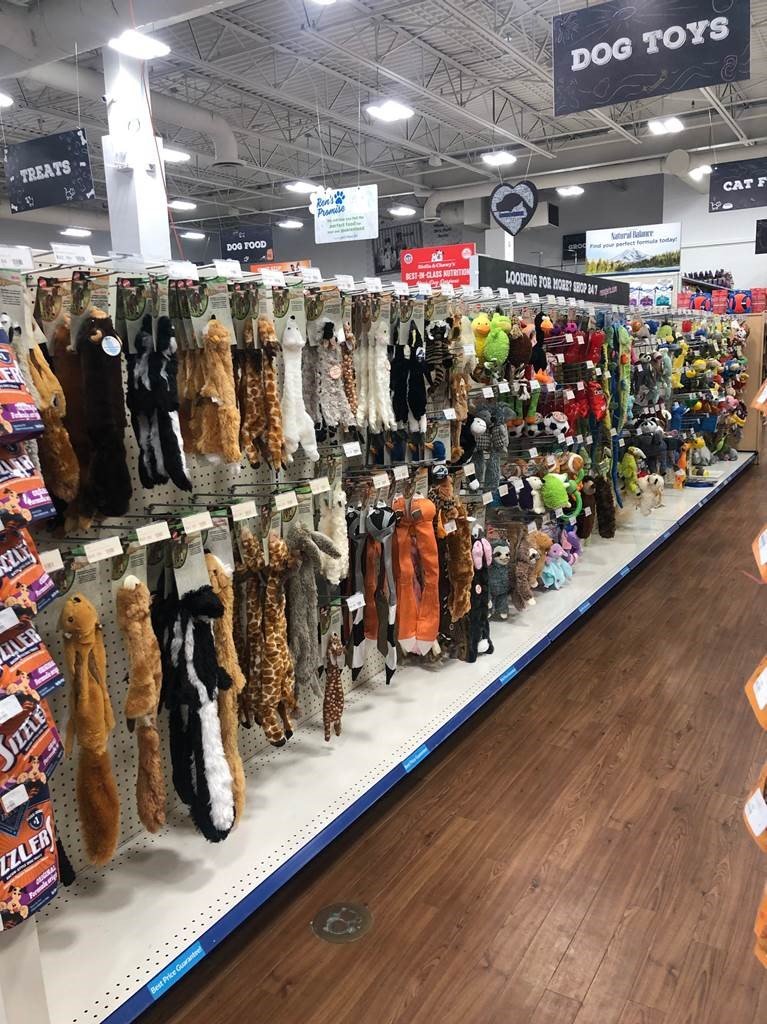
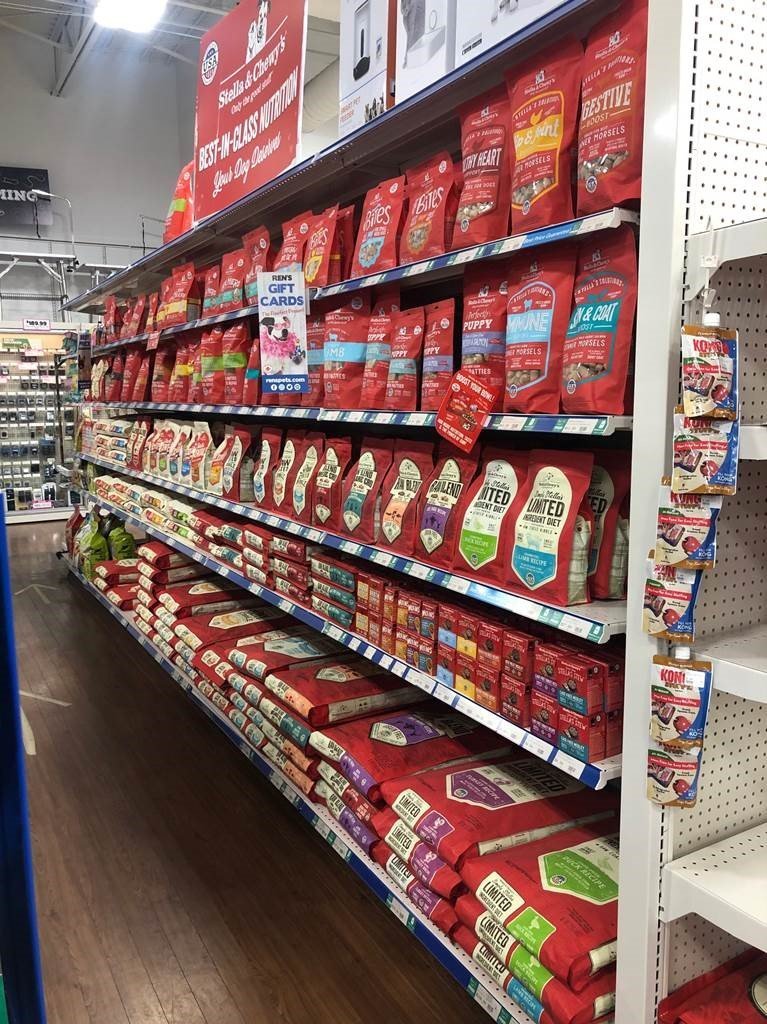
Interior images of Ren's Pets. Photos: Ren's Pets
1 of 6
The company was founded in 1975 in Oakville. Currently it has 32 locations and it will be opening seven more locations this year. The company has 29 locations in Ontario, from Sudbury to Windsor, and three in the Maritimes (New Brunswick and Nova Scotia). Of the new locations to be opened this year, one will be in the Maritimes and six in Ontario.
The pet retailer is primarily focused on dogs and cats and they don’t have any live animals in their stores, which have a typical footprint of about 7,500 square feet.
“The fact that we’re solely dog and cat with some small animals really makes us kind of a powerhouse within the dog and cat category. We would have as much as a PetSmart would have in a sense,” said Arsenault. “And we don’t do the services. We don’t groom in store. We don’t train. We don’t board. We don’t sell live animals. From that standpoint, we’re very fixated on dogs and cats.”
Arsenault said two categories have really grown in the pet industry. The raw food category is one of them.
“More than 75 percent of our stores have walk-in freezers and a lot of people haven’t really understood the transition to raw pet food and how big it is. That category has really boomed,” he said.
“And then grooming. Grooming has been fantastic. Ren’s is the number one supplier of pet products to groomers in Canada. So to the professional. We don’t groom. That’s intentional. We don’t compete with the people we sell to. Also grooming for the retail consumer has been off the charts. Our retail business in grooming, in selling the products, has been probably the biggest surprise.
“That’s a good thing to do with your pets. Spend time with them in grooming them because they really like it. It’s a form of bonding with them. People are educating themselves and they’re grooming their pets. And that was one category that we didn’t see would boom the way it did.”
Arsenault said he sees the trend in pet ownership and people spending money on their pets to continue for a number of reasons. More people are working from home now and will continue to work from home even when the pandemic is gone. Also less people are travelling.
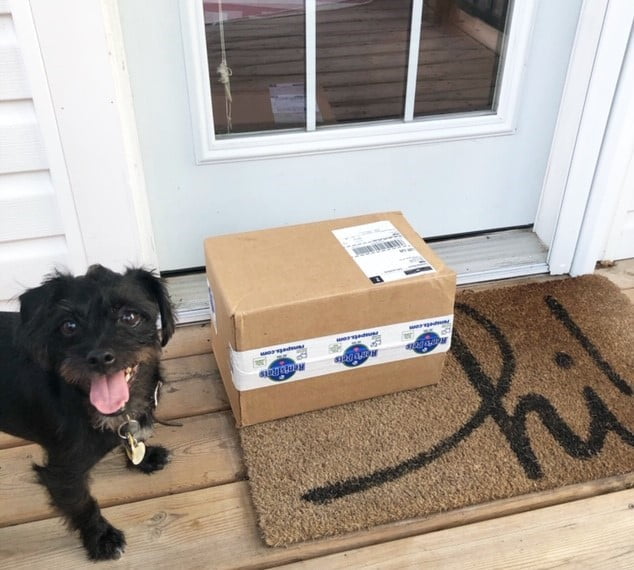
Delivery options have been widely availed of during the pandemic. Photos: Ren's Pets
1 of 2
“I’ve seen people who I never thought would have gotten a pet because it might compromise their lifestyle and they’re now just flooding social media with the love this pet is giving them and they’re getting,” said Arsenault.
“It’s just a great connection that people are getting to have now. And pausing in their life. People have changed. They’re going to walk a little bit more. They’re going to spend more time with their pets. It’s an interesting vertical.”
Sales of fish tanks and other small pet enclosures have also seen a rise since the start of the pandemic.
Arsenault said the company has had record numbers both online and in-store for sales. With the online component, sales are across Canada.
“It’s phenomenal the growth that’s happened within our online but our stores are just as robust. From the retail standpoint, this is a good story because bricks and mortar is relevant as well as the online that is growing like crazy. We’re still going to expand stores when a lot of people are thinking contraction,” he added.
Montreal-based A2Z, which is known as a footwear company and parent company of Shumaker Shoes, has launched a new medical division as a result of the COVID-19 pandemic.
The initiative was launched in 2020 as the pandemic took hold in Canada from mid-March to today.
“When the pandemic really hit in North America and everything was shut down, we used and leveraged a lot of the network that we have internationally, the contacts we built over decades, and we diversified,” said Ishan Singh, Chief Operating Officer of A2Z Wholesale.
“Almost a year later I will tell you that A2Z has several divisions, footwear and consumer goods is one of those divisions, the medical division is another very strong component of what our business is now.”
A2Z has been a family business for several decades. The company traditionally has been in the footwear business for three generations beginning with Singh’s grandfather in India since 1948.
“The A2Z company has always been in the sourcing and the distribution of footwear mainly and other accessories. The shift that took place in 2020 is we really diversified.”
The company started its retail division with Shumaker Shoes in 2015 and today has 13 locations all in Ontario.
Singh said the medical division, which is named Moki, is a response to the pandemic.
“Our usual business came to a halt because everything was locked down. We put on our thinking hats and said what can we do and how can we keep busy because we’ve never really been sitting idle,” said Singh. “We worked and made connections and developed a medical division and through that we were able to develop or create a few personal protective technologies.
“Two main ideas that came out of it that served to help in light of the COVID pandemic but also realistically it’s what we can envision using post COVID so that we can kind of return to what may be the new normal.”
The company is using its same importing networks to bring Personal Protective Equipment to Canada and has also created innovative PPE technology that can be used in retail spaces as well as just about anywhere else.
One product it launched is called POSTsilver, a nanosilver film that inconspicuously covers surfaces and continually breaks down harmful germs. The other is auto sanitizing gates.
“POSTsilver is a transparent film which uses silver ion particles to prevent germ transmission in public spaces,” said Singh. “The idea is to cover high touch surfaces, and this transparent film doesn’t change the look or the colour of the surface on which it’s applied but because of the technology behind it, it essentially destroys all microbes or viruses on a continuous 24/7 basis.”
Singh said the product’s use can be used practically anywhere that has high touch areas. He added that the film itself has a lifespan of five years and the proprietary technology behind it is such that it’s imbedded within the film itself and works at suppressing microbes and viruses for that time span.
“On a daily basis, we’re touching so many different things and in light of the COVID situation people’s awareness has been heightened in terms of germs and how they spread and the need to be careful and the use of hand sanitizers. It’s really widespread. It really is,” he said.
“POSTsilver is a technology that can allow retail to open up safely. You could put it on escalators in shopping centres. You can put it on those directories, the touch screen maps that shopping centres have. Anything that people would touch and realistically despite our best efforts we’re not going to be able to disinfect those areas whenever someone touches it. This is where POSTsilver comes into play because it’s a transparent film that is continuously working and you eliminate the human factor where typically they’re going in with a Windex bottle or something and you can miss a spot.
“The auto sanitizing gates are essential portals that you can place at entrances of all public spaces. This is something notably for high traffic areas where people in passing through the gates would walk through a vaporized, dry disinfectant liquid and the goal is to eliminate whatever bacteria or viruses that may be on the individual externally. So on their clothes, on their carry on bags and so on. It allows you to create a safer environment once you pass through the gates itself.”
The supermarket will be located in Humaniti Montreal, a multi-purpose building located in the heart of the Quartier international, where the Quartier des spectacles meets Old Montreal. The merchandise in this 7,500-square-foot chain store will be similar to that found in other Avril supermarkets, namely a wide range of organic fruits and vegetables, grocery items, food supplements, and cosmetics. It will also feature a food service section and takeout.
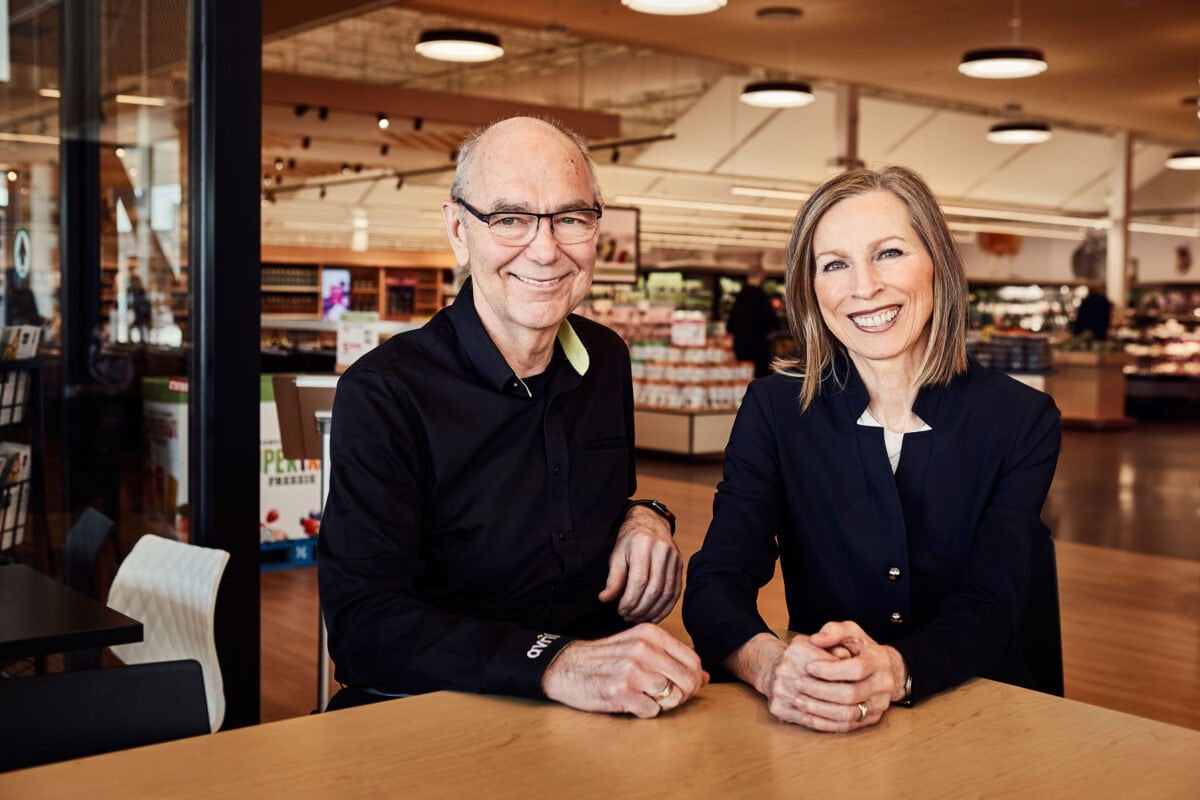
“Our current locations are between 20,000 and 44,000 square feet. We will find the same categories of products there but with a smaller offering. We will have a large selection of fresh products, ready-to-eat meals, and a bistro with a dining room and a terrace. Our storefront will also have 10 underground parking spaces for customers,” said owners Sylvie Senay and Rolland Tanguay.
“For a long time, we have received requests to open an Avril in Montreal. We turned down several proposals until we were presented with the Humaniti project. The timing was good for us and the quality of the project, a LEED and WELL certified construction, corresponds to our values. In addition, it is very well located in the heart of the Quartier international in front of the Place Riopelle, between the Old Port and the Quartier des spectacles.
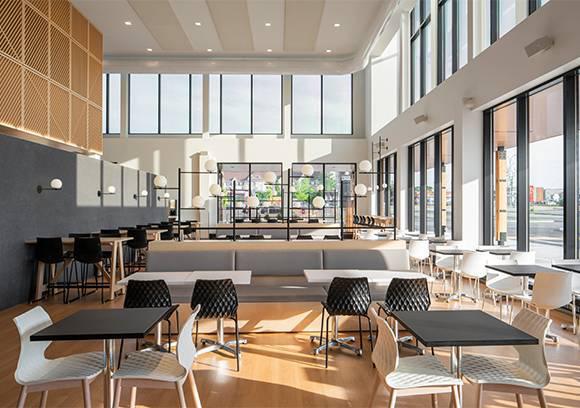
Images of Humaniti Montreal in downtown Montreal. Interactive Google Map of Humaniti Montreal and the surrounding neighbourhood
“With this project, which will see the light of day in June and the opening in May of a new 44,000-square-foot location at Promenades Saint-Bruno, we will have a total of 10 locations. We will continue to expand, but we cannot confirm at this stage the cities where we will set up new locations. Two more locations are expected to open in 2022.”
Humaniti Montreal is a building constructed and managed by Cogir Real Estate. It features 152 condos, 314 apartments, a 193-room hotel, office space, and some commercial space.
Avril was founded in Granby, in 1995, by Senay and Tanguay. With its head office in Granby, the company employs nearly 1,000 people and owns eight chain stores, an online shop and a logistics and distribution centre in Quebec.
Tanguay and Senay bought an existing 1,500-square-foot store in 1995 specializing in natural and organic products.
“Today all of our locations offer fruit and vegetables, ready-to-eat, groceries, supplements, cosmetics and a bistro under one roof. In 2018, at our Laval location, we developed an automated vertical farming platform for growing microgreens. We grow these microgreens every day to supply our stores and make them available to our customers and in our bistros,” said the owners.
Avril Supermarché Santé Owners Rolland Tanguay and Sylvie Senay
“It was in 2007 that we started our expansion. Avril is established in these cities: Granby (1995), Longueuil (2007), Brossard (2010), Lévis (2015), Québec (2016), Magog (2015), Sherbrooke (2017), and Laval (2018). We built and opened our Logistics and Distribution Centre in Granby in 2018 to accelerate our expansion. Our head office is located in Granby. With the opening of Montreal and Saint-Bruno, Avril will exceed 1,000 employees.
“We differentiate ourselves from traditional supermarkets by offering 100 percent natural and organic products. For example, 100 percent of our fruits and vegetables are organic and that department is Ecocert certified. Our stores are built in an eco-responsible way. The layout is designed to provide a bold customer experience with wider aisles.”
The owners said the ready-to-eat section is experiencing strong growth. In addition to an offering from different suppliers, the company adds to its offering from its team of in-house chefs working out of a central kitchen. It also has a large selection of products from its private label which are high-end, quality products at competitive prices.
With COVID-19 and restrictions in place with the hospitality industry, more consumers are cooking at home which is driving them to visit supermarkets more frequently.
“For some time, we had been looking for a site in downtown Montreal where we could open an Avril store. Humaniti was a natural choice.
1 of 5
Interior image of wellness aisles in Avril Supermarché Santé. Photo: Avril Supermarché Santé
Interior image of grocery aisles in Avril Supermarché Santé. Photo: Avril Supermarché Santé
mage of seating area within Avril Supermarché Santé. Photo: Avril Supermarché Santé
Interior image of wellness aisles in Avril Supermarché Santé. Photo: Avril Supermarché Santé
Interior image of wellness aisles in Avril Supermarché Santé. Photo: Avril Supermarché Santé
This real estate project’s human approach is an ideal match to our philosophy which aims to provide a unique shopping experience that is aligned with the new consumer habits of Quebeckers,” said Senay.
“We are quite proud to welcome Avril in our building. Like Humaniti, where the rental portion aims to receive the WELL certification, Avril’s merchandise is designed to enhance human well-being,” said Jean-Marc Bélanger, Vice-President of Operations, Multi-residential division of Cogir.
“Humaniti defines itself as an Advanced Vertical Community in which its occupants live, work and play. We needed to have a grocer on site, but we wanted one which would be consistent with the spirit embodied by the project. Avril certainly meets that criterion,” added Joseph Telio, Vice-President Leasing at Cogir Real Estate’s commercial division.
Cogir Immobilier, a Quebec company founded in 1995, oversees the management of over 250 properties in Quebec, Ontario, and the U.S. It administers over seven million square feet of commercial, industrial and office real estate property and over 25,000 residential housing units, including a network of over 50 private retirement residences. The company also has extensive experience in the hotel industry.
This week, Craig & Lee discuss the closures underway with Kiehl’s and Godiva chocolate as well as expansions for L.L.Bean and APM Monaco.
The Weekly podcast by Retail Insider Canada is available on Apple Podcasts, Stitcher, TuneIn, Google Play, or through our dedicated RSS feed for Overcast and other podcast players.
Drop us a line at Craig@Retail-Insider.com. You can also rate us in Apple Podcasts or recommend us in Overcast to help more people discover the show!
Background Music Credit: Hard Boiled Kevin MacLeod (incompetech.com). Licensed under Creative Commons: By Attribution 3.0 License. http://creativecommons.org/licenses/by/3.0/
Pür & Simple Breakfast and Lunch Chain Launches Significant Expansion
Quebec-based restaurant chain Pür & Simple Breakfast and Lunch has an impressive nine locations under construction amid an expansion. The company’s first location opened in Laval near Montreal in 2016, growing to 14 locations across Canada.
The two newest locations are set to open in February and will be located at 9100 Jane St (at Rutherford Rd) in Vaughan and at Billy Bishop airport in Toronto, bringing the total count to 16.
Pür & Simple offers authentic all-day breakfast classics packed with fresh ingredients and a wide variety of breakfast and brunch items that offer a fresh take on the most important meal of the day. The restaurant also offers a kids menu. Open seven days a week from 7 am to 3 pm.
Exterior of Pür & Simple store. Photo: Pür & Simple
The restaurants’ footprint ranges from 2800 to 4000 square feet and includes a dining room that seats between 90 to 125 guests. Most of the restaurants are situated in high-traffic sectors.
The expansion will continue under the direction of Paracom Realty — there is an immediate need for locations in the GTA according to the brokerage. End caps are preferred along with patios where possible in densely populated high-volume locations with strong exposure in dominant street front, retail or power centres. Todd Feinstein with Paracom Realty Corporation (Ontario) handles the site selection in Ontario and Sean Sarrami, the Chief Development Officer of parent company, Eat It Brands, is handling all the development & real estate of new Franchise Partners. Sean notes that the chains growth plans are currently focused on the Ontario market.
Exterior of Lee Valley Tools in Waterloo. Photo: Lee Valley Tools
Lee Valley Tools Appoints Jason Tasse as President
Ottawa-based retailer Lee Valley Tools has appointed long-term leader Jason Tasse to the position of President. He will also maintain his previous title of Chief Operating Officer. He has been with the company for 25 years.
“Jason has the complete confidence of the Lee Family and he plays an integral part of the management team on both an operational and strategic level. This appointment renews and strengthens our management structure, and will enable us to drive the business forward,” shared Robin Lee, Chief Executive Officer of Lee Valley.
Jason Tasse
Mr. Lee also confirmed he will continue as Chairman of the Lee Valley Group of Companies, and President and CEO of Veritas Tools, working closely with Tasse on both operating companies.
Tasse has achieved impressive accomplishments during his career with Lee Valley, leading key systems implementations, long term strategic planning, digital transformation, leading the site selection and design of their 150,000-square-foot distribution centre, leadership succession management and brand marketing direction, most recently shown in Lee Valley’s “Let’s Do Something” campaign.
“Successful retail is rooted in two core business foundations, soul, and mechanics. The soul is the intangible things like brand identity, practiced values, and culture. The mechanics are the nuts and bolts along with the tangible processes, buildings, equipment, and of course, products,” declared Tasse. “From day one, the focus of Lee Valley is steadfast on getting the soul right. We work each day to improve the mechanics, but never at the expense of the soul. That’s why we’ve been fortunate to connect emotionally with our customers.”
As part of its major spring hiring campaign, Lowe’s Canada hopes to fill over 7,000 full-time and part-time positions throughout its network of Lowe’s, RONA, and Reno-Depot corporate stores across the country in preparation for the home improvement industry’s busiest season. Photo: Lowe’s
Lowe’s Canada Launches Major Spring Hiring Campaign
Lowe’s Canada, one of Canada’s leading home improvement retailers operating or servicing some 470 corporate and affiliated stores, is launching an extensive spring hiring campaign this week in preparation for the home improvement industry’s busiest season. Ultimately, the company hopes to fill over 7,000 full-time and part-time positions throughout its network of Lowe’s, RONA, and Reno-Depot corporate stores across the country.
Positions available range from Receiving Clerk and Sales Associate roles, to Sales Specialist, Administrative Support, and Merchandising roles.
To achieve its hiring goal, Lowe’s Canada will hold a series of national and regional hiring events over the next two months. National events will take place exclusively online, while regional events will offer candidates a hybrid formula that allows them to complete their first interview online or in person, based on their preference.
The first national event will take place virtually on February 3rd and 4th. Those interested in a position in a Lowe’s, RONA, or Reno-Depot corporate store can now visit https://lowescanadahiring.ca/ to book a time slot for a live video interview during a hiring event, or submit their application today by opting for a pre-recorded video interview.
Screenshot of Whittaker’s homepage on its new Canadian bespoke website.
New Zealand’s Whittaker’s Chocolate Launching Canadian Ecommerce Site
New Zealand-based chocolate retailer Whittaker’s is launching a Canadian website as part of an expansion for the brand. The site will take Canadian consumers on a journey that explores Whittaker’s signature bean to bar chocolate-making process, as well as the brand’s rich history dating back to 1896.
Whittaker’s first began distributing a limited number of its products at select Canadian retailers in 2015 and has since expanded that distribution throughout the country. To service its new bespoke Canadian website, Whittaker’s sends monthly containers of freshly-made product to Canada in anticipation of incoming orders. They are shipped from New Zealand to Vancouver and then distributed directly to retail customers across the country.
Whittaker’s chocolate. Photo: Whittaker’s
It could signal an interesting trend where international brands enter Canada without opening physical stores — a situation that could eat market share of homegrown retailers at a very challenging time. Given the ease of entering a market through an online portal, brands such as Whittaker’s could continue to grow by securing dedicated warehouse space to continue ecommerce fulfillment.
Whittaker’s is a family-owned company founded more than 120 years ago, producing high quality chocolate products. The brand also does its best to support its communities and suppliers, diligently developing sustainable packaging, and seeking ingredients that are ethically and fairly produced. London Drugs stores and other selected specialty retailers also carry the brand in Canada wholesale.
Competition is about to get fiercer in the retail chocolate market with Whittaker’s Canadian expansion, at a time when retailers such as Godiva Chocolates shut all North American storefronts.
(L-R) Arelene Dickinson, Craig Hanna, Mary Berg
District Ventures Accelerator and Kitchen Announces Formation of New Board in Support of Canadian Entrepreneurs
District Ventures has announced the formation of a new board in support of Canadian entrepreneurs. Tasked with guiding the District Ventures Accelerator and District Ventures Kitchen programming through the next phase of development, the new board members bring unique industry experience, and a passion for innovation and entrepreneurship to the organization.
The newly-formed board will oversee programming for District Ventures Accelerator, a five-month, intensive mentorship and learning experience designed to support entrepreneurs with business advice and growth strategy, and District Ventures Kitchen, a shared-use, 20,000-square-foot facility of food safe production, complete with manufacturing equipment including commercial bakery production spaces, hot and cold fill lines, and a full suite of packaging equipment.
“Over the past five years, we’ve had the opportunity to work with hundreds of Canadian entrepreneurs through District Ventures – with many celebrated successes along the way,” said Arlene Dickinson, CEO, District Ventures. “We couldn’t be more pleased to announce the new board, as we remain committed to providing Canadian entrepreneurs with the tools and resources needed to grow their business.”
The newly appointed board members include:
Arlene Dickinson — CEO, District Ventures
Mary Berg — Best-selling Cookbook Author, Host of Mary’s Kitchen Crush and Season 3 Winner of CTV’s MasterChef Canada
Craig Hanna — Founder and Managing Director of Clearview Advisory
Canada Plastic Pact
Canada Plastics Pact Launches to Tackle Plastic Pollution with Innovative Solutions
The Canada Plastics Pact (CPP) has launched and it is determined to fundamentally change the way Canadians use and reuse plastic. The Pact brings together key players to collectively work towards ambitious 2025 goals that they could never achieve on their own.
An ambitious pre-competitive, multi-stakeholder platform, the CPP will enable companies across the Canadian plastics value chain to collaborate and innovate. It will build on significant work that has already been underway to reduce plastics waste, and will grow over time. Together, Partners will rethink the way they design, use, and reuse plastics, thereby charting a path toward a circular economy for plastic by 2025.
The CPP is working towards four clear, actionable targets by 2025:
• Define a list of plastic packaging that is to be designated as problematic or unnecessary and take measures to eliminate them
• Support efforts towards 100% of plastic packaging being designed to be reusable, recyclable or compostable
• Undertake ambitious actions to ensure that at least 50% of plastic packaging is effectively recycled or composted
• Ensure an average of at least 30% recycled content across all plastic packaging (by weight)
To be fully transparent and ensure measurable action, a CPP progress report will be made publicly available each year.
COVID-19 created a unique opportunity for accelerated executive buy-in on digital investments supporting e-commerce. Avenue Code chatted with Johnny Russo, VP of Marketing and Ecommerce at The Kersheh Group, to get practical tips on how to prioritize digital investments that yield a high ROI.
Avenue Code: Tell us about your career path. How did you get to where you are today?
Johnny Russo: I studied journalism and wanted to be a TV sports broadcaster but ended up channeling my writing expertise into marketing. After only two weeks, I fell in love with marketing, advertising, and branding, and I knew it was where I wanted to be. I immersed myself in research and reading to learn all that I could. Digital was emerging at the time, which made it easy for me to get ahead of the curve in learning about SEO, email marketing, social media, etc.
I should note that I’m still very passionate about writing. I run my own blog, and I’m in the process of writing a book that presents tangible, bite-sized tips for leaders. These tips are a combination of my research and my own learnings as I transitioned from management to executive-level leadership, and they cover both what to do and what not to do.
AC: What drew you to joining the Kersheh Group?
JR: The people. I wasn’t looking for a new job at the time, but when I met with the leadership team, I knew they were special, and I resonated with their business passion. When I walked into the role, the challenge was to take a 40-year-old wholesale company and scale a direct-to-consumer division with brands that needed to be developed.
AC: What challenges and opportunities have arisen for the Kersheh Group post COVID-19?
JR: In April, I presented a three-year plan, but COVID-19 accelerated executive buy-in so significantly that we’ve scaled two to three years in the last nine months. Prior to COVID-19,
e-commerce was a middle-of-the-list agenda item for most companies, but now, nearly every company has made online shopping a number one priority.
Buy-in is key because e-commerce development requires monetary investment, as well as changes related to technology and people. A successful plan requires proper prioritization of projects, pushes the boundaries while staying realistic, and, most importantly, is profitable.
AC: What are the keys to creating a successful digital transformation strategy?
JR: My framework for successful digital transformation is supported by five essential pillars: partners, people, education, culture, and data/change management. If you get these five pillars correct, you’ll be in a solid position to scale.
A lot of companies love planning their digital strategy, but when it comes to execution, they back away from investing money in platforms and people. If you look at the numbers, however, some of the most aggressive e-commerce companies are the most successful because they made the up-front investment to achieve a profitable outcome.
AC: What digital initiatives are you prioritizing in 2021?
JR: In June, we’re launching a brand new sleepwear experience. We have multiple brands catering to different target audiences, and currently, these are all on separate sites and different advertising channels. Our goal is to centralize these into a single sleepwear marketplace, enabling us to realize economies of scale, SEO benefits, funneling all advertising dollars through one channel, and enabling our customers to shop for multiple needs on one platform. At first we’ll focus on our own brands, but nothing is stopping us from expanding. We want to be the largest sleepwear site in North America.
AC: How will data analytics play into your 2021 plans?
JR: We’re focusing on two areas. The first is related to fulfilment operations. When an e-commerce site isn’t as profitable as it should be, it’s usually because there are a couple of levers that need fixing. Usually, it can be because the organization is overspending on advertising relative to its return on ad spend (ROAS) or because the fulfillment process is broken, whether that’s due to internal operations or third party logistics. To boost our profitability, we’re working to maximize shipments with more items since sleepwear doesn’t add significantly to weight/shipping costs.
Secondly, we want to grow our ownership of the customer experience. On our direct to consumer channel, we currently sell a lot of our products through Amazon, which means we don’t have enough first-party data to build a customer lifetime model and strategize deeply on ad spending.
AC: How can executives ensure their tech investments yield a high ROI?
JR: I was stunned to read a 2017 study that said 44% of Chief Marketing Officers can’t measure their ROI. If you approach marketing from a digital perspective, you’re often held accountable for profit and loss, so you know how to measure initiatives and how to shift resources to be
more profitable, whether that’s increasing email campaigns, implementing personalization software, investing in search, gaining more social followers, etc. This is another reason that hiring the right people is critical – people dictate both the investment strategy and partnerships.
AC: What trends do you see within DTC and e-commerce as a whole?
JR: Influencer marketing became immensely popular, and I don’t see it going away. For brands, however, it’s important to be careful about which influencers you partner with: you need to examine their followers to ensure they align with your target audience, because follower numbers alone can be deceiving.
Beyond this, frictionless e-commerce experience and fast delivery always win; and it’s still true that service is the real differentiator, especially when it comes to prompt communication and accurate tracking information for packages.
Analyzing operations logistics should also be a priority, because so much can go wrong here. You need to process orders the same day you receive them, and if you can’t, you need to know why you can’t and adjust your set up accordingly.
The other trend I see is an increasing number of B2B players opening the market to DTC. Manufacturers are now opening their own e-commerce channels, which has created an entirely new marketplace ecosystem where the customer ultimately wins.
AC: What is the key to successful strategic partnerships?
JR: COVID-19 emphasized what we’ve all known – trust is a prerequisite. Successful partnerships have to be win-win, and partners have to be thought of as an extension of your own team. It isn’t about negotiating down as far as possible; it’s about strong relationships.
AC: What do you do to stay abreast of innovations in tools and technologies?
JR: I rely on my network. That used to mean attending conferences, but now I utilize LinkedIn to stay in regular contact with my business connections and industry leaders. I also read a lot, especially content by Scott Galloway, an innovator and skilled communicator who has predicted several industry trends.
AC: How has your leadership style adapted since COVID-19?
JR: George Santayana says that “Even the wisest mind has something yet to learn.” I certainly have room to grow as a leader, but I think my priorities of inspiring, mentoring, and coaching have remained consistent both before and after COVID-19. If anything, I have more time to invest in development sessions to help my team members achieve their career goals.
AC: What are you personally most passionate about in your career?
JR: In life, I’m most passionate about being a dad, which also influences what I’m passionate about in my career. My goal is to be the best leader and mentor possible. In other words, helping people is my primary passion. On a personal level, that translates to a passion for continuous learning and growth.
AC: Thanks for your time today, Johnny! It’s been great to hear your perspective on analytics-based spending for digital transformation.
Alfredo Moro
Alfredo Moro is a Business Development Specialist at Avenue Code who is passionate about sales and loves to connect with clients all over the world! In his spare time, he enjoys watching the soccer games of his favourite team and cooking Brazilian BBQ in his backyard.
Sign advertising contactless curbside pickup at retail store parking lot
By Devin Partida
As the pandemic continues to change the way you interact with the world, curbside pickup remains a reliable way to shop for everything.
Social distancing, lockdowns, and strict guidelines are necessary, but they can be hindrances to business. With the right updates to your curbside pickup system, you can operate smoothly throughout the entire pandemic.
Streamline the Process
Ease-of-use and easy access must be the primary forces that create the curbside pickup process. If it’s not simple and easy to carry out, it may turn customers away. Most commonly, websites will be the landing page for orders.
Customers can see exactly what they want and follow the instructions on how they can get it. You can provide them with updates and notifications on the status of their order. Overall, it should be a clear and concise process.
Michael’s craft stores, for example, make it easy for customers to order online then drive up to a designated spot where staff bring their prepaid order right to their trunk.
Consumers should have options for payment, too. Allow them to pay online to maintain the contact-free dynamic during pickup. Depending on personal preferences and local guidelines, cash may not be a safe option.
Personalize the Experience
The pandemic has been present for a while now, and people are still uncertain about the future. At a time when human contact is being actively limited, it helps to go the extra distance and add a personal touch to each customer’s experience.
You can address them by name when ensuring the order is correct and offering contact should they need it. If you want, you can add a note thanking the customer and provide them with your social media, helping you build your following.
These gestures build a connection and solidify your relationships, creating a loyal consumer base.
Offer Incentives
Curbside pickup has become a common feature for businesses. In fact, usage of curbside pickup increased by 208% in 2020. With this kind of surge, it’s critical to take advantage of the trend. You can do so by keeping the momentum going.
When a customer does business with you, you can offer an incentive to keep them coming back. It could be a discount, or it could be another incentive for them to buy from you again. You could also provide them with an incentive to follow you on social media or leave a review.
Create a Designated Area
Organization is one of the keys to success. When it comes to curbside pickup, a disorganized system is inefficient and will cause delays and issues that lead to decreased customer satisfaction.
Having a designated process and area for curbside orders will create a much better work dynamic. First, you’ll want to have a process for when an order comes in. Gather the materials and prepare them for safe transport. Then, notify the customer that they can come pick up their order.
A specific parking or pickup area for these kinds of orders will be convenient as well. Customers can follow signs and wait while a staff member brings the order to them in a contact-free way. For instance, Target enabled a drive-up option with specific parking spaces where customers can wait for their orders safely.
Get the Word Out
In Canada, online shopping surged in May of 2020, reaching record highs of $3.9 billion in total sales. These numbers are now continuing as the pandemic fluctuates, with both spikes and lulls.
Among all the competition, it’s essential to stand out. Ensure that, amid this surge, your customers know that you offer curbside pickup. And that you do it well.
You can advertise on your website, your social media accounts, and through signs outside your store. Spreading the word will draw people in. Customers want the easiest method when it comes to picking up supplies and doing their shopping. During the pandemic, curbside pickup is that method. Of course, if you want to stand out more, you can always offer delivery.
Navigating the Pandemic
Devin Partida
Though business looks different now than it did a year ago, you can still navigate the pandemic in profitable ways. Curbside pickup is here to stay. It’s time to amp up the game, provide a better customer experience, and bring in more profits.
Devin Partida is a writer and blogger, as well as the Editor-in-Chief of ReHack.com
Kiehl's store at CF Carrefour Laval. Photo: Kiehl's
L’Oréal-owned, New York City-based beauty and skin care brand Kiehl’s will be shutting eight of its 24 Canadian stores this year as part of a shift for the company to its online channel, while also beefing up retail partnerships.
As part of the shift, Kiehl’s will increase its focus on its direct-to-consumer online channel at kiehls.ca as well as its retail partnerships that includes distribution at Sephora, Hudson’s Bay, Nordstrom, Holt Renfrew, and Saks Fifth Avenue stores in Canada. We reported in August of 2018 that Kiehl’s had struck a multi-year partnership with multi-brand beauty retailer Sephora, for the first time, greatly expanding Kiehl’s distribution in Canada.
The announcement of the coast-to-coast Kiehl’s store closures come at a time when many other retailers are also evaluating store locations, all with the aim of reducing costs by exiting costly leases. The geographic regions where Kiehl’s stores will close include the Greater Toronto Area, Montreal, Vancouver, Edmonton, London, and Halifax.
Two standalone Kiehl’s stores in the Greater Toronto Area will close permanently this year. That includes a street front store at 2518 Yonge Street, north of Eglinton Avenue in an affluent part of the city, as well as a Kiehl’s location at the Upper Canada Mall in Newmarket.
A selection of soon-to-close Kiehl's locations.
1 of 5
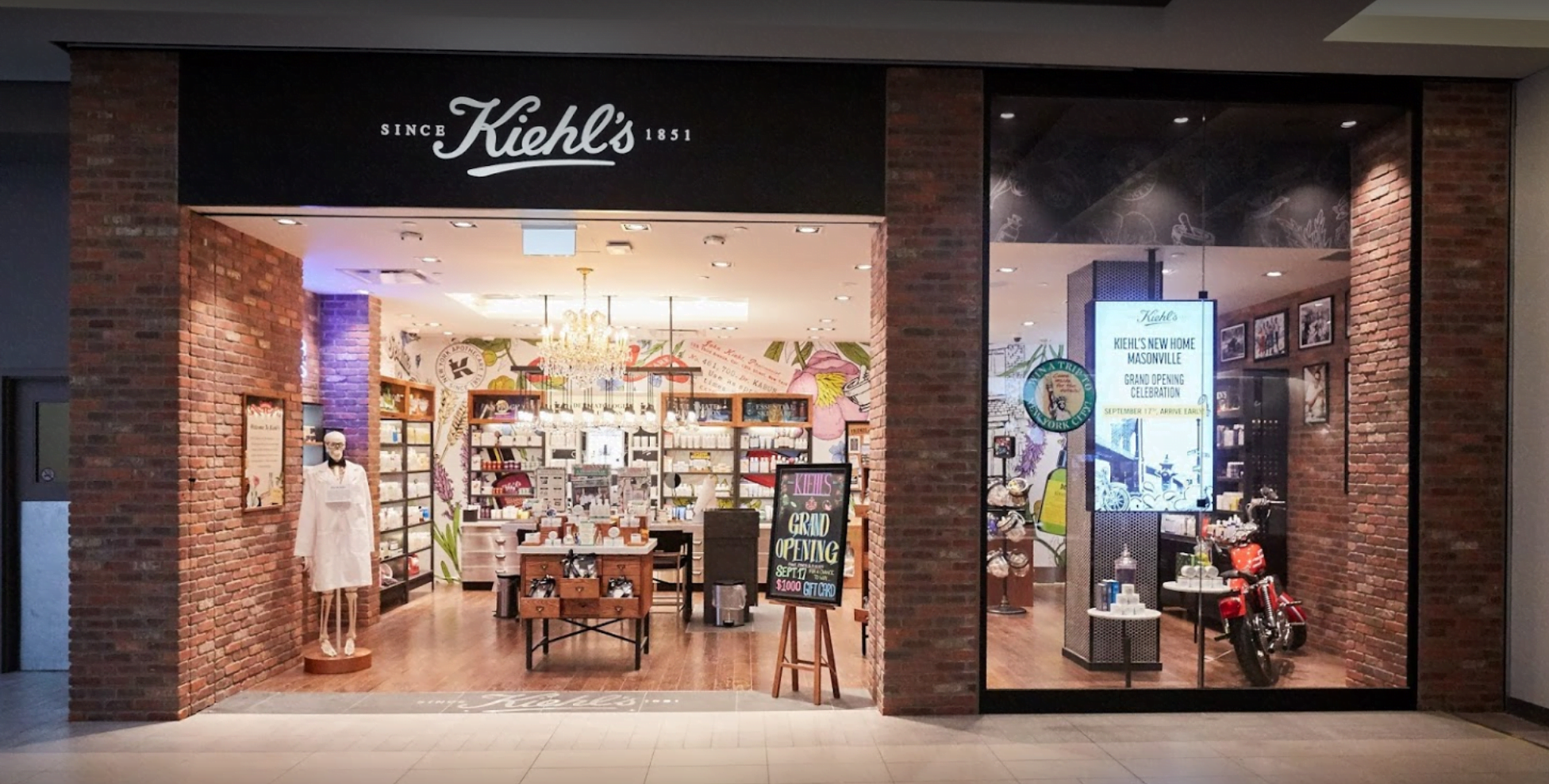
Kiehl's store at Cf Masonville in London, Ontario. Photo: Google
Kiehl's store at Quartier DIX30. Photo: Kiehl's
Kiehl's store at West Edmonton Mall. Photo: WEM
Kiehl's store on Toronto's Yonge Street. Photo: UptownToronto
Kiehl's store at CF Carrefour Laval. Photo: Retail Insider
The two soon-to-close Montreal stores are located at the CF Carrefour Laval and at Quartier DIX30. In the Vancouver area, the Kiehl’s store at Coquitlam Centre, which opened in August of 2017, will be the only location to close in British Columbia as part of the announcement.
The only standalone Kiehl’s store in London, Ontario, will shutter at CF Masonville. In Edmonton, the West Edmonton Mall Kiehl’s store will close, leaving only one location in the city at Southgate Centre.
Publication Halifax ReTailes, which was first to report on the eight store closures, reported last week that the Kiehl’s location at the Halifax Shopping Centre will be closing permanently.
Kiehl’s will continue to operate 16 locations in Canada. In southern Ontario, Kiehl’s will operate at CF Toronto Eaton Centre, 407 Queen Street West (the first in Canada which opened in 2004), Yorkdale, CF Sherway Gardens, Square One, and Mapleview Centre. In Quebec, Kiehl’s will continue operating one store in downtown Montreal at 760 Ste-Catherine Street West. In the Vancouver area, Kiehl’s stores staying open include a street front store at 1021 Robson Street, Metropolis at Metrotown, CF Richmond Centre, Guildford Centre and at Vancouver International Airport. In Calgary, Kiehl’s has stores at CF Chinook Centre and CF Market Mall, and the Edmonton market will be served by a single unit at the Southgate Centre. Stores at CF Rideau Centre in Ottawa as well as CF Polo Park in Winnipeg will also remain open for the time being.
During the pandemic, Kiehl’s has innovated with the launch of its Kiehl’s Koncierge, which offers personal virtual consultations including real-time live chat and video chat functions. The technology was developed in partnership with Kinetic Commerce, a retail technology and design firm that aims to help retailers unify their digital and physical experience.
In February of 2017, Retail Insider wrote a feature story on Kiehl’s, which at the time, was looking to expand further into Canada. Already, the company had 23 stores and was preparing to announce the Coquitlam Centre location. Interestingly, brand awareness for Kiehl’s was strongest in Western Canada back then, according to the company’s Canadian General Manager, Alexandre Ratté. The Vancouver market in particular was considered to be strong.
L’Oreal opened the first standalone location for its upscale perfume label Atelier Cologne at Toronto’s Yorkdale Shopping Centre in the spring of 2018, and it remains the only storefront in this country. Plans were in place to open more than one location in Canada with Vancouver being targeted for a store, as well as downtown Toronto.