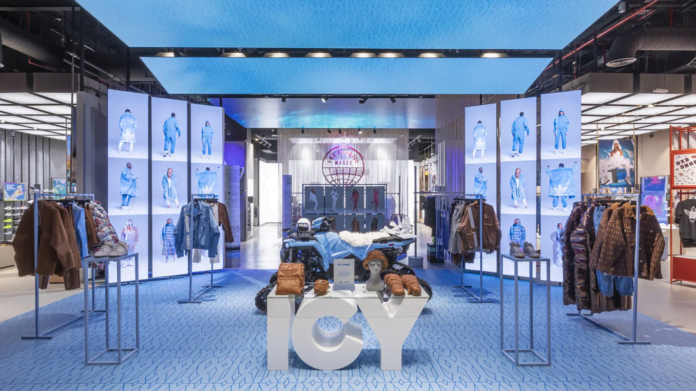
Global Adidas Flagship at The Dubai Mall (Image: Adidas)
German multinational company Adidas, known for its sportswear, will open its first large-format ‘halo’ store in Canada this summer in downtown Toronto. The concept debuted in Dubai last year with plans to roll out locations globally.
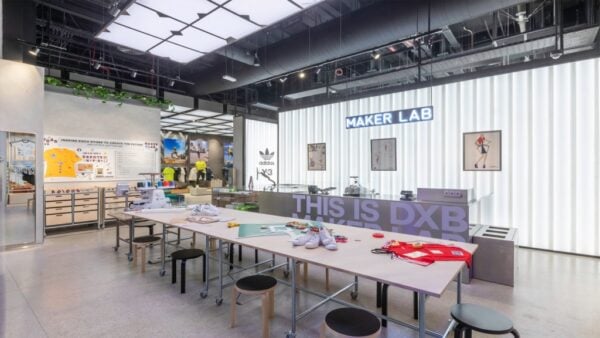
The halo concept store merges several of the Adidas sub-brands under one roof while also offering an immersive customer experience. In 2021 the halo concept was launched with an eye to sustainability and innovation as well as an expanded focus on the female shopper. Various activation zones in halo stores include displays for Beyonce’s Ivy Park collection, Adidas by Stella McCartney, Y-3, Sustainable Stan Smith products and others. ‘The Maker Lab’ at the Dubai store gives customers the opportunity to customize designs.
Technology in the halo stores include immersive RFID powered fitting rooms, digital walls displaying products such as footwear and smart ‘bring it to me’ app feature. Visitors can also bring their favourite sneakers back to life at the ‘Crep Protect’ experience which doubles as an events space where influencers can hold workshops that embody sneaker culture.
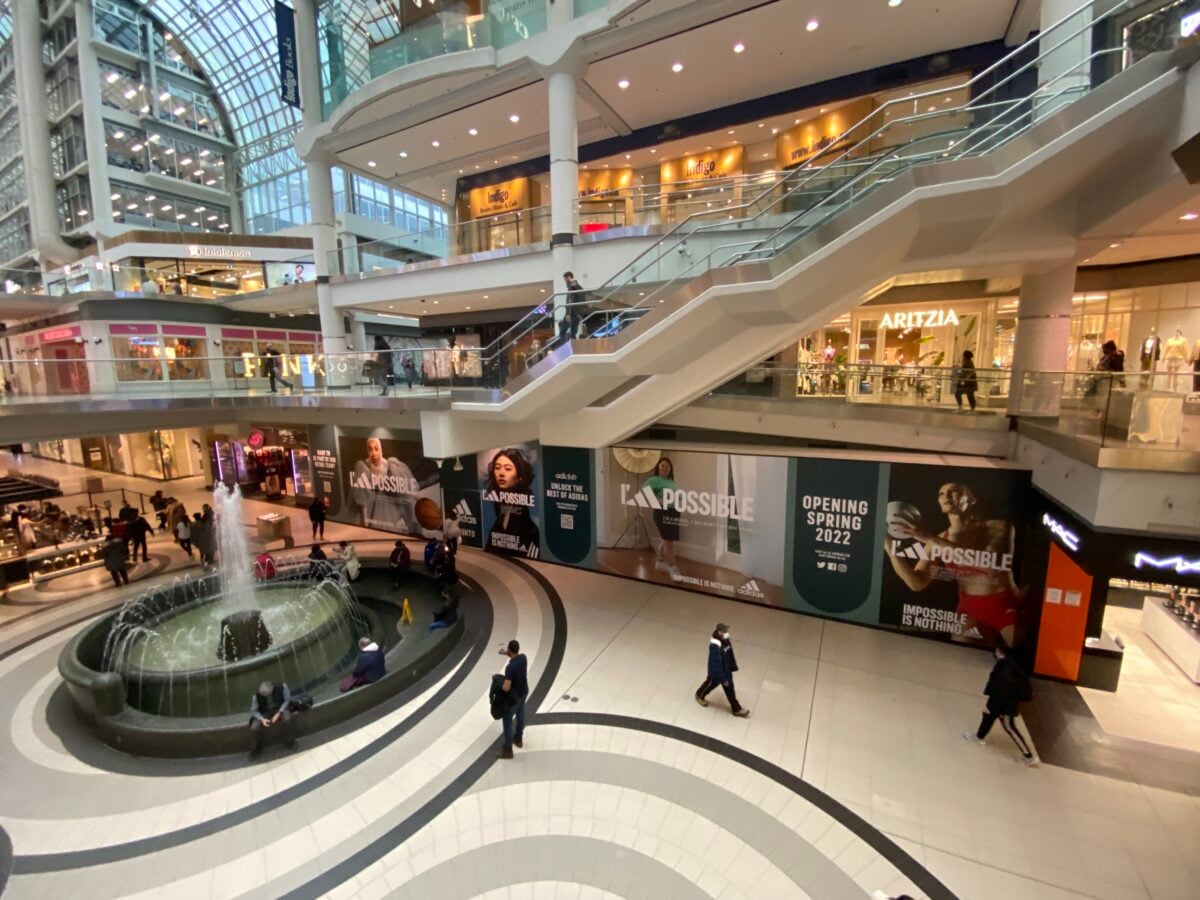
In June, Canada’s first Adidas halo store will open at CF Toronto Eaton Centre in a retail space once occupied by Forever 21 on the mall’s second level. The Adidas store will span more than 12,600 square feet according to a lease plan on the Cadillac Fairview website.
Future Adidas Halo Store at CF Toronto Eaton Centre (Image: Dustin Fuhs)
Global Adidas Flagship at The Dubai Mall (Image: Adidas)
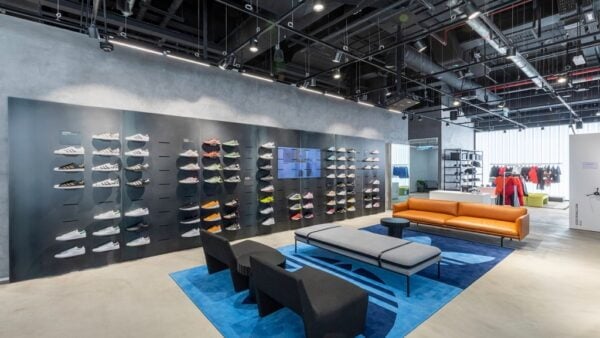
Global Adidas Flagship at The Dubai Mall (Image: Adidas)
It is not yet known if Adidas will open more of its halo concept stores in the Canadian market. The brand has seen particularly strong market penetration in the Montreal and Vancouver markets, indicating the possibility that one or both cities could be in line for at least one Adidas halo location.
Adidas has several other stores in the Canadian market, including two in downtown Toronto. A short walk away from CF Toronto Eaton Centre is an Adidas sports/performance store which occupies a prominent ground-level space at the north-east corner of Yonge and Dundas Streets. On nearby Queen Street West is an Adidas Originals store which caters more to those seeking fashions sometimes with a retro vibe. Adidas also operates sports/performance and ‘Original’ stores in the Montreal and Vancouver markets and the company also operates several other locations including outlets in Canada as well.
We’ll follow up with this story in June when the CF Toronto Eaton Centre flagship opens to the public.
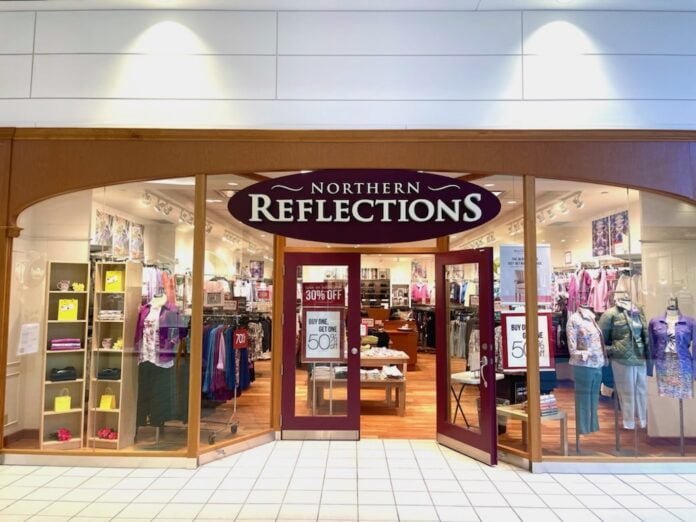
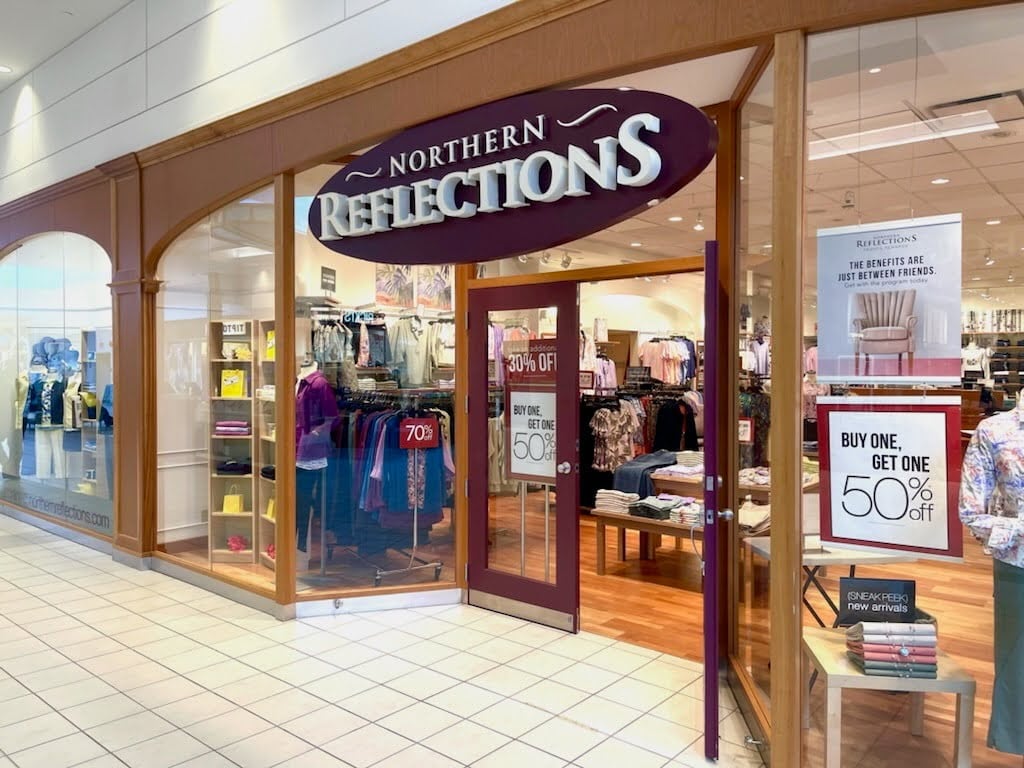
Northern Reflections at Sherwood Park Mall (March 2022)
Photo: Rebecca Quinn / Sherwood Park Mall
Canadian women’s fashion retailer Northern Reflections has appointed three new executives as the company invests towards accelerated growth across ecommerce, stores and omnichannel businesses.
Lalonnie Biggar, President of Northern Reflections, said the retailer is focused on building on its momentum, enhancing its customer experience and further strengthening its market leadership position within the women’s apparel arena.
“It’s a shift for us right now. It’s a shift into growth mode again for Northern Reflections,” she said. “We definitely have our customers shopping in stores and online and when I think about our long-term strategy we’re addressing that shift and the shift in behaviour by ensuring that we can deliver that service to her and these hires all have that operational experience that we need in the company right now to be successful in this shift and build that foundation for this shift.
“We still see in store shopping vitally important but there is this movement online and we want to make it seamless. I think most retailers are trying to get there today. Some are ahead. Some are further behind. This is an important investment for us in skill, talent and experience.”
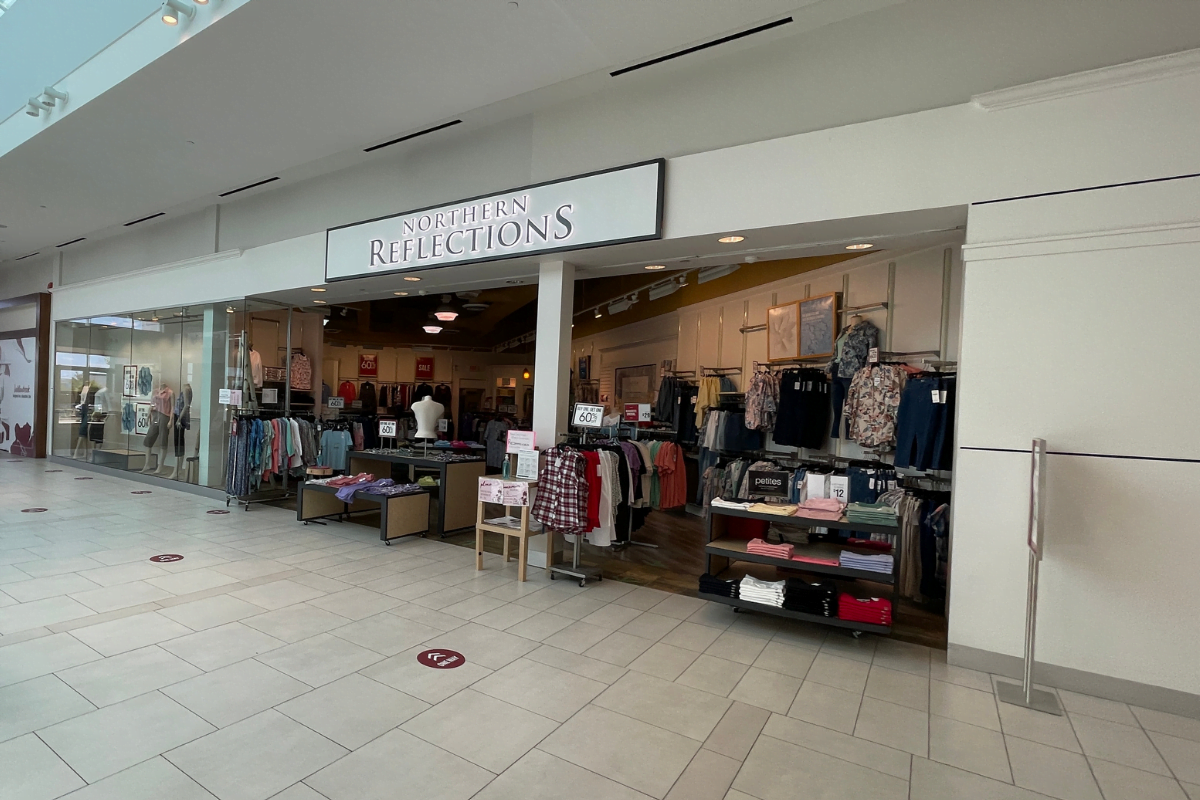
Northern Reflections at Willowbrook Mall in Langley (July 2021). Photo: Lee Rivett.
Northern Reflections has 134 stores across Canada in every province, except Quebec. The first store opened in 1985 in Guelph, Ontario.
The three new executive hires are Carolyn Coles-Devine, SVP Customer Experience & Chief Marketing Officer, Maryann Darling, SVP Planning, Allocation and Logistics and Hanspal Jando, Chief Financial Officer.
“Carolyn, Maryann and Hanspal bring incredible and diverse retail experience and will ensure our strategic vision is brought to life in both our stores and across our digital channels. Each of these leaders along with our existing senior leadership SVP Merchandising, Lisa Wiseman and SVP/Board Advisor, Paula Benetello will play a critical role as we build on our momentum, enhance our customer experience and further strengthen our market leadership position within the women’s apparel arena,” said Biggar.
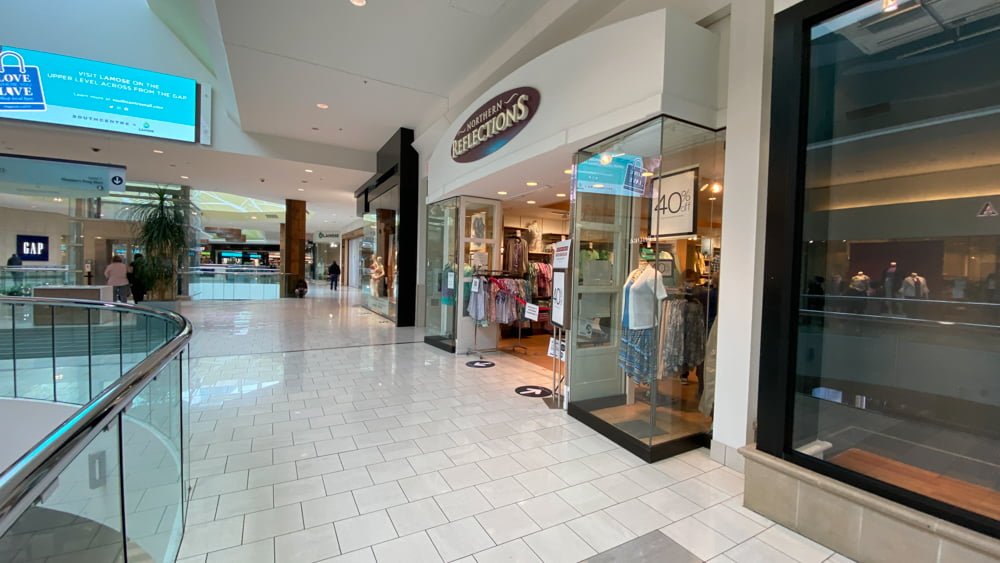
Northern Reflections at Southcentre Mall in Calgary. Photo: Jessica Finch
Coles-Devine is an industry veteran, having previously run the marketing and digital teams at Canada Goose and lululemon. Darling has held leadership roles at Canadian retailers including Holt Renfrew and Club Monaco. Jando’s extensive retail experience includes Indigo and Red Apple Stores Inc.
In March of last year, Northern Reflections completed a corporate and financial restructuring with JAMCO Capital Inc., a leading venture capital firm.
Biggar said the pandemic of the past two years has impacted the company like it has the entire retail industry.
“It did a couple of things for us. Tons of learnings on things we could do differently better which you’re always looking for. Tons of learnings on how our customer was approaching handling shopping when her favourite store wasn’t open for however months and in Ontario of course it was really long,” said Biggar.
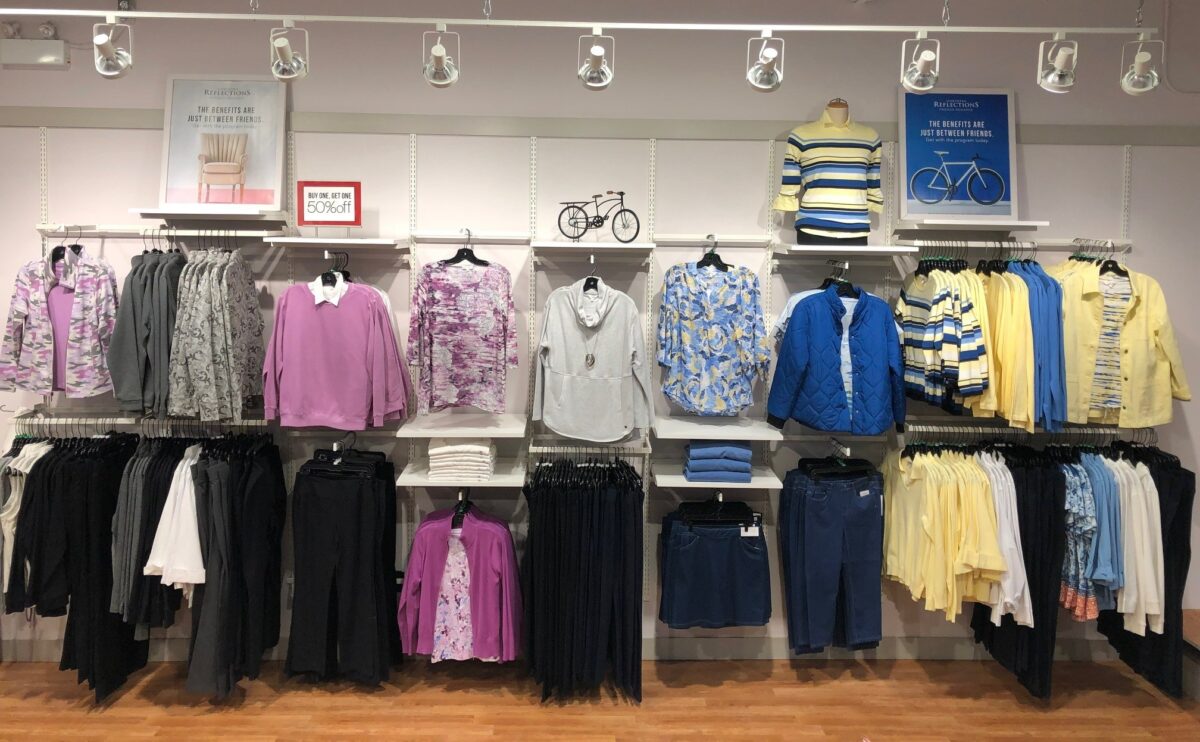
Image: Northern Reflections
“It made us pause in many ways and take a look at all the things that we could do better and differently to help us grow, to maximize both online experience, in-store experience. To try and make it seamless. Everyone uses the word omni in different ways but an omni channel experience across all channels and more channels perhaps that we haven’t even investigated yet because we now have just put the opportunity in place to have this talent in the new hires.”
When it was announced that JAMCO Capital had come in to help the company move forward, Christopher Kape, president of the investment company, said Northern Reflections will be able to get back on track and continue its historical growth trajectory for both bricks and mortar retail and online sales.
“Northern Reflections has been a mainstay in the Canadian retail landscape for decades, and this restructuring event ensures it will continue to bring its much-loved ladies wear to Canadian women across the country for years to come,” he said.
Northern Reflections at Sherwood Park Mall (March 2022) Photo: Rebecca Quinn / Sherwood Park Mall
Biggar said the company continues to explore the possibility of more physical locations.
“We’re always looking for that. When I look at priorities for the business, there’s kind of the big three. Marketing for both stores and ecom is a major priority for us. We have a fabulous loyalty program that’s many years old, very mature, and there is such tremendous loyalty from the customers who are on it and we have so much room to grow with new customers both in-stores and online with that program,” she said.
“And the whole piece of logistics, planning and allocation, we have to really look hard at the opportunities for the best use of inventory in what areas both across the country and how much and what you need to have in your distribution centre to be able to service the ecom customer. So huge opportunity in that area for us to get that maximized.
“That whole financial side, really looking at that real estate portfolio. Mapping out areas across the country that we are not represented in and that align with the customers’ needs. The demographics that are in that area. That’s another piece of growth mode. It’s not just ecom and putting all of our attention on ecom. It’s a blend of both.”
By Deb Pimentel, Technology Sales Leader, Canada East, Global Markets, IBM Canada
Over the past two years, consumers’ shopping preferences have changed drastically. Many habits consumers adopted out of necessity during the COVID-19 pandemic are now the norm. Consumers no longer see online and offline shopping as distinct experiences. They are now accustomed to the speed, convenience, and personalisation that different tools provide. Shopping must be fast and efficient, rich, and experiential, and always easy and intuitive. Consumers also expect companies to meet their demands for digitally enabled, curated and convenient shopping journeys as well as substantiate their social and environmental responsibility claims.
A recent global study by the IBM Institute for Business Value (IBV) and National Retail Federation (NRF) revealed hybrid shopping – mixing physical and digital channels in shopping journeys – is on the rise. One in four consumers surveyed (27%) chose hybrid shopping as their method of choice. Stores remain critical, with nearly three-fourths (72%) still using stores as part of their primary method of buying. The study shows consumers surveyed are also using more technology and fulfillment options in the shopping process – self-checkout, curbside pickup, scan & buy, local delivery, and contactless payments have all become commonplace – shifting how customer engagement, merchandise planning, supply chain, stores, and fulfillment need to operate.
Top reasons respondents choose to visit a store include touching and feeling products before buying them (50%), picking and choosing their own products (47%), and getting products right away (43%), though what in-store shoppers are looking for varies by product category. While 27% of respondents report hybrid shopping is their method of choice, Gen Z consumers are most likely to be a ‘hybrid shopper’ compared to other age groups.
Consumers also say sustainability is more important for purchase and brand decisions. In fact, 56% of Canadians surveyed by IBM last year said they would be willing to change their purchasing habits to help reduce negative environmental impact. But according to the latest IBV study, consumer actions don’t line up yet. While 62% of global respondents are now willing to change their purchasing habits to reduce environmental impact, and half of total respondents even say they’re willing to pay a premium for sustainability, there’s a gap between intention and action. Only 31% of respondents say that sustainable products made up most or all of their last purchase.
One way to help close this gap is with transparency. About 1 in 5 respondents said that more information – what makes a product sustainable, where products are sourced, produced, and manufactured, and how to re-use, return, or recycle them – will help them buy more sustainably. It’s clear from the survey findings that retailers should streamline the hybrid shopping experience and make sustainable shopping much easier for their customers.
Top recommendations from the study include:
Retailers need to focus efforts on their Extended Intelligent Workflows, infusing artificial intelligence (AI) and relying on hybrid cloud to improve operational agility and effectiveness across the organization and extending to business partners.
Retailers also need to recognize the impact they have on people, communities, and the planet as well as the consumer desire for more sustainable outlook.
As sustainability and social purpose become more important to consumers, retailers will increasingly integrate these into the business.
Hybrid Cloud architectures enable retailers to run, leveraging open technologies to drive innovation and connect with customers and business partners.
Retailers must embrace the demands of security, resilience, and adaptability as they create their future-state operating platforms.
Companies need to continue to transform operations, customer experience, and supply chains with technologies like AI and hybrid cloud to improve operation agility and adapt to consumers’ changing needs.
Deb Pimentel
By Deb Pimentel, Technology Sales Leader, Canada East, Global Markets, IBM Canada
* About the IBM/NRF study: The IBM Institute for Business Value (IBV), in association with the National Retail Federation, conducted a global survey of more than 19,000 respondents across 28 countries in September 2021 to better understand the new normal of customer behavior. The full study “Consumers want it all: Hybrid shopping, sustainability, and purpose-driven brands” is available at https://www.ibm.com/thought-leadership/institute-business-value/report/2022-consumer-study
French chocolatier and ice cream house Jeff de Bruges is in growth mode in Canada with a planned opening of a new location this spring at CF Carrefour Laval near Montreal.
Xavier Chambon
Xavier Chambon, who is a master franchisor for the brand, said the company has more than 500 stores in France and Europe and it started in Canada, in Quebec, in 2013.
“We have two locations and one more coming in CF Carrefour Laval and we hope to have more with at least three or four per year now,” he said.
Montreal stores currently include locations at the downtown Eaton Centre and a small kiosk at Carrefour Industrielle Alliance.
“We are focused first in shopping centres with premium locations. That’s what we are looking for,” he said. “We started in the Eaton Centre with a new concept and Industrielle Alliance is downtown also. The first franchisee for North America is in Canada and in Montreal which we are very proud.
“And of course with the pandemic period we had to redevelop the website. We are strong online also. We do a lot of pickup stuff. And now we are ready to grow.”
He said the brand will open its third store in June.
“We are very careful because the business model has to be of course very good for our franchisee. We are very careful about the location and the profitability of course of the concept. We are not in a rush because the group is very solid. The group has a lot of experience and we prefer doing not fast but doing well,” said Chambon.
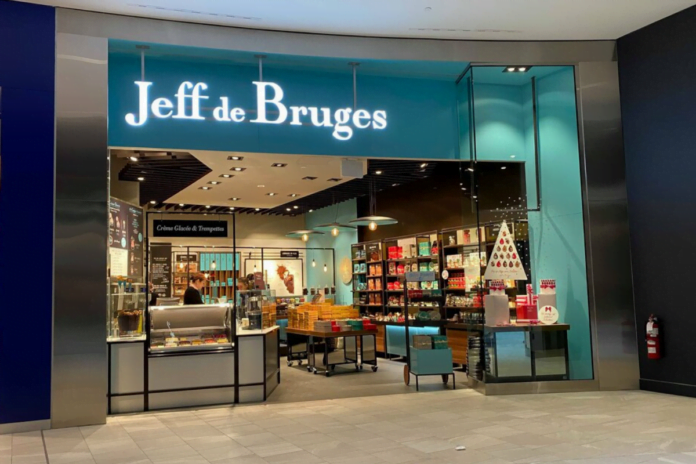
Jeff de Bruges (Image: Maxime Frechette)
“All of our chocolates are coming from Europe, coming from Belgium. With less sugar. It’s premium. Very tasty. Also you can pick up and choose more than 70 different chocolates one piece at a time. You can build your box. It’s personalized, customized, and the shopping experience is important for us. You have to taste the product, we have to speak about the chocolate and where it is coming from. Regarding the price, we’re in the mid-range, not high end. Very affordable. It’s high quality, affordable price.”
According to Tony Flanz, of Think Retail which is working with the brand to find real estate for Jeff de Bruges, the latest store for the brand will take over 900 square feet of space vacated by Rocky Mountain Chocolate.
“The new store will showcase Jeff de Bruges’ signature industrial chic vibe, with elegant lighting and attractive displays set against a modern turquoise and chocolate-brown palette that’s echoed in all packaging,” says a blog on the Think Retail website.
“The plan is to open one or two more Quebec stores this year, with a particular interest in finding a location on Mont Royal. However, the company is open to both high streets and super regional malls. Ideal spaces are 600 to 1,000 sq. ft.
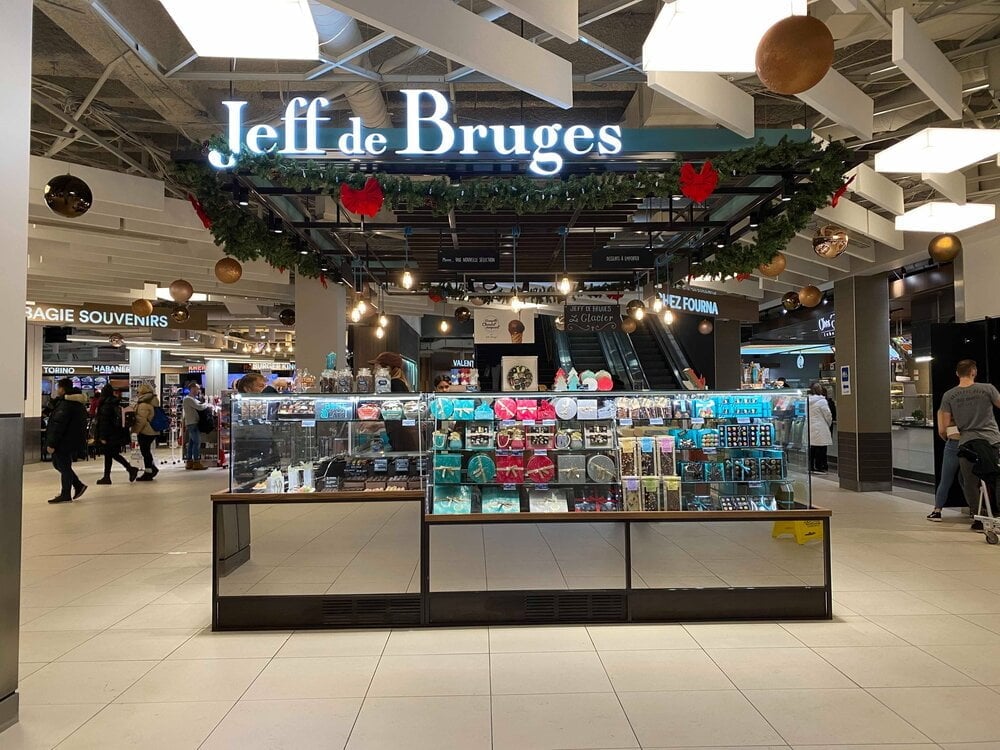
Image: Jeff de Bruges
“Jeff de Bruges is an ideal tenant with a strong legacy and proven ability to attract customers. The concept launched in Europe in 1986 and today there are more than 500 stores across France, as well as close to 40 international locations in 17 countries. While the chocolates are imported from Belgium, the ice cream is always locally sourced—here in Quebec, it’s Bilboque. The timing is ideal. As we emerge from pandemic-related lockdowns, Jeff de Bruges is the indulgent experience that people are craving.”
Philippe Jambon, Founder and President of Jeff de Bruges, in an interview on the brand’s website, said : “With passion, and from a very young age running around in the chocolate makers’ workshops, I was able to observe the magical effect of chocolate. Since then, when creating Jeff de Bruges, I have relentlessly imagined a thousand and one ways to turn our stores into unique places, gourmets’ worlds and delicious chocolate could also be accessible and fun to bring pleasure and quality to all.
“In our stores, we mainly try to be in touch with (customers’) needs, to bring back childhood memories of afternoon teas, to create little treats so that everyday can be joyful, in short, to offer recipes which can make for a happier life.”
Retail Insider is streamlining its Canadian retail news from around the web to include a handful of top news stories that can be viewed quickly during the day. Here are the top stories from the past 24 hours.
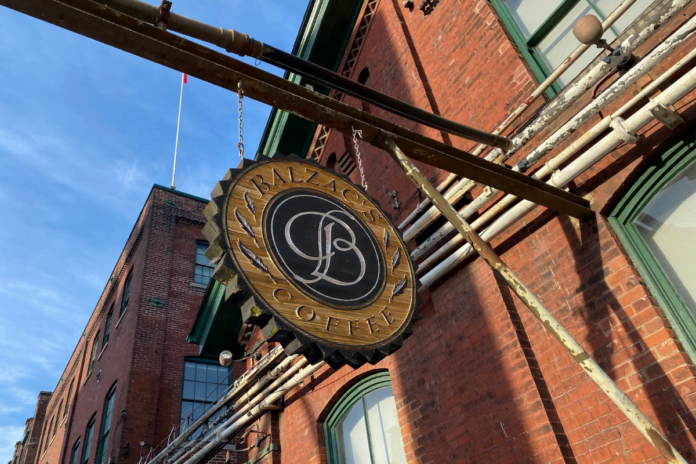
Balzac’s Coffee Roasters at The Distillery District (Image: Dustin Fuhs)
As the new CEO of Balzac’s Coffee Roasters, the sustainable chain of boutiques inspired by European coffee culture, ChristineCruz-Clarke is focusing on growing the brand throughout the country.
Cruz-Clarke brings over 18 years of experience to Balzac’s, leading businesses and teams in CPG, Management Consulting and Sustainability in both Canada and Europe. Her experience includes senior roles with Mars Inc. where she led marketing and strategy for the conglomerate’s global gum, mint and chocolate portfolios, as well as marketing and innovation roles at both The Hershey Company and Wrigley Canada.
Prior to joining Balzac’s, Cruz-Clarke served as the General Manager for TerraCycle Canada, a leader in sustainable solutions which was recently named as one of TIME magazine’s 100 Most Influential Companies. She has also held marketing and strategy roles with both Kraft Foods and Deloitte. Born in Toronto, Cruz-Clarke attended Western University.
“(Balzac’s) is a little bit of the best of everything I’ve had the opportunity to work on over the years. I’m someone who really loves consumers and understanding how to create better experiences and products that make their lives better and I happen to just be a passionate coffee lover myself,” said Cruz-Clarke.
Arlene Dickinson
“So being able to take the best of what I know in terms of creating great brands and building businesses, delivering amazing consumer experiences, driving the sustainability agenda, and marrying that with a love for coffee, is what attracted me to the world of Balzac’s Coffee Roasters.”
Established in 1993, Balzac’s today has 17 cafés across Ontario and a roastery in Ancaster, Ontario.
“An executive of Christine’s calibre, her years of relevant experience steering consumer-focused brands, along with her expertise in sustainability, made her a complete standout for this role,” said Arlene Dickinson, General Partner of District Ventures Capital, which holds a majority ownership in Balzac’s Coffee Roasters. “We are pleased to have her aboard and look forward to her contributions as CEO.”
PHOTO: Balzac’s Coffee Roasters
The brand’s name was inspired by Honoré de Balzac’s famous quote, “the Café is the People’s Parliament.”
Cruz-Clarke said the pandemic has been a big game changer for Canadians in consumption behaviour.
“Through the pandemic at-home coffee consumption grew by 10 per cent and that’s a really significant number. As we think about our expansion plans what hasn’t changed is our desire to be available more nationally, but the way we get there might be slightly different based on how consumer habits have changed. Both consumption and shopping behaviours factor into that,” she said.
“So, as we think national it’s about making sure our coffee is available to people in the way they want to consume it, so whether you prefer whole bean or ground or even compostable pods, we want to offer you the formats you want where you’re already shopping be it in grocery stores or even Amazon or direct from us through our DTC website. Our aim is to grow our national presence by making our coffee available in the places consumers are already shopping.”
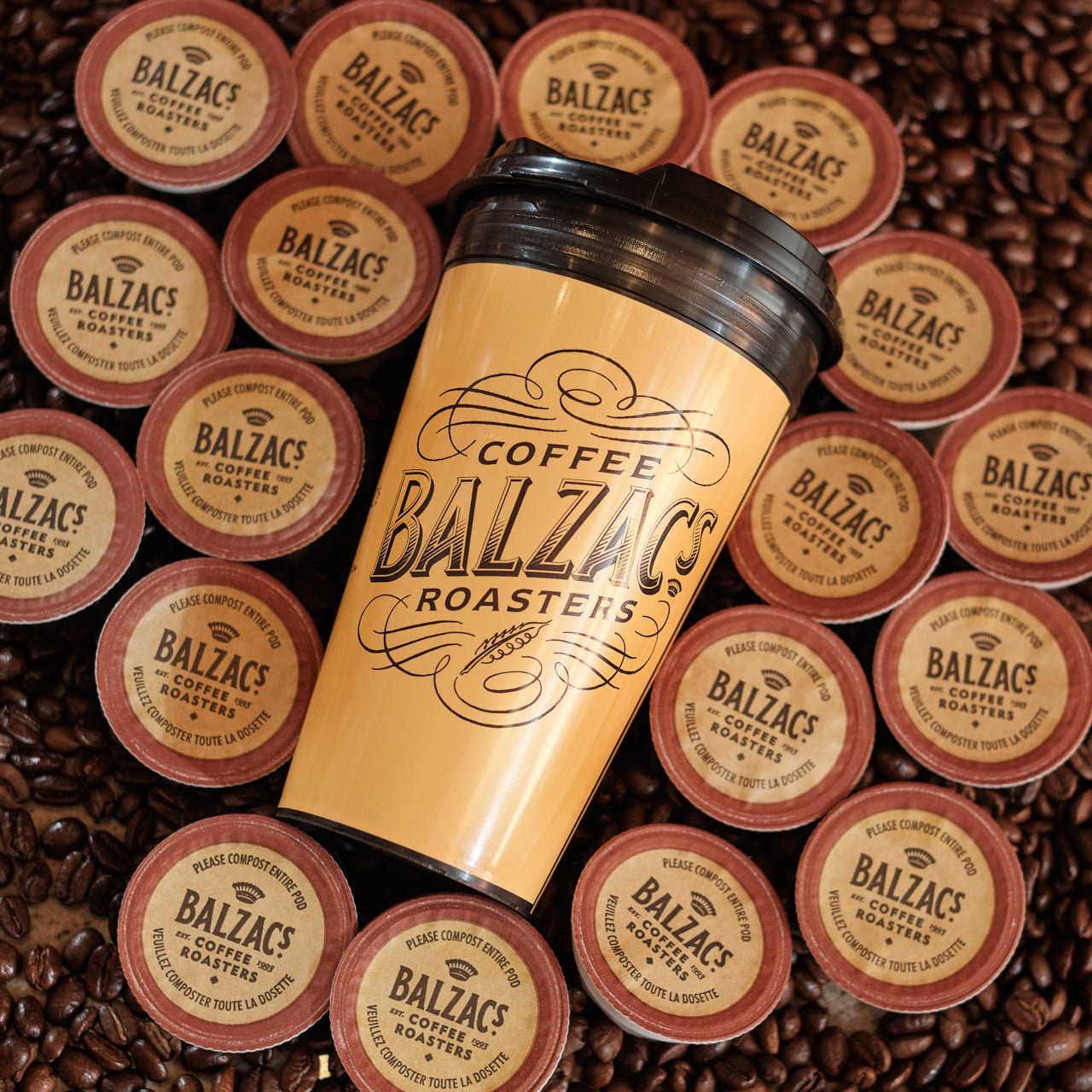
Image: Balzac’s Coffee Roasters
Image: Balzac’s Coffee Roasters
The brand is available through a number of major grocery banners from Costco and Loblaws, to Sobeys and Whole Foods – anywhere from traditional grocers to specialty stores. Cruz-Clarke said the company has a great shop on Amazon.ca.
“The other shift that was really born out of the pandemic is food delivery. So as you think about DoorDash or Uber Eats, those are other avenues of getting our product delivered to home that we’re working constantly to grow.”
She said the brand’s cafés are concentrated throughout the Greater Toronto Area as well as the surrounding areas.
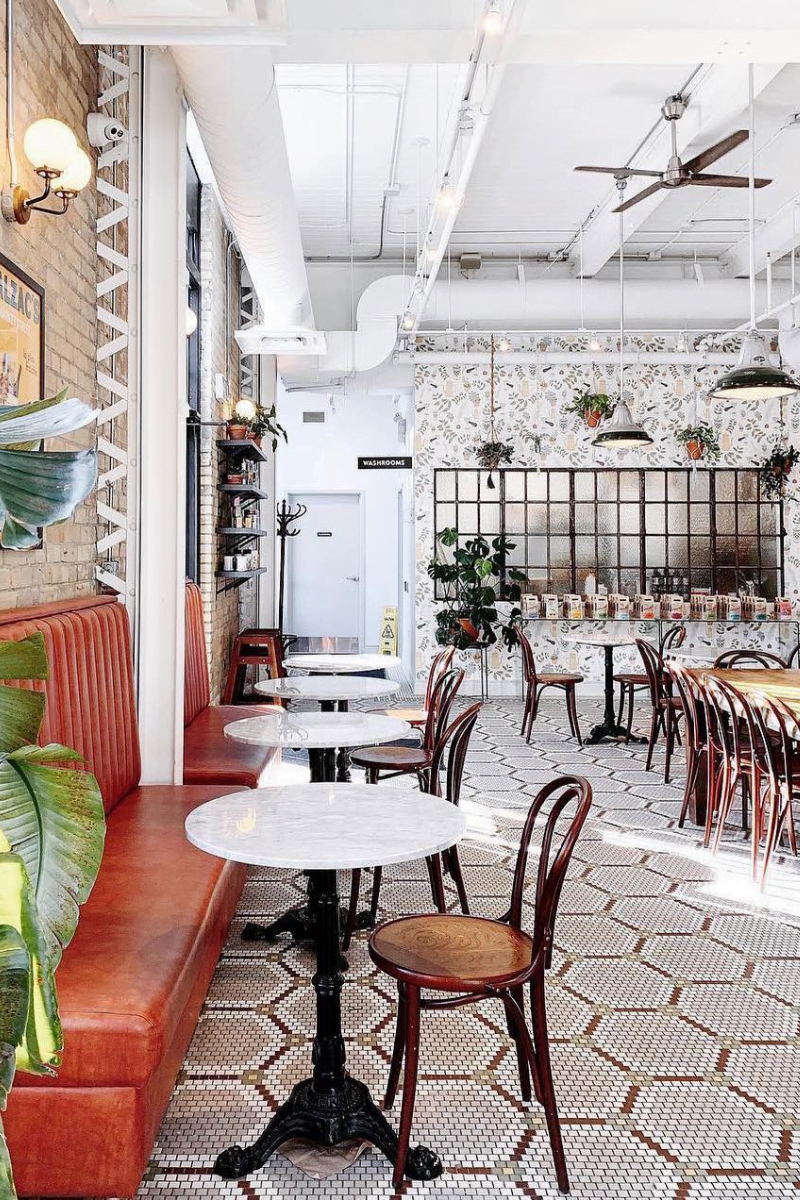
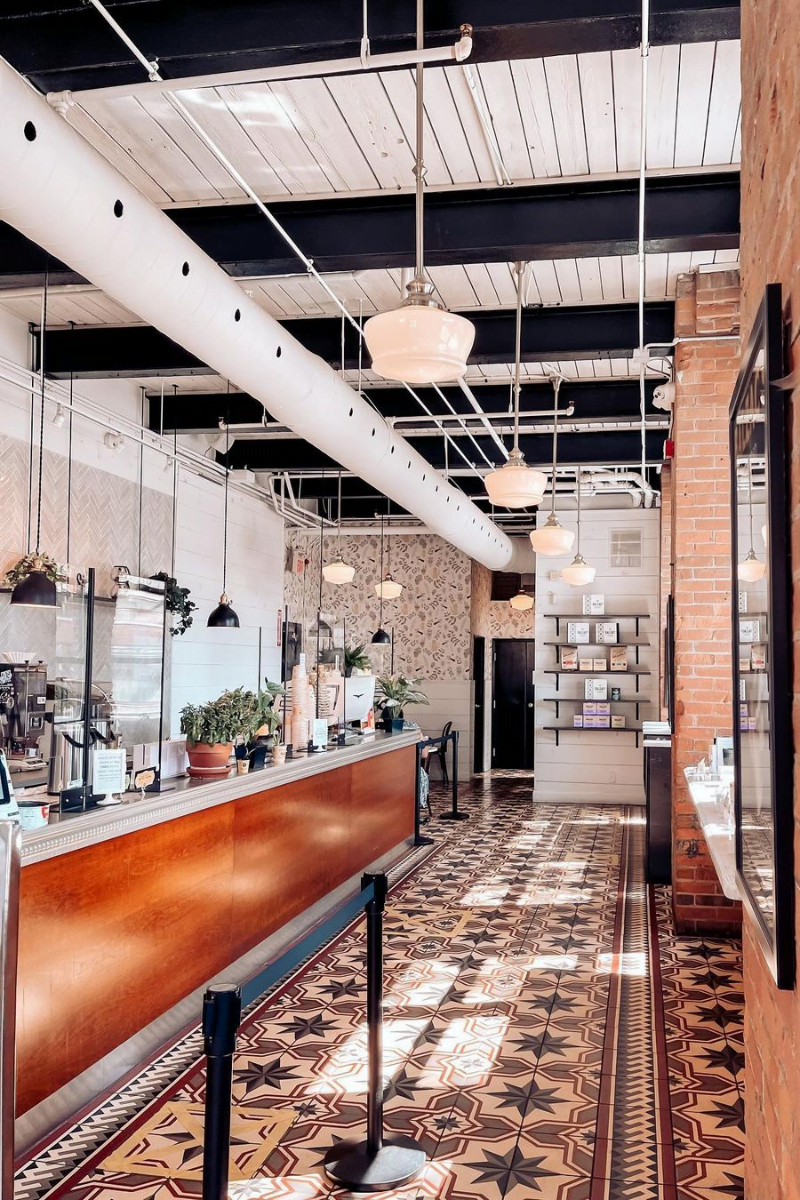
Image: Balzac’s Coffee Roasters
Image: Balzac’s Coffee Roasters
“As we think about our intention to grow, it really is national expansion and making our coffee available in new markets. Opportunistically, we are looking to enter new markets. So if there was a café opportunity outside of Ontario those would intrigue us from a brick and mortar standpoint,” she said. “But right now the focus is very much on the grocery side of things and being able to expand through wholesale and online delivery.
“Within the coffee landscape in Canada, there’s a number of different players from national right through to small local roasters. We cater to the consumer who is interested in coffee quality and really loves the taste profile we’re able to deliver. We roast everything in small batches, in Ontario, and we source our beans anywhere from South and Central America to Africa to Indonesia.
“As we think of the different players that are out there, where we like to position ourselves is specialty coffee. Coffee is graded on a scale of 0 to 100 and all of the coffee that we source is graded 80 or higher and that really is what sets us apart from some of the bigger mainstream players who don’t necessarily source the same grade of quality that we do. As we think about what we’re able to offer that’s different, it’s specialty grade coffee that’s crafted and roasted in small batches available on a national scale, which not all small roasters have the ability to do. That really is the sweet spot that we’ve landed in.”
Mine & Yours Founder Courtney Watkins Discusses Retail Expansion
Craig and Courtney discuss how she started her business in Vancouver almost a decade ago, the opening of her newest store, and plans to expand her luxury resale business into Toronto’s Yorkville area this year.
The Interview Series podcast by Retail Insider Canada is available on Apple Podcasts, Stitcher, TuneIn, Google Play, or through our dedicated RSS feed for Overcast and other podcast players. Also check out our The Weekly podcast where Craig and Lee discuss popular content published on Retail Insider which is part of the The Retail Insider Podcast Network.
Drop us a line at Craig@Retail-Insider.com. You can also rate us in Apple Podcasts or recommend us in Overcast to help more people discover the show!
Background Music Credit: Hard Boiled Kevin MacLeod (incompetech.com). Licensed under Creative Commons: By Attribution 3.0 License. http://creativecommons.org/licenses/by/3.0/
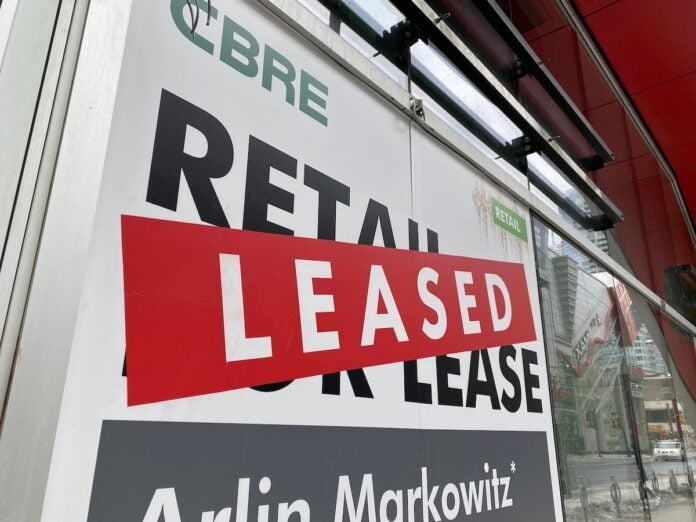
A commercial real estate report by CBRE says the retail market continues to evolve and adapt to the changing landscape, and innovation and a focus on experience will see the sector reinvigorated this year.
The Canada Real Estate Outlook said consumer confidence remains positive and spending is forecast to stabilize in 2022.
Arlin Markowitz
“I think going into the spring and summer it’s going to be super positive. I think it’s going to feel like the Roaring 20s this summer in retail,” said Arlin Markowitz, Executive Vice President at CBRE. “People are going to be out and about. There’s still pent-up demand. I still think there’s some revenge shopping to be had. We’ve talked about that a lot over the past couple of years and I think the US has already seen it and benefited from it and we haven’t yet because of the continuous lockdowns, especially in Ontario.
“When this summer hits, there’s going to be a major explosion in spending, that people still haven’t been able to do comfortably. When people get the chance to enjoy a summer day with no lockdowns, potentially no more masking mandates, they’re going to be out and about feeling pretty damn good and they’re going to be out spending.”
Markowitz said what he’s seeing more and more in the industry is an evolving tenant mix in retail properties.
“The increased amount of food and beverage and experiential retail in both our major enclosed centres and our high streets is something that is going to keep going in the long-term and I think it’s a great change in retail,” he said.
“The mixture of restaurants and bars is creating a much more lively atmosphere out there and it’s really benefiting a lot.”
Markowitz said these other uses are helping to fill up empty spaces and will keep vacancies down as landlords are more open to a wider array of uses.
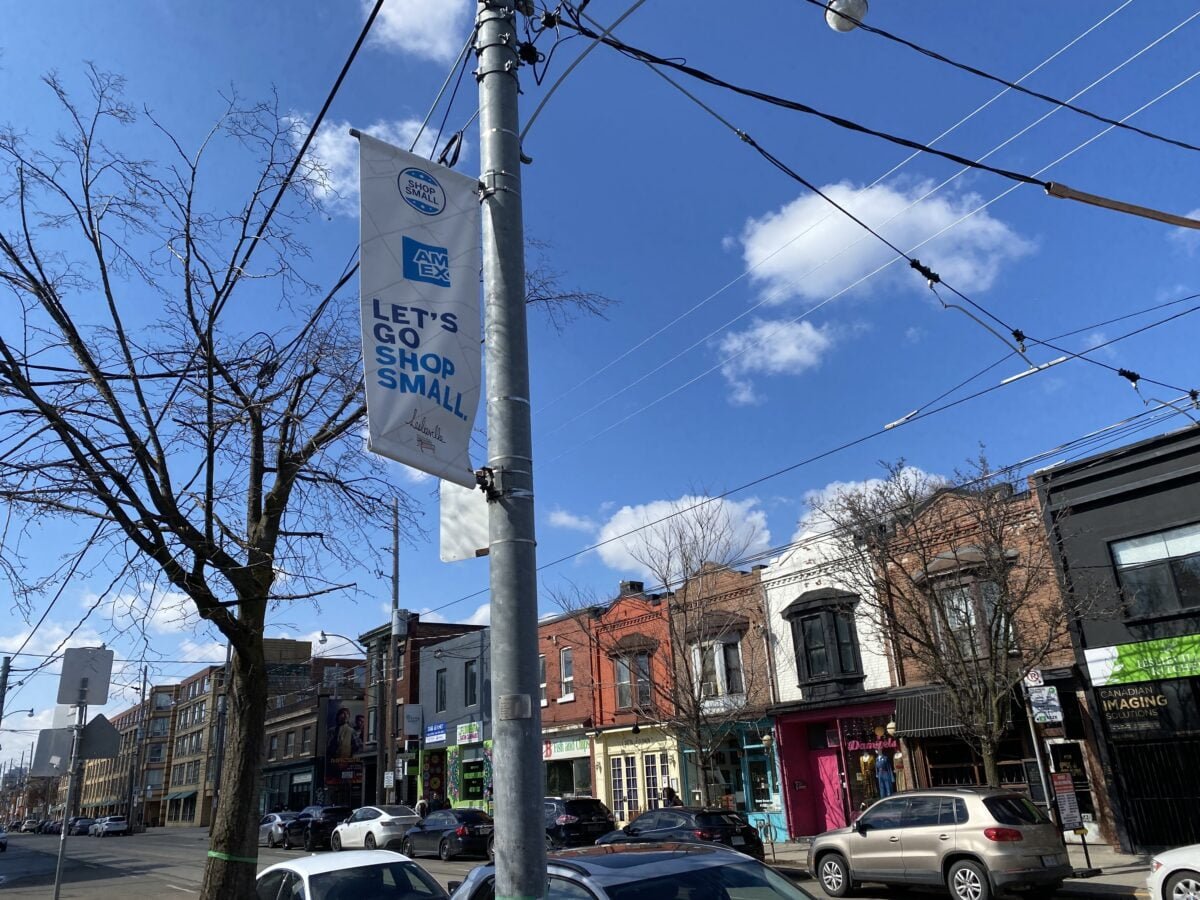
Leslieville (Image: Dustin Fuhs)
The CBRE report said supply chain disruption will continue to produce inflationary pressures for both retailers and consumers. Strong economic growth, labour shortages and constrained supply chains will see the price of goods and services increase in the year ahead.
“New food and beverage concepts will be important in attracting customers back to shopping districts, proving integral to the tenant mix and vibrancy of sites. We will also see restaurants dipping their toes into direct-to-consumer offerings that bring products and experiences directly to home kitchens across Canada,” said the report.
“Consumers will increasingly support brands that align with values aimed at sustainability in the year ahead. As retailers make bolder commitments to reducing their carbon footprint, this will impact store concept design and lead to the inclusion of green clauses in leases.”
The report said recovery in the retail sector is well underway. Retail foot traffic and sales productivity numbers rebounded to normal levels of activity as consumers eagerly made up for lost time in 2021. Existing brick-and-mortar stores are becoming more efficient too, as stores have had to adapt to an increasingly online world. Since 2010, store-based retail sales numbers have been on the rise, growing nearly two times as fast as physical inventory indicating that retailers are using space more efficiently than before, it said.
Image: CF Lime Ridge
“Retailers and consumers alike have learned from each wave of COVID, leading the industry out of the unknown and more equipped to weather whatever comes next. Rent delinquencies are also down to just 1% and 2%, respectively, for open air centres and enclosed malls as per Realpac’s Q4 2021 survey, with few retailers remaining on rent deferral programs going into the new year. Consumer confidence remains positive, and spending is forecast to stabilize in 2022 as a build-up of personal savings during the pandemic is released,” said the CBRE report.
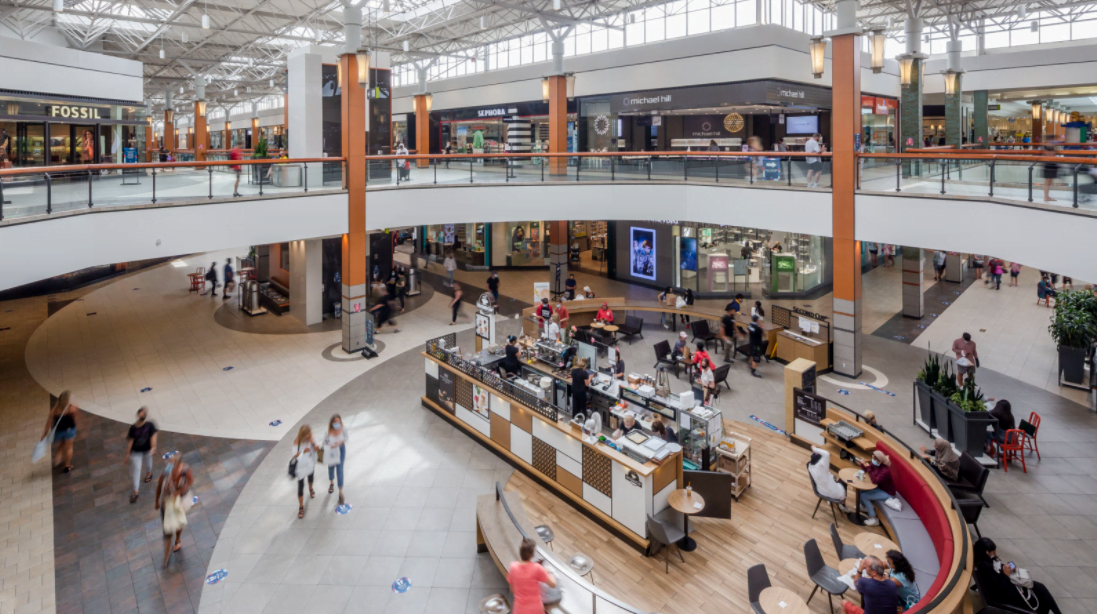
Markowitz said shopping centres will remain strong and they have evolved to become more community centres.
“There’s things that you’re going to need to get there and the mall landlords have been smart enough to put those things in their centres to give people more reasons to go there. I think shopping malls are going to become a lot more convenience space. You might see some new things popping up like maybe more medical services in malls,” he said.
“You might see more medical, more grocery, more fitness, service. Massage therapy. Nail salons. Just different things. Even, I heard about a mall putting a library in. They want people coming there. It’s all about footfall and from a consumer standpoint it’s all about efficiency and convenience. Malls will be doing well and if they add more of that stuff and more food and beverage, customers are just going to have more and more reasons to go there.”
CF Toronto Eaton Centre (Image: Dustin Fuhs)
The CBRE report said retailers are consolidating their locations, most notably in the fashion segment. Retailers continue to consolidate store networks as leases expire, however their overall footprint is likely to remain stable as they will still expand stores in profitable locations.
“On the other side of the coin, traditional online-only retailers have been gravitating towards having a physical presence to differentiate themselves. These locations are proving to be more successful than online since consumers have the opportunity to experience the brand,” said the report.
“Cannabis saw a rise in leasing activity during the depths of COVID as more landlords took on these tenancies in order to fill vacant space. The market has since become oversaturated in some markets, primarily on urban streetfronts. It is likely that we will see this market thin out through mergers and acquisitions, reducing the number of competitors in the year ahead.”
The report also said that social and environmentally conscious consumers will increasingly look to support brands that align with values aimed at sustainability in the year ahead. The 2021 EY Future Consumer Index Survey found that sustainability is quickly climbing to the top of consumer priorities, with 61 per cent of shoppers planning to pay more attention to the environmental impact of what they consume.
“Companies have announced ambitious targets in recent years aimed at a more sustainable future. Global furniture supplier IKEA has a goal of using 100% renewable energy by 2030. The retailer also offers electronic vehicle charging at most of their stores and, among other practices like low-waste sorting stations in food courts, is something many retail landlords have been integrating into their sites,” said the report.
“As retailers make bolder commitments to reducing their carbon footprint, this will impact store concept design and lead to the inclusion of green clauses in leases, which is already starting to be seen most predominantly through requesting of sustainable waste services.”
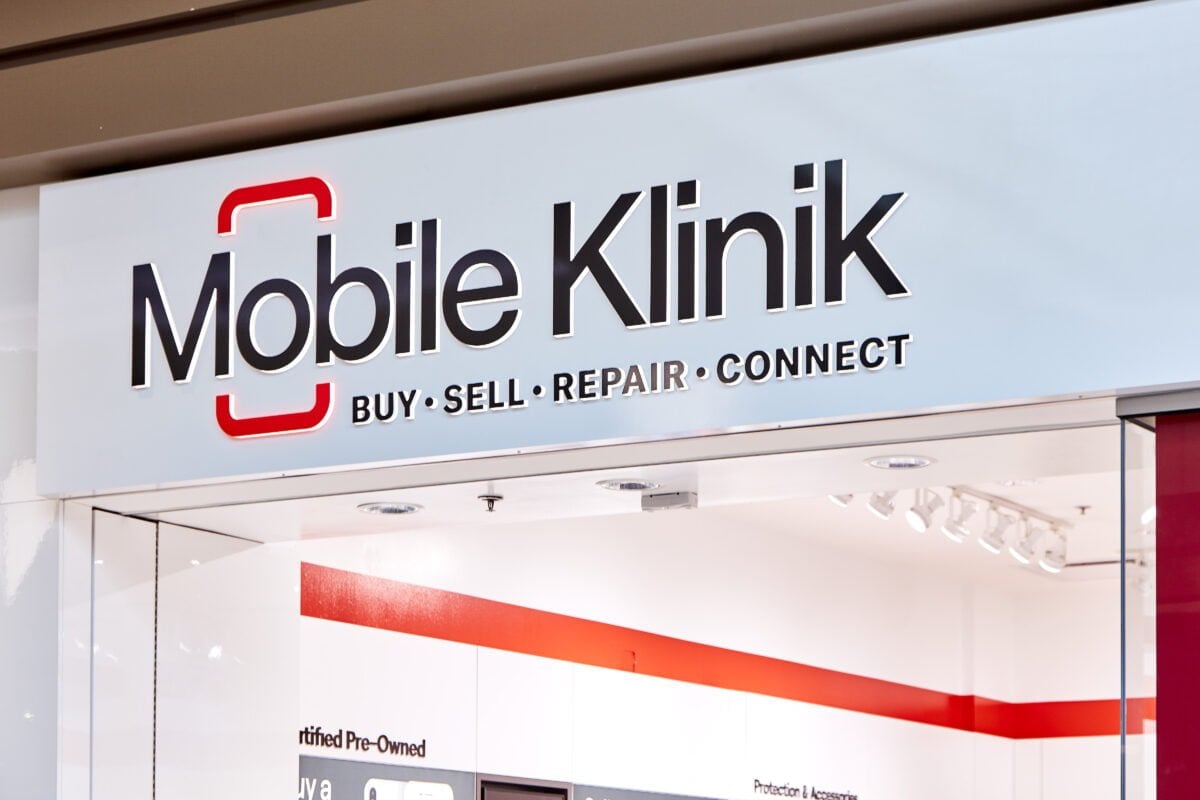
Mobile Klinik, a leader in professional smartphone and tablet repair, refurbishment and resale, has launched a new brand campaign to showcase its new look and feel and revitalized in-store experience.
The retailer continued to grow its footprint even during the pandemic of the past two years and Tim McGuire, the company’s CEO, said it added 22 stores in 2020 and 20 new stores in 2021, with a total store count now of 121 across Canada.
“We’re continuing to plan to build out to somewhere in the 200 to 250 in the next few years,” he said. “Opening new stores virtually every month and then recently we’ve been doing a major retrofit on our existing store base to the new brand and the new concept.
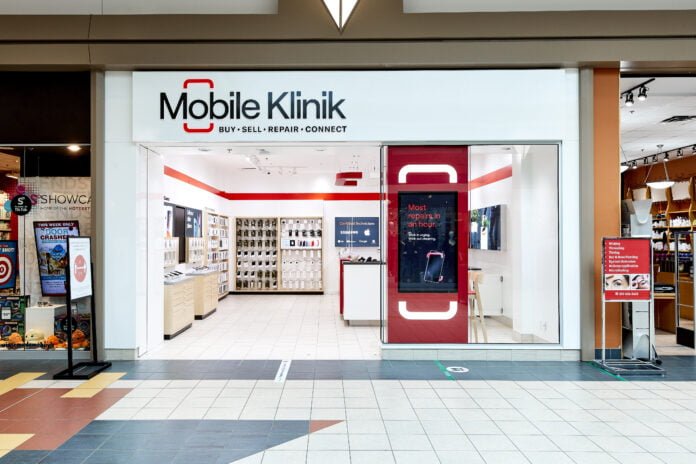
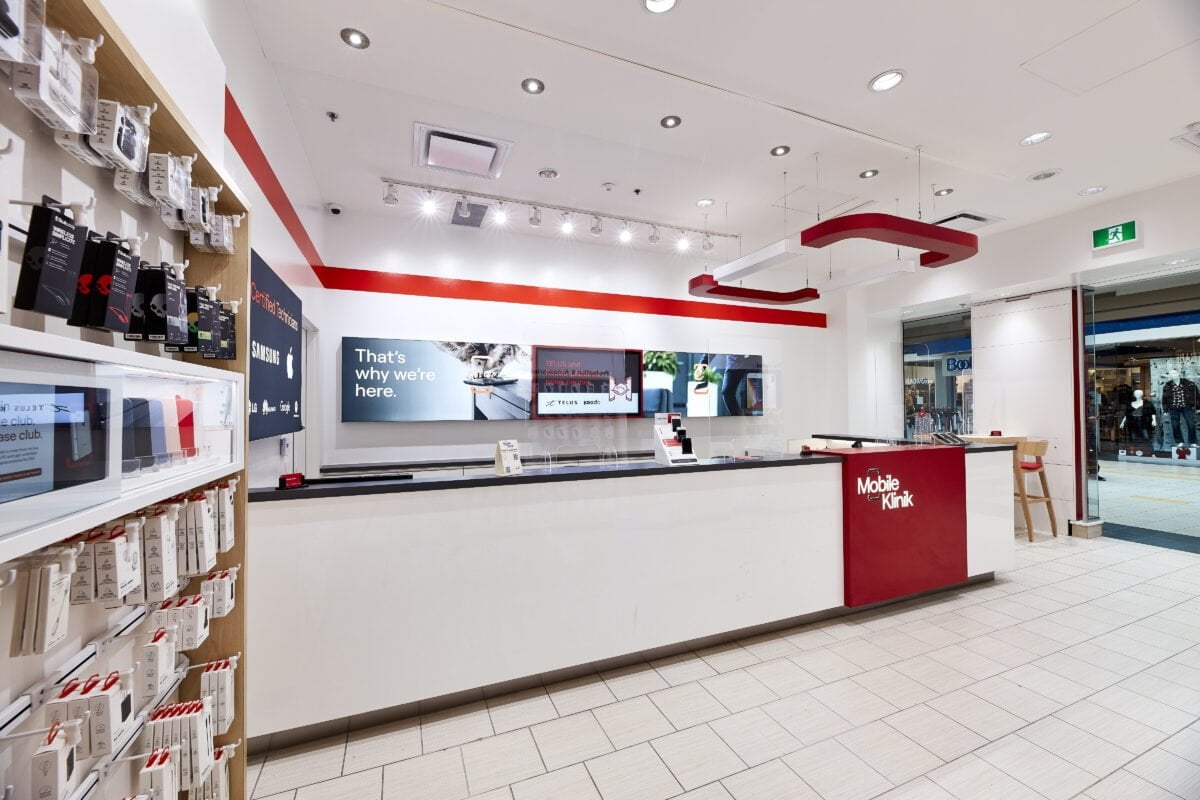
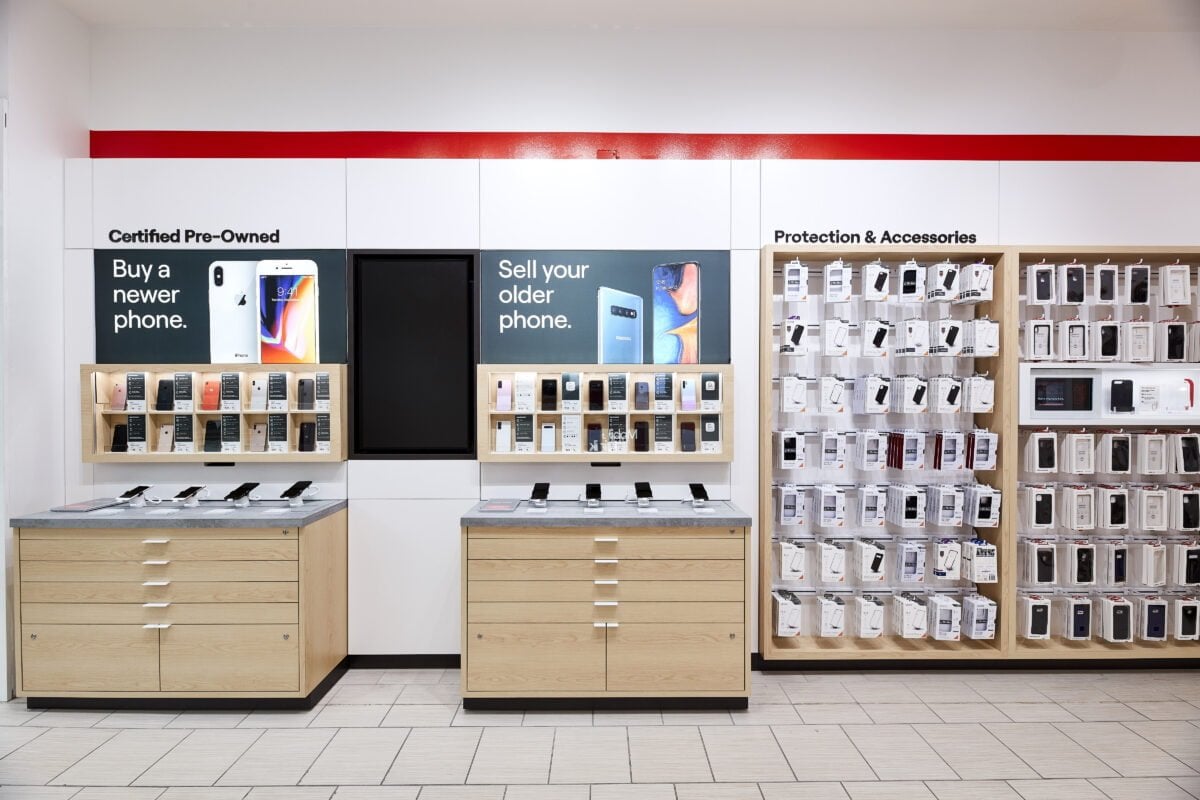
Mobile Klinik Cambridge (Image: Mobile Klinik)
Tim McGuire
“We’ve got lots more expansion to go. We won’t stop until every Canadian has access to a Mobile Klinik store and knows exactly what we’re all about. We need them to know we’re a lot more than repair.”
McGuire said that throughout the pandemic it’s become even more important for Canadians to be able to stay connected.
“We’re not all in offices. We’re not all in our workplaces. We’re working from home. We’re going to school from home and so on. So keeping your devices functioning well is even more important than it was before,” he said.
“We’ve dramatically expanded the services we provide. We started out as a pure repair company. If your phone wasn’t broken, you didn’t need to come to us. We’ve realized that Canadians need a low-cost, high-quality provider of all the services they need to keep them connected and to do so at great value in order to keep things going forward.
Mobile Klinik Cambridge (Image: Mobile Klinik)
“So we’ve expanded our program from primarily repair to now we are Canada’s largest buyer and seller of used devices and we have a number of different protection plans and products to help you keep your device from breaking so you don’t need us to fix it. We’ve opened a central refurbishment facility. We have rapidly moved to become the full-service, everything for your phone shop and that’s what the buy, sell, connect is all about. If you want to buy a newer phone but you don’t want to spend the $2,000 for the latest and greatest from a manufacturer, we can get you last year’s model at substantially lower costs and you’ll never know the difference.”
McGuire said the retailer’s goal is to create a lower cost, far more sustainable system for Canadians to have access to phones, tablets and computers as it moves ahead.
“If you go back three or four years ago, we didn’t even sell used phones and now that’s one of the largest portions of our overall business. That’s an important expansion to it,” he said.
“The other thing is if you need a new wireless plan for your phone we can give you great value on a wireless plan but it ties directly to our overall sustainability position. So if you buy a used phone and activate it on one of our plans we’ll give you $100 off the cost of the phone. If you repair a phone and keep it out of the landfill and activate on a plan, we’ll give you $100 off the cost of the repair. And for anyone who activates a plan with us, because we are so tied to extending the life of devices and keeping them out of the landfill, we’ll give you a $5 a month sustainability credit as long as you have your phone.”
Mobile Klinik Cambridge (Image: Mobile Klinik)
McGuire said Mobile Klinik has reimagined and evolved the in-store experience at more than 40 cross-country store locations. The revamped stores provide a more modern and welcoming environment that accurately reflects the innovative and forward-thinking brand, while addressing increasing consumer demands for affordable and sustainable ways to buy, sell, repair and connect mobile devices.
“This rebrand asserts our position as the market leader in the mobile device care and aftermarket category, and our company’s commitment to offering Canadians the most sustainable and affordable phone options,” said McGuire. “A survey we commissioned with Angus Reid last year found that despite 41 per cent of Canadians considering certified pre-owned devices and 76 per cent considering repair, more than three quarters still chose to purchase a new phone in the last three years.”
McGuire said more than half of the stores have been converted and within the next several weeks the rest will be converted.
“We’re renovating about five stores a week to the new concept. This new store design, while not taking anything away from repair, which is still the life blood and the heritage of our company, puts substantially more emphasis on Mobile Klinik’s ability to buy and sell used phones and to activate plans for those phones,” he added.
“So instead of the we’re just there if you need a repair, it’s more the one-stop shop, the everything for your phone is the way we’ve talked about it. That’s why you’ll also see a major marketing campaign . . . the tag line there is ‘that’s why we’re here’. So whatever happens to your phone, whatever you need, whether it’s a repair, whether it’s a replacement, whether it’s accessories, whether it’s a connection, that’s why we’re here.”
Retail Insider is streamlining its Canadian retail news from around the web to include a handful of top news stories that can be viewed quickly during the day. Here are the top stories from since last Thursday.