Vancouver-based outdoor gear retail cooperative MEC, known to some as ‘Mountain Equipment Co-op’, is shifting its retail strategy and cutting some employees while putting forth efforts to bring the company back to a financially healthy state at a volatile time in Canadian retailing. We spoke with MEC’s CEO Phil Arrata who joined the company in July of 2019 after former CEO David Labistour retired last year.
After going over the financials after joining MEC in the summer, Mr. Arrata said that he saw a need to streamline MEC’s operations in an effort to keep it operational. The cooperative had rapidly opened stores over the past several years and the related costs saw the company lose millions of dollars. Mr. Arrata said that his goal is to see the almost 50-year-old cooperative survive another 50 years and beyond, by making changes to MEC’s business model to address consumers as well as staff working in its stores.
Mr. Arrata explained that he’s looking to make the company financially viable after difficult times that saw the cooperative lose $11.487 million last year on sales of $462 million. Mr. Arrata is the former CFO of Best Buy Canada and said that there will be cost savings from several new initiatives.


That includes subleasing MEC’s head office space in Vancouver’s False Creek Flats area on Great Northern Way — the current space is considerably larger than needed, he said, and the cooperative will seek out a new smaller space in an effort to reduce overhead costs. MEC moved into the building in 2014.
Other efficiencies are ongoing, including introducing efficiencies in technology spending as well as supply chain improvements and operations. That includes modification to e-commerce fulfillment from stores and how to make it more efficient. New technology will be introduced and the supply chain will be tightened, including changes to the frequency of deliveries to MEC’s stores — in some cases, four shipments were being made to stores weekly when three would have sufficed.

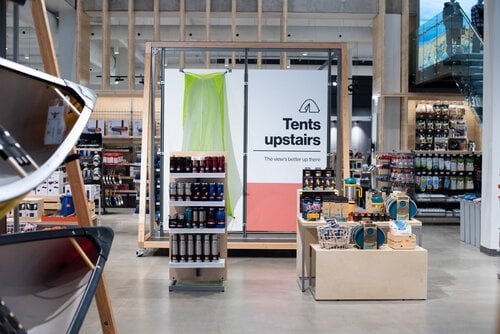
PHOTO: MEC 
PHOTO: MEC
Mr. Arrata said that while revenue was up last year over the year prior, those sales gains were a result of new store openings. Same-store sales decreased over the same period, which was concerning. While MEC continues to gain control of its operations, he said that opening dates in Saskatoon as well as in suburban Calgary have yet to be confirmed.
The Saskatoon store was announced to open in the city’s Midtown Plaza, situated in Saskatoon’s downtown core. The Calgary store was set to open near the city’s Olympic Park. A new Vancouver flagship store will still be opening in March of this year — MEC is waiting for permits and has a lease agreement with a developer.
Some of MEC’s financial losses were blamed on spending vast amounts on the new flagship stores in Toronto and Vancouver. Retail Insider profiled the new Toronto flagship store in April of 2019, which is located on the popular Queen Street West strip in an expansive building on a retail stretch that is otherwise characterized with smaller storefronts. The new Vancouver flagship will feature eco-elements that resulted in high construction costs.

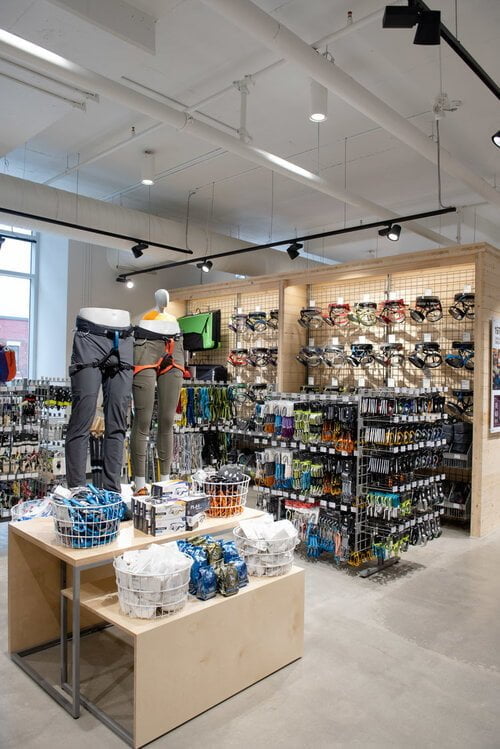
How MEC stores are laid out will be re-strategized as well. Mr. Arrata explained how retail is changing and as a result, MEC stores will aim to be more experiential. That includes allocating space for consumer events as well as clinics and education. A climbing wall in a Toronto flagship that opened last year is said to be a hit.
At the same time, the size of MEC stores may be too large in many instances, and the overall retail footprint is being examined. As part of the experiential initiative, MEC is aiming to drive its net promotor score by providing consumers with positive experiences. New member surveys launched under Mr. Arrata’s direction are seeing 6,000 responses per month — prior to that, only about 200 members filled out the surveys on a monthly basis which is minimal, given that MEC operates 22 stores.
In-store displays will further drive sales. One example provided was the displaying of tents on the roof of cars — sales of the items were slow until showcased in stores, which resulted in a spike in sales of the tents.

Consumer preferences are shifting and consumers are also highly educated, he said. Creating more experiential stores will be a way to bring in shoppers while also enhancing brand awareness. The focus will be on in-store experiences primarily — last year MEC launched adventure eco travel tours and the number of people who signed up was considerably fewer than had been expected.
A curated assortment of product and showcasing brands in a meaningful way will be critical, and staff will be provided extensive product knowledge training to better serve MEC’s consumer base.
The aim is to make MEC’s stores community hubs that include learning, meet-ups, and other activities, and the brick-and-mortar experience will remain critical to the retailer’s success. Mr. Arrata noted that digitally native brands such as Casper and Amazon have opened physical stores.

The employee experience is also critical to MEC’s success, noted Mr. Arrata. Staff in MEC stores in Vancouver and Victoria recently unionized, which was something of a wakeup call for the cooperative. In an effort to enhance employee loyalty, MEC has invested in its staff in a variety of ways.
That includes converting more than 950 of MEC’s existing casual-non-permanent roles into a combined 950+ full and part-time roles. MEC’s full and part-time employees receive a benefits package that includes extended health and dental coverage, tuition assistance benefit, RRSP matching plan and maternity and parental leave top-ups. Store and service centre staff also have access to the MEC staff paid volunteerism program. The shift was a response that MEC received from its staff regarding its casual- non-permanent staff designation, and the changes aim to improve job stability as well as member experience, employee engagement and product knowledge. Furthermore, staff who prefer non-permanent status are eligible to apply for seasonal fixed term positions during peak periods.
Casual staff turnover was about 80% prior to these changes, while only 18% for full and part-time employees, who stay with MEC for an average of five years. MEC will also work with its union partner to implement similar changes in the unionized Vancouver and Victoria stores as well.
Some employees will be let go as part of the announcement, though an exact number wasn’t provided.
MEC LOCATION 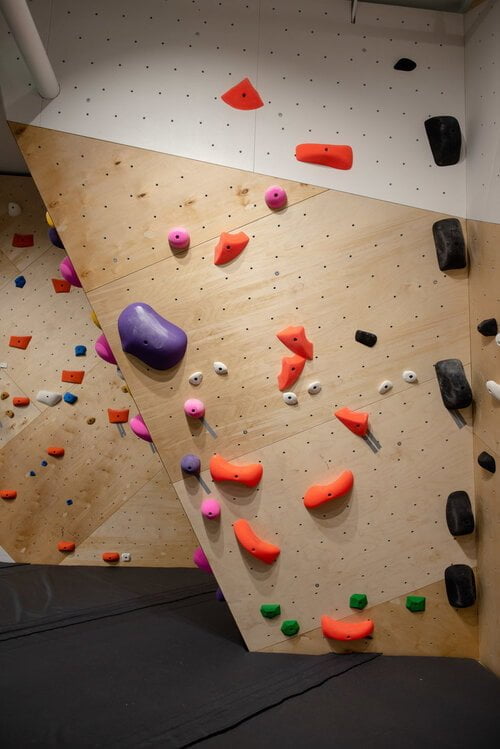
MEC LOCATION
Online sales are an important component to MEC’s revenue model and are approaching 30% of its sales. Some consumers may buy online and pick up products in stores, offering an opportunity to further engage with the consumer base while at the same time presenting the opportunity for up-selling. Consumers expect exceptional websites with a seamless experience that includes fast and easy checkouts — MEC is further ensuring that it will compete with big players entering and expanding into Canada.
MEC’s revival efforts couldn’t come soon enough. Sporting goods retail concepts are expanding throughout Canada and consumer preferences are changing. That includes a rapid growth in online sales while consumer spending dollars are in many cases tighter than in years past.


French sporting goods behemoth Decathlon is expanding rapidly throughout Canada, and its stores are also known to be highly experiential while its pricing is competitive. Other retailers such as Sport Chek, Sports Experts, SAIL, Sportium and Sporting Life also continue to open stores, adding to the already intense competition.
Given MEC’s aim to be experiential, the cooperative could see considerable success with its new initiatives. Consumers are seeking out convenient experiences and MEC is looking to offer those both in its stores as well as online. MEC’s social initiatives will also play well with its consumer base — the company is known to give back. The company has an internal program called MEC All Out, which recently replaced its 1% for the Planet program. Overall, MEC’s brand is strong and the cooperative boasts an expansive member base.
MEC, which was founded in Vancouver in 1971, has expanded to 22 stores in 20 cities across Canada and has about 2,700 employees. The retailer is considered to be Canada’s largest supplier of clothing and recreational gear and is also known for its dedication to protecting the environment.