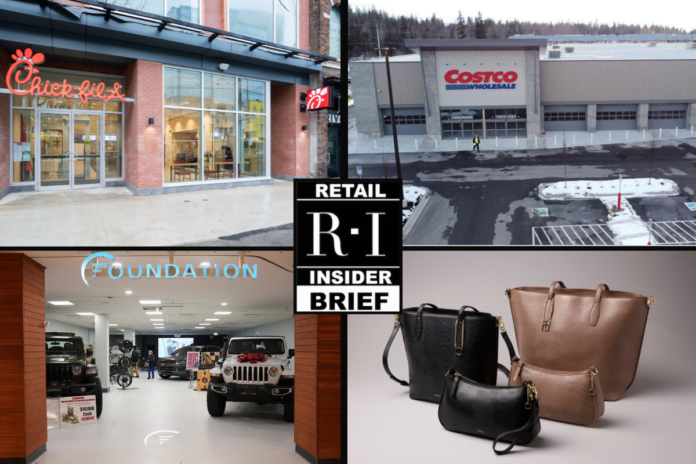
The “Jeep Lifestyle Centre” features Jeep vehicles on display with branded clothing and merchandise, which is the first-ever enclosed shopping centre storefront for the Jeep brand.
The buy-now-pay-later platform includes an app and Klarna has already secured some big name retailers in Canada including homegrown brands Harry Rosen, Mejuri, and Frank And Oak and international players such as Sephora Canada, L’Oreal Canada, and GameStop among others.
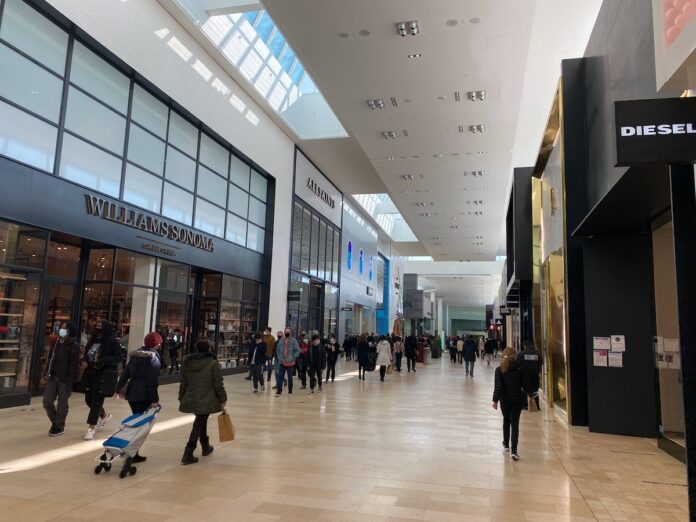
Despite experiencing restrictive measures in major markets, Canada maintained strong retail sales as core retail sales in 2021 are projected to be up 13 per cent compared with 2019, and retail sales should continue to grow in 2022, says a report by commercial real estate firm JLL.
The ‘Canada Real Estate Outlook’ research report says leasing activity in the sector is expected to increase with the arrival of a more stable environment, likely in the second quarter of this year.
Tim Sanderson
“In Q1, rents should see their recovery trajectory slow, but they could quickly resume in the event of a short Omicron wave. While rates across Canada increased moderately in 2021, slowly approaching those of 2019, they could surpass pre-pandemic levels by the end of the year. Vacancy and availability rates have trended down. This will become more visible in 2022 and 2023 when deals are finalized and new stores open,” says the report.
Tim Sanderson, Executive Vice-President, Retail, for JLL, said the outlook heading into the second quarter of this year is one of optimism.
“Retail leasing activity and interest in the marketplace seems to have picked up, certainly in the major markets of Canada,” he said. “I think it’s a couple of things. One, overall spending increased in late January and in early February as the restrictions were eased in the major markets. Restaurant sales jumped in Ontario and Quebec with the reopening of indoor dining.
“Travel expenses have rebounded after plunging during the holidays but they’re still at only about 40 per cent of pre-COVID levels in Canada. In the US, they’re back up to 80 per cent of pre-COVID travel numbers.
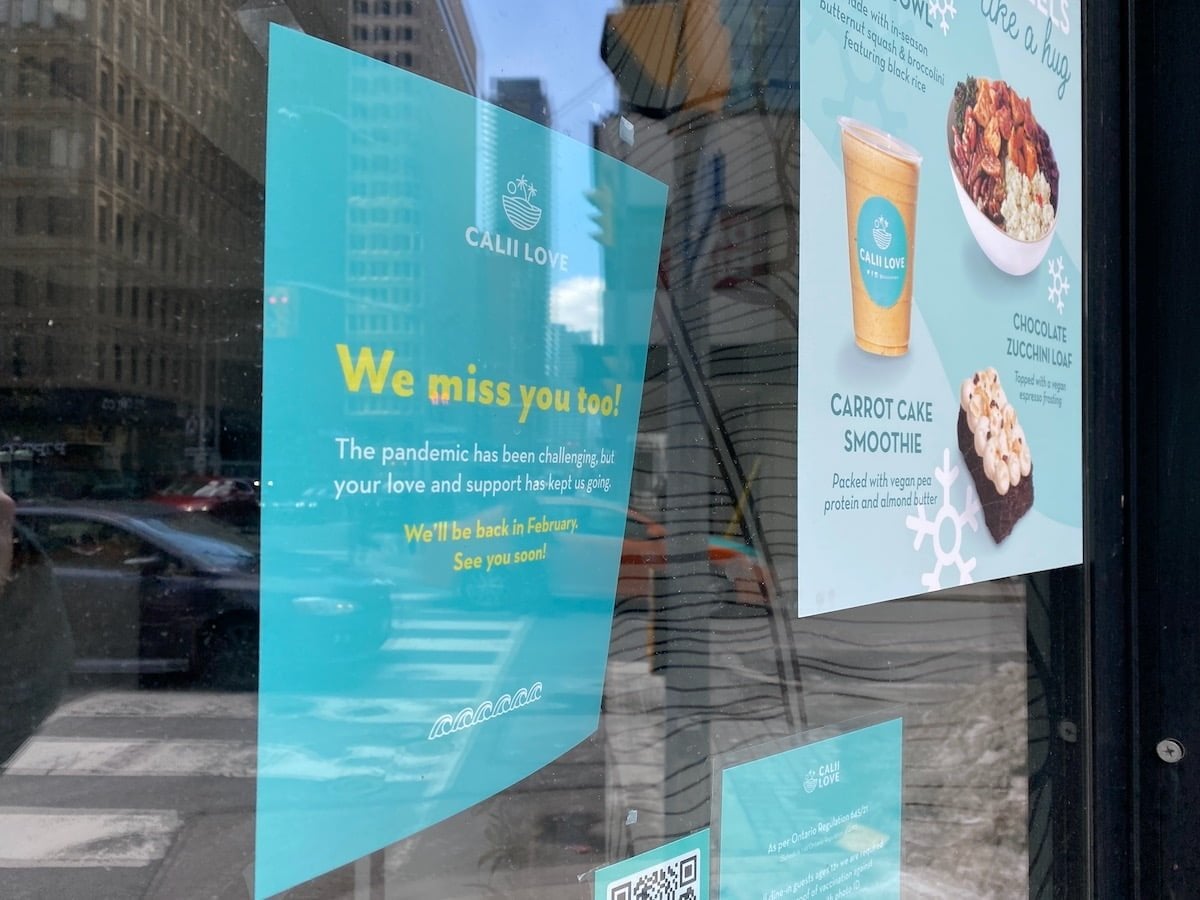
Calii Love on Bay Street (Image: Dustin Fuhs)
“And all that pent-up demand coupled with the amount of savings Canadians have in their bank accounts is saying to retailers hey it’s time to wake up and get going and open some stores again.”
Sanderson said real estate markets don’t like uncertainty and the retail sector has had way too much of it for way too long.
He cited a previous JLL survey showing that 72 per cent of shoppers in 2021 said they would go to a physical store to buy or pick up goods compared to 67 per cent in 2019.
But the JLL report also outlines some challenges still facing the retail sector. Labour and supply chains have been bottlenecks to meeting increased consumer demand. The ongoing pandemic, especially during surges, prolonged supply-chain disruptions, leading to slow production and logistics delays. Job vacancies are expected to remain high after vacancy rates soared in both the accommodation & food services and the arts, entertainment & recreation sectors in 2021, says JLL.
“Labour is still a problem – especially in food services because so many people have left that industry that getting staff back is a major problem. I can’t understand where they’ve all gone or what alternative employment they’ve been able to come up with during COVID but that seems to be a real problem,” said Sanderson.
“And supply chain is starting to ease a little bit but it’s still a concern now that we’ve seen this truckers’ thing (protest) hopefully come to an end, the biggest problem there was the food service, fresh produce for example coming into the country at those major border crossings. The sense is that supply chain is going to get resolved and going to get back to normal later this year if not early next.”
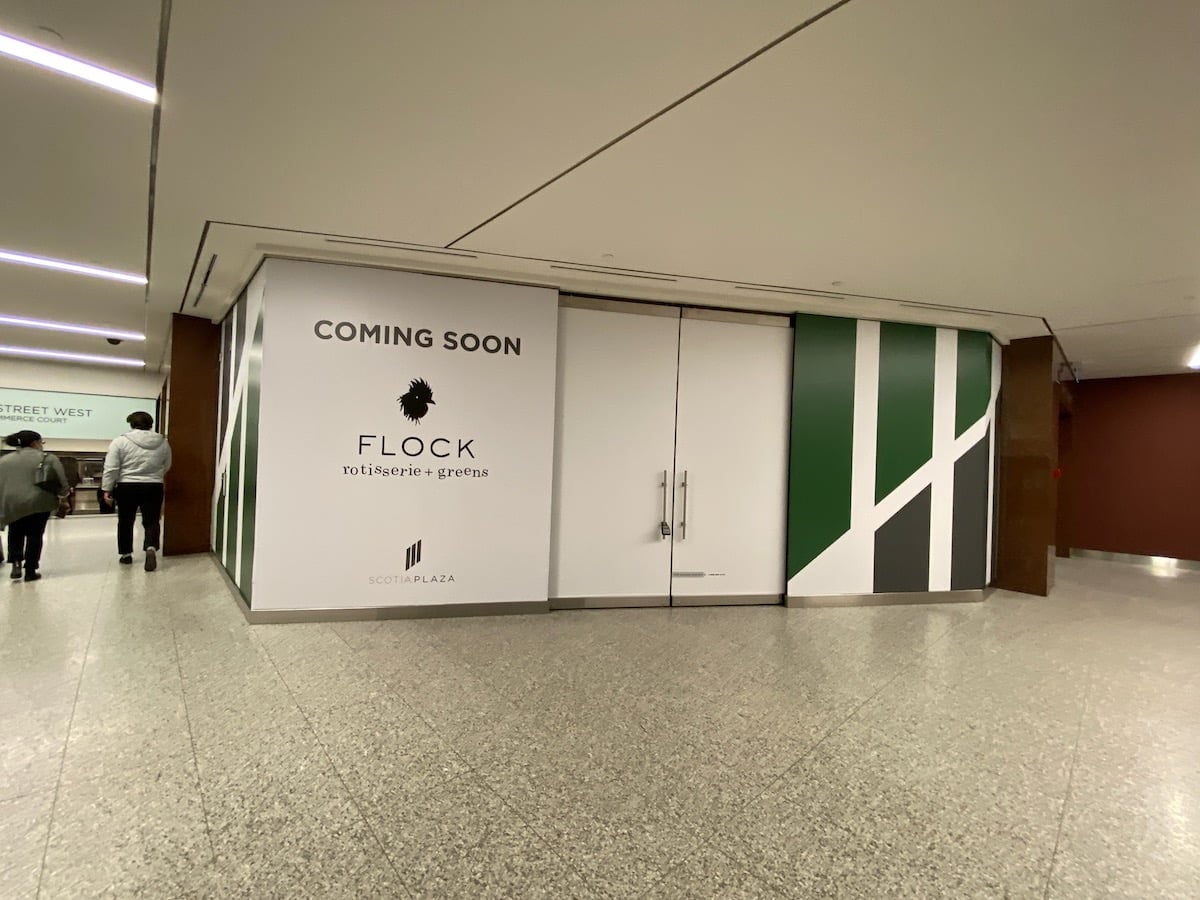
Future FLOCK Location in Scotia Plaza (Image: Dustin Fuhs)
The JLL report says restaurants should see a strengthening in business in the spring as the weather warms and quick service restaurants will continue to outperform other food services and drinking places. Fast food restaurants quickly rebounded from COVID-19 and have consistently seen increased sales from 2019.
“(Food services) scratched the bottom of the barrel and that entire food services industry was on its knees unfortunately. God forbid, we would have had another lockdown. It would have just been that much worse. Clearly it’s the independents which fuel a lot of the food service that are the hardest hit. Big companies can survive, they can shed costs, they can close stores, they can do a lot of other things and stay in business,” said Sanderson.
“But it’s been toughest on those people for sure. Sadly.”
Sanderson said Canadian retail sales in January increased 4.3 per cent largely driven by in-store spending which was up 14.8 per cent. The apparel sector has also experienced growth for the last 11 consecutive months as consumers refresh their wardrobes and dress to impress for gatherings and as they go back to work.
“Those are both good signs because those were categories that were hard hit for sure,” he said.
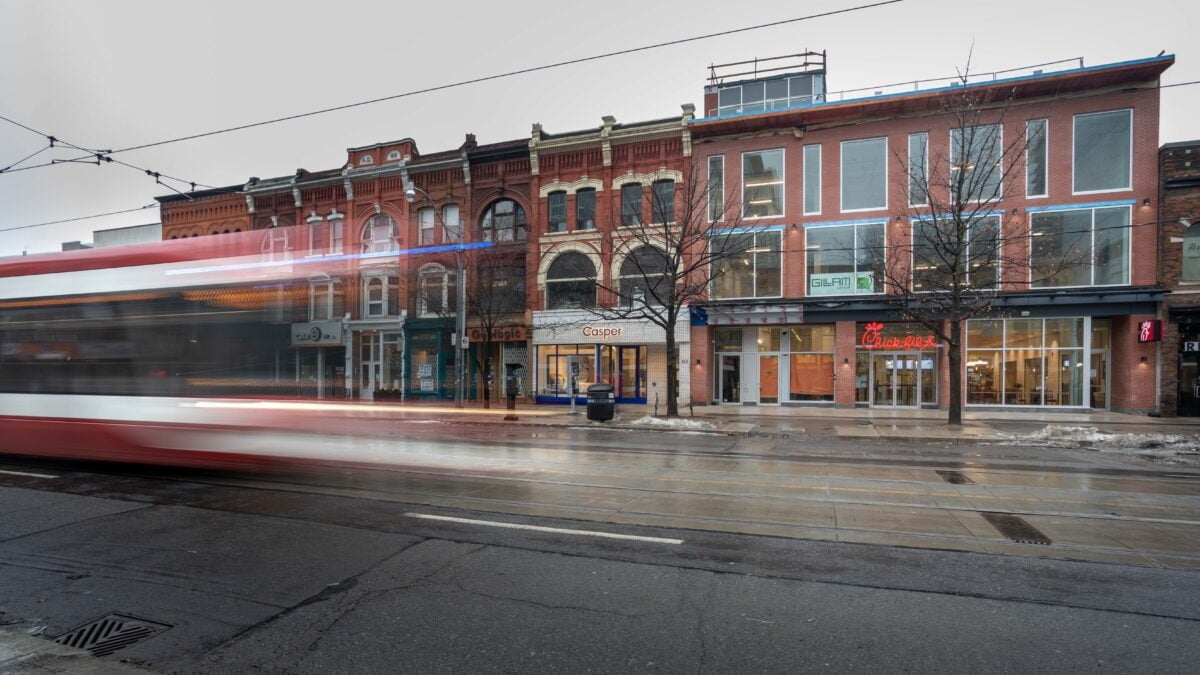
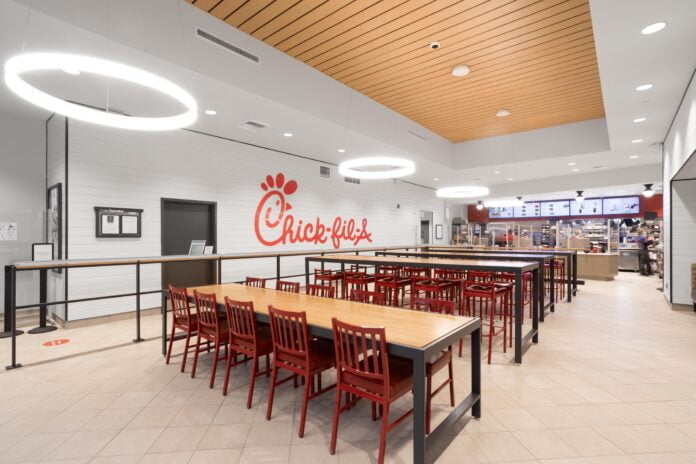
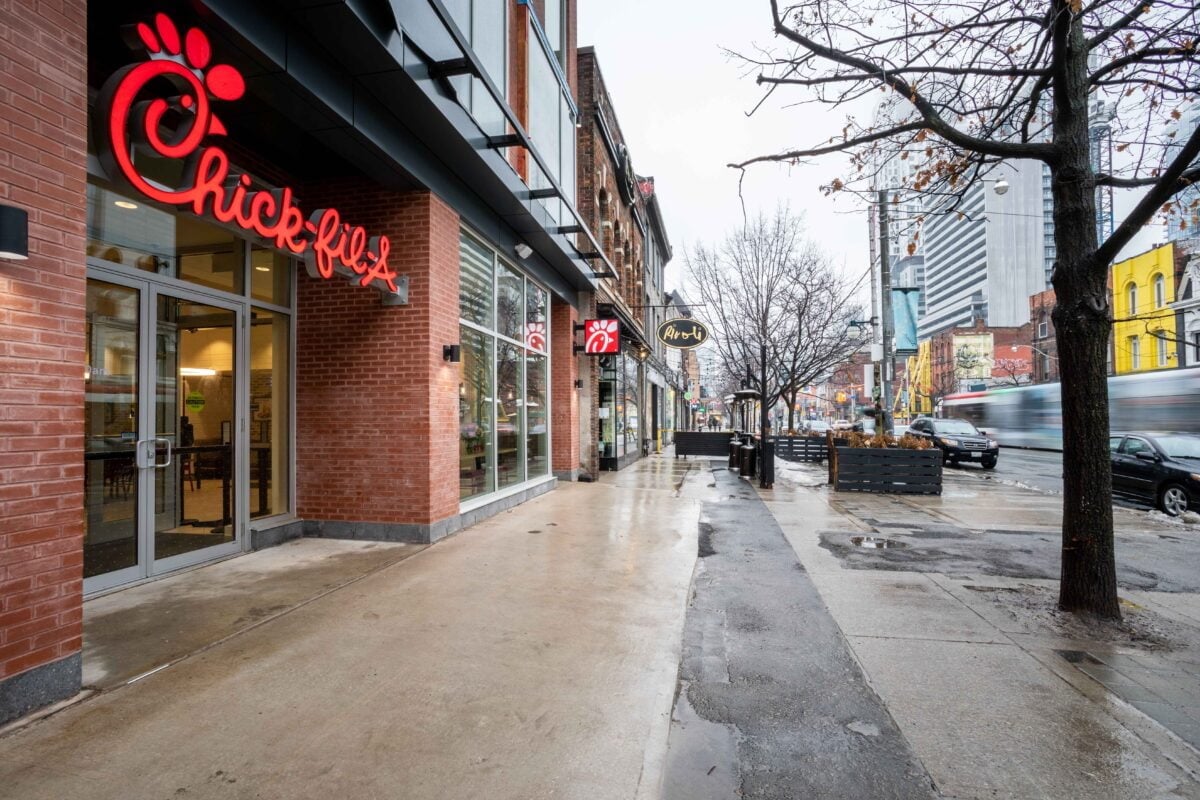
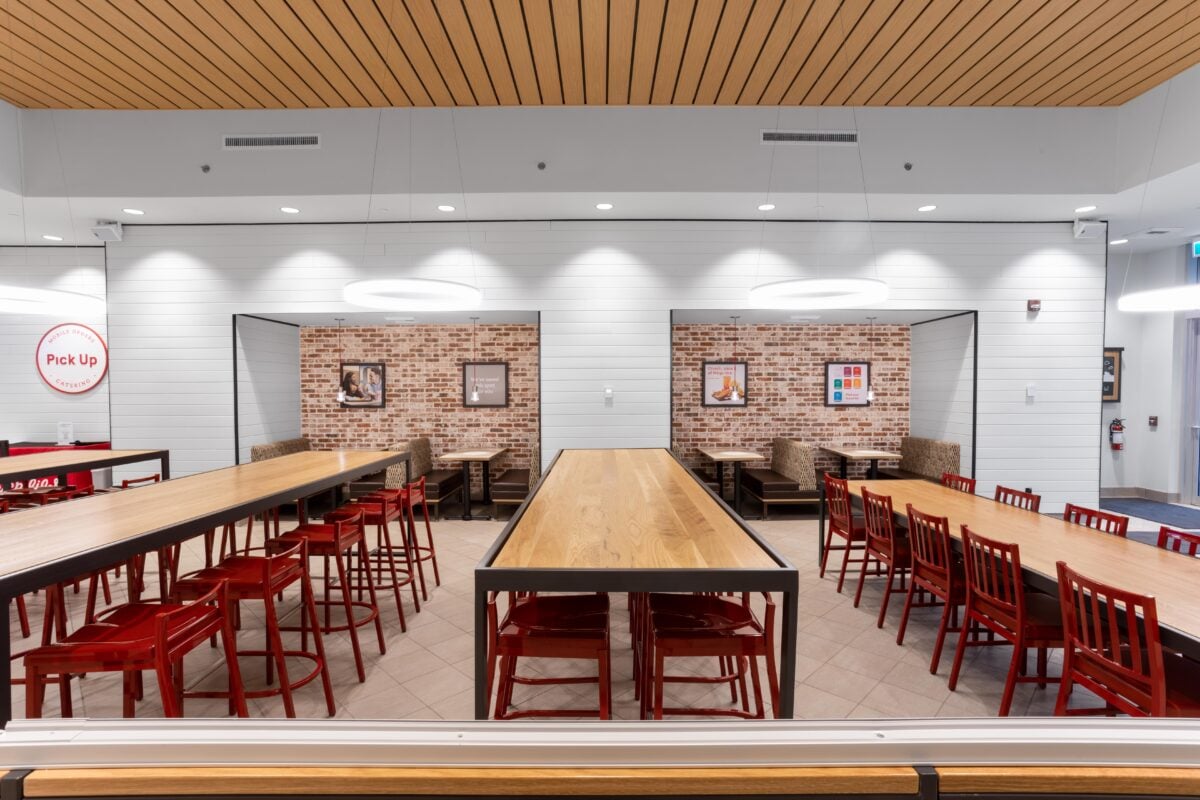
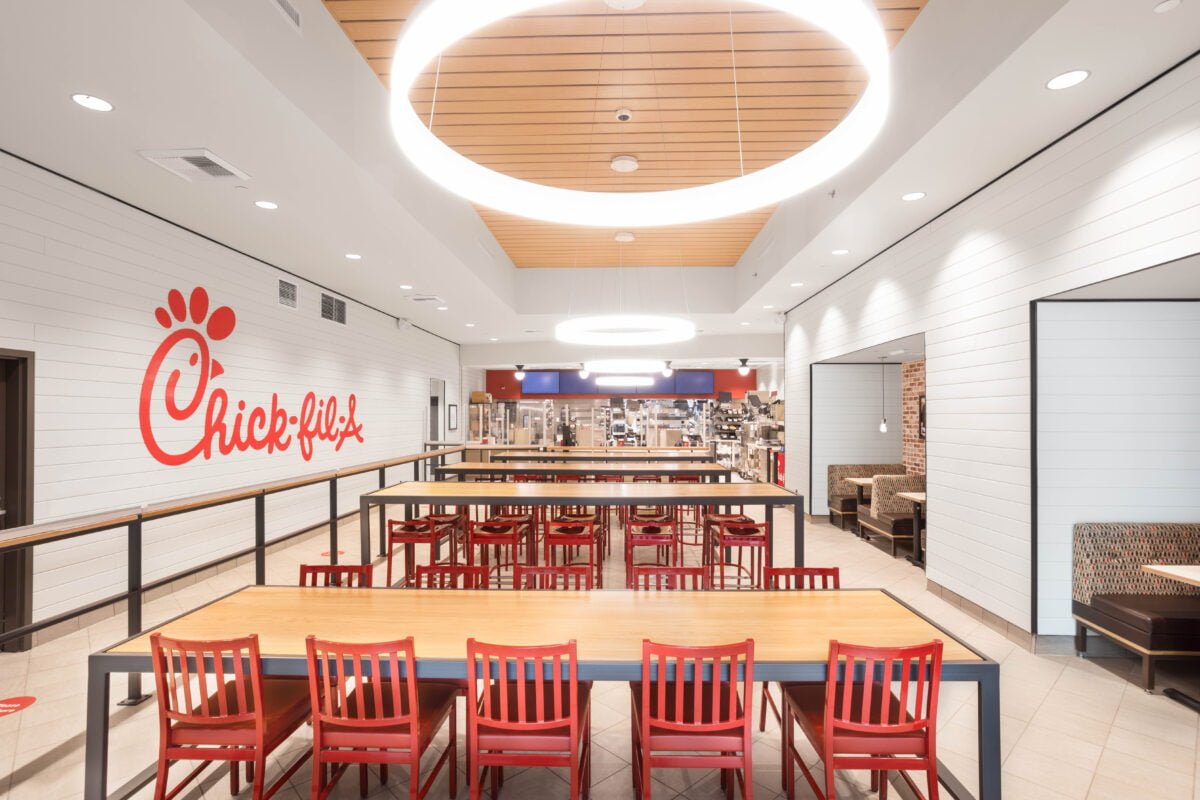
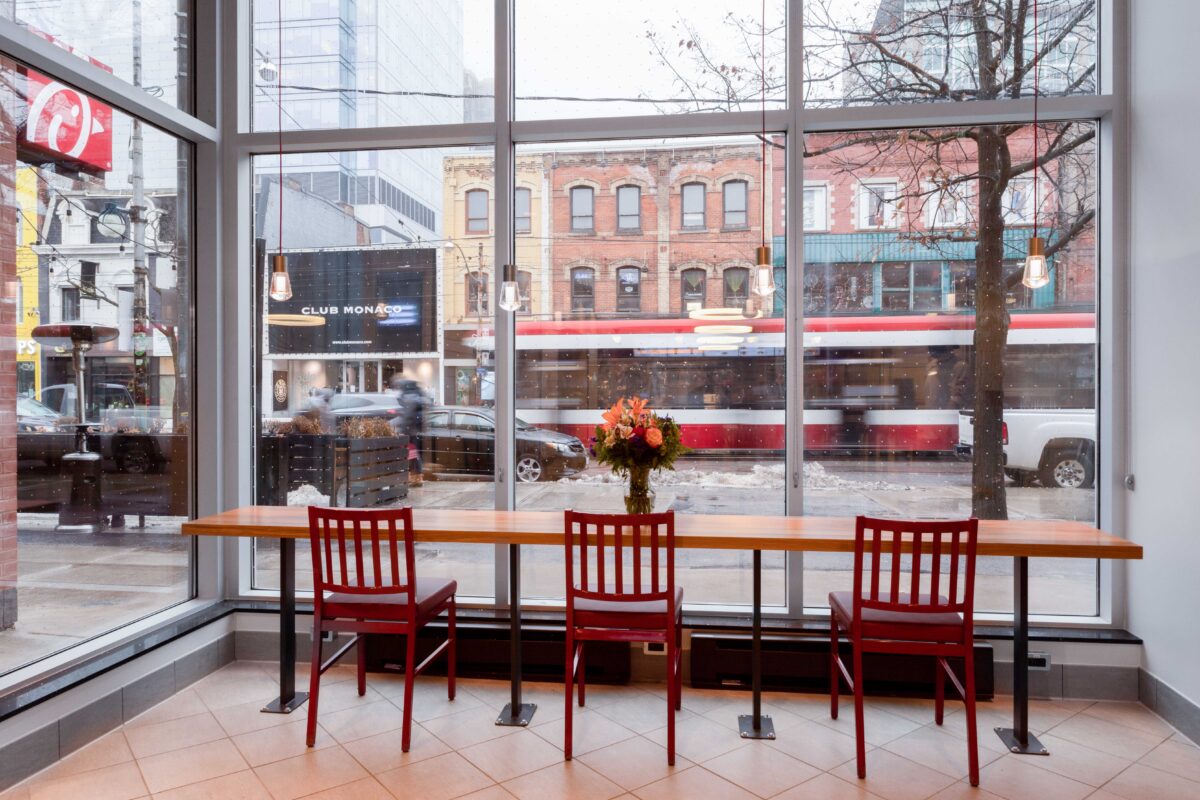
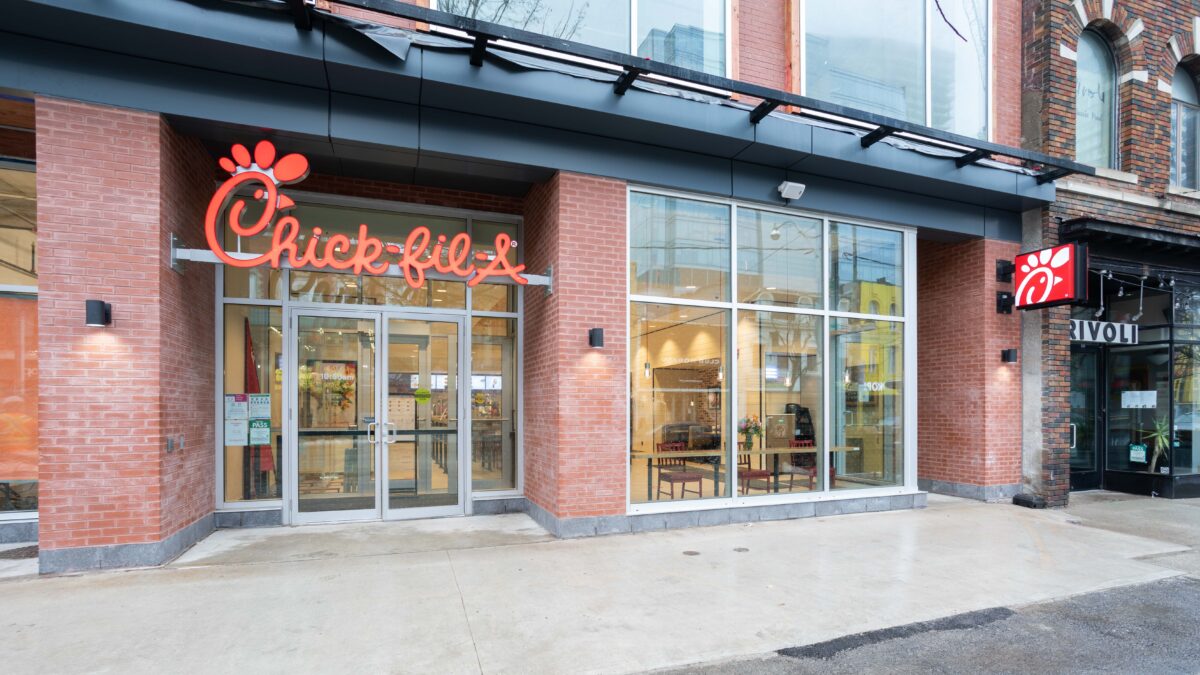
Atlanta-based quick-service restaurant chain Chick-fil-A has opened a new Toronto location at 336 Queen Street West.
Chick-fil-A Queen Street West is part of the brand’s strategic Canadian expansion, which will see the store-count rise from the current roster of six to a planned twenty-five by 2025.
Chick-fil-A is the first tenant in a recently completed four-storey retail/office building, developed by The Pearl Group. Tenants of the former location included Le Chateau until 2013 and Urban Behaviour until 2018. David’s Tea also had a storefront pre-2009 until late 2014 before relocating to 278 Queen Street West, taking a Soft Moc location. The new 336 Queen building replaces these former businesses.
Chick Fil-A Queen St. TorontoChick Fil-A Queen St. Toronto
Independent franchised Owner/Operator Keisse Azevedo started with the brand in Florida and was on the opening team at Yorkdale Shopping Centre before relocating to open the Queen Street West location.
“I’m excited to contribute to one of the city’s most dynamic neighbourhoods by helping those in need in the Queen Street West community, providing personal growth opportunities to my team and showing care to all who walk through our doors,” said Azevedo.
The location will have approximately 100 full and part-time staff and will be participating in various community initiatives, including the Shared Table program.
This is the second location in Downtown Toronto, with the original being near the corner of Yonge and Bloor. The One Bloor East podium where the first location opened has seen a huge changeover since Chick-fil-A opened in September 2019, with McEwan Fine Foods exiting the property in December, Tokyo Smoke relocating to 94 Cumberland Street in Yorkville and Starbucks shuttering its location.
Retail Insider is streamlining its Canadian retail news from around the web to include a handful of top news stories that can be viewed quickly during the day. Here are the top stories from the past 24 hours.
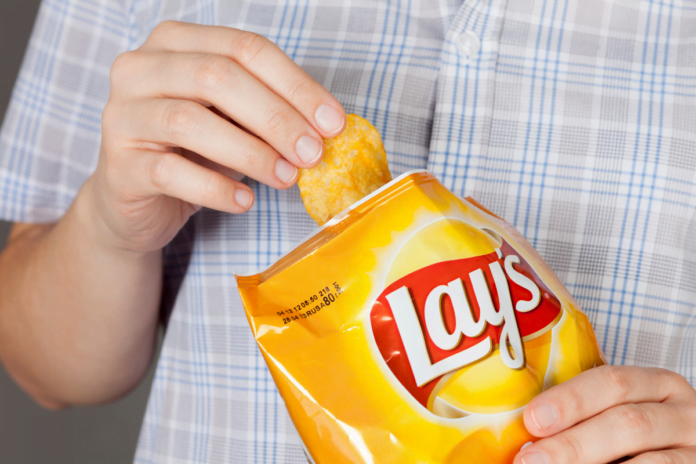
We recently learned that Frito-Lay, a brand owned by giant PepsiCo Canada, opted to stop selling to Loblaws after the retailer refused requests by Frito-Lay to increase their prices. Food manufacturers, when selling products to grocers, have suggested retail prices. With low profit margins, labour shortages, packaging issues and supply chain woes, inflation has been violently disruptive to the manufacturers. Not the first time this has happened. But this stop-sell’s scale is unprecedented, and the manoeuvre by PepsiCo is telling us that food manufacturers in Canada have had enough of grocers changing the rules to their advantage.
Unlike other industries, in the food industry suppliers will pay clients to do business. Such a strange environment for the neophyte. Manufacturers will pay listing fees to have the privilege of selling to grocers. It’s always been that way. But in recent years, grocers have arbitrarily charged more fees and—in some cases—reduced suggested prices without consent, a nightmare for manufacturers who need market discipline to protect brand equity. As a food producer, the last thing you want is a price war involving your own products. If things were free, we wouldn’t have much of an economy or jobs to support Canadians. So, supply chain order is critical to our entire food ethos; jobs and economic growth are at stake. Frito-Lay products are made in Canada, using Canadian potatoes grown by Canadian farmers.
The PepsiCo Canada and Loblaws rift was long overdue, and it was only a matter of time before the news came out. And make no mistake, many other manufacturers and other grocers are involved in a similar tug-of-war match. It’s happening in dairy, bakery and any food categories are impacted by this. Reporters just happened to only have PepsiCo Canada’s story, likely because someone wanted the public to know.
Canadians may be puzzled by the news. Why would Loblaws be blamed for keeping prices lower for consumers? Well, the answer’s not simple. For grocers, the game is easy as they have all the power in the world. Almost 90% of all the food Canadians buy is sold by only five retailers. Grocers want to remain competitive and will defend margins the best they can against market rivals. It’s an oligopoly. If Loblaws get a lower price, it doesn’t mean Canadians benefit all the time. They may sometimes, but shareholders are often the big winners.
But don’t expect empty shelves in the chips department, or in other sections of the grocery store, any time soon. Or at least, they won’t be there for long. We may see a few, temporarily, but it won’t last. Grocers will find a way to fill shelves with other brands including, likely, their own house brands. With current market conditions and the fact that the food inflation rate is north of 6% now, consumers will be trading down and seeking more house brands. Grocers know it, so the time may be right for them. Remember, they have the power and many weapons at their disposal.
Ever since the pandemic started almost two years ago, many food manufacturers including PepsiCo Canada have thought of selling food directly to consumers. They could control market conditions and gain more authority over their brands. The pandemic has made the supply chain more democratic and inherently more virtual. In terms of store merchandising, PepsiCo Canada is one of the best companies out there. It masters the middle mile to support in-store merchandizing for grocers. The company is incredibly efficient. They could extend their fleet of trucks to connect their plants with consumers. This is a definite possibility, but the transition from business-to-business to business-to-consumer is never easy. Many companies have failed miserably during the pandemic while attempting to pivot.
For years, during supply chain games, food manufacturers always had to blink first. PepsiCo’s move signals that the sector is tired of and desperate to stop “supply chain bullying”. And therefore, the industry desperately needs a code of practice, so companies can go to the arbitrator to avoid more market disruptions. This situation affecting the chips section of the grocery store is concrete evidence of how supply chain wars can impact consumers directly. We need supply chain peace; we need an authoritative code.
Some may feel they can simply live without PepsiCo products, or other products for that matter. Fair enough but remember: with fewer manufacturing options for grocers come higher retail prices, eventually.
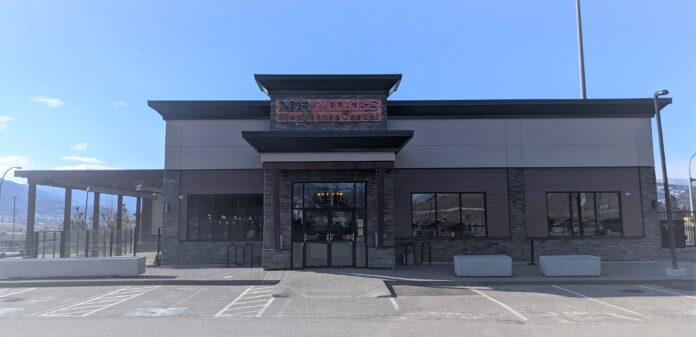
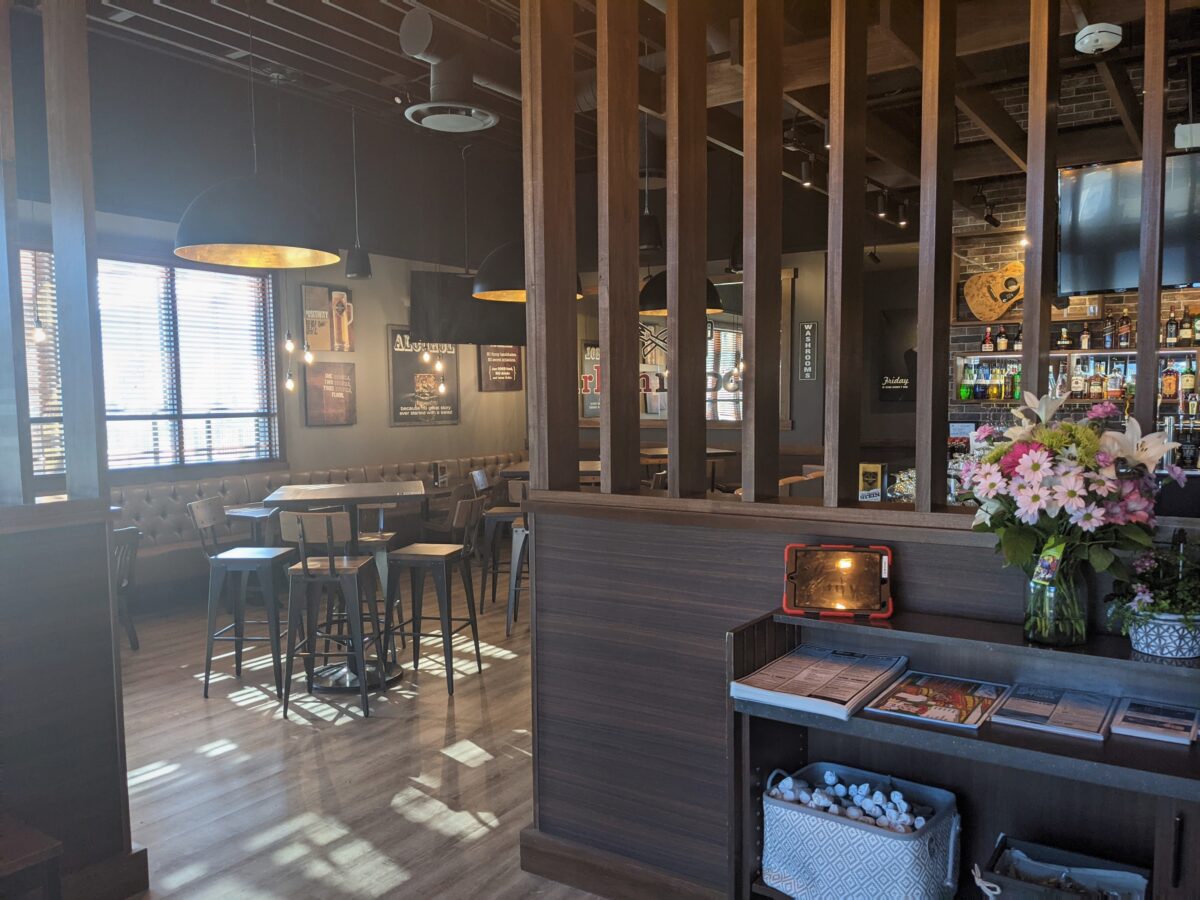
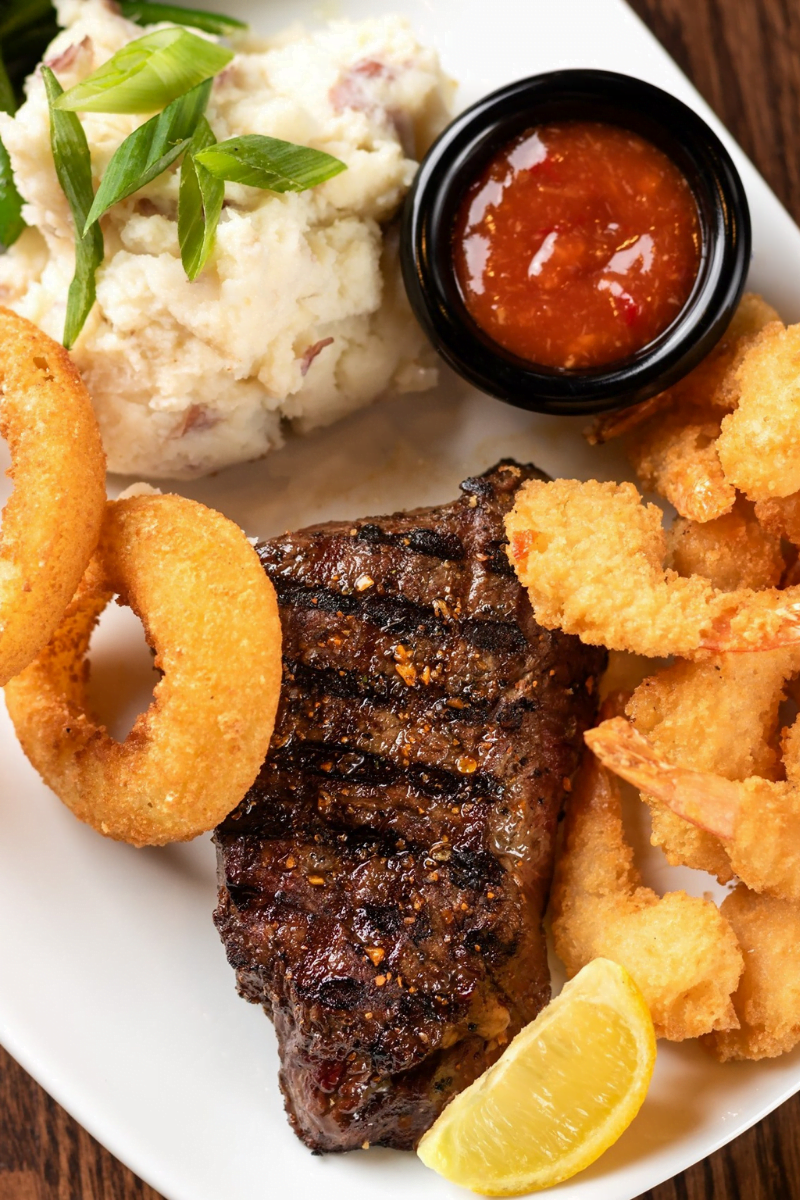
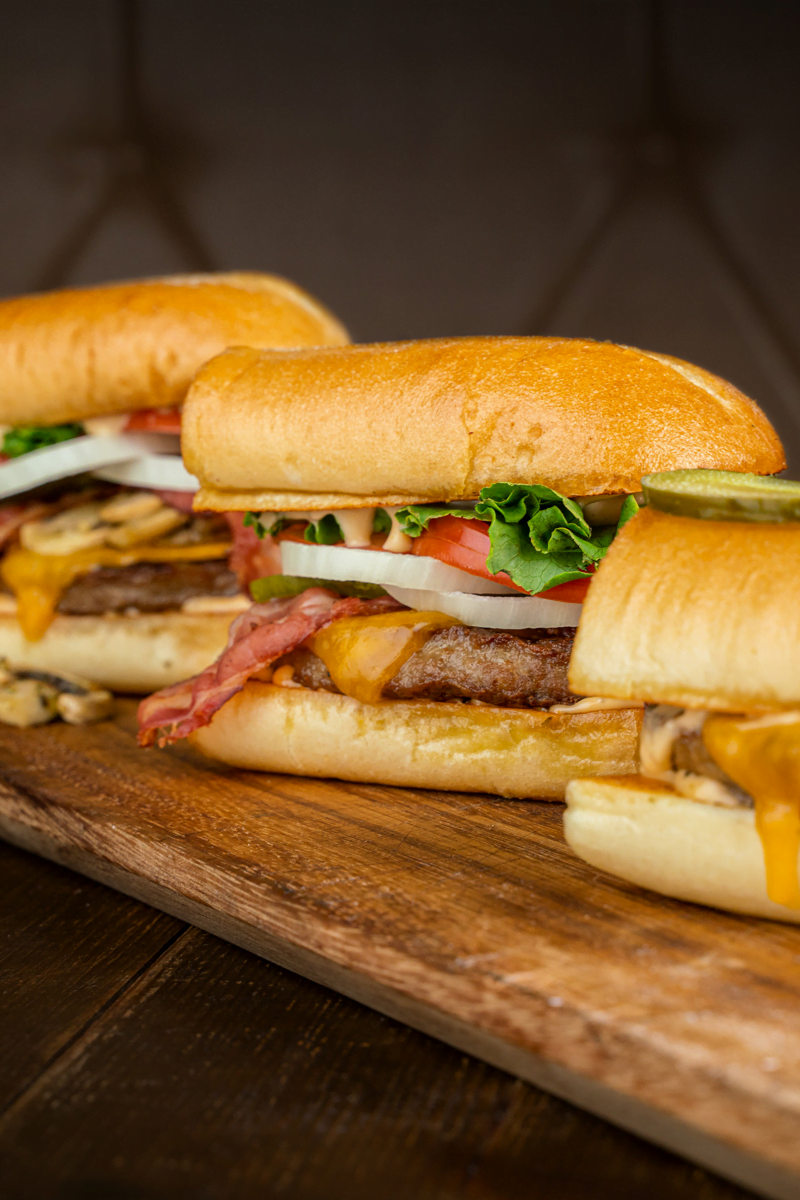
National casual steak brand MR MIKES restaurants has just opened its 45th location in Canada with plans for further expansion with its latest design and floor plan.
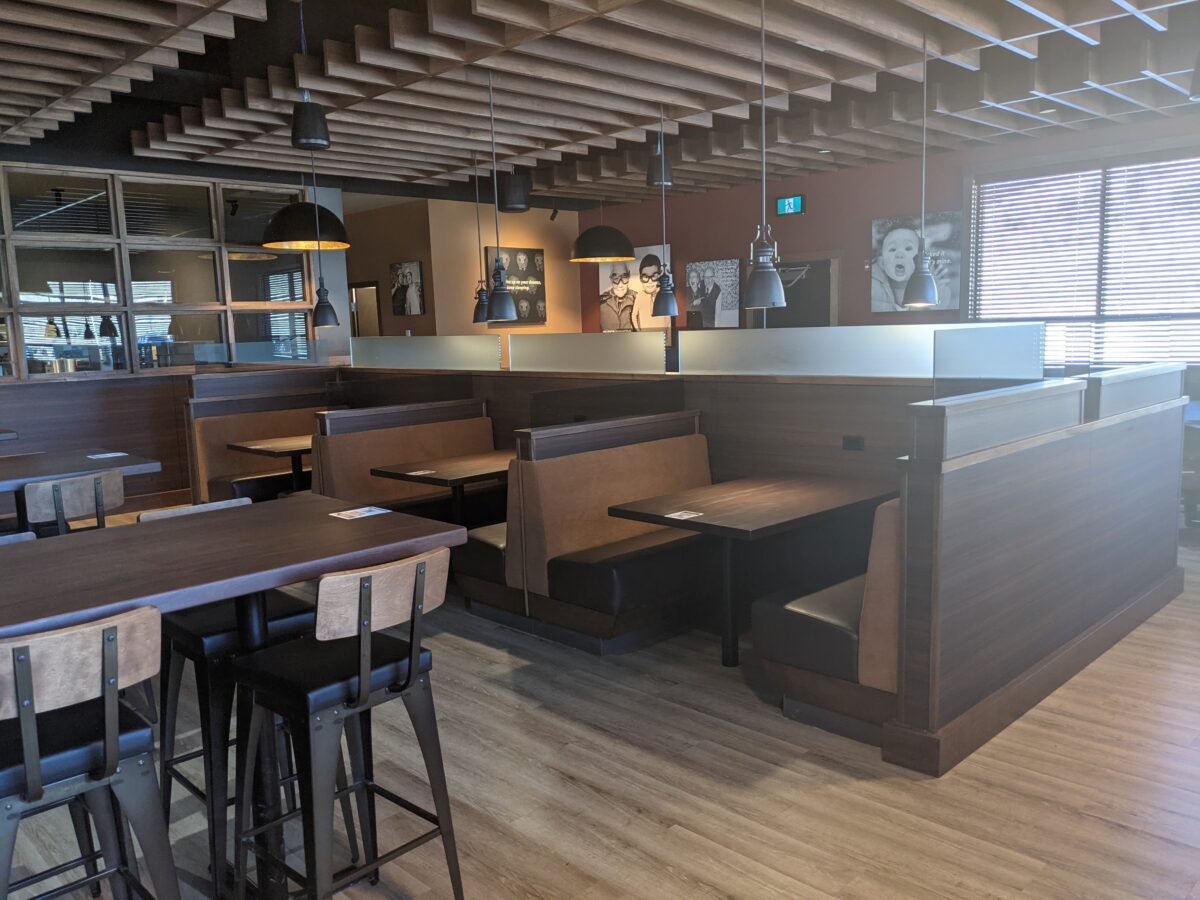
The latest location opened in Merritt, BC, in a 4,000-square-foot space with an open concept and a centre bar that is one of the main features noticed by customers as soon as they walk into the restaurant. The brand said the new layout creates visibility and energy in the room where dining and socializing will enjoy the same space.
The first MR MIKES was opened by two brothers, Bob and Nick Constabaris. Over the past decade, the restaurant concept has embraced the heritage that was established back then but it also has been revitalized by Mike Cordoba, Al Cave, and Robin Chakrabarti with the introduction of the Steakhouse/Casual concept.
Tony Zidar, Senior Vice President with the Burnaby, BC-based company, said the new concept is “a really welcoming space.”
Image: MR MIKES in MerrittImage: MR MIKES in Merritt
“It’s just a blending in the middle that really kind of marries the energy into both sides (restaurant and lounge) without one trumping the other. I’m thrilled with the design. It’s a home run.”
The Merritt location is the brand’s 17th in BC. It also has 17 locations in Alberta, five in Saskatchewan, four in Manitoba and two in Ontario.
“It started off in BC and it was more of a steak and salad bar concept. At its height, we don’t have the exact number of how many units it got to, but it was over 80 and then went through a few incarnations of concepts throughout the years as concepts do,” said Zidar.
“In 2010, it was acquired by the current owners and rebranded as MR MIKES SteakhouseCasual which was kind of a new space in the steakhouse world. Obviously The Keg being the Godfather of classic steakhouses in Canada and that niche is filled. Our strategy was to go into different and smaller markets to fill that in with the need for a steakhouse but not wanting to compete with The Keg.”
Image: MR MIKES
Image: MR MIKES
Image: MR MIKES
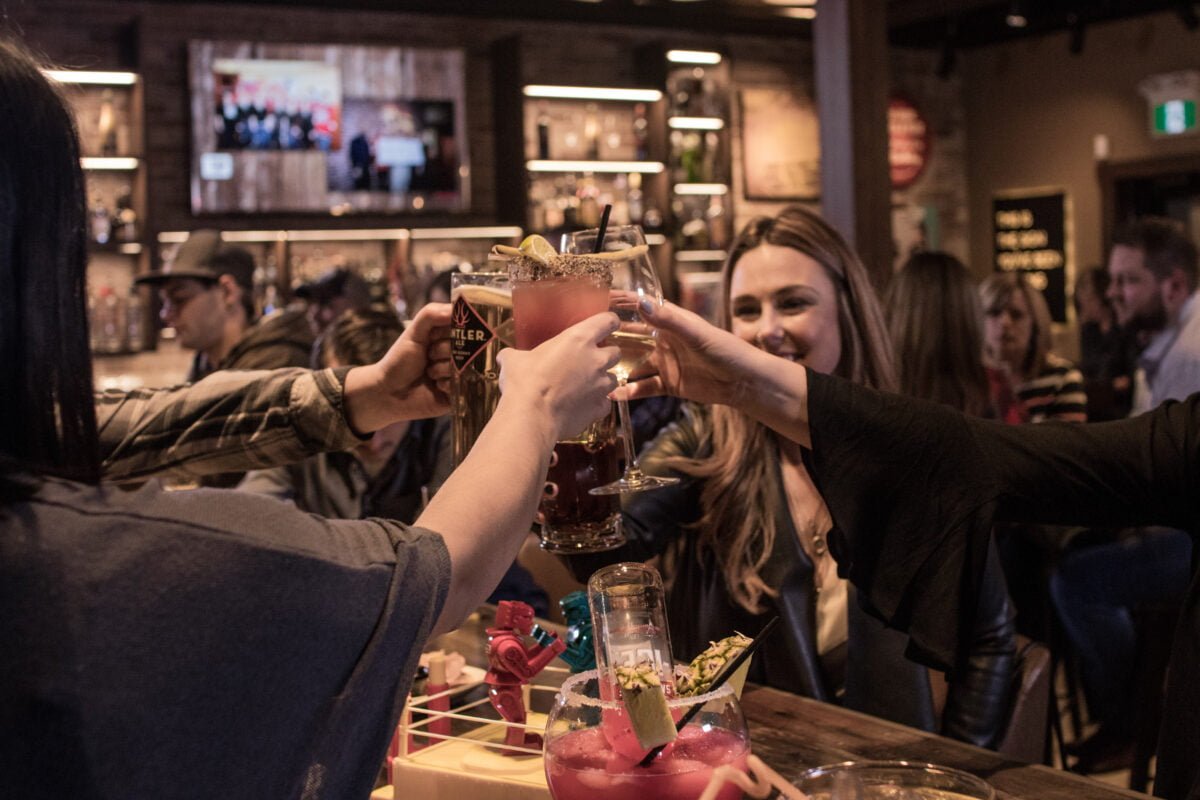
“Obviously if you can not compete with the big gorilla it’s probably a wise strategy. Also our markets are different and we wanted to be open for lunch in all of our markets and we rebranded as more of an every day person’s, every occasion approach to a steakhouse. So great product, great steak offering, super beverage program in a little more relaxed atmosphere bringing some good humor to the brand.”
Zidar said the company plans to continue to expand and is in growth mode.
“COVID was troubling to restaurant growth and investors as everything was unknown when it hit. In our business, we talked about having a pipeline of leads and prospects and that for us has already started to pick back up again quite vigorously,” said Zidar.
“We’re very happy with how it’s sprung back to life with the end of COVID obviously in sight. Our plans are to fill in holes in the West. We can certainly go into different markets, now even smaller or a closer shared market space, now that it’s a smaller footprint (with the new concept). So filling in the West but really going to begin to focus on the Ontario market where we have two stores.
“The Ontario market is, almost in our world, the same size as the rest of Canada when you look at market share. That’s pretty much wide open for us. We have a lot of leads out there right now that were put on hold by COVID but re-engaging them. We’re looking at the end of everything and getting business back to normal. We are setting our team back into growth mode where the past two years was really in support mode – keeping our existing franchisees maneuvering through COVID with all of its pitfalls and government regulations and the financial help available to them. It was really two years of assisting them. We came through with all of our stores still in operation and we’re thrilled with that. The franchise community really did an amazing job coming together, helping each other out, getting all the information they could through that time and now our reset is for growth again.”
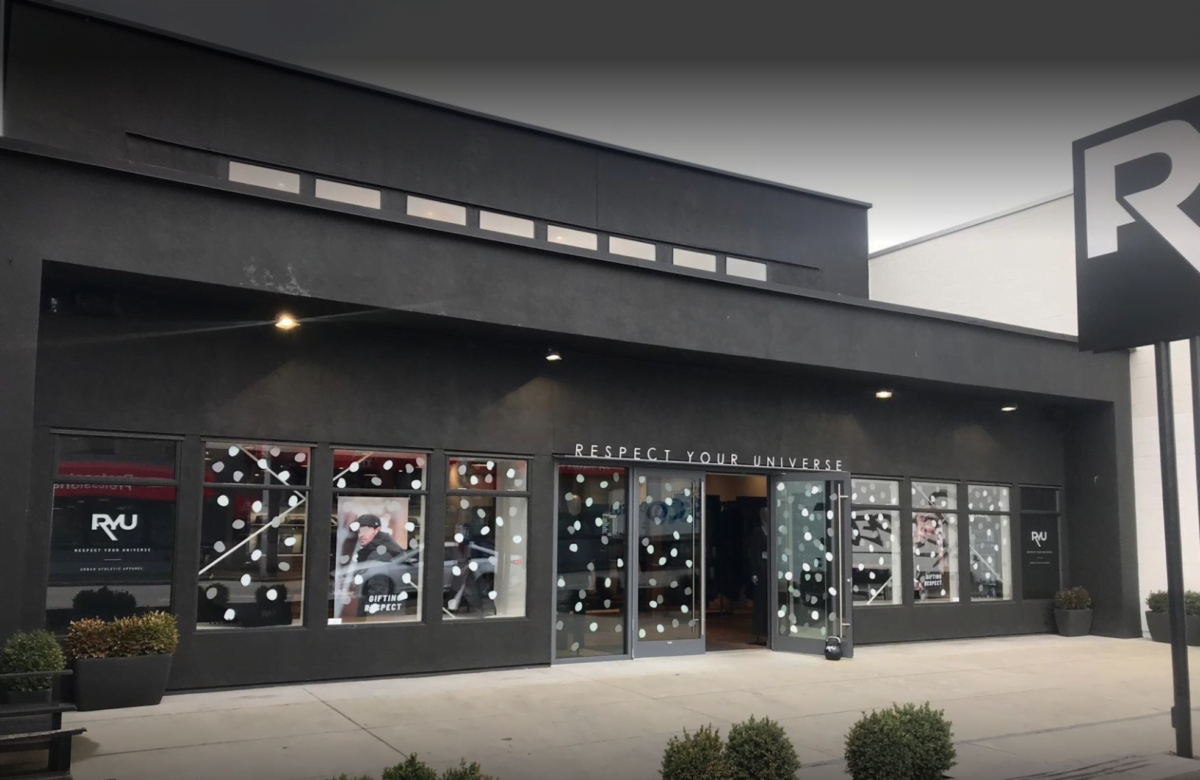
RYU on Queen Street in Toronto (Image: Dustin Fuhs)
Vancouver-based RYU Apparel Inc. (aka “Respect Your Universe”) announced that it will focus on online sales as it shuts two of its three remaining retail storefronts. At one time the company had planned to open over 100 stores prior to financial struggles.
The brand once had 11 stores and recently has been in the process of downsizing its brick-and-mortar presence after a restructuring last year. Now the company says that it will shut its Toronto and New York City storefronts while keeping its Vancouver flagship open for the time being. The New York City store closed Sunday February 20th and the Toronto store will shut on March 27th.
The soon-to-close Toronto store is located at 361 Queen Street West and the shuttered New York City storefront was located at 76 N 4th Street in the Williamsburg area of Brooklyn. The company’s 5,600 square foot Vancouver flagship is located at 1745 W. 4th Avenue. Until recently RYU had stores in the California market and had planned to target major markets across North America as well as internationally.
Exterior of Vancouver RYU store on 4th Street. Photo: RYU
In a press release, RYU says that it is instead focusing on e-commerce after seeing a boost in online sales.
Retail Insider did some digging and found sources saying that challenges with current company management are partly responsible for the brand’s issues including a lack of consumer awareness.
A source Retail Insider spoke with said that RYU had the opportunity to work with a well-known fashion designer who would have propelled the brand to new heights while bringing new manufacturing and supply chain capabilities. RYU’s headquarters would have relocated to Toronto. A deal never concluded after a brief meeting that went sideways. The source said that now “without a brand” RYU’s future as an apparel business is limited — indeed a concern for a publicly traded company.
In 2014 Marcello Leone, part of the luxury retail family dynasty in Vancouver, took control of RYU with plans to make it a global brand with over 100 storefronts. A challenging retail environment and the pandemic halted much of the expansion and Leone himself exited his company nearly two years ago.
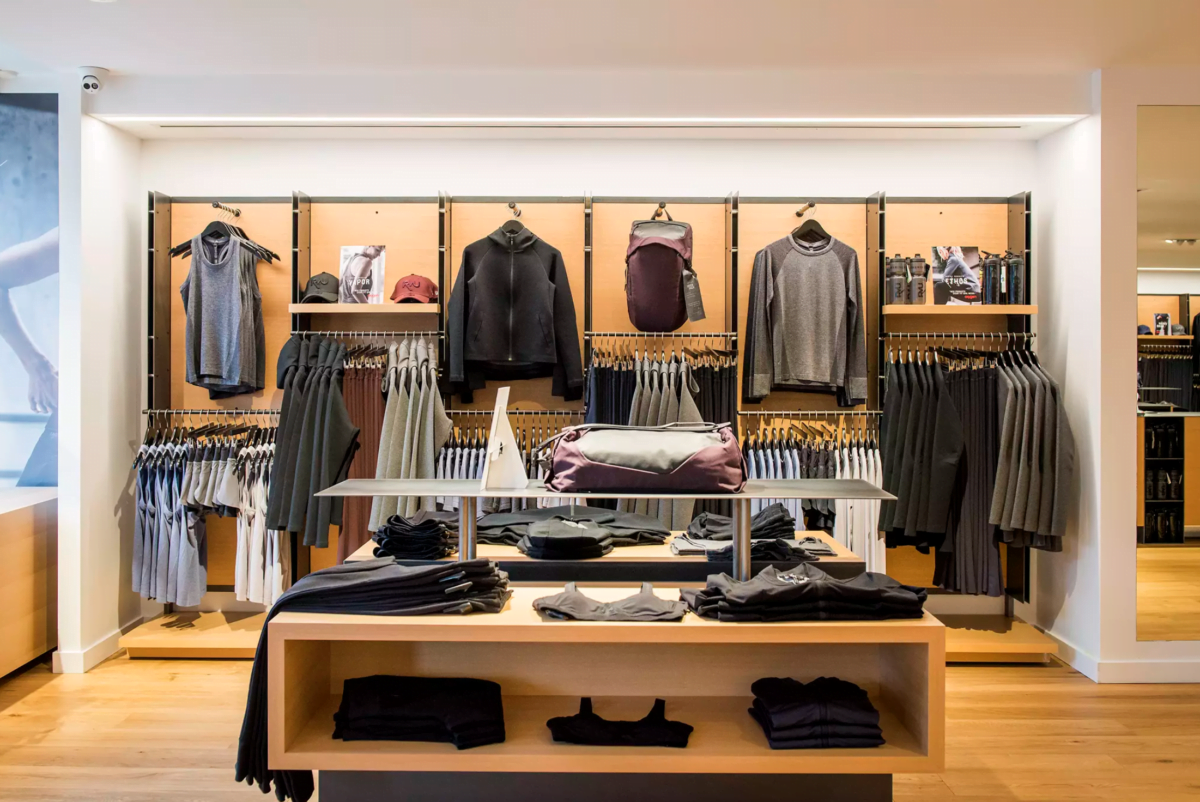
Interior of Queen Street West RYU store. Photo: RYU
In April of 2020 Leone was paid the equivalent of $1.845 million in shares as a settlement and he exited RYU. Toronto-based entrepreneur Cesare Fazari was announced to be the new CEO and Chairman of the Board. At the time it was announced that e-commerce would become a focus for RYU, which also operated storefronts in the Vancouver, Toronto, New York and Southern California markets. Fazari, a self-made millionaire and notable personality known for his philanthropy, has invested heavily in RYU.
RYU was founded in 2011 as a mixed martial arts brand based in Portland, Oregon. Marcelo Leone was originally an investor and in 2014 he took over the business and incorporated in Vancouver. RYU’s intention at the time was to become the world’s top multi-discipline performance training and fitness brands.
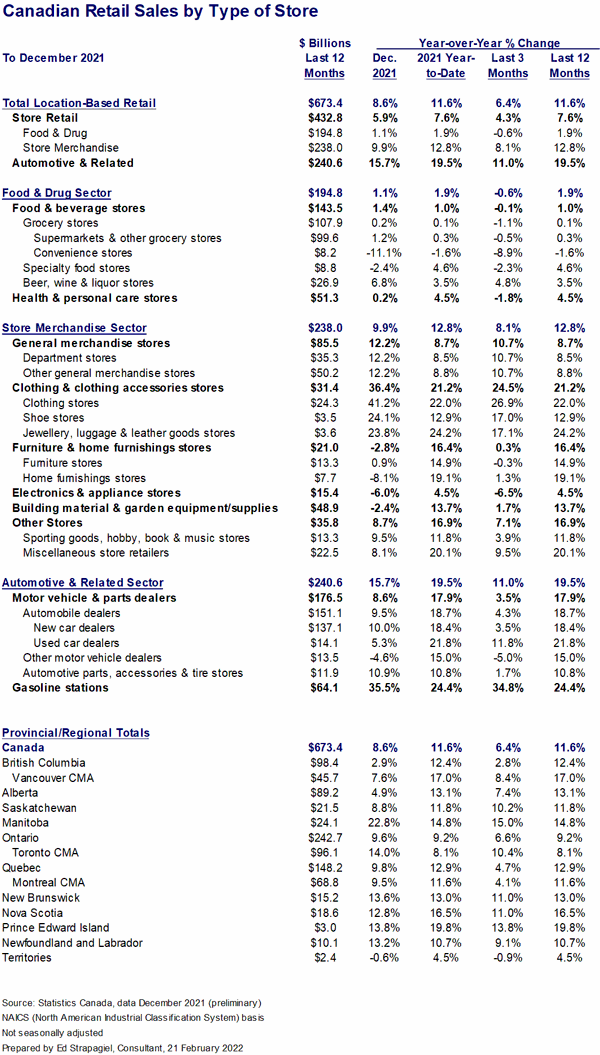
Statistics Canada has just released numbers for last December and we can now look at the year 2021 overall. A summary of annual Canadian retail sales growth over the last few years is as follows.
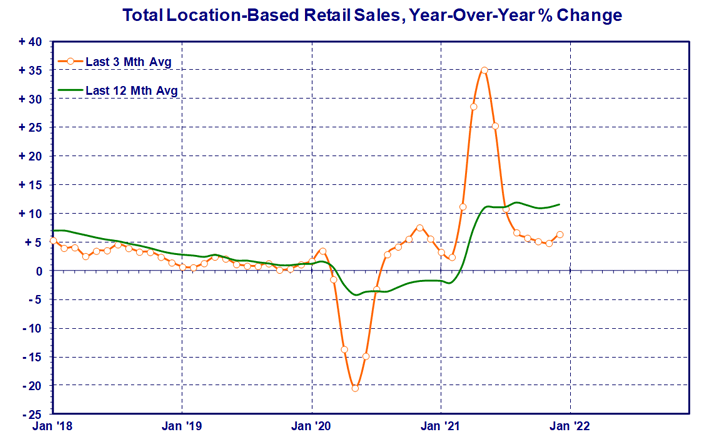
Retail sales growth in 2021 was 11.6%, the highest in the last 5 years. While this looks good, there are a number of caveats. First of all, the high sales gain in 2021 reflects a rebound from the previous year, when total retail sales actually declined thanks to COVID. The annual gain was also significantly boosted by the Automotive & Related sector, especially gasoline stations whose 2021 sales increased 24.4% due to gas prices. Furthermore, most of last year’s gain occurred in the first half of the year; by the time the 4th quarter rolled around, retail sales were up a more modest 6.4% year-over-year.
The chart above shows the slowing momentum of Canadian retail sales. The 3 month growth trend (orange line) peaked in Q2 2021 and has significantly declined since. The underlying 12 month trend (green line) has now gone flat and is poised to decline going into 2022.
Food & Drug
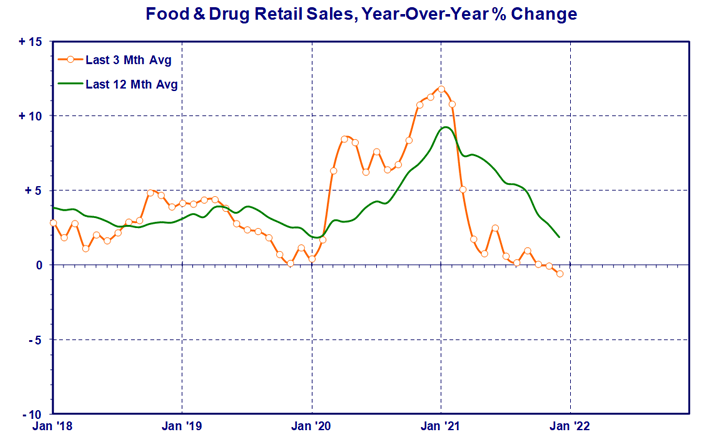
After setting records in 2020, the Food & Drug sector had very modest growth in 2021, with sales up just 1.9%. The trend lines declined over most of the year. In Q4, retail sales recorded a rare dip into negative territory, down 0.6% year-over-year. The underlying 12 month trend has also taken a nosedive, despite inflation and population growth. None of this bodes well going into 2022.
Grocery stores account for just over half of retail sales in the sector, but their sales were down 1.1% year-over-year in Q4 2021. Convenience stores also saw a large Q4 decline, with retail sales down 8.9% year-over-year. Among all food & beverage retailers, only beer, wine & liquor stores recorded a sales gain in Q4 of 4.8%.
Health & personal care stores had a fairly strong start to 2021, but this evaporated over the course of the year. Their retail sales were down 1.8% in Q4.
Store Merchandise
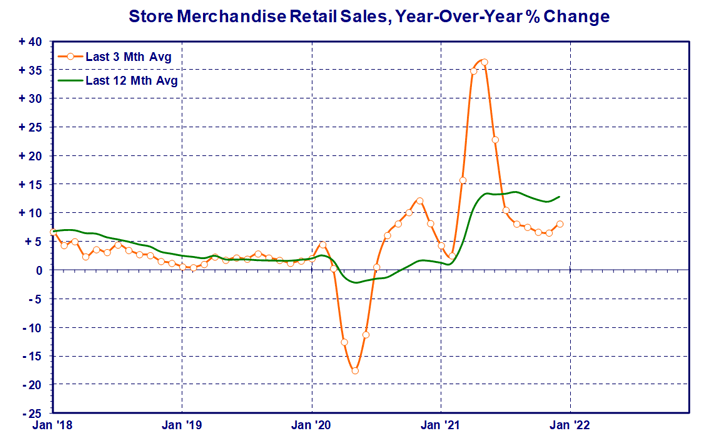
Retail sales for the Store Merchandise sector were up 12.8% in 2021, a record high. But again, this was a rebound from slow sales from the year before due to COVID. Also, most of this sales increase happened in Q2 and things have slowed somewhat since. In Q4, year-over-year retail sales were up 8.1%, which is still a healthy increase, but just not as good as earlier in the year.
Clothing & clothing accessories stores did have an exceptionally good 2021. Their retail sales were up 21.2% for the year and 24.5% in Q4 alone. General merchandise stores also did well, with sales up 8.7% for the year and up 10.7% in Q4.
Electronics & appliance stores tended to lag the rest of the Store Merchandise sector in 2021. Nevertheless, they did manage a 4.5% retail sales increase for the year, although this deteriorated to a 6.5% decline in Q4.
Automotive & Related
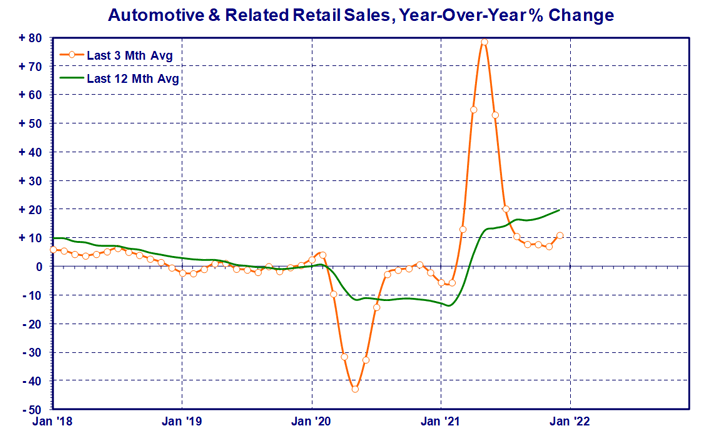
Retail sales in the Automotive & Related sector were up a whopping 19.5% in 2021. This was due to strong gains in vehicle sales earlier in the year combined with big gains in gasoline station sales throughout most of 2021. By Q4 however, sales gains at new car dealers slowed down to 3.4% year-over-year. This was more than offset by a nosebleed 34.8% increase in gasoline station retail sales in Q4.
Gas stations’ huge sales gains are due to high increases in pump prices, and this tends to distort the overall retail picture. While overall Canadian retail sales were up 6.4% in Q4, this would be only 4.0% if gas stations are excluded. When you pay more for gas, your vehicle doesn’t go any further and the ride isn’t any better – but you do have less money to spend on other things. Furthermore, increasing gas prices are inflationary, both directly and because everything one buys has to trucked to a warehouse, distribution centre, store, or home.
By The Numbers
Note that the data and analysis in this report are always based on not seasonally adjusted (or unadjusted) retail sales statistics.
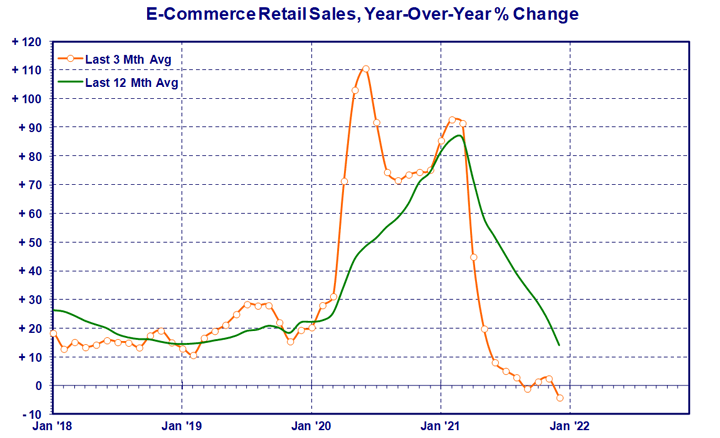
Annual Canadian e-commerce retail sales increased by 74.2% in 2020 as COVID hit, and then by a further 14.2% in 2021. E-commerce is still growing, but not as fast as it used to. In Q4 2021, e-commerce sales actually declined by 4.2%, and growth may be flat going forward as COVID restrictions continue to be lifted.
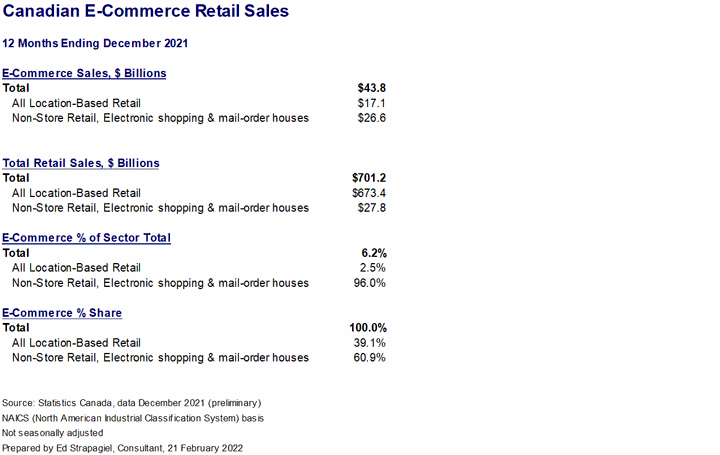
Overall, e-commerce represented about 6.2% of retail sales over the past 12 months, according to Statistics Canada, including both pure plays as well as bricks & clicks stores. Note that Canadian consumers may also buy online from foreign websites which is not captured in these numbers.
Location based retail is the same as that in the preceding “By The Numbers” table. It’s what’s normally reported as Canadian retail sales. Except that it isn’t. Location based retail excludes another section called Non-Store Retailers (NAICS code 454), which includes electronic shopping and mail-order houses, which in turn is where (mostly) pure play e-commerce businesses are. In 2021, electronic shopping and mail-order houses had an estimated $26.6 billion in e-commerce sales.
But that’s not the only source of e-commerce, as (mostly) bricks & mortar location-based retailers also sell online. For 2021, this group had an estimated $17.1 billion in e-commerce sales. With electronic shopping and mail-order houses, there’s a grand total of $43.8 billion in e-commerce sales by Canadian operators. Note that this does not include foreign e-commerce purchases made by Canadian consumers, but it does include e-commerce purchases made by foreigners at Canadian operations.
For electronic shopping and mail-order houses, an estimated 96.0% of their sales are currently allocated to e-commerce. For (mostly) bricks & mortar retailers, it can be estimated that 2.5% of their total sales are attributable to e-commerce.
In the final section of the above table, (mostly) pure play operators (namely, under electronic shopping and mail-order houses) generated an estimated 60.9% of all e-commerce sales in Canada, while (mostly) bricks & mortar location-based retailers’ share of e-commerce was 39.1%.
This analysis is updated monthly as new numbers are published by Statistics Canada. If you would like notification from Linkedin of when an update becomes available (and you’ve read this far), please connect with Ed Strapagiel on LinkedIn.
Swedish fintech company Klarna announced Tuesday that it has officially entered the Canadian market. The buy-now-pay-later platform includes an app and Klarna has already secured some big name retailers in Canada including homegrown brands Harry Rosen, Mejuri, and Frank And Oak and international players such as Sephora Canada, L’Oreal Canada, and GameStop among others.
“Consumers across the world are moving away from traditional credit models to alternatives that better meet their expectations by offering smarter and more transparent ways to purchase, and the Canadian shopper is no different,” said Klarna Co-Founder and CEO Sebastian Siemiatkowski.
Sebastian Siemiatkowski
“Recent Klarna research has found that at least half of Canadian shoppers ages 25-56 are looking for flexible payment options at checkout. With our expansion to Canada, we are bringing consumers the more sustainable, flexible payment alternatives they are looking for, empowering them to save time, money and make more informed financial decisions.”
Klarna’s “Pay in 4” allows consumers who use Klarna at a retail partner’s checkout to be able to split their purchases into four interest-free payments paid every two weeks from the time of purchase. Klarna says that the benefits include “greater transparency, financial control and choice”.
The Klarna app has over 23 million monthly active users globally. App users can track and manage Klarna payments, access to exclusive rewards via Klarna’s Rewards Club, along with price drop notifications, curated content, and delivery tracking.
Klarna said in a release that Canadian consumers will soon be able to access additional app features including Klarna’s innovative “Shop Anywhere” service that allows users to “Pay in 4” at any online store, regardless of whether they are a Klarna retailer or not, as well as money saving tools, and live shopping experiences.
Kristina Elkhazin, Head of Canada, Klarna; John Tory, Mayor of Toronto; David Sykes, Head of North America, Klarna; Stephen Lund, Chief Executive Officer, Toronto Global (Photo: George Pimental)
Kristina Elkhazin
“We look forward to working closely with our fast-growing network of Canadian retail partners to help them to navigate the increasingly omnichannel retail landscape, adapt to new consumer demands, and help them reach new audiences,” said Kristina Elkhazin, Head of Canada, Klarna.
Toronto is Klarna’s hub in Canada. The company has opened its first North American product development and tech hub in the city with plans to hire more than 500 engineers by 2025. Offices are also planned for Vancouver and Quebec at some point and Klarna said in a release that it plans to work with local academic institutions to “help develop a skilled workforce that will deliver new innovative solutions, and, in turn, help other businesses thrive and grow.”
Klarna partnered with Moneris for its expansion into the Canadian market. Klarna was founded in 2005 and has over 100 million global active users and 2 million transactions per day. Klarna boasts over 250,000 global retail partners, including such names as H&M, Saks, Sephora, Macys, IKEA, Expedia Group, and Nike. Klarna has over 5,000 employees and is active in 20 markets and has a valuation of USD $45.6 billion.
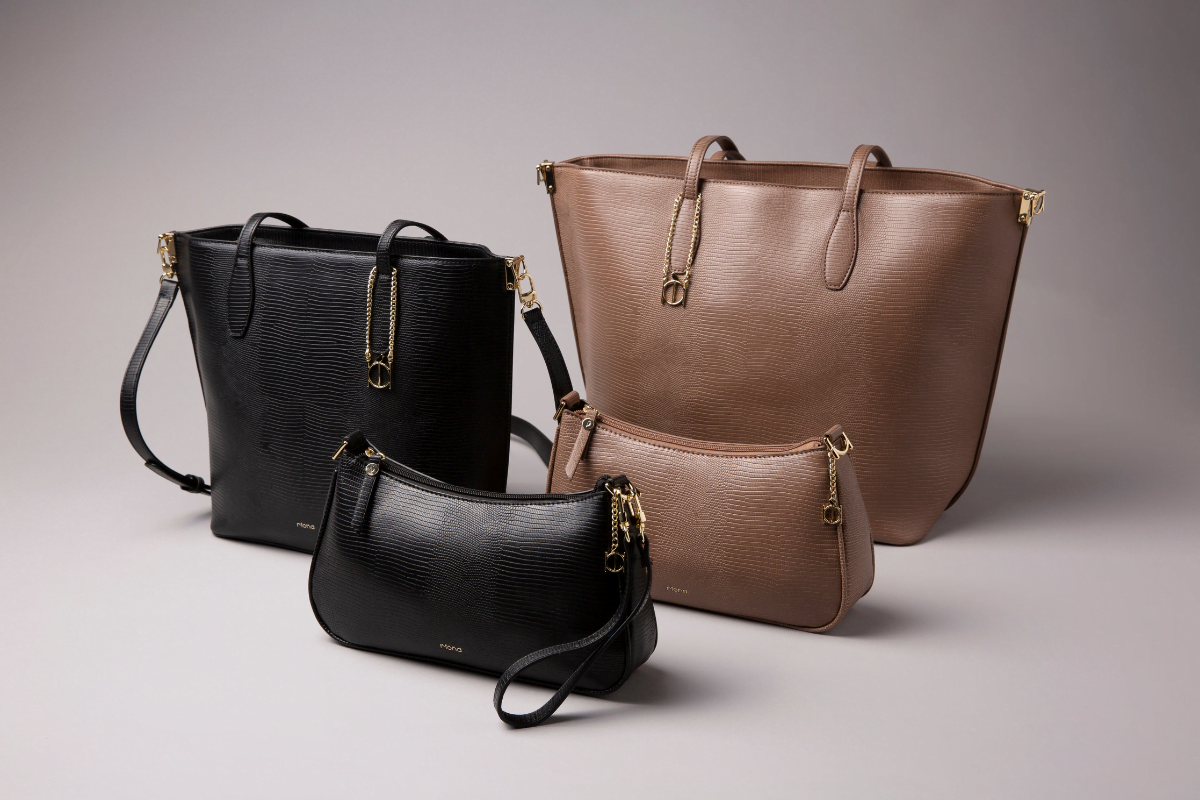
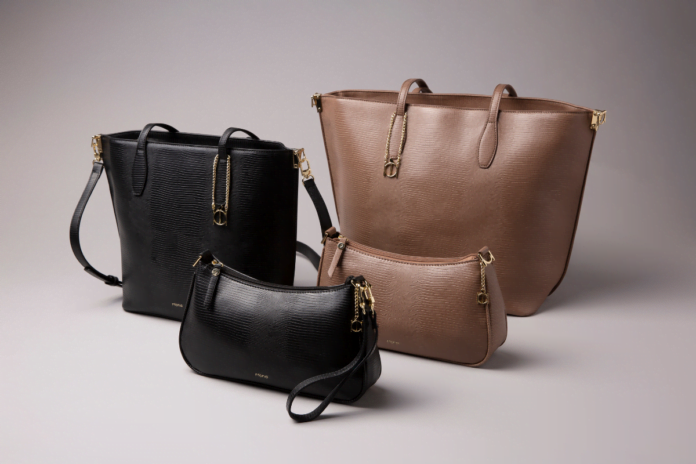
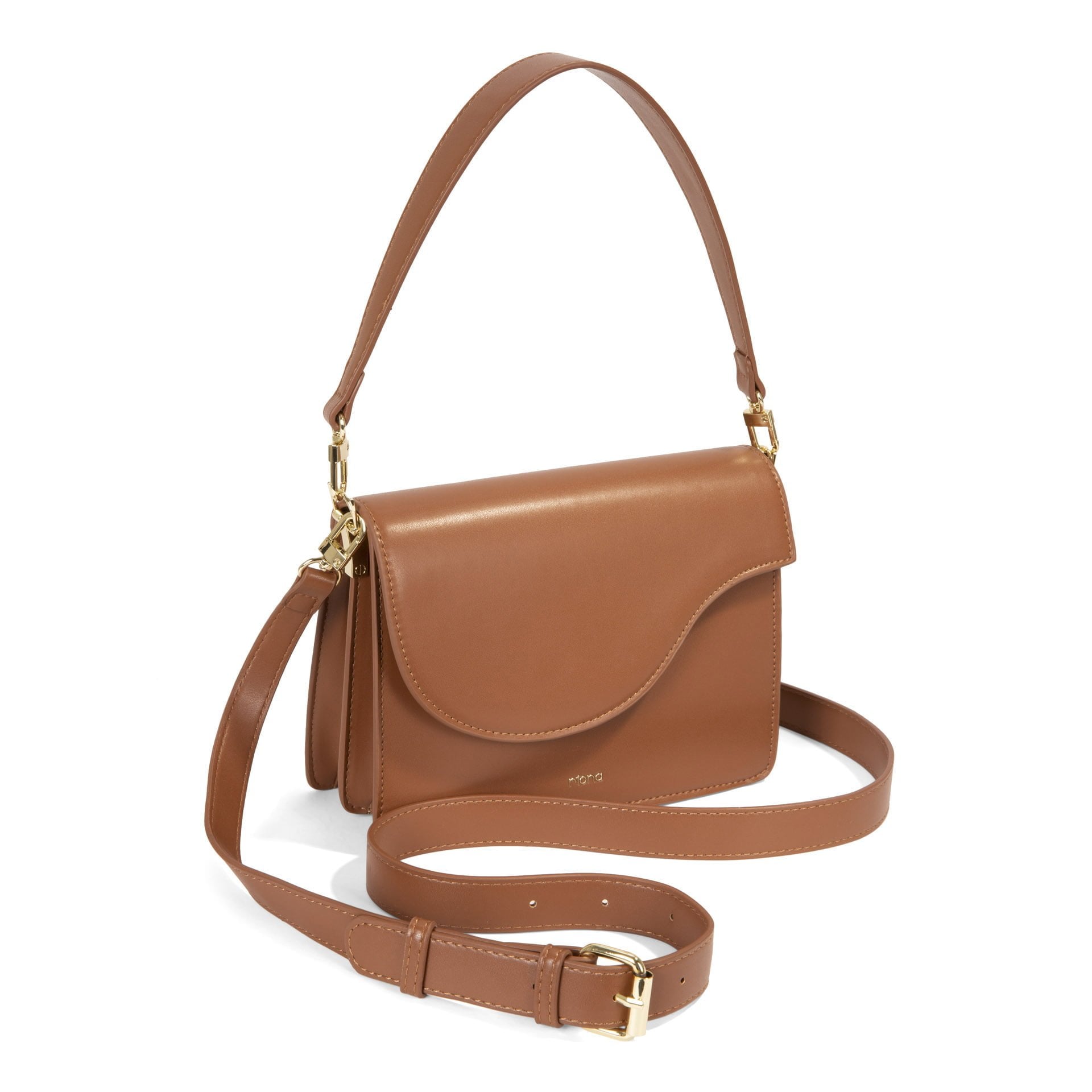
Montreal-based luggage, bag and accessory retailer Bentley has launched a new line of eco-friendly cruelty-free vegan handbags and wallets that the company says is approved by PETA. The new line is called the RIONA collection and it is part of a trend away from utilizing leather and other real animal skins.
The RIONA collection is being designed in Montreal under the direction of Bentley’s Category Manager for Handbags, Maddie Ciccone. She sought-out high-quality polyurethane as a material which is a a biodegradable material that is less harmful to the environment.
The bags are beautiful and modern and will resonate with a wide range of consumers. The gilded components on RIONA handbags are made with high-grade zinc which Bentley notes is a strong and durable alloy that does not tarnish over time. The interior finish of the bags is made with 100% recycled plastic bottles with approximately 10 bottles being utilized for the monogram Jacquard lining for each bag.
Sustainability is a hot topic as many consumers seek out ways to preserve the environment. Vegan fashions is another hot topic as more people seek out animal alternatives.
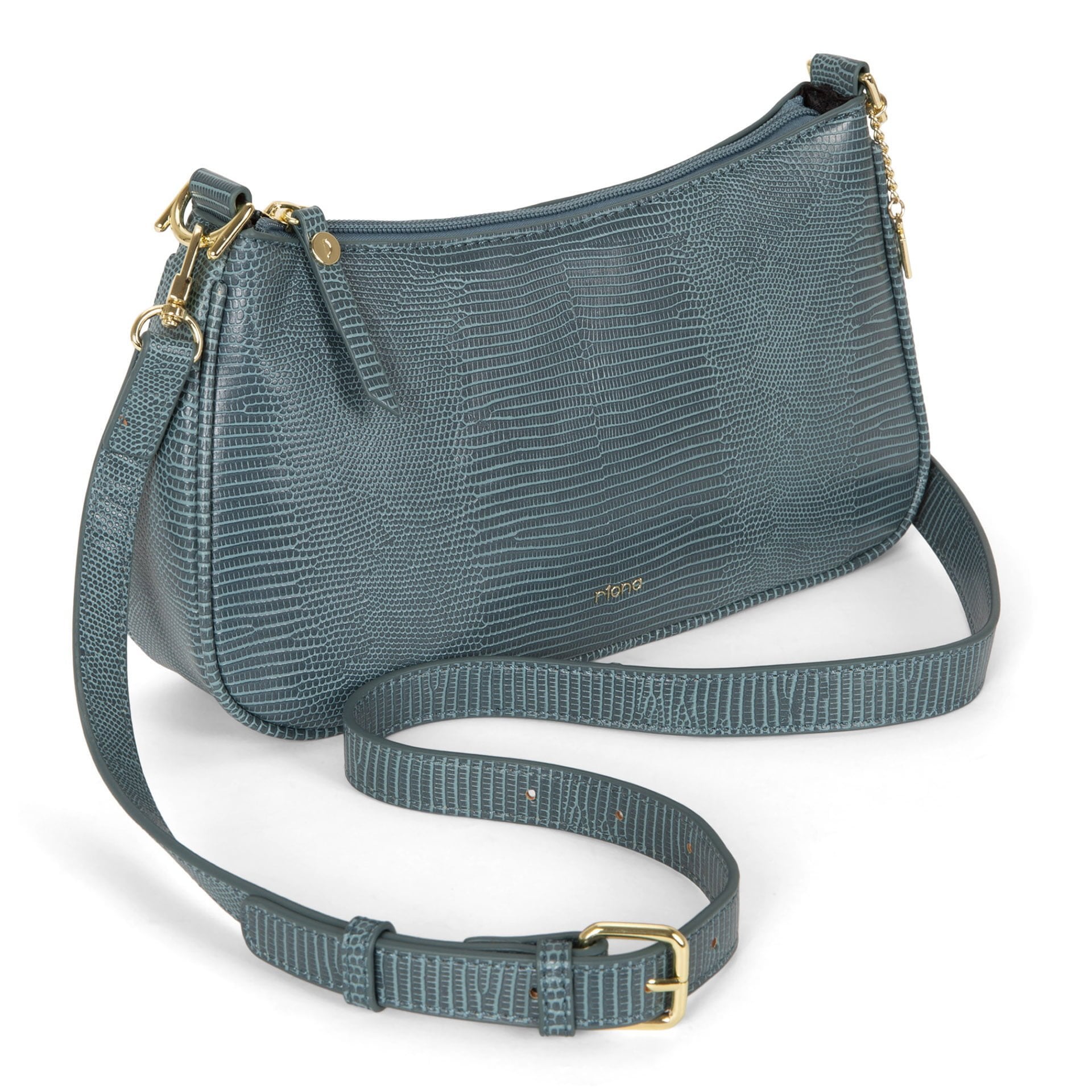
RIONA Collection: Hamilton Crossbody (Image: Bentley)
RIONA Collection: Gracie Satchel (Image: Bentley)
“Bentley continues to constantly improve our ways, be creative, strive for excellence, and never stop learning while providing our customers with high-quality and timeless handbags and wallets. Our RIONA Collection is a beautiful evolution of styles, providing sustainability, practical and functional silhouettes at affordable prices, while helping to protect the planet and animals,” said Walter Lamothe, President of Bentley.
The collection includes handbags, crossbody and satchel bags, totes, mini essential bags, pouches, make-up cases, wallets, card holders, key chains, and coin purses in a variety of colours such as black, pink, cognac, taupe, burgundy, and khaki.
Bentley added RFID protection in its handbags and wallets, incorporating the latest RFID signal blocking technology to ensure that a user’s personal data, cards, and keys are safe. Metallic layers are integrated into the card slots (in wallets) or interior zipper pockets (in handbags) preventing thieves from electronically scanning or skimming one’s cards and personal data.
Retail Insider recently partnered with Best Edmonton Mall and its Youtube channel which features a biweekly quiz night that has been well received. Retail Insider sponsors the show and recently worked with Bentley to give away three $100 gift cards during the Best Edmonton Mall segments. Sunday February 13 saw the first $100 lucky winner and two more will be given away on the evenings of February 27 and March 13 (8pm Mountain time/10pm Eastern).