Advertisement
Advertisement
Home Blog Page 893

The Latest Scoop to Open New Pop-up Store at Guildford Town Centre

VANCOUVER, BC, AUGUST 17, 2020 — Canadian based lifestyle concept store The Latest Scoop will open their doors to a new pop-up location in Guildford Town Centre on September 1, 2020, with a grand-opening event on September 5, 2020.

Founded in Vancouver in 2004 as a series of pop-up shops, The Latest Scoop quickly evolved into six permanent locations across Vancouver and Toronto. Customers can expect a truly unique retail experience featuring a curated selection of products across multiple categories, displayed via stunning merchandising designed to spark a sense of wonder and discovery.

“Reengaging with our roots by opening a pop-up concept store in Guildford has been an easy decision,” said owner Deb Nichol. “We receive continuous emails for us to expand into neighbourhoods outside of the downtown area, and over the years, many clients who have grown up with our brand have moved to the surrounding cities. This is our first step in reconnecting with them in tandem with our recent e-commerce launch.”

While opening a new retail store during these uncertain times may seem cause for concern, Adrien Nichol, Chief Operational Officer, offered a contrasting perspective. “While the COVID-19 pandemic has certainly posed its challenges, it has also provided opportunities for innovative and adaptable retailers. Because we’re a lifestyle store, we have a unique mix of products ranging from fashion and accessories to home decor and gifts, and this product mix attracts a wide demographic of customers, more so than if we carried only apparel. Pop-ups also provide the opportunity for us to try out new neighbourhoods and to test new products and ideas without having a long-term commitment. That being said, we’d be happy to convert to a permanent location should we be well received!”

A media launch party, with COVID-19 protocols in place, will be held on August 30, 2020. For media inquiries contact Lisa Lethbridge at 604 355 8057 or lisa@thelatestscoop.ca. For store hours and location, please visit https://www.guildfordtowncentre.com/en/stores/womens-fashion/latest-scoop/.

Theflashsale.com becomes Canada’s phenomenon, as designer sample sales shift online amid pandemic

exc-5f3aa83b8d42f6772b21492d


103295874_126567665726579_4468938832989377922_o.jpg103295874_126567665726579_4468938832989377922_o.jpg

Theflashsale.com becomes Canada’s phenomenon, as designer sample sales shift online amid pandemic After ten years of physical sample sales in eight major Canadian cities, The Flash Sale online shopping is now available to brand-lovers across the country.

TORONTO, August 27, 2020 – The Sample Sale Guys, the only designer sample sale company that operates across Canada, announced the launch of their new online shopping platform, The Flash Sale. Canadians can now shop online for affordable designer apparel and accessories from the comfort of their homes.

What started as a Toronto sample sale in a small hotel ballroom, has grown into a Canada-wide travelling event, that has shoppers marking their calendars. In just a four-day sales event, The Sample Sale Guys expect onwards 15,000-20,000 customers to descend for their opportunity to grab designer goodies at discounted prices you can’t get just anywhere. Not only were the sales bringing in city locals, but also, brand-lovers eager to road trip from neighbouring cities just to attend.

“After successfully hosting over 300 physical sample sales across Canada since 2010, the launch of our online website has been a long time coming,” said Warren Goldstein, CEO of The Sample Sale Guys and The Flash Sale. “This website is more than just a flash sale site. Our direct relationships with the brands has is what makes our site so exclusive. For years, we have sold designer merchandise on sale that is extremely hard to find.”

The Flash Sale has become a Canadian phenomenon, where those in the know can buy their favourite designer brands at unbeatable prices. Offering a huge sum of luxury brands, the site never reveals the brands up until a week before the event, so only registered customers get informed.

The Sample Sale Guys’ loyal customers are familiar with the process; the early bird gets the worm. Shoppers must act fast, the events usually run for only 48 to 72 hours before the deal is gone and the best merchandise sells out first. “Just last weekend we hosted a three-day event that rushed 160,000 visitors to the website and sold 27,000 units of designer shoes. The Flash Sale has quickly taken a lead role in this industry,” said Goldstein.

The fashion industry has faced big challenges amid the COVID-19 pandemic. Retail stores and designer brands are suffering, and theflashsale.com has presented a great opportunity during this trying time. The shopping platform is getting hundreds of factory workers back to work, and enabling brands to liquidate inventory in a fast and discreet way, while maintaining the brands integrity.

Consumers are benefiting the most by enjoying the excitement of purchasing flash sale deals each week. The Flash Sale is unique in offering Canadians limited-time savings up to 75% off retail prices on authentic merchandise for women, men and kids. All products are displayed online with customer service live chat to answer questions in real time. This makes for a very easy shopping experience.

Sign up at theflashsale.com to join the exclusive shopping club.

Luxury Brand ‘SAINT LAURENT’ to Open Standalone Store at West Edmonton Mall

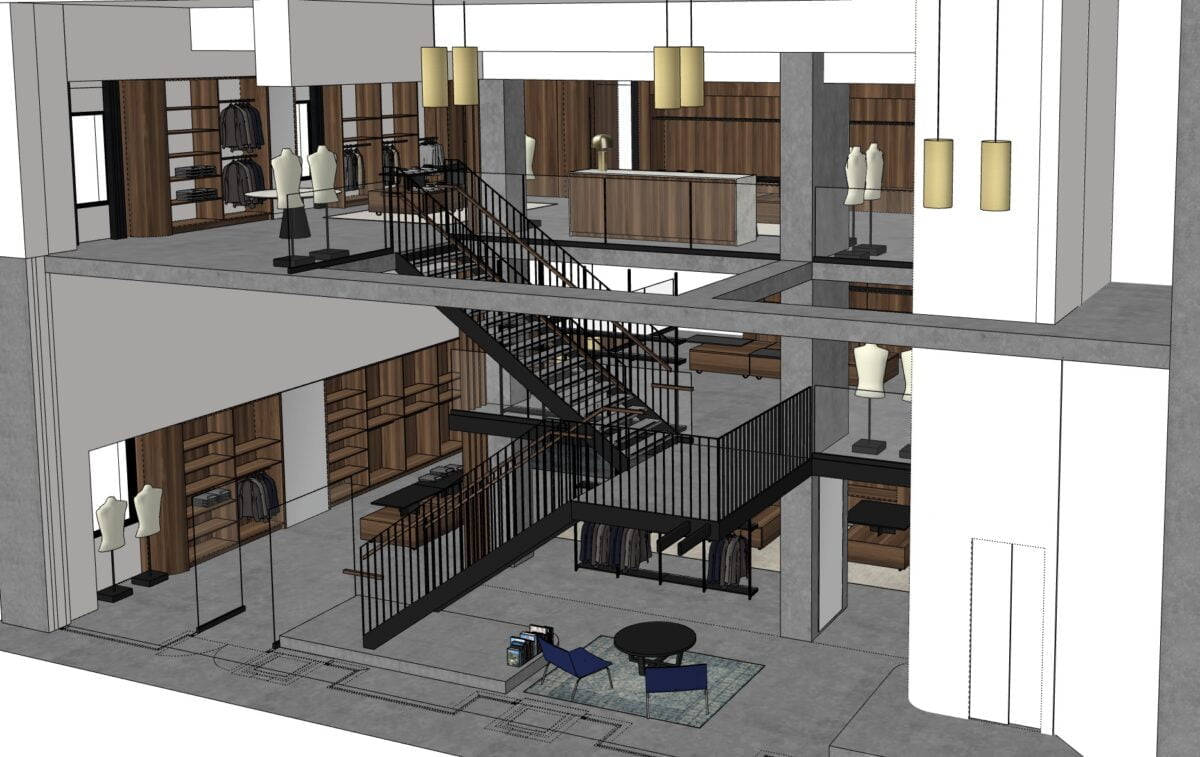
RENDERING OF THE NEW WEST EDMONTON MALL SAINT LAURENT STORE (EXCLUSIVE).

French luxury fashion brand Saint Laurent (formerly Yves Saint Laurent) will open its third standalone Canadian store within a few months at West Edmonton Mall in Edmonton. The store is part of an effort to attract luxury shoppers to the mall after adding a Louis Vuitton store last year.

WEST EDMONTON MALL’S SAINT LAURENT STORE WILL BE CANADA’S THIRD STANDALONE LOCATION FOR THE BRAND

The Saint Laurent store will span more than 2,900 square feet on one level and will be located two doors west of Louis Vuitton on the second level of West Edmonton Mall. The Saint Laurent boutique will feature the brand’s newest retail design and will carry men’s and women’s fashions including apparel, bags, accessories, and footwear. Another luxury brand will soon be announced for a retail space between Saint Laurent and Louis Vuitton as part of a clustering of brands targeting affluent locals and tourists.

Construction specialist Amachris Corporation will build the new Edmonton Saint Laurent store including general contracting work as well as interior finishings. Amachris also completed the renovation of the Saint Laurent shop-in-store at Saks Fifth Avenue in downtown Toronto and has worked with other luxury brands.

That includes building the stunning 6,000 square foot ‘world of’ Gucci concession at Toronto’s Yorkdale Shopping Centre that opened last summer, and Amachris is also finishing the renovation to Gucci’s standalone flagship store at 130 Bloor Street West in Toronto.

SAINT LAURENT CONSTRUCTION HOARDING AT WEST EDMONTON MALL. PHOTO: CHRISTOPHER LUI
SAINT LAURENT LOCATION HIGHLIGHTED IN RED. CLICK IMAGE FOR INTERACTIVE WEST EDMONTON MALL FLOOR PLAN
CLICK IMAGE FOR INTERACTIVE WEST EDMONTON MALL FLOOR PLAN

SAINT LAURENT FOCUED ON CANADIAN EXPANSION IN RECENT YEARS

Saint Laurent has been expanding its presence in Canada over the past few years. The brand opened its first standalone store in Canada in Vancouver at 746 Thurlow Street in July of 2016, spanning 4,800 square feet over two floors. A second location at Toronto’s Yorkdale Shopping Centre, spanning more than 3,000 square feet on one level, opened in November of 2016. In March of 2018, Saint Laurent opened a concession spanning about 3,000 square feet on the street level of Holt Renfrew at 50 Bloor Street West in Toronto, featuring its own street-facing entrance onto the Mink Mile facing Eataly. The ‘world of’ Saint Laurent boutique is so large that many who walk by consider it to be a standalone store.

In the winter of 2018, Saint Laurent opened its first outlet store in Canada at the Toronto Premium Outlets in Halton Hills.

Concessions have become an important part of Saint Laurent’s strategy in Canada. In the spring of 2019, Saint Laurent opened a men’s concession space on the fourth floor at Holt Renfrew Ogilvy in Montreal. Over the summer, Saint Laurent opened three separate concession spaces at Holt Renfrew Ogilvy for women’s ready-to-wear, leather goods, and footwear.

Saint Laurent also has a limited wholesale presence in Canada. That includes Nordstrom in Vancouver, which houses separate Saint Laurent leather goods and women’s ready-to-wear boutiques. Saks Fifth Avenue in downtown Toronto also features a leather goods boutique although a ready-to-wear boutique on the third floor closed last year. Saint Laurent fashions can also be found at Holt Renfrew at Square One in Mississauga and some pieces are available at Holt Renfrew in Calgary.

Saint Laurent operates locations globally, including more than 25 full-priced U.S. stores and several Saint Laurent outlets. In downtown Portland, Oregon, Saint Laurent recently opened a large standalone store at Pioneer Place, marking the brand’s further expansion into secondary markets. The brand is also carried in upscale department stores such as Saks Fifth Avenue, Neiman Marcus, Bloomingdale’s and Nordstrom in the United States. Saint Laurent is owned by French luxury holding company Kering. Designer Anthony Vaccarello is the designer for Saint Laurent, having replaced Hedi Slimani in 2016.

Fashion designer Yves Saint Laurent founded the brand in 1961 and in the 1980s and 90s, Yves Saint Laurent was considered to be the pinnacle of fashion globally. The company had stores around the world including a substantial number of units in the United States. Department stores were an important part of the ‘Saint Laurent Rive Gauche’ expansion strategy. Stores such as Marshall Field’s, Dayton’s, Wanamaker, Rich’s, L.S. Ayeres, Kaufman’s, Halle’s, Nan Duskin, I.Magnin, and others featured Rive Gauche shop-in-stores.

In Canada, Yves Saint Laurent boutiques once operated in Toronto at Hazelton Lanes (now Yorkville Village) as well as at 1330 Sherbrooke Street West in Montreal. Department stores such as Simpson’s (now the Hudson’s Bay Company) and Morgan’s also carried the brand in decades past.

West Edmonton Mall has been adding high-end retailers over the past several years. Last year, Canada Goose opened in the mall featuring a 'cold room', joining brands such as Hugo Boss, Marc Cain, Coach, Stuart Weitzman, Mackage, and others. The first luxury brand to open at West Edmonton Mall was Tiffany & Co. in 2013. Mall landlord Triple Five is innovating with a new Toyota Experience centre that will be opening next year, with more announcements to come. West Edmonton Mall is also looking to add some of the successful brands that once were carried at Holt Renfrew in Edmonton — the downtown store closed in January of this year. Interestingly, Saint Laurent did not have a presence at Edmonton's former Holt Renfrew store.

Despite not having a Holt Renfrew store, Edmonton will have some bragging rights when the Saint Laurent store opens its doors — it will be the only standalone location in Alberta. Calgary and Edmonton have had a rivalry for years and the next luxury brand to be announced at West Edmonton Mall also does not have a standalone presence in Calgary. We’ll continue to monitor the situation and report on what’s happening at West Edmonton Mall as the centre expands its offerings to become Canada’s next luxury retail node.

GetintheLoop Partners with Cushman & Wakefield to Launch Mobile Technology Service in 21 Malls

BLURRED IMAGE OF SHOPPERS ON BUSY RETAIL STREET

Cushman & Wakefield Asset Services has partnered with platform GetintheLoop to launch a mobile technology service to enhance retail promotions in 21 retail centres across Canada.

GETINTHELOOP ACTS AS SINGLE SOURCE FOR ACCURATE AND RELEVANT LOCAL RETAIL INFORMATION

More than 1,500 retailers in Cushman & Wakefield properties will receive access to GetintheLoop’s mobile marketing platform to better reach local residents via their smartphones, email, and web. GetintheLoop will act as a single source for accurate and relevant local retail information, integrating data from the app onto each centre’s website, and app users will have the added benefit of receiving push notifications including dynamic offers such as gift card programs, delivery or curbside pick-up options, incentives and offers to support retail businesses now, when they need it most.

“When our guests install the GetintheLoop app on their devices, they will essentially have their local mall in their pockets,” said Molly Westbrook, Cushman & Wakefield’s Executive Managing Director for Canada. “Retail operations and consumer habits are rapidly evolving, and we want to support our retailer partners in this evolution, extending beyond the physical space of our centres. Partnering with GetintheLoop allows us to enhance the guest experience, giving them a direct line on new arrivals, local promotions and sales, and much more.

GETINTHELOOP

“We want to offer our shoppers an omni-channel guest experience. I think we’re missing a mobile app solution to help the tenants in the malls reach out today — because everything’s online. It’s said that more than 70 percent of shoppers research purchases online before they head into the store. So if we’re helping provide the information they want that’s accessible through GetintheLoop it’s going to help our customers make their purchases and their decisions and be informed.”

Westbrook said the app will be in 21 of the company’s largest enclosed malls from British Columbia to Halifax. September 1 is the official day that GetintheLoop launches in those centres.

“We were looking into this partnership before COVID. It wasn’t a response to COVID. We’ve been planning and researching for a while to provide a mobile platform to our tenants. We were testing the concept prior to the pandemic,” said Westbrook. “We saw strong results, so we knew there was a demand for this. We thought it was really essential to implement throughout our centres. We’re really excited to launch this and move forward.

“This is really important to us and we feel like it’s really going to help our tenants and customers throughout Canada, especially in the retail space.”

GETINTHELOOP APP AVAILABLE ON APP STORE AND GOOGLE PLAY

Consumers can download GetintheLoop for free in the App Store and Google Play store and opt-in to receive curated, local offers. Push notifications can be enabled or modified so consumers can receive timely updates from their local Cushman & Wakefield-managed shopping centre.

"We're thrilled to partner with an innovative, community-minded organization like Cushman & Wakefield,” said GetintheLoop's Founder and CEO Matt Crowell. “We want our technology to help communities stay connected and support local retail during this critical time.

“We’re a lot of things to a lot of different stakeholders but really GetintheLoop is a shop local community. We enable members to support local businesses by connecting them with rewards and offers and events. It’s really a great way to find out what’s going on and the best place to spend money in your local community. GetintheLoop for business is really a tool that helps the retailer and a local business connect to a local audience in an authentic way to help them attract new customers, offer incentives and to be able to measure that result.

“Lastly, I think a really unique value proposition is that it’s powered by entrepreneurs of local communities. We’re the fastest growing franchise in Canada and we’ve got over 150 entrepreneurs in local markets that work with local businesses and those retailers on the ground in that Cushman & Wakefield scenario.”

The Kelowna-based company, which started in 2012, has more than 40 employees. It has more than 75 franchises across the country.

“We have a unique story. We started by actually just working in the golf industry and had success there. But we really expanded that we could help a lot of small business by using mobile technology to attract customers. We became partners of media companies over time and then realized to really make an impact in each neighbourhood and community you need entrepreneurs on the ground that had skin in the game,” said Crowell.

“So we created GetintheLoop Local — the digital franchise. It’s still under two years now that we did that and it’s been gangbusters from there. We exploded across Canada and now we’re looking at international opportunities.

“What people view as customer experience is changing. Now for a shopping centre, part of that customer experience is creating the ability for a consumer to learn about a retailer and their offers first when they come into the centre. The reality is that so many people are on their phones, you need to create an experience where they could still be using their phones while in the centre to find offers and promotions and allow the retailer to create a unique experience or incentive to drive that customer. And that might be driving them to the shopping centre but it might be helping facilitate a pick up offer outside of the mall and different things.

“We’ve seen a huge change. Cushman & Wakefield is very innovative and they’re a leader in saying ‘hey we need to be a partner with our retailers, not just a landlord’. So, they're using technology as part an endeavour to achieve those goals'.

Canadian Company ‘Beam.city’ Launches Unified Advertising Automation Platform

Zeze Peters, Founder and CEO of Beam.city and a former rocket scientist, said the company has introduced DNA, its unified advertising automation platform. DNA uses artificial intelligence to plan, automate, and optimize multi-media ads on millions of sites from one interface, and get great results fast.

BEAM.CITY DNA PLATFORM USES AI TO PLAN, AUTOMATE, AND OPTIMIZE MULTI-MEDIA ADS

He said the simple-to-use platform lets a retailer set their idea in minutes and DNA handles the technical details across channels like Google, Snapchat, Instagram, and Facebook — this helps them reduce waste in ad spending, boost ad performance, and save many hours in manpower and costs.

The Beam.city DNA Shopify app is now available, so Shopify merchants can effortlessly get started with a single button click. “The only thing they have to do is come with their creativity and then let the platform handle the technical details,” said Peters.

Beam.city was founded in 2017 as the “world’s first video-based shopping mall,” and pivoted to meet the greater need to help stores with digital advertising, explained Peters.

“We pivoted in November from being the world’s first video-based shopping mall to DNA, which is a unified advertising automation platform that helps businesses plan, run and optimize their ads on Google, Facebook, Snapchat, Instagram, Yahoo, Bing, and YouTube and get really great results without having any previous training”.

Peters said artificial intelligence and algorithms are used to help retailers set up, monitor and optimize their promotions. “It means you can create and run all your ads on any major platform from one interface and get really good results.”

The company’s DNA platform is currently being promoted to Canadian businesses but Peters said it will expand its reach beyond Canada in the coming months.

“For retailers the key thing is they’re trying to go online and reach customers. With COVID-19 a lot of customer attention has really, really shifted online — eCommerce grew 149% in April in some markets but a lot of physical store retailers haven’t been able to take advantage of this,” said Peters.

“At this point there are a lot of really great programs like Digital Main Street that try to help them go online, but a lot of these businesses don’t know how to attract the right customers. To do so, they can use SEO or try to run ads themselves but it takes a lot of time to figure out how to use any one tool. In fact, if you want to make a good promotion on Google Adwords, make a really good one, you may need a month of training to get expertise, and thousands of clicks in their interface, to make a good ad.

“On our platform you can make a really good performing ad in tens of clicks and get really good results because the system applies best practices for how to structure and promote your ads. You can give it a persona of your ideal customer and it will predict where that customer lives and works anywhere in Canada. Finally, you can import existing data and it will start exactly where you are and help you get better results quickly.”

BEAM.CITY DNA PLATFORM CAN BE APPLIED ACROSS SECTORS OF RETAIL INDUSTRY

He said the tool is an industry agnostic one and can be used by any sector of the retail industry.

Zeze Peters is a Cornell educated former rocket scientist with 20 years of software and engineering experience, who previously led large teams on multiple continents to build million dollar platforms for Fortune 1000 companies using applied A.I., eCommerce and big data.

Beam.city is part of the DMZ, a top global accelerator in Toronto, as well as the Microsoft for Startups program.

Telecommuting to Hit Restaurant and Hospitality Industries in Canada for the Foreseeable Future: Expert

STACKED CHAIRS OUTSIDE CLOSED RESTAURANT

The numbers are truly sobering for the hospitality industry.

A new report suggests the industry could lose up to $20 billion in revenues in the next year, of which 30 percent may be due to telecommuting.

And the devastation that will have for business owners is staggering.

“We are likely to see at least one restaurant out of four disappear within the next year if not more,” said Sylvain Charlebois, Professor, Food Distribution and Policy, Faculties of Management and Agriculture, Dalhousie University.

“Industry experts that we consulted with believe that our numbers are actually quite conservative.”

IS TELECOMMUTING OBLITERATING THE HOSPITALITY INDUSTRY?

The Agri-Food Analytics Lab at Dalhousie University, in partnership with Caddle, conducted a comprehensive nationwide survey to assess how many Canadians are thinking of changing their lifestyle to spend more time working from home. A total of 10,851 Canadians were surveyed on telecommuting and food expenses at the end of July.

“Things don’t look great for sure, especially for restaurants located downtown everywhere. The one thing that is coming quite clear is that there are a lot of short-term issues that we need to address — fear, anxiety, the vaccine, jobs. Things like that,” said Charlebois, who is Senior Director of the Lab.

“But the one thing that may actually change forever is telecommuting. Telecommuting is going to get people to work more from home and as soon as you spend more time at home you will consume food differently.”

The survey found that 23.6 percent of Canadians intend to work more often at home in a year from now, although many Canadians either don’t know (18.4 percent) or won’t know what they will do in a year from now (22 percent). Quebec has the highest percentage with 28.9 percent of respondents saying that they want to work more often at home. Ontario is second at 24.8 percent.

The report found that Millennials (1981-1996) have the highest percentage with 25.3 percent. Of the group who said yes, 20.6 percent said they would work from home on a full-time basis. Of the people who intend to work from home, 57 percent plan to spend less at the restaurant because of working from home. The highest rate in the country is Ontario at 59 percent.

For the hospitality industry, Charlebois said he doesn’t think it will get better soon. It’s just a matter of knowing more of what’s going to happen in the fall.

“42 percent of people surveyed have no idea where they’re going to be or what they’re going to be doing a year from now,” he said. “There’s a lot of uncertainty out there. But for people working some of them are actually planning to move. Some people are planning to do different things. There’s a lot going on there which makes the entire situation much less predictable.”

Prior to the pandemic 36.8 percent of respondents were going to a restaurant for a meal/break at least twice a week, explained the report. That number goes down to 23.3 percent when asked about plans after the pandemic is over.

“This is a significant drop of 36.6 percent of people who intend to visit restaurants at least twice a week, during the work week. Numbers show though that more people are willing to visit a restaurant only once a week after the pandemic (76.7 percent after versus 63.2 percent for before),” said the report.

The report said 21.7 percent of respondents stated that their employers are planning to allow people to work from home more often. Of respondents whose employer is considering allowing staff to telecommute, 35.1 percent intend to relocate within a year. Of respondents who stated that their employer plans to allow more people to work from home 52.9 percent intend to do it permanently. Of these respondents 70.1 percent intend to spend much less time and money at restaurants.

A total of 10.7 percent of respondents are looking at relocating since telecommuting is possible. The highest rate is in Quebec, at 14.1 percent. A total of 17.4 percent of Gen Zs are planning to relocate due to the possibility of telecommuting, the highest rate of all generations, added the report.

“The financial impact on the food industry will be significant as more people work from home and potentially outside of urban cores . . . While the future lies in uncertainties, this may represent a loss of up to $20 billion over the entire year for the hospitality industry. As more people stay home to telecommute there is a notable shift seen in the economy. This shift in work locations may be responsible for at least 30 percent of lost sales in food service for this coming year alone. Restaurants located in urban cores across the country will be affected the most,” it said.

But Charlebois said there is opportunity for entrepreneurs to relocate.

“And to think about different models like ghost kitchens for example. The use of food delivery apps is going to be critical as well. Instead of just actually waiting for the money to show up at your doorstep, you’re going to have to go after the money. That’s basically what’s happening right now,” he said.

How 5 Small Businesses Reinvented Themselves Amid COVID-19

DIGITAL MAIN STREET BANNER

By Digital Main Street

COVID-19 has closed the doors of countless retailers, but has also presented a unique opportunity for businesses to expand their e-commerce capabilities.

Over the last few years, there has been an increasing call for digital transformation amongst small to large retailers. As the COVID-19 crisis hit, it’s no surprise that there was a massive spike in e-commerce sales. As a direct result, retailers have felt an accelerated call for a functional online presence.

In response to the countless small businesses in need of a quick pivot to digital, Digital Main Street partnered with Google to launch the ShopHERE Program. The program offers small businesses one-to-one assistance in building an online store with associated training. 

Digital Main Street is proud to be supporting brick-and-mortar retailers who have had to shut their doors. Equally, they are excited to be a part of home-based retailers’ venture into e-commerce, as they have an unprecedented opportunity to reach a wide audience.  

Businesses across Ontario are getting online by the thousands, as communities experience a growing desire to shop local.

Amidst the turbulence in multiple industries–with retail being no exception, the retail industry is experiencing a unique movement where local shoppers are committing to shop local more than ever.

Some of Digital Main Street’s ShopHERE graduates are leveraging this momentum and going through the program to take their businesses to the next level. The success stories coming out of the program are a testament to the resilience of small retailers amidst COVID-19, as well as the drive of home-based retailers taking a leap into digital.

Read the success stories of 5 small businesses who reinvented themselves in this global moment–stories of owners who made an opportunity out of a challenge through the ShopHERE Program.

SCREENSHOT OF LITTLE CHIEF & CO. WEBSITE

Little Chief & Co. of St. Catharines

Port Dalhousie-born and bred, Jen and Mike McKenna always dreamed of opening their own premium canine outfitter–Little Chief. This local pet store was forced to shut down amidst COVID-19 but responded by getting online.

“The ShopHERE program has been vital to our business during the COVID-19 crisis, allowing us to quickly pivot from our brick and mortar storefront to being fully online, while offering curbside pick-up and free local delivery.” 

SCREENSHOT OF PLENTEA WEBSITE

PLENTEA of Toronto

After four and a half years, the owners of PLENTEA, a local tea cafe in downtown Toronto, have decided to close its doors because of COVID-19. However, they are grateful for the program, which allowed them to continue business online.

“The ShopHERE PRogram was great because you actually have a consultant at your fingertips to fine tune your website. Going online is definitely the way of the future.” 

SCREENSHOT OF INAMULLUMANI WEBSITE

Inamullumani of Toronto

Luma is an acclaimed jewelery designer whose collection has been showcased at international exhibitions. However, like many business owners operating in the midst of COVID-19, attracting new customers is harder than ever. While many entrepreneurs know that taking their businesses online is a solution to helping keep their clientele, the work associated with going digital can often become overwhelming or disincentivizing. 

“Getting online is a step I always pushed away as I never felt comfortable doing it on my own. The ShopHERE Program is a godsend for small businesses and artists! Having a store online made it easy for me to stay connected with my clients all over the world. It was a great learning experience.”

SCREENSHOT OF OPEONGO SOAPS WEBSITE

Opeongo Soaps of Eganville

It has always been Opeongo Soaps owner, Tammy’s dream to have an online store, but she never had the time or technical skills to do so. She worked closely with her ShopHERE Helper to create a fully functional and personalized e-commerce website. Otherwise, she states taht she would have never been able to afford setting up an e-commerce platform for her small business.

“Without the ShopHERE program I would never have been able to afford to have it professionally done! I have all my needs met on one platform! My Helper was able to research and find the perfect apps to help me with my wholesale accounts as well. The time I will save in just creating shipping labels is mind blowing!” 

SCREENSHOT OF SMELLIS BEARD OIL WEBSITE

Smellis Beard Oil of Chatham

Smellis Beard Oil has seen immense growth following its entrance into the digital world. Having an e-commerce website supported the adjacent growth of the small business. With limited e-commerce experience, a ShopHERE Helper was able to help this small business get online in a matter of days.  

“I had 2 orders within two days of going live! I hadn’t had an order in months. Programs like the ShopHERE one are available to help small businesses in ways that might have never been possible before.”

Looking for more ShopHERE success stories–perhaps in your region? Check out Digital Main Street’s Success Stories page, which is updated periodically.

Small businesses are the fabric of any community’s pulse. Let’s do our part and support local. 

Are you a medium to large retailer? Are there any small retailers or home-based businesses you can nominate for the program? Send them to the ShopHERE page for more info.

*Retail Insider has partnered with Digital Main Street on content about small businesses in Canada.

5 Ways Retailers in Canada Can Stay Afloat Amid COVID-19 Market Fluctuations

OMNICHANNEL RETAIL IMAGERY WITH SMARTPHONE

The COVID-19 pandemic has affected nearly all industries, but the retail sector has felt it more than most. Social distancing regulations and lower spending rates have left many Canadian retailers in a tough position. As the pandemic continues, retailers of all sizes need to prepare for more market fluctuations.

Retail sales fell 26.4% in April, and continue to fluctuate amid the uncertainty of the COVID-19 economy. Despite these changes, there are steps that retailers can take to mitigate the damage. Below are five practices the retail market can adopt to stay afloat in the pandemic.

1. Maximize Online Channels

While in-store sales have plummeted, that’s not the case with online purchases. E-commerce sales now account for 10% of all sold goods in Canada, putting them at the highest they’ve ever been. If retailers hope to maximize their profits at this time, they’ll have to emphasize their online stores.

Social distancing regulations prevent many would-be customers from entering brick-and-mortar stores but don’t affect online sales. If retailers don’t list much if not all of their merchandise online, they limit how much product they can move. Alternatively, by maximizing their online channels, they become more versatile and can survive further disruptions.

2. Embrace Elasticity

The COVID-19 economy is a tumultuous one, and the outlook of the post-COVID market is uncertain. In the face of this uncertainty, retailers will have to adopt a more flexible approach to doing business. Supporting multiple ways to sell and deliver products ensures businesses can survive more market fluctuations.

Retailers that adopt practices like curbside pickup or delivery services can perform better. Fluctuations can affect the profitability of other sectors or services that retail relies on. If stores don’t have options they can turn to when these changes come, they may suffer.

3. Diversify Supply Chains

Just as the retail market needs to be elastic with their services, they need to vary their supply chain systems. It’s impossible to tell what product sources or logistics companies will see further disruptions under COVID-19. According to the Organisation for Economic Cooperation and Development (OECD), retailers should diversify their sources of goods to survive these changes.

Having multiple options is the key to success in an uncertain time. Keeping a diversified portfolio helps investors survive market fluctuations, and a similar approach aids retailers. Without diversity, disruptions along the supply chain can affect a retailer’s profitability.

4. Demonstrate Empathy

The stresses of the COVID-19 pandemic affect everyone, not just a single store and not only retailers. Businesses can take this opportunity to show fellow Canadians that they care about them and how this situation affects them. Ethical motivations aside, demonstrating empathy in a time of hardship can help improve a retailer’s public image.

Canada will get through the pandemic by working together, so now is the time for compassion. If a retailer doesn’t help others, they can’t expect people to help them in return. In a time of substantial change, retailers can become a consistent force of positivity.

5. Keep Consumers Updated

Retailers should keep customers in mind during the pandemic. According to one survey, 46% of Canadians report feeling regularly stressed during this time, and uncertainty plays a considerable role. In light of this stress, consumers will appreciate a consistent source of information, which retailers can provide.

As the situation continues to change, customers may be unsure about how stores are operating. Given their stress levels, retailers can’t expect them to seek out this information on their own, so they need to provide it. Stores need to communicate often and clearly about their response to developing circumstances to keep consumers informed.

Navigating the COVID-19 Economy

There’s still a considerable amount of uncertainty surrounding the COVID-19 economy, but businesses should expect further market fluctuations. These changes can be challenging to deal with, but with a flexible approach, retailers can survive them. If retailers cling to old practices, they may succumb to the recession, but adaptation can keep them afloat.

Intuit QuickBooks Canada Joins Digital Main Street to Help Canadian Small Businesses Digitally Transform

SMAL BUSINESS OWNER UTILIZING INTUIT QUICKBOOKS AND DMS PROGRAMS. PHOTO: INTUIT QUICKBOOKS FACEBOOK

Intuit QuickBooks Canada joins tech leaders to help Digital Main Street expand its program capacity nationally, further enabling small business recovery amid COVID-19.

Intuit Canada, a leading global financial platform company known for products such as QuickBooks,  TurboTax, and Mint, has joined Digital Main Street in its mission to facilitate 50,000 Canadian small businesses to establish themselves online over the next year through the development of e-commerce storefronts.

Intuit Canada is set to help Digital Main Street advance its online web platform, enabling small businesses to receive direct 1-on-1 support through consultation meetings and online webinar training sessions.

“Now more than ever, digital transformation is key to small business success,” said David Marquis, Country Manager, Intuit Canada. “We are thrilled to be joining Digital Main Street to help Canadian small businesses get online and equip them with important digital skills they need to recover and grow.”

According to a July 2020 survey done by the Canadian Federation of Independent Business (CFIB), 57% of small businesses have entirely reopened and around 53% think it will take more than six months to get back to normal profitability. The Ontario government has revealed that about 40% of small enterprises in the province do not have a website. The correlation between ecommerce and survival is undeniable in a post-COVID world, and by adopting and optimizing an online presence, small businesses may be able to avoid permanent closures.

“We are committed to doing everything we can to help our main street small businesses get through this crisis,” said Toronto Mayor John Tory in a statement. “The Digital Main Street program operated by the Toronto Association of Business Improvement Areas (TABIA) would not be possible without the generous community and corporate support of the partners involved. I am thrilled that Intuit Canada is joining the Digital Main Street network today to strengthen the support already in place for main street businesses through this innovative program.”

Over the next year, this new collaboration will support Digital Main Street initiatives across Canada in the following ways:

  • By increasing the capacity of Digital Main Street programming, including supporting advanced development of the online web platform, which is a hub for small businesses to receive on-demand training.

  • By supporting the continued growth of the ShopHERE program powered by Google Canada, to help get 50,000 businesses online this year through the development of e-commerce storefronts.

  • By increasing the capacity of the Digital Service Squad, enabling small and medium sized businesses to receive direct 1-on-1 support through consultation meetings and online webinar training sessions.

“Our partners have been at the heart of everything we have done over the last 5 years, supporting over 20,000 businesses across Ontario and now the country,” said John Kiru, Executive Director of TABIA. “With the need for digital adoption amongst small main street businesses amplified by these unprecedented times, we are thrilled to have Intuit Canada joining our network that also includes: Google, Mastercard, Shopify, Microsoft, and Facebook. We are looking forward to working with them to continue increasing our capacity and support resources for the small main street business community.”

To learn more about Digital Main Street and the programs and learning opportunities available to main street business owners, visit www.digitalmainstreet.ca

*Retail Insider has partnered with Digital Main Street on content about small businesses in Canada.

Consumer Segment Study Shows Range of Optimism and Pessimism Among Canadians

Woman with protective mask and gloves shopping in supermarket during COVID-19 pandemic or corona virus. Protect yourself against highly contagious coronavirus.

During the COVID-19 pandemic, four consumer segments have emerged in Canada, according to a new report by EY.

COVID-19 HAS REVEALED FOUR CANADIAN CONSUMER SEGMENTS

In terms of demographic distinctions, the four segments reflect how consumer sentiment deviates between certain factors such as age, family structure, and employment status, said the report:

  • Save and stockpile (35.5 percent of consumers): These consumers seem more conservative, showing higher concern for their families and the long-term outlook. More than a third (37 percent) are now spending more on groceries, while most are spending less on clothing (73 percent) and leisure (80 percent);

  • Cut deep (27 percent of consumers): This segment of consumers is mostly aged 45 years and older and about 25 percent have lost their jobs either temporarily or permanently. As a result, the majority (80 percent) of them are shopping less frequently, with more than half (60 percent) buying essentials only. In terms of brand perception, 35 percent believe that brands are far less important in the current climate;

  • Stay calm, carry on (25.2 percent of consumers): These consumers do not feel directly impacted by the pandemic and are not changing their spending habits. In this segment, 16 percent are spending more on groceries, which is the lowest compared to the other segments. Similarly, their consumption patterns across clothing and footwear decreased the least compared to the other segments (34 percent); and

  • Hibernate and spend (12.3 percent of consumers): Mainly those ranging between the ages of 18-44, including millennials and Gen Z, seem to be the most concerned about the impact of the pandemic. They have increased grocery spend the most (57 percent) spending more compared to the other segments. However, they have also increased spend across clothing (nine percent) and leisure (29 percent) the most, with 51 percent of them highlighting that brands are now more important to them.

Rodger So, Partner and Western Canada Consumer and Technology Leader for EY, said consumer behaviour is changing and technology is a driver of that disruption.

“The paradigm has been shifting way before 2020 and COVID-19 in many ways accelerated those trends and we think it’s important for us to anticipate how that consumer world will change and evolve throughout COVID and post COVID. This study has really been helpful for us to get a glimpse of where that’s heading toward and how that’s shifting,” said So.

“We feel that consumers shape the future where businesses can thrive in a post COVID world.”

FIVE CANADIAN CONSUMER SEGMENTS ARE FORECASTED TO FOLLOW THE COVID CRISIS

According to the EY report, these are the next five consumer segments that will appear following the COVID crisis:

  • Get to normal (28 percent of consumers): The majority (63 percent) are above the age of 45. They are mostly indifferent about the future and appear to have the lowest trust in any institution. About 41 percent responded that they are unlikely to pay a premium for goods and services at all, the highest among all segments, and they are somewhat indifferent about actions taken by brands to mitigate the COVID-19 impacts. They are also the least willing to share their data compared to the rest of the segments;

  • Cautiously extravagant (25 percent of consumers): This segment reports a high level of optimism across all segments despite high recession concerns. Nearly half (47 percent) of respondents believe that leisure activities will return within weeks to the way they were before COVID-19 and 66 percent expect to spend more on leisure activities in the long term. More than three quarters (76 percent) believe the way they travel will return within months to the way it was before the pandemic, with 65 percent expecting to spend more on their vacation plans. They are the most willing to share their data if it helps find a vaccine or develop treatments;

  • Stay frugal (23 percent of consumers): This segment includes representation from all age groups and remains the most pessimistic about the future. About one third (32 percent) or more are concerned about how they will travel, access health care, socialize or shop after the pandemic; 67 percent will likely decrease their spend on vacations, 55 percent on leisure, and 65 percent on restaurants. This segment is highly sensitive to price, with 62 percent responding that luxury has become less important. However, 42 percent would pay a premium for products made domestically;

  • Keep cutting (15 percent of consumers): Mostly aged 45 and older, these respondents believe more than other segments that it will take a long time to return to the way it was before COVID-19. Approximately three quarters (74 percent) expect a global recession and 53 percent are extremely concerned about their jobs and finances. In terms of spending, 57 percent cited purchasing essentials only and 54 percent indicated that they will change the products they buy as a result of the pandemic; and

  • Back with a bang (9 percent of consumers): This is the smallest group of respondents, mostly aged below 45. Their key concerns about the impact of the pandemic are jobs and finances, as well as their family wellbeing. They are the most optimistic about the future — 50 percent are spending more on groceries and they consider price as a key factor in determining which items to buy, while 34 percent are willing to share their data if they are rewarded.

So said almost half of the respondents in the EY survey expect to go back to normal in a few months.

“For now, it’s important that companies focus on making consumers and staff feel safe and continue to have the (good) customer experience,” he said. “But we also found that two thirds of respondents feel they’ll be going to stores less. It’s more important than ever that (company’s) continue to invest in the omni-channel experience and we feel that those that embrace online shopping will have a faster recovery.”

So said this is the perfect time for companies to think about their business model.

“A lot of the retail and restaurant clients that I’ve been talking to in the last couple of months are still very focused on the now. The reacting stage. How are we reacting to COVID? Survival and resiliency is really top of mind,” he said. “But now that things are starting to get a little bit normal we’ve been talking to clients about the next step beyond because we know that customer behaviour is changing and through the COVID it will continue to change.

“So we feel at EY that companies need to understand behavioural changes and customer changes in order for them to serve customers better and be ready for that future consumer.”

So said COVID has indeed fundamentally disrupted businesses but this is also an opportunity to make investments for the future.

“Be innovative and of course be agile by shifting to a more resilient and nimble operating model. Companies who are very stagnant and not nimble and stay with the old ways will see themselves fall behind very quickly,” he said.