Japanese Variety Retailer Daiso to Enter Canada with Corporate Stores
Popular value-priced Japanese variety retailer Daiso is expanding into Canada this year with its first corporate store set to open this spring in downtown Vancouver. It’s part of a national store rollout for Daiso in Canada which signals a positive outlook for brick-and-mortar retail generally.
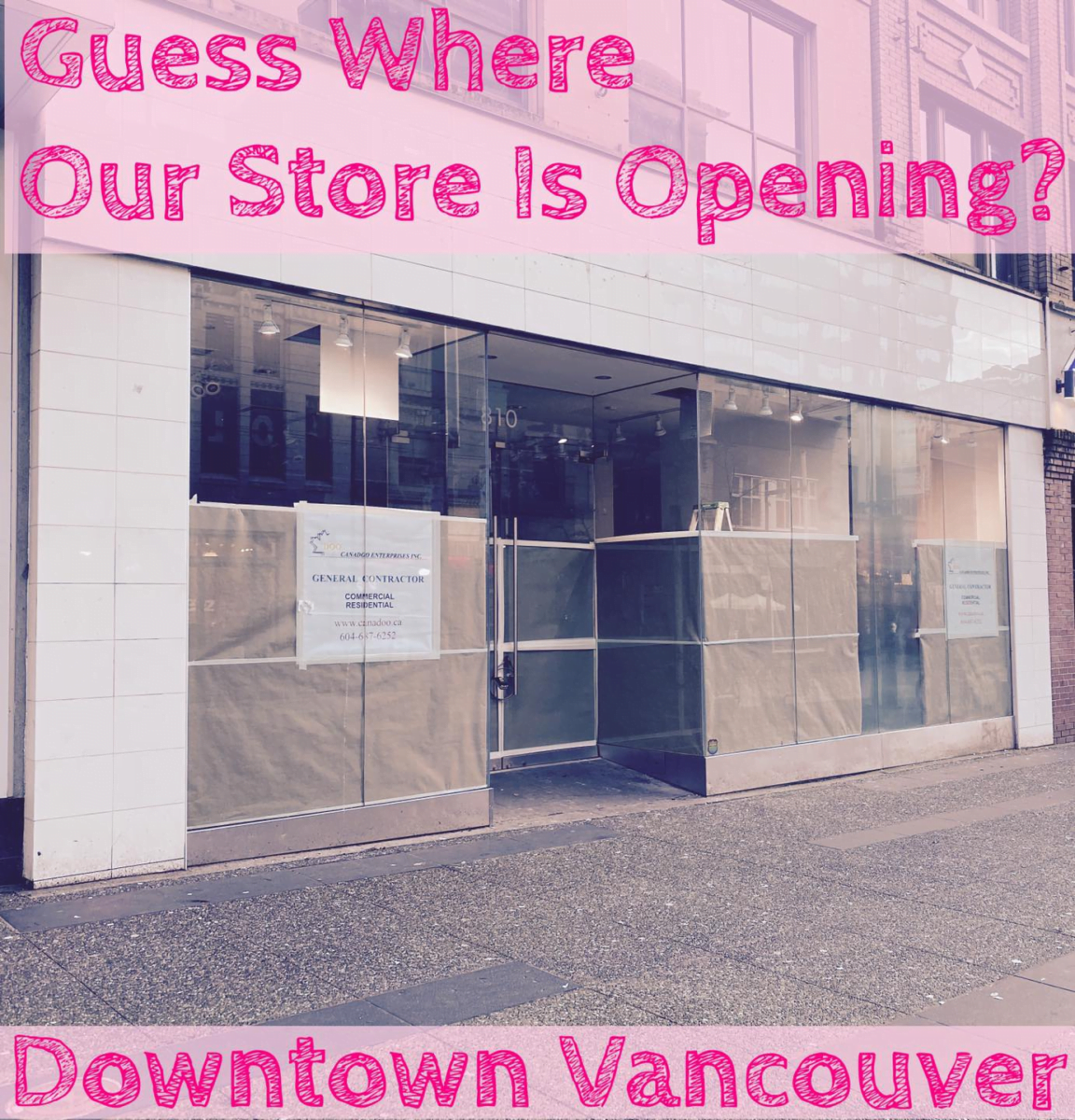
Daiso’s first corporately-owned Canadian store will open at 810 Granville Street, a few doors south of Robson Street, in a 4,700-square-foot space formerly occupied by books and gift retailer ‘Indigo Spirit’. CBRE Vancouver’s Urban Retail Team negotiated the lease deal under the guidance of Mario Negris, Nolan Toigo, and Martin Moriarty.
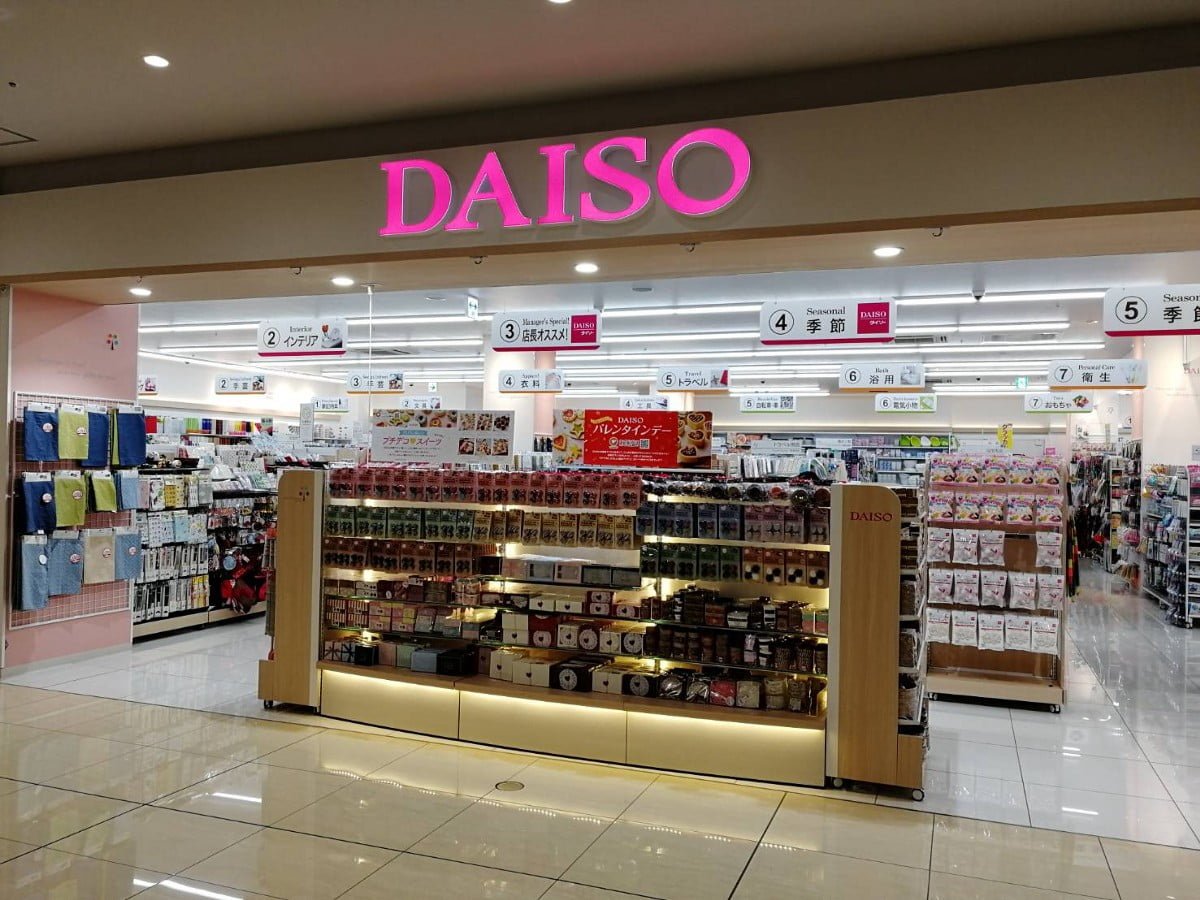
Daiso store exterior. Photo: Daiso
Daiso teaser on Facebook page.
The Indigo Spirit store that formally occupied 810 Granville Street. Photo: Google Images
In Canada, Daiso once had a franchised store that operated for years at the Aberdeen Centre in the Vancouver suburb of Richmond. That store was converted to an Oomomo nameplate last year as that Vancouver-based Japanese variety retailer continues with its own store expansion throughout Canada.
Daiso will compete with a range of similar variety retailers that have entered the Canadian market in recent years including Miniso, Mumuso, Yoyoso, Ximivogue, and others. They are competing for market share carrying a range of household goods, clothing, jewellery, cosmetics and beauty products, toys, and other small goods. Other chains continue to expand which means Canada could see a saturation point in the coming years. At the same time, Chinese retailer Miniso has closed many of its Canadian stores amid controversy.
Montecristo Jewellers to Open Store in Vancouver’s Downtown ‘Luxury Zone’
Exterior of soon-to-open Montecristo Jewellers in Vancouver. Photo: Gaurav Mehra
Vancouver-based multi-brand luxury jeweller Montecristo has begun construction on a new store in a prime location in Vancouver’s ‘Luxury Zone’. The store at 1037 Alberni Street replaces the Italian Kitchen restaurant that relocated nearby in 2017.
The space has sat empty since then, and Montecristo Jewellers is said to have secured the lease while letting the space sit vacant for nearly four years. CBRE’s Vancouver Urban Properties Group, under the direction of Mario Negris and Martin Moriarty, negotiated the deal.
Montecristo jewellers was founded by entrepreneur, Pasquale Casano, in 1978 with a storefront at Victoria Drive and East 41st Avenue. Rolex became an important brand a year later. The company eventually opened a flagship store at 852 W. Hastings Street at the corner of Hornby Street in a heritage building. The retailer operates a storefront at the busy Metropolis at Metrotown in Burnaby. An Oakridge Centre location recently shuttered for the mall redevelopment, and that location was recently replaced with a storefront at CF Richmond Centre.
Exterior of soon-to-open Montecristo Jewellers in Vancouver. Photo: Gaurav Mehra
Brands carried at Montecristo’s flagship include Breguet, Blancpain, Corum, Glashutte, Harry Winston, Longines, Omega, Mikimoto, Roberto Coin, Wellendorf, and others. Rolex and Bulgari were once carried in the store before both brands opened downtown storefronts (Bulgari’s being inside of Holt Renfrew). The Metrotown location carries Pomellato and Bulgari and the CF Richmond Centre store features a Rolex area.
Montecristo will compete with Birks which operates a storefront at the southeast corner of Hastings and Granville Streets, and expanded in 2019 by opening standalone Graff and Patek Philippe boutiques in the Luxury Zone on W. Georgia Street. Various mono-brand jewellery boutiques are located in the Alberni Street Luxury Zone including Tiffany & Co. and Hublot, with Cartier to join them later this year.
In March of 2019, the South China Morning Post reported that Montecristo Jewellers would have to pay a significant tax bill after it was found that the retailer was helping international visitors avoid paying sales tax by classifying certain sales as “exports” by arranging delivery to customers at Vancouver International Airport before boarding flights out the country. The scheme was attributed for about 30 percent of sales with as many as 300 annual deliveries.
Pasquale Casano also owns a third of Toronto-based beauty brand Deciem, whose founder Brandon Truaxe died tragically in January of 2019. Casano’s ownership is being sold to Estée Lauder according to an exclusive report on Tuesday in WWD — beauty Behemoth Estée Lauder owned a third of the company and announced a bid for the entirety of Deciem, which has stores in the Toronto and Vancouver markets as well as in selected global markets.
Rabba Opens a Paramount Butcher Counter in Mississauga
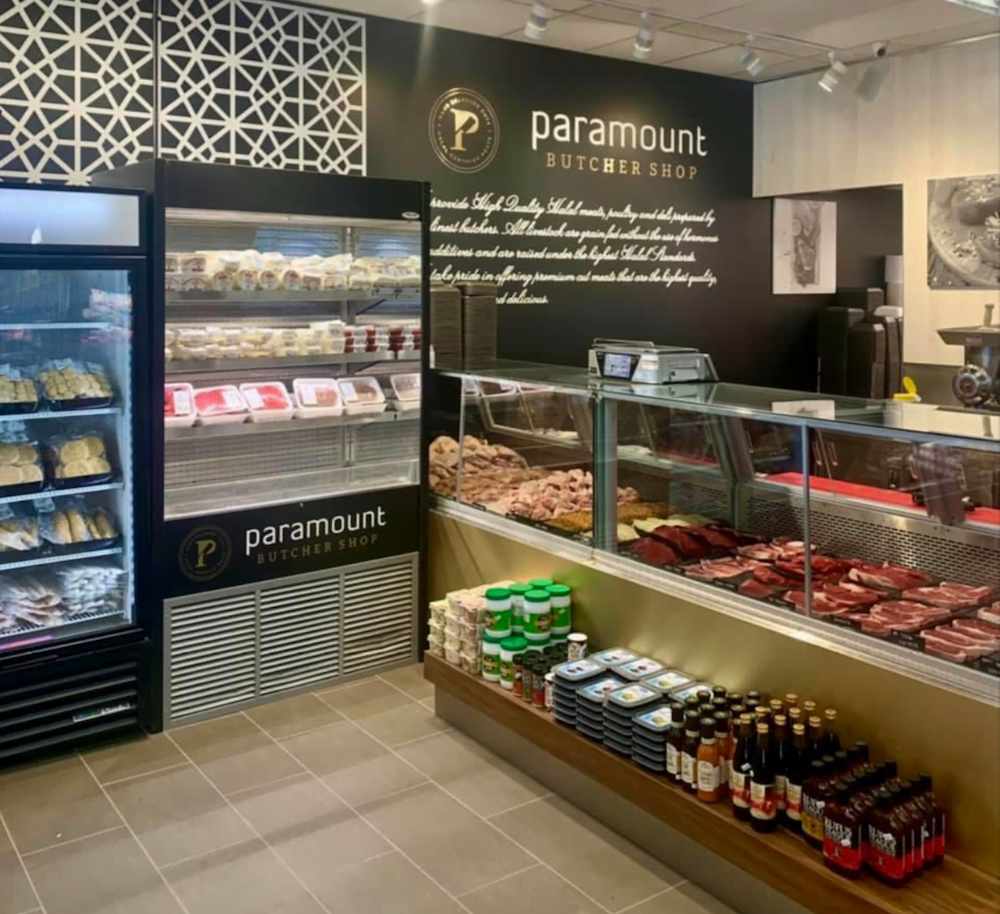
Paramount Butcher Counter at the Meadowvale Town Centre Circle. Photo: Google Images
Rabba Fine Foods describes it as a “scaled-down version” of a Paramount restaurant, featuring take-home menu items from the Middle Eastern restaurant chain. It also includes Halal poultry and deli options, complemented by an assortment of Paramount dips and spreads.
“Our business is in a constant state of flux and we’re happy to find in Paramount Fine Foods a partner that is nimble and, at the same time, committed to quality products and service,” said Rabba Fine Foods CEO Rick Rabba. “We’re determined to help our customers in whatever way we can and expanding this partnership with Paramount is an example of that commitment.”
In 2012, Paramount launched its Paramount Butcher Shop division and serious expansion began throughout North America in 2015, followed by entry into the Middle Eastern and European markets in 2016. It describes its offering as a blend of “premium cut meats to go with premium quality restaurant recipes from the Paramount Fine Foods restaurants”.
Retail Insider reported in December that Rabba and Paramount were partnering to open a prepared food offering called Rabba Kitchen — By Paramount in Toronto’s Regent Park neighbourhood. The company said it plans to roll out the concept in other stores in the near future.
RW&CO. Spring 2021 Campaign Features CBC Dragons, Small Businesses, and a Partnership with TED
RW&CO. Spring Campaign 2021
Canadian retailer RW&CO. is celebrating the beauty and resilience of the entrepreneurial spirit with its new Spring 2021 campaign.
Manjit Minhas and Lane Merrifield of CBC’s Dragons’ Den helm the campaign as mentors alongside 13 entrepreneurs from coast to coast. Furthering their commitment to community and innovation, the brand is also debuting a content hub in partnership with global organization, TED. The collection launched on February 22, 2021 in all RW&CO. stores across Canada and online at rw-co.com.
RW&CO. Spring 2021 “Ready to Reimagine”: The Future is Bright
This season, RW&CO. is paying tribute to local entrepreneurs who are daring to reimagine and reinvent their businesses for today’s realities. Supporting innovation, quality, and community has always been integral to RW&CO., so sharing its platform with other businesses was a natural fit.
“There is no better time to lead with purpose, test passion-driven concepts, inspire with creativity, and empower with community,” says Michele Slepekis, VP of Marketing at RW&CO. This is an initiative near and dear to the proudly Canadian brand – after all, RW&CO. started as a small, family-run Quebec venture too.
Manjit Minhas and Lane Merrifield are sharing the spotlight with 13 other Canadian founders including:
Milijours Studio (Jewelry and Leather Goods) – Marie-Anne Milijours, QC
“My biggest inspiration has to be those entrepreneurs I watched see this challenge, pivot their business, and are more successful than ever as a result,” says Merrifield on his fellow ambassadors.
RW&CO. Reimagines Workwear
Clothing for the Next Normal Embodying Spring by revitalizing the brand’s classic workwear DNA, the new collection is inspired by customers’ ever-evolving needs for versatility, ease, and comfort without sacrificing style. Both living and working at home is a reality for many for the foreseeable future, and this is reflected in the new collection with growing loungewear, casual, and versatile offerings.
RW&CO. Partners with Ted
The campaign is also the perfect springboard for a year-long partnership between RW&CO. and global organization TED. TED passionately believes in “the power of ideas to change attitudes, lives, and ultimately, the world”, echoing RW&CO.’s commitments to innovation and community. Beginning in March 2021, TED will further amplify these shared values through ‘Always on the Rise’, an RW&CO.-branded hub on the TED website that will feature content tailored for the RW&CO. community, giving customers a front row seat to globally-renowned speakers through TED Talks.
Accurate Shoe Sizing From Home Using Only a Smartphone
Xesto Fit app. Photo: Xesto
Computer vision startup, Xesto, has announced the launch of Xesto Fit, the first and only 3D foot sizing app that uses a smartphone to recommend shoe sizes across 150 brands.
The startup, which came out of the University of Toronto, has developed the technology to allow customers to scan themselves within 1.5mm accuracy in the comfort of their own home using their own iPhone FaceID camera. The customer takes four photos of each foot and in under a minute, Xesto creates 3D reconstructions of their feet. Xesto Fit allows shoppers to select their own size across 150 brands and growing, all free of charge. Xesto’s sizing app can be accessed directly from the App Store.
“Xesto will change shopping forever with smartphone cameras the way Uber changed transportation with GPS. Today’s 3D smartphone cameras are more powerful than ever, but their applications have been limited to unlocking phones, emojis and augmented reality filters. Xesto will turn your phone into a fitting room without you leaving your home.” said Sophie Howe, CEO of Xesto.
E-commerce purchases are expected to increase by 160 percent post pandemic, and as online sales increase, fit related returns increase as well. These returns decrease retailers margins while increasing waste. Xesto Fit reduces the environmental cost of e-commerce by sizing users accurately using an Apple device. The online footwear industry sees returns of approximately 40 percent and approximately 80 percent of online returns are due to poor fit, making the lack of personalized sizing tools a leading sustainability problem in the fashion industry. Xesto Fit eliminates size uncertainty, thus reducing the environmental impact of e-commerce.
Xesto was selected for the first Canadian Women Only Trade Delegation to South Korea in 2020, awarded Toronto’s Best Startup in 2019 (Timmy Awards), and in 2017 was named one of the 10 Canadian AI Start-Ups to Watch by Nuadox.
The app is available in the App Store and via Xesto’s website. To download the app or learn more, please visit https://xesto.io
Over the course of the past eleven months, a period in Canadian retail besmirched by the impacts of the pandemic, the industry’s landscape has become riddled with casualties. By and large, just about every sector has suffered from the fallout of government-imposed lockdowns and restrictions. Some have suffered more than others, the severity of the impacts ranging across a spectrum. Those most dramatically impacted, however, seem to be the operations of small and independent businesses, most of which have been paralyzed by significantly reduced traffic to their stores and a general lack of activity in the neighbourhoods that surround them. With limited opportunities to engage customers in the physical environment, Canada’s small business community has come under enormous pressure to evolve, lest they become devolved. A considerable portion of the evolution required involves the digitization of the retail operation and a broadening of the ways that are enlisted to communicate and interact with the consumer. And if any doubts remain concerning the enabling force of digital channels, there isn’t a better example of the ways it can help to transform a business than Athabasca-based women’s apparel boutique, Elle’s Closet.
Enhanced Digital Efforts
Founded in late 2013 by Michelle Bishop, the boutique carries an impressive selection of fashion-forward apparel for women, including everything from sweaters, hoodies and blouses to denim, loungewear and dresses, and a host of products in between. In addition, it also offers collections of swimwear, outerwear and footwear, as well as a range of beauty products, jewellery and other accessories. The assortment and selection that Bishop’s small shop boasts had allowed her to cultivate a loyal community of followers prior to the onset of the COVID-19 pandemic, and to grow exponentially in the short amount of time that she’s been in business. And, unlike many other stories that have been dominating headlines with messages of a more negative and discouraging nature, since rolling government-imposed lockdowns, social restrictions and protocols started to take hold across the country, her sales have more than doubled. It’s an incredible feat for the retailer servicing a community with a population of less than 3,000 people. And it’s one that the owner of the burgeoning boutique says was supported at the heart by enhanced and sustained digital efforts.
“I’ve been using social media to engage with our customers online for about five years, and really increased my efforts two-and-a-half years ago when the Elle’s Closet website was developed and launched,” she explains. “I became pretty active, posting multiple times every day. I thought I was using it really well, but in actuality, I wasn’t. It just wasn’t a focus of the business then. We were running our store in Athabasca as well as another in Edmonton. They were both doing well, and I was spending most of my time driving back and forth between the locations. I just didn’t have the time to focus on our digital communications. But then COVID hit, and I suddenly found that I had all the time in the world to focus on these channels and the number of ways that are available to engage and interact with the customer and grow the Elle’s Closet brand. Results have been incredible, significantly changing our focus and the way we run the business.”
The results of her brainy pivot, Bishop has managed to roll with the pandemic’s punches, leveraging social channels to support her loyal community of shoppers and the significant growth of her e-commerce business. And, according to a recent report published by the Canadian Federation of Independent Business, it’s a pivot toward the use of digital communication that many other small businesses are starting to recognize as a necessary one for them to make if they are to survive this brutal period and grow for the future. The report, titled ‘Connecting With Customers During the Pandemic’, finds that since the beginning of the virus’ spread, two in five (41 percent) small businesses have reduced in-person communication with their customers, while six percent stopped meeting with them entirely. As a result, in efforts to find ways to continue engaging with their clientele, half of small business owners (51 percent) anticipate a greater need for the use of digital communications over the coming year and beyond.
The report identifies significant shifts by small businesses in their start or increased use of email (48 percent), video conferencing (39 percent) and social networking platforms (32 percent) since the start of the pandemic in efforts to maintain communication and meaningful relationships with their customers. But, although digital channels are providing a means for small businesses to achieve this goal, the report also recognizes some of the challenges that are involved in implementing digital communication strategies. Among them, one in three (35 per cent) of small business owners say they don’t know how to adopt digital channels into their business, while nearly half (46 percent) say they are overwhelmed by the time and effort that’s required to monitor all of the communications and messages. They are challenges that are understood by Bishop. Despite them, however, she says that small business owners need to embrace this time and the disruption that’s occurring as an opportunity to try something new and add value to the experience they offer their customers.
“I realized as soon as repercussions of the pandemic started to impact our business that I really needed to focus more of my efforts on social media and begin leveraging those channels as effectively as possible,” she asserts. “I’m fortunate enough to have already developed an online presence prior to COVID-19. But, because physical traffic to my store has now pretty much vanished, nearly all of my activity and communication with customers is being done digitally. When you know which channels your customers are on, and you’re able to continue interacting with them and showcasing your product, the potential to grow your reach and broaden the awareness of your brand and offering is incredible.”
Interior of Elle’s Closet. Photo: Elle’s Closet Facebook
Outfit assembly image posted to Elle’s Closet Facebook page to generate engagement amongst followers. Photo: Elle’s Closet
The Power of Social Media
One of the staples of Bishop’s digital communication is Instagram stories. With an audience of nearly 50,000 followers – one that continues to expand every day – she’s able to continue engaging, informing and entertaining customers. Posting stories just about every day, Elle’s Closet customers receive frequent updates about new and existing product, allowing the retailer to continue driving interest in its offering and traffic to its website and e-commerce platform. In addition, Bishop also hosts an Elle’s Closet Facebook livestream shopping event every Thursday evening, during which clothes are modelled, style recommendations are suggested, and purchases are made. It’s all a reflection of the accelerated shift in consumer activity from physical store environments to online channels. Bishops says that at least 90 percent of Elle’s Closet’s business is happening through e-commerce, adding that, in addition to the shift in sales to online, her overall business actually started to grow as a result of her enhanced digital efforts.
In fact, the growth in online sales that Elle’s Closet began experiencing shortly after the onset of the pandemic was so significant and quick that she was forced to make changes to her business in order to sustain her escalating success. To support the shift and increase in her online business, Bishop decided to close her Edmonton location, and in June 2020 reinvested the money into the opening of a 2,000-square-foot shipping and receiving warehouse. The space has enabled Bishop and Elle’s Closet to cope with the increase in demand for her product. And, anticipating further growth, she’s already looking to upgrade and is currently exploring the construction of a 10,000-square-foot warehouse.
“My business has changed so much over the course of the past year,” she says. “The challenges that the entire industry has faced really made me stop and reevaluate where I was putting my money and the reasons that I was putting it into certain areas of the business. After a bit of reflection, it was pretty clear that there were some adjustments that were necessary in order for my business to grow with the increased demand. Our sales easily doubled over the past year. That success wouldn’t have been possible without our warehouse to hold products for customers who are ordering from all across the country.”
Exterior of Elle’s Closet in Athabasca. Photo: Google Images
Hyper-Personalized Experiences
In addition to the tremendous sales that Elle’s Closet has generated during the pandemic period, Bishop says that the digital channels have provided her with the opportunity to hyper-personalize her brand and the experience that she offers customers. She describes it as the perfect platform for merchants to show customers exactly who they are, representing themselves with transparency in order to resonate with their social media audiences and engage them in ways that may not have been considered previously. And, the key to social media success, she says, is to simply be yourself.
“With respect to the Instagram stories that I post and the livestreams that I host, I’m 100 percent me,” she explains. “If you’re genuine in your approach and presenting yourself as who you truly are, you’ll give yourself and your business the opportunity to meaningfully connect with people. My customers know about my children and my husband, because I share things about my life with them. Customers really welcome that level of honesty and openness and appreciate the fact that there’s a more intimate and personal relationship that’s being built, as well as simply knowing that there’s a real person behind the brand and the product.”
Preparing for Future Growth
The incredible growth that Elle’s Closet experienced throughout 2020, growth which continues unabated today, is certainly testament to the transformative potential that’s posed by channels of digital communication and the benefits that could result for businesses. However, it’s more so an inspiring example of ingenuity, and a reminder of the capacity of small business owners across the country to cope with change and overcome adversity. With respect to the savvy and innovation shown by Bishop, she says that she’s incredibly proud of the choices that she’s made for her business. But she isn’t going to dwell on her recent achievements, explaining that she’s got one eye on the future already.
“There will come a day soon when people will start to feel more comfortable and will go out to shop at their favourite stores again. And we’ll be ready to welcome our customers back to the physical Elle’s Closet environment when that happens. A piece of my heart will always be in the physical store which will remain available for our local customers. But what the pandemic has taught me is that the greatest potential for the growth of my business is online. That’s where I’m going to be putting the majority of my focus, continuing to build and engage with the Elle’s Closet community on social media and expanding our presence beyond Canada and into the United States. I see so many possibilities to continue growing and developing the Elle’s Closet brand and improving on the experience we provide for our amazing base of current customers, as well as those who might not be aware of us yet.”
An off-schedule podcast discussion with David Nagy, Founder of Calgary-based eCommerce Canada. Craig and David discuss the eCommerce marketplace, challenges, and the pitfalls new entrants will encounter competing online.
The Weekly podcast by Retail Insider Canada is available on Apple Podcasts, Stitcher, TuneIn, or through our dedicated RSS feed for Overcast and other podcast players.
Subscribe, Rate, and Review our Retail Insider Podcast!
Shopping centres across the country have been undergoing a transformation in recent years to adapt to the changing trends in consumer behaviour and that transformation has become increasingly more important for secondary malls.
The Wetaskiwin Mall, owned by Calgary-based Avenue Living Asset Management, and located just outside of Edmonton, is a perfect example of what’s happening in Canada as landlords adjust to the changing realities of the retail marketplace.
Leasing efforts and strategy are focused on repositioning the shopping centre and breathing new life into an older property.
Ben Volorney
Ben Volorney, Principal with commercial real estate firm Avison Young, which is leasing the Wetaskiwin Mall, said prospective tenants want to be part of a larger story.
“If we’re speaking to applicants, if it’s a medical user or an entertainment type user or anything really that can bring some life or bring a bit of activity back to an older mall, we typically make it about strengthening an existing community hub,” said Volorney.
“A lot of these older malls that were built in the mid-80s are at a pretty critical point in their lifespan. Some of them are successfully repositioned to have a strong medical component. Some of them have added density by way of multi-residential or a transit hub and some fade away unfortunately.
Wetaskiwin Mall sign. Photo: Wetaskiwin Mall
“What we want to do when we get involved in a mall is tell a bit of a story about how we’re trying to turn a corner and to almost bring a mall back to a place of relevance where it certainly can get to. But it gets there with a vision and that usually involves having groups that are like-minded find a reason and want to reposition the assets.”
Volorney said many of the older enclosed malls are being redeveloped to attract people back to the shopping centre.
For the Wetaskiwin Mall, in particular, the idea is to create a community hub with medical-related and entertainment/experiential-related tenants.
The Wetaskiwin Mall is a major regional shopping centre with exceptional exposure to Highway 2A and convenient access from the surrounding townships. The primary trade area extends north and south along Highway 2A to capture a population base just over 90,000 people. Wetaskiwin Mall is being repositioned as a retail, service, and medical destination for the trade area. Anchor tenants include Sport Chek, Scotiabank, The Brick, Giant Tiger, Alberta Health Services, and Dollarama.
“Once things start to turn the corner, we’re confident that certain gathering points will continue to thrive,” said Volorney.
1 of 3
Wetaskiwin Mall. Photo: Wetaskiwin Mall
Google Map of Wetaskiwin Mall and surrounding area
Google Map of Wetaskiwin Mall and surrounding area
“Retail has changed and we’ve seen it accelerate obviously in the last 12 months with COVID and because of that a lot of these malls are in a position now where they have to truly reinvent themselves. Footprints are changing. A lot of retailers are, I like to use the term, right sizing versus downsizing . . . But as far as these enclosed malls, some of them are kind of past the point of no return where they may need to be completely redeveloped. A lot of them if they’re well situated, if they’re central in the community already and there’s an opportunity to either add density or add something experiential or get something that brings people and gives them a reason to come there, like medical or post-secondary educational, then a lot of these malls have a lot more years added to their lifespan which is what we’re trying to do.”
Jordan Martens, Director of Commercial Asset Management with Avenue Living, said the company’s agenda at the Wetaskiwin Mall is to have a health and medical focus.
Jordan Martens
“In a perfect world we pull in family doctors, pharmacy. We’ve got AHS (Alberta Health Services) already in the mall with their home care unit. Then we double down on that and we’re getting vibes that in time we would be probably the preferred choice for unloading some stuff out of the hospital so radiology, injury and some blood work potentially,” said Martens.
“It’s great for medical because it’s got a ton of parking. Wide aisles. Big clear space. The ease of getting medical at scale, kind of a one-stop shopping.
“To be honest, every interior mall is looking for medical as a bit of a saviour. It’s become clear that the retail landscape, especially with COVID, has really changed. The pace of change has accelerated. So medical is a great solution.”
The Wetaskiwin Mall, which was built in the early 1980s, is 158,000 square feet. Avenue Living bought the mall in 2017.
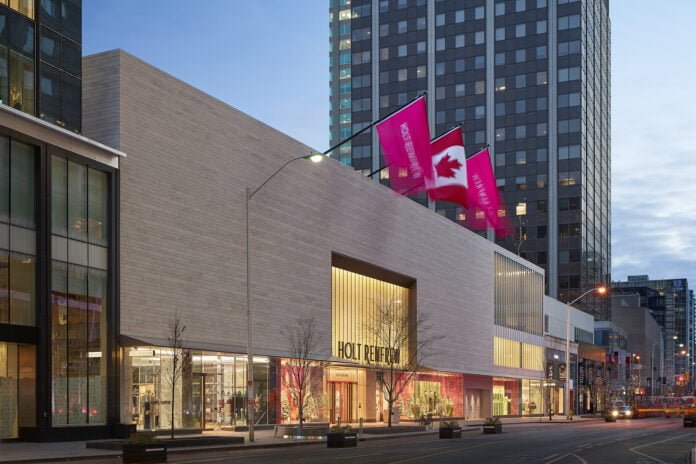
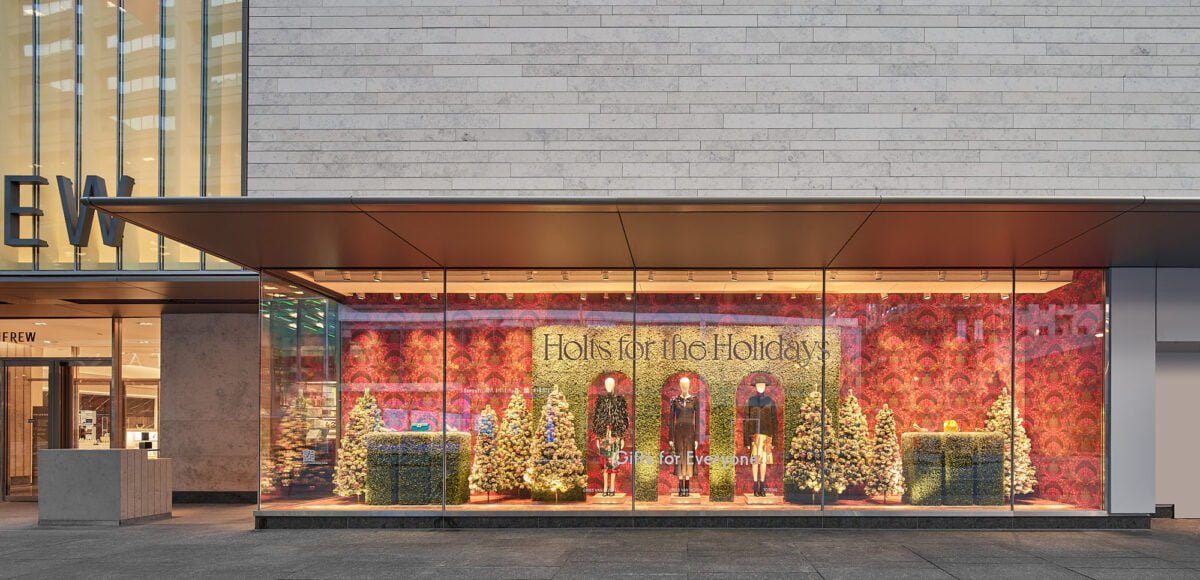
Renovated Holt Renfrew facade on Bloor Street. Photo: Doublespace Photography
Toronto-based luxury retailer Holt Renfrew recently unveiled completed renovations to its 190,000-square-foot flagship store at 50 Bloor Street West, which now features a new facade as well as 12 main floor concessions for fashion, accessory and jewellery brands. It’s all part of the Mink Mile flagship’s multi-year transformation that now includes a luxury boutique hall similar to leading department stores in Europe and Asia. It also marks another milestone to Holts’ multi-year investment as it spends more than $400 million to upgrade its fleet of stores.
New Bloor Street Facade
The recently-completed limestone facade to the Bloor Street store creates an overall modern look, spanning 270 linear feet over the three original buildings that make up the flagship store. Bronze canopies span the expanse of the store and an 18-foot-high glowing ‘lantern’ over the store’s new recessed exterior entry room at its main entrance features the Holt Renfrew branding. The exterior entry room also includes a new valet service podium for customers. The Holts Café on the store’s mezzanine level features 23-foot-high, energy-efficient windows facing onto Bloor Street.
Twelve-foot-high windows span the facade of the store, featuring Holt Renfrew’s displays and campaigns. Flanking each end of the Bloor Street facade are concessions for Saint Laurent and Miu Miu, both featuring exterior windows as well as branding. Holt Renfrew’s iconic magenta flags, along with the Canadian flag (and likely a Pride flag in the summer), crown the new facade.
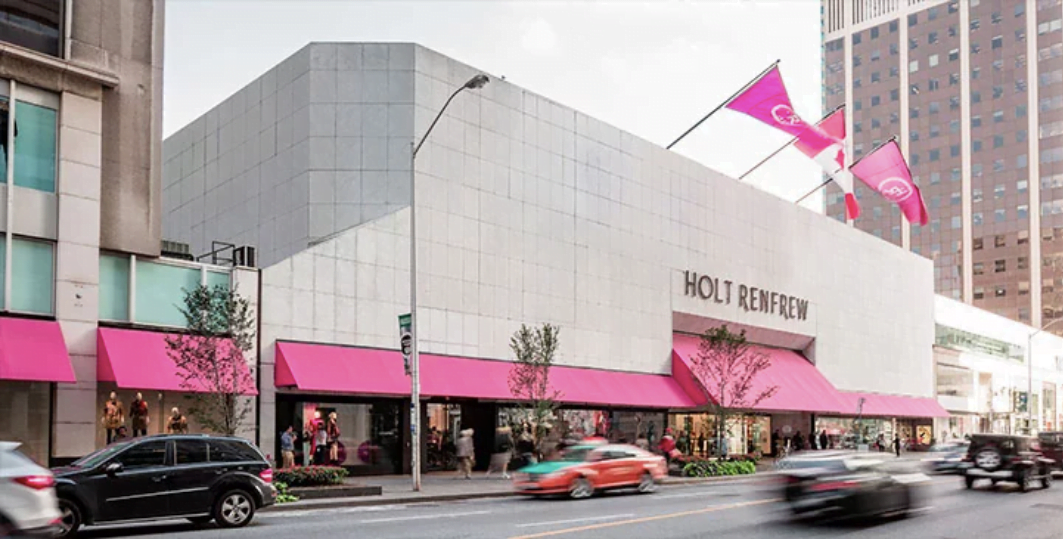
Renovated Holt Renfrew facade on Bloor Street. Photo: Doublespace PhotographyFormer Holt Renfrew facade on Bloor Street. Photo: Holt Renfrew
Architecture and design firm Gensler was responsible for designing the new facade that cost millions of dollars to install. Sustainability was a focus, including using enhanced levels of thermal insulation exceeding the Ontario Building Code and reducing the store’s carbon emissions. Over 80% of construction waste was recycled during the renovation of the store.
The facade’s overhaul commenced in May of 2019 and it was completed in the fall of 2020 — we’ve been waiting for lockdowns to lift in order to report on this story so that readers could see inside the store for themselves.
Completion of the Street Level Interior Renovation
We have been waiting since November 2020 to run this article, and we’re still not 100% sure if retailers in Toronto will be permitted to reopen stores to the public on March 8 as has been announced tentatively. The following is some of what visitors will get to experience when stores are permitted to reopen.
In late 2019, half of Holt’s main floor at 50 Bloor Street West in Toronto was shuttered temporarily for the construction of several luxury boutiques. One-by-one, boutiques began to open in 2020 including some new brands that were not formerly in the store.
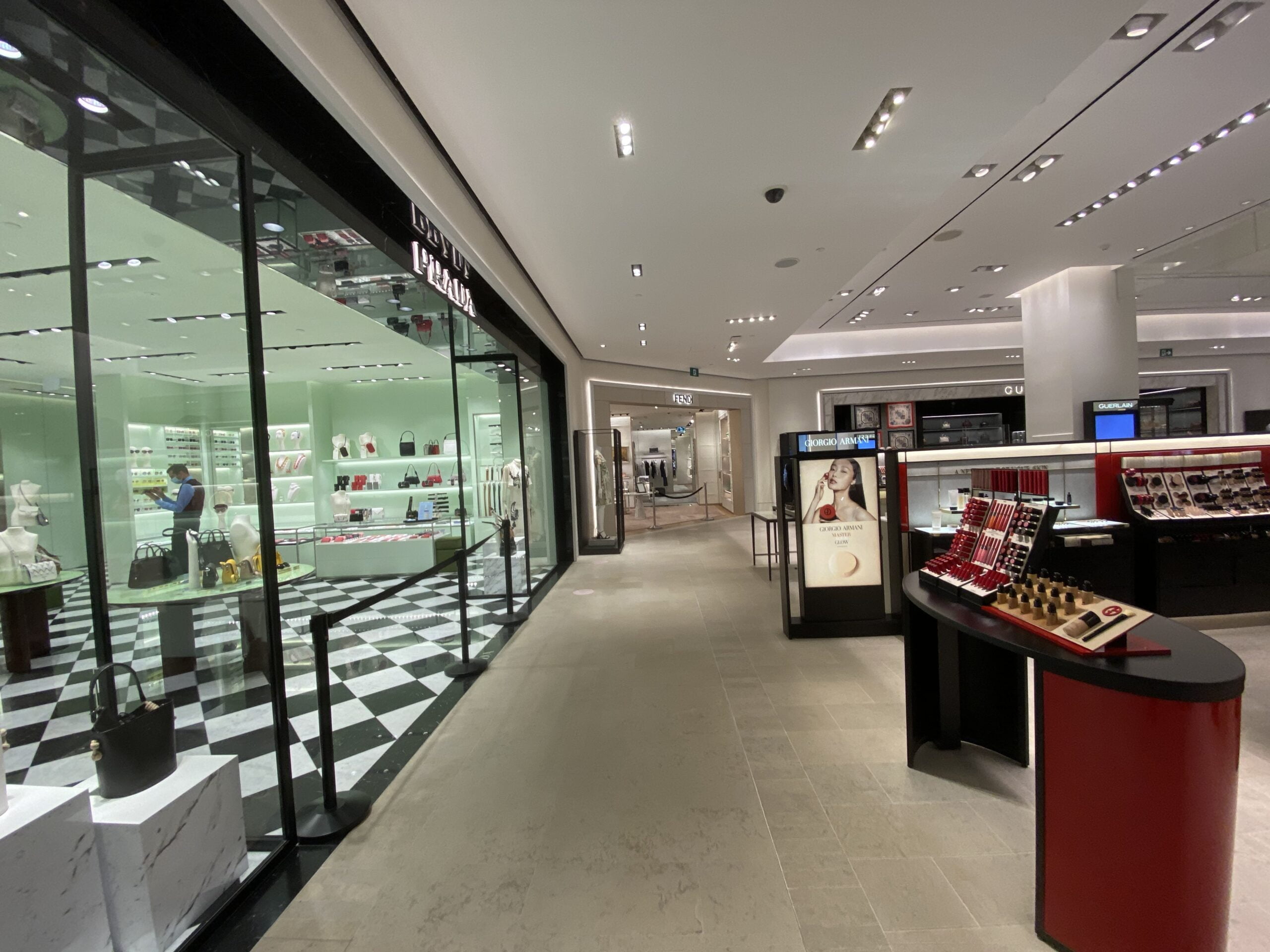
The other boutiques on the main floor are dedicated to fashion, bags, accessories, and jewellery. Italian luxury brand Gucci unveiled an impressive space on Holt’s main level next to a ‘world of Fendi’ that Retail Insider reported on in January of 2019. A Dior accessory concession opened next to Gucci, showcasing Dior’s handbags and accessories — both Gucci and Dior also operate large standalone flagships nearby on Bloor Street West.
Boutiques for Prada, David Yurman, Balenciaga, Burberry, and Bulgari also opened, and were joined by Miu Miu and Bottega Veneta in January of 2020.
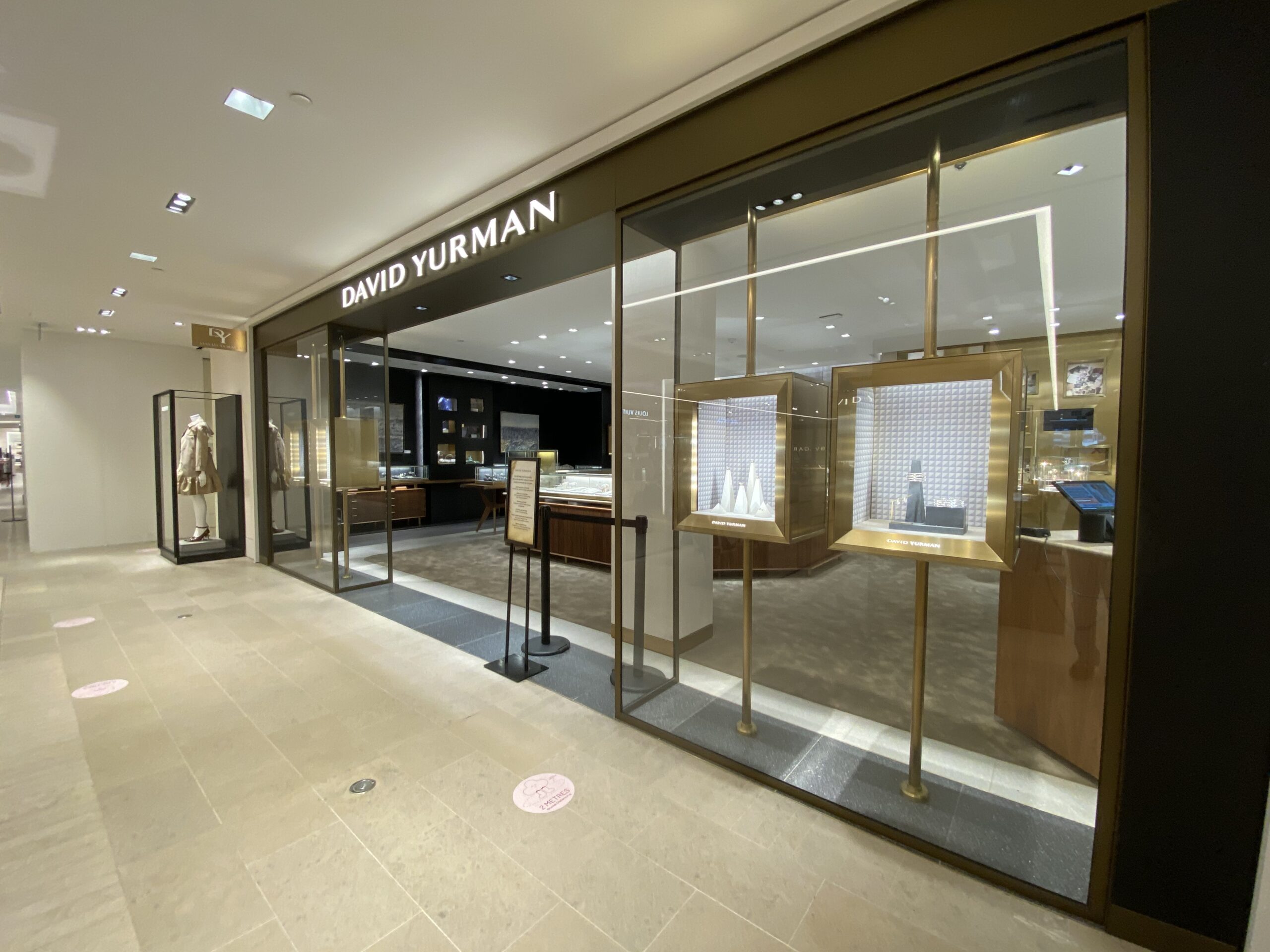
The David Yurman boutique, which encompasses 1,649 square feet, features the brand’s full assortment of jewellery designs for women and men, including wedding pieces. The boutique includes a sculpture titled ‘Angel’ and an oversized painting by Sybil Yurman, alongside a heritage wall that “visually narrates the Yurmans’ journey from art to jewellery,” according to the company. The men’s area features a blackened steel entry portal, and the wedding area includes a floral panel of trilliums — the official flower of Ontario. David Yurman’s only standalone Canadian storefront is at Toronto’s Yorkdale Shopping Centre in a 1,625 square feet space. The Vancouver Holt Renfrew concession was the largest shop-in-store in the world for David Yurman at 1,226 square foot when it opened in late 2016. David Yurman opened a Montreal concession at Holt Renfrew Ogilvy in the spring, spanning about 1,200 square feet. The Bloor Street Holt Renfrew concession is now the largest David Yurman space in Canada and could very well be the largest shop-in-store concession for the brand globally.
Main floor David Yurman boutique at Holt Renfrew Bloor Street
Main floor David Yurman boutique at Holt Renfrew Bloor Street
Main floor Chanel beauty boutique at Holt Renfrew Bloor
Main floor at Holt Renfrew Bloor Street
Escalators/beauty on the main floor
Prada, Fendi, and Gucci boutiques on the main floor
The Balenciaga boutique, which occupies an expansive space along the eastern part of the newly renovated main floor, is another ‘world of’ boutique for the Balenciaga brand. Included is a range of accessories and footwear as well as ready-to-wear fashions for both men and women. It’s the second ‘world of’ Balenciaga concession for Holt Renfrew, following an open-concept space that debuted at the Vancouver Holt Renfrew flagship at the end of 2018. Balenciaga also opened its first standalone flagship at Toronto’s Yorkdale Shopping Centre in December of 2019.
Burberry struck a deal with Holt Renfrew to occupy an open-concept space on Holt’s main level, which faces towards the new Balenciaga and David Yurman boutiques. A range of Burberry accessories are featured in the space.
Italian luxury jeweller Bulgari opened a beautiful boutique on Holts’ main level, carrying an expansive assortment of jewellery as well as time pieces and accessories. It’s the second Bulgari boutique in Toronto — a 1,930-square-foot Bulgari opened at Yorkdale in late 2014 and it continues to remain the only standalone unit in Canada. In February of 2018, Bulgari also opened a 450-square-foot concession at Holt Renfrew in Vancouver in its expansive accessory hall. Staff in the Holt Renfrew Bloor Street Bulgari shop said that the Toronto storefront is considerably larger than the Vancouver boutique at more than 1,000 square feet.
Accessory concessions for Miu Miu and Bottega Veneta also opened on the main floor of Holt Renfrew’s Bloor Street flagship. Miu Miu operates shops in several Holt Renfrew stores, as does Bottega Veneta which has concessions at Holts’ Vancouver flagship as well as at the recently-completed Holt Renfrew Ogilvy in Montreal. Bottega Veneta also opened its only standalone Canadian storefront at Toronto’s Yorkdale Shopping Centre in November of 2018, as featured in Retail Insider. Both the Yorkdale and Holt Renfrew Bloor Bottega Veneta boutiques were built by Elevate Build Inc..
In 2019, luxury brands Saint Laurent and Fendi both opened ‘world of’ concessions on the new main floor luxury hall at Holts Bloor, with each spanning approximately 3,000 square feet. As per the ‘world of’ concept, both feature the brands’ full range of fashions for men and women as well as accessories, bags, and footwear.
Main floor Balenciaga concession boutique at Holt Renfrew, 50 Bloor St. W. in Toronto. Photo: Craig Patterson
Main floor Balenciaga concession boutique
Miu Miu and Bulgari concession boutiques
Main floor Dior accessory concession
Main floor beauty area
Burberry accessory concession
Burberry accessory concession
Dior beauty and the Saint Laurent 'world of' concession
Holt Renfrew as King of the Concessions in Canada
Holt Renfrew has adopted a concession model that involves major brands occupying space in its stores with dedicated areas carrying a broader assortment than in a typical department store. The model involves Holt Renfrew being both a retailer and a landlord as it hosts name brand boutiques that are operated by the specific brands. Parent company, Selfridges Group, has created similar luxury halls in its Selfridges stores in London, UK, as well as at Brown Thomas in Dublin, Ireland and at De Bijenkorf in Amsterdam, Netherlands. The model is also popular in Japan and in other parts of Asia where department stores continue to flourish unlike in North America generally.
Renovations to the Bloor Street store have been ongoing for several years. A renovated footwear hall on the mezzanine level reopened in the fall of 2018, and the new concourse level beauty hall was unveiled in the spring of 2019. The next renovations to the store are expected to include changes to the women’s designer floor on the second level as well as the addition of a newly-expanded women’s contemporary floor below the mezzanine in about 30,000 square feet of space not currently used for retail. A new 25,000-square-foot, third level men’s floor is also anticipated, which would coincide with the closure of the 16,500-square-foot standalone Holt Renfrew men’s store nearby at 100 Bloor Street West that opened in the fall of 2014.
It’s all part of a $400 million investment in the Holt Renfrew chain that is seeing the retailer’s stores transformed into showpieces. The 190,000-square-foot Vancouver Holt Renfrew flagship at CF Pacific Centre, which was the top selling unit in the chain before the pandemic, has seen a remarkable transformation over the past three years that includes 87 vendor shops — nearly double that of only a couple of years ago. That includes an expansive ground-floor luxury hall that houses an impressive roster of concessions for brands such as Louis Vuitton, Tiffany & Co., Balenciaga, Celine, Prada, and Chanel — Chanel’s concession is the largest at more than 5,000 square feet.
Holt Renfrew’s 130,000-square-foot Yorkdale Shopping Centre store in Toronto also saw a transformation that includes the openings of ‘world of’ concessions for brands including Gucci, Fendi, and Dior, which were followed by a world of Burberry boutique and a fashion boutique for Italian brand Brunello Cucinelli, which moved into the former Gucci accessory space, as well as a much larger Christian Louboutin footwear and bag concession nearby. In Montreal, the 250,000-square-foot Holt Renfrew Ogilvy store saw a spectacular overhaul that included concessions for many of the world’s leading luxury brands.
Holt Renfrew has embraced the concept of clustering and is said to be seeing strong sales productivity in its stores as a result. Rather than buy designer brand collections itself, Holt Renfrew’s concession brands are able to determine what products to offer to local consumers and as a result, a greater depth of product is available, as is the opportunity for special orders directly from brands. It’s a model seen less in competitors Saks Fifth Avenue and Nordstrom in Canada, both of which act more as a retailer in their designer offerings.
Ultimately, Holt Renfrew’s Bloor Street flagship overhaul is good news for the Bloor-Yorkville area. The clustering of luxury brands will attract shoppers and as a result, the Bloor Street Holt Renfrew is expected to see considerable sales gains as shoppers begin to return amid pandemic lockdowns. At the same time, some question if brands such as David Yurman and Bulgari will consider opening street-front retail spaces in the Bloor-Yorkville area after opening inside of Holts — Holts is said to have offered inducements to its concession partners to open boutiques within the Bloor Street flagship that include funding tenant build-outs as well as taking a percentage of sales as rent.
Renderings of what could have been. Renderings: Allies and Morrison
1 of 4
Rendering of the conceptualized Holt Renfrew flagship store at 60 Bloor Street West. Image: Allies and Morrison
The 60 Bloor Holt Renfrew proposal, showing the new store on the left with a walkway heading north to 'Cumberland Square. Image: Allies and Morrison
Another shot of the Cumberland Square proposal, including what could have been a corner Holt Renfrew stores at 60 Bloor Street West. Image: Allies and Morrison
Overhead shot of the 60 Bloor Holt Renfrew store proposal. Image: Allies and Morrison
What Could Have Been
A proposal several years ago by neighbouring landlords could have seen a large multi-level Holt Renfrew store constructed on the northeast corner of Bloor and Bay Streets at 60 Bloor Street West as part of a development called Cumberland Square. The proposal would have been part of a transformation of the block and because of various reasons, the mega project was shelved. Renderings above are from Allies and Morrison which had a rather compelling proposal, which would have seen the existing Holt Renfrew store demolished. Ultimately, landlord Morguard renovated the existing 12-storey office building at 60 Bloor Street West, which until recently housed a three-level, 17,000-square foot Gap store.
Rendering of the newly-renovated Hudson's Bay store and office building extension. Rendering: Menkes Shooner Dagenais LeTourneux
Renderings and plans for a proposed redevelopment of the Hudson’s Bay flagship department store at 585 Ste-Catherine Street West in downtown Montreal have been revealed. The redevelopment will include a downsizing of the retail portion of the store as well as the addition of an office tower. The Hudson’s Bay proposal is being evaluated by Montreal City Council this week, and images were first showcased in French language news publication La Press on Saturday.
Included in the plans is a smaller and renovated Hudson’s Bay department store on the lower levels of the complex. The 655,000-square-foot store is proposed to be downsized to about 295,000 square feet of retail space over five levels, spanning from the basement level to the store’s fourth floor. The floor plates will be a bit smaller than what the current store features — the back end of the building will be demolished for the construction of a new 25 storey office building that will rise behind and over the historic structure.
1 of 3
Side rendering of the newly-renovated Hudson's Bay store and office building extension on Union Avenue. Rendering: Menkes Shooner Dagenais LeTourneux
Internal rendering of the newly-renovated Hudson's Bay office building extension. Rendering: Menkes Shooner Dagenais LeTourneux
Rendering of the newly-renovated Hudson's Bay store and office building extension, Ste-Catherine Street. Rendering: Menkes Shooner Dagenais LeTourneux
The Original ‘Colonial House’ storefront facing Ste-Catherine Street will be restored — the four-level building, built in 1891, operated for years as an upscale Henry Morgan department store. Plaster removal on the facade will reveal some architectural elements not seen in almost 100 years, according to the application. Morgan’s expanded over the years in phases including an eight level expansion in 1923. The most recent expansion was a rather unattractive addition in 1964 at the back of the building, facing Boulevard de Maisonneuve. That back end of the Hudson’s Bay store had been slated for a different type of redevelopment about five years ago — in 2016, Hudson’s Bay announced that Saks Fifth Avenue would open a 200,000-square-foot store in the back-end extension though plans were subsequently shelved.
The updated redevelopment project will add a 25-storey terraced office tower, standing at 510 feet and spanning 678,000 square feet, as well as office space on the fifth and sixth floors of the existing Bay store. A terrace above the four level Colonial House component will become an amenity for occupants. Also included will be 116 parking spaces over three underground levels, 287 bicycle parking spaces on street level with showers in a basement facility. Architectural firm Menkes Shooner Dagenais LeTourneux is working on the project.
Sources had said last year that the application could have included a residential component as part of the redevelopment, though that’s not part of the current plans.
The Hudson’s Bay Company purchased Morgan’s in 1960, and the company operated until 1972 when the Montreal flagship was converted to La Baie. Morgan’s was considered to be the most upscale large-format department store chain in Canada in years past and it operated 11 stores at its peak in the Montreal and Toronto markets and was a notable seller of women’s European couture.
1 of 2
View of the newly-renovated Hudson's Bay store from Sainte-Catherine Street. Rendering: Menkes Shooner Dagenais LeTourneux
Rendering of the newly-renovated Hudson's Bay office building extension. Rendering: Menkes Shooner Dagenais LeTourneux
The smaller renovated Hudson’s Bay store would be part of the retailer’s updated strategy that will integrate its physical retail with an expanded online presence that includes an online marketplace for third-party vendors as well as offerings from Hudson’s Bay itself. One source said that they expect Hudson’s Bay to continue to innovate as it seeks out new vendors as part of its overall brand matrix. Luxury fashion department The Room, currently located in Bay stores in downtown Toronto and Vancouver, could be added to the Montreal store as well.
In October of last year we reported that the Hudson’s Bay Company had launched a real estate division with a goal of capitalizing on the value of its properties. It’s unclear if a similar redevelopment of the Vancouver Hudson’s Bay store could also be at play — a prior La Presse report noted that brokerage CBRE was listing both buildings for sale. In years past, the massive Hudson’s Bay flagship store at the corner of Queen Street and Yonge Streets was also set for redevelopment according to sources, prior to being acquired by Cadillac Fairview for $650 million in early 2014 for the addition of a Saks Fifth Avenue store on the Yonge Street side. The downtown Winnipeg Bay flagship shut forever in November and its future is uncertain, given its lack of value compared to the downtown Bay stores in other cities.
Hudson’s Bay is the last remaining traditional department store in downtown Montreal. At one time, large storefronts for Eaton’s, Simpsons and Ogilvy lined the street — Holt Renfrew merged with Ogilvy last year to create a large luxury store now known as Holt Renfrew Ogilvy, and the former Simpsons building at 977 Ste-Catherine Street West is now occupied by a La Maison Simons store and a theatre.
1 of 3
Aerial rendering of the newly-renovated Hudson's Bay office building extension on the Sainte-Catherine Street side. Rendering: Menkes Shooner Dagenais LeTourneux
Aerial rendering of the newly-renovated Hudson's Bay office building extension facing west. Rendering: Menkes Shooner Dagenais LeTourneux
Aerial rendering of the newly-renovated Hudson's Bay office building extension. Rendering: Menkes Shooner Dagenais LeTourneux
The redevelopment of the downtown Montreal Hudson’s Bay store is part of an impressive rejuvenation of the area. Phillips Square, across from the Bay store, is also seeing a renovation as is Ste-Catherine Street itself which is seeing a multi-year overhaul. The Maison Birks flagship jewellery store saw a renovation and the addition of a boutique hotel in 2018 and the nearby Montreal Eaton Centre has also seen a transformation that includes a Time Out food hall and a recently-opened Uniqlo flagship store.
Updates in and near Hudson’s Bay are expected to bring more shoppers to the immediate area, which will create competition with retailers several blocks westward including Holt Renfrew Ogilvy and Harry Rosen.
By shrinking the size of its retail spaces, Hudson’s Bay could be giving up an opportunity to create interesting experiences that would draw shoppers in. In parts of Europe and Asia, very large department stores are seeing success by offering significant food and beverage offerings, not to mention a wide range of top brands and other attractions. Selfridges and Harrod’s in London, as well as Galeries Lafayette in Paris, all see annual sales well surpassing a billion dollars. The same is the case with several large department stores in major Asian cities which house brand concessions and other offerings that make them destinations.
In North America, the department store concept is no longer relevant due in part to cost cutting, mergers/takeovers, and a general lack of investment into what made department stores must-visit places in the early to mid 1900s. Shopping centres, direct to consumer brands, category killers/off-price retailers, and the internet also contributed to the downfall of department stores on this continent. In years to come, shopping centres are expected to continue to dominate in terms of housing brands in their own spaces while creating experiences. And already, landlords are saying that they no longer need large department store anchors to create a compelling retail destination as was the case in years past.
A new survey by SOTI, a provider of mobile and IoT management solutions, finds that the COVID-19 pandemic has radically changed consumers’ expectations for retailers and accelerated online shopping trends.
According to the global research report commissioned by SOTI, From Bricks to Clicks: State of Mobility in Retail 2021 Report, in order for retailers to stay competitive in the new normal and excel, there needs to be a more efficient and seamless return process, delivery times need to be faster, and there needs to be better protection of personal and payment data.
Ryan Webber
Also, an expert in the area of e-commerce, David Nagy, Founder of eCommerce Canada, is sounding the alarm bells about the already over-saturation in the market of online retailers.
“Speed and transparency are just as critical as user interface and inventory,” said Ryan Webber, SVP of Enterprise Mobility, SOTI. “This requires significant backend infrastructure and mobile tracking to create a seamless consumer experience. Our advice to retailers is to pay closer attention to their consumer experience and how they can track and receive the item they purchase, as it is just as important as the item itself. If the past year has taught us anything, it is that having a mobile strategy is business-critical.”
Canadian results from the survey show:
82 percent are comfortable using any delivery options from home/convenient location;
70 percent are expecting any safety features implemented in-store for the pandemic to remain post-pandemic;
67 percent want to know where their order is from the moment they order it until it’s in their house;
66 percent expect any payment features implemented for the pandemic to remain; and
65 percent believe the returns processes should be more automated to make the experience faster.
Canadian results were higher than those overall for the following:
47 percent are more comfortable with contactless ‘tap’ payments post-pandemic;
29 percent believe the pandemic will overtake retailers who don’t master the delivery experience; and
24 percent said they would like sales associates to use in-store price and stock-check devices to help choose the right product.
“The consumer expectation experience has fundamentally shifted. Obviously the pandemic has caused a huge impact,” said Webber. “What we’re finding the biggest change is around the customers adopting this new online e-commerce experience. What’s interesting is the impact it has had on retail across Canada and how they’ve had to adjust to it.
“It’s all around the modernization of the customer experience and the modernization of the actual retail environment itself. There was a huge investment in technology in 2019 in North America straight across the board and what we found with the customers is they had plans to adopt a more omni channel experience that would incorporate a seamless experience for the user going online and shopping online when they come in the store. But what happened with the pandemic is that it rapidly accelerated that change and through that rapid change it created a lot of potential gaps. What I mean about gaps is around the technology that they were using.”
Calgary-based eCommerce Canada was founded by e-commerce entrepreneurs with more than 50 years of experience, whose companies have directly sold more than $100 million of goods and whose clients have exceeded $1 billion in internet sales. Its purpose is to help companies in their online and digital journey in the marketplace.
David Nagy
Nagy, with more than 15 years in the area of digital consulting, made his mark as one of the founders at LiveOutThere.com in 2009. By 2012, LiveOutThere was one of Canada’s fastest growing businesses employing over 50 people. Nagy has led projects with notables such Virgin Mobile, HBO Comedy, General Motors, Rocky Mountain Soap Company, Livify, and many others. As a coach, consultant, trainer, and keynote speaker, he has worked with organizations such as Canada Post, Global Affairs Canada, Digital Mainstreet, HRIA, and more.
“Right now we’ve overpopulated the space already. Consumer demand across the board, if you combine bricks and clicks, has certainly not grown over the last 12 months. We are seeing an obvious and natural deviation or shift to internet shopping and I think that’s normally to be expected,” said Nagy.
“But putting everyone on the internet is fundamentally diluting everyone’s profit opportunity and is impacting the healthy, resilient businesses that will be there. Everybody is racing into this thing without understanding what that means. One of the metaphors that I would give is if I walked out on Stephen Avenue and I saw eight cookie shops within line of sight, there’s no fathomable way that I would open up another cookie shop, is there? But online we do that every single day. Online the barrier to entry is so low and the belief that the opportunity is so great, with no cost against it, is so high that everybody just rushes headlong into it with no competitive analysis of trying to figure out how this is going to work.
“So what we’re doing is creating this overpopulation of insignificant businesses that don’t have the financial wherewithal really to scale or to create jobs or to contribute positively to the economy. And I don’t expect them to be here two or three years from now. There’s going to be a mass culling at some point.
“Even at $29 a month, there’s no making money just because I have a website. Building websites is fundamentally easy. but selling things on the internet is hard. There will be a massive attrition at some point and that attrition will be positive because it will allow more mature, more resilient and more financially resilient businesses to acquire assets for pennies on the dollar in a way we never have before. When you get a mass wave of kind of insolvencies, all of a sudden those databases, those websites, those website domains, maybe some of the talent, maybe some of the decent people that work for a small web company, will be on the market and they’ll be cheaper than they have been before.”