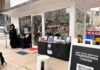
Canadian investors in Miniso stores are suing Miniso’s Chinese parent company as well as those involved in the Canadian division. The investors are also protesting the Chinese company’s actions amid struggles following COVID-19 shutdowns. Recently franchisees in Toronto held a protest in front of the Queen Street Miniso store, making a variety of claims that the company is harming investors as well as other claims of fraud.
The value-priced Chinese Miniso variety chain, which the company positions as being ‘Japanese’, entered Canada in 2017 with plans to open about 500 stores over five years. That expansion hit a snag in late 2018 when Miniso’s Chinese division filed to put the Canadian division into bankruptcy amid claims of misdeeds. Miniso subsequently stated that agreements were reached to keep Miniso a going concern in Canada, though in the background issues persisted and now a group of Canadian investors is saying that the Chinese parent company is trying to put them out of business.
Investor protesters recently held up signs with slogans such as “Miniso took all my money”, “Fair treatment for investors”, “Miniso return my money”, and “Miniso has no conscience”. The investors are saying that Miniso’s actions have led to significant financial losses stemming from a questionable investment scheme.

In March of this year, the investors for 63 of Miniso’s franchised stores in Canada filed lawsuits in British Columbia against defendants which included Miniso’s parent company in China as well as the Canadian division which solicited the investors with promises of profits. That includes Tao Xu of Richmond BC who is the director of Miniso in Canada as well as several of his family members and associates who reside in the Vancouver suburb of Richmond.
In the lawsuits, the franchisees noted that day-to-day operations were to have been handled by Miniso Canada and that all product in stores would be supplied and branded by Miniso. Investors, who would pay a license fee as high as $100,000, would own 49% of a store while Miniso Canada would own 51%. Investors would be responsible for covering costs such as any store renovations while being obligated to only do business with Miniso Canada.
The initial ‘cooperation agreement’ was reached in October of 2016 where products and store fixtures would be supplied to the new Canadian Miniso operations. Miniso Canada told investors that the Canadian operations had the support of the Chinese parent company and that the parent company knew that individual investors would be brought in with a profit-sharing agreement. Ultimately, the Chinese division wasn’t aware of many activities carried out by the Canadian division and the battle that ensued led to the parent company’s efforts to shut down Miniso’s Canadian division.
The Canadian investors claim that the Chinese division was complicit and negligent by not taking action or making proper enquiries into what was happening with the Canadian operations. The lack of due diligence allowed Miniso Canada to change its course and hide money while at the same time funnelling money to Miniso operations in Latin America.

In a Notice of Civil Claim filed in March 2020, the list of investor stores was set out in Schedule “A” including license fees and deposits as well as other costs such as store renovations. Investments in some of the stores amounted to nearly $500,000 each. One investor in Quebec with seven stores invested more than $2.5 million according to one Notice of Claim, noting that Miniso’s Canadian division had secured investors with terms contrary to Master Agreements.
That included Miniso Canada having ordered and supplied product which didn’t comply with the Master Agreements and supplied product to stores that wasn’t from Miniso itself. Furthermore, monies secured from investors were used to establish 17 stores in Peru, Chile and Argentina including inventory for those stores. Canadian investors as a result have lost millions of dollars according to the lawsuit.
Tao Xu and other directors of Miniso Canada allegedly solicited investors while at the same time not granting Miniso’s Chinese parent company an interest in the new stores, nor would the new licensees be required to be bound by a Master License Agreement setting out operational and revenue mandates. Deposits taken by investors were mishandled amid claims of fraud.
The Securities Act was also breached according to a lawsuit. Disclosure and protections were not followed which caused harm to the investors as a result. The lawsuit states that the Chinese parent company for Miniso in Canada is responsible for the vast losses many of the Canadian investors are facing.
Damages sought in the lawsuit include moneys for negligent and/or fraudulent misrepresentation as well as damages stemming from B.C. Securities Act breaches as well as damages due to fraud. Costs are also being sought by the Plaintiffs. Given Miniso’s Chinese division had a broad financial interest in the Canadian operations, one of the lawsuits targets them directly.

Investors are now saying that Miniso China is attempting to squeeze them out while making it challenging to operate. One franchisee said that product shipped to the Canadian stores wasn’t “new” product, rather goods that didn’t sell in Miniso’s Chinese stores. Furthermore, franchisees paid a fixed cost for goods at prices dictated by Miniso in China, with Miniso subsequently reducing prices on some goods which hit the bottom line of the Canadian franchisees.
Many of Miniso’s franchised stores in Canada have closed since last year, with a mix of corporately owned and franchised units remaining open. Some of the stores currently open are being offered for sublease according to brokerage websites.
In March of 2019, Miniso’s Chinese parent company made a statement to the Canadian Press that things between Miniso China and Miniso Canada had been settled, and that the Chinese division would be taking over the Canadian operations. The investors now say that the Chinese parent company is also acting in bad faith.
Last year, one source said that Miniso Canada had been unethical when dealing with some commercial real estate brokers. Another source claimed that Miniso Canada induced highly skilled retail professionals to leave secure employment in order to launch Miniso in a new province and within six months of establishing several stores in the province, the retail professional’s employment would be promptly terminated so that the local licensee could take over the thriving operations.
The rapid expansion resulted in long hours for employees, weekend work and overtime, with some staff spending nights in sleeping bags in a company warehouse. Burnout was said to be a concern as a result of the rapid store expansion.
Miniso could still be in trouble particularly in Quebec, as well, where sources in the company said that it has not met language standards that include french language on products and overall branding. One former employee explained how Miniso had been put on notice by the Office québécois de la langue française, or the ‘Language Police’ as some call them. Multiple lawsuits for unpaid construction projects also daunted the retailer.
Investors are now seeking monies that they say are owed from Miniso China as well as individuals associated with Miniso’s Canadian division. Times have been challenging, with most Miniso stores in Canada currently being unprofitable according to one investor. It remains to be seen what the future of Miniso will be in Canada amid lawsuits and bad blood created by a series of unfortunate events following the retailer’s entry into Canada more than three years ago.
Miniso started trading this week on the New York Stock Exchange, raising US $608 million on Thursday. Miniso founder Ye Guofu, who owns an 80% stake in the company, became a billionaire following the listing with a net worth of about US $4 billion. The IPO values Miniso at about $5.6 billion if shares are priced on the higher end of the estimate at $18.50 a share. Miniso’s shares were trading at over $20 the first day.