The Centre Kirkland in Greater Montreal will be redeveloped as part of a joint venture between RioCan REIT and Broccolini Real Estate Group. (Photo RioCan)
RioCan Real Estate Investment Trust entered the New Year with the announcement of two new 50/50 partnerships for the development of two major mixed-use sites in Toronto and Montreal.
RioCan, one of Canada’s largest real estate investment trusts, has a new 50/50 partnership with Fieldgate Urban for a mixed-use condominium development with the combination of respective properties along Bloor Street West in Toronto’s Kingsway neighbourhood. It also has a new 50/50 co-ownership with Broccolini Real Estate Group with the sale of a 50 percent interest in RioCan’s mixed-used development of its RioCan Centre Kirkland in Montreal.
In early January, RioCan also announced the dissolution of a co-ownership with Talisker Corporation with RioCan’s acquisition of the remaining 50 percent interest in the development component of the Queensway property in Toronto and the disposition of its 50 percent interest in the Cineplex component of the property.
Edward Sonshine
“We are very pleased to announce the completion of these transactions to further advance our exciting mixed-use developments in Toronto and Montreal. These projects are prime examples of how RioCan continues to expand its value creation opportunities based on its strong foundation of well-located properties,” said Edward Sonshine, Chief Executive Officer of RioCan, in a statement.
“We look forward to working with our two new best-in-class partners as we create long-term value and increasingly transform our portfolio of assets into transit-oriented, mixed-used communities in Canada’s growing major markets.”
RioCan owns, manages, and develops retail-focused, mixed-use properties located in prime, high-density, transit-oriented areas where Canadians want to shop, live, and work. As of September 30, 2020, its portfolio comprised 221 properties with an aggregate net leasable area of approximately 38.4 million square feet (at RioCan’s interest) including office, residential, and 16 development properties.
The Toronto mixed-use condominium project, along Bloor Street West, directly across from the TTC’s Royal York subway station, is in Toronto’s affluent Kingsway neighbourhood. The transaction involves the sale of a 50 percent interest in RioCan’s 2939 – 2943 Bloor Street West property to Fieldgate and the acquisition of a 50 percent interest in Fieldgate’s 2915 – 2917 Bloor Street West property, resulting in both partners having a 50 percent interest in the combined site. The transaction is valued at $180 per square foot buildable density. The net transaction price was approximately $8 million paid by RioCan to Fieldgate, including reimbursement of its share of development costs incurred to date.
Interactive Google Map of Toronto’s Kingsway neighbourhood
RioCan said the combination of the two adjacent sites will allow for a development project of increased scale with greater density allowance and development efficiencies. The project is expected to receive final approvals and initiate pre-sales by year end 2021 followed by condominium sales activity to be launched in the second half of 2022. RioCan will act as retail property manager and Fieldgate as construction and development manager for the project. The company is hoping to start construction in the second quarter of 2023 with completion in 2025.
RioCan said the project expands the company’s growing presence in this highly-coveted area. It is ideally located, situated in the heart of the Kingsway neighbourhood which is recognized as a prime Toronto destination with an abundance of urban amenities. The project will include about 240 units in a seven-storey condo building with about 18,000 square feet of retail at grade.
“This development, along with RioCan’s strategic assembly of three other nearby properties along this Bloor Street West corridor, provides RioCan a unique opportunity to capitalize on residential intensification within this highly attractive node,” said the Trust.
John Ballantyne
John Ballantyne, Senior Vice-President, Asset Management for RioCan, said Bloor Street West is an extremely popular area in Toronto right now. The location is right on the subway line, literally steps away from a station and very close to the Humber Valley Park area.
“It’s an area that only has become more and more popular for residents, especially I would say for people in their 20s and 30s starting up new families,” he said. “This is a younger demographic area. People who are building families. They want to be on the transit, very close to the downtown and there’s still a ton of green space all around this area. A great place to raise kids.”
Two buildings currently on the site will be demolished to build the mixed-use development.
RioCan said the sale of a 50 percent co-ownership interest in Centre Kirkland to Broccolini was for about $19 million. Centre Kirkland is an open air centre anchored by a Cineplex cinema.
“This development project will involve a complete revitalization of the site decreasing RioCan’s exposure to Cineplex with the development of a diverse mix of new buildings and replacing under utilized space with highest and best uses. As a multi-phase project, each staggered phase of the project will remain income producing prior to its development start. As a result, the partners have entered into an agreement whereby RioCan will have a 100 percent interest in the pre-development leases. RioCan and Broccolini will share costs to develop each phase as it becomes development ready. Broccolini will be the development, and construction manager and once each phase of the development is complete, RioCan will serve as the retail/residential property manager and Broccolini will manage the office components,” said RioCan.
Centre Kirkland features easy access from the TransCanada Highway (Hwy 40) and will have direct access to the Kirkland Station of the future Reseau Express Metropolitan light rail transit network that links downtown Montreal with the South Shore and the West Island via the Trudeau Airport.
RioCan built the Centre as a commercial retail property about 20 years ago. It is 42 acres with about 315,000 square feet of retail. When it was built, it was anchored by a large, at the time, new format Famous Players movie theatre which is about 88,000 square feet with surrounding commercial retail strip buildings around it.
The new mixed-use development, which will take about 15 years for full build out, will include between 2,500 and 2,800 residential units, about 240,000 square feet of office space and about 135,000 square feet of retail with a connected network of streets. The site will be about 2.8 million square feet of built space. Residential towers will range between 10 and 26 storeys as well as some townhomes, explained Ballantyne.
Construction of the REM is well underway with trains expected to be put into service gradually starting in 2022 and the Kirkland station ready in 2023-2024.
“There’s huge opportunity here to redevelop this property as a mixed-use, primarily residential site,” said Ballantyne, adding the site will have between 15 and 20 residential buildings. The residential component will be a mix between rental and condos for sale.
Demolition for the first phase of the project is targeted for late 2022 to early 2023.
RioCan said its Queensway property, which was co-owned 50/50 by RioCan and Talisker, comprises two parcels: the development land component and the Cineplex land component. The 14.6-acre Cineplex component is occupied entirely by a Cineplex cinema. Spanning 3.2 acres, the development component fronts the Cineplex component along the Queensway and is currently occupied by three Recipe Unlimited banner restaurants and a Scotiabank branch, it said.
“With the last of the leases for the four units of the development component expiring July 2022, RioCan’s best-in-class development team has already rezoned this component to permit a 500,000 square feet mixed-use development,” said the Trust.
“RioCan has acquired the remaining 50 percent interest in the development component, which the Trust now owns 100 percent post this transaction. RioCan has also disposed of its 50 percent interest in the Cineplex component, which Talisker now owns 100 percent post this transaction. The development component is valued at $80 per square foot of zoned density and the Cineplex component is valued at a capitalization rate of 6.95 percent based on in-place net operating income in the Cineplex component. The net transaction price was $9.3 million paid by RioCan to Talisker.
“The Queensway development component is located at the corner of Islington Avenue and the Queensway in the west end of Toronto. This property is minutes away from the TTC’s Bloor subway line and Mimico Go Station as well as in close proximity to major highways and directly off an exit from the Queen Elizabeth Way (QEW) highway. The Queensway area has been subject to new high-rise residential development given its proximity to conveniences including transit, schools, retail outlets and an easy commute to Toronto’s downtown core. As a mixed-use condominium development, this project contemplates approximately 460,000 square feet for residential use and approximately 40,000 square feet for retail use. With zoning approval in place, construction is currently anticipated to commence in 2022. In addition, RioCan is in discussions with potential capital partners, where RioCan would serve as development manager for the project.”
“Fashion is a form of art, and as Canadians, we have the fundamental right to exercise our freedom of expression through the clothing we wear, create, design, sell and/or purchase. To successfully achieve this, we have to create an environment that allows these individuals to succeed,” said Mathi, who is based in Ottawa.
“As a Black woman, I wanted to create a platform to change the stigma around Canadian fashion, and put my efforts to create equal opportunity for a better future in the industry,” said Tesfamicael, who is based in Toronto.
They are Co-CEOs and Co-Founders of the initiative.
The two entrepreneurs believe Canada has the potential to become a fashion powerhouse and reclaim Canadian fashion from international influences. They say fashion is crucial to our national identity and our diverse population. Looking at the successes of dominant global allies in the fashion industry, the opportunities for Canada are exponential. Canada Fashion Network’s mission is to build a community for the Canadian fashion industry and strengthen the impact of Canadian fashion in the global economy. The network is open to all supporters, fashion enthusiasts, photographers, videographers, makeup artists, stylists, models, influencers, and investors.
Lidia Tesfamicael
Luxi Mathi
Mathi is a Canadian makeup artist with Luxi Management since 2018. The company is a marketing firm that helps Canadian businesses. Tesfamicael is a fashion designer, who makes custom clothing for clients, and a marketing expert.
“While I was working on the business of creating Lidia Daniel I had a lot of questions and concerns. Friends of mine had group discussions to talk about it, on how we can improve Canadian fashion and I found that everyone had the same concern . . . We started Ottawa Fashion Network with little events and networking events to get people to work together,” said Tesfamicael. “Luxi and I started it and we had a group of people that we worked with to really try and be creative and find ways to answer the questions of why the development of fashion is slow in Canada.”
The Network plans to address commonly faced issues in the industry, including the lack of community support, fashion related carbon emissions, cultural awareness and appropriation, representation, financial aid, job opportunities, recognition, resources, safety, sustainable fashion, and technology.
The Canada Fashion Network campaign images.
1 of 5
The Co-Founders said last year’s critical shortage of personal protective equipment (PPE) showed us that the need for “Made in Canada” fashion and production is essential.
“We wanted to connect the dots and help people who are passionate about something, help them be profitable because that’s another problem in Canada in fashion. Becoming profitable and turning that passion into a business,” said Mathi.
She said Canada can become a fashion powerhouse.
“Canadians are very proud of their own identity and we’re so diverse. It’s important for us to have and give people the same opportunities as if you were to live in the States or the UK because we are seeing that other countries have more opportunity in fashion and the numbers show it if you look at their income in the fashion industry in comparison to Canada,” said Mathi. “Canada is very strong but they haven’t kind of created their identity with fashion. Their income in fashion is a lot lower in comparison when we look at the stats. But the research is very limited . . . It’s an industry that needs to be built.”
Tesfamicael said the Canadian fashion industry really needs to be nurtured from the ground up.
“We’re encouraging everyone to tell us their experiences, tell us their concerns, get involved with each other in a more inclusive and exciting way. For us our job is to really create the market research and figure out what’s the best approach. This is our approach,” she said. “So far it’s already affecting so many people. Everyone’s excited that’s heard about it. We feel the more that we talk about it people will start remembering and have value with Canadian fashion because it’s not being talked about in the media, it’s not being talked about anywhere else.
“Our efforts are to try to bring more excitement, bring more content. Just a better outcome and a better future for the Canadian fashion industry.”
All proceeds of Canada Fashion Network will be invested in raising awareness, conducting research, advocating for Canadian fashion on a national and international level, and finding solutions to issues while creating job opportunities and resources for Canadians.
The two have put out a call to action on their social media platforms, asking the community to get actively involved by filling out a survey, signing a petition, donating and sharing their personal stories and experiences. The goal of this first step is to spark a conversation about Canada’s fashion industry and its future.
Welcome to the updated Canadian Retail News from Around the Web. News will now be archived daily for readers who may have missed past news stories. Feel free to provide any suggested comments/improvements to Craig Patterson at: craig@retail-insider.com.
Jewellery Brand ‘APM Monaco’ Opening 3 More Canadian Storefronts
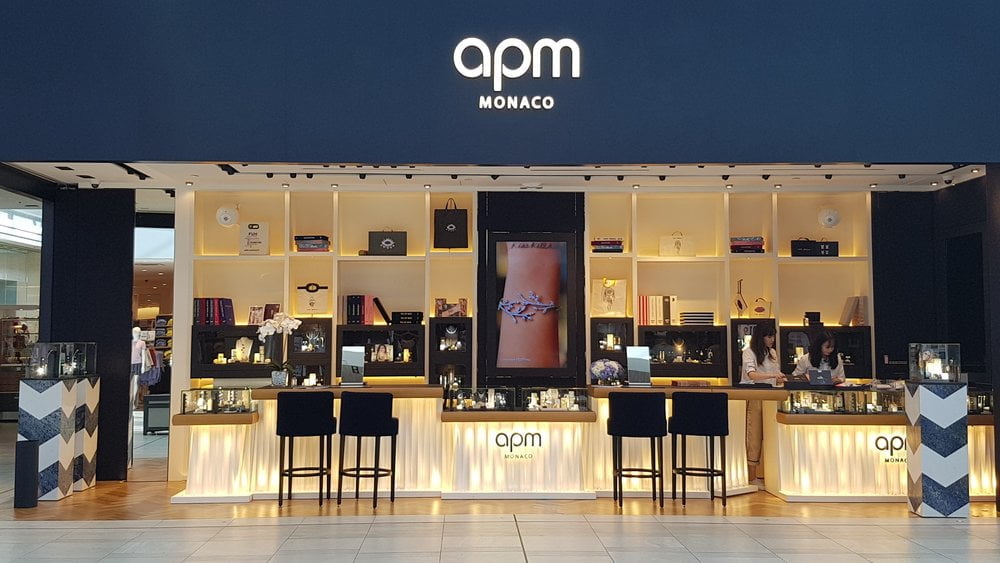
APM Monaco storefront at the CF Richmond Centre. Photo: Ritchie Po
Some good news for the Canadian retail industry, and a signal that brick-and-mortar retail space is still in demand. Upscale Monaco-based jeweller APM Monaco has leased three boutique spaces in the top shopping centres in Western Canada. All three stores will open later this year, bringing APM Monaco’s Canadian store count to five.
The APM Monaco brand was seeing tremendous growth internationally before the pandemic with some international storefronts selling millions of dollars of product annually. APM Monaco has about 200 stores worldwide. In the United States, APM Monaco operates 15 storefronts in New York City, Boston, Chicago, Las Vegas, Los Angeles, San Francisco, Honolulu, suburban Philadelphia, suburban Seattle, Miami, Saipan, and Guam. The brand locates in busy upscale areas.
APM Monaco was founded in 1982 by Ariane Prette as a jewellery brand specializing in creating traditional gold, diamond, and precious stone pieces for other jewellers. In 2011, the Prette family launched the new APM line (standing for Ariane Prette Monaco) that is made from the purest form of silver, carefully selected cubic zirconia, and one-of-a-kind freshwater cultured pearls, among other high-quality materials. Its products are handmade with their own manufacturer to ensure consistency. Designs are also “influenced by Monaco and the South of France,” according to the company, “with a touch of Monegasque flair”. Creative director Kika Prette (daughter-in-law of Ariane Prette) introduces four new collections a month with 12 fashion themes a year.
Chocolate Retailer Godiva Shutting All 11 Canadian Stores
Godiva store at the CF Toronto Eaton Centre. Photo: Zomato
Belgian chocolate brand Godiva has announced that it will shut its 11 standalone Canadian storefronts by the end of March 2021. The company will maintain its wholesale distribution which includes several shop-in-shops in retailers such as Hudson’s Bay as well as distribution in speciality, food and pharmacy retailers.
The standalone Godiva stores to close are located in Ontario, British Columbia, Quebec, and Manitoba. The seven Ontario stores include four Toronto stores: CF Toronto Eaton Centre, Yorkdale Shopping Centre, CF Fairview Mall, Scarborough Town Centre; two Ottawa stores: CF Rideau Centre and Tanger Outlets; and a Mississauga location at the Square One shopping centre. In British Columbia, Godiva has stores at Metropolis at Metrotown in Burnaby as well as at CF Richmond Centre in Richmond. In Quebec, Godiva operates a store at CF Carrefour Laval near Montreal. In Manitoba, Godiva operates a store at the CF Polo Park shopping centre.
Plans were in place in 2019 to more than double Godiva’s store count in North America with a goal of operating about 400 stores. The COVID-19 pandemic changed those plans as the company struggles amid changing consumer shopping behaviours.
Canadian mall landlords will yet again have to back-fill vacant retail spaces as Godiva exits its Canadian retail operations. Godiva’s locations are considered to be premium which means that they will be leased more easily than some retailers shuttering stores.
Godiva is now Turkish-owned and its headquarters are in New York City. The company was founded in 1926 by Joseph Draps and its first store opened in Paris in 1958. The first Godiva store in North America opened in 1972 on 5th Avenue in New York City.
Godiva will also exit its 117 US storefronts as is part of this week’s announcement. Godiva will continue to maintain its retail operations across Europe, the Middle East, and China.
Brioche Dorée Opens New Parisian Café & Bakery in Toronto
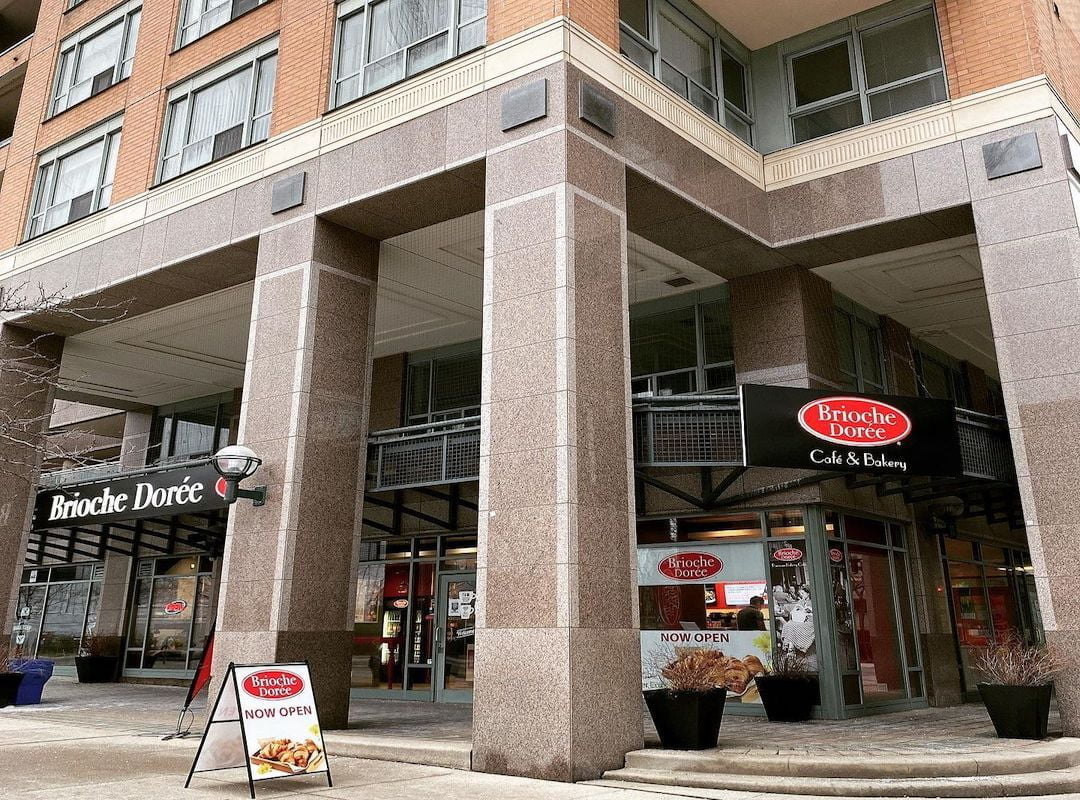
Exterior of new Brioche Dorée location on Toronto’s Bay Street. Photo: Brioche Dorée Instagram
Internationally acclaimed urban café bakery Brioche Dorée has opened a new Parisian Café & Bakery at 879 Bay Street in Toronto.
“We are very proud to be a multi-store owner with the Brioche Dorée brand,” says Mr. Ardestani, franchisee of the Bay Street Store. “My experience was so successful with my North American Centre location that I wanted to build on that success”.
The chain of urban café bakeries is built on the simple idea that it is possible to serve up French-inspired products of exceptional quality and freshness in a fast-service style. The company’s franchise partners are proud to offer everything from traditional 100% pure butter pastries to fresh-baked breads, sweet and savoury crepes, fresh sandwiches, salads, and more.
1 of 3
Interior of new Brioche Dorée location on Toronto's Bay Street showing coffee station. Photo: Brioche Dorée Instagram
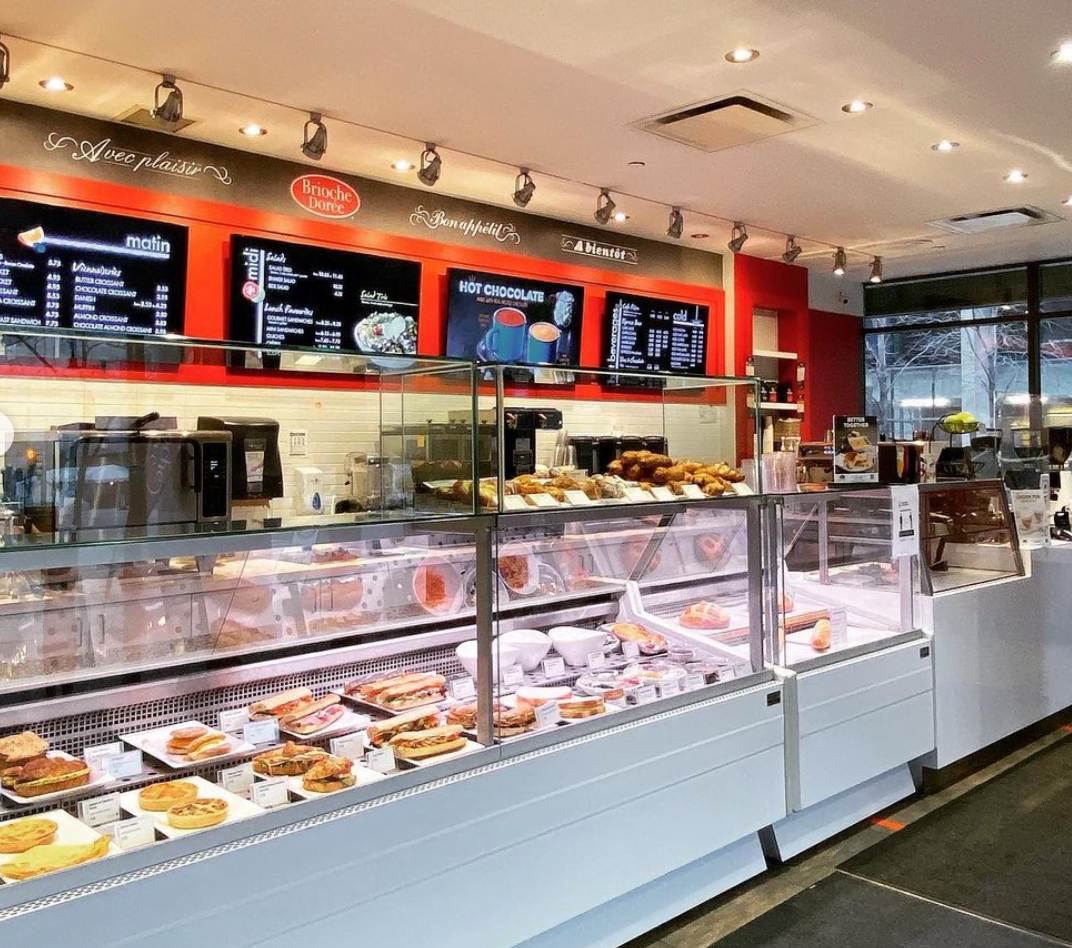
Interior of new Brioche Dorée location on Toronto's Bay Street showing pastry and sandwich lineup. Photo: Brioche Dorée Instagram
Interior of new Brioche Dorée location on Toronto's Bay Street showing pastry and sandwich lineup. Photo: Brioche Dorée Instagram
The new Brioche Dorée location is currently offering adapted services in compliance with the latest health and safety measures due to COVID-19. Equipped with click & collect takeout services, the store has also partnered with Uber Eats and DoorDash to deliver its products directly to customers in the comfort of their own homes.
“We are excited to grow with one of our franchisees,” says Pascale Closson-Duquette, Chief Administrative Officer of the Brioche Dorée brand. “It has been a wonderful collaborative effort and we’re very proud of the result with this brand-new café bakery. We consider ourselves very fortunate to be able to build on our success in the current context, and we look forward to offering this neighbourhood a little taste of Paris”.
Founded in 1976, Brioche Dorée is committed to serving local markets and continues to roll out new neighbourhood locations. Today, Brioche Dorée now has 12 locations across Canada.
Nova Scotian Brands Partner to Launch Winter Clothing Collection
East Coast Lifestyle hoodie on model. Photo: East Coast Lifestyle
Canadian family-run manufacturer, Stanfield’s Ltd., has announced the launch of a winter collection with Atlantic Canada’s largest clothing brand, East Coast Lifestyle.
The collection will be available on February 1st and will feature t-shirts, hoodies, socks, toques, and underwear, in addition to Stanfield’s iconic long underwear for both men and women. It will be sold on the East Coast Lifestyle website and at their three retail locations — Seaport, 1099 North Marginal Road in Halifax, Mic Mac Mall in Dartmouth, and the Cavendish Boardwalk on PEI. Products will also be available at Pseudio stores across Atlantic Canada.
The partnership between the two Nova Scotian brands was founded on a mutual desire to create specially designed pieces that represent the beauty and unique qualities found in Nova Scotia and its people. All products are made in Canada.
Rob Newcombe, VP of Marketing and Sales for Stanfield’s comments, “This was a very natural collaboration for us. The idea of taking some of our hero items and having them interpreted by East Coast Lifestyle is something our customers will love and wear with pride”.
Alex MacLean, Founder and CEO of East Coast Lifestyle adds, “We have long admired Stanfield’s and to us, this is a way to get two stellar Nova Scotian brands together and into the hands of so many people who want to rep Nova Scotia, from coast to coast”.
A factory tour with East Coast Lifestyle CEO, Alex MacLean, can be found here.
The Wellness Market Plans Ahead Despite Uncertainty of COVID-19
The Wellness Market
Despite the current COVID-19 lockdown in Toronto, The Wellness Market is looking ahead and preparing for its 2021 event. Set to take place on May 2nd, 2021 at Evergreen Brick Works in Toronto’s Don Valley River neighbourhood, The Wellness Market has both opened its application process for vendors and announced the availability of tickets for customers.
The immersive wellness experience has been operating since 2017 with a focus on supporting local, small business owners in the wellness category. With over 50 participating local vendors, the market provides a platform for brands involved in organic skincare, handmade jewellery, fresh florals, supplements and superfoods, and more.
The Wellness Market
“Now, more than ever before, we are fiercely committed to putting the hard-work of locally owned businesses directly into consumers hands. Vendors are given the opportunity to showcase their products to hundreds of like-minded individuals, all eager to become life-long, loyal customers.”
For vendors and customers alike, The Wellness Market is a fully interactive and educational experience — one that will not be dampened by the current COVID-19 pandemic.
“Celebrating our wellness, mental, and physical health has never been more important. We are committed to ensuring that we follow all government recommended COVID protocols. We may all be six feet apart, but we will be a million steps closer to the connection we miss and need, now more than ever before,” the website states.
In addition to the vendor market, The Wellness Market experience encompasses workout classes, wellness treatments, group workshops, and wellness panels.
Harry Rosen & Masai Ujiri team to launch HUMANITY. Photo: Harry Rosen
Philanthropy and charitable work are not undertakings unfamiliar to Harry Rosen. The brand and the family have given back to the communities that they live and operate in for generations. It’s a point of pride for the iconic menswear retailer that has a longstanding reputation as the go-to destination for Canadian men who want to look and feel their best. And it’s a commitment by the company to help improve the welfare of those around them that continues in full today through its current collaboration with Toronto Raptors President and Giants of Africa (GOA) Co-Founder, Masai Ujiri.
Designing Change
Launched in December 2020, the unique partnership features a seven-piece athleisure collection designed by Ujiri and Canadian designer Patrick Assaraf. Anchored by the theme HUMANITY, the intention of the project is to help promote the ever-important message of equality, inclusivity and the need for greater understanding within our society, and to remind us all that there is more that unites us than divides us. Each piece within the collection includes the word ‘HUMANITY’ in Ujiri’s handwriting, underscoring the need for a collective effort in order to eradicate injustice and to help elevate the standing of those less fortunate and privileged within our communities. And, according to Harry Rosen’s CEO, Larry Rosen, involvement in a project of this nature centered around a campaign with such a strong social narrative is not only an honour, but is also seen by the company as its incumbent responsibility to help amplify and support the message in whatever way it can.
Masai Ujiri
“Masai is an incredible, noble person,” he says. “And Patrick is an immensely talented designer. The fact that Harry Rosen could join forces with these individuals for such an amazing and hugely important cause is exciting for everyone at the company. But it also provides us with an unprecedented opportunity to contribute meaningfully toward making a real difference within communities across the country. Everyone knows about the systemic barriers to accessibility and opportunity that exist within the industry and society as a whole. We want to be a part of affecting positive change that can impact everyone. And this collaboration with Masai and Patrick gives us the platform to try and do just that.”
A Platform for the Underrepresented
In addition to promoting the message of equality and inclusivity through high-quality fashion, the project is also focused on raising funds for charity and introducing new Black designers to the Canadian market. Net proceeds from the sales of the collection, which is available exclusively on HarryRosen.com, is going to Black Youth Helpline, an organization which provides young people with access to culturally relevant, high-quality services and resources in their local community. The much-needed funds help to uphold and improve crisis counselling, strategies aimed at keeping youth in school and provide support for underrepresented families, schools and communities in need. It’s an extremely admirable gesture that’s been made by the retailer and its collaborators, something that’s recognized by Barbara Thompson, Founder & Executive Director of Black Youth Helpline, the campaigns primary benefactor.
“We are incredibly grateful to Masai Ujiri and Harry Rosen for their steadfast commitment to youth from Canada’s underrepresented backgrounds and under-resourced communities,” she says. “Now more than ever, there is a need to support and empower Canada’s disadvantaged youth. This transformative partnership will propel us as we develop and execute new strategies for education, and community well-being in support of keeping Canada’s vulnerable youth on track to successful futures.”
Creating Dialogue Around Social Injustice
It’s a sentiment that’s shared by Ujiri, whose attempts to address the need for unity within our society helped fuel the campaign with Harry Rosen. Ujiri, born and raised in Nigeria, and the first and only African-born President and General Manager of a professional sports franchise in North America, started to use his passions for basketball and humanity to great effect when he Co-Founded the GOA in 2003. The organization, which has grown in effectiveness and prestige in the years since its founding, was developed with the vision to leverage basketball as a means to educate and enrich the lives of African youth – both boys and girls. Ujiri’s passions remain unchanged today, seeing a greater need for unity now than perhaps ever before. And he’s hopeful that the collection developed between he and Assaraf might help strengthen the dialogue around the issues of racial injustice.
“This year we have been consumed by the twin pandemics of COVID and racism. We need to find a cure for both, urgently,” he says with conviction. “No one expects a t-shirt to change the world, but each of us committing to look at each other as human beings and really see the humanity in everyone is a good start. See the word. Have the conversation. Really talk to each other. Remember that our humanity is the first thing we all have in common. Once we recognize that we share that connection, we can find others.”
The HUMANITY campaign is a truly inspiring collaboration and partnership that reflects some of the overriding ills within society as well as some of the ways that we as a collective can start to break down some of the barriers that exist today. It’s also provided a catalyst for Harry Rosen, a reinforcement to its commitment to diversify its shelves and offering and to create a more equitable and inclusive Canadian fashion market. Backing up its commitment, the retailer recently signed George Sully, the creator of Sully and Son, and the Founder of Black Designers of Canada, to design an upcoming collection for the brand. Sully will be one of the first among a growing roster of Black, Indigenous and People of Colour (BIPOC) designers offered by the brand.
A Strategic Approach
Trinh Tham
It’s a bold commitment by the retailer, a move of significant importance that is well understood by its accomplished CEO. And, although he provides what he describes as a “steady hand on the rudder” for the company, he’s quick to credit the forward-thinking team around him for the vision and execution of the HUMANITY campaign and for their youthful perspective that is helping to continue driving the Harry Rosen brand forward and further the positive influence that it has on the communities it’s a part of.
One of those forward-thinkers that Rosen is privileged to have working with him is the company’s Chief Marketing Officer, SVP Marketing & E-Commerce, Trinh Tham. Credited with much of the excellent work and thinking organizationally that has led to a refreshed look and feel for the brand, Tham and her team are helping to lead Harry Rosen into a new chapter, adding to its already acclaimed history. She explains that the collaboration is part of the broader strategic approach that’s recently been taken by the company to do better, and to appeal to a wider audience of Canadian men.
“Harry Rosen has always been a very values and purpose-driven organization,” she says. “It’s in the company’s DNA. Our partnership with Masai really reflects and emphasizes that aspect of the brand and our values of ‘leadership, passion, creativity and inclusivity’. He’s a great personification of what the company stands for and perfectly fits our focus strategically to work alongside role models that the brand looks up to. Working with him on the HUMANITY campaign allowed us to be a part of something really meaningful and to promote a really strong and positive message. It also helps us in the work that we’re doing to move the brand forward, not only improving the experience we provide our amazing existing customers, but attracting new customers to the brand as well.”
A Powerful Message
Tham describes her involvement in the creation and development of the campaign as an incredible experience, presenting her with the opportunity to contribute to something that she feels deeply passionate about. And it’s a sentiment that she explains was shared by everyone who worked on the project, lending to the power and effectiveness of the campaign.
“We engaged our creative partner, Zulu Alpha Kilo, to work on the project with us,” she says. “The energy displayed by everyone involved was incredible, resulting in an amazing campaign that they helped us develop pro bono, which fit really well with our mandate. The HUMANITY campaign was never meant by anyone involved to be a commercial venture, but as a means to deliver its message. We really focused on creating a campaign that was as genuine and meaningful as possible. The fact that everyone who contributed believes strongly in the message of inclusivity, fairness and openness helped to make it something really special and allowed us the perfect platform to give voice and raise the awareness and recognition of the underrepresented in society.”
Return to its Roots
Despite the success of the campaign to date, however, and the incredible response that’s been received concerning the modernization of the brand that she recently helped execute, Tham stresses that these achievements are the result of a culmination of work that’s been put in by everyone at the company. She explains further that their collective accomplishments and everything else that Harry Rosen does are entrenched in the foundations of the company and inspired by the continued leadership of the Rosen family.
“The HUMANITY campaign and all of the other work that we’re doing to move the brand forward has received full support from the Rosen family and really helps reflect who they are and what they’ve represented to the communities the brand has served through the years. It might seem like a refresh to some. But we haven’t changed anything about the values the brand stands for and believes in. We’re simply returning to our roots and starting to share those values in a more relevant and meaningful way that resonates more profoundly with today’s customer, helping us to grow the brand even further.”
This week, Craig & Lee discuss the disappointing news of Barneys New York not coming to Canada as planned, significant shopping centre changes for 2021, as well as a discussion about the West Edmonton Mall photo tours released by Retail Insider this week.
The Weekly podcast by Retail Insider Canada is available on Apple Podcasts, Stitcher, TuneIn, Google Play, or through our dedicated RSS feed for Overcast and other podcast players.
Drop us a line at Craig@Retail-Insider.com. You can also rate us in Apple Podcasts or recommend us in Overcast to help more people discover the show!
Background Music Credit: Hard Boiled Kevin MacLeod (incompetech.com). Licensed under Creative Commons: By Attribution 3.0 License. http://creativecommons.org/licenses/by/3.0/
Street sign with directions to either NEW BEGINNING or INSOLVENCY
The online publication Insolvency Insider highlighted 244 insolvency filings in 2020 as the COVID-19 pandemic wreaked havoc on the financial viability of many companies in Canada throughout various industries.
Retail led all industries with 45 filings mentioned, followed by real estate with 23 filings, manufacturing with 17 filings, food and accommodation with 16, and cannabis with 15.
The publication said 112 filings mentioned were in Ontario, followed by 45 in Alberta and 35 in Quebec.
Dina Milivojevic
Dina Milivojevic, Editor of Insolvency Insider, said the number of filings in 2020 in the retail sector was not as high as perhaps expected.
“One of the reasons from a landlord’s perspective is probably that some landlords aren’t enforcing (full rents) because it won’t be good for business in the post-COVID era to have lots of empty un-leased space,” she said. “So to the extent that they can keep their tenants alive I think that’s what they’re trying to do.
“From a tenant’s perspective it may not make sense to file even if they are struggling financially because one of the biggest incentives for filing was potentially having to pay rent and a decision out of Quebec recently made it clear that even if you file for CCAA (Companies’ Creditors Arrangement Act) protection you’ll still have to pay rent to your landlord.
“And so that would have been one of the biggest stressors on a debtor’s cash flow and if they can’t avoid paying rent then it may not make sense to file. And sort of in the same vein, debtors may also be waiting to file as long as possible so that overdue rent accrues in the pre-filing period and that makes it a pre-filing debt. If they file, they will have to pay rent post-filing to stay in the space.”
Milivojevic said that in a typical cycle many retailers file for protection in the first quarter of the year after the holiday season after they’ve looked at their numbers and figured out whether it makes sense to file or not.
She said the industry expects there will be more filings in 2021 because landlords are probably getting a little bit more impatient, lenders are probably getting a little bit more impatient and the Canada Revenue Agency too.
“From the retail perspective we’re still in a stalemate at this point so it’s really hard to predict,” added Milivojevic.
“The holiday season is typically a retailer’s busiest season and a lot of the money they make over the course of a year is made in the months of November and December and so if they haven’t had a good holiday season then they might not have enough cash to service their obligations. So they would typically be filing at this time of year. But for the reasons I’ve described it might not happen this year.”
Milivojevic said retailers can only hold on for so long as the pandemic continues.
“Retailers are trying to hold on for dear life because they’re hoping that if they can stay afloat financially and they can avoid a filing and avoid shutting down then in the post-COVID environment competition will be much less because we’ve already seen a number of retailers that have filed. There will be fewer players in the market and then they’ll be servicing a market that has less competition. So I think that’s what they’re hoping for and another reason why they’re holding out,” she said.
“But it can only go for so long. The longer it goes on the more filings we’ll see for sure.
With the number of CCAA filings, the hope is that companies will be able to restructure. Many businesses in the service industry were impacted by COVID.
“The longer that stores and restaurants aren’t able to have people in their businesses the more likely they will be to file,” added Milivojevic.
“The longer that it goes the more likely that even bigger retailers will be closing their doors in the future. Some companies have been more successful than others in transitioning to online sales. The bricks and mortar shops that drive most of their sales from in-person buying are really, really struggling whereas the Amazons that were already established online are doing very well.”
The vast majority of filings in 2020 were in Ontario most likely because many of the companies are headquartered in that province. For Alberta, the number of filings also may reflect the economic downturn the province has experienced not only due to COVID but also to lower oil prices.
Entrance to the Retail Innovation Lab on the McGill University campus.
McGill University and Alimentation Couche-Tard Inc. have recently partnered to launch one of Canada’s first retail innovation labs. The initiative is part of the retail innovation studies program at the Bensadoun School of Retail Management, acting as a live testing ground for innovative and frictionless technologies that address the retail sector’s future challenges.
In the wake of COVID-19 and the countless obstacles it imposes on retailers, the university and the global retailer have come together to create one of North America’s first live, open laboratory stores, in a bid to transform the customer experience at this critical time.
Located on McGill University’s downtown campus on prestigious Sherbrooke Street West, the lab is led by two research directors at McGill, Professor Maxime Cohen of the Desautels Faculty of Management and Professor James Clark of the Faculty of Engineering. Governed by a joint steering committee, preliminary research themes are set to focus on helping customers make healthier, more sustainable consumer choices, and finding equilibrium between personalization and privacy within the shopping experience.
Professor James Clark (left) & Professor Maxime Cohen (right)
“By combining artificial intelligence and retail management, this retail innovation lab at the Bensadoun School of Retail Management will allow our researchers to develop new initiatives and technologies to improve the customer experience for the retail sector with the help of industry partners,” said Professor Morty Yalovsky, Dean of McGill’s Desautels Faculty of Management. “We are excited to welcome one of Canada’s largest retailers, Alimentation Couche-Tard Inc., as the first industry partner of our lab to help shape the future of retail during this pivotal moment in history.”
The lab provides researchers with state-of-the-art artificial intelligence tools, while also ensuring stringent data privacy and confidentiality protocols, to improve demand forecasting and customer recommendations, as well as virtual reality to make it easier for customers to find what they are looking for.
Deb Hall Lefevre
Inside the lab, a Couche-Tard Connecté section is specially designed with frictionless technologies to allow autonomous and contactless checkout. Using an app, customers can unlock the door to walk into the Connecté section, pick up items, and leave. The items selected will be recognized in real-time, and payment will be processed automatically in the app. A first in Canada’s convenience store sector, the frictionless store will allow Couche-Tard team members to provide elevated service, speed up in-store visits, and create a more straightforward shopping experience for customers.
“This new store on the McGill University campus is a unique demonstration of our commitment to find new ways to make our customers’ lives a little easier,” said Deborah Hall Lefevre, Chief Technology Officer, Alimentation Couche-Tard Inc. “At Couche-Tard, we are always searching for innovative solutions that improve the experience for our customers in our stores. By having a live laboratory, we are confident that the research projects and technologies successfully tested at the lab may eventually be implemented in some of our 14,220 stores across our global network,” she added.
In addition to enabling ground-breaking research, the lab will allow McGill students to deepen their knowledge through on-site experiential learning in an innovative commercial environment.
Sophie Provencher
“We are proud to deploy this new store with McGill’s Bensadoun School of Retail Management, and in doing so, contribute to developing the next generation of entrepreneurs, offer a differentiated customer experience with the latest technologies, and provide an even more rewarding and safe work experience to our current and future employees,” said Sophie Provencher, Vice-President Quebec West – Operations, Alimentation Couche-Tard Inc. “Through this partnership, we will build on the great customer service our store team members provide every day, by making their jobs a little easier and giving them more time and opportunity to delight our customers,” she added.
The lab is currently open at reduced hours and allows for a limited in-store capacity until local public health authorities in Quebec deem it safe to operate at full capacity.
The lab is funded by the Bensadoun Family Foundation and Bensadoun School of Retail Management Founders Circle, of which Alain Bouchard, Founder and Chairman of the Board of Alimentation Couche-Tard Inc., is a member.
First impressions. They are one-time occurrences that for many helps to begin shaping their initial perceptions and interpretations of individuals, communities, pieces of art, or anything else. They provide a frame, a sketch, a partial introduction or sneak-peek at the bigger picture, often leaving behind lasting effects. For retailers and other businesses, the first impression can mean everything, piquing curiosity and interest in prospective customers and establishing the voice and tenor of the brand. It’s a notion, and the importance of which, that is well-understood by Gregory Signs – a leading Toronto-based signage company that’s been working with businesses, helping to satisfy their branding and signage needs for more than four decades.
Forty Years of Growth
Founded in 1981 as an engraving shop by Gregory Kaminsky, the company began operations with the opening of its first retail location at 2899 Steeles Avenue West in Brampton, northeast of Toronto. Excelling within his craft, it wasn’t long before Kaminsky, who recognized an increasing need for the development of different types of signage, started to grow the business and the base of customers that it served. And, a little less than ten years following its founding, in response to its exponential growth and aided by the advent of new technologies, the company increased its product line, moving its operations to Petrolia Road in North York. It represented an incredible start for the company whose mission early on was to earn the recognition of its customers, employees, suppliers and communities it serves as one of the highest quality performers in the sign industry. And, as it turns out, the operations and reputation of Gregory Signs were only just beginning to flourish.
Boris Kaminsky
In 2006, due to an ever-increasing demand for the company’s services, as well as the commissioning of larger-scale projects, it once again moved its operations, this time to a larger freestanding manufacturing facility in Concord, Ontario. Sales have continued to escalate during the decade-and-a-half that’s followed, in concert with a widening portfolio and broadening scope of work that the company has taken on. In 2019, in efforts to support its impressive success, Gregory Signs opened a new Head Office in Concord, resulting in increased space at its nearby manufacturing facility. Shortly thereafter, the company opened additional sites, including a brand-new sales, showroom and manufacturing facility in Barrie, Ontario and a sales showroom in downtown Toronto. The growth and expansion of the company since its founding has been steady and quite impressive. But, according to Boris Kaminsky, Vice President of Sales and Marketing at Gregory Signs, the organization remains focused on continuing to build its reputation within the industry and communities it serves, and dedicated toward sustaining the extraordinary success it’s enjoyed to date.
“The company was built on a foundation of providing excellent customer service and expertise for the clients we work with,” he says. “And because the signage industry is one that’s constantly evolving with consumer and market trends and the introduction of new technologies, we make sure we continue to adapt every day. We’re constantly exploring ways that we can continuously improve the way we do things and expand the range of products that we offer. But, in the end, our success is all about working with retailers and other businesses to consistently help them develop and display the signage that best represents their operations, conveying the story of the brand to the customer.”
End-to-End Services and Solutions
To help its clients achieve these goals, Gregory Signs offers a full range of signage services, from conceptual planning and design through to fabrication and installation. And, as Kaminsky points out, there isn’t a business that the company will turn away, servicing all types and sizes of operations from all walks and industries. Specializing in developing and installing exterior signage, the company also offers an incredible array of other services, from delivering on interior, structural and custom signage needs to the development of wayfinding and digital signage, and just about everything in between. Each service is part of the overall custom solutions that are available to clients of the company who, according to Kaminsky, range with respect to the needs of the organization.
“We work with clients right across the spectrum who are all at different stages of their businesses’ development with varying signage requirements,” he explains. “Some of our clients come to us with a logo and branding that’s already been developed and implemented and they need our help in fabricating and installing it at locations. Some of our clients are at the prototype stage of their branding and require our expertise in making recommendations as we work with them to finalize their signage. And we also work with clients that come to us with very little in terms of branding and ideas. That’s when we’re able to leverage our full complement of experience and industry knowledge, providing consultation and our project management skills to help them develop their identity from scratch. We understand the importance of signage and how it can help differentiate brands. This, in combination with our decades of experience and know-how, helps to set our clients apart from their competitors.”
Expanding Presence and Portfolio
Its experience and know-how, it seems, also helps to set Gregory Signs apart from its competitors, too. As one of the few full-service signage providers, it long ago established itself as a market leader. Today, the company works with a breadth of organizations and brands, including the Toronto Transit Commission, the Ontario Provincial Police, Oracle, Puma, and Holmes, to name a few. The company has also been responsible for the recent development of a range of eclectic projects that include design and consulting work, as well as interior and exterior signage creation and installation, for the new Niagara Entertainment Complex, a number of temporary sign installations at construction sites, in addition to the development of cemetery wayfinding signs. And, although the majority of the clients that the company works with have operations based in Ontario, its services are also engaged by a substantial number of businesses outside of the province, in Alberta, British Columbia and Manitoba, as well as in the United States and other parts of the globe.
As part of its suite of services, Gregory Signs also works to ensure permits for their clients and assurance that their signage needs fit within local bylaws. And if a bylaw variance is necessary in order to fulfill the signage needs, the company will do the work required to assess the cost and viability of the variance for the business. Otherwise, it’s also able to make insightful recommendations concerning adaptations to the sign that will allow it to adhere to bylaws while retaining its desired impact. In addition, the company is also becoming more involved in the architectural design of store facades, adapting to market needs and extending its services even further, beyond the sign, to include the development and construction of a businesses’ entire first impression.
Agility During Difficult Times
The ability that Gregory Signs has shown through the years in its efforts to respond to market trends, shifting and adapting its service to meet client demand, has been remarkable. It’s a characteristic and attribute of the company that Kaminsky says has always been a part of its culture. And he explains how the impacts of COVID-19 presented yet another opportunity for the company to extend its services even further to help fill new and emerging needs and requirements amongst some of its clients.
“When the impacts of COVID started, we needed to pivot a little bit to make sure we were able to provide our clients with the services they required,” he says. “For instance, we received a lot of initial requests from dentist’s offices for the fabrication and installation of temporary enclosures and plastic doors and dividers to help close off open spaces for the safety and comfort of patients. We’ve been fortunate enough to be able to remain open for business because of these essential services that we provide and the projects that we’re involved in, including work with the TTC, hospitals and other medical and government buildings.”
Signs of Optimism
Although he recognizes the negative impacts that the global pandemic has had on some of the company’s competitors and the industries that it serves, Kaminsky explains that Gregory Signs is forging ahead with aggressive growth plans, nonetheless. Over the coming year, the company is intent on continuing to expand its presence, grow its customer-base and extend its portfolio of projects even further. In doing so, he suggests, its operations will be well placed to service the signage needs of a retooled and revitalized business landscape.
“Results of the pandemic on businesses, retailers in particular, have been severe. We’ve witnessed the impacts firsthand as a company through the services we provide. There have been a lot of bankruptcies and closures. And, we’re unfortunately expecting to see more before this all comes to an end. I don’t think we’ve yet seen the full impacts of the pandemic. But this situation isn’t going to last forever. With this in mind, we’re currently hiring in order to meet today’s demand, and to help prepare us for the future, too. We’re also going to be opening two new locations in Ontario, east and west of our current offices and facilities. We’re hopeful and optimistic that business will bounce back. When protocols are lifted and they’re allowed to fully open up again, when people feel comfortable going out and entering stores and other enclosed spaces, we’re anticipating an increase in the demand for the services that we provide. And, supported by our growth and the expert work that we do, we’ll be ready to meet that demand.”
*Partner Content. To work with Retail Insider, email: darryl@retail-insider.com